EP3165237A1 - Antikörperwirkstoffkonjugat und herstellungsverfahren dafür - Google Patents
Antikörperwirkstoffkonjugat und herstellungsverfahren dafür Download PDFInfo
- Publication number
- EP3165237A1 EP3165237A1 EP16196898.7A EP16196898A EP3165237A1 EP 3165237 A1 EP3165237 A1 EP 3165237A1 EP 16196898 A EP16196898 A EP 16196898A EP 3165237 A1 EP3165237 A1 EP 3165237A1
- Authority
- EP
- European Patent Office
- Prior art keywords
- antibody
- cit
- adc
- val
- apea
- Prior art date
- Legal status (The legal status is an assumption and is not a legal conclusion. Google has not performed a legal analysis and makes no representation as to the accuracy of the status listed.)
- Granted
Links
- 0 CC(C(C(CC1)O)([C@](C*)OC[C@@]1O)O)N Chemical compound CC(C(C(CC1)O)([C@](C*)OC[C@@]1O)O)N 0.000 description 19
- BNLAAWWENQTBHK-DAFVIUJQSA-N CCC(C)C(C(C)C([C@H](C(C)C)NC(C(N(C)C)[IH]C(C)C)=O)=O)C(CC(N(CCC1)C1C(C(C)C(NC(C1)(C1c1ccccc1)C(NCCc(cc1)ccc1NC(C(CCCNC(N)=O)NC([C@@H](C(C)C)NC([C@H](C(C12CC1)O)O[C@](C1)([C@@H]1NC(CCCCCN(C(C=C1)=O)C1=O)=O)C2O)=O)=O)=O)=O)=O)OC)=O)OC Chemical compound CCC(C)C(C(C)C([C@H](C(C)C)NC(C(N(C)C)[IH]C(C)C)=O)=O)C(CC(N(CCC1)C1C(C(C)C(NC(C1)(C1c1ccccc1)C(NCCc(cc1)ccc1NC(C(CCCNC(N)=O)NC([C@@H](C(C)C)NC([C@H](C(C12CC1)O)O[C@](C1)([C@@H]1NC(CCCCCN(C(C=C1)=O)C1=O)=O)C2O)=O)=O)=O)=O)=O)OC)=O)OC BNLAAWWENQTBHK-DAFVIUJQSA-N 0.000 description 1
- SDQBDFZRIADHFK-UAYVRNJPSA-N C[C@H]([C@@H]([C@H](C)O[C@]1(C2)[C@@H]2N)N)[C@@H]1O Chemical compound C[C@H]([C@@H]([C@H](C)O[C@]1(C2)[C@@H]2N)N)[C@@H]1O SDQBDFZRIADHFK-UAYVRNJPSA-N 0.000 description 1
Images










Classifications
-
- A—HUMAN NECESSITIES
- A61—MEDICAL OR VETERINARY SCIENCE; HYGIENE
- A61K—PREPARATIONS FOR MEDICAL, DENTAL OR TOILETRY PURPOSES
- A61K38/00—Medicinal preparations containing peptides
- A61K38/04—Peptides having up to 20 amino acids in a fully defined sequence; Derivatives thereof
- A61K38/05—Dipeptides
-
- C—CHEMISTRY; METALLURGY
- C07—ORGANIC CHEMISTRY
- C07K—PEPTIDES
- C07K7/00—Peptides having 5 to 20 amino acids in a fully defined sequence; Derivatives thereof
- C07K7/02—Linear peptides containing at least one abnormal peptide link
-
- A—HUMAN NECESSITIES
- A61—MEDICAL OR VETERINARY SCIENCE; HYGIENE
- A61K—PREPARATIONS FOR MEDICAL, DENTAL OR TOILETRY PURPOSES
- A61K39/00—Medicinal preparations containing antigens or antibodies
- A61K39/395—Antibodies; Immunoglobulins; Immune serum, e.g. antilymphocytic serum
-
- A—HUMAN NECESSITIES
- A61—MEDICAL OR VETERINARY SCIENCE; HYGIENE
- A61K—PREPARATIONS FOR MEDICAL, DENTAL OR TOILETRY PURPOSES
- A61K47/00—Medicinal preparations characterised by the non-active ingredients used, e.g. carriers or inert additives; Targeting or modifying agents chemically bound to the active ingredient
- A61K47/50—Medicinal preparations characterised by the non-active ingredients used, e.g. carriers or inert additives; Targeting or modifying agents chemically bound to the active ingredient the non-active ingredient being chemically bound to the active ingredient, e.g. polymer-drug conjugates
- A61K47/51—Medicinal preparations characterised by the non-active ingredients used, e.g. carriers or inert additives; Targeting or modifying agents chemically bound to the active ingredient the non-active ingredient being chemically bound to the active ingredient, e.g. polymer-drug conjugates the non-active ingredient being a modifying agent
- A61K47/54—Medicinal preparations characterised by the non-active ingredients used, e.g. carriers or inert additives; Targeting or modifying agents chemically bound to the active ingredient the non-active ingredient being chemically bound to the active ingredient, e.g. polymer-drug conjugates the non-active ingredient being a modifying agent the modifying agent being an organic compound
- A61K47/55—Medicinal preparations characterised by the non-active ingredients used, e.g. carriers or inert additives; Targeting or modifying agents chemically bound to the active ingredient the non-active ingredient being chemically bound to the active ingredient, e.g. polymer-drug conjugates the non-active ingredient being a modifying agent the modifying agent being an organic compound the modifying agent being also a pharmacologically or therapeutically active agent, i.e. the entire conjugate being a codrug
- A61K47/551—Medicinal preparations characterised by the non-active ingredients used, e.g. carriers or inert additives; Targeting or modifying agents chemically bound to the active ingredient the non-active ingredient being chemically bound to the active ingredient, e.g. polymer-drug conjugates the non-active ingredient being a modifying agent the modifying agent being an organic compound the modifying agent being also a pharmacologically or therapeutically active agent, i.e. the entire conjugate being a codrug one of the codrug's components being a vitamin, e.g. niacinamide, vitamin B3, cobalamin, vitamin B12, folate, vitamin A or retinoic acid
-
- A—HUMAN NECESSITIES
- A61—MEDICAL OR VETERINARY SCIENCE; HYGIENE
- A61K—PREPARATIONS FOR MEDICAL, DENTAL OR TOILETRY PURPOSES
- A61K47/00—Medicinal preparations characterised by the non-active ingredients used, e.g. carriers or inert additives; Targeting or modifying agents chemically bound to the active ingredient
- A61K47/50—Medicinal preparations characterised by the non-active ingredients used, e.g. carriers or inert additives; Targeting or modifying agents chemically bound to the active ingredient the non-active ingredient being chemically bound to the active ingredient, e.g. polymer-drug conjugates
- A61K47/51—Medicinal preparations characterised by the non-active ingredients used, e.g. carriers or inert additives; Targeting or modifying agents chemically bound to the active ingredient the non-active ingredient being chemically bound to the active ingredient, e.g. polymer-drug conjugates the non-active ingredient being a modifying agent
- A61K47/68—Medicinal preparations characterised by the non-active ingredients used, e.g. carriers or inert additives; Targeting or modifying agents chemically bound to the active ingredient the non-active ingredient being chemically bound to the active ingredient, e.g. polymer-drug conjugates the non-active ingredient being a modifying agent the modifying agent being an antibody, an immunoglobulin or a fragment thereof, e.g. an Fc-fragment
- A61K47/6801—Drug-antibody or immunoglobulin conjugates defined by the pharmacologically or therapeutically active agent
- A61K47/6803—Drugs conjugated to an antibody or immunoglobulin, e.g. cisplatin-antibody conjugates
- A61K47/6811—Drugs conjugated to an antibody or immunoglobulin, e.g. cisplatin-antibody conjugates the drug being a protein or peptide, e.g. transferrin or bleomycin
- A61K47/6817—Toxins
-
- A—HUMAN NECESSITIES
- A61—MEDICAL OR VETERINARY SCIENCE; HYGIENE
- A61K—PREPARATIONS FOR MEDICAL, DENTAL OR TOILETRY PURPOSES
- A61K47/00—Medicinal preparations characterised by the non-active ingredients used, e.g. carriers or inert additives; Targeting or modifying agents chemically bound to the active ingredient
- A61K47/50—Medicinal preparations characterised by the non-active ingredients used, e.g. carriers or inert additives; Targeting or modifying agents chemically bound to the active ingredient the non-active ingredient being chemically bound to the active ingredient, e.g. polymer-drug conjugates
- A61K47/51—Medicinal preparations characterised by the non-active ingredients used, e.g. carriers or inert additives; Targeting or modifying agents chemically bound to the active ingredient the non-active ingredient being chemically bound to the active ingredient, e.g. polymer-drug conjugates the non-active ingredient being a modifying agent
- A61K47/68—Medicinal preparations characterised by the non-active ingredients used, e.g. carriers or inert additives; Targeting or modifying agents chemically bound to the active ingredient the non-active ingredient being chemically bound to the active ingredient, e.g. polymer-drug conjugates the non-active ingredient being a modifying agent the modifying agent being an antibody, an immunoglobulin or a fragment thereof, e.g. an Fc-fragment
- A61K47/6889—Conjugates wherein the antibody being the modifying agent and wherein the linker, binder or spacer confers particular properties to the conjugates, e.g. peptidic enzyme-labile linkers or acid-labile linkers, providing for an acid-labile immuno conjugate wherein the drug may be released from its antibody conjugated part in an acidic, e.g. tumoural or environment
-
- A—HUMAN NECESSITIES
- A61—MEDICAL OR VETERINARY SCIENCE; HYGIENE
- A61P—SPECIFIC THERAPEUTIC ACTIVITY OF CHEMICAL COMPOUNDS OR MEDICINAL PREPARATIONS
- A61P35/00—Antineoplastic agents
-
- A—HUMAN NECESSITIES
- A61—MEDICAL OR VETERINARY SCIENCE; HYGIENE
- A61P—SPECIFIC THERAPEUTIC ACTIVITY OF CHEMICAL COMPOUNDS OR MEDICINAL PREPARATIONS
- A61P35/00—Antineoplastic agents
- A61P35/02—Antineoplastic agents specific for leukemia
-
- C—CHEMISTRY; METALLURGY
- C07—ORGANIC CHEMISTRY
- C07K—PEPTIDES
- C07K5/00—Peptides containing up to four amino acids in a fully defined sequence; Derivatives thereof
- C07K5/02—Peptides containing up to four amino acids in a fully defined sequence; Derivatives thereof containing at least one abnormal peptide link
- C07K5/0207—Peptides containing up to four amino acids in a fully defined sequence; Derivatives thereof containing at least one abnormal peptide link containing the structure -NH-(X)4-C(=0), e.g. 'isosters', replacing two amino acids
Definitions
- the technical field relates to an antibody-drug conjugate (ADC) and a method for forming the same, and in particular it relates to an antibody-drug conjugate (ADC) including an antibody conjugated with a glycopeptide-containing linker-toxin and a method for forming the same.
- Antibodies have high-degree identification abilities with respect to their corresponding antigens, and many cytotoxic drug molecules cannot be used for cancer therapy because they cannot selectively kill cancer cells. Therefore, the connection of antibodies and highly toxic drugs (such as toxins) becomes a highly selective and specific conjugated drug.
- An antibody-drug conjugate is composed of antibodies, linkers, and drugs (such as toxins). However, these toxins appear to be highly cytotoxic (IC50 ⁇ 1 nM) due to they have to be performed with high dose.
- One of the toxins commonly used in ADCs is auristatin derivative such as MMAE and MMAF.
- linkers commonly used in ADCs are MC-Val-Cit.
- the MC-Val-Cit-PAB developed by Seattle Genetics is the most widely applied system.
- Toxins of ADCs are liberated by breaking the bonding linkage between linkers and toxins via cathepsin B.
- the linker system is poor aqueous solubility. It requires a high content, 20%, of organic solvent used as a co-solvent to dissolve the linker-toxin during the conjugation process of ADCs, so that the conjugation reaction can be completed in a homogeneous phase.
- ADC antibody-drug conjugate of formula (I) or a pharmaceutically acceptable salt or solvate thereof:
- p is an integer ranging from 1 to 26
- A is an antibody
- -(L-D) is a linker-drug unit.
- L is a linker unit having a glycopeptide
- D is a drug unit.
- the antibody is conjugated to the linker unit through a cysteine residue of the antibody.
- the disclosure also provides a method for forming the above-mentioned antibody-drug conjugate (ADC).
- the method includes the steps of reacting an antibody and a reducing agent in a buffer to form a first solution, preparing a linker-drug unit in organic phase or aqueous phase to form a second solution, in which the linker has a glycopeptide, performing a conjugation process by mixing the first solution and the second solution to form a mixture solution, and purifying the mixture solution.
- the concentration of an organic solvent in the mixture solution is in a range of about 0% (v/v) to about 2% (v/v).
- the present disclosure provides an ADC including a novel linker-toxin with increased aqueous solubility.
- the use of an organic solvent is decreased or even avoided, thereby reducing the aggregation of the ADC and the problems resulted from the remaining organic solvent. Therefore, the stability of ADC is improved.
- novel linker-toxins are designed to introduce sugar groups such as pentose (such as ribose, xylose or arabinose) and hexose (such as glycosamine or glucose) to dipeptide linkers, such as Val-Cit and Phe-Cit, which can be recognized by cathepsin B.
- the novel linker-toxins include a novel sugar amino acid-containing linker which is characterized as having a cathepsin B recognized dipeptide in its C-terminal and a high hydrophilic sugar amino acid unit in its N-terminal to improve the aqueous solubility of said linker or linker-containing substance.
- Both the carboxylic group in the C-terminal and the amino group in the N-terminal of the linker may be a linking point for attaching spacers, linkers, ligands, drugs, toxins, imaging molecules, antibodies, peptides or delivery molecules.
- ADC antibody-drug conjugate
- A represents an antibody.
- the antibody can be a full-length antibody or an antibody fragment.
- the antibody can be a chimeric antibody or a functionally active fragment thereof, a humanized antibody or a functionally active fragment thereof, a human antibody or a functionally active fragment thereof, or a mouse antibody or a functionally active fragment thereof.
- the antibody can be an antibody from other species such as a rat antibody or a functionally active fragment thereof, a goat antibody or a functionally active fragment thereof, or a rabbit antibody or a functionally active fragment thereof.
- the antibody is conjugated to the linker unit through a cysteine residue of the antibody.
- the antibody may be a therapeutic antibody used for the treatment of tumor, chronic lymphocytic leukemia (CLL), or acute myeloid leukemia (AML).
- the antibody may include Herceptin, Erbitux, HLX-07, EG12014, anti-EpCAM Ab, IgG1, Rituximab, Ibritumomab tiuxetan, Tositumomab, Brentuximab vedotin, Alemtuzumab, IGN101, Adecatumumab, Labetuzumab, huA33, Pemtumomab, Oregovomab, CC49 (minretumomab), cG250, J591, MOv18, MORAb-003 (farletuzumab), 3F8, ch14.18, KW-2871, hu3S193, IgN311, Bevacizumab, IM-2C6,
- the above antibodies are merely examples and the scope of the invention is not intended to be limited. As long as the inter-chain disulfide bonds in the antibody can be reduced to free thiols to be conjugated with linkers, the antibody can be used in the present disclosure.
- the antibody may be polyclonal antibodies or monoclonal antibodies.
- the antibody may be directed to a particular antigenic determinant, including for example a cancer cell antigen, a viral antigen, a microbial antigen, a protein, a peptide, a carbohydrate, a chemical, nucleic acid, or fragments thereof.
- a cancer cell antigen including for example a cancer cell antigen, a viral antigen, a microbial antigen, a protein, a peptide, a carbohydrate, a chemical, nucleic acid, or fragments thereof.
- Methods of producing polyclonal antibodies are known in the prior art.
- a monoclonal antibody (mAb) to an antigen-of-interest can be prepared using any technique known in the prior art.
- Such antibodies can be of any immunoglobulin class including IgG, IgM, IgE, IgA, and IgD and any subclass thereof.
- the hybridoma producing the mAbs for use in the disclosure may be cultivated in vitro or in vivo.
- the monoclonal antibody can be, for example, a human monoclonal antibody, a humanized monoclonal antibody, an antibody fragment, or a chimeric antibody (e.g., a human-mouse antibody).
- Human monoclonal antibodies can be made by any of numerous techniques known in the prior art (e.g., Teng et al., 1983, Proc. Natl. Acad. Sci. USA 80:7308-7312 ; Kozbor et al., 1983, Immunology Today 4:72-79 ; and Olsson et al., 1982, Meth. Enzymol. 92:3-16 ).
- the antibody can also be a bispecific antibody.
- Methods for making bispecific antibodies are known in the prior art. Traditional production of full-length bispecific antibodies is based on the coexpression of two immunoglobulin heavy chain-light chain pairs, where the two chains have different specificities (see, e.g., Milstein et al., 1983, Nature 305:537-539 ; International Publication No. WO 93/08829 , Traunecker et al., 1991, EMBO J. 10:3655-3659 ).
- antibody variable domains with the desired binding specificities are fused to immunoglobulin constant domain sequences.
- the fusion preferably is with an immunoglobulin heavy chain constant domain, comprising at least part of the hinge, CH2, and CH3 regions. It is preferred to have the first heavy-chain constant region (CH1) containing the site necessary for light chain binding, present in at least one of the fusions.
- Nucleic acids with sequences encoding the immunoglobulin heavy chain fusions and, if desired, the immunoglobulin light chain are inserted into separate expression vectors, and are co-transfected into a suitable host organism.
- the bispecific antibodies may have a hybrid immunoglobulin heavy chain with a first binding specificity in one arm, and a hybrid immunoglobulin heavy chain-light chain pair (providing a second binding specificity) in the other arm.
- This asymmetric structure facilitates the separation of the desired bispecific compound from unwanted immunoglobulin chain combinations, as the presence of an immunoglobulin light chain in only one half of the bispecific molecule provides for a facile way of separation (International Publication No. WO 94/04690 ) which is incorporated herein by reference in its entirety.
- bispecific antibodies can be prepared for use in the treatment or prevention of disease as defined herein.
- bifunctional antibodies are also described in European Patent Publication No. EPA 0 105 360 .
- hybrid or bifunctional antibodies may be derived either biologically (i.e., by cell fusion techniques) or chemically, especially with cross-linking agents or disulfide-bridge forming reagents, and may comprise whole antibodies or fragments thereof. Methods for obtaining such hybrid antibodies are disclosed for example, in International Publication WO 83/03679 , and European Patent Publication No. EPA 0 217 577 , both of which are incorporated herein by reference.
- the antibody also can be a functionally active fragment, derivative or analog of an antibody that immunospecifically binds to a target antigen (e.g., a cancer antigen, a viral antigen, a microbial antigen, or other antibodies bound to cells or matrix).
- a target antigen e.g., a cancer antigen, a viral antigen, a microbial antigen, or other antibodies bound to cells or matrix.
- “functionally active” means that the fragment, derivative or analog is able to recognize the same antigen that the antibody from which the fragment, derivative or analog is derived recognized.
- the antigenicity of the idiotype of the immunoglobulin molecule may be enhanced by deletion of framework and CDR sequences that are C-terminal to the CDR sequence that specifically recognizes the antigen.
- synthetic peptides containing the CDR sequences may be used in binding assays with the antigen by any binding assay method known in the prior art (e.g., the BIA core assay) (see, e.g., Kabat et al., 1991, Sequences of Proteins of Immunological Interest, Fifth Edition, National Institute of Health, Bethesda, Md .; Kabat et al., 1980, J. Immunology 125(3):961-969 ).
- antibodies include fragments of antibodies such as, but not limited to, F(ab')2 fragments, Fab fragments, Fab', Fv fragments and heavy chain and light chain dimers of antibodies, or any minimal fragment thereof such as Fvs or single chain antibodies (SCAs) (e.g., as described in U.S. Pat. No. 4,946,778 ; Bird, 1988, Science 242:423-42 ; Huston et al., 1988, Proc. Natl. Acad. Sci. USA 85:5879-5883 ; and Ward et al., 1989, Nature 334:544-54 ).
- SCAs single chain antibodies
- Recombinant antibodies such as chimeric and humanized monoclonal antibodies, comprising both human and non-human portions, which may be made using standard recombinant DNA techniques, also may be used.
- Humanized antibodies are antibody molecules from non-human species having one or more complementarity determining regions (CDRs) from the non-human species and a framework region from a human immunoglobulin molecule.
- CDRs complementarity determining regions
- Chimeric and humanized monoclonal antibodies may be produced by recombinant DNA techniques known in the prior art, for example using methods described in International Publication No. WO 87/02671 ; European Patent Publication No. 0 184 187 ; European Patent Publication No. 0 171 496 ; European Patent Publication No. 0 173 494 ; International Publication No. WO 86/01533 ; U.S. Pat. No. 4,816,567 ; European Patent Publication No. 012 023 ; Berter et al., 1988, Science 240:1041-1043 ; Liu et al., 1987, Proc. Natl. Acad. Sci.
- Human antibodies may be prepared, for example, using transgenic mice that are incapable of expressing endogenous immunoglobulin heavy and light chain genes, but which may express human heavy and light chain genes.
- the transgenic mice are immunized in the normal fashion with a selected antigen, e.g., all or a portion of a polypeptide of the disclosure.
- Monoclonal antibodies directed against the antigen may be obtained using conventional hybridoma technology.
- the human immunoglobulin transgenes harbored by the transgenic mice rearrange during B cell differentiation, and subsequently undergo class switching and somatic mutation. Thus, using such a technique, it is possible to produce therapeutically useful IgG, IgA, IgM and IgE antibodies.
- Human antibodies that recognize a selected epitope also can be generated using a technique referred to as "guided selection.”
- a selected non-human monoclonal antibody e.g., a mouse antibody
- Human antibodies can also be produced using various techniques known in the prior art, including phage display libraries (see, e.g., Hoogenboom and Winter, 1991, J. Mol. Biol. 227:381 ; Marks et al., 1991, J. Mol. Biol.
- the antibody is a fusion protein of an antibody, or a functionally active fragment thereof.
- an antibody can be fused via a covalent bond (e.g., a peptide bond) at either the N-terminus or the C-terminus to an amino acid sequence of another protein (or portion thereof, such as at least a 10, 20 or 50 amino acid portion of the protein) that is not the antibody.
- Antibodies also include analogs and derivatives that are either modified, i.e., by the covalent attachment of any type of molecule as long as such covalent attachment permits the antibody to retain its antigen binding immunospecificity.
- the derivatives and analogs of the antibodies include those that have been further modified, e.g., by glycosylation, acetylation, pegylation, phosphorylation, amidation, derivatization by known protecting/blocking groups, proteolytic cleavage, linkage to a cellular antibody unit or other protein, etc.
- analog or derivative may contain one or more unnatural amino acids.
- Antibodies may have modifications (e.g., substitutions, deletions or additions) in amino acid residues that interact with Fc receptors.
- antibodies include antibodies having modifications in amino acid residues identified as involved in the interaction between the anti-Fc domain and the FcRn receptor (see, e.g., International Publication No. WO 97/34631 , which is incorporated herein by reference in its entirety).
- Antibodies immunospecific for a target antigen may be obtained commercially or from other sources or produced by any method known to one of skill in the art such as, e.g., chemical synthesis or recombinant expression techniques.
- the nucleotide sequence encoding antibodies immunospecific for a cancer cell antigen may be obtained, e.g., from the GenBank database or a database like it, the literature publications, or by routine cloning and sequencing.
- antibodies available for the treatment of cancer include, but are not limited to, humanized anti HER2 monoclonal antibody, HERCEPTIN® (trastuzumab; Genentech); RITUXAN® (rituximab; Genentech) which is a chimeric anti CD20 monoclonal antibody for the treatment of patients with non-Hodgkin's lymphoma; OvaRex (AltaRex Corporation, MA) which is a murine antibody for the treatment of ovarian cancer; Panorex (Glaxo Wellcome, NC) which is a murine IgG2a antibody for the treatment of colorectal cancer; Cetuximab Erbitux (Imclone Systems Inc., NY) which is an anti-EGFR IgG chimeric antibody for the treatment of epidermal growth factor positive cancers, such as head and neck cancer; Vitaxin (Medimmune, Inc., MD) which is a humanized antibody for the treatment of sarcoma; Campath I/H
- antibodies useful in the treatment of cancer include, but are not limited to, antibodies against the following antigens (exemplary cancers are indicated in parentheses): CA125 (ovarian), CA15-3 (carcinomas), CA19-9 (carcinomas), L6 (carcinomas), Lewis Y (carcinomas), Lewis X (carcinomas), alpha fetoprotein (carcinomas), CA 242 (colorectal), placental alkaline phosphatase (carcinomas), prostate specific membrane antigen (prostate), prostatic acid phosphatase (prostate), epidermal growth factor (carcinomas), MAGE-1 (carcinomas), MAGE-2 (carcinomas), MAGE-3 (carcinomas), MAGE-4 (carcinomas), anti transferrin receptor (carcinomas), p97 (melanoma), MUC1-KLH (breast cancer), CEA (colorectal), gp100 (melanoma), MART1 (melanoma), prostate specific antigen (PSA) (prostate), IL-2 receptor (
- Some specific, useful antibodies include, but are not limited to, BR96 mAb ( Trail et al., 1993, Science 261:212-215 ), BR64 ( Trail et al., 1997, Cancer Research 57:100-105 ), mAbs against the CD40 antigen, such as S2C6 mAb ( Francisco et al., 2000, Cancer Res.
- known antibodies for the treatment or prevention of an autoimmune disease are used in accordance with the compositions and methods of the disclosure.
- Antibodies immunospecific for an antigen of a cell that is responsible for producing autoimmune antibodies may be obtained from a commercial or other source or produced by any method known to one of skill in the art such as, e.g., chemical synthesis or recombinant expression techniques.
- the antibody is immunospecific for the treatment of an autoimmune disease such as, for example, anti-nuclear antibody; anti-ds DNA; anti-ss DNA, anti-cardiolipin antibody IgM, IgG; anti-phospholipid antibody IgM, IgG; anti-SM antibody; anti-mitochondrial antibody; thyroid antibody; microsomal antibody; thyroglobulin antibody; anti-SCL 70; anti-Jo; anti-U1 RNP; anti-La/SSB; anti-SSA; anti-SSB; anti-perital cells antibody; anti-histones; anti-RNP; C ANCA; P ANCA; anti centromere; anti fibrillarin, and anti-GBM antibody.
- the antibody binds to an activated lymphocyte that is associated with an autoimmune disease.
- the antibody may bind to a receptor or a receptor complex expressed on a target cell (e.g., an activated lymphocyte).
- the receptor or receptor complex may comprise an immunoglobulin gene superfamily member, a TNF receptor superfamily member, an integrin, a cytokine receptor, a chemokine receptor, a major histocompatibility protein, a lectin, or a complement control protein.
- suitable immunoglobulin superfamily members are CD2, CD3, CD4, CD8, CD19, CD22, CD28, CD79, CD90, CD152/CTLA 4, PD 1, and ICOS.
- Non-limiting examples of suitable TNF receptor superfamily members are CD27, CD40, CD95/Fas, CD134/OX40, CD137/4 1BB, TNF R1, TNFR2, RANK, TACI, BCMA, osteoprotegerin, Apo2/TRAIL R1, TRAIL R2, TRAIL R3, TRAIL R4, and APO 3.
- suitable integrins are CD11a, CD11b, CD11c, CD18, CD29, CD41, CD49a, CD49b, CD49c, CD49d, CD49e, CD49f, CD103, and CD104.
- Non-limiting examples of suitable lectins are C type, S type, and I type lectin.
- useful antibody immunospecific for a viral or a microbial antigen are monoclonal antibodies.
- the antibodies can be chimeric, humanized or human monoclonal antibodies.
- the term "viral antigen” includes, but is not limited to, any viral peptide, polypeptide protein (e.g., HIV gp120, HIV nef, RSV F glycoprotein, influenza virus neuraminidase, influenza virus hemagglutinin, HTLV tax, herpes simplex virus glycoprotein (e.g., gB, gC, gD, and gE) and hepatitis B surface antigen) that is capable of eliciting an immune response.
- polypeptide protein e.g., HIV gp120, HIV nef, RSV F glycoprotein, influenza virus neuraminidase, influenza virus hemagglutinin, HTLV tax, herpes simplex virus glycoprotein (e.g., gB, gC, gD
- microbial antigen includes, but is not limited to, any microbial peptide, polypeptide, protein, saccharide, polysaccharide, or lipid molecule (e.g., a bacterial, fungi, pathogenic protozoa, or yeast polypeptide including, e.g., LPS and capsular polysaccharide 5/8) that is capable of eliciting an immune response.
- microbial antigen includes, but is not limited to, any microbial peptide, polypeptide, protein, saccharide, polysaccharide, or lipid molecule (e.g., a bacterial, fungi, pathogenic protozoa, or yeast polypeptide including, e.g., LPS and capsular polysaccharide 5/8) that is capable of eliciting an immune response.
- Antibodies immunospecific for a viral or microbial antigen may be obtained commercially, for example, from BD Biosciences (San Francisco, Calif.), Chemicon International, Inc. (Temecula, Calif.), or Vector Laboratories, Inc. (Burlingame, Calif.) or produced by any method known to one of skill in the art such as, e.g., chemical synthesis or recombinant expression techniques.
- the nucleotide sequence encoding antibodies that are immunospecific for a viral or microbial antigen may be obtained, e.g., from the GenBank database or a database like it, literature publications, or by routine cloning and sequencing.
- useful antibodies are those that are useful for the treatment or prevention of viral or microbial infection in accordance with the methods disclosed herein.
- examples of antibodies available useful for the treatment of viral infection or microbial infection include, but are not limited to, SYNAGIS (Medimmune, Inc., MD) which is a humanized anti-respiratory syncytial virus (RSV) monoclonal antibody useful for the treatment of patients with RSV infection; PRO542 (Progenics) which is a CD4 fusion antibody useful for the treatment of HIV infection; OSTAVIR (Protein Design Labs, Inc., CA) which is a human antibody useful for the treatment of hepatitis B virus; PROTOVIR (Protein Design Labs, Inc., CA) which is a humanized IgG1 antibody useful for the treatment of cytomegalovirus (CMV); and anti-LPS antibodies.
- SYNAGIS Medimmune, Inc., MD
- RSV humanized anti-respiratory syncytial virus
- antibodies useful in the treatment of infectious diseases include, but are not limited to, antibodies against the antigens from pathogenic strains of bacteria (e.g., Streptococcus pyogenes, Streptococcus pneumoniae, Neisseria gonorrheae, Neisseria meningitidis, Corynebacterium diphtheriae, Clostridium botulinum, Clostridium perfringens, Clostridium tetani, Hemophilus influenzae, Klebsiella pneumoniae, Klebsiella ozaenas, Klebsiella rhinoscleromotis, Staphylococc aureus, Vibrio colerae, Escherichia coli, Pseudomonas aeruginosa, Campylobacter (Vibrio) fetus, Aeromonas hydrophila, Bacillus cereus, Edwardsiella tarda, Yersinia enterocolitica, Yersinia
- antibodies useful in this disclosure for treatment of viral disease include, but are not limited to, antibodies against antigens of pathogenic viruses, including as examples and not by limitation: Poxyiridae, Herpesviridae, Herpes Simplex virus 1, Herpes Simplex virus 2, Adenoviridae, Papovaviridae, Enteroviridae, Picornaviridae, Parvoviridae, Reoviridae, Retroviridae, influenza viruses, parainfluenza viruses, mumps, measles, respiratory syncytial virus, rubella, Arboviridae, Rhabdoviridae, Arenaviridae, Hepatitis A virus, Hepatitis B virus, Hepatitis C virus, Hepatitis E virus, Non A/Non B Hepatitis virus, Rhinoviridae, Coronaviridae, Rotoviridae, and Human Immunodeficiency Virus.
- Poxyiridae Herpesviridae, Herpes Simplex virus
- the antibody also can be an antibody that is present on a target cell or target cell population.
- transmembrane polypeptides and other markers may be specifically expressed on the surface of one or more particular type(s) of target cells (e.g., a cancer cell) as compared to on one or more normal cells (e.g., a non-cancerous cell(s)).
- target cells e.g., a cancer cell
- normal cells e.g., a non-cancerous cell(s)
- the antibodies include, but are not limited to, antibodies against tumor-associated antigens (TAA).
- TAA tumor-associated antigens
- Such tumor-associated antigens are known in the prior art, and can be prepared for use in generating antibodies using methods and information which are well known in the prior art.
- -(L-D) is a linker-drug unit, in which L represents a linker unit having a glycopeptide, and D represents a drug unit.
- p may be an integer ranging from 1 to 26 depending on the number of inter-chain disulfide bonds present in the antibody A in the formula (I) .
- p can be an integer ranging from 2 to 8, or an integer of 4.
- p can be an integer ranging from 2 to 12, or an integer of 8.
- p can be an integer ranging from 2 to 26, or an integer of 12.
- p can be an integer of 26.
- the linker unit (-L-) of the disclosure inludes a sugar amino acid unit (-SAAs-) and a peptide unit (-AAs-).
- the peptide unit can be dipeptide, tripeptide, tetrapeptide, pentapeptide, hexapeptide, heptapeptide, octapeptide, nonapeptide, decapeptide, undecapeptide or dodecapeptide.
- the linker unit (-L-) of the disclosure can be a formula of -C-SAAs-AAs-.
- C- is a conjugating unit selected from a group consisting of wherein R7 is selected from a group consisting of -C1-C10 alkylene-, -C3-C8 carbocyclo-, -O-(C1-C8 alkyl)-, - arylene-, -C1-C10 alkylene-arylene-, -arylene-C1-C10 alkylene-, -C1-C10 alkylene-(C3-C8 carbocyclo)-, -(C3-C8 carbocyclo)-C1-C10 alkylene-, -C3-C8 heterocyclo-, -C1-C10 alkylene-(C3-C8 heterocyclo)-, -(C3-C8 heterocyclo)-C1-C10 alkylene-, -(C3-C8 hetero
- sugar amino acid unit (-SAAs-) of the disclosure is represented by formula (II):
- x may be an integer ranging from 1 to 8
- y may be an integer ranging from 1 to 4
- each of R8 and R10 may be, independently, a single bond, methylene, hydroxymethylene, ethylene, ethylidene, hydroxyethylene, hydroxyethylidene, dihydroxyethylene, dihydroxyethylidene, vinylene, vinylidene, propylene, propylidene, trimethylene, hydroxypropylene, hydroxypropylidene, hydroxytrimethylene, dihydroxypropylene, dihydroxypropylidene, dihydroxytrimethylene, trihydroxypropylene, trihydroxypropylidene or trihydroxytrimethylene
- each R9 may be, independently, hydroxyl, methyl, hydroxymethyl, ethyl, hydroxyethyl, dihydroxyethyl, propyl, hydroxypropylidene or trihydroxytrimethylene
- each R9 may be, independently, hydroxyl, methyl, hydroxymethyl, eth
- sugar amino acids include but are not limited to:
- R12 can be H, methyl, ethyl, propyl, isopropyl, cyclopropyl, butyl, sec-butyl, isobutyl, tert-butyl, cyclobutyl, phenyl or benzyl
- R13 may be hydrogen, methyl, isopropyl, cyclopropyl, butyl, sec-butyl, isobutyl, tert-butyl, cyclobutyl, cyclohexyl, phenyl, benzyl,
- the peptide unit (-AAs-) can be enzymatically cleaved by one or more enzymes, for example, by a tumor-associated protease to liberate a drug unit (-D).
- C- is the conjugating unit selected from a group consisting of wherein R7 is selected from a group consisting of -1,5-pentylene-, -1,6-hexylene-, -1,4-cyclohexylene-, -(CH2CH2O)r-CH2- and -(CH2CH2O)r-CH2-CH2-, and r is an integer ranging from 2-5.
- -SAAs- is the sugar amino acid unit selected from a group consisting of
- the peptide unit (-AAs-) can be selected from a group consisting of -Val-Cit-, -Val-Lys-, -Val-Arg-, -Phe-Cit-, -Phe-Lys- and -Phe-Arg-.
- the drug unit (-D) is the cytotoxic agent selected from a group consisting of and wherein R1, R2, R3, R4, R5 and R6 are each, independently, hydrogen, amino, nitro, halogen, hydroxyl, methoxy, ethoxy, carboxylic acid, methoxycarbonyl, ethoxycarbonyl, methylamino, dimethylamino, ethylamino, diethylamino, 1-pyrrolidinyl, 1-piperidinyl, 1-piperazinyl, aminocarbonyl, methylaminocarbonyl, dimethylaminocarbonyl, ethylaminocarbonyl, diethylaminocarbonyl, 1-pyrrolidinylcarbonyl, 1-piperidinylcarbonyl, 1-piperazinylcarbonyl, methyl, ethyl, propyl, isopropyl or phenyl.
- R1, R2, R3, R4, R5 and R6 are each, independently,
- the drug unit (-D) is a cytotoxic agent selected from a group consisting of amanitins, anthracyclines, auristatins, baccatins, calicheamicins, camptothecins, cemadotins, colchicines, colcimids., combretastatins, cryptophysins, discodermolides, duocarmycins, echinomycins, eleutherobins, epothilones, estramustines, lexitropsins, maytansinoids, netropsins, puromycins, pyrrolobenzodiazepines, rhizoxins, taxanes, tubulysins, and vinca alkaloids.
- a cytotoxic agent selected from a group consisting of amanitins, anthracyclines, auristatins, baccatins, calicheamicins, camptothecins
- the drug unit (-D) can be calicheamicin, camptothecin, maytansinoid or anthracycline.
- the Drug unit may be taxane, a topoisomerase inhibitor, vinca alkaloid or the like.
- suitable cytotoxic agents include, for example, DNA minor groove binders (e.g., enediynes and lexitropsins, a CBI compound; see also U.S. Pat. No. 6,130,237 ), duocarmycins, taxanes (e.g., paclitaxel and docetaxel), puromycins, and vinca alkaloids.
- cytotoxic agents include, for example, CC-1065, SN-38, topotecan, doxorubicin, rhizoxin, cyanomorpholino-doxorubicin, echinomycin, combretastatin, netropsin, epothilone, estramustine, cryptophysin, cemadotin, maytansinoid, discodermolide, eleutherobins or mitoxantrone.
- the drug unit (-D) can be an anti-tubulin agent.
- anti-tubulin agents include, auristatin, taxane and vinca alkaloid.
- Other anti-tubulin agents include, for example, baccatin derivatives, cemadotin, colchicine, colcimid, combretastatins, cryptophycins, discodermolide, eleutherobin, estramustine, maytansinoid, nocodazole or taxane analog.
- the cytotoxic agent can be maytansinoids or another group of anti-tubulin agents.
- the maytansinoid is maytansine or DM-1 (ImmunoGen, Inc.; see also Chari et al., 1992, Cancer Res. 52:127-131 ).
- the cytotoxic or cytostatic agent can be dolastatin. In certain embodiments, the cytotoxic or cytostatic agent is of the auristatin class. Thus, in a specific embodiment, the cytotoxic or cytostatic agent is MMAE.
- FIG. 1 is a flow diagram illustrating a method 100 for forming an antibody-drug conjugation (ADC) in accordance with some embodiments of the present disclosure.
- the method 100 proceeds to step 102 by forming a first solution.
- the first solution is formed by reacting an antibody and a reducing agent in a buffer.
- the antibody may be a full-length antibody or an antibody fragment.
- the antibody may be a chimeric antibody or a functionally active fragment thereof, a humanized antibody or a functionally active fragment thereof, a human antibody or a functionally active fragment thereof, or a mouse antibody or a functionally active fragment thereof.
- the antibody can be an antibody from other species such as a rat antibody or a functionally active fragment thereof, a goat antibody or a functionally active fragment thereof, or a rabbit antibody or a functionally active fragment thereof.
- the antibody may be any appropriate antibody described above.
- the antibody may include Herceptin, Erbitux, HLX-07, EG12014, anti-EpCAM Ab, IgG1, Rituximab, Ibritumomab tiuxetan, Tositumomab, Brentuximab vedotin, Alemtuzumab, IGN101, Adecatumumab, Labetuzumab, huA33, Pemtumomab, Oregovomab, CC49 (minretumomab), cG250, J591, MOv18, MORAb-003 (farletuzumab), 3F8, ch14.18, KW-2871, hu3S193, IgN311, Bevacizumab, IM-2C6, CDP791, Etaracizumab, Volociximab, Cetuximab, Panitumumab
- an initial concentration of the antibody may be less than 20 mg/mL.
- the initial concentration of the antibody may be in a range of about 1 to about 20 mg/mL.
- the initial concentration of the antibody is not limited thereto.
- the initial concentration of the antibody may be more than 20 mg/mL depending on the requirement.
- the reducing agent may be selected from a group consisting of tris(2-carboxyethyl)phosphine (TCEP), 2-aminoethanethiol, dithiothreitol (DTT), 2-mercaptoethylamine hydrochloride (2-MEA), and other appropriate reducing agents.
- TCEP tris(2-carboxyethyl)phosphine
- DTT dithiothreitol
- 2-MEA 2-mercaptoethylamine hydrochloride
- the buffer can be a borate buffer composed of 25 mM sodium borate, 25 mM NaCl, and 1 mM diethylenetriaminepentaacetic acid (DTPA)(pH 8), a PBS buffer composed of 2.67 mM KCl, 1.47 mM KH 2 PO 4 , 137.93 mM NaCl, and 8.06 mM Na 2 HPO 4 -7H 2 O (pH 7.4), or other buffers with appropriate pH values.
- DTPA diethylenetriaminepentaacetic acid
- the molar equivalent ratio of the reducing agent and the antibody may be adjusted according to actual need such as the desired number of free thiols and the desired properties of the antibody-drug conjugate such as DAR value.
- the DAR value corresponds to the number of free thiols provided in the reduced antibody after the reduction.
- the molar equivalent ratio of the reducing agent and the antibody may also be affected by the reducing ability of the reducing agent. Therefore, the reducing agent and reducing conditions are selected such that the inter-chain disulfide bonds present in the antibody are converted to a desired number of free thiols.
- 1 molar equivalent of TCEP may produce 2 free thiols in the antibody. Therefore, to achieve a desired average DAR value of 3.5 ⁇ 4.0, 1.75 ⁇ 2 molar equivalent of TCEP may be used to produce an average number of free thiols of 3.5 ⁇ 4.0 in the antibody. However, it should be realized that the actual molar equivalent of TCEP used in the reaction may be more than the aforementioned theoretical value.
- the molar equivalent ratio of TCEP and the antibody may be adjusted to 13 to produce an average number of free thiols of 26.
- the actual molar equivalent of TCEP used in the reaction may be more than 13 molar equivalent.
- the molar equivalent ratio of TCEP and the antibody may be adjusted to about 6 to produce an average number of free thiols of 12.
- the actual molar equivalent of TCEP used in the reaction may be more than 6 molar equivalent.
- the molar equivalent ratio of TCEP and the antibody may be adjusted in a range of about 1.8 ⁇ 2.8 to produce an average number of free thiols of 3.5 ⁇ 4.0 in the antibody.
- the molar equivalent ratio of TCEP and the antibody may be 2.1 ⁇ 2.5.
- the molar equivalent ratio of TCEP and the antibody may be about 3.4
- the reaction may be conducted at room temperature (such as 15-25°C) to 40°C for about 1-3 hours. After the reaction, the antibody is reduced to produce free thiols.
- the method 100 proceeds to step 104 by preparing a linker-drug unit in organic phase or aqueous phase to form a second solution, wherein the linker unit has a glycopeptide.
- the organic phase may include dimethyl sulfoxide (DMSO), acetonitrile (ACN), N, N-dimethylacetamide (DMA), propylene glycol (PG), and so on.
- the concentration of the organic solvent for preparing the linker-drug unit may be in a range of about 0% (v/v) to 100% (v/v), such as 0%, 10% (v/v), 20%, 30% (v/v), 50%, 75%, or 100% (v/v).
- the glycopeptide may include a monosaccharide, a disaccharide or a polysaccharide.
- the linker-drug unit having a glycopeptide may be selected from the groups consisting of MHT-47, MHT-71, MHT-81a, MHT-93, MHT-98a, CCH-28, CCH-35, CCH-38, FCW-016, WHY-46 and CCH-41.
- the linker-drug unit having a glycopeptide may be any of the appropriate linker-toxins described above. The description in related paragraphs may be referred to for a description of the other linker-drug units, and hence to avoid unnecessary repetition it is not described again herein.
- step 106 by performing a conjugation process by mixing the first solution and the second solution to form a mixture solution.
- the concentration of an organic solvent in the mixture solution is in a range of about 0% (v/v) to about 20% (v/v).
- the concentration of an organic solvent in the mixture solution may be 0 ⁇ 2 % (v/v), 2 ⁇ 5 % (v/v), 5 ⁇ 7% (v/v), 7 ⁇ 10% (v/v), 10 ⁇ 15% (v/v), or 15 ⁇ 20% (v/v).
- the reduced antibody of the first solution is conjugated with the linker-drug unit in a co-solvent system containing 0 ⁇ 20% (v/v) of organic solvent to form an ADC.
- the conjugation process may be conducted for about 0.5 ⁇ 2 hour at 0 ⁇ 10°C.
- the conjugation process may be conducted for 0.5 hours at 4°C.
- the present disclosure uses novel linker-toxins with high aqueous solubility to form ADCs.
- Linkers are designed to have sugar amino acids to enhance the hydrophilicity of linker and increase the stability of the final ADC products. Therefore, the content of organic solvent used during the conjugation process of the ADC is effectively reduced and high conjugation efficiency of the ADC is achieved. In addition, due to the reduced content of organic solvent, the following purification and analysis become easier. Also, the improved hydrophilicity of linker-toxin also decreases aggregation of ADC, thereby enhancing the stability of ADC. There are significant benefits for sample storage and formulation design.
- the antibody-drug conjugate containing the linker unit having the glycopeptide has an increased stability compared to an antibody-drug conjugate containing a linker unit without a glycopeptide.
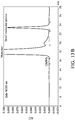
- the present disclosure has demonstrated that the linker-toxins having sugar amino acids can significantly reduce the use of organic solvent during the conjugation process of ADC. Also, it has been demonstrated that the conjugation process using specific linker-toxins can be performed in a pure aqueous phase. ADCs conjugated in a pure aqueous phase have little aggregation. HMWS analyzed by SEC is less than 0.1% (referring to the following Examples 20, 21 and Figs. 13B , 14B ).
- the commercial ADC drugs Kadcyla® and Adcetris®, are conserved in a frozen crystal form, and must be used within one day after reconstitution.
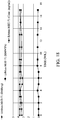
- the ADC of the present disclosure has excellent stability, and can be preserved in liquid form at 4°C for over four months (referring to the following Example 19 and Fig. 18 ).
- the molar equivalent ratio of the antibody and the linker-drug unit is selected such that the antibody-drug conjugate may have an average DAR in a range of about 3.5 to about 4.0. It should be appreciated that the average DAR of ADC may be adjusted according to actual need. For example, in some embodiments, the average DAR of ADC may be more than 4.0.
- the method 100 proceeds to step 108 by purifying the mixture solution.
- a desalting column or tangential flow filtration (TFF) can be used to purify the mixture solution to remove unconjugated linker-toxins and obtain the purified ADCs.
- the buffer can be changed to another appropriate buffer solution such as PBS buffer (2.67 mM KCl, 1.47 mM KH 2 PO 4 , 137.93 mM NaCl, 8.06 mM Na 2 HPO 4 -7H 2 O, pH 7.4), or other formulation solution such as SGN (20 mM sodium citrate, 6.3% (w/v) trehalose, 0.2 mg/mL polysorbate 80, pH 6.0).
- the average DAR (drug-to-antibody ratio) of the resulting ADCs of the present disclosure is about 3.5 to about 4.0 and the conjugation efficiency is more than 90%, such as 92%, 93%, 94%, 95% or 96%.
- SEC size-exclusion chromatography
- HMWS high molecular weight species
- MMAE a well-known toxin
- AF a well-known toxin
- Z-Val-Cit-OH and various sugar amino acids were synthesized based on the literature.
- the structure of the above compounds is well known by those skilled in the art, and is not described herein for simplicity
- the linker-toxin MHT-47 was synthesized according to the procedures shown in the following scheme.
- Z-Phe-Cit (9.13 g, 20 mmol) was charged into a mixture of dichloromethane (750 mL) and isopropanol (250 mL) and then stirred until the dipeptide was completely dissolved. Then, APEA-Boc (7.09 g, 30 mmol) and EEDQ (7.42 g, 30 mmol) were added and the mixture was stirred at room temperature for 3 days. The solvents were removed under reduced pressure and then diethyl ether (300 mL) was added to the residue. The mixture was filtered off and the crude product was resuspended in diethyl ether (300 mL). This procedure was repeated 3 times. The collected solid product was finally dried under vacuum to afford Z-Phe-Cit-APEA-Boc (9.53 g, yield 70.6%). The product was characterized by PMR.
- N3-SAA1(X)-Phe-Cit-APEA-Boc was finally purified by preparative HPLC (50% acetonitrile in water with 0.1% TFA; UV 210 nm; ODS-3 column 30x250 mm). Acetonitrile was evaporated under reduced pressure and the remaining aqueous solution was submitted to freeze-drying. A white solid was obtained (1 g) consisting of N3-SAA1(X)-Phe-Cit-APEA-Boc and N3-SAA1-Phe-Cit-APEA-Boc.
- N3-SAA1(X)-Phe-Cit-APEA-Boc and N3-SAA1-Phe-Cit-APEA-Boc 100 mg was dissolved in methanol (50 mL). After a catalytic amount of Pd/C (10%) was added, the reaction mixture was applied a hydrogen balloon and stirred overnight. After the catalyst was filtered off through a pad of celite, the methanol was removed under reduced pressure and a white solid was obtained (78 mg) consisting of SAA1(X)-Phe-Cit-APEA-Boc and SAA1-Phe-Cit-APEA-Boc.
- the crude product was purified by preparative HPLC (50% acetonitrile in water with 0.1% TFA; UV 210 nm; ODS-3 column 30x500 mm; flow rate 40 mL/min) to afford solution of MC-SAA1(X)-Phe-Cit-APEA-Boc and MC-SAA1-Phe-Cit-APEA-Boc.
- the linker-toxin MHT-71 was synthesized according to the procedures shown in the following scheme.
- the linker-toxin MHT-81a was synthesized according to the procedures shown in the following scheme.
- MC-SAA6(X)-Val-Cit-APEA-Boc (42.5 mg) in DCM (10 mL) was treated with TFA (0.1 mL) at room temperature. After 17 hours, the DCM and TFA were removed under reduced pressure and a light yellow solid MC-SAA6(X)-Val-Cit-APEA was obtained (40 mg).
- the linker-toxin MHT-93 was synthesized according to the procedures shown in the following scheme.
- Val-Cit-APEA-Boc (2.46 g, 5 mmol) and Z-SAA7-OH (1.71 g, 5 mmol) were dissolved in DMF (100 mL). Then, DIPEA (646.2 mg, 5 mmol) and HATU (1.90 g, 5 mmol) were added to the reaction mixture. After the mixture was stirred at room temperature for 16 hours, the solvent was evaporated under reduced pressure. The residue was stirred with ethyl acetate (200 mL) for several hours until a fine white powder formed. The solid product was filtered off. The white powder was boiled in water (200 mL) for 15 minutes and then filtered while hot. The product was washed with hot water (50 mL, 2 times) and finally dried under vacuum to afford Z-SAA7-Val-Cit-APEA-Boc.
- MC-SAA7-Val-Cit-APEA-Boc 200 mg in DCM (30 mL) was treated with TFA (0.5 mL) at room temperature. After 17 hours, DCM and TFA were removed under reduced pressure and a light yellow solid MC-SAA7-Val-Cit-APEA was obtained (180 mg).
- the linker-toxin MHT-98a was synthesized according to the procedures shown in the following scheme.
- MC-SAA8(X)-Val-Cit-APEA-Boc (40 mg) in DCM (2 mL) was treated with TFA (0.1 mL) at room temperature. After 17 hours, DCM and TFA were removed under reduced pressure and a light yellow solid MC-SAA8(X)-Val-Cit-APEA was obtained (40 mg).
- MC-SAA8(X)-Val-Cit-APEA (25.6 mg) and auristatin F (24.5 mg) were dissolved in a mixture of DCM and DMF (10:1, 5.5 mL). Then, HBTU (20.5 mg) and DIPEA (0.022 mL) were added respectively. After 17 hours, DCM and DMF were removed under reduced pressure. The residue was purified by preparative HPLC (40% acetonitrile in water with 0.1% TFA; UV 210 nm; ODS-3 column 30*250 mm; flow rate 35-40 mL/min) to afford compound MC-SAA8(X)-Val-Cit-APEA-AF (MHT-98a) as white solid (3.3 mg).
- the linker-toxin CCH-028 was synthesized according to the procedures shown in the following scheme.
- Z-Val-Cit-APEA(COOMe)-Boc (75.0 mg, 0.11 mmol) was added into dichloromethane (8 mL) and then treated with trifluoroacetic acid (0.09 mL) at room temperature. After 4 hours, the solvent was evaporated under reduced pressure. The residue was mixed with water (10 mL) and submitted to freeze-drying to afford Z-Val-Cit-APEA(COOMe) as white powder (96.0 mg).
- Auristatin F (80.0 mg, 0.102 mmol) was dissolved in small amount of DMF (1 mL) and then diluted with DCM (10 mL). The solution was immersed in an ice-bath and then Z-Val-Cit-APEA(COOMe) (71.4 mg, 0.102 mmol) and HATU (43.0 mg, 0.113 mmol) were charged. After DIPEA (0.071 mL) was added, the ice-bath was removed.
- the linker-toxin CCH-035 was synthesized according to the procedures shown in the following scheme.
- the linker-toxin CCH-038 was synthesized according to the procedures shown in the following scheme.
- the linker-toxin CCH-041 was synthesized according to the procedures shown in the following scheme.
- the linker-toxin FCW-016 was synthesized according to the procedures shown in the following scheme.
- HATU 40 mg, 0.1060 mmol was added to a stirred solution of Val-Cit-APEA-AF (99 mg, 0.0884 mmol), Z-SAA5-OH (36 mg, 0.1060 mmol) and DIPEA (0.046 mL, 0.2651 mmol) in a mixture of DMF (2 mL) and dichloromethane (20 mL).
- the linker-toxin WHY-46 containing two sugar units was synthesized according to the procedures shown in the following scheme.
- SAA1-SAA1-Val-Cit-APEA-AF (30.0 mg, 0.019 mmol) and DIPEA (7.4 mg, 0.057 mmol) were dissolved in DMF (2 mL). After the reaction mixture was immersed in an ice-bath, MC-OPFP (9.0 mg, 0.023 mmol) was added. After 10 minutes, the ice-bath was removed and the mixture was stirred at room temperature for 1 hour.
- the linker-toxin MHT-87 was synthesized according to the procedures shown in the following scheme.
- Val-Cit-APEA-Boc 65 mg and MC-OPFP (50 mg) were dissolved in DMF (5 mL) and then DIPEA (0.023 mL) was added. After 5 hours, DMF and DIPEA were removed under reduced pressure. The crude product was then purified by preparative HPLC (50% acetonitrile in water with 0.1% TFA; UV 210 nm; ODS-3 column 50x500 mm; flow rate 80 mL/min; RT 13.60 min) to afford MC-Val-Cit-APEA-Boc as white solid (40 mg).
- MC-Val-Cit-APEA-Boc (40 mg) in DCM (5 mL) was treated with TFA (300 L) at room temperature. After 17 hours, DCM and TFA were removed under reduced pressure to afford MC-Val-Cit-APEA as light yellow solid (46 mg).
- a desalting column (ThermoFisher Scientific, MWCO: 40K) was used to purify EG12014-MHT-71. During elution, the buffer was changed to PBS buffer (2.67 mM KCl, 1.47 mM KH 2 PO 4 , 137.93 mM NaCl, 8.06 mM Na 2 HPO 4 -7H 2 O). Hydrophobic interaction chromatography (HIC) (described below) and size-exclusion chromatography (SEC) (described below) were used to determine the average drug-to-antibody ratio (DAR) and high molecular weight species (HMWS).
- HIC Hydrophobic interaction chromatography
- SEC size-exclusion chromatography
- a Waters PDA 996 HPLC with the Yarra 3 ⁇ m SEC-3000 (300 x 7.8 mm) column was used to separate antibody monomer and aggregation products by size.
- the mobile phase consisted of 0.020 M potassium phosphate, 0.025 M potassium chloride, and isopropanol 5% (v/v), pH 6.95.
- 30 ⁇ L of samples were injected into the column at a flow rate of 0.5 mL/min and separated under isocratic conditions. Absorbance was detected at 280 nm. All species eluting prior to the main peak were integrated together and are reported as high molecular weight species (HMWS).
- HMWS high molecular weight species
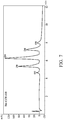
- Fig. 2 shows that the DAR of the ADC mainly distributes at 2 and 4.
- the average DAR of the EG12014-MHT-71 is about 3.7.
- the conjugation efficiency is about 95%.
- the buffer was changed to PBS buffer (2.67 mM KCl, 1.47 mM KH 2 PO 4 , 137.93 mM NaCl, 8.06 mM Na 2 HPO 4 -7H 2 O).
- HIC and SEC were used to determine the average DAR and HMWS.
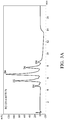
- Fig. 3A shows that the DAR of the ADC mainly distributes at 2 and 4.
- the average DAR of the EG12014-MHT-71 is about 3.9.
- the conjugation efficiency is about 96%.
- the buffer was changed to PBS buffer (2.67 mM KCl, 1.47 mM KH 2 PO 4 , 137.93 mM NaCl, 8.06 mM Na 2 HPO 4 -7H 2 O).
- HIC and SEC were used to determine the average DAR and HMWS.
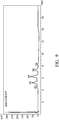
- Fig. 3B shows that the DAR of the ADC mainly distributes at 4 and 6.
- the average DAR of the EG12014-MHT-71 is about 5.4.
- the conjugation efficiency is about 99%.
- 0.1 mL of human IgG1 (Sigma)(initial concentration: 2.6 mg/mL) was treated with 1.6 ⁇ L of 2.5 mM TCEP (2.4 molar equivalent) in borate buffer for 2 hours at 37°C.
- 29.0 ⁇ L of 363 ⁇ M linker-toxin MHT-47 (9.9 molar equivalent) prepared in 75% (v/v) DMSO was added to the above-mentioned antibody solution for 30 minutes at 4°C (final concentration of organic solvent in the mixture solution was about 16.7%).
- 5 ⁇ L of 0.1 M cysteine was added to stop the reaction.
- a desalting column (ThermoFisher Scientific, MWCO: 40K) was used to purify IgG1-MHT-47. During elution, the buffer was changed to PBS buffer (2.67 mM KCl, 1.47 mM KH 2 PO 4 , 137.93 mM NaCl, 8.06 mM Na 2 HPO 4 -7H 2 O). HIC and SEC were used to determine the average DAR and HMWS.
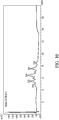
- Fig. 4 shows that the DAR of the ADC mainly distributes at 2 and 4.
- the average DAR of the IgG1-MHT-47 is about 3.7.
- the conjugation efficiency is about 93%.
- the buffer was changed to PBS buffer (2.67 mM KCl, 1.47 mM KH 2 PO 4 , 137.93 mM NaCl, 8.06 mM Na 2 HPO 4 -7H 2 O).
- HIC and SEC were used to determine the average DAR and HMWS.
- Fig. 5 shows that the DAR of the ADC mainly distributes at 2 and 4.
- the average DAR of the IgG1-MHT-47 is about 3.7.
- the conjugation efficiency is about 93%.
- a desalting column (ThermoFisher Scientific, MWCO: 40K) was used to purify Herceptin®-MHT-47. During elution, the buffer was changed to PBS buffer (2.67 mM KCl, 1.47 mM KH 2 PO 4 , 137.93 mM NaCl, 8.06 mM Na 2 HPO 4 -7H 2 O). HIC and SEC were used to determine the average DAR and HMWS.
- Fig. 6 shows that the DAR of the ADC mainly distributes at 2 and 4.
- the average DAR of the Herceptin®-MHT-47 is about 3.7.
- the conjugation efficiency is about 92%.
- a desalting column (ThermoFisher Scientific, MWCO: 40K) was used to purify Herceptin®-CCH-038. During elution, the buffer was changed to PBS buffer (2.67 mM KCl, 1.47 mM KH 2 PO 4 , 137.93 mM NaCl, 8.06 mM Na 2 HPO 4 -7H 2 O). HIC and SEC were used to determine the average DAR and HMWS.
- Fig. 7 shows that the DAR of the ADC mainly distributes at 2 and 4.
- the average DAR of the Herceptin®-CCH-038 is about 4.0.
- the conjugation efficiency is about 97%.
- a desalting column (ThermoFisher Scientific, MWCO: 40K) was used to purify Erbitux®-CCH-028. During elution, the buffer was changed to PBS buffer (2.67 mM KCl, 1.47 mM KH 2 PO 4 , 137.93 mM NaCl, 8.06 mM Na 2 HPO 4 -7H 2 O). HIC and SEC were used to determine the average DAR and HMWS.
- Fig. 8 shows that the DAR of the ADC mainly distributes at 2 and 4.
- the average DAR of the Erbitux®-CCH-028 is about 3.8.
- the conjugation efficiency is about 95%.
- a desalting column (ThermoFisher Scientific, MWCO: 40K) was used to purify Erbitux®-CCH-035. During elution, the buffer was changed to PBS buffer (2.67 mM KCl, 1.47 mM KH 2 PO 4 , 137.93 mM NaCl, 8.06 mM Na 2 HPO 4 -7H 2 O). HIC and SEC were used to determine the average DAR and HMWS.
- Fig. 9 shows that the DAR of the ADC mainly distributes at 2 and 4.
- the average DAR of the Erbitux®-CCH-035 is about 3.6.
- the conjugation efficiency is about 94%.
- a desalting column (ThermoFisher Scientific, MWCO: 40K) was used to purify Erbitux®-CCH-041. During elution, the buffer was changed to PBS buffer (2.67 mM KCl, 1.47 mM KH 2 PO 4 , 137.93 mM NaCl, 8.06 mM Na 2 HPO 4 -7H 2 O). HIC and SEC were used to determine the average DAR and HMWS.
- Fig. 10 shows that the DAR of the ADC mainly distributes at 2 and 4.
- the average DAR of the Erbitux®-CCH-041 is about 3.9.
- the conjugation efficiency is about 96%.
- a desalting column (ThermoFisher Scientific, MWCO: 40K) was used to purify Erbitux®-FCW-016. During elution, the buffer was changed to PBS buffer (2.67 mM KCl, 1.47 mM KH 2 PO 4 , 137.93 mM NaCl, 8.06 mM Na 2 HPO 4 -7H 2 O). HIC and SEC were used to determine the average DAR and HMWS.
- Fig. 11 shows that the DAR of the ADC mainly distributes at 2 and 4.
- the average DAR of the Erbitux®-FCW-016 is about 4.0.
- the conjugation efficiency is about 96%.
- the buffer was changed to PBS buffer (2.67 mM KCl, 1.47 mM KH 2 PO 4 , 137.93 mM NaCl, 8.06 mM Na 2 HPO 4 -7H 2 O).
- HIC and SEC were used to determine the average DAR and HMWS.
- Fig. 12 shows that the DAR of the ADC mainly distributes at 2 and 4.
- the average DAR of the Erbitux®-CCH-038 is about 3.8.
- the conjugation efficiency is about 95%.
- the buffer was changed to PBS buffer (2.67 mM KCl, 1.47 mM KH 2 PO 4 , 137.93 mM NaCl, 8.06 mM Na 2 HPO 4 -7H 2 O).
- HIC and SEC were used to determine the average DAR and HMWS.
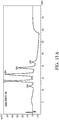
- Fig. 13A shows that the DAR of the ADC mainly distributes at 2 and 4.
- the average DAR of the Erbitux®-WHY-46 is about 3.9.
- the conjugation efficiency is about 96%.
- Fig. 13B shows that only 0.1% of HMWS was produced.
- the buffer was changed to PBS buffer (2.67 mM KCl, 1.47 mM KH 2 PO 4 , 137.93 mM NaCl, 8.06 mM Na 2 HPO 4 -7H 2 O).
- HIC and SEC were used to determine the average DAR and HMWS.
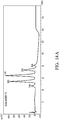
- Fig. 14A shows that the DAR of the ADC mainly distributes at 2 and 4.
- the average DAR of the Erbitux®-MHT-71 is about 3.6.
- the conjugation efficiency is about 95%.
- Fig. 14B shows that no significant HMWS was produced.
- HLX-07 produced by Henlix Inc.
- 10 mM TCEP 2.4 molar equivalent
- 140 ⁇ L of 755 ⁇ M linker-toxin MHT-71 (7 molar equivalent) prepared in ddH 2 O was added to the above-mentioned antibody solution for 30 minutes at 4°C(pure aqueous phase).
- 20 ⁇ L of 0.1 M cysteine was added to stop the reaction.
- a desalting column (ThermoFisher Scientific, MWCO: 40K) was used to purify HLX-07-MHT-71.
- the buffer was changed to PBS buffer (2.67 mM KCl, 1.47 mM KH 2 PO 4 , 137.93 mM NaCl, 8.06 mM Na 2 HPO 4 -7H 2 O).
- HIC and SEC were used to determine the average DAR and HMWS.
- Fig. 15 shows that the DAR of the ADC mainly distributes at 2 and 4.
- the average DAR of the HLX-07-MHT-71 is about 3.8.
- the conjugation efficiency is about 96%.
- a desalting column (ThermoFisher Scientific, MWCO: 40K) was used to purify anti-EpCAM-MHT-71. During elution, the buffer was changed to PBS buffer (2.67 mM KCl, 1.47 mM KH 2 PO 4 , 137.93 mM NaCl, 8.06 mM Na 2 HPO 4 -7H 2 O). The conjugation profile of anti-EpCAM-MHT-71 was analyzed by HIC. Unconjugated anti-EpCAM Ab peak was disappeared, indicating that all of the anti-EpCAM antibodies were conjugated with linker-toxin MHT-71.
- Fig. 16A shows the HIC profile of unconjugated anti-EpCAM Ab and Fig. 16B shows the HIC profile of anti-EpCAM Ab conjugated with linker-toxin MHT-71.
- the mobile phase consisted of 0.020 M potassium phosphate, 0.025 M potassium chloride, and isopropanol 5% (v/v), pH 6.95. 30 ⁇ L of samples were injected into the column at a flow rate of 0.5 mL/min and separated under isocratic conditions. Absorbance was detected at 280 nm. All species eluting prior to the main peak were integrated together and are reported as high molecular weight species (HMWS).
- HMWS high molecular weight species
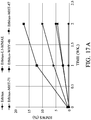
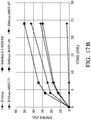
- Fig. 17A shows that Erbitux-MHT-71 and Erbitux-WHY-46 whose linkers contain sugar amino acid unit(s) had lower percentages of HMWS than Erbitux-L1-MMAE and Erbitux-MHT-87 whose linkers do not contain any sugar amino acid unit. Therefore, this experiment demonstrated that the linkers with sugar amino acid unit(s) not only increase its hydrophilicity but also significantly improve the thermal stability of ADCs.
- the mobile phase consisted of 0.020 M potassium phosphate, 0.025 M potassium chloride, and isopropanol 5% (v/v), pH 6.95. 30 ⁇ L of samples were injected into the column at a flow rate of 0.5 mL/min and separated under isocratic conditions. Absorbance was detected at 280 nm. All species eluting prior to the main peak were integrated together and are reported as high molecular weight species (HMWS).
- HMWS high molecular weight species
- Fig. 17B showed Erbitux-MHT-71 and Erbitux-WHY-46 whose linkers contain sugar amino acid unit(s) had lower HMWS percentages than Erbitux-L1-MMAE and Erbitux-MHT-87 whose linkers do not contain any sugar amino acid unit. Therefore, this experiment demonstrated that the linkers with sugar amino acid unit(s) not only increase its hydrophilicity but also significantly improve the thermal stability of ADCs.
- Erbitux-MHT-71 conjugated in aqueous phase was purified by a desalting column. During elution, the buffer was changed to 20 mM sodium citrate, 6.3% (w/v) trehalose, 0.2 mg/mL polysorbate 80, pH 6.0 (SGN). Erbitux-MHT-71 was divided into 100 ⁇ L/tube and stored at 4°C for the storage stability test. Erbitux-MHT-71 was sampled every week or every two weeks for antibody concentration, HIC and SEC analysis for 17 weeks.
- Fig. 18 shows that the antibody concentration of Erbitux-MHT-71 has no significant change ( ⁇ 10%) over four months, the average DAR of Erbitux-MHT-71 has no significant change ( ⁇ 5%) over four months, and the production of HMWS of Erbitux-MHT-71 was still very low ( ⁇ 0.2%) after four months.
- EGFR-expressing head and neck cancer cell lines FaDu and non-EGFR-expressing head and neck cancer cell lines RPMI 2650 were treated with ADCs containing 9 kinds of glycopeptide linkers to analyze their selective toxicity in different EGFR-expressing tumor cells.
- FaDu cells and RPMI cells were respectively seeded in Corning CellBIND 96-well plates at densities of 2.5 ⁇ 10 3 and 4 ⁇ 10 3 cells/well. After incubation for 24 hours at 37°C, 5% CO 2 incubator, the old medium was removed and the ADCs containing media were added to the cells at concentrations ranging from 10 -7 to 10 -13 M for FaDu cells or ranging from 10 -6 to 10 -12 M for RPMI 2650 cells (serial dilutions). The cells were then incubated for 120 hours at 37°C, 5% CO 2 incubator. After 120-hour incubation, the cells were rinsed once and assayed for cell viability with the MTT method.
- the old medium was aspirated and 100 ⁇ L of 0.5 mg/mL MTT containing medium was added into each well. After incubation for 4 hours, the MTT reagent was removed and the precipitate was dissolved in DMSO.
- the photometry intensity of the cells was measured by the microplate reader (Multiskan Ascent, Thermo Labsystems) of absorbance wavelength at 570 nm.
- Cell viability was calculated by the following equation. Cell viability was calculated by the following equation.
- Ins is the photometry intensity of the cells incubated with a given toxin
- Inb is the intensity of a blank well without cell seeding
- Inc is the intensity of the cells incubated with the culture medium only (positive control).
- Table 3 shows the IC50 value of ADCs containing 9 kinds of glycopeptide linkers in EGFR-expressing head and neck cancer cell lines FaDu cells are significantly less than 0.5 nM.
- the potency of ADCs containing 9 kinds of glycopeptide linkers in FaDu cells is very high.
- ADCs containing eight other kinds of glycopeptide linkers have high selective toxicity in tumor cells. The selective toxicity is more than 2000 times in the EGFR-expressing head and neck cancer cell lines FaDu cells than in the non-EGFR-expressing head and neck cancer cell lines RPMI 2650 cells.
- the selective toxicity is superior to the selective toxicity (about 1246 times) of Erbitux-L1-MMAE conjugated by commercial linker-toxin MC-Val-Cit-PAB-MMAE (Concortis Biotherapeutics) and the selective toxicity effect (about 366 times) of Erbitux-MHT-87 whose linkers do not contain any sugar amino acid unit.
- TGI Tumor Growth Inhibition
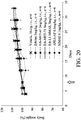
- Fig. 20 shows that no weight losing or other significant abnormal clinical symptoms occurred after drug administration (Erbitux, Erbitux-ADCs, APEA-AF, and MMAE).
- Table 5 BW (%) ⁇ SEM Day 8-29 Vehicle (DPBS) 106 ⁇ 5 Erbitux® (5 mg/kg) 106 ⁇ 1 Erbitux-MHT-47 (5 mg/kg) 106 ⁇ 1 Erbitux-MHT-71 (5 mg/kg) 108 ⁇ 2 Erbitux-L1-MMAE (5 mg/kg) 106 ⁇ 1 APEA-AF (0.1 mg/kg) 108 ⁇ 4 MMEA (0.1 mg/kg) 106 ⁇ 4
Landscapes
- Health & Medical Sciences (AREA)
- Chemical & Material Sciences (AREA)
- Bioinformatics & Cheminformatics (AREA)
- Engineering & Computer Science (AREA)
- Life Sciences & Earth Sciences (AREA)
- Medicinal Chemistry (AREA)
- General Health & Medical Sciences (AREA)
- Organic Chemistry (AREA)
- Pharmacology & Pharmacy (AREA)
- Animal Behavior & Ethology (AREA)
- Public Health (AREA)
- Veterinary Medicine (AREA)
- Epidemiology (AREA)
- Molecular Biology (AREA)
- Immunology (AREA)
- Proteomics, Peptides & Aminoacids (AREA)
- Biophysics (AREA)
- Biochemistry (AREA)
- Genetics & Genomics (AREA)
- Toxicology (AREA)
- Crystallography & Structural Chemistry (AREA)
- Nuclear Medicine, Radiotherapy & Molecular Imaging (AREA)
- Chemical Kinetics & Catalysis (AREA)
- General Chemical & Material Sciences (AREA)
- Gastroenterology & Hepatology (AREA)
- Microbiology (AREA)
- Hematology (AREA)
- Mycology (AREA)
- Oncology (AREA)
- Peptides Or Proteins (AREA)
- Medicinal Preparation (AREA)
- Medicines Containing Antibodies Or Antigens For Use As Internal Diagnostic Agents (AREA)
- Pharmaceuticals Containing Other Organic And Inorganic Compounds (AREA)
- Medicines That Contain Protein Lipid Enzymes And Other Medicines (AREA)
Applications Claiming Priority (1)
| Application Number | Priority Date | Filing Date | Title |
|---|---|---|---|
| US201562250107P | 2015-11-03 | 2015-11-03 |
Publications (2)
| Publication Number | Publication Date |
|---|---|
| EP3165237A1 true EP3165237A1 (de) | 2017-05-10 |
| EP3165237B1 EP3165237B1 (de) | 2018-12-19 |
Family
ID=57226832
Family Applications (2)
| Application Number | Title | Priority Date | Filing Date |
|---|---|---|---|
| EP16196894.6A Active EP3165532B1 (de) | 2015-11-03 | 2016-11-02 | Auristatin derivate, linker-arzneimittel und ligandenarzneimittelkonjugate |
| EP16196898.7A Active EP3165237B1 (de) | 2015-11-03 | 2016-11-02 | Antikörperwirkstoffkonjugat und herstellungsverfahren dafür |
Family Applications Before (1)
| Application Number | Title | Priority Date | Filing Date |
|---|---|---|---|
| EP16196894.6A Active EP3165532B1 (de) | 2015-11-03 | 2016-11-02 | Auristatin derivate, linker-arzneimittel und ligandenarzneimittelkonjugate |
Country Status (5)
| Country | Link |
|---|---|
| US (3) | US10618935B2 (de) |
| EP (2) | EP3165532B1 (de) |
| JP (2) | JP6412906B2 (de) |
| CN (2) | CN107029242A (de) |
| TW (2) | TWI660741B (de) |
Families Citing this family (10)
| Publication number | Priority date | Publication date | Assignee | Title |
|---|---|---|---|---|
| US12605458B2 (en) * | 2017-06-19 | 2026-04-21 | Systimmune, Inc. | Antibody-drug conjugate having acidic self-stabilization junction |
| WO2019104084A1 (en) * | 2017-11-22 | 2019-05-31 | Seattle Genetics, Inc. | Acid-mediated assay for analyzing ligand-drug conjugates |
| ES2926980T3 (es) * | 2018-11-09 | 2022-10-31 | Byondis Bv | Composiciones de conjugado de anticuerpo-fármaco que contienen duocarmicina filtrables y métodos relacionados |
| CA3085001C (en) * | 2019-05-20 | 2021-10-05 | Mabplex International, Ltd. | One-pot process for preparing intermediate of antibody-drug conjugate |
| CN115103858B (zh) * | 2020-03-25 | 2025-07-15 | 江苏恒瑞医药股份有限公司 | 一种抗体药物偶联物的制备方法 |
| KR20230015301A (ko) | 2021-07-19 | 2023-01-31 | 맙플렉스 인터내셔널 컴퍼니 리미티드 | 2성분 독소가 부하된 항체-약물 접합체 및 그의 용도 |
| KR20240132060A (ko) * | 2022-01-21 | 2024-09-02 | 엑셀리시스, 인코포레이티드 | 항-조직 인자 항체-약물 접합체를 포함하는 약학적 조성물 |
| WO2023200694A1 (en) * | 2022-04-14 | 2023-10-19 | Academia Sinica | Iduronidase stabilizers and uses thereof |
| CN115728297B (zh) * | 2022-11-18 | 2024-07-02 | 杭州皓阳生物技术有限公司 | 一种精准控制抗体偶联药物放大过程dar值的方法 |
| WO2024246657A1 (en) * | 2023-05-29 | 2024-12-05 | Intas Pharmaceuticals Ltd. | Method for conjugation and purification of antibody drug conjugate |
Citations (25)
| Publication number | Priority date | Publication date | Assignee | Title |
|---|---|---|---|---|
| EP0012023A1 (de) | 1978-12-05 | 1980-06-11 | Claude Peter Windsor-Smith | Wechselgetriebe |
| WO1983003679A1 (en) | 1982-04-12 | 1983-10-27 | Hybritech Inc | Antibodies having dual specificities, their preparation and uses therefor |
| EP0171496A2 (de) | 1984-08-15 | 1986-02-19 | Research Development Corporation of Japan | Verfahren zur Herstellung von chimärischen monoklonalen Antikörpern |
| EP0173494A2 (de) | 1984-08-27 | 1986-03-05 | The Board Of Trustees Of The Leland Stanford Junior University | Chimäre Rezeptoren durch Verbindung und Expression von DNS |
| WO1986001533A1 (en) | 1984-09-03 | 1986-03-13 | Celltech Limited | Production of chimeric antibodies |
| EP0184187A2 (de) | 1984-12-04 | 1986-06-11 | Teijin Limited | Chimärische Maus-Mensch-Immunoglobulin-Schwerkette und dieselbe kodierende chimärische DNS |
| EP0217577A2 (de) | 1985-09-12 | 1987-04-08 | Hybritech Incorporated | Antikörperkomplexe von haptenmodifizierten diagnostischen oder therapeutischen Mitteln |
| WO1987002671A1 (en) | 1985-11-01 | 1987-05-07 | International Genetic Engineering, Inc. | Modular assembly of antibody genes, antibodies prepared thereby and use |
| US4816397A (en) | 1983-03-25 | 1989-03-28 | Celltech, Limited | Multichain polypeptides or proteins and processes for their production |
| US4816567A (en) | 1983-04-08 | 1989-03-28 | Genentech, Inc. | Recombinant immunoglobin preparations |
| US4946778A (en) | 1987-09-21 | 1990-08-07 | Genex Corporation | Single polypeptide chain binding molecules |
| WO1993008829A1 (en) | 1991-11-04 | 1993-05-13 | The Regents Of The University Of California | Compositions that mediate killing of hiv-infected cells |
| US5225539A (en) | 1986-03-27 | 1993-07-06 | Medical Research Council | Recombinant altered antibodies and methods of making altered antibodies |
| WO1994004690A1 (en) | 1992-08-17 | 1994-03-03 | Genentech, Inc. | Bispecific immunoadhesins |
| US5545806A (en) | 1990-08-29 | 1996-08-13 | Genpharm International, Inc. | Ransgenic non-human animals for producing heterologous antibodies |
| US5569825A (en) | 1990-08-29 | 1996-10-29 | Genpharm International | Transgenic non-human animals capable of producing heterologous antibodies of various isotypes |
| US5585089A (en) | 1988-12-28 | 1996-12-17 | Protein Design Labs, Inc. | Humanized immunoglobulins |
| US5625126A (en) | 1990-08-29 | 1997-04-29 | Genpharm International, Inc. | Transgenic non-human animals for producing heterologous antibodies |
| US5633425A (en) | 1990-08-29 | 1997-05-27 | Genpharm International, Inc. | Transgenic non-human animals capable of producing heterologous antibodies |
| US5661016A (en) | 1990-08-29 | 1997-08-26 | Genpharm International Inc. | Transgenic non-human animals capable of producing heterologous antibodies of various isotypes |
| WO1997034631A1 (en) | 1996-03-18 | 1997-09-25 | Board Of Regents, The University Of Texas System | Immunoglobin-like domains with increased half lives |
| US6130237A (en) | 1996-09-12 | 2000-10-10 | Cancer Research Campaign Technology Limited | Condensed N-aclyindoles as antitumor agents |
| WO2004010957A2 (en) * | 2002-07-31 | 2004-02-05 | Seattle Genetics, Inc. | Drug conjugates and their use for treating cancer, an autoimmune disease or an infectious disease |
| US20120107332A1 (en) * | 2005-07-18 | 2012-05-03 | Seattle Genetics, Inc. | Beta-Glucuronide-Linker Drug Conjugates |
| US20150017246A1 (en) * | 2011-07-19 | 2015-01-15 | CellMosaic, Inc. | Novel crosslinking reagents, macromolecules, therapeutic bioconjugates, and synthetic methods thereof |
Family Cites Families (72)
| Publication number | Priority date | Publication date | Assignee | Title |
|---|---|---|---|---|
| WO1990014844A2 (en) * | 1989-06-06 | 1990-12-13 | Neorx Corporation | Sugars as cleavable linkers for the delivery and release of agents in native form |
| AU661270B2 (en) | 1990-03-05 | 1995-07-20 | Cephalon, Inc. | Chymotrypsin-like proteases and their inhibitors |
| US5410024A (en) * | 1993-01-21 | 1995-04-25 | Arizona Board Of Regents Acting On Behalf Of Arizona State University | Human cancer inhibitory pentapeptide amides |
| EP0731106B1 (de) * | 1993-10-01 | 2004-11-17 | Teikoku Hormone Mfg. Co., Ltd. | Dolastatin-derivate |
| DE4338015A1 (de) * | 1993-11-08 | 1995-05-11 | Asta Medica Ag | Verwendung von D-glucopyranuronsäuren und deren Derivaten zum Einbau in pharmakologisch wirksame Peptide und deren Salze |
| US6989452B2 (en) | 2001-05-31 | 2006-01-24 | Medarex, Inc. | Disulfide prodrugs and linkers and stabilizers useful therefor |
| US7091186B2 (en) | 2001-09-24 | 2006-08-15 | Seattle Genetics, Inc. | p-Amidobenzylethers in drug delivery agents |
| EP2478912B1 (de) | 2003-11-06 | 2016-08-31 | Seattle Genetics, Inc. | Konjugate von Auristatin mit gegen HER2- oder CD22-gerichtete Antikörper und deren therapeutische Verwendung |
| CA2556752C (en) | 2004-02-23 | 2016-02-02 | Genentech, Inc. | Heterocyclic self-immolative linkers and conjugates |
| JP4806680B2 (ja) | 2004-05-19 | 2011-11-02 | メダレックス インコーポレイテッド | 自己犠牲リンカー及び薬剤複合体 |
| NZ579482A (en) | 2004-06-01 | 2011-02-25 | Genentech Inc | Antibody drug conjugates and methods |
| US8288352B2 (en) | 2004-11-12 | 2012-10-16 | Seattle Genetics, Inc. | Auristatins having an aminobenzoic acid unit at the N terminus |
| JP4993645B2 (ja) | 2004-12-01 | 2012-08-08 | ジェネンテック, インコーポレイテッド | 抗体薬剤結合体および方法 |
| ES2708763T3 (es) | 2005-07-07 | 2019-04-11 | Seattle Genetics Inc | Compuestos de monometilvalina que tienen modificaciones de la cadena lateral de fenilalanina en el extremo C |
| WO2007008848A2 (en) | 2005-07-07 | 2007-01-18 | Seattle Genetics, Inc. | Monomethylvaline compounds having phenylalanine carboxy modifications at the c-terminus |
| US8940784B2 (en) | 2006-02-02 | 2015-01-27 | Syntarga B.V. | Water-soluble CC-1065 analogs and their conjugates |
| CN101490087B (zh) * | 2006-05-30 | 2013-11-06 | 健泰科生物技术公司 | 抗体和免疫偶联物及其用途 |
| JP2010503708A (ja) | 2006-09-15 | 2010-02-04 | エンゾン ファーマスーティカルズ インコーポレイテッド | 多官能性リンカーを含む標的化ポリマープロドラッグ |
| UA94628C2 (ru) * | 2006-10-27 | 2011-05-25 | Дженентек, Инк. | Гуманизированное моноклональное антитело, которое связывается с steap-1, и его применение |
| TWI412367B (zh) | 2006-12-28 | 2013-10-21 | 梅達雷克斯有限責任公司 | 化學鏈接劑與可裂解基質以及其之綴合物 |
| AR065404A1 (es) | 2007-02-21 | 2009-06-03 | Medarex Inc | Conjugados farmaco-ligando, los que se unen a citotoxinas potentes, composicion farmaceutica que los contienen y su uso para retardar o detener el crecimiento de un tumor en un mamifero |
| CA2695297C (en) | 2007-08-01 | 2017-03-21 | Syntarga B.V. | Substituted cc-1065 analogs and their conjugates |
| EP2240495B1 (de) | 2008-02-01 | 2015-07-15 | Genentech, Inc. | Nemorubicin-metabolit und analogreagenzien davon sowie antikörper-wirkstoff-konjugate damit und entsprechende verfahren |
| AU2009209565B2 (en) | 2008-02-01 | 2013-09-19 | Ascendis Pharma As | Prodrug comprising a self-cleavable linker |
| DK2265283T3 (da) * | 2008-03-18 | 2014-10-20 | Seattle Genetics Inc | Auristatin-lægemiddel-linker-konjugater |
| AU2009270988A1 (en) | 2008-07-15 | 2010-01-21 | Genentech, Inc. | Anthracycline derivative conjugates, process for their preparation and their use as antitumor compounds |
| ES2647317T3 (es) | 2008-11-03 | 2017-12-20 | Syntarga B.V. | Análogos de CC-1065 y sus conjugados |
| FR2947269B1 (fr) | 2009-06-29 | 2013-01-18 | Sanofi Aventis | Nouveaux composes anticancereux |
| US8394922B2 (en) | 2009-08-03 | 2013-03-12 | Medarex, Inc. | Antiproliferative compounds, conjugates thereof, methods therefor, and uses thereof |
| JP2013504585A (ja) | 2009-09-09 | 2013-02-07 | セントローズ, エルエルシー | 細胞外標的化薬物複合体 |
| US9062094B2 (en) | 2010-01-22 | 2015-06-23 | Ascendis Pharma As | Dipeptide-based prodrug linkers for aliphatic amine-containing drugs |
| SI2528625T1 (sl) | 2010-04-15 | 2013-11-29 | Spirogen Sarl | Pirolobenzodiazepini in njihovi konjugati |
| PT3056203T (pt) | 2010-04-21 | 2018-02-15 | Syntarga Bv | Conjugados de análogos de cc-1065 e ligantes bifuncionais |
| WO2012113847A1 (en) | 2011-02-25 | 2012-08-30 | Lonza Ltd | Branched linker for protein drug conjugates |
| KR102356286B1 (ko) | 2011-05-27 | 2022-02-08 | 암브룩스, 인코포레이티드 | 비-천연 아미노산 연결된 돌라스타틴 유도체를 함유하는 조성물, 이를 수반하는 방법, 및 용도 |
| CA2841313C (en) * | 2011-07-19 | 2023-10-24 | Cellmosaic, Llc | Sugar alcohol-based crosslinking reagents, macromolecules, therapeutic bioconjugates, and synthetic methods thereof |
| CA2850373C (en) | 2011-10-14 | 2019-07-16 | Seattle Genetics, Inc. | Pyrrolobenzodiazepines and targeted conjugates |
| WO2013068874A1 (en) | 2011-11-11 | 2013-05-16 | Pfizer Inc. | Antibody-drug conjugates |
| CN104185477B (zh) | 2011-11-17 | 2017-05-24 | 辉瑞公司 | 细胞毒性肽及其抗体‑药物缀合物 |
| KR101463098B1 (ko) | 2011-11-28 | 2014-11-27 | 한국생명공학연구원 | c-Met에 대한 인간항체에 약물이 접합된 약물 복합체 및 이의 용도 |
| SG11201403085PA (en) * | 2011-12-14 | 2014-10-30 | Seattle Genetics Inc | Fgfr antibody drug conjugates (adcs) and the use thereof |
| HUE033704T2 (en) | 2012-02-13 | 2017-12-28 | Bristol Myers Squibb Co | Enediyne compounds, conjugates thereof, and uses and methods therefor |
| WO2013149946A1 (en) | 2012-04-05 | 2013-10-10 | Nerviano Medical Sciences S.R.L. | Functionalized thieno-indole derivatives for the treatment of cancer |
| EP2836494B1 (de) | 2012-04-05 | 2019-08-21 | Nerviano Medical Sciences S.r.l. | Neue alkylierungsmittel |
| JP5990990B2 (ja) | 2012-04-16 | 2016-09-14 | セントラル硝子株式会社 | シス−1,3,3,3−テトラフルオロプロペンの製造方法 |
| AR090905A1 (es) | 2012-05-02 | 2014-12-17 | Merck Sharp & Dohme | Conjugados que contienen tetragalnac y peptidos y procedimientos para la administracion de oligonucleotidos, composicion farmaceutica |
| CN104640572B (zh) | 2012-05-15 | 2018-04-27 | 索伦托医疗有限公司 | 药物偶联物,偶联方法,及其用途 |
| WO2013181597A2 (en) | 2012-05-31 | 2013-12-05 | Synchem, Inc. | Thiol-ene click chemistry for drug conjugates |
| CN108727466B (zh) | 2012-06-07 | 2023-04-28 | Ambrx公司 | 前列腺特异性膜抗原抗体药物结合物 |
| KR102190832B1 (ko) | 2012-06-19 | 2020-12-15 | 암브룩스, 인코포레이티드 | 항cd70 항체 약물 컨쥬게이트 |
| EP2861261A2 (de) | 2012-06-19 | 2015-04-22 | Polytherics Limited | Verfahren zur herstellung von antikörperkonjugaten und antikörperkonjugate |
| WO2014008375A1 (en) | 2012-07-05 | 2014-01-09 | Mersana Therapeutics, Inc. | Terminally modified polymers and conjugates thereof |
| CN105142672B (zh) | 2012-10-23 | 2019-04-05 | 西纳福克斯股份有限公司 | 经修饰的抗体、抗体-缀合物及其制备方法 |
| US20150290342A1 (en) | 2012-10-24 | 2015-10-15 | Polytherics Limited | Drug-protein conjugates |
| RU2015120074A (ru) | 2012-10-30 | 2016-12-20 | НЕРВИАНО МЕДИКАЛ САЙЕНСИЗ С.р.л. | Функционализированные производные 9-бром-камптотецина |
| CN105121421B (zh) | 2012-11-05 | 2020-10-02 | 辉瑞公司 | 司普力西欧他汀类似物 |
| EP3564259A3 (de) | 2012-11-09 | 2020-02-12 | Innate Pharma | Kennungen für tgase-vermittelte konjugation |
| CN103807817A (zh) | 2012-11-09 | 2014-05-21 | 欧司朗有限公司 | 保持结构和具有该保持结构的照明装置 |
| EP2924053B1 (de) * | 2012-11-22 | 2020-11-11 | Glytech, Inc. | Glykosylierter linker, verbindung mit glykosyliertem linkerteil und physiologischem wirkstoffteil oder salz davon sowie verfahren zur herstellung dieser verbindung bzw. des salzes davon |
| CA2891280C (en) | 2012-11-24 | 2018-03-20 | Hangzhou Dac Biotech Co., Ltd. | Hydrophilic linkers and their uses for conjugation of drugs to cell binding molecules |
| WO2014088432A1 (en) | 2012-12-06 | 2014-06-12 | Callaghan Innovation Research Limited | Conjugate compounds |
| WO2014093379A1 (en) | 2012-12-10 | 2014-06-19 | Mersana Therapeutics, Inc. | Auristatin compounds and conjugates thereof |
| US9089614B2 (en) | 2012-12-21 | 2015-07-28 | Bioalliance C.V. | Hydrophilic self-immolative linkers and conjugates thereof |
| CN103254213B (zh) | 2012-12-21 | 2015-02-25 | 百奥泰生物科技(广州)有限公司 | 类美登素酯的制备方法及用于所述方法的组合物 |
| CN104688740A (zh) | 2012-12-21 | 2015-06-10 | 百奥泰生物科技(广州)有限公司 | 类美登素衍生物及其制备方法和用途 |
| CN103145847B (zh) * | 2013-02-05 | 2014-05-21 | 浙江大学 | 一种抗cd20抗体-海兔毒素偶联物及其制备方法和应用 |
| BR112016002829A2 (pt) | 2013-08-12 | 2017-09-19 | Genentech Inc | Composto e processo para preparar o composto de conjugado anticorpo-¿droga, composição farmacêutica, método de tratamento do câncer, kit para o tratamento do câncer, intermediário ligante¿-droga, porção e composto de porção droga de dímero cbi |
| KR102087850B1 (ko) | 2013-10-11 | 2020-03-12 | 메르사나 테라퓨틱스, 인코포레이티드 | 단백질-고분자-약물 접합체 |
| NZ758049A (en) | 2013-10-15 | 2024-03-22 | Seagen Inc | Pegylated drug-linkers for improved ligand-drug conjugate pharmacokinetics |
| CA2937753A1 (en) | 2014-02-17 | 2015-08-20 | Seattle Genetics, Inc. | Hydrophilic antibody-drug conjugates |
| WO2016008112A1 (en) | 2014-07-16 | 2016-01-21 | Medshine Discovery Inc. | Linkers and application towards adc thereof |
| US9879087B2 (en) | 2014-11-12 | 2018-01-30 | Siamab Therapeutics, Inc. | Glycan-interacting compounds and methods of use |
-
2016
- 2016-11-02 CN CN201610949210.4A patent/CN107029242A/zh active Pending
- 2016-11-02 TW TW105135455A patent/TWI660741B/zh active
- 2016-11-02 US US15/341,834 patent/US10618935B2/en active Active
- 2016-11-02 JP JP2016214926A patent/JP6412906B2/ja active Active
- 2016-11-02 EP EP16196894.6A patent/EP3165532B1/de active Active
- 2016-11-02 TW TW105135454A patent/TWI618697B/zh active
- 2016-11-02 JP JP2016215442A patent/JP6486316B2/ja active Active
- 2016-11-02 US US15/341,117 patent/US10233212B2/en active Active
- 2016-11-02 EP EP16196898.7A patent/EP3165237B1/de active Active
- 2016-11-02 CN CN201610948798.1A patent/CN107043406B/zh active Active
-
2018
- 2018-12-11 US US16/216,773 patent/US10683327B2/en active Active
Patent Citations (26)
| Publication number | Priority date | Publication date | Assignee | Title |
|---|---|---|---|---|
| EP0012023A1 (de) | 1978-12-05 | 1980-06-11 | Claude Peter Windsor-Smith | Wechselgetriebe |
| WO1983003679A1 (en) | 1982-04-12 | 1983-10-27 | Hybritech Inc | Antibodies having dual specificities, their preparation and uses therefor |
| EP0105360A1 (de) | 1982-04-12 | 1984-04-18 | Hybritech Incorporated | Antikörper mit zweifacher spezifizität, deren herstellung und verwendungen |
| US4816397A (en) | 1983-03-25 | 1989-03-28 | Celltech, Limited | Multichain polypeptides or proteins and processes for their production |
| US4816567A (en) | 1983-04-08 | 1989-03-28 | Genentech, Inc. | Recombinant immunoglobin preparations |
| EP0171496A2 (de) | 1984-08-15 | 1986-02-19 | Research Development Corporation of Japan | Verfahren zur Herstellung von chimärischen monoklonalen Antikörpern |
| EP0173494A2 (de) | 1984-08-27 | 1986-03-05 | The Board Of Trustees Of The Leland Stanford Junior University | Chimäre Rezeptoren durch Verbindung und Expression von DNS |
| WO1986001533A1 (en) | 1984-09-03 | 1986-03-13 | Celltech Limited | Production of chimeric antibodies |
| EP0184187A2 (de) | 1984-12-04 | 1986-06-11 | Teijin Limited | Chimärische Maus-Mensch-Immunoglobulin-Schwerkette und dieselbe kodierende chimärische DNS |
| EP0217577A2 (de) | 1985-09-12 | 1987-04-08 | Hybritech Incorporated | Antikörperkomplexe von haptenmodifizierten diagnostischen oder therapeutischen Mitteln |
| WO1987002671A1 (en) | 1985-11-01 | 1987-05-07 | International Genetic Engineering, Inc. | Modular assembly of antibody genes, antibodies prepared thereby and use |
| US5225539A (en) | 1986-03-27 | 1993-07-06 | Medical Research Council | Recombinant altered antibodies and methods of making altered antibodies |
| US4946778A (en) | 1987-09-21 | 1990-08-07 | Genex Corporation | Single polypeptide chain binding molecules |
| US5585089A (en) | 1988-12-28 | 1996-12-17 | Protein Design Labs, Inc. | Humanized immunoglobulins |
| US5625126A (en) | 1990-08-29 | 1997-04-29 | Genpharm International, Inc. | Transgenic non-human animals for producing heterologous antibodies |
| US5545806A (en) | 1990-08-29 | 1996-08-13 | Genpharm International, Inc. | Ransgenic non-human animals for producing heterologous antibodies |
| US5569825A (en) | 1990-08-29 | 1996-10-29 | Genpharm International | Transgenic non-human animals capable of producing heterologous antibodies of various isotypes |
| US5633425A (en) | 1990-08-29 | 1997-05-27 | Genpharm International, Inc. | Transgenic non-human animals capable of producing heterologous antibodies |
| US5661016A (en) | 1990-08-29 | 1997-08-26 | Genpharm International Inc. | Transgenic non-human animals capable of producing heterologous antibodies of various isotypes |
| WO1993008829A1 (en) | 1991-11-04 | 1993-05-13 | The Regents Of The University Of California | Compositions that mediate killing of hiv-infected cells |
| WO1994004690A1 (en) | 1992-08-17 | 1994-03-03 | Genentech, Inc. | Bispecific immunoadhesins |
| WO1997034631A1 (en) | 1996-03-18 | 1997-09-25 | Board Of Regents, The University Of Texas System | Immunoglobin-like domains with increased half lives |
| US6130237A (en) | 1996-09-12 | 2000-10-10 | Cancer Research Campaign Technology Limited | Condensed N-aclyindoles as antitumor agents |
| WO2004010957A2 (en) * | 2002-07-31 | 2004-02-05 | Seattle Genetics, Inc. | Drug conjugates and their use for treating cancer, an autoimmune disease or an infectious disease |
| US20120107332A1 (en) * | 2005-07-18 | 2012-05-03 | Seattle Genetics, Inc. | Beta-Glucuronide-Linker Drug Conjugates |
| US20150017246A1 (en) * | 2011-07-19 | 2015-01-15 | CellMosaic, Inc. | Novel crosslinking reagents, macromolecules, therapeutic bioconjugates, and synthetic methods thereof |
Non-Patent Citations (44)
| Title |
|---|
| BEIDLER ET AL., J. IMMUNOL., vol. 141, 1988, pages 4053 - 4060 |
| BERTER ET AL., SCIENCE, vol. 240, 1988, pages 1041 - 1043 |
| BIRD, SCIENCE, vol. 242, 1988, pages 423 - 42 |
| BOWEN ET AL., J. IMMUNOL., vol. 151, 1993, pages 5896 - 5906 |
| BREITLING ET AL.: "Recombinant Antibodies", 1998, JOHN WILEY, AND SONS |
| CARTER ET AL., BIO/TECHNOLOGY, vol. 10, 1992, pages 163 - 167 |
| CARTER ET AL., J. HEMATOTHERAPY, vol. 4, 1995, pages 463 - 470 |
| CHARI ET AL., CANCER RES., vol. 52, 1992, pages 127 - 131 |
| COLE ET AL.: "Monoclonal Antibodies and Cancer Therapy", 1985, ALAN R. LISS, INC., pages: 77 - 96 |
| FRANCISCO ET AL., CANCER RES., vol. 60, 2000, pages 3225 - 3231 |
| FRANKE ET AL., CANCER BIOTHER. RADIOPHARM., vol. 15, 2000, pages 459 76 |
| HOOGENBOOM; WINTER, J. MOL. BIOL., vol. 227, 1991, pages 381 |
| HUSTON ET AL., PROC. NATL. ACAD. SCI. USA, vol. 85, 1988, pages 5879 - 5883 |
| JARDIEU, P. M. AND FICK JR., R. B, EDS.,: "Anti-IgE and Allergic Disease", 2002, MARCEL DEKKER, article QUAN; CARTER: "The rise of monoclonal antibodies as therapeutics", pages: 427 - 469 |
| JESPERS ET AL., BIOTECHNOLOGY, vol. 12, 1994, pages 899 - 903 |
| JONES ET AL., NATURE, vol. 321, 1986, pages 552 - 525 |
| KABAT ET AL., J. IMMUNOLOGY, vol. 125, no. 3, 1980, pages 961 - 969 |
| KABAT ET AL.: "Sequences of Proteins of Immunological Interest, Fifth Edition,", 1991, NATIONAL INSTITUTE OF HEALTH |
| KOHLER; MILSTEIN, NATURE, vol. 256, 1975, pages 495 - 497 |
| KOZBOR ET AL., IMMUNOLOGY TODAY, vol. 4, 1983, pages 72 |
| KOZBOR ET AL., IMMUNOLOGY TODAY, vol. 4, 1983, pages 72 - 79 |
| LIU ET AL., J. IMMUNOL., vol. 139, 1987, pages 3521 - 3526 |
| LIU ET AL., PROC. NATL. ACAD. SCI. USA, vol. 84, 1987, pages 3439 - 3443 |
| LONBERG; HUSZAR, INT. REV. IMMUNOL., vol. 13, 1995, pages 65 - 93 |
| MARKS ET AL., J. MOL. BIOL., vol. 222, 1991, pages 581 |
| MERCHANT ET AL., NATURE BIOTECHNOLOGY, vol. 16, 1998, pages 677 - 681 |
| MILSTEIN ET AL., NATURE, vol. 305, 1983, pages 537 - 539 |
| MORRISON, SCIENCE, vol. 229, 1985, pages 1202 - 1207 |
| MURRAY, SEMIN. ONCOL., vol. 27, 2000, pages 64 70 |
| NISHIMURA ET AL., CANCER. RES., vol. 47, 1987, pages 999 - 1005 |
| OI ET AL., BIOTECHNIQUES, vol. 4, 1986, pages 214 |
| OLSSON ET AL., METH. ENZYMOL., vol. 92, 1982, pages 3 - 16 |
| RODRIGUES ET AL., J. IMMUNOLOGY, vol. 151, 1993, pages 6954 - 6961 |
| SHAW ET AL., J. NATL. CANCER INST., vol. 80, 1988, pages 1553 - 1559 |
| SUN ET AL., PROC. NATL. ACAD. SCI. USA, vol. 84, 1987, pages 214 - 218 |
| SURESH ET AL., METHODS IN ENZYMOLOGY, vol. 121, 1986, pages 210 |
| TENG ET AL., PROC. NATL. ACAD. SCI. USA, vol. 80, 1983, pages 7308 - 7312 |
| TRAIL ET AL., CANCER RESEARCH, vol. 57, 1997, pages 100 - 105 |
| TRAIL ET AL., SCIENCE, vol. 261, 1993, pages 212 - 215 |
| TRAUNECKER ET AL., EMBO J., vol. 10, 1991, pages 3655 - 3659 |
| VERHOEYAN ET AL., SCIENCE, vol. 239, 1988, pages 1534 |
| WAHL ET AL., CANCER RES., vol. 62, no. 13, 2002, pages 3736 - 42 |
| WARD ET AL., NATURE, vol. 334, 1989, pages 544 - 54 |
| WOOD ET AL., NATURE, vol. 314, 1985, pages 446 - 449 |
Also Published As
| Publication number | Publication date |
|---|---|
| EP3165532A3 (de) | 2017-06-14 |
| JP2017114847A (ja) | 2017-06-29 |
| JP6412906B2 (ja) | 2018-10-24 |
| TW201716088A (zh) | 2017-05-16 |
| US10683327B2 (en) | 2020-06-16 |
| JP6486316B2 (ja) | 2019-03-20 |
| CN107043406A (zh) | 2017-08-15 |
| JP2017114848A (ja) | 2017-06-29 |
| US20170119902A1 (en) | 2017-05-04 |
| EP3165532B1 (de) | 2018-12-19 |
| US10233212B2 (en) | 2019-03-19 |
| TWI618697B (zh) | 2018-03-21 |
| EP3165532A2 (de) | 2017-05-10 |
| CN107029242A (zh) | 2017-08-11 |
| TWI660741B (zh) | 2019-06-01 |
| TW201716380A (zh) | 2017-05-16 |
| US10618935B2 (en) | 2020-04-14 |
| EP3165237B1 (de) | 2018-12-19 |
| US20190106459A1 (en) | 2019-04-11 |
| CN107043406B (zh) | 2021-08-17 |
| US20180016300A1 (en) | 2018-01-18 |
Similar Documents
| Publication | Publication Date | Title |
|---|---|---|
| EP3165237B1 (de) | Antikörperwirkstoffkonjugat und herstellungsverfahren dafür | |
| US20240173427A1 (en) | Glypican 3 antibodies and conjugates thereof | |
| TWI814024B (zh) | 自行穩定之接合劑共軛物 | |
| US20200289661A1 (en) | Cd48 antibodies and conjugates thereof | |
| CN105451775B (zh) | 药物抗体缀合物 | |
| US20050214310A1 (en) | Melphalan prodrugs | |
| KR20160062137A (ko) | 개선된 리간드-약물 컨쥬게이트 약물동력학을 위한 peg화된 약물-링커 | |
| CA3221398A1 (en) | Anthracycline antibody conjugates | |
| US20220175950A1 (en) | Pharmaceutical compositions comprising anti-191p4d12 antibody drug conjugates and methods of use thereof | |
| CN116806157A (zh) | 接头-有效载荷及其缀合物 |
Legal Events
| Date | Code | Title | Description |
|---|---|---|---|
| PUAI | Public reference made under article 153(3) epc to a published international application that has entered the european phase |
Free format text: ORIGINAL CODE: 0009012 |
|
| STAA | Information on the status of an ep patent application or granted ep patent |
Free format text: STATUS: THE APPLICATION HAS BEEN PUBLISHED |
|
| AK | Designated contracting states |
Kind code of ref document: A1 Designated state(s): AL AT BE BG CH CY CZ DE DK EE ES FI FR GB GR HR HU IE IS IT LI LT LU LV MC MK MT NL NO PL PT RO RS SE SI SK SM TR |
|
| AX | Request for extension of the european patent |
Extension state: BA ME |
|
| STAA | Information on the status of an ep patent application or granted ep patent |
Free format text: STATUS: REQUEST FOR EXAMINATION WAS MADE |
|
| 17P | Request for examination filed |
Effective date: 20171110 |
|
| RBV | Designated contracting states (corrected) |
Designated state(s): AL AT BE BG CH CY CZ DE DK EE ES FI FR GB GR HR HU IE IS IT LI LT LU LV MC MK MT NL NO PL PT RO RS SE SI SK SM TR |
|
| REG | Reference to a national code |
Ref country code: DE Ref legal event code: R079 Ref document number: 602016008410 Country of ref document: DE Free format text: PREVIOUS MAIN CLASS: A61K0047380000 Ipc: C07K0007020000 |
|
| GRAP | Despatch of communication of intention to grant a patent |
Free format text: ORIGINAL CODE: EPIDOSNIGR1 |
|
| STAA | Information on the status of an ep patent application or granted ep patent |
Free format text: STATUS: GRANT OF PATENT IS INTENDED |
|
| RIC1 | Information provided on ipc code assigned before grant |
Ipc: A61K 47/55 20170101ALI20180703BHEP Ipc: C07K 5/02 20060101ALI20180703BHEP Ipc: C07K 7/02 20060101AFI20180703BHEP Ipc: A61K 47/68 20170101ALI20180703BHEP |
|
| INTG | Intention to grant announced |
Effective date: 20180727 |
|
| GRAS | Grant fee paid |
Free format text: ORIGINAL CODE: EPIDOSNIGR3 |
|
| GRAA | (expected) grant |
Free format text: ORIGINAL CODE: 0009210 |
|
| STAA | Information on the status of an ep patent application or granted ep patent |
Free format text: STATUS: THE PATENT HAS BEEN GRANTED |
|
| AK | Designated contracting states |
Kind code of ref document: B1 Designated state(s): AL AT BE BG CH CY CZ DE DK EE ES FI FR GB GR HR HU IE IS IT LI LT LU LV MC MK MT NL NO PL PT RO RS SE SI SK SM TR |
|
| REG | Reference to a national code |
Ref country code: GB Ref legal event code: FG4D |
|
| REG | Reference to a national code |
Ref country code: CH Ref legal event code: EP |
|
| REG | Reference to a national code |
Ref country code: IE Ref legal event code: FG4D |
|
| REG | Reference to a national code |
Ref country code: DE Ref legal event code: R096 Ref document number: 602016008410 Country of ref document: DE |
|
| REG | Reference to a national code |
Ref country code: AT Ref legal event code: REF Ref document number: 1078579 Country of ref document: AT Kind code of ref document: T Effective date: 20190115 |
|
| REG | Reference to a national code |
Ref country code: NL Ref legal event code: MP Effective date: 20181219 |
|
| PG25 | Lapsed in a contracting state [announced via postgrant information from national office to epo] |
Ref country code: FI Free format text: LAPSE BECAUSE OF FAILURE TO SUBMIT A TRANSLATION OF THE DESCRIPTION OR TO PAY THE FEE WITHIN THE PRESCRIBED TIME-LIMIT Effective date: 20181219 Ref country code: LV Free format text: LAPSE BECAUSE OF FAILURE TO SUBMIT A TRANSLATION OF THE DESCRIPTION OR TO PAY THE FEE WITHIN THE PRESCRIBED TIME-LIMIT Effective date: 20181219 Ref country code: HR Free format text: LAPSE BECAUSE OF FAILURE TO SUBMIT A TRANSLATION OF THE DESCRIPTION OR TO PAY THE FEE WITHIN THE PRESCRIBED TIME-LIMIT Effective date: 20181219 Ref country code: LT Free format text: LAPSE BECAUSE OF FAILURE TO SUBMIT A TRANSLATION OF THE DESCRIPTION OR TO PAY THE FEE WITHIN THE PRESCRIBED TIME-LIMIT Effective date: 20181219 Ref country code: BG Free format text: LAPSE BECAUSE OF FAILURE TO SUBMIT A TRANSLATION OF THE DESCRIPTION OR TO PAY THE FEE WITHIN THE PRESCRIBED TIME-LIMIT Effective date: 20190319 Ref country code: NO Free format text: LAPSE BECAUSE OF FAILURE TO SUBMIT A TRANSLATION OF THE DESCRIPTION OR TO PAY THE FEE WITHIN THE PRESCRIBED TIME-LIMIT Effective date: 20190319 |
|
| REG | Reference to a national code |
Ref country code: LT Ref legal event code: MG4D |
|
| REG | Reference to a national code |
Ref country code: AT Ref legal event code: MK05 Ref document number: 1078579 Country of ref document: AT Kind code of ref document: T Effective date: 20181219 |
|
| PG25 | Lapsed in a contracting state [announced via postgrant information from national office to epo] |
Ref country code: AL Free format text: LAPSE BECAUSE OF FAILURE TO SUBMIT A TRANSLATION OF THE DESCRIPTION OR TO PAY THE FEE WITHIN THE PRESCRIBED TIME-LIMIT Effective date: 20181219 Ref country code: RS Free format text: LAPSE BECAUSE OF FAILURE TO SUBMIT A TRANSLATION OF THE DESCRIPTION OR TO PAY THE FEE WITHIN THE PRESCRIBED TIME-LIMIT Effective date: 20181219 Ref country code: GR Free format text: LAPSE BECAUSE OF FAILURE TO SUBMIT A TRANSLATION OF THE DESCRIPTION OR TO PAY THE FEE WITHIN THE PRESCRIBED TIME-LIMIT Effective date: 20190320 Ref country code: SE Free format text: LAPSE BECAUSE OF FAILURE TO SUBMIT A TRANSLATION OF THE DESCRIPTION OR TO PAY THE FEE WITHIN THE PRESCRIBED TIME-LIMIT Effective date: 20181219 |
|
| PG25 | Lapsed in a contracting state [announced via postgrant information from national office to epo] |
Ref country code: NL Free format text: LAPSE BECAUSE OF FAILURE TO SUBMIT A TRANSLATION OF THE DESCRIPTION OR TO PAY THE FEE WITHIN THE PRESCRIBED TIME-LIMIT Effective date: 20181219 |
|
| PG25 | Lapsed in a contracting state [announced via postgrant information from national office to epo] |
Ref country code: PT Free format text: LAPSE BECAUSE OF FAILURE TO SUBMIT A TRANSLATION OF THE DESCRIPTION OR TO PAY THE FEE WITHIN THE PRESCRIBED TIME-LIMIT Effective date: 20190419 Ref country code: CZ Free format text: LAPSE BECAUSE OF FAILURE TO SUBMIT A TRANSLATION OF THE DESCRIPTION OR TO PAY THE FEE WITHIN THE PRESCRIBED TIME-LIMIT Effective date: 20181219 Ref country code: ES Free format text: LAPSE BECAUSE OF FAILURE TO SUBMIT A TRANSLATION OF THE DESCRIPTION OR TO PAY THE FEE WITHIN THE PRESCRIBED TIME-LIMIT Effective date: 20181219 Ref country code: IT Free format text: LAPSE BECAUSE OF FAILURE TO SUBMIT A TRANSLATION OF THE DESCRIPTION OR TO PAY THE FEE WITHIN THE PRESCRIBED TIME-LIMIT Effective date: 20181219 Ref country code: PL Free format text: LAPSE BECAUSE OF FAILURE TO SUBMIT A TRANSLATION OF THE DESCRIPTION OR TO PAY THE FEE WITHIN THE PRESCRIBED TIME-LIMIT Effective date: 20181219 |
|
| PG25 | Lapsed in a contracting state [announced via postgrant information from national office to epo] |
Ref country code: SM Free format text: LAPSE BECAUSE OF FAILURE TO SUBMIT A TRANSLATION OF THE DESCRIPTION OR TO PAY THE FEE WITHIN THE PRESCRIBED TIME-LIMIT Effective date: 20181219 Ref country code: EE Free format text: LAPSE BECAUSE OF FAILURE TO SUBMIT A TRANSLATION OF THE DESCRIPTION OR TO PAY THE FEE WITHIN THE PRESCRIBED TIME-LIMIT Effective date: 20181219 Ref country code: SK Free format text: LAPSE BECAUSE OF FAILURE TO SUBMIT A TRANSLATION OF THE DESCRIPTION OR TO PAY THE FEE WITHIN THE PRESCRIBED TIME-LIMIT Effective date: 20181219 Ref country code: RO Free format text: LAPSE BECAUSE OF FAILURE TO SUBMIT A TRANSLATION OF THE DESCRIPTION OR TO PAY THE FEE WITHIN THE PRESCRIBED TIME-LIMIT Effective date: 20181219 Ref country code: IS Free format text: LAPSE BECAUSE OF FAILURE TO SUBMIT A TRANSLATION OF THE DESCRIPTION OR TO PAY THE FEE WITHIN THE PRESCRIBED TIME-LIMIT Effective date: 20190419 |
|
| REG | Reference to a national code |
Ref country code: DE Ref legal event code: R097 Ref document number: 602016008410 Country of ref document: DE |
|
| PLBE | No opposition filed within time limit |
Free format text: ORIGINAL CODE: 0009261 |
|
| STAA | Information on the status of an ep patent application or granted ep patent |
Free format text: STATUS: NO OPPOSITION FILED WITHIN TIME LIMIT |
|
| PG25 | Lapsed in a contracting state [announced via postgrant information from national office to epo] |
Ref country code: AT Free format text: LAPSE BECAUSE OF FAILURE TO SUBMIT A TRANSLATION OF THE DESCRIPTION OR TO PAY THE FEE WITHIN THE PRESCRIBED TIME-LIMIT Effective date: 20181219 Ref country code: DK Free format text: LAPSE BECAUSE OF FAILURE TO SUBMIT A TRANSLATION OF THE DESCRIPTION OR TO PAY THE FEE WITHIN THE PRESCRIBED TIME-LIMIT Effective date: 20181219 |
|
| 26N | No opposition filed |
Effective date: 20190920 |
|
| PG25 | Lapsed in a contracting state [announced via postgrant information from national office to epo] |
Ref country code: SI Free format text: LAPSE BECAUSE OF FAILURE TO SUBMIT A TRANSLATION OF THE DESCRIPTION OR TO PAY THE FEE WITHIN THE PRESCRIBED TIME-LIMIT Effective date: 20181219 |
|
| PG25 | Lapsed in a contracting state [announced via postgrant information from national office to epo] |
Ref country code: TR Free format text: LAPSE BECAUSE OF FAILURE TO SUBMIT A TRANSLATION OF THE DESCRIPTION OR TO PAY THE FEE WITHIN THE PRESCRIBED TIME-LIMIT Effective date: 20181219 |
|
| REG | Reference to a national code |
Ref country code: CH Ref legal event code: PL |
|
| PG25 | Lapsed in a contracting state [announced via postgrant information from national office to epo] |
Ref country code: LU Free format text: LAPSE BECAUSE OF NON-PAYMENT OF DUE FEES Effective date: 20191102 Ref country code: MC Free format text: LAPSE BECAUSE OF FAILURE TO SUBMIT A TRANSLATION OF THE DESCRIPTION OR TO PAY THE FEE WITHIN THE PRESCRIBED TIME-LIMIT Effective date: 20181219 Ref country code: CH Free format text: LAPSE BECAUSE OF NON-PAYMENT OF DUE FEES Effective date: 20191130 Ref country code: LI Free format text: LAPSE BECAUSE OF NON-PAYMENT OF DUE FEES Effective date: 20191130 |
|
| REG | Reference to a national code |
Ref country code: BE Ref legal event code: MM Effective date: 20191130 |
|
| PG25 | Lapsed in a contracting state [announced via postgrant information from national office to epo] |
Ref country code: IE Free format text: LAPSE BECAUSE OF NON-PAYMENT OF DUE FEES Effective date: 20191102 |
|
| PG25 | Lapsed in a contracting state [announced via postgrant information from national office to epo] |
Ref country code: BE Free format text: LAPSE BECAUSE OF NON-PAYMENT OF DUE FEES Effective date: 20191130 |
|
| PG25 | Lapsed in a contracting state [announced via postgrant information from national office to epo] |
Ref country code: CY Free format text: LAPSE BECAUSE OF FAILURE TO SUBMIT A TRANSLATION OF THE DESCRIPTION OR TO PAY THE FEE WITHIN THE PRESCRIBED TIME-LIMIT Effective date: 20181219 |
|
| PG25 | Lapsed in a contracting state [announced via postgrant information from national office to epo] |
Ref country code: MT Free format text: LAPSE BECAUSE OF FAILURE TO SUBMIT A TRANSLATION OF THE DESCRIPTION OR TO PAY THE FEE WITHIN THE PRESCRIBED TIME-LIMIT Effective date: 20181219 Ref country code: HU Free format text: LAPSE BECAUSE OF FAILURE TO SUBMIT A TRANSLATION OF THE DESCRIPTION OR TO PAY THE FEE WITHIN THE PRESCRIBED TIME-LIMIT; INVALID AB INITIO Effective date: 20161102 |
|
| PG25 | Lapsed in a contracting state [announced via postgrant information from national office to epo] |
Ref country code: MK Free format text: LAPSE BECAUSE OF FAILURE TO SUBMIT A TRANSLATION OF THE DESCRIPTION OR TO PAY THE FEE WITHIN THE PRESCRIBED TIME-LIMIT Effective date: 20181219 |
|
| PGFP | Annual fee paid to national office [announced via postgrant information from national office to epo] |
Ref country code: DE Payment date: 20251128 Year of fee payment: 10 |
|
| PGFP | Annual fee paid to national office [announced via postgrant information from national office to epo] |
Ref country code: GB Payment date: 20251127 Year of fee payment: 10 |
|
| PGFP | Annual fee paid to national office [announced via postgrant information from national office to epo] |
Ref country code: FR Payment date: 20251125 Year of fee payment: 10 |