EP3178952B1 - Alliage d'aluminium à haute ductilité, semi-rigide destiné à la fabrication de demi-produits ou de pièces pour véhicules automobiles - Google Patents
Alliage d'aluminium à haute ductilité, semi-rigide destiné à la fabrication de demi-produits ou de pièces pour véhicules automobiles Download PDFInfo
- Publication number
- EP3178952B1 EP3178952B1 EP17151174.4A EP17151174A EP3178952B1 EP 3178952 B1 EP3178952 B1 EP 3178952B1 EP 17151174 A EP17151174 A EP 17151174A EP 3178952 B1 EP3178952 B1 EP 3178952B1
- Authority
- EP
- European Patent Office
- Prior art keywords
- weight
- aluminium alloy
- components
- aluminum alloy
- finished products
- Prior art date
- Legal status (The legal status is an assumption and is not a legal conclusion. Google has not performed a legal analysis and makes no representation as to the accuracy of the status listed.)
- Active
Links
Images
Classifications
-
- C—CHEMISTRY; METALLURGY
- C22—METALLURGY; FERROUS OR NON-FERROUS ALLOYS; TREATMENT OF ALLOYS OR NON-FERROUS METALS
- C22C—ALLOYS
- C22C21/00—Alloys based on aluminium
-
- C—CHEMISTRY; METALLURGY
- C22—METALLURGY; FERROUS OR NON-FERROUS ALLOYS; TREATMENT OF ALLOYS OR NON-FERROUS METALS
- C22C—ALLOYS
- C22C21/00—Alloys based on aluminium
- C22C21/02—Alloys based on aluminium with silicon as the next major constituent
-
- C—CHEMISTRY; METALLURGY
- C22—METALLURGY; FERROUS OR NON-FERROUS ALLOYS; TREATMENT OF ALLOYS OR NON-FERROUS METALS
- C22C—ALLOYS
- C22C21/00—Alloys based on aluminium
- C22C21/06—Alloys based on aluminium with magnesium as the next major constituent
- C22C21/08—Alloys based on aluminium with magnesium as the next major constituent with silicon
-
- C—CHEMISTRY; METALLURGY
- C22—METALLURGY; FERROUS OR NON-FERROUS ALLOYS; TREATMENT OF ALLOYS OR NON-FERROUS METALS
- C22F—CHANGING THE PHYSICAL STRUCTURE OF NON-FERROUS METALS AND NON-FERROUS ALLOYS
- C22F1/00—Changing the physical structure of non-ferrous metals or alloys by heat treatment or by hot or cold working
- C22F1/04—Changing the physical structure of non-ferrous metals or alloys by heat treatment or by hot or cold working of aluminium or alloys based thereon
-
- C—CHEMISTRY; METALLURGY
- C22—METALLURGY; FERROUS OR NON-FERROUS ALLOYS; TREATMENT OF ALLOYS OR NON-FERROUS METALS
- C22F—CHANGING THE PHYSICAL STRUCTURE OF NON-FERROUS METALS AND NON-FERROUS ALLOYS
- C22F1/00—Changing the physical structure of non-ferrous metals or alloys by heat treatment or by hot or cold working
- C22F1/04—Changing the physical structure of non-ferrous metals or alloys by heat treatment or by hot or cold working of aluminium or alloys based thereon
- C22F1/043—Changing the physical structure of non-ferrous metals or alloys by heat treatment or by hot or cold working of aluminium or alloys based thereon of alloys with silicon as the next major constituent
-
- C—CHEMISTRY; METALLURGY
- C22—METALLURGY; FERROUS OR NON-FERROUS ALLOYS; TREATMENT OF ALLOYS OR NON-FERROUS METALS
- C22F—CHANGING THE PHYSICAL STRUCTURE OF NON-FERROUS METALS AND NON-FERROUS ALLOYS
- C22F1/00—Changing the physical structure of non-ferrous metals or alloys by heat treatment or by hot or cold working
- C22F1/04—Changing the physical structure of non-ferrous metals or alloys by heat treatment or by hot or cold working of aluminium or alloys based thereon
- C22F1/047—Changing the physical structure of non-ferrous metals or alloys by heat treatment or by hot or cold working of aluminium or alloys based thereon of alloys with magnesium as the next major constituent
-
- C—CHEMISTRY; METALLURGY
- C22—METALLURGY; FERROUS OR NON-FERROUS ALLOYS; TREATMENT OF ALLOYS OR NON-FERROUS METALS
- C22F—CHANGING THE PHYSICAL STRUCTURE OF NON-FERROUS METALS AND NON-FERROUS ALLOYS
- C22F1/00—Changing the physical structure of non-ferrous metals or alloys by heat treatment or by hot or cold working
- C22F1/04—Changing the physical structure of non-ferrous metals or alloys by heat treatment or by hot or cold working of aluminium or alloys based thereon
- C22F1/05—Changing the physical structure of non-ferrous metals or alloys by heat treatment or by hot or cold working of aluminium or alloys based thereon of alloys of the Al-Si-Mg type, i.e. containing silicon and magnesium in approximately equal proportions
Definitions
- the invention relates to an aluminum alloy for the production of semi-finished products or components of motor vehicles and a structural part of a motor vehicle consisting of an aluminum alloy sheet.
- Semi-finished products and components for motor vehicles must meet different requirements depending on their location and purpose in the motor vehicle. During the manufacture of semi-finished products and components for motor vehicles, the forming properties of the aluminum alloy or the strips and sheets made from it are crucial. When used later in a motor vehicle, the strength values also play a significant role, particularly the corrosion properties.
- the mechanical properties are primarily determined by the rigidity, which primarily depends on the shape of the interior door parts.
- tensile strength for example, has a rather minor influence.
- the materials used for an inner door part must not be too soft.
- Good formability is particularly important for the introduction of aluminum alloy materials into the automotive sector, since the components and semi-finished products go through particularly complex forming processes during their manufacture. This applies in particular to components that are manufactured in a one-piece sheet metal shell construction, such as, for. B. Sheet metal interior door parts with integrated window frame area.
- the aim for example, is to be able to manufacture semi-finished products or components in one piece from an aluminum alloy while using as few forming operations as possible. This requires maximization the forming behavior of the aluminum alloy to be used.
- the aluminum alloy of type AA5005 (AlMg1) which is occasionally used for similar applications, does not meet these requirements because it does not have sufficient formability due to hardening during forming.
- Corrosion resistance also plays an important role, since components of motor vehicles are often exposed to condensation, water spray and condensation.
- the aluminum alloy to be used should therefore be as corrosion-resistant as possible, especially in the painted state against intergranular corrosion and against filiform corrosion.
- Filiform corrosion is understood to mean a type of corrosion that occurs in coated components and shows a thread-like course. Filiform corrosion occurs in high humidity in the presence of chloride ions.
- the aluminum alloy of type AA8006 (AlFe1.5Mn 0.5) has sufficient strength and very high formability, but is susceptible to filiform corrosion. The AA8006 alloy is therefore less suitable for coated, in particular painted, components such as interior door parts.
- this aluminum alloy is also in need of improvement, particularly with regard to its forming behavior.
- the high Mn content can lead to problems when recycling this aluminum alloy if it is mixed in the scrap cycle with the Al-Mg-Si alloys of the alloy type AA6XXX commonly used in automotive applications.
- the present invention is therefore based on the object of providing an aluminum alloy for the production of semi-finished products or components for motor vehicles which is highly malleable, medium-strength and very corrosion-resistant.
- a structural part of a motor vehicle is to be proposed.
- Remainder Al and impurities individually a maximum of 0.05% by weight, in total a maximum of 0.15% by weight.
- the present aluminum alloy is based on the knowledge that Al-Mg-Si alloys of the alloy type AA6XXX have a very good formability in a soft-annealed condition. However, they were too soft for the previous applications.
- the lower limits of the compulsory alloy elements of 0.6% by weight for Si, 0.6% by weight for Fe, 0.6% by weight for Mn and 0.5% by weight for Mg ensure that the Aluminum alloy in soft annealed condition can provide sufficient strength.
- the upper limits of 0.9% by weight for Si, 1.0% by weight for Fe, 0.9% by weight for Mn and 0.8% by weight for Mg prevent the elongation at break from decreasing and thus the forming behavior is deteriorated.
- the alloying elements Cu are limited to a maximum of 0.1% by weight and Cr to a maximum of 0.05% by weight.
- the combination of the proposed alloy constituents of Si, Fe, Mg and Mn ensures that on the one hand the very good forming behavior of the Al-Mg-Si alloys is combined with increased strength without having too great a loss in ductility.
- the investigations showed that the aluminum alloy specified in the soft-annealed condition meets the requirements for formability and in particular corrosion resistance and is therefore suitable for the production of semi-finished products or components in motor vehicles.
- the aluminum alloy according to the invention falls into the class of Al-Mg-Si alloys of the alloy type AA6XXX. This enables an improved recyclability of this aluminum alloy if it is mixed in the scrap cycle with the Al-Mg-Si alloys of the alloy type AA6XXX commonly used in automotive applications.
- the resistance to intergranular corrosion can be further improved in accordance with a further embodiment of the aluminum alloy in that the Si content of the alloy exceeds the Mg content by a maximum of 0.2% by weight, preferably a maximum of 0.1% by weight.
- the elongation at break of the aluminum alloy can be further improved by further reducing the Cr content to a value of at most 0.01% by weight, preferably to a maximum of 0.001% by weight. It has been shown that chromium has a negative effect on the elongation at break properties even in very low concentrations.
- the homogenization at a temperature of 500 ° C. to 600 ° C. for at least 0.5 h, preferably at least 2 h ensures that a homogeneous structure the further processing of the billet is provided.
- the hot rolling temperatures enable good recrystallization during hot rolling, so that the structure after the hot rolling is as fine-grained as possible. This fine-grain structure is only stretched by cold rolling and recrystallized again in the final soft annealing.
- a particularly high number of dislocations are created in the structure by cold rolling, which produces a very fine-grained, fully recrystallized structure in the final soft annealing.
- the degree of rolling of the final thickness before the final soft annealing must have at least 50%, preferably at least 70%, of the desired final thickness.
- a further positive influence on the fine grain of the structure can be achieved in that, according to a further embodiment of the method, the homogenization is carried out in two stages, the rolled ingot first being heated to 550 ° C to 600 ° C for at least 0.5 h and then the rolled ingot at 450 ° C to 550 ° for at least 0.5 h, preferably at least 2 h. The ingot is then hot rolled.
- the corrosion properties can be improved by milling the ingot after casting or after homogenizing on the top and bottom in order to exclude contaminants from the top and bottom of the ingot, which can negatively influence the corrosion resistance.
- At least one intermediate annealing is carried out after a first cold rolling at a temperature of 300 ° C. to 400 ° C., preferably at a temperature of 330 ° C. to 370 ° C., for at least 0.5 h, before and after the intermediate annealing the rolling degree is at least 50%, preferably at least 70%.
- the degree of rolling selected before the intermediate annealing or after the intermediate annealing ensures that the structure recrystallizes sufficiently during the intermediate annealing.
- the intermediate annealing time is at least 0.5 h, preferably at least 2 h.
- the intermediate annealing takes place at a temperature of 330 ° C to 370 ° C, it is ensured that due to the raised lower temperature of 330 ° C there is sufficient recrystallization and at the same time an efficient intermediate annealing is carried out by reducing the upper limit, which uses as little thermal energy as possible needed.
- An aluminum alloy strip or sheet can be produced from an aluminum alloy according to the invention, the strip having a thickness of 0.2 mm to 5 mm and, in the soft-annealed state, a yield strength R p0.2 of at least 45 MPa and a uniform elongation A g of at least 23% and has an elongation at break A 80mm of at least 35%.
- the prerequisites exist that the aluminum alloy strip or sheet can be used for components in the motor vehicle, which, in addition to very good forming properties, also has a very good one Resistance to intergranular corrosion or filiform corrosion. This also applies in particular to painted or coated components.
- the use of the aluminum alloy strip for producing semi-finished products or components of a motor vehicle, in particular structural parts of a motor vehicle, also achieves the above-mentioned object.
- Structural parts in particular can be produced with very large degrees of forming and can take on very complex shapes without requiring particularly complicated forming operations.
- they are also particularly corrosion-resistant in lacquered form, in particular against intergranular corrosion and filiform corrosion.
- the stated object is achieved by a structural part of a motor vehicle, in particular a door inner part of a motor vehicle, having at least one formed sheet from one solved aluminum alloy according to the invention.
- the investigations have shown that the aluminum alloy according to the invention not only provides the necessary forming properties in a soft-annealed state, but also simultaneously guarantees the necessary corrosion resistance and strength of the structural parts.
- the structural part according to the invention is produced from a strip which has been produced using the method described. It has been shown that the process enables the forming properties and also the strength properties of the structural part to be achieved in a process-reliable manner, so that economical production of the structural parts which meet the stated requirements is possible.
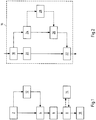
- a first exemplary embodiment in a schematic flow chart now shows Fig. 1 .
- the billet is cast, for example in the DC continuous casting process or in the strip casting process.
- the ingot is then heated to a temperature of 500 ° C. to 600 ° C. and kept at this temperature for homogenization for at least 0.5 h, preferably at least 2 h.
- the rolled bar is then homogenized at a temperature of 280 ° C to 500 ° C, preferably 300 ° C to 400 ° G hot rolled to a final thickness of 3 to 12 mm.
- step 8 by cold rolling to final thickness, which is followed by a recrystallizing final soft annealing in accordance with step 10.
- the degree of rolling must be at least 50%, preferably at least 70%, in order to produce a sufficiently fine-grained structure in the final soft annealing.
- the final soft annealing in which the strip recrystallizes again, takes place in the chamber furnace at 300 ° C. to 400 ° C., preferably at 330 ° C. to 370 ° C. in step 10.
- the use is a continuous furnace for the production of the aluminum alloy strip is not possible because different structures would be provided due to the different heating and cooling speeds.
- intermediate annealing can also be carried out in a chamber furnace at 300 ° C to 400 ° C, preferably at 330 ° C to 370 ° C according to step 14, with a rolling degree of both before the intermediate annealing and after the intermediate annealing at least 50%, preferably at least 70%, should be ensured in order to positively influence the fine grain structure of the structure after the recrystallizing final soft annealing.
- milling according to step 12 of the top and bottom of the billet can be carried out in order to minimize the influence of impurities on the edges of the billets during the manufacture of the billets on the finished product. In particular, this has a positive influence on the corrosion resistance of the components.
- Fig. 2 now shows a further flow chart, which shows step 16 of the homogenization as an alternative to step 4.
- the homogenization has an influence on the fine grain of the desired final structure of the strip or finished component.
- the homogenization is carried out in several stages. So instead of step 4 in Fig. 1 in Fig. 2 a homogenization step 16 is carried out.
- the homogenization step 16 initially has a first homogenization phase, step 18, in which the milled one or unmilled rolled ingot is heated to a temperature of 550 ° C to 600 ° C for at least 0.5 h, preferably at least 2 h.
- step 20 the roll bar heated in this way is cooled to a temperature of 450 ° C. to 550 ° C. and kept at this temperature for at least 0.5 h, preferably at least 2 h Fig. 2 is shown in step 22.
- the rolled ingot can also be cooled to room temperature in a step 24 and heated to the temperature for the second homogenization in a subsequent step 26. This is necessary, for example, if the rolled bar has to be stored between the homogenization step.
- this phase can be used at room temperature to mill the billet on the top and bottom, step 28.
- the hot rolling is carried out as in FIG Fig. 1 shown with the parameters specified there. It has been shown that the multi-stage homogenization, in particular the two-stage homogenization, leads to a finer structure in the end product.
- Variants 1 to 4 and 9 and 10 are comparative examples which do not correspond to the aluminum alloy according to the invention.
- the yield strength R p0.2 , the tensile strength R m , the uniform elongation A g , the elongation at break A 80 mm and the depression SZ 32 achieved during stretch drawing were measured in millimeters on the cold-rolled aluminum alloy strips produced in this way.
- the values for the yield strength R p0.2 and the tensile strength R m were measured in the tensile test perpendicular to the rolling direction of the sheet according to DIN EN ISO 6892-1: 2009.
- the uniform elongation A g and the elongation at break A 80mm in percent were measured perpendicular to the rolling direction of the sheet with a flat tensile test according to DIN EN ISO 6892-1: 2009, Appendix B, Form 2.
- the forming behavior can also be measured, for example, in a stretch drawing test SZ 32 can be measured by a deepening test according to Erikson (DIN EN ISO 20482) which a test specimen is pressed against the sheet so that cold deformation occurs. During the cold deformation, the force and the ram path of the test specimen are measured until there is a load drop, which is caused by the formation of a crack.
- the cupping test was carried out with a punch head diameter of 32 mm and die diameter of 35.4 mm, matched to the sheet metal ceiling, with the aid of a Teflon drawing film to reduce the friction. The overview of the results is shown in Table 2.
- Table 2 variant M Comparison (E): Invention R p0.2 N / mm 2 R m N / mm 2 A g % A 80mm % SZ 32 mm 1 V 65 145 19.6 26.5 15.8 2nd V 52 131 21.9 30.3 16.2 3rd V 60 135 22.7 30.3 16.4 4th V 51 122 22.3 33.5 15.6 5 E 48 112 23.1 35.3 16.0 6 E 47 118 23.5 35.0 16.5 7 E 50 120 23.4 36.2 16.1 8th E 47 112 23.8 36.6 15.0 9 V 41 98 23.6 37.9 16.5 10th V 41 102 24.2 38.0 16.3
- the exemplary embodiments show that an excessive reduction in the contents Si, Fe, Mn, Mg with an increase in the contents for Cu and Cr leads to the fact that the yield strength values are above 45 MPa remains, but the elongation at break drops significantly to around 30%. This effect can also be demonstrated if the Mn content alone is, for example, 1.0%, which already pushes the elongation A 80mm to less than 35%, variant 4.
- Variants 9 and 10 show the effect of reduced Si, Fe, Mn and Mg. Comparative examples 9 and 10 show a very good elongation at break A 80 mm with more than 35%, but the yield strength of 41 MPa is below that of the exemplary embodiments 5 to 8 according to the invention.
- the exemplary embodiments according to the invention showed, in particular in the case of strong deformations, very good forming behavior, which can be seen from the very good stretch drawing results SZ 32 and the high elongation values for both the uniform elongation A g and the elongation at break A 80 mm . From this it can be seen that the interplay of the alloy contents Si, Fe, Mn, Mg is important, the components Cr and Cu having to be kept particularly low, the Cu content ⁇ 0.05% by weight being preferred ⁇ 0.01% by weight and the chromium content ⁇ 0.01% by weight, preferably ⁇ 0.001% by weight.
- semifinished products and components in particular structural components such as interior door parts, can be provided for vehicles, which not only guarantee the specifications of the area of application with regard to mechanical and chemical properties, but can also be economically produced by a few forming operations.
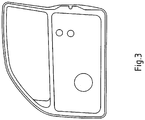
- the aluminum alloy strips are therefore ideally suited, for example structural parts of a motor vehicle, such as that in Fig. 3 to provide shown door inner parts 30 or to be used for their manufacture.
- the inner door part is made from a sheet of aluminum alloy according to the invention with a thickness of 1.5 mm, which provides a window frame only by forming operations, but without joining operations.
Landscapes
- Chemical & Material Sciences (AREA)
- Engineering & Computer Science (AREA)
- Materials Engineering (AREA)
- Mechanical Engineering (AREA)
- Metallurgy (AREA)
- Organic Chemistry (AREA)
- Physics & Mathematics (AREA)
- Thermal Sciences (AREA)
- Crystallography & Structural Chemistry (AREA)
- Metal Rolling (AREA)
- Continuous Casting (AREA)
- Heat Treatment Of Sheet Steel (AREA)
Claims (7)
- Alliage d'aluminium pour la fabrication de produits semi-finis ou de pièces pour véhicules automobiles présantant des composants d'alliage en % en poids ci-dessous :0,6 % ≤ Si ≤ 0,9 %,0,6 % ≤ Fe ≤ 1,0 %,Cu ≤ 0,1 %,0,6 % ≤ Mn ≤ 0,9 %,0,5 % ≤ Mg ≤ 0,8 %,Cr ≤ 0,05 %,le reste Al et impuretés, au maximum individuellement 0,05 % en poids, au maximum au total 0,15 % en poids.
- Alliage d'aluminium selon la revendication 1,
caractérisé en ce que
les composants de l'alliage Si, Fe, Mn et Mg ont les teneurs en % en poids ci-dessous:0,7 % ≤ Si ≤ 0,9 %,0,7 % ≤ Fe ≤ 1,0 %,0,7 % ≤ Mn ≤ 0,9 % et0,6 % ≤ Mg ≤ 0,8 %. - Alliage d'aluminium selon la revendication 2,
caractérisé en ce que
les composants de l'alliage Si, Fe, Mn et Mg ont les teneurs en % en poids ci-dessous :0,7 % ≤ Si ≤ 0,8 %,0,7 % ≤ Fe ≤ 0,8 %,0,7 % ≤ Mn ≤ 0,8 % et0,6% ≤ Mg ≤ 0,7 %. - Alliage d'aluminium selon l'une des revendications 1 à 3,
caractérisé en ce que
l'alliage d'aluminium a la teneur en Cr en % en poids ci-dessous :
Cr ≤ 0,01 %. - Alliage d'aluminium selon l'une des revendications 1 à 4,
caractérisé en ce que
l'alliage d'aluminium a la teneur en Cu en % en poids ci-dessous :
Cu ≤ 0,05 %. - Élément structurel, particulièrement parte intérieure de la porte (30), d'un véhicule automobile présentant
au moins une tôle déformée fabriquée à partir d'un alliage d'aluminium selon la revendication 1 à 5. - Élément structurel selon la revendication 6,
caractérisé en ce que
la tôle est découpée dans une bande, laquelle est fabriquée avec un procédé d'une bande d'alliage d'aluminium selon les revendications 1 à 5 comprenant les étapes suivantes :- Moulage (2) d'une plaque de laminage,- Homogénéisation (4,16) à une température entre 500 °C et 600 °C pendant 0,5 h minimum,- Laminage à chaud (6) de la plaque de laminage à une température de 280 °C à 500 °C á une épaisseur de 3 mm à 12 mm,- Laminage à froid (8) avec ou sans recuit intermédiaire avec un niveau de laminage d'au moins 50 %, de préférence au moins 70 % á une épaisseur finale de 0,2 mm à 5 mm et- Recuit doux final (10) à 300 °C jusqu'à 400 °C pendant au moins 0,5 h dans un four à chambre.
Priority Applications (1)
| Application Number | Priority Date | Filing Date | Title |
|---|---|---|---|
| EP17151174.4A EP3178952B9 (fr) | 2014-03-28 | 2014-03-28 | Alliage d'aluminium à haute ductilité, semi-rigide destiné à la fabrication de demi-produits ou de pièces pour véhicules automobiles |
Applications Claiming Priority (2)
| Application Number | Priority Date | Filing Date | Title |
|---|---|---|---|
| EP14162348.8A EP2924135B1 (fr) | 2014-03-28 | 2014-03-28 | Procédé pour la fabrication d'une bande d'un alliage d'aluminium à fermeté moyenne hautement déformable pour la fabrication de produits semi-finis ou de composants de véhicules automobiles |
| EP17151174.4A EP3178952B9 (fr) | 2014-03-28 | 2014-03-28 | Alliage d'aluminium à haute ductilité, semi-rigide destiné à la fabrication de demi-produits ou de pièces pour véhicules automobiles |
Related Parent Applications (2)
| Application Number | Title | Priority Date | Filing Date |
|---|---|---|---|
| EP14162348.8A Division EP2924135B1 (fr) | 2014-03-28 | 2014-03-28 | Procédé pour la fabrication d'une bande d'un alliage d'aluminium à fermeté moyenne hautement déformable pour la fabrication de produits semi-finis ou de composants de véhicules automobiles |
| EP14162348.8A Division-Into EP2924135B1 (fr) | 2014-03-28 | 2014-03-28 | Procédé pour la fabrication d'une bande d'un alliage d'aluminium à fermeté moyenne hautement déformable pour la fabrication de produits semi-finis ou de composants de véhicules automobiles |
Publications (3)
| Publication Number | Publication Date |
|---|---|
| EP3178952A1 EP3178952A1 (fr) | 2017-06-14 |
| EP3178952B1 true EP3178952B1 (fr) | 2020-07-29 |
| EP3178952B9 EP3178952B9 (fr) | 2021-07-14 |
Family
ID=50478703
Family Applications (2)
| Application Number | Title | Priority Date | Filing Date |
|---|---|---|---|
| EP14162348.8A Active EP2924135B1 (fr) | 2014-03-28 | 2014-03-28 | Procédé pour la fabrication d'une bande d'un alliage d'aluminium à fermeté moyenne hautement déformable pour la fabrication de produits semi-finis ou de composants de véhicules automobiles |
| EP17151174.4A Active EP3178952B9 (fr) | 2014-03-28 | 2014-03-28 | Alliage d'aluminium à haute ductilité, semi-rigide destiné à la fabrication de demi-produits ou de pièces pour véhicules automobiles |
Family Applications Before (1)
| Application Number | Title | Priority Date | Filing Date |
|---|---|---|---|
| EP14162348.8A Active EP2924135B1 (fr) | 2014-03-28 | 2014-03-28 | Procédé pour la fabrication d'une bande d'un alliage d'aluminium à fermeté moyenne hautement déformable pour la fabrication de produits semi-finis ou de composants de véhicules automobiles |
Country Status (10)
| Country | Link |
|---|---|
| US (1) | US10047424B2 (fr) |
| EP (2) | EP2924135B1 (fr) |
| JP (1) | JP6279761B2 (fr) |
| KR (2) | KR20170121336A (fr) |
| CN (1) | CN106164311A (fr) |
| CA (1) | CA2944061C (fr) |
| ES (1) | ES2655434T3 (fr) |
| PT (1) | PT2924135T (fr) |
| RU (1) | RU2655510C2 (fr) |
| WO (1) | WO2015144888A2 (fr) |
Families Citing this family (1)
| Publication number | Priority date | Publication date | Assignee | Title |
|---|---|---|---|---|
| CN116145057B (zh) * | 2023-03-20 | 2025-02-11 | 山东南山铝业股份有限公司 | 一种6系铝合金板材均匀化工艺方法及该工艺方法在铝合金板材生产中的应用 |
Family Cites Families (15)
| Publication number | Priority date | Publication date | Assignee | Title |
|---|---|---|---|---|
| JPH07252611A (ja) * | 1994-03-17 | 1995-10-03 | Kobe Steel Ltd | 成形加工用Al−Mn−Mg系合金板 |
| JP2002275566A (ja) * | 2001-03-21 | 2002-09-25 | Kobe Steel Ltd | プレス成形性に優れたAl−Mn系合金板 |
| JP4703033B2 (ja) * | 2001-05-21 | 2011-06-15 | 三菱樹脂株式会社 | ダイカスト用アルミニウム合金材 |
| CN1237195C (zh) * | 2001-07-09 | 2006-01-18 | 克里斯铝轧制品有限公司 | 可焊高强度铝合金轧制产品及其制造方法 |
| RU2221891C1 (ru) * | 2002-04-23 | 2004-01-20 | Региональный общественный фонд содействия защите интеллектуальной собственности | Сплав на основе алюминия, изделие из этого сплава и способ изготовления изделия |
| US20060032560A1 (en) * | 2003-10-29 | 2006-02-16 | Corus Aluminium Walzprodukte Gmbh | Method for producing a high damage tolerant aluminium alloy |
| JP2006152359A (ja) * | 2004-11-29 | 2006-06-15 | Furukawa Sky Kk | ボトル缶用アルミニウム合金板およびその製造方法 |
| JP4916333B2 (ja) * | 2006-03-13 | 2012-04-11 | 住友軽金属工業株式会社 | 強度とろう付け性に優れた熱交換器用アルミニウム合金クラッド材 |
| JP2008231475A (ja) * | 2007-03-19 | 2008-10-02 | Furukawa Sky Kk | 成形加工用アルミニウム合金板およびその製造方法 |
| JP4312819B2 (ja) * | 2008-01-22 | 2009-08-12 | 株式会社神戸製鋼所 | 成形時のリジングマーク性に優れたアルミニウム合金板 |
| ES2461994T3 (es) * | 2011-05-27 | 2014-05-22 | Hydro Aluminium Rolled Products Gmbh | Aleación de aluminio altamente conductora para productos eléctricamente conductores |
| JP6227222B2 (ja) * | 2012-02-16 | 2017-11-08 | 株式会社神戸製鋼所 | 焼付け塗装硬化性に優れたアルミニウム合金板 |
| JP5379883B2 (ja) * | 2012-05-11 | 2013-12-25 | 株式会社神戸製鋼所 | アルミニウム合金板およびその製造方法 |
| EP2770071B9 (fr) | 2013-02-21 | 2020-08-12 | Hydro Aluminium Rolled Products GmbH | Alliage en aluminium pour la fabrication de demi-produits ou de composants pour véhicules automobiles, procédé de fabrication d'une bande d'alliage en aluminium à partir de cet alliage en aluminium ainsi que la bande d'alliage en aluminium et utilisations de celui-ci |
| JP6685222B2 (ja) | 2013-06-19 | 2020-04-22 | リオ ティント アルカン インターナショナル リミテッドRio Tinto Alcan International Limited | 向上した高温機械特性を有するアルミニウム合金複合材 |
-
2014
- 2014-03-28 EP EP14162348.8A patent/EP2924135B1/fr active Active
- 2014-03-28 EP EP17151174.4A patent/EP3178952B9/fr active Active
- 2014-03-28 ES ES14162348.8T patent/ES2655434T3/es active Active
- 2014-03-28 PT PT141623488T patent/PT2924135T/pt unknown
-
2015
- 2015-03-27 WO PCT/EP2015/056733 patent/WO2015144888A2/fr not_active Ceased
- 2015-03-27 KR KR1020177030782A patent/KR20170121336A/ko not_active Ceased
- 2015-03-27 CN CN201580017129.6A patent/CN106164311A/zh active Pending
- 2015-03-27 CA CA2944061A patent/CA2944061C/fr active Active
- 2015-03-27 JP JP2016559550A patent/JP6279761B2/ja active Active
- 2015-03-27 RU RU2016142403A patent/RU2655510C2/ru active
- 2015-03-27 KR KR1020167030120A patent/KR101808812B1/ko not_active Expired - Fee Related
-
2016
- 2016-09-20 US US15/270,601 patent/US10047424B2/en active Active
Non-Patent Citations (1)
| Title |
|---|
| None * |
Also Published As
| Publication number | Publication date |
|---|---|
| KR20160132119A (ko) | 2016-11-16 |
| KR20170121336A (ko) | 2017-11-01 |
| EP2924135A1 (fr) | 2015-09-30 |
| US10047424B2 (en) | 2018-08-14 |
| JP2017514014A (ja) | 2017-06-01 |
| RU2016142403A (ru) | 2018-04-28 |
| RU2655510C2 (ru) | 2018-05-28 |
| KR101808812B1 (ko) | 2017-12-13 |
| WO2015144888A2 (fr) | 2015-10-01 |
| JP6279761B2 (ja) | 2018-02-14 |
| ES2655434T3 (es) | 2018-02-20 |
| WO2015144888A3 (fr) | 2016-01-07 |
| CA2944061C (fr) | 2019-10-22 |
| CA2944061A1 (fr) | 2015-10-01 |
| PT2924135T (pt) | 2018-02-09 |
| CN106164311A (zh) | 2016-11-23 |
| EP3178952A1 (fr) | 2017-06-14 |
| EP2924135B1 (fr) | 2017-12-13 |
| US20170009323A1 (en) | 2017-01-12 |
| EP3178952B9 (fr) | 2021-07-14 |
Similar Documents
| Publication | Publication Date | Title |
|---|---|---|
| EP2770071B2 (fr) | Alliage en aluminium pour la fabrication de demi-produits ou de composants pour véhicules automobiles, procédé de fabrication d'une bande d'alliage en aluminium à partir de cet alliage en aluminium ainsi que la bande d'alliage en aluminium et utilisations de celui-ci | |
| EP3314031B1 (fr) | Bande almg facilement déformable et très résistante et son procédé de fabrication | |
| DE69912850T2 (de) | Herstellungsverfahren eines produktes aus aluminium-magnesium-lithium-legierung | |
| EP2449145B1 (fr) | Bande AIMgSi pour applications ayant des exigences de déformation élevées | |
| EP2914391B1 (fr) | Matériau composite à base d'aluminium et procédé de façonnage | |
| EP2888382B2 (fr) | Bande d'alliage en aluminium résistant à la corrosion intercristalline et son procédé de fabrication | |
| EP2570509B1 (fr) | Procédé de fabrication pour une bande d'aluminium AlMgSi | |
| EP2888383B1 (fr) | Bande d'alliage en aluminium résistant à la corrosion intercristalline et son procédé de fabrication | |
| EP2703508B1 (fr) | Alliages d'aluminium résistant à la corrosion intercristalline | |
| WO2000052216A1 (fr) | COMPOSANT STRUCTURAL CONSTITUE D'UN ALLIAGE D'ALUMINIUM DU TYPE AlMgSi | |
| EP3178952B1 (fr) | Alliage d'aluminium à haute ductilité, semi-rigide destiné à la fabrication de demi-produits ou de pièces pour véhicules automobiles | |
| EP0811700B1 (fr) | Alliage d'aluminium du type AlMgSi soudable et apte à l'emboutissage profond | |
| EP3690076A1 (fr) | Procédé de fabrication d'une tôle ou d'une bande d'un alliage d'aluminium ainsi que tôle, bande ou pièce moulée fabriqués selon ledit procédé | |
| EP1466992A1 (fr) | Demi-produit laminé d'un alliage d'aluminium | |
| EP1748088B1 (fr) | Procédé de fabrication de produit semi-fini ou de composant pour des applications de châssis ou de structure automobiles | |
| EP3970964A1 (fr) | Matière composite d'aluminium pour les applications en cas d'accident | |
| EP2426228A1 (fr) | Demi-produits de tôle de magnésium ayant une capacité de formage à froid améliorée | |
| DE102009059804A1 (de) | Verfahren zur Wärmebehandlung von miteinander verschraubbaren Gussbauteilen |
Legal Events
| Date | Code | Title | Description |
|---|---|---|---|
| PUAI | Public reference made under article 153(3) epc to a published international application that has entered the european phase |
Free format text: ORIGINAL CODE: 0009012 |
|
| STAA | Information on the status of an ep patent application or granted ep patent |
Free format text: STATUS: REQUEST FOR EXAMINATION WAS MADE |
|
| 17P | Request for examination filed |
Effective date: 20170112 |
|
| AC | Divisional application: reference to earlier application |
Ref document number: 2924135 Country of ref document: EP Kind code of ref document: P |
|
| AK | Designated contracting states |
Kind code of ref document: A1 Designated state(s): AL AT BE BG CH CY CZ DE DK EE ES FI FR GB GR HR HU IE IS IT LI LT LU LV MC MK MT NL NO PL PT RO RS SE SI SK SM TR |
|
| STAA | Information on the status of an ep patent application or granted ep patent |
Free format text: STATUS: EXAMINATION IS IN PROGRESS |
|
| 17Q | First examination report despatched |
Effective date: 20180226 |
|
| GRAJ | Information related to disapproval of communication of intention to grant by the applicant or resumption of examination proceedings by the epo deleted |
Free format text: ORIGINAL CODE: EPIDOSDIGR1 |
|
| GRAP | Despatch of communication of intention to grant a patent |
Free format text: ORIGINAL CODE: EPIDOSNIGR1 |
|
| INTG | Intention to grant announced |
Effective date: 20190703 |
|
| INTC | Intention to grant announced (deleted) | ||
| GRAP | Despatch of communication of intention to grant a patent |
Free format text: ORIGINAL CODE: EPIDOSNIGR1 |
|
| STAA | Information on the status of an ep patent application or granted ep patent |
Free format text: STATUS: GRANT OF PATENT IS INTENDED |
|
| INTG | Intention to grant announced |
Effective date: 20190927 |
|
| GRAS | Grant fee paid |
Free format text: ORIGINAL CODE: EPIDOSNIGR3 |
|
| GRAJ | Information related to disapproval of communication of intention to grant by the applicant or resumption of examination proceedings by the epo deleted |
Free format text: ORIGINAL CODE: EPIDOSDIGR1 |
|
| GRAL | Information related to payment of fee for publishing/printing deleted |
Free format text: ORIGINAL CODE: EPIDOSDIGR3 |
|
| STAA | Information on the status of an ep patent application or granted ep patent |
Free format text: STATUS: EXAMINATION IS IN PROGRESS |
|
| GRAP | Despatch of communication of intention to grant a patent |
Free format text: ORIGINAL CODE: EPIDOSNIGR1 |
|
| STAA | Information on the status of an ep patent application or granted ep patent |
Free format text: STATUS: GRANT OF PATENT IS INTENDED |
|
| INTC | Intention to grant announced (deleted) | ||
| RIN1 | Information on inventor provided before grant (corrected) |
Inventor name: ENGLER, DR. OLAF Inventor name: BRINKMAN, DR. HENK-JAN Inventor name: HENTSCHEL, DR. THOMAS Inventor name: MILLER-JUPP, DR. SIMON |
|
| INTG | Intention to grant announced |
Effective date: 20200211 |
|
| GRAA | (expected) grant |
Free format text: ORIGINAL CODE: 0009210 |
|
| STAA | Information on the status of an ep patent application or granted ep patent |
Free format text: STATUS: THE PATENT HAS BEEN GRANTED |
|
| AC | Divisional application: reference to earlier application |
Ref document number: 2924135 Country of ref document: EP Kind code of ref document: P |
|
| AK | Designated contracting states |
Kind code of ref document: B1 Designated state(s): AL AT BE BG CH CY CZ DE DK EE ES FI FR GB GR HR HU IE IS IT LI LT LU LV MC MK MT NL NO PL PT RO RS SE SI SK SM TR |
|
| REG | Reference to a national code |
Ref country code: CH Ref legal event code: EP |
|
| REG | Reference to a national code |
Ref country code: DE Ref legal event code: R096 Ref document number: 502014014544 Country of ref document: DE |
|
| REG | Reference to a national code |
Ref country code: AT Ref legal event code: REF Ref document number: 1295862 Country of ref document: AT Kind code of ref document: T Effective date: 20200815 |
|
| REG | Reference to a national code |
Ref country code: IE Ref legal event code: FG4D Free format text: LANGUAGE OF EP DOCUMENT: GERMAN |
|
| REG | Reference to a national code |
Ref country code: LT Ref legal event code: MG4D |
|
| REG | Reference to a national code |
Ref country code: NL Ref legal event code: MP Effective date: 20200729 |
|
| PG25 | Lapsed in a contracting state [announced via postgrant information from national office to epo] |
Ref country code: FI Free format text: LAPSE BECAUSE OF FAILURE TO SUBMIT A TRANSLATION OF THE DESCRIPTION OR TO PAY THE FEE WITHIN THE PRESCRIBED TIME-LIMIT Effective date: 20200729 Ref country code: PT Free format text: LAPSE BECAUSE OF FAILURE TO SUBMIT A TRANSLATION OF THE DESCRIPTION OR TO PAY THE FEE WITHIN THE PRESCRIBED TIME-LIMIT Effective date: 20201130 Ref country code: SE Free format text: LAPSE BECAUSE OF FAILURE TO SUBMIT A TRANSLATION OF THE DESCRIPTION OR TO PAY THE FEE WITHIN THE PRESCRIBED TIME-LIMIT Effective date: 20200729 Ref country code: LT Free format text: LAPSE BECAUSE OF FAILURE TO SUBMIT A TRANSLATION OF THE DESCRIPTION OR TO PAY THE FEE WITHIN THE PRESCRIBED TIME-LIMIT Effective date: 20200729 Ref country code: HR Free format text: LAPSE BECAUSE OF FAILURE TO SUBMIT A TRANSLATION OF THE DESCRIPTION OR TO PAY THE FEE WITHIN THE PRESCRIBED TIME-LIMIT Effective date: 20200729 Ref country code: GR Free format text: LAPSE BECAUSE OF FAILURE TO SUBMIT A TRANSLATION OF THE DESCRIPTION OR TO PAY THE FEE WITHIN THE PRESCRIBED TIME-LIMIT Effective date: 20201030 Ref country code: NO Free format text: LAPSE BECAUSE OF FAILURE TO SUBMIT A TRANSLATION OF THE DESCRIPTION OR TO PAY THE FEE WITHIN THE PRESCRIBED TIME-LIMIT Effective date: 20201029 Ref country code: ES Free format text: LAPSE BECAUSE OF FAILURE TO SUBMIT A TRANSLATION OF THE DESCRIPTION OR TO PAY THE FEE WITHIN THE PRESCRIBED TIME-LIMIT Effective date: 20200729 Ref country code: BG Free format text: LAPSE BECAUSE OF FAILURE TO SUBMIT A TRANSLATION OF THE DESCRIPTION OR TO PAY THE FEE WITHIN THE PRESCRIBED TIME-LIMIT Effective date: 20201029 |
|
| PG25 | Lapsed in a contracting state [announced via postgrant information from national office to epo] |
Ref country code: RS Free format text: LAPSE BECAUSE OF FAILURE TO SUBMIT A TRANSLATION OF THE DESCRIPTION OR TO PAY THE FEE WITHIN THE PRESCRIBED TIME-LIMIT Effective date: 20200729 Ref country code: PL Free format text: LAPSE BECAUSE OF FAILURE TO SUBMIT A TRANSLATION OF THE DESCRIPTION OR TO PAY THE FEE WITHIN THE PRESCRIBED TIME-LIMIT Effective date: 20200729 Ref country code: LV Free format text: LAPSE BECAUSE OF FAILURE TO SUBMIT A TRANSLATION OF THE DESCRIPTION OR TO PAY THE FEE WITHIN THE PRESCRIBED TIME-LIMIT Effective date: 20200729 Ref country code: IS Free format text: LAPSE BECAUSE OF FAILURE TO SUBMIT A TRANSLATION OF THE DESCRIPTION OR TO PAY THE FEE WITHIN THE PRESCRIBED TIME-LIMIT Effective date: 20201129 |
|
| PG25 | Lapsed in a contracting state [announced via postgrant information from national office to epo] |
Ref country code: NL Free format text: LAPSE BECAUSE OF FAILURE TO SUBMIT A TRANSLATION OF THE DESCRIPTION OR TO PAY THE FEE WITHIN THE PRESCRIBED TIME-LIMIT Effective date: 20200729 |
|
| PG25 | Lapsed in a contracting state [announced via postgrant information from national office to epo] |
Ref country code: RO Free format text: LAPSE BECAUSE OF FAILURE TO SUBMIT A TRANSLATION OF THE DESCRIPTION OR TO PAY THE FEE WITHIN THE PRESCRIBED TIME-LIMIT Effective date: 20200729 Ref country code: DK Free format text: LAPSE BECAUSE OF FAILURE TO SUBMIT A TRANSLATION OF THE DESCRIPTION OR TO PAY THE FEE WITHIN THE PRESCRIBED TIME-LIMIT Effective date: 20200729 Ref country code: CZ Free format text: LAPSE BECAUSE OF FAILURE TO SUBMIT A TRANSLATION OF THE DESCRIPTION OR TO PAY THE FEE WITHIN THE PRESCRIBED TIME-LIMIT Effective date: 20200729 Ref country code: SM Free format text: LAPSE BECAUSE OF FAILURE TO SUBMIT A TRANSLATION OF THE DESCRIPTION OR TO PAY THE FEE WITHIN THE PRESCRIBED TIME-LIMIT Effective date: 20200729 Ref country code: EE Free format text: LAPSE BECAUSE OF FAILURE TO SUBMIT A TRANSLATION OF THE DESCRIPTION OR TO PAY THE FEE WITHIN THE PRESCRIBED TIME-LIMIT Effective date: 20200729 Ref country code: IT Free format text: LAPSE BECAUSE OF FAILURE TO SUBMIT A TRANSLATION OF THE DESCRIPTION OR TO PAY THE FEE WITHIN THE PRESCRIBED TIME-LIMIT Effective date: 20200729 |
|
| REG | Reference to a national code |
Ref country code: DE Ref legal event code: R097 Ref document number: 502014014544 Country of ref document: DE |
|
| PG25 | Lapsed in a contracting state [announced via postgrant information from national office to epo] |
Ref country code: AL Free format text: LAPSE BECAUSE OF FAILURE TO SUBMIT A TRANSLATION OF THE DESCRIPTION OR TO PAY THE FEE WITHIN THE PRESCRIBED TIME-LIMIT Effective date: 20200729 |
|
| PLBE | No opposition filed within time limit |
Free format text: ORIGINAL CODE: 0009261 |
|
| STAA | Information on the status of an ep patent application or granted ep patent |
Free format text: STATUS: NO OPPOSITION FILED WITHIN TIME LIMIT |
|
| PG25 | Lapsed in a contracting state [announced via postgrant information from national office to epo] |
Ref country code: SK Free format text: LAPSE BECAUSE OF FAILURE TO SUBMIT A TRANSLATION OF THE DESCRIPTION OR TO PAY THE FEE WITHIN THE PRESCRIBED TIME-LIMIT Effective date: 20200729 |
|
| REG | Reference to a national code |
Ref country code: CH Ref legal event code: PK Free format text: BERICHTIGUNG B9 |
|
| 26N | No opposition filed |
Effective date: 20210430 |
|
| PG25 | Lapsed in a contracting state [announced via postgrant information from national office to epo] |
Ref country code: SI Free format text: LAPSE BECAUSE OF FAILURE TO SUBMIT A TRANSLATION OF THE DESCRIPTION OR TO PAY THE FEE WITHIN THE PRESCRIBED TIME-LIMIT Effective date: 20200729 |
|
| PG25 | Lapsed in a contracting state [announced via postgrant information from national office to epo] |
Ref country code: MC Free format text: LAPSE BECAUSE OF FAILURE TO SUBMIT A TRANSLATION OF THE DESCRIPTION OR TO PAY THE FEE WITHIN THE PRESCRIBED TIME-LIMIT Effective date: 20200729 |
|
| REG | Reference to a national code |
Ref country code: CH Ref legal event code: PL |
|
| REG | Reference to a national code |
Ref country code: BE Ref legal event code: MM Effective date: 20210331 |
|
| REG | Reference to a national code |
Ref country code: DE Ref legal event code: R081 Ref document number: 502014014544 Country of ref document: DE Owner name: SPEIRA GMBH, DE Free format text: FORMER OWNER: HYDRO ALUMINIUM ROLLED PRODUCTS GMBH, 41515 GREVENBROICH, DE |
|
| PG25 | Lapsed in a contracting state [announced via postgrant information from national office to epo] |
Ref country code: IE Free format text: LAPSE BECAUSE OF NON-PAYMENT OF DUE FEES Effective date: 20210328 Ref country code: CH Free format text: LAPSE BECAUSE OF NON-PAYMENT OF DUE FEES Effective date: 20210331 Ref country code: LU Free format text: LAPSE BECAUSE OF NON-PAYMENT OF DUE FEES Effective date: 20210328 Ref country code: LI Free format text: LAPSE BECAUSE OF NON-PAYMENT OF DUE FEES Effective date: 20210331 |
|
| PG25 | Lapsed in a contracting state [announced via postgrant information from national office to epo] |
Ref country code: BE Free format text: LAPSE BECAUSE OF NON-PAYMENT OF DUE FEES Effective date: 20210331 |
|
| REG | Reference to a national code |
Ref country code: AT Ref legal event code: HC Ref document number: 1295862 Country of ref document: AT Kind code of ref document: T Owner name: SPEIRA GMBH, DE Effective date: 20220711 |
|
| PG25 | Lapsed in a contracting state [announced via postgrant information from national office to epo] |
Ref country code: HU Free format text: LAPSE BECAUSE OF FAILURE TO SUBMIT A TRANSLATION OF THE DESCRIPTION OR TO PAY THE FEE WITHIN THE PRESCRIBED TIME-LIMIT; INVALID AB INITIO Effective date: 20140328 |
|
| P01 | Opt-out of the competence of the unified patent court (upc) registered |
Effective date: 20230519 |
|
| PG25 | Lapsed in a contracting state [announced via postgrant information from national office to epo] |
Ref country code: CY Free format text: LAPSE BECAUSE OF FAILURE TO SUBMIT A TRANSLATION OF THE DESCRIPTION OR TO PAY THE FEE WITHIN THE PRESCRIBED TIME-LIMIT Effective date: 20200729 |
|
| PG25 | Lapsed in a contracting state [announced via postgrant information from national office to epo] |
Ref country code: MK Free format text: LAPSE BECAUSE OF FAILURE TO SUBMIT A TRANSLATION OF THE DESCRIPTION OR TO PAY THE FEE WITHIN THE PRESCRIBED TIME-LIMIT Effective date: 20200729 |
|
| PG25 | Lapsed in a contracting state [announced via postgrant information from national office to epo] |
Ref country code: MT Free format text: LAPSE BECAUSE OF FAILURE TO SUBMIT A TRANSLATION OF THE DESCRIPTION OR TO PAY THE FEE WITHIN THE PRESCRIBED TIME-LIMIT Effective date: 20200729 |
|
| PG25 | Lapsed in a contracting state [announced via postgrant information from national office to epo] |
Ref country code: TR Free format text: LAPSE BECAUSE OF FAILURE TO SUBMIT A TRANSLATION OF THE DESCRIPTION OR TO PAY THE FEE WITHIN THE PRESCRIBED TIME-LIMIT Effective date: 20200729 |
|
| PGFP | Annual fee paid to national office [announced via postgrant information from national office to epo] |
Ref country code: GB Payment date: 20260326 Year of fee payment: 13 |
|
| PGFP | Annual fee paid to national office [announced via postgrant information from national office to epo] |
Ref country code: DE Payment date: 20260327 Year of fee payment: 13 |
|
| PGFP | Annual fee paid to national office [announced via postgrant information from national office to epo] |
Ref country code: AT Payment date: 20260327 Year of fee payment: 13 |
|
| PGFP | Annual fee paid to national office [announced via postgrant information from national office to epo] |
Ref country code: FR Payment date: 20260326 Year of fee payment: 13 |