EP3183272B1 - Asymmetric multispecific antibodies - Google Patents
Asymmetric multispecific antibodies Download PDFInfo
- Publication number
- EP3183272B1 EP3183272B1 EP15751030.6A EP15751030A EP3183272B1 EP 3183272 B1 EP3183272 B1 EP 3183272B1 EP 15751030 A EP15751030 A EP 15751030A EP 3183272 B1 EP3183272 B1 EP 3183272B1
- Authority
- EP
- European Patent Office
- Prior art keywords
- heavy chain
- amino acid
- light chain
- domain
- antibodies
- Prior art date
- Legal status (The legal status is an assumption and is not a legal conclusion. Google has not performed a legal analysis and makes no representation as to the accuracy of the status listed.)
- Active
Links
Images






Classifications
-
- C—CHEMISTRY; METALLURGY
- C07—ORGANIC CHEMISTRY
- C07K—PEPTIDES
- C07K16/00—Immunoglobulins [IG], e.g. monoclonal or polyclonal antibodies
- C07K16/46—Hybrid immunoglobulins
- C07K16/468—Immunoglobulins having two or more different antigen binding sites, e.g. multifunctional antibodies
-
- C—CHEMISTRY; METALLURGY
- C07—ORGANIC CHEMISTRY
- C07K—PEPTIDES
- C07K1/00—General methods for the preparation of peptides, i.e. processes for the organic chemical preparation of peptides or proteins of any length
- C07K1/14—Extraction; Separation; Purification
- C07K1/16—Extraction; Separation; Purification by chromatography
- C07K1/22—Affinity chromatography or related techniques based upon selective absorption processes
-
- C—CHEMISTRY; METALLURGY
- C07—ORGANIC CHEMISTRY
- C07K—PEPTIDES
- C07K16/00—Immunoglobulins [IG], e.g. monoclonal or polyclonal antibodies
- C07K16/42—Immunoglobulins [IG], e.g. monoclonal or polyclonal antibodies against immunoglobulins
-
- C—CHEMISTRY; METALLURGY
- C07—ORGANIC CHEMISTRY
- C07K—PEPTIDES
- C07K2317/00—Immunoglobulins specific features
- C07K2317/20—Immunoglobulins specific features characterized by taxonomic origin
- C07K2317/22—Immunoglobulins specific features characterized by taxonomic origin from camelids, e.g. camel, llama or dromedary
-
- C—CHEMISTRY; METALLURGY
- C07—ORGANIC CHEMISTRY
- C07K—PEPTIDES
- C07K2317/00—Immunoglobulins specific features
- C07K2317/30—Immunoglobulins specific features characterized by aspects of specificity or valency
- C07K2317/31—Immunoglobulins specific features characterized by aspects of specificity or valency multispecific
-
- C—CHEMISTRY; METALLURGY
- C07—ORGANIC CHEMISTRY
- C07K—PEPTIDES
- C07K2317/00—Immunoglobulins specific features
- C07K2317/50—Immunoglobulins specific features characterized by immunoglobulin fragments
- C07K2317/51—Complete heavy chain or Fd fragment, i.e. VH + CH1
-
- C—CHEMISTRY; METALLURGY
- C07—ORGANIC CHEMISTRY
- C07K—PEPTIDES
- C07K2317/00—Immunoglobulins specific features
- C07K2317/50—Immunoglobulins specific features characterized by immunoglobulin fragments
- C07K2317/515—Complete light chain, i.e. VL + CL
-
- C—CHEMISTRY; METALLURGY
- C07—ORGANIC CHEMISTRY
- C07K—PEPTIDES
- C07K2317/00—Immunoglobulins specific features
- C07K2317/50—Immunoglobulins specific features characterized by immunoglobulin fragments
- C07K2317/52—Constant or Fc region; Isotype
-
- C—CHEMISTRY; METALLURGY
- C07—ORGANIC CHEMISTRY
- C07K—PEPTIDES
- C07K2317/00—Immunoglobulins specific features
- C07K2317/50—Immunoglobulins specific features characterized by immunoglobulin fragments
- C07K2317/52—Constant or Fc region; Isotype
- C07K2317/522—CH1 domain
-
- C—CHEMISTRY; METALLURGY
- C07—ORGANIC CHEMISTRY
- C07K—PEPTIDES
- C07K2317/00—Immunoglobulins specific features
- C07K2317/50—Immunoglobulins specific features characterized by immunoglobulin fragments
- C07K2317/52—Constant or Fc region; Isotype
- C07K2317/526—CH3 domain
-
- C—CHEMISTRY; METALLURGY
- C07—ORGANIC CHEMISTRY
- C07K—PEPTIDES
- C07K2317/00—Immunoglobulins specific features
- C07K2317/50—Immunoglobulins specific features characterized by immunoglobulin fragments
- C07K2317/56—Immunoglobulins specific features characterized by immunoglobulin fragments variable (Fv) region, i.e. VH and/or VL
- C07K2317/569—Single domain, e.g. dAb, sdAb, VHH, VNAR or nanobody®
-
- C—CHEMISTRY; METALLURGY
- C07—ORGANIC CHEMISTRY
- C07K—PEPTIDES
- C07K2317/00—Immunoglobulins specific features
- C07K2317/60—Immunoglobulins specific features characterized by non-natural combinations of immunoglobulin fragments
- C07K2317/64—Immunoglobulins specific features characterized by non-natural combinations of immunoglobulin fragments comprising a combination of variable region and constant region components
Definitions
- the present invention relates to multispecific antibodies, for example bispecific antibodies, and methods for the isolation or purification of the same.
- the antibodies and methods of the invention facilitate the production of antibody preparations enriched for multispecific antibodies having the correct functional heavy chain-light chain pairings required for the antibody to bind two or more epitopes on the same antigen or different antigens.
- Naturally occurring antibodies including bivalent antibodies, exhibit immunoreactivity to a specific epitope on a particular target antigen.
- Multispecific antibodies are antibodies engineered to recognise and bind more than one epitope, potentially on different target antigens of interest.
- Naturally occurring antibodies typically include combinations of heavy and light immunoglobulin chains, wherein the antigen binding properties of the molecule are determined by the variable regions or domains of the heavy and light chains i.e. the VH and VL domains, respectively. More specifically, the antigen binding sites of any antibody typically include residues contributed by three complementarity determining regions (CDRs) within each of the VH and VL domains.
- CDRs complementarity determining regions
- Multispecific antibodies differ from naturally occurring antibodies in that they incorporate more than one VH-VL domain pairing such that they can recognise and bind to more than one epitope. Commercially these antibodies are extremely important for their ability to bind more than one target antigen. However, significant difficulties exist in the manufacture and isolation of multispecific antibodies as a result of mispairings between the different heavy chains and light chains incorporated into the same antibody molecule. These mispairings can lead to the inadvertent production of monospecific antibodies or antibodies having non-functional or non-productive antigen binding sites, thereby reducing the yield of the multispecific antibody of interest.
- FIG. 1 illustrates the difficulties that can arise in the production of a bispecific antibody exhibiting immunoreactivity for two distinct epitopes.
- the bispecific antibody as shown (A) includes two distinct heavy chains and two distinct light chains. However, only the correct pairing of these four immunoglobulin chains gives rise to an antibody having the required binding profile i.e. specificity for both target antigens.
- the drawback with this method is that the anti-idiotypic binding agents used to isolate the antibody must be specific for each multispecific antibody produced, depending on its antigen binding profile. Therefore, although the principle of the method described in PCT/EP2012/071866 is generally applicable to the isolation of any multispecific antibody, the reagents i.e. the anti-idiotypic binding agents, must be generated in accordance with the specific VH-VL domain pairings of the multispecific antibody to be isolated.
- WO2014124326 describes multispecific antibodies, particularly bispecific antibodies, having amino acid substitutions in the CH1 and/or CL domains of the heavy chain-light chain pairs. These substitutions are made to alter the electrostatic charge distribution in the domains to thereby promote preferential association of the correct heavy chain-light chain pairs.
- WO2013124451 discloses asymmetric antibodies comprising two heavy chains wherein the first heavy chain is a class IgG4 chain having a substitution at position 127 and the second heavy chain has a different amino acid sequence.
- WO2012023053 and WO2013088259 are concerned with bispecific antibodies and methods of purifying the same.
- the bispecific antibodies disclosed in these documents comprise a single heavy chain combined with different first and second light chains.
- WO2007024715 discloses multispecific antibodies having two sets of variable domains.
- the present invention improves upon the state of the art by providing multispecific antibodies having at least two distinct heavy chain-light chain pairings wherein the pairings can be distinguished by the presence of selective recognition sites.
- Each selective recognition site comprises residues contributed by both the heavy and light chain of the pairing, but does not include residues located within the antigen binding site.
- the present invention provides a multispecific antibody comprising
- the present invention also provides a multispecific antibody comprising
- a multispecific antibody comprising
- multispecific antibodies having at least two distinct heavy chain-light chain pairings wherein the first and second heavy chains differ by at least one amino acid residue in the constant region, preferably in the CH1 domain.
- the first and second heavy chains can differ because each chain comprises a fragment derived from the constant region of a different human immunoglobulin subtype or a different allotype, preferably different human allotypes.
- the first and second heavy chains comprise the entire constant region from different human immunoglobulin subtypes or different allotypes, wherein the constant regions differ by at least one amino acid residue in the CH1 domain.
- the fragments derived from the constant region of the different human immunoglobulin subtypes or the different allotypes comprise or consist of the CH1 domain.
- Multispecific antibodies of the present invention can be isolated according to the methods provided herein. These methods exploit the variation that can be found in immunoglobulin heavy and light chains outside of the antigen binding site, and in particular, the natural variation found in the constant regions of heavy chain-light chain pairings, so as to produce multispecific antibody preparations enriched for antibodies having the correct functional VH-VL pairings required for target antigen recognition and binding.
- the methods of the present invention achieve isolation and/or purification of multispecific antibodies using selective recognition agents that recognise the selective recognition sites within the distinct immunoglobulin heavy chain-light chain pairings.
- the present invention provides a method for the isolation of a multispecific antibody according to the invention from a sample, said method comprising:
- reagents and kits for producing multispecific antibodies according to the invention and also reagents, particularly antibodies, and kits for isolating multispecific antibodies using the methods of the invention.
- an antibody or antigen binding fragment thereof that binds to a multispecific antibody according to any of the preceding aspects of the invention, wherein the antibody or antigen binding fragment thereof binds to an epitope, wherein the epitope is:
- kits for producing a multispecific antibody according to the invention comprising one or more polynucleotides, wherein the polynucleotide(s) encode(s) fragments of the first and second heavy chains and fragments of the first and second light chains wherein the fragments contain at least the residues of the first and second selective recognition sites.
- a kit for isolating a multispecific antibody according to the method aspect of the invention wherein the kit comprises a first selective recognition agent and a second selective recognition agent.
- the kit for producing and isolating a multispecific antibody of the present invention wherein the kit comprises:
- immunoglobulin includes a molecule having a combination of two heavy chains and two light chains.
- An “antibody” or “antibody molecule” refers to an immunoglobulin with a specific immunoreactive activity to an antigen of interest (e.g. a human antigen).
- Antibodies and immunoglobulins comprise light and heavy chains, with or without an interchain covalent linkage between them. Basic immunoglobulin structures in vertebrate systems are relatively well understood.
- immunoglobulin comprises five distinct classes of antibody that can be distinguished biochemically. All five classes of antibodies are within the scope of the present invention, although the following discussion will generally be directed to the IgG class of immunoglobulin molecules.
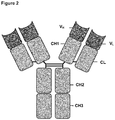
- Naturally occurring IgG immunoglobulins comprise two identical light polypeptide chains of molecular weight approximately 23,000 Daltons, and two identical heavy polypeptide chains of molecular weight 53,000-70,000. The four chains are joined by disulfide bonds in a "Y" configuration wherein the light chains bracket the heavy chains starting at the mouth of the "Y” and continuing through the variable region (see Figure 2 ).
- the light chains of an antibody are classified as either kappa or lambda ( ⁇ , ⁇ ). Each heavy chain class may be bound with either a kappa or lambda light chain.
- the light and heavy chains are covalently bonded to each other, and the "tail" portions of the two heavy chains are bonded to each other by covalent disulfide linkages or non-covalent linkages when the immunoglobulins are generated either by hybridomas, B cells or genetically engineered host cells.
- heavy chains In the heavy chain, the amino acid sequence runs from an N-terminus at the forked end of the Y configuration to the C-terminus at the bottom of each chain.
- heavy chains are classified as gamma, mu, alpha, delta, or epsilon, ( ⁇ , ⁇ , ⁇ , ⁇ , ⁇ ) with some subclasses or subtypes among them (e.g., ⁇ 1- ⁇ 4). It is the nature of this chain that determines the "class" of the antibody as IgG, IgM, IgA, IgD or IgE, respectively.
- immunoglobulin subclasses e.g., IgG1, IgG2, IgG3, IgG4, IgA1, etc. are well characterized and are known to confer functional specialization. Modified versions of each of these classes and isotypes are readily discernable to the skilled artisan in view of the instant disclosure and, accordingly, are within the scope of the instant invention.
- variable region of an antibody is the portion which allows the antibody to selectively recognise and specifically bind epitopes on antigens.
- the variable region is typically made up of the variable domain of the heavy chain (VH) and the variable domain of the light chain (VL), both domains of which are located at the N terminus of their respective polypeptides (see Figure 2 ).
- variable refers to the fact that certain portions of the variable domains VH and VL differ extensively in sequence among antibodies and are used in the binding and specificity of each particular antibody for its target antigen. However, the variability is not evenly distributed throughout the variable domains of antibodies. It is concentrated in three segments called “hypervariable loops" in each of the VL domain and the VH domain which form part of the antigen binding site.
- the first, second and third hypervariable loops of the VLambda light chain domain may be defined as comprising residues 24-33 (L1( ⁇ ), consisting of 9, 10 or 11 amino acid residues), 49-53 (L2( ⁇ ), consisting of 3 residues) and 90-96 (L3( ⁇ ), consisting of 5 residues) in the VL domain ( Morea et al., Methods 20:267-279 (2000 )).
- the first, second and third hypervariable loops of the VKappa light chain domain may be defined as comprising residues 25-33 (L1( ⁇ ), consisting of 6, 7, 8, 11, 12 or 13 residues), 49-53 (L2( ⁇ ), consisting of 3 residues) and 90-97 (L3( ⁇ ), consisting of 6 residues) in the VL domain ( Morea et al., Methods 20:267-279 (2000 )).
- the first, second and third hypervariable loops of the VH domain may be defined as comprising residues 25-33 (H1, consisting of 7, 8 or 9 residues), 52-56 (H2, consisting of 3 or 4 residues) and 91-105 (H3, highly variable in length) in the VH domain ( Morea et al., Methods 20:267-279 (2000 )).
- the hypervariable loops may each comprise part of a "complementarity determining region" or "CDR", as defined below.
- CDR complementarity determining region
- the terms “hypervariable loop” and “complementarity determining region” are not strictly synonymous, since the hypervariable loops (HVs) are defined on the basis of structure, whereas complementarity determining regions (CDRs) are defined based on sequence variability ( Kabat et al., Sequences of Proteins of Immunological Interest, 5th Ed. Public Health Service, National Institutes of Health, Bethesda, MD., 1983 ).
- the CDRs of the VL and VH domains can typically be defined as comprising the following amino acids: residues 24-34 (LCDR1), 50-56 (LCDR2) and 89-97 (LCDR3) in the light chain variable domain, and residues 31-35 or 31-35b (HCDR1), 50-65 (HCDR2) and 95-102 (HCDR3) in the heavy chain variable domain; ( Kabat et al., Sequences of Proteins of Immunological Interest, 5th Ed. Public Health Service, National Institutes of Health, Bethesda, MD. (1991 )).
- the HVs may be comprised within the corresponding CDRs and references herein to the "hypervariable loops" of VH and VL domains should be interpreted as also encompassing the corresponding CDRs, and vice versa, unless otherwise indicated.
- variable domains The more highly conserved portions of variable domains are called the framework region (FR), as defined below.
- the variable domains of native heavy and light chains each comprise four FRs (FR1, FR2, FR3 and FR4, respectively), largely adopting a ⁇ -sheet configuration, connected by the three hypervariable loops.
- the hypervariable loops in each chain are held together in close proximity by the FRs and, with the hypervariable loops from the other chain, contribute to the formation of the antigen binding site of antibodies.
- Structural analysis of antibodies revealed the relationship between the sequence and the shape of the binding site formed by the complementarity determining regions ( Chothia et al., J. Mol. Biol. 227: 799-817 (1992 )); Tramontano et al., J.
- CDR complementarity determining region
- CDR complementarity determining region
- CDR is a CDR as defined by Kabat based on sequence comparisons.
- Table 1 CDR definitions CDR Definitions Kabat 1 Chothia 2 MacCallum 3 V H CDR1 31-35 26-32 30-35 V H CDR2 50-65 53-55 47-58 V H CDR3 95-102 96-101 93-101 V L CDR1 24-34 26-32 30-36 V L CDR2 50-56 50-52 46-55 V L CDR3 89-97 91-96 89-96 1 Residue numbering follows the nomenclature of Kabat et al., supra 2 Residue numbering follows the nomenclature of Chothia et al., supra 3 Residue numbering follows the nomenclature of MacCallum et al., supra
- variable region or "FR region” as used herein, includes the amino acid residues that are part of the variable region, but are not part of the CDRs (e.g., using the Kabat definition of CDRs). Therefore, a variable region framework is between about 100-120 amino acids in length but includes only those amino acids outside of the CDRs.
- the framework regions for the light chain are similarly separated by each of the light claim variable region CDRs.
- the framework region boundaries are separated by the respective CDR termini as described above. In preferred embodiments the CDRs are as defined by Kabat.
- the framework regions largely adopt a ⁇ -sheet conformation and the CDRs form loops which connect, and in some cases form part of, the ⁇ -sheet structure. Thus, these framework regions act to form a scaffold that provides for positioning the six CDRs in correct orientation by inter-chain, non-covalent interactions.
- the "antigen binding site” is the site within the variable region of the antibody which allows the antibody to selectively recognise and specifically bind epitopes on antigens.
- the six CDRs present on each monomeric antibody are short, non-contiguous sequences of amino acids that are specifically positioned to form the antigen binding site as the antibody assumes its three dimensional configuration in an aqueous environment.
- “residues from the antigen binding site” correspond to residues located within one or more of the CDRs present in either the VH or VL domain.
- the antigen binding site formed by the positioned CDRs defines a surface complementary to the epitope on the immunoreactive antigen. This complementary surface promotes the non-covalent binding of the antibody to the immunoreactive antigen epitope.
- the position of CDRs can be readily identified by one of ordinary skill in the art.
- epitope refers to a specific arrangement of amino acids located on a peptide or protein to which an antibody or antibody fragment binds.
- Epitopes often consist of a chemically active surface grouping of molecules such as amino acids or sugar side chains, and have specific three dimensional structural characteristics as well as specific charge characteristics.
- Epitopes can be linear, i.e., involving binding to a single sequence of amino acids, or conformational, i.e., involving binding to two or more sequences of amino acids in various regions of the antigen that may not necessarily be contiguous.
- the constant region of an antibody includes the portion of each of the heavy and light chain polypeptides outside of the variable region.
- Immunoglobulin light chains typically include a single constant domain (denoted herein as CL or CL1) which lies C terminal to the VL domain.
- Immunoglobulin heavy chains typically include a constant region consisting of a first constant domain (CH1) a hinge region, a second constant domain (CH2) and a third constant domain (CH3). As shown in Figure 2 , these domains are positioned C terminal to the VH domain.
- the numbering of the amino acids in the heavy and light immunoglobulin chains run from the N-terminus at the forked ends of the Y configuration to the C-terminus at the bottom of each chain.
- specific amino acid positions of the heavy chain constant domains are identified herein with reference to the EU numbering scheme for human IgG1 molecules (see Tables 2-4 below).
- specific amino acid positions within the constant region are defined with reference to the nomenclature of Kabat et al., supra used for human light chains (see Tables 5 and 6 below)
- allotype or "immunoglobulin allotype” indicates that the immunoglobulin chain or polypeptide is encoded by a particular allele found in an individual.
- Different immunoglobulin allotypes have different sequences reflecting the natural variation found in the alleles of an individual's genome.
- the natural variation normally manifests in the constant region of the immunoglobulin heavy and light chain alleles and therefore different allotypes typically differ in the constant region of the polypeptide, as defined above.
- a fragment "derived from” a designated protein refers to the origin of the polypeptide or amino acid sequence.
- a fragment "derived from” a designated protein means a fragment having an amino acid sequence which is essentially identical to the amino acid sequence of the originating or starting polypeptide.
- a fragment derived from a human immunoglobulin allotype will have an amino acid sequence corresponding to the section of the human immunoglobulin polypeptide from which the fragment is taken.
- the amino acid sequence, as defined in the claims, which is derived from a particular starting polypeptide is not contiguous.
- one, two, three, four, five, or six CDRs are derived from a starting antibody.
- the polypeptide or amino acid sequence which is derived from a particular starting polypeptide or amino acid sequence has an amino acid sequence that is essentially identical to that of the starting sequence, or a portion thereof wherein the portion consists of at least 3-5 amino acids, at least 5-10 amino acids, at least 10-20 amino acids, at least 20-30 amino acids, or at least 30-50 amino acids, or which is otherwise identifiable to one of ordinary skill in the art as having its origin in the starting sequence.
- the one or more CDR sequences derived from the starting antibody are altered to produce variant CDR sequences, e.g. affinity variants, wherein the variant CDR sequences maintain target antigen binding activity.
- the term "specificity” refers to the ability of an antibody to specifically bind (e.g., immunoreact with) a given target antigen, e.g., a human target antigen.
- An antibody molecule may be monospecific and contain one or more binding sites which specifically bind a single epitope on a single target antigen.
- an antibody molecule may be "multispecific" and contain two or more antigen binding sites which specifically bind different epitopes either within the same antigen or located within different target antigens.
- a bispecific antibody has two antigen binding sites capable of recognising and binding two different target epitopes or antigens.
- multispecific antibodies are engineered to include different combinations or pairings of heavy and light chain polypeptides with different VH-VL pairs.
- a "chimeric" protein comprises a first amino acid sequence linked to a second amino acid sequence with which it is not naturally linked in nature.
- the amino acid sequences may normally exist in separate proteins that are brought together in the fusion polypeptide or they may normally exist in the same protein but are placed in a new arrangement in the fusion polypeptide.
- a chimeric protein may be created, for example, by chemical synthesis, or by creating and translating a polynucleotide in which the peptide regions are encoded in the desired relationship.
- Exemplary chimeric antibodies include fusion proteins comprising VH and/or VL domains derived from one species e.g. a species of the camelid family (or humanised variants thereof) fused to the constant domains of a human antibody, e.g. human lgG1, IgG2, IgG3 or IgG4.
- a “conservative amino acid substitution” is one in which the amino acid residue is replaced with an amino acid residue having a similar side chain.
- Families of amino acid residues having similar side chains have been defined in the art, including basic side chains (e.g., lysine, arginine, histidine), acidic side chains (e.g., aspartic acid, glutamic acid), uncharged polar side chains (e.g., glycine, asparagine, glutamine, serine, threonine, tyrosine, cysteine), nonpolar side chains (e.g., alanine, valine, leucine, isoleucine, proline, phenylalanine, methionine, tryptophan), beta-branched side chains (e.g., threonine, valine, isoleucine) and aromatic side chains (e.g., tyrosine, phenylalanine, tryptophan, histidine).
- basic side chains e
- an amino acid residue in an immunoglobulin polypeptide may be replaced with another amino acid residue from the same side chain family.
- a string of amino acids can be replaced with a structurally similar string that differs in order and/or composition of side chain family members.
- the term "engineered” includes manipulation of nucleic acid or polypeptide molecules by synthetic means (e.g. by recombinant techniques, in vitro peptide synthesis, by enzymatic or chemical coupling of peptides or some combination of these techniques).
- the antibodies of the invention may be engineered as described herein below to incorporate variation into the region of the antibody molecule outside of the antigen binding site(s).
- the antibodies may also be engineered, for example, humanized and/or chimeric antibodies, and antibodies which have been engineered to improve one or more properties such as antigen binding, stability/half-life or effector function.
- humanising substitutions refers to amino acid substitutions in which the amino acid residue present at a particular position in the VH or VL domain antibody (for example a camelid-derived antibody) is replaced with an amino acid residue which occurs at an equivalent position in a reference human VH or VL domain.
- the reference human VH or VL domain may be a VH or VL domain encoded by the human germline. Humanising substitutions may be made in the framework regions and/or the CDRs of an antibody, defined herein.
- humanised antibody or “humanised variant” refers to a variant antibody which contains one or more "humanising substitutions” compared to a reference antibody, wherein a portion of the reference antibody (e.g. the VH domain and/or the VL domain or parts thereof containing at least one CDR) has an amino acid derived from a non-human species, and the "humanising substitutions" occur within the amino acid sequence derived from a non-human species.
- a portion of the reference antibody e.g. the VH domain and/or the VL domain or parts thereof containing at least one CDR
- VHH antibody refers to a second type of antibody produced only by species of the Camelidae family, which includes camels, llama, alpaca.
- Heavy chain-only antibodies are composed of two heavy chains and are devoid of light chains. Each heavy chain has a variable domain at the N-terminus, and these variable domains are referred to as "VHH" domains in order to distinguish them from the variable domains of the heavy chains of the conventional heterotetrameric antibodies i.e. the VH domains, described above.
- the present invention relates to multispecific antibodies having binding specificity for multiple distinct epitopes, wherein "multiple" means two or more distinct epitopes.
- the multispecific antibodies of the present invention may have binding specificity for at least two, at least three, at least four, at least five epitopes either within the same target antigen or in different target antigens.
- the antibodies of the invention are bispecific antibodies having specificity for two distinct epitopes either within the same target antigen or in different target antigens.
- First and second heavy chain-light chain pairings define first and second antigen binding sites
- multispecific antibodies incorporate different heavy chain-light pairings or combinations.
- the term "pairing” as used herein refers to the paired configuration of heavy and light chains within the immunoglobulin molecule, for example as shown in Figure 2 , wherein each heavy chain-light chain pair (or pairing) forms a variable region consisting of the VH and VL domains of the heavy and light chains, respectively. It is these variable regions of the antibody molecule and in particular, the CDR sequences contained within each of the VH and VL domains that define the antigen binding sites.
- Multispecific antibodies of the present invention comprise or consist of a first pairing between a first heavy chain and a first light chain and a second pairing between a second heavy chain and a second light chain.
- the corresponding heavy and light chains may pair via a disulphide bond as found in naturally occurring immunoglobulin molecules, although in the context of the present invention, "pairing" may be association of the chains via any suitable means including non-covalent association.
- the first and second heavy chain-light chain pairings create two distinct variable regions within the antibody such that the antibody has at least two distinct antigen binding sites capable of recognising and binding different epitopes on the same or different antigens. It is thus the precise pairing of the correct heavy and light chain combinations within the overall quaternary structure of the antibody molecule that ensures that the multispecific antibody has the correct binding profile. Mispairing between the respective heavy and light chains of the antibody will result in an antibody either lacking the multispecific properties required and/or an immunoglobulin lacking antigen binding activity altogether.
- the present invention addresses the problem of heavy chain-light chain mispairing by providing multispecific antibodies comprising or consisting of first and second heavy chain-light chain pairings, wherein the pairings can be distinguished by distinct or unique "selective recognition sites" located outside the antigen binding sites of the molecule.
- the "selective recognition sites” are distinct or unique in the sense that they can be selectively recognised or selectively bound by different “selective recognition agents", wherein such agents are characterised further below in the context of the methods of the present invention.
- the selective binding of "selective recognition agents" to their cognate “selective recognition sites” allows the first and second selective recognition sites to be distinguished or differentiated from each other. The first and second selective recognition sites are thus differentially bound by their respective selective recognition agents.
- a selective recognition site is a site in the antibody molecule comprising or consisting of a distinct or unique combination of amino acid residues formed by a distinct heavy chain-light chain pairing.
- each selective recognition site comprises or consists of at least one amino acid residue from the heavy chain and at least one amino acid residue from the light chain of each pairing.
- the residues from the same immunoglobulin chain may be contiguous or non-contiguous in the polypeptide sequence.
- the combination of amino acid residues of each selective recognition site typically form a conformational epitope that can be selectively recognised by a cognate selective recognition agent.
- the amino acid residues that define the selective recognition site or conformational epitope are the residues that contribute to the binding interface between the site/epitope and the recognition agent that binds to the site/epitope.
- Each selective recognition site must comprise or consist of enough amino acid residues and in particular, enough different amino acid residues, for it to be bound exclusively or at least preferentially by a selective recognition agent as described further below.
- the combination of amino acid residues that form each selective recognition site will typically be clustered i.e. in close spatial proximity, in the overall quaternary structure of the antibody molecule so as to form a conformational epitope selectively recognised by a selective recognition agent.
- Multispecific antibodies of the present invention include at least two selective recognition sites: a first selective recognition site formed by the first heavy chain-light chain pairing and a second selective recognition site formed by the second heavy chain-light chain pairing.
- Each of the first and second selective recognition sites comprises at least one amino acid residue from the heavy chain of the pair and at least one amino acid residue from the light chain of the pair.
- one or both first and second selective recognition sites comprise at least two, at least three, at least four, at least five amino acid residues from the heavy chain of the pair and/or at least two, at least three, at least four, at least five amino acid residues from the light chain of the pair, as defined in the claims.
- Amino acid residues from both the heavy chain and light chain of each pair contribute to their respective selective recognition sites as this allows for antibodies having the correct heavy chain-light chain pairings to be detected and isolated using the methods described herein.
- each selective recognition site must include enough amino acid residues for it to be recognised and bound by a selective recognition agent.
- Each selective recognition site may comprise or consist of a total of at least 2, at least 3, at least 4, at least 5, at least 6, at least 7, at least 8, at least 9, at least 10 residues wherein at least one residue is from the heavy chain and at least one residue is from the light chain of each pairing.
- Each selective recognition site must include enough amino acid residues that differ, as compared with other recognition sites within the same molecule, in order for the individual sites to be selectively recognised i.e. distinguished from each other.
- the combination of amino acid residues of the first selective recognition site must differ by at least one amino acid residue from the combination of amino acid residues of the second selective recognition site, and any further sites within the same molecule.
- the combination of amino acid residues of the first and second selective recognition sites differ by 1, 2, 3, 4, 5, 6, 7, 8, 9, or 10 amino acid residues, as defined in the claims.
- amino acid residues that contribute to each selective recognition site may be located within any suitable part of the heavy chain and any suitable part of the light chain, with the exception of the antigen binding site.
- antigen binding site is defined elsewhere herein and contains residues from the CDR sequences of the VH and VL domains.
- the first and/or second selective recognition sites comprise or consist of one or more residues located within the framework region of the VH domain of the heavy chain and/or one or more residues located within the framework region of the VL domain of the light chain.
- one or both selective recognition sites comprise one or more residues located within the framework regions of the VH domain and/or the VL domain, preferably framework region 2 (FR2) of the VH domain and/or the VL domain.
- the first and/or second selective recognition site comprises or consists of one or more residues located within any suitable part of the constant region of the light chain and one or more residues located within any suitable part of the constant region of the heavy chain, wherein the constant region of the heavy chain is defined by the CH1-hinge-CH2-CH3 region of the molecule. Since each selective recognition site must include at least one residue contributed from the heavy chain and light chain of each pairing, the residue(s) from the heavy chain and the residue(s) from the light chain are preferably in close spatial proximity in the three-dimensional pairwise configuration of the antibody.
- the residue(s) from the heavy chain and the residue(s) from the light chain are within a distance of from about 20 ⁇ to about 100 ⁇ or from about 20 ⁇ to about 50 ⁇ or from about 20 ⁇ to about 25 ⁇ in the three-dimensional pairwise configuration of the antibody.
- the first selective recognition site will comprise or consist of one or more amino acid residues from the CL domain of the first light chain and one or more residues from the CH1 domain of the first heavy chain, as defined in the claims.
- the second selective recognition site will comprise or consist of one or more amino acid residues from the CL domain of the second light chain and one or more amino acid residues from the CH1 domain of the second heavy chain, as defined in the claims.
- the selective recognition sites may comprise or consist of one or more solvent-exposed residues located within the heavy chain and/or light chain of the pairing.
- Solvent-exposed amino acids can be identified using the program NACCESS (http://wolf.bms.umist.ac.uk/naccess/) as described by Rothlisberger et al. (J. Mol. Biol. (2005) 347, 773-789 ), and on the Plueckthun website: (http://www.bioc.uzh.ch/plueckthun/antibody/Structures/Accessibility/index.html) .
- the combination of amino acid residues of each selective recognition site must differ by at least one amino acid residue from the combination of amino acid residues of any other recognition sites within the same molecule in order for each selective recognition site to be distinguished by the binding of a selective recognition agent.
- the residues that differ between first and second selective recognition sites may be contributed from the heavy chain of the pair and/or the light chain of the pair.
- the multispecific antibodies of the invention comprise first and second heavy chains wherein the amino acid sequence outside of the antigen binding site differs by at least one amino acid residue, and the first and/or second selective recognition site comprises or consists of one or more of the residues that differ between the chains.
- amino acid residues are held to differ if a comparison between two heavy chain polypeptides or two light chain polypeptides identifies a different residue at a corresponding position in the two chains.
- the multispecific antibodies comprise first and second heavy chains wherein the amino acid sequences of the constant regions, and preferably the amino acid sequences of the CH1 domains, differ by at least one amino acid residue and the first and/or second selective recognition site comprises or consists of one or more of the residues that differ in the constant region, particularly in the CH1 domain.
- the first and second heavy chains differ by at least one amino acid residue in the solvent exposed regions of the heavy chains, the first and/or second selective recognition site comprises or consists of one of said solvent-exposed residues.
- the first and second heavy chains differ by at least one residue located outside of the binding interface between the paired or dimerized CH3 domains of the first and second heavy chains and the first and/or second selective recognition site comprises or consists of at least one of said residues.
- the first and second heavy chains differ by at least one amino acid residue in the CH1 domain located outside of the binding interface between the CH1 domain of the heavy chain and the CL domain of the paired light chain and the first and/or second selective recognition site comprises or consists of one or more of said residues, as defined in the claims.
- Residues located at the CH1/CL interface are typically defined as residues having a reduction in solvent accessibility of more than 40% when the CH1 domain and CL domain are paired ( Rothlisberger et al. J. Mol. Biol. (2005) 347, 773-789 ).
- Tables 7 and 8 below identify the residues in the CH1 domain of an IgG1 and the CL domain of a kappa light chain, respectively, that exhibit a loss of more than 40% solvent accessibility when a CH1-CL domain pairing is formed.
- the first and second heavy chains differ by at least one amino acid residue in the CH1 domain that is not listed in Table 7 and/or the first and second light chains differ by at least one amino acid residue in the CL domain that is not listed in Table 8 and the first and/or second selective recognition site comprises or consists of one or more of said residues, as defined in the claims.
- Table 7 Residues of CH1 buried in the CH1-CL domain interface (loss of more than 40% solvent accessibility when in complex) according to Rothlisberger et al.
- the multispecific antibodies of the invention may comprise first and second light chains wherein the amino acid sequence outside of the antigen binding site differs by at least one amino acid residue and the first and/or second selective recognition site comprises or consists of one or more of the residues that differ between the chains.
- the multispecific antibodies comprise first and second light chains wherein the amino acid sequences of the constant regions i.e. the CL domains, differ by at least one amino acid residue and the first and/or second selective recognition site comprises one or more of the residues that differ in the CL domain.
- the first and second light chains differ by at least one amino acid residue in the CL domain located outside of the interface between the CL domain of the light chain and the CH1 domain of the paired heavy chain and the first and/or second selective recognition site comprises or consists of one or more of said residues.
- the multispecific antibodies as defined in the claims, comprise first and second heavy chains that differ by at least one amino acid residue outside of the antigen binding sites and first and second light chains that differ by at least one amino acid residue outside of the antigen binding sites and the first and/or second selective recognition sites comprise or consist of residues that differ between both the heavy chains and the light chains.
- the first and second heavy chains differ by at least one amino acid residue in the CH1 domain and the first and second light chains differ by at least one amino acid residue in the CL domain and the first and/or second selective recognition sites comprise or consist of residues that differ between the CH1 domains of the heavy chains and the CL domains of the light chains.
- the residue(s) that differ between the first and second heavy chains and the residue(s) that differ between the first and second light chains are located outside of the binding interface between the CL domain and CH1 domain.
- multispecific antibodies having at least two distinct selective recognition sites as defined above can be generated using combinations of naturally occurring heavy and light chains, and in particular heavy chains and light chains comprising at least the constant region of naturally occurring heavy and light chains. This minimises the need for extensive protein engineering and ensures that any unfavourable properties associated with mutated immunoglobulin sequences e.g. unwanted immunogenicity can be avoided. Furthermore, the use of naturally occurring heavy chains or fragments thereof in multispecific antibodies according to the present invention helps to preserve the natural effector function of the antibodies.
- the multispecific antibodies defined in the claims comprise a first pairing comprising a first heavy chain of a particular immunoglobulin subtype and a second pairing comprising a second heavy chain of a different immunoglobulin subtype.
- a first pairing comprising a first heavy chain of a particular immunoglobulin subtype
- a second pairing comprising a second heavy chain of a different immunoglobulin subtype.
- multispecific antibodies wherein at least the constant region of the first heavy chain and at least the constant region of the second heavy chain are derived from different immunoglobulin subtypes.
- immunoglobulin subtype is as defined elsewhere herein and is used interchangeably with the terms “immunoglobulin subclass” and "immunoglobulin isotype”.
- the different immunoglobulin subtypes are preferably from the same species and are preferably human.
- the present invention provides a multispecific antibody as defined in the claims, comprising first and second heavy chain-light chain pairings as defined above wherein the first and second heavy chain each comprise the constant region of a different human immunoglobulin subtype and the different subtypes differ by at least one amino acid residue in the constant region, preferably in the CH1 domain.
- the different immunoglobulin subtypes are selected from lgG1, IgG2, IgG3 and IgG4, preferably lgG1, IgG2, IgG3 and IgG4 of human origin.
- Polypeptide chains of different immunoglobulin subtypes differ in their amino acid sequence outside of the antigen binding site including in the constant region. Therefore, in embodiments wherein the first and second heavy chains are different immunoglobulin subtypes or comprise at least the constant region thereof, the first and/or second selective recognition sites can comprise or consist of one or more of the amino acid residues that differ at the corresponding position between the different subtypes. In certain embodiments, the first and/or second selective recognition sites comprise or consist of one or more of the amino acid residues that differ between the CH1 domains of the different immunoglobulin subtypes.
- the multispecific antibodies as defined by the claims comprise a first pairing with a first heavy chain of a particular immunoglobulin allotype and a second pairing with a second heavy chain of a different immunoglobulin allotype.
- multispecific antibodies comprising first and second heavy chain-light chain pairings as defined above wherein at least the constant region of the first heavy chain and at least the constant region of the second heavy chain are derived from different immunoglobulin allotypes and the different allotypes differ by at least one amino acid residue in the constant region, preferably in the CH1 domain.
- the first and second heavy chains are different human immunoglobulin allotypes or comprise at least the constant region of different human immunoglobulin allotypes.
- the first and/or second selective recognition sites may comprise or consist of one or more amino acid residues that naturally differ at the corresponding position between the different allotypes.
- the first and/or second selective recognition site comprises or consists of one or more amino acid residues within the CH1 domain that differs at the corresponding position between the different immunoglobulin allotypes.
- the multispecific antibodies of the invention may comprise or consist of first and second heavy chain amino acid residues selected from the following:
- multispecific antibodies of the invention comprise or consist of a first heavy chain comprising or consisting of E at position 137 and S at position 138, and a second heavy chain comprising or consisting of G at position 137 and G at position 138.
- multispecific antibodies of the invention comprise or consist of a first heavy chain comprising or consisting of N at position 192 and F at position 193, and a second heavy chain comprising or consisting of S at position 192 and L at position 193.
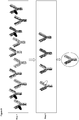
- Exemplary bispecific antibodies of the invention are shown in Figure 7 .
- the differences in the CH1 domains of the antibodies are shown in combination with first and second lambda and kappa light chains.
- the lambda and kappa chains could be reversed such that the different CH1 domains are paired with a light chain of the opposite class.
- the CH1 domain comprising the C131 residue is shown paired with a Clambda domain and the S131 residue is shown paired with a Ckappa domain.
- this pairing could be reversed such that the CH1 domain comprising the C131 residue is paired with the Ckappa domain and the CH1 domain comprising the S131 residue is paired with the Clambda domain.
- multispecific antibodies of the invention comprise a first heavy chain and a different second heavy chain, each having at least a constant region selected from the human immunoglobulin allotypes: IGGH1.1, IGGH1.3, IGGH2, IGGH2.2, IGGH2.4, IGGH4, IGGH3, IGG3.17 and IGGH3.18,
- the first and/or second selective recognition sites may comprise one or more residues selected from positions: 131, 133, 137, 138, 178, 192 and 193 of the CH1 domain.
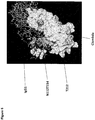
- the amino acid residues of the heavy chain constant region in close spatial proximity to the constant region of the paired light chain are preferred residues for contributing to the selective recognition site. Exemplary residues are indicated in the space fill model shown in Figure 4 .
- the first and second selective recognition sites, respectively comprise or consist of heavy chain residues selected from the following:
- the first and second selective recognition sites comprise or consist of combinations of heavy chain residues selected from the following:
- exemplary bispecific antibodies of the invention are shown in Figure 7 and the residues indicated in the CH1 domains that differ between the heavy chains may contribute to the first and/or second selective recognition sites, respectively.
- multispecific antibodies of the invention may comprise first and second light chains of different immunoglobulin classes or different immunoglobulin allotypes.
- multispecific antibodies wherein at least the constant region of the first light chain and at least the constant region of the second light chain are derived from different immunoglobulin classes or allotypes.
- multispecific antibodies of the invention comprise a lambda light chain as the first light chain and a kappa light chain as the second light chain or a kappa light chain as the first light chain and lambda light chain as the second light chain.
- the lambda and/or kappa light chains, or at least the constant regions thereof, are preferably human lambda and/or kappa light chains.
- the first selective recognition site may comprise one or more residues specific to the lambda light chain and/or the selective recognition site may comprise one or more residues specific to the kappa light chain.
- a residue "specific" to the kappa or lambda light chain is a residue located at a position within the polypeptide amino acid sequence that differs from the amino acid residue located at the corresponding position within the polypeptide sequence of the other class of light chain.
- the multispecific antibodies as provided herein may comprise a first pairing having a first light chain of a particular immunoglobulin allotype and a second pairing having a second light chain of a different immunoglobulin allotype.
- at least the constant region of the first light chain and at least the constant region of the second light chain are derived from different immunoglobulin allotypes, as defined by the claims.
- the first and second light chains are different human immunoglobulin allotypes, optionally selected from different kappa or lambda allotypes, as defined by the claims.
- the first and second light chains or at least the constant regions thereof may be different human immunoglobulin allotypes selected from the human lambda chain allotypes:
- the first and/or second selective recognition sites may comprise or consist of one or more amino acid residues that naturally differ at the corresponding position between the different allotypes.
- the first and/or second selective recognition site comprises or consists of one or more amino acid residues within the CL domain that differs between the different immunoglobulin allotypes.
- the multispecific antibodies of the invention may comprise or consist of first and second light chain amino acid residues selected from the following:
- the first and/or second selective recognition sites may comprise or consist of one or more residues selected from positions 112, 114 and 212. As shown in the space fill model in Figure 6 , these residues are in close spatial proximity to the CH1 domain of the paired heavy chain and are preferred residues for contributing to the selective recognition site.
- the first and second selective recognition sites include light chain residues selected from the following:
- the multispecific antibody comprises a first heavy chain comprising at least the constant region of a particular immunoglobulin allotype, preferably a human allotype, and a second heavy chain comprising at least the constant region of a different immunoglobulin allotype, preferably a human allotype, wherein the allotypes differ by at least one amino acid residue in the CH1 domain, and further comprises a lambda light chain, wherein at least the constant region is preferably human, as the first light chain and a kappa light chain, wherein at least the constant region is preferably human, as the second light chain, as defined by the claims.
- the first and/or second selective recognition sites comprise or consist of one or more residues that differ between the heavy chain allotypes, preferably in the constant region, more preferably in the CH1 domain, and one or more residues that are specific to the lambda/kappa light chains, preferably in the CL domain.
- the multispecific antibodies of the present invention can be modified, as compared with naturally occurring immunoglobulin molecules, in a number of different ways. Described below are various modifications and modified antibody forms/structures that are applicable to multispecific antibodies according to all aspects of the invention described herein.
- the multispecific antibodies of the present invention may include immunoglobulin chains incorporating fragments derived from different naturally occurring immunoglobulin chains and/or immunoglobulin chains from different species.
- a "fragment derived from" a particular polypeptide is a length of amino acids with a sequence identical to or substantially identical to a sequence of amino acids in the originating polypeptide.
- the immunoglobulin chains of the multispecific antibodies described herein may be full length as compared with naturally occurring immunoglobulin heavy and/or light chains and "incorporate a fragment" such that a region of the full length immunoglobulin chain backbone is substituted with the fragment.
- the fragment will typically correspond to the region equivalent to the substituted region located within the originating polypeptide.
- the immunoglobulin chains of the multispecific antibodies described herein may thus be composite immunoglobulin chains incorporating fragments derived from different immunoglobulin chains into a full-length polypeptide chain (see Figure 8A ).
- the immunoglobulin chains of the multispecific antibodies described herein may be truncated, as described further below, and incorporate fragments shorter in length than the overall heavy chain/light chain length.
- Such truncated chains may also be composite chains incorporating fragments derived from different immunoglobulin chains.
- the multispecific antibodies of the invention may comprise first and second heavy chains wherein the first heavy chain comprises a fragment derived from a particular immunoglobulin subtype or allotype and the second heavy chain comprises a corresponding fragment derived from the same region of a different immunoglobulin subtype or allotype, including but not limited to the immunoglobulin subtypes and allotypes described elsewhere herein.
- the multispecific antibodies of the present invention may comprise first and second light chains wherein the first light chain comprises a fragment derived from a particular immunoglobulin class (kappa or lambda) or allotype and the second light chain comprises a corresponding fragment derived from the same region of a different immunoglobulin class (kappa or lambda) or allotype, including but not limited to the immunoglobulin allotypes described elsewhere herein.
- each fragment may be selected such that it includes at least some of the natural variation i.e. amino acid differences, found at particular positions of naturally occurring different immunoglobulin classes, subtypes and allotypes.
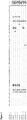
- the human IgG subtypes and allotypes shown in Figure 3 exhibit variation at positions 131, 133, 137, 138, 178, 189, 192, 193, 196, 199, 203 and 214.
- a fragment incorporated into the first heavy chain may comprise or consist of a region incorporating at least one of the residues identified above derived from a first human IgG subtype or allotype and a fragment incorporated into the second heavy chain may comprise or consist of a region incorporating at least one of the residues identified above derived from a second human IgG subtype or allotype and having at least one amino acid difference located in this region.
- FIG. 8A An exemplary composite bispecific IgG antibody according to the present invention is shown schematically in Figure 8A .
- This bispecific antibody has a first IgG heavy chain backbone incorporating a fragment derived from the CH1 domain of a first human IgG allotype and a second IgG heavy chain backbone incorporating a fragment derived from the CH1 domain of a second human IgG allotype.
- the fragment incorporated into the first chain includes residues E137 and S138 and the fragment incorporated in the second chain includes residues G137 and G138.
- the first and second light chains may also include fragments as described above, for example fragments derived from different human alloytypes.
- the human lambda allotypes shown in Figure 5 exhibit variation i.e. amino acid differences, for example at positions 112 and 114. Therefore, a fragment incorporated into the first light chain may comprise or consist of a region including one or both of these positions from a first human lambda allotype and a fragment incorporated into the second light chain may comprise or consist of a region including one or both of these positions from a second human lambda allotype wherein there is at least one amino acid difference between the allotypes.
- a fragment in accordance with the claims may have a length of at least 2, at least 3, at least 4, at least 5, at least 6, at least 7, at least 8, at least 9, at least 10 residues wherein the position of the fragment is selected such that the corresponding fragment derived from a different immunoglobulin class, subtype or allotype has an amino acid sequence differing by at least one amino acid residue.
- a fragment derived from an immunoglobulin chain and in particular, a human immunoglobulin chain may be at least 20, at least 40, at least 50, at least 60, at least 70, at least 80, at least 90, at least 100, at least 110, at least 120, at least 130, at least 140, at least 150, at least 160, at least 170, at least 180, at least 190 or at least 200 amino acids in length.
- a fragment may also comprise or consist of a complete domain derived from the immunoglobulin chain wherein the domain is selected from the CH1, CH2 or CH3 domain of the heavy chain or the CL domain of the light chain.
- the fragments inserted into the heavy chains comprise or consist of the entire CH1 domain and the fragments inserted into the light chains comprise or consist of the entire CL domain.
- the first and/or second selective recognition sites may comprise one or more of the residues that differ between the fragments. Therefore, the introduction of distinct fragments from naturally occurring immunoglobulin heavy and light chains can be used to create the distinct first and second selective recognition sites within the multispecific antibodies of the invention.
- multispecific antibodies according to the present invention may comprise immunoglobulin chains including one or more amino acid substitutions derived from different naturally occurring immunoglobulin chains and/or immunoglobulin chains from different species, as defined in the claims.
- multispecific antibodies may comprise or consist of heavy chains and/or light chains wherein a particular amino acid in the heavy and/or light polypeptide chain is substituted with a different amino acid that is found at the corresponding position in a different immunoglobulin class, subtype or allotype.
- amino acid substitutions introduced into the heavy and/or light chains of the multispecific antibodies of the present invention may derive from any naturally occurring immunoglobulin chains, preferably immunoglobulin chains of human origin, including but not limited to the immunoglobulin classes, subtypes and allotypes described elsewhere herein.
- the multispecific antibodies of the invention comprise or consist of first and second heavy chains wherein the first heavy chain comprises one or more amino acid substitution(s) derived from a particular immunoglobulin subtype or allotype and the second heavy chain comprises one or more amino acid substitution(s) from a different immunoglobulin subtype or allotype, wherein the substitutions create differences between the amino acid sequences of the first and second heavy chains, as defined in the claims.
- the amino acid substitution(s) are located in the CH1 domains of the heavy chains.
- the multispecific antibodies may comprise first and second light chains wherein the first light chain comprises one or more amino acid substitution(s) derived from a particular immunoglobulin class (kappa or lambda) or allotype and the second light chain comprises one or more amino acid substitution(s) derived from a different immunoglobulin class (kappa or lambda) or allotype, wherein the substitutions create differences between the amino acid sequences of the first and second light chains.
- the amino acid substitution(s) are located in the CL domains of the light chains.
- the heavy chains and/or light chains comprise or consist of combinations of amino acid substitutions derived from naturally occurring immunoglobulin chains such that the first and second heavy chains and/or first and second light chains differ in amino acid sequence at the substituted positions, as defined in the claims.
- a "combination" of amino acid substitutions may include at least 2, 3, 4, 5, 6, 7 amino acid substitutions, wherein the substitutions occur at contiguous or non-contiguous locations in the polypeptide chains.
- FIG. 8B An exemplary bispecific IgG antibody according to the present invention is shown schematically in Figure 8B .
- This bispecific antibody has a first IgG heavy chain including the amino acid substitutions R133, E137, S138, S178, N192, F193 and a second IgG heavy chain including the amino acid substitutions K133, G137, G138, Y178, S192, L193.
- These amino acid substitutions derive from the naturally occurring human IgG allotypes shown in Figure 3 .
- Multispecific antibodies of the invention may comprise or consist of amino acid substitutions derived from any of the immunoglobulin allotypes described elsewhere herein and in preferred embodiments include amino acid substitutions corresponding to the amino acid differences between first and second heavy chains shown in Figure 7 .
- multispecific antibodies comprise or consist of first and second heavy chain amino acid substitutions selected from the following:
- multispecific antibodies comprise or consist of first and second heavy chain amino acid substitutions selected from the following:
- the first and/or second selective recognition sites may comprise one or more of the substituted residues. Therefore, the introduction of distinct amino acid substitutions from naturally occurring immunoglobulin heavy and light chains can be used to create the distinct first and second selective recognition sites within the multispecific antibodies of the invention.
- the heavy and/or light chains incorporated into the multispecific antibodies described herein may be mutated.
- mutations may be introduced into the first and/or second heavy chain outside of the antigen binding site, preferably in the constant region, more preferably in the CH1 domain, so as to create at least one difference or at least one further difference (in addition to any natural variation) between the amino acid residues at the corresponding positions of the amino acid sequences of the first and second heavy chains.
- mutations may be introduced into the first and/or second light chain outside of the antigen binding site, preferably in the constant region i.e.
- the multispecific antibodies of the present invention comprise or consist of first and second heavy chains and/or first and second light chains wherein the amino acid differences between the heavy chains and/or the amino acid differences between the light chains represent a combination of natural variation between the amino acid sequences of the chains and the presence of one or more amino acid substitutions or engineered mutations not found in naturally occurring immunoglobulin chains, as defined in the claims.
- the mutations may be introduced in solvent-exposed regions of the heavy and/or light chains. Alternatively or in addition, the mutations may be introduced in regions of the heavy and/or light chain outside of the binding interface between the CH1 and CL domains of the heavy chain-light chain pairing as defined elsewhere herein.
- Techniques for introducing mutations into the polynucleotide sequences encoding the heavy chain and/or the light chain polypeptides are known in the art and could readily be used by a person skilled in the art to produce antibodies according to the invention.
- the first and/or second selective recognition site may comprise one or more of the amino acid residues that differ between the heavy chains, as defined in the claims.
- the first and/or second selective recognition site may comprise one or more of the amino acid residues that differ between the light chains.
- the first and/or second selective recognition sites comprise or consist of amino acid residues that differ between first and second heavy chains and first and second light chains.
- the first and/or second selective recognition site comprises or consists of amino acid residues that differ between first and second heavy chains wherein the site comprises or consists of at least one residue that differs due to natural variation between the immunoglobulin chains and at least one residue that has been substituted or mutated so as to create a difference between first and second heavy chains, as defined in the claims.
- the first and/or second selective recognition sites may comprise or consist of amino acid residues that differ between first and second light chains wherein the site comprises or consists of at least one residue that differs due to natural variation between the immunoglobulin chains and at least one residue that has been substituted or mutated so as to create a difference between first and second light chains.
- the heavy and light chain polypeptides of the multispecific antibodies of the present invention may derive from any source including heavy and light chain polypeptides of mouse, rat, rabbit, goat, hamster, chicken, monkey or human origin.
- the multispecific antibodies of the invention may be derived from the Camelidae family and in particular llama ( lama glama ) .
- multispecific antibodies of the present invention may incorporate chimeric, humanised or substantially humanised variants of antibodies (as defined elsewhere herein), wherein portions of the multispecific antibody, and in particular portions or regions of the different immunoglobulin chains, are derived from different sources.
- multispecific antibodies of the present invention may comprise at least one camelid derived domain, preferably a camelid-derived VH and/or VL domain.
- the camelid-derived domain(s) may incorporate humanising substitutions as described in WO2011/080350 .
- the present invention encompasses chimeric antibodies having VH and/or VL domains derived from any species including but not limited to antibodies of mouse, rat, rabbit, goat, hamster, chicken, monkey or human origin, and heavy chain and/or light chain constant regions derived from antibodies of another species.
- the VH and/or VL domains are camelid-derived and the constant regions of the heavy and/or light chains are substantially human.
- the multispecific antibodies of the present invention may also be engineered so as to incorporate mutations or modifications which have previously been reported to address the problem of multispecific antibody chain mispairing.
- the CH3 domains of the first and second heavy chains may be engineered to include the "knobs into holes" mutations reported in ( Carter P. J. Immunol. Methods (2001) 248: 7-15 ), which promote correct heavy chain heterodimerization in the Fc region.
- the VH and VL domains and/or CH1 and CL domains may also be engineered as described in Lewis et al. (Nature Biotechnology (2014) 32: 191-198 ) so as to promote the correct pairing between the heavy and light chains of the antibody molecule.
- the antibodies of the invention may further comprise additional modifications, for example modifications to improve properties such as antigen binding, effector function and/or stability/half-life and/or reduce unfavourable properties such as immunogenicity in a human host.
- the antibodies of the invention may comprise any of the mutations or combinations of amino acid residues described in WO2006/130834 . These include the combination of mutations: Lys433, Phe434, Tyr436 in the CH3 domain of the heavy chain, which together can enhance the binding affinity of the antibody for the FcRn receptor and therefore can help to prolong the serum half life of the antibody.
- Multispecific antibodies of the present invention may comprise full length heavy chains and/or full length light chains, wherein "full-length” is used herein to mean that the amino acid sequence of the immunoglobulin chain is essentially identical in length to the length of a naturally occurring heavy and/or light chain.
- the antibodies may comprise first and second heavy chain-light chain pairings wherein the antigen binding site of each pairing recognises a different epitope (on the same or different antigens) and the antibody is monovalent for each epitope.
- the antibodies as described herein are bispecific and/or have the standard domain structure shown in Figure 2 for bispecific antibodies having first and second heavy chain-light chain pairings i.e. a domain structure of VH-CH1-hinge-CH2-CH3 for the first and second heavy chains, and a domain structure of VL-CL for the first and second light chains.
- the antibodies of the invention are IgG molecules and/or have the structure of a native or naturally-occurring IgG molecule.
- the present invention also covers truncated forms of multispecific antibodies wherein "truncated” is used herein to mean antibodies having heavy chains and/or light chains that are not full length as compared with naturally occurring heavy and light immunoglobulin chains or polypeptides.
- Multispecific antibodies according to the present invention are required to have a first heavy chain-light chain pairing and a second heavy chain-light chain pairing, wherein the pairings can be detected by first and second selective recognition agents that recognise distinct first and second selective recognition sites outside of the antigen binding site of each pairing.
- the heavy and light chains need not be full length as compared with naturally occurring immunoglobulin chains, provided that they contain a VH or VL domain capable of binding to a target antigen and a region or domain of adequate length to contribute residues to the distinct selective recognition sites of the antibody molecules described herein.
- the scope of the present invention therefore extends to any multispecific antibody in accordance with the claims having the combination of a first heavy chain-light chain pairing and second heavy chain-light chain pairing wherein the four chains are required to assemble correctly in order to produce an antibody having the correct binding profile.
- the multispecific antibodies comprise or consist of a first heavy chain-light chain pairing and a second heavy chain-light chain pairing wherein the first and second heavy chains each consist of a VH domain and a CH1 domain and the first and second light chains each consist of a VL domain and a CL domain and the heavy chains associate via any non-covalent means.
- multispecific antibodies of the present invention are F(ab') 2 fragments, particularly F(ab') 2 fragments wherein the first and second heavy chains are modified by means permitting dimerization of the chains, for example by the formation of a leucine zipper.
- the present invention also provides polynucleotides encoding the multispecific antibodies of the invention, and expression vectors comprising such polynucleotides operably linked to regulatory sequences which permit expression of the multispecific antibodies in a host cell or cell-free expression system. Further provided are host cells or cell-free expression systems containing these expression vectors.
- Polynucleotide molecules encoding the multispecific antibodies of the invention include, for example, recombinant DNA molecules.
- the terms "nucleic acid”, “polynucleotide” or a “polynucleotide molecule” are used herein interchangeably and refer to any DNA or RNA molecule, either single- or double-stranded and, if single-stranded, the molecule of its complementary sequence.
- nucleic acid molecules a sequence or structure of a particular nucleic acid molecule may be described herein according to the normal convention of providing the sequence in the 5' to 3' direction.
- nucleic acids or polynucleotides are "isolated.”
- This term when applied to a nucleic acid molecule, refers to a nucleic acid molecule that is separated from sequences with which it is immediately contiguous in the naturally occurring genome of the organism in which it originated.
- an "isolated nucleic acid” may comprise a DNA molecule inserted into a vector, such as a plasmid or virus vector, or integrated into the genomic DNA of a prokaryotic or eukaryotic cell or non-human host organism.
- An isolated polynucleotide may further represent a molecule produced directly by biological or synthetic means and separated from other components present during its production.
- one or more recombinant polynucleotide(s) encoding the multispecific antibody may be prepared (using standard molecular biology techniques) and inserted into a replicable vector for expression in a chosen host cell, or a cell-free expression system.
- Suitable host cells may be prokaryote, yeast, or higher eukaryote cells, specifically mammalian cells. Expression vectors suitable for use in each of these host cells are also generally known in the art.
- host cell generally refers to a cultured cell line (prokaryote or eukaryote). Whole human beings into which an expression vector encoding a multispecific antibody according to the invention has been introduced are explicitly excluded from the definition of a "host cell”.
- the present invention provides methods for isolating the multispecific antibodies as defined in the claims. All embodiments described above in connection with multispecific antibodies of the present invention are applicable to the methods of the invention. The methods exploit the distinct selective recognition sites and/or distinct amino acid sequences comprised within each of the heavy chain-light chain pairings of the antibody molecule. This allows for the isolation of only those multispecific antibodies comprising both of the correct first and second heavy chain-light chain pairings.
- first and second heavy chains that each comprise at least a fragment derived from the constant region of different human immunoglobulin subtypes or different allotypes
- the methods as described herein can exploit the natural variation found within the constant region of these naturally occurring heavy chains so as to distinguish between the first and second heavy chain-light chain pairings. This also allows for the isolation of only those multispecific antibodies comprising both of the correct first and second heavy chain-light chain pairings.
- first and second selective recognition sites comprised within the first and second heavy chain-light chain pairings are distinct in the sense that they can be selectively recognised and selectively or differentially bound by distinct first and second selective recognition agents.
- the selective recognition agents used in the present invention bind exclusively or at least exhibit preferential binding to their respective selective recognition site.
- the selective recognition agents preferably have at least 50x higher affinity, preferably at least 100x higher affinity for their cognate selective recognition site as compared with any other site or selective recognition site located within the same antibody molecule or in an antibody molecule formed from the mispairing of the respective heavy and light chains of the antibody of interest.
- the selective recognition agents In order for the methods of the invention to be used to isolate multispecific antibodies having the correct first and second heavy chain-light chain pairings, the selective recognition agents must exhibit no or minimal cross-reactivity with other recognition sites within the same antibody molecule or in an antibody molecule formed from the mispairing of the heavy and light chains of the antibody of interest.
- Selective recognition agents used in the present invention may take any suitable form, provided that the agent is capable of distinguishing between first and second selective recognition sites.
- at least one of the first and second selective recognition agents is a polypeptide having binding specificity for its cognate selective recognition site.
- Such polypeptides may be selected from, but not limited to: peptides; helix bundles and Affibody molecules or binding fragments thereof.
- At least one of the first and second selective recognition agents is a conventional antibody or antigen binding fragment thereof, wherein the term "conventional antibody” is used herein to describe heterotetrameric antibodies containing heavy and light immunoglobulin chains arranged according to the "Y" configuration shown in Figure 2 .
- Such conventional antibodies may derive from any suitable species including but not limited to antibodies of mouse, rat, rabbit, goat, hamster, chicken, monkey or human origin.
- the first and/or second selective recognition agents are conventional antibodies derived from a species of the Camelidae family, preferably llama (lama glama).
- the conventional antibodies for use as selective recognition agents in the context of the present invention may include modified conventional antibody variants, such as chimeric antibodies, humanised antibodies and such like.
- the first and/or second selective recognition agents may be antigen binding fragments of conventional antibodies wherein the term "antigen binding fragment" includes F(ab') 2 fragments, Fab fragments, Fv fragments, sFv fragments and highly related molecules such as those based upon antibody domains which retain specific binding affinity (for example, single domain antibodies).
- the first and/or second selective recognition agent is a conventional antibody
- the target antigen is the multispecific antibody molecule of interest
- the first and/or second selective recognition site is a first and/or second "epitope", which can be selectively recognised by a particular antibody.
- At least one of the first and second selective recognition agents may be a camelid-derived heavy chain only antibody or an antigen binding fragment thereof.
- Camelid heavy chain antibodies also referred to herein as "VHH antibodies” represent a second type of antibody naturally produced in camelids. Heavy chain only antibodies are so called because they are composed of two heavy chains and are devoid of light chains ( Hamers-Casterman, et al. Nature. 1993; 363; 446-8 ).
- Each heavy chain has a variable domain at the N-terminus, and these variable domains are referred to in the art as "VHH" domains in order to distinguish them from the variable domains of the heavy chains of the conventional antibodies i.e. the VH domains.
- the VHH domains of the molecule confer antigen binding specificity and therefore VHH antibodies or fragments such as isolated VHH domains, are suitable for use in accordance with the methods of the present invention as selective first and/or second recognition agents.
- first and second selective recognition agents are selected from either conventional heterotetrameric antibodies or VHH antibodies
- antibodies specific for their respective selective recognition sites or "epitopes" may be generated or obtained by active immunization of a host species with a polypeptide comprising the first or second selective recognition site i.e. the first or second epitope.
- the host species may be selected from any of the following: mouse, rat, rabbit, goat, hamster, chicken, monkey, or species of the family Camelidae.
- any species from the family Camelidae, including lama species may be immunized with a polypeptide including the respective selective recognition site or epitope.
- the methods as described herein can be used for isolation of the multispecific antibody of the invention from any suitable sample.
- the methods are used for purification of the multispecific antibody having a defined antigen binding profile from a crude preparation including the antibody of interest, for example a preparation obtained from a recombinant expression system.
- the methods are particularly useful for the production of an antibody preparation enriched for the multispecific antibody of interest from a starting material comprising a mixture of antibodies.
- the methods may be used to prepare an enriched or a homogeneous preparation of the multispecific antibody having a defined antigen binding profile from a mixture of antibodies, wherein the mixture contains antibodies having the antigen binding profile of interest and one or more different antibodies that do not have the required antigen binding profile, or have no binding activity at all.
- the mixture of antibodies from which the multispecific antibody is isolated contains antibodies having various different pairings of the first and second heavy and light chains found in the multispecific antibody of interest. However, within the mixture are antibodies that either do not include the full complement of first and second heavy and light chains such that they are not multispecific, or do not include the correct pairings of first and second heavy and light chains.
- the mixture may include antibodies having the first and second pairings as required but also antibodies having (i) first heavy chain paired with first light chain only; (ii) second heavy chain paired with second light chain only; (iii) first heavy chain paired with second light chain; and/or (iv) second heavy chain paired with first light chain (see for example, the mixture shown in Figure 1 ).
- the methods of the present invention can be used to isolate or purify the multispecific antibodies following recombinant expression in any suitable expression system or host system as described elsewhere herein.
- Recombinant expression of different heavy and light chain polypeptides in the same expression system can lead to the production of antibodies having incorrect chain pairings and therefore the methods of the present invention can be used to isolate only those multispecific antibodies having the correct heavy chain-light chain pairings conferring the antigen binding profile of interest.
- the methods of the present invention involve a two-step selection process which allows for the isolation of multispecific antibodies having both the first and second heavy chain-light chain pairings and thereby having the desired antigen binding profile.
- This two-step selection process is represented diagrammatically in Figure 9 .
- the sample containing the multispecific antibody of interest or suspected of containing such multispecific antibody is contacted with a first selective recognition agent under conditions that permit binding of the first selective recognition agent to the first selective recognition site, if present.
- a first selective recognition agent Any antibodies incorporating the first heavy chain-light chain pairing will be bound by the first selective recognition agent and can therefore be separated from the sample.
- Antibodies bound to the first selective recognition agent can be released or dissociated using any suitable technique so as to generate a second sample containing all antibodies having at least the first heavy chain-light chain pairing.
- the method requires a second step wherein the second sample is contacted with a second selective recognition agent with specificity for the second selective recognition site comprised within the second heavy chain-light chain pairing.
- Multispecific antibodies having the second pairing will be selectively bound by the second selective recognition agent and can therefore be separated from the second sample. Release of the bound antibodies will yield a preparation enriched for the multispecific antibody of interest having both first and second heavy chain-light chain pairings and thus having the antigen binding profile of interest.
- the multispecific antibodies to be isolated comprise or consist of a first heavy chain-light chain pairing and a second heavy chain pairing wherein the first and second heavy chain differ by at least one amino acid residue in the constant region.
- the first and second heavy chains may each comprise at least a fragment derived from the constant region of different human immunoglobulin subtypes or different immunoglobulin allotypes, as described elsewhere herein.
- the selective recognition agents may differentially recognise first and second heavy chain-light chain pairings by selectively binding to first and second sites within the constant regions of the first and second heavy chain-light chain pairings, respectively, wherein one or both sites comprises at least one of the residues that differ between the immunoglobulin subtypes or allotypes, preferably at least one of the resides that differ between the CH1 domains.
- the selective recognition agents may be arranged according to any suitable format to permit contact with the sample.
- the first and/or second selective recognition agents may be immobilized, for example, by attachment to a solid support.
- the first and/or second selective recognition agents may in particular, be fixed to a solid support to generate affinity chromatography columns to which the sample(s) can be applied.
- the initial sample or mixture is applied to a first affinity chromatography column loaded with the first selective recognition agent capable of binding the first selective recognition site in the multispecific antibody of interest.
- bound antibodies may be eluted using any suitable technique and/or elution buffer.
- the eluate from this first column is then applied to a second affinity chromatography column loaded with the second selective recognition agent capable of binding to the second selective recognition site in the multispecific antibody of interest.
- the antibody bound to the second column may be eluted using any suitable technique or elution buffer.
- the eluate from the second column will contain a preparation of antibodies enriched for multispecific antibodies having the desired binding specificity for at least first and second antigens via correct first and second heavy chain-light chain pairings.
- the methods of the present invention may be employed in combination with other antibody purification or isolation methods in order to achieve increased yields or higher purity yields of homogenous antibody preparations.
- the methods described herein may be preceded by passing the sample through a protein A affinity column so as to select for only properly assembled antibodies containing at least two heavy and two light chains.
- the multispecific antibodies and methods of the present invention represent an improvement over the prior art multispecific antibodies and methods for a number of reasons.
- the antibodies and methods of the present invention allow for the isolation of multispecific antibodies having the correct heavy chain-light chain pairings using a universally applicable technique.
- the fact that the multispecific antibodies comprise at least first and second heavy chain-light chain pairings which can be distinguished on the basis of distinct amino acid sequences in the form of distinct selective recognition sites located outside of the antigen binding site allows for the isolation of any multispecific antibodies comprising at least first and second selective recognition sites, irrespective of the antigen binding profile of the multispecific antibody.
- multispecific antibodies having binding specificity for any combination of epitopes and target antigens can be engineered so as to contain common first and second selective recognition sites within the heavy chain-light chain pairings outside of the antigen binding sites.
- common selective recognition agents designed to specifically recognise and bind particular first and second selective recognition sites may be developed and used to isolate and/or purify multispecific antibodies having any number of different antigen binding profiles, provided that the heavy chain-light chain pairings of the molecule include the first and second selective recognition sites bound by the selective recognition agents.
- the broad applicability of selective recognition agents that bind particular selective recognition sites represents an improvement on methods that rely on anti-idiotypic agents that recognise differences at the level of the antigen binding site.
- the methods of the present invention also represent an improvement over prior art methods that focus solely on addressing the problem of mispairing between heavy chains of bispecific antibodies.
- the methods described herein allow multispecific antibodies having the correct heavy chain-light chain pairings to be isolated, for example from a mixture containing antibodies having various combinations of pairings of heavy and light chains.
- the isolation of multispecific antibodies having only the correct pairings is achieved by virtue of the fact that each selective recognition site includes residues derived from the heavy chain and the light chain of the pairing.
- the first and/or second selective recognition sites are not present such that these molecules are not recognised and bound by the selective recognition agents. Only multispecific antibodies having the correct heavy chain-light chain pairings and thus presenting both selective recognition sites are selectively bound and captured by both first and second selective recognition agents in the first and second stages of the isolation method described herein.
- a further advantage conferred by the methods of the present invention is that the methods can exploit the natural variation found in the constant regions of heavy chains and light chains of different classes, subtypes and allotypes.
- the first and second heavy chains may be different allotypes and therefore be distinguished by virtue of the natural amino acid differences found in the constant regions, and in particular the CH1 domains, of the naturally occurring heavy chain polypeptides.
- the first and second light chains may belong to different classes e.g. the lambda and kappa light chain classes. The differences in amino acid sequence between these two classes of light chain may be exploited in the production of selective recognition agents that selectively recognise either the first pairing or second pairing of the antibody molecule.
- the need for extensive protein engineering of multispecific antibodies is minimised using the methods of the present invention.
- the fact that the multispecific antibodies can include naturally occurring heavy and light polypeptide chains or fragments thereof means that any unfavourable properties associated with mutated immunoglobulin sequences e.g. unwanted immunogenicity can be avoided, and favourable properties, such as the retention of natural effector function, can be preserved.
- the present invention also relates to reagents for producing multispecific antibodies according to the present invention, and reagents, particularly antibodies, for isolating or purifying multispecific antibodies according to the present invention. Combinations of these reagents may be packaged in kit form.
- the present invention includes expression vectors comprising polynucleotide sequences encoding the multispecific antibodies of the invention.
- Such expression vectors may be incorporated into host cells or cell-free expression systems leading to recombinant expression of multispecific antibodies of the invention.
- the present invention further includes polynucleotides or isolated polynucleotides encoding each of the separate immunoglobulin chains of the multispecific antibodies described herein.
- the invention includes polynucleotides or isolated polynucleotides encoding fragments of each of the separate immunoglobulin chains, for example fragments of the first and/or second heavy and light chains, wherein a fragment is shorter than the full length immunoglobulin polypeptide chain by 1, 2, 3, 4, 5, 6, 7, 8, 9, 10, 20, 30, 40, 50, 60, 70, 80, 90, 100, 200 amino acid residues.
- polynucleotides of the present invention encode fragments of the respective first and/or second heavy and/or light chains wherein the fragment consists only of the constant region of each chain, as defines in the claims.
- Polynucleotides may also encode fragments of the respective first and/or second heavy and/or light chains wherein the fragment excludes the polynucleotide regions encoding the CDR sequences.
- Polynucleotides of the invention must encode fragments that are large enough to include the specific residues from both the first and second heavy and light chains that contribute to the first and second selective recognition sites.
- polynucleotides of the invention must encode fragments of naturally occurring heavy and light chains that are long enough to encode a length of amino acid residues that differ by at least one residue when produced as part of the first heavy chain and/or second heavy chain.
- Polynucleotides encoding fragments as described above may be useful as reagents for producing multispecific antibodies of the present invention.
- the polynucleotides may be inserted into plasmids or cloning vectors which allow for the introduction of polynucleotide sequences encoding the portion or portions of the multispecific antibody which is/are absent from the fragment. Suitable plasmids or vectors would be known to those skilled in the art.
- polynucleotides encoding fragments consisting only of the constant region of the heavy chain or light chain may be incorporated into a plasmid or cloning vector such that separate polynucleotides encoding the VH and/or VL domains of antibodies of interest can be inserted in-frame into the open reading frame of the polynucleotide encoding the immunoglobulin chain constant regions. It would also be within the capabilities of the skilled person to take a polynucleotide encoding a fragment of a multispecific antibody lacking the CDR sequences and introduce polynucleotides encoding CDR sequences from two or more antibodies of interest.
- the polynucleotides encoding fragments serve as the starting material for the production of multispecific antibodies having particular first and second selective recognition sites associated with heavy chain-light chain pairings comprising antigen binding sites targeting any antigens of interest.
- the selective recognition agents used in the context of the methods of the present invention may be antibodies or antigen binding fragments thereof. All embodiments of the invention described above in the context of the methods of the invention are equally applicable to antibodies or antigen binding fragments provided herein as reagents for isolating or purifying multispecific antibodies according to the invention.
- an antibody or antigen binding fragment thereof that binds to a multispecific antibody as described elsewhere herein, wherein the the antibody or antigen binding fragment thereof binds to an epitope, wherein the epitope is:
- the epitope to which the antibody or antigen binding fragment thereof binds is distinct or unique in that it is comprised only within either the first heavy chain-light chain pairing or the second heavy chain-light chain pairing of the multispecific antibody.
- the epitope to which the antibody binds comprises or consists of either the first selective recognition site or the second selective recognition site.
- the selective recognition agents of the invention are antibodies, the term "selective recognition site" may be used interchangeably with the term "epitope".
- the epitope to which the antibody binds may comprise at least one of said residues that differs between the constant regions of the heavy chains.
- the epitope to which the antibody binds may comprise or consist of 2, 3, 4, 5, 6 or 7 amino acids that differ between the constant regions, preferably the CH1 domains, of the first and second heavy chains.
- Multispecific antibodies comprising first and/or second heavy chains with fragments and/or amino acid substitutions derived from various naturally occurring heavy chain subtypes and allotypes are described elsewhere herein.
- antibodies are provided that bind to an epitope comprised either within the first heavy chain-light chain pairing or the second heavy chain-light chain pairing of the multispecific antibody, wherein the epitope comprises one or more residues in the first or second heavy chain that differs between the subtype and/or allotypes of the first and second heavy chains.
- antibodies or antigen binding fragments that bind to a multispecific antibody of the invention, wherein the epitope:
- the epitope comprises a distinct combination of amino acid residues in the heavy chain.
- the epitope may be
- the antibodies and antigen binding fragments thereof for use in the isolation or purification of multispecific antibodies according to the present invention may take any of the forms described above in the context of "selective recognition agents" for use in the methods of the present invention.
- the antibodies may be camelid-derived VHH antibodies.
- the antibodies may be conventional antibodies, preferably conventional antibodies comprising at least one complementarity determining region in the VH domain or VL domain derived from an antibody of a species in the family Camelidae.
- the entire VH and/or VL domain of the conventional antibody is derived from a camelid species, preferably a llama ( lama glama ) .
- the present invention also provides polynucleotides encoding the antibodies of the invention, and expression vectors comprising such polynucleotides operably linked to regulatory sequences which permit expression of the antibodies in a host cell or cell-free expression system. Further provided are host cells or cell-free expression systems containing these expression vectors.
- kits with reagents for isolating multispecific antibodies according to the methods of the present invention.
- First and second selective recognition agents recognising particular combinations of first and second selective recognition sites may be packaged together to be used for the isolation and/or purification of multispecific antibodies having specific combinations of first and second selective recognition sites.
- kits comprising first and second selective recognition agents may further include polynucleotide sequences (or plasmids or vectors comprising the same) as described above wherein the polynucleotides encode fragments of multispecific antibodies of the present invention, particularly fragments encoding at least the regions of the multispecific antibody incorporating first and second selective recognition sites.
- the kit can be used by one of skill in the art to produce multispecific antibodies having distinct first and second selective recognition sites recognised by the first and second selective recognition agents provided within the same kit. It follows that kits may be used to produce multispecific antibodies as described herein, and also to isolate such multispecific antibodies according to the methods of the invention.
- kits may optionally include labelling and or instructional materials providing directions for practising the methods of the invention.
- VHHs heavy chain-only antibodies
- CLambda lambda light chain
- Ckappa kappa light chain
- the aim was to identify an epitope formed by each pairing having residues contributed from both the CH1 and CLambda/Ckappa domains, and with at least one amino acid difference between the residues contributed from the first and second heavy chain CH1 domains.
- the amino acid sequences of all publically accessible CH1 domains from lgG1, IgG2, IgG3 and IgG4 were aligned and variations in the amino acid sequences were identified.
- the amino acid variations or differences between the different subtypes and allotypes were identified by doing a simple protein alignment (see Figure 3 ).
- the location of these amino acid variations in the three-dimensional structure of an antibody was determined by mapping these positions onto solved Fab structures (Lambda and Kappa Fabs).
- Amino acid variation located at the surface of the CH1 domains and located in range of the Clambda and Ckappa chains was identified.
- Particular residues of interest (and combinations of residues) identified as suitable for contributing to epitopes distinguishing CH1/Clamdba and CH1/Ckappa pairings are listed below:
- Example 2 Generation of IgG with specific variation in the CH1 paired with Clambda or Ckappa
- the antibodies were produced separately by transient transfection of mammalian expression vectors encoding the heavy chains and mammalian expression vectors encoding the light chains into HEK cells. Six days after the transfection, the supernatant of the cells was collected, and the antibody present was purified from the medium using standard Protein A purification methods.
- Example 3 Identification of VHH antibodies that recognise the IgG variation in the CH1 paired with Clambda or Ckappa
- VHH antibodies capable of recognising specific variation in a heavy chain CH1 domain paired with either a lambda or kappa CL domain
- llama were immunized with the antibodies mutE1/Emut1, mutE2/Emut2, mutE3/Emut3 and mutE4/Emut4 (separately or in a mixture) or were immunized with mutF1/Fmut1, mutF2/Fmut2, mutF3/Fmut3 and mutF4/Fmut4 (separately or in a mixture).
- the human CH1, Clambda and Ckappa domains were fused to llama variable domains (VH, Vlambda and Vkappa) as well as llama Fc. Immunization was done by 6 consecutive injections of antibodies mixed with non-complete Freund adjuvant, starting with two injections of 100 ⁇ g followed by four injections of 50 ⁇ g of antibody mixture.
- RNA Qiagen kit 400ml of llama PBLs were isolated using standard ficoll separation and the RNA was extracted using an RNA Qiagen kit. cDNA was synthesised using random hexamer primers and the superscript III transcriptase kit from LifeTechnologies. Genes encoding the VHH antibodies were cloned by PCR (using a technique similar to that described in the literature, in particular Roovers et al. Cancer Immunol Immunother. 2007 Mar;56(3):303-317 ) and cloned into phagemid vectors to allow phage display selection.
- the phage expressing VHH antibodies able to recognise the mutation(s) in the CH1 domains in a lambda antibody were selected by phage display using antibodies selected from: mutC1/Cmut1, mutC2/Cmut2, mutC3/Cmut3 or mutC4/Cmut4 (coated or biotinylated). All the selections were done in the presence of wild-type antibody (with no mutations in CH1) to avoid the identification of VHH antibodies lacking specificity for the mutation(s) in CH1.
- selection was also carried out in the presence of an antibody containing the same CH1 domain mutation but paired with a kappa light chain (called counter selection; for example using mutF4/Fmut4 when selection was being carried out for VHH antibodies specific for mutC4/Cmut4).
- counter selection for example using mutF4/Fmut4 when selection was being carried out for VHH antibodies specific for mutC4/Cmut4 when selection was being carried out for VHH antibodies specific for mutC4/Cmut4
- the phage expressing VHH antibodies able to recognise the CH1 mutation(s) in a Kappa antibody were selected by phage display using antibodies selected from: mutF1/Fmut1, mutF2/Fmut2, mutF3/Fmut3 or mutF4/Fmut4 (coated or biotinylated). All the selections were done in the presence of wild-type antibody (with no mutations in CH1) to avoid the identification of VHH antibodies lacking specificity for the mutation(s) in CH1.
- selection was also carried out in the presence of an antibody containing the same CH1 domain mutation but paired with a lambda light chain (called counter-selection; for example using mutC4/Cmut4 when selection was being carried out for VHH antibodies specific for mutF4/Fmut4).
- counter-selection for example using mutC4/Cmut4 when selection was being carried out for VHH antibodies specific for mutF4/Fmut4.
- the purpose of this additional selection was to isolate VHH antibodies having an epitope specific to the mutated CH1-Ckappa pairing.
- Table 12 ROUND 1 ROUND 2 LIBRARIES PANNING SELECTION COUNTER-SELECTION IN-SOLUTION SELECTION COUNTER-SELECTION 2x E-llamas Cmut1 Cwt (+Fmut1) bio-Cmut1 Cwt (+Fmut1) Cmut2 Cwt (+Fmut2) bio-Cmut2 Cwt (+Fmut2) Cmut3 Cwt(+Fmut3) bio-Cmut3 Cwt(+Fmut3) Cmut4 Cwt(+Fmut4) bio-Cmut4 Cwt(+Fmut4) bio-Cmut4 Cwt(+Fmut4) 2x F-llamas Fmut1 Fwt (+Cmut1) bio-Fmut1 Fwt (+Cmut1) Fmut2 Fwt (+Cmut2) bio-Fmut2 Fwt (+Cmut2) Fmut3 Fwt (+Cmut3) bio-Fmut3 Fwt (+Cmut3) Fmut4 Fwt (+Cmut4) bio-Fmut4 Fwt (+Cmut4) bio-Fmut4
- Example 4 Screening of VHH specific for the IgG variation in the CH1 paired with Clambda or Ckappa
- VHH antibodies of single clones were produced and VHHs were tested (using ELISA) for binding to:
- VHH selected for mutC4/Cmut4 were tested in ELISA for binding to mutC4/Cmut4, wtC and mutF4/Fmut4.
- VHH selected for Fmut4 were tested in ELISA for binding to Fmut4, wtF and Cmut4.
- VHH antibodies i.e. the purification tools
- the binding of the VHH antibodies can be tested against several antibodies having different variable domains, and therefore different functionalities, but the same mutation in the CH1 domains.
- Example 5 Identification of VHH antibodies that recognise the IgG variation in the CH1 paired with Clambda or Ckappa
- Cmut4/Mix which is the heavy chain of Cmut4 with a Kappa light chain of the F antibody
- Fmut4/mix which is the heavy chain of Fmut4 with a lambda light chain of the C antibody
- the results of the selection were assessed as described above in Example 3 using phage titration and infection of TG1 bacterial cells, as shown in Figure 11 .
- the phage titrations clearly show that specific VHHs are selected over non-coated wells (PBS) and that the presence of a counter selection agent (to remove unwanted VHH) has the desired effect.
- Example 6 Screening of VHH specific for the IgG variation in the CH1 paired with Clambda or Ckappa
- VHH antibodies recognizing a specific epitope formed by the (variant-)CH1-CLambda pairing or formed by the (variant-)CH1 -Ckappa pairing were selected for the preparation of affinity purification columns using conventional methods.
- the VHH antibodies can be coupled to sepharose beads and VHH-functionalized sepharose is packed into small Tricorn columns, or a large 16K column with adaptors for small volumes. Analysis of the specificity of the columns is studied using chromatography and purified mAbs.
Landscapes
- Chemical & Material Sciences (AREA)
- Health & Medical Sciences (AREA)
- Organic Chemistry (AREA)
- Immunology (AREA)
- General Health & Medical Sciences (AREA)
- Biophysics (AREA)
- Biochemistry (AREA)
- Genetics & Genomics (AREA)
- Medicinal Chemistry (AREA)
- Molecular Biology (AREA)
- Proteomics, Peptides & Aminoacids (AREA)
- Life Sciences & Earth Sciences (AREA)
- Analytical Chemistry (AREA)
- Peptides Or Proteins (AREA)
Applications Claiming Priority (2)
| Application Number | Priority Date | Filing Date | Title |
|---|---|---|---|
| GBGB1414823.3A GB201414823D0 (en) | 2014-08-20 | 2014-08-20 | Multispecific antibodies |
| PCT/EP2015/069186 WO2016026943A1 (en) | 2014-08-20 | 2015-08-20 | Asymmetric multispecific antibodies |
Publications (2)
| Publication Number | Publication Date |
|---|---|
| EP3183272A1 EP3183272A1 (en) | 2017-06-28 |
| EP3183272B1 true EP3183272B1 (en) | 2021-11-03 |
Family
ID=51662727
Family Applications (1)
| Application Number | Title | Priority Date | Filing Date |
|---|---|---|---|
| EP15751030.6A Active EP3183272B1 (en) | 2014-08-20 | 2015-08-20 | Asymmetric multispecific antibodies |
Country Status (5)
| Country | Link |
|---|---|
| US (2) | US10487156B2 (da) |
| EP (1) | EP3183272B1 (da) |
| DK (1) | DK3183272T3 (da) |
| GB (1) | GB201414823D0 (da) |
| WO (1) | WO2016026943A1 (da) |
Families Citing this family (34)
| Publication number | Priority date | Publication date | Assignee | Title |
|---|---|---|---|---|
| CN105026430B (zh) | 2012-11-28 | 2025-03-25 | 酵活英属哥伦比亚有限公司 | 工程化免疫球蛋白重链-轻链对及其用途 |
| US9914785B2 (en) | 2012-11-28 | 2018-03-13 | Zymeworks Inc. | Engineered immunoglobulin heavy chain-light chain pairs and uses thereof |
| CA3244731A1 (en) | 2014-05-28 | 2025-11-29 | Zymeworks Bc Inc. | Modified antigen binding polypeptide constructs and uses thereof |
| EP3359576B1 (en) | 2015-10-08 | 2024-12-25 | Zymeworks BC Inc. | Antigen-binding polypeptide constructs comprising kappa and lambda light chains and uses thereof |
| WO2017165464A1 (en) | 2016-03-21 | 2017-09-28 | Elstar Therapeutics, Inc. | Multispecific and multifunctional molecules and uses thereof |
| WO2018007999A1 (en) | 2016-07-08 | 2018-01-11 | Staten Biotechnology B.V. | Anti-apoc3 antibodies and methods of use thereof |
| JP7062669B2 (ja) * | 2016-12-23 | 2022-05-06 | ブリストル-マイヤーズ スクイブ カンパニー | 改善されたバイオアナリシス特性およびバイオプロセシング特性のための、治療用免疫グロブリンg4の設計 |
| WO2018151820A1 (en) | 2017-02-16 | 2018-08-23 | Elstar Therapeutics, Inc. | Multifunctional molecules comprising a trimeric ligand and uses thereof |
| KR20240125061A (ko) * | 2017-03-27 | 2024-08-19 | 바이오뮤넥스 파마슈티컬스 | 안정적인 다중특이적 항체 |
| CN110506056A (zh) | 2017-04-21 | 2019-11-26 | 斯塔滕生物技术有限公司 | 抗apoc3抗体和其使用方法 |
| EP3630836A1 (en) | 2017-05-31 | 2020-04-08 | Elstar Therapeutics, Inc. | Multispecific molecules that bind to myeloproliferative leukemia (mpl) protein and uses thereof |
| UY37758A (es) * | 2017-06-12 | 2019-01-31 | Novartis Ag | Método de fabricación de anticuerpos biespecíficos, anticuerpos biespecíficos y uso terapéutico de dichos anticuerpos |
| PE20210119A1 (es) | 2017-10-31 | 2021-01-19 | Staten Biotechnology B V | Anticuerpos anti-apoc3 y metodos de uso de estos |
| US12247060B2 (en) | 2018-01-09 | 2025-03-11 | Marengo Therapeutics, Inc. | Calreticulin binding constructs and engineered T cells for the treatment of diseases |
| EP3765516A2 (en) | 2018-03-14 | 2021-01-20 | Elstar Therapeutics, Inc. | Multifunctional molecules and uses thereof |
| EP3765517A1 (en) | 2018-03-14 | 2021-01-20 | Elstar Therapeutics, Inc. | Multifunctional molecules that bind to calreticulin and uses thereof |
| TWI848953B (zh) | 2018-06-09 | 2024-07-21 | 德商百靈佳殷格翰國際股份有限公司 | 針對癌症治療之多特異性結合蛋白 |
| CA3105448A1 (en) | 2018-07-03 | 2020-01-09 | Elstar Therapeutics, Inc. | Anti-tcr antibody molecules and uses thereof |
| IL319262A (en) | 2018-12-24 | 2025-04-01 | Sanofi Sa | Multispecific FAB pseudoproteins bind |
| CN119039441A (zh) | 2019-02-21 | 2024-11-29 | 马伦戈治疗公司 | 与nkp30结合的抗体分子及其用途 |
| EP3927746A1 (en) | 2019-02-21 | 2021-12-29 | Marengo Therapeutics, Inc. | Multifunctional molecules that bind to calreticulin and uses thereof |
| EP3927431A1 (en) | 2019-02-21 | 2021-12-29 | Marengo Therapeutics, Inc. | Anti-tcr antibody molecules and uses thereof |
| JP7737306B2 (ja) | 2019-02-21 | 2025-09-10 | マレンゴ・セラピューティクス,インコーポレーテッド | T細胞に結合する多機能性分子および自己免疫障害を処置するためのその使用 |
| GB2599228B (en) | 2019-02-21 | 2024-02-07 | Marengo Therapeutics Inc | Multifunctional molecules that bind to T cell related cancer cells and uses thereof |
| EP4084821A4 (en) | 2020-01-03 | 2024-04-24 | Marengo Therapeutics, Inc. | Multifunctional molecules that bind to cd33 and uses thereof |
| AU2020416273A1 (en) | 2020-01-03 | 2022-07-28 | Marengo Therapeutics, Inc. | Anti-TCR antibody molecules and uses thereof |
| CN115843312A (zh) | 2020-04-24 | 2023-03-24 | 马伦戈治疗公司 | 结合至t细胞相关癌细胞的多功能性分子及其用途 |
| AU2021331075A1 (en) | 2020-08-26 | 2023-04-06 | Marengo Therapeutics, Inc. | Multifunctional molecules that bind to calreticulin and uses thereof |
| GB2616128A (en) | 2020-08-26 | 2023-08-30 | Marengo Therapeutics Inc | Antibody molecules that bind to NKp30 and uses thereof |
| GB2616354A (en) | 2020-08-26 | 2023-09-06 | Marengo Therapeutics Inc | Methods of detecting TRBC1 or TRBC2 |
| KR20230110291A (ko) | 2020-11-18 | 2023-07-21 | 노파르티스 아게 | Nlrc4-gof 염증복합체병증의 치료에 사용하기 위한 이중특이적 항체 |
| WO2022216993A2 (en) | 2021-04-08 | 2022-10-13 | Marengo Therapeutics, Inc. | Multifuntional molecules binding to tcr and uses thereof |
| WO2026011013A1 (en) | 2024-07-02 | 2026-01-08 | Epibiologics, Inc. | Binding agents and uses thereof |
| WO2026050572A2 (en) | 2024-08-29 | 2026-03-05 | Marengo Therapeutics, Inc. | Multifunctional molecules binding to tcr and uses thereof |
Family Cites Families (10)
| Publication number | Priority date | Publication date | Assignee | Title |
|---|---|---|---|---|
| NZ612578A (en) | 2005-08-19 | 2014-11-28 | Abbvie Inc | Dual variable domain immunoglobin and uses thereof |
| JP2009541275A (ja) * | 2006-06-22 | 2009-11-26 | ノボ・ノルデイスク・エー/エス | 二重特異性抗体の生産 |
| GB2476681B (en) | 2010-01-04 | 2012-04-04 | Argen X Bv | Humanized camelid VH, VK and VL immunoglobulin domains |
| CN103261220B (zh) * | 2010-08-16 | 2016-06-15 | 诺夫免疫股份有限公司 | 用于生成多特异性和多价抗体的方法 |
| BR112013023918A2 (pt) * | 2011-03-25 | 2016-12-13 | Glenmark Pharmaceuticals Sa | imunoglobulina hetero-dimérica ou fragmento hetero-dimérico da mesma, método para produzir uma imunoglobulina hetero-dimérica ou fragmento hetero-dimérico da mesma, método para construir uma interface proteína-proteína de um domínio de uma proteína de múltiplos domínios e uso de um domínio doador de um primeiro e de um segundo membro de uma super-família de imunoglobulina de ocorrência natural |
| PT2768857T (pt) | 2011-10-19 | 2020-01-27 | Novimmune Sa | Métodos para purificar anticorpos |
| GB2504139B (en) * | 2012-07-20 | 2014-12-31 | Argen X Bv | Antibodies to highly conserved targets produced by the immunisation of Camelidae species |
| GB201203071D0 (en) | 2012-02-22 | 2012-04-04 | Ucb Pharma Sa | Biological products |
| EP3517548A1 (en) | 2012-03-13 | 2019-07-31 | NovImmune S.A. | Readily isolated bispecific antibodies with native immunoglobulin format |
| US10047163B2 (en) * | 2013-02-08 | 2018-08-14 | Abbvie Stemcentrx Llc | Multispecific constructs |
-
2014
- 2014-08-20 GB GBGB1414823.3A patent/GB201414823D0/en not_active Ceased
-
2015
- 2015-08-20 DK DK15751030.6T patent/DK3183272T3/da active
- 2015-08-20 US US15/503,602 patent/US10487156B2/en active Active
- 2015-08-20 WO PCT/EP2015/069186 patent/WO2016026943A1/en not_active Ceased
- 2015-08-20 EP EP15751030.6A patent/EP3183272B1/en active Active
-
2019
- 2019-10-11 US US16/599,883 patent/US11649295B2/en active Active
Non-Patent Citations (1)
| Title |
|---|
| GESTUR VIDARSSON ET AL: "IgG Subclasses and Allotypes: From Structure to Effector Functions", FRONTIERS IN IMMUNOLOGY, vol. 5, 20 October 2014 (2014-10-20), XP055166978, DOI: 10.3389/fimmu.2014.00520 * |
Also Published As
| Publication number | Publication date |
|---|---|
| EP3183272A1 (en) | 2017-06-28 |
| GB201414823D0 (en) | 2014-10-01 |
| WO2016026943A1 (en) | 2016-02-25 |
| DK3183272T3 (da) | 2022-01-03 |
| US10487156B2 (en) | 2019-11-26 |
| US20170342166A1 (en) | 2017-11-30 |
| US20200157248A1 (en) | 2020-05-21 |
| US11649295B2 (en) | 2023-05-16 |
Similar Documents
| Publication | Publication Date | Title |
|---|---|---|
| US11649295B2 (en) | Asymmetric multispecific antibodies | |
| EP2970435B1 (en) | Methods for producing fabs and bi-specific antibodies | |
| US8314213B2 (en) | Human equivalent monoclonal antibodies engineered from nonhuman variable regions | |
| CN107614529B (zh) | Pd-l1抗体、其抗原结合片段及其医药用途 | |
| CN105579472B (zh) | 新型抗体框架 | |
| US20180016351A1 (en) | Antibodies comprising sequences from camelidae to highly conserved targets | |
| KR20180069839A (ko) | 카파 및 람다 경사슬을 포함하는 항원-결합 폴리펩티드 구조체 및 이의 용도 | |
| AU2018387829B2 (en) | Bispecific antigen binding construct | |
| CA2938931A1 (en) | Anti-laminin4 antibodies specific for lg1-3 | |
| JP2025170398A (ja) | 試料中のポリペプチドの検出または捕捉において使用するための抗体、および組成物、ならびに試料中のポリペプチドの検出または捕捉のための方法 | |
| US20250163182A1 (en) | Enpp3 and cd3 binding agents and methods of use thereof | |
| JP2023508366A (ja) | 二重特異性fcyriii×cd30抗体構築体の製造方法 | |
| AU2011235833A1 (en) | Generation of antibodies to an epitope of interest | |
| US20260028399A1 (en) | Human-like target-binding proteins | |
| TW202528360A (zh) | 藉由重組反應製備異源多聚體的方法 | |
| WO2026030408A1 (en) | Methods of use of agents that bind to nkg2a and pd-l1 |
Legal Events
| Date | Code | Title | Description |
|---|---|---|---|
| STAA | Information on the status of an ep patent application or granted ep patent |
Free format text: STATUS: THE INTERNATIONAL PUBLICATION HAS BEEN MADE |
|
| PUAI | Public reference made under article 153(3) epc to a published international application that has entered the european phase |
Free format text: ORIGINAL CODE: 0009012 |
|
| STAA | Information on the status of an ep patent application or granted ep patent |
Free format text: STATUS: REQUEST FOR EXAMINATION WAS MADE |
|
| 17P | Request for examination filed |
Effective date: 20170224 |
|
| AK | Designated contracting states |
Kind code of ref document: A1 Designated state(s): AL AT BE BG CH CY CZ DE DK EE ES FI FR GB GR HR HU IE IS IT LI LT LU LV MC MK MT NL NO PL PT RO RS SE SI SK SM TR |
|
| AX | Request for extension of the european patent |
Extension state: BA ME |
|
| RAP1 | Party data changed (applicant data changed or rights of an application transferred) |
Owner name: ARGENX BVBA |
|
| DAV | Request for validation of the european patent (deleted) | ||
| DAX | Request for extension of the european patent (deleted) | ||
| STAA | Information on the status of an ep patent application or granted ep patent |
Free format text: STATUS: EXAMINATION IS IN PROGRESS |
|
| 17Q | First examination report despatched |
Effective date: 20180713 |
|
| GRAP | Despatch of communication of intention to grant a patent |
Free format text: ORIGINAL CODE: EPIDOSNIGR1 |
|
| STAA | Information on the status of an ep patent application or granted ep patent |
Free format text: STATUS: GRANT OF PATENT IS INTENDED |
|
| INTG | Intention to grant announced |
Effective date: 20210527 |
|
| GRAS | Grant fee paid |
Free format text: ORIGINAL CODE: EPIDOSNIGR3 |
|
| GRAA | (expected) grant |
Free format text: ORIGINAL CODE: 0009210 |
|
| STAA | Information on the status of an ep patent application or granted ep patent |
Free format text: STATUS: THE PATENT HAS BEEN GRANTED |
|
| AK | Designated contracting states |
Kind code of ref document: B1 Designated state(s): AL AT BE BG CH CY CZ DE DK EE ES FI FR GB GR HR HU IE IS IT LI LT LU LV MC MK MT NL NO PL PT RO RS SE SI SK SM TR |
|
| REG | Reference to a national code |
Ref country code: GB Ref legal event code: FG4D |
|
| REG | Reference to a national code |
Ref country code: AT Ref legal event code: REF Ref document number: 1443913 Country of ref document: AT Kind code of ref document: T Effective date: 20211115 Ref country code: CH Ref legal event code: EP |
|
| REG | Reference to a national code |
Ref country code: IE Ref legal event code: FG4D |
|
| REG | Reference to a national code |
Ref country code: DE Ref legal event code: R096 Ref document number: 602015074670 Country of ref document: DE |
|
| REG | Reference to a national code |
Ref country code: DK Ref legal event code: T3 Effective date: 20211223 |
|
| REG | Reference to a national code |
Ref country code: NL Ref legal event code: FP |
|
| REG | Reference to a national code |
Ref country code: SE Ref legal event code: TRGR |
|
| REG | Reference to a national code |
Ref country code: LT Ref legal event code: MG9D |
|
| PG25 | Lapsed in a contracting state [announced via postgrant information from national office to epo] |
Ref country code: RS Free format text: LAPSE BECAUSE OF FAILURE TO SUBMIT A TRANSLATION OF THE DESCRIPTION OR TO PAY THE FEE WITHIN THE PRESCRIBED TIME-LIMIT Effective date: 20211103 Ref country code: LT Free format text: LAPSE BECAUSE OF FAILURE TO SUBMIT A TRANSLATION OF THE DESCRIPTION OR TO PAY THE FEE WITHIN THE PRESCRIBED TIME-LIMIT Effective date: 20211103 Ref country code: FI Free format text: LAPSE BECAUSE OF FAILURE TO SUBMIT A TRANSLATION OF THE DESCRIPTION OR TO PAY THE FEE WITHIN THE PRESCRIBED TIME-LIMIT Effective date: 20211103 Ref country code: BG Free format text: LAPSE BECAUSE OF FAILURE TO SUBMIT A TRANSLATION OF THE DESCRIPTION OR TO PAY THE FEE WITHIN THE PRESCRIBED TIME-LIMIT Effective date: 20220203 |
|
| PG25 | Lapsed in a contracting state [announced via postgrant information from national office to epo] |
Ref country code: IS Free format text: LAPSE BECAUSE OF FAILURE TO SUBMIT A TRANSLATION OF THE DESCRIPTION OR TO PAY THE FEE WITHIN THE PRESCRIBED TIME-LIMIT Effective date: 20220303 Ref country code: PT Free format text: LAPSE BECAUSE OF FAILURE TO SUBMIT A TRANSLATION OF THE DESCRIPTION OR TO PAY THE FEE WITHIN THE PRESCRIBED TIME-LIMIT Effective date: 20220303 Ref country code: PL Free format text: LAPSE BECAUSE OF FAILURE TO SUBMIT A TRANSLATION OF THE DESCRIPTION OR TO PAY THE FEE WITHIN THE PRESCRIBED TIME-LIMIT Effective date: 20211103 Ref country code: NO Free format text: LAPSE BECAUSE OF FAILURE TO SUBMIT A TRANSLATION OF THE DESCRIPTION OR TO PAY THE FEE WITHIN THE PRESCRIBED TIME-LIMIT Effective date: 20220203 Ref country code: LV Free format text: LAPSE BECAUSE OF FAILURE TO SUBMIT A TRANSLATION OF THE DESCRIPTION OR TO PAY THE FEE WITHIN THE PRESCRIBED TIME-LIMIT Effective date: 20211103 Ref country code: HR Free format text: LAPSE BECAUSE OF FAILURE TO SUBMIT A TRANSLATION OF THE DESCRIPTION OR TO PAY THE FEE WITHIN THE PRESCRIBED TIME-LIMIT Effective date: 20211103 Ref country code: GR Free format text: LAPSE BECAUSE OF FAILURE TO SUBMIT A TRANSLATION OF THE DESCRIPTION OR TO PAY THE FEE WITHIN THE PRESCRIBED TIME-LIMIT Effective date: 20220204 Ref country code: ES Free format text: LAPSE BECAUSE OF FAILURE TO SUBMIT A TRANSLATION OF THE DESCRIPTION OR TO PAY THE FEE WITHIN THE PRESCRIBED TIME-LIMIT Effective date: 20211103 |
|
| PG25 | Lapsed in a contracting state [announced via postgrant information from national office to epo] |
Ref country code: SM Free format text: LAPSE BECAUSE OF FAILURE TO SUBMIT A TRANSLATION OF THE DESCRIPTION OR TO PAY THE FEE WITHIN THE PRESCRIBED TIME-LIMIT Effective date: 20211103 Ref country code: SK Free format text: LAPSE BECAUSE OF FAILURE TO SUBMIT A TRANSLATION OF THE DESCRIPTION OR TO PAY THE FEE WITHIN THE PRESCRIBED TIME-LIMIT Effective date: 20211103 Ref country code: RO Free format text: LAPSE BECAUSE OF FAILURE TO SUBMIT A TRANSLATION OF THE DESCRIPTION OR TO PAY THE FEE WITHIN THE PRESCRIBED TIME-LIMIT Effective date: 20211103 Ref country code: EE Free format text: LAPSE BECAUSE OF FAILURE TO SUBMIT A TRANSLATION OF THE DESCRIPTION OR TO PAY THE FEE WITHIN THE PRESCRIBED TIME-LIMIT Effective date: 20211103 Ref country code: CZ Free format text: LAPSE BECAUSE OF FAILURE TO SUBMIT A TRANSLATION OF THE DESCRIPTION OR TO PAY THE FEE WITHIN THE PRESCRIBED TIME-LIMIT Effective date: 20211103 |
|
| REG | Reference to a national code |
Ref country code: DE Ref legal event code: R097 Ref document number: 602015074670 Country of ref document: DE |
|
| PLBE | No opposition filed within time limit |
Free format text: ORIGINAL CODE: 0009261 |
|
| STAA | Information on the status of an ep patent application or granted ep patent |
Free format text: STATUS: NO OPPOSITION FILED WITHIN TIME LIMIT |
|
| 26N | No opposition filed |
Effective date: 20220804 |
|
| PG25 | Lapsed in a contracting state [announced via postgrant information from national office to epo] |
Ref country code: AL Free format text: LAPSE BECAUSE OF FAILURE TO SUBMIT A TRANSLATION OF THE DESCRIPTION OR TO PAY THE FEE WITHIN THE PRESCRIBED TIME-LIMIT Effective date: 20211103 |
|
| REG | Reference to a national code |
Ref country code: AT Ref legal event code: UEP Ref document number: 1443913 Country of ref document: AT Kind code of ref document: T Effective date: 20211103 |
|
| PG25 | Lapsed in a contracting state [announced via postgrant information from national office to epo] |
Ref country code: SI Free format text: LAPSE BECAUSE OF FAILURE TO SUBMIT A TRANSLATION OF THE DESCRIPTION OR TO PAY THE FEE WITHIN THE PRESCRIBED TIME-LIMIT Effective date: 20211103 |
|
| PG25 | Lapsed in a contracting state [announced via postgrant information from national office to epo] |
Ref country code: MC Free format text: LAPSE BECAUSE OF FAILURE TO SUBMIT A TRANSLATION OF THE DESCRIPTION OR TO PAY THE FEE WITHIN THE PRESCRIBED TIME-LIMIT Effective date: 20211103 |
|
| PG25 | Lapsed in a contracting state [announced via postgrant information from national office to epo] |
Ref country code: LU Free format text: LAPSE BECAUSE OF NON-PAYMENT OF DUE FEES Effective date: 20220820 |
|
| PG25 | Lapsed in a contracting state [announced via postgrant information from national office to epo] |
Ref country code: IT Free format text: LAPSE BECAUSE OF FAILURE TO SUBMIT A TRANSLATION OF THE DESCRIPTION OR TO PAY THE FEE WITHIN THE PRESCRIBED TIME-LIMIT Effective date: 20211103 |
|
| PG25 | Lapsed in a contracting state [announced via postgrant information from national office to epo] |
Ref country code: HU Free format text: LAPSE BECAUSE OF FAILURE TO SUBMIT A TRANSLATION OF THE DESCRIPTION OR TO PAY THE FEE WITHIN THE PRESCRIBED TIME-LIMIT; INVALID AB INITIO Effective date: 20150820 |
|
| PG25 | Lapsed in a contracting state [announced via postgrant information from national office to epo] |
Ref country code: CY Free format text: LAPSE BECAUSE OF FAILURE TO SUBMIT A TRANSLATION OF THE DESCRIPTION OR TO PAY THE FEE WITHIN THE PRESCRIBED TIME-LIMIT Effective date: 20211103 |
|
| PG25 | Lapsed in a contracting state [announced via postgrant information from national office to epo] |
Ref country code: MK Free format text: LAPSE BECAUSE OF FAILURE TO SUBMIT A TRANSLATION OF THE DESCRIPTION OR TO PAY THE FEE WITHIN THE PRESCRIBED TIME-LIMIT Effective date: 20211103 |
|
| PG25 | Lapsed in a contracting state [announced via postgrant information from national office to epo] |
Ref country code: MT Free format text: LAPSE BECAUSE OF FAILURE TO SUBMIT A TRANSLATION OF THE DESCRIPTION OR TO PAY THE FEE WITHIN THE PRESCRIBED TIME-LIMIT Effective date: 20211103 |
|
| PGFP | Annual fee paid to national office [announced via postgrant information from national office to epo] |
Ref country code: NL Payment date: 20250818 Year of fee payment: 11 |
|
| PGFP | Annual fee paid to national office [announced via postgrant information from national office to epo] |
Ref country code: DK Payment date: 20250826 Year of fee payment: 11 Ref country code: DE Payment date: 20250819 Year of fee payment: 11 |
|
| PGFP | Annual fee paid to national office [announced via postgrant information from national office to epo] |
Ref country code: BE Payment date: 20250818 Year of fee payment: 11 Ref country code: GB Payment date: 20250818 Year of fee payment: 11 |
|
| PGFP | Annual fee paid to national office [announced via postgrant information from national office to epo] |
Ref country code: FR Payment date: 20250818 Year of fee payment: 11 Ref country code: AT Payment date: 20250819 Year of fee payment: 11 |
|
| PGFP | Annual fee paid to national office [announced via postgrant information from national office to epo] |
Ref country code: CH Payment date: 20250901 Year of fee payment: 11 Ref country code: SE Payment date: 20250819 Year of fee payment: 11 |
|
| PGFP | Annual fee paid to national office [announced via postgrant information from national office to epo] |
Ref country code: IE Payment date: 20250818 Year of fee payment: 11 |
|
| PG25 | Lapsed in a contracting state [announced via postgrant information from national office to epo] |
Ref country code: TR Free format text: LAPSE BECAUSE OF FAILURE TO SUBMIT A TRANSLATION OF THE DESCRIPTION OR TO PAY THE FEE WITHIN THE PRESCRIBED TIME-LIMIT Effective date: 20211103 |