EP3183305B1 - Composition de revêtement en poudre - Google Patents
Composition de revêtement en poudre Download PDFInfo
- Publication number
- EP3183305B1 EP3183305B1 EP15833644.6A EP15833644A EP3183305B1 EP 3183305 B1 EP3183305 B1 EP 3183305B1 EP 15833644 A EP15833644 A EP 15833644A EP 3183305 B1 EP3183305 B1 EP 3183305B1
- Authority
- EP
- European Patent Office
- Prior art keywords
- coating composition
- substrate
- resin component
- coating
- acid
- Prior art date
- Legal status (The legal status is an assumption and is not a legal conclusion. Google has not performed a legal analysis and makes no representation as to the accuracy of the status listed.)
- Active
Links
Images
Classifications
-
- C—CHEMISTRY; METALLURGY
- C09—DYES; PAINTS; POLISHES; NATURAL RESINS; ADHESIVES; COMPOSITIONS NOT OTHERWISE PROVIDED FOR; APPLICATIONS OF MATERIALS NOT OTHERWISE PROVIDED FOR
- C09D—COATING COMPOSITIONS, e.g. PAINTS, VARNISHES OR LACQUERS; FILLING PASTES; CHEMICAL PAINT OR INK REMOVERS; INKS; CORRECTING FLUIDS; WOODSTAINS; PASTES OR SOLIDS FOR COLOURING OR PRINTING; USE OF MATERIALS THEREFOR
- C09D5/00—Coating compositions, e.g. paints, varnishes or lacquers, characterised by their physical nature or the effects produced; Filling pastes
- C09D5/03—Powdery paints
- C09D5/031—Powdery paints characterised by particle size or shape
-
- C—CHEMISTRY; METALLURGY
- C09—DYES; PAINTS; POLISHES; NATURAL RESINS; ADHESIVES; COMPOSITIONS NOT OTHERWISE PROVIDED FOR; APPLICATIONS OF MATERIALS NOT OTHERWISE PROVIDED FOR
- C09D—COATING COMPOSITIONS, e.g. PAINTS, VARNISHES OR LACQUERS; FILLING PASTES; CHEMICAL PAINT OR INK REMOVERS; INKS; CORRECTING FLUIDS; WOODSTAINS; PASTES OR SOLIDS FOR COLOURING OR PRINTING; USE OF MATERIALS THEREFOR
- C09D5/00—Coating compositions, e.g. paints, varnishes or lacquers, characterised by their physical nature or the effects produced; Filling pastes
- C09D5/03—Powdery paints
-
- B—PERFORMING OPERATIONS; TRANSPORTING
- B05—SPRAYING OR ATOMISING IN GENERAL; APPLYING FLUENT MATERIALS TO SURFACES, IN GENERAL
- B05D—PROCESSES FOR APPLYING FLUENT MATERIALS TO SURFACES, IN GENERAL
- B05D1/00—Processes for applying liquids or other fluent materials
- B05D1/02—Processes for applying liquids or other fluent materials performed by spraying
- B05D1/12—Applying particulate materials
-
- B—PERFORMING OPERATIONS; TRANSPORTING
- B05—SPRAYING OR ATOMISING IN GENERAL; APPLYING FLUENT MATERIALS TO SURFACES, IN GENERAL
- B05D—PROCESSES FOR APPLYING FLUENT MATERIALS TO SURFACES, IN GENERAL
- B05D3/00—Pretreatment of surfaces to which liquids or other fluent materials are to be applied; After-treatment of applied coatings, e.g. intermediate treating of an applied coating preparatory to subsequent applications of liquids or other fluent materials
- B05D3/02—Pretreatment of surfaces to which liquids or other fluent materials are to be applied; After-treatment of applied coatings, e.g. intermediate treating of an applied coating preparatory to subsequent applications of liquids or other fluent materials by baking
- B05D3/0254—After-treatment
- B05D3/0272—After-treatment with ovens
-
- B—PERFORMING OPERATIONS; TRANSPORTING
- B05—SPRAYING OR ATOMISING IN GENERAL; APPLYING FLUENT MATERIALS TO SURFACES, IN GENERAL
- B05D—PROCESSES FOR APPLYING FLUENT MATERIALS TO SURFACES, IN GENERAL
- B05D7/00—Processes, other than flocking, specially adapted for applying liquids or other fluent materials to particular surfaces or for applying particular liquids or other fluent materials
- B05D7/24—Processes, other than flocking, specially adapted for applying liquids or other fluent materials to particular surfaces or for applying particular liquids or other fluent materials for applying particular liquids or other fluent materials
- B05D7/26—Processes, other than flocking, specially adapted for applying liquids or other fluent materials to particular surfaces or for applying particular liquids or other fluent materials for applying particular liquids or other fluent materials synthetic lacquers or varnishes
-
- B—PERFORMING OPERATIONS; TRANSPORTING
- B65—CONVEYING; PACKING; STORING; HANDLING THIN OR FILAMENTARY MATERIAL
- B65D—CONTAINERS FOR STORAGE OR TRANSPORT OF ARTICLES OR MATERIALS, e.g. BAGS, BARRELS, BOTTLES, BOXES, CANS, CARTONS, CRATES, DRUMS, JARS, TANKS, HOPPERS, FORWARDING CONTAINERS; ACCESSORIES, CLOSURES, OR FITTINGS THEREFOR; PACKAGING ELEMENTS; PACKAGES
- B65D25/00—Details of other kinds or types of rigid or semi-rigid containers
- B65D25/14—Linings or internal coatings
-
- C—CHEMISTRY; METALLURGY
- C08—ORGANIC MACROMOLECULAR COMPOUNDS; THEIR PREPARATION OR CHEMICAL WORKING-UP; COMPOSITIONS BASED THEREON
- C08F—MACROMOLECULAR COMPOUNDS OBTAINED BY REACTIONS ONLY INVOLVING CARBON-TO-CARBON UNSATURATED BONDS
- C08F120/00—Homopolymers of compounds having one or more unsaturated aliphatic radicals, each having only one carbon-to-carbon double bond, and only one being terminated by only one carboxyl radical or a salt, anhydride, ester, amide, imide or nitrile thereof
- C08F120/02—Monocarboxylic acids having less than ten carbon atoms; Derivatives thereof
- C08F120/10—Esters
- C08F120/26—Esters containing oxygen in addition to the carboxy oxygen
- C08F120/32—Esters containing oxygen in addition to the carboxy oxygen containing epoxy radicals
-
- C—CHEMISTRY; METALLURGY
- C09—DYES; PAINTS; POLISHES; NATURAL RESINS; ADHESIVES; COMPOSITIONS NOT OTHERWISE PROVIDED FOR; APPLICATIONS OF MATERIALS NOT OTHERWISE PROVIDED FOR
- C09D—COATING COMPOSITIONS, e.g. PAINTS, VARNISHES OR LACQUERS; FILLING PASTES; CHEMICAL PAINT OR INK REMOVERS; INKS; CORRECTING FLUIDS; WOODSTAINS; PASTES OR SOLIDS FOR COLOURING OR PRINTING; USE OF MATERIALS THEREFOR
- C09D167/00—Coating compositions based on polyesters obtained by reactions forming a carboxylic ester link in the main chain; Coating compositions based on derivatives of such polymers
-
- C—CHEMISTRY; METALLURGY
- C09—DYES; PAINTS; POLISHES; NATURAL RESINS; ADHESIVES; COMPOSITIONS NOT OTHERWISE PROVIDED FOR; APPLICATIONS OF MATERIALS NOT OTHERWISE PROVIDED FOR
- C09D—COATING COMPOSITIONS, e.g. PAINTS, VARNISHES OR LACQUERS; FILLING PASTES; CHEMICAL PAINT OR INK REMOVERS; INKS; CORRECTING FLUIDS; WOODSTAINS; PASTES OR SOLIDS FOR COLOURING OR PRINTING; USE OF MATERIALS THEREFOR
- C09D167/00—Coating compositions based on polyesters obtained by reactions forming a carboxylic ester link in the main chain; Coating compositions based on derivatives of such polymers
- C09D167/02—Polyesters derived from dicarboxylic acids and dihydroxy compounds
-
- C—CHEMISTRY; METALLURGY
- C09—DYES; PAINTS; POLISHES; NATURAL RESINS; ADHESIVES; COMPOSITIONS NOT OTHERWISE PROVIDED FOR; APPLICATIONS OF MATERIALS NOT OTHERWISE PROVIDED FOR
- C09D—COATING COMPOSITIONS, e.g. PAINTS, VARNISHES OR LACQUERS; FILLING PASTES; CHEMICAL PAINT OR INK REMOVERS; INKS; CORRECTING FLUIDS; WOODSTAINS; PASTES OR SOLIDS FOR COLOURING OR PRINTING; USE OF MATERIALS THEREFOR
- C09D5/00—Coating compositions, e.g. paints, varnishes or lacquers, characterised by their physical nature or the effects produced; Filling pastes
- C09D5/08—Anti-corrosive paints
-
- C—CHEMISTRY; METALLURGY
- C09—DYES; PAINTS; POLISHES; NATURAL RESINS; ADHESIVES; COMPOSITIONS NOT OTHERWISE PROVIDED FOR; APPLICATIONS OF MATERIALS NOT OTHERWISE PROVIDED FOR
- C09D—COATING COMPOSITIONS, e.g. PAINTS, VARNISHES OR LACQUERS; FILLING PASTES; CHEMICAL PAINT OR INK REMOVERS; INKS; CORRECTING FLUIDS; WOODSTAINS; PASTES OR SOLIDS FOR COLOURING OR PRINTING; USE OF MATERIALS THEREFOR
- C09D7/00—Features of coating compositions, not provided for in group C09D5/00; Processes for incorporating ingredients in coating compositions
- C09D7/40—Additives
-
- C—CHEMISTRY; METALLURGY
- C08—ORGANIC MACROMOLECULAR COMPOUNDS; THEIR PREPARATION OR CHEMICAL WORKING-UP; COMPOSITIONS BASED THEREON
- C08F—MACROMOLECULAR COMPOUNDS OBTAINED BY REACTIONS ONLY INVOLVING CARBON-TO-CARBON UNSATURATED BONDS
- C08F220/00—Copolymers of compounds having one or more unsaturated aliphatic radicals, each having only one carbon-to-carbon double bond, and only one being terminated by only one carboxyl radical or a salt, anhydride ester, amide, imide or nitrile thereof
- C08F220/02—Monocarboxylic acids having less than ten carbon atoms; Derivatives thereof
- C08F220/10—Esters
- C08F220/26—Esters containing oxygen in addition to the carboxy oxygen
- C08F220/32—Esters containing oxygen in addition to the carboxy oxygen containing epoxy radicals
- C08F220/325—Esters containing oxygen in addition to the carboxy oxygen containing epoxy radicals containing glycidyl radical, e.g. glycidyl (meth)acrylate
Definitions
- the present invention provides a method for forming a coating on a substrate, the method comprising providing a powder coating composition comprising at least one specific polyester and a specific highly functional resin component; applying and melting the coating composition on at least one portion of the substrate; and solidifying the molten coating composition to form the coating.
- Metal food and beverage container interiors are typically coated with a thin polymer film to protect the interior metal surface from the can contents.
- the weld or side seam is further coated with a powder composition that provides corrosion protection to the side seam.
- a powder composition that provides corrosion protection to the side seam.
- compositions derived from bisphenol i.e. bisphenol A (BPA), bisphenol F (BPF), aromatic glycidyl ether compounds, and the like
- BPA bisphenol A
- BPF bisphenol F
- aromatic glycidyl ether compounds aromatic glycidyl ether compounds, and the like
- BPA-free coatings that include BPA, BPF and the like, are less acceptable for use in the food and beverage industry, and accordingly, there is increased demand for bisphenol-free coatings.
- BPA-free coatings present significant challenges, especially when applied as weld or side seam coatings in three-piece cans.
- BPA-free powder coatings applied to weld or side seams of such substrates typically do not show sufficient adhesion to the substrate or flexibility to provide the required protection, and this is especially true for side seam coatings applied over BPA-free coatings, i.e. substrates coated with BPA-free compositions.
- the present description provides a method for forming a coating on at least one surface of a substrate.
- the method includes providing a coating composition having at least one polyester and an additional resin, wherein a cured coating made from the composition demonstrates optimal adhesion to the substrate.
- the present invention provides a method for forming a coating on a substrate, the method comprising:
- the coating composition includes about 50% to 99% by weight of the at least one polyester having a weight-average molecular weight ranging from about 20,000 to about 50,000, and 1% to 5% of the resin component, wherein the coating composition is in the form of a powder having particles with particle size such that at least about 99% by weight of the particles are capable of passing through a 100 ⁇ m sieve, with the composition configured to form a coating having an average coating thickness of less than about 70 ⁇ m, and wherein the coating composition demonstrates optimal adhesion when applied and cured to a metal substrate.
- coated articles that include a substrate with the coating composition described herein applied and cured thereon.
- bisphenol-free refers to a component that does not include any "bisphenol backbone segments” (i.e. segments formed from reaction of a bisphenol and a halohydrin).
- a polymer having backbone segments that are the reaction product of a bisphenol e.g., bisphenol A, bisphenol F, bisphenol S, 4,4'-dihydroxy bisphenol, etc.
- a halohdyrin e.g., epichlorohydrin
- a vinyl polymer formed from vinyl monomers and/or oligomers that include an epoxy moiety would be considered bisphenol-free because the vinyl polymer would be free of bisphenol backbone segments.
- bisphenol-free is used for components that may contain epoxy backbone segments, i.e. the compounds are not epoxy-free.
- BPA-free and bisphenol-free are used interchangeably herein.
- bisphenol refers to a polyhydric polyphenol having two phenylene groups that each includes six-carbon rings and a hydroxyl group attached to a carbon atom of the ring, wherein the rings of the two phenylene groups do not share any atoms in common.
- component refers to any compound that includes a particular feature or structure. Examples of components include compounds, monomers, oligomers, polymers, and organic groups contained there.
- double bond is non-limiting and refers to any type of double bond between any suitable atoms (e.g., C, O, N, etc.).
- triple bond is non-limiting and refers to any type of triple bond between any suitable atoms.
- substantially free of a particular mobile compound means that the compositions described herein contain less than 1000 parts per million (ppm) of the recited mobile compound.
- essentially free of a particular mobile compound means that the compositions described herein contain less than 100 parts per million (ppm) of the recited mobile compound.
- completely free of a particular mobile compound means that the compositions described herein contain less than 5 parts per billion (ppb) of the recited mobile compound.
- thermoplastic refers to a material that melts and changes shape when sufficiently heated and hardens when sufficiently cooled. Such materials are typically capable of undergoing repeated melting and hardening without exhibiting appreciable chemical change.
- thermoset refers to a material that is crosslinked and does not "melt.”
- polycarboxylic acid includes both polycarboxylic acids and anhydrides thereof.
- optical adhesion means that the coating has the most favorable adhesion to the substrate relative to a conventional coating or other coating used for comparison, i.e. a level of adhesion that would be acceptable within the industry.
- the term refers to the level of adhesion demonstrated by a coating such that the coating can resist mechanical stress and deformation during fabrication and use without losing adhesion and thereby provide full protection to the underlying substrate.
- a coating applied on a surface or substrate includes both coatings applied directly or indirectly to the surface or substrate.
- a coating applied to a primer layer overlying a substrate constitutes a coating applied on the substrate.
- polymer includes both homopolymers and copolymers (i.e., polymers of two or more different monomers).
- a coating composition that comprises “an” additive can be interpreted to mean that the coating composition includes “one or more” additives.
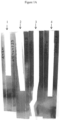
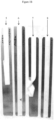
- FIGS. 1A and 1B are photographs of the adhesion testing results for the inventive coatings compared to commercial and conventional coatings.
- a powder coating composition for forming coatings on substrates, such as metal substrates used to form three-piece food and beverage cans.
- containers having weld seam or side seam coatings formed from the powder coating compositions described herein, and related methods of forming and applying the composition.
- the powder coating composition may be used to form a weld or side seam coating on a substrate that demonstrates optimal adhesion to the substrate. That is, the compositions described herein provide sufficient adhesion that the coating can undergo mechanical stress and deformation during fabrication and use without losing adhesion and thereby provide full protection to the underlying side seam and substrate.
- the present invention provides a method for forming a coating on a substrate, as defined in the claims.
- the coating composition is applied to at least one portion of a substrate that forms a weld seam of a three-piece beverage can.
- a three-piece can of this sort is made of metal, preferably tinplate, and includes a body attached to a lid piece and a bottom piece.
- the body is fabricated from a metal plate or sheet and shaped into a cylindrical geometry with the ends welded together at the sides to form a welded side seam or weld seam.
- Containers of this type are known in the art, and are described in Applicants' copending PCT Application, published as WO2014065858 (published May 1, 2014 ) .
- a powder coating composition is typically applied, then melted and solidified to form a coating along the weld seam.
- powder coating compositions applied along the weld seam have been made from bisphenol-based components.
- Such components are typically polymers having backbone segments that are the reaction products of a bisphenol (e.g., bisphenol A, bisphenol F, bisphenol S, 4,4'-dihydroxy bisphenol, etc.) and a halohdyrin (e.g., epichlorohydrin).
- a bisphenol e.g., bisphenol A, bisphenol F, bisphenol S, 4,4'-dihydroxy bisphenol, etc.
- halohdyrin e.g., epichlorohydrin
- Non-BPA containing compositions are increasingly preferred in the industry, as there is a perception that some coatings containing bisphenol A (BPA), bisphenol F (BPF), and aromatic glycidyl ether compounds, are less acceptable for food and beverage containers. Accordingly, there is an increasing need for coating compositions that are bisphenol-free.
- BPA-free coatings present significant challenges when used to coat substrates, including the weld or side seam of three-piece food and beverage cans. These BPA-free coatings demonstrate poor adhesion to the substrate, resulting in insufficient protection for the side seam from corrosion during use. This is especially true when BPA-free powder compositions are used for side seam coatings applied to substrates coated with BPA-free compositions.
- the powder coating composition described herein is substantially or even essentially bisphenol-free, but demonstrates optimal adhesion to the substrate, including to a side seam or weld seam of a container, even when applied to substrates coated with BPA-free compositions.
- the adhesion is comparable or even superior to adhesion demonstrated by conventional coating compositions used to coat weld seams, whether on BPA-free coatings or coatings that contain BPA.
- the present disclosure provides methods for forming a bisphenol-free coating on a substrate.
- the method includes providing a powder coating composition that includes at least one polyester.
- the at least one polyester described herein has a weight-average molecular weight of at least about 20,000, more preferably at least about 25,000, and even more preferably at least about 30,000.
- the weight-average molecular weight of the polyester is less than about 50,000, and preferably less than about 40,000.
- the polyester may also have a number-average molecular weight of at least about 8,000, more preferably at least about 10,000, and even more preferably at least about 12,000.
- the number-average molecular weight of the polyester may also be less than about 20,000, more preferably less than about 16,000, and even more preferably less than about 15,000.
- the polyester is also preferably a semi-crystalline polyester having a glass transition temperature of at least about -20°C, more preferably at least about 10°C, and even more preferably at least about 15°.
- the glass transition temperature of the polyester may also be less than about 40°C, more preferably less than about 35°C, and even more preferably from about 25°C or less.
- the at least one polyester has a melting temperature of at least 140°C.
- the melting temperature of the polyester is less than 160°C.
- the "glass transition temperature” and the “melting temperature” may each be determined using differential scanning calorimetry (DSC).
- the at least one polyester resin described herein may be included in a blend including two or more polyesters.
- the other polyesters present in the blend may have any suitable molecular weight, any suitable melt viscosity and any suitable Tg.
- the polyester described herein may be prepared, for example, by condensing a dicarboxylic acid with a diol (e.g., an aliphatic diol).
- the dicarboxylic acid may include terephthalic acid, isophthalic acid, a naphthalene dicarboxylic acid, or mixtures thereof. It is also understood that an esterifiable derivative of a dicarboxylic acid, such as a dimethyl ester or anhydride of a dicarboxylic acid, can be used to prepare the polyesters.
- exemplary dicarboxylic acids used to prepare the polyester may include aliphatic and aromatic dicarboxylic acids, such as, but not limited to, phthalic acid, isophthalic acid, terephthalic acid, 5-tert-butyl isophthalic acid, adipic acid, malonic acid, 2,6-naphthalenedicarboxylic acid, 1,5-naphthalenedicarboxylic acid, hexahydroterephthalic acid, 1,4-cyclohexanedicarboxylic acid, sebacic acid, azeleic acid, succinic acid, glutaric acid, fumaric acid, and mixtures and esterifiable derivatives thereof.
- Substituted aliphatic and aromatic dicarboxylic acids such as halogen or alkyl-substituted dicarboxylic acids, may also be useful.
- Non-limiting examples of diols that may be useful in preparing the polyester may include ethylene glycol, diethylene glycol, triethylene glycol, propylene glycol, dipropylene glycol, hexylene glycol, butylene glycol, pentylene glycol, neopentyl glycol, trimethylpropane diol, 1,4-cyclohexanedimethanol, 1,10-decanediol, 2,2-dimethyl-1,3-propanediol, 2,2,4,4-tetramethyl-1,3-cyclobutandiol, a polyethylene or polypropylene glycol having a molecular weight of about 500 or less, and mixtures thereof.
- a small amount of a triol or polyol, such as, 0 to 3 mole% of diol can be used to provide partially branched polyesters, as opposed to linear polyesters.
- the diol and the dicarboxylic acid in correct proportions, may be reacted under standard esterification procedures to provide one or more polyesters having the desired molecular weights, glass transition temperatures, molecular weight distributions, branching (if any), crystallinities, and functionality for use in a present powder coating composition.
- polyesters include polyethylene terephthalates (PET), polyethylene terephthalates derived from both terephthalic acid and isophthalic acid (PET-I), polybutylene terephthalates (PBT), polyethylene naphthalates (PEN), and polybutylene naphthalates (PBN), polytrimethylene terephthalate (PTT), polytrimethylene naphthanate (PTN), and copolymers and mixtures thereof.
- PET polyethylene terephthalates
- PET-I polyethylene terephthalates derived from both terephthalic acid and isophthalic acid
- PBT polybutylene terephthalates
- PEN polyethylene naphthalates
- PBN polybutylene naphthalates
- PTT polytrimethylene terephthalate
- PN polytrimethylene naphthanate
- copolymers and mixtures thereof include any combination of one or more additional co-monomers.
- suitable polymers and copolymers for the polyester are commercially available under the tradename GRILTEX, from EMS-Griltech, Switzerland.
- suitable polymers and copolymers for the polyester are commercially available under the tradename GRILTEX, from EMS-Griltech, Switzerland.
- specific polyesters include GRILTEX D2343, available as a copolymer from EMS-Griltech, Switzerland, GRILTEX D2360, available as a copolymer from EMS-Griltech, Switzerland, and the like.
- the powder coating composition described herein preferably has a fine particle size distribution such that at least about 95% by weight of the particles are capable of passing through a 100-micrometer sieve. More preferably, at least about 99% by weight of the particles are capable of passing through a 100-micrometer sieve.
- the particle size distributions referred to herein are measured pursuant to ASTM E1 1-09e1.
- An example of a suitable sieve for determining particle size distributions is commercially available under the tradename HAVER TEST SIEVE from Haver & Boecker OHG, Germany.
- the powder coating composition described herein is preferably substantially bisphenol-free, i.e. substantially free of bisphenol A (BPA) and bisphenol A diglycidyl ether (BADGE) compounds (mobile or bound), and more preferably essentially free of these compounds, and most preferably completely free of these compounds.
- the preferred powder coating composition is also substantially free, more preferably essentially free, and most preferably completely free of: bisphenol S, bisphenol F, bisphenol F diglycidyl ether, and bisphenol S diglycidyl ether compounds.
- Preferred epoxy and phenoxy resins include BPA-free and BADGE-free epoxy and phenoxy resins based on the aromatic diepoxides (e.g., diglycidyl ethers) described in U.S. Application Serial Numbers 13/570,632 , 13/570,743 , and 61/681,394 , with the diepoxide of 4,4'-methylenebis(2,6-dimethylphenol) being one such example of an aromatic diepoxide.
- An epoxy resin can be used in its commercially available form, or can be prepared by advancing a low molecular weight epoxy compound by standard methods well known to those skilled in the art.
- Exemplary epoxy resins include, but are not limited to those commercially available under the tradename EPON from Shell Chemical Co., Houston, Texas; those commercially available under the tradename ARALDITE from Huntsman Advanced Materials GmbH, Switzerland; and those commercially available from Kukdo Chemical Co., Ltd., South Korea.
- the epoxycontaining compounds and/or phenoxy-containing compounds also preferably have a fine particle size distribution as discussed above for the blend of one or more polyesters.
- the powder coating composition used in the present invention includes at least one additional resin component.
- the resin component is a highly functional low molecular weight polymer that includes at least one monomer unit derived from a glycidyl ester of an ⁇ , ⁇ -unsaturated acid or anhydride thereof.
- the resin component is a copolymer including a first monomeric unit derived from a glycidyl ester of an ⁇ , ⁇ -unsaturated acid or anhydride thereof and a second monomeric unit derived from an alkyl (meth)acrylate having the following structure: wherein R1 is hydrogen or methyl, and R2 is an alkyl group having 1 to 16 carbon atoms (C1 to C16).
- the component includes at least about 20 to 90% by weight of the polymer derived from the monomeric unit described herein.
- the component is included in the powder coating composition in an amount of 1% to 5% by weight, based on the total weight of the composition.
- the highly functional low molecular weight resin component is a polymer including a monomer unit derived from a glycidyl ester of an ⁇ , ⁇ -unsaturated acid or anhydride thereof.
- carboxylic acids include, without limitation, acrylic acid, methacrylic acid, ethacrylic acid, ⁇ -chloroacrylic acid, ⁇ -cyanoacrylic acid, ⁇ -methylacrylic acid (crotonic acid), ⁇ -phenylacrylic acid, ⁇ -acryloxypropionic acid, sorbic acid, ⁇ -chlorosorbic acid, angelic acid, cinnamic acid, p-chlorocinnamic acid, ⁇ -stearylacrylic acid, itaconic acid, citraconic acid, mesaconic acid, glutaconic acid, aconitic acid, maleic acid, fumaric acid, tricarboxyethylene, maleic anhydride, and mixtures thereof.
- monomers containing a glycidyl group are glycidyl (meth)acrylate (i.e., glycidyl methacrylate and glycidyl acrylate), mono- and di-glycidyl itaconate, mono- and diglycidyl maleate, and mono- and di-glycidyl formate.
- a preferred epoxy functionalized monomer is glycidyl (meth)acrylate, which has the following structure: wherein R 1 is hydrogen or methyl.
- the resulting epoxy functionalized component is a homopolymer made up of glycidyl (meth)acrylate monomeric units that may be depicted with the following structure:
- the epoxy functionalized component may be a copolymer with a general formula [A-B] n , where A is a monomeric unit derived from the epoxy functionalized monomer and B is a monomeric unit derived from an alkyl (meth)acrylate having the structure: wherein R 1 is hydrogen or methyl, and R 2 is an alkyl group containing one to sixteen carbon atoms.
- the R 2 group can be substituted with one or more, and typically one to three, moieties such as hydroxy, halo, amino, phenyl, and alkoxy, for example.
- the alkyl (meth)acrylates used in the copolymer therefore encompass hydroxy alkyl (meth)acrylates and aminoalkyl (meth)acrylates.
- the alkyl (meth)acrylate can be an ester of acrylic or methacrylic acid.
- suitable (meth)acrylic acid esters are C 1-24 alkyl esters or cycloalkyl esters of acrylic or ethacrylic acids, such as methyl acrylate, ethyl acrylate, propyl acrylate, isopropyl acrylate, n-butyl acrylate, isobutyl acrylate, t-butyl acrylate, hexyl acrylate, 2-ethylhexyl acrylate, n-octyl acrylate, decyl acrylate, stearyl acrylate, lauryl acrylate, cyclohexyl acrylate, methyl methacrylate, ethyl methacrylate, n-propyl methacrylate, isopropyl methacrylate, n-butyl methacrylate, isobutyl methacrylate, t-butyl methacrylate, hexyl methacrylate, 2-ethyl
- R 1 is methyl and R 2 is an alkyl group having two to eight carbon atoms. In another aspect, R 1 can be methyl and R 2 can be an alkyl group having two to four carbon atoms.
- alkyl (meth)acrylate include, but are not limited to, methyl, ethyl, propyl, isopropyl, butyl, isobutyl, pentyl, isoamyl, hexyl, 2-aminoethyl, 2-hydroxyethyl, 2-ethylhexyl, cyclohexyl, decyl, isodecyl, benzyl, 2-hydroxypropyl, lauryl, isobornyl, octyl, and nonyl-(meth)acrylates.
- the additional resin component included in the powder coating composition described herein is a polymer derived from glycidyl methacrylate (GMA), or a copolymer of GMA with ethyl methacrylate (EMA) or other (meth)acrylate monomers, or mixtures and combinations thereof.
- GMA glycidyl methacrylate
- EMA ethyl methacrylate
- Exemplary resin components include GMA-containing polymers and/or copolymers including but not limited to those commercially available from Estron Chemical (Calvert City, Kentucky).
- the additional resin component included in the powder coating composition described herein has a weight average molecular weight (M w ) of about 3,000 to 10,000, and preferably 4,000 to 8,000.
- the additional resin component may be made by a variety of methods known to those of skill in the art, including methods described in U.S. Patent No. 6,916,874 (issued July 12, 2005 ).
- the powder coating compositions described herein may include one or more optional additives.
- suitable additives for the powder coating composition include colorants, inorganic fillers, surfactants, flow control agents, heat stabilizers, anti-corrosion agents, antioxidants, adhesion promoters, light stabilizers, and combinations thereof.
- the powder coating composition may include a colorant, such as a pigment or dye.
- suitable colorants for use in the powder coating composition include titanium dioxide, barium sulfate, carbon black, and iron oxide, and may also include organic dyes and pigments.
- the colorant may constitute, e.g., from about 1% to about 50% by weight of the powder coating composition, more preferably from about 10% to about 30% by weight, and even more preferably from about 15% to about 20% by weight.
- the use of a higher colorant concentration may be advantageous to achieve good coverage with thinner coatings (e.g., coating 34).
- Exemplary inorganic fillers used in the powder coating composition described herein include, but are not limited to, clay, mica, aluminum silicate, fumed silica, magnesium oxide, zinc oxide, barium oxide, calcium sulfate, calcium oxide, aluminum oxide, magnesium aluminum oxide, zinc aluminum oxide, magnesium titanium oxide, iron titanium oxide, calcium titanium oxide, and mixtures thereof. If present, the inorganic fillers may constitute, e.g., from about 0.1% to about 20% by weight of the powder coating composition, more preferably from about 1% to about 15% by weight, and even more preferably from about 2% to about 10% by weight.
- An exemplary flow control agent for use in the powder coating composition is a polyacrylate commercially available under the tradename PERENOL from Henkel Corporation, Rocky Hill, Connecticut. Additionally useful polyacrylate flow control agents are commercially available under the tradename ACRYLON MFP from Protex France, and those commercially available from BYK-Chemie GmbH, Germany. Numerous other compounds and other acrylic resins known to persons skilled in the art also can be used as a flow control agent.
- the flow control agents may constitute, e.g., from about 0.1% to about 5% by weight of the powder coating composition, and more preferably from about 0.2% to about 1% by weight. The flow control agent assists in achieving a uniform thin film for the applied onto the inner surface of a container, and may further assist in reducing lumping and dust issues that may otherwise occur with fine powder particles.
- suitable surfactants for use in the powder coating composition include wetting agents, emulsifying agents, suspending agents, dispersing agents, and combinations thereof.
- suitable surfactants for use in the coating composition include non-ionic and anionic surfactants (e.g., waxes).
- the surfactants may constitute from about 0.1% to about 10% by weight of the powder coating composition, and more preferably from about 0.2% to about 5% by weight.
- the powder coating composition described herein can be prepared by methods well known in the art, such as by individually heating the one or more polyesters, and the at least one resin additive, along with fillers, colorants, flow control agents, and the like, to a sufficient temperature to melt each ingredient, and admixing the molten ingredients, such as in a single screw or double screw extruder, to provide a substantially homogenous blend.
- the additional resin component could undergo crosslinking at the temperature at which the composition is typically extruded. Accordingly, in an embodiment, to avoid crosslinking of the resin additive, the extruder is maintained at a temperature of about125°C to 250°C, preferably about 150°C to 220°C.
- the resulting blend of polyester and resin component may then be compounded into pellets, crystallized, and milled (e.g., cryogenic milling) to attain the desired fine particle sizes.
- the relatively low molecular weight of the polyester(s) increases the ease of milling to the fine particle sizes.
- One or more of the optional additives may then be mixed with the polyester particles, and the resulting composition may be sieved and packaged for subsequent use. Alternatively, one or more of the optional additives may be included in a melt blend including the one or more polyesters.
- the powder coating composition may be applied to a metal substrate, such as, without limitation, at a side seam or weld seam of a three-piece can.
- the powder coating composition is used as a weld seam coating.
- the powder coating composition may also be used for a variety of other coating applications.
- the powder coating composition may be applied to assist in forming the lid seal and/or bottom seal of a three-piece container as described in Applicant's copending PCT Application, published as WO2014065858 (published May 1, 2014 ).
- the final powder may then be applied to an article by various means including the use of fluid beds and spray applicators.
- an electrostatic spraying process is used, wherein the particles are electrostatically charged and sprayed onto an article that has been grounded so that the powder particles are attracted to and cling to the article.
- a corona charging process is used for electrostatic application, although tribo charging or a combination of corona and tribo charging may be used.
- the article is heated. This heating step causes the powder particles to melt and flow together to coat the article.
- continued or additional heating may be used to cure the coating.
- Other alternatives such as UV curing of the coating may be used.
- the coating is optionally cured, and such curing may occur via continued heating, subsequent heating, or residual heat in the substrate.
- a radiation curable powder coating base if a radiation curable powder coating base is selected, the powder can be melted by a relatively short or low temperature heating cycle, and then may be exposed to radiation to initiate the curing process.
- a radiation curing include using UV-vis, visible light, near-IR, IR and e-beam.
- the coating composition described herein is cured by heating to a molten stage followed by solidifying the coating by active or passive cooling leading to the formation of a hardened or cured coating.
- the powder coating composition is preferably capable of forming coatings having coating thicknesses of about 70 micrometer or less. During fabrication of a coated article and during use, the coating protects the underlying metal substrate, including the weld seam, from corrosion or other environmental conditions, thereby preserving the integrity of the container.
- Adhesion testing is performed to assess whether the coating adheres to the coated substrate.
- the adhesion test is performed as follows. Powder coatings are sprayed and cured on to metal test panels. For each test panel, a strip is made by cutting through the coating. One end of the strip is loosened to form a tab. The tab is then pulled to determine if the coating adheres to or peels off the substrate surface.
- Powder coating compositions were prepared as shown in Table 1. Each composition was sprayed onto a metal panel at a coating thickness of about 50 to 70 microns and then cured by heating in an oven followed by passive cooling to provide a coated substrate. The coating was then tested for adhesion by the methods described above. Results of the adhesion test are shown in Figures 1A and 1B .
- Figure 1A shows adhesion test results for different compositions applied to a commercially available coated substrate, such as BPA-Ni (BPA-Nonintent, i.e. a composition where BPA is not intentionally added or included).
- Figure 1B shows substrates coated with BPA-Ni and standard BPA-containing compositions prepared with the additional resin component and without this component.
Landscapes
- Chemical & Material Sciences (AREA)
- Engineering & Computer Science (AREA)
- Organic Chemistry (AREA)
- Life Sciences & Earth Sciences (AREA)
- Wood Science & Technology (AREA)
- Materials Engineering (AREA)
- Chemical Kinetics & Catalysis (AREA)
- Health & Medical Sciences (AREA)
- Medicinal Chemistry (AREA)
- Polymers & Plastics (AREA)
- Mechanical Engineering (AREA)
- Paints Or Removers (AREA)
Claims (11)
- Procédé permettant de former un revêtement sur un substrat, le procédé comprenant :
la fourniture d'une composition de revêtement en poudre comprenant :au moins un polyester ayant une masse moléculaire moyenne en poids allant d'environ 20 000 à environ 50 000, et une température de fusion d'au moins 140 °C et inférieure à 160 °C déterminée à l'aide d'une calorimétrie différentielle à balayage ; etenviron 1 à 5 % d'un composant de résine hautement fonctionnel, le composant de résine ayant une masse moléculaire moyenne en poids (Mw) d'environ 3000 à environ 10 000 ;l'application de la composition de revêtement sur au moins une partie du substrat qui forme un joint de soudure d'une canette de boisson en trois pièces ;la fusion de la composition de revêtement sur l'au moins une partie du substrat ; etla solidification de la composition de revêtement fondue pour former le revêtement fixé par adhérence à l'au moins une partie du substrat, le revêtement présentant une adhérence optimale à l'au moins une partie du substrat,dans lequel le composant de résine hautement fonctionnel est un polymère comprenant un motif monomère dérivé d'un ester glycidylique d'un acide α,β-insaturé ou anhydride de celui-ci. - Procédé selon la revendication 1, dans lequel le composant de résine hautement fonctionnel est un polymère comprenant un motif monomère dérivé d'un ester glycidylique d'acide (méth)acrylique.
- Procédé selon la revendication 1, dans lequel le composant de résine hautement fonctionnel est un polymère dérivé de méthacrylate de glycidyle.
- Procédé selon la revendication 1, dans lequel le composant de résine est un copolymère comportant un premier motif monomère dérivé d'un ester glycidylique d'un acide α,β-insaturé ou anhydride de celui-ci et un second motif monomère dérivé d'un motif monomère ayant la structure :

- Procédé selon la revendication 1, dans lequel le composant de résine a une masse moléculaire moyenne en poids (Mw) d'environ 4000 à 8000.
- Procédé selon la revendication 1, dans lequel l'étape de fourniture d'une composition de revêtement comprend en outre :le mélange conjoint de l'au moins une résine de polyester et du composant de résine pour former un mélange ; etle broyage du mélange pour obtenir une composition de poudre avec une taille de particules telle que 99 % des particules dans la composition de poudre peuvent passer à travers un tamis de 100 µm.
- Procédé selon la revendication 6, dans lequel le mélange formé par mélange conjoint de l'au moins une résine de polyester et du composant de résine comprend en outre un ou plusieurs colorants, une ou plusieurs charges et un ou plusieurs agents de régulation d'écoulement.
- Procédé selon la revendication 6, dans lequel l'étape de mélange comprend en outre l'utilisation d'une extrudeuse refroidie à une température d'environ 150 °C à 220 °C.
- Procédé selon la revendication 1, dans lequel l'application de la composition de revêtement sous forme de poudre au substrat ou à une partie de celui-ci comprend l'application de la composition de revêtement sur une jonction latérale d'un récipient.
- Procédé selon la revendication 1, dans lequel la fourniture d'un substrat comprend la formation du substrat en une jonction latérale d'un récipient.
- Procédé selon la revendication 1, dans lequel le revêtement formé est sensiblement dépourvu de pores.
Applications Claiming Priority (2)
| Application Number | Priority Date | Filing Date | Title |
|---|---|---|---|
| US201462039614P | 2014-08-20 | 2014-08-20 | |
| PCT/US2015/044968 WO2016028584A1 (fr) | 2014-08-20 | 2015-08-13 | Composition de revêtement en poudre |
Publications (3)
| Publication Number | Publication Date |
|---|---|
| EP3183305A1 EP3183305A1 (fr) | 2017-06-28 |
| EP3183305A4 EP3183305A4 (fr) | 2018-02-14 |
| EP3183305B1 true EP3183305B1 (fr) | 2023-11-15 |
Family
ID=55351143
Family Applications (1)
| Application Number | Title | Priority Date | Filing Date |
|---|---|---|---|
| EP15833644.6A Active EP3183305B1 (fr) | 2014-08-20 | 2015-08-13 | Composition de revêtement en poudre |
Country Status (8)
| Country | Link |
|---|---|
| US (2) | US20170158869A1 (fr) |
| EP (1) | EP3183305B1 (fr) |
| CN (2) | CN115505286A (fr) |
| AR (1) | AR101670A1 (fr) |
| ES (1) | ES2968344T3 (fr) |
| MX (1) | MX2016016487A (fr) |
| TW (1) | TWI550038B (fr) |
| WO (1) | WO2016028584A1 (fr) |
Families Citing this family (4)
| Publication number | Priority date | Publication date | Assignee | Title |
|---|---|---|---|---|
| DE102015111113B4 (de) * | 2015-07-09 | 2018-08-16 | Pirlo Gmbh + Co. Kg | Behälter zur Heißabfüllung von Flüssigkeiten |
| EP3376299A1 (fr) | 2017-03-13 | 2018-09-19 | TIGER Coatings GmbH & Co. KG | Matériau de revêtement durcissable d'impression sans impact |
| US10941302B2 (en) | 2018-03-07 | 2021-03-09 | Ppg Industries Ohio, Inc. | Powder coating composition |
| WO2022125753A1 (fr) * | 2020-12-09 | 2022-06-16 | Swimc Llc | Thermolaquage de bande latérale transparente teintée |
Family Cites Families (10)
| Publication number | Priority date | Publication date | Assignee | Title |
|---|---|---|---|---|
| WO1992001748A1 (fr) * | 1990-07-16 | 1992-02-06 | Estron Chemical, Inc. | Compositions de revetement sous forme de poudre de polyester thermodurcissable contenant, en tant qu'agent de reticulation, des copolymeres de methacrylate de glycidyle |
| US6270855B1 (en) * | 1996-05-17 | 2001-08-07 | The Valspar Corporation | Powder coating compositions and methods |
| US6472472B2 (en) * | 1996-05-17 | 2002-10-29 | The Valspar Corporation | Powder coating compositions and method |
| JPH10168345A (ja) * | 1996-12-10 | 1998-06-23 | Kansai Paint Co Ltd | 低汚染型熱硬化性粉体塗料 |
| US6472480B1 (en) * | 2001-02-20 | 2002-10-29 | Bp Corporation North America Inc. | Coating composition |
| US6916874B2 (en) | 2001-09-06 | 2005-07-12 | Valspar Sourcing, Inc. | Coating compositions having epoxy functional stabilizer |
| JP2007521996A (ja) * | 2004-02-12 | 2007-08-09 | ヴァルスパー・ソーシング・インコーポレーテッド | 容器内面のコーティング方法、および、内部コーティングを含む容器 |
| EP2085441A1 (fr) * | 2008-01-31 | 2009-08-05 | Cytec Surface Specialties, S.A. | Composition à base de poudre |
| MX384869B (es) * | 2010-10-15 | 2025-03-04 | Swimc Llc | Composición de recubrimiento a base de poliéster para sustratos de metal. |
| WO2014065858A1 (fr) | 2012-10-26 | 2014-05-01 | Valspar Sourcing, Inc. | Composition de revêtement pulvérulente |
-
2015
- 2015-08-06 AR ARP150102518A patent/AR101670A1/es active IP Right Grant
- 2015-08-13 WO PCT/US2015/044968 patent/WO2016028584A1/fr not_active Ceased
- 2015-08-13 EP EP15833644.6A patent/EP3183305B1/fr active Active
- 2015-08-13 ES ES15833644T patent/ES2968344T3/es active Active
- 2015-08-13 CN CN202211109578.1A patent/CN115505286A/zh active Pending
- 2015-08-13 CN CN201580045076.9A patent/CN106661351A/zh active Pending
- 2015-08-13 MX MX2016016487A patent/MX2016016487A/es unknown
- 2015-08-18 TW TW104126833A patent/TWI550038B/zh active
-
2017
- 2017-02-16 US US15/434,862 patent/US20170158869A1/en not_active Abandoned
-
2022
- 2022-02-17 US US17/651,506 patent/US20220169867A1/en active Pending
Also Published As
| Publication number | Publication date |
|---|---|
| ES2968344T3 (es) | 2024-05-09 |
| EP3183305A1 (fr) | 2017-06-28 |
| EP3183305A4 (fr) | 2018-02-14 |
| US20170158869A1 (en) | 2017-06-08 |
| CN106661351A (zh) | 2017-05-10 |
| MX2016016487A (es) | 2017-04-10 |
| CN115505286A (zh) | 2022-12-23 |
| TW201607998A (zh) | 2016-03-01 |
| WO2016028584A1 (fr) | 2016-02-25 |
| AR101670A1 (es) | 2017-01-04 |
| US20220169867A1 (en) | 2022-06-02 |
| TWI550038B (zh) | 2016-09-21 |
Similar Documents
| Publication | Publication Date | Title |
|---|---|---|
| US20220169867A1 (en) | Powder coating composition | |
| EP2247679B1 (fr) | Composition sous forme de poudre | |
| US6235102B1 (en) | Coating composition for metal substrates containing an acrylate copolymer having pendant glycidyl groups and an acid-terminated polyester | |
| EP2912124B1 (fr) | Composition de revêtement pulvérulente | |
| US20080085965A1 (en) | Thermosetting Powder Coating Composition | |
| US20210309881A1 (en) | Low application temperature powder coating | |
| EP1798268A1 (fr) | Composition de peinture en poudre présentant un faible brillant pour couchage sur bande | |
| JP4708720B2 (ja) | ホイール用熱硬化型粉体塗料、その塗料を使用してなる塗膜の形成方法、その塗装製品の製造方法及び塗装製品 | |
| JP2681501B2 (ja) | コーティング用粉体組成物 | |
| CN101977991B (zh) | 粉末组合物,特别是用于涂布金属基底的粉末组合物 | |
| JP2824595B2 (ja) | コーティング用粉体組成物 | |
| US20240093044A1 (en) | Tinted transparent side stripe powder coating | |
| JPH07228802A (ja) | 熱硬化性粉体塗料組成物 | |
| JP2002371230A (ja) | 粉体塗料組成物 | |
| AU2012214524B9 (en) | Coating compositions for containers and other articles and methods of coating | |
| JP2021127414A (ja) | 粉体塗料組成物 | |
| JP2003221549A (ja) | 熱硬化型粉体塗料組成物 |
Legal Events
| Date | Code | Title | Description |
|---|---|---|---|
| STAA | Information on the status of an ep patent application or granted ep patent |
Free format text: STATUS: THE INTERNATIONAL PUBLICATION HAS BEEN MADE |
|
| PUAI | Public reference made under article 153(3) epc to a published international application that has entered the european phase |
Free format text: ORIGINAL CODE: 0009012 |
|
| STAA | Information on the status of an ep patent application or granted ep patent |
Free format text: STATUS: REQUEST FOR EXAMINATION WAS MADE |
|
| 17P | Request for examination filed |
Effective date: 20170220 |
|
| AK | Designated contracting states |
Kind code of ref document: A1 Designated state(s): AL AT BE BG CH CY CZ DE DK EE ES FI FR GB GR HR HU IE IS IT LI LT LU LV MC MK MT NL NO PL PT RO RS SE SI SK SM TR |
|
| AX | Request for extension of the european patent |
Extension state: BA ME |
|
| DAV | Request for validation of the european patent (deleted) | ||
| DAX | Request for extension of the european patent (deleted) | ||
| RIC1 | Information provided on ipc code assigned before grant |
Ipc: C09D 167/00 20060101ALI20171221BHEP Ipc: C08F 220/18 20060101ALI20171221BHEP Ipc: C09D 133/08 20060101ALI20171221BHEP Ipc: C09D 5/03 20060101AFI20171221BHEP Ipc: C08F 220/14 20060101ALI20171221BHEP |
|
| RIC1 | Information provided on ipc code assigned before grant |
Ipc: C09D 167/00 20060101ALI20180102BHEP Ipc: C09D 133/08 20060101ALI20180102BHEP Ipc: C08F 220/18 20060101ALI20180102BHEP Ipc: C09D 5/03 20060101AFI20180102BHEP Ipc: C08F 220/14 20060101ALI20180102BHEP |
|
| A4 | Supplementary search report drawn up and despatched |
Effective date: 20180111 |
|
| RAP1 | Party data changed (applicant data changed or rights of an application transferred) |
Owner name: ENGINEERED POLYMER SOLUTIONS, INC. |
|
| RAP1 | Party data changed (applicant data changed or rights of an application transferred) |
Owner name: THE VALSPAR CORPORATION |
|
| RAP1 | Party data changed (applicant data changed or rights of an application transferred) |
Owner name: THE SHERWIN-WILLIAMS COMPANY |
|
| RAP1 | Party data changed (applicant data changed or rights of an application transferred) |
Owner name: THE SHERWIN-WILLIAMS HEADQUARTERS COMPANY |
|
| RAP1 | Party data changed (applicant data changed or rights of an application transferred) |
Owner name: SWIMC LLC |
|
| STAA | Information on the status of an ep patent application or granted ep patent |
Free format text: STATUS: EXAMINATION IS IN PROGRESS |
|
| 17Q | First examination report despatched |
Effective date: 20200629 |
|
| GRAP | Despatch of communication of intention to grant a patent |
Free format text: ORIGINAL CODE: EPIDOSNIGR1 |
|
| STAA | Information on the status of an ep patent application or granted ep patent |
Free format text: STATUS: GRANT OF PATENT IS INTENDED |
|
| INTG | Intention to grant announced |
Effective date: 20230612 |
|
| RIN1 | Information on inventor provided before grant (corrected) |
Inventor name: FRISCHKOPF, ROLF Inventor name: MARTINONI, RAFFAELE |
|
| GRAS | Grant fee paid |
Free format text: ORIGINAL CODE: EPIDOSNIGR3 |
|
| GRAA | (expected) grant |
Free format text: ORIGINAL CODE: 0009210 |
|
| STAA | Information on the status of an ep patent application or granted ep patent |
Free format text: STATUS: THE PATENT HAS BEEN GRANTED |
|
| P01 | Opt-out of the competence of the unified patent court (upc) registered |
Effective date: 20231004 |
|
| AK | Designated contracting states |
Kind code of ref document: B1 Designated state(s): AL AT BE BG CH CY CZ DE DK EE ES FI FR GB GR HR HU IE IS IT LI LT LU LV MC MK MT NL NO PL PT RO RS SE SI SK SM TR |
|
| REG | Reference to a national code |
Ref country code: CH Ref legal event code: EP Ref country code: GB Ref legal event code: FG4D |
|
| REG | Reference to a national code |
Ref country code: DE Ref legal event code: R096 Ref document number: 602015086564 Country of ref document: DE |
|
| REG | Reference to a national code |
Ref country code: IE Ref legal event code: FG4D |
|
| REG | Reference to a national code |
Ref country code: LT Ref legal event code: MG9D |
|
| REG | Reference to a national code |
Ref country code: NL Ref legal event code: MP Effective date: 20231115 |
|
| PG25 | Lapsed in a contracting state [announced via postgrant information from national office to epo] |
Ref country code: GR Free format text: LAPSE BECAUSE OF FAILURE TO SUBMIT A TRANSLATION OF THE DESCRIPTION OR TO PAY THE FEE WITHIN THE PRESCRIBED TIME-LIMIT Effective date: 20240216 |
|
| PG25 | Lapsed in a contracting state [announced via postgrant information from national office to epo] |
Ref country code: IS Free format text: LAPSE BECAUSE OF FAILURE TO SUBMIT A TRANSLATION OF THE DESCRIPTION OR TO PAY THE FEE WITHIN THE PRESCRIBED TIME-LIMIT Effective date: 20240315 |
|
| PG25 | Lapsed in a contracting state [announced via postgrant information from national office to epo] |
Ref country code: LT Free format text: LAPSE BECAUSE OF FAILURE TO SUBMIT A TRANSLATION OF THE DESCRIPTION OR TO PAY THE FEE WITHIN THE PRESCRIBED TIME-LIMIT Effective date: 20231115 |
|
| REG | Reference to a national code |
Ref country code: AT Ref legal event code: MK05 Ref document number: 1631771 Country of ref document: AT Kind code of ref document: T Effective date: 20231115 |
|
| PG25 | Lapsed in a contracting state [announced via postgrant information from national office to epo] |
Ref country code: NL Free format text: LAPSE BECAUSE OF FAILURE TO SUBMIT A TRANSLATION OF THE DESCRIPTION OR TO PAY THE FEE WITHIN THE PRESCRIBED TIME-LIMIT Effective date: 20231115 |
|
| PG25 | Lapsed in a contracting state [announced via postgrant information from national office to epo] |
Ref country code: AT Free format text: LAPSE BECAUSE OF FAILURE TO SUBMIT A TRANSLATION OF THE DESCRIPTION OR TO PAY THE FEE WITHIN THE PRESCRIBED TIME-LIMIT Effective date: 20231115 |
|
| PG25 | Lapsed in a contracting state [announced via postgrant information from national office to epo] |
Ref country code: NL Free format text: LAPSE BECAUSE OF FAILURE TO SUBMIT A TRANSLATION OF THE DESCRIPTION OR TO PAY THE FEE WITHIN THE PRESCRIBED TIME-LIMIT Effective date: 20231115 Ref country code: LT Free format text: LAPSE BECAUSE OF FAILURE TO SUBMIT A TRANSLATION OF THE DESCRIPTION OR TO PAY THE FEE WITHIN THE PRESCRIBED TIME-LIMIT Effective date: 20231115 Ref country code: IS Free format text: LAPSE BECAUSE OF FAILURE TO SUBMIT A TRANSLATION OF THE DESCRIPTION OR TO PAY THE FEE WITHIN THE PRESCRIBED TIME-LIMIT Effective date: 20240315 Ref country code: GR Free format text: LAPSE BECAUSE OF FAILURE TO SUBMIT A TRANSLATION OF THE DESCRIPTION OR TO PAY THE FEE WITHIN THE PRESCRIBED TIME-LIMIT Effective date: 20240216 Ref country code: BG Free format text: LAPSE BECAUSE OF FAILURE TO SUBMIT A TRANSLATION OF THE DESCRIPTION OR TO PAY THE FEE WITHIN THE PRESCRIBED TIME-LIMIT Effective date: 20240215 Ref country code: AT Free format text: LAPSE BECAUSE OF FAILURE TO SUBMIT A TRANSLATION OF THE DESCRIPTION OR TO PAY THE FEE WITHIN THE PRESCRIBED TIME-LIMIT Effective date: 20231115 Ref country code: PT Free format text: LAPSE BECAUSE OF FAILURE TO SUBMIT A TRANSLATION OF THE DESCRIPTION OR TO PAY THE FEE WITHIN THE PRESCRIBED TIME-LIMIT Effective date: 20240315 |
|
| REG | Reference to a national code |
Ref country code: ES Ref legal event code: FG2A Ref document number: 2968344 Country of ref document: ES Kind code of ref document: T3 Effective date: 20240509 |
|
| PG25 | Lapsed in a contracting state [announced via postgrant information from national office to epo] |
Ref country code: SE Free format text: LAPSE BECAUSE OF FAILURE TO SUBMIT A TRANSLATION OF THE DESCRIPTION OR TO PAY THE FEE WITHIN THE PRESCRIBED TIME-LIMIT Effective date: 20231115 Ref country code: RS Free format text: LAPSE BECAUSE OF FAILURE TO SUBMIT A TRANSLATION OF THE DESCRIPTION OR TO PAY THE FEE WITHIN THE PRESCRIBED TIME-LIMIT Effective date: 20231115 Ref country code: PL Free format text: LAPSE BECAUSE OF FAILURE TO SUBMIT A TRANSLATION OF THE DESCRIPTION OR TO PAY THE FEE WITHIN THE PRESCRIBED TIME-LIMIT Effective date: 20231115 Ref country code: NO Free format text: LAPSE BECAUSE OF FAILURE TO SUBMIT A TRANSLATION OF THE DESCRIPTION OR TO PAY THE FEE WITHIN THE PRESCRIBED TIME-LIMIT Effective date: 20240215 Ref country code: LV Free format text: LAPSE BECAUSE OF FAILURE TO SUBMIT A TRANSLATION OF THE DESCRIPTION OR TO PAY THE FEE WITHIN THE PRESCRIBED TIME-LIMIT Effective date: 20231115 Ref country code: HR Free format text: LAPSE BECAUSE OF FAILURE TO SUBMIT A TRANSLATION OF THE DESCRIPTION OR TO PAY THE FEE WITHIN THE PRESCRIBED TIME-LIMIT Effective date: 20231115 |
|
| PG25 | Lapsed in a contracting state [announced via postgrant information from national office to epo] |
Ref country code: DK Free format text: LAPSE BECAUSE OF FAILURE TO SUBMIT A TRANSLATION OF THE DESCRIPTION OR TO PAY THE FEE WITHIN THE PRESCRIBED TIME-LIMIT Effective date: 20231115 |
|
| PG25 | Lapsed in a contracting state [announced via postgrant information from national office to epo] |
Ref country code: CZ Free format text: LAPSE BECAUSE OF FAILURE TO SUBMIT A TRANSLATION OF THE DESCRIPTION OR TO PAY THE FEE WITHIN THE PRESCRIBED TIME-LIMIT Effective date: 20231115 |
|
| PG25 | Lapsed in a contracting state [announced via postgrant information from national office to epo] |
Ref country code: SK Free format text: LAPSE BECAUSE OF FAILURE TO SUBMIT A TRANSLATION OF THE DESCRIPTION OR TO PAY THE FEE WITHIN THE PRESCRIBED TIME-LIMIT Effective date: 20231115 |
|
| PG25 | Lapsed in a contracting state [announced via postgrant information from national office to epo] |
Ref country code: SM Free format text: LAPSE BECAUSE OF FAILURE TO SUBMIT A TRANSLATION OF THE DESCRIPTION OR TO PAY THE FEE WITHIN THE PRESCRIBED TIME-LIMIT Effective date: 20231115 Ref country code: SK Free format text: LAPSE BECAUSE OF FAILURE TO SUBMIT A TRANSLATION OF THE DESCRIPTION OR TO PAY THE FEE WITHIN THE PRESCRIBED TIME-LIMIT Effective date: 20231115 Ref country code: RO Free format text: LAPSE BECAUSE OF FAILURE TO SUBMIT A TRANSLATION OF THE DESCRIPTION OR TO PAY THE FEE WITHIN THE PRESCRIBED TIME-LIMIT Effective date: 20231115 Ref country code: EE Free format text: LAPSE BECAUSE OF FAILURE TO SUBMIT A TRANSLATION OF THE DESCRIPTION OR TO PAY THE FEE WITHIN THE PRESCRIBED TIME-LIMIT Effective date: 20231115 Ref country code: DK Free format text: LAPSE BECAUSE OF FAILURE TO SUBMIT A TRANSLATION OF THE DESCRIPTION OR TO PAY THE FEE WITHIN THE PRESCRIBED TIME-LIMIT Effective date: 20231115 Ref country code: CZ Free format text: LAPSE BECAUSE OF FAILURE TO SUBMIT A TRANSLATION OF THE DESCRIPTION OR TO PAY THE FEE WITHIN THE PRESCRIBED TIME-LIMIT Effective date: 20231115 |
|
| REG | Reference to a national code |
Ref country code: DE Ref legal event code: R097 Ref document number: 602015086564 Country of ref document: DE |
|
| PLBE | No opposition filed within time limit |
Free format text: ORIGINAL CODE: 0009261 |
|
| STAA | Information on the status of an ep patent application or granted ep patent |
Free format text: STATUS: NO OPPOSITION FILED WITHIN TIME LIMIT |
|
| 26N | No opposition filed |
Effective date: 20240819 |
|
| PG25 | Lapsed in a contracting state [announced via postgrant information from national office to epo] |
Ref country code: SI Free format text: LAPSE BECAUSE OF FAILURE TO SUBMIT A TRANSLATION OF THE DESCRIPTION OR TO PAY THE FEE WITHIN THE PRESCRIBED TIME-LIMIT Effective date: 20231115 |
|
| PG25 | Lapsed in a contracting state [announced via postgrant information from national office to epo] |
Ref country code: SI Free format text: LAPSE BECAUSE OF FAILURE TO SUBMIT A TRANSLATION OF THE DESCRIPTION OR TO PAY THE FEE WITHIN THE PRESCRIBED TIME-LIMIT Effective date: 20231115 |
|
| REG | Reference to a national code |
Ref country code: CH Ref legal event code: PL |
|
| PG25 | Lapsed in a contracting state [announced via postgrant information from national office to epo] |
Ref country code: LU Free format text: LAPSE BECAUSE OF NON-PAYMENT OF DUE FEES Effective date: 20240813 |
|
| PG25 | Lapsed in a contracting state [announced via postgrant information from national office to epo] |
Ref country code: MC Free format text: LAPSE BECAUSE OF FAILURE TO SUBMIT A TRANSLATION OF THE DESCRIPTION OR TO PAY THE FEE WITHIN THE PRESCRIBED TIME-LIMIT Effective date: 20231115 Ref country code: CH Free format text: LAPSE BECAUSE OF NON-PAYMENT OF DUE FEES Effective date: 20240831 |
|
| REG | Reference to a national code |
Ref country code: BE Ref legal event code: MM Effective date: 20240831 |
|
| PG25 | Lapsed in a contracting state [announced via postgrant information from national office to epo] |
Ref country code: BE Free format text: LAPSE BECAUSE OF NON-PAYMENT OF DUE FEES Effective date: 20240831 |
|
| PG25 | Lapsed in a contracting state [announced via postgrant information from national office to epo] |
Ref country code: IE Free format text: LAPSE BECAUSE OF NON-PAYMENT OF DUE FEES Effective date: 20240813 |
|
| PG25 | Lapsed in a contracting state [announced via postgrant information from national office to epo] |
Ref country code: FI Free format text: LAPSE BECAUSE OF FAILURE TO SUBMIT A TRANSLATION OF THE DESCRIPTION OR TO PAY THE FEE WITHIN THE PRESCRIBED TIME-LIMIT Effective date: 20231115 |
|
| PGFP | Annual fee paid to national office [announced via postgrant information from national office to epo] |
Ref country code: ES Payment date: 20250916 Year of fee payment: 11 |
|
| PGFP | Annual fee paid to national office [announced via postgrant information from national office to epo] |
Ref country code: DE Payment date: 20250827 Year of fee payment: 11 |
|
| PGFP | Annual fee paid to national office [announced via postgrant information from national office to epo] |
Ref country code: IT Payment date: 20250825 Year of fee payment: 11 |
|
| PGFP | Annual fee paid to national office [announced via postgrant information from national office to epo] |
Ref country code: GB Payment date: 20250826 Year of fee payment: 11 |
|
| PGFP | Annual fee paid to national office [announced via postgrant information from national office to epo] |
Ref country code: FR Payment date: 20250825 Year of fee payment: 11 |
|
| PG25 | Lapsed in a contracting state [announced via postgrant information from national office to epo] |
Ref country code: CY Free format text: LAPSE BECAUSE OF FAILURE TO SUBMIT A TRANSLATION OF THE DESCRIPTION OR TO PAY THE FEE WITHIN THE PRESCRIBED TIME-LIMIT; INVALID AB INITIO Effective date: 20150813 |
|
| PG25 | Lapsed in a contracting state [announced via postgrant information from national office to epo] |
Ref country code: HU Free format text: LAPSE BECAUSE OF FAILURE TO SUBMIT A TRANSLATION OF THE DESCRIPTION OR TO PAY THE FEE WITHIN THE PRESCRIBED TIME-LIMIT; INVALID AB INITIO Effective date: 20150813 |