EP3185111B1 - Informationsverarbeitungsvorrichtung und steuerungsverfahren - Google Patents
Informationsverarbeitungsvorrichtung und steuerungsverfahren Download PDFInfo
- Publication number
- EP3185111B1 EP3185111B1 EP15834175.0A EP15834175A EP3185111B1 EP 3185111 B1 EP3185111 B1 EP 3185111B1 EP 15834175 A EP15834175 A EP 15834175A EP 3185111 B1 EP3185111 B1 EP 3185111B1
- Authority
- EP
- European Patent Office
- Prior art keywords
- area
- user
- information
- content
- confidential
- Prior art date
- Legal status (The legal status is an assumption and is not a legal conclusion. Google has not performed a legal analysis and makes no representation as to the accuracy of the status listed.)
- Not-in-force
Links
Images





Classifications
-
- G—PHYSICS
- G09—EDUCATION; CRYPTOGRAPHY; DISPLAY; ADVERTISING; SEALS
- G09G—ARRANGEMENTS OR CIRCUITS FOR CONTROL OF INDICATING DEVICES USING STATIC MEANS TO PRESENT VARIABLE INFORMATION
- G09G5/00—Control arrangements or circuits for visual indicators common to cathode-ray tube indicators and other visual indicators
- G09G5/14—Display of multiple viewports
-
- G—PHYSICS
- G06—COMPUTING OR CALCULATING; COUNTING
- G06F—ELECTRIC DIGITAL DATA PROCESSING
- G06F3/00—Input arrangements for transferring data to be processed into a form capable of being handled by the computer; Output arrangements for transferring data from processing unit to output unit, e.g. interface arrangements
- G06F3/01—Input arrangements or combined input and output arrangements for interaction between user and computer
- G06F3/048—Interaction techniques based on graphical user interfaces [GUI]
-
- G—PHYSICS
- G06—COMPUTING OR CALCULATING; COUNTING
- G06F—ELECTRIC DIGITAL DATA PROCESSING
- G06F3/00—Input arrangements for transferring data to be processed into a form capable of being handled by the computer; Output arrangements for transferring data from processing unit to output unit, e.g. interface arrangements
- G06F3/01—Input arrangements or combined input and output arrangements for interaction between user and computer
- G06F3/011—Arrangements for interaction with the human body, e.g. for user immersion in virtual reality
- G06F3/012—Head tracking input arrangements
-
- G—PHYSICS
- G06—COMPUTING OR CALCULATING; COUNTING
- G06F—ELECTRIC DIGITAL DATA PROCESSING
- G06F3/00—Input arrangements for transferring data to be processed into a form capable of being handled by the computer; Output arrangements for transferring data from processing unit to output unit, e.g. interface arrangements
- G06F3/01—Input arrangements or combined input and output arrangements for interaction between user and computer
- G06F3/011—Arrangements for interaction with the human body, e.g. for user immersion in virtual reality
- G06F3/013—Eye tracking input arrangements
-
- G—PHYSICS
- G09—EDUCATION; CRYPTOGRAPHY; DISPLAY; ADVERTISING; SEALS
- G09G—ARRANGEMENTS OR CIRCUITS FOR CONTROL OF INDICATING DEVICES USING STATIC MEANS TO PRESENT VARIABLE INFORMATION
- G09G5/00—Control arrangements or circuits for visual indicators common to cathode-ray tube indicators and other visual indicators
- G09G5/36—Control arrangements or circuits for visual indicators common to cathode-ray tube indicators and other visual indicators characterised by the display of a graphic pattern, e.g. using an all-points-addressable [APA] memory
- G09G5/39—Control of the bit-mapped memory
- G09G5/391—Resolution modifying circuits, e.g. variable screen formats
-
- G—PHYSICS
- G06—COMPUTING OR CALCULATING; COUNTING
- G06F—ELECTRIC DIGITAL DATA PROCESSING
- G06F2203/00—Indexing scheme relating to G06F3/00 - G06F3/048
- G06F2203/048—Indexing scheme relating to G06F3/048
- G06F2203/04803—Split screen, i.e. subdividing the display area or the window area into separate subareas
-
- G—PHYSICS
- G06—COMPUTING OR CALCULATING; COUNTING
- G06F—ELECTRIC DIGITAL DATA PROCESSING
- G06F3/00—Input arrangements for transferring data to be processed into a form capable of being handled by the computer; Output arrangements for transferring data from processing unit to output unit, e.g. interface arrangements
- G06F3/01—Input arrangements or combined input and output arrangements for interaction between user and computer
- G06F3/048—Interaction techniques based on graphical user interfaces [GUI]
- G06F3/0484—Interaction techniques based on graphical user interfaces [GUI] for the control of specific functions or operations, e.g. selecting or manipulating an object, an image or a displayed text element, setting a parameter value or selecting a range
- G06F3/04845—Interaction techniques based on graphical user interfaces [GUI] for the control of specific functions or operations, e.g. selecting or manipulating an object, an image or a displayed text element, setting a parameter value or selecting a range for image manipulation, e.g. dragging, rotation, expansion or change of colour
-
- G—PHYSICS
- G09—EDUCATION; CRYPTOGRAPHY; DISPLAY; ADVERTISING; SEALS
- G09G—ARRANGEMENTS OR CIRCUITS FOR CONTROL OF INDICATING DEVICES USING STATIC MEANS TO PRESENT VARIABLE INFORMATION
- G09G2340/00—Aspects of display data processing
- G09G2340/04—Changes in size, position or resolution of an image
- G09G2340/0407—Resolution change, inclusive of the use of different resolutions for different screen areas
-
- G—PHYSICS
- G09—EDUCATION; CRYPTOGRAPHY; DISPLAY; ADVERTISING; SEALS
- G09G—ARRANGEMENTS OR CIRCUITS FOR CONTROL OF INDICATING DEVICES USING STATIC MEANS TO PRESENT VARIABLE INFORMATION
- G09G2354/00—Aspects of interface with display user
-
- G—PHYSICS
- G09—EDUCATION; CRYPTOGRAPHY; DISPLAY; ADVERTISING; SEALS
- G09G—ARRANGEMENTS OR CIRCUITS FOR CONTROL OF INDICATING DEVICES USING STATIC MEANS TO PRESENT VARIABLE INFORMATION
- G09G2358/00—Arrangements for display data security
Definitions
- the present disclosure relates to an information processing apparatus and a control method.
- a plurality of people perform simultaneous operation or simultaneously look at a document.
- a plurality of people surround a large screen (wall-surface display unit, electronic board, or the like) or a table top (table-type image display device) and conduct a meeting while looking at a document displayed on an image display device.
- Patent Literatures 1 and 2 described below are proposed. Specifically, there are proposed techniques for, in the case where a table-type image display device displays an object serving as a document of a meeting on a display and participants of the meeting have discussions on the basis of the same object, displaying the object while enlarging the object (Patent Literature 1) or separating the object (Patent Literature 2) so that the participant who have discussions can clearly look at the object.
- the present disclosure proposes an information processing apparatus and a control method capable of differentiating between an area that can be visually recognized only by a specified user and an area that can be visually recognized by all users on an image presentation surface that is simultaneously viewed by a plurality of people.
- US5107443 describes private regions within a shared workspace.
- US2011/025712 considers an image display device to ensure easy viewing by a plurality of participants when discussion is held among a plurality of participants sitting around the image display device using an object appearing on the display. The participants select and starts discussion, using the displayed object. While the object is shown on the display, the CPU automatically checks at all times whether or not a conflict has occurred among the participants, i.e. attention of a plurality of participants is paid to on one and the same object, based on the participants lines of sight. If a conflict among participants is determined to have occurred, the conflicting object is enlarged for easier viewing among the participants in the discussion or the conflicting object is moved to the common display area of the display wherein the object can be easily observed.
- US2009/141895 relates to a method and apparatus for secure display of visual content
- WO2010/057683 suggests a face recognition based privacy filter for mobile devices.
- WO2014/003924 considers systems and methods for processing content displayed on a flexible display.
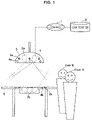
- FIG. 1 An outline of a control system according to an embodiment of the present disclosure will be described with reference to FIG. 1 and FIG. 2 .
- a plurality of people (user A and user B) surround a table top 6 and have discussions while viewing information (still image, moving image, text, and the like) presented on the table top 6.
- an image is projected onto the table top 6 by a projector (hereinafter, referred to as "information processing apparatus 1") provided in a ceiling hanging unit 5.
- the user A and the user B can have discussions while looking at the image projected onto the table top 6.
- Information projected by the information processing apparatus 1 may be stored in a storage unit 13 inside the information processing apparatus 1 (see FIG. 3 ; so-called local storage) or may be acquired via a network 7 from a content DB 8 (so-called web storage or server) in the network.
- the information processing apparatus 1 may be connected to an external device (mobile terminal or the like) via wireless or wired communication such as Wi-Fi (registered trademark), Bluetooth (registered trademark), or proximity wireless communication and may acquire the information from the external device.
- An image pickup device 2a is provided inside the ceiling hanging unit 5.
- the image pickup device 2a continuously captures an image of the table top 6 and captures an image of user operation performed on an image projected onto the table top 6.
- the image pickup device 2a also captures an image of the users surrounding the table top 6. An image captured by the image pickup device 2a is transmitted to the information processing apparatus 1.
- Speakers 3a and microphones 4a are provided in the ceiling hanging unit 5. Each speaker 3a outputs sound accompanied by a projected image. For example, a video of a moving image is projected by the information processing apparatus 1 and sound of the moving image is output from the speaker 3a. Sound data to be output is transmitted from the information processing apparatus 1. Each microphone 4a picks up sound of the users surrounding the table top 6 and transmits the sound to the information processing apparatus 1.
- image pickup devices 2b, speakers 3b, and microphones 4b are provided in the table top 6.
- the image pickup devices 2b capture images of the users surrounding the table top 6 and transmit the captured images to the information processing apparatus 1. Operation of the speakers 3b and the microphones 4b is similar to that of the speakers 3a and the microphones 4a.
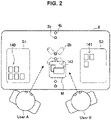
- the image pickup devices 2b, the speakers 3b, and the microphones 4b provided in the table top 6 are arranged so that the plurality of image pickup devices 2b are differently directed as shown in the top view of FIG. 2 and pairs of the speakers 3b and the microphones 4b are dispersively provided.
- an area that can be visually recognized only by a specified user referred to as “confidential area” and area that can be visually recognized by all users (referred to as “shared area”) are differentiated on an information presentation surface simultaneously viewed by a plurality of people and information presentation control to each area is performed, and therefore it is possible to ensure security while regarding convenience of joint viewing among a plurality of people as important.
- Line-of-sight directions of the users A and B are estimated on the basis of, for example, a captured image obtained by the image pickup device 2b and sound data obtained by the microphone 4b.
- the information processing apparatus 1 performs projection control so that information (content) 140 to be seen only by the user A is presented in the confidential area S1, performs projection control so that information 141 to be seen only by the user B is presented in the confidential area S2, and performs projection control so that information 142 to be seen by all users is presented in the shared area M.
- the outline of the control system according to an embodiment of the present disclosure has been described.
- the numbers and arrangement positions of the image pickup devices 2a and 2b, the speakers 3a and 3b, and the microphones 4a and 4b are not limited to the examples shown in FIG. 1 and FIG. 2 .
- the speakers 3 and the microphones 4 may not be provided.
- a basic configuration of the information processing apparatus 1 included in the control system of this embodiment will be described.
- FIG. 3 is a block diagram showing an example of a configuration of the information processing apparatus 1 according to this embodiment.
- the information processing apparatus 1 includes a control unit 10, a communication unit 11, the storage unit 13, and a projection unit 14.
- the control unit 10 is made up of, for example, a microcomputer including a central processing unit (CPU), a read only memory (ROM), a random access memory (RAM), a nonvolatile memory, and an interface unit and controls each configuration of the information processing apparatus 1. Specifically, as shown in FIG. 3 , the control unit 10 according to this embodiment functions as a line-of-sight detection unit 10a, an area determination unit 10b, a user context estimation unit 10c, an output control unit 10d, and an operation detection unit 10e.
- a line-of-sight detection unit 10a an area determination unit 10b
- a user context estimation unit 10c an output control unit 10d
- an operation detection unit 10e an operation detection unit
- the line-of-sight detection unit 10a detects a line-of-sight direction of each user surrounding the table top 6 and outputs a detection result to the area determination unit 10b. Specifically, the line-of-sight detection unit 10a detects the line-of-sight direction of each user on the basis of a captured image transmitted from the image pickup device 2a or 2b. The line-of-sight direction of the user can be detected on the basis of movement of eyes (pupils), a direction of a head, or a posture (direction of body).
- the line-of-sight detection unit 10a can also detect the line-of-sight direction of the user by analyzing a sound source direction on the basis of sound data (sound of user) transmitted from the microphone 4a or 4b and estimating a head direction or posture (direction of body) of the user. In addition, the line-of-sight detection unit 10a may output the detection result to the user context estimation unit 10c.
- the area determination unit 10b determines, on the table top 6 (presentation surface), a shared area that can be visually recognized by a plurality of users and a confidential area that is not visually recognized by other users to keep information of each user confidential on the basis of line-of-sight directions of the plurality of users detected by the line-of-sight detection unit 10a. Specifically, the area determination unit 10b determines a region in which readable areas (field-of-view ranges) of the users based on the line-of-sight directions are overlapped as a shared area and determines a region in which the readable areas of the users are not overlapped as a confidential area of each user. The confidential area may further be determined as a region that is within a certain distance from a target user and is separated by a certain distance from the shared area. Area determination processing performed by the area determination unit 10b will be described later with reference to FIGS. 4 to 8 .
- the area determination unit 10b may adjust a size of the readable area in consideration of the user context.
- the user context estimation unit 10c estimates what a user is looking at (i.e., user context) on the basis of movement of a line of sight detected by the line-of-sight detection unit 10a. For example, the user context estimation unit 10c estimates whether the user is reading a sentence or viewing a moving image on the basis of movement of the line of sight of the user. Normally, a field of view of a human is reduced when he/she recognizes letters, e.g., while he/she is reading a sentence.
- the area determination unit 10b can adjust the readable area (for example, can reduce the readable area in the case where the user is reading a sentence).
- the output control unit 10d performs output control of presentation information in accordance with a determination result by the area determination unit 10b. Specifically, the output control unit 10d controls the projection unit 14 so that information (content) to be seen by each user is projected onto a confidential area of the corresponding user on the table top 6 and controls the projection unit 14 so that information to be seen by all users is projected onto the shared area.
- the output control unit 10d may perform output control of sound from the speakers 3a and 3b in accordance with a determination result by the area determination unit 10b. That is, the output control unit 10d performs control so that information to be heard (for example, video sound) only by each user is output as sound from the speakers 3a and 3b while having directionality with respect to a position of the corresponding user and controls the speakers 3a and 3b so that information to be heard by all users is output as sound without having directionality (nondirectionality).
- information to be heard for example, video sound
- the operation detection unit 10e detects user operation (tapping operation, dragging operation, or the like) with respect to information presented on the table top 6.
- the operation detection unit 10e may detect user operation on the basis of a captured image continuously captured by the image pickup device 2 or may detect user operation on the basis of a detection result by a contact/proximity detection device (not shown) such as a touchscreen provided on the whole top surface of the table top 6.
- the operation detection unit 10e may detect user operation based on sound input on the basis of sound of a user picked up by the microphone 4.
- the communication unit 11 is connected to an external device via wireless/wired communication and has a function of transmitting and receiving data.
- the communication unit 11 according to this embodiment is connected to, for example, the image pickup device 2, the speaker 3, the microphone 4, or the external content DB 7 in the network to receive a captured image, sound data, or content and transmit a control signal to issue an instruction to output sound.
- a program for executing each processing of the control unit 10 is stored in the storage unit 13. Further, various pieces of content such as a photograph, a video, and a document may also be stored in the storage unit 13.
- the projection unit 14 includes a light source, a movable mirror, an illumination optical system, a projection optical system, and the like.
- the projection unit 14 is a display device for projecting a video and causes light emitted from a high-luminance light source to be transmitted through, for example, a liquid crystal panel to thereby project the light onto the table top 6 (presentation surface) or the like.
- light emitted from the light source is output to the illumination optical system and is transmitted through the liquid crystal panel in the illumination optical system, and thus video light is generated.
- the generated video light is output to the projection optical system, and the video light is projected through a projection lens or the like included in the projection optical system onto the table top 6 (presentation surface) or the like.
- the projection optical system has an optical axis whose direction is substantially vertical to a projection direction of the light source.
- the configuration of the information processing apparatus 1 according to this embodiment has been specifically described.
- information to be presented on the table top 6 is projected from the projection unit 14 of the information processing apparatus 1, but the present disclosure is not limited thereto.
- the output control unit 10d of the information processing apparatus 1 instructs, via the communication unit 11, the display device to perform presentation control of content in accordance with a determination result by the area determination unit 10b.
- the display device is made up of, for example, a liquid crystal display (LCD), an organic light-emitting diode (OLED), or the like and is extended in a horizontal direction on the table top 6.
- the projection unit 14 may be an external device or may include an image pickup device, a speaker, and a microphone.
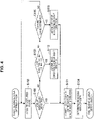
- Step S103 the information processing apparatus 1 acquires a captured image from the image pickup device 2. Acquisition of a captured image is continuously performed, and, in the case where a plurality of the image pickup devices 2a and 2b are provided, a captured image is continuously acquired from each of the image pickup devices 2a and 2b.
- the line-of-sight detection unit 10a of the information processing apparatus 1 detects a line of sight of each user on the basis of the captured image. Specifically, the line-of-sight detection unit 10a analyzes eyes of the user appearing in the captured image and detects a line-of-sight direction in accordance with positions and movement of pupils or irises. The line-of-sight detection unit 10a can also detect the line-of-sight direction by detecting reflected light on corneas, the reflected light being obtained by irradiating the corneas with an IR LED.
- the line-of-sight detection unit 10a estimates a head direction of each user on the basis of the captured image in Step S109. For example, in the case where an image of the eyes of the user is not captured or in the case where an image of the eyes is captured but the line of sight is not detectable on the basis of the image, it is determined that the line of sight cannot be detected. Further, in the case where the image pickup device 2 captures an image of surroundings in a wide range with a wide angle lens, the line-of-sight detection unit 10a enlarges the captured image to analyze the captured image. Thus, in the case where resolution thereof is low, it is difficult to detect the line of sight. Therefore, in such a case, the line-of-sight detection unit 10a estimates the head direction of the user on the basis of the captured image.
- Step S112 the line-of-sight detection unit 10a assumes the head direction as the line-of-sight direction. With this, even in the case where an accurate line-of-sight direction of the user cannot be detected on the basis of the captured image, it is possible to perform readable area determination described later by assuming the head direction as the line-of-sight direction.
- the line-of-sight detection unit 10a estimates a posture of each user on the basis of the captured image in Step S115. Specifically, the line-of-sight detection unit 10a estimates a direction of a body of each user.
- Step S118 the line-of-sight detection unit 10a assumes a front direction of the body as the line-of-sight direction.
- the user context estimation unit 10c estimates a user context on the basis of the detection result of the line of sight by the line-of-sight detection unit 10a. For example, the user context estimation unit 10c estimates whether the user is reading a sentence or viewing a moving image as the user context in accordance with movement of the line-of-sight direction.
- Step S124 the area determination unit 10b determines a readable area of each user in accordance with the detection result by the line-of-sight detection unit 10a. Further, the area determination unit 10b refers to the user context estimated by the user context estimation unit 10c as necessary.
- a specific example of the readable area determination performed by the area determination unit 10b will be described with reference to FIG. 5 and FIG. 6 .
- a readable area R1 of the user A is determined.
- an intersection of a line-of-sight direction of the user A and the presentation surface is set to be a fixation point P1 and the periphery of the fixation point P1 is determined as the readable area R1.
- the readable area R1 is an effective field of view in the field of view of the user A, the effective field of view being a field of view in which the user can exert at least an excellent information receiving ability to recognize matters, and may be set to be, for example, a range of 15 degrees in a horizontal direction from the fixation point P1 as shown in FIG. 5 or a range of 10 degrees in a vertical direction from the fixation point P1 as shown in FIG. 6 .
- a region of the readable area determined as described above is indicated, for example, as follows.
- the fixation point P is set by using an origin O shown in FIG. 5 as a base point
- the short diameter H indicates a length in a vertical (longitudinal) direction in the field of view of the user by using the fixation point P as a base point
- the long diameter W indicates a length in a horizontal (lateral) direction in the field of view of the user by using the fixation point P as a base point.
- the readable area determination processing described above is similarly performed for the user B, and the readable areas of the user A and the user B are output.
- the readable area R has a unique size, such as a size having 15 degrees in the horizontal direction and 10 degrees in the vertical direction.
- the present disclosure is not limited thereto, and a plurality of levels may be set as the size of the readable area.
- the area determination unit 10b may adjust the size of the readable area in accordance with the above user context. Specifically, the area determination unit 10b calculates the readable area by using an area enlargement coefficient (Z) that has been set in advance in accordance with the user context.
- the readable area determination processing has been specifically described.
- the area determination unit 10b determines a shared area and a confidential area on the basis of the determined readable area of each user.
- specific description will be provided with reference to FIGS. 7 to 8 .
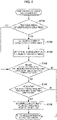
- FIG. 7 is a flowchart showing shared/confidential area determination processing according to this embodiment.
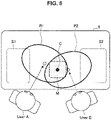
- the area determination unit 10b of the information processing apparatus 1 determines whether or not readable areas of a plurality of users are overlapped. For example, the readable area R1 of the user A and a readable area R2 of the user B are overlapped in the vicinity of the center of the table top 6 in the example shown in FIG. 8 .
- the area determination unit 10b calculates the center C of mass of an overlapped part in Step S136.
- the area determination unit 10b determines the shared area M on the basis of the center C of mass.
- the shared area M may have a maximum size in a region in which the readable area R1 of the user A and the readable area R2 of the user B are overlapped overlapped as shown in FIG. 8 or may have a predetermined minimum size or more on the basis of the center C of mass.
- Step S142 the area determination unit 10b determines whether or not a region that is not overlapped with a readable area of another user exists within a certain distance from a target user. For example, in the case where the confidential area of the user A is determined, the area determination unit 10b determines whether or not a region that is not overlapped with the readable area R2 of the user B within a range obtained by drawing a circular arc with an average length of an arm around a position of the user A.
- the area determination unit 10b determines whether or not a region that keeps (is separated by) a certain distance from the readable area R of the another user exists in Step S145.
- the region is determined as the confidential area S of the target user in Step S148.
- the confidential area S For example, as shown in FIG. 8 , a region that is within a certain distance from the user A, is not overlapped with the readable area R2 of the user B, and keeps a certain distance from the readable area R2 is determined as the confidential area S1.
- Such confidential area determination is performed for all users, and the confidential areas S1 and S2 of the respective users are determined.
- the output control unit 10d of the information processing apparatus 1 performs control so that information that needs to be secured (confidential information) is presented in the confidential area S.
- What kind of information is presented in the confidential area S is determined in accordance with predetermined definition information.
- This definition information may be set by a user, may be automatically set on the basis of a user's operation history, or may be updated by, for example, an update of software.
- the output control unit 10d performs control so that such content 146 that needs to be secured is presented in the confidential area S. With this, it is possible to prevent unintentional information leakage in the case where a plurality of people perform simultaneous operation/viewing.
- the output control unit 10d may perform control so that the image gallery, the email screen, or the like is displayed in the confidential area S. Because the user moves only a necessary content to the shared area M and shares the content, it is possible to prevent unnecessary information leakage.
- the output control unit 10d performs sound output control so that the sound is transmitted only to an owner user of the content.
- the output control unit 10d may also perform control so that, before the content that needs to be secured is presented, for example, a dialog or the like is presented to the user and the user gives approval, and thereafter the content is presented in the shared area M.
- the output control unit 10d may also perform control so that the content is presented with a low resolution in the confidential area S. With this, even in the case where the content is looked at by another user, it is possible to prevent information leakage as much as possible.
- presentation control performed in the case where a user moves content from the shared area M to the user's confidential area S or in the case where the user moves content from the user's confidential area S to the shared area M will be described with reference to FIG. 10 and FIG. 11 .
- FIG. 10 is a diagram showing automatic copy performed when content is moved from the shared area M to the confidential area S.
- the output control unit 10d presents content 145c obtained by copying the selected content 145 and moves the content 145c in accordance with dragging operation performed by the user. Then, when the content 145c is dropped in the confidential area S, the output control unit 10d performs control so that the content 145c is presented in the confidential area S.
- the content 145 is automatically copied when the user selects the content 145 in the example shown in FIG. 10 , but the present disclosure is not limited thereto.
- the content 145 may be automatically copied when the content 145 reaches an outer edge of the shared area M.
- the information processing apparatus 1 performs control so that a sound volume is optimized for each user after the content is copied and sound is output to each user, and therefore it is possible not to interrupt each user viewing content.
- FIG. 11 is a diagram showing optimization control performed when content is moved from the confidential area S to the shared area M.
- a user selects content 147 to be shared with another user from the list and moves the content to the shared area M.
- the output control unit 10d performs control so that the content 147 is copied to generate content 147c and the content is presented with a size and a resolution suitable for viewing by a plurality of people.
- the content is controlled so that, in the case where the content is presented in the shared area M, the content is presented in a state suitable for viewing by a plurality of people, and therefore it is possible to improve usability.
- optimization of presentation of the content based on viewing by a plurality of people is not limited to the above automatic enlargement or increase in resolution.
- a presentation position, a presentation direction, a presentation angle, or the like of the content in the shared area M may be optimized for viewing by a plurality of people.
- the output control unit 10d may perform control (adjust a speaker direction in the case where there is a directional speaker) so that, based on a detection result of a line of sight of each user, the content is presented at an optimal position for viewing by a plurality of people in the case where a plurality of users view the content and, when a line of sight of another user is removed, the content is presented at an optimal position for remaining viewing users.
- the output control unit 10d performs control so that the sound is output only to a user who owns the content in the confidential area S and performs control so that, after the content is moved to the shared area M, a directionality direction and a sound volume are optimized so that the content is optimally viewed by all users.
- the output control unit 10d can prevent unintentional information leakage by automatically hiding or deleting confidential information (for example, address information of the email and exif information of an image) contained in the email.
- confidential information to be deleted/hidden may be set as system information in advance, may be set by the user, may be automatically set on the basis of the user's operation history, or may be updated by, for example, an update of software.
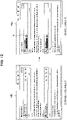
- FIG. 12 A left drawing in FIG. 12 shows content 149 presented in the confidential area S (herein, a list screen of sent emails is used as an example).
- the output control unit 10d copies the content 149, changes a size and a resolution of a copied content 149c optimal for viewing by a plurality of people, and then hides/deletes confidential information.
- the output control unit 10d hides address information of emails in the content 149c and displays a display switching button N in the vicinity of a hidden part.
- the display switching button N is a button for switching hidden display of the address information of the emails, and, when the display switching button is selected, hidden display is removed and the address information of the emails can be seen. Further, operation of the display switching button N may be performed only by a user (owner) who provides the content.
- the presentation control according to this embodiment has been described.
- a line of sight of a target user is temporarily directed to the confidential area S when, for example, the content is moved, but the readable area, the shared area, and the confidential area may be maintained when a time period in which the line of sight is directed to the confidential area S is within a certain time period.
- the area determination unit 10b may update determination of the readable area, the shared area, and the confidential area for each predetermined time period.
- the table top 6 is used as an example of a presentation surface of information, and there is also assumed a case where an object (PC, book, or the like) is placed on the table top 6.
- an object PC, book, or the like
- a field of view of a user is influenced in some cases depending on a position or size of the object.
- considering an object placed on the table top 6 at the time of area determination will be described in a modification example of this embodiment.
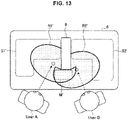
- FIG. 13 is a diagram showing an outline of area determination considering object recognition according to the modification example of this embodiment.
- a field of view of each user is blocked by the object 9 depending on a height of the object 9.
- the user A cannot see an opposite side of the object 9 (user B side)
- the user B cannot see an opposite side of the object 9 (user A side). Therefore, readable areas of the users are different from the readable areas R1 and R2 shown in FIG. 8 and are readable areas R1' and R2' obtained by removing the regions on the opposite sides of the object 9 as shown in FIG. 13 .
- FIG. 14 is a flowchart showing the area determination processing considering an object according to the modification example of this embodiment.
- the area determination unit 10b of the information processing apparatus 1 performs normal readable area determination processing.
- the normal readable area determination processing is specifically the determination processing that has been described with reference to FIG. 4 .
- Step S203 the area determination unit 10b determines whether or not an object exists on the table top 6. Object recognition is performed on the basis of, for example, a captured image acquired by the image pickup device 2. At this time, the area determination unit 10b recognizes a position, a size, a height, and the like of the object.
- the area determination unit 10b determines whether or not an object area and a readable area are overlapped in Step S206.
- the object area is a region in which the object 9 and the table top 6 are brought into contact with each other.
- the area determination unit 10b excludes the object area and, if necessary, a region on the opposite side of the object 9 seen from a target user from the readable area and determines the readable area again in Step S209.
- the area determination unit 10b adjusts the readable area of the target user in consideration of the position and the height of the object 9, a positional relationship between the object 9 and the target user, and the like.
- Step S212 the area determination unit 10b performs the shared/confidential area determination processing that has been described with reference to FIG. 7 .
- control system it is possible to differentiate between an area that can be visually recognized only by a specified user (confidential area) and an area that can be visually recognized by all users (shared area) on the information presentation surface (for example, table top 6) which is simultaneously viewed by a plurality of people.
- information presentation surface for example, table top 6
- a computer program for exerting a function of the information processing apparatus 1 can be prepared in hardware such as the CPU, the ROM, and the RAM included in the above information processing apparatus 1. Further, a computer readable storage medium in which the computer program is stored is also provided.
- the output control unit 10d may perform control so that a copy of the same content is presented in the confidential area of each user.
- the information presentation surface is not limited to the table top 6 and may be, for example, a wall surface.
- the line-of-sight detection unit 10a may dynamically switch sensing information (captured image, sound data, and the like) for use in detection of a line of sight of a user. With this, it is possible to reduce a change in line-of-sight detection accuracy caused by a sensing situation.
Landscapes
- Engineering & Computer Science (AREA)
- Theoretical Computer Science (AREA)
- General Engineering & Computer Science (AREA)
- Physics & Mathematics (AREA)
- General Physics & Mathematics (AREA)
- Human Computer Interaction (AREA)
- Computer Hardware Design (AREA)
- User Interface Of Digital Computer (AREA)
- Controls And Circuits For Display Device (AREA)
Claims (14)
- Informationsverarbeitungsvorrichtung (1), umfassend:eine Sichtliniendetektierungseinheit (10a), die ausgestaltet ist, um Sichtlinien einer Vielzahl von Benutzern in Bezug auf eine einzige Präsentationsoberfläche zu detektieren, auf der Präsentationsinformationen präsentiert werden; undeine Gebietsbestimmungseinheit (10b), die ausgestaltet ist, um basierend auf den detektierten Sichtlinien der Vielzahl von Benutzern zu bestimmen:Sichtfeldbereiche der Vielzahl von Benutzern,ein gemeinsames Gebiet (M) der Präsentationsoberfläche, in dem alle der Sichtfeldbereiche (R1, R2, R1', R2') sich überlappen, das zum Anzeigen von erstem Inhalt geeignet ist; undein vertrauliches Gebiet (S) der Präsentationsoberfläche, in dem mindestens einer der Sichtfeldbereiche nicht überlappt, das zum Anzeigen von zweitem Inhalt geeignet ist.
- Informationsverarbeitungsvorrichtung nach Anspruch 1, wobei das vertrauliche Gebiet des Weiteren als eine Region innerhalb eines gewissen Abstands zu einem Zielbenutzer bestimmt wird.
- Informationsverarbeitungsvorrichtung nach Anspruch 1, wobei das vertrauliche Gebiet des Weiteren als eine Region bestimmt wird, die durch einen gewissen Abstand von dem gemeinsamen Gebiet getrennt ist.
- Informationsverarbeitungsvorrichtung nach Anspruch 1, wobei die Gebietsbestimmungseinheit ausgestaltet ist, um eine Größe des Sichtfeldbereichs von jedem Benutzer gemäß dem Benutzerkontext jedes Benutzers anzupassen.
- Informationsverarbeitungsvorrichtung nach Anspruch 4, wobei der Benutzerkontext angibt, auf was ein Benutzer guckt, und der auf Basis der Bewegung der Sichtlinie des Benutzers abgeschätzt wird.
- Informationsverarbeitungsvorrichtung nach einem der vorhergehenden Ansprüche, des Weiteren umfassend eine Ausgabesteuerungseinheit, die ausgestaltet ist, um Ausgabesteuerung der Präsentationsinformationen, die auf einer Präsentationsoberfläche präsentiert werden, gemäß einem Ergebnis der Bestimmung durchzuführen, die durch die Gebietsbestimmungseinheit durchgeführt wurde.
- Informationsverarbeitungsvorrichtung nach Anspruch 6, wobei in dem Fall, dass Informationen geöffnet werden, die gesichert sein müssen, die Ausgabesteuerungseinheit ausgestaltet ist, um Steuerung in einer Weise durchzuführen, dass die Informationen in dem vertraulichen Gebiet als zweiter Inhalt präsentiert werden.
- Informationsverarbeitungsvorrichtung nach Anspruch 6, wobei die Ausgabesteuerungseinheit ausgestaltet ist, um Steuerung in einer Weise durchzuführen, dass Informationen in dem vertraulichen Gebiet als zweiter Inhalt mit niedriger Auflösung präsentiert werden.
- Informationsverarbeitungsvorrichtung nach Anspruch 6, wobei in dem Fall, dass Informationen, die in dem gemeinsamen Gebiet als erster Inhalt präsentiert werden, mittels Benutzeroperation in ein vertrauliches Gebiet des Benutzers verschoben werden, die Ausgabesteuerungseinheit ausgestaltet ist, um Steuerung in einer Weise durchzuführen, dass die Informationen kopiert und in dem vertraulichen Gebiet als zweiter Inhalt präsentiert werden.
- Informationsverarbeitungsvorrichtung nach Anspruch 6, wobei in dem Fall, dass Informationen, die in dem vertraulichen Gebiet als zweiter Inhalt präsentiert werden, mittels Benutzeroperation in das gemeinsame Gebiet verschoben werden, die Ausgabesteuerungseinheit ausgestaltet ist, um Steuerung in einer Weise durchzuführen, dass die Informationen kopiert werden, so verändert werden, dass sie eine Größe und eine Auflösung haben, die für das gemeinsame Betrachten geeignet sind, und dann in dem vertraulichen Gebiet als zweiter Inhalt präsentiert werden.
- Informationsverarbeitungsvorrichtung nach Anspruch 6, wobei in dem Fall, dass Informationen, die in dem vertraulichen Gebiet als zweiter Inhalt präsentiert werden, mittels Benutzeroperation in ein gemeinsames Gebiet verschoben werden, die Ausgabesteuerungseinheit ausgestaltet ist, um Steuerung in einer Weise durchzuführen, dass die Informationen kopiert werden, vertrauliche Informationen, die in den kopierten Informationen enthalten sind, ausgeblendet oder gelöscht werden, und dann die Informationen in dem vertraulichen Gebiet als zweiter Inhalt präsentiert werden.
- Informationsverarbeitungsvorrichtung nach einem der vorhergehenden Ansprüche, wobei die Sichtliniendetektierungseinheit ausgestaltet ist, um eine Sichtlinie basierend auf einer Sichtlinienrichtung, einer Kopfrichtung oder einer Körperhaltung des Benutzers zu detektieren.
- Steuerungsverfahren, umfassend:Detektieren von Sichtlinien einer Vielzahl von Benutzern in Bezug auf eine einzige Präsentationsoberfläche, auf der Präsentationsinformationen präsentiert werden; undBestimmen basierend auf den detektierten Sichtlinien der Vielzahl von Benutzern:Sichtfeldbereiche (R1, R2, R1', R2') der Vielzahl von Benutzer,ein gemeinsames Gebiet (M) der Präsentationsoberfläche, in dem alle der Sichtfeldbereiche sich überlappen, das zum Anzeigen von erstem Inhalt geeignet ist; undein vertrauliches Gebiet (S) der Präsentationsoberfläche, in dem mindestens einer der Sichtfeldbereiche nicht überlappt, das zum Anzeigen von zweitem Inhalt geeignet ist.
- Computersoftware zum Implementieren des Steuerungsverfahrens nach Anspruch 13.
Applications Claiming Priority (2)
| Application Number | Priority Date | Filing Date | Title |
|---|---|---|---|
| JP2014168342A JP2016045623A (ja) | 2014-08-21 | 2014-08-21 | 情報処理装置および制御方法 |
| PCT/JP2015/064769 WO2016027536A1 (ja) | 2014-08-21 | 2015-05-22 | 情報処理装置および制御方法 |
Publications (3)
| Publication Number | Publication Date |
|---|---|
| EP3185111A1 EP3185111A1 (de) | 2017-06-28 |
| EP3185111A4 EP3185111A4 (de) | 2018-04-04 |
| EP3185111B1 true EP3185111B1 (de) | 2022-05-11 |
Family
ID=55350490
Family Applications (1)
| Application Number | Title | Priority Date | Filing Date |
|---|---|---|---|
| EP15834175.0A Not-in-force EP3185111B1 (de) | 2014-08-21 | 2015-05-22 | Informationsverarbeitungsvorrichtung und steuerungsverfahren |
Country Status (5)
| Country | Link |
|---|---|
| US (3) | US10032437B2 (de) |
| EP (1) | EP3185111B1 (de) |
| JP (1) | JP2016045623A (de) |
| CN (1) | CN106575194B (de) |
| WO (1) | WO2016027536A1 (de) |
Families Citing this family (22)
| Publication number | Priority date | Publication date | Assignee | Title |
|---|---|---|---|---|
| CN106462328B (zh) * | 2014-06-24 | 2020-09-04 | 索尼公司 | 信息处理装置、信息处理方法和程序 |
| JP6891893B2 (ja) * | 2016-08-29 | 2021-06-18 | ソニーグループ株式会社 | 情報処理装置、情報処理方法、並びにプログラム |
| US10503349B2 (en) * | 2016-10-04 | 2019-12-10 | Facebook, Inc. | Shared three-dimensional user interface with personal space |
| JP6870363B2 (ja) * | 2017-02-14 | 2021-05-12 | 沖電気工業株式会社 | 通信装置、方法およびプログラム |
| US10775897B2 (en) * | 2017-06-06 | 2020-09-15 | Maxell, Ltd. | Mixed reality display system and mixed reality display terminal |
| EP3640770A4 (de) * | 2017-06-12 | 2020-07-01 | Sony Corporation | Informationsverarbeitungsvorrichtung, informationsverarbeitungsverfahren und programm |
| WO2019013016A1 (ja) | 2017-07-13 | 2019-01-17 | ソニー株式会社 | 情報処理装置、情報処理方法、及びプログラム |
| WO2019045144A1 (ko) * | 2017-08-31 | 2019-03-07 | (주)레벨소프트 | 의료용 항법 장치를 위한 의료 영상 처리 장치 및 의료 영상 처리 방법 |
| DE102018128706A1 (de) * | 2018-11-15 | 2020-05-20 | Bayerische Motoren Werke Aktiengesellschaft | Dynamischer Informationsschutz für Anzeigeeinrichtungen |
| US10777087B2 (en) * | 2018-12-07 | 2020-09-15 | International Business Machines Corporation | Augmented reality for removing external stimuli |
| WO2021106379A1 (ja) * | 2019-11-29 | 2021-06-03 | ソニーグループ株式会社 | 画像処理装置及び画像処理方法、並びに画像表示システム |
| US11042222B1 (en) | 2019-12-16 | 2021-06-22 | Microsoft Technology Licensing, Llc | Sub-display designation and sharing |
| US11487423B2 (en) | 2019-12-16 | 2022-11-01 | Microsoft Technology Licensing, Llc | Sub-display input areas and hidden inputs |
| US11404028B2 (en) | 2019-12-16 | 2022-08-02 | Microsoft Technology Licensing, Llc | Sub-display notification handling |
| US11093046B2 (en) | 2019-12-16 | 2021-08-17 | Microsoft Technology Licensing, Llc | Sub-display designation for remote content source device |
| JP7424121B2 (ja) * | 2020-03-10 | 2024-01-30 | 富士フイルムビジネスイノベーション株式会社 | 情報処理装置及びプログラム |
| EP4143855A1 (de) * | 2020-05-01 | 2023-03-08 | Westinghouse Electric Company Llc | Kompaktes passives nachzerfallswärmeabfuhrsystem für transportable mikroreaktoranwendungen |
| JP7367639B2 (ja) * | 2020-08-31 | 2023-10-24 | 株式会社リコー | 表示装置、表示方法、プログラム |
| JP7596172B2 (ja) * | 2021-02-24 | 2024-12-09 | 富士フイルム株式会社 | 情報処理装置およびプログラム |
| US11726578B1 (en) | 2022-02-11 | 2023-08-15 | Meta Platforms Technologies, Llc | Scrolling and navigation in virtual reality |
| WO2023249235A1 (ko) * | 2022-06-23 | 2023-12-28 | 삼성전자주식회사 | 전자 장치 및 그 제어 방법 |
| EP4560455A4 (de) * | 2022-08-12 | 2026-01-07 | Shenzhen Yinwang Intelligent Technology Co Ltd | Anzeigeverfahren und -vorrichtung |
Citations (1)
| Publication number | Priority date | Publication date | Assignee | Title |
|---|---|---|---|---|
| JP2000235352A (ja) * | 1999-02-16 | 2000-08-29 | Canon Inc | 表示装置及び遊戯装置 |
Family Cites Families (13)
| Publication number | Priority date | Publication date | Assignee | Title |
|---|---|---|---|---|
| US5107443A (en) | 1988-09-07 | 1992-04-21 | Xerox Corporation | Private regions within a shared workspace |
| JP4095040B2 (ja) * | 2004-02-12 | 2008-06-04 | 株式会社日立製作所 | テーブル型情報端末の表示方法 |
| US8462949B2 (en) * | 2007-11-29 | 2013-06-11 | Oculis Labs, Inc. | Method and apparatus for secure display of visual content |
| JP5290685B2 (ja) | 2008-06-12 | 2013-09-18 | ユニチカ株式会社 | ポリアリレート樹脂水性分散体、およびその製造方法、ならびにそれから得られる樹脂被膜 |
| JP2010021240A (ja) | 2008-07-09 | 2010-01-28 | Renesas Technology Corp | 半導体装置の製造方法 |
| EP2317416A4 (de) | 2008-08-11 | 2011-08-24 | Konica Minolta Holdings Inc | Bildanzeigevorrichtung |
| JPWO2010021240A1 (ja) | 2008-08-21 | 2012-01-26 | コニカミノルタホールディングス株式会社 | 画像表示装置 |
| US20100124363A1 (en) * | 2008-11-20 | 2010-05-20 | Sony Ericsson Mobile Communications Ab | Display privacy system |
| US10282563B2 (en) * | 2009-02-06 | 2019-05-07 | Tobii Ab | Video-based privacy supporting system |
| JP2011197537A (ja) * | 2010-03-23 | 2011-10-06 | Nec Casio Mobile Communications Ltd | 端末装置及びプログラム |
| US8880341B2 (en) * | 2010-08-30 | 2014-11-04 | Alpine Electronics, Inc. | Method and apparatus for displaying three-dimensional terrain and route guidance |
| US9179021B2 (en) * | 2012-04-25 | 2015-11-03 | Microsoft Technology Licensing, Llc | Proximity and connection based photo sharing |
| US8970455B2 (en) | 2012-06-28 | 2015-03-03 | Google Technology Holdings LLC | Systems and methods for processing content displayed on a flexible display |
-
2014
- 2014-08-21 JP JP2014168342A patent/JP2016045623A/ja active Pending
-
2015
- 2015-05-22 CN CN201580043525.6A patent/CN106575194B/zh not_active Expired - Fee Related
- 2015-05-22 WO PCT/JP2015/064769 patent/WO2016027536A1/ja not_active Ceased
- 2015-05-22 US US15/503,446 patent/US10032437B2/en active Active
- 2015-05-22 EP EP15834175.0A patent/EP3185111B1/de not_active Not-in-force
-
2018
- 2018-06-26 US US16/018,352 patent/US10262630B2/en active Active
-
2019
- 2019-03-04 US US16/291,148 patent/US10762876B2/en not_active Expired - Fee Related
Patent Citations (1)
| Publication number | Priority date | Publication date | Assignee | Title |
|---|---|---|---|---|
| JP2000235352A (ja) * | 1999-02-16 | 2000-08-29 | Canon Inc | 表示装置及び遊戯装置 |
Also Published As
| Publication number | Publication date |
|---|---|
| WO2016027536A1 (ja) | 2016-02-25 |
| US20190197992A1 (en) | 2019-06-27 |
| US20180301118A1 (en) | 2018-10-18 |
| CN106575194A (zh) | 2017-04-19 |
| US10762876B2 (en) | 2020-09-01 |
| EP3185111A1 (de) | 2017-06-28 |
| JP2016045623A (ja) | 2016-04-04 |
| US20170236492A1 (en) | 2017-08-17 |
| EP3185111A4 (de) | 2018-04-04 |
| CN106575194B (zh) | 2020-11-03 |
| US10262630B2 (en) | 2019-04-16 |
| US10032437B2 (en) | 2018-07-24 |
Similar Documents
| Publication | Publication Date | Title |
|---|---|---|
| EP3185111B1 (de) | Informationsverarbeitungsvorrichtung und steuerungsverfahren | |
| US12504937B2 (en) | Information display apparatus and method | |
| US10572073B2 (en) | Information processing device, information processing method, and program | |
| EP2802978B1 (de) | Informationsverarbeitungsvorrichtung, informationsverarbeitungsverfahren und computerprogramm | |
| EP2874122B1 (de) | Anzeigesteuerungsvorrichtung, Anzeigesteuerungsverfahren und Programm | |
| US10930249B2 (en) | Information processor, information processing method, and recording medium | |
| US10922862B2 (en) | Presentation of content on headset display based on one or more condition(s) | |
| US20220366874A1 (en) | Eye gaze control of magnification user interface | |
| US20170038838A1 (en) | Information processing system and information processing method | |
| US20210117048A1 (en) | Adaptive assistive technology techniques for computing devices | |
| CN107148614B (zh) | 信息处理设备、信息处理方法和程序 | |
| CN106462251B (zh) | 显示控制设备、显示控制方法以及程序 | |
| JP6374203B2 (ja) | 表示システム及びプログラム | |
| US10545716B2 (en) | Information processing device, information processing method, and program | |
| CN107924114B (zh) | 信息处理设备和信息处理方法 | |
| US11386870B2 (en) | Information processing apparatus and information processing method | |
| WO2019082520A1 (ja) | 情報処理装置、情報処理方法、およびプログラム |
Legal Events
| Date | Code | Title | Description |
|---|---|---|---|
| STAA | Information on the status of an ep patent application or granted ep patent |
Free format text: STATUS: THE INTERNATIONAL PUBLICATION HAS BEEN MADE |
|
| PUAI | Public reference made under article 153(3) epc to a published international application that has entered the european phase |
Free format text: ORIGINAL CODE: 0009012 |
|
| STAA | Information on the status of an ep patent application or granted ep patent |
Free format text: STATUS: REQUEST FOR EXAMINATION WAS MADE |
|
| 17P | Request for examination filed |
Effective date: 20170214 |
|
| AK | Designated contracting states |
Kind code of ref document: A1 Designated state(s): AL AT BE BG CH CY CZ DE DK EE ES FI FR GB GR HR HU IE IS IT LI LT LU LV MC MK MT NL NO PL PT RO RS SE SI SK SM TR |
|
| AX | Request for extension of the european patent |
Extension state: BA ME |
|
| DAV | Request for validation of the european patent (deleted) | ||
| DAX | Request for extension of the european patent (deleted) | ||
| A4 | Supplementary search report drawn up and despatched |
Effective date: 20180306 |
|
| RIC1 | Information provided on ipc code assigned before grant |
Ipc: G06F 3/048 20130101AFI20180228BHEP Ipc: G06F 3/01 20060101ALI20180228BHEP |
|
| STAA | Information on the status of an ep patent application or granted ep patent |
Free format text: STATUS: EXAMINATION IS IN PROGRESS |
|
| 17Q | First examination report despatched |
Effective date: 20200326 |
|
| RAP3 | Party data changed (applicant data changed or rights of an application transferred) |
Owner name: SONY GROUP CORPORATION |
|
| GRAP | Despatch of communication of intention to grant a patent |
Free format text: ORIGINAL CODE: EPIDOSNIGR1 |
|
| STAA | Information on the status of an ep patent application or granted ep patent |
Free format text: STATUS: GRANT OF PATENT IS INTENDED |
|
| INTG | Intention to grant announced |
Effective date: 20211208 |
|
| GRAS | Grant fee paid |
Free format text: ORIGINAL CODE: EPIDOSNIGR3 |
|
| GRAA | (expected) grant |
Free format text: ORIGINAL CODE: 0009210 |
|
| STAA | Information on the status of an ep patent application or granted ep patent |
Free format text: STATUS: THE PATENT HAS BEEN GRANTED |
|
| AK | Designated contracting states |
Kind code of ref document: B1 Designated state(s): AL AT BE BG CH CY CZ DE DK EE ES FI FR GB GR HR HU IE IS IT LI LT LU LV MC MK MT NL NO PL PT RO RS SE SI SK SM TR |
|
| REG | Reference to a national code |
Ref country code: GB Ref legal event code: FG4D |
|
| REG | Reference to a national code |
Ref country code: CH Ref legal event code: EP |
|
| REG | Reference to a national code |
Ref country code: AT Ref legal event code: REF Ref document number: 1492008 Country of ref document: AT Kind code of ref document: T Effective date: 20220515 |
|
| REG | Reference to a national code |
Ref country code: DE Ref legal event code: R096 Ref document number: 602015078952 Country of ref document: DE |
|
| REG | Reference to a national code |
Ref country code: IE Ref legal event code: FG4D |
|
| PGFP | Annual fee paid to national office [announced via postgrant information from national office to epo] |
Ref country code: DE Payment date: 20220531 Year of fee payment: 8 |
|
| REG | Reference to a national code |
Ref country code: LT Ref legal event code: MG9D |
|
| REG | Reference to a national code |
Ref country code: NL Ref legal event code: MP Effective date: 20220511 |
|
| REG | Reference to a national code |
Ref country code: AT Ref legal event code: MK05 Ref document number: 1492008 Country of ref document: AT Kind code of ref document: T Effective date: 20220511 |
|
| PG25 | Lapsed in a contracting state [announced via postgrant information from national office to epo] |
Ref country code: SE Free format text: LAPSE BECAUSE OF FAILURE TO SUBMIT A TRANSLATION OF THE DESCRIPTION OR TO PAY THE FEE WITHIN THE PRESCRIBED TIME-LIMIT Effective date: 20220511 Ref country code: PT Free format text: LAPSE BECAUSE OF FAILURE TO SUBMIT A TRANSLATION OF THE DESCRIPTION OR TO PAY THE FEE WITHIN THE PRESCRIBED TIME-LIMIT Effective date: 20220912 Ref country code: NO Free format text: LAPSE BECAUSE OF FAILURE TO SUBMIT A TRANSLATION OF THE DESCRIPTION OR TO PAY THE FEE WITHIN THE PRESCRIBED TIME-LIMIT Effective date: 20220811 Ref country code: NL Free format text: LAPSE BECAUSE OF FAILURE TO SUBMIT A TRANSLATION OF THE DESCRIPTION OR TO PAY THE FEE WITHIN THE PRESCRIBED TIME-LIMIT Effective date: 20220511 Ref country code: LT Free format text: LAPSE BECAUSE OF FAILURE TO SUBMIT A TRANSLATION OF THE DESCRIPTION OR TO PAY THE FEE WITHIN THE PRESCRIBED TIME-LIMIT Effective date: 20220511 Ref country code: HR Free format text: LAPSE BECAUSE OF FAILURE TO SUBMIT A TRANSLATION OF THE DESCRIPTION OR TO PAY THE FEE WITHIN THE PRESCRIBED TIME-LIMIT Effective date: 20220511 Ref country code: GR Free format text: LAPSE BECAUSE OF FAILURE TO SUBMIT A TRANSLATION OF THE DESCRIPTION OR TO PAY THE FEE WITHIN THE PRESCRIBED TIME-LIMIT Effective date: 20220812 Ref country code: FI Free format text: LAPSE BECAUSE OF FAILURE TO SUBMIT A TRANSLATION OF THE DESCRIPTION OR TO PAY THE FEE WITHIN THE PRESCRIBED TIME-LIMIT Effective date: 20220511 Ref country code: ES Free format text: LAPSE BECAUSE OF FAILURE TO SUBMIT A TRANSLATION OF THE DESCRIPTION OR TO PAY THE FEE WITHIN THE PRESCRIBED TIME-LIMIT Effective date: 20220511 Ref country code: BG Free format text: LAPSE BECAUSE OF FAILURE TO SUBMIT A TRANSLATION OF THE DESCRIPTION OR TO PAY THE FEE WITHIN THE PRESCRIBED TIME-LIMIT Effective date: 20220811 Ref country code: AT Free format text: LAPSE BECAUSE OF FAILURE TO SUBMIT A TRANSLATION OF THE DESCRIPTION OR TO PAY THE FEE WITHIN THE PRESCRIBED TIME-LIMIT Effective date: 20220511 |
|
| PG25 | Lapsed in a contracting state [announced via postgrant information from national office to epo] |
Ref country code: RS Free format text: LAPSE BECAUSE OF FAILURE TO SUBMIT A TRANSLATION OF THE DESCRIPTION OR TO PAY THE FEE WITHIN THE PRESCRIBED TIME-LIMIT Effective date: 20220511 Ref country code: PL Free format text: LAPSE BECAUSE OF FAILURE TO SUBMIT A TRANSLATION OF THE DESCRIPTION OR TO PAY THE FEE WITHIN THE PRESCRIBED TIME-LIMIT Effective date: 20220511 Ref country code: LV Free format text: LAPSE BECAUSE OF FAILURE TO SUBMIT A TRANSLATION OF THE DESCRIPTION OR TO PAY THE FEE WITHIN THE PRESCRIBED TIME-LIMIT Effective date: 20220511 Ref country code: IS Free format text: LAPSE BECAUSE OF FAILURE TO SUBMIT A TRANSLATION OF THE DESCRIPTION OR TO PAY THE FEE WITHIN THE PRESCRIBED TIME-LIMIT Effective date: 20220911 |
|
| REG | Reference to a national code |
Ref country code: CH Ref legal event code: PL |
|
| REG | Reference to a national code |
Ref country code: BE Ref legal event code: MM Effective date: 20220531 |
|
| PG25 | Lapsed in a contracting state [announced via postgrant information from national office to epo] |
Ref country code: SM Free format text: LAPSE BECAUSE OF FAILURE TO SUBMIT A TRANSLATION OF THE DESCRIPTION OR TO PAY THE FEE WITHIN THE PRESCRIBED TIME-LIMIT Effective date: 20220511 Ref country code: SK Free format text: LAPSE BECAUSE OF FAILURE TO SUBMIT A TRANSLATION OF THE DESCRIPTION OR TO PAY THE FEE WITHIN THE PRESCRIBED TIME-LIMIT Effective date: 20220511 Ref country code: RO Free format text: LAPSE BECAUSE OF FAILURE TO SUBMIT A TRANSLATION OF THE DESCRIPTION OR TO PAY THE FEE WITHIN THE PRESCRIBED TIME-LIMIT Effective date: 20220511 Ref country code: LU Free format text: LAPSE BECAUSE OF NON-PAYMENT OF DUE FEES Effective date: 20220522 Ref country code: LI Free format text: LAPSE BECAUSE OF NON-PAYMENT OF DUE FEES Effective date: 20220531 Ref country code: EE Free format text: LAPSE BECAUSE OF FAILURE TO SUBMIT A TRANSLATION OF THE DESCRIPTION OR TO PAY THE FEE WITHIN THE PRESCRIBED TIME-LIMIT Effective date: 20220511 Ref country code: DK Free format text: LAPSE BECAUSE OF FAILURE TO SUBMIT A TRANSLATION OF THE DESCRIPTION OR TO PAY THE FEE WITHIN THE PRESCRIBED TIME-LIMIT Effective date: 20220511 Ref country code: CZ Free format text: LAPSE BECAUSE OF FAILURE TO SUBMIT A TRANSLATION OF THE DESCRIPTION OR TO PAY THE FEE WITHIN THE PRESCRIBED TIME-LIMIT Effective date: 20220511 Ref country code: CH Free format text: LAPSE BECAUSE OF NON-PAYMENT OF DUE FEES Effective date: 20220531 |
|
| REG | Reference to a national code |
Ref country code: DE Ref legal event code: R097 Ref document number: 602015078952 Country of ref document: DE |
|
| PG25 | Lapsed in a contracting state [announced via postgrant information from national office to epo] |
Ref country code: MC Free format text: LAPSE BECAUSE OF FAILURE TO SUBMIT A TRANSLATION OF THE DESCRIPTION OR TO PAY THE FEE WITHIN THE PRESCRIBED TIME-LIMIT Effective date: 20220511 |
|
| PLBE | No opposition filed within time limit |
Free format text: ORIGINAL CODE: 0009261 |
|
| STAA | Information on the status of an ep patent application or granted ep patent |
Free format text: STATUS: NO OPPOSITION FILED WITHIN TIME LIMIT |
|
| PG25 | Lapsed in a contracting state [announced via postgrant information from national office to epo] |
Ref country code: AL Free format text: LAPSE BECAUSE OF FAILURE TO SUBMIT A TRANSLATION OF THE DESCRIPTION OR TO PAY THE FEE WITHIN THE PRESCRIBED TIME-LIMIT Effective date: 20220511 |
|
| 26N | No opposition filed |
Effective date: 20230214 |
|
| GBPC | Gb: european patent ceased through non-payment of renewal fee |
Effective date: 20220811 |
|
| PG25 | Lapsed in a contracting state [announced via postgrant information from national office to epo] |
Ref country code: IE Free format text: LAPSE BECAUSE OF NON-PAYMENT OF DUE FEES Effective date: 20220522 Ref country code: FR Free format text: LAPSE BECAUSE OF NON-PAYMENT OF DUE FEES Effective date: 20220711 |
|
| PG25 | Lapsed in a contracting state [announced via postgrant information from national office to epo] |
Ref country code: SI Free format text: LAPSE BECAUSE OF FAILURE TO SUBMIT A TRANSLATION OF THE DESCRIPTION OR TO PAY THE FEE WITHIN THE PRESCRIBED TIME-LIMIT Effective date: 20220511 Ref country code: BE Free format text: LAPSE BECAUSE OF NON-PAYMENT OF DUE FEES Effective date: 20220531 |
|
| P01 | Opt-out of the competence of the unified patent court (upc) registered |
Effective date: 20230527 |
|
| PG25 | Lapsed in a contracting state [announced via postgrant information from national office to epo] |
Ref country code: GB Free format text: LAPSE BECAUSE OF NON-PAYMENT OF DUE FEES Effective date: 20220811 |
|
| REG | Reference to a national code |
Ref country code: DE Ref legal event code: R119 Ref document number: 602015078952 Country of ref document: DE |
|
| PG25 | Lapsed in a contracting state [announced via postgrant information from national office to epo] |
Ref country code: IT Free format text: LAPSE BECAUSE OF FAILURE TO SUBMIT A TRANSLATION OF THE DESCRIPTION OR TO PAY THE FEE WITHIN THE PRESCRIBED TIME-LIMIT Effective date: 20220511 |
|
| PG25 | Lapsed in a contracting state [announced via postgrant information from national office to epo] |
Ref country code: HU Free format text: LAPSE BECAUSE OF FAILURE TO SUBMIT A TRANSLATION OF THE DESCRIPTION OR TO PAY THE FEE WITHIN THE PRESCRIBED TIME-LIMIT; INVALID AB INITIO Effective date: 20150522 |
|
| PG25 | Lapsed in a contracting state [announced via postgrant information from national office to epo] |
Ref country code: MK Free format text: LAPSE BECAUSE OF FAILURE TO SUBMIT A TRANSLATION OF THE DESCRIPTION OR TO PAY THE FEE WITHIN THE PRESCRIBED TIME-LIMIT Effective date: 20220511 Ref country code: DE Free format text: LAPSE BECAUSE OF NON-PAYMENT OF DUE FEES Effective date: 20231201 Ref country code: CY Free format text: LAPSE BECAUSE OF FAILURE TO SUBMIT A TRANSLATION OF THE DESCRIPTION OR TO PAY THE FEE WITHIN THE PRESCRIBED TIME-LIMIT Effective date: 20220511 |
|
| PG25 | Lapsed in a contracting state [announced via postgrant information from national office to epo] |
Ref country code: TR Free format text: LAPSE BECAUSE OF FAILURE TO SUBMIT A TRANSLATION OF THE DESCRIPTION OR TO PAY THE FEE WITHIN THE PRESCRIBED TIME-LIMIT Effective date: 20220511 |
|
| PG25 | Lapsed in a contracting state [announced via postgrant information from national office to epo] |
Ref country code: MT Free format text: LAPSE BECAUSE OF FAILURE TO SUBMIT A TRANSLATION OF THE DESCRIPTION OR TO PAY THE FEE WITHIN THE PRESCRIBED TIME-LIMIT Effective date: 20220511 |
|
| PG25 | Lapsed in a contracting state [announced via postgrant information from national office to epo] |
Ref country code: BG Free format text: LAPSE BECAUSE OF FAILURE TO SUBMIT A TRANSLATION OF THE DESCRIPTION OR TO PAY THE FEE WITHIN THE PRESCRIBED TIME-LIMIT Effective date: 20220511 |
|
| PG25 | Lapsed in a contracting state [announced via postgrant information from national office to epo] |
Ref country code: BG Free format text: LAPSE BECAUSE OF FAILURE TO SUBMIT A TRANSLATION OF THE DESCRIPTION OR TO PAY THE FEE WITHIN THE PRESCRIBED TIME-LIMIT Effective date: 20220511 |