EP3189165B1 - Procédé de production de ressorts d'acier formés à froid - Google Patents
Procédé de production de ressorts d'acier formés à froid Download PDFInfo
- Publication number
- EP3189165B1 EP3189165B1 EP15744893.7A EP15744893A EP3189165B1 EP 3189165 B1 EP3189165 B1 EP 3189165B1 EP 15744893 A EP15744893 A EP 15744893A EP 3189165 B1 EP3189165 B1 EP 3189165B1
- Authority
- EP
- European Patent Office
- Prior art keywords
- temperature
- steel wire
- spring
- wire
- torsion bar
- Prior art date
- Legal status (The legal status is an assumption and is not a legal conclusion. Google has not performed a legal analysis and makes no representation as to the accuracy of the status listed.)
- Active
Links
Images


Classifications
-
- C—CHEMISTRY; METALLURGY
- C21—METALLURGY OF IRON
- C21D—MODIFYING THE PHYSICAL STRUCTURE OF FERROUS METALS; GENERAL DEVICES FOR HEAT TREATMENT OF FERROUS OR NON-FERROUS METALS OR ALLOYS; MAKING METAL MALLEABLE, e.g. BY DECARBURISATION OR TEMPERING
- C21D9/00—Heat treatment, e.g. annealing, hardening, quenching or tempering, adapted for particular articles; Furnaces therefor
- C21D9/52—Heat treatment, e.g. annealing, hardening, quenching or tempering, adapted for particular articles; Furnaces therefor for wires; for strips ; for rods of unlimited length
- C21D9/525—Heat treatment, e.g. annealing, hardening, quenching or tempering, adapted for particular articles; Furnaces therefor for wires; for strips ; for rods of unlimited length for wire, for rods
-
- C—CHEMISTRY; METALLURGY
- C21—METALLURGY OF IRON
- C21D—MODIFYING THE PHYSICAL STRUCTURE OF FERROUS METALS; GENERAL DEVICES FOR HEAT TREATMENT OF FERROUS OR NON-FERROUS METALS OR ALLOYS; MAKING METAL MALLEABLE, e.g. BY DECARBURISATION OR TEMPERING
- C21D9/00—Heat treatment, e.g. annealing, hardening, quenching or tempering, adapted for particular articles; Furnaces therefor
- C21D9/02—Heat treatment, e.g. annealing, hardening, quenching or tempering, adapted for particular articles; Furnaces therefor for springs
-
- B—PERFORMING OPERATIONS; TRANSPORTING
- B21—MECHANICAL METAL-WORKING WITHOUT ESSENTIALLY REMOVING MATERIAL; PUNCHING METAL
- B21F—WORKING OR PROCESSING OF METAL WIRE
- B21F3/00—Coiling wire into particular forms
- B21F3/02—Coiling wire into particular forms helically
-
- B—PERFORMING OPERATIONS; TRANSPORTING
- B21—MECHANICAL METAL-WORKING WITHOUT ESSENTIALLY REMOVING MATERIAL; PUNCHING METAL
- B21F—WORKING OR PROCESSING OF METAL WIRE
- B21F35/00—Making springs from wire
-
- C—CHEMISTRY; METALLURGY
- C21—METALLURGY OF IRON
- C21D—MODIFYING THE PHYSICAL STRUCTURE OF FERROUS METALS; GENERAL DEVICES FOR HEAT TREATMENT OF FERROUS OR NON-FERROUS METALS OR ALLOYS; MAKING METAL MALLEABLE, e.g. BY DECARBURISATION OR TEMPERING
- C21D1/00—General methods or devices for heat treatment, e.g. annealing, hardening, quenching or tempering
- C21D1/18—Hardening; Quenching with or without subsequent tempering
-
- C—CHEMISTRY; METALLURGY
- C21—METALLURGY OF IRON
- C21D—MODIFYING THE PHYSICAL STRUCTURE OF FERROUS METALS; GENERAL DEVICES FOR HEAT TREATMENT OF FERROUS OR NON-FERROUS METALS OR ALLOYS; MAKING METAL MALLEABLE, e.g. BY DECARBURISATION OR TEMPERING
- C21D11/00—Process control or regulation for heat treatments
- C21D11/005—Process control or regulation for heat treatments for cooling
-
- C—CHEMISTRY; METALLURGY
- C21—METALLURGY OF IRON
- C21D—MODIFYING THE PHYSICAL STRUCTURE OF FERROUS METALS; GENERAL DEVICES FOR HEAT TREATMENT OF FERROUS OR NON-FERROUS METALS OR ALLOYS; MAKING METAL MALLEABLE, e.g. BY DECARBURISATION OR TEMPERING
- C21D8/00—Modifying the physical properties of ferrous metals or ferrous alloys by deformation combined with, or followed by, heat treatment
- C21D8/06—Modifying the physical properties of ferrous metals or ferrous alloys by deformation combined with, or followed by, heat treatment during manufacturing of rods or wires
-
- C—CHEMISTRY; METALLURGY
- C21—METALLURGY OF IRON
- C21D—MODIFYING THE PHYSICAL STRUCTURE OF FERROUS METALS; GENERAL DEVICES FOR HEAT TREATMENT OF FERROUS OR NON-FERROUS METALS OR ALLOYS; MAKING METAL MALLEABLE, e.g. BY DECARBURISATION OR TEMPERING
- C21D2211/00—Microstructure comprising significant phases
- C21D2211/001—Austenite
-
- C—CHEMISTRY; METALLURGY
- C21—METALLURGY OF IRON
- C21D—MODIFYING THE PHYSICAL STRUCTURE OF FERROUS METALS; GENERAL DEVICES FOR HEAT TREATMENT OF FERROUS OR NON-FERROUS METALS OR ALLOYS; MAKING METAL MALLEABLE, e.g. BY DECARBURISATION OR TEMPERING
- C21D2211/00—Microstructure comprising significant phases
- C21D2211/005—Ferrite
-
- C—CHEMISTRY; METALLURGY
- C21—METALLURGY OF IRON
- C21D—MODIFYING THE PHYSICAL STRUCTURE OF FERROUS METALS; GENERAL DEVICES FOR HEAT TREATMENT OF FERROUS OR NON-FERROUS METALS OR ALLOYS; MAKING METAL MALLEABLE, e.g. BY DECARBURISATION OR TEMPERING
- C21D2211/00—Microstructure comprising significant phases
- C21D2211/008—Martensite
-
- C—CHEMISTRY; METALLURGY
- C21—METALLURGY OF IRON
- C21D—MODIFYING THE PHYSICAL STRUCTURE OF FERROUS METALS; GENERAL DEVICES FOR HEAT TREATMENT OF FERROUS OR NON-FERROUS METALS OR ALLOYS; MAKING METAL MALLEABLE, e.g. BY DECARBURISATION OR TEMPERING
- C21D2211/00—Microstructure comprising significant phases
- C21D2211/009—Pearlite
-
- F—MECHANICAL ENGINEERING; LIGHTING; HEATING; WEAPONS; BLASTING
- F16—ENGINEERING ELEMENTS AND UNITS; GENERAL MEASURES FOR PRODUCING AND MAINTAINING EFFECTIVE FUNCTIONING OF MACHINES OR INSTALLATIONS; THERMAL INSULATION IN GENERAL
- F16F—SPRINGS; SHOCK-ABSORBERS; MEANS FOR DAMPING VIBRATION
- F16F1/00—Springs
- F16F1/02—Springs made of steel or other material having low internal friction; Wound, torsion, leaf, cup, ring or the like springs, the material of the spring not being relevant
- F16F1/04—Wound springs
Definitions
- the present invention relates to a method of manufacturing cold formed springs and / or torsion bars.
- Torsion bars are also referred to, for example, as torsion bars, stabilizing torsion bars or torsion spring bars.
- Steel springs and torsion bar springs are used, in particular, in motor vehicles, with steel springs being used, for example, in damping systems for damping uneven road surfaces and torsion bar springs for stabilizing against inclination and torsion of the body, especially when a motor vehicle is cornering, a motor vehicle drives over changing road surfaces and bumps in the road.
- the steel wire can be shaped into springs and torsion bars using a cold and / or hot forming process.
- the steel wire Before this shaping process, the steel wire can undergo various preparatory steps which influence the spring and strength properties.
- the spring steel used to manufacture a steel and / or torsion bar spring is subjected to thermomechanical deformation (TMU) in order to increase its constructively usable strength and toughness and to improve other specific properties of a material.
- TMU thermomechanical deformation
- springs and / or torsion bars with high strength (s) can be produced with comparatively little use of material and thus low weight and material costs.
- a number of different methods are known which include a thermal treatment and then a forming. In the case of cold deformation, the deformability of the steel wire is limited, since its toughness and deformability decrease as the degree of deformation increases as a result of the work hardening.
- the TMU is already used in the form of a cross-rolling process, but here only on prefabricated, isolated spring bars.
- the DE 198 39 383 C2 suggests in a variant (column 3, lines 4-20) that after the thermomechanical forming, the spring steel should first be quenched to a low temperature and then fed back to a tempering process with strong heating and quenching.
- this variant largely has the disadvantages mentioned above.
- the present invention is therefore based on the object of providing an improved method for producing the spring and / or torsion bar in which the aforementioned disadvantages are avoided.
- the improved method for manufacturing the spring and / or torsion bar is intended to provide a stable manufacturing process with reliable fulfillment of high quality requirements.
- the improved method for producing the spring and / or torsion bar should be able to be implemented simply and safely in already existing methods.
- the spring produced with the method according to the invention has the advantage over conventional springs that the spring wire according to the invention has a higher toughness than conventional spring wires. Due to the higher toughness of the spring wire, the spring according to the invention can be subjected to higher stresses.
- the wire is put into an intermediate state in which the wire is characterized by a high degree of softness and therefore also easy to handle. Due to this softness, a process-related separation of the TMU from the subsequent tempering can be achieved. At the time Between the TMU and the tempering, the wire can be handled much better because it is not in a hardened form.
- the invention can be implemented both in a spring and a torsion bar and spring wire produced by the method according to the invention, as well as in a method for producing the spring and / or the torsion bar and the spring wire.
- a spring is understood to mean a component made from a steel wire which yields under load and returns to its original shape after being relieved.
- a spring can be a component that is helically or spirally wound or stretched or bent in the shape of a rod from steel wire.
- Examples of springs are selected from a group of helical springs, in particular helical compression springs, helical tension springs, conical springs, coil springs, spiral springs, in particular spiral springs, coiled torsion springs and combinations thereof.
- a torsion bar is understood to mean a rod element in which, when both ends are firmly clamped, the fastened ends perform a pivoting movement relative to one another about the rod element axis.
- the mechanical stress takes place primarily through a torque acting tangentially to the rod element axis.
- Torsion bars are also understood to mean, for example, a straight torsion bar, an angled torsion bar, a torsion bar spring, a torsion spring, a stabilizing torsion bar, a stabilizer, a divided stabilizer and combinations thereof.
- Cold forming in the context of the present invention is understood to mean when the steel wire is deformed below the recrystallization temperature.
- the deformability is limited in the case of cold forming, since the toughness and deformability of a material, such as steel, decrease as the degree of deformation increases as a result of work hardening.
- Examples of cold forming are cold winding, cold bending, and combinations thereof.
- the recrystallization temperature is that annealing temperature which leads to complete recrystallization in a limited period of time for a cold-deformed structure with a given degree of deformation.
- the recrystallization temperature does not have a fixed value, but depends on the amount of previous cold deformation and the melting temperature of the Material, especially the melting temperature of steels. In the case of steels, for example, the recrystallization temperature is also dependent on the carbon content and the alloy of the steel in question.
- the minimum recrystallization temperature is understood to be the lowest temperature at which recrystallization, in particular recrystallization of the structure of a steel wire, still takes place.
- an austenite start temperature is understood to be a temperature at which a conversion into an at least partially austenitic structure takes place.
- a conversion into an at least partially austenitic structure takes place at an austenitizing temperature.
- Compensation in the sense of the present invention can be partial or complete compensation.
- step d) in the thermomechanical forming, in step d) I. during heating, in step d) III.
- heat conduction in particular conductive heating
- thermal radiation in particular infrared radiation
- inductive heating inductive heating
- convection in particular a Fan heaters and combinations thereof.
- a stabilizer is also understood as a stabilizing torsion bar.
- sections of stabilizers and / or divided stabilizers are also understood as stabilizers according to the invention.
- the spring and / or the torsion bar is produced with a steel wire having a carbon content in the range from 0.02 to 0.8% by weight.
- steels having a carbon content in the range from 0.02 to 0.8% by weight of hypoeutectoid steels are understood.
- the sequence of steps e) and f) is arbitrary.
- thermomechanical forming in step b) takes place at a temperature which is equal to or greater than the austenite start temperature, preferably equal to or greater than the austenite end temperature, particularly preferably in the range from the austenite end temperature to 50 ° C. greater than the austenite end temperature.
- Austenite end temperature is understood in the context of the invention to be a temperature at which the transformation into an austenitic structure is completed.
- the wire which is now still present in a continuous wire, is rolled up, in particular reeled, for storage or transport purposes.
- the wire is decoiled again for the subsequent tempering.
- the subsequent tempering is completely decoupled from the TMU.
- the process sequence according to the invention also makes it possible to decouple the remuneration with regard to the temperature range from the TMU. While the optimal forming temperature during the TMU is just above the austenitizing temperature of the wire material, in particular less than 50 ° C above the austenitizing temperature of the wire material, heating to significantly higher temperatures is advantageous for tempering. In a preferred embodiment, it is provided that the tempering temperature is above the deformation temperature, in particular more than 50 ° C. above the austenitizing temperature of the wire material.
- the process-related separation of TMU and tempering means that the optimal temperature can be set for each of the two steps.
- a further advantage of the process sequence according to the invention is that, due to the decoupling of the two processes, tempering and TMU, both processes can be carried out at the optimal (required) throughput speeds of the wire for the respective process.
- the throughput speed of the wire at the TMU is not necessarily the same as with the remuneration.
- the slower of the two processes determines the throughput speed for both processes, i.e. one of the two processes does not work under optimal conditions, i.e. uneconomical.
- Another advantage of the method according to the invention and the spring and / or the torsion bar according to the invention is that the spring wire according to the invention has a finer-grain structure compared to conventional spring wires.
- the wire is cooled in step c) at least to a temperature below the minimum recrystallization temperature, preferably below a temperature of 200.degree. C., particularly preferably below a temperature of 50.degree.
- the cooling after the TMU is preferably carried out at such a low cooling rate that it is ensured that a pearlitic-ferritic structure is established.
- the specialist can use the ZTU diagram for the material, from which the cooling rate can be read.
- the proposed procedure appears to be uneconomical compared to the known method, since the wire now has to be heated again for the cold forming process after the intermediate cooling has taken place. It has been found, however, that the decoupling achieved in this way can avoid the disadvantages mentioned at the beginning, which is technically better and economically more advantageous than the advantages caused by the integral production. Furthermore, the intermediate cooling can also take place in a targeted manner with the assistance of a heat exchanger, whereby the waste heat from cooling can in turn be available to the TMU or the subsequent remuneration with a very high degree of efficiency.
- an already pretreated wire can now be used for the production of cold-formed steel springs, in particular coil springs or torsion bar springs made of steel.
- the wire has a temperature of less than 200 ° C., in particular room temperature.
- the wire has already been subjected to thermomechanical forming and has a pearlitic-ferritic structure.
- This wire is now tempered, the tempering comprising the following steps: heating the wire to a tempering temperature above the austenitizing temperature of the wire material and austenitizing; quenching the wire heated to the tempering temperature to form a martensitic structure in the wire; annealing the wire.
- the wire is then cold-formed to produce the cold-formed steel spring.
- the steel wire is heated in step d) I. to a temperature which is equal to or greater than the austenite start temperature, preferably equal to or greater than the austenite end temperature.
- the quenching of the wire in step d) II takes place.
- the steel wire structure undergoes an at least partial conversion to martensite and the steel wire undergoes at least one martensite start temperature, the quenching of the wire preferably taking place to the first cooling temperature of the steel wire of less than or equal to 200 ° C.
- martensite start temperature is understood to mean a temperature at which a conversion into an at least partially martensitic structure takes place.
- the hardening of the steel wire in step d) sets the hardness curve over the cross section of the steel wire.
- the hardness of the steel wire can vary from the edge to the core of the steel wire.
- the hardness can decrease or increase from the edge to the core of the steel wire, or it can also be the same.
- the hardness drops from the edge to the core of the steel wire. For example, this can be done by heating the edges of the steel wire with subsequent re-cooling following one of steps d) to f).
- the method is preferably used in the manufacture of cold-formed coil springs.
- the wire is cold-wound into steel springs; only after the coil springs have been cold-wound, they are separated from the wire, in particular individually.
- the method is also preferably used in the production of cold-formed torsion bar springs.
- the wire is cut to length after quenching and tempering. Thereafter, the bars are further processed by cold bending to form torsion bars, in particular stabilizers for motor vehicle chassis.
- edge heating and subsequent re-cooling of the steel wire are carried out, the hardness increasing from the edge to the core of the steel wire.
- the steel wire is reeled in a further step h).
- a surface treatment of the steel wire is carried out, in which the surface of the steel wire is at least partially removed.
- the spring and / or the torsion bar produced by the method according to the invention has a martensite content of greater than 40% by volume, preferably greater than 80% by volume, particularly preferably greater than 90% by volume particularly preferably greater than 95% by volume.
- the method is carried out with a steel wire with a carbon content in the range from 0.02 to 0.8% by weight.
- a steel wire which has a carbon content in the range from 0.02 to 0.8% by weight is used for the production of cold-formed springs and / or torsion bars.
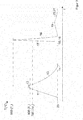
- the steel wire 1 is initially heated to a deformation temperature T1 of about 800 ° C, which is above the minimum recrystallization temperature of the steel wire, in particular above the austenitizing temperature Ac3 of 785 ° C, 11 in the present case.
- the steel wire 1 is now subjected to a thermomechanical forming (TMU) 12.
- TMU thermomechanical forming
- the thermomechanical forming 12 can be carried out by multi-stage caliber rolling.
- the steel wire 1 is then slowly cooled 13 so that at least a partially ferritic-pearlitic structure, ie a soft structure, is established in the steel wire.
- the cooling can take place without further action by simple storage at room temperature or ambient temperature, but the cooling is preferably carried out in a controlled manner.
- the steel wire 1 is coiled 14, which is easily possible due to the soft structure.
- a heat exchanger can also be provided for cooling so that the waste heat can be fed back into the process.
- the tempering of the steel wire 1 begins, which consequently no longer has to adjoin the TMU directly (even locally).
- machining for example grinding 16
- the steel wire is brought to a hardening temperature T2 well above the austenitizing temperature Ac3 or the deformation temperature T1 is heated 17.
- the hardening temperature T2 is approximately 950.degree.
- the heating takes place very quickly and is preferably carried out inductively.
- the heating takes place at a heating rate of at least 50 K / s, preferably at least 100 K / s.
- Quenching 18 then takes place, for example in a water or oil bath, as a result of which an at least partially martensitic structure is established.
- the steel wire 1 is then tempered 19.
- the tempered steel wire 1 is now cold-wound to coil springs 3 '20' and then cut from the steel wire 1.
- the tempered steel wire 1 is first cut 21 into individual spring bars 22 and then "cold-bent 20" to form torsion bar springs 3.
- Springs and / or torsion bars and springs and / or torsion bars of the type described above are used, for example, in the production of motor vehicles, in particular of the chassis of motor vehicles.
Landscapes
- Chemical & Material Sciences (AREA)
- Engineering & Computer Science (AREA)
- Mechanical Engineering (AREA)
- Materials Engineering (AREA)
- Crystallography & Structural Chemistry (AREA)
- Thermal Sciences (AREA)
- Physics & Mathematics (AREA)
- Metallurgy (AREA)
- Organic Chemistry (AREA)
- Manufacturing & Machinery (AREA)
- Heat Treatment Of Articles (AREA)
- Heat Treatment Of Steel (AREA)
- Springs (AREA)
- Wire Processing (AREA)
- Heat Treatment Of Strip Materials And Filament Materials (AREA)
Claims (10)
- Procédé de fabrication d'un ressort (3') et/ou d'une barre de torsion (3"), comprenant les étapes suivantes :a) fourniture d'un fil en acier (1) ;b) façonnage thermomécanique (12) du fil en acier (1) fourni à l'étape a), au-dessus de la température de recristallisation minimale du fil en acier (1), le fil en acier (1) possédant une structure au moins partiellement austénitique ;c) refroidissement du fil en acier (1) façonné thermomécaniquement à l'étape b) ;d) trempe et revenu du fil en acier (1), comprenantI. réchauffement (17) du fil en acier (1) refroidi à l'étape c) au moins à une température de trempe, laquelle est égale ou supérieure à la température de début d'austénitisation ;II. refroidissement brusque (18) du fil en acier (1) réchauffé au moins à la température de trempe à l'étape I. à une première température de refroidissement, la première température de refroidissement étant une température inférieure à la température de recristallisation minimale du fil en acier (1) et une structure au moins partiellement austénitique s'établissant ;III. nouveau réchauffement du fil en acier (1) refroidi brusquement à l'étape II. à une première température de revenu, laquelle est inférieure à la température de début d'austénitisation ;IV. refroidissement du fil en acier (1) de nouveau réchauffé à l'étape III. à une deuxième température de revenu, la deuxième température de revenu étant au moins inférieure à la première température de revenu ;e) façonnage à froid (20', 20") du fil en acier (1) trempé et revenu à l'étape d), à une température de façonnage à froid, la température de façonnage à froid étant une température inférieure à la température de recristallisation minimale du fil en acier (1) ;f) isolement (21) du fil en acier (1) façonné à froid à l'étape e) ;caractérisé en ce que
lors du refroidissement du fil en acier (1) à l'étape c), le refroidissement s'effectue à une température inférieure à la température de recristallisation minimale de telle sorte qu'au moins une structure partiellement ferritique-perlitique s'établit dans le fil en acier (1). - Procédé de fabrication d'un ressort (3') et/ou d'une barre de torsion (3") selon la revendication 1, caractérisé en ce que la séquence des étapes e) et f) est au choix.
- Procédé de fabrication d'un ressort (3') et/ou d'une barre de torsion (3") selon l'une des revendications 1 et 2, caractérisé en ce que le façonnage thermomécanique à l'étape b) est effectué à une température qui est égale ou supérieure à la température de début d'austénitisation, de préférence égale ou supérieure à la température de fin d'austénitisation, notamment de préférence dans la plage de la température de fin d'austénitisation à 50 °C au-dessus de la température de fin d'austénitisation.
- Procédé de fabrication d'un ressort (3') et/ou d'une barre de torsion (3") selon l'une des revendications 1 à 3, caractérisé en ce que le refroidissement du fil à l'étape c) est effectué au moins à une température inférieure à la température de recristallisation minimale, de préférence au-dessous d'une température de 200 °C, particulièrement de préférence au-dessous d'une température de 50 °C.
- Procédé de fabrication d'un ressort (3') et/ou d'une barre de torsion (3") selon l'une des revendications 1 à 4, caractérisé en ce que le réchauffement (17) du fil en acier (1) à l'étape d)I. est effectué à une température qui est égale ou supérieure à la température de début d'austénitisation, de préférence égale ou supérieure à la température de fin d'austénitisation.
- Procédé de fabrication d'un ressort (3') et/ou d'une barre de torsion (3") selon l'une des revendications 1 à 5, caractérisé en ce que lors du refroidissement brusque (18) du fil à l'étape d)II., la structure du fil en acier subit une conversion au moins partielle en martensite et le fil en acier (1) subit au moins une température de transformation martensitique, le refroidissement brusque (18) du fil étant effectué de préférence à la première température de refroidissement du fil en acier (1) qui est inférieure ou égale à 200 °C.
- Procédé de fabrication d'un ressort (3') et/ou d'une barre de torsion (3") selon l'une des revendications 1 à 6, caractérisé en ce que la courbe de dureté sur la section transversale du fil en acier (1) est réglée avec le revenu du fil en acier (1) à l'étape d).
- Procédé de fabrication d'un ressort (3') et/ou d'une barre de torsion (3") selon l'une des revendications 1 à 7, caractérisé en ce qu'à la suite de l'une des étapes d) à f), un réchauffement périphérique (17) ensuite suivi d'un nouveau refroidissement du fil en acier (1) est réalisé dans une étape supplémentaire g), la dureté augmentant du bord vers le cœur du fil en acier (1).
- Procédé de fabrication d'un ressort (3') et/ou d'une barre de torsion (3") selon l'une des revendications 1 à 8, caractérisé en ce qu'à la suite de l'une des étapes c) à f), le fil en acier (1) est enroulé dans une étape supplémentaire h).
- Procédé de fabrication d'un ressort (3') et/ou d'une barre de torsion (3") selon l'une des revendications 1 à 9, caractérisé en ce qu'à la suite de l'une des étapes c) à g), un traitement de surface du fil en acier (1) est réalisé dans une étape supplémentaire (i), lors duquel la surface du fil en acier (1) est au moins partiellement enlevée.
Priority Applications (1)
| Application Number | Priority Date | Filing Date | Title |
|---|---|---|---|
| EP20157906.7A EP3686294A1 (fr) | 2014-09-04 | 2015-07-15 | Procédé de production de ressorts d'acier formés à froid |
Applications Claiming Priority (3)
| Application Number | Priority Date | Filing Date | Title |
|---|---|---|---|
| DE102014112762.5A DE102014112762B4 (de) | 2014-09-04 | 2014-09-04 | Verfahren zum Herstellen von warmgeformten Stahlfedern |
| DE102014112761.7A DE102014112761B4 (de) | 2014-09-04 | 2014-09-04 | Verfahren zum Herstellen von kaltgeformten Stahlfedern |
| PCT/EP2015/066155 WO2016034319A1 (fr) | 2014-09-04 | 2015-07-15 | Procédé de production de ressorts d'acier formés à froid |
Related Child Applications (2)
| Application Number | Title | Priority Date | Filing Date |
|---|---|---|---|
| EP20157906.7A Division EP3686294A1 (fr) | 2014-09-04 | 2015-07-15 | Procédé de production de ressorts d'acier formés à froid |
| EP20157906.7A Division-Into EP3686294A1 (fr) | 2014-09-04 | 2015-07-15 | Procédé de production de ressorts d'acier formés à froid |
Publications (2)
| Publication Number | Publication Date |
|---|---|
| EP3189165A1 EP3189165A1 (fr) | 2017-07-12 |
| EP3189165B1 true EP3189165B1 (fr) | 2020-09-02 |
Family
ID=53765188
Family Applications (4)
| Application Number | Title | Priority Date | Filing Date |
|---|---|---|---|
| EP20157919.0A Pending EP3686295A1 (fr) | 2014-09-04 | 2015-07-15 | Procédé de production de ressorts d'acier thermoformés |
| EP15744892.9A Active EP3189166B1 (fr) | 2014-09-04 | 2015-07-15 | Procédé de production de ressorts d'acier thermoformés |
| EP15744893.7A Active EP3189165B1 (fr) | 2014-09-04 | 2015-07-15 | Procédé de production de ressorts d'acier formés à froid |
| EP20157906.7A Pending EP3686294A1 (fr) | 2014-09-04 | 2015-07-15 | Procédé de production de ressorts d'acier formés à froid |
Family Applications Before (2)
| Application Number | Title | Priority Date | Filing Date |
|---|---|---|---|
| EP20157919.0A Pending EP3686295A1 (fr) | 2014-09-04 | 2015-07-15 | Procédé de production de ressorts d'acier thermoformés |
| EP15744892.9A Active EP3189166B1 (fr) | 2014-09-04 | 2015-07-15 | Procédé de production de ressorts d'acier thermoformés |
Family Applications After (1)
| Application Number | Title | Priority Date | Filing Date |
|---|---|---|---|
| EP20157906.7A Pending EP3686294A1 (fr) | 2014-09-04 | 2015-07-15 | Procédé de production de ressorts d'acier formés à froid |
Country Status (10)
| Country | Link |
|---|---|
| US (2) | US20170283904A1 (fr) |
| EP (4) | EP3686295A1 (fr) |
| JP (2) | JP2017532450A (fr) |
| KR (2) | KR102326352B1 (fr) |
| CN (2) | CN106605000B (fr) |
| BR (2) | BR112017004224B1 (fr) |
| HU (2) | HUE052643T2 (fr) |
| MX (2) | MX391060B (fr) |
| RU (2) | RU2682882C1 (fr) |
| WO (2) | WO2016034319A1 (fr) |
Families Citing this family (7)
| Publication number | Priority date | Publication date | Assignee | Title |
|---|---|---|---|---|
| EP3673184B1 (fr) | 2017-08-24 | 2024-11-06 | Ressorts Liberte Inc. | Ressort hélicoïdal et son procédé de fabrication |
| CN111250559B (zh) * | 2018-11-30 | 2021-09-24 | 郑州元素工具技术有限公司 | 一种环形钢丝的热处理方法 |
| CN111926165B (zh) * | 2020-08-13 | 2022-04-05 | 无锡金峰园弹簧制造有限公司 | 一种60Si2CrA弹簧钢的热处理工艺 |
| CN112695182B (zh) * | 2020-12-29 | 2022-11-11 | 山东康泰实业有限公司 | 一种车用扭力梁制造方法和车用扭力梁后桥总成 |
| DE102021208073A1 (de) * | 2021-07-27 | 2023-02-02 | Thyssenkrupp Ag | Rohrstabilisator für ein Fahrzeugfahrwerk und ein Fahrzeugfahrwerk umfassend den Rohrstabilisator |
| CN114346131B (zh) * | 2021-12-31 | 2024-03-12 | 江苏三众弹性技术股份有限公司 | 一种钢丝制碟形弹簧的制造方法 |
| CN115463994B (zh) * | 2022-11-03 | 2023-03-24 | 广东神和新材料科技有限公司 | 一种汽车用精密不锈钢弹簧线材制造工艺 |
Family Cites Families (25)
| Publication number | Priority date | Publication date | Assignee | Title |
|---|---|---|---|---|
| US795A (en) * | 1838-06-20 | Mode of constructing and managing vats fob tanning leather | ||
| US565A (en) * | 1838-01-09 | Mode of | ||
| SU899683A1 (ru) | 1979-01-08 | 1982-01-23 | Научно-Производственное Объединение По Механизации И Автоматизации Производства Машин Для Хлопководства @Н@П@О "Технолог" | Способ термической обработки деталей |
| JPH06346146A (ja) * | 1993-06-07 | 1994-12-20 | Sumitomo Metal Ind Ltd | 冷間成形コイルばね用線材の製造方法と装置 |
| DE19546204C1 (de) * | 1995-12-11 | 1997-03-20 | Max Planck Inst Eisenforschung | Verfahren zur Herstellung von hochfesten Gegenständen aus einem Vergütungsstahl und Anwendung dieses Verfahrens zur Erzeugung von Federn |
| EP0974676A3 (fr) | 1998-07-20 | 2003-06-04 | Firma Muhr und Bender | Procédé de traitement thermomécanique d'acier pour éléments de ressort de torsion |
| DE19839383C2 (de) | 1998-07-20 | 2001-04-19 | Muhr & Bender | Verfahren zur thermomechanischen Behandlung von Stahl für torsionsbeanspruchte Federelemente |
| DE10315419B3 (de) | 2003-04-04 | 2004-05-19 | Thyssenkrupp Automotive Ag | Verfahren zum Herstellen von Schraubenfedern oder Stabilisatoren |
| DE10315418B3 (de) | 2003-04-04 | 2004-07-22 | Thyssenkrupp Automotive Ag | Verfahren zur thermomechanischen Behandlung von Stahl |
| CN101001969A (zh) | 2004-08-26 | 2007-07-18 | 大同特殊钢株式会社 | 高强度弹簧钢、高强度弹簧及其制备方法 |
| JP4476863B2 (ja) * | 2005-04-11 | 2010-06-09 | 株式会社神戸製鋼所 | 耐食性に優れた冷間成形ばね用鋼線 |
| JP4478072B2 (ja) | 2005-06-09 | 2010-06-09 | 新日本製鐵株式会社 | 高強度ばね用鋼 |
| RU54947U1 (ru) | 2006-04-05 | 2006-07-27 | Закрытое акционерное общество "Ижевский опытно-механический завод" | Изделие из конструкционной высокопрочной стали (варианты) |
| US8734599B2 (en) * | 2006-10-11 | 2014-05-27 | Posco | Steel wire rod for high strength and high toughness spring having excellent cold workability, method for producing the same and method for producing spring by using the same |
| JP5121360B2 (ja) * | 2007-09-10 | 2013-01-16 | 株式会社神戸製鋼所 | 耐脱炭性および伸線加工性に優れたばね用鋼線材およびその製造方法 |
| DE102008036237B3 (de) | 2008-08-02 | 2010-01-28 | GMT Gesellschaft für metallurgische Technologie- und Softwareentwicklung mbH | Verfahren und Anlage zum Inline-Umformen, -Vergüten und -Richten von stabförmigen Metallteilen |
| DE102009011118A1 (de) * | 2008-11-21 | 2010-05-27 | Muhr Und Bender Kg | Vergüteter Federstahl, Federelement und Verfahren zur Herstellung eines Federelements |
| KR101075323B1 (ko) | 2009-05-19 | 2011-10-19 | 대원강업주식회사 | 헬리코이드 리덕션 밀을 이용한 코일 스프링 제조방법 |
| JP5805371B2 (ja) | 2010-03-23 | 2015-11-04 | 日本発條株式会社 | コイルばねの熱処理方法 |
| SE537538C2 (sv) | 2010-07-06 | 2015-06-09 | Nippon Steel Corp | Dragen värmebehandlad ståltråd för höghållfasthetsfjäderanvändning, fördragen ståltråd för höghållfasthetsfjäderanvändning samt förfaranden för framställning av dessa trådar |
| JP5764383B2 (ja) | 2011-05-12 | 2015-08-19 | Jfe条鋼株式会社 | 車両懸架用ばね部品用鋼、車両懸架用ばね部品およびその製造方法 |
| DE102011112077B4 (de) | 2011-09-01 | 2013-04-11 | ThyssenKrupp Federn und Stabilisatoren GmbH | Fertigungsanlage zur Herstellung von Produkten aus zylindrischen Metallstäben |
| JP5361098B1 (ja) * | 2012-09-14 | 2013-12-04 | 日本発條株式会社 | 圧縮コイルばねおよびその製造方法 |
| JP6148148B2 (ja) * | 2013-10-18 | 2017-06-14 | 日本発條株式会社 | ばね成形装置および成形方法 |
| KR101419698B1 (ko) * | 2014-03-25 | 2014-07-21 | 대원강업 주식회사 | 열간 코일스프링 제조장치 |
-
2015
- 2015-07-15 CN CN201580046974.6A patent/CN106605000B/zh active Active
- 2015-07-15 KR KR1020177008792A patent/KR102326352B1/ko active Active
- 2015-07-15 BR BR112017004224-0A patent/BR112017004224B1/pt active IP Right Grant
- 2015-07-15 KR KR1020177008789A patent/KR102332298B1/ko active Active
- 2015-07-15 MX MX2017002800A patent/MX391060B/es unknown
- 2015-07-15 EP EP20157919.0A patent/EP3686295A1/fr active Pending
- 2015-07-15 US US15/508,356 patent/US20170283904A1/en not_active Abandoned
- 2015-07-15 EP EP15744892.9A patent/EP3189166B1/fr active Active
- 2015-07-15 HU HUE15744893A patent/HUE052643T2/hu unknown
- 2015-07-15 US US15/509,005 patent/US10689726B2/en active Active
- 2015-07-15 RU RU2017104703A patent/RU2682882C1/ru active
- 2015-07-15 WO PCT/EP2015/066155 patent/WO2016034319A1/fr not_active Ceased
- 2015-07-15 HU HUE15744892A patent/HUE050515T2/hu unknown
- 2015-07-15 WO PCT/EP2015/066154 patent/WO2016034318A1/fr not_active Ceased
- 2015-07-15 BR BR112017004212-6A patent/BR112017004212B1/pt active IP Right Grant
- 2015-07-15 EP EP15744893.7A patent/EP3189165B1/fr active Active
- 2015-07-15 JP JP2017512306A patent/JP2017532450A/ja active Pending
- 2015-07-15 EP EP20157906.7A patent/EP3686294A1/fr active Pending
- 2015-07-15 CN CN201580046919.7A patent/CN106795576B/zh active Active
- 2015-07-15 RU RU2017104701A patent/RU2664847C2/ru active
- 2015-07-15 MX MX2017002798A patent/MX392623B/es unknown
- 2015-07-15 JP JP2017512317A patent/JP2017530258A/ja active Pending
Non-Patent Citations (1)
| Title |
|---|
| None * |
Also Published As
Similar Documents
| Publication | Publication Date | Title |
|---|---|---|
| EP3189165B1 (fr) | Procédé de production de ressorts d'acier formés à froid | |
| EP1613783B1 (fr) | Procede de traitement thermo-mecanique de l'acier | |
| DE1508416C3 (de) | Verfahren zur Herstellung von Stahlteilen wie Bolzen, Schrauben, Zapfen u.dgl. | |
| EP1613449B1 (fr) | Procede de fabrication de ressorts helicoidaux ou de stabilisateurs | |
| EP0820529B1 (fr) | Procede de fabrication de produits allonges finis a chaud, notamment du type barre ou tube, en acier fortement allie ou hypereutectoide | |
| EP2157194B1 (fr) | Procédé et installation de déformage, de traitement et d'alignement en ligne de pièces métalliques en forme de tiges | |
| DE102020214427A1 (de) | Verfahren zum Herstellen eines Warmbandes mittels einer Gießwalzanlage | |
| EP3206808B1 (fr) | Installation et procédé de fabrication de tôles fortes | |
| DE2433665B2 (de) | Verfahren zum Herstellen von hochfesten Blechen | |
| DE102012010696B4 (de) | Wärmebehandlungsverfahren für eine Vielzahl von Leichtmetallbauteilen | |
| EP0648855A1 (fr) | Procédé de fabrication de tubes sans soudure en métaux non-terreux, en particulier en cuivre et alliages de cuivre | |
| DE102014112762B4 (de) | Verfahren zum Herstellen von warmgeformten Stahlfedern | |
| DE102014112761B4 (de) | Verfahren zum Herstellen von kaltgeformten Stahlfedern | |
| DE3507124A1 (de) | Durch elektro-widerstandsschweissen geschweisstes oelbohrungsrohr und verfahren zu dessen herstellung | |
| DE102006032617B4 (de) | Verfahren zur Herstellung eines zum Formhärten geeigneten Blechhalbzeugs | |
| EP2543744A1 (fr) | Procédé et dispositif de traitement d'un produit en acier et produit en acier | |
| EP4347904A1 (fr) | Système et procédé pour la production d'aciers en forme de tige | |
| EP3347613B1 (fr) | Ressort tubulaire pour véhicules à moteur et procédé de fabrication d'un ressort tubulaire | |
| EP0263300A1 (fr) | Procédé et dispositif pour la fabrication d'un ressort hélicoidal | |
| EP3528978B1 (fr) | Procédé de fabrication d'un ressort à lames ainsi que ressort à lames | |
| AT396073B (de) | Verfahren zum warmwalzen und waermebehandeln von stabfoermigem material | |
| DE4023854C1 (en) | Steel wire prodn. - involves pre-drawing, heat treating and finishing | |
| DE19946889C1 (de) | Verfahren zum Erzeugen von alterungsbeständigen Bändern aus einem aluminiumberuhigten Stahl | |
| EP1371737A1 (fr) | Procédé et dispositif pour la fabrication de fils ou de barres en acier | |
| DE102009059761A1 (de) | Verfahren zur Umformung einer UHC-Leichtbaustahl-Legierung |
Legal Events
| Date | Code | Title | Description |
|---|---|---|---|
| STAA | Information on the status of an ep patent application or granted ep patent |
Free format text: STATUS: THE INTERNATIONAL PUBLICATION HAS BEEN MADE |
|
| PUAI | Public reference made under article 153(3) epc to a published international application that has entered the european phase |
Free format text: ORIGINAL CODE: 0009012 |
|
| STAA | Information on the status of an ep patent application or granted ep patent |
Free format text: STATUS: REQUEST FOR EXAMINATION WAS MADE |
|
| 17P | Request for examination filed |
Effective date: 20170217 |
|
| AK | Designated contracting states |
Kind code of ref document: A1 Designated state(s): AL AT BE BG CH CY CZ DE DK EE ES FI FR GB GR HR HU IE IS IT LI LT LU LV MC MK MT NL NO PL PT RO RS SE SI SK SM TR |
|
| AX | Request for extension of the european patent |
Extension state: BA ME |
|
| DAV | Request for validation of the european patent (deleted) | ||
| DAX | Request for extension of the european patent (deleted) | ||
| STAA | Information on the status of an ep patent application or granted ep patent |
Free format text: STATUS: EXAMINATION IS IN PROGRESS |
|
| 17Q | First examination report despatched |
Effective date: 20180601 |
|
| RAP1 | Party data changed (applicant data changed or rights of an application transferred) |
Owner name: THYSSENKRUPP FEDERN UND STABILISATOREN GMBH Owner name: THYSSENKRUPP AG |
|
| RIN1 | Information on inventor provided before grant (corrected) |
Inventor name: ROLAND, MARCO Inventor name: LECHNER, DIETER Inventor name: GABOR, HEINZ-GEORG Inventor name: GROSS, MARCEL |
|
| GRAP | Despatch of communication of intention to grant a patent |
Free format text: ORIGINAL CODE: EPIDOSNIGR1 |
|
| STAA | Information on the status of an ep patent application or granted ep patent |
Free format text: STATUS: GRANT OF PATENT IS INTENDED |
|
| INTG | Intention to grant announced |
Effective date: 20200320 |
|
| GRAS | Grant fee paid |
Free format text: ORIGINAL CODE: EPIDOSNIGR3 |
|
| GRAA | (expected) grant |
Free format text: ORIGINAL CODE: 0009210 |
|
| STAA | Information on the status of an ep patent application or granted ep patent |
Free format text: STATUS: THE PATENT HAS BEEN GRANTED |
|
| RIN1 | Information on inventor provided before grant (corrected) |
Inventor name: GABOR, HEINZ-GEORG Inventor name: ROLAND, MARCO Inventor name: GROSS, MARCEL Inventor name: LECHNER, DIETER |
|
| AK | Designated contracting states |
Kind code of ref document: B1 Designated state(s): AL AT BE BG CH CY CZ DE DK EE ES FI FR GB GR HR HU IE IS IT LI LT LU LV MC MK MT NL NO PL PT RO RS SE SI SK SM TR |
|
| REG | Reference to a national code |
Ref country code: GB Ref legal event code: FG4D Free format text: NOT ENGLISH |
|
| REG | Reference to a national code |
Ref country code: AT Ref legal event code: REF Ref document number: 1308865 Country of ref document: AT Kind code of ref document: T Effective date: 20200915 Ref country code: CH Ref legal event code: EP |
|
| REG | Reference to a national code |
Ref country code: DE Ref legal event code: R096 Ref document number: 502015013388 Country of ref document: DE |
|
| REG | Reference to a national code |
Ref country code: IE Ref legal event code: FG4D Free format text: LANGUAGE OF EP DOCUMENT: GERMAN |
|
| REG | Reference to a national code |
Ref country code: LT Ref legal event code: MG4D |
|
| PG25 | Lapsed in a contracting state [announced via postgrant information from national office to epo] |
Ref country code: HR Free format text: LAPSE BECAUSE OF FAILURE TO SUBMIT A TRANSLATION OF THE DESCRIPTION OR TO PAY THE FEE WITHIN THE PRESCRIBED TIME-LIMIT Effective date: 20200902 Ref country code: LT Free format text: LAPSE BECAUSE OF FAILURE TO SUBMIT A TRANSLATION OF THE DESCRIPTION OR TO PAY THE FEE WITHIN THE PRESCRIBED TIME-LIMIT Effective date: 20200902 Ref country code: NO Free format text: LAPSE BECAUSE OF FAILURE TO SUBMIT A TRANSLATION OF THE DESCRIPTION OR TO PAY THE FEE WITHIN THE PRESCRIBED TIME-LIMIT Effective date: 20201202 Ref country code: FI Free format text: LAPSE BECAUSE OF FAILURE TO SUBMIT A TRANSLATION OF THE DESCRIPTION OR TO PAY THE FEE WITHIN THE PRESCRIBED TIME-LIMIT Effective date: 20200902 Ref country code: GR Free format text: LAPSE BECAUSE OF FAILURE TO SUBMIT A TRANSLATION OF THE DESCRIPTION OR TO PAY THE FEE WITHIN THE PRESCRIBED TIME-LIMIT Effective date: 20201203 Ref country code: SE Free format text: LAPSE BECAUSE OF FAILURE TO SUBMIT A TRANSLATION OF THE DESCRIPTION OR TO PAY THE FEE WITHIN THE PRESCRIBED TIME-LIMIT Effective date: 20200902 Ref country code: BG Free format text: LAPSE BECAUSE OF FAILURE TO SUBMIT A TRANSLATION OF THE DESCRIPTION OR TO PAY THE FEE WITHIN THE PRESCRIBED TIME-LIMIT Effective date: 20201202 |
|
| REG | Reference to a national code |
Ref country code: NL Ref legal event code: MP Effective date: 20200902 |
|
| PG25 | Lapsed in a contracting state [announced via postgrant information from national office to epo] |
Ref country code: LV Free format text: LAPSE BECAUSE OF FAILURE TO SUBMIT A TRANSLATION OF THE DESCRIPTION OR TO PAY THE FEE WITHIN THE PRESCRIBED TIME-LIMIT Effective date: 20200902 Ref country code: PL Free format text: LAPSE BECAUSE OF FAILURE TO SUBMIT A TRANSLATION OF THE DESCRIPTION OR TO PAY THE FEE WITHIN THE PRESCRIBED TIME-LIMIT Effective date: 20200902 Ref country code: RS Free format text: LAPSE BECAUSE OF FAILURE TO SUBMIT A TRANSLATION OF THE DESCRIPTION OR TO PAY THE FEE WITHIN THE PRESCRIBED TIME-LIMIT Effective date: 20200902 |
|
| PG25 | Lapsed in a contracting state [announced via postgrant information from national office to epo] |
Ref country code: EE Free format text: LAPSE BECAUSE OF FAILURE TO SUBMIT A TRANSLATION OF THE DESCRIPTION OR TO PAY THE FEE WITHIN THE PRESCRIBED TIME-LIMIT Effective date: 20200902 Ref country code: RO Free format text: LAPSE BECAUSE OF FAILURE TO SUBMIT A TRANSLATION OF THE DESCRIPTION OR TO PAY THE FEE WITHIN THE PRESCRIBED TIME-LIMIT Effective date: 20200902 Ref country code: PT Free format text: LAPSE BECAUSE OF FAILURE TO SUBMIT A TRANSLATION OF THE DESCRIPTION OR TO PAY THE FEE WITHIN THE PRESCRIBED TIME-LIMIT Effective date: 20210104 Ref country code: SM Free format text: LAPSE BECAUSE OF FAILURE TO SUBMIT A TRANSLATION OF THE DESCRIPTION OR TO PAY THE FEE WITHIN THE PRESCRIBED TIME-LIMIT Effective date: 20200902 |
|
| REG | Reference to a national code |
Ref country code: HU Ref legal event code: AG4A Ref document number: E052643 Country of ref document: HU |
|
| PG25 | Lapsed in a contracting state [announced via postgrant information from national office to epo] |
Ref country code: AL Free format text: LAPSE BECAUSE OF FAILURE TO SUBMIT A TRANSLATION OF THE DESCRIPTION OR TO PAY THE FEE WITHIN THE PRESCRIBED TIME-LIMIT Effective date: 20200902 Ref country code: ES Free format text: LAPSE BECAUSE OF FAILURE TO SUBMIT A TRANSLATION OF THE DESCRIPTION OR TO PAY THE FEE WITHIN THE PRESCRIBED TIME-LIMIT Effective date: 20200902 Ref country code: IS Free format text: LAPSE BECAUSE OF FAILURE TO SUBMIT A TRANSLATION OF THE DESCRIPTION OR TO PAY THE FEE WITHIN THE PRESCRIBED TIME-LIMIT Effective date: 20210102 |
|
| REG | Reference to a national code |
Ref country code: DE Ref legal event code: R097 Ref document number: 502015013388 Country of ref document: DE |
|
| PG25 | Lapsed in a contracting state [announced via postgrant information from national office to epo] |
Ref country code: SK Free format text: LAPSE BECAUSE OF FAILURE TO SUBMIT A TRANSLATION OF THE DESCRIPTION OR TO PAY THE FEE WITHIN THE PRESCRIBED TIME-LIMIT Effective date: 20200902 |
|
| PLBE | No opposition filed within time limit |
Free format text: ORIGINAL CODE: 0009261 |
|
| STAA | Information on the status of an ep patent application or granted ep patent |
Free format text: STATUS: NO OPPOSITION FILED WITHIN TIME LIMIT |
|
| 26N | No opposition filed |
Effective date: 20210603 |
|
| PG25 | Lapsed in a contracting state [announced via postgrant information from national office to epo] |
Ref country code: DK Free format text: LAPSE BECAUSE OF FAILURE TO SUBMIT A TRANSLATION OF THE DESCRIPTION OR TO PAY THE FEE WITHIN THE PRESCRIBED TIME-LIMIT Effective date: 20200902 Ref country code: SI Free format text: LAPSE BECAUSE OF FAILURE TO SUBMIT A TRANSLATION OF THE DESCRIPTION OR TO PAY THE FEE WITHIN THE PRESCRIBED TIME-LIMIT Effective date: 20200902 |
|
| PGFP | Annual fee paid to national office [announced via postgrant information from national office to epo] |
Ref country code: IT Payment date: 20210727 Year of fee payment: 7 |
|
| PGFP | Annual fee paid to national office [announced via postgrant information from national office to epo] |
Ref country code: GB Payment date: 20210722 Year of fee payment: 7 |
|
| REG | Reference to a national code |
Ref country code: CH Ref legal event code: PL |
|
| PG25 | Lapsed in a contracting state [announced via postgrant information from national office to epo] |
Ref country code: MC Free format text: LAPSE BECAUSE OF FAILURE TO SUBMIT A TRANSLATION OF THE DESCRIPTION OR TO PAY THE FEE WITHIN THE PRESCRIBED TIME-LIMIT Effective date: 20200902 |
|
| REG | Reference to a national code |
Ref country code: BE Ref legal event code: MM Effective date: 20210731 |
|
| PG25 | Lapsed in a contracting state [announced via postgrant information from national office to epo] |
Ref country code: LI Free format text: LAPSE BECAUSE OF NON-PAYMENT OF DUE FEES Effective date: 20210731 Ref country code: CH Free format text: LAPSE BECAUSE OF NON-PAYMENT OF DUE FEES Effective date: 20210731 |
|
| PG25 | Lapsed in a contracting state [announced via postgrant information from national office to epo] |
Ref country code: LU Free format text: LAPSE BECAUSE OF NON-PAYMENT OF DUE FEES Effective date: 20210715 |
|
| PG25 | Lapsed in a contracting state [announced via postgrant information from national office to epo] |
Ref country code: IE Free format text: LAPSE BECAUSE OF NON-PAYMENT OF DUE FEES Effective date: 20210715 Ref country code: BE Free format text: LAPSE BECAUSE OF NON-PAYMENT OF DUE FEES Effective date: 20210731 |
|
| REG | Reference to a national code |
Ref country code: AT Ref legal event code: MM01 Ref document number: 1308865 Country of ref document: AT Kind code of ref document: T Effective date: 20210715 |
|
| PG25 | Lapsed in a contracting state [announced via postgrant information from national office to epo] |
Ref country code: AT Free format text: LAPSE BECAUSE OF NON-PAYMENT OF DUE FEES Effective date: 20210715 |
|
| GBPC | Gb: european patent ceased through non-payment of renewal fee |
Effective date: 20220715 |
|
| PG25 | Lapsed in a contracting state [announced via postgrant information from national office to epo] |
Ref country code: GB Free format text: LAPSE BECAUSE OF NON-PAYMENT OF DUE FEES Effective date: 20220715 |
|
| PG25 | Lapsed in a contracting state [announced via postgrant information from national office to epo] |
Ref country code: NL Free format text: LAPSE BECAUSE OF NON-PAYMENT OF DUE FEES Effective date: 20200923 Ref country code: CY Free format text: LAPSE BECAUSE OF FAILURE TO SUBMIT A TRANSLATION OF THE DESCRIPTION OR TO PAY THE FEE WITHIN THE PRESCRIBED TIME-LIMIT Effective date: 20200902 |
|
| P01 | Opt-out of the competence of the unified patent court (upc) registered |
Effective date: 20230530 |
|
| PG25 | Lapsed in a contracting state [announced via postgrant information from national office to epo] |
Ref country code: IT Free format text: LAPSE BECAUSE OF NON-PAYMENT OF DUE FEES Effective date: 20220715 |
|
| PG25 | Lapsed in a contracting state [announced via postgrant information from national office to epo] |
Ref country code: MK Free format text: LAPSE BECAUSE OF FAILURE TO SUBMIT A TRANSLATION OF THE DESCRIPTION OR TO PAY THE FEE WITHIN THE PRESCRIBED TIME-LIMIT Effective date: 20200902 |
|
| PG25 | Lapsed in a contracting state [announced via postgrant information from national office to epo] |
Ref country code: TR Free format text: LAPSE BECAUSE OF FAILURE TO SUBMIT A TRANSLATION OF THE DESCRIPTION OR TO PAY THE FEE WITHIN THE PRESCRIBED TIME-LIMIT Effective date: 20200902 |
|
| PG25 | Lapsed in a contracting state [announced via postgrant information from national office to epo] |
Ref country code: MT Free format text: LAPSE BECAUSE OF FAILURE TO SUBMIT A TRANSLATION OF THE DESCRIPTION OR TO PAY THE FEE WITHIN THE PRESCRIBED TIME-LIMIT Effective date: 20200902 |
|
| PGFP | Annual fee paid to national office [announced via postgrant information from national office to epo] |
Ref country code: HU Payment date: 20250723 Year of fee payment: 11 |
|
| PGFP | Annual fee paid to national office [announced via postgrant information from national office to epo] |
Ref country code: DE Payment date: 20250722 Year of fee payment: 11 |
|
| PGFP | Annual fee paid to national office [announced via postgrant information from national office to epo] |
Ref country code: FR Payment date: 20250725 Year of fee payment: 11 |
|
| PGFP | Annual fee paid to national office [announced via postgrant information from national office to epo] |
Ref country code: CZ Payment date: 20250708 Year of fee payment: 11 |