EP3199550B1 - Anticorps stables à affinité élevée et agrégatifs à base de domaines viraux vl et de dérivé de vhh - Google Patents
Anticorps stables à affinité élevée et agrégatifs à base de domaines viraux vl et de dérivé de vhh Download PDFInfo
- Publication number
- EP3199550B1 EP3199550B1 EP15843607.1A EP15843607A EP3199550B1 EP 3199550 B1 EP3199550 B1 EP 3199550B1 EP 15843607 A EP15843607 A EP 15843607A EP 3199550 B1 EP3199550 B1 EP 3199550B1
- Authority
- EP
- European Patent Office
- Prior art keywords
- antibody
- human
- amino acid
- antibodies
- vhh
- Prior art date
- Legal status (The legal status is an assumption and is not a legal conclusion. Google has not performed a legal analysis and makes no representation as to the accuracy of the status listed.)
- Active
Links
Images










Classifications
-
- A—HUMAN NECESSITIES
- A61—MEDICAL OR VETERINARY SCIENCE; HYGIENE
- A61K—PREPARATIONS FOR MEDICAL, DENTAL OR TOILETRY PURPOSES
- A61K39/00—Medicinal preparations containing antigens or antibodies
- A61K39/395—Antibodies; Immunoglobulins; Immune serum, e.g. antilymphocytic serum
-
- A—HUMAN NECESSITIES
- A61—MEDICAL OR VETERINARY SCIENCE; HYGIENE
- A61K—PREPARATIONS FOR MEDICAL, DENTAL OR TOILETRY PURPOSES
- A61K39/00—Medicinal preparations containing antigens or antibodies
- A61K39/395—Antibodies; Immunoglobulins; Immune serum, e.g. antilymphocytic serum
- A61K39/39533—Antibodies; Immunoglobulins; Immune serum, e.g. antilymphocytic serum against materials from animals
- A61K39/3955—Antibodies; Immunoglobulins; Immune serum, e.g. antilymphocytic serum against materials from animals against proteinaceous materials, e.g. enzymes, hormones, lymphokines
-
- A—HUMAN NECESSITIES
- A61—MEDICAL OR VETERINARY SCIENCE; HYGIENE
- A61K—PREPARATIONS FOR MEDICAL, DENTAL OR TOILETRY PURPOSES
- A61K39/00—Medicinal preparations containing antigens or antibodies
- A61K39/395—Antibodies; Immunoglobulins; Immune serum, e.g. antilymphocytic serum
- A61K39/39591—Stabilisation, fragmentation
-
- A—HUMAN NECESSITIES
- A61—MEDICAL OR VETERINARY SCIENCE; HYGIENE
- A61K—PREPARATIONS FOR MEDICAL, DENTAL OR TOILETRY PURPOSES
- A61K45/00—Medicinal preparations containing active ingredients not provided for in groups A61K31/00 - A61K41/00
- A61K45/06—Mixtures of active ingredients without chemical characterisation, e.g. antiphlogistics and cardiaca
-
- A—HUMAN NECESSITIES
- A61—MEDICAL OR VETERINARY SCIENCE; HYGIENE
- A61P—SPECIFIC THERAPEUTIC ACTIVITY OF CHEMICAL COMPOUNDS OR MEDICINAL PREPARATIONS
- A61P1/00—Drugs for disorders of the alimentary tract or the digestive system
- A61P1/04—Drugs for disorders of the alimentary tract or the digestive system for ulcers, gastritis or reflux esophagitis, e.g. antacids, inhibitors of acid secretion, mucosal protectants
-
- A—HUMAN NECESSITIES
- A61—MEDICAL OR VETERINARY SCIENCE; HYGIENE
- A61P—SPECIFIC THERAPEUTIC ACTIVITY OF CHEMICAL COMPOUNDS OR MEDICINAL PREPARATIONS
- A61P1/00—Drugs for disorders of the alimentary tract or the digestive system
- A61P1/16—Drugs for disorders of the alimentary tract or the digestive system for liver or gallbladder disorders, e.g. hepatoprotective agents, cholagogues, litholytics
-
- A—HUMAN NECESSITIES
- A61—MEDICAL OR VETERINARY SCIENCE; HYGIENE
- A61P—SPECIFIC THERAPEUTIC ACTIVITY OF CHEMICAL COMPOUNDS OR MEDICINAL PREPARATIONS
- A61P1/00—Drugs for disorders of the alimentary tract or the digestive system
- A61P1/18—Drugs for disorders of the alimentary tract or the digestive system for pancreatic disorders, e.g. pancreatic enzymes
-
- A—HUMAN NECESSITIES
- A61—MEDICAL OR VETERINARY SCIENCE; HYGIENE
- A61P—SPECIFIC THERAPEUTIC ACTIVITY OF CHEMICAL COMPOUNDS OR MEDICINAL PREPARATIONS
- A61P11/00—Drugs for disorders of the respiratory system
-
- A—HUMAN NECESSITIES
- A61—MEDICAL OR VETERINARY SCIENCE; HYGIENE
- A61P—SPECIFIC THERAPEUTIC ACTIVITY OF CHEMICAL COMPOUNDS OR MEDICINAL PREPARATIONS
- A61P11/00—Drugs for disorders of the respiratory system
- A61P11/02—Nasal agents, e.g. decongestants
-
- A—HUMAN NECESSITIES
- A61—MEDICAL OR VETERINARY SCIENCE; HYGIENE
- A61P—SPECIFIC THERAPEUTIC ACTIVITY OF CHEMICAL COMPOUNDS OR MEDICINAL PREPARATIONS
- A61P11/00—Drugs for disorders of the respiratory system
- A61P11/06—Antiasthmatics
-
- A—HUMAN NECESSITIES
- A61—MEDICAL OR VETERINARY SCIENCE; HYGIENE
- A61P—SPECIFIC THERAPEUTIC ACTIVITY OF CHEMICAL COMPOUNDS OR MEDICINAL PREPARATIONS
- A61P13/00—Drugs for disorders of the urinary system
- A61P13/08—Drugs for disorders of the urinary system of the prostate
-
- A—HUMAN NECESSITIES
- A61—MEDICAL OR VETERINARY SCIENCE; HYGIENE
- A61P—SPECIFIC THERAPEUTIC ACTIVITY OF CHEMICAL COMPOUNDS OR MEDICINAL PREPARATIONS
- A61P13/00—Drugs for disorders of the urinary system
- A61P13/12—Drugs for disorders of the urinary system of the kidneys
-
- A—HUMAN NECESSITIES
- A61—MEDICAL OR VETERINARY SCIENCE; HYGIENE
- A61P—SPECIFIC THERAPEUTIC ACTIVITY OF CHEMICAL COMPOUNDS OR MEDICINAL PREPARATIONS
- A61P15/00—Drugs for genital or sexual disorders; Contraceptives
-
- A—HUMAN NECESSITIES
- A61—MEDICAL OR VETERINARY SCIENCE; HYGIENE
- A61P—SPECIFIC THERAPEUTIC ACTIVITY OF CHEMICAL COMPOUNDS OR MEDICINAL PREPARATIONS
- A61P15/00—Drugs for genital or sexual disorders; Contraceptives
- A61P15/08—Drugs for genital or sexual disorders; Contraceptives for gonadal disorders or for enhancing fertility, e.g. inducers of ovulation or of spermatogenesis
-
- A—HUMAN NECESSITIES
- A61—MEDICAL OR VETERINARY SCIENCE; HYGIENE
- A61P—SPECIFIC THERAPEUTIC ACTIVITY OF CHEMICAL COMPOUNDS OR MEDICINAL PREPARATIONS
- A61P17/00—Drugs for dermatological disorders
-
- A—HUMAN NECESSITIES
- A61—MEDICAL OR VETERINARY SCIENCE; HYGIENE
- A61P—SPECIFIC THERAPEUTIC ACTIVITY OF CHEMICAL COMPOUNDS OR MEDICINAL PREPARATIONS
- A61P17/00—Drugs for dermatological disorders
- A61P17/02—Drugs for dermatological disorders for treating wounds, ulcers, burns, scars, keloids, or the like
-
- A—HUMAN NECESSITIES
- A61—MEDICAL OR VETERINARY SCIENCE; HYGIENE
- A61P—SPECIFIC THERAPEUTIC ACTIVITY OF CHEMICAL COMPOUNDS OR MEDICINAL PREPARATIONS
- A61P17/00—Drugs for dermatological disorders
- A61P17/04—Antipruritics
-
- A—HUMAN NECESSITIES
- A61—MEDICAL OR VETERINARY SCIENCE; HYGIENE
- A61P—SPECIFIC THERAPEUTIC ACTIVITY OF CHEMICAL COMPOUNDS OR MEDICINAL PREPARATIONS
- A61P17/00—Drugs for dermatological disorders
- A61P17/06—Antipsoriatics
-
- A—HUMAN NECESSITIES
- A61—MEDICAL OR VETERINARY SCIENCE; HYGIENE
- A61P—SPECIFIC THERAPEUTIC ACTIVITY OF CHEMICAL COMPOUNDS OR MEDICINAL PREPARATIONS
- A61P19/00—Drugs for skeletal disorders
- A61P19/02—Drugs for skeletal disorders for joint disorders, e.g. arthritis, arthrosis
-
- A—HUMAN NECESSITIES
- A61—MEDICAL OR VETERINARY SCIENCE; HYGIENE
- A61P—SPECIFIC THERAPEUTIC ACTIVITY OF CHEMICAL COMPOUNDS OR MEDICINAL PREPARATIONS
- A61P19/00—Drugs for skeletal disorders
- A61P19/08—Drugs for skeletal disorders for bone diseases, e.g. rachitism, Paget's disease
- A61P19/10—Drugs for skeletal disorders for bone diseases, e.g. rachitism, Paget's disease for osteoporosis
-
- A—HUMAN NECESSITIES
- A61—MEDICAL OR VETERINARY SCIENCE; HYGIENE
- A61P—SPECIFIC THERAPEUTIC ACTIVITY OF CHEMICAL COMPOUNDS OR MEDICINAL PREPARATIONS
- A61P21/00—Drugs for disorders of the muscular or neuromuscular system
- A61P21/04—Drugs for disorders of the muscular or neuromuscular system for myasthenia gravis
-
- A—HUMAN NECESSITIES
- A61—MEDICAL OR VETERINARY SCIENCE; HYGIENE
- A61P—SPECIFIC THERAPEUTIC ACTIVITY OF CHEMICAL COMPOUNDS OR MEDICINAL PREPARATIONS
- A61P25/00—Drugs for disorders of the nervous system
-
- A—HUMAN NECESSITIES
- A61—MEDICAL OR VETERINARY SCIENCE; HYGIENE
- A61P—SPECIFIC THERAPEUTIC ACTIVITY OF CHEMICAL COMPOUNDS OR MEDICINAL PREPARATIONS
- A61P25/00—Drugs for disorders of the nervous system
- A61P25/04—Centrally acting analgesics, e.g. opioids
-
- A—HUMAN NECESSITIES
- A61—MEDICAL OR VETERINARY SCIENCE; HYGIENE
- A61P—SPECIFIC THERAPEUTIC ACTIVITY OF CHEMICAL COMPOUNDS OR MEDICINAL PREPARATIONS
- A61P25/00—Drugs for disorders of the nervous system
- A61P25/06—Antimigraine agents
-
- A—HUMAN NECESSITIES
- A61—MEDICAL OR VETERINARY SCIENCE; HYGIENE
- A61P—SPECIFIC THERAPEUTIC ACTIVITY OF CHEMICAL COMPOUNDS OR MEDICINAL PREPARATIONS
- A61P25/00—Drugs for disorders of the nervous system
- A61P25/08—Antiepileptics; Anticonvulsants
- A61P25/10—Antiepileptics; Anticonvulsants for petit-mal
-
- A—HUMAN NECESSITIES
- A61—MEDICAL OR VETERINARY SCIENCE; HYGIENE
- A61P—SPECIFIC THERAPEUTIC ACTIVITY OF CHEMICAL COMPOUNDS OR MEDICINAL PREPARATIONS
- A61P25/00—Drugs for disorders of the nervous system
- A61P25/14—Drugs for disorders of the nervous system for treating abnormal movements, e.g. chorea, dyskinesia
-
- A—HUMAN NECESSITIES
- A61—MEDICAL OR VETERINARY SCIENCE; HYGIENE
- A61P—SPECIFIC THERAPEUTIC ACTIVITY OF CHEMICAL COMPOUNDS OR MEDICINAL PREPARATIONS
- A61P25/00—Drugs for disorders of the nervous system
- A61P25/14—Drugs for disorders of the nervous system for treating abnormal movements, e.g. chorea, dyskinesia
- A61P25/16—Anti-Parkinson drugs
-
- A—HUMAN NECESSITIES
- A61—MEDICAL OR VETERINARY SCIENCE; HYGIENE
- A61P—SPECIFIC THERAPEUTIC ACTIVITY OF CHEMICAL COMPOUNDS OR MEDICINAL PREPARATIONS
- A61P25/00—Drugs for disorders of the nervous system
- A61P25/18—Antipsychotics, i.e. neuroleptics; Drugs for mania or schizophrenia
-
- A—HUMAN NECESSITIES
- A61—MEDICAL OR VETERINARY SCIENCE; HYGIENE
- A61P—SPECIFIC THERAPEUTIC ACTIVITY OF CHEMICAL COMPOUNDS OR MEDICINAL PREPARATIONS
- A61P25/00—Drugs for disorders of the nervous system
- A61P25/22—Anxiolytics
-
- A—HUMAN NECESSITIES
- A61—MEDICAL OR VETERINARY SCIENCE; HYGIENE
- A61P—SPECIFIC THERAPEUTIC ACTIVITY OF CHEMICAL COMPOUNDS OR MEDICINAL PREPARATIONS
- A61P25/00—Drugs for disorders of the nervous system
- A61P25/24—Antidepressants
-
- A—HUMAN NECESSITIES
- A61—MEDICAL OR VETERINARY SCIENCE; HYGIENE
- A61P—SPECIFIC THERAPEUTIC ACTIVITY OF CHEMICAL COMPOUNDS OR MEDICINAL PREPARATIONS
- A61P25/00—Drugs for disorders of the nervous system
- A61P25/28—Drugs for disorders of the nervous system for treating neurodegenerative disorders of the central nervous system, e.g. nootropic agents, cognition enhancers, drugs for treating Alzheimer's disease or other forms of dementia
-
- A—HUMAN NECESSITIES
- A61—MEDICAL OR VETERINARY SCIENCE; HYGIENE
- A61P—SPECIFIC THERAPEUTIC ACTIVITY OF CHEMICAL COMPOUNDS OR MEDICINAL PREPARATIONS
- A61P25/00—Drugs for disorders of the nervous system
- A61P25/30—Drugs for disorders of the nervous system for treating abuse or dependence
-
- A—HUMAN NECESSITIES
- A61—MEDICAL OR VETERINARY SCIENCE; HYGIENE
- A61P—SPECIFIC THERAPEUTIC ACTIVITY OF CHEMICAL COMPOUNDS OR MEDICINAL PREPARATIONS
- A61P25/00—Drugs for disorders of the nervous system
- A61P25/30—Drugs for disorders of the nervous system for treating abuse or dependence
- A61P25/32—Alcohol-abuse
-
- A—HUMAN NECESSITIES
- A61—MEDICAL OR VETERINARY SCIENCE; HYGIENE
- A61P—SPECIFIC THERAPEUTIC ACTIVITY OF CHEMICAL COMPOUNDS OR MEDICINAL PREPARATIONS
- A61P27/00—Drugs for disorders of the senses
- A61P27/02—Ophthalmic agents
-
- A—HUMAN NECESSITIES
- A61—MEDICAL OR VETERINARY SCIENCE; HYGIENE
- A61P—SPECIFIC THERAPEUTIC ACTIVITY OF CHEMICAL COMPOUNDS OR MEDICINAL PREPARATIONS
- A61P29/00—Non-central analgesic, antipyretic or antiinflammatory agents, e.g. antirheumatic agents; Non-steroidal antiinflammatory drugs [NSAID]
-
- A—HUMAN NECESSITIES
- A61—MEDICAL OR VETERINARY SCIENCE; HYGIENE
- A61P—SPECIFIC THERAPEUTIC ACTIVITY OF CHEMICAL COMPOUNDS OR MEDICINAL PREPARATIONS
- A61P3/00—Drugs for disorders of the metabolism
- A61P3/08—Drugs for disorders of the metabolism for glucose homeostasis
-
- A—HUMAN NECESSITIES
- A61—MEDICAL OR VETERINARY SCIENCE; HYGIENE
- A61P—SPECIFIC THERAPEUTIC ACTIVITY OF CHEMICAL COMPOUNDS OR MEDICINAL PREPARATIONS
- A61P3/00—Drugs for disorders of the metabolism
- A61P3/08—Drugs for disorders of the metabolism for glucose homeostasis
- A61P3/10—Drugs for disorders of the metabolism for glucose homeostasis for hyperglycaemia, e.g. antidiabetics
-
- A—HUMAN NECESSITIES
- A61—MEDICAL OR VETERINARY SCIENCE; HYGIENE
- A61P—SPECIFIC THERAPEUTIC ACTIVITY OF CHEMICAL COMPOUNDS OR MEDICINAL PREPARATIONS
- A61P31/00—Antiinfectives, i.e. antibiotics, antiseptics, chemotherapeutics
- A61P31/04—Antibacterial agents
-
- A—HUMAN NECESSITIES
- A61—MEDICAL OR VETERINARY SCIENCE; HYGIENE
- A61P—SPECIFIC THERAPEUTIC ACTIVITY OF CHEMICAL COMPOUNDS OR MEDICINAL PREPARATIONS
- A61P31/00—Antiinfectives, i.e. antibiotics, antiseptics, chemotherapeutics
- A61P31/04—Antibacterial agents
- A61P31/06—Antibacterial agents for tuberculosis
-
- A—HUMAN NECESSITIES
- A61—MEDICAL OR VETERINARY SCIENCE; HYGIENE
- A61P—SPECIFIC THERAPEUTIC ACTIVITY OF CHEMICAL COMPOUNDS OR MEDICINAL PREPARATIONS
- A61P31/00—Antiinfectives, i.e. antibiotics, antiseptics, chemotherapeutics
- A61P31/10—Antimycotics
-
- A—HUMAN NECESSITIES
- A61—MEDICAL OR VETERINARY SCIENCE; HYGIENE
- A61P—SPECIFIC THERAPEUTIC ACTIVITY OF CHEMICAL COMPOUNDS OR MEDICINAL PREPARATIONS
- A61P31/00—Antiinfectives, i.e. antibiotics, antiseptics, chemotherapeutics
- A61P31/12—Antivirals
- A61P31/14—Antivirals for RNA viruses
-
- A—HUMAN NECESSITIES
- A61—MEDICAL OR VETERINARY SCIENCE; HYGIENE
- A61P—SPECIFIC THERAPEUTIC ACTIVITY OF CHEMICAL COMPOUNDS OR MEDICINAL PREPARATIONS
- A61P31/00—Antiinfectives, i.e. antibiotics, antiseptics, chemotherapeutics
- A61P31/12—Antivirals
- A61P31/14—Antivirals for RNA viruses
- A61P31/18—Antivirals for RNA viruses for HIV
-
- A—HUMAN NECESSITIES
- A61—MEDICAL OR VETERINARY SCIENCE; HYGIENE
- A61P—SPECIFIC THERAPEUTIC ACTIVITY OF CHEMICAL COMPOUNDS OR MEDICINAL PREPARATIONS
- A61P31/00—Antiinfectives, i.e. antibiotics, antiseptics, chemotherapeutics
- A61P31/12—Antivirals
- A61P31/20—Antivirals for DNA viruses
-
- A—HUMAN NECESSITIES
- A61—MEDICAL OR VETERINARY SCIENCE; HYGIENE
- A61P—SPECIFIC THERAPEUTIC ACTIVITY OF CHEMICAL COMPOUNDS OR MEDICINAL PREPARATIONS
- A61P33/00—Antiparasitic agents
- A61P33/02—Antiprotozoals, e.g. for leishmaniasis, trichomoniasis, toxoplasmosis
-
- A—HUMAN NECESSITIES
- A61—MEDICAL OR VETERINARY SCIENCE; HYGIENE
- A61P—SPECIFIC THERAPEUTIC ACTIVITY OF CHEMICAL COMPOUNDS OR MEDICINAL PREPARATIONS
- A61P35/00—Antineoplastic agents
-
- A—HUMAN NECESSITIES
- A61—MEDICAL OR VETERINARY SCIENCE; HYGIENE
- A61P—SPECIFIC THERAPEUTIC ACTIVITY OF CHEMICAL COMPOUNDS OR MEDICINAL PREPARATIONS
- A61P35/00—Antineoplastic agents
- A61P35/02—Antineoplastic agents specific for leukemia
-
- A—HUMAN NECESSITIES
- A61—MEDICAL OR VETERINARY SCIENCE; HYGIENE
- A61P—SPECIFIC THERAPEUTIC ACTIVITY OF CHEMICAL COMPOUNDS OR MEDICINAL PREPARATIONS
- A61P37/00—Drugs for immunological or allergic disorders
-
- A—HUMAN NECESSITIES
- A61—MEDICAL OR VETERINARY SCIENCE; HYGIENE
- A61P—SPECIFIC THERAPEUTIC ACTIVITY OF CHEMICAL COMPOUNDS OR MEDICINAL PREPARATIONS
- A61P37/00—Drugs for immunological or allergic disorders
- A61P37/02—Immunomodulators
-
- A—HUMAN NECESSITIES
- A61—MEDICAL OR VETERINARY SCIENCE; HYGIENE
- A61P—SPECIFIC THERAPEUTIC ACTIVITY OF CHEMICAL COMPOUNDS OR MEDICINAL PREPARATIONS
- A61P37/00—Drugs for immunological or allergic disorders
- A61P37/02—Immunomodulators
- A61P37/06—Immunosuppressants, e.g. drugs for graft rejection
-
- A—HUMAN NECESSITIES
- A61—MEDICAL OR VETERINARY SCIENCE; HYGIENE
- A61P—SPECIFIC THERAPEUTIC ACTIVITY OF CHEMICAL COMPOUNDS OR MEDICINAL PREPARATIONS
- A61P37/00—Drugs for immunological or allergic disorders
- A61P37/08—Antiallergic agents
-
- A—HUMAN NECESSITIES
- A61—MEDICAL OR VETERINARY SCIENCE; HYGIENE
- A61P—SPECIFIC THERAPEUTIC ACTIVITY OF CHEMICAL COMPOUNDS OR MEDICINAL PREPARATIONS
- A61P43/00—Drugs for specific purposes, not provided for in groups A61P1/00-A61P41/00
-
- A—HUMAN NECESSITIES
- A61—MEDICAL OR VETERINARY SCIENCE; HYGIENE
- A61P—SPECIFIC THERAPEUTIC ACTIVITY OF CHEMICAL COMPOUNDS OR MEDICINAL PREPARATIONS
- A61P5/00—Drugs for disorders of the endocrine system
- A61P5/14—Drugs for disorders of the endocrine system of the thyroid hormones, e.g. T3, T4
-
- A—HUMAN NECESSITIES
- A61—MEDICAL OR VETERINARY SCIENCE; HYGIENE
- A61P—SPECIFIC THERAPEUTIC ACTIVITY OF CHEMICAL COMPOUNDS OR MEDICINAL PREPARATIONS
- A61P5/00—Drugs for disorders of the endocrine system
- A61P5/18—Drugs for disorders of the endocrine system of the parathyroid hormones
-
- A—HUMAN NECESSITIES
- A61—MEDICAL OR VETERINARY SCIENCE; HYGIENE
- A61P—SPECIFIC THERAPEUTIC ACTIVITY OF CHEMICAL COMPOUNDS OR MEDICINAL PREPARATIONS
- A61P7/00—Drugs for disorders of the blood or the extracellular fluid
-
- A—HUMAN NECESSITIES
- A61—MEDICAL OR VETERINARY SCIENCE; HYGIENE
- A61P—SPECIFIC THERAPEUTIC ACTIVITY OF CHEMICAL COMPOUNDS OR MEDICINAL PREPARATIONS
- A61P7/00—Drugs for disorders of the blood or the extracellular fluid
- A61P7/02—Antithrombotic agents; Anticoagulants; Platelet aggregation inhibitors
-
- A—HUMAN NECESSITIES
- A61—MEDICAL OR VETERINARY SCIENCE; HYGIENE
- A61P—SPECIFIC THERAPEUTIC ACTIVITY OF CHEMICAL COMPOUNDS OR MEDICINAL PREPARATIONS
- A61P7/00—Drugs for disorders of the blood or the extracellular fluid
- A61P7/04—Antihaemorrhagics; Procoagulants; Haemostatic agents; Antifibrinolytic agents
-
- A—HUMAN NECESSITIES
- A61—MEDICAL OR VETERINARY SCIENCE; HYGIENE
- A61P—SPECIFIC THERAPEUTIC ACTIVITY OF CHEMICAL COMPOUNDS OR MEDICINAL PREPARATIONS
- A61P7/00—Drugs for disorders of the blood or the extracellular fluid
- A61P7/06—Antianaemics
-
- A—HUMAN NECESSITIES
- A61—MEDICAL OR VETERINARY SCIENCE; HYGIENE
- A61P—SPECIFIC THERAPEUTIC ACTIVITY OF CHEMICAL COMPOUNDS OR MEDICINAL PREPARATIONS
- A61P9/00—Drugs for disorders of the cardiovascular system
-
- A—HUMAN NECESSITIES
- A61—MEDICAL OR VETERINARY SCIENCE; HYGIENE
- A61P—SPECIFIC THERAPEUTIC ACTIVITY OF CHEMICAL COMPOUNDS OR MEDICINAL PREPARATIONS
- A61P9/00—Drugs for disorders of the cardiovascular system
- A61P9/04—Inotropic agents, i.e. stimulants of cardiac contraction; Drugs for heart failure
-
- A—HUMAN NECESSITIES
- A61—MEDICAL OR VETERINARY SCIENCE; HYGIENE
- A61P—SPECIFIC THERAPEUTIC ACTIVITY OF CHEMICAL COMPOUNDS OR MEDICINAL PREPARATIONS
- A61P9/00—Drugs for disorders of the cardiovascular system
- A61P9/06—Antiarrhythmics
-
- A—HUMAN NECESSITIES
- A61—MEDICAL OR VETERINARY SCIENCE; HYGIENE
- A61P—SPECIFIC THERAPEUTIC ACTIVITY OF CHEMICAL COMPOUNDS OR MEDICINAL PREPARATIONS
- A61P9/00—Drugs for disorders of the cardiovascular system
- A61P9/08—Vasodilators for multiple indications
-
- A—HUMAN NECESSITIES
- A61—MEDICAL OR VETERINARY SCIENCE; HYGIENE
- A61P—SPECIFIC THERAPEUTIC ACTIVITY OF CHEMICAL COMPOUNDS OR MEDICINAL PREPARATIONS
- A61P9/00—Drugs for disorders of the cardiovascular system
- A61P9/10—Drugs for disorders of the cardiovascular system for treating ischaemic or atherosclerotic diseases, e.g. antianginal drugs, coronary vasodilators, drugs for myocardial infarction, retinopathy, cerebrovascula insufficiency, renal arteriosclerosis
-
- C—CHEMISTRY; METALLURGY
- C07—ORGANIC CHEMISTRY
- C07K—PEPTIDES
- C07K16/00—Immunoglobulins [IG], e.g. monoclonal or polyclonal antibodies
- C07K16/18—Immunoglobulins [IG], e.g. monoclonal or polyclonal antibodies against material from animals or humans
-
- C—CHEMISTRY; METALLURGY
- C07—ORGANIC CHEMISTRY
- C07K—PEPTIDES
- C07K16/00—Immunoglobulins [IG], e.g. monoclonal or polyclonal antibodies
- C07K16/18—Immunoglobulins [IG], e.g. monoclonal or polyclonal antibodies against material from animals or humans
- C07K16/24—Immunoglobulins [IG], e.g. monoclonal or polyclonal antibodies against material from animals or humans against cytokines, lymphokines or interferons
-
- C—CHEMISTRY; METALLURGY
- C07—ORGANIC CHEMISTRY
- C07K—PEPTIDES
- C07K16/00—Immunoglobulins [IG], e.g. monoclonal or polyclonal antibodies
- C07K16/18—Immunoglobulins [IG], e.g. monoclonal or polyclonal antibodies against material from animals or humans
- C07K16/24—Immunoglobulins [IG], e.g. monoclonal or polyclonal antibodies against material from animals or humans against cytokines, lymphokines or interferons
- C07K16/244—Interleukins [IL]
-
- C—CHEMISTRY; METALLURGY
- C07—ORGANIC CHEMISTRY
- C07K—PEPTIDES
- C07K16/00—Immunoglobulins [IG], e.g. monoclonal or polyclonal antibodies
- C07K16/46—Hybrid immunoglobulins
- C07K16/461—Igs containing Ig-regions, -domains or -residues form different species
-
- C—CHEMISTRY; METALLURGY
- C07—ORGANIC CHEMISTRY
- C07K—PEPTIDES
- C07K2317/00—Immunoglobulins specific features
- C07K2317/20—Immunoglobulins specific features characterized by taxonomic origin
- C07K2317/22—Immunoglobulins specific features characterized by taxonomic origin from camelids, e.g. camel, llama or dromedary
-
- C—CHEMISTRY; METALLURGY
- C07—ORGANIC CHEMISTRY
- C07K—PEPTIDES
- C07K2317/00—Immunoglobulins specific features
- C07K2317/20—Immunoglobulins specific features characterized by taxonomic origin
- C07K2317/24—Immunoglobulins specific features characterized by taxonomic origin containing regions, domains or residues from different species, e.g. chimeric, humanized or veneered
-
- C—CHEMISTRY; METALLURGY
- C07—ORGANIC CHEMISTRY
- C07K—PEPTIDES
- C07K2317/00—Immunoglobulins specific features
- C07K2317/50—Immunoglobulins specific features characterized by immunoglobulin fragments
- C07K2317/56—Immunoglobulins specific features characterized by immunoglobulin fragments variable (Fv) region, i.e. VH and/or VL
-
- C—CHEMISTRY; METALLURGY
- C07—ORGANIC CHEMISTRY
- C07K—PEPTIDES
- C07K2317/00—Immunoglobulins specific features
- C07K2317/50—Immunoglobulins specific features characterized by immunoglobulin fragments
- C07K2317/56—Immunoglobulins specific features characterized by immunoglobulin fragments variable (Fv) region, i.e. VH and/or VL
- C07K2317/565—Complementarity determining region [CDR]
-
- C—CHEMISTRY; METALLURGY
- C07—ORGANIC CHEMISTRY
- C07K—PEPTIDES
- C07K2317/00—Immunoglobulins specific features
- C07K2317/50—Immunoglobulins specific features characterized by immunoglobulin fragments
- C07K2317/56—Immunoglobulins specific features characterized by immunoglobulin fragments variable (Fv) region, i.e. VH and/or VL
- C07K2317/567—Framework region [FR]
-
- C—CHEMISTRY; METALLURGY
- C07—ORGANIC CHEMISTRY
- C07K—PEPTIDES
- C07K2317/00—Immunoglobulins specific features
- C07K2317/70—Immunoglobulins specific features characterized by effect upon binding to a cell or to an antigen
- C07K2317/76—Antagonist effect on antigen, e.g. neutralization or inhibition of binding
-
- C—CHEMISTRY; METALLURGY
- C07—ORGANIC CHEMISTRY
- C07K—PEPTIDES
- C07K2317/00—Immunoglobulins specific features
- C07K2317/90—Immunoglobulins specific features characterized by (pharmaco)kinetic aspects or by stability of the immunoglobulin
- C07K2317/92—Affinity (KD), association rate (Ka), dissociation rate (Kd) or EC50 value
-
- C—CHEMISTRY; METALLURGY
- C07—ORGANIC CHEMISTRY
- C07K—PEPTIDES
- C07K2317/00—Immunoglobulins specific features
- C07K2317/90—Immunoglobulins specific features characterized by (pharmaco)kinetic aspects or by stability of the immunoglobulin
- C07K2317/94—Stability, e.g. half-life, pH, temperature or enzyme-resistance
Definitions
- CH1 and CH2 domains of H-chain are divided by a hinge region that assures mobility of Fab-region and interaction of IgG molecule with Ig effector receptors located on the cells.
- CH2 domain contains the regions binding both FcY receptors that mediate cell activation (ADCC and ADCP) and complement system molecules (CDC).
- ADCC and ADCP FcY receptors that mediate cell activation
- CDC complement system molecules
- this domain contains the site that is an attach point for carbohydrates of all immunoglobulin isotypes.
- Non-classical antibodies including a dimer of just a single Ig heavy chain were first discovered by electrophoretic analysis of immunoglobulins in the serum obtained from various representatives of Camelidae bloodline [5]. The relative fraction of HCAb varies from about 15-25% (of all IgG) in llamas and vicunas to about 60-80% in camels [6].
- HCAb non-classical antibodies
- Two heavy chain constant domains, CH2 and CH3, in case of HCAb and classical antibodies are highly conserved.
- HCAb there is no domain corresponding to the first constant domain CH1 of classical antibodies.
- the genome of the one-humped camel contains a cluster of about fifty VH- and forty VHH-generative genes followed by multiple genes of D-segments, J-segments and genes encoding the constant regions (C ⁇ , C ⁇ , C ⁇ and C ⁇ ).
- variable domains of non-classical antibodies (VHH) and variable domains of classical antibodies (VH) is very similar, as human VH-domains of IgG3 subclass have most evident homology to VH and VHH of Camelidae.
- V-domains comprise four conservative framework regions FR surrounding three hypervariable complementary-determining regions (CDR).
- CDR hypervariable complementary-determining regions
- a 3-D structure typical of immunoglobulin V-domain of two ⁇ -layers is formed, one of which comprises 4 amino acid sequences and another comprises 5 amino acid sequences [11, 12]. All three hypervariable regions in this structure form a cluster on one side of V-domain, where they participate in antigen recognition and are located in the loops connecting ⁇ -structures.
- VHH Complementary-determining regions of VHH often contain cysteine residues in two sections at once (usually in CDR1 and CDR3, less frequently - in CDR2 and CDR3).
- cysteine residues form disulfide bonds and provide additional stability to the loop structure of these antibodies [12].
- the strongest and the most reproducible distinguishing feature of VHH is represented by four substitutions of hydrophobic amino acid residues with hydrophilic ones in the second framework region (Val37Phe, Gly44Glu, Leu45Arg, Trp47Gly, according to the numbering of Kabat et al [13]).
- VHH-domain differs greatly in this aspect: substitutions of hydrophobic amino acids with hydrophilic makes the association of VHH and VL impossible. These substitutions also explain high solubility of VHH (nano-antibody), when it is obtained as a recombinant protein [14].
- CDR3 in VHH is capable of forming uncommonly long finger-structures that can deepen into the antigen structure and, in particular, detect active enzyme centers [12].
- Small size of the antigen-binding region of VHH and its ability to form unusual emerging paratopes explain how HCAb capable of epitopes inaccessible for classical antibodies can be obtained (for example, production of antibodies that efficiently inhibit enzymes) [17].
- VHH single-domain VHH
- solutions designed to improve the pharmacokinetics of VHH structures including chemical conjugation with PEG and covalent binding to polypeptides mediating the reduced clearance from the blood, such as Human serum albumin (HSA) or Fc-fragment classical human antibody as fusion proteins that possess a half-life of up to three weeks [18,19,20].
- HSA Human serum albumin
- Fc-fragment classical human antibody Fc-fragment classical human antibody as fusion proteins that possess a half-life of up to three weeks [18,19,20].
- Small peptides attached to VHH by genetic engineering methods and capable of high-affinity non-covalent interaction with said components (HSA and IgG) in human blood have been successfully used [21].
- the technological efficiency and immunogenicity of these approaches remain questionable, and the feasibility of using thereof in either clinical or earlier study phases is now on trial.
- antibodies as medicinal agents for the treatment of various diseases are due to their aggregation and chemical stability, affinity and immunogenicity. Since the majority of monoclonal antibodies are obtained on the basis of mice, the regular use of such antibodies in humans causes development of immune response to antibody therapy (for example, allergic reactions). These types of immune response finally result at least in lack of efficiency, and in potential anaphylactic reactions at the worst. On the other hand, aggregation or chemically unstable therapeutic antibodies reduce therapeutic properties of the drug product over time and may increase its immunogenicity upon administration to human patients.
- VHH-based antibodies with improved (in comparison to previously known antibodies) functional and therapeutic features, particularly increased aggregation, chemical and thermal stability and improved affinity, which would at the same time be easily and simply produced, including on industrial scale.
- the background of the invention includes various antibody structures containing VHH domain.
- Patent application WO 2009/068630 describes antibodies that comprise separate variable domains linked with Fc-fragment.
- Nano-bodies can be used as variable domains with Fc obtained from IgE antibodies.
- the said domain and Fc fragments can be connected through a linker located in the hinge region.
- Patent application US 2009/0202979 disclosed antibodies comprising complete VHH antibodies or parts thereof directly connected to the constant regions of human antibodies.
- Patent application WO 2012/156219 discloses llama and humanized antagonistic VHH antibodies (Nanobodies) and Fc fusions thereof, which bind IL-17A and/or IL-17F.
- application US 20110028348 describes the antibody heavy chain variable domains wherein amino acid substitutions were introduced in positions 35, 45, 47, 93- 100 and 100a to improve the hydrophilic properties of the antibody obtained.
- VHH domains can regenerate the ability to bind with VL domain [24].
- this disclosure is the first to describe antibodies comprising VHH-derivatives that are able to bind to variable domains of the light chains of the full-size human IgG, which results in the formation of a structure that is similar to the natural one (and, hence, having low immunogenicity), but has improved aggregation stability, increased affinity, and a structure of a therapeutic monoclonal antibody.
- Monoclonal antibody as used herein relates to an antibody obtained from llama, chimeric antibody, humanized antibody or fully human antibody, unless otherwise is stated in the present application.
- Monoclonal antibodies, according to the invention can be produced using, for example, recombinant technology, phage display technology, synthetic technology or combinations of these or other technologies well known from the prior art.
- “Monoclonal antibody” refers to an antibody obtained from a single copy or a clone including, for example, any eukaryotic, prokaryotic or phage clone, rather than to production method thereof.
- “Monoclonal antibody” can be an intact antibody (with full or full-length Fc-region), actually intact antibody, an antibody part or fragment comprising an antigen-binding region, for example, Fab-fragment, Fab'-fragment or F(ab')2-fragment from llama or chimeric, humanized or human antibody.
- Fab fragment comprises a variable light chain domain and a constant light chain domain as well as a variable heavy chain domain and the first constant heavy chain domain (CH1).
- “F(ab')2" antibody fragment contains a pair of Fab-fragments, which are mostly covalently bound by hinged cysteine residues at C-terminal regions. Other chemical bonds between antibody fragments are also well known from the prior art.
- monoclonal antibody as used herein can be a single-chain Fv that can be obtained by binding DNA encoding VHH and VL with a linker sequence. As long as the protein keeps its ability of specific or preferable binding to the target (for example, epitope or antigen), it is covered by the term “antibody”. Antibodies can be either glycosylated or not and are within the framework of the invention.
- derivative refers to a molecule, the amino acid sequence of which differs from the parental sequence by adding, deletion and/or substitution of one or more amino acid residues in the sequence of parental antibody.
- an antibody contains at least one (for example, from one to about ten, preferably 2, 3, 4, 5, 6, 7 or 8) amino acid substitutions in FR- or CDR-regions of the parental antibody.
- An antibody derivative keeps its ability to bind the same antigen or, preferably, epitope with which the parental antibody binds, or, preferably, exhibits at least one property or biological activity exceeding that of the parental antibody.
- the antibody preferably has a better aggregation stability, more strong affinity, improved pharmacokinetics or increased ability to inhibit the antigen biological activity, as compared to parental antibody.
- VHH-derivative refers to the derivatives of VHH antibodies, the amino acid sequence of which differs from the sequence of parental VHH antibody by substitution of one or more amino acid residues in the sequence of parental antibody.
- VHH antibody contains at least one (for example, from one to about ten preferably 2, 3, 4, 5, 6, 7 or 8) amino acid substitutions in FR- or CDR-regions of the parental antibody.
- An antibody derivative keeps its ability to bind the same antigen or, preferably, epitope with which the parental antibody binds, or, preferably, exhibits at least one property or biological activity exceeding that of the parental antibody.
- the antibody preferably has a better aggregation stability, stronger affinity, improved pharmacokinetics or increased ability to inhibit the antigen biological activity, as compared to parental antibody.
- Parental VHH antibody or "initial VHH antibody”, or “wild VHH antibody” as used herein refers to VHH antibody isolated from an immunized or non-immunized Camelidae animal encoded with amino acid sequence that is used to produce a VHH variant.
- Parental antibody can have a framework sequence originating from Camelidae (with respect to VHH variable domain), but preferably the frame sequence of the light chain variable domain is of completely or substantially human origin.
- Parental antibody refers to an antibody encoded with amino acid sequence that is used to produce a variant.
- Parental antibody can have a framework sequence originating from Camelidae (with respect to VHH variable domain), but preferably the frame sequence of the light chain variable domain is of completely or substantially human origin.
- the term “specifically binds” refers to such a situation in which one party involved in the process of specific binding does not significantly bind molecules different from the ones of its specific binding partner (partners). This term also applies if, for example, an antigen-binding site of the antibody according to the invention is specific for particular epitope that is carried by a number of antigens; in this case, the specific antibody with an antigen-binding domain will be able to bind specifically with various epitope-carrying antigens.
- the monoclonal antibody specifically binds to human IL-17 (IL-17A), while it does not specifically bind human IL-17B, IL-17C, IL-17D or IL-17E.
- a monoclonal antibody of the invention specifically binds human IL-17 and IL-17 of cynomolgus monkey, but it does not specifically bind neither rat IL-17 nor murine IL-17.
- the term "preferably binds" refers to such a situation in which an antibody binds a specific antigen at least by 20% more, preferably by about 50%, or 2-fold, 20-fold, 50-fold or 100-fold more than it binds any other antigen, as measured according to the procedures known from the prior art (for example, competitive ELISA or K D measurements obtained with Octet apparatus).
- Antibody can preferably bind one epitope within an antigen but not bind another epitope of the same antigen.
- an antibody of the invention preferably binds human IL-17, but not rabbit IL-17.
- epitope refers to the molecule part that can be recognized by and bind an antibody via one or several antigen-binding sites of an antibody. Epitopes often comprise chemically surface-active groups of molecules such as amino acids or sugar side chains, and have specific 3-D structural characteristics. "Inhibiting epitope” and/or “neutralizing epitope” means an epitope that in the context of an intact antigen molecule and while binding with an antibody specific to the said epitope, causes in vivo or in vitro loss or reduction of activity of the molecule or organism that contains the molecule.
- epitope also refers to a polypeptide fragment, having antigenic and/or immunogenic activity in animals, preferably in mammals such as mice and humans.
- antigenic epitope as used herein is a polypeptide fragment which can specifically bind the antibody and can be detected by any technique well known from the prior art (for example, by means of standard immunoassay). Antigen epitopes are not necessary immunogenic, but they can possess immunogenicity.
- Immunogenic epitope as used herein, is defined as a polypeptide fragment that evokes an antibody response in animals, as determined by any method of the prior art.
- “Nonlinear epitope” or “conformational epitope” contains nonadjacent polypeptides (amino acids) within the antigen protein, which binds with epitope-specific antibody.
- ELISA ELISA
- competitive ELISA Octet analysis
- neutralization assay in vitro or in vivo without limitation, receptor binding, production and/or release of cytokine or growth factor, signal transduction and immune histochemical study of tissue sections obtained from various sources including humans, primates or any other source.
- the population of "monoclonal antibodies” as used herein refers to homogenous or essentially homogeneous antibody population (i.e. at least 85, 90, 91, 92, 93, 94, 95, or 96%, but more preferably no less than about 97 or 98%, or further preferably, at least 99% of antibodies in the population will compete for the same antigen/epitope in ELISA, or further preferably, antibodies are identical in their amino acid sequence).
- a full-size antibody existing in nature is represented by immunoglobulin molecule comprising four polypeptide chains (two heavy full length H chains of about 50-70 kDa, and two light full length L chains of about 25 kDa) linked via disulfide bonds.
- Amino-terminal part of each chain comprises a variable domain of about 100-110 or more amino acids that are responsible for binding an antigen.
- Carboxyl-terminal domain of each chain determines the constant region that is mostly responsible for the effector function.
- Light chains are classified as kappa and lambda and have specific constant regions. Each light chain consists of a variable N-terminal light chain region (hereafter referred to as VL or VK) and a constant light chain region consisting of a single domain (CL or CK).
- Heavy chains are classified as ⁇ , ⁇ , ⁇ , ⁇ and ⁇ and determine antibody isotype, such as IgG, IgM, IgE, IgA and IgD respectively; some of them can be additionally divided into sub-classes (isotypes) such as IgG1, IgG2, IgG3, IgG4, IgA1.
- Each heavy chain type is characterized by specific constant region.
- Each heavy chain comprises a variable N-terminal region (hereafter referred to as VH) and a constant heavy chain region.
- Constant heavy chain region consists of three domains (CH1, CH2 and CH3) for IgG, IgD and IgA, and of 4 domains (CH1, CH2, CH3 and CH4) for IgM and IgE.
- Variable domains VH, VHH and VL can also be divided into the so-called hypervariable regions (complementarity determining regions, CDR) interspersing with more conservative framework regions (FR).
- CDR complementarity determining regions
- FR conservative framework regions
- Each variable domain comprises three CDRs and FRs located in the following order from N-terminus to C-terminus: FR1, CDR1, FR2, CDR2, FR3, CDR3 and FR4.
- CDR1, HCDR2 and HCDR3 3 heavy chain CDRs are referred to as “HCDR1, HCDR2 and HCDR3", while 3 light chain CDR are referred to as “LCDR1, LCDR2 and LCDR3".
- CDRs contain the majority of amino acid residues specifically interacting with an antigen.
- CDR-residues are numbered and positioned in compliance with Kabat Numbering Scheme.
- antigen refers to an antigen target against which an antibody can be reactive; it is used herein in the same way as specialists use it in this technical field, including, but not limited to, polypeptides, peptides, polysaccharides, glycoproteins, polynucleotides (for example, DNA), or chemical antigens, receptors or interleukins.
- Interleukins can include interleukins of various groups, such as interleukin 1 (alfa and beta), interleukin 2, interleukin 3, interleukin 4, interleukin 5, interleukin 6, interleukin 7, interleukin 8, interleukin 9, interleukin 10, interleukin 11, interleukin 17, interleukin 18 and interleukin 33.
- antigen can also be used to describe the material that is used for immunization of animals (for example, llama) with the purpose of production of antibodies, according to the invention.
- "antigen” can have a broader meaning and may cover purified forms of an antigen as well as non-purified or not fully isolated, or purified antigen products such as cells, cell lysates, or supernatants, cell fractions, for example, cell membranes etc. with added haptens conjugated with a protein-carrier.
- Antigen used for immunization does not necessary mean an antigen structurally identical to an antigen target to which, finally, an antibody of the invention is able to bind.
- antigen used for immunization is a downsized version of an antigen target, for example, a fragment comprising an immunogenic epitope. More details about antigens used for immunization are described in literature and may be familiar to a specialist in this technical field.
- variable regions of each light/heavy chain pair form antigen-binding sites of the antibody.
- an intact IgG antibody has two binding sites. Except for bifunctional or bi-specific antibodies, two binding sites are identical.
- "antigen-binding region” or "antigen-binding site”, or “antigen-binding domain”, are interchangeable, as used herein, and refer to an antibody molecule fragment comprising amino acid residues interacting with an antigen and giving the antibody its specificity and affinity to an antigen. This antibody fragment includes frame amino acid residues necessary for maintaining the proper conformation of the antigen-binding residues.
- the CDR of VHH antigen-binding region and the entire antigen-binding region of the antibodies covered by the invention fully originate from Camelidae bloodline or are substantially of Camelidae origin, and comprise specific changed amino acid residues, in order to improve the particular properties of an antibody (for example, K D , k off , IC 50 ).
- the amino acid sequences of the CDRs of the antibody of the invention are defined in claim 1.
- the antibody framework regions are of Camelidae origin or of human origin, or substantially of human origin (at least by 80, 85, 90, 95, 96, 97, 98 or 99% human origin), and comply with Kabat numbering.
- Antibody fragment may represent an antibody fragment or antibody fragment that has the activity of a full-size antibody.
- the said antibody fragment may be represented by F(ab')2, F(ab)2, Fab', Fab Fv and scFv.
- Interleukin 17 also referred to as “IL-17” or “IL-17A” is a 20-30 kD homo-dimeric glycoprotein.
- the gene of human IL-17A encodes the protein consisting of 155 amino acids and having a 19 amino acid signal sequence and 136 amino acid mature segment.
- Amino acid sequence of human IL-17A is by 80%, 63% and 58% similar to amino acid sequences of a rabbit, mouse and rat, respectively.
- Amino acid sequence of human IL-17A is by 97% identical to IL-17A of cynomolgus monkey.
- antibody when applied to anti-IL-17 monoclonal antibody of the invention (hereafter referred to as an "antibody of the invention"), as used herein, means a monoclonal IgG antibody.
- the terms “inhibit” or “neutralize” regarding the activity of an antibody of the invention shall mean the ability to block, prevent, restrict, slow down, stop, reduce or reverse significantly, for example, the development or severity of inhibition subject, including but not limited to biological activity (such as activity of IL-17) or property, disease or condition. Binding the antibody, according to the invention, with IL-17 results in inhibition or neutralization of IL-17 activity preferably of at least 20, 30, 40, 50, 60, 70, 80, 90, 95% or higher.
- nucleic acids or protein products refers to the nucleic acid molecule or protein molecule that is identified and separated from at least one of contaminating substances to which it is usually combined in the natural source.
- an "isolated antibody” is an antibody that substantially contains no other antibodies that have particular antigenic specificity (for example, pharmaceutical compositions of the invention contain an isolated antibody that specifically binds IL-17 and substantially contain no antibodies that specifically bind antigens different from IL-17).
- Kabat numbering scheme or “numbering according to Kabat” as used herein refers to a system of numbering amino acid residues that are more variable (i.e. hypervariable) than other amino acid residues in variable regions of heavy and light antibody chains ( Kabat et al. Ann. NY Acad. Sci., 190:382-93 (1971 ); Kabat et al. Sequences of Proteins of Immunological Interest, Fifth Edition, U.S. Department of Health and Human Services, NIH Publication No. 91-3242 (1991 )).
- Polynucleotide is “functionally bound”, if it has functional links to other polynucleotides.
- promoter or enhancer is functionally bound to coding sequence if it affects the sequence transcription.
- Polypeptide is "functionally bound” to another polypeptide if polynucleotides coding thereof are functionally bound, preferably if they are located in the same open reading frame.
- DNA structure refers to DNA or its fragment coding an antibody of the invention.
- DNA or its fragment that encodes an antibody is functionally (operably) bound, within an open reading frame, to at least one other DNA fragment that encodes an additional polypeptide (for example, domain or region of a receptor for another cytokine, such as IL-2-receptor), and then is inserted into the appropriate expressing vector.
- DNA structures are formed in such a way that several DNA fragments encoding certain antibody sites are functionally associated within a reading frame to obtain a solid structure that encodes either an entire antibody or its functional fragment.
- DNA structure would encode an antibody from N-terminus to C-terminus. Such antibodies can be expressed, isolated and evaluated regarding their activity.
- vector refers to nucleic acids obtained synthetically and via biotechnology containing a certain sequence of functional elements known in this field. Certain vectors can autonomously replicate in host cells to which they were introduced, while other vectors can be integrated into host cell genome and replicate together with the host genome. Moreover, some vectors can mediate the expression of genes to which they are functionally bound. In this application such vectors are called “recombinant expression vectors” (or “expression vectors”); exemplary vectors are well known from the prior art.
- the terms "cell”, “host cell”, “cell line” and “cell culture” are interchangeable and refer to an individual cell or cell culture that is a recipient of any isolated polynucleotide, according to the invention, or any recombinant vector (recombinant vectors) that contains the sequence of an antibody of the invention.
- Host cells involve offspring obtained from an individual host cell; offspring may not necessary be completely identical (regarding the morphology or full DNA complement) to the original host cell due to natural, accidental or intended mutations and/or variations.
- a host cell includes cells that were transformed, transduced or infected with recombinant vector, or a monoclonal antibody that expresses a polynucleotide covered by the invention or its heavy or light chain.
- Host cell that contains a recombinant vector covered by the invention can also be called "recombinant host cell”.
- Preferable host cells to be used in the invention are CHO cells (for example, ATCC CRL-9096), NS0 cells, SP2/0 cells, COS cells (ATCC, for example, CRL-1650, CRL-1651) and HeLa (ATCC CCL-2).
- Additional host cells to be used in the invention include plant cells, yeast cells, other mammalian cells and prokaryotic cells.
- Specific binding between an antibody and an antigen target (antigen) refers to immunological specificity.
- Antibody can specifically bind an antigen target if it binds an antigen epitope stronger than other antigen epitopes. Specific binding does not exclude cross-reactivity with other antigens that carry similar antigen epitopes.
- VL domains in antibodies of the invention can be of either VL lambda type or VL kappa type.
- VL domain covers both VL lambda and VL kappa isotypes that contain one or more amino acid substitutions, insertions or deletions.
- composition covers the formulation and/or composition containing a therapeutically efficient amount of the antibody, according to the invention, and adjuvants (excipients, diluents, filling materials, solvents and other adjuvants, such as).
- use applies to the ability of using an antibody of the invention or a pharmaceutical composition containing thereof to treat, alleviate the course of the disease, expedite the remission or reduce the recurrence rate for the disease or disorders mediated by receptors with which an antibody of the invention can bind.
- variable domains are represented by a combination of VHH-derivative with a variable domain of the light chain V L , as defined in claim 1.
- the position of amino acid substitution is indicated using Kabat numbering scheme (http://www.bioinf.org.uk/abs/).
- Another embodiment involves an antibody of the invention that has improved aggregation stability of the V HH -domain, as compared to the native VHH antibody VHH isolated from an immunized animal as indicated in claim 3, wherein the immunized animal is from Camelidae family.
- V HH -derivative that is a variable domain of the heavy chain of an antibody isolated from an immunized animal from Camelidae family.
- V HH -derivative can have additional amino acid substitutions typical of humans at any positions, except for the following substitutions at positions 44 and 45:
- V HH -derivative that can be represented by a heavy chain variable domain isolated from non-immunized animal from Camelidae family, and wherein the V HH -derivative can have additional amino acid substitutions typical of humans at any positions, except for the following substitutions at positions 44 and 45:
- the antibody of the invention comprises a light chain variable domain V L that is a derivative of a human antibody or a light chain variable domain V L of a humanized antibody.
- Another embodiment involves an antibody of the invention that comprises a V HH -derivative that contains cysteine-44 (Kabat numbering scheme), and a light chain variable domain V L that contains cysteine-100 (Kabat numbering scheme).
- Another embodiment of the invention involves an antibody of any of the following isotypes: IgG1, IgG2, IgG3 or IgG4.
- Another embodiment involves an antibody of the invention that comprises a non-native modified Fc as a part of IgG.
- Another embodiment involves an antibody of the invention that has such aggregation stability under which the content of aggregates increases by not more than 5% of their initial content in the solution, when used in concentrations over 10 mg/ml and stored for >6 months at a temperature of 4°C.
- an antibody has such aggregation stability under which the content of aggregates increases by not more than 5% of their initial content in the solution, when used in concentrations over 10 mg/ml and stored for >2 weeks at a temperature of 37°C.
- Another additional embodiment of the invention involves an antibody that has such aggregation stability under which the content of aggregates increases by not more than 5% of their initial content in the solution, when used in concentrations over 10 mg/ml and stored for >48h at a temperature of 42°C.
- One more additional embodiment of the invention involves an antibody that has such aggregation stability under which the content of aggregates increases by not more than 5% of their initial content in the solution, when used in concentrations over 10 mg/ml and stored for > 6 h at a temperature of 50°C.
- One embodiment involves an antibody with dissociation constant K D ⁇ 10 -9 M. Another embodiment involves an antibody of the invention that has an antibody-antigen interaction association constant kon(1/Ms) ⁇ 10 5 1/Ms. One more embodiment of the invention involves an antibody that has a antigen-antibody dissociation constant dis(1/s) ⁇ 10 -4 1/s.
- the antibodies of the invention can be produced by a method which involves phases selected from the following: directed mutagenesis, display methods, genetic engineering, biochemistry and high-performance biotechnology methods well known from the prior art, which can include the methods for directed mutagenesis in different positions of VHH domain of Camelidae antibodies.
- the invention provides a DNA construct encoding antibodies, according to the invention and an expression vector comprising one or several DNA constructs of the invention.
- the invention suggests a method of production of a humanized monoclonal antibody according to claim 1, which involves incubation of the host cell in a culture medium under the conditions sufficient to obtain the said antibody , followed by isolation and purification of the obtained antibody.
- the inventive antibody can be used in a pharmaceutical composition that contains the antibody in combination with one or several pharmaceutically suitable excipients, diluents or carriers. Details of the techniques to produce the composition are described in special biotechnology guidelines, for example in [25].
- the antibody of the invention as defined in claim 1 specifically binds human IL-17A and comprises a derivative of the heavy chain variable domain (V HH ) comprising 3 hypervariable regions HCDR1, HCDR2 and HCDR3 wherein:
- the inventive antibody specifically binds human IL-17A and comprises a derivative of the heavy chain variable domain (V HH ) comprising an amino acid sequence of SEQ ID NO: 7 and a variable domain of the light chain (V L ) of a human antibody or a variable domain of the light chain of a humanized antibody.
- V HH heavy chain variable domain
- V L variable domain of the light chain
- the antibody specifically binds human IL-17A and contains a V HH -derivative comprising an amino acid sequence of SEQ ID NO: 7; and a variable domain of the light chain (V L ) of a human antibody comprising an amino acid sequence of SEQ ID NO: 8.
- An alternative embodiment involves an antibody of the invention that specifically binds human IL-17A, wherein the said antibody has a binding affinity to human IL-17A characterized by K D of ⁇ 10 -10 M.
- Another embodiment involves an antibody that specifically binds human IL-17A, wherein the kinetic association constant kon(1/Ms) for human IL-17A is at least 10 5 1/Ms.
- Another embodiment involves an antibody that specifically binds human IL-17A, wherein the kinetic dissociation constant dis(1/s) for human IL-17A is not more than 10 -5 1/s.
- An alternative embodiment involves an antibody that specifically binds human IL-17A and inhibits the activity of human IL-17A by no less than 50% with respect to any parameter examined by any specific activity testing.
- An alternative embodiment involves an antibody that specifically binds human IL-17A, wherein the said antibody is produced by mammalian, yeast or bacterial cells.
- An alternative embodiment involves an antibody that specifically binds human IL-17A and contains one or more additional amino acid substitutions in Fc-region, as compared to natural Fc, wherein the said substitutions improve physical-chemical and pharmacokinetic properties of an antibody, as compared to the antibody with natural Fc, and do not result in loss of antibody's ability to bind IL-17A.
- An alternative embodiment suggests a DNA construct encoding an antibody according to the invention that specifically binds human IL-17A.
- the invention suggests an expression vector comprising one or more DNA constructs encoding an antibody that specifically binds human IL-17A according to the invention.
- a host cell was suggested comprising a vector for obtaining an antibody that specifically binds human IL-17A according to the invention.
- the invention suggests a method for the production of an antibody according to the invention that specifically binds human IL-17A, based on culturing host cells comprising a DNA construct in a culture medium under conditions suitable to obtain the said antibody, and further isolation and purification of the said antibody.
- composition comprising an antibody according to the invention that specifically binds human IL-17A, and one or more pharmaceutically suitable excipients, diluents or carriers.
- the said composition can comprise further active pharmaceutical ingredients selected from TNF- ⁇ inhibitors.
- the said composition can be used in treatment of an IL-17A-mediated disease or disorder.
- An IL-17A-mediated disease or disorder is for example: rheumatoid arthritis, osteoarthritis, juvenile chronic arthritis, septic arthritis, Lyme arthritis, psoriatic arthritis, reactive arthritis, spondyloarthropathy, systemic lupus erythematosus, Crohn's disease, ulcerative colitis, inflammatory bowel disease, insulin dependent diabetes mellitus, thyroadenitis, asthma, allergic disorders, psoriasis, dermatitis, systemic sclerosis, graft-versus-host disease, graft rejection, acute or chronic immune disease associated with organ grafting, sarcoidosis, atherosclerosis, disseminated intravascular coagulation, Kawasaki disease, Graves' disease, nephrotic syndrome, chronic fatigue syndrome, Wegener's disease, Henoch-Schonlein purpura, microscopic renal vasculitis, chronic active hepatitis, uveitis, septic shock, toxic shock syndrome, se
- a pharmaceutical composition comprising an antibody that specifically binds human IL-17A can be administered in a therapeutically effective amount to treat an IL-17A-mediated disease or disorder.
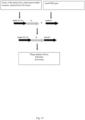
- Figure 1 demonstrates a scheme for production and optimization of VHH-based antibody.
- Antibodies and antigens were generated in established cell line obtained from Chinese hamster ovary cells (CHO-K1) according to the published protocols [26; 27].
- Cells constitutively expressing the gene of EBNA1 protein (Epstein-Barr virus nuclear antigen 1) were used.
- Suspension cultivation was conducted in flasks on orbital shaker using serum-free media from Life Technologies Corporation, in accordance with manufacturer's guidelines.
- For transient expression cells in concentration of 2*10 6 /ml were transfected by means of linear polyethyleneimine (PEI MAX, Polysciences). DNA/PEI ratio was 1:3-1:10. 5-7 days after transfection, the cell culture was centrifuged under 2000g for 20 min and filtered through 0.22 ⁇ m filter.
- Target proteins from culture liquid were isolated by affine HPLC.
- Recombinant IL-17A protein containing 6 His amino acids in C-terminal region was isolated and purified from culture liquid with Profinity IMAC Ni-charged resin (Bio-Rad). Prior to purification procedures, NiCl 2 was added to culture liquid to reach the concentration of 1mM. Then 5 ml of Profinity IMAC Ni-charged was added to culture liquid and mixed on a shaker for 1 h at a room temperature. Sorbent was transferred to 5 ml Thermo scientific Polypropylene columns and washed with 5 column volumes of PBS to remove non-specifically bound components. The bound antigen was eluted with 0.3 M imidazole (pH 8) and 150mM NaCl.
- the tested and control IgG1 antibodies were purified on 1 ml Hi Trap rProteinA FF column (GE Healthcare) in accordance with the aforementioned procedure for IL-17A-Fc.
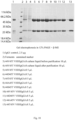
- the purity of the protein obtained was evaluated by SDS-PAGE ( Figure 2 , 3 , 4 ).
- Lama Glama animal was immunized 5 times in succession by means of subcutaneous administration of antigen material mixed with an equal volume of full (first injection) or partial (all injections except for the first one) Freund's adjuvant.
- a mixture of recombinant proteins (0.2 mg of each protein per injection) one of which was human IL-17A (Kit from R&D Systems) was used as an antigen.
- the second injection was performed 3 weeks after the first one; three more immunizations were performed with a 2-week interval.
- Blood samples 50 ml were collected 5 days after each injection starting from the third one.
- the selected llama blood was diluted two times with PBS solution containing 1 mM EDTA. Then 35 ml of diluted blood was layered over 15 ml of Histopaque ® - 1077 medium (Sigma, density of 1.077 g/ml) and centrifuged for 20 min under 800g. Mononuclear cells (lymphocytes and monocytes) were selected from plasma/Histopaque medium interphase zone and washed with PBS containing 1 mM EDTA.
- RNA from mononuclear llama cells was isolated using RNeasy Mini Kit in accordance with the protocol (QIAGEN). RNA concentration assay was performed using Nanovue (GE Healthcare); the quality of isolated RNA was tested by means of 1.5% agarose gel electrophoresis.
- the reverse transcription reaction was conducted using MMLV RT kit (Evrogen), according to the recommended protocol, with MMuLV reverse transcriptase and random hexamer primers.
- the reverse transcription products were used as a matrix in a two-stage polymerase chain reaction to obtain the genes of variant domains flanked with restriction sites; the reaction was performed using oligonucleotide kit and records of the authors [27; 28; 29]. Further, genes encoding variable domains of the light and heavy chains were put together in one fragment by means of sequential reactions of restriction, ligation and amplification as shown at Figure 5 . Heavy chain genes were attached separately to kappa and lambda light chain genes. In this case, the estimated count of matrix molecules in all reactions was no less than 10 11 .
- the DNA product obtained (VL-CK-VH) was treated with Nhel /Eco91I restriction enzymes and ligated into original phagemid pH 5.
- Phagemid structure is presented at Figure 6 .
- Ligation products were transformed into SS320 electrocompetent cells prepared in accordance with protocols [30].
- the repertoire of structureed kappa and lambda Fab libraries was 5.1*10 8 and 3.7*10 8 , respectively.
- the product of native phage-display library was prepared in accordance with the procedure described above [31].
- Specific anti-IL1 7A phage-display Fab-antibodies were selected from a phage Fab-display library using a recombinant human IL-17A (a kit from R&D Systems); a series of selection cycles was performed, as described above [27; 31; 32].
- human IL-17A in 50 mM carbonate buffer (pH 9.5) was adsorbed overnight at 4°C on the surface of HighSorb tubes (Nunc). Further, tubes were washed with PBS (pH 7.4) and then blocked with solution containing PBS (pH 7.4) - fat-free milk (0.5% weight/volume) for 1 hour.
- phage solution (10 12 phage particles per ml) in PBS (pH 7.4) - fat free milk (0.5% w/vol) was transferred to the tube with the antigen, and the system was incubated for 1 h under stirring. Unbound phages were removed by a series of washing cycles with PBS (pH 7.4) - Tween 20 (0.1% vol./vol.). The number of washing cycles was increased from the first round to the third one by 20-30-40 times, respectively. Phage particles that remained bound were eluted with 100 mM Gly-HCl solution (pH 2.5) during 15 min under stirring, and then neutralized with 1 M TRIS-HCl (pH 7.6). E . coli TG1 bacteria were infected with the phages obtained; further, then the phages were isolated and used in the next cycle.
- ELISA was used to measure the binding of Fab-fragments under research with human IL-17A.
- Fab with published AIN457 sequence Novartis
- ELISA plate wells Nunc ImmunoMaxisorp
- 50 ⁇ l 0.5 ⁇ g/ml in IX coating carbonate buffer
- IL-17A-Fc hermetically closed and incubated overnight at 4°C. All further stages were conducted in accordance with the standard ELISA protocol with high-performance systems such as GenetixQ-pix2xt (Molecular Devices) and Tecan Freedom EVO 200 (Tecan).
- Non-specific binding was blocked by adding the blocking buffer BB (200 ⁇ l 0.5% fat-free milk in PBS).
- Colorimetric signal was obtained by adding TMB (100 ⁇ l/well) until saturation (the average of 3-5 min); further development was blocked by adding stop solution (100 ⁇ l/well, 10% sulfuric acid). Absorbance was measured at 450 nm using the appropriate Tecan-Sunrise plate reader (Tecan). Antibody binding was proportional to the signal produced. Those clones for which the color signal exceeded the baseline signal by more than 5 times were tested in competitive ELISA in order to reveal antagonistic Fab blocking the interaction between IL-17A ligand and receptor.
- test Fab-containing cell supernatant in non-binding 96-well plate was mixed with 50 ⁇ l of IL-17A-His6-Flag (0.4 ⁇ g/ml in 1% milk diluted with PBS-Tween). The plate was incubated for 1 hour at 37°C on a shaker under 500 rpm.
- the plate containing IL-17RA-Fc receptor was washed from BB solution, it was coated with the reaction mixture of Fab and IL-17A-His6-Flag in the amount of 90 ⁇ l per well. Plates were incubated and shaked for 45 min at a room temperature, and each well was washed 5 times with PBS-Tween buffer. Further, 50 ⁇ l /well of 1 ⁇ g/ml anti-FLAG murine M2 antibody (Sigma) was added, and plates were incubated for 45 min at a room temperature.
- each plate well was washed 5 times with PBS-Tween, then coated with 50 ⁇ l/well of antimurine-IgG HRP-conjugated secondary antibody (Pierce-ThermoScientific) 1:5000 diluted with PBS-Tween.
- the plates were incubated on rotation shaker for 45 min at a room temperature and washed 5 times with PBS-Tween, as mentioned above.
- Colorimetric signal was obtained by adding TMB (100 ⁇ l/well) until saturation (the average of 3-5 min); further development was blocked by adding stop solution (100 ⁇ l/well, 10% sulfuric acid). The absorbance was measured at 450 nm using an appropriate Tecan-Sunrise plate reader (Tecan). The antibody binding was proportional to the color signal produced.
- the comparative k off screening for anti-IL-17A Fab-candidates was performed using Pall Forte Bio Octet Red 96 system.
- Anti-FABCH1 biosensors were rehydrated for 30 min in a working buffer comprising 10 mM PBS (pH 7.2-7.4), 0.1% Tween-20 and 0.1% BSA. 10x working buffer was added to test the samples of E.coli supernatants up to 1x of the final concentration. Then anti-FABCH1 biosensors were steeped into E.coli supernatants containing Fab-fragments of candidate antibodies and incubated for 12 hours at a temperature of 4°C. Sensors coated with Fab-fragments were transferred to wells with working buffer, and a baseline was registered (60 sec).
- sensors were transferred to wells with analyte solution (IL-17A, 30 ⁇ g/ml) to achieve the antigen-antibody association (300 sec). After that, sensors were returned into wells with working buffer for further dissociation (300 sec). The used sensors were subject to regeneration after each test: they were placed three times into regenerating buffer (Gly-HCl, pH 1.7) and then were applicable for use in further experiments. The curves obtained were analyzed with Octet Data Analysis (version 7.0) according to the standard procedure with 1:1 interaction model.
- 3VHHVK4B11 candidate was selected for further investigation based on the analytical results obtained.
- VHHIgG1 antibodies with mutations in FR1 and FR2 of VHH variable domain
- the comparative k off screening for anti- IL-17A VHHFab candidates was performed according to the standard protocol with Pall Forte Bio Octet Red 96 system (refer to Example 8). A significant reduction of k off was found for mut1, mut2 and mut4, and less significant reduction for mut3, as compared to natural 3VHHFab ( Figure 10 , 11 ).
- the comparative analysis of aggregation characteristics for anti-IL-17A VHHIgG1 candidates was performed using the following procedure.
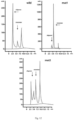
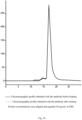
- the agregation induced by thermal stress was evaluated by means of size-exclusion HPLC.
- the test was performed on 1100 HPLC System (Agilent) using Tosoh TSKGel G3000SWXL column, 7.8 mm x 30 cm, Cat. No. 08541 with Tosoh TSKgel Guard SWXL pre-column, 6.0 mm x 4.0 cm (particles of 7 ⁇ m, Cat. No. 08543).
- Isocratic elution with mobile phase containing 50 mM sodium phosphate buffer and 0.3 M NaCl (pH 7.0) was performed under 0.5 ml/min flow rate with detection at 214 nm and 280 nm wavelengths.
- the antibody samples were diluted with PBS (pH 7.5) to the concentration of ⁇ 1 mg/ml.
- the injection volume was 10 ⁇ l.
- Gel filtration standard mixture Bio-Rad, Cat. No. 151-1901 was used to calibrate the column prior to the test.
- IL-17 The ability of IL-17 to induce the production of IL-6 by HT1080 human cells (ATCC:CCL-121) was used to analyze the neutralizing activity of VHHIgG1 candidates mut1 and mut4 regarding human recombinant IL-17A.
- Cells were grown on DMEM culture medium with added 10% inactivated fetal serum, gentamycin and glutamine. Aliquots of 5*10 4 cells per well were seeded in 96-well culture plates. Cells were allowed for attachment for 5 hours. The mixture of 40 ng/ml recombinant IL-17 and 20 ng/ml TNF- ⁇ was incubated with VHHIgG1 dilutions for 1 hour at 37°C.
- cytokine/antibody mixture was added to the cells and left overnight.
- the production of IL-6 by HT1080 cell culture was proportional to the amount of IL-17 added.
- the amount of the released IL-6 in cell supernatant samples was evaluated by ELISA technique using DuoSet ELISA Development System Human IL6 (RD System, Cat. No. DY206).
- the results of evaluation of the antagonistic properties of VHHIgG1 candidates are presented at Figure 7 in comparison with AIN457 (anti-IL-17A antibody by Novartis).
- the IC 50 value for mut1 was almost 30 times higher than that for the natural variant, while mut4 variant almost completely maintained its inhibiting capacity.
- the value of IC 50 for mut4 candidate was 30 ⁇ 10 pM. Following the results of the present study and the overall physical-chemical and biological characteristics, the said candidate was selected for further development and optimization.
- RNA concentration was measured with Nanovue kit (GE Healthcare), and the quality of isolated RNA was tested by 1.5% agarose gel electrophoresis.
- the reverse transcription reaction was held with MMLV RT kit (Evrogen), according to the recommended protocol, with MMuLV reverse transcriptase and random hexamer primers.
- the reverse transcription products were used as a matrix in a two-stage polymerase chain reaction to obtain the genes of variable domains flanked with restriction sites; the reaction was performed using oligonucleotide kit and protocols described in [27].
- Chimeric Fab specific against IL-17A were generated according to the procedure described in WO93/06213 based on phagemid pH5, as specified above.
- Genes encoding variable domains of the human light chains and genes encoding the variable domain of mut4VHH were put together in one fragment by means of sequential reactions of restriction, ligation and amplification as shown at Figure 8 . In this case, the estimated count of matrix molecules in all reactions was no less than 10 12 .
- the DNA product obtained (VL-CK-VH) was treated with Nhel /Eco91I restriction enzymes and ligated into original phagemid pH 5.
- the ligation products were transformed into SS320 electrocompetent cells prepared in accordance with protocols described in [30].
- the repertoire of chimeric mut4 VHH Fab-library based on mixed kappa and lambda human chains was 2.8*10 9 transformants.
- Chimeric phage-displayed Fab-libraries were prepared in accordance with the procedure described above [27].
- phage-displayed chimeric Fab-libraries was performed under conditions described above (refer to Example 5), except for the additional incubation of IL17A-bound phage antibodies at a temperature of 37°C within 12 hours in the presence of 20 ⁇ g/ml of IL-17A dissolved.
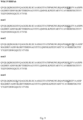
- FIG. 16 shows four sequences of the variable domains of human light chains VK1A7, VK3c18, VK3cl18 and VK4clE12 from high-affinity mut4 VHHFab. These sequences belong to different kappa human germ lines VK1, VK3 and VK4 comprising the minimum number of somatic mutations. It should be noted that human sequence VK4clE12 shows high homology to the previously selected llama light chain VK4B1, yet it has its specific distinctions.
- variable domain of the heavy VHH chains of mut4VHH candidate were cloned in pEE-Hc plasmid, and genes of variable domains of human light chains VK1A7, VK3c18, VK3cl18 VK3A4 and VK4E12 were cloned in pEE-Lc plasmid for the joint transient expression in CHO-EBNA cells, as described in Example 3. Further, the obtained antibodies were exposed to thermal stress and their aggregation profile was studied as shown in Example 9. The results obtained are presented in a summary Table 4. Table 4. Thermal stability of mut4 VHHIgG1 full-size antibodies Table 4.
- IL-17 The ability of IL-17 to induce the production of IL-6 by human HT1080 cells (ATCC:CCL-121) was used to analyze the neutralizing capacity of VHHIgG1 candidates mut4 VHHIgG1VK3c8 and mut4 VHHIgG1VK1A7 regarding human recombinant IL-17 (refer to Example 12).
- Figure 17 shows the results obtained for the blocking test. It should be noted that mut4 VHHIgG1VK1A7 variant (characterized by maximum stability) demonstrated a significant drop of IC 50 value, while mut4 VHHIgG1VK3c8 variant with medium stability exceeded by several times the inhibition observed for more stable mut4 VHHIgG1VK1A7 variant.
- oligonucleotide-directed mutagenesis was used to introduce substitutions at positions 44 and 45 in FR2 region of VHH for mut4 VHHIgG1VK3c8 candidate (hereafter referred to as m4VHHc8).
- the study did not include variants with aromatic, aliphatic or positive amino acids at position 44, as they are potentially immunogenic and structurally forbidden. Mutants were transiently expressed as described in Example 3 ( Figure 18 , 19 ). Though the amount of products for different mutants varies from one experiment to another, it should be noted that yields within the same experiment were of comparable size for all substitutions. The obtained mutant variants were exposed to thermal stress.
- Table 5 demonstrates the results obtained for different mutants. It can be seen from the results that 44G45G and 44G45D are less stable mutants the stability of which is lower than that of the initial 44G45R combination within m4VHHc8. Such variants as 44G45N, 44V45T, 44D45T, 44T45T and 44D45V mainly preserved their stability. All other combinations increased the aggregation stability of m4VHHc8, and the most stable were the variants comprising aromatic or aliphatic groups at position 45.
- variants comprising small hydrophilic and hydrophobic amino acids at both positions, such as 44G45V, 44G45T, 44V45V, 44A45V, 44T45V, 44A45T and 44S45T, have also demonstrated significant stability.
- Table 5 Results of transient expression and thermal stress study of mutants comprising substitutions at positions 44 and 45 in FR2 region of m4VHHc8. No. Mutant at position 44+45 of FR2 region of m4VHHc8 Monome r.%, initial* Monome r.%, heated* ⁇ % Production yield for the product**, (No.
- Mutations of individual positions of candidate's CDRs were inserted by means of NNK randomization technique [26] with Q5 ® Site-Directed Mutagenesis Kit (NEB), in accordance with the protocol. Plasmid pLL-Fab was used as a matrix. PCR products were fractioned on low-melting agarose and purified at the columns. After ligation, DNA was transformed into E.coli expression strain BL21gold (Stratagene). The individual clones obtained were grown by Fab expression in 96-well plates, as described above. Supernatants containing mutant Fab arms were analyzed by ELISA under the conditions described above and using high-performance Genetix Q-pix2xt and Tecan Freedom EVO200 systems.
- the concentration of immobilized IL-17A was 0.2 ⁇ g/ml.
- Bound Fab arms were stained with 1:5000 diluted Goat antiHuman IgG (Fab')2 (HRP) conjugate (Pierce) and TMB+H2O2/ H2SO4 dye; absorption was measured at 450 nm wavelength.
- Table 6 The results of scanning mutagenesis are presented in Table 6.
- the Table shows substitutions within CDR corresponding to ⁇ 30% reduction of mutant Fab/human II-17A binding signal, when compared to the wild type sequence. Thus, such individual mutants or any combinations thereof are the field of the invention. Table 6.
- BCD109 antibody was obtained from m4VHHc8 variant comprising 44G45T substitutions (described in Example 16) by introducing humanizing mutations Q5V and R89V to VHH that do not change either the stability or IC 50 (no data provided), and three additional mutations in CH2 domain FclgG1, 232Y/234T/236E, intended to improve the antibody pharmacokinetics.
- the antibody has been transiently expressed.
- BCD109 binding to human, monkey and rat IL-17A was studied at OctetRed 96 system (ForteBio).
- BCD109 was non-specifically immobilized on the surface of amine reactive second-generation sensors (AR2G) according to the standard protocol described in the manufacturer's manual. The test was conducted at a temperature of 30°C and using PBS with 0.1% Tween-20 and 0.1% BSA as a working buffer.
- Human, monkey and rat IL-17A were titrated with the working buffer with concentration from 126 nM to 2 nM with an increment of 2.
- Binding curves (after subtracting a reference signal) were analyzed with Octet Data Analysis software (Version 7.0), in accordance with the standard procedure and 1:1 interaction model. The results are presented at Figure 22 .
- BCD109 binds to human and monkey IL-17A with picomolar affinity ( Figure 23 ). Moreover, the candidate does not interact with rat IL-17A (no curves are presented).
- BCD109 preparation of 10 mg/ml in PBS was heated for 6 hours at a temperature of 50°C in accordance with the protocol described in Example 9.
- Results represented at Figure 24 show that BCD109 antibody remains stable under thermal stress: the aggregate content was less than 5%.
- BCD109 antibody in concentration of 50 mg/ml was dissolved in the required amount of water for injection and pH was brought to 5.5 with citric acid. Solution was filtered (filtration sterilization) and sealed into ampoules.
- the product obtained was stable for 6 months with no sedimentation.
- BCD109 was dissolved in water containing mannitol as a lyoprotectant, filtered (filtration sterilization) and then subject to freeze-drying.
- the powder obtained was dispensed to sterile vials. Vials were corked with rubber stoppers and sealed with aluminum caps.
- the antibody product can be recovered from lyophilizate with water for injection.
Landscapes
- Health & Medical Sciences (AREA)
- Chemical & Material Sciences (AREA)
- Life Sciences & Earth Sciences (AREA)
- Medicinal Chemistry (AREA)
- Organic Chemistry (AREA)
- General Health & Medical Sciences (AREA)
- Veterinary Medicine (AREA)
- Pharmacology & Pharmacy (AREA)
- Animal Behavior & Ethology (AREA)
- Public Health (AREA)
- Engineering & Computer Science (AREA)
- Nuclear Medicine, Radiotherapy & Molecular Imaging (AREA)
- Chemical Kinetics & Catalysis (AREA)
- General Chemical & Material Sciences (AREA)
- Bioinformatics & Cheminformatics (AREA)
- Immunology (AREA)
- Neurology (AREA)
- Biomedical Technology (AREA)
- Neurosurgery (AREA)
- Diabetes (AREA)
- Molecular Biology (AREA)
- Endocrinology (AREA)
- Hematology (AREA)
- Oncology (AREA)
- Biophysics (AREA)
- Proteomics, Peptides & Aminoacids (AREA)
- Biochemistry (AREA)
- Genetics & Genomics (AREA)
- Cardiology (AREA)
- Virology (AREA)
- Communicable Diseases (AREA)
- Pulmonology (AREA)
- Epidemiology (AREA)
- Psychiatry (AREA)
- Pain & Pain Management (AREA)
- Heart & Thoracic Surgery (AREA)
- Physical Education & Sports Medicine (AREA)
- Rheumatology (AREA)
- Dermatology (AREA)
- Orthopedic Medicine & Surgery (AREA)
Claims (17)
- Anticorps IgG monoclonal humanisé qui comprend une combinaison d'un domaine VHH dérivé d'un animal de la famille des camélidés et d'un domaine variable de chaîne légère VL,
dans lequel ledit anticorps se lie spécifiquement à IL-17A humaine et comprend :a) un domaine variable de chaîne lourde (VHH) comprenant 3 régions hypervariables HCDR1, HCDR2 et HCDR3, dans lequel :HCDR1 comprend la séquence d'acides aminés de G-T-F-A-T-S-P-M-G (SEQ ID NO : 4) ;HCDR2 comprend la séquence d'acides aminés de A-I-S-P-S-G-G-D-R-I-Y-A-D-S-V-K-G (SEQ ID NO : 5) ; etHCDR3 comprend la séquence d'acides aminés de C-A-V-R-R-R-F-D-G-T-S-Y-Y-T-G-D-Y-D-S (SEQ ID NO : 6) ; etb) un domaine variable de la chaîne légère (VL) d'un anticorps humain ou un domaine variable de la chaîne légère d'un anticorps humanisé. - Anticorps selon la revendication 1, dans lequel le domaine variable de chaîne lourde comprend les substitutions d'acide aminé suivantes aux positions 44X245X3 :a) où 44X2 = G, A, V, S, ou T ;b) où 45X3 = A, V, T, ou H ;ou des combinaisons de celles-ci.
- Anticorps selon la revendication 1, caractérisé par une stabilité d'agrégation accrue du domaine VHH lorsqu'il est stocké dans un tampon PBS à une concentration de 10 mg/ml pendant > 6 h à une température de 50 °C par comparaison à l'anticorps VHH natif isolé d'un animal immunisé de la famille des camélidés ayant la séquence d'acides aminés QVQLQQSGGGSVQAGGSLRLSCAASGGTFATSPMGWFRQAPGKEREGVAAISPSGGD RIYDDSVKGRFTISRDNAGYFIYLQMNSLKPEDTARYYCAVRRRFDGTSYYTGDYDS WGQGTLVTVSS, dans lequel la quantité d'agrégat formé est déterminée par HPLC d'exclusion de taille.
- Anticorps selon la revendication 1, dans lequel ledit anticorps est : IgG1, IgG2, IgG3 ou IgG4.
- Anticorps selon la revendication 4, comprenant un Fc modifié non natif en tant que partie d'IgG.
- Anticorps selon la revendication 1, dans lequel ledit anticorps a au moins l'une des propriétés suivantes :a) une stabilité d'agrégation telle que, lorsqu'il est utilisé à des concentrations supérieures à 10 mg/ml et stocké pendant > 6 mois à une température de 4 °C, la teneur en agrégats augmente de pas plus de 5 % de leur teneur initiale dans la solution telle que déterminée par HPLC d'exclusion de taille ;b) une stabilité d'agrégation telle que, lorsqu'il est utilisé à des concentrations supérieures à 10 mg/ml et stocké pendant > 2 semaines à une température de 37 °C, la teneur en agrégats augmente de pas plus de 5 % de leur teneur initiale dans la solution telle que déterminée par HPLC d'exclusion de taille ;c) une stabilité d'agrégation telle que, lorsqu'il est utilisé à des concentrations supérieures à 10 mg/ml et stocké pendant > 48 h à une température de 42 °C, la teneur en agrégats augmente de pas plus de 5 % de leur teneur initiale dans la solution telle que déterminée par HPLC d'exclusion de taille ;d) une stabilité d'agrégation telle que, lorsqu'il est utilisé à des concentrations supérieures à 10 mg/ml et stocké pendant > 6 h à une température de 50 °C, la teneur en agrégats augmente de pas plus de 5 % de leur teneur initiale dans la solution telle que déterminée par HPLC d'exclusion de taille ;e) une constante de dissociation KD de 10-9 M ou moins, la constante étant déterminée comme décrit dans l'Exemple 7 ;f) une constante d'association cinétique d'interaction anticorps-antigène kon(1/Ms) d'au moins 105 1/Ms ou plus, la constante étant déterminée comme décrit dans l'exemple 7 ; oug) une constante de dissociation cinétique d'interaction anticorps-antigène kdis(1/s) de 10-41/s ou moins, la constante étant déterminée comme décrit dans l'Exemple 7.
- Anticorps selon la revendication 1 qui se lie spécifiquement à IL-17A humaine, comprenant :a) un domaine variable de chaîne lourde (VHH) comprenant la séquence d'acides aminés QVQLVQSGGGLVQAGGSLRLSCAASGGTFATSPMGWLRQAPGKGTEFVAAISPSGGD RIYADSVKGRFTISRDNAGYFIYLQMNSLKPEDTAVYYCAVRRRFDGTSYYTGDYDS WGQGTLVTVSS (SEQ ID NO : 7) ; etb) un domaine variable de la chaîne légère (VL) d'un anticorps humain ou un domaine variable de la chaîne légère d'un anticorps humanisé.
- Anticorps selon la revendication 7 qui se lie spécifiquement à IL-17A humaine, dans lequel ledit domaine variable de ladite chaîne légère (VL) comprend la séquence d'acides aminés EIVLTQSPGTLSLSPGERATLSCRASQSVSSSYLAWYQQKPGQAPRLLIYDASSRAT GIPDRFSGSGSGTDFTLTISRLEPEDFAVYYCQQYSYSPVTFGQGTKVEIKR (SEQ ID NO : 8).
- Anticorps selon la revendication 1, dans lequel l'anticorps se lie spécifiquement à IL-17A humaine et dans lequel :a) la chaîne lourde comprend la séquence d'acides aminés suivante :
QVQLVQSGGGLVQAGGSLRLSCAASGGTFATSPMGWLRQAPGKGTEFVAAISPSGGD RIYADSVKGRFTISRDNAGYFIYLQMNSLKPEDTAVYYCAVRRRFDGTSYYTGDYDS WGQGTLVTVSSASTKGPSVFPLAPSSKSTSGGTAALGCLVKDYFPEPVTVSWNSGAL TSGVHTFPAVLQSSGLYSLSSVVTVPSSSLGTQTYICNVNHKPSNTKVDKRVEPKSC DKTHTCPPCPAPELLGGPSVFLFPPKPKDTLYITREPEVTCVVVDVSHEDPEVKFNW YVDGVEVHRAKTKPREEQYNSTYRVVSVLTVLHQDWLNGKEYKCKVSNKALPAPIEK TISKAKGQPREPQVYTLPPSREEMTKNQVSLTCLVKGFYPSDIAVEWESNGQPENNY KTTPPVLDSDGSFFLYSKLTVDKSRWQQGNVFSCSVMHEALHNHYTQKSLSLSPGK (SEQ ID NO : 9) ; etb) la chaîne légère comprend la séquence d'acides aminés suivante :
EIVLTQSPGTLSLSPGERATLSCRASQSVSSSYLAWYQQKPGQAPRLLIYDASSRAT GIPDRFSGSGSGTDFTLTISRLEPEDFAVYYCQQYSYSPVTFGQGTKVEIKRTVAAP SVFIFPPSDEQLKSGTASVVCLLNNFYPREAKVQWKVDNALQSGNSQESVTEQDSKD STYSLSSTLTLSKADYEKHKVYACEVTHQGLSSPVTKSFNRGEC (SEQ ID NO : 10). - Anticorps selon la revendication 1, dans lequel ledit anticorps a au moins l'une des propriétés suivantes :a) une affinité de liaison à IL-17A humaine caractérisée par un KD de 10-10 M ou moins ;b) une constante d'association cinétique kon(1/Ms) pour IL-17A humaine non inférieure à 105 1/Ms ; ouc) une constante de dissociation cinétique kdis(1/s) pour IL-17A humaine non supérieure à 10-5 1/s ;dans lequel les constantes respectives sont déterminées comme décrit dans l'Exemple 7.
- Anticorps selon la revendication 1 comprenant une ou plusieurs substitutions d'acide aminé supplémentaires dans la région Fc par comparaison au Fc natif, dans lequel lesdites substitutions améliorent des propriétés physico-chimiques et pharmacocinétiques de l'anticorps, par comparaison à un anticorps avec le Fc natif, et ne réduisent pas la capacité de l'anticorps à se lier à IL-17A.
- Construction d'ADN codant pour l'anticorps selon la revendication 1.
- Vecteur d'expression comprenant la construction d'ADN selon la revendication 12.
- Cellule hôte comprenant le vecteur d'expression selon la revendication 13.
- Procédé de production de l'anticorps selon la revendication 1, qui implique l'incubation de la cellule hôte selon la revendication 14 dans un milieu de culture dans des conditions suffisantes pour obtenir ledit anticorps, suivie de l'isolement et de la purification de l'anticorps obtenu.
- Composition pharmaceutique comprenant l'anticorps selon la revendication 1 et un ou plusieurs excipients, diluants ou supports pharmaceutiquement appropriés.
- Composition pharmaceutique selon la revendication 16, comprenant en outre un ingrédient pharmaceutique actif qui est un inhibiteur de TNF-α.
Priority Applications (3)
| Application Number | Priority Date | Filing Date | Title |
|---|---|---|---|
| SM20250244T SMT202500244T1 (it) | 2014-09-26 | 2015-03-23 | Anticorpi ad alta affinità e aggregativamente stabili sulla base di domini variabili vl e un vhh derivato |
| RS20250552A RS66961B1 (sr) | 2014-09-26 | 2015-03-23 | Antitela visokog afiniteta i agregativno stabilna na osnovu varijabilnih domena vl i derivata vhh |
| MA40763A MA40763B1 (fr) | 2014-09-26 | 2015-03-23 | Anticorps stables à affinité élevée et agrégatifs à base de domaines viraux vl et de dérivé de vhh |
Applications Claiming Priority (2)
| Application Number | Priority Date | Filing Date | Title |
|---|---|---|---|
| RU2014138740A RU2609627C2 (ru) | 2014-09-26 | 2014-09-26 | Высокоаффинные и агрегационно стабильные антитела на основе вариабельных доменов vl и производного vhh |
| PCT/RU2015/000163 WO2016048188A1 (fr) | 2014-09-26 | 2015-03-23 | Anticorps stables à affinité élevée et agrégatifs à base de domaines viraux vl et de dérivé de vhh |
Publications (4)
| Publication Number | Publication Date |
|---|---|
| EP3199550A1 EP3199550A1 (fr) | 2017-08-02 |
| EP3199550A4 EP3199550A4 (fr) | 2018-09-26 |
| EP3199550B1 true EP3199550B1 (fr) | 2025-03-05 |
| EP3199550B8 EP3199550B8 (fr) | 2025-05-14 |
Family
ID=55581555
Family Applications (1)
| Application Number | Title | Priority Date | Filing Date |
|---|---|---|---|
| EP15843607.1A Active EP3199550B8 (fr) | 2014-09-26 | 2015-03-23 | Anticorps stables à affinité élevée et agrégatifs à base de domaines viraux vl et de dérivé de vhh |
Country Status (27)
| Country | Link |
|---|---|
| US (2) | US10442869B2 (fr) |
| EP (1) | EP3199550B8 (fr) |
| JP (2) | JP2017538656A (fr) |
| KR (1) | KR102600823B1 (fr) |
| CN (1) | CN107001458B (fr) |
| AR (1) | AR101984A1 (fr) |
| AU (1) | AU2015322141B2 (fr) |
| BR (1) | BR112016015867A2 (fr) |
| CA (1) | CA2941656C (fr) |
| CL (1) | CL2016001028A1 (fr) |
| EA (1) | EA037090B1 (fr) |
| GE (2) | GEP20217311B (fr) |
| IL (1) | IL244762B2 (fr) |
| MA (2) | MA39254B2 (fr) |
| MX (1) | MX391476B (fr) |
| MY (1) | MY192853A (fr) |
| NZ (1) | NZ724306A (fr) |
| PH (1) | PH12016501391B1 (fr) |
| RS (1) | RS66961B1 (fr) |
| RU (1) | RU2609627C2 (fr) |
| SG (1) | SG11201607283RA (fr) |
| SM (1) | SMT202500244T1 (fr) |
| TW (1) | TWI585104B (fr) |
| UA (1) | UA125111C2 (fr) |
| UY (1) | UY36319A (fr) |
| WO (1) | WO2016048188A1 (fr) |
| ZA (1) | ZA201605265B (fr) |
Families Citing this family (17)
| Publication number | Priority date | Publication date | Assignee | Title |
|---|---|---|---|---|
| RU2680011C2 (ru) * | 2016-04-29 | 2019-02-14 | Закрытое Акционерное Общество "Биокад" | Триспецифические антитела против il-17a, il-17f и другой провоспалительной молекулы |
| AU2018387829B2 (en) | 2017-12-22 | 2024-12-19 | Argenx Bvba | Bispecific antigen binding construct |
| GB201802487D0 (en) | 2018-02-15 | 2018-04-04 | Argenx Bvba | Cytokine combination therapy |
| JP7122672B2 (ja) * | 2018-06-08 | 2022-08-22 | パナソニックIpマネジメント株式会社 | Vhh抗体 |
| CN112912087A (zh) * | 2018-09-14 | 2021-06-04 | 卢卡科学株式会社 | 线粒体向淋巴器官中的移植以及用于该移植的组合物 |
| EP3689907A1 (fr) | 2019-01-31 | 2020-08-05 | Numab Therapeutics AG | Anticorps dirigés contre il-17a et leurs procédés d'utilisation |
| EP4591879A3 (fr) | 2019-01-31 | 2025-10-22 | Numab Therapeutics AG | Anticorps multispécifiques ayant une spécificité pour tnfa et il-17a, anticorps ciblant il-17a, et leurs procédés d'utilisation |
| RU2754760C2 (ru) | 2019-04-02 | 2021-09-07 | Закрытое Акционерное Общество "Биокад" | Водная фармацевтическая композиция анти-il17a антитела и ее применение |
| CN112239501B (zh) * | 2020-10-29 | 2022-01-07 | 东莞市朋志生物科技有限公司 | 抗新型冠状病毒的抗体、检测新型冠状病毒试剂和试剂盒 |
| CN114380906B (zh) * | 2022-03-25 | 2022-06-14 | 南京融捷康生物科技有限公司 | 一种抗il-17a的单域抗体及其用途 |
| CN114380917B (zh) * | 2022-03-25 | 2022-06-14 | 南京融捷康生物科技有限公司 | 针对IL-17A和TNFα的双特异性单域抗体及其用途 |
| CN120518761B (zh) * | 2023-06-05 | 2025-12-26 | 北京东方百泰生物科技股份有限公司 | 一种结合il-11的抗体、其抗原结合片段及应用 |
| CN117843777B (zh) * | 2023-12-21 | 2024-08-27 | 北京贝来药业有限公司 | 用于炎性疾病治疗的新型纳米抗体及其产品和方法 |
| CN117843802B (zh) * | 2023-12-29 | 2024-09-06 | 北京贝来药业有限公司 | 串联抗体及其下游产品和应用 |
| CN117820479B (zh) * | 2023-12-29 | 2025-03-07 | 北京贝来药业有限公司 | 抗il-17a的新型纳米抗体 |
| CN117843801B (zh) * | 2023-12-29 | 2024-08-02 | 北京贝来药业有限公司 | 以白介素家族成员为靶点的新型抗体以及下游产品 |
| CN118206654B (zh) * | 2024-03-05 | 2024-09-20 | 北京贝来药业有限公司 | 用于疾病治疗的新型抗体及其产品和应用 |
Family Cites Families (15)
| Publication number | Priority date | Publication date | Assignee | Title |
|---|---|---|---|---|
| JP2005289809A (ja) * | 2001-10-24 | 2005-10-20 | Vlaams Interuniversitair Inst Voor Biotechnologie Vzw (Vib Vzw) | 突然変異重鎖抗体 |
| GB0417487D0 (en) * | 2004-08-05 | 2004-09-08 | Novartis Ag | Organic compound |
| FR2879605B1 (fr) * | 2004-12-16 | 2008-10-17 | Centre Nat Rech Scient Cnrse | Production de formats d'anticorps et applications immunologiques de ces formats |
| US8211648B2 (en) * | 2005-07-22 | 2012-07-03 | Kalobios Pharmaceuticals, Inc. | Secretion of antibodies without signal peptides from bacteria |
| TW200812616A (en) * | 2006-05-09 | 2008-03-16 | Genentech Inc | Binding polypeptides with optimized scaffolds |
| EP2650311A3 (fr) * | 2007-11-27 | 2014-06-04 | Ablynx N.V. | Séquences d'acides aminés dirigées contre des cytokines hétérodimériques et/ou leurs récepteurs et polypeptides les comprenant |
| US20090148905A1 (en) * | 2007-11-30 | 2009-06-11 | Claire Ashman | Antigen-binding constructs |
| US7883700B2 (en) * | 2007-12-07 | 2011-02-08 | Zymogenetics, Inc. | Anti-human IL-21 monoclonal antibodies |
| GB2461546B (en) | 2008-07-02 | 2010-07-07 | Argen X Bv | Antigen binding polypeptides |
| WO2010130832A2 (fr) * | 2009-05-15 | 2010-11-18 | Ablynx N.V. | Séquences d'acides aminés dirigées contre dickkopf-1 et polypeptides comprenant ces dernières pour le traitement de maladies et de pathologies associées à la déperdition osseuse et/ou à l'ostéolyse |
| JP6038121B2 (ja) * | 2011-04-21 | 2016-12-07 | ガーバン インスティテュート オブ メディカル リサーチ | 修飾された可変ドメイン分子及びその製造及び使用の方法b |
| UA117218C2 (uk) * | 2011-05-05 | 2018-07-10 | Мерк Патент Гмбх | Поліпептид, спрямований проти il-17a, il-17f та/або il17-a/f |
| CA2860914A1 (fr) * | 2012-01-13 | 2013-07-18 | Apo-T B.V. | Immunoglobulines restreintes a une cellule aberrante dotees d'une fraction toxique |
| PH12021553014A1 (en) * | 2012-02-27 | 2022-09-05 | Ablynx Nv | Cx3cr1-binding polypeptides |
| AU2014207321A1 (en) * | 2013-01-21 | 2015-07-23 | Abbvie Inc. | Anti-TNF and anti-IL17 combination therapy biomarkers for inflammatory disease |
-
2014
- 2014-09-26 RU RU2014138740A patent/RU2609627C2/ru active
-
2015
- 2015-03-23 EA EA201600277A patent/EA037090B1/ru unknown
- 2015-03-23 NZ NZ724306A patent/NZ724306A/en unknown
- 2015-03-23 WO PCT/RU2015/000163 patent/WO2016048188A1/fr not_active Ceased
- 2015-03-23 AU AU2015322141A patent/AU2015322141B2/en active Active
- 2015-03-23 MA MA39254A patent/MA39254B2/fr unknown
- 2015-03-23 KR KR1020167015041A patent/KR102600823B1/ko active Active
- 2015-03-23 GE GEAP201514257A patent/GEP20217311B/en unknown
- 2015-03-23 JP JP2016555526A patent/JP2017538656A/ja active Pending
- 2015-03-23 GE GEAP202114257A patent/GEAP202114257A/en unknown
- 2015-03-23 BR BR112016015867-9A patent/BR112016015867A2/pt not_active Application Discontinuation
- 2015-03-23 CN CN201580011619.5A patent/CN107001458B/zh active Active
- 2015-03-23 MY MYPI2016703189A patent/MY192853A/en unknown
- 2015-03-23 MA MA40763A patent/MA40763B1/fr unknown
- 2015-03-23 PH PH1/2016/501391A patent/PH12016501391B1/en unknown
- 2015-03-23 EP EP15843607.1A patent/EP3199550B8/fr active Active
- 2015-03-23 MX MX2016012769A patent/MX391476B/es unknown
- 2015-03-23 SM SM20250244T patent/SMT202500244T1/it unknown
- 2015-03-23 SG SG11201607283RA patent/SG11201607283RA/en unknown
- 2015-03-23 RS RS20250552A patent/RS66961B1/sr unknown
- 2015-03-23 UA UAA201610535A patent/UA125111C2/uk unknown
- 2015-03-23 CA CA2941656A patent/CA2941656C/fr active Active
- 2015-09-18 AR ARP150103033A patent/AR101984A1/es unknown
- 2015-09-22 UY UY0001036319A patent/UY36319A/es active IP Right Grant
- 2015-09-24 TW TW104131631A patent/TWI585104B/zh not_active IP Right Cessation
-
2016
- 2016-03-27 IL IL244762A patent/IL244762B2/en unknown
- 2016-04-29 CL CL2016001028A patent/CL2016001028A1/es unknown
- 2016-07-29 ZA ZA2016/05265A patent/ZA201605265B/en unknown
- 2016-09-01 US US15/254,225 patent/US10442869B2/en active Active
-
2019
- 2019-09-09 US US16/564,148 patent/US11447574B2/en active Active
-
2021
- 2021-01-15 JP JP2021004803A patent/JP7206303B2/ja active Active
Non-Patent Citations (1)
| Title |
|---|
| KOSTAREVA OLGA ET AL: "Fab Fragment of VHH-Based Antibody Netakimab: Crystal Structure and Modeling Interaction with Cytokine IL-17A", CRYSTALS, vol. 9, no. 3, 26 March 2019 (2019-03-26), CH, pages 177, XP093107448, ISSN: 2073-4352, Retrieved from the Internet <URL:https://www.mdpi.com/2073-4352/9/3/177/pdf> DOI: 10.3390/cryst9030177 * |
Also Published As
Similar Documents
| Publication | Publication Date | Title |
|---|---|---|
| US11447574B2 (en) | Method for treatment of an IL-17A-mediated disease through antibody administration specific to human IL-17A | |
| US10442857B2 (en) | Anti-IL-17 antibodies | |
| CN113015749B (zh) | 靶向cd3的抗体、双特异性抗体及其用途 | |
| EP2836512B1 (fr) | Chaînes légères d'anticorps améliorées | |
| JP7158376B2 (ja) | インターロイキン-6のヒト受容体に結合することができる抗体またはその抗原結合フラグメント | |
| CN114846026A (zh) | 对人il-13和il-17具有结合特异性的多特异性抗体 | |
| HK40069078A (en) | Multi-specific antibody with binding specificity for human il-13 and il-17 | |
| HK40012919A (en) | Antibody or an antigen-binding fragment thereof capable of binding to a human receptor of interleukin-6 | |
| HK1205145B (en) | Improved antibody light chains |
Legal Events
| Date | Code | Title | Description |
|---|---|---|---|
| STAA | Information on the status of an ep patent application or granted ep patent |
Free format text: STATUS: THE INTERNATIONAL PUBLICATION HAS BEEN MADE |
|
| PUAI | Public reference made under article 153(3) epc to a published international application that has entered the european phase |
Free format text: ORIGINAL CODE: 0009012 |
|
| STAA | Information on the status of an ep patent application or granted ep patent |
Free format text: STATUS: REQUEST FOR EXAMINATION WAS MADE |
|
| 17P | Request for examination filed |
Effective date: 20170109 |
|
| AK | Designated contracting states |
Kind code of ref document: A1 Designated state(s): AL AT BE BG CH CY CZ DE DK EE ES FI FR GB GR HR HU IE IS IT LI LT LU LV MC MK MT NL NO PL PT RO RS SE SI SK SM TR |
|
| AX | Request for extension of the european patent |
Extension state: BA ME |
|
| DAX | Request for extension of the european patent (deleted) | ||
| RIC1 | Information provided on ipc code assigned before grant |
Ipc: C07K 16/24 20060101AFI20180314BHEP Ipc: C12N 15/13 20060101ALI20180314BHEP Ipc: A61K 39/395 20060101ALI20180314BHEP Ipc: C07K 16/18 20060101ALI20180314BHEP Ipc: A61K 45/06 20060101ALI20180314BHEP |
|
| A4 | Supplementary search report drawn up and despatched |
Effective date: 20180824 |
|
| RIC1 | Information provided on ipc code assigned before grant |
Ipc: A61K 39/395 20060101ALI20180820BHEP Ipc: C12N 15/13 20060101ALI20180820BHEP Ipc: C07K 16/18 20060101ALI20180820BHEP Ipc: A61K 45/06 20060101ALI20180820BHEP Ipc: C07K 16/24 20060101AFI20180820BHEP |
|
| STAA | Information on the status of an ep patent application or granted ep patent |
Free format text: STATUS: EXAMINATION IS IN PROGRESS |
|
| 17Q | First examination report despatched |
Effective date: 20200407 |
|
| GRAP | Despatch of communication of intention to grant a patent |
Free format text: ORIGINAL CODE: EPIDOSNIGR1 |
|
| STAA | Information on the status of an ep patent application or granted ep patent |
Free format text: STATUS: GRANT OF PATENT IS INTENDED |
|
| INTG | Intention to grant announced |
Effective date: 20240801 |
|
| GRAS | Grant fee paid |
Free format text: ORIGINAL CODE: EPIDOSNIGR3 |
|
| RAP3 | Party data changed (applicant data changed or rights of an application transferred) |
Owner name: CLOSED JOINT STOCK COMPANY "BIOCAD" |
|
| GRAA | (expected) grant |
Free format text: ORIGINAL CODE: 0009210 |
|
| STAA | Information on the status of an ep patent application or granted ep patent |
Free format text: STATUS: THE PATENT HAS BEEN GRANTED |
|
| AK | Designated contracting states |
Kind code of ref document: B1 Designated state(s): AL AT BE BG CH CY CZ DE DK EE ES FI FR GB GR HR HU IE IS IT LI LT LU LV MC MK MT NL NO PL PT RO RS SE SI SK SM TR |
|
| REG | Reference to a national code |
Ref country code: GB Ref legal event code: FG4D |
|
| REG | Reference to a national code |
Ref country code: CH Ref legal event code: EP |
|
| REG | Reference to a national code |
Ref country code: DE Ref legal event code: R096 Ref document number: 602015091171 Country of ref document: DE |
|
| REG | Reference to a national code |
Ref country code: IE Ref legal event code: FG4D |
|
| GRAT | Correction requested after decision to grant or after decision to maintain patent in amended form |
Free format text: ORIGINAL CODE: EPIDOSNCDEC |
|
| REG | Reference to a national code |
Ref country code: CH Ref legal event code: PK Free format text: BERICHTIGUNG B8 |
|
| RAP4 | Party data changed (patent owner data changed or rights of a patent transferred) |
Owner name: JOINT STOCK COMPANY "BIOCAD" |
|
| REG | Reference to a national code |
Ref country code: MA Ref legal event code: VAGR Ref document number: 40763 Country of ref document: MA Kind code of ref document: B1 |
|
| REG | Reference to a national code |
Ref country code: SE Ref legal event code: TRGR |
|
| PG25 | Lapsed in a contracting state [announced via postgrant information from national office to epo] |
Ref country code: FI Free format text: LAPSE BECAUSE OF FAILURE TO SUBMIT A TRANSLATION OF THE DESCRIPTION OR TO PAY THE FEE WITHIN THE PRESCRIBED TIME-LIMIT Effective date: 20250305 |
|
| PG25 | Lapsed in a contracting state [announced via postgrant information from national office to epo] |
Ref country code: PL Free format text: LAPSE BECAUSE OF FAILURE TO SUBMIT A TRANSLATION OF THE DESCRIPTION OR TO PAY THE FEE WITHIN THE PRESCRIBED TIME-LIMIT Effective date: 20250305 |
|
| PGFP | Annual fee paid to national office [announced via postgrant information from national office to epo] |
Ref country code: DE Payment date: 20250611 Year of fee payment: 11 |
|
| REG | Reference to a national code |
Ref country code: NL Ref legal event code: MP Effective date: 20250305 |
|
| PG25 | Lapsed in a contracting state [announced via postgrant information from national office to epo] |
Ref country code: ES Free format text: LAPSE BECAUSE OF FAILURE TO SUBMIT A TRANSLATION OF THE DESCRIPTION OR TO PAY THE FEE WITHIN THE PRESCRIBED TIME-LIMIT Effective date: 20250305 |
|
| REG | Reference to a national code |
Ref country code: LT Ref legal event code: MG9D |
|
| PG25 | Lapsed in a contracting state [announced via postgrant information from national office to epo] |
Ref country code: LV Free format text: LAPSE BECAUSE OF FAILURE TO SUBMIT A TRANSLATION OF THE DESCRIPTION OR TO PAY THE FEE WITHIN THE PRESCRIBED TIME-LIMIT Effective date: 20250305 |
|
| PG25 | Lapsed in a contracting state [announced via postgrant information from national office to epo] |
Ref country code: GR Free format text: LAPSE BECAUSE OF FAILURE TO SUBMIT A TRANSLATION OF THE DESCRIPTION OR TO PAY THE FEE WITHIN THE PRESCRIBED TIME-LIMIT Effective date: 20250606 |
|
| PGFP | Annual fee paid to national office [announced via postgrant information from national office to epo] |
Ref country code: CH Payment date: 20250611 Year of fee payment: 11 |
|
| PGFP | Annual fee paid to national office [announced via postgrant information from national office to epo] |
Ref country code: SI Payment date: 20250711 Year of fee payment: 11 |
|
| PG25 | Lapsed in a contracting state [announced via postgrant information from national office to epo] |
Ref country code: NL Free format text: LAPSE BECAUSE OF FAILURE TO SUBMIT A TRANSLATION OF THE DESCRIPTION OR TO PAY THE FEE WITHIN THE PRESCRIBED TIME-LIMIT Effective date: 20250305 |
|
| PGFP | Annual fee paid to national office [announced via postgrant information from national office to epo] |
Ref country code: HR Payment date: 20250714 Year of fee payment: 11 |
|
| PG25 | Lapsed in a contracting state [announced via postgrant information from national office to epo] |
Ref country code: CZ Free format text: LAPSE BECAUSE OF FAILURE TO SUBMIT A TRANSLATION OF THE DESCRIPTION OR TO PAY THE FEE WITHIN THE PRESCRIBED TIME-LIMIT Effective date: 20250305 |
|
| PG25 | Lapsed in a contracting state [announced via postgrant information from national office to epo] |
Ref country code: RO Free format text: LAPSE BECAUSE OF FAILURE TO SUBMIT A TRANSLATION OF THE DESCRIPTION OR TO PAY THE FEE WITHIN THE PRESCRIBED TIME-LIMIT Effective date: 20250305 |
|
| PG25 | Lapsed in a contracting state [announced via postgrant information from national office to epo] |
Ref country code: SK Free format text: LAPSE BECAUSE OF FAILURE TO SUBMIT A TRANSLATION OF THE DESCRIPTION OR TO PAY THE FEE WITHIN THE PRESCRIBED TIME-LIMIT Effective date: 20250305 |
|
| PG25 | Lapsed in a contracting state [announced via postgrant information from national office to epo] |
Ref country code: IS Free format text: LAPSE BECAUSE OF FAILURE TO SUBMIT A TRANSLATION OF THE DESCRIPTION OR TO PAY THE FEE WITHIN THE PRESCRIBED TIME-LIMIT Effective date: 20250705 |
|
| PGFP | Annual fee paid to national office [announced via postgrant information from national office to epo] |
Ref country code: MK Payment date: 20250618 Year of fee payment: 11 |
|
| REG | Reference to a national code |
Ref country code: DE Ref legal event code: R097 Ref document number: 602015091171 Country of ref document: DE |
|
| PLBE | No opposition filed within time limit |
Free format text: ORIGINAL CODE: 0009261 |
|
| STAA | Information on the status of an ep patent application or granted ep patent |
Free format text: STATUS: NO OPPOSITION FILED WITHIN TIME LIMIT |
|
| PG25 | Lapsed in a contracting state [announced via postgrant information from national office to epo] |
Ref country code: DK Free format text: LAPSE BECAUSE OF FAILURE TO SUBMIT A TRANSLATION OF THE DESCRIPTION OR TO PAY THE FEE WITHIN THE PRESCRIBED TIME-LIMIT Effective date: 20250305 |
|
| REG | Reference to a national code |
Ref country code: CH Ref legal event code: L10 Free format text: ST27 STATUS EVENT CODE: U-0-0-L10-L00 (AS PROVIDED BY THE NATIONAL OFFICE) Effective date: 20260114 |
|
| 26N | No opposition filed |
Effective date: 20251208 |
|
| VS25 | Lapsed in a validation state [announced via postgrant information from nat. office to epo] |
Ref country code: MA Free format text: LAPSE BECAUSE OF NON-PAYMENT OF DUE FEES Effective date: 20250324 |
|
| REG | Reference to a national code |
Ref country code: CH Ref legal event code: U11 Free format text: ST27 STATUS EVENT CODE: U-0-0-U10-U11 (AS PROVIDED BY THE NATIONAL OFFICE) Effective date: 20260401 |
|
| PGFP | Annual fee paid to national office [announced via postgrant information from national office to epo] |
Ref country code: SM Payment date: 20260324 Year of fee payment: 12 |
|
| PGFP | Annual fee paid to national office [announced via postgrant information from national office to epo] |
Ref country code: SE Payment date: 20260323 Year of fee payment: 12 |
|
| PGFP | Annual fee paid to national office [announced via postgrant information from national office to epo] |
Ref country code: GB Payment date: 20260323 Year of fee payment: 12 |
|
| PGFP | Annual fee paid to national office [announced via postgrant information from national office to epo] |
Ref country code: NO Payment date: 20260325 Year of fee payment: 12 Ref country code: IE Payment date: 20260324 Year of fee payment: 12 |
|
| PGFP | Annual fee paid to national office [announced via postgrant information from national office to epo] |
Ref country code: AT Payment date: 20260324 Year of fee payment: 12 |
|
| PGFP | Annual fee paid to national office [announced via postgrant information from national office to epo] |
Ref country code: LU Payment date: 20260323 Year of fee payment: 12 Ref country code: BE Payment date: 20260323 Year of fee payment: 12 Ref country code: IT Payment date: 20260323 Year of fee payment: 12 |
|
| PGFP | Annual fee paid to national office [announced via postgrant information from national office to epo] |
Ref country code: RS Payment date: 20260320 Year of fee payment: 12 |
|
| PGFP | Annual fee paid to national office [announced via postgrant information from national office to epo] |
Ref country code: FR Payment date: 20260323 Year of fee payment: 12 |
|
| PGFP | Annual fee paid to national office [announced via postgrant information from national office to epo] |
Ref country code: TR Payment date: 20260323 Year of fee payment: 12 |
|
| PGFP | Annual fee paid to national office [announced via postgrant information from national office to epo] |
Ref country code: MT Payment date: 20260327 Year of fee payment: 12 |