EP3199631A1 - Rna-interferenz vermittelnde kleine rna-moleküle - Google Patents
Rna-interferenz vermittelnde kleine rna-moleküle Download PDFInfo
- Publication number
- EP3199631A1 EP3199631A1 EP17160119.8A EP17160119A EP3199631A1 EP 3199631 A1 EP3199631 A1 EP 3199631A1 EP 17160119 A EP17160119 A EP 17160119A EP 3199631 A1 EP3199631 A1 EP 3199631A1
- Authority
- EP
- European Patent Office
- Prior art keywords
- rna
- target
- rna molecule
- dsrna
- double
- Prior art date
- Legal status (The legal status is an assumption and is not a legal conclusion. Google has not performed a legal analysis and makes no representation as to the accuracy of the status listed.)
- Granted
Links
Images









Classifications
-
- C—CHEMISTRY; METALLURGY
- C12—BIOCHEMISTRY; BEER; SPIRITS; WINE; VINEGAR; MICROBIOLOGY; ENZYMOLOGY; MUTATION OR GENETIC ENGINEERING
- C12N—MICROORGANISMS OR ENZYMES; COMPOSITIONS THEREOF; PROPAGATING, PRESERVING, OR MAINTAINING MICROORGANISMS; MUTATION OR GENETIC ENGINEERING; CULTURE MEDIA
- C12N15/00—Mutation or genetic engineering; DNA or RNA concerning genetic engineering, vectors, e.g. plasmids, or their isolation, preparation or purification; Use of hosts therefor
- C12N15/09—Recombinant DNA-technology
- C12N15/11—DNA or RNA fragments; Modified forms thereof; Non-coding nucleic acids having a biological activity
- C12N15/113—Non-coding nucleic acids modulating the expression of genes, e.g. antisense oligonucleotides; Antisense DNA or RNA; Triplex- forming oligonucleotides; Catalytic nucleic acids, e.g. ribozymes; Nucleic acids used in co-suppression or gene silencing
-
- A—HUMAN NECESSITIES
- A61—MEDICAL OR VETERINARY SCIENCE; HYGIENE
- A61K—PREPARATIONS FOR MEDICAL, DENTAL OR TOILETRY PURPOSES
- A61K47/00—Medicinal preparations characterised by the non-active ingredients used, e.g. carriers or inert additives; Targeting or modifying agents chemically bound to the active ingredient
- A61K47/50—Medicinal preparations characterised by the non-active ingredients used, e.g. carriers or inert additives; Targeting or modifying agents chemically bound to the active ingredient the non-active ingredient being chemically bound to the active ingredient, e.g. polymer-drug conjugates
- A61K47/51—Medicinal preparations characterised by the non-active ingredients used, e.g. carriers or inert additives; Targeting or modifying agents chemically bound to the active ingredient the non-active ingredient being chemically bound to the active ingredient, e.g. polymer-drug conjugates the non-active ingredient being a modifying agent
- A61K47/54—Medicinal preparations characterised by the non-active ingredients used, e.g. carriers or inert additives; Targeting or modifying agents chemically bound to the active ingredient the non-active ingredient being chemically bound to the active ingredient, e.g. polymer-drug conjugates the non-active ingredient being a modifying agent the modifying agent being an organic compound
- A61K47/549—Sugars, nucleosides, nucleotides or nucleic acids
-
- A—HUMAN NECESSITIES
- A61—MEDICAL OR VETERINARY SCIENCE; HYGIENE
- A61K—PREPARATIONS FOR MEDICAL, DENTAL OR TOILETRY PURPOSES
- A61K48/00—Medicinal preparations containing genetic material which is inserted into cells of the living body to treat genetic diseases; Gene therapy
-
- A—HUMAN NECESSITIES
- A61—MEDICAL OR VETERINARY SCIENCE; HYGIENE
- A61P—SPECIFIC THERAPEUTIC ACTIVITY OF CHEMICAL COMPOUNDS OR MEDICINAL PREPARATIONS
- A61P31/00—Antiinfectives, i.e. antibiotics, antiseptics, chemotherapeutics
- A61P31/12—Antivirals
-
- A—HUMAN NECESSITIES
- A61—MEDICAL OR VETERINARY SCIENCE; HYGIENE
- A61P—SPECIFIC THERAPEUTIC ACTIVITY OF CHEMICAL COMPOUNDS OR MEDICINAL PREPARATIONS
- A61P35/00—Antineoplastic agents
-
- A—HUMAN NECESSITIES
- A61—MEDICAL OR VETERINARY SCIENCE; HYGIENE
- A61P—SPECIFIC THERAPEUTIC ACTIVITY OF CHEMICAL COMPOUNDS OR MEDICINAL PREPARATIONS
- A61P37/00—Drugs for immunological or allergic disorders
- A61P37/02—Immunomodulators
-
- A—HUMAN NECESSITIES
- A61—MEDICAL OR VETERINARY SCIENCE; HYGIENE
- A61P—SPECIFIC THERAPEUTIC ACTIVITY OF CHEMICAL COMPOUNDS OR MEDICINAL PREPARATIONS
- A61P43/00—Drugs for specific purposes, not provided for in groups A61P1/00-A61P41/00
-
- C—CHEMISTRY; METALLURGY
- C12—BIOCHEMISTRY; BEER; SPIRITS; WINE; VINEGAR; MICROBIOLOGY; ENZYMOLOGY; MUTATION OR GENETIC ENGINEERING
- C12N—MICROORGANISMS OR ENZYMES; COMPOSITIONS THEREOF; PROPAGATING, PRESERVING, OR MAINTAINING MICROORGANISMS; MUTATION OR GENETIC ENGINEERING; CULTURE MEDIA
- C12N15/00—Mutation or genetic engineering; DNA or RNA concerning genetic engineering, vectors, e.g. plasmids, or their isolation, preparation or purification; Use of hosts therefor
- C12N15/09—Recombinant DNA-technology
- C12N15/10—Processes for the isolation, preparation or purification of DNA or RNA
- C12N15/1034—Isolating an individual clone by screening libraries
- C12N15/1079—Screening libraries by altering the phenotype or phenotypic trait of the host
-
- C—CHEMISTRY; METALLURGY
- C12—BIOCHEMISTRY; BEER; SPIRITS; WINE; VINEGAR; MICROBIOLOGY; ENZYMOLOGY; MUTATION OR GENETIC ENGINEERING
- C12N—MICROORGANISMS OR ENZYMES; COMPOSITIONS THEREOF; PROPAGATING, PRESERVING, OR MAINTAINING MICROORGANISMS; MUTATION OR GENETIC ENGINEERING; CULTURE MEDIA
- C12N15/00—Mutation or genetic engineering; DNA or RNA concerning genetic engineering, vectors, e.g. plasmids, or their isolation, preparation or purification; Use of hosts therefor
- C12N15/09—Recombinant DNA-technology
- C12N15/11—DNA or RNA fragments; Modified forms thereof; Non-coding nucleic acids having a biological activity
- C12N15/111—General methods applicable to biologically active non-coding nucleic acids
-
- A—HUMAN NECESSITIES
- A01—AGRICULTURE; FORESTRY; ANIMAL HUSBANDRY; HUNTING; TRAPPING; FISHING
- A01K—ANIMAL HUSBANDRY; AVICULTURE; APICULTURE; PISCICULTURE; FISHING; REARING OR BREEDING ANIMALS, NOT OTHERWISE PROVIDED FOR; NEW BREEDS OF ANIMALS
- A01K2217/00—Genetically modified animals
- A01K2217/07—Animals genetically altered by homologous recombination
- A01K2217/075—Animals genetically altered by homologous recombination inducing loss of function, i.e. knock out
-
- A—HUMAN NECESSITIES
- A61—MEDICAL OR VETERINARY SCIENCE; HYGIENE
- A61K—PREPARATIONS FOR MEDICAL, DENTAL OR TOILETRY PURPOSES
- A61K38/00—Medicinal preparations containing peptides
-
- A—HUMAN NECESSITIES
- A61—MEDICAL OR VETERINARY SCIENCE; HYGIENE
- A61K—PREPARATIONS FOR MEDICAL, DENTAL OR TOILETRY PURPOSES
- A61K9/00—Medicinal preparations characterised by special physical form
- A61K9/0012—Galenical forms characterised by the site of application
- A61K9/0019—Injectable compositions; Intramuscular, intravenous, arterial, subcutaneous administration; Compositions to be administered through the skin in an invasive manner
-
- C—CHEMISTRY; METALLURGY
- C12—BIOCHEMISTRY; BEER; SPIRITS; WINE; VINEGAR; MICROBIOLOGY; ENZYMOLOGY; MUTATION OR GENETIC ENGINEERING
- C12N—MICROORGANISMS OR ENZYMES; COMPOSITIONS THEREOF; PROPAGATING, PRESERVING, OR MAINTAINING MICROORGANISMS; MUTATION OR GENETIC ENGINEERING; CULTURE MEDIA
- C12N2310/00—Structure or type of the nucleic acid
- C12N2310/10—Type of nucleic acid
- C12N2310/14—Type of nucleic acid interfering nucleic acids [NA]
-
- C—CHEMISTRY; METALLURGY
- C12—BIOCHEMISTRY; BEER; SPIRITS; WINE; VINEGAR; MICROBIOLOGY; ENZYMOLOGY; MUTATION OR GENETIC ENGINEERING
- C12N—MICROORGANISMS OR ENZYMES; COMPOSITIONS THEREOF; PROPAGATING, PRESERVING, OR MAINTAINING MICROORGANISMS; MUTATION OR GENETIC ENGINEERING; CULTURE MEDIA
- C12N2310/00—Structure or type of the nucleic acid
- C12N2310/30—Chemical structure
- C12N2310/32—Chemical structure of the sugar
- C12N2310/321—2'-O-R Modification
-
- C—CHEMISTRY; METALLURGY
- C12—BIOCHEMISTRY; BEER; SPIRITS; WINE; VINEGAR; MICROBIOLOGY; ENZYMOLOGY; MUTATION OR GENETIC ENGINEERING
- C12N—MICROORGANISMS OR ENZYMES; COMPOSITIONS THEREOF; PROPAGATING, PRESERVING, OR MAINTAINING MICROORGANISMS; MUTATION OR GENETIC ENGINEERING; CULTURE MEDIA
- C12N2310/00—Structure or type of the nucleic acid
- C12N2310/50—Physical structure
- C12N2310/53—Physical structure partially self-complementary or closed
-
- C—CHEMISTRY; METALLURGY
- C12—BIOCHEMISTRY; BEER; SPIRITS; WINE; VINEGAR; MICROBIOLOGY; ENZYMOLOGY; MUTATION OR GENETIC ENGINEERING
- C12N—MICROORGANISMS OR ENZYMES; COMPOSITIONS THEREOF; PROPAGATING, PRESERVING, OR MAINTAINING MICROORGANISMS; MUTATION OR GENETIC ENGINEERING; CULTURE MEDIA
- C12N2330/00—Production
- C12N2330/30—Production chemically synthesised
Definitions
- the present invention relates to sequence and structural features of double-stranded (ds)RNA molecules required to mediate target-specific nucleic acid modifications such as RNA-interference and/or DNA methylation.
- ds double-stranded
- the invention also relates to a pharmaceutical composition containing as an active agent at least one double-stranded RNA molecule as described above and a pharmaceutical carrier.
- the composition may be used for diagnostic and for therapeutic applications in human medicine or in veterinary medicine.
- the composition may be in form of a solution, e.g. an injectable solution, a cream, ointment, tablet, suspension or the like.
- the composition may be administered in any suitable way, e.g. by injection, by oral, topical, nasal, rectal application etc.
- the carrier may be any suitable pharmaceutical carrier.
- a carrier is used, which is capable of increasing the efficacy of the RNA molecules to enter the target-cells. Suitable examples of such carriers are liposomes, particularly cationic liposomes.
- a further preferred administration method is injection.
- the present invention also relates to a system for identifying and/or characterizing pharmacological agents acting on at least one target protein comprising:
- RNA knockout complementation method may be used for preparative purposes, e.g. for the affinity purification of proteins or protein complexes from eukaryotic cells, particularly mammalian cells and more particularly human cells.
- the exogeneous target nucleic acid preferably codes for a target protein which is fused to an affinity tag.
- RNAi and lysate preparations were performed as described previously (Tuschl et al., 1999; Zamore et al., 2000). It is critical to use freshly dissolved creatine kinase (Roche) for optimal ATP regeneration.
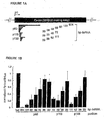
- the RNAi translation assays ( Fig. 1 ) were performed with dsRNA concentrations of 5 nM and an extended pre-incubation period of 15 min at 25°C prior to the addition of in vitro transcribed, capped and polyadenylated Pp-luc and Rr-luc reporter mRNAs. The incubation was continued for 1 h and the relative amount of Pp-luc and Rr-luc protein was analyzed using the dual luciferase assay (Promega) and a Monolight 3010C luminometer (PharMingen).
- RNA used for dsRNA preparation was performed using 1 mM ATP, CTP, GTP, 0.1 or 0.2 mM UTP, and 0.2-0.3 ⁇ M 32 P-UTP (3000 Ci/mmol), or the respective ratio for radiolabeled nucleoside triphosphates other than UTP. Labeling of the cap of the target RNAs was performed as described previously. The target RNAs were gel-purified after cap-labeling.
- the ligation reaction was stopped by the addition of an equal volume of 8 M urea/50 mM EDTA stopmix and directly loaded on a 15% gel. Ligation yields were greater 50%.
- the ligation product was recovered from the gel and 5'-phosphorylated (20 ⁇ l reaction, 30 min, 37°C, 2 mM ATP, 5 U T4 polynucleotide kinase, NEB).
- the phosphorylation reaction was stopped by phenol/chloroform extraction and RNA was recovered by ethanol-precipitation.
- the 5' adapter (tactaatacgactcactAAA: uppercase, RNA; lowercase, DNA) was ligated to the phosphorylated ligation product as described above.
- the new ligation product was gel-purified and eluted from the gel slice in the presence of reverse transcription primer (GACTAGCTG GAATTC AAGGATGCGGTTAAA: bold, Eco RI site) used as carrier.
- Reverse transcription (15 ⁇ l reaction, 30 min, 42°C, 150 U Superscript II reverse transcriptase, Life Technologies) was followed by PCR using as 5' primer CAGCCAACG GAATTC ATACGACTCACTAAA (bold, Eco RI site) and the 3' RT primer.
- the PCR product was purified by phenol/ chloroform extraction and ethanol-precipitated.
- 21-23 nt RNA fragments generated by processing of dsRNAs are the mediators of RNA interference and co-suppression (Hamilton and Baulcombe, 1999; Hammond et al., 2000; Zamore et al., 2000).
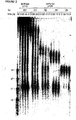
- Formation of 21-23 nt fragments in Drosophila lysate ( Figure 2 ) was readily detectable for 39 to 501 bp long dsRNAs but was significantly delayed for the 29 bp dsRNA.
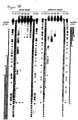
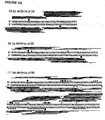
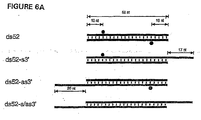
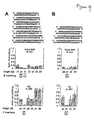
- the ⁇ 21 nt RNAs appear in clustered groups ( Figure 4A ) which cover the entire dsRNA sequences. Apparently, the processing reaction cuts the dsRNA by leaving staggered 3' ends, another characteristic of RNase III cleavage. For the 39 bp dsRNA, two clusters of ⁇ 21 nt RNAs were found from each dsRNA-constituting strand including overhanging 3' ends, yet only one cleavage site was detected on the sense and antisense target ( Figures 3A and 3B ).
- the ⁇ 21mer clusters for the 52 bp and 111 bp dsRNA are less well defined when compared to the 39 bp dsRNA.
- the clusters are spread over regions of 25 to 30 nt most likely representing several distinct subpopulations of ⁇ 21 nt duplexes and therefore guiding target cleavage at several nearby sites. These cleavage regions are still predominantly separated by 20 to 23 nt intervals.
- the rules determining how regular dsRNA can be processed to ⁇ 21 nt fragments are not yet understood, but it was previously observed that the approx. 21-23 nt spacing of cleavage sites could be altered by a run of uridines (Zamore et al., 2000).
- nucleoside 3',5'-diphosphates All four nucleoside 3',5'-diphosphates were detected and suggest that the internucleotidic linkage was cleaved with little or no sequence-specificity.
- the ⁇ 21 nt fragments are unmodified and were generated from dsRNA such that 5'-monophosphates and 3'-hydroxyls were present at the 5'-end.
- the 21 and 22 nt RNA duplexes were incubated at 100 nM concentrations in the lysate, a 10-fold higher concentrations than the 52 bp control dsRNA. Under these conditions, target RNA cleavage is readily detectable. Reducing the concentration of 21 and 22 nt duplexes from 100 to 10 nM does still cause target RNA cleavage. Increasing the duplex concentration from 100 nM to 1000 nM however does not further increase target cleavage, probably due to a limiting protein factor within the lysate.
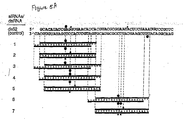
- the 21 and 22 nt dsRNAs with overhanging 3' ends of 2 to 4 nt mediated efficient degradation of target RNA (duplexes 1, 3, 4, 6, Figures 5A and 5B ).
- Blunt-ended 21 or 22 nt dsRNAs (duplexes 2, 5, and 7, Figures 5A and 5B ) were reduced in their ability to degrade the target and indicate that overhanging 3' ends are critical for reconstitution of the RNA-protein nuclease complex.
- the single-stranded overhangs may be required for high affinity binding of the ⁇ 21 nt duplex to the protein components.
- the synthetic 21 and 22 nt duplexes guided cleavage of sense as well as antisense targets within the region covered by the short duplex. This is an important result considering that a 39 bp dsRNA, which forms two pairs of clusters of ⁇ 21 nt fragments ( Fig. 2 ), cleaved sense or antisense target only once and not twice. We interpret this result by suggesting that only one of two strands present in the ⁇ 21 nt duplex is able to guide target RNA cleavage and that the orientation of the ⁇ 21 nt duplex in the nuclease complex is determined by the initial direction of dsRNA processing.
- the target cleavage site is located 11 or 12 nt downstream of the first nucleotide that is complementary to the 21 or 22 nt guide sequence, i.e. the cleavage site is near center of the region covered by the 21 or 22 nt RNAs ( Figures 4A and 4B ).
- Displacing the sense strand of a 22 nt duplex by two nucleotides (compare duplexes 1 and 3 in Figure 5A ) displaced the cleavage site of only the antisense target by two nucleotides.
- Displacing both sense and antisense strand by two nucleotides shifted both cleavage sites by two nucleotides (compare duplexes 1 and 4).
- siRNAs short interfering RNAs
- siRNP small interfering ribonucleoprotein particle
- long dsRNAs may also contain internal dsRNA-processing signals or may get processed cooperatively due to the association of multiple cleavage factors.
- RNase III homologs Little is known about the biochemistry of RNase III homologs from plants, animals or human.
- Two families of RNase III enzymes have been identified predominantly by database-guided sequence analysis or cloning of cDNAs.
- the first RNase III family is represented by the 1327 amino acid long D. melanogaster protein drosha (Acc. AF116572).
- the C-terminus is composed of two RNase III and one dsRNA-binding domain and the N-terminus is of unknown function. Close homologs are also found in C. elegans (Acc. AF160248) and human (Acc. AF189011) (Filippov et al., 2000; Wu et al., 2000).
- the drosha-like human RNase III was recently cloned and characterized (Wu et al., 2000).
- the gene is ubiquitously expressed in human tissues and cell lines, and the protein is localized in the nucleus and the nucleolus of the cell. Based on results inferred from antisense inhibition studies, a role of this protein for rRNA processing was suggested.
- the second class is represented by the C. elegans gene K12H4.8 (Acc. S44849) coding for a 1822 amino acid long protein.
- This protein has an N-terminal RNA helicase motif which is followed by 2 RNase III catalytic domains and a dsRNA-binding motif, similar to the drosha RNase III family. There are close homologs in S.
- pombe (Acc. Q09884), A. thaliana (Acc. AF187317), D. melanogaster (Acc. AE003740), and human (Acc. AB028449) (Filippov et al., 2000; Jacobsen et al., 1999; Matsuda et al., 2000). Possibly the K12H4.8 RNase III/helicase is the likely candidate to be involved in RNAi.
- RNAi Processing to the siRNA duplexes appears to start from the ends of both blunt-ended dsRNAs or dsRNAs with short (1-5 nt) 3' overhangs, and proceeds in approximately 21-23 nt steps.
- the suppression of RNAi by single-stranded regions flanking short dsRNA and the lack of siRNA formation from short 30 bp dsRNAs may explain why structured regions frequently encountered in mRNAs do not lead to activation of RNAi.
- siRNA duplexes guide cleavage of sense as well as antisense target RNA as they are able to associate with the protein components in either of the two possible orientation.
- siRNA duplexes represent a new alternative to antisense or ribozyme therapeutics.
- RNAs were chemically synthesized using Expedite RNA phosphoramidites and thymidine phosphoramidite (Proligo, Germany). Synthetic oligonucleotides were deprotected and gel-purified (Example 1), followed by Sep-Pak C18 cartridge (Waters, Milford, MA, USA) purification (Tuschl, 1993).
- the siRNA sequences targeting GL2 (Acc. X65324) and GL3 luciferase (Acc. U47296) corresponded to the coding regions 153-173 relative to the first nucleotide of the start codon
- siRNAs targeting RL (Acc. AF025846) corresponded to region 119-129 after the start codon.
- RNAs Longer RNAs were transcribed with T7 RNA polymerase from PCR products, followed by gel and Sep-Pak purification.
- the 49 and 484 bp GL2 or GL3 dsRNAs corresponded to position 113-161 and 113-596, respectively, relative to the start of translation; the 50 and 501 bp RL dsRNAs corresponded to position 118-167 and 118-618, respectively.
- PCR templates for dsRNA synthesis targeting humanized GFP (hG) were amplified from pAD3 (Kehlenbach, 1998), whereby 50 and 501 bp hG dsRNA corresponded to position 118-167 and 118-618, respectively, to the start codon.
- annealing buffer 100 mM potassium acetate, 30 mM HEPES-KOH at pH 7.4, 2 mM magnesium acetate
- the 37°C incubation step was extended overnight for the 50 and 500 bp dsRNAs and these annealing reactions were performed at 8.4 ⁇ M and 0.84 ⁇ M strand concentrations, respectively.
- S2 cells were propagated in Schneider's Drosophila medium (Life Technologies) supplemented with 10% FBS, 100 units/ml penicillin and 100 ⁇ g/ml streptomycin at 25°C. 293, NIH/3T3, HeLa S3, COS-7 cells were grown at 37°C in Dulbecco's modified Eagle's medium supplemented with 10% FBS, 100 units/ml penicillin and 100 ⁇ g/ml streptomycin. Cells were regularly passaged to maintain exponential growth. 24 h before transfection at approx. 80% confluency, mammalian cells were trypsinized and diluted 1:5 with fresh medium without antibiotics (1-3 x 10 5 cells/ml) and transferred to 24-well plates (500 ⁇ l/well).
- S2 cells were not trypsinized before splitting. Transfection was carried out with Lipofectamine 2000 reagent (Life Technologies) as described by the manufacturer for adherent cell lines. Per well, 1.0 ⁇ g pGL2-Control (Promega) or pGL3-Control (Promega), 0.1 ⁇ g pRL-TK (Promega) and 0.28 ⁇ g siRNA duplex or dsRNA, formulated into liposomes, were applied; the final volume was 600 ⁇ l per well. Cells were incubated 20 h after transfection and appeared healthy thereafter. Luciferase expression was subsequently monitored with the Dual luciferase assay (Promega).
- Transfection efficiencies were determined by fluorescence microscopy for mammalian cell lines after co-transfection of 1.1 ⁇ g hGFP-encoding pAD3 and 0.28 ⁇ g invGL2 inGL2 siRNA and were 70-90%.
- Reporter plasmids were amplified in XL-1 Blue (Stratagene) and purified using the Qiagen EndoFree Maxi Plasmid Kit.
- siRNA duplexes were co-transfected with the reporter plasmid combinations pGL2/pRL or pGL3/pRL into D. melanogaster Schneider S2 cells or mammalian cells using cationic liposomes. Luciferase activities were determined 20 h after transfection.
- GL2 expression was reduced 3- to 12-fold, GL3 expression 9- to 25-fold and RL expression 1- to 3-fold, in response to the cognate siRNAs.
- targeting of RL luciferase by RL siRNAs was ineffective, although GL2 and GL3 targets responded specifically ( Fig. 9i, j ).
- the lack of reduction of RL expression in 293 cells may be due to its 5- to 20-fold higher expression compared to any other mammalian cell line tested and/or to limited accessibility of the target sequence due to RNA secondary structure or associated proteins. Nevertheless, specific targeting of GL2 and GL3 luciferase by the cognate siRNA duplexes indicated that RNAi is also functioning in 293 cells.
- the thymidine overhang was chosen, because it is supposed to enhance nuclease resistance of siRNAs in the tissue culture medium and within transfected cells. Indeed, the thymidine-modified GL2 siRNA was slightly more potent than the unmodified uGL2 siRNA in all cell lines tested ( Fig. 9a, c, e, g, i ). It is conceivable that further modifications of the 3' overhanging nucleotides may provide additional benefits to the delivery and stability of siRNA duplexes.
- siRNA duplexes In co-transfection experiments, 25 nM siRNA duplexes with respect to the final volume of tissue culture medium were used ( Fig. 9 , 10 ). Increasing the siRNA concentration to 100 nM did not enhance the specific silencing effects, but started to affect transfection efficiencies due to competition for liposome encapsulation between plasmid DNA and siRNA (data not shown). Decreasing the siRNA concentration to 1.5 nM did not reduce the specific silencing effect (data not shown), even though the siRNAs were now only 2- to 20-fold more concentrated than the DNA plasmids. This indicates that siRNAs are extraordinarily powerful reagents for mediating gene silencing and that siRNAs are effective at concentrations that are several orders of magnitude below the concentrations applied in conventional antisense or ribozyme gene targeting experiments.
- CHO-K1 cells appear to be deficient in the interferon response.
- 293, NIH/3T3 and BHK-21 cells were tested for RNAi using luciferase/lacZ reporter combinations and 829 bp specific lacZ or 717 bp unspecific GFP dsRNA (Caplen, 2000).
- the failure of detecting RNAi in this case may be due to the less sensitive luciferase/lacZ reporter assay and the length differences of target and control dsRNA.
- our results indicate that RNAi is active in mammalian cells, but that the silencing effect is difficult to detect, if the interferon system is activated by dsRNA > 30 bp.
- RNA synthesis, annealing, and luciferase-based RNAi assays were performed as described in Examples 1 or 2 or in previous publications (Tuschl et al., 1999; Zamore et al., 2000). All siRNA duplexes were directed against firefly luciferase, and the luciferase mRNA sequence was derived from pGEM-luc (GenBank acc. X65316) as described (Tuschl et al., 1999). The siRNA duplexes were incubated in D. melanogaster RNAi/translation reaction for 15 min prior to addition of mRNAs. Translation-based RNAi assays were performed at least in triplicates.
- a 177-nt transcript was generated, corresponding to the firefly luciferase sequence between positions 113-273 relative to the start codon, followed by the 17-nt complement of the SP6 promoter sequence.
- a 166-nt transcript was produced from a template, which was amplified from plasmid sequence by PCR using 5' primer TAATACGACTCACTATAGA GCCCATATCGTTTCATA (T7 promoter underlined) and 3' primer AGAGGATGGAACCGCTGG.
- the target sequence corresponds to the complement of the firefly luciferase sequence between positions 50-215 relative to the start codon.
- Guanylyl transferase labelling was performed as previously described (Zamore et al., 2000).
- 100 nM siRNA duplex was incubated with 5 to 10 nM target RNA in D. melanogaster embryo lysate under standard conditions (Zamore et al., 2000) for 2 h at 25°C.
- the reaction was stopped by the addition of 8 volumes of proteinase K buffer (200 mM Tris-HCl pH 7.5, 25 mM EDTA, 300 mM NaCl, 2% w/v sodium dodecyl sulfate). Proteinase K (E.M.
- siRNA duplexes As described above, 2 or 3 unpaired nucleotides at the 3' end of siRNA duplexes were more efficient in target RNA degradation than the respective blunt-ended duplexes.
- sense and antisense siRNAs eight series of siRNA duplexes with synthetic overhanging ends were generated covering a range of 7-nt 3' overhang to 4-nt 5' overhang.
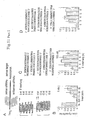
- siRNA duplexes The interference of siRNA duplexes was measured using the dual luciferase assay system (Tuschl et al., 1999; Zamore et al., 2000). siRNA duplexes were directed against firefly luciferase mRNA, and sea pansy luciferase mRNA was used as internal control. The luminescence ratio of target to control luciferase activity was determined in the presence of siRNA duplex and was normalized to the ratio observed in the absence of dsRNA. For comparison, the interference ratios of long dsRNAs (39 to 504 pb) are shown in Figure 11B .
- the interference ratios were determined at concentrations of 5 nM for long dsRNAs ( Figure 11A ) and at 100 nM for siRNA duplexes ( Figure 11C-J ). The 100 nM concentrations of siRNAs was chosen, because complete processing of 5 nM 504 bp dsRNA would result in 120 nM total siRNA duplexes.
- siRNA duplexes The ability of 21-nt siRNA duplexes to mediate RNAi is dependent on the number of overhanging nucleotides or base pairs formed. Duplexes with four to six 3' overhanging nucleotides were unable to mediate RNAi ( Figure 11C-F ), as were duplexes with two or more 5' overhanging nucleotides ( Figure 11G-J ). The duplexes with 2-nt 3' overhangs were most efficient in mediating RNA interference, though the efficiency of silencing was also sequence-dependent, and up to 12-fold differences were observed for different siRNA duplexes with 2-nt 3' overhangs (compare Figure 11D-H ).
- the small silencing effect observed for the siRNA duplex with 7-nt 3' overhang may be due to an antisense effect of the long 3' overhang rather than due to RNAi.
- Comparison of the efficiency of RNAi between long dsRNAs ( Fig. 11 B) and the most effective 21-nt siRNA duplexes ( Fig. 11E, G , H ) indicates that a single siRNA duplex at 100 nM concentration can be as effective as 5 nM 504 bp dsRNA.
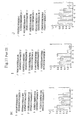
- siRNA duplexes In order to investigate the effect of length of siRNA on RNAi, we prepared 3 series of siRNA duplexes, combining three 21-nt antisense strands with eight, 18- to 25-nt sense strands. The 3' overhang of the antisense siRNA was fixed to 1, 2, or 3 nt in each siRNA duplex series, while the sense siRNA was varied at its 3' end ( Figure 12A ). Independent of the lenght of the sense siRNA, we found that duplexes with 2-nt 3' overhang of antisense siRNA ( Figure 12C ) were more active than those with 1- or 3-nt 3' overhang ( Figure 12B , D ).
- duplexes with a 21- and 22-nt sense siRNAs, carrying a 1- and 2-nt 3' overhang of sense siRNA, respectively were most active.
- Duplexes with 19- to 25-nt sense siRNAs were also able to mediate RNA, but to a lesser extent.
- the 21-nt siRNA duplex with 2-nt 3' overhang was most active, and any other combination with the 18- to 25-nt sense siRNAs was active to a significant degree.
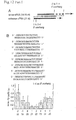
- siRNA ribose residues were examined ( Figure 14 ).
- Substitution of the 2-nt 3' overhangs by 2'-deoxy nucleotides had no effect, and even the replacement of two additional riboncleotides adjacent to the overhangs in the paired region, produced significantly active siRNAs.
- 8 out of 42 nt of a siRNA duplex were replaced by DNA residues without loss of activity.
- Complete substitution of one or both siRNA strands by 2'-deoxy residues abolished RNAi, as did substitution by 2'-O-methyl residues.
- Target RNA cleavage positions were previously determined for 22-nt siRNA duplexes and for a 21-nt/22-nt duplex. It was found that the position of the target RNA cleavage was located in the centre of the region covered by the siRNA duplex, 11 or 12 nt downstream of the first nucleotide that was complementary to the 21- or 22-nt siRNA guide sequence.
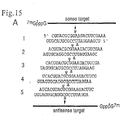
- Five distinct 21-nt siRNA duplexes with 2-nt 3' overhang ( Figure 15A ) were incubated with 5' cap-labelled sense or antisense target RNA in D. melanogaster lysate (Tuschl et al., 1999; Zamore et al., 2000).
- the 5' cleavage products were resolved on sequencing gels ( Figure 15B ).
- the amount of sense target RNA cleaved correlates with the efficiency of siRNA duplexes determined in the translation-based assay, and siRNA duplexes 1, 2 and 4 ( Figure 15B and 11H , G, E ) cleave target RNA faster than duplexes 3 and 5 ( Figure 15B and 11F , D ).
- the sum of radioactivity of the 5' cleavage product and the input target RNA were not constant over time, and the 5' cleavage products did not accumulate.
- the cleavage products, once released from the siRNA-endonuclease complex are rapidly degraded due to the lack of either of the poly(A) tail of the 5'-cap.
- the cleavage sites for both, sense and antisense target RNAs were located in the middle of the region spanned by the siRNA duplexes.
- the cleavage sites for each target produced by the 5 different duplexes varied by 1-nt according to the 1-nt displacement of the duplexes along the target sequences.
- the targets were cleaved precisely 11 nt downstream of the target position complementary to the 3'-most nucleotide of the sequence-complementary guide siRNA ( Figure 15A, B ).
- a 2-nt 3'overhang is preferred for siRNA function.
- RISC or siRNP endonuclease complex
- the wild-type siRNAs contained AA in the sense 3' overhang and UG in the antisense 3' overhang (AA/UG). All siRNA duplexes were functional in the interference assay and reduced target expression at least 5-fold ( Figure 17 ).
- siRNA duplexes that reduced target expression more than 10-fold, were of the sequence type NN/UG, NN/UU, NN/TdG, and NN/TT (N, any nucleotide).
- siRNA duplexes with an antisense siRNA 3' overhang of AA, CC or GG were less active by a factor 2 to 4 when compared to the wild-type sequence UG or the mutant UU. This reduction in RNAi efficiency is likely due to the contribution of the penultimate 3' nucleotide to sequence-specific target recognition, as the 3' terminal nucleotide was changed from G to U without effect.
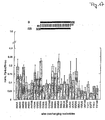
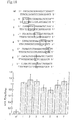
- sequence changes were introduced by inverting short segments of 3- or 4-nt length or as point mutations ( Figure 18 ).
- the sequence changes in one siRNA strand were compensated in the complementary siRNA strand to avoid pertubing the base-paired siRNA duplex structure.
- the sequence of all 2-nt 3' overhangs was TT (T, 2'-deoxythymidine) to reduce costs of synthesis.
- the TT/TT reference siRNA duplex was comparable in RNAi to the wild-type siRNA duplex AA/UG ( Figure 17 ).
- siRNAs are valuable reagents for inactivation of gene expression, not only in insect cells, but also in mammalian cells, with a great potential for therapeutic application.
- a perfect siRNA duplex is able to silence gene expression with an efficiency comparable to a 500 bp dsRNA, given that comparable quantities of total RNA are used.
- Efficiently silencing siRNA duplexes are preferably composed of 21-nt antisense siRNAs, and should be selected to form a 19 bp double helix with 2-nt 3' overhanging ends.
- 2'-deoxy substitutions of the 2-nt 3' overhanging ribonucleotides do not affect RNAi, but help to reduce the costs of RNA synthesis and may enhance RNAse resistance of siRNA duplexes. More extensive 2'-deoxy or 2'-O-methyl modifications, however, reduce the ability of siRNAs to mediate RNAi, probably by interfering with protein association for siRNAP assembly.
- Target recognition is a highly sequence-specific process, mediated by the siRNA complementary to the target.
- the 3'-most nucleotide of the guide siRNA does not contribute to specificity of target recognition, while the penultimate nucleotide of the 3' overhang affects target RNA cleavage, and a mismatch reduces RNAi 2- to 4-fold.
- the 5' end of a guide siRNA also appears more permissive for mismatched target RNA recognition when compared to the 3' end.
- Nucleotides in the centre of the siRNA, located opposite the target RNA cleavage site are important specificity determinants and even single nucleotide changes reduce RNAi to undetectable level. This suggests that siRNA duplexes may be able to discriminate mutant or polymorphic alleles in gene targeting experiments, which may become an important feature for future therapeutic developments.
- Sense and antisense siRNAs when associated with the protein components of the endonclease complex or its commitment complex, were suggested to play distinct roles; the relative orientation of the siRNA duplex in this complex defines which strand can be used for target recognition.
- Synthetic siRNA duplexes have dyad symmetry with respect to the double-helical structure, but not with respect to sequence. The association of siRNA duplexes with the RNAi proteins in the D. melanogaster lysate will lead to formation of two asymmetric complexes. In such hypothetical complexes, the chiral environment is distinct for sense and antisense siRNA, hence their function. The prediction obviously does not apply to palindromic siRNA sequences, or to RNAi proteins that could associate as homodimers.
- siRNA sequences with identical 3' overhanging sequences we recommend to adjust the sequence of the overhang of the sense siRNA to that of the antisense 3' overhang, because the sense siRNA does not have a target in typical knock-down experiments.
- Asymmetry in reconstitution of sense and antisense-cleaving siRNPs could be (partially) responsible for the variation in RNAi efficiency observed for various 21-nt siRNA duplexes with 2-nt 3' overhangs used in this study ( Figure 14 ).
- the nucleotide sequence at the target site and/or the accessibility of the target RNA structure may be responsible for the variation in efficiency for these siRNA duplexes.
Landscapes
- Health & Medical Sciences (AREA)
- Life Sciences & Earth Sciences (AREA)
- Engineering & Computer Science (AREA)
- Chemical & Material Sciences (AREA)
- Genetics & Genomics (AREA)
- Biomedical Technology (AREA)
- Organic Chemistry (AREA)
- Bioinformatics & Cheminformatics (AREA)
- General Health & Medical Sciences (AREA)
- Molecular Biology (AREA)
- Biotechnology (AREA)
- Zoology (AREA)
- Wood Science & Technology (AREA)
- General Engineering & Computer Science (AREA)
- Pharmacology & Pharmacy (AREA)
- Public Health (AREA)
- Veterinary Medicine (AREA)
- Animal Behavior & Ethology (AREA)
- Medicinal Chemistry (AREA)
- Biochemistry (AREA)
- Nuclear Medicine, Radiotherapy & Molecular Imaging (AREA)
- Microbiology (AREA)
- Physics & Mathematics (AREA)
- Biophysics (AREA)
- General Chemical & Material Sciences (AREA)
- Chemical Kinetics & Catalysis (AREA)
- Plant Pathology (AREA)
- Epidemiology (AREA)
- Immunology (AREA)
- Oncology (AREA)
- Communicable Diseases (AREA)
- Virology (AREA)
- Bioinformatics & Computational Biology (AREA)
- Crystallography & Structural Chemistry (AREA)
- Pharmaceuticals Containing Other Organic And Inorganic Compounds (AREA)
- Medicines That Contain Protein Lipid Enzymes And Other Medicines (AREA)
- Micro-Organisms Or Cultivation Processes Thereof (AREA)
- Measuring Or Testing Involving Enzymes Or Micro-Organisms (AREA)
- Saccharide Compounds (AREA)
- Acyclic And Carbocyclic Compounds In Medicinal Compositions (AREA)
Applications Claiming Priority (8)
| Application Number | Priority Date | Filing Date | Title |
|---|---|---|---|
| EP00126325 | 2000-12-01 | ||
| US27966101P | 2001-03-30 | 2001-03-30 | |
| PCT/US2001/010188 WO2001075164A2 (en) | 2000-03-30 | 2001-03-30 | Rna sequence-specific mediators of rna interference |
| EP14176605.5A EP2813582B1 (de) | 2000-12-01 | 2001-11-29 | RNA-Interferenz vermittelnde kleine RNA-Moleküle |
| PCT/EP2001/013968 WO2002044321A2 (en) | 2000-12-01 | 2001-11-29 | Rna interference mediating small rna molecules |
| EP01985833.1A EP1407044B2 (de) | 2000-12-01 | 2001-11-29 | Kleine rns moleküle, die rns-interferenz vermitteln |
| EP07014533A EP1873259B1 (de) | 2000-12-01 | 2001-11-29 | Durch kleine 21nt- und 22nt-RNAs vermittelte RNA-Interferenz |
| EP10179952.6A EP2348133B1 (de) | 2000-12-01 | 2001-11-29 | Kleine RNS- Moleküle, die RNS-Interferenz vermitteln |
Related Parent Applications (6)
| Application Number | Title | Priority Date | Filing Date |
|---|---|---|---|
| EP10179952.6A Division EP2348133B1 (de) | 2000-12-01 | 2001-11-29 | Kleine RNS- Moleküle, die RNS-Interferenz vermitteln |
| EP14176605.5A Division EP2813582B1 (de) | 2000-12-01 | 2001-11-29 | RNA-Interferenz vermittelnde kleine RNA-Moleküle |
| EP14176605.5A Division-Into EP2813582B1 (de) | 2000-12-01 | 2001-11-29 | RNA-Interferenz vermittelnde kleine RNA-Moleküle |
| EP07014533A Division EP1873259B1 (de) | 2000-12-01 | 2001-11-29 | Durch kleine 21nt- und 22nt-RNAs vermittelte RNA-Interferenz |
| EP01985833.1A Division EP1407044B2 (de) | 2000-12-01 | 2001-11-29 | Kleine rns moleküle, die rns-interferenz vermitteln |
| EP01985833.1A Division-Into EP1407044B2 (de) | 2000-12-01 | 2001-11-29 | Kleine rns moleküle, die rns-interferenz vermitteln |
Publications (2)
| Publication Number | Publication Date |
|---|---|
| EP3199631A1 true EP3199631A1 (de) | 2017-08-02 |
| EP3199631B1 EP3199631B1 (de) | 2019-01-30 |
Family
ID=41655850
Family Applications (7)
| Application Number | Title | Priority Date | Filing Date |
|---|---|---|---|
| EP14164227.2A Expired - Lifetime EP2796553B1 (de) | 2000-03-30 | 2001-03-30 | RNA-sequenzspezifische Mediatoren von RNA-Interferenz |
| EP10184660.8A Expired - Lifetime EP2361981B2 (de) | 2000-03-30 | 2001-03-30 | RNS-sequenzspezifische Mediatoren von RNS-Interferenz |
| EP10184520.4A Expired - Lifetime EP2360253B1 (de) | 2000-03-30 | 2001-03-30 | Verfahren zur Herstellung von Knockdown-Zellen oder -Organismen mittels RNS-sequenzspezifischer Mediatoren von RNS-Interferenz und deren Verwendung |
| EP17160119.8A Expired - Lifetime EP3199631B1 (de) | 2000-12-01 | 2001-11-29 | Rna-interferenz vermittelnde kleine rna-moleküle |
| EP10179947.6A Expired - Lifetime EP2351852B2 (de) | 2000-12-01 | 2001-11-29 | Kleine RNS Moleküle, die RNS-Interferenz vermitteln |
| EP10180025.8A Expired - Lifetime EP2348134B1 (de) | 2000-12-01 | 2001-11-29 | Kleine RNS-Moleküle, die RNS-Interferenz vermitteln |
| EP14176605.5A Expired - Lifetime EP2813582B1 (de) | 2000-12-01 | 2001-11-29 | RNA-Interferenz vermittelnde kleine RNA-Moleküle |
Family Applications Before (3)
| Application Number | Title | Priority Date | Filing Date |
|---|---|---|---|
| EP14164227.2A Expired - Lifetime EP2796553B1 (de) | 2000-03-30 | 2001-03-30 | RNA-sequenzspezifische Mediatoren von RNA-Interferenz |
| EP10184660.8A Expired - Lifetime EP2361981B2 (de) | 2000-03-30 | 2001-03-30 | RNS-sequenzspezifische Mediatoren von RNS-Interferenz |
| EP10184520.4A Expired - Lifetime EP2360253B1 (de) | 2000-03-30 | 2001-03-30 | Verfahren zur Herstellung von Knockdown-Zellen oder -Organismen mittels RNS-sequenzspezifischer Mediatoren von RNS-Interferenz und deren Verwendung |
Family Applications After (3)
| Application Number | Title | Priority Date | Filing Date |
|---|---|---|---|
| EP10179947.6A Expired - Lifetime EP2351852B2 (de) | 2000-12-01 | 2001-11-29 | Kleine RNS Moleküle, die RNS-Interferenz vermitteln |
| EP10180025.8A Expired - Lifetime EP2348134B1 (de) | 2000-12-01 | 2001-11-29 | Kleine RNS-Moleküle, die RNS-Interferenz vermitteln |
| EP14176605.5A Expired - Lifetime EP2813582B1 (de) | 2000-12-01 | 2001-11-29 | RNA-Interferenz vermittelnde kleine RNA-Moleküle |
Country Status (11)
| Country | Link |
|---|---|
| EP (7) | EP2796553B1 (de) |
| CN (2) | CN101654672B (de) |
| AT (1) | ATE542899T1 (de) |
| BR (4) | BRPI0117341B1 (de) |
| CA (1) | CA2791831C (de) |
| DK (7) | DK2345742T3 (de) |
| ES (9) | ES2461715T3 (de) |
| LT (1) | LT2813582T (de) |
| PL (1) | PL218881B1 (de) |
| PT (8) | PT2028278E (de) |
| SI (4) | SI2348134T1 (de) |
Families Citing this family (11)
| Publication number | Priority date | Publication date | Assignee | Title |
|---|---|---|---|---|
| ES2336887T5 (es) | 2000-03-30 | 2019-03-06 | Whitehead Inst Biomedical Res | Mediadores de interferencia por ARN específicos de secuencias de ARN |
| CA2429814C (en) | 2000-12-01 | 2014-02-18 | Thomas Tuschl | Rna interference mediating small rna molecules |
| US20060009409A1 (en) | 2002-02-01 | 2006-01-12 | Woolf Tod M | Double-stranded oligonucleotides |
| ATE556714T1 (de) | 2002-02-01 | 2012-05-15 | Life Technologies Corp | Doppelsträngige oligonukleotide |
| JP2019513371A (ja) | 2016-04-01 | 2019-05-30 | アビディティー バイオサイエンシーズ エルエルシー | 核酸ポリペプチド組成物とその使用 |
| WO2017173301A1 (en) | 2016-04-01 | 2017-10-05 | Avidity Biosciences Llc | Egfr nucleic acids and uses thereof |
| EP3436585B1 (de) | 2016-04-01 | 2022-07-20 | Avidity Biosciences, Inc. | Kras-nukleinsäuren und verwendungen davon |
| WO2017173297A1 (en) | 2016-04-01 | 2017-10-05 | Avidity Biosciences Llc | Beta-catenin nucleic acids and uses thereof |
| DE102018001134A1 (de) * | 2017-06-26 | 2018-12-27 | Martin-Luther-Universität Halle-Wittenberg | Methode zur gezielten Identifizierung hocheffizienter "small interfering RNAs" ("eRNAs") zur Anwendung in Pflanzen und anderen Zielorganismen |
| AU2018378812B2 (en) | 2017-12-06 | 2025-05-22 | Avidity Biosciences, Inc. | Compositions and methods of treating muscle atrophy and myotonic dystrophy |
| WO2021188390A1 (en) | 2020-03-19 | 2021-09-23 | Avidity Biosciences, Inc. | Compositions and methods of treating facioscapulohumeral muscular dystrophy |
Citations (2)
| Publication number | Priority date | Publication date | Assignee | Title |
|---|---|---|---|---|
| WO2000044895A1 (de) * | 1999-01-30 | 2000-08-03 | Roland Kreutzer | Verfahren und medikament zur hemmung der expression eines vorgegebenen gens |
| WO2001075164A2 (en) * | 2000-03-30 | 2001-10-11 | Whitehead Institute For Biomedical Research | Rna sequence-specific mediators of rna interference |
Family Cites Families (7)
| Publication number | Priority date | Publication date | Assignee | Title |
|---|---|---|---|---|
| JPS59198885A (ja) | 1983-04-25 | 1984-11-10 | Nec Corp | 圧電アクチェータ励振回路 |
| US5652355A (en) † | 1992-07-23 | 1997-07-29 | Worcester Foundation For Experimental Biology | Hybrid oligonucleotide phosphorothioates |
| IL111660A (en) † | 1993-11-16 | 2005-05-17 | Genta Inc | Oligonucleoside compounds for effecting rnaseh-mediated cleavage of a target ribonucleic acid sequence and a pharmaceutical composition containing them |
| US6506559B1 (en) † | 1997-12-23 | 2003-01-14 | Carnegie Institute Of Washington | Genetic inhibition by double-stranded RNA |
| EP1071753A2 (de) † | 1998-04-20 | 2001-01-31 | Ribozyme Pharmaceuticals, Inc. | Nukeinsäure moleküle mit einer neuen chemischen zusammensetzung die fähig sind die expression von gene zu modulieren |
| EP1272630A2 (de) * | 2000-03-16 | 2003-01-08 | Genetica, Inc. | Methoden und zusammensetzungen zur interferenz durch rna |
| CA2429814C (en) * | 2000-12-01 | 2014-02-18 | Thomas Tuschl | Rna interference mediating small rna molecules |
-
2001
- 2001-03-30 EP EP14164227.2A patent/EP2796553B1/de not_active Expired - Lifetime
- 2001-03-30 PT PT81681520T patent/PT2028278E/pt unknown
- 2001-03-30 BR BRPI0117341A patent/BRPI0117341B1/pt active IP Right Grant
- 2001-03-30 PT PT101845204T patent/PT2360253E/pt unknown
- 2001-03-30 PT PT101847119T patent/PT2345742E/pt unknown
- 2001-03-30 PT PT101846608T patent/PT2361981E/pt unknown
- 2001-03-30 BR BRPI0117339A patent/BRPI0117339B1/pt active IP Right Grant
- 2001-03-30 ES ES08168152.0T patent/ES2461715T3/es not_active Expired - Lifetime
- 2001-03-30 ES ES10184660T patent/ES2410907T5/es not_active Expired - Lifetime
- 2001-03-30 EP EP10184660.8A patent/EP2361981B2/de not_active Expired - Lifetime
- 2001-03-30 DK DK10184711.9T patent/DK2345742T3/da active
- 2001-03-30 DK DK10184660.8T patent/DK2361981T4/da active
- 2001-03-30 ES ES10184711.9T patent/ES2500923T3/es not_active Expired - Lifetime
- 2001-03-30 BR BRPI0117340A patent/BRPI0117340B1/pt active IP Right Grant
- 2001-03-30 ES ES10184520.4T patent/ES2461765T3/es not_active Expired - Lifetime
- 2001-03-30 EP EP10184520.4A patent/EP2360253B1/de not_active Expired - Lifetime
- 2001-03-30 DK DK08168152.0T patent/DK2028278T3/da active
- 2001-03-30 DK DK10184520.4T patent/DK2360253T3/da active
- 2001-03-30 BR BRPI0117338A patent/BRPI0117338B1/pt active IP Right Grant
- 2001-11-29 CA CA2791831A patent/CA2791831C/en not_active Expired - Lifetime
- 2001-11-29 EP EP17160119.8A patent/EP3199631B1/de not_active Expired - Lifetime
- 2001-11-29 SI SI200131034T patent/SI2348134T1/sl unknown
- 2001-11-29 AT AT07014533T patent/ATE542899T1/de active
- 2001-11-29 EP EP10179947.6A patent/EP2351852B2/de not_active Expired - Lifetime
- 2001-11-29 ES ES10179947T patent/ES2437390T5/es not_active Expired - Lifetime
- 2001-11-29 DK DK10180025.8T patent/DK2348134T3/da active
- 2001-11-29 PT PT101799526T patent/PT2348133E/pt unknown
- 2001-11-29 PT PT101800258T patent/PT2348134E/pt unknown
- 2001-11-29 SI SI200131028T patent/SI2351852T2/sl unknown
- 2001-11-29 DK DK10179952.6T patent/DK2348133T3/da active
- 2001-11-29 DK DK10179947.6T patent/DK2351852T4/da active
- 2001-11-29 ES ES07014533T patent/ES2380171T3/es not_active Expired - Lifetime
- 2001-11-29 SI SI200131063T patent/SI2813582T1/sl unknown
- 2001-11-29 ES ES10180025.8T patent/ES2462716T3/es not_active Expired - Lifetime
- 2001-11-29 LT LTEP14176605.5T patent/LT2813582T/lt unknown
- 2001-11-29 PT PT101799476T patent/PT2351852E/pt unknown
- 2001-11-29 CN CN2009101488878A patent/CN101654672B/zh not_active Expired - Lifetime
- 2001-11-29 PT PT141766055T patent/PT2813582T/pt unknown
- 2001-11-29 ES ES10179952.6T patent/ES2498747T3/es not_active Expired - Lifetime
- 2001-11-29 SI SI200131035T patent/SI2348133T1/sl unknown
- 2001-11-29 EP EP10180025.8A patent/EP2348134B1/de not_active Expired - Lifetime
- 2001-11-29 CN CN2009101488863A patent/CN101643789B/zh not_active Expired - Lifetime
- 2001-11-29 ES ES14176605.5T patent/ES2632957T3/es not_active Expired - Lifetime
- 2001-11-29 EP EP14176605.5A patent/EP2813582B1/de not_active Expired - Lifetime
- 2001-11-29 PL PL384789A patent/PL218881B1/pl unknown
Patent Citations (2)
| Publication number | Priority date | Publication date | Assignee | Title |
|---|---|---|---|---|
| WO2000044895A1 (de) * | 1999-01-30 | 2000-08-03 | Roland Kreutzer | Verfahren und medikament zur hemmung der expression eines vorgegebenen gens |
| WO2001075164A2 (en) * | 2000-03-30 | 2001-10-11 | Whitehead Institute For Biomedical Research | Rna sequence-specific mediators of rna interference |
Non-Patent Citations (67)
| Title |
|---|
| BASS BRENDA L: "Double-stranded RNA as a template for gene silencing.", CELL, vol. 101, no. 3, 28 April 2000 (2000-04-28), pages 235 - 238, XP002194756, ISSN: 0092-8674 * |
| BASS, B. L.: "Double-stranded RNA as a template for gene silencing", CELL, vol. 101, 2000, pages 235 - 238, XP002194756, DOI: doi:10.1016/S0092-8674(02)71133-1 |
| BOSHER, J. M.; LABOUESSE, M.: "RNA interference: genetic wand and genetic watchdog", NAT. CELL BIOL., vol. 2, 2000, pages E31 - 36, XP001106960, DOI: doi:10.1038/35000102 |
| CAPECCHI, M.R., CELL, vol. 22, 1980, pages 479 |
| CAPLEN, N. J.; FLEENOR, J.; FIRE, A.; MORGAN, R. A.: "dsRNA-mediated gene silencing in cultured Drosophila cells: a tissue culture model for the analysis of RNA interference", GENE, vol. 252, 2000, pages 95 - 105, XP004210158, DOI: doi:10.1016/S0378-1119(00)00224-9 |
| CATALANOTTO, C.; AZZALIN, G.; MACINO, G.; COGONI, C.: "Gene silencing in worms and fungi", NATURE, vol. 404, 2000, pages 245, XP002170905, DOI: doi:10.1038/35005169 |
| CHANFREAU, G.; BUCKLE, M.; JACQUIER, A: "Recognition of a conserved class of RNA tetraloops by Saccharomyces cerevisiae RNase III", PROC. NATL. ACAD. SCI. USA, vol. 97, 2000, pages 3142 - 3147 |
| CHU, G. ET AL., NUCL. ACIDS RES., vol. 15, 1987, pages 1311 |
| CLEMENS, M. J.: "PKR--a protein kinase regulated by double-stranded RNA", INT. J. BIOCHEM. CELL BIOL, vol. 29, 1997, pages 945 - 949 |
| COGONI, C.; MACINO, G.: "Homology-dependent gene silencing in plants and fungi: a number of variations on the same theme", CURR. OPIN. MICROBIOL, vol. 2, 1999, pages 657 - 662 |
| DALMAY, T.; HAMILTON, A.; RUDD, S.; ANGELL, S.; BAULCOMBE, D. C.: "An RNA-dependent RNA polymerase gene in Arabidopsis is required for posttranscriptional gene silencing mediated by a transgene but not by a virus", CELL, vol. 101, 2000, pages 543 - 553, XP055132004 |
| DERNBURG, A. F.; ZALEVSKY, J.; COLAIACOVO, M. P.; VILLENEUVE, A. M.: "Transgene-mediated cosuppression in the C. elegans germ line.", GENES & DEV., vol. 14, 2000, pages 1578 - 1583, XP002961097 |
| DUNN, J. J.: "The enzymes", vol. 15, 1982, ACADEMIC PRESS, article "Ribonuclease III", pages: 485 - 499 |
| ELBASHIR SAYDA M ET AL: "RNA interference is mediated by 21- and 22-nucleotide RNAs", GENES AND DEVELOPMENT, COLD SPRING HARBOR LABORATORY PRESS, NEW YORK, US, vol. 15, no. 2, 15 January 2001 (2001-01-15), pages 188 - 200, XP002204651, ISSN: 0890-9369 * |
| FEIGNER, P.L. ET AL., PROC. NATL. ACAD. SCI USA, vol. 84, 1987, pages 7413 |
| FILIPPOV, V.; SOLOVYEV, V.; FILIPPOVA, M.; GILL, S. S.: "A novel type of RNase III family proteins in eukaryotes", GENE, vol. 245, 2000, pages 213 - 221, XP004202978, DOI: doi:10.1016/S0378-1119(99)00571-5 |
| FIRE, A.: "RNA-triggered gene silencing", TRENDS GENET, vol. 15, 1999, pages 358 - 363, XP004176656, DOI: doi:10.1016/S0168-9525(99)01818-1 |
| FIRE, A.; XU, S.; MONTGOMERY, M. K.; KOSTAS, S. A.; DRIVER, S. E.; MELLO, C. C.: "Potent and specific genetic interference by double-stranded RNA in Caenorhabditis elegans", NATURE, vol. 391, 1998, pages 806 - 811, XP002199982, DOI: doi:10.1038/35888 |
| FRALEY, R. ET AL., J. BIOL. CHEM., vol. 255, 1980, pages 10431 |
| GRAHAM, F.L.; VAN DER EB, A.J., VIROL, vol. 52, 1973, pages 456 |
| GRISHOK, A.; TABARA, H.; MELLO, C. C.: "Genetic requirements for inheritance of RNAi in C. elegans", SCIENCE, vol. 287, 2000, pages 2494 - 2497, XP002938529, DOI: doi:10.1126/science.287.5462.2494 |
| HAMILTON ANDREW J ET AL: "A species of small antisense RNA in posttranscriptional gene silencing in plants", SCIENCE, AMERICAN ASSOCIATION FOR THE ADVANCEMENT OF SCIENCE, US, vol. 286, no. 5441, 29 October 1999 (1999-10-29), pages 950 - 952, XP002149064, ISSN: 0036-8075 * |
| HAMILTON, A. J.; BAULCOMBE, D. C.: "A species of small antisense RNA in posttranscriptional gene silencing in plants", SCIENCE, vol. 286, 1999, pages 950 - 952, XP002189060, DOI: doi:10.1126/science.286.5441.950 |
| HAMMOND SCOTT M ET AL: "An RNA-directed nuclease mediates post-transcriptional gene silencing in Drosophila cells", NATURE, MACMILLAN JOURNALS LTD. LONDON, GB, vol. 404, no. 6775, 16 March 2000 (2000-03-16), pages 293 - 296, XP002183123, ISSN: 0028-0836 * |
| HAMMOND, S. M.; BERNSTEIN, E.; BEACH, D.; HANNON, G. J.: "An RNA-directed nuclease mediates post-transcriptional gene silencing in Drosophila cells", NATURE, vol. 404, 2000, pages 293 - 296, XP002183123, DOI: doi:10.1038/35005107 |
| JACOBSEN, S. E.; RUNNING, M. P.; M., M. E.: "Disruption of an RNA helicase/RNase III gene in Arabidopsis causes unregulated cell division in floral meristems", DEVELOPMENT, vol. 126, 1999, pages 5231 - 5243, XP002232718 |
| JENSEN, S.; GASSAMA, M. P.; HEIDMANN, T.: "Taming of transposable elements by homology-dependent gene silencing", NAT. GENET., vol. 21, 1999, pages 209 - 212 |
| KEHLENBACH, R. H.; DICKMANNS, A.; GERACE, L.: "Nucleocytoplasmic shuttling factors including Ran and CRM1 mediate nuclear export of NFAT In vitro", J. CELL BIOL., vol. 141, 1998, pages 863 - 874 |
| KENNERDELL, J. R.; CARTHEW, R. W.: "Use of dsRNA-mediated genetic interference to demonstrate that frizzled and frizzled 2 act in the wingless pathway", CELL, vol. 95, 1998, pages 1017 - 1026, XP000872840, DOI: doi:10.1016/S0092-8674(00)81725-0 |
| KETTING, R. F.; HAVERKAMP, T. H.; VAN LUENEN, H. G.; PLASTERK, R. H.: "Mut-7 of C. elegans, required for transposon silencing and RNA interference, is a homolog of Werner syndrome helicase and RNaseD", CELL, vol. 99, 1999, pages 133 - 141, XP002962430, DOI: doi:10.1016/S0092-8674(00)81645-1 |
| KETTING, R. F.; PLASTERK, R. H.: "A genetic link between co-suppression and RNA interference in C. elegans", NATURE, vol. 404, 2000, pages 296 - 298 |
| LUCY, A. P.; GUO, H. S.; LI, W. X.; DING, S. W.: "Suppression of post-transcriptional gene silencing by a plant viral protein localized in the nucleus.", EMBO J., vol. 19, 2000, pages 1672 - 1680 |
| MATSUDA, S.; ICHIGOTANI, Y.; OKUDA, T.; IRIMURA, T.; NAKATSUGAWA, S.; HAMAGUCHI, M.: "Molecular cloning and characterization of a novel human gene (HERNA) which encodes a putative RNA-helicase", BIOCHIM. BIOPHYS. ACTA, vol. 31, 2000, pages 1 - 2 |
| MCCUTCHAN, J.H.; PAGANO, J.S., J. NATL. CANCER INST., vol. 41, 1968, pages 351 |
| MILLIGAN, J.F.; UHLENBECK, O.C.: "Synthesis of small RNAs using T7 RNA polymerase", METHODS ENZYMOL., vol. 180, 1989, pages 51 - 62, XP008025566, DOI: doi:10.1016/0076-6879(89)80091-6 |
| MOURRAIN, P.; BECLIN, C.; ELMAYAN, T.; FEUERBACH, F.; GODON, C.; MOREL, J. B.; JOUETTE, D.; LACOMBE, A. M.; NIKIC, S.; PICAULT, N.: "Arabidopsis SGS2 and SGS3 genes are required for posttranscriptional gene silencing and natural virus resistance", CELL, vol. 101, 2000, pages 533 - 542, XP002149066, DOI: doi:10.1016/S0092-8674(00)80863-6 |
| NGO, H.; TSCHUDI, C.; GULL, K.; ULLU, E.: "Double-stranded RNA induces mRNA degradation in Trypanosoma brucei", PROC. NATL. ACAD. SCI. USA, vol. 95, 1998, pages 14687 - 14692, XP002138442, DOI: doi:10.1073/pnas.95.25.14687 |
| NICHOLSON, A. W.: "Function, mechanism and regulation of bacterial ribonucleases.", FEMS MICROBIOL. REV., vol. 23, 1999, pages 371 - 390, XP002292212, DOI: doi:10.1016/S0168-6445(99)00013-3 |
| OELGESCHLAGER, M.; LARRAIN, J.; GEISSERT, D.; DE ROBERTIS, E. M.: "The evolutionarily conserved BMP-binding protein Twisted gastrulation promotes BMP signalling", NATURE, vol. 405, 2000, pages 757 - 763, XP001180404, DOI: doi:10.1038/35015500 |
| PAN, T.; UHLENBECK, O. C.: "In vitro selection of RNAs that undergo autolytic cleavage with Pb", BIOCHEMISTRY, vol. 31, 1992, pages 3887 - 3895 |
| PELISSIER, T.; WASSENEGGER, M.: "A DNA target of 30 bp is sufficient for RNA-directed methylation.", RNA, vol. 6, 2000, pages 55 - 65, XP001026897, DOI: doi:10.1017/S135583820099201X |
| PLANT MOLECULAR BIOLOGY, vol. 43, no. 2/3, 2000 |
| PLASTERK, R. H.; KETTING, R. F.: "The silence of the genes.", CURR. OPIN. GENET. DEV, vol. 10, 2000, pages 562 - 567, XP002938531, DOI: doi:10.1016/S0959-437X(00)00128-3 |
| RATCLIFF, F. G.; MACFARLANE, S. A.; BAULCOMBE, D. C.: "Gene Silencing without DNA. RNA-mediated cross-protection between viruses.", PLANT CELL, vol. 11, 1999, pages 1207 - 1216 |
| ROBERTSON, H. D.: "Escherichia coli ribonuclease III cleavage sites.", CELL, vol. 30, 1982, pages 669 - 672, XP023911277, DOI: doi:10.1016/0092-8674(82)90270-7 |
| ROBERTSON, H. D.: "Escherichia coli ribonuclease III.", METHODS ENZYMOL., vol. 181, 1990, pages 189 - 202 |
| ROMANIUK, E.; MCLAUGHLIN, L. W.; NEILSON, T.; ROMANIUK, P. J.: "The effect of acceptor oligoribonucleotide sequence on the T4 RNA ligase reaction", EUR J BIOCHEM, vol. 125, 1982, pages 639 - 643 |
| SHARP, P. A.: "RNAi and double-strand RNA.", GENES & DEV., vol. 13, 1999, pages 139 - 141, XP002171268, DOI: doi:10.1101/gad.13.22.3015 |
| SIJEN, T.; KOOTER, J. M.: "Post-transcriptional gene-silencing: RNAs on the attack or on the defense?", BIOESSAYS, vol. 22, 2000, pages 520 - 531, XP000938719, DOI: doi:10.1002/(SICI)1521-1878(200006)22:6<520::AID-BIES5>3.0.CO;2-W |
| SMARDON, A.; SPOERKE, J.; STACEY, S.; KLEIN, M.; MACKIN, N.; MAINE, E.: "EGO-1 is related to RNA-directed RNA polymerase and functions in germ-line development and RNA interference in C. elegans.", CURR. BIOL, vol. 10, 2000, pages 169 - 178, XP002978505, DOI: doi:10.1016/S0960-9822(00)00323-7 |
| SVOBODA, P.; STEIN, P.; HAYASHI, H.; SCHULTZ, R. M.: "Selective reduction of dormant maternal mRNAs in mouse oocytes by RNA interference.", DEVELOPMENT, vol. 127, 2000, pages 4147 - 4156 |
| TABARA, H.; SARKISSIAN, M.; KELLY, W. G.; FLEENOR, J.; GRISHOK, A.; TIMMONS, L.; FIRE, A.; MELLO, C. C.: "The rde-1 gene, RNA interference, and transposon silencing in C. elegans", CELL, vol. 99, 1999, pages 123 - 132, XP002938527, DOI: doi:10.1016/S0092-8674(00)81644-X |
| TUSCHL THOMAS ET AL: "Targeted mRNA degradation by double-stranded RNA in vitro", GENES AND DEVELOPMENT, COLD SPRING HARBOR LABORATORY PRESS, NEW YORK, US, vol. 13, no. 24, 15 December 1999 (1999-12-15), pages 3191 - 3197, XP002183118, ISSN: 0890-9369 * |
| TUSCHL, T.; NG, M. M.; PIEKEN, W.; BENSELER, F.; ECKSTEIN, F.: "Importance of exocyclic base functional groups of central core guanosines for hammerhead ribozyme activity", BIOCHEMISTRY, vol. 32, 1993, pages 11658 - 11668 |
| TUSCHL, T.; SHARP, P. A.; BARTEL, D. P.: "Selection in vitro of novel ribozymes from a partially randomized U2 and U6 snRNA library.", EMBO J., vol. 17, 1998, pages 2637 - 2650 |
| TUSCHL, T.; ZAMORE, P. D.; LEHMANN, R.; BARTEL, D. P.; SHARP, P. A.: "Targeted mRNA degradation by double-stranded RNA in vitro.", GENES & DEV., vol. 13, 1999, pages 3191 - 3197, XP002183118, DOI: doi:10.1101/gad.13.24.3191 |
| UI-TEI, K.; ZENNO, S.; MIYATA, Y.; SAIGO, K.: "Sensitive assay of RNA interference in Drosophila and Chinese hamster cultured cells using firefly luciferase gene as target", FEBS LETTERS, vol. 479, 2000, pages 79 - 82, XP004337469, DOI: doi:10.1016/S0014-5793(00)01883-4 |
| VERMA, S.; ECKSTEIN, F.: "Modified oligonucleotides: Synthesis and strategy for users.", ANNU. REV. BIOCHEM., vol. 67, 1999, pages 99 - 134, XP008157631, DOI: doi:10.1146/annurev.biochem.67.1.99 |
| VOINNET, O.; LEDERER, C.; BAULCOMBE, D. C.: "A viral movement protein prevents spread of the gene silencing signal in Nicotiana benthamiana", CELL, vol. 103, 2000, pages 157 - 167, XP002174431, DOI: doi:10.1016/S0092-8674(00)00095-7 |
| WASSENEGGER, M.: "RNA-directed DNA methylation.", PLANT MOL. BIOL, vol. 43, 2000, pages 203 - 220 |
| WIANNY, F.; ZERNICKA-GOETZ, M.: "Specific interference with gene function by double-stranded RNA in early mouse development.", NAT. CELL BIOL, vol. 2, 2000, pages 70 - 75, XP002138445, DOI: doi:10.1038/35000016 |
| WU, H.; XU, H.; MIRAGLIA, L. J.; CROOKE, S. T.: "Human RNase III is a 160 kDa Protein Involved in Preribosomal RNA Processing", J. BIOL. CHEM., vol. 17, 2000, pages 17 |
| YANG DUN ET AL: "Evidence that processed small dsRNAs may mediate sequence-specific mRNA degradation during RNAi in Drosophila embryos.", CURRENT BIOLOGY, vol. 10, no. 19, 19 September 2000 (2000-09-19), pages 1191 - 1200, XP001037751, ISSN: 0960-9822 * |
| YANG, D.; LU, H.; ERICKSON, J.W.: "Evidence that processed small dsRNAs may mediate sequence-specific mRNA degradation during RNAi in drosophilia embryos.", CURR. BIOL., vol. 10, 2000, pages 1191 - 1200 |
| ZAMORE PHILLIP D ET AL: "RNAi: Double-stranded RNA directs the ATP-dependent cleavage of mRNA at 21 to 23 nucleotide intervals", CELL, CELL PRESS, CAMBRIDGE, NA, US, vol. 101, no. 1, 31 March 2000 (2000-03-31), pages 25 - 33, XP002208683, ISSN: 0092-8674 * |
| ZAMORE, P. D.; TUSCHL, T.; SHARP, P. A.; BARTEL, D. P.: "RNAi: Double-stranded RNA directs the ATP-dependent cleavage of mRNA at 21 to 23 nucleotide intervals", CELL, vol. 101, 2000, pages 25 - 33, XP002208683, DOI: doi:10.1016/S0092-8674(00)80620-0 |
| ZHANG, K.; NICHOLSON, A. W.: "Regulation of ribonuclease III processing by double-helical sequence antideterminants", PROC. NATL. ACAD. SCI. USA, vol. 94, 1997, pages 13437 - 13441 |
Also Published As
Similar Documents
| Publication | Publication Date | Title |
|---|---|---|
| US20200299693A1 (en) | Rna interference mediating small rna molecules | |
| EP2351852B2 (de) | Kleine RNS Moleküle, die RNS-Interferenz vermitteln | |
| HK1244027A1 (en) | Rna interference mediating small rna molecules | |
| HK1204798B (en) | Rna interference mediating small rna molecules | |
| HK1160495A (en) | Rna interference mediating small rna molecules | |
| HK1110631B (en) | Rna interference mediated by 21 and 22nt rnas |
Legal Events
| Date | Code | Title | Description |
|---|---|---|---|
| PUAI | Public reference made under article 153(3) epc to a published international application that has entered the european phase |
Free format text: ORIGINAL CODE: 0009012 |
|
| STAA | Information on the status of an ep patent application or granted ep patent |
Free format text: STATUS: REQUEST FOR EXAMINATION WAS MADE |
|
| 17P | Request for examination filed |
Effective date: 20170309 |
|
| AC | Divisional application: reference to earlier application |
Ref document number: 2813582 Country of ref document: EP Kind code of ref document: P Ref document number: 1407044 Country of ref document: EP Kind code of ref document: P Ref document number: 1873259 Country of ref document: EP Kind code of ref document: P Ref document number: 2348133 Country of ref document: EP Kind code of ref document: P |
|
| AK | Designated contracting states |
Kind code of ref document: A1 Designated state(s): AT BE CH CY DE DK ES FI FR GB GR IE IT LI LU MC NL PT SE TR |
|
| AX | Request for extension of the european patent |
Extension state: AL LT LV MK RO SI |
|
| STAA | Information on the status of an ep patent application or granted ep patent |
Free format text: STATUS: EXAMINATION IS IN PROGRESS |
|
| 17Q | First examination report despatched |
Effective date: 20180420 |
|
| REG | Reference to a national code |
Ref country code: HK Ref legal event code: DE Ref document number: 1244027 Country of ref document: HK |
|
| GRAP | Despatch of communication of intention to grant a patent |
Free format text: ORIGINAL CODE: EPIDOSNIGR1 |
|
| STAA | Information on the status of an ep patent application or granted ep patent |
Free format text: STATUS: GRANT OF PATENT IS INTENDED |
|
| INTG | Intention to grant announced |
Effective date: 20180806 |
|
| GRAS | Grant fee paid |
Free format text: ORIGINAL CODE: EPIDOSNIGR3 |
|
| GRAA | (expected) grant |
Free format text: ORIGINAL CODE: 0009210 |
|
| STAA | Information on the status of an ep patent application or granted ep patent |
Free format text: STATUS: THE PATENT HAS BEEN GRANTED |
|
| AC | Divisional application: reference to earlier application |
Ref document number: 1407044 Country of ref document: EP Kind code of ref document: P Ref document number: 1873259 Country of ref document: EP Kind code of ref document: P Ref document number: 2813582 Country of ref document: EP Kind code of ref document: P Ref document number: 2348133 Country of ref document: EP Kind code of ref document: P |
|
| AK | Designated contracting states |
Kind code of ref document: B1 Designated state(s): AT BE CH CY DE DK ES FI FR GB GR IE IT LI LU MC NL PT SE TR |
|
| AX | Request for extension of the european patent |
Extension state: AL LT LV MK RO SI |
|
| REG | Reference to a national code |
Ref country code: GB Ref legal event code: FG4D |
|
| REG | Reference to a national code |
Ref country code: CH Ref legal event code: EP |
|
| REG | Reference to a national code |
Ref country code: AT Ref legal event code: REF Ref document number: 1093287 Country of ref document: AT Kind code of ref document: T Effective date: 20190215 |
|
| REG | Reference to a national code |
Ref country code: IE Ref legal event code: FG4D |
|
| REG | Reference to a national code |
Ref country code: DE Ref legal event code: R096 Ref document number: 60151060 Country of ref document: DE |
|
| REG | Reference to a national code |
Ref country code: DE Ref legal event code: R082 Ref document number: 60151060 Country of ref document: DE Representative=s name: WEICKMANN & WEICKMANN PATENT- UND RECHTSANWAEL, DE |
|
| REG | Reference to a national code |
Ref country code: LT Ref legal event code: MG9D |
|
| REG | Reference to a national code |
Ref country code: NL Ref legal event code: MP Effective date: 20190130 |
|
| PG25 | Lapsed in a contracting state [announced via postgrant information from national office to epo] |
Ref country code: SE Free format text: LAPSE BECAUSE OF FAILURE TO SUBMIT A TRANSLATION OF THE DESCRIPTION OR TO PAY THE FEE WITHIN THE PRESCRIBED TIME-LIMIT Effective date: 20190130 Ref country code: NL Free format text: LAPSE BECAUSE OF FAILURE TO SUBMIT A TRANSLATION OF THE DESCRIPTION OR TO PAY THE FEE WITHIN THE PRESCRIBED TIME-LIMIT Effective date: 20190130 Ref country code: FI Free format text: LAPSE BECAUSE OF FAILURE TO SUBMIT A TRANSLATION OF THE DESCRIPTION OR TO PAY THE FEE WITHIN THE PRESCRIBED TIME-LIMIT Effective date: 20190130 Ref country code: PT Free format text: LAPSE BECAUSE OF FAILURE TO SUBMIT A TRANSLATION OF THE DESCRIPTION OR TO PAY THE FEE WITHIN THE PRESCRIBED TIME-LIMIT Effective date: 20190530 |
|
| REG | Reference to a national code |
Ref country code: AT Ref legal event code: MK05 Ref document number: 1093287 Country of ref document: AT Kind code of ref document: T Effective date: 20190130 |
|
| PG25 | Lapsed in a contracting state [announced via postgrant information from national office to epo] |
Ref country code: GR Free format text: LAPSE BECAUSE OF FAILURE TO SUBMIT A TRANSLATION OF THE DESCRIPTION OR TO PAY THE FEE WITHIN THE PRESCRIBED TIME-LIMIT Effective date: 20190501 |
|
| REG | Reference to a national code |
Ref country code: ES Ref legal event code: FG2A Ref document number: 2728168 Country of ref document: ES Kind code of ref document: T3 Effective date: 20191022 |
|
| PG25 | Lapsed in a contracting state [announced via postgrant information from national office to epo] |
Ref country code: DK Free format text: LAPSE BECAUSE OF FAILURE TO SUBMIT A TRANSLATION OF THE DESCRIPTION OR TO PAY THE FEE WITHIN THE PRESCRIBED TIME-LIMIT Effective date: 20190130 |
|
| REG | Reference to a national code |
Ref country code: DE Ref legal event code: R097 Ref document number: 60151060 Country of ref document: DE |
|
| PLBE | No opposition filed within time limit |
Free format text: ORIGINAL CODE: 0009261 |
|
| STAA | Information on the status of an ep patent application or granted ep patent |
Free format text: STATUS: NO OPPOSITION FILED WITHIN TIME LIMIT |
|
| PG25 | Lapsed in a contracting state [announced via postgrant information from national office to epo] |
Ref country code: AT Free format text: LAPSE BECAUSE OF FAILURE TO SUBMIT A TRANSLATION OF THE DESCRIPTION OR TO PAY THE FEE WITHIN THE PRESCRIBED TIME-LIMIT Effective date: 20190130 |
|
| 26N | No opposition filed |
Effective date: 20191031 |
|
| PG25 | Lapsed in a contracting state [announced via postgrant information from national office to epo] |
Ref country code: TR Free format text: LAPSE BECAUSE OF FAILURE TO SUBMIT A TRANSLATION OF THE DESCRIPTION OR TO PAY THE FEE WITHIN THE PRESCRIBED TIME-LIMIT Effective date: 20190130 |
|
| REG | Reference to a national code |
Ref country code: CH Ref legal event code: PL |
|
| PG25 | Lapsed in a contracting state [announced via postgrant information from national office to epo] |
Ref country code: LU Free format text: LAPSE BECAUSE OF NON-PAYMENT OF DUE FEES Effective date: 20191129 Ref country code: CH Free format text: LAPSE BECAUSE OF NON-PAYMENT OF DUE FEES Effective date: 20191130 Ref country code: MC Free format text: LAPSE BECAUSE OF FAILURE TO SUBMIT A TRANSLATION OF THE DESCRIPTION OR TO PAY THE FEE WITHIN THE PRESCRIBED TIME-LIMIT Effective date: 20190130 Ref country code: LI Free format text: LAPSE BECAUSE OF NON-PAYMENT OF DUE FEES Effective date: 20191130 |
|
| REG | Reference to a national code |
Ref country code: BE Ref legal event code: MM Effective date: 20191130 |
|
| PG25 | Lapsed in a contracting state [announced via postgrant information from national office to epo] |
Ref country code: IE Free format text: LAPSE BECAUSE OF NON-PAYMENT OF DUE FEES Effective date: 20191129 |
|
| PG25 | Lapsed in a contracting state [announced via postgrant information from national office to epo] |
Ref country code: BE Free format text: LAPSE BECAUSE OF NON-PAYMENT OF DUE FEES Effective date: 20191130 |
|
| PGFP | Annual fee paid to national office [announced via postgrant information from national office to epo] |
Ref country code: FR Payment date: 20201120 Year of fee payment: 20 Ref country code: GB Payment date: 20201120 Year of fee payment: 20 Ref country code: IT Payment date: 20201123 Year of fee payment: 20 Ref country code: DE Payment date: 20200831 Year of fee payment: 20 |
|
| PG25 | Lapsed in a contracting state [announced via postgrant information from national office to epo] |
Ref country code: CY Free format text: LAPSE BECAUSE OF FAILURE TO SUBMIT A TRANSLATION OF THE DESCRIPTION OR TO PAY THE FEE WITHIN THE PRESCRIBED TIME-LIMIT Effective date: 20190130 |
|
| PGFP | Annual fee paid to national office [announced via postgrant information from national office to epo] |
Ref country code: ES Payment date: 20210122 Year of fee payment: 20 |
|
| REG | Reference to a national code |
Ref country code: DE Ref legal event code: R071 Ref document number: 60151060 Country of ref document: DE |
|
| REG | Reference to a national code |
Ref country code: GB Ref legal event code: PE20 Expiry date: 20211128 |
|
| PG25 | Lapsed in a contracting state [announced via postgrant information from national office to epo] |
Ref country code: GB Free format text: LAPSE BECAUSE OF EXPIRATION OF PROTECTION Effective date: 20211128 |
|
| REG | Reference to a national code |
Ref country code: ES Ref legal event code: FD2A Effective date: 20220406 |
|
| PG25 | Lapsed in a contracting state [announced via postgrant information from national office to epo] |
Ref country code: ES Free format text: LAPSE BECAUSE OF EXPIRATION OF PROTECTION Effective date: 20211130 |