EP3200193A2 - Film opaque aux rayons x pour la protection contre le rayonnement - Google Patents
Film opaque aux rayons x pour la protection contre le rayonnement Download PDFInfo
- Publication number
- EP3200193A2 EP3200193A2 EP17160036.4A EP17160036A EP3200193A2 EP 3200193 A2 EP3200193 A2 EP 3200193A2 EP 17160036 A EP17160036 A EP 17160036A EP 3200193 A2 EP3200193 A2 EP 3200193A2
- Authority
- EP
- European Patent Office
- Prior art keywords
- radio
- opaque
- radiation
- sublayer
- layer
- Prior art date
- Legal status (The legal status is an assumption and is not a legal conclusion. Google has not performed a legal analysis and makes no representation as to the accuracy of the status listed.)
- Granted
Links
Images



Classifications
-
- G—PHYSICS
- G21—NUCLEAR PHYSICS; NUCLEAR ENGINEERING
- G21F—PROTECTION AGAINST X-RADIATION, GAMMA RADIATION, CORPUSCULAR RADIATION OR PARTICLE BOMBARDMENT; TREATING RADIOACTIVELY CONTAMINATED MATERIAL; DECONTAMINATION ARRANGEMENTS THEREFOR
- G21F1/00—Shielding characterised by the composition of the materials
- G21F1/02—Selection of uniform shielding materials
- G21F1/10—Organic substances; Dispersions in organic carriers
- G21F1/103—Dispersions in organic carriers
- G21F1/106—Dispersions in organic carriers metallic dispersions
-
- G—PHYSICS
- G21—NUCLEAR PHYSICS; NUCLEAR ENGINEERING
- G21F—PROTECTION AGAINST X-RADIATION, GAMMA RADIATION, CORPUSCULAR RADIATION OR PARTICLE BOMBARDMENT; TREATING RADIOACTIVELY CONTAMINATED MATERIAL; DECONTAMINATION ARRANGEMENTS THEREFOR
- G21F3/00—Shielding characterised by its physical form, e.g. granules, or shape of the material
-
- B—PERFORMING OPERATIONS; TRANSPORTING
- B32—LAYERED PRODUCTS
- B32B—LAYERED PRODUCTS, i.e. PRODUCTS BUILT-UP OF STRATA OF FLAT OR NON-FLAT, e.g. CELLULAR OR HONEYCOMB, FORM
- B32B27/00—Layered products comprising a layer of synthetic resin
- B32B27/18—Layered products comprising a layer of synthetic resin characterised by the use of special additives
-
- B—PERFORMING OPERATIONS; TRANSPORTING
- B32—LAYERED PRODUCTS
- B32B—LAYERED PRODUCTS, i.e. PRODUCTS BUILT-UP OF STRATA OF FLAT OR NON-FLAT, e.g. CELLULAR OR HONEYCOMB, FORM
- B32B33/00—Layered products characterised by particular properties or particular surface features, e.g. particular surface coatings; Layered products designed for particular purposes not covered by another single class
-
- B—PERFORMING OPERATIONS; TRANSPORTING
- B32—LAYERED PRODUCTS
- B32B—LAYERED PRODUCTS, i.e. PRODUCTS BUILT-UP OF STRATA OF FLAT OR NON-FLAT, e.g. CELLULAR OR HONEYCOMB, FORM
- B32B7/00—Layered products characterised by the relation between layers; Layered products characterised by the relative orientation of features between layers, or by the relative values of a measurable parameter between layers, i.e. products comprising layers having different physical, chemical or physicochemical properties; Layered products characterised by the interconnection of layers
- B32B7/02—Physical, chemical or physicochemical properties
-
- G—PHYSICS
- G21—NUCLEAR PHYSICS; NUCLEAR ENGINEERING
- G21F—PROTECTION AGAINST X-RADIATION, GAMMA RADIATION, CORPUSCULAR RADIATION OR PARTICLE BOMBARDMENT; TREATING RADIOACTIVELY CONTAMINATED MATERIAL; DECONTAMINATION ARRANGEMENTS THEREFOR
- G21F1/00—Shielding characterised by the composition of the materials
- G21F1/12—Laminated shielding materials
-
- G—PHYSICS
- G21—NUCLEAR PHYSICS; NUCLEAR ENGINEERING
- G21F—PROTECTION AGAINST X-RADIATION, GAMMA RADIATION, CORPUSCULAR RADIATION OR PARTICLE BOMBARDMENT; TREATING RADIOACTIVELY CONTAMINATED MATERIAL; DECONTAMINATION ARRANGEMENTS THEREFOR
- G21F1/00—Shielding characterised by the composition of the materials
- G21F1/12—Laminated shielding materials
- G21F1/125—Laminated shielding materials comprising metals
-
- B—PERFORMING OPERATIONS; TRANSPORTING
- B32—LAYERED PRODUCTS
- B32B—LAYERED PRODUCTS, i.e. PRODUCTS BUILT-UP OF STRATA OF FLAT OR NON-FLAT, e.g. CELLULAR OR HONEYCOMB, FORM
- B32B2250/00—Layers arrangement
- B32B2250/40—Symmetrical or sandwich layers, e.g. ABA, ABCBA, ABCCBA
-
- B—PERFORMING OPERATIONS; TRANSPORTING
- B32—LAYERED PRODUCTS
- B32B—LAYERED PRODUCTS, i.e. PRODUCTS BUILT-UP OF STRATA OF FLAT OR NON-FLAT, e.g. CELLULAR OR HONEYCOMB, FORM
- B32B2255/00—Coating on the layer surface
- B32B2255/20—Inorganic coating
-
- B—PERFORMING OPERATIONS; TRANSPORTING
- B32—LAYERED PRODUCTS
- B32B—LAYERED PRODUCTS, i.e. PRODUCTS BUILT-UP OF STRATA OF FLAT OR NON-FLAT, e.g. CELLULAR OR HONEYCOMB, FORM
- B32B2255/00—Coating on the layer surface
- B32B2255/28—Multiple coating on one surface
-
- B—PERFORMING OPERATIONS; TRANSPORTING
- B32—LAYERED PRODUCTS
- B32B—LAYERED PRODUCTS, i.e. PRODUCTS BUILT-UP OF STRATA OF FLAT OR NON-FLAT, e.g. CELLULAR OR HONEYCOMB, FORM
- B32B2264/00—Composition or properties of particles which form a particulate layer or are present as additives
- B32B2264/10—Inorganic particles
- B32B2264/102—Oxide or hydroxide
-
- B—PERFORMING OPERATIONS; TRANSPORTING
- B32—LAYERED PRODUCTS
- B32B—LAYERED PRODUCTS, i.e. PRODUCTS BUILT-UP OF STRATA OF FLAT OR NON-FLAT, e.g. CELLULAR OR HONEYCOMB, FORM
- B32B2264/00—Composition or properties of particles which form a particulate layer or are present as additives
- B32B2264/10—Inorganic particles
- B32B2264/104—Oxysalt, e.g. carbonate, sulfate, phosphate or nitrate particles
-
- B—PERFORMING OPERATIONS; TRANSPORTING
- B32—LAYERED PRODUCTS
- B32B—LAYERED PRODUCTS, i.e. PRODUCTS BUILT-UP OF STRATA OF FLAT OR NON-FLAT, e.g. CELLULAR OR HONEYCOMB, FORM
- B32B2437/00—Clothing
-
- B—PERFORMING OPERATIONS; TRANSPORTING
- B32—LAYERED PRODUCTS
- B32B—LAYERED PRODUCTS, i.e. PRODUCTS BUILT-UP OF STRATA OF FLAT OR NON-FLAT, e.g. CELLULAR OR HONEYCOMB, FORM
- B32B2535/00—Medical equipment, e.g. bandage, prostheses or catheter
-
- B—PERFORMING OPERATIONS; TRANSPORTING
- B32—LAYERED PRODUCTS
- B32B—LAYERED PRODUCTS, i.e. PRODUCTS BUILT-UP OF STRATA OF FLAT OR NON-FLAT, e.g. CELLULAR OR HONEYCOMB, FORM
- B32B2571/00—Protective equipment
-
- G—PHYSICS
- G21—NUCLEAR PHYSICS; NUCLEAR ENGINEERING
- G21F—PROTECTION AGAINST X-RADIATION, GAMMA RADIATION, CORPUSCULAR RADIATION OR PARTICLE BOMBARDMENT; TREATING RADIOACTIVELY CONTAMINATED MATERIAL; DECONTAMINATION ARRANGEMENTS THEREFOR
- G21F1/00—Shielding characterised by the composition of the materials
-
- Y—GENERAL TAGGING OF NEW TECHNOLOGICAL DEVELOPMENTS; GENERAL TAGGING OF CROSS-SECTIONAL TECHNOLOGIES SPANNING OVER SEVERAL SECTIONS OF THE IPC; TECHNICAL SUBJECTS COVERED BY FORMER USPC CROSS-REFERENCE ART COLLECTIONS [XRACs] AND DIGESTS
- Y10—TECHNICAL SUBJECTS COVERED BY FORMER USPC
- Y10T—TECHNICAL SUBJECTS COVERED BY FORMER US CLASSIFICATION
- Y10T156/00—Adhesive bonding and miscellaneous chemical manufacture
- Y10T156/10—Methods of surface bonding and/or assembly therefor
-
- Y—GENERAL TAGGING OF NEW TECHNOLOGICAL DEVELOPMENTS; GENERAL TAGGING OF CROSS-SECTIONAL TECHNOLOGIES SPANNING OVER SEVERAL SECTIONS OF THE IPC; TECHNICAL SUBJECTS COVERED BY FORMER USPC CROSS-REFERENCE ART COLLECTIONS [XRACs] AND DIGESTS
- Y10—TECHNICAL SUBJECTS COVERED BY FORMER USPC
- Y10T—TECHNICAL SUBJECTS COVERED BY FORMER US CLASSIFICATION
- Y10T428/00—Stock material or miscellaneous articles
- Y10T428/24—Structurally defined web or sheet [e.g., overall dimension, etc.]
- Y10T428/24273—Structurally defined web or sheet [e.g., overall dimension, etc.] including aperture
- Y10T428/24322—Composite web or sheet
-
- Y—GENERAL TAGGING OF NEW TECHNOLOGICAL DEVELOPMENTS; GENERAL TAGGING OF CROSS-SECTIONAL TECHNOLOGIES SPANNING OVER SEVERAL SECTIONS OF THE IPC; TECHNICAL SUBJECTS COVERED BY FORMER USPC CROSS-REFERENCE ART COLLECTIONS [XRACs] AND DIGESTS
- Y10—TECHNICAL SUBJECTS COVERED BY FORMER USPC
- Y10T—TECHNICAL SUBJECTS COVERED BY FORMER US CLASSIFICATION
- Y10T428/00—Stock material or miscellaneous articles
- Y10T428/26—Web or sheet containing structurally defined element or component, the element or component having a specified physical dimension
-
- Y—GENERAL TAGGING OF NEW TECHNOLOGICAL DEVELOPMENTS; GENERAL TAGGING OF CROSS-SECTIONAL TECHNOLOGIES SPANNING OVER SEVERAL SECTIONS OF THE IPC; TECHNICAL SUBJECTS COVERED BY FORMER USPC CROSS-REFERENCE ART COLLECTIONS [XRACs] AND DIGESTS
- Y10—TECHNICAL SUBJECTS COVERED BY FORMER USPC
- Y10T—TECHNICAL SUBJECTS COVERED BY FORMER US CLASSIFICATION
- Y10T428/00—Stock material or miscellaneous articles
- Y10T428/31504—Composite [nonstructural laminate]
- Y10T428/31678—Of metal
-
- Y—GENERAL TAGGING OF NEW TECHNOLOGICAL DEVELOPMENTS; GENERAL TAGGING OF CROSS-SECTIONAL TECHNOLOGIES SPANNING OVER SEVERAL SECTIONS OF THE IPC; TECHNICAL SUBJECTS COVERED BY FORMER USPC CROSS-REFERENCE ART COLLECTIONS [XRACs] AND DIGESTS
- Y10—TECHNICAL SUBJECTS COVERED BY FORMER USPC
- Y10T—TECHNICAL SUBJECTS COVERED BY FORMER US CLASSIFICATION
- Y10T428/00—Stock material or miscellaneous articles
- Y10T428/31504—Composite [nonstructural laminate]
- Y10T428/31971—Of carbohydrate
- Y10T428/31993—Of paper
Definitions
- the present invention relates to shielding compositions, apparatus and systems for attenuating radiation energy from fluorescent imaging systems that employ radiation energy, especially for the protection of medical staff and patients against the damaging effects of x-rays and other similar high energy radiation used in surgical and other medical procedures.
- Physicians and allied clinical personnel are commonly involved in medical procedures involving patients in which fluoroscopic and other types of radiation systems (such as computer tomography, or CT, systems) are used for purposes of diagnostic detection or guidance procedures. These radiation systems allow the medical staff to peer into the body systems of a patient with minimal invasiveness.
- the images generated may be in the form of a single image, or a video feed, both of which may be live.
- the anatomy of a patient may be illuminated using x-rays so that the medical staff can carry out the procedures using a fluoroscopic viewing screen.
- x-ray fluoroscopy may be used to indirectly guide placement of a surgical device within the patient during the surgical procedure.
- members of the surgical team may be exposed unnecessarily to x-rays when performing surgery on a patient involving the use of fluoroscopic imaging techniques.
- a radiologist may have to hold a patient such as an infant, or an animal in the case of veterinary work, to restrain the movement of the patient in order to obtain satisfactory image resolution.
- the hands of the radiologist or other medical staff may be exposed to harmful radiation, such as x-rays.
- repeated exposure across multiple procedures on one or more patients may also increase the risk of radiation exposure to the medical staff.
- the patient may also be exposed to increased risk as x-rays are used increasingly in more common doctor/patient settings.
- mobile C-arm image intensifiers as fluoroscopic imaging systems, are increasingly used in operating rooms, outpatient clinics, and emergency departments to image larger, denser body areas such as the pelvis or spine.
- the images are taken during elective and non-elective surgical procedures and may expose nontargeted bones and muscles to increased radiation, as well as other more radio-sensitive underlying visceral organs.
- the same patient may be subject to multiple exposures over his or her life-time, thereby accumulating the dose and increasing the risks of harm to the patient.
- lead aprons when possible lead aprons are used to protect both medical staff and patients from such radiation. These lead aprons are effective in blocking radiation incident to one side of the apron from going through the apron and exiting the other side, and as such protect whatever is underneath the apron from radiation. For instance, when imaging a targeted body part of a patient, one or more lead aprons may be arranged around the patient allowing exposure of the targeted body part, but at the same time minimizing radiation exposure of non-targeted body parts. Also, medical staff may wear lead aprons to protect themselves from radiation when the patient is Subjected to fluoroscopic imaging.
- lead aprons can be heavy. Because this heaviness restricts movement of arms and hands of the medical staff, lead aprons worn by the medical staff typically leave the arms and hands free in order to perform the surgical procedure. As such, these lead aprons offer limited protection to the medical staff since their hands are exposed to repeated exposure.
- gloves containing lead compounds or other metals do not provide a satisfactory solution for reducing exposure to the hands and are not typically worn by the medical staff. These gloves may be inflexible or at increased risk for tearing. As a result, the lack of protection for the arms and hands of medical staff in repeated procedures may result in a cumulative radiation exposure that is above acceptable levels.
- these gloves are made of a flexible polymer containing lead or lead compounds. They also may contain a layer of lead or lead compounds made by dipping the inner surface of a flexible glove into a mixture containing lead. These leaded gloves are suitable for blocking radiation.
- An alternative to lead are other heavy metals or heavy metal compounds comprising cadmium, tungsten and the like.
- these lead compounds and other heavy metal compounds are known to be toxic to human tissue.
- gloves containing these lead compounds and other heavy metal compounds could leave trace amounts on the patient's skin or on the skin of the physician, just from the ordinary use of the glove.
- the addition of lead or other heavy metal compounds of sufficient concentrations into the glove to block radiation may compromise the tear resistance of the glove. When the glove tears, these lead compounds or other heavy metal compounds within the glove may be exposed to the patient. In both of these cases, the use of these gloves may potentially result in the undesired assimilation of lead or other heavy metal compounds into the bodies of patients and medical staff.
- gloves infused with sufficient concentrations of lead to block radiation may be inflexible or stiff. This inflexibility restricts the agile movement of the physician's hand that is necessary for delicate procedures. That is, these gloves cause the physician's fingers to lose their dexterity. Moreover, this inflexibility of the gloves reduces the tactile sensation of the hands and fingers of the person wearing the glove. Physicians rely on this tactile sensation as a secondary source of information while simultaneously viewing the fluoroscopic viewing screen. For instance, tactile sensation is used by the physician to help guide their hands and fingers when they may be inside the patient and hidden from direct view.
- Embodiments of the present invention relate to a shield for radiation attenuation.
- a radiation-blocking shield includes an organic or an inorganic carrier suitable for topical application on human tissue, such as skin.
- the carrier includes an active ingredient that is homogenously dispersed throughout the carrier.
- the active ingredient includes an inorganic compound suitable for attenuating radiation and having an element with a high atomic number.
- the shield includes topically applied creams including but not limited to, pastes, gels, solutions, suspensions, or liquids that are suitable for protecting human tissue against the damaging effects of x-ray radiation. These creams may be used by medical staff and patients to protect themselves from over-exposure to radiation during medical diagnostics and treatments when performing fluoroscopic or other radiation imaging of the patient.
- the present invention includes various embodiments of radio-opaque films.
- a radio-opaque film of the present invention includes at least one layer of radio-opaque material between a pair of containment layers.
- the radio-opaque layer may comprise particles of radio-opaque material and a binder, which holds the particles of radio-opaque material together. When held between two pliable containment layers, the radio-opaque layer may also be pliable.
- the radio-opaque material may comprise a non-toxic material.
- the radio-opaque material may comprise an elemental species having an atomic number of 50 (or 52 or 59) or greater. Examples of such elemental species include, but are not limited to, barium, bismuth and lanthanum.
- the radio-opaque material may comprise a salt ( e.g. , barium sulfate, bismuth oxide, etc.).
- radio-opaque films of the present invention include two or more radio-opaque layers.
- adjacent layers may include different radio-opaque materials.
- Layers with different radio-opaque material may be organized to optimize attenuation of ionizing radiation while minimizing the overall thickness of the radio-opaque film.
- a radio-opaque material may be deposited onto a surface of a first containment layer, a second containment layer may be disposed over the radio-opaque material, and the first and second containment layers may be secured to one another, capturing the radio-opaque material therebetween.
- a binder that holds particles of the radio-opaque material together may also adhere to the first and second containment layers and, thus secure the first and second containment layers to one another.
- Garments and other apparatus that are made, at least in part, from a radio-opaque film that incorporates teachings of the present invention are also within the scope of the present invention.
- the graph of FIG. 16 depicts an example of the weight savings that may be achieved when a radio-opaque film of the present invention is used to manufacture a radiation-blocking garment, as compared with the expected weight of a garment manufactured from a commercially available lead-free material.
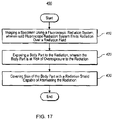
- FIG. 17 is a flow diagram illustrating a method for shielding radiation, in accordance with one embodiment of the present invention.
- embodiments of the present invention provide for a topically applicable medium having an active ingredient suitable for attenuating and / or absorbing harmful x-ray radiation.
- Use of these topically applicable mediums provide radiation protection for parts of the body of a member of the medical staff or patients that are normally exposed to radiation during the use of fluoroscopic imaging systems.
- other embodiments of the present invention provide for the above advantages and also allow for full dexterity of the hands and fingers of medical staff members for use during medical procedures. Further advantages of the embodiments of the present invention include providing radiation protection during medical procedures, without any image distortion or artifacts associated with the use of metallic shielding materials.
- other embodiments of the present invention provide for the above advantages and also provide for tactile sensation of the hands and fingers of medical staff members during medical procedures.
- FIG. 1 is an illustration of a shield 100 for radiation attenuation, in accordance with one embodiment of the present invention.
- FIG. 1 is a two-dimensional depiction of the shield 100.
- the shield 100 includes an organic or inorganic carrier 110 that is suitable for topical application on human tissue, such as skin.
- the shield 100 also includes an active ingredient 120 that is homogeneously dispersed throughout the organic carrier. More specifically, the active ingredient 120 includes an element having a high atomic number and that is suitable for attenuating radiation.
- the organic or inorganic carrier 110 is of a form capable of aqueous dispersion and formulated for ready and effective application on human tissue, such as skin.
- the carrier is of a cream composition and exhibits thixotropic characteristics, in one embodiment. That is, the cream initially resists flow when a shear stress is applied, but with sufficient force flows to form a smooth, continuous film on the skin.
- the cream composition includes a solid content on the order of 33-50 percent and a pH ranging from 5.0 to 6.5, and are characteristic of ingredients commonly used in creams used in skin care or hand lotions.
- the cream composition is in the form of an alcohol based gel, in another embodiment.
- the gel can be formulated using a variety of cosmetically/dermatologically acceptable vehicles, diluents, or carriers. As a characteristic, these gel compositions liquefy or freely flow from a solid state when subjected to force or vibration.
- These alcohol based gel compositions can be fast drying and non-greasy, or could consist of oil-in-water emulsions.
- alcohol based compositions can include film-forming organic polymers, such as Dermacryl.RTM. LT, that impart waterproofing characteristics and decreased rub-off of the active ingredients present in the cream composition.
- the organic or inorganic carrier 110 could be in a form that is capable of being sprayed.
- the organic carrier 110 is composed of any compound that exists in a fluid, liquid, or any appropriate state, and that is capable of being dispersed as a vapor or a fine particulate. The use of the spray implementation allows for quick application of the shield to larger areas requiring radiation protection.
- the shield 100 includes an active ingredient 120 that is suitable for attenuating radiation, in accordance with one embodiment of the present invention.
- the active ingredient is represented by the "x" symbols, and are homogeneously dispersed throughout the carrier 110, in one implementation. More particularly, the active ingredient 120 exhibits radiation attenuating capabilities. That is, the active ingredient 120 is capable of performing one or a combination of blocking, absorbing, scattering, or reflecting of x-ray radiation.
- the active ingredient consists of any inorganic salt compound that is suitable for attenuating x-ray radiation, and that exhibits one or more of the following characteristics: non-toxic to human tissue, stable, non-flammable, free flowing, having particles with high surface area, and is capable of being well dispersed uniformly.
- the active ingredient 120 is comprised of an inorganic salt compound with at least one element of high atomic number. That is, the inorganic salt compound includes cations with atomic numbers high enough to effectively block x-ray radiation.
- the active ingredient is composed of any element, compound, or combination of compounds which contains a cation of high atomic number, such that it is capable of effectively attenuating x-ray radiation emanating from fluoroscopic imaging systems and other medical diagnostics and treatment systems.
- the active ingredient includes an element taken from the group consisting of bismuth, barium, and lanthanum.
- the element forms the cation in the organic salt compound.
- the active ingredient is a barium salt.
- the barium salt compound is barium sulfate (e.g., Ba 2 SO 4 ). Barium sulfate has been proven to be safe and non-toxic to humans.
- the active ingredient is a lanthanum salt.
- the lanthanum salt compound is lanthanum oxide (e.g., La 2 O 3 ).
- the active ingredient is a bismuth salt.
- the bismuth salt compound is bismuth oxide (e.g., Bi 2 O 3 ).
- the active ingredient is a combination of barium sulfate, bismuth oxide, and lanthanum oxide of varying ratios from 0 to 100. That is, each of the compounds may be varied from 0 to 100 in a composition making up the active ingredient.
- the active ingredient composed of organic agents are contemplated.
- the organic agents are also suitable for attenuating radiation.
- the active ingredient comprises at least 25 percent by weight of the composition forming the shield 100, which includes the carrier 110 and the active ingredient 120. In other more specific embodiments, the active ingredient ranges between 33-50 percent by weight of the composition forming the shield 100. In another embodiment, the active ingredient ranges between 1-20 parts by weight of a composition forming the shield 100, which includes a composition comprising the carrier and the active ingredient, wherein the carrier approximates 1 part by weight of the composition. In other embodiments, the active ingredient comprises at least 10 percent by volume of a composition comprising the carrier and the active ingredient. In another embodiment, the active ingredient comprises 10-67 percent by volume of the composition.
- the carrier ranges between 0.1 to 99.9 percent by weight of the composition comprising the carrier 110 and the active ingredient 120, and where the active ingredient comprises the remaining portion by weight of the composition.
- the active ingredient has a radiation attenuating capacity that sufficiently protects against radiation exposure. The level of protection is achieved while preserving dexterity of the hands and fingers and maintaining tactile sensation of the hands and fingers. As such, the level of protection is achieved without comprising the execution of clinical techniques and without deleteriously influencing the outcome of such clinical techniques.
- the shield 100 composition comprising cream based compositions and an active ingredient, is formulated to provide radiation protection, in embodiments of the present invention.
- the cream based composition of the shield 100 comprises a cosmetically acceptable vehicle, carrier, or diluent and exhibits characteristics including an aqueous, dispersed phase, and an oily, dispersed phase.
- the active ingredient consists of one or more non-toxic United States Food & Drug Administration (FDA) approved radiation attenuating compounds, of various concentrations, and is capable of providing protection from harmful x-ray radiation.
- FDA United States Food & Drug Administration
- the shield 100 consists of cream based compositions blended with an active ingredient that may be in powder form.
- the active ingredient includes an inorganic radiation absorbing salt in powder form, such as barium sulfate, lanthanum oxide, bismuth oxide, or a combination therein.
- the active ingredient is blended homogeneously with a base containing the carriers to form a topically applied radiation protection cream composition that provides substantial attenuation of radiation.
- the compound or compounds forming the active ingredient are selected as a function of the desired radiation protection factor.
- the radiation protection factor may be expressed mathematically by the degree of attenuation of x-ray radiation in comparison to a known standard, such as those existing for metal foils (e.g., aluminum).
- the compound or compounds forming the active ingredient may consist of varying concentrations in order to increase or decrease the effectiveness of radiation attenuation. For instance, the percent by weight of the active ingredient may be increased or decreased to obtain the proper radiation protection factor.
- the active ingredient may include a barium salt compound and a bismuth salt compound.
- the bismuth salt compound partly due to its higher atomic number, exhibits higher radiation attenuating capacity than a barium salt compound.
- concentrations of the bismuth salt compound may be varied in relation to the barium salt compound to achieve the proper radiation protection factor.
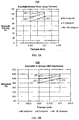
- FIGS. 2A and 2B are graphs illustrating experimental results for various shield compositions.
- these various shield compositions include active ingredients of barium sulfate, bismuth oxide, and a homogenous mixture of barium sulfate and bismuth oxide. Where it is a mixture, the active ingredient is formulated in a 50:50 atomic number proportion of barium to bismuth.
- each of the various active ingredients is ground into a fine homogenous powder form and blended with a carrier common to each of the shield compositions.
- the carrier formulation includes glycerin, stearic acid, glycol stearate, glycerin stearate, and carbomer in an aqueous mixture.
- the fine powders of active ingredients were mixed with the carrier in a weight ratio ranging from 5.5 to 8 parts by weight of the powder to 1 part by weight of the carrier composition.
- the powders were blended homogeneously to obtain a smooth, homogeneous creamy texture typically used for topical applications such as cosmetic skin moisturizing creams or creams used for protection from solar ultra-violet radiation such as sun-block creams.
- each of the prepared creams were applied onto a polymer test film with the creams having three controlled thicknesses: 0.13 mm (0.005 inch), 0.20 mm (0.008 inch), and 0.25 mm (0.010 inch).
- the test films were then placed in a Faxitron x-ray cabinet, and exposed to an x-ray source excited at 18 kV for 120 seconds.
- an aluminum step wedge with steps of 0.076 mm (0.003 inch), 0.15 mm (0.006 inch), and 0.23 mm (0.009 inch) was also simultaneously exposed to the x-ray source and used to calibrate the x-ray absorption of the test films.
- the test films Upon exposure to the radiation from the x-ray source, the test films were developed, and the resulting images indicated various degrees of radiation attenuation from the creams of controlled composition and thicknesses.
- the images from the test films were analyzed and compared to the images provided from the aluminum step wedge. More specifically, when examining the test films, areas of the images showing higher levels of x-ray attenuation appear in lighter gray contrast. Conversely, areas of the images showing lower levels of x-ray attenuation appear as darker gray contrast.
- the higher the attenuation of radiation due to the applied creams thickness and composition the lighter the gray contrast appears on the corresponding image.
- FIG. 2A is a graph illustrating the gray scale intensity versus thickness of the three shield cream based compositions tested, in accordance with one embodiment of the present invention.
- the line 210 corresponds to a cream based composition including barium sulfate (Ba 2 SO 4 ) of varying thicknesses.
- line 220 corresponds to a cream based composition including bismuth oxide (Bi 2 O 3 ) of varying thicknesses.
- line 230 corresponds to a cream based composition including a homogenous mixture of barium sulfate.
- gray scale intensity was quantified and calibrated against the gray scale intensity values from the aluminum step wedge control.
- the composition including barium sulfate (Ba 2 SO 4 ) corresponding to line 210 provided the lowest gray scale intensity values for each of the thicknesses tested. In other words, these values corresponded to the darkest gray scale contrast.
- the composition including a homogenous mixture of barium sulfate (Ba 2 SO 4 ) and bismuth oxide (Bi 2 O 3 ) corresponding to line 230 provided more gray scale intensity values, when compared to the composition including barium sulfate (Ba 2 SO 4 ).
- FIG. 2B is a graph illustrating the radiation attenuation abilities of the various cream based compositions that were tested, and are based on the gray scale intensity values from FIG. 2A , in accordance with one embodiment of the present invention.
- the gray scale values from FIG. 2A were translated into an equivalent radiation attenuation percentage and adjusted to reflect values based on a 60 kV x-ray source that is typically used in clinical settings.
- the line 215 corresponds to the radiation attenuation readings for the cream based composition including barium sulfate (Ba 2 SO 4 ) of varying thicknesses.
- line 225 corresponds to the radiation attenuation readings for the cream based composition including bismuth oxide (Bi 2 O 3 ) of varying thicknesses.
- line 235 corresponds to radiation attenuation readings a cream based composition including a homogenous mixture of barium sulfate (Ba 2 SO 4 ) and bismuth oxide (Bi 2 O 3 ) .
- the values shown in FIG. 2B reflect the performance of each of the compositions in terms of gray scale intensity from FIG. 2A . That is, as shown in FIG. 2B , the composition including bismuth oxide (Bi 2 O 3 ) corresponding to line 225, provided the highest attenuation of radiation for each of the thicknesses tested.
- the composition including the homogenous mixture of barium sulfate (Ba 2 SO 4 ) and bismuth oxide (Bi 2 O 3 ) corresponding to line 235 provided lesser radiation attenuation, when compared to the composition including bismuth oxide (Bi 2 O 3 ).
- the composition including barium sulfate (Ba 2 SO 4 ) corresponding to line 215 provided the least attenuation of radiation of the three compositions tested.
- each of the cream based compositions were successful in attenuating a significant amount of x-ray radiation.
- the composition including barium sulfate (Ba 2 SO 4 ) corresponding to line 215 provided attenuation values as a percentage between 40 and 50 percent.
- the composition including the homogenous mixture of barium sulfate (Ba 2 SO 4 ) and bismuth oxide (Bi 2 O 3 ) corresponding to line 235 provided attenuation values as a percentage between 50 and 60 percent.
- the composition including bismuth oxide (Bi 2 O 3 ) corresponding to line 225 provided the attenuation values as a percentage between 55 and 60 percent.
- the active ingredient capable of blocking radiation is infused directly into a fabric layer comprising a drape, or is infused into a layer that is adjacent to a substrate layer comprising the drape.
- the inorganic radiation protective salt compounds can be impregnated into or onto natural or synthetic, woven or nonwoven fiber based disposable paper or cloth products, in accordance with one embodiment of the present invention. It is contemplated that the radiation protecting drapes are hermetically sealed for sterility and ease of use during medical procedures.
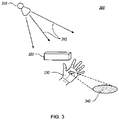
- FIG. 3 illustrates a system 300 capable of radiation attenuation, in accordance with one embodiment of the present invention.
- the system is capable of being implemented in any medical setting implementing fluoroscopic imaging or other medical diagnostic or treatment systems that employ radiation for use in diagnostic detection, treatment, or guiding purposes when performing medical procedures.
- system 300 is capable of providing radiation protection to arms and hands of medical staff.
- System 300 includes a radiation source 310 emitting radiation over a radiation field 315.
- a targeted specimen 320 such as the targeted body part of a patient, is located within the radiation field 315.
- the specimen may be located on a raised platform or table for available access.
- specimen 320 is illustrated as a three-dimensional box, and represents any type of specimen, such as an arm, abdomen, leg, or any other body part of a human or non-human patient.
- the radiation source is a fluoroscopic radiation system used for imaging a targeted specimen 320, such as the targeted body part of a patient.
- a fluoroscopic radiation system used for imaging a targeted specimen 320, such as the targeted body part of a patient.
- mobile C-arm fluoroscopic imaging systems are commonly used in in-patient and out-patient settings.
- this C-arm imaging system includes the radiation source 310 and is used for imaging the specimen when performing medical procedures.
- the radiation field 315 completely surrounds the specimen and even spreads into areas beyond where the specimen is located.
- a non-targeted body part many times is located within the radiation field 315, where the body part is not targeted for imaging, but is exposed to radiation.
- hand 330 is a body part that is located within the radiation field 315 and is exposed to x-ray radiation from the radiation source 310.
- the hand as the non-targeted body part is associated with the specimen.
- the hand 330 may be part of the patient.
- the hand as the non-targeted body part may be part of a member of the medical staff, where the hand is used to stabilize the specimen or to hold surgical instruments engaged with the patient when performing medical procedures. Without proper protection, the hand 330 is at risk for overexposure to the radiation from the radiation source 310 while the specimen is being imaged.
- system 300 also includes a radiation shield 340 that is topically applied to human tissue of the body part, and may be advantageously placed between the radiation source 310 and the body part 320.
- the radiation shield 340 is topically applied to the skin of the hand 330. This shield may be applied to a portion of the hand 330 or the entire hand 330 as required. More particularly, the radiation shield 340 is suitable for attenuating radiation from the radiation source 310.
- the radiation shield 340 comprises a carrier (e.g., organic or inorganic) having thixotropic properties, in one embodiment.
- the carrier is a cream based organic composition that is formulated for ready and effective application on the skin.
- the radiation shield 340 also includes an active ingredient that is homogeneously dispersed throughout the carrier. More particularly, the active ingredient comprises an inorganic salt compound having an element having a high atomic number, and is suitable for attenuating radiation.
- the inorganic salt compound is taken from one of the following: barium sulfate, bismuth oxide, lanthanum oxide, or a combination therein.
- the fluoroscopic radiation system outputs essentially monochromatic radiation. That is, the radiation in the radiation field 315 is essentially of a single frequency. As such, the active ingredient in the radiation shield 340 is specifically configured to attenuate the monochromatic radiation emanating from the radiation source 310.
- a system in another embodiment, includes a radiation source, targeted specimen, and a non-targeted body part, previously described in FIG. 3 .
- the system includes a radiation shield that is topically applied to human tissue of the non-targeted body-part.
- the radiation shield is suitable for attenuating radiation from the radiation source.
- the radiation shield includes a carrier (e.g., organic based or inorganic based carriers), and an active ingredient that is homogeneously dispersed throughout the carrier.
- the active ingredient comprises an inorganic salt compound with at least one element having a high atomic number and is suitable for attenuating radiation.
- a composition comprising the carrier and the active ingredient is in a form capable of being sprayed.
- the system may include a radio-opaque film, such as a drape, for radiation attenuation.
- the radio-opaque film is suitable for covering other body parts at risk for overexposure to radiation from the radiation source.
- the radio-opaque film can cover the patient, or may be used by medical staff.
- the radio-opaque film comprises a flexible substrate, such as that made from a flexible fabric.
- the radio-opaque film also includes a layer adjacent the flexible substrate, wherein the layer comprises a composition homogeneously dispersed throughout the layer, and is similar to or includes the active ingredient previously described for use in the radiation shield 340.
- a system in still another embodiment, includes a radiation source, targeted specimen, and a non-targeted body part, previously described in FIG. 3 .
- the system includes a radio-opaque film for radiation attenuation.
- the radio-opaque film is suitable for covering the body part.
- the radio-opaque film comprises a flexible substrate.
- the radio-opaque film includes a layer adjacent the flexible substrate, wherein the layer includes a composition homogeneously dispersed throughout the layer that includes the active ingredient previously described for use in the radiation shield 340.
- the radio-opaque film includes the active ingredient homogenously dispersed throughout the flexible substrate, such that the active ingredient is incorporated within the flexible substrate.
- a radio-opaque film that incorporates teachings of the present invention may be used in a number of different ways. Without limiting the scope of the present invention, a radio-opaque film of the present invention may be used as a surgical drape, in shields and protective devices that provide an individual with protection from ionizing radiation, in garments that are worn by a healthcare provider (e.g. , a doctor, a physician's assistant, a nurse, a technician, etc.) during a procedure ( e.g. , a surgical procedure, etc.) in which the healthcare provider may be exposed to ionizing radiation, and in radiation shielding curtains.
- a healthcare provider e.g. , a doctor, a physician's assistant, a nurse, a technician, etc.
- a procedure e.g. , a surgical procedure, etc.
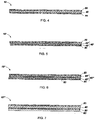
- FIGs. 4 through 9 Various embodiments of radio-opaque films that incorporate teachings of the present invention are shown in FIGs. 4 through 9 .
- radio-opaque film 10 that includes a radio-opaque layer 40 sandwiched between a pair of containment layers 20 and 30.
- Each containment layer 20, 30 may comprise a thin, flexible film.
- the material of each containment layer 20, 30 may conform somewhat to the shape of an object, such as the body part of a patient, over which a radio-opaque film 10 that includes the containment layers 20 and 30 is positioned.
- the containment layers 20 and 30 may be configured in such a way as to enable folding of the radio-opaque film of which they are a part.
- one or both containment layers 20 and 30 may include at least one surface with features, such as patterned or random texturing, that increase its effective surface area and/or enhance adhesion between that containment layer 20, 30 and the adjacent radio-opaque layer 40.
- each containment layer 20 and 30 may have a thickness of about 15 mils (0.015 inch, or about 0.375 mm) or less.
- embodiments of radio-opaque films 10 that include containment layers 20, 30 of other thicknesses are also within the scope of the present invention.
- each containment layer 20, 30 may be selected on the basis of a number of factors, including, without limitation, the porosity of the material, water-resistance (which may be a function of porosity, the material itself, etc.), bacterial resistance (which may be a function of porosity, incorporation of antibacterial agents into the material, etc.), flexibility, feel, and any other factors.
- each containment layer 20, 30 may comprise a polymer or a polymer-based material.
- one or both containment layers 20, 30 may comprise a polymer film or a sheet of woven or nonwoven polymer fibers with paper-like or fabric-like characteristics.
- one or both containment layers 20, 30 may comprise a polymer, but have a structure ( e.g. , fibers arranged in a way) that resembles paper ( e.g. , for use as a surgical drape, etc.) or fabric ( e.g. , for use in a gown, etc.).
- one or both of the containment layers may have some opacity to ionizing radiation, or radio-opacity.
- the radio-opaque layer 40 of a radio-opaque film 10 of the present invention includes a material that attenuates ionizing radiation, or a radio-opaque material.
- the radio-opaque material of the radio-opaque layer 40 may be in a particulate or powdered form.
- the radio-opaque layer 40 may include a binder that holds particles of the radio-opaque material together.
- the radio-opaque material may be non-toxic.
- the radio-opaque material may comprise or be based upon elemental species having atomic numbers of 56 or greater. Non-limiting examples of such elemental species include barium species, bismuth species and lanthanum species.
- the radio-opaque material may comprise an inorganic salt. Non-limiting examples of non-toxic, radio-opaque inorganic salts include barium sulfate and bismuth oxide.
- any material that will hold particles of the radio-opaque material together without causing a substantial decrease in the density of the radio-opaque material may be used as the binder.
- the binder may hold particles of radio-opaque material together loosely, it may provide a stronger bond between adjacent particles, and/or it may enable the formation of a smooth uniform coating, or film.
- examples of such materials include, but are not limited to, polyvinyl alcohol (PVA), polyvinyl butyrol (PVB), polyethylene glycol (PEG), glycerine, capric triglyceride, cetyl alcohol, glyceryl sterate and combinations of any of these materials.
- the radio-opaque material may, in some embodiments, comprise at least about 50% of the weight of the radio-opaque layer 40, with the binder comprising about 50% or less of the weight of the radio-opaque layer 40.
- Other embodiments of radio-opaque layers 40 include about 75% or more of the radio-opaque material, by weight, and about 25% or less of the binder, by weight.
- the radio-opaque material may comprise about 97% or more of the weight of the radio-opaque layer 40, while the binder comprises only up to about 3% of the weight of the radio-opaque layer 40.
- a radio-opaque layer 40 of a radio-opaque film 10 of the present invention has a thickness of about 40 mils (0.040 inch, or 1 mm) or less.
- a radio-opaque film 10 may include a radio-opaque layer 40 with a thickness of about 25 mils (0.020 inch, or about 0.6 mm) or less.
- the radio-opaque layer 40 of a radio-opaque film 10 may have a thickness of about 15 mils (0.015 inch, or about 0.375 mm) or less, about 10 mils (0.010 inch, or about 0.25 mm) or less, or about 5 mils (0.005 inch, or about 0.125 mm) or less.
- the ability of the radio-opaque layer 40 to attenuate ionizing radiation depends upon a number of factors, including, without limitation, the attenuating ability of each radio-opaque material from which the radio-opaque layer 40 is formed, the relative amounts of radio-opaque material and binder in the radio-opaque layer 40, and the thickness of the radio-opaque layer 40.
- the containment layers 20 and 30 may be secured to the radio-opaque layer 40, and to one another, in a number of different ways.
- the binder may adhere or otherwise secure the containment layers 20 and 30 to the radio-opaque layer 40 and, thus, to one another.
- the containment layers 20 and 30 may be directly or indirectly secured to one another at a plurality of spaced apart locations (e.g.
- the containment layers 20 and 30 may be directly fused to one another (e.g. , by thermal bonding, solvent bonding, etc.).
- adhesive material may be disposed between a plurality of spaced apart locations on the containment layers 20 and 30.
- the radio-opaque material and binder may substantially homogeneously mixed in a solvent.
- the solvent may comprise a carrier solvent within which the binder is provided, or a separately added solvent.
- the resulting slurry may have a solids content, or solids loading, of about 75% w/w to about 80% w/w.
- the slurry may then be applied to one of the containment layers 20 in a manner that will result in the formation of a thin film of radio-opaque material over the containment layer 20.
- a doctor blade or simulated doctor blade technique may be employed to form the radio-opaque layer 40.
- one or more rollers may be employed to form and disperse the radio-opaque layer 40 between the containment layers 20 and 30. The other containment layer 30 may then be applied over the radio-opaque layer 40.
- roll calendaring techniques may be used.
- radio-opaque film 10' of the present invention is shown. Like the radio-opaque film 10 depicted by FIG. 4 , radio-opaque film 10' includes a pair of oppositely facing containment layers 20 and 30 with a radio-opaque layer 40' between the containment layers 20 and 30. Radio-opaque layer 40' differs from radio-opaque layer 40, however, in that radio-opaque layer 40' includes two (as depicted) or more sublayers 42', 44', etc.
- each sublayer 42', 44', etc. includes a different radio-opaque material or mixture of radio-opaque materials than each adjacent sublayer 44', 42', etc.
- each sublayer e.g. , sublayer 42'
- elemental species e.g. , barium, bismuth, lanthanum, etc.
- sublayer 42' may comprise barium sulfate (barium, or Ba, has an atomic number of 56), while sublayer 44' may comprise bismuth oxide (bismuth, or Bi, has an atomic number of 83).
- barium sulfate barium, or Ba
- bismuth oxide bismuth, or Bi
- other arrangements of sublayers 42', 44', etc. are also within the scope of the present invention.
- the use of multiple sublayers 42', 44', etc. may provide a radio-opaque layer 40' an increased attenuation over the use of a single layer of radio-opaque material of the same thickness as radio-opaque layer 40'.
- selection of the radio-opaque material for each sublayer 42', 44' may be based upon the arrangements of their attenuating species (e.g. , lattice structures, the distances their attenuating species are spaced apart from one another, etc.), as sublayers 42' and 44' with differently arranged attenuating species may attenuate ionizing radiation differently.
- each sublayer 42', 44' may be selected on the basis of their ability to attenuate ionizing radiation over different bandwidths (or ranges) of frequencies or wavelengths, which may impart the radio-opaque layer 40' with the ability to attenuate a broader bandwidth of frequencies of ionizing radiation than the use of a single layer of radio-opaque material that has the same thickness as radio-opaque layer 40'.
- Suitable processes such as those described in reference to the embodiment of radio-opaque film 10 shown in FIG. 4 , may be used to manufacture a radio-opaque film 10' with two or more adjacent sublayers 42', 44', etc.
- the use of a plurality of sublayers 42', 44', etc., to form the radio-opaque film 40' requires slight modification of the above-described process, as only the first sublayer 42' is formed directly on the containment layer 20; each successively formed sublayer 44', etc., is formed on a previously formed sublayer 42', etc.
- the other containment layer 30 may then be positioned over and applied to the uppermost sublayer 44', etc.
- FIG. 6 illustrates another embodiment of radio-opaque film 10", in which adjacent sublayers 42', 44', etc., of the radio-opaque layer 40' are physically separated from one another by way of an isolation layer 50.
- Isolation layer 50 may comprise a polymer, such as a low density polyethylene, or any other suitable material. Isolation layer 50 may itself have radio-opaque properties, or it may be substantially transparent to ionizing radiation.
- Radio-opaque film 10" may be manufactured by processes similar to those used to form radio-opaque film 10, with each isolation layer 50 being positioned over and secured to a sublayer 42', etc. ( e.g. , by roll calendaring, etc.), then forming each successive sublayer 44', etc., on an isolation layer 50. After defining the uppermost (or outermost) sublayer 44', etc., a containment layer 30 is positioned over and secured to that sublayer 44', etc.
- radio-opaque film 10"' that includes an additional substrate 60 secured to one of the containment layers 30 is illustrated.
- the substrate 60 may comprise any suitable material that may impart the radio-opaque film 10"' with desirable properties.
- the substrate 60 is formed from a paper or a paper-like material (e.g. , polyethylene fibers, etc.), it may be readily positioned and repositioned without sticking to a surface ( e.g. , skin, etc.) over which it is used.
- a substrate 60 formed from such a material may also impart the radio-opaque film 10"' with the ability to absorb liquids.
- radio-opaque film 10"' may be useful as a surgical drape or a similar article to be used in a patient examination room.
- the substrate 60 may be formed from cloth or a cloth-like material (e.g. , polyethylene fibers, etc.), which may impart the radio-opaque film 10"' with a cloth-like appearance, which may be desirable in situations where the radio-opaque film 10"' is used to form a protective garment, a protective shield ( e.g. , sheet, etc.), or the like.
- cloth or a cloth-like material e.g. , polyethylene fibers, etc.
- a protective shield e.g. , sheet, etc.
- a radio-opaque film (e.g,. radio-opaque film 10, 10', 10", 10"' or any other embodiment of radio-opaque film) of the present invention may be used to protect a patient, a healthcare provider or both from ionizing radiation.
- FIG. 8 illustrates an embodiment of the manner in which a radio-opaque film 10 of the present invention, or another article ( e.g. , a surgical drape, etc.) that includes a radio-opaque film 10, may be used to reduce or eliminate exposure of a patient and/or a healthcare professional to ionizing radiation.
- an imaging device 110 e.g. , an X-ray machine, a CAT scan (computer aided tomography) machine, a fluoroscope, etc.
- an imaging device 110 is used from a location outside a subject's body O to image an internal portion of the subject's body O.
- Areas of the subject's body O that are within a radiation field 112 of the imaging device 110 may be covered with a radio-opaque film 10.
- parts of the body of each healthcare professional that may be located within or near the radiation field 112 may be covered with a radio-opaque film 10.
- parts of the subject's body O that are located inside and or outside of the radiation field 112, as well as parts of the bodies of healthcare professionals that are located inside and or outside of the radiation field 112, but in the same room as the subject, may be shielded from indirect or incidental ionizing radiation by covering those body parts with a radio-opaque film 10.
- the EXAMPLE that follows demonstrates the ability of a radio-opaque film 10 that embodies teachings of the present invention to attenuate ionizing radiation.
- PET polyethylene terephthalate
- MYLAR® polyethylene terephthalate
- the PET films were cut to lateral dimensions of 5 cm x 5 cm.
- the bismuth oxide was blended with a PVB binder, with the resulting mixture including 80% bismuth oxide, with the balance comprising PEG binder, glycerine, capric triglyceride, cetyl alcohol and glyceryl sterate. That mixture was then suspended in water to form a slurry with a solids content of about 80% w/w.
- Two sets of samples were formed using the PET films and the bismuth oxide slurry.
- the bismuth oxide slurry was applied to the precut PET films at a controlled thickness of 0.010 inch (0.25mm), then placing another precut PET film over the bismuth oxide slurry and allowing the water to evaporate from the slurry.
- a second set of samples were prepared in the same manner, but with application of the bismuth oxide slurry at a controlled thickness of 0.015 inch (0.38 mm).
- control samples were prepared. Preparation of the control samples included cutting 5 cm x 5 cm swatches from an ESP TM radiation shielding examination glove available from Boston Scientific of Natick, Massachusetts. That radiation shielding glove includes lead particles dispersed throughout an elastomer at a solids content of approximately 60%, by weight.
- sample and control swatch preparation was complete, three tests were performed. In each test, a dosimeter was placed beneath each sample and control swatch, and exposed to ionizing radiation from a Philips C-Arm mobile x-ray device. In a first test, the samples and control swatches were exposed to x-ray radiation at an intensity of 60 kVp for 60 seconds. In a second test, the samples and control swatches were exposed to x-ray radiation at an intensity of 95 kVp for 60 seconds. In a third test, the samples and control swatches were exposed to x-ray radiation at an intensity of 110 kVp for 60 seconds.
- FIGs. 9 and 10 illustrate the attenuation provided by each radio-opaque film sample and control swatch, as determined by the amount of radiation to which the dosimeters were exposed, in terms of the percentage of radiation attenuated at each intensity.
- FIG. 9 compares the x-ray attenuation ability of a radio-opaque film with a 0.25 mm bismuth oxide layer to the ability of a commercially available elastomer-lead radio-opaque film to attenuate x-rays.
- FIG. 9 compares the x-ray attenuation ability of a radio-opaque film with a 0.25 mm bismuth oxide layer to the ability of a commercially available elastomer-lead radio-opaque film to attenuate x-rays.
- FIG. 9 The data provided by both FIG. 9 and FIG. 10 indicate that the bismuth oxide sample films attenuate significantly more x-ray radiation than the lead-based control swatches.
- FIG. 9 demonstrates, the sample with the 0.25 mm thick bismuth oxide film attenuates x-rays at a rate of about 73% more than the commercially available lead-based film.
- FIG. 10 shows that the 0.38 mm thick bismuth oxide film attenuates nearly twice as much x-ray radiation as the lead-based compound of the control swatch.
- Two radio-opaque films 10 were evaluated: a first having a single radio-opaque layer (a 0.75 mm thick bismuth oxide layer); and a second, which included a 0.7 mm thick bi-layer made of two radio-opaque materials: a 0.35 mm thick bismuth oxide layer (80% w/w bismuth oxide, 20% w/w binder ( see EXAMPLE 1); and a 0.35 mm thick bismuth-bismuth oxide layer (80% w/w bismuth-bismuth oxide, including 50% w/w bismuth and 50% w/w bismuth oxide, with the balance comprising the binder ( see EXAMPLE 1). Both radio-opaque films included two sheets (about 0.1 mm thick) of TYVEK ® flashspun polyethylene fibers with a radio-opaque layer therebetween.
- the lead foil used in the study was 99.9% pure foil available from Alfa Aesar.
- the lead shield which had a thickness of 1.5 mm, was a 0.5 mm lead-equivalent STARLITE radiation shield (Lot# 10166) available from Bar Ray Products of Littlestown, Pennsylvania.
- the lead-free shield which had a 0.5 mm lead-equivalent thickness of 1.9 mm, was a TRUE LITE radiation shield (Lot# 10467) available from Bar Ray Products.
- the lead-free shield, which had a thickness of 1.9mm was made from elemental antimony (Sb), in the form of particles embedded in an elastomeric material at a weight ratio of about 1:1.
- SB elemental antimony
- NANODOT ® dosimeters available from Landauer, Inc., of Glendale, Illinois, were used to detect the amount of x-ray radiation that passed through each of the tested products.
- Two sets of tests were performed. In a first set of tests, the x-ray attenuating ability of the single layer 0.75 mm specimen was evaluated. In a second set of tests, the ability of the two-layer 0.7 mm specimen to attenuate x-ray radiation was evaluated.
- Attenuation was evaluated at x-ray energies of 60 kVp, 90 kVp and 120 kVp. Each of the tests was repeated five times, with previously unused dosimeters used in each individual test.
- An ion chamber was used to measure the radiation dosage at the beginning of each of the tests (i.e. , different energies). Ion chamber counts were obtained three times to verify reproducibility of the measurements. In each test ( i.e. , for each energy of x-ray radiation), exposure to the x-ray radiation lasted for 60 seconds.
- the dosimeters were removed and stored carefully to maintain traceability. Data was then obtained from the dosimeters to determine the measured incident dosages of x-ray radiation (the control provided by the bare dosimeters) and the transmitted dosages of x-ray radiation (the amounts of x-ray radiation attenuated by each product, as measured by the covered dosimeters).
- FIGs. 11-13 show the x-ray energy spectra at 60 kVp, 90 kVp and 120 kVp, respectively.
- TABLE 1 data corresponding to the dosage of x-ray radiation, measured in mrad, to which each dosimeter ( i.e. , the bare dosimeter, the dosimeter under the 0.75 mm test product ("Drape"), the dosimeters under the three comparative products "Lead Foil,” “Lead Free,” “Lead Shield”) was exposed is set forth. Each value comprises an average of the five replicate tests at each energy (kVp) of x-ray radiation.
- the amount of attenuation by each product was calculated using attenuation by the 0.5mm lead foil ("Lead Foil") as a baseline. Specifically, the transmitted mrad values for the other products were divided by the transmitted mrad values for the 0.5 mm lead foil. The percent (%) attenuation was then calculated as the complement of the quotient.
- the 0.5 mm lead foil attenuates x-ray radiation better than the other products.
- the 1.5 mm lead shield (98%)
- the 1.9 mm lead-free shield 98%
- the much thinner 0.75 mm Tyvek test specimen about 85%.
- the thickness of the radio-opaque layer of the test product its ability to attenuate x-ray radiation would also increase, approaching that of the lead foil.
- FIG. 14 illustrates the ability of the 0.7 mm radio-opaque layer of the present invention to attenuate ionizing radiation relative to the 0.5 mm thick lead foil, the 1.5 mm thick lead-based radio-opaque layer, and the 1.9 mm thick lead-free radio-opaque layer.
- the estimated weight of a frontal radiation shield (based on the 5,000 cm 2 area of radio-opaque material used in some commercially available frontal radiation shields) made from a 0.7 mm radio-opaque film of the present invention was calculated, and compared with the known weight of lead frontal radiation shield of the same size.
- FIG. 15 the weight savings that would be provided by a frontal radiation shield made from a 0.7 mm radio-opaque film of the present invention is depicted in terms of a percent weight savings, as is the amount of weight savings of a lead-free frontal radiation shield over a lead frontal radiation shield.
- FIG. 16 shows that a complete gown (about 10,000 cm 2 total area) made from the 0.7 mm radio-opaque film would still weight significantly less (about 35% less) than the combined weights of a lead frontal radiation shield and sterile gown made from sheets of TYVEK ® flashspun polyethylene fibers.
- a gown fashioned from the 1.9 mm lead-free radio-opaque material would weight significantly more (about 20% more) than the combined weights of a lead frontal radiation shield and sterile gown.
- a radio-opaque film that incorporates teachings of the present invention may provide comparable radiation attenuation to existing radio-opaque materials at a significantly reduced thickness and weight.
- FIG. 17 is a flow diagram 400 illustrating a method for providing radiation attenuation.
- the method of the flow diagram 400 is capable of being implemented in any medical setting in which fluoroscopic imaging systems and other medical diagnostics and treatment systems used for diagnostic detection, treatment, or guiding purposes when performing medical procedures.
- the method of flow diagram 400 is capable of providing radiation protection to arms and hands of medical staff.
- a specimen is imaged using a fluoroscopic radiation system.
- the fluoroscopic radiation system emits x-ray radiation over a radiation field.
- the specimen is located within the radiation field, and may be viewed using a fluoroscopic viewing screen.
- a body part is exposed to the radiation.
- the body part is not targeted for imaging, and is at risk of radiation exposure.
- the body part may belong to the patient, or it may belong to a member of the medical staff performing the medical procedure on the patient.
- the body part may be a hand or arm of the physician performing the medical procedure.
- human tissue e.g., skin
- a radiation shield that is capable of attenuating the radiation.
- the radiation shield 340 includes an active ingredient that may be homogeneously dispersed throughout a carrier. More particularly, the active ingredient may comprise an inorganic salt compound having a high atomic number (e.g. , an atomic number of 50 or greater, an atomic number of 52 or greater, an atomic number of 59 or greater, etc.), and is suitable for attenuating radiation.
- the radiation shield may be topically applied to the human tissue.
- the radiation shield comprises a carrier having thixotropic properties.
- the carrier is a cream based organic composition that is formulated for ready and effective application on the skin.
- the carrier is in a form that is capable of being sprayed or in a form that can be wrapped around the skin.
- the radiation shield may comprise part of a radio-opaque film, such as a drape or garment, positioned over a body part that is to be shielded from radiation.
- the radiation shield is applied beneficially to protect against over-exposure to radiation, and that in one implementation the radiation shield is applied before there is any risk of radiation exposure, and in another implementation the radiation shield is applied while being exposed to radiation.
- a protective covering is placed over the human tissue.
- the protective covering may cover skin of fingers of a hand of a member of the medical staff.
- a double layer of protective covering is placed over the human tissue.
- the hand may be double-gloved to provide additional protection to the hand.
- a radio-opaque film comprising a first polymer layer, a second polymer layer; and a radio-opaque layer between the first and second polymer layers, the radio-opaque layer comprising a composition for attenuating ionizing radiation, comprising a carrier and an active ingredient homogeneously dispersed throughout the carrier and including a non-toxic substance suitable for attenuating ionizing radiation, the radio-opaque layer comprising at least about 50%, by weight, of the radio-opaque material.
- the non-toxic substance comprises at least one atomic species having an atomic number of at least 50.
- the active ingredient comprises at least one of bismuth species, barium species and lanthanum species.
- the active ingredient comprises at least one of an inorganic salt of the at least one atomic species and an oxidized form of the at least one oxidized species.
- radio-opaque film wherein the carrier of the radio-opaque layer comprises a binder for holding adjacent particles of the active ingredient together.
- the binder comprises at most about 50% of the weight of the composition.
- the binder of radio-opaque film comprises a polymer.
- the radio-opaque film the density of the composition is less than about 11 grams per cm3.
- the radio-opaque layer of the radio-opaque film has a thickness of about 0.5 mm or less, a thickness of about 0.38 mm or less, or a thickness of about 0.25 mm or less.
- the radio-opaque film further comprises a substrate adjacent to the first polymer layer.
- the substrate comprises paper or a paper-like material.
- the radio-opaque film further comprises a radio-transparent window through at least the radio-opaque layer.
- the radio-transparent window comprises an opening extending through the first polymer layer, the radio-opaque layer, and the second polymer layer.
- the radio-opaque films concern films wherein the radio-opaque layer includes a plurality of sublayers.
- at least one sublayer of the plurality of sublayers of the radio-opaque layer comprises a different radio-opaque material than an adjacent sublayer of the plurality of sublayers of the radio-opaque layer.
- the at least one sublayer is configured to be positioned closer to a source of ionizing radiation than the adjacent sublayer; and the radio-opaque material of the at least one sublayer is based upon an element having a lower atomic number than an atomic number of another element upon which the different radio-opaque material of the adjacent sublayer is based.
- the at least one sublayer of the radio-opaque film comprises a first radio-opaque material based on a first element having an atomic number that exceeds an atomic number of a second element upon which a second radio-opaque material of the adjacent sublayer is based.
- radio-opaque film wherein the at least one sublayer of the radio-opaque film is located closer to the second polymer layer than the adjacent sublayer, said radio-opaque film further comprising a substrate adjacent to the first polymer layer, the substrate configured to face the source of radiation.
- a radio-opaque film further comprising a barrier between adjacent sublayers of the plurality of sublayers.
- a method for manufacturing a radio-opaque film according to the invention comprises depositing the radio-opaque material onto a surface of the first polymer layer; disposing the second polymer layer of the radio-opaque material; and securing the second polymer layer to the first polymer layer to secure the radio-opaque material between the first and second polymer layers.
- the method further comprises depositing another radio-opaque material over the radio-opaque material on the surface of the first polymer layer.
- the method further comprises applying a barrier to the radio-opaque material before depositing the another radio-opaque material.
- depositing the radio-opaque material in a method to manufacture a radio-opaque film comprises printing the radio-opaque material onto the surface of the first polymer layer.
- Another embodiment concerns a method for manufacturing a radio-opaque film, wherein securing comprises adhesively securing the first and second polymer layers to one another.
- Another embodiment concerns a method to manufacture a radio-opaque film, wherein securing comprises thermally bonding the first and second polymer layers to one another.
- Another embodiment concerns a method to manufacture a radio-opaque film, wherein thermally bonding includes thermally bonding material between the first and second polymer layers to the first and second polymer layers.
- Yet another embodiment concerns an imaging system, comprising: a radiation source for emitting radiation over a radiation field; a targeted specimen located within the radiation field; a non-targeted body part located within the radiation field, wherein the body part is at risk of overexposure to the radiation while the targeted specimen is being imaged; and a radiation shield over the non-targeted body part, the radiation shield comprising at least one of the compositions for attenuating ionizing radiation according to the invention and the radio-opaque film according to the invention and being configured to attenuate the ionizing radiation.
- An even further embodiment concerns an imaging method, comprising: covering at least a portion of a body part at risk of overexposure to ionizing radiation with a radiation shield comprising at least one of the compositions for attenuating ionizing radiation according to the invention and the radio-opaque film according to the invention; emitting ionizing radiation over a radiation field; imaging a specimen within the radiation field; and attenuating ionizing radiation with the radiation shield.
Landscapes
- Physics & Mathematics (AREA)
- Engineering & Computer Science (AREA)
- General Engineering & Computer Science (AREA)
- High Energy & Nuclear Physics (AREA)
- Chemical & Material Sciences (AREA)
- Dispersion Chemistry (AREA)
- Apparatus For Radiation Diagnosis (AREA)
- Laminated Bodies (AREA)
- Radiation-Therapy Devices (AREA)
- Materials For Medical Uses (AREA)
Applications Claiming Priority (4)
| Application Number | Priority Date | Filing Date | Title |
|---|---|---|---|
| US12/683,727 US9114121B2 (en) | 2010-01-07 | 2010-01-07 | Radiation protection system |
| US12/897,611 US20110165373A1 (en) | 2010-01-07 | 2010-10-04 | Radio-opaque films of laminate construction |
| PCT/US2011/020608 WO2011085273A1 (fr) | 2010-01-07 | 2011-01-07 | Système de protection contre le rayonnement |
| EP11732251.1A EP2526554B1 (fr) | 2010-01-07 | 2011-01-07 | Système de protection contre le rayonnement |
Related Parent Applications (1)
| Application Number | Title | Priority Date | Filing Date |
|---|---|---|---|
| EP11732251.1A Division EP2526554B1 (fr) | 2010-01-07 | 2011-01-07 | Système de protection contre le rayonnement |
Publications (3)
| Publication Number | Publication Date |
|---|---|
| EP3200193A2 true EP3200193A2 (fr) | 2017-08-02 |
| EP3200193A3 EP3200193A3 (fr) | 2017-08-16 |
| EP3200193B1 EP3200193B1 (fr) | 2025-07-02 |
Family
ID=44224863
Family Applications (2)
| Application Number | Title | Priority Date | Filing Date |
|---|---|---|---|
| EP11732251.1A Active EP2526554B1 (fr) | 2010-01-07 | 2011-01-07 | Système de protection contre le rayonnement |
| EP17160036.4A Active EP3200193B1 (fr) | 2010-01-07 | 2011-01-07 | Film opaque aux rayons x pour la protection contre le rayonnement |
Family Applications Before (1)
| Application Number | Title | Priority Date | Filing Date |
|---|---|---|---|
| EP11732251.1A Active EP2526554B1 (fr) | 2010-01-07 | 2011-01-07 | Système de protection contre le rayonnement |
Country Status (7)
| Country | Link |
|---|---|
| US (3) | US20110165373A1 (fr) |
| EP (2) | EP2526554B1 (fr) |
| JP (2) | JP2013516631A (fr) |
| CN (2) | CN107437438A (fr) |
| CA (1) | CA2786426A1 (fr) |
| ES (1) | ES3037282T3 (fr) |
| WO (1) | WO2011085273A1 (fr) |
Families Citing this family (15)
| Publication number | Priority date | Publication date | Assignee | Title |
|---|---|---|---|---|
| US8754389B2 (en) | 2010-01-07 | 2014-06-17 | Bloxr Corporation | Apparatuses and methods employing multiple layers for attenuating ionizing radiation |
| US9114121B2 (en) | 2010-01-07 | 2015-08-25 | Bloxr Solutions, Llc | Radiation protection system |
| JP2013205359A (ja) * | 2012-03-29 | 2013-10-07 | Toshiba Corp | ゲル状中性子吸収材及び炉心溶融物回収方法 |
| JP2013221865A (ja) * | 2012-04-17 | 2013-10-28 | Daiwa:Kk | 多機能シート |
| WO2013163624A1 (fr) * | 2012-04-26 | 2013-10-31 | Bloxr Corporation | Appareils, systèmes et procédés pour suivre l'état de dispositifs médicaux multiples |
| WO2015051065A1 (fr) * | 2013-10-05 | 2015-04-09 | Bloxr Corporation | Revêtement de surface pour atténuer les rayonnements ionisants, installations comprenant les revêtements de surface, et procédés associés |
| US9640288B1 (en) * | 2015-11-30 | 2017-05-02 | Space Systems/Loral, Llc | Flexible radiation shield |
| CN105535020A (zh) * | 2016-01-25 | 2016-05-04 | 苏州爱瑞德医疗科技有限公司 | 一种医用x射线防护乳膏及其制备方法 |
| KR101967664B1 (ko) * | 2017-02-21 | 2019-04-11 | 주식회사 더굳인터내셔널 | 의료영상 촬영용 보호구 |
| US10675111B2 (en) | 2017-03-22 | 2020-06-09 | Jean-Jacques Francois Goy | Surgical drape including a layer to protect the operator from scattered radiation during cardiologic and radiologic invasive procedures |
| GB2597896B (en) * | 2018-08-14 | 2023-06-07 | Nordson Corp | Binder permeated ionizing radiation shielding panels, method of construction of ionizing radiation shielding panels and an x-ray inspection system |
| US12318269B2 (en) * | 2019-09-10 | 2025-06-03 | Solventum Intellectual Properties Company | Medical articles with radio opaque patterns |
| WO2021053367A1 (fr) * | 2019-09-16 | 2021-03-25 | Saba Valiallah | Protection contre les rayonnements passe-haut et procédé de protection contre les rayonnements |
| CN113804708A (zh) * | 2021-08-28 | 2021-12-17 | 南昌大学 | 一种x射线屏蔽材料的屏蔽性能测试方法 |
| EP4444180B1 (fr) | 2021-12-06 | 2025-11-12 | O&M Halyard, Inc. | Dispositif de protection contre les rayonnements diffus |
Family Cites Families (63)
| Publication number | Priority date | Publication date | Assignee | Title |
|---|---|---|---|---|
| US1331018A (en) * | 1919-09-29 | 1920-02-17 | Joseph O Luthy | Separator for secondary batteries |
| US3200085A (en) * | 1959-03-02 | 1965-08-10 | Arthur L Barber Jr | Radiation barrier material and method of making the same |
| GB1491202A (en) * | 1973-10-17 | 1977-11-09 | Warne Surgical Products Ltd | Catheter or tube having a tip which is high in opacity to x-rays |
| US4938233A (en) * | 1987-08-03 | 1990-07-03 | Techton, Inc. | Radiation shield |
| US5001354A (en) * | 1987-08-14 | 1991-03-19 | Arnold S. Gould | Surgical glove and process for making the same |
| BE1001528A5 (fr) * | 1988-03-24 | 1989-11-21 | Baxter Int | Barriere de protection contre les rayonnements ionisants du type y et/ou rayons x. |
| GB9021363D0 (en) * | 1990-10-02 | 1990-11-14 | Du Pont Canada | Article for protection of gonadal region |
| JPH06511315A (ja) * | 1991-07-16 | 1994-12-15 | スミス アンド ネフュー ピーエルシー | 放射線保護手袋 |
| US5245195A (en) * | 1991-12-05 | 1993-09-14 | Polygenex International, Inc. | Radiation resistant film |
| JPH089683B2 (ja) * | 1993-03-15 | 1996-01-31 | 三菱レイヨン株式会社 | 希土元素含有樹脂の製造法 |
| JP3559804B2 (ja) * | 1994-04-28 | 2004-09-02 | 綜研化学株式会社 | 被覆顔料および化粧料 |
| JP3441553B2 (ja) * | 1995-03-20 | 2003-09-02 | 株式会社資生堂 | 紫外線遮蔽効果を有する化粧料 |
| US5604784A (en) * | 1995-04-19 | 1997-02-18 | Picker International, Inc. | Radiation shield coating |
| JP4205206B2 (ja) * | 1997-05-30 | 2009-01-07 | ポーラ化成工業株式会社 | 被覆粉体並びにこれを配合してなる化粧料 |
| US6380336B1 (en) * | 1998-03-24 | 2002-04-30 | Nano-Tex, Llc | Copolymers and oil-and water-repellent compositions containing them |
| US6841791B2 (en) * | 1998-12-07 | 2005-01-11 | Meridian Research And Development | Multiple hazard protection articles and methods for making them |
| US7476889B2 (en) * | 1998-12-07 | 2009-01-13 | Meridian Research And Development | Radiation detectable and protective articles |
| US6828578B2 (en) * | 1998-12-07 | 2004-12-07 | Meridian Research And Development | Lightweight radiation protective articles and methods for making them |
| US6281515B1 (en) * | 1998-12-07 | 2001-08-28 | Meridian Research And Development | Lightweight radiation protective garments |
| JP3942767B2 (ja) * | 1999-04-06 | 2007-07-11 | 花王株式会社 | 紫外線遮蔽性超微粒子分散体 |
| AU7361200A (en) * | 1999-09-10 | 2001-04-10 | Nano-Tex, Llc | Water-repellent and soil-resistant finish for textiles |
| US6429432B1 (en) * | 1999-11-26 | 2002-08-06 | Dilon Technologies, Inc. | Gamma radiation isolation shield and method of use |
| US6517933B1 (en) * | 2000-01-18 | 2003-02-11 | Nano-Tex, Llc | Hybrid polymer materials |
| DE50115609D1 (de) * | 2000-02-17 | 2010-10-14 | Basf Se | Wässrige Dispersion wasserunlöslicher organischer UV-Filtersubstanzen |
| US6674087B2 (en) * | 2001-01-31 | 2004-01-06 | Worldwide Innovations & Technologies, Inc. | Radiation attenuation system |
| US20030095935A1 (en) * | 2001-11-16 | 2003-05-22 | General Electric Company | Transfer resistant cosmetic compositions comprising silicone gels |
| WO2003056951A2 (fr) * | 2002-01-08 | 2003-07-17 | Bernard Techologies, Inc. | Articles antimicrobiens protegeant le corps |
| DE20208918U1 (de) * | 2002-06-08 | 2003-10-23 | Paul Hartmann AG, 89522 Heidenheim | Bleifreies Strahlenschutzmaterial |
| US6749859B2 (en) * | 2002-06-26 | 2004-06-15 | Jonathan S. Leibowitz | Topical compositions and glove for protection against radiation exposure |
| US6923320B2 (en) * | 2002-07-06 | 2005-08-02 | Victor A. Grossman | Bandage package and dispenser |
| US7037512B2 (en) * | 2002-10-11 | 2006-05-02 | Perricone Nicholas V | Topical use of microfine calcined alumina |
| ATE333701T1 (de) * | 2002-12-17 | 2006-08-15 | Lanxess Deutschland Gmbh | Bleifreie mischung als strahlenschutz-additiv |
| DE10310666A1 (de) * | 2003-03-12 | 2004-10-07 | Arntz Beteiligungs Gmbh & Co. Kg | Material zur Schwächung der Strahlen einer Röntgenröhre, insbesondere für eine Folie für Strahlenschutzkleidung |
| WO2004091567A2 (fr) * | 2003-04-18 | 2004-10-28 | Merck Patent Gmbh | Formulations |
| US20060210500A1 (en) * | 2003-04-18 | 2006-09-21 | Merck Patent Gmbh | Formulations |
| US20040262546A1 (en) * | 2003-06-25 | 2004-12-30 | Axel Thiess | Radiation protection material, especially for use as radiation protection gloves |
| DE102004001328A1 (de) * | 2003-09-03 | 2005-04-07 | Mavig Gmbh | Leichtes Strahlenschutzmaterial für einen großen Energieanwendungsbereich |
| EP1536732B1 (fr) * | 2003-09-03 | 2007-06-20 | Mavig GmbH | Materiau leger de protection contre les rayonnements destine a une grande gamme d'energies |
| WO2005049713A1 (fr) * | 2003-11-18 | 2005-06-02 | Arntz Beteiligungs Gmbh & Co. Kg | Materiau de protection contre les rayonnements destine a des vetements de protection tels que des tabliers et similaires |
| DE20320920U1 (de) * | 2003-11-18 | 2005-06-30 | Arntz Beteiligungs Gmbh & Co. Kg | Strahlenschutzmaterial für Schutzkleidung, wie Schürzen u.dgl. |
| US7340308B1 (en) * | 2004-06-08 | 2008-03-04 | Advanced Cochlear Systems, Inc. | Method for electrically stimulating the cochlea |
| US7190978B2 (en) * | 2004-07-02 | 2007-03-13 | Anritsu Corporation | Mobile network simulator apparatus |
| JP2008538136A (ja) * | 2004-12-20 | 2008-10-09 | メリディアン リサーチ アンド ディベロップメント | 放射線検出性防護物品 |
| WO2006090629A1 (fr) * | 2005-02-23 | 2006-08-31 | Kabushiki Kaisha Toshiba | Couverture de protection contre les rayonnements |
| JP2007085865A (ja) * | 2005-09-21 | 2007-04-05 | Toshiba Corp | 放射線遮蔽シートおよびそれを用いたx線装置 |
| US20070075277A1 (en) * | 2005-09-22 | 2007-04-05 | Smith Peter C | Lightweight radiation absorbing shield |
| DE102006023824B4 (de) * | 2006-05-20 | 2010-01-28 | Cerbomed Gmbh | Vorrichtung zur transkutanen Aufbringung eines Reizes oder zur transkutanen Erfassung eines Parameters |
| DE102006028958B4 (de) * | 2006-06-23 | 2008-12-04 | Mavig Gmbh | Geschichtetes Bleifrei-Röntgenschutzmaterial |
| WO2008097382A2 (fr) * | 2006-10-11 | 2008-08-14 | Ira Kirschenbaum | Système à courte utilisation et procédé pour une protection adaptative à l'encontre d'un rayonnement |
| US7767990B2 (en) * | 2007-01-09 | 2010-08-03 | Worldwide Innovations & Technologies, Inc. | Radiation attenuation system for lateral imaging |
| FR2911991A1 (fr) * | 2007-01-25 | 2008-08-01 | Hutchinson Sa | Materiau elastomere multicouches charge en composes attenuateurs de radiations, son procede de preparation et ses utilisations |
| JP2008189576A (ja) * | 2007-02-02 | 2008-08-21 | Gc Corp | 歯科用x線造影性ペースト組成物 |
| US20080272318A1 (en) * | 2007-05-01 | 2008-11-06 | Worldwide Innovations & Technologies, Inc. | Radiation attenuating head cover |
| EP2058821B1 (fr) * | 2007-11-12 | 2012-11-28 | EPUCRET Mineralgusstechnik GmbH & Co. KG | Composition minérale coulable absorbante les rayons X |
| US20100176317A1 (en) * | 2009-01-13 | 2010-07-15 | Smith Peter C | Radiation absorber with selective layers and additives |
| US20100186753A1 (en) * | 2009-01-23 | 2010-07-29 | Bernadette Buckley | Sani-Thyro Cover for Thyroid Shields |
| WO2011082347A1 (fr) * | 2009-12-30 | 2011-07-07 | Bar-Ray Products, Inc. | Matériau pour vêtement léger multi-couches avec faible accumulation de rayonnement, apportant une protection contre les rayonnements diffusés |
| US9114121B2 (en) * | 2010-01-07 | 2015-08-25 | Bloxr Solutions, Llc | Radiation protection system |
| US8754389B2 (en) * | 2010-01-07 | 2014-06-17 | Bloxr Corporation | Apparatuses and methods employing multiple layers for attenuating ionizing radiation |
| US20140151584A1 (en) * | 2012-10-29 | 2014-06-05 | Bloxr Corporation | Nuclear radiation shields, shielding systems and associated methods |
| DE202010014951U1 (de) * | 2010-05-28 | 2011-11-25 | Cerbomed Gmbh | Elektrodenanordnung |
| US20120248346A1 (en) * | 2011-03-30 | 2012-10-04 | BloXR, Corporation | Limited-use radiation attenuating shields, liners for radiation attenuating shields and methods |
| US20130240763A1 (en) * | 2012-03-16 | 2013-09-19 | Bloxr Corporation | Apparatus and methods for reducing soiling of radio-opaque shields |
-
2010
- 2010-10-04 US US12/897,611 patent/US20110165373A1/en not_active Abandoned
-
2011
- 2011-01-07 CN CN201710228988.0A patent/CN107437438A/zh active Pending
- 2011-01-07 JP JP2012548194A patent/JP2013516631A/ja not_active Withdrawn
- 2011-01-07 WO PCT/US2011/020608 patent/WO2011085273A1/fr not_active Ceased
- 2011-01-07 CN CN201180010156.2A patent/CN102770923B/zh active Active
- 2011-01-07 EP EP11732251.1A patent/EP2526554B1/fr active Active
- 2011-01-07 CA CA 2786426 patent/CA2786426A1/fr not_active Abandoned
- 2011-01-07 ES ES17160036T patent/ES3037282T3/es active Active
- 2011-01-07 EP EP17160036.4A patent/EP3200193B1/fr active Active
-
2014
- 2014-03-26 US US14/225,633 patent/US20140205860A1/en not_active Abandoned
- 2014-03-28 US US14/228,633 patent/US20140212679A1/en not_active Abandoned
-
2016
- 2016-06-28 JP JP2016127180A patent/JP2016188870A/ja active Pending
Non-Patent Citations (1)
| Title |
|---|
| None |
Also Published As
| Publication number | Publication date |
|---|---|
| CN102770923A (zh) | 2012-11-07 |
| JP2016188870A (ja) | 2016-11-04 |
| EP3200193A3 (fr) | 2017-08-16 |
| ES3037282T3 (en) | 2025-09-30 |
| EP2526554A1 (fr) | 2012-11-28 |
| US20110165373A1 (en) | 2011-07-07 |
| US20140212679A1 (en) | 2014-07-31 |
| EP2526554B1 (fr) | 2017-04-05 |
| JP2013516631A (ja) | 2013-05-13 |
| CA2786426A1 (fr) | 2011-07-14 |
| WO2011085273A1 (fr) | 2011-07-14 |
| CN107437438A (zh) | 2017-12-05 |
| CN102770923B (zh) | 2017-05-10 |
| EP2526554A4 (fr) | 2013-09-25 |
| EP3200193B1 (fr) | 2025-07-02 |
| US20140205860A1 (en) | 2014-07-24 |
Similar Documents
| Publication | Publication Date | Title |
|---|---|---|
| EP3200193B1 (fr) | Film opaque aux rayons x pour la protection contre le rayonnement | |
| US9114121B2 (en) | Radiation protection system | |
| US8993989B1 (en) | Apparatuses and methods employing multiple layers for attenuating ionizing radiation | |
| EP2033198B1 (fr) | Matériau de protection contre les rayons x sans plomb revêtu | |
| US20110163248A1 (en) | Multi-layer light-weight garment material with low radiation buildup providing scattered-radiation shielding | |
| US20070080308A1 (en) | Dental x-ray radiation protection device | |
| Subramanian et al. | Clinical evaluation of a radio‐protective cream for the hands of the pediatric interventional cardiologist | |
| CN105535020A (zh) | 一种医用x射线防护乳膏及其制备方法 | |
| Ekpo et al. | Operator eye doses during computed tomography fluoroscopic lung biopsy | |
| JP7370107B2 (ja) | 被ばくと防護負荷を低減する複合化した防護機器・器具 | |
| Osherov et al. | A novel lead attenuator to reduce operator exposure to scattered radiation in transradial coronary procedures | |
| US9192344B2 (en) | Floor mat radiation attenuation shield | |
| HK1178312A (en) | Radiation protection system | |
| HK1178312B (en) | Radiation protection system | |
| Bawazeer et al. | Advancing radiation safety in dental CBCT scans: Assessing the efficacy of barium sulfate shields in protecting the thyroid and eyes | |
| Jeong et al. | Development and performance comparison of silicon mixed shielding material | |
| Mehnati et al. | Polyurethane compositions of bismuth used for breast shields during chest CT | |
| Widmer et al. | Radiation protection and physics of diagnostic radiology | |
| Bradley | Radiation Safety for Radiologic Technologists. | |
| Jo et al. | Evaluation of Composite Lead-Free Shield for Clinical Use in C-Arm Fluoroscopy | |
| Lima et al. | Impact of the incorrect use of lead drapes on staff and patient doses in interventional radiology | |
| US20240324975A1 (en) | Protective device/instrument for reducing radiation exposure and burden of protection | |
| Kuhls-Gilcrist et al. | Clinical Evaluation of a Radio-Protective Cream for the Hands of the Pediatric Interventional Cardiologist | |
| Acho et al. | Influence of radiation dose reduction gloves on exposure parameters, entrance dose rates and eye doses of interventionalists during mobile C-arm fluoroscopic procedures: A phantom study | |
| Hubeny et al. | Radiation Management: Patient and Physician |
Legal Events
| Date | Code | Title | Description |
|---|---|---|---|
| PUAI | Public reference made under article 153(3) epc to a published international application that has entered the european phase |
Free format text: ORIGINAL CODE: 0009012 |
|
| STAA | Information on the status of an ep patent application or granted ep patent |
Free format text: STATUS: THE APPLICATION HAS BEEN PUBLISHED |
|
| PUAL | Search report despatched |
Free format text: ORIGINAL CODE: 0009013 |
|
| AC | Divisional application: reference to earlier application |
Ref document number: 2526554 Country of ref document: EP Kind code of ref document: P |
|
| AK | Designated contracting states |
Kind code of ref document: A2 Designated state(s): AL AT BE BG CH CY CZ DE DK EE ES FI FR GB GR HR HU IE IS IT LI LT LU LV MC MK MT NL NO PL PT RO RS SE SI SK SM TR |
|
| AK | Designated contracting states |
Kind code of ref document: A3 Designated state(s): AL AT BE BG CH CY CZ DE DK EE ES FI FR GB GR HR HU IE IS IT LI LT LU LV MC MK MT NL NO PL PT RO RS SE SI SK SM TR |
|
| RIC1 | Information provided on ipc code assigned before grant |
Ipc: G21F 1/00 20060101AFI20170710BHEP |
|
| STAA | Information on the status of an ep patent application or granted ep patent |
Free format text: STATUS: REQUEST FOR EXAMINATION WAS MADE |
|
| 17P | Request for examination filed |
Effective date: 20180215 |
|
| RBV | Designated contracting states (corrected) |
Designated state(s): AL AT BE BG CH CY CZ DE DK EE ES FI FR GB GR HR HU IE IS IT LI LT LU LV MC MK MT NL NO PL PT RO RS SE SI SK SM TR |
|
| STAA | Information on the status of an ep patent application or granted ep patent |
Free format text: STATUS: EXAMINATION IS IN PROGRESS |
|
| 17Q | First examination report despatched |
Effective date: 20200120 |
|
| GRAP | Despatch of communication of intention to grant a patent |
Free format text: ORIGINAL CODE: EPIDOSNIGR1 |
|
| STAA | Information on the status of an ep patent application or granted ep patent |
Free format text: STATUS: GRANT OF PATENT IS INTENDED |
|
| INTG | Intention to grant announced |
Effective date: 20250127 |
|
| GRAS | Grant fee paid |
Free format text: ORIGINAL CODE: EPIDOSNIGR3 |
|
| GRAA | (expected) grant |
Free format text: ORIGINAL CODE: 0009210 |
|
| STAA | Information on the status of an ep patent application or granted ep patent |
Free format text: STATUS: THE PATENT HAS BEEN GRANTED |
|
| AC | Divisional application: reference to earlier application |
Ref document number: 2526554 Country of ref document: EP Kind code of ref document: P |
|
| AK | Designated contracting states |
Kind code of ref document: B1 Designated state(s): AL AT BE BG CH CY CZ DE DK EE ES FI FR GB GR HR HU IE IS IT LI LT LU LV MC MK MT NL NO PL PT RO RS SE SI SK SM TR |
|
| REG | Reference to a national code |
Ref country code: GB Ref legal event code: FG4D |
|
| REG | Reference to a national code |
Ref country code: CH Ref legal event code: EP |
|
| P01 | Opt-out of the competence of the unified patent court (upc) registered |
Free format text: CASE NUMBER: APP_27773/2025 Effective date: 20250611 |
|
| REG | Reference to a national code |
Ref country code: DE Ref legal event code: R096 Ref document number: 602011075391 Country of ref document: DE |
|
| REG | Reference to a national code |
Ref country code: IE Ref legal event code: FG4D |
|
| REG | Reference to a national code |
Ref country code: ES Ref legal event code: FG2A Ref document number: 3037282 Country of ref document: ES Kind code of ref document: T3 Effective date: 20250930 |
|
| REG | Reference to a national code |
Ref country code: NL Ref legal event code: MP Effective date: 20250702 |
|
| PG25 | Lapsed in a contracting state [announced via postgrant information from national office to epo] |
Ref country code: PT Free format text: LAPSE BECAUSE OF FAILURE TO SUBMIT A TRANSLATION OF THE DESCRIPTION OR TO PAY THE FEE WITHIN THE PRESCRIBED TIME-LIMIT Effective date: 20251103 |
|
| PG25 | Lapsed in a contracting state [announced via postgrant information from national office to epo] |
Ref country code: NL Free format text: LAPSE BECAUSE OF FAILURE TO SUBMIT A TRANSLATION OF THE DESCRIPTION OR TO PAY THE FEE WITHIN THE PRESCRIBED TIME-LIMIT Effective date: 20250702 |
|
| REG | Reference to a national code |
Ref country code: AT Ref legal event code: MK05 Ref document number: 1810243 Country of ref document: AT Kind code of ref document: T Effective date: 20250702 |
|
| PG25 | Lapsed in a contracting state [announced via postgrant information from national office to epo] |
Ref country code: IS Free format text: LAPSE BECAUSE OF FAILURE TO SUBMIT A TRANSLATION OF THE DESCRIPTION OR TO PAY THE FEE WITHIN THE PRESCRIBED TIME-LIMIT Effective date: 20251102 |
|
| PGFP | Annual fee paid to national office [announced via postgrant information from national office to epo] |
Ref country code: GB Payment date: 20251120 Year of fee payment: 16 |
|
| PG25 | Lapsed in a contracting state [announced via postgrant information from national office to epo] |
Ref country code: NO Free format text: LAPSE BECAUSE OF FAILURE TO SUBMIT A TRANSLATION OF THE DESCRIPTION OR TO PAY THE FEE WITHIN THE PRESCRIBED TIME-LIMIT Effective date: 20251002 |
|
| REG | Reference to a national code |
Ref country code: LT Ref legal event code: MG9D |
|
| PG25 | Lapsed in a contracting state [announced via postgrant information from national office to epo] |
Ref country code: AT Free format text: LAPSE BECAUSE OF FAILURE TO SUBMIT A TRANSLATION OF THE DESCRIPTION OR TO PAY THE FEE WITHIN THE PRESCRIBED TIME-LIMIT Effective date: 20250702 |
|
| PG25 | Lapsed in a contracting state [announced via postgrant information from national office to epo] |
Ref country code: FI Free format text: LAPSE BECAUSE OF FAILURE TO SUBMIT A TRANSLATION OF THE DESCRIPTION OR TO PAY THE FEE WITHIN THE PRESCRIBED TIME-LIMIT Effective date: 20250702 |
|
| PG25 | Lapsed in a contracting state [announced via postgrant information from national office to epo] |
Ref country code: HR Free format text: LAPSE BECAUSE OF FAILURE TO SUBMIT A TRANSLATION OF THE DESCRIPTION OR TO PAY THE FEE WITHIN THE PRESCRIBED TIME-LIMIT Effective date: 20250702 |
|
| PG25 | Lapsed in a contracting state [announced via postgrant information from national office to epo] |
Ref country code: GR Free format text: LAPSE BECAUSE OF FAILURE TO SUBMIT A TRANSLATION OF THE DESCRIPTION OR TO PAY THE FEE WITHIN THE PRESCRIBED TIME-LIMIT Effective date: 20251003 |
|
| PG25 | Lapsed in a contracting state [announced via postgrant information from national office to epo] |
Ref country code: CZ Free format text: LAPSE BECAUSE OF FAILURE TO SUBMIT A TRANSLATION OF THE DESCRIPTION OR TO PAY THE FEE WITHIN THE PRESCRIBED TIME-LIMIT Effective date: 20250702 Ref country code: SE Free format text: LAPSE BECAUSE OF FAILURE TO SUBMIT A TRANSLATION OF THE DESCRIPTION OR TO PAY THE FEE WITHIN THE PRESCRIBED TIME-LIMIT Effective date: 20250702 |
|
| PG25 | Lapsed in a contracting state [announced via postgrant information from national office to epo] |
Ref country code: LV Free format text: LAPSE BECAUSE OF FAILURE TO SUBMIT A TRANSLATION OF THE DESCRIPTION OR TO PAY THE FEE WITHIN THE PRESCRIBED TIME-LIMIT Effective date: 20250702 |
|
| PG25 | Lapsed in a contracting state [announced via postgrant information from national office to epo] |
Ref country code: BG Free format text: LAPSE BECAUSE OF FAILURE TO SUBMIT A TRANSLATION OF THE DESCRIPTION OR TO PAY THE FEE WITHIN THE PRESCRIBED TIME-LIMIT Effective date: 20250702 Ref country code: PL Free format text: LAPSE BECAUSE OF FAILURE TO SUBMIT A TRANSLATION OF THE DESCRIPTION OR TO PAY THE FEE WITHIN THE PRESCRIBED TIME-LIMIT Effective date: 20250702 |
|
| PG25 | Lapsed in a contracting state [announced via postgrant information from national office to epo] |
Ref country code: RS Free format text: LAPSE BECAUSE OF FAILURE TO SUBMIT A TRANSLATION OF THE DESCRIPTION OR TO PAY THE FEE WITHIN THE PRESCRIBED TIME-LIMIT Effective date: 20251002 |
|
| PG25 | Lapsed in a contracting state [announced via postgrant information from national office to epo] |
Ref country code: SM Free format text: LAPSE BECAUSE OF FAILURE TO SUBMIT A TRANSLATION OF THE DESCRIPTION OR TO PAY THE FEE WITHIN THE PRESCRIBED TIME-LIMIT Effective date: 20250702 |
|
| PGFP | Annual fee paid to national office [announced via postgrant information from national office to epo] |
Ref country code: ES Payment date: 20260212 Year of fee payment: 16 |
|
| PG25 | Lapsed in a contracting state [announced via postgrant information from national office to epo] |
Ref country code: DK Free format text: LAPSE BECAUSE OF FAILURE TO SUBMIT A TRANSLATION OF THE DESCRIPTION OR TO PAY THE FEE WITHIN THE PRESCRIBED TIME-LIMIT Effective date: 20250702 |
|
| PGFP | Annual fee paid to national office [announced via postgrant information from national office to epo] |
Ref country code: DE Payment date: 20251119 Year of fee payment: 16 |
|
| PG25 | Lapsed in a contracting state [announced via postgrant information from national office to epo] |
Ref country code: IT Free format text: LAPSE BECAUSE OF FAILURE TO SUBMIT A TRANSLATION OF THE DESCRIPTION OR TO PAY THE FEE WITHIN THE PRESCRIBED TIME-LIMIT Effective date: 20250702 |
|
| PG25 | Lapsed in a contracting state [announced via postgrant information from national office to epo] |
Ref country code: EE Free format text: LAPSE BECAUSE OF FAILURE TO SUBMIT A TRANSLATION OF THE DESCRIPTION OR TO PAY THE FEE WITHIN THE PRESCRIBED TIME-LIMIT Effective date: 20250702 Ref country code: SK Free format text: LAPSE BECAUSE OF FAILURE TO SUBMIT A TRANSLATION OF THE DESCRIPTION OR TO PAY THE FEE WITHIN THE PRESCRIBED TIME-LIMIT Effective date: 20250702 |