EP3200542A1 - Verfahren und vorrichtungen zur übertragung von uplink-informationen, senden und empfangen von downlink-informationen und systemplanung - Google Patents
Verfahren und vorrichtungen zur übertragung von uplink-informationen, senden und empfangen von downlink-informationen und systemplanung Download PDFInfo
- Publication number
- EP3200542A1 EP3200542A1 EP16779490.8A EP16779490A EP3200542A1 EP 3200542 A1 EP3200542 A1 EP 3200542A1 EP 16779490 A EP16779490 A EP 16779490A EP 3200542 A1 EP3200542 A1 EP 3200542A1
- Authority
- EP
- European Patent Office
- Prior art keywords
- information
- uplink
- user equipment
- scheduling
- downlink
- Prior art date
- Legal status (The legal status is an assumption and is not a legal conclusion. Google has not performed a legal analysis and makes no representation as to the accuracy of the status listed.)
- Granted
Links
Images




Classifications
-
- H—ELECTRICITY
- H04—ELECTRIC COMMUNICATION TECHNIQUE
- H04W—WIRELESS COMMUNICATION NETWORKS
- H04W72/00—Local resource management
- H04W72/20—Control channels or signalling for resource management
- H04W72/23—Control channels or signalling for resource management in the downlink direction of a wireless link, i.e. towards a terminal
- H04W72/232—Control channels or signalling for resource management in the downlink direction of a wireless link, i.e. towards a terminal the control data signalling from the physical layer, e.g. DCI signalling
-
- H—ELECTRICITY
- H04—ELECTRIC COMMUNICATION TECHNIQUE
- H04W—WIRELESS COMMUNICATION NETWORKS
- H04W4/00—Services specially adapted for wireless communication networks; Facilities therefor
- H04W4/70—Services for machine-to-machine communication [M2M] or machine type communication [MTC]
-
- H—ELECTRICITY
- H04—ELECTRIC COMMUNICATION TECHNIQUE
- H04L—TRANSMISSION OF DIGITAL INFORMATION, e.g. TELEGRAPHIC COMMUNICATION
- H04L1/00—Arrangements for detecting or preventing errors in the information received
- H04L1/12—Arrangements for detecting or preventing errors in the information received by using return channel
- H04L1/16—Arrangements for detecting or preventing errors in the information received by using return channel in which the return channel carries supervisory signals, e.g. repetition request signals
- H04L1/18—Automatic repetition systems, e.g. Van Duuren systems
- H04L1/1829—Arrangements specially adapted for the receiver end
- H04L1/1858—Transmission or retransmission of more than one copy of acknowledgement message
-
- H—ELECTRICITY
- H04—ELECTRIC COMMUNICATION TECHNIQUE
- H04L—TRANSMISSION OF DIGITAL INFORMATION, e.g. TELEGRAPHIC COMMUNICATION
- H04L1/00—Arrangements for detecting or preventing errors in the information received
- H04L1/12—Arrangements for detecting or preventing errors in the information received by using return channel
- H04L1/16—Arrangements for detecting or preventing errors in the information received by using return channel in which the return channel carries supervisory signals, e.g. repetition request signals
- H04L1/18—Automatic repetition systems, e.g. Van Duuren systems
- H04L1/1867—Arrangements specially adapted for the transmitter end
- H04L1/1896—ARQ related signaling
-
- H—ELECTRICITY
- H04—ELECTRIC COMMUNICATION TECHNIQUE
- H04W—WIRELESS COMMUNICATION NETWORKS
- H04W72/00—Local resource management
- H04W72/12—Wireless traffic scheduling
-
- H—ELECTRICITY
- H04—ELECTRIC COMMUNICATION TECHNIQUE
- H04W—WIRELESS COMMUNICATION NETWORKS
- H04W72/00—Local resource management
- H04W72/12—Wireless traffic scheduling
- H04W72/1263—Mapping of traffic onto schedule, e.g. scheduled allocation or multiplexing of flows
- H04W72/1268—Mapping of traffic onto schedule, e.g. scheduled allocation or multiplexing of flows of uplink data flows
-
- H—ELECTRICITY
- H04—ELECTRIC COMMUNICATION TECHNIQUE
- H04W—WIRELESS COMMUNICATION NETWORKS
- H04W72/00—Local resource management
- H04W72/12—Wireless traffic scheduling
- H04W72/1263—Mapping of traffic onto schedule, e.g. scheduled allocation or multiplexing of flows
- H04W72/1273—Mapping of traffic onto schedule, e.g. scheduled allocation or multiplexing of flows of downlink data flows
-
- H—ELECTRICITY
- H04—ELECTRIC COMMUNICATION TECHNIQUE
- H04W—WIRELESS COMMUNICATION NETWORKS
- H04W72/00—Local resource management
- H04W72/20—Control channels or signalling for resource management
- H04W72/21—Control channels or signalling for resource management in the uplink direction of a wireless link, i.e. towards the network
-
- H—ELECTRICITY
- H04—ELECTRIC COMMUNICATION TECHNIQUE
- H04W—WIRELESS COMMUNICATION NETWORKS
- H04W72/00—Local resource management
- H04W72/20—Control channels or signalling for resource management
- H04W72/23—Control channels or signalling for resource management in the downlink direction of a wireless link, i.e. towards a terminal
-
- Y—GENERAL TAGGING OF NEW TECHNOLOGICAL DEVELOPMENTS; GENERAL TAGGING OF CROSS-SECTIONAL TECHNOLOGIES SPANNING OVER SEVERAL SECTIONS OF THE IPC; TECHNICAL SUBJECTS COVERED BY FORMER USPC CROSS-REFERENCE ART COLLECTIONS [XRACs] AND DIGESTS
- Y02—TECHNOLOGIES OR APPLICATIONS FOR MITIGATION OR ADAPTATION AGAINST CLIMATE CHANGE
- Y02D—CLIMATE CHANGE MITIGATION TECHNOLOGIES IN INFORMATION AND COMMUNICATION TECHNOLOGIES [ICT], I.E. INFORMATION AND COMMUNICATION TECHNOLOGIES AIMING AT THE REDUCTION OF THEIR OWN ENERGY USE
- Y02D30/00—Reducing energy consumption in communication networks
- Y02D30/70—Reducing energy consumption in communication networks in wireless communication networks
Definitions
- the present invention relates to the mobile communications field, and in particular, to an uplink information sending method and apparatus, a downlink information sending method and apparatus, a downlink information receiving method and apparatus, and a system scheduling method and apparatus.
- a Cellular MTC service has requirements for both a base station and UE (User Equipment, user equipment).
- the requirements for the base station are mainly: 1. Large coverage requirement.
- the MTC service does not need a quite high service rate, but needs a capability of supporting large coverage.
- the large coverage refers to that an MTC base station has a relatively strong coverage enhancement technology, and can provide communications services for user equipment in a case of a relatively large penetration loss (such as 20 dB).
- a smart meter reading service that is, a smart water/power meter or the like, is generally installed indoors or even in a basement, and it is hard to provide reliable communication services for devices in these positions by using an existing cellular network technology. 2.
- the portion of the uplink scheduling information which is carried in the DCI or the specific parameter includes time information, where the time information is used to indicate a time at which the user equipment sends the uplink information; and the time information specifically includes an interval from a preset time point to the time at which the uplink information is sent; or the DCI further carries scheduling information, excluding the time information, of the user equipment and scheduling information of another user equipment, the user equipment and the another user equipment form a user equipment set, and the time information carried in the DCI specifically includes a sequence number of the user equipment in the user equipment set for sending the uplink information after a preset time point, where the preset time point is a parameter received by the user equipment from the DCI or the system message, or a parameter preset in the user equipment.
- the preset time point is specifically a time point at which the user equipment completes downlink data reception, or is specifically a time point at which the user equipment starts to receive the downlink data, or is specifically a time point at which the user equipment receives the ( present numeric value ) th piece of DCI after the DCI, or is specifically a time point after preset duration since the user equipment receives the ( present numeric value ) th piece of DCI after the DCI.
- a system scheduling method including:
- the scheduling information specifically includes uplink scheduling information, uplink scheduling information of all user equipments in the user equipment set is sorted in sequence in the DCI, and the sequence number for sending the uplink information is specifically determined according to a sequence number, in a normal order or a reverse order, of uplink scheduling information of the user equipment in the uplink scheduling information of all the user equipments in the user equipment set; or the scheduling information specifically includes downlink scheduling information, downlink scheduling information of all user equipments in the user equipment set is sorted in sequence in the DCI, and the sequence number for sending the uplink information is specifically determined according to a sequence number, in a normal order or a reverse order, of downlink scheduling information of the user equipment in the downlink scheduling information of all the user equipments in the user equipment set.
- the duration information of the uplink information is obtained by the uplink information sending apparatus from radio resource control RRC signaling; or the duration information of the uplink information is obtained by the uplink information sending apparatus from a mapping of a control parameter of the downlink data, and the control parameter of the downlink data includes at least one of the MCS of the downlink data or a quantity of retransmission times of the downlink data; or the duration information of the uplink information is obtained by the uplink information sending apparatus from a resource mapping of a physical random access channel; and the duration information of the uplink information is used to indicate a quantity of retransmission times of the uplink information or the duration for sending the uplink information.
- the DCI further includes the downlink scheduling information, where the downlink scheduling information is used to schedule the user equipment to receive the downlink data; the portion of the uplink scheduling information includes the channel frequency of the uplink information; and the specific parameter includes the uplink modulation and coding scheme MCS.
- the indication information includes time information, where the time information is used to indicate a time at which the user equipment sends the first uplink information; the time information indicates that the user equipment sends the first uplink information at a preset time point; or the time information indicates an interval from a preset time point to the time at which the first uplink information is sent; and the preset time point is a parameter obtained by the user equipment from the downlink scheduling DCI or the downlink data, or a parameter preset in the user equipment.
- the indication information includes frequency information, where the frequency information is used to indicate a frequency at which the user equipment sends the first uplink information; the frequency information indicates that the user equipment sends the first uplink information at a preset frequency; or the frequency information indicates an interval from a preset frequency to the frequency at which the first uplink information is sent; and the preset frequency is a parameter obtained by the user equipment from the downlink scheduling DCI or the downlink data, or a parameter preset in the user equipment.
- an effective transmission time of the first uplink information is sent to the user equipment, where the effective transmission time includes a quantity of retransmission times of a resource element of the first uplink information or time duration for transmitting the first uplink information; and the effective transmission time is a parameter included in control signaling, where the control signaling is at least one of physical layer signaling, radio resource control RRC signaling, or system information.
- an uplink information sending apparatus including:
- the indication information includes an uplink scheduling instruction, where the uplink scheduling instruction is used to instruct the uplink information sending apparatus to receive uplink scheduling DCI, and the uplink scheduling DCI includes scheduling information required for sending the first uplink information.
- the indication information includes time information, where the time information is used to indicate a time at which the uplink information sending apparatus sends the first uplink information; the time information indicates that the uplink information sending apparatus sends the first uplink information at a preset time point; or the time information indicates an interval from a preset time point to the time at which the first uplink information is sent; and the preset time point is a parameter obtained by the uplink information sending apparatus from the downlink scheduling DCI or the downlink data, or a parameter preset in the uplink information sending apparatus.
- the indication information includes frequency information, where the frequency information is used to indicate a frequency at which the uplink information sending apparatus sends the first uplink information; the frequency information indicates that the uplink information sending apparatus sends the first uplink information at a preset frequency; or the frequency information indicates an interval from a preset frequency to the frequency at which the first uplink information is sent; and the preset frequency is a parameter obtained by the uplink information sending apparatus from the downlink scheduling DCI or the downlink data, or a parameter preset in the uplink information sending apparatus.
- a system scheduling apparatus including:
- the indication information includes an uplink scheduling instruction, where the uplink scheduling instruction is used to instruct the user equipment to receive uplink scheduling DCI, and the uplink scheduling DCI includes scheduling information required for sending the first uplink information.
- the indication information includes time information, where the time information is used to indicate a time at which the user equipment sends the first uplink information; the time information indicates that the user equipment sends the first uplink information at a preset time point; or the time information indicates an interval from a preset time point to the time at which the first uplink information is sent; and the preset time point is a parameter obtained by the user equipment from the downlink scheduling DCI or the downlink data, or a parameter preset in the user equipment.
- the indication information includes frequency information, where the frequency information is used to indicate a frequency at which the user equipment sends the first uplink information; the frequency information indicates that the user equipment sends the first uplink information at a preset frequency; or the frequency information indicates an interval from a preset frequency to the frequency at which the first uplink information is sent; and the preset frequency is a parameter obtained by the user equipment from the downlink scheduling DCI or the downlink data, or a parameter preset in the user equipment.
- an uplink information sending method including:
- the downlink data is a fourth message Msg4 in random access
- the second uplink information is a third message Msg3 in the random access.
- an uplink information sending apparatus including:
- the downlink data is a fourth message Msg4 in random access
- the second uplink information is a third message Msg3 in the random access.
- Embodiments of the present invention provide an uplink information sending method and apparatus, a downlink information sending method and apparatus, a downlink information receiving method and apparatus, and a system scheduling method and apparatus, so as to reduce scheduling power consumption.
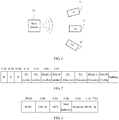
- FIG. 1 is a schematic structural diagram of an embodiment of a communications system according to an embodiment of the present invention.
- the communications system includes a base station 10 and multiple UEs, such as UE 11, UE 12, and UE 13 in FIG. 1 .
- scheduling information carried in DCI sent by the base station 10 to the UE 11 includes downlink scheduling information of the UE 11.
- the downlink scheduling information is indication information required by the UE 11 for receiving the downlink data sent by the base station.
- the UE 11 After receiving the downlink data sent by the base station 10, the UE 11 sends uplink information to the base station 10.
- the uplink information is used to indicate whether the UE 11 correctly receives the downlink data sent by the base station 10.
- the uplink information may be an ACK (acknowledgement, information transmission acknowledgement) or NACK (Negative ACK, negative acknowledgement).
- both the downlink data sent by the base station to the UE and the uplink information sent by the UE to the base station are sent by using a MAC (Media Access Control, media access control) PDU (Protocol Data Unit, protocol data unit).
- the MAC PDU is a basic data unit transmitted at a MAC layer.
- the uplink scheduling information is indication information required by the UE 11 for sending the uplink information.
- the downlink scheduling information and the uplink scheduling information of the UE 11 may be added to a same piece of DCI and then sent to the UE 11, or may be added respectively to two pieces of DCI and then sent to the UE 11.
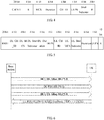
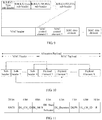
- FIG. 2 is a schematic diagram of a possible format of DCI.
- the DCI includes R (reserved bit), DL number (quantity of UEs scheduled on a downlink), UL number (quantity of UEs scheduled on an uplink), DL&UL number (quantity of UEs scheduled on a downlink and an uplink at the same time), RACH number (quantity of UEs scheduled for RACH access), DL Allocation (downlink scheduling configuration), UL Allocation (uplink scheduling configuration), DL&UL Allocation (downlink and uplink scheduling configuration), RACH config (RACH scheduling configuration), and Padding (padding bit).
- R reserved bit
- DL number quantity of UEs scheduled on a downlink
- UL number quantity of UEs scheduled on an uplink
- DL&UL number quantity of UEs scheduled on a downlink and an uplink at the same time
- RACH number quantity of UEs scheduled for RACH access
- DL Allocation downlink scheduling configuration
- a quantity of entries configured in DL Allocation corresponds to DL number
- DL Allocation includes a DL number of DL configs
- each DL config carries downlink scheduling information of a corresponding UE.
- a quantity of entries configured in UL Allocation corresponds to UL number
- UL Allocation includes a UL number of UL configs
- each UL config carries uplink scheduling information of a corresponding UE.
- a quantity of entries configured in DL&UL Allocation corresponds to DL&UL number
- DL&UL Allocation includes a DL&UL number of DL&ULconfigs
- each DL&ULconfig carries uplink scheduling information and downlink scheduling information of a corresponding UE.
- the uplink scheduling information of the UE 11 is included in DL Allocation. If the base station performs only uplink scheduling for the UE 11, the uplink scheduling information of the UE 11 is included in UL Allocation. If the base station performs both downlink scheduling and uplink scheduling for the UE 11, the uplink scheduling information and the downlink scheduling information of the UE 11 are included in DL&UL Allocation.
- Indication information included in downlink scheduling information and uplink scheduling information of UE may differ in different communications systems.
- FIG. 3 is a schematic diagram of a possible structure of DL config.
- DL config includes:
- FIG. 4 is a schematic diagram of a possible structure of UL config.
- UL config includes:
- FIG. 5 is a schematic diagram of a possible structure of DL&ULconfig.
- DL&ULconfig includes RNTI, DL_CH_ ID, DL_ MCS, DL_ Start Indicator, DL_ Duration, DLPN, UL_CH_ ID, UL_ MCS, UL_ Start Indicator, UL_ Duration, ULPN, and R.
- DL indicates a downlink and UL indicates an uplink.
- DL&ULconfig refer to descriptions of DL config shown in FIG. 3 and UL config shown in FIG. 4 , details are not described herein.
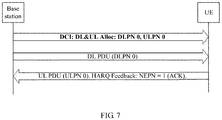
- FIG. 6 is a scheduling process that is possibly used in a communications system. As shown in FIG. 6 , the scheduling processing includes:
- the base station 10 sends DCI (indicated by DCI: DL Alloc) that includes the downlink scheduling information of the UE 11 to the UE 11.
- DCI: DL Alloc is used to indicate a time-frequency resource used when the base station 10 sends a downlink MAC PDU (indicated by DLPN 0) with a data packet number of 0.
- the base station 10 sends DLPN 0 to the UE 11 by using the time-frequency resource indicated in the downlink scheduling information in DCI: DL Alloc. After receiving DCI: DL Alloc, the UE 11 receives DLPN 0 on the time-frequency resource indicated in the downlink scheduling information in DCI: DL Alloc.
- the base station 10 sends DCI (indicated by DCI: UL Alloc) that includes the uplink scheduling information of the UE 11 to the UE 11.
- DCI: UL Alloc is used to indicate a frequency resource used when the UE 11 sends uplink information (indicated by ULPN 0) with a data packet number of 0.
- the UE 11 receives DCI: UL Alloc, and sends ULPN 0 to the base station 10 by using the time-frequency resource indicated in the uplink scheduling information in DCI: UL Alloc.
- each time the UE 11 is scheduled the base station 10 needs to send DCI twice, and therefore scheduling signaling overheads are relatively large.
- the UE 11 needs to perform DCI reception and decoding twice, and each piece of DCI includes uplink/downlink/RACH scheduling information of multiple UEs. Therefore, overheads for the UE 11 to perform reception and decoding are relatively large.
- the UE receives DCI: DL&UL Alloc, and receives DLPN 0 by using the time-frequency resource indicated in the downlink scheduling information in DCI: DL&UL Alloc, and sends ULPN 0 by using the time-frequency resource indicated in the uplink scheduling information in DCI: DL&ULAlloc.
- the base station 10 needs to deliver DCI only once, and the UE needs to receive the DCI only once.
- the UE 11 needs to send only one bit of NEPN (Next PUD number, next PDU number).
- NEPN Next PUD number, next PDU number
- the base station 10 needs to send, for each UE, a total of 21 bits of downlink scheduling information including a channel frequency (6 bits), a transmission start time (4 bits), duration (6 bits), an MCS (4 bits), and an ULPN (1 bit), and signaling overheads are still relatively large.
- the specific parameter of the UE is relatively stable, and the specific parameter may be added not to DCI sent each time when the base station schedules the UE, but to a system message with a relatively low sending frequency, and then sent to the UE, or may not be sent to the UE by using a system message, but be preset in the UE. In this way, signaling overheads may be further reduced when the UE is scheduled.
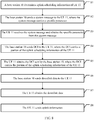
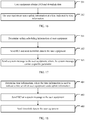
- the base station 10 and the UE 11 in FIG. 1 are used as examples. For each scheduling process regarding the UE 11, reference may be made to FIG. 8 for understanding.
- steps S2, S4, and S5 are not in a fixed time sequence.
- uplink scheduling information carried in DCI is other indication information excluding a specific parameter, and the specific parameter is sent to each UE by using a system message with a lower sending frequency.
- This can reduce overheads of signaling used to instruct UE to send uplink information.
- uplink scheduling information of each UE is decreased by at least several bits, and overheads of signaling used for uplink scheduling in the DCI can be greatly reduced, so that the DCI may carry more UE scheduling information, and a cell system capacity is improved.
- decoding performed by the UE for a specific parameter in the DCI is avoided, reducing UE power consumption.
- the specific parameter in the uplink scheduling information of the UE 11 is carried in the system message and then sent to the UE 11.
- the specific parameter may not be sent to the UE 11 by being added to the system message, but be preset in the UE 11.
- a communications protocol specifies specific parameters in uplink scheduling information of UEs at different coverage levels. After determining the coverage level of the UE 11, the UE 11 may determine a specific parameter of the UE 11 according to the communications protocol. Alternatively, a communications protocol specifies other parameters. After determining the coverage level of the UE 11, the UE 11 may determine a specific parameter of the UE 11 according to these parameters. If the specific parameter is preset in the UE 11, in step S1 in this embodiment, when the base station determines the uplink scheduling information of the UE 11, the uplink scheduling information does not include the specific parameter.
- the other indication information that excludes the specific parameter and that is of the uplink scheduling information of the UE 11 is carried in the DCI, and then sent to the UE 11.
- manner 1 in other indication information that excludes the specific parameter and that is of the uplink scheduling information of the UE 11, some indication information is carried in the DCI and the other portion of the indication information is carried in the downlink data, to be sent to the UE 11.
- manner 2 all the other indication information that excludes the specific parameter and that is of the uplink scheduling information of the UE 11 is carried in the downlink data, and then sent to the UE 11. Both of the foregoing two manners can further reduce overheads of signaling used to instruct UE to send uplink information.
- the uplink scheduling information further includes at least one of a channel frequency at which the UE 11 sends the uplink information or a data packet number of a PDU in which the UE 11 sends the uplink information. At least one of the channel frequency at which the UE 11 sends the uplink information or the data packet number of a PDU in which the UE 11 sends the uplink information is included in the downlink data.
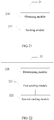
- the MAC PDU includes one MAC header (MAC header), a MCA payload (not shown in the figure), zero or at least one MAC data element (MAC data element), and zero or at least one MAC control element (MAC control element).
- MAC header MAC header
- MCA payload not shown in the figure
- MAC data element zero or at least one MAC data element
- MAC control element zero or at least one MAC control element
- FIG. 10 is a schematic structural diagram of a MAC header and a MCA payload.
- the MAC header includes a series of MAC sub-headers, used to indicate content carried in the MCA payload (MAC payload).
- the MCA payload includes a series of MAC data elements or MAC control elements.
- a quantity of the MAC sub-headers is the same as a quantity of the MAC payload elements, and the MAC sub-headers are in one-to-one correspondences with the MAC payload elements.
- Each MAC sub-header is used to define specific content of a MAC payload corresponding to the MAC sub-header.
- At least one of the channel frequency at which the UE 11 sends the uplink information or the data packet number of a PDU in which the UE 11 sends the uplink information is carried in a MAC data element or MAC control element in a MAC payload.
- a CH_ID field or a ULPN field is added to the MAC data element or the MAC control element in the MAC payload.
- the CH_ID field is used to indicate the channel frequency at which the UE 11 sends the uplink information
- the ULPN field is used to indicate the data packet number of a PDU in which the UE 11 sends the uplink information.
- the time information is the first type of time information
- a start time point at which uplink information is sent is indicated in the DCI, and therefore a relatively large quantity of bits is required.
- a preset time point may be indicated for each UE, and a time interval may be set for each UE by using a relatively small quantity of bits.
- this embodiment enables signaling overheads of the DCI to be smaller.
- a preset time point may be indicated for each UE in the UE set, and the time at which the UE 11 sends the uplink information is indicated by using the sequence number.
- this embodiment can reduce an amount of information carried in the DCI and decrease overheads of signaling used to instruct UE to send uplink information.
- the preset time points in the foregoing three types of time information may all include at least the following three types of time points, Type 1: The preset time point is a time point at which the UE 11 completes downlink data reception.
- Type 2 The preset time point is a time point at which the UE 11 starts to receive the downlink data.
- Type 3 The preset time point is a time point at which the UE receives the k th piece of DCI after the UE 11 receives, in step S5, the DCI sent by the base station 10, where k is an integer greater than 0.
- the preset time point is a time point after preset duration since the UE receives the k th piece of DCI after the UE 11 receives, in step S5, the DCI sent by the base station 10, where k is an integer greater than 0.
- a time interval in the first type of time information may be an integer multiple of the DCI interval; or may be an integer multiple of unit time, where the unit time is a maximum time that is required for completing uplink information sending and that is specified in a communications protocol; or may be an integer multiple of unit time, where the integer multiple of the unit time is a minimum numeric value of preset multiples greater than the DCI interval; or may be another time interval.
- the sequence number of the UE 11 in the UE set for sending the uplink information may include: after uplink scheduling information of all UEs in the UE set is sorted in sequence in the DCI, the sequence number is a sequence number, in a normal order or a reverse order, of the uplink scheduling information of the UE 11 in the uplink scheduling information of all the UEs.
- the sequence number of the UE 11 in the UE set for sending the uplink information may include: after downlink scheduling information of all UEs in the UE set is sorted in sequence in the DCI, the sequence number is a sequence number, in a normal order or a reverse order, of the downlink scheduling information of the UE 11 in the downlink scheduling information of all the UEs.
- the preset time points in the three types of time information described in the foregoing may be a parameter received by the UE 11 from the DCI or the system message, or a parameter preset in the UE 11.
- the first type of time information described in the foregoing may be a parameter received by the UE 11 from the DCI or the system message, or a parameter preset in the UE 11.
- the uplink scheduling information of the UE includes an ID of the UE, an uplink MCS, information used to indicate duration for sending uplink information by the UE, a channel frequency at which the uplink information is sent, a data packet number of a PDU in which the uplink information is sent, and information used to indicate a time at which the UE sends the uplink information.
- the uplink MCS, the information used to indicate duration for sending uplink information by the UE, and the information used to indicate a time at which the UE sends the uplink information are carried in a system message broadcast by a base station, and then are sent to the UE, and the channel frequency at which the uplink information is sent and the data packet number of a PDU in which the uplink information is sent are carried in downlink data sent by the base station, and then are sent to the UE.
- the uplink scheduling information of the UE includes an ID of the UE, an uplink MCS, information used to indicate duration for sending uplink information by the UE, a channel frequency at which the uplink information is sent, a data packet number of a PDU in which the uplink information is sent, and information used to indicate a time at which the UE sends the uplink information.
- the DCI includes R (reserved bit), DL number (quantity of UEs scheduled on a downlink), Feedback_Start_Indicator (preset time point), UL number (quantity of UEs scheduled on an uplink), DL&UL number (quantity of UEs scheduled on a downlink and an uplink at the same time), RACH number (quantity of UEs scheduled for RACH access), DL Allocation (downlink scheduling configuration), UL Allocation (uplink scheduling configuration), DL&UL Allocation (downlink and uplink scheduling configuration), RACH config (RACH scheduling configuration), and Padding (padding bit).
- the uplink scheduling information of the UE includes an ID of the UE, an uplink MCS, information used to indicate duration for sending uplink information by the UE, a channel frequency at which the uplink information is sent, a data packet number of a PDU in which the uplink information is sent, and information used to indicate a time at which the UE sends the uplink information.
- a base station performs downlink scheduling and uplink scheduling at the same time for n UEs by using one piece of DCI, where n is an integer greater than 1.
- the n UEs form a first UE set.
- a schematic structural diagram of the DCI in this embodiment is the same as a schematic structural diagram of the DCI shown in FIG. 12 , and details are not described herein.
- the base station specifies a preset time point Feedback_Start_Indicator for all UEs in UL number and DL&UL number in the DCI.
- the preset time point may be the N th frame that is after the first UE set receives the DCI.
- the preset time point is a parameter received by the user equipment from the DCI or the system message, or a parameter preset in the user equipment.
- the duration information of the uplink information is obtained by the user equipment from radio resource control RRC signaling; or the duration information of the uplink information is obtained by the user equipment from a mapping of a control parameter of the downlink data, where the control parameter of the downlink data includes at least one of the MCS of the downlink data or a quantity of retransmission times of the downlink data.
- the user equipment first receives downlink scheduling DCI, obtains scheduling information of the downlink data from the downlink scheduling DCI, and parses out the control parameter from the scheduling information. For example, if the quantity of retransmission times of the downlink data may be set to 2 in the control parameter, the quantity of retransmission times of the uplink information is 8 according to the mapping rule.
- mapping rule is:
- the user equipment may obtain a quantity of retransmission times of the uplink information according to a PRACH resource used when the user equipment performs random access.
- User equipment obtains DCI and downlink data.
- the uplink scheduling information is indication information required by the user equipment for sending uplink information.
- uplink scheduling information carried in DCI is other indication information excluding a specific parameter, and the specific parameter is sent to each UE by using a system message with a lower sending frequency. This can reduce overheads of signaling used to instruct UE to send uplink information.
- uplink scheduling information of each UE is decreased by at least several bits, and overheads of signaling used for uplink scheduling in the DCI can be greatly reduced, so that the DCI may carry more UE scheduling information, and a cell system capacity is improved.
- the portion of the uplink scheduling information which is carried in the DCI or the specific parameter includes time information, where the time information is used to indicate a time at which the user equipment sends the uplink information; and the time information specifically includes an interval from a preset time point to the time at which the uplink information is sent; or the DCI further carries scheduling information, excluding the time information, of the user equipment and scheduling information of another user equipment, the user equipment and the another user equipment form a user equipment set, and the time information carried in the DCI specifically includes a sequence number of the user equipment in the user equipment set for sending the uplink information after a preset time point.
- the preset time point is a parameter received by the user equipment from the DCI or the system message, or a parameter preset in the user equipment.
- the scheduling information specifically includes uplink scheduling information, uplink scheduling information of all user equipments in the user equipment set is sorted in sequence in the DCI, and the sequence number for sending the uplink information is specifically a sequence number, in a normal order or a reverse order, of the uplink scheduling information of the user equipment in the uplink scheduling information of all the user equipments in the user equipment set; or the scheduling information specifically includes downlink scheduling information, downlink scheduling information of all user equipments in the user equipment set is sorted in sequence in the DCI, and the sequence number for sending the uplink information is specifically a sequence number, in a normal order or a reverse order, of downlink scheduling information of the user equipment in the downlink scheduling information of all the user equipments in the user equipment set.
- the downlink data is specifically a media access control MAC PDU
- the MAC PDU includes a MAC payload
- the MAC payload includes a MAC data element or a MAC control element
- the portion of the uplink scheduling information of the user equipment which is carried in the downlink data is specifically carried in the MAC data element or the MAC control element of the MAC payload.
- the information used to indicate duration for sending the uplink information specifically includes a repetition factor for sending the uplink information or time duration for sending the uplink information.
- the DCI further includes the downlink scheduling information, where the downlink scheduling information is used to schedule the user equipment to receive the downlink data; the portion of the uplink scheduling information includes the channel frequency of the uplink information; and the specific parameter includes the uplink modulation and coding scheme MCS.
- the duration information of the uplink information is obtained by the user equipment from radio resource control RRC signaling; or the duration information of the uplink information is obtained by the user equipment from a mapping of a control parameter of the downlink data, and the control parameter of the downlink data includes at least one of the MCS of the downlink data or a quantity of retransmission times of the downlink data; or the duration information of the uplink information is obtained by the user equipment from a resource mapping of a physical random access channel; and the duration information of the uplink information is used to indicate a quantity of retransmission times of the uplink information or the duration for sending the uplink information.
- the DCI or the system message carries the time information, and the uplink information is used to indicate whether the user equipment receives the downlink data correctly; and the time information specifically includes an interval from a preset time point to the time at which the uplink information is sent; or the DCI further carries scheduling information, excluding the time information, of the user equipment and scheduling information of another user equipment, the user equipment and the another user equipment form a user equipment set, and the time information carried in the DCI specifically includes a sequence number of the user equipment in the user equipment set for sending the uplink information after a preset time point.
- the preset time point is a parameter received by the user equipment from the DCI or the system message, or a parameter preset in the user equipment.
- the scheduling information specifically includes uplink scheduling information, uplink scheduling information of all user equipments in the user equipment set is sorted in sequence in the DCI, and the sequence number for sending the uplink information is specifically determined according to a sequence number, in a normal order or a reverse order, of uplink scheduling information of the user equipment in the uplink scheduling information of all the user equipments in the user equipment set; or the scheduling information specifically includes downlink scheduling information, downlink scheduling information of all user equipments in the user equipment set is sorted in sequence in the DCI, and the sequence number for sending the uplink information is specifically determined according to a sequence number, in a normal order or a reverse order, of downlink scheduling information of the user equipment in the downlink scheduling information of all the user equipments in the user equipment set.
- the preset time point is specifically a time point at which the user equipment completes downlink data reception, or is specifically a time point at which the user equipment starts to receive the downlink data, or is specifically a time point at which the user equipment receives the ( preset numeric value ) th piece of DCI after the DCI, or is specifically a time point after preset duration since the user equipment receives the ( preset numeric value ) th piece of DCI after the DCI.
- a base station before sending downlink data to UE, a base station needs to send downlink scheduling information to the UE.
- the downlink scheduling information is indication information required by the UE for receiving the downlink data sent by the base station.
- the UE After receiving the downlink data, the UE sends uplink information to the base station.
- the uplink information is used to indicate whether the UE correctly receives the downlink data sent by the base station.
- the base station sends uplink scheduling information to the UE.
- the uplink scheduling information is indication information required by the UE for sending the uplink information.
- a method for sending, to the UE by the base station, the uplink scheduling information used to instruct the UE to send the uplink information and a method for obtaining, by the UE, the uplink scheduling information used to instruct the UE to send the uplink information are described.
- the base station needs to send uplink scheduling information to the UE.
- the uplink scheduling information is indication information required by the UE for sending the uplink data.
- the base station After receiving the uplink data, the base station sends downlink information to the UE.
- the downlink information is used to indicate whether the base station correctly receives the uplink data sent by the UE.
- the base station Before the base station sends the downlink information, the base station sends downlink scheduling information to the UE.
- the downlink scheduling information is indication information required by the UE for receiving the downlink information sent by the base station.
- a method for sending, to the UE by the base station, the downlink scheduling information used to instruct the UE to receive the downlink information and a method for obtaining, by the UE, the downlink scheduling information used to instruct the UE to receive the downlink information are described.
- the method for sending, to the UE by the base station, the downlink scheduling information used to instruct the UE to receive the downlink information is similar to the method for sending, to the UE by the base station, the uplink scheduling information used to instruct the UE to send the uplink information.
- the method for obtaining, by the UE, the downlink scheduling information used to instruct the UE to receive the downlink information is similar to the method for obtaining, by the UE, the uplink scheduling information used to instruct the UE to send the uplink information.
- the scheduling information specifically includes uplink scheduling information, uplink scheduling information of all user equipments in the user equipment set is sorted in sequence in the DCI, and the sequence number for receiving the downlink information is specifically determined according to a sequence number, in a normal order or a reverse order, of uplink scheduling information of the user equipment in the uplink scheduling information of all the user equipments in the user equipment set; or the scheduling information specifically includes downlink scheduling information, downlink scheduling information of all user equipments in the user equipment set is sorted in sequence in the DCI, and the sequence number for receiving the downlink information is specifically a sequence number, in a normal order or a reverse order, of downlink scheduling information of the user equipment in the downlink scheduling information of all the user equipments in the user equipment set.
- the preset time point is specifically a time point at which the user equipment completes downlink data reception, or is specifically a time point at which the user equipment starts to receive the downlink data, or is specifically a time point at which the user equipment receives the ( preset numeric value ) th piece of DCI after the DCI, or is specifically a time point after preset duration since the user equipment receives the ( preset numeric value ) th piece of DCI after the DCI.
- the DCI or the system message carries the time information, and the time information specifically includes an interval from a preset time point to a time at which uplink information is sent; or the DCI further carries scheduling information, excluding the time information, of the user equipment and scheduling information of another user equipment, the user equipment and the another user equipment form a user equipment set, and the time information carried in the DCI specifically includes a sequence number of the user equipment in the user equipment set for sending the uplink information after a preset time point.
- the preset time point is a parameter received by the user equipment from the DCI or the system message, or a parameter preset in the user equipment.
- the scheduling information specifically includes uplink scheduling information, uplink scheduling information of all user equipments in the user equipment set is sorted in sequence in the DCI, and the sequence number for receiving the downlink information is specifically determined according to a sequence number, in a normal order or a reverse order, of uplink scheduling information of the user equipment in the uplink scheduling information of all the user equipments in the user equipment set; or the scheduling information specifically includes downlink scheduling information, downlink scheduling information of all user equipments in the user equipment set is sorted in sequence in the DCI, and the sequence number for receiving the downlink information is specifically determined according to a sequence number, in a normal order or a reverse order, of downlink scheduling information of the user equipment in the downlink scheduling information of all the user equipments in the user equipment set.
- the preset time point is specifically a time point at which the user equipment completes downlink data reception, or is specifically a time point at which the user equipment starts to receive the downlink data, or is specifically a time point at which the user equipment receives the ( preset numeric value ) th piece of DCI after the DCI, or is specifically a time point after preset duration since the user equipment receives the ( preset numeric value ) th piece of DCI after the DCI.
- the foregoing describes the uplink information sending method, the downlink information receiving method, the system scheduling method, and the uplink information sending method in the embodiments of the present invention.
- the following describes an uplink information sending apparatus, a downlink information receiving apparatus, a system scheduling apparatus, and a downlink information sending apparatus in the embodiments of the present invention.
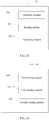
- the uplink information sending apparatus 21 in this embodiment may be user equipment.
- the uplink information sending apparatus 21 may be a mobile phone, a smartwatch, a tablet, a personal computer, a smart water/electric meter, a fire detection device, a logistics detection device, or another user equipment, which is not limited herein.
- the obtaining module 210 may be a receiver in the user equipment, and the sending module 211 may be a transmitter in the user equipment.
- the sending module 211 is configured to send the uplink information at the time indicated by the time information.
- the information used to indicate duration for sending the uplink information specifically includes a repetition factor for sending the uplink information or time duration for sending the uplink information.
- the downlink information sending apparatus 24 in this embodiment may be a base station.
- the downlink information sending apparatus 24 may be a base station in NB M2M, which is not limited herein.
- the determining module 220 may be a scheduling control module in a media access control module in the base station, and the first sending module 241 and the second sending module 242 may be transmitters in the base station, which are not limited herein.
- functional units in the embodiments of the present invention may be integrated into one processing unit, or each of the units may exist alone physically, or two or more units are integrated into one unit.
- the integrated unit may be implemented in a form of hardware, or may be implemented in a form of a software functional unit.
- the first sequence may be a Walsh (Walsh) sequence, a Zardoff-Chu (Zardoff-Chu) sequence, a pseudo-random sequence, another sequence, or a sequence generated based on transformation of these sequences.
- a length of the first sequence may be any value such as 8, 14, or 32, which is not limited in this embodiment of the present invention.
- a symbol, subframe, or timeslot in this embodiment is a time unit. Generally, one subframe or timeslot may include multiple symbols.
- the symbol may be an OFDM (orthogonal frequency division multiplexing) symbol.
- the uplink information may be an ACK or NACK, or may be a scheduling request (Scheduling Request, SR) or a channel quality indicator (channel quality indicator, CQI). In this embodiment, an ACK/NACK in a HARQ (hybrid automatic repeat request) is subsequently used as an example for description.
- the user equipment may perform spectrum spreading for the NACK information by using the OVSF code 3 to obtain the sequence ⁇ 1, 1, -1, -1, 1, 1, -1, -1 ⁇ .
- "-1" and "1" indicate sequence values of all symbols of the first sequence.
- the method may further include: 2905:
- the indication information includes frequency information, where the frequency information is used to indicate a frequency at which the user equipment sends the first uplink information.
- the frequency information may directly indicate that the user equipment sends the first uplink information on a preset carrier, or the frequency information may indicate an interval between a carrier at which the first uplink information is sent and a preset carrier.
- the indication information is an indication field of three bits. Meanings of indications are listed in Table 1.
- the user equipment needs to receive only a quantity of retransmission times that is of a resource element of ACK/NACK of Msg4 and that may be obtained by obtaining a control parameter in the RAR, and no signaling needs to be used additionally for control.
Landscapes
- Engineering & Computer Science (AREA)
- Computer Networks & Wireless Communication (AREA)
- Signal Processing (AREA)
- Mobile Radio Communication Systems (AREA)
Priority Applications (3)
| Application Number | Priority Date | Filing Date | Title |
|---|---|---|---|
| EP21202566.2A EP4002949B1 (de) | 2015-04-14 | 2016-03-15 | Uplink-information-sendeverfahren und -vorrichtung sowie systemplanungsverfahren und -vorrichtung |
| EP19169412.4A EP3609273B1 (de) | 2015-04-14 | 2016-03-15 | Uplink-information-sendeverfahren, planungsverfahren und ensprechende vorrichtungen |
| EP19169414.0A EP3609274B1 (de) | 2015-04-14 | 2016-03-15 | Uplink-information-sendeverfahren, planungsverfahren und ensprechende vorrichtungen |
Applications Claiming Priority (3)
| Application Number | Priority Date | Filing Date | Title |
|---|---|---|---|
| PCT/CN2015/076543 WO2016165070A1 (zh) | 2015-04-14 | 2015-04-14 | 发送上行信息、发送与接收下行信息、系统调度方法和装置 |
| CN201610084148.7A CN106060948B (zh) | 2015-04-14 | 2016-02-06 | 发送上行信息的方法和装置、系统调度方法和装置 |
| PCT/CN2016/076419 WO2016165515A1 (zh) | 2015-04-14 | 2016-03-15 | 发送上行信息、发送与接收下行信息、系统调度方法和装置 |
Related Child Applications (3)
| Application Number | Title | Priority Date | Filing Date |
|---|---|---|---|
| EP19169414.0A Division EP3609274B1 (de) | 2015-04-14 | 2016-03-15 | Uplink-information-sendeverfahren, planungsverfahren und ensprechende vorrichtungen |
| EP19169412.4A Division EP3609273B1 (de) | 2015-04-14 | 2016-03-15 | Uplink-information-sendeverfahren, planungsverfahren und ensprechende vorrichtungen |
| EP21202566.2A Division EP4002949B1 (de) | 2015-04-14 | 2016-03-15 | Uplink-information-sendeverfahren und -vorrichtung sowie systemplanungsverfahren und -vorrichtung |
Publications (3)
| Publication Number | Publication Date |
|---|---|
| EP3200542A1 true EP3200542A1 (de) | 2017-08-02 |
| EP3200542A4 EP3200542A4 (de) | 2017-12-20 |
| EP3200542B1 EP3200542B1 (de) | 2019-05-15 |
Family
ID=57125579
Family Applications (4)
| Application Number | Title | Priority Date | Filing Date |
|---|---|---|---|
| EP16779490.8A Active EP3200542B1 (de) | 2015-04-14 | 2016-03-15 | Verfahren und vorrichtungen zur übertragung von uplink-informationen und systemplanung |
| EP21202566.2A Active EP4002949B1 (de) | 2015-04-14 | 2016-03-15 | Uplink-information-sendeverfahren und -vorrichtung sowie systemplanungsverfahren und -vorrichtung |
| EP19169412.4A Active EP3609273B1 (de) | 2015-04-14 | 2016-03-15 | Uplink-information-sendeverfahren, planungsverfahren und ensprechende vorrichtungen |
| EP19169414.0A Active EP3609274B1 (de) | 2015-04-14 | 2016-03-15 | Uplink-information-sendeverfahren, planungsverfahren und ensprechende vorrichtungen |
Family Applications After (3)
| Application Number | Title | Priority Date | Filing Date |
|---|---|---|---|
| EP21202566.2A Active EP4002949B1 (de) | 2015-04-14 | 2016-03-15 | Uplink-information-sendeverfahren und -vorrichtung sowie systemplanungsverfahren und -vorrichtung |
| EP19169412.4A Active EP3609273B1 (de) | 2015-04-14 | 2016-03-15 | Uplink-information-sendeverfahren, planungsverfahren und ensprechende vorrichtungen |
| EP19169414.0A Active EP3609274B1 (de) | 2015-04-14 | 2016-03-15 | Uplink-information-sendeverfahren, planungsverfahren und ensprechende vorrichtungen |
Country Status (4)
| Country | Link |
|---|---|
| US (2) | US10834714B2 (de) |
| EP (4) | EP3200542B1 (de) |
| CN (4) | CN109348526B (de) |
| WO (2) | WO2016165070A1 (de) |
Cited By (3)
| Publication number | Priority date | Publication date | Assignee | Title |
|---|---|---|---|---|
| WO2020065617A1 (en) * | 2018-09-28 | 2020-04-02 | Telefonaktiebolaget Lm Ericsson (Publ) | Signalling for repetition |
| WO2022003545A1 (en) * | 2020-06-29 | 2022-01-06 | Lenovo (Singapore) Pte. Ltd. | Control information that schedules or activates multiple transmissions |
| US12232107B2 (en) | 2019-10-07 | 2025-02-18 | Telefonaktiebolaget Lm Ericsson (Publ) | Network node, wireless device and methods therein for performing uplink transmissions |
Families Citing this family (23)
| Publication number | Priority date | Publication date | Assignee | Title |
|---|---|---|---|---|
| WO2016165070A1 (zh) * | 2015-04-14 | 2016-10-20 | 华为技术有限公司 | 发送上行信息、发送与接收下行信息、系统调度方法和装置 |
| CN108184267A (zh) * | 2016-12-08 | 2018-06-19 | 维沃移动通信有限公司 | 一种终端调度方法、终端及基站 |
| CN110268782B (zh) * | 2016-12-23 | 2020-12-22 | 华为技术有限公司 | 一种增强型机器类通信eMTC资源调度的方法及设备 |
| CN110100491B (zh) * | 2017-01-04 | 2023-03-14 | Oppo广东移动通信有限公司 | 信息传输的方法、终端设备和网络设备 |
| US10123279B1 (en) * | 2017-06-02 | 2018-11-06 | Sprint Spectrum L.P. | Method and system for controlling reference signal power boosting settings based on power headroom and retransmission rate in an LTE network |
| CN109041242B (zh) * | 2017-06-08 | 2021-11-30 | 中国移动通信集团浙江有限公司 | 一种小区终端的上行调度方法及装置 |
| KR102414531B1 (ko) * | 2017-06-15 | 2022-06-30 | 삼성전자 주식회사 | 통신 또는 방송 시스템에서 채널 부호화/복호화 방법 및 장치 |
| WO2018230992A1 (ko) | 2017-06-15 | 2018-12-20 | 삼성전자 주식회사 | 통신 또는 방송 시스템에서 채널 부호화 및 복호화를 수행하는 방법 및 장치 |
| US10708956B2 (en) * | 2017-11-17 | 2020-07-07 | Qualcomm Incorporated | Physical layer enhancements for early data transmission |
| CN111557117B (zh) * | 2018-01-11 | 2023-08-25 | 株式会社Ntt都科摩 | 用户装置以及前导码发送方法 |
| CN110098905B (zh) * | 2018-01-30 | 2021-08-31 | 华为技术有限公司 | 信息指示方法、终端设备、网络设备和系统 |
| CN114513839B (zh) * | 2018-01-31 | 2024-01-16 | 华为技术有限公司 | 一种确定资源的方法及设备 |
| US10291378B1 (en) * | 2018-04-05 | 2019-05-14 | Qualcomm Incorporated | Signaling of alternative modulation coding schemes |
| CN110475365B (zh) * | 2018-05-10 | 2023-04-11 | 中国移动通信集团浙江有限公司 | 预调度时长控制方法及基站 |
| CN110830192B (zh) * | 2018-08-08 | 2022-08-19 | 展讯通信(上海)有限公司 | 系统消息的指示、确定方法及装置、存储介质、基站、用户设备 |
| EP3700109B1 (de) | 2019-02-21 | 2024-01-10 | Volkswagen Aktiengesellschaft | Fahrzeug, system, vorrichtungen, verfahren und computerprogramme für benutzergerät und eine netzwerkkomponente eines mobilkommunikationssystems |
| CN111866791A (zh) | 2019-04-28 | 2020-10-30 | 大唐移动通信设备有限公司 | 一种直通链路传输方法和终端 |
| CN111988859A (zh) * | 2019-05-21 | 2020-11-24 | 普天信息技术有限公司 | 下行链路控制信息传输方法 |
| WO2021007827A1 (zh) * | 2019-07-17 | 2021-01-21 | 北京小米移动软件有限公司 | 信息指示、确定方法及装置、通信设备及存储介质 |
| US12058674B2 (en) * | 2020-02-10 | 2024-08-06 | Qualcomm Incorporated | Uplink aspects for narrowband internet of things |
| EP4277408A4 (de) * | 2021-01-13 | 2024-03-06 | Guangdong Oppo Mobile Telecommunications Corp., Ltd. | Informationsübertragungsverfahren und -vorrichtung, vorrichtung und speichermedium |
| EP4319409A4 (de) * | 2021-04-02 | 2025-04-09 | LG Electronics Inc. | Verfahren und vorrichtung für downlink-uplink-übertragung/-empfang in einem drahtloskommunikationssystem |
| US12408075B2 (en) * | 2023-01-31 | 2025-09-02 | Verizon Patent And Licensing Inc. | Systems and methods for providing a robust single carrier radio access network link |
Family Cites Families (40)
| Publication number | Priority date | Publication date | Assignee | Title |
|---|---|---|---|---|
| EP1553798B1 (de) * | 2004-01-09 | 2006-04-12 | M-Stack Limited | Wiederholung der Benachrichtigung über Systeminformationsänderungen in universellen mobilen Telekommunikationssystemen |
| CN101009537A (zh) * | 2006-01-26 | 2007-08-01 | 华为技术有限公司 | 一种数据重传方法及系统 |
| WO2009031866A2 (en) * | 2007-09-08 | 2009-03-12 | Samsung Electronics Co., Ltd. | Apparatus and method for determining time to response of retransmission in a multihop relay wireless communication system |
| CN101742532B (zh) * | 2008-11-14 | 2012-04-25 | 中国移动通信集团公司 | 移动通信终端接收下行数据的控制方法和移动通信终端 |
| WO2010126409A1 (en) * | 2009-04-27 | 2010-11-04 | Telefonaktiebolaget Lm Ericsson (Publ) | Notifying user equipment of an upcoming change of system information in a radio communication network |
| CN102104462B (zh) * | 2009-12-18 | 2014-03-05 | 中兴通讯股份有限公司 | 上行混合自动重传请求指示信息的发送方法及装置 |
| CN102082641B (zh) * | 2010-02-11 | 2016-01-20 | 电信科学技术研究院 | 一种传输多比特ack/nack信息的方法及装置 |
| JP4862086B2 (ja) * | 2010-03-04 | 2012-01-25 | シャープ株式会社 | 無線通信システム、基地局装置、移動局装置、無線通信方法および集積回路 |
| CN102237927B (zh) * | 2010-04-23 | 2016-01-20 | 电信科学技术研究院 | 接入链路上的信息发送及应答反馈方法、系统和设备 |
| US9106419B2 (en) * | 2010-08-16 | 2015-08-11 | Qualcomm Incorporated | ACK/NACK transmission for multi-carrier operation with downlink assignment index |
| US8891677B2 (en) * | 2010-11-09 | 2014-11-18 | Nec Laboratories America, Inc. | Power scaling for retransmissions in uplink MIMO hybrid ARQ |
| US9313781B2 (en) * | 2010-12-02 | 2016-04-12 | Lg Electronics Inc. | Method and device for transmitting downlink control signal in wireless communication system |
| CN102624507B (zh) * | 2011-02-01 | 2015-04-08 | 华为技术有限公司 | 上/下行调度信息发送方法和接收方法及装置 |
| CN102638879A (zh) * | 2011-02-12 | 2012-08-15 | 北京三星通信技术研究有限公司 | 一种分配ack/nack信道资源的方法 |
| CN102868497B (zh) * | 2011-07-07 | 2016-03-30 | 华为技术有限公司 | 上行多天线数据传输指示的处理方法及装置 |
| CN102916789B (zh) * | 2011-08-05 | 2016-01-13 | 财团法人工业技术研究院 | 时分双工无线通信系统与混合自动重复请求确认回报方法 |
| WO2013044522A1 (zh) * | 2011-09-30 | 2013-04-04 | 富士通株式会社 | 增强的控制信令的发送方法、基站和用户设备 |
| CN103178942B (zh) * | 2011-12-21 | 2016-08-03 | 华为技术有限公司 | 信令传输方法、基站和用户设备 |
| CN103227704A (zh) * | 2012-01-31 | 2013-07-31 | 联想(北京)有限公司 | 进行机器类通信的方法和设备 |
| CN104170489B (zh) * | 2012-03-19 | 2019-10-15 | 富士通互联科技有限公司 | 无线通信系统、无线基站、无线终端以及无线通信方法 |
| US9119197B2 (en) * | 2012-05-22 | 2015-08-25 | Futurewei Technologies, Inc. | System and method for delay scheduling |
| CN103580830B (zh) | 2012-07-18 | 2018-11-27 | 北京三星通信技术研究有限公司 | 一种发送harq-ack反馈信息的方法 |
| CN103582073B (zh) * | 2012-07-31 | 2018-07-27 | 中兴通讯股份有限公司 | 一种mtc ue接入lte系统的方法、演进的基站 |
| EP2888827B1 (de) * | 2012-08-24 | 2021-02-17 | Sun Patent Trust | Kommunikationsverfahren, basisstation und benutzervorrichtung |
| CN104769857B (zh) * | 2012-11-01 | 2018-05-22 | Lg 电子株式会社 | 在无线通信系统中支持设备特性的调度组的方法和装置 |
| CN103841603B (zh) * | 2012-11-20 | 2019-05-31 | 北京三星通信技术研究有限公司 | 上行分组调度的方法及设备 |
| CN103973403B (zh) * | 2013-02-06 | 2018-02-23 | 中国移动通信集团公司 | 调制编码方案指示、下行数据接收方法及装置 |
| CN104144508A (zh) * | 2013-05-08 | 2014-11-12 | 中国移动通信集团公司 | 一种调度上行子帧的方法、装置、系统及ue |
| US9913264B2 (en) * | 2013-05-10 | 2018-03-06 | Nokia Technologies Oy | Compact downlink control information for machine type communications |
| US9924376B2 (en) * | 2013-06-21 | 2018-03-20 | Lg Electronics Inc. | Method for enhancing coverage of user equipment and an apparatus using the same |
| CN104348580A (zh) | 2013-08-06 | 2015-02-11 | 夏普株式会社 | 下行物理信道的发送和接收方法以及基站和用户设备 |
| WO2015018040A1 (en) * | 2013-08-08 | 2015-02-12 | Nokia Corporation | DOWNLINK ASSIGNMENT INDEX (DAI) AND TIMING DESIGN FOR TIME DIVISION DUPLEXING (TDD) ENHANCEMENT FOR INTERFERENCE MANAGEMENT AND TRAFFIC ADAPTATION (eIMTA) |
| WO2016165070A1 (zh) | 2015-04-14 | 2016-10-20 | 华为技术有限公司 | 发送上行信息、发送与接收下行信息、系统调度方法和装置 |
| TWI823214B (zh) * | 2015-08-25 | 2023-11-21 | 美商內數位專利控股公司 | 無線傳輸/接收單元及由其執行的方法 |
| EP3522595A4 (de) * | 2016-09-29 | 2020-04-29 | NTT DoCoMo, Inc. | Benutzerendgerät und drahtloskommunikationsverfahren |
| CN109963339B (zh) * | 2017-12-25 | 2021-01-08 | 维沃移动通信有限公司 | 控制信道配置及检测方法和装置、程序及介质 |
| EP3627753B1 (de) * | 2018-04-04 | 2022-03-09 | Guangdong Oppo Mobile Telecommunications Corp., Ltd. | Verfahren zur übertragung von uplink-steuerungsinformationen, endgerät und netzwerkvorrichtung |
| US10798562B2 (en) * | 2018-05-24 | 2020-10-06 | Verizon Patent And Licensing Inc. | Differentiation of dual-connectivity split-bearer wireless access |
| CN116094659B (zh) * | 2018-08-09 | 2025-02-11 | 北京三星通信技术研究有限公司 | 块传输方法、下行传输方法、nrs接收方法、ue、基站和介质 |
| KR102935690B1 (ko) * | 2020-02-19 | 2026-03-06 | 삼성전자주식회사 | 무선 통신 시스템에서 제어 및 데이터 채널 송수신 방법 및 장치 |
-
2015
- 2015-04-14 WO PCT/CN2015/076543 patent/WO2016165070A1/zh not_active Ceased
-
2016
- 2016-02-06 CN CN201810922398.2A patent/CN109348526B/zh active Active
- 2016-02-06 CN CN201610084148.7A patent/CN106060948B/zh active Active
- 2016-03-15 EP EP16779490.8A patent/EP3200542B1/de active Active
- 2016-03-15 EP EP21202566.2A patent/EP4002949B1/de active Active
- 2016-03-15 EP EP19169412.4A patent/EP3609273B1/de active Active
- 2016-03-15 EP EP19169414.0A patent/EP3609274B1/de active Active
- 2016-03-15 WO PCT/CN2016/076419 patent/WO2016165515A1/zh not_active Ceased
- 2016-03-15 CN CN201680003051.7A patent/CN107079471B/zh active Active
- 2016-03-15 CN CN202010797080.3A patent/CN112073943B/zh active Active
-
2017
- 2017-07-26 US US15/659,774 patent/US10834714B2/en active Active
-
2020
- 2020-11-06 US US17/091,183 patent/US11388710B2/en active Active
Cited By (9)
| Publication number | Priority date | Publication date | Assignee | Title |
|---|---|---|---|---|
| WO2020065617A1 (en) * | 2018-09-28 | 2020-04-02 | Telefonaktiebolaget Lm Ericsson (Publ) | Signalling for repetition |
| JP2022501886A (ja) * | 2018-09-28 | 2022-01-06 | テレフオンアクチーボラゲット エルエム エリクソン(パブル) | 反復のためのシグナリング |
| JP7071586B2 (ja) | 2018-09-28 | 2022-05-19 | テレフオンアクチーボラゲット エルエム エリクソン(パブル) | 反復のためのシグナリング |
| JP2022110037A (ja) * | 2018-09-28 | 2022-07-28 | テレフオンアクチーボラゲット エルエム エリクソン(パブル) | 反復のためのシグナリング |
| US12177829B2 (en) | 2018-09-28 | 2024-12-24 | Telefonaktiebolaget Lm Ericsson (Publ) | Signalling for repetition |
| EP4550705A3 (de) * | 2018-09-28 | 2025-06-18 | Telefonaktiebolaget LM Ericsson (publ) | Signalisierung zur wiederholung |
| US12232107B2 (en) | 2019-10-07 | 2025-02-18 | Telefonaktiebolaget Lm Ericsson (Publ) | Network node, wireless device and methods therein for performing uplink transmissions |
| WO2022003545A1 (en) * | 2020-06-29 | 2022-01-06 | Lenovo (Singapore) Pte. Ltd. | Control information that schedules or activates multiple transmissions |
| CN116058051A (zh) * | 2020-06-29 | 2023-05-02 | 联想(新加坡)私人有限公司 | 调度或激活多个传输的控制信息 |
Also Published As
| Publication number | Publication date |
|---|---|
| CN112073943A (zh) | 2020-12-11 |
| WO2016165070A1 (zh) | 2016-10-20 |
| CN106060948A (zh) | 2016-10-26 |
| EP3200542A4 (de) | 2017-12-20 |
| CN112073943B (zh) | 2024-03-19 |
| EP4002949A1 (de) | 2022-05-25 |
| EP3200542B1 (de) | 2019-05-15 |
| EP3609274B1 (de) | 2021-10-27 |
| CN107079471B (zh) | 2020-08-25 |
| CN109348526A (zh) | 2019-02-15 |
| EP4002949B1 (de) | 2025-02-12 |
| EP3609274A1 (de) | 2020-02-12 |
| EP3609273A1 (de) | 2020-02-12 |
| CN107079471A (zh) | 2017-08-18 |
| EP3609273B1 (de) | 2021-10-27 |
| CN109348526B (zh) | 2021-10-22 |
| US10834714B2 (en) | 2020-11-10 |
| US20210058911A1 (en) | 2021-02-25 |
| WO2016165515A1 (zh) | 2016-10-20 |
| US11388710B2 (en) | 2022-07-12 |
| US20170325205A1 (en) | 2017-11-09 |
| CN106060948B (zh) | 2018-09-07 |
Similar Documents
| Publication | Publication Date | Title |
|---|---|---|
| US11388710B2 (en) | Uplink information sending method and apparatus, downlink information sending method and apparatus, downlink information receiving method and apparatus and system scheduling method and apparatus | |
| JP5793067B2 (ja) | 移動局装置、基地局装置、無線通信システム、無線通信方法および集積回路 | |
| CN105144812B (zh) | 无线通信系统、基站、无线通信装置以及无线通信方法 | |
| US20200059390A1 (en) | Method and apparatus for uplink transmission in wireless communication system | |
| EP3254523B1 (de) | Uplink-konfliktbasierter mehrfachzugriff für mobilfunk-iot | |
| EP3364700B1 (de) | Datenübertragungsverfahren, netzwerkvorrichtung und endgerätevorrichtung | |
| EP3681189A1 (de) | Endgerätevorrichtung, basisstationsvorrichtung und kommunikationsverfahren | |
| EP3734924A1 (de) | Endgeräteausrüstung, basisstationsvorrichtung und kommunikationsverfahren | |
| KR20200116488A (ko) | 단말장치, 기지국 장치, 및 통신방법 | |
| US10271306B2 (en) | Data transmission method, apparatus, and system | |
| JP6028076B2 (ja) | 移動局装置、基地局装置、無線通信システム、無線通信方法および集積回路 | |
| US12356421B2 (en) | Terminal apparatus, base station apparatus, and communication method | |
| CN109417820B (zh) | 传输数据的方法、用户设备和基站 | |
| JP7112570B2 (ja) | TDDモードにおけるNB-IoT送信のためのスペシャルサブフレーム利用 | |
| EP3573358A1 (de) | Funkkommunikationsverfahren, endgerätevorrichtung und netzwerkvorrichtung |
Legal Events
| Date | Code | Title | Description |
|---|---|---|---|
| STAA | Information on the status of an ep patent application or granted ep patent |
Free format text: STATUS: THE INTERNATIONAL PUBLICATION HAS BEEN MADE |
|
| PUAI | Public reference made under article 153(3) epc to a published international application that has entered the european phase |
Free format text: ORIGINAL CODE: 0009012 |
|
| STAA | Information on the status of an ep patent application or granted ep patent |
Free format text: STATUS: REQUEST FOR EXAMINATION WAS MADE |
|
| 17P | Request for examination filed |
Effective date: 20170425 |
|
| AK | Designated contracting states |
Kind code of ref document: A1 Designated state(s): AL AT BE BG CH CY CZ DE DK EE ES FI FR GB GR HR HU IE IS IT LI LT LU LV MC MK MT NL NO PL PT RO RS SE SI SK SM TR |
|
| AX | Request for extension of the european patent |
Extension state: BA ME |
|
| A4 | Supplementary search report drawn up and despatched |
Effective date: 20171122 |
|
| RIC1 | Information provided on ipc code assigned before grant |
Ipc: H04W 72/12 20090101AFI20171116BHEP |
|
| DAV | Request for validation of the european patent (deleted) | ||
| DAX | Request for extension of the european patent (deleted) | ||
| GRAP | Despatch of communication of intention to grant a patent |
Free format text: ORIGINAL CODE: EPIDOSNIGR1 |
|
| STAA | Information on the status of an ep patent application or granted ep patent |
Free format text: STATUS: GRANT OF PATENT IS INTENDED |
|
| RIC1 | Information provided on ipc code assigned before grant |
Ipc: H04W 72/12 20090101AFI20181108BHEP Ipc: H04W 72/04 20090101ALN20181108BHEP |
|
| INTG | Intention to grant announced |
Effective date: 20181127 |
|
| GRAS | Grant fee paid |
Free format text: ORIGINAL CODE: EPIDOSNIGR3 |
|
| GRAA | (expected) grant |
Free format text: ORIGINAL CODE: 0009210 |
|
| STAA | Information on the status of an ep patent application or granted ep patent |
Free format text: STATUS: THE PATENT HAS BEEN GRANTED |
|
| AK | Designated contracting states |
Kind code of ref document: B1 Designated state(s): AL AT BE BG CH CY CZ DE DK EE ES FI FR GB GR HR HU IE IS IT LI LT LU LV MC MK MT NL NO PL PT RO RS SE SI SK SM TR |
|
| REG | Reference to a national code |
Ref country code: CH Ref legal event code: EP |
|
| REG | Reference to a national code |
Ref country code: DE Ref legal event code: R096 Ref document number: 602016014099 Country of ref document: DE |
|
| REG | Reference to a national code |
Ref country code: IE Ref legal event code: FG4D |
|
| REG | Reference to a national code |
Ref country code: NL Ref legal event code: MP Effective date: 20190515 |
|
| REG | Reference to a national code |
Ref country code: LT Ref legal event code: MG4D |
|
| PG25 | Lapsed in a contracting state [announced via postgrant information from national office to epo] |
Ref country code: LT Free format text: LAPSE BECAUSE OF FAILURE TO SUBMIT A TRANSLATION OF THE DESCRIPTION OR TO PAY THE FEE WITHIN THE PRESCRIBED TIME-LIMIT Effective date: 20190515 Ref country code: ES Free format text: LAPSE BECAUSE OF FAILURE TO SUBMIT A TRANSLATION OF THE DESCRIPTION OR TO PAY THE FEE WITHIN THE PRESCRIBED TIME-LIMIT Effective date: 20190515 Ref country code: NO Free format text: LAPSE BECAUSE OF FAILURE TO SUBMIT A TRANSLATION OF THE DESCRIPTION OR TO PAY THE FEE WITHIN THE PRESCRIBED TIME-LIMIT Effective date: 20190815 Ref country code: FI Free format text: LAPSE BECAUSE OF FAILURE TO SUBMIT A TRANSLATION OF THE DESCRIPTION OR TO PAY THE FEE WITHIN THE PRESCRIBED TIME-LIMIT Effective date: 20190515 Ref country code: AL Free format text: LAPSE BECAUSE OF FAILURE TO SUBMIT A TRANSLATION OF THE DESCRIPTION OR TO PAY THE FEE WITHIN THE PRESCRIBED TIME-LIMIT Effective date: 20190515 Ref country code: PT Free format text: LAPSE BECAUSE OF FAILURE TO SUBMIT A TRANSLATION OF THE DESCRIPTION OR TO PAY THE FEE WITHIN THE PRESCRIBED TIME-LIMIT Effective date: 20190915 Ref country code: SE Free format text: LAPSE BECAUSE OF FAILURE TO SUBMIT A TRANSLATION OF THE DESCRIPTION OR TO PAY THE FEE WITHIN THE PRESCRIBED TIME-LIMIT Effective date: 20190515 Ref country code: HR Free format text: LAPSE BECAUSE OF FAILURE TO SUBMIT A TRANSLATION OF THE DESCRIPTION OR TO PAY THE FEE WITHIN THE PRESCRIBED TIME-LIMIT Effective date: 20190515 Ref country code: NL Free format text: LAPSE BECAUSE OF FAILURE TO SUBMIT A TRANSLATION OF THE DESCRIPTION OR TO PAY THE FEE WITHIN THE PRESCRIBED TIME-LIMIT Effective date: 20190515 |
|
| PG25 | Lapsed in a contracting state [announced via postgrant information from national office to epo] |
Ref country code: LV Free format text: LAPSE BECAUSE OF FAILURE TO SUBMIT A TRANSLATION OF THE DESCRIPTION OR TO PAY THE FEE WITHIN THE PRESCRIBED TIME-LIMIT Effective date: 20190515 Ref country code: RS Free format text: LAPSE BECAUSE OF FAILURE TO SUBMIT A TRANSLATION OF THE DESCRIPTION OR TO PAY THE FEE WITHIN THE PRESCRIBED TIME-LIMIT Effective date: 20190515 Ref country code: BG Free format text: LAPSE BECAUSE OF FAILURE TO SUBMIT A TRANSLATION OF THE DESCRIPTION OR TO PAY THE FEE WITHIN THE PRESCRIBED TIME-LIMIT Effective date: 20190815 Ref country code: GR Free format text: LAPSE BECAUSE OF FAILURE TO SUBMIT A TRANSLATION OF THE DESCRIPTION OR TO PAY THE FEE WITHIN THE PRESCRIBED TIME-LIMIT Effective date: 20190816 |
|
| REG | Reference to a national code |
Ref country code: AT Ref legal event code: MK05 Ref document number: 1134895 Country of ref document: AT Kind code of ref document: T Effective date: 20190515 |
|
| PG25 | Lapsed in a contracting state [announced via postgrant information from national office to epo] |
Ref country code: SK Free format text: LAPSE BECAUSE OF FAILURE TO SUBMIT A TRANSLATION OF THE DESCRIPTION OR TO PAY THE FEE WITHIN THE PRESCRIBED TIME-LIMIT Effective date: 20190515 Ref country code: CZ Free format text: LAPSE BECAUSE OF FAILURE TO SUBMIT A TRANSLATION OF THE DESCRIPTION OR TO PAY THE FEE WITHIN THE PRESCRIBED TIME-LIMIT Effective date: 20190515 Ref country code: AT Free format text: LAPSE BECAUSE OF FAILURE TO SUBMIT A TRANSLATION OF THE DESCRIPTION OR TO PAY THE FEE WITHIN THE PRESCRIBED TIME-LIMIT Effective date: 20190515 Ref country code: DK Free format text: LAPSE BECAUSE OF FAILURE TO SUBMIT A TRANSLATION OF THE DESCRIPTION OR TO PAY THE FEE WITHIN THE PRESCRIBED TIME-LIMIT Effective date: 20190515 Ref country code: EE Free format text: LAPSE BECAUSE OF FAILURE TO SUBMIT A TRANSLATION OF THE DESCRIPTION OR TO PAY THE FEE WITHIN THE PRESCRIBED TIME-LIMIT Effective date: 20190515 |
|
| REG | Reference to a national code |
Ref country code: DE Ref legal event code: R097 Ref document number: 602016014099 Country of ref document: DE |
|
| PG25 | Lapsed in a contracting state [announced via postgrant information from national office to epo] |
Ref country code: IT Free format text: LAPSE BECAUSE OF FAILURE TO SUBMIT A TRANSLATION OF THE DESCRIPTION OR TO PAY THE FEE WITHIN THE PRESCRIBED TIME-LIMIT Effective date: 20190515 Ref country code: SM Free format text: LAPSE BECAUSE OF FAILURE TO SUBMIT A TRANSLATION OF THE DESCRIPTION OR TO PAY THE FEE WITHIN THE PRESCRIBED TIME-LIMIT Effective date: 20190515 |
|
| PLBE | No opposition filed within time limit |
Free format text: ORIGINAL CODE: 0009261 |
|
| STAA | Information on the status of an ep patent application or granted ep patent |
Free format text: STATUS: NO OPPOSITION FILED WITHIN TIME LIMIT |
|
| PG25 | Lapsed in a contracting state [announced via postgrant information from national office to epo] |
Ref country code: TR Free format text: LAPSE BECAUSE OF FAILURE TO SUBMIT A TRANSLATION OF THE DESCRIPTION OR TO PAY THE FEE WITHIN THE PRESCRIBED TIME-LIMIT Effective date: 20190515 |
|
| 26N | No opposition filed |
Effective date: 20200218 |
|
| PG25 | Lapsed in a contracting state [announced via postgrant information from national office to epo] |
Ref country code: PL Free format text: LAPSE BECAUSE OF FAILURE TO SUBMIT A TRANSLATION OF THE DESCRIPTION OR TO PAY THE FEE WITHIN THE PRESCRIBED TIME-LIMIT Effective date: 20190515 |
|
| PG25 | Lapsed in a contracting state [announced via postgrant information from national office to epo] |
Ref country code: SI Free format text: LAPSE BECAUSE OF FAILURE TO SUBMIT A TRANSLATION OF THE DESCRIPTION OR TO PAY THE FEE WITHIN THE PRESCRIBED TIME-LIMIT Effective date: 20190515 |
|
| PG25 | Lapsed in a contracting state [announced via postgrant information from national office to epo] |
Ref country code: MC Free format text: LAPSE BECAUSE OF FAILURE TO SUBMIT A TRANSLATION OF THE DESCRIPTION OR TO PAY THE FEE WITHIN THE PRESCRIBED TIME-LIMIT Effective date: 20190515 |
|
| REG | Reference to a national code |
Ref country code: CH Ref legal event code: PL |
|
| REG | Reference to a national code |
Ref country code: BE Ref legal event code: MM Effective date: 20200331 |
|
| PG25 | Lapsed in a contracting state [announced via postgrant information from national office to epo] |
Ref country code: LU Free format text: LAPSE BECAUSE OF NON-PAYMENT OF DUE FEES Effective date: 20200315 |
|
| PG25 | Lapsed in a contracting state [announced via postgrant information from national office to epo] |
Ref country code: CH Free format text: LAPSE BECAUSE OF NON-PAYMENT OF DUE FEES Effective date: 20200331 Ref country code: FR Free format text: LAPSE BECAUSE OF NON-PAYMENT OF DUE FEES Effective date: 20200331 Ref country code: IE Free format text: LAPSE BECAUSE OF NON-PAYMENT OF DUE FEES Effective date: 20200315 Ref country code: LI Free format text: LAPSE BECAUSE OF NON-PAYMENT OF DUE FEES Effective date: 20200331 |
|
| PG25 | Lapsed in a contracting state [announced via postgrant information from national office to epo] |
Ref country code: BE Free format text: LAPSE BECAUSE OF NON-PAYMENT OF DUE FEES Effective date: 20200331 |
|
| PG25 | Lapsed in a contracting state [announced via postgrant information from national office to epo] |
Ref country code: MT Free format text: LAPSE BECAUSE OF FAILURE TO SUBMIT A TRANSLATION OF THE DESCRIPTION OR TO PAY THE FEE WITHIN THE PRESCRIBED TIME-LIMIT Effective date: 20190515 Ref country code: CY Free format text: LAPSE BECAUSE OF FAILURE TO SUBMIT A TRANSLATION OF THE DESCRIPTION OR TO PAY THE FEE WITHIN THE PRESCRIBED TIME-LIMIT Effective date: 20190515 |
|
| PG25 | Lapsed in a contracting state [announced via postgrant information from national office to epo] |
Ref country code: RO Free format text: LAPSE BECAUSE OF FAILURE TO SUBMIT A TRANSLATION OF THE DESCRIPTION OR TO PAY THE FEE WITHIN THE PRESCRIBED TIME-LIMIT Effective date: 20190515 Ref country code: MK Free format text: LAPSE BECAUSE OF FAILURE TO SUBMIT A TRANSLATION OF THE DESCRIPTION OR TO PAY THE FEE WITHIN THE PRESCRIBED TIME-LIMIT Effective date: 20190515 Ref country code: IS Free format text: LAPSE BECAUSE OF FAILURE TO SUBMIT A TRANSLATION OF THE DESCRIPTION OR TO PAY THE FEE WITHIN THE PRESCRIBED TIME-LIMIT Effective date: 20190915 |
|
| P01 | Opt-out of the competence of the unified patent court (upc) registered |
Effective date: 20230514 |
|
| PGFP | Annual fee paid to national office [announced via postgrant information from national office to epo] |
Ref country code: GB Payment date: 20260202 Year of fee payment: 11 |
|
| PGFP | Annual fee paid to national office [announced via postgrant information from national office to epo] |
Ref country code: DE Payment date: 20260204 Year of fee payment: 11 |