EP3200571B1 - Carte de montage de composant électronique et dispositif d'émission de lumière utilisant celle-ci - Google Patents
Carte de montage de composant électronique et dispositif d'émission de lumière utilisant celle-ci Download PDFInfo
- Publication number
- EP3200571B1 EP3200571B1 EP15844693.0A EP15844693A EP3200571B1 EP 3200571 B1 EP3200571 B1 EP 3200571B1 EP 15844693 A EP15844693 A EP 15844693A EP 3200571 B1 EP3200571 B1 EP 3200571B1
- Authority
- EP
- European Patent Office
- Prior art keywords
- layer
- electronic component
- crevices
- component mounting
- ceramic layer
- Prior art date
- Legal status (The legal status is an assumption and is not a legal conclusion. Google has not performed a legal analysis and makes no representation as to the accuracy of the status listed.)
- Active
Links
Images



Classifications
-
- H—ELECTRICITY
- H05—ELECTRIC TECHNIQUES NOT OTHERWISE PROVIDED FOR
- H05K—PRINTED CIRCUITS; CASINGS OR CONSTRUCTIONAL DETAILS OF ELECTRIC APPARATUS; MANUFACTURE OF ASSEMBLAGES OF ELECTRICAL COMPONENTS
- H05K1/00—Printed circuits
- H05K1/02—Details
- H05K1/03—Use of materials for the substrate
- H05K1/05—Insulated conductive substrates, e.g. insulated metal substrate
- H05K1/053—Insulated conductive substrates, e.g. insulated metal substrate the metal substrate being covered by an inorganic insulating layer
-
- H—ELECTRICITY
- H10—SEMICONDUCTOR DEVICES; ELECTRIC SOLID-STATE DEVICES NOT OTHERWISE PROVIDED FOR
- H10H—INORGANIC LIGHT-EMITTING SEMICONDUCTOR DEVICES HAVING POTENTIAL BARRIERS
- H10H20/00—Individual inorganic light-emitting semiconductor devices having potential barriers, e.g. light-emitting diodes [LED]
- H10H20/80—Constructional details
- H10H20/85—Packages
- H10H20/8506—Containers
-
- H—ELECTRICITY
- H05—ELECTRIC TECHNIQUES NOT OTHERWISE PROVIDED FOR
- H05K—PRINTED CIRCUITS; CASINGS OR CONSTRUCTIONAL DETAILS OF ELECTRIC APPARATUS; MANUFACTURE OF ASSEMBLAGES OF ELECTRICAL COMPONENTS
- H05K1/00—Printed circuits
- H05K1/02—Details
- H05K1/03—Use of materials for the substrate
- H05K1/05—Insulated conductive substrates, e.g. insulated metal substrate
-
- H—ELECTRICITY
- H10—SEMICONDUCTOR DEVICES; ELECTRIC SOLID-STATE DEVICES NOT OTHERWISE PROVIDED FOR
- H10H—INORGANIC LIGHT-EMITTING SEMICONDUCTOR DEVICES HAVING POTENTIAL BARRIERS
- H10H20/00—Individual inorganic light-emitting semiconductor devices having potential barriers, e.g. light-emitting diodes [LED]
- H10H20/80—Constructional details
- H10H20/85—Packages
-
- H—ELECTRICITY
- H10—SEMICONDUCTOR DEVICES; ELECTRIC SOLID-STATE DEVICES NOT OTHERWISE PROVIDED FOR
- H10H—INORGANIC LIGHT-EMITTING SEMICONDUCTOR DEVICES HAVING POTENTIAL BARRIERS
- H10H20/00—Individual inorganic light-emitting semiconductor devices having potential barriers, e.g. light-emitting diodes [LED]
- H10H20/80—Constructional details
- H10H20/85—Packages
- H10H20/857—Interconnections, e.g. lead-frames, bond wires or solder balls
-
- H—ELECTRICITY
- H10—SEMICONDUCTOR DEVICES; ELECTRIC SOLID-STATE DEVICES NOT OTHERWISE PROVIDED FOR
- H10H—INORGANIC LIGHT-EMITTING SEMICONDUCTOR DEVICES HAVING POTENTIAL BARRIERS
- H10H20/00—Individual inorganic light-emitting semiconductor devices having potential barriers, e.g. light-emitting diodes [LED]
- H10H20/80—Constructional details
- H10H20/85—Packages
- H10H20/858—Means for heat extraction or cooling
- H10H20/8581—Means for heat extraction or cooling characterised by their material
-
- H—ELECTRICITY
- H10—SEMICONDUCTOR DEVICES; ELECTRIC SOLID-STATE DEVICES NOT OTHERWISE PROVIDED FOR
- H10H—INORGANIC LIGHT-EMITTING SEMICONDUCTOR DEVICES HAVING POTENTIAL BARRIERS
- H10H20/00—Individual inorganic light-emitting semiconductor devices having potential barriers, e.g. light-emitting diodes [LED]
- H10H20/80—Constructional details
- H10H20/85—Packages
- H10H20/858—Means for heat extraction or cooling
- H10H20/8585—Means for heat extraction or cooling being an interconnection
-
- F—MECHANICAL ENGINEERING; LIGHTING; HEATING; WEAPONS; BLASTING
- F21—LIGHTING
- F21S—NON-PORTABLE LIGHTING DEVICES; SYSTEMS THEREOF; VEHICLE LIGHTING DEVICES SPECIALLY ADAPTED FOR VEHICLE EXTERIORS
- F21S41/00—Illuminating devices specially adapted for vehicle exteriors, e.g. headlamps
- F21S41/10—Illuminating devices specially adapted for vehicle exteriors, e.g. headlamps characterised by the light source
- F21S41/14—Illuminating devices specially adapted for vehicle exteriors, e.g. headlamps characterised by the light source characterised by the type of light source
- F21S41/141—Light emitting diodes [LED]
-
- F—MECHANICAL ENGINEERING; LIGHTING; HEATING; WEAPONS; BLASTING
- F21—LIGHTING
- F21S—NON-PORTABLE LIGHTING DEVICES; SYSTEMS THEREOF; VEHICLE LIGHTING DEVICES SPECIALLY ADAPTED FOR VEHICLE EXTERIORS
- F21S41/00—Illuminating devices specially adapted for vehicle exteriors, e.g. headlamps
- F21S41/10—Illuminating devices specially adapted for vehicle exteriors, e.g. headlamps characterised by the light source
- F21S41/19—Attachment of light sources or lamp holders
- F21S41/192—Details of lamp holders, terminals or connectors
-
- F—MECHANICAL ENGINEERING; LIGHTING; HEATING; WEAPONS; BLASTING
- F21—LIGHTING
- F21S—NON-PORTABLE LIGHTING DEVICES; SYSTEMS THEREOF; VEHICLE LIGHTING DEVICES SPECIALLY ADAPTED FOR VEHICLE EXTERIORS
- F21S45/00—Arrangements within vehicle lighting devices specially adapted for vehicle exteriors, for purposes other than emission or distribution of light
- F21S45/40—Cooling of lighting devices
- F21S45/47—Passive cooling, e.g. using fins, thermal conductive elements or openings
-
- H—ELECTRICITY
- H05—ELECTRIC TECHNIQUES NOT OTHERWISE PROVIDED FOR
- H05K—PRINTED CIRCUITS; CASINGS OR CONSTRUCTIONAL DETAILS OF ELECTRIC APPARATUS; MANUFACTURE OF ASSEMBLAGES OF ELECTRICAL COMPONENTS
- H05K3/00—Apparatus or processes for manufacturing printed circuits
- H05K3/38—Improvement of the adhesion between the insulating substrate and the metal
- H05K3/381—Improvement of the adhesion between the insulating substrate and the metal by special treatment of the substrate
-
- H—ELECTRICITY
- H10—SEMICONDUCTOR DEVICES; ELECTRIC SOLID-STATE DEVICES NOT OTHERWISE PROVIDED FOR
- H10H—INORGANIC LIGHT-EMITTING SEMICONDUCTOR DEVICES HAVING POTENTIAL BARRIERS
- H10H20/00—Individual inorganic light-emitting semiconductor devices having potential barriers, e.g. light-emitting diodes [LED]
- H10H20/80—Constructional details
- H10H20/85—Packages
- H10H20/858—Means for heat extraction or cooling
- H10H20/8582—Means for heat extraction or cooling characterised by their shape
Definitions
- the present invention relates to an electronic component mounting substrate for mounting of a high heat generating component such for example as a light emitting element, and a light emission device using the electronic component mounting substrate, and more particularly relates to an electronic component mounting substrate suitably used for a vehicle-installed LED (Light Emitting Diode) lamp, and a light emission device incorporating the electronic component mounting substrate.
- a high heat generating component such for example as a light emitting element
- a light emission device using the electronic component mounting substrate
- an electronic component mounting substrate suitably used for a vehicle-installed LED (Light Emitting Diode) lamp, and a light emission device incorporating the electronic component mounting substrate.
- LED Light Emitting Diode
- JP 2007 165751 A discloses an electronic component mounting substrate.
- LED lamps have come to be used for car headlights.
- a high-power LED chip is used for a vehicle-installed LED lamp, wherefore a substrate for the mounting of the LED chip is required to have high heat-dissipation capability.
- a substrate for the mounting of the LED chip is required to have high heat-dissipation capability.
- it has been customary to use an aluminum nitride substrate having high thermal conductivity for a vehicle-installed LED lamp.
- a substrate which has high thermal conductivity and yet is inexpensive to manufacture is disclosed in Japanese Unexamined Patent Publication JP-A 2007-165751 .
- the substrate disclosed in JP-A 2007-165751 is constructed by forming an alumite layer on the surface of an aluminum substrate, forming cracks in the alumite layer by, for example, application of thermal stress, and forming a thermally-conductive resin insulating layer on the surface of the crack-bearing alumite layer.
- the thermally-conductive resin insulating layer is formed of resin and thus exhibits hygroscopicity, wherefore ion migration may occur. Furthermore, due to a large difference in thermal expansion coefficient between resin and alumite, the alumite layer and the thermally-conductive resin insulating layer may be separated from each other under thermal history, which results in deterioration in thermal conductivity.
- the invention has been devised in view of the problems as discussed supra, and accordingly an object thereof is to provide an electronic component mounting substrate which excels in resistance to migration, and is thus capable of maintaining high thermal conductivity and insulation performance for a long period of time, and also provide a light emission device using the electronic component mounting substrate.
- the invention provides an electronic component mounting substrate according to claim 1 and a light emission device according to claim 7. Further embodiments are described in the dependent claims.
- FIG. 1 is a sectional view showing the structure of an electronic component mounting substrate 10 in accordance with an embodiment of the invention.
- the electronic component mounting substrate 10 is configured for dissipation of heat to the outside, and more specifically, is used for mounting of a LED lamp.
- One particular application of the electronic component mounting substrate 10 is to mounting of a vehicle-installed LED lamp.
- the LED lamp When applied to a vehicle-installed headlight, the LED lamp needs to be designed to emit light in a larger amount, and, in addition to the increase of the amount of light emission, as contrasted to a LED lamp mounted in a common portable terminal or the like, the LED lamp generates a larger amount of heat.
- the electronic component mounting substrate 10 in accordance with an embodiment of the invention is used.
- the electronic component mounting substrate 10 comprises: a metallic substrate 11 formed of aluminum or an aluminum-based alloy; an alumite layer 12, formed on the metallic substrate 11, having a network of crevices 22 at an upper surface 21 thereof; and a ceramic layer 13 which covers the alumite layer 12 formed on the alumite layer 12, part of which extends into the crevices 22.
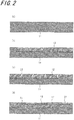
- FIG. 2 is a sectional view showing an example of procedures in the manufacture of the electronic component mounting substrate 10 in accordance with the present embodiment of the invention.
- FIG. 2(a) shows the metallic substrate 11.
- the metallic substrate 11 is a plate-like body formed of a metal material such as aluminum or an aluminum-based alloy.
- Preferred examples of the aluminum-based alloy include an Al-Cu alloy, an Al-Mn alloy, an Al-Si alloy, an Al-Mg alloy, an Al-Mg-Si alloy, and an Al-Zn-Mg alloy.
- a metal plate body having a thickness of 0.3 [mm] or more and 5 [mm] or less is suitably used as the metallic substrate 11.
- the metallic substrate 1 having a thickness of 0.3 [mm] or more is capable of effectively absorbing heat emanating from a LED lamp and readily dissipating the heat to the outside. Moreover, the metallic substrate 1 having a thickness of 5 [mm] or less affords the advantage of allowing a wiring board to be made lower in profile while providing similar effects to those produced by a heat-radiating plate.
- FIG. 2(b) shows the metallic substrate 11 depicted in FIG. 2(a) , with the alumite layer 12 formed on one side in the thickness direction thereof.
- the alumite layer 12 is formed by anodizing the above-described one side of the metallic substrate 11 in a treatment bath of electrolyte such as sulfuric acid or oxalic acid.
- the thickness of the alumite layer 12 can be adjusted by making adjustment to electrolysis conditions to be fulfilled in the anodization process. For example, the thickness is adjusted to fall in a range of 3 [ ⁇ m] or more and 20 [ ⁇ m] or less.
- the thickness of the alumite layer 12 corresponds to the thickness of other part of the alumite layer 12 than the part formed with the crevices 22 that will hereafter be described.
- the alumite layer 12 having a thickness of 3 [ ⁇ m] or more affords the advantage of raising the level of insulation relative to the metallic substrate 11.
- the alumite layer 12 having a thickness of 20 [ ⁇ m] or less affords the advantage of enhancing the thermal conductivity of the electronic component mounting substrate 10.
- FIG. 2(c) shows the alumite layer 12 depicted in FIG. 2(b) , with the crevices 22 formed at the upper surface 21, or equivalently a surface of the alumite layer 12 opposite to the metallic substrate 11-side surface.
- the crevices 22 are formed so as to open into the upper surface 21 of the alumite layer 12.
- a network of the crevices 22 is formed intentionally.
- the crevices 22 may be formed by subjecting a plurality of minute holes formed at the surface of the alumite layer 12 to mechanical shock, or may be formed through application of thermal stress (thermal shock) entailed by a temperature change which is greater in extent than the temperature change expected during the use of the electronic component mounting substrate.
- a network of the crevices 22 refers to voids or cracks, and is also construed as encompassing a plurality of branched portions of a single crevice.
- FIG. 2(d) shows the alumite layer 12 depicted in FIG. 2(c) , with the ceramic layer 13 formed thereon.
- the ceramic layer 13 is formed by a technique such for example as the sol-gel method.
- a slurry is prepared as a key ingredient of the ceramic layer 13, and, the slurry is coated on the upper surface 21 of the alumite layer 12 by a coating technique such as the dip coating method or the spray coating method.
- the coating and the metallic substrate 11 are heated altogether at temperatures ranging from, for example, 100 [°C] or above to 300 [°C] or below, whereupon the coating is cured.
- the ceramic layer 13 which covers the upper surface 21 of the alumite layer 12 is formed, with part thereof extending into the crevices 22. From the standpoint of ensuring higher level of insulation for the surface of the metallic substrate 11, as shown in FIG. 1 , the ceramic layer 13 fully fills the crevices 22 so as to cover the surface of the metallic substrate 11 exposed at the crevices 22.
- the ceramic layer 13 structurally reinforces the alumite layer 12. This makes it possible to inhibit further formation of cracks in the alumite layer 12 caused by, for example, temperature changes, and thereby maintain the insulation for the surface of the metallic substrate 11 for a long period of time. It is preferable that part of the ceramic layer 13 fills the crevices 22 formed so as to reach the interface between the metallic substrate 11 and the alumite layer 12. In the case where the ceramic layer 13 extends into the crevices 22, air in the crevices 22 is reduced, thus minimizing deterioration in insulation at the surface of the metallic substrate 11 caused by moisture content in the air. Moreover, the strength of adhesion between the ceramic layer 13 and the alumite layer 12 is increased, wherefore the ceramic layer 13 becomes resistant to separation even when undergoing thermal contraction or thermal expansion.
- the ceramic layer 13 is formed of a mixture of alumina and silica. This makes it possible to lower the heating temperature in the process of forming the ceramic layer 13, and thereby produce the electronic component mounting substrate 10 characterized by small thermal stress and high reliability. Moreover, with the alumina content, the ceramic layer 13 lying within the crevices 22 is similar in crystalline structure to the alumite layer 12. This makes it possible to produce the electronic component mounting substrate 10 having higher thermal conductivity.
- the alumina-silica mixture can be prepared by blending alkoxysilane with a slurry formed of alumina powder, silica powder, alcohol, and water. The mixture is subjected to hydrolysis and polycondensation reaction to form the ceramic layer 13 formed of alumina and silica.
- the mixing ratio of alumina to silica is set at 10:90.
- zirconia powder may be added for adjustment of coefficients of thermal expansion.
- the thickness of the ceramic layer 13 is adjusted to fall in a range of 0.5 [ ⁇ m] or more and 10 [ ⁇ m] or less.
- the ceramic layer 13 having a thickness of 0.5 [ ⁇ m] or more is capable of filling the plurality of crevices 22 formed in the alumite layer 12.
- the ceramic layer 13 having a thickness of 20 [ ⁇ m] or less affords the advantage of enhancing the thermal conductivity of the electronic component mounting substrate 10.
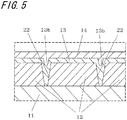
- the ceramic layer 13 is provided with a recess 13b located so as to overlap with the crevices 22.
- a wiring conductor 14 can be disposed on the principal surface of the ceramic layer 13 while lying within the recess 13b.
- the width and depth of the recess 13b can be changed by suitably adjusting, for example, the viscosity of the alumina-silica mixture which constitutes the ceramic layer 13.
- the recess 13b may be made larger in width than the crevices 22 as shown in FIG. 4(a) , by making the recess 13b smaller in width than the crevices 22 as shown in FIG. 4(b) , it is possible to effectively reduce a decrease in the thickness of a part of the ceramic layer 13 which bears the recess 13b, and thereby render the part of the ceramic layer 13 which corresponds to the recess 13b more resistant to cracking or the like, thus preventing separation of the ceramic layer 13.
- the wiring conductor 14 is disposed on the ceramic layer 13, and a light emitting element 2 such as a light emitting device is mounted thereon.
- the wiring conductor 14 comprises a tightly-adherent metallic layer and a barrier layer.
- the tightly-adherent metallic layer constituting the wiring conductor 14 is disposed on the ceramic layer 13.
- the tightly-adherent metallic layer is formed of, for example, tantalum nitride, a nickel-chromium material, a nickel-chromium-silicon material, a tungsten-silicon material, a molybdenum-silicon material, tungsten, molybdenum, titanium, or chromium.
- the tightly-adherent metallic layer is deposited on the ceramic layer 13 by a thin-film forming technique such as vapor deposition, ion plating, or sputtering.
- the metallic substrate 11 formed with the alumite layer 12 and the ceramic layer 13 is set in a film-forming chamber of a vacuum evaporator, and, a metal piece for constituting the tightly-adherent metallic layer is placed at an evaporation source in the film-forming chamber.
- the interior of the film-forming chamber is vacuumed (under pressure of 10 -2 Pa or below), and, the metal piece placed at the evaporation source is evaporated under heat.
- the molecules of the evaporated metal piece are deposited onto the metallic substrate 11 provided with the alumite layer 12 and the ceramic layer 13, whereupon the tightly-adherent metallic layer is formed.
- the barrier layer which exhibits good adherability and wettability relative to the tightly-adherent metallic layer and a plating layer, and serves to join the tightly-adherent metallic layer with the plating layer firmly, as well as to suppress mutual diffusion of the tightly-adherent metallic layer and the plating layer.
- the barrier layer is formed of, for example, a nickel-chromium material, platinum, palladium, nickel, or cobalt. The barrier layer is deposited on the surface of the tightly-adherent metallic layer by a thin-film forming technique such as vapor deposition, ion plating, or sputtering.
- the thickness of the tightly-adherent metallic layer falls in a range of about 0.01 to 0.5 [ ⁇ m]. If the thickness of the tightly-adherent metallic layer is less than 0.01 [ ⁇ m], it is prone to be difficult to cause the tightly-adherent metallic layer to adhere to the ceramic layer 13 firmly. On the other hand, if the thickness of the tightly-adherent metallic layer exceeds 0.5 [ ⁇ m], the tightly-adherent metallic layer will be prone to separation under internal stress applied during the tightly-adherent metallic layer-forming process. Moreover, it is advisable that the thickness of the barrier layer falls in a range of about 0.05 to 1 [ ⁇ m].
- the barrier layer may suffer defects such as pinholes and is less prone to serve the intended purposes.
- the thickness of the barrier layer exceeds 1 [ ⁇ m] the barrier layer will be prone to separation under internal stress applied during the barrier layer-forming process.
- a metal layer composed of copper, gold or the like may be put on the barrier layer to achieve satisfactory metallic-layer formation on the wiring conductor 14.
- a metal layer is formed in a manner similar to the wiring conductor 14-forming process.
- the metallic layer is formed by laminating a plating layer formed of copper or silver on the wiring conductor 14 disposed on the metallic substrate 11 via the alumite layer 12 and the ceramic layer 13.
- the metallic layer conducts heat to a greater extent when formed of a material which is higher in thermal conductivity than the material of construction of the wiring conductor 14.
- a metallic plating layer is deposited on the exposed surface of the wiring conductor 14 by electroplating or electroless plating.
- the metallic plating layer is formed of a metal which excels in corrosion resistance and in connection with a connecting member 3, such as nickel, gold, or silver.
- a nickel plating layer having a thickness of about 0.5 to 5 [ ⁇ m] and a gold plating layer having a thickness of about 0.1 to 3 [ ⁇ m] or a nickel plating layer having a thickness of about 1 to 10 [ ⁇ m] and a silver plating layer having a thickness of about 0.1 to 1 [ ⁇ m] are successively deposited.
- a region of the ceramic layer 13 located on the alumite layer 12 side is higher in hardness than a region of the ceramic layer 13 located on the wiring conductor 14 side.
- the hardness of the principal-surface side of the ceramic layer 13 falls in a range of 0.5 [GPa] to 1.8 [GPa], whereas the hardness of the other-surface side of the ceramic layer 13 falls in a range of 1.8 [GPa] to 2.5 [GPa].
- the hardness of the ceramic layer 13 may be measured with use of a nano indenter.
- a coating of the slurry which constitutes the ceramic layer 13 is formed on the principal surface (upper surface) of the alumite layer 12 by the above-described coating technique, and, in the above-described subsequent heating process to cure the coating, heat is applied so as to be transmitted to the alumite layer 12 first.
- a plurality of layers of the ceramic layer 13-constituting slurry may be individually formed on the principal surface (upper surface) of the alumite layer 12 by the above-described coating technique. In this case, the individual layers are each heated to cure during its formation.
- the ceramic layer 13 is so configured that its hardness becomes higher gradually from the wiring conductor 14-side region to the alumite layer 12-side region.
- the stress is absorbed by the wiring conductor 14-side region of the ceramic layer 13 having lower hardness, and, even if some stress is unabsorbed, since the hardness becomes higher gradually toward the alumite layer 12-side region, the residual stress can be effectively dispersed over an area between the wiring conductor 14-side region and the alumite layer 12-side region in the ceramic layer 13. This makes it possible to reduce occurrence of cracking, deformation, or the like in the alumite layer 12 more effectively.
- a part thereof located on the sidewall side of the crevices 22 is higher in hardness than a part thereof located on the midportion side of the crevices 22.
- the hardness of the part located on the midportion side of the crevices 22 falls in a range of 0.5 [GPa] to 1.8 [GPa], whereas the hardness of the part located on the sidewall side of the crevices 22 falls in a range of 1.8 [GPa] to 2.5 [GPa].
- the portion of the ceramic layer 13 disposed in the crevices 22 is so configured that its hardness becomes higher gradually from the part located on the midportion side of the crevices 22 to the part located on the sidewall side of the crevices 22.
- the ceramic layer 13 contains Si-O bond, and, in the ceramic layer 13, the other principal surface side is higher in Si-O bond concentration than the principal surface side, and the alumite layer 12-side region is higher in hardness than the wiring conductor 14-side region correspondingly.
- the stress is absorbed by the wiring conductor 14-side region of the ceramic layer 13, and, a residue of the stress unabsorbed is dispersed by the alumite layer 12-side region of the ceramic layer 13. This makes it possible to effectively reduce occurrence of cracking, deformation, or the like in the alumite layer 12.
- the hardness of the ceramic layer 13 depends on the ratio between a three-membered ring and a poly-membered ring in Si-O bond of the ceramic layer 13.
- the ceramic layer 13 in which the ratio between a three-membered ring and a poly-membered ring falls in a range of from 100:100 to less than 100:115 is a hard layer having a high hardness
- the ceramic layer 13 in which the ratio between a three-membered ring and a poly-membered ring is 100:115 or more is a soft layer having a low hardness.
- the electronic component mounting substrate 10 in this embodiment is constructed by forming, on the alumite layer 12, the ceramic layer 13 which covers the alumite layer 12, with part thereof extending into a network of crevices 22 formed at the upper surface 21 of the alumite layer 12.
- the electronic component mounting substrate 10 which excels in migration resistance.
- the wiring conductor 14 can be disposed on the principal surface of the ceramic layer 13 while lying within the recess 13b, as well as lying further within the crevices 22.
- the stress can be effectively dispersed by a part of the wiring conductor 14 which corresponds to the recess 13b and the crevices 22, thus restraining the wiring conductor 14 from separating from the electronic component mounting substrate 10 more effectively.
- the wiring conductor 14 can be disposed on the principal surface of the ceramic layer 13 while lying within the recess 13b.
- the stress can be dispersed by a part of the wiring conductor 14 which corresponds to the recess 13b and the crevices 22 more effectively, thus restraining the wiring conductor 14 from separating from the electronic component mounting substrate 10 more effectively.
- the recesses 13b all over the alumite layer 12.
- the manufacture can be accomplished at lower cost than would be the case of using an aluminum nitride substrate.
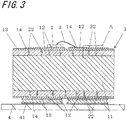
- FIG. 3 is a sectional view showing an embodiment of a light emission device 1 constructed of the electronic component mounting substrate 10 shown in FIG. 1 with the light emitting element 2 mounted thereon.
- the wiring conductor 14 is formed on the ceramic layer 13 constituting the electronic component mounting substrate 10, the light emitting element 2 is mounted, via a connecting pad 41 which is a Au (gold) bump, on the wiring conductor 14, and the wiring conductor 14 and a lead frame 3 are electrically joined to each other.
- the light emitting element 2 is implemented by an LED chip.
- the light emission device 1 is suitably used for a vehicle-installed LED lamp. That is, even if a high-power LED chip is mounted in the light emission device 1, by virtue of the incorporation of the electronic component mounting substrate 10 shown in FIG. 1 as a substrate for mounting the light emitting element 2 thereon, the light emission device 1 is capable of providing high thermal conductivity for a long period of time, and is also capable of maintaining the insulation performance of the ceramic layer 13 for a long period of time, because the ceramic layer 13 is free of quality degradation caused by phosphorus and so forth contained in an exhaust gas emitted from a car.
Landscapes
- Engineering & Computer Science (AREA)
- Microelectronics & Electronic Packaging (AREA)
- Chemical & Material Sciences (AREA)
- Inorganic Chemistry (AREA)
- Led Device Packages (AREA)
- Non-Portable Lighting Devices Or Systems Thereof (AREA)
- Insulated Metal Substrates For Printed Circuits (AREA)
Claims (7)
- Un substrat de montage de composant électronique (10), comprenant :un substrat métallique (11) formé d'aluminium ou d'un alliage à base d'aluminium ; etune couche d'alumite (12) disposée sur le substrat métallique, ayant un réseau de crevasses (22) sur une surface supérieure (21) de celle-ci ; caractérisé parune couche céramique (13) disposée sur la couche d'alumite (12), une partie de la couche céramique (13) s'étendant dans les crevasses (22),dans lequel la couche céramique (13) présente un évidement (13b) formé sur une surface supérieure de celle-ci, de manière à chevaucher les crevasses (22).
- Substrat de montage de composant électronique (10) selon la revendication 1, dans lequel la couche céramique (13) est formée d'un mélange d'alumine et de silice.
- Substrat de montage de composant électronique (10) selon la revendication 1 ou 2, dans lequel les crevasses (22) atteignent une interface entre le substrat métallique (11) et la couche d'alumite (12).
- Substrat de montage de composant électronique (10) selon l'une quelconque des revendications 1 à 3, comprenant en outre un conducteur de câblage (14) qui est disposé sur la couche céramique (13) et sur lequel est monté un élément émetteur de lumière (2),
dans lequel une région de la couche céramique (13) située sur un côté de couche d'alumite (12) a une dureté plus élevée qu'une région de la couche céramique (13) située sur un côté de conducteur de câblage (14). - Substrat de montage de composant électronique (10) selon l'une quelconque des revendications 1 à 4, dans lequel une épaisseur de la couche céramique (13), à l'exclusion de la partie de la couche céramique s'étendant dans les crevasses, se situe dans une plage de 0,5 µm ou plus et 20 µm ou moins.
- Substrat de montage de composant électronique (10) selon l'une quelconque des revendications 1 à 5, dans lequel une épaisseur de la couche d'alumite (12), à l'exclusion d'une partie de la couche d'alumite (12) munie des crevasses (22), se situe dans une plage de 3 µm ou plus et de 20 µm ou moins.
- Dispositif d'émission de lumière (1), comprenant :le substrat de montage de composant électronique (10) selon l'une quelconque des revendications 1 à 6 ; etun élément émetteur de lumière (2) monté sur le substrat de montage de composant électronique (10).
Applications Claiming Priority (5)
| Application Number | Priority Date | Filing Date | Title |
|---|---|---|---|
| JP2014193573 | 2014-09-24 | ||
| JP2015106524 | 2015-05-26 | ||
| JP2015128899 | 2015-06-26 | ||
| JP2015162976 | 2015-08-20 | ||
| PCT/JP2015/076965 WO2016047702A1 (fr) | 2014-09-24 | 2015-09-24 | Carte de montage de composant électronique et dispositif d'émission de lumière utilisant celle-ci |
Publications (3)
| Publication Number | Publication Date |
|---|---|
| EP3200571A1 EP3200571A1 (fr) | 2017-08-02 |
| EP3200571A4 EP3200571A4 (fr) | 2018-02-21 |
| EP3200571B1 true EP3200571B1 (fr) | 2021-04-21 |
Family
ID=55581223
Family Applications (1)
| Application Number | Title | Priority Date | Filing Date |
|---|---|---|---|
| EP15844693.0A Active EP3200571B1 (fr) | 2014-09-24 | 2015-09-24 | Carte de montage de composant électronique et dispositif d'émission de lumière utilisant celle-ci |
Country Status (4)
| Country | Link |
|---|---|
| US (1) | US9842971B2 (fr) |
| EP (1) | EP3200571B1 (fr) |
| JP (1) | JP6280232B2 (fr) |
| WO (1) | WO2016047702A1 (fr) |
Families Citing this family (4)
| Publication number | Priority date | Publication date | Assignee | Title |
|---|---|---|---|---|
| JP7262183B2 (ja) * | 2018-06-06 | 2023-04-21 | 日東電工株式会社 | 配線回路基板およびその製造方法 |
| CN109147654A (zh) * | 2018-10-30 | 2019-01-04 | 京东方科技集团股份有限公司 | 显示基板及显示装置 |
| JP2021052119A (ja) * | 2019-09-26 | 2021-04-01 | 富士フイルム株式会社 | Led発光素子用反射基板、及びledパッケージ |
| EP4495991A4 (fr) * | 2022-03-18 | 2025-06-25 | NOF Corporation | Substrat de dissipation thermique, carte de circuit à dissipation thermique, élément de dissipation thermique et procédé de fabrication de substrat de dissipation thermique |
Citations (2)
| Publication number | Priority date | Publication date | Assignee | Title |
|---|---|---|---|---|
| WO2012008569A1 (fr) * | 2010-07-15 | 2012-01-19 | シャープ株式会社 | Dissipateur thermique et dispositif électronique |
| WO2015111271A1 (fr) * | 2014-01-23 | 2015-07-30 | イビデン株式会社 | Matériau de base en aluminium à revêtement multicouche |
Family Cites Families (17)
| Publication number | Priority date | Publication date | Assignee | Title |
|---|---|---|---|---|
| JPS5922395B2 (ja) * | 1981-02-02 | 1984-05-26 | 株式会社フジクラ | 印刷配線基板の製造方法 |
| CA1212073A (fr) * | 1981-02-02 | 1986-09-30 | Seizo Murayama | Impregnation d'une pellicule d'oxyde anodique avec un compose polymerisable, le procede et le substrat de cablage ainsi obtenu |
| JPS59123297A (ja) * | 1982-12-27 | 1984-07-17 | インタ−ナショナル ビジネス マシ−ンズ コ−ポレ−ション | プリント回路板のための基板の形成方法 |
| JPS6075462U (ja) * | 1983-10-26 | 1985-05-27 | 日産ディーゼル工業株式会社 | アルミ合金材 |
| JPS60122522A (ja) * | 1983-12-07 | 1985-07-01 | 早川 哲夫 | 長波長赤外線による調理用鍋 |
| JPS63137157A (ja) * | 1986-11-28 | 1988-06-09 | Mitsubishi Electric Corp | アルミニウム部材の被膜形成法 |
| JPS63222468A (ja) * | 1987-03-11 | 1988-09-16 | Showa Alum Corp | アモルフアスシリコン太陽電池用基板 |
| JPS63230887A (ja) * | 1987-03-18 | 1988-09-27 | Toyo Metal Kk | アルミニウム−セラミツク複合材 |
| JPH03112193A (ja) * | 1989-09-26 | 1991-05-13 | Matsushita Electric Works Ltd | 回路基板の製法 |
| US5534356A (en) * | 1995-04-26 | 1996-07-09 | Olin Corporation | Anodized aluminum substrate having increased breakdown voltage |
| JPH0957903A (ja) * | 1995-08-21 | 1997-03-04 | Toshiba Corp | 多層セラミックス基板およびその製造方法 |
| JP2000269380A (ja) * | 1999-03-19 | 2000-09-29 | Nec Corp | 多層セラミックチップサイズパッケージ及びその製造方法 |
| JP2007165751A (ja) | 2005-12-16 | 2007-06-28 | Multi:Kk | 配線板およびその製造法 |
| JP2009267104A (ja) * | 2008-04-25 | 2009-11-12 | Kyocera Corp | 配線基板及びその製造方法 |
| ES2699495T3 (es) * | 2011-02-08 | 2019-02-11 | Cambridge Nanotherm Ltd | Sustrato de metal aislado |
| JP2014116351A (ja) * | 2012-12-06 | 2014-06-26 | Nippon Multi Kk | 高熱伝導性プリント配線板及びその製造方法 |
| JP6470492B2 (ja) | 2014-01-23 | 2019-02-13 | イビデン株式会社 | 複層コートアルミニウム基材及び複層コートアルミニウム基材の製造方法 |
-
2015
- 2015-09-24 EP EP15844693.0A patent/EP3200571B1/fr active Active
- 2015-09-24 WO PCT/JP2015/076965 patent/WO2016047702A1/fr not_active Ceased
- 2015-09-24 JP JP2016550365A patent/JP6280232B2/ja not_active Expired - Fee Related
- 2015-09-24 US US15/320,361 patent/US9842971B2/en not_active Expired - Fee Related
Patent Citations (2)
| Publication number | Priority date | Publication date | Assignee | Title |
|---|---|---|---|---|
| WO2012008569A1 (fr) * | 2010-07-15 | 2012-01-19 | シャープ株式会社 | Dissipateur thermique et dispositif électronique |
| WO2015111271A1 (fr) * | 2014-01-23 | 2015-07-30 | イビデン株式会社 | Matériau de base en aluminium à revêtement multicouche |
Also Published As
| Publication number | Publication date |
|---|---|
| EP3200571A4 (fr) | 2018-02-21 |
| US9842971B2 (en) | 2017-12-12 |
| JP6280232B2 (ja) | 2018-02-14 |
| JPWO2016047702A1 (ja) | 2017-04-27 |
| WO2016047702A1 (fr) | 2016-03-31 |
| US20170207369A1 (en) | 2017-07-20 |
| EP3200571A1 (fr) | 2017-08-02 |
Similar Documents
| Publication | Publication Date | Title |
|---|---|---|
| EP3200571B1 (fr) | Carte de montage de composant électronique et dispositif d'émission de lumière utilisant celle-ci | |
| EP3321957B1 (fr) | Carte de circuit imprimé céramique-métal et dispositif à semi-conducteur l'utilisant | |
| JP2019519118A5 (fr) | ||
| WO2008021268A1 (fr) | Dispositif à diodes électroluminescentes et panneau arrière d'écran à cristaux liquides | |
| US20160014901A1 (en) | An electronic sub-assembly, a method for manufacturing the same, and a printed circuit board with electronic sub-assembly | |
| JP7483955B2 (ja) | パワーモジュール用基板およびパワーモジュール | |
| US20040232544A1 (en) | Semiconductor device and method of manufacturing the same | |
| CN108140705B (zh) | 发光模块用基板、发光模块、带制冷器的发光模块用基板及发光模块用基板的制造方法 | |
| KR20130036650A (ko) | Led용 금속 기판 모듈과 그 제조 방법, 그리고 금속 기판 모듈을 이용한 차량용 led 패키지 | |
| CN101253623A (zh) | 用于制造具有平面接触的半导体器件的方法以及半导体器件 | |
| US9614128B2 (en) | Surface mountable semiconductor device | |
| US20100308707A1 (en) | Led module and method of fabrication thereof | |
| JP2023109954A (ja) | 熱伝導及び電気絶縁のための装置 | |
| JP2011124449A (ja) | 発光部品、発光器及び発光部品の製造方法 | |
| US20070215894A1 (en) | Insulation structure for high temperature conditions and manufacturing method thereof | |
| JP2005072382A (ja) | 放熱用リードフレーム基板及びその製造方法並びに半導体装置 | |
| JP4946502B2 (ja) | 回路構造 | |
| KR20090062070A (ko) | 방열 특성이 우수한 금속 회로 기판 및 그 제조 방법 | |
| US20190056186A1 (en) | Cooling device and method for producing the cooling device | |
| JP7170501B2 (ja) | パワーモジュール用基板およびパワーモジュール | |
| JP7383116B2 (ja) | 電子部品搭載用パッケージおよび電子装置 | |
| EP4693393A1 (fr) | Substrat pour le montage d'un élément semi-conducteur | |
| US20110232950A1 (en) | Substrate and method for manufacturing the same | |
| US20230123973A1 (en) | Electronic component mounting substrate and electronic device | |
| JP6267068B2 (ja) | 配線基板、電子装置および電子モジュール |
Legal Events
| Date | Code | Title | Description |
|---|---|---|---|
| STAA | Information on the status of an ep patent application or granted ep patent |
Free format text: STATUS: THE INTERNATIONAL PUBLICATION HAS BEEN MADE |
|
| PUAI | Public reference made under article 153(3) epc to a published international application that has entered the european phase |
Free format text: ORIGINAL CODE: 0009012 |
|
| STAA | Information on the status of an ep patent application or granted ep patent |
Free format text: STATUS: REQUEST FOR EXAMINATION WAS MADE |
|
| 17P | Request for examination filed |
Effective date: 20161215 |
|
| AK | Designated contracting states |
Kind code of ref document: A1 Designated state(s): AL AT BE BG CH CY CZ DE DK EE ES FI FR GB GR HR HU IE IS IT LI LT LU LV MC MK MT NL NO PL PT RO RS SE SI SK SM TR |
|
| AX | Request for extension of the european patent |
Extension state: BA ME |
|
| DAV | Request for validation of the european patent (deleted) | ||
| DAX | Request for extension of the european patent (deleted) | ||
| A4 | Supplementary search report drawn up and despatched |
Effective date: 20180124 |
|
| RIC1 | Information provided on ipc code assigned before grant |
Ipc: H01L 33/48 20100101ALI20180118BHEP Ipc: H05K 1/05 20060101AFI20180118BHEP |
|
| STAA | Information on the status of an ep patent application or granted ep patent |
Free format text: STATUS: EXAMINATION IS IN PROGRESS |
|
| 17Q | First examination report despatched |
Effective date: 20190702 |
|
| GRAP | Despatch of communication of intention to grant a patent |
Free format text: ORIGINAL CODE: EPIDOSNIGR1 |
|
| STAA | Information on the status of an ep patent application or granted ep patent |
Free format text: STATUS: GRANT OF PATENT IS INTENDED |
|
| INTG | Intention to grant announced |
Effective date: 20201028 |
|
| GRAS | Grant fee paid |
Free format text: ORIGINAL CODE: EPIDOSNIGR3 |
|
| GRAA | (expected) grant |
Free format text: ORIGINAL CODE: 0009210 |
|
| STAA | Information on the status of an ep patent application or granted ep patent |
Free format text: STATUS: THE PATENT HAS BEEN GRANTED |
|
| AK | Designated contracting states |
Kind code of ref document: B1 Designated state(s): AL AT BE BG CH CY CZ DE DK EE ES FI FR GB GR HR HU IE IS IT LI LT LU LV MC MK MT NL NO PL PT RO RS SE SI SK SM TR |
|
| REG | Reference to a national code |
Ref country code: GB Ref legal event code: FG4D |
|
| REG | Reference to a national code |
Ref country code: CH Ref legal event code: EP |
|
| REG | Reference to a national code |
Ref country code: DE Ref legal event code: R096 Ref document number: 602015068471 Country of ref document: DE |
|
| REG | Reference to a national code |
Ref country code: IE Ref legal event code: FG4D |
|
| REG | Reference to a national code |
Ref country code: AT Ref legal event code: REF Ref document number: 1386019 Country of ref document: AT Kind code of ref document: T Effective date: 20210515 |
|
| REG | Reference to a national code |
Ref country code: LT Ref legal event code: MG9D |
|
| REG | Reference to a national code |
Ref country code: AT Ref legal event code: MK05 Ref document number: 1386019 Country of ref document: AT Kind code of ref document: T Effective date: 20210421 |
|
| REG | Reference to a national code |
Ref country code: NL Ref legal event code: MP Effective date: 20210421 |
|
| PG25 | Lapsed in a contracting state [announced via postgrant information from national office to epo] |
Ref country code: LT Free format text: LAPSE BECAUSE OF FAILURE TO SUBMIT A TRANSLATION OF THE DESCRIPTION OR TO PAY THE FEE WITHIN THE PRESCRIBED TIME-LIMIT Effective date: 20210421 Ref country code: NL Free format text: LAPSE BECAUSE OF FAILURE TO SUBMIT A TRANSLATION OF THE DESCRIPTION OR TO PAY THE FEE WITHIN THE PRESCRIBED TIME-LIMIT Effective date: 20210421 Ref country code: FI Free format text: LAPSE BECAUSE OF FAILURE TO SUBMIT A TRANSLATION OF THE DESCRIPTION OR TO PAY THE FEE WITHIN THE PRESCRIBED TIME-LIMIT Effective date: 20210421 Ref country code: AT Free format text: LAPSE BECAUSE OF FAILURE TO SUBMIT A TRANSLATION OF THE DESCRIPTION OR TO PAY THE FEE WITHIN THE PRESCRIBED TIME-LIMIT Effective date: 20210421 Ref country code: BG Free format text: LAPSE BECAUSE OF FAILURE TO SUBMIT A TRANSLATION OF THE DESCRIPTION OR TO PAY THE FEE WITHIN THE PRESCRIBED TIME-LIMIT Effective date: 20210721 Ref country code: HR Free format text: LAPSE BECAUSE OF FAILURE TO SUBMIT A TRANSLATION OF THE DESCRIPTION OR TO PAY THE FEE WITHIN THE PRESCRIBED TIME-LIMIT Effective date: 20210421 |
|
| PGFP | Annual fee paid to national office [announced via postgrant information from national office to epo] |
Ref country code: FR Payment date: 20210812 Year of fee payment: 7 |
|
| PG25 | Lapsed in a contracting state [announced via postgrant information from national office to epo] |
Ref country code: NO Free format text: LAPSE BECAUSE OF FAILURE TO SUBMIT A TRANSLATION OF THE DESCRIPTION OR TO PAY THE FEE WITHIN THE PRESCRIBED TIME-LIMIT Effective date: 20210721 Ref country code: PT Free format text: LAPSE BECAUSE OF FAILURE TO SUBMIT A TRANSLATION OF THE DESCRIPTION OR TO PAY THE FEE WITHIN THE PRESCRIBED TIME-LIMIT Effective date: 20210823 Ref country code: PL Free format text: LAPSE BECAUSE OF FAILURE TO SUBMIT A TRANSLATION OF THE DESCRIPTION OR TO PAY THE FEE WITHIN THE PRESCRIBED TIME-LIMIT Effective date: 20210421 Ref country code: RS Free format text: LAPSE BECAUSE OF FAILURE TO SUBMIT A TRANSLATION OF THE DESCRIPTION OR TO PAY THE FEE WITHIN THE PRESCRIBED TIME-LIMIT Effective date: 20210421 Ref country code: SE Free format text: LAPSE BECAUSE OF FAILURE TO SUBMIT A TRANSLATION OF THE DESCRIPTION OR TO PAY THE FEE WITHIN THE PRESCRIBED TIME-LIMIT Effective date: 20210421 Ref country code: GR Free format text: LAPSE BECAUSE OF FAILURE TO SUBMIT A TRANSLATION OF THE DESCRIPTION OR TO PAY THE FEE WITHIN THE PRESCRIBED TIME-LIMIT Effective date: 20210722 Ref country code: LV Free format text: LAPSE BECAUSE OF FAILURE TO SUBMIT A TRANSLATION OF THE DESCRIPTION OR TO PAY THE FEE WITHIN THE PRESCRIBED TIME-LIMIT Effective date: 20210421 Ref country code: IS Free format text: LAPSE BECAUSE OF FAILURE TO SUBMIT A TRANSLATION OF THE DESCRIPTION OR TO PAY THE FEE WITHIN THE PRESCRIBED TIME-LIMIT Effective date: 20210821 |
|
| PGFP | Annual fee paid to national office [announced via postgrant information from national office to epo] |
Ref country code: DE Payment date: 20210818 Year of fee payment: 7 |
|
| REG | Reference to a national code |
Ref country code: DE Ref legal event code: R097 Ref document number: 602015068471 Country of ref document: DE |
|
| PG25 | Lapsed in a contracting state [announced via postgrant information from national office to epo] |
Ref country code: DK Free format text: LAPSE BECAUSE OF FAILURE TO SUBMIT A TRANSLATION OF THE DESCRIPTION OR TO PAY THE FEE WITHIN THE PRESCRIBED TIME-LIMIT Effective date: 20210421 Ref country code: CZ Free format text: LAPSE BECAUSE OF FAILURE TO SUBMIT A TRANSLATION OF THE DESCRIPTION OR TO PAY THE FEE WITHIN THE PRESCRIBED TIME-LIMIT Effective date: 20210421 Ref country code: EE Free format text: LAPSE BECAUSE OF FAILURE TO SUBMIT A TRANSLATION OF THE DESCRIPTION OR TO PAY THE FEE WITHIN THE PRESCRIBED TIME-LIMIT Effective date: 20210421 Ref country code: SM Free format text: LAPSE BECAUSE OF FAILURE TO SUBMIT A TRANSLATION OF THE DESCRIPTION OR TO PAY THE FEE WITHIN THE PRESCRIBED TIME-LIMIT Effective date: 20210421 Ref country code: SK Free format text: LAPSE BECAUSE OF FAILURE TO SUBMIT A TRANSLATION OF THE DESCRIPTION OR TO PAY THE FEE WITHIN THE PRESCRIBED TIME-LIMIT Effective date: 20210421 Ref country code: ES Free format text: LAPSE BECAUSE OF FAILURE TO SUBMIT A TRANSLATION OF THE DESCRIPTION OR TO PAY THE FEE WITHIN THE PRESCRIBED TIME-LIMIT Effective date: 20210421 Ref country code: RO Free format text: LAPSE BECAUSE OF FAILURE TO SUBMIT A TRANSLATION OF THE DESCRIPTION OR TO PAY THE FEE WITHIN THE PRESCRIBED TIME-LIMIT Effective date: 20210421 |
|
| PLBE | No opposition filed within time limit |
Free format text: ORIGINAL CODE: 0009261 |
|
| STAA | Information on the status of an ep patent application or granted ep patent |
Free format text: STATUS: NO OPPOSITION FILED WITHIN TIME LIMIT |
|
| 26N | No opposition filed |
Effective date: 20220124 |
|
| REG | Reference to a national code |
Ref country code: CH Ref legal event code: PL |
|
| REG | Reference to a national code |
Ref country code: BE Ref legal event code: MM Effective date: 20210930 |
|
| GBPC | Gb: european patent ceased through non-payment of renewal fee |
Effective date: 20210924 |
|
| PG25 | Lapsed in a contracting state [announced via postgrant information from national office to epo] |
Ref country code: IS Free format text: LAPSE BECAUSE OF FAILURE TO SUBMIT A TRANSLATION OF THE DESCRIPTION OR TO PAY THE FEE WITHIN THE PRESCRIBED TIME-LIMIT Effective date: 20210821 Ref country code: MC Free format text: LAPSE BECAUSE OF FAILURE TO SUBMIT A TRANSLATION OF THE DESCRIPTION OR TO PAY THE FEE WITHIN THE PRESCRIBED TIME-LIMIT Effective date: 20210421 Ref country code: AL Free format text: LAPSE BECAUSE OF FAILURE TO SUBMIT A TRANSLATION OF THE DESCRIPTION OR TO PAY THE FEE WITHIN THE PRESCRIBED TIME-LIMIT Effective date: 20210421 |
|
| PG25 | Lapsed in a contracting state [announced via postgrant information from national office to epo] |
Ref country code: LU Free format text: LAPSE BECAUSE OF NON-PAYMENT OF DUE FEES Effective date: 20210924 Ref country code: IT Free format text: LAPSE BECAUSE OF FAILURE TO SUBMIT A TRANSLATION OF THE DESCRIPTION OR TO PAY THE FEE WITHIN THE PRESCRIBED TIME-LIMIT Effective date: 20210421 Ref country code: IE Free format text: LAPSE BECAUSE OF NON-PAYMENT OF DUE FEES Effective date: 20210924 Ref country code: GB Free format text: LAPSE BECAUSE OF NON-PAYMENT OF DUE FEES Effective date: 20210924 Ref country code: BE Free format text: LAPSE BECAUSE OF NON-PAYMENT OF DUE FEES Effective date: 20210930 |
|
| PG25 | Lapsed in a contracting state [announced via postgrant information from national office to epo] |
Ref country code: LI Free format text: LAPSE BECAUSE OF NON-PAYMENT OF DUE FEES Effective date: 20210930 Ref country code: CH Free format text: LAPSE BECAUSE OF NON-PAYMENT OF DUE FEES Effective date: 20210930 |
|
| REG | Reference to a national code |
Ref country code: DE Ref legal event code: R119 Ref document number: 602015068471 Country of ref document: DE |
|
| PG25 | Lapsed in a contracting state [announced via postgrant information from national office to epo] |
Ref country code: HU Free format text: LAPSE BECAUSE OF FAILURE TO SUBMIT A TRANSLATION OF THE DESCRIPTION OR TO PAY THE FEE WITHIN THE PRESCRIBED TIME-LIMIT; INVALID AB INITIO Effective date: 20150924 |
|
| PG25 | Lapsed in a contracting state [announced via postgrant information from national office to epo] |
Ref country code: CY Free format text: LAPSE BECAUSE OF FAILURE TO SUBMIT A TRANSLATION OF THE DESCRIPTION OR TO PAY THE FEE WITHIN THE PRESCRIBED TIME-LIMIT Effective date: 20210421 |
|
| PG25 | Lapsed in a contracting state [announced via postgrant information from national office to epo] |
Ref country code: FR Free format text: LAPSE BECAUSE OF NON-PAYMENT OF DUE FEES Effective date: 20220930 Ref country code: DE Free format text: LAPSE BECAUSE OF NON-PAYMENT OF DUE FEES Effective date: 20230401 |
|
| PG25 | Lapsed in a contracting state [announced via postgrant information from national office to epo] |
Ref country code: MK Free format text: LAPSE BECAUSE OF FAILURE TO SUBMIT A TRANSLATION OF THE DESCRIPTION OR TO PAY THE FEE WITHIN THE PRESCRIBED TIME-LIMIT Effective date: 20210421 |
|
| PG25 | Lapsed in a contracting state [announced via postgrant information from national office to epo] |
Ref country code: MT Free format text: LAPSE BECAUSE OF FAILURE TO SUBMIT A TRANSLATION OF THE DESCRIPTION OR TO PAY THE FEE WITHIN THE PRESCRIBED TIME-LIMIT Effective date: 20210421 |
|
| PG25 | Lapsed in a contracting state [announced via postgrant information from national office to epo] |
Ref country code: TR Free format text: LAPSE BECAUSE OF FAILURE TO SUBMIT A TRANSLATION OF THE DESCRIPTION OR TO PAY THE FEE WITHIN THE PRESCRIBED TIME-LIMIT Effective date: 20210421 |