EP3203170A2 - Mikrokanalverdampfer mit kompartimentierter verteilung - Google Patents
Mikrokanalverdampfer mit kompartimentierter verteilung Download PDFInfo
- Publication number
- EP3203170A2 EP3203170A2 EP17152618.9A EP17152618A EP3203170A2 EP 3203170 A2 EP3203170 A2 EP 3203170A2 EP 17152618 A EP17152618 A EP 17152618A EP 3203170 A2 EP3203170 A2 EP 3203170A2
- Authority
- EP
- European Patent Office
- Prior art keywords
- cavity
- manifold
- micro
- evaporator
- elongated body
- Prior art date
- Legal status (The legal status is an assumption and is not a legal conclusion. Google has not performed a legal analysis and makes no representation as to the accuracy of the status listed.)
- Withdrawn
Links
Images


Classifications
-
- F—MECHANICAL ENGINEERING; LIGHTING; HEATING; WEAPONS; BLASTING
- F25—REFRIGERATION OR COOLING; COMBINED HEATING AND REFRIGERATION SYSTEMS; HEAT PUMP SYSTEMS; MANUFACTURE OR STORAGE OF ICE; LIQUEFACTION SOLIDIFICATION OF GASES
- F25B—REFRIGERATION MACHINES, PLANTS OR SYSTEMS; COMBINED HEATING AND REFRIGERATION SYSTEMS; HEAT PUMP SYSTEMS
- F25B39/00—Evaporators; Condensers
-
- F—MECHANICAL ENGINEERING; LIGHTING; HEATING; WEAPONS; BLASTING
- F25—REFRIGERATION OR COOLING; COMBINED HEATING AND REFRIGERATION SYSTEMS; HEAT PUMP SYSTEMS; MANUFACTURE OR STORAGE OF ICE; LIQUEFACTION SOLIDIFICATION OF GASES
- F25B—REFRIGERATION MACHINES, PLANTS OR SYSTEMS; COMBINED HEATING AND REFRIGERATION SYSTEMS; HEAT PUMP SYSTEMS
- F25B39/00—Evaporators; Condensers
- F25B39/02—Evaporators
- F25B39/028—Evaporators having distributing means
-
- F—MECHANICAL ENGINEERING; LIGHTING; HEATING; WEAPONS; BLASTING
- F28—HEAT EXCHANGE IN GENERAL
- F28D—HEAT-EXCHANGE APPARATUS, NOT PROVIDED FOR IN ANOTHER SUBCLASS, IN WHICH THE HEAT-EXCHANGE MEDIA DO NOT COME INTO DIRECT CONTACT
- F28D1/00—Heat-exchange apparatus having stationary conduit assemblies for one heat-exchange medium only, the media being in contact with different sides of the conduit wall, in which the other heat-exchange medium is a large body of fluid, e.g. domestic or motor car radiators
- F28D1/02—Heat-exchange apparatus having stationary conduit assemblies for one heat-exchange medium only, the media being in contact with different sides of the conduit wall, in which the other heat-exchange medium is a large body of fluid, e.g. domestic or motor car radiators with heat-exchange conduits immersed in the body of fluid
- F28D1/04—Heat-exchange apparatus having stationary conduit assemblies for one heat-exchange medium only, the media being in contact with different sides of the conduit wall, in which the other heat-exchange medium is a large body of fluid, e.g. domestic or motor car radiators with heat-exchange conduits immersed in the body of fluid with tubular conduits
- F28D1/053—Heat-exchange apparatus having stationary conduit assemblies for one heat-exchange medium only, the media being in contact with different sides of the conduit wall, in which the other heat-exchange medium is a large body of fluid, e.g. domestic or motor car radiators with heat-exchange conduits immersed in the body of fluid with tubular conduits the conduits being straight
- F28D1/05316—Assemblies of conduits connected to common headers, e.g. core type radiators
- F28D1/05333—Assemblies of conduits connected to common headers, e.g. core type radiators with multiple rows of conduits or with multi-channel conduits
-
- F—MECHANICAL ENGINEERING; LIGHTING; HEATING; WEAPONS; BLASTING
- F28—HEAT EXCHANGE IN GENERAL
- F28F—DETAILS OF HEAT-EXCHANGE AND HEAT-TRANSFER APPARATUS, OF GENERAL APPLICATION
- F28F1/00—Tubular elements; Assemblies of tubular elements
- F28F1/10—Tubular elements and assemblies thereof with means for increasing heat-transfer area, e.g. with fins, with projections, with recesses
- F28F1/12—Tubular elements and assemblies thereof with means for increasing heat-transfer area, e.g. with fins, with projections, with recesses the means being only outside the tubular element
- F28F1/126—Tubular elements and assemblies thereof with means for increasing heat-transfer area, e.g. with fins, with projections, with recesses the means being only outside the tubular element consisting of zig-zag shaped fins
-
- F—MECHANICAL ENGINEERING; LIGHTING; HEATING; WEAPONS; BLASTING
- F28—HEAT EXCHANGE IN GENERAL
- F28F—DETAILS OF HEAT-EXCHANGE AND HEAT-TRANSFER APPARATUS, OF GENERAL APPLICATION
- F28F9/00—Casings; Header boxes; Auxiliary supports for elements; Auxiliary members within casings
- F28F9/02—Header boxes; End plates
- F28F9/0243—Header boxes having a circular cross-section
-
- F—MECHANICAL ENGINEERING; LIGHTING; HEATING; WEAPONS; BLASTING
- F28—HEAT EXCHANGE IN GENERAL
- F28F—DETAILS OF HEAT-EXCHANGE AND HEAT-TRANSFER APPARATUS, OF GENERAL APPLICATION
- F28F9/00—Casings; Header boxes; Auxiliary supports for elements; Auxiliary members within casings
- F28F9/02—Header boxes; End plates
- F28F9/026—Header boxes; End plates with static flow control means, e.g. with means for uniformly distributing heat exchange media into conduits
- F28F9/0265—Header boxes; End plates with static flow control means, e.g. with means for uniformly distributing heat exchange media into conduits by using guiding means or impingement means inside the header box
- F28F9/0268—Header boxes; End plates with static flow control means, e.g. with means for uniformly distributing heat exchange media into conduits by using guiding means or impingement means inside the header box in the form of multiple deflectors for channeling the heat exchange medium
-
- F—MECHANICAL ENGINEERING; LIGHTING; HEATING; WEAPONS; BLASTING
- F28—HEAT EXCHANGE IN GENERAL
- F28F—DETAILS OF HEAT-EXCHANGE AND HEAT-TRANSFER APPARATUS, OF GENERAL APPLICATION
- F28F9/00—Casings; Header boxes; Auxiliary supports for elements; Auxiliary members within casings
- F28F9/02—Header boxes; End plates
- F28F9/026—Header boxes; End plates with static flow control means, e.g. with means for uniformly distributing heat exchange media into conduits
- F28F9/027—Header boxes; End plates with static flow control means, e.g. with means for uniformly distributing heat exchange media into conduits in the form of distribution pipes
- F28F9/0273—Header boxes; End plates with static flow control means, e.g. with means for uniformly distributing heat exchange media into conduits in the form of distribution pipes with multiple holes
-
- F—MECHANICAL ENGINEERING; LIGHTING; HEATING; WEAPONS; BLASTING
- F28—HEAT EXCHANGE IN GENERAL
- F28F—DETAILS OF HEAT-EXCHANGE AND HEAT-TRANSFER APPARATUS, OF GENERAL APPLICATION
- F28F9/00—Casings; Header boxes; Auxiliary supports for elements; Auxiliary members within casings
- F28F9/22—Arrangements for directing heat-exchange media into successive compartments, e.g. arrangements of guide plates
-
- F—MECHANICAL ENGINEERING; LIGHTING; HEATING; WEAPONS; BLASTING
- F28—HEAT EXCHANGE IN GENERAL
- F28D—HEAT-EXCHANGE APPARATUS, NOT PROVIDED FOR IN ANOTHER SUBCLASS, IN WHICH THE HEAT-EXCHANGE MEDIA DO NOT COME INTO DIRECT CONTACT
- F28D1/00—Heat-exchange apparatus having stationary conduit assemblies for one heat-exchange medium only, the media being in contact with different sides of the conduit wall, in which the other heat-exchange medium is a large body of fluid, e.g. domestic or motor car radiators
- F28D1/02—Heat-exchange apparatus having stationary conduit assemblies for one heat-exchange medium only, the media being in contact with different sides of the conduit wall, in which the other heat-exchange medium is a large body of fluid, e.g. domestic or motor car radiators with heat-exchange conduits immersed in the body of fluid
- F28D1/04—Heat-exchange apparatus having stationary conduit assemblies for one heat-exchange medium only, the media being in contact with different sides of the conduit wall, in which the other heat-exchange medium is a large body of fluid, e.g. domestic or motor car radiators with heat-exchange conduits immersed in the body of fluid with tubular conduits
- F28D1/053—Heat-exchange apparatus having stationary conduit assemblies for one heat-exchange medium only, the media being in contact with different sides of the conduit wall, in which the other heat-exchange medium is a large body of fluid, e.g. domestic or motor car radiators with heat-exchange conduits immersed in the body of fluid with tubular conduits the conduits being straight
- F28D1/0535—Heat-exchange apparatus having stationary conduit assemblies for one heat-exchange medium only, the media being in contact with different sides of the conduit wall, in which the other heat-exchange medium is a large body of fluid, e.g. domestic or motor car radiators with heat-exchange conduits immersed in the body of fluid with tubular conduits the conduits being straight the conduits having a non-circular cross-section
- F28D1/05366—Assemblies of conduits connected to common headers, e.g. core type radiators
-
- F—MECHANICAL ENGINEERING; LIGHTING; HEATING; WEAPONS; BLASTING
- F28—HEAT EXCHANGE IN GENERAL
- F28D—HEAT-EXCHANGE APPARATUS, NOT PROVIDED FOR IN ANOTHER SUBCLASS, IN WHICH THE HEAT-EXCHANGE MEDIA DO NOT COME INTO DIRECT CONTACT
- F28D21/00—Heat-exchange apparatus not covered by any of the groups F28D1/00 - F28D20/00
- F28D2021/0019—Other heat exchangers for particular applications; Heat exchange systems not otherwise provided for
- F28D2021/0068—Other heat exchangers for particular applications; Heat exchange systems not otherwise provided for for refrigerant cycles
- F28D2021/0071—Evaporators
-
- F—MECHANICAL ENGINEERING; LIGHTING; HEATING; WEAPONS; BLASTING
- F28—HEAT EXCHANGE IN GENERAL
- F28F—DETAILS OF HEAT-EXCHANGE AND HEAT-TRANSFER APPARATUS, OF GENERAL APPLICATION
- F28F1/00—Tubular elements; Assemblies of tubular elements
- F28F1/02—Tubular elements of cross-section which is non-circular
- F28F1/022—Tubular elements of cross-section which is non-circular with multiple channels
-
- F—MECHANICAL ENGINEERING; LIGHTING; HEATING; WEAPONS; BLASTING
- F28—HEAT EXCHANGE IN GENERAL
- F28F—DETAILS OF HEAT-EXCHANGE AND HEAT-TRANSFER APPARATUS, OF GENERAL APPLICATION
- F28F9/00—Casings; Header boxes; Auxiliary supports for elements; Auxiliary members within casings
- F28F9/22—Arrangements for directing heat-exchange media into successive compartments, e.g. arrangements of guide plates
- F28F2009/222—Particular guide plates, baffles or deflectors, e.g. having particular orientation relative to an elongated casing or conduit
- F28F2009/224—Longitudinal partitions
-
- F—MECHANICAL ENGINEERING; LIGHTING; HEATING; WEAPONS; BLASTING
- F28—HEAT EXCHANGE IN GENERAL
- F28F—DETAILS OF HEAT-EXCHANGE AND HEAT-TRANSFER APPARATUS, OF GENERAL APPLICATION
- F28F9/00—Casings; Header boxes; Auxiliary supports for elements; Auxiliary members within casings
- F28F9/22—Arrangements for directing heat-exchange media into successive compartments, e.g. arrangements of guide plates
- F28F2009/222—Particular guide plates, baffles or deflectors, e.g. having particular orientation relative to an elongated casing or conduit
- F28F2009/226—Transversal partitions
-
- F—MECHANICAL ENGINEERING; LIGHTING; HEATING; WEAPONS; BLASTING
- F28—HEAT EXCHANGE IN GENERAL
- F28F—DETAILS OF HEAT-EXCHANGE AND HEAT-TRANSFER APPARATUS, OF GENERAL APPLICATION
- F28F2260/00—Heat exchangers or heat exchange elements having special size, e.g. microstructures
- F28F2260/02—Heat exchangers or heat exchange elements having special size, e.g. microstructures having microchannels
-
- F—MECHANICAL ENGINEERING; LIGHTING; HEATING; WEAPONS; BLASTING
- F28—HEAT EXCHANGE IN GENERAL
- F28F—DETAILS OF HEAT-EXCHANGE AND HEAT-TRANSFER APPARATUS, OF GENERAL APPLICATION
- F28F9/00—Casings; Header boxes; Auxiliary supports for elements; Auxiliary members within casings
- F28F9/02—Header boxes; End plates
- F28F9/0202—Header boxes having their inner space divided by partitions
- F28F9/0204—Header boxes having their inner space divided by partitions for elongated header box, e.g. with transversal and longitudinal partitions
- F28F9/0209—Header boxes having their inner space divided by partitions for elongated header box, e.g. with transversal and longitudinal partitions having only transversal partitions
-
- F—MECHANICAL ENGINEERING; LIGHTING; HEATING; WEAPONS; BLASTING
- F28—HEAT EXCHANGE IN GENERAL
- F28F—DETAILS OF HEAT-EXCHANGE AND HEAT-TRANSFER APPARATUS, OF GENERAL APPLICATION
- F28F9/00—Casings; Header boxes; Auxiliary supports for elements; Auxiliary members within casings
- F28F9/02—Header boxes; End plates
- F28F9/0202—Header boxes having their inner space divided by partitions
- F28F9/0204—Header boxes having their inner space divided by partitions for elongated header box, e.g. with transversal and longitudinal partitions
- F28F9/0209—Header boxes having their inner space divided by partitions for elongated header box, e.g. with transversal and longitudinal partitions having only transversal partitions
- F28F9/0212—Header boxes having their inner space divided by partitions for elongated header box, e.g. with transversal and longitudinal partitions having only transversal partitions the partitions being separate elements attached to header boxes
Definitions
- This disclosure relates to evaporators for cooling systems and, in particular, to micro-channel evaporators for air conditioning and refrigeration systems.
- Cooling systems such as refrigeration and air conditioning systems employ evaporators to absorb heat from the environment to be cooled. Cooling fluid passes through the evaporator and undergoes a change of state while proceeding from the inlet to the outlet. Micro-channels increase the efficiency of thermal exchange across the evaporator, commonly requiring only a single pass through the environment to be cooled.
- cooling fluid entering an evaporator manifold from an inlet distributor often retains at least some momentum in the flow direction of the distributor, resulting in uneven distribution of the cooling fluid into the micro-channels. This problem is particularly relevant in evaporators using micro-channels, as the small cross-sections of the micro-channel inlets may restrict flow into the micro-channels and enhance downstream momentum effects.
- the cooling fluid concentration may be substantially higher at the micro-channels located at the downstream end of the manifold.
- the cooling fluid in the downstream micro-channels undergoes heat exchange which is less effective and upstream micro-channels operate at below their cooling fluid capacity. Therefore, a distributor and manifold which evenly distributes cooling fluid into the micro-channels is desirable.
- an evaporator comprising a manifold, a plurality of micro-channel passageways, a distributor, and a separator.
- the manifold comprises a shell defining a cavity.
- the plurality of micro-channel passageways extends outwardly from the shell of the manifold, wherein the cavity is in fluid communication with the plurality of micro-channel passageways.
- the distributor comprises an inlet, an elongated body extending into the cavity of the manifold and defining a lumen, and a plurality of openings arranged on an outer surface of the elongated body and spaced along a length of the elongated body, wherein the openings are configured to allow fluid communication between the lumen and the cavity of the manifold.
- the separator is positioned between the plurality of openings within the cavity of the manifold.
- an evaporator comprising an inlet manifold, a separator, a plurality of micro-channel passageways, and an outlet manifold.
- the inlet manifold comprises an inlet and a shell defining a cavity, the inlet manifold being configured to receive a distributor.
- the separator is positioned along the length of the distributor within the cavity of the manifold.
- the plurality of micro-channel passageways extends outwardly from the shell of the outlet manifold.
- the plurality of micro-channel passageways comprises a first end and a second end, wherein the first end is in fluid communication with the cavity of the inlet manifold.
- the outlet manifold is in fluid communication with the second end of the plurality of micro-channel passageways.
- a method of manufacturing an evaporator comprising providing a manifold, positioning a separator within the manifold, and inserting a distributor into the manifold.
- the manifold comprises a shell defining a cavity.
- the manifold is coupled to a plurality of micro-channel passageways which extend outwardly from manifold wherein the cavity is in fluid communication with the plurality of micro-channel passageways.
- the separator is positioned within the cavity of the manifold.
- the distributor is inserted into the cavity of the manifold, where the distributor comprises an inlet, an elongated body extending into the cavity of the manifold and defining a lumen, and a plurality of openings arranged on an outer surface of the elongated body and spaced along a length of the elongated body. The openings are configured to allow fluid communication between the lumen and the cavity of the manifold.
- FIG. 1 illustrates a cross-sectional view of a first example of an inlet manifold 12 comprising a shell 26 which defines a cavity 36 within the shell 26.
- the inner surface 38 of the shell 26 faces toward the cavity 36.
- the shell 26 may be any object which receives cooling fluid from an inlet 30 and allows fluid communication of that cooling fluid to a plurality of micro-channel passageways 16 extending outward from the inlet manifold 12.
- the shell 26 may have a shape which is rectangular or circular and may comprise a material such as 3003 series aluminum alloy or another metal alloy.
- the inlet manifold 12 further comprises a first end 22 and a second end 24 which substantially seal the shell 26 and prevent cooling fluid from escaping the inlet manifold 12 except through the plurality of micro-channel passageways 16.
- One of either the first end 22 or second end 24 comprises an opening by which a distributor 13 may be inserted within the inlet manifold 12.
- the opening in the first end 22 or second end 24 may be secured by a sealing mechanism such as a gasket to prevent cooling fluid from escaping the inlet manifold 12.
- the cavity 36 has a width or diameter 76 between 2 mm and 50 mm.
- the distributor 13 comprises an inlet 30 and an elongated body 14 extending into the cavity 36.
- the elongated body 14 defines a lumen 32 and comprises an outer surface 40 and a plurality of openings 20 spaced along the length of the elongated body 14.
- the plurality of openings 20 allow fluid communication between the lumen 32 and the cavity 36.
- the lumen 32 is in fluid communication with the inlet 30 such that cooling fluid in a cooling system proceeding from an expansion valve or condenser (not shown) proceeds into the evaporator (10 in FIG. 6 ) from the inlet 30 of the distributor 13, through the lumen 32 of the elongated body 14, into the cavity 36 of the inlet manifold 12, and into the plurality of micro-channel passageways 16.
- the elongated body 14 of the distributor 13 may have any cross-sectional shape conducive for delivering cooling fluid to the cavity 36, such as a rectangular, circular, or semi-circular cross-sectional shape.
- the elongated body 14 may comprise a material such as a 3003 series aluminum alloy or another metal alloy.
- the distal end of the elongated body 14 may be sealed to force cooling fluid to escape from the lumen 32 through the plurality of openings 20.
- the plurality of openings 20 may take any form which allows cooling fluid to pass from the lumen 32 to the cavity 36. Examples of possible shapes for the plurality of openings 20 include circles or rectangular slots.
- the plurality of openings 20 may be spaced evenly along the length of the elongated body 14 or may be spaced unevenly to encourage even distribution of the cooling fluid into the cavity 36 and into the plurality of micro-channel passageways 16.
- the openings 20 are sized between 0.5 mm and 5.0 mm.
- the openings are spaced between 40 mm and 80 mm apart along the length of the elongated body 14.
- the lumen 32 has a width or diameter 78 between 4 mm and 12 mm.
- a separator 18 is positioned within the cavity 36 of the inlet manifold 12.
- the separator 18 is positioned between the plurality of openings 20, dividing the cavity 36 into a plurality of compartments 60.
- the separators 18 may comprise any object placed in the cavity 36 which occupies a portion of the cross-sectional area of the cavity 36, such as a plate, a flange, or a protrusion.
- a plurality of separators 18 is positioned in the cavity 36 as shown in FIG 1 .
- the plurality of separators 18 may be positioned with uniform spacing between the first end 22 and second end 24 of the inlet manifold 12, or may be spaced unevenly along the length of within the cavity 36 to encourage even flow and distribution of cooling fluid into the plurality of micro-channel passageways 16.
- the separators 18 may be placed in proximity to one of the openings 20 to influence the flow of cooling fluid exiting from the opening 20.
- the separators 18 may be placed downstream from one of the openings 20 to act as a barrier for cooling fluid escaping from the openings 20. Where the separator 18 is placed immediately downstream of one of the openings 20, the separator 18 may counter the residual downstream momentum of the cooling fluid and assist in changing the motion of the cooling fluid toward the closest of the plurality of micro-channel passageways 16 positioned laterally from the opening 20.
- Each of the plurality of compartments 60 created by the separators 18 may be isolated from any other compartment 60, or may be in fluid communication with the other compartments 60.
- Each compartment 60 is a portion of the cavity 36 which is (a) between two separators 18, (b) between the first end 22 of the inlet manifold 12 and the nearest separator 18 to the first end 22, or (c) between the second end 24 of the inlet manifold 12 and the nearest separator 18 to the second end 24.
- the compartments 60 may have equivalent length and volume. Alternatively, the compartments 60 may have varying length and volume, depending on the spacing of the separators 18 and the conditions suitable for even distribution of cooling fluid into the plurality of micro-channel passageways 16.
- FIG. 2 illustrates the inlet manifold 12 comprising the plurality of separators 18 in the cavity 36, where two or more of the separators 18 are coupled to a bracket 28 which spans a length of the cavity 36 between the separators 18.
- the bracket 28 provides structural support for the separators 18 and may be welded or brazed to an inner surface 38 of the shell 26 to prevent movement of the separators 18 within the cavity 36. Where the separators 18 span the entire width of the cavity 36, the separators 18 and brackets 28 may also provide structural support for the inlet manifold 12. Such a configuration may also provide structural support for the elongated body 14 of the distributor 13, which may pass through the separators 18.
- the bracket 28 has a length 80 between 30 mm and 80 mm.
- the bracket 28 may be arranged within the cavity 36 such that at least one of the plurality of openings 20 falls between the separators 18 coupled to the bracket 28.
- the separators 18 may be positioned to extend the entire width of the cavity 36, as shown in FIG. 1 . In such a configuration, the separators 18 may be positioned in spacer regions 62 of the cavity 36 between two of the plurality of micro-channel passageways 16.
- the separators 18 may have a thickness 78 which spans the length of the spacer regions 62 and occupies the entire length between two of the plurality of micro-channel passageways 16. Thicker separators 18 may provide additional structural support to the inlet manifold 12 and the elongated body 14.
- the thickness 78 of the separators 18 may vary between 0.5 mm and 5.0 mm.
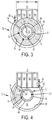
- FIG. 3 illustrates the inlet manifold 12 shown from a side cross-sectional view.
- the elongated body 14 is substantially centered within the cavity 36 such that the outer surface 40 of the elongated body 14 is spaced away from the inner surface 38 of the shell 26.
- the separator 18 extends around the entire circumference of the elongated body 14 and substantially occludes the cavity 36, such that flow of cooling fluid downstream from the opening 20 is substantially prevented.
- the separator 18 may be coupled to and extend inwardly from the inner surface 38 of the shell 26.
- the separator 18 may extend about the entire inner surface 38 of the shell 26, giving structural support to the inlet manifold 12.
- the separator 18 may extend inwardly sufficient to contact the outer surface 40 of the elongated body 14 preventing movement of the elongated body 14 within the inlet manifold 12.
- a gap 34 may exist between the most inward portion of the separator 18 and the outer surface 40 of the elongated body 14, which may allow the elongated body to be easily removed from the inlet manifold 12 for repairs or maintenance. It is desirable to minimize the gap 34 to increase the effectiveness of the separators 18 in influencing the flow of the cooling fluid escaping from the opening 20.
- the plurality of micro-channel passageways 16 extends into the cavity 36, as shown in FIG. 3 .
- Each of the plurality of micro-channel passageways 16 are arranged in rows of individual micro-channels 64.
- Each of the plurality of micro-channel passageways 16 are spaced along the length of the inlet manifold 12, while the individual micro-channels 64 are spaced within and across the width of the micro-channel passageways 16.
- Each of the micro-channels 64 may comprise any cross-sectional shape which allows substantial heat transfer with an outer surface of the micro-channel passageways 16.
- the micro-channels 64 may have a rectangular cross-sectional shape such that they can be easily arranged along the width of the micro-channel passageways 16 and also maximize heat transfer with the outer surface of the micro-channel passageways 16.
- the micro-channels 64 may have a circular or triangular cross-sectional shape.
- the number of micro-channels 64 within a micro-channel passageway is between 12 and 32.
- the width 86 of the micro-channel passageways 16 is between 10 mm and 50 mm.
- the width 84 of each individual micro-channel 64 is between 0.5 mm and 10 mm.
- the ratio between the width 84 of the micro-channels 64 over the length (the perpendicular cross-sectional dimension) of the micro-channels 64 is between 1 and 4.
- the micro-channel passageways 16 are separated from one another along the length of the inlet manifold 12 by between 6 mm and 12 mm.
- the plurality of micro-channel passageways 16 may extend into the cavity 36, such that the openings of the micro-channels 64 are located inward from the inner surface 38 of the shell 26, as shown in FIGS. 4 and 5 .
- the mircro-channel passageways 16 extend into the cavity 36 by about 1/8 to 1/3 of the diameter of the cavity 36.
- the separators 18 may extend outward toward the inner surface 38 of the shell 26 and beyond the opening of the micro-channels 64, particularly where the separators 18 extend into the spacer regions 62 as shown in FIGS. 1 and 2 .
- the opening 20 of the elongated body 14 is angled away from the plurality of micro-channel passageways 16. For example, the opening 20 of the elongated body 14 is rotated about the circumference of the elongated body 14 at an angle 88 which faces away from the openings of the micro-channel passageways 16.
- the opening 20 may be located substantially opposite from the micro-channel passageways 16, such that the opening 20 faces away from the plurality of micro-channel passageways 16, having a rotated angle 88 about the circumference of substantially 180 degrees, as shown in FIG. 3 .
- This positioning of the opening 20 may create a better distribution of cooling fluid within the plurality of micro-channel passageways 16, as the positioning of the opening 20 shown in FIG. 3 may allow separator 18 to be more effective in transferring the downstream momentum of the cooling fluid escaping from the opening 20 towards the plurality of micro-channel passageways 16.
- FIG. 4 illustrates the inlet manifold 12 shown from a side cross-sectional view.
- the separator 18 may be coupled to and extending outwardly from the outer surface 40 of the elongated body 14.
- the outward edge of the separator 18 may contact the inner surface 38 of the shell 26, or a gap 34 may exist to facilitate easier removal of the distributor 13 from the inlet manifold 12 for repair and maintenance.
- the separator 18 may extend around only a portion of the outer surface 40 of the elongated body 14.
- the separator 18 may extend outwardly in an arc having an angular width.
- the separator 18 may be aligned within the cavity to overlap with the opening 20.
- the angular width of the separator 18 may be centered on the opening 20 to increase the influence of the separator 18 on the cooling fluid escaping from the opening 20.
- the cross-sectional portion of the cavity 36 in the vicinity of the separator 18 may have a reduced area, but the cross-sectional portion is only partially occluded, allowing at least some cooling fluid to travel upstream or downstream if necessary to allow for even distribution of the cooling fluid in the plurality of micro-channel passageways 16.
- the separator 18 may have minimum angular width of 9 degrees in order to be effective.
- the opening 20 of the elongated body 14 is angled away from the plurality of micro-channel passageways 16, as shown in FIG. 4 , having a rotated angle 88 about the circumference of 90 degrees away from the plurality of micro-channel passageways 16.
- the rotated angle 88 about the circumference may be as small as 60 degrees and as large as 180 degrees.
- the separator 18 is coupled to the elongated body 14 and has a small angular width, as shown in FIG. 4
- the opening 20 may be angled away from the plurality of micro-channel passageways 16, such that the separator 18 does not overlap with the plurality of micro-channel passageways 16 within the cross-sectional portion of the cavity 36. This configuration may allow easy insertion and removal of the distributor 13 for repair and maintenance.
- FIG. 5 illustrates the inlet manifold 12 shown from a side cross-sectional view.
- the elongated body 14 is biased away from the center of the cavity 36.
- the elongated body 14 is biased from the center in the direction opposite from the plurality of micro-channel passageways 16.
- the elongated body 14 may be biased from the center such that the outer surface 40 contacts the inner surface 38 of the shell 26.
- the separator 18 extends inwardly from only a portion of the inner surface 38 of the shell 26. As shown in FIG. 5 , the separator 18 extends inwardly from the inner surface 38 of the shell 26 on a side of the inlet manifold 12 opposite from the plurality of micro-channel passageways 16. This configuration may be beneficial where the elongated body 14 is biased away from the center in the direction opposite from the plurality of micro-channel passageways 16, or where the opening 20 is angled away from the plurality of micro-channel passageways 16.
- the separator 18 may extend inwardly from an inner surface 38 of the shell 26 on a side of the inlet manifold where the plurality of micro-channel passageways 16 are coupled to the shell 26. This latter configuration may be desirable where the opening 20 is angled toward the plurality of micro-channel passageways 16.
- the separator 18 fully encircles the elongated body 14 such that the lateral movement of the elongated body 14 is fully restricted when the elongated body 14 is inserted into the cavity 36.
- the separator 18 comprises an opening matching the cross-sectional shape of the elongated body 14 to facilitate insertion of the elongated body 14.
- the separator 18 may comprise a groove (not shown) in the inward edge of the separator 18, wherein the elongated body 14 may rest in the groove when inserted into the cavity 36. In such a configuration the lateral movement of the elongated body 14 may be only partially restricted, and the separator 18 may only partially encircle the elongated body 14.
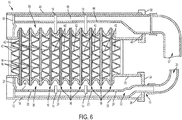
- FIG. 5 illustrates an evaporator 10 comprising the inlet manifold 12, the distributor 13, the plurality of micro-channel passageways 16, a plurality of fins 42, an outlet manifold 44, a collector 46, and the plurality of separators 18.
- the inlet manifold 12 comprises the inlet 30, the shell 26 defining the cavity 36, the first end 22, and the second end 24.
- the inlet manifold 12 comprises an endcap 54 configured to receive the distributor.
- the distributor 13 comprises the elongated body 14 extending into the cavity 36 of the inlet manifold 12 and defining a lumen 32, and the plurality of openings 20 arranged on the outer surface 40 of the elongated body 14 and spaced along the length of the elongated body 14.
- the plurality of micro-channel passageways 16 extends from the cavity 36 of the inlet manifold 12 to the outlet manifold 44, and allows fluid communication between the inlet manifold 12 and the outlet manifold 44.
- the plurality fins 42 are be spaced between each of the plurality of micro-channel passageways 16.
- the plurality of fins 42 are made of any material which has high thermal conductivity, such as a metal or metal alloy.
- the outlet manifold 44 comprises an endcap 56 configured to receive the collector 46, a first end 48, a second end 50, and defines an outlet cavity 58 configured to receive cooling fluid from the plurality of micro-channel passageways 16.
- the collector 46 comprises an outlet 52 configured to remove cooling fluid from the evaporator 10, and a side wall 66 extending into the outlet cavity 58 and defining a channel configured to allow fluid communication between the outlet 52 and the outlet cavity 58.
- the channel of the collector 46 comprises have any shape which allows fluid communication of the cooling fluid, such as a groove or a tube.
- Separators 18 are positioned in both the inlet manifold 12 and the outlet manifold 44 to increase even distribution of cooling fluid through the plurality of micro-channel passageways 16.
- the separators 18 in the inlet manifold 12 and the outlet manifold 44 may have matching positions along the lengths of their respective manifolds 12, 44, or may be staggered such that the separators 18 in the cavity 36 do not overlap with the separators 18 in the outlet cavity 58.
- Cooling fluid passing through the evaporator 10 passes into the distributor 13 through the inlet 30. As the cooling fluid travels down the length of the elongated body 14 into the inlet manifold 12, some cooling fluid passes through the plurality of openings 20 in the elongated body 14 into the cavity 36 of the inlet manifold 12. The separators 18 in the cavity 36 ensure even distribution of the cooling fluid through the plurality of micro-channel passageways 16. The cooling fluid exits the plurality of micro-channel passageways 16 into the outlet cavity 58 of the outlet manifold 44. The cooling fluid is then received into the channel of the collector 46 and proceeds through the outlet 52 of the evaporator 10.
- the cooling fluid may undergo a change of state while passing through the inlet manifold, 12, the plurality of micro-channel passageways 16, or the outlet manifold.
- the cooling fluid enters through the inlet 30 as a liquid, and may pass through the outlet 52 as a gas.
- the length of the plurality of micro-channel passageways 16, under certain operating conditions, may depend on the distribution of the cooling fluid passing through the plurality of micro-channel passageways, such that more even distribution of the cooling fluid may result in the plurality of micro-channel passageways having a shorter length.
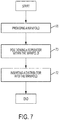
- FIG. 7 illustrates a method of manufacturing an evaporator 10.
- the method comprises providing the inlet manifold 12 (68), positioning the separator 18 within the cavity 36 of the inlet manifold 12 (70), and inserting the distributor 13 into the inlet manifold 12 (72).
- the inlet manifold 12 comprises the shell 26 defining the cavity 36, wherein the inlet manifold is coupled to the plurality of micro-channel passageways 16 which extend outwardly from the inlet manifold 12.
- the cavity 36 is in fluid communication with the plurality of micro-channel passageways 16.
- the distributor 13 comprises the inlet 30, the elongated body 14 which extends into the cavity 36 of the inlet manifold 12 and defines the lumen 32, and the plurality of openings 20 arranged on the outer surface 40 of the elongated body 14 and spaced along the length of the elongated body 14.
- the openings 20 are configured to allow fluid communication between the lumen 32 and the cavity 36 of the inlet manifold 12.
- the method may further comprise affixing the separator 18 to the outer surface 40 of the distributor 13 prior to inserting the distributor 13 into the cavity 36 (72).
- the method may further comprise affixing the separator 18 to the inner surface 38 of the shell 26 of the inlet manifold 12 prior to inserting the distributor 13 into the inlet manifold 12 (72).
Landscapes
- Engineering & Computer Science (AREA)
- Physics & Mathematics (AREA)
- Thermal Sciences (AREA)
- Mechanical Engineering (AREA)
- General Engineering & Computer Science (AREA)
- Geometry (AREA)
- Heat-Exchange Devices With Radiators And Conduit Assemblies (AREA)
- Sampling And Sample Adjustment (AREA)
Applications Claiming Priority (1)
| Application Number | Priority Date | Filing Date | Title |
|---|---|---|---|
| US15/015,857 US10551099B2 (en) | 2016-02-04 | 2016-02-04 | Micro-channel evaporator having compartmentalized distribution |
Publications (2)
| Publication Number | Publication Date |
|---|---|
| EP3203170A2 true EP3203170A2 (de) | 2017-08-09 |
| EP3203170A3 EP3203170A3 (de) | 2017-11-29 |
Family
ID=57906455
Family Applications (1)
| Application Number | Title | Priority Date | Filing Date |
|---|---|---|---|
| EP17152618.9A Withdrawn EP3203170A3 (de) | 2016-02-04 | 2017-01-23 | Mikrokanalverdampfer mit kompartimentierter verteilung |
Country Status (2)
| Country | Link |
|---|---|
| US (1) | US10551099B2 (de) |
| EP (1) | EP3203170A3 (de) |
Cited By (1)
| Publication number | Priority date | Publication date | Assignee | Title |
|---|---|---|---|---|
| CN110821637A (zh) * | 2019-11-15 | 2020-02-21 | 江苏科技大学 | 一种车载散热器封头均流器 |
Families Citing this family (12)
| Publication number | Priority date | Publication date | Assignee | Title |
|---|---|---|---|---|
| KR102695168B1 (ko) * | 2018-06-21 | 2024-08-14 | 한온시스템 주식회사 | 열교환기 |
| CN110966804B (zh) * | 2018-09-30 | 2021-09-24 | 浙江三花智能控制股份有限公司 | 换热器 |
| CN111288833B (zh) * | 2018-12-06 | 2022-03-15 | 丹佛斯有限公司 | 集流管组件以及换热器 |
| CN113959244B (zh) * | 2021-11-02 | 2022-08-02 | 山东大学 | 一种双蒸发器冷凝器环路热管 |
| US20250003690A1 (en) * | 2021-11-08 | 2025-01-02 | Sanhua (Hangzhou) Micro Channel Heat Exchanger Co., Ltd. | Heat exchange assembly and heat exchange system |
| CN115143822B (zh) * | 2021-11-09 | 2023-10-27 | 山东大学 | 一种增强内部循环的环路热管 |
| WO2024135191A1 (ja) * | 2022-12-23 | 2024-06-27 | 三菱電機株式会社 | ヘッダ管、熱交換器、ヘッダ管の製造方法及び熱交換器の製造方法 |
| WO2024218850A1 (ja) * | 2023-04-18 | 2024-10-24 | 三菱電機株式会社 | 熱交換器及び熱交換器の製造方法 |
| JPWO2024261909A1 (de) * | 2023-06-21 | 2024-12-26 | ||
| DE102023211373A1 (de) * | 2023-11-15 | 2025-05-15 | Fraunhofer-Gesellschaft zur Förderung der angewandten Forschung eingetragener Verein | Warmepumpe und Verfahren zu deren Betrieb |
| CN117641850B (zh) * | 2023-12-04 | 2024-07-02 | 南京理工大学 | 一种仿生植物根茎的歧管微通道散热装置 |
| US20250264283A1 (en) * | 2024-02-20 | 2025-08-21 | Carrier Corporation | Fluid distributor for an inlet header of a heat exchanger |
Family Cites Families (55)
| Publication number | Priority date | Publication date | Assignee | Title |
|---|---|---|---|---|
| US1684083A (en) | 1927-06-02 | 1928-09-11 | Samuel C Bloom | Refrigerating coil |
| US2097602A (en) | 1936-03-06 | 1937-11-02 | Warren Webster & Co | Radiator |
| US2759248A (en) | 1950-06-22 | 1956-08-21 | Russell H Burgess | Method of making heat transfer units |
| US3605882A (en) | 1968-07-02 | 1971-09-20 | Ass Eng Ltd | Heat exchangers |
| US3976128A (en) * | 1975-06-12 | 1976-08-24 | Ford Motor Company | Plate and fin heat exchanger |
| DE3413931A1 (de) | 1984-04-13 | 1985-10-24 | Süddeutsche Kühlerfabrik Julius Fr. Behr GmbH & Co. KG, 7000 Stuttgart | Verdampfer, insbesondere fuer klimaanlagen in kraftfahrzeugen |
| US4936381A (en) | 1988-12-27 | 1990-06-26 | Modine Manufacturing Company | Baffle for tubular header |
| US5063994A (en) | 1990-06-26 | 1991-11-12 | Level 1 Technologies, Inc. | Reflux fluid heated patient line |
| JP3017272B2 (ja) | 1990-11-07 | 2000-03-06 | 株式会社ゼクセル | 熱交換器 |
| US5186248A (en) * | 1992-03-23 | 1993-02-16 | General Motors Corporation | Extruded tank condenser with integral manifold |
| DE59405261D1 (de) | 1993-07-03 | 1998-03-19 | Flitsch E Gmbh & Co | Plattenwärmeaustauscher mit kältemittelverteiler |
| US5366007A (en) | 1993-08-05 | 1994-11-22 | Wynn's Climate Systems, Inc. | Two-piece header |
| JPH0755384A (ja) | 1993-08-19 | 1995-03-03 | Sanden Corp | 多管式熱交換器 |
| JPH08189725A (ja) | 1995-01-05 | 1996-07-23 | Nippondenso Co Ltd | 冷媒蒸発器 |
| FR2735851B1 (fr) | 1995-06-23 | 1997-08-01 | Valeo Thermique Moteur Sa | Condenseur a reservoir integre pour installation de climatisation de vehicule automobile |
| CA2260157C (en) | 1996-07-19 | 2003-03-18 | Steve S. Dingle | Evaporator refrigerant distributor |
| DE19719251C2 (de) * | 1997-05-07 | 2002-09-26 | Valeo Klimatech Gmbh & Co Kg | Verteil-/Sammel-Kasten eines mindestens zweiflutigen Verdampfers einer Kraftfahrzeugklimaanlage |
| FR2769361B1 (fr) | 1997-10-02 | 1999-12-24 | Valeo Thermique Moteur Sa | Boite collectrice a reservoir integre pour echangeur de chaleur, en particulier pour un condenseur de refrigeration |
| US6729386B1 (en) * | 2001-01-22 | 2004-05-04 | Stanley H. Sather | Pulp drier coil with improved header |
| TW552382B (en) | 2001-06-18 | 2003-09-11 | Showa Dendo Kk | Evaporator, manufacturing method of the same, header for evaporator and refrigeration system |
| JP4153178B2 (ja) | 2001-06-26 | 2008-09-17 | カルソニックカンセイ株式会社 | 熱交換器用タンクおよびその製造方法 |
| US20030010483A1 (en) | 2001-07-13 | 2003-01-16 | Yasuo Ikezaki | Plate type heat exchanger |
| EP1548380A3 (de) | 2003-12-22 | 2006-10-04 | Hussmann Corporation | Flachrohrverdampfer mit Mikroverteiler |
| ITMI20040272A1 (it) | 2004-02-18 | 2004-05-18 | Olmi Spa | Giunzione tra un tubo raffreddato a doppia parete ed un tubo non raffreddato e scambiatore di calore a doppio tubi comprendente tale giunzione |
| US7726387B2 (en) | 2004-05-11 | 2010-06-01 | Showa Denko K.K. | Heat exchangers |
| CN1981176B (zh) | 2004-07-05 | 2010-06-16 | 昭和电工株式会社 | 换热器 |
| EP1826523A1 (de) | 2004-09-08 | 2007-08-29 | Calsonic Kansei Corporation | Sammelkasten für wärmetauscher |
| US7806171B2 (en) | 2004-11-12 | 2010-10-05 | Carrier Corporation | Parallel flow evaporator with spiral inlet manifold |
| US20060130517A1 (en) | 2004-12-22 | 2006-06-22 | Hussmann Corporation | Microchannnel evaporator assembly |
| MX2007009246A (es) * | 2005-02-02 | 2007-09-04 | Carrier Corp | Insercion de tubo y disposicion de doble flujo para un colector de una bomba de calor. |
| US20060185167A1 (en) | 2005-02-23 | 2006-08-24 | Lippa Michael R Jr | Mechanical method for joining of tubular member to a plate member |
| US7275394B2 (en) | 2005-04-22 | 2007-10-02 | Visteon Global Technologies, Inc. | Heat exchanger having a distributer plate |
| JP4840681B2 (ja) | 2005-09-16 | 2011-12-21 | 株式会社ヴァレオジャパン | 熱交換器 |
| US20080023185A1 (en) | 2006-07-25 | 2008-01-31 | Henry Earl Beamer | Heat exchanger assembly |
| US7484555B2 (en) | 2006-07-25 | 2009-02-03 | Delphi Technologies, Inc. | Heat exchanger assembly |
| US7946036B2 (en) | 2006-09-28 | 2011-05-24 | Delphi Technologies, Inc. | Method of manufacturing a manifold for a heat exchanger |
| US20100089559A1 (en) | 2006-10-13 | 2010-04-15 | Carrier Corporation | Method and apparatus for improving distribution of fluid in a heat exchanger |
| ATE556283T1 (de) | 2006-10-13 | 2012-05-15 | Carrier Corp | Mehrzügige wärmetauscher mit verteileinsätze aufweisenden rückführendkammern |
| US8171987B2 (en) | 2006-11-13 | 2012-05-08 | Carrier Corporation | Minichannel heat exchanger header insert for distribution |
| WO2008064219A1 (en) | 2006-11-22 | 2008-05-29 | Johnson Controls Technology Company | Multichannel evaporator with flow mixing manifold |
| DK2212639T3 (en) * | 2007-10-12 | 2016-09-19 | Carrier Corp | Heat exchange with baffelforgreninger |
| DE102008052331A1 (de) | 2007-10-24 | 2009-06-10 | Denso Corp., Kariya-shi | Verdampfereinheit |
| CN101487669B (zh) | 2008-01-17 | 2012-08-22 | 开利公司 | 包括多管式分配器的热交换器 |
| US20090229805A1 (en) * | 2008-03-13 | 2009-09-17 | Delphi Technologies, Inc. | Manifold design having an improved collector conduit and method of making same |
| CN102027308A (zh) * | 2008-05-16 | 2011-04-20 | 开利公司 | 具有增强的制冷剂分布的微通道热交换器 |
| JP4720855B2 (ja) | 2008-06-02 | 2011-07-13 | 株式会社デンソー | 熱交換器 |
| WO2015142615A1 (en) * | 2014-03-18 | 2015-09-24 | Carrier Corporation | Microchannel heat exchanger evaporator |
| US20100300667A1 (en) | 2009-06-01 | 2010-12-02 | Delphi Technologies, Inc. | Distributor tube and end cap subassembly |
| CN101691981B (zh) | 2009-07-23 | 2011-12-07 | 三花丹佛斯(杭州)微通道换热器有限公司 | 具有改进的制冷剂流体分配均匀性的多通道换热器 |
| US20110240276A1 (en) * | 2010-04-01 | 2011-10-06 | Delphi Technologies, Inc. | Heat exchanger having an inlet distributor and outlet collector |
| US20110290465A1 (en) * | 2010-06-01 | 2011-12-01 | Delphi Technologies, Inc. | Orientation insensitive refrigerant distributor tube |
| CN101858705B (zh) | 2010-06-13 | 2011-11-16 | 三花丹佛斯(杭州)微通道换热器有限公司 | 热交换器及其隔板 |
| US8408284B2 (en) * | 2011-05-05 | 2013-04-02 | Delphi Technologies, Inc. | Heat exchanger assembly |
| US9581397B2 (en) | 2011-12-29 | 2017-02-28 | Mahle International Gmbh | Heat exchanger assembly having a distributor tube retainer tab |
| WO2015027783A1 (zh) | 2013-08-30 | 2015-03-05 | 杭州三花研究院有限公司 | 微通道换热器及其制造方法 |
-
2016
- 2016-02-04 US US15/015,857 patent/US10551099B2/en active Active
-
2017
- 2017-01-23 EP EP17152618.9A patent/EP3203170A3/de not_active Withdrawn
Non-Patent Citations (1)
| Title |
|---|
| None |
Cited By (2)
| Publication number | Priority date | Publication date | Assignee | Title |
|---|---|---|---|---|
| CN110821637A (zh) * | 2019-11-15 | 2020-02-21 | 江苏科技大学 | 一种车载散热器封头均流器 |
| CN110821637B (zh) * | 2019-11-15 | 2021-06-11 | 江苏科技大学 | 一种车载散热器封头均流器 |
Also Published As
| Publication number | Publication date |
|---|---|
| US20170227264A1 (en) | 2017-08-10 |
| US10551099B2 (en) | 2020-02-04 |
| EP3203170A3 (de) | 2017-11-29 |
Similar Documents
| Publication | Publication Date | Title |
|---|---|---|
| US10551099B2 (en) | Micro-channel evaporator having compartmentalized distribution | |
| EP2977706B1 (de) | Verteiler und wärmetauscher damit | |
| US7819177B2 (en) | Heat exchanger assembly | |
| EP3467404B1 (de) | Laminiertes kopfteil, wärmetauscher und klimaanlagenvorrichtung | |
| CN101922882B (zh) | 制冷剂导管和具有该制冷剂导管的换热器 | |
| EP3087335B1 (de) | Verteiler für einen fallfilmverdampfer | |
| US20220026152A1 (en) | Heat Exchanger Flat Tube and Heat Exchanger with Heat Exchanger Flat Tube | |
| EP3314189B1 (de) | Mikroröhrchenwärmetauscher | |
| CN105485972B (zh) | 一种微通道换热器及安装方法 | |
| US20200096259A1 (en) | Microtube heat exchanger header | |
| WO2008071731A1 (en) | An evaporator | |
| EP4067800B1 (de) | Wärmetauscher | |
| CN110207430A (zh) | 可提高过冷度的过冷装置及空调机组 | |
| CN104956162B (zh) | 管壳式蒸发器 | |
| US20240288232A1 (en) | Heat exchanger | |
| CN203881005U (zh) | 管壳式蒸发器和蒸发器的制冷剂分配组件 | |
| CN108954983A (zh) | 一种均流换热器 | |
| CN215447502U (zh) | 一种具有同通道变通径微管结构的风冷型换热器 | |
| CN110940221A (zh) | 折流板、换热器及空调 | |
| CN218723478U (zh) | 一种板式换热器上的分配结构 | |
| CN211204986U (zh) | 壳管换热器 | |
| KR20130097998A (ko) | 모세관 고정이 용이한 모세관 분배기 | |
| JP2018096559A (ja) | 熱交換器 | |
| KR20230139445A (ko) | 열교환기 | |
| CN112964088A (zh) | 一种具有同通道变通径微管结构的风冷型换热器 |
Legal Events
| Date | Code | Title | Description |
|---|---|---|---|
| PUAI | Public reference made under article 153(3) epc to a published international application that has entered the european phase |
Free format text: ORIGINAL CODE: 0009012 |
|
| AK | Designated contracting states |
Kind code of ref document: A2 Designated state(s): AL AT BE BG CH CY CZ DE DK EE ES FI FR GB GR HR HU IE IS IT LI LT LU LV MC MK MT NL NO PL PT RO RS SE SI SK SM TR |
|
| AX | Request for extension of the european patent |
Extension state: BA ME |
|
| PUAL | Search report despatched |
Free format text: ORIGINAL CODE: 0009013 |
|
| AK | Designated contracting states |
Kind code of ref document: A3 Designated state(s): AL AT BE BG CH CY CZ DE DK EE ES FI FR GB GR HR HU IE IS IT LI LT LU LV MC MK MT NL NO PL PT RO RS SE SI SK SM TR |
|
| AX | Request for extension of the european patent |
Extension state: BA ME |
|
| RIC1 | Information provided on ipc code assigned before grant |
Ipc: F28F 9/02 20060101ALI20171024BHEP Ipc: F28D 21/00 20060101ALN20171024BHEP Ipc: F25B 39/02 20060101ALI20171024BHEP Ipc: F28D 1/053 20060101AFI20171024BHEP Ipc: F28F 1/02 20060101ALN20171024BHEP |
|
| 17P | Request for examination filed |
Effective date: 20180518 |
|
| RBV | Designated contracting states (corrected) |
Designated state(s): AL AT BE BG CH CY CZ DE DK EE ES FI FR GB GR HR HU IE IS IT LI LT LU LV MC MK MT NL NO PL PT RO RS SE SI SK SM TR |
|
| 17Q | First examination report despatched |
Effective date: 20190424 |
|
| RIC1 | Information provided on ipc code assigned before grant |
Ipc: F28F 1/02 20060101ALN20200211BHEP Ipc: F25B 39/02 20060101ALI20200211BHEP Ipc: F28D 1/053 20060101AFI20200211BHEP Ipc: F28D 21/00 20060101ALN20200211BHEP Ipc: F28F 9/02 20060101ALI20200211BHEP |
|
| GRAP | Despatch of communication of intention to grant a patent |
Free format text: ORIGINAL CODE: EPIDOSNIGR1 |
|
| RIC1 | Information provided on ipc code assigned before grant |
Ipc: F25B 39/02 20060101ALI20200324BHEP Ipc: F28F 1/02 20060101ALN20200324BHEP Ipc: F28D 1/053 20060101AFI20200324BHEP Ipc: F28D 21/00 20060101ALN20200324BHEP Ipc: F28F 9/02 20060101ALI20200324BHEP |
|
| INTG | Intention to grant announced |
Effective date: 20200420 |
|
| STAA | Information on the status of an ep patent application or granted ep patent |
Free format text: STATUS: THE APPLICATION IS DEEMED TO BE WITHDRAWN |
|
| 18D | Application deemed to be withdrawn |
Effective date: 20200901 |