EP3206325B1 - Datenübertragungsverfahren und -vorrichtung - Google Patents
Datenübertragungsverfahren und -vorrichtung Download PDFInfo
- Publication number
- EP3206325B1 EP3206325B1 EP15849297.5A EP15849297A EP3206325B1 EP 3206325 B1 EP3206325 B1 EP 3206325B1 EP 15849297 A EP15849297 A EP 15849297A EP 3206325 B1 EP3206325 B1 EP 3206325B1
- Authority
- EP
- European Patent Office
- Prior art keywords
- cell
- cells
- terminal
- virtual
- time
- Prior art date
- Legal status (The legal status is an assumption and is not a legal conclusion. Google has not performed a legal analysis and makes no representation as to the accuracy of the status listed.)
- Active
Links
Images
Classifications
-
- H—ELECTRICITY
- H04—ELECTRIC COMMUNICATION TECHNIQUE
- H04W—WIRELESS COMMUNICATION NETWORKS
- H04W72/00—Local resource management
- H04W72/12—Wireless traffic scheduling
-
- H—ELECTRICITY
- H04—ELECTRIC COMMUNICATION TECHNIQUE
- H04L—TRANSMISSION OF DIGITAL INFORMATION, e.g. TELEGRAPHIC COMMUNICATION
- H04L1/00—Arrangements for detecting or preventing errors in the information received
- H04L1/12—Arrangements for detecting or preventing errors in the information received by using return channel
- H04L1/16—Arrangements for detecting or preventing errors in the information received by using return channel in which the return channel carries supervisory signals, e.g. repetition request signals
- H04L1/18—Automatic repetition systems, e.g. Van Duuren systems
- H04L1/1822—Automatic repetition systems, e.g. Van Duuren systems involving configuration of automatic repeat request [ARQ] with parallel processes
-
- H—ELECTRICITY
- H04—ELECTRIC COMMUNICATION TECHNIQUE
- H04L—TRANSMISSION OF DIGITAL INFORMATION, e.g. TELEGRAPHIC COMMUNICATION
- H04L5/00—Arrangements affording multiple use of the transmission path
-
- H—ELECTRICITY
- H04—ELECTRIC COMMUNICATION TECHNIQUE
- H04W—WIRELESS COMMUNICATION NETWORKS
- H04W16/00—Network planning, e.g. coverage or traffic planning tools; Network deployment, e.g. resource partitioning or cells structures
-
- H—ELECTRICITY
- H04—ELECTRIC COMMUNICATION TECHNIQUE
- H04W—WIRELESS COMMUNICATION NETWORKS
- H04W36/00—Hand-off or reselection arrangements
- H04W36/0005—Control or signalling for completing the hand-off
- H04W36/0055—Transmission or use of information for re-establishing the radio link
- H04W36/0058—Transmission of hand-off measurement information, e.g. measurement reports
-
- H—ELECTRICITY
- H04—ELECTRIC COMMUNICATION TECHNIQUE
- H04W—WIRELESS COMMUNICATION NETWORKS
- H04W36/00—Hand-off or reselection arrangements
- H04W36/24—Reselection being triggered by specific parameters
- H04W36/30—Reselection being triggered by specific parameters by measured or perceived connection quality data
- H04W36/302—Reselection being triggered by specific parameters by measured or perceived connection quality data due to low signal strength
-
- H—ELECTRICITY
- H04—ELECTRIC COMMUNICATION TECHNIQUE
- H04W—WIRELESS COMMUNICATION NETWORKS
- H04W52/00—Power management, e.g. Transmission Power Control [TPC] or power classes
- H04W52/04—Transmission power control [TPC]
- H04W52/30—Transmission power control [TPC] using constraints in the total amount of available transmission power
- H04W52/36—Transmission power control [TPC] using constraints in the total amount of available transmission power with a discrete range or set of values, e.g. step size, ramping or offsets
- H04W52/365—Power headroom reporting
-
- H—ELECTRICITY
- H04—ELECTRIC COMMUNICATION TECHNIQUE
- H04W—WIRELESS COMMUNICATION NETWORKS
- H04W52/00—Power management, e.g. Transmission Power Control [TPC] or power classes
- H04W52/04—Transmission power control [TPC]
- H04W52/38—TPC being performed in particular situations
- H04W52/40—TPC being performed in particular situations during macro-diversity or soft handoff
-
- H—ELECTRICITY
- H04—ELECTRIC COMMUNICATION TECHNIQUE
- H04W—WIRELESS COMMUNICATION NETWORKS
- H04W72/00—Local resource management
- H04W72/04—Wireless resource allocation
- H04W72/044—Wireless resource allocation based on the type of the allocated resource
- H04W72/0446—Resources in time domain, e.g. slots or frames
-
- H—ELECTRICITY
- H04—ELECTRIC COMMUNICATION TECHNIQUE
- H04W—WIRELESS COMMUNICATION NETWORKS
- H04W72/00—Local resource management
- H04W72/50—Allocation or scheduling criteria for wireless resources
- H04W72/54—Allocation or scheduling criteria for wireless resources based on quality criteria
-
- H—ELECTRICITY
- H04—ELECTRIC COMMUNICATION TECHNIQUE
- H04W—WIRELESS COMMUNICATION NETWORKS
- H04W16/00—Network planning, e.g. coverage or traffic planning tools; Network deployment, e.g. resource partitioning or cells structures
- H04W16/14—Spectrum sharing arrangements between different networks
-
- H—ELECTRICITY
- H04—ELECTRIC COMMUNICATION TECHNIQUE
- H04W—WIRELESS COMMUNICATION NETWORKS
- H04W16/00—Network planning, e.g. coverage or traffic planning tools; Network deployment, e.g. resource partitioning or cells structures
- H04W16/24—Cell structures
- H04W16/32—Hierarchical cell structures
-
- H—ELECTRICITY
- H04—ELECTRIC COMMUNICATION TECHNIQUE
- H04W—WIRELESS COMMUNICATION NETWORKS
- H04W24/00—Supervisory, monitoring or testing arrangements
- H04W24/08—Testing, supervising or monitoring using real traffic
Definitions
- the present application relates to the field of communication technology, and particularly to a data transmission method and apparatus.
- Peak rate of the Long Term Evolution Advanced (LTE-A) system is much bigger than peak rate of the Long Term Evolution (LTE), required to be 1Gbps for downlink and 500 Mbps for uplink. Also, the LTE-A system requires good compatibility with the LTE system. Based on the need to raise peak rate, to be compatible with the LTE system and to make full use of spectrum resources, the LTE-A system introduced Carrier Aggregation (CA) technology.
- CA Carrier Aggregation
- the carrier aggregation technology is: user equipment could work in multiple cells simultaneously, and one cell includes a pair of uplink (UL)/ downlink (DL) component carriers (CC).
- UL uplink
- DL downlink
- Each component carrier of a carrier aggregation system could be continuous or discrete; the bandwidth of each component carrier could be the same or different; and in order to be compatible with the LTE system, the largest bandwidth of each component carrier is limited to 20 MHz.
- Carrier aggregation cells of the LTE-A system are divided into primary cells (PCell) and secondary cells (SCell). Only one of the cells aggregated by the user equipments (UE) is defined as the PCell, while all the other cells are defined as SCell.
- PRBs Physical Resource Blocks
- the embodiments of the application provide a data transmission method and an apparatus, in order to transmit data by time-division multiplexing among multiple cells.
- Embodiments of the application provides a data transmission method.
- the method includes: for each of multiple virtual cells: obtaining, by a terminal, configuration information of the virtual cell; receiving, by the terminal, configuration information of time-division multiplexing; and transmitting, by the terminal, data by time-division multiplexing among N cells of the virtual cell according to the configuration information of time-division multiplexing; where the virtual cell includes the N cells, and N ⁇ 1; the configuration information of time-division multiplexing indicates time segment each cell occupies when the terminal transmits data among the N cells, and in each time segment the terminal is instructed to transmit data in only one of the N cells.
- a cell is configured into the multiple virtual cells, and configurations of the cell for time-division multiplexing in the multiple virtual cells are the same.
- the method further includes: maintaining, by the terminal, a set of uplink and downlink timing relationship information of the virtual cell.
- transmitting, by the terminal, data by time-division multiplexing among the N cells includes: transmitting, by the terminal, data by time-division multiplexing and according to the uplink and downlink timing relationship information among the N cells.
- the method further includes: feeding back, by the terminal, information of data reception situation in the N cells to the network device; and receiving, by the terminal, data resent by the network device according to the information of data reception situation, where the resent data is transmitted among the N cells by time-division multiplexing.
- the method further includes: detecting, by the terminal, a physical downlink control channel (PDCCH) in each of the N cells, and detecting a physical downlink shared channel (PDSCH) in the same cell according to detected PDCCH, wherein the PDCCH in each of the N cells is configured to schedule resource transmitted in the cell.
- a physical downlink control channel (PDCCH) in each of the N cells
- PDSCH physical downlink shared channel
- the method further includes: detecting, by the terminal, the PDCCH in a cell outside the virtual cells, and detecting the PDSCH in one or multiple cells of the N cells according to detected PDCCH, where the PDCCH in a cell outside the virtual cells is configured to schedule the resource transmitted in one or multiple cells of the virtual cells.
- the method also includes: performing, by the terminal, power measurement on the virtual cells according to a power control parameter configured for the virtual cell and performing power headroom report (PHR) for the virtual cell according to the power measurement result.
- PHR power headroom report
- the method also includes: performing, by the terminal, power measurement on each of the N cells respectively, according to a power control parameter respectively configured for each of the N cells of the virtual cell, and performing PHR for each of the N cells according to the power measurement results, respectively.
- the method includes: performing, by the terminal, measurement on the N cells comprised in the virtual cells at the same time; or, performing, by the terminal, measurement on the N cells comprised in the virtual cells by time-division multiplexing, wherein measurement is performed on only one of the N cells in every time segment.
- the method includes: after having obtained the measurement result via the measurement, reporting, by the terminal, the measurement result of each of the N cells.
- Embodiments of the present application provides another data transmission method.
- the method includes: for each of multiple virtual cells: configuring, by a network device, the virtual cell for a terminal; transmitting, by the network device, configuration information of time-division multiplexing to the terminal, and transmitting, by the network device, data to the terminal by time-division multiplexing among N cells included in the virtual cell according to the configuration information of time-division multiplexing; where the virtual cell includes N cells, and N ⁇ 1; the configuration information of time-division multiplexing indicates time segment each cell occupies when the terminal transmits data among the N cells, and in each time segment the terminal is instructed to transmit data in one of the N cells.
- a cell is configured into the multiple virtual cells, and configurations of the cell for time-division multiplexing in the multiple virtual cells are the same.
- transmitting, by the network device, data to the terminal by time-division multiplexing among the N cells comprised in the virtual cell includes: transmitting, by the network device, according to the configuration information of time-division multiplexing, data to the terminal by time-division multiplexing among the N cells.
- the method further includes: receiving, by the network device, information of data reception situation in the N cells fed back by the terminal; and re-transmitting, by the network device, data to the terminal according to the information of data reception situation, where the re-transmitted data is transmitted among the N cells by time-division multiplexing.
- the method further includes: receiving, by the network device, power headroom reported by the terminal according to a power control parameter of the virtual cell, and performing power control on each cell comprised in the virtual cell according to the power headroom.
- the method further includes: receiving, by the network device, power headroom of each cell reported by the terminal according to a power control parameter of each cell comprised in the virtual cell, and performing power control on each cell according to the cell's power headroom.
- Embodiments of the present application provides a terminal.
- the terminal includes an obtaining module and a transmission module.
- the obtaining module is configured to obtain configuration information of the virtual cell, where the virtual cell includes N cells, N ⁇ 1; and the transmission module is configured to receive configuration information of time-division multiplexing, where the configuration information of time-division multiplexing indicates time segment each cell occupies when the terminal transmits data among the N cells, and in each time segment the terminal is instructed to transmit data in one of the N cells; and transmit data by time-division multiplexing among the N cells according to the configuration information of time-division multiplexing.
- a cell is configured into the multiple virtual cells, and configurations of the cell for time-division multiplexing in the multiple virtual cells are the same.
- the transmission module is further configured to: maintain a set of uplink and downlink timing relationship information of the virtual cell; and transmit data by time-division multiplexing and according to the uplink and downlink timing relationship information among the N cells.
- the transmission module is further configured to: feed back information of data reception situation in the N cells to the network device; and receive data resent by the network device according to the information of data reception situation, wherein the resent data is transmitted among the N cells by time-division multiplexing.
- the terminal also includes a detection module.
- the detection module is configured to: detect a PDCCH in each of the N cells, and detect a PDSCH in a same cell according to detected PDCCH, wherein the PDCCH in each of the N cells is configured to schedule the resource transmitted in the cell; or, detect the PDCCH in a cell outside the virtual cells, and detect the PDSCH in one or multiple cells of the N cells according to detected PDCCH, wherein the PDCCH in a cell outside the virtual cells is configured to schedule the resource transmitted in one or multiple cells of the virtual cell.
- the terminal further includes a measurement module.
- the measurement module is configured to: perform power measurement on the virtual cell according to a power control parameter configured for the virtual cell and perform PHR of the virtual cell according to the power measurement result; or, perform power measurement on each of the N cells respectively, according to a power control parameter respectively configured for each of the N cells of the virtual cell, and perform PHR of each of the N cells according to the power measurement result, respectively.
- the terminal further includes a measurement module.
- the measurement module is configured to: perform measurement on the N cells comprised in the virtual cell at the same time; or, perform measurement on the N cells includes in the virtual cell by time-division multiplexing, wherein measurement is performed on one of the N cells in every time segment.
- the transmission module is further configured to report the measurement result of each of the N cells.
- the obtaining module is further configured to obtain configuration information of carrier aggregation configured for the terminal, where the configuration information of carrier aggregation comprises configuration information of primary cell and configuration information of secondary cell, the configuration information of secondary cell includes configuration information of at least one virtual cell, and the virtual cell includes N cells operating at non-licensed band.
- virtual cell including multiple cells could be configured, also data transmission is performed by time-division multiplexing among the multiple cells, transmission carriers of terminal service could be adjusted flexibly.
- multiple cells operating at unlicensed band are aggregated into a virtual cell, and data transmission is performed among the multiple cells by time-division multiplexing, thus reducing interferences between different frequency domains and improving transmission efficiency of the system.
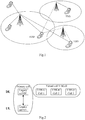
- Fig.1 is a schematic architectural diagram of a system applicable to embodiments of the present application.
- the system architecture includes network device(s), and at least one terminal, where the network device(s) could be base station(s) and the terminal could be a mobile device with wireless communication function, such as a mobile phone.
- a network device could configure virtual cell(s) for a terminal, where the virtual cell(s) includes N cell(s) (N ⁇ 1).
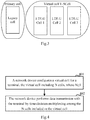
- Fig.2 is a schematic diagram of a model where a virtual cell is a secondary cell and the LTE-U is of FDD type.
- Fig.3 is a schematic diagram of another model where a virtual cell is a secondary cell and the LTE-U is of TDD type.
- the network device and the terminal could transmit data by time-division multiplexing among the N cell(s) included in the virtual cell(s).
- embodiments of the present application provides a data transmission method at both network side and terminal side, respectively, where the transmission method at network side and the transmission method at terminal side could be used independently or be used in combination.
- Data transmission methods at network side and terminal side are described below, respectively.
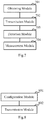
- Fig.4 is a flow chart of data transmission according to embodiments of the present application, which illustrates the process flow on the network side and includes the step 401 and the step 402.
- Step 401 a network device configures virtual cell(s) for a terminal, the virtual cell(s) including N cell(s), where N ⁇ 1;
- Step 402 the network device performs data transmission with the terminal by time-division multiplexing among the N cell(s) included in the virtual cell(s).
- virtual cells There could be one or multiple virtual cells, where multiple herein means two or more than two.
- a cell is permitted to be configured into multiple virtual cells, where configurations of time-division multiplexing keep the same in the multiple virtual cells.
- virtual cells configured for the terminal by the network device includes virtual cell 1 and virtual cell 2; a real cell LTE-U1 could belong to the virtual cell 1 and the virtual cell 2 at the same time, in which case, transmission time segment allocated for LTE-U 1's in the virtual cell 1 equals to that in the virtual cell 2, where a LTE-U cell refers to a cell operating at unlicensed band(s).
- the network device could dynamically change the cell sets included in virtual cell(s), according to changes of measurement condition or interference condition of a cell, such as deleting a cell from the virtual cell(s) or adding a cell into the virtual cell(s).
- the network device After the network device has updated virtual cell(s), it could transmit the configuration information of the virtual cell(s) to the terminal via radio resource control (RRC) signaling.
- RRC radio resource control
- Virtual cell(s) in the flow above means a set of N cell(s). Take the LTE system as an example.
- the network device configures virtual cell(s) for the terminal, it could aggregate multiple cells operating at licensed band(s) of the LTE system into a virtual cell, or aggregate some cells operating at licensed band(s) of the LTE system and some cells operating at unlicensed band(s) of the LTE system into a virtual cell, or aggregate multiple cells operating at unlicensed band(s) of the LTE system into a virtual cell.
- the network device could adopt carrier aggregation technology to configure configuration information of carrier aggregation for a terminal, and transmits the configuration information of carrier aggregation to the terminal.
- the configuration information of carrier aggregation includes configuration information of primary cell, such as the frequency where the primary cell is at, and configuration information of secondary cell.
- the configuration information of secondary cell includes configuration information of one or multiple virtual cells.
- a virtual cell as mentioned above, could include N cell(s), and the virtual cell's configuration information could include frequencies of the N cell(s).
- the frequencies of the N cell(s) could be at unlicensed band(s) of the LTE system, that is, the N cell(s) could be cells operating at unlicensed band(s) of the LTE system.
- N cell(s) operating at unlicensed band(s) of the LTE system into virtual cell(s) are aggregated, and data are transmitted by time-division multiplexing among the N cell(s), thus a UE service transmission carrier can be adjusted flexibly, avoiding interference in different frequency domains without affecting the UE's service transmission, thus making full use of unlicensed spectrum resources and improving transmission performance of the LTE system on unlicensed spectrum resources.
- embodiments of the present application provides the following two methods (method 1 and method 2).
- the network device transmits configuration information of time-division multiplexing to the terminal, where the configuration information of time-division multiplexing indicates time segment each cell occupies when the terminal transmits data in the N cell(s), where in each time segment the terminal is instructed to transmit data only in one of the N cell(s), in order to realize transmission between the network device and the terminal by time-division multiplexing among the N cell(s).
- the configuration information of time-division multiplexing could be determined by the network device or be negotiated by network devices. For example, in a scenario where multiple LTE-U cells are carrier-aggregated into a virtual cell to provide service for the terminal, an LTE-U base station may negotiate with a surrounding LTE-U base station or a wireless local area network access point (WLAN AP) to obtain information about interference each cell suffers, and then determine the configuration information of time-division multiplexing for data transmission in these cells.
- WLAN AP wireless local area network access point
- Another example is that, when a legacy cell and an LTE-U cell collaborates to provide services for the terminal, the base station of one of these cells would determine the configuration information of time-division multiplexing of the virtual cell, where the base station could notify the terminal of the configuration information of time-division multiplexing via dedicated signaling.
- the configuration information of time-division multiplexing could be represented by a TDM pattern, where the TDM pattern is a bitmap whose length is N bits and each bit corresponds to a cell or a frequency of the cell of the N cell(s).
- the TDM pattern is a bitmap whose length is N bits and each bit corresponds to a cell or a frequency of the cell of the N cell(s).
- the value of a certain bit is 0, it means data is transmitted in the corresponding cell; and when the value of a certain bit is 1, it means data is not transmitted in the corresponding cell.
- the time length of data transmission in each cell is the same, and vice versa.
- the terminal could be handed over among the N cell(s) according to the TDM pattern, thus transmitting data with the network device among the N cell(s) by time-division multiplexing is allowed.
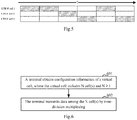
- Fig.5 is a schematic diagram of data transmission in virtual cell(s) according to embodiments disclosed herein, where specifically, the terminal transmits data with the network
- the configuration information of time-division multiplexing is transmitted by the network device to the terminal via a dedicated signaling, where the dedicated signaling could carry the abovementioned TDM pattern.
- the dedicated signaling could be L1 signaling (data link level signaling), L2 signaling (link function level signaling) or L3 signaling (network function level signaling).
- the dedicated signaling could be the RRC signaling.
- the configuration information of time-division multiplexing is suitable for one or multiple scheduling cycles.
- the network device could send complete configuration information of time-division multiplexing to the terminal; and the network device could transmit data with the terminal by time-division multiplexing among the N cell(s), based on the complete configuration information of time-division multiplexing.
- the network device transmits cell handover indication information to the terminal, so that the terminal switches from a source cell which the terminal is currently operating in to a target cell indicated by the cell handover indication information to transmit data, according to the cell handover indication information, where the source cell and the target cell are cells of the N cell(s).
- the network device judges by itself the handover timing of data transmission among the N cell(s), that is, the configuration information of time-division multiplexing is not completely obtained in advance, but is dynamically determined by the network device according to the data transmission situation.
- an LTE-U base station could determine the handover timing of data transmission among the N cell(s) according to interference condition of the respective cells, and notify the terminal via control signaling so that the terminal could switch to the target cell to transmit data.
- the control signaling could be L1 signaling or L2 signaling.
- the interference of each cell could be obtained on the basis of the terminal's measurement report, or on the basis of the network device's own measurement.
- the network device could inform a terminal of a handover in time t's advance; moreover, it could then notify the terminal of the handover's time, where t represents the length of time left before the handover, so that the network device and the terminal could switch into the target cell at the same time to transmit data.
- the network device could flexibly select a cell whose interference is small to provide service transmission for the terminal according to data transmission situation.
- Embodiments of the present application have improved the mechanism of measurement configuration and terminal measurement report, on the basis of the configuration of the virtual cell(s).
- the network device When the network device performs measurement configuration on the terminal, it could perform the measurement configuration with respect to the virtual cell(s), that is, it performs the measurement configuration in unit of virtual cell.
- a measurement parameter configured with respect to the virtual cell applies to every cell of the virtual cell.
- the network device could perform measurement configuration with respect to every cell of the virtual cell respectively, that is, the measurement configuration is performed in unit of every cell of the virtual cell.
- a measurement configuration parameter configured with respect to every cell of virtual cell could be either the same or different.
- the terminal performs measurement and reporting according to measurement configuration.
- the network device could configure a measurement pattern for the terminal, where the measurement pattern indicates a time segment that the measurement of each cell of the virtual cell occupies.
- the measurement pattern and the time-division multiplexing pattern could be either the same or different, and if the same, the terminal could perform measurement at the current service reception cell.
- the measurement pattern could instruct the terminal to perform measurement on multiple cells of the virtual cell, and even instruct the terminal to perform measurement on all cells of the virtual cell, which applies to a scenario where the terminal has a large enough operating bandwidth.
- the measurement pattern could also instruct to perform measurement among multiple cells of the virtual cell by time-division multiplexing, where the measurement time segments of the respective cells don't overlap with each other, that is, at one moment only one cell is measured, which applies to a scenario where the terminal could only work in one cell.
- the measurement pattern could also be predefined.
- Embodiments of the present application allow hybrid automatic repeat request (HARQ) process to be performed across cells. Specifically, after the network device has received information of data reception situation of the N cell(s) included by the virtual cell fed back by the terminal, it re-transmit data to the terminal according to the information of data reception situation, where the re-transmitted data is transmitted among the N cell(s) by time-division multiplexing.
- HARQ hybrid automatic repeat request
- LTE-U2 cell currently in the virtual cell is transmitting downlink data to the terminal, so the network device could re-transmit data whose reception hasn't been acknowledged when transmitted in the LTE-U1 cell to the terminal via the LTE-U2 cell. If the first re-transmission still fails, re-transmissions could be performed multiple times.
- NACK nacknowledge
- the re-transmission of the data whose reception hasn't been acknowledged could happen in different cells, that is, the re-transmitted data could be transmitted among the N cell(s) by time-division multiplexing.
- Embodiments of the present application allows a physical downlink control channel (PDCCH)to perform scheduling of a physical downlink shared channel (PDSCH) on a same carrier or cross carriers.
- PDCCH physical downlink control channel
- PDSCH physical downlink shared channel
- the network device transmits a PDCCH in all or part of the cells in the virtual cell, where the PDCCH is configured to schedule resources transmitted in the cell and indicate the position of the PDSCH of the cell.
- the network device could also transmit a PDCCH in a cell which is not included by the virtual cell, where the PDCCH is configured to schedule resources transmitted in one or multiple cells of the virtual cell, and indicate the transmitting position of the PDSCH in one or multiple cells of the virtual cell.
- the network device and the terminal maintain a set of uplink and downlink timing relationship information of the virtual cell, where the uplink and downlink timing relationship information is configured to indicate the configuration of uplink and downlink sub-frames, which applies to each cell of the virtual cell.
- the network device transmits data with the terminal among the N cell(s) by time-division multiplexing, according to the maintained set of uplink and downlink timing relationship information of the virtual cell.
- the network device could perform power control based on the virtual cell, or perform power control based on each cell of the virtual cell.
- the terminal could perform power headroom report (PHR) based on the virtual cell.
- PHR power headroom report
- the network device could receive the power headroom reported by the terminal according to power control parameter of the virtual cell, and perform power control on each cell of the virtual cell according to the power headroom.
- the terminal could report the power headroom based on each cell of the virtual cell.
- the network device could receive the power headroom of each cell reported by the terminal according to power control parameter of each cell in the virtual cell, and performs power control on each cell according to the power headroom of each cell.
- the network device could activate or deactivate the virtual cell, or perform discontinuous reception-on (DRX-on) or discontinuous reception-off (DRX-off) control.
- DRX-on discontinuous reception-on
- DRX-off discontinuous reception-off
- the network device could send to the terminal an indication about deactivation or DRX-off of the virtual cell, to instruct the terminal to stop data transmission among N cell(s) of the virtual cell by time-division multiplexing.
- Network device could also transmit an indication about the re-activation or DRX-on of the virtual cell to the terminal, to instruct the terminal to continue to transmit data among N cell(s) of the virtual cell by time-division multiplexing, where the configuration information of time-division multiplexing (e.g.
- the TDM pattern) used by the terminal when transmitting data among N cell(s) of the virtual cell by time-division multiplexing could either be the same as the configuration information of time-division multiplexing used before the virtual cell was deactivated or before the discontinuous reception of the virtual cell was off, or be another configuration information of time-division multiplexing configured separately.
- the measurement pattern used by the terminal when perform cell measurement on the virtual cell could be configured by the network device for the terminal separately, so that the measurement patterns used when the virtual cell is activated or deactivated could be different, or the measurement patterns used in cases of DRX-on or DRX-off could be different.
- previous measurement pattern could continue to be used, that is, the measurement pattern used when the virtual cell is activated or in the case of DRX-on could be used.
- a network work device configures virtual cell for a terminal, where the virtual cell includes N cell(s), and N ⁇ 1; and the network device transmits data to the terminal among the N cell(s) by time-division multiplexing.
- Embodiments of the present application are able to flexibly adjust transmission carriers for UE services, avoiding interference among different frequency domains without affecting the UE service transmission, so as to improve the system transmission efficiency.
- Fig.6 is a flow chart of data transmission according to embodiments of the present application, which illustrates the processing flow at the terminal side and includes step 601 and step 602.
- Step 601 a terminal obtains configuration information of virtual cell, where the virtual cell includes N cell(s) and N ⁇ 1.
- Step 602 the terminal transmits data by time-division multiplexing among the N cell(s).
- embodiments of the present application provides two methods (method 1 and method 2).
- Method 1 static obtaining method, corresponding to the static notification method of the network device described above.
- the terminal receives the configuration information of time-division multiplexing, where the configuration information of time-division multiplexing indicates time segment each cell occupies when the terminal transmits data in the N cell(s), where the terminal is instructed to transmit data in only one of the N cell(s), in order to realize transmission by time-division multiplexing between the network device and the terminal among the N cell(s).
- Method 2 dynamic obtaining method, corresponding to the dynamic notification method of the network device described above.
- the terminal receives cell handover indication information from the network device, and switches from a source cell which it is currently operating in to a target cell which the cell handover indication information indicates to transmit data, according to the cell handover indication information, where the source cell and the target cell are both cells of the N cell(s).
- the terminal maintains a set of uplink and downlink timing relationship information of the virtual cell, where the uplink and downlink timing relationship information is configured to indicate the configuration of uplink and downlink sub-frames and applies to every cell of the virtual cell.
- the terminal after the terminal has obtained the configuration information of time-division multiplexing, it transmits data with the network device among the N cell(s) by time-division multiplexing according to the uplink and downlink timing relationship information.
- Embodiments of the present application allow an HARQ process to be performed across cells. Specifically, after the terminal feeds back information of data reception situation of the N cell(s) included in the virtual cell to the network device, it receives data re-transmitted by the network device according to the information of data reception situation, where the re-transmitted data is transmitted among the N cell(s) by time-division multiplexing.
- the network device re-transmits data to the terminal, please refer to the abovementioned embodiments, and it wouldn't be discussed repeatedly herein.
- Embodiments of the present application allow a PDCCH performs PDSCH scheduling on a same carrier or cross carriers.
- the terminal detects a PDCCH in each of the N cell(s), and detects a PDSCH in the present cell according to detected PDCCH, where the PDCCH of each of the N cell(s) is configured to schedule resources transmitted in the cell.
- the terminal detects a PDCCH in a cell not included in the virtual cell, and detects a PDSCH in one or multiple cells of the N cell(s) according to detected PDCCH, where the PDCCH in a cell not included in the virtual cell is configured to schedule resources transmitted in one or multiple cells of the virtual cell and the cell not included in the virtual cell could be the primary cell of carrier aggregation or a non-virtual cell.
- the terminal could perform power control based on the virtual cell, or perform power control based on each cell of the virtual cell.
- the terminal could perform power measurement on the virtual cell according to power control parameter(s) configured for the virtual cell, and perform power headroom report for the virtual cell according to the power measurement result; or the terminal could perform power measurement on the N cell(s) according to power control parameter(s) respectively configured for the N cell(s) of the virtual cell and perform power headroom report for the N cell(s) according to the power measurement results.
- the terminal obtains a measurement pattern configured for the terminal by the network device, which indicates a time segment that the measurement of each cell of the virtual cell occupies.
- the measurement and a time-division multiplexing pattern could be the same or different, and if they are the same, the terminal could perform measurement on the current service reception cell.
- the measurement pattern could be configured to instruct the terminal to perform measurement on multiple cells of the virtual cell, and even instruct the terminal to perform measurement on all cells of the virtual cell, which applies to a scenario where the terminal has a large enough operating bandwidth.
- the measurement pattern could also be configured to instruct to perform measurement among multiple cells of the virtual cell by time-division multiplexing, where the measured time segments of the respective cells don't overlap with each other, that is, at one moment only one cell is measured, which applies to a scenario where the terminal could only work in one cell.
- the measurement pattern could also be predefined.
- measurement report is reported for each of the N cell(s).
- the terminal when the virtual cell configured for the terminal is deactivated or when the discontinuous reception of the virtual cell configured for the terminal is off, the terminal stop transmitting data among the N cell(s) by time-division multiplexing; when the virtual cell configured for the terminal is re-activated or the discontinuous reception of the virtual cell configured for the terminal is on, the terminal continues to transmit data among the N cell(s) by time-division multiplexing.
- the configuration information of time-division multiplexing e.g.
- the TDM pattern) used by the terminal when it transmits data among the N cell(s) of the virtual cell(s) by time-division multiplexing could either be the same as the configuration information of time-division multiplexing used before the virtual cell(s) was deactivated or the discontinuous reception of the virtual cell(s) was off, or be another configuration information of time-division multiplexing configured separately.
- the measurement pattern used by the terminal when perform cell measurement on the virtual cell(s) could be configured by the network device for the terminal separately, so that the measurement patterns used when the virtual cell is activated or deactivated could be different, or the measurement patterns used in cases of DRX-on or DRX-off could be different.
- previous measurement pattern could continue to be used, that is, the measurement pattern used when the virtual cell(s) is activated or when its discontinuous reception is on could be used.
- a terminal obtains configuration information of virtual cell, where the virtual cell includes N cell(s), and N ⁇ 1; the terminal transmits data among the N cell(s) by time-division multiplexing.
- Embodiments of the present application are able to flexibly adjust a UE service transmission carrier, avoiding interference among different frequency domains without affecting the UE service transmission, so as to improve the system transmission efficiency.
- Embodiment 1 of the present application the situation where FDD carrier(s) is used for constructing a virtual cell.
- a network device configures configuration information of carrier aggregation for a terminal, which includes configuration information of a primary cell and configuration information of a virtual cell, where the primary cell is an FDD cell, the virtual cell includes three FDD cells operating at unlicensed bands which are named LTE-U Cell-1, LTE-U Cell-2, and LTE-U Cell-3.
- the terminal maintains an HARQ entity for the primary cell and the secondary cell, respectively. Uplink transmission is performed in the primary cell, while downlink transmission is performed in the primary cell and the virtual cell. At one moment the terminal could perform downlink service reception in the virtual cell through only one cell of LTE-U Cell-1, LTE-U Cell-2 and LTE-U Cell-3.
- the network device could configure operating mode in the virtual cell (i.e. configuration information of time-division multiplexing) for the terminal through radio resource control protocol (RRC) signaling at the same time, that is, the terminal performs service reception through which cell of the three LTE-U cells.
- RRC radio resource control protocol
- sub-frames 0, 1 and 2 are configured to receive downlink data in the LTE-U Cell-1
- sub-frames 3, 4 and 5 are configured to receive downlink data in LTE-U Cell-2
- sub-frames 6, 7 and 8 are configured to receive downlink data in LTE-U Cell-3
- sub-frame 9 is not needed to configured to receive any downlink data.
- the configuration information of time-division multiplexing could be configured by the network device through the RRC signaling, or the network device could transmit cell handover indication information according to interference of different LTE-U Cell, to instruct the terminal to switch from the source cell where it is currently operating in to the target cell the cell handover indication information indicates to transmit data, where the source cell and the target cell are both cells of the N cells.
- the terminal receives downlink data in each of the LTE-U cells according to the configuration information of time-division multiplexing configured by the network device, and the scheduling signaling of the downlink data may come from a same LTE-U Cell or PCell.
- the terminal transmits data among the three LTE-U cells by time-division multiplexing and according to uplink and downlink timing relationship information configured for the virtual cell.
- the terminal feeds back to the network device information of data reception situation of one of the three LTE-U cells, such as LTE-U Cell-1; and the network device re-transmits data to the terminal according to the information of data reception situation, where the re-transmitted data could be transmitted in LTE-U Cell1, LTE-U Cell-2 or LTE-U Cell-3.
- the terminal detects a PDCCH in each of the three LTE-U cells, and detects the a PDSCH in the same cell according to detected PDCCH, where the PDCCH in each of the three LTE-U cells is configured to schedule resource transmitted in the cell; or, the terminal detects the PDCCH in a cell outside the virtual cell according to detected PDCCH, and detects the PDSCH in one or multiple cells of the three LTE-U cells, and the PDCCH in the cell outside the virtual cell is configured to schedule resource transmitted in one or multiple cells of the virtual cell.
- the terminal performs power measurement on the virtual cell according to a power control parameter configured for the virtual cell, and performs the power headroom report for the virtual cell according to the power measurement's result; or, the terminal performs power measurement on the three LTE-U cells, respectively, according to the power control parameters respectively configured for the three LTE-U cells and performs power headroom report for the three LTE-U cells, respectively, according to the power measurement's results.
- the terminal could perform measurement on the three LTE-U cells included in the virtual cell at the same time; and if the terminal could only work in one of the LTE-U cells, which means the terminal could perform measurement on only one LTE-U cell in one time segment, then the terminal could perform measurement on the three LTE-U cells included in the virtual cell by time-division multiplexing. After the terminal has obtained the measurement's results, it reports the measurement results with respect to each LTE-U cell in the virtual cell.
- the network device could change the configuration information of the virtual cell dynamically via RRC signaling, according to the changes of measurement results or interference of different LTE-U cells, such as deleting LTE-U Cell-1 or adding LTE-U Cell-4.
- the terminal stops transmitting data among the three LTE-U cells by time-division multiplexing, and when the virtual cell is deactivated, the measurement configuration of the terminal could be explicitly reconfigured by network.
- the terminal When the virtual cell configured for the terminal is activated again or its discontinuous reception is on, the terminal continues to transmit data among the three LTE-U cells by time-division multiplexing.
- Embodiment 2 of the present application the situation where TDD carrier(s) is used for constructing a virtual cell.
- a network device configures configuration information of carrier aggregation for a terminal, which includes configuration information of a primary cell and configuration information of a virtual cell, where the primary cell is a TDD or FDD cell, and the virtual cell includes three TDD cells operating at unlicensed bands, respectively named LTE-U Cell-1, LTE-U Cell-2 and LTE-U Cell-3.
- the network device could configure the virtual cell only for performing downlink transmissions, or the network device could configure the virtual cell for performing both uplink and downlink transmissions.
- the terminal maintains an HARQ entity for each of the primary cell and the secondary cell. Uplink and downlink transmissions are performed in the primary cell and/or in the virtual cell. At one moment the terminal could perform data transmission in the virtual cell through only one cell of LTE-U Cell-1, LTE-U Cell-2 and LTE-U Cell-3.
- the network device could configure operating mode in the virtual cell (i.e. configuration information of time-division multiplexing) for the terminal through RRC signaling at the same time, that is, the terminal performs data transmission through which cell of the three LTE-U cells.
- sub-frames 0, 1 and 2 are configured to transmit data in LTE-U Cell-1
- sub-frames 3, 4 and 5 are configured to transmit data in LTE-U Cell-2
- sub-frames 6, 7 and 8 are configured to transmit data in LTE-U Cell-3
- sub-frame 9 is not needed to be configured to transmit any data.
- the configuration information of time-division multiplexing could be configured by the network device through the RRC signaling, or the network device could transmit cell handover indication information to the terminal, according to interference of different LTE-U cells, to instruct the terminal to switch from the source cell where it is currently operating in to the target cell the cell handover indication information indicates to transmit data, where the source cell and the target cell are both cells of the N cell(s).
- the terminal maintains information of only one timing relationship of the virtual cell, i.e., the uplink and downlink timing relationship information of LTE-U Cell-1 also applies to LTE-U Cell-2 and LTE-U Cell-3.
- the terminal transmits data among the three LTE-U cells by time-division multiplexing and according to the uplink and downlink timing relationship information of the virtual cell.
- the terminal feeds back to the network device information of data reception situation of one of the three LTE-U cells, such as LTE-U Cell-1; and the network device re-transmits data to the terminal according to the information of data reception situation, where the re-transmitted data could be transmitted in LTE-U Cell1, LTE-U Cell-2 or LTE-U Cell-3.
- the terminal detects the PDCCH in each of the three LTE-U cells, and detects the PDSCH in the same cell according to detected PDCCH, where the PDCCH in each of the three LTE-U cells is configured to schedule resource transmitted in the cell; or, the terminal detects the PDCCH in a cell outside the virtual cell, and detects the PDSCH in one or multiple cells of the three LTE-U cells according to detected PDCCH, where the PDCCH in the cell outside the virtual cell is configured to schedule resource transmitted in one or multiple cells of the virtual cell.
- the terminal performs power measurement on the virtual cell according to a power control parameter configured for the virtual cell, and performs power headroom report for the virtual cell according to the power measurement's result; or, the terminal performs power measurement on the three LTE-U cells, respectively, according to the power control parameters respectively configured for the three LTE-U cells in the virtual cell and performs the power headroom reports for the three LTE-U cells, respectively, according to the power measurement's results.
- the terminal could perform measurement on the three LTE-U cells included in the virtual cell at the same time; and if the terminal could only work in one of the LTE-U cells, which means the terminal could perform measurement on only one LTE-U cell in every time segment, then the terminal could perform measurement on the three LTE-U cells included in the virtual cell by time-division multiplexing. After the terminal has obtained the measurement's results, it reports the measurement results with respect to each LTE-U cell in the virtual cell.
- the network device could change the configuration information of the virtual cell dynamically via RRC signaling, according to the changes of measurement results or interference of different LTE-U cells, such as deleting LTE-U Cell-1 or adding LTE-U Cell-4.
- the terminal stops transmitting data among the three LTE-U cells by time-division multiplexing, and when the virtual cell is deactivated, the measurement configuration of the terminal could be explicitly reconfigured by network.
- the terminal When the virtual cell configured for the terminal is activated again or its discontinuous reception is on, the terminal continues to transmit data among the three LTE-U cells by time-division multiplexing.
- embodiments of the present application further provides a terminal, where the implementation of the terminal is similar to the methods above, and will not be discussed here anymore.
- Fig. 7 is a schematic diagram of a terminal according to embodiments of the present application, where the terminal includes:
- the transmission module 702 is further configured to: receive configuration information of time-division multiplexing, where the configuration information of time-division multiplexing indicates time segment(s) each cell occupies when the terminal transmits data among the N cell(s), and in each time segment the terminal is instructed to transmit data in only one of the N cell(s).
- the transmission module 702 is further configured to:
- the transmission module 702 is further configured to: maintain a set of uplink and downlink timing relationship information of the virtual cell; and transmit data by time-division multiplexing and according to the uplink and downlink timing relationship information among the N cell(s).
- the transmission module 702 is further configured to:
- the terminal further includes:
- the terminal further includes:
- the terminal further includes:
- the transmission module 702 is further configured to: report the measurement result of each of the N cell(s).
- the transmission module 702 is further configured to:
- the obtaining module 701 is further configured to: obtain configuration information of carrier aggregation configured for the terminal, where the configuration information of carrier aggregation includes configuration information of primary cell and configuration information of secondary cell, the configuration information of secondary cell includes configuration information of at least one virtual cell, and the virtual cell includes N cell(s) operating at non-licensed band(s).
- embodiments of the present application further provides a network device, where the implementation of the network device is similar to the methods above, and will not be discussed here anymore.
- Fig. 8 is a schematic diagram of a network device according to embodiments of the present application, where the network device includes:
- the transmission module 802 is further configured to: transmit to the terminal configuration information of time-division multiplexing, where the configuration information of time-division multiplexing indicates time segment each cell occupies when the terminal transmits data among the N cell(s), and in each time segment the terminal is instructed to transmit data in only one of the N cell(s).
- the transmission module 802 is further configured to: transmit cell handover indication information to the terminal, so that the terminal, according to the cell handover indication information, switches from a source cell it is currently operating in to a target cell indicated by the cell handover indication information to transmit data, where the source cell and the target cell are cells of the N cells.
- the transmission module 802 is further configured to: transmit data with the terminal by time-division multiplexing among the N cell(s) according to a set of uplink and downlink timing relationship information of the virtual cell maintained by the terminal.
- the transmission module 802 is further configured to:
- the transmission module 802 is further configured to:
- the transmission module 802 is further configured to:
- the transmission module 802 is further configured to:
- the configuration module 801 is further configured to: configure configuration information of carrier aggregation for the terminal, where the configuration information of carrier aggregation includes configuration information of primary cell and configuration information of secondary cell, the configuration information of secondary cell includes configuration information of at least one virtual cell, and the virtual cell includes N cell(s) operating at non-licensed band(s).
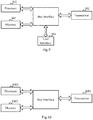
- Fig.9 is a schematic diagram of another terminal according to embodiments of the present application, where the terminal includes a transceiver 901, and at least one processor 902 connected with the transceiver 901, where the processor 902 is configured to read instructions in a memory 903 to perform the following operations: obtaining configuration information of a virtual cell, where the virtual cell includes N cell(s), N ⁇ 1; and controlling the transceiver 901 to transmit data by time-division multiplexing among the N cell(s).
- the bus architecture may include any number of interconnected buses and bridges, specifically connected by a variety of circuits including one or multiple processors represented by the processor 902 and a memory represented by the memory 903.
- the bus architecture may also link various other circuits, such as peripherals, regulators, power management circuits, and the like, which are well known in the art and are not further described herein.
- the bus interface provides an interface.
- the transceiver 901 may be a plurality of elements, i.e., it may include a transmitter and a receiver, providing means for communicating with various other devices on the transmission medium.
- the user interface 904 may also be an interface capable of external access to a device that includes, but is not limited to, a keypad, a display, a speaker, a microphone, or a joystick.
- the processor 902 is responsible for managing the bus architecture and usual processing, and the memory 903 may store the data used by the processor 902 when performing operations.
- the transceiver 901 is further configured to: receive configuration information of time-division multiplexing, where the configuration information of time-division multiplexing indicates time segment each cell occupies when the terminal transmits data among the N cell(s), and in each time segment the terminal is instructed to transmit data in only one of the N cell(s).
- the transceiver 901 is further configured to receive cell handover indication information sent by a network device; and the processer 902 is further configured to perform the following operation: switching from a source cell which the terminal is currently operating in to a target cell indicated by the cell handover indication information to transmit data, according to the cell handover indication information, where the source cell and the target cell are cells of the N cells.
- the processor 902 is further configured to perform the following operations: maintaining a set of uplink and downlink timing relationship information of the virtual cell; and controlling the transceiver 901 to transmit data by time-division multiplexing and according to the uplink and downlink timing relationship information among the N cell(s).
- the processor 902 is further configured to perform the following operation: controlling the transceiver 901 to feed back information of data reception situation in the N cell(s) to the network device.
- the transceiver 901 is further configured to receive data resent by the network device according to the information of data reception situation, where the resent data is transmitted among the N cell(s) by time-division multiplexing.
- the processor 902 is further configured to perform the following operations:
- the processor 902 is further configured to perform the following operations:
- the processor 902 is further configured to perform the following operation:
- the processor 902 is further configured to perform the following operation: after having obtained the measurement result(s), controlling the transceiver 901 to report the measurement result of each of the N cell(s).
- the processor 902 is further configured to perform the following operations:
- the processor 902 is further configured to perform the following operation: obtaining configuration information of carrier aggregation configured for the terminal, where the configuration information of carrier aggregation includes configuration information of primary cell and configuration information of secondary cell, the configuration information of secondary cell includes configuration information of at least one virtual cell, and the virtual cell includes N cell(s) operating at non-licensed band(s).
- Fig.10 is a schematic diagram of another network device according to embodiments of the present application, where the network device includes a transceiver 1001, and at least one processor 1002 connected with the transceiver 1001, where the processor 1002 is configured to read instructions in a memory 1003 and perform the following operations: configuring a virtual cell for a terminal, where the virtual cell includes N cell(s), and N ⁇ 1; and controlling the transceiver 1001 to transmit data with the terminal by time-division multiplexing among the N cell(s) included in the virtual cell.
- the bus architecture may include any number of interconnected buses and bridges, specifically connected by a variety of circuits including one or multiple processors represented by the processor 1002 and a memory represented by the memory 1003.
- the bus architecture may also link various other circuits, such as peripherals, regulators, power management circuits, and the like, which are well known in the art and are not further described herein.
- the bus interface provides an interface.
- the transceiver 1001 may be a plurality of elements, i.e., it may include a transmitter and a receiver, providing means for communicating with various other devices on the transmission medium.
- the processor 1002 is responsible for managing the bus architecture and usual processing, and the memory 1003 may store the data used by the processor 1002 when performing operations.
- the processor 1002 is further configured to perform the following operation: controlling the transceiver 1001 to transmit to the terminal configuration information of time-division multiplexing, where the configuration information of time-division multiplexing indicates time segment each cell occupies when the terminal transmits data among the N cell(s), and in each time segment the terminal is instructed to transmit data in only one of the N cell(s).
- the processor 1002 is further configured to perform the following operation: controlling the transceiver 1001 to transmit cell handover indication information to the terminal, so that the terminal, according to the cell handover indication information, switches from a source cell it is currently operating in to a target cell indicated by the cell handover indication information to transmit data, where the source cell and the target cell are cells of the N cells.
- the processor 1002 is further configured to perform the following operation: controlling the transceiver 1001 to transmit data with the terminal by time-division multiplexing among the N cell(s) according to a set of uplink and downlink timing relationship information of the virtual cell maintained by the terminal.
- the transceiver 1001 is further configured to receive information of data reception situation in the N cell(s) fed back by the terminal; and the processor 1002 is further configured to perform the following operation: re-transmitting data to the terminal according to the information of data reception situation, where the re-transmitted data is transmitted among the N cell(s) by time-division multiplexing.
- the transceiver 1001 is further configured to receive power headroom reported by the terminal according to power control parameter(s) of the virtual cell and the processor 1002 is further configured to perform the following operation: performing power control on each cell included in the virtual cell according to the power headroom; or, the transceiver 1001 is further configured to receive a power headroom of each cell reported by the terminal according to power control parameter(s) of each cell included in the virtual cell, and the processor 1002 is further configured to perform the following operation: performing power control on each cell according to the cell's power headroom.
- the transceiver 1001 is further configured to:
- the processor 1002 is further configured to perform the following operations:
- the processor 1002 is further configured to perform the following operation: configuring configuration information of carrier aggregation for the terminal, where the configuration information of carrier aggregation includes configuration information of primary cell and configuration information of secondary cell, the configuration information of secondary cell includes configuration information of at least one virtual cell, and the virtual cell includes N cell(s) operating at non-licensed band(s).
- a terminal obtains configuration information for configuring a virtual cell for the terminal, where the virtual cell includes N cell(s), and N ⁇ 1; and the terminal transmits data among the N cell(s) by time-division multiplexing.
- the embodiments of the present application are able to flexibly adjust transmission carriers for UE services, avoiding interference among different frequency domains without affecting the UE service transmission, so as to improve the system transmission efficiency.
- the embodiments of the present application could be provided as a method, a system or a computer program product. Therefore, the application could adopt the forms of a complete hardware embodiment, a complete software embodiment or an embodiment combining both software and hardware. Moreover, the present application could take the form of a computer program product which could be implemented on one or more computer usable storage media (including but not limited to disk storage, a CD-ROM, or an optical memory, etc.) including computer executable instructions.
- computer usable storage media including but not limited to disk storage, a CD-ROM, or an optical memory, etc.
- These computer program instructions can also be stored into a computer readable memory capable of directing the computer or the other programmable data processing device to operate in a specific manner so that the instructions stored in the computer readable memory create an article of manufacture including instruction means which perform the functions specified in the flow(s) of the flow chart and/or the block(s) of the block diagram.
- These computer program instructions can also be loaded onto the computer or the other programmable data processing device so that a series of operational steps are performed on the computer or the other programmable data processing device to create a computer implemented process so that the instructions executed on the computer or the other programmable device provide steps for performing the functions specified in the flow(s) of the flow chart and/or the block(s) of the block diagram.
Landscapes
- Engineering & Computer Science (AREA)
- Signal Processing (AREA)
- Computer Networks & Wireless Communication (AREA)
- Quality & Reliability (AREA)
- Mobile Radio Communication Systems (AREA)
Claims (14)
- Datenübertragungsverfahren, umfassend:für jede von mehreren virtuellen Zellen:Beziehen (601) von Konfigurationsinformationen der virtuellen Zelle durch ein Endgerät, wobei die virtuelle Zelle N Zellen umfasst und N ≥ 1,Empfangen von Konfigurationsinformationen des Zeitmultiplexens durch das Endgerät, wobei die Konfigurationsinformationen des Zeitmultiplexens ein Zeitsegment angeben, das jede Zelle belegt, wenn das Endgerät Daten zwischen den N Zellen überträgt, und in jedem Zeitsegment das Endgerät angewiesen wird, Daten nur in einer der N Zellen zu übertragen, undÜbertragen (602) von Daten mittels Zeitmultiplexen zwischen den N Zellen durch das Endgerät gemäß den Konfigurationsinformationen des Zeitmultiplexens,wobei eine Zelle in mehrere virtuelle Zellen konfiguriert ist und die Konfigurationen der Zelle für das Zeitmultiplexen der mehreren virtuellen Zellen gleich sind.
- Verfahren nach Anspruch 1, wobei das Verfahren ferner Folgendes umfasst:Vorhalten eines Satzes von Uplink- und Downlink-Zeitsteuerungsbeziehungsinformationen der virtuellen Zelle durch das Endgerät,das Übertragen (602) von Daten zwischen den N Zellen durch Zeitmultiplexen durch das Endgerät umfasst:Übertragen von Daten durch Zeitmultiplexen und gemäß den Uplink- und Downlink-Zeitsteuerungsbeziehungsinformationen zwischen den N Zellen durch das Endgerät,und/oderdas Verfahren ferner Folgendes umfasst:Rückmelden von Informationen der Datenempfangssituation in den N Zellen an das Netzwerkgerät durch das Endgerät undEmpfangen von Daten durch das Endgerät, die von dem Netzwerkgerät gemäß den Informationen der Datenempfangssituation erneut gesendet werden, wobei die erneut gesendeten Daten zwischen den N Zellen durch Zeitmultiplexen übertragen werden.
- Verfahren nach Anspruch 1, wobei das Verfahren ferner Folgendes umfasst:Erkennen eines Physical Downlink Control Channel, PDCCH, in jeder der N Zellen und Erkennen eines Physical Downlink Shared Channel, PDSCH, in derselben Zelle gemäß dem erkannten PDCCH durch das Endgerät, wobei der PDCCH in jeder der N Zellen dazu konfiguriert ist, Ressourcen zu planen, die in der Zelle übertragen werden, oderErkennen des PDCCH in einer Zelle außerhalb der virtuellen Zellen und Erkennen des PDSCH in einer oder mehreren Zellen der N Zellen gemäß dem erkannten PDCCH durch das Endgerät, wobei der PDCCH in einer Zelle außerhalb der virtuellen Zellen dazu konfiguriert ist, die Ressource zu planen, die in einer oder mehreren Zellen der virtuellen Zellen übertragen wird.
- Verfahren nach Anspruch 1, wobei das Verfahren ferner Folgendes umfasst:Durchführen einer Leistungsmessung an den virtuellen Zellen gemäß einem Leistungssteuerungsparameter, der für die virtuelle Zelle konfiguriert ist, und Durchführen eines Power Headroom Report, PHR, für die virtuelle Zelle gemäß dem Leistungsmessergebnis durch das Endgerät, oderDurchführen einer Leistungsmessung an jeder der N Zellen, jeweils gemäß einem Leistungssteuerungsparameter, der jeweils für jede der N Zellen der virtuellen Zelle konfiguriert ist, und Durchführen jeweils eines PHR für jede der N Zellen gemäß den Leistungsmessergebnissen durch das Endgerät.
- Verfahren nach Anspruch 1, wobei das Verfahren ferner Folgendes umfasst:Durchführen einer Messung an den N Zellen, die in den virtuellen Zellen enthalten sind, zur gleichen Zeit durch das Endgerät oderDurchführen einer Messung an den N Zellen, die in den virtuellen Zellen enthalten sind, durch Zeitmultiplexen durch das Endgerät, wobei die Messung nur an einer der N Zellen in jedem Zeitsegment durchgeführt wird,wobei das Verfahren ferner Folgendes umfasst:
nach Beziehen des Messergebnisses über die Messung Melden des Messergebnisses jeder der N Zellen durch das Endgerät. - Datenübertragungsverfahren, umfassend:für jede von mehreren virtuellen Zellen:Konfigurieren (401) der virtuellen Zelle für ein Endgerät durch ein Netzwerkgerät, wobei die virtuelle Zelle N Zellen umfasst und N ≥ 1,Übertragen (402) von Konfigurationsinformationen des Zeitmultiplexens an das Endgerät durch das Netzwerkgerät, wobei die Konfigurationsinformationen des Zeitmultiplexens ein Zeitsegment angeben, das jede Zelle belegt, wenn das Endgerät Daten zwischen den N Zellen überträgt, und in jedem Zeitsegment das Endgerät angewiesen wird, Daten nur in einer der N Zellen zu übertragen, undÜbertragen von Daten an das Endgerät mittels Zeitmultiplexen zwischen den N Zellen, die in der virtuellen Zelle enthalten sind, gemäß den Konfigurationsinformationen des Zeitmultiplexens durch das Netzwerkgerät,wobei eine Zelle in mehrere virtuelle Zellen konfiguriert ist und die Konfigurationen der Zelle für das Zeitmultiplexen in den mehreren virtuellen Zellen gleich sind.
- Verfahren nach Anspruch 6, wobei das Übertragen (402) von Daten durch das Netzwerkgerät an das Endgerät durch Zeitmultiplexen zwischen den N Zellen umfasst:Übertragen von Daten an das Endgerät durch das Netzwerkgerät durch Zeitmultiplexen zwischen den N Zellen gemäß einem Satz von Uplink- und Downlink-Zeitsteuerungsbeziehungsinformationen der virtuellen Zelle, die von dem Netzwerkgerät vorgehalten werden,wobei das Verfahren ferner Folgendes umfasst:Empfangen von Informationen der Datenempfangssituation in den N Zellen durch das Netzwerkgerät, die durch das Endgerät rückgemeldet wurden, underneutes Übertragen von Daten an das Endgerät durch das Netzwerkgerät gemäß den Informationen der Datenempfangssituation, wobei die erneut übertragenen Daten zwischen den N Zellen durch Zeitmultiplexen übertragen werden.
- Verfahren nach Anspruch 6, wobei das Verfahren ferner Folgendes umfasst:Empfangen einer Leistungsreserve (Power Headroom), die von dem Endgerät gemäß einem Leistungssteuerungsparameter der virtuellen Zelle gemeldet wird, und Durchführen von Leistungssteuerung an jeder Zelle, die in der virtuellen Zelle enthalten ist, gemäß der Leistungsreserve durch das Netzwerkgerät, oderEmpfangen einer Leistungsreserve jeder Zelle, die von dem Endgerät gemäß einem Leistungssteuerungsparameter jeder Zelle, die in der virtuellen Zelle enthalten ist, gemeldet wird, und Durchführen von Leistungssteuerung an jeder Zelle gemäß der Leistungsreserve der Zelle durch das Netzwerkgerät.
- Endgerät, umfassend:ein Bezugsmodul (701) und ein Übertragungsmodul (702), wobei für jede von mehreren virtuellen Zellen:das Bezugsmodul (701) dazu konfiguriert ist, Konfigurationsinformationen der virtuellen Zelle zu beziehen, wobei die virtuelle Zelle N Zellen umfasst, N ≥ 1 unddas Übertragungsmodul (702) zu Folgendem konfiguriert ist: Empfangen von Konfigurationsinformationen des Zeitmultiplexens, wobei die Konfigurationsinformationen des Zeitmultiplexens ein Zeitsegment angeben, das jede Zelle belegt, wenn das Endgerät Daten zwischen den N Zellen überträgt, und in jedem Zeitsegment das Endgerät angewiesen wird, Daten nur in einer der N Zellen zu übertragen, und Übertragen von Daten mittels Zeitmultiplexen zwischen den N Zellen gemäß den Konfigurationsinformationen des Zeitmultiplexens,wobei eine Zelle in mehrere virtuelle Zellen konfiguriert ist und die Konfigurationen der Zelle für das Zeitmultiplexen in den mehreren virtuellen Zellen gleich sind.
- Endgerät nach Anspruch 9, wobei das Übertragungsmodul (702) ferner zu Folgendem konfiguriert ist:Vorhalten eines Satzes von Uplink- und Downlink-Zeitsteuerungsbeziehungsinformationen der virtuellen Zelle und Übertragen von Daten durch Zeitmultiplexen und gemäß den Uplink- und Downlink-Zeitsteuerungsbeziehungsinformationen zwischen den N Zellen,und/oderdas Übertragungsmodul (702) ferner zu Folgendem konfiguriert ist:
Rückmelden von Informationen der Datenempfangssituation in den N Zellen an das Netzwerkgerät und Empfangen von Daten, die von dem Netzwerkgerät gemäß den Informationen der Datenempfangssituation erneut gesendet werden, wobei die erneut gesendeten Daten zwischen den N Zellen durch Zeitmultiplexen übertragen werden. - Endgerät nach Anspruch 9, wobei das Endgerät ferner ein Erkennungsmodul (703) umfasst, das zu Folgendem konfiguriert ist:Erkennen eines PDCCH in jeder der N Zellen und Erkennen eines PDSCH in derselben Zelle gemäß dem erkannten PDCCH, wobei der PDCCH in jeder der N Zellen dazu konfiguriert ist, Ressourcen zu planen, die in der Zelle übertragen werden, oderErkennen des PDCCH in einer Zelle außerhalb der virtuellen Zellen und Erkennen des PDSCH in einer oder mehreren Zellen der N Zellen gemäß dem erkannten PDCCH, wobei der PDCCH in einer Zelle außerhalb der virtuellen Zellen dazu konfiguriert ist, die Ressource zu planen, die in einer oder mehreren Zellen der virtuellen Zellen übertragen wird.
- Endgerät nach Anspruch 9, wobei das Endgerät ferner ein Messmodul (704) umfasst, das zu Folgendem konfiguriert ist:Durchführen einer Leistungsmessung an der virtuellen Zelle gemäß einem Leistungssteuerungsparameter, der für die virtuelle Zelle konfiguriert ist, und Durchführen eines PHR für die virtuelle Zelle gemäß dem Leistungsmessergebnis, oderDurchführen einer Leistungsmessung an jeder der N Zellen, jeweils gemäß einem Leistungssteuerungsparameter, der jeweils für jede der N Zellen der virtuellen Zelle konfiguriert ist, und Durchführen jeweils eines PHR für jede der N Zellen gemäß den Leistungsmessergebnissen,und/oderwobei das Endgerät ferner ein Messmodul (704) umfasst, das zu Folgendem konfiguriert ist:Durchführen einer Messung an den N Zellen, die in den virtuellen Zellen enthalten sind, zur gleichen Zeit oderDurchführen einer Messung an den N Zellen, die in den virtuellen Zellen enthalten sind, durch Zeitmultiplexen durch das Endgerät, wobei die Messung nur an einer der N Zellen in jedem Zeitsegment durchgeführt wird.
- Endgerät nach Anspruch 12, wobei das Übertragungsmodul (702) ferner zu Folgendem konfiguriert ist:
Melden des Messergebnisses jeder der N Zellen. - Endgerät nach einem der Ansprüche 9 bis 13, wobei das Bezugsmodul (701) ferner zu Folgendem konfiguriert ist:
Beziehen von Konfigurationsinformationen von Trägeraggregation, die für das Endgerät konfiguriert ist, wobei die Konfigurationsinformationen von Trägeraggregation Konfigurationsinformationen einer primären Zelle und Konfigurationsinformationen einer sekundären Zelle umfassen, wobei die Konfigurationsinformationen der sekundären Zelle Konfigurationsinformationen mindestens einer virtuellen Zelle umfassen und die virtuelle Zelle N Zellen umfasst, die in einem nicht-lizenzierten Band arbeiten.
Applications Claiming Priority (2)
| Application Number | Priority Date | Filing Date | Title |
|---|---|---|---|
| CN201410532529.8A CN105490789B (zh) | 2014-10-10 | 2014-10-10 | 一种数据传输方法及装置 |
| PCT/CN2015/091586 WO2016055023A1 (zh) | 2014-10-10 | 2015-10-09 | 一种数据传输方法及装置 |
Publications (3)
| Publication Number | Publication Date |
|---|---|
| EP3206325A1 EP3206325A1 (de) | 2017-08-16 |
| EP3206325A4 EP3206325A4 (de) | 2018-02-14 |
| EP3206325B1 true EP3206325B1 (de) | 2020-11-25 |
Family
ID=55652605
Family Applications (1)
| Application Number | Title | Priority Date | Filing Date |
|---|---|---|---|
| EP15849297.5A Active EP3206325B1 (de) | 2014-10-10 | 2015-10-09 | Datenübertragungsverfahren und -vorrichtung |
Country Status (4)
| Country | Link |
|---|---|
| US (1) | US10660113B2 (de) |
| EP (1) | EP3206325B1 (de) |
| CN (1) | CN105490789B (de) |
| WO (1) | WO2016055023A1 (de) |
Families Citing this family (19)
| Publication number | Priority date | Publication date | Assignee | Title |
|---|---|---|---|---|
| US11134487B2 (en) * | 2016-03-31 | 2021-09-28 | Nec Corporation | SDN-based methods and apparatuses for providing TDD radio access network services |
| EP3448100B1 (de) * | 2016-05-10 | 2020-09-09 | Huawei Technologies Co., Ltd. | Verfahren zur übertragung von uplink-informationen, basisstation und benutzergerät |
| US10070321B2 (en) * | 2016-06-01 | 2018-09-04 | Qualcomm Incorporated | Method and apparatuses for suspending traffic in a frequency band |
| US10517021B2 (en) | 2016-06-30 | 2019-12-24 | Evolve Cellular Inc. | Long term evolution-primary WiFi (LTE-PW) |
| CN106255122B (zh) * | 2016-09-09 | 2022-12-20 | 宇龙计算机通信科技(深圳)有限公司 | 通信方法和通信装置 |
| CN108667570A (zh) * | 2017-03-27 | 2018-10-16 | 索尼公司 | 用于无线通信的网络控制端和网络节点的电子设备和方法 |
| CN108667571B (zh) * | 2017-03-28 | 2019-06-25 | 中国移动通信有限公司研究院 | 一种实现混合自动重传请求的方法和装置 |
| CN107071911B (zh) * | 2017-04-10 | 2019-12-31 | 河海大学 | 一种基于最大snr的虚拟小区载波分配方法 |
| US20180338254A1 (en) * | 2017-05-22 | 2018-11-22 | Industrial Technology Research Institute | Beam tracking method in multi-cell group of millimeter wave communication system and related apparatuses using the same |
| CN109428700B (zh) * | 2017-08-29 | 2020-09-18 | 华为技术有限公司 | 一种发送信号的方法及设备 |
| CN107612612B (zh) * | 2017-09-22 | 2020-07-14 | 上海卫星工程研究所 | 卫星测控通信系统 |
| CN109587768B (zh) * | 2017-09-28 | 2021-06-01 | 维沃移动通信有限公司 | 上报功率余量报告的方法、装置、终端、网络设备和介质 |
| CN110475283B (zh) | 2018-05-11 | 2021-06-15 | 维沃移动通信有限公司 | 一种处理csi处理单元、资源的方法、装置及系统 |
| US10972950B2 (en) * | 2018-07-20 | 2021-04-06 | Qualcomm Incorporated | Methods and apparatus for handover enhancements |
| WO2020056642A1 (zh) | 2018-09-19 | 2020-03-26 | Oppo广东移动通信有限公司 | 一种数据传输方法、设备及存储介质 |
| CN111491399B (zh) * | 2019-01-29 | 2022-04-12 | 大唐移动通信设备有限公司 | 一种非连续传输的处理方法、终端设备和网络设备 |
| US11792706B2 (en) | 2019-11-07 | 2023-10-17 | Apple Inc. | Uplink transmission for dual active protocol stack handover |
| WO2023010475A1 (zh) * | 2021-08-05 | 2023-02-09 | 北京小米移动软件有限公司 | 一种服务小区测量方法及其装置 |
| CN116938409A (zh) * | 2022-04-02 | 2023-10-24 | 华为技术有限公司 | 通信方法及装置 |
Citations (2)
| Publication number | Priority date | Publication date | Assignee | Title |
|---|---|---|---|---|
| US20130165134A1 (en) * | 2011-12-22 | 2013-06-27 | Interdigital Patent Holdings, Inc. | Methods, apparatus, and systems for dynamic spectrum allocation |
| WO2014043863A1 (en) * | 2012-09-19 | 2014-03-27 | Qualcomm Incorporated | Method and apparatus for separating a cell cluster for lte eimta interference mitigation |
Family Cites Families (22)
| Publication number | Priority date | Publication date | Assignee | Title |
|---|---|---|---|---|
| US7941172B2 (en) * | 2002-07-23 | 2011-05-10 | Qualcomm Incorporated | History based measured power control response |
| WO2008125147A1 (en) | 2007-04-16 | 2008-10-23 | Telefonaktiebolaget Lm Ericsson (Publ) | A method for exchanging cell information between networks |
| CN101188801B (zh) | 2007-06-20 | 2010-09-01 | 中兴通讯股份有限公司 | 公共状态下配置传输承载的方法 |
| US8559879B2 (en) * | 2008-04-22 | 2013-10-15 | Qualcomm Incorporated | Null pilots for interference estimation in a wireless communication network |
| KR101734948B1 (ko) * | 2009-10-09 | 2017-05-12 | 삼성전자주식회사 | 파워 헤드룸 보고, 자원 할당 및 전력 제어 방법 |
| US9426685B2 (en) * | 2010-07-16 | 2016-08-23 | Broadcom Corporation | Method and system for mitigation of unlisted cell impacts in idle mode of cellular systems |
| CN103026653B (zh) * | 2010-07-26 | 2016-05-25 | Lg电子株式会社 | 在无线通信系统中发送上行控制信息的方法和设备 |
| EP2690901A4 (de) * | 2011-03-25 | 2015-05-06 | Fujitsu Ltd | Basisstation, kommunikationssystem und kommunikationsverfahren |
| GB2486926B (en) * | 2011-06-02 | 2013-10-23 | Renesas Mobile Corp | Frequency hopping in license-exempt/shared bands |
| CN102325382B (zh) * | 2011-06-30 | 2016-01-20 | 电信科学技术研究院 | 随机接入方法和设备 |
| JP5813444B2 (ja) * | 2011-09-30 | 2015-11-17 | シャープ株式会社 | 基地局、端末、通信システムおよび通信方法 |
| CN104429111B (zh) | 2012-07-20 | 2019-02-19 | 华为技术有限公司 | 具有本地集群、中央控制器、微基站和宏基站的网络系统 |
| US9930646B2 (en) * | 2012-10-10 | 2018-03-27 | Lg Electronics Inc. | Method and user device for receiving uplink control information, and method and base station for transmitting uplink information |
| KR101898050B1 (ko) * | 2012-10-15 | 2018-10-04 | 삼성전자주식회사 | 무선 통신시스템에서 가상셀 브레싱에 기반한 핸드오버 처리 방법 및 장치 |
| CN103781093B (zh) * | 2012-10-19 | 2017-05-10 | 华为技术服务有限公司 | 基于虚拟切换的无线网络优化方法和终端 |
| EP2946621B1 (de) * | 2013-01-18 | 2019-04-17 | Avago Technologies International Sales Pte. Limited | Auf zellclusterung basierende konfiguration von flexibler in tdd-kommunikation |
| US9497745B2 (en) * | 2013-02-11 | 2016-11-15 | Telefonaktiebolaget L M Ericsson (Publ) | Virtual macro cells |
| US9538456B2 (en) * | 2013-02-18 | 2017-01-03 | Lg Electronics Inc. | Method and apparatus for performing data transmission in wireless communication system |
| HK1220068A1 (zh) * | 2013-04-04 | 2017-04-21 | 英特尔Ip公司 | 针对支援一个上行载波的终端的双重连接 |
| US10028212B2 (en) * | 2013-11-22 | 2018-07-17 | Qualcomm Incorporated | Techniques for provisioning configuration information based on cell characteristics |
| US9537642B2 (en) * | 2014-02-03 | 2017-01-03 | Apple Inc. | Method and apparatus for frequency hopping coexistence in unlicensed radio frequency bands for mobile devices |
| KR20170003597A (ko) * | 2014-04-29 | 2017-01-09 | 엘지전자 주식회사 | 비면허 대역을 지원하는 무선 접속 시스템에서 전송기회구간에 대한 채널상태정보를 보고하는 방법 및 이를 지원하는 장치 |
-
2014
- 2014-10-10 CN CN201410532529.8A patent/CN105490789B/zh active Active
-
2015
- 2015-10-09 US US15/518,242 patent/US10660113B2/en active Active
- 2015-10-09 EP EP15849297.5A patent/EP3206325B1/de active Active
- 2015-10-09 WO PCT/CN2015/091586 patent/WO2016055023A1/zh not_active Ceased
Patent Citations (2)
| Publication number | Priority date | Publication date | Assignee | Title |
|---|---|---|---|---|
| US20130165134A1 (en) * | 2011-12-22 | 2013-06-27 | Interdigital Patent Holdings, Inc. | Methods, apparatus, and systems for dynamic spectrum allocation |
| WO2014043863A1 (en) * | 2012-09-19 | 2014-03-27 | Qualcomm Incorporated | Method and apparatus for separating a cell cluster for lte eimta interference mitigation |
Also Published As
| Publication number | Publication date |
|---|---|
| US10660113B2 (en) | 2020-05-19 |
| EP3206325A4 (de) | 2018-02-14 |
| WO2016055023A1 (zh) | 2016-04-14 |
| US20170311339A1 (en) | 2017-10-26 |
| CN105490789A (zh) | 2016-04-13 |
| CN105490789B (zh) | 2019-08-16 |
| EP3206325A1 (de) | 2017-08-16 |
Similar Documents
| Publication | Publication Date | Title |
|---|---|---|
| US10660113B2 (en) | Data transmission method and apparatus | |
| JP6956065B2 (ja) | 無線ネットワークにおけるアップリンク制御情報送/受信 | |
| CN115836506B (zh) | 全双工操作的锚定和互补带宽部分 | |
| RU2624639C1 (ru) | Способ переключения несущей, базовая станция и пользовательское оборудование | |
| US11425697B2 (en) | Dynamic management of uplink control signaling resources in wireless network | |
| KR102439670B1 (ko) | 전송 방향 구성 방법, 장치, 및 시스템 | |
| US11419122B2 (en) | Time domain bundling of reference signals based on transmission configuration indicator (TCI) states | |
| EP4021112A1 (de) | Pucch-übertragungsverfahren, endgerät und netzwerkvorrichtung | |
| EP3364702B1 (de) | Verfahren und vorrichtung zur zellenverwaltung | |
| US20230254848A1 (en) | Peak data rate calculation for uplink transmit switching | |
| KR20220004045A (ko) | 크로스 캐리어 스케줄링을 위한 DCI(downlink control indicator) 분배 | |
| CN115398972A (zh) | 无线通信移动性的参考测量定时选择 | |
| US11856465B2 (en) | Inter-band handover of the same physical frequency | |
| US20190045458A1 (en) | User terminal, radio base station and radio communication method | |
| US11818724B2 (en) | Communication after change in bandwidth part | |
| US20250358084A1 (en) | Resource configuration for full-duplex communication | |
| US20220110124A1 (en) | Direct current (dc) tone indication in sidelink | |
| US20240032124A1 (en) | Component carrier conflict management at a wireless communication device with multiple subscriptions | |
| CN103369695A (zh) | 一种上行调度方法及装置 | |
| JP2017092827A (ja) | ユーザ装置、基地局、通知方法及び設定方法 | |
| WO2016000534A1 (zh) | 一种传输上行控制信令的方法、系统和设备 | |
| US20230422284A1 (en) | Wireless communication measurement reporting | |
| EP4338350A1 (de) | Uplink-steuerinformationsträgerschalter | |
| RU2659804C1 (ru) | Способ переключения несущей, базовая станция и пользовательское оборудование |
Legal Events
| Date | Code | Title | Description |
|---|---|---|---|
| STAA | Information on the status of an ep patent application or granted ep patent |
Free format text: STATUS: THE INTERNATIONAL PUBLICATION HAS BEEN MADE |
|
| PUAI | Public reference made under article 153(3) epc to a published international application that has entered the european phase |
Free format text: ORIGINAL CODE: 0009012 |
|
| STAA | Information on the status of an ep patent application or granted ep patent |
Free format text: STATUS: REQUEST FOR EXAMINATION WAS MADE |
|
| 17P | Request for examination filed |
Effective date: 20170504 |
|
| AK | Designated contracting states |
Kind code of ref document: A1 Designated state(s): AL AT BE BG CH CY CZ DE DK EE ES FI FR GB GR HR HU IE IS IT LI LT LU LV MC MK MT NL NO PL PT RO RS SE SI SK SM TR |
|
| AX | Request for extension of the european patent |
Extension state: BA ME |
|
| RIC1 | Information provided on ipc code assigned before grant |
Ipc: H04L 5/00 20060101ALI20170928BHEP Ipc: H04W 72/04 20090101AFI20170928BHEP |
|
| DAV | Request for validation of the european patent (deleted) | ||
| DAX | Request for extension of the european patent (deleted) | ||
| A4 | Supplementary search report drawn up and despatched |
Effective date: 20180112 |
|
| RIC1 | Information provided on ipc code assigned before grant |
Ipc: H04W 72/04 20090101AFI20180108BHEP Ipc: H04L 5/00 20060101ALI20180108BHEP |
|
| STAA | Information on the status of an ep patent application or granted ep patent |
Free format text: STATUS: EXAMINATION IS IN PROGRESS |
|
| 17Q | First examination report despatched |
Effective date: 20181109 |
|
| REG | Reference to a national code |
Ref country code: DE Ref legal event code: R079 Ref document number: 602015062701 Country of ref document: DE Free format text: PREVIOUS MAIN CLASS: H04L0005000000 Ipc: H04W0072040000 |
|
| GRAP | Despatch of communication of intention to grant a patent |
Free format text: ORIGINAL CODE: EPIDOSNIGR1 |
|
| STAA | Information on the status of an ep patent application or granted ep patent |
Free format text: STATUS: GRANT OF PATENT IS INTENDED |
|
| RIC1 | Information provided on ipc code assigned before grant |
Ipc: H04L 1/18 20060101ALI20200605BHEP Ipc: H04W 72/12 20090101ALI20200605BHEP Ipc: H04W 72/04 20090101AFI20200605BHEP Ipc: H04W 52/40 20090101ALI20200605BHEP Ipc: H04W 52/36 20090101ALI20200605BHEP |
|
| INTG | Intention to grant announced |
Effective date: 20200714 |
|
| GRAS | Grant fee paid |
Free format text: ORIGINAL CODE: EPIDOSNIGR3 |
|
| GRAA | (expected) grant |
Free format text: ORIGINAL CODE: 0009210 |
|
| STAA | Information on the status of an ep patent application or granted ep patent |
Free format text: STATUS: THE PATENT HAS BEEN GRANTED |
|
| AK | Designated contracting states |
Kind code of ref document: B1 Designated state(s): AL AT BE BG CH CY CZ DE DK EE ES FI FR GB GR HR HU IE IS IT LI LT LU LV MC MK MT NL NO PL PT RO RS SE SI SK SM TR |
|
| REG | Reference to a national code |
Ref country code: GB Ref legal event code: FG4D |
|
| REG | Reference to a national code |
Ref country code: CH Ref legal event code: EP |
|
| REG | Reference to a national code |
Ref country code: DE Ref legal event code: R096 Ref document number: 602015062701 Country of ref document: DE |
|
| REG | Reference to a national code |
Ref country code: AT Ref legal event code: REF Ref document number: 1339765 Country of ref document: AT Kind code of ref document: T Effective date: 20201215 |
|
| REG | Reference to a national code |
Ref country code: IE Ref legal event code: FG4D |
|
| REG | Reference to a national code |
Ref country code: AT Ref legal event code: MK05 Ref document number: 1339765 Country of ref document: AT Kind code of ref document: T Effective date: 20201125 |
|
| REG | Reference to a national code |
Ref country code: NL Ref legal event code: MP Effective date: 20201125 |
|
| PG25 | Lapsed in a contracting state [announced via postgrant information from national office to epo] |
Ref country code: GR Free format text: LAPSE BECAUSE OF FAILURE TO SUBMIT A TRANSLATION OF THE DESCRIPTION OR TO PAY THE FEE WITHIN THE PRESCRIBED TIME-LIMIT Effective date: 20210226 Ref country code: NO Free format text: LAPSE BECAUSE OF FAILURE TO SUBMIT A TRANSLATION OF THE DESCRIPTION OR TO PAY THE FEE WITHIN THE PRESCRIBED TIME-LIMIT Effective date: 20210225 Ref country code: FI Free format text: LAPSE BECAUSE OF FAILURE TO SUBMIT A TRANSLATION OF THE DESCRIPTION OR TO PAY THE FEE WITHIN THE PRESCRIBED TIME-LIMIT Effective date: 20201125 Ref country code: PT Free format text: LAPSE BECAUSE OF FAILURE TO SUBMIT A TRANSLATION OF THE DESCRIPTION OR TO PAY THE FEE WITHIN THE PRESCRIBED TIME-LIMIT Effective date: 20210325 Ref country code: RS Free format text: LAPSE BECAUSE OF FAILURE TO SUBMIT A TRANSLATION OF THE DESCRIPTION OR TO PAY THE FEE WITHIN THE PRESCRIBED TIME-LIMIT Effective date: 20201125 |
|
| PG25 | Lapsed in a contracting state [announced via postgrant information from national office to epo] |
Ref country code: IS Free format text: LAPSE BECAUSE OF FAILURE TO SUBMIT A TRANSLATION OF THE DESCRIPTION OR TO PAY THE FEE WITHIN THE PRESCRIBED TIME-LIMIT Effective date: 20210325 Ref country code: SE Free format text: LAPSE BECAUSE OF FAILURE TO SUBMIT A TRANSLATION OF THE DESCRIPTION OR TO PAY THE FEE WITHIN THE PRESCRIBED TIME-LIMIT Effective date: 20201125 Ref country code: LV Free format text: LAPSE BECAUSE OF FAILURE TO SUBMIT A TRANSLATION OF THE DESCRIPTION OR TO PAY THE FEE WITHIN THE PRESCRIBED TIME-LIMIT Effective date: 20201125 Ref country code: PL Free format text: LAPSE BECAUSE OF FAILURE TO SUBMIT A TRANSLATION OF THE DESCRIPTION OR TO PAY THE FEE WITHIN THE PRESCRIBED TIME-LIMIT Effective date: 20201125 Ref country code: BG Free format text: LAPSE BECAUSE OF FAILURE TO SUBMIT A TRANSLATION OF THE DESCRIPTION OR TO PAY THE FEE WITHIN THE PRESCRIBED TIME-LIMIT Effective date: 20210225 Ref country code: AT Free format text: LAPSE BECAUSE OF FAILURE TO SUBMIT A TRANSLATION OF THE DESCRIPTION OR TO PAY THE FEE WITHIN THE PRESCRIBED TIME-LIMIT Effective date: 20201125 |
|
| REG | Reference to a national code |
Ref country code: LT Ref legal event code: MG9D |
|
| PG25 | Lapsed in a contracting state [announced via postgrant information from national office to epo] |
Ref country code: HR Free format text: LAPSE BECAUSE OF FAILURE TO SUBMIT A TRANSLATION OF THE DESCRIPTION OR TO PAY THE FEE WITHIN THE PRESCRIBED TIME-LIMIT Effective date: 20201125 |
|
| PG25 | Lapsed in a contracting state [announced via postgrant information from national office to epo] |
Ref country code: RO Free format text: LAPSE BECAUSE OF FAILURE TO SUBMIT A TRANSLATION OF THE DESCRIPTION OR TO PAY THE FEE WITHIN THE PRESCRIBED TIME-LIMIT Effective date: 20201125 Ref country code: SK Free format text: LAPSE BECAUSE OF FAILURE TO SUBMIT A TRANSLATION OF THE DESCRIPTION OR TO PAY THE FEE WITHIN THE PRESCRIBED TIME-LIMIT Effective date: 20201125 Ref country code: LT Free format text: LAPSE BECAUSE OF FAILURE TO SUBMIT A TRANSLATION OF THE DESCRIPTION OR TO PAY THE FEE WITHIN THE PRESCRIBED TIME-LIMIT Effective date: 20201125 Ref country code: SM Free format text: LAPSE BECAUSE OF FAILURE TO SUBMIT A TRANSLATION OF THE DESCRIPTION OR TO PAY THE FEE WITHIN THE PRESCRIBED TIME-LIMIT Effective date: 20201125 Ref country code: CZ Free format text: LAPSE BECAUSE OF FAILURE TO SUBMIT A TRANSLATION OF THE DESCRIPTION OR TO PAY THE FEE WITHIN THE PRESCRIBED TIME-LIMIT Effective date: 20201125 Ref country code: EE Free format text: LAPSE BECAUSE OF FAILURE TO SUBMIT A TRANSLATION OF THE DESCRIPTION OR TO PAY THE FEE WITHIN THE PRESCRIBED TIME-LIMIT Effective date: 20201125 |
|
| REG | Reference to a national code |
Ref country code: DE Ref legal event code: R081 Ref document number: 602015062701 Country of ref document: DE Owner name: DATANG MOBILE COMMUNICATIONS EQUIPMENT CO., LT, CN Free format text: FORMER OWNER: CHINA ACADEMY OF TELECOMMUNICATIONS TECHNOLOGY, BEIJING, CN |
|
| REG | Reference to a national code |
Ref country code: DE Ref legal event code: R097 Ref document number: 602015062701 Country of ref document: DE |
|
| PG25 | Lapsed in a contracting state [announced via postgrant information from national office to epo] |
Ref country code: DK Free format text: LAPSE BECAUSE OF FAILURE TO SUBMIT A TRANSLATION OF THE DESCRIPTION OR TO PAY THE FEE WITHIN THE PRESCRIBED TIME-LIMIT Effective date: 20201125 |
|
| PLBE | No opposition filed within time limit |
Free format text: ORIGINAL CODE: 0009261 |
|
| STAA | Information on the status of an ep patent application or granted ep patent |
Free format text: STATUS: NO OPPOSITION FILED WITHIN TIME LIMIT |
|
| PG25 | Lapsed in a contracting state [announced via postgrant information from national office to epo] |
Ref country code: NL Free format text: LAPSE BECAUSE OF FAILURE TO SUBMIT A TRANSLATION OF THE DESCRIPTION OR TO PAY THE FEE WITHIN THE PRESCRIBED TIME-LIMIT Effective date: 20201125 Ref country code: AL Free format text: LAPSE BECAUSE OF FAILURE TO SUBMIT A TRANSLATION OF THE DESCRIPTION OR TO PAY THE FEE WITHIN THE PRESCRIBED TIME-LIMIT Effective date: 20201125 Ref country code: IT Free format text: LAPSE BECAUSE OF FAILURE TO SUBMIT A TRANSLATION OF THE DESCRIPTION OR TO PAY THE FEE WITHIN THE PRESCRIBED TIME-LIMIT Effective date: 20201125 |
|
| 26N | No opposition filed |
Effective date: 20210826 |
|
| REG | Reference to a national code |
Ref country code: GB Ref legal event code: 732E Free format text: REGISTERED BETWEEN 20211007 AND 20211013 |
|
| PG25 | Lapsed in a contracting state [announced via postgrant information from national office to epo] |
Ref country code: SI Free format text: LAPSE BECAUSE OF FAILURE TO SUBMIT A TRANSLATION OF THE DESCRIPTION OR TO PAY THE FEE WITHIN THE PRESCRIBED TIME-LIMIT Effective date: 20201125 |
|
| PG25 | Lapsed in a contracting state [announced via postgrant information from national office to epo] |
Ref country code: ES Free format text: LAPSE BECAUSE OF FAILURE TO SUBMIT A TRANSLATION OF THE DESCRIPTION OR TO PAY THE FEE WITHIN THE PRESCRIBED TIME-LIMIT Effective date: 20201125 |
|
| REG | Reference to a national code |
Ref country code: CH Ref legal event code: PL |
|
| PG25 | Lapsed in a contracting state [announced via postgrant information from national office to epo] |
Ref country code: IS Free format text: LAPSE BECAUSE OF FAILURE TO SUBMIT A TRANSLATION OF THE DESCRIPTION OR TO PAY THE FEE WITHIN THE PRESCRIBED TIME-LIMIT Effective date: 20210325 |
|
| REG | Reference to a national code |
Ref country code: BE Ref legal event code: MM Effective date: 20211031 |
|
| PG25 | Lapsed in a contracting state [announced via postgrant information from national office to epo] |
Ref country code: MC Free format text: LAPSE BECAUSE OF FAILURE TO SUBMIT A TRANSLATION OF THE DESCRIPTION OR TO PAY THE FEE WITHIN THE PRESCRIBED TIME-LIMIT Effective date: 20201125 |
|
| PG25 | Lapsed in a contracting state [announced via postgrant information from national office to epo] |
Ref country code: LU Free format text: LAPSE BECAUSE OF NON-PAYMENT OF DUE FEES Effective date: 20211009 Ref country code: BE Free format text: LAPSE BECAUSE OF NON-PAYMENT OF DUE FEES Effective date: 20211031 |
|
| PG25 | Lapsed in a contracting state [announced via postgrant information from national office to epo] |
Ref country code: LI Free format text: LAPSE BECAUSE OF NON-PAYMENT OF DUE FEES Effective date: 20211031 Ref country code: CH Free format text: LAPSE BECAUSE OF NON-PAYMENT OF DUE FEES Effective date: 20211031 |
|
| PG25 | Lapsed in a contracting state [announced via postgrant information from national office to epo] |
Ref country code: IE Free format text: LAPSE BECAUSE OF NON-PAYMENT OF DUE FEES Effective date: 20211009 |
|
| PG25 | Lapsed in a contracting state [announced via postgrant information from national office to epo] |
Ref country code: HU Free format text: LAPSE BECAUSE OF FAILURE TO SUBMIT A TRANSLATION OF THE DESCRIPTION OR TO PAY THE FEE WITHIN THE PRESCRIBED TIME-LIMIT; INVALID AB INITIO Effective date: 20151009 |
|
| P01 | Opt-out of the competence of the unified patent court (upc) registered |
Effective date: 20230512 |
|
| PG25 | Lapsed in a contracting state [announced via postgrant information from national office to epo] |
Ref country code: CY Free format text: LAPSE BECAUSE OF FAILURE TO SUBMIT A TRANSLATION OF THE DESCRIPTION OR TO PAY THE FEE WITHIN THE PRESCRIBED TIME-LIMIT Effective date: 20201125 |
|
| PG25 | Lapsed in a contracting state [announced via postgrant information from national office to epo] |
Ref country code: MK Free format text: LAPSE BECAUSE OF FAILURE TO SUBMIT A TRANSLATION OF THE DESCRIPTION OR TO PAY THE FEE WITHIN THE PRESCRIBED TIME-LIMIT Effective date: 20201125 |
|
| PG25 | Lapsed in a contracting state [announced via postgrant information from national office to epo] |
Ref country code: TR Free format text: LAPSE BECAUSE OF FAILURE TO SUBMIT A TRANSLATION OF THE DESCRIPTION OR TO PAY THE FEE WITHIN THE PRESCRIBED TIME-LIMIT Effective date: 20201125 |
|
| PG25 | Lapsed in a contracting state [announced via postgrant information from national office to epo] |
Ref country code: MT Free format text: LAPSE BECAUSE OF FAILURE TO SUBMIT A TRANSLATION OF THE DESCRIPTION OR TO PAY THE FEE WITHIN THE PRESCRIBED TIME-LIMIT Effective date: 20201125 |
|
| PGFP | Annual fee paid to national office [announced via postgrant information from national office to epo] |
Ref country code: DE Payment date: 20251021 Year of fee payment: 11 |
|
| PGFP | Annual fee paid to national office [announced via postgrant information from national office to epo] |
Ref country code: GB Payment date: 20251024 Year of fee payment: 11 |
|
| PGFP | Annual fee paid to national office [announced via postgrant information from national office to epo] |
Ref country code: FR Payment date: 20251030 Year of fee payment: 11 |