EP3209497B1 - Mit quaternärem phosphonium beschichtete oberflächen und verfahren zur herstellung davon - Google Patents
Mit quaternärem phosphonium beschichtete oberflächen und verfahren zur herstellung davon Download PDFInfo
- Publication number
- EP3209497B1 EP3209497B1 EP15851778.9A EP15851778A EP3209497B1 EP 3209497 B1 EP3209497 B1 EP 3209497B1 EP 15851778 A EP15851778 A EP 15851778A EP 3209497 B1 EP3209497 B1 EP 3209497B1
- Authority
- EP
- European Patent Office
- Prior art keywords
- alkyl
- substituted
- quaternary phosphonium
- linker
- group
- Prior art date
- Legal status (The legal status is an assumption and is not a legal conclusion. Google has not performed a legal analysis and makes no representation as to the accuracy of the status listed.)
- Active
Links
- 0 CCC(C)(*)Br=C Chemical compound CCC(C)(*)Br=C 0.000 description 3
- IYVYLVCVXXCYRI-UHFFFAOYSA-N CCC[n]1cncc1 Chemical compound CCC[n]1cncc1 IYVYLVCVXXCYRI-UHFFFAOYSA-N 0.000 description 1
- QEFLNYXPYKZGEX-UHFFFAOYSA-N CCc1c[n](C)cn1 Chemical compound CCc1c[n](C)cn1 QEFLNYXPYKZGEX-UHFFFAOYSA-N 0.000 description 1
Images


Classifications
-
- C—CHEMISTRY; METALLURGY
- C09—DYES; PAINTS; POLISHES; NATURAL RESINS; ADHESIVES; COMPOSITIONS NOT OTHERWISE PROVIDED FOR; APPLICATIONS OF MATERIALS NOT OTHERWISE PROVIDED FOR
- C09D—COATING COMPOSITIONS, e.g. PAINTS, VARNISHES OR LACQUERS; FILLING PASTES; CHEMICAL PAINT OR INK REMOVERS; INKS; CORRECTING FLUIDS; WOODSTAINS; PASTES OR SOLIDS FOR COLOURING OR PRINTING; USE OF MATERIALS THEREFOR
- C09D5/00—Coating compositions, e.g. paints, varnishes or lacquers, characterised by their physical nature or the effects produced; Filling pastes
- C09D5/14—Paints containing biocides, e.g. fungicides, insecticides or pesticides
-
- C—CHEMISTRY; METALLURGY
- C08—ORGANIC MACROMOLECULAR COMPOUNDS; THEIR PREPARATION OR CHEMICAL WORKING-UP; COMPOSITIONS BASED THEREON
- C08F—MACROMOLECULAR COMPOUNDS OBTAINED BY REACTIONS ONLY INVOLVING CARBON-TO-CARBON UNSATURATED BONDS
- C08F292/00—Macromolecular compounds obtained by polymerising monomers on to inorganic materials
-
- A—HUMAN NECESSITIES
- A01—AGRICULTURE; FORESTRY; ANIMAL HUSBANDRY; HUNTING; TRAPPING; FISHING
- A01N—PRESERVATION OF BODIES OF HUMANS OR ANIMALS OR PLANTS OR PARTS THEREOF; BIOCIDES, e.g. AS DISINFECTANTS, AS PESTICIDES OR AS HERBICIDES; PEST REPELLANTS OR ATTRACTANTS; PLANT GROWTH REGULATORS
- A01N57/00—Biocides, pest repellants or attractants, or plant growth regulators containing organic phosphorus compounds
- A01N57/10—Biocides, pest repellants or attractants, or plant growth regulators containing organic phosphorus compounds having phosphorus-to-oxygen bonds or phosphorus-to-sulfur bonds
-
- A—HUMAN NECESSITIES
- A01—AGRICULTURE; FORESTRY; ANIMAL HUSBANDRY; HUNTING; TRAPPING; FISHING
- A01N—PRESERVATION OF BODIES OF HUMANS OR ANIMALS OR PLANTS OR PARTS THEREOF; BIOCIDES, e.g. AS DISINFECTANTS, AS PESTICIDES OR AS HERBICIDES; PEST REPELLANTS OR ATTRACTANTS; PLANT GROWTH REGULATORS
- A01N57/00—Biocides, pest repellants or attractants, or plant growth regulators containing organic phosphorus compounds
- A01N57/18—Biocides, pest repellants or attractants, or plant growth regulators containing organic phosphorus compounds having phosphorus-to-carbon bonds
- A01N57/20—Biocides, pest repellants or attractants, or plant growth regulators containing organic phosphorus compounds having phosphorus-to-carbon bonds containing acyclic or cycloaliphatic radicals
-
- A—HUMAN NECESSITIES
- A01—AGRICULTURE; FORESTRY; ANIMAL HUSBANDRY; HUNTING; TRAPPING; FISHING
- A01N—PRESERVATION OF BODIES OF HUMANS OR ANIMALS OR PLANTS OR PARTS THEREOF; BIOCIDES, e.g. AS DISINFECTANTS, AS PESTICIDES OR AS HERBICIDES; PEST REPELLANTS OR ATTRACTANTS; PLANT GROWTH REGULATORS
- A01N57/00—Biocides, pest repellants or attractants, or plant growth regulators containing organic phosphorus compounds
- A01N57/34—Biocides, pest repellants or attractants, or plant growth regulators containing organic phosphorus compounds having phosphorus-to-halogen bonds; Phosphonium salts
-
- C—CHEMISTRY; METALLURGY
- C08—ORGANIC MACROMOLECULAR COMPOUNDS; THEIR PREPARATION OR CHEMICAL WORKING-UP; COMPOSITIONS BASED THEREON
- C08F—MACROMOLECULAR COMPOUNDS OBTAINED BY REACTIONS ONLY INVOLVING CARBON-TO-CARBON UNSATURATED BONDS
- C08F230/00—Copolymers of compounds having one or more unsaturated aliphatic radicals, each having only one carbon-to-carbon double bond, and containing phosphorus, selenium, tellurium or a metal
- C08F230/02—Copolymers of compounds having one or more unsaturated aliphatic radicals, each having only one carbon-to-carbon double bond, and containing phosphorus, selenium, tellurium or a metal containing phosphorus
-
- C—CHEMISTRY; METALLURGY
- C08—ORGANIC MACROMOLECULAR COMPOUNDS; THEIR PREPARATION OR CHEMICAL WORKING-UP; COMPOSITIONS BASED THEREON
- C08F—MACROMOLECULAR COMPOUNDS OBTAINED BY REACTIONS ONLY INVOLVING CARBON-TO-CARBON UNSATURATED BONDS
- C08F293/00—Macromolecular compounds obtained by polymerisation on to a macromolecule having groups capable of inducing the formation of new polymer chains bound exclusively at one or both ends of the starting macromolecule
- C08F293/005—Macromolecular compounds obtained by polymerisation on to a macromolecule having groups capable of inducing the formation of new polymer chains bound exclusively at one or both ends of the starting macromolecule using free radical "living" or "controlled" polymerisation, e.g. using a complexing agent
-
- C—CHEMISTRY; METALLURGY
- C09—DYES; PAINTS; POLISHES; NATURAL RESINS; ADHESIVES; COMPOSITIONS NOT OTHERWISE PROVIDED FOR; APPLICATIONS OF MATERIALS NOT OTHERWISE PROVIDED FOR
- C09D—COATING COMPOSITIONS, e.g. PAINTS, VARNISHES OR LACQUERS; FILLING PASTES; CHEMICAL PAINT OR INK REMOVERS; INKS; CORRECTING FLUIDS; WOODSTAINS; PASTES OR SOLIDS FOR COLOURING OR PRINTING; USE OF MATERIALS THEREFOR
- C09D4/00—Coating compositions, e.g. paints, varnishes or lacquers, based on organic non-macromolecular compounds having at least one polymerisable carbon-to-carbon unsaturated bond ; Coating compositions, based on monomers of macromolecular compounds of groups C09D183/00 - C09D183/16
-
- C—CHEMISTRY; METALLURGY
- C08—ORGANIC MACROMOLECULAR COMPOUNDS; THEIR PREPARATION OR CHEMICAL WORKING-UP; COMPOSITIONS BASED THEREON
- C08F—MACROMOLECULAR COMPOUNDS OBTAINED BY REACTIONS ONLY INVOLVING CARBON-TO-CARBON UNSATURATED BONDS
- C08F2438/00—Living radical polymerisation
- C08F2438/01—Atom Transfer Radical Polymerization [ATRP] or reverse ATRP
Definitions
- the present invention relates to surface attachment of quaternary phosphonium compounds with anti-bacterial activity against a broad range of bacteria.
- methods are provided for attaching various substrate surfaces to quaternary phosphonium compounds to obtain anti-bacterial activity.
- control of infection is a vital concern for many, from public health officials, hospital and school administrators and the like, to private citizens.
- control of infection can be achieved by the topical application of disinfectants, antiseptics, antibacterials and the like to surfaces likely to be contacted by infectious agents.
- Common disinfectants include active chlorine such as hypochlorites, chloramines, dichloroisocyanurate and trichloroisocyanurate, wet chlorine, chlorine dioxide and the like, active oxygen, including peroxides, such as peracetic acid, potassium persulfate, sodium perborate, sodium percarbonate and urea perhydrate, iodine compounds such as povidone iodide, iodine tincture, iodinated nonionic surfactants, concentrated alcohols such as ethanol, n-propanol and isopropanol and mixtures thereof; 2-phenoxyethanol and 1- and 2-phenoxypropanols, phenolic compounds, cresols, halogenated phenols, such as hexachlorophene, triclosan, trichlorophenol, tribromophenol, pentachlorophenol, Dibromol and salts thereof, cationic surfactants, including quaternaryammonium cations such as benzalkonium chlor
- Antibiotics can be administered to stop infection in individuals. However, such administration is not always effective. Numerous medical applications, including orthopedic, trauma, spine and general surgery applications, where the potential for infection is a serious concern, are not amenable to simple application of antiseptic or treatment with antibiotics. For example, infection can be a devastating complication of a total joint arthroplasty (TJA). While some infections may be treated by antibiotic suppression alone, more aggressive therapies, such as two-stage re-implantation, are often required. The treatment of post-arthroplasty infections in 1999 cost over $200 million in the US alone. Spangehl, M.J., et al., J Bone Joint Surg. Am., 1999, 81(5), 672-682 . TJA infections occur when bacteria colonize the surface of the implant. These species then form a resistant biofilm on the implant surface, which nullifies the body's normal antibody response.
- TJA total joint arthroplasty
- pedicle screws are first implanted in the bone of the vertebrae, and then rods are fixed into the heads of the screws to immobilize and stabilize the affected segments. Screws and rods pass through the patient's skin into the spine space via a cannulated channel. As in external fixation, screws and rods are also prone to pin-tract infections; due to the implants' pathway through the skin, the chance of contacting and/or passing harmful bacteria is greatly increased.
- Catheters and shunts are placed in any number of body cavities and vessels to facilitate the injection, drainage, or exchange of fluids. Infections are common in catheter placements and are largely dependent on how long the patient is catheterized. For example, Kass reports an infection rate of virtually 100% for patients with indwelling urethral catheters draining into an open system for longer than 4 days. Kass, E. H., Trans. Assoc. Am. Physicians, 1956, 69, 56-63 .
- WO 2014/138959 A1 discloses a method of forming a polyelectrolyte polymer by photopolymerizing a monomer having an ionic group covalently linked to a photocurable group. J.
- Huang et al., Biomacromolecules, 2007, 8, 1396-1399 discloses antibacterial polypropylene via surface-initiated atom transfer radical polymerization.
- US 2008/138626 A1 discloses plasma-enhanced functionalization of substrate surfaces with quaternary ammonium and quaternary phosphonium groups.
- US 2010/215643 A1 discloses anti-infective functionalized surfaces and methods of making the same.
- anti-infective surfaces such as medical devices including implants, screws, rods, pins, catheters, stents, surgical tools and the like which could prevent infections by proactively killing bacteria that attempt to colonize the device surface both pre- and post-operatively.
- anti-infective surfaces that may be employed in locations particularly susceptible to hosting infectious agents, such as public places, common areas of buildings, fixtures and the like.
- the present invention is directed to a composition
- a composition comprising:
- the present invention is also directed to a method for preparing a composition
- a method for preparing a composition comprising: attaching a quaternary phosphonium compound to a substrate comprising a functionalized surface, wherein the quaternary phosphonium compound is a radical of formula I:
- alkyl refers to a linear or branched chain aliphatic hydrocarbon containing one to twelve carbon atoms (i.e ., C 1-12 alkyl) or the number of carbon atoms designated (i.e ., a C 1 alkyl such as methyl, a C 2 alkyl such as ethyl, a C 3 alkyl such as propyl or isopropyl, etc.).
- the alkyl group is chosen from a linear chain C 1-10 alkyl group.
- the alkyl group is chosen from a branched chain C 1-10 alkyl group.
- the alkyl group is chosen from a linear chain C 1-6 alkyl group. In another embodiment, the alkyl group is chosen from a branched chain C 1-6 alkyl group. In another embodiment, the alkyl group is chosen from a linear chain C 1-4 alkyl group. In another embodiment, the alkyl group is chosen from a branched chain C 1-4 alkyl group. In another embodiment, the alkyl group is chosen from a linear or branched chain C 2-4 alkyl group.
- Non-limiting exemplary C 1-10 alkyl groups include methyl, ethyl, propyl, isopropyl, butyl, sec- butyl, tert -butyl, iso -butyl, 3-pentyl, hexyl, heptyl, octyl, nonyl, decyl, and the like.
- Non-limiting exemplary C 1-4 alkyl groups include methyl, ethyl, propyl, isopropyl, butyl, sec-butyl, tert-butyl, and iso -butyl.
- the term "optionally substituted alkyl" as used by itself or as part of another group means that the alkyl as defined above is either unsubstituted or substituted with one, two, or three substituents independently chosen from nitro, haloalkoxy, aryloxy, aralkyloxy, alkylthio, sulfonamido, alkylcarbonyl, arylcarbonyl, alkylsulfonyl, arylsulfonyl, ureido, guanidino, carboxy, carboxyalkyl, cycloalkyl, and the like.
- the optionally substituted alkyl is substituted with two substituents.
- the optionally substituted alkyl is substituted with one substituent.
- Non-limiting exemplary optionally substituted alkyl groups include -CH 2 CH 2 NO 2 , -CH 2 CH 2 CO 2 H, -CH 2 CH 2 SO 2 CH 3 , -CH 2 CH 2 COPh, -CH 2 C 6 H 11 , and the like.
- cycloalkyl refers to saturated and partially unsaturated (containing one or two double bonds) cyclic aliphatic hydrocarbons containing one to three rings having from three to twelve carbon atoms ( i.e ., C 3-12 cycloalkyl) or the number of carbons designated.
- the cycloalkyl group has two rings.
- the cycloalkyl group has one ring.
- the cycloalkyl group is chosen from a C 3-8 cycloalkyl group.
- the cycloalkyl group is chosen from a C 3-6 cycloalkyl group.
- Non-limiting exemplary cycloalkyl groups include cyclopropyl, cyclobutyl, cyclopentyl, cyclohexyl, cycloheptyl, cyclooctyl, norbornyl, decalin, adamantyl, cyclohexenyl, and the like.
- the term "optionally substituted cycloalkyl" as used by itself or as part of another group means that the cycloalkyl as defined above is either unsubstituted or substituted with one, two, or three substituents independently chosen from halo, nitro, cyano, hydroxy, amino, alkylamino, dialkylamino, haloalkyl, hydroxyalkyl, alkoxy, haloalkoxy, aryloxy, aralkyloxy, alkylthio, carboxamido, sulfonamido, alkylcarbonyl, arylcarbonyl, alkylsulfonyl, arylsulfonyl, ureido, guanidino, carboxy, carboxyalkyl, alkyl, cycloalkyl, alkenyl, alkynyl, aryl, heteroaryl, heterocyclo, alkoxyalkyl, (amino)al
- the optionally substituted cycloalkyl is substituted with two substituents. In another embodiment, the optionally substituted cycloalkyl is substituted with one substituent.
- Non-limiting exemplary optionally substituted cycloalkyl groups include: and
- cycloalkenyl as used by itself or part of another group refers to a partially unsaturated cycloalkyl group as defined above.
- the cycloalkenyl has one carbon-to-carbon double bond.
- the cycloalkenyl group is chosen from a C 4-8 cycloalkenyl group.
- Exemplary cycloalkenyl groups include cyclopentenyl, cyclohexenyl, and the like.
- the term "optionally substituted cycloalkenyl" as used by itself or as part of another group means that the cycloalkenyl as defined above is either unsubstituted or substituted with one, two, or three substituents independently chosen from halo, nitro, cyano, hydroxy, amino, alkylamino, dialkylamino, haloalkyl, monohydroxyalkyl, dihydroxyalkyl, alkoxy, haloalkoxy, aryloxy, aralkyloxy, alkylthio, carboxamido, sulfonamido, alkylcarbonyl, arylcarbonyl, alkylsulfonyl, arylsulfonyl, ureido, guanidino, carboxy, carboxyalkyl, alkyl, cycloalkyl, alkenyl, alkynyl, aryl, heteroaryl, heterocyclo, alkoxyalky
- the optionally substituted cycloalkenyl is substituted with two substituents. In another embodiment, the optionally substituted cycloalkenyl is substituted with one substituent. In another embodiment, the cycloalkenyl is unsubstituted.
- alkenyl refers to an alkyl group as defined above containing one, two or three carbon-to-carbon double bonds.
- the alkenyl group is chosen from a C 2-6 alkenyl group.
- the alkenyl group is chosen from a C 2-4 alkenyl group.
- Non-limiting exemplary alkenyl groups include ethenyl, propenyl, isopropenyl, butenyl, sec- butenyl, pentenyl, and hexenyl.
- alkenyl as used herein by itself or as part of another group means the alkenyl as defined above is either unsubstituted or substituted with one, two or three substituents independently chosen from halo, nitro, cyano, hydroxy, amino, alkylamino, dialkylamino, haloalkyl, hydroxyalkyl, alkoxy, haloalkoxy, aryloxy, aralkyloxy, alkylthio, carboxamido, sulfonamido, alkylcarbonyl, arylcarbonyl, alkylsulfonyl, arylsulfonyl, ureido, guanidino, carboxy, carboxyalkyl, alkyl, cycloalkyl, alkenyl, alkynyl, aryl, heteroaryl, or heterocyclo.
- alkynyl refers to an alkyl group as defined above containing one to three carbon-to-carbon triple bonds.
- the alkynyl has one carbon-to-carbon triple bond.
- the alkynyl group is chosen from a C 2-6 alkynyl group.
- the alkynyl group is chosen from a C 2-4 alkynyl group.
- Non-limiting exemplary alkynyl groups include ethynyl, propynyl, butynyl, 2-butynyl, pentynyl, and hexynyl groups.
- alkynyl as used herein by itself or as part of another group means the alkynyl as defined above is either unsubstituted or substituted with one, two or three substituents independently chosen from halo, nitro, cyano, hydroxy, amino, alkylamino, dialkylamino, haloalkyl, hydroxyalkyl, alkoxy, haloalkoxy, aryloxy, aralkyloxy, alkylthio, carboxamido, sulfonamido, alkylcarbonyl, arylcarbonyl, alkylsulfonyl, arylsulfonyl, ureido, guanidino, carboxy, carboxyalkyl, alkyl, cycloalkyl, alkenyl, alkynyl, aryl, heteroaryl, or heterocyclo.
- haloalkyl refers to an alkyl group substituted by one or more fluorine, chlorine, bromine and/or iodine atoms.
- the alkyl group is substituted by one, two, or three fluorine and/or chlorine atoms.
- the haloalkyl group is chosen from a C 1-4 haloalkyl group.
- Non-limiting exemplary haloalkyl groups include fluoromethyl, difluoromethyl, trifluoromethyl, pentafluoroethyl, 1,1-difluoroethyl, 2,2-difluoroethyl, 2,2,2-trifluoroethyl, 3,3,3-trifluoropropyl, 4,4,4-trifluorobutyl, and trichloromethyl groups.
- hydroxyalkyl refers to an alkyl group substituted with one or more, e.g., one, two, or three, hydroxy groups.
- the hydroxyalkyl group is a monohydroxyalkyl group, i.e., substituted with one hydroxy group.
- the hydroxyalkyl group is a dihydroxyalkyl group, i.e., substituted with two hydroxy groups.
- the hydroxyalkyl group is chosen from a C 1-4 hydroxyalkyl group.
- Non-limiting exemplary hydroxyalkyl groups include hydroxymethyl, hydroxyethyl, hydroxypropyl and hydroxybutyl groups, such as 1-hydroxyethyl, 2-hydroxyethyl, 1,2-dihydroxyethyl, 2-hydroxypropyl, 3-hydroxypropyl, 3-hydroxybutyl, 4-hydroxybutyl, 2-hydroxy-1-methylpropyl, and 1,3-dihydroxyprop-2-yl.
- alkoxy refers to an optionally substituted alkyl, optionally substituted cycloalkyl, optionally substituted alkenyl, optionally substituted cycloalkenyl, optionally substituted alkynyl or optionally substituted alkynyl attached to a terminal oxygen atom.
- the alkoxy group is chosen from a C 1-4 alkoxy group.
- the alkoxy group is chosen from a C 1-4 alkyl attached to a terminal oxygen atom, e.g., methoxy, ethoxy, and tert-butoxy.
- alkoxyalkyl refers to an alkyl group substituted with an alkoxy group.
- Non-limiting exemplary alkoxyalkyl groups include methoxymethyl, methoxyethyl, methoxypropyl, methoxybutyl, ethoxymethyl, ethoxyethyl, ethoxypropyl, ethoxybutyl, propoxymethyl, isopropoxymethyl, propoxyethyl, propoxypropyl, butoxymethyl, tert-butoxymethyl, isobutoxymethyl, sec-butoxymethyl, and pentyloxymethyl.
- heteroalkyl refers to a stable linear or branched chain hydrocarbon radical containing 1 to 10 carbon atoms and at least two heteroatoms, which can be the same or different, selected from O, N, or S, wherein: 1) the nitrogen atom(s) and sulfur atom(s) can optionally be oxidized; and/or 2) the nitrogen atom(s) can optionally be quaternized.
- the heteroatoms can be placed at any interior position of the heteroalkyl group or at a position at which the heteroalkyl group is attached to the remainder of the molecule.
- the heteroalkyl group contains two oxygen atoms.
- Non-limiting exemplary heteroalkyl groups include -CH 2 OCH- 2 CH 2 OCH 3 , -OCH 2 CH 2 OCH 2 CH 2 OCH 3 , -CH 2 NHCH 2 CH 2 OCH 2 , -OCH 2 CH 2 NH 2 , and -NHCH 2 CH 2 N(H)CH 3 .
- haloalkoxy as used by itself or as part of another group refers to a haloalkyl attached to a terminal oxygen atom.
- Non-limiting exemplary haloalkoxy groups include fluoromethoxy, difluoromethoxy, trifluoromethoxy, and 2,2,2-trifluoroethoxy.
- aryl refers to a monocyclic or bicyclic aromatic ring system having from six to fourteen carbon atoms (i.e ., C 6-14 aryl).
- Non-limiting exemplary aryl groups include phenyl (abbreviated as "Ph”), naphthyl, phenanthryl, anthracyl, indenyl, azulenyl, biphenyl, biphenylenyl, and fluorenyl groups.
- the aryl group is chosen from phenyl or naphthyl.
- the term "optionally substituted aryl" as used herein by itself or as part of another group means that the aryl as defined above is either unsubstituted or substituted with one to five substituents independently chosen from halo, nitro, cyano, hydroxy, amino, alkylamino, dialkylamino, haloalkyl, hydroxyalkyl, alkoxy, haloalkoxy, aryloxy, aralkyloxy, alkylthio, carboxamido, sulfonamido, alkylcarbonyl, arylcarbonyl, alkylsulfonyl, arylsulfonyl, ureido, guanidino, carboxy, carboxyalkyl, alkyl, cycloalkyl, alkenyl, alkynyl, aryl, heteroaryl, heterocyclo, alkoxyalkyl, (amino)alkyl, hydroxyalkyl, hydroxyalkyl
- the optionally substituted aryl is an optionally substituted phenyl. In one embodiment, the optionally substituted phenyl has four substituents. In another embodiment, the optionally substituted phenyl has three substituents. In another embodiment, the optionally substituted phenyl has two substituents. In another embodiment, the optionally substituted phenyl has one substituent.
- Non-limiting exemplary substituted aryl groups include 2-methylphenyl, 2-methoxyphenyl, 2-fluorophenyl, 2-chlorophenyl, 2-bromophenyl, 3-methylphenyl, 3-methoxyphenyl, 3-fluorophenyl, 3-chlorophenyl, 4-methylphenyl, 4-ethylphenyl, 4-methoxyphenyl, 4-fluorophenyl, 4-chlorophenyl, 2,6-di-fluorophenyl, 2,6-dichlorophenyl, 2-methyl, 3-methoxyphenyl, 2-ethyl, 3-methoxyphenyl, 3,4-di-methoxyphenyl, 3,5-di-fluorophenyl 3,5-di-methylphenyl, 3,5-dimethoxy, 4-methylphenyl, 2-fluoro-3-chlorophenyl, and 3-chloro-4-fluorophenyl.
- the term optionally substituted aryl is
- aryloxy as used by itself or as part of another group refers to an optionally substituted aryl attached to a terminal oxygen atom.
- a non-limiting exemplary aryloxy group is PhO-.
- aralkyloxy as used by itself or as part of another group refers to an aralkyl group attached to a terminal oxygen atom.
- a non-limiting exemplary aralkyloxy group is PhCH 2 O-.
- heteroaryl refers to monocyclic and bicyclic aromatic ring systems having 5 to 14 ring atoms (i.e ., C 5-14 heteroaryl) and 1, 2, 3, or 4 heteroatoms independently chosen from oxygen, nitrogen and sulfur.
- the heteroaryl has three heteroatoms.
- the heteroaryl has two heteroatoms.
- the heteroaryl has one heteroatom.
- the heteroaryl is a C 5 heteroaryl.
- the heteroaryl is a C 6 heteroaryl.
- Non-limiting exemplary heteroaryl groups include thienyl, benzo[b]thienyl, naphtho[2,3-b]thienyl, thianthrenyl, furyl, benzofuryl, pyranyl, isobenzofuranyl, benzooxazonyl, chromenyl, xanthenyl, 2 H -pyrrolyl, pyrrolyl, imidazolyl, pyrazolyl, pyridyl, pyrazinyl, pyrimidinyl, pyridazinyl, isoindolyl, 3 H -indolyl, indolyl, indazolyl, purinyl, isoquinolyl, quinolyl, phthalazinyl, naphthyridinyl, cinnolinyl, quinazolinyl, pteridinyl, 4a H- carbazolyl, carbazolyl, ⁇ -carbolin
- the heteroaryl is chosen from thienyl (e.g ., thien-2-yl and thien-3-yl), furyl (e.g ., 2-furyl and 3-furyl), pyrrolyl ( e.g ., 1H-pyrrol-2-yl and 1H-pyrrol-3-yl), imidazolyl ( e.g ., 2H-imidazol-2-yl and 2H-imidazol-4-yl), pyrazolyl ( e.g ., 1H-pyrazol-3-yl, 1H-pyrazol-4-yl, and 1H-pyrazol-5-yl), pyridyl ( e.g ., pyridin-2-yl, pyridin-3-yl, and pyridin-4-yl), pyrimidinyl ( e.g ., pyrimidin-2-yl, pyrimidin-4-yl, pyrimidin
- the term "optionally substituted heteroaryl" as used by itself or as part of another group means that the heteroaryl as defined above is either unsubstituted or substituted with one to four substituents, e.g., one or two substituents, independently chosen from halo, nitro, cyano, hydroxy, amino, alkylamino, dialkylamino, haloalkyl, hydroxyalkyl, alkoxy, haloalkoxy, aryloxy, aralkyloxy, alkylthio, carboxamido, sulfonamido, alkylcarbonyl, arylcarbonyl, alkylsulfonyl, arylsulfonyl, ureido, guanidino, carboxy, carboxyalkyl, alkyl, cycloalkyl, alkenyl, alkynyl, aryl, heteroaryl, heterocyclo, alkoxyalkyl, (
- the optionally substituted heteroaryl has one substituent.
- the optionally substituted is an optionally substituted pyridyl, i.e., 2-, 3-, or 4-pyridyl. Any available carbon or nitrogen atom can be substituted.
- the optionally substituted heteroaryl is an optionally substituted indole.
- heterocycle or “heterocyclo” as used by itself or as part of another group refers to saturated and partially unsaturated (e.g ., containing one or two double bonds) cyclic groups containing one, two, or three rings having from three to fourteen ring members ( i.e ., a 3- to 14-membered heterocyclo) and at least one heteroatom.
- Each heteroatom is independently selected from the group consisting of oxygen, sulfur, including sulfoxide and sulfone, and/or nitrogen atoms, which can be quaternized.
- heterocyclo is meant to include cyclic ureido groups such as 2-imidazolidinone and cyclic amide groups such as ⁇ -lactam, ⁇ -lactam, ⁇ -lactam and ⁇ -lactam.
- heterocyclo is also meant to include groups having fused optionally substituted aryl groups, e.g., indolinyl.
- the heterocyclo group is chosen from a 5- or 6-membered cyclic group containing one ring and one or two oxygen and/or nitrogen atoms.
- the heterocyclo can be optionally linked to the rest of the molecule through a carbon or nitrogen atom.
- Non-limiting exemplary heterocyclo groups include 2-imidazolidinone, piperidinyl, morpholinyl, piperazinyl, pyrrolidinyl, and indolinyl.
- the term "optionally substituted heterocyclo" as used herein by itself or part of another group means the heterocyclo as defined above is either unsubstituted or substituted with one to four substituents independently selected from halo, nitro, cyano, hydroxy, amino, alkylamino, dialkylamino, haloalkyl, hydroxyalkyl, alkoxy, haloalkoxy, aryloxy, aralkyloxy, alkylthio, carboxamido, sulfonamido, alkylcarbonyl, arylcarbonyl, alkylsulfonyl, arylsulfonyl, ureido, guanidino, carboxy, carboxyalkyl, alkyl, cycloalkyl, alkenyl, alkynyl, aryl, heteroaryl, heterocyclo, alkoxyalkyl, (amino)alkyl, hydroxyalkylamin
- amino as used by itself or as part of another group refers to -NH 2 .
- alkylamino as used by itself or as part of another group refers to -NHR 15 , wherein R 15 is alkyl.
- dialkylamino as used by itself or as part of another group refers to -NR 16a R 16b , wherein R 16a and R 16b are each independently alkyl or R 16a and R 16b are taken together to form a 3- to 8-membered optionally substituted heterocyclo.
- hydroxyalkylamino as used by itself or as part of another group refers to -NHR 17 , wherein R 17 is hydroxyalkyl.
- (amino)alkyl refers to an alkyl group substituted with an amino group.
- Non-limiting exemplary amino alkyl groups include -CH 2 CH 2 NH 2 , -CH 2 CH 2 CH 2 NH 2 , -CH 2 CH 2 CH 2 CH 2 NH 2 , and the like.
- (alkylamino)alkyl refers alkyl group substituted an alkylamino group.
- a non-limiting exemplary (alkylamino)alkyl group is -CH 2 CH 2 N(H)CH 3 .
- dialkylamino)alkyl refers to an alkyl group substituted by a dialkylamino group.
- a non-limiting exemplary (dialkylamino)alkyl group is -CH 2 CH 2 N(CH 3 ) 2 .
- (cyano)alkyl refers to an alkyl group substituted with one or more cyano, e.g ., -CN, groups.
- Non-limiting exemplary (cyano)alkyl groups include -CH 2 CH 2 CN, -CH 2 CH 2 CH 2 CN, and -CH 2 CH 2 CH 2 CH 2 CN.
- Non-limiting exemplary carboxamido groups include -CONH 2 , -CON(H)CH 3 , -CON(CH 3 ) 2 , and -CON(H)Ph.
- (carboxamido)alkyl refers to an alkyl group with a carboxamido group.
- Non-limiting exemplary (carboxamido)alkyl groups include -CH 2 CONH 2 , -C(H)CH 3 -CONH 2 , and -CH 2 CON(H)CH 3 .
- the term "methacrylate” as used by itself or as part of another group refers to the radical of formula wherein R 28 is independently hydrogen, or alkyl, or substituted alkyl, or cycloalkyl, or substituted cycloalkyl, cycloalkenyl, or substituted cycloalkenyl, or alkenyl, or substituted cycloalkenyl, or alkynyl, substituted alkynyl, or haloalkyl, or hydroxyalkyl, or alkoxy, or alkoxyalkyl, or heteroalkyl, or haloalkoxy, or aryl, or substituted aryl, or aryloxy, or aralkyloxy, or heteroaryl, or substituted heteroaryl, or heterocycle, or substituted heterocycle, or amino, or alkylamino, or dialkylamino, or hydroxyalkylamino, or (amino)alkyl, or (alkylamino
- the term "methacrylamide” as used by itself or as part of another group refers to the radical of formula wherein R 27a and R 27b are independently hydrogen, or alkyl, or substituted alkyl, or cycloalkyl, or substituted cycloalkyl, cycloalkenyl, or substituted cycloalkenyl, or alkenyl, or substituted cycloalkenyl, or alkynyl, substituted alkynyl, or haloalkyl, or hydroxyalkyl, or alkoxy, or alkoxyalkyl, or heteroalkyl, or haloalkoxy, or aryl, or substituted aryl, or aryloxy, or aralkyloxy, or heteroaryl, or substituted heteroaryl, or heterocycle, or substituted heterocycle, or amino, or alkylamino, or dialkylamino, or hydroxyalkylamino, or (amino)alkyl, or (amino)alkyl
- sulfonamido refers to a radical of the formula -SO 2 NR 23a R 23b , wherein R 23a and R 23b are each independently hydrogen, optionally substituted alkyl, or optionally substituted aryl, or R 23a and R 23b taken together with the nitrogen to which they are attached from a 3- to 8-membered heterocyclo group.
- Non-limiting exemplary sulfonamido groups include -SO 2 NH 2 , -SO 2 N(H)CH 3 , and -SO 2 N(H)Ph.
- a non-limiting exemplary alkylcarbonyl group is -COCH 3 .
- a non-limiting exemplary arylcarbonyl group is -COPh.
- alkylsulfonyl as used by itself or as part of another group refers to a sulfonyl group, i.e ., -SO 2 -, substituted by any of the above-mentioned optionally substituted alkyl groups.
- a non-limiting exemplary alkylsulfonyl group is -SO 2 CH 3 .
- arylsulfonyl as used by itself or as part of another group refers to a sulfonyl group, i.e ., -SO 2 -, substituted by any of the above-mentioned optionally substituted aryl groups.
- a non-limiting exemplary arylsulfonyl group is -SO 2 Ph.
- mercaptoalkyl as used by itself or as part of another group refers to any of the above-mentioned alkyl groups substituted by a -SH group.
- carboxy as used by itself or as part of another group refers to a radical of the formula -COOH.
- carboxyalkyl as used by itself or as part of another group refers to any of the above-mentioned alkyl groups substituted with a -COOH.
- a non-limiting exemplary carboxyalkyl group is -CH 2 CO 2 H.
- aralkyl refers to an alkyl group substituted with one, two, or three optionally substituted aryl groups.
- the aralkyl group is a C 1-4 alkyl substituted with one optionally substituted aryl group.
- Non-limiting exemplary aralkyl groups include benzyl, phenethyl, -CHPh 2 , and -CH(4-FPh) 2 .
- the term "(heterocyclo)alkyl” as used by itself or as part of another group refers to an alkyl group substituted with one, two, or three optionally substituted heterocyclo groups.
- the (heterocyclo)alkyl is a (C 1 - 4 )alkyl substituted with one optionally substituted heterocyclo group.
- Non-limiting exemplary (heterocyclo)alkyl groups include:
- (heteroaryl)alkyl refers to an alkyl group substituted with one, two, or three optionally substituted heteroaryl groups.
- the (heteroaryl)alkyl group is a (C 1-4 )alkyl substituted with one optionally substituted heteroaryl group.
- Non-limiting exemplary (heteroaryl)alkyl groups include:
- the present disclosure encompasses any of the compounds disclosed herein which are isotopically-labelled (i.e ., radiolabeled) by having one or more atoms replaced by an atom having a different atomic mass or mass number.
- isotopes that can be incorporated into the disclosed compounds include isotopes of hydrogen, carbon, nitrogen, oxygen, phosphorous, fluorine and chlorine, such as 2 H, 3 H, 11 C, 13 C, 14 C, 15 N, 18 O, 17 O, 31 P, 32 P, 35 S, 18 F, and 36 Cl, respectively, e.g., 3 H, 11 C, and 14 C.
- Isotopically-labeled compounds can be prepared by methods known in the art.
- Some of the compounds disclosed herein may contain one or more asymmetric centers and may thus give rise to enantiomers, diastereomers, and other stereoisomeric forms.
- the present disclosure is meant to encompass the use of all such possible forms, as well as their racemic and resolved forms and mixtures thereof.
- the individual enantiomers can be separated according to methods known in the art in view of the present disclosure.
- the compounds described herein contain olefinic double bonds or other centers of geometric asymmetry, and unless specified otherwise, it is intended that they include both E and Z geometric isomers. All tautomers are intended to be encompassed by the present disclosure as well.
- stereoisomers is a general term for all isomers of individual molecules that differ only in the orientation of their atoms in space. It includes enantiomers and isomers of compounds with more than one chiral center that are not mirror images of one another (diastereomers).
- chiral center refers to a carbon atom to which four different groups are attached.
- enantiomer and “enantiomeric” refer to a molecule that cannot be superimposed on its mirror image and hence is optically active wherein the enantiomer rotates the plane of polarized light in one direction and its mirror image compound rotates the plane of polarized light in the opposite direction.
- racemic refers to a mixture of equal parts of enantiomers and which mixture is optically inactive.
- resolution refers to the separation or concentration or depletion of one of the two enantiomeric forms of a molecule.
- distal refers to the direction of the substrate's surface.
- proximal refers to the direction of the anti-infective agent.
- X 1 , X 2 , X 3 , and X 4 are independently non-existent or independently selected from,” meaning that X 1 can exist, not exist, or be selected from any of the molecules listed, regardless of whether either of X 2 , X 3 , and X 4 exist, do not exist, or selected from any of the molecules listed, regardless of whether X 1 , X 2 , X 3 , and X 4 may be all the same, whether X 1 , X 2 , X 3 , and X 4 may all vary, or whether some of X 1 , X 2 , X 3 , and X 4 may be the same and some may vary.
- radical refers to the molecule presented absent a hydrogen, thereby making the molecule available to covalently bind to another molecule, for example to form a brush polymer (in which the molecule structure represents the monomer unit for the brush polymer).
- the invention is directed to a composition comprising a functionalized surface of a substrate, which is covalently bound to a durable anti-infective agent, which is a quaternary phosphonium compound of formula (I)
- a durable anti-infective agent which is a quaternary phosphonium compound of formula (I)
- the invention is directed to methods of preparing an anti-infective composition by attaching a durable anti-infective agent, which is a quaternary phosphonium compound, to a functionalized surface.
- substrate's surface 10 is functionalized with a functionalizing layer 20, either natively occurring on the surface or obtained through a functionalizing agent, and an anti-infective agent 30.
- Substrates in accordance with the present invention include but are not limited to any device(s) specific to an application by an orthopedic, cardiovascular, plastic, dermatologic, general, maxillofacial or neuro surgeon or physician including, but not limited to, cardiovascular or vascular implant device such as stents, replacement heart valves, replacement heart valve components, leaflets, sewing cuffs, orifices, annuloplasty rings, pacemakers, pacemaker polymer mesh bags, pacemaker leads, pacing wires, intracardiac patches/pledgets, vascular patches, vascular grafts, intravascular catheters, and defibrillators; tissue scaffolds; non-woven meshes, woven meshes, and foams; orthopedic implant devices including orthopedic trauma implants, joint implants, spinal implants, plates, screws, rods, plugs, cages, pins, nails, wires, cables, anchors, scaffolds, artificial joints selected from hand joints, wrist joints, elbow joints, shoulder joints, spine joints, hip joints, knee joints and ankle joints; bone replacement, bone fixation cerclage and dental and
- Surface 10 may be virtually any material, which is amenable to either being natively functionalized or to reacting with a functionalizing agent to form a functionalizing layer 20.
- materials include metals, alloys, polymers, plastics, ceramics, silicon, glass, composites, tissue and surfaces with acidic protons, such as -OH or -NH groups.
- Metal surfaces which may be employed include titanium and its alloys, stainless steels, cobalt chrome alloys, aluminum, nickel, molybdenum, tantalum, zirconium, hafnium, vanadium, tin, magnesium, manganese, niobium, and alloys containing them; and the like.
- Polymer surfaces which may be employed include but not limited to synthetic and/ or natural polymer molecules such as: polyamides, polyurethanes, polyureas, polyesters, polyketones, polyimides, polysulfides, polysulfoxides, polysulfones, polythiophenes, polypyridines, polypyrrols, polyethers, polysiloxanes, polysaccharides, fluoropolymers, amides, imides, polypeptides, polyethylene, polystyrene, polypropylene, liquid crystal polymers, thermoplastics, bismalimidtriazine (BT) resins, benzocyclobutene polymers, Ajinomoto Buildup Films (ABF), low Coefficient of Thermal Expansion (CTE) films of glass and epoxies, aramides, polyfluoroolefins, epoxies, silicones or composites containing these polymers.
- synthetic and/ or natural polymer molecules such as: polyamides
- Functionalizing layer 20 may be any layer suitable for a particular application.
- functionalization layer 20 may be native functionalization of the surface.
- functionalization layer 20 may be obtained through a functionalizing agent or a plurality of functionalizing agents.
- functionalization layer 20 may be obtained through a combination of native functionalization and due to a functionalizing agent or a plurality of functionalizing agents.
- the plurality functionalizing agents may be all identical, all different, or some identical and some different.
- Such functionalized surfaces can be used to covalently bond subsequent material, such as a linker, a plurality of linkers, layers of anti-infective agent or a plurality of anti-infective agents.
- Functionalization of substrate surfaces in accordance with the present invention may be achieved in a variety of ways. For example, it is possible to functionalize the surface of a polymer with an oxide, alkoxide or mixed oxide-alkoxide layer using an alkoxide precursor.
- the polymer surface may be coated with a continuous oxide adhesion layer, i.e., a layer that is formed by a matrix of individual spread molecules that are chemically bonded and linked to each other, as opposed to individual molecules sparsely covering the surface.
- metal alkoxide molecules are bonded together on at least a portion of a polymer surface to form a continuous layer and then converted to an oxide functionalizing layer.
- the functionalized surface is coated with a self assembled monolayer (SAM) of functionalizing agent covalently bound to the functionalized surface.
- SAM self assembled monolayer
- an adherent coating layer that may be further functionalized with adherent species by heating a self-assembled layer of a functionalized phosphonic acid on the native oxide surface of a substrate.
- This process described in detail in U.S. Patent Application Publication 2004/0023048 , provides on the native oxide surface of a material a multi-segmented, phosphorous-based coating layer having a difunctional organophosphonic acid-based segment bonded to the native oxide surface of the material and a linking segment bonded to the organophosphonic acid-based segment.
- a phosphorous-based coating layer may be provided having a plurality of functionalized organophosphonate moieties bonded to the native oxide surface of a substrate by a phosphonate bond and a plurality of one or more anti-infective coating moieties, each coating moiety being bonded to the functional group of at least one functionalized organophosphonate moiety.
- the metal complex is further characterized by being derived from a metal reagent, preferably a metal alkoxide reagent.
- the surfaces of the substrates can be further functionalized by a reaction with functionalizing agents such as phosphonic acids, phosphoric acids, carboxylic acids, sulfonic acids, sulfinic acids, phosphonates, phosphonic acid anhydrides, phosphoric acid esters, phosphorus pentoxides, carboxylic acid esters, carboxylic anhydrides, sulfonates, sulfonic acid anhydrides, sulfinic esters, sulfinic anhydrides, alcohols, thiols, alkanes, alkenes, alkynes, and diazo compounds.
- a single functionalizing agent is reacted to functionalize the surface.
- a plurality of functionalizing agents are reacted to functionalize the surface.
- the anti-infective agent to a functionalizing agent before covalently bonding said functionalized anti-infective agent to a natively functionalized surface, a functionalizing agent bound to a surface, or a linker's distal end.
- the plurality of anti-infective agents i.e. quaternary phosphonium compound
- Such functionalized surfaces can be used to covalently bond subsequent material or layers thereof on the surface, which in the present invention includes anti-infective agents, or linkers bound to anti-infective agents.
- a plurality of one or more anti-infective agents may be covalently bonded to the functionalized surface, the functionalizing agents on the surface (which may vary), and the linkers covalently bound to the surface (which may vary).
- one of R 1 , R 2 , R 3 , or R 4 may bind the quaternary phosphonium compound either directly to the functionalized surface, functionalizing agent, or to the distal end of a linker. In other embodiments, more than one of R 1 , R 2 , R 3 , or R 4 may bind the quaternary phosphonium compound either directly to a functionalized surface, to a functionalizing agent, or to the distal end of a linker. In some embodiments, R 1 , R 2 , R 3 and R 4 may be the same. In other embodiments, some of R 1 , R 2 , R 3 and R 4 may be the same and some may be different.
- the anti-infective agent used is the radical of the following structure or the monomer of the following structure: wherein n2 is between 1 and 50.
- the anti-infective agent used is the radical of the following structure or the monomer of the following structure:
- the anti-infective agent use is the radical of the following structure or the monomer of the following structure: wherein n3 is between 1 and 50.
- the anti-infective agent used is the radical of the following structure or the monomer of the following structure:
- bactericidal and bacteriostatic agents may be used as antiseptics on mammalian tissue as they may have adverse effects thereon. It will be apparent to those skilled in the art that some embodiments of the present invention may apply to uses that do not involve contact of an anti-infective surface with mammalian tissue, such as the fabric used for surgical barriers and the interior surfaces of plumbing fixtures, building materials, ductwork, clean rooms, etc. In such applications certain anti-infective agents may be used, such as disinfectants, which would not be appropriate for use in applications in which contact with mammalian tissue would be contemplated or possible.
- Anti-infective agents used in applications which involve possible contact with mammalian tissue include but are not limited to quaternary phosphonium compounds such as phosphonium methacrylate, quaternary ammonium compounds such as choline and choline derivatives, quaternary ammonium dendrimers, silver, copper, and cationic species.
- Quaternary ammonium compounds ("quats") with long alkyl chains show proven biocidal properties by disruption of cell walls. Nakagawa, Y., et al., Appl. Environ. Microbial., 1984, 47:3, 513-518 ,
- a linker having a proximal end and a distal end, is present between the anti-infective agent and the functionalized surface.
- the linker is covalently bound to the anti-infective agent on its distal end.
- the linker is covalently bound on its proximal end to the functionalized surface, or a functionalizing agent.
- a plurality of linkers each having a distal and a proximal end, may be covalently bound on their proximal end to a plurality of functionalizing agents or directly to a natively functionalized surface. In some embodiments, a second amount of the plurality of functionalizing agents may remain not bound to the plurality of linkers.
- a plurality of anti-infective agents may be covalently bound to a plurality of linkers (which are either directly bound to the functionalized surface or are bound to a functionalizing agent).
- a second plurality of anti-infective agents may be covalently bound to the second plurality of functionalizing agents (which previously were not bound to a plurality of linkers).
- the plurality of linkers may be all identical, all different, or some identical and some different.
- the plurality of functionalizing agents may be all identical, all different, or some identical and some different.
- the plurality of anti-infective agents may be all identical, all different, or some identical and some different.
- the linker is a radical of the following: Wherein n1 is between 1 and 100 and R' is independently a hydrogen, or an anti-infective agent (such as a quaternary phosphonium compound).
- composition of the present invention has the structure wherein n1 is between 1 and 100.
- the anti-infective material may be bound to the linker's distal end or to the functionalized surface in a pattern or in a micropattern.
- the method comprises attaching an anti-infective agent, which is a quaternary phosphonium compound, to a functionalized surface, which is functionalized either natively or with a functionalizing agent, in accordance with the methods described hereinabove.
- an anti-infective agent which is a quaternary phosphonium compound
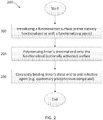
- attaching a quaternary phosphonium compound to a functionalized surface comprises: introducing a functionalized surface pursuant to block 202 (functionalized either natively or with a functionalizing agent, in accordance with the methods described hereinabove), optionally activating the functionalized surface (not shown), polymerizing a linker, having a proximal and a distal end, to form a covalent bond between the activated functionalized surface and the proximal end of the linker pursuant to block 204, and subsequently covalently binding the distal end of the linker to the quaternary phosphonium compound anti-infective agent (which may be functionalized and/or activated) pursuant to block 206.
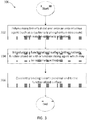
- attaching a quaternary phosphonium compound to a functionalized surface may comprise: polymerizing a linker, having a proximal and a distal end, to form a covalent bond between the anti-infective agent (e.g., quaternary phosphonium compound) and the distal end of the linker pursuant to block 302, introducing a functionalized surface pursuant to block 304 (functionalized either natively or with a functionalizing agent, in accordance with the methods described hereinabove), optionally activating the functionalized surface (not shown), and subsequently covalently binding the proximal end of the linker to the functionalized surface pursuant to block 306.
- the anti-infective agent e.g., quaternary phosphonium compound
- attaching a quaternary phosphonium compound to a functionalized surface may comprise: polymerizing a linker, having a proximal and a distal end, to form a covalent bond between the quaternary phosphonium compound and the distal end of the linker; and simultaneously covalently binding the proximal end of the linker to the functionalized surface.
- covalently bonding the linker may comprise using Surface-Initiated Atom Transfer Radical Polymerization (SI ATRP).
- SI ATRP Surface-Initiated Atom Transfer Radical Polymerization
- polymerizing through SI ATRP comprises: introducing an anti-infective agent (e.g., quaternary phosphonium compound), introducing an initiator (e.g., alkyl halide initiator), introducing a transition metal complex (e.g., CuBr), introducing a ligand (e.g., N,N,N',N",N'''-pentamethyldiethylenetriamine), and polymerizing for a predetermined time to obtain a desired polymer brush thickness.
- an anti-infective agent e.g., quaternary phosphonium compound
- an initiator e.g., alkyl halide initiator
- introducing a transition metal complex e.g., CuBr
- introducing a ligand e.g.,
- the ratio of the components in the polymerization step is 2:1:1.4 of monomer: metalcomplex: ligand.
- the polymer brush thickness effects the antibacterial efficacy.
- the composition disclosed herein shows greater than 99% reduction in a variety of bacteria for prolonged duration.
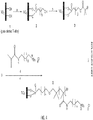
- Step a is also referred to, in some embodiments of the invention, as covalently binding a functionalizing agent to the surface, where the functionalizing agent in this instance is PUL.
- Step b is also referred to, in some embodiments of the invention, as activating the surface, thereby preparing it for subsequent SI-ATRP of the linker (i.e. covalently binding the linker on its proximal end to the surface) and ultimately of the anti-infective (i.e. covalently binding the anti-infective agent to the linker on its distal end).
- the SI-ATRP of the anti-infective agent, quaternary phosphonium compound phosphonium methacrylate illustrated by numeral 4 was performed in water in the presence of CuBr and a ligand N,N,N',N",N"-pentamethyldiethylenetriamine (PMDETA).
- the polymerization time and amount of monomer used may vary to control the thickness of the polymer brushes and the resulting antibacterial properties of polymer brush surfaces.
- Step c is also referred to, in some embodiments of the invention, as polymerizing a linker onto the activated functionalized surface and covalently binding the quaternary phosphonium compound to the linker.
- Figure 5 illustrates the prolonged antibacterial performance of the composition prepared according to embodiments of the invention.
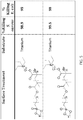
- Test coupons were placed in a modified ASTM E2149 efficacy study using S. aureus (ATCC# 29213) with an inoculum level of 10 6 Colony Forming Units (CFU) per ml. After a 24 hour exposure, the coupons were evaluated relative to untreated samples for CFU/ml reduction from bacteria recovered directly from the sample surface, and showed >95% killing at the surface for both treatments. Specifically, a 95.2% killing was observed at the titanium surface treated with the quaternary organophosphonate compound of the following structure: No reduction in antibacterial efficacy was observed outside of the margin of error of the experiment.
Landscapes
- Chemical & Material Sciences (AREA)
- Life Sciences & Earth Sciences (AREA)
- Organic Chemistry (AREA)
- Health & Medical Sciences (AREA)
- Engineering & Computer Science (AREA)
- Wood Science & Technology (AREA)
- Chemical Kinetics & Catalysis (AREA)
- Polymers & Plastics (AREA)
- Medicinal Chemistry (AREA)
- Materials Engineering (AREA)
- Plant Pathology (AREA)
- Environmental Sciences (AREA)
- Pest Control & Pesticides (AREA)
- Zoology (AREA)
- General Health & Medical Sciences (AREA)
- Dentistry (AREA)
- Agronomy & Crop Science (AREA)
- Inorganic Chemistry (AREA)
- Pharmaceuticals Containing Other Organic And Inorganic Compounds (AREA)
- Materials For Medical Uses (AREA)
- Organic Low-Molecular-Weight Compounds And Preparation Thereof (AREA)
- Agricultural Chemicals And Associated Chemicals (AREA)
Claims (10)
- Eine Zusammensetzung bestehend aus:ein Substrat mit einer funktionalisierten Oberfläche; undeine quaternäre Phosphoniumverbindung, die an die funktionalisierte Oberfläche gebunden ist, wobei die quaternäre Phosphoniumverbindung einen Rest der Formel I aufweist:
 worin X1, X2, X3 und X4 unabhängig voneinander nicht vorhanden oder unabhängig voneinander ausgewählt sind aus O, S, NR5, =N-, PR6 und =P-; undworin R1, R2, R3, R4, R5 und R6 unabhängig voneinander ausgewählt sind aus der Gruppe bestehend aus Wasserstoff, Alkyle, substituiertem Alkyl, Cycloalkyl, substituiertem Cycloalkyl, Cycloalkenyl, substituiertem Cycloalkenyl, Alkenyl, substituiertem Cycloalkenyl, Alkynyl, substituiertem Alkynyl, Halogenalkyl, Hydroxyalkyl, Alkoxy, Alkoxyalkyl, Heteroalkyl, Halogenalkoxy, Aryl, substituiertem Aryl, Aryloxy, Aralkyloxy, Heteroaryl substituiertem Heteroaryl, Heterozyklus, substituiertem Heterozyklus, Amino, Alkylamino, Dialkylamino, Hydroxyalkylamino, (Amino)alkyl, (Alkylamino)alkyl, (Dialkylamino)alkyl, (Cyano)alkyl), Carboxamido, (Carboxamido)alkyl, Methacrylat, Methacrylamid, Sulfonamid, Alkylcarbonyl, Arylcarbonyl, Alkylsulfonyl, Arylsulfonyl, Mercaptoalkyl, Carboxy, Carboxyalkyl, Ureido, Guanidin, (Heterocyclo)alkyl, (Heteroaryl)alkyl,wobei die funktionalisierte Oberfläche entweder nativ funktionalisiert oder mit einem daran kovalent gebundenen Funktionalisierungsmittel funktionalisiert ist, ferner umfassend einen Linker mit einem proximalen Ende und einem distalen Ende, wobei der Linker an seinem proximalen Ende kovalent an die nativ funktionalisierte Oberfläche oder an das Funktionalisierungsmittel gebunden ist, und wobei der Linker an seinem distalen Ende kovalent an die quaternäre Phosphoniumverbindung gebunden ist,wobei der Linker die Struktur hat:
- Zusammensetzung nach Anspruch 1, wobei die funktionalisierte Oberfläche ausgewählt ist aus der Gruppe bestehend aus Metallen, Legierungen, Polymeren, Kunststoffen, Keramiken, Silizium, Glas, Verbundstoffen, Gewebe und Oberflächen mit sauren Protonen.
- Zusammensetzung nach Anspruch 1, wobei das Funktionalisierungsmittel ausgewählt ist aus der Gruppe bestehend aus Phosphonsäuren, Phosphorsäuren, Carbonsäuren, Sulfonsäuren, Sulfinsäuren, Phosphonaten, Phosphonsäureanhydriden, Phosphorsäureestern, Phosphorpentoxiden, Carbonsäureestern, Carbonsäureanhydriden, Sulfonaten, Sulfonsäureanhydriden, Sulfinsäureestern, Sulfinsäureanhydriden, Alkoholen, Thiolen, Alkanen, Alkenen, Alkinen und Diazoverbindungen.
- Zusammensetzung nach Anspruch 1, wobei die quaternäre Phosphoniumverbindung eine Struktur hat:


worin, vorzugsweise, die quaternäre Phosphoniumverbindung die Struktur hat:

- Zusammensetzung nach Anspruch 1 mit der Struktur:

- Ein Verfahren zur Herstellung einer Zusammensetzung, umfassend:
Anbringen einer quaternären Phosphoniumverbindung an ein Substrat, das eine funktionalisierte Oberfläche umfasst, wobei die quaternäre Phosphoniumverbindung ein Rest der Formel I ist: worin X1, X2, X3 und X4 unabhängig voneinander nicht vorhanden oder unabhängig voneinander ausgewählt sind aus O, S, NR5, =N-, PR6 und =P-; undworin R1, R2, R3, R4, R5 und R6 unabhängig voneinander ausgewählt sind aus der Gruppe bestehend aus Wasserstoff, Alkyle, substituiertem Alkyl, Cycloalkyl, substituiertem Cycloalkyl, Cycloalkenyl, substituiertem Cycloalkenyl, Alkenyl, substituiertem Cycloalkenyl, Alkinyl, substituiertem Alkinyl, Halogenalkyl, Hydroxyalkyl, Alkoxy, Alkoxyalkyl, Heteroalkyl, Halogenalkoxy, Aryl, substituiertem Aryl, Aryloxy, Aralkyloxy, Heteroaryl, substituiertem Heteroaryl, Heterozyklus, substituiertem Heterozyklus, Amino, Alkylamino, Dialkylamino, Hydroxyalkylamino, (Amino)alkyl, (Alkylamino)alkyl, (Dialkylamino)alkyl, (Cyano)alkyl), Carboxamido, (Carboxamido)alkyl, Methacrylat, Methacrylamid, Sulfonamid, Alkylcarbonyl, Arylcarbonyl, Alkylsulfonyl, Arylsulfonyl, Mercaptoalkyl, Carboxy, Carboxyalkyl, Ureido, Guanidin, (Heterocyclo)alkyl, (Heteroaryl)alkyl, und mit dem Phosphor über einen beliebigen von Sauerstoff, Stickstoff, Schwefel, Kohlenstoff und Phosphor verbunden sind,wobei das Anbringen der quaternären Phosphoniumverbindung an der funktionalisierten Oberfläche umfasst:kovalentes Binden eines Funktionalisierungsmittels an die Oberfläche;Aktivieren der Oberfläche;Polymerisieren eines Monomers, um einen Linker zu bilden, der ein proximales und ein distales Ende hat, um eine kovalente Bindung zwischen der aktivierten funktionalisierten Oberfläche und dem proximalen Ende des Linkers zu bilden; undanschließend das distale Ende des Linkers kovalent an die quaternäre Phosphoniumverbindung bindet, oder alternativ,Polymerisieren eines Monomers, um einen Linker zu bilden, der ein proximales und ein distales Ende hat, um eine kovalente Bindung zwischen der quaternären Phosphoniumverbindung und dem distalen Ende des Linkers zu bilden; und anschließend kovalentes Binden des proximalen Endes des Linkers an die funktionalisierte Oberfläche,wobei der Linker die Struktur hat: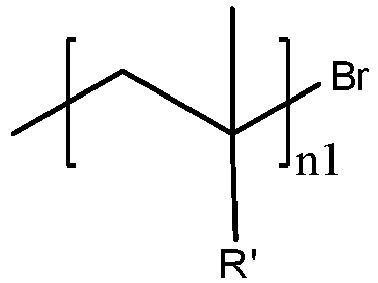
- Verfahren nach Anspruch 6, wobei die funktionalisierte Oberfläche aus der Gruppe ausgewählt ist, die aus Metallen, Legierungen, Polymeren, Kunststoffen, Keramiken, Silizium, Glas, Verbundwerkstoffen, Gewebe und Oberflächen mit sauren Protonen besteht.
- Verfahren nach Anspruch 6, wobei das Funktionalisierungsmittel ausgewählt ist aus der Gruppe bestehend aus Phosphonsäuren, Phosphorsäuren, Carbonsäuren, Sulfonsäuren, Sulfinsäuren, Phosphonaten, Phosphonsäureanhydriden, Phosphorsäureestern, Phosphorpentoxiden, Carbonsäureestern, Carbonsäureanhydriden, Sulfonaten, Sulfonsäureanhydriden, Sulfinsäureestern, Sulfinsäureanhydriden, Alkoholen, Thiolen, Alkanen, Alkenen, Alkinen und Diazoverbindungen.
- Verfahren nach Anspruch 6, wobei die quaternäre Phosphoniumverbindung der Rest der folgenden ist:


wobei vorzugsweise die quaternäre Phosphoniumverbindung der Rest der folgenden ist:

- Verfahren nach Anspruch 6, wobei die Zusammensetzung eine Struktur aufweist:

Applications Claiming Priority (2)
| Application Number | Priority Date | Filing Date | Title |
|---|---|---|---|
| US201462068347P | 2014-10-24 | 2014-10-24 | |
| PCT/US2015/057374 WO2016065358A1 (en) | 2014-10-24 | 2015-10-26 | Quaternary phosphonium coated surfaces and methods of making the same |
Publications (3)
| Publication Number | Publication Date |
|---|---|
| EP3209497A1 EP3209497A1 (de) | 2017-08-30 |
| EP3209497A4 EP3209497A4 (de) | 2018-06-13 |
| EP3209497B1 true EP3209497B1 (de) | 2021-04-28 |
Family
ID=55761686
Family Applications (1)
| Application Number | Title | Priority Date | Filing Date |
|---|---|---|---|
| EP15851778.9A Active EP3209497B1 (de) | 2014-10-24 | 2015-10-26 | Mit quaternärem phosphonium beschichtete oberflächen und verfahren zur herstellung davon |
Country Status (7)
| Country | Link |
|---|---|
| US (2) | US9868808B2 (de) |
| EP (1) | EP3209497B1 (de) |
| JP (1) | JP2017538781A (de) |
| KR (1) | KR20170072917A (de) |
| CN (1) | CN107107562B (de) |
| CA (1) | CA2965670A1 (de) |
| WO (1) | WO2016065358A1 (de) |
Families Citing this family (11)
| Publication number | Priority date | Publication date | Assignee | Title |
|---|---|---|---|---|
| WO2010099221A1 (en) | 2009-02-25 | 2010-09-02 | Orthobond Corp. | Anti- infective functionalized surfaces and methods of making same |
| CN106939078B (zh) | 2011-05-09 | 2020-12-11 | 沙特阿美技术公司 | 聚合物组合物及方法 |
| WO2018075454A1 (en) | 2016-10-17 | 2018-04-26 | Orthobond Corporation | Functional surfaces |
| AU2017346582B2 (en) * | 2016-10-17 | 2021-10-21 | Orthobond Corporation | Surfaces with oligomeric or polymeric antimicrobials |
| WO2018213939A1 (en) * | 2017-05-26 | 2018-11-29 | The University Of Western Ontario | Effective antibacterial hydrophilic phosphonium polymers with low hemolytic activity |
| WO2019200323A1 (en) | 2018-04-13 | 2019-10-17 | Molecular Surface Technologies, Llc | Electrochemical attachment of phosphonic acids to metallic substrates and osteoconductive medical devices containing same |
| CN109837545A (zh) * | 2018-12-14 | 2019-06-04 | 华东理工大学 | 一种nb-iot信息模块封装防护用不锈钢片的海洋抗腐和防污能力的方法 |
| WO2020139947A1 (en) | 2018-12-26 | 2020-07-02 | Molecular Surface Technologies, Llc | Method of photografting organic molecules to metallic substrates and devices having photografted organic molecules |
| CN110256617B (zh) * | 2019-02-26 | 2022-04-22 | 华南理工大学 | 含季鏻盐结构的聚(甲基)丙烯酸酯抗菌剂及其制备方法和在塑料中的应用 |
| US11540514B2 (en) | 2019-06-25 | 2023-01-03 | Molecular Surface Technologies, Llc | Electrochemical attachment of phosphonic acids to metallic substrates and antimicrobial medical devices containing same |
| WO2022011313A1 (en) * | 2020-07-10 | 2022-01-13 | Biological Dynamics, Inc. | Modification of metallic surfaces with phosphonic acids |
Family Cites Families (17)
| Publication number | Priority date | Publication date | Assignee | Title |
|---|---|---|---|---|
| US7507483B2 (en) | 1997-02-04 | 2009-03-24 | Jeffrey Schwartz | Enhanced bonding layers on native oxide surfaces |
| JP2002179503A (ja) * | 1998-03-17 | 2002-06-26 | Kazuhiro Tachibana | 抗菌材料 |
| JP2004513981A (ja) * | 2000-07-17 | 2004-05-13 | プレジデント・アンド・フェローズ・オブ・ハーバード・カレッジ | 生物種の吸着に耐える表面 |
| US6852417B2 (en) | 2002-05-09 | 2005-02-08 | Dupont Dow Elastomers, Llc | Composition for improving adhesion of base-resistant fluoroelastomers to metal, ceramic or glass substrates |
| FR2846970B1 (fr) * | 2002-11-08 | 2006-08-11 | Desarrollo Del Grafting S L | Procede de traitement de surface par photopolymerisation pour obtenir des proprietes biocides |
| US20080286319A9 (en) * | 2003-07-10 | 2008-11-20 | Russell Alan J | Antimicrobial surfaces and methods for preparing antimicrobial surfaces |
| US20050106576A1 (en) * | 2003-11-17 | 2005-05-19 | Hashem Akhavan-Tafti | Methods of using cleavable solid phases for isolating nucleic acids |
| EP1707601A1 (de) * | 2005-03-31 | 2006-10-04 | Institut Curie | Verfahren zur Behandlung von Oberflächen mit Copolymeren |
| US7759401B2 (en) * | 2006-03-22 | 2010-07-20 | Eastern Michigan University | Nanoporous and microporous solvogels and nanolatexes by microemulsion polymerization |
| US8029902B2 (en) | 2006-12-11 | 2011-10-04 | Wisconsin Alumni Research Foundation | Plasma-enhanced functionalization of substrate surfaces with quaternary ammonium and quaternary phosphonium groups |
| EP2132243B1 (de) * | 2007-04-05 | 2016-11-30 | DSM IP Assets B.V. | Wässrige oligomer-polymer-emulsion mit kationischer funktionalität |
| BRPI0911004B1 (pt) | 2008-07-18 | 2022-05-17 | Quick-Med Technologies, Inc | Método de preparação de um artigo antimicrobiano e artigo antimicrobiano |
| WO2010099221A1 (en) | 2009-02-25 | 2010-09-02 | Orthobond Corp. | Anti- infective functionalized surfaces and methods of making same |
| CA2802046C (en) | 2010-06-07 | 2018-12-11 | Stepan Company | Dilutable biocidal compositions and methods of use |
| US9481743B2 (en) | 2013-03-14 | 2016-11-01 | The University Of Western Ontario | Polyelectrolyte polymers, their manufacture and use |
| CN103266473B (zh) * | 2013-06-24 | 2015-08-05 | 河南省科学院化学研究所有限公司 | 季鏻盐改性聚丙烯腈纤维抗菌材料及其制备方法 |
| CN103739786B (zh) * | 2013-12-31 | 2016-08-17 | 河南金誉包装科技股份有限公司 | 高分子季鏻盐抗菌材料及其制备方法 |
-
2015
- 2015-10-26 CN CN201580070506.2A patent/CN107107562B/zh not_active Expired - Fee Related
- 2015-10-26 US US14/922,983 patent/US9868808B2/en active Active
- 2015-10-26 KR KR1020177013307A patent/KR20170072917A/ko not_active Ceased
- 2015-10-26 CA CA2965670A patent/CA2965670A1/en not_active Abandoned
- 2015-10-26 WO PCT/US2015/057374 patent/WO2016065358A1/en not_active Ceased
- 2015-10-26 JP JP2017540981A patent/JP2017538781A/ja active Pending
- 2015-10-26 EP EP15851778.9A patent/EP3209497B1/de active Active
-
2018
- 2018-01-11 US US15/868,516 patent/US20180134832A1/en not_active Abandoned
Non-Patent Citations (1)
| Title |
|---|
| None * |
Also Published As
| Publication number | Publication date |
|---|---|
| JP2017538781A (ja) | 2017-12-28 |
| CA2965670A1 (en) | 2016-04-28 |
| CN107107562B (zh) | 2019-08-02 |
| US20180134832A1 (en) | 2018-05-17 |
| US9868808B2 (en) | 2018-01-16 |
| WO2016065358A1 (en) | 2016-04-28 |
| EP3209497A1 (de) | 2017-08-30 |
| US20160115268A1 (en) | 2016-04-28 |
| KR20170072917A (ko) | 2017-06-27 |
| CN107107562A (zh) | 2017-08-29 |
| EP3209497A4 (de) | 2018-06-13 |
Similar Documents
| Publication | Publication Date | Title |
|---|---|---|
| EP3209497B1 (de) | Mit quaternärem phosphonium beschichtete oberflächen und verfahren zur herstellung davon | |
| JP6581624B2 (ja) | 抗感染性官能基表面とその製造方法 | |
| CN110312507B (zh) | 具有低聚或聚合抗微生物剂的表面 | |
| US10624995B2 (en) | Methods, compositions and techniques for polydimethylsiloxane surface modifications | |
| HK40015424A (en) | Surfaces with oligomeric or polymeric antimicrobials |
Legal Events
| Date | Code | Title | Description |
|---|---|---|---|
| STAA | Information on the status of an ep patent application or granted ep patent |
Free format text: STATUS: THE INTERNATIONAL PUBLICATION HAS BEEN MADE |
|
| PUAI | Public reference made under article 153(3) epc to a published international application that has entered the european phase |
Free format text: ORIGINAL CODE: 0009012 |
|
| STAA | Information on the status of an ep patent application or granted ep patent |
Free format text: STATUS: REQUEST FOR EXAMINATION WAS MADE |
|
| 17P | Request for examination filed |
Effective date: 20170510 |
|
| AK | Designated contracting states |
Kind code of ref document: A1 Designated state(s): AL AT BE BG CH CY CZ DE DK EE ES FI FR GB GR HR HU IE IS IT LI LT LU LV MC MK MT NL NO PL PT RO RS SE SI SK SM TR |
|
| AX | Request for extension of the european patent |
Extension state: BA ME |
|
| DAV | Request for validation of the european patent (deleted) | ||
| DAX | Request for extension of the european patent (deleted) | ||
| A4 | Supplementary search report drawn up and despatched |
Effective date: 20180511 |
|
| RIC1 | Information provided on ipc code assigned before grant |
Ipc: C08J 7/16 20060101AFI20180504BHEP Ipc: C08F 230/02 20060101ALI20180504BHEP Ipc: C09D 5/14 20060101ALI20180504BHEP Ipc: C08F 292/00 20060101ALI20180504BHEP |
|
| STAA | Information on the status of an ep patent application or granted ep patent |
Free format text: STATUS: EXAMINATION IS IN PROGRESS |
|
| 17Q | First examination report despatched |
Effective date: 20191007 |
|
| REG | Reference to a national code |
Ref country code: DE Ref legal event code: R079 Ref document number: 602015068783 Country of ref document: DE Free format text: PREVIOUS MAIN CLASS: B32B0017060000 Ipc: C08F0293000000 |
|
| GRAP | Despatch of communication of intention to grant a patent |
Free format text: ORIGINAL CODE: EPIDOSNIGR1 |
|
| STAA | Information on the status of an ep patent application or granted ep patent |
Free format text: STATUS: GRANT OF PATENT IS INTENDED |
|
| RIC1 | Information provided on ipc code assigned before grant |
Ipc: C08J 7/16 20060101ALI20201026BHEP Ipc: C08F 230/02 20060101ALI20201026BHEP Ipc: C09D 5/14 20060101ALI20201026BHEP Ipc: C08F 292/00 20060101ALI20201026BHEP Ipc: C08F 293/00 20060101AFI20201026BHEP |
|
| INTG | Intention to grant announced |
Effective date: 20201118 |
|
| GRAS | Grant fee paid |
Free format text: ORIGINAL CODE: EPIDOSNIGR3 |
|
| GRAA | (expected) grant |
Free format text: ORIGINAL CODE: 0009210 |
|
| STAA | Information on the status of an ep patent application or granted ep patent |
Free format text: STATUS: THE PATENT HAS BEEN GRANTED |
|
| AK | Designated contracting states |
Kind code of ref document: B1 Designated state(s): AL AT BE BG CH CY CZ DE DK EE ES FI FR GB GR HR HU IE IS IT LI LT LU LV MC MK MT NL NO PL PT RO RS SE SI SK SM TR |
|
| REG | Reference to a national code |
Ref country code: GB Ref legal event code: FG4D |
|
| REG | Reference to a national code |
Ref country code: CH Ref legal event code: EP |
|
| REG | Reference to a national code |
Ref country code: AT Ref legal event code: REF Ref document number: 1386979 Country of ref document: AT Kind code of ref document: T Effective date: 20210515 |
|
| REG | Reference to a national code |
Ref country code: DE Ref legal event code: R096 Ref document number: 602015068783 Country of ref document: DE |
|
| REG | Reference to a national code |
Ref country code: IE Ref legal event code: FG4D |
|
| REG | Reference to a national code |
Ref country code: NL Ref legal event code: FP |
|
| REG | Reference to a national code |
Ref country code: LT Ref legal event code: MG9D |
|
| REG | Reference to a national code |
Ref country code: AT Ref legal event code: MK05 Ref document number: 1386979 Country of ref document: AT Kind code of ref document: T Effective date: 20210428 |
|
| PG25 | Lapsed in a contracting state [announced via postgrant information from national office to epo] |
Ref country code: LT Free format text: LAPSE BECAUSE OF FAILURE TO SUBMIT A TRANSLATION OF THE DESCRIPTION OR TO PAY THE FEE WITHIN THE PRESCRIBED TIME-LIMIT Effective date: 20210428 Ref country code: FI Free format text: LAPSE BECAUSE OF FAILURE TO SUBMIT A TRANSLATION OF THE DESCRIPTION OR TO PAY THE FEE WITHIN THE PRESCRIBED TIME-LIMIT Effective date: 20210428 Ref country code: HR Free format text: LAPSE BECAUSE OF FAILURE TO SUBMIT A TRANSLATION OF THE DESCRIPTION OR TO PAY THE FEE WITHIN THE PRESCRIBED TIME-LIMIT Effective date: 20210428 Ref country code: AT Free format text: LAPSE BECAUSE OF FAILURE TO SUBMIT A TRANSLATION OF THE DESCRIPTION OR TO PAY THE FEE WITHIN THE PRESCRIBED TIME-LIMIT Effective date: 20210428 Ref country code: BG Free format text: LAPSE BECAUSE OF FAILURE TO SUBMIT A TRANSLATION OF THE DESCRIPTION OR TO PAY THE FEE WITHIN THE PRESCRIBED TIME-LIMIT Effective date: 20210728 |
|
| PG25 | Lapsed in a contracting state [announced via postgrant information from national office to epo] |
Ref country code: PT Free format text: LAPSE BECAUSE OF FAILURE TO SUBMIT A TRANSLATION OF THE DESCRIPTION OR TO PAY THE FEE WITHIN THE PRESCRIBED TIME-LIMIT Effective date: 20210830 Ref country code: NO Free format text: LAPSE BECAUSE OF FAILURE TO SUBMIT A TRANSLATION OF THE DESCRIPTION OR TO PAY THE FEE WITHIN THE PRESCRIBED TIME-LIMIT Effective date: 20210728 Ref country code: PL Free format text: LAPSE BECAUSE OF FAILURE TO SUBMIT A TRANSLATION OF THE DESCRIPTION OR TO PAY THE FEE WITHIN THE PRESCRIBED TIME-LIMIT Effective date: 20210428 Ref country code: RS Free format text: LAPSE BECAUSE OF FAILURE TO SUBMIT A TRANSLATION OF THE DESCRIPTION OR TO PAY THE FEE WITHIN THE PRESCRIBED TIME-LIMIT Effective date: 20210428 Ref country code: SE Free format text: LAPSE BECAUSE OF FAILURE TO SUBMIT A TRANSLATION OF THE DESCRIPTION OR TO PAY THE FEE WITHIN THE PRESCRIBED TIME-LIMIT Effective date: 20210428 Ref country code: LV Free format text: LAPSE BECAUSE OF FAILURE TO SUBMIT A TRANSLATION OF THE DESCRIPTION OR TO PAY THE FEE WITHIN THE PRESCRIBED TIME-LIMIT Effective date: 20210428 Ref country code: IS Free format text: LAPSE BECAUSE OF FAILURE TO SUBMIT A TRANSLATION OF THE DESCRIPTION OR TO PAY THE FEE WITHIN THE PRESCRIBED TIME-LIMIT Effective date: 20210828 Ref country code: GR Free format text: LAPSE BECAUSE OF FAILURE TO SUBMIT A TRANSLATION OF THE DESCRIPTION OR TO PAY THE FEE WITHIN THE PRESCRIBED TIME-LIMIT Effective date: 20210729 |
|
| PG25 | Lapsed in a contracting state [announced via postgrant information from national office to epo] |
Ref country code: EE Free format text: LAPSE BECAUSE OF FAILURE TO SUBMIT A TRANSLATION OF THE DESCRIPTION OR TO PAY THE FEE WITHIN THE PRESCRIBED TIME-LIMIT Effective date: 20210428 Ref country code: DK Free format text: LAPSE BECAUSE OF FAILURE TO SUBMIT A TRANSLATION OF THE DESCRIPTION OR TO PAY THE FEE WITHIN THE PRESCRIBED TIME-LIMIT Effective date: 20210428 Ref country code: CZ Free format text: LAPSE BECAUSE OF FAILURE TO SUBMIT A TRANSLATION OF THE DESCRIPTION OR TO PAY THE FEE WITHIN THE PRESCRIBED TIME-LIMIT Effective date: 20210428 Ref country code: SM Free format text: LAPSE BECAUSE OF FAILURE TO SUBMIT A TRANSLATION OF THE DESCRIPTION OR TO PAY THE FEE WITHIN THE PRESCRIBED TIME-LIMIT Effective date: 20210428 Ref country code: SK Free format text: LAPSE BECAUSE OF FAILURE TO SUBMIT A TRANSLATION OF THE DESCRIPTION OR TO PAY THE FEE WITHIN THE PRESCRIBED TIME-LIMIT Effective date: 20210428 Ref country code: ES Free format text: LAPSE BECAUSE OF FAILURE TO SUBMIT A TRANSLATION OF THE DESCRIPTION OR TO PAY THE FEE WITHIN THE PRESCRIBED TIME-LIMIT Effective date: 20210428 Ref country code: RO Free format text: LAPSE BECAUSE OF FAILURE TO SUBMIT A TRANSLATION OF THE DESCRIPTION OR TO PAY THE FEE WITHIN THE PRESCRIBED TIME-LIMIT Effective date: 20210428 |
|
| REG | Reference to a national code |
Ref country code: DE Ref legal event code: R097 Ref document number: 602015068783 Country of ref document: DE |
|
| PLBE | No opposition filed within time limit |
Free format text: ORIGINAL CODE: 0009261 |
|
| STAA | Information on the status of an ep patent application or granted ep patent |
Free format text: STATUS: NO OPPOSITION FILED WITHIN TIME LIMIT |
|
| 26N | No opposition filed |
Effective date: 20220131 |
|
| PG25 | Lapsed in a contracting state [announced via postgrant information from national office to epo] |
Ref country code: IS Free format text: LAPSE BECAUSE OF FAILURE TO SUBMIT A TRANSLATION OF THE DESCRIPTION OR TO PAY THE FEE WITHIN THE PRESCRIBED TIME-LIMIT Effective date: 20210828 Ref country code: AL Free format text: LAPSE BECAUSE OF FAILURE TO SUBMIT A TRANSLATION OF THE DESCRIPTION OR TO PAY THE FEE WITHIN THE PRESCRIBED TIME-LIMIT Effective date: 20210428 |
|
| REG | Reference to a national code |
Ref country code: BE Ref legal event code: MM Effective date: 20211031 |
|
| PG25 | Lapsed in a contracting state [announced via postgrant information from national office to epo] |
Ref country code: MC Free format text: LAPSE BECAUSE OF FAILURE TO SUBMIT A TRANSLATION OF THE DESCRIPTION OR TO PAY THE FEE WITHIN THE PRESCRIBED TIME-LIMIT Effective date: 20210428 |
|
| PG25 | Lapsed in a contracting state [announced via postgrant information from national office to epo] |
Ref country code: LU Free format text: LAPSE BECAUSE OF NON-PAYMENT OF DUE FEES Effective date: 20211026 Ref country code: IT Free format text: LAPSE BECAUSE OF FAILURE TO SUBMIT A TRANSLATION OF THE DESCRIPTION OR TO PAY THE FEE WITHIN THE PRESCRIBED TIME-LIMIT Effective date: 20210428 Ref country code: BE Free format text: LAPSE BECAUSE OF NON-PAYMENT OF DUE FEES Effective date: 20211031 |
|
| PG25 | Lapsed in a contracting state [announced via postgrant information from national office to epo] |
Ref country code: IE Free format text: LAPSE BECAUSE OF NON-PAYMENT OF DUE FEES Effective date: 20211026 |
|
| PGFP | Annual fee paid to national office [announced via postgrant information from national office to epo] |
Ref country code: GB Payment date: 20220901 Year of fee payment: 8 |
|
| PGFP | Annual fee paid to national office [announced via postgrant information from national office to epo] |
Ref country code: CH Payment date: 20221010 Year of fee payment: 8 |
|
| PG25 | Lapsed in a contracting state [announced via postgrant information from national office to epo] |
Ref country code: HU Free format text: LAPSE BECAUSE OF FAILURE TO SUBMIT A TRANSLATION OF THE DESCRIPTION OR TO PAY THE FEE WITHIN THE PRESCRIBED TIME-LIMIT; INVALID AB INITIO Effective date: 20151026 |
|
| PG25 | Lapsed in a contracting state [announced via postgrant information from national office to epo] |
Ref country code: CY Free format text: LAPSE BECAUSE OF FAILURE TO SUBMIT A TRANSLATION OF THE DESCRIPTION OR TO PAY THE FEE WITHIN THE PRESCRIBED TIME-LIMIT Effective date: 20210428 |
|
| P01 | Opt-out of the competence of the unified patent court (upc) registered |
Effective date: 20230528 |
|
| PG25 | Lapsed in a contracting state [announced via postgrant information from national office to epo] |
Ref country code: MK Free format text: LAPSE BECAUSE OF FAILURE TO SUBMIT A TRANSLATION OF THE DESCRIPTION OR TO PAY THE FEE WITHIN THE PRESCRIBED TIME-LIMIT Effective date: 20210428 |
|
| REG | Reference to a national code |
Ref country code: CH Ref legal event code: PL |
|
| GBPC | Gb: european patent ceased through non-payment of renewal fee |
Effective date: 20231026 |
|
| PG25 | Lapsed in a contracting state [announced via postgrant information from national office to epo] |
Ref country code: GB Free format text: LAPSE BECAUSE OF NON-PAYMENT OF DUE FEES Effective date: 20231026 |
|
| PG25 | Lapsed in a contracting state [announced via postgrant information from national office to epo] |
Ref country code: CH Free format text: LAPSE BECAUSE OF NON-PAYMENT OF DUE FEES Effective date: 20231031 |
|
| PG25 | Lapsed in a contracting state [announced via postgrant information from national office to epo] |
Ref country code: GB Free format text: LAPSE BECAUSE OF NON-PAYMENT OF DUE FEES Effective date: 20231026 Ref country code: CH Free format text: LAPSE BECAUSE OF NON-PAYMENT OF DUE FEES Effective date: 20231031 |
|
| PG25 | Lapsed in a contracting state [announced via postgrant information from national office to epo] |
Ref country code: MT Free format text: LAPSE BECAUSE OF FAILURE TO SUBMIT A TRANSLATION OF THE DESCRIPTION OR TO PAY THE FEE WITHIN THE PRESCRIBED TIME-LIMIT Effective date: 20210428 |
|
| PGFP | Annual fee paid to national office [announced via postgrant information from national office to epo] |
Ref country code: NL Payment date: 20250912 Year of fee payment: 11 |
|
| PGFP | Annual fee paid to national office [announced via postgrant information from national office to epo] |
Ref country code: FR Payment date: 20250908 Year of fee payment: 11 |
|
| PG25 | Lapsed in a contracting state [announced via postgrant information from national office to epo] |
Ref country code: TR Free format text: LAPSE BECAUSE OF FAILURE TO SUBMIT A TRANSLATION OF THE DESCRIPTION OR TO PAY THE FEE WITHIN THE PRESCRIBED TIME-LIMIT Effective date: 20210428 |
|
| PGFP | Annual fee paid to national office [announced via postgrant information from national office to epo] |
Ref country code: DE Payment date: 20250902 Year of fee payment: 11 |