EP3211729A1 - Elektrischer steckverbinder - Google Patents
Elektrischer steckverbinder Download PDFInfo
- Publication number
- EP3211729A1 EP3211729A1 EP17157290.2A EP17157290A EP3211729A1 EP 3211729 A1 EP3211729 A1 EP 3211729A1 EP 17157290 A EP17157290 A EP 17157290A EP 3211729 A1 EP3211729 A1 EP 3211729A1
- Authority
- EP
- European Patent Office
- Prior art keywords
- engagement
- sliding member
- housing
- arms
- latch
- Prior art date
- Legal status (The legal status is an assumption and is not a legal conclusion. Google has not performed a legal analysis and makes no representation as to the accuracy of the status listed.)
- Granted
Links
- 238000004519 manufacturing process Methods 0.000 description 5
- 230000015572 biosynthetic process Effects 0.000 description 4
- 238000011084 recovery Methods 0.000 description 4
- 238000010586 diagram Methods 0.000 description 3
- 230000003247 decreasing effect Effects 0.000 description 2
- 230000000994 depressogenic effect Effects 0.000 description 2
- 230000002708 enhancing effect Effects 0.000 description 2
- 238000001746 injection moulding Methods 0.000 description 2
- 238000005452 bending Methods 0.000 description 1
- 239000004020 conductor Substances 0.000 description 1
- 239000002184 metal Substances 0.000 description 1
Images










Classifications
-
- H—ELECTRICITY
- H01—ELECTRIC ELEMENTS
- H01R—ELECTRICALLY-CONDUCTIVE CONNECTIONS; STRUCTURAL ASSOCIATIONS OF A PLURALITY OF MUTUALLY-INSULATED ELECTRICAL CONNECTING ELEMENTS; COUPLING DEVICES; CURRENT COLLECTORS
- H01R13/00—Details of coupling devices of the kinds covered by groups H01R12/70 or H01R24/00 - H01R33/00
- H01R13/46—Bases; Cases
- H01R13/502—Bases; Cases composed of different pieces
- H01R13/508—Bases; Cases composed of different pieces assembled by a separate clip or spring
-
- H—ELECTRICITY
- H01—ELECTRIC ELEMENTS
- H01R—ELECTRICALLY-CONDUCTIVE CONNECTIONS; STRUCTURAL ASSOCIATIONS OF A PLURALITY OF MUTUALLY-INSULATED ELECTRICAL CONNECTING ELEMENTS; COUPLING DEVICES; CURRENT COLLECTORS
- H01R13/00—Details of coupling devices of the kinds covered by groups H01R12/70 or H01R24/00 - H01R33/00
- H01R13/64—Means for preventing incorrect coupling
- H01R13/641—Means for preventing incorrect coupling by indicating incorrect coupling; by indicating correct or full engagement
-
- H—ELECTRICITY
- H01—ELECTRIC ELEMENTS
- H01R—ELECTRICALLY-CONDUCTIVE CONNECTIONS; STRUCTURAL ASSOCIATIONS OF A PLURALITY OF MUTUALLY-INSULATED ELECTRICAL CONNECTING ELEMENTS; COUPLING DEVICES; CURRENT COLLECTORS
- H01R13/00—Details of coupling devices of the kinds covered by groups H01R12/70 or H01R24/00 - H01R33/00
- H01R13/62—Means for facilitating engagement or disengagement of coupling parts or for holding them in engagement
- H01R13/629—Additional means for facilitating engagement or disengagement of coupling parts, e.g. aligning or guiding means, levers, gas pressure electrical locking indicators, manufacturing tolerances
- H01R13/631—Additional means for facilitating engagement or disengagement of coupling parts, e.g. aligning or guiding means, levers, gas pressure electrical locking indicators, manufacturing tolerances for engagement only
-
- H—ELECTRICITY
- H01—ELECTRIC ELEMENTS
- H01R—ELECTRICALLY-CONDUCTIVE CONNECTIONS; STRUCTURAL ASSOCIATIONS OF A PLURALITY OF MUTUALLY-INSULATED ELECTRICAL CONNECTING ELEMENTS; COUPLING DEVICES; CURRENT COLLECTORS
- H01R13/00—Details of coupling devices of the kinds covered by groups H01R12/70 or H01R24/00 - H01R33/00
- H01R13/62—Means for facilitating engagement or disengagement of coupling parts or for holding them in engagement
- H01R13/627—Snap or like fastening
- H01R13/6271—Latching means integral with the housing
- H01R13/6272—Latching means integral with the housing comprising a single latching arm
-
- H—ELECTRICITY
- H01—ELECTRIC ELEMENTS
- H01R—ELECTRICALLY-CONDUCTIVE CONNECTIONS; STRUCTURAL ASSOCIATIONS OF A PLURALITY OF MUTUALLY-INSULATED ELECTRICAL CONNECTING ELEMENTS; COUPLING DEVICES; CURRENT COLLECTORS
- H01R13/00—Details of coupling devices of the kinds covered by groups H01R12/70 or H01R24/00 - H01R33/00
- H01R13/40—Securing contact members in or to a base or case; Insulating of contact members
- H01R13/42—Securing in a demountable manner
- H01R13/426—Securing by a separate resilient retaining piece supported by base or case, e.g. collar or metal contact-retention clip
-
- H—ELECTRICITY
- H01—ELECTRIC ELEMENTS
- H01R—ELECTRICALLY-CONDUCTIVE CONNECTIONS; STRUCTURAL ASSOCIATIONS OF A PLURALITY OF MUTUALLY-INSULATED ELECTRICAL CONNECTING ELEMENTS; COUPLING DEVICES; CURRENT COLLECTORS
- H01R13/00—Details of coupling devices of the kinds covered by groups H01R12/70 or H01R24/00 - H01R33/00
- H01R13/46—Bases; Cases
-
- H—ELECTRICITY
- H01—ELECTRIC ELEMENTS
- H01R—ELECTRICALLY-CONDUCTIVE CONNECTIONS; STRUCTURAL ASSOCIATIONS OF A PLURALITY OF MUTUALLY-INSULATED ELECTRICAL CONNECTING ELEMENTS; COUPLING DEVICES; CURRENT COLLECTORS
- H01R13/00—Details of coupling devices of the kinds covered by groups H01R12/70 or H01R24/00 - H01R33/00
- H01R13/62—Means for facilitating engagement or disengagement of coupling parts or for holding them in engagement
- H01R13/639—Additional means for holding or locking coupling parts together, after engagement, e.g. separate keylock, retainer strap
-
- H—ELECTRICITY
- H01—ELECTRIC ELEMENTS
- H01R—ELECTRICALLY-CONDUCTIVE CONNECTIONS; STRUCTURAL ASSOCIATIONS OF A PLURALITY OF MUTUALLY-INSULATED ELECTRICAL CONNECTING ELEMENTS; COUPLING DEVICES; CURRENT COLLECTORS
- H01R2201/00—Connectors or connections adapted for particular applications
- H01R2201/26—Connectors or connections adapted for particular applications for vehicles
Definitions
- This application relates generally to a connector.
- Japan Patent No. 4657034 discloses a connector that has a Connector Position Assurance (CPA) function.
- This connector includes a first housing, a second housing to be engaged with the first housing, and further a sliding member.
- the sliding member is attached to the second housing in a slidable manner from a first position (stand-by position) that is an initial potion to a predetermined second position (engagement locking position) upon completion of the engagement of the second housing with the first housing.
- This sliding member serves as a CPA member that enables a user to check the completion of the engagement of both the housings by a sliding action from the first position to the second position.
- the sliding member includes a pair of arms each provided with a pawl (latching part) at the leading end.
- the second housing needs to have a space by what corresponds to the deflection of the arms in the spreading direction. This increases the dimension of the second housing, and thus the dimension of the entire connector may increase.
- the present disclosure has been made in view of the foregoing circumstances, and an objective is to accomplish a downsizing of a connector while accomplishing a connector position assurance function.
- a connector (1) includes:
- the sliding member (30) may include a protrusion (35); and the engagement latch (23) may be latched by the protrusion (35) to restrict a sliding action of the sliding member (30) until the engagement catch (13) is latched by the engagement latch (23) for the engagement between the first and second housings (10, 20), when the engagement catch (13) is latched by the engagement latch (23), the latching between the protrusion (35) and the engagement latch (23) may be canceled and the canceling of the latching between the protrusion (35) and the engagement latch (23) may enable the sliding member (30) to pass through the slide channel (70).
- the pair of arms (33R, 33L) may each include a tentative latch (37) that prevents a movement in an opposite direction to the sliding action upon latching each of the locking arms (60R, 60L) of the second housing (20), and the tentative latch (37) may be provided ahead of the latch (36) toward a leading end.
- the respective latches (36) of the pair of arms (33R, 33L) may be formed in a shape protruding outwardly relative to each other.
- the respective first and second housings (10, 20) may be housings of the connector (1) that includes a terminal (40, 50) connected to a wiring (W).
- the pair of arms (33R, 33L) are deflected so as to decrease the gap therebetween upon depression by the locking arm (60R, 60L). This eliminates the necessity of having a space in the second housing (20) by what corresponds to the deflection of the arms (33R, 33L) in the spreading direction. Consequently, a downsizing of the connector (1) is accomplished while also accomplishing a connector position assurance function.
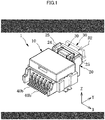
- FIGS. 1 to 25 An explanation will be given of a connector 1 according to an embodiment of the present disclosure with reference to FIGS. 1 to 25 .
- an XYZ coordinate system is defined, and will be referred as appropriate.
- the connector 1 is applied to, for example, electronic circuit components for an automobile, and has a Connector Position Assurance (CPA) function. As illustrated in FIGS. 1 and 2 , the connector 1 includes an outer housing 10, an inner housing 20, and a sliding member 30 (CPA member) that becomes able to slide upon engagement of both the outer housing 10 and the inner housing 20.
- CPA Connector Position Assurance
- the outer housing 10 is a housing of a receptacle connector mounted on a wiring board S.
- the outer housing 10 is formed of a plastic, and is formed by, for example, injection molding.
- the outer housing 10 is assembled with multiple male terminals 40.
- Each male terminal 40 is formed of a conductive material.
- the male terminal 40 has an end 40a at the +Y side and an end 40b at the -Y side both protruding from the outer housing 10.
- the end 40a of the male terminal 40 at the +Y side protrudes to the interior of an engagement opening 11 formed in the outer housing 10.
- the end 40b of the male terminal 40 at the -Y side is exposed from the rear end surface of the outer housing 10 at the -Y side, is curved in a substantially S-shape, and protrudes in parallel with the -Y direction.
- the end 40b of the male terminal 40 is applied as an external lead to be soldered to the wiring board S.
- the outer housing 10 is a member formed in a substantially box shape in which the engagement opening 11 opened in the +Y direction is formed.
- the inner housing 20 is to be fitted in the engagement opening 11 of the outer housing 10.
- a fitting direction D1 in which the inner housing 20 is fitted in the outer housing 10 is consistent with the -Y direction.
- the outer housing 10 includes an engagement catch 13.
- the engagement catch 13 is formed on a lower surface 12a of a ceiling wall 12 that is a part of wall defining the outer housing 10 at the nearby location to the +Y side.
- the engagement catch 13 includes, from the rear end side (+Y side) in the fitting direction D1 in sequence, an inclined surface 13a, a parallel surface 13b, and a standing-upright surface 13c.
- the inclined surface 13a includes a surface inclined relative to the fitting direction D1.
- the parallel surface 13b includes a parallel surface to the fitting direction D1.
- the standing-upright surface 13c includes a surface substantially in parallel with the Z-axis direction.
- the inner housing 20 is a housing of a plug connector to which wirings W are connected in this embodiment.
- the inner housing 20 is formed of a plastic, and is formed by, for example, injection molding. Multiple female terminals 50 are fitted in this inner housing 20.
- Each female terminal 50 is formed by, for example, bending a conductive sheet metal.
- a cylindrical part 51 which is formed in a substantially rectangular cylindrical shape, and in which the end 40a of each male terminal 40 at the +Y side is fitted is formed at the end of the female terminal 50 at the -Y side.
- the cylindrical part 51 includes an elastic contact piece to be in contact with the end 40a of the male terminal 40.
- the end 40a of the male terminal 40 fitted in the cylindrical part 51 is conductively fastened by the elastic force of the elastic contact piece of the cylindrical part 51.
- a binding part 52 that attaches and fastens the wirings W by pressure which are fitted therein is formed at the end of the female terminal 50 at the +Y side.
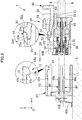
- the inner housing 20 is formed in a substantially cuboid shape that has the lengthwise direction substantially in parallel with the Y-axis direction. As illustrated in FIG. 4 , multiple terminal fitting openings 21 in which the respective female terminals 50 are fitted are formed in the rear end surface (the end surface at the +Y side) of the inner housing 20. As illustrated in FIG. 3 , each terminal fitting opening 21 is in communication with a terminal retaining room 22 formed inside the inner housing 20.
- the inner housing 20 includes an engagement latch 23, a latching release 24, ribs 25, and a pair of locking arms 60R, 60L.
- the engagement catch 13 of the outer housing 10 is to be latched by the engagement latch 23.
- the engagement latch 23 is provided between the locking arm 60R and the locking arm 60L so as to interlink the locking arm 60R with the locking arm 60L.
- the engagement latch 23 includes, from the leading end side (-Y side) in the fitting direction D1 of the inner housing 20 in sequence, an inclined surface 23a, an upper parallel surface 23b, a lower parallel surface 23d, and a standing-upright surface 23c.
- the inclined surface 23a includes an inclined surface relative to the fitting direction D 1.
- the upper parallel surface 23b and the lower parallel surface 23d are each include a plane.
- the inclined surface 23a and the upper parallel surface 23b are utilized as to-be-guided surfaces that are guided by the engagement catch 13 in accordance with the advancement of the engagement between the outer housing 10 and the inner housing 20.
- the standing-upright surface 23c includes a surface substantially in parallel with the Z-axis direction. When the standing-upright surface 23c faces the standing-upright surface 13c of the engagement catch 13, the latching between the engagement latch 23 and the engagement catch 13 completes.
- the lower parallel surface 23d is utilized as a guide surface that guides a protrusion 35 of the sliding member 30 in accordance with the sliding action of the sliding member 30.
- the engagement latch 23 is to be also latched by the protrusion 35 of the sliding member 30. Hence, the engagement latch 23 also serves as a protrusion catch.
- the latching release 24 is provided on the locking arms 60R, 60L. When a user depresses the latching release 24, the latching between the engagement latch 23 and the engagement catch 13 is released. This latching release enables the user to pull out the inner housing 20 from the outer housing 10.
- the ribs 25 are formed so as to improve the rigidity and strength of the inner housing 20.
- the ribs 25 are formed along the Y-axis direction.
- the locking arm 60R includes a leading-end-side locking arm part 61R, a parallel locking arm part 62R, and a rear-end-side locking arm part 63R.
- the leading-end-side locking arm part 61R is formed so as to extend in the vertical direction from the nearby location to the leading end part (-Y side end part) of a ceiling wall 26 that is a part of wall defining the inner housing 20.
- the leading-end-side locking arm part 61R may be extended in directions other than the vertical direction.
- the rear-end-side locking arm part 63R is extended in the vertical direction from the nearby location to the rear end part (+Y side end part) of the ceiling wall 26.
- the rear-end-side locking arm part 63R may be extended in directions other than the vertical direction.
- the parallel locking arm part 62R interlinks the leading-end-side locking arm part 61R with the rear-end-side locking arm part 63R, and is formed substantially in parallel with the Y-axis direction.
- the locking arm 60L employs the similar structure to that of the locking arm 60R. More specifically, as illustrated in FIG. 4 , the locking arm 60L includes a leading-end-side locking arm part 61L, a parallel locking arm part 62L, and a rear-end-side locking arm part 63L.
- the rear-end-side locking arm part 63L is extended in the vertical direction in this embodiment, but may be extended in directions other than the vertical direction.
- the locking arms 60R, 60L employing the above structure are formed so as to be deflectable in accordance with the advancement of engagement between the outer housing 10 and the inner housing 20.
- the inner housing 20 is provided with a slide channel 70 extended along the Y-axis direction, and rails 72 formed on the opposing surfaces of the respective ribs 25 facing with each other.
- the slide channel 70 allows the sliding member 30 to slide, and is formed so as to allow the sliding member 30 to pass through upon engagement between the two housings.
- the sliding passage 70 is provided at the upper side (+Z side) of the ceiling wall 26 of the inner housing 20.
- the sliding passage 70 is formed with a slide surface 71 that faces a lower surface 30a (the surface at the -Z side) of the sliding member 30 when the sliding member 30 slides.
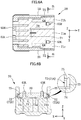
- FIGS. 6A and 6B are each a diagram for explaining the slide channel 70, and FIG. 6A is a cross-sectional view taken along a line A-A in FIG. 5 , while FIG. 6B is a cross-sectional view taken along a line B-B in FIG. 6A .
- FIG. 6B some structural components, such as the latching release 24, and the locking arms 60R, 60L, are omitted.
- the rear-end-side locking arm parts 63R, 63L are disposed at both sides of the slide channel 70, respectively.
- the slide surface 71 is formed with engagement parts 71a, 71b, and 71c.
- the engagement parts 71a, 71b, and 71c are each formed as a recess that has a bottom.
- the bottom surface of each engagement part 71 a, 71b, 71c is an offset surface from the slide surface 71 in the -Z direction, and is a parallel surface to the sliding surface 71.
- FIG. 7A is a cross-sectional view taken along the line A-A in FIG. 5 for explaining the rails 72.
- FIG. 7B is a cross-sectional view taken along a line C-C in FIG. 7A .
- the latching release 24, the locking arms 60R, 60L, and the like, are omitted.
- each rail 72 is formed so as to retract therein the rib 25, and is formed as a groove.
- Each rail 72 includes a first rail part 72A and a second rail part 72B that have different lateral cross-sectional areas (the area of the XZ cross-section) from each other.
- the first rail part 72A has the larger lateral cross-sectional area than that of the second rail part 72B.
- the rail 72 (more specifically, the first rail part 72A and the second rail part 72B) is formed in, as illustrated in FIG. 6B and FIG. 7B , a recess that includes a bottom surface 73, a first side surface 74, and a second side surface 75.
- the bottom surface 73 is a parallel surface to the YZ plane.
- the first side surface 74 forms a part of the slide surface 71.
- the first side surface 74 is a part of the slide surface 71
- the present disclosure is not limited to this example structure, and may be not a part of the slide surface 71.
- the second side surface 75 is formed so as to be inclined relative to the slide surface 71.
- the respective second side surfaces 75 of the first rail part 72A and the second rail part 72B have the substantially equal inclination angle to each other.
- a guide surface G4 that is inclined relative to the Y-axis direction.
- This guide surface G4 guides the fitting of the sliding member 30 into the inner housing 20 at the time of manufacturing and assembling of the connector 1 to improve the fitting easiness, thereby improving the assembling workability.
- the sliding member 30 serves as the CPA (Connector Position Assurance) member that locks the engagement between both the outer and inner housings 10, 20.
- the sliding member 30 is applied so as to allow the user to check whether or not the engagement between both the outer and inner housings 10, 20 is fully completed within the engagement work.
- the sliding member 30 includes a sliding member base 31, a main arm 32 protruding from the sliding member base 31, a pair of latching arms 33R, 33L, and a pair of support arms 34R, 34L.
- the sliding member base 31 is utilized as a depressed part to be depressed by the user when the user slides the sliding member 30.
- the main arm 32 is formed so as to protrude from the sliding member base 31 in the -Y direction.
- the protrusion 35 that protrudes upwardly (+Z direction).
- a rear end surface 35a of the protrusion 35 is formed as an inclined surface inclined in the Y-axis direction.
- the rear end surface 35a serves as a guide surface that guides the moving main arm 32 when the sliding member 30 is slid in the +Y direction.
- the latching arms 33R, 33L are formed so as to protrude from the sliding member base 31 in the -Y direction with the main arm 32 being present therebetween.
- the latching arms 33R, 33L are interlinked with the main arm 32 by an interlinking part 32a.
- the latching arms 33R, 33L include respective latches 36, and respective tentative latches 37.
- the rear-end-side locking arm parts 63R, 63L of the locking arms 60R, 60L are to be latched by the respective latches 36.
- the rear-end-side locking arm parts 63R, 63L each serve as a catch to be latched by the respective latches 36.
- the latches 36 are formed so as to protrude outwardly relative to each other. More specifically, the latches 36 are formed on the surface of the latching arm 33R at the -X side, and the surface of the latching arm 33L at the +X side.
- a surface 36a of the latch 36 at the -Y side and a surface 36b thereof at the +Y side are each formed as an inclined surface inclined in the Y-axis direction.
- the surfaces 36a, 36b of the respective latches 36 serve as guide surfaces that guide the rear-end-side locking arm parts 63R, 63L, respectively, while being in contact therewith when the sliding member 30 is slid in the -Y direction and in the +Y direction.
- the rear-end-side locking arm parts 63R, 63Lof the locking arms 60R, 60L are tentatively latched by the respective tentative latches 37.
- the rear-end-side locking arm parts 63R, 63L also serve as catches to be tentatively latched by the respective tentative latches 37.
- the tentative latches 37 prevents the sliding member 30 from moving in the +Y direction upon tentatively latching the rear-end-side locking arm parts 63R, 63L, respectively, thereby preventing the sliding member 30 from pulling out from the inner housing 20.
- the tentative latches 37 are formed in a shape protruding outwardly relative to each other like the respective latches 36.
- the tentative latches 37 are formed on the surface of the latching arm 33R at the -X side and on the surface of the latching arm 33L at the +X side. In addition, the tentative latches 37 are formed ahead of the respective latches 36 toward a leading end side (-Y side).
- respective guide surfaces G1 are formed at the leading end parts of the latching arms 33R, 33L.
- the guide surface G1 is formed as an inclined surface inclined in the Y-axis direction. This guide surface G1 is formed so as to improve the fitting easiness by guiding the fitting of the sliding member 30 into the inner housing 20 at the time of manufacturing and assembling of the connector 1, thereby improving the assembling workability.
- the support arms 34R, 34L are formed so as to protrude from the sliding member base 31 in the -Y direction with the latching arms 33R, 33L being present therebetween.
- the latching arms 34R, 34L each include a first support arm part 34A, and a second support arm part 34B extended from the rear end of the first support arm part 34A.
- the second support arm part 34B has a smaller lateral cross-sectional area (the area of the XZ cross-section) than that of the first support arm part 34A.
- the first support arm part 34A is formed so as to be engaged with the first rail part 72A of the rail 72.
- the second support arm part 34B is formed so as to be engaged with the second rail part 72B of the rail 72.
- the sliding member 30 and the inner housing 20 include the two engagement components, thereby enhancing the action of preventing the sliding member 30 from being detached from the inner housing 20.
- the support arms 34R, 34L each include an upper surface 30b (second surface) that faces the second side surface 75 of the rail 72 in a recess shape, and the lower surface 30a (first surface) that faces the first side surface 74 of the rail 72.
- the upper surface 30b is formed at the opposite side to the lower surface 30a, and is formed so as to be inclined relative to the slide surface 71.
- the respective upper surfaces 30b of the support arms 34R, 34L are formed so as to be inclined in the direction in which the support arms 34R, 34L face with each other.
- the inclination angle of the upper surface 30b is substantially equal to the corresponding inclination angle of the second side surface 75 of the rail 72.
- the upper surface 30b that is an inclination surface is formed on both the first support arm part 34A and the second support arm part 34B.
- guide surfaces G2, G3 are formed at the respective leading end parts of the support arms 34R, 34L.
- the guide surfaces G2, G3 are each formed as an inclined surface inclined in the Y-axis direction.
- Such guide surfaces G2, G3 are formed so as to improve the fitting easiness by guiding the fitting of the sliding member 30 into the inner housing 20 at the time of manufacturing and assembling of the connector 1, thereby improving the assembling workability.
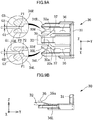
- the latching arms 33R, 33L and the support arms 34R, 34L are formed in the substantially equal length. Hence, as is clear from the enlarged view that is FIG. 9A , the leading end parts of the latching arms 33R, 33L and those of the support arms 34R, 34L are located at the substantially consistent position in the lengthwise direction (Y-axis direction). Provided at the leading end parts of the latching arms 33R, 33L and those of the support arms 34R, 34L are protrusions P1, P2 protruding in the direction facing with each other.
- the protrusions P1, P2 are formed in a shape and a dimension that do not allow the main arm 32, the latching arms 33R, 33L, and the support arms 34R, 34L, and the like, to enter a gap C formed between the protrusion P1 and the protrusion P2. Hence, the protrusion P1 and the protrusion P2 prevent the sliding members 30 from getting caught each other at the time of manufacturing and assembling of the connector 1.
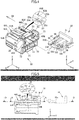
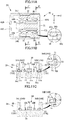
- FIG. 12 is a perspective view of the sliding member 30 as viewed from the lower side. As illustrated in FIG. 12 , a thickened part 38 that is raised up from the lower surface 30a basically planar is formed in the sliding member 30. In FIG. 12 , the thickened part 38 is indicated by multiple dots. The thickened part 38 is formed so as to increase the substantial thickness of the sliding member 30, thereby enhancing the strength thereof.
- the thickened part 38 includes a thickened piece 38a formed on the lower surface of the main arm 32, a thickened piece 38b formed on the lower surface of the support arm 34R, and a thickened piece 38c formed on the lower surface of the support arm 34L.
- the thickened piece 38a of the thickened part 38 is formed so as to be engaged with the engagement part 71a formed in the slide surface 71.
- the thickened pieces 38b, 38c are formed so as to be engaged with the engagement parts 71b, 71c, respectively.
- an offset surface 39 that is a plane is formed on each of the thickened pieces 38a to 38c at an offset position in the -Z direction relative to the lower surface 30a.
- Such offset surface 39 contacts the bottom of each engagement part 71a to 71c, and is slidable over such a bottom.
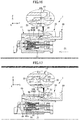
- FIG. 13 With the protrusion 35 formed at the main arm 32 latching the engagement latch 23 and having a sliding action restricted, the sliding member 30 is attached to the inner housing 20.
- the sliding member 30 in this stage is located at a first position (initial position) where the locking arms 60R, 60L are not latched by the latches 36 of the latching arms 33R, 33L, respectively, and the locking arms 60R, 60L are tentatively latched by the tentative latches 37.
- the standing-upright surface 23c of the engagement latch 23 reaches the standing-upright surface 13c of the engagement catch 13.
- the depression by the engagement latch 13 is canceled, and thus the deflection of the locking arms 60R, 60L is canceled.
- the engagement latch 23 is returned to the upper side (+Z side) based on the elastic recovery of the locking arms 60R, 60L as indicated by an arrow A3. Consequently, the standing-upright surface 23c and the standing-upright surface 13c face with each other, and the engagement catch 13 is latched by the engagement latch 23.
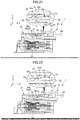
- the CPA (Connector Position Assurance) function of the connector 1 will be explained with reference to FIGS. 16 to 20 .
- the initial position of the sliding member 30 in FIG. 18A will be defined as the first position (stand-by position), and the position of the sliding member 30 after the movement illustrated in FIG. 18C will be defined as a second position (engagement locking position).
- the engagement latch 23 and the engagement catch 13 are not in a latched condition.
- the engagement latch 23 as a protrusion catch is latched by the protrusion 35.
- the sliding member 30 is in a condition in which the sliding action in the -Y direction is restricted.
- the engagement latch 23 moves upwardly (+Z side) and latches the engagement catch 13. Conversely, when the engagement latch 23 moves upwardly (+Z side), the latching between the protrusion 35 and the engagement latch 23 is released. Hence, the sliding member 30 becomes a condition capable of passing through the slide channel 70 in the -Y direction.
- the user who attempts to check the engagement condition between both the outer and inner housings 10, 20 moves the sliding member 30 from the first position (initial position) illustrated in FIG. 18A along the sliding channel 70. Note that the sliding direction D2 of the sliding member 30 is consistent with the -Y direction.
- the engagement latch 23 When the engagement latch 23 is latched by the protrusion 35, the main arm 32 is positioned below (-Z side) the engagement latch 23. Hence, the engagement latch 23 is not capable of moving by what corresponds to the amount necessary to cancel the engagement with the engagement catch 13, thus not capable of moving down to a position for canceling the engagement. Consequently, the engagement between the outer housing 10 and the inner housing 20 is locked by the sliding member 30.
- the sliding member 30 When the engagement between the outer housing 10 and the inner housing 20 is to be canceled, first, the sliding member 30 is moved from the second position (engagement locking position) illustrated in FIG. 23A to the first position (initial position) illustrated in FIG. 23C along a reverse sliding direction D4. Hence, the locking by the sliding member 30 is canceled, and a condition is accomplished in which the engagement between both the outer and inner housings 10, 20 can be canceled. Note that the reverse sliding direction D4 of the sliding member 30 is an opposite direction to the sliding direction D2.
- the latching release 24 of the inner housing 20 is pushed down as indicated by an arrow A9. This causes the locking arms 60R, 60L to be deflected, and as indicated by an arrow A10, the engagement latch 23 is pushed downwardly (-Z side). Consequently, the latching between the engagement latch 23 and the engagement catch 13 is canceled.
- the inner housing 20 is moved in the detaching direction D3, and is pulled out from the outer housing 10. Hence, the detachment of the inner housing 20 from the outer housing 10 completes. Note that when the inner housing 20 is detached from the outer housing 10, the deflection of the locking arms 60R, 60L is canceled, and the latching release 24 returns to the original position.
- the pair of latching arms 33R, 33L are deflected so as to decrease the gap therebetween by the depression from the locking arms 60R, 60L. This eliminates the necessary for ensuring the space by what corresponds to the deflection of the latching arms 33R, 33L in the inner housing 20 in the direction in which the gap increases. Consequently, the connector 1 can be downsized while accomplishing the connector position assurance function.
- the locking arms 60R, 60L serve as the catches to be latched by the latches 36 of the respective latching arms 33R, 33L.
- conventional connectors 1 that have no Connector Position Assurance (CPA) function also include the locking arms 60R, 60L.
- CPA Connector Position Assurance
- this connector can easily accomplish the connector position assurance function.
- an additional formation of a catch to be latched by the latch 36 in the inner housing 20 is unnecessary. Accordingly, the application of the sliding member 30 does not result in an increase in size of the connector 1. Consequently, the connector 1 can be downsized while accomplishing the connector position assurance function.
- the latching arms 33R, 33L are formed with the respective tentative latches 37.
- the locking arms 60R, 60L (more specifically, the rear-end-side locking arm parts 63R, 63L) are latched by such tentative latches 37, and thus the sliding member 30 is prevented from moving in the opposite direction (+Y direction) to the sliding direction D2.
- the detachment of the sliding member 30 from the inner housing 20 prior to the engagement can be prevented. Consequently, the work efficiency for the user who engages both the outer and inner housings 10, 20 is improved.
- the locking arms 60R, 60L serve as the catches to be tentatively latched by the tentative latches 37.
- an additional formation of the catch to be tentatively latched by the tentative latch 37 in the inner housing 20 is unnecessary.
- an increase in size of the connector 1 is unnecessary. Consequently, the downsizing of the connector 1 can be accomplished while accomplishing the connector position assurance function.
- the locking arms 60R, 60L are latched by both the latches 36 and the tentative latches 37, respectively. Since the locking arms 60R, 60L serve as the catches for both the latches 36 and the tentative latches 37, respectively, a separate formation of the catch for the latch 36 and of the catch for the tentative latch 37 is unnecessary. Hence, an increase in size of the connector 1 is unnecessary. Consequently, the downsizing of the connector 1 can be accomplished while accomplishing the connector position assurance function.
- the outer housing 10 is the housing of a receptacle connector to be mounted on the wiring board S, while the inner housing 20 is the housing of the plug connector to be connected with the wiring W.
- the present disclosure is not limited to this structure.
- both the connectors may include respective terminals, and the wirings W may be connected thereto.
- the rear-end-side locking arm parts 63R, 63L are extended in the vertical direction from the nearby location to the rear end (+Y side end) of the ceiling wall 26.
- the present disclosure is not limited to this structure.
- the rear-end-side locking arm parts 63R, 63L may be formed in the other shapes than that of the above embodiment as long as the latches 36 and the tentative latches 37 are capable of latching.
Landscapes
- Details Of Connecting Devices For Male And Female Coupling (AREA)
Applications Claiming Priority (1)
| Application Number | Priority Date | Filing Date | Title |
|---|---|---|---|
| JP2016034895A JP6213590B2 (ja) | 2016-02-25 | 2016-02-25 | コネクタ |
Publications (2)
| Publication Number | Publication Date |
|---|---|
| EP3211729A1 true EP3211729A1 (de) | 2017-08-30 |
| EP3211729B1 EP3211729B1 (de) | 2018-09-26 |
Family
ID=58108503
Family Applications (1)
| Application Number | Title | Priority Date | Filing Date |
|---|---|---|---|
| EP17157290.2A Not-in-force EP3211729B1 (de) | 2016-02-25 | 2017-02-22 | Elektrischer steckverbinder |
Country Status (5)
| Country | Link |
|---|---|
| US (1) | US10014620B2 (de) |
| EP (1) | EP3211729B1 (de) |
| JP (1) | JP6213590B2 (de) |
| KR (1) | KR101886954B1 (de) |
| CN (1) | CN107123900B (de) |
Cited By (2)
| Publication number | Priority date | Publication date | Assignee | Title |
|---|---|---|---|---|
| WO2019178053A1 (en) | 2018-03-12 | 2019-09-19 | J.S.T. Corporation | Connector position assurance member |
| EP3706254A1 (de) * | 2019-03-04 | 2020-09-09 | Aptiv Technologies Limited | Elektrischer hochspannungssteckverbinder mit auf einem schieber montiertem cpa |
Families Citing this family (23)
| Publication number | Priority date | Publication date | Assignee | Title |
|---|---|---|---|---|
| JP6417369B2 (ja) * | 2016-07-29 | 2018-11-07 | 矢崎総業株式会社 | コネクタ |
| JP6717273B2 (ja) | 2017-08-07 | 2020-07-01 | 株式会社デンソー | ヘッドアップディスプレイ装置 |
| US10135172B1 (en) * | 2018-03-23 | 2018-11-20 | Te Connectivity Corporation | Connector position assurance member |
| US10340632B1 (en) * | 2018-06-06 | 2019-07-02 | Lear Corporation | Electrical connector assembly with staged release |
| JP7123678B2 (ja) * | 2018-07-23 | 2022-08-23 | 矢崎総業株式会社 | コネクタ |
| CN209045863U (zh) * | 2018-10-19 | 2019-06-28 | 矢崎(中国)投资有限公司 | 端子保持器以及连接器 |
| JP6865725B2 (ja) * | 2018-10-31 | 2021-04-28 | 矢崎総業株式会社 | コネクタ |
| US10505314B1 (en) * | 2018-11-02 | 2019-12-10 | Te Connectivity Corporation | Electrical connector with a connector position assurance member for a shrouded latch |
| US10566726B1 (en) * | 2018-11-29 | 2020-02-18 | Lear Corporation | Connector with sliding terminal position assurance |
| JP6996487B2 (ja) * | 2018-12-25 | 2022-01-17 | 株式会社オートネットワーク技術研究所 | コネクタ |
| DE102020102604A1 (de) * | 2019-02-01 | 2020-08-06 | Hirschmann Automotive Gmbh | Steckverbindung mit verbessertem Verriegelungselement |
| JP2020161360A (ja) * | 2019-03-27 | 2020-10-01 | 住友電装株式会社 | コネクタ |
| CN114080734B (zh) | 2019-07-18 | 2024-05-28 | 泰科电子日本合同会社 | 连接器 |
| CN110504590B (zh) * | 2019-07-30 | 2021-01-29 | 中航光电科技股份有限公司 | 一种推拉锁紧连接器 |
| JP7398238B2 (ja) * | 2019-10-17 | 2023-12-14 | 矢崎総業株式会社 | コネクタ |
| CN111370922B (zh) * | 2020-03-24 | 2021-06-29 | 中航光电科技股份有限公司 | 一种连接器及连接器组件 |
| CN113471763B (zh) * | 2020-03-31 | 2024-02-13 | 泰科电子(上海)有限公司 | 连接器组件 |
| KR102313402B1 (ko) * | 2020-05-25 | 2021-10-15 | 주식회사 경신 | 차량용 커넥터 |
| JP7469180B2 (ja) * | 2020-08-11 | 2024-04-16 | 矢崎総業株式会社 | コネクタ |
| JP7709721B2 (ja) | 2021-04-21 | 2025-07-17 | 日本圧着端子製造株式会社 | コネクタおよびコネクタユニット |
| JP7737137B2 (ja) * | 2021-11-05 | 2025-09-10 | 日本圧着端子製造株式会社 | 電気的接続装置 |
| JP2023158684A (ja) | 2022-04-19 | 2023-10-31 | 日本圧着端子製造株式会社 | コネクタ |
| CN115051183A (zh) * | 2022-06-21 | 2022-09-13 | 合兴汽车电子(太仓)有限公司 | 一种锁止结构及具有其的高压连接器 |
Citations (5)
| Publication number | Priority date | Publication date | Assignee | Title |
|---|---|---|---|---|
| EP0655807A2 (de) * | 1993-11-30 | 1995-05-31 | The Whitaker Corporation | Vorrichtung zur Lagesicherung eines Verbinders |
| EP1369964A1 (de) * | 2002-03-06 | 2003-12-10 | Tyco Electronics Corporation | Vorrichtung zur Lagesicherung eines Verbinders |
| WO2009047744A2 (en) * | 2007-10-12 | 2009-04-16 | Fci | Electrical connector assembly having connector position assurance device |
| JP4657034B2 (ja) | 2005-07-08 | 2011-03-23 | 三菱電線工業株式会社 | コネクタ |
| WO2013092310A1 (en) * | 2011-12-23 | 2013-06-27 | Delphi Connection Systems Holding France | Electrical connectors assembly with connector positionning assurance |
Family Cites Families (5)
| Publication number | Priority date | Publication date | Assignee | Title |
|---|---|---|---|---|
| CA2277682C (en) | 1998-07-30 | 2007-12-04 | Osram Sylvania Inc. | Connector module |
| JP4103333B2 (ja) * | 2000-12-28 | 2008-06-18 | 住友電装株式会社 | コネクタ及びコネクタにおける導通検査方法 |
| JP2005251540A (ja) * | 2004-03-03 | 2005-09-15 | Japan Aviation Electronics Industry Ltd | コネクタ装置 |
| JP5831818B2 (ja) * | 2012-03-09 | 2015-12-09 | 住友電装株式会社 | コネクタ |
| US8678846B2 (en) * | 2012-03-28 | 2014-03-25 | Tyco Electronics Corporation | Electrical connector with connector position assurance device |
-
2016
- 2016-02-25 JP JP2016034895A patent/JP6213590B2/ja not_active Expired - Fee Related
-
2017
- 2017-02-13 US US15/431,598 patent/US10014620B2/en active Active
- 2017-02-22 EP EP17157290.2A patent/EP3211729B1/de not_active Not-in-force
- 2017-02-23 KR KR1020170024346A patent/KR101886954B1/ko not_active Expired - Fee Related
- 2017-02-24 CN CN201710104118.2A patent/CN107123900B/zh not_active Expired - Fee Related
Patent Citations (5)
| Publication number | Priority date | Publication date | Assignee | Title |
|---|---|---|---|---|
| EP0655807A2 (de) * | 1993-11-30 | 1995-05-31 | The Whitaker Corporation | Vorrichtung zur Lagesicherung eines Verbinders |
| EP1369964A1 (de) * | 2002-03-06 | 2003-12-10 | Tyco Electronics Corporation | Vorrichtung zur Lagesicherung eines Verbinders |
| JP4657034B2 (ja) | 2005-07-08 | 2011-03-23 | 三菱電線工業株式会社 | コネクタ |
| WO2009047744A2 (en) * | 2007-10-12 | 2009-04-16 | Fci | Electrical connector assembly having connector position assurance device |
| WO2013092310A1 (en) * | 2011-12-23 | 2013-06-27 | Delphi Connection Systems Holding France | Electrical connectors assembly with connector positionning assurance |
Cited By (6)
| Publication number | Priority date | Publication date | Assignee | Title |
|---|---|---|---|---|
| WO2019178053A1 (en) | 2018-03-12 | 2019-09-19 | J.S.T. Corporation | Connector position assurance member |
| WO2019177977A1 (en) | 2018-03-12 | 2019-09-19 | J.S.T. Corporation | Electric connector with cpa |
| EP3766135A1 (de) | 2018-03-12 | 2021-01-20 | J.S.T. Corporation | Verbinderpositionssicherungselement |
| EP3766139A4 (de) * | 2018-03-12 | 2021-12-01 | J.S.T. Corporation | Elektrischer verbinder mit cpa |
| EP3766135A4 (de) * | 2018-03-12 | 2022-01-05 | J.S.T. Corporation | Verbinderpositionssicherungselement |
| EP3706254A1 (de) * | 2019-03-04 | 2020-09-09 | Aptiv Technologies Limited | Elektrischer hochspannungssteckverbinder mit auf einem schieber montiertem cpa |
Also Published As
| Publication number | Publication date |
|---|---|
| JP2017152272A (ja) | 2017-08-31 |
| CN107123900A (zh) | 2017-09-01 |
| JP6213590B2 (ja) | 2017-10-18 |
| KR101886954B1 (ko) | 2018-08-08 |
| US20170250492A1 (en) | 2017-08-31 |
| KR20170100442A (ko) | 2017-09-04 |
| EP3211729B1 (de) | 2018-09-26 |
| CN107123900B (zh) | 2019-05-03 |
| US10014620B2 (en) | 2018-07-03 |
Similar Documents
| Publication | Publication Date | Title |
|---|---|---|
| EP3211729B1 (de) | Elektrischer steckverbinder | |
| EP3211730A1 (de) | Elektrischer steckverbinder | |
| EP3211731A1 (de) | Elektrischer steckverbinder | |
| CN102195183B (zh) | 可以设计为总长短的防水连接器 | |
| US9935396B2 (en) | Connector having first and second housings and a sliding member implementing a connector position assurance function | |
| EP1936749B1 (de) | Anschlusskontakt, Steckverbinder und Herstellungsverfahren | |
| EP2362498B1 (de) | Steck- und Gegensteckverbinder und elektrischer Anschluss damit | |
| US7918682B2 (en) | Connector system for a vehicle antenna | |
| US10367290B2 (en) | Connector device and male connector | |
| KR101658765B1 (ko) | 금속 셸에 큰 개구를 형성함이 없이 희망 마찰 로크를 용이하게 획득할 수 있는 리셉터클 커넥터 | |
| CN107785720A (zh) | 连接器组件 | |
| CN105406272A (zh) | 连接器 | |
| JP2009048861A (ja) | 電気コネクタ | |
| US20060009090A1 (en) | Female terminal fitting | |
| US20070054537A1 (en) | Connector with a shorting terminal | |
| JP5836623B2 (ja) | コネクタ | |
| KR102707012B1 (ko) | 커넥터 | |
| JP4175774B2 (ja) | コネクタ | |
| CN103918134B (zh) | 电连接箱 | |
| JP2011243539A (ja) | ポジティブロック機構を有するコネクタ | |
| JP2008204724A (ja) | 係止ランス及びランス係止構造 |
Legal Events
| Date | Code | Title | Description |
|---|---|---|---|
| PUAI | Public reference made under article 153(3) epc to a published international application that has entered the european phase |
Free format text: ORIGINAL CODE: 0009012 |
|
| STAA | Information on the status of an ep patent application or granted ep patent |
Free format text: STATUS: REQUEST FOR EXAMINATION WAS MADE |
|
| 17P | Request for examination filed |
Effective date: 20170222 |
|
| AK | Designated contracting states |
Kind code of ref document: A1 Designated state(s): AL AT BE BG CH CY CZ DE DK EE ES FI FR GB GR HR HU IE IS IT LI LT LU LV MC MK MT NL NO PL PT RO RS SE SI SK SM TR |
|
| AX | Request for extension of the european patent |
Extension state: BA ME |
|
| RBV | Designated contracting states (corrected) |
Designated state(s): AL AT BE BG CH CY CZ DE DK EE ES FI FR GB GR HR HU IE IS IT LI LT LU LV MC MK MT NL NO PL PT RO RS SE SI SK SM TR |
|
| GRAP | Despatch of communication of intention to grant a patent |
Free format text: ORIGINAL CODE: EPIDOSNIGR1 |
|
| STAA | Information on the status of an ep patent application or granted ep patent |
Free format text: STATUS: GRANT OF PATENT IS INTENDED |
|
| INTG | Intention to grant announced |
Effective date: 20180417 |
|
| GRAS | Grant fee paid |
Free format text: ORIGINAL CODE: EPIDOSNIGR3 |
|
| GRAA | (expected) grant |
Free format text: ORIGINAL CODE: 0009210 |
|
| STAA | Information on the status of an ep patent application or granted ep patent |
Free format text: STATUS: THE PATENT HAS BEEN GRANTED |
|
| AK | Designated contracting states |
Kind code of ref document: B1 Designated state(s): AL AT BE BG CH CY CZ DE DK EE ES FI FR GB GR HR HU IE IS IT LI LT LU LV MC MK MT NL NO PL PT RO RS SE SI SK SM TR |
|
| REG | Reference to a national code |
Ref country code: GB Ref legal event code: FG4D |
|
| REG | Reference to a national code |
Ref country code: CH Ref legal event code: EP |
|
| REG | Reference to a national code |
Ref country code: AT Ref legal event code: REF Ref document number: 1047136 Country of ref document: AT Kind code of ref document: T Effective date: 20181015 |
|
| REG | Reference to a national code |
Ref country code: IE Ref legal event code: FG4D |
|
| REG | Reference to a national code |
Ref country code: DE Ref legal event code: R096 Ref document number: 602017000490 Country of ref document: DE |
|
| REG | Reference to a national code |
Ref country code: DE Ref legal event code: R082 Ref document number: 602017000490 Country of ref document: DE Representative=s name: SSM SANDMAIR PATENTANWAELTE RECHTSANWALT PARTN, DE |
|
| REG | Reference to a national code |
Ref country code: NL Ref legal event code: MP Effective date: 20180926 |
|
| PG25 | Lapsed in a contracting state [announced via postgrant information from national office to epo] |
Ref country code: NO Free format text: LAPSE BECAUSE OF FAILURE TO SUBMIT A TRANSLATION OF THE DESCRIPTION OR TO PAY THE FEE WITHIN THE PRESCRIBED TIME-LIMIT Effective date: 20181226 Ref country code: GR Free format text: LAPSE BECAUSE OF FAILURE TO SUBMIT A TRANSLATION OF THE DESCRIPTION OR TO PAY THE FEE WITHIN THE PRESCRIBED TIME-LIMIT Effective date: 20181227 Ref country code: FI Free format text: LAPSE BECAUSE OF FAILURE TO SUBMIT A TRANSLATION OF THE DESCRIPTION OR TO PAY THE FEE WITHIN THE PRESCRIBED TIME-LIMIT Effective date: 20180926 Ref country code: BG Free format text: LAPSE BECAUSE OF FAILURE TO SUBMIT A TRANSLATION OF THE DESCRIPTION OR TO PAY THE FEE WITHIN THE PRESCRIBED TIME-LIMIT Effective date: 20181226 Ref country code: LT Free format text: LAPSE BECAUSE OF FAILURE TO SUBMIT A TRANSLATION OF THE DESCRIPTION OR TO PAY THE FEE WITHIN THE PRESCRIBED TIME-LIMIT Effective date: 20180926 Ref country code: RS Free format text: LAPSE BECAUSE OF FAILURE TO SUBMIT A TRANSLATION OF THE DESCRIPTION OR TO PAY THE FEE WITHIN THE PRESCRIBED TIME-LIMIT Effective date: 20180926 |
|
| REG | Reference to a national code |
Ref country code: LT Ref legal event code: MG4D |
|
| PG25 | Lapsed in a contracting state [announced via postgrant information from national office to epo] |
Ref country code: HR Free format text: LAPSE BECAUSE OF FAILURE TO SUBMIT A TRANSLATION OF THE DESCRIPTION OR TO PAY THE FEE WITHIN THE PRESCRIBED TIME-LIMIT Effective date: 20180926 Ref country code: LV Free format text: LAPSE BECAUSE OF FAILURE TO SUBMIT A TRANSLATION OF THE DESCRIPTION OR TO PAY THE FEE WITHIN THE PRESCRIBED TIME-LIMIT Effective date: 20180926 Ref country code: AL Free format text: LAPSE BECAUSE OF FAILURE TO SUBMIT A TRANSLATION OF THE DESCRIPTION OR TO PAY THE FEE WITHIN THE PRESCRIBED TIME-LIMIT Effective date: 20180926 |
|
| REG | Reference to a national code |
Ref country code: AT Ref legal event code: MK05 Ref document number: 1047136 Country of ref document: AT Kind code of ref document: T Effective date: 20180926 |
|
| PG25 | Lapsed in a contracting state [announced via postgrant information from national office to epo] |
Ref country code: RO Free format text: LAPSE BECAUSE OF FAILURE TO SUBMIT A TRANSLATION OF THE DESCRIPTION OR TO PAY THE FEE WITHIN THE PRESCRIBED TIME-LIMIT Effective date: 20180926 Ref country code: NL Free format text: LAPSE BECAUSE OF FAILURE TO SUBMIT A TRANSLATION OF THE DESCRIPTION OR TO PAY THE FEE WITHIN THE PRESCRIBED TIME-LIMIT Effective date: 20180926 Ref country code: PL Free format text: LAPSE BECAUSE OF FAILURE TO SUBMIT A TRANSLATION OF THE DESCRIPTION OR TO PAY THE FEE WITHIN THE PRESCRIBED TIME-LIMIT Effective date: 20180926 Ref country code: IS Free format text: LAPSE BECAUSE OF FAILURE TO SUBMIT A TRANSLATION OF THE DESCRIPTION OR TO PAY THE FEE WITHIN THE PRESCRIBED TIME-LIMIT Effective date: 20190126 Ref country code: ES Free format text: LAPSE BECAUSE OF FAILURE TO SUBMIT A TRANSLATION OF THE DESCRIPTION OR TO PAY THE FEE WITHIN THE PRESCRIBED TIME-LIMIT Effective date: 20180926 Ref country code: CZ Free format text: LAPSE BECAUSE OF FAILURE TO SUBMIT A TRANSLATION OF THE DESCRIPTION OR TO PAY THE FEE WITHIN THE PRESCRIBED TIME-LIMIT Effective date: 20180926 Ref country code: AT Free format text: LAPSE BECAUSE OF FAILURE TO SUBMIT A TRANSLATION OF THE DESCRIPTION OR TO PAY THE FEE WITHIN THE PRESCRIBED TIME-LIMIT Effective date: 20180926 Ref country code: EE Free format text: LAPSE BECAUSE OF FAILURE TO SUBMIT A TRANSLATION OF THE DESCRIPTION OR TO PAY THE FEE WITHIN THE PRESCRIBED TIME-LIMIT Effective date: 20180926 Ref country code: IT Free format text: LAPSE BECAUSE OF FAILURE TO SUBMIT A TRANSLATION OF THE DESCRIPTION OR TO PAY THE FEE WITHIN THE PRESCRIBED TIME-LIMIT Effective date: 20180926 |
|
| PG25 | Lapsed in a contracting state [announced via postgrant information from national office to epo] |
Ref country code: SK Free format text: LAPSE BECAUSE OF FAILURE TO SUBMIT A TRANSLATION OF THE DESCRIPTION OR TO PAY THE FEE WITHIN THE PRESCRIBED TIME-LIMIT Effective date: 20180926 Ref country code: SM Free format text: LAPSE BECAUSE OF FAILURE TO SUBMIT A TRANSLATION OF THE DESCRIPTION OR TO PAY THE FEE WITHIN THE PRESCRIBED TIME-LIMIT Effective date: 20180926 Ref country code: PT Free format text: LAPSE BECAUSE OF FAILURE TO SUBMIT A TRANSLATION OF THE DESCRIPTION OR TO PAY THE FEE WITHIN THE PRESCRIBED TIME-LIMIT Effective date: 20190126 |
|
| REG | Reference to a national code |
Ref country code: DE Ref legal event code: R097 Ref document number: 602017000490 Country of ref document: DE |
|
| PG25 | Lapsed in a contracting state [announced via postgrant information from national office to epo] |
Ref country code: DK Free format text: LAPSE BECAUSE OF FAILURE TO SUBMIT A TRANSLATION OF THE DESCRIPTION OR TO PAY THE FEE WITHIN THE PRESCRIBED TIME-LIMIT Effective date: 20180926 |
|
| PLBE | No opposition filed within time limit |
Free format text: ORIGINAL CODE: 0009261 |
|
| STAA | Information on the status of an ep patent application or granted ep patent |
Free format text: STATUS: NO OPPOSITION FILED WITHIN TIME LIMIT |
|
| 26N | No opposition filed |
Effective date: 20190627 |
|
| PG25 | Lapsed in a contracting state [announced via postgrant information from national office to epo] |
Ref country code: SI Free format text: LAPSE BECAUSE OF FAILURE TO SUBMIT A TRANSLATION OF THE DESCRIPTION OR TO PAY THE FEE WITHIN THE PRESCRIBED TIME-LIMIT Effective date: 20180926 Ref country code: MC Free format text: LAPSE BECAUSE OF FAILURE TO SUBMIT A TRANSLATION OF THE DESCRIPTION OR TO PAY THE FEE WITHIN THE PRESCRIBED TIME-LIMIT Effective date: 20180926 Ref country code: LU Free format text: LAPSE BECAUSE OF NON-PAYMENT OF DUE FEES Effective date: 20190222 |
|
| REG | Reference to a national code |
Ref country code: BE Ref legal event code: MM Effective date: 20190228 |
|
| REG | Reference to a national code |
Ref country code: IE Ref legal event code: MM4A |
|
| PG25 | Lapsed in a contracting state [announced via postgrant information from national office to epo] |
Ref country code: IE Free format text: LAPSE BECAUSE OF NON-PAYMENT OF DUE FEES Effective date: 20190222 |
|
| PG25 | Lapsed in a contracting state [announced via postgrant information from national office to epo] |
Ref country code: BE Free format text: LAPSE BECAUSE OF NON-PAYMENT OF DUE FEES Effective date: 20190228 |
|
| PG25 | Lapsed in a contracting state [announced via postgrant information from national office to epo] |
Ref country code: TR Free format text: LAPSE BECAUSE OF FAILURE TO SUBMIT A TRANSLATION OF THE DESCRIPTION OR TO PAY THE FEE WITHIN THE PRESCRIBED TIME-LIMIT Effective date: 20180926 |
|
| PG25 | Lapsed in a contracting state [announced via postgrant information from national office to epo] |
Ref country code: MT Free format text: LAPSE BECAUSE OF NON-PAYMENT OF DUE FEES Effective date: 20190222 |
|
| REG | Reference to a national code |
Ref country code: CH Ref legal event code: PL |
|
| PG25 | Lapsed in a contracting state [announced via postgrant information from national office to epo] |
Ref country code: LI Free format text: LAPSE BECAUSE OF NON-PAYMENT OF DUE FEES Effective date: 20200229 Ref country code: CH Free format text: LAPSE BECAUSE OF NON-PAYMENT OF DUE FEES Effective date: 20200229 |
|
| PGFP | Annual fee paid to national office [announced via postgrant information from national office to epo] |
Ref country code: FR Payment date: 20210226 Year of fee payment: 5 |
|
| PG25 | Lapsed in a contracting state [announced via postgrant information from national office to epo] |
Ref country code: CY Free format text: LAPSE BECAUSE OF FAILURE TO SUBMIT A TRANSLATION OF THE DESCRIPTION OR TO PAY THE FEE WITHIN THE PRESCRIBED TIME-LIMIT Effective date: 20180926 |
|
| PG25 | Lapsed in a contracting state [announced via postgrant information from national office to epo] |
Ref country code: SE Free format text: LAPSE BECAUSE OF NON-PAYMENT OF DUE FEES Effective date: 20180926 |
|
| PG25 | Lapsed in a contracting state [announced via postgrant information from national office to epo] |
Ref country code: HU Free format text: LAPSE BECAUSE OF FAILURE TO SUBMIT A TRANSLATION OF THE DESCRIPTION OR TO PAY THE FEE WITHIN THE PRESCRIBED TIME-LIMIT; INVALID AB INITIO Effective date: 20170222 |
|
| GBPC | Gb: european patent ceased through non-payment of renewal fee |
Effective date: 20210222 |
|
| PG25 | Lapsed in a contracting state [announced via postgrant information from national office to epo] |
Ref country code: GB Free format text: LAPSE BECAUSE OF NON-PAYMENT OF DUE FEES Effective date: 20210222 |
|
| PGFP | Annual fee paid to national office [announced via postgrant information from national office to epo] |
Ref country code: DE Payment date: 20220217 Year of fee payment: 6 |
|
| PG25 | Lapsed in a contracting state [announced via postgrant information from national office to epo] |
Ref country code: MK Free format text: LAPSE BECAUSE OF FAILURE TO SUBMIT A TRANSLATION OF THE DESCRIPTION OR TO PAY THE FEE WITHIN THE PRESCRIBED TIME-LIMIT Effective date: 20180926 |
|
| PG25 | Lapsed in a contracting state [announced via postgrant information from national office to epo] |
Ref country code: FR Free format text: LAPSE BECAUSE OF NON-PAYMENT OF DUE FEES Effective date: 20220228 |
|
| REG | Reference to a national code |
Ref country code: DE Ref legal event code: R119 Ref document number: 602017000490 Country of ref document: DE |
|
| PG25 | Lapsed in a contracting state [announced via postgrant information from national office to epo] |
Ref country code: DE Free format text: LAPSE BECAUSE OF NON-PAYMENT OF DUE FEES Effective date: 20230901 |