EP3211945A1 - Procédé et dispositif de positionnement - Google Patents
Procédé et dispositif de positionnement Download PDFInfo
- Publication number
- EP3211945A1 EP3211945A1 EP14909315.5A EP14909315A EP3211945A1 EP 3211945 A1 EP3211945 A1 EP 3211945A1 EP 14909315 A EP14909315 A EP 14909315A EP 3211945 A1 EP3211945 A1 EP 3211945A1
- Authority
- EP
- European Patent Office
- Prior art keywords
- base station
- positioning
- user device
- identifier
- message
- Prior art date
- Legal status (The legal status is an assumption and is not a legal conclusion. Google has not performed a legal analysis and makes no representation as to the accuracy of the status listed.)
- Granted
Links
- 238000000034 method Methods 0.000 title claims abstract description 63
- 238000005259 measurement Methods 0.000 claims abstract description 117
- 238000004891 communication Methods 0.000 claims abstract description 74
- 238000012545 processing Methods 0.000 claims description 18
- 230000005540 biological transmission Effects 0.000 abstract description 15
- 238000005516 engineering process Methods 0.000 abstract description 5
- 230000006870 function Effects 0.000 description 7
- 238000010586 diagram Methods 0.000 description 6
- 230000004044 response Effects 0.000 description 6
- 230000002452 interceptive effect Effects 0.000 description 5
- 230000007774 longterm Effects 0.000 description 4
- 230000008569 process Effects 0.000 description 4
- 230000008878 coupling Effects 0.000 description 3
- 238000010168 coupling process Methods 0.000 description 3
- 238000005859 coupling reaction Methods 0.000 description 3
- 238000010295 mobile communication Methods 0.000 description 3
- 238000005562 fading Methods 0.000 description 2
- 230000000977 initiatory effect Effects 0.000 description 2
- 239000002699 waste material Substances 0.000 description 2
- 230000001413 cellular effect Effects 0.000 description 1
- 238000011161 development Methods 0.000 description 1
- 230000007613 environmental effect Effects 0.000 description 1
- 230000003993 interaction Effects 0.000 description 1
- 230000003287 optical effect Effects 0.000 description 1
- 230000008054 signal transmission Effects 0.000 description 1
Images


Classifications
-
- H—ELECTRICITY
- H04—ELECTRIC COMMUNICATION TECHNIQUE
- H04W—WIRELESS COMMUNICATION NETWORKS
- H04W64/00—Locating users or terminals or network equipment for network management purposes, e.g. mobility management
-
- H—ELECTRICITY
- H04—ELECTRIC COMMUNICATION TECHNIQUE
- H04W—WIRELESS COMMUNICATION NETWORKS
- H04W8/00—Network data management
- H04W8/22—Processing or transfer of terminal data, e.g. status or physical capabilities
- H04W8/24—Transfer of terminal data
-
- H—ELECTRICITY
- H04—ELECTRIC COMMUNICATION TECHNIQUE
- H04W—WIRELESS COMMUNICATION NETWORKS
- H04W88/00—Devices specially adapted for wireless communication networks, e.g. terminals, base stations or access point devices
- H04W88/02—Terminal devices
- H04W88/06—Terminal devices adapted for operation in multiple networks or having at least two operational modes, e.g. multi-mode terminals
Definitions
- the present invention relates to the field of communications technologies, and in particular, to a positioning method and device.
- a positioning controller can perform positioning on a user device that accesses a communications system in which the positioning controller is located.
- a positioning controller in the LTE system is an evolved serving mobile location center (evolved Serving Mobile Location Centre, e-SMLC for short).
- e-SMLC evolved Serving Mobile Location Centre
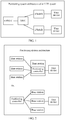
- FIG. 1 if a user device has accessed the LTE system currently, the e-SMLC may exchange data with the user device by using a mobility management entity (Mobility Management Entity, MME for short) and an evolved NodeB (evolutional Node B, eNodeB for short).
- MME Mobility Management Entity
- eNodeB evolved NodeB
- the e-SMLC may receive a positioning measurement result (including a result of measurement performed by the user device on a received signal from a base station in the LTE system) in the LTE system that is reported by the user device, and determine location information of the user device according to the positioning measurement result, so as to implement positioning of the user device.
- a positioning measurement result including a result of measurement performed by the user device on a received signal from a base station in the LTE system
- the e-SMLC may receive a positioning measurement result (including a result of measurement performed by the user device on a received signal from a base station in the LTE system) in the LTE system that is reported by the user device, and determine location information of the user device according to the positioning measurement result, so as to implement positioning of the user device.
- a positioning controller such as an e-SMLC
- a core network device such as an MME
- an access network device such as an eNodeB
- a message transmission delay is relatively long.
- a positioning measurement result received by the positioning controller is a positioning measurement result obtained through measurement performed by the user device before the movement, and a location of the user device calculated by the positioning controller according to the received positioning measurement result is actually a location in which the user device is located before the movement but is not a location in which the user device is located after the movement. Therefore, positioning precision is relatively low.
- Embodiments of the present invention provide a positioning method and device, to resolve a prior-art problem of relatively low positioning precision caused by a relatively long message transmission delay.
- a positioning method including:
- the at least one second base station includes a base station belonging to a communications system different from a communications system to which the first base station belongs.
- the method before the sending, by a positioning controller to a user device, a message that carries positioning auxiliary information, the method further includes:
- the at least one second base station is a base station, which belongs to the communications system that the user device can access and that is indicated by the access capability information, in neighboring base stations of the first base station.
- the method before the sending, by a positioning controller to a user device, a message that carries positioning auxiliary information, the method further includes:
- the obtaining, by the positioning controller, the identifier of the at least one second base station according to the identifier of the first base station includes:
- the at least one second base station further includes a base station belonging to the same communications system to which the first base station belongs.
- a positioning method including:
- the method before the receiving, by a user device, a message that carries positioning auxiliary information and that is sent by a positioning controller, the method further includes:
- a positioning controller including:
- the at least one second base station includes a base station belonging to a communications system different from a communications system to which the first base station belongs.
- the receiving unit is further configured to: before the sending unit sends, to the user device, the message that carries the positioning auxiliary information, receive a message that carries access capability information of the user device and that is sent by the user device, where the access capability information is used to indicate a communications system that the user device can access.
- the at least one second base station is a base station, which belongs to the communications system that the user device can access and that is indicated by the access capability information, in neighboring base stations of the first base station.
- the processing unit is further configured to: before the sending unit sends, to the user device, the message that carries the positioning auxiliary information, obtain the identifier of the first base station, and obtain the identifier of the at least one second base station according to the identifier of the first base station.
- the processing unit is further configured to determine the at least one second base station in the neighboring base stations of the first base station according to the identifier of the first base station and the access capability information.
- the at least one second base station further includes a base station belonging to the same communications system to which the first base station belongs.
- a user device including:
- the sending unit is further configured to: before the receiving unit receives the message that carries the positioning auxiliary information and that is sent by the positioning controller, send, to the positioning controller, a message that carries access capability information of the user device, where the access capability information is used to indicate a communications system that the user device can access.
- the positioning controller may send, to a user device, a message that carries positioning auxiliary information without using a core network device, and the positioning controller may also receive a message that carries a positioning measurement result and that is sent by the user device without using the core network device.
- the core network device does not need to be used during the data exchange between the positioning controller and the user device, so that the message transmission delay is relatively short. Therefore, positioning precision can be improved.
- a Global System for Mobile Communications Global System for Mobile communications, GSM for short
- GSM Global System for Mobile communications
- CDMA Code Division Multiple Access
- TDMA Time Division Multiple Access
- WCDMA Wideband Code Division Multiple Access
- FDMA Frequency Division Multiple Access
- OFDMA Orthogonal Frequency-Division Multiple Access
- SC-FDMA Single-carrier Frequency-Division Multiple Access
- a user device may be a wireless terminal or a wired terminal.
- the wireless terminal may refer to a device that provides a user with voice and/or data connectivity, a handheld device with a radio connection function, or another processing device connected to a radio modem.
- the wireless terminal may communicate with one or more core networks through a radio access network (Radio Access Network, RAN for short).
- the wireless terminal may be a mobile terminal, such as a mobile phone (also referred to as a "cellular" phone) and a computer with a mobile terminal, for example, may be a portable, pocket-sized, handheld, computer built-in, or in-vehicle mobile apparatus, which exchanges voice and/or data with the radio access network.
- it may be a device such as a personal communication service (Personal Communication Service, PCS for short) phone, a cordless telephone set, a Session Initiation Protocol (Session Initiation Protocol, SIP for short) phone, a wireless local loop (Wireless Local Loop, WLL for short) station, or a personal digital assistant (Personal Digital Assistant, PDA for short).
- PCS Personal Communication Service
- SIP Session Initiation Protocol
- WLL Wireless Local Loop
- PDA Personal Digital Assistant
- the wireless terminal may also be referred to as a system, a subscriber unit (Subscriber Unit, SU for short), a subscriber station (Subscriber Station, SS for short), a mobile station (Mobile Station, MS for short), a remote station (Remote Station, RS for short), an access point (Access Point, AP for short), a remote terminal (Remote Terminal, RT for short), an access terminal (Access Terminal, AT for short), a user terminal (User Terminal, UT for short), a user agent (User Agent, UA for short), a user device (User Device, UD for short), or user equipment (User Equipment, UE for short).
- the base station (for example, an access point) may be a device in communication with a wireless terminal via one or more sectors at an air interface in an access network.
- the base station may be configured to mutually convert a received over-the-air frame and an IP packet and serve as a router between the wireless terminal and a rest portion of the access network, where the rest portion of the access network may include an Internet protocol (Internet protocol, IP for short) network.
- the base station may coordinate attribute management of the air interface.
- the base station may be a base station (Base Transceiver Station, BTS for short) in GSM or the CDMA, or may be a base station (Node B, NodeB for short) in the WCDMA, or may be an evolved NodeB (evolutional Node B, eNodeB for short) in the LTE, which is not limited in the present invention.
- BTS Base Transceiver Station
- Node B NodeB for short
- WCDMA Wideband Code Division Multiple Access
- evolved NodeB evolved NodeB
- eNodeB evolved NodeB
- system and “network” may be used interchangeably in this specification.
- FIG. 2 is a schematic diagram of a positioning system architecture according to an embodiment of the present invention.
- a positioning controller is an access network device.
- the positioning controller is integrated into a base station in a form of a module, or may be an independent device.
- Base stations in FIG. 2 may be base stations in a same communications system, or may be base stations in different communications systems.
- the positioning controller may directly exchange data with a user device.
- the positioning controller exchanges data with the user device by using the base station.
- This embodiment describes a positioning method according to an embodiment of the present invention from a perspective of a positioning controller. As shown in FIG. 3 , the positioning method according to this embodiment of the present invention includes:
- the positioning auxiliary information includes an identifier of a first base station and an identifier of at least one second base station, and the message that carries the positioning auxiliary information is used to instruct the user device to measure signals transmitted by the first base station and the at least one second base station, where the first base station is a serving base station of the user device, and the at least one second base station is a neighboring base station of the first base station.
- the positioning controller when the positioning controller is integrated into the first base station, the positioning controller may directly send, to the user device, the message that carries the positioning auxiliary information; and when the positioning controller is an independent device, the positioning controller may send, to the user device by using the first base station, the message that carries the positioning auxiliary information.
- the message that carries the positioning auxiliary information is used to instruct the user device to measure signals transmitted by the first base station and the at least one second base station, that is, only when the user device receives the message that carries the positioning auxiliary information and that is sent by the positioning controller, the user device performs corresponding measurement, it needs to be ensured that the user device can receive the message that carries the positioning auxiliary information and that is sent by the positioning controller.
- the user device After receiving the message that carries the positioning auxiliary information and that is sent by the positioning controller, the user device returns a first message response to the positioning controller.
- the first message response is used to notify the positioning controller that the user device has received the message that carries the positioning auxiliary information and that is sent by the positioning controller. If the positioning controller does not receive, in a preset time, the first message response sent by the user device, the positioning controller needs to send the message that carries the positioning auxiliary information again to the user device.
- the positioning controller receives a message that carries a positioning measurement result and that is sent by the user device.
- the positioning measurement result includes results of measurement performed by the user device on the signals of the first base station and the at least one second base station.
- the positioning measurement result may specifically include: a signal strength of a signal from the first base station and a signal strength of a signal from the at least one second base station, where the signals are received by the user device.
- a signal strength of a signal from the first base station and a signal strength of a signal from the at least one second base station, where the signals are received by the user device.
- the at least one second base station includes multiple base stations.
- the positioning measurement result may also include: a time difference between a moment at which the user device receives a signal from the first base station and a moment at which the user device receives a signal from a base station in the at least one second base station; or a time difference between a moment at which the user device receives a signal from a base station in the at least one second base station and a moment at which the user device receives a signal from another base station in the at least one second base station.
- the positioning measurement result may also include other content, and specific content of the positioning measurement result is not limited in this embodiment of the present invention.
- the positioning controller obtains location information of a first base station that is identified by an identifier of the first base station and location information of at least one second base station that is identified by an identifier of the at least one second base station.
- the positioning controller may send a location information request message to the first base station according to the identifier of the first base station, so as to request the first base station to report the location information of the first base station to the positioning controller; the positioning controller may send a location information request message to the at least one second base station according to the identifier of the at least one second base station, so as to request the at least one second base station to report the location information of the at least one second base station to the positioning controller.
- the location information may be specifically latitude and longitude coordinates.
- the positioning controller may also obtain other positioning-related information of the first base station that is identified by the identifier of the first base station and other positioning-related information of the at least one second base station that is identified by the identifier of the at least one second base station.
- Other positioning-related information includes: a transmitted signal strength of a base station, coverage of a base station, a positioning reference signal transmission period, and the like.
- the positioning controller determines location information of the user device according to the positioning measurement result, the location information of the first base station, and the location information of the at least one second base station.
- the positioning controller may determine a distance between the user device and the first base station and a distance between the user device and the at least one second base station according to the positioning measurement result, and may finally determine the location information of the user device according to the distance between the user device and the first base station, the distance between the user device and the at least one second base station, the location information of the first base station, and the location information of the at least one second base station.
- the positioning measurement result includes: a time difference T1 between a moment at which the user device receives a signal from the first base station and a moment at which the user device receives a signal from the base station L2; and a time difference T2 between the moment at which the user device receives the signal from the first base station and a moment at which the user device receives a signal from the base station L3.
- the positioning controller may determine, according to an observed time difference of arrival (Observed Time Difference of Arrival, OTDOA for short) positioning method, that the user device is located on a hyperbola on which a location of the first base station and a location of the base station L2 are focal points, and the user device is also located on a hyperbola on which the location of the first base station and a location of the base station L3 are focal points, that is, the user device is located at an intersection point of the two hyperbolas. Then the positioning controller may determine the location information of the user device with reference to the location information of the first base station, the location information of the base station L2, and the location information of the base station L3.
- OTDOA positioning method refer to related content in the prior art, and details are not described in this embodiment of the present invention.
- the positioning controller may also use another positioning method, such as a cell identifier (Cell-ID) positioning method and a time of arrival (Time Of Arrival, TOA for short) positioning method, to determine the location information of the user device.
- Cell-ID cell identifier
- TOA Time Of Arrival
- This embodiment of the present invention does not limit the positioning method used by the positioning controller.
- the positioning controller may send, to a user device, a message that carries positioning auxiliary information without using a core network device, and the positioning controller may also receive a message that carries a positioning measurement result and that is sent by the user device without using the core network device.
- the core network device does not need to be used during the data exchange between the positioning controller and the user device, so that the message transmission delay is relatively short. Therefore, positioning precision can be improved.
- the at least one second base station includes a base station belonging to a communications system different from a communications system to which the first base station belongs.
- the at least one second base station further includes a base station belonging to the same communications system to which the first base station belongs.
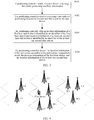
- a base station L1 of the LTE system is a serving base station of the user device, that is, the first base station is the base station L1.
- Neighboring base stations of the base station L1 include: a base station L2 of the LTE system, a base station L3 of the LTE system, a base station L4 of the LTE system, a base station L5 of the LTE system, a base station G1 of a GSM system, a base station W1 of a WCDMA system, a base station W2 of the WCDMA system, and a base station W3 of the WCDMA system.
- the user device may not be able to receive signals from all the neighboring base stations of the base station L1. If the user device can receive only a signal from the base station L2, a signal from the base station L3, a signal from the base station G1, a signal from the base station W1, a signal from the base station W2, and a signal from the base station W3, the at least one second base station includes: the base station L2, the base station L3, the base station G1, the base station W1, the base station W2, and the base station W3.
- the auxiliary information in S101 may further include an identifier of another base station, such as an identifier of the base station L4 and an identifier of the base station L5.
- the positioning measurement result includes results of measurement performed by the user device on signals of base stations in multiple communications systems.
- the positioning measurement result may specifically include: a signal strength of a signal that is from the base station L1 and that is received by the user device, a signal strength of a signal that is from the base station L2 and that is received by the user device, a signal strength of a signal that is from the base station L3 and that is received by the user device, a signal strength of a signal that is from the base station G1 and that is received by the user device, a signal strength of a signal that is from the base station W1 and that is received by the user device, a signal strength of a signal that is from the base station W2 and that is received by the user device, and a signal strength of a signal that is from the base station W2 and that is received by the user device.
- the positioning measurement result may further include: a time difference between a moment at which the user device receives a signal from the base station L1 and a moment at which the user device receives a signal from the base station L2, a time difference between the moment at which the user device receives the signal from the base station L1 and a moment at which the user device receives a signal from the base station L3, and the like.
- results of measurement performed by the user device on received signals from base stations in the LTE system includes: a time difference between a moment at which the user device receives a signal from the base station L1 and a moment at which the user device receives a signal from the base station L2; and a time difference between the moment at which the user device receives the signal from the base station L1 and a moment at which the user device receives a signal from the base station L3, the positioning controller may determine, according to the observed time difference of arrival (Observed Time Difference of Arrival, OTDOA for short) positioning method, the location information of the user device with reference to location information of the base station L1, location information of the base station L2, and location information of the base station L3.
- OTDOA observed Time Difference of Arrival
- the positioning controller may obtain location information of the base station G1, a signal strength (transmitted signal strength for short) of a signal transmitted by the base station G1, an azimuth of the signal transmitted by the base station G1, and a channel fading model of a channel between the base station G1 and the user device. Then the positioning controller may calculate a distance (denoted as R) between the user device and the base station G1 according to the received signal strength, the transmitted signal strength, and the signal fading model.
- the user device is located on a circle, where location coordinates of the base station G1 are used as a center of the circle and R is used as a radius of the circle.
- the positioning controller determines the location information of the user device according to the location information of the base station G1, the azimuth of the signal transmitted by the base station G1, and the distance between the user device and the base station G1.
- the positioning controller may determine that the user device is located on a circle in which location coordinates of the base station W1 are used as a center of the circle, the user device is also located on a circle in which location coordinates of the base station W2 are used as a center of the circle, and the user device is also located on a circle in which location coordinates of the base station W3 are used as a center of the circle. Therefore, the positioning controller may determine that an intersection point of the three circles is a location in which the user device is located, so that the location information of the user device is determined.
- the positioning controller may determine one piece of location information of the user device according to the results of measurement performed by the user device on the received signals from the base stations in the LTE system; determine one piece of location information of the user device according to the result of the measurement performed by the user device on the received signal from the base station of the GSM system; and determine one piece of location information of the user device according to the results of measurement performed by the user device on the received signals from the base stations in the WCDMA system. Due to an existence of a measurement error, the foregoing three pieces of location information determined by the positioning controller may not be the same, and the positioning controller may use any one of the foregoing three pieces of location information as the final location information of the user device.
- the positioning controller may also send a confidence request to the user device, so as to request the user device to add, when the user device reports a measurement result, a confidence of the measurement result, where the confidence is used to represent credibility of the measurement result.
- the confidence of the measurement result is determined by the user device. Specifically, the user device is interfered when receiving a signal from a base station, and the user device may determine the confidence of the measurement result according to a strength, a signal to interference plus noise ratio, and the like of a current interfering signal.
- a confidence of a measurement result in which a strength of an interfering signal is small or a signal to interference plus noise ratio of an interfering signal is large may be set to a relatively large value
- a confidence of measurement result in which a strength of an interfering signal is large or a signal to interference plus noise ratio of an interfering signal is small may be set to a relatively small value.
- the positioning controller may select, according to values of confidences from the foregoing three pieces of location information, location information that corresponds to a positioning measurement result whose confidence is high as the final location information of the user device.
- the positioning controller may also combine the positioning measurement results of the communications systems that are reported by the user device to determine the location information of the user device.
- the positioning controller performs positioning on a user device by using only a resource of a communications system, and if a positioning measurement result reported by the user device to the positioning controller is incorrect due to an environment factor (such as environmental interference), accuracy of the location information of the user device that is determined by the positioning controller is low (that is, positioning precision is low).
- the positioning controller may fully use resources of multiple communications systems to perform positioning on a user device, and although a positioning measurement result of a communications system that is reported by the user device to the positioning controller is incorrect, the positioning controller may also determine the location information of the user device according to positioning measurement results of other communications systems that are reported by the user device, thereby improving the positioning precision.
- the positioning method may further include:
- the at least one second base station is a base station, which belongs to the communications system that the user device can access and that is indicated by the access capability information, in neighboring base stations of the first base station.
- the positioning method may further include:
- the positioning controller may pre-store a correspondence between the user device and the serving base station of the user device and pre-store correspondences between the serving base station and the neighboring base stations of the serving base station.
- the positioning controller may search, according to an identifier of the to-be-positioned user device, the positioning controller for the pre-stored correspondence between the user device and the serving base station of the user device, so as to obtain the identifier of the serving base station (that is, the first base station) of the to-be-positioned user device.
- the positioning controller searches, according to the identifier of the first base station, the positioning controller for the pre-stored correspondences between the first base station and the neighboring base stations of the first base station, so as to obtain identifiers of the neighboring base stations of the first base station; and then the positioning controller determines the at least one second base station in the neighboring base stations of the first base station according to the access capability information.
- the positioning controller receives the message that carries the access capability information of the user device and that is sent by the user device, where the access capability information is used to indicate that the user device can access the GSM system and the LTE system.
- the first base station is the base station L1
- the neighboring base stations of the base station L1 include: the base station L2, the base station L3, the base station L4, the base station L5, the base station G1, the base station W1, the base station W2, and the base station W3.
- the positioning controller determines, in the neighboring base stations of the first base station according to the identifier of the first base station and the access capability information, that the at least one second base station includes: the base station L2, the base station L3, the base station L4, the base station L5, and the base station G1.
- the identifier of the at least one second base station sent by the positioning controller to the user device includes only an identifier of the base station (the base station G1) in the GSM system, identifiers of the base stations (the base station L2, the base station L3, the base station L4, and the base station L5) in the LTE system, and does not include identifiers of the base stations (the base station W1, the base station W2, and the base station W3) in the WCDMA system, to avoid waste of resources caused by useless information sent by the positioning controller to the user device.
- This embodiment describes a positioning method according to an embodiment of the present invention from a perspective of a user device. As shown in FIG. 5 , the positioning method according to an embodiment of the present invention includes:
- the positioning auxiliary information includes an identifier of a first base station and an identifier of at least one second base station, and the message that carries the positioning auxiliary information is used to instruct the user device to measure signals transmitted by the first base station and the at least one second base station, where the first base station is a serving base station of the user device, the at least one second base station is a neighboring base station of the first base station, and the positioning controller is an access network device.
- the at least one second base station may include a base station belonging to a communications system different from a communications system to which the first base station belongs, and may further include a base station belonging to the same communications system to which the first base station belongs, that is, the positioning auxiliary information may include identifiers of base stations of multiple communications systems.
- the user device may directly receive the message that carries the positioning auxiliary information and that is sent by the positioning controller; and when the positioning controller is an independent device, the user device may receive, by using the first base station, the message that carries the positioning auxiliary information and that is sent by the positioning controller.
- the user device obtains a positioning measurement result according to an identifier of a first base station and an identifier of at least one second base station.
- the positioning measurement result includes results of measurement performed by the user device on the signals of the first base station and the at least one second base station.
- the at least one second base station may include a base station belonging to a communications system different from a communications system to which the first base station belongs, and may further include a base station belonging to the same communications system to which the first base station belongs, and the base station belonging to the same communications system to which the first base station belongs includes a base station whose frequency is the same as a frequency of the first base station and a base station whose frequency is different from the frequency of the first base station.
- the user device needs to perform measurement on a signal transmitted by the base station whose frequency is different from the frequency of the first base station and that is in the at least one second base station, and perform measurement on a signal transmitted by the base station that is in the at least one second base station and that belongs to a communications system different from the communications system to which the first base station belongs, so as to obtain the positioning measurement result.
- S203 The user device sends, to the positioning controller, a message that carries the positioning measurement result, so that the positioning controller determines location information of the user device according to the positioning measurement result.
- the user device may directly send, to the positioning controller, the message that carries the positioning measurement result; and when the positioning controller is an independent device, the user device may send, to the positioning controller by using the first base station, the message that carries the positioning measurement result.
- the positioning controller can determine a location of the user device. Therefore, it needs to be ensured that the positioning controller can receive the message that carries the positioning measurement result and that is sent by the user device.
- the positioning controller returns a second message response to the user device. The second message response is used to notify the user device that the positioning controller has received the message that carries the positioning measurement result and that is sent by the user device. If the user device does not receive, in a preset time, the second message response sent by the positioning controller, the user device needs to send, to the positioning controller again, the message that carries the positioning measurement result.
- a positioning controller is an access network device
- a user device may receive a message that carries positioning auxiliary information and that is sent by the positioning controller without using a core network device, and the user device may also send, to the positioning controller, a message that carries a positioning measurement result without using the core network device.
- the core network device does not need to be used during the data exchange between the positioning controller and the user device, so that the message transmission delay is relatively short. Therefore, positioning precision can be improved.
- the positioning method provided in this embodiment of the present invention may further include:
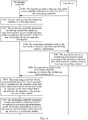
- An embodiment describes a positioning method according to an embodiment of the present invention from a perspective of interaction between a positioning controller and a user device. As shown in FIG. 6 , the positioning method according to this embodiment of the present invention includes:
- the positioning controller is an access network device, and the access capability information is used to indicate a communications system that the user device can access.
- the access capability information is used to indicate the GSM system and the LTE system.
- the positioning controller obtains an identifier of a first base station.
- the first base station is a serving base station of the user device.
- the positioning controller determines at least one second base station in neighboring base stations of the first base station according to the identifier of the first base station and the access capability information.
- the at least one second base station is a base station, which belongs to the communications system that the user device can access and that is indicated by the access capability information, in the neighboring base stations of the first base station.
- the at least one second base station may include a base station belonging to a communications system different from a communications system to which the first base station belongs, and the at least one second base station may further include a base station belonging to the same communications system to which the first base station belongs.
- the positioning controller sends, to the user device, a message that carries positioning auxiliary information.
- the positioning auxiliary information includes the identifier of the first base station and an identifier of the at least one second base station, and the message that carries the positioning auxiliary information is used to instruct the user device to measure signals transmitted by the first base station and the at least one second base station.
- the user device obtains a positioning measurement result according to the identifier of the first base station and an identifier of the at least one second base station.
- the positioning measurement result includes results of measurement performed by the user device on the signals of the first base station and the at least one second base station.
- S306 The user device sends, to the positioning controller, a message that carries the positioning measurement result.
- the positioning controller obtains location information of the first base station that is identified by the identifier of the first base station and location information of the at least one second base station that is identified by the identifier of the at least one second base station.
- the positioning controller determines location information of the user device according to the positioning measurement result, the location information of the first base station, and the location information of the at least one second base station.
- the positioning controller may send, to a user device, a message that carries positioning auxiliary information without using a core network device, and the positioning controller may also receive a message that carries a positioning measurement result and that is sent by the user device without using the core network device.
- the core network device does not need to be used during the data exchange between the positioning controller and the user device, so that the message transmission delay is relatively short. Therefore, positioning precision can be improved.
- An embodiment of the present invention provides a positioning controller, configured to perform the positioning method shown in FIG. 3 and FIG. 6 .
- the positioning controller includes: a sending unit 41, a receiving unit 42, and a processing unit 43.
- the sending unit 41 may be a transmitter
- the receiving unit 42 may be a receiver
- the processing unit 43 may be a processor
- the sending unit 41 is configured to send, to a user device, a message that carries positioning auxiliary information, where the positioning auxiliary information includes an identifier of a first base station and an identifier of at least one second base station, and the message that carries the positioning auxiliary information is used to instruct the user device to measure signals transmitted by the first base station and the at least one second base station, where the first base station is a serving base station of the user device, the at least one second base station is a neighboring base station of the first base station, and the positioning controller is an access network device.
- the receiving unit 42 is configured to receive a message that carries a positioning measurement result and that is sent by the user device, where the positioning measurement result includes results of measurement performed by the user device on the signals of the first base station and the at least one second base station.
- the processing unit 43 is configured to obtain location information of the first base station that is identified by the identifier of the first base station and location information of the at least one second base station that is identified by the identifier of the at least one second base station; and determine location information of the user device according to the positioning measurement result, the location information of the first base station, and the location information of the at least one second base station.
- the at least one second base station includes a base station belonging to a communications system different from a communications system to which the first base station belongs.
- the receiving unit 42 is further configured to: before the sending unit 41 sends, to the user device, the message that carries the positioning auxiliary information, receive a message that carries access capability information of the user device and that is sent by the user device, where the access capability information is used to indicate a communications system that the user device can access.
- the at least one second base station is a base station, which belongs to the communications system that the user device can access and that is indicated by the access capability information, in neighboring base stations of the first base station.
- processing unit 43 is further configured to: before the sending unit 41 sends, to the user device, the message that carries the positioning auxiliary information, obtain the identifier of the first base station, and obtain the identifier of the at least one second base station according to the identifier of the first base station.
- processing unit 43 is further configured to determine the at least one second base station in the neighboring base stations of the first base station according to the identifier of the first base station and the access capability information.
- the at least one second base station further includes a base station belonging to the same communications system to which the first base station belongs.
- the positioning controller may send, to a user device, a message that carries positioning auxiliary information without using a core network device, and the positioning controller may also receive a message that carries a positioning measurement result and that is sent by the user device without using the core network device.
- the core network device does not need to be used during the data exchange between the positioning controller and the user device, so that the message transmission delay is relatively short. Therefore, positioning precision can be improved.
- An embodiment of the present invention provides a user device, configured to perform the positioning method shown in FIG. 5 and FIG. 6 .
- the user device includes: a receiving unit 51, a processing unit 52, and a sending unit 53.
- the receiving unit 51 may be a receiver
- the processing unit 52 may be a processor
- the sending unit 53 may be a transmitter.
- the receiving unit 51 is configured to receive a message that carries positioning auxiliary information and that is sent by a positioning controller, where the positioning auxiliary information includes an identifier of a first base station and an identifier of at least one second base station, and the message that carries the positioning auxiliary information is used to instruct the user device to measure signals transmitted by the first base station and the at least one second base station, where the first base station is a serving base station of the user device, the at least one second base station is a neighboring base station of the first base station, and the positioning controller is an access network device.
- the processing unit 52 is configured to obtain a positioning measurement result according to the identifier of the first base station and the identifier of the at least one second base station, where the positioning measurement result includes results of measurement performed by the user device on the signals of the first base station and the at least one second base station.
- the sending unit 53 is configured to send, to the positioning controller, a message that carries the positioning measurement result, so that the positioning controller determines location information of the user device according to the positioning measurement result.
- the sending unit 53 is further configured to: before the receiving unit 51 receives the message that carries the positioning auxiliary information and that is sent by the positioning controller, send, to the positioning controller, a message that carries access capability information of the user device, where the access capability information is used to indicate a communications system that the user device can access.
- the user device may receive a message that carries positioning auxiliary information and that is sent by the positioning controller without using a core network device, and the user device may also send, to the positioning controller, a message that carries a positioning measurement result without using the core network device.
- the core network device does not need to be used during the data exchange between the positioning controller and the user device, so that the message transmission delay is relatively short. Therefore, positioning precision can be improved.
- the disclosed system, apparatus, and method may be implemented in other manners.
- the described apparatus embodiment is only an example.
- the module or unit division is merely logical function division and may be other division in actual implementation.
- multiple units or components may be combined or integrated into another system, or some features may be ignored or not performed.
- the displayed or discussed mutual couplings or direct couplings or communication connections may be implemented by using some interfaces.
- the indirect couplings or communication connections between the apparatuses or units may be implemented in electronic, mechanical, or other forms.
- the units described as separate parts may or may not be physically separate, and parts displayed as units may or may not be physical units, may be located in one position, or may be distributed on multiple network units. Some or all of the units may be selected according to actual needs to achieve the objectives of the solutions of the embodiments.
- functional units in the embodiments of the present invention may be integrated into one processing unit, or each of the units may exist alone physically, or two or more units are integrated into one unit.
- the integrated unit may be implemented in a form of hardware, or may be implemented in a form of a software functional unit.
- the integrated unit When the integrated unit is implemented in the form of a software functional unit and sold or used as an independent product, the integrated unit may be stored in a computer-readable storage medium. Based on such an understanding, the technical solutions of the present invention essentially, or the part contributing to the prior art, or all or a part of the technical solutions may be implemented in the form of a software product.
- the software product is stored in a storage medium and includes several instructions for instructing a computer device (which may be a personal computer, a server, or a network device) or a processor (processor) to perform all or a part of the steps of the methods described in the embodiments of the present invention.
- the foregoing storage medium includes: any medium that can store program code, such as a USB flash drive, a removable hard disk, a read-only memory (ROM, Read-Only Memory), a random access memory (RAM, Random Access Memory), a magnetic disk, or an optical disc.
- program code such as a USB flash drive, a removable hard disk, a read-only memory (ROM, Read-Only Memory), a random access memory (RAM, Random Access Memory), a magnetic disk, or an optical disc.
Landscapes
- Engineering & Computer Science (AREA)
- Computer Networks & Wireless Communication (AREA)
- Signal Processing (AREA)
- Mobile Radio Communication Systems (AREA)
- Position Fixing By Use Of Radio Waves (AREA)
Applications Claiming Priority (1)
| Application Number | Priority Date | Filing Date | Title |
|---|---|---|---|
| PCT/CN2014/095321 WO2016106502A1 (fr) | 2014-12-29 | 2014-12-29 | Procédé et dispositif de positionnement |
Publications (3)
| Publication Number | Publication Date |
|---|---|
| EP3211945A1 true EP3211945A1 (fr) | 2017-08-30 |
| EP3211945A4 EP3211945A4 (fr) | 2017-11-22 |
| EP3211945B1 EP3211945B1 (fr) | 2019-09-04 |
Family
ID=56283791
Family Applications (1)
| Application Number | Title | Priority Date | Filing Date |
|---|---|---|---|
| EP14909315.5A Not-in-force EP3211945B1 (fr) | 2014-12-29 | 2014-12-29 | Procédé et dispositif de positionnement |
Country Status (4)
| Country | Link |
|---|---|
| US (1) | US10390325B2 (fr) |
| EP (1) | EP3211945B1 (fr) |
| CN (1) | CN105934982A (fr) |
| WO (1) | WO2016106502A1 (fr) |
Families Citing this family (7)
| Publication number | Priority date | Publication date | Assignee | Title |
|---|---|---|---|---|
| US10652789B2 (en) * | 2015-10-07 | 2020-05-12 | Telefonaktiebolaget Lm Ericsson (Publ) | Location based mobility measurement activation |
| WO2019061208A1 (fr) * | 2017-09-28 | 2019-04-04 | 华为技术有限公司 | Procédé de transmission de données, serveur et station de base |
| US11109387B2 (en) * | 2019-02-15 | 2021-08-31 | Nokia Technologies Oy | Interference management |
| EP4013095A1 (fr) * | 2020-12-14 | 2022-06-15 | Siemens Aktiengesellschaft | Procédé permettant de déterminer l'emplacement d'un dispositif utilisateur dans une installation industrielle |
| CN115720249A (zh) * | 2021-08-24 | 2023-02-28 | 华为技术有限公司 | 一种显示方法、电子设备及系统 |
| WO2023216080A1 (fr) * | 2022-05-09 | 2023-11-16 | 北京小米移动软件有限公司 | Procédé de déclenchement de rapport d'informations de position, et appareil associé |
| CN119922687A (zh) * | 2023-10-30 | 2025-05-02 | 上海朗帛通信技术有限公司 | 一种被用于无线通信的方法和设备 |
Family Cites Families (10)
| Publication number | Priority date | Publication date | Assignee | Title |
|---|---|---|---|---|
| US6944465B2 (en) * | 1998-09-22 | 2005-09-13 | Polaris Wireless, Inc. | Estimating the location of a mobile unit based on the elimination of improbable locations |
| FR2808160B1 (fr) * | 2000-04-21 | 2004-05-28 | Mitsubishi Electric Inf Tech | Procede de determination de la position d'une station mobile d'un reseau de telecommunication mobile |
| CN1897746A (zh) * | 2005-07-15 | 2007-01-17 | 华为技术有限公司 | 一种终端定位方法和移动终端定位系统及移动终端 |
| CN101339238B (zh) | 2007-07-06 | 2011-08-24 | 展讯通信(上海)有限公司 | 基于多系统联合测量的无线定位的位置计算方法与装置 |
| US8718634B2 (en) * | 2008-11-07 | 2014-05-06 | Telefonaktiebolaget Lm Ericsson (Publ) | Method and arrangement in a communication system |
| US8903415B2 (en) * | 2011-01-19 | 2014-12-02 | Telefonaktiebolaget Lm Ericsson | User equipment, a positioning node and methods therein |
| US9188659B2 (en) * | 2012-10-10 | 2015-11-17 | Telefonaktiebolaget L M Ericsson (Publ) | Methods and network nodes for positioning based on displacement data |
| US20140235266A1 (en) * | 2013-02-16 | 2014-08-21 | Qualcomm Incorporated | Focused assistance data for WiFi access points and femtocells |
| WO2014135921A1 (fr) * | 2013-03-06 | 2014-09-12 | Here Global B.V. | Sélection d'ensembles de données de carte radiofréquence basée sur des informations de terminal mobile |
| GB2521442A (en) * | 2013-12-19 | 2015-06-24 | Nokia Corp | Method, apparatus, and computer program product for location determination using WiFi |
-
2014
- 2014-12-29 CN CN201480030184.4A patent/CN105934982A/zh active Pending
- 2014-12-29 WO PCT/CN2014/095321 patent/WO2016106502A1/fr not_active Ceased
- 2014-12-29 EP EP14909315.5A patent/EP3211945B1/fr not_active Not-in-force
-
2017
- 2017-06-28 US US15/636,468 patent/US10390325B2/en active Active
Also Published As
| Publication number | Publication date |
|---|---|
| WO2016106502A1 (fr) | 2016-07-07 |
| EP3211945B1 (fr) | 2019-09-04 |
| US10390325B2 (en) | 2019-08-20 |
| CN105934982A (zh) | 2016-09-07 |
| US20170303231A1 (en) | 2017-10-19 |
| EP3211945A4 (fr) | 2017-11-22 |
Similar Documents
| Publication | Publication Date | Title |
|---|---|---|
| US10390325B2 (en) | Positioning method and device | |
| US10588109B2 (en) | Positioning base station determining method, positioning server, serving base station, and network system | |
| US10045323B2 (en) | Positioning method, network side device, positioning node, and positioning system | |
| CN115278765B (zh) | 信号传输方法及装置 | |
| US20190074946A1 (en) | Resource allocation method, network-side device, and terminal device | |
| EP4187964A1 (fr) | Procédé de localisation de signal de liaison montante, station de base de communication, station de base de mesure et ue | |
| KR102047801B1 (ko) | 위치결정 방법, 위치결정 서버, 및 단말 | |
| CN114175772B (zh) | 用户设备定位方法及装置、用户设备、存储介质 | |
| WO2021008581A1 (fr) | Procédé de positionnement et appareil de communication | |
| EP3742764A1 (fr) | Procédé de positionnement, terminal et serveur | |
| CN103181203B (zh) | 获取邻区信息的方法和装置 | |
| WO2019029422A1 (fr) | Procédé et appareil de localisation et de notification de mesure | |
| US12520268B2 (en) | Positioning method, device, terminal and base station | |
| AU2014413271A1 (en) | Positioning method and apparatus for different uplink and downlink TDD configurations | |
| US9883341B2 (en) | Wireless device, a radio network node, a network node and methods therein | |
| CN115150937B (zh) | 一种通信方法和装置 | |
| CN103841636A (zh) | 定位用户设备的方法、用户设备和基站 | |
| JP2024523913A (ja) | ポジショニング方法、装置及び関連機器 | |
| CN109428657A (zh) | 一种定位方法及装置 | |
| EP3499947B1 (fr) | Procédé et dispositif d'indication de gestion de ressources | |
| CN103209426A (zh) | 一种在用户终端异频切换前的测量方法及装置 | |
| WO2014176733A1 (fr) | Procédé de positionnement, petite station de base, et macro station de base | |
| WO2017035757A1 (fr) | Procédé, appareil et système permettant d'accéder à une cellule | |
| CN116506941A (zh) | Dl-tdoa定位的方法及装置 | |
| CN103167533B (zh) | 最小化路测方法和网元 |
Legal Events
| Date | Code | Title | Description |
|---|---|---|---|
| STAA | Information on the status of an ep patent application or granted ep patent |
Free format text: STATUS: THE INTERNATIONAL PUBLICATION HAS BEEN MADE |
|
| PUAI | Public reference made under article 153(3) epc to a published international application that has entered the european phase |
Free format text: ORIGINAL CODE: 0009012 |
|
| STAA | Information on the status of an ep patent application or granted ep patent |
Free format text: STATUS: REQUEST FOR EXAMINATION WAS MADE |
|
| 17P | Request for examination filed |
Effective date: 20170523 |
|
| AK | Designated contracting states |
Kind code of ref document: A1 Designated state(s): AL AT BE BG CH CY CZ DE DK EE ES FI FR GB GR HR HU IE IS IT LI LT LU LV MC MK MT NL NO PL PT RO RS SE SI SK SM TR |
|
| AX | Request for extension of the european patent |
Extension state: BA ME |
|
| A4 | Supplementary search report drawn up and despatched |
Effective date: 20171019 |
|
| RIC1 | Information provided on ipc code assigned before grant |
Ipc: H04W 64/00 20090101AFI20171013BHEP |
|
| DAX | Request for extension of the european patent (deleted) | ||
| STAA | Information on the status of an ep patent application or granted ep patent |
Free format text: STATUS: EXAMINATION IS IN PROGRESS |
|
| 17Q | First examination report despatched |
Effective date: 20180524 |
|
| GRAP | Despatch of communication of intention to grant a patent |
Free format text: ORIGINAL CODE: EPIDOSNIGR1 |
|
| STAA | Information on the status of an ep patent application or granted ep patent |
Free format text: STATUS: GRANT OF PATENT IS INTENDED |
|
| RIC1 | Information provided on ipc code assigned before grant |
Ipc: H04W 64/00 20090101AFI20190304BHEP Ipc: H04W 8/24 20090101ALN20190304BHEP Ipc: H04W 88/06 20090101ALN20190304BHEP |
|
| INTG | Intention to grant announced |
Effective date: 20190404 |
|
| GRAS | Grant fee paid |
Free format text: ORIGINAL CODE: EPIDOSNIGR3 |
|
| GRAA | (expected) grant |
Free format text: ORIGINAL CODE: 0009210 |
|
| STAA | Information on the status of an ep patent application or granted ep patent |
Free format text: STATUS: THE PATENT HAS BEEN GRANTED |
|
| AK | Designated contracting states |
Kind code of ref document: B1 Designated state(s): AL AT BE BG CH CY CZ DE DK EE ES FI FR GB GR HR HU IE IS IT LI LT LU LV MC MK MT NL NO PL PT RO RS SE SI SK SM TR |
|
| REG | Reference to a national code |
Ref country code: GB Ref legal event code: FG4D |
|
| REG | Reference to a national code |
Ref country code: CH Ref legal event code: EP |
|
| REG | Reference to a national code |
Ref country code: AT Ref legal event code: REF Ref document number: 1177196 Country of ref document: AT Kind code of ref document: T Effective date: 20190915 |
|
| REG | Reference to a national code |
Ref country code: DE Ref legal event code: R096 Ref document number: 602014053263 Country of ref document: DE Ref country code: IE Ref legal event code: FG4D |
|
| REG | Reference to a national code |
Ref country code: NL Ref legal event code: MP Effective date: 20190904 |
|
| REG | Reference to a national code |
Ref country code: LT Ref legal event code: MG4D |
|
| PG25 | Lapsed in a contracting state [announced via postgrant information from national office to epo] |
Ref country code: HR Free format text: LAPSE BECAUSE OF FAILURE TO SUBMIT A TRANSLATION OF THE DESCRIPTION OR TO PAY THE FEE WITHIN THE PRESCRIBED TIME-LIMIT Effective date: 20190904 Ref country code: LT Free format text: LAPSE BECAUSE OF FAILURE TO SUBMIT A TRANSLATION OF THE DESCRIPTION OR TO PAY THE FEE WITHIN THE PRESCRIBED TIME-LIMIT Effective date: 20190904 Ref country code: BG Free format text: LAPSE BECAUSE OF FAILURE TO SUBMIT A TRANSLATION OF THE DESCRIPTION OR TO PAY THE FEE WITHIN THE PRESCRIBED TIME-LIMIT Effective date: 20191204 Ref country code: SE Free format text: LAPSE BECAUSE OF FAILURE TO SUBMIT A TRANSLATION OF THE DESCRIPTION OR TO PAY THE FEE WITHIN THE PRESCRIBED TIME-LIMIT Effective date: 20190904 Ref country code: FI Free format text: LAPSE BECAUSE OF FAILURE TO SUBMIT A TRANSLATION OF THE DESCRIPTION OR TO PAY THE FEE WITHIN THE PRESCRIBED TIME-LIMIT Effective date: 20190904 Ref country code: NO Free format text: LAPSE BECAUSE OF FAILURE TO SUBMIT A TRANSLATION OF THE DESCRIPTION OR TO PAY THE FEE WITHIN THE PRESCRIBED TIME-LIMIT Effective date: 20191204 |
|
| PG25 | Lapsed in a contracting state [announced via postgrant information from national office to epo] |
Ref country code: RS Free format text: LAPSE BECAUSE OF FAILURE TO SUBMIT A TRANSLATION OF THE DESCRIPTION OR TO PAY THE FEE WITHIN THE PRESCRIBED TIME-LIMIT Effective date: 20190904 Ref country code: LV Free format text: LAPSE BECAUSE OF FAILURE TO SUBMIT A TRANSLATION OF THE DESCRIPTION OR TO PAY THE FEE WITHIN THE PRESCRIBED TIME-LIMIT Effective date: 20190904 Ref country code: ES Free format text: LAPSE BECAUSE OF FAILURE TO SUBMIT A TRANSLATION OF THE DESCRIPTION OR TO PAY THE FEE WITHIN THE PRESCRIBED TIME-LIMIT Effective date: 20190904 Ref country code: AL Free format text: LAPSE BECAUSE OF FAILURE TO SUBMIT A TRANSLATION OF THE DESCRIPTION OR TO PAY THE FEE WITHIN THE PRESCRIBED TIME-LIMIT Effective date: 20190904 Ref country code: GR Free format text: LAPSE BECAUSE OF FAILURE TO SUBMIT A TRANSLATION OF THE DESCRIPTION OR TO PAY THE FEE WITHIN THE PRESCRIBED TIME-LIMIT Effective date: 20191205 |
|
| REG | Reference to a national code |
Ref country code: AT Ref legal event code: MK05 Ref document number: 1177196 Country of ref document: AT Kind code of ref document: T Effective date: 20190904 |
|
| PG25 | Lapsed in a contracting state [announced via postgrant information from national office to epo] |
Ref country code: AT Free format text: LAPSE BECAUSE OF FAILURE TO SUBMIT A TRANSLATION OF THE DESCRIPTION OR TO PAY THE FEE WITHIN THE PRESCRIBED TIME-LIMIT Effective date: 20190904 Ref country code: PT Free format text: LAPSE BECAUSE OF FAILURE TO SUBMIT A TRANSLATION OF THE DESCRIPTION OR TO PAY THE FEE WITHIN THE PRESCRIBED TIME-LIMIT Effective date: 20200106 Ref country code: EE Free format text: LAPSE BECAUSE OF FAILURE TO SUBMIT A TRANSLATION OF THE DESCRIPTION OR TO PAY THE FEE WITHIN THE PRESCRIBED TIME-LIMIT Effective date: 20190904 Ref country code: NL Free format text: LAPSE BECAUSE OF FAILURE TO SUBMIT A TRANSLATION OF THE DESCRIPTION OR TO PAY THE FEE WITHIN THE PRESCRIBED TIME-LIMIT Effective date: 20190904 Ref country code: RO Free format text: LAPSE BECAUSE OF FAILURE TO SUBMIT A TRANSLATION OF THE DESCRIPTION OR TO PAY THE FEE WITHIN THE PRESCRIBED TIME-LIMIT Effective date: 20190904 Ref country code: IT Free format text: LAPSE BECAUSE OF FAILURE TO SUBMIT A TRANSLATION OF THE DESCRIPTION OR TO PAY THE FEE WITHIN THE PRESCRIBED TIME-LIMIT Effective date: 20190904 Ref country code: PL Free format text: LAPSE BECAUSE OF FAILURE TO SUBMIT A TRANSLATION OF THE DESCRIPTION OR TO PAY THE FEE WITHIN THE PRESCRIBED TIME-LIMIT Effective date: 20190904 |
|
| PGFP | Annual fee paid to national office [announced via postgrant information from national office to epo] |
Ref country code: GB Payment date: 20191224 Year of fee payment: 6 |
|
| PG25 | Lapsed in a contracting state [announced via postgrant information from national office to epo] |
Ref country code: SM Free format text: LAPSE BECAUSE OF FAILURE TO SUBMIT A TRANSLATION OF THE DESCRIPTION OR TO PAY THE FEE WITHIN THE PRESCRIBED TIME-LIMIT Effective date: 20190904 Ref country code: IS Free format text: LAPSE BECAUSE OF FAILURE TO SUBMIT A TRANSLATION OF THE DESCRIPTION OR TO PAY THE FEE WITHIN THE PRESCRIBED TIME-LIMIT Effective date: 20200224 Ref country code: SK Free format text: LAPSE BECAUSE OF FAILURE TO SUBMIT A TRANSLATION OF THE DESCRIPTION OR TO PAY THE FEE WITHIN THE PRESCRIBED TIME-LIMIT Effective date: 20190904 Ref country code: CZ Free format text: LAPSE BECAUSE OF FAILURE TO SUBMIT A TRANSLATION OF THE DESCRIPTION OR TO PAY THE FEE WITHIN THE PRESCRIBED TIME-LIMIT Effective date: 20190904 |
|
| REG | Reference to a national code |
Ref country code: DE Ref legal event code: R097 Ref document number: 602014053263 Country of ref document: DE |
|
| REG | Reference to a national code |
Ref country code: DE Ref legal event code: R119 Ref document number: 602014053263 Country of ref document: DE |
|
| PLBE | No opposition filed within time limit |
Free format text: ORIGINAL CODE: 0009261 |
|
| STAA | Information on the status of an ep patent application or granted ep patent |
Free format text: STATUS: NO OPPOSITION FILED WITHIN TIME LIMIT |
|
| PG2D | Information on lapse in contracting state deleted |
Ref country code: IS |
|
| PG25 | Lapsed in a contracting state [announced via postgrant information from national office to epo] |
Ref country code: DK Free format text: LAPSE BECAUSE OF FAILURE TO SUBMIT A TRANSLATION OF THE DESCRIPTION OR TO PAY THE FEE WITHIN THE PRESCRIBED TIME-LIMIT Effective date: 20190904 Ref country code: IS Free format text: LAPSE BECAUSE OF FAILURE TO SUBMIT A TRANSLATION OF THE DESCRIPTION OR TO PAY THE FEE WITHIN THE PRESCRIBED TIME-LIMIT Effective date: 20200105 |
|
| REG | Reference to a national code |
Ref country code: CH Ref legal event code: PL |
|
| 26N | No opposition filed |
Effective date: 20200605 |
|
| REG | Reference to a national code |
Ref country code: BE Ref legal event code: MM Effective date: 20191231 |
|
| PG25 | Lapsed in a contracting state [announced via postgrant information from national office to epo] |
Ref country code: SI Free format text: LAPSE BECAUSE OF FAILURE TO SUBMIT A TRANSLATION OF THE DESCRIPTION OR TO PAY THE FEE WITHIN THE PRESCRIBED TIME-LIMIT Effective date: 20190904 Ref country code: MC Free format text: LAPSE BECAUSE OF FAILURE TO SUBMIT A TRANSLATION OF THE DESCRIPTION OR TO PAY THE FEE WITHIN THE PRESCRIBED TIME-LIMIT Effective date: 20190904 |
|
| PG25 | Lapsed in a contracting state [announced via postgrant information from national office to epo] |
Ref country code: DE Free format text: LAPSE BECAUSE OF NON-PAYMENT OF DUE FEES Effective date: 20200701 Ref country code: FR Free format text: LAPSE BECAUSE OF NON-PAYMENT OF DUE FEES Effective date: 20191231 Ref country code: LU Free format text: LAPSE BECAUSE OF NON-PAYMENT OF DUE FEES Effective date: 20191229 Ref country code: IE Free format text: LAPSE BECAUSE OF NON-PAYMENT OF DUE FEES Effective date: 20191229 |
|
| PG25 | Lapsed in a contracting state [announced via postgrant information from national office to epo] |
Ref country code: CH Free format text: LAPSE BECAUSE OF NON-PAYMENT OF DUE FEES Effective date: 20191231 Ref country code: BE Free format text: LAPSE BECAUSE OF NON-PAYMENT OF DUE FEES Effective date: 20191231 Ref country code: LI Free format text: LAPSE BECAUSE OF NON-PAYMENT OF DUE FEES Effective date: 20191231 |
|
| PG25 | Lapsed in a contracting state [announced via postgrant information from national office to epo] |
Ref country code: CY Free format text: LAPSE BECAUSE OF FAILURE TO SUBMIT A TRANSLATION OF THE DESCRIPTION OR TO PAY THE FEE WITHIN THE PRESCRIBED TIME-LIMIT Effective date: 20190904 |
|
| PG25 | Lapsed in a contracting state [announced via postgrant information from national office to epo] |
Ref country code: MT Free format text: LAPSE BECAUSE OF FAILURE TO SUBMIT A TRANSLATION OF THE DESCRIPTION OR TO PAY THE FEE WITHIN THE PRESCRIBED TIME-LIMIT Effective date: 20190904 Ref country code: HU Free format text: LAPSE BECAUSE OF FAILURE TO SUBMIT A TRANSLATION OF THE DESCRIPTION OR TO PAY THE FEE WITHIN THE PRESCRIBED TIME-LIMIT; INVALID AB INITIO Effective date: 20141229 |
|
| GBPC | Gb: european patent ceased through non-payment of renewal fee |
Effective date: 20201229 |
|
| PG25 | Lapsed in a contracting state [announced via postgrant information from national office to epo] |
Ref country code: GB Free format text: LAPSE BECAUSE OF NON-PAYMENT OF DUE FEES Effective date: 20201229 |
|
| PG25 | Lapsed in a contracting state [announced via postgrant information from national office to epo] |
Ref country code: TR Free format text: LAPSE BECAUSE OF FAILURE TO SUBMIT A TRANSLATION OF THE DESCRIPTION OR TO PAY THE FEE WITHIN THE PRESCRIBED TIME-LIMIT Effective date: 20190904 |
|
| PG25 | Lapsed in a contracting state [announced via postgrant information from national office to epo] |
Ref country code: MK Free format text: LAPSE BECAUSE OF FAILURE TO SUBMIT A TRANSLATION OF THE DESCRIPTION OR TO PAY THE FEE WITHIN THE PRESCRIBED TIME-LIMIT Effective date: 20190904 |