EP3214084A2 - Composé cyclique et élément électroluminescent organique comprenant celui-ci - Google Patents
Composé cyclique et élément électroluminescent organique comprenant celui-ci Download PDFInfo
- Publication number
- EP3214084A2 EP3214084A2 EP15854848.7A EP15854848A EP3214084A2 EP 3214084 A2 EP3214084 A2 EP 3214084A2 EP 15854848 A EP15854848 A EP 15854848A EP 3214084 A2 EP3214084 A2 EP 3214084A2
- Authority
- EP
- European Patent Office
- Prior art keywords
- compound
- group
- substituted
- unsubstituted
- cyclic
- Prior art date
- Legal status (The legal status is an assumption and is not a legal conclusion. Google has not performed a legal analysis and makes no representation as to the accuracy of the status listed.)
- Granted
Links
- 0 CC(C)(c(cc1)ccc1O)c(cc1)ccc1OS(***C(F)(F)F)(=O)=O Chemical compound CC(C)(c(cc1)ccc1O)c(cc1)ccc1OS(***C(F)(F)F)(=O)=O 0.000 description 4
- YXXVHOVNGYIWKI-UHFFFAOYSA-N CC(C)(c(cc1)ccc1-c1nc(-c2ccccc2)nc(-c2ccccc2)c1C#N)c(cc1)ccc1-c1nc(-c2ccccc2)nc(-c2ccccc2)c1C#N Chemical compound CC(C)(c(cc1)ccc1-c1nc(-c2ccccc2)nc(-c2ccccc2)c1C#N)c(cc1)ccc1-c1nc(-c2ccccc2)nc(-c2ccccc2)c1C#N YXXVHOVNGYIWKI-UHFFFAOYSA-N 0.000 description 2
- UHKLZBQWTFOAQG-UHFFFAOYSA-N CC(C)(c1ccc(B2OC(C)(C)C(C)(C)O2)cc1)c1ccc(B2OC(C)(C)C(C)(C)O2)cc1 Chemical compound CC(C)(c1ccc(B2OC(C)(C)C(C)(C)O2)cc1)c1ccc(B2OC(C)(C)C(C)(C)O2)cc1 UHKLZBQWTFOAQG-UHFFFAOYSA-N 0.000 description 2
- IMRWILPUOVGIMU-UHFFFAOYSA-N Brc1ncccc1 Chemical compound Brc1ncccc1 IMRWILPUOVGIMU-UHFFFAOYSA-N 0.000 description 1
- ZWPKJXKIQQFBEV-UHFFFAOYSA-N C(CC1)CCC1(c(cc1)ccc1-c(ccc1nc(-c2ccccn2)c2)cc1c2-c1ccccc1)c(cc1)ccc1-c(cc1)cc(c(-c2ccccc2)c2)c1nc2-c1ncccc1 Chemical compound C(CC1)CCC1(c(cc1)ccc1-c(ccc1nc(-c2ccccn2)c2)cc1c2-c1ccccc1)c(cc1)ccc1-c(cc1)cc(c(-c2ccccc2)c2)c1nc2-c1ncccc1 ZWPKJXKIQQFBEV-UHFFFAOYSA-N 0.000 description 1
- PJEFYILAHHZBEI-UHFFFAOYSA-N C(CC1)CCC1(c(cc1)ccc1-c1c(cccc2)c2ccc1)c(cc1)ccc1-c1nc(-c2ccccc2)nc(-c2c(cccc3)c3ccc2)n1 Chemical compound C(CC1)CCC1(c(cc1)ccc1-c1c(cccc2)c2ccc1)c(cc1)ccc1-c1nc(-c2ccccc2)nc(-c2c(cccc3)c3ccc2)n1 PJEFYILAHHZBEI-UHFFFAOYSA-N 0.000 description 1
- UDFURNUZBQYVIQ-UHFFFAOYSA-N C(CC1)CCC1(c(cc1)ccc1-c1ccccc1)c(cc1)ccc1-c1nc(-c2ccccc2)nc(-c2c(cccc3)c3ccc2)n1 Chemical compound C(CC1)CCC1(c(cc1)ccc1-c1ccccc1)c(cc1)ccc1-c1nc(-c2ccccc2)nc(-c2c(cccc3)c3ccc2)n1 UDFURNUZBQYVIQ-UHFFFAOYSA-N 0.000 description 1
- DGTUBJDCFVGFRQ-UHFFFAOYSA-N C(CC1)CCC1(c(cc1)ccc1-c1nc(-c2c(cccc3)c3ccc2)nc(-c2c(cccc3)c3ccc2)c1)c(cc1)ccc1-c1nc(-c2c(cccc3)c3ccc2)nc(-c2c(cccc3)c3ccc2)c1 Chemical compound C(CC1)CCC1(c(cc1)ccc1-c1nc(-c2c(cccc3)c3ccc2)nc(-c2c(cccc3)c3ccc2)c1)c(cc1)ccc1-c1nc(-c2c(cccc3)c3ccc2)nc(-c2c(cccc3)c3ccc2)c1 DGTUBJDCFVGFRQ-UHFFFAOYSA-N 0.000 description 1
- NXYCQGYMTRTNGY-UHFFFAOYSA-N C(CC1)CCC1(c(cc1)ccc1-c1nc(-c2cc(cccc3)c3cc2)nc(-c2cc(cccc3)c3cc2)c1)c(cc1)ccc1-c1nc(-c2cc3ccccc3cc2)nc(-c2cc(cccc3)c3cc2)c1 Chemical compound C(CC1)CCC1(c(cc1)ccc1-c1nc(-c2cc(cccc3)c3cc2)nc(-c2cc(cccc3)c3cc2)c1)c(cc1)ccc1-c1nc(-c2cc3ccccc3cc2)nc(-c2cc(cccc3)c3cc2)c1 NXYCQGYMTRTNGY-UHFFFAOYSA-N 0.000 description 1
- DRDRRHKFKMDAAT-UHFFFAOYSA-N C(CC1)CCC1(c(cc1)ccc1-c1nc(-c2ccccc2)c(cccc2)c2n1)c(cc1)ccc1-c1nc(cccc2)c2c(-c2ccccc2)n1 Chemical compound C(CC1)CCC1(c(cc1)ccc1-c1nc(-c2ccccc2)c(cccc2)c2n1)c(cc1)ccc1-c1nc(cccc2)c2c(-c2ccccc2)n1 DRDRRHKFKMDAAT-UHFFFAOYSA-N 0.000 description 1
- OZOMJPJDWXPGAX-UHFFFAOYSA-N C(CC1)CCC1(c(cc1)ccc1-c1nc(-c2ccccc2)nc(-c(cc2)ccc2-c2ccccc2)n1)c1ccc(-c2c3ncccc3ccc2)cc1 Chemical compound C(CC1)CCC1(c(cc1)ccc1-c1nc(-c2ccccc2)nc(-c(cc2)ccc2-c2ccccc2)n1)c1ccc(-c2c3ncccc3ccc2)cc1 OZOMJPJDWXPGAX-UHFFFAOYSA-N 0.000 description 1
- MAQFDEBEBWLCOV-UHFFFAOYSA-N C(CC1)CCC1(c(cc1)ccc1-c1nc(-c2ccccc2)nc(-c2cc(-c3ccccc3)ccc2)n1)c(cc1)ccc1-c1nc(-c2ccccc2)nc(-c2cccc(-c3ccccc3)c2)n1 Chemical compound C(CC1)CCC1(c(cc1)ccc1-c1nc(-c2ccccc2)nc(-c2cc(-c3ccccc3)ccc2)n1)c(cc1)ccc1-c1nc(-c2ccccc2)nc(-c2cccc(-c3ccccc3)c2)n1 MAQFDEBEBWLCOV-UHFFFAOYSA-N 0.000 description 1
- IUTQTANUXWYDCY-UHFFFAOYSA-N C(CC1)CCC1(c(cc1)ccc1-c1nc(-c2ccccc2)nc(-c2ccc[s]2)c1)c(cc1)ccc1-c1nc(-c2ccccc2)nc(-c2ccc[s]2)c1 Chemical compound C(CC1)CCC1(c(cc1)ccc1-c1nc(-c2ccccc2)nc(-c2ccc[s]2)c1)c(cc1)ccc1-c1nc(-c2ccccc2)nc(-c2ccc[s]2)c1 IUTQTANUXWYDCY-UHFFFAOYSA-N 0.000 description 1
- ZZGUHKGODGFPIG-UHFFFAOYSA-N C(CC1)CCC1(c(cc1)ccc1-c1nc(-c2ccccc2)nc(-c2ccccn2)n1)c(cc1)ccc1-c1nc(-c2ccccc2)nc(-c2ccccn2)n1 Chemical compound C(CC1)CCC1(c(cc1)ccc1-c1nc(-c2ccccc2)nc(-c2ccccn2)n1)c(cc1)ccc1-c1nc(-c2ccccc2)nc(-c2ccccn2)n1 ZZGUHKGODGFPIG-UHFFFAOYSA-N 0.000 description 1
- RFECMGAFQKEMKD-UHFFFAOYSA-N C(CC1)CCC1(c(cc1)ccc1-c1nc(-c2ccccn2)c(cccc2)c2n1)c(cc1)ccc1-c1nc(cccc2)c2c(-c2ncccc2)n1 Chemical compound C(CC1)CCC1(c(cc1)ccc1-c1nc(-c2ccccn2)c(cccc2)c2n1)c(cc1)ccc1-c1nc(cccc2)c2c(-c2ncccc2)n1 RFECMGAFQKEMKD-UHFFFAOYSA-N 0.000 description 1
- VDQLEUZPXAKCCM-UHFFFAOYSA-N C(CC1)CCC1(c(cc1)ccc1-c1ncccc1)c(cc1)ccc1-c1nc(-c2ccccc2)nc(-c(cc2)ccc2-c2ccccc2)n1 Chemical compound C(CC1)CCC1(c(cc1)ccc1-c1ncccc1)c(cc1)ccc1-c1nc(-c2ccccc2)nc(-c(cc2)ccc2-c2ccccc2)n1 VDQLEUZPXAKCCM-UHFFFAOYSA-N 0.000 description 1
- ICQGVUWNTWNNEH-UHFFFAOYSA-N CC(C)(c(cc1)ccc1-c(cc1)cc(c(-c2ccccc2)c2)c1nc2-c1ncccc1)c(cc1)ccc1-c(ccc1nc(-c2ccccn2)c2)cc1c2-c1ccccc1 Chemical compound CC(C)(c(cc1)ccc1-c(cc1)cc(c(-c2ccccc2)c2)c1nc2-c1ncccc1)c(cc1)ccc1-c(ccc1nc(-c2ccccn2)c2)cc1c2-c1ccccc1 ICQGVUWNTWNNEH-UHFFFAOYSA-N 0.000 description 1
- WZPGFALPVLCRBU-UHFFFAOYSA-N CC(C)(c(cc1)ccc1-c1c2ncccc2ccc1)c(cc1)ccc1-c1nc(-c2ccccc2)nc(-c(cc2)ccc2-c2ccccc2)n1 Chemical compound CC(C)(c(cc1)ccc1-c1c2ncccc2ccc1)c(cc1)ccc1-c1nc(-c2ccccc2)nc(-c(cc2)ccc2-c2ccccc2)n1 WZPGFALPVLCRBU-UHFFFAOYSA-N 0.000 description 1
- BIMAGBDRVSKKTP-UHFFFAOYSA-N CC(C)(c(cc1)ccc1-c1cc(cccc2)c2cc1)c(cc1)ccc1-c1nc(-c2ccccc2)nc(-c2ccccc2)n1 Chemical compound CC(C)(c(cc1)ccc1-c1cc(cccc2)c2cc1)c(cc1)ccc1-c1nc(-c2ccccc2)nc(-c2ccccc2)n1 BIMAGBDRVSKKTP-UHFFFAOYSA-N 0.000 description 1
- VHECFZVRWAPFEO-UHFFFAOYSA-N CC(C)(c(cc1)ccc1-c1nc(-c2cc3ccccc3cc2)nc(-c2cc(cccc3)c3cc2)c1)c(cc1)ccc1-c1nc(-c2cc(cccc3)c3cc2)nc(-c2cc(cccc3)c3cc2)c1 Chemical compound CC(C)(c(cc1)ccc1-c1nc(-c2cc3ccccc3cc2)nc(-c2cc(cccc3)c3cc2)c1)c(cc1)ccc1-c1nc(-c2cc(cccc3)c3cc2)nc(-c2cc(cccc3)c3cc2)c1 VHECFZVRWAPFEO-UHFFFAOYSA-N 0.000 description 1
- BFEBLEYXDPKOCQ-UHFFFAOYSA-N CC(C)(c(cc1)ccc1-c1nc(-c2cc3ccccc3cc2)nc(-c2ccc(cccc3)c3c2)n1)c(cc1)ccc1-c1nc(-c2cc(cccc3)c3cc2)nc(-c2ccc(cccc3)c3c2)n1 Chemical compound CC(C)(c(cc1)ccc1-c1nc(-c2cc3ccccc3cc2)nc(-c2ccc(cccc3)c3c2)n1)c(cc1)ccc1-c1nc(-c2cc(cccc3)c3cc2)nc(-c2ccc(cccc3)c3c2)n1 BFEBLEYXDPKOCQ-UHFFFAOYSA-N 0.000 description 1
- DYBOXIPJNQEQAY-UHFFFAOYSA-N CC(C)(c(cc1)ccc1-c1nc(-c2ccccc2)cc(-c2ccc[s]2)n1)c(cc1)ccc1-c1nc(-c2ccccc2)cc(-c2ccc[s]2)n1 Chemical compound CC(C)(c(cc1)ccc1-c1nc(-c2ccccc2)cc(-c2ccc[s]2)n1)c(cc1)ccc1-c1nc(-c2ccccc2)cc(-c2ccc[s]2)n1 DYBOXIPJNQEQAY-UHFFFAOYSA-N 0.000 description 1
- HWLYSVYSDUFALP-UHFFFAOYSA-N CC(C)(c(cc1)ccc1-c1nc(-c2ccccc2)cc(-c2ccccn2)n1)c(cc1)ccc1-c1nc(-c2ccccc2)cc(-c2ccccn2)n1 Chemical compound CC(C)(c(cc1)ccc1-c1nc(-c2ccccc2)cc(-c2ccccn2)n1)c(cc1)ccc1-c1nc(-c2ccccc2)cc(-c2ccccn2)n1 HWLYSVYSDUFALP-UHFFFAOYSA-N 0.000 description 1
- JHGBQXRJTNNCRD-UHFFFAOYSA-N CC(C)(c(cc1)ccc1-c1nc(-c2ccccc2)nc(-c(cc2)ccc2-c2ccccc2)n1)c(cc1)ccc1-c1nc(-c2ccccc2)nc(-c(cc2)ccc2-c2ccccc2)n1 Chemical compound CC(C)(c(cc1)ccc1-c1nc(-c2ccccc2)nc(-c(cc2)ccc2-c2ccccc2)n1)c(cc1)ccc1-c1nc(-c2ccccc2)nc(-c(cc2)ccc2-c2ccccc2)n1 JHGBQXRJTNNCRD-UHFFFAOYSA-N 0.000 description 1
- YFCALCVLPZBIJI-UHFFFAOYSA-N CC(C)(c(cc1)ccc1-c1nc(-c2ccccc2)nc(-c2ccc(cccc3)c3c2)n1)c(cc1)ccc1-c1nc(-c2ccccc2)nc(-c2cc(cccc3)c3cc2)n1 Chemical compound CC(C)(c(cc1)ccc1-c1nc(-c2ccccc2)nc(-c2ccc(cccc3)c3c2)n1)c(cc1)ccc1-c1nc(-c2ccccc2)nc(-c2cc(cccc3)c3cc2)n1 YFCALCVLPZBIJI-UHFFFAOYSA-N 0.000 description 1
- GBSXRBXLBFHEQF-UHFFFAOYSA-N CC(C)(c(cc1)ccc1-c1ncccc1)c(cc1)ccc1-c1nc(-c2ccccc2)nc(-c2ccccc2)n1 Chemical compound CC(C)(c(cc1)ccc1-c1ncccc1)c(cc1)ccc1-c1nc(-c2ccccc2)nc(-c2ccccc2)n1 GBSXRBXLBFHEQF-UHFFFAOYSA-N 0.000 description 1
- IISBACLAFKSPIT-UHFFFAOYSA-N CC(C)(c(cc1)ccc1O)c(cc1)ccc1O Chemical compound CC(C)(c(cc1)ccc1O)c(cc1)ccc1O IISBACLAFKSPIT-UHFFFAOYSA-N 0.000 description 1
- RESFKRHRKBJUTM-UHFFFAOYSA-N CC(C)(c1ccc(B2OC(C)(C)C(C)(C)O2)cc1)c(cc1)ccc1-c1nc(-c2ccccc2)nc(-c2ccccc2)n1 Chemical compound CC(C)(c1ccc(B2OC(C)(C)C(C)(C)O2)cc1)c(cc1)ccc1-c1nc(-c2ccccc2)nc(-c2ccccc2)n1 RESFKRHRKBJUTM-UHFFFAOYSA-N 0.000 description 1
- SSLRJTPLPUMFLB-UHFFFAOYSA-N CC(c1ccccc1)(c(cc1)ccc1-c1nc(-c2ccccc2)nc(-c2ccc[s]2)n1)c(cc1)ccc1-c1nc(-c2ccccc2)nc(-c2ccc[s]2)n1 Chemical compound CC(c1ccccc1)(c(cc1)ccc1-c1nc(-c2ccccc2)nc(-c2ccc[s]2)n1)c(cc1)ccc1-c1nc(-c2ccccc2)nc(-c2ccc[s]2)n1 SSLRJTPLPUMFLB-UHFFFAOYSA-N 0.000 description 1
- JHBUSXGPXDKLDH-UHFFFAOYSA-N CC(c1ccccc1)(c(cc1)ccc1-c1nc(-c2ccccc2)nc(-c2ccccc2)n1)c(cc1)ccc1-c1nc(-c2ccccc2)nc(-c2ccccc2)n1 Chemical compound CC(c1ccccc1)(c(cc1)ccc1-c1nc(-c2ccccc2)nc(-c2ccccc2)n1)c(cc1)ccc1-c1nc(-c2ccccc2)nc(-c2ccccc2)n1 JHBUSXGPXDKLDH-UHFFFAOYSA-N 0.000 description 1
- LTHTZVTVABPROG-UHFFFAOYSA-N CC(c1ccccc1)(c(cc1)ccc1-c1nc(-c2ccccc2)nc(-c2ccccn2)n1)c(cc1)ccc1-c1nc(-c2ccccc2)nc(-c2ccccn2)n1 Chemical compound CC(c1ccccc1)(c(cc1)ccc1-c1nc(-c2ccccc2)nc(-c2ccccn2)n1)c(cc1)ccc1-c1nc(-c2ccccc2)nc(-c2ccccn2)n1 LTHTZVTVABPROG-UHFFFAOYSA-N 0.000 description 1
- IPWKHHSGDUIRAH-UHFFFAOYSA-N CC1(C)OB(B2OC(C)(C)C(C)(C)O2)OC1(C)C Chemical compound CC1(C)OB(B2OC(C)(C)C(C)(C)O2)OC1(C)C IPWKHHSGDUIRAH-UHFFFAOYSA-N 0.000 description 1
- QEFBIUGABILLLN-UHFFFAOYSA-N CC1(C)OB(c2ccc(C3(CCCCC3)c3ccc(B4OC(C)(C)C(C)(C)O4)cc3)cc2)OC1 Chemical compound CC1(C)OB(c2ccc(C3(CCCCC3)c3ccc(B4OC(C)(C)C(C)(C)O4)cc3)cc2)OC1 QEFBIUGABILLLN-UHFFFAOYSA-N 0.000 description 1
- IBPJZINNIUBNKR-UHFFFAOYSA-N CCC(CC)(c(cc1)ccc1-c1nc(-c2ccccc2)cc(C2SC=CC2)n1)c(cc1)ccc1-c1nc(-c2ccccc2)cc(-c2ccc[s]2)n1 Chemical compound CCC(CC)(c(cc1)ccc1-c1nc(-c2ccccc2)cc(C2SC=CC2)n1)c(cc1)ccc1-c1nc(-c2ccccc2)cc(-c2ccc[s]2)n1 IBPJZINNIUBNKR-UHFFFAOYSA-N 0.000 description 1
- DDGPPAMADXTGTN-UHFFFAOYSA-N Clc1nc(-c2ccccc2)nc(-c2ccccc2)n1 Chemical compound Clc1nc(-c2ccccc2)nc(-c2ccccc2)n1 DDGPPAMADXTGTN-UHFFFAOYSA-N 0.000 description 1
- TTXDCWOPHBMXBN-UHFFFAOYSA-N IOc1c2ncccc2ccc1 Chemical compound IOc1c2ncccc2ccc1 TTXDCWOPHBMXBN-UHFFFAOYSA-N 0.000 description 1
- KRDVEDZEHXRDJO-UHFFFAOYSA-N N#Cc(c(-c1ccc(C2(CCCCC2)c(cc2)ccc2-c2nc(-c3ccccc3)cc(-c3ccccc3)c2C#N)cc1)nc(C1=CC=CCC1)c1)c1-c1ccccc1 Chemical compound N#Cc(c(-c1ccc(C2(CCCCC2)c(cc2)ccc2-c2nc(-c3ccccc3)cc(-c3ccccc3)c2C#N)cc1)nc(C1=CC=CCC1)c1)c1-c1ccccc1 KRDVEDZEHXRDJO-UHFFFAOYSA-N 0.000 description 1
- FXVYKSWPLLEZMX-UHFFFAOYSA-N N#Cc1c(-c2ccccc2)nc(-c2ccccc2)nc1Cl Chemical compound N#Cc1c(-c2ccccc2)nc(-c2ccccc2)nc1Cl FXVYKSWPLLEZMX-UHFFFAOYSA-N 0.000 description 1
- MPZKSGIJKLHLJP-UHFFFAOYSA-N c(cc1)ccc1N(c(cc1)cc(C2(c3c4)c5ccccc5N(c5ccccc5)c5c2cccc5)c1-c3ccc4N(c1ccccc1)c(cc1)cc(c2ccccc22)c1[n]2-c1ccccc1)c(cc1c2ccccc22)ccc1[n]2-c1ccccc1 Chemical compound c(cc1)ccc1N(c(cc1)cc(C2(c3c4)c5ccccc5N(c5ccccc5)c5c2cccc5)c1-c3ccc4N(c1ccccc1)c(cc1)cc(c2ccccc22)c1[n]2-c1ccccc1)c(cc1c2ccccc22)ccc1[n]2-c1ccccc1 MPZKSGIJKLHLJP-UHFFFAOYSA-N 0.000 description 1
Images
Classifications
-
- C—CHEMISTRY; METALLURGY
- C07—ORGANIC CHEMISTRY
- C07D—HETEROCYCLIC COMPOUNDS
- C07D213/00—Heterocyclic compounds containing six-membered rings, not condensed with other rings, with one nitrogen atom as the only ring hetero atom and three or more double bonds between ring members or between ring members and non-ring members
- C07D213/02—Heterocyclic compounds containing six-membered rings, not condensed with other rings, with one nitrogen atom as the only ring hetero atom and three or more double bonds between ring members or between ring members and non-ring members having three double bonds between ring members or between ring members and non-ring members
- C07D213/04—Heterocyclic compounds containing six-membered rings, not condensed with other rings, with one nitrogen atom as the only ring hetero atom and three or more double bonds between ring members or between ring members and non-ring members having three double bonds between ring members or between ring members and non-ring members having no bond between the ring nitrogen atom and a non-ring member or having only hydrogen or carbon atoms directly attached to the ring nitrogen atom
- C07D213/06—Heterocyclic compounds containing six-membered rings, not condensed with other rings, with one nitrogen atom as the only ring hetero atom and three or more double bonds between ring members or between ring members and non-ring members having three double bonds between ring members or between ring members and non-ring members having no bond between the ring nitrogen atom and a non-ring member or having only hydrogen or carbon atoms directly attached to the ring nitrogen atom containing only hydrogen and carbon atoms in addition to the ring nitrogen atom
- C07D213/22—Heterocyclic compounds containing six-membered rings, not condensed with other rings, with one nitrogen atom as the only ring hetero atom and three or more double bonds between ring members or between ring members and non-ring members having three double bonds between ring members or between ring members and non-ring members having no bond between the ring nitrogen atom and a non-ring member or having only hydrogen or carbon atoms directly attached to the ring nitrogen atom containing only hydrogen and carbon atoms in addition to the ring nitrogen atom containing two or more pyridine rings directly linked together, e.g. bipyridyl
-
- C—CHEMISTRY; METALLURGY
- C07—ORGANIC CHEMISTRY
- C07D—HETEROCYCLIC COMPOUNDS
- C07D213/00—Heterocyclic compounds containing six-membered rings, not condensed with other rings, with one nitrogen atom as the only ring hetero atom and three or more double bonds between ring members or between ring members and non-ring members
- C07D213/02—Heterocyclic compounds containing six-membered rings, not condensed with other rings, with one nitrogen atom as the only ring hetero atom and three or more double bonds between ring members or between ring members and non-ring members having three double bonds between ring members or between ring members and non-ring members
- C07D213/04—Heterocyclic compounds containing six-membered rings, not condensed with other rings, with one nitrogen atom as the only ring hetero atom and three or more double bonds between ring members or between ring members and non-ring members having three double bonds between ring members or between ring members and non-ring members having no bond between the ring nitrogen atom and a non-ring member or having only hydrogen or carbon atoms directly attached to the ring nitrogen atom
- C07D213/60—Heterocyclic compounds containing six-membered rings, not condensed with other rings, with one nitrogen atom as the only ring hetero atom and three or more double bonds between ring members or between ring members and non-ring members having three double bonds between ring members or between ring members and non-ring members having no bond between the ring nitrogen atom and a non-ring member or having only hydrogen or carbon atoms directly attached to the ring nitrogen atom with hetero atoms or with carbon atoms having three bonds to hetero atoms with at the most one bond to halogen, e.g. ester or nitrile radicals, directly attached to ring carbon atoms
- C07D213/78—Carbon atoms having three bonds to hetero atoms, with at the most one bond to halogen, e.g. ester or nitrile radicals
- C07D213/84—Nitriles
- C07D213/85—Nitriles in position 3
-
- C—CHEMISTRY; METALLURGY
- C07—ORGANIC CHEMISTRY
- C07D—HETEROCYCLIC COMPOUNDS
- C07D215/00—Heterocyclic compounds containing quinoline or hydrogenated quinoline ring systems
- C07D215/02—Heterocyclic compounds containing quinoline or hydrogenated quinoline ring systems having no bond between the ring nitrogen atom and a non-ring member or having only hydrogen atoms or carbon atoms directly attached to the ring nitrogen atom
- C07D215/04—Heterocyclic compounds containing quinoline or hydrogenated quinoline ring systems having no bond between the ring nitrogen atom and a non-ring member or having only hydrogen atoms or carbon atoms directly attached to the ring nitrogen atom with only hydrogen atoms or radicals containing only hydrogen and carbon atoms, directly attached to the ring carbon atoms
- C07D215/06—Heterocyclic compounds containing quinoline or hydrogenated quinoline ring systems having no bond between the ring nitrogen atom and a non-ring member or having only hydrogen atoms or carbon atoms directly attached to the ring nitrogen atom with only hydrogen atoms or radicals containing only hydrogen and carbon atoms, directly attached to the ring carbon atoms having only hydrogen atoms, hydrocarbon or substituted hydrocarbon radicals, attached to the ring nitrogen atom
-
- C—CHEMISTRY; METALLURGY
- C07—ORGANIC CHEMISTRY
- C07D—HETEROCYCLIC COMPOUNDS
- C07D239/00—Heterocyclic compounds containing 1,3-diazine or hydrogenated 1,3-diazine rings
- C07D239/02—Heterocyclic compounds containing 1,3-diazine or hydrogenated 1,3-diazine rings not condensed with other rings
- C07D239/24—Heterocyclic compounds containing 1,3-diazine or hydrogenated 1,3-diazine rings not condensed with other rings having three or more double bonds between ring members or between ring members and non-ring members
- C07D239/26—Heterocyclic compounds containing 1,3-diazine or hydrogenated 1,3-diazine rings not condensed with other rings having three or more double bonds between ring members or between ring members and non-ring members with only hydrogen atoms, hydrocarbon or substituted hydrocarbon radicals, directly attached to ring carbon atoms
-
- C—CHEMISTRY; METALLURGY
- C07—ORGANIC CHEMISTRY
- C07D—HETEROCYCLIC COMPOUNDS
- C07D239/00—Heterocyclic compounds containing 1,3-diazine or hydrogenated 1,3-diazine rings
- C07D239/02—Heterocyclic compounds containing 1,3-diazine or hydrogenated 1,3-diazine rings not condensed with other rings
- C07D239/24—Heterocyclic compounds containing 1,3-diazine or hydrogenated 1,3-diazine rings not condensed with other rings having three or more double bonds between ring members or between ring members and non-ring members
- C07D239/28—Heterocyclic compounds containing 1,3-diazine or hydrogenated 1,3-diazine rings not condensed with other rings having three or more double bonds between ring members or between ring members and non-ring members with hetero atoms or with carbon atoms having three bonds to hetero atoms with at the most one bond to halogen, directly attached to ring carbon atoms
-
- C—CHEMISTRY; METALLURGY
- C07—ORGANIC CHEMISTRY
- C07D—HETEROCYCLIC COMPOUNDS
- C07D239/00—Heterocyclic compounds containing 1,3-diazine or hydrogenated 1,3-diazine rings
- C07D239/70—Heterocyclic compounds containing 1,3-diazine or hydrogenated 1,3-diazine rings condensed with carbocyclic rings or ring systems
- C07D239/72—Quinazolines; Hydrogenated quinazolines
- C07D239/74—Quinazolines; Hydrogenated quinazolines with only hydrogen atoms, hydrocarbon or substituted hydrocarbon radicals, attached to ring carbon atoms of the hetero ring
-
- C—CHEMISTRY; METALLURGY
- C07—ORGANIC CHEMISTRY
- C07D—HETEROCYCLIC COMPOUNDS
- C07D251/00—Heterocyclic compounds containing 1,3,5-triazine rings
- C07D251/02—Heterocyclic compounds containing 1,3,5-triazine rings not condensed with other rings
- C07D251/12—Heterocyclic compounds containing 1,3,5-triazine rings not condensed with other rings having three double bonds between ring members or between ring members and non-ring members
-
- C—CHEMISTRY; METALLURGY
- C07—ORGANIC CHEMISTRY
- C07D—HETEROCYCLIC COMPOUNDS
- C07D251/00—Heterocyclic compounds containing 1,3,5-triazine rings
- C07D251/02—Heterocyclic compounds containing 1,3,5-triazine rings not condensed with other rings
- C07D251/12—Heterocyclic compounds containing 1,3,5-triazine rings not condensed with other rings having three double bonds between ring members or between ring members and non-ring members
- C07D251/14—Heterocyclic compounds containing 1,3,5-triazine rings not condensed with other rings having three double bonds between ring members or between ring members and non-ring members with hydrogen or carbon atoms directly attached to at least one ring carbon atom
- C07D251/24—Heterocyclic compounds containing 1,3,5-triazine rings not condensed with other rings having three double bonds between ring members or between ring members and non-ring members with hydrogen or carbon atoms directly attached to at least one ring carbon atom to three ring carbon atoms
-
- C—CHEMISTRY; METALLURGY
- C07—ORGANIC CHEMISTRY
- C07D—HETEROCYCLIC COMPOUNDS
- C07D401/00—Heterocyclic compounds containing two or more hetero rings, having nitrogen atoms as the only ring hetero atoms, at least one ring being a six-membered ring with only one nitrogen atom
- C07D401/02—Heterocyclic compounds containing two or more hetero rings, having nitrogen atoms as the only ring hetero atoms, at least one ring being a six-membered ring with only one nitrogen atom containing two hetero rings
- C07D401/10—Heterocyclic compounds containing two or more hetero rings, having nitrogen atoms as the only ring hetero atoms, at least one ring being a six-membered ring with only one nitrogen atom containing two hetero rings linked by a carbon chain containing aromatic rings
-
- C—CHEMISTRY; METALLURGY
- C07—ORGANIC CHEMISTRY
- C07D—HETEROCYCLIC COMPOUNDS
- C07D401/00—Heterocyclic compounds containing two or more hetero rings, having nitrogen atoms as the only ring hetero atoms, at least one ring being a six-membered ring with only one nitrogen atom
- C07D401/14—Heterocyclic compounds containing two or more hetero rings, having nitrogen atoms as the only ring hetero atoms, at least one ring being a six-membered ring with only one nitrogen atom containing three or more hetero rings
-
- C—CHEMISTRY; METALLURGY
- C07—ORGANIC CHEMISTRY
- C07D—HETEROCYCLIC COMPOUNDS
- C07D403/00—Heterocyclic compounds containing two or more hetero rings, having nitrogen atoms as the only ring hetero atoms, not provided for by group C07D401/00
- C07D403/02—Heterocyclic compounds containing two or more hetero rings, having nitrogen atoms as the only ring hetero atoms, not provided for by group C07D401/00 containing two hetero rings
- C07D403/10—Heterocyclic compounds containing two or more hetero rings, having nitrogen atoms as the only ring hetero atoms, not provided for by group C07D401/00 containing two hetero rings linked by a carbon chain containing aromatic rings
-
- C—CHEMISTRY; METALLURGY
- C07—ORGANIC CHEMISTRY
- C07D—HETEROCYCLIC COMPOUNDS
- C07D409/00—Heterocyclic compounds containing two or more hetero rings, at least one ring having sulfur atoms as the only ring hetero atoms
- C07D409/14—Heterocyclic compounds containing two or more hetero rings, at least one ring having sulfur atoms as the only ring hetero atoms containing three or more hetero rings
-
- C—CHEMISTRY; METALLURGY
- C09—DYES; PAINTS; POLISHES; NATURAL RESINS; ADHESIVES; COMPOSITIONS NOT OTHERWISE PROVIDED FOR; APPLICATIONS OF MATERIALS NOT OTHERWISE PROVIDED FOR
- C09K—MATERIALS FOR MISCELLANEOUS APPLICATIONS, NOT PROVIDED FOR ELSEWHERE
- C09K11/00—Luminescent materials, e.g. electroluminescent or chemiluminescent
- C09K11/06—Luminescent materials, e.g. electroluminescent or chemiluminescent containing organic luminescent materials
-
- H—ELECTRICITY
- H10—SEMICONDUCTOR DEVICES; ELECTRIC SOLID-STATE DEVICES NOT OTHERWISE PROVIDED FOR
- H10K—ORGANIC ELECTRIC SOLID-STATE DEVICES
- H10K50/00—Organic light-emitting devices
-
- H—ELECTRICITY
- H10—SEMICONDUCTOR DEVICES; ELECTRIC SOLID-STATE DEVICES NOT OTHERWISE PROVIDED FOR
- H10K—ORGANIC ELECTRIC SOLID-STATE DEVICES
- H10K85/00—Organic materials used in the body or electrodes of devices covered by this subclass
- H10K85/10—Organic polymers or oligomers
- H10K85/111—Organic polymers or oligomers comprising aromatic, heteroaromatic, or aryl chains, e.g. polyaniline, polyphenylene or polyphenylene vinylene
-
- H—ELECTRICITY
- H10—SEMICONDUCTOR DEVICES; ELECTRIC SOLID-STATE DEVICES NOT OTHERWISE PROVIDED FOR
- H10K—ORGANIC ELECTRIC SOLID-STATE DEVICES
- H10K85/00—Organic materials used in the body or electrodes of devices covered by this subclass
- H10K85/60—Organic compounds having low molecular weight
- H10K85/649—Aromatic compounds comprising a hetero atom
- H10K85/654—Aromatic compounds comprising a hetero atom comprising only nitrogen as heteroatom
-
- H—ELECTRICITY
- H10—SEMICONDUCTOR DEVICES; ELECTRIC SOLID-STATE DEVICES NOT OTHERWISE PROVIDED FOR
- H10K—ORGANIC ELECTRIC SOLID-STATE DEVICES
- H10K85/00—Organic materials used in the body or electrodes of devices covered by this subclass
- H10K85/60—Organic compounds having low molecular weight
- H10K85/649—Aromatic compounds comprising a hetero atom
- H10K85/655—Aromatic compounds comprising a hetero atom comprising only sulfur as heteroatom
-
- H—ELECTRICITY
- H10—SEMICONDUCTOR DEVICES; ELECTRIC SOLID-STATE DEVICES NOT OTHERWISE PROVIDED FOR
- H10K—ORGANIC ELECTRIC SOLID-STATE DEVICES
- H10K85/00—Organic materials used in the body or electrodes of devices covered by this subclass
- H10K85/60—Organic compounds having low molecular weight
- H10K85/649—Aromatic compounds comprising a hetero atom
- H10K85/657—Polycyclic condensed heteroaromatic hydrocarbons
- H10K85/6572—Polycyclic condensed heteroaromatic hydrocarbons comprising only nitrogen in the heteroaromatic polycondensed ring system, e.g. phenanthroline or carbazole
-
- C—CHEMISTRY; METALLURGY
- C09—DYES; PAINTS; POLISHES; NATURAL RESINS; ADHESIVES; COMPOSITIONS NOT OTHERWISE PROVIDED FOR; APPLICATIONS OF MATERIALS NOT OTHERWISE PROVIDED FOR
- C09K—MATERIALS FOR MISCELLANEOUS APPLICATIONS, NOT PROVIDED FOR ELSEWHERE
- C09K2211/00—Chemical nature of organic luminescent or tenebrescent compounds
- C09K2211/10—Non-macromolecular compounds
- C09K2211/1018—Heterocyclic compounds
- C09K2211/1025—Heterocyclic compounds characterised by ligands
- C09K2211/1029—Heterocyclic compounds characterised by ligands containing one nitrogen atom as the heteroatom
-
- C—CHEMISTRY; METALLURGY
- C09—DYES; PAINTS; POLISHES; NATURAL RESINS; ADHESIVES; COMPOSITIONS NOT OTHERWISE PROVIDED FOR; APPLICATIONS OF MATERIALS NOT OTHERWISE PROVIDED FOR
- C09K—MATERIALS FOR MISCELLANEOUS APPLICATIONS, NOT PROVIDED FOR ELSEWHERE
- C09K2211/00—Chemical nature of organic luminescent or tenebrescent compounds
- C09K2211/10—Non-macromolecular compounds
- C09K2211/1018—Heterocyclic compounds
- C09K2211/1025—Heterocyclic compounds characterised by ligands
- C09K2211/1044—Heterocyclic compounds characterised by ligands containing two nitrogen atoms as heteroatoms
-
- C—CHEMISTRY; METALLURGY
- C09—DYES; PAINTS; POLISHES; NATURAL RESINS; ADHESIVES; COMPOSITIONS NOT OTHERWISE PROVIDED FOR; APPLICATIONS OF MATERIALS NOT OTHERWISE PROVIDED FOR
- C09K—MATERIALS FOR MISCELLANEOUS APPLICATIONS, NOT PROVIDED FOR ELSEWHERE
- C09K2211/00—Chemical nature of organic luminescent or tenebrescent compounds
- C09K2211/10—Non-macromolecular compounds
- C09K2211/1018—Heterocyclic compounds
- C09K2211/1025—Heterocyclic compounds characterised by ligands
- C09K2211/1059—Heterocyclic compounds characterised by ligands containing three nitrogen atoms as heteroatoms
-
- C—CHEMISTRY; METALLURGY
- C09—DYES; PAINTS; POLISHES; NATURAL RESINS; ADHESIVES; COMPOSITIONS NOT OTHERWISE PROVIDED FOR; APPLICATIONS OF MATERIALS NOT OTHERWISE PROVIDED FOR
- C09K—MATERIALS FOR MISCELLANEOUS APPLICATIONS, NOT PROVIDED FOR ELSEWHERE
- C09K2211/00—Chemical nature of organic luminescent or tenebrescent compounds
- C09K2211/10—Non-macromolecular compounds
- C09K2211/1018—Heterocyclic compounds
- C09K2211/1025—Heterocyclic compounds characterised by ligands
- C09K2211/1092—Heterocyclic compounds characterised by ligands containing sulfur as the only heteroatom
-
- H—ELECTRICITY
- H10—SEMICONDUCTOR DEVICES; ELECTRIC SOLID-STATE DEVICES NOT OTHERWISE PROVIDED FOR
- H10K—ORGANIC ELECTRIC SOLID-STATE DEVICES
- H10K50/00—Organic light-emitting devices
- H10K50/10—OLEDs or polymer light-emitting diodes [PLED]
- H10K50/11—OLEDs or polymer light-emitting diodes [PLED] characterised by the electroluminescent [EL] layers
Definitions
- the present specification relates to a cyclic compound and an organic light emitting device comprising the same.
- An organic light emission phenomenon generally refers to a phenomenon converting electrical energy to light energy using an organic material.
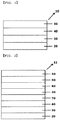
- An organic light emitting device using an organic light emission phenomenon normally has a structure including an anode, a cathode, and an organic material layer therebetween.
- the organic material layer is often formed in a multilayer structure formed with different materials in order to increase efficiency and stability of the organic light emitting device, and for example, may be formed with a hole injection layer, a hole transfer layer, a light emitting layer, an electron transfer layer, an electron injection layer and the like.
- the present specification provides a cyclic compound and an organic light emitting device comprising the same.
- one embodiment of the present specification provides an organic light emitting device including a first electrode; a second electrode provided opposite to the first electrode; and one or two or more organic material layers provided between the first electrode and the second electrode, wherein one or more layers of the organic material layers include the cyclic compound represented by Chemical Formula 1.
- a cyclic compound according to one embodiment of the present specification can be used as a material of an organic material layer of an organic light emitting device, and by using the compound, efficiency enhancement, a low driving voltage and/or lifespan property enhancement can be obtained in the organic light emitting device.
- the organic light emitting device has a wide band gap, and a deep highest occupied molecular orbital (HOMO) level.
- HOMO deep highest occupied molecular orbital
- the present specification provides a cyclic compound represented by Chemical Formula 1.
- a description of one member being placed "on" another member includes not only a case of the one member adjoining the another member but a case of still another member being present between the two members.
- substitution means a hydrogen atom bonding to a carbon atom of a compound is changed to another substituent, and the position of substitution is not limited as long as it is a position at which a hydrogen atom is substituted, that is, a position at which a substituent may substitute, and when two or more substituents substitute, the two or more substituents may be the same as or different from each other.
- substituted or unsubstituted means being substituted with one or two or more substituents selected from the group consisting of deuterium; a halogen group; a nitrile group; a nitro group; an imide group; an amide group; a hydroxyl group; a substituted or unsubstituted alkyl group; a substituted or unsubstituted cycloalkyl group; a substituted or unsubstituted alkoxy group; a substituted or unsubstituted alkenyl group; a substituted or unsubstituted amine group; a substituted or unsubstituted aryl group; and a substituted or unsubstituted heterocyclic group, or being substituted with a substituent linking two or more substituents among the substituents illustrated above, or having no substituents.
- a substituent linking two or more substituents may include a biphenyl group.
- the halogen group may include fluorine, chlorine, bromine or iodine.
- the number of carbon atoms of the imide group is not particularly limited, but is preferably 1 to 30. Specifically, compounds having the following structures may be included, but the compound is not limited thereto.
- the nitrogen of the amide group may be once or twice substituted with hydrogen, a linear, branched or cyclic alkyl group having 1 to 30 carbon atoms, or an aryl group having 6 to 30 carbon atoms.
- compounds having the following structural formulae may be included, but the compound is not limited thereto.
- the alkyl group may be linear or branched, and the number of carbon atoms is not particularly limited, but is preferably 1 to 30. Specific examples thereof include methyl, ethyl, propyl, n-propyl, isopropyl, butyl, n-butyl, isobutyl, tert-butyl, sec-butyl, 1-methyl-butyl, 1-ethyl-butyl, pentyl, n-pentyl, isopentyl, neopentyl, tert-pentyl, hexyl, n-hexyl, 1-methylpentyl, 2-methylpentyl, 4-methyl-2-pentyl, 3,3-dimethylbutyl, 2-ethylbutyl, heptyl, n-heptyl, 1-methylhexyl, cyclopentylmethyl, cyclohexylmethyl, octyl,
- the cycloalkyl group is not particularly limited, but preferably has 3 to 30 carbon atoms.
- Specific examples thereof include cyclopropyl, cyclobutyl, cyclopentyl, 3-methylcyclopentyl, 2,3-dimethylcyclopentyl, cyclohexyl, 3-methylcyclohexyl, 4-methylcyclohexyl, 2,3-dimethylcyclohexyl, 3,4,5-trimethylcyclohexyl, 4-tert-butylcyclohexyl, cycloheptyl, cyclooctyl and the like, but are not limited thereto.
- the alkoxy group may be linear, branched or cyclic.
- the number of carbon atoms of the alkoxy group is not particularly limited, but is preferably 1 to 30. Specific examples thereof may include methoxy, ethoxy, n-propoxy, isopropoxy, i-propyloxy, n-butoxy, isobutoxy, tert-butoxy, sec-butoxy, n-pentyloxy, neopentyloxy, isopentyloxy, n-hexyloxy, 3,3-dimethylbutyloxy, 2-ethylbutyloxy, n-octyloxy, n-nonyloxy, n-decyloxy, benzyloxy, p-methylbenzyloxy and the like, but are not limited thereto.
- the alkenyl group may be linear or branched, and although not particularly limited thereto, the number of carbon atoms is preferably 2 to 30. Specific examples thereof may include vinyl, 1-propenyl, isopropenyl, 1-butenyl, 2-butenyl, 3-butenyl, 1-pentenyl, 2-pentenyl, 3-pentenyl, 3-methyl-1-butenyl, 1,3-butadienyl, allyl, 1-phenylvinyl-1-yl, 2-phenylvinyl-1-yl, 2,2-diphenylvinyl-1-yl, 2-phenyl-2-(naphthyl-1-yl)vinyl-1-yl, 2,2-bis(diphenyl-1-yl)vinyl-1-yl, a stilbenyl group, a styrenyl group and the like, but are not limited thereto.
- the amine group may be selected from the group consisting of -NH 2 ; an alkylamine group; an aralkylamine group; an arylamine group; and a heteroarylamine group, and although not particularly limited thereto, the number of carbon atoms is preferably 1 to 30.
- the amine group include a methylamine group, a dimethylamine group, an ethylamine group, a diethylamine group, a phenylamine group, a naphthylamine group, a biphenylamine group, an anthracenylamine group, a 9-methyl-anthracenylamine group, a diphenylamine group, a phenylnaphthylamine group, a ditolylamine group, a phenyltolylamine group, a triphenylamine group and the like, but are not limited thereto.
- the aryl group is a monocyclic aryl group
- the number of carbon atoms is not particularly limited, but is preferably 6 to 25.
- Specific examples of the monocyclic aryl group may include a phenyl group, a biphenyl group, a terphenyl group and the like, but are not limited thereto.
- the number of carbon atoms is not particularly limited, but is preferably 10 to 24.
- Specific example of the multicyclic aryl group may include a naphthyl group, a triphenylenyl group, an anthracenyl group, a phenanthryl group, a pyrenyl group, a perylenyl group, a crycenyl group, a fluorenyl group and the like, but are not limited thereto.
- the fluorenyl group may be substituted, and adjacent substituents may bond to each other to form a ring.
- the heteroaryl group is a group including one or more atoms that are not carbon, that is, heteroatoms, and specifically, the heteroatom may include one or more atoms selected from the group consisting of O, N, Se, S and the like.
- the number of carbon atoms is not particularly limited, but is preferably 2 to 60.
- heteroaryl group examples include a thiophene group, a furan group, a pyrrole group, an imidazole group, a thiazole group, an oxazole group, an oxadiazole group, a pyridyl group, a bipyridyl group, a pyrimidyl group, a triazine group, a triazole group, an acridyl group, a pyridazine group, a pyrazinyl group, a qinolinyl group, a quinazolyl group, a quinoxalinyl group, a phthalazinyl group, a pyridopyrimidinyl group, a pyridopyrazinyl group, a pyrazinopyrazinyl group, an isoquinoline group, an indole group, a carbazole group, a benzoxazole group, a benzimid
- the heteroaryl group may be monocyclic or multicyclic, and may be aromatic, aliphatic, or a fused ring of aromatic and aliphatic.
- an arylene group means an aryl group having two bonding sites, that is, a divalent group. Descriptions on the aryl group made above may be applied except for those that are each a divalent group.
- a heteroarylene group means a heteroaryl group having two bonding sites, that is, a divalent group. Descriptions on the heteroaryl group made above may be applied except for those that are each a divalent group.
- the hydrocarbon ring include all of a cycloalkyl group; a cycloalkenyl group; an aromatic cyclic group; or an aliphatic cyclic group, may be multicyclic or monocyclic, and includes all rings in which one or two or more of these bond to be fused.
- the aromatic ring may be monocyclic or multicyclic, and may be selected from among the examples of the aryl group except for those that are not monovalent.
- the heterocyclic ring may be an aliphatic ring or aromatic ring, and means at least one carbon atom of the aliphatic ring or aromatic ring being substituted with an N, O, Se or S atom, and may be multicyclic or monocyclic.
- At least one of Ar 1 s is -L 1 -(Z 1 ) p in Chemical Formula 1
- L 1 is selected from the group consisting of a direct bond; a substituted or unsubstituted monocyclic or multicyclic arylene group having 6 to 30 carbon atoms; and a substituted or unsubstituted monocyclic or multicyclic heteroarylene group having 2 to 30 carbon atoms
- Z 1 is selected from the group consisting of hydrogen; deuterium; a nitrile group; a substituted or unsubstituted monocyclic or multicyclic aryl group having 6 to 30 carbon atoms; and a substituted or unsubstituted monocyclic or multicyclic heteroaryl group having 2 to 30 carbon atoms, however, Z 1 is not hydrogen when L 1 is a direct bond, p is an integer of 1 to 3, and when p is 2 or more, Z 1 s are the same as or different from each other.
- L 1 is selected from the group consisting of a direct bond; a substituted or unsubstituted monocyclic or multicyclic arylene group having 6 to 20 carbon atoms; and a substituted or unsubstituted monocyclic or multicyclic heteroarylene group having 2 to 20 carbon atoms.
- L 1 is selected from the group consisting of a direct bond; a substituted or unsubstituted monocyclic or multicyclic arylene group having 6 to 10 carbon atoms; and a substituted or unsubstituted monocyclic or multicyclic heteroarylene group having 2 to 10 carbon atoms.
- L 1 is selected from the group consisting of a direct bond; a substituted or unsubstituted phenylene group; a substituted or unsubstituted biphenylylene group; a substituted or unsubstituted naphthylene group; a substituted or unsubstituted pyrimidylene group; a substituted or unsubstituted quinolylene group; a substituted or unsubstituted quinazolylene group; a substituted or unsubstituted pyridylene group; and a substituted or unsubstituted triazinylene group.
- L 1 is selected from the group consisting of a direct bond; a phenylene group; a biphenylylene group; a naphthylene group; a pyrimidylene group; a quinolylene group; a quinazolylene group; a pyridylene group; and a triazinylene group.
- Z 1 is selected from the group consisting of hydrogen; deuterium; a nitrile group; a substituted or unsubstituted monocyclic or multicyclic aryl group having 6 to 20 carbon atoms; and a substituted or unsubstituted monocyclic or multicyclic heteroaryl group having 2 to 20 carbon atoms.
- Z 1 is selected from the group consisting of hydrogen; deuterium; a nitrile group; a substituted or unsubstituted monocyclic or multicyclic aryl group having 6 to 10 carbon atoms; and a substituted or unsubstituted monocyclic or multicyclic heteroaryl group having 2 to 10 carbon atoms.
- Z 1 is selected from the group consisting of hydrogen; deuterium; a nitrile group; a substituted or unsubstituted phenyl group; a substituted or unsubstituted biphenyl group; a substituted or unsubstituted naphthyl group; a substituted or unsubstituted thiophene group; a substituted or unsubstituted quinolyl group; and a substituted or unsubstituted pyridyl group.
- Z 1 is selected from the group consisting of hydrogen; deuterium; a nitrile group; a phenyl group; a biphenyl group; a naphthyl group; a thiophene group; a quinolyl group; a pyridyl group; a quinolyl group substituted with a phenyl group; a quinolyl group substituted with a pyridyl group; and a quinolyl group substituted with a pyridyl group and a phenyl group.
- At least one of Ar 2 s is -L 2 -(Z 2 ) q in Chemical Formula 1
- L 2 is selected from the group consisting of a direct bond; a substituted or unsubstituted monocyclic or multicyclic arylene group having 6 to 30 carbon atoms ; and a substituted or unsubstituted monocyclic or multicyclic heteroarylene group having 2 to 30 carbon atoms
- Z 2 is selected from the group consisting of hydrogen; deuterium; a nitrile group; a substituted or unsubstituted monocyclic or multicyclic aryl group having 6 to 30 carbon atoms; and a substituted or unsubstituted monocyclic or multicyclic heteroaryl group having 2 to 30 carbon atoms, however, Z 2 is not hydrogen when L 2 is a direct bond, q is an integer of 1 to 3, and when q is two or more, Z 2 s are the same as or different from each other.
- L 2 is selected from the group consisting of a direct bond; a substituted or unsubstituted monocyclic or multicyclic arylene group having 6 to 20 carbon atoms; and a substituted or unsubstituted monocyclic or multicyclic heteroarylene group having 2 to 20 carbon atoms.
- L 2 is selected from the group consisting of a direct bond; a substituted or unsubstituted monocyclic or multicyclic arylene group having 6 to 10 carbon atoms; and a substituted or unsubstituted monocyclic or multicyclic heteroarylene group having 2 to 10 carbon atoms.
- L 2 is selected from the group consisting of a direct bond; a substituted or unsubstituted phenylene group; a substituted or unsubstituted biphenylylene group; a substituted or unsubstituted naphthylene group; a substituted or unsubstituted pyrimidylene group; a substituted or unsubstituted quinolylene group; a substituted or unsubstituted quinazolylene group; a substituted or unsubstituted pyridylene group; and a substituted or unsubstituted triazinylene group.
- L 2 is selected from the group consisting of a direct bond; a phenylene group; a biphenylylene group; a naphthylene group; a pyrimidylene group; a quinolylene group; a quinazolylene group; a pyridylene group; and a triazinylene group.
- Z 2 is selected from the group consisting of hydrogen; deuterium; a nitrile group; a substituted or unsubstituted monocyclic or multicyclic aryl group having 6 to 20 carbon atoms; and a substituted or unsubstituted monocyclic or multicyclic heteroaryl group having 2 to 20 carbon atoms.
- Z 2 is selected from the group consisting of hydrogen; deuterium; a nitrile group; a substituted or unsubstituted monocyclic or multicyclic aryl group having 6 to 10 carbon atoms; and a substituted or unsubstituted monocyclic or multicyclic heteroaryl group having 2 to 10 carbon atoms.
- Z 2 is selected from the group consisting of hydrogen; deuterium; a nitrile group; a substituted or unsubstituted phenyl group; a substituted or unsubstituted biphenyl group; a substituted or unsubstituted naphthyl group; a substituted or unsubstituted thiophene group; a substituted or unsubstituted quinolyl group; and a substituted or unsubstituted pyridyl group.
- Z 2 is selected from the group consisting of hydrogen; deuterium; a nitrile group; a phenyl group; a biphenyl group; a naphthyl group; a thiophene group; a quinolyl group; a pyridyl group; a quinolyl group substituted with a phenyl group; a quinolyl group substituted with a pyridyl group; and a quinolyl group substituted with a pyridyl group and a phenyl group.
- X is a non-conjugated group in Chemical Formula 1.
- X may be carbon
- the cyclic compound represented by Chemical Formula 1 has wider band gap than organic materials used in existing organic light emitting devices by introducing a structure suppressing conjugation between Ar 1 and Ar 2 , and as a result, is capable of having a deep HOMO level.
- R 1 and R 2 are the same as or different from each other, and each independently selected from the group consisting of hydrogen; deuterium; a nitrile group; a substituted or unsubstituted linear or branched alkyl group having 1 to 20 carbon atoms; a substituted or unsubstituted monocyclic or multicyclic cycloalkyl group having 3 to 20 carbon atoms; a substituted or unsubstituted monocyclic or multicyclic aryl group having 6 to 20 carbon atoms; and a substituted or unsubstituted heteroaryl group having 2 to 20 carbon atoms.
- R 1 and R 2 are the same as or different from each other, and each independently selected from the group consisting of hydrogen; deuterium; a nitrile group; a substituted or unsubstituted linear or branched alkyl group having 1 to 10 carbon atoms; a substituted or unsubstituted monocyclic or multicyclic cycloalkyl group having 3 to 10 carbon atoms; a substituted or unsubstituted monocyclic or multicyclic aryl group having 6 to 10 carbon atoms; and a substituted or unsubstituted heteroaryl group having 2 to 10 carbon atoms.
- R 1 and R 2 are the same as or different from each other, and each independently selected from the group consisting of hydrogen; a substituted or unsubstituted phenyl group; and a substituted or unsubstituted naphthyl group.
- R 1 and R 2 are the same as or different from each other, and each independently selected from the group consisting of hydrogen; a phenyl group; and a naphthyl group.
- R 1 and R 2 are the same as or different from each other, and each independently selected from the group consisting of a substituted or unsubstituted methyl group; and a substituted or unsubstituted ethyl group.
- R 1 and R 2 may be linked to each other to form a substituted or unsubstituted hydrocarbon ring.
- R 1 and R 2 may be linked to each other to form a substituted or unsubstituted cyclohexyl ring.
- R 1 and R 2 may be linked to each other to form a cyclohexyl ring.
- Ar 1 and Ar 2 are the same as or different from each other, and each independently a monocyclic or multicyclic heteroaryl group including a substituted or unsubstituted 6-membered heterocyclic ring.
- Ar 1 and Ar 2 are the same as or different from each other, and each independently a substituted or unsubstituted 6-membered heteroaryl group.
- Ar 1 and Ar 2 are the same as or different from each other, and each independently a multicyclic heteroaryl group including a substituted or unsubstituted 6-membered heterocyclic ring.
- Ar 1 and Ar 2 are the same as or different from each other, and each independently a monocyclic or multicyclic heteroaryl group including a substituted or unsubstituted pyridyl group; a substituted or unsubstituted pyrimidyl group; or a substituted or unsubstituted triazinyl group.
- Ar 1 and Ar 2 are the same as or different from each other, and each independently a substituted or unsubstituted pyridyl group; a substituted or unsubstituted pyrimidyl group; a substituted or unsubstituted triazinyl group; a substituted or unsubstituted quinolyl group; a substituted or unsubstituted quinazolinyl group; or a substituted or unsubstituted quinoxalinyl group.
- Ar 1 and Ar 2 are the same as or different from each other, and each independently a pyridyl group; a pyrimidyl group; a triazinyl group; a quinolyl group; or a quinazolinyl group.
- Ar 1 and Ar 2 may be unsubstituted or substituted with one or more selected from the group consisting of a nitrile group; a phenyl group; a biphenyl group; a naphthyl group; a thiophene group; a quinolyl group substituted with a phenyl group, a quinolyl group substituted with a pyridyl group, and a pyridyl group.
- R 1 and R 2 are the same as or different from each other and each independently selected from the group consisting of a substituted or unsubstituted methyl group; and a substituted or unsubstituted ethyl group, and Ar 1 and Ar 2 are the same as or different from each other and each independently a monocyclic heteroaryl group including a substituted or unsubstituted 6-membered heterocyclic ring.
- the cyclic compound represented by Chemical Formula 1 including the above-illustrated R 1 , R 2 , Ar 1 and Ar 2 as a substituent induces a wide band gap in the molecule due to sp 3 bonding and a steric effect of Ar 1 and Ar 2 , forms a high triplet, and has a small n-n overlap in an intermolecular influence since, among the sp 3 bonding four directional substituents, only two directions excluding R 1 and R 2 are conjugation groups, and therefore exhibits excellent hole mobility and/or electron mobility in an organic light emitting device, and as a result, efficiency of the organic light emitting device may be enhanced.
- R 1 and R 2 are the same as or different from each other and each independently selected from the group consisting of a substituted or unsubstituted methyl group; and a substituted or unsubstituted ethyl group
- Ar 1 and Ar 2 are the same as or different from each other and each independently a substituted or unsubstituted pyridyl group, a substituted or unsubstituted pyrimidyl group, or a substituted or unsubstituted triazinyl group.
- R 1 and R 2 are the same as or different from each other and each independently selected from the group consisting of a methyl group; and an ethyl group, and Ar 1 and Ar 2 are the same as or different from each other and each independently a pyridyl group, a pyrimidyl group, or a triazinyl group.
- Ar 1 and Ar 2 may be unsubstituted or substituted with one or more selected from the group consisting of a nitrile group; a phenyl group; a biphenyl group; a naphthyl group; a thiophene group; a quinolyl group substituted with a phenyl group, a quinolyl group substituted with a pyridyl group, and a pyridyl group.
- R 1 and R 2 are linked to each other to form a substituted or unsubstituted hydrocarbon ring, and Ar 1 and Ar 2 are the same as or different from each other and each independently a monocyclic heteroaryl group including a substituted or unsubstituted 6-membered heterocyclic ring.
- R 1 and R 2 are linked to each other to form a substituted or unsubstituted cyclohexyl ring, and Ar 1 and Ar 2 are the same as or different from each other and each independently a monocyclic heteroaryl group including a substituted or unsubstituted 6-membered heterocyclic ring.
- the cyclic compound represented by Chemical Formula 1 including the above-illustrated R 1 , R 2 , Ar 1 and Ar 2 as a substituent induces a wide band gap in the molecule due to sp 3 bonding and a steric effect of Ar 1 and Ar 2 , forms a high triplet, and has a small n-n overlap in an intermolecular influence since, among the sp 3 bonding four directional substituents, only two directions excluding R 1 and R 2 are conjugation groups, and therefore exhibits excellent hole mobility and/or electron mobility in an organic light emitting device, and as a result, efficiency of the organic light emitting device may be enhanced.
- R 1 and R 2 are linked to each other to form a substituted or unsubstituted cyclohexyl ring
- Ar 1 and Ar 2 are the same as or different from each other and each independently a substituted or unsubstituted pyridyl group, a substituted or unsubstituted pyrimidyl group, or a substituted or unsubstituted triazinyl group.
- R 1 and R 2 are linked to each other to form a cyclohexyl ring
- Ar 1 and Ar 2 are the same as or different from each other and each independently a pyridyl group, a pyrimidyl group, or a triazinyl group.
- Ar 1 and Ar 2 may be unsubstituted or substituted with one or more selected from the group consisting of a nitrile group; a phenyl group; a biphenyl group; a naphthyl group; a thiophene group; a quinolyl group substituted with a phenyl group, a quinolyl group substituted with a pyridyl group, and a pyridyl group.
- R 1 and R 2 are linked to each other to form a substituted or unsubstituted hydrocarbon ring, and Ar 1 and Ar 2 are the same as or different from each other, and each independently a multicyclic heteroaryl group including a substituted or unsubstituted 6-membered heterocyclic ring.
- R 1 and R 2 are linked to each other to form a substituted or unsubstituted cyclohexyl ring, and Ar 1 and Ar 2 are the same as or different from each other and each independently a multicyclic heteroaryl group including a substituted or unsubstituted 6-membered heterocyclic ring.
- the cyclic compound represented by Chemical Formula 1 including the above-illustrated R 1 , R 2 , Ar 1 and Ar 2 as a substituent induces a wide band gap in the molecule due to sp 3 bonding and a steric effect of Ar 1 and Ar 2 , forms a high triplet, and has a small n-n overlap in an intermolecular influence since, among the sp 3 bonding four directional substituents, only two directions excluding R 1 and R 2 are conjugation groups, and therefore exhibits excellent hole mobility and/or electron mobility in an organic light emitting device, and as a result, efficiency of the organic light emitting device may be enhanced.
- R 1 and R 2 are linked to each other to form a substituted or unsubstituted cyclohexyl ring
- Ar 1 and Ar 2 are the same as or different from each other and each independently a multicyclic heteroaryl group including a substituted or unsubstituted pyridyl group, a substituted or unsubstituted pyrimidyl group, or a substituted or unsubstituted triazinyl group.
- R 1 and R 2 are linked to each other to form a substituted or unsubstituted cyclohexyl ring, and Ar 1 and Ar 2 are the same as or different from each other and each independently a substituted or unsubstituted quinolyl group; or a substituted or unsubstituted quinazolinyl group.
- R 1 and R 2 are linked to each other to form a cyclohexyl ring, and Ar 1 and Ar 2 are the same as or different from each other, and each independently a quinolyl group; or a quinazolinyl group.
- Ar 1 and Ar 2 may be unsubstituted or substituted with one or more selected from the group consisting of a nitrile group; a phenyl group; a biphenyl group; a naphthyl group; a thiophene group; a quinolyl group substituted with a phenyl group, a quinolyl group substituted with a pyridyl group, and a pyridyl group.
- the cyclic compound represented by Chemical Formula 1 may be selected from among the following compounds.
- Compound 1 Compound 2 Compound 3 Compound 4 Compound 5 Compound 6
- Compound 7 Compound 8
- Compound 9 Compound 10
- Compound 11 Compound 12
- Compound 13 Compound 14
- Compound 15 Compound 16
- Compound 17 Compound 18
- Compound 19 Compound 20
- Compound 21 Compound 22
- Compound 23 Compound 24
- Compound 25 Compound 26
- Compound 27 Compound 28 Compound 29 Compound 30
- Compound 31 Compound 32 Compound 33 Compound 34 Compound 35 Compound 36 Compound 37 Compound 38 Compound 39
- Compound 40 Compound 41
- Compound 42 Compound 43
- Compound 44 Compound 45
- Compound 46 Compound 47
- Compound 48 Compound 49 Compound 50
- Compound 51 Compound 52
- Compound 53 Compound 54
- Compound 55 Compound 56
- Compound 57 Compound 58
- Compound 59 Compound 60
- Compound 61
- One embodiment of the present specification provides an organic light emitting device including the cyclic compound represented by Chemical Formula 1.
- One embodiment of the present specification provides an organic light emitting device including a first electrode; a second electrode provided opposite to the first electrode; and one or two or more organic material layers provided between the first electrode and the second electrode, wherein one or more layers of the organic material layers includes the cyclic compound represented by Chemical Formula 1.
- the organic material layer of the organic light emitting device of the present specification may be formed in a monolayer structure, but may also be formed in a multilayer structure in which two or more organic material layers are laminated.
- the organic light emitting device of the present invention may have a structure including a hole injection layer, a hole transfer layer, a light emitting layer, a hole blocking layer, an electron transfer layer, an electron injection layer and the like as the organic material layer.
- the structure of the organic light emitting device is not limited thereto, and may include less numbers of organic material layers.
- the organic material layer includes a hole injection layer or a hole transfer layer, and the hole injection layer or the hole transfer layer includes the cyclic compound represented by Chemical Formula 1.
- the organic material layer includes a light emitting layer, and the light emitting layer includes the cyclic compound represented by Chemical Formula 1.
- the organic material layer includes a light emitting layer, and the light emitting layer includes the cyclic compound represented by Chemical Formula 1 as a host of the light emitting layer.
- the organic material layer includes an electron transfer layer or an electron injection layer, and the electron transfer layer or the electron injection layer includes the cyclic compound represented by Chemical Formula 1.
- the organic material layer includes an electron transfer layer, an electron injection layer or a layer carrying out electron transfer and electron injection at the same time, and the electron transfer layer, the electron injection layer or the layer carrying out electron transfer and electron injection at the same time includes the cyclic compound represented by Chemical Formula 1.
- the organic material layer includes a hole blocking layer
- the hole blocking layer includes the cyclic compound represented by Chemical Formula 1.
- the organic material layer further includes a hole injection layer or a hole transfer layer including a compound including an arylamino group, a carbazole group or a benzocarbazole group in addition to the organic material layer including the cyclic compound represented by Chemical Formula 1.
- the organic material layer including the cyclic compound represented by Chemical Formula 1 includes the cyclic compound represented by Chemical Formula 1 as a host, and includes other organic compounds, metals or metal compounds as a dopant.
- an organic light emitting device including a first electrode; a second electrode provided opposite to the first electrode; a light emitting layer provided between the first electrode and the second electrode; and two or more organic material layers provided between the light emitting layer and the first electrode, or between the light emitting layer and the second electrode, wherein at least one of the two or more organic material layers includes the cyclic compound represented by Chemical Formula 1.
- two or more from the group consisting of an electron transfer layer, an electron injection layer, a layer carrying out electron transfer and electron injection at the same time, and a hole blocking layer may be selected as the two or more organic material layers.
- the organic material layer includes two or more electron transfer layers, and at least one of the two or more electron transfer layers includes the cyclic compound represented by Chemical Formula 1.
- the cyclic compound represented by Chemical Formula 1 may be either included in one of the two or more electron transfer layers, or included in each of the two or more electron transfer layers.
- cyclic compound represented by Chemical Formula 1 when the cyclic compound represented by Chemical Formula 1 is included in each of the two or more electron transfer layers, materials other than the cyclic compound represented by Chemical Formula 1 may be the same as or different from each other.
- the organic light emitting device of the present specification may be manufactured using materials and methods known in the art, except that one of more layers of the organic material layers include the cyclic compound of the present specification, that is, the cyclic compound represented by Chemical Formula 1.
- the organic material layers may be formed with the same material or with different materials.
- the organic light emitting device of the present specification may be manufactured by consecutively laminating a first electrode, an organic material layer and a second electrode on a substrate.
- the organic light emitting device may be manufactured by forming the first electrode on the substrate by depositing a metal, a metal oxide having conductivity, or an alloy thereof using a physical vapor deposition (PVD) method such as a sputtering method or an e-beam evaporation method, forming the organic material layer including a hole injection layer, a hole transfer layer, a light emitting layer and an electron transfer layer thereon, and then depositing a material capable of being used as the second electrode thereon.
- PVD physical vapor deposition
- the organic light emitting device may be manufactured by consecutively depositing a second electrode material, an organic material layer and a first electrode material on a substrate.
- the cyclic compound represented by Chemical Formula 1 may be formed as the organic material layer using a solution coating method as well as a vacuum deposition method when manufacturing the organic light emitting device.
- the solution coating method means spin coating, dip coating, doctor blading, ink jet printing, screen printing, a spray method, roll coating and the like, but is not limited thereto.
- the organic light emitting device may also be manufactured by consecutively depositing the second electrode material, an organic material layer and the first electrode material on a substrate (International Patent Application Laid-Open Publication No. 2003/012890 ).
- the manufacturing method is not limited thereto.
- the first electrode is an anode
- the second electrode is a cathode
- the first electrode is a cathode
- the second electrode is an anode
- anode material a material having large work function is normally preferable so that hole injection to the organic material layer is smooth.
- the anode material capable of being used in the present invention include metals such as vanadium, chromium, copper, zinc and gold, or alloys thereof; metal oxides such as zinc oxide, indium oxide, indium tin oxide (ITO) and indium zinc oxide (IZO); combinations of metals and oxides such as ZnO:Al or SnO 2 :Sb; conductive polymers such as poly(3-methylthiophene), poly[3,4-(ethylen-1,2-dioxy)thiophene] (PEDOT), polypyrrole and polyaniline, and the like, but are not limited thereto.
- the cathode material a material having small work function is normally preferable so that electron injection to the organic material layer is smooth.
- the cathode material include metals such as magnesium, calcium, sodium, potassium, titanium, indium, yttrium, lithium, gadolinium, aluminum, silver, tin and lead, or alloys thereof; multilayer structure materials such as LiF/Al or LiO 2 /Al, and the like, but are not limited thereto.
- the hole injection layer is a layer that injects holes from an electrode
- the hole injection material is preferably a compound that has an ability to transfer holes, therefore, has a hole injection effect in an anode, has an excellent hole injection effect for a light emitting layer or a light emitting material, prevents excitons generated in the light emitting layer from moving to an electron injection layer or an electron injection material, and in addition, has an excellent thin film forming ability.
- the highest occupied molecular orbital (HOMO) of the hole injection material is preferably in between the work function of an anode material and the HOMO of surrounding organic material layers.
- the hole injection material examples include a metal porphyrin, oligothiophene, an arylamine-based organic material, a hexanitrile hexazatriphenylene-based organic material, a quinacridone-based organic material, a perylene-based organic material, anthraquinone, and a polyaniline- and a polythiophene-based conductive polymer, and the like, but are not limited thereto.
- the hole transfer layer is a layer that receives holes from a hole injection layer and transfers the holes to a light emitting layer
- a hole transfer material a material capable of receiving holes from an anode or a hole injection layer, moving the holes to a light emitting layer, and having high mobility for the holes, is suitable.
- Specific examples thereof include an arylamine-based organic material, a conductive polymer, a block copolymer having conjugated parts and non-conjugated parts together, and the like, but are not limited thereto.
- the light emitting material of the light emitting layer is a material capable of emitting light in a visible light region by receiving holes and electrons from a hole transfer layer and an electron transfer layer, respectively, and binding the holes and the electrons, and is preferably a material having favorable quantum efficiency for fluorescence or phosphorescence.
- Specific examples thereof include a 8-hydroxy-quinoline aluminum complex (Alq 3 ); a carbazole-based compound; a dimerized styryl compound; BAlq; a 10-hydroxybenzo quinoline-metal compound; a benzoxazole-, a benzthiazole- and a benzimidazole-based compound; a poly(p-phenylenevinylene) (PPV)-based polymer; a spiro compound; polyfluorene, rubrene, and the like, but are not limited thereto.
- Alq 3 8-hydroxy-quinoline aluminum complex
- a carbazole-based compound a dimerized styryl compound
- BAlq a 10-hydroxybenzo quinoline-metal compound
- a benzoxazole-, a benzthiazole- and a benzimidazole-based compound a poly(p-phenylenevinylene) (PPV)-based polymer
- PPV poly(p-
- the light emitting layer may include a host material and a dopant material.
- the host material includes a fused aromatic ring derivative, a heterocyclic ring-containing compound or the like.
- the fused aromatic ring derivative includes an anthracene derivative, a pyrene derivative, a naphthalene derivative, a pentacene derivative, a phenanthrene compound, a fluoranthene compound and the like
- the heterocyclic ring-containing compound includes a carbazole derivative, a dibenzofuran derivative, a ladder-type furan compound, a pyrimidine derivative and the like, but the material is not limited thereto.
- the dopant material includes an aromatic amine derivative, a styrylamine compound, a boron complex, a fluoranthene compound, a metal complex and the like.
- the aromatic amine derivative is a fused aromatic ring derivative having a substituted or unsubstituted arylamino group and includes arylamino group-including pyrene, anthracene, crycene, peryflanthene and the like
- the styrylamine compound is a compound in which substituted or unsubstituted arylamine is substituted with at least one arylvinyl group, and one or two or more substituents selected from the group consisting of an aryl group, a silyl group, an alkyl group, a cycloalkyl group and an arylamino group are substituted or unsubstituted.
- styrylamine styryldiamine, styryltriamine, styryltetramine or the like is included, but the styrylamine compound is not limited thereto.
- the metal complex includes an iridium complex, a platinum complex or the like, but is not limited thereto.
- the electron transfer layer is a layer that receives electrons from an electron injection layer and transfers the electrons to a light emitting layer
- a material capable of favorably receiving electrons from a cathode, moving the electrons to a light emitting layer, and having high mobility for the electrons is suitable.
- Specific examples thereof include an Al complex of 8-hydroxyquinoline; a complex including Alq 3 ; an organic radical compound; a hydroxyflavon-metal complex and the like, but are not limited thereto.
- the electron transfer layer may be used together with any desired cathode material as used according to existing technologies.
- the suitable cathode material include common materials that have small work function, and in which an aluminum layer or a silver layer follows.
- the cathode material includes cesium, barium, calcium, ytterbium and samarium, and in each case, an aluminum layer or a silver layer follows.
- the electron injection layer is a layer that injects electrons from an electrode
- the electron injection material is preferably a compound that has an ability to transfer electrons, has an electron injection effect from a cathode, has an excellent electron injection effect for a light emitting layer or a light emitting material, prevents excitons generated in the light emitting layer from moving to a hole injection layer, and in addition, has an excellent thin film forming ability.
- fluorenone anthraquinodimethane, diphenoquinone, thiopyran dioxide, oxazole, oxadiazole, triazole, imidazole, perylene tetracarboxylic acid, fluorenylidene methane, anthrone or the like, and derivatives thereof, a metal complex compound, a nitrogen-containing 5-membered ring derivative, and the like, but are not limited thereto.
- the metal complex compound includes 8-hydroxyquinolinato lithium, bis(8-hydroxyquinolinato)zinc, bis(8-hydroxyquinolinato) copper, bis(8-hydroxyquinolinato)manganese, tris(8-hydroxyquinolinato)aluminum, tris(2-methyl-8-hydroxyquinolinato)aluminum, tris(8-hydroxyquinolinato)gallium, bis(10-hydroxybenzo[h]quinolinato)berylium, bis(10-hydroxybenzo[h]quinolinato)zinc, bis(2-methyl-8-quinolinato)chlorogallium, bis(2-methyl-8-quinolinato)(o-cresolato)gallium, bis(2-methyl-8-quinolinato)(1-naphtholato)aluminum, bis(2-methyl-8-quinolinato)(2-naphtholato)gallium and the like, but is not limited thereto.
- the hole blocking layer is a layer that blocks holes from reaching a cathode, and may generally be formed under the same condition as the hole injection layer. Specific examples thereof include an oxadiazole derivative or a triazole derivative, a phenanthroline derivative, BCP, an aluminum complex and the like, but are not limited thereto.
- the organic light emitting device may be a top-emission type, a bottom-emission type or a dual-emission type depending on the materials used.
- the compound of Chemical Formula 1 may be included in an organic solar cell or an organic transistor in addition to an organic light emitting device.
- Compound 15 was prepared in the same manner as in Preparation Example 1 except that diphenylbis(4-(4,4,5,5-tetramethyl-1,3,2-dioxaborolan-2-yl)phenyl)methane was used instead of Compound A-2, and 2-([1,1'-biphenyl]-4-yl)-4-chloro-6-phenyl-1,3,5-triazine was used instead of 2-chloro-4,6-diphenyl-1,3,5-triazine in Preparation Example 1.
- MS [M+H] + 935
- a glass substrate on which indium tin oxide (ITO) was coated as a thin film to a thickness of 1,000 ⁇ was placed in detergent-dissolved distilled water and ultrasonic cleaned.
- ITO indium tin oxide
- a product of Fischer Co. was used as the detergent, and as the distilled water, distilled water filtered twice with a filter manufactured by Millipore Co. was used.
- the substrate was ultrasonic cleaned with solvents of isopropyl alcohol, acetone and methanol, then dried, and then transferred to a plasma cleaner.
- the substrate was cleaned for 5 minutes using oxygen plasma, and then transferred to a vacuum depositor.
- a hole injection layer was formed by thermal vacuum depositing the following Compound [HI-A] to a thickness of 600 ⁇ .
- a hole transfer layer was formed on the hole injection layer by consecutively vacuum depositing hexanitrile hexaazatriphenylene (HAT) of the following chemical formula to a thickness of 50 ⁇ and the following Compound [HT-A] (600 ⁇ ).
- HAT hexanitrile hexaazatriphenylene
- a light emitting layer was formed on the hole transfer layer to a film thickness of 200 ⁇ by vacuum depositing the following compounds [BH] and [BD] in a weight ratio of 25:1.
- An electron injection and transfer layer was formed on the light emitting layer to a thickness of 350 ⁇ by vacuum depositing Compound 1 and the following compound lithium quinolate [LiQ] in a weight ratio of 1:1.
- a cathode was formed on the electron injection and transfer layer by depositing lithium fluoride (LiF) to a thickness of 10 ⁇ and aluminum to a thickness of 1,000 ⁇ in consecutive order.
- the organic light emitting device was manufactured by maintaining the deposition rates of the organic materials at 0.4 to 0.9 ⁇ /sec, the deposition rates of the lithium fluoride and the aluminum of the cathode at 0.3 ⁇ /sec and 2 ⁇ /sec, respectively, and the degree of vacuum when being deposited at 1 ⁇ 10 -7 to 5 ⁇ 10 -8 torr in the above-mentioned process.
- An organic light emitting device was prepared in the same manner as in Example 1-1 except that Compound 2 was used instead of the compound of Compound 1 in Example 1-1.
- An organic light emitting device was prepared in the same manner as in Example 1-1 except that Compound 6 was used instead of the compound of Compound 1 in Example 1-1.
- An organic light emitting device was prepared in the same manner as in Example 1-1 except that Compound 10 was used instead of the compound of Compound 1 in Example 1-1.
- An organic light emitting device was prepared in the same manner as in Example 1-1 except that Compound 11 was used instead of the compound of Compound 1 in Example 1-1.
- An organic light emitting device was prepared in the same manner as in Example 1-1 except that Compound 15 was used instead of the compound of Compound 1 in Example 1-1.
- An organic light emitting device was prepared in the same manner as in Example 1-1 except that Compound 17 was used instead of the compound of Compound 1 in Example 1-1.
- An organic light emitting device was prepared in the same manner as in Example 1-1 except that Compound 22 was used instead of the compound of Compound 1 in Example 1-1.
- An organic light emitting device was prepared in the same manner as in Example 1-1 except that Compound 24 was used instead of the compound of Compound 1 in Example 1-1.
- An organic light emitting device was prepared in the same manner as in Example 1-1 except that Compound 25 was used instead of the compound of Compound 1 in Example 1-1.
- An organic light emitting device was prepared in the same manner as in Example 1-1 except that Compound 35 was used instead of the compound of Compound 1 in Example 1-1.
- An organic light emitting device was prepared in the same manner as in Example 1-1 except that Compound 55 was used instead of the compound of Compound 1 in Example 1-1.
- An organic light emitting device was prepared in the same manner as in Example 1-1 except that Compound 56 was used instead of the compound of Compound 1 in Example 1-1.
- An organic light emitting device was prepared in the same manner as in Example 1-1 except that Compound 72 was used instead of the compound of Compound 1 in Example 1-1.
- An organic light emitting device was prepared in the same manner as in Example 1-1 except that Compound 74 was used instead of the compound of Compound 1 in Example 1-1.
- An organic light emitting device was prepared in the same manner as in Example 1-1 except that Compound 75 was used instead of the compound of Compound 1 in Example 1-1.
- An organic light emitting device was prepared in the same manner as in Example 1-1 except that Compound 85 was used instead of the compound of Compound 1 in Example 1-1.
- An organic light emitting device was prepared in the same manner as in Example 1-1 except that Compound 90 was used instead of the compound of Compound 1 in Example 1-1.
- An organic light emitting device was prepared in the same manner as in Example 1-1 except that Compound 92 was used instead of the compound of Compound 1 in Example 1-1.
- An organic light emitting device was prepared in the same manner as in Example 1-1 except that Compound 97 was used instead of the compound of Compound 1 in Example 1-1.
- An organic light emitting device was prepared in the same manner as in Example 1-1 except that Compound 100 was used instead of the compound of Compound 1 in Example 1-1.
- An organic light emitting device was prepared in the same manner as in Example 1-1 except that Compound 124 was used instead of the compound of Compound 1 in Example 1-1.
- An organic light emitting device was prepared in the same manner as in Example 1-1 except that Compound 128 was used instead of the compound of Compound 1 in Example 1-1.
- An organic light emitting device was prepared in the same manner as in Example 1-1 except that Compound 155 was used instead of the compound of Compound 1 in Example 1-1.
- An organic light emitting device was prepared in the same manner as in Example 1-1 except that Compound 177 was used instead of the compound of Compound 1 in Example 1-1.
- An organic light emitting device was prepared in the same manner as in Example 1-1 except that Compound 182 was used instead of the compound of Compound 1 in Example 1-1.
- An organic light emitting device was prepared in the same manner as in Example 1-1 except that Compound ET-1-A was used instead of the compound of Compound 1 in Example 1-1.
- An organic light emitting device was prepared in the same manner as in Example 1-1 except that Compound ET-1-B was used instead of the compound of Compound 1 in Example 1-1.
- An organic light emitting device was prepared in the same manner as in Example 1-1 except that Compound ET-1-C was used instead of the compound of Compound 1 in Example 1-1.
- An organic light emitting device was prepared in the same manner as in Example 1-1 except that Compound ET-1-D was used instead of the compound of Compound 1 in Example 1-1.
- An organic light emitting device was prepared in the same manner as in Example 1-1 except that Compound ET-1-E was used instead of the compound of Compound 1 in Example 1-1.
- An organic light emitting device was prepared in the same manner as in Example 1-1 except that Compound ET-1-F was used instead of the compound of Compound 1 in Example 1-1.
- An organic light emitting device was prepared in the same manner as in Example 1-1 except that Compound ET-1-G was used instead of the compound of Compound 1 in Example 1-1.
- the compound represented by Chemical Formula 1 according to one embodiment of the present specification has excellent thermal stability, a deep HOMO level of 6.0 eV or more, high triplet energy (ET), and hole stability, and therefore, is capable of exhibiting excellent properties.
- the compound represented by Chemical Formula 1 when used in an organic material layer capable of carrying out electron injection and electron transfer at the same time, an n-type dopant may be mixed thereto and used.
- the compound represented by Chemical Formula 1 has a low driving voltage and high efficiency, and is capable of enhancing device stability by hole stability of the compound.
Landscapes
- Chemical & Material Sciences (AREA)
- Organic Chemistry (AREA)
- Engineering & Computer Science (AREA)
- Materials Engineering (AREA)
- Physics & Mathematics (AREA)
- Spectroscopy & Molecular Physics (AREA)
- Optics & Photonics (AREA)
- Electroluminescent Light Sources (AREA)
- Plural Heterocyclic Compounds (AREA)
- Pyridine Compounds (AREA)
- Heterocyclic Carbon Compounds Containing A Hetero Ring Having Oxygen Or Sulfur (AREA)
- Materials For Photolithography (AREA)
Applications Claiming Priority (2)
| Application Number | Priority Date | Filing Date | Title |
|---|---|---|---|
| KR20140149355 | 2014-10-30 | ||
| PCT/KR2015/009593 WO2016068478A2 (fr) | 2014-10-30 | 2015-09-11 | Composé cyclique et élément électroluminescent organique comprenant celui-ci |
Publications (3)
| Publication Number | Publication Date |
|---|---|
| EP3214084A2 true EP3214084A2 (fr) | 2017-09-06 |
| EP3214084A4 EP3214084A4 (fr) | 2018-04-11 |
| EP3214084B1 EP3214084B1 (fr) | 2020-02-19 |
Family
ID=55858482
Family Applications (1)
| Application Number | Title | Priority Date | Filing Date |
|---|---|---|---|
| EP15854848.7A Active EP3214084B1 (fr) | 2014-10-30 | 2015-09-11 | Composé cyclique et élément électroluminescent organique comprenant celui-ci |
Country Status (7)
| Country | Link |
|---|---|
| US (1) | US10431748B2 (fr) |
| EP (1) | EP3214084B1 (fr) |
| JP (1) | JP6414793B2 (fr) |
| KR (1) | KR101787195B1 (fr) |
| CN (1) | CN107074784B (fr) |
| TW (1) | TWI586655B (fr) |
| WO (1) | WO2016068478A2 (fr) |
Cited By (3)
| Publication number | Priority date | Publication date | Assignee | Title |
|---|---|---|---|---|
| EP3305771A4 (fr) * | 2015-06-03 | 2019-01-16 | LG Chem, Ltd. | Composé hétérocyclique et dispositif électroluminescent organique contenant ce composé |
| EP3389108A4 (fr) * | 2016-04-28 | 2019-03-27 | LG Chem, Ltd. | Élément électroluminescent organique |
| US12082498B2 (en) | 2016-04-28 | 2024-09-03 | Lg Chem, Ltd. | Organic light-emitting element |
Families Citing this family (6)
| Publication number | Priority date | Publication date | Assignee | Title |
|---|---|---|---|---|
| KR102086890B1 (ko) * | 2017-05-31 | 2020-03-09 | 주식회사 엘지화학 | 유기 발광 소자 |
| CN109456256A (zh) | 2018-12-28 | 2019-03-12 | 武汉天马微电子有限公司 | 化合物、显示面板以及显示装置 |
| KR102669427B1 (ko) | 2019-11-21 | 2024-05-28 | 주식회사 엘지화학 | 화합물 및 이를 포함하는 유기 발광 소자 |
| CN114981994A (zh) * | 2020-10-22 | 2022-08-30 | 京东方科技集团股份有限公司 | 发光器件、发光基板和发光装置 |
| KR102770744B1 (ko) * | 2022-12-02 | 2025-02-21 | 울산과학기술원 | 정공 주입 또는 수송용 화합물, 및 이를 포함하는 유기전계발광소자 |
| KR20250033077A (ko) * | 2023-08-30 | 2025-03-07 | 솔루스첨단소재 주식회사 | 유기 발광 화합물 및 이를 이용한 유기 전계 발광 소자 |
Family Cites Families (36)
| Publication number | Priority date | Publication date | Assignee | Title |
|---|---|---|---|---|
| US3412036A (en) | 1962-05-21 | 1968-11-19 | Switzer Brothers Inc | Synthetic resin and pigment production |
| EP0553950A3 (en) | 1992-01-07 | 1994-11-23 | Toshiba Kk | Organic electroluminescent device |
| JP3476855B2 (ja) | 1992-01-07 | 2003-12-10 | 株式会社東芝 | 有機el素子 |
| JP3016344B2 (ja) | 1994-12-19 | 2000-03-06 | 三菱電機株式会社 | 開閉器 |
| KR100867495B1 (ko) | 2000-11-24 | 2008-11-06 | 도레이 가부시끼가이샤 | 발광 소자 재료 및 이를 이용한 발광 소자 |
| US7052783B2 (en) * | 2000-11-28 | 2006-05-30 | Academia Sinica | Oxadiazole tetramers |
| JP3977011B2 (ja) | 2000-12-25 | 2007-09-19 | 三星エスディアイ株式会社 | 有機エレクトロルミネッセンス素子 |
| JP4432313B2 (ja) * | 2001-10-10 | 2010-03-17 | 東レ株式会社 | テトラフェニルメタン誘導体、及びこれを含む発光素子 |
| JP2003261472A (ja) | 2002-03-07 | 2003-09-16 | Mitsui Chemicals Inc | 有機電界発光素子および新規炭化水素化合物 |
| JP3925265B2 (ja) * | 2002-03-25 | 2007-06-06 | コニカミノルタホールディングス株式会社 | 有機エレクトロルミネッセンス素子及びそれを用いた表示装置 |
| JP4631259B2 (ja) * | 2002-10-03 | 2011-02-16 | コニカミノルタホールディングス株式会社 | 有機エレクトロルミネッセンス素子及び表示装置 |
| JP4305046B2 (ja) | 2003-05-14 | 2009-07-29 | コニカミノルタホールディングス株式会社 | 有機エレクトロルミネッセンス素子、照明装置及び表示装置 |
| JP4314904B2 (ja) | 2003-07-09 | 2009-08-19 | 東レ株式会社 | 発光素子 |
| JP4843897B2 (ja) * | 2003-09-16 | 2011-12-21 | コニカミノルタホールディングス株式会社 | 有機エレクトロルミネッセンス素子、表示装置及び照明装置 |
| JP2005158289A (ja) | 2003-11-20 | 2005-06-16 | Konica Minolta Holdings Inc | 有機エレクトロルミネッセンス素子、表示装置及び照明装置 |
| DE10356099A1 (de) | 2003-11-27 | 2005-07-07 | Covion Organic Semiconductors Gmbh | Organisches Elektrolumineszenzelement |
| JP2005213188A (ja) | 2004-01-29 | 2005-08-11 | Mitsubishi Chemicals Corp | 化合物、電荷輸送材料、有機電界発光素子材料および有機電界発光素子 |
| JP4470508B2 (ja) | 2004-02-05 | 2010-06-02 | 株式会社豊田中央研究所 | アダマンタン誘導体及びこれを用いた有機電界発光素子 |
| JP5011743B2 (ja) | 2005-02-15 | 2012-08-29 | 東ソー株式会社 | カルド構造を有するπ共役化合物並びにその製造方法及び用途 |
| TWI382080B (zh) | 2005-02-15 | 2013-01-11 | Tosoh Corp | 具有懸掛結構之π-共軛化合物、其製造方法及使用方法 |
| WO2006104118A1 (fr) | 2005-03-29 | 2006-10-05 | Konica Minolta Holdings, Inc. | Dispositif electroluminescent organique, dispositif d’affichage et dispositif d’eclairage |
| JP2007049055A (ja) * | 2005-08-12 | 2007-02-22 | Toyo Ink Mfg Co Ltd | 有機エレクトロルミネッセンス素子用材料および有機エレクトロルミネッセンス素子 |
| US9130183B2 (en) * | 2005-08-18 | 2015-09-08 | Konica Minolta, Inc. | Organic electroluminescent element, displaying device and lighting device |
| JP4823730B2 (ja) * | 2006-03-20 | 2011-11-24 | 新日鐵化学株式会社 | 発光層化合物及び有機電界発光素子 |
| JP5589251B2 (ja) | 2006-09-21 | 2014-09-17 | コニカミノルタ株式会社 | 有機エレクトロルミネッセンス素子材料 |
| NZ582871A (en) | 2007-07-27 | 2011-09-30 | Sanofi Aventis | 1,2,3,4-Tetrahydropyrrolo[1,2-a]pyrazine-6-carboxamide and 2,3,4,5- tetrahydropyrrolo[1,2-a][1,4]-diazepine-7-carboxamide derivatives, preparation and therapeutic use thereof |
| EP2209761A4 (fr) | 2007-10-10 | 2012-01-04 | Merck Sharp & Dohme | Cycloalcanes substitués par des diphényles |
| JP2009182088A (ja) * | 2008-01-30 | 2009-08-13 | Konica Minolta Holdings Inc | 有機エレクトロルミネッセンス素子、表示装置及び照明装置 |
| DE102008033943A1 (de) * | 2008-07-18 | 2010-01-21 | Merck Patent Gmbh | Neue Materialien für organische Elektrolumineszenzvorrichtungen |
| KR101741415B1 (ko) | 2009-04-29 | 2017-05-30 | 롬엔드하스전자재료코리아유한회사 | 신규한 유기 발광 화합물 및 이를 채용하고 있는 유기 전계 발광 소자 |
| KR101311934B1 (ko) * | 2009-06-08 | 2013-09-26 | 제일모직주식회사 | 유기광전소자용 조성물 및 이를 이용한 유기광전소자 |
| JP2011093825A (ja) * | 2009-10-28 | 2011-05-12 | Hodogaya Chem Co Ltd | 2,2−ジフェニルアダマンチル構造を有する化合物および有機エレクトロルミネッセンス素子 |
| JP5565554B2 (ja) * | 2009-10-30 | 2014-08-06 | 国立大学法人 東京大学 | 水素吸蔵材料 |
| CN103305210A (zh) * | 2012-03-09 | 2013-09-18 | 海洋王照明科技股份有限公司 | 磷光主体材料及其制备方法和有机电致发光器件 |
| EP2949724B1 (fr) | 2013-01-23 | 2020-06-17 | Kyulux, Inc. | Matériau électroluminescent et élément électroluminescent organique l'utilisant |
| KR101626523B1 (ko) | 2014-03-12 | 2016-06-01 | (주)피엔에이치테크 | 새로운 유기전계발광소자용 화합물 및 그를 포함하는 유기전계발광소자 |
-
2015
- 2015-09-11 JP JP2017517103A patent/JP6414793B2/ja active Active
- 2015-09-11 WO PCT/KR2015/009593 patent/WO2016068478A2/fr not_active Ceased
- 2015-09-11 CN CN201580058494.1A patent/CN107074784B/zh active Active
- 2015-09-11 KR KR1020150129149A patent/KR101787195B1/ko active Active
- 2015-09-11 US US15/515,975 patent/US10431748B2/en active Active
- 2015-09-11 EP EP15854848.7A patent/EP3214084B1/fr active Active
- 2015-09-15 TW TW104130369A patent/TWI586655B/zh active
Cited By (4)
| Publication number | Priority date | Publication date | Assignee | Title |
|---|---|---|---|---|
| EP3305771A4 (fr) * | 2015-06-03 | 2019-01-16 | LG Chem, Ltd. | Composé hétérocyclique et dispositif électroluminescent organique contenant ce composé |
| EP3389108A4 (fr) * | 2016-04-28 | 2019-03-27 | LG Chem, Ltd. | Élément électroluminescent organique |
| US11723268B2 (en) | 2016-04-28 | 2023-08-08 | Lg Chem, Ltd. | Organic light-emitting element |
| US12082498B2 (en) | 2016-04-28 | 2024-09-03 | Lg Chem, Ltd. | Organic light-emitting element |
Also Published As
| Publication number | Publication date |
|---|---|
| EP3214084B1 (fr) | 2020-02-19 |
| TWI586655B (zh) | 2017-06-11 |
| KR101787195B1 (ko) | 2017-10-18 |
| CN107074784A (zh) | 2017-08-18 |
| WO2016068478A3 (fr) | 2016-08-04 |
| US10431748B2 (en) | 2019-10-01 |
| JP6414793B2 (ja) | 2018-10-31 |
| WO2016068478A2 (fr) | 2016-05-06 |
| CN107074784B (zh) | 2020-09-22 |
| JP2017533893A (ja) | 2017-11-16 |
| US20170301866A1 (en) | 2017-10-19 |
| EP3214084A4 (fr) | 2018-04-11 |
| TW201615626A (zh) | 2016-05-01 |
| KR20160051584A (ko) | 2016-05-11 |
Similar Documents
| Publication | Publication Date | Title |
|---|---|---|
| EP3439062B1 (fr) | Elément électroluminescent organique | |
| EP3595025B1 (fr) | Élément électroluminescent organique | |
| EP3428163B1 (fr) | Composé polycyclique et élément électroluminescent organique le comprenant | |
| EP3366682B1 (fr) | Composé hétérocyclique et élément électroluminescent organique le comprenant | |
| EP3476833B1 (fr) | Composé polycyclique et élément électroluminescent organique le comprenant | |
| EP3002282B1 (fr) | Composé hétérocyclique et diode électroluminescente organique le comprenant | |
| EP3296293B1 (fr) | Composé hétérocyclique et élément électroluminescent organique le comprenant | |
| EP3305771B1 (fr) | Dispositif électroluminescent organique contenant un composé hétérocyclique | |
| EP3050879B1 (fr) | Composé hétérocyclique et élément électroluminescent organique le comprenant | |
| EP3214084B1 (fr) | Composé cyclique et élément électroluminescent organique comprenant celui-ci | |
| KR101947596B1 (ko) | 헤테로환 화합물 및 이를 포함하는 유기 발광 소자 | |
| EP3360868B1 (fr) | Composé de type spiro et diode électroluminescente organique comprenant celui-ci | |
| KR102206854B1 (ko) | 다중고리 화합물 및 이를 포함하는 유기 발광 소자 | |
| EP3345891B1 (fr) | Composé amine et dispositif électroluminescent organique le comprenant | |
| EP3330262B1 (fr) | Composé hétérocyclique et diode électroluminescente organique contenant ce composé | |
| EP3363782A1 (fr) | Composé et élément électronique organique le comprenant | |
| EP3483152A1 (fr) | Composé et dispositif électroluminescent organique le comprenant | |
| EP3369718B1 (fr) | Composé de type spiro et élément électroluminescent organique comprenant celui-ci | |
| JP6508657B2 (ja) | 複素環化合物及びこれを含む有機発光素子 | |
| EP3330265A1 (fr) | Composé et élément électroluminescent organique le comprenant | |
| KR102254306B1 (ko) | 아크리딘 유도체 및 이를 포함하는 유기 발광 소자 |
Legal Events
| Date | Code | Title | Description |
|---|---|---|---|
| STAA | Information on the status of an ep patent application or granted ep patent |
Free format text: STATUS: THE INTERNATIONAL PUBLICATION HAS BEEN MADE |
|
| PUAI | Public reference made under article 153(3) epc to a published international application that has entered the european phase |
Free format text: ORIGINAL CODE: 0009012 |
|
| STAA | Information on the status of an ep patent application or granted ep patent |
Free format text: STATUS: REQUEST FOR EXAMINATION WAS MADE |
|
| 17P | Request for examination filed |
Effective date: 20170420 |
|
| AK | Designated contracting states |
Kind code of ref document: A2 Designated state(s): AL AT BE BG CH CY CZ DE DK EE ES FI FR GB GR HR HU IE IS IT LI LT LU LV MC MK MT NL NO PL PT RO RS SE SI SK SM TR |
|
| AX | Request for extension of the european patent |
Extension state: BA ME |
|
| DAV | Request for validation of the european patent (deleted) | ||
| DAX | Request for extension of the european patent (deleted) | ||
| REG | Reference to a national code |
Ref country code: DE Ref legal event code: R079 Ref document number: 602015047498 Country of ref document: DE Free format text: PREVIOUS MAIN CLASS: C07D0403100000 Ipc: C07D0239260000 |
|
| A4 | Supplementary search report drawn up and despatched |
Effective date: 20180312 |
|
| RIC1 | Information provided on ipc code assigned before grant |
Ipc: C09K 11/06 20060101ALI20180306BHEP Ipc: C07D 403/10 20060101ALI20180306BHEP Ipc: H01L 51/50 20060101ALI20180306BHEP Ipc: C07D 239/26 20060101AFI20180306BHEP Ipc: C07D 251/12 20060101ALI20180306BHEP Ipc: H01L 51/30 20060101ALI20180306BHEP |
|
| STAA | Information on the status of an ep patent application or granted ep patent |
Free format text: STATUS: EXAMINATION IS IN PROGRESS |
|
| 17Q | First examination report despatched |
Effective date: 20181114 |
|
| GRAP | Despatch of communication of intention to grant a patent |
Free format text: ORIGINAL CODE: EPIDOSNIGR1 |
|
| STAA | Information on the status of an ep patent application or granted ep patent |
Free format text: STATUS: GRANT OF PATENT IS INTENDED |
|
| INTG | Intention to grant announced |
Effective date: 20191107 |
|
| GRAS | Grant fee paid |
Free format text: ORIGINAL CODE: EPIDOSNIGR3 |
|
| GRAA | (expected) grant |
Free format text: ORIGINAL CODE: 0009210 |
|
| STAA | Information on the status of an ep patent application or granted ep patent |
Free format text: STATUS: THE PATENT HAS BEEN GRANTED |
|
| AK | Designated contracting states |
Kind code of ref document: B1 Designated state(s): AL AT BE BG CH CY CZ DE DK EE ES FI FR GB GR HR HU IE IS IT LI LT LU LV MC MK MT NL NO PL PT RO RS SE SI SK SM TR |
|
| REG | Reference to a national code |
Ref country code: CH Ref legal event code: EP |
|
| REG | Reference to a national code |
Ref country code: DE Ref legal event code: R096 Ref document number: 602015047498 Country of ref document: DE |
|
| REG | Reference to a national code |
Ref country code: AT Ref legal event code: REF Ref document number: 1234831 Country of ref document: AT Kind code of ref document: T Effective date: 20200315 |
|
| REG | Reference to a national code |
Ref country code: IE Ref legal event code: FG4D |
|
| REG | Reference to a national code |
Ref country code: NL Ref legal event code: MP Effective date: 20200219 |
|
| PG25 | Lapsed in a contracting state [announced via postgrant information from national office to epo] |
Ref country code: RS Free format text: LAPSE BECAUSE OF FAILURE TO SUBMIT A TRANSLATION OF THE DESCRIPTION OR TO PAY THE FEE WITHIN THE PRESCRIBED TIME-LIMIT Effective date: 20200219 Ref country code: NO Free format text: LAPSE BECAUSE OF FAILURE TO SUBMIT A TRANSLATION OF THE DESCRIPTION OR TO PAY THE FEE WITHIN THE PRESCRIBED TIME-LIMIT Effective date: 20200519 Ref country code: FI Free format text: LAPSE BECAUSE OF FAILURE TO SUBMIT A TRANSLATION OF THE DESCRIPTION OR TO PAY THE FEE WITHIN THE PRESCRIBED TIME-LIMIT Effective date: 20200219 |
|
| REG | Reference to a national code |
Ref country code: LT Ref legal event code: MG4D |
|
| PG25 | Lapsed in a contracting state [announced via postgrant information from national office to epo] |
Ref country code: LV Free format text: LAPSE BECAUSE OF FAILURE TO SUBMIT A TRANSLATION OF THE DESCRIPTION OR TO PAY THE FEE WITHIN THE PRESCRIBED TIME-LIMIT Effective date: 20200219 Ref country code: GR Free format text: LAPSE BECAUSE OF FAILURE TO SUBMIT A TRANSLATION OF THE DESCRIPTION OR TO PAY THE FEE WITHIN THE PRESCRIBED TIME-LIMIT Effective date: 20200520 Ref country code: HR Free format text: LAPSE BECAUSE OF FAILURE TO SUBMIT A TRANSLATION OF THE DESCRIPTION OR TO PAY THE FEE WITHIN THE PRESCRIBED TIME-LIMIT Effective date: 20200219 Ref country code: IS Free format text: LAPSE BECAUSE OF FAILURE TO SUBMIT A TRANSLATION OF THE DESCRIPTION OR TO PAY THE FEE WITHIN THE PRESCRIBED TIME-LIMIT Effective date: 20200619 Ref country code: SE Free format text: LAPSE BECAUSE OF FAILURE TO SUBMIT A TRANSLATION OF THE DESCRIPTION OR TO PAY THE FEE WITHIN THE PRESCRIBED TIME-LIMIT Effective date: 20200219 Ref country code: BG Free format text: LAPSE BECAUSE OF FAILURE TO SUBMIT A TRANSLATION OF THE DESCRIPTION OR TO PAY THE FEE WITHIN THE PRESCRIBED TIME-LIMIT Effective date: 20200519 |
|
| PG25 | Lapsed in a contracting state [announced via postgrant information from national office to epo] |
Ref country code: NL Free format text: LAPSE BECAUSE OF FAILURE TO SUBMIT A TRANSLATION OF THE DESCRIPTION OR TO PAY THE FEE WITHIN THE PRESCRIBED TIME-LIMIT Effective date: 20200219 |
|
| PG25 | Lapsed in a contracting state [announced via postgrant information from national office to epo] |
Ref country code: PT Free format text: LAPSE BECAUSE OF FAILURE TO SUBMIT A TRANSLATION OF THE DESCRIPTION OR TO PAY THE FEE WITHIN THE PRESCRIBED TIME-LIMIT Effective date: 20200712 Ref country code: SK Free format text: LAPSE BECAUSE OF FAILURE TO SUBMIT A TRANSLATION OF THE DESCRIPTION OR TO PAY THE FEE WITHIN THE PRESCRIBED TIME-LIMIT Effective date: 20200219 Ref country code: RO Free format text: LAPSE BECAUSE OF FAILURE TO SUBMIT A TRANSLATION OF THE DESCRIPTION OR TO PAY THE FEE WITHIN THE PRESCRIBED TIME-LIMIT Effective date: 20200219 Ref country code: LT Free format text: LAPSE BECAUSE OF FAILURE TO SUBMIT A TRANSLATION OF THE DESCRIPTION OR TO PAY THE FEE WITHIN THE PRESCRIBED TIME-LIMIT Effective date: 20200219 Ref country code: CZ Free format text: LAPSE BECAUSE OF FAILURE TO SUBMIT A TRANSLATION OF THE DESCRIPTION OR TO PAY THE FEE WITHIN THE PRESCRIBED TIME-LIMIT Effective date: 20200219 Ref country code: ES Free format text: LAPSE BECAUSE OF FAILURE TO SUBMIT A TRANSLATION OF THE DESCRIPTION OR TO PAY THE FEE WITHIN THE PRESCRIBED TIME-LIMIT Effective date: 20200219 Ref country code: DK Free format text: LAPSE BECAUSE OF FAILURE TO SUBMIT A TRANSLATION OF THE DESCRIPTION OR TO PAY THE FEE WITHIN THE PRESCRIBED TIME-LIMIT Effective date: 20200219 Ref country code: SM Free format text: LAPSE BECAUSE OF FAILURE TO SUBMIT A TRANSLATION OF THE DESCRIPTION OR TO PAY THE FEE WITHIN THE PRESCRIBED TIME-LIMIT Effective date: 20200219 Ref country code: EE Free format text: LAPSE BECAUSE OF FAILURE TO SUBMIT A TRANSLATION OF THE DESCRIPTION OR TO PAY THE FEE WITHIN THE PRESCRIBED TIME-LIMIT Effective date: 20200219 |
|
| REG | Reference to a national code |
Ref country code: AT Ref legal event code: MK05 Ref document number: 1234831 Country of ref document: AT Kind code of ref document: T Effective date: 20200219 |
|
| REG | Reference to a national code |
Ref country code: DE Ref legal event code: R097 Ref document number: 602015047498 Country of ref document: DE |
|
| PLBE | No opposition filed within time limit |
Free format text: ORIGINAL CODE: 0009261 |
|
| STAA | Information on the status of an ep patent application or granted ep patent |
Free format text: STATUS: NO OPPOSITION FILED WITHIN TIME LIMIT |
|
| 26N | No opposition filed |
Effective date: 20201120 |
|
| PG25 | Lapsed in a contracting state [announced via postgrant information from national office to epo] |
Ref country code: IT Free format text: LAPSE BECAUSE OF FAILURE TO SUBMIT A TRANSLATION OF THE DESCRIPTION OR TO PAY THE FEE WITHIN THE PRESCRIBED TIME-LIMIT Effective date: 20200219 Ref country code: AT Free format text: LAPSE BECAUSE OF FAILURE TO SUBMIT A TRANSLATION OF THE DESCRIPTION OR TO PAY THE FEE WITHIN THE PRESCRIBED TIME-LIMIT Effective date: 20200219 |
|
| PG25 | Lapsed in a contracting state [announced via postgrant information from national office to epo] |
Ref country code: SI Free format text: LAPSE BECAUSE OF FAILURE TO SUBMIT A TRANSLATION OF THE DESCRIPTION OR TO PAY THE FEE WITHIN THE PRESCRIBED TIME-LIMIT Effective date: 20200219 Ref country code: PL Free format text: LAPSE BECAUSE OF FAILURE TO SUBMIT A TRANSLATION OF THE DESCRIPTION OR TO PAY THE FEE WITHIN THE PRESCRIBED TIME-LIMIT Effective date: 20200219 |
|
| REG | Reference to a national code |
Ref country code: CH Ref legal event code: PL |
|
| REG | Reference to a national code |
Ref country code: BE Ref legal event code: MM Effective date: 20200930 |
|
| PG25 | Lapsed in a contracting state [announced via postgrant information from national office to epo] |
Ref country code: LU Free format text: LAPSE BECAUSE OF NON-PAYMENT OF DUE FEES Effective date: 20200911 |
|
| PG25 | Lapsed in a contracting state [announced via postgrant information from national office to epo] |
Ref country code: IE Free format text: LAPSE BECAUSE OF NON-PAYMENT OF DUE FEES Effective date: 20200911 Ref country code: LI Free format text: LAPSE BECAUSE OF NON-PAYMENT OF DUE FEES Effective date: 20200930 Ref country code: CH Free format text: LAPSE BECAUSE OF NON-PAYMENT OF DUE FEES Effective date: 20200930 Ref country code: BE Free format text: LAPSE BECAUSE OF NON-PAYMENT OF DUE FEES Effective date: 20200930 |
|
| PG25 | Lapsed in a contracting state [announced via postgrant information from national office to epo] |
Ref country code: TR Free format text: LAPSE BECAUSE OF FAILURE TO SUBMIT A TRANSLATION OF THE DESCRIPTION OR TO PAY THE FEE WITHIN THE PRESCRIBED TIME-LIMIT Effective date: 20200219 Ref country code: MT Free format text: LAPSE BECAUSE OF FAILURE TO SUBMIT A TRANSLATION OF THE DESCRIPTION OR TO PAY THE FEE WITHIN THE PRESCRIBED TIME-LIMIT Effective date: 20200219 Ref country code: CY Free format text: LAPSE BECAUSE OF FAILURE TO SUBMIT A TRANSLATION OF THE DESCRIPTION OR TO PAY THE FEE WITHIN THE PRESCRIBED TIME-LIMIT Effective date: 20200219 |
|
| PG25 | Lapsed in a contracting state [announced via postgrant information from national office to epo] |
Ref country code: MK Free format text: LAPSE BECAUSE OF FAILURE TO SUBMIT A TRANSLATION OF THE DESCRIPTION OR TO PAY THE FEE WITHIN THE PRESCRIBED TIME-LIMIT Effective date: 20200219 Ref country code: MC Free format text: LAPSE BECAUSE OF FAILURE TO SUBMIT A TRANSLATION OF THE DESCRIPTION OR TO PAY THE FEE WITHIN THE PRESCRIBED TIME-LIMIT Effective date: 20200219 Ref country code: AL Free format text: LAPSE BECAUSE OF FAILURE TO SUBMIT A TRANSLATION OF THE DESCRIPTION OR TO PAY THE FEE WITHIN THE PRESCRIBED TIME-LIMIT Effective date: 20200219 |
|
| PGFP | Annual fee paid to national office [announced via postgrant information from national office to epo] |
Ref country code: DE Payment date: 20250820 Year of fee payment: 11 |
|
| PGFP | Annual fee paid to national office [announced via postgrant information from national office to epo] |
Ref country code: GB Payment date: 20250820 Year of fee payment: 11 |
|
| PGFP | Annual fee paid to national office [announced via postgrant information from national office to epo] |
Ref country code: FR Payment date: 20250821 Year of fee payment: 11 |