EP3224723B1 - Dual in-line speichermodule (dimm) zur unterstützung der speicherung von datenindikatoren in einer fehlerkorrekturcode (ecc)-speichereinheit zur speicherung eines ecc - Google Patents
Dual in-line speichermodule (dimm) zur unterstützung der speicherung von datenindikatoren in einer fehlerkorrekturcode (ecc)-speichereinheit zur speicherung eines ecc Download PDFInfo
- Publication number
- EP3224723B1 EP3224723B1 EP16704308.2A EP16704308A EP3224723B1 EP 3224723 B1 EP3224723 B1 EP 3224723B1 EP 16704308 A EP16704308 A EP 16704308A EP 3224723 B1 EP3224723 B1 EP 3224723B1
- Authority
- EP
- European Patent Office
- Prior art keywords
- burst
- data
- ecc
- dimm
- word
- Prior art date
- Legal status (The legal status is an assumption and is not a legal conclusion. Google has not performed a legal analysis and makes no representation as to the accuracy of the status listed.)
- Not-in-force
Links
Images





Classifications
-
- G—PHYSICS
- G06—COMPUTING OR CALCULATING; COUNTING
- G06F—ELECTRIC DIGITAL DATA PROCESSING
- G06F11/00—Error detection; Error correction; Monitoring
- G06F11/07—Responding to the occurrence of a fault, e.g. fault tolerance
- G06F11/08—Error detection or correction by redundancy in data representation, e.g. by using checking codes
- G06F11/10—Adding special bits or symbols to the coded information, e.g. parity check, casting out 9's or 11's
- G06F11/1008—Adding special bits or symbols to the coded information, e.g. parity check, casting out 9's or 11's in individual solid state devices
- G06F11/1012—Adding special bits or symbols to the coded information, e.g. parity check, casting out 9's or 11's in individual solid state devices using codes or arrangements adapted for a specific type of error
-
- H—ELECTRICITY
- H03—ELECTRONIC CIRCUITRY
- H03M—CODING; DECODING; CODE CONVERSION IN GENERAL
- H03M13/00—Coding, decoding or code conversion, for error detection or error correction; Coding theory basic assumptions; Coding bounds; Error probability evaluation methods; Channel models; Simulation or testing of codes
- H03M13/03—Error detection or forward error correction by redundancy in data representation, i.e. code words containing more digits than the source words
- H03M13/05—Error detection or forward error correction by redundancy in data representation, i.e. code words containing more digits than the source words using block codes, i.e. a predetermined number of check bits joined to a predetermined number of information bits
- H03M13/13—Linear codes
- H03M13/17—Burst error correction, e.g. error trapping, Fire codes
Definitions
- the technology of the disclosure relates to memory controllers providing an interface to memory systems in computer systems.
- Microprocessors perform computational tasks in a wide variety of applications.
- a typical microprocessor application includes one or more central processing units (CPUs) that execute software instructions.
- the software instructions may instruct a CPU to fetch data from a location in memory, perform one or more CPU operations using the fetched data, and generate a result.
- the result may then be stored in memory.
- this memory can be a cache local to the CPU, a shared local cache among CPUs in a CPU block, a shared cache among multiple CPU blocks, or main memory of the microprocessor.
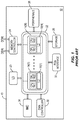
- FIG. 1 is a schematic diagram of an exemplary system-on-a-chip (SoC) 10 that includes a CPU-based system 12.
- the CPU-based system 12 includes a plurality of CPU blocks 14(1)-14(N) in this example, wherein 'N' is equal to any number of CPU blocks 14(1)-14(N) desired.
- each of the CPU blocks 14(1)-14(N) contains two CPUs 16(1), 16(2).
- the CPU blocks 14(1)-14(N) further contain shared Level 2 (L2) caches 18(1)-18(N), respectively.
- a shared Level 3 (L3) cache 20 is also provided for storing cached data that is used by any of, or shared among, each of the CPU blocks 14(1)-14(N).
- An internal system bus 22 is provided to enable each of the CPU blocks 14(1)-14(N) to access the shared L3 cache 20 as well as other shared resources.
- Other shared resources accessed by the CPU blocks 14(1)-14(N) through the internal system bus 22 may include a memory controller 24 for accessing a main, external memory (e.g., double-rate dynamic random access memory (DRAM) (DDR) provided in a dual in-line memory module (DIMM), as a non-limiting example), peripherals 26, other storage 28, an express peripheral component interconnect (PCI) (PCI-e) interface 30, a direct memory access (DMA) controller 32, and/or an integrated memory controller (IMC) 34.
- DRAM double-rate dynamic random access memory
- DIMM dual in-line memory module
- PCI-e express peripheral component interconnect
- DMA direct memory access
- IMC integrated memory controller
- CPU-based applications executing in the CPU-based system 12 in Figure 1 increase in complexity and performance
- memory capacity can be a constraint.
- providing additional memory capacity in a CPU-based system increases costs and area needed for memory on an integrated circuit (IC).
- IC integrated circuit
- SoC SoC 10
- adding additional memory capacity may increase the SoC packaging.
- Data compression may be employed to increase the effective memory capacity of a CPU-based system without increasing physical memory capacity. Data compression can also be employed to increase memory access bandwidth between a memory controller and memory.
- data for a write operation in the CPU-based system 12 in Figure 1 can be compressed, and the memory controller 24 may be configured to compress the data according to a defined compression algorithm. The compressed data is then written in compressed form at the data address in memory for the write operation.
- the memory controller 24 needs to be able to determine if the data stored at the accessed data address in memory is stored in compressed or uncompressed form.
- a data indicator may be provided that is associated with the data address in memory.
- the memory controller 24 can consult the data indicator for a read operation for a given data address to determine if the read data should be uncompressed.
- providing additional data indicators associated with the data addresses in memory increases memory size.
- the memory data bus width between the memory controller 24 and memory would have to be increased, which may be undesirable.
- WO2014/051625 discloses example methods, systems, and apparatus to dynamically select between memory error detection and memory error correction.
- DIMMs dual in-line memory modules
- ECC error correcting code
- the data indicator(s) may be stored in the DIMM without the need to provide additional data storage in the DIMM and increase the data width of the DIMM and/or the data bus width of the DIMM.
- Related memory controllers, memory systems, and methods are also disclosed. In this manner, additional memory is not required to be provided to store data indicators.
- Data indicators may be stored in an ECC storage unit in the DIMM for a variety of non-limiting applications.
- a data indicator may be stored in an ECC storage unit as a data indicator for indicating if data stored in memory is compressed or uncompressed.
- Another example where it may be desired to store a data indicator in an ECC storage unit in a DIMM may be to store cache coherency information in the DIMM used as a cache memory, such as whether each cache line of data in the DIMM is present on other processing nodes in the system.
- a dual in-line memory module that supports storage of a data indicator(s) in an error correcting code (ECC) storage unit dedicated to storing an ECC.
- the DIMM provides storage for data in a central processing unit (CPU)-based system.
- a memory controller provides an interface to the DIMM for read and write operations.
- the DIMM is configured in a plurality of burst data storage units.
- a burst data storage unit is a storage unit bit size in the DIMM for a burst data transaction according to a burst data length provided by the memory controller in the CPU-based system.
- a burst data length may be four (4) data line storage units in the DIMM, wherein each data line storage unit is sixty-four (64) data bit cells.
- the DIMM is also configured to provide a burst ECC storage unit striped over a plurality of ECC line storage units each corresponding to a data line storage unit.
- each ECC line storage unit includes an ECC byte storage unit comprising eight (8) data bit cells.
- the DIMM is seventy-two (72) bits wide (i.e., each data line storage unit being sixty-four (64) bit cells for storing sixty-four (64) data bits and an eight (8) bit cell ECC line storage unit for storing eight (8) ECC bits).
- each burst data storage unit can store two hundred fifty-six (256) bits of burst data (i.e., burst length of four (4) times sixty-four (64) bit data byte storage unit) and thirty-two (32) bits of a burst ECC word for the burst data (i.e., burst length of four (4) times eight (8) bit ECC byte storage unit).
- the DIMM is configured to receive a burst data word, a burst ECC word for the burst data word, and a data indicator for the burst data word. The DIMM is then configured to stripe the received burst data word across the burst data word storage unit in the burst data storage unit at a write data address for the write operation. The DIMM is also configured to stripe the received burst ECC word for the burst data word across the burst ECC storage unit in fewer bits than a number of data bit cells in the burst ECC storage unit.
- the DIMM can be configured to store at least one data indicator for the burst data word in the extra, leftover bit(s) in the burst ECC storage unit of the burst data storage unit, such that memory size does not have to be increased to store a data indicator(s).
- the memory data bus width of the DIMM does not have to be increased (e.g., beyond seventy-two (72) bits in the above referenced example) to avoid an increase in latency, because the data indicator can be written or read in the write or read operation for a burst data word in the DIMM as part of the ECC in the same burst cycle.
- a DIMM comprises a plurality of burst data storage units.
- Each burst data storage unit among the plurality of burst data storage units comprises a burst data word storage unit striped over a plurality of data line storage units totaling a burst length.
- Each data line storage unit among the plurality of data line storage units comprises sixty-four (64) data bit cells.
- Each burst data storage unit among the plurality of burst data storage units further comprises a burst ECC storage unit striped over a plurality of ECC line storage units.
- Each ECC line storage unit among the plurality of ECC line storage units corresponds to a data line storage unit, and comprises eight (8) data bit cells.
- the DIMM is configured to receive a write data address for a burst memory write request, and receive burst write data of a burst write data block length for the burst memory write request.
- the burst write data comprises a burst write data word, a burst ECC word for the burst write data word, and at least one data indicator for the burst write data word.
- the DIMM is further configured to stripe the received burst write data word across the burst data word storage unit at the received write data address.
- the DIMM is also configured to stripe the received burst ECC word for the burst write data word across the burst ECC storage unit in fewer bits than a number of data bit cells in the burst ECC storage unit at the received write data address.
- the DIMM is further configured to store the at least one data indicator for the burst write data word in the burst ECC storage unit of the burst data storage unit at the received write data address.
- a method of writing data to a DIMM in a CPU-based system comprises receiving a memory write request in a DIMM.
- the memory write request comprises a write data address and burst write data of a burst write data block length.
- the burst write data comprises a burst write data word, a burst ECC word for the burst write data word, and at least one data indicator for the burst write data word.
- the method also comprises striping the received burst write data word across a burst data word storage unit in a burst data storage unit at the received write data address in the DIMM.
- the DIMM comprises a plurality of burst data storage units.
- Each burst data storage unit among the plurality of burst data storage units comprises a burst data word storage unit striped over a plurality of data line storage units totaling a burst length.
- Each data line storage unit among the plurality of data line storage units comprises sixty-four (64) data bit cells.
- Each burst data storage unit among the plurality of burst data storage units further comprises a burst ECC storage unit striped over a plurality of ECC line storage units.
- Each ECC line storage unit among the plurality of ECC line storage units corresponds to a data line storage unit, and comprises eight (8) data bit cells.
- the method further comprises striping the received burst ECC word in the DIMM for the burst write data word across the burst ECC storage unit in fewer bits than a number of data bit cells in the burst ECC storage unit at the received write address.
- a memory system for a CPU-based system comprises a DIMM.
- the DIMM comprises a plurality of burst data storage units.
- Each burst data storage unit among the plurality of burst data storage units comprises a burst data word storage unit striped over a plurality of data line storage units totaling a burst length.
- Each data line storage unit among the plurality of data line storage units comprises sixty-four (64) data bit cells.
- Each burst data storage unit among the plurality of burst data storage units further comprises a burst ECC storage unit striped over a plurality of ECC line storage units.
- Each ECC line storage unit among the plurality of ECC line storage units corresponds to a data line storage unit, and comprises eight (8) data bit cells.
- the DIMM is configured to receive a burst memory write request comprising a write data address and burst write data of a burst write data block length.
- the burst write data comprises a burst write data word, a burst ECC word for the burst write data word, and at least one data indicator for the burst write data word.
- the DIMM is also configured to stripe the received burst write data word across the burst data word storage unit at the received write data address.
- the DIMM is further configured to stripe the received burst ECC word for the burst write data word across the burst ECC storage unit in fewer bits than a number of data bit cells in the burst ECC storage unit at the received write data address.
- the DIMM is further configured to store the at least one data indicator for the burst write data word in the burst ECC storage unit of the burst data storage unit at the received write data address.
- the memory system further comprises a memory controller.
- the memory controller is configured to receive a memory write request comprising the write data address and write data of a write data block length.
- the memory controller is configured to calculate one or more burst ECC words for the write data, each of the one or more burst ECC words having a length less than the number of data bit cells in the burst ECC storage unit, according to a defined ECC.
- the memory controller is also configured to construct one or more burst write data of the burst write data block length based on the write data.
- Each of the one or more burst write data comprises a burst write data word, a burst ECC word for the burst write data word, and at least one data indicator for the burst write data word.
- the memory controller is further configured to communicate the write data address and the one or more burst write data words to the DIMM to be stored at the write data address in the DIMM.
- a method of writing data to a memory system in a CPU-based system comprises receiving a memory write request comprising a write data address and write data of a write data block length.
- the method further comprises calculating one or more burst ECC words for the write data, each of the one or more burst ECC words having a length less than a number of data bit cells in a burst ECC storage unit, according to a defined ECC.
- the method also comprises constructing one or more burst write data of a burst write data block length based on the write data.
- Each of the one or more burst write data comprising a burst write data word, a burst ECC word for the burst write data word, and at least one data indicator for the burst write data word.
- the method further comprises communicating the write data address and one or more burst write data words to a DIMM to be stored at the write data address in the DIMM.
- the method also comprises receiving the memory write request in the DIMM.
- the memory write request comprises the write data address and the one or more burst write data of the burst write data block length, the one or more burst write data comprising a burst write data word, a burst ECC word for the burst write data word, and at least one data indicator for the burst write data word.
- the method further comprises striping the received burst write data word across a burst data word storage unit in a burst data storage unit at the received write data address in the DIMM.
- the DIMM comprises a plurality of burst data storage units.
- Each burst data storage unit among the plurality of burst data storage units comprises a burst data word storage unit striped over a plurality of data line storage units totaling a burst length.
- Each data line storage unit among the plurality of data line storage units comprises sixty-four (64) data bit cells.
- Each burst data storage unit among the plurality of burst data storage units comprises an ECC storage unit striped over a plurality of ECC line storage units, each ECC line storage unit among the plurality of ECC line storage units corresponding to a data line storage unit, and comprising eight (8) data bit cells.
- the method further comprises striping the received one or more burst ECC words in the DIMM for the burst write data word across the burst ECC storage unit in fewer bits than a number of data bit cells in the burst ECC storage unit at the received write data address.
- a data indicator is provided and associated with each data word in memory that can be written by a memory controller.
- the data indicator may be used to indicate if the memory controller compressed the written data word during a write operation.
- the data indicator can also be read and used by the memory controller.
- the memory controller may use the data indicator to determine if a read data word for a read operation was previously stored compressed, so that the read data word can be uncompressed.
- the aspects discussed herein of DIMMs that support storage of a data indicator(s) in an ECC storage unit dedicated to storing an ECC are not limited to storing data indicators to indicate data compression.
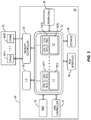
- FIG. 2 is a schematic diagram of an SoC 10' that includes an exemplary CPU-based system 12' having a plurality of CPU blocks 14(1)-14(N) similar to the CPU-based system 12 in Figure 1 .
- the CPU-based system 12' in Figure 2 includes some common components with the CPU-based system 12 in Figure 1 , which are noted by common element numbers between Figures 1 and 2 . For the sake of brevity, these elements will not be re-described.
- a memory controller 36 is provided in the CPU-based system 12' in Figure 2 .
- the memory controller 36 controls access to a system memory 38.
- the system memory 38 may comprise one or more double data rate (DDR) dynamic random access memories (DRAMs) 40(1)-40(R) (referred to hereinafter as "DRAM 40(1)-40(R)”), as a non-limiting example.
- DDR double data rate
- DRAM 40(1)-40(R) dynamic random access memories
- the memory controller 36 in this example employs memory bandwidth compression according to the aspects disclosed herein and below. Similar to the memory controller 24 of the CPU-based system 12 of Figure 1 , the memory controller 36 in the CPU-based system 12' in Figure 2 is shared by the CPU blocks 14(1)-14(N) through the internal system bus 22.
- Figure 3 To illustrate a more detailed schematic diagram of exemplary internal components of the memory controller 36 in Figure 2 , Figure 3 is provided.
- the memory controller 36 is provided on a separate semiconductor die 44 from semiconductor dies 46(1), 46(2) that contain the CPU blocks 14(1)-14(N) in Figure 2 .
- the memory controller 36 may be included in a common semiconductor die (not shown) with the CPU blocks 14(1)-14(N). Regardless of the die configurations, the memory controller 36 is provided such that the CPU blocks 14(1)-14(N) may make memory access requests via the internal system bus 22 to the memory controller 36, and receive data from memory through the memory controller 36.
- the memory controller 36 controls operations for memory accesses to the system memory 38, which is shown in Figures 2 and 3 as comprising DRAM 40(1)-40(R).
- the memory controller 36 includes a plurality of memory interfaces (MEM I/Fs) 48(1)-48(P) (e.g., DDR DRAM interfaces) used to service memory access requests (not shown).
- the memory controller 36 in this example includes a compression controller 50.
- the compression controller 50 controls compressing data stored to the system memory 38 and decompressing data retrieved from the system memory 38 in response to memory access requests from the CPU blocks 14(1)-14(N) in Figure 2 .
- the CPU blocks 14(1)-14(N) can be provided with a virtual memory address space greater than the actual capacity of memory accessed by the memory controller 36.
- the compression controller 50 can also be configured to perform bandwidth compression of information provided over the internal system bus 22 to the CPU blocks 14(1)-14(N).
- the compression controller 50 can perform any number of compression techniques and algorithms to provide memory bandwidth compression.
- a local memory 52 is provided for data structures and other information needed by the compression controller 50 to perform such compression techniques and algorithms.
- the local memory 52 is provided in the form of a static random access memory (SRAM) 54.
- SRAM static random access memory
- the local memory 52 is of sufficient size to be used for data structures and other data storage that may be needed for the compression controller 50 to perform compression techniques and algorithms.
- the local memory 52 may also be partitioned to contain a cache, such as a Level 4 (L4) cache, to provide additional cache memory for internal use within the memory controller 36.
- L4 controller 55 may also be provided in the memory controller 36 to provide access to the L4 cache.
- Enhanced compression techniques and algorithms may require a larger internal memory, as will be discussed in more detail below.
- the local memory 52 may provide 128 kilobytes (kB) of memory.
- an optional additional internal memory 56 can also be provided for the memory controller 36.
- the additional internal memory 56 may be provided as DRAM, as an example.
- the additional internal memory 56 can facilitate additional or greater amounts of storage of data structures and other data than in the local memory 52 for the memory controller 36 providing memory compression and decompression mechanisms to increase the memory bandwidth compression of the CPU-based system 12'.
- An internal memory controller 58 is provided in the memory controller 36 to control memory accesses to the additional internal memory 56 for use in compression. The internal memory controller 58 is not accessible or viewable to the CPU blocks 14(1)-14(N).
- the memory controller 36 in Figure 3 may perform memory bandwidth compression, including, in some aspects, zero-line compression.
- the local memory 52 can be used to store larger data structures used for such compression.
- memory bandwidth compression may reduce memory access latency and allow more CPUs 16(1), 16(2) or their respective threads to access a same number of memory channels while minimizing the impact to memory access latency.
- the number of memory channels may be reduced while achieving similar latency results compared to a greater number of memory channels if such compression was not performed by the memory controller 36, which may result in reduced system level power consumption.
- Each of the resources provided for memory bandwidth compression in the memory controller 36 in Figure 3 can be used individually or in conjunction with each other to achieve the desired balance among resources and area, power consumption, increased memory capacity through memory capacity compression, and increased performance through memory bandwidth compression.
- Memory bandwidth compression can be enabled or disabled, as desired. Further, the resources described above for use by the memory controller 36 can be enabled or disabled to achieve the desired tradeoffs among memory capacity and/or bandwidth compression efficiency, power consumption, and performance. Exemplary memory bandwidth compression techniques using these resources available to the memory controller 36 will now be discussed.
- One or more ECC bits may be included in a memory, such as in the CPU-based system 12 in Figure 1 , to perform ECC operations. However, it may also be desired to store at least one data indicator in association with a memory line for any number of reasons or purposes. For example, if a memory controller CPU-based system 12 is capable of performing data compression of stored data, the data indicator may be used to indicate whether the memory line is stored in compressed form or not. In this manner, when performing a memory access request to the system memory, a memory controller can check the data indicator associated with the memory line corresponding to the physical address to be addressed to determine if the memory line is compressed as part of processing of the memory access request.
- a data indicator stored in memory in association with a stored data word may be used for cache coherency to indicate whether the stored data is present in another memory in a CPU-based system.
- providing data indicators for memory lines in memory increases memory size.
- the memory data bus width between the memory controller and the memory may have to be increased, which may be undesirable, or latency may be increased.
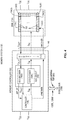
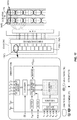
- Figure 4 is an exemplary memory system 130 that includes a memory controller 132, which may be the memory controller 36 in Figure 2 as an example.
- the memory system 130 can be provided in a CPU-based system, including the CPU-based system 12' discussed above and illustrated in Figure 2 .
- a DIMM 134 is provided to store memory data.
- the memory controller 132 and DIMM 134 are typically powered in the same voltage domain (shown as Vdd and Vss in Figure 4 ).
- the memory controller 132 is communicatively coupled to the DIMM 134 to provide memory access requests for read and write operations to the DIMM 134.
- the memory controller 132 is configured to receive memory read requests 136R and memory write requests 136W over a system bus 138.
- a memory read request 136R includes a read data address to be read in the DIMM 134.
- a memory write request 136W includes a write data address and write data to be written at the write data address in the DIMM 134.
- the memory controller 132 is configured to determine if the write data can be compressed, the memory controller 132 can compress the write data to be stored in the DIMM 134 according to a compression algorithm. Similar to the examples discussed above, the memory controller 132 is configured to provide at least one data indicator to the DIMM 134 as part of a write operation so that the DIMM 134 can provide the at least one data indicator to the memory controller 132 during a read operation.
- the data indicator may be used to indicate if the read data was stored compressed or uncompressed.
- the DIMM 134 is configured to support storage of at least one data indicator in an ECC storage unit dedicated to storing an ECC. In this manner, additional memory is not required to be provided to store the data indicator(s).
- the memory controller 132 includes a controller 140, which may be similar to the compression controller 50 in the memory controller 36 in Figure 3 .
- the controller 140 is configured to receive write data for a memory write request 136W. Regardless, the write data is provided as a data input (Din) to an ECC circuit 142.
- the ECC circuit 142 includes an ECC encoder 144E that is configured to calculate an ECC word for the write data.
- the write data, the ECC word for the write data, and a data indicator set by the controller 140 is communicated through a memory interface (I/F) 146 over a memory bus 148 to the DIMM 134 to be stored in conjunction with each other.
- I/F memory interface
- the controller 140 is configured to provide the command (e.g., write command) and data address (e.g., a write data address) as cmd/addr information along with the write data on the data input (Din) through the memory interface 146 to the DIMM 134.
- the memory interface 146 may be or may be similar to the memory interface 48 in the memory controller 36 in Figure 3 .
- the memory controller 132 may break up the write data into multiple burst write data words communicated to the DIMM 134 to be stored.
- the DIMM 134 in Figure 4 may be seventy-two (72) bits wide.
- the DIMM 134 in Figure 4 includes a plurality of data line storage units 150(0)-150(U) each comprising sixty-four (64) data bit cells 152. Multiple data line storage units 150(0)-150(U) may be partitioned in the DIMM 134 to provide a burst data storage unit.
- a burst data storage unit is a storage unit bit size in the DIMM 134 for a burst data transaction according to the burst data length.
- a burst data length may be equal to the size of four (4) data line storage units 150(0)-150(U) in the DIMM 134, wherein each data line storage unit 150(0)-150(U) is a data byte storage unit comprising sixty-four (64) data bit cells 152.
- a data burst is 32 bytes (i.e., 64 bits in a data line storage unit 150 times 4 data lines).
- the data word size for the memory system 130 is sixty-four (64) bytes
- eight (8) data line storage units 150(0)-150(U) will be employed in the DIMM 134 to store this data word totaling 64 bytes, which is provided in two data bursts of 32 bytes each.
- an ECC line storage unit 154(0)-154(U) is also provided in the DIMM 134 for each data line storage units 150(0)-150(U).
- the ECC line storage units 154(0)-154(U) are configured to store one or more ECC words corresponding to a data word striped over one or more data line storage units 150(0)-150(U) in the DIMM 134.
- the DIMM 134 is configured to stripe a calculated ECC for write data over the plurality of ECC line storage units 154(0)-154(U), if a burst data word is larger than the size of a single data line storage unit 150.
- a burst data word is 32 bytes and thus an ECC code for a data word can be striped by the DIMM 134 over 32 bits over four (4) ECC line storage units 154(0)-154(U) of eight (8) bits each (i.e., 32 bits) corresponding to four (4) data line storage units 150(0)-150(U).
- a plurality of data indicator units 156(0)-156(R) are provided in the DIMM 134 to provide a storage unit to store a data indicator that can be used to provide an indication about stored data words. Because as discussed below, the data indicator units 156(10)-156(R) are provided as part of the ECC line storage units 154(0)-154(U) based on the ECC bit error correction code selected for use, additional bits of storage are not required in the DIMM 134 to store the data indicator units 156(0)-156(R).
- each data indicator unit 156(0)-156(R) may differ from the number of data line storage units 150(0)-150(U) if the data burst length is such that stored data words are larger than the size of the data line storage units 150(0)-150(U) in the DIMM 134, because only one data indicator unit 156 is needed for each single data word.
- each data indicator unit 156(0)-156(R) can consist of one (1) bit to store a data indicator that simply indicates one of two states about the corresponding stored data word.
- the data indicator units 156(0)-156(R) can be configured to store multiple bits to also allow storage of multiple data indicators for given data word to be encoded and stored in the DIMM 134 in association with the given data word.
- the controller 140 is also configured to receive a memory read request 136R comprising a read data address over the system bus 138 to perform a read operation.
- the controller 140 provides the read operation and the read data address to the DIMM 134 through the cmd/addr information for the read data to be accessed by the DIMM 134 at the read address.
- the DIMM 134 provides the read data, the ECC associated with the read data, and the at least one data indicator associated with the read data as output data (Dout) to the memory interface 146 of the memory controller 132.
- the ECC associated with the read data is provided to an ECC decoder 144D in the ECC circuit 142 to determine if the read data contains a bit error(s).
- the ECC decoder 144D corrects any detected bit error(s), if possible, depending on the ECC bit error correction code employed by the memory controller 132.
- the bit error(s) is communicated to the controller 140 as a correction error signal (corr_er).
- the controller 140 can use the received data indicator(s) to determine if the read data is compressed or uncompressed. If compressed, the controller 140 decompresses the read data to provide the read data on the system bus 138 to the requestor that issued the memory read request 136R.
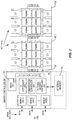
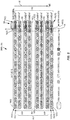
- Figure 5 is a diagram of an exemplary data partitioning of the data line storage units 150(0)-150(U) in the DIMM 134 of the memory system 130 in Figure 4 to illustrate an example of storing data indicators as part of an ECC line storage unit 154.
- the DIMM 134 is partitioned into a plurality of burst data storage units 160(0)-160(3).
- Four (4) burst data storage units 160(0)-160(3) of the DIMM 134 are shown in Figure 5 , which may be the size of a cache line for example (i.e., 256 bytes).
- each burst data storage unit 160(0)-160(3) is comprised of four (4) data line storage units 150(0)-150(3) to allow for a burst data word stored therein to be thirty-two (32) bytes in length.
- data line storage units 150(0)-150(15) are shown in the DIMM 134, because only four (4) burst data storage units 160(0)-160(3) are shown.
- a data word in a CPU-based system in which the memory system 130 in Figure 4 is provided is sixty-four (64) bytes, so each data word can be stored as two (2) burst data words in two (2) burst data storage units 160(0)-160(1) each able to store thirty-two (32) bytes each.
- each burst data word storage unit 160 is striped over four (4) data line storage units 150(0)-150(3) totaling the burst length, with each data line storage unit 150 each comprising sixty-four (64) data bit cells.
- the DIMM 134 is double data rate (DDR) clocked meaning that the DIMM 134 is clocked on both the rising and falling edge of a clock signal.
- DDR double data rate
- a clock signal status is shown to explain how the data line storage units 150(0)-150(15) are accessed by the DIMM 134 sequentially over time, as shown by a time arrow 158.
- the data line storage unit 150(0) is accessed on the rising edge of the clock signal in cycle '0' (i.e., clockO-r).
- the data line storage unit 150(1) is accessed on the falling edge of the clock signal in cycle '0" (clock0-f), and so on.
- the DIMM 134 is also partitioned into a plurality of burst ECC storage units 162 that are each capable of storing a burst ECC word.
- burst ECC storage units 162(0)-162(3) of the DIMM 134 are shown in Figure 5 , wherein each burst ECC storage unit 162(0)-162(3) is associated with a respective burst data storage unit 160(0)-160(3).
- each burst ECC storage unit 162(0)-162(3) is comprised of four (4) ECC line storage units 154(0)-154(3) to provide for each burst ECC word to be thirty-two (32) bits in length, since each ECC line storage unit 154 is comprised of eight (8) data bits.
- each ECC line storage unit 154 is comprised of eight (8) data bits.
- only sixteen (16) ECC line storage units 154(0)-154(15) are shown in the DIMM 134, because only four (4) burst data storage units 160(0)-160(3) are shown.
- a data word in the CPU-based system in which the memory system 130 in Figure 4 is provided is sixty-four (64) bytes, so each data word is comprised of two (2) burst data storage units 150(0)-150(1) each able to store thirty-two (32) bytes each.
- each burst ECC storage unit 162 is striped over four (4) ECC line storage units 154(0)-154(3) totaling the burst length, with each ECC line storage unit 154 each comprising eight (8) data bit cells to allow for a total of thirty-two (32) ECC bits to be stored as a burst ECC word for a burst data word.
- an ECC bit error correction code is chosen that provides for an ECC bit size to be less than thirty-two (32) bits for each burst data word.
- the chosen ECC bit error correction code be able to provide a highly capable bit error detection and correction scheme, where possible, to maintain the integrity of data words stored in the DIMM 134.
- RS code Reed-Solomon (RS) bit error correction code
- the RS code is a known ECC bit error correction code that can be employed according to the partition of the DIMM 134 shown in Figure 5 .
- the RS code of ⁇ 48, 43 ⁇ with a hamming distance of six (6) can be configured to allow the memory controller 132 to correct a single or two (2) data symbols 168 / check symbols 170 errors per code word 166 and can detect errors in three (3) data symbols 168 / check symbols 170 errors per code word 166.
- the RS code can be configured to allow the memory controller 132 to correct a single (1) data symbol 168 / check symbol 170 errors per code word 166 and can detect errors in four (4) data symbols 168 / check symbols 170 errors per code word 166.
- the DIMM 134 may be configured in 4-bit width DRAM chips.
- the ability to detect bit errors in multiple adjacent bit symbols i.e., data symbols 168 and/or check symbols 170 may be useful for detecting common types of memory failures, as will be described in more detail below with regard to Figures 9-14 .
- the burst ECC word for a burst data word can be striped across the burst ECC storage unit 162 in the DIMM 134 in fewer bits than a number of data bit cells in the burst ECC storage unit 162, to provide for the additional, unused extra bits 172.
- These extra bits 172 as shown in the DIMM 134 in Figure 5 are thus unused, and thus can be used to store a data indicator(s) for the burst data word stored in a code word 166.
- One or more of the four (4) extra bits 172 per data word of sixty-four (64) bytes over two (2) code words 166 in the DIMM 134 can be used.
- the data indicator(s) may be encoded over multiple extra bits 172. For example, with four (4) extra bits 172 per data word in this example, fifteen (15) different states about the data word could be encoded.
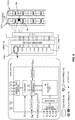
- FIG. 6 is a diagram illustrating more exemplary detail of the DIMM 134 that can be provided in the memory system 130 in Figure 4 and partitioned for data storage by the memory controller 132 according to the data partitioning shown in Figure 5 .
- the DIMM 134 is comprised of a plurality of DIMM chips 178(0)-178(X). In this example, nine (9) DIMM chips 178(0)-178(8) are included in the DIMM 134.
- a physical DIMM connector 180 is provided to interface the DIMM 134 and the DIMM chips 178(0)-178(8) therein to the memory bus 148 (see Figure 4 ). Exemplary detail for one DIMM chip 178 is shown in Figure 6 .
- each DIMM chip 178(0)-178(8) is addressable in thirty-two (32) rows (R1-R5) and thirty-two (32) columns (C1-C5) to address sixteen (16) bits of striped data in two (2) adjacent rows of the DIMM 134 in a cell matrix 181.
- nine (9) DIMM chips 178(0)-178(8) can store 128 bits, which is two (2) data line storage units 150(0)-150(1).
- a write data word provided to the DIMM 134 is striped across the DIMM chips 178(0)-178(8) on data inputs (Din) for the DIMM chips 178(0)-178(8).
- a read/write (R/W) signal is provided to the DIMM chips 178(0)-178(8) as cmd/addr information from the memory controller 132 to indicate either a memory read operation 136R or a memory write operation 136W.
- the access data stored in the DIMM chips 178(0)-178(8) is provided on respective data outputs (Dout) to be provided to the memory controller 132.
- the memory controller 132 in Figure 4 is configured to perform memory read and write operations in the DIMM 134 using a bit error correction code that allows for at least one extra bit(s) 172 to be provided for each data word stored therein.
- Figure 7A is a flowchart illustrating an exemplary process 190 of the memory controller 132 in Figure 4 processing a write operation to store a received data word in the DIMM 134 compatible with the exemplary data partitioning of the DIMM 134 in Figure 5 .
- Figure 7B is a flowchart illustrating an exemplary process 210 of the DIMM 134 in Figure 4 striping a burst write data word and a burst ECC word for the burst write data word in a burst data storage unit 160 and burst ECC storage unit 162 along with a data indicator(s) .
- the process 190 starts by the memory controller 132 in Figure 4 receiving a memory write request 136W comprising the write data address and the write data of a write data block length (block 192).
- the memory controller 132 may optionally compress the write data if the write data can be compressed according to a defined compression code (block 194).
- the memory controller 132 then calculates one or more burst ECC words for the write data, each of the one or more burst ECC words having a length less than a number of data bit cells in the burst ECC storage unit 162 in the DIMM 134, according to a defined ECC (block 196).
- the memory controller 132 then constructs one or more burst write data of a burst write data block length based on the write data, each of the one or more burst write data comprising a burst write data word and a burst ECC word for the burst write data word, and at least one data indicator for the burst write data word (block 198).
- the memory controller 132 then communicates the write operation and write data address as cmd/addr information and the one or more burst write data words as input data (Din) to the DIMM 134 to be stored at the write data address in the DIMM 134 (block 200).
- the process 210 in the DIMM 134 involves receiving the write data address for the memory write request 136W from the memory controller 132 (block 212).
- the DIMM 134 receives burst write data of a burst write data block length for the memory write request 136W, the burst write data comprising a burst write data word, a burst ECC word for the burst write data word, and at least one data indicator for the burst write data word.
- the DIMM 134 then stripes the received burst write data word across the burst data storage unit 160 at the received write data address (block 214).
- the DIMM 134 also stripes the received burst ECC word for the burst write data word across the burst ECC storage unit 162 in fewer bits than a number of data bit cells in the burst ECC storage unit 162, in the burst data storage unit 160 at the received write data address (block 216).
- the DIMM 134 stores the at least one data indicator for the burst write data word in the burst ECC storage unit 162 at the received write data address (block 218).
- Figure 8A is a flowchart illustrating an exemplary process 220 of the memory controller 132 in Figure 4 processing a read operation to request and a receive a read data word from the DIMM 134 compatible with the exemplary data partition of the DIMM 134 in Figure 5 .
- Figure 8B is a flowchart illustrating an exemplary process 240 of the DIMM 134 in Figure 4 accessing a burst read data word and a burst ECC word for the burst read data word in a burst data storage unit 160 along with a data indicator(s) .
- the process 220 for a memory read operation in the memory controller 132 starts by the memory controller 132 receiving a memory read request 136R comprising a read data address of a memory block in the DIMM 134 (block 222).
- the memory controller 132 then communicates the memory read request 136R to the DIMM 134 by providing the read operation and read data address as cmd/addr information to the DIMM 134, as shown in Figure 4 (block 224).
- the DIMM 134 processes the read operation (discussed below in Figure 8B ), the DIMM 134 communicates back the burst read data from the DIMM 134 to the memory controller 132.
- the memory controller 132 receives one or more burst read data from the DIMM 134 stored at the read data address in the DIMM 134 (block 226).
- the one or more burst read data each comprise a burst read data word, a burst ECC word for the burst read data word, and a data indicator(s) for the burst read data word.
- the memory controller 132 then calculates one or more burst ECC words for the one or more received burst read data for a read data word to perform error detection and correction, if necessary (block 228).
- the memory controller 132 compares the calculated one or more burst ECC words for the one or more burst read data to determine if the one or more burst read data words has an error(s), which may be correctable and corrected (block 230). For example, if the memory controller 132 is configured to perform data compression and use the data indicator(s) to indicate whether data is stored in compressed or uncompressed form, the memory controller 132 can optionally be configured to determine if the one or more burst read data words is compressed or uncompressed based on the data indicator(s) received for the one or more burst read data words (block 232).
- the memory controller 132 can be configured to optionally decompress the one or more burst read data words if the data indicator(s) indicates that the one or more burst read data words are compressed (block 234). The memory controller 132 then communicates the one or more burst read data words from the DIMM 134 onto the system bus 138 (block 236).
- the DIMM 134 when the DIMM 134 receives the memory read request 136R from the memory controller 132 that contains the read data address (block 242), the DIMM 134 accesses the data word stored at the read data address (block 244).
- the DIMM 134 retrieves one or more burst read data stored at the read data address in the DIMM 134 (block 244).
- the DIMM 134 then communicates the one or more burst read data stored at the read data address to the memory controller 132 (block 246).
- Each of the one or more burst read data comprises a burst read data word, a burst ECC word for the burst read data word, and at least one data indicator for the burst read data word.
- Figure 9 is a diagram of the DIMM 134 in Figure 6 according to the exemplary data partition in Figure 5 illustrating an exemplary single memory bit cell 250 failure in a data symbol 168 of a code word 166.
- the memory controller 132 can detect and correct this bit error as part of its ECC circuit 142 operation. Even if other bit errors were present in other data symbols 168 or check symbols 170, a single bit error in such other data symbols 168 or check symbols 170 could be detected and corrected.
- Figure 10 is a diagram of the DIMM 134 in Figure 6 according to the exemplary data partition in Figure 5 configured in eight (8) bit width and illustrating an exemplary memory bank or row failure.
- the code word 166 in Figure 10 is shown as having a bit failure in a row or bank 252.
- a failed memory row or bank 252 will appear as having at least one bit error in at least three (3) adjacent data symbols 168 or check symbols 170, because a bit error in two (2) adjacent data symbols168 or check symbols 170 could be a column or row failure with an eight (8) bit width.
- an exemplary memory bank or row failure 254 will appear in four (4) or more adjacent bit cells in adjacent data symbols 168 or check symbols 170 having a bit error.
- Figure 12 is a diagram of the DIMM 134 in Figure 6 according to the exemplary data partition in Figure 5 illustrating an exemplary memory column 256 failure.
- a failed memory column 256 will appear as having a bit error in the same column 256 in at least two (2) adjacent data symbols 168 or check symbols 170.
- Figure 13 is a diagram of the DIMM 134 in Figure 6 according to the exemplary data partition in Figure 5 illustrating an exemplary bit lane 258 failure in the DIMM 134.
- a bit lane 258 failure can be detected based on at least one bit error being detecting in a bit lane 258 in at least two (2) adjacent symbols in the data symbols 168 and/or check symbols 170 based on a bit error correction code.
- an exemplary four (4) bit word 260 failure will appear as four (4) adjacent bit cells, which cross adjacent symbols among the data symbols 168 and/or check symbols 170.
- DIMMs supporting storage of a data indicator(s) in an ECC storage unit dedicated to storing an ECC may be provided in or integrated into any processor-based device. Examples, without limitation, include a set top box, an entertainment unit, a navigation device, a communications device, a fixed location data unit, a mobile location data unit, a mobile phone, a cellular phone, a computer, a portable computer, a desktop computer, a personal digital assistant (PDA), a monitor, a computer monitor, a television, a tuner, a radio, a satellite radio, a music player, a digital music player, a portable music player, a digital video player, a video player, a digital video disc (DVD) player, and a portable digital video player.
- PDA personal digital assistant
- Figure 15 illustrates an example of a processor-based system 270 that can employ the SoC 10' of Figure 2 with the memory system 130 including the memory controller 132 and the DIMM 134 (shown as DIMMs 134(0)-134(X)) of Figure 4 .
- the processor-based system 270 includes one or more CPUs 272, each including one or more processors 274.
- the CPU(s) 272 may have cache memory 276 coupled to the processor(s) 274 for rapid access to temporarily stored data.
- the cache memory 276 could include a memory system like the memory system 130 in Figure 4 .
- the CPU(s) 272 is coupled to a system bus 278 and can intercouple devices included in the processor-based system 270.
- the CPU(s) 272 communicates with these other devices by exchanging address, control, and data information over the system bus 278.
- the CPU(s) 272 can communicate bus transaction requests to a memory controller 280 as an example of a slave device.
- a memory controller 280 as an example of a slave device.
- multiple system buses 278 could be provided.
- Other devices can be connected to the system bus 278. As illustrated in Figure 15 , these devices can include a memory system 281, one or more input devices 282, one or more output devices 284, one or more network interface devices 286, and one or more display controllers 288, as examples.
- the memory system 281 can include the memory system 130 in Figure 4 as an example.
- the input device(s) 282 can include any type of input device, including but not limited to input keys, switches, voice processors, etc.
- the output device(s) 284 can include any type of output device, including but not limited to audio, video, other visual indicators, etc.
- the network interface device(s) 286 can be any devices configured to allow exchange of data to and from a network 290.
- the network 290 can be any type of network, including but not limited to a wired or wireless network, a private or public network, a local area network (LAN), a wide local area network, wireless local area network, BLUETOOTH (BT), and the Internet.
- the network interface device(s) 286 can be configured to support any type of communications protocol desired.
- the memory system 281 can include the DIMMs 134(0)-134(X).
- the CPU(s) 272 may also be configured to access the display controller(s) 288 over the system bus 278 to control information sent to one or more displays 292.
- the display controller(s) 288 sends information to the display(s) 292 to be displayed via one or more video processors 294, which process the information to be displayed into a format suitable for the display(s) 292.
- the display(s) 292 can include any type of display, including but not limited to a cathode ray tube (CRT), a liquid crystal display (LCD), a light emitting diode (LED) display, a plasma display, etc.
- DSP Digital Signal Processor
- ASIC Application Specific Integrated Circuit
- FPGA Field Programmable Gate Array
- a processor may be a microprocessor, but in the alternative, the processor may be any conventional processor, controller, microcontroller, or state machine.
- a processor may also be implemented as a combination of computing devices, e.g., a combination of a DSP and a microprocessor, a plurality of microprocessors, one or more microprocessors in conjunction with a DSP core, or any other such configuration.
- RAM Random Access Memory
- ROM Read Only Memory
- EPROM Electrically Programmable ROM
- EEPROM Electrically Erasable Programmable ROM
- registers a hard disk, a removable disk, a CD-ROM, or any other form of computer readable medium known in the art.
- An exemplary storage medium is coupled to the processor such that the processor can read information from, and write information to, the storage medium.
- the storage medium may be integral to the processor.
- the processor and the storage medium may reside in an ASIC.
- the ASIC may reside in a remote station.
- the processor and the storage medium may reside as discrete components in a remote station, base station, or server.
- data, instructions, commands, information, signals, bits, symbols, and chips that may be referenced throughout the above description may be represented by voltages, currents, electromagnetic waves, magnetic fields or particles, optical fields or particles, or any combination thereof.
- the previous description of the disclosure is provided to enable any person skilled in the art to make or use the disclosure.
- Various modifications to the disclosure will be readily apparent to those skilled in the art, and the generic principles defined herein may be applied to other variations without departing from the scope of the disclosure.
- the disclosure is not intended to be limited to the examples and designs described herein, but is to be accorded the widest scope consistent with the principles and novel features disclosed herein.
Landscapes
- Engineering & Computer Science (AREA)
- Theoretical Computer Science (AREA)
- Physics & Mathematics (AREA)
- Quality & Reliability (AREA)
- General Engineering & Computer Science (AREA)
- General Physics & Mathematics (AREA)
- Probability & Statistics with Applications (AREA)
- Techniques For Improving Reliability Of Storages (AREA)
- Detection And Correction Of Errors (AREA)
Claims (17)
- Ein doppelreihiges Speichermodul bzw. DIMM (DIMM = dual in-line memory module) (134), das Folgendes aufweist:eine Vielzahl von Burst-Datenspeichereinheiten (160);wobei jede Burst-Datenspeichereinheit aus der Vielzahl von Burst-Datenspeichereinheiten Folgendes aufweist:eine Burst-Datenwortspeichereinheit (160), die über eine Vielzahl von Datenleitungsspeichereinheiten in Streifen vorliegt, die zusammen eine Burst-Länge ergeben, wobei jede Datenleitungsspeichereinheit aus der Vielzahl von Datenleitungsspeichereinheiten vierundsechzig bzw. 64 Datenbitzellen aufweist; undeine Burst-Fehlerkorrekturcode- bzw. Burst-ECC-Speichereinheit (ECC = error correcting code), die in Streifen über eine Vielzahl von ECC-Leitungsspeichereinheiten (154(0)-156(U)) vorliegt, wobei jede ECC-Leitungsspeichereinheit aus der Vielzahl von ECC-Leitungsspeichereinheiten (154(0)-156(U)) einer Datenleitungsspeichereinheit entspricht, wobei jede ECC-Leitungsspeichereinheit acht bzw. 8 Datenbitzellen aufweist; unddas DIMM (134) konfiguriert ist zum:Empfangen (212) einer Schreibdatenadresse für eine Burst-Speicherschreibanfrage (136W);Empfangen (212) von Burst-Schreibdaten einer Burst-Schreibdatenblocklänge für die Burst-Speicherschreibanfrage (136W), wobei die Burst-Schreibdaten ein Burst-Schreibdatenwort, ein Burst-ECC-Wort für das Burst-Schreibdatenwort und wenigstens einen Datenindikator für das Burst-Schreibdatenwort aufweisen;Vorsehen (214) des empfangenen Burst-Schreibdatenwortes in Streifen über die Burst-Datenwortspeichereinheit (160) hinweg an der empfangenen Schreibdatenadresse;Vorsehen (216) des empfangenen Burst-ECC-Wortes für das Burst-Schreibdatenwort in Streifen über die Burst-ECC-Speichereinheit (162) hinweg in weniger Bits als einer Anzahl von Datenbitzellen in der Burst-ECC-Speichereinheit (162) an der empfangenen Schreibdatenadresse; undSpeichern (218) des wenigstens einen Datenindikators für das Burst-Schreibdatenwort in der Burst-ECC-Speichereinheit (162) der Burst-Datenspeichereinheit an der empfangenen Schreibdatenadresse.
- DIMM (134) nach Anspruch 1, wobei der wenigstens eine Datenindikator für das Burst-Schreibdatenwort aus einem Einzelbitdatenindikator besteht;
wobei das DIMM (134) konfiguriert ist zum Speichern des Einzelbitdatenindikators für das Burst-Schreibdatenwort in einem Einzelbit der Burst-ECC-Speichereinheit (162) der Burst-Datenspeichereinheit an der empfangenen Schreibdatenadresse oder
wobei der wenigstens eine Datenindikator für das Burst-Schreibdatenwort aus einem Datenindikator mit mehreren Bits besteht;
wobei das DIMM (134) konfiguriert ist zum Speichern des Datenindikators mit mehreren Bits für das Burst-Schreibdatenwort in mehreren Bits der Burst-ECC-Speichereinheit (162) der Burst-Datenspeichereinheit an der empfangenen Schreibdatenadresse. - DIMM (134) nach Anspruch 1, wobei das DIMM (134) konfiguriert ist zum Vorsehen des empfangenen Burst-ECC-Wortes in Streifen für das Burst-Schreibdatenwort über die Burst-ECC-Speichereinheit (162) hinweg in wenigstens zwei Bits weniger als der Anzahl von Datenbitzellen in der Burst-ECC-Speichereinheit (162) an der empfangenen Schreibdatenadresse.
- DIMM (134) nach Anspruch 1, das weiter konfiguriert ist zum:Empfangen einer Speicherleseanfrage (136R), die eine Lesedatenadresse aufweist;Zugreifen auf die Lesedatenadresse zum Abrufen von einer oder mehreren Burst-Lesedaten, die an der Lesedatenadresse in dem DIMM (134) gespeichert sind; undKommunizieren der einen oder mehreren Burst-Lesedaten, die an der Lesedatenadresse gespeichert sind, an einen Speichercontroller, wobei die einen oder mehreren Burst-Lesedaten jeweils ein Burst-Lesedatenwort, ein Burst-ECC-Wort für das Burst-Lesedatenwort und den wenigstens einen Datenindikator für das Burst-Lesedatenwort aufweisen.
- DIMM (134) nach Anspruch 1, wobei das DIMM (134) konfiguriert ist zum Empfangen des wenigstens einen Datenindikators für das Burst-Schreibdatenwort, der anzeigt, ob das Burst-Schreibdatenwort komprimiert ist.
- DIMM (134) nach Anspruch 1, wobei jede Burst-Datenspeichereinheit aus der Vielzahl von Burst-Datenspeichereinheiten die Burst-Datenwortspeichereinheit (160) aufweist, die in Streifen über vier Datenleitungsspeichereinheiten vorgesehen ist, die Gesamt-Burst-Länge ergeben.
- DIMM (134) nach Anspruch 1, das in einen integrierten Schaltkreis bzw. IC (IC = integrated circuit) integriert ist oder wobei das DIMM (134) in eine Einrichtung integriert ist, die aus der Gruppe ausgewählt ist, die aus Folgendem besteht: einer Set-Top-Box; einer Unterhaltungseinheit; eine Navigationseinrichtung; einer Kommunikationseinrichtung; einer Dateneinheit mit festem Standort; einem Dateneinheit mit mobilem Standort; einem Mobiltelefon; einem Zellentelefon; einem Computer; einem tragbaren Computer; einem Desktop-Computer, einem persönlichen digitalen Assistenten bzw. PDA; einem Monitor; einem Computermonitor; einem Fernseher; einem Tuner; einem Radio bzw. Funkgerät; einem Satellitenradio bzw. -funkgerät; einer Musikabspielvorrichtung; einer digitalen Musikabspielvorrichtung; einer tragbaren Musikabspielvorrichtung; einer digitalen Videoabspielvorrichtung; einer Videoabspielvorrichtung; einer DVD-Abspielvorrichtung (DVD = digital video disc); und einer tragbaren digitalen Videoabspielvorrichtung.
- Ein Verfahren (210) zum Schreiben von Daten auf ein doppelreihiges Speichermodul bzw. DIMM (DIMM = dual in-line memory module) (134) in einem CPU-basierten (CPU = central processing unit bzw. zentrale Verarbeitungseinheiten) System, das Folgendes aufweist:Empfangen (212) einer Speicherschreibanfrage (136W) in einem DIMM (134), wobei die Speicherschreibanfrage (136W) eine Schreibdatenadresse und Burst-Schreibdaten mit einer Burst-Schreibdatenblocklänge aufweist, wobei die Burst-Schreibdaten ein Burst-Schreibdatenwort, ein Burst-Fehlerkorrekturcode- bzw. -ECC-Wort (ECC = error correcting code) für das Burst-Schreibdatenwort und wenigstens einen Datenindikator für das Burst-Schreibdatenwort aufweisen;Vorsehen (214) des empfangenen Burst-Schreibdatenwortes in Streifen über eine Burst-Datenwortspeichereinheit (160) hinweg in einer Burst-Datenspeichereinheit an der empfangenen Schreibdatenadresse in dem DIMM (134), wobei das DIMM (134) Folgendes aufweist:eine Vielzahl von Burst-Datenspeichereinheiten, wobei jede Burst-Datenspeichereinheit aus der Vielzahl von Burst-Datenspeichereinheiten Folgendes aufweist:eine Burst-Datenwortspeichereinheit (160), die über eine Vielzahl von Datenleitungsspeichereinheiten, die insgesamt eine Burst-Länge ergeben, in Streifen vorliegt, wobei jede Datenleitungsspeichereinheit aus der Vielzahl von Datenleitungsspeichereinheiten vierundsechzig bzw. 64 Datenbitzellen aufweist; undeine Burst-ECC-Speichereinheit (162), die über eine Vielzahl von ECC-Leitungsspeichereinheiten (154(0)-156(U)) hinweg in Streifen vorliegt, wobei jede ECC-Leitungsspeichereinheit aus der Vielzahl von ECC-Leitungsspeichereinheiten (154(0)-156(U)) einer Datenleitungsspeichereinheit entspricht, wobei jede ECC-Leitungsspeichereinheit acht bzw. 8 Datenbitzellen aufweist;Vorsehen (216) des empfangenen Burst-ECC-Wortes in Streifen in dem DIMM (134) für das Burst-Schreibdatenwort über die Burst-ECC-Speichereinheit (162) hinweg in weniger Bits als einer Anzahl von Datenbitzellen in der Burst-ECC-Speichereinheit (162) an der empfangenen Schreibdatenadresse; undSpeichern (218) des wenigstens einen Datenindikators für das Burst-Schreibdatenwort in der Burst-ECC-Speichereinheit (162) der Burst-Datenspeichereinheit an der empfangenen Schreibdatenadresse.
- Ein Speichersystem (130) für ein CPU-basiertes (CPU = central processing unit bzw. zentrale Verarbeitungseinheit) System, das Folgendes aufweist:
ein doppelreihiges Speichermodul bzw. DIMM (DIMM = dual in-line memory module) (134) nach einem von Anspruch 1 bis 7, und das weiter Folgendes aufweist:
einen Speichercontroller (132), der konfiguriert ist zum:Empfangen einer Speicherschreibanfrage (136W), die die Schreibdatenadresse und Schreibdaten mit einer Schreibdatenblocklänge aufweist;Berechnen eines oder mehrerer Burst-ECC-Wörter für die Schreibdaten, wobei jedes des einen oder der mehreren Burst-ECC-Wörter eine Länge hat, die geringer ist als die Anzahl von Datenbitzellen in der Burst-ECC-Speichereinheit (162) gemäß einem definierten ECC;Konstruieren einer oder mehrerer Burst-Schreibdaten der Burst-Schreibdatenblocklänge basierend auf den Schreibdaten, wobei jede der ein oder mehreren Burst-Schreibdaten ein Burst-Schreibdatenwort, ein Burst-ECC-Wort für das Burst-Schreibdatenwort und wenigstens einen Datenindikator für das Burst-Schreibdatenwort aufweist; undKommunizieren der Schreibdatenadresse und des einen oder der mehreren Burst-Schreibdatenwörter an das DIMM (134), um an der Schreibdatenadresse in dem DIMM (134) gespeichert zu werden. - Speichersystem (130) nach Anspruch 9, wobei der Speichercontroller (132) weiter einen ECC-Codierer aufweist, der konfiguriert ist zum Berechnen des einen oder der mehreren Burst-ECC-Wörter für die Schreibdaten, wobei jedes von dem einen oder den mehreren Burst-ECC-Wörtern die Länge hat, die geringer ist als die Anzahl von Datenbitzellen in der Burst-ECC-Speichereinheit (162), und zwar gemäß dem definierten ECC.
- Speichersystem (130) nach Anspruch 9, wobei:der Speichercontroller (132) weiter konfiguriert ist zum:Empfangen einer Speicherleseanfrage (136R), die eine Lesedatenadresse eines Speicherblocks in dem DIMM (134) aufweist;Kommunizieren der Speicherleseanfrage (136R) an das DIMM (134);Empfangen einer oder mehrerer Burst-Lesedaten von dem DIMM (134), die an der Lesedatenadresse in dem DIMM (134) gespeichert sind, wobei die einen oder mehreren Burst-Lesedaten jeweils ein Burst-Lesedatenwort, ein Burst-ECC-Wort für das Burst-Lesedatenwort und den wenigstens einen Datenindikator für das Burst-Lesedatenwort aufweisen;Berechnen des einen oder der mehreren Burst-ECC-Wörter für die ein oder mehreren Burst-Lesedaten;Vergleichen des berechneten einen oder der berechneten mehreren Burst-ECC-Wörter für die ein oder mehreren Burst-Lesedaten zum Bestimmen, ob die ein oder mehreren Burst-Lesedaten einen Bitfehler haben; undKommunizieren der ein oder mehreren Burst-Lesedaten von dem DIMM (134) auf einem Bus; undwobei das DIMM (134) weiter konfiguriert ist zum:Empfangen der Speicherleseanfrage (136R), die die Lesedatenadresse aufweist;Zugreifen auf die Lesedatenadresse zum Abrufen der ein oder mehreren Burst-Lesedaten, die an der Lesedatenadresse in dem DIMM (134) gespeichert sind; undKommunizieren der ein oder mehreren Burst-Lesedaten, die an der Lesedatenadresse gespeichert sind, an den Speichercontroller, wobei jede der ein oder mehreren Burst-Lesedaten jeweils ein Burst-Lesedatenwort, ein Burst-ECC-Wort für das Burst-Lesedatenwort und wenigstens einen Datenindikator für das Burst-Lesedatenwort aufweisen.
- Speichersystem (130) nach Anspruch 11, wobei der Speichercontroller (132) weiter einen ECC-Decodierer aufweist, der konfiguriert ist zum:Berechnen des einen oder der mehreren Burst-ECC-Wörter für die ein oder mehreren Burst-Lesedaten; undVergleichen der berechneten ein oder mehreren Burst-ECC-Wörter für die ein oder mehreren Burst-Lesedaten zum Bestimmen, ob die ein oder mehreren Burst-Lesedaten einen Bitfehler haben und optional der ECC-Decodierer weiter konfiguriert ist zum Kommunizieren des Bitfehlers auf dem Bus.
- Speichersystem (130) nach Anspruch 11, wobei der Speichercontroller (132) weiter konfiguriert ist zum Codieren der ein oder mehreren Burst-Schreibdatenwörter in eine Vielzahl von Bitsymbolen unter Verwendung eines Bitfehlerkorrekturcodes und optional
wobei der Bitfehlerkorrekturcodes einen Reed-Solomon- bzw .RS-Code aufweist. - Speichersystem (130) nach Anspruch 13, wobei der Speichercontroller (132) konfiguriert ist zum Codieren jedes der ein oder mehreren Burst-Schreibdatenwörter mit dem RS-Code, indem er konfiguriert ist zum:Codieren jedes des einen oder der mehreren Burst-Schreibdatenwörter in dreiundvierzig bzw. 43 Sechs- bzw. 6-Bit-Symbole; undCodieren jedes von dem einen oder den mehreren Burst-ECC-Wörtern in fünf bzw. 5 Sechs- bzw. 6-Bit-Symbole.
- Speichersystem (130) nach Anspruch 13, wobei der Speichercontroller (132) weiter konfiguriert ist zum:Detektieren eines einzelnen Bitfehlers in einem Bitsymbol für Burst-Lesedaten von den ein oder mehreren Burst-Lesedaten basierend auf dem Bitfehlerkorrekturcode; undKorrigieren des einzelnen Bitfehlers in dem Bitsymbol in den Burst-Lesedaten basierend auf dem Bitfehlerkorrekturcode.
- Speichersystem (130) nach Anspruch 13, wobei der Speichercontroller (132) weiter konfiguriert ist zum Detektieren eines zweiten Fehlers basierend auf wenigstens einem Bitfehler, der in wenigstens drei bzw. 3 benachbarten bzw. angrenzenden Bitsymbolen für Burst-Lesedaten von den ein oder mehreren Burst-Lesedaten in einer Speicherzeile in dem DIMM (134) an der Lesedatenadresse detektiert wird, und zwar basierend auf dem Bitfehlerkorrekturcode oder
wobei der Speichercontroller (132) weiter konfiguriert ist zum Detektieren eines Zeilenfehlers basierend auf wenigstens einem Bitfehler, der in wenigstens zwei bzw. 2 benachbarten bzw. angrenzenden Bitsymbolen für Burst-Lesedaten von den ein oder mehreren Burst-Lesedaten in einer Speicherspalte in dem DIMM (134) an der Lesedatenadresse detektiert wird,
und zwar basierend auf dem Bitfehlerkorrekturcode, oder
wobei der Speichercontroller (132) weiter konfiguriert ist zum Detektieren eines Zeilenfehlers basierend auf wenigstens einem Bitfehler, der in einer Bitleitung in wenigstens zwei bzw. 2 aufeinanderfolgenden bzw. angrenzenden Bitsymbolen für Burst-Lesedaten von den ein oder mehreren Burst-Lesedaten in einer Speicherspalte in dem DIMM (134) an der Lesedatenadresse detektiert wird, und zwar basierend auf dem Bitfehlerkorrekturcode. - Ein Verfahren zum Schreiben von Daten in ein Speichersystem (130) in einem CPU-basierten (CPU = central processing unit bzw. zentrale Verarbeitungseinheit) System, das Folgendes aufweist:Empfangen einer Speicherschreibanfrage (136W), die eine Schreibdatenadresse und Schreibdaten mit einer Schreibdatenblocklänge aufweist;Berechnen von einem oder mehreren Burst-Fehlerkorrekturcode- bzw. -ECC-Wörtern für die Schreibdaten, wobei jedes von dem einen oder den mehreren Burst-ECC-Wörtern eine Länge hat, die geringer ist als eine Anzahl von Datenbitzellen in einer Burst-ECC-Speichereinheit (162), und zwar gemäß einem definierten ECC;Konstruieren von ein oder mehreren Burst-Schreibdaten mit einer Burst-Schreibdatenblocklänge basierend auf den Schreibdaten, wobei jede der ein oder mehreren Burst-Schreibdaten ein Burst-Schreibdatenwort, ein Burst-ECC-Wort für das Burst-Schreibdatenwort und wenigstens einen Datenindikator für das Burst-Schreibdatenwort aufweisen;Kommunizieren der Schreibdatenadresse und von einem oder mehreren Burst-Schreibdatenwörtern an ein doppelreihiges Speichermodul bzw. DIMM (DIMM = dual in-line memory module) (134), die an der Schreibdatenadresse in dem DIMM (134) gespeichert werden sollen; und das weiter das Verfahren des Schreibens von Daten in das DIMM nach Anspruch 8 aufweist.
Applications Claiming Priority (3)
| Application Number | Priority Date | Filing Date | Title |
|---|---|---|---|
| US201562111358P | 2015-02-03 | 2015-02-03 | |
| US14/857,491 US9710324B2 (en) | 2015-02-03 | 2015-09-17 | Dual in-line memory modules (DIMMs) supporting storage of a data indicator(s) in an error correcting code (ECC) storage unit dedicated to storing an ECC |
| PCT/US2016/014686 WO2016126446A1 (en) | 2015-02-03 | 2016-01-25 | DUAL IN-LINE MEMORY MODULES (DIMMs) SUPPORTING STORAGE OF A DATA INDICATOR(S) IN AN ERROR CORRECTING CODE (ECC) STORAGE UNIT DEDICATED TO STORING AN ECC |
Publications (2)
| Publication Number | Publication Date |
|---|---|
| EP3224723A1 EP3224723A1 (de) | 2017-10-04 |
| EP3224723B1 true EP3224723B1 (de) | 2020-07-29 |
Family
ID=56554295
Family Applications (1)
| Application Number | Title | Priority Date | Filing Date |
|---|---|---|---|
| EP16704308.2A Not-in-force EP3224723B1 (de) | 2015-02-03 | 2016-01-25 | Dual in-line speichermodule (dimm) zur unterstützung der speicherung von datenindikatoren in einer fehlerkorrekturcode (ecc)-speichereinheit zur speicherung eines ecc |
Country Status (6)
| Country | Link |
|---|---|
| US (1) | US9710324B2 (de) |
| EP (1) | EP3224723B1 (de) |
| JP (1) | JP2018503918A (de) |
| KR (1) | KR20170109568A (de) |
| CN (1) | CN107209703B (de) |
| WO (1) | WO2016126446A1 (de) |
Families Citing this family (16)
| Publication number | Priority date | Publication date | Assignee | Title |
|---|---|---|---|---|
| US20170288705A1 (en) * | 2016-04-05 | 2017-10-05 | Alibaba Group Holding Limited | Shared memory with enhanced error correction |
| US10268541B2 (en) * | 2016-08-15 | 2019-04-23 | Samsung Electronics Co., Ltd. | DRAM assist error correction mechanism for DDR SDRAM interface |
| US10236917B2 (en) | 2016-09-15 | 2019-03-19 | Qualcomm Incorporated | Providing memory bandwidth compression in chipkill-correct memory architectures |
| US10606692B2 (en) | 2017-12-20 | 2020-03-31 | International Business Machines Corporation | Error correction potency improvement via added burst beats in a dram access cycle |
| US10831653B2 (en) * | 2018-05-15 | 2020-11-10 | Micron Technology, Inc. | Forwarding code word address |
| US11003375B2 (en) | 2018-05-15 | 2021-05-11 | Micron Technology, Inc. | Code word format and structure |
| US11216333B2 (en) | 2018-10-16 | 2022-01-04 | Micron Technology, Inc. | Methods and devices for error correction |
| US10963336B2 (en) | 2019-08-29 | 2021-03-30 | Micron Technology, Inc. | Semiconductor device with user defined operations and associated methods and systems |
| US11042436B2 (en) | 2019-08-29 | 2021-06-22 | Micron Technology, Inc. | Semiconductor device with modified access and associated methods and systems |
| US11200118B2 (en) | 2019-08-29 | 2021-12-14 | Micron Technology, Inc. | Semiconductor device with modified command and associated methods and systems |
| EP4229511A1 (de) * | 2020-10-16 | 2023-08-23 | Neuroblade, Ltd. | Speichervorrichtungen für speicherintensive operationen |
| GB202018025D0 (en) * | 2020-11-17 | 2020-12-30 | Graphcore Ltd | System and method for error correction |
| US11404136B2 (en) | 2020-12-16 | 2022-08-02 | Micron Technology, Inc. | Memory device protection using interleaved multibit symbols |
| US12099408B2 (en) * | 2020-12-23 | 2024-09-24 | Intel Corporation | Memory striping approach that interleaves sub protected data words |
| KR20230052346A (ko) * | 2021-10-12 | 2023-04-20 | 삼성전자주식회사 | 메모리 모듈, 메모리 시스템, 및 메모리 컨트롤러의 동작 방법 |
| US11847022B2 (en) | 2022-03-07 | 2023-12-19 | International Business Machines Corporation | Computation and placement of error correcting codes (ECC) in a computing system data cache |
Family Cites Families (16)
| Publication number | Priority date | Publication date | Assignee | Title |
|---|---|---|---|---|
| US6092182A (en) | 1998-06-24 | 2000-07-18 | Advanced Micro Devices, Inc. | Using ECC/parity bits to store predecode information |
| US6618831B2 (en) | 2000-12-21 | 2003-09-09 | Intel Corporation | Increasing performance with memory compression |
| US6981119B1 (en) * | 2002-08-29 | 2005-12-27 | Advanced Micro Devices, Inc. | System and method for storing performance-enhancing data in memory space freed by data compression |
| US7200770B2 (en) * | 2003-12-31 | 2007-04-03 | Hewlett-Packard Development Company, L.P. | Restoring access to a failed data storage device in a redundant memory system |
| US7225297B2 (en) * | 2004-05-28 | 2007-05-29 | International Business Machines Corporation | Compressed cache lines incorporating embedded prefetch history data |
| US7340666B1 (en) | 2004-09-16 | 2008-03-04 | Sun Microsystems, Inc. | Method and apparatus for using memory compression to enhance error correction |
| US7437597B1 (en) | 2005-05-18 | 2008-10-14 | Azul Systems, Inc. | Write-back cache with different ECC codings for clean and dirty lines with refetching of uncorrectable clean lines |
| JP2009187139A (ja) * | 2008-02-04 | 2009-08-20 | Hitachi Ltd | ストレージシステム |
| US8533564B2 (en) | 2009-12-23 | 2013-09-10 | Sandisk Technologies Inc. | System and method of error correction of control data at a memory device |
| US8510518B2 (en) | 2010-06-22 | 2013-08-13 | Advanced Micro Devices, Inc. | Bandwidth adaptive memory compression |
| US8495464B2 (en) * | 2010-06-28 | 2013-07-23 | Intel Corporation | Reliability support in memory systems without error correcting code support |
| US8533550B2 (en) | 2010-06-29 | 2013-09-10 | Intel Corporation | Method and system to improve the performance and/or reliability of a solid-state drive |
| TWI455144B (zh) * | 2010-07-22 | 2014-10-01 | Silicon Motion Inc | 使用於快閃記憶體的控制方法與控制器 |
| KR101888074B1 (ko) * | 2012-01-09 | 2018-08-13 | 삼성전자주식회사 | 저장 장치 및 불휘발성 메모리 장치, 그리고 그것의 동작 방법 |
| US20150248316A1 (en) | 2012-09-28 | 2015-09-03 | Hewlett-Packard Development Company, L.P. | System and method for dynamically selecting between memory error detection and error correction |
| US9529670B2 (en) * | 2014-05-16 | 2016-12-27 | International Business Machines Corporation | Storage element polymorphism to reduce performance degradation during error recovery |
-
2015
- 2015-09-17 US US14/857,491 patent/US9710324B2/en not_active Expired - Fee Related
-
2016
- 2016-01-25 KR KR1020177021510A patent/KR20170109568A/ko not_active Withdrawn
- 2016-01-25 CN CN201680006310.1A patent/CN107209703B/zh not_active Expired - Fee Related
- 2016-01-25 JP JP2017539300A patent/JP2018503918A/ja active Pending
- 2016-01-25 WO PCT/US2016/014686 patent/WO2016126446A1/en not_active Ceased
- 2016-01-25 EP EP16704308.2A patent/EP3224723B1/de not_active Not-in-force
Non-Patent Citations (1)
| Title |
|---|
| None * |
Also Published As
| Publication number | Publication date |
|---|---|
| CN107209703B (zh) | 2020-06-19 |
| CN107209703A (zh) | 2017-09-26 |
| WO2016126446A1 (en) | 2016-08-11 |
| US9710324B2 (en) | 2017-07-18 |
| KR20170109568A (ko) | 2017-09-29 |
| EP3224723A1 (de) | 2017-10-04 |
| US20160224414A1 (en) | 2016-08-04 |
| JP2018503918A (ja) | 2018-02-08 |
Similar Documents
| Publication | Publication Date | Title |
|---|---|---|
| EP3224723B1 (de) | Dual in-line speichermodule (dimm) zur unterstützung der speicherung von datenindikatoren in einer fehlerkorrekturcode (ecc)-speichereinheit zur speicherung eines ecc | |
| US10236917B2 (en) | Providing memory bandwidth compression in chipkill-correct memory architectures | |
| KR100992256B1 (ko) | 동일한 메모리 타입을 사용하여 에러 체크 모드 및 비에러 체크 모드를 지원하기 위한 시스템, 방법 및 장치 | |
| US10503435B2 (en) | Providing extended dynamic random access memory (DRAM) burst lengths in processor-based systems | |
| US20160224241A1 (en) | PROVIDING MEMORY BANDWIDTH COMPRESSION USING BACK-TO-BACK READ OPERATIONS BY COMPRESSED MEMORY CONTROLLERS (CMCs) IN A CENTRAL PROCESSING UNIT (CPU)-BASED SYSTEM | |
| US20170365329A1 (en) | Apparatus, method and system for performing successive writes to a bank of a dynamic random access memory | |
| KR20170054182A (ko) | 반도체 장치 | |
| CN119003231B (zh) | 数据写入方法以及处理系统 | |
| US20230238049A1 (en) | Address mapping for improved memory reliability | |
| KR102457671B1 (ko) | 동적 랜덤 액세스 메모리(dram) 캐시 태그들을 위한 공간 효율적인 저장소의 제공 | |
| US8612832B2 (en) | Mechanisms and techniques for providing cache tags in dynamic random access memory | |
| US20140337573A1 (en) | Redirecting data from a defective data entry in memory to a redundant data entry prior to data access, and related systems and methods | |
| KR20180031857A (ko) | 메모리 셀의 에러 확인 기능을 갖는 메모리 장치 및 이를 포함하는 메모리 모듈 | |
| US10152261B2 (en) | Providing memory bandwidth compression using compression indicator (CI) hint directories in a central processing unit (CPU)-based system |
Legal Events
| Date | Code | Title | Description |
|---|---|---|---|
| STAA | Information on the status of an ep patent application or granted ep patent |
Free format text: STATUS: THE INTERNATIONAL PUBLICATION HAS BEEN MADE |
|
| PUAI | Public reference made under article 153(3) epc to a published international application that has entered the european phase |
Free format text: ORIGINAL CODE: 0009012 |
|
| STAA | Information on the status of an ep patent application or granted ep patent |
Free format text: STATUS: REQUEST FOR EXAMINATION WAS MADE |
|
| STAA | Information on the status of an ep patent application or granted ep patent |
Free format text: STATUS: EXAMINATION IS IN PROGRESS |
|
| 17P | Request for examination filed |
Effective date: 20170629 |
|
| AK | Designated contracting states |
Kind code of ref document: A1 Designated state(s): AL AT BE BG CH CY CZ DE DK EE ES FI FR GB GR HR HU IE IS IT LI LT LU LV MC MK MT NL NO PL PT RO RS SE SI SK SM TR |
|
| AX | Request for extension of the european patent |
Extension state: BA ME |
|
| 17Q | First examination report despatched |
Effective date: 20170913 |
|
| DAV | Request for validation of the european patent (deleted) | ||
| DAX | Request for extension of the european patent (deleted) | ||
| GRAP | Despatch of communication of intention to grant a patent |
Free format text: ORIGINAL CODE: EPIDOSNIGR1 |
|
| STAA | Information on the status of an ep patent application or granted ep patent |
Free format text: STATUS: GRANT OF PATENT IS INTENDED |
|
| INTG | Intention to grant announced |
Effective date: 20200107 |
|
| GRAJ | Information related to disapproval of communication of intention to grant by the applicant or resumption of examination proceedings by the epo deleted |
Free format text: ORIGINAL CODE: EPIDOSDIGR1 |
|
| STAA | Information on the status of an ep patent application or granted ep patent |
Free format text: STATUS: EXAMINATION IS IN PROGRESS |
|
| INTC | Intention to grant announced (deleted) | ||
| GRAR | Information related to intention to grant a patent recorded |
Free format text: ORIGINAL CODE: EPIDOSNIGR71 |
|
| GRAS | Grant fee paid |
Free format text: ORIGINAL CODE: EPIDOSNIGR3 |
|
| STAA | Information on the status of an ep patent application or granted ep patent |
Free format text: STATUS: GRANT OF PATENT IS INTENDED |
|
| GRAA | (expected) grant |
Free format text: ORIGINAL CODE: 0009210 |
|
| STAA | Information on the status of an ep patent application or granted ep patent |
Free format text: STATUS: THE PATENT HAS BEEN GRANTED |
|
| AK | Designated contracting states |
Kind code of ref document: B1 Designated state(s): AL AT BE BG CH CY CZ DE DK EE ES FI FR GB GR HR HU IE IS IT LI LT LU LV MC MK MT NL NO PL PT RO RS SE SI SK SM TR |
|
| INTG | Intention to grant announced |
Effective date: 20200622 |
|
| REG | Reference to a national code |
Ref country code: CH Ref legal event code: EP |
|
| REG | Reference to a national code |
Ref country code: DE Ref legal event code: R096 Ref document number: 602016040762 Country of ref document: DE |
|
| REG | Reference to a national code |
Ref country code: AT Ref legal event code: REF Ref document number: 1296593 Country of ref document: AT Kind code of ref document: T Effective date: 20200815 |
|
| REG | Reference to a national code |
Ref country code: IE Ref legal event code: FG4D |
|
| REG | Reference to a national code |
Ref country code: LT Ref legal event code: MG4D |
|
| REG | Reference to a national code |
Ref country code: NL Ref legal event code: MP Effective date: 20200729 |
|
| REG | Reference to a national code |
Ref country code: AT Ref legal event code: MK05 Ref document number: 1296593 Country of ref document: AT Kind code of ref document: T Effective date: 20200729 |
|
| PG25 | Lapsed in a contracting state [announced via postgrant information from national office to epo] |
Ref country code: FI Free format text: LAPSE BECAUSE OF FAILURE TO SUBMIT A TRANSLATION OF THE DESCRIPTION OR TO PAY THE FEE WITHIN THE PRESCRIBED TIME-LIMIT Effective date: 20200729 Ref country code: HR Free format text: LAPSE BECAUSE OF FAILURE TO SUBMIT A TRANSLATION OF THE DESCRIPTION OR TO PAY THE FEE WITHIN THE PRESCRIBED TIME-LIMIT Effective date: 20200729 Ref country code: BG Free format text: LAPSE BECAUSE OF FAILURE TO SUBMIT A TRANSLATION OF THE DESCRIPTION OR TO PAY THE FEE WITHIN THE PRESCRIBED TIME-LIMIT Effective date: 20201029 Ref country code: NO Free format text: LAPSE BECAUSE OF FAILURE TO SUBMIT A TRANSLATION OF THE DESCRIPTION OR TO PAY THE FEE WITHIN THE PRESCRIBED TIME-LIMIT Effective date: 20201029 Ref country code: AT Free format text: LAPSE BECAUSE OF FAILURE TO SUBMIT A TRANSLATION OF THE DESCRIPTION OR TO PAY THE FEE WITHIN THE PRESCRIBED TIME-LIMIT Effective date: 20200729 Ref country code: SE Free format text: LAPSE BECAUSE OF FAILURE TO SUBMIT A TRANSLATION OF THE DESCRIPTION OR TO PAY THE FEE WITHIN THE PRESCRIBED TIME-LIMIT Effective date: 20200729 Ref country code: GR Free format text: LAPSE BECAUSE OF FAILURE TO SUBMIT A TRANSLATION OF THE DESCRIPTION OR TO PAY THE FEE WITHIN THE PRESCRIBED TIME-LIMIT Effective date: 20201030 Ref country code: ES Free format text: LAPSE BECAUSE OF FAILURE TO SUBMIT A TRANSLATION OF THE DESCRIPTION OR TO PAY THE FEE WITHIN THE PRESCRIBED TIME-LIMIT Effective date: 20200729 Ref country code: LT Free format text: LAPSE BECAUSE OF FAILURE TO SUBMIT A TRANSLATION OF THE DESCRIPTION OR TO PAY THE FEE WITHIN THE PRESCRIBED TIME-LIMIT Effective date: 20200729 Ref country code: PT Free format text: LAPSE BECAUSE OF FAILURE TO SUBMIT A TRANSLATION OF THE DESCRIPTION OR TO PAY THE FEE WITHIN THE PRESCRIBED TIME-LIMIT Effective date: 20201130 |
|
| PG25 | Lapsed in a contracting state [announced via postgrant information from national office to epo] |
Ref country code: IS Free format text: LAPSE BECAUSE OF FAILURE TO SUBMIT A TRANSLATION OF THE DESCRIPTION OR TO PAY THE FEE WITHIN THE PRESCRIBED TIME-LIMIT Effective date: 20201129 Ref country code: PL Free format text: LAPSE BECAUSE OF FAILURE TO SUBMIT A TRANSLATION OF THE DESCRIPTION OR TO PAY THE FEE WITHIN THE PRESCRIBED TIME-LIMIT Effective date: 20200729 Ref country code: LV Free format text: LAPSE BECAUSE OF FAILURE TO SUBMIT A TRANSLATION OF THE DESCRIPTION OR TO PAY THE FEE WITHIN THE PRESCRIBED TIME-LIMIT Effective date: 20200729 Ref country code: RS Free format text: LAPSE BECAUSE OF FAILURE TO SUBMIT A TRANSLATION OF THE DESCRIPTION OR TO PAY THE FEE WITHIN THE PRESCRIBED TIME-LIMIT Effective date: 20200729 |
|
| PG25 | Lapsed in a contracting state [announced via postgrant information from national office to epo] |
Ref country code: NL Free format text: LAPSE BECAUSE OF FAILURE TO SUBMIT A TRANSLATION OF THE DESCRIPTION OR TO PAY THE FEE WITHIN THE PRESCRIBED TIME-LIMIT Effective date: 20200729 |
|
| PG25 | Lapsed in a contracting state [announced via postgrant information from national office to epo] |
Ref country code: SM Free format text: LAPSE BECAUSE OF FAILURE TO SUBMIT A TRANSLATION OF THE DESCRIPTION OR TO PAY THE FEE WITHIN THE PRESCRIBED TIME-LIMIT Effective date: 20200729 Ref country code: RO Free format text: LAPSE BECAUSE OF FAILURE TO SUBMIT A TRANSLATION OF THE DESCRIPTION OR TO PAY THE FEE WITHIN THE PRESCRIBED TIME-LIMIT Effective date: 20200729 Ref country code: CZ Free format text: LAPSE BECAUSE OF FAILURE TO SUBMIT A TRANSLATION OF THE DESCRIPTION OR TO PAY THE FEE WITHIN THE PRESCRIBED TIME-LIMIT Effective date: 20200729 Ref country code: DK Free format text: LAPSE BECAUSE OF FAILURE TO SUBMIT A TRANSLATION OF THE DESCRIPTION OR TO PAY THE FEE WITHIN THE PRESCRIBED TIME-LIMIT Effective date: 20200729 Ref country code: IT Free format text: LAPSE BECAUSE OF FAILURE TO SUBMIT A TRANSLATION OF THE DESCRIPTION OR TO PAY THE FEE WITHIN THE PRESCRIBED TIME-LIMIT Effective date: 20200729 Ref country code: EE Free format text: LAPSE BECAUSE OF FAILURE TO SUBMIT A TRANSLATION OF THE DESCRIPTION OR TO PAY THE FEE WITHIN THE PRESCRIBED TIME-LIMIT Effective date: 20200729 |
|
| REG | Reference to a national code |
Ref country code: DE Ref legal event code: R097 Ref document number: 602016040762 Country of ref document: DE |
|
| PG25 | Lapsed in a contracting state [announced via postgrant information from national office to epo] |
Ref country code: AL Free format text: LAPSE BECAUSE OF FAILURE TO SUBMIT A TRANSLATION OF THE DESCRIPTION OR TO PAY THE FEE WITHIN THE PRESCRIBED TIME-LIMIT Effective date: 20200729 |
|
| PLBE | No opposition filed within time limit |
Free format text: ORIGINAL CODE: 0009261 |
|
| STAA | Information on the status of an ep patent application or granted ep patent |
Free format text: STATUS: NO OPPOSITION FILED WITHIN TIME LIMIT |
|
| PG25 | Lapsed in a contracting state [announced via postgrant information from national office to epo] |
Ref country code: SK Free format text: LAPSE BECAUSE OF FAILURE TO SUBMIT A TRANSLATION OF THE DESCRIPTION OR TO PAY THE FEE WITHIN THE PRESCRIBED TIME-LIMIT Effective date: 20200729 |
|
| 26N | No opposition filed |
Effective date: 20210430 |
|
| REG | Reference to a national code |
Ref country code: DE Ref legal event code: R119 Ref document number: 602016040762 Country of ref document: DE |
|
| PG25 | Lapsed in a contracting state [announced via postgrant information from national office to epo] |
Ref country code: MC Free format text: LAPSE BECAUSE OF FAILURE TO SUBMIT A TRANSLATION OF THE DESCRIPTION OR TO PAY THE FEE WITHIN THE PRESCRIBED TIME-LIMIT Effective date: 20200729 Ref country code: SI Free format text: LAPSE BECAUSE OF FAILURE TO SUBMIT A TRANSLATION OF THE DESCRIPTION OR TO PAY THE FEE WITHIN THE PRESCRIBED TIME-LIMIT Effective date: 20200729 |
|
| REG | Reference to a national code |
Ref country code: CH Ref legal event code: PL |
|
| GBPC | Gb: european patent ceased through non-payment of renewal fee |
Effective date: 20210125 |
|
| PG25 | Lapsed in a contracting state [announced via postgrant information from national office to epo] |
Ref country code: LU Free format text: LAPSE BECAUSE OF NON-PAYMENT OF DUE FEES Effective date: 20210125 |
|
| REG | Reference to a national code |
Ref country code: BE Ref legal event code: MM Effective date: 20210131 |
|
| PG25 | Lapsed in a contracting state [announced via postgrant information from national office to epo] |
Ref country code: FR Free format text: LAPSE BECAUSE OF NON-PAYMENT OF DUE FEES Effective date: 20210131 |
|
| PG25 | Lapsed in a contracting state [announced via postgrant information from national office to epo] |
Ref country code: DE Free format text: LAPSE BECAUSE OF NON-PAYMENT OF DUE FEES Effective date: 20210803 Ref country code: CH Free format text: LAPSE BECAUSE OF NON-PAYMENT OF DUE FEES Effective date: 20210131 Ref country code: LI Free format text: LAPSE BECAUSE OF NON-PAYMENT OF DUE FEES Effective date: 20210131 Ref country code: GB Free format text: LAPSE BECAUSE OF NON-PAYMENT OF DUE FEES Effective date: 20210125 |
|
| PG25 | Lapsed in a contracting state [announced via postgrant information from national office to epo] |
Ref country code: IE Free format text: LAPSE BECAUSE OF NON-PAYMENT OF DUE FEES Effective date: 20210125 |
|
| PG25 | Lapsed in a contracting state [announced via postgrant information from national office to epo] |
Ref country code: IS Free format text: LAPSE BECAUSE OF FAILURE TO SUBMIT A TRANSLATION OF THE DESCRIPTION OR TO PAY THE FEE WITHIN THE PRESCRIBED TIME-LIMIT Effective date: 20201129 |
|
| PG25 | Lapsed in a contracting state [announced via postgrant information from national office to epo] |
Ref country code: BE Free format text: LAPSE BECAUSE OF NON-PAYMENT OF DUE FEES Effective date: 20210131 |
|
| PG25 | Lapsed in a contracting state [announced via postgrant information from national office to epo] |
Ref country code: HU Free format text: LAPSE BECAUSE OF FAILURE TO SUBMIT A TRANSLATION OF THE DESCRIPTION OR TO PAY THE FEE WITHIN THE PRESCRIBED TIME-LIMIT; INVALID AB INITIO Effective date: 20160125 |
|
| PG25 | Lapsed in a contracting state [announced via postgrant information from national office to epo] |
Ref country code: CY Free format text: LAPSE BECAUSE OF FAILURE TO SUBMIT A TRANSLATION OF THE DESCRIPTION OR TO PAY THE FEE WITHIN THE PRESCRIBED TIME-LIMIT Effective date: 20200729 |
|
| PG25 | Lapsed in a contracting state [announced via postgrant information from national office to epo] |
Ref country code: MK Free format text: LAPSE BECAUSE OF FAILURE TO SUBMIT A TRANSLATION OF THE DESCRIPTION OR TO PAY THE FEE WITHIN THE PRESCRIBED TIME-LIMIT Effective date: 20200729 |
|
| PG25 | Lapsed in a contracting state [announced via postgrant information from national office to epo] |
Ref country code: TR Free format text: LAPSE BECAUSE OF FAILURE TO SUBMIT A TRANSLATION OF THE DESCRIPTION OR TO PAY THE FEE WITHIN THE PRESCRIBED TIME-LIMIT Effective date: 20200729 |
|
| PG25 | Lapsed in a contracting state [announced via postgrant information from national office to epo] |
Ref country code: MT Free format text: LAPSE BECAUSE OF FAILURE TO SUBMIT A TRANSLATION OF THE DESCRIPTION OR TO PAY THE FEE WITHIN THE PRESCRIBED TIME-LIMIT Effective date: 20200729 |