EP3224765B1 - Impression sans rosette - Google Patents
Impression sans rosette Download PDFInfo
- Publication number
- EP3224765B1 EP3224765B1 EP14906756.3A EP14906756A EP3224765B1 EP 3224765 B1 EP3224765 B1 EP 3224765B1 EP 14906756 A EP14906756 A EP 14906756A EP 3224765 B1 EP3224765 B1 EP 3224765B1
- Authority
- EP
- European Patent Office
- Prior art keywords
- printing
- halftone screen
- screen
- color
- dots
- Prior art date
- Legal status (The legal status is an assumption and is not a legal conclusion. Google has not performed a legal analysis and makes no representation as to the accuracy of the status listed.)
- Not-in-force
Links
Images


Classifications
-
- H—ELECTRICITY
- H04—ELECTRIC COMMUNICATION TECHNIQUE
- H04N—PICTORIAL COMMUNICATION, e.g. TELEVISION
- H04N1/00—Scanning, transmission or reproduction of documents or the like, e.g. facsimile transmission; Details thereof
- H04N1/40—Picture signal circuits
- H04N1/405—Halftoning, i.e. converting the picture signal of a continuous-tone original into a corresponding signal showing only two levels
- H04N1/4055—Halftoning, i.e. converting the picture signal of a continuous-tone original into a corresponding signal showing only two levels producing a clustered dots or a size modulated halftone pattern
- H04N1/4058—Halftoning, i.e. converting the picture signal of a continuous-tone original into a corresponding signal showing only two levels producing a clustered dots or a size modulated halftone pattern with details for producing a halftone screen at an oblique angle
-
- G—PHYSICS
- G06—COMPUTING OR CALCULATING; COUNTING
- G06K—GRAPHICAL DATA READING; PRESENTATION OF DATA; RECORD CARRIERS; HANDLING RECORD CARRIERS
- G06K15/00—Arrangements for producing a permanent visual presentation of the output data, e.g. computer output printers
- G06K15/02—Arrangements for producing a permanent visual presentation of the output data, e.g. computer output printers using printers
- G06K15/18—Conditioning data for presenting it to the physical printing elements
- G06K15/1867—Post-processing of the composed and rasterized print image
- G06K15/1872—Image enhancement
- G06K15/1878—Adjusting colours
-
- G—PHYSICS
- G06—COMPUTING OR CALCULATING; COUNTING
- G06K—GRAPHICAL DATA READING; PRESENTATION OF DATA; RECORD CARRIERS; HANDLING RECORD CARRIERS
- G06K15/00—Arrangements for producing a permanent visual presentation of the output data, e.g. computer output printers
- G06K15/02—Arrangements for producing a permanent visual presentation of the output data, e.g. computer output printers using printers
- G06K15/18—Conditioning data for presenting it to the physical printing elements
- G06K15/1867—Post-processing of the composed and rasterized print image
- G06K15/1872—Image enhancement
- G06K15/1881—Halftoning
-
- H—ELECTRICITY
- H04—ELECTRIC COMMUNICATION TECHNIQUE
- H04N—PICTORIAL COMMUNICATION, e.g. TELEVISION
- H04N1/00—Scanning, transmission or reproduction of documents or the like, e.g. facsimile transmission; Details thereof
- H04N1/46—Colour picture communication systems
- H04N1/52—Circuits or arrangements for halftone screening
-
- H—ELECTRICITY
- H04—ELECTRIC COMMUNICATION TECHNIQUE
- H04N—PICTORIAL COMMUNICATION, e.g. TELEVISION
- H04N1/00—Scanning, transmission or reproduction of documents or the like, e.g. facsimile transmission; Details thereof
- H04N1/46—Colour picture communication systems
- H04N1/56—Processing of colour picture signals
- H04N1/60—Colour correction or control
- H04N1/6002—Corrections within particular colour systems
- H04N1/6008—Corrections within particular colour systems with primary colour signals, e.g. RGB or CMY(K)
Definitions
- Imaging devices such as printers and copiers employ various techniques to deposit ink or powdered toner onto print media (e.g., paper) to produce a printed product.
- print media e.g., paper
- Such devices can be designed to produce both monochromatic and multi-colored images.
- Devices having multi-color capability often use cyan, magenta, yellow and black (CMYK) colors to produce images that can comprise a large color gamut space.
- CMYK cyan, magenta, yellow and black
- the image quality depends in part on how the printer combines each of the colors on a page.
- a screening process is used to generate different color planes, or halftone screens, for each color. Each screen defines a separate dot pattern for each of the color planes, and the screens are combined (i.e., laid on top of each other) to produce the full-color, finished image.
- Moire effects may occur when combining halftone screens.
- Prior art addressing such effects includes EP1014686A2 , which discloses a method and printer in accordance with the preamble of the independent claims, and US5107331A .
- producing an image usually involves overlaying different halftone screens for each of the primary colors (e.g., cyan, magenta, yellow and black-CMYK) to produce an illusion of the full range of colors within the image.
- Halftoning is the process of generating dots or pixels in a pattern that creates the appearance of a continuous gradation of tone (i.e., from light to dark), such as in shades of gray, color, and image detail.
- tone i.e., from light to dark
- each halftone screen controls or defines where the printed dots for a different color plane will be placed on the print media.
- a screen set contains a different screen for each one of the primary colors being printed.
- the variation in relative positioning between the dots of different colors can cause interactions between the colors resulting in a disagreeable interference called a moiré pattern, or just, a moiré.
- a moiré pattern or just, a moiré.
- One source of this variation in relative dot positions is misregistration (i.e., misalignment) between the color planes when the screens are printed. It is common to reduce the moire interference (i.e., make it smaller) in order to make it less apparent to the human eye, by overlaying the different halftone screens at angles relative to one another.
- CMYK complementary metal-oxide-semiconductor
- screens for the three most visible process colors are often overlaid and printed with a 30 degree rotation between them (e.g., C at 105 degrees, M at 75, and K at 45). Because Y is the least visible color, the Y screen is angled at zero degrees (i.e., 15 degrees from C).
- the reduced moire pattern that results from overlaying and printing the C, M, and K screens at 30 degree rotations is called a "rosette".
- the rosettes are small enough to be almost invisible, resulting in smooth images.
- the lower addressability and larger dots result in larger rosettes that are more visible.
- the larger rosettes contribute to an undesirable granular or grainy appearance to the image.
- example methods and systems disclosed herein enable the printing of rosette-free images in printing systems that are capable of printing with little or no color plane misregistration.
- rosette-free images can be printed using a single screen (i.e., a same screen) to print two or more of the color planes of an image.
- the screen ruling of an image is the number of printed dots per linear inch measured along the axis of each printed row of the image.
- dots of a first color plane and dots of a second color plane can be printed using the same halftone screen.
- dots of a first color plane can be printed using a halftone screen, and dots of a second color plane can be printed directly on top of the first dots using the same screen.
- dots of a first color plane can be printed using a halftone screen, and dots of a second color plane can be printed at locations that are shifted from locations of the first dots using the same screen.
- a method of rosette-free printing includes, in a printing device whose color plane misregistration is less than 15 percent of a screen ruling of a halftone screen, printing multiple color planes of a multicolor image using the halftone screen.
- a printer for rosette-free printing includes a stable color registration print engine, a screen generator to create a halftone screen, and a screen manager to use the halftone screen for printing at least two color planes of an image.
- the stable color registration print engine comprises a print engine to provide a color plane misregistration that is better than 15 percent of a screen ruling of the halftone screen.
- a non-transitory machine-readable storage medium stores instructions for rosette-free printing, that when executed by a processor of a printing device, cause the printing device to generate a first halftone screen, and print at least two color planes of an image using the first halftone screen with a color plane misregistration between the at least two color planes that is better than 15 percent of a screen ruling of the first halftone screen.
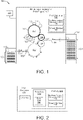
- FIG. 1 illustrates an example of a printing device 100 enabled to provide rosette-free printing.
- the printing device 100 comprises a print-on-demand device, implemented as a liquid electro-photography (LEP) printing press 100. While the example printing device 100 is illustrated and discussed herein as being an LEP printing press, there is no intent to limit the printing device 100 to such an implementation.
- LEP liquid electro-photography
- Various other types of printing systems may be suitable and are contemplated herein as candidates to provide rosette-free printing, including dry electro-photography systems, inkjet systems, various impact printing systems, dye sublimation systems, and so on.
- an LEP printing press 100 generally includes a user interface 101 that enables the press operator to manage various aspects of printing, such as loading and reviewing print jobs, proofing and color matching print jobs, reviewing the order of the print jobs, and so on.
- the user interface 101 typically includes a touch-sensitive display screen that allows the operator to interact with information on the screen, make entries on the screen, and generally control the press 100.
- the user interface 101 may also include other devices such as a key pad, a keyboard, a mouse, and a joystick, for example.
- the LEP printing press 100 also includes a print engine 102 to receive a print substrate, illustrated as print media 104 (e.g., cut-sheet paper or a paper web) from a media input mechanism 106, and to perform a printing process. After the printing process is complete, the print engine 102 outputs the printed media 108 to a media output mechanism, such as a media stacker tray 110.
- the printing process is controlled by a print controller 120 to generate the printed media 108 using digital image data that represents words, pages, text, and images that can be created, for example, using electronic layout and/or desktop publishing programs. Digital image data can be formatted as one or multiple print jobs that are stored and executed on the print controller 120, as discussed below with reference to FIG. 2 .
- the printing process enables rosette-free printing in part through the print engine 102 which provides a very stable color plane registration.
- the stable color plane registration print engine 102 provides a minimized degree of misregistration (i.e., misalignment) between the color planes.
- misregistration between color planes, or color separations can be caused by a variety of mostly mechanical factors, such as the timing and coordination of lasers and photoconductors in the print engine that form an image on the print substrate.
- Color plane registration is typically calibrated by characterizing the misregistration between color planes and then making appropriate adjustments within the print engine to correctly register the color planes.
- perfect color plane registration is difficult to achieve.
- the print engine 102 in example LEP printing press 100 comprises a 'stable color registration print engine' 102 capable of providing color plane misregistration that is as good as or better than about 15% of the screen ruling.
- the screen ruling is the number of lines or dots per inch on a halftone screen, discussed below in more detail.
- the color plane misregistration provided by the stable color registration print engine 102 of the LEP press 100 is no greater than about 15% (i.e., is less than or equal to about 15%) of the screen ruling of the halftone screen used to print each color plane.
- the print engine 102 includes a photo imaging component, such as a photoreceptor 112, mounted on an imaging drum 114 or imaging cylinder 114.
- the photoreceptor 112 defines an outer surface of the imaging drum 114 on which images can be formed.
- a charging component such as charge roller 116 generates electrical charge that flows toward the photoreceptor surface and covers it with a uniform electrostatic charge.
- the print controller 120 uses digital image print data and other inputs such as print job and print media parameters, temperature information, and so on, to control a laser imaging unit 118 to selectively expose the photoreceptor 112.
- the pattern of exposure on the photoreceptor 112 is determined by a halftone screen created by a halftone screen generator 136 of controller 120.
- the halftone screen generator 136 can comprise varying combinations of hardware components such as hardware logic, electronic circuitry, a processor and memory, as well as software and/or firmware components comprising machine-readable instructions stored within the memory and executable by a processor of the controller 120.
- a halftone screen generator 136 comprises a raster image processor (RIP) engine.
- the input to the halftone screen generator 136, or RIP comprises print data in the form of a page description formatted in a high-level page description language such as PostScript, Portable Document Format, XPS or another bitmap.
- a RIP engine 136 is a component of the printing press 100 that converts a continuous-tone bitmap into a halftone screen (i.e., pattern of dots). Screens from the halftone screen generator 136 are used to control the laser imaging unit 118 to selectively expose the photoreceptor 112 for each color plane or color separation.
- the laser imaging unit 118 exposes image areas on the photoreceptor 112 by dissipating (neutralizing) the charge in those areas. Exposure of the photoreceptor in this manner creates a 'latent image' in the form of an invisible electrostatic charge pattern that replicates the image to be printed.
- the image is developed by a binary ink development (BID) roller 122 to form an ink image on the outer surface of the photoreceptor 112.
- BID binary ink development
- print engine 102 also includes an erase mechanism and a cleaning mechanism which are generally incorporated as part of any electrophotographic process.
- a single color plane impression of the ink image developed on the photoreceptor 112 is transferred from the photoreceptor 112 to an image transfer blanket 124, often referred to as the print blanket 124.
- the print blanket 124 overlies and is securely fastened to the outer surface of the intermediate transfer media (ITM) drum 126, sometimes referred to as the image transfer drum 126.
- the first image transfer that transfers ink from the photoreceptor 112 to the print blanket 124 is driven by electrophoresis of the electrically charged ink particles and an applied mechanical pressure between the imaging drum 114 and the ITM drum 126.
- the blanket 124 is electrically conductive, enabling it to be electrified by an applied bias voltage. The electric field that drives the ink transfer is created by the applied bias voltage.
- the print blanket 124 can be heated by both internal and external heating sources such as infrared heating lamps (not shown). Heat from the heated print blanket 124 causes most of the carrier liquid and solvents in the transferred ink image to evaporate. The blanket heat also causes the particles in the ink to partially melt and blend together. This results in a finished ink image on the blanket 124 in the form of a hot, nearly dry, tacky plastic ink film. In a second image transfer, this hot ink film image impression is then transferred to a substrate such as a sheet of print media 104, which is held by an impression drum/cylinder 128. The temperature of the print media substrate104 is below the melting temperature of the ink particles, and as the ink film comes into contact with the print media substrate104, the ink film solidifies, sticks to the substrate, and completely peels off from the blanket 124.
- infrared heating lamps not shown.
- the print media 104 remains on the impression drum 128 until all the color plane separation impressions (e.g., C, M, Y, and K) are transferred to the print media 104. After all the color plane impressions have been transferred to the sheet of print media 104, the printed media 108 sheet is transported by various rollers 132 from the impression drum 128 to the output mechanism 110.
- all the color plane separation impressions e.g., C, M, Y, and K
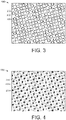
- FIG. 2 shows a box diagram of an example print controller 120 suitable for implementing within an LEP printing press 100 to provide rosette-free printing.
- print controller 120 generally comprises a processor (CPU) 200 and a memory 202, and may additionally include firmware and other electronics for communicating with and controlling the other components of print engine 102, the user interface 101, and media input (106) and output (110) mechanisms.
- Memory 202 can include both volatile (i.e., RAM) and nonvolatile (e.g., ROM, hard disk, optical disc, CD-ROM, magnetic tape, flash memory, etc.) memory components.
- the components of memory 202 comprise non-transitory, machine-readable (e.g., computer/processor-readable) media that provide for the storage of machine-readable coded program instructions, data structures, program instruction modules, JDF (job definition format), and other data for the printing press 100, such as modules 136 and 138.
- the program instructions, data structures, and modules stored in memory 202 may be part of an installation package that can be executed by processor 200 to implement various examples, such as examples discussed herein.
- memory 202 may be a portable medium such as a CD, DVD, or flash drive, or a memory maintained by a server from which the installation package can be downloaded and installed.
- the program instructions, data structures, and modules stored in memory 202 may be part of an application or applications already installed, in which case memory 202 may include integrated memory such as a hard drive.
- print controller 120 uses digital image data and other inputs to control the laser imaging unit 118 in the print engine 102 to selectively expose the photoreceptor 112. More specifically, controller 120 receives digital print data 204 from a host system, such as a computer, and stores the data 204 in memory 202. Data 204 represents, for example, documents or image files to be printed. As such, data 204 forms one or more print jobs 206 for printing press 100 that each include print job commands and/or command parameters. Using a print job 206 from data 204, print controller 120 controls components of print engine 102 (e.g., laser imaging unit 118) to form characters, symbols, and/or other graphics or images on print media 104 through a printing process as has been generally described above with reference to FIG. 1 .
- print engine 102 e.g., laser imaging unit 118
- the LEP printing press 100 is enabled to provide rosette-free printing.
- One feature of press 100 that facilitates rosette-free printing is the minimal color plane misregistration provided by the stable registration print engine 102 (i.e., having color plane misregistration no greater than about 15% of the screen ruling).
- Rosette-free printing is further enabled by a screen manager 138 of print controller 120.
- Screen manager 138 comprises executable instructions to control the application of halftone screens created by halftone screen generator 136 to different color planes. For example, to enable print engine 102 to generate rosette-free print media 108, screen manager 138 can apply the same halftone screen from screen generator 136 to two different color planes, such as the cyan, C, and magenta, M, color planes.
- the screen manager 138 uses a single halftone screen to print two different color planes of an image.
- the screen manager 138 can print two different color planes using a single halftone screen having the same dot pattern with no rotation of the screen between the two color planes.
- the screen manager 138 can also use the same, single screen to print more than two different color planes.
- the screen manager 138 can use the same, single screen to print all of the color planes of a printed image, such as the C, Y, M and K, color planes.
- screen manager 138 can print two or more different color planes using a single halftone screen such that each color plane screen has the same dot pattern and where there is zero degrees of screen rotation between the color planes.
- all of the ink dots from the different color planes are printed directly on top of each other.
- FIG. 3 shows an example representation of a rosette-free print media 108 from print engine 102 where the screen manager 138 has used a single screen to print three color planes.
- the three color planes are represented by dots of varying darkness and size.
- a first color plane is shown as dark dots 300
- a second color plane is shown as medium dots 302
- a third color plane is shown as light dots 304.
- the dots are shown in different sizes (i.e., dark dots 300 largest, and light dots 304 smallest) for the purpose of illustrating that the dots from the different color planes have been printed directly on top of one another using a same, single, halftone screen having a single dot pattern for each color plane and having no rotation of the screens between each color plane.
- the print is robust to small variations in relative placement between the ink dots.
- the ink usage is not optimal because the inks cover each other, which results in greater contrast with the white of the paper. This contrast results in some remaining granularity in the printed output 108.
- the screen manager 138 can print two or more different color planes using a single halftone screen where the dots are not printed directly on top of one another, but are instead, shifted with respect to one another. Shifting the dots provides better coverage of the white areas of the media page than printing the dots directly on top of one another.
- FIG. 4 shows an example representation of a rosette-free print media 108 from print engine 102 where the screen manager 138 has used a single screen to print three color planes, but where the screen manager 138 has shifted the dots from each color plane to avoid printing the dots directly on top of each other. As in FIG. 3 , the three color planes in FIG. 4 are represented by dots of varying darkness.
- a first color plane is shown as dark dots 400
- a second color plane is shown as medium dots 402
- a third color plane is shown as light dots 404.
- the ink dots from the different color planes are placed on the media page in different locations, which provides better coverage of the white paper and a less granular appearance in the printed output 108.
- a screen built as 4,2 i.e., on an X,Y grid
- the exact middle of these points can be selected, which are (1,3), (-1,7), (5,5), and (3,9).
- the average between cyan and magenta can be selected, and for yellow, the other average can be selected (i.e., there are two average combinations).
- the order in which ink dots from different screens are printed can be altered.
- the order of dot placement can be changed between the different colors.
- the first four dots of cyan can be placed in an order of the first dot, followed by the second dot, followed by the third dot, followed by the fourth dot.
- the first four dots can be placed with the fourth dot place first, followed by the third dot placed second, followed by the second dot placed third, followed by the first dot placed fourth. Any variation in dot placement order can be used.
- FIGs. 5, 6 , 7, and 8 show flow diagrams that illustrate example methods 500, 600, 700, and 800, respectively, related to providing rosette-free printing in a printing device such as LEP printing press 100.
- Methods 500 - 800 are associated with the examples discussed above with regard to FIGs. 1 - 4 , and details of the operations shown in methods 500 - 800 can be found in the related discussion of such examples.
- the operations of methods 500 - 800 may be embodied as programming instructions stored on a non-transitory, machine-readable (e.g., computer/processor-readable) medium, such as the memory 202 shown in FIG. 2 .
- implementing the operations of methods 500 - 800 can be achieved by a processor, such as a processor 200 shown in FIG.
- implementing the operations of methods 500 - 800 can be achieved using an ASIC (application specific integrated circuit) and/or other hardware components alone or in combination with programming instructions executable by a processor 200.
- ASIC application specific integrated circuit
- methods 500 - 800 may include more than one implementation, and different implementations of methods 500 - 800 may not employ every operation presented in the respective flow diagrams. Therefore, while the operations of methods 500 - 800 are presented in a particular order within the flow diagrams, the order of their presentation is not intended to be a limitation as to the order in which the operations may actually be implemented, or as to whether all of the operations may be implemented. For example, one implementation of method 600 might be achieved through the performance of a number of initial operations, without performing one or more subsequent operations, while another implementation of method 600 might be achieved through the performance of all of the operations.
- an example method 500 of providing rosette-free printing in a printing device begins at block 502, with the printing device having a color plane misregistration that is less than 15 percent of a screen ruling of a halftone screen.
- the printing device prints multiple color planes of a multicolor image using the same halftone screen.
- an example method 600 of providing rosette-free printing in a printing device extends the method 500 with additional details and steps.
- Method 600 begins with a printing device having a color plane misregistration that is less than 15 percent of a screen ruling of a halftone screen, printing multiple color planes of a multicolor image using the same halftone screen, as shown at blocks 602 and 604.
- printing multiple color planes of a multicolor image using the same halftone screen can include printing a first color plane with a first screen that has a first screen ruling and a first screen angle, and printing a next color plane with a second screen having the first screen ruling and the first screen angle, as shown at blocks 606 and 608.
- printing multiple color planes of a multicolor image using the same halftone screen can also include printing first dots of a first color plane using the halftone screen, and printing second dots of a second color plane directly on top of the first dots using the halftone screen, as shown at blocks 610 and 612.
- printing multiple color planes of a multicolor image using the same halftone screen can also include printing first dots of a first color plane using the halftone screen, and printing second dots of a second color plane at locations that are shifted from locations of the first dots using the halftone screen, as shown at blocks 614 and 616.
- printing multiple color planes of a multicolor image using the same halftone screen can also include printing first dots of a first color plane in a first order using the halftone screen, and printing second dots of a second color plane in a second order using the halftone screen, as shown at blocks 618 and 620.
Landscapes
- Engineering & Computer Science (AREA)
- Multimedia (AREA)
- Signal Processing (AREA)
- General Engineering & Computer Science (AREA)
- Physics & Mathematics (AREA)
- General Physics & Mathematics (AREA)
- Theoretical Computer Science (AREA)
- Color Image Communication Systems (AREA)
- Facsimile Image Signal Circuits (AREA)
Claims (9)
- Procédé (500, 600, 700, 800) destiné à l'impression sans rosette de plans des couleurs multiples d'une image multicolore à l'aide d'une trame de similigravure ;caractérisé par la fourniture (502, 602) d'un dispositif d'impression (100), le dispositif d'impression (100) présentant un défaut d'enregistrement de plan des couleurs qui est inférieur à 15 pour cent d'une linéature de trame de la trame de similigravure ; etl'utilisation (504, 604, 704, 802) de la même trame de similigravure pour imprimer plusieurs des plans des couleurs multiples ;dans lequel l'impression de plans des couleurs multiples de l'image multicolore à l'aide d'une trame de similigravure comprend :l'impression (610, 804) de premiers points de trame d'un premier plan des couleurs à l'aide de la trame de similigravure ; et,l'impression (612, 804) de seconds points de trame d'un second plan des couleurs directement sur les premiers points de trame à l'aide de la même trame de similigravure.
- Procédé (600) selon la revendication 1, dans lequel l'impression de plans des couleurs multiples d'une image multicolore à l'aide de la trame de similigravure comprend :l'impression (614) de premiers points de trame d'un premier plan des couleurs à l'aide de la trame de similigravure ; et,l'impression (616) de seconds points de trame d'un second plan des couleurs à des emplacements qui sont décalés des emplacements des premiers points de trame à l'aide de la même trame de similigravure.
- Procédé (600) selon la revendication 1, dans lequel l'impression de plans des couleurs multiples d'une image multicolore à l'aide de la trame de similigravure comprend :l'impression (618) de premiers points de trame d'un premier plan des couleurs dans un premier ordre à l'aide de la trame de similigravure ; et,l'impression (620) de seconds points de trame d'un second plan des couleurs dans un second ordre à l'aide de la même trame de similigravure.
- Imprimante (100) pour l'impression sans rosette de plans des couleurs multiples d'une image multicolore, comprenant :un moteur d'impression (102) ;un générateur de trame (136) pour créer une trame de similigravure ; etun gestionnaire de trame (138) pour utiliser la trame de similigravure pour une impression sans rosette ; caractérisé en ce que :le moteur d'impression (102) présente un défaut d'enregistrement du plan des couleurs entre au moins deux plans des couleurs de l'image multicolore meilleur que 15 % d'une linéature de trame de la trame de similigravure ; etle gestionnaire de trame (138) est agencé pour imprimer les au moins deux plans des couleurs de l'image multicolore à l'aide de la même trame de similigravure ;dans lequel l'impression de plans des couleurs multiples de l'image multicolore à l'aide de la même trame de similigravure comprend :l'impression (610, 804) de premiers points de trame d'un premier plan des couleurs à l'aide de la trame de similigravure ; et,l'impression (612, 804) de seconds points de trame d'un second plan des couleurs directement sur les premiers points de trame à l'aide de la même trame de similigravure.
- Support de stockage non transitoire lisible par machine (202) stockant des instructions pour l'impression sans rosette de plans des couleurs multiples d'une image multicolore qui, lorsqu'elles sont exécutées par un processeur (200) d'un dispositif d'impression (100), amènent le dispositif d'impression (100) à :générer une première trame de similigravure ;imprimer au moins deux plans des couleurs de l'image multicolore à l'aide de la première trame de similigravure ;caractérisé en ce quele dispositif d'impression (100) présente un défaut d'enregistrement de plan des couleurs entre les au moins deux plans des couleurs qui est meilleur que 15 % d'une linéature de trame de la première trame de similigravure ; etdans lequel l'impression d'au moins deux plans des couleurs de l'image multicolore à l'aide de la même première trame de similigravure comprend l'impression de motifs de points de trame identiques pour les au moins deux plans des couleurs directement l'un sur l'autre sur une page de support (104).
- Support (202) selon la revendication 5, dans lequel l'impression d'au moins deux plans des couleurs d'une image à l'aide de la même première trame de similigravure comprend l'impression de motifs de points de trame identiques pour les au moins deux plans des couleurs à des emplacements décalés l'un de l'autre sur une page de support (104).
- Support (202) selon la revendication 5, dans lequel l'impression d'au moins deux plans des couleurs d'une image à l'aide de la même première trame de similigravure comprend l'impression des au moins deux plans des couleurs avec un angle de rotation nul entre les au moins deux plans des couleurs.
- Support (202) selon la revendication 5, dans lequel les instructions amènent en outre le dispositif d'impression (100) à :générer une seconde trame de similigravure ; etimprimer un autre plan des couleurs de l'image à l'aide de la seconde trame de similigravure.
- Support (202) selon la revendication 8, dans lequel :la génération d'une première trame de similigravure comprend la génération d'une trame avec un premier motif de points de trame sous un premier angle ; etla génération d'une seconde trame de similigravure comprend la génération d'une trame avec un second motif de points de trame différent du premier motif de points de trame, et sous un second angle différent du premier angle.
Applications Claiming Priority (1)
| Application Number | Priority Date | Filing Date | Title |
|---|---|---|---|
| PCT/US2014/067706 WO2016085504A1 (fr) | 2014-11-26 | 2014-11-26 | Impression sans rosette |
Publications (3)
| Publication Number | Publication Date |
|---|---|
| EP3224765A1 EP3224765A1 (fr) | 2017-10-04 |
| EP3224765A4 EP3224765A4 (fr) | 2018-07-25 |
| EP3224765B1 true EP3224765B1 (fr) | 2022-07-20 |
Family
ID=56074852
Family Applications (1)
| Application Number | Title | Priority Date | Filing Date |
|---|---|---|---|
| EP14906756.3A Not-in-force EP3224765B1 (fr) | 2014-11-26 | 2014-11-26 | Impression sans rosette |
Country Status (3)
| Country | Link |
|---|---|
| US (1) | US10313559B2 (fr) |
| EP (1) | EP3224765B1 (fr) |
| WO (1) | WO2016085504A1 (fr) |
Families Citing this family (1)
| Publication number | Priority date | Publication date | Assignee | Title |
|---|---|---|---|---|
| US11917115B1 (en) | 2023-03-10 | 2024-02-27 | Ricoh Company, Ltd. | Shift compensation mechanism |
Family Cites Families (29)
| Publication number | Priority date | Publication date | Assignee | Title |
|---|---|---|---|---|
| JPH0691621B2 (ja) * | 1988-11-24 | 1994-11-14 | 大日本スクリーン製造株式会社 | 網目版画像記録方法および装置 |
| US5107331A (en) * | 1989-03-07 | 1992-04-21 | The Color Group | Method and apparatus for producing half-tone separations at the same screen angle |
| US5124803A (en) * | 1991-02-25 | 1992-06-23 | Ecrm | Method and apparatus for generating digital, angled halftone screens using pixel candidate lists and screen angle correction to prevent moire patterns |
| US6072592A (en) * | 1991-08-13 | 2000-06-06 | Megadot Systems Limited | Method and apparatus for preparing color screens in a halftone image |
| US5442461A (en) * | 1991-09-03 | 1995-08-15 | Levien; Raphael L. | Screen generation for halftone screening of images with reduction of irrational correction artifacts |
| WO1994003997A1 (fr) * | 1992-08-03 | 1994-02-17 | Ricoh Company, Ltd. | Identificateur de documents pouvant egalement identifier un billet special, appareil de formation d'images utilisant l'identificateur, processeur d'image et machine de duplication |
| US5751854A (en) * | 1992-08-03 | 1998-05-12 | Ricoh Company, Ltd. | Original-discrimination system for discriminating special document, and image forming apparatus, image processing apparatus and duplicator using the original-discrimination system |
| DE69425244T2 (de) * | 1994-04-27 | 2001-01-25 | Agfa-Gevaert N.V., Mortsel | Tonabhängige Rosettenstrukturen bei der Mehrschichthalbtonrasterung durch Phasenmodulation |
| US6128099A (en) | 1995-06-08 | 2000-10-03 | Delabastita; Paul A. | Halftone screen generator, halftone screen and method for generating same |
| JPH1075375A (ja) * | 1996-05-20 | 1998-03-17 | Fuji Xerox Co Ltd | 画像処理装置、画像処理システムおよび画像処理用スクリーン生成方法 |
| US20030113096A1 (en) * | 1997-07-07 | 2003-06-19 | Kabushiki Kaisha Toshiba | Multi-screen display system for automatically changing a plurality of simultaneously displayed images |
| US6307645B1 (en) | 1998-12-22 | 2001-10-23 | Xerox Corporation | Halftoning for hi-fi color inks |
| EP1014207A1 (fr) | 1998-12-23 | 2000-06-28 | Agfa-Gevaert N.V. | Séquence de toner pour minimiser le bruit. |
| US6738162B1 (en) * | 1999-12-09 | 2004-05-18 | International Business Machines Corporation | Digital printer for avoiding moire patterns by using a dithering mask and angular rotation between print head and print medium to simulate analog printer halftoning of color images |
| US7262879B2 (en) * | 2001-03-28 | 2007-08-28 | Sharp Laboratories Of America, Inc. | Method for screening of halftone images |
| JP4127628B2 (ja) * | 2002-07-05 | 2008-07-30 | 富士フイルム株式会社 | プルーフ画像形成方法および装置 |
| US7839537B2 (en) * | 2004-04-30 | 2010-11-23 | Eastman Kodak Company | Method and apparatus for multi-color printing using a rosette or diamond halftone screen for one or more of the colors |
| CN101495459A (zh) * | 2005-06-30 | 2009-07-29 | 比奥纽默里克药物公司 | 单吡咯配体铂类似物 |
| JP2007060149A (ja) * | 2005-08-23 | 2007-03-08 | Canon Inc | 画像処理装置およびその方法 |
| US7675651B2 (en) * | 2006-11-30 | 2010-03-09 | Xerox Corporation | Moire-free color halftone configuration employing common frequency vectors |
| US7898692B2 (en) * | 2006-11-30 | 2011-03-01 | Xerox Corporation | Rosette printing with up to five colors |
| US8059135B2 (en) * | 2007-05-23 | 2011-11-15 | Kyocera Mita Corporation | Image output apparatus, image output method and image output program product |
| US8437037B2 (en) * | 2008-05-29 | 2013-05-07 | Xeikon Manufacturing N.V. | Multilevel clustered dot screening method with improved detail and reduced image noise |
| US20110259219A1 (en) | 2008-09-19 | 2011-10-27 | Kirk Engineering Services (Australia) Pty Limited | A Method of Printing |
| US8351085B2 (en) * | 2009-08-12 | 2013-01-08 | Xerox Corporation | Moire-free color halftoning methods, apparatus and systems |
| US20110141525A1 (en) * | 2009-12-15 | 2011-06-16 | Ng Yee S | Multi-level halftone screens |
| US8576451B2 (en) | 2011-07-08 | 2013-11-05 | Xerox Corporation | Versatile moiré-free halftone geometry that uses frequency vector shearing |
| JP2013201718A (ja) | 2012-03-26 | 2013-10-03 | Canon Inc | 画像処理装置および量子化方法 |
| US8730547B2 (en) * | 2012-07-03 | 2014-05-20 | Hewlett-Packard Development Company, L.P. | Lattice-based screen design for N-color all-orders moire-free screen set |
-
2014
- 2014-11-26 EP EP14906756.3A patent/EP3224765B1/fr not_active Not-in-force
- 2014-11-26 US US15/520,306 patent/US10313559B2/en active Active
- 2014-11-26 WO PCT/US2014/067706 patent/WO2016085504A1/fr not_active Ceased
Also Published As
| Publication number | Publication date |
|---|---|
| EP3224765A1 (fr) | 2017-10-04 |
| US10313559B2 (en) | 2019-06-04 |
| WO2016085504A1 (fr) | 2016-06-02 |
| EP3224765A4 (fr) | 2018-07-25 |
| US20170339307A1 (en) | 2017-11-23 |
Similar Documents
| Publication | Publication Date | Title |
|---|---|---|
| US7990589B2 (en) | Image processing apparatus and method therefor | |
| US8559061B2 (en) | Automatic cross-track density correction method | |
| US7305200B2 (en) | Printing system with extended color gamut | |
| JP5517569B2 (ja) | 画像処理装置及び画像処理方法 | |
| JP4748198B2 (ja) | 画像形成装置 | |
| EP3230799B1 (fr) | Impression électrostatique | |
| US8774679B2 (en) | Electrographic tactile image printing system | |
| JP2013504091A (ja) | 電気記録法を用いる隆起トナーの融着向上 | |
| JP4761515B2 (ja) | 画像形成装置および方法 | |
| EP3224765B1 (fr) | Impression sans rosette | |
| JP2004077842A (ja) | 画像形成装置および画像形成方法 | |
| JP2008093937A (ja) | 画像形成装置および画像形成方法 | |
| JP6648717B2 (ja) | 画像形成装置 | |
| US8849159B2 (en) | Electrographic printing of tactile images | |
| KR101203425B1 (ko) | 컬러 화상형성장치 및 그 제어방법 | |
| JP5079065B2 (ja) | カラー画像処理装置及びプログラム | |
| JP2016224229A (ja) | 画像形成装置、画像形成方法、およびプログラム | |
| JP3345448B2 (ja) | カラー画像形成装置 | |
| US7817308B2 (en) | Image forming apparatus, control method for image forming apparatus and storage medium storing control program | |
| JP2008544605A (ja) | 高アドレス指定能力デバイスのためのスーパーセルハーフトーン処理閾値アレイの自動生成 | |
| JP2013223148A (ja) | 画像処理装置、画像形成装置及び画像処理方法 | |
| US11378905B2 (en) | Color registration by varying rotational speed of photosensitive drum | |
| JP6973260B2 (ja) | 制御装置、色材量制限方法及び色材量制限プログラム | |
| JP4128108B2 (ja) | 画像形成方法 | |
| US10245870B2 (en) | Image forming apparatus and printed sheet |
Legal Events
| Date | Code | Title | Description |
|---|---|---|---|
| STAA | Information on the status of an ep patent application or granted ep patent |
Free format text: STATUS: THE INTERNATIONAL PUBLICATION HAS BEEN MADE |
|
| PUAI | Public reference made under article 153(3) epc to a published international application that has entered the european phase |
Free format text: ORIGINAL CODE: 0009012 |
|
| STAA | Information on the status of an ep patent application or granted ep patent |
Free format text: STATUS: REQUEST FOR EXAMINATION WAS MADE |
|
| 17P | Request for examination filed |
Effective date: 20170414 |
|
| AK | Designated contracting states |
Kind code of ref document: A1 Designated state(s): AL AT BE BG CH CY CZ DE DK EE ES FI FR GB GR HR HU IE IS IT LI LT LU LV MC MK MT NL NO PL PT RO RS SE SI SK SM TR |
|
| AX | Request for extension of the european patent |
Extension state: BA ME |
|
| RAP1 | Party data changed (applicant data changed or rights of an application transferred) |
Owner name: HP INDIGO B.V. |
|
| DAX | Request for extension of the european patent (deleted) | ||
| A4 | Supplementary search report drawn up and despatched |
Effective date: 20180622 |
|
| RIC1 | Information provided on ipc code assigned before grant |
Ipc: G06K 15/00 20060101AFI20180618BHEP Ipc: G06K 15/02 20060101ALI20180618BHEP |
|
| STAA | Information on the status of an ep patent application or granted ep patent |
Free format text: STATUS: EXAMINATION IS IN PROGRESS |
|
| 17Q | First examination report despatched |
Effective date: 20200512 |
|
| GRAP | Despatch of communication of intention to grant a patent |
Free format text: ORIGINAL CODE: EPIDOSNIGR1 |
|
| STAA | Information on the status of an ep patent application or granted ep patent |
Free format text: STATUS: GRANT OF PATENT IS INTENDED |
|
| INTG | Intention to grant announced |
Effective date: 20220303 |
|
| GRAS | Grant fee paid |
Free format text: ORIGINAL CODE: EPIDOSNIGR3 |
|
| GRAA | (expected) grant |
Free format text: ORIGINAL CODE: 0009210 |
|
| STAA | Information on the status of an ep patent application or granted ep patent |
Free format text: STATUS: THE PATENT HAS BEEN GRANTED |
|
| AK | Designated contracting states |
Kind code of ref document: B1 Designated state(s): AL AT BE BG CH CY CZ DE DK EE ES FI FR GB GR HR HU IE IS IT LI LT LU LV MC MK MT NL NO PL PT RO RS SE SI SK SM TR |
|
| REG | Reference to a national code |
Ref country code: GB Ref legal event code: FG4D |
|
| REG | Reference to a national code |
Ref country code: CH Ref legal event code: EP |
|
| REG | Reference to a national code |
Ref country code: DE Ref legal event code: R096 Ref document number: 602014084370 Country of ref document: DE |
|
| REG | Reference to a national code |
Ref country code: AT Ref legal event code: REF Ref document number: 1506011 Country of ref document: AT Kind code of ref document: T Effective date: 20220815 |
|
| REG | Reference to a national code |
Ref country code: IE Ref legal event code: FG4D |
|
| REG | Reference to a national code |
Ref country code: LT Ref legal event code: MG9D |
|
| REG | Reference to a national code |
Ref country code: NL Ref legal event code: MP Effective date: 20220720 |
|
| PG25 | Lapsed in a contracting state [announced via postgrant information from national office to epo] |
Ref country code: SE Free format text: LAPSE BECAUSE OF FAILURE TO SUBMIT A TRANSLATION OF THE DESCRIPTION OR TO PAY THE FEE WITHIN THE PRESCRIBED TIME-LIMIT Effective date: 20220720 Ref country code: RS Free format text: LAPSE BECAUSE OF FAILURE TO SUBMIT A TRANSLATION OF THE DESCRIPTION OR TO PAY THE FEE WITHIN THE PRESCRIBED TIME-LIMIT Effective date: 20220720 Ref country code: PT Free format text: LAPSE BECAUSE OF FAILURE TO SUBMIT A TRANSLATION OF THE DESCRIPTION OR TO PAY THE FEE WITHIN THE PRESCRIBED TIME-LIMIT Effective date: 20221121 Ref country code: NO Free format text: LAPSE BECAUSE OF FAILURE TO SUBMIT A TRANSLATION OF THE DESCRIPTION OR TO PAY THE FEE WITHIN THE PRESCRIBED TIME-LIMIT Effective date: 20221020 Ref country code: NL Free format text: LAPSE BECAUSE OF FAILURE TO SUBMIT A TRANSLATION OF THE DESCRIPTION OR TO PAY THE FEE WITHIN THE PRESCRIBED TIME-LIMIT Effective date: 20220720 Ref country code: LV Free format text: LAPSE BECAUSE OF FAILURE TO SUBMIT A TRANSLATION OF THE DESCRIPTION OR TO PAY THE FEE WITHIN THE PRESCRIBED TIME-LIMIT Effective date: 20220720 Ref country code: LT Free format text: LAPSE BECAUSE OF FAILURE TO SUBMIT A TRANSLATION OF THE DESCRIPTION OR TO PAY THE FEE WITHIN THE PRESCRIBED TIME-LIMIT Effective date: 20220720 Ref country code: FI Free format text: LAPSE BECAUSE OF FAILURE TO SUBMIT A TRANSLATION OF THE DESCRIPTION OR TO PAY THE FEE WITHIN THE PRESCRIBED TIME-LIMIT Effective date: 20220720 Ref country code: ES Free format text: LAPSE BECAUSE OF FAILURE TO SUBMIT A TRANSLATION OF THE DESCRIPTION OR TO PAY THE FEE WITHIN THE PRESCRIBED TIME-LIMIT Effective date: 20220720 |
|
| PGFP | Annual fee paid to national office [announced via postgrant information from national office to epo] |
Ref country code: DE Payment date: 20221020 Year of fee payment: 9 |
|
| REG | Reference to a national code |
Ref country code: AT Ref legal event code: MK05 Ref document number: 1506011 Country of ref document: AT Kind code of ref document: T Effective date: 20220720 |
|
| PG25 | Lapsed in a contracting state [announced via postgrant information from national office to epo] |
Ref country code: PL Free format text: LAPSE BECAUSE OF FAILURE TO SUBMIT A TRANSLATION OF THE DESCRIPTION OR TO PAY THE FEE WITHIN THE PRESCRIBED TIME-LIMIT Effective date: 20220720 Ref country code: IS Free format text: LAPSE BECAUSE OF FAILURE TO SUBMIT A TRANSLATION OF THE DESCRIPTION OR TO PAY THE FEE WITHIN THE PRESCRIBED TIME-LIMIT Effective date: 20221120 Ref country code: HR Free format text: LAPSE BECAUSE OF FAILURE TO SUBMIT A TRANSLATION OF THE DESCRIPTION OR TO PAY THE FEE WITHIN THE PRESCRIBED TIME-LIMIT Effective date: 20220720 Ref country code: GR Free format text: LAPSE BECAUSE OF FAILURE TO SUBMIT A TRANSLATION OF THE DESCRIPTION OR TO PAY THE FEE WITHIN THE PRESCRIBED TIME-LIMIT Effective date: 20221021 |
|
| REG | Reference to a national code |
Ref country code: DE Ref legal event code: R097 Ref document number: 602014084370 Country of ref document: DE |
|
| PG25 | Lapsed in a contracting state [announced via postgrant information from national office to epo] |
Ref country code: SM Free format text: LAPSE BECAUSE OF FAILURE TO SUBMIT A TRANSLATION OF THE DESCRIPTION OR TO PAY THE FEE WITHIN THE PRESCRIBED TIME-LIMIT Effective date: 20220720 Ref country code: RO Free format text: LAPSE BECAUSE OF FAILURE TO SUBMIT A TRANSLATION OF THE DESCRIPTION OR TO PAY THE FEE WITHIN THE PRESCRIBED TIME-LIMIT Effective date: 20220720 Ref country code: DK Free format text: LAPSE BECAUSE OF FAILURE TO SUBMIT A TRANSLATION OF THE DESCRIPTION OR TO PAY THE FEE WITHIN THE PRESCRIBED TIME-LIMIT Effective date: 20220720 Ref country code: CZ Free format text: LAPSE BECAUSE OF FAILURE TO SUBMIT A TRANSLATION OF THE DESCRIPTION OR TO PAY THE FEE WITHIN THE PRESCRIBED TIME-LIMIT Effective date: 20220720 Ref country code: AT Free format text: LAPSE BECAUSE OF FAILURE TO SUBMIT A TRANSLATION OF THE DESCRIPTION OR TO PAY THE FEE WITHIN THE PRESCRIBED TIME-LIMIT Effective date: 20220720 |
|
| PLBE | No opposition filed within time limit |
Free format text: ORIGINAL CODE: 0009261 |
|
| STAA | Information on the status of an ep patent application or granted ep patent |
Free format text: STATUS: NO OPPOSITION FILED WITHIN TIME LIMIT |
|
| PG25 | Lapsed in a contracting state [announced via postgrant information from national office to epo] |
Ref country code: SK Free format text: LAPSE BECAUSE OF FAILURE TO SUBMIT A TRANSLATION OF THE DESCRIPTION OR TO PAY THE FEE WITHIN THE PRESCRIBED TIME-LIMIT Effective date: 20220720 Ref country code: EE Free format text: LAPSE BECAUSE OF FAILURE TO SUBMIT A TRANSLATION OF THE DESCRIPTION OR TO PAY THE FEE WITHIN THE PRESCRIBED TIME-LIMIT Effective date: 20220720 |
|
| 26N | No opposition filed |
Effective date: 20230421 |
|
| PG25 | Lapsed in a contracting state [announced via postgrant information from national office to epo] |
Ref country code: MC Free format text: LAPSE BECAUSE OF FAILURE TO SUBMIT A TRANSLATION OF THE DESCRIPTION OR TO PAY THE FEE WITHIN THE PRESCRIBED TIME-LIMIT Effective date: 20220720 Ref country code: AL Free format text: LAPSE BECAUSE OF FAILURE TO SUBMIT A TRANSLATION OF THE DESCRIPTION OR TO PAY THE FEE WITHIN THE PRESCRIBED TIME-LIMIT Effective date: 20220720 |
|
| REG | Reference to a national code |
Ref country code: CH Ref legal event code: PL |
|
| GBPC | Gb: european patent ceased through non-payment of renewal fee |
Effective date: 20221126 |
|
| REG | Reference to a national code |
Ref country code: BE Ref legal event code: MM Effective date: 20221130 |
|
| PG25 | Lapsed in a contracting state [announced via postgrant information from national office to epo] |
Ref country code: LI Free format text: LAPSE BECAUSE OF NON-PAYMENT OF DUE FEES Effective date: 20221130 Ref country code: CH Free format text: LAPSE BECAUSE OF NON-PAYMENT OF DUE FEES Effective date: 20221130 |
|
| PG25 | Lapsed in a contracting state [announced via postgrant information from national office to epo] |
Ref country code: SI Free format text: LAPSE BECAUSE OF FAILURE TO SUBMIT A TRANSLATION OF THE DESCRIPTION OR TO PAY THE FEE WITHIN THE PRESCRIBED TIME-LIMIT Effective date: 20220720 Ref country code: LU Free format text: LAPSE BECAUSE OF NON-PAYMENT OF DUE FEES Effective date: 20221126 |
|
| PG25 | Lapsed in a contracting state [announced via postgrant information from national office to epo] |
Ref country code: IE Free format text: LAPSE BECAUSE OF NON-PAYMENT OF DUE FEES Effective date: 20221126 Ref country code: GB Free format text: LAPSE BECAUSE OF NON-PAYMENT OF DUE FEES Effective date: 20221126 |
|
| PG25 | Lapsed in a contracting state [announced via postgrant information from national office to epo] |
Ref country code: FR Free format text: LAPSE BECAUSE OF NON-PAYMENT OF DUE FEES Effective date: 20221130 Ref country code: BE Free format text: LAPSE BECAUSE OF NON-PAYMENT OF DUE FEES Effective date: 20221130 |
|
| PG25 | Lapsed in a contracting state [announced via postgrant information from national office to epo] |
Ref country code: HU Free format text: LAPSE BECAUSE OF FAILURE TO SUBMIT A TRANSLATION OF THE DESCRIPTION OR TO PAY THE FEE WITHIN THE PRESCRIBED TIME-LIMIT; INVALID AB INITIO Effective date: 20141126 |
|
| PG25 | Lapsed in a contracting state [announced via postgrant information from national office to epo] |
Ref country code: CY Free format text: LAPSE BECAUSE OF FAILURE TO SUBMIT A TRANSLATION OF THE DESCRIPTION OR TO PAY THE FEE WITHIN THE PRESCRIBED TIME-LIMIT Effective date: 20220720 |
|
| PG25 | Lapsed in a contracting state [announced via postgrant information from national office to epo] |
Ref country code: MK Free format text: LAPSE BECAUSE OF FAILURE TO SUBMIT A TRANSLATION OF THE DESCRIPTION OR TO PAY THE FEE WITHIN THE PRESCRIBED TIME-LIMIT Effective date: 20220720 Ref country code: IT Free format text: LAPSE BECAUSE OF FAILURE TO SUBMIT A TRANSLATION OF THE DESCRIPTION OR TO PAY THE FEE WITHIN THE PRESCRIBED TIME-LIMIT Effective date: 20220720 |
|
| REG | Reference to a national code |
Ref country code: DE Ref legal event code: R119 Ref document number: 602014084370 Country of ref document: DE |
|
| PG25 | Lapsed in a contracting state [announced via postgrant information from national office to epo] |
Ref country code: TR Free format text: LAPSE BECAUSE OF FAILURE TO SUBMIT A TRANSLATION OF THE DESCRIPTION OR TO PAY THE FEE WITHIN THE PRESCRIBED TIME-LIMIT Effective date: 20220720 |
|
| PG25 | Lapsed in a contracting state [announced via postgrant information from national office to epo] |
Ref country code: BG Free format text: LAPSE BECAUSE OF FAILURE TO SUBMIT A TRANSLATION OF THE DESCRIPTION OR TO PAY THE FEE WITHIN THE PRESCRIBED TIME-LIMIT Effective date: 20220720 |
|
| PG25 | Lapsed in a contracting state [announced via postgrant information from national office to epo] |
Ref country code: MT Free format text: LAPSE BECAUSE OF FAILURE TO SUBMIT A TRANSLATION OF THE DESCRIPTION OR TO PAY THE FEE WITHIN THE PRESCRIBED TIME-LIMIT Effective date: 20220720 |
|
| PG25 | Lapsed in a contracting state [announced via postgrant information from national office to epo] |
Ref country code: DE Free format text: LAPSE BECAUSE OF NON-PAYMENT OF DUE FEES Effective date: 20240601 |
|
| PG25 | Lapsed in a contracting state [announced via postgrant information from national office to epo] |
Ref country code: DE Free format text: LAPSE BECAUSE OF NON-PAYMENT OF DUE FEES Effective date: 20240601 |