EP3226237B1 - Sound producing device - Google Patents
Sound producing device Download PDFInfo
- Publication number
- EP3226237B1 EP3226237B1 EP17160914.2A EP17160914A EP3226237B1 EP 3226237 B1 EP3226237 B1 EP 3226237B1 EP 17160914 A EP17160914 A EP 17160914A EP 3226237 B1 EP3226237 B1 EP 3226237B1
- Authority
- EP
- European Patent Office
- Prior art keywords
- sound
- opening
- public address
- address system
- horn
- Prior art date
- Legal status (The legal status is an assumption and is not a legal conclusion. Google has not performed a legal analysis and makes no representation as to the accuracy of the status listed.)
- Active
Links
Images




Classifications
-
- G—PHYSICS
- G10—MUSICAL INSTRUMENTS; ACOUSTICS
- G10K—SOUND-PRODUCING DEVICES; METHODS OR DEVICES FOR PROTECTING AGAINST, OR FOR DAMPING, NOISE OR OTHER ACOUSTIC WAVES IN GENERAL; ACOUSTICS NOT OTHERWISE PROVIDED FOR
- G10K11/00—Methods or devices for transmitting, conducting or directing sound in general; Methods or devices for protecting against, or for damping, noise or other acoustic waves in general
- G10K11/02—Mechanical acoustic impedances; Impedance matching, e.g. by horns; Acoustic resonators
-
- G—PHYSICS
- G10—MUSICAL INSTRUMENTS; ACOUSTICS
- G10K—SOUND-PRODUCING DEVICES; METHODS OR DEVICES FOR PROTECTING AGAINST, OR FOR DAMPING, NOISE OR OTHER ACOUSTIC WAVES IN GENERAL; ACOUSTICS NOT OTHERWISE PROVIDED FOR
- G10K11/00—Methods or devices for transmitting, conducting or directing sound in general; Methods or devices for protecting against, or for damping, noise or other acoustic waves in general
- G10K11/02—Mechanical acoustic impedances; Impedance matching, e.g. by horns; Acoustic resonators
- G10K11/025—Mechanical acoustic impedances; Impedance matching, e.g. by horns; Acoustic resonators horns for impedance matching
-
- G—PHYSICS
- G10—MUSICAL INSTRUMENTS; ACOUSTICS
- G10K—SOUND-PRODUCING DEVICES; METHODS OR DEVICES FOR PROTECTING AGAINST, OR FOR DAMPING, NOISE OR OTHER ACOUSTIC WAVES IN GENERAL; ACOUSTICS NOT OTHERWISE PROVIDED FOR
- G10K13/00—Cones, diaphragms, or the like, for emitting or receiving sound in general
Definitions
- the present invention relates to a sound system with a sound generator, which has a main direction of radiation, and with a horn in the form of a funnel-shaped widening hollow body from a sound inlet opening to a sound outlet opening, which has at least one first flat side surface extending between the openings, the Sounder is arranged at or near the sound inlet opening.
- Such public address systems are used for voice alarming people in areas with loud ambient noises.
- tunnels but also in other open and closed spaces, such as train stations, airports, factories and shipyards, situations can arise in which people have to be informed about dangers and guided out of the danger areas by means of voice instructions.
- Information, voice announcements or voice instructions can be transmitted via sound systems arranged on the walls and in particular on the ceilings of the rooms.
- the loud noise levels usually associated with dangerous situations, caused for example by fire, running machines or motors or screaming people, must be drowned out by the sound system so that the possibly life-saving instructions can be heard acoustically by the people to be evacuated.
- the JP H02-211798 A discloses a bass horn loudspeaker whose housing is made from a combination of glass fiber reinforced cement boards.
- the JP H07-322387 A discloses a sound system, in particular an acoustic system for use in a room for home use, an acoustic system for a home theater or a cinema and the like, the acoustic system essentially consisting of a bass loudspeaker horn in order to reproduce particularly low frequencies and the like faithfully.
- the U.S. 1,532,811 A discloses improvements in or relating to cabinets for the use of sound reproducers, wherein a horn is provided to emit sound.
- 4,171,678 A discloses a springless diaphragm air horn provided with a solid structure to control the amplitude of the diaphragm oscillation and to manufacture the horn without requiring any adjustment of parts to achieve tone control.
- the US 2005/127783 A1 discloses a sound transducer which is provided with at least one sound source for generating an acoustic center and a predetermined structure for guiding the sound generated by the acoustic center, wherein the sound transducer can be attached to a mounting wall.
- an object of the present invention is to provide a sound reinforcement device which at least reduces boundary surface reflections, has a well-aligned and well-defined sound wave front with a high sound pressure level and a balanced frequency response.
- the device should be simple and inexpensive to manufacture and be versatile.
- a sound system is proposed with a sound generator, which has a main direction of emission, with a horn in the form of a hollow body widening in a funnel shape from a sound inlet opening to a sound outlet opening with a rectangular cross-section, which has at least one first flat side surface extending between the openings, which is aligned perpendicular to the sound outlet opening, wherein the sounder is arranged at or near the sound inlet opening, and where the sounder is arranged directly next to the (first) flat side surface in such a way that its main direction of radiation is parallel to the (first) flat side surface of the
- the sound inlet runs towards the sound outlet opening, and a clear distance between the sounder and the flat side surface or the imaginary extension of the same is up to 4 cm.
- the main direction of radiation of a sounder is defined by the direction of the respective maximum sound level of the free sounder or the sound-generating element of the same (the for example a vibrating membrane) at any given distance (within a given range).
- This definition of the main emission direction is intended to rule out a reflection and change in direction of the sound waves emanating from the sound-generating element in front of or in the area of the sound inlet opening.
- the sounder converts an electrical signal into an acoustic signal.
- the acoustic signal preferably has a frequency range from 20 Hz to 20 kHz.
- the acoustic signal generated enters the horn of the sound system through the sound inlet opening. Due to the arrangement of the sound generator at or near the sound inlet opening, there are almost no interactions between the acoustic signal and the sound inlet opening. The acoustic signal is passed into the horn of the sound reinforcement system with almost no loss.
- the "sound inlet opening” is the smallest free cross section of the horn perpendicular to the direction of emission and in the main direction of emission behind the sounder.
- the sounder is arranged “on” or “near the sound inlet opening” if the sounder is arranged directly in the sound inlet opening, adjoins it or has a distance from it along the main emission direction which is in the order of magnitude of the maximum diameter of the Sound inlet opening is or is smaller.
- the arrangement of the sounder at or near the sound inlet opening pursues the purpose of an almost loss-free introduction of the acoustic signal through the sound inlet opening into the horn and through it, without intermediate deflection or backscattering of the sound waves emanating from the actual sound source (e.g. vibrating membrane) .
- the distance of the sounder to the sound inlet opening should not exceed a value of 50 mm and preferably 1 mm or less.
- the acoustic signal introduced into the horn propagates in the funnel-shaped horn in the form of sound waves. Because the sound generator is arranged directly next to the flat side surface and the main direction of radiation of the sound generator runs parallel to the flat side surface from the sound inlet opening to the sound outlet opening, the maximum (the maximum amplitude) of the wave front spreads parallel to this flat side surface.
- This side surface can be mounted parallel to a wall or ceiling of a building, for example. As a result, differences in transit time between the direct wave front and reflections with the flat side surface and / or the wall are largely avoided or limited to very small angles.
- the sound pressure generated in the direction of emission is not weakened by the flat side surface of the horn and the corresponding walls or ceilings, but rather reinforced by reflections at a very small angle that do not cause any noticeable differences in transit time, so that the acoustic signal can be heard well and without distortion even from a long distance.
- the sound generator preferably touches the flat side surface or its imaginary extension.
- a clear distance of up to 4 cm, preferably of at most 2 cm between the sounder and the flat side surface or its extension is understood, for example, as “immediately next to the flat side surface or an imaginary extension of the same".
- the sound generator has a membrane, the main direction of oscillation of which corresponds to the main direction of radiation.
- the projection surface of the membrane measured perpendicular to the main emission direction should then largely (more than 50%), preferably completely cover the cross section of the sound inlet opening. If the area of the membrane projected into a plane perpendicular to the main direction of radiation is smaller than the cross section of the sound inlet opening, the area of the membrane projected into the cross section of the sound inlet opening should be adjacent to the plane defined by the flat side surface of the horn or at most be at a clear distance from this plane , which is less than half the maximum diameter of the projection area of the membrane.
- the projection area of such a vibrating membrane onto the sound inlet opening can also be larger than the area of the sound inlet opening, but should not be more than double.
- the sound inlet opening is circular, with the edge of the sound inlet opening preferably touching the flat side surface or an imaginary extension of the flat side surface.
- the sound generator preferably has a circular or rotationally symmetrical membrane as the sound-generating element.
- the surface of the membrane projected along the main emission direction into a plane perpendicular to this then lies in the sound inlet opening 5 or covers it.
- the axis of symmetry of the membrane and the main emission direction then coincide.
- the opening cross section of the sound outlet opening and the opening cross section of the sound inlet opening, each perpendicular to the main direction of emission have a ratio between 10: 1 and 500: 1, preferably between 50: 1 and 200: 1, particularly preferably 180: 1.
- the free (inner) cross section of the horn is rectangular, the inner corners preferably having a radius of curvature of a few millimeters.
- the horn In its initial section, starting from the sound inlet opening, the horn can have a cross-section adapted to the shape of the sounder or its membrane, for example a circular cross-section, which then gradually merges into a rectangular cross-section, for example within the first tenth of the horn length.
- the flat surface of the horn defined above would not yet be exactly flat, but there would be a tangent to the cross section of the horn in this plane.
- At least one second side surface of the horn which connects the sound inlet opening and the sound outlet opening, is arranged opposite the first flat side surface, which is not flat but, for example, is curved concavely from the sound inlet opening to the sound outlet opening so that the free cross section of the horn increases progressively in the direction of the sound outlet opening.
- the axis of curvature lies parallel to the first plane and perpendicular to the main emission direction.
- the mean radius of curvature is on the order of 1 to 3 times the length of the horn; H. the distance between the sound inlet and the sound outlet opening.
- the profile of the concave side surface is preferably approximated to a hyperbolic function profile or can be described by a hyperbolic function.
- a horn in specific embodiments are approx. 70 cm to 200 cm long and a sound outlet opening approx. 40 cm to 100 cm wide and 20 cm high cm to about 50 cm. The other dimensions result from the relative proportions indicated as preferred.
- the remaining side surfaces which define the rectangular cross section of the horn, can in turn be planar surfaces diverging from one another at a divergence angle of up to 60 °, preferably 40 ° to 50 °, the planes of which are preferably perpendicular to the plane of the first side surface and which enclose with the main radiation direction approximately half the divergence angle of the two side surfaces.
- the distance between the sound inlet opening and the sound outlet opening along the flat side surface of the funnel-shaped hollow body corresponds in one embodiment to 20 times to 200 times the maximum diameter of the sound inlet opening, preferably 20 to 50 times the maximum diameter of the sound inlet opening. This ratio is important for the largest possible range of the public address system in relation to the maximum sound radiation of the sounder.
- a grille or a perforated plate is arranged in the free cross section of the funnel-shaped hollow body at a distance from the sound outlet opening, the grille or the perforated plate preferably having an angle of inclination between 60 ° and 70 °, preferably 65 °, with respect to the main radiation direction.
- the distance between the grille or the perforated plate and the sound outlet opening is preferably a maximum of 1/3, for example between 1/4 and 1/8 of the distance between the sound inlet and outlet opening.
- the grid or perforated plate should prevent animals from nesting in the horn and clogging of the horn with debris, while the grid or perforated plate should impair the radiation characteristics of the horn as little as possible.
- the design and arrangement of the grille or perforated plate according to the invention has a low distortion factor and does not impair the sound quality of the sound reinforcement device, or only slightly.
- the grid or the perforated plate is preferably arranged in a grid receiving area, the grid or perforated plate being fixed in the grid receiving means with a plurality of countersunk screws.
- the cutouts in the grid or the holes in the perforated plate are preferably arranged in such a way that the distance between the centers of adjacent cutouts or holes in the grid or the perforated plate is the same.
- the hole pattern can for example form a hexagonal pattern of equilateral triangles and the maximum hole diameter is, for example, 1 mm to 20 mm, preferably 3 mm.
- a fabric preferably a fleece, is arranged between the grille and the sound inlet opening.
- the fabric or fleece protects the sounder when cleaning the horn and prevents water from entering.
- the fabric, preferably the fleece is arranged on the side of the grille facing the sound inlet opening.
- the outer edges of the grid or of the perforated plate have an edge protection seal in their connection to the horn.
- the edge protection seal reduces the distortion factor and prevents dirt from entering.
- the sound outlet opening has a peripheral edge reinforcement.
- the circumferential edge reinforcement preferably in the form of a stiffening bead, contributes to the stiffening of the horn.
- the edge reinforcement contributes to the fact that the horn is not deformed or is only slightly deformed by the sound passed through and that natural resonances of the horn are minimized.
- the sound generator is arranged in a housing that is open on one side, the housing preferably being watertight and / or dust-tight.
- a preferably watertight and / or dustproof housing protects the sounder arranged in the housing from environmental influences and in this way increases the service life of the sounder.
- the open side of the housing leaves the sound source, such as a membrane, free, which can still be protected by a protective grille or mesh or fabric that does not attenuate the sound.
- the end of the horn having the sound inlet opening has, for example, a circumferential flange which surrounds or defines the inlet opening and can serve as a fastening flange for a sounder housing.
- the flange can, for example, be made in one piece with the horn. Alternatively, the horn and the flange can be composed of several parts.
- a mounting bracket is detachably and adjustably connected to the funnel-shaped hollow body is, wherein the mounting bracket is designed so that it the flat side surface of the horn at a small clearance between the side surface and the mounting wall of, for example, between 1 cm and 10 cm, preferably about 1 cm to 7 cm, to a mounting surface and parallel to this holds.
- the clear distance should on the one hand take into account a possible protrusion of the sounder housing and on the other hand also facilitate the assembly of the horn on a wall or ceiling.
- the distance should be sufficiently small so that reflections of the sound on the wall or ceiling running parallel to the flat side surface in front of the sound outlet opening are only possible at very flat angles, so that disruptive interference is prevented.
- the mounting bracket has two U-shaped brackets, which are aligned parallel to one another, for gripping around the hollow body at least in sections and a web connecting the two brackets to one another.
- Each of the brackets, which are aligned parallel to one another, serves to encompass the hollow body at least in sections on its outside in the vicinity of the sound inlet opening or the sound outlet opening.
- the web connecting the two parallel brackets extends in an assembled state along the connection between the sound inlet opening and sound outlet opening.
- each of the U-shaped brackets has two legs each with an elongated hole and / or a lateral insertion aid for inserting a retaining element into the elongated hole, with two retaining elements being arranged on the outside of each of two opposite side walls of the funnel-shaped horn.
- the mounting bracket is first attached to the wall or ceiling on which the PA system is to be mounted.
- the holding devices of the horn are then brought into engagement with the respective elongated hole and / or the respective insertion aid of the mounting bracket, so that the horn is suspended from the U-shaped bracket.
- the position of the holding elements in the elongated holes can be changed so that the alignment of the sound system relative to the mounting bracket and the wall or ceiling can be adjusted.
- the insertion aid is a dovetail-shaped opening which opens laterally into an elongated hole.
- the mounting bracket is made of metal and / or the sounder is also detachably connected to the mounting bracket via a fastening bracket and / or a chain and / or a rope independently of the funnel-shaped horn, which is typically made of plastic.
- the fastening bracket, the chain and / or the rope are preferably fireproof.
- the mounting bracket, the chain and / or the rope can be made of metal. In this way, even in the event of a fire at the installation site of the sound system, the sound generator is prevented from falling down by the securing means via the fastening bracket, chain and / or rope attached to the installation bracket.
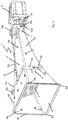
- the Figure 1 shows an embodiment of a public address system 1 according to the present invention, wherein the Figure 1a an exploded view of the sound system 1 without mounting bracket, the Figure 1b a mounting bracket 10 for bringing into engagement with the sound system 1 according to FIG Figure 1a and the Figure 1c the sound system 1 from the Figure 1a with the mounting bracket 10 Figure 1b demonstrate.
- the sonication device 1 has a horn 4 in the form of a funnel-shaped hollow body with a sound inlet opening 5 and a sound outlet opening 6.
- a first, flat side surface 4a extends from the sound inlet opening 5 to the sound outlet opening 6.
- a second side surface 4b Opposite to the first, flat side surface 4a, a second side surface 4b, which is concave outward from the sound inlet opening 5 to the sound outlet opening 6, connects the sound inlet opening 5 and the sound outlet opening 6th
- the cross section of the hollow body is continuously rectangular and widens from the sound inlet opening 5 to the sound outlet opening 6, the sound inlet opening 5 having a circular opening cross section, which, however, merges directly into a rectangular cross section.
- the sound inlet opening 5 is a central, circular opening in an essentially flat flange plate 4e, which is placed flush on the end of the horn, which has a rectangular cross section, or is connected in one piece to it.
- the sound outlet opening 6 has a rectangular opening cross section.
- the cross-sectional areas of the sound inlet to the sound outlet are roughly 1: 180, with the distance between the sound inlet and the sound outlet being about 20% to 60% larger than the width of the sound outlet, which in turn is about twice the height of this sound outlet.
- a sound generator 2 is arranged at or near the sound inlet opening 5.
- the sound generator 2 has an opening behind which a sound-generating membrane is arranged.
- the opening of the sounder 2 is aligned with the sound inlet opening 5, the diameter of the opening of the sounder 2 corresponding to the diameter of the sound inlet opening 5.
- the surface of the membrane projected along the main emission direction into a plane perpendicular to this plane lies in the sound inlet opening 5 or covers it.
- the axis of symmetry of such a diaphragm which is typically circular or rotationally symmetrical, and the main emission direction then coincide.
- the sound generator 2 converts an electrical signal into an acoustic signal.
- the acoustic signal is passed through the sound inlet opening 5 into the horn 4. Since the sound generator 2 is arranged directly on the sound inlet opening 5, there are no noteworthy reflections at the sound inlet opening 5 which could worsen the acoustic signal.
- the acoustic signal conducted into the horn 4 propagates in the funnel-shaped hollow body.
- the sound generator 2 is also arranged directly next to the flat side surface 4a or an imaginary extension of the same in such a way that its main emission direction 3 is parallel and slightly The distance to the flat side surface 4a from the sound inlet opening 5 to the sound outlet opening 6 runs.
- the housing 9 is sealed off from the horn 4 with a seal 9a, so that the housing 9 is sealed off in a waterproof and dustproof manner.
- the sound outlet opening 6 has a stiffening bead, i.e. a peripheral edge reinforcement 6c.
- the stiffening bead stiffens the sound outlet opening 6 and prevents it from being set into natural oscillation during operation.
- the inner corners 6a of the sound outlet opening 6 have a rounding 6b with a radius of a few millimeters.
- Grid 7 arranged.
- the grid 7 sits in a grid receptacle, for example in the form of shallow grooves or projections that are in the Figure 1 are not shown, and is screwed with four countersunk screws to the flat side surface 4a and the concave side surface 4b of the horn.
- the center-to-center distance between adjacent openings of the grid 7 is constant.
- the grating 7 is arranged inclined at an angle of 65 ° to the flat side surface 4 a and in the direction of the sound inlet opening 5.
- the edge of the arranged on the flat side surface 4a The grille 7 is arranged further away from the sound inlet opening 5 than the edge of the grille 7 arranged on the concave side surface 4b.
- the horn 4 has two holding devices 11 on each of its two opposite sides 4c and 4d.
- the holding devices 11 are wedge-shaped material reinforcements into which a screw or a threaded bolt with a screw nut can be screwed.
- Two holding devices 11 each are arranged at the end of the horn 4 with the sound outlet opening 6 and the end of the horn 4 with the sound inlet opening 5.
- the assembly bracket 10 provided for engaging with the holding devices 11 is shown in FIG Figure 1b shown.
- the mounting bracket 10 has two U-shaped brackets 10a which are aligned parallel to one another and are connected to one another via a web 10b.
- Each bracket 10a has two legs 10c with an elongated hole 10d and an insertion aid 10e for at least partially gripping around the horn 4.
- the screw screwed into the holding device 11 is guided into the elongated hole 10d via the insertion aid 10e.
- the position of the horn 4 relative to the mounting bracket 10 can be adjusted by moving the screw in the elongated hole 10d.
- the screws are then tightened and firmly connect the legs 10c to the holding devices 11.
- FIG. 1c is the public address system 1 according to FIG Figure 1a with an attached mounting bracket 10 according to the Figure 1b shown.
- the web 10b of the mounting bracket 10 clearly extends in the direction from the sound inlet opening 5 to the sound outlet opening 6.
- the web 10b is at a distance from the flat side surface 4a of the horn.
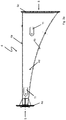
- the Figure 2 shows a horn 4 of a further embodiment of a sound system 1 according to the present invention. That in the Figure 2 Horn 4 shown is for the in Figure 1 Sound system 1 shown provided, wherein in the Figure 2a a side view, in FIG. 2b a plan view of the rear side of the sound inlet opening 5 and in FIG Figure 2c a plan view of the first, flat side surface 4a of the horn 4 are shown.
- the first, flat side surface 4a of the horn 4 extends from the sound inlet opening 5 to the sound outlet opening 6 and thus connects the sound inlet opening 5 with the sound outlet opening 6.
- a second, concave side surface 4b of the horn 4 is arranged opposite the first, flat side surface 4a.
- the second, concave side surface 4b also connects the sound inlet opening 5 to the sound outlet opening 6 and, together with the two further side surfaces 4c, 4d, forms a funnel-shaped hollow body through which the acoustic signal is passed when the sound system is in operation.
- the Indian Figure 2 Sound generator 2 not shown, is arranged close to or at the sound inlet opening 5 during operation of the sound reinforcement device.
- the sounder 2 is attached to the flange 4e of the horn in such a way that the sounder is arranged directly next to the flat side surface 4a or an imaginary extension of the flat side surface 4a and its main emission direction is parallel to the first, flat side surface 4a runs from the sound inlet opening 5 to the sound outlet opening 6.
- the flange 4e is also used to attach a, in the Figure 2 also not shown, housing 9, which protects the sound generator 2 from environmental influences when the sound system is in operation.
- the holding devices 11 are arranged in such a way that, when the sound system is in operation, the web 10b of a mounting bracket 10 is arranged at a distance from the first, flat side surface 4a. The distance is preferably chosen so that the web 2 in one in the Figure 2a The side view shown is flush with the upper edge of the flange 4e.
- the horn 4 has an edge reinforcement 6c, which prevents the horn 4 from being set into natural oscillations by the sound guided through the horn 4 during operation of the sound system.
- the Figure 2b shows the horn 4 in a plan view of the rear side of the sound inlet opening 5.
- the sound inlet opening 5 is a circular opening in the flange 4e.
- the diameter of the sound inlet opening 5 is preferably selected such that it corresponds to the diameter of a membrane of a sounder 2 which is arranged on or near the sound inlet opening 5 during operation of the sound system.
- the sound inlet opening 5 is arranged in the flange 4e in such a way that the edge of the sound inlet opening 5 lies directly next to the first, flat side surface 4a.
- FIG. 2c shows a plan view of the first, flat side surface 4a, to recognize the holding devices 11 attached to each of the two side surfaces 4c, 4d for bringing it into engagement with a mounting bracket 10.
- the holding devices 11 are wedge-shaped material reinforcements of the side walls 4c, 4d.
Landscapes
- Physics & Mathematics (AREA)
- Engineering & Computer Science (AREA)
- Acoustics & Sound (AREA)
- Multimedia (AREA)
- Apparatuses For Generation Of Mechanical Vibrations (AREA)
- Obtaining Desirable Characteristics In Audible-Bandwidth Transducers (AREA)
- Transducers For Ultrasonic Waves (AREA)
- Circuit For Audible Band Transducer (AREA)
Description
Die vorliegende Erfindung betrifft eine Beschallungseinrichtung mit einem Schallgeber, welcher eine Hauptabstrahlrichtung aufweist, und mit einem Horn in Form eines sich von einer Schalleintrittsöffnung aus zu einer Schallaustrittsöffnung trichterförmig erweiternden Hohlkörpers, der zumindest eine erste sich zwischen den Öffnungen erstreckende, eben Seitenfläche aufweist, wobei der Schallgeber an oder nahe der Schalleintrittsöffnung angeordnet ist.The present invention relates to a sound system with a sound generator, which has a main direction of radiation, and with a horn in the form of a funnel-shaped widening hollow body from a sound inlet opening to a sound outlet opening, which has at least one first flat side surface extending between the openings, the Sounder is arranged at or near the sound inlet opening.
Derartige Beschallungseinrichtungen dienen der Sprachalarmierung von Personen in Bereichen mit lauten Umgebungsgeräuschen. In Tunneln, aber auch in anderen offenen und geschlossenen Räumen, wie beispielsweise Bahnhöfen, Flughäfen, Fabrikhallen und Werfthallen, können Situationen auftreten, in denen Personen über Gefahren informiert und mittels Sprachanweisungen aus den Gefahrenbereichen geführt werden müssen. Informationen, Sprachdurchsagen oder Sprachanweisungen können über an den Wänden und insbesondere an den Decken der Räume angeordnete Beschallungseinrichtungen übermittelt werden. Die mit den Gefahrensituationen meist einhergehenden lauten Geräuschpegel, verursacht durch zum Beispiel Feuer, laufende Maschinen oder Motoren oder schreiende Personen, müssen durch die Beschallungseinrichtung übertönt werden, damit die möglicherweise lebensrettenden Anweisungen von den zu evakuierenden Personen akustisch verständlich wahrgenommen werden können.Such public address systems are used for voice alarming people in areas with loud ambient noises. In tunnels, but also in other open and closed spaces, such as train stations, airports, factories and shipyards, situations can arise in which people have to be informed about dangers and guided out of the danger areas by means of voice instructions. Information, voice announcements or voice instructions can be transmitted via sound systems arranged on the walls and in particular on the ceilings of the rooms. The loud noise levels usually associated with dangerous situations, caused for example by fire, running machines or motors or screaming people, must be drowned out by the sound system so that the possibly life-saving instructions can be heard acoustically by the people to be evacuated.
Die
Im Betrieb solcher Beschallungseinrichtungen kommt es aufgrund räumlicher Gegebenheiten oft zur Ausbildung von destruktiven Interferenzen, die zu einer Reichweitenreduzierung des akustischen Signals und zu einer Reduzierung der Signalqualität führen. Trifft das von der Beschallungseinrichtung ausgesendete akustische Signal auf eine Grenzfläche, wie beispielsweise eine Tunnelwand und/oder -decke, so wird ein Teil des auf die Grenzfläche auftretenden Schalls reflektiert. Eine in einem Abstand zu der Grenzfläche und der Beschallungseinrichtung befindliche Person nimmt sowohl das unmittelbar von dem Schallgeber ausgesendete Schallsignal als auch das von der Wand oder Decke reflektierte Schallsignal wahr. Der Laufzeitunterschied zwischen dem unmittelbar empfangenen und dem reflektierten Signal führt jedoch zu teilweise destruktiven Überlagerungen und Verzerrungen.In the operation of such public address systems, due to spatial conditions, destructive interferences often develop, which lead to a reduction in the range of the acoustic signal and a reduction in the signal quality. If the acoustic signal emitted by the acoustic irradiation device strikes a boundary surface, such as a tunnel wall and / or ceiling, then part of the sound occurring on the boundary surface is reflected. A person located at a distance from the interface and the sound system perceives both the sound signal emitted directly by the sounder and the sound signal reflected from the wall or ceiling. However, the difference in transit time between the directly received and the reflected signal leads to partially destructive overlays and distortions.
Demgegenüber besteht eine Aufgabe der vorliegenden Erfindung darin, eine Beschallungseinrichtung bereitzustellen, die Grenzflächenreflektionen zumindest reduziert, eine gut ausgerichtete und wohldefinierte Schallwellenfront mit hohem Schalldruckpegel und einen ausgeglichen Frequenzgang aufweist. Darüber hinaus sollte die Einrichtung einfach und kostengünstig herstellbar und vielfältig einsetzbar sein.In contrast, an object of the present invention is to provide a sound reinforcement device which at least reduces boundary surface reflections, has a well-aligned and well-defined sound wave front with a high sound pressure level and a balanced frequency response. In addition, the device should be simple and inexpensive to manufacture and be versatile.
Erfindungsgemäß wird eine Beschallungseinrichtung mit einem Schallgeber vorgeschlagen, welcher eine Hauptabstrahlrichtung aufweist, mit einem Horn in Form eines sich von einer Schalleintrittsöffnung aus zu einer Schallaustrittsöffnung mit rechteckigem Querschnitt hin trichterförmig erweiternden Hohlkörpers, der zumindest eine erste sich zwischen den Öffnungen erstreckende, ebene Seitenfläche aufweist, die senkrecht zu der Schallaustrittsöffnung ausgerichtet ist, wobei der Schallgeber an oder nahe der Schalleintrittsöffnung angeordnet ist, und wobei der Schallgeber unmittelbar neben der (ersten) ebenen Seitenfläche in der Weise angeordnet ist, dass seine Hauptabstrahlrichtung parallel zu der (ersten) ebenen Seitenfläche von der Schalleintritts- zu der Schallaustrittsöffnung hin verläuft, und wobei ein lichter Abstand zwischen dem Schallgeber und der ebenen Seitenfläche oder der gedachten Verlängerung derselben bis zu 4 cm beträgt.According to the invention, a sound system is proposed with a sound generator, which has a main direction of emission, with a horn in the form of a hollow body widening in a funnel shape from a sound inlet opening to a sound outlet opening with a rectangular cross-section, which has at least one first flat side surface extending between the openings, which is aligned perpendicular to the sound outlet opening, wherein the sounder is arranged at or near the sound inlet opening, and where the sounder is arranged directly next to the (first) flat side surface in such a way that its main direction of radiation is parallel to the (first) flat side surface of the The sound inlet runs towards the sound outlet opening, and a clear distance between the sounder and the flat side surface or the imaginary extension of the same is up to 4 cm.
Die Hauptabstrahlrichtung eines Schallgebers ist definiert durch die Richtung des jeweils maximalen Schallpegels des freien Schallgebers bzw. des schallerzeugenden Elementes desselben (das beispielsweise eine schwingende Membran ist) in einem (beliebigen) gegebenen Abstand (innerhalb einer vorgegebenen Reichweite). Diese Definition der Hauptabstrahlrichtung soll eine Reflexion und Richtungsänderung der von dem schallerzeugenden Element ausgehenden Schallwellen vor oder im Bereich der Schalleintrittsöffnung ausschließen.The main direction of radiation of a sounder is defined by the direction of the respective maximum sound level of the free sounder or the sound-generating element of the same (the for example a vibrating membrane) at any given distance (within a given range). This definition of the main emission direction is intended to rule out a reflection and change in direction of the sound waves emanating from the sound-generating element in front of or in the area of the sound inlet opening.
Der Schallgeber wandelt ein elektrisches Signal in ein akustisches Signal um. Vorzugsweise weist das akustische Signal einen Frequenzbereich von 20 Hz bis 20 kHz auf. Das erzeugte akustische Signal tritt durch die Schalleintrittsöffnung in das Horn der Beschallungseinrichtung. Durch die Anordnung des Schallgebers an oder nahe der Schalleintrittsöffnung treten nahezu keine Wechselwirkungen zwischen dem akustischen Signal und der Schalleintrittsöffnung auf. Das akustische Signal wird nahezu verlustfrei in das Horn der Beschallungseinrichtung geleitet.The sounder converts an electrical signal into an acoustic signal. The acoustic signal preferably has a frequency range from 20 Hz to 20 kHz. The acoustic signal generated enters the horn of the sound system through the sound inlet opening. Due to the arrangement of the sound generator at or near the sound inlet opening, there are almost no interactions between the acoustic signal and the sound inlet opening. The acoustic signal is passed into the horn of the sound reinforcement system with almost no loss.
Als "Schalleintrittsöffnung" wird der kleinste freie Querschnitt des Hornes senkrecht zur Abstrahlrichtung und in Hauptabstrahlrichtung hinter dem Schallgeber angesehen. Im Sinne der vorliegenden Erfindung ist der Schallgeber "an" oder "nahe der Schalleintrittsöffnung" angeordnet, wenn der Schallgeber unmittelbar in der Schalleintrittsöffnung angeordnet ist, an diese angrenzt oder zu dieser einen Abstand entlang der Hauptabstrahlrichtung aufweist, der in der Größenordnung des maximalen Durchmessers der Schalleintrittsöffnung liegt oder kleiner ist. Die Anordnung des Schallgebers an oder nahe der Schalleintrittsöffnung verfolgt den Zweck eines nahezu verlustfreien Einleitens des akustischen Signals durch die Schalleintrittsöffnung in das Horn und durch dieses hindurch, ohne zwischenzeitliche Umlenkung oder Rückstreuung der von der eigentlichen Schallquelle (z. B. schwingenden Membran) ausgehenden Schallwellen. Der Abstand des Schallgebers zur Schalleintrittsöffnung sollte einen Wert von 50 mm nicht überschreiten und vorzugsweise 1 mm oder weniger betragen.The "sound inlet opening" is the smallest free cross section of the horn perpendicular to the direction of emission and in the main direction of emission behind the sounder. In the sense of the present invention, the sounder is arranged "on" or "near the sound inlet opening" if the sounder is arranged directly in the sound inlet opening, adjoins it or has a distance from it along the main emission direction which is in the order of magnitude of the maximum diameter of the Sound inlet opening is or is smaller. The arrangement of the sounder at or near the sound inlet opening pursues the purpose of an almost loss-free introduction of the acoustic signal through the sound inlet opening into the horn and through it, without intermediate deflection or backscattering of the sound waves emanating from the actual sound source (e.g. vibrating membrane) . The distance of the sounder to the sound inlet opening should not exceed a value of 50 mm and preferably 1 mm or less.
Das in das Horn eingeleitete akustische Signal breitet sich in dem trichterförmigen Horn in Form von Schallwellen aus. Weil der Schallgeber unmittelbar neben der ebenen Seitenfläche angeordnet und die Hauptabstrahlrichtung des Schallgebers parallel zu der ebenen Seitenfläche von der Schalleintrittsöffnung zu der Schallaustrittsöffnung verläuft, breitet sich das Maximum (die maximale Amplitude) der Wellenfront parallel zu dieser ebenen Seitenfläche aus. Diese Seitenfläche kann beispielsweise parallel zu einer Wand oder Decke eines Bauwerks montiert sein. Dadurch werden Laufzeitunterschiede zwischen der direkten Wellenfront und Reflexionen mit der ebenen Seitenfläche und/oder der Wand weitestgehend vermieden bzw. auf sehr kleine Winkel beschränkt. Der erzeugte Schalldruck in Abstrahlrichtung wird durch die ebene Seitenfläche des Horns und entsprechende Wände oder Decken nicht geschwächt sondern durch Reflexionen unter sehr kleinem Winkel, die keine spürbaren Laufzeitunterschiede verursachen, eher verstärkt, sodass das akustische Signal auch in großer Entfernung gut und unverzerrt wahrnehmbar ist.The acoustic signal introduced into the horn propagates in the funnel-shaped horn in the form of sound waves. Because the sound generator is arranged directly next to the flat side surface and the main direction of radiation of the sound generator runs parallel to the flat side surface from the sound inlet opening to the sound outlet opening, the maximum (the maximum amplitude) of the wave front spreads parallel to this flat side surface. This side surface can be mounted parallel to a wall or ceiling of a building, for example. As a result, differences in transit time between the direct wave front and reflections with the flat side surface and / or the wall are largely avoided or limited to very small angles. The sound pressure generated in the direction of emission is not weakened by the flat side surface of the horn and the corresponding walls or ceilings, but rather reinforced by reflections at a very small angle that do not cause any noticeable differences in transit time, so that the acoustic signal can be heard well and without distortion even from a long distance.
Im Sinne der vorliegenden Erfindung wird unter "unmittelbar neben der ebenen Seitenfläche oder einer gedachten Verlängerung derselben" verstanden, dass der Schallgeber möglichst nahe an der ebenen Seitenfläche angeordnet ist.In the context of the present invention, “directly next to the flat side surface or an imaginary extension of the same” is understood to mean that the sound generator is arranged as close as possible to the flat side surface.
Vorzugsweise berührt der Schallgeber die ebene Seitenfläche bzw. deren gedachte Verlängerung. Ein lichter Abstand von bis zu 4 cm, vorzugsweise von höchstens 2 cm zwischen dem Schallgeber und der ebenen Seitenfläche bzw. deren Verlängerung wird beispielsweise noch als "unmittelbar neben der ebenen Seitenfläche oder einer gedachten Verlängerung derselben" verstanden.The sound generator preferably touches the flat side surface or its imaginary extension. A clear distance of up to 4 cm, preferably of at most 2 cm between the sounder and the flat side surface or its extension is understood, for example, as "immediately next to the flat side surface or an imaginary extension of the same".
Beispielsweise weist der Schallgeber eine Membran auf, deren Hauptschwingungsrichtung der Hauptabstrahlrichtung entspricht. Die zur Hauptabstrahlrichtung senkrecht gemessene Projektionsfläche der Membran sollte dann den Querschnitt der Schalleintrittsöffnung weitgehend (zu mehr als 50%), vorzugsweise vollständig überdecken. Ist die in eine Ebene senkrecht zur Hauptabstrahlrichtung projizierte Fläche der Membran kleiner als der Querschnitt der Schalleintrittsöffnung, sollte die in den Querschnitt der Schalleintrittsöffnung projizierte Fläche der Membran an die durch die ebene Seitenfläche des Hornes definierte Ebene angrenzen oder maximal einen lichten Abstand zur dieser Ebene haben, der geringer ist als der halbe maximale Durchmesser der Projektionsfläche der Membran. Die Projektionsfläche einer solchen schwingenden Membran auf die Schalleintrittsöffnung kann auch größer sein als die Fläche der Schalleintrittsöffnung, sollte jedoch nicht mehr als das Doppelte betragen.For example, the sound generator has a membrane, the main direction of oscillation of which corresponds to the main direction of radiation. The projection surface of the membrane measured perpendicular to the main emission direction should then largely (more than 50%), preferably completely cover the cross section of the sound inlet opening. If the area of the membrane projected into a plane perpendicular to the main direction of radiation is smaller than the cross section of the sound inlet opening, the area of the membrane projected into the cross section of the sound inlet opening should be adjacent to the plane defined by the flat side surface of the horn or at most be at a clear distance from this plane , which is less than half the maximum diameter of the projection area of the membrane. The projection area of such a vibrating membrane onto the sound inlet opening can also be larger than the area of the sound inlet opening, but should not be more than double.
In einer Ausführungsform ist die Schalleintrittsöffnung kreisförmig, wobei vorzugsweise der Rand der Schalleintrittsöffnung die ebene Seitenfläche oder eine gedachte Verlängerung der ebenen Seitenfläche tangiert.In one embodiment, the sound inlet opening is circular, with the edge of the sound inlet opening preferably touching the flat side surface or an imaginary extension of the flat side surface.
Der Schallgeber weist vorzugsweise eine kreis- bzw. rotationsymmetrische Membran als schallerzeugendes Element auf. Die entlang der Hauptabstrahlrichtung in eine zu dieser senkrechten Ebene projizierte Fläche der Membran liegt dann in der Schalleintrittsöffnung 5, bzw. überdeckt diese. Im Allgemeinen fallen dann auch die Symmetrieachse der Membran und die Hauptabstrahlrichtung zusammen.The sound generator preferably has a circular or rotationally symmetrical membrane as the sound-generating element. The surface of the membrane projected along the main emission direction into a plane perpendicular to this then lies in the sound inlet opening 5 or covers it. In general, the axis of symmetry of the membrane and the main emission direction then coincide.
In einer Ausführungsform haben der Öffnungsquerschnitt der Schallaustrittsöffnung und der Öffnungsquerschnitt der Schalleintrittsöffnung, jeweils senkrecht zur Hauptabstrahlrichtung, ein Verhältnis zwischen 10:1 und 500:1, vorzugsweise zwischen 50:1 und 200:1, besonders bevorzugt 180:1.In one embodiment, the opening cross section of the sound outlet opening and the opening cross section of the sound inlet opening, each perpendicular to the main direction of emission, have a ratio between 10: 1 and 500: 1, preferably between 50: 1 and 200: 1, particularly preferably 180: 1.
In einer Ausführungsform ist der freie (Innen-)Querschnitt des Hornes rechteckig, wobei die innenliegenden Ecken vorzugsweise einen Rundungsradius von einigen Millimetern aufweisen. Das Horn kann in seinem Anfangsabschnitt, ausgehend von der Schalleintrittsöffnung einen der Form des Schallgebers bzw. dessen Membran angepassten Querschnitt haben, also beispielsweise einen kreisförmigen Querschnitt, der dann allmählich, zum Beispiel innerhalb des ersten Zehntels der Hornlänge, in einen rechteckigen Querschnitt übergeht. In diesem Anfangsbereich wäre die oben definierte ebene Fläche des Hornes noch nicht exakt eben, jedoch läge eine Tangente an den Querschnitt des Hornes in dieser Ebene.In one embodiment, the free (inner) cross section of the horn is rectangular, the inner corners preferably having a radius of curvature of a few millimeters. In its initial section, starting from the sound inlet opening, the horn can have a cross-section adapted to the shape of the sounder or its membrane, for example a circular cross-section, which then gradually merges into a rectangular cross-section, for example within the first tenth of the horn length. In this initial area, the flat surface of the horn defined above would not yet be exactly flat, but there would be a tangent to the cross section of the horn in this plane.
In einer Ausführungsform ist mindestens eine zweite, die Schalleintrittsöffnung und die Schallaustrittsöffnung verbindende Seitenfläche des Hornes, gegenüberliegend zu der ersten ebenen Seitenfläche angeordnet, die nicht eben, sondern beispielsweise von der Schalleintrittsöffnung zu der Schallaustrittsöffnung nach außen konkav gekrümmt ist so dass der freie Querschnitt des Hornes in Richtung der Schallaustrittsöffnung progressiv zunimmt. Die Krümmungsachse liegt dabei parallel zu der ersten Ebene und senkrecht zur Hauptabstrahlrichtung. Der gemittelte Krümmungsradius liegt in der Größenordnung des 1- bis 3-fachen der Länge des Hornes, d. h. des Abstandes zwischen Schalleintritts- und Schallaustrittsöffnung. Vorzugsweise ist der Verlauf der konkaven Seitenfläche einem hyperbolischen Funktionsverlauf angenähert bzw. durch eine hyperbolische Funktion beschreibbar.In one embodiment, at least one second side surface of the horn, which connects the sound inlet opening and the sound outlet opening, is arranged opposite the first flat side surface, which is not flat but, for example, is curved concavely from the sound inlet opening to the sound outlet opening so that the free cross section of the horn increases progressively in the direction of the sound outlet opening. The axis of curvature lies parallel to the first plane and perpendicular to the main emission direction. The mean radius of curvature is on the order of 1 to 3 times the length of the horn; H. the distance between the sound inlet and the sound outlet opening. The profile of the concave side surface is preferably approximated to a hyperbolic function profile or can be described by a hyperbolic function.
Die Maße eines Horns von konkreten Ausführungsformen liegen bei einer Länge von ca. 70 cm bis 200 cm und einer Schallaustrittsöffnung von ca. 40 cm bis 100 cm Breite und einer Höhe von 20 cm bis etwa 50 cm. Die übrigen Maße ergeben sich dabei aus den als bevorzugt angegebenen relativen Verhältnissen.The dimensions of a horn in specific embodiments are approx. 70 cm to 200 cm long and a sound outlet opening approx. 40 cm to 100 cm wide and 20 cm high cm to about 50 cm. The other dimensions result from the relative proportions indicated as preferred.
Die verbleibenden Seitenflächen, welche den rechteckigen Querschnitt des Hornes definieren, können ihrerseits ebene, unter einem Divergenzwinkel von bis zu 60°, vorzugsweise 40° bis 50°, voneinander divergierende Flächen sein, deren Ebenen vorzugsweise senkrecht zu der Ebene der ersten Seitenfläche stehen und die mit der Hauptabstrahlrichtung in etwa den halben Divergenzwinkel der beiden Seitenflächen einschließen.The remaining side surfaces, which define the rectangular cross section of the horn, can in turn be planar surfaces diverging from one another at a divergence angle of up to 60 °, preferably 40 ° to 50 °, the planes of which are preferably perpendicular to the plane of the first side surface and which enclose with the main radiation direction approximately half the divergence angle of the two side surfaces.
Der Abstand zwischen der Schalleintrittsöffnung und der Schallaustrittsöffnung entlang der ebenen Seitenfläche des trichterförmigen Hohlkörpers entspricht in einer Ausführungsform einem 20-fachen bis 200-fachen des maximalen Durchmessers der Schalleintrittsöffnung, vorzugsweise einem 20-fachen bis 50-fachen des maximalen Durchmessers der Schalleintrittsöffnung. Dieses Verhältnis ist für eine im Verhältnis zu der maximalen Schallabstrahlung des Schallgebers möglichst große Reichweite der Beschallungseinrichtung von Bedeutung.The distance between the sound inlet opening and the sound outlet opening along the flat side surface of the funnel-shaped hollow body corresponds in one embodiment to 20 times to 200 times the maximum diameter of the sound inlet opening, preferably 20 to 50 times the maximum diameter of the sound inlet opening. This ratio is important for the largest possible range of the public address system in relation to the maximum sound radiation of the sounder.
In einer Ausführungsform ist in dem freien Querschnitt des trichterförmigen Hohlkörpers im Abstand zu der Schallaustrittsöffnung ein Gitter oder ein Lochblech angeordnet, wobei das Gitter oder das Lochblech vorzugsweise einen Neigungswinkel zwischen 60° und 70°, vorzugsweise 65°, gegenüber der Hauptabstrahlrichtung aufweist. Vorzugsweise beträgt der Abstand des Gitters oder des Lochblechs von der Schallaustrittsöffnung maximal 1/3, zum Beispiel zwischen 1/4 und 1/8 des Abstandes zwischen Schalleintritts- und Austrittsöffnung.In one embodiment, a grille or a perforated plate is arranged in the free cross section of the funnel-shaped hollow body at a distance from the sound outlet opening, the grille or the perforated plate preferably having an angle of inclination between 60 ° and 70 °, preferably 65 °, with respect to the main radiation direction. The distance between the grille or the perforated plate and the sound outlet opening is preferably a maximum of 1/3, for example between 1/4 and 1/8 of the distance between the sound inlet and outlet opening.
In erster Linie soll das Gitter oder das Lochblech ein Einnisten von Tieren in dem Horn und ein Verstopfen des Horns durch Unrat verhindern, gleichzeitig soll das Gitter oder Lochblech die Abstrahlcharakteristik des Horns möglichst wenig beeinträchtigen. Die erfindungsgemäße Ausgestaltung und Anordnung des Gitters oder Lochbleches weist einen geringen Klirrfaktor auf und beeinträchtigt die Klangqualität der Beschallungseinrichtung nicht oder nur geringfügig.First and foremost, the grid or perforated plate should prevent animals from nesting in the horn and clogging of the horn with debris, while the grid or perforated plate should impair the radiation characteristics of the horn as little as possible. The design and arrangement of the grille or perforated plate according to the invention has a low distortion factor and does not impair the sound quality of the sound reinforcement device, or only slightly.
Vorzugsweise ist das Gitter oder das Lochblech in einem Gitteraufnahmebereich angeordnet, wobei das Gitter oder Lochblech mit einer Mehrzahl von versenkten Schrauben in der Gitteraufnahme fixiert ist. Vorzugsweise sind die Aussparungen des Gitters oder die Löcher des Lochblechs derart angeordnet, dass der Abstand zwischen den Mittelpunkten benachbarter Aussparungen oder Löcher des Gitters bzw. des Lochblechs gleich ist. Das Lochmuster kann beispielsweise ein hexagonales Muster aus gleichseitigen Dreiecken bilden und der maximale Lochdurchmesser liegt beispielsweise bei 1 mm bis 20 mm, vorzugsweise bei 3 mm.The grid or the perforated plate is preferably arranged in a grid receiving area, the grid or perforated plate being fixed in the grid receiving means with a plurality of countersunk screws. The cutouts in the grid or the holes in the perforated plate are preferably arranged in such a way that the distance between the centers of adjacent cutouts or holes in the grid or the perforated plate is the same. The hole pattern can for example form a hexagonal pattern of equilateral triangles and the maximum hole diameter is, for example, 1 mm to 20 mm, preferably 3 mm.
In einer Ausführungsform ist zwischen dem Gitter und der Schalleintrittsöffnung ein Gewebe, vorzugsweise ein Vlies, angeordnet. Das Gewebe oder Vlies schützt den Schallgeber bei Reinigungsarbeiten am Horn und verhindert ein Eindringen von Wasser. In einer Ausführungsform ist das Gewebe, vorzugsweise das Vlies, auf der der Schalleintrittsöffnung zugewandten Seite des Gitters angeordnet.In one embodiment, a fabric, preferably a fleece, is arranged between the grille and the sound inlet opening. The fabric or fleece protects the sounder when cleaning the horn and prevents water from entering. In one embodiment, the fabric, preferably the fleece, is arranged on the side of the grille facing the sound inlet opening.
In einer Ausführungsform weisen die Außenkanten des Gitters oder des Lochbleches in ihrer Verbindung zu dem Horn eine Kantenschutzdichtung auf. Die Kantenschutzdichtung vermindert den Klirrfaktor und verhindert ein Eindringen von Schmutz.In one embodiment, the outer edges of the grid or of the perforated plate have an edge protection seal in their connection to the horn. The edge protection seal reduces the distortion factor and prevents dirt from entering.
In einer Ausführungsform weist die Schallaustrittsöffnung eine umlaufende Randverstärkung auf. Die umlaufende Randverstärkung, vorzugsweise in Form eines Versteifungswulstes, trägt zur Versteifung des Horns bei. Im Betrieb der Beschallungseinrichtung trägt die Randverstärkung dazu bei, dass das Horn sich durch den hindurchgeleiteten Schall nicht oder nur unwesentlich verformt und Eigenresonanzen des Horns minimiert werden.In one embodiment, the sound outlet opening has a peripheral edge reinforcement. The circumferential edge reinforcement, preferably in the form of a stiffening bead, contributes to the stiffening of the horn. During the operation of the sound reinforcement device, the edge reinforcement contributes to the fact that the horn is not deformed or is only slightly deformed by the sound passed through and that natural resonances of the horn are minimized.
In einer Ausführungsform ist der Schallgeber in einem einseitig offenen Gehäuse angeordnet, wobei das Gehäuse vorzugsweise wasserdicht und/oder staubdicht abgeschlossen ist. Ein vorzugsweises wasserdichtes und/oder staubdichtes Gehäuse schützt den in dem Gehäuse angeordneten Schallgeber vor Umwelteinflüssen und erhöht auf diese Weise die Lebensdauer des Schallgebers. Die offene Seite des Gehäuses lässt die Schallquelle, wie zum Beispiel eine Membran, frei, die noch durch ein den Schall nicht dämpfendes Schutzgitter oder Netz bzw. Gewebe geschützt sein kann.In one embodiment, the sound generator is arranged in a housing that is open on one side, the housing preferably being watertight and / or dust-tight. A preferably watertight and / or dustproof housing protects the sounder arranged in the housing from environmental influences and in this way increases the service life of the sounder. The open side of the housing leaves the sound source, such as a membrane, free, which can still be protected by a protective grille or mesh or fabric that does not attenuate the sound.
Das die Schalleintrittsöffnung aufweisende Ende des Hornes weist beispielsweise einen umlaufenen Flansch auf, der die Eintrittsöffnung umgibt oder definiert und als Befestigungsflansch für ein Schallgebergehäuse dienen kann. Der Flansch kann beispielsweise einstückig mit dem Horn ausgeführt sein. Alternativ können das Horn und der Flansch mehrteilig zusammengesetzt sein.The end of the horn having the sound inlet opening has, for example, a circumferential flange which surrounds or defines the inlet opening and can serve as a fastening flange for a sounder housing. The flange can, for example, be made in one piece with the horn. Alternatively, the horn and the flange can be composed of several parts.
Um die Montage der Beschallungseinrichtung zu vereinfachen und/oder um eine Montage bei unterschiedlichen Gegebenheiten am Montageort zu ermöglichen und auch um die Beschallungseinrichtung im montieren Zustand ausrichten zu können, ist in einer Ausführungsform vorgesehen, dass ein Montagebügel mit dem trichterförmigen Hohlkörper lös- und einstellbar verbunden ist, wobei der Montagebügel so ausgelegt ist, dass er die ebene Seitenfläche des Hornes in einem kleinen lichten Abstand der Seitenfläche zu der Montagewand von beispielsweise zwischen 1 cm und 10 cm, vorzugsweise etwa 1 cm bis 7 cm, zu einer Montagefläche und parallel zu dieser hält. Der lichte Abstand soll einerseits einem möglichen Überstand des Schallgebergehäuses Rechnung tragen und andererseits auch die Montage des Hornes an einer Wand oder Decke erleichtern. Weiterhin soll der Abstand genügend klein sein, so dass Reflexionen des Schalls an der parallel zu der ebenen Seitenfläche verlaufenden Wand oder Decke vor der Schallaustrittsöffnung nur unter sehr flachen Winkeln möglich sind, so dass störende Interferenzen verhindert werden.In order to simplify the installation of the PA system and / or to enable installation in different circumstances at the installation site and also to be able to align the PA system in the installed state, one embodiment provides that a mounting bracket is detachably and adjustably connected to the funnel-shaped hollow body is, wherein the mounting bracket is designed so that it the flat side surface of the horn at a small clearance between the side surface and the mounting wall of, for example, between 1 cm and 10 cm, preferably about 1 cm to 7 cm, to a mounting surface and parallel to this holds. The clear distance should on the one hand take into account a possible protrusion of the sounder housing and on the other hand also facilitate the assembly of the horn on a wall or ceiling. Furthermore, the distance should be sufficiently small so that reflections of the sound on the wall or ceiling running parallel to the flat side surface in front of the sound outlet opening are only possible at very flat angles, so that disruptive interference is prevented.
In einer Ausführungsform weist der Montagebügel zwei parallel zueinander ausgerichtete, U-förmige Bügel für ein zumindest abschnittsweises Umgreifen des Hohlkörpers und einen die zwei Bügel miteinander verbindenden Steg auf. Jeder der parallel zueinander ausgerichteten Bügel dient dem zumindest abschnittsweisen Umgreifen des Hohlkörpers auf seiner Außenseite in der Nähe der Schalleintrittsöffnung bzw. der Schallaustrittsöffnung. Der die zwei parallel ausgerichteten Bügel verbindende Steg erstreckt sich in einem montierten Zustand entlang der Verbindung zwischen der Schalleintrittsöffnung und Schallaustrittsöffnung.In one embodiment, the mounting bracket has two U-shaped brackets, which are aligned parallel to one another, for gripping around the hollow body at least in sections and a web connecting the two brackets to one another. Each of the brackets, which are aligned parallel to one another, serves to encompass the hollow body at least in sections on its outside in the vicinity of the sound inlet opening or the sound outlet opening. The web connecting the two parallel brackets extends in an assembled state along the connection between the sound inlet opening and sound outlet opening.
In einer Ausführungsform weist jeder der U-förmigen Bügel zwei Schenkel mit je einem Langloch und/oder einer seitlichen Einführhilfe zum Einführen je eines Halteelementes in das Langloch auf, wobei je zwei Haltelemente auf der Außenseite jeder von zwei gegenüberliegenden Seitenwänden des trichterförmigen Hornes angeordnet sind. Für die Montage der Beschallungseinrichtung wird zunächst der Montagebügel an der Wand oder Decke befestigt, an der die Beschallungseinrichtung montiert werden soll. Anschließend werden die Haltevorrichtungen des Hornes mit dem jeweiligen Langloch und/oder der jeweiligen Einführhilfe des Montagebügels in Eingriff gebracht, so dass das Horn an den U-förmigen Bügeln aufgehängt ist. Die Position der Halteelemente in den Langlöchern ist veränderbar, sodass die Ausrichtung der Beschallungseinrichtung relativ zu dem Montagebügel und der Wand oder Decke einstellbar ist. In einer Ausführungsform ist die Einführhilfe eine schwalbenschwanzförmige Öffnung, die seitlich in ein Langloch mündet. Insbesondere eine Montage der Beschallungseinrichtung "über Kopf", d.h. an einer Decke und nachdem der Montagebügel bereits an der Decke montiert wurde, wird so vereinfacht.In one embodiment, each of the U-shaped brackets has two legs each with an elongated hole and / or a lateral insertion aid for inserting a retaining element into the elongated hole, with two retaining elements being arranged on the outside of each of two opposite side walls of the funnel-shaped horn. To install the PA system, the mounting bracket is first attached to the wall or ceiling on which the PA system is to be mounted. The holding devices of the horn are then brought into engagement with the respective elongated hole and / or the respective insertion aid of the mounting bracket, so that the horn is suspended from the U-shaped bracket. The position of the holding elements in the elongated holes can be changed so that the alignment of the sound system relative to the mounting bracket and the wall or ceiling can be adjusted. In one embodiment, the insertion aid is a dovetail-shaped opening which opens laterally into an elongated hole. In particular, mounting the sound system "overhead", i.e. on a ceiling and after the mounting bracket has already been mounted on the ceiling, is simplified in this way.
In einer Ausführungsform ist der Montagebügel aus Metall und/oder der Schallgeber ist ebenfalls und unabhängig von dem trichterförmigen Horn, das typischerweise aus Kunststoff besteht, über einen Befestigungsbügel und/oder eine Kette und/oder ein Seil mit dem Montagebügel lösbar verbunden. Vorzugsweise sind der Befestigungsbügel, die Kette und/oder das Seil feuerfest. Beispielsweise können der Befestigungsbügel, die Kette und/oder das Seil aus Metall hergestellt sein. Auf diese Weise wird selbst bei einem Brand an dem Montageort der Beschallungseinrichtung ein Herabfallen des Schallgebers durch die Sicherung über den mit dem Montagebügel befestigten Befestigungsbügel, Kette und/oder Seil verhindert.In one embodiment, the mounting bracket is made of metal and / or the sounder is also detachably connected to the mounting bracket via a fastening bracket and / or a chain and / or a rope independently of the funnel-shaped horn, which is typically made of plastic. The fastening bracket, the chain and / or the rope are preferably fireproof. For example, the mounting bracket, the chain and / or the rope can be made of metal. In this way, even in the event of a fire at the installation site of the sound system, the sound generator is prevented from falling down by the securing means via the fastening bracket, chain and / or rope attached to the installation bracket.
Weitere Vorteile, Merkmale und Anwendungsmöglichkeiten der vorliegenden Erfindung werden deutlich anhand der folgenden Beschreibung von bevorzugten Ausführungsformen und den dazugehörigen Figuren. Es zeigen:
- Figur 1a:
- eine Explosionsansicht einer erfindungsgemäßen Ausführungsform einer Beschallungseinrichtung;
- Figur 1b:
- eine perspektivische Ansicht auf einen Montagebügel zum in Eingriff bringen mit der Beschallungseinrichtung gemäß
Figur 1a ; - Figur 1c:
- zeigt eine Ansicht auf eine Beschallungseinrichtung gemäß
Figur 1a mit einem Montagebügel gemäßFigur 1b ; - Figur 2a:
- eine Seitenansicht auf ein Horn einer Beschallungseinrichtung gemäß einer weiteren Ausführungsform der Erfindung;
- Figur 2b
- eine Rückseitenansicht auf die Schalleintrittsöffnung des Horns gemäß der
Figur 2a ; - Figur 2c
- eine Draufsicht auf die erste, ebene Seitenfläche des Horns aus den
Figuren 2a und2b .
- Figure 1a:
- an exploded view of an embodiment of a public address system according to the invention;
- Figure 1b:
- a perspective view of a mounting bracket for bringing into engagement with the sound system according to FIG
Figure 1a ; - Figure 1c:
- FIG. 11 shows a view of a sound system according to FIG
Figure 1a with a mounting bracket according toFigure 1b ; - Figure 2a:
- a side view of a horn of a sound system according to a further embodiment of the invention;
- Figure 2b
- a rear view of the sound inlet opening of the horn according to FIG
Figure 2a ; - Figure 2c
- a plan view of the first, flat side surface of the horn from FIG
Figures 2a and2 B .
Die
Die Beschallungseinrichtung 1 weist ein Horn 4 in Form eines trichterförmigen Hohlkörpers mit einer Schalleintrittsöffnung 5 und einer Schallaustrittsöffnung 6 auf. Von der Schalleintrittsöffnung 5 erstreckt sich eine erste, ebene Seitenfläche 4a bis zu der Schallaustrittsöffnung 6. Gegenüberliegend zu der ersten, ebenen Seitenfläche 4a verbindet eine zweite, von der Schalleintrittsöffnung 5 zu der Schallaustrittsöffnung 6 nach außen konkav gekrümmte Seitenfläche 4b die Schalleintrittsöffnung 5 und die Schallaustrittsöffnung 6.The
Der Querschnitt des Hohlkörpers ist durchgehend rechteckig und erweitert sich von der Schalleintrittsöffnung 5 hin zu der Schallaustrittsöffnung 6, wobei die Schalleintrittsöffnung 5 einen kreisförmigen Öffnungsquerschnitt aufweist, der aber unmittelbar in einen rechteckigen Querschnitt übergeht. Konkret ist die Schalleintrittsöffnung 5 eine zentrale, kreisförmige Öffnung in einer im Wesentlichen ebenen Flanschplatte 4e, die auf das Ende des Hornes, welches einen rechteckigen Querschnitt aufweist, bündig aufgesetzt bzw. einstückig mit diesem verbunden ist. Die Schallaustrittsöffnung 6 weist einen rechteckigen Öffnungsquerschnitt auf. Die Querschnittsflächen von Schalleintritts- zu Schallaustrittsöffnung verhalten sich etwa wie 1: 180, wobei der Abstand zwischen Schalleintritts- zu Schallaustrittsöffnung in etwa 20% bis 60% größer ist als die Breite der Schallaustrittsöffnung, die wiederum in etwa das Doppelte der Höhe dieser Schallaustrittsöffnung beträgt.The cross section of the hollow body is continuously rectangular and widens from the
An oder nahe der Schalleintrittsöffnung 5 ist ein Schallgeber 2 angeordnet. Der Schallgeber 2 weist eine Öffnung auf, hinter der eine schallerzeugende Membran angeordnet ist. Die Öffnung des Schallgebers 2 ist fluchtend zu der Schalleintrittsöffnung 5 angeordnet, wobei der Durchmesser der Öffnung des Schallgebers 2 dem Durchmesser der Schalleintrittsöffnung 5 entspricht. Die entlang der Hauptabstrahlrichtung in eine zu dieser senkrechten Ebene projizierte Fläche der Membran liegt in der Schalleintrittsöffnung 5, bzw. überdeckt diese. Im Allgemeinen fallen dann die Symmetrieachse einer solchen, typischerweise kreis- bzw. rotationsymmetrischen Membran und die Hauptabstrahlrichtung zusammen.A
Im Betrieb wandelt der Schallgeber 2 ein elektrisches Signal in ein akustisches Signal um. Das akustische Signal wird durch die Schalleintrittsöffnung 5 in das Horn 4 geleitet. Da der Schallgeber 2 unmittelbar an der Schalleintrittsöffnung 5 angeordnet ist, entstehen an der Schalleintrittsöffnung 5 keine nennenswerten Reflexionen, die das akustische Signal verschlechtern könnten. Das in das Horn 4 geleitete akustische Signal breitet sich in dem trichterförmigen Hohlkörper aus. Um Reflexionen mit der ebenen Seitenfläche 4a des Horns 4 zu vermeiden bzw. auf sehr kleine Winkel zu beschränken, ist der Schallgeber 2 auch unmittelbar neben der ebenen Seitenfläche 4a oder einer gedachten Verlängerung derselben in der Weise angeordnet, dass seine Hauptabstrahlrichtung 3 parallel und in geringem Abstand zu der ebenen Seitenfläche 4a von der Schalleintrittsöffnung 5 zu der Schallaustrittsöffnung 6 verläuft.In operation, the
Um den Schallgeber 2 vor äußeren Einflüssen zu schützen, ist dieser in einem Gehäuse 9 angeordnet. Das Gehäuse 9 ist mit einer Dichtung 9a gegenüber dem Horn 4 abgedichtet, sodass das Gehäuse 9 wasserdicht und staubdicht abgeschlossen ist.In order to protect the
Die Schallaustrittsöffnung 6 weist einen Versteifungswulst, d.h. eine umlaufende Randverstärkung 6c auf. Der Versteifungswulst versteift die Schallaustrittsöffnung 6 und verhindert, dass diese in einem Betrieb in Eigenschwingung versetzt wird. Die innenliegenden Ecken 6a der Schallaustrittsöffnung 6 weisen eine Rundung 6b mit einem Radius von wenigen Millimetern auf.The
Um ein Einnisten von Tieren in der Beschallungseinrichtung 1 zu verhindern, ist in einem maximalen Abstand von 1/3, hier in einem Abstand zwischen 1/4 bis 1/8 der Länge zwischen der Schalleintrittsöffnung 5 und der Schallaustrittsöffnung 6 von der Schallaustrittsöffnung 6 entfernt ein Gitter 7 angeordnet. Das Gitter 7 sitzt in einer Gitteraufnahme zum Beispiel in Form flacher Nuten oder Vorsprünge, die in der
Um die Beschallungseinrichtung 1 lös- und einstellbar mit einem Montagebügel 10 zu verbinden, weist das Horn 4 an seinen zwei gegenüberliegenden Seiten 4c und 4d jeweils zwei Haltevorrichtungen 11 auf. Bei der vorliegenden Ausführungsform sind die Haltevorrichtungen 11 keilförmige Materialverstärkungen in die eine Schraube oder ein Gewindebolzen mit einer Schraubenmutter eindrehbar sind. Je zwei Haltevorrichtungen 11 sind in an dem Ende des Horns 4 mit der Schallaustrittsöffnung 6 und dem Ende des Horns 4 mit der Schalleintrittsöffnung 5 angeordnet.In order to releasably and adjustably connect the
Der zum in Eingriff bringen mit den Haltevorrichtungen 11 vorgesehene Montagebügel 10 ist in der
In der
Die
In der Seitenansicht der
Neben der Befestigung des Schallgebers 2 dient der Flansch 4e auch der Anbringung eines, in der
An den gegenüberliegenden Seitenflächen 4d, 4c sind jeweils zwei Haltevorrichtungen 11 zum in Eingriff bringen mit einem Montagebügel 10, der in der
Umlaufend um die Schallaustrittsöffnung 6 weist das Horn 4 eine Randverstärkung 6c auf, die verhindert, dass das Horn 4 in einem Betrieb der Beschallungseinrichtung durch den durch das Horn 4 geführten Schall in Eigenschwingungen versetzt wird.All around the
Die
In Ergänzung zu den
Für Zwecke der ursprünglichen Offenbarung wird darauf hingewiesen, dass sämtliche Merkmale, wie sie sich aus der vorliegenden Beschreibung, den Zeichnungen und den Ansprüchen für einen Fachmann erschließen, auch wenn sie konkret nur in Zusammenhang mit bestimmten weiteren Merkmalen beschrieben wurden, sowohl einzeln als auch in beliebigen Zusammenstellungen mit anderen der hier offenbarten Merkmale oder Merkmalsgruppen kombinierbar sind, soweit dies nicht ausdrücklich ausgeschlossen wurde oder technische Gegebenheiten derartige Kombinationen unmöglich oder sinnlos machen. Auf die umfassende, explizite Darstellung sämtlicher denkbarer Merkmalskombinationen wird hier nur der Kürze und der Lesbarkeit der Beschreibung wegen verzichtet.For the purposes of the original disclosure, it is pointed out that all features, as they are apparent from the present description, the drawings and the claims for a person skilled in the art, even if they are specifically only in connection with certain additional ones Features have been described, can be combined individually or in any combination with other features or groups of features disclosed here, unless this has been expressly excluded or technical conditions make such combinations impossible or meaningless. The comprehensive, explicit representation of all conceivable combinations of features is dispensed with here only for the sake of brevity and legibility of the description.
Während die Erfindung im Detail in den Zeichnungen und der vorangehenden Beschreibung dargestellt und beschrieben wurde, erfolgt diese Darstellung und Beschreibung lediglich beispielhaft und ist nicht als Beschränkung des Schutzbereichs gedacht, so wie er durch die Ansprüche definiert wird.While the invention has been illustrated and described in detail in the drawings and the foregoing description, this illustration and description is merely exemplary and is not intended to limit the scope of protection as it is defined by the claims.
Abwandlungen der offenbarten Ausführungsformen sind für den Fachmann aus den Zeichnungen, der Beschreibung und den beigefügten Ansprüchen offensichtlich. In den Ansprüchen schließt das Wort "aufweisen" nicht andere Elemente oder Schritte aus, und der unbestimmte Artikel "eine" oder "ein" schließt eine Mehrzahl nicht aus. Die bloße Tatsache, dass bestimmte Merkmale in unterschiedlichen Ansprüchen beansprucht sind, schließt ihre Kombination nicht aus. Bezugszeichen in den Ansprüchen sind nicht als Beschränkung des Schutzbereichs gedacht.Modifications of the disclosed embodiments will be apparent to those skilled in the art from the drawings, the description and the appended claims. In the claims, the word "comprising" does not exclude other elements or steps, and the indefinite article "a" or "a" does not exclude a plurality. The mere fact that certain features are claimed in different claims does not preclude their combination. Reference signs in the claims are not intended to restrict the scope of protection.
- 11
- BeschallungseinrichtungPA system
- 22
- SchallgeberSounder
- 2a2a
- Membranmembrane
- 2b2 B
- HauptschwingungsrichtungMain direction of oscillation
- 33
- HauptabstrahlrichtungMain direction of radiation
- 44th
- Hornhorn
- 4a4a
-
ebene Seitenfläche des Horns 4flat side surface of the
horn 4 - 4b4b
-
konkave Seitenfläche des Horns 4concave side surface of the
horn 4 - 4c4c
-
Seitenfläche des Horns 4Side surface of the
horn 4 - 4d4d
-
Seitenfläche des Horns 4Side surface of the
horn 4 - 4e4e
-
Flanschplatte des Horns 4
Horn 4 flange plate - 55
- SchalleintrittsöffnungSound inlet opening
- 66th
- SchallaustrittsöffnungSound outlet opening
- 6a6a
-
Ecken der Schallaustrittsöffnung 6Corners of the
sound outlet opening 6 - 6b6b
-
Rundungen der Ecken 6a der Schallaustrittsöffnung 6Roundings of the
corners 6a of thesound outlet opening 6 - 6c6c
-
Randverstärkung der Schallaustrittsöffnung 6Edge reinforcement of the
sound outlet opening 6 - 77th
- GitterGrid
- 88th
- LochblechPerforated sheet
- 99
- Gehäusecasing
- 9a9a
- Dichtungpoetry
- 1010
- MontagebügelMounting bracket
- 10a10a
-
U-förmiger Bügel des Montagebügels 10U-shaped bracket of the mounting
bracket 10 - 10b10b
-
Steg des Montagebügels 10Mounting
bracket bar 10 - 10c10c
-
Schenkel des U-förmigen Bügels 10aLeg of the
U-shaped bracket 10a - 10d10d
-
Langloch in dem Schenkel 10cLong hole in the
leg 10c - 10e10e
-
Einführhilfe in dem Schenkel 10cInsertion aid in the
leg 10c - 1111
- HaltevorrichtungHolding device
Claims (15)
- A public address system (1) for voice alarm in regions with loud ambient noises comprising a sound generator (2) which has a main emission direction (3) and a horn (4) in the form of a hollow body which enlarges in a funnel shape from a sound input opening (5) to a sound output opening (6) of rectangular opening cross-section and which has at least one flat side surface (4a) which extends between the openings (5, 6) and is oriented perpendicularly to the sound output opening, and wherein the sound generator (2) is arranged at or close to the sound input opening (5), characterised in that the sound generator (2) is arranged directly beside the flat side surface (4a) in such a way that its main emission direction (3) extends parallel to the flat side surface (4a) from the sound input opening (5) to the sound output opening (6) and further characterised in that a clear spacing between the sound generator (2) and the flat side surface (4a) is up to 4 cm.
- A public address system (1) according to claim 1 characterised in that the sound generator (2) has a diaphragm (2a) with a main vibration direction (2b), wherein the main vibration direction (2b) is parallel to the main emission direction (3).
- A public address system (1) according to claim 2 characterised in that the diaphragm (2a) is circular, wherein preferably the sound input opening (5) is circular and the edge of the sound input opening (5) is tangential to the flat side surface (4a) or a notional prolongation of the flat side surface (4a).
- A public address system (1) according to one of claims 1 to 3 characterised in that the cross-sectional area of the sound output opening (6) and the cross-sectional area of the sound input opening (5) are in a relationship with each other of between 10:1 and 500:1, preferably 50:1 to 200:1, particularly preferably 180:1.
- A public address system (1) according to one of claims 1 to 4 characterised in that the inwardly disposed corners (6a) of the opening cross-section have a rounding (6b), preferably with a radius R in a range of between 2 mm and 10 mm.
- A public address system (1) according to one of claims 1 to 5 characterised in that a second side surface (4b) of the funnel-shaped hollow body, that connects the sound input opening (5) and the sound output opening (6), is arranged opposite the flat side surface (4a) and is concavely curved.
- A public address system (1) according to one of claims 1 to 6 characterised in that the spacing between the sound input opening (5) and the sound output opening (6) along the flat side surface (4a) of the funnel-shaped hollow body corresponds to 50 times to 200 times a maximum diameter of the sound input opening (5).
- A public address system (1) according to one of claims 1 to 7 characterised in that a grill (7) or an apertured plate (8) is arranged in the free cross-section of the funnel-shaped hollow body, wherein the grill (7) or the apertured plate (8) is preferably at an angle of inclination of between 60° and 70°, preferably 65°, with respect to the main emission direction (3), wherein the grill (7) or the apertured plate (8) is preferably arranged spaced from the sound output opening (6) at a spacing of a maximum of 1/3, preferably between 1/4 to 1/8, of the length between the sound input opening (5) and the sound output opening (6).
- A public address system (1) according to one of claims 1 to 8 characterised in that the sound output opening (6) has a peripherally extending edge reinforcement (6c).
- A public address system (1) according to one of claims 1 to 9 characterised in that the sound generator (2) is arranged in a housing (9), wherein the housing (9) is preferably closed off in water-tight and/or dust-tight fashion.
- A public address system (1) according to one of claims 1 to 10 characterised in that a mounting bracket (10) is releasably and adjustably connected to the funnel-shaped hollow body, wherein parts of the mounting bracket (10), that are to be mounted to a wall or ceiling, in the mounted state of the horn (4), are at a spacing relative to the flat side surface (4a) of the funnel-shaped hollow body, that is between 1 cm and 10 cm, preferably between 1 cm and 7 cm.
- A public address system (1) according to claim 11 characterised in that the mounting bracket (10) has two U-shaped brackets (10a) oriented in mutually parallel relationship for at least portion-wise embracing the hollow body and a bar (10b) interconnecting the U-shaped brackets (10a).
- A public address system (1) according to claim 11 or claim 12 characterised in that each U-shaped bracket (10a) has two limbs (10c) each having a slot (10d) and/or an insertion aid (10e) for bringing into engagement with a respective holding device (11) of the funnel-shaped hollow body, wherein two holding devices (11) are respectively arranged at opposite side surfaces (4c, 4d) of the funnel-shaped hollow body.
- A public address system according to one of claims 11 to 13 characterised in that the mounting bracket (10) is of metal and/or the sound generator (2) is releasably connected with a fixing bracket (12) of metal to the mounting bracket (10).
- A public address system according to one of claims 1 to 14 characterised in that the ratio of the length of the horn to the width and height of the outlet opening is within a tolerance window of 10% 14:10:5 (length: width: height).
Priority Applications (1)
| Application Number | Priority Date | Filing Date | Title |
|---|---|---|---|
| PL17160914T PL3226237T3 (en) | 2016-04-01 | 2017-03-14 | Sound producing device |
Applications Claiming Priority (1)
| Application Number | Priority Date | Filing Date | Title |
|---|---|---|---|
| DE102016106045.3A DE102016106045A1 (en) | 2016-04-01 | 2016-04-01 | PA facility |
Publications (3)
| Publication Number | Publication Date |
|---|---|
| EP3226237A2 EP3226237A2 (en) | 2017-10-04 |
| EP3226237A3 EP3226237A3 (en) | 2017-12-27 |
| EP3226237B1 true EP3226237B1 (en) | 2021-01-13 |
Family
ID=58387630
Family Applications (1)
| Application Number | Title | Priority Date | Filing Date |
|---|---|---|---|
| EP17160914.2A Active EP3226237B1 (en) | 2016-04-01 | 2017-03-14 | Sound producing device |
Country Status (4)
| Country | Link |
|---|---|
| EP (1) | EP3226237B1 (en) |
| DE (1) | DE102016106045A1 (en) |
| ES (1) | ES2846865T3 (en) |
| PL (1) | PL3226237T3 (en) |
Family Cites Families (13)
| Publication number | Priority date | Publication date | Assignee | Title |
|---|---|---|---|---|
| US718073A (en) * | 1902-09-24 | 1903-01-13 | Walter Barnes | Support for horns for talking-machines. |
| US898520A (en) * | 1907-08-27 | 1908-09-15 | Samuel D Solomon | Megaphone-holder for phonograph-cabinets. |
| US1532811A (en) * | 1924-08-29 | 1925-04-07 | Graham Edward Alfred | Cabinet for use with sound-reproducing devices |
| US4171678A (en) * | 1977-07-22 | 1979-10-23 | Midland-Ross Corporation | Air horn |
| JPS5834863Y2 (en) * | 1979-07-11 | 1983-08-05 | 松下電器産業株式会社 | horn speaker |
| JPS5890794U (en) * | 1981-12-15 | 1983-06-20 | 日本電音株式会社 | straight horn speaker |
| JPH02211798A (en) * | 1989-02-10 | 1990-08-23 | J F B:Kk | Horn speaker for woofer |
| JPH07322387A (en) * | 1994-05-24 | 1995-12-08 | Sony Corp | Audio equipment |
| US6516741B1 (en) * | 2000-09-12 | 2003-02-11 | Hadley Products | Leak proof apparatus for mounting components to panels |
| NL1019961C2 (en) * | 2002-02-14 | 2003-08-15 | Duran Audio B V | Acoustic reproducer. |
| DE10338539A1 (en) * | 2003-08-19 | 2005-03-31 | Ebe Elektro-Bau-Elemente Gmbh | Acoustic signal generator producing warning tone that is positioned by road lanes and is coupled to control computer |
| NL2011074C2 (en) * | 2013-07-01 | 2015-01-05 | Duran Audio B V | Sound speaker grill arrangement and sound speaker comprising such grill arrangement. |
| CN203596900U (en) * | 2013-11-26 | 2014-05-14 | 天津中环真美声学技术有限公司 | Gain guiding horn for loudspeaker |
-
2016
- 2016-04-01 DE DE102016106045.3A patent/DE102016106045A1/en not_active Withdrawn
-
2017
- 2017-03-14 PL PL17160914T patent/PL3226237T3/en unknown
- 2017-03-14 EP EP17160914.2A patent/EP3226237B1/en active Active
- 2017-03-14 ES ES17160914T patent/ES2846865T3/en active Active
Non-Patent Citations (1)
| Title |
|---|
| None * |
Also Published As
| Publication number | Publication date |
|---|---|
| DE102016106045A1 (en) | 2017-10-05 |
| PL3226237T3 (en) | 2021-08-16 |
| EP3226237A2 (en) | 2017-10-04 |
| ES2846865T3 (en) | 2021-07-29 |
| EP3226237A3 (en) | 2017-12-27 |
Similar Documents
| Publication | Publication Date | Title |
|---|---|---|
| DE60115148T2 (en) | Speakers for ceilings with direct installation | |
| EP2187659B1 (en) | Loudspeaker unit | |
| EP2734860B1 (en) | Composite assembly for a motor vehicle | |
| DE102012107645B4 (en) | ACOUSTIC TRANSFORMER | |
| DE2504377A1 (en) | PYRAMID-SHAPED DIFFUSION SPEAKER WITH LOW DISTORTION | |
| EP3226237B1 (en) | Sound producing device | |
| EP1258848A2 (en) | Optical smoke detector | |
| EP0280162A2 (en) | Loudspeaker box with an airtight enclosure | |
| DE19650522C2 (en) | Cone-shaped speaker attachment | |
| WO2003049493A1 (en) | Display window for radiation of sounds in communication and multimedia devices | |
| EP1630311B1 (en) | Sound absorbing device, specially for mounting on a ceiling or wall | |
| DE20112669U1 (en) | Sound absorbing panel | |
| WO2000038474A2 (en) | Low-frequency diaphragm speaker | |
| DE102016000877A1 (en) | Speaker layout | |
| DE102004002957A1 (en) | Loud speaker system for a vehicle having the bass reflex tube opening into a sound chamber in the vehicle door | |
| EP2768238B1 (en) | Ceiling loudspeaker with a cover | |
| DE2140926B2 (en) | Loudspeaker arrangement for generating a uniform all-round characteristic in planes perpendicular to an axis | |
| DE2523854A1 (en) | ACOUSTIC ALARM WITH SOUND ATTENUATION DEVICE | |
| DE3204702A1 (en) | Exponential horn for loudspeaker systems | |
| DE102005030712B4 (en) | speaker | |
| DE202015005705U1 (en) | Speaker layout | |
| DE202004013360U1 (en) | Sound absorbing device has second frame with covering is slipped over first frame with first sound absorbing means in fashion of hood and detachably connected to first frame | |
| DE202023000588U1 (en) | Double reflector element in reverberant design, eliminating the room edge effect and harmonizing the sound energy, especially supporting middle and higher frequencies, for small to medium-sized rooms | |
| DE9102192U1 (en) | Speaker system | |
| DE102021101517A1 (en) | Loudspeaker layout and space |
Legal Events
| Date | Code | Title | Description |
|---|---|---|---|
| PUAI | Public reference made under article 153(3) epc to a published international application that has entered the european phase |
Free format text: ORIGINAL CODE: 0009012 |
|
| STAA | Information on the status of an ep patent application or granted ep patent |
Free format text: STATUS: THE APPLICATION HAS BEEN PUBLISHED |
|
| AK | Designated contracting states |
Kind code of ref document: A2 Designated state(s): AL AT BE BG CH CY CZ DE DK EE ES FI FR GB GR HR HU IE IS IT LI LT LU LV MC MK MT NL NO PL PT RO RS SE SI SK SM TR |
|
| AX | Request for extension of the european patent |
Extension state: BA ME |
|
| PUAL | Search report despatched |
Free format text: ORIGINAL CODE: 0009013 |
|
| AK | Designated contracting states |
Kind code of ref document: A3 Designated state(s): AL AT BE BG CH CY CZ DE DK EE ES FI FR GB GR HR HU IE IS IT LI LT LU LV MC MK MT NL NO PL PT RO RS SE SI SK SM TR |
|
| AX | Request for extension of the european patent |
Extension state: BA ME |
|
| RIC1 | Information provided on ipc code assigned before grant |
Ipc: G10K 13/00 20060101ALI20171117BHEP Ipc: G10K 11/02 20060101AFI20171117BHEP |
|
| STAA | Information on the status of an ep patent application or granted ep patent |
Free format text: STATUS: REQUEST FOR EXAMINATION WAS MADE |
|
| 17P | Request for examination filed |
Effective date: 20180416 |
|
| RBV | Designated contracting states (corrected) |
Designated state(s): AL AT BE BG CH CY CZ DE DK EE ES FI FR GB GR HR HU IE IS IT LI LT LU LV MC MK MT NL NO PL PT RO RS SE SI SK SM TR |
|
| STAA | Information on the status of an ep patent application or granted ep patent |
Free format text: STATUS: EXAMINATION IS IN PROGRESS |
|
| 17Q | First examination report despatched |
Effective date: 20190524 |
|
| GRAP | Despatch of communication of intention to grant a patent |
Free format text: ORIGINAL CODE: EPIDOSNIGR1 |
|
| STAA | Information on the status of an ep patent application or granted ep patent |
Free format text: STATUS: GRANT OF PATENT IS INTENDED |
|
| INTG | Intention to grant announced |
Effective date: 20201106 |
|
| GRAS | Grant fee paid |
Free format text: ORIGINAL CODE: EPIDOSNIGR3 |
|
| GRAA | (expected) grant |
Free format text: ORIGINAL CODE: 0009210 |
|
| STAA | Information on the status of an ep patent application or granted ep patent |
Free format text: STATUS: THE PATENT HAS BEEN GRANTED |
|
| AK | Designated contracting states |
Kind code of ref document: B1 Designated state(s): AL AT BE BG CH CY CZ DE DK EE ES FI FR GB GR HR HU IE IS IT LI LT LU LV MC MK MT NL NO PL PT RO RS SE SI SK SM TR |
|
| REG | Reference to a national code |
Ref country code: GB Ref legal event code: FG4D Free format text: NOT ENGLISH |
|
| REG | Reference to a national code |
Ref country code: CH Ref legal event code: EP |
|
| REG | Reference to a national code |
Ref country code: DE Ref legal event code: R096 Ref document number: 502017009026 Country of ref document: DE |
|
| REG | Reference to a national code |
Ref country code: IE Ref legal event code: FG4D Free format text: LANGUAGE OF EP DOCUMENT: GERMAN |
|
| REG | Reference to a national code |
Ref country code: AT Ref legal event code: REF Ref document number: 1355137 Country of ref document: AT Kind code of ref document: T Effective date: 20210215 |
|
| REG | Reference to a national code |
Ref country code: CH Ref legal event code: NV Representative=s name: ISLER AND PEDRAZZINI AG, CH |
|
| REG | Reference to a national code |
Ref country code: NL Ref legal event code: FP |
|
| REG | Reference to a national code |
Ref country code: LT Ref legal event code: MG9D |
|
| REG | Reference to a national code |
Ref country code: ES Ref legal event code: FG2A Ref document number: 2846865 Country of ref document: ES Kind code of ref document: T3 Effective date: 20210729 |
|
| PG25 | Lapsed in a contracting state [announced via postgrant information from national office to epo] |
Ref country code: HR Free format text: LAPSE BECAUSE OF FAILURE TO SUBMIT A TRANSLATION OF THE DESCRIPTION OR TO PAY THE FEE WITHIN THE PRESCRIBED TIME-LIMIT Effective date: 20210113 Ref country code: GR Free format text: LAPSE BECAUSE OF FAILURE TO SUBMIT A TRANSLATION OF THE DESCRIPTION OR TO PAY THE FEE WITHIN THE PRESCRIBED TIME-LIMIT Effective date: 20210414 Ref country code: FI Free format text: LAPSE BECAUSE OF FAILURE TO SUBMIT A TRANSLATION OF THE DESCRIPTION OR TO PAY THE FEE WITHIN THE PRESCRIBED TIME-LIMIT Effective date: 20210113 Ref country code: NO Free format text: LAPSE BECAUSE OF FAILURE TO SUBMIT A TRANSLATION OF THE DESCRIPTION OR TO PAY THE FEE WITHIN THE PRESCRIBED TIME-LIMIT Effective date: 20210413 Ref country code: PT Free format text: LAPSE BECAUSE OF FAILURE TO SUBMIT A TRANSLATION OF THE DESCRIPTION OR TO PAY THE FEE WITHIN THE PRESCRIBED TIME-LIMIT Effective date: 20210513 Ref country code: BG Free format text: LAPSE BECAUSE OF FAILURE TO SUBMIT A TRANSLATION OF THE DESCRIPTION OR TO PAY THE FEE WITHIN THE PRESCRIBED TIME-LIMIT Effective date: 20210413 Ref country code: LT Free format text: LAPSE BECAUSE OF FAILURE TO SUBMIT A TRANSLATION OF THE DESCRIPTION OR TO PAY THE FEE WITHIN THE PRESCRIBED TIME-LIMIT Effective date: 20210113 |
|
| PG25 | Lapsed in a contracting state [announced via postgrant information from national office to epo] |
Ref country code: SE Free format text: LAPSE BECAUSE OF FAILURE TO SUBMIT A TRANSLATION OF THE DESCRIPTION OR TO PAY THE FEE WITHIN THE PRESCRIBED TIME-LIMIT Effective date: 20210113 Ref country code: RS Free format text: LAPSE BECAUSE OF FAILURE TO SUBMIT A TRANSLATION OF THE DESCRIPTION OR TO PAY THE FEE WITHIN THE PRESCRIBED TIME-LIMIT Effective date: 20210113 Ref country code: LV Free format text: LAPSE BECAUSE OF FAILURE TO SUBMIT A TRANSLATION OF THE DESCRIPTION OR TO PAY THE FEE WITHIN THE PRESCRIBED TIME-LIMIT Effective date: 20210113 |
|
| PG25 | Lapsed in a contracting state [announced via postgrant information from national office to epo] |
Ref country code: IS Free format text: LAPSE BECAUSE OF FAILURE TO SUBMIT A TRANSLATION OF THE DESCRIPTION OR TO PAY THE FEE WITHIN THE PRESCRIBED TIME-LIMIT Effective date: 20210513 |
|
| REG | Reference to a national code |
Ref country code: DE Ref legal event code: R097 Ref document number: 502017009026 Country of ref document: DE |
|
| PG25 | Lapsed in a contracting state [announced via postgrant information from national office to epo] |
Ref country code: MC Free format text: LAPSE BECAUSE OF FAILURE TO SUBMIT A TRANSLATION OF THE DESCRIPTION OR TO PAY THE FEE WITHIN THE PRESCRIBED TIME-LIMIT Effective date: 20210113 Ref country code: CZ Free format text: LAPSE BECAUSE OF FAILURE TO SUBMIT A TRANSLATION OF THE DESCRIPTION OR TO PAY THE FEE WITHIN THE PRESCRIBED TIME-LIMIT Effective date: 20210113 Ref country code: EE Free format text: LAPSE BECAUSE OF FAILURE TO SUBMIT A TRANSLATION OF THE DESCRIPTION OR TO PAY THE FEE WITHIN THE PRESCRIBED TIME-LIMIT Effective date: 20210113 Ref country code: SM Free format text: LAPSE BECAUSE OF FAILURE TO SUBMIT A TRANSLATION OF THE DESCRIPTION OR TO PAY THE FEE WITHIN THE PRESCRIBED TIME-LIMIT Effective date: 20210113 |
|
| PLBE | No opposition filed within time limit |
Free format text: ORIGINAL CODE: 0009261 |
|
| STAA | Information on the status of an ep patent application or granted ep patent |
Free format text: STATUS: NO OPPOSITION FILED WITHIN TIME LIMIT |
|
| PG25 | Lapsed in a contracting state [announced via postgrant information from national office to epo] |
Ref country code: DK Free format text: LAPSE BECAUSE OF FAILURE TO SUBMIT A TRANSLATION OF THE DESCRIPTION OR TO PAY THE FEE WITHIN THE PRESCRIBED TIME-LIMIT Effective date: 20210113 Ref country code: SK Free format text: LAPSE BECAUSE OF FAILURE TO SUBMIT A TRANSLATION OF THE DESCRIPTION OR TO PAY THE FEE WITHIN THE PRESCRIBED TIME-LIMIT Effective date: 20210113 Ref country code: RO Free format text: LAPSE BECAUSE OF FAILURE TO SUBMIT A TRANSLATION OF THE DESCRIPTION OR TO PAY THE FEE WITHIN THE PRESCRIBED TIME-LIMIT Effective date: 20210113 |
|
| 26N | No opposition filed |
Effective date: 20211014 |
|
| PG25 | Lapsed in a contracting state [announced via postgrant information from national office to epo] |
Ref country code: LU Free format text: LAPSE BECAUSE OF NON-PAYMENT OF DUE FEES Effective date: 20210314 Ref country code: AL Free format text: LAPSE BECAUSE OF FAILURE TO SUBMIT A TRANSLATION OF THE DESCRIPTION OR TO PAY THE FEE WITHIN THE PRESCRIBED TIME-LIMIT Effective date: 20210113 Ref country code: IE Free format text: LAPSE BECAUSE OF NON-PAYMENT OF DUE FEES Effective date: 20210314 |
|
| PG25 | Lapsed in a contracting state [announced via postgrant information from national office to epo] |
Ref country code: SI Free format text: LAPSE BECAUSE OF FAILURE TO SUBMIT A TRANSLATION OF THE DESCRIPTION OR TO PAY THE FEE WITHIN THE PRESCRIBED TIME-LIMIT Effective date: 20210113 |
|
| PG25 | Lapsed in a contracting state [announced via postgrant information from national office to epo] |
Ref country code: IS Free format text: LAPSE BECAUSE OF FAILURE TO SUBMIT A TRANSLATION OF THE DESCRIPTION OR TO PAY THE FEE WITHIN THE PRESCRIBED TIME-LIMIT Effective date: 20210513 |
|
| PG25 | Lapsed in a contracting state [announced via postgrant information from national office to epo] |
Ref country code: HU Free format text: LAPSE BECAUSE OF FAILURE TO SUBMIT A TRANSLATION OF THE DESCRIPTION OR TO PAY THE FEE WITHIN THE PRESCRIBED TIME-LIMIT; INVALID AB INITIO Effective date: 20170314 |
|
| PG25 | Lapsed in a contracting state [announced via postgrant information from national office to epo] |
Ref country code: CY Free format text: LAPSE BECAUSE OF FAILURE TO SUBMIT A TRANSLATION OF THE DESCRIPTION OR TO PAY THE FEE WITHIN THE PRESCRIBED TIME-LIMIT Effective date: 20210113 |
|
| PG25 | Lapsed in a contracting state [announced via postgrant information from national office to epo] |
Ref country code: MK Free format text: LAPSE BECAUSE OF FAILURE TO SUBMIT A TRANSLATION OF THE DESCRIPTION OR TO PAY THE FEE WITHIN THE PRESCRIBED TIME-LIMIT Effective date: 20210113 |
|
| PG25 | Lapsed in a contracting state [announced via postgrant information from national office to epo] |
Ref country code: MT Free format text: LAPSE BECAUSE OF FAILURE TO SUBMIT A TRANSLATION OF THE DESCRIPTION OR TO PAY THE FEE WITHIN THE PRESCRIBED TIME-LIMIT Effective date: 20210113 |
|
| PGFP | Annual fee paid to national office [announced via postgrant information from national office to epo] |
Ref country code: PL Payment date: 20250219 Year of fee payment: 9 |
|
| PGFP | Annual fee paid to national office [announced via postgrant information from national office to epo] |
Ref country code: ES Payment date: 20250429 Year of fee payment: 9 |
|
| PGFP | Annual fee paid to national office [announced via postgrant information from national office to epo] |
Ref country code: CH Payment date: 20250401 Year of fee payment: 9 |
|
| PG25 | Lapsed in a contracting state [announced via postgrant information from national office to epo] |
Ref country code: TR Free format text: LAPSE BECAUSE OF FAILURE TO SUBMIT A TRANSLATION OF THE DESCRIPTION OR TO PAY THE FEE WITHIN THE PRESCRIBED TIME-LIMIT Effective date: 20210113 |
|
| REG | Reference to a national code |
Ref country code: CH Ref legal event code: U11 Free format text: ST27 STATUS EVENT CODE: U-0-0-U10-U11 (AS PROVIDED BY THE NATIONAL OFFICE) Effective date: 20260401 |
|
| PGFP | Annual fee paid to national office [announced via postgrant information from national office to epo] |
Ref country code: GB Payment date: 20260324 Year of fee payment: 10 |
|
| PGFP | Annual fee paid to national office [announced via postgrant information from national office to epo] |
Ref country code: DE Payment date: 20260310 Year of fee payment: 10 |
|
| PGFP | Annual fee paid to national office [announced via postgrant information from national office to epo] |
Ref country code: AT Payment date: 20260320 Year of fee payment: 10 |
|
| PGFP | Annual fee paid to national office [announced via postgrant information from national office to epo] |
Ref country code: IT Payment date: 20260324 Year of fee payment: 10 Ref country code: BE Payment date: 20260319 Year of fee payment: 10 |
|
| PGFP | Annual fee paid to national office [announced via postgrant information from national office to epo] |
Ref country code: NL Payment date: 20260319 Year of fee payment: 10 |
|
| PGFP | Annual fee paid to national office [announced via postgrant information from national office to epo] |
Ref country code: FR Payment date: 20260320 Year of fee payment: 10 |