EP3230740B1 - Markerkombinationen zur diagnose von infektionen und verfahren zur verwendung davon - Google Patents
Markerkombinationen zur diagnose von infektionen und verfahren zur verwendung davon Download PDFInfo
- Publication number
- EP3230740B1 EP3230740B1 EP15868614.7A EP15868614A EP3230740B1 EP 3230740 B1 EP3230740 B1 EP 3230740B1 EP 15868614 A EP15868614 A EP 15868614A EP 3230740 B1 EP3230740 B1 EP 3230740B1
- Authority
- EP
- European Patent Office
- Prior art keywords
- trail
- ngal
- crp
- neopterin
- determinants
- Prior art date
- Legal status (The legal status is an assumption and is not a legal conclusion. Google has not performed a legal analysis and makes no representation as to the accuracy of the status listed.)
- Active
Links
Images










Classifications
-
- G—PHYSICS
- G01—MEASURING; TESTING
- G01N—INVESTIGATING OR ANALYSING MATERIALS BY DETERMINING THEIR CHEMICAL OR PHYSICAL PROPERTIES
- G01N33/00—Investigating or analysing materials by specific methods not covered by groups G01N1/00 - G01N31/00
- G01N33/48—Biological material, e.g. blood, urine; Haemocytometers
- G01N33/50—Chemical analysis of biological material, e.g. blood, urine; Testing involving biospecific ligand binding methods; Immunological testing
- G01N33/53—Immunoassay; Biospecific binding assay; Materials therefor
- G01N33/569—Immunoassay; Biospecific binding assay; Materials therefor for microorganisms, e.g. protozoa, bacteria, viruses
- G01N33/56911—Bacteria
-
- G—PHYSICS
- G01—MEASURING; TESTING
- G01N—INVESTIGATING OR ANALYSING MATERIALS BY DETERMINING THEIR CHEMICAL OR PHYSICAL PROPERTIES
- G01N33/00—Investigating or analysing materials by specific methods not covered by groups G01N1/00 - G01N31/00
- G01N33/48—Biological material, e.g. blood, urine; Haemocytometers
- G01N33/50—Chemical analysis of biological material, e.g. blood, urine; Testing involving biospecific ligand binding methods; Immunological testing
- G01N33/53—Immunoassay; Biospecific binding assay; Materials therefor
- G01N33/569—Immunoassay; Biospecific binding assay; Materials therefor for microorganisms, e.g. protozoa, bacteria, viruses
- G01N33/56966—Animal cells
-
- G—PHYSICS
- G01—MEASURING; TESTING
- G01N—INVESTIGATING OR ANALYSING MATERIALS BY DETERMINING THEIR CHEMICAL OR PHYSICAL PROPERTIES
- G01N33/00—Investigating or analysing materials by specific methods not covered by groups G01N1/00 - G01N31/00
- G01N33/48—Biological material, e.g. blood, urine; Haemocytometers
- G01N33/50—Chemical analysis of biological material, e.g. blood, urine; Testing involving biospecific ligand binding methods; Immunological testing
- G01N33/53—Immunoassay; Biospecific binding assay; Materials therefor
- G01N33/569—Immunoassay; Biospecific binding assay; Materials therefor for microorganisms, e.g. protozoa, bacteria, viruses
- G01N33/56983—Viruses
-
- G—PHYSICS
- G01—MEASURING; TESTING
- G01N—INVESTIGATING OR ANALYSING MATERIALS BY DETERMINING THEIR CHEMICAL OR PHYSICAL PROPERTIES
- G01N2800/00—Detection or diagnosis of diseases
- G01N2800/26—Infectious diseases, e.g. generalised sepsis
-
- G—PHYSICS
- G01—MEASURING; TESTING
- G01N—INVESTIGATING OR ANALYSING MATERIALS BY DETERMINING THEIR CHEMICAL OR PHYSICAL PROPERTIES
- G01N2800/00—Detection or diagnosis of diseases
- G01N2800/60—Complex ways of combining multiple protein biomarkers for diagnosis
Definitions
- the present invention relates to the identification of biological signatures and determinants associated with bacterial and viral infections and methods of using such biological signatures in the screening diagnosis, therapy, and monitoring of infection.
- Antibiotics are the world's most prescribed class of drugs with a 25-30 billion $US global market. Abx are also the world's most misused drug with a significant fraction of all drugs (40-70%) being wrongly prescribed (Linder, J.A. and R.S. Stafford 2001; Scott, J. G. and D. Cohen, et al. 2001; Davey, P. and E. Brown, et al. 2006; Cadieux, G. and R. Tamblyn, et al. 2007; Pulcini, C. and E. Cua, et al. 2007), (" CDC - Get Smart: Fast Facts About Antibiotic Resistance” 2011 ).
- Abx misuse is when the drug is administered in case of a non-bacterial disease, such as a viral infection, for which Abx is ineffective.
- a non-bacterial disease such as a viral infection
- Abx is ineffective.
- the health-care and economic consequences of the Abx over-prescription include: (i) the cost of antibiotics that are unnecessarily prescribed globally, estimated at >$10 billion annually; (ii) side effects resulting from unnecessary Abx treatment are reducing quality of healthcare, causing complications and prolonged hospitalization (e.g.
- Such a technology should: (i) accurately differentiate between a bacterial and viral infections; (ii) be rapid (within minutes); (iii) be able to differentiate between pathogenic and non-pathogenic bacteria that are part of the body's natural flora; (iv) differentiate between mixed co-infections and pure viral infections and (v) be applicable in cases where the pathogen is inaccessible (e.g. sinusitis, pneumonia, otitis-media, bronchitis, etc).
- the pathogen is inaccessible (e.g. sinusitis, pneumonia, otitis-media, bronchitis, etc).
- WO 2013/117746 teaches signatures and determinants for distinguishing between a bacterial and viral infection.
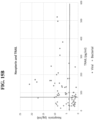
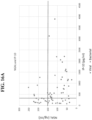
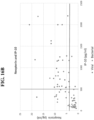
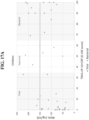
- the presently claimed invention provides a method of ruling in an acute viral infection in a subject comprising measuring the concentration of NGAL and the concentration of TRAIL in a sample derived from the subject, wherein the sample is whole blood or a fraction thereof, wherein when said concentration of NGAL is below a first predetermined threshold and said concentration of TRAIL is higher than a second predetermined threshold, an acute viral infection is ruled in.
- the method of the claimed invention may further comprise measuring the concentration of IP-10.
- a method of determining an infection type in a subject comprising measuring the concentration of a first determinant selected from the group consisting of the determinants which are set forth in Table 1 and a second determinant selected from the group of the determinants which are set forth in Table 2 in a sample derived from the subject, wherein the concentration is indicative of the infection type.
- a method of determining an infection type in a subject comprising measuring the concentration of at least two determinants which are set forth in Table 1 in a sample derived from the subject, wherein the concentration is indicative of the infection type.
- a method of distinguishing between a bacterial or mixed infection, and a viral infection in a subject comprising:
- a method of distinguishing between a bacterial or mixed infection, and a viral infection in a subject comprising:
- a method of determining an infection type in a child comprising measuring the concentration of the determinant neopterin and/or the determinant NGAL in a sample derived from the child, wherein the concentration is indicative of the infection type.
- a method of determining an infection type in an adult comprising measuring the concentration of the determinant osteopontin in a sample derived from the adult, and at least one of the determinants set forth in Table 2, wherein the concentration is indicative of the infection type.
- kits comprising a plurality of determinant detection reagents that specifically detect a first determinant selected from the group consisting of the determinants which are set forth in Table 1 and a second determinant selected from the group of the determinants which are set forth in Table 2.
- kits comprising a plurality of detection reagents that specifically detect at least two determinants which are set forth in Table 1.
- the first determinant is selected from the group consisting of NGAL, Resistin, MMP8, Pentraxin3, E Selectin, MMP7, Myeloperoxidase, Osteopontin, PCSK9, Pro Cathepsin B, a1 Acid Glycoprotein, GDF15, Progranulin, Adiponectin, Clusterin, Corin, Neopterin, Cystatin C, CD27, E Cadherin, Complement factor D, IGFBP3, GCP2, RBP4, CD14 and ProMMP10.
- the first determinant is NGAL, MMP8 or neopterin.
- the first determinant is a polypeptide.
- At least one of the at least two determinants is selected from the group consisting of a1 Acid Glycoprotein, Adiponectin, Angiogenin, Angiopoietin1, Angiopoietin2, APRIL, BAFF, BDNF, CD 23, CD14, CD142, CD27, CD95, Clusterin, Complement factor D, Corin, CXCL13, Cystatin C, Dkk1, E Cadherin, E Selectin, Endostatin, Fetuin A, GCP2, GDF15, ICAM1, IGFBP3, IL18, IL19, Leptin, Leptin R, LIGHT, MBL, MIF, MMP2, MMP3, MMP7, MMP8, Myeloperoxidase, Neopterin, NGAL, Osteopontin, Osteoprotegerin, P Selectin, PCSK9, Pentraxin3, Pro Cathepsin B, Progranulin, ProMMP10, Prostaglandin E2, R
- At least one of the at least two determinants is selected from the group consisting of NGAL, Resistin, MMP8, Pentraxin3, E Selectin, MMP7, Myeloperoxidase, Osteopontin, PCSK9, Pro Cathepsin B, a1 Acid Glycoprotein, GDF15, Progranulin, Adiponectin, Clusterin, Corin, Neopterin, Cystatin C, CD27, E Cadherin, Complement factor D, IGFBP3, GCP2, RBP4, CD14 and ProMMP10.
- At least one of the at least two determinants is NGAL, MMP8 or neopterin.
- At least one of the at least two determinants is a polypeptide.
- At least two determinants are polypeptides.
- the determinant of Table 1 is selected from the group consisting of a1 Acid Glycoprotein, Adiponectin, Angiogenin, Angiopoietin1, Angiopoietin2, APRIL, BAFF, BDNF, CD 23, CD14, CD142, CD27, CD95, Clusterin, Complement factor D, Corin, CXCL13, Cystatin C, Dkk1, E Cadherin, E Selectin, Endostatin, Fetuin A, GCP2, GDF15, ICAM1, IGFBP3, IL18, IL19, Leptin, Leptin R, LIGHT, MBL, MIF, MMP2, MMP3, MP7, MMP8, Myeloperoxidase, Neopterin, NGAL, Osteopontin, Osteoprotegerin, P Selectin, PCSK9, Pentraxin3, Pro Cathepsin B, Progranulin, ProMMP10, Prostaglandin E2, RBP4, Resistin,
- the determinant of Table 1 is selected from the group consisting of NGAL, Resistin, MMP8, Pentraxin3, E Selectin, MMP7, Myeloperoxidase, Osteopontin, PCSK9, Pro Cathepsin B, a1 Acid Glycoprotein, GDF15, Progranulin, Adiponectin, Clusterin, Corin, Neopterin, Cystatin C, CD27, E Cadherin, Complement factor D, IGFBP3, GCP2, RBP4, CD14 and ProMMP10.
- the determinant of Table 1 is selected from the group consisting of NGAL, MMP8 and Neopterin.
- the second determinant is selected from the group consisting of CRP, TRAIL and IP-10.
- the determinants comprise:
- the at least two determinants are:
- the second determinant is TRAIL.
- the concentration of the TRAIL is higher than a pre-determined threshold value, a bacterial infection is ruled out for the subject.
- the concentration of the TRAIL is higher than a pre-determined threshold value, a viral infection is ruled in for the subject.
- the method further comprises measuring the concentration of CRP and/or IP-10.
- the method further comprises determining the concentration of at least one of the determinants set forth in Table 2.
- no more than two determinants are measured.
- no more than three determinants are measured.
- the determinants comprise NGAL and TRAIL.
- no more than four determinants are measured.
- the sample is whole blood or a fraction thereof.
- the blood fraction sample comprises cells selected from the group consisting of lymphocytes, monocytes and granulocytes.
- the blood fraction sample comprises serum or plasma.
- the concentration of the determinant is determined electrophoretically or immunochemically.
- the immunochemical detection is by flow cytometry, radioimmunoassay, immunofluorescence assay or by an enzyme-linked immunosorbent assay.
- the concentration of the determinant is measured within about 24 hours after the sample is obtained.
- the concentration of TRAIL is measured in a sample that was stored at 12 0 C or lower, wherein the storage begins less than 24 hours after the sample is obtained.
- the determinant of Table 1 is set forth in Table 5.
- the determinant set forth in Table 5 is selected from the group consisting of NGAL, neopterin, and osteopontin.
- the method further comprises age normalization of the determinant concentration.
- the method further comprises stratifying the subject according to age and wherein the threshold is an appropriate age dependent threshold.
- At least one of the determinants is a polypeptide.
- the kit comprises antibodies that detect no more than 10 determinants.
- the present inventors have now found that for particular determinants, the threshold level for distinguishing between the different types of infections is age dependent. Thus, the present inventors conclude that for those determinants it is important to take into account the age of the tested subject.
- a method for determining an infection type in a subject comprising measuring the concentration of a first determinant selected from the group consisting of the determinants which are set forth in Table 1 and a second determinant selected from the group of the determinants which are set forth in Table 2 in a sample derived from the subject, wherein the concentration is indicative of the infection type.
- a method of determining an infection type in a subject comprising measuring the concentration of only one determinant which is set forth in Table 1 in a subject derived sample, wherein the concentration is indicative of the infection type.
- a method of determining an infection type in a subject comprising measuring the concentration of at least two determinants which are set forth in Table 1 in a sample derived from the subject, wherein the concentration is indicative of the infection type.
- these determinants include at least one that is set forth in Table 1 and at least one that is set forth in Table 2.
- these determinants include at least two that are set forth in Table 1.
- Table 1 DETERMINANT RefSeq DNA sequence RefSeq proteins 4-1BB Ligand/TNFSF9 NC_000019.10, NP_003802.1 NT_011295.12, Tumor Necrosis Factor (Ligand) Superfamily, Member 9 NC_018930.2 4-1BB/TNFRSF9 NC_000001.11, NP_001552.2 NT_032977.10, tumor necrosis factor receptor superfamily, member 9 NC_018912.2 a1-Acid Glycoprotein NC_000009.12, NP_000598.2 NC_018920.2, ORM2 (orosomucoid 2) NT_008470.20 ACE/CD143 NC_000017.11, NP_000780.1, NT_010783.16, NP_001171528.1 angiotensin I converting enzyme NC_018928.2 NP_690043.1 INHBA/ Inhibin Beta A NC_000007.14 NP_002183.1 NC_018918
- the determinants which are gene products are identified based on the official letter abbreviation or gene symbol assigned by the international Human Genome Organization Naming Committee (HGNC).
- the level of additional parameters may be analyzed such as absolute Neutrophil count (ANC), ALC, Neu (%), Lymphocyte percentage (Lym (%)), Monocyte percentage (Mono (%)), Maximal temperature, Time from symptoms, Age, Creatinine (Cr), Potassium (K), Pulse and Urea.
- the level of different parameters may be analyzed, such as those selected from the group consisting of: ARG1, ARPC2, ATP6V0B, BILI (BILIRUBIN), BRI3BP, CCL19-MIP3B, CES1, CORO1A, EOS(%), HERC5, IFI6, IFIT3, KIAA0082, LIPT1, LRDD, MCP-2, NA (Sodium), PARP9, PTEN, QARS, RAB13, RPL34, SART3, TRIM22, UBE2N, WBC (Whole Blood Count), XAFland ZBP1.
- the level of traditional laboratory risk factors and clinical parameters are also measured. These factors and parameters are further described herein below.
- the present disclosure in some aspects : (i) enables accurate differentiation between a broad range of bacterial versus viral infections; (ii) enables rapid diagnosis (within minutes); (iii) avoids the "false positive" identification of non-pathogenic bacteria that are part of the body's natural flora, (iv) allows for accurate differentiation between mixed and pure viral infections and (v) allows diagnosis in cases where the pathogen is inaccessible.
- the disclosure includes a method for differentiating between mixed infections (which require Abx treatment despite the presence of a virus) and pure viral infections (which do not require Abx treatment).
- Some aspects of the disclosure also address the challenge of "false-positive" diagnostics due to non-pathogenic strains of bacteria that are part of the body's natural flora. This is achieved by measuring biomarkers derived from the host rather than the pathogen.
- Another aspect of the disclosure enables the diagnosis of different infections, which is invariant to the presence or absence of colonizers (e.g. bacteria and viruses that are part of the natural flora). This addresses one of the major challenges in infectious disease diagnostics today: "false-positives" due to colonizers.
- colonizers e.g. bacteria and viruses that are part of the natural flora
- some aspects of the disclosure do not require direct access to the pathogen, because the immune system circulates in the entire body, thereby facilitating diagnosis in cases in which the pathogen is inaccessible.
- Another aspect of the disclosure is the fraction in which the biomarkers are measured, which affects the ease by which the assay can be performed in the clinical settings, and especially the point-of-care. For example, it is easier to measure proteins in the serum or plasma fraction compared to nucleic acids or intracellular proteins in the leukocytes fraction (the latter requires an additional experimental step in which leukocytes are isolated from the whole blood sample, washed and lysed). Accordingly, some aspects of the disclosure also describe serum and plasma based protein signatures that are easily measurable using various immunoassays available in clinical settings.
- aspects of the disclosure provide methods for identifying subjects who have an infection by the detection of determinants associated with an infection, including those subjects who are asymptomatic for the infection. These signatures and determinants are also useful for monitoring subjects undergoing treatments and therapies for infection, and for selecting or modifying diagnostics, therapies and treatments that would be efficacious in subjects having an infection.
- CRP C-reactive protein
- additional aliases of CRP include without limitation RP11-419N10.4 and PTX1.
- TRAIL The protein encoded by this gene is a cytokine that belongs to the tumor necrosis factor (TNF) ligand family.
- TNF tumor necrosis factor
- the present invention contemplates measuring either the soluble and/or the membrane form of this protein. In one embodiment, only the soluble form of this protein is measured.
- Additional names of the gene include without limitations APO2L, TNF-related apoptosis-inducing ligand, TNFSF10 and CD253. This protein binds to several members of the TNF receptor superfamily such as TNFRSF10A/TRAILR1, TNFRSF10B/TRAILR2, TNFRSF10C/TRAILR3, TNFRSF10D/TRAILR4, and possibly also to TNFRSF11B/OPG.
- TRAIL exemplary amino acid sequences of TRAIL are set forth in SEQ ID NOs: 2 or 3.
- IP10 This gene encodes a chemokine of the CXC subfamily and ligand for the receptor CXCR3. Additional names of the gene include without limitations: CXCL10, Gamma-IP10, INP10 and chemokine (C-X-C motif) ligand 10.
- An exemplary amino acid sequence of human IP10 is set forth in SEQ ID NO: 4.
- IL1RA The protein encoded by this gene is a cytokine receptor that belongs to the interleukin 1 receptor family. Additional names of the gene include without limitations: CD121A, IL-1RT1, p80, CD121a antigen, CD121A, IL1R and IL1ra.
- PCT Procalcitonin
- TREM1 Triggering receptor expressed on myeloid cells 1; additional aliases of TREM1 are CD354 and TREM-1.
- RSAD2 Radical S-adenosyl methionine domain containing 2; additional aliases of RSAD2 include without limitation 2510004L01Rik, cig33, cig5 and vig1.
- MX1/MXA myxovirus (influenza virus) resistance 1; additional aliases of MX1 include without limitation IFI-78K, IFI78, MX and MxA.
- TRAILR3/ TNFRSF10C The protein encoded by this gene is a member of the TNF-receptor superfamily.
- TRAILR4/ TNFRSF10D The protein encoded by this gene is a member of the TNF-receptor superfamily.
- amino acid sequences of this protein are set forth in SEQ ID Nos: 7 or 8.
- TRAIL-R1/ TNFRSF10A The protein encoded by this gene is a member of the TNF-receptor superfamily. Examplary amino acid sequences of this protein are set forth in SEQ ID NOs: 9, 10 or 11.
- TRAIL-R2/ TNFRSF10B The protein encoded by this gene is a member of the TNF-receptor superfamily, and contains an intracellular death domain. Exemplary amino acid sequences of this protein are set forth in SEQ ID NOs; 12, 13 or 14.
- MMP8 Matrix metallproteinase 8 (MMP8) is a collagen cleaving enzyme. Exemplary amino acid sequences of MMP8 are set forth in SEQ ID NOs: 16-18.
- Neopterin is the catabolic product of guanosine triphosphate, a purine nucleotide. Neopterin belongs to the chemical group known as pteridines.
- Cortisol is a steroid hormone, more specifically a glucocorticoid, which is produced by the zona fasciculata of the adrenal cortex. It is released in response to stress and a low level of blood glucose.
- the determinant may be a polypeptide.
- the determinant may be a hormone.
- “Clinical parameters” encompass all non-sample or non-analyte biomarkers of subject health status or other characteristics, such as, without limitation, age (Age), ethnicity (RACE), gender (Sex), core body temperature (abbreviated “temperature”), maximal core body temperature since initial appearance of symptoms (abbreviated “maximal temperature”), time from initial appearance of symptoms (abbreviated “time from symptoms”) or family history (abbreviated FamHX).
- An "Infection Reference Expression Profile,” is a set of values associated with two or more determinants resulting from evaluation of a biological sample (or population or set of samples).
- a "subject with non-infectious disease” is one whose disease is not caused by an infectious disease agent (e.g. bacteria or virus).
- An "acute infection” is characterized by rapid onset of disease, a relatively brief period of symptoms, and resolution within days.
- infection type is meant to include bacterial infections, mixed infections, viral infections, no infection, infectious or non-infectious.
- the "natural flora”, or “colonizers” refers to microorganisms, such as bacteria or viruses, that may be present in healthy a-symptomatic subjects and in sick subjects.
- anti-viral treatment includes the administration of a compound, drug, regimen or an action that when performed by a subject with a viral infection can contribute to the subject's recovery from the infection or to a relief from symptoms.
- anti-viral treatments include without limitation the administration of the following drugs: oseltamivir, RNAi antivirals, monoclonal antibody respigams, zanamivir, and neuriminidase blocking agents.
- TN is true negative, means negative test result that accurately reflects the tested-for activity.
- a TN is for example but not limited to, truly classifying a viral infection as such.
- FN is false negative, means a result that appears negative but fails to reveal a situation.
- a FN is for example but not limited to, falsely classifying a bacterial infection as a viral infection.
- FP is false positive, means test result that is erroneously classified in a positive category.
- a FP is for example but not limited to, falsely classifying a viral infection as a bacterial infection.
- Specificity is calculated by TN/(TN+FP) or the true negative fraction of non-disease or normal subjects.
- Total accuracy is calculated by (TN + TP)/(TN + FP +TP + FN).
- PSV Positive predictive value
- NDV Neuronal predictive value
- “Accuracy” refers to the degree of conformity of a measured or calculated quantity (a test reported value) to its actual (or true) value. Clinical accuracy relates to the proportion of true outcomes (true positives (TP) or true negatives (TN) versus misclassified outcomes (false positives (FP) or false negatives (FN)), and may be stated as a sensitivity, specificity, positive predictive values (PPV) or negative predictive values (NPV), Matheus correlation coefficient (MCC), or as a likelihood, odds ratio, Receiver Operating Characteristic (ROC) curve, Area Under the Curve (AUC) among other measures.
- TP true positives
- TN true negatives
- FP false negatives
- MPC Matheus correlation coefficient
- ROC Receiver Operating Characteristic
- a “formula,” “algorithm,” or “model” is any mathematical equation, algorithmic, analytical or programmed process, or statistical technique that takes one or more continuous or categorical inputs (herein called “parameters”) and calculates an output value, sometimes referred to as an "index” or “index value”.
- “formulas” include sums, ratios, and regression operators, such as coefficients or exponents, biomarker value transformations and normalizations (including, without limitation, those normalization schemes based on clinical-determinants, such as gender, age, or ethnicity), rules and guidelines, statistical classification models, and neural networks trained on historical populations.
- determinants Of particular use in combining determinants are linear and non-linear equations and statistical classification analyses to determine the relationship between levels of determinants detected in a subject sample and the subject's probability of having an infection or a certain type of infection.
- structural and syntactic statistical classification algorithms, and methods of index construction utilizing pattern recognition features, including established techniques such as cross-correlation, Principal Components Analysis (PCA), factor rotation, Logistic Regression (LogReg), Linear Discriminant Analysis (LDA), Eigengene Linear Discriminant Analysis (ELDA), Support Vector Machines (SVM), Random Forest (RF), Recursive Partitioning Tree (RPART), as well as other related decision tree classification techniques, Shrunken Centroids (SC), StepAIC, Kth-Nearest Neighbor, Boosting, Decision Trees, Neural Networks, Bayesian Networks, and Hidden Markov Models, among others.
- PCA Principal Components Analysis
- LogReg Logistic Regression
- LDA Linear Discriminant Analysis
- ELDA Eigen
- AIC Akaike's Information Criterion
- BIC Bayes Information Criterion
- the resulting predictive models may be validated in other studies, or cross-validated in the study they were originally trained in, using such techniques as Bootstrap, Leave-One-Out (LOO) and 10-Fold cross-validation (10-Fold CV).
- LEO Leave-One-Out
- 10-Fold cross-validation 10-Fold CV.
- false discovery rates may be estimated by value permutation according to techniques known in the art.
- a "health economic utility function" is a formula that is derived from a combination of the expected probability of a range of clinical outcomes in an idealized applicable patient population, both before and after the introduction of a diagnostic or therapeutic intervention into the standard of care.
- a cost and/or value measurement associated with each outcome, which may be derived from actual health system costs of care (services, supplies, devices and drugs, etc.) and/or as an estimated acceptable value per quality adjusted life year (QALY) resulting in each outcome.
- the sum, across all predicted outcomes, of the product of the predicted population size for an outcome multiplied by the respective outcome's expected utility is the total health economic utility of a given standard of care.
- the difference between (i) the total health economic utility calculated for the standard of care with the intervention versus (ii) the total health economic utility for the standard of care without the intervention results in an overall measure of the health economic cost or value of the intervention.
- This may itself be divided amongst the entire patient group being analyzed (or solely amongst the intervention group) to arrive at a cost per unit intervention, and to guide such decisions as market positioning, pricing, and assumptions of health system acceptance.
- Such health economic utility functions are commonly used to compare the cost-effectiveness of the intervention, but may also be transformed to estimate the acceptable value per QALY the health care system is willing to pay, or the acceptable cost-effective clinical performance characteristics required of a new intervention.
- a health economic utility function may preferentially favor sensitivity over specificity, or PPV over NPV based on the clinical situation and individual outcome costs and value, and thus provides another measure of health economic performance and value which may be different from more direct clinical or analytical performance measures.
- Measurement or “measurement,” or alternatively “detecting” or “detection,” means assessing the presence, absence, quantity or amount (which can be an effective amount) of either a given substance within a clinical or subject-derived sample, including the derivation of qualitative or quantitative concentration levels of such substances, or otherwise evaluating the values or categorization of a subject's non-analyte clinical parameters or clinical-determinants.
- “Analytical accuracy” refers to the reproducibility and predictability of the measurement process itself, and may be summarized in such measurements as coefficients of variation (CV), Pearson correlation, and tests of concordance and calibration of the same samples or controls with different times, users, equipment and/or reagents. These and other considerations in evaluating new biomarkers are also summarized in Vasan, 2006.
- Performance is a term that relates to the overall usefulness and quality of a diagnostic or prognostic test, including, among others, clinical and analytical accuracy, other analytical and process characteristics, such as use characteristics (e.g., stability, ease of use), health economic value, and relative costs of components of the test. Any of these factors may be the source of superior performance and thus usefulness of the test, and may be measured by appropriate "performance metrics," such as AUC and MCC, time to result, shelf life, etc. as relevant.
- sample in the context of the present invention is a biological sample isolated from a subject and can include, by way of example and not limitation, whole blood, serum, plasma, saliva, mucus, breath, urine, CSF, sputum, sweat, stool, hair, seminal fluid, biopsy, rhinorrhea, tissue biopsy, cytological sample, platelets, reticulocytes, leukocytes, epithelial cells, or whole blood cells.
- the sample is a serum sample.
- Statistical significance can be determined by any method known in the art. Commonly used measures of significance include the p-value, which presents the probability of obtaining a result at least as extreme as a given data point, assuming the data point was the result of chance alone. A result is often considered highly significant at a p-value of 0.05 or less.
- a "subject" in the context of the present invention may be a mammal (e.g. human dog, cat, horse, cow, sheep, pig, goat).
- the subject is a bird (e.g. chicken, turkey, duck, goose.
- the subject is a human.
- a subject can be male or female.
- a subject can be one who has been previously diagnosed or identified as having an infection, and optionally has already undergone, or is undergoing, a therapeutic intervention for the infection.
- a subject can also be one who has not been previously diagnosed as having an infection.
- a subject can be one who exhibits one or more risk factors for having an infection.
- the methods disclosed herein are used to identify subjects with an infection or a specific infection type.
- type of infection it is meant to include bacterial infections, viral infections, mixed infections, no infection (i.e., non-infectious). More specifically, some methods of the disclosure are used to distinguish subjects having a bacterial infection, a viral infection, a mixed infection (i.e., bacterial and viral co-infection), patients with a non-infectious disease and healthy individuals. Some methods of the disclosure can also be used to monitor or select a treatment regimen for a subject who has a an infection, and to screen subjects who have not been previously diagnosed as having an infection, such as subjects who exhibit risk factors developing an infection. Some methods of the disclosure are used to identify and/or diagnose subjects who are asymptomatic for an infection. "Asymptomatic" means not exhibiting the traditional signs and symptoms.
- Gram-positive bacteria are bacteria that are stained dark blue by Gram staining. Gram-positive organisms are able to retain the crystal violet stain because of the high amount of peptidoglycan in the cell wall.
- Gram-negative bacteria are bacteria that do not retain the crystal violet dye in the Gram staining protocol.
- Atypical bacteria are bacteria that do not fall into one of the classical “Gram” groups. They are usually, though not always, intracellular bacterial pathogens. They include, without limitations, Mycoplasmas spp., Legionella spp. Rickettsiae spp., and Chlamydiae spp.
- infection is meant to include any infectious agent of viral or bacterial origin.
- the bacterial infection may be the result of gram-positive, gram-negative bacteria or atypical bacteria.
- the combination of determinants comprise measurements of a first determinant which is set forth in Table 1 and a second determinant which is set forth in Table 2.
- the first determinant is a1 Acid Glycoprotein, Adiponectin, Angiogenin, Angiopoietin1, Angiopoietin2, APRIL, BAFF, BDNF, CD 23, CD14, CD142, CD27, CD95, Clusterin, Complement factor D, Corin, CXCL13, Cystatin C, Dkk1, E Cadherin, E Selectin, Endostatin, Fetuin A, GCP2, GDF15, ICAM1, IGFBP3, IL18, IL19, Leptin, Leptin R, LIGHT, MBL, MIF, MMP2,
- the first determinant is NGAL, Resistin, MMP8, Pentraxin3, E Selectin, MMP7, Myeloperoxidase, Osteopontin, PCSK9, Pro Cathepsin B, a1 Acid Glycoprotein, GDF15, Progranulin, Adiponectin, Clusterin, Corin, Neopterin, Cystatin C, CD27, E Cadherin, Complement factor D, IGFBP3, GCP2, RBP4, CD14 or ProMMP10.
- the first determinant is NGAL, MMP8 or Neopterin.
- the second determinant is CRP, TRAIL or IP-10.
- the present inventors contemplate analyzing no more than two determinants to distinguish between bacterial and viral infections.
- Exemplary pairs disclosed herein are CRP and NGAL; CRP and MMP8; CRP and Neopterin; TRAIL and NGAL; TRAIL and MMP8 TRAIL and Neopterin; IP-10 and NGAL; IP-10 and MMP8; IP-10 and Neopterin; IL1R and NGAL;IL1R and MMP8; IL1R and Neopterin; PCT and NGAL; PCT and MMP8; PCT and Neopterin; SAA and NGAL; SAA and MMP8; SAA and Neopterin.
- TREM1 and NGAL TREM1 and MMP8; TREM1 and Neopterin; TREM2 and NGAL; TREM2 and MMP8; TREM2 and Neopterin; MX1 and NGAL; MX1 and MMP8; MX1 and Neopterin; RSAD2 and NGAL; RSAD2 and MMP8; RSAD2 and Neopterin.
- Additional contemplated exemplary pairs include CRP and TRAILR3/TNFRSF10C, CRP and TRAILR4/TNFRSF10D, CRP and TRAIL-R1/TNFRSF10A and CRP and TRAIL-R2/TNFRSF10B.
- exemplary pairs include TRAIL and TRAILR3/TNFRSF10C; TRAIL and TRAILR4/TNFRSF10D; TRAIL and TRAIL-R1/TNFRSF10A; and TRAIL and TRAIL-R2/TNFRSF10B.
- IP10 and TRAILR3/TNFRSF10C include IP10 and TRAILR3/TNFRSF10C, IP10 and TRAILR4/TNFRSF10D, IP10 and TRAIL-R1/TNFRSF10A and IP10 and TRAIL-R2/TNFRSF10B.
- Neopterin and PCT Other exemplary pairs include Neopterin and PCT; or NGAL and PCT.
- exemplary pairs include IL1-Ra and TRAILR3/TNFRSF10C , IL1-Ra and TRAILR4/TNFRSF10D, IL1-Ra and TRAIL-R1/TNFRSF10A, and IL1-Ra and TRAIL-R2/TNFRSF10B.
- PCT and TRAILR3/TNFRSF10C PCT and TRAILR4/TNFRSF10D
- PCT and TRAIL-R1/TNFRSF10A and PCT and TRAIL-R2/TNFRSF10B PCT and TRAIL-R3/TNFRSF10C
- PCT and TRAILR4/TNFRSF10D PCT and TRAIL-R1/TNFRSF10A
- PCT and TRAIL-R2/TNFRSF10B PCT and TRAIL-R2/TNFRSF10B.
- exemplary pairs include sTREM and TRAILR3/TNFRSF10C, sTREM and TRAILR4/TNFRSF10D, sTREM and TRAIL-R1/TNFRSF10A and, sTREM and TRAIL-R2/TNFRSF10B.
- exemplary pairs include RSAD2 and TRAILR3/TNFRSF10C , RSAD2 and TRAILR4/TNFRSF10D, RSAD2 and TRAIL-R1/TNFRSF10A, and RSAD2 and TRAIL-R2/TNFRSF10B.
- MX1 and TRAILR3/TNFRSF10C include MX1 and TRAIL-R1/TNFRSF10A, MX1 and TRAIL-R2/TNFRSF10B, and MX1 and TRAILR4/TNFRSF10D.
- TRAIL and MX1 Additional pairs contemplated by the present inventors include TRAIL and MX1; TRAIL and RSAD2; TRAIL and sTREM; and TRAIL and IL1-Ra.
- Exemplary pairs include CRP and NGAL, CRP and a1-Acid Glycoprotein/ ORM1, CRP and IL18, CRP and CXCL6, CRP and MBL, CRP and OSM/Oncostatin M, CRP and TNFSF14 and CRP and CD14.
- exemplary pairs include TRAIL and NGAL, TRAIL and a1-Acid Glycoprotein/ ORM1, TRAIL and IL18, TRAIL and CXCL6, TRAIL and MBL, TRAIL and OSM/Oncostatin M, TRAIL and TNFSF14 and TRAIL and CD14.
- IP10 and NGAL include IP10 and a1-Acid Glycoprotein/ ORM1, IP10 and IL18, IP10 and CXCL6, IP10 and MBL, IP10 and OSM/Oncostatin M, IP10 and TNFSF14 and IP10 and CD14.
- exemplary pairs include IL1-Ra and NGAL, IL1-Ra and a1-Acid Glycoprotein/ ORM1, IL1-Ra and IL18, IL1-Ra and CXCL6, IL1-Ra and MBL, IL1-Ra and OSM/Oncostatin M, IL1-Ra and TNFSF14 and IL1-Ra and CD14.
- PCT and NGAL include PCT and a1-Acid Glycoprotein/ ORM1, PCT and IL18, PCT and CXCL6, PCT and MBL, PCT and OSM/Oncostatin M, PCT and TNFSF14 and PCT and CD14.
- exemplary pairs include sTREM and NGAL, sTREM and a1-Acid Glycoprotein/ ORM1, sTREM and IL18, sTREM and CXCL6, sTREM and MBL, sTREM and OSM/Oncostatin M, sTREM and TNFSF14 and sTREM and CD14.
- exemplary pairs include RSAD2 and NGAL, RSAD2 and a1-Acid Glycoprotein/ ORM1, RSAD2 and IL18, RSAD2 and CXCL6, RSAD2 and MBL, RSAD2 and OSM/Oncostatin M, RSAD2 and TNFSF14 and RSAD2 and CD14.
- exemplary pairs include MX1 and NGAL, MX1 and a1-Acid Glycoprotein/ ORM1, MX1 and IL18, MX1 and CXCL6, MX1 and MBL, MX1 and OSM/Oncostatin M, MX1 and TNFSF14 and MX1 and CD14.
- 2, 3, 4 or more determinants from group 2 may be measured together with at least 1 determinant from group 1.
- TRAIL and CRP may be measured together with neopterin; TRAIL and CRP may be measured together with NGAL; TRAIL and CRP may be measured together with MMP8; TRAILR3/TNFRSF10C; TRAIL and CRP may be measured together with TRAILR4/TNFRSF10D; TRAIL and CRP may be measured together with TRAIL-R1/TNFRSF10A; and TRAIL and CRP may be measured together with TRAIL-R2/TNFRSF10B.
- TRAIL and IP10 may be measured together with neopterin; TRAIL and IP10 may be measured together with NGAL; TRAIL and IP10 may be measured together with MMP8; TRAIL and IP10 may be measured together with TRAILR3/TNFRSF10C; TRAIL and IP10 may be measured together with TRAILR4/TNFRSF10D; TRAIL and IP10 may be measured together with TRAIL-R1/TNFRSF10A; and TRAIL and IP10 may be measured together with TRAIL-R2/TNFRSF10B.
- CRP and IP10 may be measured together with neopterin; CRP and IP10 may be measured together with NGAL; CRP and IP10 may be measured together with MMP8; CRP and IP10 may be measured together with TRAILR3/TNFRSF10C; CRP and IP10 may be measured together with TRAIL-R1/TNFRSF10A; and CRP and IP10 may be measured together with TRAIL-R2/TNFRSF10B.
- TRAIL and IP10 may be measured together with NGAL; TRAIL and IP10 may be measured together with a1-Acid Glycoprotein/ ORM1; TRAIL and IP10 may be measured together with IL18; TRAIL and IP10 may be measured together with CXCL6; TRAIL and IP10 may be measured together with MBL; TRAIL and IP10 may be measured together with OSM/Oncostatin M; TRAIL and IP10 may be measured together with TNFSF14 and TRAIL and IP10 may be measured together with CD14.
- CRP and IP10 may be measured together with NGAL, CRP and IP10 may be measured together with a1-Acid Glycoprotein/ ORM1; CRP and IP10 may be measured together with IL18; CRP and IP10 may be measured together with CXCL6; CRP and IP10 may be measured together with MBL; CRP and IP10 may be measured together with OSM/Oncostatin M; CRP and IP10 may be measured together with TNFSF14 and CRP and IP10 may be measured together with CD14.
- 3 proteins from Table 2 are measured with at least one determinant in Table 1.
- Exemplary combinations include TRAIL, CRP and IP10 may be measured together with NGAL; TRAIL, CRP and IP10 may be measured together with neopterin; TRAIL, CRP and IP10 may be measured together with MMP8; TRAIL, CRP and IP10 may be measured together with TRAILR3/TNFRSF10C; TRAIL, CRP and IP10 may be measured together with TRAILR4/TNFRSF10D; TRAIL, CRP and IP10 may be measured together with TRAIL-R1/TNFRSF10A; TRAIL, CRP and IP10 may be measured together with TRAIL-R2/TNFRSF10B.
- TRAIL, CRP and IP10 may be measured together with NGAL; TRAIL, CRP and IP10 may be measured together with a1-Acid Glycoprotein/ ORM1; TRAIL, CRP and IP10 may be measured together with IL18; TRAIL, CRP and IP10 may be measured together with CXCL6; TRAIL, CRP and IP10 may be measured together with MBL; TRAIL, CRP and IP10 may be measured together with OSM/Oncostatin M; TRAIL, CRP and IP10 may be measured together with TNFSF14; and TRAIL,CRP and IP10 may be measured together with CD14.
- the combination of determinants comprise measurements of at least two determinants which are set forth in Table 1.
- At least one of the determinants in Table 1 is MMP-8, NGAL, or neopterin.
- Other contemplated combinations include TRAILR3/TNFRSF10C, TRAILR4/TNFRSF10D, TRAIL-R1/TNFRSF10A, TRAIL-R2/TNFRSF10B.
- both the determinants in Table 1 are selected from the group consisting of: MMP-8, NGAL, neopterin, TRAILR3/TNFRSF10C, TRAILR4/TNFRSF10D, TRAIL-R1/TNFRSF10A and TRAIL-R2/TNFRSF10B.
- MMP-8 and NGAL MMP-8 and neopterin or NGAL and neopterin.
- the determinant measurements further comprise measurements of one or more clinical-determinants selected from the group consisting of ANC, ALC, Neu (%), Lym (%), Mono (%), Maximal temperature, Time from symptoms, Age, Creatinine (Cr), Potassium (K), Pulse and Urea.
- the determinants or clinical-determinants further comprise measurements of one or more polypeptide or clinical-determinants selected from the group consisting of ARG1, ARPC2, ATP6V0B, BILI (Bilirubin), BRI3BP, CCL19-MIP3B, CES1, CORO1A, EOS(%), HERC5, IFI6, IFIT3, KIAA0082, LIPT1, LRDD, MCP-2, NA (Sodium), PARP9, PTEN, QARS, RAB13, RPL34, SART3, TRIM22, UBE2N, WBC (Whole Blood Count), XAFland ZBP1.
- the method distinguishes a virally infected subject from either a subject with non-infectious disease or a healthy subject; a bacterially infected subject, from either a subject with non-infectious disease or a healthy subject; a subject with an infectious disease from either a subject with an non-infectious disease or a healthy subject; a bacterially infected subject from a virally infected subject; a mixed infected subject from a virally infected subject; a mixed infected subject from a bacterially infected subject and a bacterially or mixed infected and subject from a virally infected subject.
- the method distinguishes a bacterially infected subject from a virally infected subject by measuring a first determinant set forth in Table 1 and a second determinant as set forth in Table 2.
- the method distinguishes a bacterially infected subject from a virally infected subject by measuring at least two determinants set forth in Table 1.
- the method distinguishes between a bacterial or mixed infected subject and a virally infected subject by measuring a first determinant set forth in Table 1 and a second determinant as set forth in Table 2.
- the method distinguishes between a bacterial or mixed infected subject and a virally infected subject by measuring at least two determinants set forth in Table 1.
- Exemplary pairs of determinants from Table 1 include NGAL and MMP8; NGAL and Neopterin; and MMP8 and Neopterin.
- the method distinguishes between a subject with an infectious disease and a subject with a non-infectious disease or a healthy subject by measuring a first determinant set forth in Table 1 and a second determinant as set forth in Table 2.
- the method distinguishes between a subject with an infectious disease and a subject with a non-infectious disease or a healthy subject by measuring at least two determinants set forth in Table 1.
- aspects of the disclosure includes determining if a subject does not have a bacterial infection (i.e. ruling out a bacterial infection).
- a bacterial infection may be ruled out if the polypeptide concentration of TRAIL determined is higher than a pre-determined first threshold value.
- method includes determining if a subject has a viral infection (i.e., ruling in a viral infection).
- a viral infection is rule in if the polypeptide concentration of TRAIL is higher than a pre-determined second threshold value.
- the disclosure includes determining if a subject does not have a viral infection (i.e. ruling out a viral infection). A viral infection is ruled out if the polypeptide concentration of TRAIL determined is lower than a predetermined first threshold value.
- the method further includes determining if a subject has a bacterial infection (i.e., ruling in a bacterial infection). A bacterial infection is rule in if the polypeptide concentration of TRAIL is lower than a predetermined second threshold value.
- Table 3 Determinant Bacterial Viral Fas/ TNFRSF6 + +++ Fas Ligand/ TNFSF6 + +++ TWEAK/TNFSF12 + +++ 4-1BB/TNFRSF9 + +++ OX40/TNFRSF4 + +++ CD30 Ligand/TNFSF8 + +++ TRANCE/TNFSF11 + +++ GITR Ligand/TNFSF18 + +++ GITR/TNFRSF18 + +++ DCR3/TNFRSF6B + +++ HVEM/TNFRSF14 + +++ TWEAKR/TNFRSF12A + +++ TACI/TNFRSF13B + +++ BCMA/TNFRSF17 + +++ NGFR/TNFRSF16 + +++ DR6/TNFRSF21 + +++ RANK/TNFRSF11A + +++ EDA2R/TNFRSF27 + +++ RELT/TNFRSF19L + +++ OX40L/
- a bacterial infection may be ruled in if the polypeptide concentration is below a predetermined level.
- a bacterial infection may be ruled out if the polypeptide concentration is above a predetermined level.
- a viral infection may be ruled in if the polypeptide concentration is above a predetermined level.
- a bacterial infection may be ruled in if the polypeptide concentration is above a predetermined level.
- a bacterial infection may be ruled out if the polypeptide concentration is below a predetermined level.
- a viral infection may be ruled in if the polypeptide concentration is below a predetermined level.
- a bacterial infection may be ruled in if the concentration thereof is below a predetermined level.
- a bacterial infection may be ruled out if the concentration thereof is above a predetermined level.
- a viral infection may be ruled in if the concentration thereof is above a predetermined level.
- a bacterial infection may be ruled in if the polypeptide concentration is above a predetermined level.
- a bacterial infection may be ruled out if the polypeptide concentration is below a predetermined level.
- a viral infection may be ruled in if the polypeptide concentration is above a first predetermined level and below a second predetermined level.
- a subject may be diagnosed as having a viral infection when the determinant levels of TRAIL, IP-10, Progranulin, Adiponectin, Clusterin, Corin, Neopterin, Cystatin C, CD27, E Cadherin, Complement factor D, IGFBP3, GCP2, RBP4, CD14 and/or ProMMP10, are at least 5%, 10%, 20%, 30%, 40%, 50%, 100%, 200%, 300%, or 400% higher than a bacterially-infected subject reference value.
- a subject may be diagnosed as having a bacterial infection when the polypeptide levels of CRP, NGAL, Resistin, MMP8, Pentraxin3, IL1R, E Selectin, MMP7, Myeloperoxidase, Osteopontin, PCSK9, Pro Cathepsin B, a1 Acid Glycoprotein, GDF15, are at least 5%, 10%, 20%, 30%, 40%, 50%, 100%, 200%, 300%, or 400% higher than a virally-infected subject reference value.
- a subject may be diagnosed as having a bacterial infection when the determinant levels of TRAIL, IP-10, Progranulin, Adiponectin, Clusterin, Corin, Neopterin, Cystatin C, CD27, E Cadherin, Complement factor D, IGFBP3, GCP2, RBP4, CD14, ProMMP10 are 90%, 80%, 70%, 60%, 50%, 40%, 30%, 20%, 10%, 5%, 1% or less of a virally-infected subject or a healthy subject reference value.
- a subject may be diagnosed as having a viral infection when the polypeptide levels of CRP, NGAL, Resistin, MMP8, Pentraxin3, IL1R, E Selectin, MMP7, Myeloperoxidase, Osteopontin, PCSK9, Pro Cathepsin B, a1 Acid Glycoprotein, GDF15, are 90%, 80%, 70%, 60%, 50%, 40%, 30%, 20%, 10%, 5%, 1% or less than a bacterially-infected subject or a healthy subject reference value.
- the disclosure includes a method of distinguishing between a bacterial infection and a viral infection in a subject by measuring the polypeptide concentration of TRAIL and NGAL in a subject derived sample, applying a pre-determined mathematical function on the concentrations of TRAIL and NGAL to compute a score and comparing the score to a predetermined reference value.
- a pre-determined mathematical function on the concentrations of TRAIL and NGAL to compute a score and comparing the score to a predetermined reference value.
- CRP, PCT or IP10 is also measured. These additional measurements may be integrated into the score.
- the disclosure includes a method of distinguishing between a bacterial infection and a viral infection in a subject by measuring the polypeptide concentration of TRAIL and MMP-8 in a subject derived sample, applying a pre-determined mathematical function on the concentrations of TRAIL and MMP-8 to compute a score and comparing the score to a predetermined reference value.
- a pre-determined mathematical function on the concentrations of TRAIL and MMP-8 to compute a score and comparing the score to a predetermined reference value.
- CRP, NGAL, PCT or IP10 is also measured. These additional measurements may be integrated into the score.
- the disclosure includes a method of distinguishing between a bacterial infection and a viral infection in a subject by measuring the concentration of TRAIL and neopterin in a subject derived sample, applying a pre-determined mathematical function on the concentrations of TRAIL and neopterin to compute a score and comparing the score to a predetermined reference value.
- a pre-determined mathematical function on the concentrations of TRAIL and neopterin to compute a score and comparing the score to a predetermined reference value.
- CRP, NGAL, PCT or IP10 is also measured. These additional measurements may be integrated into the score.
- the disclosure includes a method of distinguishing between a bacterial infection and a viral infection in a subject by measuring the polypeptide concentration of TRAIL and TRAILR3/TNFRSF10C in a subject derived sample, applying a pre-determined mathematical function on the concentrations of TRAIL and TRAILR3/TNFRSF10C to compute a score and comparing the score to a predetermined reference value.
- a pre-determined mathematical function on the concentrations of TRAIL and TRAILR3/TNFRSF10C to compute a score and comparing the score to a predetermined reference value.
- CRP or IP10, NGAL, PCT is also measured. These additional measurements may be integrated into the score.
- the disclosure provides a method of distinguishing between a bacterial or mixed infection, and a viral infection in a subject by measuring the polypeptide concentration of TRAIL and TRAILR3/TNFRSF10C in a subject derived sample, applying a pre-determined mathematical function on the concentrations of TRAIL and TRAILR3/TNFRSF10C to compute a score and comparing the score to a predetermined reference value.
- a pre-determined mathematical function on the concentrations of TRAIL and TRAILR3/TNFRSF10C to compute a score and comparing the score to a predetermined reference value.
- CRP CRP
- NGAL NGAL
- PCT or IP10 IP10
- the disclosure includes a method of distinguishing between a bacterial infection and a viral infection in a subject by measuring the polypeptide concentration of TRAIL and TRAIL-R1/TNFRSF10A in a subject derived sample, applying a pre-determined mathematical function on the concentrations of TRAIL and TRAIL-R1/TNFRSF10A to compute a score and comparing the score to a predetermined reference value.
- a pre-determined mathematical function on the concentrations of TRAIL and TRAIL-R1/TNFRSF10A to compute a score and comparing the score to a predetermined reference value.
- CRP CRP
- NGAL NGAL
- PCT or IP10 IP10
- the disclosure provides a method of distinguishing between a bacterial or mixed infection, and a viral infection in a subject by measuring the polypeptide concentration of TRAIL and TRAIL-R1/TNFRSF10A in a subject derived sample, applying a pre-determined mathematical function on the concentrations of TRAIL and TRAIL-R1/TNFRSF10A to compute a score and comparing the score to a predetermined reference value.
- a pre-determined mathematical function on the concentrations of TRAIL and TRAIL-R1/TNFRSF10A to compute a score and comparing the score to a predetermined reference value.
- CRP CRP
- NGAL NGAL
- PCT or IP10 IP10
- the disclosure includes a method of distinguishing between a bacterial infection and a viral infection in a subject by measuring the polypeptide concentration of TRAIL and TRAILR4/TNFRSF10D in a subject derived sample, applying a pre-determined mathematical function on the concentrations of TRAIL and TRAILR4/TNFRSF10D to compute a score and comparing the score to a predetermined reference value.
- a pre-determined mathematical function on the concentrations of TRAIL and TRAILR4/TNFRSF10D to compute a score and comparing the score to a predetermined reference value.
- CRP CRP
- NGAL NGAL
- PCT or IP10 IP10
- the disclosure provides a method of distinguishing between a bacterial or mixed infection, and a viral infection in a subject by measuring the polypeptide concentration of TRAIL and TRAILR4/TNFRSF10D in a subject derived sample, applying a pre-determined mathematical function on the concentrations of TRAIL and TRAILR4/TNFRSF10D to compute a score and comparing the score to a predetermined reference value.
- a pre-determined mathematical function on the concentrations of TRAIL and TRAILR4/TNFRSF10D to compute a score and comparing the score to a predetermined reference value.
- one or more CRP, NGAL, PCT or IP10 is also measured. These additional measurements may be integrated into the score.
- the disclosure includes a method of distinguishing between a bacterial infection and a viral infection in a subject by measuring the polypeptide concentration of TRAIL and TRAIL-R2/TNFRSF10B in a subject derived sample, applying a pre-determined mathematical function on the concentrations of TRAIL and TRAIL-R2/TNFRSF10B to compute a score and comparing the score to a predetermined reference value.
- a pre-determined mathematical function on the concentrations of TRAIL and TRAIL-R2/TNFRSF10B to compute a score and comparing the score to a predetermined reference value.
- CRP, NGAL, PCT or IP10 is also measured. These additional measurements may be integrated into the score.
- the disclosure provides a method of distinguishing between a bacterial or mixed infection, and a viral infection in a subject by measuring the polypeptide concentration of TRAIL and TRAIL-R2/TNFRSF10B in a subject derived sample, applying a pre-determined mathematical function on the concentrations of TRAIL and TRAIL-R2/TNFRSF10B to compute a score and comparing the score to a predetermined reference value.
- a pre-determined mathematical function on the concentrations of TRAIL and TRAIL-R2/TNFRSF10B to compute a score and comparing the score to a predetermined reference value.
- one or more CRP, NGAL, PCT or IP10 is also measured. These additional measurements may be integrated into the score.
- the disclosure provides a method of distinguishing between a bacterial or mixed infection, and a viral infection in a subject by measuring the polypeptide concentration of TRAIL, IP10, CRP and at least one of neopterin, MMP8 or NGAL in a subject derived sample, applying a pre-determined mathematical function on the concentrations of each to compute a score and comparing the score to a predetermined reference value.
- a pre-determined mathematical function on the concentrations of each to compute a score and comparing the score to a predetermined reference value.
- a reference value can be relative to a number or value derived from population studies, including without limitation, such subjects having the same infection, subject having the same or similar age range, subjects in the same or similar ethnic group, or relative to the starting sample of a subject undergoing treatment for an infection.
- Such reference values can be derived from statistical analyses and/or risk prediction data of populations obtained from mathematical algorithms and computed indices of infection.
- Reference determinant indices can also be constructed and used using algorithms and other methods of statistical and structural classification.
- the reference value is the amount (i.e. level) of determinants in a control sample derived from one or more subjects who do not have an infection (i.e., healthy, and or non-infectious individuals).
- such subjects are monitored and/or periodically retested for a diagnostically relevant period of time ("longitudinal studies") following such test to verify continued absence of infection.
- Such period of time may be one day, two days, two to five days, five days, five to ten days, ten days, or ten or more days from the initial testing date for determination of the reference value.
- retrospective measurement of determinants in properly banked historical subject samples may be used in establishing these reference values, thus shortening the study time required.
- a reference value can also comprise the amounts of determinants derived from subjects who show an improvement as a result of treatments and/or therapies for the infection.
- a reference value can also comprise the amounts of determinants derived from subjects who have confirmed infection by known techniques.
- An example of a bacterially infected reference value index value is the mean or median concentrations of that determinant in a statistically significant number of subjects having been diagnosed as having a bacterial infection.
- An example of a virally infected reference value is the mean or median concentrations of that determinant in a statistically significant number of subjects having been diagnosed as having a viral infection.
- Exemplary bacterial and viral reference values are provided in Table 4 for each of the determinants (presented as the mean and/or the median).
- the reference value is an index value or a baseline value.
- An index value or baseline value is a composite sample of an effective amount of determinants from one or more subjects who do not have an infection.
- a baseline value can also comprise the amounts of determinants in a sample derived from a subject who has shown an improvement in treatments or therapies for the infection. to make comparisons to the subject-derived sample, the amounts of determinants are similarly calculated and compared to the index value.
- subjects identified as having an infection are chosen to receive a therapeutic regimen to slow the progression or eliminate the infection.
- the amount of the determinant can be measured in a test sample and compared to the "normal control level," utilizing techniques such as reference limits, discrimination limits, or risk defining thresholds to define cutoff points and abnormal values.
- the "normal control level” means the level of one or more determinants or combined determinant indices typically found in a subject not suffering from an infection. Such normal control level and cutoff points may vary based on whether a determinant is used alone or in a formula combining with other determinants into an index. Alternatively, the normal control level can be a database of determinant patterns from previously tested subjects.
- the effectiveness of a treatment regimen can be monitored by detecting a determinant in an effective amount (which may be one or more) of samples obtained from a subject over time and comparing the amount of determinants detected. For example, a first sample can be obtained prior to the subject receiving treatment and one or more subsequent samples are taken after or during treatment of the subject.
- the methods of the disclosure can be used to discriminate between bacterial, viral and mixed infections (i.e. bacterial and viral co-infections.) This will allow patients to be stratified and treated accordingly.
- a treatment recommendation i.e., selecting a treatment regimen for a subject is provided by identifying the type infection (i.e., bacterial, viral, mixed infection or no infection) in the subject according to the method of any of the disclosed methods and recommending that the subject receive an antibiotic treatment if the subject is identified as having bacterial infection or a mixed infection; or an anti- viral treatment is if the subject is identified as having a viral infection.
- type infection i.e., bacterial, viral, mixed infection or no infection
- the methods can be used to prompt additional targeted diagnosis such as pathogen specific PCRs, chest-X-ray, cultures etc.
- additional targeted diagnosis such as pathogen specific PCRs, chest-X-ray, cultures etc.
- a diagnosis that indicates a viral infection according to the disclosure may prompt the usage of additional viral specific multiplex-PCRs
- a diagnosis that indicates a bacterial infection according to the disclosure may prompt the usage of a bacterial specific multiplex-PCR.
- a diagnostic test recommendation for a subject is provided by identifying the infection type (i.e., bacterial, viral, mixed infection or no infection) in the subject according to any of the disclosed methods and recommending a test to determine the source of the bacterial infection if the subject is identified as having a bacterial infection or a mixed infection; or a test to determine the source of the viral infection if the subject is identified as having a viral infection.
- the infection type i.e., bacterial, viral, mixed infection or no infection
- kits with a detection reagent that binds to one or more determinant comprise a kit with a detection reagent that binds to one or more determinant. Also provided may be an array of detection reagents, e.g., antibodies that can bind to one or more determinants.
- the kit contains antibodies that bind at least one determinant which appears in Table 1 and at least one polypeptide which appears in Table 2.
- the kit contains antibodies that bind at least two determinants which appears in Table 1.
- the kit does not detect more than 2 determinants, does not detect more than 3 determinants, does not detect more than 4 determinants, does not detect more than 5 determinants.
- the kit may comprise antibodies which specifically recognize two different determinants, three different determinants, four different determinants, five different determinants, six different determinants, seven different determinants, eight different determinants, nine different determinants or ten or more different determinants.
- the kit may not contain antibodies which recognize more than 20 different determinants, 30 different determinants, 40 different determinants, 50 different determinants, 100 different determinants or 200 different determinants.
- the concentration of the determinants is measured within about 24 hours after sample is obtained.
- the concentration of the polypeptide-determinant is measured in a sample that was stored at 12 0 C or lower, when storage begins less than 24 hours after the sample is obtained.
- the sample could have been stored in either room temperature, 4°C, -20°C or -80°C before measurement is performed.
- the sample could have been stored for 1, 2, 3, 4, 5, 10, 12, 15, 20 or 24 hours before measurement is performed.
- the sample may be stored for less than 5 minutes, 10 minutes, 20 minutes, 30 minutes, 45 minutes or 60 minutes before measurement is performed.
- the sample is collected in a serum separator tube (SST). Following collection, the sample may be left at room temperature for at least 5, 10, 12, 15, 20, 25 30 minutes to allow blood clotting and then centrifuged for about 5-30 minutes (e.g. at least 5, 10, 12, 15, 20, 25, or 30 minutes) at 1200 x g or at about 3000 RPM.
- SST serum separator tube
- the kit comprises antibodies for detection of CRP and TRAILR3/TNFRSF10C, CRP and TRAILR4/TNFRSF10D, CRP and TRAIL-R1/TNFRSF10A, CRP and TRAIL-R2/TNFRSF10B, CRP and NGAL, CRP and neopterin or CRP and MMP8.
- the kit comprises antibodies for detection of TRAIL and TRAILR3/TNFRSF10C, TRAIL and TRAILR4/TNFRSF10D, TRAIL and TRAIL-R1/TNFRSF10A, TRAIL and TRAIL-R2/TNFRSF10B, TRAIL and NGAL, TRAIL and neopterin or TRAIL and MMP8.
- the kit comprises antibodies for detection of IP10 and TRAILR3/TNFRSF10C, IP10 and TRAILR4/TNFRSF10D, IP10 and TRAIL-R1/TNFRSF10A, IP10 and TRAIL-R2/TNFRSF10B, IP10 and neopterin, IP10 and NGAL or IP10 and MMP8.
- the kit comprises antibodies for detection of IL1-Ra and TRAILR3/TNFRSF10C, IL1-Ra and TRAILR4/TNFRSF10D, IL1-Ra and TRAIL-R1/TNFRSF10A, IL1-Ra and TRAIL-R2/TNFRSF10B, IL1-Ra and neopterin, IL1Ra and NGAL or IL1Ra and MMP8.
- the kit comprises antibodies for detection of PCT and TRAILR3/TNFRSF10C, PCT and TRAILR4/TNFRSF10D, PCT and TRAIL-R1/TNFRSF10A, PCT and TRAIL-R2/TNFRSF10B, PCT and neopterin, PCT and NGAL or PCT and MMP8.
- the kit comprises antibodies for detection of sTREM and TRAILR3/TNFRSF10C, sTREM and TRAILR4/TNFRSF10D, sTREM and TRAIL-R1/TNFRSF10A, sTREM and TRAIL-R2/TNFRSF10B, sTREM and neopterin, sTREM and NGAL or sTREM and MMP8.
- the kit comprises antibodies for detection of RSAD2 and TRAILR3/TNFRSF10C, RSAD2 and TRAILR4/TNFRSF10D, RSAD2 and TRAIL-R1/TNFRSF10A, RSAD2 and TRAIL-R2/TNFRSF10B, RSAD2 and neopterin, RSAD2 and NGAL or RSAD2 and MMP8.
- the kit comprises antibodies for detection of MX1 and TRAILR3/TNFRSF10C, MX1 and TRAILR4/TNFRSF10D, MX1 and TRAIL-R1/TNFRSF10A, MX1 and TRAIL-R2/TNFRSF10B, MX1 and neopterin, MX1 and NGAL or MX1 and MMP8.
- the kit comprises antibodies for detection of TRAIL and MX1; TRAIL and RSAD2; TRAIL and sTREM; and TRAIL and IL1-Ra.
- the kit comprises antibodies for detection of TRAIL, CRP and TRAILR3/TNFRSF10C; TRAIL, CRP and TRAILR4/TNFRSF10D; TRAIL, CRP and TRAIL-R1/TNFRSF10A; TRAIL, CRP and TRAIL-R2/TNFRSF10B, TRAIL, CRP and neopterin; TRAIL, CRP and NGAL; or TRAIL, CRP and MMP8.
- the kit comprises antibodies for detection of TRAIL, IP10 and TRAILR3/TNFRSF10C; TRAIL, IP10 and TRAILR4/TNFRSF10D; TRAIL, IP10 and TRAIL-R1/TNFRSF10A; TRAIL, IP10 and TRAIL-R2/TNFRSF10B; TRAIL, IP10 and neopterin; TRAIL, IP10 and NGAL; or TRAIL, IP10 and MMP8.
- the kit comprises antibodies for detection of CRP, IP10 and TRAILR3/TNFRSF10C, CRP, IP10 and with TRAILR4/TNFRSF10D; CRP, IP10 and TRAIL-R1/TNFRSF10A; CRP, IP10 and TRAIL-R2/TNFRSF10B; CRP, IP10 and neopterin: CRP, IP10 and NGAL; or CRP, IP10 and MMP8.
- the kit comprises antibodies for detection of TRAIL, CRP, IP10 and TRAILR3/TNFRSF10C; TRAIL, CRP, IP10 and TRAILR4/TNFRSF10D; TRAIL, CRP, IP10 and TRAIL-R1/TNFRSF10A; TRAIL, CRP, IP10 and TRAIL-R2/TNFRSF10B; TRAIL, CRP, IP10 and neopterin; TRAIL, CRP, IP10 and NGAL; or TRAIL, CRP, IP10 and MMP8.
- the kit comprises antibodies for detection of CRP and NGAL, CRP and al-Acid Glycoprotein/ ORM1, CRP and IL18, CRP and CXCL6, CRP and MBL, CRP and OSM/Oncostatin M, CRP and TNFSF14 or CRP and CD14.
- the kit comprises antibodies for detection of TRAIL and NGAL, TRAIL and al-Acid Glycoprotein/ ORM1, TRAIL and IL18, TRAIL and CXCL6, TRAIL and MBL, TRAIL and OSM/Oncostatin M, TRAIL and TNFSF14 or TRAIL and CD14.
- the kit comprises antibodies for detection of IP10 and NGAL, IP10 and al-Acid Glycoprotein/ ORM1, IP10 and IL18, IP10 and CXCL6, IP10 and MBL, IP10 and OSM/Oncostatin M, IP10 and TNFSF14 or IP10 and CD14.
- the kit comprises antibodies for detection of IL1-Ra and NGAL, IL1-Ra and al-Acid Glycoprotein/ ORM1, IL1-Ra and IL18, IL1-Ra and CXCL6, IL1-Ra and MBL, IL1-Ra and OSM/Oncostatin M, IL1-Ra and TNFSF14 or IL1-Ra and CD14.
- the kit comprises antibodies for detection of PCT and NGAL, PCT and al-Acid Glycoprotein/ ORM1, PCT and IL18, PCT and CXCL6, PCT and MBL, PCT and OSM/Oncostatin M, PCT and TNFSF14 or PCT and CD14.
- the kit comprises antibodies for detection of sTREM and NGAL, sTREM and al-Acid Glycoprotein/ ORM1, sTREM and IL18, sTREM and CXCL6, sTREM and MBL, sTREM and OSM/Oncostatin M, sTREM and TNFSF14 or sTREM and CD14.
- the kit comprises antibodies for detection of RSAD2 and NGAL, RSAD2 and al-Acid Glycoprotein/ ORM1, RSAD2 and IL18, RSAD2 and CXCL6, RSAD2 and MBL, RSAD2 and OSM/Oncostatin M, RSAD2 and TNFSF14 or RSAD2 and CD14.
- the kit comprises antibodies for detection of MX1 and NGAL, MX1 and al-Acid Glycoprotein/ ORM1, MX1 and IL18, MX1 and CXCL6, MX1 and MBL, MX1 and OSM/Oncostatin M, MX1 and TNFSF14 or MX1 and CD14.
- the kit comprises antibodies for detection of TRAIL, CRP and NGAL; TRAIL, CRP and al-Acid Glycoprotein/ ORM1; TRAIL, CRP or IL18; TRAIL, CRP or CXCL6; TRAIL, CRP or MBL; TRAIL, CRP or OSM/Oncostatin M; TRAIL, CRP or TNFSF14, TRAIL, CRP or CD14.
- the kit comprises antibodies for detection of TRAIL,IP10 and NGAL; TRAIL, IP10 and al-Acid Glycoprotein/ ORM1; TRAIL, IP10 and IL18; TRAIL, IP10 and CXCL6; TRAIL, IP10 and MBL; TRAIL, IP10 and OSM/Oncostatin M; TRAIL, IP10 and TNFSF14; or TRAIL, IP10 and CD14.
- the kit comprises antibodies for detection of CRP, IP10 and NGAL, CRP, IP10 and with al-Acid Glycoprotein/ ORM1; CRP, IP10 and IL18; CRP, IP10 and CXCL6; CRP, IP10 and MBL; CRP, IP10 and OSM/Oncostatin M; CRP, IP10 and TNFSF14 or CRP, IP10 and CD14.
- the kit comprises antibodies for detection of TRAIL, CRP, IP10 and NGAL; TRAIL, CRP, IP10 and al-Acid Glycoprotein/ ORM1; TRAIL, CRP, IP10 and IL18; TRAIL, CRP, IP10 and CXCL6; TRAIL, CRP, IP10 and MBL; TRAIL, CRP, IP10 and OSM/Oncostatin M; TRAIL, CRP, IP10 and TNFSF14; or TRAIL,CRP, IP10 and CD14.
- the kit comprises antibodies for detection of at least two polypeptide determinants which are set forth in Table 2.
- At least one of the antibodies in the kit recognizes TRAILR3/TNFRSF10C.
- At least one of the antibodies in the kit recognizes TRAILR4/TNFRSF10D.
- At least one of the antibodies in the kit recognizes TRAIL-R1/TNFRSF10A.
- At least one of the antibodies in the kit recognizes TRAIL-R2/TNFRSF10B.
- At least one of the antibodies in the kit recognizes TRAILR3/TNFRSF10C, TRAILR4/TNFRSF10D, TRAIL-R1/TNFRSF10A, TRAIL-R2/TNFRSF10B or TRAIL (membrane form).
- At least one of the antibodies in the kit recognizes neopterin.
- At least one of the antibodies in the kit recognizes MMP8.
- At least one of the antibodies in the kit recognizes NGAL.
- Some aspects of the present invention can also be used to screen patient or subject populations in any number of settings.
- a health maintenance organization, public health entity or school health program can screen a group of subjects to identify those requiring interventions, as described above, or for the collection of epidemiological data.
- Insurance companies e.g., health, life or disability
- Data collected in such population screens, particularly when tied to any clinical progression to conditions like infection, will be of value in the operations of, for example, health maintenance organizations, public health programs and insurance companies.
- Such data arrays or collections can be stored in machine-readable media and used in any number of health-related data management systems to provide improved healthcare services, cost effective healthcare, improved insurance operation, etc. See, for example, U.S.
- Patent Application No. 2002/0038227 U.S. Patent Application No. US 2004/0122296 ; U.S. Patent Application No. US 2004/ 0122297 ; and U.S. Patent No. 5,018,067 .
- Such systems can access the data directly from internal data storage or remotely from one or more data storage sites as further detailed herein.
- a machine-readable storage medium can comprise a data storage material encoded with machine readable data or data arrays which, when using a machine programmed with instructions for using the data, is capable of use for a variety of purposes.
- Measurements of effective amounts of the biomarkers of the invention and/or the resulting evaluation of risk from those biomarkers can be implemented in computer programs executing on programmable computers, comprising, inter alia, a processor, a data storage system (including volatile and non-volatile memory and/or storage elements), at least one input device, and at least one output device.
- Program code can be applied to input data to perform the functions described above and generate output information.
- the output information can be applied to one or more output devices, according to methods known in the art.
- the computer may be, for example, a personal computer, microcomputer, or workstation of conventional design.
- Each program can be implemented in a high level procedural or object oriented programming language to communicate with a computer system. However, the programs can be implemented in assembly or machine language, if desired. The language can be a compiled or interpreted language. Each such computer program can be stored on a storage media or device (e.g., ROM or magnetic diskette or others as defined elsewhere in this disclosure) readable by a general or special purpose programmable computer, for configuring and operating the computer when the storage media or device is read by the computer to perform the procedures described herein.
- a storage media or device e.g., ROM or magnetic diskette or others as defined elsewhere in this disclosure
- the health-related data management system used in some aspects of the invention may also be considered to be implemented as a computer-readable storage medium, configured with a computer program, where the storage medium so configured causes a computer to operate in a specific and predefined manner to perform various functions described herein.
- the determinants of the disclosure can be used to generate a "reference determinant profile" of those subjects who do not have an infection.
- the determinants disclosed herein can also be used to generate a "subject determinant profile" taken from subjects who have an infection.
- the subject determinant profiles can be compared to a reference determinant profile to diagnose or identify subjects with an infection.
- the subject determinant profile of different infection types can be compared to diagnose or identify the type of infection.
- the reference and subject determinant profiles of the disclosure can be contained in a machine-readable medium, such as but not limited to, analog tapes like those readable by a VCR, CD-ROM, DVD-ROM, USB flash media, among others.
- Such machine-readable media can also contain additional test results, such as, without limitation, measurements of clinical parameters and traditional laboratory risk factors.
- the machine-readable media can also comprise subject information such as medical history and any relevant family history.
- the machine-readable media can also contain information relating to other disease-risk algorithms and computed indices such as those described herein.
- the performance and thus absolute and relative clinical usefulness of the invention may be assessed in multiple ways as noted above.
- some aspects of the disclosure are intended to provide accuracy in clinical diagnosis and prognosis.
- the accuracy of a diagnostic or prognostic test, assay, or method concerns the ability of the test, assay, or method to distinguish between subjects having an infection is based on whether the subjects have , a "significant alteration" (e.g., clinically significant and diagnostically significant) in the levels of a determinant.
- a "significant alteration" e.g., clinically significant and diagnostically significant
- effective amount it is meant that the measurement of an appropriate number of determinants (which may be one or more) to produce a "significant alteration” (e.g.
- the difference in the level of determinant is preferably statistically significant. As noted below, achieving statistical significance, and thus the preferred analytical, diagnostic, and clinical accuracy, may require that combinations of several determinants be used together in panels and combined with mathematical algorithms in order to achieve a statistically significant determinant index.
- an "acceptable degree of diagnostic accuracy” is herein defined as a test or assay (such as the test used in some aspects of the invention for determining the clinically significant presence of determinants, which thereby indicates the presence an infection type) in which the AUC (area under the ROC curve for the test or assay) is at least 0.60, desirably at least 0.65, more desirably at least 0.70, preferably at least 0.75, more preferably at least 0.80, and most preferably at least 0.85.
- a “very high degree of diagnostic accuracy” it is meant a test or assay in which the AUC (area under the ROC curve for the test or assay) is at least 0.75, 0.80, desirably at least 0.85, more desirably at least 0.875, preferably at least 0.90, more preferably at least 0.925, and most preferably at least 0.95.
- the methods predict the presence or absence of an infection or response to therapy with at least 75% total accuracy, more preferably 80%, 85%, 90%, 95%, 97%, 98%, 99% or greater total accuracy.
- the methods predict the presence of a bacterial infection or response to therapy with at least 75% sensitivity, more preferably 80%, 85%, 90%, 95%, 97%, 98%, 99% or greater sensitivity.
- the methods predict the presence of a viral infection or response to therapy with at least 75% specificity, more preferably 80%, 85%, 90%, 95%, 97%, 98%, 99% or greater specificity.
- the methods predict the presence or absence of an infection or response to therapy with an MCC larger than 0.2, 0.3, 0.4, 0.5, 0.6, 0.7, 0.8., 0.9 or 1.0.
- the predictive value of any test depends on the sensitivity and specificity of the test, and on the prevalence of the condition in the population being tested. This notion, based on Bayes' theorem, provides that the greater the likelihood that the condition being screened for is present in an individual or in the population (pre-test probability), the greater the validity of a positive test and the greater the likelihood that the result is a true positive.
- pre-test probability the greater the likelihood that the condition being screened for is present in an individual or in the population
- a positive result has limited value (i.e., more likely to be a false positive).
- a negative test result is more likely to be a false negative.
- ROC and AUC can be misleading as to the clinical utility of a test in low disease prevalence tested populations (defined as those with less than 1% rate of occurrences (incidence) per annum, or less than 10% cumulative prevalence over a specified time horizon).
- a health economic utility function is an yet another means of measuring the performance and clinical value of a given test, consisting of weighting the potential categorical test outcomes based on actual measures of clinical and economic value for each.
- Health economic performance is closely related to accuracy, as a health economic utility function specifically assigns an economic value for the benefits of correct classification and the costs of misclassification of tested subjects.
- As a performance measure it is not unusual to require a test to achieve a level of performance which results in an increase in health economic value per test (prior to testing costs) in excess of the target price of the test.
- diagnostic accuracy In general, alternative methods of determining diagnostic accuracy are commonly used for continuous measures, when a disease category has not yet been clearly defined by the relevant medical societies and practice of medicine, where thresholds for therapeutic use are not yet established, or where there is no existing gold standard for diagnosis of the pre-disease.
- measures of diagnostic accuracy for a calculated index are typically based on curve fit and calibration between the predicted continuous value and the actual observed values (or a historical index calculated value) and utilize measures such as R squared, Hosmer- Lemeshow P-value statistics and confidence intervals.
- the degree of diagnostic accuracy i.e., cut points on a ROC curve
- defining an acceptable AUC value determining the acceptable ranges in relative concentration of what constitutes an effective amount of the determinants allows for one of skill in the art to use the determinants to identify, diagnose, or prognose subjects with a pre-determined level of predictability and performance.
- biomarkers will be very highly correlated with the determinants (for the purpose of this application, any two variables will be considered to be "very highly correlated" when they have a Coefficient of Determination ( R 2 ) of 0.5 or greater).
- R 2 Coefficient of Determination
- One or more of the listed determinants can be detected . For example, two (2), three (3), four (4), five (5), ten (10), fifteen (15), twenty (20), forty (40), or more determinants can be detected.
- determinants listed herein can be detected.
- Preferred ranges from which the number of determinants can be detected include ranges bounded by any minimum selected from between one and, particularly two, three, four, five, six, seven, eight, nine ten, twenty, or forty.
- Particularly preferred ranges include two to five (2-5), two to ten (2-10), two to twenty (2-20), or two to forty (2-40).
- a “panel” within the context of the disclosure means a group of biomarkers (whether they are determinants, clinical parameters, or traditional laboratory risk factors) that includes one or more determinants.
- a panel can also comprise additional biomarkers, e.g., clinical parameters, traditional laboratory risk factors, known to be present or associated with infection, in combination with a selected group of the determinants listed herein.
- a common measure of statistical significance is the p-value, which indicates the probability that an observation has arisen by chance alone; preferably, such p-values are 0.05 or less, representing a 5% or less chance that the observation of interest arose by chance. Such p-values depend significantly on the power of the study performed.
- biomarkers can yield better performance than the individual components when proper mathematical and clinical algorithms are used; this is often evident in both sensitivity and specificity, and results in a greater AUC or MCC.
- biomarkers which are generally regarded to have suboptimal clinical performance on their own.
- formula such as statistical classification algorithms can be directly used to both select determinants and to generate and train the optimal formula necessary to combine the results from multiple determinants into a single index.
- techniques such as forward (from zero potential explanatory parameters) and backwards selection (from all available potential explanatory parameters) are used, and information criteria, such as AIC or BIC, are used to quantify the tradeoff between the performance and diagnostic accuracy of the panel and the number of determinants used.
- information criteria such as AIC or BIC
- indices may indicate, among the various other indications, the probability, likelihood, absolute or relative risk, time to or rate of conversion from one to another disease states, or make predictions of future biomarker measurements of infection. This may be for a specific time period or horizon, or for remaining lifetime risk, or simply be provided as an index relative to another reference subject population.
- model and formula types beyond those mentioned herein and in the definitions above are well known to one skilled in the art.
- the actual model type or formula used may itself be selected from the field of potential models based on the performance and diagnostic accuracy characteristics of its results in a training population.
- the specifics of the formula itself may commonly be derived from determinant results in the relevant training population.
- such formula may be intended to map the feature space derived from one or more determinant inputs to a set of subject classes (e.g.
- Preferred formulas include the broad class of statistical classification algorithms, and in particular the use of discriminant analysis.
- the goal of discriminant analysis is to predict class membership from a previously identified set of features.
- LDA linear discriminant analysis
- features can be identified for LDA using an eigengene based approach with different thresholds (ELDA) or a stepping algorithm based on a multivariate analysis of variance (MANOVA). Forward, backward, and stepwise algorithms can be performed that minimize the probability of no separation based on the Hotelling-Lawley statistic.
- Eigengene-based Linear Discriminant Analysis is a feature selection technique developed by Shen et al. (2006). The formula selects features (e.g. biomarkers) in a multivariate framework using a modified eigen analysis to identify features associated with the most important eigenvectors. "Important” is defined as those eigenvectors that explain the most variance in the differences among samples that are trying to be classified relative to some threshold.
- a support vector machine is a classification formula that attempts to find a hyperplane that separates two classes.
- This hyperplane contains support vectors, data points that are exactly the margin distance away from the hyperplane.
- the dimensionality is expanded greatly by projecting the data into larger dimensions by taking non-linear functions of the original variables (Venables and Ripley, 2002).
- filtering of features for SVM often improves prediction.
- Features e.g., biomarkers
- KW non-parametric Kruskal-Wallis
- a random forest (RF, Breiman, 2001) or recursive partitioning (RPART, Breiman et al., 1984) can also be used separately or in combination to identify biomarker combinations that are most important. Both KW and RF require that a number of features be selected from the total. RPART creates a single classification tree using a subset of available biomarkers.
- an overall predictive formula for all subjects, or any known class of subjects may itself be recalibrated or otherwise adjusted based on adjustment for a population's expected prevalence and mean biomarker parameter values, according to the technique outlined in D'Agostino et al., (2001) JAMA 286:180-187 , or other similar normalization and recalibration techniques.
- Such epidemiological adjustment statistics may be captured, confirmed, improved and updated continuously through a registry of past data presented to the model, which may be machine readable or otherwise, or occasionally through the retrospective query of stored samples or reference to historical studies of such parameters and statistics. Additional examples that may be the subject of formula recalibration or other adjustments include statistics used in studies by Pepe, M.S.
- numeric result of a classifier formula itself may be transformed post-processing by its reference to an actual clinical population and study results and observed endpoints, in order to calibrate to absolute risk and provide confidence intervals for varying numeric results of the classifier or risk formula.
- Some determinants may exhibit trends that depends on the patient age (e.g. the population baseline may rise or fall as a function of age).
- age dependent normalization, stratification or distinct mathematical formulas can be used to improve the accuracy of determinants for differentiating between different types of infections.
- one skilled in the art can generate a function that fits the population mean levels of each determinant as function of age and use it to normalize the determinant of individual subjects levels across different ages.
- Another example is to stratify subjects according to their age and determine age specific thresholds or index values for each age group independently.
- the set of normalizations, stratification or distinct mathematical formulas are based on age.
- particular determinants show an age dependent level of expression which further relate to infection type. These include neopterin, NGAL and osteopontin.
- Other determinants which show an age dependent level of expression during infection type are set forth in Table 5 herein below.
- the present invention contemplates different determinant thresholds depending on the age of the subject.
- thresholds there are different thresholds, normalizations or stratification if the subject is an adult (e.g. older than 18, 21, or 22 years) another if the subject is an adolescent between 12 and 21 years, another if the subject is a child (between 2 and 12 years), another if the subject is an infant 29 days to less than 2 years of age, another if the subject is neonates (birth through the first 28 days of life).
- thresholds there are different thresholds, normalizations or stratification for a subject who is older than 70, 65, 60, 55, 50, 40, 30, 22, 21, 18, 12, 2, 1 year or older than 3, 2 and/or 1 month.
- thresholds there are different thresholds, normalizations or stratification for a subject who is younger than 70, 65, 60, 55, 50, 40, 30, 22, 21, 18, 12, 2, 1 year or older than 3, 2 and/or 1 month.
- the disclosure includes ruling out a bacterial infection in an adult subject if the polypeptide concentration of NGAL is lower than about 150, 140, 125, 100, 75, 50, 25 or even 10 ng/ml.
- the method further includes ruling in a viral infection in the adult subject if the polypeptide concentration of NGAL is lower than 100, 90, 75, 50, 25 or even 10 ng/ml.
- the disclosure includes ruling out a viral infection in an adult subject if the polypeptide concentration of NGAL is higher than about 90, 100, 125, 150 or even 200 ng/ml.
- the method further ruling in a bacterial infection in the adult subject if the polypeptide concentration of NGAL is higher than 125, 150, 175, 200, 250, 300, 400 or even 500 ng/ml.
- the disclosure includes ruling out a bacterial infection in an adolescent subject if the polypeptide concentration of NGAL is lower than about 150, 140, 125, 100, 75, 50, 25 or even 10 ng/ml.
- the method further includes ruling in a viral infection in the adolescent subject if the polypeptide concentration of NGAL is lower than 100, 90, 75, 50, 25 or even 10 ng/ml.
- the disclosure includes ruling out a viral infection in an adolescent subject if the polypeptide concentration of NGAL is higher than about 90, 100, 125, 150 or even 200 ng/ml.
- the method further ruling in a bacterial infection in the adolescent subject if the polypeptide concentration of NGAL is higher than 125, 150, 175, 200, 250, 300, 400 or even 500 ng/ml.
- the disclosure includes ruling out a bacterial infection in a child subject if the polypeptide concentration of NGAL is lower than about 150, 140, 125, 100, 75, 50, 25 or even 10 ng/ml.
- the method further includes ruling in a viral infection in the child subject if the polypeptide concentration of NGAL is lower than 100, 90, 75, 50, 25 or even 10 ng/ml.
- the disclosure includes ruling out a viral infection in an child subject if the polypeptide concentration of NGAL is higher than about 90, 100, 125, 150 or even 200 ng/ml.
- the method further ruling in a bacterial infection in the child subject if the polypeptide concentration of NGAL is higher than 125, 150, 175, 200, 250, 300, 400 or even 500 ng/ml.
- the disclosure includes ruling out a bacterial infection in an infant subject if the polypeptide concentration of NGAL is lower than about 150, 140, 125, 100, 75, 50, 25 or even 10 ng/ml.
- the method further includes ruling in a viral infection in the infant subject if the polypeptide concentration of NGAL is lower than 100, 90, 75, 50, 25 or even 10 ng/ml.
- the disclosure includes ruling out a viral infection in an infant subject if the polypeptide concentration of NGAL is higher than about 90, 100, 125, 150 or even 200 ng/ml.
- the method further ruling in a bacterial infection in the infant subject if the polypeptide concentration of NGAL is higher than 125, 150, 175, 200, 250, 300, 400 or even 500 ng/ml.
- the disclosure includes ruling out a bacterial infection in an adult subject if the concentration of Neopterin is higher than about 4, 5, 6, 7, 8, 10, 15, 20, 50, or even 100 pg/ml.
- the method further includes ruling in a viral infection in the adult subject if the concentration of Neopterin is higher than about 4, 5, 6, 7, 8, 10, 15, 20, 50, or even 100 pg/ml.
- the disclosure includes ruling out a viral infection in an adult subject if the concentration of Neopterin is lower than about 7, 6, 5, 4, 3, 2 or even 1 pg/ml.
- the method further ruling in a bacterial infection in the adult subject if the concentration of Neopterin is lower than about 7, 6, 5, 4, 3, 2 or even 1 pg/ml.
- the disclosure includes ruling out a bacterial infection in an adolescent subject if the concentration of Neopterin is higher than about 4, 5, 6, 7, 8, 10, 15, 20, 50, or even 100 pg/ml.
- the method further includes ruling in a viral infection in the adolescent subject if the concentration of Neopterin is higher than about 4, 5, 6, 7, 8, 10, 15, 20, 50, or even 100 pg/ml.
- the disclosure includes ruling out a viral infection in an adolescent subject if the concentration of Neopterin is lower than about 7, 6, 5, 4, 3, 2 or even 1 pg/ml.
- the method further ruling in a bacterial infection in the adolescent subject if the concentration of Neopterin is lower than about 7, 6, 5, 4, 3, 2 or even 1 pg/ml.
- the disclosure includes ruling out a bacterial infection in a child subject if the concentration of Neopterin is higher than about 4, 5, 6, 7, 8, 10, 15, 20, 50, or even 100 pg/ml.
- the method further includes ruling in a viral infection in the child subject if the concentration of Neopterin is higher than about 4, 5, 6, 7, 8, 10, 15, 20, 50, or even 100 pg/ml.
- the disclosure includes ruling out a viral infection in a child subject if the concentration of Neopterin is lower than about 7, 6, 5, 4, 3, 2 or even 1 pg/ml.
- the method further ruling in a bacterial infection in the child subject if the concentration of Neopterin is lower than about 7, 6, 5, 4, 3, 2 or even 1 pg/ml.
- the disclosure includes ruling out a bacterial infection in an infant subject if the concentration of Neopterin is higher than about 4, 5, 6, 7, 8, 10, 15, 20, 50, or even 100 pg/ml.
- the method further includes ruling in a viral infection in the infant subject if the concentration of Neopterin is higher than about 4, 5, 6, 7, 8, 10, 15, 20, 50, or even 100 pg/ml.
- the disclosure includes ruling out a viral infection in an infant subject if the concentration of Neopterin is lower than about 7, 6, 5, 4, 3, 2 or even 1 pg/ml.
- the method further ruling in a bacterial infection in the infant subject if the concentration of Neopterin is lower than about 7, 6, 5, 4, 3, 2 or even 1 pg/ml.
- the actual measurement of levels or amounts of the determinants can be determined at the protein or polypeptide level using any method known in the art.
- polypeptide encoded by the gene products described herein by measuring the levels of polypeptide encoded by the gene products described herein, or subcellular localization or activities thereof.
- methods are well known in the art and include, e.g., immunoassays based on antibodies to proteins, aptamers or molecular imprints. Any biological material can be used for the detection/quantification of the protein or its activity.
- a suitable method can be selected to determine the activity of proteins encoded by the marker genes according to the activity of each protein analyzed.
- the determinants can be detected in any suitable manner, but are typically detected by contacting a sample from the subject with an antibody, which binds the determinant and then detecting the presence or absence of a reaction product.
- the antibody may be monoclonal, polyclonal, chimeric, or a fragment of the foregoing, as discussed in detail above, and the step of detecting the reaction product may be carried out with any suitable immunoassay.
- the sample from the subject is typically a biological sample as described above, and may be the same sample of biological sample used to conduct the method described above.
- the antibody which specifically binds the determinant is attached (either directly or indirectly) to a signal producing label, including but not limited to a radioactive label, an enzymatic label, a hapten, a reporter dye or a fluorescent label.
- Immunoassays carried out in accordance with some embodiments of the present invention may be homogeneous assays or heterogeneous assays.
- the immunological reaction usually involves the specific antibody (e.g., anti-determinant antibody), a labeled analyte, and the sample of interest.
- the signal arising from the label is modified, directly or indirectly, upon the binding of the antibody to the labeled analyte.
- Both the immunological reaction and detection of the extent thereof can be carried out in a homogeneous solution.
- Immunochemical labels which may be employed, include free radicals, radioisotopes, fluorescent dyes, enzymes, bacteriophages, or coenzymes.
- the reagents are usually the sample, the antibody, and means for producing a detectable signal.
- Samples as described above may be used.
- the antibody can be immobilized on a support, such as a bead (such as protein A and protein G agarose beads), plate or slide, and contacted with the specimen suspected of containing the antigen in a liquid phase.
- the support is then separated from the liquid phase and either the support phase or the liquid phase is examined for a detectable signal employing means for producing such signal.
- the signal is related to the presence of the analyte in the sample.
- Means for producing a detectable signal include the use of radioactive labels, fluorescent labels, or enzyme labels.
- an antibody which binds to that site can be conjugated to a detectable group and added to the liquid phase reaction solution before the separation step.
- the presence of the detectable group on the solid support indicates the presence of the antigen in the test sample.
- suitable immunoassays are oligonucleotides, immunoblotting, immunofluorescence methods, immunoprecipitation, chemiluminescence methods, electrochemiluminescence (ECL) or enzyme-linked immunoassays.
- Antibodies can be conjugated to a solid support suitable for a diagnostic assay (e.g., beads such as protein A or protein G agarose, microspheres, plates, slides or wells formed from materials such as latex or polystyrene) in accordance with known techniques, such as passive binding.
- Antibodies as described herein may likewise be conjugated to detectable labels or groups such as radiolabels (e.g., 35 S, 125 I, 131 I), enzyme labels (e.g., horseradish peroxidase, alkaline phosphatase), and fluorescent labels (e.g., fluorescein, Alexa, green fluorescent protein, rhodamine) in accordance with known techniques.
- a diagnostic assay e.g., beads such as protein A or protein G agarose, microspheres, plates, slides or wells formed from materials such as latex or polystyrene
- Antibodies as described herein may likewise be conjugated to detectable labels or groups such as radiolabel
- Antibodies can also be useful for detecting post-translational modifications of determinant proteins, polypeptides, mutations, and polymorphisms, such as tyrosine phosphorylation, threonine phosphorylation, serine phosphorylation, glycosylation (e.g., O-GlcNAc).
- Such antibodies specifically detect the phosphorylated amino acids in a protein or proteins of interest, and can be used in immunoblotting, immunofluorescence, and ELISA assays described herein. These antibodies are well-known to those skilled in the art, and commercially available.
- Post-translational modifications can also be determined using metastable ions in reflector matrix-assisted laser desorption ionization-time of flight mass spectrometry (MALDI-TOF) (Wirth U. and Muller D. 2002).
- MALDI-TOF reflector matrix-assisted laser desorption ionization-time of flight mass spectrometry
- the activities can be determined in vitro using enzyme assays known in the art.
- enzyme assays include, without limitation, kinase assays, phosphatase assays, reductase assays, among many others.
- Modulation of the kinetics of enzyme activities can be determined by measuring the rate constant K M using known algorithms, such as the Hill plot, Michaelis-Menten equation, linear regression plots such as Lineweaver-Burk analysis, and Scatchard plot.
- metabolic includes any chemical or biochemical product of a metabolic process, such as any compound produced by the processing, cleavage or consumption of a biological molecule (e.g., a protein, nucleic acid, carbohydrate, or lipid).
- a biological molecule e.g., a protein, nucleic acid, carbohydrate, or lipid.
- Metabolites can be detected in a variety of ways known to one of skill in the art, including the refractive index spectroscopy (RI), ultra-violet spectroscopy (UV), fluorescence analysis, radiochemical analysis, near-infrared spectroscopy (near-IR), nuclear magnetic resonance spectroscopy (NMR), light scattering analysis (LS), mass spectrometry, pyrolysis mass spectrometry, nephelometry, dispersive Raman spectroscopy, gas chromatography combined with mass spectrometry, liquid chromatography combined with mass spectrometry, matrix-assisted laser desorption ionization- time of flight (MALDI-TOF) combined with mass spectrometry, ion spray spectroscopy combined with mass spectrometry, capillary electrophoresis, NMR and IR detection.
- RI refractive index spectroscopy
- UV ultra-violet spectroscopy
- fluorescence analysis radiochemical analysis
- radiochemical analysis near-inf
- DETERMINANT analytes can be measured using the above-mentioned detection methods, or other methods known to the skilled artisan.
- circulating calcium ions can be detected in a sample using fluorescent dyes such as the poly-amino carboxylic acid, Fluo series, Fura-2A, Rhod- 2, the ratiometric calcium indicator Indo-1, among others.
- fluorescent dyes such as the poly-amino carboxylic acid, Fluo series, Fura-2A, Rhod- 2, the ratiometric calcium indicator Indo-1, among others.
- Other determinant metabolites can be similarly detected using reagents that are specifically designed or tailored to detect such metabolites.
- kits may contain in separate containers an antibody (either already bound to a solid matrix or packaged separately with reagents for binding them to the matrix), control formulations (positive and/or negative), and/or a detectable label such as fluorescein, green fluorescent protein, rhodamine, cyanine dyes, Alexa dyes, luciferase, radiolabels, among others.
- the detectable label may be attached to a secondary antibody which binds to the Fc portion of the antibody which recognizes the determinant.
- Instructions e.g., written, tape, VCR, CD-ROM, etc.
- the assay may for example be in the form of a sandwich ELISA as known in the art.
- determinant detection reagents can be immobilized on a solid matrix such as a porous strip to form at least one determinant detection site.
- the measurement or detection region of the porous strip may include a plurality of sites.
- a test strip may also contain sites for negative and/or positive controls. Alternatively, control sites can be located on a separate strip from the test strip.
- the different detection sites may contain different amounts of immobilized detection reagents, e.g., a higher amount in the first detection site and lesser amounts in subsequent sites.
- the number of sites displaying a detectable signal provides a quantitative indication of the amount of determinants present in the sample.
- the detection sites may be configured in any suitably detectable shape and are typically in the shape of a bar or dot spanning the width of a test strip.
- Suitable sources for antibodies for the detection of determinants include commercially available sources such as, for example, Abazyme, Abnova, AssayPro, Affinity Biologicals, AntibodyShop, Aviva bioscience, Biogenesis, Biosense Laboratories, Calbiochem, Cell Sciences, Chemicon International, Chemokine, Clontech, Cytolab, DAKO, Diagnostic BioSystems, eBioscience, Endocrine Technologies, Enzo Biochem, Eurogentec, Fusion Antibodies, Genesis Biotech, GloboZymes, Haematologic Technologies, Immunodetect, Immunodiagnostik, Immunometrics, Immunostar, Immunovision, Biogenex, Invitrogen, Jackson ImmunoResearch Laboratory, KMI Diagnostics, Koma Biotech, LabFrontier Life Science Institute, Lee Laboratories, Lifescreen, Maine Biotechnology Services, Mediclone, MicroPharm Ltd., ModiQuest, Molecular Innovations, Molecular Probes, Neoclone, Neuromics, New England Biolabs, Novocastra,
- the fraction in which the polypeptide determinants reside affects the ease by which the assay can be performed at the clinical setting. For example, in the clinical setting, especially the point-of-care, it is often easier to measure determinants that are present in the serum or plasma fraction compared to intracellular determinants within the leukocytes fraction. This is because the latter requires an additional experimental step in which leukocytes are isolated from the whole blood sample, washed and lysed.
- “Monoclonal antibodies for measuring TRAIL” include without limitation: Mouse, Monoclonal (55B709-3) IgG; Mouse, Monoclonal (2E5) IgGl; Mouse, Monoclonal (2E05) IgGl; Mouse, Monoclonal (M912292) IgG1 kappa; Mouse, Monoclonal (IIIF6) IgG2b; Mouse, Monoclonal (2E1-1B9) IgGl; Mouse, Monoclonal (RIK-2) IgG1, kappa; Mouse, Monoclonal M181 IgGl; Mouse, Monoclonal VI10E IgG2b; Mouse, Monoclonal MAB375 IgGl; Mouse, Monoclonal MAB687 IgGl; Mouse, Monoclonal HS501 IgGl; Mouse, Monoclonal clone 75411.11 Mouse IgGl; Mouse, Monoclonal T8175-50 IgG; Mouse, Monoclonal 2B2.108
- Soluble TRAIL and membrane TRAIL can be distinguished by using different measuring techniques and samples.
- Soluble TRAL can be measured without limitation in cell free samples such as serum or plasma.
- Membrane TRAIL can be measured in samples that contain cells using cell based assays including without limitation flow cytometry, ELISA, and other immunoassays.
- “Monoclonal antibodies for measuring CRP” include without limitation: Mouse, Monoclonal (108-2A2); Mouse, Monoclonal (108-7G41D2); Mouse, Monoclonal (12D-2C-36), IgGl; Mouse, Monoclonal (1G1), IgGl; Mouse, Monoclonal (5A9), IgG2a kappa; Mouse, Monoclonal (63F4), IgGl; Mouse, Monoclonal (67A1), IgGl; Mouse, Monoclonal (8B-5E), IgGl; Mouse, Monoclonal (B893M), IgG2b, lambda; Mouse, Monoclonal (C1), IgG2b; Mouse, Monoclonal (C11F2), IgG; Mouse, Monoclonal (C2), IgGl; Mouse, Monoclonal (C3), IgGl; Mouse, Monoclonal (C4), IgGl; Mouse, Monoclonal (C5), Ig
- Polyclonal antibodies for measuring determinants include without limitation antibodies that were produced from sera by active immunization of one or more of the following: Rabbit, Goat, Sheep, Chicken, Duck, Guinea Pig, Mouse, Donkey, Camel, Rat and Horse.
- detection agents include without limitation: scFv, dsFv, Fab, sVH, F(ab') 2 , Cyclic peptides, Haptamers, A single-domain antibody, Fab fragments, Single-chain variable fragments, Affibody molecules, Affilins, Nanofitins, Anticalins, Avimers, DARPins, Kunitz domains, Fynomers and Monobody.
- compositions, method or structure may include additional ingredients, steps and/or parts, but only if the additional ingredients, steps and/or parts do not materially alter the basic and novel characteristics of the claimed composition, method or structure.
- a compound or “at least one compound” may include a plurality of compounds, including mixtures thereof.
- range format is merely for convenience and brevity and should not be construed as an inflexible limitation on the scope of the invention. Accordingly, the description of a range should be considered to have specifically disclosed all the possible subranges as well as individual numerical values within that range. For example, description of a range such as from 1 to 6 should be considered to have specifically disclosed subranges such as from 1 to 3, from 1 to 4, from 1 to 5, from 2 to 4, from 2 to 6, from 3 to 6 etc., as well as individual numbers within that range, for example, 1, 2, 3, 4, 5, and 6. This applies regardless of the breadth of the range.
- method refers to manners, means, techniques and procedures for accomplishing a given task including, but not limited to, those manners, means, techniques and procedures either known to, or readily developed from known manners, means, techniques and procedures by practitioners of the chemical, pharmacological, biological, biochemical and medical arts.
- treating includes abrogating, substantially inhibiting, slowing or reversing the progression of a condition, substantially ameliorating clinical or aesthetical symptoms of a condition or substantially preventing the appearance of clinical or aesthetical symptoms of a condition.
- Patient recruitment A total of 122 patients were recruited of whom 111 had a suspected infectious disease and 11 had a non-infectious disease (control group). Informed consent was obtained from each participant or legal guardian, as applicable.
- Inclusion criteria for the infectious disease cohort included: clinical suspicion of an acute infectious disease, peak fever >37.5°C since symptoms onset, and duration of symptoms ⁇ 12 days.
- Inclusion criteria for the control group included: clinical impression of a non-infectious disease (e.g. trauma, stroke and myocardial infarction), or healthy subjects.
- Exclusion criteria included: evidence of any episode of acute infectious disease in the two weeks preceding enrollment; diagnosed congenital immune deficiency; current treatment with immunosuppressive or immunomodulatory therapy; active malignancy, proven or suspected human immunodeficiency virus (HIV)-1, hepatitis B virus (HBV), or hepatitis C virus (HCV) infection.
- HIV human immunodeficiency virus
- HBV hepatitis B virus
- HCV hepatitis C virus
- Enrollment process and data collection For each patient, the following baseline variables were recorded: demographics, physical examination, medical history (e.g. main complaints, underlying diseases, chronically-administered medications, comorbidities, time of symptom onset, and peak temperature), complete blood count (CBC) obtained at enrollment, and chemistry panel (e.g. creatinine, urea, electrolytes, and liver enzymes).
- CBC complete blood count
- chemistry panel e.g. creatinine, urea, electrolytes, and liver enzymes.
- a nasal swab was obtained from each patient for further microbiological investigation, and a blood sample was obtained for protein screening and validation. Additional samples were obtained as deemed appropriate by the physician (e.g. urine and stool samples in cases of suspected urinary tract infection [UTI], and gastroenteritis [GI] respectively). Radiological tests were obtained at the discretion of the physician (e.g. chest X-ray for suspected lower respiratory tract infection [LRTI]). All information was recorded in a custom electronic case report
- Venous blood samples were stored at 4°C for up to 5 hours, subsequently fractionated into plasma, serum and total leukocytes, and stored at -80°C.
- Nasal swabs and stool samples were stored at 4°C for up to 72 hours and subsequently transported to a certified service laboratory for multiplex PCRs. Host-determinants were measured using enzyme-linked immunosorbent-assay (ELISA).
- ELISA enzyme-linked immunosorbent-assay
- MCC TP ⁇ TN ⁇ FP ⁇ FN TP + FP FN + FN TN + FP TN + FN FN FN FN FN FN FN FN FN FN FN FN FN FN FN FN FN FN FN FN FN FN FN FN FN FN FN FN FN FN FN FN FN FN FN FN FN FN FN FN FN FN FN FN FN FN FN FN FN FN FN FN FN
- P, N, TP, FP, TN, FN are positives, negatives, true-positives, false-positives, true-negatives, and false-negatives, respectively.
- positives and negatives refer to patients with bacterial and viral infections, respectively.
- Single DETERMINANTS can distinguish between bacterial (or mixed) and viral patients:
- the expression profiles of multiple DETERMINANTS measured in serum samples obtained from the described acute infection patients were studied ( Figure 7 ). Based on these measurements, a classifier was developed for distinguishing between bacterial and viral patients using logistic regression. It was further calculated for these determinants the measures of accuracy in distinguishing between bacterial and viral patients including AUC, MCC, total accuracy, sensitivity, specificity and Wilcoxon ranksum P-value (Table 4).
- the present inventors performed measurements for both children (3 months- 18 years) and adults (older than 18 years), and monitored the change in performance when distinguishing between bacterial and viral infections. Most of the determinants did not show an age dependent performance. However, the performance of some of the studied determinants was significantly dependent on age.
- Table 5 Protein AUC All AUC Adults AUC Children Delta AUC (adults vs children) Myeloperoxidase 0.65 0.78 0.43 0.35 Osteopontin 0.63 0.84 0.54 0.30 Complement factor D 0.62 0.83 0.59 0.25 PCSK9 0.63 0.76 0.52 0.24 IGFBP3 0.62 0.44 0.67 0.22 GDF15 0.60 0.69 0.47 0.22 Osteoprotegerin 0.59 0.71 0.51 0.21 Neopterin 0.68 0.57 0.76 0.19 SLPI 0.55 0.75 0.56 0.19 Progranulin 0.75 0.64 0.82 0.18 Adiponectin 0.69 0.59 0.76 0.18 E Cadherin 0.64 0.54 0.71 0.18 ICAM1 0.54 0.77 0.59 0.17 CXCL13 0.57 0.70 0.53 0.17 CD95 0.40 0.58 0.73 0.15 LIGHT 0.59 0.68 0.53 0.15 Angiopoietin
- Osteopontin is a highly distinctive marker in adults but not in children ( Figure 8A ), while NGAL and Neopterin are much more distinctive markers in children than in adults ( Figure 8B-C ).
- Neopterin besides the changes in differential expression patterns, the actual cutoffs were changed as well as there was a shift up in Neopterin expression levels in adults ( Figure 8C ; mean Neopterin levels in bacterial and viral patients were 5.9 and 8.1 pg/ml respectively in adults and only 2.1 and 5.4 pg/ml respectively in children).
- the differences between accuracy levels in children and adults can lead to a reduced accuracy when considering the entire population (comprised of both children and adults) as it masks the differential expression of one of the age groups.
- the AUC of a specific determinant for a specific age group was up to 0.33 higher than for the entire population (AUC All; see for example CD95 in which AUC children is 0.73 compared to an AUC of 0.4 for the entire population).
- Figures 10 and 11 present the classification accuracy in terms of AUC and MCC (respectively) of viral versus bacterial infected patients attained for pairs of determinants using a logistic regression model.
- Table 6 presents examples of pairs that demonstrated high accuracy improvement as calculated by the difference in AUC of the pair compared to the AUC of the single determinant (out of the same pair) with the highest AUC (delta AUC).
- Combining pairs of determinants generated an increase of up to 0.18 in AUC (when comparing AUC of single vs. pairs of determinants; e.g., combined AUC of 0.87 compared to AUC of 0.69 of the best single) and up to 0.27 in MCC (when comparing MCC of single vs.
- pairs of determinants e.g., combined MCC of 0.61 compared to MCC of 0.34 of the best single
- highly discriminative combinations e.g., average AUC 0.90, when testing the pairs summarized in Table 6
- Figures 14-16 and Tables 7-8 demonstrate the ability of NGAL and Neopterin to increase the sensitivity of CRP, TRAIL, and IP-10 using selected cutoffs. For example, combining NGAL (at a selected cutoff of 150 ng/ml) increased the sensitivity of CRP (at the routinely used cutoff of 80 ⁇ g/ml) from 0.59 to 0.74 (25% increase; Table 7). In this analysis a patient is classified as having a bacterial infection if his CRP levels were higher than 80 ⁇ g/ml OR his NGAL levels were higher than 150 ng/ml.
- Neopterin at a selected cutoff of 4 pg/ml
- CRP at the routinely used cutoff of 80 ⁇ g/ml
- a patient is classified as having a bacterial infection if his CRP levels were higher than 80 ⁇ g/ml or his Neopterin levels were lower than 4 pg/ml.
- a patient was classified as having a bacterial infection in the following cases (according to the evaluated determinant): if his CRP levels were higher than the indicated cutoff (20 ⁇ g/ml or 80 ⁇ g/ml) OR his NGAL levels were higher than 150 ng/ml; if his TRAIL levels were lower than the indicated cutoff (70 pg/ml) OR his NGAL levels were higher than 150 ng/ml; if his IP-10 levels were lower than the indicated cutoff (500 pg/ml) OR his NGAL levels were higher than 150 ng/ml; if his CRP-TRAIL-IP-10 signature score was higher than 65 OR his NGAL levels were higher than 150 ng/ml.
- a patient was classified as having a bacterial infection in the following cases (according to the evaluated determinant): if his CRP levels were higher than the indicated cutoff (20 ⁇ g/ml or 80 ⁇ g/ml) OR his Neopterin levels were lower than 4 pg/ml; if his TRAIL levels were lower than the indicated cutoff (70 pg/ml) OR his Neopterin levels were lower than 4 pg/ml; if his IP-10 levels were lower than the indicated cutoff (500 pg/ml) OR his Neopterin levels were lower than 4 pg/ml; if his CRP-TRAIL-IP-10 signature score was higher than 65 OR his Neopterin levels were lower than 4 pg/ml.
- Biomarker Sensitivi ty (biomar ker alone) Specificity (biomarke r alone) Sensitivity (biomarker + Neopterin 4 pg/ml cutoff) Specificity (biomarker + Neopterin 4 pg/ml cutoff) Delta sensit ivity Delta specif icity CRP (20 ⁇ g/ml) 0.82 0.58 1.00 0.38 0.18 -0.20 CRP (80 ⁇ g/ml) 0.56 0.95 0.88 0.68 0.32 -0.28 TRAIL (70 ⁇ g/ml) 0.74 0.95 0.88 0.70 0.15 -0.25 IP-10 (500 ⁇ g/ml) 0.76 0.68 0.79 0.58 0.03 -0.10 CRP+ TRAIL+IP-10 signature 0.79 0.92 0.94 0.68 0.15 -0.25
- Figures 17-18 demonstrate the ability of NGAL and Neopterin to increase the sensitivity (at the expense of specificity) of the CRP, TRAIL, and IP-10 signature, using selected cutoff in children but not in adults (consistent with the findings described in Figure 8 ).
- the present inventors evaluated the diagnostic accuracy of triplets of determinants. They developed a linear logistic regression classifier for each triplet (45,760 combinations) and further calculated for these triplets the measures of accuracy in distinguishing between bacterial (or mixed) and viral patients including AUC, MCC, total accuracy, sensitivity, specificity and Wilcoxon ranksum P-value. Table 9 presents different determinant triplets with very high accuracy levels (AUCs between 0.89-0.99, average AUC 0.95) when tested on 111 infectious disease patients.
Landscapes
- Health & Medical Sciences (AREA)
- Life Sciences & Earth Sciences (AREA)
- Immunology (AREA)
- Engineering & Computer Science (AREA)
- Molecular Biology (AREA)
- Chemical & Material Sciences (AREA)
- Biomedical Technology (AREA)
- Urology & Nephrology (AREA)
- Hematology (AREA)
- Virology (AREA)
- Cell Biology (AREA)
- Food Science & Technology (AREA)
- Analytical Chemistry (AREA)
- Biotechnology (AREA)
- Pathology (AREA)
- Tropical Medicine & Parasitology (AREA)
- Medicinal Chemistry (AREA)
- Physics & Mathematics (AREA)
- Microbiology (AREA)
- Biochemistry (AREA)
- General Health & Medical Sciences (AREA)
- General Physics & Mathematics (AREA)
- Zoology (AREA)
- Investigating Or Analysing Biological Materials (AREA)
- Measuring Or Testing Involving Enzymes Or Micro-Organisms (AREA)
Claims (2)
- Verfahren zum In-Betracht-Ziehen einer akuten Virusinfektion bei einem Patienten, das das Messen der Konzentration von NGAL und der Konzentration von TRAIL in einer von dem Patienten stammenden Probe umfasst, wobei die Probe Vollblut oder eine Fraktion davon ist, wobei eine akute Virusinfektion in Betracht gezogen wird, wenn die Konzentration von NGAL unter einem ersten vorbestimmten Schwellenwert liegt und die Konzentration von TRAIL höher als ein zweiter vorbestimmter Schwellenwert ist.
- Verfahren nach Anspruch 1, das ferner das Messen der Konzentration von IP-10 umfasst.
Applications Claiming Priority (3)
| Application Number | Priority Date | Filing Date | Title |
|---|---|---|---|
| US201462090606P | 2014-12-11 | 2014-12-11 | |
| US201562136725P | 2015-03-23 | 2015-03-23 | |
| PCT/IL2015/051201 WO2016092554A1 (en) | 2014-12-11 | 2015-12-10 | Marker combinations for diagnosing infections and methods of use thereof |
Publications (3)
| Publication Number | Publication Date |
|---|---|
| EP3230740A1 EP3230740A1 (de) | 2017-10-18 |
| EP3230740A4 EP3230740A4 (de) | 2018-10-17 |
| EP3230740B1 true EP3230740B1 (de) | 2025-05-21 |
Family
ID=56106839
Family Applications (1)
| Application Number | Title | Priority Date | Filing Date |
|---|---|---|---|
| EP15868614.7A Active EP3230740B1 (de) | 2014-12-11 | 2015-12-10 | Markerkombinationen zur diagnose von infektionen und verfahren zur verwendung davon |
Country Status (5)
| Country | Link |
|---|---|
| US (4) | US20170269081A1 (de) |
| EP (1) | EP3230740B1 (de) |
| CN (2) | CN111624345A (de) |
| CA (1) | CA2968650A1 (de) |
| WO (1) | WO2016092554A1 (de) |
Families Citing this family (29)
| Publication number | Priority date | Publication date | Assignee | Title |
|---|---|---|---|---|
| WO2011132086A2 (en) | 2010-04-21 | 2011-10-27 | MeMed Diagnostics, Ltd. | Signatures and determinants for distinguishing between a bacterial and viral infection and methods of use thereof |
| AU2013217935B2 (en) | 2012-02-09 | 2018-05-17 | Memed Diagnostics Ltd. | Signatures and determinants for diagnosing infections and methods of use thereof |
| RU2730836C2 (ru) | 2014-08-14 | 2020-08-26 | Мемед Диагностикс Лтд. | Вычислительный анализ биологических данных с применением многообразия и гиперплоскости |
| US20170234873A1 (en) | 2014-10-14 | 2017-08-17 | Memed Diagnostics Ltd. | Signatures and determinants for diagnosing infections in non-human subjects and methods of use thereof |
| EP3230740B1 (de) | 2014-12-11 | 2025-05-21 | Memed Diagnostics Ltd. | Markerkombinationen zur diagnose von infektionen und verfahren zur verwendung davon |
| WO2017149547A1 (en) | 2016-03-03 | 2017-09-08 | Memed Diagnostics Ltd. | Analyzing rna for diagnosing infection type |
| CA3015046A1 (en) | 2016-03-03 | 2017-09-08 | Memed Diagnostics Ltd. | Rna determinants for distinguishing between bacterial and viral infections |
| WO2017221255A1 (en) * | 2016-06-23 | 2017-12-28 | Memed Diagnostics Ltd. | Measuring trail by lateral flow immunoassay |
| WO2018011796A1 (en) | 2016-07-10 | 2018-01-18 | Memed Diagnostics Ltd. | Early diagnosis of infections |
| WO2018011795A1 (en) | 2016-07-10 | 2018-01-18 | Memed Diagnostics Ltd. | Protein signatures for distinguishing between bacterial and viral infections |
| CN109844532B (zh) | 2016-08-10 | 2022-06-17 | 米密德诊断学有限公司 | 分析生物数据的系统和方法 |
| WO2018060998A1 (en) | 2016-09-29 | 2018-04-05 | Memed Diagnostics Ltd. | Methods of prognosis and treatment |
| WO2018060999A1 (en) | 2016-09-29 | 2018-04-05 | Memed Diagnostics Ltd. | Methods of risk assessment and disease classification |
| EP3196791A1 (de) * | 2017-05-02 | 2017-07-26 | Siemens Healthcare GmbH | Verfahren zur unterstützung von medizinischem personal, unterstützungssystem, computerprogramm und datenträger |
| US10209260B2 (en) | 2017-07-05 | 2019-02-19 | Memed Diagnostics Ltd. | Signatures and determinants for diagnosing infections and methods of use thereof |
| CN108492877B (zh) * | 2018-03-26 | 2021-04-27 | 西安电子科技大学 | 一种基于ds证据理论的心血管病辅助预测方法 |
| US20210239678A1 (en) * | 2018-04-19 | 2021-08-05 | StickyCell Pty Ltd | Leukocyte recruitment in infectious disease |
| EP3817005A1 (de) * | 2019-11-01 | 2021-05-05 | Koninklijke Philips N.V. | System zur infektionsdiagnose |
| IL293729A (en) | 2019-12-11 | 2022-08-01 | Ichilov Tech Ltd | A non-invasive test to identify and monitor systemic inflammation |
| IL293728A (en) | 2019-12-11 | 2022-08-01 | Ichilov Tech Ltd | Non-invasive assay for differentiating between bacterial and viral infections |
| CN111366728A (zh) * | 2020-03-27 | 2020-07-03 | 重庆探生科技有限公司 | 一种用于检测新型冠状病毒SARS-CoV-2的免疫层析试剂盒 |
| US20230176074A1 (en) | 2020-04-09 | 2023-06-08 | B.R.A.H.M.S Gmbh | Biomarkers for the diagnosis of respiratory tract infections |
| WO2022074463A2 (en) * | 2020-10-09 | 2022-04-14 | Institut Pasteur | Optimal combination of early biomarkers for infection and sepsis diagnosis in emergency department |
| WO2023275876A1 (en) * | 2021-06-30 | 2023-01-05 | Memed Diagnostics Ltd. | Method and system for analyzing biological data |
| CN113866428B (zh) * | 2021-10-18 | 2023-07-18 | 南京柯瑞生物医疗科技有限公司 | 一种MxA和SAA在制备甄别儿童病毒性流感的诊断试剂 |
| EP4483186A1 (de) * | 2022-02-21 | 2025-01-01 | F. Hoffmann-La Roche AG | Dll1-markertafeln für den frühen nachweis von sepsis |
| US20260029409A1 (en) * | 2022-07-20 | 2026-01-29 | Memed Diagnostics Ltd. | Markers for diagnosing infections |
| AU2023388188A1 (en) * | 2022-12-08 | 2025-06-19 | Diag-Nose Medical Pty Ltd | Methods for diagnosing and treating viral and bacterial sinonasal infection |
| WO2025040922A1 (en) * | 2023-08-24 | 2025-02-27 | Imperial College Innovations Limited | Protein signature |
Family Cites Families (164)
| Publication number | Priority date | Publication date | Assignee | Title |
|---|---|---|---|---|
| NL154600B (nl) | 1971-02-10 | 1977-09-15 | Organon Nv | Werkwijze voor het aantonen en bepalen van specifiek bindende eiwitten en hun corresponderende bindbare stoffen. |
| NL154598B (nl) | 1970-11-10 | 1977-09-15 | Organon Nv | Werkwijze voor het aantonen en bepalen van laagmoleculire verbindingen en van eiwitten die deze verbindingen specifiek kunnen binden, alsmede testverpakking. |
| NL154599B (nl) | 1970-12-28 | 1977-09-15 | Organon Nv | Werkwijze voor het aantonen en bepalen van specifiek bindende eiwitten en hun corresponderende bindbare stoffen, alsmede testverpakking. |
| US3901654A (en) | 1971-06-21 | 1975-08-26 | Biological Developments | Receptor assays of biologically active compounds employing biologically specific receptors |
| US3853987A (en) | 1971-09-01 | 1974-12-10 | W Dreyer | Immunological reagent and radioimmuno assay |
| US3867517A (en) | 1971-12-21 | 1975-02-18 | Abbott Lab | Direct radioimmunoassay for antigens and their antibodies |
| NL171930C (nl) | 1972-05-11 | 1983-06-01 | Akzo Nv | Werkwijze voor het aantonen en bepalen van haptenen, alsmede testverpakkingen. |
| US3850578A (en) | 1973-03-12 | 1974-11-26 | H Mcconnell | Process for assaying for biologically active molecules |
| US3935074A (en) | 1973-12-17 | 1976-01-27 | Syva Company | Antibody steric hindrance immunoassay with two antibodies |
| US3996345A (en) | 1974-08-12 | 1976-12-07 | Syva Company | Fluorescence quenching with immunological pairs in immunoassays |
| US4034074A (en) | 1974-09-19 | 1977-07-05 | The Board Of Trustees Of Leland Stanford Junior University | Universal reagent 2-site immunoradiometric assay using labelled anti (IgG) |
| US3984533A (en) | 1975-11-13 | 1976-10-05 | General Electric Company | Electrophoretic method of detecting antigen-antibody reaction |
| US4098876A (en) | 1976-10-26 | 1978-07-04 | Corning Glass Works | Reverse sandwich immunoassay |
| US4230767A (en) | 1978-02-08 | 1980-10-28 | Toyo Boseki Kabushiki Kaisha | Heat sealable laminated propylene polymer packaging material |
| US4275149A (en) | 1978-11-24 | 1981-06-23 | Syva Company | Macromolecular environment control in specific receptor assays |
| US4233402A (en) | 1978-04-05 | 1980-11-11 | Syva Company | Reagents and method employing channeling |
| US4376110A (en) | 1980-08-04 | 1983-03-08 | Hybritech, Incorporated | Immunometric assays using monoclonal antibodies |
| US4879219A (en) | 1980-09-19 | 1989-11-07 | General Hospital Corporation | Immunoassay utilizing monoclonal high affinity IgM antibodies |
| US4659678A (en) | 1982-09-29 | 1987-04-21 | Serono Diagnostics Limited | Immunoassay of antigens |
| US4727022A (en) | 1984-03-14 | 1988-02-23 | Syntex (U.S.A.) Inc. | Methods for modulating ligand-receptor interactions and their application |
| US5011771A (en) | 1984-04-12 | 1991-04-30 | The General Hospital Corporation | Multiepitopic immunometric assay |
| US4666828A (en) | 1984-08-15 | 1987-05-19 | The General Hospital Corporation | Test for Huntington's disease |
| US4683202A (en) | 1985-03-28 | 1987-07-28 | Cetus Corporation | Process for amplifying nucleic acid sequences |
| US4801531A (en) | 1985-04-17 | 1989-01-31 | Biotechnology Research Partners, Ltd. | Apo AI/CIII genomic polymorphisms predictive of atherosclerosis |
| US5018067A (en) | 1987-01-12 | 1991-05-21 | Iameter Incorporated | Apparatus and method for improved estimation of health resource consumption through use of diagnostic and/or procedure grouping and severity of illness indicators |
| US5272057A (en) | 1988-10-14 | 1993-12-21 | Georgetown University | Method of detecting a predisposition to cancer by the use of restriction fragment length polymorphism of the gene for human poly (ADP-ribose) polymerase |
| US5192659A (en) | 1989-08-25 | 1993-03-09 | Genetype Ag | Intron sequence analysis method for detection of adjacent and remote locus alleles as haplotypes |
| DE4322330A1 (de) | 1992-08-31 | 1994-03-03 | Behringwerke Ag | Verwendung des IL-4-Rezeptors zur Therapie, Prophylaxe und Diagnose von allergischen, viralen, parasitären und bakteriellen Erkrankungen sowie von Pilzinfektionen |
| US5281521A (en) | 1992-07-20 | 1994-01-25 | The Trustees Of The University Of Pennsylvania | Modified avidin-biotin technique |
| DE4227454C1 (de) | 1992-08-19 | 1994-02-03 | Henning Berlin Gmbh | Verfahren zur Früherkennung, zur Erkennung des Schweregrads sowie zur therapiebegleitenden Verlaufsbeurteilung einer Sepsis sowie Mittel zur Durchführung des Verfahrens |
| SE9401351D0 (sv) * | 1994-04-21 | 1994-04-21 | Venge | A method for diagnosis |
| US5910421A (en) | 1995-12-21 | 1999-06-08 | University Of Florida | Rapid diagnostic method for distinguishing allergies and infections |
| US6077665A (en) | 1996-05-07 | 2000-06-20 | The Board Of Trustees Of The Leland Stanford Junior University | Rapid assay for infection in neonates |
| US7026446B1 (en) | 1997-12-24 | 2006-04-11 | Diatech Pty Ltd. | Bifunctional molecules |
| AU762756B2 (en) | 1998-05-18 | 2003-07-03 | Apoptosis Technology, Inc. | Compounds, screening methods, and uses involving anti-apoptotic genes and gene products |
| DE19847690A1 (de) | 1998-10-15 | 2000-04-20 | Brahms Diagnostica Gmbh | Verfahren und Substanzen für die Diagnose und Therapie von Sepsis und sepsisähnlichen systemischen Infektionen |
| US6709855B1 (en) | 1998-12-18 | 2004-03-23 | Scios, Inc. | Methods for detection and use of differentially expressed genes in disease states |
| WO2000040749A2 (en) | 1999-01-06 | 2000-07-13 | Genenews Inc. | Method for the detection of gene transcripts in blood and uses thereof |
| DE60032150T2 (de) | 1999-08-24 | 2007-09-27 | Glycozym Aps | Udp-n-acetylglucosamin: galaktose-beta 1,3-n-acetylgalaktosamin-alpha-r/(glcnac -galnac) beta 1,6-n-acetylglucosaminyltransferase, c2gnt3 |
| IL132687A0 (en) | 1999-11-01 | 2001-03-19 | Keren Mechkarim Ichilov Pnimit | System and method for evaluating body fluid samples |
| US20020038227A1 (en) | 2000-02-25 | 2002-03-28 | Fey Christopher T. | Method for centralized health data management |
| US7668661B2 (en) | 2000-04-28 | 2010-02-23 | Siemens Healthcare Diagnostics Inc. | Liver disease-related methods and systems |
| WO2002007064A2 (en) | 2000-07-17 | 2002-01-24 | Labnetics, Inc. | Method and apparatus for the processing of remotely collected electronic information characterizing properties of biological entities |
| US20020055176A1 (en) | 2000-11-08 | 2002-05-09 | Ray Robert A. | Diagnostic assay system |
| WO2002077281A1 (fr) | 2001-03-27 | 2002-10-03 | Kabushiki Kaisha Toshiba | Procede de detection d'acide nucleique relatif a une maladie |
| US7713705B2 (en) | 2002-12-24 | 2010-05-11 | Biosite, Inc. | Markers for differential diagnosis and methods of use thereof |
| DE10119804A1 (de) | 2001-04-23 | 2002-10-24 | Brahms Ag | Entzündungsspezifische Peptide und deren Verwendungen |
| KR100932577B1 (ko) | 2001-05-18 | 2009-12-17 | 기린 홀딩스 가부시키가이샤 | 항 trail-r 항체 |
| FI115165B (fi) | 2001-06-04 | 2005-03-15 | Aboatech Ab Oy | Menetelmä infektion laadun määrittämiseksi |
| DE10130985B4 (de) | 2001-06-27 | 2004-03-18 | B.R.A.H.M.S Ag | Verfahren zur Diagnose von Sepsis und schweren Infektionen unter Bestimmung löslicher Cytokeratin-1-Fragmente |
| US20040209307A1 (en) | 2001-08-20 | 2004-10-21 | Biosite Incorporated | Diagnostic markers of stroke and cerebral injury and methods of use thereof |
| DE50103907D1 (de) | 2001-12-07 | 2004-11-04 | Brahms Ag | Verwendungen der Aldose-1-Epimerase (Mutarotase) für die Diagnose von Entzündungserkrankungen und Sepsis |
| EP1317902B1 (de) | 2001-12-10 | 2005-11-09 | Kabushiki Gaisha K-and-S | Vorrichtung zur Beobachtung biologischer Daten |
| US20040038201A1 (en) | 2002-01-22 | 2004-02-26 | Whitehead Institute For Biomedical Research | Diagnostic and therapeutic applications for biomarkers of infection |
| US7468032B2 (en) | 2002-12-18 | 2008-12-23 | Cardiac Pacemakers, Inc. | Advanced patient management for identifying, displaying and assisting with correlating health-related data |
| US20040122296A1 (en) | 2002-12-18 | 2004-06-24 | John Hatlestad | Advanced patient management for triaging health-related data |
| CN1656378A (zh) | 2002-03-22 | 2005-08-17 | 协和美帝克斯股份有限公司 | 诊断病毒感染的方法 |
| US7485298B2 (en) | 2002-05-23 | 2009-02-03 | Michael Powell | Diagnosis and treatment of human dormancy-related sequellae |
| JP2005529599A (ja) | 2002-06-11 | 2005-10-06 | アイダホ リサーチ ファウンデーション | ウィルス感染を検出するためのタイプiインターフェロン誘導タンパク質 |
| BR0315935A (pt) | 2002-10-31 | 2005-09-20 | Health Research Inc | Teste de diagnóstico para o vìrus do nilo ocidental |
| US8563476B2 (en) | 2002-11-15 | 2013-10-22 | Morehouse School Of Medicine | Anti-CXCL9, anti-CXCL10, anti-CXCL11, anti-CXCL13, anti-CXCR3 and anti-CXCR5 agents for inflammatory disorders |
| AU2004245998A1 (en) | 2003-06-04 | 2004-12-16 | The Government of the United States as represented by The Secretary of the Department of Health and Human Services, Centres for Disease Control and Prevention | PNI microarray and uses |
| JP2007518062A (ja) | 2003-09-29 | 2007-07-05 | バイオサイト インコーポレイテッド | 敗血症を診断する方法および診断するための組成物 |
| JP2005106694A (ja) | 2003-09-30 | 2005-04-21 | Mochida Pharmaceut Co Ltd | 敗血症早期検出及び重篤度評価 |
| GB0401730D0 (en) | 2004-01-27 | 2004-03-03 | Bioxell Spa | Diagnosis method |
| US8906630B2 (en) | 2004-02-27 | 2014-12-09 | The Trustees Of The University Of Pennsylvania | Assays for detecting pathogenic respiratory bacteria |
| US7892539B2 (en) | 2004-03-24 | 2011-02-22 | The Regents Of The University Of California | Modulation of an innate immune response by altering TRIAL-R signaling |
| US8155993B2 (en) | 2004-06-15 | 2012-04-10 | Janssen Pharmaceutica, N.V. | Apparatus and methods for assessing a pharmaceutical product |
| EP1787128A2 (de) | 2004-07-09 | 2007-05-23 | Amaox, Inc. | Immunzellenbiosensoren und verfahren zu deren verwendung |
| WO2006023312A2 (en) | 2004-08-20 | 2006-03-02 | Carl Deirmengian | Diagnostic assay for source of inflammation |
| US7572640B2 (en) | 2004-09-28 | 2009-08-11 | Singulex, Inc. | Method for highly sensitive detection of single protein molecules labeled with fluorescent moieties |
| EP1805500A4 (de) | 2004-09-28 | 2008-05-07 | Singulex Inc | System und verfahren zur spektroskopischen analyse einzelner partikel |
| AU2005334466B2 (en) | 2004-11-05 | 2011-05-26 | The Government Of The United States Of America, As Represented By The Secretary Of The Navy | Diagnosis and prognosis of infectious disease clinical phenotypes and other physiologic states using host gene expression biomarkers in blood |
| US20060099628A1 (en) | 2004-11-10 | 2006-05-11 | Wei-Mei Ching | Diagnostic assay for rickettsia prowazekii disease by detection of responsive gene expression |
| JP2008538007A (ja) | 2005-04-15 | 2008-10-02 | ベクトン,ディッキンソン アンド カンパニー | 敗血症の診断 |
| CN101208602A (zh) | 2005-04-15 | 2008-06-25 | 贝克顿迪金森公司 | 脓毒症的诊断 |
| US20070015172A1 (en) | 2005-06-01 | 2007-01-18 | Z-Biomed, Inc. | Expression profiles for microbial infection |
| UA78641C2 (en) | 2005-08-29 | 2007-04-10 | Open Joint Stock Company Conce | A process for the preparation of carbamide-formaldehyde resin |
| DE102005050933A1 (de) | 2005-10-21 | 2007-04-26 | Justus-Liebig-Universität Giessen | Erfindung betreffend Expressionsprofile zur Vorhersage von septischen Zuständen |
| CN101378764A (zh) | 2005-12-09 | 2009-03-04 | 贝勒研究院 | 通过血液白细胞微阵列分析对系统性红斑狼疮的诊断、预后和疾病发展的监测 |
| GB0601959D0 (en) | 2006-01-31 | 2006-03-15 | King S College London | Sepsis test |
| US20070184460A1 (en) | 2006-02-09 | 2007-08-09 | Wei-Mei Ching | Diagnostic assay for Orientia tsutsugamushi by detection of responsive gene expression |
| KR20090023360A (ko) | 2006-04-26 | 2009-03-04 | 버텍스 파마슈티칼스 인코포레이티드 | C형 간염 바이러스 감염 바이오마커 |
| SG177956A1 (en) | 2006-08-11 | 2012-02-28 | Baylor Res Inst | Gene expression signatures in blood leukocytes permit differential diagnosis of acute infections |
| US8026076B2 (en) | 2006-09-05 | 2011-09-27 | Hvidovre Hospital | IP-10 based immunological monitoring |
| AU2012244350B2 (en) | 2006-09-05 | 2013-08-15 | Statens Serum Institut | Ip-10 based immunological monitoring |
| US20100068147A1 (en) | 2006-10-05 | 2010-03-18 | Agency for Science , Technology and Research | Dengue diagnosis and treatment |
| WO2008070135A2 (en) | 2006-12-06 | 2008-06-12 | Medimmune, Llc. | Methods of treating systemic lupus erythematosus |
| DE102006060112A1 (de) | 2006-12-20 | 2008-06-26 | Brahms Aktiengesellschaft | Diagnose und Risikostratifizierung mittels dem neuen Marker CT-proADM |
| WO2008076077A1 (en) | 2006-12-21 | 2008-06-26 | Innogene Kalbiotech Pte Ltd | Method of early diagnosis of epstein-barr virus-related cancer and respective reagents and kits |
| US20100221700A1 (en) | 2007-01-11 | 2010-09-02 | Haynes Barton F | Method of monitoring hiv infection |
| WO2008095136A2 (en) | 2007-01-31 | 2008-08-07 | Henkin Robert I | Methods for detection of biological substances |
| AU2008220419A1 (en) | 2007-02-28 | 2008-09-04 | The Procter & Gamble Company | Methods and targets for identifying compounds for regulating rhinovirus infection |
| DE102007009751A1 (de) | 2007-02-28 | 2008-09-04 | B.R.A.H.M.S Aktiengesellschaft | Verfahren zur selektiven Bestimmung von Procalcitonin 1-116 für diagnostische Zwecke sowie Antikörper und Kits zur Durchführung eines solchen Verfahrens |
| AU2008256216B2 (en) | 2007-06-01 | 2014-07-31 | Council Of Scientific & Industrial Research | A novel method for simultaneous detection and discrimination of bacterial, fungal, parasitic and viral infections of eye and central nervous system |
| RU2352948C1 (ru) | 2007-06-15 | 2009-04-20 | Государственное образовательное учреждение высшего профессионального образования "КРАСНОЯРСКАЯ ГОСУДАРСТВЕННАЯ МЕДИЦИНСКАЯ АКАДЕМИЯ ФЕДЕРАЛЬНОГО АГЕНТСТВА ПО ЗДРАВООХРАНЕНИЮ И СОЦИАЛЬНОМУ РАЗВИТИЮ" | Способ прогноза исхода заболевания пациентов с ургентной хирургической патологией органов брюшной полости |
| IL184478A (en) | 2007-07-08 | 2017-07-31 | Hadasit Medical Res Services & Development Ltd | Preparations, methods and kits for identifying carriers of mutations in genes 1brca and 2brca and for the early detection of cancers associated with mutations in these genes |
| DE102007035640A1 (de) | 2007-07-27 | 2009-01-29 | Lkh-Kunststoffwerk Gmbh & Co. Kg | Tauchkolben |
| EP2020603A1 (de) | 2007-08-03 | 2009-02-04 | BRAHMS Aktiengesellschaft | Verfahren zur Einteilung von Risikoklassen bei stabiler Erkrankung der Koronaraterien |
| ATE533061T1 (de) | 2007-08-03 | 2011-11-15 | Brahms Gmbh | Verfahren zur diagnose bakterieller infektionen |
| TW200920358A (en) * | 2007-08-13 | 2009-05-16 | Lundbeck & Co As H | Method of treating stress-mediated depression |
| WO2009025743A2 (en) | 2007-08-17 | 2009-02-26 | University Of Massachusetts Medical School | Use of trail compositions as antiviral agents |
| EP2071334A1 (de) | 2007-12-14 | 2009-06-17 | Transmedi SA | Zusammensetzungen und Verfahren zur Detektion von TIABS |
| WO2009100907A1 (en) | 2008-02-14 | 2009-08-20 | Dianeering Diagnostics Engineering And Research Gmbh | Means and methods for assessing the risk of patients presenting to emergency departments based on very low concentrations of troponin i or t or using a combination of markers |
| US8293880B2 (en) | 2008-03-25 | 2012-10-23 | University Of Southern California | Prognostic panel for urinary bladder cancer |
| EP2271776A1 (de) | 2008-04-21 | 2011-01-12 | Novartis Forschungsstiftung, Zweigniederlassung Friedrich Miescher Institute For Biomedical Research | Antivirale therapie |
| US9910036B2 (en) | 2008-05-20 | 2018-03-06 | Rapid Pathogen Screening, Inc. | Method and device for combined detection of viral and bacterial infections |
| US8697370B2 (en) * | 2008-05-23 | 2014-04-15 | Pronota N.V. | Biomarker for diagnosis, prediction and/or prognosis of sepsis and uses thereof |
| KR20110036590A (ko) | 2008-06-25 | 2011-04-07 | 베일러 리서치 인스티튜트 | 결핵균 감염의 혈액 전사 시그너처 |
| WO2010046136A1 (en) | 2008-10-24 | 2010-04-29 | B.R.A.H.M.S. Ag | Prognosis and risk assessment in stroke patients by determining the level of marker peptides |
| EP2350320A4 (de) * | 2008-11-12 | 2012-11-14 | Caris Life Sciences Luxembourg Holdings | Verfahren und systeme zur verwendung von exosomen zur bestimmung von phänotypen |
| US20160041153A1 (en) | 2008-11-12 | 2016-02-11 | Kirk Brown | Biomarker compositions and markers |
| TW201021778A (en) | 2008-11-12 | 2010-06-16 | Alcon Res Ltd | Intraocular lens delivery device with a multi-part plunger tip |
| UA92843C2 (ru) | 2009-05-21 | 2010-12-10 | Институт Технической Теплофизики Национальной Академии Наук Украины | Способ получения порошкообразного пищевого красителя из столовой свеклы |
| WO2011008349A2 (en) | 2009-05-26 | 2011-01-20 | Duke University | Methods of identifying infectious disease and assays for identifying infectious disease |
| JP5731489B2 (ja) | 2009-06-05 | 2015-06-10 | ベー.エル.アー.ハー.エム.エス ゲゼルシャフト ミット ベシュレンクテル ハフツング | 呼吸困難を起こした患者における細菌感染の検出 |
| WO2011017685A1 (en) * | 2009-08-07 | 2011-02-10 | Rules-Based Medicine, Inc. | Methods and devices for detecting kidney transplant rejection |
| JP5667353B2 (ja) | 2009-09-25 | 2015-02-12 | シスメックス株式会社 | 血球計数装置、診断支援装置、診断支援方法及びコンピュータプログラム |
| ES2601104T3 (es) | 2009-10-13 | 2017-02-14 | B.R.A.H.M.S Gmbh | Procalcitonina para el diagnóstico de infecciones bacterianas y la guía del tratamiento antibiótico en pacientes con apoplejía aguda o accidente isquémico transitorio |
| CA2777800C (en) | 2009-10-15 | 2019-11-12 | Crescendo Bioscience | Biomarkers and methods for measuring and monitoring inflammatory disease activity |
| AU2010328019A1 (en) | 2009-12-09 | 2012-06-28 | Aviir, Inc. | Biomarker assay for diagnosis and classification of cardiovascular disease |
| US20110312534A1 (en) | 2010-03-05 | 2011-12-22 | Erasmus University Medical Center Rotterdam | Method for prediction of human iris color |
| EP2365456B1 (de) | 2010-03-11 | 2016-07-20 | CompuGroup Medical SE | Computerimplementiertes Verfahren zur Erzeugung eines Pseudonyms, computerlesbares Speichermedium und Computersystem |
| WO2011132086A2 (en) * | 2010-04-21 | 2011-10-27 | MeMed Diagnostics, Ltd. | Signatures and determinants for distinguishing between a bacterial and viral infection and methods of use thereof |
| US20130071866A1 (en) | 2010-05-31 | 2013-03-21 | The University Of Tokushima | Method for testing the severtiy of an illness |
| GB2482187A (en) | 2010-07-23 | 2012-01-25 | Univ Exeter | Predicting response to surgery |
| US8877212B2 (en) | 2011-02-07 | 2014-11-04 | Trudeau Institute | Use of an IL12 receptor-beta 1 splice variant to diagnose active tuberculosis |
| RU2476887C2 (ru) | 2011-03-29 | 2013-02-27 | Учреждение Российской академии медицинских наук Дальневосточный научный центр физиологии и патологии дыхания Сибирского отделения РАМН | Способ прогнозирования развития осложнений у больных внебольничной пневмонией |
| WO2012176779A1 (ja) | 2011-06-20 | 2012-12-27 | 協和発酵キリン株式会社 | 抗erbB3抗体 |
| EP2756103A4 (de) | 2011-09-12 | 2015-06-03 | Univ Vanderbilt | Charakterisierung von multipler sklerose |
| JP5842107B2 (ja) | 2011-10-19 | 2016-01-13 | パナソニックIpマネジメント株式会社 | 循環動態測定装置 |
| EP2592421B1 (de) | 2011-11-14 | 2017-08-30 | Universitätsklinikum Jena | Diagnose von blutvergiftung und des systemischen entzündungsreaktionssyndroms |
| WO2013119632A1 (en) | 2012-02-07 | 2013-08-15 | Ingber Michael | Apparatus and methods for analyzing a medical condition |
| AU2013217935B2 (en) | 2012-02-09 | 2018-05-17 | Memed Diagnostics Ltd. | Signatures and determinants for diagnosing infections and methods of use thereof |
| CN104159616B (zh) * | 2012-03-08 | 2017-10-31 | 托门医学股份公司 | 在牙科应用中用于诊断炎性组织的口香糖 |
| EP2637023A1 (de) | 2012-03-08 | 2013-09-11 | B.R.A.H.M.S GmbH | Vorhersage der Ergebnisse bei Patienten mit chronisch obstruktiver Lungenerkrankung |
| EP2831264B1 (de) | 2012-03-30 | 2019-07-10 | VisEn Medical, Inc. | Bakterielle bildgebungsmittel und verfahren zur verwendung davon |
| GB201211982D0 (en) * | 2012-07-05 | 2012-08-22 | Isis Innovation | Biomarker |
| AU2013289854B2 (en) | 2012-07-10 | 2016-03-24 | Nepean Blue Mountains Local Health District | Risk stratification in influenza |
| FR2996003B1 (fr) * | 2012-09-25 | 2014-10-17 | Commissariat Energie Atomique | Methode pour detecter specifiquement dans un echantillon une metalloprotease matricielle (mmp) d'interet uniquement dans sa forme active |
| US20140127827A1 (en) * | 2012-11-05 | 2014-05-08 | Gwangju Institute Of Science And Technology | Method for detection of antigen using fluorescence resonance energy transfer immunoassay |
| MX2015006757A (es) | 2012-11-30 | 2015-11-30 | Applied Proteomics Inc | Método para la evaluación de la presencia de o riesgo de tumores de colon. |
| EP3608416A1 (de) | 2013-01-22 | 2020-02-12 | Imicroq, S.L. | Schnelles verfahren zum nachweis von pathogenen |
| SG11201505852YA (en) | 2013-01-29 | 2015-08-28 | Molecular Health Gmbh | Systems and methods for clinical decision support |
| US10689701B2 (en) | 2013-03-15 | 2020-06-23 | Duke University | Biomarkers for the molecular classification of bacterial infection |
| WO2014144029A2 (en) | 2013-03-15 | 2014-09-18 | Boston Scientific Neuromodulation Corporation | Clinical response data mapping |
| WO2015042465A1 (en) | 2013-09-20 | 2015-03-26 | Astute Medical, Inc. | Methods and compositions for diagnosis and prognosis of appendicitis and differentiation of causes of abdominal pain |
| WO2015048098A1 (en) | 2013-09-24 | 2015-04-02 | Washington University | Diagnostic methods for infectious disease using endogenous gene expression |
| RU2730836C2 (ru) | 2014-08-14 | 2020-08-26 | Мемед Диагностикс Лтд. | Вычислительный анализ биологических данных с применением многообразия и гиперплоскости |
| US20170234873A1 (en) | 2014-10-14 | 2017-08-17 | Memed Diagnostics Ltd. | Signatures and determinants for diagnosing infections in non-human subjects and methods of use thereof |
| JP6788586B2 (ja) | 2014-11-19 | 2020-11-25 | コーニンクレッカ フィリップス エヌ ヴェKoninklijke Philips N.V. | Hnlを用いる診断方法 |
| EP3230740B1 (de) | 2014-12-11 | 2025-05-21 | Memed Diagnostics Ltd. | Markerkombinationen zur diagnose von infektionen und verfahren zur verwendung davon |
| KR20160072626A (ko) | 2014-12-15 | 2016-06-23 | 전북대학교산학협력단 | 패혈증 인자 il-6 간이 진단 키트 |
| EP3367895A4 (de) | 2015-11-01 | 2019-07-03 | Elminda Ltd. | Verfahren und system zur kalkulation der potenzialverteilung auf einer kortikalen oberfläche |
| CA3015046A1 (en) | 2016-03-03 | 2017-09-08 | Memed Diagnostics Ltd. | Rna determinants for distinguishing between bacterial and viral infections |
| WO2017149547A1 (en) | 2016-03-03 | 2017-09-08 | Memed Diagnostics Ltd. | Analyzing rna for diagnosing infection type |
| WO2017221255A1 (en) | 2016-06-23 | 2017-12-28 | Memed Diagnostics Ltd. | Measuring trail by lateral flow immunoassay |
| WO2018011796A1 (en) | 2016-07-10 | 2018-01-18 | Memed Diagnostics Ltd. | Early diagnosis of infections |
| WO2018011795A1 (en) | 2016-07-10 | 2018-01-18 | Memed Diagnostics Ltd. | Protein signatures for distinguishing between bacterial and viral infections |
| WO2018052137A1 (ja) | 2016-09-16 | 2018-03-22 | 株式会社オンチップ・バイオテクノロジーズ | 微粒子分注装置、微粒子解析装置、及び反応検出装置、並びにそれらを用いる方法 |
| WO2018060999A1 (en) | 2016-09-29 | 2018-04-05 | Memed Diagnostics Ltd. | Methods of risk assessment and disease classification |
| WO2018060998A1 (en) | 2016-09-29 | 2018-04-05 | Memed Diagnostics Ltd. | Methods of prognosis and treatment |
| US10209260B2 (en) | 2017-07-05 | 2019-02-19 | Memed Diagnostics Ltd. | Signatures and determinants for diagnosing infections and methods of use thereof |
| US12348304B2 (en) | 2021-04-08 | 2025-07-01 | Infinidome Ltd. | Adjustable null steering in a stationary network |
-
2015
- 2015-12-10 EP EP15868614.7A patent/EP3230740B1/de active Active
- 2015-12-10 WO PCT/IL2015/051201 patent/WO2016092554A1/en not_active Ceased
- 2015-12-10 US US15/531,747 patent/US20170269081A1/en not_active Abandoned
- 2015-12-10 CN CN202010215941.2A patent/CN111624345A/zh active Pending
- 2015-12-10 CA CA2968650A patent/CA2968650A1/en not_active Abandoned
- 2015-12-10 CN CN201580075265.0A patent/CN107209184B/zh active Active
-
2020
- 2020-08-31 US US17/007,095 patent/US20200393463A1/en not_active Abandoned
-
2022
- 2022-12-08 US US18/077,277 patent/US12392775B2/en active Active
-
2025
- 2025-07-31 US US19/286,274 patent/US20250362295A1/en active Pending
Also Published As
| Publication number | Publication date |
|---|---|
| US20200393463A1 (en) | 2020-12-17 |
| WO2016092554A1 (en) | 2016-06-16 |
| US20170269081A1 (en) | 2017-09-21 |
| US12392775B2 (en) | 2025-08-19 |
| CN111624345A (zh) | 2020-09-04 |
| CA2968650A1 (en) | 2016-06-16 |
| EP3230740A1 (de) | 2017-10-18 |
| CN107209184A (zh) | 2017-09-26 |
| EP3230740A4 (de) | 2018-10-17 |
| CN107209184B (zh) | 2020-04-24 |
| US20250362295A1 (en) | 2025-11-27 |
| US20230184760A1 (en) | 2023-06-15 |
Similar Documents
| Publication | Publication Date | Title |
|---|---|---|
| US12392775B2 (en) | Marker combinations for diagnosing infections and methods of use thereof | |
| US20240418716A1 (en) | Protein signatures for distinguishing between bacterial and viral infections | |
| US20240295553A1 (en) | Biomarkers and methods for measuring and monitoring juvenile idiopathic arthritis activity | |
| EP2561363B1 (de) | Signaturen und determinanten zur unterscheidung zwischen bakterien- und virusinfektionen sowie verwendungsverfahren dafür | |
| EP3482201B1 (de) | Frühe diagnose von infektionen | |
| EP2362942B1 (de) | Biomarker | |
| CN104204803A (zh) | 用于诊断感染的标记和决定因素和其使用方法 | |
| AU2021273299B2 (en) | Protein markers for assessing alzheimer's disease | |
| WO2016069461A1 (en) | A parkinson's disease diagnostic biomarker panel | |
| WO2016059636A1 (en) | Signatures and determinants for diagnosing infections in non-human subjects and methods of use thereof | |
| Kasaian et al. | Proteomic analysis of serum and sputum analytes distinguishes controlled and poorly controlled asthmatics | |
| US10545157B2 (en) | Kidney disease biomarker | |
| JP2025527454A (ja) | 急性川崎病の診断のための血液分子バイオマーカーおよび方法 | |
| US10408844B2 (en) | Methods and compositions in diagnosis of chronic fatigue syndrome/myalgic encephalomyelitis | |
| CN112011604B (zh) | 一种用于评估重症肌无力风险的微生物标志物及其应用 | |
| US20230400473A1 (en) | Methods and compositions for the treatment of crohn's disease | |
| WO2024018470A1 (en) | Markers for diagnosing infections | |
| WO2026008974A1 (en) | Method for determining, predicting or estimating the biological age of a subject |
Legal Events
| Date | Code | Title | Description |
|---|---|---|---|
| STAA | Information on the status of an ep patent application or granted ep patent |
Free format text: STATUS: THE INTERNATIONAL PUBLICATION HAS BEEN MADE |
|
| PUAI | Public reference made under article 153(3) epc to a published international application that has entered the european phase |
Free format text: ORIGINAL CODE: 0009012 |
|
| STAA | Information on the status of an ep patent application or granted ep patent |
Free format text: STATUS: REQUEST FOR EXAMINATION WAS MADE |
|
| 17P | Request for examination filed |
Effective date: 20170704 |
|
| AK | Designated contracting states |
Kind code of ref document: A1 Designated state(s): AL AT BE BG CH CY CZ DE DK EE ES FI FR GB GR HR HU IE IS IT LI LT LU LV MC MK MT NL NO PL PT RO RS SE SI SK SM TR |
|
| AX | Request for extension of the european patent |
Extension state: BA ME |
|
| DAV | Request for validation of the european patent (deleted) | ||
| DAX | Request for extension of the european patent (deleted) | ||
| RIC1 | Information provided on ipc code assigned before grant |
Ipc: G01N 33/569 20060101AFI20180525BHEP |
|
| A4 | Supplementary search report drawn up and despatched |
Effective date: 20180917 |
|
| RIC1 | Information provided on ipc code assigned before grant |
Ipc: G01N 33/569 20060101AFI20180911BHEP |
|
| STAA | Information on the status of an ep patent application or granted ep patent |
Free format text: STATUS: EXAMINATION IS IN PROGRESS |
|
| 17Q | First examination report despatched |
Effective date: 20200327 |
|
| GRAP | Despatch of communication of intention to grant a patent |
Free format text: ORIGINAL CODE: EPIDOSNIGR1 |
|
| STAA | Information on the status of an ep patent application or granted ep patent |
Free format text: STATUS: GRANT OF PATENT IS INTENDED |
|
| INTG | Intention to grant announced |
Effective date: 20250103 |
|
| GRAS | Grant fee paid |
Free format text: ORIGINAL CODE: EPIDOSNIGR3 |
|
| GRAA | (expected) grant |
Free format text: ORIGINAL CODE: 0009210 |
|
| STAA | Information on the status of an ep patent application or granted ep patent |
Free format text: STATUS: THE PATENT HAS BEEN GRANTED |
|
| AK | Designated contracting states |
Kind code of ref document: B1 Designated state(s): AL AT BE BG CH CY CZ DE DK EE ES FI FR GB GR HR HU IE IS IT LI LT LU LV MC MK MT NL NO PL PT RO RS SE SI SK SM TR |
|
| RAP3 | Party data changed (applicant data changed or rights of an application transferred) |
Owner name: MEMED DIAGNOSTICS LTD. |
|
| REG | Reference to a national code |
Ref country code: GB Ref legal event code: FG4D |
|
| RIN1 | Information on inventor provided before grant (corrected) |
Inventor name: NAVON, ROY Inventor name: COHEN-DOTA, ASSAF Inventor name: BOICO, OLGA Inventor name: KRONENFELD, GALI Inventor name: EDEN, ERAN Inventor name: OVED, KFIR |
|
| REG | Reference to a national code |
Ref country code: CH Ref legal event code: EP |
|
| REG | Reference to a national code |
Ref country code: DE Ref legal event code: R096 Ref document number: 602015091713 Country of ref document: DE |
|
| REG | Reference to a national code |
Ref country code: IE Ref legal event code: FG4D |
|
| P01 | Opt-out of the competence of the unified patent court (upc) registered |
Free format text: CASE NUMBER: APP_28539/2025 Effective date: 20250616 |
|
| REG | Reference to a national code |
Ref country code: NL Ref legal event code: MP Effective date: 20250521 |
|
| PG25 | Lapsed in a contracting state [announced via postgrant information from national office to epo] |
Ref country code: ES Free format text: LAPSE BECAUSE OF FAILURE TO SUBMIT A TRANSLATION OF THE DESCRIPTION OR TO PAY THE FEE WITHIN THE PRESCRIBED TIME-LIMIT Effective date: 20250521 Ref country code: FI Free format text: LAPSE BECAUSE OF FAILURE TO SUBMIT A TRANSLATION OF THE DESCRIPTION OR TO PAY THE FEE WITHIN THE PRESCRIBED TIME-LIMIT Effective date: 20250521 Ref country code: PT Free format text: LAPSE BECAUSE OF FAILURE TO SUBMIT A TRANSLATION OF THE DESCRIPTION OR TO PAY THE FEE WITHIN THE PRESCRIBED TIME-LIMIT Effective date: 20250922 |
|
| REG | Reference to a national code |
Ref country code: LT Ref legal event code: MG9D |
|
| PG25 | Lapsed in a contracting state [announced via postgrant information from national office to epo] |
Ref country code: NO Free format text: LAPSE BECAUSE OF FAILURE TO SUBMIT A TRANSLATION OF THE DESCRIPTION OR TO PAY THE FEE WITHIN THE PRESCRIBED TIME-LIMIT Effective date: 20250821 Ref country code: GR Free format text: LAPSE BECAUSE OF FAILURE TO SUBMIT A TRANSLATION OF THE DESCRIPTION OR TO PAY THE FEE WITHIN THE PRESCRIBED TIME-LIMIT Effective date: 20250822 |
|
| PG25 | Lapsed in a contracting state [announced via postgrant information from national office to epo] |
Ref country code: NL Free format text: LAPSE BECAUSE OF FAILURE TO SUBMIT A TRANSLATION OF THE DESCRIPTION OR TO PAY THE FEE WITHIN THE PRESCRIBED TIME-LIMIT Effective date: 20250521 Ref country code: PL Free format text: LAPSE BECAUSE OF FAILURE TO SUBMIT A TRANSLATION OF THE DESCRIPTION OR TO PAY THE FEE WITHIN THE PRESCRIBED TIME-LIMIT Effective date: 20250521 |
|
| PG25 | Lapsed in a contracting state [announced via postgrant information from national office to epo] |
Ref country code: BG Free format text: LAPSE BECAUSE OF FAILURE TO SUBMIT A TRANSLATION OF THE DESCRIPTION OR TO PAY THE FEE WITHIN THE PRESCRIBED TIME-LIMIT Effective date: 20250521 |
|
| PG25 | Lapsed in a contracting state [announced via postgrant information from national office to epo] |
Ref country code: HR Free format text: LAPSE BECAUSE OF FAILURE TO SUBMIT A TRANSLATION OF THE DESCRIPTION OR TO PAY THE FEE WITHIN THE PRESCRIBED TIME-LIMIT Effective date: 20250521 |
|
| PG25 | Lapsed in a contracting state [announced via postgrant information from national office to epo] |
Ref country code: RS Free format text: LAPSE BECAUSE OF FAILURE TO SUBMIT A TRANSLATION OF THE DESCRIPTION OR TO PAY THE FEE WITHIN THE PRESCRIBED TIME-LIMIT Effective date: 20250821 |
|
| PG25 | Lapsed in a contracting state [announced via postgrant information from national office to epo] |
Ref country code: IS Free format text: LAPSE BECAUSE OF FAILURE TO SUBMIT A TRANSLATION OF THE DESCRIPTION OR TO PAY THE FEE WITHIN THE PRESCRIBED TIME-LIMIT Effective date: 20250921 |
|
| PG25 | Lapsed in a contracting state [announced via postgrant information from national office to epo] |
Ref country code: LV Free format text: LAPSE BECAUSE OF FAILURE TO SUBMIT A TRANSLATION OF THE DESCRIPTION OR TO PAY THE FEE WITHIN THE PRESCRIBED TIME-LIMIT Effective date: 20250521 |
|
| REG | Reference to a national code |
Ref country code: AT Ref legal event code: MK05 Ref document number: 1797149 Country of ref document: AT Kind code of ref document: T Effective date: 20250521 |
|
| REG | Reference to a national code |
Ref country code: CH Ref legal event code: U11 Free format text: ST27 STATUS EVENT CODE: U-0-0-U10-U11 (AS PROVIDED BY THE NATIONAL OFFICE) Effective date: 20260101 |
|
| PGFP | Annual fee paid to national office [announced via postgrant information from national office to epo] |
Ref country code: DE Payment date: 20251211 Year of fee payment: 11 |
|
| PGFP | Annual fee paid to national office [announced via postgrant information from national office to epo] |
Ref country code: GB Payment date: 20251219 Year of fee payment: 11 |
|
| PG25 | Lapsed in a contracting state [announced via postgrant information from national office to epo] |
Ref country code: AT Free format text: LAPSE BECAUSE OF FAILURE TO SUBMIT A TRANSLATION OF THE DESCRIPTION OR TO PAY THE FEE WITHIN THE PRESCRIBED TIME-LIMIT Effective date: 20250521 Ref country code: DK Free format text: LAPSE BECAUSE OF FAILURE TO SUBMIT A TRANSLATION OF THE DESCRIPTION OR TO PAY THE FEE WITHIN THE PRESCRIBED TIME-LIMIT Effective date: 20250521 Ref country code: SM Free format text: LAPSE BECAUSE OF FAILURE TO SUBMIT A TRANSLATION OF THE DESCRIPTION OR TO PAY THE FEE WITHIN THE PRESCRIBED TIME-LIMIT Effective date: 20250521 |
|
| PGFP | Annual fee paid to national office [announced via postgrant information from national office to epo] |
Ref country code: FR Payment date: 20251223 Year of fee payment: 11 |
|
| PG25 | Lapsed in a contracting state [announced via postgrant information from national office to epo] |
Ref country code: CZ Free format text: LAPSE BECAUSE OF FAILURE TO SUBMIT A TRANSLATION OF THE DESCRIPTION OR TO PAY THE FEE WITHIN THE PRESCRIBED TIME-LIMIT Effective date: 20250521 |
|
| PG25 | Lapsed in a contracting state [announced via postgrant information from national office to epo] |
Ref country code: EE Free format text: LAPSE BECAUSE OF FAILURE TO SUBMIT A TRANSLATION OF THE DESCRIPTION OR TO PAY THE FEE WITHIN THE PRESCRIBED TIME-LIMIT Effective date: 20250521 |
|
| PG25 | Lapsed in a contracting state [announced via postgrant information from national office to epo] |
Ref country code: SK Free format text: LAPSE BECAUSE OF FAILURE TO SUBMIT A TRANSLATION OF THE DESCRIPTION OR TO PAY THE FEE WITHIN THE PRESCRIBED TIME-LIMIT Effective date: 20250521 Ref country code: RO Free format text: LAPSE BECAUSE OF FAILURE TO SUBMIT A TRANSLATION OF THE DESCRIPTION OR TO PAY THE FEE WITHIN THE PRESCRIBED TIME-LIMIT Effective date: 20250521 |
|
| PG25 | Lapsed in a contracting state [announced via postgrant information from national office to epo] |
Ref country code: IT Free format text: LAPSE BECAUSE OF FAILURE TO SUBMIT A TRANSLATION OF THE DESCRIPTION OR TO PAY THE FEE WITHIN THE PRESCRIBED TIME-LIMIT Effective date: 20250521 |
|
| REG | Reference to a national code |
Ref country code: DE Ref legal event code: R097 Ref document number: 602015091713 Country of ref document: DE |
|
| PLBE | No opposition filed within time limit |
Free format text: ORIGINAL CODE: 0009261 |
|
| STAA | Information on the status of an ep patent application or granted ep patent |
Free format text: STATUS: NO OPPOSITION FILED WITHIN TIME LIMIT |
|
| REG | Reference to a national code |
Ref country code: CH Ref legal event code: L10 Free format text: ST27 STATUS EVENT CODE: U-0-0-L10-L00 (AS PROVIDED BY THE NATIONAL OFFICE) Effective date: 20260402 |
|
| PGFP | Annual fee paid to national office [announced via postgrant information from national office to epo] |
Ref country code: CH Payment date: 20260101 Year of fee payment: 11 |
|
| 26N | No opposition filed |
Effective date: 20260224 |
|
| PG25 | Lapsed in a contracting state [announced via postgrant information from national office to epo] |
Ref country code: LT Free format text: LAPSE BECAUSE OF FAILURE TO SUBMIT A TRANSLATION OF THE DESCRIPTION OR TO PAY THE FEE WITHIN THE PRESCRIBED TIME-LIMIT Effective date: 20250521 |
|
| PG25 | Lapsed in a contracting state [announced via postgrant information from national office to epo] |
Ref country code: MC Free format text: LAPSE BECAUSE OF FAILURE TO SUBMIT A TRANSLATION OF THE DESCRIPTION OR TO PAY THE FEE WITHIN THE PRESCRIBED TIME-LIMIT Effective date: 20250521 |
|
| PG25 | Lapsed in a contracting state [announced via postgrant information from national office to epo] |
Ref country code: SE Free format text: LAPSE BECAUSE OF FAILURE TO SUBMIT A TRANSLATION OF THE DESCRIPTION OR TO PAY THE FEE WITHIN THE PRESCRIBED TIME-LIMIT Effective date: 20250521 |