EP3231865A2 - Procédé d'introduction d'un polynucléotide à l'intérieur de cellules végétales non adhésives en croissance - Google Patents
Procédé d'introduction d'un polynucléotide à l'intérieur de cellules végétales non adhésives en croissance Download PDFInfo
- Publication number
- EP3231865A2 EP3231865A2 EP17171376.1A EP17171376A EP3231865A2 EP 3231865 A2 EP3231865 A2 EP 3231865A2 EP 17171376 A EP17171376 A EP 17171376A EP 3231865 A2 EP3231865 A2 EP 3231865A2
- Authority
- EP
- European Patent Office
- Prior art keywords
- plant cells
- cells
- adhesively growing
- growing plant
- adhesively
- Prior art date
- Legal status (The legal status is an assumption and is not a legal conclusion. Google has not performed a legal analysis and makes no representation as to the accuracy of the status listed.)
- Granted
Links
Images










Classifications
-
- C—CHEMISTRY; METALLURGY
- C12—BIOCHEMISTRY; BEER; SPIRITS; WINE; VINEGAR; MICROBIOLOGY; ENZYMOLOGY; MUTATION OR GENETIC ENGINEERING
- C12N—MICROORGANISMS OR ENZYMES; COMPOSITIONS THEREOF; PROPAGATING, PRESERVING, OR MAINTAINING MICROORGANISMS; MUTATION OR GENETIC ENGINEERING; CULTURE MEDIA
- C12N15/00—Mutation or genetic engineering; DNA or RNA concerning genetic engineering, vectors, e.g. plasmids, or their isolation, preparation or purification; Use of hosts therefor
- C12N15/09—Recombinant DNA-technology
- C12N15/63—Introduction of foreign genetic material using vectors; Vectors; Use of hosts therefor; Regulation of expression
- C12N15/79—Vectors or expression systems specially adapted for eukaryotic hosts
- C12N15/82—Vectors or expression systems specially adapted for eukaryotic hosts for plant cells, e.g. plant artificial chromosomes (PACs)
- C12N15/8201—Methods for introducing genetic material into plant cells, e.g. DNA, RNA, stable or transient incorporation, tissue culture methods adapted for transformation
- C12N15/8206—Methods for introducing genetic material into plant cells, e.g. DNA, RNA, stable or transient incorporation, tissue culture methods adapted for transformation by physical or chemical, i.e. non-biological, means, e.g. electroporation, PEG mediated
-
- C—CHEMISTRY; METALLURGY
- C12—BIOCHEMISTRY; BEER; SPIRITS; WINE; VINEGAR; MICROBIOLOGY; ENZYMOLOGY; MUTATION OR GENETIC ENGINEERING
- C12N—MICROORGANISMS OR ENZYMES; COMPOSITIONS THEREOF; PROPAGATING, PRESERVING, OR MAINTAINING MICROORGANISMS; MUTATION OR GENETIC ENGINEERING; CULTURE MEDIA
- C12N15/00—Mutation or genetic engineering; DNA or RNA concerning genetic engineering, vectors, e.g. plasmids, or their isolation, preparation or purification; Use of hosts therefor
- C12N15/09—Recombinant DNA-technology
- C12N15/63—Introduction of foreign genetic material using vectors; Vectors; Use of hosts therefor; Regulation of expression
- C12N15/79—Vectors or expression systems specially adapted for eukaryotic hosts
- C12N15/82—Vectors or expression systems specially adapted for eukaryotic hosts for plant cells, e.g. plant artificial chromosomes (PACs)
- C12N15/8216—Methods for controlling, regulating or enhancing expression of transgenes in plant cells
- C12N15/8218—Antisense, co-suppression, viral induced gene silencing [VIGS], post-transcriptional induced gene silencing [PTGS]
-
- C—CHEMISTRY; METALLURGY
- C12—BIOCHEMISTRY; BEER; SPIRITS; WINE; VINEGAR; MICROBIOLOGY; ENZYMOLOGY; MUTATION OR GENETIC ENGINEERING
- C12N—MICROORGANISMS OR ENZYMES; COMPOSITIONS THEREOF; PROPAGATING, PRESERVING, OR MAINTAINING MICROORGANISMS; MUTATION OR GENETIC ENGINEERING; CULTURE MEDIA
- C12N5/00—Undifferentiated human, animal or plant cells, e.g. cell lines; Tissues; Cultivation or maintenance thereof; Culture media therefor
- C12N5/10—Cells modified by introduction of foreign genetic material
- C12N5/12—Fused cells, e.g. hybridomas
- C12N5/14—Plant cells
Definitions
- Plant as well as bacterial or fungal protoplasts are cells in which the cell wall was partially or completely removed by either mechanical or enzymatic treatment. Since 1961, when enzymatic methods of protoplast isolation from plant tissues were reported, these cell-wall-less cells faced various periods of "popularity”. In 1970s totipotency of plant protoplasts was demonstrated by generating fertile plants from these cells. This led to a "golden age” period during which major methods and techniques for cell preparation, handling and treatments including approaches for DNA uptake were developed. Further expectations were raised with respect to generation of plants with novel properties using genetic manipulation of protoplasts (e.g. nuclear and organelle transformation, or generation of hybrids and cybrids).
- genetic manipulation of protoplasts e.g. nuclear and organelle transformation, or generation of hybrids and cybrids.
- Protoplasts were used as a versatile system to study plant cell development and physiology, cytodifferentiation, organellogenesis, membrane transport and plant virus function and interaction of viruses with plant cells. Recent advances in genomics, transcriptomics, proteomics and discovery of fluorescent proteins led to "renaissance" of protoplasts in modern science. Despite regular exploitation of protoplasts to study gene and protein function application of protoplasts in high-throughput assays are rather rare. Reasons for this are absence of efficient, practical and economical methods to handle and maintain cell cultures at large scales. Protoplast isolation is now routine from a wide range of plant species.
- a protoplast isolation procedure consists of a filtration step to remove large debris after cell wall digestion and one or several centrifugation steps using solutions osmotically and ionically adjusted for a given species to further purify intact and, in special cases, specific cell types, e.g. guard cells, epidermis cells and other cells.
- Numerous factors such as different plant material, pre-isolation, isolation and post-isolation physical and chemical requirements and nutrient composition of media used and combination of growth regulators, influence division frequencies of protoplasts and subsequent development of protoplast-derived colonies. Seasonal and internal clock conditions may influence cell behaviour even in vitro, but very likely is species specific.
- Protoplasts can be used, for example, for drug assays, transient and/or stable transformation or somatic hybridisation.
- transient and/or stable transformation or somatic hybridisation are typically used for analysis and subsequent culture immediately.
- YAMADA et al METHODS IN MOLECULAR BIOLOGY, vol. 643 (2010), pages 33-45 describes protocols for the identification of regulatory protein genes involved in alkaloid biosynthesis using a transient RNAi system. Transformation is carried out using PEG as transformation agent and DNA dissolved in a liquid.
- CRAIG et al PLANT CELL REPORTS, vol. 24, no. 10 (2005), pages 603-611 compares particle bombardment of leaf explants and PEG-mediated transformation of protoplasts.
- the nucleic acids used for PEG-mediated transformation were dissolved in a liquid.
- plant protoplasts are an example of non-adhesively growing cells. So far only liquid cultured protoplasts could be used in assays enabling high-throughput analysis. There are several drawbacks of liquid culture. The main one is the impossibility to find the same object/cell for microscopy observation again and again over continuous time periods whenever container with cultured protoplasts should be translocated or moved. This becomes particularly essential if e.g. multiple emission channels are to be compared and analyzed by means of computational tools. Only a switch between 2 channels may lead to microvibrations resulting in cell translocation and thus in a shift between different channels.
- Immobilisation of non-adhesively growing cells is necessary to prevent non-predictable and uncontrolled cell movement, which is not avoidable if cells float freely in the culture medium.
- Protoplast embedding into semi-solid matrixes allows developing cells to generate microenvironments.
- effect of drugs and/or physiologically active compounds can be easily investigated by replacing of incubation/culture media. Immobilised cells or surface growing cells could be subjected to automated microscopy to generate image data suitable for statistical analysis afterwards.
- US 2002/173037 A1 describes a method of protoplast culture which comprises mixing protoplasts with alginate solution, placing a CaCl 2 solution on a glass microslide, placing a mixture of protoplasts and alginate solution on the glass microslide and immediately covering by a glass coverglass, adding CaCl 2 solution in an amount of 70 to 100 ⁇ l from the sides of coverglass, sliding down the coverglass towards one side after four to ten minutes and placing it in a petridish containing protoplast culture medium, sealing the petridishes with parafilm and incubating in dark/diffused light at 20 to 27°C, and transferring the extra thin alginate layer with 20-25 celled colonies to regeneration medium for development of culture.
- This process is rather cumbersome, e.g. the coverglasses have to be handled by forceps (see Fig. 1 ). Thus, it is not suitable for a high-throughput screening or a fully automated process.
- TAL thin alginate layer
- the TAL technique may be suitable for cell tracking, but this will require transfer of the carrier into a plate/container appropriate for microscopy.
- this method cannot be used for automation of handling procedures and is based on exclusively man-operated manipulation.
- the TAL-technique is not suitable for high-throughput analysis since culture of polypropylene grids takes place in liquid environment, in which carriers are swimming, rotating etc and not in multiwell format. This causes movement of the carrier with embedded protoplasts and without manual adjustments it is impossible to find the same object of interest again. Further, this method is not suitable for multi-well format.
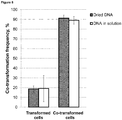
- the present invention provides an efficient method for high-throughput single cell analysis using robotic handling and automated microscopy. It was surprisingly found that the use of dried DNA for transforming plant cells resulted in highly reproducible transformation efficiencies which is important for automation of the transformation process. Especially the variation in the co-transformation efficiency was lower as compared to known transformation techniques using DNA dissolved in a liquid (see Example 5). It was further found that the transformation efficiency using the dried DNA was very low unless the cells were sedimented prior to or during the transformation.
- a first aspect of the present invention is a method for introducing a polynucleotide into plant protoplast cells, comprising the following steps:
- Another aspect of this invention is an automated method for analyzing cells, comprising the following steps:
- the non-adhesively growing cells include animal cells, yeast cells and plant cells such as plant protoplast cells or microspores.
- Yet another aspect of the invention is a screening method to identify efficient artificial microRNA sequences, comprising the following steps:
- the present invention relates to the following embodiments:
- microRNA or miRNA refers to oligoribonucleic acid, which regulates expression of a polynucleotide comprising the target sequence.
- microRNAs are noncoding RNAs of about 19 to about 24 nucleotides (nt) in length that have been identified in both animals and plants which regulate expression of a polynucleotide comprising the target sequence. They are processed from longer precursor transcripts that range in size from approximately 70 to 2000 nt or longer, and these precursor transcripts have the ability to form stable hairpin structures.
- miRNAs usually have single, highly complementary target sites that mostly locate to coding regions.
- a miRNA is an "artificial miRNA" when it is genetically engineered. The artificial miRNA is thus predetermined to specifically target a single gene or multiple genes.
- pri-miRNAs or “primary miRNAs” are long, polyadenylated RNAs transcribed by RNA polymerase II that encode miRNAs.
- pre-miRNAs are primary miRNAs that have been processed to form a shorter sequence that has the capacity to form a stable hairpin and is further processed to release a miRNA.
- a “target gene” refers to a gene that encodes a target RNA, ie., a gene from which a target RNA is transcribed.
- the gene may encode mRNA, tRNA, small RNA, etc.
- a “target sequence” refers to an RNA whose expression is to be modulated, e.g., down-regulated.
- the target sequence may be a portion of an open reading frame, 5' or 3' untranslated region, exon(s), intron(s), flanking region, etc.
- a “star sequence” or "miRNA* strand” is the complementary sequence within a miRNA precursor that forms a duplex with the miRNA. The complementarity of the star sequence does not need to be perfect.
- a recombinant construct comprises an artificial combination of nucleic acid fragments, e.g., regulatory and coding sequences that are not found together in nature.
- the construct may be transcribed to form an RNA, wherein the RNA may be capable of forming a double-stranded RNA and/or hairpin structure.
- This construct may be expressed in the cell, or isolated or synthetically produced.
- the construct may further comprise a promoter, or other sequences which facilitate manipulation or expression of the construct.
- suppression or “silencing” or “inhibition” are used interchangeably to denote the down-regulation of the expression of a product of a target sequence. If the suppression by an artificial miRNA is concerned, the degree of suppression by this artificial miRNA is determined relative to the same organism lacking the nucleic acid encoding the artificial miRNA (e.g. relative to a cell comprising the same target sequence which, however, lacks the nucleic acid sequence encoding the artificial miRNA).
- This "same organism” e.g. a cell
- Suppression includes expression that is decreased by at least about 10%, preferably by at least about 25%, more preferably by at least about 50%, more preferably by at least about 75%, most preferably by at least about 90%, e.g. by about 95% or about 100% relative to the same organism (e.g. a cell) which lacks the nucleic acid sequence encoding the artificial microRNA.
- encodes or “encoding” refers to a DNA sequence which can be processed to generate an RNA and/or polypeptide.
- expression refers to production of a functional product, such as, the generation of an RNA transcript from a DNA sequence.
- the term may also refer to a polypeptide produced from an mRNA generated from a DNA precursor.
- expression of a nucleic acid fragment may refer to transcription of the nucleic acid fragment and/or translation of RNA into a polypeptide.
- Plant includes reference to whole plants, plant organs, plant tissues, seeds and plant cells and progeny of same.
- Plant cells include, without limitation, cells from seeds, suspension cultures, embryos, meristematic regions, callus tissue, leaves, roots, shoots, gametophytes, sporophytes, pollen, and microspores.
- the plant cells used herein are monocotyledonous or dicotyledonous plant cells, but also lower plants such as algae or mosses like Physcomitrella patens or else.
- a monocotyledonous cell is a maize cell.
- the plant cell is a dicot plant cell.
- dicot plant cells include soybean, rapeseed, sunflower, flax, cotton, barley, bean, pea, tobacco, and Arabidopsis.
- introduced means providing a nucleic acid (e.g., expression construct) or protein into a cell.
- Introduction of nucleic acid into plant cells is referred to herein also as “transformation”.
- the transformation may be transient or stable.
- the present invention pertains to a method for introducing a polynucleotide into plant protoplast cells, comprising the following steps: (a) providing a solid support having immobilized thereto the polynucleotide in dry state; (b) contacting the plant protoplasts with the polynucleotide on the solid support so as to obtain transformed plant protoplast cells; and (c) optionally washing the plant protoplasts.
- the plant protoplast cells used herein are derived from monocotyledonous or dicotyledonous plants or lower plants.
- the phrase "derived from” means "obtained from” or “isolated from”. An example of a monocotyledonous plant is maize.
- the plant protoplast cells are derived from dicotyledonous plants.
- dicotyledonous plants include soybean, rapeseed, sunflower, flax, cotton, barley, bean, pea, tobacco, and Arabidopsis.
- the plant protoplast cells are derived from Arabidopsis, e.g. Arabidopsis thaliana.
- the solid support may be made of any material which does not adversely affect the growth of plant protoplast cells.
- the solid support does not contain tungsten or gold, or it does not consist of tungsten or gold. More preferably the solid support does not contain a metal, or it does not consist of a metal.
- the solid support is preferably made of a water-impermeable material. Suitable materials include, but are not limited to, glass, polystyrene, polypropylene, polycarbonate.
- the solid support is suitable to allow one or more of optical absorbance, fluorescence and luminescence detection.
- the solid support comprises one or more planar or concave surfaces; and/or the solid support does not have a spherical form.
- the solid support has a plurality of locations, preferably cavities, where different polynucleotides may be immobilized.
- This embodiment is preferably a multi-well plate having a plurality of "wells" or "cavities”.
- the surface is preferably planar or concave.
- Suitable types include multi-well culture plates in 6-, 12-, 24-, 48-, 96-, 384- or higher well formats. Preferred are 24-well plates, more preferred are 48-well plates, most preferred are 96-well plates.
- the nominal volume of each well is preferably from 0.1 ml to about 2 ml, most preferably it is about 0.5-1 ml.
- the polynucleotide is immobilized on the solid support by adding a solution containing the polynucleotide onto the solid support and removing the water from the solution on the solid support.
- the removal of the water can be achieved by letting evaporate the water over about 6-48h, preferably over about 12-36 h, e.g. 24h. This is preferably done under sterile conditions, e.g. under a sterile flow hood.
- the water may be removed by vacuum exsiccation.
- 0.1 ⁇ g to 10 ⁇ g, preferably 0.2 ⁇ g to 5 ⁇ g, more preferably 0.3 ⁇ g to 2 ⁇ g, most preferably 0.5 ⁇ g to 1.5 ⁇ g of (each) polynucleotide is added to the solid support or to each separate location of the solid support.
- the dried DNA immobilized on the solid support can be stored, e.g. at -20°C or lower, for at least 1 month, e.g. for at least 2 or 3 or 4 or 5 or 6 months or 12 months or longer.
- the transformation step may comprise adding to the solid support a suspension comprising the plant protoplasts.
- the protoplasts are preferably suspended in a suitable medium that does not adversely affect or inhibit later transformation, e.g TM550 (see Table 1 infra ).
- TM550 see Table 1 infra
- the following medium can be used: 0.5 mM MES (salt-free), 15 mM MgCl 2 , 0.48 mM mannitol, pH 5.8 (TM550).
- the cell density in the protoplast suspension may range from about 1x10 4 to about 1x10 8 , preferably from about 1x10 5 to about 1x10 7 , more preferably from about 5x10 5 to about 2x10 5 , most preferably it is about 1x10 6 protoplast cells per ml.
- the suspension of non-adhesively growing plant cells may be added directly to the dried DNA on the solid support. Alternatively, the dried DNA may first be re-dissolved in a suitable solution, followed by addition of the cell suspension.
- 10 ⁇ l to 500 ⁇ l is added to the DNA, e.g. in a cavity of a multi-well plate.
- the cells are arranged in a layer on the solid support.
- the cells are sedimented so as to arrange them in a layer on the solid support (e.g. at the bottom of a well or cavity of a multi-well plate).
- the term "sedimenting”, as used herein, includes actively sedimenting the cells by applying a centrifugal force to the cells, and passively sedimenting the cells, i.e. allowing the cells to sediment (settle) on the solid support by way of the normal gravity.
- the cells may be allowed to sediment for about 0.3 to 60 min, preferably for about 0.5 to 10 min, most preferably for about 1 to 2 minutes (passive sedimentation).
- protoplasts could be centrifuged for at least 30 seconds at least 2g, e.g. for 1 min at 10g (Active sedimentation). After these dimentation step the cells are arranged in a layer, preferably a monolayer, on the solid support, e.g. at the bottom of a well or cavity of a multi-well plate.
- a transformation agent is added to the protoplast suspension comprising the polynucleotide in order to induce nucleic acid uptake.
- the transformation agent may be polyethylene glycol (PEG) or another suitable agent which induces DNA uptake into protoplasts.
- Alternative transformation agents include poly-L-ornithine, polyvinyl alcohol and divalent ions.
- the PEG is PEG 1500.
- the transformation agent is usually comprised in a solution which is added to protoplast suspension.
- an equal volume of 40% PEG 1500 may be added to the protoplast suspension.
- a preferred composition to be added to the protoplast suspension is as follows: 67 mM Ca(NO 3 ) 2 ⁇ 4H 2 O, 270 mM Mannitol, 384 g/l PEG1500, pH 9.75 (see also Table 1 infra ).
- the suspension is preferably incubated for about 7 to 10 minutes.
- TM550 may be added, preferably about 40 to 60 % of the volume of the suspension (protoplasts + transformation agent composition) already present in the well.
- a suitable solution e.g. TM550
- the protoplasts may be washed once or several times with a suitable medium, e.g. TM550, in order to remove the transformation agent, e.g. PEG, and Ca 2+ ions. After the washing, the transformed protoplasts may be resuspended in a suitable solution, e.g. PCA (see Table 2 infra ).
- the solid support is preferably a multi-well plate. Accordingly, it is preferred that a plurality of different polynucleotides are immobilized in different wells of the plate, respectively.
- the number of different polynucleotides on the same solid support is at least 2, more preferably at least 6, more preferably at least 12, most preferably at least 24, e.g. 48 or 96. It is important that each polynucleotide is spatially separated from the other polynucleotides. This is of course accomplished if each polynucleotide is immobilized at the bottom of a different well of a multi-well plate.
- the polynucleotide is preferably plasmid DNA.
- the polynucleotide may comprise various nucleic acid sequences encoding different products.
- the polynucleotide comprises a nucleic acid sequence encoding a transformation marker. Suitable transformation markers include fluorescent proteins, e.g. red fluorescent protein ("mCherry") or green fluorescent protein (GFP).
- mCherry red fluorescent protein
- GFP green fluorescent protein
- the polynucleotide comprises a nucleic acid sequence encoding plant microRNA.
- the polynucleotide comprises a nucleic acid sequence encoding a plant microRNA, and a nucleic acid sequence encoding the corresponding target gene.
- the polynucleotide comprises a nucleic acid sequence encoding an artificial microRNA, a nucleic acid sequence representing the target gene of the artificial microRNA, and a nucleic acid sequence encoding a transformation marker.
- These nucleic acid sequences are preferably present on a single DNA plasmid.
- Preferred embodiments of the nucleic acid sequences, of the vectors and plasmids that may be used are disclosed infra in respect of the method of screening. These embodiments apply to this first aspect of the invention mutatis mutandis.
- the DNA uptake method of this invention can be carried out in a fully automated manner.
- a particular advantage is that the plates having the dried DNA immobilized thereto can be stored and shipped for later use, without loss in transformation efficiency.
- Another important advantage is that only small amounts of a plasmid are required for foreign polynucleotides uptake.
- this invention relates to an automated method for analyzing cells, comprising the following steps
- Protoplasts can be isolated and cultured by known methods, see supra.
- the protoplast culture may be provided in wells of a multi-well plate as described supra with respect to the transformation method of the invention.
- the protoplasts may or may not be transformed.
- the protoplasts are then suspended in a suitable immobilization medium which comprises at least one gelling substance.
- a gelling substance is a substance that can convert a solution into a gel. The conversion from a solution into a gel may require cooling or addition of divalent metal ions such as Ca 2+ .
- the gelling substance may be a water-soluble polysaccharide.
- Gelling substances include but are not limited to agar, ⁇ -carrageenan, -carrageenan, alginic acid, alginate, agarose, furcellaran, jellan gum, glucono- ⁇ -lactone, azotobactor vinelandii gum, xanthan gum, pectin, guar gum, locust bean gum, tara gum, cassia gum, glucomannan, tragacanth gum, karaya gum, pullulan, gum arabic, arabinogalactan, dextran, sodium carboxymethyl cellulose, methyl cellulose, cyalume seed gum, starch, chitin, chitosan, and curdlan.
- Preferred gelling substances according to this invention include but are not limited to low melting temperature agarose, agar and alginic acid (ratios and concentrations may vary upon species used, but are preferably Ca 2+ free).
- the immobilization medium preferably contains mannitol and MES (2-[N-morpholino] ethane-sulfonic acid).
- concentration of MES may range from 1 mM to about 100 mM, preferably from about 5 mM to about 50 mM, most preferably from about 10 mM to about 20 mM.
- the concentration of mannitol in the immobilization medium may range from 10 mM to 1 M, preferably it is from 100 mM to 500 mM.
- the immobilization medium may further comprise calcium chloride, magnesium chloride and/or magnesium sulfate at suitable concentrations. Preferred immobilization media are disclosed in the examples section.
- the immobilization medium should not comprise Ca 2+ ions.
- a suitable immobilization medium for alginic acid mediated embedding is described supra.
- the immobilization medium may contain calcium ions, e.g. at a concentration from 1 mM to 1 M preferably from 10 mM to 100 mM.
- the concentration of agarose in the immobilization medium is preferably from 1 % (w/w) to 5 % (w/w), preferably it is about 2 % (w/w). If low melting temperature agarose is used, it is important to maintain the temperature above 30 °C, preferably above 35 °C in order to avoid generation of agarose aggregates.
- the concentration of alginic acid in the immobilization medium is preferably from 0.5% (w/v) to 5% (w/v), more preferably from 1.5% (w(v) to 3% (w/v).
- a gravity force is applied to form a cell monolayer at the bottom of the multi-well slide or plate.
- This can be achieved either by allowing the cells to sediment (passive sedimentation), e.g. for at least 5 minutes, or by centrifugation for at least 30 seconds at 2g or more, e.g. for 1 min at 10g (active sedimentation).
- the cells are then trapped at the bottom of the solid support (multi-well plate or slide) by solidification of the gelling substance.
- This may be achieved by lowering the temperature to below 40°C, preferably to below 35°C, preferably to below 30°C (in case of agar or agarose), or by adding a solution containing at least 10mM Ca 2+ salts at the top of the protoplasts mixed with the alginic acid containing medium as microdrops ( ⁇ 5 ⁇ l or smaller) (in case of alginic acid as gelling substance).
- the gelling is induced by increasing the calcium concentration to at least 1 mM, preferably to at least 50 mM, more preferably to at least 125 mM.
- a suitable culture medium may be added on top of the gels formed, e.g. to the nominal filling volume of the well.
- the immobilized protoplast cells can be further cultured in their immobilized state by adding suitable media on top of the solidified protoplast composition. Similarly, the immobilized in that way protoplasts are accessible to exposure of any test substances in this stage, i.e. prior to analysis.
- the method according to this aspect of the invention therefore comprises in a specific embodiment the step of contacting the immobilized protoplast cells with a test compound, and determining the effect of the test compound on the protoplast cells. This is preferably done by (i) determining at least one parameter of the cells in the presence of test compound, (ii) determining at least one parameter of the cells in the absence of test compound, and (iii) comparing the parameters determined in (i) and (ii).
- the parameters are usually determined by microscopy and include, but are not limited to, fluorescence, morphology and combinations thereof. Methods of microscopy include, but are not limited to, those described in, e.g., Hasek J, Streiblová E.
- the method of this aspect of the invention is preferably combined with a preceding transformation of the protoplast cells prior to embedding / immobilization.
- the method may comprise expression of transformed nucleic acid sequence(s) and determining the effect of that expression on the cells.
- the polynucleotide transformed is one as defined above in respect of the method for introducing polynucleotides into plant protoplast cells according to the first aspect of the invention.
- All steps can be carried out in a fully automated manner, e.g. by using pipetting and dispersing robots known in the art.
- Yet another aspect of the invention is a screening method to identify efficient plant microRNA sequences, comprising the following steps:
- the method is preferably carried out in combination with the method for introducing polynucleotides into plant protoplast cells described herein. All embodiments described above apply to this screening method as well.
- the screening method uses a vector comprising a nucleic acid sequence encoding a candidate artificial microRNA, a nucleic acid sequence representing the target gene of the candidate microRNA, and a nucleic acid sequence encoding a transformation marker. These components are present on a single vector. This avoids the need for transformation of multiple plasmids or the like. Typical elements of plant transformation plasmids may also be included in the plasmid used in accordance with this invention.
- the three main elements of the vector (i) the nucleic acid sequence encoding the candidate artificial microRNA, (ii) the nucleic acid sequence representing the target gene of the candidate microRNA ("the target sequence"), and (iii) the nucleic acid sequence encoding the transformation marker are expressed in the protoplast cell. Efficient expression can be achieved by using a suitable promoter operably linked to the respective nucleic acid sequence. Various promoters can be used.
- the promoter may also contain, if desired, a promoter regulatory region (e.g., one conferring inducible, constitutive, environmentally- or developmentally-regulated, or cell- or tissue-specific/selective expression), a transcription initiation start site, a ribosome binding site, an RNA processing signal, a transcription termination site, and/or a polyadenylation signal.
- a promoter regulatory region e.g., one conferring inducible, constitutive, environmentally- or developmentally-regulated, or cell- or tissue-specific/selective expression
- a transcription initiation start site e.g., one conferring inducible, constitutive, environmentally- or developmentally-regulated, or cell- or tissue-specific/selective expression
- a transcription initiation start site e.g., one conferring inducible, constitutive, environmentally- or developmentally-regulated, or cell- or tissue-specific/selective expression
- RNA processing signal e.g., RNA processing signal
- transcription termination site
- constitutive promoters include the cauliflower mosaic virus (CaMV) 35S transcription initiation region, the 1'- or 2'-promoter derived from T-DNA of Agrobacterium tumefaciens, the ubiquitin 1 promoter, the Smas promoter, the Nos promoter, the pEmu promoter, the rubisco promoter, the GRP1-8 promoter and other transcription initiation regions from various plant genes known to those of skill.
- CaMV cauliflower mosaic virus
- 1'- or 2'-promoter derived from T-DNA of Agrobacterium tumefaciens
- the ubiquitin 1 promoter the Smas promoter
- the Nos promoter the Nos promoter
- the pEmu promoter the pEmu promoter
- rubisco promoter the GRP1-8 promoter and other transcription initiation regions from various plant genes known to those of skill.
- the artificial candidate microRNA may be designed on the basis of known design tools, e.g. that described in Ossowski, S., Schwab, R. & Weigel, D. Gene silencing in plants using artificial microRNAs and other small RNAs. Plant J 53, 674-690 (2008 ). However, it surprisingly turned out that only a small fraction of the so designed microRNAs were efficient in silencing the target gene. Thus, there is a need for a screening process in order to identify microRNA sequences which are actually efficient in silencing a given target molecule.
- Target sequences may include coding regions and non-coding regions such as promoters, enhancers, terminators, introns and the like. Preferably, target sequences are located within coding regions.
- transformation marker is used to label cells that have been successfully transformed.
- Suitable transformation markers used in the invention include, but are not limited to, any flurorescent proteins, e.g. those described in Shaner, N.C. et al. Improved monomeric red, orange and yellow fluorescent proteins derived from Discosoma sp. red fluorescent protein. Nat Biotechnol 22, 1567-1572 (2004 ).
- the nucleic acid encoding the target sequence is preferably fused to a nucleic acid encoding a marker, e.g. a fluorescent protein such as green fluorescent protein, a luminescent protein such as luciferase, or an enzyme which catalyzes a detectable reaction.
- a marker e.g. a fluorescent protein such as green fluorescent protein, a luminescent protein such as luciferase, or an enzyme which catalyzes a detectable reaction.
- This "target marker” can then be detected as a measure of the level of expression of the target sequence. If the target gene is an enzyme, it may be possible that the expression product of the target gene is the target marker itself.
- the present screening method can be advantageously combined with the other aspects of the invention, namely the method for introducing a polynucleotide into plant protoplast cells, and the immobilization / embedding technique described supra.
- a particular embodiment which is applicable to all aspects of the present invention, includes the use of PCR products for transformation, preferably for transient transformation.
- the polynucleotide or DNA to be transformed may therefore be a PCR product comprising the DNA of interest, preferably a promoter, an open reading frame, and a terminator.
- the PCR product is directly used for transformation without cloning it into a plasmid or vector.
- the polynucleotide or DNA to be transformed consists of a promoter, an open reading frame, and a terminator. That is, the PCR product contains substantially no flanking regions. The advantage is that such PCR product will lead to much higher transformation efficiencies than PCR products including flanking regions (see Example 9).
- PCR products for transformation is advantageous as it is much faster than the classical cloning approach involving the use of plasmids for transformation.
- This embodiment is therefore particularly suited for automated methods and high-throughput processes.
- Example 1 Monolayer embedding of tobacco leaf protoplasts for continuous cell tracking.
- Digestion medium was further filtered through 100 ⁇ m sieves in 12ml tube (Greiner, Germany) to remove non-digested tissues. Afterwards 2ml of TM550 were overlaid on a top of filtered F-PIN containing protoplasts. Intact protoplasts were collected from the interlayer between TM550 and protoplast/digestion mixture after 10min flotation at 100g and transferred to a new tube. Total volume was adjusted to 10ml with W5 medium and protoplast number was estimated. Protoplasts were further pelleted for 5min at 100g and supernatant was discarded. After the last centrifugation step protoplast pellet was mixed with TM550 to achieve density of 2 ⁇ 10 4 cells per 1ml.
- Protoplasts/TM550 mixture was further mixed at ratio 1:1 with Alg-A medium for Ca 2+ -alginate embedding or with TM550 containing 2% of low melting temperature agarose for agarose embedding. It is important to maintain temperature above 30°C (recommended 35°C) until formation of a cell layer at a well bottom and to avoid generation of agarose aggregates.
- Fig. 1B 1 For cell immobilisation using Ca 2+ -alginate embedding 100 ⁇ l or 200 ⁇ l of protoplast embedding mixture per were transferred into 96-well plates or 8-well slides respectively ( Fig. 1B 1 ). To form a cell layer protoplasts could be either centrifuged at 10g for at least 1 min or sedimented for at least 20-30min ( Fig. 1B 2 ).
- the upper surface of the protoplast embedding mixture was covered with 20 ⁇ l or 40 ⁇ l for 96-well plates or 8-well slides respectively of W5 or another osmotically adjusted solution with a high Ca 2+ -salt ( ⁇ 20mM) content in a form of micro-droplets ( ⁇ 1 ⁇ l droplets if manually or 100-500nl droplets if using dispersing robots, Fig. 1B 3, Fig. 2 ).
- W5 medium was replaced with 200 ⁇ l of the culture F-PCN medium for washing.
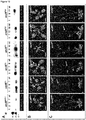
- Fig. 1B 5 After two washings, 200 ⁇ l of fresh F-PCN were added for subsequent protoplast culture ( FIG. 1B 5 ). Embedded cells were observed with 24h interval and their development was documented by imaging of the same area using inverted microscope (Axiovert 200M, Zeiss) for a period of 1 week ( Fig. 3 ). Due to formation of a single cell layer at the bottom of culture wells and subsequent immobilization this technique was named p rotoplast- m onolayer- e mbedding technique (PME).
- PME p rotoplast- m onolayer- e mbedding technique
- Protoplast isolation was done as described in the example 1 prior the washing with the culture medium.
- Cell immobilisation was performed in 8-well slides (IBIDI). After the removal of W5 medium, F-PCN with various concentration of compound R113 per well was used for washing and further cell culture. Analysis of cell division efficiency ( Fig. 4 ) was performed using inverted microscope (Axiovert 200M, Zeiss).
- Example 3 Monolayer embedding of Arabidopsis protoplasts for continuous cell tracking.
- Arabidopsis protoplasts were isolated from hypocotyls of 7-days old Arabidopsis seedlings (Col-0) germinated on SCA medium according to Dovzhenko et al. (2003) Protoplasma 222, 107-111 . Explants were cut in 0.5-1 mm fragments and preplasmolysed in MMC600 for 1h. Afterwards the medium was substituted with fresh MMC600 supplemented with 0.5% Cellulase Onozuka R-10 (DUCHEFA), 0.5% Macerozyme Onozuka R-10 and 0.05% Driselase (SIGMA). After 14h of digestion, protoplast containing medium was filtered through 32 ⁇ m sieves.
- DUCHEFA Cellulase Onozuka R-10
- SIGMA Driselase
- Protoplasts containing medium was further mixed with an equal volume of TM550 and collected by centrifugation for 10min at 100g. Supernatant was removed and the pellet was mixed with TM550:Alg-A mixture (1:1) to achieve density 1 ⁇ 10 4 protoplasts per 100 ⁇ l. 100 ⁇ l aliquots of protoplast embedding mixture were transferred in 96-well plate and immobilized as described in the example 1. After the removal of W5 medium, PCA medium was used for washing and culture steps. Cell observations ( Fig. 5 ) were done using inverted microscope (Axiovert 200M, Zeiss).
- Cotyledons from 7-days old Arabidopsis seedlings were removed and cut in 0.5-1mm fragments. Preplasmolysis and digestion was performed as describe in the example 3, however no Driselase was used for digestion. After filtration through 56 ⁇ m sieves, protoplasts were collected in 12ml tube and pelleted for 10min at 100g. Supernatant was discarded and 10ml of MSC600 was added. For flotation 2ml of TM550 were overlayed on a top of MSC600 and centrifuged for 10min at 100g. Interlayer was collected and transferred into a new 12ml tube. Total volume was adjusted to 10ml with W5 medium.
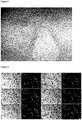
- Protoplasts were washed for 5min at 50g and afterwards pellet was resuspended in TM550 to achieve density 2.10 4 protoplasts per 100 ⁇ l. After mixing 1:1 with Alg-A medium, 100 ⁇ l aliquots of protoplast embedding mixture were used for cell immobilisation in 96-well plates. Immobilisation and subsequent culture procedure were performed as described in example 3. While GFP fluorescence was detected only in 3% of freshly isolated protoplasts, it was observed in over than 95% of intact cells after 48h of culture thus demonstrating activity of DR5 promoter ( Fig. 6 ).
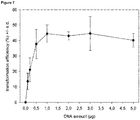
- plasmid DNA was dissolved in ultra-pure sterile water. Aliquots of aqueous DNA solution at various concentrations (0, 0.1, 0.5, 1 and 5 ⁇ g per 10 ⁇ l) were transferred inside 96-well plate (ABIGene). Water evaporation took place under the sterile bench overnight ( Fig. 1C 1 , 2 ). After complete evaporation plates could be used either immediately or stored at -20°C. Arabidopsis shoots from 3-weeks old seedlings (Col-0) were used. Digestion and isolation were performed as described in example 4. After last washing step cell density was adjusted to 1x10 5 and aliquots of 30 ⁇ l were transferred into the wells containing dried DNA ( Fig. 1C 3 ).
- Plasmids carrying expression cassette of GFP or endoplasmic reticulum-mCherry were either mixed and dried upon water evaporation under a sterile bench inside 96-well plates or mixed and used directly for transformation. Transformation was carried out as described above. Equal amount of each plasmid was used (0.5 ⁇ g per plasmid). To simulate a simple pipetting robot, all manipulations (adding cells, adding reagents prior washing step after transformation) were performed by using multichannel pipette. Cells were added directly to wells containing either dried DNA or DNA dissolved in water and no further mixing was performed prior adding PEG1500 solution.
- Tobacco leaf protoplasts were isolated as described in the Example 1 prior the embedding procedure. After protoplast pelleting in W5 medium and removal of the supernatant, cell density was adjusted to 2 ⁇ 10 6 cells/ml with TM550. Aliquots of 30 ⁇ l (2-2.5 ⁇ 10 5 cells) were transferred into the wells using 8-channel pipette. Afterwards cells were left to sediment for at least 2min. Alternatively, protoplasts could be centrifuged for 1 min at 10g. Further PEG-mediated DNA uptake was performed by adding an equal volume of 40% PEG1500 solution to protoplasts in wells. After 8min of the PEG treatment, a half of the total volume of TM550 was added and after additional 2min total volume was increased to 1ml using TM550.
- Arabidopsis shoots from 3-weeks old seedlings (35S::GFP in Col-0 background) were used. Digestion and isolation were performed as described in example 4. After last washing step cell density was adjusted to 1 ⁇ 10 5 and aliquots of 30 ⁇ l were transferred into 96-well plate. 1-2 ⁇ g DNA in 5 ⁇ l of ultra-pure sterile water was mixed with protoplasts. PEG-mediated DNA uptake was performed by adding an equal (35 ⁇ l) volume of 40% PEG1500 solution. After 8min of the PEG treatment, a half of the total volume of TM550 was added and after additional 2min total volume was increased to 1ml using TM550.
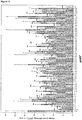
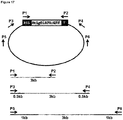
- amiRNAs were estimated as a read-out of fluorescence intensity of the target gene translationally fused with the reporter gene ( Fig. 12 ). Randomly selected amiRNA constructs were further used for generation of transgenic plants which exhibited phenotypes confirming microscopy-based conclusions on amiRNA efficiency ( Fig. 13 ).
- ER-mCherry and At1g01730-GFP expression cassettes were mixed, dried, and PEG-mediated DNA uptake was performed. Microscopy analysis revealed co-expression of both genes in more than 95% of transformed cells for both, Arabidopsis and tobacco protoplasts.
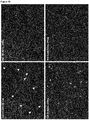
- the amiRNA fluorescence based marker screening can be redesigned with luciferase activity evaluation using PPTT ( Fig. 20 ). This design will allow completely automated sample manipulations, measurements and data reading where human will be responsible only for providing consumables and material, and transfer the screening plates from the robot to incubator and a reading instrument (microscope, plate-readers etc.). If needed, each step can be automated.
- Example 10 Quantitative analysis of cellular expansion using PIN8, an intracellular modulator of auxin homeostasis
- Plant hormone auxin is an important regulator of plan growth, development and responses to environmental stimuli.
- the molecular mechanisms to actively transport this compound was evolved achieving the maximal complexity in higher plants.
- PIN protein family which consists of 8 members in Arabidopsis, AtPIN1-AtPIN8. AtPINs are expressed specifically in different tissues being typically localized to the plasma membrane. Understanding of AtPIN function was crucial to understand the mechanism of auxin efflux as well as the auxin gradient formation in tissues and organs.
- auxin-mediated regulation of gene expression takes place.
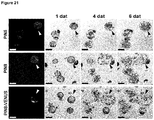
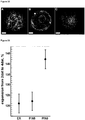
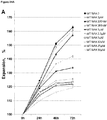
- Transient PIN5 expression does not affect developmental program of tobacco leaf protoplasts, while expression of PIN8 arrests cell division and enhances elongation ( Fig. 21 ).
- AtPIN5 ER-targeting of AtPIN5 has been previously reported ( Mravec et al. (2009) Subcellular homeostasis of phytohormone auxin is mediated by the ER-localized PIN5 transporter. Nature 459:1136-1140 ) we used Spinning-disk and TIRF microscopy method to analyze localization of AtPIN8, which is also targeted to ER ( Fig. 22 ). It is important to stress, that our immobilization method allows using TIRF approach, which allows to study processes near plasma membrane and is possible only if the object (cell) is in a close proximity to a surface of imaging slide/plate.
- Protoplasts were isolated and immobilized using our procedure described in the current patent application.
- Culture medium with final auxin concentration of 0, 1pM, 10pM, 100pM, 500pM, 1nM, 10nM, 100nM, 500nM, 1 ⁇ M, 2.5 ⁇ M, 5 ⁇ M, 10 ⁇ M, 25 ⁇ M and 50 ⁇ M was used for washing steps and cell culture afterwards in corresponding wells.
- Automated image acquisition in a form of volume stacks was performed using iMIC microscope (TILL Photonics GmbH, Germany) in 24h interval starting from the embedding (0h, 24h, 48h, 72h, 96h). Recording coordinates were stored, and the plate was removed from the microscope after each imaging session.
Landscapes
- Health & Medical Sciences (AREA)
- Life Sciences & Earth Sciences (AREA)
- Genetics & Genomics (AREA)
- Engineering & Computer Science (AREA)
- Biomedical Technology (AREA)
- Biotechnology (AREA)
- Wood Science & Technology (AREA)
- Organic Chemistry (AREA)
- Chemical & Material Sciences (AREA)
- Zoology (AREA)
- Bioinformatics & Cheminformatics (AREA)
- General Engineering & Computer Science (AREA)
- Molecular Biology (AREA)
- Cell Biology (AREA)
- Microbiology (AREA)
- Biochemistry (AREA)
- General Health & Medical Sciences (AREA)
- Plant Pathology (AREA)
- Biophysics (AREA)
- Physics & Mathematics (AREA)
- Virology (AREA)
- Botany (AREA)
- Micro-Organisms Or Cultivation Processes Thereof (AREA)
- Measuring Or Testing Involving Enzymes Or Micro-Organisms (AREA)
Applications Claiming Priority (3)
| Application Number | Priority Date | Filing Date | Title |
|---|---|---|---|
| EP10191985A EP2455454A1 (fr) | 2010-11-19 | 2010-11-19 | Processus d'introduction d'un polynucléotide dans des cellules végétables de protoplastes |
| EP11787849.6A EP2640830B1 (fr) | 2010-11-19 | 2011-11-21 | Procédé d'introduction d'un polynucléotide à l'intérieur de cellules végétales non adhésives en croissance |
| PCT/EP2011/070602 WO2012066147A1 (fr) | 2010-11-19 | 2011-11-21 | Procédé d'introduction d'un polynucléotide à l'intérieur de cellules végétales non adhésives en croissance |
Related Parent Applications (1)
| Application Number | Title | Priority Date | Filing Date |
|---|---|---|---|
| EP11787849.6A Division EP2640830B1 (fr) | 2010-11-19 | 2011-11-21 | Procédé d'introduction d'un polynucléotide à l'intérieur de cellules végétales non adhésives en croissance |
Publications (3)
| Publication Number | Publication Date |
|---|---|
| EP3231865A2 true EP3231865A2 (fr) | 2017-10-18 |
| EP3231865A3 EP3231865A3 (fr) | 2017-11-29 |
| EP3231865B1 EP3231865B1 (fr) | 2021-01-27 |
Family
ID=43530211
Family Applications (3)
| Application Number | Title | Priority Date | Filing Date |
|---|---|---|---|
| EP10191985A Withdrawn EP2455454A1 (fr) | 2010-11-19 | 2010-11-19 | Processus d'introduction d'un polynucléotide dans des cellules végétables de protoplastes |
| EP17171376.1A Active EP3231865B1 (fr) | 2010-11-19 | 2011-11-21 | Procédé d'introduction d'un polynucléotide à l'intérieur de cellules végétales non adhésives en croissance |
| EP11787849.6A Active EP2640830B1 (fr) | 2010-11-19 | 2011-11-21 | Procédé d'introduction d'un polynucléotide à l'intérieur de cellules végétales non adhésives en croissance |
Family Applications Before (1)
| Application Number | Title | Priority Date | Filing Date |
|---|---|---|---|
| EP10191985A Withdrawn EP2455454A1 (fr) | 2010-11-19 | 2010-11-19 | Processus d'introduction d'un polynucléotide dans des cellules végétables de protoplastes |
Family Applications After (1)
| Application Number | Title | Priority Date | Filing Date |
|---|---|---|---|
| EP11787849.6A Active EP2640830B1 (fr) | 2010-11-19 | 2011-11-21 | Procédé d'introduction d'un polynucléotide à l'intérieur de cellules végétales non adhésives en croissance |
Country Status (3)
| Country | Link |
|---|---|
| US (2) | US10301635B2 (fr) |
| EP (3) | EP2455454A1 (fr) |
| WO (1) | WO2012066147A1 (fr) |
Families Citing this family (6)
| Publication number | Priority date | Publication date | Assignee | Title |
|---|---|---|---|---|
| EP2455454A1 (fr) | 2010-11-19 | 2012-05-23 | Albert-Ludwigs-Universität Freiburg | Processus d'introduction d'un polynucléotide dans des cellules végétables de protoplastes |
| US20140075593A1 (en) * | 2012-09-07 | 2014-03-13 | Dow Agrosciences Llc | Fluorescence activated cell sorting (facs) enrichment to generate plants |
| WO2016164746A1 (fr) | 2015-04-08 | 2016-10-13 | Alnylam Pharmaceuticals, Inc. | Compositions et méthodes d'inhibition de l'expression du gène lect2 |
| GB201508302D0 (en) * | 2015-05-14 | 2015-06-24 | Synpromics Ltd | Method of screening synthetic promotors |
| EP3836943A4 (fr) * | 2018-08-14 | 2022-10-19 | Inscripta, Inc. | Détection améliorée de séquences à édition par nucléase dans des modules automatisés et des instruments par l'intermédiaire d'une culture en masse de cellules |
| IL294109B2 (en) | 2019-12-19 | 2025-11-01 | Pioneer Hi Bred Int | Microspore culture predictive model generation and use |
Citations (1)
| Publication number | Priority date | Publication date | Assignee | Title |
|---|---|---|---|---|
| US20020173037A1 (en) | 2001-03-29 | 2002-11-21 | Pati Pratap Kumar | Efficient method of protoplast culture |
Family Cites Families (3)
| Publication number | Priority date | Publication date | Assignee | Title |
|---|---|---|---|---|
| ATE223148T1 (de) * | 1990-06-23 | 2002-09-15 | Aventis Cropscience Gmbh | Verbesserte genotypen von zea mays (l.) mit der veranlagung zur langfristigen, höchst effizienten pflanzenregeneration |
| EP2311934B1 (fr) * | 2001-09-06 | 2013-06-05 | Rapid Micro Biosystems, Inc. | Détection rapide de cellules proliférantes |
| EP2455454A1 (fr) | 2010-11-19 | 2012-05-23 | Albert-Ludwigs-Universität Freiburg | Processus d'introduction d'un polynucléotide dans des cellules végétables de protoplastes |
-
2010
- 2010-11-19 EP EP10191985A patent/EP2455454A1/fr not_active Withdrawn
-
2011
- 2011-11-21 US US13/988,276 patent/US10301635B2/en active Active
- 2011-11-21 WO PCT/EP2011/070602 patent/WO2012066147A1/fr not_active Ceased
- 2011-11-21 EP EP17171376.1A patent/EP3231865B1/fr active Active
- 2011-11-21 EP EP11787849.6A patent/EP2640830B1/fr active Active
-
2019
- 2019-04-09 US US16/379,197 patent/US11261454B2/en active Active
Patent Citations (1)
| Publication number | Priority date | Publication date | Assignee | Title |
|---|---|---|---|---|
| US20020173037A1 (en) | 2001-03-29 | 2002-11-21 | Pati Pratap Kumar | Efficient method of protoplast culture |
Non-Patent Citations (22)
| Title |
|---|
| "Arabidopsis protocols", 2005 |
| BART ET AL., PLANT METHODS, vol. 2, 2006, pages 13 |
| BUCHERL C; AKER J; DE VRIES S; BORST JW: "Probing protein-protein Interactions with FRET-FLIM", METHODS MOL BIOL, vol. 655, 2010, pages 389 - 399 |
| CRAIG ET AL., PLANT CELL REPORTS, vol. 24, no. 10, 2005, pages 603 - 611 |
| DAVEY; ANTHONY: "Plant Cell Culture: Essential Methods", 2010 |
| DOVZHENKO ET AL., PROTOPLASMA, vol. 204, 1998, pages 114 - 118 |
| DOVZHENKO ET AL., PROTOPLASMA, vol. 222, 2003, pages 107 - 111 |
| EHLERT A; WELTMEIER F; WANG X; MAYER CS; SMEEKENS S; VICENTE-CARBAJOSA J; DROGE-LASER W.: "Two-hybrid protein-protein interaction analysis in Arabidopsis protoplasts: establishment of a heterodimerization map of group C and group S bZIP transcription factors", PLANT J, vol. 46, 2006, pages 890 - 900 |
| GOLDS ET AL., J PLANT PHYSIOL, vol. 140, pages 582 - 587 |
| HASEK J; STREIBLOVA E: "Fluorescence microscopy methods", METHODS MOL BIOL, vol. 53, 1996, pages 391 - 405 |
| KANSAGARA ET AL., NATURE METHODS, vol. 5, September 2008 (2008-09-01) |
| KOOP HU; STEINMÜLLER K; WAGNER H; ROSSLER C; EIBL C; SACHER L: "Integration of foreign sequences into the tobacco plastome via polyethylene glycol-mediated protoplast transformation", PLANTA, vol. 199, 1996, pages 193 - 201, XP002942722, DOI: doi:10.1007/BF00196559 |
| MRAVEC ET AL.: "Subcellular homeostasis of phytohormone auxin is mediated by the ER-localized PIN5 transporter", NATURE, vol. 459, 2009, pages 1136 - 1140 |
| NEGRUTIU I; SHILLITO R; POTRYKUS I; BIASINI G; SALA F: "Hybrid genes in the analysis of transformation conditions. I. Setting up a simple method for direct gene transfer in plant protoplasts", PLANT MOL BIOL, vol. 8, 1987, pages 363 - 373 |
| NELSON BK ET AL.: "A multi-color set of in vivo organelle markers for colocalization studies in Arabidopsis and other plants", PLANT JOURNAL, vol. 51, 2007, pages 1126 - 1136 |
| NELSON ET AL.: "A multicoloured set of in vivo organelle markers for co-localization studies in Arabidopsis and other plants", PLANT J, vol. 51, 2006, pages 1126 - 1136 |
| OSSOWSKI, S.; SCHWAB, R.; WEIGEL, D: "Gene silencing in plants using artificial microRNAs and other small RNAs", PLANT J, vol. 53, 2008, pages 674 - 690, XP055050162, DOI: doi:10.1111/j.1365-313X.2007.03328.x |
| PATI, PROTOPLASMA, vol. 226, no. 3-4, 2005, pages 217 - 221 |
| SHANER, N.C. ET AL.: "Improved monomeric red, orange and yellow fluorescent proteins derived from Discosoma sp. red fluorescent protein", NAT BIOTECHNOL, vol. 22, 2004, pages 1567 - 1572 |
| YAMADA ET AL., METHODS IN MOLECULAR BIOLOGY, vol. 643, 2010, pages 33 - 45 |
| YOO ET AL., NATURE PROTOCOLS, vol. 2, no. 7, 2007, pages 1565 - 1572 |
| YOO SD; CHO YH; SHEEN J: "Arabidopsis mesophyll protoplasts: a versatile cell system for transient gene expression analysis", NAT PROTOC, vol. 2, 2007, pages 1565 - 1572, XP002621444, DOI: doi:10.1038/NPROT.2007.199 |
Also Published As
| Publication number | Publication date |
|---|---|
| EP2640830B1 (fr) | 2017-05-17 |
| EP2640830A1 (fr) | 2013-09-25 |
| EP3231865A3 (fr) | 2017-11-29 |
| US11261454B2 (en) | 2022-03-01 |
| EP3231865B1 (fr) | 2021-01-27 |
| US20130330717A1 (en) | 2013-12-12 |
| US10301635B2 (en) | 2019-05-28 |
| EP2455454A1 (fr) | 2012-05-23 |
| WO2012066147A1 (fr) | 2012-05-24 |
| US20190292552A1 (en) | 2019-09-26 |
Similar Documents
| Publication | Publication Date | Title |
|---|---|---|
| US11261454B2 (en) | Method for introducing a polynucleotide into non-adhesively growing plant cells | |
| AU2018212986B2 (en) | Novel plant cells, plants, and seeds | |
| Kobayashi et al. | INCREASED SIZE EXCLUSION LIMIT2 encodes a putative DEVH box RNA helicase involved in plasmodesmata function during Arabidopsis embryogenesis | |
| Ono et al. | A null mutation of ROS1a for DNA demethylation in rice is not transmittable to progeny | |
| Bechtold et al. | The maternal chromosome set is the target of the T-DNA in the in planta transformation of Arabidopsis thaliana | |
| Raghavan | Some reflections on double fertilization, from its discovery to the present | |
| Deng et al. | Overexpression of an Arabidopsis magnesium transport gene, AtMGT1, in Nicotiana benthamiana confers Al tolerance | |
| Liebers et al. | Biogenic signals from plastids and their role in chloroplast development | |
| Eriksson et al. | Genetics applied to forestry | |
| US11603536B2 (en) | Methods for efficient maize genome editing | |
| US9957514B2 (en) | Transformation of duckweed and uses thereof | |
| Van Eck et al. | Agrobacterium tumefaciens-mediated transformation of Setaria viridis | |
| Jiang et al. | ORYZA SATIVA MYOSIN XI B controls pollen development by photoperiod-sensitive protein localizations | |
| Zhang et al. | Establishment of an efficient cotton root protoplast isolation protocol suitable for single-cell RNA sequencing and transient gene expression analysis | |
| Furumoto et al. | Thermospermine is an evolutionarily ancestral phytohormone required for organ development and stress responses in Marchantia polymorpha | |
| CA2458842C (fr) | Systeme vegetal permettant une analyse approfondie de fonctions geniques a l'aide d'adncs pleine longueur | |
| US20240279672A1 (en) | Compositions and methods for improved agronomic performance in plants | |
| US20260078391A1 (en) | Genetically enhanced maize plants | |
| Best et al. | The PPR-related splicing cofactor MSP1/EMB1025 protein, encoded by At4g20090, encode an essential protein that is required for the splicing of nad1 intron 1 and for the biogenesis of complex I in Arabidopsis mitochondria | |
| Dew-Budd et al. | Agrobacterium-mediated floral-dip transformation of the obligate outcrosser Capsella grandiflora | |
| KR102103189B1 (ko) | 염분 저항성을 가지는 형질전환 식물체의 조기 검정 방법 | |
| Matthew et al. | DEFECTIVE EMBRYO AND MERISTEMS1 (DEM1) Is Essential for Cell Proliferation and Cell Differentiation in Tomato | |
| Gray-Mitsumune et al. | Liquid phase fluorescence in situ RT-PCR analysis for gene expression analysis in woody stems | |
| CN110257422B (zh) | OsGPT1基因的应用及应用方法 | |
| CN121472318A (zh) | 一种浮苔的稳定遗传转化方法 |
Legal Events
| Date | Code | Title | Description |
|---|---|---|---|
| PUAI | Public reference made under article 153(3) epc to a published international application that has entered the european phase |
Free format text: ORIGINAL CODE: 0009012 |
|
| STAA | Information on the status of an ep patent application or granted ep patent |
Free format text: STATUS: THE APPLICATION HAS BEEN PUBLISHED |
|
| AC | Divisional application: reference to earlier application |
Ref document number: 2640830 Country of ref document: EP Kind code of ref document: P |
|
| AK | Designated contracting states |
Kind code of ref document: A2 Designated state(s): AL AT BE BG CH CY CZ DE DK EE ES FI FR GB GR HR HU IE IS IT LI LT LU LV MC MK MT NL NO PL PT RO RS SE SI SK SM TR |
|
| PUAL | Search report despatched |
Free format text: ORIGINAL CODE: 0009013 |
|
| AK | Designated contracting states |
Kind code of ref document: A3 Designated state(s): AL AT BE BG CH CY CZ DE DK EE ES FI FR GB GR HR HU IE IS IT LI LT LU LV MC MK MT NL NO PL PT RO RS SE SI SK SM TR |
|
| RIC1 | Information provided on ipc code assigned before grant |
Ipc: C12N 5/14 20060101AFI20171020BHEP Ipc: C12N 15/82 20060101ALI20171020BHEP |
|
| STAA | Information on the status of an ep patent application or granted ep patent |
Free format text: STATUS: REQUEST FOR EXAMINATION WAS MADE |
|
| 17P | Request for examination filed |
Effective date: 20180529 |
|
| RBV | Designated contracting states (corrected) |
Designated state(s): AL AT BE BG CH CY CZ DE DK EE ES FI FR GB GR HR HU IE IS IT LI LT LU LV MC MK MT NL NO PL PT RO RS SE SI SK SM TR |
|
| STAA | Information on the status of an ep patent application or granted ep patent |
Free format text: STATUS: EXAMINATION IS IN PROGRESS |
|
| 17Q | First examination report despatched |
Effective date: 20181105 |
|
| GRAP | Despatch of communication of intention to grant a patent |
Free format text: ORIGINAL CODE: EPIDOSNIGR1 |
|
| STAA | Information on the status of an ep patent application or granted ep patent |
Free format text: STATUS: GRANT OF PATENT IS INTENDED |
|
| INTG | Intention to grant announced |
Effective date: 20200828 |
|
| GRAS | Grant fee paid |
Free format text: ORIGINAL CODE: EPIDOSNIGR3 |
|
| GRAA | (expected) grant |
Free format text: ORIGINAL CODE: 0009210 |
|
| STAA | Information on the status of an ep patent application or granted ep patent |
Free format text: STATUS: THE PATENT HAS BEEN GRANTED |
|
| AC | Divisional application: reference to earlier application |
Ref document number: 2640830 Country of ref document: EP Kind code of ref document: P |
|
| AK | Designated contracting states |
Kind code of ref document: B1 Designated state(s): AL AT BE BG CH CY CZ DE DK EE ES FI FR GB GR HR HU IE IS IT LI LT LU LV MC MK MT NL NO PL PT RO RS SE SI SK SM TR |
|
| REG | Reference to a national code |
Ref country code: GB Ref legal event code: FG4D |
|
| REG | Reference to a national code |
Ref country code: CH Ref legal event code: EP |
|
| REG | Reference to a national code |
Ref country code: AT Ref legal event code: REF Ref document number: 1358367 Country of ref document: AT Kind code of ref document: T Effective date: 20210215 |
|
| REG | Reference to a national code |
Ref country code: IE Ref legal event code: FG4D |
|
| REG | Reference to a national code |
Ref country code: DE Ref legal event code: R096 Ref document number: 602011070086 Country of ref document: DE |
|
| REG | Reference to a national code |
Ref country code: NL Ref legal event code: FP |
|
| REG | Reference to a national code |
Ref country code: LT Ref legal event code: MG9D |
|
| REG | Reference to a national code |
Ref country code: AT Ref legal event code: MK05 Ref document number: 1358367 Country of ref document: AT Kind code of ref document: T Effective date: 20210127 |
|
| PG25 | Lapsed in a contracting state [announced via postgrant information from national office to epo] |
Ref country code: LT Free format text: LAPSE BECAUSE OF FAILURE TO SUBMIT A TRANSLATION OF THE DESCRIPTION OR TO PAY THE FEE WITHIN THE PRESCRIBED TIME-LIMIT Effective date: 20210127 Ref country code: BG Free format text: LAPSE BECAUSE OF FAILURE TO SUBMIT A TRANSLATION OF THE DESCRIPTION OR TO PAY THE FEE WITHIN THE PRESCRIBED TIME-LIMIT Effective date: 20210427 Ref country code: HR Free format text: LAPSE BECAUSE OF FAILURE TO SUBMIT A TRANSLATION OF THE DESCRIPTION OR TO PAY THE FEE WITHIN THE PRESCRIBED TIME-LIMIT Effective date: 20210127 Ref country code: FI Free format text: LAPSE BECAUSE OF FAILURE TO SUBMIT A TRANSLATION OF THE DESCRIPTION OR TO PAY THE FEE WITHIN THE PRESCRIBED TIME-LIMIT Effective date: 20210127 Ref country code: GR Free format text: LAPSE BECAUSE OF FAILURE TO SUBMIT A TRANSLATION OF THE DESCRIPTION OR TO PAY THE FEE WITHIN THE PRESCRIBED TIME-LIMIT Effective date: 20210428 Ref country code: PT Free format text: LAPSE BECAUSE OF FAILURE TO SUBMIT A TRANSLATION OF THE DESCRIPTION OR TO PAY THE FEE WITHIN THE PRESCRIBED TIME-LIMIT Effective date: 20210527 Ref country code: NO Free format text: LAPSE BECAUSE OF FAILURE TO SUBMIT A TRANSLATION OF THE DESCRIPTION OR TO PAY THE FEE WITHIN THE PRESCRIBED TIME-LIMIT Effective date: 20210427 |
|
| PG25 | Lapsed in a contracting state [announced via postgrant information from national office to epo] |
Ref country code: SE Free format text: LAPSE BECAUSE OF FAILURE TO SUBMIT A TRANSLATION OF THE DESCRIPTION OR TO PAY THE FEE WITHIN THE PRESCRIBED TIME-LIMIT Effective date: 20210127 Ref country code: AT Free format text: LAPSE BECAUSE OF FAILURE TO SUBMIT A TRANSLATION OF THE DESCRIPTION OR TO PAY THE FEE WITHIN THE PRESCRIBED TIME-LIMIT Effective date: 20210127 Ref country code: PL Free format text: LAPSE BECAUSE OF FAILURE TO SUBMIT A TRANSLATION OF THE DESCRIPTION OR TO PAY THE FEE WITHIN THE PRESCRIBED TIME-LIMIT Effective date: 20210127 Ref country code: LV Free format text: LAPSE BECAUSE OF FAILURE TO SUBMIT A TRANSLATION OF THE DESCRIPTION OR TO PAY THE FEE WITHIN THE PRESCRIBED TIME-LIMIT Effective date: 20210127 Ref country code: RS Free format text: LAPSE BECAUSE OF FAILURE TO SUBMIT A TRANSLATION OF THE DESCRIPTION OR TO PAY THE FEE WITHIN THE PRESCRIBED TIME-LIMIT Effective date: 20210127 |
|
| PG25 | Lapsed in a contracting state [announced via postgrant information from national office to epo] |
Ref country code: IS Free format text: LAPSE BECAUSE OF FAILURE TO SUBMIT A TRANSLATION OF THE DESCRIPTION OR TO PAY THE FEE WITHIN THE PRESCRIBED TIME-LIMIT Effective date: 20210527 |
|
| REG | Reference to a national code |
Ref country code: DE Ref legal event code: R097 Ref document number: 602011070086 Country of ref document: DE |
|
| PG25 | Lapsed in a contracting state [announced via postgrant information from national office to epo] |
Ref country code: SM Free format text: LAPSE BECAUSE OF FAILURE TO SUBMIT A TRANSLATION OF THE DESCRIPTION OR TO PAY THE FEE WITHIN THE PRESCRIBED TIME-LIMIT Effective date: 20210127 Ref country code: EE Free format text: LAPSE BECAUSE OF FAILURE TO SUBMIT A TRANSLATION OF THE DESCRIPTION OR TO PAY THE FEE WITHIN THE PRESCRIBED TIME-LIMIT Effective date: 20210127 Ref country code: CZ Free format text: LAPSE BECAUSE OF FAILURE TO SUBMIT A TRANSLATION OF THE DESCRIPTION OR TO PAY THE FEE WITHIN THE PRESCRIBED TIME-LIMIT Effective date: 20210127 |
|
| PG25 | Lapsed in a contracting state [announced via postgrant information from national office to epo] |
Ref country code: DK Free format text: LAPSE BECAUSE OF FAILURE TO SUBMIT A TRANSLATION OF THE DESCRIPTION OR TO PAY THE FEE WITHIN THE PRESCRIBED TIME-LIMIT Effective date: 20210127 Ref country code: RO Free format text: LAPSE BECAUSE OF FAILURE TO SUBMIT A TRANSLATION OF THE DESCRIPTION OR TO PAY THE FEE WITHIN THE PRESCRIBED TIME-LIMIT Effective date: 20210127 Ref country code: SK Free format text: LAPSE BECAUSE OF FAILURE TO SUBMIT A TRANSLATION OF THE DESCRIPTION OR TO PAY THE FEE WITHIN THE PRESCRIBED TIME-LIMIT Effective date: 20210127 |
|
| PLBE | No opposition filed within time limit |
Free format text: ORIGINAL CODE: 0009261 |
|
| STAA | Information on the status of an ep patent application or granted ep patent |
Free format text: STATUS: NO OPPOSITION FILED WITHIN TIME LIMIT |
|
| 26N | No opposition filed |
Effective date: 20211028 |
|
| PG25 | Lapsed in a contracting state [announced via postgrant information from national office to epo] |
Ref country code: AL Free format text: LAPSE BECAUSE OF FAILURE TO SUBMIT A TRANSLATION OF THE DESCRIPTION OR TO PAY THE FEE WITHIN THE PRESCRIBED TIME-LIMIT Effective date: 20210127 Ref country code: ES Free format text: LAPSE BECAUSE OF FAILURE TO SUBMIT A TRANSLATION OF THE DESCRIPTION OR TO PAY THE FEE WITHIN THE PRESCRIBED TIME-LIMIT Effective date: 20210127 |
|
| PG25 | Lapsed in a contracting state [announced via postgrant information from national office to epo] |
Ref country code: SI Free format text: LAPSE BECAUSE OF FAILURE TO SUBMIT A TRANSLATION OF THE DESCRIPTION OR TO PAY THE FEE WITHIN THE PRESCRIBED TIME-LIMIT Effective date: 20210127 |
|
| PG25 | Lapsed in a contracting state [announced via postgrant information from national office to epo] |
Ref country code: IT Free format text: LAPSE BECAUSE OF FAILURE TO SUBMIT A TRANSLATION OF THE DESCRIPTION OR TO PAY THE FEE WITHIN THE PRESCRIBED TIME-LIMIT Effective date: 20210127 |
|
| PG25 | Lapsed in a contracting state [announced via postgrant information from national office to epo] |
Ref country code: IS Free format text: LAPSE BECAUSE OF FAILURE TO SUBMIT A TRANSLATION OF THE DESCRIPTION OR TO PAY THE FEE WITHIN THE PRESCRIBED TIME-LIMIT Effective date: 20210527 |
|
| PG25 | Lapsed in a contracting state [announced via postgrant information from national office to epo] |
Ref country code: MC Free format text: LAPSE BECAUSE OF FAILURE TO SUBMIT A TRANSLATION OF THE DESCRIPTION OR TO PAY THE FEE WITHIN THE PRESCRIBED TIME-LIMIT Effective date: 20210127 |
|
| PG25 | Lapsed in a contracting state [announced via postgrant information from national office to epo] |
Ref country code: LU Free format text: LAPSE BECAUSE OF NON-PAYMENT OF DUE FEES Effective date: 20211121 |
|
| PG25 | Lapsed in a contracting state [announced via postgrant information from national office to epo] |
Ref country code: HU Free format text: LAPSE BECAUSE OF FAILURE TO SUBMIT A TRANSLATION OF THE DESCRIPTION OR TO PAY THE FEE WITHIN THE PRESCRIBED TIME-LIMIT; INVALID AB INITIO Effective date: 20111121 Ref country code: CY Free format text: LAPSE BECAUSE OF FAILURE TO SUBMIT A TRANSLATION OF THE DESCRIPTION OR TO PAY THE FEE WITHIN THE PRESCRIBED TIME-LIMIT Effective date: 20210127 |
|
| REG | Reference to a national code |
Ref country code: DE Ref legal event code: R082 Ref document number: 602011070086 Country of ref document: DE Representative=s name: KRAUS & LEDERER PARTGMBB, DE |
|
| PG25 | Lapsed in a contracting state [announced via postgrant information from national office to epo] |
Ref country code: MK Free format text: LAPSE BECAUSE OF FAILURE TO SUBMIT A TRANSLATION OF THE DESCRIPTION OR TO PAY THE FEE WITHIN THE PRESCRIBED TIME-LIMIT Effective date: 20210127 |
|
| PG25 | Lapsed in a contracting state [announced via postgrant information from national office to epo] |
Ref country code: MT Free format text: LAPSE BECAUSE OF FAILURE TO SUBMIT A TRANSLATION OF THE DESCRIPTION OR TO PAY THE FEE WITHIN THE PRESCRIBED TIME-LIMIT Effective date: 20210127 |
|
| PGFP | Annual fee paid to national office [announced via postgrant information from national office to epo] |
Ref country code: CH Payment date: 20241201 Year of fee payment: 14 |
|
| PG25 | Lapsed in a contracting state [announced via postgrant information from national office to epo] |
Ref country code: TR Free format text: LAPSE BECAUSE OF FAILURE TO SUBMIT A TRANSLATION OF THE DESCRIPTION OR TO PAY THE FEE WITHIN THE PRESCRIBED TIME-LIMIT Effective date: 20210127 |
|
| PGFP | Annual fee paid to national office [announced via postgrant information from national office to epo] |
Ref country code: GB Payment date: 20251230 Year of fee payment: 15 |
|
| REG | Reference to a national code |
Ref country code: CH Ref legal event code: U11 Free format text: ST27 STATUS EVENT CODE: U-0-0-U10-U11 (AS PROVIDED BY THE NATIONAL OFFICE) Effective date: 20260122 |
|
| PGFP | Annual fee paid to national office [announced via postgrant information from national office to epo] |
Ref country code: NL Payment date: 20260121 Year of fee payment: 15 |
|
| PGFP | Annual fee paid to national office [announced via postgrant information from national office to epo] |
Ref country code: DE Payment date: 20260126 Year of fee payment: 15 Ref country code: IE Payment date: 20260126 Year of fee payment: 15 |
|
| PGFP | Annual fee paid to national office [announced via postgrant information from national office to epo] |
Ref country code: BE Payment date: 20260121 Year of fee payment: 15 |
|
| PGFP | Annual fee paid to national office [announced via postgrant information from national office to epo] |
Ref country code: FR Payment date: 20260121 Year of fee payment: 15 |