EP3233174B1 - Administration intraoculaire de molécules bioactives par iontophorèse - Google Patents
Administration intraoculaire de molécules bioactives par iontophorèse Download PDFInfo
- Publication number
- EP3233174B1 EP3233174B1 EP15871275.2A EP15871275A EP3233174B1 EP 3233174 B1 EP3233174 B1 EP 3233174B1 EP 15871275 A EP15871275 A EP 15871275A EP 3233174 B1 EP3233174 B1 EP 3233174B1
- Authority
- EP
- European Patent Office
- Prior art keywords
- lutein
- eye
- iontophoresis
- ocular
- delivery
- Prior art date
- Legal status (The legal status is an assumption and is not a legal conclusion. Google has not performed a legal analysis and makes no representation as to the accuracy of the status listed.)
- Active
Links
Images

Classifications
-
- A—HUMAN NECESSITIES
- A61—MEDICAL OR VETERINARY SCIENCE; HYGIENE
- A61F—FILTERS IMPLANTABLE INTO BLOOD VESSELS; PROSTHESES; DEVICES PROVIDING PATENCY TO, OR PREVENTING COLLAPSING OF, TUBULAR STRUCTURES OF THE BODY, e.g. STENTS; ORTHOPAEDIC, NURSING OR CONTRACEPTIVE DEVICES; FOMENTATION; TREATMENT OR PROTECTION OF EYES OR EARS; BANDAGES, DRESSINGS OR ABSORBENT PADS; FIRST-AID KITS
- A61F9/00—Methods or devices for treatment of the eyes; Devices for putting in contact-lenses; Devices to correct squinting; Apparatus to guide the blind; Protective devices for the eyes, carried on the body or in the hand
- A61F9/0008—Introducing ophthalmic products into the ocular cavity or retaining products therein
-
- A—HUMAN NECESSITIES
- A61—MEDICAL OR VETERINARY SCIENCE; HYGIENE
- A61F—FILTERS IMPLANTABLE INTO BLOOD VESSELS; PROSTHESES; DEVICES PROVIDING PATENCY TO, OR PREVENTING COLLAPSING OF, TUBULAR STRUCTURES OF THE BODY, e.g. STENTS; ORTHOPAEDIC, NURSING OR CONTRACEPTIVE DEVICES; FOMENTATION; TREATMENT OR PROTECTION OF EYES OR EARS; BANDAGES, DRESSINGS OR ABSORBENT PADS; FIRST-AID KITS
- A61F9/00—Methods or devices for treatment of the eyes; Devices for putting in contact-lenses; Devices to correct squinting; Apparatus to guide the blind; Protective devices for the eyes, carried on the body or in the hand
- A61F9/0008—Introducing ophthalmic products into the ocular cavity or retaining products therein
- A61F9/0026—Ophthalmic product dispenser attachments to facilitate positioning near the eye
-
- A—HUMAN NECESSITIES
- A61—MEDICAL OR VETERINARY SCIENCE; HYGIENE
- A61K—PREPARATIONS FOR MEDICAL, DENTAL OR TOILETRY PURPOSES
- A61K49/00—Preparations for testing in vivo
- A61K49/06—Nuclear magnetic resonance [NMR] contrast preparations; Magnetic resonance imaging [MRI] contrast preparations
- A61K49/18—Nuclear magnetic resonance [NMR] contrast preparations; Magnetic resonance imaging [MRI] contrast preparations characterised by a special physical form, e.g. emulsions, microcapsules, liposomes
-
- A—HUMAN NECESSITIES
- A61—MEDICAL OR VETERINARY SCIENCE; HYGIENE
- A61K—PREPARATIONS FOR MEDICAL, DENTAL OR TOILETRY PURPOSES
- A61K31/00—Medicinal preparations containing organic active ingredients
- A61K31/045—Hydroxy compounds, e.g. alcohols; Salts thereof, e.g. alcoholates
-
- A—HUMAN NECESSITIES
- A61—MEDICAL OR VETERINARY SCIENCE; HYGIENE
- A61K—PREPARATIONS FOR MEDICAL, DENTAL OR TOILETRY PURPOSES
- A61K31/00—Medicinal preparations containing organic active ingredients
- A61K31/045—Hydroxy compounds, e.g. alcohols; Salts thereof, e.g. alcoholates
- A61K31/047—Hydroxy compounds, e.g. alcohols; Salts thereof, e.g. alcoholates having two or more hydroxy groups, e.g. sorbitol
-
- A—HUMAN NECESSITIES
- A61—MEDICAL OR VETERINARY SCIENCE; HYGIENE
- A61K—PREPARATIONS FOR MEDICAL, DENTAL OR TOILETRY PURPOSES
- A61K31/00—Medicinal preparations containing organic active ingredients
- A61K31/045—Hydroxy compounds, e.g. alcohols; Salts thereof, e.g. alcoholates
- A61K31/065—Diphenyl-substituted acyclic alcohols
-
- A—HUMAN NECESSITIES
- A61—MEDICAL OR VETERINARY SCIENCE; HYGIENE
- A61K—PREPARATIONS FOR MEDICAL, DENTAL OR TOILETRY PURPOSES
- A61K9/00—Medicinal preparations characterised by special physical form
- A61K9/0002—Galenical forms characterised by the drug release technique; Application systems commanded by energy
- A61K9/0009—Galenical forms characterised by the drug release technique; Application systems commanded by energy involving or responsive to electricity, magnetism or acoustic waves; Galenical aspects of sonophoresis, iontophoresis, electroporation or electroosmosis
-
- A—HUMAN NECESSITIES
- A61—MEDICAL OR VETERINARY SCIENCE; HYGIENE
- A61K—PREPARATIONS FOR MEDICAL, DENTAL OR TOILETRY PURPOSES
- A61K9/00—Medicinal preparations characterised by special physical form
- A61K9/0012—Galenical forms characterised by the site of application
- A61K9/0048—Eye, e.g. artificial tears
- A61K9/0051—Ocular inserts or implants
-
- A—HUMAN NECESSITIES
- A61—MEDICAL OR VETERINARY SCIENCE; HYGIENE
- A61K—PREPARATIONS FOR MEDICAL, DENTAL OR TOILETRY PURPOSES
- A61K9/00—Medicinal preparations characterised by special physical form
- A61K9/10—Dispersions; Emulsions
- A61K9/127—Synthetic bilayered vehicles, e.g. liposomes or liposomes with cholesterol as the only non-phosphatidyl surfactant
-
- A—HUMAN NECESSITIES
- A61—MEDICAL OR VETERINARY SCIENCE; HYGIENE
- A61M—DEVICES FOR INTRODUCING MEDIA INTO, OR ONTO, THE BODY; DEVICES FOR TRANSDUCING BODY MEDIA OR FOR TAKING MEDIA FROM THE BODY; DEVICES FOR PRODUCING OR ENDING SLEEP OR STUPOR
- A61M31/00—Devices for introducing or retaining media, e.g. remedies, in cavities of the body
-
- A—HUMAN NECESSITIES
- A61—MEDICAL OR VETERINARY SCIENCE; HYGIENE
- A61N—ELECTROTHERAPY; MAGNETOTHERAPY; RADIATION THERAPY; ULTRASOUND THERAPY
- A61N1/00—Electrotherapy; Circuits therefor
- A61N1/18—Applying electric currents by contact electrodes
- A61N1/20—Applying electric currents by contact electrodes continuous direct currents
- A61N1/30—Apparatus for iontophoresis, i.e. transfer of media in ionic state by an electromotoric force into the body, or cataphoresis
-
- A—HUMAN NECESSITIES
- A61—MEDICAL OR VETERINARY SCIENCE; HYGIENE
- A61P—SPECIFIC THERAPEUTIC ACTIVITY OF CHEMICAL COMPOUNDS OR MEDICINAL PREPARATIONS
- A61P27/00—Drugs for disorders of the senses
-
- A—HUMAN NECESSITIES
- A61—MEDICAL OR VETERINARY SCIENCE; HYGIENE
- A61P—SPECIFIC THERAPEUTIC ACTIVITY OF CHEMICAL COMPOUNDS OR MEDICINAL PREPARATIONS
- A61P27/00—Drugs for disorders of the senses
- A61P27/02—Ophthalmic agents
-
- A—HUMAN NECESSITIES
- A61—MEDICAL OR VETERINARY SCIENCE; HYGIENE
- A61P—SPECIFIC THERAPEUTIC ACTIVITY OF CHEMICAL COMPOUNDS OR MEDICINAL PREPARATIONS
- A61P43/00—Drugs for specific purposes, not provided for in groups A61P1/00-A61P41/00
-
- A—HUMAN NECESSITIES
- A61—MEDICAL OR VETERINARY SCIENCE; HYGIENE
- A61N—ELECTROTHERAPY; MAGNETOTHERAPY; RADIATION THERAPY; ULTRASOUND THERAPY
- A61N1/00—Electrotherapy; Circuits therefor
- A61N1/02—Details
- A61N1/04—Electrodes
- A61N1/0404—Electrodes for external use
- A61N1/0408—Use-related aspects
- A61N1/0428—Specially adapted for iontophoresis, e.g. AC, DC or including drug reservoirs
- A61N1/0432—Anode and cathode
- A61N1/044—Shape of the electrode
-
- A—HUMAN NECESSITIES
- A61—MEDICAL OR VETERINARY SCIENCE; HYGIENE
- A61N—ELECTROTHERAPY; MAGNETOTHERAPY; RADIATION THERAPY; ULTRASOUND THERAPY
- A61N1/00—Electrotherapy; Circuits therefor
- A61N1/18—Applying electric currents by contact electrodes
- A61N1/20—Applying electric currents by contact electrodes continuous direct currents
- A61N1/30—Apparatus for iontophoresis, i.e. transfer of media in ionic state by an electromotoric force into the body, or cataphoresis
- A61N1/303—Constructional details
Definitions
- the present invention relates generally to the use of bioactive molecules to ocular tissues and, more specifically, to the delivery of lutein to the macula using iontophoresis.
- Lutein and zeaxanthin are associated with reducing the risk of developing AMD (Age-related Macular Degeneration) and cataract extraction due to its antioxidant and photoprotective effects, and its exclusive distribution in the eye macula 1 .
- Age is one of the most important risk factors for AMD, typically affecting individuals over 50 years old 2-4 .
- AMD There are two types of AMD, 'dry AMD' and 'wet AMD'. Dry AMD develops when macular cells become damaged as a result of waste product accumulation called "drusen”. It is the most common and least serious type of AMD. An estimated high number of those that present dry AMD symptoms will develop wet AMD, which develops when abnormal blood vessels from underneath the macula grow and lead to irreversible cell damage 2-4 .
- Lutein has been widely used through oral supplementation with the rationale that systemic circulation can bring lutein to the coroidal circulation for uptake into the macula, through xanthophyll-binding protein 5 .
- systemic circulation can bring lutein to the coroidal circulation for uptake into the macula, through xanthophyll-binding protein 5 .
- several reports demonstrate that only a small percentage of lutein reaches the macula 6-8 .
- therapeutic treatments in the posterior eye segment are difficult. Since the eye is protected by the tear film, corneal, vitreous, blood-retinal and blood-aqueous barriers, it is very difficult to deliver drugs to the eye, particularly to the retina, in sufficient concentrations and with minimal side-effects 9,10 .
- In-situ applications have been used to overcome this problem; however, slow delivery systems, such as implants, are very invasive and expensive. Over the past few years, the results of many studies have highlighted the risks of these treatments 11,12 .
- Intravitreous injection of lutein for a prevention purpose may be too invasive as a strategy of delivering lutein to the macula, with the disadvantage of poor patient acceptance.
- Ocular iontophoresis is a minimally invasive method used to propel by electrical force high concentrations of target molecules transsclerally or/and transcorneally (see e.g. US2005/245856 A1 ) It uses a small electrical current applied to an iontophoretic chamber containing the molecule of interest and vehicle 17 .
- lutein which is found in high concentrations in the macula of the human eye, has the potential of delaying AMD progression, in addition to potential neuroprotective action 18-20 .
- the idea was to develop a minimally invasive method of propelling high concentrations of charged lutein, transclerally or/and transcorneally by iontophoresis.
- the main advantage of this approach is to use of a medical device that is safer and easier to have patient compliance, avoiding the complications of frequent and high dose injections or surgical implantations. This procedure can be performed quickly in the doctor's office during a normal eye care appointment with no need of a surgical environment.
- the present invention provides a bioactive molecule-containing liposome formulation for use in a method of treating, ameliorating or preventing an ocular disease or dysfunction by administering the formulation to the eye of a subject by iontophoresis, wherein the bioactive molecule is selected from the group consisting of lutein and/or zeaxanthin and the liposome has a positive zeta potential.
- Iontophoresis a minimally invasive methodology that uses a low electric current to enhance penetration of ionized compounds into tissues, was found to be effective for the intraocular delivery of lutein.
- Fourteen pigmented rabbits were treated by application onto the cornea and sclera of an iontophoretic reservoir filled with lutein emulsion with or without current (20.0 and 0.0 mA, respectively).
- the ocular tissues from both eyes were collected and lutein delivery was assessed by visual comparison between treated eye and untreated contralateral eye.
- the transcorneal and transscleral iontophoresis application resulted in the delivery of lutein to the rabbit cornea in all treated eyes (time 0h).
- lutein also created an orange trace on the sclera limbus and a slight orange coloration in the eye conjunctiva, demonstrating the transport of the emulsion also to these tissues.
- iontophoresis is an effective technique for intraocular delivery of lutein.
- lutein distribution in the eye after iontophoresis procedure was assessed to confirm that high quantities of lutein were delivered to the posterior retina by this technique.
- Results indicate that iontophoresis is an effective method of delivering a positively charged liposomal emulsion of lutein into rabbits eyes.
- experiments were performed using optimized formulations of lutein emulsion and an alternative iontophoretic prototype to evaluate lutein distribution in different eye tissues.
- Trials were also performed with human cadaveric eyes to which a low electric current was applied to evaluate lutein delivery through the cornea and sclera.
- the cornea, sclera, choroid, peripheral and central retina from treated and non-treated eyes were collected and analyzed by two-photon microscopy in order to visualize the distribution of lutein-containing liposomes.
- the transscleral iontophoretic application resulted in the delivery of the lutein mainly to the posterior retina region, revealing the pathway of lutein after the iontophoresis occurs via ciliary body/ pars plana followed by passive diffusion until reaching the posterior retina.
- the absence of lutein in the choroid can be explained by the narrow size of tight junctions of the retinal pigmented epithelium, which impair the passage of the larger liposomal vesicles, thereby trapping lutein in the retina inner layers.
- Iontophoresis has the advantage of being a minimally invasive method and, therefore, is safer than the alternative methods of intraocular delivery of compounds, namely implants and intra-ocular injections. Consequently, iontophoresis will have a higher patient compliance since it avoids the complications of a surgical implantation or frequent and high dose intravitreal injections. Another advantage is this technique is less expensive than those procedures and can be performed quickly in the doctor's office during a normal eye care appointment with no need for a surgery environment.
- administering should be understood to mean providing a compound of the invention to the individual in need of treatment in a form that can be introduced into that individual's body in a therapeutically useful form and therapeutically effective amount, including, but not limited to: oral dosage forms, such as tablets, capsules, syrups, suspensions, and the like; injectable dosage forms, such as IV, IM, or IP, and the like; transdermal dosage forms, including creams, jellies, powders, or patches; buccal dosage forms; inhalation powders, sprays, suspensions, and the like; and rectal suppositories.
- oral dosage forms such as tablets, capsules, syrups, suspensions, and the like
- injectable dosage forms such as IV, IM, or IP, and the like
- transdermal dosage forms including creams, jellies, powders, or patches
- buccal dosage forms inhalation powders, sprays, suspensions, and the like
- rectal suppositories rectal suppositories.
- the term "effective amount” as used herein refers to the amount necessary to elicit the desired biological response.
- the effective amount of a composite or bioactive agent may vary depending on such factors as the desired biological endpoint, the bioactive agent to be delivered, the composition of the encapsulating matrix, the target tissue, etc.
- extract refers to a product prepared by extraction.
- the extract may be in the form of a solution in a solvent, or the extract may be a concentrate or essence which is free of, or substantially free of solvent.
- the term extract may be a single extract obtained from a particular extraction step or series of extraction steps or the extract also may be a combination of extracts obtained from separate extraction steps. For example, extract “a” may be obtained by extracting cranberry with alcohol in water, while extract “b” may be obtained by super critical carbon dioxide extraction of cranberry. Extracts a and b may then be combined to form extract "c". Such combined extracts are thus also encompassed by the term "extract”.
- fraction means the extract comprising a specific group of chemical compounds characterized by certain physical, chemical properties or physical or chemical properties.
- prevention of cancer includes, for example, reducing the number of detectable cancerous growths in a population of patients receiving a prophylactic treatment relative to an untreated control population, and/or delaying the appearance of detectable cancerous growths in a treated population versus an untreated control population, e.g., by a statistically and/or clinically significant amount.
- Prevention of an infection includes, for example, reducing the number of diagnoses of the infection in a treated population versus an untreated control population, and/or delaying the onset of symptoms of the infection in a treated population versus an untreated control population.
- pharmaceutically acceptable it is meant the carrier, diluent or excipient must be compatible with the other ingredients of the formulation and not deleterious to the recipient thereof.
- treating is well understood in the art and refers to curing as well as ameliorating at least one symptom of any condition or disorder.
- prophylactic or therapeutic treatment is well understood in the art and includes administration to the host of one or more of the subject compositions. If it is administered prior to clinical manifestation of the unwanted condition (e.g., disease or other unwanted state of the host animal) then the treatment is prophylactic, i.e., it protects the host against developing the unwanted condition, whereas if it is administered after manifestation of the unwanted condition, the treatment is therapeutic (i.e., it is intended to diminish, ameliorate, or stabilize the existing unwanted condition or side effects thereof).
- the unwanted condition e.g., disease or other unwanted state of the host animal
- the compounds of this invention may be administered to subjects (humans and animals, including companion animals, such as dogs, cats and horses) in need of such treatment in dosages that will provide optimal pharmaceutical efficacy. It will be appreciated that the dose required for use in any particular application will vary from patient to patient, not only with the particular compound or composition selected, but also with the route of administration, the nature of the condition being treated, the age and condition of the patient, concurrent medication or special diets then being followed by the patient, and other factors which those skilled in the art will recognize, with the appropriate dosage ultimately being at the discretion of the attendant physician.
- liposomes have advantages due to their biocompatibility, sustained release potential, and the ability to carry both hydrophobic and hydrophilic compounds 16 .
- crystalline lutein Korean Foods, FloraGLO® Crystalline Lutein lot. 1401103302
- phospholipids 90H Lipoid GmbH, lot 529400-2120046-12-112, CAS 308068-11-3
- octadecylamine Sigma-Aldrich lot BCBK6340V, CAS 124-30-1).
- Lipid film was prepared using 90H phospholipids, octadecylamine and lutein dissolved in CHCl 3 /MeOH (2:1) (Sigma-Aldrich, lot SHBC4982V, CAS 67-66-3/ Sigma-Aldrich, lot SZBC237BV, CAS 67-56-1). Solvents were removed under vacuum by rotary evaporation; the solution was dried under vacuum at 40 °C by a Heidolph rotavapor, the speed of the rotavapor was modulated in order to reduce bubble formation and splashing that could cause loss of product and a dry thin film was obtained after 1-2 hours. To remove any trace of solvents, the thin film was left under vacuum for at least 16 hours at room temperature.
- Lipid film hydration was performed by adding distilled water (Water Ultrapure - MilliQ-by AquaMax - conductivity 0,054 uS / cm) at 40-45 °C to the lipid film to hydrate lipids and form large liposome vesicles.
- the homogenization of the large liposome vesicles was achieved using Ika Works ULTRA-TURRAX T 25 Digital Homogenizer (Staufen, Germany), and reduction of liposome vesicles to a nano size range has been performed by extrusion using large-scale Microfluidizer ® high fluid processor M-110EH at 50- 60 °C and 1200 bar. This process was repeated 5 times.
- Table 1 shows liposome emulsion composition. Size distribution, zeta potential, osmolality and pH of the final product were analyzed after sterilization and are summarized in Table 2.
- the Ocular iontophoresis device consisted of two disposable components: an ocular applicator and a return electrode. These two components were connected to a reusable generator.
- the ocular applicator was composed by a polycarbonate reservoir (diameter 9 mm, height 4.5 mm, volume 0.5 ml) and a stainless steel electrode (AISI 304) connected with a lead to the generator (anode - positive electrode).
- the return electrode was a 25G intradermic needle, inserted in the neck (front side) and connected with a crocodile clip and lead to the generator (cathode).
- the generator (EYEGATE CCI Generator 6121-EYE, Eyegate Pharma, Paris France) was a constant current type, setting range 0.25 mA - 2.5 mA (10 increments of 0.25 mA) for the current and 0.5 min - 5 min for the time (10 increments of 0,5 min). The resulting voltage applied was measured during the study with a multimeter.
- Lutein emulsion was administered by iontophoresis to anesthetized animals (intra muscular injection of a mix xylazine/ketamine), aided with a blepharostat and under local anesthesia (one drop of Cebesine®: 0.4% oxybuproca ⁇ ne, Thea, lot F6757) about 10 min before application). Animals were treated by application onto the cornea and sclera of a 9-mm iontophoretic applicator filled with lutein for 10 minutes on right eye. A charge of 0.0 mA or 20.0 mA was applied on each eye, depending on the group (see Table 3).
- the iontophoretic applicator was impregnated with 0.5 mL of lutein liposome emulsion just before dosing; the electrode of the device was covered with lutein emulsion. All administrations were followed by balanced salt solution (BSS) washing.
- BSS balanced salt solution
- mice were euthanized by intravenous administration of overdosed pentobarbital, which is among the recommended methods by the European authorities 17 .
- Cornea (C), aqueous humor (AH), ciliary-body (CB), retina (R), vitreous (V) and sclera (SC) from both eyes were sampled and weighed. A visual evaluation of the coloration of the samples was performed before storing them at -80 °C for future HPLC (high-performance liquid chromatography) analysis.
- HPLC high-performance liquid chromatography
- Ocular iontophoretic delivery of lutein emulsion in pigmented rabbits In order to evaluate the capacity of lutein to be delivered by iontophoresis, we produced liposomes carrying lutein (positively charged) and applied this emulsion for 10 min with 2.0 mA into the cornea/sclera of pigmented rabbits. The efficacy of delivery by iontophoresis was evaluated by visual assessment of the collected tissues. Table 4 summarizes the results after the application of lutein emulsion, with and without current. Table 4. Coloration after iontophoretic application.
- lutein is a potential AMD progression delayer and also a potential neuroprotective molecule 13,20-22 .
- lutein is a natural component of the eye, with intrinsic macular tropism, being specifically deposited in the para-foveal area where it is congenital 1 .
- iontophoresis that involves the application of a weak direct current during 10 minutes that drives charged molecules across the eye tissues.
- the iontophoretic application resulted in the penetration of the emulsion of liposomes carrying lutein (ionized drug) through the corneal segment of the eye.
- lipid film was prepared using phospholipon 90H (Lipoid GmbH, lot 529400-2120046-12-112, CAS 308068-11-3), octadecylamine (Sigma-Aldrich lot BCBK6340V, CAS 124-30-1) crystalline lutein (Kemin Health, FloraGLO® Crystalline Lutein lot. 1401103302).
- the compounds were dissolved in 500-800mL of CHCl 3 /MeOH (1:1 v/v) (Sigma-Aldrich, lot SHBC4982V, CAS 67-66-3/ Sigma-Aldrich, lot SZBC237BV, CAS 67-56-1) by heating at 30-35 °C. Please see formulation composition in Table 5. Solvents were removed under vacuum by rotary evaporation; the solution was dried under vacuum at 40 °C by a Heidolph rotavapor, and a dry thin film was obtained after 1-2 hours. The thin film was left under vacuum for at least 16 hours at room temperature to ensure the complete removal of any trace of solvents.
- Lipid film hydration was performed by adding distilled water (Water Ultrapure - MilliQ-by AquaMax - conductivity 0.054 uS/cm) at 65 °C to the lipid film to form large liposome vesicles.
- Spectrophotometric evaluation of the formulation Spectrophotometry was used to measure the absorbance and fluorescence properties of the Lipo+ solution (1:50 dilution in water or 0.9%NaCl). A solution including only liposomes (without lutein) was used as control. The absorbance spectra were traced between 300 and 750nm for each sample and the fluorescence spectra between 480 and 650nm, with excitation at 370nm (chosen from the absorbance spectra results).
- Ocular iontophoretic device The principle of ocular iontophoresis is applying an electric field to an electrolytic substance containing at least one product, in order to transport the product into the body or the organ to be treated, via the biological membranes of the eye 12 .
- a typical iontophoretic setting is made of two components: ocular applicator and a return electrode both connected to a generator.
- the ocular applicator comprised 2 electrodes to address independently corneal and scleral tissues.
- the ocular applicator (OPIA Technologies SAS, Paris, France) is made of polyurethane resin and comprises 2 reservoirs: central circular reservoir (diameter 8 mm, height 4.5 mm, volume 1 ml) and a stainless steel electrode, applied on the cornea surrounded by an annular reservoir (inner diameter 12.5 mm, outer diameter 18 mm height 4.5 mm, volume 1 ml) and a stainless steel electrode, applied on the sclera (pars plana region around the limbus).
- Each stainless steel electrode connected with a lead to a different constant current generator (anode - positive electrode).
- the return electrodes were assigned to each generator and respectively attached to the optic nerve (for the corneal electrode) and the equator region of the sclera (for scleral electrode), closing each electrical circuit independently.
- the generators (IONO-25, Iacer Srl, Italy) were a constant current type, setting range 0.25 mA - 2.5 mA (5 increments of 0.5 mA) for the current and time adjusted automatically to deliver a total dose of 20 mA.min. The resulting voltage applied was measured during the study for each circuit with 2 multimeters.
- Cadaveric eyes Six human cadaveric eye globes, from different healthy donors, were obtained from the Veneto Eye Bank Foundation (Venezia Zelarino, Italy). The human eyes were used in compliance with the guidelines of the Declaration of Helsinki for research involving the use of human tissue and were explanted between 3 and 16 hours after death and immediately preserved at 4 °C in corneal storage medium enriched with 6% dextran. The mean donor age was 63.6 ⁇ 5.9 years. The mean endothelial cell density was 2125 ⁇ 389 cells/mm 2 . Each eye globe, submerged in dextran enriched solution, was shipped to the laboratory within 5 days. Four eye globes underwent corneo-scleral iontophoresis to deliver 0.1% lutein ophthalmic solution into the retinal tissue. Two eye globes were used as control: iontophoresis was performed without presence of the formulation.
- each eye globe was gently mounted into a specially designed holder, facing upward.
- the scleral and corneal passive electrodes were applied in the optic nerve and sclera, respectively.
- the eye was connected to a column manometer by a tube, filled with 0.9% sodium chloride solution, in order to maintain the pressure inside the eye at 15 mmHg during the experiment.
- the eye globe was first subjected to three cycles of pre-conditioning between 15 and 42 mmHg in order to stabilize the ocular tissues and mechanics during experiment. This preconditioning ensured to attain a unique reference state at the beginning of each experiment and to restore the corneal and scleral thickness to physiological levels.
- the central corneal thickness (CCT) was measured, using an ultrasound corneal pachymeter (Pachmate, DGH, Exton, USA). In these samples, the mean CCT was 558 ⁇ 19 ⁇ m.
- Impregnation with the solution The active electrode (cathode), in a plastic bath, was applied to the corneal and scleral surface.
- the plastic tube was filled with foam, which was soaked with Lipo+ for 20 minutes. After this pre-soaking treatment, the tube was gently applied to the anterior surface of the eye globe and again filled with 2mL of Lipo+ solution.
- the current density was set at 2.5 mA and delivered for 5 minutes for both generators connected to the cornea and sclera. After corneo-scleral iontophoresis, the eye globe was maintained, facing upward, in the eye holder with the pressure inside the eye at 15 mmHg for 80 minutes.
- Tissue evaluation After 80 minutes, the retinal tissue was isolated without inducing gross damage that could compromise their use for high-resolution two-photon imaging. Dissection of retinal, choroidal, corneal and scleral tissues was done using a standardized protocol 47 . Two-photon microscopy was used to evaluate penetration of lutein in the macular region of the retina. Before starting image acquisition on ocular tissues, several stacks on Lipo+ solution (0.005%, 0.002% and 0.001% dilutions in 0.9% sodium chloride) were acquired in order to understand the best filter to apply and enhance the two-photon fluorescence (TPF) signal emitted by lutein.
- TPF two-photon fluorescence
- the filter 550/80 nm (Semrock) was the most appropriate for the study of lutein (based in spectrophotometric studies) however, the filter 525/20 nm (Semrock) was found to give good results in terms of Signal-to-noise ratio (SNR). Therefore, the excitation used for ocular tissues evaluation was 835 nm and TPF light emitted by ocular tissue components was collected in backward direction by a non-descanned detector (NDD1) for reflected light reflection.
- NDD1 non-descanned detector
- Resonance Raman Spectroscopy Resonant Raman scattering was used for evaluating the efficacy of iontophoresis delivery of lutein to the human retina in cadaveric eyes.
- a single-mode laser source 50 mW power
- centered at 473.5 nm wavelength was used as excitation source to perform resonance raman spectroscopy measurement.
- the Raman scattered light was collected by a photomultiplier tube (PMT), with spectral resolution of 10 cm -1 and with an average of 80 dark counts rate. Raman signal intensity was recorded as photon counts per second (cps). Measurements were performed on three retinal regions: the inner sclera at the site of iontophoretic delivery (i.e., the perilimbal sclera facing towards the ciliary body); the retinal mid-periphery, which included the region of the retina surrounding the vascular arcades and the optic nerve head; and the macula. Measurements were performed in four areas across each region in order to collect enough data to correctly estimate data in the study and control eyes. Before the experiment, in order to find a correlation between the Raman readings and the actual lutein content of the ocular tissues, calibration experiments using thin quartz cuvettes filled with different concentration of lutein were performed.
- Lipo+ spectral characteristics Absorbance and fluorescence spectra of Lipo+ solution were initially addressed in this study in order to determine the two-photon excitation wavelength. The absorption spectra were traced between 300 and 750nm and are represented in Fig. 1 . The Lipo+ solution showed an absorption peak at 370nm and this was used as excitation wavelength to trace Lipo+ fluorescence spectra between 480 and 650nm ( Fig. 2 ). Lipo+ showed two fluorescent band peaks: 500-530nm and 540-570nm. Based on these results, the filter chosen for the two-photon experiments was the 550/88.
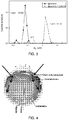
- Lipo+ physical characteristics Particle size and zeta-potential were also determined before iontophoresis testing, in order to confirm Lipo+ positive charge and size. These determinations were performed through dynamic light scattering and electrophoresis, respectively, for a 1:50 Lipo+ dilution in distilled water, and were also compared to the lutein-free liposome solution (as control). According to Fig. 3 , Lipo+ aggregates peak at 3.5 ⁇ m (in average) and a smaller peak is also seen at 300nm (in average), indicative of the individual liposomes. Also, the zeta potential determination showed a +5mV charge for the Lipo+ solution.
- Lipo+ solution was not able to cross the wall of retinal vessels, since liposomes were only found in the tissue surrounding the vessels.
- Fig. 4 shows a schematic representation of the lutein pathway within the eye. Analysis of corneal tissue following corneal iontophoresis application, revealed the liposomes were sitting on top of the epithelial cells of this tissue.
- the Raman peak at 1530 cm-1 measured in a treated eye was 7 times greater than control eye, providing the evidence of efficacy of iontophoresis in delivering lutein to the eye through the intact sclera.
- the Raman peak at 1530 cm-1 measured in a treated eye was 1.7 times greater than control eye, which indicated that a large amount of lutein reached the posterior pole of the retina at the end of iontophoresis treatment.
- the Raman peak at 1530 cm-1 measured in a treated eye was 1.3 times greater than in controls, demonstrating that iontophoresis was effective in delivering lutein in the macula.
- Age-related macular degeneration is the leading cause of irreversible blindness in people over 50 years in the developed world 40,41 . More than 8 million Americans have AMD, and the overall prevalence of the disease is projected to increase by more than 50% by the year 2020 37 .
- MOD macular pigment optical density
- lutein supplementation leads to an increase in the macular pigment optical density (MPOD) levels in early-stage AMD patients, being associated with protection from macular disease 42,21 .
- MPOD macular pigment optical density
- lutein is naturally concentrated in the retina, where together with zeaxanthin forms the macular pigment. Acting as a blue light filter, lutein can protect the underlying photoreceptors in the center of the macula from photochemical damage 43 .
- the anti-oxidant properties of lutein may also protect the macula from oxidative stress 44 .
- transscleral iontophoresis is an effective way of bringing lutein to the retina of the human eye providing a new way of fortifying the macular pigment.
- lutein Upon deposition in the posterior region, it is postulated that lutein is able to reach the outer part of the retina where the photoreceptors are present, by passive diffusion/protein gradient. It can be argued the reason why lutein was not observed in the choroid is due to the neural retinal barrier which mesh size is 80-90nm 45 (liposomes are 341nm in size and can sometime form clusters of 2-3 ⁇ m, suggesting that lutein liposomes stay trapped in the retina ( Fig. 4 ). Importantly, resonance Raman spectroscopy analysis revealed that lutein concentration is increased in the macula after iontophoresis. This observation clearly demonstrates that transscleral iontophoresis is an efficacious method of lutein delivery to the macula and is a valid alternative to the current methods for preventing the onset of AMD, prevent its progression and/or treat established disease.
Landscapes
- Health & Medical Sciences (AREA)
- Public Health (AREA)
- Veterinary Medicine (AREA)
- Life Sciences & Earth Sciences (AREA)
- Animal Behavior & Ethology (AREA)
- General Health & Medical Sciences (AREA)
- Chemical & Material Sciences (AREA)
- Pharmacology & Pharmacy (AREA)
- Medicinal Chemistry (AREA)
- Epidemiology (AREA)
- Engineering & Computer Science (AREA)
- Bioinformatics & Cheminformatics (AREA)
- Nuclear Medicine, Radiotherapy & Molecular Imaging (AREA)
- Ophthalmology & Optometry (AREA)
- Biomedical Technology (AREA)
- Chemical Kinetics & Catalysis (AREA)
- General Chemical & Material Sciences (AREA)
- Organic Chemistry (AREA)
- Heart & Thoracic Surgery (AREA)
- Vascular Medicine (AREA)
- Dispersion Chemistry (AREA)
- Radiology & Medical Imaging (AREA)
- Anesthesiology (AREA)
- Hematology (AREA)
- Acyclic And Carbocyclic Compounds In Medicinal Compositions (AREA)
- Medicinal Preparation (AREA)
- Pharmaceuticals Containing Other Organic And Inorganic Compounds (AREA)
- Medicines That Contain Protein Lipid Enzymes And Other Medicines (AREA)
Claims (5)
- Formulation de liposome contenant une molécule bioactive destinée à être utilisée dans un procédé de traitement, d'amélioration ou de prévention d'une maladie ou d'un dysfonctionnement oculaire par administration de la formulation à l'oeil d'un sujet par iontophorèse, la molécule bioactive étant choisie dans le groupe constitué par la lutéine et/ou la zéaxanthine et le liposome ayant un potentiel zêta positif.
- Formulation destinée à être utilisée selon la revendication 1, le traitement, l'amélioration ou la prévention d'une maladie ou d'un dysfonctionnement oculaire retardant l'apparition de la dégénérescence maculaire liée à l'âge.
- Formulation destinée à être utilisée selon la revendication 1, le traitement, l'amélioration ou la prévention d'une maladie ou d'un dysfonctionnement oculaire prévenant ou retardant la progression de la dégénérescence maculaire liée à l'âge.
- Formulation destinée à être utilisée selon la revendication 1, la maladie ou le dysfonctionnement oculaire étant la dégénérescence maculaire liée à l'âge.
- Formulation destinée à être utilisée selon la revendication 1, l'amélioration ou la prévention d'une maladie ou d'un dysfonctionnement oculaire comprenant la mise en œuvre du procédé chez des sujets sains.
Priority Applications (1)
| Application Number | Priority Date | Filing Date | Title |
|---|---|---|---|
| PL15871275T PL3233174T3 (pl) | 2014-12-19 | 2015-12-21 | Wewnątrzgałkowe dostarczanie bioaktywnych cząsteczek za pomocą jontoforezy |
Applications Claiming Priority (2)
| Application Number | Priority Date | Filing Date | Title |
|---|---|---|---|
| US201462094663P | 2014-12-19 | 2014-12-19 | |
| PCT/US2015/067125 WO2016100972A2 (fr) | 2014-12-19 | 2015-12-21 | Administration intraoculaire de molécules bioactives par iontophorèse |
Publications (3)
| Publication Number | Publication Date |
|---|---|
| EP3233174A2 EP3233174A2 (fr) | 2017-10-25 |
| EP3233174A4 EP3233174A4 (fr) | 2018-08-01 |
| EP3233174B1 true EP3233174B1 (fr) | 2021-03-31 |
Family
ID=56127887
Family Applications (1)
| Application Number | Title | Priority Date | Filing Date |
|---|---|---|---|
| EP15871275.2A Active EP3233174B1 (fr) | 2014-12-19 | 2015-12-21 | Administration intraoculaire de molécules bioactives par iontophorèse |
Country Status (9)
| Country | Link |
|---|---|
| US (3) | US10327946B2 (fr) |
| EP (1) | EP3233174B1 (fr) |
| JP (2) | JP2017538728A (fr) |
| CN (1) | CN107249678B (fr) |
| BR (1) | BR112017012655B1 (fr) |
| ES (1) | ES2874562T3 (fr) |
| PL (1) | PL3233174T3 (fr) |
| RU (1) | RU2706704C2 (fr) |
| WO (1) | WO2016100972A2 (fr) |
Families Citing this family (7)
| Publication number | Priority date | Publication date | Assignee | Title |
|---|---|---|---|---|
| WO2017142854A1 (fr) | 2016-02-15 | 2017-08-24 | Kemin Industries, Inc. | Liposomes positivement chargés en tant que supports de molécules lipophiles |
| WO2017142834A1 (fr) * | 2016-02-15 | 2017-08-24 | Kemin Industries, Inc. | Matériaux lipophiles hydrosolubles |
| CN111346056B (zh) * | 2018-12-21 | 2021-10-22 | 江苏省农业科学院 | 一种α-葡萄糖基橙皮苷修饰叶黄素脂质体的制备方法 |
| EP3909056B1 (fr) | 2019-01-09 | 2025-05-21 | Verily Life Sciences LLC | Administration d'agent thérapeutique programmable à partir d'un dispositif monté sur l'oeil |
| EP3908238B1 (fr) | 2019-01-09 | 2026-03-25 | Verily Life Sciences LLC | Dispositif monté sur l'oeil pour la libération d'agent thérapeutique |
| RU209086U1 (ru) * | 2021-10-25 | 2022-02-01 | федеральное государственное бюджетное образовательное учреждение высшего образования "Кемеровский медицинский университет" Министерства здравоохранения Российской Федерации (ФГБОУ ВО КемГМУ) | Аппликатор глазной для лечения заболеваний глаз |
| RU209085U1 (ru) * | 2021-10-25 | 2022-02-01 | федеральное государственное бюджетное образовательное учреждение высшего образования "Кемеровский медицинский университет" Министерства здравоохранения Российской Федерации (ФГБОУ ВО КемГМУ) | Аппликатор глазной |
Family Cites Families (28)
| Publication number | Priority date | Publication date | Assignee | Title |
|---|---|---|---|---|
| US5000887A (en) * | 1988-05-17 | 1991-03-19 | Liposome Technology, Inc. | Preparation of uniform-size liposomes |
| US5270051A (en) * | 1991-10-15 | 1993-12-14 | Harris Donald H | Enzyme-orthokeratology |
| US20030181531A1 (en) * | 2003-02-11 | 2003-09-25 | David Sherris | Compositions and methods of administering tubulin binding agents for the treatment of ocular diseases |
| EP1547674A1 (fr) * | 2003-12-23 | 2005-06-29 | MediGene Oncology GmbH | Procédé pour la préparation de particules colloidales |
| US7794713B2 (en) * | 2004-04-07 | 2010-09-14 | Lpath, Inc. | Compositions and methods for the treatment and prevention of hyperproliferative diseases |
| FR2869531B1 (fr) * | 2004-04-30 | 2006-07-14 | Optis France Sa Sa | Dispositif de iontophorese oculaire diminuant les irritations |
| PL1768657T3 (pl) * | 2004-06-23 | 2009-01-30 | Revision Therapeutics Inc | Sposoby i kompozycje do leczenia stanów ocznych za pomocą pochodnych retinylowych |
| ES2314354T3 (es) * | 2004-11-09 | 2009-03-16 | Novagali Pharma S.A. | Emulsion de tipo aceite en agua con baja concentracion de agente cationico y potencial zeta positivo. |
| CA2584845C (fr) * | 2004-12-08 | 2009-02-17 | Sirion Therapeutics, Inc. | Procedes, dosages et compositions pour traiter des maladies liees au retinol |
| KR101418369B1 (ko) * | 2005-05-04 | 2014-07-24 | 녹손 파르마 아게 | 스피에겔머들의 신규 용도 |
| US8099162B2 (en) | 2005-11-29 | 2012-01-17 | Eyegate Pharma, S.A.S. | Ocular iontophoresis device |
| US20070299386A1 (en) * | 2006-06-23 | 2007-12-27 | Minu, L.L.C. | Delivery of an ocular agent using iontophoresis |
| WO2008006535A2 (fr) * | 2006-07-10 | 2008-01-17 | Medigene Ag | Utilisation d'une préparation colloïdale cationique pour le diagnostic et le traitement de maladies oculaires |
| CN101500548A (zh) * | 2006-08-18 | 2009-08-05 | 弗·哈夫曼-拉罗切有限公司 | 用于体内递送多核苷酸的多缀合物 |
| CA2707964A1 (fr) * | 2007-12-05 | 2009-06-18 | Eyegate Pharma S.A.S. | Procedes d'administration de siarn par le biais de l'iontophorese |
| ITMI20080003A1 (it) * | 2008-01-02 | 2009-07-03 | Alfredo Pulpito | Composizioni per uso oftalmico |
| CN101970042A (zh) * | 2008-02-25 | 2011-02-09 | 眼门药品公司 | 经由离子电渗法增强递送治疗药物至眼部组织 |
| MX2011002688A (es) * | 2008-09-12 | 2011-04-12 | Critical Pharmaceuticals Ltd | Mejoramientos en la absorcion de agentes terapeuticos a traves de las membranas mucosas o la piel. |
| CA2740124A1 (fr) * | 2008-10-09 | 2010-04-15 | Waratah Pharmaceuticals Inc. | Utilisation de scyllo-inositols pour le traitement de troubles lies a la degenerescence maculaire |
| ES2964555T3 (es) * | 2009-08-24 | 2024-04-08 | Stealth Biotherapeutics Inc | Péptido para uso en la prevención o tratamiento de la degeneración macular |
| CN101836961B (zh) * | 2010-04-23 | 2012-05-30 | 天津大学 | 复合载药微球、盐酸米诺环素纳米缓释复合载药微球体系及其制备方法 |
| US20110052678A1 (en) * | 2010-11-05 | 2011-03-03 | Shantha Totada R | Method for treating age related macular degeneration |
| EP2663281B1 (fr) | 2011-01-12 | 2016-08-10 | Sooft Italia Spa | Administration à la cornée d'agents de réticulation par ionophorèse pour le traitement de kératocône et compositions ophtalmologiques associées |
| AU2011355093B2 (en) | 2011-01-12 | 2015-11-26 | Sooft Italia Spa | Device and method for corneal delivery of riboflavin by iontophoresis for the treatment of keratoconus |
| US20140193466A1 (en) * | 2011-06-07 | 2014-07-10 | Cornell University | Silk compositions and methods of using same |
| CN102579357B (zh) * | 2011-11-30 | 2013-05-22 | 天津大学 | 一种磁性复合载药微球及其制备方法 |
| US9770419B2 (en) * | 2012-08-01 | 2017-09-26 | Shaker A. Mousa | Methods and compositions of camel derived products |
| US20160067190A1 (en) * | 2013-04-30 | 2016-03-10 | The Children's Medical Center Corporation | Injectable nano-network gels for diabetes treatment |
-
2015
- 2015-12-21 JP JP2017532767A patent/JP2017538728A/ja active Pending
- 2015-12-21 BR BR112017012655-9A patent/BR112017012655B1/pt active IP Right Grant
- 2015-12-21 WO PCT/US2015/067125 patent/WO2016100972A2/fr not_active Ceased
- 2015-12-21 CN CN201580076497.8A patent/CN107249678B/zh active Active
- 2015-12-21 ES ES15871275T patent/ES2874562T3/es active Active
- 2015-12-21 US US14/977,048 patent/US10327946B2/en active Active
- 2015-12-21 PL PL15871275T patent/PL3233174T3/pl unknown
- 2015-12-21 RU RU2017125496A patent/RU2706704C2/ru active
- 2015-12-21 EP EP15871275.2A patent/EP3233174B1/fr active Active
-
2019
- 2019-06-21 US US16/448,588 patent/US20190321221A1/en not_active Abandoned
-
2020
- 2020-04-17 JP JP2020073897A patent/JP6964708B2/ja active Active
-
2023
- 2023-06-20 US US18/211,886 patent/US20230329906A1/en active Pending
Non-Patent Citations (1)
| Title |
|---|
| None * |
Also Published As
| Publication number | Publication date |
|---|---|
| JP2020121998A (ja) | 2020-08-13 |
| US20190321221A1 (en) | 2019-10-24 |
| WO2016100972A2 (fr) | 2016-06-23 |
| RU2706704C2 (ru) | 2019-11-20 |
| JP6964708B2 (ja) | 2021-11-10 |
| JP2017538728A (ja) | 2017-12-28 |
| PL3233174T3 (pl) | 2021-08-30 |
| US20230329906A1 (en) | 2023-10-19 |
| RU2017125496A (ru) | 2019-01-21 |
| CN107249678B (zh) | 2021-02-19 |
| RU2017125496A3 (fr) | 2019-06-06 |
| CN107249678A (zh) | 2017-10-13 |
| BR112017012655B1 (pt) | 2022-11-01 |
| EP3233174A2 (fr) | 2017-10-25 |
| EP3233174A4 (fr) | 2018-08-01 |
| WO2016100972A3 (fr) | 2016-08-11 |
| US20160175148A1 (en) | 2016-06-23 |
| US10327946B2 (en) | 2019-06-25 |
| BR112017012655A2 (pt) | 2017-12-26 |
| ES2874562T3 (es) | 2021-11-05 |
| WO2016100972A4 (fr) | 2016-09-29 |
Similar Documents
| Publication | Publication Date | Title |
|---|---|---|
| US20230329906A1 (en) | Intraocular delivery of bioactive molecules using iontophoresis | |
| Nirbhavane et al. | Triamcinolone acetonide loaded-cationic nano-lipoidal formulation for uveitis: Evidences of improved biopharmaceutical performance and anti-inflammatory activity | |
| Cupini et al. | Platinum nanozymes counteract photoreceptor degeneration and retina inflammation in a light-damage model of age-related macular degeneration | |
| Ni et al. | Lycium Barbarum Polysaccharide‐Derived Nanoparticles Protect Visual Function by Inhibiting RGC Ferroptosis and Microglial Activation in Retinal Ischemia‒Reperfusion Mice | |
| Nuzzi et al. | Glaucoma: biological trabecular and neuroretinal pathology with perspectives of therapy innovation and preventive diagnosis | |
| US12102640B2 (en) | Use of dopamine and serotonin receptor antagonists for treatment in a subject with retinal degeneration | |
| Boulton | Ageing of the retina and retinal pigment epithelium | |
| US12042505B2 (en) | Compositions and methods for treating dry eye | |
| Matsubara et al. | Investigating the effect of ciliary body photodynamic therapy in a glaucoma mouse model | |
| US20230256095A1 (en) | Dyes for use in a method of treatment of vitreous opacity-related diseases | |
| US20220401408A1 (en) | Compositions and methods for rescuing retinal and choroidal structure and function | |
| CN109789115A (zh) | 用于治疗眼疾的方法 | |
| CN116585322A (zh) | Bet蛋白降解剂在预防和治疗视网膜退行性改变相关疾病中的应用 | |
| CN112913775A (zh) | 一种药物(调往诱导剂mnu)诱导自发性白内障的方法 | |
| EP4282401A1 (fr) | Préparation ophtalmique administrée par collyre et utilisée pour la prévention et le traitement de la dégénérescence maculaire sèche et de la détérioration de la lumière rétinienne | |
| Alshamrani | Topical Clear Aqueous Nanomicellar Formulations for Age-Related Macular Degeneration | |
| Chen et al. | Sorafenib nanoparticles coated with Eudragit RL for ocular drug delivery: a potential treatment for diabetic retinopathy | |
| Galvão | Ocular treatments using non-spherical nanoparticles and modulation of their activity by iontophoresis | |
| WO2025049588A1 (fr) | Nouveaux traitements pour neuropathies optiques et glaucome | |
| CN121941494A (zh) | 用于治疗与视锥光感受器变性相关的病症的铁代谢调节剂 | |
| CN121969359A (zh) | 用于治疗与视锥光感受器变性相关的病症的脂氧合酶调节剂 | |
| Ponomarchuk et al. | Clinical experience of the use of Vasavital® in dry age-related macular degeneration and ischemic optic neuropathy | |
| WO2025012667A1 (fr) | Activateurs du système xc et/ou gpx-4 pour le traitement d'états associés à une dégénérescence de photorécepteur conique | |
| CN121489978A (zh) | 黑磷纳米片水凝胶在制备治疗干眼综合症药物中用途 | |
| CN117717627A (zh) | 药物超分子及其在治疗湿性年龄相关性黄斑变性中的应用 |
Legal Events
| Date | Code | Title | Description |
|---|---|---|---|
| STAA | Information on the status of an ep patent application or granted ep patent |
Free format text: STATUS: THE INTERNATIONAL PUBLICATION HAS BEEN MADE |
|
| PUAI | Public reference made under article 153(3) epc to a published international application that has entered the european phase |
Free format text: ORIGINAL CODE: 0009012 |
|
| STAA | Information on the status of an ep patent application or granted ep patent |
Free format text: STATUS: REQUEST FOR EXAMINATION WAS MADE |
|
| 17P | Request for examination filed |
Effective date: 20170718 |
|
| AK | Designated contracting states |
Kind code of ref document: A2 Designated state(s): AL AT BE BG CH CY CZ DE DK EE ES FI FR GB GR HR HU IE IS IT LI LT LU LV MC MK MT NL NO PL PT RO RS SE SI SK SM TR |
|
| AX | Request for extension of the european patent |
Extension state: BA ME |
|
| RIN1 | Information on inventor provided before grant (corrected) |
Inventor name: ROY, PIERRE Inventor name: FOSCHINI, FULVIO Inventor name: CAVALLO, GIOVANNI Inventor name: DE SOUSA MARTINS, DIOGO |
|
| DAV | Request for validation of the european patent (deleted) | ||
| DAX | Request for extension of the european patent (deleted) | ||
| REG | Reference to a national code |
Ref country code: DE Ref legal event code: R079 Ref document number: 602015067600 Country of ref document: DE Free format text: PREVIOUS MAIN CLASS: A61M0031000000 Ipc: A61K0031065000 |
|
| A4 | Supplementary search report drawn up and despatched |
Effective date: 20180702 |
|
| RIC1 | Information provided on ipc code assigned before grant |
Ipc: A61P 43/00 20060101ALI20180626BHEP Ipc: A61F 9/00 20060101ALI20180626BHEP Ipc: A61K 31/047 20060101ALI20180626BHEP Ipc: A61K 31/065 20060101AFI20180626BHEP Ipc: C07C 403/24 20060101ALI20180626BHEP Ipc: A61N 1/00 20060101ALI20180626BHEP Ipc: A61K 9/00 20060101ALI20180626BHEP Ipc: A61N 1/30 20060101ALI20180626BHEP Ipc: A61M 31/00 20060101ALI20180626BHEP Ipc: A61N 1/04 20060101ALI20180626BHEP Ipc: A61K 9/127 20060101ALI20180626BHEP Ipc: A61P 27/00 20060101ALI20180626BHEP |
|
| STAA | Information on the status of an ep patent application or granted ep patent |
Free format text: STATUS: EXAMINATION IS IN PROGRESS |
|
| 17Q | First examination report despatched |
Effective date: 20200203 |
|
| GRAP | Despatch of communication of intention to grant a patent |
Free format text: ORIGINAL CODE: EPIDOSNIGR1 |
|
| STAA | Information on the status of an ep patent application or granted ep patent |
Free format text: STATUS: GRANT OF PATENT IS INTENDED |
|
| INTG | Intention to grant announced |
Effective date: 20201211 |
|
| GRAS | Grant fee paid |
Free format text: ORIGINAL CODE: EPIDOSNIGR3 |
|
| GRAA | (expected) grant |
Free format text: ORIGINAL CODE: 0009210 |
|
| STAA | Information on the status of an ep patent application or granted ep patent |
Free format text: STATUS: THE PATENT HAS BEEN GRANTED |
|
| AK | Designated contracting states |
Kind code of ref document: B1 Designated state(s): AL AT BE BG CH CY CZ DE DK EE ES FI FR GB GR HR HU IE IS IT LI LT LU LV MC MK MT NL NO PL PT RO RS SE SI SK SM TR |
|
| REG | Reference to a national code |
Ref country code: GB Ref legal event code: FG4D Ref country code: CH Ref legal event code: EP |
|
| REG | Reference to a national code |
Ref country code: DE Ref legal event code: R096 Ref document number: 602015067600 Country of ref document: DE Ref country code: AT Ref legal event code: REF Ref document number: 1376148 Country of ref document: AT Kind code of ref document: T Effective date: 20210415 |
|
| REG | Reference to a national code |
Ref country code: IE Ref legal event code: FG4D |
|
| REG | Reference to a national code |
Ref country code: NL Ref legal event code: FP |
|
| REG | Reference to a national code |
Ref country code: LT Ref legal event code: MG9D |
|
| PG25 | Lapsed in a contracting state [announced via postgrant information from national office to epo] |
Ref country code: BG Free format text: LAPSE BECAUSE OF FAILURE TO SUBMIT A TRANSLATION OF THE DESCRIPTION OR TO PAY THE FEE WITHIN THE PRESCRIBED TIME-LIMIT Effective date: 20210630 Ref country code: FI Free format text: LAPSE BECAUSE OF FAILURE TO SUBMIT A TRANSLATION OF THE DESCRIPTION OR TO PAY THE FEE WITHIN THE PRESCRIBED TIME-LIMIT Effective date: 20210331 Ref country code: HR Free format text: LAPSE BECAUSE OF FAILURE TO SUBMIT A TRANSLATION OF THE DESCRIPTION OR TO PAY THE FEE WITHIN THE PRESCRIBED TIME-LIMIT Effective date: 20210331 Ref country code: NO Free format text: LAPSE BECAUSE OF FAILURE TO SUBMIT A TRANSLATION OF THE DESCRIPTION OR TO PAY THE FEE WITHIN THE PRESCRIBED TIME-LIMIT Effective date: 20210630 |
|
| PG25 | Lapsed in a contracting state [announced via postgrant information from national office to epo] |
Ref country code: SE Free format text: LAPSE BECAUSE OF FAILURE TO SUBMIT A TRANSLATION OF THE DESCRIPTION OR TO PAY THE FEE WITHIN THE PRESCRIBED TIME-LIMIT Effective date: 20210331 Ref country code: LV Free format text: LAPSE BECAUSE OF FAILURE TO SUBMIT A TRANSLATION OF THE DESCRIPTION OR TO PAY THE FEE WITHIN THE PRESCRIBED TIME-LIMIT Effective date: 20210331 Ref country code: RS Free format text: LAPSE BECAUSE OF FAILURE TO SUBMIT A TRANSLATION OF THE DESCRIPTION OR TO PAY THE FEE WITHIN THE PRESCRIBED TIME-LIMIT Effective date: 20210331 |
|
| REG | Reference to a national code |
Ref country code: AT Ref legal event code: MK05 Ref document number: 1376148 Country of ref document: AT Kind code of ref document: T Effective date: 20210331 |
|
| PG25 | Lapsed in a contracting state [announced via postgrant information from national office to epo] |
Ref country code: CZ Free format text: LAPSE BECAUSE OF FAILURE TO SUBMIT A TRANSLATION OF THE DESCRIPTION OR TO PAY THE FEE WITHIN THE PRESCRIBED TIME-LIMIT Effective date: 20210331 Ref country code: EE Free format text: LAPSE BECAUSE OF FAILURE TO SUBMIT A TRANSLATION OF THE DESCRIPTION OR TO PAY THE FEE WITHIN THE PRESCRIBED TIME-LIMIT Effective date: 20210331 Ref country code: LT Free format text: LAPSE BECAUSE OF FAILURE TO SUBMIT A TRANSLATION OF THE DESCRIPTION OR TO PAY THE FEE WITHIN THE PRESCRIBED TIME-LIMIT Effective date: 20210331 Ref country code: SM Free format text: LAPSE BECAUSE OF FAILURE TO SUBMIT A TRANSLATION OF THE DESCRIPTION OR TO PAY THE FEE WITHIN THE PRESCRIBED TIME-LIMIT Effective date: 20210331 Ref country code: AT Free format text: LAPSE BECAUSE OF FAILURE TO SUBMIT A TRANSLATION OF THE DESCRIPTION OR TO PAY THE FEE WITHIN THE PRESCRIBED TIME-LIMIT Effective date: 20210331 |
|
| REG | Reference to a national code |
Ref country code: ES Ref legal event code: FG2A Ref document number: 2874562 Country of ref document: ES Kind code of ref document: T3 Effective date: 20211105 |
|
| PG25 | Lapsed in a contracting state [announced via postgrant information from national office to epo] |
Ref country code: IS Free format text: LAPSE BECAUSE OF FAILURE TO SUBMIT A TRANSLATION OF THE DESCRIPTION OR TO PAY THE FEE WITHIN THE PRESCRIBED TIME-LIMIT Effective date: 20210731 Ref country code: SK Free format text: LAPSE BECAUSE OF FAILURE TO SUBMIT A TRANSLATION OF THE DESCRIPTION OR TO PAY THE FEE WITHIN THE PRESCRIBED TIME-LIMIT Effective date: 20210331 Ref country code: RO Free format text: LAPSE BECAUSE OF FAILURE TO SUBMIT A TRANSLATION OF THE DESCRIPTION OR TO PAY THE FEE WITHIN THE PRESCRIBED TIME-LIMIT Effective date: 20210331 Ref country code: PT Free format text: LAPSE BECAUSE OF FAILURE TO SUBMIT A TRANSLATION OF THE DESCRIPTION OR TO PAY THE FEE WITHIN THE PRESCRIBED TIME-LIMIT Effective date: 20210802 |
|
| REG | Reference to a national code |
Ref country code: DE Ref legal event code: R097 Ref document number: 602015067600 Country of ref document: DE |
|
| PG25 | Lapsed in a contracting state [announced via postgrant information from national office to epo] |
Ref country code: DK Free format text: LAPSE BECAUSE OF FAILURE TO SUBMIT A TRANSLATION OF THE DESCRIPTION OR TO PAY THE FEE WITHIN THE PRESCRIBED TIME-LIMIT Effective date: 20210331 Ref country code: AL Free format text: LAPSE BECAUSE OF FAILURE TO SUBMIT A TRANSLATION OF THE DESCRIPTION OR TO PAY THE FEE WITHIN THE PRESCRIBED TIME-LIMIT Effective date: 20210331 |
|
| PLBE | No opposition filed within time limit |
Free format text: ORIGINAL CODE: 0009261 |
|
| STAA | Information on the status of an ep patent application or granted ep patent |
Free format text: STATUS: NO OPPOSITION FILED WITHIN TIME LIMIT |
|
| 26N | No opposition filed |
Effective date: 20220104 |
|
| PG25 | Lapsed in a contracting state [announced via postgrant information from national office to epo] |
Ref country code: IS Free format text: LAPSE BECAUSE OF FAILURE TO SUBMIT A TRANSLATION OF THE DESCRIPTION OR TO PAY THE FEE WITHIN THE PRESCRIBED TIME-LIMIT Effective date: 20210731 |
|
| PG25 | Lapsed in a contracting state [announced via postgrant information from national office to epo] |
Ref country code: MC Free format text: LAPSE BECAUSE OF FAILURE TO SUBMIT A TRANSLATION OF THE DESCRIPTION OR TO PAY THE FEE WITHIN THE PRESCRIBED TIME-LIMIT Effective date: 20210331 |
|
| REG | Reference to a national code |
Ref country code: CH Ref legal event code: PL |
|
| REG | Reference to a national code |
Ref country code: BE Ref legal event code: MM Effective date: 20211231 |
|
| PG25 | Lapsed in a contracting state [announced via postgrant information from national office to epo] |
Ref country code: LU Free format text: LAPSE BECAUSE OF NON-PAYMENT OF DUE FEES Effective date: 20211221 Ref country code: IE Free format text: LAPSE BECAUSE OF NON-PAYMENT OF DUE FEES Effective date: 20211221 |
|
| PG25 | Lapsed in a contracting state [announced via postgrant information from national office to epo] |
Ref country code: BE Free format text: LAPSE BECAUSE OF NON-PAYMENT OF DUE FEES Effective date: 20211231 |
|
| PG25 | Lapsed in a contracting state [announced via postgrant information from national office to epo] |
Ref country code: LI Free format text: LAPSE BECAUSE OF NON-PAYMENT OF DUE FEES Effective date: 20211231 Ref country code: CH Free format text: LAPSE BECAUSE OF NON-PAYMENT OF DUE FEES Effective date: 20211231 |
|
| PG25 | Lapsed in a contracting state [announced via postgrant information from national office to epo] |
Ref country code: HU Free format text: LAPSE BECAUSE OF FAILURE TO SUBMIT A TRANSLATION OF THE DESCRIPTION OR TO PAY THE FEE WITHIN THE PRESCRIBED TIME-LIMIT; INVALID AB INITIO Effective date: 20151221 |
|
| P01 | Opt-out of the competence of the unified patent court (upc) registered |
Effective date: 20230524 |
|
| PG25 | Lapsed in a contracting state [announced via postgrant information from national office to epo] |
Ref country code: CY Free format text: LAPSE BECAUSE OF FAILURE TO SUBMIT A TRANSLATION OF THE DESCRIPTION OR TO PAY THE FEE WITHIN THE PRESCRIBED TIME-LIMIT Effective date: 20210331 |
|
| PG25 | Lapsed in a contracting state [announced via postgrant information from national office to epo] |
Ref country code: GR Free format text: LAPSE BECAUSE OF FAILURE TO SUBMIT A TRANSLATION OF THE DESCRIPTION OR TO PAY THE FEE WITHIN THE PRESCRIBED TIME-LIMIT Effective date: 20210331 |
|
| PG25 | Lapsed in a contracting state [announced via postgrant information from national office to epo] |
Ref country code: MK Free format text: LAPSE BECAUSE OF FAILURE TO SUBMIT A TRANSLATION OF THE DESCRIPTION OR TO PAY THE FEE WITHIN THE PRESCRIBED TIME-LIMIT Effective date: 20210331 |
|
| PG25 | Lapsed in a contracting state [announced via postgrant information from national office to epo] |
Ref country code: TR Free format text: LAPSE BECAUSE OF FAILURE TO SUBMIT A TRANSLATION OF THE DESCRIPTION OR TO PAY THE FEE WITHIN THE PRESCRIBED TIME-LIMIT Effective date: 20210331 |
|
| PG25 | Lapsed in a contracting state [announced via postgrant information from national office to epo] |
Ref country code: MT Free format text: LAPSE BECAUSE OF FAILURE TO SUBMIT A TRANSLATION OF THE DESCRIPTION OR TO PAY THE FEE WITHIN THE PRESCRIBED TIME-LIMIT Effective date: 20210331 |
|
| PGFP | Annual fee paid to national office [announced via postgrant information from national office to epo] |
Ref country code: GB Payment date: 20251223 Year of fee payment: 11 |
|
| PGFP | Annual fee paid to national office [announced via postgrant information from national office to epo] |
Ref country code: IT Payment date: 20251218 Year of fee payment: 11 |
|
| PGFP | Annual fee paid to national office [announced via postgrant information from national office to epo] |
Ref country code: NL Payment date: 20251222 Year of fee payment: 11 Ref country code: FR Payment date: 20251230 Year of fee payment: 11 |
|
| PGFP | Annual fee paid to national office [announced via postgrant information from national office to epo] |
Ref country code: PL Payment date: 20251211 Year of fee payment: 11 |
|
| PGFP | Annual fee paid to national office [announced via postgrant information from national office to epo] |
Ref country code: ES Payment date: 20260122 Year of fee payment: 11 |
|
| PGFP | Annual fee paid to national office [announced via postgrant information from national office to epo] |
Ref country code: DE Payment date: 20251229 Year of fee payment: 11 |