EP3235801B1 - Procédé de production d'ester d'acide carboxylique - Google Patents
Procédé de production d'ester d'acide carboxylique Download PDFInfo
- Publication number
- EP3235801B1 EP3235801B1 EP15869904.1A EP15869904A EP3235801B1 EP 3235801 B1 EP3235801 B1 EP 3235801B1 EP 15869904 A EP15869904 A EP 15869904A EP 3235801 B1 EP3235801 B1 EP 3235801B1
- Authority
- EP
- European Patent Office
- Prior art keywords
- magnesium
- carboxylic acid
- mol
- acid ester
- alkali metal
- Prior art date
- Legal status (The legal status is an assumption and is not a legal conclusion. Google has not performed a legal analysis and makes no representation as to the accuracy of the status listed.)
- Active
Links
Classifications
-
- C—CHEMISTRY; METALLURGY
- C07—ORGANIC CHEMISTRY
- C07C—ACYCLIC OR CARBOCYCLIC COMPOUNDS
- C07C67/00—Preparation of carboxylic acid esters
- C07C67/08—Preparation of carboxylic acid esters by reacting carboxylic acids or symmetrical anhydrides with the hydroxy or O-metal group of organic compounds
-
- B—PERFORMING OPERATIONS; TRANSPORTING
- B01—PHYSICAL OR CHEMICAL PROCESSES OR APPARATUS IN GENERAL
- B01J—CHEMICAL OR PHYSICAL PROCESSES, e.g. CATALYSIS OR COLLOID CHEMISTRY; THEIR RELEVANT APPARATUS
- B01J21/00—Catalysts comprising the elements, oxides, or hydroxides of magnesium, boron, aluminium, carbon, silicon, titanium, zirconium, or hafnium
- B01J21/10—Magnesium; Oxides or hydroxides thereof
-
- B—PERFORMING OPERATIONS; TRANSPORTING
- B01—PHYSICAL OR CHEMICAL PROCESSES OR APPARATUS IN GENERAL
- B01J—CHEMICAL OR PHYSICAL PROCESSES, e.g. CATALYSIS OR COLLOID CHEMISTRY; THEIR RELEVANT APPARATUS
- B01J23/00—Catalysts comprising metals or metal oxides or hydroxides, not provided for in group B01J21/00
- B01J23/02—Catalysts comprising metals or metal oxides or hydroxides, not provided for in group B01J21/00 of the alkali- or alkaline earth metals or beryllium
- B01J23/04—Alkali metals
-
- B—PERFORMING OPERATIONS; TRANSPORTING
- B01—PHYSICAL OR CHEMICAL PROCESSES OR APPARATUS IN GENERAL
- B01J—CHEMICAL OR PHYSICAL PROCESSES, e.g. CATALYSIS OR COLLOID CHEMISTRY; THEIR RELEVANT APPARATUS
- B01J27/00—Catalysts comprising the elements or compounds of halogens, sulfur, selenium, tellurium, phosphorus or nitrogen; Catalysts comprising carbon compounds
- B01J27/02—Sulfur, selenium or tellurium; Compounds thereof
- B01J27/053—Sulfates
-
- B—PERFORMING OPERATIONS; TRANSPORTING
- B01—PHYSICAL OR CHEMICAL PROCESSES OR APPARATUS IN GENERAL
- B01J—CHEMICAL OR PHYSICAL PROCESSES, e.g. CATALYSIS OR COLLOID CHEMISTRY; THEIR RELEVANT APPARATUS
- B01J27/00—Catalysts comprising the elements or compounds of halogens, sulfur, selenium, tellurium, phosphorus or nitrogen; Catalysts comprising carbon compounds
- B01J27/06—Halogens; Compounds thereof
- B01J27/138—Halogens; Compounds thereof with alkaline earth metals, magnesium, beryllium, zinc, cadmium or mercury
-
- B—PERFORMING OPERATIONS; TRANSPORTING
- B01—PHYSICAL OR CHEMICAL PROCESSES OR APPARATUS IN GENERAL
- B01J—CHEMICAL OR PHYSICAL PROCESSES, e.g. CATALYSIS OR COLLOID CHEMISTRY; THEIR RELEVANT APPARATUS
- B01J27/00—Catalysts comprising the elements or compounds of halogens, sulfur, selenium, tellurium, phosphorus or nitrogen; Catalysts comprising carbon compounds
- B01J27/20—Carbon compounds
- B01J27/232—Carbonates
-
- B—PERFORMING OPERATIONS; TRANSPORTING
- B01—PHYSICAL OR CHEMICAL PROCESSES OR APPARATUS IN GENERAL
- B01J—CHEMICAL OR PHYSICAL PROCESSES, e.g. CATALYSIS OR COLLOID CHEMISTRY; THEIR RELEVANT APPARATUS
- B01J27/00—Catalysts comprising the elements or compounds of halogens, sulfur, selenium, tellurium, phosphorus or nitrogen; Catalysts comprising carbon compounds
- B01J27/24—Nitrogen compounds
- B01J27/25—Nitrates
-
- B—PERFORMING OPERATIONS; TRANSPORTING
- B01—PHYSICAL OR CHEMICAL PROCESSES OR APPARATUS IN GENERAL
- B01J—CHEMICAL OR PHYSICAL PROCESSES, e.g. CATALYSIS OR COLLOID CHEMISTRY; THEIR RELEVANT APPARATUS
- B01J31/00—Catalysts comprising hydrides, coordination complexes or organic compounds
- B01J31/02—Catalysts comprising hydrides, coordination complexes or organic compounds containing organic compounds or metal hydrides
- B01J31/04—Catalysts comprising hydrides, coordination complexes or organic compounds containing organic compounds or metal hydrides containing carboxylic acids or their salts
-
- B—PERFORMING OPERATIONS; TRANSPORTING
- B01—PHYSICAL OR CHEMICAL PROCESSES OR APPARATUS IN GENERAL
- B01J—CHEMICAL OR PHYSICAL PROCESSES, e.g. CATALYSIS OR COLLOID CHEMISTRY; THEIR RELEVANT APPARATUS
- B01J31/00—Catalysts comprising hydrides, coordination complexes or organic compounds
- B01J31/16—Catalysts comprising hydrides, coordination complexes or organic compounds containing coordination complexes
- B01J31/22—Organic complexes
- B01J31/2204—Organic complexes the ligands containing oxygen or sulfur as complexing atoms
- B01J31/2208—Oxygen, e.g. acetylacetonates
-
- B—PERFORMING OPERATIONS; TRANSPORTING
- B01—PHYSICAL OR CHEMICAL PROCESSES OR APPARATUS IN GENERAL
- B01J—CHEMICAL OR PHYSICAL PROCESSES, e.g. CATALYSIS OR COLLOID CHEMISTRY; THEIR RELEVANT APPARATUS
- B01J31/00—Catalysts comprising hydrides, coordination complexes or organic compounds
- B01J31/16—Catalysts comprising hydrides, coordination complexes or organic compounds containing coordination complexes
- B01J31/22—Organic complexes
- B01J31/2204—Organic complexes the ligands containing oxygen or sulfur as complexing atoms
- B01J31/2208—Oxygen, e.g. acetylacetonates
- B01J31/2226—Anionic ligands, i.e. the overall ligand carries at least one formal negative charge
-
- C—CHEMISTRY; METALLURGY
- C07—ORGANIC CHEMISTRY
- C07C—ACYCLIC OR CARBOCYCLIC COMPOUNDS
- C07C69/00—Esters of carboxylic acids; Esters of carbonic or haloformic acids
- C07C69/52—Esters of acyclic unsaturated carboxylic acids having the esterified carboxyl group bound to an acyclic carbon atom
- C07C69/533—Monocarboxylic acid esters having only one carbon-to-carbon double bond
- C07C69/54—Acrylic acid esters; Methacrylic acid esters
-
- B—PERFORMING OPERATIONS; TRANSPORTING
- B01—PHYSICAL OR CHEMICAL PROCESSES OR APPARATUS IN GENERAL
- B01J—CHEMICAL OR PHYSICAL PROCESSES, e.g. CATALYSIS OR COLLOID CHEMISTRY; THEIR RELEVANT APPARATUS
- B01J2231/00—Catalytic reactions performed with catalysts classified in B01J31/00
- B01J2231/40—Substitution reactions at carbon centres, e.g. C-C or C-X, i.e. carbon-hetero atom, cross-coupling, C-H activation or ring-opening reactions
- B01J2231/49—Esterification or transesterification
-
- B—PERFORMING OPERATIONS; TRANSPORTING
- B01—PHYSICAL OR CHEMICAL PROCESSES OR APPARATUS IN GENERAL
- B01J—CHEMICAL OR PHYSICAL PROCESSES, e.g. CATALYSIS OR COLLOID CHEMISTRY; THEIR RELEVANT APPARATUS
- B01J2531/00—Additional information regarding catalytic systems classified in B01J31/00
- B01J2531/20—Complexes comprising metals of Group II (IIA or IIB) as the central metal
- B01J2531/22—Magnesium
-
- C—CHEMISTRY; METALLURGY
- C07—ORGANIC CHEMISTRY
- C07B—GENERAL METHODS OF ORGANIC CHEMISTRY; APPARATUS THEREFOR
- C07B61/00—Other general methods
Definitions
- the present invention relates to a method for producing a carboxylic acid ester.
- Carboxylic acid esters are broadly used as solvents as well as raw materials for fragrances, resins, coatings, adhesives and the like.
- di-t-butyl dicarbonate, a carboxylic acid and an alcohol are reacted to produce the corresponding carboxylic acid ester.
- Non-Patent Literature 1 describes a method for producing a carboxylic acid ester by reacting di-t-butyl dicarbonate, a carboxylic acid and an alcohol in the presence of magnesium chloride.
- Non-Patent Literature 2 describes a method for producing a carboxylic acid ester by reacting di-t-butyl dicarbonate, a carboxylic acid and an alcohol in the presence of an amine.
- Non-Patent Literature 1 the amount of alcohol exceeds the theoretically estimated amount, thus making the method economically unfavorable.
- the method since it is necessary to use a catalyst at 0.1 molar equivalent to the carboxylic acid, the method is inefficient.
- the inventors of the present invention have studied the method and found that when the catalyst amount is reduced for reacting di-t-butyl dicarbonate, a carboxylic acid and an alcohol, reaction does not progress, or even if reaction progresses, the yield of the produced carboxylic acid ester is low. Also, the inventors have found that the substrate generality is narrow since reaction is less likely to progress when phenyl (meth)acrylate is synthesized by a known method.
- Non-Patent Literature 2 since it is necessary to use triethyl amine as an additive at 2 molar equivalent to the carboxylic acid, the method is inefficient. In addition, to remove the triethylamine after the reaction is completed, it is necessary to prepare an organic solvent, acidic aqueous solution and basic aqueous solution, thus resulting in a large amount of waste and making the method not only less cost-effective but also environmentally problematic. In addition, the method requires adding the alcohol and di-t-butyl dicarbonate to a -20°C reaction mixture separately prepared and then heating the mixture to room temperature. Thus, the reaction process is complicated, and reaction efficiency is low.
- the inventors of the present invention have studied the method and found that when di-t-butyl dicarbonate, a carboxylic acid and an alcohol are reacted by using a reduced amount of catalyst and additive, reaction does not progress, and even if reaction progresses, the yield of the produced carboxylic acid ester is low.
- the objective of the present invention is to provide a method for producing corresponding carboxylic acid esters from various carboxylic acids at high yield under conditions such as a simplified reaction process, a smaller amount of catalyst, and a theoretically estimated amount of substrate.
- the inventors of the present invention have intensively studied the problems of conventional technology and found that the above objective is achieved when a specific catalyst is used for the reaction. Accordingly, the present invention has been completed.
- an aspect of the present invention is a method for producing a carboxylic acid ester as defined by claim 1 by reacting a compound represented by formula (I) below, a carboxylic acid and an alcohol in the presence of at least one type of magnesium compound and at least one type of alkali metal compound.
- R 1 and R 2 each indicate a C1 ⁇ C20 hydrocarbon group.
- a carboxylic acid ester is obtained at high yield even when a substrate is set at a theoretically estimated amount. Accordingly, the carboxylic acid ester is produced more efficiently and more cost-effectively than by conventional methods.
- a carboxylic acid ester is obtained at high yield even when a smaller amount of catalyst is used. Accordingly, the carboxylic acid ester is produced more efficiently and more cost-effectively than by conventional methods and with less environmental load.
- the raw materials are supplied into a reactor all at once. Accordingly, the carboxylic acid ester is produced more efficiently in a more simplified process than by conventional methods.
- carboxylic acid ester production method related to the present invention various types of carboxylic acid and various types of alcohol can be used as raw materials.
- the substrate generality is significantly broader than that in conventional technology.
- acrylic acid and methacrylic acid are collectively referred to as (meth)acrylic acid
- acrylic acid esters and methacrylic acid esters are also collectively referred to as (meth)acrylic acid esters.
- a compound represented by formula (I) is used as raw material.
- a compound represented by formula (I) generates an intermediate that contains a component derived from the compound.
- the resulting carboxylic acid ester does not contain such a component that is derived from the compound.
- R 1 and R 2 each independently indicate a C1 ⁇ C20 hydrocarbon group. As long as R 1 and R 2 are each a hydrocarbon group, its type and structure are not particularly limited. The hydrocarbon group may be in a linear, branched-chain or ring structure, or may have an unsaturated or ether bond. R 1 and R 2 may be bonded to form a ring structure.
- Examples of a hydrocarbon group are alkyl group, alkenyl group, alkynyl group and aryl group.
- the number of carbon atoms in such a hydrocarbon group is preferred to be 1 ⁇ 20, more preferably 2 ⁇ 10, even more preferably 3 ⁇ 7, since it is easier to obtain a compound represented by formula (I) having such a group.
- hydrocarbon group is an allyl group, t-butyl group, t-amyl group, benzyl group and the like.
- examples of a compound represented by formula (I) are diallyl dicarbonate, di-t-butyl dicarbonate, di-t-amyl dicarbonate, dibenzyl dicarbonate, and the like.
- R 1 and R 2 are each a t-butyl group, since using such a compound makes it easier to efficiently synthesize a carboxylic acid ester.
- a carboxylic acid is denoted as "R 3 -COOH,” where R 3 is preferred to be a C1 ⁇ C30 hydrocarbon group that may have a substituent.
- the hydrocarbon group may be in a linear, branched-chain, or ring structure that may contain an unsaturated or ether bond.
- substituent means containing at least one substituent of any type, for example, the following bond, group or atom: ester bond, amide bond, ether bond, sulfide bond, disulfide bond, urethane bond, nitro group, cyano group, ketone group, formyl group, acetal group, thioacetal group, sulfonyl group, halogen, silicon, phosphorous and the like.
- hydrocarbon group in a carboxylic acid it may be, for example, an alkyl, alkenyl, alkynyl or aryl group.
- the number of carbon atoms in such a hydrocarbon group is preferred to be 1 ⁇ 30, more preferably 2 ⁇ 20, considering the ease of obtaining such a carboxylic acid.
- a hydrocarbon group are a vinyl group, isopropenyl group, t-butyl group, hexyl group, cyclohexyl group, phenyl group and the like.
- a carboxylic acid are (meth)acrylic acid, pivalic acid, heptanoic acid, cyclohexanecarboxylic acid, benzoic acid, monomethyl adipate, 6-chlorohexanoic acid, and the like.
- R 3 is more preferred to be a vinyl or isopropenyl group. It is especially preferred to use (meth)acrylic acid due to the broad application range of carboxylic acid esters.
- carboxylic acid it is an option to use a commercially available type or a type produced by a known method or the like.
- carboxylic acids may be used alone or in combination thereof.
- oligo- and poly-carboxylic acids may be used.
- the amount of a carboxylic acid to be used is preferred to be in a range of 0.1 ⁇ 10 mol, more preferably 0.2 ⁇ 5 mol, even more preferably 0.5 ⁇ 2 mol, relative to 1 mol of the compound represented by formula (I) above.
- the amount of a carboxylic acid is at least 0.1 mol relative to 1 mol of the compound represented by formula (I)
- the yield of a resulting carboxylic acid ester is enhanced.
- the amount of carboxylic acid By setting the amount of carboxylic acid to be no greater than 10 mol relative to 1 mol of the compound represented by formula (I), load on the postreaction treatment is alleviated, thus achieving more cost effective production.
- the type and structure of an alcohol as raw material for the carboxylic acid ester are not particularly limited.
- alcohol is denoted as "R 4 -OH,” where R 4 is preferred to be a C1 ⁇ C30 hydrocarbon group that may have a substituent.
- the hydrocarbon group may be in a linear, branched-chain, or ring structure that may contain an unsaturated bond.
- May have a substituent means containing at least one substituent of any type, for example, the following bond, group or atom: ester bond, amide bond, ether bond, sulfide bond, disulfide bond, urethane bond, nitro group, cyano group, ketone group, formyl group, acetal group, thioacetal group, sulfonyl group, halogen, silicon, phosphorous and the like.
- the hydrocarbon group contained in an alcohol may be, for example, an alkyl, alkenyl, alkynyl or aryl group.
- the number of carbon atoms in such a hydrocarbon group is preferred to be 1 ⁇ 30, more preferably 2 ⁇ 20, considering the ease of obtaining such an alcohol.
- the hydrocarbon group is preferred to be an aryl group.
- aromatic alcohol capable of producing aromatic-alcohol-derived carboxylic acid esters, which conventionally have been difficult to synthesize at high yield. Specific examples are phenol, phenylphenol, naphthol, and the like.
- alcohols it is an option to use a commercially available type or a type produced by a known method or the like.
- alcohols may be used alone or in combination thereof.
- oligo- and poly-hydric alcohols may be used.
- the amount of an alcohol to be used is preferred to be in a range of 0.1 ⁇ 10 mol, more preferably 0.2 ⁇ 5 mol, even more preferably 0.5 ⁇ 2 mol, relative to 1 mol of the compound represented by formula (I) above.
- the amount of an alcohol is preferred to be at least 0.1 mol relative to 1 mol of the compound represented by formula (I)
- the yield of a resulting carboxylic acid ester is enhanced.
- the amount of alcohol to be no greater than 10 mol relative to 1 mol of the compound represented by formula (I), load on the postreaction treatment is alleviated, thus making production more cost-effective.
- the amount of an alcohol to be used is preferred to be in a range of 0.1 ⁇ 10 mol, more preferably 0.2 ⁇ 5 mol, even more preferably 0.5 ⁇ 2 mol, relative to 1 mol of the carboxylic acid.
- the amount of an alcohol to be at least 0.1 mol relative to 1 mol of the carboxylic acid the yield of a resulting carboxylic acid ester is enhanced.
- the amount of alcohol By setting the amount of alcohol to be no greater than 10 mol relative to 1 mol of the carboxylic acid, load on the postreaction treatment is alleviated, thus making production more cost-effective.
- the catalyst used in the method for producing a carboxylic acid ester related to the present invention is a magnesium compound and an alkali metal compound. Since the solubility of a catalyst depends on the ligand of the catalyst, the catalyst may be used either as a homogeneous or heterogeneous catalyst.
- a compound represented by formula (I) a carboxylic acid and an alcohol are reacted in the presence of a catalyst.
- "In the presence of a catalyst” means a catalyst is present at least in part of the reaction process. It is not necessary for the catalyst to be present in the entire reaction process.
- the requirement of "in the presence of a catalyst” is satisfied. For example, after a catalyst is added into the reaction system, even if some change occurs in the catalyst during the reaction process, the requirement of "in the presence of a catalyst” is satisfied.
- the magnesium compound is a salt with inorganic acids such as magnesium oxide, magnesium hydroxide, magnesium carbonate, magnesium bicarbonate, magnesium silicate, magnesium sulfate, ammonium magnesium sulfate, magnesium nitrate, magnesium phosphate, magnesium hydrogen phosphate, ammonium magnesium phosphate, magnesium borate, a magnesium salt of halogen acids, a magnesium perhalogenate, and a magnesium salt of hydrohalic acids; a salt with organic acids such as magnesium carboxylate, magnesium peroxycarboxylate, and magnesium sulfonate; a complex salt such as magnesium acetylacetonate, magnesium hexafluoroacetylacetonate, magnesium porphyrin, magnesium phthalocyanine, and magnesium cyclopentadienyl.
- inorganic acids such as magnesium oxide, magnesium hydroxide, magnesium carbonate, magnesium bicarbonate, magnesium silicate, magnesium sulfate, ammonium magnesium sulfate, magnesium nitrate, magnesium phosphate,
- magnesium salts may be any hydrate or anhydride.
- magnesium oxide, magnesium hydroxide, magnesium carbonate, magnesium sulfate, ammonium magnesium sulfate, magnesium nitrate, magnesium salts of hydrohalic acids, magnesium carboxylate, and magnesium complex are preferred.
- More specific examples of a magnesium compound are magnesium oxide, magnesium hydroxide, magnesium carbonate hydroxide (also known as basic magnesium carbonate), magnesium sulfate, ammonium magnesium sulfate, magnesium nitrate, magnesium chloride, magnesium bromide, magnesium acetate, magnesium benzoate, magnesium (meth)acrylate, magnesium acetylacetonate, and the like.
- magnesium compound it is an option to use a commercially available type or a type produced by a known method or the like. In addition, such compounds may be used alone or in combination thereof.
- the amount of a magnesium compound to be used is in a range of 0.001 ⁇ 1000 mol%, preferably 0.005 ⁇ 500 mol%, relative to the compound represented by formula (I).
- the amount of a magnesium compound is at least 0.001 mol% of the compound represented by formula (I), the yield of a resulting carboxylic acid ester is enhanced.
- the amount is preferred to be no greater than 1000 mol% of the compound represented by formula (I), because any significant increase in the effect is unlikely if it is set beyond 1000 mol%.
- the amount of a magnesium compound is preferred to be in a range of 0.001 ⁇ 1000 mol%, more preferably 0.005 ⁇ 500 mol%, even more preferably 0.01 ⁇ 250 mol%, relative to the amount of alcohol.
- the amount of a magnesium compound is preferred to be no greater than 1000 mol% of the alcohol, because any significant increase in the effect is unlikely if it is set beyond 1000 mol%.
- the alkali metal compound is a salt with inorganic acids such as alkali metal hydrides, oxides, hydroxides, carbonates, bicarbonates, sulfates, nitrates, phosphates, borates, a salt of halogen acids, perhalogenates, a salt of hydrohalic acids, and thiocyanates; a salt with organic acids such as alkali metal alkoxides, carboxylates, and sulfonates; a salt with organic bases such as alkali metal amides and sulfoamides; a complex salt such as alkali metal acetylacetonates, hexafluoroacetylacetonates, porphyrins, phthalocyanates, and cyclopentadienates.
- These alkali metal salts may be any hydrate or anhydride. Among them, alkali metal oxides, hydroxides, carbonates, dicarbonates, salts of hydrohalic acids, carboxylates
- the metal in an alkali metal compound is not limited specifically.
- the metals that belong to alkali metals lithium, sodium, potassium, rubidium and cesium are preferred, more preferably lithium, because of high catalytic activity.
- Specific examples of a lithium compound are lithium oxide, lithium hydroxide, lithium carbonate, lithium fluoride, lithium chloride, lithium bromide, lithium acetate, lithium benzoate, lithium (meth)acrylate, lithium amide, lithium triflimide, lithium acetylacetonate, and the like.
- Alkali metal compounds may be obtained commercially, or produced by a known method or the like. They may be used alone or in combination thereof.
- the amount of an alkali metal compound to be used is in a range of 0.001 ⁇ 1000 mol%, preferably 0.005 ⁇ 500 mol%, relative to the compound represented by formula (I).
- the amount of an alkali metal compound is at least 0.001 mol% of the compound represented by formula (I)
- the amount is preferred to be no greater than 1000 mol% of the compound represented by formula (I), because any significant increase in the effect is unlikely if it is set beyond 1000 mol%.
- the amount of an alkali metal compound is preferred to be in a range of 0.001 ⁇ 1000 mol%, more preferably 0.005 ⁇ 500 mol%, even more preferably 0.01 ⁇ 250 mol% relative to the amount of alcohol.
- the amount of an alkali metal compound is preferred to be no greater than 1000 mol% of the alcohol, because any significant increase in the effect is unlikely if it is set beyond 1000 mol%.
- reaction conditions in the method for producing carboxylic acid ester related to the present invention are not particularly limited, and may be modified appropriately during the reaction process.
- the reactor is not limited to any particular type.
- the reaction temperature is not limited specifically either, and may be set in a range of -20 ⁇ 180°C, preferably 0 ⁇ 100°C. By setting the reaction temperature to be at least -20°C, reaction progresses efficiently. When the reaction temperature is set at 180°C or lower, the amount of byproduct is controlled and the coloring of the reaction mixture is suppressed.
- the reaction time is not limited specifically; for example, it may be set for 0.5 ⁇ 72 hours, preferably 2 ⁇ 48 hours. When the reaction time is set to be at least 0.5 hours, reaction will progress sufficiently.
- the reaction time is set to be 72 hours or shorter, because any duration longer than 72 hours does not result in any significant increase in the effect.
- reaction ambience or reaction pressure No specific limitation is set on reaction ambience or reaction pressure.
- the method for producing a carboxylic acid ester related to the present invention does not require any solvent.
- a solvent may be used depending on the situations such as when the viscosity of the reaction mixture is high.
- the type of solvent is not limited specifically; for example, a C1 ⁇ C25 organic compound may be used by selecting appropriately according to reaction conditions. Examples of a solvent are tetrahydrofuran and the like. Solvents may be used alone or in combination thereof.
- the amount of solvent is not limited particularly, and may be determined appropriately.
- the raw material (compound represented by formula (I), carboxylic acid and alcohol), catalyst, solvent and the like if applicable, to be used for reaction, may be introduced into a reactor by any method; for example, all of the material may be introduced all at once, or part or all of the material may be introduced intermittently or continuously. Alternatively, a combination of those methods may be employed.
- R 3 COOR 4 The product obtained by the method for producing a carboxylic acid ester related to the present invention is denoted, for example, as “R 3 COOR 4 .”
- R 3 and R 4 are those shown above in the descriptions of carboxylic acids and alcohols.
- a carboxylic acid used in the production method related to the present invention is (meth)acrylic acid
- a (meth)acrylic acid ester is produced. Since (meth)acrylic acid and (meth)acrylic acid ester tend to polymerize, a polymerization inhibitor may be added in advance so as to prevent their polymerization. A polymerization inhibitor may be added at any time, but is preferred to be added at the start of reaction, since it is easier to carry out the reaction.
- the type of polymerization inhibitor is not particularly limited; for example, it may be a known polymerization inhibitor such as 2,2,6,6-tetramethylpiperidine 1-oxyl free radical or the like.
- the inhibitors may be used alone or in combination thereof.
- the amount of polymerization inhibitor is preferred to be in a range of 0.001 ⁇ 0.5 parts by mass, more preferably 0.01 ⁇ 0.1 parts by mass, relative to 100 parts by mass of (meth)acrylic acid or (meth)acrylic acid ester.
- reaction may be carried out in a flow of an oxygen-containing gas such as air. The flow rate of gas may be determined according to reaction conditions or the like.
- the carboxylic acid ester obtained by the method for producing a carboxylic acid ester related to the present invention may be used as is for the following reaction, or purified if necessary. Conditions for purifying the ester are not limited specifically, and may be modified appropriately during the reaction process or at the time of reaction completion. For example, after the reaction is completed, a carboxylic acid ester may be purified from the reaction mixture by vacuum distillation, chromatography, recrystallization or the like. Those methods may be employed alone or in combination thereof.
- the storage container for the obtained carboxylic acid ester is not particularly limited; for example, a glass, resin or metallic container may be used.
- the di-t-butyl dicarbonate used in the examples and comparative examples below is a compound with a purity of 98 mass% made by Tokyo Chemical Industry Co., Ltd., and R 1 and R 2 in formula (I) are C(CH 3 ) 3 .
- tetrahydrofuran hereinafter abbreviated as "THF”
- THF tetrahydrofuran
- the method for determining the yield of each product is as follows.
- the amount (mol%) of each magnesium compound and alkali metal compound used as the catalyst was calculated by formula (2).
- the amount of catalyst mol % C 1 / R 1 ⁇ 100
- phenyl methacrylate was produced by conducting the same procedure as in Example 1 except that lithium hydroxide monohydrate as the catalyst was replaced with a type of alkali metal compound (0.4 mol%) shown in Table 1.
- the reaction result obtained 5 hours after the start of reaction in each example is shown in Table 1.
- Phenyl methacrylate was produced by carrying out the same procedure as in Example 1 except that lithium hydroxide monohydrate was not added. The reaction result obtained 5 hours after the start of reaction is shown in Table 1.
- the comparative example was conducted in an attempt to produce phenyl methacrylate by carrying out the same procedure as in Example 1 except that magnesium acetylacetonate was not added.
- the reaction result obtained 5 hours after the start of reaction is shown in Table 1.
- the comparative example was conducted in an attempt to produce phenyl methacrylate by carrying out the same procedure as in Comparative Example 2 except that the amount of lithium hydroxide monohydrate was changed to 2.0 mol%.
- the reaction result obtained 24 hours after the start of reaction is shown in Table 1.
- Each comparative example was conducted in an attempt to produce phenyl methacrylate by the same procedure as in Comparative Example 2 except that lithium hydroxide monohydrate was replaced with a type and amount of alkali metal compound (1.0 mol% or 2.0 mol%) specified in Table 1.
- the reaction result of each comparative example obtained 24 hours after the start of reaction is shown in Table 1.
- Example 10 magnesium acetylace
- Example 2 - lithium hydroxide monohydrate 0.4 5 0 Comp.
- Example 3 - - lithium hydroxide monohydrate 2.0 24 0 Comp.
- Example 4 - - cesium hydroxide monohydrate 2.0 24 0 Comp.
- Example 5 - - lithium carbonate 2.0 24 0 Com p.
- Example 6 - - sodium carbonate 2.0 24 0 Com p.
- Example 8 - - rubidium carbonate 2.0 24 0 Com p.
- Example 9 - - cesium carbonate 2.0 24 0 Comp.
- Example 10 - - lithium bromide 1.0 24 0
- phenyl methacrylate was produced by carrying out the same procedure as in Example 1 except that the amount of lithium hydroxide monohydrate (0.1 mol% ⁇ 2.0 mol%) specified in Table 2 was used.
- the reaction result of each example obtained 5 hours or 24 hours after the start of reaction is shown in Table 2.
- phenyl methacrylate was produced by carrying out the same procedure as in Example 1 except that magnesium acetylacetonate was replaced with the type and amount of magnesium compound (0.05 mol% ⁇ 0.5 mol%) specified in Table 3, and the amount of lithium hydroxide monohydrate specified in Table 3 was used (0.2 mol% ⁇ 2.0 mol%).
- the reaction result of each example obtained 5 hours or 24 hours after the start of reaction is shown in Table 3.
- Each comparative example was conducted to produce, or in an attempt to produce, phenyl methacrylate by carrying out the same procedure as in Examples 20 ⁇ 31 except that lithium hydroxide monohydrate was not added.
- the reaction result of each comparative example obtained 5 hours or 24 hours after the start of reaction is shown in Table 3.
- Example 20 magnesium acetate tetrahydrate 0.05 lithium hydroxide monohydrate 0.2 24 93
- Example 21 magnesium benzoate trihydrate 0.05 lithium hydroxide monohydrate 0.2 24 93
- Example 22 magnesium methacrylate 0.05 lithium hydroxide monohydrate 0.2 24 93
- Example 23 magnesium hydroxide 0.1 lithium hydroxide monohydrate 0.4 5 81
- Example 26 magnesium bromide hexahydrate 0.2 lithium hydroxide monohydrate 0.8 5 85
- Example 27 magnesium nitrate hexahydrate 0.2 lithium hydroxide monohydrate 0.8 5 82
- Example 28 magnesium sulfate 0.2 lithium hydroxide monohydrate 0.8 24 92
- Example 29 ammonium magnesium
- Example 11 magnesium acetate tetrahydrate 0.05 - - 24 88 Comp.
- Example 12 magnesium benzoate trihydrate 0.05 - - 24 85 Comp.
- Example 13 magnesium methacrylate 0.05 - - 24 88 Comp.
- Example 14 magnesium hydroxide 0.1 - - 5 49 Comp.
- Example 15 magnesium chloride 0.1 - - 5 0 Comp.
- Example 16 magnesium chloride hexahydrate 0.2 - - 5 1 Comp.
- Example 17 magnesium bromide hexahydrate 0.2 - - 5 1 Comp.
- Example 18 magnesium nitrate hexahydrate 0.2 - - 5 5 Comp.
- Example 19 magnesium sulfate 0.2 - - 24 0 Comp.
- Example 20 ammonium magnesium sulfate hexahydrate 0.2 - - 24 0 Comp.
- Example 21 magnesium oxide 0.5 - - 24 74 Comp.
- Example 22 magnesium carbonate hydroxide 0.5 - - 24 64 64
- Phenyl acrylate was produced in each of the examples by conducting the same procedure as in Example 32 except that lithium bromide was replaced with a type of alkali metal compound (0.5 mol%) specified in Table 4.
- the reaction result of each example obtained 24 hours after the start of reaction is shown in Table 4.
- the comparative example was conducted in an attempt to produce phenyl acrylate by the same procedure as in Example 32 except that lithium bromide was not added.
- the reaction result obtained 24 hours after the start of reaction is shown in Table 4.
- Example 32 magnesium sulfate 0.5 lithium bromide 0.5 24 48
- Example 33 magnesium sulfate 0.5 lithium acetylacetonate 0.5 24 68
- Example 34 magnesium sulfate 0.5 lithium carbonate 0.5 24 77
- Example 35 magnesium sulfate 0.5 lithium hydroxide monohydrate 0.5 24 78 Comp.
- Example 23 magnesium sulfate 0.5 - - 24 0 Comp.
- the method for producing a carboxylic acid ester related to the present invention is capable of producing the carboxylic acid ester more efficiently and cost-effectively than in conventional methods.
- a carboxylic acid ester is obtained at high yield under mild reaction conditions.
- various carboxylic acids and alcohols may be used as raw materials in the method for producing a carboxylic acid ester related to the present invention, the substrate generality is significantly broader than in conventional methods.
Landscapes
- Chemical & Material Sciences (AREA)
- Organic Chemistry (AREA)
- Engineering & Computer Science (AREA)
- Materials Engineering (AREA)
- Chemical Kinetics & Catalysis (AREA)
- Inorganic Chemistry (AREA)
- Organic Low-Molecular-Weight Compounds And Preparation Thereof (AREA)
- Low-Molecular Organic Synthesis Reactions Using Catalysts (AREA)
- Catalysts (AREA)
Claims (7)
- Procédé pour produire un ester d'acide carboxylique, comprenant :une étape de réaction d'un composé représenté par la formule (I) ci-dessous, d'un acide carboxylique et d'un alcool en présence d'au moins un type de composé du magnésium et d'au moins un type de composé de métal alcalin
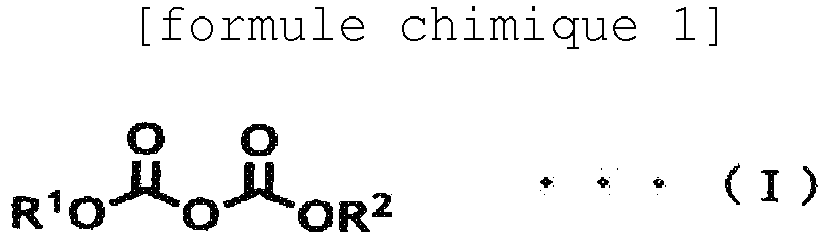 où, dans la formule (I), chacun de R1 et R2 indique un groupe hydrocarboné en C1 à C20,dans lequel la quantité du composé du magnésium est située dans la plage allant de 0,001 à 1 000 % en moles par rapport au composé représenté par la formule (I),dans lequel la quantité du composé de métal alcalin est située dans la plage allant de 0,001 à 1 000 % en moles par rapport au composé représenté par la formule (I),dans lequel le composé du magnésium est un sel avec un acide inorganique tel que l'oxyde de magnésium, l'hydroxyde de magnésium, le carbonate de magnésium, le bicarbonate de magnésium, le silicate de magnésium, le sulfate de magnésium, le sulfate d'ammonium-magnésium, le nitrate de magnésium, le phosphate de magnésium, l'hydrogénophosphate de magnésium, le phosphate d'ammonium-magnésium, le borate de magnésium, un sel magnésique d'acide halogéné, un perhalogénate de magnésium, et un sel magnésium d'acide halogénhydrique ; un sel avec un acide organique tel que le carboxylate de magnésium, le peroxycarboxylate de magnésium, et le sulfonate de magnésium ; un sel complexe tel que l'acétylacétonate de magnésium, l'hexafluoroacétylacétonate de magnésium, la porphyrine de magnésium, la phtalocyanine de magnésium, et le cyclopentadiényl-magnésium, où ces sels de magnésium peuvent être n'importe quel hydrate ou anhydride, etdans lequel le composé de métal alcalin est un sel avec un acide inorganique tel que les hydrures, oxydes, hydroxydes, carbonates, bicarbonates, sulfates, nitrates, phosphates, borates de métal alcalin, un sel d'acide halogéné, un perhalogénate, un sel d'acide halogénhydrique, et un thiocyanate ; un sel avec un acide organique tel que les alkylates, carboxylates et sulfonates de métal alcalin ; un sel avec une base organique tel que les amides et sulfamides de métal alcalin ; un sel complexe tel que les acétylacétonates, hexafluoroacétylacétonates, porphyrines, phtalocyanates et cyclopentadiénates de métal alcalin, où ces sels de métal alcalin peuvent être n'importe quel hydrate ou anhydride.
 - Procédé pour produire un ester d'acide carboxylique selon la revendication 1, dans lequel le métal du composé de métal alcalin est le lithium.
- Procédé pour produire un ester d'acide carboxylique selon la revendication 1 ou 2, dans lequel le composé représenté par la formule (I) est le bicarbonate de di-t-butyle.
- Procédé pour produire un ester d'acide carboxylique selon l'une quelconque des revendications 1 à 3, dans lequel l'acide carboxylique est un acide (méth)acrylique.
- Procédé pour produire un ester d'acide carboxylique selon l'une quelconque des revendications 1 à 4, dans lequel l'alcool est un alcool aromatique.
- Procédé pour produire un ester d'acide carboxylique selon l'une quelconque des revendications 1 à 5, dans lequel la réaction est mise en oeuvre par addition de 0,1 à 10 moles de l'acide carboxylique et de 0,1 à 10 moles de l'alcool par mole du composé représenté par la formule (I).
- Procédé pour produire un ester d'acide carboxylique selon l'une quelconque des revendications 1 à 6, dans lequel la réaction est mise en oeuvre en présence du composé du magnésium et du composé de métal alcalin, chacun étant établi à 0,001 à 1 000 % en moles de l'alcool.
Applications Claiming Priority (2)
| Application Number | Priority Date | Filing Date | Title |
|---|---|---|---|
| JP2014255665 | 2014-12-18 | ||
| PCT/JP2015/084794 WO2016098699A1 (fr) | 2014-12-18 | 2015-12-11 | Procédé de production d'ester d'acide carboxylique |
Publications (3)
| Publication Number | Publication Date |
|---|---|
| EP3235801A1 EP3235801A1 (fr) | 2017-10-25 |
| EP3235801A4 EP3235801A4 (fr) | 2017-12-06 |
| EP3235801B1 true EP3235801B1 (fr) | 2019-02-20 |
Family
ID=56126589
Family Applications (1)
| Application Number | Title | Priority Date | Filing Date |
|---|---|---|---|
| EP15869904.1A Active EP3235801B1 (fr) | 2014-12-18 | 2015-12-11 | Procédé de production d'ester d'acide carboxylique |
Country Status (6)
| Country | Link |
|---|---|
| US (1) | US10421705B2 (fr) |
| EP (1) | EP3235801B1 (fr) |
| JP (1) | JP6597312B2 (fr) |
| KR (1) | KR102478883B1 (fr) |
| CN (1) | CN107074719B (fr) |
| WO (1) | WO2016098699A1 (fr) |
Families Citing this family (9)
| Publication number | Priority date | Publication date | Assignee | Title |
|---|---|---|---|---|
| JP7052195B2 (ja) * | 2015-11-26 | 2022-04-12 | 三菱ケミカル株式会社 | カルボン酸チオエステルの製造方法 |
| JP6809366B2 (ja) * | 2016-06-10 | 2021-01-06 | 三菱ケミカル株式会社 | 光学活性カルボン酸エステルの製造方法 |
| CN110352184B (zh) | 2017-01-20 | 2022-02-11 | 赢创运营有限公司 | 贮存稳定的甘油(甲基)丙烯酸酯羧酸酯 |
| JP7098973B2 (ja) * | 2017-03-16 | 2022-07-12 | 三菱ケミカル株式会社 | (メタ)アクリル酸エステルの製造方法 |
| EP3611155A1 (fr) * | 2018-08-16 | 2020-02-19 | Evonik Operations GmbH | Préparation d'esters d'acide (méth)acrylique |
| JP7298374B2 (ja) * | 2019-08-01 | 2023-06-27 | 三菱ケミカル株式会社 | ポリエステル系樹脂の製造方法 |
| JP7363171B2 (ja) * | 2019-08-01 | 2023-10-18 | 三菱ケミカル株式会社 | ポリエステル系樹脂の製造方法 |
| JP7298375B2 (ja) * | 2019-08-01 | 2023-06-27 | 三菱ケミカル株式会社 | ポリエステル系樹脂の製造方法 |
| JP2021088526A (ja) * | 2019-12-04 | 2021-06-10 | 三菱ケミカル株式会社 | (メタ)アクリル酸エステルの製造方法 |
Family Cites Families (7)
| Publication number | Priority date | Publication date | Assignee | Title |
|---|---|---|---|---|
| JPS5515451B2 (fr) * | 1974-05-25 | 1980-04-23 | ||
| JP3475464B2 (ja) * | 1993-10-21 | 2003-12-08 | 日本油脂株式会社 | 第三級アルコールのメタクリル酸エステルの製造法 |
| JP2006063035A (ja) * | 2004-08-27 | 2006-03-09 | Hironori Takahata | カルボン酸類の新規なエステル化方法 |
| JP2006335715A (ja) * | 2005-06-03 | 2006-12-14 | Tosoh Corp | 高品質ビニル安息香酸−第3級ブチルエステル及びその製造方法 |
| WO2010090258A1 (fr) * | 2009-02-05 | 2010-08-12 | 三菱レイヨン株式会社 | Procédé de fabrication d'un ester (méth)acrylate |
| HU230744B1 (hu) * | 2012-11-30 | 2018-01-29 | CHINOIN Gyógyszer és Vegyészeti Termékek Gyára Zrt. | Új eljárás travoprost előállítására |
| EP3153495B1 (fr) * | 2014-06-04 | 2018-03-14 | Mitsubishi Chemical Corporation | Procédé de fabrication d'anhydride d'acide carboxylique et procédé de production d'ester d'acide carboxylique |
-
2015
- 2015-12-11 KR KR1020177007704A patent/KR102478883B1/ko active Active
- 2015-12-11 JP JP2015562223A patent/JP6597312B2/ja active Active
- 2015-12-11 CN CN201580049418.4A patent/CN107074719B/zh active Active
- 2015-12-11 EP EP15869904.1A patent/EP3235801B1/fr active Active
- 2015-12-11 WO PCT/JP2015/084794 patent/WO2016098699A1/fr not_active Ceased
- 2015-12-11 US US15/535,725 patent/US10421705B2/en active Active
Non-Patent Citations (1)
| Title |
|---|
| None * |
Also Published As
| Publication number | Publication date |
|---|---|
| EP3235801A1 (fr) | 2017-10-25 |
| CN107074719B (zh) | 2021-05-07 |
| US20180354885A1 (en) | 2018-12-13 |
| KR102478883B1 (ko) | 2022-12-19 |
| CN107074719A (zh) | 2017-08-18 |
| JPWO2016098699A1 (ja) | 2017-11-02 |
| WO2016098699A1 (fr) | 2016-06-23 |
| US10421705B2 (en) | 2019-09-24 |
| EP3235801A4 (fr) | 2017-12-06 |
| JP6597312B2 (ja) | 2019-10-30 |
| KR20170094118A (ko) | 2017-08-17 |
Similar Documents
| Publication | Publication Date | Title |
|---|---|---|
| EP3235801B1 (fr) | Procédé de production d'ester d'acide carboxylique | |
| EP3153495B1 (fr) | Procédé de fabrication d'anhydride d'acide carboxylique et procédé de production d'ester d'acide carboxylique | |
| BR112012031918B1 (pt) | Processo para transesterificação e catalisadores de sais mistos acetilacetonatos | |
| JP2007332138A (ja) | (メタ)アクリレートエステルモノマーを製造するためのエステル交換方法 | |
| WO2012105431A1 (fr) | PROCÉDÉ DE PRODUCTION DE β-FLUOROALCOOL | |
| EP3381895B1 (fr) | Procédé de production d'un thioester d'acide carboxylique | |
| EP3064486B1 (fr) | Procédé de production de (méth)acrylate de phényle et composition de (méth)acrylate de phényle | |
| JP2021042171A (ja) | カルボン酸エステルの製造方法 | |
| JP6627653B2 (ja) | カルボン酸チオエステルの製造方法 | |
| JP6766459B2 (ja) | カルボン酸エステルの製造方法 | |
| JP3800247B2 (ja) | 6員環カーボネートの製造方法 | |
| US10843998B2 (en) | Method for producing bis-acyloxylated exomethylene compound | |
| CN1907565A (zh) | 环状碳酸酯与有机二元酸酯耦合反应的催化剂 | |
| JP2001220369A (ja) | α−ビニロキシアルキルアクリル酸エステル類およびその製造方法 | |
| KR101209572B1 (ko) | 포타슘 오가노카보닐트리플루오로보레이트 유도체 및 그 제조방법 | |
| EP2660236A1 (fr) | Procédés de production de méthacrylate de fer et de méthacrylate d'hydroxyalkyle | |
| JP2004075669A (ja) | 3,3−ジアルコキシプロピオン酸アミドの製造方法 | |
| JP2005068077A (ja) | (メタ)アクリル酸エステル類の製造方法 |
Legal Events
| Date | Code | Title | Description |
|---|---|---|---|
| STAA | Information on the status of an ep patent application or granted ep patent |
Free format text: STATUS: THE INTERNATIONAL PUBLICATION HAS BEEN MADE |
|
| PUAI | Public reference made under article 153(3) epc to a published international application that has entered the european phase |
Free format text: ORIGINAL CODE: 0009012 |
|
| STAA | Information on the status of an ep patent application or granted ep patent |
Free format text: STATUS: REQUEST FOR EXAMINATION WAS MADE |
|
| 17P | Request for examination filed |
Effective date: 20170413 |
|
| AK | Designated contracting states |
Kind code of ref document: A1 Designated state(s): AL AT BE BG CH CY CZ DE DK EE ES FI FR GB GR HR HU IE IS IT LI LT LU LV MC MK MT NL NO PL PT RO RS SE SI SK SM TR |
|
| AX | Request for extension of the european patent |
Extension state: BA ME |
|
| A4 | Supplementary search report drawn up and despatched |
Effective date: 20171107 |
|
| RIC1 | Information provided on ipc code assigned before grant |
Ipc: C07C 67/08 20060101AFI20171031BHEP Ipc: B01J 27/138 20060101ALI20171031BHEP Ipc: C07B 61/00 20060101ALI20171031BHEP Ipc: B01J 31/26 20060101ALI20171031BHEP Ipc: B01J 31/04 20060101ALI20171031BHEP Ipc: B01J 27/053 20060101ALI20171031BHEP Ipc: B01J 23/04 20060101ALI20171031BHEP Ipc: B01J 27/236 20060101ALI20171031BHEP Ipc: C07C 69/54 20060101ALI20171031BHEP Ipc: B01J 27/25 20060101ALI20171031BHEP |
|
| DAV | Request for validation of the european patent (deleted) | ||
| DAX | Request for extension of the european patent (deleted) | ||
| GRAP | Despatch of communication of intention to grant a patent |
Free format text: ORIGINAL CODE: EPIDOSNIGR1 |
|
| STAA | Information on the status of an ep patent application or granted ep patent |
Free format text: STATUS: GRANT OF PATENT IS INTENDED |
|
| INTG | Intention to grant announced |
Effective date: 20180704 |
|
| GRAS | Grant fee paid |
Free format text: ORIGINAL CODE: EPIDOSNIGR3 |
|
| GRAA | (expected) grant |
Free format text: ORIGINAL CODE: 0009210 |
|
| STAA | Information on the status of an ep patent application or granted ep patent |
Free format text: STATUS: THE PATENT HAS BEEN GRANTED |
|
| AK | Designated contracting states |
Kind code of ref document: B1 Designated state(s): AL AT BE BG CH CY CZ DE DK EE ES FI FR GB GR HR HU IE IS IT LI LT LU LV MC MK MT NL NO PL PT RO RS SE SI SK SM TR |
|
| REG | Reference to a national code |
Ref country code: GB Ref legal event code: FG4D |
|
| REG | Reference to a national code |
Ref country code: CH Ref legal event code: EP |
|
| REG | Reference to a national code |
Ref country code: DE Ref legal event code: R096 Ref document number: 602015025138 Country of ref document: DE |
|
| REG | Reference to a national code |
Ref country code: AT Ref legal event code: REF Ref document number: 1097972 Country of ref document: AT Kind code of ref document: T Effective date: 20190315 |
|
| REG | Reference to a national code |
Ref country code: IE Ref legal event code: FG4D |
|
| REG | Reference to a national code |
Ref country code: LT Ref legal event code: MG4D |
|
| REG | Reference to a national code |
Ref country code: NL Ref legal event code: MP Effective date: 20190220 |
|
| PG25 | Lapsed in a contracting state [announced via postgrant information from national office to epo] |
Ref country code: PT Free format text: LAPSE BECAUSE OF FAILURE TO SUBMIT A TRANSLATION OF THE DESCRIPTION OR TO PAY THE FEE WITHIN THE PRESCRIBED TIME-LIMIT Effective date: 20190620 Ref country code: SE Free format text: LAPSE BECAUSE OF FAILURE TO SUBMIT A TRANSLATION OF THE DESCRIPTION OR TO PAY THE FEE WITHIN THE PRESCRIBED TIME-LIMIT Effective date: 20190220 Ref country code: LT Free format text: LAPSE BECAUSE OF FAILURE TO SUBMIT A TRANSLATION OF THE DESCRIPTION OR TO PAY THE FEE WITHIN THE PRESCRIBED TIME-LIMIT Effective date: 20190220 Ref country code: NO Free format text: LAPSE BECAUSE OF FAILURE TO SUBMIT A TRANSLATION OF THE DESCRIPTION OR TO PAY THE FEE WITHIN THE PRESCRIBED TIME-LIMIT Effective date: 20190520 Ref country code: FI Free format text: LAPSE BECAUSE OF FAILURE TO SUBMIT A TRANSLATION OF THE DESCRIPTION OR TO PAY THE FEE WITHIN THE PRESCRIBED TIME-LIMIT Effective date: 20190220 |
|
| PG25 | Lapsed in a contracting state [announced via postgrant information from national office to epo] |
Ref country code: BG Free format text: LAPSE BECAUSE OF FAILURE TO SUBMIT A TRANSLATION OF THE DESCRIPTION OR TO PAY THE FEE WITHIN THE PRESCRIBED TIME-LIMIT Effective date: 20190520 Ref country code: IS Free format text: LAPSE BECAUSE OF FAILURE TO SUBMIT A TRANSLATION OF THE DESCRIPTION OR TO PAY THE FEE WITHIN THE PRESCRIBED TIME-LIMIT Effective date: 20190620 Ref country code: RS Free format text: LAPSE BECAUSE OF FAILURE TO SUBMIT A TRANSLATION OF THE DESCRIPTION OR TO PAY THE FEE WITHIN THE PRESCRIBED TIME-LIMIT Effective date: 20190220 Ref country code: LV Free format text: LAPSE BECAUSE OF FAILURE TO SUBMIT A TRANSLATION OF THE DESCRIPTION OR TO PAY THE FEE WITHIN THE PRESCRIBED TIME-LIMIT Effective date: 20190220 Ref country code: NL Free format text: LAPSE BECAUSE OF FAILURE TO SUBMIT A TRANSLATION OF THE DESCRIPTION OR TO PAY THE FEE WITHIN THE PRESCRIBED TIME-LIMIT Effective date: 20190220 Ref country code: GR Free format text: LAPSE BECAUSE OF FAILURE TO SUBMIT A TRANSLATION OF THE DESCRIPTION OR TO PAY THE FEE WITHIN THE PRESCRIBED TIME-LIMIT Effective date: 20190521 Ref country code: HR Free format text: LAPSE BECAUSE OF FAILURE TO SUBMIT A TRANSLATION OF THE DESCRIPTION OR TO PAY THE FEE WITHIN THE PRESCRIBED TIME-LIMIT Effective date: 20190220 |
|
| REG | Reference to a national code |
Ref country code: AT Ref legal event code: MK05 Ref document number: 1097972 Country of ref document: AT Kind code of ref document: T Effective date: 20190220 |
|
| PG25 | Lapsed in a contracting state [announced via postgrant information from national office to epo] |
Ref country code: IT Free format text: LAPSE BECAUSE OF FAILURE TO SUBMIT A TRANSLATION OF THE DESCRIPTION OR TO PAY THE FEE WITHIN THE PRESCRIBED TIME-LIMIT Effective date: 20190220 Ref country code: SK Free format text: LAPSE BECAUSE OF FAILURE TO SUBMIT A TRANSLATION OF THE DESCRIPTION OR TO PAY THE FEE WITHIN THE PRESCRIBED TIME-LIMIT Effective date: 20190220 Ref country code: AL Free format text: LAPSE BECAUSE OF FAILURE TO SUBMIT A TRANSLATION OF THE DESCRIPTION OR TO PAY THE FEE WITHIN THE PRESCRIBED TIME-LIMIT Effective date: 20190220 Ref country code: DK Free format text: LAPSE BECAUSE OF FAILURE TO SUBMIT A TRANSLATION OF THE DESCRIPTION OR TO PAY THE FEE WITHIN THE PRESCRIBED TIME-LIMIT Effective date: 20190220 Ref country code: EE Free format text: LAPSE BECAUSE OF FAILURE TO SUBMIT A TRANSLATION OF THE DESCRIPTION OR TO PAY THE FEE WITHIN THE PRESCRIBED TIME-LIMIT Effective date: 20190220 Ref country code: ES Free format text: LAPSE BECAUSE OF FAILURE TO SUBMIT A TRANSLATION OF THE DESCRIPTION OR TO PAY THE FEE WITHIN THE PRESCRIBED TIME-LIMIT Effective date: 20190220 Ref country code: CZ Free format text: LAPSE BECAUSE OF FAILURE TO SUBMIT A TRANSLATION OF THE DESCRIPTION OR TO PAY THE FEE WITHIN THE PRESCRIBED TIME-LIMIT Effective date: 20190220 Ref country code: RO Free format text: LAPSE BECAUSE OF FAILURE TO SUBMIT A TRANSLATION OF THE DESCRIPTION OR TO PAY THE FEE WITHIN THE PRESCRIBED TIME-LIMIT Effective date: 20190220 |
|
| REG | Reference to a national code |
Ref country code: DE Ref legal event code: R097 Ref document number: 602015025138 Country of ref document: DE |
|
| PG25 | Lapsed in a contracting state [announced via postgrant information from national office to epo] |
Ref country code: SM Free format text: LAPSE BECAUSE OF FAILURE TO SUBMIT A TRANSLATION OF THE DESCRIPTION OR TO PAY THE FEE WITHIN THE PRESCRIBED TIME-LIMIT Effective date: 20190220 Ref country code: PL Free format text: LAPSE BECAUSE OF FAILURE TO SUBMIT A TRANSLATION OF THE DESCRIPTION OR TO PAY THE FEE WITHIN THE PRESCRIBED TIME-LIMIT Effective date: 20190220 |
|
| PLBE | No opposition filed within time limit |
Free format text: ORIGINAL CODE: 0009261 |
|
| STAA | Information on the status of an ep patent application or granted ep patent |
Free format text: STATUS: NO OPPOSITION FILED WITHIN TIME LIMIT |
|
| PG25 | Lapsed in a contracting state [announced via postgrant information from national office to epo] |
Ref country code: AT Free format text: LAPSE BECAUSE OF FAILURE TO SUBMIT A TRANSLATION OF THE DESCRIPTION OR TO PAY THE FEE WITHIN THE PRESCRIBED TIME-LIMIT Effective date: 20190220 |
|
| 26N | No opposition filed |
Effective date: 20191121 |
|
| PG25 | Lapsed in a contracting state [announced via postgrant information from national office to epo] |
Ref country code: SI Free format text: LAPSE BECAUSE OF FAILURE TO SUBMIT A TRANSLATION OF THE DESCRIPTION OR TO PAY THE FEE WITHIN THE PRESCRIBED TIME-LIMIT Effective date: 20190220 |
|
| PG25 | Lapsed in a contracting state [announced via postgrant information from national office to epo] |
Ref country code: TR Free format text: LAPSE BECAUSE OF FAILURE TO SUBMIT A TRANSLATION OF THE DESCRIPTION OR TO PAY THE FEE WITHIN THE PRESCRIBED TIME-LIMIT Effective date: 20190220 |
|
| REG | Reference to a national code |
Ref country code: CH Ref legal event code: PL |
|
| REG | Reference to a national code |
Ref country code: BE Ref legal event code: MM Effective date: 20191231 |
|
| PG25 | Lapsed in a contracting state [announced via postgrant information from national office to epo] |
Ref country code: MC Free format text: LAPSE BECAUSE OF FAILURE TO SUBMIT A TRANSLATION OF THE DESCRIPTION OR TO PAY THE FEE WITHIN THE PRESCRIBED TIME-LIMIT Effective date: 20190220 |
|
| PG25 | Lapsed in a contracting state [announced via postgrant information from national office to epo] |
Ref country code: IE Free format text: LAPSE BECAUSE OF NON-PAYMENT OF DUE FEES Effective date: 20191211 Ref country code: LU Free format text: LAPSE BECAUSE OF NON-PAYMENT OF DUE FEES Effective date: 20191211 |
|
| PG25 | Lapsed in a contracting state [announced via postgrant information from national office to epo] |
Ref country code: LI Free format text: LAPSE BECAUSE OF NON-PAYMENT OF DUE FEES Effective date: 20191231 Ref country code: CH Free format text: LAPSE BECAUSE OF NON-PAYMENT OF DUE FEES Effective date: 20191231 Ref country code: BE Free format text: LAPSE BECAUSE OF NON-PAYMENT OF DUE FEES Effective date: 20191231 |
|
| PG25 | Lapsed in a contracting state [announced via postgrant information from national office to epo] |
Ref country code: CY Free format text: LAPSE BECAUSE OF FAILURE TO SUBMIT A TRANSLATION OF THE DESCRIPTION OR TO PAY THE FEE WITHIN THE PRESCRIBED TIME-LIMIT Effective date: 20190220 |
|
| PG25 | Lapsed in a contracting state [announced via postgrant information from national office to epo] |
Ref country code: HU Free format text: LAPSE BECAUSE OF FAILURE TO SUBMIT A TRANSLATION OF THE DESCRIPTION OR TO PAY THE FEE WITHIN THE PRESCRIBED TIME-LIMIT; INVALID AB INITIO Effective date: 20151211 Ref country code: MT Free format text: LAPSE BECAUSE OF FAILURE TO SUBMIT A TRANSLATION OF THE DESCRIPTION OR TO PAY THE FEE WITHIN THE PRESCRIBED TIME-LIMIT Effective date: 20190220 |
|
| PG25 | Lapsed in a contracting state [announced via postgrant information from national office to epo] |
Ref country code: MK Free format text: LAPSE BECAUSE OF FAILURE TO SUBMIT A TRANSLATION OF THE DESCRIPTION OR TO PAY THE FEE WITHIN THE PRESCRIBED TIME-LIMIT Effective date: 20190220 |
|
| P01 | Opt-out of the competence of the unified patent court (upc) registered |
Effective date: 20230522 |
|
| PGFP | Annual fee paid to national office [announced via postgrant information from national office to epo] |
Ref country code: DE Payment date: 20251126 Year of fee payment: 11 |
|
| PGFP | Annual fee paid to national office [announced via postgrant information from national office to epo] |
Ref country code: GB Payment date: 20251119 Year of fee payment: 11 |
|
| PGFP | Annual fee paid to national office [announced via postgrant information from national office to epo] |
Ref country code: FR Payment date: 20251119 Year of fee payment: 11 |