EP3236514A1 - Bleibatterie - Google Patents
Bleibatterie Download PDFInfo
- Publication number
- EP3236514A1 EP3236514A1 EP17164886.8A EP17164886A EP3236514A1 EP 3236514 A1 EP3236514 A1 EP 3236514A1 EP 17164886 A EP17164886 A EP 17164886A EP 3236514 A1 EP3236514 A1 EP 3236514A1
- Authority
- EP
- European Patent Office
- Prior art keywords
- lead
- negative electrode
- electrode material
- acid battery
- mass
- Prior art date
- Legal status (The legal status is an assumption and is not a legal conclusion. Google has not performed a legal analysis and makes no representation as to the accuracy of the status listed.)
- Granted
Links
Images


Classifications
-
- H—ELECTRICITY
- H01—ELECTRIC ELEMENTS
- H01M—PROCESSES OR MEANS, e.g. BATTERIES, FOR THE DIRECT CONVERSION OF CHEMICAL ENERGY INTO ELECTRICAL ENERGY
- H01M4/00—Electrodes
- H01M4/02—Electrodes composed of, or comprising, active material
- H01M4/36—Selection of substances as active materials, active masses, active liquids
- H01M4/58—Selection of substances as active materials, active masses, active liquids of inorganic compounds other than oxides or hydroxides, e.g. sulfides, selenides, tellurides, halogenides or LiCoFy; of polyanionic structures, e.g. phosphates, silicates or borates
- H01M4/583—Carbonaceous material, e.g. graphite-intercalation compounds or CFx
-
- H—ELECTRICITY
- H01—ELECTRIC ELEMENTS
- H01M—PROCESSES OR MEANS, e.g. BATTERIES, FOR THE DIRECT CONVERSION OF CHEMICAL ENERGY INTO ELECTRICAL ENERGY
- H01M4/00—Electrodes
- H01M4/02—Electrodes composed of, or comprising, active material
- H01M4/36—Selection of substances as active materials, active masses, active liquids
- H01M4/362—Composites
- H01M4/364—Composites as mixtures
-
- H—ELECTRICITY
- H01—ELECTRIC ELEMENTS
- H01M—PROCESSES OR MEANS, e.g. BATTERIES, FOR THE DIRECT CONVERSION OF CHEMICAL ENERGY INTO ELECTRICAL ENERGY
- H01M10/00—Secondary cells; Manufacture thereof
- H01M10/06—Lead-acid accumulators
-
- H—ELECTRICITY
- H01—ELECTRIC ELEMENTS
- H01M—PROCESSES OR MEANS, e.g. BATTERIES, FOR THE DIRECT CONVERSION OF CHEMICAL ENERGY INTO ELECTRICAL ENERGY
- H01M10/00—Secondary cells; Manufacture thereof
- H01M10/06—Lead-acid accumulators
- H01M10/08—Selection of materials as electrolytes
-
- H—ELECTRICITY
- H01—ELECTRIC ELEMENTS
- H01M—PROCESSES OR MEANS, e.g. BATTERIES, FOR THE DIRECT CONVERSION OF CHEMICAL ENERGY INTO ELECTRICAL ENERGY
- H01M10/00—Secondary cells; Manufacture thereof
- H01M10/06—Lead-acid accumulators
- H01M10/12—Construction or manufacture
-
- H—ELECTRICITY
- H01—ELECTRIC ELEMENTS
- H01M—PROCESSES OR MEANS, e.g. BATTERIES, FOR THE DIRECT CONVERSION OF CHEMICAL ENERGY INTO ELECTRICAL ENERGY
- H01M4/00—Electrodes
- H01M4/02—Electrodes composed of, or comprising, active material
- H01M4/14—Electrodes for lead-acid accumulators
-
- H—ELECTRICITY
- H01—ELECTRIC ELEMENTS
- H01M—PROCESSES OR MEANS, e.g. BATTERIES, FOR THE DIRECT CONVERSION OF CHEMICAL ENERGY INTO ELECTRICAL ENERGY
- H01M4/00—Electrodes
- H01M4/02—Electrodes composed of, or comprising, active material
- H01M4/36—Selection of substances as active materials, active masses, active liquids
- H01M4/38—Selection of substances as active materials, active masses, active liquids of elements or alloys
-
- H—ELECTRICITY
- H01—ELECTRIC ELEMENTS
- H01M—PROCESSES OR MEANS, e.g. BATTERIES, FOR THE DIRECT CONVERSION OF CHEMICAL ENERGY INTO ELECTRICAL ENERGY
- H01M4/00—Electrodes
- H01M4/02—Electrodes composed of, or comprising, active material
- H01M4/36—Selection of substances as active materials, active masses, active liquids
- H01M4/48—Selection of substances as active materials, active masses, active liquids of inorganic oxides or hydroxides
-
- H—ELECTRICITY
- H01—ELECTRIC ELEMENTS
- H01M—PROCESSES OR MEANS, e.g. BATTERIES, FOR THE DIRECT CONVERSION OF CHEMICAL ENERGY INTO ELECTRICAL ENERGY
- H01M4/00—Electrodes
- H01M4/02—Electrodes composed of, or comprising, active material
- H01M4/36—Selection of substances as active materials, active masses, active liquids
- H01M4/58—Selection of substances as active materials, active masses, active liquids of inorganic compounds other than oxides or hydroxides, e.g. sulfides, selenides, tellurides, halogenides or LiCoFy; of polyanionic structures, e.g. phosphates, silicates or borates
- H01M4/5825—Oxygenated metallic salts or polyanionic structures, e.g. borates, phosphates, silicates, olivines
-
- H—ELECTRICITY
- H01—ELECTRIC ELEMENTS
- H01M—PROCESSES OR MEANS, e.g. BATTERIES, FOR THE DIRECT CONVERSION OF CHEMICAL ENERGY INTO ELECTRICAL ENERGY
- H01M4/00—Electrodes
- H01M4/02—Electrodes composed of, or comprising, active material
- H01M4/62—Selection of inactive substances as ingredients for active masses, e.g. binders, fillers
-
- H—ELECTRICITY
- H01—ELECTRIC ELEMENTS
- H01M—PROCESSES OR MEANS, e.g. BATTERIES, FOR THE DIRECT CONVERSION OF CHEMICAL ENERGY INTO ELECTRICAL ENERGY
- H01M4/00—Electrodes
- H01M4/02—Electrodes composed of, or comprising, active material
- H01M4/62—Selection of inactive substances as ingredients for active masses, e.g. binders, fillers
- H01M4/624—Electric conductive fillers
- H01M4/625—Carbon or graphite
-
- H—ELECTRICITY
- H01—ELECTRIC ELEMENTS
- H01M—PROCESSES OR MEANS, e.g. BATTERIES, FOR THE DIRECT CONVERSION OF CHEMICAL ENERGY INTO ELECTRICAL ENERGY
- H01M4/00—Electrodes
- H01M4/02—Electrodes composed of, or comprising, active material
- H01M4/62—Selection of inactive substances as ingredients for active masses, e.g. binders, fillers
- H01M4/627—Expanders for lead-acid accumulators
-
- H—ELECTRICITY
- H01—ELECTRIC ELEMENTS
- H01M—PROCESSES OR MEANS, e.g. BATTERIES, FOR THE DIRECT CONVERSION OF CHEMICAL ENERGY INTO ELECTRICAL ENERGY
- H01M4/00—Electrodes
- H01M4/02—Electrodes composed of, or comprising, active material
- H01M2004/021—Physical characteristics, e.g. porosity, surface area
-
- H—ELECTRICITY
- H01—ELECTRIC ELEMENTS
- H01M—PROCESSES OR MEANS, e.g. BATTERIES, FOR THE DIRECT CONVERSION OF CHEMICAL ENERGY INTO ELECTRICAL ENERGY
- H01M4/00—Electrodes
- H01M4/02—Electrodes composed of, or comprising, active material
- H01M2004/026—Electrodes composed of, or comprising, active material characterised by the polarity
- H01M2004/027—Negative electrodes
-
- H—ELECTRICITY
- H01—ELECTRIC ELEMENTS
- H01M—PROCESSES OR MEANS, e.g. BATTERIES, FOR THE DIRECT CONVERSION OF CHEMICAL ENERGY INTO ELECTRICAL ENERGY
- H01M4/00—Electrodes
- H01M4/02—Electrodes composed of, or comprising, active material
- H01M2004/026—Electrodes composed of, or comprising, active material characterised by the polarity
- H01M2004/028—Positive electrodes
-
- H—ELECTRICITY
- H01—ELECTRIC ELEMENTS
- H01M—PROCESSES OR MEANS, e.g. BATTERIES, FOR THE DIRECT CONVERSION OF CHEMICAL ENERGY INTO ELECTRICAL ENERGY
- H01M2220/00—Batteries for particular applications
- H01M2220/20—Batteries in motive systems, e.g. vehicle, ship, plane
-
- H—ELECTRICITY
- H01—ELECTRIC ELEMENTS
- H01M—PROCESSES OR MEANS, e.g. BATTERIES, FOR THE DIRECT CONVERSION OF CHEMICAL ENERGY INTO ELECTRICAL ENERGY
- H01M2300/00—Electrolytes
- H01M2300/0002—Aqueous electrolytes
- H01M2300/0005—Acid electrolytes
- H01M2300/0011—Sulfuric acid-based
-
- H—ELECTRICITY
- H01—ELECTRIC ELEMENTS
- H01M—PROCESSES OR MEANS, e.g. BATTERIES, FOR THE DIRECT CONVERSION OF CHEMICAL ENERGY INTO ELECTRICAL ENERGY
- H01M4/00—Electrodes
- H01M4/02—Electrodes composed of, or comprising, active material
- H01M4/64—Carriers or collectors
- H01M4/70—Carriers or collectors characterised by shape or form
- H01M4/72—Grids
- H01M4/73—Grids for lead-acid accumulators, e.g. frame plates
-
- H—ELECTRICITY
- H01—ELECTRIC ELEMENTS
- H01M—PROCESSES OR MEANS, e.g. BATTERIES, FOR THE DIRECT CONVERSION OF CHEMICAL ENERGY INTO ELECTRICAL ENERGY
- H01M4/00—Electrodes
- H01M4/02—Electrodes composed of, or comprising, active material
- H01M4/64—Carriers or collectors
- H01M4/70—Carriers or collectors characterised by shape or form
- H01M4/72—Grids
- H01M4/74—Meshes or woven material; Expanded metal
- H01M4/745—Expanded metal
-
- Y—GENERAL TAGGING OF NEW TECHNOLOGICAL DEVELOPMENTS; GENERAL TAGGING OF CROSS-SECTIONAL TECHNOLOGIES SPANNING OVER SEVERAL SECTIONS OF THE IPC; TECHNICAL SUBJECTS COVERED BY FORMER USPC CROSS-REFERENCE ART COLLECTIONS [XRACs] AND DIGESTS
- Y02—TECHNOLOGIES OR APPLICATIONS FOR MITIGATION OR ADAPTATION AGAINST CLIMATE CHANGE
- Y02E—REDUCTION OF GREENHOUSE GAS [GHG] EMISSIONS, RELATED TO ENERGY GENERATION, TRANSMISSION OR DISTRIBUTION
- Y02E60/00—Enabling technologies; Technologies with a potential or indirect contribution to GHG emissions mitigation
- Y02E60/10—Energy storage using batteries
-
- Y—GENERAL TAGGING OF NEW TECHNOLOGICAL DEVELOPMENTS; GENERAL TAGGING OF CROSS-SECTIONAL TECHNOLOGIES SPANNING OVER SEVERAL SECTIONS OF THE IPC; TECHNICAL SUBJECTS COVERED BY FORMER USPC CROSS-REFERENCE ART COLLECTIONS [XRACs] AND DIGESTS
- Y02—TECHNOLOGIES OR APPLICATIONS FOR MITIGATION OR ADAPTATION AGAINST CLIMATE CHANGE
- Y02P—CLIMATE CHANGE MITIGATION TECHNOLOGIES IN THE PRODUCTION OR PROCESSING OF GOODS
- Y02P70/00—Climate change mitigation technologies in the production process for final industrial or consumer products
- Y02P70/50—Manufacturing or production processes characterised by the final manufactured product
Definitions
- the present invention relates to a lead-acid battery.
- lead-acid batteries have been deeply discharged more often than before.
- lead-acid batteries for idling-stop vehicles are assumed to be used in a partial state of charge (PSOC).
- PSOC partial state of charge
- Lead-acid batteries for cycle applications, such as forklift applications have been used at a deep depth of discharge (DOD) heretofore.
- DOD deep depth of discharge
- a lead-acid battery When used in a partial state of charge, a lead-acid battery has a reduced lifetime due to accumulation of lead sulfate in a positive electrode or sulfation of a negative electrode.
- stirring of an electrolyte solution by gas generation is insufficient, and therefore the electrolyte solution is easily stratified, so that the lifetime of a lead-acid battery is further reduced.
- a lead-acid battery falls into overdischarge from a partial state of charge as a result of, for example, leaving a vehicle unattended for a long time, permeation short circuit easily occurs in which metallic lead penetrates through a separator, leading to short circuit between positive and negative electrode plates. Due to the overdischarge, the concentration of sulfate ions in an electrolyte solution decreases, and accordingly, the concentration of lead ions in the electrolyte solution increases. The lead ions are reduced at the negative electrode plate during charge, and dendrites of metallic lead grow through pores in the separator, and penetrate through the separator, leading to short circuit between the positive electrode plate and the negative electrode plate.
- JP 2013-41848 discloses "a lead-acid battery comprising a battery container which houses an electrolyte solution, and an electrode plate group in which a negative electrode plate formed by packing a negative active material in a negative electrode current collector and a positive electrode plate formed by packing a positive active material in a positive electrode current collector are layered with a separator interposed therebetween, wherein the negative active material contains scaly graphite, and a formaldehyde condensate of sodium bisphenol A aminobenzenesulfonate represented by the chemical structural formula of [Chemical Formula 1], the molecular weight of the formaldehyde condensate of sodium bisphenol A aminobenzenesulfonate is 15,000 to 20,000, the content of sulfur in the compound is 6 to 10% by mass, and the mean primary particle size of the scaly graphite is 100 ⁇ m or more and 220
- JP 5584216 B discloses "a shrink-proofing agent for a storage battery paste for a storage battery negative electrode plate for a lead-acid battery, the shrink-proofing agent including: barium sulfate; a mixture of carbon and graphite with a concentration of 1% to 5% based on an oxide used in the storage battery paste; and lignosulfonate, wherein the mixture of carbon and graphite contains 1% to 3% of graphite based on the amount of the oxide used in the storage battery paste".
- Graphite particles provide a passage for electrons to access lead sulfate, and thus facilitate charge of a negative electrode to improve the PSOC lifetime of a lead-acid battery.
- the present inventors have found that graphite in a negative electrode material may cause permeation short circuit.
- graphite particles When graphite particles are exposed to a negative electrode plate surface or protruded from the surface, exposed portions or the like of the graphite particles may act as a center of precipitation of metallic lead. Accordingly, dendrites of metallic lead may grow from the exposed graphite particles, and penetrate through a separator, thus causing short circuit.
- the possibility that graphite causes permeation short circuit has not been known heretofore, and the present inventors have found the possibility for the first time.
- An object of the present invention is to provide a lead-acid battery in which permeation short circuit is suppressed.
- An aspect of the present invention provides a lead-acid battery including a negative electrode plate, a positive electrode plate and an electrolyte solution, wherein the negative electrode plate includes a negative electrode material containing graphite or carbon fiber, and the positive electrode plate includes a positive electrode material containing antimony.
- a lead-acid battery in which permeation short circuit is suppressed can be provided.
- An aspect of the present invention provides a lead-acid battery including a negative electrode plate, a positive electrode plate and an electrolyte solution, wherein the negative electrode plate includes a negative electrode material containing graphite or carbon fiber, and the positive electrode plate includes a positive electrode material containing antimony.
- the negative electrode plate includes a negative electrode current collector (negative electrode grid) and a negative electrode material (negative active material).
- the positive electrode plate includes a positive electrode current collector (positive electrode grid) and a positive electrode material (positive active material). Solid components other than the current collector belong to electrode materials (active materials).
- the content is shown as a concentration (mass%) in a formed positive electrode material or negative electrode material in a full charge state.
- the full charge refers to a state in which a battery is charged at 5-hour rate current until a terminal voltage during charge as measured every 15 minutes shows a constant value ( ⁇ 0.01 V) consecutive three times.
- Graphite or carbon fiber (hereinafter, referred to as graphite or the like) in the negative electrode material provides a passage for electrons to access lead sulfate in the negative electrode material, and thus facilitates reduction of lead sulfate accumulated in the lower part of the electrode plate in the lead-acid battery, so that the PSOC lifetime is improved.
- the content of graphite or the like in the negative electrode material is preferably 0.5 mass% or more because the PSOC lifetime is considerably improved.
- the content of graphite or the like in the negative electrode material is more preferably 1.0 mass% or more because the PSOC lifetime is remarkably improved.
- the content of graphite or the like in the negative electrode material is preferably 2.4 mass% or less because permeation short circuit can be suppressed.
- the content of graphite or the like in the negative electrode material is more preferably 2.0 mass% or less because permeation short circuit can be further suppressed.
- the present inventors have made an attempt to suppress occurrence of permeation short circuit while improving the PSOC lifetime by containing graphite or the like in the negative electrode material. Resultantly, the present inventors have found that even when the negative electrode material contains graphite or the like, permeation short circuit can be suppressed by containing antimony in the positive electrode. It has not been known heretofore that permeation short circuit can be suppressed by containing antimony in the positive electrode material.
- the content of antimony in the positive electrode material is preferably 0.01 mass% or more because permeation short circuit can be considerably suppressed.
- the content of antimony in the positive electrode material is more preferably 0.05 mass% or more because permeation short circuit can be remarkably suppressed.
- the content of antimony is a content in terms of metallic antimony, and antimony may exist in the form of a metal, an oxide or the like.
- the content of antimony in the positive electrode material is preferably 0.02 mass% or more because the PSOC lifetime is considerably improved.
- the content of antimony in the positive electrode material is 0.10 mass% or less, a reduction in initial 5-hour rate capacity can be suppressed. Therefore, the content of antimony in the positive electrode material is preferably 0.10 mass% or less.
- the negative electrode material contains barium sulfate because permeation short circuit can be suppressed. It is more preferred that the negative electrode material contains 1.0 mass% or more of barium sulfate because permeation short circuit can be considerably suppressed. It is especially preferred that the negative electrode material contains 1.2 mass% or more of barium sulfate because permeation short circuit can be remarkably suppressed.
- Simple substance of barium or a barium compound such as barium carbonate may be used in place of barium sulfate. This is because when the simple substance of barium or barium compound is added to the negative electrode material, it changes into barium sulfate after being added.
- the simple substance of barium or barium compound is added in an amount of preferably 1.0 mass% or more, more preferably 1.2 mass% or more as a content in terms of barium sulfate based on the mass of the negative electrode material in a full charge state.
- the content of barium in the negative electrode material is preferably 0.59 mass% or more, more preferably 0.70 mass% or more.
- the content of barium sulfate in the negative electrode material is 3.0 mass% or less, deterioration of regenerative charge acceptability can be suppressed. Therefore, the content of barium sulfate in the negative electrode material is preferably 3.0 mass% or less. As a content in terms of a barium element, the content of barium in the negative electrode material is preferably 1.75 mass% or less.
- the density of the negative electrode material is 4.0 g/cm 3 or less, permeation short circuit can be suppressed, and therefore the density of the negative electrode material is preferably 4.0 g/cm 3 or less.
- the density of the negative electrode material is 3.8 g/cm 3 or less, permeation short circuit can be considerably suppressed, and therefore the density of the negative electrode material is more preferably 3.8 g/cm 3 or less.
- the density of the negative electrode material is 3.6 g/cm 3 or more, regenerative charge acceptability is improved, and therefore the density of the negative electrode material is preferably 3.6 g/cm 3 or more.
- the density of the negative electrode material is 3.7 g/cm 3 or more, regenerative charge acceptability is considerably improved, and therefore the density of the negative electrode material is more preferably 3.7 g/cm 3 or more.
- the negative electrode material contains carbon black.
- the negative electrode material contains carbon black, permeation short circuit can be suppressed.
- the content of carbon black in the negative electrode material is 0.10 mass% or more, permeation short circuit can be remarkably suppressed, and therefore the content of carbon black in the negative electrode material is preferably 0.10 mass% or more.
- the content of carbon black in the negative electrode material is preferably 0.05 mass% or more.
- the content of carbon black in the negative electrode material is 0.50 mass% or more, the effect of improving the PSOC lifetime is especially enhanced, and therefore the content of carbon black in the negative electrode material is preferably 0.50 mass% or more.
- the content of carbon black in the negative electrode material is more than 1.00 mass%, a negative active material paste is excessively hard, and thus difficult to pack in the current collector, and therefore the content of carbon black in the negative electrode material is preferably 1.00 mass% or less.
- the aluminum ion concentration of the electrolyte solution is preferably 0.02 mol/L or more.
- the PSOC lifetime is considerably improved, and therefore the aluminum ion concentration of the electrolyte solution is preferably 0.01 mol/L or more.
- the electrolyte solution contains 0.10 mol/L or more of aluminum ions, the PSOC lifetime is remarkably improved, and therefore the aluminum ion concentration of the electrolyte solution is preferably 0.10 mol/L or more.
- the PSOC lifetime is considerably improved, and therefore the aluminum ion concentration of the electrolyte solution is preferably 0.25 mol/L or less.
- the electrolyte solution contains 0.20 mol/L or less of aluminum ions, the PSOC lifetime is remarkably improved, and therefore the aluminum ion concentration of the electrolyte solution is preferably 0.20 mol/L or less.
- a negative electrode material paste to be used is obtained by mixing a predetermined amount of scaly graphite, a predetermined amount of barium sulfate, carbon black, lignin as a shrink-proofing agent and synthetic resin fiber as a reinforcing material with a lead powder prepared by a ball mill method.
- the graphite is not necessarily scaly graphite, and may be scalelike graphite, natural graphite such as earthy graphite, or artificial graphite, or may be expansive graphite, expanded graphite or the like.
- the graphite is preferably scaly graphite or expanded graphite, especially preferably scaly graphite.
- the expanded graphite is graphite after expansion.
- the graphite has a mean particle size of, for example, 10 ⁇ m or more and 300 ⁇ m or less.
- the carbon fiber has the same effect as that of the graphite.
- the carbon fiber to be used has a length of, for example, 5 ⁇ m or more and 500 ⁇ m or less.
- the barium sulfate has a mean primary particle size of, for example, 0.3 ⁇ m or more and 2.0 ⁇ m or less, and a mean secondary particle size of, for example, 1 ⁇ m or more and 10 ⁇ m or less.
- the content of the lignin is arbitrary.
- a synthetic shrink-proofing agent such as a condensate of a sulfonated bisphenol may be used in place of lignin.
- the content of the reinforcing material and the kind of the synthetic resin fiber are arbitrary.
- the method for producing the lead powder, the oxygen content and so on are arbitrary, and the negative electrode plate may contain other additives, a water-soluble synthetic polymer electrolyte and so on.
- the above-mentioned mixture is formed into a paste with water and sulfuric acid, packed in the negative electrode current collector, and then cured and dried to prepare an unformed negative electrode plate.
- the packed amount of the negative electrode material per one formed negative electrode plate may be, for example, 30 g or more and 70 g or less.
- the density of the formed negative electrode material is adjusted by changing the added amount of water during preparation of the paste.
- the negative electrode current collector is, for example, an expanded grid, a cast grid, a punched grid or the like.
- a positive electrode material paste to be used is obtained by mixing an antimony trioxide powder and synthetic resin fiber as a reinforcing material with a lead powder prepared by a ball mill method, and forming the mixture into a paste with water and sulfuric acid.
- the paste is packed in the positive electrode current collector, and then cured and dried to prepare an unformed positive electrode plate.
- the kind of the lead powder and the conditions for production of the lead powder are arbitrary, and the mean particle size of the antimony trioxide powder is preferably, for example 0.1 ⁇ m or more and 5 ⁇ m or less. Powder of metallic antimony or the like may be used in place of an antimony trioxide powder, and the antimony exists as a metal, an oxide, a sulfuric acid compound or the like in the positive electrode material.
- the density of the formed positive electrode material may be, for example, 3.5 g/cm 3 or more and 4.8 g/cm 3 or less.
- the positive electrode current collector is, for example, an expanded grid, a cast grid, a punched grid or the like.
- Either of unformed positive electrode plates or unformed negative electrode plates is covered with a separator, the unformed negative electrode plates and the unformed positive electrode plates are alternately layered, and each of the unformed negative electrode plates and each of the unformed positive electrode plate are connected by a strap to obtain an electrode plate group.
- the electrode plate groups are connected in series, stored in a cell chamber of a battery container, and subjected to formation in the battery container by adding sulfuric acid to prepare a flooded-type lead-acid battery.
- the separator is made of, for example, synthetic resin, preferably a polyolefin, more preferably polyethylene.
- the separator has a rib protruded from a base.
- the base thickness, the total thickness or the like of the separator is arbitrary, but the base thickness of the separator is preferably 0.15 mm or more and 0.25 mm or less.
- the base thickness of the separator is not connected with the invention in claims.
- the distance between the positive electrode plate and the negative electrode plate may be, for example, 0.5 mm or more and 0.9 mm or less.
- the ratio N/P of the mass P of the positive electrode material and the mass N of the negative electrode material per lead-acid battery may be for example, 0.62 or more and 0.95 or less.
- FIG. 1 shows a lead-acid battery 2.
- Reference numeral 4 denotes a negative electrode plate
- reference numeral 6 denotes a positive electrode plate
- reference numeral 8 denotes a separator
- reference numeral 10 denotes an electrolyte solution mainly composed of sulfuric acid.
- the negative electrode plate 4 includes a negative electrode current collector 12 and a negative electrode material 14, and the positive electrode plate 6 includes a positive electrode current collector 16 and a positive electrode material 18.
- the separator 8 is in the form of a bag, and includes a base 20 and a rib 22, the negative electrode plate 4 is stored in the bag, and the rib 22 faces the positive electrode plate 6.
- the positive electrode plate 6 may be stored in the separator 8 with the rib 22 facing the positive electrode plate 6.
- the separator is not required to be in the form of a bag as long as it separates the positive electrode plate and the negative electrode plate from each other, and for example, a leaflet-shaped glass mat or retainer mat may be used.
- the content of barium in the formed negative electrode material is quantitatively determined in the following manner.
- the lead-acid battery 2 in a full charge state is disassembled, the negative electrode plate 4 is washed with water, and dried to remove a sulfuric acid component, and the negative electrode material 14 is collected.
- the negative electrode material is crushed, 300 g/L hydrogen peroxide water is added in an amount of 20 mL per 100 g of the negative electrode material, nitric acid obtained by diluting 1 part by volume of 60 mass% concentrated nitric acid with 3 parts by volume of ion-exchanged water is added, and the mixture is heated under stirring for 5 hours to dissolve lead as lead nitrate.
- Barium sulfate is dissolved, and the barium concentration in the resulting solution is quantitatively determined by atomic absorption measurement, and converted to the barium content in the negative electrode material.
- the barium sulfate content in the negative electrode material can be determined from the barium content in the negative electrode material.
- the content of each of graphite and carbon black in the formed negative electrode material is quantitatively determined in the following manner.
- the lead-acid battery 2 in a full charge state is disassembled, the negative electrode plate 4 is washed with water, and dried to remove a sulfuric acid component, and the negative electrode material 14 is collected.
- the negative electrode material is crushed, hydrogen peroxide water in a concentration of 300 g/L is added in an amount of 20 mL per 100 g of the negative electrode material, nitric acid obtained by diluting 1 part by volume of 60 mass% concentrated nitric acid with 3 parts by volume of ion-exchanged water is added, and the mixture is heated under stirring for 5 hours to dissolve lead as lead nitrate. Barium sulfate is dissolved, and graphite, carbon black and a reinforcing material are then separated by filtration.
- the carbon black and the graphite together with an organic shrink-proofing agent such as lignin, and thus even in the negative electrode material after formation, the carbon black and the graphite exist in a state in which an aggregate thereof is collapsed owing to the interface activation effect of the organic shrink-proofing agent. Since the organic shrink-proofing agent is dissolved in water and lost in the above-mentioned series of separation operations, the separated carbon black and graphite are dispersed in water again, 15 g of the organic shrink-proofing agent is added based on 100 mL of water, the mixture is stirred to collapse the aggregate of the carbon black and the graphite again, and in this state, the following separation operation is carried out.
- an organic shrink-proofing agent such as lignin
- the suspension containing the carbon black and the graphite is made to pass through a sieve substantially impervious to graphite and pervious to carbon black, and thus the carbon black and the graphite are separated from each other.
- the graphite remains on the sieve, and a liquid passing through the sieve contains the carbon black.
- the graphite and carbon black separated through the above-mentioned series of operations are washed with water and dried, and then each weighed.
- the carbon fiber can be separated in the same manner as in the case of the graphite.
- the electrolyte solution is extracted, and the aluminum ion concentration in the electrolyte solution is quantitatively determined by ICP emission spectral analysis.
- a method for quantitatively determining the antimony content in the positive electrode material is shown below.
- the lead-acid battery 2 in a full charge state is disassembled, the positive electrode plate 6 is washed with water, and dried to remove a sulfuric acid component, and the positive electrode material 18 is collected.
- lead and antimony are dissolved in concentrated nitric acid, and the antimony content is quantitatively determined by ICP emission spectral analysis.
- a method for quantitatively determining the density of the negative electrode material is shown below.
- a formed negative electrode material in a full charge state is washed with water and dried, and the apparent volume v (cm 3 ) per 1 g and the total pore volume u (cm 3 ) per 1 g of the negative electrode material are measured in an uncrushed state by a mercury penetration method.
- the apparent volume v is a sum of the solid volume and the closed pore volume of the negative electrode material.
- the negative electrode material is pressurized to a maximum pressure of 4.45 psia (30.7 Kpa), and the contact angle and the surface tension of mercury are set to 130° and 484 dynes/cm, respectively.
- the lead-acid battery according to the embodiment has excellent PSOC lifetime performance and permeation short circuit resistance performance, and is therefore suitable as a lead-acid battery for idling-stop vehicles or the like.
- the lead-acid battery according to the embodiment can be used for cycle applications such as forklift applications in addition to idling-stop vehicle applications.
- the lead-acid battery is a flooded-type lead-acid battery, but may be a valve regulated lead-acid battery.
- the lead-acid battery according to the embodiment is preferably a flooded-type lead-acid battery. Even when the lead-acid battery according to the embodiment is used in a partial state of charge, permeation short circuit is suppressed, and therefore the lead-acid battery is suitable as a lead-acid battery to be used in a partial state of charge.
- the negative electrode material is sometimes referred to as a negative active material
- the positive electrode material is sometimes referred to as a positive active material
- a negative active material paste to be used was obtained by mixing a predetermined amount of scaly graphite (mean particle size: 150 ⁇ m), a predetermined amount of barium sulfate (mean primary particle size: 0.79 ⁇ m and mean secondary particle size: 2.5 ⁇ m), carbon black, lignin (content: 0.2 mass%) as a shrink-proofing agent and synthetic resin fiber (content: 0.1 mass%) as a reinforcing material with a lead powder prepared by a ball mill method.
- the content of the scaly graphite was changed within a range between 0 mass% and 2.5 mass%.
- the content of the barium sulfate was changed within a range between 0.6 mass% and 4.0 mass%.
- the above-mentioned mixture was formed into a paste with water and sulfuric acid, packed in an expand-type negative electrode grid composed of an antimony-free Pb-Ca-Sn-based alloy, and cured and dried.
- the density of the negative active material was adjusted to 3.4 g/cm 3 or more and 4.1 g/cm 3 or less by changing the amount of water.
- a positive active material paste to be used was obtained by mixing an antimony trioxide powder (mean particle size: 0.5 ⁇ m) in an amount of 0 to 0.12 mass% in terms of a metal and synthetic resin fiber as a reinforcing material in an amount of 0.1 mass%, as a content in a formed state and after full charge, with a lead powder prepared by a ball mill method, and forming the mixture into a paste with water and sulfuric acid.
- the paste was packed in an expand-type positive electrode grid composed of an antimony-free Pb-Ca-Sn-based alloy, and cured and dried. The paste was adjusted so that a positive active material after formation had a density of 4.1 g/cm 3 .
- An unformed negative electrode plate was covered with a polyethylene separator (mean pore size: 0.1 ⁇ m) with a rib protruded from a base, and the total thickness of the base and the rib was fixed to 0.7 mm.
- separators with a base thickness of 0.20 mm and with a base thickness of 0.25 mm were used, and the distance between a positive electrode plate and a negative electrode plate was set to 0.7 mm.
- Seven unformed negative electrode plates and six unformed positive electrode plates were alternately layered, and each of the unformed negative electrode plates and each of the unformed positive electrode plate were connected by a strap to obtain an electrode plate group.
- the contents of barium, graphite and carbon black in the negative active material were each measured in the manner described above.
- a sieve with an aperture diameter of 1.4 mm was used for separation of the carbon black and graphite and the reinforcing material in the negative active material.
- the separated carbon black and graphite were dispersed in water, VANILLEX N (manufactured by Nippon Paper Industries Co., Ltd.) as a lignin sulfonic acid salt was then added as an organic shrink-proofing agent, and the carbon black and the graphite were separated from each other using a sieve with an aperture diameter of 20 ⁇ m.
- a lead-acid battery 2 in a full charge state For a lead-acid battery 2 in a full charge state, the initial 5-hour rate capacity and regenerative charge acceptability were measured, and a PSOC lifetime test and a permeation short circuit acceleration test were conducted.
- the lead-acid battery in a full charge state was discharged at a 5-hour rate current with the electrolyte solution temperature set to 25°C, and the time until the terminal voltage decreased to 1.75 V/cell was measured. From the time, the initial 5-hour rate capacity was calculated.
- the lead-acid battery in a full charge state was discharged by only 10% of the 5-hour rate capacity at a 5-hour rate current with the electrolyte solution temperature set to 25°C, and the lead-acid battery was left standing at room temperature for 12 hours, and charged at 2.42 V/cell.
- the amount of charge during initial 10 seconds was defined as regenerative charge acceptability.
- the regenerative charge acceptability is charge acceptability when the battery is charged after being left standing after discharge.
- the regenerative charge acceptability is different from charge acceptability when the battery is charged without being left standing after discharge.
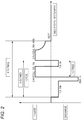
- the PSOC lifetime test is shown in FIG. 2 and Table 1.
- the "1 CA” shows 30 A in the case of a battery having a 5-hour rate capacity of 30 Ah
- the "40°C air” means that the test was conducted in an air bath at 40°C.
- the number of cycles until the terminal voltage reaches 1.2 V/cell in the test pattern in Table 1 is defined as a PSOC lifetime.
- Details of the permeation short circuit acceleration test are shown in Table 2. The test is conducted under conditions that accelerate occurrence of permeation short circuit, and in this test, the permeation short circuit occurrence ratio is remarkably higher than under practical service conditions of the lead-acid battery.
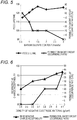
- Table 3 and FIG. 3 show that when the negative active material contains graphite, the PSOC lifetime is improved.
- the PSOC lifetime is considerably improved, and when the negative active material contains 1.0 mass% or more of graphite, the PSOC lifetime is remarkably improved.
- the present inventors made an attempt to suppress occurrence of permeation short circuit while improving the PSOC lifetime by containing graphite in the negative active material. Resultantly, the present inventors found that permeation short circuit can be suppressed by containing antimony in the positive active material ( FIG. 4 ). It has not been known heretofore that permeation short circuit can be suppressed by containing antimony in the positive active material, and suppression of permeation short circuit by containing antimony in the positive active material was an unexpected result.
- Table 4 shows the influences of graphite in the negative active material on the effect of suppressing permeation short circuit by antimony in the positive active material.
- the effect of suppressing permeation short circuit by containing 0.01 mass% of antimony in the positive active material was 5% when the negative active material did not contain graphite, whereas the above-mentioned effect was 15% when the negative active material contained graphite (Table 4).
- This result shows that the effect of suppressing permeation short circuit by containing antimony in the positive active material is high when the negative active material contains graphite. It has not been known heretofore that graphite in the negative active material is associated with permeation short circuit, and it has not been known heretofore that antimony in the positive active material is associated with permeation short circuit. Therefore, it is not predictable that the effect of suppressing permeation short circuit by containing antimony in the positive active material is enhanced when the negative active material contains graphite.
- Table 3 and FIG. 5 show that when the negative active material contains barium sulfate, permeation short circuit can be suppressed. It has not been known heretofore that barium sulfate in the negative active material is associated with permeation short circuit, and therefore suppression of permeation short circuit by including barium sulfate in the negative active material was unexpected result.
- the barium sulfate content in the negative active material is 1.0 mass% or more, the effect of suppressing permeation short circuit is enhanced, and when the barium sulfate content in the negative active material is 1.2 mass% or more, the effect of suppressing permeation short circuit is remarkably enhanced ( FIG. 5 ).
- Table 3 shows that when the barium sulfate content in the negative active material is 3.0 mass% or less, deterioration of regenerative charge acceptability can be suppressed.
- the active material paste was excessively hard, and thus difficult to pack in a grid.
- Table 5 and FIG. 6 show results when the density of the negative active material is changed. Table 5 and FIG. 6 show that when the density of the negative active material is 4.0 g/cm 3 or less, permeation short circuit can be suppressed. It has not been known heretofore that the density of the negative active material is associated with permeation short circuit. Therefore, suppression of permeation short circuit by setting the density of the negative active material to 4.0 g/cm 3 or less was an unexpected result. When the density of the negative active material is 3.8 g/cm 3 or less, the permeation short circuit suppressing effect is further enhanced.
- Table 5 and FIG. 6 show that when the density of the negative active material is increased, regenerative charge acceptability is improved.
- the density of the negative electrode material is 3.6 g/cm 3 or more, regenerative charge acceptability is considerably improved, and when the density of the negative active material is 3.7 g/cm 3 or more, regenerative charge acceptability is remarkably improved.
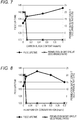
- Table 6 and FIG. 7 show results when the negative active material contains carbon black. Table 6 and FIG. 7 show that when the negative active material contains carbon black, permeation short circuit can be suppressed. It has not been known heretofore that permeation short circuit can be suppressed by containing carbon black in the negative active material, and this was an unexpected result. The effect of suppressing permeation short circuit by carbon black is remarkably observed when the carbon black content in the negative active material is 0.1 mass% or more. When the negative active material contains 1.2 mass% or more of carbon black, the negative active material paste is excessively hard, and thus difficult to pack, the carbon black content in the negative active material is preferably 1.0 mass% or less.
- Table 7 and FIG. 8 show results when the negative active material contains aluminum ions.
- Table 7 and FIG. 8 show that when the electrolyte solution contains aluminum ions, permeation short circuit can be suppressed. The effect of suppressing permeation short circuit by aluminum ions is remarkably observed when the aluminum ion concentration in the electrolyte solution is 0.02 mass% or more.
- the PSOC lifetime is considerably improved, and when the electrolyte solution contains 0.1 mol/L or more of aluminum ions, the PSOC lifetime is remarkably improved.
- the electrolyte solution contains 0.25 mol/L or less of aluminum ions, the PSOC lifetime is considerably improved, and when the electrolyte solution contains 0.2 mol/L or less of aluminum ions, the PSOC lifetime is remarkably improved.
- Table 8 shows results when the base thickness of the separator is 0.2 mm, and the density of the negative active material was 3.6 g/cm 3 .
- the negative active material does not contain carbon black, and aluminum ions are not added to the electrolyte solution. Except for the permeation short circuit occurrence ratio, data are shown as values relative to sample E1 where the value for sample E1 is 100%. It is apparent that even when the thickness of the base in the separator is changed, a lead-acid battery having reduced permeation short circuit as in the case of samples in Table 3 is obtained.
- a flooded-type lead-acid battery having reduced permeation short circuit is obtained, and a valve regulated lead-acid battery may be prepared with a glass mat or the like used as a separator.
- the present invention can be carried out in the following mode.
Landscapes
- Chemical & Material Sciences (AREA)
- Chemical Kinetics & Catalysis (AREA)
- Electrochemistry (AREA)
- General Chemical & Material Sciences (AREA)
- Engineering & Computer Science (AREA)
- Manufacturing & Machinery (AREA)
- Inorganic Chemistry (AREA)
- Composite Materials (AREA)
- Crystallography & Structural Chemistry (AREA)
- Battery Electrode And Active Subsutance (AREA)
- Secondary Cells (AREA)
Applications Claiming Priority (1)
| Application Number | Priority Date | Filing Date | Title |
|---|---|---|---|
| JP2016084938A JP6202477B1 (ja) | 2016-04-21 | 2016-04-21 | 鉛蓄電池 |
Publications (2)
| Publication Number | Publication Date |
|---|---|
| EP3236514A1 true EP3236514A1 (de) | 2017-10-25 |
| EP3236514B1 EP3236514B1 (de) | 2020-03-18 |
Family
ID=58489576
Family Applications (1)
| Application Number | Title | Priority Date | Filing Date |
|---|---|---|---|
| EP17164886.8A Active EP3236514B1 (de) | 2016-04-21 | 2017-04-05 | Bleibatterie |
Country Status (6)
| Country | Link |
|---|---|
| US (1) | US20170309897A1 (de) |
| EP (1) | EP3236514B1 (de) |
| JP (1) | JP6202477B1 (de) |
| CN (1) | CN107305948A (de) |
| AU (1) | AU2017202061B2 (de) |
| BR (1) | BR102017007992A2 (de) |
Cited By (2)
| Publication number | Priority date | Publication date | Assignee | Title |
|---|---|---|---|---|
| CN111279540A (zh) * | 2017-10-31 | 2020-06-12 | 株式会社杰士汤浅国际 | 铅蓄电池 |
| EP4020628A4 (de) * | 2019-09-27 | 2023-08-23 | GS Yuasa International Ltd. | Negative platte für bleisäurebatterie, bleisäurebatterie und herstellungsverfahren für negative platte für bleisäurebatterie |
Families Citing this family (7)
| Publication number | Priority date | Publication date | Assignee | Title |
|---|---|---|---|---|
| WO2019087680A1 (ja) * | 2017-10-31 | 2019-05-09 | 株式会社Gsユアサ | 鉛蓄電池 |
| US12266783B2 (en) * | 2018-08-31 | 2025-04-01 | Clarios Germany Gmbh & Co. Kg | Negative mass for lead-acid battery electrodes and lead-acid battery including same |
| CN113906595A (zh) * | 2019-05-31 | 2022-01-07 | 株式会社杰士汤浅国际 | 铅蓄电池 |
| CN110690449A (zh) * | 2019-09-02 | 2020-01-14 | 广西大学 | 一种利用木质素制备碳电极的方法 |
| JP7797970B2 (ja) * | 2022-06-30 | 2026-01-14 | 株式会社Gsユアサ | 鉛蓄電池 |
| JPWO2024005041A1 (de) * | 2022-06-30 | 2024-01-04 | ||
| CN115498329B (zh) * | 2022-10-13 | 2024-04-09 | 东北大学 | 一种镁电池复配电解液及其制备与使用方法 |
Citations (8)
| Publication number | Priority date | Publication date | Assignee | Title |
|---|---|---|---|---|
| JP2012079431A (ja) * | 2010-09-30 | 2012-04-19 | Gs Yuasa Corp | 鉛蓄電池及びその製造方法 |
| US20120248383A1 (en) * | 2011-04-04 | 2012-10-04 | Cabot Corporation | Lead-acid batteries and pastes therefor |
| JP2013041848A (ja) | 2012-10-25 | 2013-02-28 | Shin Kobe Electric Mach Co Ltd | 鉛蓄電池 |
| JP5584216B2 (ja) | 2008-09-02 | 2014-09-03 | ハモンド グループ,インク. | 鉛蓄電池用の改良防縮剤 |
| JP2015005528A (ja) * | 2014-09-05 | 2015-01-08 | 株式会社Gsユアサ | 鉛蓄電池 |
| JP2015032482A (ja) * | 2013-08-02 | 2015-02-16 | 株式会社Gsユアサ | 液式鉛蓄電池 |
| JP5712927B2 (ja) * | 2009-10-26 | 2015-05-07 | 株式会社Gsユアサ | 鉛蓄電池 |
| JP2015191691A (ja) * | 2014-03-27 | 2015-11-02 | 株式会社Gsユアサ | 鉛蓄電池及びその正極板 |
Family Cites Families (12)
| Publication number | Priority date | Publication date | Assignee | Title |
|---|---|---|---|---|
| DE2658493C2 (de) * | 1976-12-23 | 1984-09-13 | Robert Bosch Gmbh, 7000 Stuttgart | Elektrode für Bleiakkumulatoren |
| JPS6386369A (ja) * | 1986-09-30 | 1988-04-16 | Shin Kobe Electric Mach Co Ltd | 鉛蓄電池 |
| JPH09306497A (ja) * | 1996-05-20 | 1997-11-28 | Japan Storage Battery Co Ltd | 鉛蓄電池用負極板 |
| JP2005050632A (ja) * | 2003-07-28 | 2005-02-24 | Shin Kobe Electric Mach Co Ltd | 制御弁式鉛蓄電池 |
| WO2007036979A1 (ja) * | 2005-09-27 | 2007-04-05 | The Furukawa Battery Co., Ltd. | 鉛蓄電池及び鉛蓄電池の製造方法 |
| AR064292A1 (es) * | 2006-12-12 | 2009-03-25 | Commw Scient Ind Res Org | Dispositivo mejorado para almacenamiento de energia |
| JP5598532B2 (ja) * | 2010-03-02 | 2014-10-01 | 新神戸電機株式会社 | 鉛蓄電池 |
| WO2012042917A1 (ja) * | 2010-09-30 | 2012-04-05 | 新神戸電機株式会社 | 鉛蓄電池 |
| CN102709567A (zh) * | 2012-06-18 | 2012-10-03 | 奇瑞汽车股份有限公司 | 铅酸电池 |
| WO2014097522A1 (ja) * | 2012-12-21 | 2014-06-26 | パナソニック株式会社 | 鉛蓄電池 |
| CN104681879B (zh) * | 2013-11-29 | 2020-07-10 | 株式会社杰士汤浅国际 | 铅蓄电池 |
| JP6724781B2 (ja) * | 2014-08-27 | 2020-07-15 | 日立化成株式会社 | 鉛蓄電池 |
-
2016
- 2016-04-21 JP JP2016084938A patent/JP6202477B1/ja active Active
- 2016-09-29 CN CN201610867994.6A patent/CN107305948A/zh active Pending
-
2017
- 2017-03-29 AU AU2017202061A patent/AU2017202061B2/en active Active
- 2017-04-05 EP EP17164886.8A patent/EP3236514B1/de active Active
- 2017-04-17 US US15/488,937 patent/US20170309897A1/en not_active Abandoned
- 2017-04-18 BR BR102017007992-9A patent/BR102017007992A2/pt not_active Application Discontinuation
Patent Citations (8)
| Publication number | Priority date | Publication date | Assignee | Title |
|---|---|---|---|---|
| JP5584216B2 (ja) | 2008-09-02 | 2014-09-03 | ハモンド グループ,インク. | 鉛蓄電池用の改良防縮剤 |
| JP5712927B2 (ja) * | 2009-10-26 | 2015-05-07 | 株式会社Gsユアサ | 鉛蓄電池 |
| JP2012079431A (ja) * | 2010-09-30 | 2012-04-19 | Gs Yuasa Corp | 鉛蓄電池及びその製造方法 |
| US20120248383A1 (en) * | 2011-04-04 | 2012-10-04 | Cabot Corporation | Lead-acid batteries and pastes therefor |
| JP2013041848A (ja) | 2012-10-25 | 2013-02-28 | Shin Kobe Electric Mach Co Ltd | 鉛蓄電池 |
| JP2015032482A (ja) * | 2013-08-02 | 2015-02-16 | 株式会社Gsユアサ | 液式鉛蓄電池 |
| JP2015191691A (ja) * | 2014-03-27 | 2015-11-02 | 株式会社Gsユアサ | 鉛蓄電池及びその正極板 |
| JP2015005528A (ja) * | 2014-09-05 | 2015-01-08 | 株式会社Gsユアサ | 鉛蓄電池 |
Cited By (3)
| Publication number | Priority date | Publication date | Assignee | Title |
|---|---|---|---|---|
| CN111279540A (zh) * | 2017-10-31 | 2020-06-12 | 株式会社杰士汤浅国际 | 铅蓄电池 |
| EP3683887A4 (de) * | 2017-10-31 | 2021-06-30 | GS Yuasa International Ltd. | Bleiakkumulator |
| EP4020628A4 (de) * | 2019-09-27 | 2023-08-23 | GS Yuasa International Ltd. | Negative platte für bleisäurebatterie, bleisäurebatterie und herstellungsverfahren für negative platte für bleisäurebatterie |
Also Published As
| Publication number | Publication date |
|---|---|
| JP2017195100A (ja) | 2017-10-26 |
| AU2017202061B2 (en) | 2022-02-17 |
| AU2017202061A1 (en) | 2017-11-09 |
| EP3236514B1 (de) | 2020-03-18 |
| JP6202477B1 (ja) | 2017-09-27 |
| BR102017007992A2 (pt) | 2021-02-09 |
| CN107305948A (zh) | 2017-10-31 |
| US20170309897A1 (en) | 2017-10-26 |
Similar Documents
| Publication | Publication Date | Title |
|---|---|---|
| EP3236514B1 (de) | Bleibatterie | |
| EP3389130B1 (de) | Bleiakkumulator | |
| EP2500976B1 (de) | Ventilgesteuerte blei-säure-batterie | |
| CN105895920B (zh) | 铅蓄电池 | |
| EP3059796B1 (de) | Blei-säure-batterie | |
| AU2016200591A1 (en) | Lead-acid battery | |
| EP2706606A1 (de) | Ventilgesteuerte bleisäurebatterie | |
| EP3059789B1 (de) | Blei-säure-batterie | |
| JP4556506B2 (ja) | 鉛蓄電池 | |
| JP6458829B2 (ja) | 鉛蓄電池 | |
| JP3712259B2 (ja) | アルカリマンガン電池用正極活物質及び電池 | |
| US10573877B2 (en) | Lead-acid battery, negative electrode plate thereof and method for producing lead-acid battery | |
| JP5545975B2 (ja) | 鉛蓄電池用正極活物質及びそれを充填して成る鉛蓄電池用正極板 | |
| JP2016152130A (ja) | 鉛蓄電池 | |
| CN1104748C (zh) | 密闭式铅蓄电池及其制造方法 | |
| EP3035433B1 (de) | Bleiakkumulator | |
| JP2023046379A (ja) | 鉛蓄電池 | |
| JP2017174821A (ja) | 鉛蓄電池 | |
| JPH10302783A (ja) | 密閉形鉛蓄電池及びその製造法 | |
| JP6775764B2 (ja) | 鉛蓄電池 | |
| JPH0676815A (ja) | 鉛蓄電池用陽極板及びその製造方法 | |
| EP3588639A1 (de) | Bleibatterie | |
| KR102580198B1 (ko) | 탄산수소나트륨을 이용한 전해액 층화 방지 구조물 | |
| US20240072256A1 (en) | Well-defined lead-acid battery active materials | |
| JP3114419B2 (ja) | 密閉形蓄電池 |
Legal Events
| Date | Code | Title | Description |
|---|---|---|---|
| PUAI | Public reference made under article 153(3) epc to a published international application that has entered the european phase |
Free format text: ORIGINAL CODE: 0009012 |
|
| STAA | Information on the status of an ep patent application or granted ep patent |
Free format text: STATUS: THE APPLICATION HAS BEEN PUBLISHED |
|
| AK | Designated contracting states |
Kind code of ref document: A1 Designated state(s): AL AT BE BG CH CY CZ DE DK EE ES FI FR GB GR HR HU IE IS IT LI LT LU LV MC MK MT NL NO PL PT RO RS SE SI SK SM TR |
|
| AX | Request for extension of the european patent |
Extension state: BA ME |
|
| STAA | Information on the status of an ep patent application or granted ep patent |
Free format text: STATUS: REQUEST FOR EXAMINATION WAS MADE |
|
| 17P | Request for examination filed |
Effective date: 20180411 |
|
| RBV | Designated contracting states (corrected) |
Designated state(s): AL AT BE BG CH CY CZ DE DK EE ES FI FR GB GR HR HU IE IS IT LI LT LU LV MC MK MT NL NO PL PT RO RS SE SI SK SM TR |
|
| STAA | Information on the status of an ep patent application or granted ep patent |
Free format text: STATUS: EXAMINATION IS IN PROGRESS |
|
| 17Q | First examination report despatched |
Effective date: 20190308 |
|
| RIC1 | Information provided on ipc code assigned before grant |
Ipc: H01M 4/74 20060101ALN20190731BHEP Ipc: H01M 4/14 20060101ALI20190731BHEP Ipc: H01M 10/06 20060101ALI20190731BHEP Ipc: H01M 4/02 20060101AFI20190731BHEP Ipc: H01M 4/62 20060101ALI20190731BHEP Ipc: H01M 4/73 20060101ALN20190731BHEP Ipc: H01M 10/08 20060101ALI20190731BHEP |
|
| GRAP | Despatch of communication of intention to grant a patent |
Free format text: ORIGINAL CODE: EPIDOSNIGR1 |
|
| STAA | Information on the status of an ep patent application or granted ep patent |
Free format text: STATUS: GRANT OF PATENT IS INTENDED |
|
| RIC1 | Information provided on ipc code assigned before grant |
Ipc: H01M 10/06 20060101ALI20190827BHEP Ipc: H01M 4/73 20060101ALN20190827BHEP Ipc: H01M 10/08 20060101ALI20190827BHEP Ipc: H01M 4/62 20060101ALI20190827BHEP Ipc: H01M 4/14 20060101ALI20190827BHEP Ipc: H01M 4/02 20060101AFI20190827BHEP Ipc: H01M 4/74 20060101ALN20190827BHEP |
|
| INTG | Intention to grant announced |
Effective date: 20190911 |
|
| GRAS | Grant fee paid |
Free format text: ORIGINAL CODE: EPIDOSNIGR3 |
|
| GRAJ | Information related to disapproval of communication of intention to grant by the applicant or resumption of examination proceedings by the epo deleted |
Free format text: ORIGINAL CODE: EPIDOSDIGR1 |
|
| GRAL | Information related to payment of fee for publishing/printing deleted |
Free format text: ORIGINAL CODE: EPIDOSDIGR3 |
|
| STAA | Information on the status of an ep patent application or granted ep patent |
Free format text: STATUS: EXAMINATION IS IN PROGRESS |
|
| INTC | Intention to grant announced (deleted) | ||
| REG | Reference to a national code |
Ref country code: DE Ref legal event code: R079 Ref document number: 602017013101 Country of ref document: DE Free format text: PREVIOUS MAIN CLASS: H01M0004140000 Ipc: H01M0004020000 |
|
| GRAR | Information related to intention to grant a patent recorded |
Free format text: ORIGINAL CODE: EPIDOSNIGR71 |
|
| STAA | Information on the status of an ep patent application or granted ep patent |
Free format text: STATUS: GRANT OF PATENT IS INTENDED |
|
| GRAA | (expected) grant |
Free format text: ORIGINAL CODE: 0009210 |
|
| STAA | Information on the status of an ep patent application or granted ep patent |
Free format text: STATUS: THE PATENT HAS BEEN GRANTED |
|
| RIC1 | Information provided on ipc code assigned before grant |
Ipc: H01M 10/06 20060101ALI20200127BHEP Ipc: H01M 4/73 20060101ALN20200127BHEP Ipc: H01M 10/08 20060101ALI20200127BHEP Ipc: H01M 4/62 20060101ALI20200127BHEP Ipc: H01M 4/14 20060101ALI20200127BHEP Ipc: H01M 4/02 20060101AFI20200127BHEP Ipc: H01M 4/74 20060101ALN20200127BHEP |
|
| INTG | Intention to grant announced |
Effective date: 20200205 |
|
| AK | Designated contracting states |
Kind code of ref document: B1 Designated state(s): AL AT BE BG CH CY CZ DE DK EE ES FI FR GB GR HR HU IE IS IT LI LT LU LV MC MK MT NL NO PL PT RO RS SE SI SK SM TR |
|
| REG | Reference to a national code |
Ref country code: GB Ref legal event code: FG4D |
|
| REG | Reference to a national code |
Ref country code: DE Ref legal event code: R096 Ref document number: 602017013101 Country of ref document: DE |
|
| REG | Reference to a national code |
Ref country code: AT Ref legal event code: REF Ref document number: 1246962 Country of ref document: AT Kind code of ref document: T Effective date: 20200415 Ref country code: IE Ref legal event code: FG4D |
|
| PG25 | Lapsed in a contracting state [announced via postgrant information from national office to epo] |
Ref country code: RS Free format text: LAPSE BECAUSE OF FAILURE TO SUBMIT A TRANSLATION OF THE DESCRIPTION OR TO PAY THE FEE WITHIN THE PRESCRIBED TIME-LIMIT Effective date: 20200318 Ref country code: FI Free format text: LAPSE BECAUSE OF FAILURE TO SUBMIT A TRANSLATION OF THE DESCRIPTION OR TO PAY THE FEE WITHIN THE PRESCRIBED TIME-LIMIT Effective date: 20200318 Ref country code: NO Free format text: LAPSE BECAUSE OF FAILURE TO SUBMIT A TRANSLATION OF THE DESCRIPTION OR TO PAY THE FEE WITHIN THE PRESCRIBED TIME-LIMIT Effective date: 20200618 |
|
| REG | Reference to a national code |
Ref country code: NL Ref legal event code: MP Effective date: 20200318 |
|
| PG25 | Lapsed in a contracting state [announced via postgrant information from national office to epo] |
Ref country code: SE Free format text: LAPSE BECAUSE OF FAILURE TO SUBMIT A TRANSLATION OF THE DESCRIPTION OR TO PAY THE FEE WITHIN THE PRESCRIBED TIME-LIMIT Effective date: 20200318 Ref country code: LV Free format text: LAPSE BECAUSE OF FAILURE TO SUBMIT A TRANSLATION OF THE DESCRIPTION OR TO PAY THE FEE WITHIN THE PRESCRIBED TIME-LIMIT Effective date: 20200318 Ref country code: HR Free format text: LAPSE BECAUSE OF FAILURE TO SUBMIT A TRANSLATION OF THE DESCRIPTION OR TO PAY THE FEE WITHIN THE PRESCRIBED TIME-LIMIT Effective date: 20200318 Ref country code: BG Free format text: LAPSE BECAUSE OF FAILURE TO SUBMIT A TRANSLATION OF THE DESCRIPTION OR TO PAY THE FEE WITHIN THE PRESCRIBED TIME-LIMIT Effective date: 20200618 Ref country code: GR Free format text: LAPSE BECAUSE OF FAILURE TO SUBMIT A TRANSLATION OF THE DESCRIPTION OR TO PAY THE FEE WITHIN THE PRESCRIBED TIME-LIMIT Effective date: 20200619 |
|
| REG | Reference to a national code |
Ref country code: LT Ref legal event code: MG4D |
|
| PG25 | Lapsed in a contracting state [announced via postgrant information from national office to epo] |
Ref country code: NL Free format text: LAPSE BECAUSE OF FAILURE TO SUBMIT A TRANSLATION OF THE DESCRIPTION OR TO PAY THE FEE WITHIN THE PRESCRIBED TIME-LIMIT Effective date: 20200318 |
|
| PG25 | Lapsed in a contracting state [announced via postgrant information from national office to epo] |
Ref country code: SK Free format text: LAPSE BECAUSE OF FAILURE TO SUBMIT A TRANSLATION OF THE DESCRIPTION OR TO PAY THE FEE WITHIN THE PRESCRIBED TIME-LIMIT Effective date: 20200318 Ref country code: RO Free format text: LAPSE BECAUSE OF FAILURE TO SUBMIT A TRANSLATION OF THE DESCRIPTION OR TO PAY THE FEE WITHIN THE PRESCRIBED TIME-LIMIT Effective date: 20200318 Ref country code: CZ Free format text: LAPSE BECAUSE OF FAILURE TO SUBMIT A TRANSLATION OF THE DESCRIPTION OR TO PAY THE FEE WITHIN THE PRESCRIBED TIME-LIMIT Effective date: 20200318 Ref country code: IS Free format text: LAPSE BECAUSE OF FAILURE TO SUBMIT A TRANSLATION OF THE DESCRIPTION OR TO PAY THE FEE WITHIN THE PRESCRIBED TIME-LIMIT Effective date: 20200718 Ref country code: LT Free format text: LAPSE BECAUSE OF FAILURE TO SUBMIT A TRANSLATION OF THE DESCRIPTION OR TO PAY THE FEE WITHIN THE PRESCRIBED TIME-LIMIT Effective date: 20200318 Ref country code: EE Free format text: LAPSE BECAUSE OF FAILURE TO SUBMIT A TRANSLATION OF THE DESCRIPTION OR TO PAY THE FEE WITHIN THE PRESCRIBED TIME-LIMIT Effective date: 20200318 Ref country code: SM Free format text: LAPSE BECAUSE OF FAILURE TO SUBMIT A TRANSLATION OF THE DESCRIPTION OR TO PAY THE FEE WITHIN THE PRESCRIBED TIME-LIMIT Effective date: 20200318 Ref country code: PT Free format text: LAPSE BECAUSE OF FAILURE TO SUBMIT A TRANSLATION OF THE DESCRIPTION OR TO PAY THE FEE WITHIN THE PRESCRIBED TIME-LIMIT Effective date: 20200812 |
|
| REG | Reference to a national code |
Ref country code: AT Ref legal event code: MK05 Ref document number: 1246962 Country of ref document: AT Kind code of ref document: T Effective date: 20200318 |
|
| REG | Reference to a national code |
Ref country code: CH Ref legal event code: PL |
|
| REG | Reference to a national code |
Ref country code: DE Ref legal event code: R097 Ref document number: 602017013101 Country of ref document: DE |
|
| PG25 | Lapsed in a contracting state [announced via postgrant information from national office to epo] |
Ref country code: MC Free format text: LAPSE BECAUSE OF FAILURE TO SUBMIT A TRANSLATION OF THE DESCRIPTION OR TO PAY THE FEE WITHIN THE PRESCRIBED TIME-LIMIT Effective date: 20200318 |
|
| PLBE | No opposition filed within time limit |
Free format text: ORIGINAL CODE: 0009261 |
|
| STAA | Information on the status of an ep patent application or granted ep patent |
Free format text: STATUS: NO OPPOSITION FILED WITHIN TIME LIMIT |
|
| PG25 | Lapsed in a contracting state [announced via postgrant information from national office to epo] |
Ref country code: AT Free format text: LAPSE BECAUSE OF FAILURE TO SUBMIT A TRANSLATION OF THE DESCRIPTION OR TO PAY THE FEE WITHIN THE PRESCRIBED TIME-LIMIT Effective date: 20200318 Ref country code: ES Free format text: LAPSE BECAUSE OF FAILURE TO SUBMIT A TRANSLATION OF THE DESCRIPTION OR TO PAY THE FEE WITHIN THE PRESCRIBED TIME-LIMIT Effective date: 20200318 Ref country code: DK Free format text: LAPSE BECAUSE OF FAILURE TO SUBMIT A TRANSLATION OF THE DESCRIPTION OR TO PAY THE FEE WITHIN THE PRESCRIBED TIME-LIMIT Effective date: 20200318 Ref country code: CH Free format text: LAPSE BECAUSE OF NON-PAYMENT OF DUE FEES Effective date: 20200430 Ref country code: LI Free format text: LAPSE BECAUSE OF NON-PAYMENT OF DUE FEES Effective date: 20200430 Ref country code: IT Free format text: LAPSE BECAUSE OF FAILURE TO SUBMIT A TRANSLATION OF THE DESCRIPTION OR TO PAY THE FEE WITHIN THE PRESCRIBED TIME-LIMIT Effective date: 20200318 Ref country code: LU Free format text: LAPSE BECAUSE OF NON-PAYMENT OF DUE FEES Effective date: 20200405 |
|
| REG | Reference to a national code |
Ref country code: BE Ref legal event code: MM Effective date: 20200430 |
|
| 26N | No opposition filed |
Effective date: 20201221 |
|
| PG25 | Lapsed in a contracting state [announced via postgrant information from national office to epo] |
Ref country code: PL Free format text: LAPSE BECAUSE OF FAILURE TO SUBMIT A TRANSLATION OF THE DESCRIPTION OR TO PAY THE FEE WITHIN THE PRESCRIBED TIME-LIMIT Effective date: 20200318 Ref country code: BE Free format text: LAPSE BECAUSE OF NON-PAYMENT OF DUE FEES Effective date: 20200430 |
|
| PG25 | Lapsed in a contracting state [announced via postgrant information from national office to epo] |
Ref country code: IE Free format text: LAPSE BECAUSE OF NON-PAYMENT OF DUE FEES Effective date: 20200405 |
|
| PG25 | Lapsed in a contracting state [announced via postgrant information from national office to epo] |
Ref country code: SI Free format text: LAPSE BECAUSE OF FAILURE TO SUBMIT A TRANSLATION OF THE DESCRIPTION OR TO PAY THE FEE WITHIN THE PRESCRIBED TIME-LIMIT Effective date: 20200318 |
|
| GBPC | Gb: european patent ceased through non-payment of renewal fee |
Effective date: 20210405 |
|
| PG25 | Lapsed in a contracting state [announced via postgrant information from national office to epo] |
Ref country code: GB Free format text: LAPSE BECAUSE OF NON-PAYMENT OF DUE FEES Effective date: 20210405 |
|
| PG25 | Lapsed in a contracting state [announced via postgrant information from national office to epo] |
Ref country code: MT Free format text: LAPSE BECAUSE OF FAILURE TO SUBMIT A TRANSLATION OF THE DESCRIPTION OR TO PAY THE FEE WITHIN THE PRESCRIBED TIME-LIMIT Effective date: 20200318 Ref country code: CY Free format text: LAPSE BECAUSE OF FAILURE TO SUBMIT A TRANSLATION OF THE DESCRIPTION OR TO PAY THE FEE WITHIN THE PRESCRIBED TIME-LIMIT Effective date: 20200318 |
|
| PG25 | Lapsed in a contracting state [announced via postgrant information from national office to epo] |
Ref country code: MK Free format text: LAPSE BECAUSE OF FAILURE TO SUBMIT A TRANSLATION OF THE DESCRIPTION OR TO PAY THE FEE WITHIN THE PRESCRIBED TIME-LIMIT Effective date: 20200318 Ref country code: AL Free format text: LAPSE BECAUSE OF FAILURE TO SUBMIT A TRANSLATION OF THE DESCRIPTION OR TO PAY THE FEE WITHIN THE PRESCRIBED TIME-LIMIT Effective date: 20200318 |
|
| P01 | Opt-out of the competence of the unified patent court (upc) registered |
Effective date: 20230522 |
|
| PGFP | Annual fee paid to national office [announced via postgrant information from national office to epo] |
Ref country code: DE Payment date: 20250319 Year of fee payment: 9 |
|
| PGFP | Annual fee paid to national office [announced via postgrant information from national office to epo] |
Ref country code: FR Payment date: 20260319 Year of fee payment: 10 |
|
| PGFP | Annual fee paid to national office [announced via postgrant information from national office to epo] |
Ref country code: TR Payment date: 20260327 Year of fee payment: 10 |