EP3236632B1 - Verfahren und vorrichtung zur anwendung eines zugriffskontrollsystems zum schutz von videostreams im direktmodus - Google Patents
Verfahren und vorrichtung zur anwendung eines zugriffskontrollsystems zum schutz von videostreams im direktmodus Download PDFInfo
- Publication number
- EP3236632B1 EP3236632B1 EP17167133.2A EP17167133A EP3236632B1 EP 3236632 B1 EP3236632 B1 EP 3236632B1 EP 17167133 A EP17167133 A EP 17167133A EP 3236632 B1 EP3236632 B1 EP 3236632B1
- Authority
- EP
- European Patent Office
- Prior art keywords
- module
- content
- digital rights
- digital
- managing
- Prior art date
- Legal status (The legal status is an assumption and is not a legal conclusion. Google has not performed a legal analysis and makes no representation as to the accuracy of the status listed.)
- Active
Links
Images
Classifications
-
- H—ELECTRICITY
- H04—ELECTRIC COMMUNICATION TECHNIQUE
- H04N—PICTORIAL COMMUNICATION, e.g. TELEVISION
- H04N21/00—Selective content distribution, e.g. interactive television or video on demand [VOD]
- H04N21/20—Servers specifically adapted for the distribution of content, e.g. VOD servers; Operations thereof
- H04N21/23—Processing of content or additional data; Elementary server operations; Server middleware
- H04N21/234—Processing of video elementary streams, e.g. splicing of video streams or manipulating encoded video stream scene graphs
- H04N21/2347—Processing of video elementary streams, e.g. splicing of video streams or manipulating encoded video stream scene graphs involving video stream encryption
-
- G—PHYSICS
- G06—COMPUTING OR CALCULATING; COUNTING
- G06F—ELECTRIC DIGITAL DATA PROCESSING
- G06F21/00—Security arrangements for protecting computers, components thereof, programs or data against unauthorised activity
- G06F21/10—Protecting distributed programs or content, e.g. vending or licensing of copyrighted material ; Digital rights management [DRM]
-
- H—ELECTRICITY
- H04—ELECTRIC COMMUNICATION TECHNIQUE
- H04L—TRANSMISSION OF DIGITAL INFORMATION, e.g. TELEGRAPHIC COMMUNICATION
- H04L63/00—Network architectures or network communication protocols for network security
- H04L63/04—Network architectures or network communication protocols for network security for providing a confidential data exchange among entities communicating through data packet networks
- H04L63/0428—Network architectures or network communication protocols for network security for providing a confidential data exchange among entities communicating through data packet networks wherein the data content is protected, e.g. by encrypting or encapsulating the payload
-
- H—ELECTRICITY
- H04—ELECTRIC COMMUNICATION TECHNIQUE
- H04L—TRANSMISSION OF DIGITAL INFORMATION, e.g. TELEGRAPHIC COMMUNICATION
- H04L65/00—Network arrangements, protocols or services for supporting real-time applications in data packet communication
- H04L65/1066—Session management
- H04L65/1069—Session establishment or de-establishment
-
- H—ELECTRICITY
- H04—ELECTRIC COMMUNICATION TECHNIQUE
- H04L—TRANSMISSION OF DIGITAL INFORMATION, e.g. TELEGRAPHIC COMMUNICATION
- H04L65/00—Network arrangements, protocols or services for supporting real-time applications in data packet communication
- H04L65/60—Network streaming of media packets
- H04L65/61—Network streaming of media packets for supporting one-way streaming services, e.g. Internet radio
- H04L65/611—Network streaming of media packets for supporting one-way streaming services, e.g. Internet radio for multicast or broadcast
-
- H—ELECTRICITY
- H04—ELECTRIC COMMUNICATION TECHNIQUE
- H04L—TRANSMISSION OF DIGITAL INFORMATION, e.g. TELEGRAPHIC COMMUNICATION
- H04L65/00—Network arrangements, protocols or services for supporting real-time applications in data packet communication
- H04L65/60—Network streaming of media packets
- H04L65/61—Network streaming of media packets for supporting one-way streaming services, e.g. Internet radio
- H04L65/612—Network streaming of media packets for supporting one-way streaming services, e.g. Internet radio for unicast
-
- H—ELECTRICITY
- H04—ELECTRIC COMMUNICATION TECHNIQUE
- H04L—TRANSMISSION OF DIGITAL INFORMATION, e.g. TELEGRAPHIC COMMUNICATION
- H04L65/00—Network arrangements, protocols or services for supporting real-time applications in data packet communication
- H04L65/60—Network streaming of media packets
- H04L65/75—Media network packet handling
- H04L65/765—Media network packet handling intermediate
-
- H—ELECTRICITY
- H04—ELECTRIC COMMUNICATION TECHNIQUE
- H04L—TRANSMISSION OF DIGITAL INFORMATION, e.g. TELEGRAPHIC COMMUNICATION
- H04L9/00—Cryptographic mechanisms or cryptographic arrangements for secret or secure communications; Network security protocols
- H04L9/08—Key distribution or management, e.g. generation, sharing or updating, of cryptographic keys or passwords
- H04L9/0894—Escrow, recovery or storing of secret information, e.g. secret key escrow or cryptographic key storage
-
- H—ELECTRICITY
- H04—ELECTRIC COMMUNICATION TECHNIQUE
- H04L—TRANSMISSION OF DIGITAL INFORMATION, e.g. TELEGRAPHIC COMMUNICATION
- H04L9/00—Cryptographic mechanisms or cryptographic arrangements for secret or secure communications; Network security protocols
- H04L9/14—Cryptographic mechanisms or cryptographic arrangements for secret or secure communications; Network security protocols using a plurality of keys or algorithms
-
- H—ELECTRICITY
- H04—ELECTRIC COMMUNICATION TECHNIQUE
- H04N—PICTORIAL COMMUNICATION, e.g. TELEVISION
- H04N21/00—Selective content distribution, e.g. interactive television or video on demand [VOD]
- H04N21/20—Servers specifically adapted for the distribution of content, e.g. VOD servers; Operations thereof
- H04N21/23—Processing of content or additional data; Elementary server operations; Server middleware
- H04N21/235—Processing of additional data, e.g. scrambling of additional data or processing content descriptors
- H04N21/2351—Processing of additional data, e.g. scrambling of additional data or processing content descriptors involving encryption of additional data
-
- H—ELECTRICITY
- H04—ELECTRIC COMMUNICATION TECHNIQUE
- H04N—PICTORIAL COMMUNICATION, e.g. TELEVISION
- H04N21/00—Selective content distribution, e.g. interactive television or video on demand [VOD]
- H04N21/20—Servers specifically adapted for the distribution of content, e.g. VOD servers; Operations thereof
- H04N21/25—Management operations performed by the server for facilitating the content distribution or administrating data related to end-users or client devices, e.g. end-user or client device authentication, learning user preferences for recommending movies
- H04N21/254—Management at additional data server, e.g. shopping server, rights management server
- H04N21/2541—Rights Management
-
- H—ELECTRICITY
- H04—ELECTRIC COMMUNICATION TECHNIQUE
- H04N—PICTORIAL COMMUNICATION, e.g. TELEVISION
- H04N21/00—Selective content distribution, e.g. interactive television or video on demand [VOD]
- H04N21/20—Servers specifically adapted for the distribution of content, e.g. VOD servers; Operations thereof
- H04N21/25—Management operations performed by the server for facilitating the content distribution or administrating data related to end-users or client devices, e.g. end-user or client device authentication, learning user preferences for recommending movies
- H04N21/266—Channel or content management, e.g. generation and management of keys and entitlement messages in a conditional access system, merging a VOD unicast channel into a multicast channel
- H04N21/26606—Channel or content management, e.g. generation and management of keys and entitlement messages in a conditional access system, merging a VOD unicast channel into a multicast channel for generating or managing entitlement messages, e.g. Entitlement Control Message [ECM] or Entitlement Management Message [EMM]
-
- H—ELECTRICITY
- H04—ELECTRIC COMMUNICATION TECHNIQUE
- H04N—PICTORIAL COMMUNICATION, e.g. TELEVISION
- H04N21/00—Selective content distribution, e.g. interactive television or video on demand [VOD]
- H04N21/40—Client devices specifically adapted for the reception of or interaction with content, e.g. set-top-box [STB]; Operations thereof
- H04N21/43—Processing of content or additional data, e.g. demultiplexing additional data from a digital video stream; Elementary client operations, e.g. monitoring of home network or synchronising decoder's clock; Client middleware
- H04N21/44—Processing of video elementary streams, e.g. splicing a video clip retrieved from local storage with an incoming video stream or rendering scenes according to encoded video stream scene graphs
- H04N21/4405—Processing of video elementary streams, e.g. splicing a video clip retrieved from local storage with an incoming video stream or rendering scenes according to encoded video stream scene graphs involving video stream decryption
-
- H—ELECTRICITY
- H04—ELECTRIC COMMUNICATION TECHNIQUE
- H04N—PICTORIAL COMMUNICATION, e.g. TELEVISION
- H04N21/00—Selective content distribution, e.g. interactive television or video on demand [VOD]
- H04N21/40—Client devices specifically adapted for the reception of or interaction with content, e.g. set-top-box [STB]; Operations thereof
- H04N21/45—Management operations performed by the client for facilitating the reception of or the interaction with the content or administrating data related to the end-user or to the client device itself, e.g. learning user preferences for recommending movies, resolving scheduling conflicts
- H04N21/462—Content or additional data management e.g. creating a master electronic programme guide from data received from the Internet and a Head-end or controlling the complexity of a video stream by scaling the resolution or bit-rate based on the client capabilities
- H04N21/4623—Processing of entitlement messages, e.g. ECM [Entitlement Control Message] or EMM [Entitlement Management Message]
-
- H—ELECTRICITY
- H04—ELECTRIC COMMUNICATION TECHNIQUE
- H04N—PICTORIAL COMMUNICATION, e.g. TELEVISION
- H04N21/00—Selective content distribution, e.g. interactive television or video on demand [VOD]
- H04N21/40—Client devices specifically adapted for the reception of or interaction with content, e.g. set-top-box [STB]; Operations thereof
- H04N21/45—Management operations performed by the client for facilitating the reception of or the interaction with the content or administrating data related to the end-user or to the client device itself, e.g. learning user preferences for recommending movies, resolving scheduling conflicts
- H04N21/462—Content or additional data management e.g. creating a master electronic programme guide from data received from the Internet and a Head-end or controlling the complexity of a video stream by scaling the resolution or bit-rate based on the client capabilities
- H04N21/4627—Rights management associated to the content
-
- H—ELECTRICITY
- H04—ELECTRIC COMMUNICATION TECHNIQUE
- H04N—PICTORIAL COMMUNICATION, e.g. TELEVISION
- H04N21/00—Selective content distribution, e.g. interactive television or video on demand [VOD]
- H04N21/40—Client devices specifically adapted for the reception of or interaction with content, e.g. set-top-box [STB]; Operations thereof
- H04N21/47—End-user applications
- H04N21/472—End-user interface for requesting content, additional data or services; End-user interface for interacting with content, e.g. for content reservation or setting reminders, for requesting event notification, for manipulating displayed content
- H04N21/47202—End-user interface for requesting content, additional data or services; End-user interface for interacting with content, e.g. for content reservation or setting reminders, for requesting event notification, for manipulating displayed content for requesting content on demand, e.g. video on demand
-
- H—ELECTRICITY
- H04—ELECTRIC COMMUNICATION TECHNIQUE
- H04N—PICTORIAL COMMUNICATION, e.g. TELEVISION
- H04N21/00—Selective content distribution, e.g. interactive television or video on demand [VOD]
- H04N21/60—Network structure or processes for video distribution between server and client or between remote clients; Control signalling between clients, server and network components; Transmission of management data between server and client, e.g. sending from server to client commands for recording incoming content stream; Communication details between server and client
- H04N21/63—Control signaling related to video distribution between client, server and network components; Network processes for video distribution between server and clients or between remote clients, e.g. transmitting basic layer and enhancement layers over different transmission paths, setting up a peer-to-peer communication via Internet between remote STB's; Communication protocols; Addressing
- H04N21/633—Control signals issued by server directed to the network components or client
- H04N21/6332—Control signals issued by server directed to the network components or client directed to client
- H04N21/6334—Control signals issued by server directed to the network components or client directed to client for authorisation, e.g. by transmitting a key
- H04N21/63345—Control signals issued by server directed to the network components or client directed to client for authorisation, e.g. by transmitting a key by transmitting keys
-
- H—ELECTRICITY
- H04—ELECTRIC COMMUNICATION TECHNIQUE
- H04N—PICTORIAL COMMUNICATION, e.g. TELEVISION
- H04N7/00—Television systems
- H04N7/16—Analogue secrecy systems; Analogue subscription systems
- H04N7/167—Systems rendering the television signal unintelligible and subsequently intelligible
- H04N7/1675—Providing digital key or authorisation information for generation or regeneration of the scrambling sequence
-
- H—ELECTRICITY
- H04—ELECTRIC COMMUNICATION TECHNIQUE
- H04L—TRANSMISSION OF DIGITAL INFORMATION, e.g. TELEGRAPHIC COMMUNICATION
- H04L2209/00—Additional information or applications relating to cryptographic mechanisms or cryptographic arrangements for secret or secure communication H04L9/00
- H04L2209/60—Digital content management, e.g. content distribution
- H04L2209/603—Digital right managament [DRM]
-
- H—ELECTRICITY
- H04—ELECTRIC COMMUNICATION TECHNIQUE
- H04L—TRANSMISSION OF DIGITAL INFORMATION, e.g. TELEGRAPHIC COMMUNICATION
- H04L2463/00—Additional details relating to network architectures or network communication protocols for network security covered by H04L63/00
- H04L2463/101—Additional details relating to network architectures or network communication protocols for network security covered by H04L63/00 applying security measures for digital rights management
-
- H—ELECTRICITY
- H04—ELECTRIC COMMUNICATION TECHNIQUE
- H04L—TRANSMISSION OF DIGITAL INFORMATION, e.g. TELEGRAPHIC COMMUNICATION
- H04L63/00—Network architectures or network communication protocols for network security
- H04L63/06—Network architectures or network communication protocols for network security for supporting key management in a packet data network
- H04L63/062—Network architectures or network communication protocols for network security for supporting key management in a packet data network for key distribution, e.g. centrally by trusted party
-
- H—ELECTRICITY
- H04—ELECTRIC COMMUNICATION TECHNIQUE
- H04L—TRANSMISSION OF DIGITAL INFORMATION, e.g. TELEGRAPHIC COMMUNICATION
- H04L63/00—Network architectures or network communication protocols for network security
- H04L63/06—Network architectures or network communication protocols for network security for supporting key management in a packet data network
- H04L63/068—Network architectures or network communication protocols for network security for supporting key management in a packet data network using time-dependent keys, e.g. periodically changing keys
Definitions
- the field of the invention is that of the protection of digital content, and in particular of audiovisual content.
- the invention relates to a technique applicable, inter alia, to access control and content protection systems, the objective of which is to prevent unauthorized access to content produced by digital content providers.
- the present technique relates to the implementation of a digital content protection architecture, in particular audiovisual content, in processors, microprocessors, computers, decryption boxes and dedicated calculation devices.
- a digital content protection architecture in particular audiovisual content
- Such an architecture provides both (1) better security than the state of the art, (2) a significantly more optimized architecture than the prior art, (3) an extension of existing systems to protect video streams broadcast in direct mode (in English "streaming").
- the present technique relates in particular to pay television networks and Internet content broadcasters, where it is desirable to allow access to the digital content broadcast in direct mode only to users who have effectively acquired the rights to access to such content.
- the invention has many applications, such as for example the protection of entertainment content, teleconferences, video streams leaving mobile phones, or any application in which digital content broadcast in direct mode must only be accessible to a user. restricted set of recipients or subscribers.
- the invention can be applied in all cases where such systems for broadcasting content in direct mode, that is to say continuous flow, are used or deployed.
- the invention relates in particular to a system for managing digital rights and for transmitting digital content in continuous flow over an Internet data communication network structured according to a multicast routing mode.
- the invention also relates to a method for acquiring digital rights and a method for transmitting digital content in a continuous stream implemented by such system, a computer program product for the implementation of such methods, as well as a recording medium on which is recorded a computer program for the implementation of such methods.
- Conditional Access in English “Conditional Access” or “CA”) and “conditional access systems” (in English “CA Systems” or “CAS”) designate a set of devices, methods and software intended protection of digital or analog content.
- CASs implement content protection by ensuring that a set of requirements are met before allowing access to content.
- the term CAS is often associated with digital television systems (both those broadcast via satellite and those broadcast by cable) even though, historically, the first CASs were analog (e.g. the Videocrypt system from Thomson Consumer Electronics).
- the Digital Video Broadcasting (DVB) standard defines the CAS standards in so-called DVB-CA ("Conditional Access”), DVB-CSA ("Common Scrambling Algorithm”) and DVB-CI ("Common Interface”) specification documents . These standards define a method for scrambling a digital television stream while allowing access to this stream to users having a valid decryption chip card.
- DVB-CA Consumer Access
- DVB-CSA Common Scrambling Algorithm
- DVB-CI Common Interface
- the conditional access DVB specifications are available online and are known to those skilled in the art. Hundreds of millions of pay-TV decoders currently implement the DVB specifications.
- Content protection is achieved by combining scrambling of the video signal and encryption of scrambling keys.
- the video data stream is scrambled with a secret 48-bit cryptographic key called a “control word” (“Control Word” or “CW”).
- Control Word a secret 48-bit cryptographic key
- Knowledge of a CW at some point in the time is not such as to seriously compromise the security of the conditional access system as content providers change the CW several times per minute.
- the period of validity of a given key (this period being a parameter of the CAS) is called the “cryptographic period” (in English “Crypto Period” or “CP”).
- the CW is generated in such a way that knowing the CW of the CP number n does not make it possible to guess or calculate the CWs of the CPs number n + 1 and beyond. Knowing the CW of CP number n also does not allow one to guess or calculate the CWs of CPs n-1 and before.
- the DVB specifications recommend using a physical process to do
- the recipient device In order for the recipient to be able to decrypt the incoming data stream, the recipient device must be permanently informed of successive CWs. In practice, the recipient device must even be informed of the CWs slightly in advance in order to avoid any interruption in the display of the content for the user.
- Encryption is used in order to protect the CW during its transmission to the recipient: the CW is encrypted in order to become a Right of Control Message (in English "Entitlement Control Message” or "ECM").
- ECM Entitlement Control Message
- the CAS of the recipient device decrypts the ECM to extract the CW only if the recipient is authorized to do so.
- the power to do so is sent to the recipient in the form of an Entitlement Management Message (EMM).
- EMMs are specific to each subscriber, identified by means of the smart card inserted in its decryption box or to a group of subscribers. EMMs are usually issued or renewed once a month. Following attacks on the ground, it appeared that such a frequency of dissemination of EMMs is not sufficient to prevent fraud.
- the company TPS reduced the broadcast interval of EMMs to 12 minutes. This frequency can differ greatly between content providers: for example, BSkyB uses a validity period of one and a half months.
- the Digital + company began renewing EMMs at three-day intervals in order to disrupt the viewing of content by hackers.
- ECMs and EMMs are not standardized. Thus, their formats depend on the particular CASs in use.
- the CW can reach the recipient device via several ECMs at the same time, which allows the use of several CASs at the same time.
- This technique specified by DVB, and known as "Simulcrypt", saves bandwidth and encourages several operators to multiplex their information and cooperate. Simulcrypt DVB is very common in Europe. Some channels, such as CNN International Europe broadcast from Hot Bird satellites, can use up to 7 different CASs in parallel.
- the decryption cards are read and sometimes updated with specific viewing rights, either via a conditional access module (in English “Conditional-Access Module” or “CAM”), a card reader in PCMCIA format (also known as “PC card”) satisfying DVB-CI standards, or via an onboard card reader compatible with ISO / IEC 7816, such as that of the Sky Digibox.
- a conditional access module in English "Conditional-Access Module” or "CAM”
- PCMCIA format also known as "PC card”
- PC card PCMCIA format
- ISO / IEC 7816 such as that of the Sky Digibox.
- Multi-format CAMs can either read multiple card formats or directly decipher a compromised CAS. Most multi-format CAMs, and all CAMs that can decrypt a signal are based on the reverse engineering of the corresponding CAS. Many CASs have been compromised to date.
- DRM can be applied to all types of physical digital media (discs, Digital Versatile Disc, Blu-ray, software, etc.) or transmission (television broadcasting, Internet services, etc.) thanks to a CAS, as described previously. .
- the technical measures exploit an encryption of the work, combined with a CA.
- the publisher or distributor who uses this CAS only gives the access control key to the product in exchange for proof of purchase or subscription to access it (subscription to a paid channel, VOD, download, etc. etc.). Access to the reading (and / or its copy) of the document thus protected is then authorized only for the equipment or for the software identification certified by the supplier.
- a DRM architecture is based on the encryption of works. Only a device having the decryption key is able to consult the work. This principle poses the problem of the inviolability of the material used by the public to consult the works, so that the decryption keys remain secret. Thus, the secrets of DVD players have been discovered and DVDs can now be decrypted by software that does not have the keys.
- manufacturers are developing DRM systems that are deeply integrated into computer hardware. The goal is that each computer can be identified remotely (by Internet connection) and reliably.
- a client-server architecture makes it possible to continuously check the use and dissemination of each copy of a work.
- IP television or television over IP
- IPTV for "Internet Protocol Television”
- IPTV Internet Protocol Television
- IPTV includes live television, video on demand (in English “Video on Demand” or “VoD”), game on demand (in English “Game on Demand”, “GoD” or “Cloud Gaming” ) and catch-up sessions (in English “catch-up TV”).
- Live TV uses an IP multicast solution (also called “IP multicast”), which allows you to send information only once for several people.
- VoD and catch-up television use a unicast IP solution (a single destination for these streams).
- IPTV uses the same infrastructure as Internet access, but with reserved bandwidth. In France, IPTV is often provided with the broadband Internet subscription offer. Suppliers speak of a “triple-play” offer (Internet, telephony, television).
- IPTV can also be deployed in private communities, in fact, this allows a hotelier, hospital, or a vacation home to be able to offer a bouquet of IPTV channels as well as a range of billable and on-demand services, the establishment offering this network is considered a telecom operator.
- IP technology makes it possible to share the interface with other applications (internet, VOIP).
- codecs MPEG-2, MPEG-4 and VC-1
- the IP network thus makes it possible to distribute more content and functions.
- MPEG-2, MPEG-4 and VC-1 make it possible to optimize the consumption of bandwidth.
- the IP network thus makes it possible to distribute more content and functions.
- a conventional or satellite TV network using the video broadcasting technique, all the content is constantly offered to the user who then selects them in his decoder. He can then choose from a variety of options while the telecom, cable or satellite operator continuously feeds the distribution channel.
- the IP network it works differently: the content remains in the network, and only those selected by the user are sent to it. This frees up bandwidth and does not limit the user's choice to the size of the distribution channel. Only the watched channels are sent over the IP network thanks to multicasting (also called "multicasting") unlike VOD where the video is sent in unicast and therefore the bandwidth is used for each viewer.
- multicasting also
- the IP platform also allows a real interactive and personalized viewing experience.
- the provider can add an interactive program guide allowing users to search by title or actor. Or even the “Picture in Picture” (“PiP”) functionality allowing you to watch a second channel on the television screen. This way, viewers can check player stats while watching the game or choose the camera angle. They can also access music and photos stored on their computers directly from their television, use a mobile phone to program the recording of a program, or even set parental controls.
- PiP Picture in Picture
- Marlin is a DRM platform created by an open standards community called the Marlin Developer Community (MDC). MDC develops the necessary technology and manages the partners and services enabling the creation of interoperable digital content distribution services. Marlin technology provides consumers with the ability to manage the relationships between devices, network services and digital content. With Marlin, content providers and device manufacturers can create and support content access services over open networks.
- MDC Marlin Developer Community
- MDC was formed in 2005 by five companies: Intertrust, Panasonic, Philips, Samsung and Sony. MDC released its first specifications in May 2006. The founders of Marlin also formed the Marlin Trust Management Organization (MTMO) to provide a trusted neutral organization that can handle Marlin management and licensing. The MTMO started its commercial activities in January 2007.
- MTMO Marlin Trust Management Organization
- Marlin was created with specific design goals. First and foremost, Marlin enables consumer devices to import content from independent and multiple services and enable peer-to-peer interactions. Second, Marlin is based on a general purpose DRM architecture. The Marlin system specifications define both the technical characteristics and the architecture necessary for the interoperability of devices and services. Most of the Marlin implementations follow the Marlin core specifications. This core defines (1) the basic components, (2) the protocols (3), the consumer domain model (in English "Consumer Domain”) allowing interoperability between devices implementing Marlin and (4) services implementing Marlin specifications. These specifications are based on the Octopus and NEMO reference technologies which have been adapted for peer-to-peer interactions between devices.
- Octopus Rights management within Marlin is based on Octopus which is a general purpose DRM architecture.
- the Octopus system core is a relational engine based on graphs.
- Octopus node objects are used to represent system entities (such as users or devices), and links between nodes representing relationships.
- the node and link system manages where, how and when content can be used in the system.
- Octopus is available on multiple platforms and its media format is cryptographically agnostic.
- Marlin Partners In October 2008, the MDC announced the formation of the Marlin Partner Program (MPP). The MPP initially had more than 25 companies. In January 2014, this program included 42 partner companies. Partner Members identify, develop and deliver a variety of technical components and integration services aimed at creating a marketplace for Marlin solutions. Network operators, service providers, device manufacturers, and other companies deploying Marlin-based products and services can work with MPP member companies.
- MPP Marlin Partner Program
- Marlin Trust Services Marlin technology is standards-based, but the security of a Marlin system is managed by an independent entity called the Marlin Trust Management Organization ("Marlin Trust Management Organization" or " MTMO ”).
- MTMO Marlin Trust Management Organization
- the MTMO maintains the integrity and security of the system using its key management services.
- Marlin is commercially deployed across the globe in a variety of devices and services. Marlin is included in the Japanese national IPTV standard and was deployed by Actvila, a web-based television portal launched in 2007.
- the Actvila portal service created by Hitachi, Panasonic, Sharp, Sony, and Toshiba, included a deployment of Internet television services.
- Sony uses Marlin in the PlayStation Network, thus providing users with a video download service allowing the purchase or rental of content on PS3, PS4 and PSP systems.
- Marlin is also used in the Philips Net TV service's Blu-ray players.
- An over-the-top service (or alternative service; in English “over-the-top service” or “OTT”) is a service of delivery of audio, video and other media on the Internet without the participation of an operator of. traditional network (such as a cable, telephone or satellite company) in the control or distribution of content.
- the Internet service provider distributing the content may be aware of the content of the IP packets circulating on its network, but is not responsible, nor able to control, the display of the content, the respect of copyright, and / or the redistribution of the content.
- OTT is very different from buying or renting audio or video content from a traditional network provider, such as pay TV, video on demand or IPTV or the AT&T U-Verse service. Rather, OTT refers to content that originates from a third party, such as Hulu, Netflix, Crunchyroll or Tou.tv, and which is delivered to the user's device by an Internet service provider that serves only as a IP packet carrier.
- a third party such as Hulu, Netflix, Crunchyroll or Tou.tv
- OTT Internet-connected devices
- desktops laptops
- game consoles such as PlayStation 4, WiiU, and Xbox One
- set-top boxes in English "Set Top Box ”or“ STB ”) (like the Roku)
- smartphones including Android phones, iPhones, and Windows phones
- smart TVs like Google TV
- Smart card based systems do not allow integration with OTT devices such as PCs, tablets or phones.
- the DRM functionalities used in existing systems such as, for example, Internet video broadcasting systems, cannot be implemented as such in systems for transmitting digital content with continuous flow on an Internet data communication network structured according to a mode. multicast routing (or "multicast" in English).
- multicast routing or "multicast" in English.
- the data communication networks structured according to a multicast routing mode impose very particular load and bandwidth constraints on the network, different from those of the aforementioned systems, which are structured in “unicast” (or “unicast in English) and for which the bandwidth is used for each viewer.
- the present invention makes it possible to protect streaming digital content and not only digital content on demand.
- the present invention also makes it possible to reduce the cost and the complexity of hybrid systems making it possible to protect both digital content in direct mode and not only digital content on demand.
- a system for managing digital rights and for transmitting digital content in continuous flow over an Internet data communication network structured according to a multicast routing mode defined in accordance with claim 1 appended.
- the invention also relates, according to a second aspect, to a method of acquiring digital rights implemented by a system as described above, the method being defined in accordance with claim 8 attached. above, the method comprising a digital rights acquisition sub-method as described above, the method being defined in accordance with claim 9 attached.
- the invention further relates, according to a fourth aspect, to a computer program product downloadable from a communication network and / or recorded on a medium readable by a computer and / or executable by a processor, comprising program instructions, said instructions.
- program being adapted to implement the steps of the digital rights acquisition method as described above and / or the steps of the digital content transmission method as described above when the program product is executed on a computer.
- This computer program product may use any programming language, and be in the form of source code, object code, or code intermediate between source code and object code, such as in partially compiled form, or in the form of form of a circuit synthesized from a hardware description language (such as VHDL or Verilog) or in any other desirable form.
- a hardware description language such as VHDL or Verilog
- the invention finally relates, according to a fifth aspect, to a recording medium on which is recorded a computer program comprising program code instructions for implementing the steps of the digital rights acquisition method as described herein. above and / or the steps of the digital content transmission method as described above.
- the recording medium can be any entity or device capable of storing the program.
- the medium may comprise a storage means, such as a RAM, a Flash memory, a USB key, a ROM, for example a CD ROM or a microelectronic circuit ROM, or else a magnetic recording means, for example a floppy disk or a hard disk.
- the recording medium can be a transmissible medium such as an electrical or optical signal, which can be conveyed via an electrical or optical cable, by radio or by other means.
- the program according to the proposed technique can in particular be downloaded from an Internet type network.
- the recording medium can be an integrated circuit in which the program is incorporated, the circuit being adapted to execute or to be used in the execution of the method in question.
- the proposed technique is implemented by means of software and / or hardware components.
- module can correspond in this document as well to a software component, as to a hardware component or to a set of hardware and software components.
- a software component corresponds to one or more computer programs, one or more procedures or subroutines of a program, or more generally to any element of a program or software capable of implementing implements a function or a set of functions, as described below for the module concerned.
- Such a software component is executed by a data processor of a physical entity (terminal, server, gateway, router, etc.) and is capable of accessing the material resources of this physical entity (memories, recording media, bus communication, electronic input / output cards, user interfaces, etc.).
- a hardware component corresponds to any element of a hardware set (or hardware) capable of implementing a function or a set of functions, according to what is described below for the module concerned. It can be a programmable hardware component or with an integrated processor for running software, for example a processor, a dedicated cryptographic coprocessor, a central processing unit, a supercomputer, an integrated circuit, a smart card, a card. memory, an electronic card for running a firmware, etc.
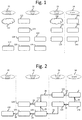
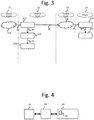
- the system which is the subject of the invention consists of the following modules:
- the modules belong to three categories: a “Back system” category (12), a “Front-end system” category (13) and a “Customer” category (14); and interface with a fourth category, namely an “External System” category (11).
- the “Back System” category includes the following:
- the “Front End” category includes the following:
- the “Client System” category includes the following elements:
- a practical application of the inventive system is typically implemented on a hardware device whose hardware architecture is illustrated by figure 4 .
- a processor 41 for example a microprocessor, is connected to a data input and output interface means 42, and to a memory 43 in which the processor reads the instructions encoding a program 44 implementing the inventive method.
- the memory 43 is also used to read and write data, encrypted messages and keys.
- a great advantage of the inventive system compared to the state of the art is the following:
- the inventive system takes advantage of DRM concepts such as the decoupling of content protection from the governance of access rights.
- DRM concepts such as the decoupling of content protection from the governance of access rights.
- the use of a purely software solution allows the deployment of less expensive STBs without card readers.
- the use of a purely software solution also makes it possible to avoid the dependence of a specific supplier of a CAS.
- the invention also has an additional advantage: the cost of a smart card (currently borne by the subscriber) is also avoided.
- An additional advantage of the invention is the fact that the inventive system is based on a novel combination of traditional concepts and on a novel combination of traditional building blocks - such as ECMs and DVB Simulcrypt scrambling compatible with any standard hardware scrambler. .
- the deployment of an IPTV network by an operator is faster than the deployment of a DRM solution in streaming (in English "streaming").
- the invention allows operators wishing to deploy a multi-screen solution to have a unified DRM system, using common hardware and software components, allowing the management of rights on all kinds of devices belonging to consumers. Operators already operating IPTV networks can thus easily deploy a DRM solution based on concepts already mastered by using their head end scramblers and their means of delivering content already in operation.
- the invention therefore effectively and definitively resolves all the drawbacks of the prior art.
Landscapes
- Engineering & Computer Science (AREA)
- Multimedia (AREA)
- Signal Processing (AREA)
- Computer Security & Cryptography (AREA)
- Computer Networks & Wireless Communication (AREA)
- Databases & Information Systems (AREA)
- Theoretical Computer Science (AREA)
- Computer Hardware Design (AREA)
- General Engineering & Computer Science (AREA)
- Software Systems (AREA)
- Computing Systems (AREA)
- Technology Law (AREA)
- Physics & Mathematics (AREA)
- General Physics & Mathematics (AREA)
- General Business, Economics & Management (AREA)
- Human Computer Interaction (AREA)
- Business, Economics & Management (AREA)
- Two-Way Televisions, Distribution Of Moving Picture Or The Like (AREA)
- Storage Device Security (AREA)
Claims (11)
- System zur Verwaltung digitaler Rechte und zur Übertragung von digitalem Streaming-Inhalt über ein Internet-Datenübertragungsnetz, wobei das Internet-Netz gemäß einem Multicast-Routing-Modus strukturiert ist, wobei das System aufweist:• eine Vorrichtung (12, 13) zur Verwaltung digitaler Rechte, die umfasst:∘ mindestens ein Modul (121, 122; 42) zur Verschlüsselung eines digitalen Inhalts, das in der Lage ist, über das Internet-Datenübertragungsnetz mit einer Quelle (111) für digitalen Streaming-Inhalt verbunden zu werden und in der Lage ist, den digitalen Streaming-Inhalt der Quelle (111) zu empfangen;∘ ein Modul (124) zum Speichern von kryptographischen Verschlüsselungsschlüsseln und Inhaltskennungen, die mit dem Verschlüsselungsmodul (121, 122) verbunden sind;∘ ein Schnittstellenmodul (126; 42) mit einem Managementsystem (112) für Kundenbeziehungen;∘ mindestens ein Modul (125, 133) zur Erstellung und Verwaltung von Aktions-Token, das mit dem Schnittstellenmodul (126; 42) verbunden ist;∘ mindestens ein Modul (123, 132) zur Verwaltung digitaler Rechte und des Zugriffs auf den digitalen Inhalt, das mit dem Modul (124) zum Speichern kryptographischer Verschlüsselungsschlüssel und Inhaltskennungen und mit dem Modul (125, 133) zum Erzeugen und Verwaltung von Aktions-Token verbunden ist; wobei das Modul (123, 132) zur Verwaltung digitaler Rechte und des Zugriffs auf den digitalen Inhalt eine Datenbank zum Speichern von Objekten und Transaktionen in Bezug auf die digitalen Rechte umfasst;• eine Client-Vorrichtung (14) für den Zugriff auf den digitalen Streaming-Inhalt, die über das Internet-Datenübertragungsnetz mit der Vorrichtung (12, 13) zur Verwaltung digitaler Rechte verbunden ist und umfasst:∘ ein Modul (141) für den Zugriff, die Erforschung und die Anzeige des digitalen Streaming-Inhalts;∘ ein Benutzerschnittstellenmodul (143), das mit dem Modul (125, 133) zur Erstellung und Verwaltung von Aktions-Token verbunden ist;∘ ein Client-Modul (142) zur Verwaltung digitaler Rechte, das mit dem Modul (141) für den Zugriff, die Erforschung und die Anzeige des digitalen Streaming-Inhalts, mit dem Benutzerschnittstellenmodul (143) und mit dem Modul (123, 132) zur Verwaltung digitaler Rechte und des Zugriffs auf den digitalen Inhalt verbunden ist; wobei jedes Modul (121 bis 126, 141 bis 143, 42) aus einer Softwarekomponente, einer Hardwarekomponente oder einem Satz von Hardware- und Softwarekomponenten gebildet ist, dadurch gekennzeichnet, dass;• das Benutzerschnittstellenmodul (143) konfiguriert ist, um eine Aktualisierungsanforderung (21) für digitale Rechte auszugeben, wobei die Aktualisierungsanforderung (21) eine Kennung der Client-Vorrichtung (14) und eine DRM-Kennung (Digital Rights Management) umfasst; und• das Modul (125, 133) zur Erzeugung von Token und zum Zugriff auf digitalen Inhalt konfiguriert ist, um die Anforderung (21) zur Aktualisierung digitaler Rechte zu empfangen und eine Abfrage (22, 23, 24) zur Wiederherstellung der digitalen Rechte des Benutzers ausgibt, wobei die Abfrage (22, 23, 24) auf Grundlage der Kennung der Client-Vorrichtung (14) ausgegeben wird;• das Schnittstellenmodul (126; 42) konfiguriert ist, um die Abfrage (22, 23, 24) an das Managementsystem (112) für Kundenbeziehungen zu übermitteln;• das Modul (125, 133) zur Erstellung und Verwaltung von Aktions-Token ferner konfiguriert ist, um über das Schnittstellenmodul (126; 42) digitale Benutzerrechte zu empfangen, die vom Managementsystem (112) für Kundenbeziehungen übertragen werden;• das Modul (125, 133) zur Erstellung und Verwaltung von Aktions-Token konfiguriert ist, um die empfangenen digitalen Rechte an das Modul (123, 132) zur Verwaltung digitaler Rechte und des Zugriffs auf den digitalen Inhalt zu übertragen;• das Modul (123, 132) zur Verwaltung digitaler Rechte und des Zugriffs auf den digitalen Inhalt konfiguriert ist, um die digitalen Rechte in Objekte zu übersetzen, die mit den digitalen Rechten in Beziehung stehen, und um jedem erzeugten Objekt eine eindeutige Transaktionskennung zuzuweisen, die für jedes erzeugte Objekt spezifisch ist;• das Modul (125, 133) zur Erstellung und Verwaltung von Aktions-Token ferner konfiguriert ist, um für jedes erzeugte Objekt ein Aktions-Token mit einer Liste von Aktionen, die zur Wiederherstellung dieses Objekts durchzuführen sind, sowie die eindeutige Transaktionskennung in Bezug auf dieses Objekt an das Benutzerschnittstellenmodul (143) zu übertragen;• das Benutzerschnittstellenmodul (143) ferner konfiguriert ist, um für jedes erzeugte Objekt eine Anweisung, die das Aktions-Token und die eindeutige Transaktionskennung in Bezug auf dieses Objekt umfasst, an das Client-Modul (142) zur Verwaltung digitaler Rechte zu übertragen;• das Client-Modul (142) zur Verwaltung digitaler Rechte ferner konfiguriert ist, um für jedes erzeugte Objekt eine Anweisung (27), die den Aktions-Token und die eindeutige Transaktionskennung in Bezug auf dieses Objekt umfassen, an das Modul (123, 132) zur Verwaltung digitaler Rechte und zum Zugriff auf den digitalen Inhalt zu übertragen;• das Modul (123, 132) zur Verwaltung digitaler Rechte und des Zugriffs auf den digitalen Inhalt konfiguriert ist, um für jedes Objekt in Bezug auf ein empfangenes Aktions-Token das Objekt auf Grundlage der eindeutigen Transaktionskennung und der Liste von Aktionen in Bezug auf dieses Objekt wieder herzustellen;• das Modul (123, 132) zur Verwaltung digitaler Rechte und des Zugriffs auf den digitalen Inhalt ferner konfiguriert ist, um eine Abfrage zur Übersetzung der DRM-Kennung (29) in einen kryptographischen Verschlüsselungsschlüssel an das Modul (124) zum Speichern kryptographischer Verschlüsselungsschlüssel und Inhaltskennungen zu übertragen;• das Modul (123, 132) zur Verwaltung digitaler Rechte und des Zugriffs auf den Inhalt konfiguriert ist, um für jedes Objekt in Bezug auf ein von dem Objekt empfangenes Aktions-Token, das oder jedes übertragene Objekt, das den übersetzten kryptographischen Verschlüsselungsschlüssel umfasst, an das Client-Modul (142) zur Verwaltung digitaler Rechte zu übertragen.
- System nach Anspruch 1, dadurch gekennzeichnet, dass das Modul (121, 122; 42) zum Verschlüsseln eines digitalen Inhalts ein erstes Untermodul (121) zum Verwürfeln des digitalen Inhalts und ein zweites Untermodul (122) zur Erzeugung von Kontrollrechtnachrichten umfasst, das mit dem ersten Untermodul (121) verbunden ist, wobei das erste Untermodul (121) in der Lage ist, den digitalen Inhalt zu verwürfeln, den digitalen Inhalt über einen geheimen kryptographischen Verschlüsselungsschlüssel zu verschlüsseln, das zweite Untermodul (122) zum Erzeugen von Kontrollrechtnachrichten in der Lage ist, jeden der geheimen kryptographischen Verschlüsselungsschlüssel zu verschlüsseln und somit für jeden verschlüsselten geheimen kryptographischen Verschlüsselungsschlüssel eine Kontrollrechtnachricht zu erhalten.
- System nach Anspruch 2, dadurch gekennzeichnet, dass das erste Untermodul (121) zur Verschlüsselung digitaler Inhalte ein Multiplexer ist.
- System nach Anspruch 1 oder 2, dadurch gekennzeichnet, dass die Vorrichtung (12, 13) zur Verwaltung digitaler Rechte ein erstes Frontend-Modul (133) zur Erzeugung und Verwaltung von Aktions-Token und ein zweites Backend-Modul (125) zur Erzeugung und Verwaltung von Aktions-Token umfasst, das mit dem ersten Frontend-Modul (133) verbunden ist.
- System nach einem der vorhergehenden Ansprüche, dadurch gekennzeichnet, dass die Vorrichtung (12, 13) zur Verwaltung digitaler Rechte ein erstes Frontend-Modul (132) zur Verwaltung digitaler Rechte und des Zugangs zu digitalen Inhalten und ein zweites Backend-Modul (123) zur Verwaltung digitaler Rechte und des Zugangs zu digitalen Inhalten umfasst, das mit dem ersten Frontend-Modul (132) verbunden ist.
- System nach einem der vorhergehenden Ansprüche, dadurch gekennzeichnet, dass das Internet-Datenübertragungsnetz ein Netz ist, das dem IPTV-Standard entspricht, und dass der digitale Streaming-Inhalt ein audiovisueller Direktmodus-Fernsehstrom ist.
- System nach einem der vorhergehenden Ansprüche, dadurch gekennzeichnet, dass die Vorrichtung (12, 13) zur Verwaltung digitaler Rechte und die Client-Vorrichtung (14) eine Client - Server-Architektur bilden, wobei mindestens eines der Module (121 bis 126, 132 bis 133; 42) der Vorrichtung (12, 13) zur Verwaltung digitaler Rechte ein Server ist.
- Verfahren zum Erwerb digitaler Rechte, das von einem System nach einem der Ansprüche 1 bis 7 ausgeführt wird, wobei das Verfahren die folgenden Schritte umfasst:• Ausgabe einer Anforderung (21) zur Aktualisierung digitaler Rechte durch das Benutzerschnittstellenmodul (143), wobei die Anforderung zur Aktualisierung (21) eine Kennung der Client-Vorrichtung (14) und eine DRM-Kennung umfasst;• Ausgabe durch das Modul (125, 133) zur Erstellung und Verwaltung von Aktions-Token nach Erhalt der Anforderung (21) zur Aktualisierung digitaler Rechte einer Abfrage (22, 23, 24) zur Wiederherstellung der digitalen Rechte des Benutzers, wobei die Abfrage (22, 23, 24) auf Grundlage der Kennung der Client-Vorrichtung (14) ausgegeben wird;• Übertragung durch das Schnittstellenmodul (126; 42) der Abfrage (22, 23, 24) an das Kundenbeziehungsmanagementsystem (112);• Empfang durch das Modul (125, 133) zur Erstellung und Verwaltung von Aktions-Token über das Schnittstellenmodul (126; 42) von digitalen Rechten des Benutzers, die vom Kundenbeziehungsmanagementsystem (112) übertragen werden;• Übertragung an das Modul (123, 132) zur Verwaltung digitaler Rechte und des Zugangs zu diesen digitalen Inhalten der empfangenen digitalen Rechte durch das Modul (125, 133) zur Erstellung und Verwaltung von Aktions-Token;• Übersetzung durch das Modul (123, 132) zur Verwaltung digitaler Rechte und des Zugangs zu diesen digitalen Inhalten der digitalen Rechte in Objekten, die mit diesen digitalen Rechten verknüpft sind;• Zuweisung, durch das Modul (123, 132) zur Verwaltung digitaler Rechte und des Zugriffs auf den digitalen Inhalt, einer eindeutigen Transaktionskennung, die für jedes erzeugte Objekt spezifisch ist;• Übertragung an das Benutzerschnittstellenmodul (143) durch das Modul (125, 133) zur Erzeugung und Verwaltung von Aktions-Token für jedes erzeugte Objekt eines Aktions-Tokens, das eine Liste von Aktionen enthält, die für die Wiederherstellung dieses Objekts durchzuführen sind, sowie die eindeutigen Transaktionskennung, die sich auf dieses Objekt bezieht;• Übertragung an das Client-Modul (142) zur Verwaltung digitaler Rechte durch das Benutzerschnittstellenmodul (143) für jedes erzeugte Objekt einer Anweisung (26), die das Aktions-Token und die eindeutige Transaktionskennung in Bezug auf dieses Objekt umfasst;• Übertragung an das Modul (123, 132) zur Verwaltung digitaler Rechte und des Zugriffs auf den digitalen Inhalt durch das Client-Modul (142) zur Verwaltung digitaler Rechte für jedes erzeugte Objekt einer Anweisung (27), die den Aktions-Token und die eindeutige Transaktionskennung in Bezug auf das Objekt umfasst;• Wiederherstellung durch das Modul (123, 132) zur Verwaltung digitaler Rechte und des Zugriffs auf den digitalen Inhalt für jedes Objekt in Bezug auf ein empfangenes Aktions-Token des Objekts, auf Grundlage der eindeutigen Transaktionskennung und der Liste von Aktionen in Bezug auf dieses Objekt;• Übertragung an das Modul (124) zum Speichern von kryptographischen Verschlüsselungsschlüsseln und Inhaltskennungen durch das Modul (123, 132) zur Verwaltung digitaler Rechte und den Zugriff auf digitalen Inhalt einer Abfrage zur Übersetzung der DRM-Kennung (29) in einen kryptographischen Verschlüsselungsschlüssel;• Übertragung an das Client-Modul (142) zur Verwaltung digitaler Rechte durch das Modul (123, 132) zur Verwaltung digitaler Rechte und des Zugriffs auf den digitalen Inhalt des Objekts nach der Übersetzung der DRM-Kennung (29) in einen kryptographischen Verschlüsselungsschlüssel durch das Modul (124), für jedes Objekt in Bezug auf ein empfangenes Aktions-Token, wobei das oder jedes übertragene Objekt den kryptographischen Verschlüsselungsschlüssel umfasst.
- Verfahren zur Übertragung von digitalem Streaming-Inhalt über ein Internet-Datenübertragungsnetz, wobei das Internet-Netz gemäß einem Multicast-Routing-Modus strukturiert ist, wobei das Verfahren durch ein System nach einem der Ansprüche 1 bis 7 ausgeführt wird, wobei das Verfahren ein Unterverfahren zum Erwerb digitaler Rechte nach Anspruch 8 umfasst, wobei das Verfahren ferner die folgenden Schritte umfasst:• Übertragung von digitalem Inhalt an das Verschlüsselungsmodul (121, 122; 42) durch die Quelle (111) des digitalen Inhalts eines digitalen Streaming-Inhalts (31) über das Internet-Datenübertragungsnetz;• Verschlüsselung eines digitalen Inhalts durch das Verschlüsselungsmodul (121, 122; 42), wobei der digitale Inhalt (31) über einen geheimen kryptographischen Verschlüsselungsschlüssel verschlüsselt wird;• Übertragung an das Modul (124) zum Speichern von kryptographischen Verschlüsselungsschlüsseln und Inhaltskennungen durch das Verschlüsselungsmodul (121, 122; 42) eines digitalen Inhalts, von Zugriffskriterien, die für einen gegebenen Kanal erforderlich sind, wobei der Kanal den gesamten digitalen Inhalt oder einen Teil davon enthält;• Übersetzung durch das Modul (124) zum Speichern von kryptographischen Verschlüsselungsschlüsseln und Inhaltskennungen der erforderlichen Zugriffskriterien in eine spezifische Inhaltskennung und einen spezifischen Inhaltsschlüssel;• Übertragung an das Verschlüsselungsmodul (121, 122; 42) eines digitalen Inhalts durch das Modul (124) zum Speichern von kryptographischen Verschlüsselungsschlüsseln und Inhaltskennungen der spezifischen Inhaltskennung und des spezifischen Inhaltsschlüssels;• Einfügen eines digitalen Inhalts der spezifischen Inhaltskennung und des spezifischen Inhaltsschlüssels in den verschlüsselten digitalen Inhalt durch das Verschlüsselungsmodul (121, 122; 42), wobei am Ende dieses Einfügungsschritts ein Multiplex-Datenstrom (34, 35) erhalten wird, wobei der Multiplex-Datenstrom (34, 35) den verschlüsselten digitalen Inhalt, die spezifische Inhaltskennung und den spezifischen Inhaltsschlüssel enthält;• Übertragung an das Zugriffs-, Untersuchungs- und Anzeigemodul (141) der Client-Vorrichtung (14) durch das Verschlüsselungsmodul (121, 122; 42) eines digitalen Inhalts des Multiplex-Datenstroms (34, 35) über das Internet-Datenübertragungsnetz;• Wiederherstellung durch das Zugriffs-, Untersuchungs- und Anzeigemodul (141) der spezifische Inhaltskennung, die in dem Multiplex-Datenstrom (34, 35) enthalten ist und Übertragung der digitalen Inhaltskennung an das Client-Modul (142) zur Verwaltung digitaler Rechte;• Überprüfung durch das Client-Modul (142) für die Verwaltung digitaler Rechte, ob ein Objekt vorhanden ist, das der genannten spezifischen Inhaltskennung entspricht, und wenn dies der Fall ist, dem Zugriffs-, Untersuchungs- und Anzeigemodul (141) ein Zugriffs-, Untersuchungs- und Ansichtsrecht auf den digitalen Inhalt zu erteilen.
- Computerprogrammprodukt, das von einem Übertragungsnetz herunterladbar ist und/oder auf einem computerlesbaren Medium aufgezeichnet ist und/oder von einem Prozessor ausführbar ist, dadurch gekennzeichnet, dass es Programmbefehle umfasst, wobei die Programmbefehle angepasst sind, um die Schritte des Verfahrens zum Erwerb digitaler Rechte nach Anspruch 8 und/oder die Schritte des Verfahrens zur Übertragung digitaler Inhalte nach Anspruch 9 auszuführen, wenn das Programmprodukt auf einem Computer ausgeführt wird.
- Aufzeichnungsmedium, auf dem ein Computerprogramm aufgezeichnet ist, das Programmcodeanweisungen zur Durchführung der Schritte des Verfahrens zum Erwerb digitaler Rechte nach Anspruch 8 und/oder der Schritte des Verfahrens zur Übertragung digitaler Inhalte nach Anspruch 9 umfasst.
Priority Applications (1)
| Application Number | Priority Date | Filing Date | Title |
|---|---|---|---|
| PL17167133T PL3236632T3 (pl) | 2016-04-20 | 2017-04-19 | Sposób i urządzenie umożliwiające zastosowanie układu kontroli dostępu do ochrony strumieni wideo nadawanych na żywo |
Applications Claiming Priority (1)
| Application Number | Priority Date | Filing Date | Title |
|---|---|---|---|
| FR1653506A FR3050599B1 (fr) | 2016-04-20 | 2016-04-20 | Procede et dispositif permettant l'application d'un systeme de controle d'acces a la protection des flux video en mode direct. |
Publications (2)
| Publication Number | Publication Date |
|---|---|
| EP3236632A1 EP3236632A1 (de) | 2017-10-25 |
| EP3236632B1 true EP3236632B1 (de) | 2020-12-09 |
Family
ID=56943616
Family Applications (1)
| Application Number | Title | Priority Date | Filing Date |
|---|---|---|---|
| EP17167133.2A Active EP3236632B1 (de) | 2016-04-20 | 2017-04-19 | Verfahren und vorrichtung zur anwendung eines zugriffskontrollsystems zum schutz von videostreams im direktmodus |
Country Status (4)
| Country | Link |
|---|---|
| US (1) | US10440409B2 (de) |
| EP (1) | EP3236632B1 (de) |
| FR (1) | FR3050599B1 (de) |
| PL (1) | PL3236632T3 (de) |
Families Citing this family (6)
| Publication number | Priority date | Publication date | Assignee | Title |
|---|---|---|---|---|
| WO2018188073A1 (zh) * | 2017-04-14 | 2018-10-18 | 华为技术有限公司 | 内容部署方法及分发控制器 |
| US10956259B2 (en) * | 2019-01-18 | 2021-03-23 | Winbond Electronics Corp. | Error correction code memory device and codeword accessing method thereof |
| WO2020221426A1 (en) * | 2019-04-29 | 2020-11-05 | Acast Ab (Publ) | Media content provision in a computer network |
| US20220138283A1 (en) * | 2020-10-30 | 2022-05-05 | Comcast Cable Communications, Llc | Secure Content Access |
| US11947672B2 (en) * | 2021-03-02 | 2024-04-02 | Nxp B.V. | Voltage glitch detection circuit |
| GB2634975A (en) * | 2023-10-27 | 2025-04-30 | Advanced Risc Mach Ltd | A method of monitoring operating parameters |
Citations (1)
| Publication number | Priority date | Publication date | Assignee | Title |
|---|---|---|---|---|
| US20140006951A1 (en) * | 2010-11-30 | 2014-01-02 | Jeff Hunter | Content provision |
Family Cites Families (9)
| Publication number | Priority date | Publication date | Assignee | Title |
|---|---|---|---|---|
| US20040242150A1 (en) * | 2003-05-28 | 2004-12-02 | Microspace Communications Corporation | Systems, methods and transmission formats for providing a common platform for direct broadcast satellite television networks |
| EP2439946B1 (de) * | 2006-05-04 | 2013-07-10 | NDS Limited | Verschlüsseltes Digitales Datenelement |
| EP2034729A2 (de) * | 2007-06-21 | 2009-03-11 | Panasonic Corporation | Übertragungsvorrichtung, Empfangsvorrichtung und Vorrichtung zur Übertragung und zum Empfang |
| US8204220B2 (en) * | 2008-09-18 | 2012-06-19 | Sony Corporation | Simulcrypt key sharing with hashed keys |
| US9043827B1 (en) * | 2009-12-16 | 2015-05-26 | Prime Research Alliance E, Inc. | Method and system for providing conditional access to encrypted content |
| CN102164320B (zh) * | 2011-04-11 | 2016-06-22 | 北京数字太和科技有限责任公司 | 一种改进的基于条件接收技术的终端 |
| EP2759088A1 (de) * | 2011-09-23 | 2014-07-30 | Koninklijke KPN N.V. | Sichere verteilung von inhalten |
| GB201210472D0 (en) * | 2012-06-13 | 2012-07-25 | Irdeto Corporate Bv | Obtaining control words |
| US9385997B2 (en) * | 2013-03-15 | 2016-07-05 | Arris Enterprises, Inc. | Protection of control words employed by conditional access systems |
-
2016
- 2016-04-20 FR FR1653506A patent/FR3050599B1/fr active Active
-
2017
- 2017-04-19 PL PL17167133T patent/PL3236632T3/pl unknown
- 2017-04-19 EP EP17167133.2A patent/EP3236632B1/de active Active
- 2017-04-20 US US15/492,697 patent/US10440409B2/en active Active
Patent Citations (1)
| Publication number | Priority date | Publication date | Assignee | Title |
|---|---|---|---|---|
| US20140006951A1 (en) * | 2010-11-30 | 2014-01-02 | Jeff Hunter | Content provision |
Also Published As
| Publication number | Publication date |
|---|---|
| PL3236632T3 (pl) | 2021-05-04 |
| FR3050599B1 (fr) | 2018-05-11 |
| EP3236632A1 (de) | 2017-10-25 |
| FR3050599A1 (fr) | 2017-10-27 |
| US10440409B2 (en) | 2019-10-08 |
| US20170311007A1 (en) | 2017-10-26 |
Similar Documents
| Publication | Publication Date | Title |
|---|---|---|
| EP1946551B1 (de) | Verfahren zum verifizieren einer mit einer master-einrichtung verbundenen zieleinrichtung | |
| US8413256B2 (en) | Content protection and digital rights management (DRM) | |
| EP1815681B1 (de) | Digitale verarbeitungseinheit für audio- und videodaten sowie verfahren zur steuerung des zugangs zu diesen daten | |
| CA2797306C (en) | Security processing system and method for http live streaming | |
| EP2177025B1 (de) | Verfahren und vorrichtung zur partiellen verschlüsselung digitaler inhalte | |
| EP3236632A1 (de) | Verfahren und vorrichtung zur anwendung eines zugriffskontrollsystems zum schutz von videostreams im direktmodus | |
| US8255547B2 (en) | Method and apparatus for file sharing between a group of user devices with separately sent crucial portions and non-crucial portions | |
| US20160112738A1 (en) | Systems and methods for securely providing adaptive bit rate streaming media content on-demand | |
| WO2006064017A1 (fr) | Méthode de transmission de données numériques dans un réseau local | |
| KR20110004333A (ko) | 스트림에서의 레코딩가능한 콘텐트의 프로세싱 | |
| EP1261969A1 (de) | Vorrichtungen zum lesen, sowie zur aufzeichnung und wiedergabe von digitalen daten in einem schutzsystem gegen die kopie derselben | |
| FR2974475A1 (fr) | Procede de protection d'un contenu multimedia enregistre | |
| KR20110004332A (ko) | 스트림에서의 레코딩가능한 콘텐트의 프로세싱 | |
| EP1537738B1 (de) | Schlüsselgültigkeitsprüfungsmethode für ein digitales heimnetzwerk | |
| EP3063941B1 (de) | Methode und vorrichtung zur verteilung von multimedializenzen im rahmen eines verteilungssystems eines gesicherten multimediadienstes | |
| FR2970134A1 (fr) | Procede de transmission et de reception d'un contenu multimedia | |
| FR3053497B1 (fr) | Procede de renforcement de la securite d'un systeme de television a peage a base de retro-communication periodique obligatoire | |
| FR2835678A1 (fr) | Procede de transmission de donnees numeriques representatives d'un contenu multimedia | |
| EP1723791B1 (de) | Verfahren zum sichern eines von einem austrahler gesendeten verwürfelten inhalts | |
| FR3110263A1 (fr) | Procédé et système pour authentifier une application informatique, ou une fonction de l’application, exécutée par un récepteur multimédia | |
| WO2015189834A1 (en) | Delivery of drm protected content to distributed user stations | |
| FR2967852A1 (fr) | Ensemble de diffusion par reseau ip de flux video numeriques embrouilles vers des terminaux ip directement relies a ce reseau | |
| EP2265013A1 (de) | Datenübertragung zu einem Kundengerät, das mit mindestens einem Dekodiermodul und einem Sicherheitsmodul ausgestattet ist |
Legal Events
| Date | Code | Title | Description |
|---|---|---|---|
| PUAI | Public reference made under article 153(3) epc to a published international application that has entered the european phase |
Free format text: ORIGINAL CODE: 0009012 |
|
| STAA | Information on the status of an ep patent application or granted ep patent |
Free format text: STATUS: THE APPLICATION HAS BEEN PUBLISHED |
|
| AK | Designated contracting states |
Kind code of ref document: A1 Designated state(s): AL AT BE BG CH CY CZ DE DK EE ES FI FR GB GR HR HU IE IS IT LI LT LU LV MC MK MT NL NO PL PT RO RS SE SI SK SM TR |
|
| AX | Request for extension of the european patent |
Extension state: BA ME |
|
| STAA | Information on the status of an ep patent application or granted ep patent |
Free format text: STATUS: REQUEST FOR EXAMINATION WAS MADE |
|
| 17P | Request for examination filed |
Effective date: 20180123 |
|
| RBV | Designated contracting states (corrected) |
Designated state(s): AL AT BE BG CH CY CZ DE DK EE ES FI FR GB GR HR HU IE IS IT LI LT LU LV MC MK MT NL NO PL PT RO RS SE SI SK SM TR |
|
| RAP1 | Party data changed (applicant data changed or rights of an application transferred) |
Owner name: 4T SA |
|
| STAA | Information on the status of an ep patent application or granted ep patent |
Free format text: STATUS: EXAMINATION IS IN PROGRESS |
|
| 17Q | First examination report despatched |
Effective date: 20200117 |
|
| REG | Reference to a national code |
Ref country code: DE Ref legal event code: R079 Ref document number: 602017029107 Country of ref document: DE Free format text: PREVIOUS MAIN CLASS: H04L0029060000 Ipc: G06F0021100000 |
|
| GRAP | Despatch of communication of intention to grant a patent |
Free format text: ORIGINAL CODE: EPIDOSNIGR1 |
|
| STAA | Information on the status of an ep patent application or granted ep patent |
Free format text: STATUS: GRANT OF PATENT IS INTENDED |
|
| RIC1 | Information provided on ipc code assigned before grant |
Ipc: H04N 21/472 20110101ALI20200729BHEP Ipc: H04L 9/14 20060101ALI20200729BHEP Ipc: H04N 21/6334 20110101ALI20200729BHEP Ipc: H04L 9/08 20060101ALI20200729BHEP Ipc: H04N 7/167 20110101ALI20200729BHEP Ipc: H04N 21/2347 20110101ALI20200729BHEP Ipc: H04N 21/254 20110101ALI20200729BHEP Ipc: H04N 21/4405 20110101ALI20200729BHEP Ipc: H04N 21/4627 20110101ALI20200729BHEP Ipc: H04L 29/06 20060101ALI20200729BHEP Ipc: G06F 21/10 20130101AFI20200729BHEP Ipc: H04N 21/266 20110101ALI20200729BHEP Ipc: H04N 21/235 20110101ALI20200729BHEP Ipc: H04N 21/4623 20110101ALI20200729BHEP |
|
| INTG | Intention to grant announced |
Effective date: 20200813 |
|
| RIN1 | Information on inventor provided before grant (corrected) |
Inventor name: JECZMINSKI, LUKASZ Inventor name: NACCACHE, DAVID Inventor name: ZAJAKALA, MATEUSZ Inventor name: SAINI, JAS |
|
| GRAS | Grant fee paid |
Free format text: ORIGINAL CODE: EPIDOSNIGR3 |
|
| GRAA | (expected) grant |
Free format text: ORIGINAL CODE: 0009210 |
|
| STAA | Information on the status of an ep patent application or granted ep patent |
Free format text: STATUS: THE PATENT HAS BEEN GRANTED |
|
| AK | Designated contracting states |
Kind code of ref document: B1 Designated state(s): AL AT BE BG CH CY CZ DE DK EE ES FI FR GB GR HR HU IE IS IT LI LT LU LV MC MK MT NL NO PL PT RO RS SE SI SK SM TR |
|
| REG | Reference to a national code |
Ref country code: GB Ref legal event code: FG4D Free format text: NOT ENGLISH |
|
| REG | Reference to a national code |
Ref country code: AT Ref legal event code: REF Ref document number: 1344135 Country of ref document: AT Kind code of ref document: T Effective date: 20201215 Ref country code: CH Ref legal event code: EP |
|
| REG | Reference to a national code |
Ref country code: DE Ref legal event code: R096 Ref document number: 602017029107 Country of ref document: DE |
|
| REG | Reference to a national code |
Ref country code: IE Ref legal event code: FG4D Free format text: LANGUAGE OF EP DOCUMENT: FRENCH |
|
| REG | Reference to a national code |
Ref country code: NL Ref legal event code: FP |
|
| PG25 | Lapsed in a contracting state [announced via postgrant information from national office to epo] |
Ref country code: FI Free format text: LAPSE BECAUSE OF FAILURE TO SUBMIT A TRANSLATION OF THE DESCRIPTION OR TO PAY THE FEE WITHIN THE PRESCRIBED TIME-LIMIT Effective date: 20201209 Ref country code: GR Free format text: LAPSE BECAUSE OF FAILURE TO SUBMIT A TRANSLATION OF THE DESCRIPTION OR TO PAY THE FEE WITHIN THE PRESCRIBED TIME-LIMIT Effective date: 20210310 Ref country code: RS Free format text: LAPSE BECAUSE OF FAILURE TO SUBMIT A TRANSLATION OF THE DESCRIPTION OR TO PAY THE FEE WITHIN THE PRESCRIBED TIME-LIMIT Effective date: 20201209 Ref country code: NO Free format text: LAPSE BECAUSE OF FAILURE TO SUBMIT A TRANSLATION OF THE DESCRIPTION OR TO PAY THE FEE WITHIN THE PRESCRIBED TIME-LIMIT Effective date: 20210309 |
|
| REG | Reference to a national code |
Ref country code: AT Ref legal event code: MK05 Ref document number: 1344135 Country of ref document: AT Kind code of ref document: T Effective date: 20201209 |
|
| PG25 | Lapsed in a contracting state [announced via postgrant information from national office to epo] |
Ref country code: SE Free format text: LAPSE BECAUSE OF FAILURE TO SUBMIT A TRANSLATION OF THE DESCRIPTION OR TO PAY THE FEE WITHIN THE PRESCRIBED TIME-LIMIT Effective date: 20201209 Ref country code: LV Free format text: LAPSE BECAUSE OF FAILURE TO SUBMIT A TRANSLATION OF THE DESCRIPTION OR TO PAY THE FEE WITHIN THE PRESCRIBED TIME-LIMIT Effective date: 20201209 Ref country code: BG Free format text: LAPSE BECAUSE OF FAILURE TO SUBMIT A TRANSLATION OF THE DESCRIPTION OR TO PAY THE FEE WITHIN THE PRESCRIBED TIME-LIMIT Effective date: 20210309 |
|
| PG25 | Lapsed in a contracting state [announced via postgrant information from national office to epo] |
Ref country code: HR Free format text: LAPSE BECAUSE OF FAILURE TO SUBMIT A TRANSLATION OF THE DESCRIPTION OR TO PAY THE FEE WITHIN THE PRESCRIBED TIME-LIMIT Effective date: 20201209 |
|
| REG | Reference to a national code |
Ref country code: LT Ref legal event code: MG9D |
|
| PG25 | Lapsed in a contracting state [announced via postgrant information from national office to epo] |
Ref country code: SM Free format text: LAPSE BECAUSE OF FAILURE TO SUBMIT A TRANSLATION OF THE DESCRIPTION OR TO PAY THE FEE WITHIN THE PRESCRIBED TIME-LIMIT Effective date: 20201209 Ref country code: LT Free format text: LAPSE BECAUSE OF FAILURE TO SUBMIT A TRANSLATION OF THE DESCRIPTION OR TO PAY THE FEE WITHIN THE PRESCRIBED TIME-LIMIT Effective date: 20201209 Ref country code: CZ Free format text: LAPSE BECAUSE OF FAILURE TO SUBMIT A TRANSLATION OF THE DESCRIPTION OR TO PAY THE FEE WITHIN THE PRESCRIBED TIME-LIMIT Effective date: 20201209 Ref country code: EE Free format text: LAPSE BECAUSE OF FAILURE TO SUBMIT A TRANSLATION OF THE DESCRIPTION OR TO PAY THE FEE WITHIN THE PRESCRIBED TIME-LIMIT Effective date: 20201209 Ref country code: PT Free format text: LAPSE BECAUSE OF FAILURE TO SUBMIT A TRANSLATION OF THE DESCRIPTION OR TO PAY THE FEE WITHIN THE PRESCRIBED TIME-LIMIT Effective date: 20210409 Ref country code: RO Free format text: LAPSE BECAUSE OF FAILURE TO SUBMIT A TRANSLATION OF THE DESCRIPTION OR TO PAY THE FEE WITHIN THE PRESCRIBED TIME-LIMIT Effective date: 20201209 Ref country code: SK Free format text: LAPSE BECAUSE OF FAILURE TO SUBMIT A TRANSLATION OF THE DESCRIPTION OR TO PAY THE FEE WITHIN THE PRESCRIBED TIME-LIMIT Effective date: 20201209 |
|
| PG25 | Lapsed in a contracting state [announced via postgrant information from national office to epo] |
Ref country code: AT Free format text: LAPSE BECAUSE OF FAILURE TO SUBMIT A TRANSLATION OF THE DESCRIPTION OR TO PAY THE FEE WITHIN THE PRESCRIBED TIME-LIMIT Effective date: 20201209 |
|
| REG | Reference to a national code |
Ref country code: DE Ref legal event code: R097 Ref document number: 602017029107 Country of ref document: DE |
|
| PG25 | Lapsed in a contracting state [announced via postgrant information from national office to epo] |
Ref country code: IS Free format text: LAPSE BECAUSE OF FAILURE TO SUBMIT A TRANSLATION OF THE DESCRIPTION OR TO PAY THE FEE WITHIN THE PRESCRIBED TIME-LIMIT Effective date: 20210409 |
|
| PLBE | No opposition filed within time limit |
Free format text: ORIGINAL CODE: 0009261 |
|
| STAA | Information on the status of an ep patent application or granted ep patent |
Free format text: STATUS: NO OPPOSITION FILED WITHIN TIME LIMIT |
|
| PG25 | Lapsed in a contracting state [announced via postgrant information from national office to epo] |
Ref country code: AL Free format text: LAPSE BECAUSE OF FAILURE TO SUBMIT A TRANSLATION OF THE DESCRIPTION OR TO PAY THE FEE WITHIN THE PRESCRIBED TIME-LIMIT Effective date: 20201209 Ref country code: IT Free format text: LAPSE BECAUSE OF FAILURE TO SUBMIT A TRANSLATION OF THE DESCRIPTION OR TO PAY THE FEE WITHIN THE PRESCRIBED TIME-LIMIT Effective date: 20201209 |
|
| 26N | No opposition filed |
Effective date: 20210910 |
|
| PG25 | Lapsed in a contracting state [announced via postgrant information from national office to epo] |
Ref country code: DK Free format text: LAPSE BECAUSE OF FAILURE TO SUBMIT A TRANSLATION OF THE DESCRIPTION OR TO PAY THE FEE WITHIN THE PRESCRIBED TIME-LIMIT Effective date: 20201209 Ref country code: MC Free format text: LAPSE BECAUSE OF FAILURE TO SUBMIT A TRANSLATION OF THE DESCRIPTION OR TO PAY THE FEE WITHIN THE PRESCRIBED TIME-LIMIT Effective date: 20201209 Ref country code: SI Free format text: LAPSE BECAUSE OF FAILURE TO SUBMIT A TRANSLATION OF THE DESCRIPTION OR TO PAY THE FEE WITHIN THE PRESCRIBED TIME-LIMIT Effective date: 20201209 |
|
| PG25 | Lapsed in a contracting state [announced via postgrant information from national office to epo] |
Ref country code: LU Free format text: LAPSE BECAUSE OF NON-PAYMENT OF DUE FEES Effective date: 20210419 |
|
| PG25 | Lapsed in a contracting state [announced via postgrant information from national office to epo] |
Ref country code: LI Free format text: LAPSE BECAUSE OF NON-PAYMENT OF DUE FEES Effective date: 20210430 Ref country code: CH Free format text: LAPSE BECAUSE OF NON-PAYMENT OF DUE FEES Effective date: 20210430 Ref country code: ES Free format text: LAPSE BECAUSE OF FAILURE TO SUBMIT A TRANSLATION OF THE DESCRIPTION OR TO PAY THE FEE WITHIN THE PRESCRIBED TIME-LIMIT Effective date: 20201209 |
|
| PG25 | Lapsed in a contracting state [announced via postgrant information from national office to epo] |
Ref country code: IE Free format text: LAPSE BECAUSE OF NON-PAYMENT OF DUE FEES Effective date: 20210419 |
|
| PG25 | Lapsed in a contracting state [announced via postgrant information from national office to epo] |
Ref country code: IS Free format text: LAPSE BECAUSE OF FAILURE TO SUBMIT A TRANSLATION OF THE DESCRIPTION OR TO PAY THE FEE WITHIN THE PRESCRIBED TIME-LIMIT Effective date: 20210409 |
|
| PG25 | Lapsed in a contracting state [announced via postgrant information from national office to epo] |
Ref country code: HU Free format text: LAPSE BECAUSE OF FAILURE TO SUBMIT A TRANSLATION OF THE DESCRIPTION OR TO PAY THE FEE WITHIN THE PRESCRIBED TIME-LIMIT; INVALID AB INITIO Effective date: 20170419 |
|
| PG25 | Lapsed in a contracting state [announced via postgrant information from national office to epo] |
Ref country code: CY Free format text: LAPSE BECAUSE OF FAILURE TO SUBMIT A TRANSLATION OF THE DESCRIPTION OR TO PAY THE FEE WITHIN THE PRESCRIBED TIME-LIMIT Effective date: 20201209 |
|
| PG25 | Lapsed in a contracting state [announced via postgrant information from national office to epo] |
Ref country code: MK Free format text: LAPSE BECAUSE OF FAILURE TO SUBMIT A TRANSLATION OF THE DESCRIPTION OR TO PAY THE FEE WITHIN THE PRESCRIBED TIME-LIMIT Effective date: 20201209 |
|
| PG25 | Lapsed in a contracting state [announced via postgrant information from national office to epo] |
Ref country code: MT Free format text: LAPSE BECAUSE OF FAILURE TO SUBMIT A TRANSLATION OF THE DESCRIPTION OR TO PAY THE FEE WITHIN THE PRESCRIBED TIME-LIMIT Effective date: 20201209 |
|
| PGFP | Annual fee paid to national office [announced via postgrant information from national office to epo] |
Ref country code: NL Payment date: 20250427 Year of fee payment: 9 |
|
| PGFP | Annual fee paid to national office [announced via postgrant information from national office to epo] |
Ref country code: PL Payment date: 20250401 Year of fee payment: 9 Ref country code: DE Payment date: 20250429 Year of fee payment: 9 |
|
| PGFP | Annual fee paid to national office [announced via postgrant information from national office to epo] |
Ref country code: GB Payment date: 20250428 Year of fee payment: 9 |
|
| PGFP | Annual fee paid to national office [announced via postgrant information from national office to epo] |
Ref country code: BE Payment date: 20250428 Year of fee payment: 9 |
|
| PGFP | Annual fee paid to national office [announced via postgrant information from national office to epo] |
Ref country code: FR Payment date: 20250425 Year of fee payment: 9 |
|
| PG25 | Lapsed in a contracting state [announced via postgrant information from national office to epo] |
Ref country code: TR Free format text: LAPSE BECAUSE OF FAILURE TO SUBMIT A TRANSLATION OF THE DESCRIPTION OR TO PAY THE FEE WITHIN THE PRESCRIBED TIME-LIMIT Effective date: 20201209 |