EP3243826B1 - Imidazothiadiazol- und imidazopyrazinderivate als proteaseaktivierte rezeptor 4 (par4)-inhibitoren zur behandlung von thrombozytenaggregation - Google Patents
Imidazothiadiazol- und imidazopyrazinderivate als proteaseaktivierte rezeptor 4 (par4)-inhibitoren zur behandlung von thrombozytenaggregation Download PDFInfo
- Publication number
- EP3243826B1 EP3243826B1 EP17172927.0A EP17172927A EP3243826B1 EP 3243826 B1 EP3243826 B1 EP 3243826B1 EP 17172927 A EP17172927 A EP 17172927A EP 3243826 B1 EP3243826 B1 EP 3243826B1
- Authority
- EP
- European Patent Office
- Prior art keywords
- alkyl
- halo
- group
- alkoxy
- independently selected
- Prior art date
- Legal status (The legal status is an assumption and is not a legal conclusion. Google has not performed a legal analysis and makes no representation as to the accuracy of the status listed.)
- Active
Links
- 0 CCc1c(*)[n]2nc(CC*)[s]c2n1 Chemical compound CCc1c(*)[n]2nc(CC*)[s]c2n1 0.000 description 5
- ZXTHZYFMZXDLIS-UHFFFAOYSA-N COc([s]1)n[n]2c1nc(-c([o]c1cc(OC)c3)cc1c3OCc(nc(N1CCOCC1)[s]1)c1Cl)c2 Chemical compound COc([s]1)n[n]2c1nc(-c([o]c1cc(OC)c3)cc1c3OCc(nc(N1CCOCC1)[s]1)c1Cl)c2 ZXTHZYFMZXDLIS-UHFFFAOYSA-N 0.000 description 2
- VKLQYTLWERZJEP-UHFFFAOYSA-N CC(C)(C(N)=O)c1ccccc1 Chemical compound CC(C)(C(N)=O)c1ccccc1 VKLQYTLWERZJEP-UHFFFAOYSA-N 0.000 description 1
- WEOQRXJTCYOCSL-UHFFFAOYSA-N CC(C)(C)OC(N(CC1)CCC1(c1nc(COc2cc(OC)cc3c2cc(-c2c[n]4nc(OC)[s]c4n2)[o]3)c[s]1)O)=O Chemical compound CC(C)(C)OC(N(CC1)CCC1(c1nc(COc2cc(OC)cc3c2cc(-c2c[n]4nc(OC)[s]c4n2)[o]3)c[s]1)O)=O WEOQRXJTCYOCSL-UHFFFAOYSA-N 0.000 description 1
- QWMFTRHLQXULEF-UHFFFAOYSA-N CC(C)(C)OC(N(CC1)CCN1c1nc(COc2c(cc(-c3c[n]4nc(OC)[s]c4n3)[o]3)c3cc(OC)c2)c[s]1)=O Chemical compound CC(C)(C)OC(N(CC1)CCN1c1nc(COc2c(cc(-c3c[n]4nc(OC)[s]c4n3)[o]3)c3cc(OC)c2)c[s]1)=O QWMFTRHLQXULEF-UHFFFAOYSA-N 0.000 description 1
- DKHAZWCVJYSSFO-UHFFFAOYSA-N CC(C)(C)[Si+](C)(C)OCc1c[s]c(N2CC(CC3)OC3C2)n1 Chemical compound CC(C)(C)[Si+](C)(C)OCc1c[s]c(N2CC(CC3)OC3C2)n1 DKHAZWCVJYSSFO-UHFFFAOYSA-N 0.000 description 1
- HUZSJGDDYPLXFS-UHFFFAOYSA-N CC(C)Cc1nc(CBr)c[s]1 Chemical compound CC(C)Cc1nc(CBr)c[s]1 HUZSJGDDYPLXFS-UHFFFAOYSA-N 0.000 description 1
- KCFABGDGMFFCNI-UHFFFAOYSA-N CC(C)S(N(CC1)CCN1c1nc(COc2c(cc(-c3c[n]4nc(OC)[s]c4n3)[o]3)c3cc(OC)c2)c[s]1)(=O)=O Chemical compound CC(C)S(N(CC1)CCN1c1nc(COc2c(cc(-c3c[n]4nc(OC)[s]c4n3)[o]3)c3cc(OC)c2)c[s]1)(=O)=O KCFABGDGMFFCNI-UHFFFAOYSA-N 0.000 description 1
- WOLAEYWBLGTSQR-UHFFFAOYSA-N CC(C)c1c(CO)nc(-c(cc2)ccc2C(N(C)C)=O)[s]1 Chemical compound CC(C)c1c(CO)nc(-c(cc2)ccc2C(N(C)C)=O)[s]1 WOLAEYWBLGTSQR-UHFFFAOYSA-N 0.000 description 1
- FFUXSEDNCPGYTG-UHFFFAOYSA-N CC(C)c1nc(COc2c(cc(-c3c[n]4nc(OC)[s]c4n3)[o]3)c3cc(OC)c2)c[s]1 Chemical compound CC(C)c1nc(COc2c(cc(-c3c[n]4nc(OC)[s]c4n3)[o]3)c3cc(OC)c2)c[s]1 FFUXSEDNCPGYTG-UHFFFAOYSA-N 0.000 description 1
- KDCFTJFFLNOYLJ-UHFFFAOYSA-N CC(C1)OC(C)CC1(c1nc(CO)c[s]1)O Chemical compound CC(C1)OC(C)CC1(c1nc(CO)c[s]1)O KDCFTJFFLNOYLJ-UHFFFAOYSA-N 0.000 description 1
- SDACJANUOMLTHR-UHFFFAOYSA-N CC(C1CCCCC1)(c1nc(CO)c[s]1)O Chemical compound CC(C1CCCCC1)(c1nc(CO)c[s]1)O SDACJANUOMLTHR-UHFFFAOYSA-N 0.000 description 1
- FWVKQLOMWSFHLI-UHFFFAOYSA-N CC(CCC1C)N1C(c(cc1)ccc1-c1nc(COc2cc(OC)cc3c2cc(-c2c[n]4nc(OC)[s]c4n2)[o]3)c[s]1)=O Chemical compound CC(CCC1C)N1C(c(cc1)ccc1-c1nc(COc2cc(OC)cc3c2cc(-c2c[n]4nc(OC)[s]c4n2)[o]3)c[s]1)=O FWVKQLOMWSFHLI-UHFFFAOYSA-N 0.000 description 1
- QXKHKPKVTAWLDJ-UHFFFAOYSA-N CC(Oc1cc(-c2nc(COc3cc(OC)cc4c3cc(-c3c[n]5nc(C)ccc5n3)[o]4)c[s]2)ccc1)=O Chemical compound CC(Oc1cc(-c2nc(COc3cc(OC)cc4c3cc(-c3c[n]5nc(C)ccc5n3)[o]4)c[s]2)ccc1)=O QXKHKPKVTAWLDJ-UHFFFAOYSA-N 0.000 description 1
- NPBHUZIJRHLRNO-UHFFFAOYSA-N CC1(CCOCC1)c1nc(COc2cc(OC)cc3c2cc(-c2c[n]4nc(OC)[s]c4n2)[o]3)c[s]1 Chemical compound CC1(CCOCC1)c1nc(COc2cc(OC)cc3c2cc(-c2c[n]4nc(OC)[s]c4n2)[o]3)c[s]1 NPBHUZIJRHLRNO-UHFFFAOYSA-N 0.000 description 1
- IWGBULZAARVGSY-UHFFFAOYSA-N CCC(C(F)(F)F)(c1nc(CO)c[s]1)O Chemical compound CCC(C(F)(F)F)(c1nc(CO)c[s]1)O IWGBULZAARVGSY-UHFFFAOYSA-N 0.000 description 1
- QALMTEIWAJSAKE-UHFFFAOYSA-N CCN(C1CC1)C(c(cc1)ccc1-c1nc(COc2c(cc(-c3c[n]4nc(OC)[s]c4n3)[o]3)c3cc([O]=C)c2)c[s]1)=O Chemical compound CCN(C1CC1)C(c(cc1)ccc1-c1nc(COc2c(cc(-c3c[n]4nc(OC)[s]c4n3)[o]3)c3cc([O]=C)c2)c[s]1)=O QALMTEIWAJSAKE-UHFFFAOYSA-N 0.000 description 1
- ITLCVRWHHVATKO-UHFFFAOYSA-N CCOC(c1c(C(F)(F)F)[s]cn1)=O Chemical compound CCOC(c1c(C(F)(F)F)[s]cn1)=O ITLCVRWHHVATKO-UHFFFAOYSA-N 0.000 description 1
- XNLWONXVKLZJMC-UHFFFAOYSA-N CCOC(c1c[s]c(-c(cc2)ccc2Cl)n1)=O Chemical compound CCOC(c1c[s]c(-c(cc2)ccc2Cl)n1)=O XNLWONXVKLZJMC-UHFFFAOYSA-N 0.000 description 1
- SCZAGGBIOXLKPW-UHFFFAOYSA-N CCOC(c1c[s]c(-c2ccc(C(F)(F)F)cc2)n1)=O Chemical compound CCOC(c1c[s]c(-c2ccc(C(F)(F)F)cc2)n1)=O SCZAGGBIOXLKPW-UHFFFAOYSA-N 0.000 description 1
- YXCVTAILWHWTKY-UHFFFAOYSA-N CCOC(c1c[s]c(N(C(OC(C)(C)C)=O)c(cc2)c(C)cc2Br)n1)=O Chemical compound CCOC(c1c[s]c(N(C(OC(C)(C)C)=O)c(cc2)c(C)cc2Br)n1)=O YXCVTAILWHWTKY-UHFFFAOYSA-N 0.000 description 1
- XVRSFKHYAONGGZ-UHFFFAOYSA-N CCc([s]1)c(CO)nc1Br Chemical compound CCc([s]1)c(CO)nc1Br XVRSFKHYAONGGZ-UHFFFAOYSA-N 0.000 description 1
- CFVXMMLHLAMSCM-UHFFFAOYSA-N CCc([s]1)c(CO[Si+](C)(C)C(C)(C)C)nc1Br Chemical compound CCc([s]1)c(CO[Si+](C)(C)C(C)(C)C)nc1Br CFVXMMLHLAMSCM-UHFFFAOYSA-N 0.000 description 1
- FPCJTUJMONOSAN-UHFFFAOYSA-N CN(C(c1c[s]c(-c2ccccc2)n1)=O)OC Chemical compound CN(C(c1c[s]c(-c2ccccc2)n1)=O)OC FPCJTUJMONOSAN-UHFFFAOYSA-N 0.000 description 1
- LOUGLTYPDYAVRB-UHFFFAOYSA-N CN(CC#N)C(c(cc1)ccc1-c1nc(COc2cc(OC)cc3c2cc(-c2c[n]4nc(OC)[s]c4n2)[o]3)c[s]1)=O Chemical compound CN(CC#N)C(c(cc1)ccc1-c1nc(COc2cc(OC)cc3c2cc(-c2c[n]4nc(OC)[s]c4n2)[o]3)c[s]1)=O LOUGLTYPDYAVRB-UHFFFAOYSA-N 0.000 description 1
- WKOVHZDMEIGOEL-UHFFFAOYSA-N CNc1ccc2nc[s]c2c1 Chemical compound CNc1ccc2nc[s]c2c1 WKOVHZDMEIGOEL-UHFFFAOYSA-N 0.000 description 1
- CUQAZVNQNUWZDB-UHFFFAOYSA-N COCCOCc1nc(COc2c(cc(-c3c[n]4nc(OC)[s]c4n3)[o]3)c3cc(OC)c2)c[s]1 Chemical compound COCCOCc1nc(COc2c(cc(-c3c[n]4nc(OC)[s]c4n3)[o]3)c3cc(OC)c2)c[s]1 CUQAZVNQNUWZDB-UHFFFAOYSA-N 0.000 description 1
- SSEKDKRYSPCTMU-UHFFFAOYSA-N COc([s]1)n[n]2c1nc(-c([o]c1cc(OC)c3)cc1c3OCc1c[s]c(-c(cc3)ccc3F)n1)c2 Chemical compound COc([s]1)n[n]2c1nc(-c([o]c1cc(OC)c3)cc1c3OCc1c[s]c(-c(cc3)ccc3F)n1)c2 SSEKDKRYSPCTMU-UHFFFAOYSA-N 0.000 description 1
- AUHROPMDFWDFRD-UHFFFAOYSA-N COc([s]1)n[n]2c1nc(-c([o]c1cc(OC)c3)cc1c3OCc1c[s]c(-c(cc3)ccc3S(C)(=O)=O)n1)c2 Chemical compound COc([s]1)n[n]2c1nc(-c([o]c1cc(OC)c3)cc1c3OCc1c[s]c(-c(cc3)ccc3S(C)(=O)=O)n1)c2 AUHROPMDFWDFRD-UHFFFAOYSA-N 0.000 description 1
- RDVRCJQIMHDISM-UHFFFAOYSA-N COc([s]1)n[n]2c1nc(-c([o]c1cc(OC)c3)cc1c3OCc1c[s]c(-c(cn3)ccc3F)n1)c2 Chemical compound COc([s]1)n[n]2c1nc(-c([o]c1cc(OC)c3)cc1c3OCc1c[s]c(-c(cn3)ccc3F)n1)c2 RDVRCJQIMHDISM-UHFFFAOYSA-N 0.000 description 1
- JZBXKXZIBZEQOQ-UHFFFAOYSA-N COc([s]1)n[n]2c1nc(-c([o]c1cc(OC)c3)cc1c3OCc1c[s]c(-c3ccc(CO)cc3)n1)c2 Chemical compound COc([s]1)n[n]2c1nc(-c([o]c1cc(OC)c3)cc1c3OCc1c[s]c(-c3ccc(CO)cc3)n1)c2 JZBXKXZIBZEQOQ-UHFFFAOYSA-N 0.000 description 1
- BCADWXHPHVPWJY-UHFFFAOYSA-N COc([s]1)n[n]2c1nc(-c([o]c1cc(OC)c3)cc1c3OCc1c[s]c(-c3cccc(C(F)(F)F)c3)n1)c2 Chemical compound COc([s]1)n[n]2c1nc(-c([o]c1cc(OC)c3)cc1c3OCc1c[s]c(-c3cccc(C(F)(F)F)c3)n1)c2 BCADWXHPHVPWJY-UHFFFAOYSA-N 0.000 description 1
- RROGCGMHOWNSLD-UHFFFAOYSA-N COc([s]1)n[n]2c1nc(-c([o]c1cc(OC)c3)cc1c3OCc1c[s]c(-c3ccccc3)n1)c2 Chemical compound COc([s]1)n[n]2c1nc(-c([o]c1cc(OC)c3)cc1c3OCc1c[s]c(-c3ccccc3)n1)c2 RROGCGMHOWNSLD-UHFFFAOYSA-N 0.000 description 1
- RBNOFBYJQBWEOA-UHFFFAOYSA-N COc([s]1)n[n]2c1nc(-c([o]c1cc(OC)c3)cc1c3OCc1c[s]c(N3CC(CC4)OC4C3)n1)c2 Chemical compound COc([s]1)n[n]2c1nc(-c([o]c1cc(OC)c3)cc1c3OCc1c[s]c(N3CC(CC4)OC4C3)n1)c2 RBNOFBYJQBWEOA-UHFFFAOYSA-N 0.000 description 1
- MUGGZJLOVWOLEY-UHFFFAOYSA-N COc([s]1)n[n]2c1nc(-c([o]c1cc(OC)c3)cc1c3OCc1c[s]c(N3CCOCC3)n1)c2 Chemical compound COc([s]1)n[n]2c1nc(-c([o]c1cc(OC)c3)cc1c3OCc1c[s]c(N3CCOCC3)n1)c2 MUGGZJLOVWOLEY-UHFFFAOYSA-N 0.000 description 1
- NAQNNHOIJNFGLP-UHFFFAOYSA-N COc([s]1)n[n]2c1nc(-c1cc(c(OCc3c[s]c(-c(cc4)ccc4C(O)=O)n3)cc(OC)c3)c3[o]1)c2 Chemical compound COc([s]1)n[n]2c1nc(-c1cc(c(OCc3c[s]c(-c(cc4)ccc4C(O)=O)n3)cc(OC)c3)c3[o]1)c2 NAQNNHOIJNFGLP-UHFFFAOYSA-N 0.000 description 1
- KPDQLGWPKZUSLX-UHFFFAOYSA-N COc([s]1)n[n]2c1nc(-c1cc(c(OCc3c[s]c(-c4cccc(F)c4)n3)cc(OC)c3)c3[o]1)c2 Chemical compound COc([s]1)n[n]2c1nc(-c1cc(c(OCc3c[s]c(-c4cccc(F)c4)n3)cc(OC)c3)c3[o]1)c2 KPDQLGWPKZUSLX-UHFFFAOYSA-N 0.000 description 1
- UNPWYADZEWBXFU-UHFFFAOYSA-N COc([s]1)n[n]2c1nc(-c1cc(c(OCc3c[s]c(C(CC4)(CCC4(F)F)O)n3)cc(OC)c3)c3[o]1)c2 Chemical compound COc([s]1)n[n]2c1nc(-c1cc(c(OCc3c[s]c(C(CC4)(CCC4(F)F)O)n3)cc(OC)c3)c3[o]1)c2 UNPWYADZEWBXFU-UHFFFAOYSA-N 0.000 description 1
- SMSISCIMPYBOQW-UHFFFAOYSA-N COc([s]1)n[n]2c1nc(-c1cc(c(OCc3c[s]c(C(CC4)(CCC44OCCO4)O)n3)cc(OC)c3)c3[o]1)c2 Chemical compound COc([s]1)n[n]2c1nc(-c1cc(c(OCc3c[s]c(C(CC4)(CCC44OCCO4)O)n3)cc(OC)c3)c3[o]1)c2 SMSISCIMPYBOQW-UHFFFAOYSA-N 0.000 description 1
- XFTBXXCLCWFXIA-UHFFFAOYSA-N COc([s]1)n[n]2c1nc(-c1cc(c(OCc3c[s]c(C(CC4)=CCC44OCCO4)n3)cc(OC)c3)c3[o]1)c2 Chemical compound COc([s]1)n[n]2c1nc(-c1cc(c(OCc3c[s]c(C(CC4)=CCC44OCCO4)n3)cc(OC)c3)c3[o]1)c2 XFTBXXCLCWFXIA-UHFFFAOYSA-N 0.000 description 1
- CXAXQTROOVVLBS-UHFFFAOYSA-N COc([s]1)n[n]2c1nc(-c1cc(c(OCc3c[s]c(C4(CCOCC4)O)n3)cc(OC)c3)c3[o]1)c2 Chemical compound COc([s]1)n[n]2c1nc(-c1cc(c(OCc3c[s]c(C4(CCOCC4)O)n3)cc(OC)c3)c3[o]1)c2 CXAXQTROOVVLBS-UHFFFAOYSA-N 0.000 description 1
- GTSNMFZVVWGEKE-UHFFFAOYSA-N COc([s]1)n[n]2c1nc(-c1cc(c(OCc3ccccc3)cc(Cl)c3)c3[o]1)c2 Chemical compound COc([s]1)n[n]2c1nc(-c1cc(c(OCc3ccccc3)cc(Cl)c3)c3[o]1)c2 GTSNMFZVVWGEKE-UHFFFAOYSA-N 0.000 description 1
- YZWRXHGGIGYODL-UHFFFAOYSA-N COc([s]1)n[n]2c1nc(-c1cc(c(OCc3ccccc3)ccc3)c3[o]1)c2 Chemical compound COc([s]1)n[n]2c1nc(-c1cc(c(OCc3ccccc3)ccc3)c3[o]1)c2 YZWRXHGGIGYODL-UHFFFAOYSA-N 0.000 description 1
- ALPFTSOQNABTFV-UHFFFAOYSA-N COc(cc1O)cc2c1nc(-c1c[n]3nc(SC)[s]c3n1)[o]2 Chemical compound COc(cc1O)cc2c1nc(-c1c[n]3nc(SC)[s]c3n1)[o]2 ALPFTSOQNABTFV-UHFFFAOYSA-N 0.000 description 1
- PBYFKVQPMPFARB-UHFFFAOYSA-N COc1cc(OCc2ccccc2)c(cc(C(CCl)=O)[o]2)c2c1 Chemical compound COc1cc(OCc2ccccc2)c(cc(C(CCl)=O)[o]2)c2c1 PBYFKVQPMPFARB-UHFFFAOYSA-N 0.000 description 1
- NEEOAQQOLWGHRP-UHFFFAOYSA-N COc1cc([o]c(-c(nc2[s]3)c[n]2nc3Br)c2)c2c(OCc2ccccc2)c1 Chemical compound COc1cc([o]c(-c(nc2[s]3)c[n]2nc3Br)c2)c2c(OCc2ccccc2)c1 NEEOAQQOLWGHRP-UHFFFAOYSA-N 0.000 description 1
- RDKGZQJHOBVLIG-UHFFFAOYSA-N CSc([s]1)n[n]2c1nc(C(Cl)=O)c2 Chemical compound CSc([s]1)n[n]2c1nc(C(Cl)=O)c2 RDKGZQJHOBVLIG-UHFFFAOYSA-N 0.000 description 1
- XCRBATARHOSVCH-OKILXGFUSA-N C[C@H](C1)O[C@@H](C)CN1c1nc(COc2c(cc(-c3c[n]4nc(OC)[s]c4n3)[o]3)c3cc(OC)c2)c[s]1 Chemical compound C[C@H](C1)O[C@@H](C)CN1c1nc(COc2c(cc(-c3c[n]4nc(OC)[s]c4n3)[o]3)c3cc(OC)c2)c[s]1 XCRBATARHOSVCH-OKILXGFUSA-N 0.000 description 1
- PTAHPJGEVGAFSS-MRXNPFEDSA-N C[C@H](CCC1)N1c1nc(COc2cc(OC)cc3c2cc(-c2c[n]4nc(C)ccc4n2)[o]3)c[s]1 Chemical compound C[C@H](CCC1)N1c1nc(COc2cc(OC)cc3c2cc(-c2c[n]4nc(C)ccc4n2)[o]3)c[s]1 PTAHPJGEVGAFSS-MRXNPFEDSA-N 0.000 description 1
- OBBWAPYVXJSWFZ-UHFFFAOYSA-N Cc(cc1)n[n]2c1nc(-c([o]c1cc(OC)c3)cc1c3OCc1c[s]c(N(CC3)CCN3C3CCOCC3)n1)c2 Chemical compound Cc(cc1)n[n]2c1nc(-c([o]c1cc(OC)c3)cc1c3OCc1c[s]c(N(CC3)CCN3C3CCOCC3)n1)c2 OBBWAPYVXJSWFZ-UHFFFAOYSA-N 0.000 description 1
- XCJTXDXMKDSVDB-UHFFFAOYSA-N Cc(cc1)n[n]2c1nc(-c([o]c1cc(OC)c3)cc1c3OCc1c[s]c(N(CC3)CCN3S(C)(=O)=O)n1)c2 Chemical compound Cc(cc1)n[n]2c1nc(-c([o]c1cc(OC)c3)cc1c3OCc1c[s]c(N(CC3)CCN3S(C)(=O)=O)n1)c2 XCJTXDXMKDSVDB-UHFFFAOYSA-N 0.000 description 1
- MNLKQPCYJFNGAD-UHFFFAOYSA-N Cc(cc1)n[n]2c1nc(-c([o]c1cc(OC)c3)cc1c3OCc1c[s]c(N(CC3)CCN3S(c(cc3)ccc3C#N)(=O)=O)n1)c2 Chemical compound Cc(cc1)n[n]2c1nc(-c([o]c1cc(OC)c3)cc1c3OCc1c[s]c(N(CC3)CCN3S(c(cc3)ccc3C#N)(=O)=O)n1)c2 MNLKQPCYJFNGAD-UHFFFAOYSA-N 0.000 description 1
- UKCRLKPWELRRNZ-UHFFFAOYSA-N Cc(cc1)n[n]2c1nc(-c([o]c1cc(OC)c3)cc1c3OCc1c[s]c(N(CC3)CCN3c3cccc(Cl)c3)n1)c2 Chemical compound Cc(cc1)n[n]2c1nc(-c([o]c1cc(OC)c3)cc1c3OCc1c[s]c(N(CC3)CCN3c3cccc(Cl)c3)n1)c2 UKCRLKPWELRRNZ-UHFFFAOYSA-N 0.000 description 1
- ZBRKYDFRBXDMFY-UHFFFAOYSA-N Cc(cc1)n[n]2c1nc(-c([o]c1cc(OC)c3)cc1c3OCc1c[s]c(N(CC3)CCN3c3ccccc3)n1)c2 Chemical compound Cc(cc1)n[n]2c1nc(-c([o]c1cc(OC)c3)cc1c3OCc1c[s]c(N(CC3)CCN3c3ccccc3)n1)c2 ZBRKYDFRBXDMFY-UHFFFAOYSA-N 0.000 description 1
- YGAIJYFDRDKSCA-UHFFFAOYSA-N Cc(cc1)n[n]2c1nc(-c([o]c1cc(OC)c3)cc1c3OCc1c[s]c(N3CCN(Cc4cccnc4)CC3)n1)c2 Chemical compound Cc(cc1)n[n]2c1nc(-c([o]c1cc(OC)c3)cc1c3OCc1c[s]c(N3CCN(Cc4cccnc4)CC3)n1)c2 YGAIJYFDRDKSCA-UHFFFAOYSA-N 0.000 description 1
- XTBLEWIMQAZYMJ-UHFFFAOYSA-N Cc(cc1)n[n]2c1nc(-c1cc(c(OCc3c[s]c(Br)n3)cc(OC)c3)c3[o]1)c2 Chemical compound Cc(cc1)n[n]2c1nc(-c1cc(c(OCc3c[s]c(Br)n3)cc(OC)c3)c3[o]1)c2 XTBLEWIMQAZYMJ-UHFFFAOYSA-N 0.000 description 1
- SXAHCZLVEBNFID-UHFFFAOYSA-N Cc(cc1)n[n]2c1nc(-c1cc(c(OCc3c[s]c(C4(CCOCC4)F)n3)cc(OC)c3)c3[o]1)c2 Chemical compound Cc(cc1)n[n]2c1nc(-c1cc(c(OCc3c[s]c(C4(CCOCC4)F)n3)cc(OC)c3)c3[o]1)c2 SXAHCZLVEBNFID-UHFFFAOYSA-N 0.000 description 1
- VACUDRJTKMGMPF-UHFFFAOYSA-N Cc(cc1)n[n]2c1nc(-c1cc(c(OCc3c[s]c(N(C)CCC#N)n3)cc(OC)c3)c3[o]1)c2 Chemical compound Cc(cc1)n[n]2c1nc(-c1cc(c(OCc3c[s]c(N(C)CCC#N)n3)cc(OC)c3)c3[o]1)c2 VACUDRJTKMGMPF-UHFFFAOYSA-N 0.000 description 1
- FAUDEBIRPOJXFT-UHFFFAOYSA-N Cc(cc1)n[n]2c1nc(-c1cc(c(OCc3c[s]c(NCc4cnccc4)n3)cc(OC)c3)c3[o]1)c2 Chemical compound Cc(cc1)n[n]2c1nc(-c1cc(c(OCc3c[s]c(NCc4cnccc4)n3)cc(OC)c3)c3[o]1)c2 FAUDEBIRPOJXFT-UHFFFAOYSA-N 0.000 description 1
- MRFSTAFLASXHGU-UHFFFAOYSA-N Cc1c(CO)nc(-c(cc2)ccc2C(N(C)C)=O)[s]1 Chemical compound Cc1c(CO)nc(-c(cc2)ccc2C(N(C)C)=O)[s]1 MRFSTAFLASXHGU-UHFFFAOYSA-N 0.000 description 1
- FRYMXKQIKOMSSI-UHFFFAOYSA-N Cc1c(CO)nc(N2CCOCC2)[o]1 Chemical compound Cc1c(CO)nc(N2CCOCC2)[o]1 FRYMXKQIKOMSSI-UHFFFAOYSA-N 0.000 description 1
- YDLUCTVUUDEGBX-UHFFFAOYSA-N Cc1c(COc2c(cc(-c3c[n]4nc(OC)[s]c4n3)[o]3)c3cc(OC)c2)nc(N2CC(CC3)OC3C2)[s]1 Chemical compound Cc1c(COc2c(cc(-c3c[n]4nc(OC)[s]c4n3)[o]3)c3cc(OC)c2)nc(N2CC(CC3)OC3C2)[s]1 YDLUCTVUUDEGBX-UHFFFAOYSA-N 0.000 description 1
- KMUANKFHEOIZNN-UHFFFAOYSA-N Cc1c(COc2cc(F)cc3c2cc(-c2c[n]4nc(OC)[s]c4n2)[o]3)nc(-c(cc2)ccc2C(NC)=O)[s]1 Chemical compound Cc1c(COc2cc(F)cc3c2cc(-c2c[n]4nc(OC)[s]c4n2)[o]3)nc(-c(cc2)ccc2C(NC)=O)[s]1 KMUANKFHEOIZNN-UHFFFAOYSA-N 0.000 description 1
- MYJLPJGPNYYZOV-UHFFFAOYSA-N Cc1c(COc2cc(OC)cc3c2cc(-c2c[n]4nc(OC)[s]c4n2)[o]3)nc(C2CCOCC2)[s]1 Chemical compound Cc1c(COc2cc(OC)cc3c2cc(-c2c[n]4nc(OC)[s]c4n2)[o]3)nc(C2CCOCC2)[s]1 MYJLPJGPNYYZOV-UHFFFAOYSA-N 0.000 description 1
- VGENVSRHFOVQNY-UHFFFAOYSA-N Cc1c(COc2cc([O]=C)cc3c2cc(-c2c[n]4nc(OC)[s]c4n2)[o]3)nc(C2CCOCC2)[s]1 Chemical compound Cc1c(COc2cc([O]=C)cc3c2cc(-c2c[n]4nc(OC)[s]c4n2)[o]3)nc(C2CCOCC2)[s]1 VGENVSRHFOVQNY-UHFFFAOYSA-N 0.000 description 1
- VJYXZJGDFJJDGF-UHFFFAOYSA-N Cc1cc(C(F)(F)F)ccc1 Chemical compound Cc1cc(C(F)(F)F)ccc1 VJYXZJGDFJJDGF-UHFFFAOYSA-N 0.000 description 1
- LVZMANLGAVKKOC-UHFFFAOYSA-N Cc1ccc(C2(COCC2)c2nc(COc3cc(OC)cc4c3cc(-c3c[n]5nc(OC)[s]c5n3)[o]4)c[s]2)cc1 Chemical compound Cc1ccc(C2(COCC2)c2nc(COc3cc(OC)cc4c3cc(-c3c[n]5nc(OC)[s]c5n3)[o]4)c[s]2)cc1 LVZMANLGAVKKOC-UHFFFAOYSA-N 0.000 description 1
- HACUTVLREYDBQH-UHFFFAOYSA-N Cc1cccc(-c2nc(CO)c[s]2)c1 Chemical compound Cc1cccc(-c2nc(CO)c[s]2)c1 HACUTVLREYDBQH-UHFFFAOYSA-N 0.000 description 1
- FOZWIAVQOLNSAV-UHFFFAOYSA-N Clc1cc([o]c(-c(nc2[s]3)c[n]2nc3Br)c2)c2c(OCc2ccccc2)c1 Chemical compound Clc1cc([o]c(-c(nc2[s]3)c[n]2nc3Br)c2)c2c(OCc2ccccc2)c1 FOZWIAVQOLNSAV-UHFFFAOYSA-N 0.000 description 1
- VZRYVSSCZHDNAN-UHFFFAOYSA-N FC(CCc1nc(CBr)c[s]1)(F)F Chemical compound FC(CCc1nc(CBr)c[s]1)(F)F VZRYVSSCZHDNAN-UHFFFAOYSA-N 0.000 description 1
- PBIAJUFSHPGDBG-UHFFFAOYSA-N NC(C1(CCC1)c1cccnc1)=O Chemical compound NC(C1(CCC1)c1cccnc1)=O PBIAJUFSHPGDBG-UHFFFAOYSA-N 0.000 description 1
- AHHSRPJQBZNJSE-UHFFFAOYSA-N NC(C1(CCOCC1)c(cc1)ccc1Br)=O Chemical compound NC(C1(CCOCC1)c(cc1)ccc1Br)=O AHHSRPJQBZNJSE-UHFFFAOYSA-N 0.000 description 1
- JUCSOCFJSYUYNZ-UHFFFAOYSA-N O=C(CBr)c1cc(c(OCc2ccccc2)cc(F)c2)c2[o]1 Chemical compound O=C(CBr)c1cc(c(OCc2ccccc2)cc(F)c2)c2[o]1 JUCSOCFJSYUYNZ-UHFFFAOYSA-N 0.000 description 1
- IBUSLNJQKLZPNR-UHFFFAOYSA-N OC(c1c[s]c(-c2ccccc2)n1)=O Chemical compound OC(c1c[s]c(-c2ccccc2)n1)=O IBUSLNJQKLZPNR-UHFFFAOYSA-N 0.000 description 1
- BVKSWTSUANSZLA-UHFFFAOYSA-N OCc1c(C=O)[s]c(N2CCOCC2)n1 Chemical compound OCc1c(C=O)[s]c(N2CCOCC2)n1 BVKSWTSUANSZLA-UHFFFAOYSA-N 0.000 description 1
- KGESGHBMSSSMIE-UHFFFAOYSA-N OCc1c[s]c(-c2ccnc(F)c2)n1 Chemical compound OCc1c[s]c(-c2ccnc(F)c2)n1 KGESGHBMSSSMIE-UHFFFAOYSA-N 0.000 description 1
- HTBKSSGNHZFUDD-UHFFFAOYSA-N OCc1c[s]c(-c2ccncc2)n1 Chemical compound OCc1c[s]c(-c2ccncc2)n1 HTBKSSGNHZFUDD-UHFFFAOYSA-N 0.000 description 1
- TYUWZKSJURGPRJ-UHFFFAOYSA-N OCc1nc(-c2ccccc2)c[s]1 Chemical compound OCc1nc(-c2ccccc2)c[s]1 TYUWZKSJURGPRJ-UHFFFAOYSA-N 0.000 description 1
Images


Classifications
-
- C—CHEMISTRY; METALLURGY
- C07—ORGANIC CHEMISTRY
- C07D—HETEROCYCLIC COMPOUNDS
- C07D487/00—Heterocyclic compounds containing nitrogen atoms as the only ring hetero atoms in the condensed system, not provided for by groups C07D451/00 - C07D477/00
- C07D487/02—Heterocyclic compounds containing nitrogen atoms as the only ring hetero atoms in the condensed system, not provided for by groups C07D451/00 - C07D477/00 in which the condensed system contains two hetero rings
- C07D487/04—Ortho-condensed systems
-
- A—HUMAN NECESSITIES
- A61—MEDICAL OR VETERINARY SCIENCE; HYGIENE
- A61K—PREPARATIONS FOR MEDICAL, DENTAL OR TOILETRY PURPOSES
- A61K31/00—Medicinal preparations containing organic active ingredients
- A61K31/33—Heterocyclic compounds
- A61K31/395—Heterocyclic compounds having nitrogen as a ring hetero atom, e.g. guanethidine or rifamycins
- A61K31/41—Heterocyclic compounds having nitrogen as a ring hetero atom, e.g. guanethidine or rifamycins having five-membered rings with two or more ring hetero atoms, at least one of which being nitrogen, e.g. tetrazole
- A61K31/433—Thidiazoles
-
- A—HUMAN NECESSITIES
- A61—MEDICAL OR VETERINARY SCIENCE; HYGIENE
- A61K—PREPARATIONS FOR MEDICAL, DENTAL OR TOILETRY PURPOSES
- A61K31/00—Medicinal preparations containing organic active ingredients
- A61K31/33—Heterocyclic compounds
- A61K31/395—Heterocyclic compounds having nitrogen as a ring hetero atom, e.g. guanethidine or rifamycins
- A61K31/435—Heterocyclic compounds having nitrogen as a ring hetero atom, e.g. guanethidine or rifamycins having six-membered rings with one nitrogen as the only ring hetero atom
-
- A—HUMAN NECESSITIES
- A61—MEDICAL OR VETERINARY SCIENCE; HYGIENE
- A61K—PREPARATIONS FOR MEDICAL, DENTAL OR TOILETRY PURPOSES
- A61K31/00—Medicinal preparations containing organic active ingredients
- A61K31/33—Heterocyclic compounds
- A61K31/395—Heterocyclic compounds having nitrogen as a ring hetero atom, e.g. guanethidine or rifamycins
- A61K31/435—Heterocyclic compounds having nitrogen as a ring hetero atom, e.g. guanethidine or rifamycins having six-membered rings with one nitrogen as the only ring hetero atom
- A61K31/4353—Heterocyclic compounds having nitrogen as a ring hetero atom, e.g. guanethidine or rifamycins having six-membered rings with one nitrogen as the only ring hetero atom ortho- or peri-condensed with heterocyclic ring systems
- A61K31/4355—Heterocyclic compounds having nitrogen as a ring hetero atom, e.g. guanethidine or rifamycins having six-membered rings with one nitrogen as the only ring hetero atom ortho- or peri-condensed with heterocyclic ring systems the heterocyclic ring system containing a five-membered ring having oxygen as a ring hetero atom
-
- A—HUMAN NECESSITIES
- A61—MEDICAL OR VETERINARY SCIENCE; HYGIENE
- A61K—PREPARATIONS FOR MEDICAL, DENTAL OR TOILETRY PURPOSES
- A61K31/00—Medicinal preparations containing organic active ingredients
- A61K31/33—Heterocyclic compounds
- A61K31/395—Heterocyclic compounds having nitrogen as a ring hetero atom, e.g. guanethidine or rifamycins
- A61K31/435—Heterocyclic compounds having nitrogen as a ring hetero atom, e.g. guanethidine or rifamycins having six-membered rings with one nitrogen as the only ring hetero atom
- A61K31/44—Non condensed pyridines; Hydrogenated derivatives thereof
- A61K31/4427—Non condensed pyridines; Hydrogenated derivatives thereof containing further heterocyclic ring systems
- A61K31/4439—Non condensed pyridines; Hydrogenated derivatives thereof containing further heterocyclic ring systems containing a five-membered ring with nitrogen as a ring hetero atom, e.g. omeprazole
-
- A—HUMAN NECESSITIES
- A61—MEDICAL OR VETERINARY SCIENCE; HYGIENE
- A61K—PREPARATIONS FOR MEDICAL, DENTAL OR TOILETRY PURPOSES
- A61K31/00—Medicinal preparations containing organic active ingredients
- A61K31/33—Heterocyclic compounds
- A61K31/395—Heterocyclic compounds having nitrogen as a ring hetero atom, e.g. guanethidine or rifamycins
- A61K31/435—Heterocyclic compounds having nitrogen as a ring hetero atom, e.g. guanethidine or rifamycins having six-membered rings with one nitrogen as the only ring hetero atom
- A61K31/44—Non condensed pyridines; Hydrogenated derivatives thereof
- A61K31/445—Non condensed piperidines, e.g. piperocaine
- A61K31/4523—Non condensed piperidines, e.g. piperocaine containing further heterocyclic ring systems
- A61K31/454—Non condensed piperidines, e.g. piperocaine containing further heterocyclic ring systems containing a five-membered ring with nitrogen as a ring hetero atom, e.g. pimozide, domperidone
-
- A—HUMAN NECESSITIES
- A61—MEDICAL OR VETERINARY SCIENCE; HYGIENE
- A61K—PREPARATIONS FOR MEDICAL, DENTAL OR TOILETRY PURPOSES
- A61K31/00—Medicinal preparations containing organic active ingredients
- A61K31/33—Heterocyclic compounds
- A61K31/395—Heterocyclic compounds having nitrogen as a ring hetero atom, e.g. guanethidine or rifamycins
- A61K31/495—Heterocyclic compounds having nitrogen as a ring hetero atom, e.g. guanethidine or rifamycins having six-membered rings with two or more nitrogen atoms as the only ring heteroatoms, e.g. piperazine or tetrazines
- A61K31/496—Non-condensed piperazines containing further heterocyclic rings, e.g. rifampin, thiothixene or sparfloxacin
-
- A—HUMAN NECESSITIES
- A61—MEDICAL OR VETERINARY SCIENCE; HYGIENE
- A61K—PREPARATIONS FOR MEDICAL, DENTAL OR TOILETRY PURPOSES
- A61K31/00—Medicinal preparations containing organic active ingredients
- A61K31/33—Heterocyclic compounds
- A61K31/395—Heterocyclic compounds having nitrogen as a ring hetero atom, e.g. guanethidine or rifamycins
- A61K31/495—Heterocyclic compounds having nitrogen as a ring hetero atom, e.g. guanethidine or rifamycins having six-membered rings with two or more nitrogen atoms as the only ring heteroatoms, e.g. piperazine or tetrazines
- A61K31/4965—Non-condensed pyrazines
- A61K31/497—Non-condensed pyrazines containing further heterocyclic rings
-
- A—HUMAN NECESSITIES
- A61—MEDICAL OR VETERINARY SCIENCE; HYGIENE
- A61K—PREPARATIONS FOR MEDICAL, DENTAL OR TOILETRY PURPOSES
- A61K31/00—Medicinal preparations containing organic active ingredients
- A61K31/33—Heterocyclic compounds
- A61K31/395—Heterocyclic compounds having nitrogen as a ring hetero atom, e.g. guanethidine or rifamycins
- A61K31/495—Heterocyclic compounds having nitrogen as a ring hetero atom, e.g. guanethidine or rifamycins having six-membered rings with two or more nitrogen atoms as the only ring heteroatoms, e.g. piperazine or tetrazines
- A61K31/50—Pyridazines; Hydrogenated pyridazines
- A61K31/5025—Pyridazines; Hydrogenated pyridazines ortho- or peri-condensed with heterocyclic ring systems
-
- A—HUMAN NECESSITIES
- A61—MEDICAL OR VETERINARY SCIENCE; HYGIENE
- A61K—PREPARATIONS FOR MEDICAL, DENTAL OR TOILETRY PURPOSES
- A61K31/00—Medicinal preparations containing organic active ingredients
- A61K31/33—Heterocyclic compounds
- A61K31/395—Heterocyclic compounds having nitrogen as a ring hetero atom, e.g. guanethidine or rifamycins
- A61K31/535—Heterocyclic compounds having nitrogen as a ring hetero atom, e.g. guanethidine or rifamycins having six-membered rings with at least one nitrogen and one oxygen as the ring hetero atoms, e.g. 1,2-oxazines
- A61K31/5375—1,4-Oxazines, e.g. morpholine
- A61K31/5377—1,4-Oxazines, e.g. morpholine not condensed and containing further heterocyclic rings, e.g. timolol
-
- A—HUMAN NECESSITIES
- A61—MEDICAL OR VETERINARY SCIENCE; HYGIENE
- A61K—PREPARATIONS FOR MEDICAL, DENTAL OR TOILETRY PURPOSES
- A61K31/00—Medicinal preparations containing organic active ingredients
- A61K31/33—Heterocyclic compounds
- A61K31/395—Heterocyclic compounds having nitrogen as a ring hetero atom, e.g. guanethidine or rifamycins
- A61K31/535—Heterocyclic compounds having nitrogen as a ring hetero atom, e.g. guanethidine or rifamycins having six-membered rings with at least one nitrogen and one oxygen as the ring hetero atoms, e.g. 1,2-oxazines
- A61K31/5375—1,4-Oxazines, e.g. morpholine
- A61K31/5386—1,4-Oxazines, e.g. morpholine spiro-condensed or forming part of bridged ring systems
-
- A—HUMAN NECESSITIES
- A61—MEDICAL OR VETERINARY SCIENCE; HYGIENE
- A61K—PREPARATIONS FOR MEDICAL, DENTAL OR TOILETRY PURPOSES
- A61K31/00—Medicinal preparations containing organic active ingredients
- A61K31/33—Heterocyclic compounds
- A61K31/395—Heterocyclic compounds having nitrogen as a ring hetero atom, e.g. guanethidine or rifamycins
- A61K31/54—Heterocyclic compounds having nitrogen as a ring hetero atom, e.g. guanethidine or rifamycins having six-membered rings with at least one nitrogen and one sulfur as the ring hetero atoms, e.g. sulthiame
- A61K31/541—Non-condensed thiazines containing further heterocyclic rings
-
- A—HUMAN NECESSITIES
- A61—MEDICAL OR VETERINARY SCIENCE; HYGIENE
- A61K—PREPARATIONS FOR MEDICAL, DENTAL OR TOILETRY PURPOSES
- A61K31/00—Medicinal preparations containing organic active ingredients
- A61K31/33—Heterocyclic compounds
- A61K31/395—Heterocyclic compounds having nitrogen as a ring hetero atom, e.g. guanethidine or rifamycins
- A61K31/55—Heterocyclic compounds having nitrogen as a ring hetero atom, e.g. guanethidine or rifamycins having seven-membered rings, e.g. azelastine, pentylenetetrazole
-
- A—HUMAN NECESSITIES
- A61—MEDICAL OR VETERINARY SCIENCE; HYGIENE
- A61K—PREPARATIONS FOR MEDICAL, DENTAL OR TOILETRY PURPOSES
- A61K31/00—Medicinal preparations containing organic active ingredients
- A61K31/33—Heterocyclic compounds
- A61K31/395—Heterocyclic compounds having nitrogen as a ring hetero atom, e.g. guanethidine or rifamycins
- A61K31/55—Heterocyclic compounds having nitrogen as a ring hetero atom, e.g. guanethidine or rifamycins having seven-membered rings, e.g. azelastine, pentylenetetrazole
- A61K31/553—Heterocyclic compounds having nitrogen as a ring hetero atom, e.g. guanethidine or rifamycins having seven-membered rings, e.g. azelastine, pentylenetetrazole having at least one nitrogen and one oxygen as ring hetero atoms, e.g. loxapine, staurosporine
-
- A—HUMAN NECESSITIES
- A61—MEDICAL OR VETERINARY SCIENCE; HYGIENE
- A61K—PREPARATIONS FOR MEDICAL, DENTAL OR TOILETRY PURPOSES
- A61K45/00—Medicinal preparations containing active ingredients not provided for in groups A61K31/00 - A61K41/00
- A61K45/06—Mixtures of active ingredients without chemical characterisation, e.g. antiphlogistics and cardiaca
-
- A—HUMAN NECESSITIES
- A61—MEDICAL OR VETERINARY SCIENCE; HYGIENE
- A61K—PREPARATIONS FOR MEDICAL, DENTAL OR TOILETRY PURPOSES
- A61K51/00—Preparations containing radioactive substances for use in therapy or testing in vivo
- A61K51/02—Preparations containing radioactive substances for use in therapy or testing in vivo characterised by the carrier, i.e. characterised by the agent or material covalently linked or complexing the radioactive nucleus
- A61K51/04—Organic compounds
- A61K51/041—Heterocyclic compounds
- A61K51/044—Heterocyclic compounds having nitrogen as a ring hetero atom, e.g. guanethidine, rifamycins
- A61K51/0453—Heterocyclic compounds having nitrogen as a ring hetero atom, e.g. guanethidine, rifamycins having five-membered rings with two or more ring hetero atoms, at least one of which being nitrogen, e.g. tetrazole
-
- A—HUMAN NECESSITIES
- A61—MEDICAL OR VETERINARY SCIENCE; HYGIENE
- A61P—SPECIFIC THERAPEUTIC ACTIVITY OF CHEMICAL COMPOUNDS OR MEDICINAL PREPARATIONS
- A61P43/00—Drugs for specific purposes, not provided for in groups A61P1/00-A61P41/00
-
- A—HUMAN NECESSITIES
- A61—MEDICAL OR VETERINARY SCIENCE; HYGIENE
- A61P—SPECIFIC THERAPEUTIC ACTIVITY OF CHEMICAL COMPOUNDS OR MEDICINAL PREPARATIONS
- A61P7/00—Drugs for disorders of the blood or the extracellular fluid
-
- A—HUMAN NECESSITIES
- A61—MEDICAL OR VETERINARY SCIENCE; HYGIENE
- A61P—SPECIFIC THERAPEUTIC ACTIVITY OF CHEMICAL COMPOUNDS OR MEDICINAL PREPARATIONS
- A61P7/00—Drugs for disorders of the blood or the extracellular fluid
- A61P7/02—Antithrombotic agents; Anticoagulants; Platelet aggregation inhibitors
-
- A—HUMAN NECESSITIES
- A61—MEDICAL OR VETERINARY SCIENCE; HYGIENE
- A61P—SPECIFIC THERAPEUTIC ACTIVITY OF CHEMICAL COMPOUNDS OR MEDICINAL PREPARATIONS
- A61P9/00—Drugs for disorders of the cardiovascular system
-
- A—HUMAN NECESSITIES
- A61—MEDICAL OR VETERINARY SCIENCE; HYGIENE
- A61P—SPECIFIC THERAPEUTIC ACTIVITY OF CHEMICAL COMPOUNDS OR MEDICINAL PREPARATIONS
- A61P9/00—Drugs for disorders of the cardiovascular system
- A61P9/10—Drugs for disorders of the cardiovascular system for treating ischaemic or atherosclerotic diseases, e.g. antianginal drugs, coronary vasodilators, drugs for myocardial infarction, retinopathy, cerebrovascula insufficiency, renal arteriosclerosis
-
- C—CHEMISTRY; METALLURGY
- C07—ORGANIC CHEMISTRY
- C07B—GENERAL METHODS OF ORGANIC CHEMISTRY; APPARATUS THEREFOR
- C07B59/00—Introduction of isotopes of elements into organic compounds ; Labelled organic compounds per se
- C07B59/002—Heterocyclic compounds
-
- C—CHEMISTRY; METALLURGY
- C07—ORGANIC CHEMISTRY
- C07D—HETEROCYCLIC COMPOUNDS
- C07D513/00—Heterocyclic compounds containing in the condensed system at least one hetero ring having nitrogen and sulfur atoms as the only ring hetero atoms, not provided for in groups C07D463/00, C07D477/00 or C07D499/00 - C07D507/00
- C07D513/02—Heterocyclic compounds containing in the condensed system at least one hetero ring having nitrogen and sulfur atoms as the only ring hetero atoms, not provided for in groups C07D463/00, C07D477/00 or C07D499/00 - C07D507/00 in which the condensed system contains two hetero rings
- C07D513/04—Ortho-condensed systems
-
- C—CHEMISTRY; METALLURGY
- C07—ORGANIC CHEMISTRY
- C07D—HETEROCYCLIC COMPOUNDS
- C07D519/00—Heterocyclic compounds containing more than one system of two or more relevant hetero rings condensed among themselves or condensed with a common carbocyclic ring system not provided for in groups C07D453/00 or C07D455/00
-
- C—CHEMISTRY; METALLURGY
- C07—ORGANIC CHEMISTRY
- C07B—GENERAL METHODS OF ORGANIC CHEMISTRY; APPARATUS THEREFOR
- C07B2200/00—Indexing scheme relating to specific properties of organic compounds
- C07B2200/05—Isotopically modified compounds, e.g. labelled
-
- Y—GENERAL TAGGING OF NEW TECHNOLOGICAL DEVELOPMENTS; GENERAL TAGGING OF CROSS-SECTIONAL TECHNOLOGIES SPANNING OVER SEVERAL SECTIONS OF THE IPC; TECHNICAL SUBJECTS COVERED BY FORMER USPC CROSS-REFERENCE ART COLLECTIONS [XRACs] AND DIGESTS
- Y02—TECHNOLOGIES OR APPLICATIONS FOR MITIGATION OR ADAPTATION AGAINST CLIMATE CHANGE
- Y02P—CLIMATE CHANGE MITIGATION TECHNOLOGIES IN THE PRODUCTION OR PROCESSING OF GOODS
- Y02P20/00—Technologies relating to chemical industry
- Y02P20/50—Improvements relating to the production of bulk chemicals
- Y02P20/55—Design of synthesis routes, e.g. reducing the use of auxiliary or protecting groups
Definitions
- the present invention provides novel imidazothiadiazole and imidazopyridazine inhibitors of platelet aggregation which are useful in preventing or treating thromboembolic disorders.
- This invention also relates to pharmaceutical compositions containing these compounds and to such compounds for use in treating thromboembolic disorders.
- Thromboembolic diseases remain the leading cause of death in developed countries despite the availability of anticoagulants such as warfarin (COUMADIN®), heparin, low molecular weight heparins (LMWH), synthetic pentasaccharides, and antiplatelet agents such as aspirin and clopidogrel (PLAVIX®).
- anticoagulants such as warfarin (COUMADIN®), heparin, low molecular weight heparins (LMWH), synthetic pentasaccharides, and antiplatelet agents such as aspirin and clopidogrel (PLAVIX®).
- Alpha-thrombin is the most potent known activator of platelet aggregation and degranulation. Activation of platelets is causally involved in atherothrombotic vascular occlusions.
- Thrombin activates platelets by cleaving G-protein coupled receptors termed protease activated receptors (PARs).
- PARs provide their own cryptic ligand present in the N-terminal extracellular domain that is unmasked by proteolytic cleavage, with subsequent intramolecular binding to the receptor to induce signaling (tethered ligand mechanism; Coughlin, S.R., Nature, 407:258-264 (2000 )).
- Synthetic peptides that mimic the sequence of the newly formed N-terminus upon proteolytic activation can induce signaling independent of receptor cleavage.
- Platelets are a key player in atherothrombotic events. Human platelets express at least two thrombin receptors, commonly referred to as PAR1 and PAR4. Inhibitors of PAR1 have been investigated extensively, and several compounds, including vorapaxar and atopaxar have advanced into late stage clinical trials. Recently, in the TRACER phase III trial in ACS patients, vorapaxar did not significantly reduce cardiovascular events, but significantly increased the risk of major bleeding ( Tricoci, P. et al., N. Eng. J. Med., 366(1):20-33 (2012 ). Thus, there remains a need to discover new antiplatelet agents with increased efficacy and reduced bleeding side effects.
- Compound 58 is also referred to as YD-3 in Wu, C-C. et al., "Selective Inhibition of Protease-activated Receptor 4-dependent Platelet Activation by YD-3", Thromb. Haemost., 87:1026-1033 (2002 ). Also, see Chen, H.S. et al., “Synthesis and platelet activity", J. Bioorg. Med. Chem., 16:1262-1278 (2008 ).
- EP1166785 A1 and EP0667345 disclose various pyrazole derivatives which are useful as inhibitors of platelet aggregation.
- EP-A0005783 discloses imidothiadiazole compounds for use as antithrombotics.
- WO2011/074658 discloses novel anti-platelet agents.
- EP-A0185345 discloses imidazo derivates for use as antithrombotics.
- imidazothiadiazole and imidazopyridazine compounds in accordance with the present invention are PAR4 antagonists which inhibit platelet aggregation in gamma-thrombin induced platelet aggregation assays.
- a compound(s) of the present invention has been shown to inhibit platelet aggregation in an alpha-thrombin induced platelet aggregation assay, and to inhibit thrombus formation in an arterial thrombosis model in cynomolgus monkeys.
- the present invention provides novel imidazothiadiazole analogues and imidazopyridazine analogues which are PAR4 antagonists and are useful as selective inhibitors of platelet aggregation, including stereoisomers, tautomers, pharmaceutically acceptable salts or solvates thereof.
- the present invention also provides processes and intermediates for making the compounds of the present invention or stereoisomers, tautomers, pharmaceutically acceptable salts or solvates thereof.
- the present invention also provides pharmaceutical compositions comprising a pharmaceutically acceptable carrier and at least one of the compounds of the present invention or stereoisomers, tautomers, pharmaceutically acceptable salts or solvates thereof.
- the present invention also provides compounds of the present invention or stereoisomers, tautomers, pharmaceutically acceptable salts or solvates thereof for use in the treatment or prophylaxis of thromboembolic disorders.
- the present invention also provides the compounds of the present invention or stereoisomers, tautomers, pharmaceutically acceptable salts or solvates thereof, for use in therapy.
- the present invention provides imidazothiadiazole or imidazopyridazine compounds, stereoisomers, tautomers, salts or solvates thereof, of Formula I having the structure: wherein:
- the present invention provides compounds, stereoisomers, tautomers, salts or solvates thereof, wherein:
- the present invention provides compounds, stereoisomers, tautomers, salts or solvates thereof, wherein the compounds are compounds of Formula IA and IB: and
- the present invention provides compounds, stereoisomers, tautomers, salts or solvates thereof, wherein the compounds are compounds of Formula IC, ID, IE and IF: and
- the present invention provides compounds, stereoisomers, tautomers, salts or solvates thereof, wherein the compounds are compounds of Formula IA.
- the present invention provides compounds, stereoisomers, tautomers, salts or solvates thereof, wherein the compounds are compounds of Formula IB.
- the present invention provides compounds, stereoisomers, tautomers, salts or solvates thereof, wherein the compounds are compounds of Formula IC.
- the present invention provides compounds, stereoisomers, tautomers, salts or solvates thereof, wherein the compounds are compounds of Formula ID.
- the present invention provides compounds, stereoisomers, tautomers, salts or solvates thereof, wherein the compounds are compounds of Formula IE.
- the present invention provides compounds, stereoisomers, tautomers, salts or solvates thereof, wherein the compounds are compounds of Formula IF.
- the present invention provides compounds, stereoisomers, tautomers, salts or solvates thereof, wherein R 6 is and is selected from the group consisting of:
- the present invention provides compounds, stereoisomers, tautomers, salts or solvates thereof, wherein is selected from the group consisting of
- the present invention provides compounds, stereoisomers, tautomers, salts or solvates thereof, wherein: is selected from the group consisting of and and is selected from the group consisting of:
- the present invention provides compounds, stereoisomers, tautomers, salts or solvates thereof, wherein: is selected from the group consisting of and is selected from the group consisting of:
- the present invention provides compounds, stereoisomers, tautomers, salts, or solvates thereof, wherein:
- the present invention provides compounds, stereoisomers, tautomers, salts or solvates thereof, wherein: is selected from the group consisting of substituted phenyl, which is selected from the group consisting of heteroaryl, which is selected from the group consisting of heterocyclyl, which is selected from the group consisting of and cycloalkyl, which is and R 7 is selected from H or C 1 -C 3 alkyl.
- the present invention provides compounds, stereoisomers, tautomers, salts or solvates thereof, wherein: is selected from the group consisting of
- the present invention provides compounds, stereoisomers, tautomers, saltsor solvates thereof, wherein:
- the present invention provides compounds, stereoisomers, tautomers, salts or solvates thereof, wherein:
- the present invention provides compounds, stereoisomers, tautomers, salts or solvates thereof, wherein:
- the present invention provides compounds, stereoisomers, tautomers, salts or solvates thereof, wherein:
- the present invention provides compounds, stereoisomers, tautomers, salts or solvates thereof, wherein:
- the present invention provides compounds, stereoisomers, tautomers, salts or solvates thereof, wherein is a 5-membered heteroaryl ring containing one or two N atoms and one S atom or three N atoms.
- the present invention provides compounds, stereoisomers, tautomers, salts or solvates thereof, wherein:
- the present invention provides compounds, stereoisomers, tautomers, salts or, solvates thereof, wherein: is where
- the present invention provides compounds, stereoisomers, tautomers, salts or, solvates thereof, wherein: is where
- the present invention provides compounds, stereoisomers, tautomers, salts or solvates thereof, wherein:
- the present invention provides compounds, stereoisomers, tautomers, salts or solvates thereof, wherein:
- the present invention provides compounds, stereoisomers, tautomers, salts or solvates thereof, wherein the compounds are selected from the examples, preferably Examples 3 to 318.
- the present invention provides compounds, stereoisomers, tautomers, salts or solvates thereof, wherein the compounds are selected from: and
- PAR4 compounds of the invention have IC 50 s in the FLIPR Assay (described hereinafter) of about 10 ⁇ M, preferably 5 ⁇ M or less, more preferably 500 nM or less, and even more preferably 10 nM or less.
- Activity data for compounds of the present invention is presented in the tables of Example F.
- the present invention provides at least one compound of the present invention or a stereoisomer, tautomer, pharmaceutically acceptable salts or solvates thereof.
- the present invention provides a pharmaceutical composition, which includes a pharmaceutically acceptable carrier and a therapeutically effective amount of a compound of Formula I, IA, IB, IC, ID, IE, or IF, preferably, a compound selected from one of the examples, more preferably, Examples 3 to 318, or stereoisomers, tautomers, pharmaceutically acceptable salts, or solvates thereof, alone or in combination with another therapeutic agent.
- the present invention provides a pharmaceutical composition which further includes another therapeutic agent(s).
- the present invention provides a pharmaceutical composition, wherein the additional therapeutic agent(s) are an anti-platelet agent or a combination thereof.
- the anti-platelet agent(s) are P2Y12 antagonists and/or aspirin.
- the P2Y12 antagonists are clopidogrel, ticagrelor, or prasugrel.
- the present invention provides a pharmaceutical composition, wherein the additional therapeutic agent(s) are an anticoagulant or a combination thereof.
- the anticoagulant agent(s) are FXa inhibitors or thrombin inhibitors.
- the FXa inhibitors are apixaban or rivaroxaban.
- the thrombin inhibitor is dabigatran.
- the present invention provides compounds of the present invention or stereoisomers, tautomers, pharmaceutically acceptable salts or solvates thereof for use in the treatment or prophylaxis of a thromboembolic disorder.
- the present invention provides a compound of Formula I, IA, IB, IC, ID, IE, or IF, preferably, a compound selected from one of the examples, more preferably, Examples 3 to 318, or stereoisomers, tautomers, pharmaceutically acceptable salts, or solvates thereof, for use in the treatment of a thromboembolic disorder or the primary or secondary prophylaxis of a thromboembolic disorder, wherein the thromboembolic disorder is selected from the group consisting of arterial cardiovascular thromboembolic disorders, venous cardiovascular thromboembolic disorders, cerebrovascular thromboembolic disorders, and thromboembolic disorders in the chambers of the heart or in the peripheral circulation.
- the present invention provides a compound of Formula I, IA, IB, IC, ID, IE, or IF, preferably, a compound selected from one of the examples, more preferably, Examples 3 to 318, or stereoisomers, tautomers, pharmaceutically acceptable salts, or solvates thereof, for the treatment of a thromboembolic disorder or the primary or secondary prophylaxis of a thromboembolic disorder, wherein the thromboembolic disorder is selected from the group consisting of acute coronary syndrome, unstable angina, stable angina, ST-elevated myocardial infarction, non-ST-elevated myocardial infarction, atrial fibrillation, myocardial infarction, transient ischemic attack, stroke, atherosclerosis, peripheral arterial disease, venous thrombosis, deep vein thrombosis, thrombophlebitis, arterial embolism, coronary arterial thrombosis, cerebral arterial thrombosis, cerebral emb
- the present invention provides a compound of Formula I, IA, IB, IC, ID, IE, or IF, preferably, a compound selected from one of the examples, more preferably, Examples 3 to 318, or stereoisomers, tautomers, pharmaceutically acceptable salts, or solvates thereof, for the treatment of a thromboembolic disorder or the primary or secondary prophylaxis of a thromboembolic disorder, wherein the thromboembolic disorder is selected from the group consisting of acute coronary syndrome, unstable angina, stable angina, ST-elevated myocardial infarction, and non-ST-elevated myocardial infarction.
- the present invention provides a compound of Formula I, IA, IB, IC, ID, IE, or IF, preferably, a compound selected from one of the examples, more preferably, Examples 3 to 318, or stereoisomers, tautomers, pharmaceutically acceptable salts, or solvates thereof, for use in the treatment of a thromboembolic disorder or the primary or secondary prophylaxis of a thromboembolic disorder, wherein the thromboembolic disorder is selected from the group consisting of transient ischemic attack and stroke.
- the present invention provides a compound of Formula I, IA, IB, IC, ID, IE, or IF, preferably, a compound selected from one of the examples, more preferably, Examples 3 to 318, or stereoisomers, tautomers, pharmaceutically acceptable salts, or solvates thereof, for use in the treatment of a thromboembolic disorder or the primary or secondary prophylaxis of a thromboembolic disorder, wherein the thromboembolic disorder is peripheral arterial disease.
- the present invention includes a compound for use as described above wherein the thromboembolic disorder is selected from unstable angina, an acute coronary syndrome, atrial fibrillation, first myocardial infarction, recurrent myocardial infarction, ischemic sudden death, transient ischemic attack, stroke, atherosclerosis, peripheral occlusive arterial disease, venous thrombosis, deep vein thrombosis, thrombophlebitis, arterial embolism, coronary arterial thrombosis, cerebral arterial thrombosis, cerebral embolism, kidney embolism, pulmonary embolism, and thrombosis resulting from medical implants, devices, or procedures in which blood is exposed to an artificial surface that promotes thrombosis.
- the thromboembolic disorder is selected from unstable angina, an acute coronary syndrome, atrial fibrillation, first myocardial infarction, recurrent myocardial infarction, ischemic sudden death, transient ischemic attack, stroke, atheros
- the present invention includes a PAR4 antagonist, which is a compound of Formula I, IA, IB, IC, ID, IE, or IF, preferably, a compound selected from one of the examples, more preferably, Examples 3 to 318, of the invention for use in inhibiting or preventing platelet aggregation.
- a PAR4 antagonist which is a compound of Formula I, IA, IB, IC, ID, IE, or IF, preferably, a compound selected from one of the examples, more preferably, Examples 3 to 318, of the invention for use in inhibiting or preventing platelet aggregation.
- the present invention provides a compound of the present invention or stereoisomers, tautomers, pharmaceutically acceptable salts or solvates, thereof, for use in therapy for the treatment or prophylaxis of a thromboembolic disorder.
- enantiomeric or diastereomeric products When enantiomeric or diastereomeric products are prepared, they can be separated by conventional methods, for example, by chromatography or fractional crystallization.
- Compounds of the present invention, and salts thereof may exist in multiple tautomeric forms, in which hydrogen atoms are transposed to other parts of the molecules and the chemical bonds between the atoms of the molecules are consequently rearranged. It should be understood that all tautomeric forms, insofar as they may exist, are included within the invention.
- the molecular weight of compounds of the present invention is preferably less than about 800 grams per mole.
- alkyl or “alkylene”, alone or as part of another group, is intended to include both branched and straight-chain saturated aliphatic hydrocarbon groups having from 1 to 10 carbons or the specified number of carbon atoms.
- C 1-10 alkyl (or alkylene) is intended to include C 1 , C 2 , C 3 , C 4 , C 5 , C 6 , C 7 , C 8 , C 9 , and C 10 alkyl groups.
- C 1 -C 6 alkyl denotes alkyl having 1 to 6 carbon atoms.
- Alkyl groups can be unsubstituted or substituted with at least one hydrogen being replaced by another chemical group.
- Example alkyl groups include, but are not limited to, methyl (Me), ethyl (Et), propyl (e.g., n-propyl and isopropyl), butyl (e.g., n-butyl, isobutyl, t -butyl), and pentyl (e.g., n-pentyl, isopentyl, neopentyl), as well as chain isomers thereof, and the like as well as such groups which may optionally include 1 to 4 substituents such as halo, for example F, Br, Cl, or I, or CF 3 , alkyl, alkoxy, aryl, aryloxy, aryl(aryl) or diaryl, arylalkyl, arylalkyloxy, alkenyl, cycloalkyl, cycloalkylalkyl, cycloalkylalkyloxy, amino, hydroxy, hydroxyalkyl, acyl
- ringed systems When a substituted alkyl is substituted with an aryl, heterocyclo, cycloalkyl, or heteroaryl group, said ringed systems are as defined below and thus may have zero, one, two, or three substituents, also as defined below.
- alkenyl or “alkenylene”, alone or as part of another group, is intended to include hydrocarbon chains of either straight or branched configuration and having one or more carbon-carbon double bonds that may occur in any stable point along the chain.
- C 2-6 alkenyl (or alkenylene), is intended to include C 2 , C 3 , C 4 , C 5 , and C 6 alkenyl groups.
- alkenyl examples include, but are not limited to, ethenyl, 1-propenyl, 2-propenyl, 2-butenyl, 3-butenyl, 2-pentenyl, 3-pentenyl, 4-pentenyl, 2-hexenyl, 3-hexenyl, 4-hexenyl, 5-hexenyl, 2-methyl-2-propenyl, and 4-methyl-3-pentenyl, and which may be optionally substituted with 1 to 4 substituents, namely, halogen, haloalkyl, alkyl, alkoxy, alkenyl, alkynyl, aryl, arylalkyl, cycloalkyl, amino, hydroxy, heteroaryl, cycloheteroalkyl, alkanoylamino, alkylamido, arylcarbonyl-amino, nitro, cyano, thiol, and/or alkylthio.
- substituents namely, halogen,
- Alkynyl or “alkynylene”, alone or as part of another group, is intended to include hydrocarbon chains of either straight or branched configuration and having one or more carbon-carbon triple bonds that may occur in any stable point along the chain.
- C 2-6 alkynyl (or alkynylene), is intended to include C 2 , C 3 , C 4 , C 5 , and C 6 alkynyl groups; such as ethynyl, propynyl, butynyl, pentynyl, and hexynyl, and which may be optionally substituted with 1 to 4 substituents, namely, halogen, haloalkyl, alkyl, alkoxy, alkenyl, alkynyl, aryl, arylalkyl, cycloalkyl, amino, heteroaryl, cycloheteroalkyl, hydroxy, alkanoylamino, alkylamido, arylcarbonyla
- alkoxy or "alkyloxy”, alone or as part of another group, refers to an -O-alkyl group, where alkyl is as defined above.
- C 1-6 alkoxy (or alkyloxy), is intended to include C 1 , C 2 , C 3 , C 4 , C 5 , and C 6 alkoxy groups.
- Example alkoxy groups include, but are not limited to, methoxy, ethoxy, propoxy ( e.g ., n-propoxy and isopropoxy), and t -butoxy.
- alkylthio or “thioalkoxy”, alone or as part of another group, represents an alkyl group or alkoxy group as defined above with the indicated number of carbon atoms attached through a sulphur bridge; for example methyl-S- and ethyl-S-.
- Halo or "halogen”, alone or as part of another group, includes fluoro, chloro, bromo, and iodo.
- Haloalkyl is intended to include both branched and straight-chain saturated aliphatic hydrocarbon groups having the specified number of carbon atoms, substituted with 1 to 7 halogens, preferably 1 to 4 halogens, preferably F and/or Cl.
- haloalkyl include, but are not limited to, fluoromethyl, difluoromethyl, trifluoromethyl, trichloromethyl, pentafluoroethyl, pentachloroethyl, 1,1-difluoroethyl, 1-fluoroethyl, 2,2,2-trifluoroethyl, heptafluoropropyl, and heptachloropropyl.
- haloalkyl also include "fluoroalkyl” that is intended to include both branched and straight-chain saturated aliphatic hydrocarbon groups having the specified number of carbon atoms, substituted with 1 to 7 fluorine atoms, preferably 1 to 4 fluorine atoms.
- Halo-C 1 -C 2 -alkoxy or "haloalkyloxy” represents a haloalkyl group as defined above with the indicated number of carbon atoms attached through an oxygen bridge.
- C 1-6 haloalkoxy is intended to include C 1 , C 2 , C 3 , C 4 , C 5 , and C 6 haloalkoxy groups.
- Examples of haloalkoxy include, but are not limited to, trifluoromethoxy, 2,2,2-trifluoroethoxy, pentafluorothoxy, and the like.
- haloalkylthio or “thiohaloalkoxy” represents a haloalkyl group as defined above with the indicated number of carbon atoms attached through a sulphur bridge; for example trifluoromethyl-S-, and pentafluoroethyl-S-.
- cycloalkyl as employed herein alone or as part of another group includes saturated or partially unsaturated (containing 1 or 2 double bonds) cyclic hydrocarbon groups containing 1 to 3 rings, including monocyclic alkyl, bicyclic alkyl (or bicycloalkyl), and tricyclic alkyl, containing a total of 3 to 10 carbons forming the ring (C 3 -C 10 cycloalkyl), and which may be fused to 1 or 2 aromatic rings as described for aryl, which includes cyclopropyl, cyclobutyl, cyclopentyl, cyclohexyl, cycloheptyl, cyclooctyl, cyclodecyl, cyclododecyl, cyclohexenyl, norbornyl, any of which groups may be optionally substituted with 1 to 4 substituents such as halogen, alkyl, alkoxy, hydroxy, aryl, aryloxy
- carrier or “carbocyclic residue” is intended to mean any stable 3-, 4-, 5-, 6-, or 7-membered monocyclic or bicyclic or 7-, 8-, 9-, 10-, 11-, 12-, or 13-membered bicyclic or tricyclic ring, any of which may be saturated, partially unsaturated, unsaturated or aromatic.
- carbocycles include, but are not limited to, cyclopropyl, cyclobutyl, cyclobutenyl, cyclopentyl, cyclopentenyl, cyclohexyl, cycloheptenyl, cycloheptyl, cycloheptenyl, adamantyl, cyclooctyl, cyclooctenyl, cyclooctadienyl, [3.3.0]bicyclooctane, [4.3.0]bicyclononane, [4.4.0]bicyclodecane, [2.2.2]bicyclooctane, fluorenyl, phenyl, naphthyl, indanyl, adamantyl, anthracenyl, and tetrahydronaphthyl (tetralin).
- bridged rings are also included in the definition of carbocycle (e.g ., [2.2.2]bicyclooctane).
- carbocycles e.g ., [2.2.2]bicyclooctane.
- Preferred carbocycles are cyclopropyl, cyclobutyl, cyclopentyl, cyclohexyl, phenyl, and indanyl.
- carbocycle When the term “carbocycle” is used, it is intended to include “aryl”.
- a bridged ring occurs when one or more carbon atoms link two non-adjacent carbon atoms.
- Preferred bridges are one or two carbon atoms. It is noted that a bridge always converts a monocyclic ring into a tricyclic ring. When a ring is bridged, the substituents recited for the ring may also be present on the bridge.
- Aryl groups refer to monocyclic or polycyclic aromatic hydrocarbons, including, for example, phenyl, naphthyl, and phenanthranyl. Aryl moieties are well known and described, for example, in Lewis, R.J., ed., Hawley's Condensed Chemical Dictionary, 13th Edition, John Wiley & Sons, Inc., New York (1997 ). "C 6-10 aryl” refers to phenyl and naphthyl.
- heterocycle As used herein, the term “heterocycle”, “heterocyclo” or “heterocyclic” group is intended to mean a stable 4- to 14-membered monocyclic, bicyclic or tricyclic heterocyclic ring which is saturated or partially unsaturated and which consists of carbon atoms and 1, 2, 3, or 4 heteroatoms independently selected from the group consisting of N, NH, O and S and including any bicyclic group in which any of the above-defined heterocyclic rings is fused to a benzene ring.
- the nitrogen and sulfur heteroatoms may optionally be oxidized ( i.e. , N ⁇ O and S(O) p , wherein p is 0, 1 or 2).
- the nitrogen atom may be substituted or unsubstituted (i.e., N or NR wherein R is H or another substituent, if defined).
- the heterocyclic ring may be attached to its pendant group at any heteroatom or carbon atom that results in a stable structure.
- a nitrogen in the heterocycle may optionally be quaternized.
- heterocycle when the total number of S and O atoms in the heterocycle exceeds 1, then these heteroatoms are not adjacent to one another. It is preferred that the total number of S and O atoms in the heterocycle is not more than 1.
- Spiro and bridged rings are also included in the definition of heterocycle.
- a bridged ring occurs when one or more atoms (i.e., C, O, N, or S) link two non-adjacent carbon or nitrogen atoms. Examples of bridged rings include, but are not limited to, one carbon atom, two carbon atoms, one nitrogen atom, two nitrogen atoms, and a carbon-nitrogen group. It is noted that a bridge always converts a monocyclic ring into a tricyclic ring. When a ring is bridged, the substituents recited for the ring may also be present on the bridge. When the term "heterocycle" is used, it is not intended to include heteroaryl.
- Exemplary monocyclic heterocyclic groups include azetidinyl, pyrrolidinyl, oxetanyl, imidazolinyl, oxazolidinyl, isoxazolinyl, thiazolidinyl, isothiazolidinyl, tetrahydrofuranyl, piperidyl, piperazinyl, 2-oxopiperazinyl, 2-oxopiperidyl, 2-oxopyrrolodinyl, 2-oxoazepinyl, azepinyl, 4-piperidonyl, tetrahydropyranyl, morpholinyl, thiamorpholinyl, thiamorpholinyl sulfoxide, thiamorpholinyl sulfone, 1,3-dioxolane, and tetrahydro-1,1-dioxothienyl, and the like.
- Exemplary bicyclic heterocyclo groups include quinuclidinyl.
- Preferred heterocyclo groups include which optionally may be substituted.
- aromatic heterocyclic group or "heteroaryl” is intended to mean stable monocyclic and polycyclic aromatic hydrocarbons that include at least one heteroatom ring member such as sulfur, oxygen, or nitrogen.
- Heteroaryl groups include, without limitation, pyridyl, pyrimidinyl, pyrazinyl, pyridazinyl, triazinyl, furyl, quinolyl, isoquinolyl, thienyl, imidazolyl, thiazolyl, indolyl, pyrroyl, oxazolyl, benzofuryl, benzothienyl, benzthiazolyl, isoxazolyl, pyrazolyl, triazolyl, tetrazolyl, indazolyl, 1,2,4-thiadiazolyl, isothiazolyl, purinyl, carbazolyl, benzimidazolyl, indolinyl, benzodiox
- the nitrogen atom is substituted or unsubstituted ( i.e., N or NR wherein R is H or another substituent, if defined).
- the nitrogen and sulfur heteroatoms may optionally be oxidized (i.e., N ⁇ O and S(O) p , wherein p is 0, 1 or 2).
- Bridged rings are also included in the definition of heteroaryl.
- a bridged ring occurs when one or more atoms (i.e., C, O, N, or S) link two non-adjacent carbon or nitrogen atoms. Examples of bridged rings include, but are not limited to, one carbon atom, two carbon atoms, one nitrogen atom, two nitrogen atoms, and a carbon-nitrogen group. It is noted that a bridge always converts a monocyclic ring into a tricyclic ring. When a ring is bridged, the substituents recited for the ring may also be present on the bridge.
- Preferred heteroaryl groups include and the like.
- the group R e can be selected from alkyl, alkenyl, alkynyl, aminoalkyl, substituted alkyl, substituted alkenyl, or substituted alkynyl, as defined herein, or when appropriate, the corresponding bivalent group, e.g., alkylene, alkenylene, and the like.
- counterion is used to represent a negatively charged species such as chloride, bromide, hydroxide, acetate, and sulfate.
- substituted means that at least one hydrogen atom is replaced with a non-hydrogen group, provided that normal valencies are maintained and that the substitution results in a stable compound.
- 2 hydrogens on the atom are replaced.
- Keto substituents are not present on aromatic moieties.
- nitrogen atoms e.g ., amines
- these may be converted to N-oxides by treatment with an oxidizing agent (e.g ., mCPBA and/or hydrogen peroxides) to afford other compounds of this invention.
- an oxidizing agent e.g ., mCPBA and/or hydrogen peroxides
- shown and claimed nitrogen atoms are considered to cover both the shown nitrogen and its N-oxide (N ⁇ O) derivative.
- these can be replaced by silicon atoms, provided they do not form Si-N or Si-O bonds.
- any variable occurs more than one time in any constituent or formula for a compound, its definition at each occurrence is independent of its definition at every other occurrence.
- a group is shown to be substituted with 0 to 3 R 3a , then said group may optionally be substituted with up to three R 3a groups, and at each occurrence R 3a is selected independently from the definition of R 3a .
- R 3a is selected independently from the definition of R 3a .
- combinations of substituents and/or variables are permissible only if such combinations result in stable compounds.
- phrases "pharmaceutically acceptable” is employed herein to refer to those compounds, materials, compositions, and/or dosage forms that are, within the scope of sound medical judgment, suitable for use in contact with the tissues of human beings and animals without excessive toxicity, irritation, allergic response, and/or other problem or complication, commensurate with a reasonable benefit/risk ratio.
- pharmaceutically acceptable salts refer to derivatives of the disclosed compounds wherein the parent compound is modified by making acid or base salts thereof.
- examples of pharmaceutically acceptable salts include, but are not limited to, mineral or organic acid salts of basic groups such as amines; and alkali or organic salts of acidic groups such as carboxylic acids.
- the pharmaceutically acceptable salts include the conventional non-toxic salts or the quaternary ammonium salts of the parent compound formed, for example, from non-toxic inorganic or organic acids.
- such conventional non-toxic salts include those derived from inorganic acids such as hydrochloric, hydrobromic, sulfuric, sulfamic, phosphoric, and nitric; and the salts prepared from organic acids such as acetic, propionic, succinic, glycolic, stearic, lactic, malic, tartaric, citric, ascorbic, pamoic, maleic, hydroxymaleic, phenylacetic, glutamic, benzoic, salicylic, sulfanilic, 2-acetoxybenzoic, fumaric, toluenesulfonic, methanesulfonic, ethane disulfonic, oxalic, and isethionic, and the like.
- inorganic acids such as hydrochloric, hydrobromic, sulfuric, sulfamic, phosphoric, and nitric
- organic acids such as acetic, propionic, succinic, glycolic, stearic, lactic, malic,
- the pharmaceutically acceptable salts of the present invention can be synthesized from the parent compound that contains a basic or acidic moiety by conventional chemical methods. Generally, such salts can be prepared by reacting the free acid or base forms of these compounds with a stoichiometric amount of the appropriate base or acid in water or in an organic solvent, or in a mixture of the two; generally, nonaqueous media like ether, ethyl acetate, ethanol, isopropanol, or acetonitrile are preferred. Lists of suitable salts are found in Allen, L.V., Jr., ed., Remington: The Science and Practice of Pharmacy, 22nd Edition, Pharmaceutical Press, London, UK (2012 ).
- Isotopically labeled compounds of the present invention i.e., wherein one or more of the atoms described are replaced by an isotope of that atom (e.g., 12 C replaced by 13 C or by 14 C; and isotopes of hydrogen including tritium and deuterium), are also provided herein.
- Such compounds have a variety of potential uses, e.g., as standards and reagents in determining the ability of a potential pharmaceutical compound to bind to target proteins or receptors, or for imaging compounds of this invention bound to biological receptors in vivo or in vitro.
- Compounds of the present invention are, subsequent to their preparation, preferably isolated and purified to obtain a composition containing an amount by weight equal to or greater than 98%, preferably 99%, compound of the present invention ("substantially pure"), which is then used or formulated as described herein. Such “substantially pure” compounds are also contemplated herein as part of the present invention.
- “Stable compound” and “stable structure” are meant to indicate a compound that is sufficiently robust to survive isolation to a useful degree of purity from a reaction mixture, and formulation into an efficacious therapeutic agent. It is preferred that compounds of the present invention do not contain a N-halo, S(O) 2 H, or S(O)H group.
- solvate means a physical association of a compound of this invention with one or more solvent molecules, whether organic or inorganic. This physical association includes hydrogen bonding. In certain instances the solvate will be capable of isolation, for example when one or more solvent molecules are incorporated in the crystal lattice of the crystalline solid.
- solvent encompasses both solution-phase and isolable solvates. Exemplary solvates include, but are not limited to, hydrates, ethanolates, methanolates, and isopropanolates. Methods of solvation are generally known in the art.
- the compounds of the present invention can be prepared in a number of ways known to one skilled in the art of organic synthesis.
- the compounds of the present invention can be synthesized using the methods described below, together with synthetic methods known in the art of synthetic organic chemistry, or by variations thereon as appreciated by those skilled in the art. Preferred methods include, but are not limited to, those described below.
- the reactions are performed in a solvent or solvent mixture appropriate to the reagents and materials employed and suitable for the transformations being effected. It will be understood by those skilled in the art of organic synthesis that the functionality present on the molecule should be consistent with the transformations proposed. This will sometimes require a judgment to modify the order of the synthetic steps or to select one particular process scheme over another in order to obtain a desired compound of the invention.
- Compounds of formula I of this invention can be obtained by condensation of an amine of formula III with a ketone of formula IV which contains a leaving group Z such as a bromide, iodide or tosylate and a protecting group PG such as benzyl as shown in Scheme 1.
- a leaving group Z such as a bromide, iodide or tosylate
- a protecting group PG such as benzyl as shown in Scheme 1.
- Both compounds of formula III and IV are commercially available or can be prepared by means known to one skilled in the art. This condensation is promoted by heating, either thermally or preferably by microwave irradiation.
- the protecting group can be removed by methods known in the art, such as BCl 3 at -78 °C in the presence of pentamethylbenzene.
- compounds of Formula I can be prepared from compounds of formula IX upon activation of the thiomethyl group by oxidation to a sulfone VII as shown in Scheme 2.
- This allows introduction of a variety of nucleophiles as groups R 0 such as alcohols, thiols and amines in the presence of a base such as potassium carbonate or sodium hydride either neat or in a polar, aprotic solvent such as dimethylformamide to give compounds XI.
- R 0 such as alcohols, thiols and amines
- a base such as potassium carbonate or sodium hydride either neat or in a polar, aprotic solvent such as dimethylformamide
- Compounds XI can be converted to compounds of Formula I by removal of the protecting group (PG) and alkylation as discussed in Scheme 1.
- Substituted benzofurans bearing ⁇ -bromoketone substituents at the 2-position can be prepared as shown in Scheme 3.
- o-Hydroxy benzaldehydes XII can be prepared by methods known to one skilled in the art of organic synthesis, and can be condensed with ketones of formula XIII bearing a leaving group Q such as chloro, bromo or tosyloxy, to give benzofurans XIV.
- Bromination of compounds of formula XIV affords bromoketones XV, which can be condensed with a substituted aminoheterocycle III according to Scheme 1 to give compounds of Formula I.
- Bromoketones XV are a specific subset of compounds IV in Scheme 1.
- Benzoxazole compounds of Formula I can be prepared starting from substituted aminoheterocycle III and pyruvate esters of formula XVI which contain a leaving group Z such as a bromide, iodide or tosylate as shown in Scheme 4. Both compounds of formula III and XVI are commercially available or are available by means known to one skilled in the art. Following condensation and saponification of the ester to form acid XVIII, amino phenols of formula XIX are coupled to form amides of the formula XX, which can be cyclized under acid catalysis to form benzoxazole compounds of formula XXI. These can be deprotected and alkylated as shown in Scheme 1 to provide compounds of Formula I.
- Aminoheterocycles XXIV can be prepared from carbon disulfide (XXII) via the thioxanthate intermediate XXIII. These aminoheterocycles are useful for the preparation of compounds of Formula I.
- reaction mixture was quenched by the careful addition of methanol (5 mL) added dropwise over 15 min, followed by IN hydrochloric acid (50 mL) added dropwise over 15 min. The cooling bath was then removed and an additional 150 mL of IN hydrochloric acid was added over 20 min. The mixture was then stirred at 22 °C for 2 h and diluted with dichloromethane (400 mL). The organic phase was collected and the aqueous phase (pH ⁇ 1) was extracted with dichloromethane (3 x 50 mL). The combined organic extracts were washed with brine, dried over anhydrous magnesium sulfate and concentrated in vacuo.
- This syrup was diluted with tetrahydrofuran (50 mL) and ethyl acetate (50 mL), treated p-toluenesulfonic acid monohydrate (0.2 g) and stirred at 20 °C for 1 h (tlc indicated complete cyclization of the intermediate alkylated aldehyde to the benzofuran).
- the reaction mixture was diluted with ethyl acetate (300 mL), washed with saturated sodium bicarbonate and brine. After drying over anhydrous magnesium sulfate, evaporation of the solvent gave a thick syrup.
- the organic phase was rapidly dried over anhydrous magnesium sulfate (magnetic stirring) and evaporated in vacuo to give the silyl enol ether as an oil which is co-evaporated with toluene (20 mL).
- the silyl enol ether was then dissolved in dry tetrahydrofuran (40 mL), cooled to -20 °C and treated with solid sodium bicarbonate (0.10 g) followed by N-bromosuccinimide (1.44 g, 8.1 mmol) added in small portions over 15 min.
- the reaction mixture was allowed to warm to 0 °C over 2h and then quenched by addition of ethyl acetate (300 mL) and saturated sodium bicarbonate.
- Benzyltrimethylammonium dichloroiodate (117 g, 169 mmol) was added to a solution of 1-(4-(benzyloxy)-6-methoxybenzofuran-2-yl)ethanone (Example ID, 50 g, 170 mmol) in THF (500 mL) in a 1 L multineck round bottom flask under nitrogen atmosphere.
- the reaction mixture was stirred at RT for 6 h, cooled to 0 °C and quenched with 10% NaHCO 3 solution.
- the organic layer was washed with 1 M sodium thiosulphate solution, water, and brine, dried over Na 2 SO 4 , and concentrated in vacuo (bath temperature ⁇ 45 °C).
- Example IF 6-(4-(benzyloxy)-6-methoxybenzofuran-2-yl)-2-bromoimidazo[2,1-b][1,3,4]thiadiazole, was prepared as follows:
- reaction mixture was then quenched by the addition of a solution of sodium bicarbonate (6 g) in water (100 mL) added in one portion. The cooling bath was removed and the resulting mixture was stirred at room temperature for 1 h. The solid formed was filtered, washed successively with water (50 m) and dichloromethane (50 mL). The filter cake was allowed to soak with anhydrous ethanol (15 ml) and then sucked dry. The white solid obtained was then dried under vacuum for 24 h to give 0.788 g (80% yield) of pure title material (> 95% by hplc).
- Example 2A Ethyl 2-(trifluoromethyl)thiazole-4-carboxylate (Example 2A, 1.50g, 6.66 mmol) was reacted as described in Example 1A and afforded the desired title material (0.95g, 78%) as a clear oil after distillation (b.p.: 55-65 °C /0.2 torr).
- 1 H NMR (CDCl 3 , 400 MHz) ⁇ 7.47 (s, 1H), 4.85 (s, 2H), 2.25 (br s, 1H).
- methyl 2-phenylthiazole-4-carboxylate (Example 3A, 1.50 g, 6.43 mmol) was dissolved in ethyl ether (40 mL). The solution was cooled down to -78 °C and treated with lithium aluminum hydride (0.75g, 19.76 mmol) portionwise over 20 minutes. The reaction was stirred at -78 °C for 3.5 hours, then treated with 20 mL of a saturated solution of Na 2 SO 4 .
- the reaction was allowed to reach RT and was diluted with ethyl acetate, washed with HCl 1N (1x), brine (1x), dried over anhydrous magnesium sulfate, filtered and concentrated.
- the residue was purified by silica gel chromatography (3 x 12cm, 30% ethyl acetate/dichloromethane) to give a pale yellow oil (1.06 g) which was then distilled (bulb to bulb, bp: 110-120 °C/0.2 torr) and provided the title material (0.88 g, 72%) as a clear oil.
- the solution was warmed to ⁇ 50 °C and then sonicated for 5 min.
- the cooled heterogeneous mixture was then treated at 22 °C with a solution of diisopropyl azodicarboxylate (0.663 g, 3.28 mmol) in tetrahydrofuran (15 mL), added dropwise over 2.5 h.
- the reaction was homogeneous (pale yellow) at the end of the addition.
- the mixture was then stirred for another 2.5 h (total 5 h).
- the reaction mixture was then diluted with dichloromethane (400 mL), washed with saturated sodium bicarbonate (20 mL), brine and dried (anhydrous magnesium sulfate).
- the resulting mixture was stirred at room temperature with a few short sonication periods ( ⁇ 1 min) for 1 hour.
- the heterogeneous mixture became almost homogeneous (except the potassium carbonate) after 10 min and started to precipitate again to a cream solid.
- the reaction mixture was quenched with IN hydrochloric acid (2 mL) and then partitioned between dichloromethane (150 mL) and saturated sodium bicarbonate (20 mL). The organic phase was washed with brine, dried over anhydrous magnesium sulfate and concentrated in vacuo.
- 6-Methoxy-2-(2-methoxyimidazo[2,1-b][1,3,4]thiadiazol-6-yl)benzofuran-4-ol (Example 1H, 0.10g, 0.315 mmol), triphenylphosphine (0.124g, 0.473 mmol) and (2-morpholinothiazol-4-yl)methanol (Example 5B, 0.086g, 0.429 mmol) were added in a 25 mL round-bottom flask and purged under vacuum and nitrogen. Tetrahydrofuran (8 mL) was then added and the mixture was treated with DIAD (0.083g, 0.410 mmol) in tetrahydrofuran (10 mL).
- 6-Methoxy-2-(2-methoxyimidazo[2,1-b][1,3,4]thiadiazol-6-yl)benzofuran-4-ol (Example 1H, 8.25 mg, 0.026 mmol) and (5-phenyl-1,2,4-thiadiazol-3-yl)methanol (Example 7B, 5 mg, 0.025 mmol) were put in a flask and this was flushed with N 2 .
- Example 37 Methyl 4-(4-(((6-methoxy-2-(2-methoxyimidazo[2,1-b][1,3,4]thiadiazol-6-yl)benzofuran-4-yl)oxy)methyl)thiazol-2-yl)benzoate.
- the compound was prepared according to the procedure described in Example 37A.
- the reaction mixture was quenched with MeOH (10 mL) and stirred at room temperature for 10 min before being concentrated under reduced pressure.
- the residue was dissolved in DCM, washed with saturated aqueous NaHCO 3 , water and brine, dried over MgSO 4 and evaporated.
- the crude product was purified on the ISCO using a REDISEP® 12 g column (0 to 15% MeOH-DCM) to give the desired product as a white solid (0.509 g, 72%).
- the resulting orange solution was degassed with a stream of nitrogen bubbles for 15 min and then a 2 M aqueous solution of Na 2 CO 3 (0.342 mL, 0.685 mmol) was added, the reaction vessel was sealed and the mixture was heated at 95 °C (bath temperature) for 4 h.
- the cooled dark brown reaction mixture was diluted with EtOAc and washed with saturated aqueous NaHCO 3 and brine, dried over MgSO 4 and evaporated.
- the residue was purified on the ISCO using a REDISEP® 12 g column (0 to 60% EtOAc-DCM) to give the title compound as a colorless oil (0.080 g, 34%).
- Example 37D The reaction was done according to the procedure of Example 37D.
- the reaction mixture was diluted with DCM, washed with saturated aqueous NaHCO 3 , water, and brine, dried over MgSO 4 and evaporated.
- the crude material was purified on the ISCO using a REDISEP® 4 g column (0 to 15% MeOH-DCM) to give the desired product as a yellow solid (0.056 g, 96%).
- Example 42 4-(5-Isopropyl-4-(((6-methoxy-2-(2-methoxyimidazo[2,1-b][1,3,4] thiadiazol-6-yl)benzofuran-4-yl)oxy)methyl)thiazol-2-yl)-N,N-dimethylbenzamide
- Example 36 The title compound was prepared according to the procedure used for the synthesis of Example 36. The crude product was suspended in CH 3 CN, sonicated, filtered and dried (x2) to give the title compound as an off-white solid (0.018 g, 16%). LC (Method C): 2.359 min. HRMS(ESI): calcd for C 30 H 30 N 5 O 5 S 2 [M+H] + m / z 604.161, found 604.1690.
- Example 42D The compound was prepared according to the procedure described for Example 42D.
- the crude product was purified on the ISCO using a REDISEP® 12 g column (0 to 5% EtOAc-DCM) to give the product as a white solid (0.078 g, 38%).
- the compound was prepared using the procedure described in Example 37D.
- the reaction mixture was diluted with DCM, washed with saturated aqueous NaHCO 3 , water and brine, dried over MgSO 4 and evaporated.
- the crude product was purified on the ISCO using a REDISEP® 4 g column (0 to 15% MeOH-DCM) to give the desired product as a colorless solid (0.048 g, 89%).
- Example 36 The title compound was prepared according to the procedure used for the synthesis of Example 36. The crude product was suspended in CH 3 CN, sonicated and filtered. The resulting solid was purified on the ISCO using a REDISEP® 4 g column (0 to 40% EtOAc-DCM) to give the title compound as a yellow solid (0.063 g, 60%). LC (Method C): 2.457 min. HRMS(ESI): calcd for C 26 H 23 FN 5 O 4 S 2 [M+H] + m / z 552.110, found 552.1181.
- the compound was prepared according to the procedure described in Example 36B.
- the reaction mixture was diluted with DCM, washed with saturated aqueous NaHCO 3 ,water and brine, dried over MgSO 4 and evaporated.
- the crude product was purified on the ISCO using a REDISEP® 4 g column (0 to 15% MeOH-DCM) to give the desired product as a colorless oil (0.094 g, 85%).
- Example 36 The title compound was prepared according to the procedure described for the synthesis of Example 36. The crude product was suspended in CH 3 CN, sonicated and filtered before being purified on the ISCO using a REDISEP® 4 g column (0 to 70% EtOAc-DCM) to give the title compound as an off-white solid (0.059 g, 49%). LC (Method C): 2.409 min. HRMS(ESI): calcd for C 29 H 28 N 5 O 5 S 2 [M+H] + m / z 590.145, found 590.1505.
- Example 46 The title compound was prepared from Example 46 according to the general amide coupling method described in Example 39.
- Example 46 The title compound was prepared from Example 46 according to the general amide coupling method described in Example 39.
- Example 46 The title compound was prepared from Example 46 according to the general amide coupling method described in Example 39.
- Example 84 4-(5-Chloro-4-(((6-methoxy-2-(2-methoxyimidazo[2,1- b ] thiadiazol-6-yl) benzofuran-4-yl)oxy)thiazol-2-yl)morpholine
- 6-Methoxy-2-(2-methoxyimidazo[2,1- b ][1,3,4]thiadiazol-6-yl)benzofuran-4-ol (Example 1H, 0.070 g, 0.22 mmol) and (5-chloro-2-morpholinothiazol-4-yl)methanol (0.057 g, 0.24 mmol) were added to a 25 mL round-bottom flask which was then flushed with N 2 .
- 6-Methoxy-2-(2-methoxyimidazo[2,1- b ][1,3,4]thiadiazol-6-yl)benzofuran-4-ol (Example 1H, 0.058 g, 0.18 mmol) and (5-chloro-2-phenylthiazol-4-yl)methanol (0.041 g, 0.18 mmol) were reacted as described in Example 36.
- the crude residue was purified on the ISCO using a REDISEP® Gold 12 g column (5 to 20% EtOAc-DCM) and the obtained product was triturated with CH 3 CN-MeOH.
- Example 88 4-(((6-Methoxy-2-(2-methoxyimidazo[2,1- b ][1,3,4] thiadiazol-6-yl)benzofuran-4-yl)oxy)methyl)-2-morpholinothiazole-5-carbaldehyde
- Example 94A methyl 5-methyl-2-morpholinothiazole-4-carboxylate, was prepared as follows:
- the compound was prepared from ethyl 2-morpholinooxazole-4-carboxylate (1.029 g, 4.55 mmol) by using the protocol described in Example 92B.
- the crude product mixture was purified on the ISCO using a REDISEP® Gold 12 g column (0 to 15% MeOH-DCM) to give the title compound as a white solid (0.354 g, 42%).
- the title compound was prepared from 4-(4((( tert- butyldimethylsilyl)oxy)methyl)oxazol-2-yl)morpholine (0.296 g, 0.99 mmol) according to the protocol described in Example 93B.
- the crude product mixture was purified on the ISCO using a REDISEP® Gold 12 g column (0 to 60% EtOAc-DCM) to give the title compound as a colorless oil (0.127 g, 32%).
- the title compound was prepared from 4-(4((( tert- butyl(ethyl)(methyl)silyl)oxy)methyl)-5-methyloxazol-2-yl)morpholine (0.124 g, 0.38 mmol) according to the protocol described in Example 93C.
- the crude product mixture was purified on the ISCO using a REDISEP® Gold 4 g column (0 to 15% MeOH-DCM) to give an oil which was dissolved in DCM (100 mL) and washed with IN HCl (2 x 30 mL). The aqueous layer was basified with solid Na 2 CO 3 to pH 8 and then it was back-extracted with DCM (5 x 20 mL).
- the title compound was prepared from ethyl 2-(8-oxa-3-azabicyclo[3.2.1]octan-3-yl)oxazole-4-carboxylate according to the method described in Example 92B.
- the crude product mixture was purified on the ISCO using a REDISEP® 4 g column (0 to 15% MeOH-DCM) and the obtained material was suspended in MeOH, sonicated, filtered and dried to give the desired product as a white solid (0.382 g, 77%).
- Example 92B The title compound was prepared according to the procedure described for the synthesis of Example 92B.
- the crude product mixture was purified on the ISCO using a REDISEP® Gold 12 g column (0 to 80% EtOAc-DCM) and the obtained material was suspended again in CH 3 CN, sonicated, filtered and dried to give the title compound as a white solid (0.046 g, 41%).
- LC (Method C) 2.218 min.
- Example 101 4-((4-(4-(((6-Methoxy-2-(2-methoxyimidazo[2,1-b][1,3,4] thiadiazol-6-yl)benzofuran-4-yl)oxy)methyl)thiazol-2-yl)piperazin-1yl)sulfonyl) benzonitrile
- Example 100A The compound was prepared according to the procedure described in Example 100A.
- the crude product was purified on the ISCO using a REDISEP® 24 g column (0 to 55% EtOAc-DCM) to give the desired product as a white solid (0.080 g, 56%).
- Example 92B The compound was prepared according to the procedure described in Example 92B.
- the crude product was purified on the ISCO using a REDISEP® 4 g column (0 to 15% MeOH-DCM) to give the desired product as a white foam (0.070 g, 96%).
Landscapes
- Health & Medical Sciences (AREA)
- Chemical & Material Sciences (AREA)
- Organic Chemistry (AREA)
- Life Sciences & Earth Sciences (AREA)
- Veterinary Medicine (AREA)
- Pharmacology & Pharmacy (AREA)
- Public Health (AREA)
- General Health & Medical Sciences (AREA)
- Medicinal Chemistry (AREA)
- Animal Behavior & Ethology (AREA)
- Epidemiology (AREA)
- Bioinformatics & Cheminformatics (AREA)
- Engineering & Computer Science (AREA)
- Nuclear Medicine, Radiotherapy & Molecular Imaging (AREA)
- General Chemical & Material Sciences (AREA)
- Chemical Kinetics & Catalysis (AREA)
- Diabetes (AREA)
- Heart & Thoracic Surgery (AREA)
- Hematology (AREA)
- Cardiology (AREA)
- Physics & Mathematics (AREA)
- Proteomics, Peptides & Aminoacids (AREA)
- Optics & Photonics (AREA)
- Vascular Medicine (AREA)
- Urology & Nephrology (AREA)
- Pharmaceuticals Containing Other Organic And Inorganic Compounds (AREA)
- Nitrogen And Oxygen Or Sulfur-Condensed Heterocyclic Ring Systems (AREA)
- Nitrogen Condensed Heterocyclic Rings (AREA)
- Plural Heterocyclic Compounds (AREA)
- Heterocyclic Carbon Compounds Containing A Hetero Ring Having Oxygen Or Sulfur (AREA)
- Acyclic And Carbocyclic Compounds In Medicinal Compositions (AREA)
- Organic Low-Molecular-Weight Compounds And Preparation Thereof (AREA)
Claims (15)
- Verbindung der Formel I:
 W O ist;R0 R1 ist;Y S oder -CR8=CR9- ist;R1 unabhängig ausgewählt ist aus:H,Halogen,C1-C2-Alkyl,Cyclopropyl;C1-C2-Alkoxy,C1-C2-Alkylthio,Halo-C1-C2-alkyl, das 1 bis 5 Halogene enthält, worin Halogen F oder Cl ist, undHalo-C3-C4-cycloalkyl,R8 und R9 unabhängig ausgewählt sind aus:H,Fluor,Chlor,C1-C3-Alkyl,C1-C2-Alkoxy, undHalo-C1-C2-alkyl,mit der Maßgabe, dass mindestens eines von R1, R8 und R9 nicht H ist;R2 H ist,X1 ausgewählt ist aus CH oder N;X2, X3 und X4 unabhängig ausgewählt sind aus CR3;R3 ausgewählt ist aus H, C1-C3-Alkyl, C1-C3-Alkoxy, Fluor, Chlor, OCF3, und Halo-C1-C2-alkyl, das 1 bis 5 Halogene enthält;R4 und R5 unabhängig ausgewählt sind aus H und Methyl;
 R6 ausgewählt ist aus H, Halogen, OCF3, OCHF2, OH, CN, NO2, NR11R12, C1-C4-Alkoxycarbonyl, (C=O)NR11R12, und C1-C5-Alkyl, das mit 0 bis 7 Gruppen substituiert ist, die unabhängig ausgewählt sind aus Halogen, CF3, OCF3, OH, Hydroxy-C1-C4-alkyl, C1-C4-Alkoxy, C1-C4-Alkoxy-C1-C4-alkoxy, Di-C1-C4-alkylaminophenyl-C1-C4-alkyl, (Di-C1-C4-alkoxy-C1-C4-alkyl)-C1-C4-alkyl, Di-C1-C4-alkylamino, C3-C6-Cycloalkyl und C1-C4-Alkylthio, oderR6 B-D- ist, worin D ein Verbindungsglied ist, das ausgewählt ist aus:einer Einzelbindung,-O-,-S-,
 C1-C4-Alkylen, das mit 0 bis 4 Gruppen substituiert ist, die unabhängig aus Halogen oder OH ausgewählt sind,C1-C4-Alkylenoxy,C2-C6-Alkenylen, undB ausgewählt ist aus:C6-C10-Aryl, das mit 0 bis 3 Gruppen substituiert ist, die unabhängig ausgewählt sind aus Halogen, C1-C4-Alkoxy, Halo-C1-C4-alkoxy, C1-C4-Alkyl, Halo-C1-C4-alkyl, C3-C6-Cycloalkyl, Cyano, Nitro, NR11R12, OH, C1-C4-Alkylcarbonyloxy-C1-C4-alkyl, Hydroxy-C1-C4-alkyl, COOR14, SO2R14, (C=O)NR11R12, SO2NR11R12, N(R13)(C=O)NR11R12, N(R13)(C=O)OR14, N(R13)(C=O)R14, NR13S(O)R14, NR13SO2R14, O(C=O)NR11R12, O(C=O)OR14, O(C=O)R14, (C=O)OR14 und 5-6-gliedrigem Heteroaryl,5- bis 10-gliedrigem Heteroaryl, das mit 0 bis 3 Gruppen substituiert ist, die unabhängig ausgewählt sind aus Halogen, C1-C4-Alkoxy, Halo-C1-C4-alkoxy, C1-C4-Alkyl, Halo-C1-C4-alkyl, C3-C6-Cycloalkyl, Cyano, Nitro, NR11R12, OH, C1-C4-Alkylcarbonyloxy-C1-C4-alkyl, Hydroxy-C1-C4-alkyl, COOR14, SO2R14, (C=O)NR11R12, SO2NR11R12, N(R13)(C=O)NR11R12, N(R13)(C=O)OR14, N(R13)(C=O)R14, NR13S(O)R14, NR13SO2R14, O(C=O)NR11R12, O(C=O)OR14, O(C=O)R14, (C=O)OR14, 5-6-gliedrigem Heteroaryl und (CH2)-Phenyl,4- bis 10-gliedrigem Heterocyclyl, das Kohlenstoffatome und 1 bis 2 zusätzliche Heteroatome, ausgewählt aus N, O und S, enthält und mit 0 bis 3 Gruppen substituiert ist, die unabhängig ausgewählt sind aus Halogen, Oxo, -(CHR13)n 1-5- oder 6-gliedrigem Heteroaryl, das mit 0 bis 3 Gruppen substituiert ist, die unabhängig ausgewählt sind aus Halogen, C1-C4-Alkoxy, C1-C4-Alkyl, Cyclopropyl, CF3, OCF3 und CF2CH3; NR13S(O)R14, NR13SO2R14, -(CHR13)n 1-4- bis 10-gliedrigem Heterocyclyl, das mit 0 bis 3 Gruppen substituiert ist, die unabhängig ausgewählt sind aus Halogen, C1-C4-Alkoxy, C1-C4-Alkyl, Cyclopropyl, CF3, OCF3 und CF2CH3; OH, Hydroxy-C1-C4-alkyl, C1-C4-Alkoxy, Halo-C1-C4-alkoxy, Di-C1-C4-alkylamino-C1-C4-alkyl, NR11R12, Cyano, C1-C4-Alkyl, Halo-C1-C4-Alkyl, C3-C6-Cycloalkyl, C1-C4-Alkoxy-C1-C4-alkyl, C3-C6-Cycloalkyl-C1-C4-alkylcarbonyl, C6-C10-Arylcarbonyl, C1-C4-Alkylcarbonyloxy-C1-C4-alkyl, COOR14, SO2R14, (C=O)NR11R12, SO2NR11R12, N(R13)(C=O)NR11R12, N(R13)(C=O)OR14, N(R13)(C=O)R14, O(C=O)NR11R12, O(C=O)OR14, O(C=O)R14, (C=O)OR14 und C6-C10-Aryl, das mit 0 bis 3 Gruppen substituiert ist, die unabhängig ausgewählt sind aus Halogen, C1-C4-Alkoxy, C1-C4-Alkyl, Cyclopropyl, C1-C4-Alkoxycarbonyl, (C=O)NR11R12, CF3, OCF3 und CF2CH3;C3-C6-Cycloalkyl, das Ungesättigtheit enthalten kann, substituiert mit 0 bis 3 Gruppen, die unabhängig ausgewählt sind aus Halogen, CF3, OCF3, 5- oder 6-gliedrigem Heteroaryl, OH, Oxo, Hydroxy-C1-C4-alkyl, C6-C10-Aryl, COOH, Oxo, C1-C4-Alkoxycarbonyl, (C=O)NR11R12, NR11R12, und C1-C4-Alkyl; undC5-C11-Spirocycloalkyl, das Ungesättigtheit enthalten kann und gegebenenfalls 1 bis 3 Heteroatome, ausgewählt aus O, N oder S, enthält und mit 0 bis 3 Gruppen substituiert ist, die unabhängig ausgewählt sind aus Halogen, CF3, OCF3, 5- oder 6-gliedrigem Heteroaryl, OH, Hydroxy-C1-C4-alkyl, C6-C10-Aryl und C1-C4-Alkyl;R11 und R12 bei jedem Vorkommen unabhängig ausgewählt sind aus:H,C1-C4-Alkyl,Halo-C1-C4-alkyl,C2-C4-Alkenyl,-(CR14R14)n 1-Phenyl, das mit 0 bis 3 Gruppen substituiert ist, die unabhängig ausgewählt sind aus Halogen, C1-C4-Alkoxy, C1-C4-Alkyl, Cyclopropyl, CF3, OCF3, 5- oder 6-gliedrigem Heteroaryl, OH, OCHF2, Di-C1-C4-alkylamino und Cyano,-(CHR13)n 1-C3-C6-Cycloalkyl, das mit 0 bis 3 Gruppen substituiert ist, die unabhängig ausgewählt sind aus der Gruppe bestehend aus Halogen, CF3, OCF3, 5- oder 6-gliedrigem Heteroaryl, OH, Hydroxy-C1-C4-alkyl und C1-C4-Alkyl,-(CHR13)n 1-4- bis 10-gliedrigem Heterocyclyl, das mit 0 bis 3 Gruppen substituiert ist, die unabhängig ausgewählt sind aus der Gruppe bestehend aus Halogen, CF3, OCF3, 5- oder 6-gliedrigem Heteroaryl, OH, Oxo, Hydroxy-C1-C4-alkyl und C1-C4-Alkyl,-(CHR13)n 1-5- bis 10-gliedrigem Heteroaryl, das mit 0 bis 3 Gruppen substituiert ist, die unabhängig ausgewählt sind aus Halogen, CF3, OCF3, 5- oder 6-gliedrigem Heteroaryl, OH, Hydroxy-C1-C4-alkyl und C1-C4-Alkyl,Di-C1-C4-alkylamino-C1-C4-alkyl,Di-C1-C4-alkoxy-C1-C4-alkyl,Hydroxy-C1-C4-alkyl,Cyano-C1-C4-alkyl,C1-C4-Alkoxy-C1-C4-alkyl,C1-C4-Alkoxycarbonyl-C1-C4-alkyl,C1-C4-Alkoxycarbonyl,C1-C4-Alkylcarbonyl,Phenylcarbonyl;C1-C4-Alkoxycarbonylamino-C1-C4-alkylcarbonyl, undDi-C1-C4-alkylamino-C1-C4-alkylcarbonyl,alternativ dazu R11 und R12, wenn sie an denselben Stickstoff gebunden sind, zusammengenommen einen 4- bis 8-gliedrigen heterocyclischen Ring bilden, der Kohlenstoffatome, die mit 0 bis 3 Gruppen substituiert sind, die unabhängig ausgewählt sind aus Halogen, CF3, CHF2, OCF3, OCHF2, OCH2F, 5- oder 6-gliedrigem Heteroaryl, OH, Oxo, Hydroxy-C1-C4-alkyl, C1-C4-Alkyl und C1-C4-Alkoxy, und 0 bis 2 zusätzliche Heteroatome, ausgewählt aus N, NR13, O und S(O)p enthält;R13 bei jedem Vorkommen unabhängig ausgewählt ist aus H, C1-C6-Alkyl und -(CH2)-Phenyl;R14 bei jedem Vorkommen unabhängig ausgewählt ist aus H, C1-C6-Alkyl, Halo-C1-C4-alkyl, C1-C4-Alkoxycarbonylamino, und -(CH2)n 1-Phenyl, das mit 0 bis 3 Gruppen substituiert ist, die unabhängig ausgewählt sind aus Halogen, C1-C4-Alkoxy, C1-C4-Alkyl, Cyclopropyl, CF3, OCF3, 5- oder 6-gliedrigem Heteroaryl, OH, OCHF2, Di-C1-C4-alkylamino und Cyano,R7 ausgewählt ist aus H, Halogen, Hydroxyl, Oxo, C1-C3-Alkyl, Hydroxy-C1-C3-alkyl, und Halo-C1-C2-alkyl, das 1 bis 5 Halogene enthält;n1 bei jedem Vorkommen ausgewählt ist aus 0, 1, 2, oder 3, undp bei jedem Vorkommen ausgewählt ist aus 0, 1 und 2.
 - Verbindung nach Anspruch 1, oder Stereoisomer, Tautomer, pharmazeutisch verträgliches Salz oder Solvat davon, worin:W O ist;R0 R1 ist;Y S oder -CR8=CR9- ist;R1 unabhängig ausgewählt ist aus der Gruppe bestehend aus:H,Fluor,Chlor,C1-C2-Alkyl,C1-C2-Alkoxy,C1-C2-Alkylthio, undHalo-C1-C2-alkyl, das 1 bis 5 Halogene enthält, worin Halogen F oder Cl ist,R8 und R9 unabhängig ausgewählt sind aus:H,Fluor,Chlor,CH3,OCH3,CF3, undCHF2mit der Maßgabe, dass mindestens eines von R1, R8 und R9 nicht H ist;R2 H ist;X1 ausgewählt ist aus CH oder N;X2, und X4 CH sind;X3 CR3 ist;R3 ausgewählt ist aus H, C1-C3-Alkyl, C1-C3-Alkoxy, Fluor, Chlor, OCF3, und Halo-C1-C2-alkyl, das 1 bis 5 Halogene enthält;R4 und R5 unabhängig ausgewählt sind aus H und Methyl;
 R6 ausgewählt ist aus der Gruppe bestehend aus H, Halogen, OCF3, OCHF2, OH, NR11R12, C1-C4-Alkoxycarbonyl, (C=O)NR11R12, und C1-C5-Alkyl, das mit 0 bis 7 Gruppen substituiert ist, die unabhängig ausgewählt sind aus Halogen, CF3, OCF3, OH, Hydroxy-C1-C4-alkyl, C1-C4-Alkoxy, C1-C4-Alkoxy-C1-C4-alkoxy, Di-C1-C4-alkylaminophenyl-C1-C4-alkyl, (Di-C1-C4-alkoxy-C1-C4-alkyl)-C1-C4-alkyl, Di-C1-C4-alkylamino, C3-C6-Cycloalkyl und C1-C4-Alkylthio, oderR6 B-D- ist, worin D ein Verbindungsglied ist, das ausgewählt ist aus:einer Einzelbindung,-O-,-S-,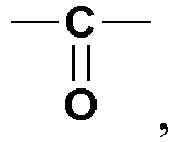
 C1-C4-Alkylen, das mit 0 bis 4 Gruppen substituiert ist, die unabhängig aus Halogen oder OH ausgewählt sind, undC2-C6-Alkenylen, undB ausgewählt ist aus:C6-C10-Aryl, das mit 0 bis 3 Gruppen substituiert ist, die unabhängig ausgewählt sind aus Halogen, C1-C4-Alkoxy, Halo-C1-C4-alkoxy, C1-C4-Alkyl, Halo-C1-C4-alkyl, C3-C6-Cycloalkyl, Cyano, Nitro, NR11R12, OH, C1-C4-Alkylcarbonyloxy-C1-C4-alkyl, Hydroxy-C1-C4-alkyl, COOR14, SO2R14, (C=O)NR11R12, SO2NR11R12, N(R13)(C=O)NR11R12, N(R13)(C=O)OR14, N(R13)(C=O)R14, NR13S(O)R14, NR13SO2R14, O(C=O)NR11R12, O(C=O)OR14, O(C=O)R14, (C=O)OR14 und 5-6-gliedrigem Heteroaryl,5- bis 10-gliedrigem Heteroaryl, das mit 0 bis 3 Gruppen substituiert ist, die unabhängig ausgewählt sind aus Halogen, C1-C4-Alkoxy, Halo-C1-C4-alkoxy, C1-C4-Alkyl, Halo-C1-C4-alkyl, C3-C6-Cycloalkyl, Cyano, Nitro, NR11R12, OH, C1-C4-Alkylcarbonyloxy-C1-C4-alkyl, Hydroxy-C1-C4-alkyl, COOR14, SO2R14, (C=O)NR11R12, SO2NR11R12, N(R13)(C=O)NR11R12, N(R13)(C=O)OR14, N(R13)(C=O)R14, NR13S(O)R14, NR13SO2R14, O(C=O)NR11R12, O(C=O)OR14, O(C=O)R14, (C=O)OR14, 5-6-gliedrigem Heteroaryl und (CH2)-Phenyl,4- bis 10-gliedrigem Heterocyclyl, das Kohlenstoffatome und 1 bis 2 zusätzliche Heteroatome, ausgewählt aus N, O und S, enthält und mit 0 bis 3 Gruppen substituiert ist, die unabhängig ausgewählt sind aus Halogen, Oxo, -(CHR13)n 1-5- oder 6-gliedrigem Heteroaryl, das mit 0 bis 3 Gruppen substituiert ist, die unabhängig ausgewählt sind aus Halogen, C1-C4-Alkoxy, C1-C4-Alkyl, Cyclopropyl, CF3, OCF3 und CF2CH3; NR13S(O)R14, NR13SO2R14, -(CHR13)n 1-4- bis 10-gliedrigem Heterocyclyl, das mit 0 bis 3 Gruppen substituiert ist, die unabhängig ausgewählt sind aus Halogen, C1-C4-Alkoxy, C1-C4-Alkyl, Cyclopropyl, CF3, OCF3 und CF2CH3; OH, Hydroxy-C1-C4-alkyl, C1-C4-Alkoxy, Halo-C1-C4-alkoxy, Di-C1-C4-alkylamino-C1-C4-alkyl, NR11R12, Cyano, C1-C4-Alkyl, Halo-C1-C4-alkyl, C3-C6-Cycloalkyl, C1-C4-Alkoxy-C1-C4-alkyl, C3-C6-Cycloalkyl-C1-C4-alkylcarbonyl, C6-C10-Arylcarbonyl, C1-C4-Alkylcarbonyloxy-C1-C4-alkyl, COOR14, SO2R14, (C=O)NR11R12, SO2NR11R12, N(R13)(C=O)NR11R12, N(R13)(C=O)OR14, N(R13)(C=O)R14, O(C=O)NR11R12, O(C=O)OR14, O(C=O)R14, (C=O)OR14 und C6-C10-Aryl, das mit 0 bis 3 Gruppen substituiert ist, die unabhängig ausgewählt sind aus der Gruppe bestehend aus Halogen, C1-C4-Alkoxy, C1-C4-Alkyl, Cyclopropyl, C1-C4-Alkoxycarbonyl, (C=O)NR11R12, CF3, OCF3 und CF2CH3; undC3-C6-Cycloalkyl, das Ungesättigtheit enthalten kann, substituiert mit 0 bis 3 Gruppen, die unabhängig ausgewählt sind aus Halogen, CF3, OCF3, 5- oder 6-gliedrigem Heteroaryl, OH, Oxo, Hydroxy-C1-C4-alkyl, C6-C10-Aryl, COOH, Oxo, C1-C4-Alkoxycarbonyl, (C=O)NR11R12 und C1-C4-Alkyl;R11 und R12 bei jedem Vorkommen unabhängig ausgewählt sind aus:H,C1-C4-Alkyl,Halo-C1-C4-alkyl,C2-C4-Alkenyl,-(CR14R14)n 1-Phenyl, das mit 0 bis 3 Gruppen substituiert ist, die unabhängig ausgewählt sind aus Halogen, C1-C4-Alkoxy, C1-C4-Alkyl, Cyclopropyl, CF3, OCF3, 5- oder 6-gliedrigem Heteroaryl, OH, OCHF2, Di-C1-C4-alkylamino und Cyano,-(CHR13)n 1-C3-C6-Cycloalkyl, das mit 0 bis 3 Gruppen substituiert ist, die unabhängig ausgewählt sind aus Halogen, CF3, OCF3, 5- oder 6-gliedrigem Heteroaryl, OH, Hydroxy-C1-C4-alkyl und C1-C4-Alkyl,-(CHR13)n 1-4- bis 10-gliedrigem Heterocyclyl, das mit 0 bis 3 Gruppen substituiert ist, die unabhängig ausgewählt sind aus Halogen, CF3, OCF3, 5- oder 6-gliedrigem Heteroaryl, OH, Oxo, Hydroxy-C1-C4-alkyl und C1-C4-Alkyl,-(CHR13)n 1-5- bis 10-gliedrigem Heteroaryl, das mit 0 bis 3 Gruppen substituiert ist, die unabhängig ausgewählt sind aus Halogen, CF3, OCF3, 5- oder 6-gliedrigem Heteroaryl, OH, Hydroxy-C1-C4-alkyl und C1-C4-Alkyl,Di-C1-C4-alkylamino-C1-C4-alkyl,Di-C1-C4-alkoxy-C1-C4-alkyl,Hydroxy-C1-C4-alkyl,C1-C4-Alkoxy-C1-C4-alkyl,C1-C4-Alkoxycarbonyl-C1-C4-alkyl,C1-C4-Alkoxycarbonyl,C1-C4-Alkylcarbonyl, undPhenylcarbonyl;alternativ dazu R11 und R12, wenn sie an denselben Stickstoff gebunden sind, zusammengenommen einen 4- bis 8-gliedrigen heterocyclischen Ring bilden, der Kohlenstoffatome, die mit 0 bis 3 Gruppen substituiert sind, die unabhängig ausgewählt sind aus Halogen, CF3, CHF2, OCF3, OCHF2, OCH2F, 5- oder 6-gliedrigem Heteroaryl, OH, Oxo, Hydroxy-C1-C4-alkyl, C1-C4-Alkyl und C1-C4-Alkoxy, und 0 bis 2 zusätzliche Heteroatome, ausgewählt aus N, NR13, O und S(O)p enthält;R13 bei jedem Vorkommen unabhängig ausgewählt ist aus H und C1-C3-Alkyl;R14 bei jedem Vorkommen unabhängig ausgewählt ist aus H, C1-C3-Alkyl, Halo-C1-C2-alkyl;R7 ausgewählt ist aus H, Fluor, Chlor, Oxo, C1-C3-Alkyl, Hydroxy-C1-C3-alkyl und Halo-C1-C2-alkyl, das 1 bis 5 Halogene enthält,n1 bei jedem Vorkommen ausgewählt ist aus 0, 1, 2 oder 3; undp bei jedem Vorkommen ausgewählt ist aus 0, 1 und 2.
 - Verbindung nach Anspruch 1, oder ein Stereoisomer, Tautomer, pharmazeutisch verträgliches Salz oder Solvat davon, worin:W O ist;R0 R1 ist;Y S oder CH=CH- ist;R1 unabhängig ausgewählt ist aus:Chlor,CH3,OCH3,SCH3CHFCH3, undCF2CH3;R2 H ist:X1 CH ist;X2 und X4 CH sind;X3 CR3 ist;R3 ausgewählt ist aus OCH3, Fluor und Chlor;R4 und R5 unabhängig ausgewählt sind aus H und CH3;
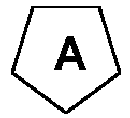 R6 ausgewählt ist aus NR11R12, und C1-C5-Alkyl, das mit 0 bis 3 Gruppen substituiert ist, die unabhängig ausgewählt sind aus Halogen, CF3, OCF3, OH, Hydroxy-C1-C4-alkyl, C1-C4-Alkoxy, C1-C4-Alkoxy-C1-C4-alkoxy, Di-C1-C4-alkylaminophenyl-C1-C4-alkyl, (Di-C1-C4-alkoxy-C1-C4-alkyl)-C1-C4-alkyl, Di-C1-C4-alkylamino, C3-C6-Cycloalkyl und C1-C4-Alkylthio, oderR6 B-D- ist, worin D eine Einfachbindung ist;B ausgewählt ist aus:C6-C10-Aryl, das mit 0 bis 3 Gruppen substituiert ist, die unabhängig ausgewählt sind aus Halogen, C1-C4-Alkoxy, Halo-C1-C4-alkoxy, C1-C4-Alkyl, Halo-C1-C4-alkyl, C3-C6-Cycloalkyl, Cyano, Nitro, NR11R12, OH, C1-C4-Alkylcarbonyloxy-C1-C4-alkyl, Hydroxy-C1-C4-alkyl, COOR14, SO2R14, (C=O)NR11R12, SO2NR11R12, N(R13)(C=O)NR11R12, N(R13)(C=O)OR14, N(R13)(C=O)R14, NR13S(O)R14, NR13SO2R14, O(C=O)NR11R12, O(C=O)OR14, O(C=O)R14, (C=O)OR14 und 5-6-gliedrigem Heteroaryl,5- bis 10-gliedrigem Heteroaryl, das mit 0 bis 3 Gruppen substituiert ist, die unabhängig ausgewählt sind aus Halogen, C1-C4-Alkoxy, Halo-C1-C4-alkoxy, C1-C4-Alkyl, Halo-C1-C4-alkyl, C3-C6-Cycloalkyl, Cyano, Nitro, NR11R12, OH, C1-C4-Alkylcarbonyloxy-C1-C4-alkyl, Hydroxy-C1-C4-alkyl, COOR14, SO2R14, (C=O)NR11R12, SO2NR11R12, N(R13)(C=O)NR11R12, N(R13)(C=O)OR14, N(R13)(C=O)R14, NR13S(O)R14, NR13SO2R14, O(C=O)NR11R12, O(C=O)OR14, O(C=O)R14, (C=O)OR14, 5-6-gliedrigem Heteroaryl und (CH2)-Phenyl,4- bis 10-gliedrigem Heterocyclyl, das Kohlenstoffatome und 1 bis 2 zusätzliche Heteroatome, ausgewählt aus N, O und S, enthält und mit 0 bis 3 Gruppen substituiert ist, die unabhängig ausgewählt sind aus Halogen, Oxo, -(CHR13)n 1-5- oder 6-gliedrigem Heteroaryl, das mit 0 bis 3 Gruppen substituiert ist, die unabhängig ausgewählt sind aus Halogen, C1-C4-Alkoxy, C1-C4-Alkyl, Cyclopropyl, CF3, OCF3 und CF2CH3; NR13S(O)R14, NR13SO2R14, -(CHR13)n 1-4- bis 10-gliedrigem Heterocyclyl, das mit 0 bis 3 Gruppen substituiert ist, die unabhängig ausgewählt sind aus Halogen, C1-C4-Alkoxy, C1-C4-Alkyl, Cyclopropyl, CF3, OCF3 und CF2CH3; OH, Hydroxy-C1-C4-alkyl, C1-C4-Alkoxy, Halo-C1-C4-alkoxy, Di-C1-C4-alkylamino-C1-C4-alkyl, NR11R12, Cyano, C1-C4-Alkyl, Halo-C1-C4-alkyl, C3-C6-Cycloalkyl, C1-C4-Alkoxy-C1-C4-alkyl, C3-C6-Cycloalkyl-C1-C4-alkylcarbonyl, C6-C10-Arylcarbonyl, C1-C4-Alkylcarbonyloxy-C1-C4-alkyl, COOR14, SO2R14, (C=O)NR11R12, SO2NR11R12, N(R13)(C=O)NR11R12, N(R13)(C=O)OR14, N(R13)(C=O)R14, O(C=O)NR11R12, O(C=O)OR14, O(C=O)R14, (C=O)OR14 und C6-C10-Aryl, das mit 0 bis 3 Gruppen substituiert ist, die unabhängig ausgewählt sind aus Halogen, C1-C4-Alkoxy, C1-C4-Alkyl, Cyclopropyl, C1-C4-Alkoxycarbonyl, (C=O)NR11R12, CF3, OCF3 und CF2CH3; undC3-C6-Cycloalkyl, das Ungesättigtheit enthalten kann, substituiert mit 0 bis 3 Gruppen, die unabhängig ausgewählt sind aus Halogen, CF3, OCF3, 5- oder 6-gliedrigem Heteroaryl, OH, Oxo, Hydroxy-C1-C4-alkyl, C6-C10-Aryl, COOH, Oxo, C1-C4-Alkoxycarbonyl, (C=O)NR11R12 und C1-C4-Alkyl;R11 und R12 bei jedem Vorkommen unabhängig ausgewählt sind aus:H,C1-C4-Alkyl,Halo-C1-C4-alkyl,Di-C1-C4-alkylamino-C1-C4-alkyl,Di-C1-C4-alkoxy-C1-C4-alkyl,Hydroxy-C1-C4-alkyl,C1-C4-Alkoxy-C1-C4-alkyl,C1-C4-Alkoxycarbonyl-C1-C4-alkyl, undC1-C4-Alkoxycarbonyl;alternativ dazu R11 und R12, wenn sie an denselben Stickstoff gebunden sind, zusammengenommen einen 4- bis 7-gliedrigen heterocyclischen Ring bilden, der Kohlenstoffatome, die mit 0 bis 2 Gruppen substituiert sind, die unabhängig ausgewählt sind aus Halogen, CF3, CHF2, OCF3, OCHF2, OCH2F, OH, Oxo, Hydroxy-C1-C2-Alkyl, C1-C3-Alkyl und C1-C3-Alkoxy, und 0 bis 2 zusätzliche Heteroatome, ausgewählt aus N, NR13, O und S(O)p enthält;R13 bei jedem Vorkommen unabhängig ausgewählt ist aus H und C1-C3-Alkyl;R14 bei jedem Vorkommen unabhängig ausgewählt ist aus H, C1-C3-Alkyl;R7 ausgewählt ist aus H, Fluor, Chlor, C1-C3-Alkyl, Hydroxy-C1-C3-alkyl, und Halo-C1-C2-alkyl, das 1 bis 5 Halogene enthält;n1 bei jedem Vorkommen ausgewählt ist aus 0, 1, 2 oder 3; undp bei jedem Vorkommen ausgewählt ist aus 0, 1 und 2.
 - Verbindung nach Anspruch 1 mit der folgenden Formel:

- Verbindung nach Anspruch 1 mit der folgenden Formel:
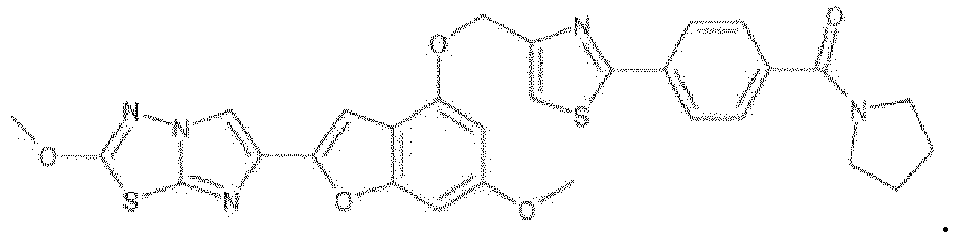
- Verbindung nach Anspruch 1 mit der folgenden Formel:

- Verbindung nach Anspruch 1 mit der folgenden Formel:

- Pharmazeutische Zusammensetzung, die einen pharmazeutisch verträglichen Träger und eine Verbindung nach einem der Ansprüche 1 bis 3 umfasst oder Stereoisomere, Tautomere, pharmazeutisch verträgliche Salze oder Solvate davon, allein oder in Kombination mit einem anderen therapeutischen Wirkstoff.
- Pharmazeutische Zusammensetzung, die einen pharmazeutisch verträglichen Träger und eine Verbindung nach einem der Ansprüche 4 bis 7 umfasst, allein oder in Kombination mit einem anderen therapeutischen Wirkstoff.
- Verbindung nach einem der Ansprüche 1 bis 3, oder Stereoisomere, Tautomere, pharmazeutisch verträgliche Salze oder Solvate davon, zur Verwendung in der Therapie.
- Verbindung nach einem der Ansprüche 1 bis 3 oder Stereoisomere, Tautomere, pharmazeutisch verträgliche Salze oder Solvate davon zur Verwendung bei der Behandlung einer thromboembolischen Störung oder bei der primären oder sekundären Prophylaxe einer thromboembolischen Störung.
- Verbindung zur Verwendung nach Anspruch 11, wobei die thromboembolische Störung ausgewählt ist aus arteriellen kardiovaskulären thromboembolischen Störungen, venösen kardiovaskulären thromboembolischen Störungen, cerebrovaskulären thromboembolischen Störungen und thromboembolischen Störungen in den Herzkammern oder im peripheren Kreislauf.
- Verbindung nach einem der Ansprüche 4 bis 7 zur Verwendung in der Therapie.
- Verbindung nach einem der Ansprüche 4 bis 7 zur Verwendung bei der Behandlung einer thromboembolischen Störung oder bei der primären oder sekundären Prophylaxe einer thromboembolischen Störung.
- Verbindung zur Verwendung nach Anspruch 14, wobei die thromboembolische Störung ausgewählt ist aus arteriellen kardiovaskulären thromboembolischen Störungen, venösen kardiovaskulären thromboembolischen Störungen, cerebrovaskulären thromboembolischen Störungen und thromboembolischen Störungen in den Herzkammern oder im peripheren Kreislauf.
Priority Applications (7)
| Application Number | Priority Date | Filing Date | Title |
|---|---|---|---|
| SM20200049T SMT202000049T1 (it) | 2012-04-26 | 2013-04-24 | Derivati imidazotiadiazolici e imidazopirazinici come inibitori del recettore attivato da proteasi 4 (par4) per il trattamento dell'aggregazione piastrinica |
| DK19192142.8T DK3632919T3 (da) | 2012-04-26 | 2013-04-24 | Farmaceutiske sammensætninger omfattende imidazothiadiazol- og imidazopyrazinderivater som proteaseaktiverede receptor 4-(par4)- hæmmere til behandling af blodpladeaggregering |
| RS20191664A RS59882B1 (sr) | 2012-04-26 | 2013-04-24 | Derivati imidazotiadiazola i imidazopirazina kao inhibitori proteazom aktiviranog receptora 4 (par4) za lečenje agregacije trombocita |
| EP19192142.8A EP3632919B1 (de) | 2012-04-26 | 2013-04-24 | Pharmazeutische zusammensetungen enthaltend imidazothiadiazol- und imidazopyridazinderivate als proteaseaktivierte rezeptor 4 (par4)-inhibitoren zur behandlung von thrombozytenaggregation |
| SI201331625T SI3243826T1 (sl) | 2012-04-26 | 2013-04-24 | Derivati imidazotiadiazola in imidazopirazina kot proteazno aktivirani receptor 4 (PAR4) inhibitorji za zdravljenje agregacije trombocitov |
| PL17172927T PL3243826T3 (pl) | 2012-04-26 | 2013-04-24 | Pochodne imidazotiadiazolu i imidazopirazyny jako inhibitory receptora 4 (par4) aktywowanego proteazą do leczenia agregacji płytek |
| HRP20192336TT HRP20192336T1 (hr) | 2012-04-26 | 2019-12-30 | Derivati imidazotiadiazola i imidazopirazina kao inhibitori proteazom aktiviranog receptora 4 (par4) za liječenje agregacije trombocita |
Applications Claiming Priority (4)
| Application Number | Priority Date | Filing Date | Title |
|---|---|---|---|
| US201261638577P | 2012-04-26 | 2012-04-26 | |
| US201361787680P | 2013-03-15 | 2013-03-15 | |
| PCT/US2013/037956 WO2013163279A1 (en) | 2012-04-26 | 2013-04-24 | Imidazothiadiazole and imidazopyrazine derivatives as protease activated receptor 4 (par4) inhibitors for treating platelet aggregation |
| EP13721857.4A EP2841437B1 (de) | 2012-04-26 | 2013-04-24 | Imidazothiadiazol- und imidazopyrazinderivate als proteaseaktivierte rezeptor 4 (par4)-inhibitoren zur behandlung von thrombozytenaggregation |
Related Parent Applications (2)
| Application Number | Title | Priority Date | Filing Date |
|---|---|---|---|
| EP13721857.4A Division-Into EP2841437B1 (de) | 2012-04-26 | 2013-04-24 | Imidazothiadiazol- und imidazopyrazinderivate als proteaseaktivierte rezeptor 4 (par4)-inhibitoren zur behandlung von thrombozytenaggregation |
| EP13721857.4A Division EP2841437B1 (de) | 2012-04-26 | 2013-04-24 | Imidazothiadiazol- und imidazopyrazinderivate als proteaseaktivierte rezeptor 4 (par4)-inhibitoren zur behandlung von thrombozytenaggregation |
Related Child Applications (2)
| Application Number | Title | Priority Date | Filing Date |
|---|---|---|---|
| EP19192142.8A Division EP3632919B1 (de) | 2012-04-26 | 2013-04-24 | Pharmazeutische zusammensetungen enthaltend imidazothiadiazol- und imidazopyridazinderivate als proteaseaktivierte rezeptor 4 (par4)-inhibitoren zur behandlung von thrombozytenaggregation |
| EP19192142.8A Division-Into EP3632919B1 (de) | 2012-04-26 | 2013-04-24 | Pharmazeutische zusammensetungen enthaltend imidazothiadiazol- und imidazopyridazinderivate als proteaseaktivierte rezeptor 4 (par4)-inhibitoren zur behandlung von thrombozytenaggregation |
Publications (2)
| Publication Number | Publication Date |
|---|---|
| EP3243826A1 EP3243826A1 (de) | 2017-11-15 |
| EP3243826B1 true EP3243826B1 (de) | 2019-10-30 |
Family
ID=48407806
Family Applications (3)
| Application Number | Title | Priority Date | Filing Date |
|---|---|---|---|
| EP13721857.4A Active EP2841437B1 (de) | 2012-04-26 | 2013-04-24 | Imidazothiadiazol- und imidazopyrazinderivate als proteaseaktivierte rezeptor 4 (par4)-inhibitoren zur behandlung von thrombozytenaggregation |
| EP17172927.0A Active EP3243826B1 (de) | 2012-04-26 | 2013-04-24 | Imidazothiadiazol- und imidazopyrazinderivate als proteaseaktivierte rezeptor 4 (par4)-inhibitoren zur behandlung von thrombozytenaggregation |
| EP19192142.8A Active EP3632919B1 (de) | 2012-04-26 | 2013-04-24 | Pharmazeutische zusammensetungen enthaltend imidazothiadiazol- und imidazopyridazinderivate als proteaseaktivierte rezeptor 4 (par4)-inhibitoren zur behandlung von thrombozytenaggregation |
Family Applications Before (1)
| Application Number | Title | Priority Date | Filing Date |
|---|---|---|---|
| EP13721857.4A Active EP2841437B1 (de) | 2012-04-26 | 2013-04-24 | Imidazothiadiazol- und imidazopyrazinderivate als proteaseaktivierte rezeptor 4 (par4)-inhibitoren zur behandlung von thrombozytenaggregation |
Family Applications After (1)
| Application Number | Title | Priority Date | Filing Date |
|---|---|---|---|
| EP19192142.8A Active EP3632919B1 (de) | 2012-04-26 | 2013-04-24 | Pharmazeutische zusammensetungen enthaltend imidazothiadiazol- und imidazopyridazinderivate als proteaseaktivierte rezeptor 4 (par4)-inhibitoren zur behandlung von thrombozytenaggregation |
Country Status (36)
| Country | Link |
|---|---|
| US (6) | US9688695B2 (de) |
| EP (3) | EP2841437B1 (de) |
| JP (1) | JP6073464B2 (de) |
| KR (3) | KR102098804B1 (de) |
| CN (2) | CN108383858B (de) |
| AR (1) | AR090834A1 (de) |
| AU (1) | AU2013251632B2 (de) |
| BR (1) | BR112014026643B1 (de) |
| CA (1) | CA2871650C (de) |
| CL (1) | CL2014002915A1 (de) |
| CO (1) | CO7160040A2 (de) |
| CY (2) | CY1119466T1 (de) |
| DK (3) | DK2841437T3 (de) |
| EA (1) | EA026724B1 (de) |
| ES (3) | ES2770026T3 (de) |
| FI (1) | FI3632919T3 (de) |
| HR (3) | HRP20221495T1 (de) |
| HU (3) | HUE048654T2 (de) |
| IL (1) | IL235246B (de) |
| LT (2) | LT2841437T (de) |
| MX (1) | MX354175B (de) |
| MY (1) | MY175061A (de) |
| NZ (1) | NZ631027A (de) |
| PE (1) | PE20142285A1 (de) |
| PH (1) | PH12014502173B1 (de) |
| PL (3) | PL3632919T3 (de) |
| PT (3) | PT3243826T (de) |
| RS (3) | RS59882B1 (de) |
| SG (1) | SG11201406757SA (de) |
| SI (3) | SI3243826T1 (de) |
| SM (3) | SMT202000049T1 (de) |
| TN (1) | TN2014000436A1 (de) |
| TW (1) | TWI572605B (de) |
| UY (1) | UY34763A (de) |
| WO (1) | WO2013163279A1 (de) |
| ZA (1) | ZA201407799B (de) |
Families Citing this family (43)
| Publication number | Priority date | Publication date | Assignee | Title |
|---|---|---|---|---|
| BR112014026651A8 (pt) | 2012-04-26 | 2018-01-16 | Bristol Myers Squibb Co | derivados de imidazotiadiazol e de imidazopiridazina como inibidores do receptor ativado por proteases 4 (par4) para o tratamento de agregação plaquetária |
| LT2841437T (lt) * | 2012-04-26 | 2017-09-11 | Bristol-Myers Squibb Company | Imidazotiadiazolo ir imidazopirazino dariniai, kaip proteazės aktyvuotų receptorių 4 (par4) inhibitoriai, skirti trombocitų agregacijos gydymui |
| WO2013163244A1 (en) * | 2012-04-26 | 2013-10-31 | Bristol-Myers Squibb Company | Imidazothiadiazole derivatives as protease activated receptor 4 (par4) inhibitors for treating platelet aggregation |
| TWI568722B (zh) | 2012-06-15 | 2017-02-01 | 葛蘭馬克製藥公司 | 作爲mPGES-1抑制劑之三唑酮化合物 |
| JP6437452B2 (ja) | 2013-01-14 | 2018-12-12 | インサイト・ホールディングス・コーポレイションIncyte Holdings Corporation | Pimキナーゼ阻害剤として有用な二環式芳香族カルボキサミド化合物 |
| RS60244B1 (sr) | 2013-01-15 | 2020-06-30 | Incyte Holdings Corp | Jedinjenja tiazolkarboksamida i piridinkarboksamida korisna kao inhibitori pim kinaze |
| CN105658653A (zh) | 2013-08-23 | 2016-06-08 | 因赛特公司 | 可用作pim激酶抑制剂的呋喃并-和噻吩并-吡啶甲酰胺化合物 |
| US9598419B1 (en) | 2014-06-24 | 2017-03-21 | Universite De Montreal | Imidazotriazine and imidazodiazine compounds |
| US9617279B1 (en) | 2014-06-24 | 2017-04-11 | Bristol-Myers Squibb Company | Imidazooxadiazole compounds |
| WO2016010897A1 (en) | 2014-07-14 | 2016-01-21 | Incyte Corporation | Bicyclic heteroaromatic carboxamide compounds useful as pim kinase inhibitors |
| US9580418B2 (en) | 2014-07-14 | 2017-02-28 | Incyte Corporation | Bicyclic aromatic carboxamide compounds useful as Pim kinase inhibitors |
| EP3262052A1 (de) | 2015-02-26 | 2018-01-03 | Bristol-Myers Squibb Company | Benzothiazol-und benzothiophenverbindungen |
| ES2929208T3 (es) | 2015-02-26 | 2022-11-25 | Univ Montreal | Compuestos de imidazotiadiazol como inhibidores de PAR4 |
| WO2016196244A1 (en) | 2015-05-29 | 2016-12-08 | Incyte Corporation | Pyridineamine compounds useful as pim kinase inhibitors |
| US9789087B2 (en) | 2015-08-03 | 2017-10-17 | Thomas Jefferson University | PAR4 inhibitor therapy for patients with PAR4 polymorphism |
| TWI734699B (zh) | 2015-09-09 | 2021-08-01 | 美商英塞特公司 | Pim激酶抑制劑之鹽 |
| US9920032B2 (en) | 2015-10-02 | 2018-03-20 | Incyte Corporation | Heterocyclic compounds useful as pim kinase inhibitors |
| US10329307B2 (en) | 2015-10-19 | 2019-06-25 | Universite De Montreal | Heterocyclic compounds as inhibitors of platelet aggregation |
| US9963466B2 (en) | 2016-03-07 | 2018-05-08 | Vanderbilt University | Substituted 5-membered heterocyclic analogs as protease activated receptor 4 (PAR-4) antagonists |
| US20190119300A1 (en) * | 2016-04-18 | 2019-04-25 | Vanderbilt University | Substituted and fused 6-membered protease activated receptor 4 (par-4) antagonists |
| KR102494647B1 (ko) * | 2016-07-14 | 2023-01-31 | 브리스톨-마이어스 스큅 컴퍼니 | 비시클릭 헤테로아릴 치환된 화합물 |
| CN109689664B (zh) | 2016-07-14 | 2022-04-15 | 百时美施贵宝公司 | 作为par4抑制剂的三环杂芳基取代的喹啉和氮杂喹啉化合物 |
| US10815224B2 (en) | 2016-07-14 | 2020-10-27 | Bristol-Myers Squibb Company | Monocyclic heteroaryl substituted compounds |
| US20190292176A1 (en) * | 2016-07-14 | 2019-09-26 | Bistol-Myers Squibb Company | Bicyclic heteroaryl substituted compounds |
| CN108239083B (zh) | 2016-12-26 | 2021-08-17 | 阿里根公司 | 芳香烃受体调节剂 |
| EP3713937A2 (de) | 2017-11-20 | 2020-09-30 | Ariagen, Inc. | Indolverbindungen als modulatoren des aryl-kohlenwasserstoff-rezeptors (ahr) |
| AR113922A1 (es) | 2017-12-08 | 2020-07-01 | Incyte Corp | Terapia de combinación de dosis baja para el tratamiento de neoplasias mieloproliferativas |
| CN111094300B (zh) * | 2018-01-31 | 2022-09-16 | 江苏恒瑞医药股份有限公司 | 苯并杂芳基类衍生物、其制备方法及其在医药上的应用 |
| CN110218218B (zh) * | 2018-03-01 | 2022-04-08 | 江苏恒瑞医药股份有限公司 | 苯并呋喃类衍生物、其制备方法及其在医药上的应用 |
| CN110272436A (zh) * | 2018-03-14 | 2019-09-24 | 中国药科大学 | 氘代的咪唑并噻二唑衍生物及其医药用途 |
| WO2019218957A1 (zh) * | 2018-05-16 | 2019-11-21 | 深圳信立泰药业股份有限公司 | 作为用于治疗血小板聚集的蛋白酶激活受体4(par4)抑制剂的化合物 |
| CN112074521B (zh) * | 2018-05-16 | 2022-08-09 | 深圳信立泰药业股份有限公司 | 作为用于治疗血小板聚集的蛋白酶激活受体4(par4)抑制剂的化合物 |
| CN110627817B (zh) * | 2018-06-25 | 2022-03-29 | 中国药科大学 | 咪唑并环类par4拮抗剂及其医药用途 |
| WO2020045638A1 (ja) * | 2018-08-30 | 2020-03-05 | 日本メジフィジックス株式会社 | 放射性イミダゾチアジアゾール誘導体化合物 |
| US20230054194A1 (en) | 2018-11-19 | 2023-02-23 | Ariagen, Inc. | Methods of Treating Cancer |
| PT3898638T (pt) * | 2018-12-21 | 2023-11-13 | Bristol Myers Squibb Co | Formas cristalinas de um inibidor de par4 |
| CN111349105B (zh) * | 2018-12-24 | 2023-04-07 | 江苏恒瑞医药股份有限公司 | 苯并呋喃类衍生物、其制备方法及其在医药上的应用 |
| CN111362970A (zh) * | 2018-12-25 | 2020-07-03 | 天津药物研究院有限公司 | 苯并呋喃类衍生物及其制备方法和用途 |
| CA3137027A1 (en) | 2019-04-15 | 2020-10-22 | Ariagen, Inc. | Chiral indole compounds and their use |
| EP3782702A1 (de) * | 2019-08-21 | 2021-02-24 | AC BioScience SA | Verbindungen und verwendung davon zur behandlung von infektionskrankheiten und krebs |
| CN112079791A (zh) * | 2020-08-21 | 2020-12-15 | 宁夏农林科学院农业资源与环境研究所(宁夏土壤与植物营养重点实验室) | 单环β-内酰胺类抗生素侧链酸及其酯、其制备方法和应用 |
| CN113150005B (zh) * | 2021-04-09 | 2022-08-30 | 中国药科大学 | 喹喔啉类化合物、制备方法及其在医药上的应用 |
| US12077607B2 (en) | 2021-09-23 | 2024-09-03 | University Of Utah Research Foundation | Functional and therapeutic effects of PAR4 cleavage by cathepsin G |
Family Cites Families (61)
| Publication number | Priority date | Publication date | Assignee | Title |
|---|---|---|---|---|
| DE2823686A1 (de) * | 1978-05-31 | 1979-12-06 | Bayer Ag | Imidazo eckige klammer auf 2.1-b eckige klammer zu eckige klammer auf 1.3.4 eckige klammer zu -thiadiazole |
| DE3020421A1 (de) | 1980-05-29 | 1981-12-10 | Bayer Ag, 5090 Leverkusen | Imidazoazolalkensaeureamide, neue zwischenprodukte zu ihrer herstellung, ihre herstellung und ihre verwendung in arzneimitteln |
| NO811630L (no) | 1980-05-29 | 1981-11-30 | Bayer Ag | Imidazoazolalkensyreamider, nye mellomprodukter for deres fremstilling, deres fremstilling og deres anvendelse som legemiddel |
| DE3446778A1 (de) | 1984-12-21 | 1986-07-03 | Dr. Karl Thomae Gmbh, 7950 Biberach | Neue imidazoderivate, ihre herstellung und diese verbindungen enthaltende arzneimittel |
| US4925849A (en) | 1987-06-15 | 1990-05-15 | Fujisawa Pharmaceutical Company, Ltd. | Pharmaceutically useful pyrazolopyridines |
| GB8901423D0 (en) | 1989-01-23 | 1989-03-15 | Fujisawa Pharmaceutical Co | Pyrazolopyridine compound and processes for preparation thereof |
| DE69232323T2 (de) | 1991-01-29 | 2002-08-08 | Fujisawa Pharmaceutical Co., Ltd. | Verwendung von Adenosinantagonisten zur Vorbeugung und Behandlung von Pankreatitis und Ulcera |
| US5342851A (en) * | 1992-10-07 | 1994-08-30 | Mcneil-Ppc, Inc. | Substituted thiazole derivatives useful as platelet aggregation inhibitors |
| JP2928079B2 (ja) | 1994-02-14 | 1999-07-28 | 永信薬品工業股▲ふん▼有限公司 | 1−(置換ベンジル)−3−(置換アリール)縮合ピラゾール類、その製造法及びその用途 |
| ATE451346T1 (de) | 1998-03-10 | 2009-12-15 | Ono Pharmaceutical Co | Carbonsäurederivate und medikamente die diese als aktiven wirkstoff enthalten |
| DE50015443D1 (de) | 1999-10-08 | 2008-12-18 | Gruenenthal Gmbh | Bicyclische imidazo-5-yl-aminderivate |
| DE19948434A1 (de) | 1999-10-08 | 2001-06-07 | Gruenenthal Gmbh | Substanzbibliothek enthaltend bicyclische Imidazo-5-amine und/oder bicyclische Imidazo-3-amine |
| DE10019714A1 (de) | 2000-04-20 | 2002-01-10 | Gruenenthal Gmbh | Salze von bicyclischen, N-acylierten Imidazo-3-aminen und Imidazo-5-aminen |
| US6387942B2 (en) | 2000-06-19 | 2002-05-14 | Yung Shin Pharmaceutical Ind. Co. Ltd | Method of treating disorders related to protease-activated receptors-induced cell activation |
| EP1442028A4 (de) | 2001-11-06 | 2009-11-04 | Bristol Myers Squibb Co | Substituierte säurederivate, die sich als antidiabetika und mittel gegen obesitas eignen, und verfahren |
| CA2364985A1 (en) | 2001-12-14 | 2003-06-14 | John W. Gillard | Imidazo(2,1-b)thiadiazole sulfonamides |
| WO2004063159A1 (ja) | 2003-01-10 | 2004-07-29 | Idemitsu Kosan Co., Ltd. | 含窒素複素環誘導体及びそれを用いた有機エレクトロルミネッセンス素子 |
| WO2004111061A1 (en) | 2003-06-13 | 2004-12-23 | Aegera Therapeutics Inc. | ACYLATED AND NON-ACYLATED IMIDAZO[2,1-b]-1,3,4,-THIADIAZOLE-2-SULFONAMIDES, AND USES THEREOF |
| EP1636241A1 (de) | 2003-06-13 | 2006-03-22 | Aegera Therapeutics Inc. | Imidazo[2,1-b]-1,3,4-thiadazolsulfoxide und sulfone |
| CN1897939A (zh) | 2003-10-31 | 2007-01-17 | 詹森药业有限公司 | 适用作过氧化物酶体增生物激活受体(ppar)双重激动剂的苯氧基乙酸衍生物 |
| US20050192314A1 (en) | 2003-11-13 | 2005-09-01 | Ambit Biosciences Corporation | Urea derivatives as C-kit modulators |
| US20090023737A1 (en) | 2004-02-12 | 2009-01-22 | Neurogen Corporation | Imidazo-Pyridazines, Triazolo-Pyridazines and Related Benzodiazepine Receptor Ligands |
| US7803822B2 (en) | 2005-04-06 | 2010-09-28 | Takeda Pharmaceutical Company Limited | Triazole derivative and use thereof |
| EP1893245A4 (de) | 2005-06-24 | 2009-06-24 | Univ Pennsylvania | Radioaktiv markierte pegylierung von liganden zur verwendung als kontrastmittel |
| JP2009509988A (ja) | 2005-09-29 | 2009-03-12 | サノフィ−アベンティス | フェニル−及びピリジニル−1,2,4−オキサジアゾロン誘導体、その製造方法、及び医薬品としてのその使用 |
| NL2000397C2 (nl) | 2006-01-05 | 2007-10-30 | Pfizer Prod Inc | Bicyclische heteroarylverbindingen als PDE10 inhibitoren. |
| CA2646430A1 (en) | 2006-03-14 | 2007-09-20 | Amgen Inc. | Bicyclic carboxylic acid derivatives useful for treating metabolic disorders |
| CA2584745A1 (en) | 2006-04-13 | 2007-10-13 | Aegera Therapeutics Inc. | Use of imidazo(2,1-b) -1,3,4-thiadiazole-2-sulfonamide compounds to treat neuropathic pain |
| DE102006054757A1 (de) | 2006-11-21 | 2008-05-29 | Bayer Healthcare Ag | Neue aza-bicyclische Verbindungen und ihre Verwendung |
| US7638541B2 (en) | 2006-12-28 | 2009-12-29 | Metabolex Inc. | 5-ethyl-2-{4-[4-(4-tetrazol-1-yl-phenoxymethyl)-thiazol-2-yl]-piperidin-1-yl}-pyrimidine |
| EP1964841A1 (de) | 2007-02-28 | 2008-09-03 | sanofi-aventis | Imidazo[1,2-a]azine und deren pharmazeutische Verwendung |
| CN101855222A (zh) | 2007-05-10 | 2010-10-06 | 通用电气健康护理有限公司 | 对大麻素cb2受体具有活性的咪唑并(1,2-a)吡啶和相关化合物 |
| WO2009017954A1 (en) | 2007-08-01 | 2009-02-05 | Phenomix Corporation | Inhibitors of jak2 kinase |
| WO2009023179A2 (en) | 2007-08-10 | 2009-02-19 | Genelabs Technologies, Inc. | Nitrogen containing bicyclic chemical entities for treating viral infections |
| WO2009027733A1 (en) | 2007-08-24 | 2009-03-05 | Astrazeneca Ab | (2-pyridin-3-ylimidazo[1,2-b]pyridazin-6-yl) urea derivatives as antibacterial agents |
| GB0718735D0 (en) | 2007-09-25 | 2007-11-07 | Prolysis Ltd | Antibacterial agents |
| AU2008340182A1 (en) | 2007-12-21 | 2009-07-02 | The University Of Sydney | Translocator protein ligands |
| BRPI0909469A2 (pt) | 2008-03-31 | 2015-12-29 | Metabolex Inc | compostos de oximetileno de arila e usos dos mesmos |
| EP2318415B1 (de) | 2008-07-15 | 2013-02-20 | Sanofi | Oxazolopyrimidine als edg-1-rezeptoragonisten |
| WO2010036629A2 (en) | 2008-09-26 | 2010-04-01 | National Health Research Institutes | Fused multicyclic compounds as protein kinase inhibitors |
| CA2740193A1 (en) | 2008-12-23 | 2010-07-01 | Abbott Laboratories | Anti-viral compounds |
| KR101552760B1 (ko) | 2009-12-18 | 2015-09-11 | 미쓰비시 타나베 파마 코퍼레이션 | 신규 항혈소판약 |
| CN102372701A (zh) | 2010-08-10 | 2012-03-14 | 江苏恒瑞医药股份有限公司 | 氮杂双环己烷类衍生物、其制备方法及其在医药上的应用 |
| MX2013001660A (es) | 2010-08-11 | 2013-06-03 | Millenium Pharmaceuticals Inc | Heteroarilos y usos de los mismos. |
| RU2014111055A (ru) | 2011-08-22 | 2015-09-27 | Мерк Шарп И Доум Корп. | 2-спирозамещенные иминотиазины и их моно- и диоксиды в качестве ингибиторов bace, композиции и их применение |
| WO2013163244A1 (en) * | 2012-04-26 | 2013-10-31 | Bristol-Myers Squibb Company | Imidazothiadiazole derivatives as protease activated receptor 4 (par4) inhibitors for treating platelet aggregation |
| CA2871640A1 (en) | 2012-04-26 | 2013-10-31 | Bristol-Myers Squibb Company | Par4 agonist peptides |
| BR112014026651A8 (pt) | 2012-04-26 | 2018-01-16 | Bristol Myers Squibb Co | derivados de imidazotiadiazol e de imidazopiridazina como inibidores do receptor ativado por proteases 4 (par4) para o tratamento de agregação plaquetária |
| LT2841437T (lt) * | 2012-04-26 | 2017-09-11 | Bristol-Myers Squibb Company | Imidazotiadiazolo ir imidazopirazino dariniai, kaip proteazės aktyvuotų receptorių 4 (par4) inhibitoriai, skirti trombocitų agregacijos gydymui |
| SG11201406526WA (en) | 2012-04-27 | 2014-11-27 | Novartis Ag | Cyclic bridgehead ether dgat1 inhibitors |
| PT2861579T (pt) | 2012-05-15 | 2018-04-27 | Novartis Ag | Derivados de benzamida para inibir a atividade de abl1, abl2 e bcr-abl |
| WO2013177188A1 (en) | 2012-05-22 | 2013-11-28 | Idenix Pharmaceuticals, Inc. | 3',5'-cyclic phosphoramidate prodrugs for hcv infection |
| TWI568722B (zh) | 2012-06-15 | 2017-02-01 | 葛蘭馬克製藥公司 | 作爲mPGES-1抑制劑之三唑酮化合物 |
| HRP20180936T1 (hr) | 2012-06-21 | 2018-12-14 | Indiana University Research And Technology Corporation | Analozi glukagona koji pokazuju aktivnost prema receptoru za gip |
| TW201408652A (zh) | 2012-07-11 | 2014-03-01 | Hoffmann La Roche | 作爲RORc調節劑之芳基磺內醯胺衍生物 |
| TW201414737A (zh) | 2012-07-13 | 2014-04-16 | 必治妥美雅史谷比公司 | 作爲激酶抑制劑之咪唑并三□甲腈 |
| US9605002B2 (en) | 2012-07-18 | 2017-03-28 | University Of Notre Dame Du Lac | 5,5-heteroaromatic anti-infective compounds |
| TW201422592A (zh) | 2012-08-27 | 2014-06-16 | Boehringer Ingelheim Int | β-分泌酶抑制劑 |
| BR112015008325B1 (pt) | 2012-10-16 | 2022-01-25 | Janssen Sciences Ireland Uc | Compostos antivirais contra o rsv, seu uso e composição farmacêutica que os compreende |
| HK1212348A1 (en) | 2012-12-19 | 2016-06-10 | Novartis Ag | Autotaxin inhibitors |
| EA030003B1 (ru) | 2012-12-21 | 2018-06-29 | Джилид Сайэнс, Инк. | Полициклическое карбамоилпиридоновое соединение и его фармацевтическое применение для лечения вич-инфекции |
-
2013
- 2013-04-24 LT LTEP13721857.4T patent/LT2841437T/lt unknown
- 2013-04-24 SG SG11201406757SA patent/SG11201406757SA/en unknown
- 2013-04-24 ES ES17172927T patent/ES2770026T3/es active Active
- 2013-04-24 ES ES13721857.4T patent/ES2640916T3/es active Active
- 2013-04-24 UY UY0001034763A patent/UY34763A/es unknown
- 2013-04-24 HR HRP20221495TT patent/HRP20221495T1/hr unknown
- 2013-04-24 TW TW102114695A patent/TWI572605B/zh active
- 2013-04-24 KR KR1020147030174A patent/KR102098804B1/ko active Active
- 2013-04-24 AR ARP130101380A patent/AR090834A1/es active IP Right Grant
- 2013-04-24 MX MX2014012296A patent/MX354175B/es active IP Right Grant
- 2013-04-24 PT PT171729270T patent/PT3243826T/pt unknown
- 2013-04-24 PL PL19192142.8T patent/PL3632919T3/pl unknown
- 2013-04-24 SI SI201331625T patent/SI3243826T1/sl unknown
- 2013-04-24 CN CN201810251394.6A patent/CN108383858B/zh active Active
- 2013-04-24 KR KR1020207009636A patent/KR102176379B1/ko active Active
- 2013-04-24 HR HRP20171453TT patent/HRP20171453T1/hr unknown
- 2013-04-24 FI FIEP19192142.8T patent/FI3632919T3/fi active
- 2013-04-24 ES ES19192142T patent/ES2935173T3/es active Active
- 2013-04-24 DK DK13721857.4T patent/DK2841437T3/en active
- 2013-04-24 AU AU2013251632A patent/AU2013251632B2/en active Active
- 2013-04-24 LT LTEP19192142.8T patent/LT3632919T/lt unknown
- 2013-04-24 HU HUE17172927A patent/HUE048654T2/hu unknown
- 2013-04-24 KR KR1020207031590A patent/KR20200127273A/ko not_active Ceased
- 2013-04-24 JP JP2015509103A patent/JP6073464B2/ja active Active
- 2013-04-24 EA EA201491968A patent/EA026724B1/ru not_active IP Right Cessation
- 2013-04-24 EP EP13721857.4A patent/EP2841437B1/de active Active
- 2013-04-24 US US14/396,771 patent/US9688695B2/en active Active
- 2013-04-24 RS RS20191664A patent/RS59882B1/sr unknown
- 2013-04-24 PT PT191921428T patent/PT3632919T/pt unknown
- 2013-04-24 PT PT137218574T patent/PT2841437T/pt unknown
- 2013-04-24 SI SI201332026T patent/SI3632919T1/sl unknown
- 2013-04-24 CA CA2871650A patent/CA2871650C/en active Active
- 2013-04-24 PL PL17172927T patent/PL3243826T3/pl unknown
- 2013-04-24 EP EP17172927.0A patent/EP3243826B1/de active Active
- 2013-04-24 HU HUE19192142A patent/HUE060743T2/hu unknown
- 2013-04-24 HU HUE13721857A patent/HUE034566T2/hu unknown
- 2013-04-24 SI SI201330734T patent/SI2841437T1/sl unknown
- 2013-04-24 DK DK17172927.0T patent/DK3243826T3/da active
- 2013-04-24 SM SM20200049T patent/SMT202000049T1/it unknown
- 2013-04-24 MY MYPI2014703169A patent/MY175061A/en unknown
- 2013-04-24 PL PL13721857T patent/PL2841437T3/pl unknown
- 2013-04-24 BR BR112014026643-3A patent/BR112014026643B1/pt active IP Right Grant
- 2013-04-24 CN CN201380032304.XA patent/CN104583218B/zh active Active
- 2013-04-24 SM SM20170457T patent/SMT201700457T1/it unknown
- 2013-04-24 EP EP19192142.8A patent/EP3632919B1/de active Active
- 2013-04-24 RS RS20230041A patent/RS63975B1/sr unknown
- 2013-04-24 SM SM20230004T patent/SMT202300004T1/it unknown
- 2013-04-24 DK DK19192142.8T patent/DK3632919T3/da active
- 2013-04-24 RS RS20170983A patent/RS56395B1/sr unknown
- 2013-04-24 WO PCT/US2013/037956 patent/WO2013163279A1/en not_active Ceased
- 2013-04-24 PE PE2014001782A patent/PE20142285A1/es active IP Right Grant
- 2013-04-24 NZ NZ631027A patent/NZ631027A/en unknown
-
2014
- 2014-09-29 PH PH12014502173A patent/PH12014502173B1/en unknown
- 2014-10-20 TN TN2014000436A patent/TN2014000436A1/fr unknown
- 2014-10-21 IL IL235246A patent/IL235246B/en active IP Right Grant
- 2014-10-21 CO CO14232423A patent/CO7160040A2/es unknown
- 2014-10-24 ZA ZA2014/07799A patent/ZA201407799B/en unknown
- 2014-10-27 CL CL2014002915A patent/CL2014002915A1/es unknown
-
2017
- 2017-05-12 US US15/593,534 patent/US10047103B2/en active Active
- 2017-09-29 CY CY20171101023T patent/CY1119466T1/el unknown
-
2018
- 2018-06-27 US US16/020,043 patent/US10428077B2/en active Active
-
2019
- 2019-08-13 US US16/538,917 patent/US10822343B2/en active Active
- 2019-12-30 HR HRP20192336TT patent/HRP20192336T1/hr unknown
-
2020
- 2020-01-24 CY CY20201100069T patent/CY1122625T1/el unknown
-
2022
- 2022-09-02 US US17/902,618 patent/US12084452B2/en active Active
-
2024
- 2024-09-06 US US18/826,736 patent/US20250002497A1/en active Pending
Non-Patent Citations (1)
| Title |
|---|
| None * |
Also Published As
Similar Documents
| Publication | Publication Date | Title |
|---|---|---|
| EP3243826B1 (de) | Imidazothiadiazol- und imidazopyrazinderivate als proteaseaktivierte rezeptor 4 (par4)-inhibitoren zur behandlung von thrombozytenaggregation | |
| EP2855489B1 (de) | Imidazothiadiazol- und imidazopyridazinderivate als proteaseaktivierte rezeptor 4 (par4)-inhibitoren zur behandlung von thrombozytenaggregation | |
| EP2847200B1 (de) | Imidazothiadiazolderivate als proteaseaktivierte rezeptor 4 (par4)-hemmer zur behandlung von thrombozytenaggregation | |
| HK1203953B (en) | Imidazothiadiazole and imidazopyrazine derivatives as protease activated receptor 4 (par4) inhibitors for treating platelet aggregation |
Legal Events
| Date | Code | Title | Description |
|---|---|---|---|
| PUAI | Public reference made under article 153(3) epc to a published international application that has entered the european phase |
Free format text: ORIGINAL CODE: 0009012 |
|
| STAA | Information on the status of an ep patent application or granted ep patent |
Free format text: STATUS: THE APPLICATION HAS BEEN PUBLISHED |
|
| AC | Divisional application: reference to earlier application |
Ref document number: 2841437 Country of ref document: EP Kind code of ref document: P |
|
| AK | Designated contracting states |
Kind code of ref document: A1 Designated state(s): AL AT BE BG CH CY CZ DE DK EE ES FI FR GB GR HR HU IE IS IT LI LT LU LV MC MK MT NL NO PL PT RO RS SE SI SK SM TR |
|
| RIN1 | Information on inventor provided before grant (corrected) |
Inventor name: POSY, SHOSHANA L. Inventor name: DUBE, LAURENCE Inventor name: MAXWELL, BRAD D. Inventor name: RUEDIGER, EDWARD H. Inventor name: REMILLARD, ROGER Inventor name: WONG, PANCRAS C. Inventor name: PRIESTLEY, ELDON SCOTT Inventor name: DEON, DANIEL H. Inventor name: BANVILLE, JACQUES Inventor name: GAGNON, MARC Inventor name: MILLER, MICHAEL M. Inventor name: LAWRENCE, MICHAEL R. Inventor name: GUY, JULIA |
|
| STAA | Information on the status of an ep patent application or granted ep patent |
Free format text: STATUS: REQUEST FOR EXAMINATION WAS MADE |
|
| 17P | Request for examination filed |
Effective date: 20180515 |
|
| RBV | Designated contracting states (corrected) |
Designated state(s): AL AT BE BG CH CY CZ DE DK EE ES FI FR GB GR HR HU IE IS IT LI LT LU LV MC MK MT NL NO PL PT RO RS SE SI SK SM TR |
|
| GRAP | Despatch of communication of intention to grant a patent |
Free format text: ORIGINAL CODE: EPIDOSNIGR1 |
|
| STAA | Information on the status of an ep patent application or granted ep patent |
Free format text: STATUS: GRANT OF PATENT IS INTENDED |
|
| INTG | Intention to grant announced |
Effective date: 20180703 |
|
| GRAJ | Information related to disapproval of communication of intention to grant by the applicant or resumption of examination proceedings by the epo deleted |
Free format text: ORIGINAL CODE: EPIDOSDIGR1 |
|
| STAA | Information on the status of an ep patent application or granted ep patent |
Free format text: STATUS: REQUEST FOR EXAMINATION WAS MADE |
|
| GRAP | Despatch of communication of intention to grant a patent |
Free format text: ORIGINAL CODE: EPIDOSNIGR1 |
|
| STAA | Information on the status of an ep patent application or granted ep patent |
Free format text: STATUS: GRANT OF PATENT IS INTENDED |
|
| INTC | Intention to grant announced (deleted) | ||
| RAP1 | Party data changed (applicant data changed or rights of an application transferred) |
Owner name: UNIVERSITE DE MONTREAL Owner name: BRISTOL-MYERS SQUIBB COMPANY |
|
| INTG | Intention to grant announced |
Effective date: 20181214 |
|
| GRAS | Grant fee paid |
Free format text: ORIGINAL CODE: EPIDOSNIGR3 |
|
| GRAA | (expected) grant |
Free format text: ORIGINAL CODE: 0009210 |
|
| STAA | Information on the status of an ep patent application or granted ep patent |
Free format text: STATUS: THE PATENT HAS BEEN GRANTED |
|
| AC | Divisional application: reference to earlier application |
Ref document number: 2841437 Country of ref document: EP Kind code of ref document: P |
|
| AK | Designated contracting states |
Kind code of ref document: B1 Designated state(s): AL AT BE BG CH CY CZ DE DK EE ES FI FR GB GR HR HU IE IS IT LI LT LU LV MC MK MT NL NO PL PT RO RS SE SI SK SM TR |
|
| REG | Reference to a national code |
Ref country code: GB Ref legal event code: FG4D |
|
| REG | Reference to a national code |
Ref country code: CH Ref legal event code: EP |
|
| REG | Reference to a national code |
Ref country code: AT Ref legal event code: REF Ref document number: 1196013 Country of ref document: AT Kind code of ref document: T Effective date: 20191115 |
|
| REG | Reference to a national code |
Ref country code: DE Ref legal event code: R096 Ref document number: 602013062409 Country of ref document: DE |
|
| REG | Reference to a national code |
Ref country code: IE Ref legal event code: FG4D |
|
| REG | Reference to a national code |
Ref country code: HR Ref legal event code: TUEP Ref document number: P20192336T Country of ref document: HR |
|
| REG | Reference to a national code |
Ref country code: FI Ref legal event code: FGE |
|
| REG | Reference to a national code |
Ref country code: RO Ref legal event code: EPE |
|
| REG | Reference to a national code |
Ref country code: PT Ref legal event code: SC4A Ref document number: 3243826 Country of ref document: PT Date of ref document: 20200128 Kind code of ref document: T Free format text: AVAILABILITY OF NATIONAL TRANSLATION Effective date: 20200120 |
|
| REG | Reference to a national code |
Ref country code: DK Ref legal event code: T3 Effective date: 20200131 |
|
| REG | Reference to a national code |
Ref country code: SE Ref legal event code: TRGR |
|
| REG | Reference to a national code |
Ref country code: NO Ref legal event code: T2 Effective date: 20191030 |
|
| REG | Reference to a national code |
Ref country code: EE Ref legal event code: FG4A Ref document number: E018606 Country of ref document: EE Effective date: 20200107 |
|
| REG | Reference to a national code |
Ref country code: HR Ref legal event code: T1PR Ref document number: P20192336 Country of ref document: HR |
|
| REG | Reference to a national code |
Ref country code: SK Ref legal event code: T3 Ref document number: E 33159 Country of ref document: SK |
|
| REG | Reference to a national code |
Ref country code: GR Ref legal event code: EP Ref document number: 20200400188 Country of ref document: GR Effective date: 20200415 |
|
| REG | Reference to a national code |
Ref country code: HR Ref legal event code: ODRP Ref document number: P20192336 Country of ref document: HR Payment date: 20200312 Year of fee payment: 8 |
|
| REG | Reference to a national code |
Ref country code: NL Ref legal event code: FP |
|
| REG | Reference to a national code |
Ref country code: CH Ref legal event code: PCAR Free format text: NEW ADDRESS: WANNERSTRASSE 9/1, 8045 ZUERICH (CH) |
|
| REG | Reference to a national code |
Ref country code: ES Ref legal event code: FG2A Ref document number: 2770026 Country of ref document: ES Kind code of ref document: T3 Effective date: 20200630 |
|
| REG | Reference to a national code |
Ref country code: DE Ref legal event code: R097 Ref document number: 602013062409 Country of ref document: DE |
|
| REG | Reference to a national code |
Ref country code: HU Ref legal event code: AG4A Ref document number: E048654 Country of ref document: HU |
|
| PLBE | No opposition filed within time limit |
Free format text: ORIGINAL CODE: 0009261 |
|
| STAA | Information on the status of an ep patent application or granted ep patent |
Free format text: STATUS: NO OPPOSITION FILED WITHIN TIME LIMIT |
|
| 26N | No opposition filed |
Effective date: 20200731 |
|
| REG | Reference to a national code |
Ref country code: HR Ref legal event code: ODRP Ref document number: P20192336 Country of ref document: HR Payment date: 20210422 Year of fee payment: 9 |
|
| REG | Reference to a national code |
Ref country code: HR Ref legal event code: ODRP Ref document number: P20192336 Country of ref document: HR Payment date: 20220422 Year of fee payment: 10 |
|
| REG | Reference to a national code |
Ref country code: HR Ref legal event code: ODRP Ref document number: P20192336 Country of ref document: HR Payment date: 20230316 Year of fee payment: 11 |
|
| P01 | Opt-out of the competence of the unified patent court (upc) registered |
Effective date: 20230329 |
|
| REG | Reference to a national code |
Ref country code: HR Ref legal event code: ODRP Ref document number: P20192336 Country of ref document: HR Payment date: 20240312 Year of fee payment: 12 |
|
| REG | Reference to a national code |
Ref country code: AT Ref legal event code: UEP Ref document number: 1196013 Country of ref document: AT Kind code of ref document: T Effective date: 20191030 |
|
| PGFP | Annual fee paid to national office [announced via postgrant information from national office to epo] |
Ref country code: FI Payment date: 20250513 Year of fee payment: 13 |
|
| PGFP | Annual fee paid to national office [announced via postgrant information from national office to epo] |
Ref country code: DE Payment date: 20250514 Year of fee payment: 13 Ref country code: PL Payment date: 20250519 Year of fee payment: 13 |
|
| PGFP | Annual fee paid to national office [announced via postgrant information from national office to epo] |
Ref country code: ES Payment date: 20250528 Year of fee payment: 13 Ref country code: DK Payment date: 20250516 Year of fee payment: 13 |
|
| PGFP | Annual fee paid to national office [announced via postgrant information from national office to epo] |
Ref country code: IS Payment date: 20250523 Year of fee payment: 13 Ref country code: RS Payment date: 20250513 Year of fee payment: 13 Ref country code: HU Payment date: 20250529 Year of fee payment: 13 Ref country code: NO Payment date: 20250509 Year of fee payment: 13 |
|
| PGFP | Annual fee paid to national office [announced via postgrant information from national office to epo] |
Ref country code: AL Payment date: 20250603 Year of fee payment: 13 Ref country code: LU Payment date: 20250516 Year of fee payment: 13 |
|
| PGFP | Annual fee paid to national office [announced via postgrant information from national office to epo] |
Ref country code: LV Payment date: 20250520 Year of fee payment: 13 Ref country code: PT Payment date: 20250520 Year of fee payment: 13 |
|
| PGFP | Annual fee paid to national office [announced via postgrant information from national office to epo] |
Ref country code: EE Payment date: 20250526 Year of fee payment: 13 |
|
| REG | Reference to a national code |
Ref country code: HR Ref legal event code: ODRP Ref document number: P20192336 Country of ref document: HR Payment date: 20250527 Year of fee payment: 13 |
|
| PGFP | Annual fee paid to national office [announced via postgrant information from national office to epo] |
Ref country code: MT Payment date: 20250519 Year of fee payment: 13 Ref country code: GR Payment date: 20250516 Year of fee payment: 13 Ref country code: BG Payment date: 20250521 Year of fee payment: 13 |
|
| PGFP | Annual fee paid to national office [announced via postgrant information from national office to epo] |
Ref country code: CH Payment date: 20250520 Year of fee payment: 13 |
|
| PGFP | Annual fee paid to national office [announced via postgrant information from national office to epo] |
Ref country code: AT Payment date: 20250509 Year of fee payment: 13 |
|
| PGFP | Annual fee paid to national office [announced via postgrant information from national office to epo] |
Ref country code: TR Payment date: 20250516 Year of fee payment: 13 Ref country code: SK Payment date: 20250513 Year of fee payment: 13 |
|
| PGFP | Annual fee paid to national office [announced via postgrant information from national office to epo] |
Ref country code: CZ Payment date: 20250519 Year of fee payment: 13 |
|
| PGFP | Annual fee paid to national office [announced via postgrant information from national office to epo] |
Ref country code: SI Payment date: 20250514 Year of fee payment: 13 |
|
| PGFP | Annual fee paid to national office [announced via postgrant information from national office to epo] |
Ref country code: MK Payment date: 20250519 Year of fee payment: 13 |
|
| PGFP | Annual fee paid to national office [announced via postgrant information from national office to epo] |
Ref country code: CY Payment date: 20250521 Year of fee payment: 13 |
|
| PGFP | Annual fee paid to national office [announced via postgrant information from national office to epo] |
Ref country code: SM Payment date: 20260330 Year of fee payment: 14 |
|
| PGFP | Annual fee paid to national office [announced via postgrant information from national office to epo] |
Ref country code: SE Payment date: 20260211 Year of fee payment: 14 |
|
| PGFP | Annual fee paid to national office [announced via postgrant information from national office to epo] |
Ref country code: GB Payment date: 20260312 Year of fee payment: 14 Ref country code: LT Payment date: 20260319 Year of fee payment: 14 |
|
| PGFP | Annual fee paid to national office [announced via postgrant information from national office to epo] |
Ref country code: MC Payment date: 20260325 Year of fee payment: 14 |
|
| PGFP | Annual fee paid to national office [announced via postgrant information from national office to epo] |
Ref country code: IE Payment date: 20260211 Year of fee payment: 14 |
|
| PGFP | Annual fee paid to national office [announced via postgrant information from national office to epo] |
Ref country code: HR Payment date: 20260220 Year of fee payment: 14 |
|
| PGFP | Annual fee paid to national office [announced via postgrant information from national office to epo] |
Ref country code: RO Payment date: 20260330 Year of fee payment: 14 Ref country code: BE Payment date: 20260317 Year of fee payment: 14 Ref country code: IT Payment date: 20260320 Year of fee payment: 14 |
|
| PGFP | Annual fee paid to national office [announced via postgrant information from national office to epo] |
Ref country code: NL Payment date: 20260317 Year of fee payment: 14 |
|
| PGFP | Annual fee paid to national office [announced via postgrant information from national office to epo] |
Ref country code: FR Payment date: 20260309 Year of fee payment: 14 |