EP3246032B1 - Compositions pharmaceutiques comprenant de l'acide zélodronique, du calcium et de la vitamine d, convenant au traitement et/ou à la prophylaxie de maladies liées au métabolisme osseux et des effets secondaires des thérapies comme l'hypocalcémie - Google Patents
Compositions pharmaceutiques comprenant de l'acide zélodronique, du calcium et de la vitamine d, convenant au traitement et/ou à la prophylaxie de maladies liées au métabolisme osseux et des effets secondaires des thérapies comme l'hypocalcémie Download PDFInfo
- Publication number
- EP3246032B1 EP3246032B1 EP17171880.2A EP17171880A EP3246032B1 EP 3246032 B1 EP3246032 B1 EP 3246032B1 EP 17171880 A EP17171880 A EP 17171880A EP 3246032 B1 EP3246032 B1 EP 3246032B1
- Authority
- EP
- European Patent Office
- Prior art keywords
- calcium
- vitamin
- zoledronic acid
- bone
- pharmaceutical compositions
- Prior art date
- Legal status (The legal status is an assumption and is not a legal conclusion. Google has not performed a legal analysis and makes no representation as to the accuracy of the status listed.)
- Active
Links
Images

Classifications
-
- A—HUMAN NECESSITIES
- A61—MEDICAL OR VETERINARY SCIENCE; HYGIENE
- A61K—PREPARATIONS FOR MEDICAL, DENTAL OR TOILETRY PURPOSES
- A61K31/00—Medicinal preparations containing organic active ingredients
- A61K31/59—Compounds containing 9, 10- seco- cyclopenta[a]hydrophenanthrene ring systems
- A61K31/593—9,10-Secocholestane derivatives, e.g. cholecalciferol, i.e. vitamin D3
-
- A—HUMAN NECESSITIES
- A61—MEDICAL OR VETERINARY SCIENCE; HYGIENE
- A61K—PREPARATIONS FOR MEDICAL, DENTAL OR TOILETRY PURPOSES
- A61K31/00—Medicinal preparations containing organic active ingredients
- A61K31/66—Phosphorus compounds
- A61K31/675—Phosphorus compounds having nitrogen as a ring hetero atom, e.g. pyridoxal phosphate
-
- A—HUMAN NECESSITIES
- A61—MEDICAL OR VETERINARY SCIENCE; HYGIENE
- A61K—PREPARATIONS FOR MEDICAL, DENTAL OR TOILETRY PURPOSES
- A61K33/00—Medicinal preparations containing inorganic active ingredients
- A61K33/06—Aluminium, calcium or magnesium; Compounds thereof, e.g. clay
-
- A—HUMAN NECESSITIES
- A61—MEDICAL OR VETERINARY SCIENCE; HYGIENE
- A61P—SPECIFIC THERAPEUTIC ACTIVITY OF CHEMICAL COMPOUNDS OR MEDICINAL PREPARATIONS
- A61P19/00—Drugs for skeletal disorders
-
- A—HUMAN NECESSITIES
- A61—MEDICAL OR VETERINARY SCIENCE; HYGIENE
- A61P—SPECIFIC THERAPEUTIC ACTIVITY OF CHEMICAL COMPOUNDS OR MEDICINAL PREPARATIONS
- A61P19/00—Drugs for skeletal disorders
- A61P19/08—Drugs for skeletal disorders for bone diseases, e.g. rachitism, Paget's disease
-
- A—HUMAN NECESSITIES
- A61—MEDICAL OR VETERINARY SCIENCE; HYGIENE
- A61P—SPECIFIC THERAPEUTIC ACTIVITY OF CHEMICAL COMPOUNDS OR MEDICINAL PREPARATIONS
- A61P19/00—Drugs for skeletal disorders
- A61P19/08—Drugs for skeletal disorders for bone diseases, e.g. rachitism, Paget's disease
- A61P19/10—Drugs for skeletal disorders for bone diseases, e.g. rachitism, Paget's disease for osteoporosis
-
- A—HUMAN NECESSITIES
- A61—MEDICAL OR VETERINARY SCIENCE; HYGIENE
- A61P—SPECIFIC THERAPEUTIC ACTIVITY OF CHEMICAL COMPOUNDS OR MEDICINAL PREPARATIONS
- A61P29/00—Non-central analgesic, antipyretic or antiinflammatory agents, e.g. antirheumatic agents; Non-steroidal antiinflammatory drugs [NSAID]
-
- A—HUMAN NECESSITIES
- A61—MEDICAL OR VETERINARY SCIENCE; HYGIENE
- A61P—SPECIFIC THERAPEUTIC ACTIVITY OF CHEMICAL COMPOUNDS OR MEDICINAL PREPARATIONS
- A61P3/00—Drugs for disorders of the metabolism
- A61P3/02—Nutrients, e.g. vitamins, minerals
-
- A—HUMAN NECESSITIES
- A61—MEDICAL OR VETERINARY SCIENCE; HYGIENE
- A61P—SPECIFIC THERAPEUTIC ACTIVITY OF CHEMICAL COMPOUNDS OR MEDICINAL PREPARATIONS
- A61P35/00—Antineoplastic agents
-
- A—HUMAN NECESSITIES
- A61—MEDICAL OR VETERINARY SCIENCE; HYGIENE
- A61P—SPECIFIC THERAPEUTIC ACTIVITY OF CHEMICAL COMPOUNDS OR MEDICINAL PREPARATIONS
- A61P9/00—Drugs for disorders of the cardiovascular system
- A61P9/06—Antiarrhythmics
-
- A—HUMAN NECESSITIES
- A61—MEDICAL OR VETERINARY SCIENCE; HYGIENE
- A61P—SPECIFIC THERAPEUTIC ACTIVITY OF CHEMICAL COMPOUNDS OR MEDICINAL PREPARATIONS
- A61P9/00—Drugs for disorders of the cardiovascular system
- A61P9/10—Drugs for disorders of the cardiovascular system for treating ischaemic or atherosclerotic diseases, e.g. antianginal drugs, coronary vasodilators, drugs for myocardial infarction, retinopathy, cerebrovascula insufficiency, renal arteriosclerosis
Definitions
- the present invention includes pharmaceutical compositions comprising zoledronic acid, calcium and vitamin D, which are suitable for the treatment and / or prophylaxis of therapy-related side effects such as hypocalcemia in diseases of the bone metabolism caused by the action of zoledronic acid.
- the treatment of diseases of the bone metabolism such as osteoporosis, tumor diseases including induced bone loss (CTIBL, cancer treatment-induced bone loss), Paget's disease, or hypocalcemia are an important focus of medical research.
- the human bone consists of an organic matrix that is combined with inorganic salts - mainly calcium and phosphate in the form of hydroxyapatite (Ca 3 (PO 4 ) 2 • Ca (OH) 2 ).
- inorganic salts - mainly calcium and phosphate in the form of hydroxyapatite (Ca 3 (PO 4 ) 2 • Ca (OH) 2 ).
- the basic principle of bone physiology in humans is a constant build-up and breakdown (bone turnover) of bone substance.
- Bone UP and DOWN construction as part of the ongoing remodeling is hormonal (mainly through estrogen, parathyroid hormone (PTH)) and through signal transduction pathways (mainly RANKL ("receptor activator of nuclear factor-kB ligand”) / OPG (osteoprotegerin) and Ca / PTH / vitamin D3).
- RANKL receptor activator of nuclear factor-kB ligand
- OPG osteoprotegerin
- micro-cracks are already described by Harold Frost in 1960 and are clearly delimited cracks 50-100 ⁇ m in length that occur primarily in the interstitial bone. As a rule, they are longer in the longitudinal axis than in the transversal axis, depending on the biomechanical load, they already arise during physiological, repetitive loads such as walking and running in the trabecular and cortical bones and occur significantly more frequently with age.
- micro-cracks remain clinically inapparent in the bone, as they are constantly being repaired and healed in the course of “remodeling”.
- the crack leads to apoptosis of osteocytes, which release factors such as RANKL. These trigger osteoclastic resorption, with subsequent osteoblastic bone augmentation.
- Osteoblasts, osteoclasts and osteocytes are essentially involved in the ongoing remodeling processes on bones. While osteoclasts break down bone, osteoblasts can grow bone.
- osteoblastic bone cultivation Ultimately, the role of osteocytes has not yet been clarified in detail. These are terminally differentiated cells of osteoblastic origin embedded in the bone, which are connected and communicate with one another. If the osteocyte foothills are injured, for example in the context of the microcracks described above, the osteoclastic resorption is initiated first, which in turn is followed by the osteoblastic bone cultivation.
- the WNT pathway for differentiating the osteoblasts and the PTH signal transduction pathway are primarily involved in bone cultivation.
- the differentiation of hematopoietic stem cells into osteoclasts is controlled via the RANKL / OPG signal transduction pathway.
- the osteoclasts are inhibited by zoledronic acid, with the result that no calcium is released from the bone.
- the bone serves as a calcium store for the human body and is therefore crucially involved in calcium phosphate homeostasis. By building up and breaking down bones, excess calcium reserves can be stored in the blood or made available again if necessary.
- the most common bone metabolism disease is osteoporosis.
- Diseases that affect bone metabolism are also Paget's disease, osteogenesis imperfecta, primary bone tumors such as multiple myeloma, plasmacytoma, osteosarcoma and bone metastases.
- primary bone tumors such as multiple myeloma, plasmacytoma, osteosarcoma and bone metastases.
- skeletal related events SRE or "skeletal-related complications”
- SRE includes acute events such as pathological bone fractures, spinal cord compression, bone pain or tumor-induced hypercalcemia as well as therapeutic interventions such as bone irradiation or surgical interventions on the bone, which can occur, for example, in patients with bone metastases or primary bone tumors.
- Osteoporosis causes a decrease in bone density, which together with the reduced bone quality leads to an increased risk of bone fractures. Osteoporosis is currently a measurable reduction in bone density of less than 2.5 standard deviations (so-called T-value or English T-score) in a healthy collective (women, 30 years old), measured using DXA (dual-energy X-ray absorptiometry) by the WHO Are defined. If a bone fracture has occurred, one speaks of overt osteoporosis. Osteoporosis is thus a systemic disease of the bone that often manifests itself as a fracture in the event of inadequate trauma.
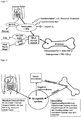
- the Figure 1 shows that only about a third of the amount of calcium available in the digestive tract is absorbed. 65-70% of the dietary calcium is excreted in the stool.
- the resorption process itself can also be influenced positively or negatively by various factors. For example, foods that are very highly fortified with phosphates can extremely hinder the absorption of calcium.
- the hormones that control calcium homeostasis include calcitonin, parathyroid hormone (parathyrin) and calcitriol (active form of vitamin D3).
- Calcitriol is essential to enable the absorption of calcium and phosphate in the small intestine.
- calcitriol increases the reabsorption of calcium in the kidneys and stimulates bone mineralization (incorporation of calcium into the bone matrix).
- the disease "osteoporosis” is diagnosed too late in many cases - usually only when an osteoporotic fracture (ie without a traumatic event) has already occurred, for example of the vertebral body, hip or wrist.
- vitamin D3 (1 ⁇ , 25-dihydroxycholecalciferol; calcitriol) promotes the absorption of calcium from the gastrointestinal tract into the blood.
- the maximum serum concentration is reached within three to six hours after ingestion.
- vitamin D promotes the absorption of calcium in the body. Overdosing can lead to vitamin D poisoning as the body stores vitamin D. Vitamin D poisoning can lead to severe demineralization of the bone, which leads to fractures.
- high serum calcium levels can lead to abnormal calcification of a wide variety of soft tissues.
- kidney stones can develop due to the increased renal excretion of calcium.
- a vitamin D deficiency means that less calcium from food gets into the blood due to reduced absorption from the intestine.
- Calcium and / or vitamin D deficiency is treated by supplementing with calcium and vitamin D-containing products.
- calcium and vitamin D is not without controversy.
- the calcium deficiency means an aggravation of the clinical picture with an increase in the risk of fractures.
- glucocorticoid therapy can lead to severe glucocorticoid- or corticoid-induced osteoporosis with fractures. With an administration of> 5 mg prednisone equivalent per day for> 3 months, preventive or therapeutic measures are recommended. A significant decrease in bone density is to be expected, especially in the first six months after the start of therapy, if the dose is increased significantly over the course of the therapy and if the dose is high, which must be taken into account in the treatment.
- Glucocorticoid-induced bone loss has several causes. At the beginning of therapy, glucocorticoids lead to an increase in bone resorption. Steroids inhibit the proliferation and function of osteoblasts and increase their apoptosis. As a result, they cause a reduced formation of new bones. At the same time, they lead to a negative calcium balance by inhibiting the intestinal calcium absorption and increasing urinary calcium excretion.
- Solid primary tumors such as breast, prostate, lung, intestinal or bone carcinoma (eg osteosarcoma) can manifest themselves in the bone and thus cause bone metastases or bone diseases.
- Bone metastases are settlements of primary tumors in the bones and can lead to pain and fractures there. Increased bone loss or an excessive production of inferior bone substance is responsible. This reduces the stability of the bones.
- Tumor-related bone complications show a high morbidity, an increased bone fracture rate, nerve compression and sometimes unbearable pain. If more calcium is released from the bones and released into the blood, tumor-induced hypercalcemia can develop.
- the proportion of patients with moderate or severe bone pain ( ⁇ 4 points in the BPI-SF [brief pain inventory, short form]) with metastatic breast, prostate, lung, intestinal or bone carcinoma (e.g. osteosarcoma) is over 80%, followed only by neuralgic pain with approx. 10%, by far the highest ( Cleeland, CS et al., Ann. Onc. 2005, 16: 972-980 ).
- multiple myeloma or “plasmacytoma” or “Kahler's disease” includes a cancer of the bone marrow in which the antibody-producing cells (plasma cells) are greatly increased. These malignant plasma cells multiply in an uncontrolled manner and form functionless antibodies or parts of them. The course of the disease can vary greatly, with moderate to highly malignant courses which, without treatment, can quickly lead to the death of the patient. The symptoms are caused by the growth of the cells or by the antibodies produced or their fragments, which can manifest themselves in bone pain, reduction in bone mass and in fractures, accompanied by an increased release of calcium into the blood, which leads to tumor-induced hypercalcemia can. The number of leukocytes decreases while the large number of antibodies is deposited in the tissue and leads to functional disorders of many organs, kidney failure and impaired blood circulation.
- Drug therapy for osteoporosis is primarily about stopping the pathological loss of bone mass.
- the negative balance (imbalance between the growth and breakdown of bone substance) can be balanced either antiresorptively, by inhibiting the osteoclasts (bone breakdown) or anabolically, by stimulating the osteoblasts (bone building). Only when the cultivation and degradation processes are in equilibrium again and there is an adequate supply of calcium and vitamin D is guaranteed, new bone mass can build up and the risk of osteoporotic fractures is reduced.
- osteoclastic bone resorption can be inhibited by bisphosphonates such as zoledronic acid, and on the other hand bone formation can be stimulated by anabolic drugs.
- bisphosphonates such as zoledronic acid
- bone formation can be stimulated by anabolic drugs.
- the recombinant 1-34 fragment of the parathyroid hormone is approved for the treatment of osteoporosis.
- Antiresorptives such as bisphosphonates are currently the standard for the treatment of metabolic bone diseases that require effective inhibition of bone loss. This includes the use of these substance classes for the treatment of osteoporosis as well as - with significantly higher doses and shorter treatment intervals - for the prevention of tumor-related skeletal complications.
- Bisphosphonates such as zoledronic acid bind to the bone and are ingested by mature osteoclasts. They inhibit the osteoclasts on the bone surface, i.e. bone breakdown is inhibited by the use of bisphosphonates.
- Zoledronic acid and its derivatives are usually used to treat the diseases mentioned above, such as osteoporosis or tumor-related bone diseases.
- the risk of hypocalcaemia is significantly increased if there is secondary hyperparathyroidism due to vitamin D deficiency.
- vitamin D deficiency more parathyroid hormone is released to compensate for the serum calcium level.
- Parathyroid hormone indirectly increases the calcium concentration in the blood plasma by activating the osteoclasts.
- the anti-resorptive therapy intensifies the hypocalcemia because the osteoclasts are inhibited.
- hypocalcaemia caused in this way can lead to cardiac arrhythmias and, in particularly severe cases, even death if the hypocalcaemia is not discovered and treated in good time.
- hypocalcaemia often goes undetected, since the calcium level in outpatient clinical treatment is not measured at short intervals as a laboratory parameter.
- a supplement with calcium and vitamin D is provided, which can prevent hypocalcemia during treatment with zoledronic acid.
- a neglected deficiency of calcium and vitamin D can also negatively affect the overall success of antiresorptive therapy, e.g. with zoledronic acid, and thus reduce the desired protection against new fractures or even increase the number of fractures if calcium and vitamin D supplementation is combined with antiresorptive therapy is omitted.
- WO 2008/116133 A1 discloses dosage regimens that include zoledronic acid and some of its derivatives in combination with calcium and vitamin D to reduce osteoporotic fractures (page 2, [007]) and a multi-component kit for a patient at risk for secondary osteoporotic fractures and a vitamin D deficiency, the kit containing vitamin D or its functional analogs, zoledronic acid or a functional analog and optionally calcium-containing components (page 2 [008]).
- WO 2008/116133 A1 does not disclose the treatment or prophylaxis of therapy-induced hypocalcemia, but rather excludes patients with hypocalcemia from the proposed study (pages 17-18, [0079]).
- the patient information on Zometa (FDA Prescribing Information, published at: https://www.drugs.com/pro/zometa.html, page 5 under the section "Hypocalcemia”) reveals, among other things, hypocalcemia as a possible side effect of treatment with Zometa containing the active substance zoledronic acid and a notice that calcium should be measured and hypocalcaemia corrected before treatment with Zometa. Patients should be adequately supplemented with calcium and vitamin D. The patient information does not disclose any indication of how the patients should be adequately supplemented.
- the present invention solves these problems and provides new pharmaceutical compositions of zoledronic acid and calcium and vitamin D and / or their derivatives in order to better treat therapy-related side effects such as hypocalcemia in diseases of the bone metabolism or to prevent these diseases and in this way ensure the optimal effect , as well as to prevent improper use or to prevent the latter.
- the invention relates to pharmaceutical compositions comprising zoledronic acid and calcium and vitamin D for use in the treatment and / or prophylaxis of hypocalcemia caused by zoledronic acid therapy in the treatment of osteoporosis, postmenopausal osteoporosis, overt osteoporosis, osteoporosis in men or women, thereby characterized in that the pharmaceutical composition comprising zoledronic acid and / or its derivative (s) in a dosage of 4-6mg, more preferably 5mg zoledronic acid is administered intravenously annually or every six months and the pharmaceutical composition (s) comprising calcium with a dosage of 400-600 mg per day, particularly preferably 500 mg per day, is administered orally and vitamin D is administered orally daily in a dosage of 800-1200 IU vitamin D, particularly preferably 1000 IU vitamin D.
- the invention relates to pharmaceutical compositions containing zoledronic acid and calcium and vitamin D for use in the treatment and / or prophylaxis of the hypocalcemia caused by zoledronic acid therapy in skeletal complications, in particular pathological fractures, radiation of the bone, spinal cord compression or surgical interventions on the bone, bone metastases , Pain in bone metastases, nerve entrapment or deformities due to one or more solid tumors such as breast cancer, prostate cancer, lung cancer or multiple myeloma, characterized in that zoledronic acid in a dosage of 3-5mg, more preferably 4mg zoledronic acid intravenously for 3-4 weeks of use and 400-600 mg calcium daily, particularly preferably 500 mg calcium daily and 800-1200 IU vitamin D daily, particularly preferably 1000 IU vitamin D daily, can be administered orally.
- the invention relates in further aspects to the use of derivatives of zoledronic acid, the treatment and / or prophylaxis of therapy-related side effects, various calcium compounds and vitamin D derivatives for use in the aforementioned exemplary embodiments, and pharmaceutically suitable auxiliaries and solvents.
- Zoledronic acid is a very effective antiresorptive and is used to treat diseases of the bone metabolism. Despite its effectiveness, treatment with zoledronic acid is burdened by considerable, sometimes severe side effects.
- the present invention provides pharmaceutical compositions which greatly improve the efficacy and safety of treatment with zoledronic acid.
- the pharmaceutical compositions include calcium and vitamin D.
- the Aclasta product information sheet (Novartis Pharma, medicinal product, contains 5 mg zoledronic acid as an infusion solution, which is administered once a year) only recommends adequate intake of calcium and vitamin D; the exact dosage is not specified.
- Aclasta is used to treat osteoporosis in postmenopausal women and adult men who are at increased risk of fractures, including those with a recent low-level hip fracture, to treat Paget's disease of the bone in adults, and to treat osteoporosis-related long-term systemic corticosteroid therapy in postmenopausal women and in adult men with an increased risk of fractures.
- Zometa Novartis Pharma, drug, contains 4mg / 5ml or 4mg / 100ml zoledronic acid as an infusion solution concentrate or infusion solution
- skeletal complications pathological fractures, vertebral body compression, radiation or bone surgery or tumor-induced hypercalcaemia
- tumor-induced hypercalcaemia with 4mg every 3-4 weeks used.
- the adequate total daily intake of calcium is 1000 mg. Calcium is absorbed through food, so that the required daily dose can be achieved with a diet rich in calcium. A calcium intake of more than 2500mg per day is required considered problematic because it can, among other things, increase the risk of developing kidney stones. Due to various publications on cardiovascular side effects from excessive calcium intake, many patients have refrained from consuming sufficient amounts of calcium, even under treatment with zoledronic acid.
- Supplementation with a pharmaceutical composition with 1000-1500mg calcium per day will lead to an oversupply of calcium with a sufficient calcium-containing diet, which increases the risk of cardiovascular side effects. Contrary to the study designs, which in the technical information from Aclasta contain a daily dose of 1000-1500 mg calcium, a lower dose is provided in the present invention in order to treat or prevent hypocalcemia and cardiovascular side effects.
- the preferred amount of calcium in the pharmaceutical composition is 400-600mg calcium per day, particularly preferably 500mg calcium per day, on the one hand to maintain a basic level of calcium even with a low-calcium diet and on the other hand not to get into the oversupply that comes with the risks mentioned connected and therefore unacceptable to patients.
- the preferred amount of calcium in the pharmaceutical composition is 400-600mg calcium per day, particularly preferably 500mg calcium per day, on the one hand to maintain a basic level of calcium even with a low-calcium diet and on the other hand not to get into the oversupply that comes with the risks mentioned connected and therefore unacceptable to patients.
- the average total intake is in the range of 490-1790 mg calcium per day.
- the vitamin D level is easy to measure.
- the combination according to the invention is provided for a vitamin D serum concentration which is not below 20 ng / ml (50 nmol / l serum).
- Supplementation with 400 IU vitamin D is not sufficient to keep the vitamin D level in the normal range of 31-60ng / ml serum when the pharmaceutical composition of zoledronic acid and calcium according to the invention is administered.
- the pharmaceutical composition according to the invention comprising zoledronic acid, calcium and vitamin D prevents hypocalcemia.
- zoledronic acid or “zoledronate” (C 5 H 10 N 2 O 7 P 2 ; [1-hydroxy-2- (imidazol-1-yl) ethylidene] diphosphonic acid, CAS number: 118072-93-8 ) also includes all known pharmaceutically acceptable derivatives of zoledronic acid.
- salts can be present as solvates such as hydrates, for example, or that zoledronic acid can be present as esters.
- Zoledronic acid can be provided in any pharmaceutically acceptable hydrochloric or acid form. Salts are preferred because membranes are less affected by salts.
- Preferred salts are in particular, without being restricted to them, zoledronic acid disodium salt tetrahydrate (C 5 H 8 N 2 Na 2 O 7 P 2 • 4H 2 O, CAS number: 165800-07-7 ), Zoledronic acid trisodium salt hydrate (C 5 H 7 N 2 Na 3 O 7 P 2 • H 2 O) 5 , CAS number: 165800-08-8 , Salts with monovalent Cations, especially zoledronate sodium and / or esters, especially ethyl, propyl, isopropyl, n-butyl and t-butyl esters.
- the pharmaceutical composition comprising zoledronic acid in the field of osteoporosis, postmenopausal osteoporosis, male or female osteoporosis is administered intravenously at 4-6 mg, preferably 5 mg per half year.
- the pharmaceutical composition comprising zoledronic acid is administered intravenously in the oncology field with 3-5 mg, preferably 4 mg for 3-4 weeks of use.
- calcium citrate or “calcium” encompasses all known pharmaceutically acceptable calcium compounds, in particular without being limited to calcium citrate, further designations: tricalcium citrate, TCC, tricalcium dicitrate, tricalcium-di- [2-hydroxy-1,2,3 propane tricarboxylate] tetrahydrate, E 333, C 12 H 10 Ca 3 O 14 , CAS numbers: 813-94-5 (anhydrous), 5785-44-4 (tetrahydrate); Calcium gluconate monohydrate (C 12 H 22 CaO 14 • H 2 O, CAS numbers: 299-28-5 (anhydrous) and 66905-23-5 (monohydrate)); Calcium lactate gluconate, a double salt of lactic and gluconic acid, which is available as a mixture, other names: CLG, calcium lactate gluconate, calcium lactogluconate, E 327, E 578, CAS numbers: 11116-97-5 , 814-80-2 (calcium lactate pentahydrate), 18016-24-5
- vitamin D includes vitamin D or its derivatives, in particular, without being limited to, vitamin D3 (cholecalciferol, C 27 H 44 O, CAS number: 67-97-0 ), Calcitriol (1,25-dihydroxyvitamin D3, 1 ⁇ , 25-dihydroxycholecalciferol, 1,25 (OH) 2 vitamin D3, 1,25 (OH) 2 D3, (5Z, 7E) - (1S, 3R) -9, 10-Seco cholesta-5,7,10 (19) -triene-1,3,25-triol, CAS number: 32222-06-3 ) or 1 ⁇ , 25-dihydroxycholecalciferol (biologically active form of vitamin D3), alphacalcidol (1 ⁇ -hydroxyvitamin D3), 24,25-dihydroxyvitamin D3 or calcifediol (25-hydroxyvitamin D3 25-hydroxycholecalciferol, CAS number: 19356-17-3 , IUPAC name: (6R) -6 - [
- Vitamin D supplements as well as zoledronic acid and calcium are commercially available and the processes for producing them are known to the person skilled in the art.
- compositions comprising zoledronic acid, calcium and vitamin D for use in the treatment and / or prophylaxis of hypocalcemia caused by zoledronic acid therapy in the treatment of osteoporosis, postmenopausal osteoporosis, overt osteoporosis, osteoporosis of men or women, which in a zoledronic acid concentration of 4 -6mg annually or every six months, more preferably 5mg annually or every six months and 400-600mg calcium daily, particularly preferably 500mg calcium daily and 800-1200 IU vitamin D, particularly preferably 1000 IU vitamin D administered orally daily.
- compositions comprising 3-5 mg, more preferably 4 mg zoledronic acid intravenously for 3-4 weeks of use and 400-600 mg calcium daily, particularly preferably 500 mg calcium daily and 800-1200 IU vitamin D, particularly preferably 1000 IU vitamin D for Use in the treatment and / or prophylaxis of zoledronic acid therapy-induced hypocalcemia in skeletal-related complications, in particular pathological fractures, spinal cord compression, radiation or surgery on the bone, pain in bone metastases due to solid tumors such as breast cancer, prostate cancer, lung cancer, multiple myeloma.
- the amounts of zoledronic acid given above are provided in an infusion solution of 5ml to 100ml, more preferably as 5ml infusion solution concentrate or as 100ml ready-to-use infusion solution in a pharmaceutically suitable solution such as isotonic saline solution, isotonic mannitol sodium citrate solution or other pharmaceutically suitable isotonic solutions .
- calcium and vitamin D are provided with pharmaceutically suitable auxiliaries, in particular lactose, starch, acidulants, in particular citric acid and malic acid, acid regulators, in particular sodium hydrogen carbonate and sodium carbonate, humectants, in particular sorbitol, xylitol and inulin, anti-caking agents, in particular tricalcium phosphate, fatty acids, in particular magnesium stearate, in particular magnesium salts natural and nature-identical and other flavors and aromas, sweeteners in particular sodium cyclamate, aspartame and sodium saccharin, maltodextrin, colorings, in particular beetroot juice powder and riboflavin 5'-phosphate, silicon dioxide in particular highly dispersed, silicon dioxide hydrate, phenylalanine, arabic gum, Sucrose, gelatin, corn starch, soybean oil, glycerol, DL-alpha-tocopherol, isomalt, sodium hydrogen carbonate, sodium dihydrogen carbonate, sodium
- zoledronic acid, calcium and / or vitamin D optionally with pharmaceutically suitable auxiliary substances and / or liquids, in particular as effervescent tablets, swallowable tablets or capsules, chewable tablets, effervescent granules, direct granules, drinking solutions, drops, sublingual sprays, as infusion solution concentrates, infusions, Solution for injection concentrates, solutions for injection or pre-filled syringes supplied individually or together.
- Vitamin D deficiency is a common diagnosis in osteological practice. At the start of therapy, 89 of 423 patients showed a vitamin D deficiency that was below the value of 20 ng / ml serum or 50 nmol / l.
- the maintenance dose was 1000 IU daily of vitamin D. A maintenance dose of 400 IU of vitamin D daily was not sufficient to keep the vitamin D level at the normal value.
- Table 1 shows that a maintenance dose of 1000 IU vitamin D is suitable for keeping the vitamin D level in the normal range: Table 1: patient Vitamin D initial value Vitamin D value with a maintenance dose of 1000 IU vitamin D daily 85 years, female 9.4 ng / ml 25.5 ng / ml 65 years, female 8.8 ng / ml 23.4 ng / ml 77 years, female 12.4 ng / ml 29.2 ng / ml 81 years, female 10.4 ng / ml 30.4 ng / ml 75 years, female 14.6 ng / ml 28.8 ng / ml 86 years, female 10.9 ng / ml 23.7 ng / ml 81 years, female 8.6 ng / ml 23.2 ng / ml 71 years, female 17.1 ng / ml 30.5 ng / ml
- the following table 2 shows in the left column in each case the daily intake of calcium through food in mg. Daily intake of less than 1000mg through food leads to a negative calcium balance. This results in secondary hyperparathyroidism and bone substance is lost. A daily supply of less than 500 mg calcium is associated with an increased fracture risk for non-vertebral fractures.
- the following patient case shows that the pharmaceutical composition according to the invention of 5 mg zoledronic acid administered intravenously annually, 500 mg calcium daily and 1000 IU vitamin D taken orally daily, effectively prevents therapy-related hypocalcemia caused by treatment with zoledronic acid.
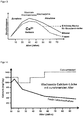
- the values come from a 73-year-old patient with overt osteoporosis and a previous low-traumatic vertebral body fracture. Both the calcium values and the values for vitamin D are in the normal range when treated with the pharmaceutical compositions according to the invention.
- Table 4 The patients received 4 mg zoledronic acid / month, 500 mg calcium supplementation daily and 1000 IU vitamin D3 daily: Patient Calcium mmol / l 25 (OH) vitamin D3 serum level ⁇ g / l after weeks calcium 25 (OH) vitamin D3 serum levels; ⁇ g / l Calcium in Diet mg / day 1 2.09 17.2 16 2.14 37.1 1449 2 2.4 17.2 4th 2.31 24.3 979 3 2.02 12.1 16 2.22 25.2 958 4th 2.37 Not specified 8/16/20 2.46 / 2.46 / 2.32 33.1 after 20 weeks 702 5 2.36 Not specified 4/16/24 2.41 / 2.4 / 2.54 22.3 after 20 weeks 230 6th 2.4 Not specified 4/8/16 2.26 / 2.41 / 2.4 No answer / 19.8 / 22.8 952 7th 2.47 Not specified 4/9/13 2.26 / 2.4 / 2.36 40.3 after 13 weeks 1215 8th 2.42 22nd 8/12/16 2.34 / 2.41 / 2.4 Not specified
- a daily supplementation according to the invention with 500 mg calcium ensures a balanced calcium balance.
- PTH level secondary hyperparathyroid disumus
- hypocalcemia - induced by anti-resorptive therapy with zoledronic acid - are risk factors for the development of necrosis of the jawbone.
- the patients who were treated with the combination according to the invention were free from side effects, in particular no osteonecrosis of the jaw, non-healing wounds until the jaw dissolved, hypocalcemia, cardiovascular side effects such as myocardial infarction, atrial fibrillation, cardiac arrhythmias, convulsions and / or numbness.
Landscapes
- Health & Medical Sciences (AREA)
- Public Health (AREA)
- Pharmacology & Pharmacy (AREA)
- General Health & Medical Sciences (AREA)
- Chemical & Material Sciences (AREA)
- Veterinary Medicine (AREA)
- Animal Behavior & Ethology (AREA)
- Medicinal Chemistry (AREA)
- Life Sciences & Earth Sciences (AREA)
- Chemical Kinetics & Catalysis (AREA)
- Organic Chemistry (AREA)
- Nuclear Medicine, Radiotherapy & Molecular Imaging (AREA)
- General Chemical & Material Sciences (AREA)
- Engineering & Computer Science (AREA)
- Bioinformatics & Cheminformatics (AREA)
- Physical Education & Sports Medicine (AREA)
- Rheumatology (AREA)
- Orthopedic Medicine & Surgery (AREA)
- Epidemiology (AREA)
- Cardiology (AREA)
- Heart & Thoracic Surgery (AREA)
- Vascular Medicine (AREA)
- Pain & Pain Management (AREA)
- Urology & Nephrology (AREA)
- Inorganic Chemistry (AREA)
- Nutrition Science (AREA)
- Diabetes (AREA)
- Hematology (AREA)
- Obesity (AREA)
- Pharmaceuticals Containing Other Organic And Inorganic Compounds (AREA)
- Medicines That Contain Protein Lipid Enzymes And Other Medicines (AREA)
Claims (9)
- Compositions pharmaceutiques comprenant de l'acide zolédronique et du calcium et de la vitamine D, destinées à l'utilisation dans le traitement et/ou la prophylaxie de l'hypocalcémie due à un traitement par l'acide zolédronique dans le traitement de l'ostéoporose, l'ostéoporose postménopausique, l'ostéoporose manifeste, l'ostéoporose de l'homme ou de la femme, caractérisées en ce que la composition pharmaceutique comprenant de l'acide zolédronique est administrée par voie intraveineuse une ou deux fois par an à une posologie de 4-6 mg, de façon plus particulièrement préférée 5 mg d'acide zolédronique et la/les composition(s) pharmaceutique(s) comprenant du calcium est/sont administrée(s) par voie orale à une posologie de 400-600 mg par jour, de façon particulièrement préférée 500 mg par jour et de la vitamine D est administrée par voie orale à une posologie de 800-1200 U.I. de vitamine D, de façon particulièrement préférée 1000 U.I. par jour.
- Compositions pharmaceutiques contenant de l'acide zolédronique et du calcium et de la vitamine D, destinées à l'utilisation dans le traitement et/ou la prophylaxie de l'hypocalcémie due à un traitement par l'acide zolédronique dans le cas de complications osseuses, en particulier de fractures pathologiques, d'irradiation de l'os, de compression médullaire ou d'interventions chirurgicales sur l'os, de métastases osseuses, de douleurs associées à des métastases osseuses, de compressions de nerfs ou de déformations dues à une ou plusieurs tumeurs solides, comme par exemple cancer du sein, cancer de la prostate, cancer du poumon ou myélome multiple, caractérisées en ce que sont administrés de l'acide zolédronique en une posologie de 3-5 mg, de façon particulièrement préférée 4 mg d'acide zolédronique par voie intraveineuse en utilisation toutes les 3-4 semaines et 400-600 mg de calcium une fois par jour, de façon particulièrement préférée 500 mg de calcium une fois par jour et 800-1200 U.I. de vitamine D une fois par jour, de façon particulièrement préférée 1000 U.I. de vitamine D une fois par jour, par voie orale.
- Compositions pharmaceutiques contenant de l'acide zolédronique et du calcium et de la vitamine D, destinées à l'utilisation selon l'une quelconque des revendications 1 et 2, dans lesquelles l'acide zolédronique comprend les sels et/ou esters pharmaceutiquement acceptables, en particulier les sels avec des cations monovalents, en particulier le zolédronate de sodium et/ou des esters, en particulier les esters éthylique, propylique, isopropylique, n butylique et tert-butylique.
- Compositions pharmaceutiques contenant de l'acide zolédronique et du calcium et de la vitamine D, destinées à l'utilisation selon l'une quelconque des revendications 1-3, dans lesquelles le calcium comprend en particulier le lactate-gluconate de calcium, le gluconate de calcium monohydraté, le lactate de calcium pentahydraté, le citrate de calcium, le citrate de calcium tétrahydraté, le carbonate de calcium, le phosphate de calcium, le dihydrogénophosphate de calcium, l'hydrogénophosphate de calcium, l'hydrogéno¬phosphate de calcium dihydraté, l'acétate de calcium, l'ascorbate de calcium, le chlorure de calcium, le glucoheptonate de calcium, le glycérophosphate de calcium et/ou le sulfate de calcium.
- Compositions pharmaceutiques contenant de l'acide zolédronique et du calcium et de la vitamine D, destinées à l'utilisation selon l'une quelconque des revendications 1-4, dans lesquelles la vitamine D comprend en particulier la vitamine D et/ou la vitamine D3 et/ou la vitamine D2 et/ou leurs dérivés, en particulier le calcitriol (1,25-dihydroxyvitamine D3) ou 1α,25-dihydroxycholécalciférol, l'alphacalcidol (1α-hydroxyvitamine D3), la 24,25-dihydroxyvitamine D3, le calcifédiol, la vitamine D2 et/ou l'ergocalciférol.
- Compositions pharmaceutiques contenant de l'acide zolédronique et du calcium et de la vitamine D, destinées à l'utilisation selon les revendications 1-5, comprenant en outre des excipients et/ou liquides ou solvants, pharmaceutiquement acceptables.
- Compositions pharmaceutiques contenant de l'acide zolédronique et du calcium et de la vitamine D, destinées à l'utilisation selon les revendications 1-6, dans lesquelles les excipients pour les compositions pharmaceutiques comprennent le lactose, l'amidon, des acidifiants, en particulier l'acide citrique, l'acide malique, des correcteurs d'acidité, en particulier l'hydrogénocarbonate de sodium et le carbonate de sodium, des humectants, en particulier le sorbitol, le xylitol et l'inuline, des agents de séparation, en particulier le phosphate tricalcique, des acides gras alimentaires, en particulier les sels de magnésium, notamment le stéarate de magnésium, des substances aromatiques et arômes naturels et identiques aux arômes naturels et autres, des édulcorants, en particulier le cyclamate de sodium, l'aspartame et la saccharine sodique, la maltodextrine, des colorants, en particulier la poudre de jus de betterave rouge et le riboflavine-5'-phosphate, la silice, en particulier colloïdale, la silice hydratée, la phénylalanine, la gomme arabique, le saccharose, la gélatine, l'amidon de maïs, l'huile de soja, le glycérol, le DL-alpha-tocophérol, l'isomalt, l'hydrogénocarbonate de sodium, le dihydrogénocarbonate de sodium, le citrate de sodium, le dihydrogénocitrate de sodium, la carmellose sodique, l'acésulfame potassique, l'ascorbate de sodium, des triglycérides, en particulier à longueur moyenne de chaîne, et/ou dans des liquides pharmaceutiquement acceptables, en particulier l'eau, une solution isotonique de glucose ou de chlorure de sodium.
- Compositions pharmaceutiques contenant de l'acide zolédronique et du calcium et de la vitamine D, destinées à l'utilisation selon les revendications 1-7, dans lesquelles les liquides ou solvants pharmaceutiquement acceptables comprennent l'eau, une solution isotonique de chlorure de sodium, une solution isotonique de mannitol-acétate de sodium ou une solution isotonique de glucose.
- Compositions pharmaceutiques contenant de l'acide zolédronique et du calcium et de la vitamine D, destinées à l'utilisation selon les revendications 1-8, dans lesquelles, individuellement ou ensemble, la composition pharmaceutique comprenant de l'acide zolédronique est fournie sous forme de solution pour perfusion, concentré de solution pour perfusion, solution pour perfusion prête à l'emploi ou seringue prête à l'emploi et les compositions pharmaceutiques comprenant du calcium et/ou de la vitamine D sous forme solide ou liquide sont fournies en tant que comprimé effervescent, comprimé ou gélule à avaler, comprimé à mâcher, granulé effervescent, granulé direct, solution buvable, gouttes, ou formulation pour pulvérisation sublinguale.
Priority Applications (1)
| Application Number | Priority Date | Filing Date | Title |
|---|---|---|---|
| PL17171880T PL3246032T3 (pl) | 2016-05-20 | 2017-05-19 | Kompozycje farmaceutyczne z kwasem zoledronowym, wapniem i witaminą d, odpowiednie do leczenia i/lub profilaktyki chorób metabolicznych kości oraz działań ubocznych spowodowanych terapią, takich jak hipokalcemia |
Applications Claiming Priority (1)
| Application Number | Priority Date | Filing Date | Title |
|---|---|---|---|
| DE102016006446 | 2016-05-20 |
Publications (2)
| Publication Number | Publication Date |
|---|---|
| EP3246032A1 EP3246032A1 (fr) | 2017-11-22 |
| EP3246032B1 true EP3246032B1 (fr) | 2021-08-11 |
Family
ID=58800639
Family Applications (1)
| Application Number | Title | Priority Date | Filing Date |
|---|---|---|---|
| EP17171880.2A Active EP3246032B1 (fr) | 2016-05-20 | 2017-05-19 | Compositions pharmaceutiques comprenant de l'acide zélodronique, du calcium et de la vitamine d, convenant au traitement et/ou à la prophylaxie de maladies liées au métabolisme osseux et des effets secondaires des thérapies comme l'hypocalcémie |
Country Status (6)
| Country | Link |
|---|---|
| EP (1) | EP3246032B1 (fr) |
| DE (1) | DE102017110957A1 (fr) |
| DK (1) | DK3246032T3 (fr) |
| ES (1) | ES2893753T3 (fr) |
| PL (1) | PL3246032T3 (fr) |
| PT (1) | PT3246032T (fr) |
Family Cites Families (3)
| Publication number | Priority date | Publication date | Assignee | Title |
|---|---|---|---|---|
| CA2497353C (fr) * | 2002-09-16 | 2012-08-28 | Novartis Ag | Methode de prevention ou de reduction de fractures secondaires consecutives a une fracture de la hanche |
| EP2136814A4 (fr) * | 2007-03-21 | 2012-05-30 | Univ Duke | Trousses de médication et formulations pour prévenir, traiter ou réduire des fractures secondaires après une fracture antérieure |
| JP2017523220A (ja) * | 2014-08-07 | 2017-08-17 | オプコ アイルランド グローバル ホールディングス リミテッド | 25−ヒドロキシビタミンdを用いる補助的療法 |
-
2017
- 2017-05-19 PT PT171718802T patent/PT3246032T/pt unknown
- 2017-05-19 ES ES17171880T patent/ES2893753T3/es active Active
- 2017-05-19 PL PL17171880T patent/PL3246032T3/pl unknown
- 2017-05-19 DE DE102017110957.9A patent/DE102017110957A1/de not_active Withdrawn
- 2017-05-19 DK DK17171880.2T patent/DK3246032T3/da active
- 2017-05-19 EP EP17171880.2A patent/EP3246032B1/fr active Active
Non-Patent Citations (1)
| Title |
|---|
| None * |
Also Published As
| Publication number | Publication date |
|---|---|
| DE102017110957A1 (de) | 2017-11-23 |
| ES2893753T3 (es) | 2022-02-10 |
| PT3246032T (pt) | 2021-10-18 |
| EP3246032A1 (fr) | 2017-11-22 |
| PL3246032T3 (pl) | 2022-01-03 |
| DK3246032T3 (da) | 2021-10-11 |
Similar Documents
| Publication | Publication Date | Title |
|---|---|---|
| DE69629184T2 (de) | Verwendung von vitamin d2 oder vitamin d4-derivaten zur herstellung eines medikamentes zur behandlung des sekundären hyperparathyroidismus | |
| DE69233250T2 (de) | Kombinationen aus calzium und vitamin d | |
| DE69737066T2 (de) | Verwendung von aktivem Vitamin D analog zur Behandlung von Prostataerkrankungen | |
| EP2508083B1 (fr) | Additif bioactif pour aliments destiné à la prévention des cas d'ostéoporose | |
| US4997824A (en) | Combination of cholecalciferol derivatives for the treatment of renal bone disease | |
| KR20130135868A (ko) | 25-하이드록시비타민 d3을 사용한, 증가된 에오탁신과 관련된 질환의 치료 | |
| EP0819436B1 (fr) | Composition pharmaceutique et diététique contenant des ions de sodium, de potassium, de magnésium et de calcium et des activateurs d'enzymes | |
| AU2012377476B2 (en) | Preparation and method for the prophylaxis and treatment of atypical osteoporosis | |
| DE10393906T5 (de) | Verfahren zur Erhöhung der Bioverfügbarkeit von Alendronat oder einem anderen Bisphosphonat durch Verabreichen einer Vordosis eines Vitamin D-Derivats | |
| AU2017203767B2 (en) | Method for filling bone cavity formations with calcium | |
| DE69301750T2 (de) | Verwendung von 1-Alpha,24(R)-Dihydroxy-22(E)-Dehydrovitamin-D3 zur Herstellung eines Arzneimittels zur Behandlung der Osteoporose | |
| EP3246032B1 (fr) | Compositions pharmaceutiques comprenant de l'acide zélodronique, du calcium et de la vitamine d, convenant au traitement et/ou à la prophylaxie de maladies liées au métabolisme osseux et des effets secondaires des thérapies comme l'hypocalcémie | |
| CN112386601B (zh) | 维生素d补充制剂及其应用 | |
| DE20321698U1 (de) | Medikament zur Erhöhung der Bioverfügbarkeit von Alendronat oder einem anderen Bisphosphonat durch Verabreichen einer Vordosis eines Vitamin-D-Derivats | |
| EP4501330A2 (fr) | Compositions pharmaceutiques contenant des anticorps anti-rankl, du calcium et de la vitamine d, adaptées au traitement et/ou à la prophylaxie de maladies du métabolisme osseux et d'effets secondaires liés à la thérapie, tels que l'hypocalcémie | |
| EP0374935B1 (fr) | Préparation pour prévenir l'ostéoporose et pour traiter l'ostéoporose | |
| EP1938825B1 (fr) | Utilisation de la zéolithe naturelle pour le traitment et la prévention de la ostéoporose | |
| AU2015224406B2 (en) | Biologically active food additive for the prophylaxis of osteoporosis diseases | |
| Nuti et al. | Vitamin D and calcium supplements | |
| Rittinghaus et al. | The concept and treatment of osteoporosis | |
| US20160339063A1 (en) | Composition for preventing and healing compromised bone and a method of making same |
Legal Events
| Date | Code | Title | Description |
|---|---|---|---|
| PUAI | Public reference made under article 153(3) epc to a published international application that has entered the european phase |
Free format text: ORIGINAL CODE: 0009012 |
|
| STAA | Information on the status of an ep patent application or granted ep patent |
Free format text: STATUS: THE APPLICATION HAS BEEN PUBLISHED |
|
| AK | Designated contracting states |
Kind code of ref document: A1 Designated state(s): AL AT BE BG CH CY CZ DE DK EE ES FI FR GB GR HR HU IE IS IT LI LT LU LV MC MK MT NL NO PL PT RO RS SE SI SK SM TR |
|
| AX | Request for extension of the european patent |
Extension state: BA ME |
|
| STAA | Information on the status of an ep patent application or granted ep patent |
Free format text: STATUS: REQUEST FOR EXAMINATION WAS MADE |
|
| 17P | Request for examination filed |
Effective date: 20180514 |
|
| RBV | Designated contracting states (corrected) |
Designated state(s): AL AT BE BG CH CY CZ DE DK EE ES FI FR GB GR HR HU IE IS IT LI LT LU LV MC MK MT NL NO PL PT RO RS SE SI SK SM TR |
|
| STAA | Information on the status of an ep patent application or granted ep patent |
Free format text: STATUS: EXAMINATION IS IN PROGRESS |
|
| 17Q | First examination report despatched |
Effective date: 20181218 |
|
| GRAP | Despatch of communication of intention to grant a patent |
Free format text: ORIGINAL CODE: EPIDOSNIGR1 |
|
| STAA | Information on the status of an ep patent application or granted ep patent |
Free format text: STATUS: GRANT OF PATENT IS INTENDED |
|
| RIC1 | Information provided on ipc code assigned before grant |
Ipc: A61K 31/593 20060101AFI20210302BHEP Ipc: A61P 19/00 20060101ALI20210302BHEP Ipc: A61P 9/06 20060101ALI20210302BHEP Ipc: A61K 31/675 20060101ALI20210302BHEP Ipc: A61P 9/10 20060101ALI20210302BHEP Ipc: A61K 31/663 20060101ALI20210302BHEP Ipc: A61P 19/08 20060101ALI20210302BHEP Ipc: A61P 3/02 20060101ALI20210302BHEP Ipc: A61P 35/00 20060101ALI20210302BHEP Ipc: A61K 33/06 20060101ALI20210302BHEP Ipc: A61P 29/00 20060101ALI20210302BHEP Ipc: A61P 19/10 20060101ALI20210302BHEP |
|
| INTG | Intention to grant announced |
Effective date: 20210323 |
|
| GRAS | Grant fee paid |
Free format text: ORIGINAL CODE: EPIDOSNIGR3 |
|
| GRAA | (expected) grant |
Free format text: ORIGINAL CODE: 0009210 |
|
| STAA | Information on the status of an ep patent application or granted ep patent |
Free format text: STATUS: THE PATENT HAS BEEN GRANTED |
|
| RAP3 | Party data changed (applicant data changed or rights of an application transferred) |
Owner name: KARL, CHRISTOPH |
|
| RIN1 | Information on inventor provided before grant (corrected) |
Inventor name: KARL, CHRISTOPH Inventor name: THIEROLF, RUEDIGER |
|
| AK | Designated contracting states |
Kind code of ref document: B1 Designated state(s): AL AT BE BG CH CY CZ DE DK EE ES FI FR GB GR HR HU IE IS IT LI LT LU LV MC MK MT NL NO PL PT RO RS SE SI SK SM TR |
|
| REG | Reference to a national code |
Ref country code: CH Ref legal event code: EP |
|
| REG | Reference to a national code |
Ref country code: DE Ref legal event code: R096 Ref document number: 502017011143 Country of ref document: DE |
|
| REG | Reference to a national code |
Ref country code: IE Ref legal event code: FG4D Free format text: LANGUAGE OF EP DOCUMENT: GERMAN Ref country code: AT Ref legal event code: REF Ref document number: 1418669 Country of ref document: AT Kind code of ref document: T Effective date: 20210915 |
|
| REG | Reference to a national code |
Ref country code: DK Ref legal event code: T3 Effective date: 20211005 |
|
| REG | Reference to a national code |
Ref country code: PT Ref legal event code: SC4A Ref document number: 3246032 Country of ref document: PT Date of ref document: 20211018 Kind code of ref document: T Free format text: AVAILABILITY OF NATIONAL TRANSLATION Effective date: 20211008 |
|
| REG | Reference to a national code |
Ref country code: SE Ref legal event code: TRGR |
|
| REG | Reference to a national code |
Ref country code: NL Ref legal event code: FP |
|
| REG | Reference to a national code |
Ref country code: GR Ref legal event code: EP Ref document number: 20210402581 Country of ref document: GR Effective date: 20211111 |
|
| REG | Reference to a national code |
Ref country code: LT Ref legal event code: MG9D |
|
| PG25 | Lapsed in a contracting state [announced via postgrant information from national office to epo] |
Ref country code: NO Free format text: LAPSE BECAUSE OF FAILURE TO SUBMIT A TRANSLATION OF THE DESCRIPTION OR TO PAY THE FEE WITHIN THE PRESCRIBED TIME-LIMIT Effective date: 20211111 Ref country code: HR Free format text: LAPSE BECAUSE OF FAILURE TO SUBMIT A TRANSLATION OF THE DESCRIPTION OR TO PAY THE FEE WITHIN THE PRESCRIBED TIME-LIMIT Effective date: 20210811 Ref country code: FI Free format text: LAPSE BECAUSE OF FAILURE TO SUBMIT A TRANSLATION OF THE DESCRIPTION OR TO PAY THE FEE WITHIN THE PRESCRIBED TIME-LIMIT Effective date: 20210811 Ref country code: LT Free format text: LAPSE BECAUSE OF FAILURE TO SUBMIT A TRANSLATION OF THE DESCRIPTION OR TO PAY THE FEE WITHIN THE PRESCRIBED TIME-LIMIT Effective date: 20210811 Ref country code: BG Free format text: LAPSE BECAUSE OF FAILURE TO SUBMIT A TRANSLATION OF THE DESCRIPTION OR TO PAY THE FEE WITHIN THE PRESCRIBED TIME-LIMIT Effective date: 20211111 Ref country code: RS Free format text: LAPSE BECAUSE OF FAILURE TO SUBMIT A TRANSLATION OF THE DESCRIPTION OR TO PAY THE FEE WITHIN THE PRESCRIBED TIME-LIMIT Effective date: 20210811 |
|
| REG | Reference to a national code |
Ref country code: ES Ref legal event code: FG2A Ref document number: 2893753 Country of ref document: ES Kind code of ref document: T3 Effective date: 20220210 |
|
| PG25 | Lapsed in a contracting state [announced via postgrant information from national office to epo] |
Ref country code: LV Free format text: LAPSE BECAUSE OF FAILURE TO SUBMIT A TRANSLATION OF THE DESCRIPTION OR TO PAY THE FEE WITHIN THE PRESCRIBED TIME-LIMIT Effective date: 20210811 |
|
| REG | Reference to a national code |
Ref country code: DE Ref legal event code: R097 Ref document number: 502017011143 Country of ref document: DE |
|
| PG25 | Lapsed in a contracting state [announced via postgrant information from national office to epo] |
Ref country code: SM Free format text: LAPSE BECAUSE OF FAILURE TO SUBMIT A TRANSLATION OF THE DESCRIPTION OR TO PAY THE FEE WITHIN THE PRESCRIBED TIME-LIMIT Effective date: 20210811 Ref country code: SK Free format text: LAPSE BECAUSE OF FAILURE TO SUBMIT A TRANSLATION OF THE DESCRIPTION OR TO PAY THE FEE WITHIN THE PRESCRIBED TIME-LIMIT Effective date: 20210811 Ref country code: RO Free format text: LAPSE BECAUSE OF FAILURE TO SUBMIT A TRANSLATION OF THE DESCRIPTION OR TO PAY THE FEE WITHIN THE PRESCRIBED TIME-LIMIT Effective date: 20210811 Ref country code: EE Free format text: LAPSE BECAUSE OF FAILURE TO SUBMIT A TRANSLATION OF THE DESCRIPTION OR TO PAY THE FEE WITHIN THE PRESCRIBED TIME-LIMIT Effective date: 20210811 Ref country code: CZ Free format text: LAPSE BECAUSE OF FAILURE TO SUBMIT A TRANSLATION OF THE DESCRIPTION OR TO PAY THE FEE WITHIN THE PRESCRIBED TIME-LIMIT Effective date: 20210811 Ref country code: AL Free format text: LAPSE BECAUSE OF FAILURE TO SUBMIT A TRANSLATION OF THE DESCRIPTION OR TO PAY THE FEE WITHIN THE PRESCRIBED TIME-LIMIT Effective date: 20210811 |
|
| PLBE | No opposition filed within time limit |
Free format text: ORIGINAL CODE: 0009261 |
|
| STAA | Information on the status of an ep patent application or granted ep patent |
Free format text: STATUS: NO OPPOSITION FILED WITHIN TIME LIMIT |
|
| 26N | No opposition filed |
Effective date: 20220512 |
|
| PG25 | Lapsed in a contracting state [announced via postgrant information from national office to epo] |
Ref country code: SI Free format text: LAPSE BECAUSE OF FAILURE TO SUBMIT A TRANSLATION OF THE DESCRIPTION OR TO PAY THE FEE WITHIN THE PRESCRIBED TIME-LIMIT Effective date: 20210811 |
|
| PG25 | Lapsed in a contracting state [announced via postgrant information from national office to epo] |
Ref country code: MC Free format text: LAPSE BECAUSE OF FAILURE TO SUBMIT A TRANSLATION OF THE DESCRIPTION OR TO PAY THE FEE WITHIN THE PRESCRIBED TIME-LIMIT Effective date: 20210811 |
|
| PG25 | Lapsed in a contracting state [announced via postgrant information from national office to epo] |
Ref country code: IE Free format text: LAPSE BECAUSE OF NON-PAYMENT OF DUE FEES Effective date: 20220519 |
|
| P01 | Opt-out of the competence of the unified patent court (upc) registered |
Effective date: 20230530 |
|
| PG25 | Lapsed in a contracting state [announced via postgrant information from national office to epo] |
Ref country code: HU Free format text: LAPSE BECAUSE OF FAILURE TO SUBMIT A TRANSLATION OF THE DESCRIPTION OR TO PAY THE FEE WITHIN THE PRESCRIBED TIME-LIMIT; INVALID AB INITIO Effective date: 20170519 |
|
| PG25 | Lapsed in a contracting state [announced via postgrant information from national office to epo] |
Ref country code: MK Free format text: LAPSE BECAUSE OF FAILURE TO SUBMIT A TRANSLATION OF THE DESCRIPTION OR TO PAY THE FEE WITHIN THE PRESCRIBED TIME-LIMIT Effective date: 20210811 Ref country code: CY Free format text: LAPSE BECAUSE OF FAILURE TO SUBMIT A TRANSLATION OF THE DESCRIPTION OR TO PAY THE FEE WITHIN THE PRESCRIBED TIME-LIMIT Effective date: 20210811 |
|
| PG25 | Lapsed in a contracting state [announced via postgrant information from national office to epo] |
Ref country code: MT Free format text: LAPSE BECAUSE OF FAILURE TO SUBMIT A TRANSLATION OF THE DESCRIPTION OR TO PAY THE FEE WITHIN THE PRESCRIBED TIME-LIMIT Effective date: 20210811 |
|
| PGFP | Annual fee paid to national office [announced via postgrant information from national office to epo] |
Ref country code: NL Payment date: 20250317 Year of fee payment: 9 |
|
| PGFP | Annual fee paid to national office [announced via postgrant information from national office to epo] |
Ref country code: DE Payment date: 20250325 Year of fee payment: 9 |
|
| PGFP | Annual fee paid to national office [announced via postgrant information from national office to epo] |
Ref country code: ES Payment date: 20250606 Year of fee payment: 9 Ref country code: DK Payment date: 20250516 Year of fee payment: 9 |
|
| PGFP | Annual fee paid to national office [announced via postgrant information from national office to epo] |
Ref country code: LU Payment date: 20250516 Year of fee payment: 9 Ref country code: IT Payment date: 20250422 Year of fee payment: 9 Ref country code: BE Payment date: 20250410 Year of fee payment: 9 |
|
| PGFP | Annual fee paid to national office [announced via postgrant information from national office to epo] |
Ref country code: PT Payment date: 20250519 Year of fee payment: 9 |
|
| PGFP | Annual fee paid to national office [announced via postgrant information from national office to epo] |
Ref country code: GR Payment date: 20250416 Year of fee payment: 9 |
|
| PGFP | Annual fee paid to national office [announced via postgrant information from national office to epo] |
Ref country code: CH Payment date: 20250601 Year of fee payment: 9 |
|
| PGFP | Annual fee paid to national office [announced via postgrant information from national office to epo] |
Ref country code: AT Payment date: 20250425 Year of fee payment: 9 |
|
| PGFP | Annual fee paid to national office [announced via postgrant information from national office to epo] |
Ref country code: TR Payment date: 20250508 Year of fee payment: 9 |
|
| PGFP | Annual fee paid to national office [announced via postgrant information from national office to epo] |
Ref country code: SE Payment date: 20260312 Year of fee payment: 10 |
|
| PGFP | Annual fee paid to national office [announced via postgrant information from national office to epo] |
Ref country code: GB Payment date: 20260312 Year of fee payment: 10 |
|
| PGFP | Annual fee paid to national office [announced via postgrant information from national office to epo] |
Ref country code: FR Payment date: 20260309 Year of fee payment: 10 |
|
| PGFP | Annual fee paid to national office [announced via postgrant information from national office to epo] |
Ref country code: PL Payment date: 20260319 Year of fee payment: 10 |