EP3246896A2 - Système d'apprentissage autonome utilisant des clips vidéo/audio - Google Patents
Système d'apprentissage autonome utilisant des clips vidéo/audio Download PDFInfo
- Publication number
- EP3246896A2 EP3246896A2 EP16737332.3A EP16737332A EP3246896A2 EP 3246896 A2 EP3246896 A2 EP 3246896A2 EP 16737332 A EP16737332 A EP 16737332A EP 3246896 A2 EP3246896 A2 EP 3246896A2
- Authority
- EP
- European Patent Office
- Prior art keywords
- video
- learning
- audio
- output data
- user
- Prior art date
- Legal status (The legal status is an assumption and is not a legal conclusion. Google has not performed a legal analysis and makes no representation as to the accuracy of the status listed.)
- Withdrawn
Links
- 238000011156 evaluation Methods 0.000 claims description 26
- 230000009471 action Effects 0.000 claims description 17
- 230000006870 function Effects 0.000 claims description 11
- 238000004891 communication Methods 0.000 claims description 3
- 239000000463 material Substances 0.000 abstract description 34
- 238000012986 modification Methods 0.000 abstract description 2
- 230000004048 modification Effects 0.000 abstract description 2
- 238000000034 method Methods 0.000 description 4
- 230000000694 effects Effects 0.000 description 3
- 230000008569 process Effects 0.000 description 3
- 230000003044 adaptive effect Effects 0.000 description 2
- 230000002452 interceptive effect Effects 0.000 description 2
- 230000004075 alteration Effects 0.000 description 1
- 238000004458 analytical method Methods 0.000 description 1
- 230000008859 change Effects 0.000 description 1
- 238000010835 comparative analysis Methods 0.000 description 1
- 230000003203 everyday effect Effects 0.000 description 1
- 230000002349 favourable effect Effects 0.000 description 1
- 238000010191 image analysis Methods 0.000 description 1
- 230000010365 information processing Effects 0.000 description 1
- 230000015654 memory Effects 0.000 description 1
- 230000008450 motivation Effects 0.000 description 1
- 238000012545 processing Methods 0.000 description 1
- 230000004044 response Effects 0.000 description 1
- 238000010561 standard procedure Methods 0.000 description 1
Images



Classifications
-
- G—PHYSICS
- G09—EDUCATION; CRYPTOGRAPHY; DISPLAY; ADVERTISING; SEALS
- G09B—EDUCATIONAL OR DEMONSTRATION APPLIANCES; APPLIANCES FOR TEACHING, OR COMMUNICATING WITH, THE BLIND, DEAF OR MUTE; MODELS; PLANETARIA; GLOBES; MAPS; DIAGRAMS
- G09B5/00—Electrically-operated educational appliances
- G09B5/06—Electrically-operated educational appliances with both visual and audible presentation of the material to be studied
- G09B5/065—Combinations of audio and video presentations, e.g. videotapes, videodiscs, television systems
-
- G—PHYSICS
- G09—EDUCATION; CRYPTOGRAPHY; DISPLAY; ADVERTISING; SEALS
- G09B—EDUCATIONAL OR DEMONSTRATION APPLIANCES; APPLIANCES FOR TEACHING, OR COMMUNICATING WITH, THE BLIND, DEAF OR MUTE; MODELS; PLANETARIA; GLOBES; MAPS; DIAGRAMS
- G09B19/00—Teaching not covered by other main groups of this subclass
-
- G—PHYSICS
- G09—EDUCATION; CRYPTOGRAPHY; DISPLAY; ADVERTISING; SEALS
- G09B—EDUCATIONAL OR DEMONSTRATION APPLIANCES; APPLIANCES FOR TEACHING, OR COMMUNICATING WITH, THE BLIND, DEAF OR MUTE; MODELS; PLANETARIA; GLOBES; MAPS; DIAGRAMS
- G09B19/00—Teaching not covered by other main groups of this subclass
- G09B19/0092—Nutrition
-
- G—PHYSICS
- G09—EDUCATION; CRYPTOGRAPHY; DISPLAY; ADVERTISING; SEALS
- G09B—EDUCATIONAL OR DEMONSTRATION APPLIANCES; APPLIANCES FOR TEACHING, OR COMMUNICATING WITH, THE BLIND, DEAF OR MUTE; MODELS; PLANETARIA; GLOBES; MAPS; DIAGRAMS
- G09B5/00—Electrically-operated educational appliances
- G09B5/06—Electrically-operated educational appliances with both visual and audible presentation of the material to be studied
-
- G—PHYSICS
- G09—EDUCATION; CRYPTOGRAPHY; DISPLAY; ADVERTISING; SEALS
- G09B—EDUCATIONAL OR DEMONSTRATION APPLIANCES; APPLIANCES FOR TEACHING, OR COMMUNICATING WITH, THE BLIND, DEAF OR MUTE; MODELS; PLANETARIA; GLOBES; MAPS; DIAGRAMS
- G09B5/00—Electrically-operated educational appliances
- G09B5/08—Electrically-operated educational appliances providing for individual presentation of information to a plurality of student stations
Definitions
- the present invention relates to a learning system using video/audio clips as teaching/learning materials on a computer system, and more particularly to a learning system in which teaching/learning material content get autonomously developed and improved without being managed by a system administrator.
- a clip is a small unit of material constituting video/audio content which typically comprises video/audio content having a length of several seconds to several tens of seconds.
- an video/audio clip includes a clip containing video content only, a clip containing audio content only and a clip containing video content and audio content.
- Patent Document1 discloses an online learning system in which a teacher distributes teaching/ learning materials made in the form of video/audio content to learners, the learners learn by viewing the video/audio content, the learners feedback the result of the learning to the teacher for the teacher to measure learning achievement and the learners evaluates the quality of the teaching/learning materials.
- Patent Document 1 Japanese Patent Laid-open No. 2003-6348 .
- the online learning system disclosed in the Patent Document1, however, it constantly costs the distributor (or the teacher) to produce the teaching/learning materials to be distributed to the learners, to process the result of the learning and the feedbacks received from the learners, to evaluate their learning achievement and to improve the teaching/learning materials based on the outputs from the learners.
- the online learning system requires enormous human and economic resources on the distributor's (teacher's) side such that the online learning system remains interactive and effective.
- an object of the present invention to provide an online learning system in which not only the distributor' s side provides teaching/learning materials to the learners, but also the learners can output their the learning achievement so as to serve as teaching/learning materials for other learners and in which teaching/learning material content get autonomously developed and improved without being managed by a system administrator.
- the inventors focused on a small unit of material constituting video/audio content typically having a length of several seconds to several tens of seconds and presenting a certain concept (hereinafter referred to as "clip") which can be used as teaching/learning material content.
- clip a certain concept
- the inventors have devised a scheme to collect video/audio clips which the learners produce by filming/recording their own conduct of learning and to utilize the collected video/audio clips not only as a means of measuring learning achievement of the learners but also as new teaching/learning material content for other learners.
- the present invention has been accomplished.
- an autonomous learning system using video/audio clips for learning comprising: a user terminal having communication function, function for reproducing a video/audio clip for learning and function for generating output data corresponding to the video/audio clip and presenting a learning achievement of a learner by learning using the video/audio clip; and a content server having a video/audio clip database storing video/audio clip data, a distribution unit distributing to the user terminal the video/audio clip data stored in the video/audio clip database, a receiving unit receiving the output data sent from the user terminal and an output evaluating unit evaluating the learning achievement of the output data and storing in the video/audio clip database the output data achieving a certain level of skill as a new video/audio clip for learning.
- the system according to the present invention is also characterized in that the output evaluating unit evaluates the received output data by receiving input of evaluation of the output data by an evaluator who has viewed the output data.
- the system can make scrupulous and comprehensive evaluation.
- the output evaluating unit may evaluate the received output data based on a predetermined evaluation standard, for example, by implementing comparative analysis with a model video/audio data, image analysis or sound analysis.
- the system according to the present invention is also characterized in that the content server lays open the output data achieving a certain level of skill to user terminals other than the user terminal which provided the output data.
- the system according to the present invention is also characterized in that the content server lays open the output data received from one user terminal to other user terminals so as to receive evaluation of or comments on the output data from the other user terminals.
- the system according to the present invention is also characterized in that the output evaluating unit evaluates the output data based on whether the evaluation of the received output data by other user terminals clears a predetermined standard.
- the system according to the present invention is also characterized in that the video/audio clip database does not store any video/audio clip data in its initial state and begins to store the output data received from the user terminals and evaluated to be achieving a certain level of skill by the output evaluating unit as a video/audio clip for learning.
- the system according to the present invention is also characterized in that the content server further comprises a user information database storing user attribute information and learning curriculum information and a progress management unit distributing to the user video/audio clips for learning based on the learning curriculum information and managing the user's progress of learning.
- the system according to the present invention is also characterized in that the user terminals have function for filming/recording video/audio content equipped internally or externally so as to produce output data by filming/recording the actions of the user in imitation of the actions shown/heard in the video/audio clips for learning.
- the present invention provides an online learning system in which not only the distributor's side provides teaching/learning materials to the learners, but also the learners can output their the learning achievement so as to serve as teaching/learning materials for other learners and in which teaching/learning material content get autonomously developed and improved without being managed by a system administrator.
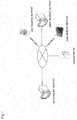
- Fig. 1 is a schematic view showing an autonomous learning system using video clips according to an embodiment of the present invention.
- video clips i. e. clips containing video and audio content
- the present invention also applies to those using clips containing video content only and audio content only.
- the autonomous learning system using video clips comprises a content server for storing, processing and distributing video clips used as teaching/learning material content, an administrator terminal for administrating and operating the content server, user terminals for receiving video clips from the content server, utilizing the clips for learning and giving feedback to the content server and a client terminal used by teachers (evaluators).
- Fig.2 is a schematic view showing the internal structure of the content server shown in Fig.1 .
- the content server comprises a video clip database storing video clip data, a user information database storing user information, a video clip edition unit for registering and editing video clips in the video clip database, a user information edition unit for registering user information in the user information database, a distribution unit for distributing to the user terminals video clips stored in the video clip database, a progress management unit for managing the user's progress of learning using the distributed video clips, an output receiving unit for receiving the output data from the users' learning, an output evaluating unit for evaluating the learning achievement of the received output data and an output disclosure unit for laying open the output data to the user terminals and the client terminal.
- the user terminals have function for reproducing video clips and function for filming/recording video/audio content equipped internally or externally.
- the video clip database stores video clip data for learning and additional information of the video clips such as the information of creators, types/purposes, target users, evaluators, methods of measuring learning achievement.
- the user information database stores information of learners using the user terminals and teachers using the client terminals shown in Fig.1 . It stores information of content of learning, curriculums, progress of learning, learning achievements in connection with the learners and stores information of authority and target of teaching and history of teaching in connection with the teachers.
- the video clip edition unit stores in the video clip database video clip data and its additional information upon receipt of operation from the administrator terminals and the client terminals, or alternatively from the user terminals.
- the user information edition unit stores in the user information database information of learners using the user terminals and teachers using the client terminals upon receipt of operation from the administrator terminals and the client terminals, or alternatively from the user terminals.
- the distribution unit distributes to the user terminals video clips stored in the video clip database.
- the distribution unit distributes video clips which are adaptive to the respective users in terms of content, timing, volume, distribution format based on the additional information of the video clips stored in the video clip database and on the learning curriculums stored in the user information database (adaptive learning).
- the progress management unit manages the respective users' progress of learning using the distributed video clips.
- the progress management unit manages the progress of learning based on the additional information of the video clips stored in the video clip database, on the learning curriculums stored in the user information database, on the output data received from the user terminals and on other information obtained (e.g. cases that learning is not completed, etc.)
- the progress management unit may also notify the respective users of the learning content which they are supposed to learn, for example in the form of a To Do List.
- the output receiving unit receives from the user terminals video clips filming the actions of the user in imitation of the actions shown in the distributed video clips for learning, which are regarded as the output of learning.
- the output evaluating unit for evaluates the learning achievement of the received video clips (output data) based on a predetermined evaluation standard or evaluation method. It may employ an objective evaluation method in which the difference between the received video clips (output data) and the reference video clips (this may be the distributed video clips or others). Or it may employ a subjective evaluation method in which the output disclosure unit discloses the received video clips (output data) to the teacher or to the other users so as to receive their evaluation.
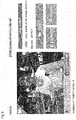
- Fig.3 is a view showing an example of a screen display of a video clip used in the autonomous learning system using video clips according to the present invention.
- the distributed video clips along with its additional information are reproduced and viewed on the screen of the user terminals.
- the distributed video clips may be stored in the user terminals such that the users can repeatedly view the video clips. Or it may be that the video clips need to be downloaded from the content server every time the users view them.
- the autonomous learning system using video clips according to the present invention can be adopted for any kind of learning using small-unit and short-time video content.
- the system can be adopted for many various of learning accompanying human actions such as learning of actions of serving customers, learning of giving speeches, learning of foreign languages, etc.
- the administrator terminal show in Fig.1 is the terminal for the system administrator to operate and manage the content server and the client terminal is the terminal for the teachers to register/edit the video clips, to assign the video clips to the users, to manage the users' progress of learning, to evaluate/approve the output of learning and to manage the reuse of the output data.
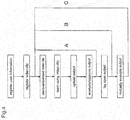
- Fig.4 is a flow chart schematically showing the sequential steps of use of the autonomous learning system using video clips according to the present invention.
- the system administrator or the teacher of the user access the content server using the administrator terminal or the client terminal and operate the user information edition unit to register and edit the user attribute information in the user information database as necessary.
- the system administrator or the teacher of the user also access the content server using the administrator terminal or the client terminal and operate the video clip edition unit to register and edit the video clips , which are the teaching/learning material content, and its additional information in the video clip database as necessary.
- the system administrator or the teacher of the user also access the content server using the administrator terminal or the client terminal to set the learning curriculums laying down which video clips are to be distributed to which users.
- the distribution unit and the progress management unit of the content server manages the information relating to the distribution thorough the output evaluation.
- the system distributes the video clips registered in the video clip database to the user terminal.
- the user reproduces the video clips on the user terminal and gets down to learning.
- the video clips are reproduced on the user terminal, for example, in such a way as shown in Fig.3 .
- the "output" referred to here is a video produced by filming/recording the actions of the user in imitation of the actions shown/heard in the video clips. This means that also the output can be treated as a video clip.
- the user terminal may reproduce on the screen the output video of the user' s own actions side by side with the video clip which is the teaching/learning materials so as to enhance learning effect.
- the video/audio clips for learning may include the following types of clips.
- Responses to the above video/audio clips are (1) output presenting the understanding of the learner, (2) output in the form of videos of the learner's imitating the actions (3) output in the form of videos of learner's giving answers to the questions.
- the user produces the output and operate the user terminal to upload it to the content server by way of its output receiving unit.
- the evaluating unit of the content server evaluates the uploaded output in terms of whether or not the output proves the learner's achieving a certain level of skill. It may employ an evaluation method in which the difference between the uploaded output and the video clip which is the teaching/learning materials. Or it may employ an evaluation method in which the teacher views the uploaded output to make evaluation. In the latter case, the teacher reproduces the uploaded output on the client terminal and makes an evaluation or a judgment of its achievement.
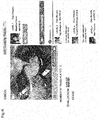
- the system employs an interactive evaluation method in which the user and the teacher can exchange comments, as shown in Fig. 6 for example, so as to enhance learning effect and motivation of the user.
- the output obtaining evaluation that the user has achieved a certain level of skill gets registered in the video clip database as a proven output.
- a proven output itself becomes teaching/learning materials for the other users, which can be distributed to the other users in the same way as the video clips initially registered in the video clip database.
- the output of learning produced by the user to present his/her learning achievement itself is a video clip
- the proven output becomes a new teaching/learning materials in the form of a video clip.
- a set of teaching/learning materials produces another set teaching/learning materials without the system administrator's or the teachers' taking any action in this novel and distinctive autonomous learning system (as indicated by the branch A of the flowchart in Fig.4 ).
- the output disclosure unit of the content server lays open the proven output in the form of a video clip to the users.
- Figs. 7 and 8 each shows an example of a screen display of such disclosure.
- the users are allowed to select their teaching/learning materials not only from the video clips provided by the system administrator or the teachers but also from the video clips which are the outputs produced by the other users. This enhances the convenience of the users as well as reduces the burden of the system administrator or the teachers who produce the teaching/learning materials (as indicated by the branch B of the flow chart in Fig.4 ).
- the content server allows the users to give their comments or evaluation on the video clips which are the output produced by the other users. This creates an atmosphere in which the users share the learning achievement with each other as well as compete with each other such that the learning become more effective and the users get better motivated.
- the process of making evaluation/approval of the users' output can be wholly or partially taken over by the users. This reduces the burden of making evaluation/approval (as indicated by the branch C of the flow chart in Fig.4 ). In case the whole process of making evaluation/approval of the users' output is taken over by the users, the system allows the users to learn autonomously and continuously without the teachers' teaching them.
- the video clip database does not store any video clip data in its initial state. This means that the system administrator or the teachers do not produce/provide any video clip which is the teaching/learning material content.
- the system administrator or the teachers initially provide formats of video clips.
- the output is evaluated to be achieving a certain level of skill by the teacher of the other users, it gets stored in the video clip database as a video clip for learning.
- this learning system is distinctively autonomous, in which once formats of video clips are given to the users, the users who are learners produce excellent teaching/learning material content by their own, which is laid open to be used for the other users' learning, thereby allowing further new teaching/learning material content to be produced.
- the autonomous learning system using video/audio clips is realized by the OS, application software, databases, network systems and the like which are built on the hardware resources of computers comprising CPUs, memories, auxiliary storage devices, display devices, I/O devices and the like.
- the system performs, using the above hardware resources, information processing by which the output of the learner in the form of a video/audio clip is evaluated and the output video clip which is evaluated to be achieving a certain level of skill is used as a new video/audio clip for learning.
- the present invention constitutes a creation of technical ideas utilizing a law of nature, which can be utilized in the filed of software and information communication and the like.
Landscapes
- Engineering & Computer Science (AREA)
- Business, Economics & Management (AREA)
- Theoretical Computer Science (AREA)
- Educational Administration (AREA)
- Educational Technology (AREA)
- General Physics & Mathematics (AREA)
- Physics & Mathematics (AREA)
- Entrepreneurship & Innovation (AREA)
- Multimedia (AREA)
- Health & Medical Sciences (AREA)
- General Health & Medical Sciences (AREA)
- Nutrition Science (AREA)
- Electrically Operated Instructional Devices (AREA)
- Management, Administration, Business Operations System, And Electronic Commerce (AREA)
Applications Claiming Priority (2)
| Application Number | Priority Date | Filing Date | Title |
|---|---|---|---|
| JP2015004319 | 2015-01-13 | ||
| PCT/JP2016/050707 WO2016114261A2 (fr) | 2015-01-13 | 2016-01-12 | Système d'apprentissage autonome utilisant des clips vidéo/audio |
Publications (2)
| Publication Number | Publication Date |
|---|---|
| EP3246896A4 EP3246896A4 (fr) | 2017-11-22 |
| EP3246896A2 true EP3246896A2 (fr) | 2017-11-22 |
Family
ID=56406540
Family Applications (1)
| Application Number | Title | Priority Date | Filing Date |
|---|---|---|---|
| EP16737332.3A Withdrawn EP3246896A2 (fr) | 2015-01-13 | 2016-01-12 | Système d'apprentissage autonome utilisant des clips vidéo/audio |
Country Status (5)
| Country | Link |
|---|---|
| US (1) | US20180025658A1 (fr) |
| EP (1) | EP3246896A2 (fr) |
| JP (1) | JP6140375B2 (fr) |
| CN (1) | CN107210001B (fr) |
| WO (1) | WO2016114261A2 (fr) |
Families Citing this family (6)
| Publication number | Priority date | Publication date | Assignee | Title |
|---|---|---|---|---|
| WO2018061668A1 (fr) * | 2016-09-28 | 2018-04-05 | 株式会社スプリックス | Système de partage de matériel pédagogique, serveur de partage de matériel pédagogique, et procédé de partage de matériel pédagogique |
| JP6565051B1 (ja) * | 2018-06-29 | 2019-08-28 | Co−Growth株式会社 | 学習管理システム |
| WO2020148919A1 (fr) * | 2019-01-17 | 2020-07-23 | オムロン株式会社 | Dispositif de traitement d'informations, système de présentation et programme de traitement d'informations |
| JP6630970B1 (ja) * | 2019-05-16 | 2020-01-15 | Co−Growth株式会社 | 学習管理システム |
| CN111400552B (zh) * | 2020-03-31 | 2024-02-27 | 维沃移动通信有限公司 | 便签创建方法及电子设备 |
| CN116320553A (zh) * | 2021-12-20 | 2023-06-23 | 北京字跳网络技术有限公司 | 视频合集的展示方法、装置、电子设备及可读存储介质 |
Family Cites Families (16)
| Publication number | Priority date | Publication date | Assignee | Title |
|---|---|---|---|---|
| US6909874B2 (en) * | 2000-04-12 | 2005-06-21 | Thomson Licensing Sa. | Interactive tutorial method, system, and computer program product for real time media production |
| JP2003208083A (ja) * | 2002-01-11 | 2003-07-25 | Nippon Telegr & Teleph Corp <Ntt> | 教材作成方法及び装置及び教材作成プログラム及び教材作成プログラムを格納した記憶媒体 |
| JP3930402B2 (ja) * | 2002-09-05 | 2007-06-13 | 株式会社リコー | オンライン教育システム、情報処理装置、情報提供方法及びプログラム |
| US20040125127A1 (en) * | 2002-09-19 | 2004-07-01 | Beizhan Liu | System and method for video-based online interview training |
| GB2426861A (en) * | 2005-05-25 | 2006-12-06 | Playitnow Ltd | A system for providing tuition |
| JP4899383B2 (ja) * | 2005-08-31 | 2012-03-21 | ヤマハ株式会社 | 語学学習支援方法 |
| FR2904703B1 (fr) * | 2006-08-04 | 2008-12-12 | Essilor Int | Paire de lunettes ophtalmiques et procede de formation d'une nervure peripherique d'emboitement sur le chant d'une lentille |
| US9165473B2 (en) * | 2008-07-25 | 2015-10-20 | ArtistWorks, Inc. | Video management system for interactive online instruction |
| JP2012042503A (ja) * | 2010-08-12 | 2012-03-01 | Chie Yamamoto | インターアクティブ・ビデオシステム |
| WO2012027016A1 (fr) * | 2010-08-23 | 2012-03-01 | Total Immersion Software, Inc. | Appareil et procédés pour la création, la collecte et la dissémination de modules de contenu didactique au moyen de dispositifs mobiles |
| CN101950495A (zh) * | 2010-10-19 | 2011-01-19 | 冠捷显示科技(厦门)有限公司 | 一种新型视频教育技术 |
| US20130177894A1 (en) * | 2012-01-05 | 2013-07-11 | Anthony Frank FOTENOS | Systems and methods for relative peer review |
| CN202615640U (zh) * | 2012-04-25 | 2012-12-19 | 周维玲 | 视频运动姿势学习装置 |
| CN102819969B (zh) * | 2012-08-15 | 2014-11-26 | 魔方天空科技(北京)有限公司 | 多媒体教育平台的实现方法及多媒体教育平台系统 |
| US9530325B2 (en) * | 2012-09-24 | 2016-12-27 | David Hall | Exercise training system |
| CN103745423B (zh) * | 2013-12-27 | 2016-08-24 | 浙江大学 | 一种口型示教系统与示教方法 |
-
2016
- 2016-01-12 EP EP16737332.3A patent/EP3246896A2/fr not_active Withdrawn
- 2016-01-12 US US15/543,042 patent/US20180025658A1/en not_active Abandoned
- 2016-01-12 CN CN201680005424.4A patent/CN107210001B/zh not_active Expired - Fee Related
- 2016-01-12 WO PCT/JP2016/050707 patent/WO2016114261A2/fr not_active Ceased
- 2016-01-12 JP JP2016560937A patent/JP6140375B2/ja active Active
Also Published As
| Publication number | Publication date |
|---|---|
| JPWO2016114261A1 (ja) | 2017-04-27 |
| CN107210001B (zh) | 2020-03-24 |
| EP3246896A4 (fr) | 2017-11-22 |
| WO2016114261A4 (fr) | 2016-11-10 |
| US20180025658A1 (en) | 2018-01-25 |
| WO2016114261A2 (fr) | 2016-07-21 |
| CN107210001A (zh) | 2017-09-26 |
| JP6140375B2 (ja) | 2017-05-31 |
| WO2016114261A3 (fr) | 2016-09-09 |
Similar Documents
| Publication | Publication Date | Title |
|---|---|---|
| Baig et al. | Flipped classroom in higher education: a systematic literature review and research challenges | |
| Piwowar et al. | Evidence-based scripted videos on handling student misbehavior: The development and evaluation of video cases for teacher education | |
| Sonwalkar | The first adaptive MOOC: A case study on pedagogy framework and scalable cloud Architecture—Part I | |
| Giannakos et al. | Video-based learning ecosystem to support active learning: application to an introductory computer science course | |
| Manuguerra et al. | Promoting student engagement by integrating new technology into tertiary education: The role of the iPad | |
| EP3246896A2 (fr) | Système d'apprentissage autonome utilisant des clips vidéo/audio | |
| Croxton et al. | Using Addie And Systems Thinking As The Framework For Developing A Mooc | |
| Rengel et al. | Experiences on the design, creation, and analysis of multimedia content to promote active learning | |
| Jimoyiannis et al. | Rapid design and implementation of a teacher development MOOC about emergency remote teaching during the pandemic | |
| Sukirman et al. | Development of Massive Open Online Courses (MOOC) Content to Improve Indonesian Teachers’ Pedagogical Competence: MOOC Technology Instructional Process | |
| Draper | Music two-point-zero: Music, technology and digital independence | |
| Johanes et al. | Online Videos: What every instructor should know | |
| Yoshinov et al. | The e-facilitator as a key player for interactive dissemination of STEAM resources for e-learning via webinar | |
| Lin et al. | Automatic large language models creation of interactive learning lessons | |
| Natan et al. | A distinction of three online learning pedagogic paradigms | |
| Berame | Level of technological implementation in science instruction to enhance National Achievement Test (NAT) performance in Butuan City Division, Philippines | |
| Gedera et al. | Conceptualising video pedagogy | |
| Jayasiriwardene et al. | Architectural framework for an interactive learning toolkit | |
| Ruiz-Martínez et al. | Enhancing Check-Reinforce Introduction With a Class Response System: The C2RI Method-A Five-Year Study | |
| Chang | The applicability of undergraduate entrepreneurship curriculum and ecosystem to support startup founders: A study of selected universities in Indonesia | |
| Mbati et al. | Innovative Multimodal Open Distance e-Learning (ODeL) Supervision Practices for Master's and Doctoral Candidates. | |
| Rodríguez-Paz et al. | The positive effects on student performance of using social networks in courses of applied mechanics | |
| Dimas et al. | Using recorded lectures and low stakes online quizzes to improve learning efficiency in undergraduate engineering courses | |
| Ismail et al. | E-university lecture delivery model: From classroom to virtual | |
| Epiphaniou et al. | Engaging Users in Distance Education-the Case of the Open University of Cyprus |
Legal Events
| Date | Code | Title | Description |
|---|---|---|---|
| PUAI | Public reference made under article 153(3) epc to a published international application that has entered the european phase |
Free format text: ORIGINAL CODE: 0009012 |
|
| 17P | Request for examination filed |
Effective date: 20170811 |
|
| A4 | Supplementary search report drawn up and despatched |
Effective date: 20171025 |
|
| AK | Designated contracting states |
Kind code of ref document: A2 Designated state(s): AL AT BE BG CH CY CZ DE DK EE ES FI FR GB GR HR HU IE IS IT LI LT LU LV MC MK MT NL NO PL PT RO RS SE SI SK SM TR |
|
| AX | Request for extension of the european patent |
Extension state: BA ME |
|
| DAV | Request for validation of the european patent (deleted) | ||
| DAX | Request for extension of the european patent (deleted) | ||
| 17Q | First examination report despatched |
Effective date: 20191031 |
|
| STAA | Information on the status of an ep patent application or granted ep patent |
Free format text: STATUS: THE APPLICATION HAS BEEN WITHDRAWN |
|
| 18W | Application withdrawn |
Effective date: 20200213 |