EP3247228B1 - Cellobiose dans des produits fermentés à base de viande et de charcuterie - Google Patents
Cellobiose dans des produits fermentés à base de viande et de charcuterie Download PDFInfo
- Publication number
- EP3247228B1 EP3247228B1 EP16701349.9A EP16701349A EP3247228B1 EP 3247228 B1 EP3247228 B1 EP 3247228B1 EP 16701349 A EP16701349 A EP 16701349A EP 3247228 B1 EP3247228 B1 EP 3247228B1
- Authority
- EP
- European Patent Office
- Prior art keywords
- cellobiose
- food preparation
- penicillium
- weight
- sausage
- Prior art date
- Legal status (The legal status is an assumption and is not a legal conclusion. Google has not performed a legal analysis and makes no representation as to the accuracy of the status listed.)
- Active
Links
Images


Classifications
-
- A—HUMAN NECESSITIES
- A23—FOODS OR FOODSTUFFS; TREATMENT THEREOF, NOT COVERED BY OTHER CLASSES
- A23L—FOODS, FOODSTUFFS OR NON-ALCOHOLIC BEVERAGES, NOT OTHERWISE PROVIDED FOR; PREPARATION OR TREATMENT THEREOF
- A23L13/00—Meat products; Meat meal; Preparation or treatment thereof
- A23L13/40—Meat products; Meat meal; Preparation or treatment thereof containing additives
- A23L13/45—Addition of, or treatment with, microorganisms
- A23L13/46—Addition of, or fermentation with fungi, e.g. yeasts; Enrichment with dried biomass other than starter cultures
-
- A—HUMAN NECESSITIES
- A23—FOODS OR FOODSTUFFS; TREATMENT THEREOF, NOT COVERED BY OTHER CLASSES
- A23L—FOODS, FOODSTUFFS OR NON-ALCOHOLIC BEVERAGES, NOT OTHERWISE PROVIDED FOR; PREPARATION OR TREATMENT THEREOF
- A23L13/00—Meat products; Meat meal; Preparation or treatment thereof
- A23L13/40—Meat products; Meat meal; Preparation or treatment thereof containing additives
- A23L13/42—Additives other than enzymes or microorganisms in meat products or meat meals
- A23L13/428—Addition of flavours, spices, colours, amino acids or their salts, peptides, vitamins, yeast extract or autolysate, nucleic acid or derivatives, organic acidifying agents or their salts or acidogens, sweeteners, e.g. sugars or sugar alcohols; Addition of alcohol-containing products
-
- A—HUMAN NECESSITIES
- A23—FOODS OR FOODSTUFFS; TREATMENT THEREOF, NOT COVERED BY OTHER CLASSES
- A23L—FOODS, FOODSTUFFS OR NON-ALCOHOLIC BEVERAGES, NOT OTHERWISE PROVIDED FOR; PREPARATION OR TREATMENT THEREOF
- A23L13/00—Meat products; Meat meal; Preparation or treatment thereof
- A23L13/40—Meat products; Meat meal; Preparation or treatment thereof containing additives
- A23L13/45—Addition of, or treatment with, microorganisms
-
- A—HUMAN NECESSITIES
- A23—FOODS OR FOODSTUFFS; TREATMENT THEREOF, NOT COVERED BY OTHER CLASSES
- A23V—INDEXING SCHEME RELATING TO FOODS, FOODSTUFFS OR NON-ALCOHOLIC BEVERAGES AND LACTIC OR PROPIONIC ACID BACTERIA USED IN FOODSTUFFS OR FOOD PREPARATION
- A23V2002/00—Food compositions, function of food ingredients or processes for food or foodstuffs
-
- A—HUMAN NECESSITIES
- A23—FOODS OR FOODSTUFFS; TREATMENT THEREOF, NOT COVERED BY OTHER CLASSES
- A23V—INDEXING SCHEME RELATING TO FOODS, FOODSTUFFS OR NON-ALCOHOLIC BEVERAGES AND LACTIC OR PROPIONIC ACID BACTERIA USED IN FOODSTUFFS OR FOOD PREPARATION
- A23V2200/00—Function of food ingredients
- A23V2200/04—Colour
- A23V2200/042—Browning
-
- A—HUMAN NECESSITIES
- A23—FOODS OR FOODSTUFFS; TREATMENT THEREOF, NOT COVERED BY OTHER CLASSES
- A23V—INDEXING SCHEME RELATING TO FOODS, FOODSTUFFS OR NON-ALCOHOLIC BEVERAGES AND LACTIC OR PROPIONIC ACID BACTERIA USED IN FOODSTUFFS OR FOOD PREPARATION
- A23V2200/00—Function of food ingredients
- A23V2200/18—Water activity affecting agent
-
- A—HUMAN NECESSITIES
- A23—FOODS OR FOODSTUFFS; TREATMENT THEREOF, NOT COVERED BY OTHER CLASSES
- A23V—INDEXING SCHEME RELATING TO FOODS, FOODSTUFFS OR NON-ALCOHOLIC BEVERAGES AND LACTIC OR PROPIONIC ACID BACTERIA USED IN FOODSTUFFS OR FOOD PREPARATION
- A23V2250/00—Food ingredients
- A23V2250/60—Sugars, e.g. mono-, di-, tri-, tetra-saccharides
- A23V2250/604—Cellobiose
Definitions
- the invention relates to a food preparation which comprises (i) parts of slaughtered or killed warm-blooded animals which are intended for human consumption, and (ii) cellobiose, the food preparation being fermented or pre-fermented by microorganisms that metabolize cellobiose and where the food preparation contains neither cellotriose nor cellotetraose nor cellopentaose nor cellohexaose.
- Carbohydrates are traditionally widely used in food preparations which contain animal components, such as meat, sausage products, products with offal, etc.
- the carbohydrates have specific functions in such food preparations. These can include be: (a) Sweet taste, e.g. in different types of cooked sausage such as pate or certain types of liver sausage; (b) Support and control of fermentation (nutritional substrate for the microbiological cultures used, e.g. for raw sausage and raw ham); (c) intensification of browning and browning taste (Maillard reaction); and (d) to a lesser extent also influencing the aw value (activity of water).
- the taste is influenced by carbohydrates as such, but can also be significantly influenced by browning as a result of the Maillard reaction (browning aromas) and / or by fermentation as a result of the metabolism of the carbohydrates by microorganisms, whereby the carbohydrates are converted into organic acids and fermentation aromas. This also applies analogously to the odor.
- the appearance of the product can also be changed, for example by browning as a result of the Maillard reaction.
- Carbohydrates can also act as fillers to increase product yield and change the texture of the product. The latter occurs, for example, with raw sausage, which is caused by fermentation of carbohydrates and the associated formation of edible acids such as e.g. Lactic acid is acidified, so that gel formation begins, on which ultimately the cut resistance of the raw sausage is based.
- the carbohydrates commonly used in food preparations have various disadvantages. Glucose, fructose, dextrose and inverted sucrose are metabolized comparatively quickly by microorganisms, which is often undesirable. Longer fermentation times are often desirable so that the complex aromas can fully develop and mature. Other carbohydrates, on the other hand, ferment too slowly or not at all, for example maltodextrins, glucose syrups, etc.
- conventionally used carbohydrates also have an excessively intense sweet taste, in particular Glucose, fructose and sucrose. Lactose and the milk protein that usually occurs with it are allergenic and intolerant for many people.
- Lactose is a preferred carbohydrate for browning due to the Maillard reaction, fermentation properties, sweetness and end product texture.
- carbohydrates such as glucose, fructose, sucrose, glucose syrups or maltodextrins are used as alternatives.
- the actual product property deviates from the usually desired or expected product property. This can mean that the food preparations such as Sausage products brown more slowly and less than with lactose.
- Carbohydrates with a high degree of sweetness when used in the amounts required for fermentation or browning, often result in an undesirably high sweet taste in the end product.
- US 2009/0281305 A1 discloses a method for purifying cellobiose.
- the cellobiose obtained in this way can be used as a natural, indigestible sweetener in foods such as dietetic foods, as a raw material for cosmetic formulations and in medical products.
- US 2014/0005139 relates to cellooligosaccharide compositions which, in addition to cellobiose, also contain cellotriose, cellotetraose, cellopentaose and / or cellohexaose. These compositions serve certain medical or cosmetic purposes.
- EP 2 402 454 A1 relates to a process for the production of cellobiose from biomass.
- JP 2011 026411 discloses a powder composition containing cellobiose.
- the composition can be used in foods and beverages, among other things.
- the food preparations should, if possible, have a good tolerance, a good taste, a good smell, a good appearance and a good texture.
- a first aspect of the invention relates to a food preparation, which parts of slaughtered or killed warm-blooded animals, which are intended for human consumption, and cellobiose, wherein the food preparation by microorganisms that metabolize cellobiose, fermented or pre-fermented and wherein the food preparation was neither Cellotriose, nor Cellotetraose, nor Cellopentaose, nor Cellohexaose contains.
- cellobiose in cooked sausage products such as bratwurst, meat loaf, cooked sausage, grilled sausage, fried and grilled minced meat products and other meat and sausage products leads to an advantageous, accelerated browning reaction (browning intensity and browning color), which is at least as beneficial as when using lactose or even better.
- cellobiose has a positive influence on the aw value; the low relative sweetness of cellobiose makes it possible to use higher quantities in the product without impairing the sensory properties and thus also allows the aw value to be influenced.
- cellobiose does not introduce any milk proteins into products and is not intolerant in amounts such as those used in meat and sausage products.
- Cellobiose has i.a. also due to their comparatively low sweetness the advantage that their content increases and thus their effect e.g. the browning can be increased without the food preparation acquiring a taste that is too sweet.
- the invention relates to a food preparation according to claims 1-9.
- the term food preparation within the meaning of the invention preferably includes food within the meaning of Regulation (EC) No. 178/2002, in particular all substances or products that are intended or that can reasonably be expected to be processed, partially processed or in their unprocessed state.
- the food preparation according to the invention preferably does not comprise any feed; no live animals; no plants before harvest; no medicinal products in the sense of the EC directives Directive 65/65 / EEC and Directive 92/73 / EEC; no cosmetic products within the meaning of Directive 76/768 / EEC; no tobacco and no tobacco products within the meaning of Directive 89/622 / EEC; no narcotics and psychotropic substances in the sense of the United Nations Single Convention on Narcotic Drugs (1961) and the United Nations Convention on Psychotropic Substances (1971); as well as no residues and contaminants.
- the food preparation according to the invention contains cellobiose.
- Cellobiose cellose, 4-O- ⁇ -D-glucopyranosyl-D-glucose, D-glucosyl- ⁇ - (1 ⁇ 4) -D-glucose
- Cellobiose is commercially available.
- the food preparation according to the invention preferably contains at least 0.01% by weight of cellobiose, more preferably at least 0.05% by weight, even more preferably at least 0.1% by weight, most preferably at least 0.2% by weight and in particular at least 0 , 3 wt .-%, each based on the total weight of the food preparation.
- the food preparation according to the invention preferably contains at least 0.4% by weight of cellobiose, more preferably at least 0.5% by weight, even more preferably at least 0.6% by weight, most preferably at least 0.7% by weight and in particular at least 0.8% by weight, in each case based on the total weight of the food preparation.
- the food preparation according to the invention preferably contains at most 5.0% by weight of cellobiose, more preferably at most 4.0% by weight, even more preferably at most 3.0% by weight, most preferably at most 2.0% by weight and in particular at most 1 , 5 wt .-%, each based on the total weight of the food preparation.
- the food preparation according to the invention contains at most 1.0% by weight of cellobiose, more preferably at most 0.75% by weight, even more preferably at most 0.50% by weight, most preferably at most 0.45% by weight and in particular at most 0.40% by weight, based in each case on the total weight of the food preparation.
- the food preparation according to the invention is meat or sausage products according to claim 1 and the cellobiose content is up to 1.0% by weight.
- the food preparation according to the invention is raw sausage according to claim 1 and the cellobiose content is up to 2.0% by weight.
- the cellobiose content is preferably in the range from 0.01 to 5.0% by weight, based on the total weight of the food preparation. In preferred embodiments, the cellobiose content is in the range of 0.2 ( ⁇ 0.1)% by weight, 0.3 ( ⁇ 0.15)% by weight, 0.4 ( ⁇ 0.2)% by weight.
- the cellobiose content is in the range from 0.01% by weight to 0.50% by weight, more preferably from 0.05% by weight to 0.45% by weight, even more preferably from 0.10% by weight 0.40% by weight, based in each case on the total weight of the food preparation.
- the cellobiose content is particularly preferably in the range of 0.10 ( ⁇ 0.05)% by weight, 0.15 ( ⁇ 0.10)% by weight, 0.15 ( ⁇ 0.05)% by weight %, 0.20 ( ⁇ 0.15) wt%, 0.20 ( ⁇ 0.10) wt%, 0.20 ( ⁇ 0.05) wt%, 0.25 ( ⁇ 0 , 20) wt%, 0.25 ( ⁇ 0.15) wt%, 0.25 ( ⁇ 0.10) wt%, 0.25 ( ⁇ 0.05) wt%, 0.30 ( ⁇ 0.20) wt%, 0.30 ( ⁇ 0.15) wt%, 0.30 ( ⁇ 0.10) wt%, 0.30 ( ⁇ 0.05 )% By weight, 0.35 ( ⁇ 0.20)% by weight, 0.35 ( ⁇ 0.15)% by weight, 0.35 ( ⁇ 0.10)% by weight, 0, 35 ( ⁇ 0.05) wt%, 0.40 ( ⁇ 0.20) wt%, 0.40 ( ⁇ 0.15) wt%, 0.40 ( ⁇ 0.
- the food preparation according to the invention according to claim 1 contains parts of slaughtered or hunted warm-blooded animals, which are intended for human consumption. It is preferably meat and / or sausage products.
- the food preparation according to the invention preferably contains at least 1.0% by weight of parts of slaughtered or killed warm-blooded animals, more preferably at least 5.0% by weight, even more preferably at least 10% by weight, most preferably at least 20% by weight and in particular at least 30% by weight, based in each case on the total weight of the food preparation.
- the food preparation according to the invention preferably contains at most 99.9% by weight parts of slaughtered or killed warm-blooded animals, more preferably at most 95% by weight, even more preferably at most 90% by weight, most preferably at most 85% by weight and in particular at most 80 % By weight, each based on the total weight of the food preparation.
- the content of parts of slaughtered or killed warm-blooded animals is preferably in the range from 1.0 to 99.9% by weight, based on the total weight of the food preparation. In preferred embodiments, the content of parts of slaughtered or killed warm-blooded animals is in the range of 5 ( ⁇ 4.9)% by weight, 10 ( ⁇ 9.9)% by weight, 15 ( ⁇ 14.9)% by weight.
- the content of fat, preferably animal fat, in the food preparation according to the invention is preferably at least 0.01% by weight, at least 0.1% by weight, or at least 1.0% by weight, more preferably at least 2.5% by weight %, even more preferably at least 5.0% by weight, most preferably at least 7.0% by weight, and in particular at least 10% by weight, based on the total weight of the food preparation.
- the fat content, preferably animal fat, in the food preparation according to the invention is preferably at most 60% by weight, more preferably at most 55% by weight, even more preferably at most 50% by weight, most preferably at most 45% by weight, and in particular at most 40% by weight, based on the total weight of the food preparation.
- the content of fat, preferably animal fat, in the food preparation according to the invention is preferably in the range from 0.01 to 60% by weight, based on the total weight of the food preparation.
- slaughtered or hunted warm-blooded animals are preferably selected from the group consisting of meat, offal and bacon.
- Meat within the meaning of the invention preferably includes not only meat in the sense of the definition of "meat”, but also in the sense of the definitions of "mechanically separated meat", “meat preparations” and “meat products” according to Annex I of Regulation (EC) No. 853/2004 of the European Parliament and of the Council of April 29, 2004.
- Preferred organ meats include the heart, liver, kidneys, spleen, lungs, tripe and tongue.
- Preferred warm-blooded animals include cattle, bulls, calves, oxen, pigs, piglets, wild boars, freshlings, fallow deer, red deer, springboks, sheep, lambs, rabbits, hares, poultry (for example chickens, guinea fowls, poulards, turkeys, pheasants, geese, ducks , Quail), horses, foals, goats and kids.
- the food preparation according to the invention contains lamb, preferably of the following GEHA sorting class: L 1
- the food preparation according to the invention is preferably selected from the group consisting of slaughter products, meat products, salted meat and sausage products.
- cellobiose has unexpected advantages with regard to food preparations which are heated, in particular fried, before consumption, the cellobiose partially reacting to form Maillard products.
- cellobiose has unexpected advantages with regard to fermented food preparations, the cellobiose being at least partially, often practically completely, metabolized.
- the food preparation according to the invention has been fermented or pre-fermented. If the food preparation is intended for fermentation before consumption, it is preferably a semi-finished product.
- Fermented meat products are known to a person skilled in the art and include i.a. Raw sausage, raw ham, raw cured meat products (raw cured products), cooked cured products, etc. which have been fermented with cellobiose according to the invention.
- Raw sausages preferred according to the invention are defined as in the guiding principles for meat and sausage products, revised version of November 25, 2015 (BAnz AT December 23, 2015 B4, GMBl 2015 p. 1357) 2.21 ff.
- Preferred raw sausages include cutable raw sausages and spreadable raw sausages.
- Suitable microorganisms which are suitable and used for fermenting such meat products are also known to a person skilled in the art and include bacteria (e.g. Lactobacillus, Lactococcus, Pediococcus, Kocuria, Staphylococcus, etc.), yeasts (e.g. Debaryomyces, Candida, etc.) and molds (e.g. Penicillium etc.).
- bacteria e.g. Lactobacillus, Lactococcus, Pediococcus, Kocuria, Staphylococcus, etc.
- yeasts e.g. Debaryomyces, Candida, etc.
- molds e.g. Penicillium etc.
- Lactobacillus examples include, but are not limited to, Lactobacillus sakei, Lactobacillus plantarum, Lactobacillus curvatis, Lactobacillus curvatus, Lactobacillus bavaricus, Lactobacillus rhamnosus, and Lactobacillus pentosus.
- Lactococcus examples include, but are not limited to, Lactococcus lactis.
- Pediococcus examples include, but are not limited to, Pediococcus acidilactici, Pediococcus pendosaccus, Pediococcus cerevisiae, and Pediococcus pentosaceus.
- Kocuria examples include, but are not limited to, Kocuria varians.
- Staphylococcus examples include, but are not limited to, Staphylococcus carnosus, Staphylococcus xylosus, Staphylococcus equorum, Staphylococcus succinus, and Staphylococcus saprophyticus.
- Debaryomyces include, but are not limited to, Debaryomyces hansenii.
- Candida include, but are not limited to, Candida utilis, and Candida zeylanoides.
- Penicillium Preferred examples of Penicillium, but are not limited to Penicillium chrysogenum, Penicillium Nordicum, Penicillium olsonii, polonicum Penicillium nalgiovense, Penicillium expansum, Penicillium, paneum Penicillium, Penicillium camemberti, Penicillium carneum, Penicillium solitum, aurantiogriseum Penicillium commune Penicillium, and Penicillium rubrum .
- the food preparation according to the invention according to claim 1 is intended to be heated prior to consumption, the heating preferably taking place by roasting or grilling.
- the food preparation according to the invention according to claim 1 was heated during production, preferably by roasting, grilling, boiling, steaming or smoking. Sausages that are heated before consumption can brown well through the use of cellobiose according to the invention (a Maillard reaction takes place).
- such meat products are particularly preferred according to claim 1 which are grilled, fried or heated and for which browning is desired. Examples of products that are grilled, fried or heated are scalded sausages, fried sausages, minced meat products, cooked sausages and cooked cured meat products.
- Boiled sausages are defined as in the guiding principles for meat and sausage products, new version of 25.11.2015 (BAnz AT 23.12.2015 B4, GMBl 2015 p. 1357) 2.22 ff. Boiled sausages include boiled sausages, finely chopped boiled sausages, coarse boiled sausages and boiled sausages with inlays.
- Bratwursts are defined as in the guidelines for meat and sausage products, revised version of 25.11.2015 (BAnz AT 23.12.2015 B4, GMBl 2015 p. 1357) 2.24 ff.
- the food preparation according to the invention preferably does not contain any lactose. If the food preparation according to the invention contains lactose, this lactose is preferably no added lactose, ie it is only present as a (natural) component of other ingredients of the food preparation. If the food preparation according to the invention contains lactose, the lactose content is preferably at most 1.0% by weight, more preferably at most 0.5% by weight, even more preferably at most 0.1% by weight, most preferably at most 0.05 % By weight, and in particular at most 0.01% by weight, in each case based on the total weight of the food preparation.
- the food preparation according to the invention preferably contains no glucose, no fructose, no sucrose, no dextrose, no glucose syrup and / or no maltodextrin; particularly preferably neither glucose, nor fructose, nor sucrose, nor dextrose, nor glucose syrup, nor maltodextrin.
- the food preparation according to the invention contains glucose, fructose, sucrose, dextrose, glucose syrup and / or maltodextrin
- this glucose, fructose, sucrose, dextrose, this glucose syrup and / or this maltodextrin is preferably no added glucose, fructose, sucrose, no added dextrose Glucose syrup and / or no added maltodextrin, ie only present as a (natural) component of other ingredients in the food preparation.
- the glucose, fructose, sucrose, dextrose, glucose syrup and / or maltodextrin content is preferably at most 1.0% by weight, independently of one another, more preferably at most 0.5% by weight, even more preferably at most 0.1% by weight, most preferably at most 0.05% by weight, and in particular at most 0.01% by weight, each based on the total weight of the food preparation .
- the food preparation according to the invention contains neither cellotriose, nor cellotetraose, nor cellopentaose, nor cellohexaose.
- Another aspect of the disclosure relates to convenience food, which can be kitchen-ready, partially ready-to-cook, ready-to-cook, ready-to-prepare or ready-to-eat and includes the food preparation according to the invention.
- Ready-to-eat convenience food is preferably a ready-made meal, ie food preparation which preferably results in complete meals and is eaten in this way or may have to be briefly warmed up beforehand.
- Semi-finished convenience food includes kitchen-ready foods that still have to be prepared before cooking; ready-to-cook foods that only need to be cooked; as well as ready-to-use foods that have been prepared and cooked and only need to be warmed or mixed.
- the disclosed convenience food preferably includes soups, stews, pastries, savory biscuits, deep-fried goods, pizza, tarte flambée, sandwiches (such as, for example, sandwiches, toast, etc.), rice dishes, pasta dishes (such as lasagne, cannelloni, tortellini, ravioli, ravioli, ravioli, ravioli) , etc.), ready-made sauces, ready-made meals, etc.
- Another aspect of the invention relates to the use of cellobiose as an ingredient in food preparations comprising parts of slaughtered or killed warm-blooded animals which are intended for human consumption, cellobiose being fermented by microorganisms to improve the ripening process and / or the formation of aromas.
- the cellobiose is preferably contained in a spice mixture and / or fermentation mixture.
- ingredient in the context of the invention includes all admixtures which can be added to products that are intended for human consumption.
- Another aspect of the disclosure relates to a spice mixture and / or fermentation mixture comprising cellobiose (not claimed), preferably for fermenting the food preparation according to the invention.
- the content of cellobiose in the disclosed spice mixture and / or fermentation mixture is not restricted and is preferably in the range from 0.1 to 80% by weight, more preferably 15 to 65% by weight, based on the total weight of the Spice mix and / or fermentation mix.
- the spice mixture and / or fermentation mixture preferably additionally contains at least one microorganism which is suitable for fermenting parts of slaughtered or killed warm-blooded animals which are intended for human consumption, preferably for fermenting the food preparation, preferably selected from bacteria (e.g. Lactobacillus , Lactococcus, Pediococcus, Kocuria, Staphylococcus, etc.), yeasts ( e.g. Debaryomyces, Candida, etc.) and molds (e.g. Penicillium etc.). Preferred examples of these microorganisms have already been described above and are therefore not repeated.
- bacteria e.g. Lactobacillus , Lactococcus, Pediococcus, Kocuria, Staphylococcus, etc.
- yeasts e.g. Debaryomyces, Candida, etc.
- molds e.g. Penicillium etc.
- the disclosed spice mixture and / or fermentation mixture preferably comprises one or more ingredients selected from the group consisting of spices and antioxidants.
- Examples of preferred spices are anise, basil, savory chillies, chilli, chilli pepper, red pepper, Spanish pepper, cumin, cumin, Roman caraway, curry powder, curry, curry powder, dill, tarragon, fennel, ginger, capers, cardamom, Chervil, garlic, coriander, caraway, turmeric, turmeric, lovage, bay leaves, mace, marjoram, nutmeg, cloves, cloves, oregano, wild marjoram, dost, paprika, parsley, pepper, green, green pepper, pepper, black, black pepper , Pepper, white, white pepper, mushrooms, allspice, clove pepper, pink berries, pink pepper, rosemary, saffron, sage, chives, black cumin, celery leaves, mustard seeds, star anise, thyme, vanilla, juniper berry, cinnamon, onion.
- Particularly preferred spices are pepper, marjoram, coriander, garlic, cumin, etc.
- the spice content in the disclosed spice mixture and / or fermentation mixture is not restricted and is preferably in the range from 0.1 to 50% by weight, based on the total weight of the spice mixture and / or fermentation mixture.
- antioxidants are ascorbate, ascorbic acid, vitamin E, rosemary extract or carnesolic acid obtained therefrom and other edible acids and their salts.
- the ascorbate content in the disclosed spice mixture and / or fermentation mixture is not restricted and is preferably in the range from 0.1 to 15% by weight, based on the total weight of the spice mixture and / or fermentation mixture.
- Another aspect of the invention relates to the use of the disclosed spice mixture and / or fermentation mixture for fermentation of parts of slaughtered or killed warm-blooded animals which are intended for human consumption, according to claims 12-13; and a method according to claims 10-11 for the fermentation of parts of slaughtered or killed warm-blooded animals which are intended for human consumption, comprising the use of the disclosed spice mixture and / or fermentation mixture.
- composition which contains cellobiose, a spice mixture and / or a fermentation mixture is preferred, particularly preferably the disclosed spice mixture and / or fermentation mixture described above.
- the method according to the invention comprises step (b) maturing the mixture according to claim 10 (b) produced according to step (a).
- the method according to the invention additionally comprises also the subsequent heating, preferably by roasting, grilling, boiling, steaming or smoking.
- the fermentation according to the invention can preferably be carried out by storage under suitable conditions for a suitable duration.
- the disclosure relates to a food preparation which can be obtained by the method according to the invention.
- the food composition preferably contains fermented cellobiose and / or a residual amount of non-fermented cellobiose.
- Nitrite curing salt 35 g 35 g 35 g Black pepper 2.5 g 2.5 g 2.5 g coriander 1.0 g 1.0 g 1.0 g Ascorbate 0.5 g 0.5 g 0.5 g VH raw curing star 0.5 g 0.5 g 0.5 g Rosipur D (dextrose) 4.0 g - - lactose - 4.0 g - Cellobiose - - 4.0 g
- raw ham with 3 different sugars were produced and fermented in analogy.
- 4 sow hips were weighed and each mixed well with a mixture of 44 g / kg total mixture and 0.5 g / kg suitable raw ham cultures.
- the product thus produced was fermented in a vacuum bag for 4 weeks in the cold room, baked for 3 days and dried without being smoked.
- Figure 1 shows the HS-SPME-GC-MS / MS-O chromatogram of ham / dextrose (A), ham / cellobiose (B) and ham / lactose (C).
- Nitrite curing salt 28 g 28 g 28 g Black pepper 2.0 g 2.0 g 2.0 g Garlic granules 0.5 g 0.5 g 0.5 g Ascorbate 0.5 g 0.5 g 0.5 g Rosipur-D 1.0 g 1.0 g 1.0 g Primal sk natural rapid 0.5 g 0.5 g 0.5 g Rosipur dextrose 3.0 g - - lactose - 3.0 g - Cellobiose - - 3.0 g
- the frozen meat material was comminuted in the cutter to a final grain size of approx. 3-4 mm.
- the additives, salt, spices and fresh meat material were added.
- the mixture treated in this way was filled into caliber 55-60 and matured to a weight loss of 30%.
- example 2-3 (cellobiose) according to the invention are clearly similar to the results for comparative example 2-1 (dextrose) in terms of sensory properties.
- example 2-3 (cellobiose) according to the invention was comparable to comparative example 2-2 (lactose).
- lactose In general, cellobiose scores slightly better than dextrose in terms of its aroma profile, but slightly weaker than lactose.
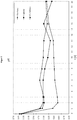
- Figure 2 shows the pH value of the raw sausage from the day of production over a period of 3 weeks with the addition of the different carbohydrates (maturation process).
- dextrose a clear drop in the pH value was already observed in the first two days, which was 3 units below that of cellobiose or lactose.
- the pH value of the raw sausage mixed with dextrose rose to the order of magnitude of the sausages mixed with cellobiose or lactose.
- the pH value of the raw sausages to which cellobiose was added was comparable to that to which lactose was added during the ripening process within the expected fluctuation ranges.
- salami with 3 different sugars (dextrose, cellobiose, lactose) was produced and fermented in analogy.
- a composition of 20% SII fresh, 35% SII frozen, 30% SV and 15% SVIII was weighed and each mixed with a mixture of 28 g / kg NPS, 7 g / kg various mixtures and 0.5 g / kg PRIMAL® SK natur rapid and made salami from it. The product thus produced was stored without smoking.
- Acetic acid, acetaldehyde, methional, phenylacetaldehyde, 2-methoxyphenol, 2-acetyl-1-pyrroline, butyric acid, 3-methylbutyric acid, 3-methylbutanal and 4-methylphenol are known from the literature as key flavor compounds for salami ( K. Söllner and P. Schieberle, Decoding the Key Aroma Compounds of a Hungarian-Type Salami by Molecular Sensory Science Approaches, in: Journal of Agricultural and Food Chemistry, 2009, 57, 10, 4319-4327 ). Two salami sausages each ripened with dextrose, cellobiose and lactose were tested for the content of aromatic substances examined.
- Acetic acid was found in all salami sausage samples in levels of 0.01-0.03 g / 100 g.
- the salamis ripened in the presence of cellobiose showed the highest levels (300 ppm) and thus also the highest odor activity values (2222), followed by the samples ripened with lactose (200 ppm, 1481) and dextrose (100 ppm, 741).
- lactose 200 ppm, 1481
- dextrose 100 ppm, 741
- the following table shows the specific contents, threshold concentration and aroma activity values of acetic acid in the examined salami samples: Dextrose Cellobiose Lactose 1 2 1 2 1 2 Acetic acid (see table above) [mg / kg] 100 100 300 300 200 200 Odor Threshold [mg / kg] 0.135 0.135 0.135 0.135 0.135 0.135 0.135 0.135 0.135 OAV 741 741 2222 2222 1481 1481 "Odor Threshold”: Detection threshold concentration "OAV”: Odor Activity Value (quotient of the concentration in the product and the detection threshold concentration)
- the salamis ripened with cellobiose showed the highest levels of acetic acid as the key aroma compound of the salami compared to their counterparts ripened with lactose and dextrose.
- the weight of the salami was determined over time and the measured values are summarized in the following table: Day/% Dextrose Lactose Cellobiose 0 0.00 0.00 0.00 1 -1.71 -1.52 -1.24 2 -2.08 -4.35 -3.67 3 -3.45 -6.69 -6.03 4th -4.62 -8.04 -8.15 7th -6.90 -9.01 -8.95 8th -7.50 -9.75 -10.07 9 -8.29 -10.32 -10.81 10 -8.63 -11.78 -11.56 11 -9.40 -12.27 -12.02 14th -11.85 -15.03 -15.26 15th -14.22 -17.13 -16.89 16 -16.63 -18.20 -18.20 21st -17.71 -19.76 -19.61 22nd -18.98 -21.48 -21.03 23 -20.58 -22.39 -21.95 24 -22.00 -24
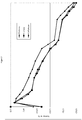
- Figure 3 shows the weight loss over the storage period.
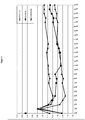
- Figure 4 shows the pH course over the storage time.
- the basic sausage meat was prepared and mixed with the filler in a 50/50 ratio, possibly 1 to 2 rounds cut.
- the base meat obtained in this way was divided into 4 equal parts.
- the amount of sugar was dissolved in 100 g of ice water and mixed into the sausage meat.
- the sausage meat was filled into 26/28 caliber pig intestines and cooked at 75 ° C to a core temperature of 70 ° C.
- Type of meat For the basic meat (10 kg) proportion of SIII 45% to bake 20% bacon 15% ice 20%
- the desired smoke color of the Viennese was the aim of this experiment. This could be supported by a Maillard reaction between the proteins of the sausage casing (sheep's skin) and the carbohydrate. In the experiment it could be shown that the tanning reactions between lactose and cellobiose proceeded comparable. Thus, an advantage in the smoking process was seen here, as the practical user has a shorter time here.
- Example 6 relates to a comparison between the fermentation of cellobiose and lactose in different bacterial strains carried out in practical tests.
- the results are given in the table below: tribe Cellobiose lactose tries literature tries literature Lactobacillus sakei Yes Yes no Yes Yes Yes Lactobacillus plantarum Yes Yes Yes Yes Yes Lactococcus lactis Yes nb Forms antibiotic nisin Yes Yes Staphylococcus carnosus Yes No acid formation Yes trunk-dependent Staphylococcus xylosus Yes No acid formation Yes trunk-dependent
- Figure 5 shows the influence of cellobiose on the acid spectrum that of individual bacterial strains or combinations of bacterial strains, in particular Lactobacillus sakei, Lactobacillus plantarum, Lactococcus lactis, Staphylococcus carnosus and Staphylococcus xylosus, after five days of utilization of lactose ( Figure 5A ) or cellobiose ( Figure 5B ) was formed. The amount of lactic and acetic acid that could be isolated from a total of 10 different batches is shown.
- Isolates 1, 2 and 3 came from samples with Lactobacillus sakei, Staphylococcus carnosus and Staphylococcus xylosus
- isolate 4 came from a sample with Staphylococcus carnosus
- isolates 5 and 6 from samples with Lactobacillus sakei and Staphylococcus carnosus and isolates 7, 8 and 9
- Isolate 0 came from a sample with no bacterial strain. The results show that all bacterial strains produced more lactic acid when using cellobiose than when using lactose.
Landscapes
- Life Sciences & Earth Sciences (AREA)
- Health & Medical Sciences (AREA)
- Engineering & Computer Science (AREA)
- Chemical & Material Sciences (AREA)
- Food Science & Technology (AREA)
- Nutrition Science (AREA)
- Polymers & Plastics (AREA)
- Microbiology (AREA)
- Mycology (AREA)
- Sustainable Development (AREA)
- Biotechnology (AREA)
- Biochemistry (AREA)
- Molecular Biology (AREA)
- Proteomics, Peptides & Aminoacids (AREA)
- Meat, Egg Or Seafood Products (AREA)
Claims (13)
- Préparation de produit alimentaire comprenant des parties d'animaux à sang chaud abattus ou mis à mort, qui sont destinées à la consommation par l'homme, et du cellobiose ; la préparation de produit alimentaire ayant été fermentée ou préfermentée par des micro-organismes qui métabolisent le cellobiose, et la préparation de produit alimentaire ne contenant ni cellotriose, ni cellotétraose, ni cellopentaose, ni cellohexaose.
- Préparation de produit alimentaire selon la revendication 1, la teneur en graisses étant d'au moins 5,0 % en poids, par rapport au poids total de la préparation de produit alimentaire.
- Préparation de produit alimentaire selon la revendication 1, la teneur en graisses se situant dans la plage de 0,01 à 60 % en poids, par rapport au poids total de la préparation de produit alimentaire.
- Préparation de produit alimentaire selon l'une quelconque des revendications précédentes, les parties d'animaux à sang chaud abattus ou mis à mort étant choisies dans le groupe constitué par la viande, les abats et le lard.
- Préparation de produit alimentaire selon l'une quelconque des revendications précédentes, la fermentation étant réalisée par un micro-organisme choisi parmi- des bactéries comprenant Lactobacillus, Lactococcus, Pediococcus, Kocuria, et Staphylococcus ;- des levures comprenant Debaryomyces, et Candida ; et- des moisissures comprenant Penicillium.
- Préparation de produit alimentaire selon la revendication 5, les bactéries étant choisies dans le groupe constitué par Lactobacillus sakei, Lactobacillus plantarum, Lactobacillus curvatis, Lactobacillus curvatus, Lactobacillus bavaricus, Lactobacillus rhamnosus, Lactobacillus pentosus, Lactococcus lactis, Pediococcus acidilactici, Pediococcus pendosaccus, Pediococcus cerevisiae, Pediococcus pentosaceus, Kocuria varians, Staphylococcus carnosus, Staphylococcus xylosus, Staphylococcus equorum, Staphylococcus succinus, et Staphylococcus saprophyticus.
- Préparation de produit alimentaire selon la revendication 5, les levures étant choisies dans le groupe constitué par Debaryomyces hansenii, Candida utilis, et Candida zeylanoides.
- Préparation de produit alimentaire selon la revendication 5, les moisissures étant choisies dans le groupe constitué par Penicillium chrysogenum, Penicillium nordicum, Penicillium olsonii, Penicillium polonicum, Penicillium expansum, Penicillium nalgiovense, Penicillium paneum, Penicillium camemberti, Penicillium carneum, Penicillium solitum, Penicillium aurantiogriseum, Penicillium commune, et Penicillium rubrum.
- Préparation de produit alimentaire selon l'une quelconque des revendications précédentes, qui ne contient pas de lactose ou la teneur en lactose étant d'au plus 1,0 % en poids, par rapport au poids total de la préparation de produit alimentaire.
- Procédé pour la fabrication d'une préparation alimentaire selon l'une quelconque des revendications 1 à 9 comprenant les étapes de(a) mélange de parties d'animaux à sang chaud abattus ou mis à mort, qui sont destinées à la consommation par l'homme, et d'une composition qui contient du cellobiose ; et(b) maturation du mélange fabriqué selon l'étape (a) par fermentation avec des micro-organismes qui métabolisent le cellobiose.
- Procédé selon la revendication 10, la composition qui contient du cellobiose étant un mélange d'épices et/ou un mélange de fermentation.
- Utilisation de cellobiose comme ingrédient dans des préparations de produit alimentaire comprenant des parties d'animaux à sang chaud abattus ou mis à mort, qui sont destinées à la consommation par l'homme, le cellobiose étant fermenté par des micro-organismes pour l'amélioration du processus de maturation et/ou de la formation d'arômes.
- Utilisation selon la revendication 12, le cellobiose étant contenu dans un mélange d'épices et/ou un mélange de fermentation.
Applications Claiming Priority (2)
| Application Number | Priority Date | Filing Date | Title |
|---|---|---|---|
| EP15152182 | 2015-01-22 | ||
| PCT/EP2016/051378 WO2016116622A1 (fr) | 2015-01-22 | 2016-01-22 | Cellobiose dans des produits fermentés à base de viande et de charcuterie |
Publications (3)
| Publication Number | Publication Date |
|---|---|
| EP3247228A1 EP3247228A1 (fr) | 2017-11-29 |
| EP3247228B1 true EP3247228B1 (fr) | 2020-12-23 |
| EP3247228B2 EP3247228B2 (fr) | 2026-02-18 |
Family
ID=52358685
Family Applications (1)
| Application Number | Title | Priority Date | Filing Date |
|---|---|---|---|
| EP16701349.9A Active EP3247228B2 (fr) | 2015-01-22 | 2016-01-22 | Cellobiose dans des produits fermentés à base de viande et de charcuterie |
Country Status (2)
| Country | Link |
|---|---|
| EP (1) | EP3247228B2 (fr) |
| WO (1) | WO2016116622A1 (fr) |
Families Citing this family (4)
| Publication number | Priority date | Publication date | Assignee | Title |
|---|---|---|---|---|
| EP3247228B2 (fr) | 2015-01-22 | 2026-02-18 | Pfeifer & Langen GmbH & Co. KG | Cellobiose dans des produits fermentés à base de viande et de charcuterie |
| CN107712915A (zh) * | 2017-11-22 | 2018-02-23 | 保定素味珍食品有限公司 | 素肘花及其制备方法 |
| EP3758513A1 (fr) | 2018-02-28 | 2021-01-06 | c-LEcta GmbH | Enrichissement enzymatique in situ d'aliments avec des glucides fonctionnels |
| DE102018112348A1 (de) * | 2018-05-23 | 2019-11-28 | DIL Deutsches Institut für Lebensmitteltechnik e.V. | Lebensmittel mit geschmacksaktiver Substanz aus Rohstoffen tierischen Ursprungs oder aus Auszügen derselben |
Citations (5)
| Publication number | Priority date | Publication date | Assignee | Title |
|---|---|---|---|---|
| US6287610B1 (en) | 1991-11-20 | 2001-09-11 | Monfort, Inc. | Method for increasing the tenderness of a meat product |
| US20040170723A1 (en) | 2003-02-27 | 2004-09-02 | Vicky Hoel | Process of rapidly preparing a fermented dry or semi-dry sausage product and products therefrom |
| US20140005139A1 (en) | 2005-09-27 | 2014-01-02 | Asahi Kasei Chemicals Corporation | Cellooligosaccharide-containing composition |
| DE202014103048U1 (de) | 2014-07-03 | 2014-07-11 | Josef Ettenhuber | Fleisch und Speck erhältlich mittels eines Räucherverfahrens |
| WO2016116622A1 (fr) | 2015-01-22 | 2016-07-28 | Pfeifer & Langen GmbH & Co. KG | Cellobiose dans des produits fermentés à base de viande et de charcuterie |
Family Cites Families (3)
| Publication number | Priority date | Publication date | Assignee | Title |
|---|---|---|---|---|
| JP2004321068A (ja) * | 2003-04-24 | 2004-11-18 | Oita Technology Licensing Organization Ltd | 脂質代謝促進用食・飼料添加物 |
| ES2304846B1 (es) * | 2006-05-11 | 2009-10-23 | Viscofan, S.A. | Tripa coloreante para embutidos carnicos y procedimiento de obtencion. |
| JP5550277B2 (ja) * | 2009-07-23 | 2014-07-16 | 長谷川香料株式会社 | 保存安定性に優れた粉末組成物 |
-
2016
- 2016-01-22 EP EP16701349.9A patent/EP3247228B2/fr active Active
- 2016-01-22 WO PCT/EP2016/051378 patent/WO2016116622A1/fr not_active Ceased
Patent Citations (5)
| Publication number | Priority date | Publication date | Assignee | Title |
|---|---|---|---|---|
| US6287610B1 (en) | 1991-11-20 | 2001-09-11 | Monfort, Inc. | Method for increasing the tenderness of a meat product |
| US20040170723A1 (en) | 2003-02-27 | 2004-09-02 | Vicky Hoel | Process of rapidly preparing a fermented dry or semi-dry sausage product and products therefrom |
| US20140005139A1 (en) | 2005-09-27 | 2014-01-02 | Asahi Kasei Chemicals Corporation | Cellooligosaccharide-containing composition |
| DE202014103048U1 (de) | 2014-07-03 | 2014-07-11 | Josef Ettenhuber | Fleisch und Speck erhältlich mittels eines Räucherverfahrens |
| WO2016116622A1 (fr) | 2015-01-22 | 2016-07-28 | Pfeifer & Langen GmbH & Co. KG | Cellobiose dans des produits fermentés à base de viande et de charcuterie |
Non-Patent Citations (12)
Also Published As
| Publication number | Publication date |
|---|---|
| WO2016116622A1 (fr) | 2016-07-28 |
| EP3247228A1 (fr) | 2017-11-29 |
| EP3247228B2 (fr) | 2026-02-18 |
Similar Documents
| Publication | Publication Date | Title |
|---|---|---|
| EP2328427B1 (fr) | Composition d'huile pour la préparation de produits alimentaires contenant de l'huile | |
| DD153567A5 (de) | Verfahren zur herstellung eines zerkleinerten fleischproduktes | |
| DE2900072A1 (de) | Fluessiges rauchkonzentrat | |
| EP3796789A1 (fr) | Aliment à substance gustative à partir de matières premières d'origine animale ou à partir d'extraits de ces dernières | |
| EP3247228B2 (fr) | Cellobiose dans des produits fermentés à base de viande et de charcuterie | |
| EP1048227B1 (fr) | Produits carnes avec des acides gras oméga 3 et des vitamines | |
| CN107041539A (zh) | 一种调味料包、鱼调料包和鱼的烹饪方法 | |
| KR20170126222A (ko) | 화학 첨가물을 함유하지 않는 천연 소시지의 제조방법 | |
| EP1817962B1 (fr) | Saucisse non séchée dans une enveloppe imperméable à la vapeur dýeau | |
| DE69521933T2 (de) | Fleischprodukt | |
| KR101208096B1 (ko) | 연육 및 축육을 포함하는 가공식품 및 이의 제조방법 | |
| DE2203582C2 (de) | Verfahren zur Herstellung von fettarmen Fleischspeisen und Wurstprodukten unter Zusatz von Milch | |
| JP5535779B2 (ja) | 牛肉又は牛肉加工食品の製造方法 | |
| EP1164875B1 (fr) | Procede d'assaisonnement de produits alimentaires | |
| EP4005401A1 (fr) | Produit de saucisse, formé à partir ou comprenant de la saucisse crue épicée et de la viande séchée concassée, ainsi que procédé de fabrication du produit de saucisse | |
| EP3308654B1 (fr) | Procédé de fabrication de saucisses | |
| DE19949661A1 (de) | Verfahren zum Würzen von Nahrungsmitteln | |
| Teye et al. | Effect of sweet basil (Ocimum basilicum) leaf extract as a spice in hamburger | |
| KR102562018B1 (ko) | 기호도가 우수한 물닭갈비의 제조방법 | |
| EP1575380B1 (fr) | Produit a base de viande contenant de la cafeine | |
| CN118020911B (zh) | 一种香辛料及其制备方法和卤水 | |
| DE202018100688U1 (de) | Fleischprodukt, insbesondere Frikadelle oder Wurst mit dem Fleischprodukt in einer Wursthaut | |
| DE202007011975U1 (de) | Dauerwurst nach Salamiart | |
| DE202004008342U1 (de) | Fleischprodukt | |
| DE958075C (de) | Verfahren zur Herstellung von lange Zeit haltbaren, streichfaehigen bis schnittfesten, nicht oder kalt geraeucherten Kochwuersten, d.h. Blut-, Suelz-, Landleber- und feinen bis groben Leberwuersten |
Legal Events
| Date | Code | Title | Description |
|---|---|---|---|
| STAA | Information on the status of an ep patent application or granted ep patent |
Free format text: STATUS: THE INTERNATIONAL PUBLICATION HAS BEEN MADE |
|
| PUAI | Public reference made under article 153(3) epc to a published international application that has entered the european phase |
Free format text: ORIGINAL CODE: 0009012 |
|
| STAA | Information on the status of an ep patent application or granted ep patent |
Free format text: STATUS: REQUEST FOR EXAMINATION WAS MADE |
|
| 17P | Request for examination filed |
Effective date: 20170822 |
|
| AK | Designated contracting states |
Kind code of ref document: A1 Designated state(s): AL AT BE BG CH CY CZ DE DK EE ES FI FR GB GR HR HU IE IS IT LI LT LU LV MC MK MT NL NO PL PT RO RS SE SI SK SM TR |
|
| AX | Request for extension of the european patent |
Extension state: BA ME |
|
| DAV | Request for validation of the european patent (deleted) | ||
| DAX | Request for extension of the european patent (deleted) | ||
| STAA | Information on the status of an ep patent application or granted ep patent |
Free format text: STATUS: EXAMINATION IS IN PROGRESS |
|
| 17Q | First examination report despatched |
Effective date: 20190506 |
|
| GRAP | Despatch of communication of intention to grant a patent |
Free format text: ORIGINAL CODE: EPIDOSNIGR1 |
|
| STAA | Information on the status of an ep patent application or granted ep patent |
Free format text: STATUS: GRANT OF PATENT IS INTENDED |
|
| INTG | Intention to grant announced |
Effective date: 20200727 |
|
| GRAS | Grant fee paid |
Free format text: ORIGINAL CODE: EPIDOSNIGR3 |
|
| GRAA | (expected) grant |
Free format text: ORIGINAL CODE: 0009210 |
|
| STAA | Information on the status of an ep patent application or granted ep patent |
Free format text: STATUS: THE PATENT HAS BEEN GRANTED |
|
| AK | Designated contracting states |
Kind code of ref document: B1 Designated state(s): AL AT BE BG CH CY CZ DE DK EE ES FI FR GB GR HR HU IE IS IT LI LT LU LV MC MK MT NL NO PL PT RO RS SE SI SK SM TR |
|
| REG | Reference to a national code |
Ref country code: GB Ref legal event code: FG4D Free format text: NOT ENGLISH |
|
| REG | Reference to a national code |
Ref country code: DE Ref legal event code: R096 Ref document number: 502016012026 Country of ref document: DE |
|
| REG | Reference to a national code |
Ref country code: AT Ref legal event code: REF Ref document number: 1346837 Country of ref document: AT Kind code of ref document: T Effective date: 20210115 |
|
| REG | Reference to a national code |
Ref country code: IE Ref legal event code: FG4D Free format text: LANGUAGE OF EP DOCUMENT: GERMAN |
|
| PG25 | Lapsed in a contracting state [announced via postgrant information from national office to epo] |
Ref country code: FI Free format text: LAPSE BECAUSE OF FAILURE TO SUBMIT A TRANSLATION OF THE DESCRIPTION OR TO PAY THE FEE WITHIN THE PRESCRIBED TIME-LIMIT Effective date: 20201223 Ref country code: GR Free format text: LAPSE BECAUSE OF FAILURE TO SUBMIT A TRANSLATION OF THE DESCRIPTION OR TO PAY THE FEE WITHIN THE PRESCRIBED TIME-LIMIT Effective date: 20210324 Ref country code: NO Free format text: LAPSE BECAUSE OF FAILURE TO SUBMIT A TRANSLATION OF THE DESCRIPTION OR TO PAY THE FEE WITHIN THE PRESCRIBED TIME-LIMIT Effective date: 20210323 Ref country code: RS Free format text: LAPSE BECAUSE OF FAILURE TO SUBMIT A TRANSLATION OF THE DESCRIPTION OR TO PAY THE FEE WITHIN THE PRESCRIBED TIME-LIMIT Effective date: 20201223 |
|
| REG | Reference to a national code |
Ref country code: NL Ref legal event code: MP Effective date: 20201223 |
|
| PG25 | Lapsed in a contracting state [announced via postgrant information from national office to epo] |
Ref country code: SE Free format text: LAPSE BECAUSE OF FAILURE TO SUBMIT A TRANSLATION OF THE DESCRIPTION OR TO PAY THE FEE WITHIN THE PRESCRIBED TIME-LIMIT Effective date: 20201223 Ref country code: BG Free format text: LAPSE BECAUSE OF FAILURE TO SUBMIT A TRANSLATION OF THE DESCRIPTION OR TO PAY THE FEE WITHIN THE PRESCRIBED TIME-LIMIT Effective date: 20210323 Ref country code: LV Free format text: LAPSE BECAUSE OF FAILURE TO SUBMIT A TRANSLATION OF THE DESCRIPTION OR TO PAY THE FEE WITHIN THE PRESCRIBED TIME-LIMIT Effective date: 20201223 |
|
| PG25 | Lapsed in a contracting state [announced via postgrant information from national office to epo] |
Ref country code: NL Free format text: LAPSE BECAUSE OF FAILURE TO SUBMIT A TRANSLATION OF THE DESCRIPTION OR TO PAY THE FEE WITHIN THE PRESCRIBED TIME-LIMIT Effective date: 20201223 Ref country code: HR Free format text: LAPSE BECAUSE OF FAILURE TO SUBMIT A TRANSLATION OF THE DESCRIPTION OR TO PAY THE FEE WITHIN THE PRESCRIBED TIME-LIMIT Effective date: 20201223 |
|
| REG | Reference to a national code |
Ref country code: LT Ref legal event code: MG9D |
|
| PG25 | Lapsed in a contracting state [announced via postgrant information from national office to epo] |
Ref country code: PT Free format text: LAPSE BECAUSE OF FAILURE TO SUBMIT A TRANSLATION OF THE DESCRIPTION OR TO PAY THE FEE WITHIN THE PRESCRIBED TIME-LIMIT Effective date: 20210423 Ref country code: SK Free format text: LAPSE BECAUSE OF FAILURE TO SUBMIT A TRANSLATION OF THE DESCRIPTION OR TO PAY THE FEE WITHIN THE PRESCRIBED TIME-LIMIT Effective date: 20201223 Ref country code: RO Free format text: LAPSE BECAUSE OF FAILURE TO SUBMIT A TRANSLATION OF THE DESCRIPTION OR TO PAY THE FEE WITHIN THE PRESCRIBED TIME-LIMIT Effective date: 20201223 Ref country code: CZ Free format text: LAPSE BECAUSE OF FAILURE TO SUBMIT A TRANSLATION OF THE DESCRIPTION OR TO PAY THE FEE WITHIN THE PRESCRIBED TIME-LIMIT Effective date: 20201223 Ref country code: EE Free format text: LAPSE BECAUSE OF FAILURE TO SUBMIT A TRANSLATION OF THE DESCRIPTION OR TO PAY THE FEE WITHIN THE PRESCRIBED TIME-LIMIT Effective date: 20201223 Ref country code: SM Free format text: LAPSE BECAUSE OF FAILURE TO SUBMIT A TRANSLATION OF THE DESCRIPTION OR TO PAY THE FEE WITHIN THE PRESCRIBED TIME-LIMIT Effective date: 20201223 Ref country code: LT Free format text: LAPSE BECAUSE OF FAILURE TO SUBMIT A TRANSLATION OF THE DESCRIPTION OR TO PAY THE FEE WITHIN THE PRESCRIBED TIME-LIMIT Effective date: 20201223 |
|
| PG25 | Lapsed in a contracting state [announced via postgrant information from national office to epo] |
Ref country code: PL Free format text: LAPSE BECAUSE OF FAILURE TO SUBMIT A TRANSLATION OF THE DESCRIPTION OR TO PAY THE FEE WITHIN THE PRESCRIBED TIME-LIMIT Effective date: 20201223 |
|
| REG | Reference to a national code |
Ref country code: DE Ref legal event code: R026 Ref document number: 502016012026 Country of ref document: DE |
|
| PLBI | Opposition filed |
Free format text: ORIGINAL CODE: 0009260 |
|
| PG25 | Lapsed in a contracting state [announced via postgrant information from national office to epo] |
Ref country code: MC Free format text: LAPSE BECAUSE OF FAILURE TO SUBMIT A TRANSLATION OF THE DESCRIPTION OR TO PAY THE FEE WITHIN THE PRESCRIBED TIME-LIMIT Effective date: 20201223 Ref country code: LU Free format text: LAPSE BECAUSE OF NON-PAYMENT OF DUE FEES Effective date: 20210122 Ref country code: IS Free format text: LAPSE BECAUSE OF FAILURE TO SUBMIT A TRANSLATION OF THE DESCRIPTION OR TO PAY THE FEE WITHIN THE PRESCRIBED TIME-LIMIT Effective date: 20210423 |
|
| PLAX | Notice of opposition and request to file observation + time limit sent |
Free format text: ORIGINAL CODE: EPIDOSNOBS2 |
|
| 26 | Opposition filed |
Opponent name: PAJARO LIMITED Effective date: 20210903 |
|
| PG25 | Lapsed in a contracting state [announced via postgrant information from national office to epo] |
Ref country code: IT Free format text: LAPSE BECAUSE OF FAILURE TO SUBMIT A TRANSLATION OF THE DESCRIPTION OR TO PAY THE FEE WITHIN THE PRESCRIBED TIME-LIMIT Effective date: 20201223 Ref country code: AL Free format text: LAPSE BECAUSE OF FAILURE TO SUBMIT A TRANSLATION OF THE DESCRIPTION OR TO PAY THE FEE WITHIN THE PRESCRIBED TIME-LIMIT Effective date: 20201223 |
|
| REG | Reference to a national code |
Ref country code: DE Ref legal event code: R081 Ref document number: 502016012026 Country of ref document: DE Owner name: VAN HEES GMBH, DE Free format text: FORMER OWNERS: PFEIFER & LANGEN GMBH & CO. KG, 50858 KOELN, DE; VAN HEES GMBH, 65396 WALLUF, DE Ref country code: DE Ref legal event code: R081 Ref document number: 502016012026 Country of ref document: DE Owner name: SAVANNA INGREDIENTS GMBH, DE Free format text: FORMER OWNERS: PFEIFER & LANGEN GMBH & CO. KG, 50858 KOELN, DE; VAN HEES GMBH, 65396 WALLUF, DE |
|
| PG25 | Lapsed in a contracting state [announced via postgrant information from national office to epo] |
Ref country code: DK Free format text: LAPSE BECAUSE OF FAILURE TO SUBMIT A TRANSLATION OF THE DESCRIPTION OR TO PAY THE FEE WITHIN THE PRESCRIBED TIME-LIMIT Effective date: 20201223 |
|
| REG | Reference to a national code |
Ref country code: AT Ref legal event code: PC Ref document number: 1346837 Country of ref document: AT Kind code of ref document: T Owner name: VAN HEES GMBH, DE Effective date: 20211214 Ref country code: AT Ref legal event code: PC Ref document number: 1346837 Country of ref document: AT Kind code of ref document: T Owner name: SAVANNA INGREDIENTS GMBH, DE Effective date: 20211214 |
|
| PG25 | Lapsed in a contracting state [announced via postgrant information from national office to epo] |
Ref country code: ES Free format text: LAPSE BECAUSE OF FAILURE TO SUBMIT A TRANSLATION OF THE DESCRIPTION OR TO PAY THE FEE WITHIN THE PRESCRIBED TIME-LIMIT Effective date: 20201223 Ref country code: IE Free format text: LAPSE BECAUSE OF NON-PAYMENT OF DUE FEES Effective date: 20210122 |
|
| PLBB | Reply of patent proprietor to notice(s) of opposition received |
Free format text: ORIGINAL CODE: EPIDOSNOBS3 |
|
| PG25 | Lapsed in a contracting state [announced via postgrant information from national office to epo] |
Ref country code: SI Free format text: LAPSE BECAUSE OF FAILURE TO SUBMIT A TRANSLATION OF THE DESCRIPTION OR TO PAY THE FEE WITHIN THE PRESCRIBED TIME-LIMIT Effective date: 20201223 |
|
| REG | Reference to a national code |
Ref country code: CH Ref legal event code: PK Free format text: BERICHTIGUNGEN |
|
| PG25 | Lapsed in a contracting state [announced via postgrant information from national office to epo] |
Ref country code: IS Free format text: LAPSE BECAUSE OF FAILURE TO SUBMIT A TRANSLATION OF THE DESCRIPTION OR TO PAY THE FEE WITHIN THE PRESCRIBED TIME-LIMIT Effective date: 20210423 |
|
| REG | Reference to a national code |
Ref country code: GB Ref legal event code: 732E Free format text: REGISTERED BETWEEN 20220513 AND 20220518 |
|
| REG | Reference to a national code |
Ref country code: BE Ref legal event code: PD Owner name: VAN HEES GMBH; DE Free format text: DETAILS ASSIGNMENT: CHANGE OF OWNER(S), ASSIGNMENT; FORMER OWNER NAME: PFEIFER & LANGEN GMBH & CO. KG Effective date: 20220429 |
|
| PG25 | Lapsed in a contracting state [announced via postgrant information from national office to epo] |
Ref country code: HU Free format text: LAPSE BECAUSE OF FAILURE TO SUBMIT A TRANSLATION OF THE DESCRIPTION OR TO PAY THE FEE WITHIN THE PRESCRIBED TIME-LIMIT; INVALID AB INITIO Effective date: 20160122 |
|
| P01 | Opt-out of the competence of the unified patent court (upc) registered |
Effective date: 20230524 |
|
| PG25 | Lapsed in a contracting state [announced via postgrant information from national office to epo] |
Ref country code: CY Free format text: LAPSE BECAUSE OF FAILURE TO SUBMIT A TRANSLATION OF THE DESCRIPTION OR TO PAY THE FEE WITHIN THE PRESCRIBED TIME-LIMIT Effective date: 20201223 |
|
| P02 | Opt-out of the competence of the unified patent court (upc) changed |
Effective date: 20230530 |
|
| APBM | Appeal reference recorded |
Free format text: ORIGINAL CODE: EPIDOSNREFNO |
|
| APBP | Date of receipt of notice of appeal recorded |
Free format text: ORIGINAL CODE: EPIDOSNNOA2O |
|
| APAH | Appeal reference modified |
Free format text: ORIGINAL CODE: EPIDOSCREFNO |
|
| APBQ | Date of receipt of statement of grounds of appeal recorded |
Free format text: ORIGINAL CODE: EPIDOSNNOA3O |
|
| PG25 | Lapsed in a contracting state [announced via postgrant information from national office to epo] |
Ref country code: MK Free format text: LAPSE BECAUSE OF FAILURE TO SUBMIT A TRANSLATION OF THE DESCRIPTION OR TO PAY THE FEE WITHIN THE PRESCRIBED TIME-LIMIT Effective date: 20201223 |
|
| PG25 | Lapsed in a contracting state [announced via postgrant information from national office to epo] |
Ref country code: MT Free format text: LAPSE BECAUSE OF FAILURE TO SUBMIT A TRANSLATION OF THE DESCRIPTION OR TO PAY THE FEE WITHIN THE PRESCRIBED TIME-LIMIT Effective date: 20201223 |
|
| APBU | Appeal procedure closed |
Free format text: ORIGINAL CODE: EPIDOSNNOA9O |
|
| PG25 | Lapsed in a contracting state [announced via postgrant information from national office to epo] |
Ref country code: TR Free format text: LAPSE BECAUSE OF FAILURE TO SUBMIT A TRANSLATION OF THE DESCRIPTION OR TO PAY THE FEE WITHIN THE PRESCRIBED TIME-LIMIT Effective date: 20201223 |
|
| PUAH | Patent maintained in amended form |
Free format text: ORIGINAL CODE: 0009272 |
|
| STAA | Information on the status of an ep patent application or granted ep patent |
Free format text: STATUS: PATENT MAINTAINED AS AMENDED |
|
| REG | Reference to a national code |
Ref country code: CH Ref legal event code: M12 Free format text: ST27 STATUS EVENT CODE: U-0-0-M10-M12 (AS PROVIDED BY THE NATIONAL OFFICE) Effective date: 20260121 |
|
| REG | Reference to a national code |
Ref country code: CH Ref legal event code: U11 Free format text: ST27 STATUS EVENT CODE: U-0-0-U10-U11 (AS PROVIDED BY THE NATIONAL OFFICE) Effective date: 20260201 |
|
| 27A | Patent maintained in amended form |
Effective date: 20260218 |
|
| AK | Designated contracting states |
Kind code of ref document: B2 Designated state(s): AL AT BE BG CH CY CZ DE DK EE ES FI FR GB GR HR HU IE IS IT LI LT LU LV MC MK MT NL NO PL PT RO RS SE SI SK SM TR |
|
| REG | Reference to a national code |
Ref country code: DE Ref legal event code: R102 Ref document number: 502016012026 Country of ref document: DE |
|
| PGFP | Annual fee paid to national office [announced via postgrant information from national office to epo] |
Ref country code: GB Payment date: 20260122 Year of fee payment: 11 |
|
| PGFP | Annual fee paid to national office [announced via postgrant information from national office to epo] |
Ref country code: DE Payment date: 20260120 Year of fee payment: 11 |
|
| PGFP | Annual fee paid to national office [announced via postgrant information from national office to epo] |
Ref country code: AT Payment date: 20260119 Year of fee payment: 11 |
|
| PGFP | Annual fee paid to national office [announced via postgrant information from national office to epo] |
Ref country code: BE Payment date: 20260121 Year of fee payment: 11 |
|
| PGFP | Annual fee paid to national office [announced via postgrant information from national office to epo] |
Ref country code: FR Payment date: 20260121 Year of fee payment: 11 |
|
| PGFP | Annual fee paid to national office [announced via postgrant information from national office to epo] |
Ref country code: CH Payment date: 20260201 Year of fee payment: 11 |