EP3248991A1 - Procédé de production d'un polymère super-absorbant - Google Patents
Procédé de production d'un polymère super-absorbant Download PDFInfo
- Publication number
- EP3248991A1 EP3248991A1 EP16835267.2A EP16835267A EP3248991A1 EP 3248991 A1 EP3248991 A1 EP 3248991A1 EP 16835267 A EP16835267 A EP 16835267A EP 3248991 A1 EP3248991 A1 EP 3248991A1
- Authority
- EP
- European Patent Office
- Prior art keywords
- weight
- superabsorbent polymer
- carbonate
- polymer
- monomer mixture
- Prior art date
- Legal status (The legal status is an assumption and is not a legal conclusion. Google has not performed a legal analysis and makes no representation as to the accuracy of the status listed.)
- Granted
Links
Images


Classifications
-
- C—CHEMISTRY; METALLURGY
- C08—ORGANIC MACROMOLECULAR COMPOUNDS; THEIR PREPARATION OR CHEMICAL WORKING-UP; COMPOSITIONS BASED THEREON
- C08J—WORKING-UP; GENERAL PROCESSES OF COMPOUNDING; AFTER-TREATMENT NOT COVERED BY SUBCLASSES C08B, C08C, C08F, C08G or C08H
- C08J3/00—Processes of treating or compounding macromolecular substances
- C08J3/24—Crosslinking, e.g. vulcanising, of macromolecules
- C08J3/245—Differential crosslinking of one polymer with one crosslinking type, e.g. surface crosslinking
-
- C—CHEMISTRY; METALLURGY
- C08—ORGANIC MACROMOLECULAR COMPOUNDS; THEIR PREPARATION OR CHEMICAL WORKING-UP; COMPOSITIONS BASED THEREON
- C08F—MACROMOLECULAR COMPOUNDS OBTAINED BY REACTIONS ONLY INVOLVING CARBON-TO-CARBON UNSATURATED BONDS
- C08F220/00—Copolymers of compounds having one or more unsaturated aliphatic radicals, each having only one carbon-to-carbon double bond, and only one being terminated by only one carboxyl radical or a salt, anhydride ester, amide, imide or nitrile thereof
- C08F220/02—Monocarboxylic acids having less than ten carbon atoms; Derivatives thereof
- C08F220/04—Acids; Metal salts or ammonium salts thereof
- C08F220/06—Acrylic acid; Methacrylic acid; Metal salts or ammonium salts thereof
-
- C—CHEMISTRY; METALLURGY
- C08—ORGANIC MACROMOLECULAR COMPOUNDS; THEIR PREPARATION OR CHEMICAL WORKING-UP; COMPOSITIONS BASED THEREON
- C08L—COMPOSITIONS OF MACROMOLECULAR COMPOUNDS
- C08L51/00—Compositions of graft polymers in which the grafted component is obtained by reactions only involving carbon-to-carbon unsaturated bonds; Compositions of derivatives of such polymers
- C08L51/08—Compositions of graft polymers in which the grafted component is obtained by reactions only involving carbon-to-carbon unsaturated bonds; Compositions of derivatives of such polymers grafted on to macromolecular compounds obtained otherwise than by reactions only involving unsaturated carbon-to-carbon bonds
-
- C—CHEMISTRY; METALLURGY
- C08—ORGANIC MACROMOLECULAR COMPOUNDS; THEIR PREPARATION OR CHEMICAL WORKING-UP; COMPOSITIONS BASED THEREON
- C08F—MACROMOLECULAR COMPOUNDS OBTAINED BY REACTIONS ONLY INVOLVING CARBON-TO-CARBON UNSATURATED BONDS
- C08F2/00—Processes of polymerisation
- C08F2/04—Polymerisation in solution
- C08F2/10—Aqueous solvent
-
- C—CHEMISTRY; METALLURGY
- C08—ORGANIC MACROMOLECULAR COMPOUNDS; THEIR PREPARATION OR CHEMICAL WORKING-UP; COMPOSITIONS BASED THEREON
- C08J—WORKING-UP; GENERAL PROCESSES OF COMPOUNDING; AFTER-TREATMENT NOT COVERED BY SUBCLASSES C08B, C08C, C08F, C08G or C08H
- C08J3/00—Processes of treating or compounding macromolecular substances
- C08J3/02—Making solutions, dispersions, lattices or gels by other methods than by solution, emulsion or suspension polymerisation techniques
- C08J3/03—Making solutions, dispersions, lattices or gels by other methods than by solution, emulsion or suspension polymerisation techniques in aqueous media
- C08J3/075—Macromolecular gels
-
- C—CHEMISTRY; METALLURGY
- C08—ORGANIC MACROMOLECULAR COMPOUNDS; THEIR PREPARATION OR CHEMICAL WORKING-UP; COMPOSITIONS BASED THEREON
- C08J—WORKING-UP; GENERAL PROCESSES OF COMPOUNDING; AFTER-TREATMENT NOT COVERED BY SUBCLASSES C08B, C08C, C08F, C08G or C08H
- C08J3/00—Processes of treating or compounding macromolecular substances
- C08J3/12—Powdering or granulating
-
- C—CHEMISTRY; METALLURGY
- C08—ORGANIC MACROMOLECULAR COMPOUNDS; THEIR PREPARATION OR CHEMICAL WORKING-UP; COMPOSITIONS BASED THEREON
- C08J—WORKING-UP; GENERAL PROCESSES OF COMPOUNDING; AFTER-TREATMENT NOT COVERED BY SUBCLASSES C08B, C08C, C08F, C08G or C08H
- C08J3/00—Processes of treating or compounding macromolecular substances
- C08J3/24—Crosslinking, e.g. vulcanising, of macromolecules
-
- C—CHEMISTRY; METALLURGY
- C08—ORGANIC MACROMOLECULAR COMPOUNDS; THEIR PREPARATION OR CHEMICAL WORKING-UP; COMPOSITIONS BASED THEREON
- C08J—WORKING-UP; GENERAL PROCESSES OF COMPOUNDING; AFTER-TREATMENT NOT COVERED BY SUBCLASSES C08B, C08C, C08F, C08G or C08H
- C08J2333/00—Characterised by the use of homopolymers or copolymers of compounds having one or more unsaturated aliphatic radicals, each having only one carbon-to-carbon double bond, and only one being terminated by only one carboxyl radical, or of salts, anhydrides, esters, amides, imides, or nitriles thereof; Derivatives of such polymers
- C08J2333/04—Characterised by the use of homopolymers or copolymers of compounds having one or more unsaturated aliphatic radicals, each having only one carbon-to-carbon double bond, and only one being terminated by only one carboxyl radical, or of salts, anhydrides, esters, amides, imides, or nitriles thereof; Derivatives of such polymers esters
- C08J2333/06—Characterised by the use of homopolymers or copolymers of compounds having one or more unsaturated aliphatic radicals, each having only one carbon-to-carbon double bond, and only one being terminated by only one carboxyl radical, or of salts, anhydrides, esters, amides, imides, or nitriles thereof; Derivatives of such polymers esters of esters containing only carbon, hydrogen, and oxygen, the oxygen atom being present only as part of the carboxyl radical
-
- C—CHEMISTRY; METALLURGY
- C08—ORGANIC MACROMOLECULAR COMPOUNDS; THEIR PREPARATION OR CHEMICAL WORKING-UP; COMPOSITIONS BASED THEREON
- C08J—WORKING-UP; GENERAL PROCESSES OF COMPOUNDING; AFTER-TREATMENT NOT COVERED BY SUBCLASSES C08B, C08C, C08F, C08G or C08H
- C08J2351/00—Characterised by the use of graft polymers in which the grafted component is obtained by reactions only involving carbon-to-carbon unsaturated bonds; Derivatives of such polymers
- C08J2351/08—Characterised by the use of graft polymers in which the grafted component is obtained by reactions only involving carbon-to-carbon unsaturated bonds; Derivatives of such polymers grafted on to macromolecular compounds obtained otherwise than by reactions only involving carbon-to-carbon unsaturated bonds
Definitions
- the present invention relates to a method of preparing a superabsorbent polymer having a porous structure and showing excellent gel strength.
- a superabsorbent polymer is a synthetic polymeric material capable of absorbing moisture from about 500 to 1000 times its own weight.
- SAM Super Absorbency Material
- AGM Absorbent Gel Material
- SAM Super Absorbency Material
- AGM Absorbent Gel Material
- these superabsorbent polymers have been widely used in the field of hygienic materials such as diapers, sanitary napkins, etc.
- the superabsorbent polymers are required to exhibit a high absorption rate with respect to moisture, etc., and also required to exhibit an absorption rate above a predetermined level even under an external pressure or in a partially swollen state.
- a method of improving the absorption rate by increasing the absorption surface area of superabsorbent polymers a method of forming many pores inside the superabsorbent polymer to rapidly absorb water or a method of preparing the superabsorbent polymer as small particles to improve a contact surface area with water may be considered.
- the superabsorbent polymer prepared by the known method had a slightly improved absorption rate due to a porous structure, but the porous structure formed by the known method had weak gel strength, and thus there were problems that absorbency under load and liquid permeability were deteriorated. That is, when the former method was used, a desired level of absorption rate could not be achieved, and it was difficult to provide a superabsorbent polymer having predetermined levels of physical properties.
- the latter method may not sufficiently increase the absorption surface area of the superabsorbent polymer. Accordingly, there is a demand for studies to increase the absorption surface area of the superabsorbent polymer while maintaining physical properties thereof.
- the present invention provides a method of preparing a superabsorbent polymer having a porous structure and showing excellent gel strength.
- a method of preparing a superabsorbent polymer including the steps of: performing crosslinking polymerization of a monomer mixture in the presence of an internal crosslinking agent to form a water-containing gel polymer, the monomer mixture including water-soluble ethylene-based unsaturated monomers having acidic groups which are at least partially neutralized, a carbonate, a volatile organic solvent, a surfactant, and a foam promoter; drying, pulverizing, and size-sorting the water-containing gel polymer to form a base polymer powder; and additionally crosslinking the surface of the base polymer powder in the presence of a surface crosslinking agent to form a surface-crosslinked layer.
- the preparation method according to an embodiment may provide a superabsorbent polymer of a porous structure showing excellent gel strength by using both the carbonate and the volatile organic solvent as foaming agents.
- the carbonate which is one of the foaming agents may be one or more selected from the group consisting of magnesium carbonate, calcium carbonate, sodium bicarbonate, sodium carbonate, potassium bicarbonate, and potassium carbonate.
- the volatile organic solvent which is the other of the foaming agents may be an organic solvent having a boiling point of 15°C to 80°C. More specifically, a constitutional isomer of pentane, a constitutional isomer of hexane, acetone, methanol, ethanol, or a mixture thereof may be used as the volatile organic solvent.
- the volatile organic solvent and the carbonate used as the foaming agents may be used in an amount of 0.001% by weight to 0.5% by weight with respect to a total weight of the monomer mixture, respectively, thereby providing a superabsorbent polymer of a porous structure showing excellent gel strength.
- the preparation method according to an embodiment may achieve the porous structure showing excellent gel strength by using a surfactant and a foam promoter, together with the above-described foaming agent.
- the surfactant may be used in an amount of 0.00001% by weight to 0.00100% by weight with respect to the total weight of the monomer mixture.
- An inorganic acid aluminum salt and/or an organic acid aluminum salt may be used as the foam promoter.
- the foam promoter may be used in an amount of 0.001% by weight to 1% by weight with respect to the total weight of the monomer mixture.
- the monomer mixture including these components may be polymerized by a thermal polymerization method for pore formation of the polymer which is caused by vaporization of the volatile organic solvent.
- the monomer mixture may be subjected to crosslinking polymerization in a temperature range of about 40°C to about 90°C for sufficient vaporization of the volatile organic solvent and effective polymerization of monomers.
- one or more polyols selected from the group consisting of ethylene glycol, propylene glycol, 1,4-butanediol, 1,6-hexanediol, 1,2-hexanediol, 1,3-hexanediol, 2-methyl-1,3-propanediol, 2,5-hexanediol, 2-methyl-1,3-pentanediol, 2-methyl-2,4-pentanediol, tripropylene glycol, and glycerol; or one or more carbonate-based compounds selected from the group consisting of ethylene carbonate and propylene carbonate may be used as the surface crosslinking agent.
- the surface crosslinking agent may be used in an amount of 0.01% by weight to 3% by weight with respect to a total weight of the base polymer powder.
- the surface-crosslinked layer may be formed in the presence of one or more inorganic materials of silica, clay, alumina, a silica-alumina composite, titania, zinc oxide, and aluminum sulfate.
- the surface-crosslinked layer may be formed at a temperature of 100°C to 250°C.
- the superabsorbent polymer provided by the preparation method according to an embodiment may exhibit characteristics of excellent centrifuge retention capacity, absorbency under load, liquid permeability, etc. due to the porous structure showing excellent gel strength. More specifically, the superabsorbent polymer may exhibit characteristics that centrifuge retention capacity (CRC) in a physiological saline solution is 29 g/g to 35 g/g, absorbency under load (AUL) of 0.9 psi in the physiological saline solution is 17 g/g to 21 g/g, a vortex time is 30 seconds to 50 seconds, and absorbency under load (0.3 psi gel AUL) of the superabsorbent polymer, as measured after swelling the superabsorbent polymer in the physiological saline solution under a load of 0.3 psi for 5 minutes and removing residual liquid under vacuum, is 18 g/g to 21 g/g.
- CRC centrifuge retention capacity
- AUL absorbency under load
- AUL absorbency under load
- a method of preparing a superabsorbent polymer according to an embodiment of the present invention may provide a superabsorbent polymer which has a porous structure while showing excellent gel strength, thereby showing a high absorption rate.
- This superabsorbent polymer is characterized in that it is excellent in all physical properties such as centrifuge retention capacity, absorbency under load, liquid permeability, etc.
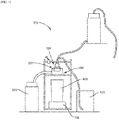
- FIGS. 1 to 3 are schematic views of an exemplary apparatus for measuring gel bed permeability and components provided in the apparatus.
- a method of preparing a superabsorbent polymer including the steps of: performing crosslinking polymerization of a monomer mixture in the presence of an internal crosslinking agent to form a water-containing gel polymer, the monomer mixture including water-soluble ethylene-based unsaturated monomers having acidic groups which are at least partially neutralized, a carbonate, a volatile organic solvent, a surfactant, and a foam promoter; drying, pulverizing, and size-sorting the water-containing gel polymer to form a base polymer powder; and additionally crosslinking the surface of the base polymer powder in the presence of a surface crosslinking agent to form a surface-crosslinked layer.
- the superabsorbent polymer prepared according to the preparation method of an embodiment may exhibit a remarkably improved absorption rate due to improved absorption area while showing superior absorbency under load and liquid permeability due to excellent gel strength.
- the water-soluble ethylene-based unsaturated monomer one or more selected from the group consisting of an anionic monomer such as acrylic acid, (meth)acrylic acid, maleic anhydride, fumaric acid, crotonic acid, itaconic acid, 2-acryloylethane sulfonic acid, 2-methacryloylethane sulfonic acid, 2-(meth)acryloylpropane sulfonic acid, or 2-(meth)acrylamide-2-methyl propane sulfonic acid, and salts thereof; a nonionic hydrophilic monomer such as (meth)acrylamide, N-substituted (meth)acrylate, 2-hydroxyethyl(meth)acrylate, 2-hydroxypropyl(meth)acrylate, methoxy polyethylene glycol (meth)acrylate, or polyethylene glycol (meth)acrylate; and an amino group-containing unsaturated monomer such as (N,N)-dimethyla anionic monomer such as acrylic acid, (
- acrylic acid or salts thereof for example, acrylic acid which is at least partially neutralized, and/or alkali metal salts thereof such as sodium salts thereof may be used, and it is possible to prepare a superabsorbent polymer having superior physical properties by using these monomers.
- acrylic acid may be used after being neutralized with a basic compound such as caustic soda (NaOH).
- a neutralization degree of the water-soluble ethylene-based unsaturated monomer may be controlled in the range of about 50 mol% to about 95 mol% or about 60 mol% to about 85 mol%.
- the water-soluble ethylene-based unsaturated monomer is neutralized within the above range, it is possible to provide a superabsorbent polymer having excellent centrifuge retention capacity without concern about precipitation.
- a concentration of the water-soluble ethylene-based unsaturated monomer may be about 20% by weight to about 60% by weight, or about 30% by weight to about 50% by weight with respect to a total weight of the monomer mixture including raw materials described below and a solvent, and the concentration may be properly controlled, in consideration of a polymerization time and reaction conditions.
- the monomer concentration is too low, the yield of the superabsorbent polymer may become low and an economic problem may occur.
- crosslinking polymerization of the monomer mixture is performed in the presence of the foaming agent to form the water-containing gel polymer.
- the carbonate and the volatile organic solvent are employed as foaming agents to provide a polymer showing excellent gel strength while having a porous structure.
- magnesium carbonate may be used as the carbonate which is one of the foaming agents.
- a solvent that is vaporized during crosslinking polymerization of the monomer mixture to form pores in the polymer may be used as the volatile organic solvent which is the other of the foaming agents.
- an organic solvent having a boiling point of 15°C to 80°C may be used as the volatile organic solvent.
- the volatile organic solvent may include a constitutional isomer of pentane (e.g., n-pentane (boiling point: 36.0°C) and 2-methylbutane (boiling point: 27.7°C)), a constitutional isomer of hexane (e.g., 2,3-dimethylbutane (boiling point: 58.0°C), 2,2-dimethylbutane (boiling point: 49.7°C)), acetone (boiling point: 56.5°C), methanol (boiling point: 64.7°C), ethanol (boiling point: 78.37°C), etc. Any one of the organic solvents listed above or two or more thereof may be used as the volatile organic solvent.
- a concentration of the carbonate may be 0.001% by weight to 0.5% by weight with respect to the total weight of the monomer mixture and a concentration of the volatile organic solvent may be 0.001% by weight to 0.5% by weight with respect to the total weight of the monomer mixture.
- the pore size, porosity, etc. of the polymer may be optimized to remarkably improve the absorption surface area of the superabsorbent polymer.
- the polymer may exhibit excellent gel strength despite the porous structure thereof.
- the carbonate and the volatile organic solvent may be used in a weight ratio of 1:1 to 1:2 to optimize the above-described effect, thereby achieving excellent absorbency under load and high absorption rate.
- the superabsorbent polymer of the porous structure capable of showing the high gel strength may be achieved by using the foaming agent together with the surfactant and the foam promoter.
- surfactant known in the art to which the present invention pertains may be used as the surfactant, as long as it is able to induce stable bubble formation of the foaming agent.
- Non-limiting examples of the surfactant may include one or more surfactants of anionic surfactants, non-ionic surfactants, cationic surfactants, and amphoteric surfactants.
- anionic surfactants may include fatty acid salts such as mixed fatty acid sodium soap, fatty acid sodium soap of semi-cured milk fat, sodium stearate soap, potassium oleate soap, potassium soap of castor oil, etc.; alkyl sulfate ester salts such as sodium lauryl sulfate, sodium higher alcohol sulfate, triethanolamine lauryl sulfate, etc.; alkylbenzene sulfonate such as sodium dodecylbenzene sulfonate, etc.; alkyl naphthalene sulfonate such as sodium alkyl naphthalene sulfonate, etc.; alkyl sulfosuccinate such as sodium dialkyl sulfosuccinate, etc.; alkyl diphenyl ether disulfonate such as sodium alkyl diphenyl ether disulfonate, etc.; alkyl phosphate such as potassium
- non-ionic surfactant may include polyoxyethylene alkyl ethers such as polyoxyethylene lauryl ether, polyoxyethylene cetyl ether, polyoxyethylene stearyl ether, polyoxyethylene oleyl ether, polyoxyethylene higher alcohol ether, etc.; polyoxyethylene alkyl aryl ethers such as polyoxyethylene nonyl phenyl ether, etc.; polyoxyethylene derivatives; sorbitan fatty acid esters such as sorbitan monolaurate, sorbitan monopalmitate, sorbitan monostearate, sorbitan tristearate, sorbitan monooleate, sorbitan trioleate, sorbitan sesquioleate, sorbitan distearate, etc.; polyoxyethylene sorbitan fatty acid esters such as polyoxyethylene sorbitan monolaurate, polyoxyethylene sorbitan monopalmitate, polyoxyethylene sorbitan monostearate, polyoxyethylene sorbitan tristearate,
- cationic surfactant and the amphoteric surfactant may include alkylamine salts such as coconut amine acetate, stearylamine acetate, etc.; quaternary ammonium salts such as lauryltrimethylammonium chloride, stearyltrimethylammonium chloride, cetyltrimethylammonium chloride, distearyldimethylammonium chloride, alkylbenzyldimethylammonium chloride, etc.; alkyl betaine such as lauryl betaine, stearyl betaine, lauryl carboxymethyl hydroxy ethylimidazolinium betaine, etc.; and amine oxides such as lauryl dimethyl amine oxide, etc.
- alkylamine salts such as coconut amine acetate, stearylamine acetate, etc.
- quaternary ammonium salts such as lauryltrimethylammonium chloride, stearyltrimethylammonium chloride, cetyltrimethylammonium
- fluorine-based surfactants and organic metal surfactants may be used as the surfactant.
- the fluorine-based surfactants and the organic metal surfactants may act as anionic surfactants, non-ionic surfactants, cationic surfactants, and amphoteric surfactants, depending on the kind of hydrophilic groups. These surfactants may stably disperse bubbles in the monomer mixture for a long time.
- fluorine-based surfactants applicable may include fluoroalkyl(C2 ⁇ C10) carboxylic acid, 3-[fluoroalkyl (C6 ⁇ C11)oxy]-1-alkyl (C3-C4) sodium sulfonic acid, phosphoric acid bis(N-perfluorooctylsulfonyl-N-ethylaminoethyl), monoperfluoroalkyl(C6 ⁇ C16) ethyl phosphoric acid ester, perfluoroalkyl quaternary ammonium iodide (commercial name: fluorad FC-134, cationic surfactant produced by Sumitomo 3M Ltd.), perfluoroalkyl alkoxylate (commercial name: fluorad FC-171, non-ionic surfactant produced by Sumitomo 3M Ltd.), perfluoroalkyl sulfonic acid potassium salt (commercial name: fluorad FC-95 and FC-98, anionic surfactant
- the organic metal surfactant refers to a compound containing an organic metal, such as Si, Ti, Sn, Zr, Ge, etc., in the main chain.
- organic metal surfactant applicable may include polysiloxane containing polyether side chains which is a silicone-based surfactant. More specifically, polysiloxane containing polyether side chains, etc. may be used as the silicone-based surfactant.
- a silicone-based surfactant having a structure of a polydimethylsiloxane backbone with polyether sides chains such as poly(ethylene oxide) or poly(propylene oxide) may be used.
- the surfactant may include OFX-0190 Fluid (PEG/PPG-18/18 Dimethicone), OFX-0193 Fluid (PEG-12 Dimethicone), OFX-5220 Fluid (PEG/PPG-17/18 Dimethicone), OFX-5324 Fluid (PEG-12 Dimethicone) of Xiameter(R), etc.
- these silicone-based surfactants are employed as the surfactant, flowability of the superabsorbent polymer may be improved due to a lubricating action of the silicone-based surfactant.
- a concentration of the surfactant may be controlled from about 0.00001% by weight to about 0.00100% by weight with respect to the total monomer mixture.
- concentration of the surfactant may be controlled within the above range, stable bubble generation of the foaming agent may be induced, and bubbles in the monomer mixture may be stably dispersed for a long time.
- a foam promoter capable of promoting bubble generation of the foaming agent to optimize the foaming degree may be used as the foam promoter.
- An inorganic acid aluminium salt such as aluminum sulfate, aluminum chloride, etc., or an organic acid aluminium salt such as aluminum lactate, aluminum oxalate, aluminum citrate, aluminum urate, etc. may be used as the foam promoter.
- a concentration of the foam promoter may be 0.001% by weight to 1% by weight with respect to the total monomer mixture.
- concentration of the foam promoter may be controlled within the above range to optimize the foaming degree, a superabsorbent polymer having a pore size and porosity at desired levels and showing excellent gel strength may be prepared.
- any internal crosslinking agent having a crosslinkable functional group which has been generally used in the preparation of the superabsorbent polymer may be used without limitation.
- a multifunctional acrylate-based compound having a plurality of ethylene oxide groups may be used as the internal crosslinking agent.
- the internal crosslinking agent may include one or more selected from the group consisting of polyethylene glycol diacrylate (PEGDA), glycerin diacrylate, glycerin triacrylate, non-modified or ethoxylated trimethylol propane triacrylate (TMPTA), hexanediol diacrylate, and triethylene glycol diacrylate.
- PEGDA polyethylene glycol diacrylate
- TMPTA non-modified or ethoxylated trimethylol propane triacrylate
- hexanediol diacrylate and triethylene glycol diacrylate.
- the internal crosslinking agent may be included in an amount of about 0.01% by weight to about 0.5% by weight with respect to the monomer mixture, thereby crosslinking the polymerized polymer.
- the monomer mixture may further include a polymerization initiator which is generally used in the preparation of the superabsorbent polymer.
- a thermal polymerization method may be employed in order to prepare a porous polymer through vaporization of the volatile organic solvent. Therefore, the monomer mixture may further include a thermal polymerization initiator.
- persulfate-based initiators One or more selected from the group consisting of persulfate-based initiators, azo-based initiators, hydrogen peroxide, and ascorbic acid may be used as the thermal polymerization initiator.
- specific examples of the persulfate-based initiators may include sodium persulfate (Na 2 S 2 O 8 ), potassium persulfate (K 2 S 2 O 8 ), ammonium persulfate ((NH 4 ) 2 S 2 O 8 ), etc.
- azo-based initiators may include 2,2-azobis(2-amidinopropane)dihydrochloride, 2,2-azobis-(N,N-dimethylene)isobutyramidine dihydrochloride, 2-(carbamoylazo)isobutylonitrile, 2,2-azobis(2-[2-imidazolin-2-yl]propane)dihydrochloride, 4,4-azobis-(4-cyanovaleric acid), etc. More various thermal polymerization initiators are well-disclosed in 'Principle of Polymerization (Wiley, 1981)' written by Odian, p203 , however, they are not limited to the above described examples.
- the thermal polymerization initiator may be included in an amount of about 0.001% by weight to about 0.5% by weight with respect to the monomer mixture. If the concentration of the thermal polymerization initiator is too low, additional thermal polymerization hardly occurs, and thus the addition effect of the thermal polymerization initiator may not be sufficiently obtained. If the concentration of the thermal polymerization initiator is too high, the molecular weight of the superabsorbent polymer may become low and its physical properties may not be uniform.
- the monomer mixture may further include a photo-polymerization initiator.
- a compound capable of forming radicals by light such as UV may be used without limitations in the constitution.
- one or more selected from the group consisting of benzoin ether, dialkyl acetophenone, hydroxyl alkylketone, phenyl glyoxylate, benzyl dimethyl ketal, acyl phosphine, and ⁇ -aminoketone may be used as the photo-polymerization initiator.
- acyl phosphine commercial lucirin TPO, namely, 2,4,6-trimethyl-benzoyl-trimethyl phosphine oxide may be used.
- More various photo-polymerization initiators are well disclosed in " UV Coatings: Basics, Recent Developments and New Application (Elsevier, 2007)" written by Reinhold Schwalm, p115 , however, they are not limited to the above described examples.
- the photo-polymerization initiator may be included in an amount of about 0.001% by weight to about 1.0% by weight with respect to the monomer mixture. If the concentration of the photo-polymerization initiator is too low, the polymerization rate may become low. If the concentration of the photo-polymerization initiator is too high, a molecular weight of the superabsorbent polymer may become low and its physical properties may not be uniform.
- the monomer mixture may further include an additive such as a thickener, a plasticizer, a preservation stabilizer, an antioxidant, etc., if necessary.
- an additive such as a thickener, a plasticizer, a preservation stabilizer, an antioxidant, etc., if necessary.
- the raw materials such as the above-described water-soluble ethylene-based unsaturated monomer, foaming agent, surfactant, foam promoter, polymerization initiator, internal crosslinking agent, and additive may be prepared in the form of being dissolved in a solvent.
- any solvent may be used without limitations in the constitution as long as it is able to dissolve the above ingredients, and for example, one or more selected from water, ethanol, ethylene glycol, diethylene glycol, triethylene glycol, 1,4-butanediol, propylene glycol, ethylene glycol monobutyl ether, propylene glycol monomethyl ether, propylene glycol monomethyl ether acetate, methyl ethyl ketone, acetone, methyl amyl ketone, cyclohexanone, cyclopentanone, diethylene glycol monomethyl ether, diethylene glycol ethylether, toluene, xylene, butyrolactone, carbitol, methyl cellosolve acetate, and N,N-dimethylacetamide may be used in combination.
- the solvent may be included in a remaining amount excluding the above described components from the total weight of the monomer mixture.
- the method of forming the water-containing gel polymer by polymerization of the monomer mixture may be carried out in a reactor like a kneader equipped with agitating spindles in order to promote bubble generation.
- a polymerization temperature of the monomer mixture may be controlled from about 40°C to about 90°C, thereby effectively inducing vaporization of the volatile organic solvent and polymerization of the water-containing gel polymer in which pores are formed.
- a means for achieving the polymerization temperature within the above range is not particularly limited.
- Heating may be performed by providing a heating medium or by directly providing a heat source.
- the type of the heating medium applicable may be a hot fluid such as steam, hot air, hot oil, etc., but is not limited thereto.
- the temperature of the heating medium provided may be properly selected in consideration of the means of the heating medium, a heating speed, and a target temperature of heating. Meanwhile, an electric heater or a gas heater may be used as the heat source provided directly, but the heat source is not limited to these examples.
- a polymerization time of the monomer mixture may be controlled from 30 seconds to 10 minutes, thereby forming a water-containing gel polymer having an optimized pore structure.
- the water-containing gel polymer which is discharged from the outlet of a reactor by providing a polymerization energy source such as heat to the reactor like a kneader equipped with the agitating spindles may have a size of centimeters or millimeters, according to the type of agitating spindles equipped in the reactor.
- the water-containing gel polymer may be obtained in various sizes according to the concentration of the monomer mixture fed thereto, the feeding speed, etc.
- the water-containing gel polymer having a weight average particle size of about 2 mm to about 50 mm may be obtained.
- the water-containing gel polymer thus obtained by the method may have generally a water content of about 40% by weight to about 80% by weight.
- water content means a water content in the total weight of the water-containing gel polymer, which is obtained by subtracting the weight of the dry polymer from the weight of the water-containing gel polymer.
- the water content is defined as a value calculated by measuring the weight loss according to evaporation of water in the polymer during the drying process of increasing the temperature of the polymer with infrared heating.
- the water content is measured under the drying conditions which are determined as follows; the temperature is increased from room temperature to about 180°C and then the temperature is maintained at 180°C, and the total drying time is determined as 20 minutes, including 5 minutes for the temperature rising step.
- the base polymer powder and the superabsorbent polymer obtained therefrom are suitably prepared and provided such that they have a particle size of about 150 ⁇ m to about 850 ⁇ m. More specifically, at least about 95% by weight of the base polymer powder and the superabsorbent polymer obtained therefrom may have a particle size of about 150 ⁇ m to about 850 ⁇ m, and fine powder having a particle size of less than about 150 ⁇ m may be less than about 3% by weight.
- the superabsorbent polymer finally prepared may exhibit excellent absorption properties.
- a coarse pulverization process may be further carried out before drying in order to increase the efficiency of the drying process, if necessary.
- a milling machine there is no limitation in the constitution of a milling machine to be used. Specifically, any one device selected from the group consisting of a vertical pulverizer, a turbo cutter, a turbo grinder, a rotary cutter mill, a cutter mill, a disc mill, a shred crusher, a crusher, a chopper, and a disc cutter may be used, but it is not limited thereto.
- the coarse pulverization may be carried out such that the water-containing gel polymer has a particle size of about 2 mm to about 10 mm.
- a drying temperature of the drying step may be about 50°C to about 250°C.
- the drying temperature is lower than 50°C, it is likely that the drying time becomes too long or the physical properties of the superabsorbent polymer finally formed are deteriorated, and when the drying temperature is higher than 250°C, only the surface of the polymer is dried, and thus it is likely that fine powder is generated during the subsequent pulverizing step and the physical properties of the superabsorbent polymer finally formed are deteriorated.
- drying time may be about 20 minutes or about 15 hours, in consideration of process efficiency, etc., but is not limited thereto.
- the drying method of the drying step may also be selected and used without any limitation in the constitution, as long as it is a method generally used for drying the water-containing gel polymer. Specifically, the drying step may be carried out by a method such as hot air supply, infrared irradiation, microwave irradiation, or ultraviolet irradiation.
- the water content of the polymer may be about 0.1% by weight to about 10% by weight.
- the dried polymer obtained through the drying step is subjected to a pulverization step.
- the polymer powder obtained through the pulverizing step may have a particle size of about 150 ⁇ m to about 850 ⁇ m.
- a milling machine used to achieve the above particle size may include a pin mill, a hammer mill, a screw mill, a roll mill, a disc mill, a jog mill, etc., but is not limited thereto.
- a separate process of sorting the polymer powder obtained after the pulverization depending on the particle size may be performed.
- a polymer having a particle size of about 150 ⁇ m to about 850 ⁇ m is sorted, and only the polymer powder having such a particle size is subjected to the surface crosslinking reaction and finally commercialized.
- a particle size distribution of the base polymer powder obtained through this process has been described, and a specific description thereof will be omitted.
- the surface of the base polymer powder may be further crosslinked in the presence of the surface crosslinking agent to form the surface-crosslinked layer, thereby preparing the superabsorbent polymer.
- the surface-crosslinked layer may be formed by using a surface crosslinking agent which has been used in the preparation of the superabsorbent polymer.
- a surface crosslinking agent any surface crosslinking agent known in the art to which the present invention pertains may be used without limitation.
- More specific examples thereof may include polyols such as ethylene glycol, propylene glycol, 1,4-butanediol, 1,6-hexanediol, 1,2-hexanediol, 1,3-hexanediol, 2-methyl-1,3-propanediol, 2,5-hexanediol, 2-methyl-1,3-pentanediol, 2-methyl-2,4-pentanediol, tripropylene glycol, glycerol, etc.; or carbonate-based compounds such as ethylene carbonate, propylene carbonate, etc.
- Such surface crosslinking agent may be used in an amount of about 0.01% by weight to 3% by weight with respect to the total weight of the base polymer powder.
- the surface crosslinking process may be carried out by further adding one or more inorganic materials selected from the group consisting of silica, clay, alumina, a silica-alumina composite, titania, zinc oxide, and aluminum sulfate, in addition to the surface crosslinking agent.
- inorganic materials may be used in a powdery form or in a liquid form, and in particular, alumina powder, silica-alumina powder, titania powder, or a nanosilica solution may be used. Further, the inorganic material may be used in an amount of about 0.05% by weight to about 2% by weight with respect to the total weight of the base polymer powder.
- the surface crosslinked structure of the superabsorbent polymer may be further optimized. This may be because the metal cation forms a chelate with a carboxyl group (COOH) of the superabsorbent polymer to further reduce a crosslinking distance.
- COOH carboxyl group
- the method of adding the surface crosslinking agent, if necessary, the inorganic material and/or the multivalent metal cation to the base polymer powder there is no limitation in the method of adding the surface crosslinking agent, if necessary, the inorganic material and/or the multivalent metal cation to the base polymer powder.
- a method of adding and mixing the surface crosslinking agent with the base polymer powder in a reactor, a method of spraying the surface crosslinking agent onto the base polymer powder, and a method of continuously mixing the base polymer powder and the surface crosslinking agent while providing them to a mixer that is continuously operated may be used.
- the surface crosslinking agent When the surface crosslinking agent is added thereto, water and methanol may be further mixed therewith. When water and methanol are added thereto, there is an advantage that the surface crosslinking agent may be evenly dispersed in the base polymer powder. At this time, amounts of water and methanol to be added may be regulated for the purposes of inducing a uniform dispersion of the surface crosslinking agent, preventing an agglomeration phenomenon of the base polymer powder, and optimizing a surface penetration depth of the surface crosslinking agent.
- the surface crosslinking reaction may be carried out by heating the base polymer powder, to which the surface crosslinking agent is applied, at about 100°C or higher for about 20 minutes or more.
- the surface crosslinking process conditions may be controlled such that a maximum reaction temperature is about 100°C to about 250°C.
- the maximum reaction temperature may be maintained for about 20 minutes or more, or for about 20 minutes and 1 hour or less. Furthermore, the heat-up time from the reaction initiation temperature, for example, about 100°C or higher, to the maximum reaction temperature may be controlled to be about 10 minutes or more, or about 10 minutes or more and 1 hour or less.
- a heating means for surface crosslinking reaction is not particularly limited.
- the heating means used for polymerization of the monomer mixture may be used.
- the superabsorbent polymer obtained by the above-described preparation method may exhibit excellent absorption rate due to the optimized absorption surface area. Further, unlike the existing knowledge that high absorption rate is incompatible with high gel strength, the superabsorbent polymer may exhibit excellent gel strength while showing a high absorption rate, thereby being excellent in all characteristics of centrifuge retention capacity, absorbency under load, liquid permeability, etc.
- the superabsorbent polymer prepared according to the preparation method of an embodiment may exhibit characteristics that centrifuge retention capacity (CRC) in a physiological saline solution is 29 g/g to 35 g/g, absorbency under load (AUL) of 0.9 psi in the physiological saline solution is 17 g/g to 21 g/g, a vortex time is 30 seconds to 50 seconds, 30 seconds to 40 seconds, or 30 seconds to 38 seconds, and absorbency under load (0.3 psi gel AUL) of the superabsorbent polymer, as measured after swelling the superabsorbent polymer in the physiological saline solution under a load of 0.3 psi for 5 minutes and removing residual liquid under vacuum, is 18 g/g to 21 g/g.
- CRC centrifuge retention capacity
- AUL absorbency under load
- AUL absorbency under load
- the vortex time may be measured in seconds in accordance with a method described in International Patent Application No. 1987-003208 . More specifically, the vortex time may be calculated by measuring a time which is required until the vortex disappears, after adding 2 g of the superabsorbent polymer to 50 mL of a physiological saline solution and then agitating it at 600 rpm.
- absorbency under load (0.3 psi gel AUL) of the superabsorbent polymer which is measured by swelling the superabsorbent polymer in a physiological saline solution under a load of 0.3 psi for 5 minutes and removing residual liquid under vacuum, is a factor for evaluating absorption rate under load and performances, and may be measured as follows. First, the superabsorbent polymer is allowed to absorb the physiological saline solution under a load of about 0.3 psi for 5 minutes. Then, residual liquid not absorbed into the superabsorbent polymer is removed under vacuum.
- a method of measuring 0.3 psi gel AUL may evaluate absorbency under load of the superabsorbent polymer with more accuracy, because residual liquid existing between superabsorbent polymer particles does not influence the measurement values.
- W 5 (g) is the sum of the weight of the superabsorbent polymer and the weight of the apparatus capable of providing a load for the superabsorbent polymer
- W 6 (g) is the sum of the weight of the superabsorbent polymer which is measured after allowing the superabsorbent polymer to absorb the physiological saline solution under a load (0.3 psi) for 5 minutes and removing residual liquid using a vacuum apparatus, and the weight of the apparatus capable of providing a load for the superabsorbent polymer.
- W 0 (g) described in Calculation Formulae 1, 2, and 3 corresponds to the initial weight (g) before absorbing the physiological saline solution into the superabsorbent polymer, and may be the same as or different from each other.
- the superabsorbent polymer prepared according to the preparation method of an embodiment may exhibit a characteristic that free swell gel bed permeability (GBP) in the physiological saline solution is 50 darcy to 80 darcy.
- GBP free swell gel bed permeability
- the gel bed permeability (GBP) in the physiological saline solution may be measured in a unit of Darcy or cm 2 in accordance with the following method described in Patent Application No. 2014-7018005 .
- 1 darcy means that a fluid of 1 cp viscosity flows 1 mm per sec through 1 cm 2 under a pressure gradient of 1 atm per 1 cm.
- the gel bed permeability has the same units as area, and 1 darcy is equal to 0.98692 x 10 -12 m 2 or 0.98692 x 10 -8 cm 2 .
- GBP means a degree of penetration (or permeability) of a swollen gel layer (or bed) under what is commonly referred to as a free swell state of 0 psi (Gel Bed Permeability (GBP) Under 0 psi Swell Pressure Test), and may be measured by using an apparatus shown in FIGS. 1 to 3 .
- a test apparatus assembly 528 in an apparatus 500 for measuring GBP, includes a sample container 530 and a plunger 536.
- the plunger includes a shaft 538 having a cylinder hole bored down the longitudinal axis and a head 550 positioned at the bottom of the shaft.
- the shaft hole 562 has a diameter of about 16 mm.
- the plunger head is attached to the shaft, for example, by an adhesive. Twelve holes 544 are bored into the radial axis of the shaft, three positioned at every 90 degrees having diameters of about 6.4 mm.
- the shaft 538 is machined from a LEXAN rod or equivalent material and has an outer diameter of about 2.2 cm and an inner diameter of about 16 mm.
- the plunger head 550 has a concentric inner ring of seven holes 560 and an outer ring of 14 holes 554, all holes having a diameter of about 8.8 mm as well as a hole of about 16 mm aligned with the shaft.
- the plunger head 550 is machined from a LEXAN rod or equivalent material and has a height of about 16 mm and a diameter sized such that it fits within the cylinder 534 with minimum wall clearance but still slides freely.
- the total length of the plunger head 550 and shaft 538 is about 8.25 cm, but may be machined at the top of the shaft to obtain the desired mass of the plunger 536.
- the plunger 536 includes a 100 mesh stainless steel cloth screen 564 that is biaxially stretched to tautness and attached to the lower end of the plunger 536.
- the screen is attached to the plunger head 550 using an appropriate solvent that causes the screen to be securely adhered to the plunger head 550. Care must be taken to avoid excess solvent migrating into the open portions of the screen and reducing the open area for liquid flow. Acrylic solvent Weld-on 4 from IPS Corporation (having a place of business in Gardena, California, USA) may be suitably used.
- the sample container 530 includes a cylinder 534 and a 400 mesh stainless steel cloth screen 566 that is biaxially stretched to tautness and attached to the lower end of the cylinder 534.
- the screen is attached to the cylinder using an appropriate solvent that causes the screen to be securely adhered to the cylinder. Care must be taken to avoid excess solvent migrating into the open portions of the screen and reducing the open area for liquid flow.
- Acrylic solvent Weld-on 4 from IPS Corporation (having a place of business in Gardena, California, USA) may be suitably used.
- a gel particle sample (swollen superabsorbent polymer), indicated as 568 in FIG 2 , is supported on the screen 566 within the cylinder 534 during testing.
- the cylinder 534 may be bored from a transparent LEXAN rod or equivalent material, or it may be cut from a LEXAN tubing or equivalent material, and has an inner diameter of about 6 cm (e.g., a cross-sectional area of about 28.27 cm 2 ), a wall thickness of about 0.5 cm and a height of about 7.95 cm.
- a step is machined into the outer diameter of the cylinder 534 such that a region 534a with an outer diameter of 66 mm exists for the bottom 31 mm of the cylinder 534.
- An o-ring 540 which fits the diameter of region 534a may be placed at the top of the step.
- An annular weight 548 has a counter-bored hole about 2.2 cm in diameter and 1.3 cm deep so that it slips freely onto the shaft 538.
- the annular weight also has a thru-bore 548a of about 16 mm.
- the annular weight 548 may be made from stainless steel or from other suitable materials resistant to corrosion by 0.9% by weight of a physiological saline solution (sodium chloride aqueous solution).
- the combined weight of the plunger 536 and annular weight 548 equals about 596 g, which corresponds to a pressure applied to the sample 568 of about 0.3 psi, or about 20.7 dynes/cm 2 (2.07 kPa), over a sample area of about 28.27 cm 2 .
- the sample container 530 When a test solution flows through the test apparatus during GBP testing, the sample container 530 generally rests on a weir 600.
- the purpose of the weir is to divert liquid that overflows the top of the sample container 530 and diverts the overflow liquid to a separate collection device 601.
- the weir may be positioned above a scale 602 with a beaker 603 resting on it to collect a physiological saline solution passing through the swollen sample 568.
- the plunger 536 To conduct the gel bed permeability test under "free swell" conditions, the plunger 536, with the weight 548 seated thereon, is placed in an empty sample container 530 and the height from the top of the weight 548 to the bottom of the sample container 530 is measured using a suitable gauge accurate to 0.01 mm.
- the force the thickness gauge applies during measurement should be as low as possible, preferably less than about 0.74 N. It is important to measure each empty sample container 530 and to keep track of which plunger 536 and weight 548 are used when using a multiple test apparatus.
- a test sample is prepared from a superabsorbent polymer to be tested for GBP.
- a superabsorbent polymer having a particle size of about 300 ⁇ m to about 600 ⁇ m which is prescreened through a US standard 30 mesh screen and retained on a US standard 50 mesh screen, is prepared as the test sample.
- About 2.0 g of the sample is placed in the sample container 530 and spread out evenly on the bottom of the sample container.
- the container with 2.0 g of sample in it, without the plunger 536 and weight 548 therein, is then submerged in the 0.9% by weight of a physiological saline solution for about 60 minutes to allow the sample to swell free of any restraining load.
- the sample container 530 is set on a mesh located in a liquid reservoir so that the sample container 530 is raised slightly above the bottom of the liquid reservoir.
- the mesh does not inhibit the flow of the physiological saline solution into the sample container 530.
- a suitable mesh may be obtained as part number 7308 from Eagle Supply and Plastic (having a place of business in Appleton, Wisconsin, USA).
- a depth of the physiological saline solution may be controlled such that the surface within the sample container is defined solely by the sample, rather than the physiological saline solution.
- the plunger 536 and weight 548 assembly is placed on the saturated sample 568 in the sample container 530 and then the sample container 530, plunger 536, weight 548, and sample 568 are removed from the solution. Then, before GBP measurement, the sample container 530, plunger 536, weight 548, and sample 568 are to remain at rest for about 30 seconds on a large grid non-deformable plate of uniform thickness.
- the plate will prevent liquid in the sample container from being released onto a flat surface due to surface tension.
- the plate has an overall dimension of 7.6 cm x 7.6 cm, and each grid has a size dimension of 1.59 cm long x 1.59 cm wide x 1.12 cm deep.
- a material suitable for the plate is a parabolic diffuser panel, catalogue number 1624K27, available from McMaster Carr Supply Company (having a place of business in Chicago, Illinois, USA), which may then be cut to the proper dimensions.
- the height from the top of the weight 548 to the bottom of the sample container 530 is measured again by using the same thickness gauge used previously, provided that the zero point is unchanged from the initial height measurement. The height measurement should be made as soon as practicable after the thickness gauge is engaged.
- the height measurement of the empty assembly where the plunger 536 and the weight 548 are placed in the empty sample container 530 is subtracted from the height measurement obtained after saturating the sample 568. The resulting value is the thickness or height "H" of the saturated sample 568. Further, if the plate is contained in the assembly containing the saturated sample 568, this plate must also be present when measuring the height of the empty assembly.
- the GBP measurement is initiated by delivering a flow of 0.9% physiological saline solution into the sample container 530 with the saturated sample 568, plunger 536, and weight 548 inside.
- the flow rate of the physiological saline solution into the container is adjusted to cause the physiological saline solution to overflow the top of the cylinder 534, resulting in a consistent head pressure equal to the height of the sample container 530.
- the physiological saline solution may be added by any suitable means that is sufficient to ensure a small, but consistent amount of overflow from the top of the cylinder, such as with a metering pump 604.
- the overflow liquid is diverted into a separate collection device 601.
- the quantity of solution passing through the sample 568 versus time is measured gravimetrically using a scale 602 and a beaker 603. Data points from the scale 602 are collected every second for at least 60 seconds once the overflow has begun. Data collection may be taken manually or with data collection software.
- the flow rate, Q through the swollen sample 568 is determined in units of g/sec by a linear least-square fit of fluid (g) passing through the sample 568 versus time (sec).
- the superabsorbent polymer prepared according to the preparation method of an embodiment may exhibit not only excellent basic absorption performances but also remarkably improved absorption rate under a pressure or under no pressure, and as a result, the superabsorbent polymer may be applied to a variety of hygiene products such as diapers, etc., thereby exhibiting very excellent overall physical properties.
- a 0.2% IRGACURE 819 initiator solution diluted with acrylic acid and 5% by weight of polyethyleneglycol diacrylate (PEGDA, a molecular weight of 400) diluted with acrylic acid (solution A) were prepared.
- PEGDA polyethyleneglycol diacrylate
- solution A 5% by weight of trimethylolpropane triacrylate containing 9 mol% of ethylene oxide (Ethoxylated-TMPTA, TMP(EO)9TA, M-3190 Miwon Specialty Chemical Co., Ltd.) which was diluted with acrylic acid (solution B) was prepared.
- solution D a 5% by weight of sodium bicarbonate solution diluted with water
- solution E 0.2 g of aluminium sulfate dissolved in 28 g of 4% sodium persulfate solution diluted with water
- the above-prepared composition was subjected to light irradiation for 1 minute, and the temperature of the glass reactor was raised to 75°C to carry out thermal polymerization for 3 minutes.
- a polymer obtained by the polymerization reaction was passed through a hole having a diameter of 13 mm using a meat chopper and prepared as crumbs.
- the crumbs were dried in an oven capable of shifting airflow up and down.
- the crumbs were uniformly dried by flowing hot air at 180°C from the bottom to the top for 15 minutes and from the top to the bottom for 15 minutes such that the dried crumbs had a water content of about 2% or less.
- the dried crumbs were pulverized using a pulverizer and sorted by size, and a base polymer having a size of about 150 ⁇ m to about 850 ⁇ m was obtained.
- a crosslinking agent solution which was prepared by mixing 3 g of water, 3 g of methanol, 0.4 g of ethylene carbonate, and 0.5 g of Aerosil 200 (EVONIK), and then surface crosslinking reaction was allowed at 190°C for 30 minutes.
- the resulting product was pulverized and passed through a sieve to obtain a surface-crosslinked superabsorbent polymer having a particle size of 150 ⁇ m to 850 ⁇ m.
- a surface-crosslinked superabsorbent polymer having a particle size of 150 ⁇ m to 850 ⁇ m was obtained in the same manner as in Example 1, except that the content of 5% by weight of the sodium bicarbonate solution diluted with water (solution D) was controlled to 8 g (sodium bicarbonate: 0.4 g) in Example 1.
- a surface-crosslinked superabsorbent polymer having a particle size of 150 ⁇ m to 850 ⁇ m was obtained in the same manner as in Example 2, except that the polymer obtained by the polymerization reaction was passed through a hole having a diameter of 16 mm using a meat chopper and prepared as crumbs in Example 2.
- a surface-crosslinked superabsorbent polymer having a particle size of 150 ⁇ m to 850 ⁇ m was obtained in the same manner as in Example 1, except that 28 g of a 4% sodium persulfate solution diluted with water (solution E-0) was injected instead of the solution E-1 in Example 1.
- a surface-crosslinked superabsorbent polymer having a particle size of 150 ⁇ m to 850 ⁇ m was obtained in the same manner as in Example 1, except that no silicone-based surfactant was added, the content of 5% by weight of the sodium bicarbonate solution diluted with water (solution D) was controlled to 6 g (sodium bicarbonate: 0.3 g), the content of acetone was controlled to 0.3 g, and 28 g of a 4% sodium persulfate solution diluted with water (solution E-0) was injected instead of the solution E-1 in Example 1.
- a surface-crosslinked superabsorbent polymer having a particle size of 150 ⁇ m to 850 ⁇ m was obtained in the same manner as in Example 1, except that no acetone was added, and 28 g of a 4% sodium persulfate solution diluted with water (solution E-0) was injected instead of the solution E-1 in Example 1.
- Centrifuge retention capacity (CRC) in a physiological saline solution was measured for the superabsorbent polymers of Examples 1 to 3 and Comparative Examples 1 to 3 in accordance with EDANA method WSP 241.2.
- superabsorbent polymers to be tested for centrifuge retention capacity superabsorbent polymers having a particle size of 300 ⁇ m to 600 ⁇ m, which were passed through a US standard 30 mesh screen and retained on a US standard 50 mesh screen, were prepared.
- the superabsorbent polymer W 0 (g, about 0.2 g) having a particle size of 300 ⁇ m to 600 ⁇ m was uniformly placed into a nonwoven-fabric-made bag, followed by sealing. Then, the bag was immersed into 0.9% by weight of a physiological saline solution at room temperature. 30 minutes later, the bag was drained at 250 G for 3 minutes with a centrifuge, and the weight W 2 (g) of the bag was then measured. Meanwhile, the same procedure was carried out using an empty bag having no superabsorbent polymer, and the resultant weight W 1 (g) was measured.
- Absorbency under load (AUL) of 0.9 psi in the physiological saline solution was measured for the superabsorbent polymers prepared in Examples 1 to 3 and Comparative Examples 1 to 3 according to EDANA method WSP 242.2.
- a 400 mesh stainless steel screen was installed in the bottom of a plastic cylinder having an internal diameter of 25 mm.
- the superabsorbent polymer W 0 (g, 0.16 g) to be tested for absorbency under load was uniformly scattered on the screen at room temperature and humidity of 50%.
- a piston which may uniformly provide a load of 6.3 kPa (0.9 psi) was put thereon, in which an external diameter of the piston was slightly smaller than 25 mm, there was no gab between the internal wall of the cylinder and the piston, and the jig-jog of the cylinder was not interrupted.
- the weight W 3 (g) of the apparatus was measured.
- the prepared apparatus was put on the filter paper and the superabsorbent polymer in the apparatus was allowed to swell by the physiological solution under load. After 1 hr, the weight W 4 (g) of the apparatus containing the swollen superabsorbent polymer was measured.
- W 0 (g) is an initial weight (g) of the superabsorbent polymer
- W 3 (g) is the sum of the weight of the superabsorbent polymer and the weight of the apparatus capable of providing a load for the superabsorbent polymer
- W 4 (g) is the sum of the weight of the superabsorbent polymer after allowing the superabsorbent polymer to absorb the physiological saline solution under a load (0.9 psi) for 1 hour, and the weight of the apparatus capable of providing the load for the superabsorbent polymer.
- a 400 mesh stainless steel screen was installed in the bottom of a plastic cylinder having an internal diameter of 25 mm.
- the superabsorbent polymer W 0 to be tested for 0.3 psi gel AUL was uniformly scattered on the screen at room temperature and humidity of 50%.
- a piston which may uniformly provide a load of 0.3 psi was put thereon, in which an external diameter of the piston was slightly smaller than 25 mm, there was no gab between the internal wall of the cylinder and the piston, and the jig-jog of the cylinder was not interrupted.
- the weight W 5 (g) of the apparatus was measured.
- the prepared apparatus was put on the filter paper and the superabsorbent polymer in the apparatus was allowed to swell by the physiological solution under load. 5 minutes later, residual liquid was removed by using a vacuum pump. At this time, residual liquid not absorbed between the swollen superabsorbent polymer particles was removed. Then, the weight W 6 (g) of the apparatus including the superabsorbent polymer was measured.
- the absorption rate (or vortex time) was calculated by measuring a time which was required until the vortex disappears, after adding 2 g of the superabsorbent polymer to 50 mL of a physiological saline solution and then agitating it at 600 rpm.
- CRC [g/g] 0.9 psi AUL [g/g] 0.3 psi gel AUL [g/g] Vortex time[sec]
- Example 1 31.6 18.5 19.4
- Example 3 29.5 20.1 19.1 Comparative Example 1 30.3 19.7 18.9 40 Comparative Example 2 29.6 19.8 18.3 47
- the preparation method according to an embodiment of the present invention may provide a superabsorbent polymer having both high absorption rate and excellent absorbency under load in various CRC regions, as shown in Examples 1 to 3.
- the preparation method of an embodiment of the present invention may form a porous structure showing excellent gel strength, thereby providing a superabsorbent polymer showing excellent characteristics in all physical properties such as centrifuge retention capacity, absorbency under load, liquid permeability, etc.
Landscapes
- Chemical & Material Sciences (AREA)
- Health & Medical Sciences (AREA)
- Chemical Kinetics & Catalysis (AREA)
- Medicinal Chemistry (AREA)
- Polymers & Plastics (AREA)
- Organic Chemistry (AREA)
- Dispersion Chemistry (AREA)
- Addition Polymer Or Copolymer, Post-Treatments, Or Chemical Modifications (AREA)
- Absorbent Articles And Supports Therefor (AREA)
- Processes Of Treating Macromolecular Substances (AREA)
Applications Claiming Priority (2)
| Application Number | Priority Date | Filing Date | Title |
|---|---|---|---|
| KR1020150114870A KR101855351B1 (ko) | 2015-08-13 | 2015-08-13 | 고흡수성 수지의 제조 방법 |
| PCT/KR2016/003793 WO2017026623A1 (fr) | 2015-08-13 | 2016-04-11 | Procédé de production d'un polymère super-absorbant |
Publications (3)
| Publication Number | Publication Date |
|---|---|
| EP3248991A1 true EP3248991A1 (fr) | 2017-11-29 |
| EP3248991A4 EP3248991A4 (fr) | 2018-09-19 |
| EP3248991B1 EP3248991B1 (fr) | 2020-08-05 |
Family
ID=57983297
Family Applications (1)
| Application Number | Title | Priority Date | Filing Date |
|---|---|---|---|
| EP16835267.2A Active EP3248991B1 (fr) | 2015-08-13 | 2016-04-11 | Procédé de production d'un polymère super-absorbant |
Country Status (5)
| Country | Link |
|---|---|
| US (1) | US10654959B2 (fr) |
| EP (1) | EP3248991B1 (fr) |
| KR (1) | KR101855351B1 (fr) |
| CN (1) | CN107429034B (fr) |
| WO (1) | WO2017026623A1 (fr) |
Cited By (8)
| Publication number | Priority date | Publication date | Assignee | Title |
|---|---|---|---|---|
| EP3404058A4 (fr) * | 2016-12-27 | 2019-04-24 | LG Chem, Ltd. | Polymère superabsorbant et son procédé de préparation |
| EP3626765A4 (fr) * | 2017-08-22 | 2020-06-10 | LG Chem, Ltd. | Procédé de production d'une feuille de polymère superabsorbant et feuille de polymère superabsorbant produite par ce procédé |
| CN111433261A (zh) * | 2017-12-11 | 2020-07-17 | 株式会社Lg化学 | 超吸收性聚合物组合物及其制备方法 |
| EP3677621A4 (fr) * | 2018-05-11 | 2020-12-30 | Lg Chem, Ltd. | Procédé de préparation d'une feuille de polymère superabsorbant |
| EP3943539A4 (fr) * | 2019-12-20 | 2022-06-29 | Lg Chem, Ltd. | Procédé de préparation de composition de polymère superabsorbant |
| EP3943538A4 (fr) * | 2019-12-20 | 2022-08-03 | Lg Chem, Ltd. | Procédé de préparation d'une composition polymère superabsorbante |
| US11407848B2 (en) | 2017-10-27 | 2022-08-09 | Lg Chem, Ltd. | Method for preparing super absorbent polymer |
| EP3943541A4 (fr) * | 2020-01-20 | 2023-07-05 | Lg Chem, Ltd. | Procédé de préparation de polymère super absorbant |
Families Citing this family (35)
| Publication number | Priority date | Publication date | Assignee | Title |
|---|---|---|---|---|
| KR101871968B1 (ko) | 2015-06-01 | 2018-06-27 | 주식회사 엘지화학 | 고흡수성 수지 |
| KR101949454B1 (ko) | 2015-06-15 | 2019-02-18 | 주식회사 엘지화학 | 고흡수성 수지 |
| KR101949995B1 (ko) | 2015-07-06 | 2019-02-19 | 주식회사 엘지화학 | 고흡수성 수지의 제조 방법 및 이로부터 제조된 고흡수성 수지 |
| KR101855351B1 (ko) | 2015-08-13 | 2018-05-04 | 주식회사 엘지화학 | 고흡수성 수지의 제조 방법 |
| WO2017146347A1 (fr) | 2016-02-25 | 2017-08-31 | 주식회사 엘지화학 | Polymère superabsorbant et son de procédé de préparation |
| KR101956831B1 (ko) * | 2016-06-01 | 2019-03-11 | 주식회사 엘지화학 | 고흡수성 수지 및 이의 제조 방법 |
| KR102568226B1 (ko) | 2017-12-11 | 2023-08-18 | 주식회사 엘지화학 | 고흡수성 수지 및 이의 제조 방법 |
| WO2019117513A1 (fr) * | 2017-12-11 | 2019-06-20 | 주식회사 엘지화학 | Polymère superabsorbant et son procédé de préparation |
| WO2019117541A1 (fr) * | 2017-12-11 | 2019-06-20 | 주식회사 엘지화학 | Polymère superabsorbant et son procédé de préparation |
| WO2019117511A1 (fr) * | 2017-12-11 | 2019-06-20 | 주식회사 엘지화학 | Polymère superabsorbant et son procédé de préparation |
| KR102565748B1 (ko) * | 2017-12-11 | 2023-08-11 | 주식회사 엘지화학 | 고흡수성 수지 및 이의 제조 방법 |
| CN108976444A (zh) * | 2018-06-26 | 2018-12-11 | 上海护理佳实业有限公司 | 一种防溢乳垫专用型吸水树脂表面改性方法 |
| KR102637493B1 (ko) * | 2018-09-28 | 2024-02-15 | 주식회사 엘지화학 | 고흡수성 수지의 제조 방법 및 고흡수성 수지 |
| US12280521B2 (en) * | 2021-01-05 | 2025-04-22 | Dror Selivansky | Concrete curing blankets |
| KR102418591B1 (ko) | 2018-11-13 | 2022-07-07 | 주식회사 엘지화학 | 고흡수성 수지 및 이의 제조 방법 |
| US11969707B2 (en) * | 2018-11-13 | 2024-04-30 | Lg Chem, Ltd. | Method for preparing super absorbent polymer |
| KR102680697B1 (ko) * | 2018-12-20 | 2024-07-01 | 주식회사 엘지화학 | 고흡수성 수지의 제조 방법 |
| WO2020226625A1 (fr) * | 2019-05-07 | 2020-11-12 | Kimberly-Clark Worldwide, Inc. | Article absorbant |
| EP3986980B1 (fr) | 2019-06-20 | 2025-03-05 | UPL Limited | Composition ignifuge, son procédé de préparation et kit associé |
| KR102634904B1 (ko) | 2019-09-18 | 2024-02-07 | 주식회사 엘지화학 | 고흡수성 수지 및 이의 제조 방법 |
| KR102665836B1 (ko) * | 2019-09-30 | 2024-05-10 | 주식회사 엘지화학 | 고흡수성 수지 조성물 및 이의 제조 방법 |
| CN114222787B (zh) * | 2019-10-08 | 2023-09-01 | 株式会社Lg化学 | 用于制备超吸收性聚合物的方法 |
| WO2022114609A1 (fr) * | 2020-11-27 | 2022-06-02 | 주식회사 엘지화학 | Procédé de préparation de composition de polymère superabsorbant |
| US12516160B2 (en) | 2020-12-18 | 2026-01-06 | Lg Chem, Ltd. | Method for preparing super absorbent polymer |
| JP7618342B2 (ja) | 2020-12-18 | 2025-01-21 | エルジー・ケム・リミテッド | 高吸水性樹脂およびその製造方法 |
| WO2022131838A1 (fr) * | 2020-12-18 | 2022-06-23 | 주식회사 엘지화학 | Polymère superabsorbant et son procédé de préparation |
| WO2023153799A1 (fr) * | 2022-02-08 | 2023-08-17 | 주식회사 엘지화학 | Procédé de préparation d'un polymère superabsorbant |
| WO2024186083A1 (fr) * | 2023-03-03 | 2024-09-12 | 주식회사 엘지화학 | Composition de monomère pour la préparation d'un polymère superabsorbant |
| EP4424291B1 (fr) * | 2023-03-03 | 2026-05-06 | The Procter & Gamble Company | Composition monomère pour préparer un polymère superabsorbant compris dans un article absorbant |
| KR20250141546A (ko) | 2024-03-20 | 2025-09-29 | 주식회사 엘지화학 | 고흡수성 수지 |
| KR20250152994A (ko) | 2024-04-17 | 2025-10-24 | 주식회사 엘지화학 | 고흡수성 수지 |
| US12521695B2 (en) | 2024-05-02 | 2026-01-13 | Lg Chem, Ltd. | Super absorbent polymer |
| US12533656B2 (en) | 2024-05-02 | 2026-01-27 | Lg Chem, Ltd. | Super absorbent polymer |
| US12605694B2 (en) | 2024-05-03 | 2026-04-21 | Lg Chem, Ltd. | Super absorbent polymer |
| WO2025239709A1 (fr) * | 2024-05-16 | 2025-11-20 | 주식회사 엘지화학 | Polymère superabsorbant |
Family Cites Families (92)
| Publication number | Priority date | Publication date | Assignee | Title |
|---|---|---|---|---|
| FR2590501B1 (fr) | 1985-11-22 | 1994-01-14 | Beghin Say Sa | Composition absorbant les liquides |
| KR910008293B1 (ko) | 1988-05-13 | 1991-10-12 | 주식회사 럭키 | 흡수 속도가 우수한 고흡수성 수지의 제조방법 |
| KR930007272B1 (ko) | 1988-06-28 | 1993-08-04 | 닙본 쇼쿠바이 가브시기 가이샤 | 흡수성 수지 및 그 제법 |
| US5118719A (en) | 1991-10-22 | 1992-06-02 | Nalco Chemical Company | Enhancing absorption rates of superabsorbents by incorporating a blowing agent |
| CA2086031A1 (fr) | 1992-01-28 | 1993-07-29 | Shigeki Ueda | Procede de fabrication d'une resine amelioree absorbant l'eau et resine obtenue par ce procede |
| CA2114815C (fr) | 1993-02-24 | 2005-06-14 | Mark Kevin Melius | Composite absorbant |
| US5328935A (en) | 1993-03-26 | 1994-07-12 | The Procter & Gamble Company | Method of makig a superabsorbent polymer foam |
| JPH06313042A (ja) | 1993-04-30 | 1994-11-08 | Kao Corp | 高吸水性樹脂の製造方法 |
| IL110134A (en) | 1993-07-09 | 1998-07-15 | Stockhausen Chem Fab Gmbh | Polymers capable of absorbing aqueous liquids and body fluids their preparation and use |
| FR2710342B1 (fr) | 1993-09-21 | 1995-11-17 | Atochem Elf Sa | Polymères acryliques superabsorbants à propriétés améliorées et leur procédé d'obtention. |
| US6133193A (en) | 1994-10-26 | 2000-10-17 | Nippon Shokubai Co., Ltd. | Absorbent resin composition and method for production thereof |
| JP2007314794A (ja) | 1994-12-08 | 2007-12-06 | Nippon Shokubai Co Ltd | 吸水性樹脂組成物、これを含む吸収物品および吸水性樹脂の製造方法 |
| CN1071356C (zh) * | 1994-12-08 | 2001-09-19 | 株式会社日本触媒 | 吸水性树脂及其制造方法以及吸水性树脂组合物 |
| JP3103754B2 (ja) | 1995-10-31 | 2000-10-30 | 三洋化成工業株式会社 | 改質された吸水性樹脂粒子およびその製法 |
| DE19607551A1 (de) | 1996-02-28 | 1997-09-04 | Basf Ag | Wasserabsorbierende, schaumförmige, vernetzte Polymerisate, Verfahren zu ihrer Herstellung und ihre Verwendung |
| US6107358A (en) | 1996-08-23 | 2000-08-22 | Nippon Shokubai Co., Ltd. | Water-absorbent resin and method for production thereof |
| JP3648654B2 (ja) | 1996-11-08 | 2005-05-18 | 大日本インキ化学工業株式会社 | 吸水性フェノール樹脂発泡体用組成物 |
| JPH10251309A (ja) | 1997-03-14 | 1998-09-22 | Nippon Shokubai Co Ltd | 高吸水速度吸水性樹脂の製造方法 |
| US6271278B1 (en) | 1997-05-13 | 2001-08-07 | Purdue Research Foundation | Hydrogel composites and superporous hydrogel composites having fast swelling, high mechanical strength, and superabsorbent properties |
| US6228930B1 (en) | 1997-06-18 | 2001-05-08 | Nippon Shokubai Co., Ltd. | Water-absorbent resin granule-containing composition and production process for water-absorbent resin granule |
| JP3913867B2 (ja) | 1997-11-14 | 2007-05-09 | 株式会社日本触媒 | 吸水剤およびその製造方法 |
| JP4212671B2 (ja) | 1997-11-25 | 2009-01-21 | 株式会社日本吸収体技術研究所 | 吸水性複合体の製造方法 |
| DE19846413A1 (de) | 1998-10-08 | 2000-04-13 | Basf Ag | Verfahren zur Herstellung von hydrophilen wasserquellbaren Polymeren sowie deren Verwendung |
| DE19909214A1 (de) | 1999-03-03 | 2000-09-07 | Basf Ag | Wasserabsorbierende, schaumförmige, vernetzte Polymerisate mit verbesserter Verteilungswirkung, Verfahren zu ihrer Herstellung und ihre Verwendung |
| US6414214B1 (en) | 1999-10-04 | 2002-07-02 | Basf Aktiengesellschaft | Mechanically stable hydrogel-forming polymers |
| US8426670B2 (en) | 2001-09-19 | 2013-04-23 | Nippon Shokubai Co., Ltd. | Absorbent structure, absorbent article, water-absorbent resin, and its production process and evaluation method |
| RU2299075C2 (ru) * | 2003-02-10 | 2007-05-20 | Ниппон Сокубаи Ко., Лтд. | Гигроскопическая добавка |
| US20040214499A1 (en) | 2003-04-25 | 2004-10-28 | Kimberly-Clark Worldwide, Inc. | Absorbent structure with superabsorbent material |
| US7169843B2 (en) | 2003-04-25 | 2007-01-30 | Stockhausen, Inc. | Superabsorbent polymer with high permeability |
| WO2004110328A1 (fr) | 2003-06-13 | 2004-12-23 | Sumitomo Seika Chemicals Co., Ltd. | Matiere absorbante et article absorbant contenant ladite matiere |
| KR100492917B1 (ko) | 2003-08-30 | 2005-06-01 | 애경정밀화학 주식회사 | 비드상 고흡수성 수지의 제조방법 |
| US7179851B2 (en) | 2003-09-05 | 2007-02-20 | Kimberly-Clark Worldwide, Inc. | Damage-resistant superabsorbent materials |
| EP1677845B2 (fr) | 2003-09-19 | 2016-06-22 | Nippon Shokubai Co., Ltd. | Composant hydrophile et procédé de fabrication associé |
| JP4666574B2 (ja) | 2003-11-07 | 2011-04-06 | 株式会社日本触媒 | 粒子状吸水性樹脂組成物 |
| EP1680470B1 (fr) | 2003-11-07 | 2016-02-03 | Nippon Shokubai Co., Ltd. | Composition de resine hydrophile particulaire et son procede de production |
| US7163966B2 (en) | 2003-12-19 | 2007-01-16 | Stockhausen, Inc. | Superabsorbent polymer having increased rate of water absorption |
| US7473470B2 (en) | 2004-03-29 | 2009-01-06 | Nippon Shokubai Co., Ltd. | Particulate water absorbing agent with irregularly pulverized shape |
| JP5014607B2 (ja) | 2004-09-24 | 2012-08-29 | 株式会社日本触媒 | 吸水性樹脂を主成分とする粒子状吸水剤 |
| CN101094696A (zh) * | 2004-12-30 | 2007-12-26 | 巴斯福股份公司 | 具有减少量的细尺寸粒子的超吸收性聚合物粒子及其生产方法 |
| WO2006082240A1 (fr) | 2005-02-04 | 2006-08-10 | Basf Aktiengesellschaft | Materiau gonflant dans l’eau |
| DE102005011165A1 (de) | 2005-03-09 | 2006-09-14 | Basf Ag | Superabsorbierender Schaum, Verfahren zu seiner Herstellung und seine Verwendung |
| EP1739765A1 (fr) | 2005-07-01 | 2007-01-03 | Novaled AG | Diode organoluminescent et empilement des OLEDs |
| US8829107B2 (en) | 2006-02-28 | 2014-09-09 | Evonik Degussa Gmbh | Biodegradable superabsorbent polymer composition with good absorption and retention properties |
| US20080058747A1 (en) | 2006-08-31 | 2008-03-06 | Arvinder Pal Singh Kainth | Absorbent articles comprising superabsorbent polymers having superior properties |
| US7935860B2 (en) | 2007-03-23 | 2011-05-03 | Kimberly-Clark Worldwide, Inc. | Absorbent articles comprising high permeability superabsorbent polymer compositions |
| US9457048B2 (en) | 2008-02-05 | 2016-10-04 | Wellosophy Corporation | Absorbent ingestible agents and associated methods of manufacture and use |
| JP2009227885A (ja) | 2008-03-25 | 2009-10-08 | Daicel Chem Ind Ltd | 架橋ゲルで構成された吸水剤及びその製造方法 |
| US7910688B2 (en) | 2008-10-22 | 2011-03-22 | Evonik Stockhausen Inc. | Recycling superabsorbent polymer fines |
| CN102317329B (zh) | 2009-02-17 | 2014-10-08 | 株式会社日本触媒 | 聚丙烯酸系吸水性树脂粉末及其制造方法 |
| US8481159B2 (en) | 2009-09-04 | 2013-07-09 | Basf Se | Water-absorbent porous polymer particles having specific sphericity and high bulk density |
| JP5801203B2 (ja) | 2009-09-29 | 2015-10-28 | 株式会社日本触媒 | 粒子状吸水剤及びその製造方法 |
| CN102666670B (zh) | 2009-10-09 | 2014-02-19 | 巴斯夫欧洲公司 | 再润湿表面后交联的吸水性聚合物颗粒的方法 |
| US9574019B2 (en) | 2009-11-23 | 2017-02-21 | Basf Se | Methods for producing water-absorbent foamed polymer particles |
| JP2013511362A (ja) | 2009-11-23 | 2013-04-04 | スリーエム イノベイティブ プロパティズ カンパニー | 処理された多孔質粒子を含む吸収性物品、及び処理された多孔質粒子を使用する乾燥方法 |
| KR101895624B1 (ko) | 2009-12-24 | 2018-09-05 | 가부시키가이샤 닛폰 쇼쿠바이 | 폴리아크릴산계 흡수성 수지분말 및 그 제조방법 |
| KR101423239B1 (ko) | 2010-02-08 | 2014-07-24 | 주식회사 엘지화학 | 양이온성 고분자 화합물로 표면개질된 흡수성 수지 |
| CN102762616B (zh) | 2010-02-24 | 2014-07-16 | 巴斯夫欧洲公司 | 制备吸水性聚合物颗粒的方法 |
| EP2565219B1 (fr) * | 2010-04-27 | 2018-06-27 | Nippon Shokubai Co., Ltd. | Procédé de production d'une résine pulvérulente absorbant l'eau à base d'un (sel d')acide polyacrylique |
| US9089624B2 (en) * | 2010-08-23 | 2015-07-28 | Basf Se | Ultrathin fluid-absorbent cores comprising adhesive and having very low dry SAP loss |
| US20120296297A1 (en) | 2011-05-18 | 2012-11-22 | Achille Di Cintio | Feminine hygiene absorbent articles comprising water-absorbing polymeric foams |
| JP6124874B2 (ja) | 2011-05-18 | 2017-05-10 | ビーエーエスエフ ソシエタス・ヨーロピアBasf Se | 血液及び/又は月経液を吸収するための吸水性ポリマー粒子の使用 |
| US9149556B2 (en) | 2011-05-18 | 2015-10-06 | The Procter & Gamble Company | Feminine hygiene absorbent articles comprising water-absorbing composites |
| US8987545B2 (en) | 2011-05-18 | 2015-03-24 | The Procter & Gamble Company | Feminine hygiene absorbent articles comprising water-absorbing polymer particles |
| SG2013095260A (en) | 2011-08-03 | 2014-03-28 | Sumitomo Seika Chemicals | Water absorbing resin particles, method for manufacturing water absorbing resin particles, absorption body, absorptive article, and water-sealing material |
| TWI522375B (zh) | 2011-10-13 | 2016-02-21 | Mitsui Chemicals Inc | An ethylene-based copolymer, a composition containing the copolymer, and a molded product and a film or sheet made of a vinyl copolymer or a composition |
| DE102011086516A1 (de) | 2011-11-17 | 2013-05-23 | Evonik Degussa Gmbh | Superabsorbierende Polymere mit schnellen Absorptionseigenschaften sowieVerfahren zu dessen Herstellung |
| JP6013729B2 (ja) | 2011-12-27 | 2016-10-25 | 株式会社リブドゥコーポレーション | 吸水性樹脂粉末およびこれを用いた吸収体、吸収性物品 |
| JP6013730B2 (ja) | 2011-12-27 | 2016-10-25 | 株式会社リブドゥコーポレーション | 吸収性物品 |
| JP2015503655A (ja) | 2011-12-30 | 2015-02-02 | エボニック コーポレイションEvonik Corporation | 架橋剤を含む超吸収性ポリマー |
| US8420567B1 (en) | 2011-12-30 | 2013-04-16 | Evonik Stockhausen, Llc | Process for superabsorbent polymer and crosslinker composition |
| US9320822B2 (en) | 2012-02-17 | 2016-04-26 | Nippon Shokubai Co., Ltd. | Polyacrylic acid (salt) water-absorbing resin and manufacturing method therefor |
| KR101507299B1 (ko) * | 2012-04-25 | 2015-03-30 | 주식회사 엘지화학 | 고흡수성 수지의 제조 방법 |
| CN104334614B (zh) | 2012-04-25 | 2016-05-25 | Lg化学株式会社 | 超吸收性聚合物及其制备方法 |
| WO2014033083A1 (fr) | 2012-08-29 | 2014-03-06 | Basf Se | Procédé de production de particules de polymère absorbant l'eau |
| EP2934609A1 (fr) | 2012-12-21 | 2015-10-28 | Basf Se | Procédé de production de particules polymères absorbant l'eau |
| US9375507B2 (en) | 2013-04-10 | 2016-06-28 | Evonik Corporation | Particulate superabsorbent polymer composition having improved stability |
| US9302248B2 (en) | 2013-04-10 | 2016-04-05 | Evonik Corporation | Particulate superabsorbent polymer composition having improved stability |
| US20140309607A1 (en) | 2013-04-10 | 2014-10-16 | Kimberly-Clark Worldwide, Inc. | Absorbent Article Containing A Particulate Superabsorbent Polymer Composition Having Improved Stability |
| EP2829566B2 (fr) | 2013-05-09 | 2020-05-27 | LG Chem, Ltd. | Procede de preparation pour une resine superabsorbante |
| DE102013209023A1 (de) | 2013-05-15 | 2014-11-20 | Evonik Industries Ag | Superabsorbierende Polymere mit schnellen Absorptionseigenschaften sowie Verfahren zu dessen Herstellung |
| CN105392805B (zh) | 2013-08-01 | 2017-07-25 | 株式会社Lg化学 | 超吸收性聚合物 |
| KR20150040476A (ko) | 2013-10-07 | 2015-04-15 | 주식회사 엘지화학 | 고흡수성 수지 및 그 제조 방법 |
| DE102013019389A1 (de) | 2013-11-18 | 2015-05-21 | GM Global Technology Operations LLC (n. d. Ges. d. Staates Delaware) | Verschließbare Vorrichtung zur Aufbewahrung von Gegenständen in einem Fahrzeug |
| JP6320787B2 (ja) | 2014-02-12 | 2018-05-09 | 株式会社リブドゥコーポレーション | 吸収性物品 |
| BR102015007414B8 (pt) | 2014-04-07 | 2022-08-23 | Evonik Corp | Polímero superabsorvente apresentando rápida absorção, seu processo de fabricação, e artigo absorvente |
| US20150283284A1 (en) | 2014-04-07 | 2015-10-08 | Evonik Corporation | Superabsorbent polymer having fast absorption |
| KR101871968B1 (ko) | 2015-06-01 | 2018-06-27 | 주식회사 엘지화학 | 고흡수성 수지 |
| KR101949454B1 (ko) | 2015-06-15 | 2019-02-18 | 주식회사 엘지화학 | 고흡수성 수지 |
| KR101918285B1 (ko) * | 2015-06-17 | 2018-11-13 | 주식회사 엘지화학 | 고흡수성 수지의 제조 방법 |
| KR101949995B1 (ko) | 2015-07-06 | 2019-02-19 | 주식회사 엘지화학 | 고흡수성 수지의 제조 방법 및 이로부터 제조된 고흡수성 수지 |
| KR101855351B1 (ko) | 2015-08-13 | 2018-05-04 | 주식회사 엘지화학 | 고흡수성 수지의 제조 방법 |
| WO2017146347A1 (fr) | 2016-02-25 | 2017-08-31 | 주식회사 엘지화학 | Polymère superabsorbant et son de procédé de préparation |
-
2015
- 2015-08-13 KR KR1020150114870A patent/KR101855351B1/ko active Active
-
2016
- 2016-04-11 EP EP16835267.2A patent/EP3248991B1/fr active Active
- 2016-04-11 CN CN201680017464.0A patent/CN107429034B/zh active Active
- 2016-04-11 WO PCT/KR2016/003793 patent/WO2017026623A1/fr not_active Ceased
- 2016-04-11 US US15/554,852 patent/US10654959B2/en active Active
Cited By (19)
| Publication number | Priority date | Publication date | Assignee | Title |
|---|---|---|---|---|
| US11384208B2 (en) | 2016-12-27 | 2022-07-12 | Lg Chem, Ltd. | Super absorbent polymer and method for producing same |
| EP3404058A4 (fr) * | 2016-12-27 | 2019-04-24 | LG Chem, Ltd. | Polymère superabsorbant et son procédé de préparation |
| EP3626765A4 (fr) * | 2017-08-22 | 2020-06-10 | LG Chem, Ltd. | Procédé de production d'une feuille de polymère superabsorbant et feuille de polymère superabsorbant produite par ce procédé |
| US11865511B2 (en) | 2017-08-22 | 2024-01-09 | Lg Chem, Ltd. | Preparation method for super absorbent polymer sheet, super absorbent polymer sheet prepared therefrom |
| US11420185B2 (en) | 2017-08-22 | 2022-08-23 | Lg Chem, Ltd. | Preparation method for super absorbent polymer sheet, super absorbent polymer sheet prepared therefrom |
| EP3546503B1 (fr) * | 2017-10-27 | 2022-11-30 | LG Chem, Ltd. | Procédé de préparation d'un polymère super absorbant |
| US11407848B2 (en) | 2017-10-27 | 2022-08-09 | Lg Chem, Ltd. | Method for preparing super absorbent polymer |
| US11633719B2 (en) | 2017-12-11 | 2023-04-25 | Lg Chem, Ltd. | Superabsorbent polymer composition and method for preparing the same |
| EP3708606A4 (fr) * | 2017-12-11 | 2021-01-13 | Lg Chem, Ltd. | Polymère superabsorbant et son procédé de préparation |
| CN111433261B (zh) * | 2017-12-11 | 2023-06-23 | 株式会社Lg化学 | 超吸收性聚合物组合物及其制备方法 |
| CN111433261A (zh) * | 2017-12-11 | 2020-07-17 | 株式会社Lg化学 | 超吸收性聚合物组合物及其制备方法 |
| US11186668B2 (en) | 2018-05-11 | 2021-11-30 | Lg Chem, Ltd. | Preparation method for super absorbent polymer sheet |
| EP3677621A4 (fr) * | 2018-05-11 | 2020-12-30 | Lg Chem, Ltd. | Procédé de préparation d'une feuille de polymère superabsorbant |
| EP3943538A4 (fr) * | 2019-12-20 | 2022-08-03 | Lg Chem, Ltd. | Procédé de préparation d'une composition polymère superabsorbante |
| EP3943539A4 (fr) * | 2019-12-20 | 2022-06-29 | Lg Chem, Ltd. | Procédé de préparation de composition de polymère superabsorbant |
| US12239956B2 (en) | 2019-12-20 | 2025-03-04 | Lg Chem, Ltd. | Preparation method of super absorbent polymer composition |
| US12337294B2 (en) | 2019-12-20 | 2025-06-24 | Lg Chem, Ltd. | Preparation method of super absorbent polymer composition |
| EP3943541A4 (fr) * | 2020-01-20 | 2023-07-05 | Lg Chem, Ltd. | Procédé de préparation de polymère super absorbant |
| US12024577B2 (en) | 2020-01-20 | 2024-07-02 | Lg Chem, Ltd. | Preparation method of super absorbent polymer |
Also Published As
| Publication number | Publication date |
|---|---|
| US20180037686A1 (en) | 2018-02-08 |
| WO2017026623A8 (fr) | 2017-10-12 |
| CN107429034A (zh) | 2017-12-01 |
| KR101855351B1 (ko) | 2018-05-04 |
| CN107429034B (zh) | 2020-06-30 |
| KR20170020113A (ko) | 2017-02-22 |
| WO2017026623A1 (fr) | 2017-02-16 |
| EP3248991A4 (fr) | 2018-09-19 |
| EP3248991B1 (fr) | 2020-08-05 |
| US10654959B2 (en) | 2020-05-19 |
Similar Documents
| Publication | Publication Date | Title |
|---|---|---|
| EP3248991B1 (fr) | Procédé de production d'un polymère super-absorbant | |
| US11655318B2 (en) | Super absorbent polymer | |
| US11059025B2 (en) | Super absorbent resin | |
| US11618805B2 (en) | Method for preparing superabsorbent polymer, and superabsorbent polymer prepared thereby | |
| US9950308B2 (en) | Superabsorbent polymer | |
| US10065175B2 (en) | Superabsorbent polymer having high absorption rate under load and preparation method thereof | |
| EP3248990B1 (fr) | Procédé de fabrication d'une résine superabsorbante | |
| US20210187478A1 (en) | Super-absorbent polymer and method for preparing same | |
| US10850260B2 (en) | Super absorbent polymer and method for producing same | |
| EP3342802B1 (fr) | Polymère superabsorbant et procédé pour sa préparation | |
| US20190077924A1 (en) | Super Absorbent Polymer And Method For Producing Same |
Legal Events
| Date | Code | Title | Description |
|---|---|---|---|
| STAA | Information on the status of an ep patent application or granted ep patent |
Free format text: STATUS: THE INTERNATIONAL PUBLICATION HAS BEEN MADE |
|
| PUAI | Public reference made under article 153(3) epc to a published international application that has entered the european phase |
Free format text: ORIGINAL CODE: 0009012 |
|
| STAA | Information on the status of an ep patent application or granted ep patent |
Free format text: STATUS: REQUEST FOR EXAMINATION WAS MADE |
|
| 17P | Request for examination filed |
Effective date: 20170823 |
|
| AK | Designated contracting states |
Kind code of ref document: A1 Designated state(s): AL AT BE BG CH CY CZ DE DK EE ES FI FR GB GR HR HU IE IS IT LI LT LU LV MC MK MT NL NO PL PT RO RS SE SI SK SM TR |
|
| AX | Request for extension of the european patent |
Extension state: BA ME |
|
| A4 | Supplementary search report drawn up and despatched |
Effective date: 20180822 |
|
| RIC1 | Information provided on ipc code assigned before grant |
Ipc: C08J 3/075 20060101ALI20180816BHEP Ipc: C08F 2/10 20060101AFI20180816BHEP Ipc: C08F 220/06 20060101ALI20180816BHEP Ipc: C08J 3/24 20060101ALI20180816BHEP |
|
| DAV | Request for validation of the european patent (deleted) | ||
| DAX | Request for extension of the european patent (deleted) | ||
| STAA | Information on the status of an ep patent application or granted ep patent |
Free format text: STATUS: EXAMINATION IS IN PROGRESS |
|
| 17Q | First examination report despatched |
Effective date: 20190306 |
|
| GRAP | Despatch of communication of intention to grant a patent |
Free format text: ORIGINAL CODE: EPIDOSNIGR1 |
|
| STAA | Information on the status of an ep patent application or granted ep patent |
Free format text: STATUS: GRANT OF PATENT IS INTENDED |
|
| INTG | Intention to grant announced |
Effective date: 20200511 |
|
| GRAS | Grant fee paid |
Free format text: ORIGINAL CODE: EPIDOSNIGR3 |
|
| GRAA | (expected) grant |
Free format text: ORIGINAL CODE: 0009210 |
|
| STAA | Information on the status of an ep patent application or granted ep patent |
Free format text: STATUS: THE PATENT HAS BEEN GRANTED |
|
| AK | Designated contracting states |
Kind code of ref document: B1 Designated state(s): AL AT BE BG CH CY CZ DE DK EE ES FI FR GB GR HR HU IE IS IT LI LT LU LV MC MK MT NL NO PL PT RO RS SE SI SK SM TR |
|
| REG | Reference to a national code |
Ref country code: GB Ref legal event code: FG4D |
|
| REG | Reference to a national code |
Ref country code: CH Ref legal event code: EP |
|
| REG | Reference to a national code |
Ref country code: AT Ref legal event code: REF Ref document number: 1298618 Country of ref document: AT Kind code of ref document: T Effective date: 20200815 |
|
| REG | Reference to a national code |
Ref country code: DE Ref legal event code: R096 Ref document number: 602016041567 Country of ref document: DE |
|
| REG | Reference to a national code |
Ref country code: IE Ref legal event code: FG4D |
|
| REG | Reference to a national code |
Ref country code: LT Ref legal event code: MG4D |
|
| REG | Reference to a national code |
Ref country code: NL Ref legal event code: MP Effective date: 20200805 |
|
| REG | Reference to a national code |
Ref country code: AT Ref legal event code: MK05 Ref document number: 1298618 Country of ref document: AT Kind code of ref document: T Effective date: 20200805 |
|
| PG25 | Lapsed in a contracting state [announced via postgrant information from national office to epo] |
Ref country code: ES Free format text: LAPSE BECAUSE OF FAILURE TO SUBMIT A TRANSLATION OF THE DESCRIPTION OR TO PAY THE FEE WITHIN THE PRESCRIBED TIME-LIMIT Effective date: 20200805 Ref country code: SE Free format text: LAPSE BECAUSE OF FAILURE TO SUBMIT A TRANSLATION OF THE DESCRIPTION OR TO PAY THE FEE WITHIN THE PRESCRIBED TIME-LIMIT Effective date: 20200805 Ref country code: PT Free format text: LAPSE BECAUSE OF FAILURE TO SUBMIT A TRANSLATION OF THE DESCRIPTION OR TO PAY THE FEE WITHIN THE PRESCRIBED TIME-LIMIT Effective date: 20201207 Ref country code: HR Free format text: LAPSE BECAUSE OF FAILURE TO SUBMIT A TRANSLATION OF THE DESCRIPTION OR TO PAY THE FEE WITHIN THE PRESCRIBED TIME-LIMIT Effective date: 20200805 Ref country code: FI Free format text: LAPSE BECAUSE OF FAILURE TO SUBMIT A TRANSLATION OF THE DESCRIPTION OR TO PAY THE FEE WITHIN THE PRESCRIBED TIME-LIMIT Effective date: 20200805 Ref country code: LT Free format text: LAPSE BECAUSE OF FAILURE TO SUBMIT A TRANSLATION OF THE DESCRIPTION OR TO PAY THE FEE WITHIN THE PRESCRIBED TIME-LIMIT Effective date: 20200805 Ref country code: BG Free format text: LAPSE BECAUSE OF FAILURE TO SUBMIT A TRANSLATION OF THE DESCRIPTION OR TO PAY THE FEE WITHIN THE PRESCRIBED TIME-LIMIT Effective date: 20201105 Ref country code: NO Free format text: LAPSE BECAUSE OF FAILURE TO SUBMIT A TRANSLATION OF THE DESCRIPTION OR TO PAY THE FEE WITHIN THE PRESCRIBED TIME-LIMIT Effective date: 20201105 Ref country code: GR Free format text: LAPSE BECAUSE OF FAILURE TO SUBMIT A TRANSLATION OF THE DESCRIPTION OR TO PAY THE FEE WITHIN THE PRESCRIBED TIME-LIMIT Effective date: 20201106 Ref country code: AT Free format text: LAPSE BECAUSE OF FAILURE TO SUBMIT A TRANSLATION OF THE DESCRIPTION OR TO PAY THE FEE WITHIN THE PRESCRIBED TIME-LIMIT Effective date: 20200805 |
|
| PG25 | Lapsed in a contracting state [announced via postgrant information from national office to epo] |
Ref country code: NL Free format text: LAPSE BECAUSE OF FAILURE TO SUBMIT A TRANSLATION OF THE DESCRIPTION OR TO PAY THE FEE WITHIN THE PRESCRIBED TIME-LIMIT Effective date: 20200805 Ref country code: PL Free format text: LAPSE BECAUSE OF FAILURE TO SUBMIT A TRANSLATION OF THE DESCRIPTION OR TO PAY THE FEE WITHIN THE PRESCRIBED TIME-LIMIT Effective date: 20200805 Ref country code: RS Free format text: LAPSE BECAUSE OF FAILURE TO SUBMIT A TRANSLATION OF THE DESCRIPTION OR TO PAY THE FEE WITHIN THE PRESCRIBED TIME-LIMIT Effective date: 20200805 Ref country code: LV Free format text: LAPSE BECAUSE OF FAILURE TO SUBMIT A TRANSLATION OF THE DESCRIPTION OR TO PAY THE FEE WITHIN THE PRESCRIBED TIME-LIMIT Effective date: 20200805 Ref country code: IS Free format text: LAPSE BECAUSE OF FAILURE TO SUBMIT A TRANSLATION OF THE DESCRIPTION OR TO PAY THE FEE WITHIN THE PRESCRIBED TIME-LIMIT Effective date: 20201205 |
|
| PG25 | Lapsed in a contracting state [announced via postgrant information from national office to epo] |
Ref country code: CZ Free format text: LAPSE BECAUSE OF FAILURE TO SUBMIT A TRANSLATION OF THE DESCRIPTION OR TO PAY THE FEE WITHIN THE PRESCRIBED TIME-LIMIT Effective date: 20200805 Ref country code: DK Free format text: LAPSE BECAUSE OF FAILURE TO SUBMIT A TRANSLATION OF THE DESCRIPTION OR TO PAY THE FEE WITHIN THE PRESCRIBED TIME-LIMIT Effective date: 20200805 Ref country code: RO Free format text: LAPSE BECAUSE OF FAILURE TO SUBMIT A TRANSLATION OF THE DESCRIPTION OR TO PAY THE FEE WITHIN THE PRESCRIBED TIME-LIMIT Effective date: 20200805 Ref country code: SM Free format text: LAPSE BECAUSE OF FAILURE TO SUBMIT A TRANSLATION OF THE DESCRIPTION OR TO PAY THE FEE WITHIN THE PRESCRIBED TIME-LIMIT Effective date: 20200805 Ref country code: EE Free format text: LAPSE BECAUSE OF FAILURE TO SUBMIT A TRANSLATION OF THE DESCRIPTION OR TO PAY THE FEE WITHIN THE PRESCRIBED TIME-LIMIT Effective date: 20200805 |
|
| REG | Reference to a national code |
Ref country code: DE Ref legal event code: R097 Ref document number: 602016041567 Country of ref document: DE |
|
| PG25 | Lapsed in a contracting state [announced via postgrant information from national office to epo] |
Ref country code: AL Free format text: LAPSE BECAUSE OF FAILURE TO SUBMIT A TRANSLATION OF THE DESCRIPTION OR TO PAY THE FEE WITHIN THE PRESCRIBED TIME-LIMIT Effective date: 20200805 |
|
| PLBE | No opposition filed within time limit |
Free format text: ORIGINAL CODE: 0009261 |
|
| STAA | Information on the status of an ep patent application or granted ep patent |
Free format text: STATUS: NO OPPOSITION FILED WITHIN TIME LIMIT |
|
| PG25 | Lapsed in a contracting state [announced via postgrant information from national office to epo] |
Ref country code: SK Free format text: LAPSE BECAUSE OF FAILURE TO SUBMIT A TRANSLATION OF THE DESCRIPTION OR TO PAY THE FEE WITHIN THE PRESCRIBED TIME-LIMIT Effective date: 20200805 |
|
| 26N | No opposition filed |
Effective date: 20210507 |
|
| PG25 | Lapsed in a contracting state [announced via postgrant information from national office to epo] |
Ref country code: IT Free format text: LAPSE BECAUSE OF FAILURE TO SUBMIT A TRANSLATION OF THE DESCRIPTION OR TO PAY THE FEE WITHIN THE PRESCRIBED TIME-LIMIT Effective date: 20200805 |
|
| PG25 | Lapsed in a contracting state [announced via postgrant information from national office to epo] |
Ref country code: SI Free format text: LAPSE BECAUSE OF FAILURE TO SUBMIT A TRANSLATION OF THE DESCRIPTION OR TO PAY THE FEE WITHIN THE PRESCRIBED TIME-LIMIT Effective date: 20200805 |
|
| PG25 | Lapsed in a contracting state [announced via postgrant information from national office to epo] |
Ref country code: MC Free format text: LAPSE BECAUSE OF FAILURE TO SUBMIT A TRANSLATION OF THE DESCRIPTION OR TO PAY THE FEE WITHIN THE PRESCRIBED TIME-LIMIT Effective date: 20200805 |
|
| PG25 | Lapsed in a contracting state [announced via postgrant information from national office to epo] |
Ref country code: LU Free format text: LAPSE BECAUSE OF NON-PAYMENT OF DUE FEES Effective date: 20210411 |
|
| PG25 | Lapsed in a contracting state [announced via postgrant information from national office to epo] |
Ref country code: LI Free format text: LAPSE BECAUSE OF NON-PAYMENT OF DUE FEES Effective date: 20210430 Ref country code: CH Free format text: LAPSE BECAUSE OF NON-PAYMENT OF DUE FEES Effective date: 20210430 |
|
| PG25 | Lapsed in a contracting state [announced via postgrant information from national office to epo] |
Ref country code: IE Free format text: LAPSE BECAUSE OF NON-PAYMENT OF DUE FEES Effective date: 20210411 |
|
| PG25 | Lapsed in a contracting state [announced via postgrant information from national office to epo] |
Ref country code: IS Free format text: LAPSE BECAUSE OF FAILURE TO SUBMIT A TRANSLATION OF THE DESCRIPTION OR TO PAY THE FEE WITHIN THE PRESCRIBED TIME-LIMIT Effective date: 20201205 |
|
| PG25 | Lapsed in a contracting state [announced via postgrant information from national office to epo] |
Ref country code: HU Free format text: LAPSE BECAUSE OF FAILURE TO SUBMIT A TRANSLATION OF THE DESCRIPTION OR TO PAY THE FEE WITHIN THE PRESCRIBED TIME-LIMIT; INVALID AB INITIO Effective date: 20160411 |
|
| P01 | Opt-out of the competence of the unified patent court (upc) registered |
Effective date: 20230523 |
|
| PG25 | Lapsed in a contracting state [announced via postgrant information from national office to epo] |
Ref country code: CY Free format text: LAPSE BECAUSE OF FAILURE TO SUBMIT A TRANSLATION OF THE DESCRIPTION OR TO PAY THE FEE WITHIN THE PRESCRIBED TIME-LIMIT Effective date: 20200805 |
|
| PG25 | Lapsed in a contracting state [announced via postgrant information from national office to epo] |
Ref country code: MK Free format text: LAPSE BECAUSE OF FAILURE TO SUBMIT A TRANSLATION OF THE DESCRIPTION OR TO PAY THE FEE WITHIN THE PRESCRIBED TIME-LIMIT Effective date: 20200805 |
|
| PG25 | Lapsed in a contracting state [announced via postgrant information from national office to epo] |
Ref country code: MT Free format text: LAPSE BECAUSE OF FAILURE TO SUBMIT A TRANSLATION OF THE DESCRIPTION OR TO PAY THE FEE WITHIN THE PRESCRIBED TIME-LIMIT Effective date: 20200805 |
|
| PGFP | Annual fee paid to national office [announced via postgrant information from national office to epo] |
Ref country code: DE Payment date: 20250320 Year of fee payment: 10 |
|
| PG25 | Lapsed in a contracting state [announced via postgrant information from national office to epo] |
Ref country code: TR Free format text: LAPSE BECAUSE OF FAILURE TO SUBMIT A TRANSLATION OF THE DESCRIPTION OR TO PAY THE FEE WITHIN THE PRESCRIBED TIME-LIMIT Effective date: 20200805 |
|
| PGFP | Annual fee paid to national office [announced via postgrant information from national office to epo] |
Ref country code: GB Payment date: 20260324 Year of fee payment: 11 |
|
| PGFP | Annual fee paid to national office [announced via postgrant information from national office to epo] |
Ref country code: BE Payment date: 20260323 Year of fee payment: 11 |
|
| PGFP | Annual fee paid to national office [announced via postgrant information from national office to epo] |
Ref country code: FR Payment date: 20260323 Year of fee payment: 11 |