EP3251617A1 - Foret et taraud et procédé d'évaluation préopératoire de la qualité d'un os - Google Patents
Foret et taraud et procédé d'évaluation préopératoire de la qualité d'un os Download PDFInfo
- Publication number
- EP3251617A1 EP3251617A1 EP17178084.4A EP17178084A EP3251617A1 EP 3251617 A1 EP3251617 A1 EP 3251617A1 EP 17178084 A EP17178084 A EP 17178084A EP 3251617 A1 EP3251617 A1 EP 3251617A1
- Authority
- EP
- European Patent Office
- Prior art keywords
- bone
- torque
- tap
- tapping
- cutting portion
- Prior art date
- Legal status (The legal status is an assumption and is not a legal conclusion. Google has not performed a legal analysis and makes no representation as to the accuracy of the status listed.)
- Withdrawn
Links
- 210000000988 bone and bone Anatomy 0.000 title claims abstract description 125
- 238000000034 method Methods 0.000 title abstract description 52
- 238000010079 rubber tapping Methods 0.000 claims abstract description 104
- 238000005520 cutting process Methods 0.000 claims abstract description 84
- 238000012806 monitoring device Methods 0.000 claims abstract description 13
- 239000000463 material Substances 0.000 abstract description 79
- 238000005553 drilling Methods 0.000 abstract description 22
- 238000002513 implantation Methods 0.000 abstract description 16
- 239000007943 implant Substances 0.000 description 22
- 238000002474 experimental method Methods 0.000 description 16
- 238000005259 measurement Methods 0.000 description 12
- 238000013459 approach Methods 0.000 description 10
- 238000005452 bending Methods 0.000 description 8
- 210000001847 jaw Anatomy 0.000 description 8
- 239000006260 foam Substances 0.000 description 7
- 238000012544 monitoring process Methods 0.000 description 6
- 238000011002 quantification Methods 0.000 description 6
- 238000013461 design Methods 0.000 description 5
- 239000006261 foam material Substances 0.000 description 5
- 238000012360 testing method Methods 0.000 description 5
- 239000008207 working material Substances 0.000 description 5
- 230000037182 bone density Effects 0.000 description 4
- 238000003780 insertion Methods 0.000 description 4
- 230000037431 insertion Effects 0.000 description 4
- 210000001519 tissue Anatomy 0.000 description 4
- 238000011156 evaluation Methods 0.000 description 3
- 238000012856 packing Methods 0.000 description 3
- 238000004088 simulation Methods 0.000 description 3
- 238000001356 surgical procedure Methods 0.000 description 3
- 229920005830 Polyurethane Foam Polymers 0.000 description 2
- 238000004458 analytical method Methods 0.000 description 2
- 230000008901 benefit Effects 0.000 description 2
- 230000008859 change Effects 0.000 description 2
- 230000002596 correlated effect Effects 0.000 description 2
- 238000007405 data analysis Methods 0.000 description 2
- 230000007423 decrease Effects 0.000 description 2
- 239000004053 dental implant Substances 0.000 description 2
- 230000001419 dependent effect Effects 0.000 description 2
- 238000001514 detection method Methods 0.000 description 2
- 229910052500 inorganic mineral Inorganic materials 0.000 description 2
- 239000002648 laminated material Substances 0.000 description 2
- 230000007246 mechanism Effects 0.000 description 2
- 239000011707 mineral Substances 0.000 description 2
- 238000005457 optimization Methods 0.000 description 2
- 230000000399 orthopedic effect Effects 0.000 description 2
- 239000011496 polyurethane foam Substances 0.000 description 2
- 230000002980 postoperative effect Effects 0.000 description 2
- 238000002360 preparation method Methods 0.000 description 2
- 230000008569 process Effects 0.000 description 2
- 238000001303 quality assessment method Methods 0.000 description 2
- 238000013441 quality evaluation Methods 0.000 description 2
- 238000004445 quantitative analysis Methods 0.000 description 2
- 230000004044 response Effects 0.000 description 2
- 230000035945 sensitivity Effects 0.000 description 2
- 238000010561 standard procedure Methods 0.000 description 2
- 238000012800 visualization Methods 0.000 description 2
- 241000283690 Bos taurus Species 0.000 description 1
- 229910000831 Steel Inorganic materials 0.000 description 1
- 238000010171 animal model Methods 0.000 description 1
- 239000012620 biological material Substances 0.000 description 1
- 230000005540 biological transmission Effects 0.000 description 1
- 238000001574 biopsy Methods 0.000 description 1
- 239000008280 blood Substances 0.000 description 1
- 210000004369 blood Anatomy 0.000 description 1
- 230000018678 bone mineralization Effects 0.000 description 1
- 239000002826 coolant Substances 0.000 description 1
- 230000000875 corresponding effect Effects 0.000 description 1
- 230000001054 cortical effect Effects 0.000 description 1
- 230000003247 decreasing effect Effects 0.000 description 1
- 238000001739 density measurement Methods 0.000 description 1
- 238000010586 diagram Methods 0.000 description 1
- 230000004069 differentiation Effects 0.000 description 1
- 229940079593 drug Drugs 0.000 description 1
- 230000036541 health Effects 0.000 description 1
- 238000005461 lubrication Methods 0.000 description 1
- 210000004373 mandible Anatomy 0.000 description 1
- 238000012986 modification Methods 0.000 description 1
- 230000004048 modification Effects 0.000 description 1
- 210000005036 nerve Anatomy 0.000 description 1
- 238000010883 osseointegration Methods 0.000 description 1
- 238000013021 overheating Methods 0.000 description 1
- 238000003825 pressing Methods 0.000 description 1
- 238000011160 research Methods 0.000 description 1
- 239000011540 sensing material Substances 0.000 description 1
- 229910001220 stainless steel Inorganic materials 0.000 description 1
- 239000010935 stainless steel Substances 0.000 description 1
- 239000010959 steel Substances 0.000 description 1
- 238000013519 translation Methods 0.000 description 1
- 238000002604 ultrasonography Methods 0.000 description 1
Images








Classifications
-
- A—HUMAN NECESSITIES
- A61—MEDICAL OR VETERINARY SCIENCE; HYGIENE
- A61B—DIAGNOSIS; SURGERY; IDENTIFICATION
- A61B17/00—Surgical instruments, devices or methods
- A61B17/16—Instruments for performing osteoclasis; Drills or chisels for bones; Trepans
- A61B17/1613—Component parts
- A61B17/1615—Drill bits, i.e. rotating tools extending from a handpiece to contact the worked material
-
- A—HUMAN NECESSITIES
- A61—MEDICAL OR VETERINARY SCIENCE; HYGIENE
- A61B—DIAGNOSIS; SURGERY; IDENTIFICATION
- A61B17/00—Surgical instruments, devices or methods
- A61B17/16—Instruments for performing osteoclasis; Drills or chisels for bones; Trepans
- A61B17/1662—Instruments for performing osteoclasis; Drills or chisels for bones; Trepans for particular parts of the body
- A61B17/1673—Instruments for performing osteoclasis; Drills or chisels for bones; Trepans for particular parts of the body for the jaw
-
- A—HUMAN NECESSITIES
- A61—MEDICAL OR VETERINARY SCIENCE; HYGIENE
- A61B—DIAGNOSIS; SURGERY; IDENTIFICATION
- A61B17/00—Surgical instruments, devices or methods
- A61B17/16—Instruments for performing osteoclasis; Drills or chisels for bones; Trepans
- A61B17/1655—Instruments for performing osteoclasis; Drills or chisels for bones; Trepans for tapping
-
- A—HUMAN NECESSITIES
- A61—MEDICAL OR VETERINARY SCIENCE; HYGIENE
- A61B—DIAGNOSIS; SURGERY; IDENTIFICATION
- A61B5/00—Measuring for diagnostic purposes; Identification of persons
- A61B5/45—For evaluating or diagnosing the musculoskeletal system or teeth
- A61B5/4504—Bones
- A61B5/4509—Bone density determination
-
- A—HUMAN NECESSITIES
- A61—MEDICAL OR VETERINARY SCIENCE; HYGIENE
- A61C—DENTISTRY; APPARATUS OR METHODS FOR ORAL OR DENTAL HYGIENE
- A61C19/00—Dental auxiliary appliances
- A61C19/04—Measuring instruments specially adapted for dentistry
-
- A—HUMAN NECESSITIES
- A61—MEDICAL OR VETERINARY SCIENCE; HYGIENE
- A61C—DENTISTRY; APPARATUS OR METHODS FOR ORAL OR DENTAL HYGIENE
- A61C8/00—Means to be fixed to the jaw-bone for consolidating natural teeth or for fixing dental prostheses thereon; Dental implants; Implanting tools
- A61C8/0089—Implanting tools or instruments
-
- A—HUMAN NECESSITIES
- A61—MEDICAL OR VETERINARY SCIENCE; HYGIENE
- A61B—DIAGNOSIS; SURGERY; IDENTIFICATION
- A61B90/00—Instruments, implements or accessories specially adapted for surgery or diagnosis and not covered by any of the groups A61B1/00 - A61B50/00, e.g. for luxation treatment or for protecting wound edges
- A61B90/06—Measuring instruments not otherwise provided for
- A61B2090/064—Measuring instruments not otherwise provided for for measuring force, pressure or mechanical tension
- A61B2090/066—Measuring instruments not otherwise provided for for measuring force, pressure or mechanical tension for measuring torque
Definitions
- the present disclosure relates to a twist drill and bone tap that monitors torque while drilling or threading to assess jaw bone quality and a method for accessing bone quality prior to or while tapping into the bone during a dental implantation procedure.
- the present disclosure aims to maximize the initial implant stability and minimize time to a fully functioning prosthesis.
- a twist drill for assessing bone quality includes a shank having a proximal section and a distal section.
- a mounting portion is formed in the proximal section and is adapted to connect with a torque monitoring device.
- a drill bit is connected to the distal section.
- the drill bit includes a cutting portion having at least one helical flute formed thereon.
- a drill point is located at an end of the cutting portion of the drill bit having a helix angle of between about 45 to about 55°, wherein a measurable torque is generated that can be assessed as a function of the quality of the bone material being drilled.
- a method for assessing bone quality from cutting forces while drilling into bone prior to and an implantation procedure includes the steps of providing a drill, the drill including a shank having a proximal section and a distal section and a mounting portion formed in the proximal section.
- the mounting portion is adapted to connect with a torque monitoring device.
- a drill bit is connected to the distal section.
- the drill bit including a cutting portion having at least one helical flute formed thereon and a drill point located at an end of the cutting portion.
- the drill bit has a helix angle of between about 45 to about 55°, wherein the helix angle causes torque generated by drilling to become a function of the bone material being drilled.
- the drill is drilled into the bone and the density of the bone is quantified based upon the measured torque to determine the quality of the bone for implantation.
- a tap for assessing bone quality during tapping includes a shank having opposed ends.
- a mounting portion is formed in one end and is adapted to connect with a torque monitoring device.
- a cutting portion is disposed on the other end of the shank and has at least one helical thread formed thereon.
- a medial, non-cutting portion is disposed between the cutting portion and the mounting portion. The medial portion has a diameter less than a diameter of the cutting portion so as to minimize friction forces.
- a method for assessing bone quality from cutting forces while tapping into bone prior to and during an implantation procedure including the step of providing a tap including a shank having opposed ends.
- a mounting portion is formed in one end of the shank and is adapted to connect with a torque monitoring device.
- a cutting portion is disposed on the other end of the shank and has at least one helical thread formed thereon.
- a medial, non-cutting portion disposed between the cutting portion and the mounting portion. The medial portion has a diameter less than a diameter of the cutting portion so as to minimize friction forces.
- a first few threads of the cutting portion is inserted into a predrilled pilot bore of the bone. The density of the material is quantified based upon the measured torque to determine the quality of the bone for implantation.
- Bone quality varies drastically between patients and with the position in the mouth. Evaluation of local bone quality is crucial in dental implantology and dictates the choice of implant type and size, implant placement, implantation strategy, i.e., hole size, need for tapping, etc., and postoperative procedures. A number of techniques are available today to evaluate bone quality, but none are simple, objective and robust enough.
- Bone quality is also judged by a surgeon by feel during drilling. Bone is then classified into a four category qualitative scale developed by Lekholm and Zarb in 1985:
- Preoperative bone quality quantification can also be done with computerized topographical methods and 3D X-ray [ Turkyilmaz I., McGlumphy EA, "Influence of bone density on implant stability parameters and implant success: a retrospective clinical study", BioMedCentral Oral Health, 2008; 8:32 ].
- 3D X-ray Turkyilmaz I., McGlumphy EA, "Influence of bone density on implant stability parameters and implant success: a retrospective clinical study", BioMedCentral Oral Health, 2008; 8:32 ].
- such equipment is expensive and often not easily accessible.
- it requires additional patient examinations and thus additional doses of irradiation.
- Implant insertion torque has also been related to bone quality, where cutting forces have had positive correlation to bone (mineral) density and volume [Friberg 1999], [ Homolka P et al, "Bone Mineral Density Measurement with Dental Quantitative CT Prior to Dental Implant Placement in Cadaver Mandibles: Pilot Study", Radiology, 2002; 224:247-252 ]. Where higher bone density has been correlated with a higher implant success rate.
- These studies have resulted in a number of commercial instruments to monitor implant insertion torque during operation, for example Osseocare ® manufactured by W&M of Windsor, ON and available from Nobel Biocare AB of Gothenberg, SE. However, such instruments are not used pre-operatively.
- the approach of the present disclosure is to measure bone quality from cutting forces when tapping into bone during the implantation procedure.
- Such approach enables simple and objective bone quality quantification as part of the operational procedure, which in turn enables procedure optimization in the operation room.
- the present approach is inexpensive, fast and can become a standard method in all operating rooms. It should be appreciated that bone quality in a variety of different bones can be assessed according to the present disclosure.
- the aim of twist drill of the present disclosure is not to minimize the heat formed, although by using a helix angle higher than those used generally it is expected that the heat generated by the present drill will not be excessive, but rather to provide a drill that assesses the measurement of torque independent of the user, to give an indication of the quality of the bone.
- the twist drill of the present disclosure has a constant flute without splitting on the point, to maximize the length of the chisel, and therefore to reduce the pull through of the drill should it hit a cavity.
- the twist drill of the present disclosure is also designed to be used in applications where further drilling and/or tapping operations are necessary and in conjunction with equipment to measure accurately the torque while drilling. As well as such that measurement of torque may be assessed, independent of user, to give an indication of the quality of bone.
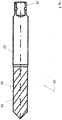
- a twist drill 10 of a disclosed embodiment is adapted for assessment of jaw bone quality by torque monitoring.
- Drill 10 includes a shank 12 having a proximal section 14 and a distal section 16.
- Proximal section 14 includes a mounting portion 18.
- mounting portion 18 has any suitable configuration to enable the drill to connect with a driver and equipment to accurately measure torque during the drilling process.
- Distal section 16 includes a drill bit 20 located at an end thereof. Drill bit 20 is designed to be used in applications where further drilling and/or tapping operations are necessary.
- Drill 10 rotates about a longitudinal, rotary axis 22.
- Shank 12 can be a single piece of steel, for example, Sandvik Bioline 4C27A or any other stainless steel suitable for medical devices.
- the drill could be coated for the purpose of wear detection and better visualization during operation. There could also be markings on the tools indicating, for example, how deep the tool is inserted into the bone.
- Drill bit 20 includes at least one continuous helical flute 24 that winds around distal section 16. Although a single flute is illustrated it should be appreciated that two or more flutes can be provided.
- a drill point or bit 26 defines a cutting edge, which cuts into the bone and tissue. Drill bit 26 has no splitting on the point to maximize the length of the chisel. Thus, the pull through of the high helix drill is reduced, especially should it hit a cavity.
- the disclosed embodiment demonstrates that as the helix angle of the drill increases, the variation in torque with varying feed drops.
- the torque generated becomes a function of the properties of the material being drilled, and does not vary as much depending on the force applied during drilling or the skill of the surgeon.
- flute 24 of the disclosed embodiment has a helix or spiral angle ⁇ in the range of about 45° to about 55 °, and preferably about 50 °. Also as shown in Fig. 1 , the twist drill bit 20 has a point angle ⁇ of or between about 125° to about 135 °, most preferably about 130 °.
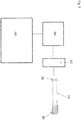
- the drill of the disclosed embodiment is adapted to be connected to a known device/means for monitoring torque.
- the mounting portion 18 of drill 10 can be connected with a torque transferring mechanism 42, such as a hand piece or dental driver.
- Mechanism 42 is connected with torque detector means 44, which measures torque with known means.
- a display unit 46 displays a torque curve that is monitored to access the quality of the bone tissue.
- torque detection and display means are commercially available, for example, Osseocare® manufactured by W&M of Windsor, ON and available from Nobel Biocare AB of Gothenberg, SE. See also U.S. Patent No. 6,951,698 .
- Table 1 below summarizes the point angle-helix angle combinations tested to determine optimum helix angle, per the graph of Fig. 3 showing the results.
- Table 1 Tool ID Point Angle Helix Angle 120-50L 120° 50° 125-50L 125° 130-50L 130° 135-50L 135° 140-50L 140°
- a tap 30 includes a shank 32 having opposed ends.
- a first end includes a mounting portion 28 and a threaded tap section 40 disposed at a second, opposed end.
- Tap section 40 includes at least one thread 34, which will be described further herein.
- tap section 40 includes a cutting portion 36 followed by a medial, non-cutting portion 38.
- a tapping length of the drill can be approximately about 10 mm with a thread height of about 1 mm/round.
- the distance between the threads can be about 1 mm, thus, the tap advancing about 1 mm with each turn.
- the dimensions of the tap depend upon the requirements of the tap hole or bore. Accordingly, the tap of the present disclosure is not limited to a specific length, diameter or thread height, etc.
- Fig. 6 is an enlarged view of cutting portion 36.
- cutting portion 36 has a length of approximately the first four threads.
- the approximate first three threads being tapered can guide the tap into a predrilled hole of, for example, about 1.5 mm.
- the 1.5 mm diameter corresponds to a tap width at approximately half the first thread, so about 0.5 mm of tap could be inserted into the hole prior to threading.
- the forth thread can be full, having a diameter of about 2.5 mm and at a distance of approximately about 3.3 mm from the tip.
- 80 % of all dental implants placed have a diameter of about 3 to about 4.5 mm which implies a final drill diameter of about 2.5 to about 4 mm.
- Total range is about 2.5 to about 6.5 mm. Also, thread height is about 0.4 to about 0.6 mm for most implants. Approximately 90 % of all implants have a length of about 7.5 to about 18 mm, the remainder being shorter with a larger diameter. This corresponds to the same drill length plus approximately one mm for the cutting portion. A shaft length of some cm plus connection is needed for visibility when working.
- medial portion 38 can be comprised of about the remaining 6 threads with a diameter that is reduced to approximately 50% to minimize the friction contribution, thereof resulting in, for example, a diameter of approximately 2 mm.
- the tap 30' can include a non-cutting, steering portion 50 located on the end of the tap section 40'.
- the steering portion of the tap is used for guidance of the tool into the predrilled hole minimizing or removing the risk of tapping outside of the pilot hole direction All threads, angles, etc. are the same in both embodiments of the tap.
- the present disclosure further provides a method for assessing bone quality from cutting forces while tapping into bone prior to and during an implantation procedure.
- the first few threads of cutting portion 36 are inserted into a predrilled pilot hole (not shown) of the bone.
- the tap is incrementally tapped into the hole and the torque produced by each turn is monitored by a detecting means, for example, similar to means 44 shown in the embodiment of Fig. 2 .
- a detecting means for example, similar to means 44 shown in the embodiment of Fig. 2 .
- cutting portion 36 is advanced of about 1mm with each turn.
- the measured torque is displayed by unit 46 and the user can quantify the density of the material based upon the measured torque to determine the quality of the bone by comparing the measured torque to predetermined torque values of classified bone qualities.
- the tap of the present disclosed embodiment has been designed to minimize friction forces and to enable faster advancement into the hole.
- a high helix or spiral angle of about 45° was chosen to achieve a tap requiring minimum of normal force for efficient tapping.
- Tapping length was approximately about 10 mm with thread height of about 1 mm/round into a standard pilot hole of about 1.5 mm.
- the cutting portion of the tap consisted of approximately the first 4 threads. About the first 3 threads guided the tap into the predrilled pilot hole. The 4th thread was full with a diameter of about 2.5 mm. The remaining approximate 6 threads were reduced to approximately 50% to minimize friction contribution, resulting in a diameter of approximately 2 mm.
- polyurethane foam with densities of about 300 kg/m3, about 500 kg/m3 and about 1050 kg/m3 (from Technipur AB of VITAvik, SE) as well as bovine ribs, (herein referred to as "300,” “500,” “1050” and “bone”) were used as the working experimental materials.
- the performed tapping tests were: i) through about 5 mm thick slices of foam material; ii) into greater than 10 mm thick pieces of foam material; iii) into/through laminated samples consisting of two approximately 5 mm foam slices of different density clamped together; and iv) into bone.
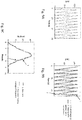
- Figs. 9A-C data for both torque and rounds was sampled every approximately 20 ms in mV, where each mV for M z corresponded to about 0.035 Ncm.
- Tapping speed was approximately 10.6 rpm or approximately 22.8 rpm and as shown in the graphs was not affected by material density (as shown in Fig. 9A ), applied forces (as shown in Fig. 9B ) or tapping depth ( Figs. 9A and 9B ).
- All data was potted with M z as a function of the number of rounds with data floating an average of about 50 points (see Fig. 9C ) and the base line adjusted to zero.
- Fig. 10A shows an example of tapping through the 1050 material several times, with each curve representing a tapping.
- Fig. 10B shows that the first and one of the last tapping experiments resulted in very similar M z profiles.
- the first experiment was performed at double rpm compared to the last. The similarity between curves indicated that approximately 10 rpm or approximately 20 rpm did not influence the M z responses.
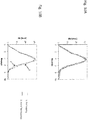
- Figs. 11A-11C show that maximum tapping torque increases with material density.
- the graph of Fig. 11A illustrates examples of torque curves for tapping through approximately 5 mm pieces of 1050, 500 and 300 foam, with Fig. 11B presenting amplified data of the 300 and 500 materials of Fig. 11A .
- the torque (M z ) increased approximately linearly during the first approximate 4 to 5 turns, where a maximum torque was reached. This corresponded to about the top 5 threads, thus approximately 5 mm of the tap, placed in the material.
- the torque decreased and reached 0 at approximately 8 rounds thus at approximately 8 mm irrespective of the foam type.
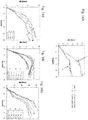
- the tapping procedure was performed in polyurethane foam (from Technipur AB of VITAvik, SE) having densities of approximately 300 kg/m 3 , 500 kg/m 3 and 1050 kg/m 3 after pre-drilling pilot holes of about 1.2, 1.3 mm, 1.4 mm or 1.5 mm diameters. Results of the tests are shown in Fig. 14A-D . Measurements were performed in duplicate, but are presented separately since mean values are not relevant for the bone quality evaluation application, wherein practice only one measurement can be performed per site. Data for both torque and number of rounds was sampled in mV, where each mV corresponded to M z of 0.1005 Ncm with maximum equipment limit in M z of approximately 40 Ncm. Tapping speed was approximately 22.7 rpm. For consistent presentation, all data was potted with M z as function of number of rounds with data floating average of about 50 points and base line adjusted to zero.
- Figs. 14B-D Changes in M z as a function of tapping depth for three material densities and three pilot hole diameters are shown in Figs. 14B-D . Reproducibility at each condition (material density and pilot hole diameter) was satisfactory.
- Fig. 14B shows that for the 300 kg/m3 material M z , max increased by a factor about 1.24 for a 1.3 mm pilot hole and about 1.16 for a 1.4 mm pilot hole compared to the 1.5 mm hole diameter.
- M z max increased by a factor of about 1.15 for the 1.3 mm pilot hole and about 1.16 for the 1.4 mm pilot hole compared to the 1.5 mm diameter hole.
- M z could not be evaluated to the full depth due to equipment limit at approximately 40 Ncm, see Fig. 14D .
- a comparison of the six rounds showed that M z increased by a factor of about 1.39 for the 1.3 mm pilot hole and about 1.18 for the 1.4 mm hole compared to the 1.5 mm diameter hole. This 1.39 factor was the largest increase noted and might not be representative considering that M z ,max was not yet reached.
- the increase in M z was inversely proportional to pilot hole diameter. It can be seen that the differences in torque due to material density (comparison of Figs. 14B-14D ) were much larger than variations due to pilot hole diameter for each density.
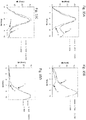
- Figs. 15A-15F show examples of tapping through experiments, where one curve represents torque measured tapping through the clamped, laminated materials and the other curve tapping through just the top layer.
- Fig. 15A about a 4.5mm layer of 1050 kg/m 3 material was clamped to about a 4.6 mm layer of 500 kg/m 3 material, with tapping occurring from the 1050 material to the 500 material.
- the remaining graphs illustrate tappings as follows: Fig. 15B - 500 (4.6mm) to 1050(4.5mm); Fig. 15C - 1050 (5.0mm) to 300 (3.2mm); Fig. 15D - 300 (3.2mm) to 1050 (5.0mm); Fig. 15E - 500 (5.4mm) to 300 (5.3mm); and Fig.
- Torque was also measured in various types of bone using the tap of the present disclosure.
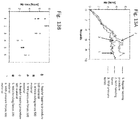
- tapping in bone showed that a distinction between several bone types was possible, both within the same sample and between sample types. Bone density was not quantified in the specific specimens used, instead several qualitatively different working materials were chosen. For example, tapping into a flat rib showed two peaks separated by a zone of low torque ( Figs. 16A and 16B ) corresponding to passing through cortex, spongiosa and cortex. The sudden drop in torque M z towards the end of the measurements was explained by tapping through the working material. Tapping through closely spaced holes in the same piece of bone was also qualitatively reproducible ( Figs. 16A and 16B ). Quantitative comparison was not attempted considering bone being a highly non-homogenous material.
- Tapping was also performed in softer bone qualities.
- a spongiosa sample appears to consist of one less and one more dense layer.
- a "cartilage-like" bone resulted in very low torque values, where after an initial increase in M z , torque decreases possibly due to a cavity or air pocket. It should be appreciated that the data interpretation can only be considered as speculative, as the specific bone specimens were not analyzed by other techniques.
- the screw tap of the disclosed embodiment was designed and evaluated as a tool for assessment of jaw bone quality during hole preparation sequence of the operation.
- the approach was based on torque monitoring while threading in foam of various densities, and in bone.
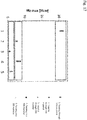
- the tap was designed with approximately 3 threads leading the tool into a pilot hole, with one full thread and the remaining threads being considerably reduced in diameter. With such design, friction forces from the non-cutting portion of the tap were minimized and materials of different densities could be distinguished. Thus torque could be used for quantification of material density. Examples of M z max for tapping through or into 1050, 500 and 300 kg/m 3 materials are summarized in the graph of Fig. 17 , wherein rectangles frame data of each material density.
- the goal should be to distinguish four classes of bone, where approximately 800 kg/m 3 is typical for cortical bone and ⁇ 300-500 kg/m 3 for soft bone.
- the sensitivity of M z in the current experiments was sufficient.
- more tapping tests in bone together with bone anatomy quantification are necessary. Tapping should also be performed in living tissue, where forces will be affected by presence of blood and fat. This natural lubrication will have to be considered constant.
- Depth resolution of the tap of the disclosed embodiment showed clearly 2-3 zones, which were sufficient for dental implantology application.
- a total evaluation depth of about 10 mm was relevant for the dental application considering that approximately 70% of implants used today are 10-12 mm long.
- Tap performance was relatively insensitive to application of bending and normal forces, but somewhat affected by the size of the pilot hole. The latter may pose a problem in dental practice, where quality of pilot hole (size and shape) might be difficult to control.
- One solution would be to always recommend a smaller pilot diameter then intended for the tool in combination with a somewhat self-advancing tap. However, the tool should not be more aggressive so as to not easily follow the path guided by the pilot hole.
- M z max was used in the above experiments as a distinction factor, however, another optimal approach to data analysis could be appreciated.
- torque could be related to bone hardness and elasticity rather than density. Possibly bone elasticity could be deduced by monitoring tap retraction forces. Finally, data from several taps should be compared.
- the tap of the present disclosure contemplates that in addition to assessing material quality from tapping torque forces a drill capable of sensing material quality has also been developed. Both tools can simply be included into the existing dental implantology tool kits.
- twist drill and tap of the present disclosure both could be provided, wherein a tap could be an addition to the procedure, while a drill could replace an already existing tool in a set, which would be preferred. Possibly a combination of the two would be the most attractive.
- the first drilling step of typically 1.5 mm-2.0 mm would be exploited for the first indication of bone quality. A tap could then be available, if more rigorous analysis was needed.
- the tap, drill and methodology of the present disclosure can also function with software developed for analysis and visualization of the cutting data. It should be further appreciated that the tap, drill and methodology of the present disclosure can be useful in other areas, such as orthopedics.
Landscapes
- Health & Medical Sciences (AREA)
- Life Sciences & Earth Sciences (AREA)
- Surgery (AREA)
- Oral & Maxillofacial Surgery (AREA)
- Animal Behavior & Ethology (AREA)
- Dentistry (AREA)
- Veterinary Medicine (AREA)
- Public Health (AREA)
- General Health & Medical Sciences (AREA)
- Orthopedic Medicine & Surgery (AREA)
- Engineering & Computer Science (AREA)
- Biomedical Technology (AREA)
- Heart & Thoracic Surgery (AREA)
- Molecular Biology (AREA)
- Medical Informatics (AREA)
- Nuclear Medicine, Radiotherapy & Molecular Imaging (AREA)
- Biophysics (AREA)
- Epidemiology (AREA)
- Rheumatology (AREA)
- Physics & Mathematics (AREA)
- Pathology (AREA)
- Prostheses (AREA)
- Dental Prosthetics (AREA)
- Dental Tools And Instruments Or Auxiliary Dental Instruments (AREA)
Applications Claiming Priority (2)
| Application Number | Priority Date | Filing Date | Title |
|---|---|---|---|
| US201261728172P | 2012-11-19 | 2012-11-19 | |
| EP13812143.9A EP2941206A1 (fr) | 2012-11-19 | 2013-11-14 | Foret et taraud et procédé d'évaluation préopératoire de la qualité d'un os |
Related Parent Applications (1)
| Application Number | Title | Priority Date | Filing Date |
|---|---|---|---|
| EP13812143.9A Division EP2941206A1 (fr) | 2012-11-19 | 2013-11-14 | Foret et taraud et procédé d'évaluation préopératoire de la qualité d'un os |
Publications (1)
| Publication Number | Publication Date |
|---|---|
| EP3251617A1 true EP3251617A1 (fr) | 2017-12-06 |
Family
ID=49880874
Family Applications (2)
| Application Number | Title | Priority Date | Filing Date |
|---|---|---|---|
| EP17178084.4A Withdrawn EP3251617A1 (fr) | 2012-11-19 | 2013-11-14 | Foret et taraud et procédé d'évaluation préopératoire de la qualité d'un os |
| EP13812143.9A Withdrawn EP2941206A1 (fr) | 2012-11-19 | 2013-11-14 | Foret et taraud et procédé d'évaluation préopératoire de la qualité d'un os |
Family Applications After (1)
| Application Number | Title | Priority Date | Filing Date |
|---|---|---|---|
| EP13812143.9A Withdrawn EP2941206A1 (fr) | 2012-11-19 | 2013-11-14 | Foret et taraud et procédé d'évaluation préopératoire de la qualité d'un os |
Country Status (6)
| Country | Link |
|---|---|
| US (1) | US20150282895A1 (fr) |
| EP (2) | EP3251617A1 (fr) |
| JP (1) | JP2016501064A (fr) |
| KR (1) | KR20150088280A (fr) |
| BR (1) | BR112015011332A2 (fr) |
| WO (1) | WO2014076653A1 (fr) |
Families Citing this family (11)
| Publication number | Priority date | Publication date | Assignee | Title |
|---|---|---|---|---|
| US20150257808A1 (en) * | 2014-03-13 | 2015-09-17 | Spinal Generations, Llc | Method and apparatus for determining whether to deliver a substance to bone |
| US10172662B2 (en) * | 2014-06-06 | 2019-01-08 | Peter A Gustafson | Surgical screwdriver |
| JP2016000114A (ja) * | 2014-06-12 | 2016-01-07 | 長田電機工業株式会社 | 切削工具、骨手術用インスツルメントおよび切削方法 |
| EP3345569B2 (fr) | 2015-07-20 | 2022-11-23 | W & H Dentalwerk Bürmoos GmbH | Dispositif médical, notamment dentaire, destiné à l'évaluation de la qualité d'un os |
| KR101717084B1 (ko) * | 2015-08-31 | 2017-03-20 | 주식회사 제노스 | 치아 임플란트 식립용 드릴링 드라이버 |
| ES2905457T3 (es) | 2016-01-29 | 2022-04-08 | Nobel Biocare Services Ag | Herramienta de técnica dental |
| GB2554456A (en) * | 2016-09-29 | 2018-04-04 | Osstell Ab | A probe |
| US11484249B2 (en) * | 2019-02-01 | 2022-11-01 | Bien-Air Holding Sa C/O Bien-Air Dental Sa | Method and tool for measuring osseous quality |
| US11246606B2 (en) * | 2019-08-12 | 2022-02-15 | Biomet 3I, Llc | Drill bit |
| KR102576600B1 (ko) * | 2022-05-27 | 2023-09-07 | 허채헌 | 임플란트용 밀링 버 및 이를 이용한 임플란트용 홀 형성방법 |
| KR102918787B1 (ko) * | 2023-04-20 | 2026-01-27 | 오스템임플란트 주식회사 | 임플란트 시술용 드릴을 이용한 골질 판정 시스템 및 방법 |
Citations (6)
| Publication number | Priority date | Publication date | Assignee | Title |
|---|---|---|---|---|
| US5569035A (en) | 1994-07-01 | 1996-10-29 | Dentsply Research And Development Corp. | Enhanced cutting drill tip for endosseous implants |
| US5762498A (en) | 1996-06-18 | 1998-06-09 | Gonzalez; Arnaldo | Dental drill bit |
| US20020173794A1 (en) * | 2001-05-16 | 2002-11-21 | Inion Ltd. | Tool for making threaded surgical holes |
| US6951698B2 (en) | 2000-09-26 | 2005-10-04 | The Texas A&M University System | Fuel cell stack assembly |
| US20080051793A1 (en) * | 2006-08-04 | 2008-02-28 | David Erickson | Drill-tap tool |
| US20090214311A1 (en) * | 2007-04-26 | 2009-08-27 | Osg Corporation | Spiral tap |
Family Cites Families (26)
| Publication number | Priority date | Publication date | Assignee | Title |
|---|---|---|---|---|
| US5643269A (en) * | 1990-08-24 | 1997-07-01 | Haerle; Anton | Externally threaded bodies for use as taps or screws |
| US5098435A (en) * | 1990-11-21 | 1992-03-24 | Alphatec Manufacturing Inc. | Cannula |
| JP2813173B2 (ja) * | 1996-10-25 | 1998-10-22 | 株式会社彌満和製作所 | スパイラルタップ |
| SE9604717L (sv) * | 1996-12-20 | 1998-06-21 | Nobel Biocare Ab | Kirurgiinstrument och arrangemang med sådant kirurgiinstrument |
| US6068632A (en) * | 1998-05-12 | 2000-05-30 | Carchidi; Joseph Edward | Bone tap apparatus |
| SE512778C2 (sv) * | 1998-09-17 | 2000-05-15 | Nobel Biocare Ab | Anordning vid instrument som innefattar eller är anslutet till ett idragningsverktyg |
| JP2002228569A (ja) * | 2001-02-02 | 2002-08-14 | Akebono Brake Res & Dev Center Ltd | 欠陥検出装置及び欠陥検出方法 |
| US7717945B2 (en) * | 2002-07-22 | 2010-05-18 | Acumed Llc | Orthopedic systems |
| DE10243104A1 (de) * | 2002-09-17 | 2004-03-25 | Gebr. Brasseler Gmbh & Co. Kg | Rotierendes Instrument aus Keramik |
| US20060085005A1 (en) * | 2004-10-01 | 2006-04-20 | Kenealy James N Iii | Bone drill system with highly visible depth markings |
| DE102005012792A1 (de) * | 2005-03-19 | 2006-09-21 | Bredent Dentalgeräte u. Materialien Fach- u. Organisationsberatung Peter Brehm | Bohrer für medizinische und zahnmedizinische Zwecke |
| US8491302B2 (en) * | 2006-03-21 | 2013-07-23 | Uri Arni | Dental implant |
| US20080154304A1 (en) * | 2006-12-21 | 2008-06-26 | Arthrocare Corporation | System and method for accessing a tissue structure |
| US8460297B2 (en) * | 2007-01-05 | 2013-06-11 | Biomet 3I, Llc | Drill bit assembly for bone tissue including depth limiting feature |
| BRPI0815259A2 (pt) * | 2007-08-27 | 2015-09-01 | Sushrut Surgicals Pvt Ltd | Placas ósseas e montagens de placas ósseas |
| KR100930911B1 (ko) * | 2007-11-22 | 2009-12-10 | 오스템임플란트 주식회사 | 다단구조를 이용한 치과용 임플란트 드릴 |
| US9339320B2 (en) * | 2008-09-02 | 2016-05-17 | Bhdl Holdings, Llc | Modular pedicle screw system with tap and screw driver device |
| JP5349148B2 (ja) * | 2009-06-08 | 2013-11-20 | 日本メディカルネクスト株式会社 | 骨穿孔用ドリル |
| US20130006248A1 (en) * | 2010-03-19 | 2013-01-03 | CPL Holdings Pty. Ltd. | Drill bit |
| US8894654B2 (en) * | 2010-03-31 | 2014-11-25 | Smart Medical Devices, Inc. | Depth controllable and measurable medical driver devices and methods of use |
| US20120004661A1 (en) * | 2010-06-30 | 2012-01-05 | John Leppelmeier | Orthopedic bone drill |
| CA2817079C (fr) * | 2010-11-26 | 2019-01-08 | Cpl Holdings Pty Ltd | Foret orthopedique |
| US20120237898A1 (en) * | 2011-03-17 | 2012-09-20 | Paltop Advanced Dental Solutions Ltd. | Multi-stage dental implant |
| US9028253B2 (en) * | 2011-03-23 | 2015-05-12 | Huwais IP Holding LLC | Fluted osteotome and surgical method for use |
| WO2012154053A1 (fr) * | 2011-05-09 | 2012-11-15 | GUSTAD, Trond | Procédé pour fixer un implant dentaire et implant dentaire |
| US9700355B2 (en) * | 2011-11-23 | 2017-07-11 | Aaron M. Longtain | Pedicle screw assembly |
-
2013
- 2013-11-14 EP EP17178084.4A patent/EP3251617A1/fr not_active Withdrawn
- 2013-11-14 JP JP2015542396A patent/JP2016501064A/ja not_active Ceased
- 2013-11-14 EP EP13812143.9A patent/EP2941206A1/fr not_active Withdrawn
- 2013-11-14 US US14/443,648 patent/US20150282895A1/en not_active Abandoned
- 2013-11-14 BR BR112015011332A patent/BR112015011332A2/pt not_active IP Right Cessation
- 2013-11-14 WO PCT/IB2013/060133 patent/WO2014076653A1/fr not_active Ceased
- 2013-11-14 KR KR1020157016300A patent/KR20150088280A/ko not_active Withdrawn
Patent Citations (6)
| Publication number | Priority date | Publication date | Assignee | Title |
|---|---|---|---|---|
| US5569035A (en) | 1994-07-01 | 1996-10-29 | Dentsply Research And Development Corp. | Enhanced cutting drill tip for endosseous implants |
| US5762498A (en) | 1996-06-18 | 1998-06-09 | Gonzalez; Arnaldo | Dental drill bit |
| US6951698B2 (en) | 2000-09-26 | 2005-10-04 | The Texas A&M University System | Fuel cell stack assembly |
| US20020173794A1 (en) * | 2001-05-16 | 2002-11-21 | Inion Ltd. | Tool for making threaded surgical holes |
| US20080051793A1 (en) * | 2006-08-04 | 2008-02-28 | David Erickson | Drill-tap tool |
| US20090214311A1 (en) * | 2007-04-26 | 2009-08-27 | Osg Corporation | Spiral tap |
Non-Patent Citations (6)
Also Published As
| Publication number | Publication date |
|---|---|
| BR112015011332A2 (pt) | 2017-07-11 |
| US20150282895A1 (en) | 2015-10-08 |
| WO2014076653A1 (fr) | 2014-05-22 |
| JP2016501064A (ja) | 2016-01-18 |
| KR20150088280A (ko) | 2015-07-31 |
| EP2941206A1 (fr) | 2015-11-11 |
Similar Documents
| Publication | Publication Date | Title |
|---|---|---|
| EP3251617A1 (fr) | Foret et taraud et procédé d'évaluation préopératoire de la qualité d'un os | |
| JP5770306B2 (ja) | 手術器具 | |
| AU719598B2 (en) | Drilling guide and measuring instrumentation | |
| US11596419B2 (en) | Plating depth gauge and countersink instrument | |
| EP2832285A1 (fr) | Instrument de traitement chirurgical et procédé pour déterminer la résistance mécanique locale d'un os | |
| US10357314B2 (en) | Instrumentation and method for repair of a bone fracture | |
| US20120016373A1 (en) | Device to assist with the placement of screws in bone tissue and instrument applying said device, in particular for performing osteosynthesis of bone fragments | |
| WO2013029582A1 (fr) | Perceuse, en particulier perceuse médicale, et procédé de perçage | |
| US20250177024A1 (en) | Orthopedic implants and tools | |
| EP3996607A1 (fr) | Module électronique pour un instrument chirurgical | |
| Koistinen et al. | Effect of bone mineral density and amorphous diamond coatings on insertion torque of bone screws | |
| JP2023053141A (ja) | 骨品質を測定する方法及びツール | |
| US20220061859A1 (en) | Drill having radiographically visible depth indications | |
| Ryan et al. | Time-elapsed screw insertion with microCT imaging | |
| Kincaid et al. | Measurement of orthopedic cortical bone screw insertion performance in cadaver bone and model materials | |
| EP4585169A1 (fr) | Système d'instrumentation pour fixer par voie percutanée une vis à os sans tête dans un os d'un patient | |
| HK40058229A (en) | Method and tool for measuring osseous quality | |
| HK40058229B (en) | Method and tool for measuring osseous quality | |
| Julie et al. | Preventing cortical breaches with impact analysis during spinal instrumentation surgery |
Legal Events
| Date | Code | Title | Description |
|---|---|---|---|
| PUAI | Public reference made under article 153(3) epc to a published international application that has entered the european phase |
Free format text: ORIGINAL CODE: 0009012 |
|
| STAA | Information on the status of an ep patent application or granted ep patent |
Free format text: STATUS: THE APPLICATION HAS BEEN PUBLISHED |
|
| AC | Divisional application: reference to earlier application |
Ref document number: 2941206 Country of ref document: EP Kind code of ref document: P |
|
| AK | Designated contracting states |
Kind code of ref document: A1 Designated state(s): AL AT BE BG CH CY CZ DE DK EE ES FI FR GB GR HR HU IE IS IT LI LT LU LV MC MK MT NL NO PL PT RO RS SE SI SK SM TR |
|
| STAA | Information on the status of an ep patent application or granted ep patent |
Free format text: STATUS: THE APPLICATION IS DEEMED TO BE WITHDRAWN |
|
| 18D | Application deemed to be withdrawn |
Effective date: 20180607 |