EP3252172B1 - Hybridation rapide pour l'enrichissement de cible de séquençage de nouvelle génération - Google Patents
Hybridation rapide pour l'enrichissement de cible de séquençage de nouvelle génération Download PDFInfo
- Publication number
- EP3252172B1 EP3252172B1 EP17180680.5A EP17180680A EP3252172B1 EP 3252172 B1 EP3252172 B1 EP 3252172B1 EP 17180680 A EP17180680 A EP 17180680A EP 3252172 B1 EP3252172 B1 EP 3252172B1
- Authority
- EP
- European Patent Office
- Prior art keywords
- hybridization
- nucleic acid
- buffer
- dna
- capture
- Prior art date
- Legal status (The legal status is an assumption and is not a legal conclusion. Google has not performed a legal analysis and makes no representation as to the accuracy of the status listed.)
- Active
Links
Images



Classifications
-
- C—CHEMISTRY; METALLURGY
- C12—BIOCHEMISTRY; BEER; SPIRITS; WINE; VINEGAR; MICROBIOLOGY; ENZYMOLOGY; MUTATION OR GENETIC ENGINEERING
- C12Q—MEASURING OR TESTING PROCESSES INVOLVING ENZYMES, NUCLEIC ACIDS OR MICROORGANISMS; COMPOSITIONS OR TEST PAPERS THEREFOR; PROCESSES OF PREPARING SUCH COMPOSITIONS; CONDITION-RESPONSIVE CONTROL IN MICROBIOLOGICAL OR ENZYMOLOGICAL PROCESSES
- C12Q1/00—Measuring or testing processes involving enzymes, nucleic acids or microorganisms; Compositions therefor; Processes of preparing such compositions
- C12Q1/68—Measuring or testing processes involving enzymes, nucleic acids or microorganisms; Compositions therefor; Processes of preparing such compositions involving nucleic acids
- C12Q1/6806—Preparing nucleic acids for analysis, e.g. for polymerase chain reaction [PCR] assay
-
- C—CHEMISTRY; METALLURGY
- C12—BIOCHEMISTRY; BEER; SPIRITS; WINE; VINEGAR; MICROBIOLOGY; ENZYMOLOGY; MUTATION OR GENETIC ENGINEERING
- C12Q—MEASURING OR TESTING PROCESSES INVOLVING ENZYMES, NUCLEIC ACIDS OR MICROORGANISMS; COMPOSITIONS OR TEST PAPERS THEREFOR; PROCESSES OF PREPARING SUCH COMPOSITIONS; CONDITION-RESPONSIVE CONTROL IN MICROBIOLOGICAL OR ENZYMOLOGICAL PROCESSES
- C12Q1/00—Measuring or testing processes involving enzymes, nucleic acids or microorganisms; Compositions therefor; Processes of preparing such compositions
- C12Q1/68—Measuring or testing processes involving enzymes, nucleic acids or microorganisms; Compositions therefor; Processes of preparing such compositions involving nucleic acids
- C12Q1/6813—Hybridisation assays
- C12Q1/6832—Enhancement of hybridisation reaction
Definitions
- This invention relates to methods for rapid nucleic acid hybridization.
- it relates to hybridization methods for target nucleic acids enrichment and selection in next-generation sequencing.
- Nucleic acid sequencing is one of the most widely used tools in molecular biology. Development of rapid and sensitive sequencing methods utilizing automated DNA sequencers has revolutionized modern molecular biology. In particular, analysis of entire genomes of plants, viruses, bacteria, fungi, and animals is now possible with next-generation sequencing technology.
- Next-generation sequencing carried out in connection with target enrichment of certain types of genomic DNA sequencers allows one to focus on those targets.
- this targeted next-generation sequencing variation only the genomic areas of interest are sequenced, creating process efficiencies that reduce costs and allow more samples to be analyzed per study. Reducing the amount of DNA being interrogated allows investigators to perform the experiments with more statistically relevant numbers of samples.
- WO2013/191197 discloses a method for detecting nucleic acids, in which a hybridization of a capture probe with a target nucleic acid is envisaged.
- targeted next-generation sequencing technology is very time-consuming.
- a major bottleneck and speed-limiting step for the successful implementation of the targeted next-generation sequencing technology has been in the front-end steps to selectively capture and enrich targeted exons or intron regions scattered over the genomic, mitochondria and other forms of DNA, in a rapid and cost-effective manner.
- the current selective hybrid capture procedure often ranges from 16 hours to over 70 hours. See, e.g., US 20100029498 and the SureSelect Target Enrichment System TM by Agilent Technologies, Inc. As a result, it usually takes as long as 2-4 days to generate a sample that is ready to be sequenced and even loner time to complete an entire sequencing process.
- This invention relates to novel hybridization methods. These methods allow one to complete a target enrichment of desired genomic DNA sequencers much more quickly than conventional procedures.
- the invention features a method for nucleic acid hybridization of a target nucleic acid and a bait nucleic acid, comprising contacting a target nucleic acid and a bait nucleic acid with a composition to form a hybridization mixture, said composition comprising
- the composition contains a salt of a divalent cation that has a concentration in the range from 100 mM to 600 mM (e.g., 150-500 mM, 200-400 mM, 250-350 mM, 100 mM, 120 mM, 150 mM, 200 mM, 250 mM, 300 mM, 350 mM, 400 mM, 450 mM, 500 mM, 550 mM, and 600 mM) and a buffering agent.
- a salt of a divalent cation that has a concentration in the range from 100 mM to 600 mM (e.g., 150-500 mM, 200-400 mM, 250-350 mM, 100 mM, 120 mM, 150 mM, 200 mM, 250 mM, 300 mM, 350 mM, 400 mM, 450 mM, 500 mM, 550 mM, and 600 mM) and a buffer
- the salt and the buffering agent are present in the composition at a molar ratio ranging from 2.5:1 to 60:1 (e.g., 2.5:1 to 30:1, 2.5:1 to 20:1, 2.5:1 to 15:1, 10:1 to 20:1, 2.5:1 to 5:1, 2.5:1, 5:1, 8:1, 10:1, 12:1, 15:1, and 20:1).
- the buffering agent can have a concentration in the range from 10 mM to 40 mM ( e.g., 15-35 mM, 20-30 mM, 20-40 mM, 20 mM, 25 mM, 30 mM, 35, mM, and 40 mM).
- the divalent cation can be selected from the group consisting of magnesium, calcium, manganese, cobalt, zinc, and cadmium. In one embodiment, the divalent cation is magnesium.
- the buffering agent can be selected from the group consisting of Tris, HEPES, TAPS, Tricine, Bicine, Bis-Tris, NaOH, KOH, TES, EPPS, and MOPS.
- the pH value of the composition can be 7.0-11.0, e.g., 7.5-10.0, 7.0-9.0, 7.0, 7.5, 8.0, 8.5, 9.0, 9.5, 10.0, 10.5, and 11.0.
- the composition further includes a volume-excluding/thickening agent.
- the agent can have a concentration in the range from 0.002% to 0.1% w/w (e.g., 0.002% to 0.050%, 0.004% to 0.020%, 0.006% to 0.012%, and 0.006%, 0.007%, 0.008%, 0.009%, 0.010%, 0.012%, 0.015%, and 0.020%).
- the hybridization composition can further include one or more additional agents selected from the group consisting of an RNAse inhibitor, a blocking agent, a bait nucleic acid, and a target nucleic acid.
- the target nucleic acid can be present at a concentration of 250-3000 ng (e.g., 500-2000 ng, and 750-1500 ng) in a 30- ⁇ l reaction, i.e., 8.3 to 100 ng/ ⁇ l ( e.g. , 16.7-66.7 ng/ ⁇ l and 25-50 ng/ ⁇ l).
- the volume-excluding/thickening agent and nucleic acids are present in a ratio of 0.2 to 120 ( e.g., 0.2-100, 0.2-50, 0.5-10, and 0.8-8.0).
- the salt may be MgCl 2 , the volume-excluding/thickening agent is HPMC, and the buffering agent is Tris, pH 8.0.
- the salt has a concentration of 308 mM; the HPMC has a concentration of 0.00834%; and the buffering agent has a concentration of 20 mM.
- the salt and the buffering agent are present in the composition at a molar ratio of 15.4:1.
- the composition can be free of monovalent cation or a salt thereof.
- buffer compositions can be prepared from a concentrated stock solution in order to accommodate the addition of other reagents, including targets, probes, baits, blocking agents, wetting agents, and hybridization enhancing factors, as is common practice in the field of nucleic acid hybridization reactions. Accordingly, the invention also provides a buffer concentrate for preparing a hybridization composition mentioned above.
- the buffer concentrate can be a 2-20X (e.g., 3-15X, 4-10X, 2X, 3X, 4X, 5X, 10X, 15X, and 20X) stock so that dilution by a factor ranging from 2-fold to 20-fold (e.g., 3-15 folds, 4-10 folds, 2 folds, 3 folds, 4 folds, 5 folds, 10 folds, 15 folds, and 20 folds) yields the hybridization composition mentioned above.
- the buffer concentrate is a 5X stock and a dilution by a factor of 5-fold yields the hybridization composition mentioned above.
- the hybridization composition can be used for nucleic acid hybridization of a target nucleic acid and a bait nucleic acid. Accordingly, the invention provides the claimed method for nucleic acid hybridization of a target nucleic acid and a bait nucleic acid.
- the method includes the following steps: contacting a target nucleic acid and a bait nucleic acid with the above-mentioned composition to form a hybridization mixture; denaturing the hybridization mixture at a first temperature for a first period of time (e.g., at 95 °C for 2-30 minutes, such as 2, 5, 10, 15, 20, 25, or 30 minutes); blocking the mixture at a second temperature for a second period of time (e.g., at 65 °C for 5-30 minutes, such as 5, 10, 15, 20, 25, or 30 minutes); incubating the mixture (i) at a third temperature for a third period of time and then (ii) at a fourth temperature for a fourth period of time, and repeating the incubating step for one or more times.
- the method further includes, after the repeating step, holding the mixture at a fifth temperature (e.g. , 65 °C).
- the bait nucleic acid can have a RNA or DNA sequence.
- the target nucleic acid can have a genomic DNA nucleic acid of interest.
- the target nucleic acid and the bait nucleic acid are not attached or affixed to a support. That is, the corresponding hybridization is in-solution hybridization.
- the incubating step can be carried out for any number of cycles depending on users' assay designs, timetables, and purposes. Suitable examples of the cycle number include 20-100 times, 30-80 times, 40-70 times, and 50-60 times.
- the third temperature and the fourth temperature can be different or the same. If the two temperatures are different (e.g., 65 °C and 37 °C), the time durations at the two temperatures can be, for example, 1 minute and 3 seconds, respectively. Depending on the number of cycles, the incubating step and repeating step can range from 25 minutes to 3 hours or less ( e.g., 25 minutes, 26, minutes, 30 minutes, 1 hour, 1.5 hours, 2 hours, and 2.5 hours). If the third temperature and the fourth temperature are the same, the time duration for the incubating step and repeating step should be longer, such as 1-4 hours.
- This invention is based, at least in part, on an unexpected discovery that a buffer with a very high concentration of divalent cation salt allows one to capture and enrich fragmented genomic DNA via in-solution hybridization much more rapidly than conventional hybridization buffers. It is also based on an unexpected discovery that a hybridization conducted by repeatedly subjecting a hybridization mixture to two different temperatures also allows one to capture and enrich fragmented genomic DNA much more rapidly than conventional hybridization reactions which are carried out at one constant temperature.
- the invention provides a composition or buffer for nucleic acid hybridization.
- the hybridization composition or buffer contains a salt of a divalent cation that has a concentration in the range from 100 mM to 600 mM (e.g., 150-500 mM, 200-400 mM, 250-350 mM, 100 mM, 120 mM, 150 mM, 200 mM, 250 mM, 300 mM, 350 mM, 400 mM, 450 mM, 500 mM, 550 mM, and 600 mM), a volume-excluding/thickening agent, and a buffering agent.
- a salt of a divalent cation that has a concentration in the range from 100 mM to 600 mM (e.g., 150-500 mM, 200-400 mM, 250-350 mM, 100 mM, 120 mM, 150 mM, 200 mM, 250 mM, 300 mM, 350 mM
- divalent cation salts can be used.
- the salt and the buffering agent are present in a molar ratio ranging from 2.5:1 to 60:1 ( e.g., 2.5:1 to 30:1, 2.5:1 to 15:1, 2.5:1 to 5:1, 2.5:1, 5:1, 8:1, 10:1, 12:1, 15:1, and 20:1).
- the buffer compositions according to the invention contain salts of divalent cations with higher than conventional concentrations for nucleic acid hybridization.
- Conventional hybridization solutions and processes for hybridization are described in J. Sambrook, E. F. Fritsch, T. Maniatis, Molecular Cloning: A Laboratory Manual, Cold Spring Harbor Laboratory Press, Cold Spring Harbor, 2nd Ed., 1989, vol. 1-3 .
- conditions for conventional hybridization include (1) high ionic strength solution, (2) at a controlled temperature, and (3) in the presence of carrier DNA and surfactants and chelators of divalent cations.
- nucleic acid hybridization buffers such as the Saline-Sodium Citrate (SSC) buffer and the Saline-Sodium Phosphate-EDTA (SSPE) buffer
- SSC Saline-Sodium Citrate
- SSPE Saline-Sodium Phosphate-EDTA
- chelating agents such as EDTA
- magnesium can be efficient in nucleic acid duplex stabilization during hybridization, magnesium, if used in hybridization reactions, are usually used at 15 mM or lower so as to reduce non-specific hybridization reactions. See. e.g., Springer et al., Nucleic Acids Res. 2010 Nov;38(20):7343-51 .
- magnesium affects the annealing of oligonucleotides to template DNAs by stabilizing their interactions and therefore increase non-specific annealing and produce undesirable products.
- Mg 2+ usually needs to be lowered or EDTA can be added to chelate Mg 2+ to increase the accuracy and specificity of the amplification. See, e.g., US Patent 7939645 .
- salts of divalent cations at high concentrations can be used successfully to capture and enrich fragmented genomic DNA via nucleic acid hybridization without sacrificing specificity.
- a "salt" refers to an ionic compound composed of cations and anions so that the product is neutral.
- Divalent cation salts useful in the instant invention include, but are not limited to salts of magnesium, calcium, manganese, cobalt, zinc, and cadmium.
- the salts can also include the bicarbonate, sulfate, chloride, carbonate, nitrate, nitrite, bromide, citrate, acetate, cyanide, oxide or phosphate salt of a divalent cation known to those of skill in the art.
- the salt is magnesium chloride (MgCl 2 ), magnesium sulfate (MgSO 4 ), or magnesium nitrate (Mg(NO 3 ) 2 ).
- a salt useful in the invention can include a mixture or blend of mineral salts. Blends of mineral salts that can be used in the invention include any combination of MgCl 2 , MgSO 4 , and Mg(NO 3 ) 2 .
- the salts may be used according to the invention at a concentration in the range of 10 to 40 mM, preferably in the range of 15-25 mM, such as 20 mM.
- hybridization refers to the pairing of complementary (including partially complementary) polynucleotide strands.
- Hybridization and the strength of hybridization is impacted by many factors well known in the art including the degree of complementarity between the polynucleotides, stringency of the conditions involved affected by such conditions as the concentration of salts, the melting temperature (Tm) of the formed hybrid, the presence of other components, the molarity of the hybridizing strands and the G:C content of the polynucleotide strands.
- one polynucleotide When one polynucleotide is said to "hybridize” to another polynucleotide, it means that there is some complementarity between the two polynucleotides or that the two polynucleotides form a hybrid under high stringency conditions. When one polynucleotide is said to not hybridize to another polynucleotide, it means that there is no sequence complementarity between the two polynucleotides or that no hybrid forms between the two polynucleotides at a high stringency condition.
- the term "complementary” refers to the concept of sequence complementarity between regions of two polynucleotide strands or between two regions of the same polynucleotide strand. It is known that an adenine base of a first polynucleotide region is capable of forming specific hydrogen bonds ("base pairing") with a base of a second polynucleotide region which is antiparallel to the first region if the base is thymine or uracil.
- a cytosine base of a first polynucleotide strand is capable of base pairing with a base of a second polynucleotide strand which is antiparallel to the first strand if the base is guanine.
- a first region of a polynucleotide is complementary to a second region of the same or a different polynucleotide if, when the two regions are arranged in an antiparallel fashion, at least one nucleotide of the first region is capable of base pairing with a base of the second region. Therefore, it is not required for two complementary polynucleotides to base pair at every nucleotide position.
- “Complementary” refers to a first polynucleotide that is 100% or “fully” complementary to a second polynucleotide and thus forms a base pair at every nucleotide position. “Complementary” also refers to a first polynucleotide that is not 100% complementary (e.g., 90%, or 80% or 70% complementary) contains mismatched nucleotides at one or more nucleotide positions. In one embodiment, two complementary polynucleotides are capable of hybridizing to each other under high stringency hybridization conditions.
- membrane hybridization e.g., Northern hybridization
- high stringency hybridization conditions are defined as incubation with a radiolabeled probe in 5xSSC, 5xDenhardt's solution, 1% SDS at 65 °C.
- Stringent washes for membrane hybridization are performed as follows: the membrane is washed at room temperature in 2xSSC/0.1% SDS and at 65 °C in 0.2 x SSC/0.1% SDS, 10 minutes per wash, and exposed to film.
- a hybridization assay in embodiments, can take anywhere from less than 1 hour ( e.g., 25 minutes) to 8 hours to complete, depending on at least the type and complexity of the hybridization experiment.
- complete it is meant that a desired amount of hybridization of the target nucleic acid material is achieved, which is both user and target material dependent.
- the present method performs well where conventional hybridization parameters fail, for example, at a hybridization time of 1 hour.
- the present method and composition perform particularly well for hybridizations taking at least 25 minutes ( e.g., 1-3 hours) to complete, and more particularly, for hybridizations taking between 1-2 hours.
- the buffer compositions according to the invention contain a volume-excluding/thickening agent as cited in claim 1.
- a volume-excluding/thickening agent refers to an inert, viscoelastic agent that has good ability to attract and hold water molecules from the surrounding environment. Due to this water attracting-holding ability, the agent is capable of artificially increasing the concentrations of available nucleic acids and probes/baits in a hybridization solution and saturating non-specific binding sites, thereby increasing hybridization efficiency.
- the agent is a viscoelastic high-molecular weight polymer that is soluble in an aqueous solution and exhibits a thermal gelation property. That is, when the solution heats up to a specific critical temperature, the solution congeals into a non-flowable but semi-flexible mass. Typically, this specific congealing temperature is inversely related to the solution concentration of such an agent. With these characteristics, the agent exhibits two different viscoelastic states at two different temperatures. Accordingly, when it is included in a hybridization solution and used in a two-temperature (e.g. , 65 °C and 37 °C) cycling incubation hybridization, the agent provides two different hybridization environments to target nucleic acids and capture probes/baits.
- a two-temperature e.g. , 65 °C and 37 °C
- volume-excluding/thickening agent are methylcellulose and its derivative hydroxypropyl methyl cellulose (HPMC).
- the buffer composition of this invention contains a buffering agent.
- the pH of the present compositions can be controlled within the ranges of from 6.0 to 11.0, e.g., from 7 to 9, from 7.5 to 8.5, or 8.0.
- the buffering agent can be any organic or inorganic, acid or base, and alkali metal salts thereof, having at least one pKa value and/or pKb value of from 6.0 to 11.0. Buffering agents may have more than one pKa value and/or pKb value.
- a buffering agent can have at least one of its pKa values and/or pKb values within the indicated ranges.
- the buffering agent can be tris(hydroxymethyl)aminomethane) (Tris or THAM), 4-(2-hydroxyethyl)-1-piperazineethanesulfonic acid (HEPES), N-cyclohexyl-3-aminopropanesulfonic acid (CAPS), 2-(N-morpholino)ethanesulfonic acid (MES), 3-(N-morpholino)propanesulfonic acid, (MOPS), 3-[4-(2-Hydroxyethyl)-1-piperazinyl]propanesulfonic acid (HEPPS or EPPS), and others of the so-called “Good's" buffers.
- Tris or THAM tris(hydroxymethyl)aminomethane)
- HEPPS 4-(2-hydroxyethyl)-1-piperazineethanesulfonic acid
- CAS N-cyclohexyl-3-aminopropanesulfonic acid
- MES 2-(N-morpholino)ethane
- Additional examples include 3- ⁇ [tris(hydroxymethyl)methyl] amino ⁇ propanesulfonic acid (TAPS), N,N-bis(2-hydroxyethyl)glycine (Bicine), N-tris(hydroxymethyl)methylglycine (Tricine), 3-[N-Tris(hydroxymethyl)methylamino]-2-hydroxypropanesulfonic Acid (TAPSO), 2- ⁇ [tris(hydroxymethyl)methyl]amino ⁇ ethanesulfonic acid (TES), piperazine-N,N'-bis(2-ethanesulfonic acid) (PIPES), dimethylarsinic acid (Cacodylate), succinic acid, Bis-Tris, NaOH, and KOH.
- TAPS 3- ⁇ [tris(hydroxymethyl)methyl] amino ⁇ propanesulfonic acid
- Bicine N,N-bis(2-hydroxyethyl)glycine
- Tricine N-tris(hydroxymethyl)methylglycine
- Tricine 3-[N-Tris(hydroxymethyl)methyl
- buffering agents can be, for example, acridine, phenylalanine, allothreonine, n-amylamine, aniline, n-allylaniline, 4-bromoaniline, 4-bromo-N,N-dimethylaniline, m-chloroaniline, p-chloroaniline, 3-chloro-N,N-dimethylaniline, 3,5-dibromoaniline, N,N-diethylaniline, N,N-dimethylaniline, N-ethylaniline, 4-fluoroaniline, N-methylaniline, 4-methylthioaniline, 3-sulfonic acid aniline, 4-sulfonic acid aniline, p-anisidine, arginine, asparagine, glycyl asparagine, DL-aspartic acid, aziridine, 2-aminoethylbenzene, benzidine, benzimidazole, 2-ethylbenzimid
- the buffer compositions according to the invention can be used in various nucleic acid hybridization reaction protocols. Examples include in-solution hybridization, support-based hybridization, e.g., Northern, Southern and in situ hybridization on membranes, microarrays and cell/tissue slides. Accordingly, reaction times and temperatures, thermal cycling profiles, hybridization probe/bait sequences and concentrations, detecting agents (e.g. , dyes, enzymes, radioactive isotopes, and fluorophores) for such protocols can generally be used with the buffer compositions of the present invention without alteration.
- the buffer compositions of the invention or related concentrated forms as discussed below therefore can include one or more additional components suitable for the protocols.
- nucleotides examples include nucleotides, nucleic acid polymerases, primers, nucleic acid templates, dyes, hybridization baits/probes, hybridization enhancing factors, blocking agents/blockers (such as carrier nucleic acids or proteins), detergents (e.g., NP40), surfactants, wetting agents, and nuclease inhibitors (e.g., RNAse inhibitors).
- additional components include nucleotides, nucleic acid polymerases, primers, nucleic acid templates, dyes, hybridization baits/probes, hybridization enhancing factors, blocking agents/blockers (such as carrier nucleic acids or proteins), detergents (e.g., NP40), surfactants, wetting agents, and nuclease inhibitors (e.g., RNAse inhibitors).
- the buffer compositions used in the method of the invention can be prepared as concentrated stock solutions in order to accommodate the addition of other reagents, including targets, probes, baits, blocking agents, wetting agents, and hybridization enhancing factors, as is common practice in the field of nucleic acid hybridization reactions.
- the buffer composition can be prepared as concentrates with all components present at 2-fold to 20-fold higher concentrations, for example at 5-fold higher or 10-fold higher concentrations, than the desired final concentrations.
- Examples of the buffer concentrates of the invention include a 5X stock solution comprising 1540 mM MgCl 2 .6H 2 O, 0.0417% HPMC, and 100 mM Tris (pH 8).
- Another example is a 2X stock solution comprising 616 mM MgCl 2 .6H 2 O, 0.01668% HPMC, and 40 mM Tris (pH 8).
- Yet another example is a 4X stock solution comprising 1232 mM MgCl 2 .6H 2 O, 0.03336% HPMC, and 80 mM Tris (pH 8).
- a method of hybridizing a set of nucleic acid probes or baits with a population of target nucleic acids comprises the steps of contacting or combining the nucleic acids with a hybridization buffer composition of this invention; and incubating the resulting mixture at two hybridization temperatures, which can be different or the same - see claim 1.
- the difference between the two temperatures should be large enough (e.g., 5-40 °C, 20-35°C, 20 °C, 25 °C, 30 °C, and 35 °C) to result in convection movement of the components in the mixture, e.g. , the probes/baits and target nucleic acids.
- the higher temperature can range from 55 °C to 75 °C ( e.g., 60-70 °C and 65 °C) and the lower temperature can be 30 °C to 50 °C ( e.g., 35-45 °C and 37 °C).
- the incubation/ hybridizing time period can range, for example, from 25 minutes to more than 8 hours.
- the method is particularly useful where speed and time saving are important.
- the buffer agent can be selected from one or more of those disclosed above, such as Tris which has a buffering capacity within the pH range of pH 6 and 11.
- the cation can be provided by a salt, preferably selected from one or more of those disclosed above, and mixtures thereof.
- the hybridization buffer composition can further comprise one or more additional agents, such as a volume-excluding/thickening agent, an RNAse inhibitor, a blocking agent, and a surfactant.
- the hybridization method of this invention can be used in various formats of nucleic acid hybridizations, such as in-solution hybridization and such as hybridization on a solid support (e.g., Northern, Southern and in situ hybridization on membranes, microarrays and cell/tissue slides).
- the method is suitable for in-solution hybrid capture for target enrichment of certain types of genomic DNA sequences (e.g. , exons) employed in targeted next-generation sequencing.
- genomic DNA sequences e.g. , exons
- selective capture and enrichment of targeted nucleic acids has been a major bottleneck and speed-limiting step, and conventional hybridization methods fail to provide a satisfactory speedy approach.
- the hybridization method of this invention can be used in connection with the systems and platforms provided by Agilent Technologies, Inc., Illumina, Inc., 454 Life Sciences, Life Technologies Corporation, Affymetrix, Inc., and others.
- the denaturation and blocking steps can be carried out in a standard, conventional way known in the art, but the thermo-cycling hybridization incubation step is unique.
- the hybridization time can be reduced to as little as 25 minute.
- the method and composition of the present invention allow one to overcome problems in the art by, for example, shortening the hybridization process and thereby speeding up the selective capture and enrichment of targeted nucleic acids.
- the method and the composition of the present disclosure have little bias and show good specificity, read distribution, sequence coverage, and reproducibility for next generation sequencing applications.
- One example of the method includes the following steps:
- Step 1 Pre-warm a fast hybridization buffer of this invention at room temperature until thawed and keep at room temperature until ready to use.
- Step 2 Set up blocking reactions at room temperature. Add 5 ⁇ L of a blocker mix to each 12 ⁇ L prepared DNA sample (750-1500 ng total DNA). Pipet up and down to mix. Spin down briefly. If 12 ⁇ L of the sample exceeds 1500 ng of DNA, use a smaller volume and add water to the blocking reaction for a 17 ⁇ L total volume.
- Step 3 Program a SureCycler 8800 thermal cycler as shown in the table below. Start the program and hit the pause button immediately. This will heat the lid while adding the blocker mix to a pre-prepared library of genomic DNA fragments.
- Step 4 Perform the thermal program on the SureCycler 8800 by hitting the play button to resume program.
- Step Cycle # Temperature and Time Denaturation 1 95°C for 5 minutes Blocking 1 65°C 10 minutes Hybridization 20-60 65°C for 1 minute 37°C for 3 seconds Storage 1 65°C hold
- Step 5 While the samples are incubating on the SureCycler, prepare the capture bait mix on ice.
- Step 6 Dilute a SureSelect RNase Block for capture: mix 10 ⁇ L of the RNase Block (Agilent Technologies, Inc) with 30 ⁇ L of water (1 part RNase Block:3 parts water).
- Step 7 Prepare the hybridization mix by adding the diluted SureSelect RNase block and SureSelect XT Human All Exon V5 bait (Agilent Technologies, Inc) to the room temperature fast hybridization buffer according to the table below.
- Step 8 When the thermal cycle reaches the first hybridization cycle at 65°C, hit the pause button.
- the thermal cycler is now maintaining at 65 °C. Open the thermal cycler lid and pipet 13 ⁇ L of the hybridization mix into each corresponding blocking reaction. Mix well by slowly pipetting up and down 8 to 10 times.
- the hybridization reaction is now 30 ⁇ L.
- Step 9 Seal the wells with caps, close the lid, and hit the play button to resume the program to run the cycling hybridization profile with the hot top activated.
- Step 10 Prepare magnetic beads (Dynabeads ® MyOne Streptavidin T1, Invitrogen).
- Step 11 Capture the hybridized DNA using streptavidin beads.
- Step 12 Add 25 ⁇ L of SureSelect QXT Herculase II Master Mix (Agilent Technologies, Inc) to each of the 23 ⁇ L samples of the Streptavidin beads bound with captured DNA.
- Step 13 Add 1 ⁇ L suitable indexes, e.g. , each of one of the two P5 i13 or i14 and one of the eight P7 i1 - i8 (Agilent Technologies, Inc).
- suitable indexes e.g. , each of one of the two P5 i13 or i14 and one of the eight P7 i1 - i8 (Agilent Technologies, Inc).
- Step 14 Perform the thermal program on the SureCycler 8800.
- Step Cycle # Temperature and Time Initial Denaturation 1 98°C for 2 minutes
- Amplification 10 98°C for 30 seconds 58°C for 30 seconds 72°C for 60 seconds
- Step 15 AMPureXP bead purification.
- the assay can be stopped. In that case, seal the plate and store at -20°C.
- Step 16 Access DNA samples with the 2100 Bioanalyzer High Sensitivity assay.
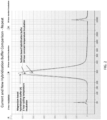
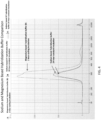
- the Bioanalyzer electropherogram profile should be similar to FIGs. 2-4 .
- Step 17 Pool samples for multiplexed sequencing.
- the number of indexed libraries that may be multiplexed in a single sequencing lane is determined by the output specifications of the platform used, together with the amount of sequencing data required for your research design. Calculate the number of indexes that can be combined per lane, according to the capacity of your platform and the amount of sequencing data required per sample. 1. Combine the libraries such that each index-tagged sample is present in equimolar amounts in the pool. For each library, use the formula below to determine the amount of indexed sample to use.
- V(f) is the final desired volume ofthepool
- C(f) is the desired final concentration of all the DNA in the pool # is the number of indexes
- C(i) is the initial concentration of each indexed sample.
- the below table shows an example of the amount of 4 index-tagged samples (of different concentrations) and low TE needed for a final volume of 20 ⁇ L at 10 nM.
- a major bottleneck and speed-limiting step for the targeted next-generation sequencing technology has been in the front-end steps to selectively capture and enrich targeted exons or targeted intron regions scattered over the genomic, mitochondria and other forms of DNA, in a rapid and cost-effective manner.
- the above disclosed buffer allows one to complete nucleic acid hybridization much more quickly, and thereby can be used to speed up the entire targeted next-generation sequencing.
- the process for capture and amplification of targeted genomic DNA fragments is as follows: (1) DNA is extracted from biological samples comprising nucleic acids; (2) The extracted DNA is fragmented by various means including mechanical, ultrasonic or enzymatic approaches; (3) Targeted DNA fragments are captured selectively by hybridizing DNA fragments with complimentary DNA and/or RNA probes or baits; (4) DNA fragments not bound to the hybridization probes are washed away first, while DNA fragments bound to the hybridization probes are eluted in the next step under appropriate conditions. (5) The captured DNA is used for downstream applications.
- PCRs polymerase chain reactions
- the universal DNA primers of specifically-designed sequences also known as adaptors or indexing adaptors
- the adaptors can be attached during step (2) when the extracted DNA is fragmented by an adaptor loaded transposase enzyme.
- Detailed procedures can be found in, e.g., the SureSelect Target Enrichment System TM marketed by Agilent Technologies, Inc. and US 20100029498 .
- the hybridization step i.e., step (3) above
- the hybridization step itself usually consumes a period of time ranging from 16 hours to over 70 hours. See id.
- the hybridization of DNA and/or RNA baits/probes takes place either on solid supporting materials or in liquid solutions.
- This capture step (step 3 in the above described process) is crucial for the entire process. Specificity of the capture is determined by the DNA or RNA sequences of the hybridization baits/probes. Selective capture of any desired regions of genomic and mitochondria DNA from any biological species requires a cost-effective and flexible way to carry out the hybridization steps.
- These DNA and/or RNA baits/probes must have sequences precisely complementary to the regions of interest in the genomic and mitochondria DNA of the biological species of interest. Capacity of the capture is determined by a combination of the number and length of different probes available for use in the hybridizations.
- the nucleic acid hybridization selective capture step can be completed within a period of time as short as 1 hour and, as a result, the entire process for capture and amplification of targeted genomic DNA fragments can be completed within 8 hours in contrast to two or more days when using conventional approaches.
- kits are illustrated, but not part of the invention, that comprises the above described hybridization compositions or a buffer concentrate thereof, and instructions for performing a hybridization assay using the compositions and methods described herein.
- the instructions comprise the method, the composition, or both, of the present disclosure.
- the kit may further comprise a hybridization composition having one or more additional agents disclosed above, and preferably a pH maintained, for example, between pH 6.0 and 11.0, and preferably using a buffer having a useful buffering capacity in that pH range.
- the compositions can be packaged in a bottle, especially a bottle that comprises a measuring closure.
- the measuring closure provides a convenient way to dispense the appropriate amount of the composition, especially when dispensing concentrated compositions into a more dilute solution or mixture.
- the bottle also preferably comprises a drain-back spout, which permits the composition to be dispensed more easily and with less waste or spillage.
- suitable bottles are described in detail in U.S. Pat. No. 4,666,065 , U.S. Pat. No. 4,696,416 , and U.S. Pat. No. 4,981,239 .
- the kit can further include primers, adaptors, and other reagents used in or compatible with systems and platforms provided by Agilent Technologies, Inc., Illumina, Inc., 454 Life Sciences, Life Technologies Corporation, Affymetrix, Inc, and others.
- one or more of the reaction components for the methods disclosed herein and for next-generation sequencing can be supplied in the form of a kit.
- an appropriate amount of one or more reaction components is provided in one or more containers or held on a substrate ( e.g. , by electrostatic interactions or covalent bonding).
- a kit containing reagents for performing the methods described herein may include one or more of the components described above.
- the components may be provided in a variety of forms.
- the components can be suspended in an aqueous solution or as a freeze-dried or lyophilized powder, pellet, or bead. In the latter case, the components, when reconstituted, form a complete mixture of components for use in an assay.
- a kit may contain, in an amount sufficient for at least one assay, any combination of the components described herein, and may further include instructions recorded in a tangible form for use of the components.
- one or more reaction components may be provided in pre-measured single use amounts in individual, typically disposable, tubes or equivalent containers. With such an arrangement, the sample to be enriched for the presence of a target nucleic acid can be added to the individual tubes and amplification is carried out directly.
- the amount of a component supplied in the kit can be any appropriate amount, and may depend on the target market to which the product is directed. General guidelines for determining appropriate amounts may be found in, for example, Joseph Sambrook and David W. Russell, Molecular Cloning: A Laboratory Manual, 3rd edition, Cold Spring Harbor Laboratory Press, 2001 ; and Frederick M. Ausubel, Current Protocols in Molecular Biology, John Wiley & Sons, 2003 .
- kits can comprise any number of additional reagents or substances that are useful for practicing a method of the invention.
- Such substances include, but are not limited to: reagents (including buffers) for lysis of cells or other agents that inhibit unwanted nucleases, control DNA for use in ensuring that components of reactions are functioning properly, DNA fragmenting reagents (including buffers), amplification reaction reagents (including buffers, polymerase, and nucleotides), and wash solutions.
- the kits can be provided at any temperature. For example, for storage of kits containing protein components or complexes thereof in a liquid, it is preferred that they are provided and maintained below 0°C, preferably at or below -20°C, or otherwise in a frozen state.
- the container(s) in which the components are supplied can be any conventional container that is capable of holding the supplied form, for instance, microfuge tubes, ampoules, bottles, or integral testing devices, such as fluidic devices, cartridges, lateral flow, or other similar devices.
- the kits can include either labeled or unlabeled nucleic acid probes/baits for use in enrichment or detection of target nucleic acids.
- the kits can further include instructions to use the components in any of the methods described herein.
- Typical packaging materials for such kits and systems include solid matrices (e.g. , glass, plastic, paper, foil, micro-particles and the like) that hold the reaction components or probes in any of a variety of configurations ( e.g. , in a vial, microtiter plate well, microarray, and the like).
- nucleic acid refers to a DNA molecule (e.g., a cDNA or genomic DNA), an RNA molecule (e.g. , an mRNA), or a DNA or RNA analog.
- a DNA or RNA analog can be synthesized from nucleotide analogs.
- the nucleic acid molecule can be single-stranded or double-stranded, but preferably is double-stranded DNA.
- bait or “probe” sequences refer to synthetic long oligonucleotides or oligonucleotides derived from ( e.g. , produced using) synthetic long oligonucleotides that are complementary to target nucleic acids of interest.
- the set of bait sequences is derived from oligonucleotides synthesized in a microarray and cleaved and eluted from the microarray.
- the bait sequences are produced by nucleic acid amplification methods, e.g ., using human DNA or pooled human DNA samples as the template.
- Bait sequences preferably are oligonucleotides between 70 nucleotides and 1000 nucleotides in length, more preferably between 100 nucleotides and 300 nucleotides in length, more preferably between 130 nucleotides and 230 nucleotides in length and more preferably still are between 150 nucleotides and 200 nucleotides in length.
- preferred bait sequence lengths are oligonucleotides of 40 and 1000, e.g., 100 to 300 nucleotides, more preferably 130 to 230 nucleotides, and still more preferably 150 to 200 nucleotides.
- preferred bait sequence lengths are typically in the same size range as the baits for short targets mentioned above, except that there is no need to limit the maximum size of bait sequences for the sole purpose of minimizing targeting of adjacent sequences.
- Methods to prepare longer oligonucleotides for bait sequences are well known in the art.
- oligonucleotide refers to a short polynucleotide, typically less than or equal to 300 nucleotides long ( e.g., in the range of 5 and 150, preferably in the range of 10 to 100, more preferably in the range of 15 to 50 nucleotides in length). However, as used herein, the term is also intended to encompass longer or shorter polynucleotide chains.
- An "oligonucleotide” may hybridize to other polynucleotides, therefore serving as a probe for polynucleotide detection, or a primer for polynucleotide chain extension.
- the bait sequences in the set of bait sequences are RNA molecules.
- RNA molecules preferably are used as bait sequences since RNA-DNA duplex is more stable than a DNA-DNA duplex, and therefore provides for potentially better capture of nucleic acids.
- RNA bait sequences can be synthesized using any method known in the art, including in vitro transcription. If RNA is synthesized using biotinylated UTP, single stranded biotin-labeled RNA bait molecules are produced. In preferred embodiments, the RNA baits correspond to only one strand of the double-stranded DNA target. As those skilled in the art will appreciate, such RNA baits are not self-complementary and are therefore more effective as hybridization drivers.
- RNase-resistant RNA molecules are synthesized. Such molecules and their synthesis is well known in the art.
- target nucleic acid refers to a nucleic acid containing a target nucleic acid sequence to be identified.
- a target nucleic acid may be single-stranded or double-stranded, and often is DNA, RNA, a derivative of DNA or RNA, or a combination thereof.
- a "target nucleic acid sequence,” “target sequence” or “target region” means a specific sequence comprising all or part of the sequence of a single-stranded nucleic acid.
- a target sequence may be within a nucleic acid template, which may be any form of single-stranded or double-stranded nucleic acid.
- a template may be a purified or isolated nucleic acid, or may be non-purified or non-isolated.
- the minimum number of nucleotides in the target material is selected to assure that the presence of a target polynucleotide in a sample is a specific indicator of the presence of polynucleotide in a sample.
- the maximum number of nucleotides in the target material is normally governed by several factors: the length of the polynucleotide from which it is derived, the tendency of such polynucleotide to be broken by shearing or other processes during isolation, the efficiency of any procedures required to prepare the sample for analysis, for example, transcription of a DNA template into RNA, and the efficiency of detection, amplification, or both, of the target nucleotide sequence, where appropriate.
- the term "contacting" and its variants when used in reference to any set of components, includes any process whereby the components to be contacted are mixed into the same mixture (for example, are added into the same compartment or solution), and does not necessarily require actual physical contact between the recited components.
- the recited components can be contacted in any order or any combination (or subcombination), and can include situations where one or some of the recited components are subsequently removed from the mixture, optionally prior to addition of other recited components.
- contacting A with B and C includes any and all of the following situations: (i) A is mixed with C, then B is added to the mixture; (ii) A and B are mixed into a mixture; B is removed from the mixture, and then C is added to the mixture; and (iii) A is added to a mixture of B and C.
- Contacting a template with a reaction mixture includes any or all of the following situations: (i) the template is contacted with a first component of the reaction mixture to create a mixture; then other components of the reaction mixture are added in any order or combination to the mixture; and (ii) the reaction mixture is fully formed prior to mixture with the template.
- hybridization buffers and methods were used to selectively capture and enrich targeted exon regions from human genomic DNA for the analysis of targeted next-generation sequencing.
- gDNA samples were fragmented and end-modified using methods known in the art. Then, target enrichment via hybridization and amplification was carried out using the fragmented and end-modified gDNA.
- the sodium-based hybridization buffer contained 5X SSPE, 5X Denhardt's, 5 mM EDTA, and 0.1% SDS.
- Buffer (A) included 308 mM MgCl 2 .6H 2 O and 20 mM Tris (pH 8).
- Buffer (B) is same as Buffer (A) except that Buffer (B) also included 0.00834% HPMC.
- Each buffer was prepared from a 5X hybridization buffer concentrate by mixing an appropriate amount concentrate with the DNAs and RNA baits.
- the 5X buffer concentrate for Buffer (B contained 1540 mM MgCl 2 .6H 2 O, 0.0417% - HPMC, and 100 mM Tris (pH 8).
- Step Cycle # Temperature and Time Denaturation 1x 95°C for 5 minutes Blocking pause 65°C Pause Hybridization 50-60x 65°C for 1 minute 37°C for 3 seconds Storage 1x 65°C hold
- Genomic DNAs captured and enriched using the above described hybridization buffers and incubation profiles were used for next generation sequencing analysis.
- the resulting performance parameters (On Target rate, Duplicate rate, and Coverage) are presented in the table shown in FIG. 5 . It was found that the performance parameters for gDNAs captured using the fast, magnesium-based hybridization Buffer (B) and the two-temperature cycling incubation were comparable to or better than those captured by the convention approach.
Landscapes
- Chemical & Material Sciences (AREA)
- Organic Chemistry (AREA)
- Life Sciences & Earth Sciences (AREA)
- Zoology (AREA)
- Wood Science & Technology (AREA)
- Proteomics, Peptides & Aminoacids (AREA)
- Health & Medical Sciences (AREA)
- Engineering & Computer Science (AREA)
- Analytical Chemistry (AREA)
- Biophysics (AREA)
- Immunology (AREA)
- Microbiology (AREA)
- Molecular Biology (AREA)
- Biotechnology (AREA)
- Physics & Mathematics (AREA)
- Chemical Kinetics & Catalysis (AREA)
- Biochemistry (AREA)
- Bioinformatics & Cheminformatics (AREA)
- General Engineering & Computer Science (AREA)
- General Health & Medical Sciences (AREA)
- Genetics & Genomics (AREA)
- Measuring Or Testing Involving Enzymes Or Micro-Organisms (AREA)
Claims (2)
- Procédé d'hybridation d'acide nucléique d'un acide nucléique cible et d'un acide nucléique appât, comprenantla mise en contact d'un acide nucléique cible et d'un acide nucléique appât avec une composition afin de former un mélange d'hybridation, ladite composition comprenant(i) un sel d'un cation divalent qui a une concentration dans la plage allant de 100 mM à 600 mM,(ii) un agent tampon, ledit sel et ledit agent tampon étant présents dans un rapport molaire allant de 2,5:1 à 60:1, et(iii) un agent d'exclusion volumique/d'épaississement qui a une concentration dans une plage allant de 0,002 % à 0,1 %, etl'incubation du mélange à deux températures d'hybridation, qui peuvent être différentes ou identiques,dans lequel l'agent d'exclusion volumique/d'épaississement est choisi dans le groupe constitué par l'hydroxypropylméthylcellulose (HPMC) et la méthyl-cellulose.
- Procédé selon la revendication 1, dans lequel l'agent tampon a une concentration dans la plage allant de 10 mM à 40 mM et il est choisi dans le groupe constitué par Tris, HEPES, TAPS, tricine, bicine, Bis-Tris, NaOH, KOH, TES, EPPS et MOPS.
Priority Applications (2)
| Application Number | Priority Date | Filing Date | Title |
|---|---|---|---|
| EP18197973.3A EP3441480A1 (fr) | 2014-01-29 | 2015-01-28 | Hybridation rapide pour l'enrichissement d'une cible de séquençage de génération suivante |
| EP19189537.4A EP3581661A1 (fr) | 2014-01-29 | 2015-01-28 | Hybridation rapide pour l'enrichissement de cible de séquençage de nouvelle génération |
Applications Claiming Priority (2)
| Application Number | Priority Date | Filing Date | Title |
|---|---|---|---|
| US14/167,513 US9587268B2 (en) | 2014-01-29 | 2014-01-29 | Fast hybridization for next generation sequencing target enrichment |
| EP15152868.4A EP2902504A1 (fr) | 2014-01-29 | 2015-01-28 | Hybridation rapide pour l'enrichissement d'une cible de séquençage de génération suivante |
Related Parent Applications (1)
| Application Number | Title | Priority Date | Filing Date |
|---|---|---|---|
| EP15152868.4A Division EP2902504A1 (fr) | 2014-01-29 | 2015-01-28 | Hybridation rapide pour l'enrichissement d'une cible de séquençage de génération suivante |
Related Child Applications (4)
| Application Number | Title | Priority Date | Filing Date |
|---|---|---|---|
| EP18197973.3A Division EP3441480A1 (fr) | 2014-01-29 | 2015-01-28 | Hybridation rapide pour l'enrichissement d'une cible de séquençage de génération suivante |
| EP18197973.3A Division-Into EP3441480A1 (fr) | 2014-01-29 | 2015-01-28 | Hybridation rapide pour l'enrichissement d'une cible de séquençage de génération suivante |
| EP19189537.4A Division EP3581661A1 (fr) | 2014-01-29 | 2015-01-28 | Hybridation rapide pour l'enrichissement de cible de séquençage de nouvelle génération |
| EP19189537.4A Division-Into EP3581661A1 (fr) | 2014-01-29 | 2015-01-28 | Hybridation rapide pour l'enrichissement de cible de séquençage de nouvelle génération |
Publications (3)
| Publication Number | Publication Date |
|---|---|
| EP3252172A2 EP3252172A2 (fr) | 2017-12-06 |
| EP3252172A3 EP3252172A3 (fr) | 2018-02-21 |
| EP3252172B1 true EP3252172B1 (fr) | 2024-09-11 |
Family
ID=52464153
Family Applications (5)
| Application Number | Title | Priority Date | Filing Date |
|---|---|---|---|
| EP19189537.4A Pending EP3581661A1 (fr) | 2014-01-29 | 2015-01-28 | Hybridation rapide pour l'enrichissement de cible de séquençage de nouvelle génération |
| EP17180680.5A Active EP3252172B1 (fr) | 2014-01-29 | 2015-01-28 | Hybridation rapide pour l'enrichissement de cible de séquençage de nouvelle génération |
| EP18197973.3A Pending EP3441480A1 (fr) | 2014-01-29 | 2015-01-28 | Hybridation rapide pour l'enrichissement d'une cible de séquençage de génération suivante |
| EP15152868.4A Withdrawn EP2902504A1 (fr) | 2014-01-29 | 2015-01-28 | Hybridation rapide pour l'enrichissement d'une cible de séquençage de génération suivante |
| EP18199220.7A Withdrawn EP3456845A1 (fr) | 2014-01-29 | 2015-01-28 | Hybridation rapide pour l'enrichissement de cible de séquençage de nouvelle génération |
Family Applications Before (1)
| Application Number | Title | Priority Date | Filing Date |
|---|---|---|---|
| EP19189537.4A Pending EP3581661A1 (fr) | 2014-01-29 | 2015-01-28 | Hybridation rapide pour l'enrichissement de cible de séquençage de nouvelle génération |
Family Applications After (3)
| Application Number | Title | Priority Date | Filing Date |
|---|---|---|---|
| EP18197973.3A Pending EP3441480A1 (fr) | 2014-01-29 | 2015-01-28 | Hybridation rapide pour l'enrichissement d'une cible de séquençage de génération suivante |
| EP15152868.4A Withdrawn EP2902504A1 (fr) | 2014-01-29 | 2015-01-28 | Hybridation rapide pour l'enrichissement d'une cible de séquençage de génération suivante |
| EP18199220.7A Withdrawn EP3456845A1 (fr) | 2014-01-29 | 2015-01-28 | Hybridation rapide pour l'enrichissement de cible de séquençage de nouvelle génération |
Country Status (4)
| Country | Link |
|---|---|
| US (2) | US9587268B2 (fr) |
| EP (5) | EP3581661A1 (fr) |
| JP (1) | JP2015180193A (fr) |
| CN (1) | CN104805180B (fr) |
Families Citing this family (41)
| Publication number | Priority date | Publication date | Assignee | Title |
|---|---|---|---|---|
| TWI707038B (zh) | 2013-08-05 | 2020-10-11 | 美商扭轉生物科技有限公司 | 重新合成之基因庫 |
| WO2016126882A1 (fr) | 2015-02-04 | 2016-08-11 | Twist Bioscience Corporation | Procédés et dispositifs pour assemblage de novo d'acide oligonucléique |
| WO2016126987A1 (fr) | 2015-02-04 | 2016-08-11 | Twist Bioscience Corporation | Compositions et méthodes d'assemblage de gène synthétique |
| US9981239B2 (en) | 2015-04-21 | 2018-05-29 | Twist Bioscience Corporation | Devices and methods for oligonucleic acid library synthesis |
| KR20180050411A (ko) | 2015-09-18 | 2018-05-14 | 트위스트 바이오사이언스 코포레이션 | 올리고핵산 변이체 라이브러리 및 그의 합성 |
| CN108698012A (zh) | 2015-09-22 | 2018-10-23 | 特韦斯特生物科学公司 | 用于核酸合成的柔性基底 |
| KR101651817B1 (ko) * | 2015-10-28 | 2016-08-29 | 대한민국 | Ngs 라이브러리 제작용 프라이머 세트 및 이를 이용한 ngs 라이브러리 제작방법 및 키트 |
| WO2017095958A1 (fr) | 2015-12-01 | 2017-06-08 | Twist Bioscience Corporation | Surfaces fonctionnalisées et leur préparation |
| KR102212257B1 (ko) | 2016-08-22 | 2021-02-04 | 트위스트 바이오사이언스 코포레이션 | 드 노보 합성된 핵산 라이브러리 |
| WO2018057526A2 (fr) | 2016-09-21 | 2018-03-29 | Twist Bioscience Corporation | Stockage de données reposant sur un acide nucléique |
| EP3554514A4 (fr) | 2016-12-16 | 2020-08-05 | Twist Bioscience Corporation | Banques de variants de la synapse immunologique et leur synthèse |
| EP3555314B1 (fr) * | 2016-12-19 | 2023-08-16 | Quantum-Si Incorporated | Chargement de molécules dans des puits d'échantillons pour analyse |
| CN110892485B (zh) | 2017-02-22 | 2024-03-22 | 特韦斯特生物科学公司 | 基于核酸的数据存储 |
| AU2018234629A1 (en) | 2017-03-15 | 2019-10-17 | Twist Bioscience Corporation | Variant libraries of the immunological synapse and synthesis thereof |
| WO2018231864A1 (fr) | 2017-06-12 | 2018-12-20 | Twist Bioscience Corporation | Méthodes d'assemblage d'acides nucléiques continus |
| JP7169999B2 (ja) | 2017-06-12 | 2022-11-11 | ツイスト バイオサイエンス コーポレーション | シームレス核酸アセンブリのための方法 |
| AU2018328847A1 (en) | 2017-09-11 | 2020-04-23 | Twist Bioscience Corporation | GPCR binding proteins and synthesis thereof |
| WO2019079769A1 (fr) | 2017-10-20 | 2019-04-25 | Twist Bioscience Corporation | Nano-puits chauffés pour la synthèse de polynucléotides |
| JP7054133B2 (ja) * | 2017-11-09 | 2022-04-13 | 国立研究開発法人国立がん研究センター | 配列解析方法、配列解析装置、参照配列の生成方法、参照配列生成装置、プログラム、および記録媒体 |
| EP4715681A2 (fr) | 2018-01-04 | 2026-03-25 | Atlas Data Storage, Inc. | Stockage d'informations numériques à base d'adn |
| IL278771B2 (en) | 2018-05-18 | 2025-09-01 | Twist Bioscience Corp | Polynucleotides, reagents and methods for nucleic acid hybridization |
| GB201809627D0 (en) * | 2018-06-12 | 2018-07-25 | Biorelevant Com Ltd | Methods for preparing buffer solutions suitable for in vitro drug dissolution testing, drug solubility testing and/or drug profiling |
| EP3810563A4 (fr) * | 2018-06-22 | 2022-03-23 | Somalogic, Inc. | Dosages multiplex protéomiques améliorés |
| US10704094B1 (en) | 2018-11-14 | 2020-07-07 | Element Biosciences, Inc. | Multipart reagents having increased avidity for polymerase binding |
| WO2020139871A1 (fr) | 2018-12-26 | 2020-07-02 | Twist Bioscience Corporation | Synthèse de novo polynucléotidique hautement précise |
| WO2020176678A1 (fr) | 2019-02-26 | 2020-09-03 | Twist Bioscience Corporation | Banques de variants d'acides nucléiques pour le récepteur glp1 |
| AU2020227802A1 (en) | 2019-02-26 | 2021-10-14 | Twist Bioscience Corporation | Variant nucleic acid libraries for antibody optimization |
| US12313627B2 (en) | 2019-05-01 | 2025-05-27 | Element Biosciences, Inc. | Multivalent binding composition for nucleic acid analysis |
| CA3144644A1 (fr) | 2019-06-21 | 2020-12-24 | Twist Bioscience Corporation | Assemblage de sequences d'acide nucleique base sur des code-barres |
| AU2020323881A1 (en) * | 2019-07-26 | 2022-03-03 | Becton, Dickinson And Company | Buffer compositions for reducing aggregation |
| EP4034564A4 (fr) | 2019-09-23 | 2023-12-13 | Twist Bioscience Corporation | Bibliothèques d'acides nucléiques variants pour des anticorps à domaine unique |
| US12091777B2 (en) | 2019-09-23 | 2024-09-17 | Twist Bioscience Corporation | Variant nucleic acid libraries for CRTH2 |
| GB201914325D0 (en) | 2019-10-04 | 2019-11-20 | Babraham Inst | Novel meethod |
| BR112022011235A2 (pt) | 2019-12-09 | 2022-12-13 | Twist Bioscience Corp | Bibliotecas de variantes de ácido nucleico para receptores de adenosina |
| BR112022026809A2 (pt) * | 2020-07-01 | 2023-04-25 | Illumina Inc | Captura, concentração e purificação de ácido nucleico |
| CN112375809A (zh) * | 2020-11-19 | 2021-02-19 | 天津莱贝生物科技有限公司 | 一种杂交捕获试剂盒及利用该试剂盒进行杂交捕获的方法 |
| GB2629259B (en) | 2021-07-21 | 2025-05-28 | Element Biosciences Inc | Optical systems for nucleic acid sequencing and methods thereof |
| KR20250130601A (ko) | 2022-11-29 | 2025-09-02 | 엘리먼트 바이오사이언스, 인크. | 핵산 시퀀싱을 위한 플로우 셀 디바이스 및 광학 시스템 |
| CN115873924A (zh) * | 2022-12-22 | 2023-03-31 | 深圳裕康医学检验实验室 | 一种杂交捕获方法及试剂盒 |
| CN116926166A (zh) * | 2023-08-23 | 2023-10-24 | 北京齐碳科技有限公司 | 一种长片段dna捕获方法、试剂盒及其用途 |
| CN117925782B (zh) * | 2024-01-16 | 2024-12-20 | 深圳吉因加医学检验实验室 | 一种用于核酸杂交的组合物及其应用 |
Family Cites Families (47)
| Publication number | Priority date | Publication date | Assignee | Title |
|---|---|---|---|---|
| US4766064A (en) * | 1984-05-07 | 1988-08-23 | Allied Corporation | Displacement polynucleotide assay employing polyether and diagnostic kit |
| US4696416A (en) | 1984-09-28 | 1987-09-29 | The Procter & Gamble Company | Liquid product dispensing package with self draining feature employing drip concentrator |
| US4666065A (en) | 1986-06-30 | 1987-05-19 | The Procter & Gamble Company | Liquid measuring and pouring device |
| US4886741A (en) * | 1987-12-09 | 1989-12-12 | Microprobe Corporation | Use of volume exclusion agents for the enhancement of in situ hybridization |
| US4981239A (en) | 1989-01-03 | 1991-01-01 | The Procter & Gamble Company | Container having a drain-back spout |
| GB9114180D0 (en) | 1991-07-01 | 1991-08-21 | Amersham Int Plc | Enhancement of polynucleotide hybridisation |
| US5705366A (en) * | 1994-09-15 | 1998-01-06 | Johnson & Johnson Clinical Diagnostics, Inc. | Coamplification of target nucleic acids using volume exclusion agent in reaction composition, test kit and test device useful therefor |
| JP3911340B2 (ja) * | 1998-04-08 | 2007-05-09 | 誠 鶴岡 | オリゴヌクレオチドおよびベロ毒素遺伝子の検出試薬 |
| US6841539B1 (en) * | 1998-05-21 | 2005-01-11 | Isis Pharmaceuticals, Inc. | Compositions and methods for topical delivery of oligonucleotides |
| WO1999060012A1 (fr) * | 1998-05-21 | 1999-11-25 | Isis Pharmaceuticals, Inc. | Compositions et procedes pour l'administration non parenterale d'oligonucleotides |
| US6290839B1 (en) * | 1998-06-23 | 2001-09-18 | Clinical Micro Sensors, Inc. | Systems for electrophoretic transport and detection of analytes |
| US6261218B1 (en) * | 1998-12-01 | 2001-07-17 | The Dow Chemical Company | Process and apparatus for making low molecular weight cellulose ethers |
| JP3548159B2 (ja) * | 1999-11-12 | 2004-07-28 | クリニカル・マイクロ・センサーズ・インコーポレイテッド | 被検体検出のための結合促進法 |
| US6977161B2 (en) * | 2000-10-14 | 2005-12-20 | Eragen Biosciences, Inc. | Solid support assay systems and methods utilizing non-standard bases |
| AU8033401A (en) | 2000-06-28 | 2002-01-08 | Ascendia Ab | Dna/rna-embedding medium and method of use |
| CN100385013C (zh) * | 2000-10-14 | 2008-04-30 | 伊拉根生物科学公司 | 使用非标准碱基的固相支持体分析系统和方法 |
| WO2002044708A1 (fr) | 2000-11-29 | 2002-06-06 | Japan Science And Technology Corporation | Procede d'analyse d'acides nucleiques |
| US7189509B2 (en) * | 2001-08-16 | 2007-03-13 | Zhifeng Shao | Analysis of gene expression profiles using sequential hybridization |
| CN100519758C (zh) | 2002-09-20 | 2009-07-29 | 新英格兰生物实验室公司 | 核酸的解旋酶依赖性扩增 |
| EP1403379A1 (fr) * | 2002-09-24 | 2004-03-31 | QIAGEN GmbH | Coamplification améliorée d'acides nucléiques |
| US7955795B2 (en) | 2003-06-06 | 2011-06-07 | Qiagen Gmbh | Method of whole genome amplification with reduced artifact production |
| CA2513889A1 (fr) | 2003-01-29 | 2004-08-19 | 454 Corporation | Sequencage a double extremite |
| US7741033B2 (en) * | 2003-05-13 | 2010-06-22 | Trustees Of Boston College | Electrocatalytic nucleic acid hybridization detection |
| EP1510577A1 (fr) * | 2003-08-29 | 2005-03-02 | Qiagen GmbH | Méthode pour l'isolation des acides nucléiques en utilisant des particules magnétiques |
| US8426126B2 (en) | 2004-03-18 | 2013-04-23 | Applied Biosystems, Llc | Modified surfaces as solid supports for nucleic acid purification |
| US20080226705A1 (en) * | 2004-03-31 | 2008-09-18 | Soltero Richard A | Gel delivery system for oral administration of medicaments |
| US8911942B2 (en) * | 2004-05-20 | 2014-12-16 | Quest Diagnostics Investments Incorporated | Single label comparative hybridization |
| MX2007000891A (es) | 2004-07-23 | 2007-04-18 | Genentech Inc | Cristalizacion de anticuerpos o fragmentos de ellos. |
| US7867703B2 (en) | 2004-08-26 | 2011-01-11 | Agilent Technologies, Inc. | Element defined sequence complexity reduction |
| US7618777B2 (en) | 2005-03-16 | 2009-11-17 | Agilent Technologies, Inc. | Composition and method for array hybridization |
| EP1989318B1 (fr) | 2006-01-06 | 2014-07-30 | Agilent Technologies, Inc. | Composition tampon de reaction pour replication d'acide nucleique au moyen de polymerases adn integrees |
| US20080171665A1 (en) * | 2006-05-24 | 2008-07-17 | Minor James M | Programmed changes in hybridization conditions to improve probe signal quality |
| US20080207960A1 (en) | 2007-02-28 | 2008-08-28 | Eric Lin | Methods, compositions, and kits for post-hybridization processing of arrays |
| US20090111711A1 (en) | 2007-10-31 | 2009-04-30 | Lewandowski Francis A | Device and method for high throughput screening of crystallization conditions in a vapor diffusion environment |
| CN102083973A (zh) * | 2008-01-21 | 2011-06-01 | 国立大学法人东京农工大学 | 新型真菌病毒、植物病害真菌减毒菌株、植物病害防治剂、真菌病毒的生产方法、植物病害真菌减毒的方法以及植物病害的防治方法 |
| EP2245198A1 (fr) | 2008-02-04 | 2010-11-03 | Massachusetts Institute of Technology | Sélection d'acides nucléiques par hybridation en solution en amorces oligonucléotidiques |
| EP2636757B1 (fr) * | 2008-05-27 | 2016-11-23 | Dako Denmark A/S | Compositions et procédés pour la détection d'aberrations chromosomiques avec de nouveaux tampons d'hybridation |
| JP2009284783A (ja) * | 2008-05-27 | 2009-12-10 | Fujifilm Corp | ハイブリダイゼーション用溶液の調製方法 |
| WO2009148617A2 (fr) * | 2008-06-04 | 2009-12-10 | The Salk Institute For Biological Studies | Grepseq : un protocole à haut rendement, rentable, presque inépuisable pour la génération de séquences de sélecteurs |
| US20090318305A1 (en) | 2008-06-18 | 2009-12-24 | Xi Erick Lin | Methods for selectively capturing and amplifying exons or targeted genomic regions from biological samples |
| JP2010284159A (ja) * | 2009-05-12 | 2010-12-24 | Mitsubishi Rayon Co Ltd | 特異性の高いプローブと、それを用いた核酸アレイ、及びその製造方法 |
| ES2601237T3 (es) | 2009-12-02 | 2017-02-14 | Dako Denmark A/S | Composiciones y métodos para realizar hibridaciones sin desnaturalización |
| WO2013046033A1 (fr) * | 2011-09-30 | 2013-04-04 | Dako Denmark A/S | Compositions d'hybridation et procédés utilisant du formamide |
| US9920361B2 (en) | 2012-05-21 | 2018-03-20 | Sequenom, Inc. | Methods and compositions for analyzing nucleic acid |
| CN104271771A (zh) * | 2012-06-20 | 2015-01-07 | 东丽株式会社 | 核酸的检测方法及核酸检测试剂盒 |
| SG10201610861XA (en) * | 2012-07-03 | 2017-02-27 | Integrated Dna Tech Inc | Tm-enhanced blocking oligonucleotides and baits for improved target enrichment and reduced off-target selection |
| EP3044329B1 (fr) * | 2013-09-13 | 2020-04-22 | Life Technologies Corporation | Dispositif de préparation au moyen de particules d'acide nucléique condensé |
-
2014
- 2014-01-29 US US14/167,513 patent/US9587268B2/en active Active
-
2015
- 2015-01-23 CN CN201510037254.5A patent/CN104805180B/zh active Active
- 2015-01-28 EP EP19189537.4A patent/EP3581661A1/fr active Pending
- 2015-01-28 EP EP17180680.5A patent/EP3252172B1/fr active Active
- 2015-01-28 EP EP18197973.3A patent/EP3441480A1/fr active Pending
- 2015-01-28 EP EP15152868.4A patent/EP2902504A1/fr not_active Withdrawn
- 2015-01-28 EP EP18199220.7A patent/EP3456845A1/fr not_active Withdrawn
- 2015-01-29 JP JP2015015350A patent/JP2015180193A/ja active Pending
- 2015-09-29 US US14/868,961 patent/US10093962B2/en active Active
Non-Patent Citations (2)
| Title |
|---|
| "? 1996 Nature Publishing Group http://www.nature", 1 January 1996 (1996-01-01), XP055183011, Retrieved from the Internet <URL:http://blogs.bu.edu/clsmith/files/2010/05/Koster_1996_A-strategy-for-rapid.pdf> [retrieved on 20150414] * |
| "Current Protocols in Molecular Biology", 1 April 2008, WILEY, New York, NY [u.a.], ISBN: 978-0-471-14272-0, article OMAR BAGASRA: "In Situ Polymerase Chain Reaction and Hybridization to Detect Low-Abundance Nucleic Acid Targets", XP055438863, DOI: 10.1002/0471142727.mb1408s82 * |
Also Published As
| Publication number | Publication date |
|---|---|
| EP3456845A1 (fr) | 2019-03-20 |
| EP3581661A1 (fr) | 2019-12-18 |
| CN104805180A (zh) | 2015-07-29 |
| US20150211047A1 (en) | 2015-07-30 |
| EP2902504A1 (fr) | 2015-08-05 |
| US20160017405A1 (en) | 2016-01-21 |
| CN104805180B (zh) | 2020-02-11 |
| US10093962B2 (en) | 2018-10-09 |
| JP2015180193A (ja) | 2015-10-15 |
| EP3441480A1 (fr) | 2019-02-13 |
| EP3252172A2 (fr) | 2017-12-06 |
| EP3252172A3 (fr) | 2018-02-21 |
| US9587268B2 (en) | 2017-03-07 |
Similar Documents
| Publication | Publication Date | Title |
|---|---|---|
| US10093962B2 (en) | Fast hybridization for next generation sequencing target enrichment | |
| US20250277247A1 (en) | Nucleic acid amplifications | |
| US8785120B2 (en) | Method for the treatment of a sample containing biomolecules | |
| JP2025143255A (ja) | 単一細胞分析 | |
| AU2016421196A1 (en) | Methods of whole genome digital amplification | |
| US12104206B2 (en) | Method of direct target sequencing using nuclease protection | |
| WO2012045670A1 (fr) | Méthode de lyse cellulaire dans un tampon de réaction de pcr | |
| US20220136042A1 (en) | Improved nucleic acid target enrichment and related methods | |
| HK1219296A1 (zh) | 在固相载体扩增核酸的方法 |
Legal Events
| Date | Code | Title | Description |
|---|---|---|---|
| PUAI | Public reference made under article 153(3) epc to a published international application that has entered the european phase |
Free format text: ORIGINAL CODE: 0009012 |
|
| STAA | Information on the status of an ep patent application or granted ep patent |
Free format text: STATUS: REQUEST FOR EXAMINATION WAS MADE |
|
| 17P | Request for examination filed |
Effective date: 20170711 |
|
| AC | Divisional application: reference to earlier application |
Ref document number: 2902504 Country of ref document: EP Kind code of ref document: P |
|
| AK | Designated contracting states |
Kind code of ref document: A2 Designated state(s): AL AT BE BG CH CY CZ DE DK EE ES FI FR GB GR HR HU IE IS IT LI LT LU LV MC MK MT NL NO PL PT RO RS SE SI SK SM TR |
|
| PUAL | Search report despatched |
Free format text: ORIGINAL CODE: 0009013 |
|
| AK | Designated contracting states |
Kind code of ref document: A3 Designated state(s): AL AT BE BG CH CY CZ DE DK EE ES FI FR GB GR HR HU IE IS IT LI LT LU LV MC MK MT NL NO PL PT RO RS SE SI SK SM TR |
|
| RIC1 | Information provided on ipc code assigned before grant |
Ipc: C12Q 1/68 20180101AFI20180117BHEP |
|
| STAA | Information on the status of an ep patent application or granted ep patent |
Free format text: STATUS: EXAMINATION IS IN PROGRESS |
|
| 17Q | First examination report despatched |
Effective date: 20190204 |
|
| P01 | Opt-out of the competence of the unified patent court (upc) registered |
Effective date: 20230527 |
|
| GRAP | Despatch of communication of intention to grant a patent |
Free format text: ORIGINAL CODE: EPIDOSNIGR1 |
|
| STAA | Information on the status of an ep patent application or granted ep patent |
Free format text: STATUS: GRANT OF PATENT IS INTENDED |
|
| INTG | Intention to grant announced |
Effective date: 20240415 |
|
| GRAS | Grant fee paid |
Free format text: ORIGINAL CODE: EPIDOSNIGR3 |
|
| GRAA | (expected) grant |
Free format text: ORIGINAL CODE: 0009210 |
|
| STAA | Information on the status of an ep patent application or granted ep patent |
Free format text: STATUS: THE PATENT HAS BEEN GRANTED |
|
| AC | Divisional application: reference to earlier application |
Ref document number: 2902504 Country of ref document: EP Kind code of ref document: P |
|
| AK | Designated contracting states |
Kind code of ref document: B1 Designated state(s): AL AT BE BG CH CY CZ DE DK EE ES FI FR GB GR HR HU IE IS IT LI LT LU LV MC MK MT NL NO PL PT RO RS SE SI SK SM TR |
|
| REG | Reference to a national code |
Ref country code: GB Ref legal event code: FG4D |
|
| REG | Reference to a national code |
Ref country code: CH Ref legal event code: EP |
|
| REG | Reference to a national code |
Ref country code: DE Ref legal event code: R096 Ref document number: 602015089892 Country of ref document: DE |
|
| REG | Reference to a national code |
Ref country code: IE Ref legal event code: FG4D |
|
| REG | Reference to a national code |
Ref country code: LT Ref legal event code: MG9D |
|
| PG25 | Lapsed in a contracting state [announced via postgrant information from national office to epo] |
Ref country code: NO Free format text: LAPSE BECAUSE OF FAILURE TO SUBMIT A TRANSLATION OF THE DESCRIPTION OR TO PAY THE FEE WITHIN THE PRESCRIBED TIME-LIMIT Effective date: 20241211 |
|
| REG | Reference to a national code |
Ref country code: NL Ref legal event code: MP Effective date: 20240911 |
|
| PG25 | Lapsed in a contracting state [announced via postgrant information from national office to epo] |
Ref country code: GR Free format text: LAPSE BECAUSE OF FAILURE TO SUBMIT A TRANSLATION OF THE DESCRIPTION OR TO PAY THE FEE WITHIN THE PRESCRIBED TIME-LIMIT Effective date: 20241212 Ref country code: FI Free format text: LAPSE BECAUSE OF FAILURE TO SUBMIT A TRANSLATION OF THE DESCRIPTION OR TO PAY THE FEE WITHIN THE PRESCRIBED TIME-LIMIT Effective date: 20240911 |
|
| PG25 | Lapsed in a contracting state [announced via postgrant information from national office to epo] |
Ref country code: BG Free format text: LAPSE BECAUSE OF FAILURE TO SUBMIT A TRANSLATION OF THE DESCRIPTION OR TO PAY THE FEE WITHIN THE PRESCRIBED TIME-LIMIT Effective date: 20240911 |
|
| PG25 | Lapsed in a contracting state [announced via postgrant information from national office to epo] |
Ref country code: LV Free format text: LAPSE BECAUSE OF FAILURE TO SUBMIT A TRANSLATION OF THE DESCRIPTION OR TO PAY THE FEE WITHIN THE PRESCRIBED TIME-LIMIT Effective date: 20240911 |
|
| PG25 | Lapsed in a contracting state [announced via postgrant information from national office to epo] |
Ref country code: HR Free format text: LAPSE BECAUSE OF FAILURE TO SUBMIT A TRANSLATION OF THE DESCRIPTION OR TO PAY THE FEE WITHIN THE PRESCRIBED TIME-LIMIT Effective date: 20240911 |
|
| PG25 | Lapsed in a contracting state [announced via postgrant information from national office to epo] |
Ref country code: ES Free format text: LAPSE BECAUSE OF FAILURE TO SUBMIT A TRANSLATION OF THE DESCRIPTION OR TO PAY THE FEE WITHIN THE PRESCRIBED TIME-LIMIT Effective date: 20240911 Ref country code: RS Free format text: LAPSE BECAUSE OF FAILURE TO SUBMIT A TRANSLATION OF THE DESCRIPTION OR TO PAY THE FEE WITHIN THE PRESCRIBED TIME-LIMIT Effective date: 20241211 |
|
| PG25 | Lapsed in a contracting state [announced via postgrant information from national office to epo] |
Ref country code: RS Free format text: LAPSE BECAUSE OF FAILURE TO SUBMIT A TRANSLATION OF THE DESCRIPTION OR TO PAY THE FEE WITHIN THE PRESCRIBED TIME-LIMIT Effective date: 20241211 Ref country code: NO Free format text: LAPSE BECAUSE OF FAILURE TO SUBMIT A TRANSLATION OF THE DESCRIPTION OR TO PAY THE FEE WITHIN THE PRESCRIBED TIME-LIMIT Effective date: 20241211 Ref country code: LV Free format text: LAPSE BECAUSE OF FAILURE TO SUBMIT A TRANSLATION OF THE DESCRIPTION OR TO PAY THE FEE WITHIN THE PRESCRIBED TIME-LIMIT Effective date: 20240911 Ref country code: HR Free format text: LAPSE BECAUSE OF FAILURE TO SUBMIT A TRANSLATION OF THE DESCRIPTION OR TO PAY THE FEE WITHIN THE PRESCRIBED TIME-LIMIT Effective date: 20240911 Ref country code: GR Free format text: LAPSE BECAUSE OF FAILURE TO SUBMIT A TRANSLATION OF THE DESCRIPTION OR TO PAY THE FEE WITHIN THE PRESCRIBED TIME-LIMIT Effective date: 20241212 Ref country code: FI Free format text: LAPSE BECAUSE OF FAILURE TO SUBMIT A TRANSLATION OF THE DESCRIPTION OR TO PAY THE FEE WITHIN THE PRESCRIBED TIME-LIMIT Effective date: 20240911 Ref country code: ES Free format text: LAPSE BECAUSE OF FAILURE TO SUBMIT A TRANSLATION OF THE DESCRIPTION OR TO PAY THE FEE WITHIN THE PRESCRIBED TIME-LIMIT Effective date: 20240911 Ref country code: BG Free format text: LAPSE BECAUSE OF FAILURE TO SUBMIT A TRANSLATION OF THE DESCRIPTION OR TO PAY THE FEE WITHIN THE PRESCRIBED TIME-LIMIT Effective date: 20240911 |
|
| REG | Reference to a national code |
Ref country code: AT Ref legal event code: MK05 Ref document number: 1722715 Country of ref document: AT Kind code of ref document: T Effective date: 20240911 |
|
| PG25 | Lapsed in a contracting state [announced via postgrant information from national office to epo] |
Ref country code: NL Free format text: LAPSE BECAUSE OF FAILURE TO SUBMIT A TRANSLATION OF THE DESCRIPTION OR TO PAY THE FEE WITHIN THE PRESCRIBED TIME-LIMIT Effective date: 20240911 |
|
| PG25 | Lapsed in a contracting state [announced via postgrant information from national office to epo] |
Ref country code: IS Free format text: LAPSE BECAUSE OF FAILURE TO SUBMIT A TRANSLATION OF THE DESCRIPTION OR TO PAY THE FEE WITHIN THE PRESCRIBED TIME-LIMIT Effective date: 20250111 Ref country code: PT Free format text: LAPSE BECAUSE OF FAILURE TO SUBMIT A TRANSLATION OF THE DESCRIPTION OR TO PAY THE FEE WITHIN THE PRESCRIBED TIME-LIMIT Effective date: 20250113 |
|
| PG25 | Lapsed in a contracting state [announced via postgrant information from national office to epo] |
Ref country code: RO Free format text: LAPSE BECAUSE OF FAILURE TO SUBMIT A TRANSLATION OF THE DESCRIPTION OR TO PAY THE FEE WITHIN THE PRESCRIBED TIME-LIMIT Effective date: 20240911 Ref country code: SM Free format text: LAPSE BECAUSE OF FAILURE TO SUBMIT A TRANSLATION OF THE DESCRIPTION OR TO PAY THE FEE WITHIN THE PRESCRIBED TIME-LIMIT Effective date: 20240911 |
|
| PG25 | Lapsed in a contracting state [announced via postgrant information from national office to epo] |
Ref country code: AT Free format text: LAPSE BECAUSE OF FAILURE TO SUBMIT A TRANSLATION OF THE DESCRIPTION OR TO PAY THE FEE WITHIN THE PRESCRIBED TIME-LIMIT Effective date: 20240911 Ref country code: EE Free format text: LAPSE BECAUSE OF FAILURE TO SUBMIT A TRANSLATION OF THE DESCRIPTION OR TO PAY THE FEE WITHIN THE PRESCRIBED TIME-LIMIT Effective date: 20240911 |
|
| PG25 | Lapsed in a contracting state [announced via postgrant information from national office to epo] |
Ref country code: PL Free format text: LAPSE BECAUSE OF FAILURE TO SUBMIT A TRANSLATION OF THE DESCRIPTION OR TO PAY THE FEE WITHIN THE PRESCRIBED TIME-LIMIT Effective date: 20240911 Ref country code: CZ Free format text: LAPSE BECAUSE OF FAILURE TO SUBMIT A TRANSLATION OF THE DESCRIPTION OR TO PAY THE FEE WITHIN THE PRESCRIBED TIME-LIMIT Effective date: 20240911 |
|
| PG25 | Lapsed in a contracting state [announced via postgrant information from national office to epo] |
Ref country code: SK Free format text: LAPSE BECAUSE OF FAILURE TO SUBMIT A TRANSLATION OF THE DESCRIPTION OR TO PAY THE FEE WITHIN THE PRESCRIBED TIME-LIMIT Effective date: 20240911 Ref country code: IT Free format text: LAPSE BECAUSE OF FAILURE TO SUBMIT A TRANSLATION OF THE DESCRIPTION OR TO PAY THE FEE WITHIN THE PRESCRIBED TIME-LIMIT Effective date: 20240911 |
|
| REG | Reference to a national code |
Ref country code: DE Ref legal event code: R097 Ref document number: 602015089892 Country of ref document: DE |
|
| PG25 | Lapsed in a contracting state [announced via postgrant information from national office to epo] |
Ref country code: DK Free format text: LAPSE BECAUSE OF FAILURE TO SUBMIT A TRANSLATION OF THE DESCRIPTION OR TO PAY THE FEE WITHIN THE PRESCRIBED TIME-LIMIT Effective date: 20240911 |
|
| PLBE | No opposition filed within time limit |
Free format text: ORIGINAL CODE: 0009261 |
|
| STAA | Information on the status of an ep patent application or granted ep patent |
Free format text: STATUS: NO OPPOSITION FILED WITHIN TIME LIMIT |
|
| 26N | No opposition filed |
Effective date: 20250612 |
|
| REG | Reference to a national code |
Ref country code: CH Ref legal event code: PL |
|
| PG25 | Lapsed in a contracting state [announced via postgrant information from national office to epo] |
Ref country code: SE Free format text: LAPSE BECAUSE OF FAILURE TO SUBMIT A TRANSLATION OF THE DESCRIPTION OR TO PAY THE FEE WITHIN THE PRESCRIBED TIME-LIMIT Effective date: 20240911 |
|
| PG25 | Lapsed in a contracting state [announced via postgrant information from national office to epo] |
Ref country code: LU Free format text: LAPSE BECAUSE OF NON-PAYMENT OF DUE FEES Effective date: 20250128 Ref country code: MC Free format text: LAPSE BECAUSE OF FAILURE TO SUBMIT A TRANSLATION OF THE DESCRIPTION OR TO PAY THE FEE WITHIN THE PRESCRIBED TIME-LIMIT Effective date: 20240911 |
|
| PG25 | Lapsed in a contracting state [announced via postgrant information from national office to epo] |
Ref country code: BE Free format text: LAPSE BECAUSE OF NON-PAYMENT OF DUE FEES Effective date: 20250131 |
|
| PG25 | Lapsed in a contracting state [announced via postgrant information from national office to epo] |
Ref country code: CH Free format text: LAPSE BECAUSE OF NON-PAYMENT OF DUE FEES Effective date: 20250131 |
|
| REG | Reference to a national code |
Ref country code: BE Ref legal event code: MM Effective date: 20250131 |
|
| PGFP | Annual fee paid to national office [announced via postgrant information from national office to epo] |
Ref country code: GB Payment date: 20251204 Year of fee payment: 12 |
|
| PGFP | Annual fee paid to national office [announced via postgrant information from national office to epo] |
Ref country code: FR Payment date: 20251128 Year of fee payment: 12 |
|
| PG25 | Lapsed in a contracting state [announced via postgrant information from national office to epo] |
Ref country code: IE Free format text: LAPSE BECAUSE OF NON-PAYMENT OF DUE FEES Effective date: 20250128 |
|
| PGFP | Annual fee paid to national office [announced via postgrant information from national office to epo] |
Ref country code: DE Payment date: 20251203 Year of fee payment: 12 |