EP3265335B1 - Verfahren zur steuerung eines fahrzeugs - Google Patents
Verfahren zur steuerung eines fahrzeugs Download PDFInfo
- Publication number
- EP3265335B1 EP3265335B1 EP15708485.6A EP15708485A EP3265335B1 EP 3265335 B1 EP3265335 B1 EP 3265335B1 EP 15708485 A EP15708485 A EP 15708485A EP 3265335 B1 EP3265335 B1 EP 3265335B1
- Authority
- EP
- European Patent Office
- Prior art keywords
- clutch
- vehicle
- operation parameter
- vehicle operation
- engine
- Prior art date
- Legal status (The legal status is an assumption and is not a legal conclusion. Google has not performed a legal analysis and makes no representation as to the accuracy of the status listed.)
- Active
Links
Images

Classifications
-
- B—PERFORMING OPERATIONS; TRANSPORTING
- B60—VEHICLES IN GENERAL
- B60K—ARRANGEMENT OR MOUNTING OF PROPULSION UNITS OR OF TRANSMISSIONS IN VEHICLES; ARRANGEMENT OR MOUNTING OF PLURAL DIVERSE PRIME-MOVERS IN VEHICLES; AUXILIARY DRIVES FOR VEHICLES; INSTRUMENTATION OR DASHBOARDS FOR VEHICLES; ARRANGEMENTS IN CONNECTION WITH COOLING, AIR INTAKE, GAS EXHAUST OR FUEL SUPPLY OF PROPULSION UNITS IN VEHICLES
- B60K28/00—Safety devices for propulsion-unit control, specially adapted for, or arranged in, vehicles, e.g. preventing fuel supply or ignition in the event of potentially dangerous conditions
- B60K28/10—Safety devices for propulsion-unit control, specially adapted for, or arranged in, vehicles, e.g. preventing fuel supply or ignition in the event of potentially dangerous conditions responsive to conditions relating to the vehicle
-
- B—PERFORMING OPERATIONS; TRANSPORTING
- B60—VEHICLES IN GENERAL
- B60W—CONJOINT CONTROL OF VEHICLE SUB-UNITS OF DIFFERENT TYPE OR DIFFERENT FUNCTION; CONTROL SYSTEMS SPECIALLY ADAPTED FOR HYBRID VEHICLES; ROAD VEHICLE DRIVE CONTROL SYSTEMS FOR PURPOSES NOT RELATED TO THE CONTROL OF A PARTICULAR SUB-UNIT
- B60W30/00—Purposes of road vehicle drive control systems not related to the control of a particular sub-unit, e.g. of systems using conjoint control of vehicle sub-units
- B60W30/18—Propelling the vehicle
- B60W30/18009—Propelling the vehicle related to particular drive situations
- B60W30/18072—Coasting
-
- B—PERFORMING OPERATIONS; TRANSPORTING
- B60—VEHICLES IN GENERAL
- B60W—CONJOINT CONTROL OF VEHICLE SUB-UNITS OF DIFFERENT TYPE OR DIFFERENT FUNCTION; CONTROL SYSTEMS SPECIALLY ADAPTED FOR HYBRID VEHICLES; ROAD VEHICLE DRIVE CONTROL SYSTEMS FOR PURPOSES NOT RELATED TO THE CONTROL OF A PARTICULAR SUB-UNIT
- B60W2510/00—Input parameters relating to a particular sub-units
- B60W2510/06—Combustion engines, Gas turbines
- B60W2510/0638—Engine speed
-
- B—PERFORMING OPERATIONS; TRANSPORTING
- B60—VEHICLES IN GENERAL
- B60W—CONJOINT CONTROL OF VEHICLE SUB-UNITS OF DIFFERENT TYPE OR DIFFERENT FUNCTION; CONTROL SYSTEMS SPECIALLY ADAPTED FOR HYBRID VEHICLES; ROAD VEHICLE DRIVE CONTROL SYSTEMS FOR PURPOSES NOT RELATED TO THE CONTROL OF A PARTICULAR SUB-UNIT
- B60W2510/00—Input parameters relating to a particular sub-units
- B60W2510/06—Combustion engines, Gas turbines
- B60W2510/0638—Engine speed
- B60W2510/0652—Speed change rate
-
- B—PERFORMING OPERATIONS; TRANSPORTING
- B60—VEHICLES IN GENERAL
- B60W—CONJOINT CONTROL OF VEHICLE SUB-UNITS OF DIFFERENT TYPE OR DIFFERENT FUNCTION; CONTROL SYSTEMS SPECIALLY ADAPTED FOR HYBRID VEHICLES; ROAD VEHICLE DRIVE CONTROL SYSTEMS FOR PURPOSES NOT RELATED TO THE CONTROL OF A PARTICULAR SUB-UNIT
- B60W2520/00—Input parameters relating to overall vehicle dynamics
- B60W2520/10—Longitudinal speed
-
- B—PERFORMING OPERATIONS; TRANSPORTING
- B60—VEHICLES IN GENERAL
- B60W—CONJOINT CONTROL OF VEHICLE SUB-UNITS OF DIFFERENT TYPE OR DIFFERENT FUNCTION; CONTROL SYSTEMS SPECIALLY ADAPTED FOR HYBRID VEHICLES; ROAD VEHICLE DRIVE CONTROL SYSTEMS FOR PURPOSES NOT RELATED TO THE CONTROL OF A PARTICULAR SUB-UNIT
- B60W2520/00—Input parameters relating to overall vehicle dynamics
- B60W2520/10—Longitudinal speed
- B60W2520/105—Longitudinal acceleration
-
- B—PERFORMING OPERATIONS; TRANSPORTING
- B60—VEHICLES IN GENERAL
- B60W—CONJOINT CONTROL OF VEHICLE SUB-UNITS OF DIFFERENT TYPE OR DIFFERENT FUNCTION; CONTROL SYSTEMS SPECIALLY ADAPTED FOR HYBRID VEHICLES; ROAD VEHICLE DRIVE CONTROL SYSTEMS FOR PURPOSES NOT RELATED TO THE CONTROL OF A PARTICULAR SUB-UNIT
- B60W2540/00—Input parameters relating to occupants
- B60W2540/10—Accelerator pedal position
-
- B—PERFORMING OPERATIONS; TRANSPORTING
- B60—VEHICLES IN GENERAL
- B60W—CONJOINT CONTROL OF VEHICLE SUB-UNITS OF DIFFERENT TYPE OR DIFFERENT FUNCTION; CONTROL SYSTEMS SPECIALLY ADAPTED FOR HYBRID VEHICLES; ROAD VEHICLE DRIVE CONTROL SYSTEMS FOR PURPOSES NOT RELATED TO THE CONTROL OF A PARTICULAR SUB-UNIT
- B60W2710/00—Output or target parameters relating to a particular sub-units
- B60W2710/02—Clutches
- B60W2710/021—Clutch engagement state
-
- B—PERFORMING OPERATIONS; TRANSPORTING
- B60—VEHICLES IN GENERAL
- B60W—CONJOINT CONTROL OF VEHICLE SUB-UNITS OF DIFFERENT TYPE OR DIFFERENT FUNCTION; CONTROL SYSTEMS SPECIALLY ADAPTED FOR HYBRID VEHICLES; ROAD VEHICLE DRIVE CONTROL SYSTEMS FOR PURPOSES NOT RELATED TO THE CONTROL OF A PARTICULAR SUB-UNIT
- B60W2710/00—Output or target parameters relating to a particular sub-units
- B60W2710/02—Clutches
- B60W2710/021—Clutch engagement state
- B60W2710/023—Clutch engagement rate
Definitions
- the invention relates to a method of controlling a vehicle presenting a plurality of wheels, an engine and a clutch for selectively connecting the engine to a number of the wheels, the method comprising receiving a torque control signal indicative of a demanded output torque of the engine, and observing a value of a first vehicle operation parameter being the vehicle speed or a parameter which is indicative of the vehicle speed.
- a vehicle moving without a driver being in full control of it may cause considerable damages, injuries and/or casualties, in particular if the vehicle is a heavy vehicle, such as a truck or a bus. Damages may be caused not only to persons and external objects, but also to the vehicle itself, e.g. by harmful speeds for the clutch disc and gearbox bearings etc.
- a situation with a stray vehicle can occur in a variety of circumstances. For example, the vehicle may be standing still in a downhill slope of a road, with the engine idling, but without a parking brake activated. If in such a situation the driver is not in control of the vehicle, the vehicle can on its own start rolling due to gravity and the inclination of the road.
- the reason for the driver's lack of control may be e.g. that he or she has quickly fallen ill and is incapable of controlling the vehicle, or that he or she is by negligence not giving the vehicle operation his or her required attention. The driver might even have left the vehicle.
- US 6 926 638 B1 discloses a process for carrying out an automated clutch actuation of a motor vehicle with a drive engine and a transmission, connected to said drive engine by way of a clutch, in which process the clutch exhibits both an opened and a closed operating position, whereby to introduce unpowered operating phases the clutch is transferred by means of automation into the opened operating position and to introduce powered operating phases it is transferred by means of automation into the closed operating position.
- a negative rate of change of the gas pedal angle falls below a threshold value and a road gradient is sensed, the clutch is closed, if it is in the opened operating position.
- the engine can be connected to some of the wheels or all of the wheels, for example to two, four, or more wheels.
- the torque control signal can be provided by a torque control device for controlling the engine output torque.
- the torque control device could be of any suitable type, e.g. an accelerator pedal adapted to be manipulated by a person driving the vehicle.
- the step of receiving a torque control signal indicative of a demanded engine output torque may be accompanied by determining a value of a demanded engine torque.
- the clutch can be controlled so as to provide a various degrees of engagements between a full engagement and a complete disengagement. More specifically, the clutch can provide a gradually increasing level of engagement from the complete disengagement towards the full engagement, and vice versa.
- the step of controlling the clutch so as to be engaged if the received torque control signal indicates that the demanded engine torque is minimal or below a first threshold value and the observed first vehicle operation parameter value is above a second threshold value involves engaging the clutch fully.
- the step of determining whether to control the clutch so as to be re-engaged or disengaged involves determining whether to control the clutch so as to be re-engaged fully.
- said step involves determining whether to control the clutch so as to be or disengaged completely.
- the first vehicle operation parameter could be the vehicle speed or a parameter indicative of the vehicle speed, e.g. a parameter from which the vehicle speed can be determined.
- the first vehicle operation parameter can be proportional to the vehicle speed, e.g. it can be the rotational speed of an input shaft or a countershaft of a transmission provided functionally between the clutch and the wheels of the vehicle.
- the first vehicle operation parameter is a parameter indicative of the vehicle speed
- the first vehicle operation parameter is directly proportional to the vehicle speed.
- the first vehicle operation parameter is indicative of the vehicle speed at least when the clutch is disengaged. It is understood that where the first vehicle operation parameter is the rotational speed of an input shaft or a countershaft of a transmission, of course the vehicle speed can be determined based on said input shaft speed and the current gear ratio provided by the transmission.
- controlling the clutch so as to be engaged is dependent on whether the demanded engine torque is minimal. It is understood that the minimal engine torque is the lowest engine torque in an engine torque interval ranging from a minimal torque to a maximal torque. The minimal engine torque may be zero engine torque.
- controlling the clutch so as to be engaged can be dependent on whether the demanded engine torque is below a first threshold value.
- the first threshold value is predetermined.
- the first threshold value can be higher than zero. However, it is preferred that the first threshold value is low enough to give an indication that the torque control device is not manipulated by a driver of the vehicle.
- the second threshold value of the first vehicle operation parameter is predetermined. It may be chosen to be high enough to give a clear indication that the vehicle is moving, and low enough to provide the damage and injury risk reducing effect of the invention, as discussed below.
- the clutch is controlled so as to be engaged in dependence on the received torque control signal and the observed value of the first vehicle operation parameter. Subsequently the clutch test disengagement is performed, and the behaviour, in response to the test disengagement, of the second vehicle operation parameter is observed. During the clutch test disengagement, the clutch may be semi-engaged, which may be sufficient to provide an observable change of the second vehicle operation parameter.
- test disengagement may be repeated, but nevertheless preferably there is no change of the clutch engagement status between the clutch engagement in dependence on the received torque control signal and the observed value of the first vehicle operation parameter, and the first subsequent clutch test disengagement.
- the second vehicle operation parameter can be the vehicle speed or a parameter which is indicative of the vehicle speed. As discussed closer below, in some embodiments, the second vehicle operation parameter can be the engine speed, or a parameter which is indicative of the engine speed.
- the second vehicle operation parameter is identical to the first vehicle operation parameter, and in other embodiments, the second vehicle operation parameter is non-identical to the first vehicle operation parameter.
- the second vehicle operation parameter is a parameter indicative of the vehicle speed
- the second vehicle operation parameter is indicative of the vehicle speed at least when the clutch is disengaged.
- the second vehicle operation parameter could be a parameter from which the vehicle speed can be determined.
- the second vehicle operation parameter can be proportional, e.g. directly proportional, to the vehicle speed.
- observing a value of the first vehicle operation parameter, and observing the behaviour of the second vehicle operation parameter can include registering, e.g. in a controller, values of the first and second vehicle operation parameters. Further, such observations may include receiving parameter values from one or more sensors, and/or calculating the parameter values at least partly from signals received from one or more sensors.
- the step of observing the behaviour of the second vehicle operation parameter is preferably done during the test disengagement of the clutch, i.e. while the clutch is at least partly disengaged.
- the behaviour may include a response or a change of the second vehicle operation parameter, in response to or as a result of the test disengagement.
- the determination whether to control the clutch so as to be re-engaged or disengaged may include determining whether to control the clutch so as to be disengaged fully.
- the received torque control signal indicates that the demanded engine torque is minimal or below a first threshold value and the observed first vehicle operation parameter value is above a second threshold value, this suggests that the vehicle is moving without the accelerator pedal being depressed, which in turn suggests that the driver is not in control of the vehicle.
- the clutch By controlling the clutch so as to be engaged the engine will be connected to the wheels and provide engine braking of the vehicle, and thereby decrease the risk of damage or injury created by the stray vehicle.
- the subsequent test sequence including the clutch test disengagement and the observation of the second vehicle operation parameter behaviour, prevents the vehicle going from the engine brake mode, to a mode where the engine is propelling the vehicle, e.g. due to the fact that the vehicle is has entered a level part or an inclined part of the road.
- the invention provides not only for reducing the speed of a stray vehicle in a downhill slope by engine braking, but also for reducing the vehicle speed, based on the test sequence, in a following level road part or an uphill slope, by preventing engine propulsion of the vehicle. Thereby, the risk of damage or injury caused by the stray vehicle is further decreased.
- US2011136620A1 discloses a fuel saving stop/start system, where during vehicle coasting conditions, the clutch is disengaged to reduce torque from the wheels to the shutdown engine.
- US5928110 and US5062049 also relate to clutch operation in certain vehicle conditions.
- the invention relates to a problem, not addressed in these known solutions, of reducing damage and injury caused by stray vehicles, and provides for using the clutch control to limit the vehicle speed as opposed to maintaining it.
- the clutch test disengagement of the invention provides a new and inventive, yet simple and effective way of determining further clutch control to limit the vehicle speed.
- observing the behaviour of the second vehicle operation parameter comprises observing whether there is a change of the second vehicle operation parameter. Observing whether there is such a change will provide a reliable manner of determining whether the vehicle is in an engine brake mode or an engine propulsion mode.
- Such an observation could include observing a rate of change, i.e. a time derivative, of the second vehicle operation parameter.
- the observation could include registering during the clutch test disengagement a first and a second value of the second vehicle operation parameter, where the second value is registered subsequently to the registration of the first value, and determining an approximate second vehicle operation parameter time derivative by dividing the difference between the first and second values with the time interval between the first and second value registrations.
- observing the behaviour of the second vehicle operation parameter comprises observing whether a change of the second vehicle operation parameter is positive or negative. This provides for determining, by monitoring the second vehicle operation parameter during said clutch test disengagement, whether the net torque from the engine is positive or not. Thereby, an engine propulsion mode may be positively and reliably identified.
- the second vehicle operation parameter is the vehicle speed or a parameter which is indicative of the vehicle speed
- the step of determining whether to control the clutch so as to be re-engaged or disengaged comprises determining to control the clutch so as to be disengaged if it is observed that the second vehicle operation parameter is decreasing.
- This provides for a simple strategy of disengaging the wheels from the engine if the vehicle speed drops, and otherwise re-engaging the wheels to the engine the driveline. If it is observed that the second vehicle operation parameter is increasing, or remaining un-changed, it can be determined to control the clutch so as to be re-engaged.
- the vehicle speed, or a parameter which is indicative of the vehicle speed provides an indication for the clutch control decision, which is more reliable than certain other vehicle operation parameters, such as engine torque. The accuracy of the engine torque can be poor due to friction, parasitic loads, etc.
- the second vehicle operation parameter is the engine speed or a parameter which is indicative of the engine speed
- the step of determining whether to control the clutch so as to be re-engaged or disengaged comprises determining to control the clutch so as to be disengaged if it is observed that the second vehicle operation parameter is increasing. If it is observed that the second vehicle operation parameter is decreasing, or remaining unchanged, it can be determined to control the clutch so as to be re-engaged.
- the use of the engine speed i.e. the rotational speed of the engine, or a parameter which is indicative of the engine speed, provides a beneficial alternative as a basis for the clutch control decision. E.g. where the engine speed decreases, e.g.
- the parameter indicative of the engine speed could be a parameter from which the engine speed can be determined.
- the second vehicle operation parameter can be proportional, e.g. directly proportional, to the engine speed.
- the second vehicle operation parameter is indicative of the engine speed at least when the clutch is disengaged.
- the method comprises repeating said steps of performing a test disengagement of the clutch, observing the behaviour of the second vehicle operation parameter, and determining whether to control the clutch so as to be re-engaged or disengaged, until it is determined to control the clutch so as to be disengaged.
- a repeat of the test sequence provides an effective monitoring of the vehicle while it is in the engine brake mode, and the full clutch disengagement can be executed when it is determined that the vehicle has entered the engine propulsion mode.
- the repeat of the test sequence can be made periodically, e.g. at predetermined time intervals. Thus, smooth periodic semi-disengagements of the clutch can be performed.
- the method comprises observing the engine speed, wherein said steps of performing a test disengagement of the clutch, observing the behaviour of the second vehicle operation parameter, and determining whether to control the clutch so as to be re-engaged or disengaged, are performed if the engine speed is below a third threshold value.
- the execution of the test sequence is dependent on the engine speed being below the third threshold value.
- the third threshold value of the engine speed is preferably predetermined.
- the third threshold value may be slightly higher than the engine idle speed. Thus, when the engine speed presents a reduction down to the third threshold value, this can be an indication that the vehicle is about the exit the engine brake mode, and executing the test sequence can be done to confirm this assumption.
- the test disengagement of the clutch comprises disengaging the clutch according to a ramp function.
- the clutch engagement can be gradually reduced until an observable change of the second vehicle operation parameter appears, which makes it possible to execute the test sequence without disengaging the clutch more than necessary.
- the object is also reached with a computer program according to claim 12, a computer readable medium according to claim 13, a controller according to claim 14, and a vehicle according to claim 15.
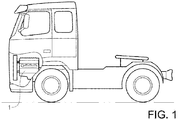
- Fig. 1 shows a vehicle in the form of a truck with an internal combustion engine 1.
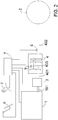
- the engine 1 is connected to a pair of rear wheels 2 of the vehicle via a clutch 3 and an automated manual transmission 4.
- the transmission 4 is arranged to provide a number of different gear ratios to be selected in dependence on the vehicle operational situation.
- the clutch 3 is connected to a transmission input shaft 401 and a crankshaft 101 of the engine 1, and the transmission 4 is connected to the rear wheels 2 via a transmission output shaft 402.
- a countershaft 403 is adapted to connect the input and output shafts 401, 402.
- the clutch 3 is arranged to for selectively connecting the engine 1 to the rear wheels 2.
- the clutch 3 can provide a gradually increasing level of engagement from a complete disengagement towards a full engagement, and vice versa.
- the vehicle further comprises a controller 5, adapted to carry out steps in methods described below.
- the controller 5 is adapted to receive torque control signals from a torque control device 6 for controlling the engine output torque.
- the torque control device 6 is provided in the form of an accelerator pedal controllable by a driver of the vehicle.
- the controller 5 is adapted to determine, based on the signals from the accelerator pedal 6, values of demanded engine torques.
- the controller 5 is also adapted to receive transmission control signals from a transmission control device 7 for controlling the transmission 4.
- the transmission control device 7 is provided in the form of a gear lever controllable by a driver of the vehicle. Using the transmission control device 7 the driver can select one of four transmission modes, i.e. reverse, neutral, automatic and manual transmission modes.
- the controller 5 is further adapted to determine the rotational speed of the engine 1. Also, the controller 5 is adapted to determine a speed of the vehicle. As known per se this is done based on signal from a vehicle speed sensor 8 arranged at the transmission output shaft 402. Alternatively, the vehicle speed can be determined in some other suitable manner, e.g. based on input from a global positioning system (GPS) device. In addition, the controller 5 is adapted to determine a speed of the transmission countershaft 403 by means of a countershaft sensor 9 arranged at the transmission countershaft 403.
- GPS global positioning system
- the controller 5 is adapted to control the clutch 3 and the transmission 4 at least partly based on data from the transmission control device 7, and values of demanded engine torque, engine speed and vehicle speed.
- a vehicle roll-off situation and a method according to an embodiment of the invention, for decreasing the risk of damage or injury in such a situation, will be described.
- the vehicle is standing still in a downhill slope of a road, in position A.
- the engine is running and the transmission control device 7 is in any of the positions for the automatic and manual transmission modes. Further, a parking brake of the vehicle is not activated.
- the torque control device 6 is not manoeuvred, i.e. zero engine torque is demanded.
- the reason for said situation of the vehicle in position A can be for example that the driver has quickly fallen ill and is incapable of controlling the vehicle. Another reason could be that the driver is by negligence not giving the vehicle operation full attention; the driver might even have left the vehicle.
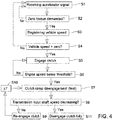
- the method according to this embodiment of the invention comprises receiving S1 a torque control signal from the torque control device 6.
- the controller 5 determines based on the torque control signal a value of the demanded engine torque, and determines S2 whether the demanded engine torque is above zero. If the demanded engine torque is zero, the controller 5 observes S3 a current value of a first vehicle operation parameter, in this example the vehicle speed.
- the controller 5 controls S5 the clutch so as to be fully engaged. This will provide for the speed of the vehicle going downhill to be limited by engine braking, and thereby for decreasing the risk of damage or injury.
- the controller 5 monitors the engine speed and compares it to an engine speed threshold value, herein also referred to as a third threshold value.
- an engine speed threshold value herein also referred to as a third threshold value.
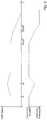
- the controller 5 determines S6 that the engine speed is below the third threshold value, the controller 5 performs a test sequence as follows: Reference is made also to fig. 5 .
- the controller 5 controls S7, at the time t1, the clutch 3 so as to provide a test disengagement of the clutch. Thereby the clutch 3 is partly disengaged according to a ramp function. Disengaging the clutch partly according to a ramp function includes gradually decreasing the level of engagement of the clutch 3.
- the controller observes S8 the behaviour, in response to the test disengagement, of a second vehicle operation parameter, in this example the speed of the transmission countershaft 403.
- the second vehicle operation parameter could be some other parameter, e.g. the transmission input shaft speed, or it could be identical to the first vehicle operation parameter, in this example the vehicle speed.
- the controller observes whether there is, during the clutch test disengagement, a change of the transmission countershaft speed, and whether the change is positive or negative, i.e. whether it goes increases or decreases.
- the controller repeats, at the time t1+ ⁇ T, the disengagement S7 of the clutch 3, and observes S8 of the transmission countershaft speed. If the transmission countershaft speed would increase, the clutch would be fully engaged again S9, and the test disengagement and observation would be repeated again after a further time period ⁇ T S10.
Landscapes
- Engineering & Computer Science (AREA)
- Transportation (AREA)
- Mechanical Engineering (AREA)
- Automation & Control Theory (AREA)
- Chemical & Material Sciences (AREA)
- Combustion & Propulsion (AREA)
- Hydraulic Clutches, Magnetic Clutches, Fluid Clutches, And Fluid Joints (AREA)
- Control Of Vehicle Engines Or Engines For Specific Uses (AREA)
Claims (15)
- Verfahren zum Steuern eines Fahrzeugs, das eine Vielzahl von Rädern (2), einen Motor (1) und eine Kupplung (3) zum selektiven Verbinden des Motors (1) mit einer Anzahl der Räder (2) aufweist, wobei das Verfahren umfasst- Empfangen (S1) eines Drehmomentsteuersignals, das für ein gefordertes Ausgangsdrehmoment des Motors (1) indikativ ist, und- Beobachten (S3) eines Werts eines ersten Fahrzeugbetriebsparameters, der die Fahrzeuggeschwindigkeit ist, oder eines Parameters, der indikativ für die Fahrzeuggeschwindigkeit ist,- Steuern (S5) der Kupplung (3) so, dass sie eingerückt wird, falls das empfangene Drehmomentsteuersignal angibt, dass das geforderte Motordrehmoment minimal oder unter einem ersten Schwellenwert (S2) ist, und der beobachtete erste Fahrzeugbetriebsparameterwert über einem zweiten Schwellenwert (S4) ist,gekennzeichnet durch- anschließend an den Schritt des Steuerns (S5) der Kupplung (3) so, dass sie eingerückt wird, Durchführen (S7) eines Testausrückens der Kupplung (3), umfassend ein wenigstens teilweises Ausrücken der Kupplung (3),- Beobachten (S8) eines Verhaltens eines zweiten Fahrzeugbetriebsparameters in Ansprechung auf das Testausrücken, und- basierend wenigstens teilweise auf der Beobachtung (S8) des Verhaltens des zweiten Fahrzeugbetriebsparameters, Bestimmen (S9, S11), ob die Kupplung (3) so zu steuern ist, dass sie wieder eingerückt oder ausgerückt wird.
- Verfahren nach Anspruch 1, wobei der zweite Fahrzeugbetriebsparameter die Fahrzeuggeschwindigkeit, ein Parameter, der indikativ für die Fahrzeuggeschwindigkeit ist, die Motordrehzahl oder ein Parameter ist, der indikativ für die Motordrehzahl ist.
- Verfahren nach einem der vorhergehenden Ansprüche, wobei das Beobachten (S8) des Verhaltens des zweiten Fahrzeugbetriebsparameters ein Beobachten umfasst, ob es eine Änderung des zweiten Fahrzeugbetriebsparameters gibt.
- Verfahren nach einem der vorhergehenden Ansprüche, wobei das Beoachten (S8) des Verhaltens des zweiten Fahrzeugbetriebsparameters ein Beobachten umfasst, ob eine Änderung des zweiten Fahrzeugbetriebsparameters positiv oder negativ ist.
- Verfahren nach einem der vorhergehenden Ansprüche, wobei der zweite Fahrzeugbetriebsparameter die Fahrzeuggeschwindigkeit oder ein Parameter ist, der indikativ für die Fahrzeuggeschwindigkeit ist, und der Schritt des Bestimmens (S9, S11), ob die Kupplung (3) so zu steuern ist, dass sie wieder eingerückt oder ausgerückt wird, ein Bestimmen (S11) umfasst, die Kupplung (3) so zu steuern, dass sie ausgerückt wird, falls beobachtet wird, dass der zweite Fahrzeugbetriebsparameter abnimmt.
- Verfahren nach einem der vorhergehenden Ansprüche, wobei der zweite Fahrzeugbetriebsparameter die Fahrzeuggeschwindigkeit oder ein Parameter ist, der indikativ für die Fahrzeuggeschwindigkeit ist, und der Schritt des Bestimmens (S9, S11), ob die Kupplung (3) so zu steuern ist, dass sie wieder eingerückt oder ausgerückt wird, ein Bestimmen (S9) umfasst, die Kupplung (3) so zu steuern, dass sie wieder eingerückt wird, falls beobachtet wird, dass der zweite Fahrzeugbetriebsparameter zunimmt.
- Verfahren nach einem der Ansprüche 1-4, wobei der zweite Fahrzeugbetriebsparameter die Motordrehzahl oder ein Parameter ist, der indikativ für die Motordrehzahl ist, und der Schritt des Bestimmens, ob die Kupplung (3) so zu steuern ist, dass sie wieder eingerückt oder ausgerückt wird, ein Bestimmen umfasst, die Kupplung (3) so zu steuern, dass sie ausgerückt wird, falls beobachtet wird, dass der zweite Fahrzeugbetriebsparameter zunimmt.
- Verfahren nach einem der Ansprüche 1-4 oder 7, wobei der zweite Fahrzeugbetriebsparameter die Motordrehzahl oder ein Parameter ist, der indikativ für die Motordrehzahl ist, und der Schritt des Bestimmens, ob die Kupplung (3) so zu steuern ist, dass sie wieder eingerückt oder ausgerückt wird, ein Bestimmen umfasst, die Kupplung (3) so zu steuern, dass sie wieder eingerückt wird, falls beobachtet wird, dass der zweite Fahrzeugbetriebsparameter abnimmt.
- Verfahren nach einem der vorhergehenden Ansprüche, umfassend ein Wiederholen (S10) der Schritte des Durchführens (S7) eines Testausrückens der Kupplung (3), des Beobachtens (S8) des Verhaltens des zweiten Fahrzeugbetriebsparameters und des Bestimmens (S9, S11), ob die Kupplung (3) so zu steuern ist, dass sie wieder eingerückt oder ausgerückt wird, bis bestimmt wird (S11), die Kupplung (3) so zu steuern, dass sie ausgerückt wird.
- Verfahren nach einem der vorhergehenden Ansprüche, umfassend ein Beobachten (S6) der Motordrehzahl, wobei die Schritte des Durchführens (S7) eines Testausrückens der Kupplung (3), Beobachtens (S8) des Verhaltens des zweiten Fahrzeugbetriebsparameters und Bestimmens (S9, S11), ob die Kupplung (3) so zu steuern ist, dass sie wieder eingerückt oder ausgerückt wird, durchgeführt werden, falls die Motordrehzahl unter einem dritten Schwellenwert liegt.
- Verfahren nach einem der vorhergehenden Ansprüche, wobei das Testausrücken (S7) der Kupplung (3) ein Ausrücken der Kupplung (3) gemäß einer Rampenfunktion umfasst.
- Computerprogramm umfassend Programmcodemittel zum Durchführen der Schritte nach einem der Ansprüche 1-11, wenn das Programm auf einem Computer läuft.
- Computerlesbares Medium, auf dem ein Computerprogramm gespeichert ist, das Programmcodemittel zum Durchführen der Schritte nach einem der Ansprüche 1-11 umfasst, wenn das Programmprodukt auf einem Computer läuft.
- Steuereinrichtung, die dazu konfiguriert ist, die Schritte des Verfahrens nach einem der Ansprüche 1-11 durchzuführen.
- Fahrzeug umfassend eine Steuereinrichtung nach Anspruch 14.
Applications Claiming Priority (1)
| Application Number | Priority Date | Filing Date | Title |
|---|---|---|---|
| PCT/EP2015/054436 WO2016138944A1 (en) | 2015-03-03 | 2015-03-03 | A method of controlling a vehicle |
Publications (2)
| Publication Number | Publication Date |
|---|---|
| EP3265335A1 EP3265335A1 (de) | 2018-01-10 |
| EP3265335B1 true EP3265335B1 (de) | 2018-10-24 |
Family
ID=52630357
Family Applications (1)
| Application Number | Title | Priority Date | Filing Date |
|---|---|---|---|
| EP15708485.6A Active EP3265335B1 (de) | 2015-03-03 | 2015-03-03 | Verfahren zur steuerung eines fahrzeugs |
Country Status (5)
| Country | Link |
|---|---|
| US (1) | US10239404B2 (de) |
| EP (1) | EP3265335B1 (de) |
| JP (1) | JP6626899B2 (de) |
| CN (1) | CN107428246B (de) |
| WO (1) | WO2016138944A1 (de) |
Families Citing this family (2)
| Publication number | Priority date | Publication date | Assignee | Title |
|---|---|---|---|---|
| KR102958835B1 (ko) * | 2019-05-08 | 2026-04-30 | 현대자동차주식회사 | 차량 및 그 제어방법 |
| WO2022096906A1 (ja) | 2020-11-06 | 2022-05-12 | 日産自動車株式会社 | 車両制御方法及び車両制御装置 |
Family Cites Families (20)
| Publication number | Priority date | Publication date | Assignee | Title |
|---|---|---|---|---|
| JPS57110849A (en) * | 1980-12-27 | 1982-07-09 | Fuji Heavy Ind Ltd | Controller of clutch for automobile |
| JPS6364834A (ja) * | 1986-09-05 | 1988-03-23 | Hino Motors Ltd | 自動トランスミツシヨン |
| US4981202A (en) * | 1988-03-17 | 1991-01-01 | Automotive Products Plc | Motor vehicle control system |
| US5062049A (en) | 1989-09-15 | 1991-10-29 | Borg-Warner Automotive, Inc. | Control method and apparatus for continuously variable transmissions |
| NO980709L (no) | 1997-02-27 | 1998-08-28 | Luk Getriebe Systeme Gmbh | Motorvogn |
| DE19910573A1 (de) | 1999-03-10 | 2000-09-14 | Volkswagen Ag | Verfahren und Vorrichtung zur Steuerung einer Kraftfahrzeugkupplung in einem Haltemodus |
| DE19920065C2 (de) * | 1999-05-03 | 2003-04-10 | Daimler Chrysler Ag | Verfahren zur Durchführung einer automatisierten Kupplungsbetätigung |
| BR0112392A (pt) * | 2000-06-23 | 2004-01-06 | Luk Lamellen & Kupplungsbau | Processo e dispositivo para compensação da influência dos números de rotações sobre a curva caracterìstica de uma embreagem |
| JP3948196B2 (ja) * | 2000-07-14 | 2007-07-25 | 三菱自動車工業株式会社 | 自動クラッチ制御装置 |
| JP4066616B2 (ja) | 2000-08-02 | 2008-03-26 | トヨタ自動車株式会社 | 内燃機関の自動始動制御装置及び動力伝達状態検出装置 |
| DE10229035B4 (de) | 2002-06-28 | 2015-10-15 | Robert Bosch Gmbh | Verfahren zur Steuerung der Antriebseinheit eines Fahrzeugs |
| US6832978B2 (en) * | 2003-02-21 | 2004-12-21 | Borgwarner, Inc. | Method of controlling a dual clutch transmission |
| EP1630054A1 (de) * | 2004-08-12 | 2006-03-01 | BorgWarner Inc. | Verfahren zur Implementierung einer elektrischen Rückroll Sperre für Kraftfahrzeug-Antriebssysteme |
| DE102006030157A1 (de) * | 2006-06-29 | 2008-01-03 | Zf Friedrichshafen Ag | Verfahren und Vorrichtung zur Erkennung eines passiven Anfahrvorgangs bei einem Kraftfahrzeug |
| JP2008137619A (ja) * | 2006-12-05 | 2008-06-19 | Toyota Motor Corp | 車両用駆動装置の制御装置 |
| JP4743218B2 (ja) * | 2008-03-03 | 2011-08-10 | 日産自動車株式会社 | ハイブリッド車両のクラッチ制御装置 |
| US8192327B2 (en) | 2010-02-17 | 2012-06-05 | Ford Global Technologies, Llc | Methods and systems for assisted direct start control |
| WO2012053607A1 (ja) * | 2010-10-22 | 2012-04-26 | 日野自動車株式会社 | 車両および制御方法、並びにプログラム |
| GB2488156A (en) * | 2011-02-18 | 2012-08-22 | Land Rover Uk Ltd | Vehicle and method for preventing switching between drive modes |
| US8517892B2 (en) * | 2011-08-08 | 2013-08-27 | Bae Systems Controls Inc. | Method and apparatus for controlling hybrid electric vehicles |
-
2015
- 2015-03-03 EP EP15708485.6A patent/EP3265335B1/de active Active
- 2015-03-03 JP JP2017546111A patent/JP6626899B2/ja not_active Expired - Fee Related
- 2015-03-03 WO PCT/EP2015/054436 patent/WO2016138944A1/en not_active Ceased
- 2015-03-03 US US15/555,089 patent/US10239404B2/en active Active
- 2015-03-03 CN CN201580076066.1A patent/CN107428246B/zh not_active Expired - Fee Related
Non-Patent Citations (1)
| Title |
|---|
| None * |
Also Published As
| Publication number | Publication date |
|---|---|
| JP2018509572A (ja) | 2018-04-05 |
| CN107428246B (zh) | 2020-02-21 |
| US20180050590A1 (en) | 2018-02-22 |
| WO2016138944A1 (en) | 2016-09-09 |
| EP3265335A1 (de) | 2018-01-10 |
| JP6626899B2 (ja) | 2019-12-25 |
| US10239404B2 (en) | 2019-03-26 |
| CN107428246A (zh) | 2017-12-01 |
Similar Documents
| Publication | Publication Date | Title |
|---|---|---|
| JP5479109B2 (ja) | パワーユニット群の動作を制御する方法 | |
| US10054065B2 (en) | Motor vehicle and method of control of a motor vehicle | |
| US9592831B2 (en) | Launch control | |
| JP5274482B2 (ja) | 車両運転補助方法及び装置 | |
| SE525309C2 (sv) | Metod, system och datorprogram för automatisk frihjulning av fordon | |
| JP5254366B2 (ja) | 車両の良好な始動ギヤの自動的または半自動的選択のための方法および装置 | |
| EP2865913A1 (de) | Fahrzeugsteuerung | |
| US20120271523A1 (en) | Method for operating an automated parking brake in a motor vehicle | |
| SE524510C2 (sv) | Metod och anordning för start i uppförsbacke | |
| CN106438980B (zh) | 一种带液力变矩器的机械式自动变速器起步控制方法 | |
| US20160082967A1 (en) | Method and system for preventing overheating of clutch by means of forcible creeping | |
| GB2478296A (en) | Powertrain of and method of operating a powertrain of a vehicle for clutch protection | |
| CN101981354B (zh) | 用于防止在机动车的自动变速器中错误换挡的方法和装置 | |
| US8715137B2 (en) | Method for controlling an automatic transmission of a motor vehicle | |
| US20100185368A1 (en) | Method and device for controlling a coasting movement of a vehicle | |
| US9056604B2 (en) | Feed-forward engine idle speed control | |
| JP6287560B2 (ja) | 車両の制御装置 | |
| CN106414207A (zh) | 用于运行机动车的变速器装置的方法及相应的变速器装置 | |
| US10239404B2 (en) | Method of controlling a vehicle | |
| US7976430B2 (en) | Driver intention detection algorithm for transmission control | |
| US7597650B2 (en) | Automatic transmission with neutral coast down feature | |
| US20260070553A1 (en) | System and method for controlling a powertrain system of a vehicle | |
| US20170341511A1 (en) | Method for operating a motor vehicle comprising an all-wheel drive that can be enabled and disabled by determining an angular acceleration of components, which are uncoupled when the all-wheel drive is disabled | |
| EP4635810A1 (de) | System und verfahren zur steuerung eines antriebsstrangsystems eines fahrzeugs | |
| US8219294B2 (en) | Method for actuating a clutch of a drivetrain |
Legal Events
| Date | Code | Title | Description |
|---|---|---|---|
| STAA | Information on the status of an ep patent application or granted ep patent |
Free format text: STATUS: THE INTERNATIONAL PUBLICATION HAS BEEN MADE |
|
| PUAI | Public reference made under article 153(3) epc to a published international application that has entered the european phase |
Free format text: ORIGINAL CODE: 0009012 |
|
| STAA | Information on the status of an ep patent application or granted ep patent |
Free format text: STATUS: REQUEST FOR EXAMINATION WAS MADE |
|
| 17P | Request for examination filed |
Effective date: 20170920 |
|
| AK | Designated contracting states |
Kind code of ref document: A1 Designated state(s): AL AT BE BG CH CY CZ DE DK EE ES FI FR GB GR HR HU IE IS IT LI LT LU LV MC MK MT NL NO PL PT RO RS SE SI SK SM TR |
|
| AX | Request for extension of the european patent |
Extension state: BA ME |
|
| GRAP | Despatch of communication of intention to grant a patent |
Free format text: ORIGINAL CODE: EPIDOSNIGR1 |
|
| STAA | Information on the status of an ep patent application or granted ep patent |
Free format text: STATUS: GRANT OF PATENT IS INTENDED |
|
| DAV | Request for validation of the european patent (deleted) | ||
| DAX | Request for extension of the european patent (deleted) | ||
| INTG | Intention to grant announced |
Effective date: 20180606 |
|
| GRAS | Grant fee paid |
Free format text: ORIGINAL CODE: EPIDOSNIGR3 |
|
| GRAA | (expected) grant |
Free format text: ORIGINAL CODE: 0009210 |
|
| STAA | Information on the status of an ep patent application or granted ep patent |
Free format text: STATUS: THE PATENT HAS BEEN GRANTED |
|
| AK | Designated contracting states |
Kind code of ref document: B1 Designated state(s): AL AT BE BG CH CY CZ DE DK EE ES FI FR GB GR HR HU IE IS IT LI LT LU LV MC MK MT NL NO PL PT RO RS SE SI SK SM TR |
|
| REG | Reference to a national code |
Ref country code: CH Ref legal event code: EP |
|
| REG | Reference to a national code |
Ref country code: IE Ref legal event code: FG4D |
|
| REG | Reference to a national code |
Ref country code: DE Ref legal event code: R096 Ref document number: 602015018655 Country of ref document: DE Ref country code: AT Ref legal event code: REF Ref document number: 1056265 Country of ref document: AT Kind code of ref document: T Effective date: 20181115 |
|
| REG | Reference to a national code |
Ref country code: NL Ref legal event code: FP |
|
| REG | Reference to a national code |
Ref country code: SE Ref legal event code: TRGR |
|
| REG | Reference to a national code |
Ref country code: LT Ref legal event code: MG4D |
|
| REG | Reference to a national code |
Ref country code: AT Ref legal event code: MK05 Ref document number: 1056265 Country of ref document: AT Kind code of ref document: T Effective date: 20181024 |
|
| PG25 | Lapsed in a contracting state [announced via postgrant information from national office to epo] |
Ref country code: NO Free format text: LAPSE BECAUSE OF FAILURE TO SUBMIT A TRANSLATION OF THE DESCRIPTION OR TO PAY THE FEE WITHIN THE PRESCRIBED TIME-LIMIT Effective date: 20190124 Ref country code: BG Free format text: LAPSE BECAUSE OF FAILURE TO SUBMIT A TRANSLATION OF THE DESCRIPTION OR TO PAY THE FEE WITHIN THE PRESCRIBED TIME-LIMIT Effective date: 20190124 Ref country code: HR Free format text: LAPSE BECAUSE OF FAILURE TO SUBMIT A TRANSLATION OF THE DESCRIPTION OR TO PAY THE FEE WITHIN THE PRESCRIBED TIME-LIMIT Effective date: 20181024 Ref country code: PL Free format text: LAPSE BECAUSE OF FAILURE TO SUBMIT A TRANSLATION OF THE DESCRIPTION OR TO PAY THE FEE WITHIN THE PRESCRIBED TIME-LIMIT Effective date: 20181024 Ref country code: FI Free format text: LAPSE BECAUSE OF FAILURE TO SUBMIT A TRANSLATION OF THE DESCRIPTION OR TO PAY THE FEE WITHIN THE PRESCRIBED TIME-LIMIT Effective date: 20181024 Ref country code: LT Free format text: LAPSE BECAUSE OF FAILURE TO SUBMIT A TRANSLATION OF THE DESCRIPTION OR TO PAY THE FEE WITHIN THE PRESCRIBED TIME-LIMIT Effective date: 20181024 Ref country code: IS Free format text: LAPSE BECAUSE OF FAILURE TO SUBMIT A TRANSLATION OF THE DESCRIPTION OR TO PAY THE FEE WITHIN THE PRESCRIBED TIME-LIMIT Effective date: 20190224 Ref country code: AT Free format text: LAPSE BECAUSE OF FAILURE TO SUBMIT A TRANSLATION OF THE DESCRIPTION OR TO PAY THE FEE WITHIN THE PRESCRIBED TIME-LIMIT Effective date: 20181024 Ref country code: ES Free format text: LAPSE BECAUSE OF FAILURE TO SUBMIT A TRANSLATION OF THE DESCRIPTION OR TO PAY THE FEE WITHIN THE PRESCRIBED TIME-LIMIT Effective date: 20181024 Ref country code: LV Free format text: LAPSE BECAUSE OF FAILURE TO SUBMIT A TRANSLATION OF THE DESCRIPTION OR TO PAY THE FEE WITHIN THE PRESCRIBED TIME-LIMIT Effective date: 20181024 |
|
| PG25 | Lapsed in a contracting state [announced via postgrant information from national office to epo] |
Ref country code: AL Free format text: LAPSE BECAUSE OF FAILURE TO SUBMIT A TRANSLATION OF THE DESCRIPTION OR TO PAY THE FEE WITHIN THE PRESCRIBED TIME-LIMIT Effective date: 20181024 Ref country code: RS Free format text: LAPSE BECAUSE OF FAILURE TO SUBMIT A TRANSLATION OF THE DESCRIPTION OR TO PAY THE FEE WITHIN THE PRESCRIBED TIME-LIMIT Effective date: 20181024 Ref country code: GR Free format text: LAPSE BECAUSE OF FAILURE TO SUBMIT A TRANSLATION OF THE DESCRIPTION OR TO PAY THE FEE WITHIN THE PRESCRIBED TIME-LIMIT Effective date: 20190125 Ref country code: PT Free format text: LAPSE BECAUSE OF FAILURE TO SUBMIT A TRANSLATION OF THE DESCRIPTION OR TO PAY THE FEE WITHIN THE PRESCRIBED TIME-LIMIT Effective date: 20190224 |
|
| REG | Reference to a national code |
Ref country code: DE Ref legal event code: R097 Ref document number: 602015018655 Country of ref document: DE |
|
| PG25 | Lapsed in a contracting state [announced via postgrant information from national office to epo] |
Ref country code: DK Free format text: LAPSE BECAUSE OF FAILURE TO SUBMIT A TRANSLATION OF THE DESCRIPTION OR TO PAY THE FEE WITHIN THE PRESCRIBED TIME-LIMIT Effective date: 20181024 Ref country code: CZ Free format text: LAPSE BECAUSE OF FAILURE TO SUBMIT A TRANSLATION OF THE DESCRIPTION OR TO PAY THE FEE WITHIN THE PRESCRIBED TIME-LIMIT Effective date: 20181024 Ref country code: IT Free format text: LAPSE BECAUSE OF FAILURE TO SUBMIT A TRANSLATION OF THE DESCRIPTION OR TO PAY THE FEE WITHIN THE PRESCRIBED TIME-LIMIT Effective date: 20181024 |
|
| PG25 | Lapsed in a contracting state [announced via postgrant information from national office to epo] |
Ref country code: RO Free format text: LAPSE BECAUSE OF FAILURE TO SUBMIT A TRANSLATION OF THE DESCRIPTION OR TO PAY THE FEE WITHIN THE PRESCRIBED TIME-LIMIT Effective date: 20181024 Ref country code: SM Free format text: LAPSE BECAUSE OF FAILURE TO SUBMIT A TRANSLATION OF THE DESCRIPTION OR TO PAY THE FEE WITHIN THE PRESCRIBED TIME-LIMIT Effective date: 20181024 Ref country code: EE Free format text: LAPSE BECAUSE OF FAILURE TO SUBMIT A TRANSLATION OF THE DESCRIPTION OR TO PAY THE FEE WITHIN THE PRESCRIBED TIME-LIMIT Effective date: 20181024 Ref country code: SK Free format text: LAPSE BECAUSE OF FAILURE TO SUBMIT A TRANSLATION OF THE DESCRIPTION OR TO PAY THE FEE WITHIN THE PRESCRIBED TIME-LIMIT Effective date: 20181024 |
|
| PLBE | No opposition filed within time limit |
Free format text: ORIGINAL CODE: 0009261 |
|
| STAA | Information on the status of an ep patent application or granted ep patent |
Free format text: STATUS: NO OPPOSITION FILED WITHIN TIME LIMIT |
|
| 26N | No opposition filed |
Effective date: 20190725 |
|
| PG25 | Lapsed in a contracting state [announced via postgrant information from national office to epo] |
Ref country code: MC Free format text: LAPSE BECAUSE OF FAILURE TO SUBMIT A TRANSLATION OF THE DESCRIPTION OR TO PAY THE FEE WITHIN THE PRESCRIBED TIME-LIMIT Effective date: 20181024 |
|
| REG | Reference to a national code |
Ref country code: CH Ref legal event code: PL |
|
| GBPC | Gb: european patent ceased through non-payment of renewal fee |
Effective date: 20190303 |
|
| PG25 | Lapsed in a contracting state [announced via postgrant information from national office to epo] |
Ref country code: LU Free format text: LAPSE BECAUSE OF NON-PAYMENT OF DUE FEES Effective date: 20190303 |
|
| REG | Reference to a national code |
Ref country code: BE Ref legal event code: MM Effective date: 20190331 |
|
| PG25 | Lapsed in a contracting state [announced via postgrant information from national office to epo] |
Ref country code: LI Free format text: LAPSE BECAUSE OF NON-PAYMENT OF DUE FEES Effective date: 20190331 Ref country code: IE Free format text: LAPSE BECAUSE OF NON-PAYMENT OF DUE FEES Effective date: 20190303 Ref country code: CH Free format text: LAPSE BECAUSE OF NON-PAYMENT OF DUE FEES Effective date: 20190331 Ref country code: GB Free format text: LAPSE BECAUSE OF NON-PAYMENT OF DUE FEES Effective date: 20190303 |
|
| PG25 | Lapsed in a contracting state [announced via postgrant information from national office to epo] |
Ref country code: BE Free format text: LAPSE BECAUSE OF NON-PAYMENT OF DUE FEES Effective date: 20190331 |
|
| PG25 | Lapsed in a contracting state [announced via postgrant information from national office to epo] |
Ref country code: TR Free format text: LAPSE BECAUSE OF FAILURE TO SUBMIT A TRANSLATION OF THE DESCRIPTION OR TO PAY THE FEE WITHIN THE PRESCRIBED TIME-LIMIT Effective date: 20181024 |
|
| PG25 | Lapsed in a contracting state [announced via postgrant information from national office to epo] |
Ref country code: MT Free format text: LAPSE BECAUSE OF NON-PAYMENT OF DUE FEES Effective date: 20190303 |
|
| PG25 | Lapsed in a contracting state [announced via postgrant information from national office to epo] |
Ref country code: CY Free format text: LAPSE BECAUSE OF FAILURE TO SUBMIT A TRANSLATION OF THE DESCRIPTION OR TO PAY THE FEE WITHIN THE PRESCRIBED TIME-LIMIT Effective date: 20181024 |
|
| PG25 | Lapsed in a contracting state [announced via postgrant information from national office to epo] |
Ref country code: HU Free format text: LAPSE BECAUSE OF FAILURE TO SUBMIT A TRANSLATION OF THE DESCRIPTION OR TO PAY THE FEE WITHIN THE PRESCRIBED TIME-LIMIT; INVALID AB INITIO Effective date: 20150303 |
|
| PG25 | Lapsed in a contracting state [announced via postgrant information from national office to epo] |
Ref country code: SI Free format text: LAPSE BECAUSE OF FAILURE TO SUBMIT A TRANSLATION OF THE DESCRIPTION OR TO PAY THE FEE WITHIN THE PRESCRIBED TIME-LIMIT Effective date: 20181024 |
|
| PG25 | Lapsed in a contracting state [announced via postgrant information from national office to epo] |
Ref country code: MK Free format text: LAPSE BECAUSE OF FAILURE TO SUBMIT A TRANSLATION OF THE DESCRIPTION OR TO PAY THE FEE WITHIN THE PRESCRIBED TIME-LIMIT Effective date: 20181024 |
|
| PGFP | Annual fee paid to national office [announced via postgrant information from national office to epo] |
Ref country code: NL Payment date: 20240326 Year of fee payment: 10 |
|
| PGFP | Annual fee paid to national office [announced via postgrant information from national office to epo] |
Ref country code: SE Payment date: 20240326 Year of fee payment: 10 Ref country code: FR Payment date: 20240327 Year of fee payment: 10 |
|
| REG | Reference to a national code |
Ref country code: SE Ref legal event code: EUG |
|
| REG | Reference to a national code |
Ref country code: NL Ref legal event code: MM Effective date: 20250401 |
|
| PG25 | Lapsed in a contracting state [announced via postgrant information from national office to epo] |
Ref country code: NL Free format text: LAPSE BECAUSE OF NON-PAYMENT OF DUE FEES Effective date: 20250401 |
|
| PG25 | Lapsed in a contracting state [announced via postgrant information from national office to epo] |
Ref country code: FR Free format text: LAPSE BECAUSE OF NON-PAYMENT OF DUE FEES Effective date: 20250331 |
|
| PG25 | Lapsed in a contracting state [announced via postgrant information from national office to epo] |
Ref country code: SE Free format text: LAPSE BECAUSE OF NON-PAYMENT OF DUE FEES Effective date: 20250304 |
|
| PGFP | Annual fee paid to national office [announced via postgrant information from national office to epo] |
Ref country code: DE Payment date: 20260320 Year of fee payment: 12 |