EP3268023B1 - Combinaison d'un agent bactericide avec un agent alkalisant lysosomotropique pour le traitement d'une infection bacterienne - Google Patents
Combinaison d'un agent bactericide avec un agent alkalisant lysosomotropique pour le traitement d'une infection bacterienne Download PDFInfo
- Publication number
- EP3268023B1 EP3268023B1 EP16709389.7A EP16709389A EP3268023B1 EP 3268023 B1 EP3268023 B1 EP 3268023B1 EP 16709389 A EP16709389 A EP 16709389A EP 3268023 B1 EP3268023 B1 EP 3268023B1
- Authority
- EP
- European Patent Office
- Prior art keywords
- intracellular
- agent
- host cell
- effective amount
- artificial
- Prior art date
- Legal status (The legal status is an assumption and is not a legal conclusion. Google has not performed a legal analysis and makes no representation as to the accuracy of the status listed.)
- Active
Links
Images




Classifications
-
- A—HUMAN NECESSITIES
- A61—MEDICAL OR VETERINARY SCIENCE; HYGIENE
- A61K—PREPARATIONS FOR MEDICAL, DENTAL OR TOILETRY PURPOSES
- A61K38/00—Medicinal preparations containing peptides
- A61K38/16—Peptides having more than 20 amino acids; Gastrins; Somatostatins; Melanotropins; Derivatives thereof
- A61K38/43—Enzymes; Proenzymes; Derivatives thereof
-
- A—HUMAN NECESSITIES
- A61—MEDICAL OR VETERINARY SCIENCE; HYGIENE
- A61K—PREPARATIONS FOR MEDICAL, DENTAL OR TOILETRY PURPOSES
- A61K31/00—Medicinal preparations containing organic active ingredients
- A61K31/33—Heterocyclic compounds
- A61K31/395—Heterocyclic compounds having nitrogen as a ring hetero atom, e.g. guanethidine or rifamycins
- A61K31/435—Heterocyclic compounds having nitrogen as a ring hetero atom, e.g. guanethidine or rifamycins having six-membered rings with one nitrogen as the only ring hetero atom
- A61K31/47—Quinolines; Isoquinolines
- A61K31/4706—4-Aminoquinolines; 8-Aminoquinolines, e.g. chloroquine, primaquine
-
- A—HUMAN NECESSITIES
- A61—MEDICAL OR VETERINARY SCIENCE; HYGIENE
- A61K—PREPARATIONS FOR MEDICAL, DENTAL OR TOILETRY PURPOSES
- A61K31/00—Medicinal preparations containing organic active ingredients
-
- A—HUMAN NECESSITIES
- A61—MEDICAL OR VETERINARY SCIENCE; HYGIENE
- A61K—PREPARATIONS FOR MEDICAL, DENTAL OR TOILETRY PURPOSES
- A61K31/00—Medicinal preparations containing organic active ingredients
- A61K31/33—Heterocyclic compounds
- A61K31/395—Heterocyclic compounds having nitrogen as a ring hetero atom, e.g. guanethidine or rifamycins
- A61K31/41—Heterocyclic compounds having nitrogen as a ring hetero atom, e.g. guanethidine or rifamycins having five-membered rings with two or more ring hetero atoms, at least one of which being nitrogen, e.g. tetrazole
- A61K31/4164—1,3-Diazoles
-
- A—HUMAN NECESSITIES
- A61—MEDICAL OR VETERINARY SCIENCE; HYGIENE
- A61K—PREPARATIONS FOR MEDICAL, DENTAL OR TOILETRY PURPOSES
- A61K31/00—Medicinal preparations containing organic active ingredients
- A61K31/33—Heterocyclic compounds
- A61K31/395—Heterocyclic compounds having nitrogen as a ring hetero atom, e.g. guanethidine or rifamycins
- A61K31/41—Heterocyclic compounds having nitrogen as a ring hetero atom, e.g. guanethidine or rifamycins having five-membered rings with two or more ring hetero atoms, at least one of which being nitrogen, e.g. tetrazole
- A61K31/425—Thiazoles
- A61K31/429—Thiazoles condensed with heterocyclic ring systems
- A61K31/43—Compounds containing 4-thia-1-azabicyclo [3.2.0] heptane ring systems, i.e. compounds containing a ring system of the formula, e.g. penicillins, penems
-
- A—HUMAN NECESSITIES
- A61—MEDICAL OR VETERINARY SCIENCE; HYGIENE
- A61K—PREPARATIONS FOR MEDICAL, DENTAL OR TOILETRY PURPOSES
- A61K31/00—Medicinal preparations containing organic active ingredients
- A61K31/33—Heterocyclic compounds
- A61K31/395—Heterocyclic compounds having nitrogen as a ring hetero atom, e.g. guanethidine or rifamycins
- A61K31/41—Heterocyclic compounds having nitrogen as a ring hetero atom, e.g. guanethidine or rifamycins having five-membered rings with two or more ring hetero atoms, at least one of which being nitrogen, e.g. tetrazole
- A61K31/425—Thiazoles
- A61K31/429—Thiazoles condensed with heterocyclic ring systems
- A61K31/43—Compounds containing 4-thia-1-azabicyclo [3.2.0] heptane ring systems, i.e. compounds containing a ring system of the formula, e.g. penicillins, penems
- A61K31/431—Compounds containing 4-thia-1-azabicyclo [3.2.0] heptane ring systems, i.e. compounds containing a ring system of the formula, e.g. penicillins, penems containing further heterocyclic rings, e.g. ticarcillin, azlocillin, oxacillin
-
- A—HUMAN NECESSITIES
- A61—MEDICAL OR VETERINARY SCIENCE; HYGIENE
- A61K—PREPARATIONS FOR MEDICAL, DENTAL OR TOILETRY PURPOSES
- A61K31/00—Medicinal preparations containing organic active ingredients
- A61K31/33—Heterocyclic compounds
- A61K31/395—Heterocyclic compounds having nitrogen as a ring hetero atom, e.g. guanethidine or rifamycins
- A61K31/535—Heterocyclic compounds having nitrogen as a ring hetero atom, e.g. guanethidine or rifamycins having six-membered rings with at least one nitrogen and one oxygen as the ring hetero atoms, e.g. 1,2-oxazines
- A61K31/5375—1,4-Oxazines, e.g. morpholine
- A61K31/5383—1,4-Oxazines, e.g. morpholine ortho- or peri-condensed with heterocyclic ring systems
-
- A—HUMAN NECESSITIES
- A61—MEDICAL OR VETERINARY SCIENCE; HYGIENE
- A61K—PREPARATIONS FOR MEDICAL, DENTAL OR TOILETRY PURPOSES
- A61K31/00—Medicinal preparations containing organic active ingredients
- A61K31/33—Heterocyclic compounds
- A61K31/395—Heterocyclic compounds having nitrogen as a ring hetero atom, e.g. guanethidine or rifamycins
- A61K31/54—Heterocyclic compounds having nitrogen as a ring hetero atom, e.g. guanethidine or rifamycins having six-membered rings with at least one nitrogen and one sulfur as the ring hetero atoms, e.g. sulthiame
- A61K31/542—Heterocyclic compounds having nitrogen as a ring hetero atom, e.g. guanethidine or rifamycins having six-membered rings with at least one nitrogen and one sulfur as the ring hetero atoms, e.g. sulthiame ortho- or peri-condensed with heterocyclic ring systems
- A61K31/545—Compounds containing 5-thia-1-azabicyclo [4.2.0] octane ring systems, i.e. compounds containing a ring system of the formula:, e.g. cephalosporins, cefaclor, or cephalexine
-
- A—HUMAN NECESSITIES
- A61—MEDICAL OR VETERINARY SCIENCE; HYGIENE
- A61K—PREPARATIONS FOR MEDICAL, DENTAL OR TOILETRY PURPOSES
- A61K31/00—Medicinal preparations containing organic active ingredients
- A61K31/70—Carbohydrates; Sugars; Derivatives thereof
-
- A—HUMAN NECESSITIES
- A61—MEDICAL OR VETERINARY SCIENCE; HYGIENE
- A61K—PREPARATIONS FOR MEDICAL, DENTAL OR TOILETRY PURPOSES
- A61K31/00—Medicinal preparations containing organic active ingredients
- A61K31/70—Carbohydrates; Sugars; Derivatives thereof
- A61K31/7042—Compounds having saccharide radicals and heterocyclic rings
-
- A—HUMAN NECESSITIES
- A61—MEDICAL OR VETERINARY SCIENCE; HYGIENE
- A61K—PREPARATIONS FOR MEDICAL, DENTAL OR TOILETRY PURPOSES
- A61K38/00—Medicinal preparations containing peptides
- A61K38/16—Peptides having more than 20 amino acids; Gastrins; Somatostatins; Melanotropins; Derivatives thereof
-
- A—HUMAN NECESSITIES
- A61—MEDICAL OR VETERINARY SCIENCE; HYGIENE
- A61K—PREPARATIONS FOR MEDICAL, DENTAL OR TOILETRY PURPOSES
- A61K45/00—Medicinal preparations containing active ingredients not provided for in groups A61K31/00 - A61K41/00
- A61K45/06—Mixtures of active ingredients without chemical characterisation, e.g. antiphlogistics and cardiaca
-
- A—HUMAN NECESSITIES
- A61—MEDICAL OR VETERINARY SCIENCE; HYGIENE
- A61P—SPECIFIC THERAPEUTIC ACTIVITY OF CHEMICAL COMPOUNDS OR MEDICINAL PREPARATIONS
- A61P31/00—Antiinfectives, i.e. antibiotics, antiseptics, chemotherapeutics
- A61P31/04—Antibacterial agents
-
- C—CHEMISTRY; METALLURGY
- C07—ORGANIC CHEMISTRY
- C07K—PEPTIDES
- C07K14/00—Peptides having more than 20 amino acids; Gastrins; Somatostatins; Melanotropins; Derivatives thereof
- C07K14/195—Peptides having more than 20 amino acids; Gastrins; Somatostatins; Melanotropins; Derivatives thereof from bacteria
-
- C—CHEMISTRY; METALLURGY
- C12—BIOCHEMISTRY; BEER; SPIRITS; WINE; VINEGAR; MICROBIOLOGY; ENZYMOLOGY; MUTATION OR GENETIC ENGINEERING
- C12N—MICROORGANISMS OR ENZYMES; COMPOSITIONS THEREOF; PROPAGATING, PRESERVING, OR MAINTAINING MICROORGANISMS; MUTATION OR GENETIC ENGINEERING; CULTURE MEDIA
- C12N9/00—Enzymes; Proenzymes; Compositions thereof; Processes for preparing, activating, inhibiting, separating or purifying enzymes
- C12N9/14—Hydrolases (3)
- C12N9/24—Hydrolases (3) acting on glycosyl compounds (3.2)
- C12N9/2402—Hydrolases (3) acting on glycosyl compounds (3.2) hydrolysing O- and S- glycosyl compounds (3.2.1)
- C12N9/2462—Lysozyme (3.2.1.17)
-
- C—CHEMISTRY; METALLURGY
- C07—ORGANIC CHEMISTRY
- C07K—PEPTIDES
- C07K2319/00—Fusion polypeptide
- C07K2319/55—Fusion polypeptide containing a fusion with a toxin, e.g. diphteria toxin
-
- C—CHEMISTRY; METALLURGY
- C07—ORGANIC CHEMISTRY
- C07K—PEPTIDES
- C07K2319/00—Fusion polypeptide
- C07K2319/70—Fusion polypeptide containing domain for protein-protein interaction
- C07K2319/74—Fusion polypeptide containing domain for protein-protein interaction containing a fusion for binding to a cell surface receptor
-
- Y—GENERAL TAGGING OF NEW TECHNOLOGICAL DEVELOPMENTS; GENERAL TAGGING OF CROSS-SECTIONAL TECHNOLOGIES SPANNING OVER SEVERAL SECTIONS OF THE IPC; TECHNICAL SUBJECTS COVERED BY FORMER USPC CROSS-REFERENCE ART COLLECTIONS [XRACs] AND DIGESTS
- Y02—TECHNOLOGIES OR APPLICATIONS FOR MITIGATION OR ADAPTATION AGAINST CLIMATE CHANGE
- Y02A—TECHNOLOGIES FOR ADAPTATION TO CLIMATE CHANGE
- Y02A50/00—TECHNOLOGIES FOR ADAPTATION TO CLIMATE CHANGE in human health protection, e.g. against extreme weather
- Y02A50/30—Against vector-borne diseases, e.g. mosquito-borne, fly-borne, tick-borne or waterborne diseases whose impact is exacerbated by climate change
Definitions
- the present invention relates to the field of medicine, specifically the field of bacterial infection and treatment thereof.
- the human pathogen Staphylococcus aureus colonizes approximately a third of all humans and is one of the leading causes of bacteremia and infective endocarditis in the industrialized world (1).
- persisting and recurrent infections substantially add to morbidity and mortality (2,3).
- Recurrence rates in particular after osteomyelitis or endocarditis, are high and infections may relapse even years after apparent cure (4).
- Infection recurrence is associated with SCVs (small colony variants) and/or non-replicating persisters for several reasons (5-8). Their arrested or slow growth and reduced metabolism renders antibiotics inefficient (9-13).
- they preferentially hide in privileged locations such as in abscesses and within host cells (14-16).
- 2977-2986 reviews the use of aminoglycoside antibiotics such as streptomycin for treating intracellular bacterial infections; where the use of streptomycin generally fails in treating intracellular infections, it is noted that streptomycin nevertheless could inhibit growth of Mycobacterium tuberculosis within macrophages.
- US2011/0027249 relates to use of lysostaphin (which is a bacteriocin secreted by S. simulans to kill S.aureus ) with the protein transduction domain of HIV-TAT coupled to it is effective in killing intracellular forms of S.aureus in vitro.
- EP338916 relates to a chimeric lysin polypeptide for treating S. aureus infections; intracellular infections are not mentioned.
- US2013/0336954 relates to the bacteriophage 2638a endolysin for treating S. aureus infections; intracellular infections are not mentioned.
- WO2013/169104 relates to a chimeric lysin polypeptide for treating S. aureus infections; intracellular infections are not mentioned.
- WO2014/001572 relates to the treatment of intracellular Mycobacterium infections using two lysin polypeptides with each a protein transduction domain attached. Consequently, there is an urgent need for means to study clinical SCVs and persisters and ultimately an effective method of treatment of SCVs and persisters.
- reversible persisters and reversible SCV's can be induced by low pH and that low pH adapted bacteria persisted intracellularly, specifically within lysosomes (low pH organelles).
- Low pH induced SCVs and persisters reverted to the highly virulent phenotype upon raising the pH. Raising the pH intracellularly reverted the low pH adapted bacteria in vitro and in vivo and rendered the SCV's and persisters susceptible to antibacterial agents that are usually not effective intracellularly.
- the invention provides for: an effective amount of an agent that increases the intracellular pH of a host cell and/or of an intracellular compartment of a host cell and an effective amount of a bactericidal agent, for use in the treatment of a bacterial infection in a subject in need thereof, comprising:
- the increase in pH activates a non-replicating intracellular bacterium and the bactericidal agent kills the activated intracellular bacterium.
- the bacterial infection is preferably a persistent bacterial infection and may be related to a persistent S. aureus infection of various tissues such as but not limited to skin, respiratory epithelium, tonsillar tissue, mastitis.
- the bacterial infection is preferably an infection by a species selected from the group bacteria consisting of Streptococcus (such as S. pyogenes , S.
- agalactiae and Spneumonia Actinomyces, Nocardia, Bacillus (such as B. anthracis ), Coxiella (such as Coxiella burnetii ), Rickettsia, Mycobacteria (such as M. tuberculosis and M. leprae ), Legionella (such as L. pneumophila ), Mycoplasma, Salmonella (such as S. typhimurium ), Shigella (such as S. dysenteriae ), Yersinia (such as Y. pestis ), Brucella, Listeria (such as L. monocytogenesis ), Actinobacillus (such as A.
- a preferred bacterium is a species of Staphylococcus; a preferred species of Staphylococcus is S. aureus.
- a bacterium causing the bacterial infection is preferably present intracellularly in a host cell, such as in the cytosol; more preferably a bacterium causing the bacterial infection is preferably present within an intracellular compartment.
- the bacterial infection comprises a population of bacteria comprising at least one subpopulation of bacteria that is resistant to a bactericidal agent (e.g. an antibiotic), such as, but not limited to MRSA.
- a bactericidal agent e.g. an antibiotic
- the intracellular compartment may be any intracellular compartment wherein a bacterium can be persistently present and/or persistently present; preferably the intracellular compartment is a compartment with low pH.
- a preferred intracellular compartment is a compartment selected from the group consisting of an endosome, a lysozome, a phagosome, a phagolysosome, an autophagosome and an autolysosome'a more preferred intracellular compartment is a phagosome, lysozome of phagolysosome; an even more preferred intracellular compartment is a phagolysosome.
- the infected host cell is preferably a eukaryotic host cell; the eukaryotic host cell is preferably selected from the group consisting of professional and non-professional phagocytes, a lymphoid cell, a tonsillar tissue cell, a respiratory epithelial cell, a buccal epithelial cell, a bone marrow cell, an osteoblast, a keratinocyte, a muscle cell, a monocyte, a macrophage, a dendritic cell, an endothelial cell, an epithelial cell, a fibroblasts, an astrocyte, and an microglial cell; a more preferred eukaryotic host cell is a professional or a non-professional phagocyte.
- the subject may be any subject susceptible to or suffering from a persistent bacterial infection, such as, but not limited to, a human being or an animal.
- the animal may be a domestic animal or may be a breeding animal, pet, cattle, poultry or the like.
- a preferred subject is a human being and may be a newborn, a juvenile, an adult or an aged subject.
- the agent that increases the intracellular pH and/or the pH of the intracellular compartment may be any agent known to the person skilled in the art that effectively increases the intracellular pH and/or the pH of the intracellular compartment.
- the agent that increases the intracellular pH and/or the pH of the intracellular compartment is an alkalinizing agent, preferably an lysosomotropic alkalinizing agent, preferably selected from the group of chloroquine, bafilomycin A1, ammonium chloride; a more preferred alkalinizing agent is chloroquine.
- a preferred alkalnizing agent is one that is capable of entering the host cell and more preferably is targeted to the intracellular compartment wherein the infecting bacterium is present.
- the alkalinizing agent may passively enter the cell or a vehicle may be used.
- the vehicle may be any vehicle known to a person skilled in the art that enables delivery into a host cell.
- low pH in the embodiments of the invention is defined as a pH that is lower than pH 7.4; preferably low pH is pH 7.0, 6.8, 6.6, 6.4, 6.2, 6.0, 5.8, 5.6, 5.4, 5.2, 5.0, 4.8, 4.6, 4.4, 4.2, 4.0, 3.8, 3.6, 3.4, 3.2, 3.0 or 2.8.
- a low pH is preferably a pH lower than 6.5
- a more preferred low pH is 5.0.
- the term raising the pH and increasing the pH are used interchangeably and are defined as raising the pH 0.2, 0.4, 0.6, 0.8, 1.0, 1.2, 1.4, 1.6, 1.8, 2.0, 2.2, 2.4, 2.6, 2.8, 3.0, 3.2, 3.4, 3.6, 3.8, 4.0, 4.2, 4.4, 4.6 or 4.8.
- the pH is raised to within the range of pH 6 to about7; preferably to within the range of 6.5 to 7
- an effective amount in the embodiments of the invention in the context of an agent that increases the intracellular pH and/or the pH of an intracellular compartment is defined as any amount that is sufficient to raise the intracellular pH and/or the pH of an intracellular compartment at least 0.2, 0.4, 0.6, 0.8, 1.0, 1.2, 1.4, 1.6, 1.8, 2.0, 2.2, 2.4, 2.6, 2.8, 3.0 to reach the range as depicted here above.
- the exact amount used will inter alia depend on the agent used and on the bodyweight of the subject.
- an effective amount in the embodiments of the invention in the context of a bactericidal agent is defined as any amount that is sufficient to have a bactericidal affect intracellularly and/or within the intracellular compartment. The exact amount used will inter alia depend on the agent used and on the bodyweight of the subject. Intracellular pH and the pH of an intracellular compartment can be assessed by any means known to the person skilled in the art.
- the bactericidal agent is a bacterial lysin comprising a cell wall binding domain, a bacterial autolysin comprising a cell wall binding domain, or is a bacteriophage lysin comprising a cell wall binding domain, or is a bacterial lysin operably linked to a protein transduction domain, a bacterial autolysin operably linked to a protein transduction domain or is a bacteriophage lysin operably linked to a protein transduction domain.
- the bactericidal agents of the invention may be used alone or may be used in combinations of two or three or more bactericidal agents of the invention.
- a disclosed but not claimed bacteriocin may be any bacteriocin known to the person skilled in the art, preferably a bacteriocin of any Class I -IV.
- a disclosed but not claimed bactericidal agent is a bactericidal agent with at least 40%, 45%, 50%, 60%, 65%, 70%, 75%, 80%, 85%, 90%, 95%, 96%, 97%, 98%, 99% or 100% sequence identity with a sequence selected from the group consisting of SEQ ID NO: 27, 28, 29, 30 - 47, or is a bactericidal agent encoded by polynucleotide sequence with at least 40%, 45%, 50%, 60%, 65%, 70%, 75%, 80%, 85%, 90%, 95%, 96%, 97%, 98%, 99% or 100% sequence identity with a sequence selected from the group consisting of SEQ ID NO: 50 - 67.
- a disclosed but not claimed bactericidal agent is an expression product from a vector with a sequence of at least 40%, 45%, 50%, 60%, 65%, 70%, 75%, 80%, 85%, 90%, 95%, 96%, 97%, 98%, 99% or 100% sequence identity with a sequence selected from the group consisting of SEQ ID NO: 91 - 108.
- a disclosed but not claimed bactericidal agent is one selected from the group consisting of a bactericidal agent comprising a protein transduction domain selected from the group consisting of SEQ ID NO: 12 - 25, or a variant thereof, a functional enzymatic domain from a cell wall lytic enzyme selected from the group consisting of SEQ ID NO: 1 - 7, or a variant thereof and, optionally, a cell wall binding domain selected from the group consisting of SEQ ID NO: 8 - 11, or a variant thereof and/or an antimicrobial peptide selected from the group consisting of SEQ ID NO: 70 - 90, or a variant thereof; wherein a variant has at least 40%, 45%, 50%, 60%, 65%, 70%, 75%, 80%, 85%, 90%, 95%, 96%, 97%, 98%, 99% or 100% sequence identity with the respective original sequence.
- a chimeric bactericidal polypeptide comprising a functional enzymatic domain from a cell wall lytic enzyme selected from the group consisting of SEQ ID NO: 1 - 7, or a variant thereof, wherein the variant is a functional enzymatic domain from a cell wall lytic enzyme and has at least 40%, 45%, 50%, 60%, 65%, 70%, 75%, 80%, 85%, 90%, 95%, 96%, 97%, 98%, 99% or 100% sequence identity with a sequence selected from the group consisting of SEQ ID NO: 1 - 7, respectively; and a protein transduction domain selected from the group consisting of SEQ ID NO: 12 - 25, or a variant thereof, wherein the variant is a functional protein transduction domain and has at least 40%, 45%, 50%, 60%, 65%, 70%, 75%, 80%, 85%, 90%, 95%, 96%, 97%, 98%, or 99% or 100% sequence identity with a sequence selected from the group consisting of SEQ ID NO: 12
- a chimeric bactericidal polypeptide having at least 40%, 45%, 50%, 60%, 65%, 70%, 75%, 80%, 85%, 90%, 95%, 96%, 97%, 98%, or 99% or 100% sequence identity with a sequence selected from the group consisting of SEQ ID NO: 27, 28, 29, 30 - 47, or a chimeric bactericidal agent encoded by polynucleotide sequence with at least 40%, 45%, 50%, 60%, 65%, 70%, 75%, 80%, 85%, 90%, 95%, 96%, 97%, 98%, 99% or 100% sequence identity with a sequence selected from the group consisting of SEQ ID NO: 50 - 67.
- a chimeric bactericidal polypeptide selected from the group consisting of a bactericidal agent comprising a protein transduction domain selected from the group consisting of SEQ ID NO: 12 - 25, or a variant thereof, a functional enzymatic domain from a cell wall lytic enzyme selected from the group consisting of SEQ ID NO: 1 - 7, or a variant thereof and, optionally, a cell wall binding domain selected from the group consisting of SEQ ID NO: 8 - 11, or a variant thereof and/or an antimicrobial peptide selected from the group consisting of SEQ ID NO: 70 - 90, or a variant thereof; wherein a variant has at least 40%, 45%, 50%, 60%, 65%, 70%, 75%, 80%, 85%, 90%, 95%, 96%, 97%, 98%, 99% or 100% sequence identity with the respective original sequence.
- polynucleotide encoding a chimeric bactericidal polypeptide as disclosed but not claimed herein.
- polynucleotide construct comprising a polynucleotide encoding a chimeric bactericidal polypeptide as disclosed but not claimed herein.
- a vector for expression and production of a chimeric bactericidal polypeptide as disclosed but not claimed herein preferably comprises a polynucleotide construct as disclosed but not claimed herein comprising a polynucleotide encoding a chimeric bactericidal polypeptide as disclosed but not claimed herein.
- a preferred vector according as disclosed but not claimed herein is a vector with a sequence of at least 40%, 45%, 50%, 60%, 65%, 70%, 75%, 80%, 85%, 90%, 95%, 96%, 97%, 98%, 99% or 100% sequence identity with a sequence selected from the group consisting of SEQ ID NO: 91 - 108.
- a host cell for the production of a chimeric bactericidal polypeptide as disclosed but not claimed herein comprising a polynucleotide construct or a vector as disclosed but not claimed herein.
- the host cell may be any host cell suitable for the production of a chimeric bactericidal polypeptide as disclosed but not claimed herein such a prokaryotic and a eukaryotic host cell.
- a chimeric bactericidal polypeptide as disclosed but not claimed herein comprising culturing a host cell as disclosed but not claimed herein under conditions conducive to the production of the a chimeric bactericidal polypeptide as disclosed but not claimed herein and, optionally, isolating and/or purifying the chimeric bactericidal polypeptide produced.
- any suitable route of administration can be used to administer the alkalinizing agent according to the use of the invention and the bactericidal agent according to use of the invention including but not limited to: oral, aerosol or other device for delivery to the lungs, nasal spray, intravenous, intramuscular, intraperitoneal, intrathecal, vaginal, rectal, topical, lumbar puncture, intrathecal, and direct application to the brain and/or meninges.
- the alkalinizing agent according to the invention and the bactericidal agent the invention may be administered to a subject in need thereof or to a cell, tissue or organ of said subject at least once a day, once a week, once a month, once every six months, once a year or whatever regime is suitable for use in the treatment.
- sequence identity with a particular sequence preferably means sequence identity over the entire length of said particular polypeptide or polynucleotide sequence.
- sequence information as provided herein should not be so narrowly construed as to require inclusion of erroneously identified bases. The skilled person is capable of identifying such erroneously identified bases and knows how to correct for such errors.
- similarity between two amino acid sequences is determined by comparing the amino acid sequence and its conserved amino acid substitutes of one peptide or polypeptide to the sequence of a second peptide or polypeptide. Preferably, identity or similarity is calculated over the whole SEQ ID NO as identified herein.
- Preferred methods to determine identity are designed to give the largest match between the sequences tested. Methods to determine identity and similarity are codified in publicly available computer programs. Preferred computer program methods to determine identity and similarity between two sequences include e.g. the GCG program package ( Devereux, J., et al., Nucleic Acids Research 12 (1): 387 (1984 )), BestFit, BLASTP, BLASTN, and FASTA ( Altschul, S. F. et al., J. Mol. Biol.
- the BLAST X program is publicly available from NCBI and other sources ( BLAST Manual, Altschul, S., et al., NCBI NLM NIH Bethesda, MD 20894 ; Altschul, S., et al., J. Mol. Biol. 215:403-410 (1990 ).
- the well-known Smith Waterman algorithm may also be used to determine identity.
- Preferred parameters for polypeptide sequence comparison include the following: Algorithm: Needleman and Wunsch, J. Mol. Biol. 48:443-453 (1970 ); Comparison matrix: BLOSSUM62 from Hentikoff and Hentikoff, Proc. Natl. Acad. Sci. USA. 89:10915-10919 (1992 ); Gap Penalty: 12; and Gap Length Penalty: 4.
- a program useful with these parameters is publicly available as the "Ogap" program from Genetics Computer Group, located in Madison, WI.
- the aforementioned parameters are the default parameters for amino acid comparisons (along with no penalty for end gaps).
- Preferred parameters for nucleic acid comparison include the following: Algorithm: Needleman and Wunsch, J. Mol. Biol.
- a group of amino acids having aliphatic side chains is glycine, alanine, valine, leucine, and isoleucine; a group of amino acids having aliphatic-hydroxyl side chains is serine and threonine; a group of amino acids having amide-containing side chains is asparagine and glutamine; a group of amino acids having aromatic side chains is phenylalanine, tyrosine, and tryptophan; a group of amino acids having basic side chains is lysine, arginine, and histidine; and a group of amino acids having sulphur-containing side chains is cysteine and methionine.
- Preferred conservative amino acids substitution groups are: valine-leucine-isoleucine, phenylalanine-tyrosine, lysine-arginine, alanine-valine, and asparagine-glutamine.
- Substitutional variants of the amino acid sequence disclosed herein are those in which at least one residue in the disclosed sequences has been removed and a different residue inserted in its place.
- the amino acid change is conservative.
- Preferred conservative substitutions for each of the naturally occurring amino acids are as follows: Ala to ser; Arg to lys; Asn to gln or his; Asp to glu; Cys to ser or ala; Gln to asn; Glu to asp; Gly to pro; His to asn or gln; Ile to leu or val; Leu to ile or val; Lys to arg; gln or glu; Met to leu or ile; Phe to met, leu or tyr; Ser to thr; Thr to ser; Trp to tyr; Tyr to trp or phe; and, Val to ile or leu.
- a polynucleotide is represented by a nucleotide sequence.
- a polypeptide is represented by an amino acid sequence.
- Table 1 Sequences SEQ ID NO Gene / Polypeptide Sequence 1 EAD Ami2638 2 EAD M23-LST 3 EAD CHAP11 4 EAD CHAPTw 5 EAD C118II 6 EAD TC187 7 EAD CHAPK/GH15 8 CBD CBD2638 9 CBD CBD118II 10 CBD CWT-LST 11 CBD CWT-Ale-1 12
- CPP 1 Kala Syn WEAKLAKALAKALAKHLAKALAKALKACEA 13
- CPP 2 M918 MVTVLFRRLRIRRASGPPRVRV 14
- CPP 3 MAP KLALKLALKALKAALKLA 15
- CPP 4 MPG GALFLGFLGAAGSTMGAWSQPKKKRKV 16
- CPP 5 Penetratin RQIKIWFQNRRMKWKK 17
- CPP 6 Pep-1 KETWWET
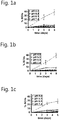
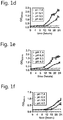
- S. aureus Cowan The pH-dependent growth of S. aureus Cowan was followed over time by labeling the bacterial cell wall with fluorescent cell wall binding domains (CBDs). Immediately after staining, bacterial cell walls were fully labeled. After three days in pH 4.0 growth medium, the majority of bacteria still exhibited fluorescent cell walls, consistent with absent bacterial replication. In contrast, bacteria grown at pH 7.4 proliferated extensively, demonstrated by highly fragmented and reduced fluorescent cell wall labeling. Scanning electron microscopy (SEM) of bacteria originating from a small colony, obtained under low-pH conditions, showed impaired cell division resulting in rod-shaped S. aureus, in contrast to large colony bacteria showing normal cell division.
- SEM scanning electron microscopy
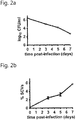
- MSSA strain Cowan is highly invasive, but not cytotoxic which allowed maintaining this strain intracellularly over several days in the lung epithelial cell line A549. Extracellular bacteria were killed by adding a high dose of flucloxacillin to the infected host cells. Flucloxacillin is typically used to treat S. aureus endocarditis in patients. Absence of extracellular bacteria was confirmed by sterility of culture supernatants. Host cells were lysed to release intracellular bacteria and colony counts, as well as colony phenotypes, were determined at various time points. Five hours after infection, 0.2% of all viable intracellular bacteria had a SCV phenotype ( Fig. 2a - b ). The number of viable intracellular persisting bacteria decreased during the course of infection while the frequency of SCVs increased and reached 5.6% after seven days.
- Persisting bacteria are not unique to S. aureus but have also been described to occur in various other human pathogens, such as Salmonella spp., Pseudomonas aeruginosa, Escherichia coli and Mycobacterium tuberculosis.
- Salmonella spp. Pseudomonas aeruginosa
- Escherichia coli Escherichia coli
- Mycobacterium tuberculosis bacterial persisters can arise due to mechanisms that include the toxin-antitoxin systems. Accordingly, activation of a SOS response (ppGpp) in response to DNA damage due to oxidative stress results in decreased ATP levels. This leads to the shutdown of metabolism resulting in reduced growth.
- ppGpp SOS response
- Various toxin-antitoxin modules are activated by acidification and/or nutrient starvation in Salmonella, causing formation of persisters.
- Salmonella persister formation has been reported in macrophages triggered by the acidic and nutritionally poor environment of the Salmonella-containing vacuole that was reversible by addition of bafilomycin A1 44.
- bafilomycin A1 chloroquine is routinely used in patients to treat malaria as well as some rheumatic diseases. Phagolysosomal pH neutralization with chloroquine may therefore provide a novel therapeutic eradication strategy against intracellular persisting staphylococcal reservoirs.
- the bactericidal agents with a protein transduction domain for efficient delivery into the infected host cell with a sequence selected from the group consisting of SEQ ID NO: 30 - 47 are used for combination with phagolysosomal pH neutralization for treatment of intracellular S. aureus infection in vitro and in vivo.
- the treatment results in effective treatment of the intracellular S. aureus infection, with some variety in the efficiency depending on the specific bactericidal agent used.
- the bactericidal agents with a protein transduction domain for efficient delivery into the infected host cell with a sequence selected from the group consisting of SEQ ID NO: 27 - 47 were used for treatment of intracellular S. aureus infection, either combined or not with phagolysosomal pH neutralization.
- S. aureus was grown in LB broth at 37 °C, shaking at 220 rpm, overnight. The overnight culture was diluted in fresh LB (1:10) and grown further for 2 h. Then, the bacteria were centrifuged, the pellet was washed with PBS and the culture was re-suspended in PBS with the OD600 adjusted to 0.4 (c.a. 2 ⁇ 10 8 CFU/mL). Bacterial cells were sonicated prior to infection (SONOPULS HD 2070) for 1 minute with 1 second pulses at 40% of the power.
- MG-63 osteosarcoma cells were grown in 12-well dishes with the amount of 5 ⁇ 10 5 cells/well in 1 mL EMEM culture media with 10 % fetal bovine serum (FBS) for 24 h prior infection. Then, the cells were infected with S. aureus Newman and Cowan at the following conditions: (A) S. aureus Newman at MOI of 0.1 for 3 h, (B) S . aureus Newman at MOI of 1.0 for 24 h, and (C) S . aureus Cowan at MOI of 1.0 for 72 h. The plates were centrifuged at 1200 rpm for 5 min and incubated at 37 °C with the flush of CO2.
- Eukaryotic cells were treated with 1 mL of 1 ⁇ M endolysin preparation (diluted in EMEM supplemented with 1 mg/mL floxacillin and +/- 20 ⁇ M chloroquine) for (A) 1h and 4h, (B and C) 4h.
- the control was treated with 1 mL of 1 mg/mL floxacillin, +/- 20 ⁇ M chloroquine in EMEM.
- the cultures were then washed 3 ⁇ with PBS and examined under microscope to determine if there had been osteoblast cell lysis. Next, they were trypsinized (Trypsin-EDTA 0.25%, Gibco®) and lysed with 800 ⁇ L 0.1 % Triton X-100.
- osteosarcoma cells were used to mimic the condition of osteomyelitis. Cells were first infected for a certain time with the pathogen S. aureus Newman or Cowan and then treated with the endolysin mixture in presence or absence of chloroquine. We expected that increasing intracellular pH by application of chloroquine would create more favorable conditions for endolysin activity. Osteosarcoma cells were exposed to S. aureus Newman and Cowan for 3 h followed by 2 h floxacillin treatment to inactivate any non-internalized bacteria.
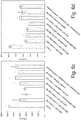
- FIG. 5 shows the result of treatment of S. aureus Newman by endolysin mixtures exclusively and Figure 5B shows the result of a combination treatment with chloroquine.
- 4h treatment was more effective in both experimental settings.
- endolysin treatment in the presence of chloroquine resulted in greater decrease in bacterial counts.
- mixture of the CPP-free endolysins showed a very good killing efficacy, which was not expected.
- CBD vast amount of positive charge associated with CBD attracts the enzyme to the negatively charged cell membrane and induces its intracellular translocation.
- CPP-free endolysin translocation is the key of the translocation of CPPs. All endolysin mixtures displayed similar killing properties in this assay, even though their activity differed substantially depending on the presence of CBD and type of CPP tag. It is likely that different constructs have different penetrating properties, depending on the CPP, EAD and CBD presence. For instance, EAD-CBD mixture has very high activity but might not be transported via the cell membrane as efficient as any CPP-containing variants.
- EAD-CPP constructs do not have as high activity but are smaller and contain the transduction domain, which make their intracellular transport more efficient and their diffusivity better due to the lack of immobilization of the enzyme on the cell surface mediated by CBD binding.
- enzymes with different properties might have given similar results eventually.
- Figure 5C and Figure 5D show the results of the same experiment performed with a different strain of the pathogen: S. aureus Cowan. In this case, the treatment did not seem to be effective. For both samples, without chloroquine ( Figure 5C ) and with chloroquine ( Figure 5D ), the decrease in the viable counts is negligible.
- FIG. 6A and Figure 6B show the results of the treatment of osteosarcoma cells infected for 24 h with S. aureus Newman in absence and in presence of chloroquine, respectively.
- Figure 6C and Figure 6D correspond to the results of treated cells infected for 72 h with S. aureus Cowan. In both cases treatment with endolysin mixtures seems effective, especially with the addition of chloroquine.
- aureus by engineered endolysins together with chloroquine was more effective that without chloroquine.
- Application of such alkalinizing agents likely enhances the activity of lytic enzymes intracellularly and the combinatorial treatment of endolysins with chloroquine could be a good alternative to conventional antibiotic therapy.
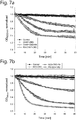
- bactericidal agents comprising a functional enzymatic domain from a cell wall lytic enzyme and further comprising a protein transduction domain on the N-terminal side of the molecule were prepared and analyzed according to methods as described elsewhere herein (R9-CHAP-CBD, R9-M23-CBD, TAT-Ami-CBD, TAT-CHAP-CBD, and TAT-M23-CBD). All data were collected in turbidity reduction assays on S. aureus SA113 substrate cells and at 100nM protein concentrations (except Ami-CBD constructs where 1 ⁇ M was used) according as described previously in WO2013/169104 . Figure 7 depicts the performance of the constructs.
- the N-terminal CPP tagged proteins are active, but perform less compared to un-tagged or C-terminal tagged variants when analyzed on S. aureus cells.
- the constructs should be tested in an intracellular S . aureus killing assay as in example 3.
Landscapes
- Health & Medical Sciences (AREA)
- Life Sciences & Earth Sciences (AREA)
- Chemical & Material Sciences (AREA)
- Medicinal Chemistry (AREA)
- General Health & Medical Sciences (AREA)
- Pharmacology & Pharmacy (AREA)
- Animal Behavior & Ethology (AREA)
- Public Health (AREA)
- Veterinary Medicine (AREA)
- Epidemiology (AREA)
- Bioinformatics & Cheminformatics (AREA)
- Engineering & Computer Science (AREA)
- Proteomics, Peptides & Aminoacids (AREA)
- Gastroenterology & Hepatology (AREA)
- Organic Chemistry (AREA)
- Immunology (AREA)
- Molecular Biology (AREA)
- Genetics & Genomics (AREA)
- Wood Science & Technology (AREA)
- Zoology (AREA)
- Biochemistry (AREA)
- Chemical Kinetics & Catalysis (AREA)
- Communicable Diseases (AREA)
- Nuclear Medicine, Radiotherapy & Molecular Imaging (AREA)
- General Chemical & Material Sciences (AREA)
- Oncology (AREA)
- Biomedical Technology (AREA)
- Biotechnology (AREA)
- General Engineering & Computer Science (AREA)
- Microbiology (AREA)
- Biophysics (AREA)
- Medicines That Contain Protein Lipid Enzymes And Other Medicines (AREA)
- Peptides Or Proteins (AREA)
- Medicines Containing Material From Animals Or Micro-Organisms (AREA)
- Pharmaceuticals Containing Other Organic And Inorganic Compounds (AREA)
Claims (12)
- Quantité efficace d'un agent qui augmente le pH intracellulaire d'une cellule hôte et/ou d'un compartiment intracellulaire d'une cellule hôte et quantité efficace d'un agent bactéricide, pour une utilisation dans le traitement d'une infection bactérienne chez un sujet qui en a besoin, comprenant :- l'administration de la quantité efficace de l'agent qui augmente le pH intracellulaire d'une cellule hôte et/ou d'un compartiment intracellulaire d'une cellule hôte ; et- l'administration de la quantité efficace de l'agent bactéricide,l'agent bactéricide étant une lysine bactérienne comprenant un domaine de liaison à la paroi cellulaire, une autolysine bactérienne comprenant un domaine de liaison à la paroi cellulaire, ou étant une lysine de bactériophage comprenant un domaine de liaison à la paroi cellulaire, ou
l'agent bactéricide étant une lysine bactérienne liée de manière fonctionnelle à un domaine de transduction de protéine, une autolysine bactérienne liée de manière fonctionnelle à un domaine de transduction de protéine, ou étant une lysine de bactériophage liée de manière fonctionnelle à un domaine de transduction de protéine. - Quantité efficace d'un agent qui augmente le pH intracellulaire d'une cellule hôte et/ou d'un compartiment intracellulaire d'une cellule hôte et quantité efficace d'un agent bactéricide, pour une utilisation selon la revendication 1, l'infection bactérienne étant une infection bactérienne intracellulaire et/ou persistante.
- Quantité efficace d'un agent qui augmente le pH intracellulaire d'une cellule hôte et/ou d'un compartiment intracellulaire d'une cellule hôte et quantité efficace d'un agent bactéricide, pour une utilisation selon l'une des revendications 1 et 2, l'infection bactérienne étant une infection à Staphylococcus.
- Quantité efficace d'un agent qui augmente le pH intracellulaire d'une cellule hôte et/ou d'un compartiment intracellulaire d'une cellule hôte et quantité efficace d'un agent bactéricide, pour une utilisation selon la revendication 3, l'infection bactérienne étant une infection à S. aureus.
- Quantité efficace d'un agent qui augmente le pH intracellulaire d'une cellule hôte et/ou d'un compartiment intracellulaire d'une cellule hôte et quantité efficace d'un agent bactéricide, pour une utilisation selon l'une des revendications 1 à 4, la cellule hôte étant une cellule hôte eucaryote à l'intérieur du sujet ayant besoin d'un traitement.
- Quantité efficace d'un agent qui augmente le pH intracellulaire d'une cellule hôte et/ou d'un compartiment intracellulaire d'une cellule hôte et quantité efficace d'un agent bactéricide, pour une utilisation selon l'une quelconque des revendications précédentes, le compartiment intracellulaire étant un phagolysosome.
- Quantité efficace d'un agent qui augmente le pH intracellulaire d'une cellule hôte et/ou d'un compartiment intracellulaire d'une cellule hôte et quantité efficace d'un agent bactéricide, pour une utilisation selon l'une quelconque des revendications précédentes, l'agent qui augmente le pH intracellulaire et/ou le pH du compartiment intracellulaire étant un agent alcalinisant, de préférence un agent alcalinisant lysosomotropique, de préférence choisi dans le groupe de la chloroquine, de la bafilomycine Al, du chlorure d'ammonium.
- Quantité efficace d'un agent qui augmente le pH intracellulaire d'une cellule hôte et/ou d'un compartiment intracellulaire d'une cellule hôte et quantité efficace d'un agent bactéricide, pour une utilisation selon l'une quelconque des revendications précédentes, l'agent bactéricide comprenant en outre un peptide antimicrobien.
- Quantité efficace d'un agent qui augmente le pH intracellulaire d'une cellule hôte et/ou d'un compartiment intracellulaire d'une cellule hôte et quantité efficace d'un agent bactéricide, pour une utilisation selon l'une quelconque des revendications précédentes, le domaine de transduction de protéine étant choisi dans le groupe consistant en SEQ ID NO : 12 à 25.
- Quantité efficace d'un agent qui augmente le pH intracellulaire d'une cellule hôte et/ou d'un compartiment intracellulaire d'une cellule hôte et quantité efficace d'un agent bactéricide, pour une utilisation selon l'une quelconque des revendications précédentes, l'agent bactéricide comprenant un domaine enzymatique fonctionnel provenant d'une enzyme lytique de paroi cellulaire, lequel domaine enzymatique cellulaire est choisi dans le groupe consistant en SEQ ID NO : 1 - 7.
- Quantité efficace d'un agent qui augmente le pH intracellulaire d'une cellule hôte et/ou d'un compartiment intracellulaire d'une cellule hôte et quantité efficace d'un agent bactéricide, pour une utilisation selon l'une quelconque des revendications précédentes, le domaine de liaison à la paroi cellulaire étant choisi dans le groupe consistant en SEQ ID NO : 8 - 11.
- Quantité efficace d'un agent qui augmente le pH intracellulaire d'une cellule hôte et/ou d'un compartiment intracellulaire d'une cellule hôte et quantité efficace d'un agent bactéricide, pour une utilisation selon l'une quelconque des revendications 8 à 11, le peptide antimicrobien étant choisi dans le groupe consistant en SEQ ID NO : 70 - 90.
Applications Claiming Priority (2)
| Application Number | Priority Date | Filing Date | Title |
|---|---|---|---|
| EP15158880 | 2015-03-12 | ||
| PCT/EP2016/055076 WO2016142445A2 (fr) | 2015-03-12 | 2016-03-10 | Méthode de traitement d'une infection bactérienne |
Publications (2)
| Publication Number | Publication Date |
|---|---|
| EP3268023A2 EP3268023A2 (fr) | 2018-01-17 |
| EP3268023B1 true EP3268023B1 (fr) | 2021-08-18 |
Family
ID=52648929
Family Applications (1)
| Application Number | Title | Priority Date | Filing Date |
|---|---|---|---|
| EP16709389.7A Active EP3268023B1 (fr) | 2015-03-12 | 2016-03-10 | Combinaison d'un agent bactericide avec un agent alkalisant lysosomotropique pour le traitement d'une infection bacterienne |
Country Status (9)
| Country | Link |
|---|---|
| US (1) | US11690899B2 (fr) |
| EP (1) | EP3268023B1 (fr) |
| JP (1) | JP2018509415A (fr) |
| KR (1) | KR102683284B1 (fr) |
| CN (1) | CN107580503B (fr) |
| AU (1) | AU2016231141B2 (fr) |
| IL (1) | IL254457B (fr) |
| SG (1) | SG11201707345VA (fr) |
| WO (1) | WO2016142445A2 (fr) |
Families Citing this family (30)
| Publication number | Priority date | Publication date | Assignee | Title |
|---|---|---|---|---|
| AU2017360064C1 (en) * | 2016-11-18 | 2022-04-07 | Lysando Ag | New antimicrobial agents against staphylococcus aureus |
| US20200291373A1 (en) | 2017-10-06 | 2020-09-17 | Micreos Human Health B.V. | Treatment of a Condition Associated with Infection with an Oncogenic Bacterium |
| EP3688011A4 (fr) | 2017-10-25 | 2021-11-24 | The Administrators Of The Tulane Educational Fund | Compositions peptidiques et procédés d'utilisation de ces compositions |
| US11149068B2 (en) | 2018-01-05 | 2021-10-19 | The Administrator Of The Tulane Educational Fund | Pore-forming peptides and uses thereof |
| JP7131803B2 (ja) * | 2018-05-15 | 2022-09-06 | 学校法人大阪医科薬科大学 | Gb3蓄積起因性疾患の予防又は治療剤 |
| US20210139610A1 (en) * | 2018-06-29 | 2021-05-13 | Research Institute At Nationwide Children's Hospital | Compositions and methods for mediating eps |
| CN109350618B (zh) * | 2018-12-10 | 2021-09-28 | 山东农业大学 | 自噬调节剂在消除牛乳腺上皮细胞内金黄色葡萄球菌中的应用 |
| MX2021013491A (es) * | 2019-05-08 | 2022-02-21 | Phagomed Biopharma Gmbh | Nuevas endolisinas de gardnerella y usos de las mismas. |
| GB201906653D0 (en) * | 2019-05-10 | 2019-06-26 | Cc Biotech Ltd | Polypeptides for treatment of bacterial infections |
| CA3171721A1 (fr) | 2020-03-19 | 2021-09-23 | Fritz Eichenseher | Proteine d'interet stabilisee |
| WO2024020533A1 (fr) * | 2022-07-22 | 2024-01-25 | Endolytix Technology, Inc. | Compositions immunogènes pour traitement ou prévention d'infections à actinomycètes |
| IL321675A (en) | 2022-12-23 | 2025-08-01 | Micreos Pharmaceuticals Ag | Chimeric endolysin polypeptide |
| CN118308337A (zh) * | 2023-01-09 | 2024-07-09 | 华中农业大学 | 一种细菌裂解酶LLysSA9.10及其应用 |
| WO2024200687A1 (fr) * | 2023-03-29 | 2024-10-03 | Universiteit Gent | Endolysines chimériques ayant une activité contre les streptocoques et les staphylocoques |
| WO2024241070A1 (fr) | 2023-05-22 | 2024-11-28 | L'oreal | Composition cosmétique comprenant une endolysine et un alcool polyvinylique |
| FR3149205B1 (fr) | 2023-06-02 | 2026-04-24 | Loreal | Composition cosmétique comprenant une endolysine et un agent de charge organique |
| FR3149207B1 (fr) | 2023-06-02 | 2026-03-13 | Oreal | Composition cosmétique comprenant une endolysine et un composé de formule (I) |
| FR3149206B1 (fr) | 2023-06-02 | 2026-03-13 | Oreal | Composition cosmétique aqueuse comprenant une endolysine et du tréhalose |
| FR3149209B1 (fr) | 2023-06-02 | 2026-04-03 | Oreal | Composition cosmétique comprenant une endolysine dérivée de phage de Staphylococcus aureus et un alcool aromatique |
| FR3149208B1 (fr) | 2023-06-02 | 2026-03-20 | Oreal | Composition cosmétique, notamment aqueuse, comprenant une endolysine et un pullulane |
| FR3149202B1 (fr) | 2023-06-02 | 2026-04-10 | Oreal | Composition cosmétique comprenant une endolysine dérivée de phage de Staphylococcus aureus et une huile. |
| FR3152395A1 (fr) | 2023-08-28 | 2025-03-07 | L'oreal | Composition cosmétique comprenant une endolysine dérivée de phage de Staphylococcus aureus et la 4-hydroxyacetophenone |
| FR3149204B1 (fr) | 2023-06-02 | 2026-02-13 | Oreal | Composition cosmétique comprenant une endolysine et un tensioactif non ionique comprenant un résidu carbohydrate |
| EP4719330A1 (fr) | 2023-06-02 | 2026-04-08 | L'oreal | <smallcaps/>? ? ?staphylococcus aureus? ? ? ? ?composition cosmétique comprenant une endolysine dérivée d'un phage deet un alcool aromatique |
| FR3149203B1 (fr) | 2023-06-02 | 2026-03-13 | Oreal | Composition anhydre comprenant une endolysine et de l’hydroxypropylmethylcellulose et/ou du pullulane |
| FR3152394B1 (fr) | 2023-08-28 | 2026-04-24 | Loreal | Composition cosmétique comprenant une endolysine et des particules d’aérogel de silice hydrophobe |
| FR3152396A1 (fr) | 2023-08-28 | 2025-03-07 | L'oreal | Composition cosmétique comprenant une endolysine dérivée de phage de Staphylococcus aureus et un polyhydroxyalcane |
| FR3152393B1 (fr) | 2023-08-28 | 2026-04-24 | Loreal | Composition cosmétique comprenant une endolysine dérivée d’un phage de Staphylococcus aureus et une charge minérale |
| WO2025093666A1 (fr) | 2023-11-01 | 2025-05-08 | University Of Copenhagen | Traitement du lymphome |
| WO2026052743A1 (fr) | 2024-09-04 | 2026-03-12 | Micreos Human Health B.V. | Réduction de la perte insensible en eau par un polypeptide ayant des propriétés antibactériennes |
Family Cites Families (15)
| Publication number | Priority date | Publication date | Assignee | Title |
|---|---|---|---|---|
| AU2001259205A1 (en) * | 2000-04-28 | 2001-11-12 | New Horizons Diagnostic Corporation | The use of bacterial phage associated lysing enzymes for treating various illnesses |
| US20040023897A1 (en) * | 2001-11-13 | 2004-02-05 | Caplan Michael J. | Methods for preventing or treating disease mediated by toxin-secreting bacteria |
| KR100759988B1 (ko) * | 2006-08-04 | 2007-09-19 | 주식회사 인트론바이오테크놀로지 | 황색포도상구균에 특이적인 항균 단백질 |
| US20100028334A1 (en) * | 2006-12-15 | 2010-02-04 | Trustees Of Boston University | Compositions and methods to potentiate colistin activity |
| US8383102B2 (en) | 2009-05-21 | 2013-02-26 | The United States Of America As Represented By The Secretary Of Agriculture | Fusion of peptidoglycan hydrolase enzymes to a protein transduction domain allows eradication of both extracellular and intracellular gram positive pathogens |
| KR20120059576A (ko) | 2009-08-24 | 2012-06-08 | 뤼산도 홀딩 아게 | 신규한 엔도리신 OBPgpLYS |
| EP2338916A1 (fr) | 2009-12-23 | 2011-06-29 | Hyglos Invest GmbH | Polypeptides chimériques et leur utilisation dans la décolonisation bactérienne |
| EP2702070B1 (fr) | 2011-04-27 | 2015-09-30 | Lysando AG | Nouveaux agents antimicrobiens |
| DK3085777T3 (da) * | 2011-05-04 | 2020-02-03 | Micreos Human Health Bv | Polypeptid |
| WO2013169104A1 (fr) | 2012-05-07 | 2013-11-14 | Micreos Human Health B.V. | Mélanges polypeptidiques ayant une activité antibactérienne |
| RU2018121290A (ru) * | 2012-05-09 | 2019-03-06 | Контрафект Корпорейшн | Комбинации лизина бактериофага и антибиотика против грам-положительных бактерий |
| US9603909B2 (en) * | 2012-05-29 | 2017-03-28 | Intron Biotechnology, Inc. | Composition capable of improving stability of bacteriophage lysin proteins |
| US9206411B2 (en) | 2012-06-13 | 2015-12-08 | The United States Of America, As Represented By The Secretary Of Agriculture | Staphylococcal Phage2638A endolysin amidase domain is lytic for Staphylococcus aureus |
| EP2679677A1 (fr) | 2012-06-29 | 2014-01-01 | Lysando Aktiengesellschaft | Procédé et appareil d'amélioration d'images |
| US20160097044A1 (en) | 2014-10-01 | 2016-04-07 | The United States Of America, As Represented By The Secretary Of Agriculture | Antimicrobial Enzyme Fusions Reduce Resistance and Kill Intracellular Staphylococcus aureus |
-
2016
- 2016-03-10 WO PCT/EP2016/055076 patent/WO2016142445A2/fr not_active Ceased
- 2016-03-10 AU AU2016231141A patent/AU2016231141B2/en active Active
- 2016-03-10 EP EP16709389.7A patent/EP3268023B1/fr active Active
- 2016-03-10 JP JP2017547980A patent/JP2018509415A/ja active Pending
- 2016-03-10 KR KR1020177028879A patent/KR102683284B1/ko active Active
- 2016-03-10 CN CN201680026953.2A patent/CN107580503B/zh active Active
- 2016-03-10 SG SG11201707345VA patent/SG11201707345VA/en unknown
- 2016-03-10 US US15/557,296 patent/US11690899B2/en active Active
-
2017
- 2017-09-12 IL IL254457A patent/IL254457B/en active IP Right Grant
Non-Patent Citations (1)
| Title |
|---|
| None * |
Also Published As
| Publication number | Publication date |
|---|---|
| IL254457B (en) | 2020-03-31 |
| JP2018509415A (ja) | 2018-04-05 |
| KR20170132201A (ko) | 2017-12-01 |
| SG11201707345VA (en) | 2017-10-30 |
| US11690899B2 (en) | 2023-07-04 |
| AU2016231141A1 (en) | 2017-09-28 |
| CN107580503B (zh) | 2021-07-09 |
| CA2979873A1 (fr) | 2016-09-15 |
| KR102683284B1 (ko) | 2024-07-10 |
| AU2016231141B2 (en) | 2022-03-03 |
| CN107580503A (zh) | 2018-01-12 |
| EP3268023A2 (fr) | 2018-01-17 |
| HK1249033A1 (en) | 2018-10-26 |
| WO2016142445A2 (fr) | 2016-09-15 |
| US20180271952A1 (en) | 2018-09-27 |
| BR112017019413A2 (pt) | 2018-05-02 |
| IL254457A0 (en) | 2017-11-30 |
| WO2016142445A3 (fr) | 2016-11-10 |
Similar Documents
| Publication | Publication Date | Title |
|---|---|---|
| EP3268023B1 (fr) | Combinaison d'un agent bactericide avec un agent alkalisant lysosomotropique pour le traitement d'une infection bacterienne | |
| Kim et al. | Antimicrobial activity of LysSS, a novel phage endolysin, against Acinetobacter baumannii and Pseudomonas aeruginosa | |
| Boparai et al. | Mini review on antimicrobial peptides, sources, mechanism and recent applications | |
| Wang et al. | A phage lysin fused to a cell-penetrating peptide kills intracellular methicillin-resistant Staphylococcus aureus in keratinocytes and has potential as a treatment for skin infections in mice | |
| DK2938352T3 (en) | CYLIC CATIONIC PEPTIDES WITH ANTIBMICROBIAL ACTIVITY | |
| Mathur et al. | The sactibiotic subclass of bacteriocins: an update | |
| US11857606B2 (en) | Therapeutic bacteriocins | |
| JP2015522533A (ja) | 抗菌活性を有するポリペプチドミックス | |
| AU2016321832A1 (en) | A novel endolysin polypeptide | |
| Zhao et al. | Nisin-and ripcin-derived hybrid lanthipeptides display selective antimicrobial activity against Staphylococcus aureus | |
| JP7288851B2 (ja) | エンテロコッカス属細菌に対する新規抗微生物剤 | |
| Pepperney et al. | Antibacterial peptides: opportunities for the prevention and treatment of dental caries | |
| KR20210014673A (ko) | 신규 항균성 단백질 | |
| KR20210014674A (ko) | 신규 항균성 융합 단백질 | |
| CN109072211A (zh) | 抗沙门氏菌的抗菌剂 | |
| US20250288652A1 (en) | Bacteriophage lysine, chimera thereof and application thereof | |
| Tanhaeian et al. | Expression in eukaryotic cells and purification of synthetic gene encoding enterocin P: a bacteriocin with broad antimicrobial spectrum | |
| AU2017263563A1 (en) | Broth microdilution method for evaluating and determining minimal inhibitory concentration of antibacterial polypeptides | |
| E Shepherd et al. | Targeting quorum sensing and competence stimulation for antimicrobial chemotherapy | |
| KR20230028132A (ko) | 신규한 폴리펩타이드 및 이를 포함하는 그람음성균에 대한 항생제 | |
| Rivas et al. | Membrane-active peptides as anti-infectious agents | |
| CA2979873C (fr) | Methode de traitement d'une infection bacterienne | |
| CA2556351A1 (fr) | Agents antimicrobiens | |
| HK1249033B (en) | Combination of bactericidal agent with a lysosomotropic alkalinising agent for the treatment of a bacterial infection | |
| BR112017019413B1 (pt) | Uso de um agente que aumenta o ph intracelular de uma célula hospedeira e/ou de um compartimento intracelular de uma célula hospedeira e de um agente bactericida para o tratamento de uma infecção bacteriana |
Legal Events
| Date | Code | Title | Description |
|---|---|---|---|
| STAA | Information on the status of an ep patent application or granted ep patent |
Free format text: STATUS: THE INTERNATIONAL PUBLICATION HAS BEEN MADE |
|
| PUAI | Public reference made under article 153(3) epc to a published international application that has entered the european phase |
Free format text: ORIGINAL CODE: 0009012 |
|
| STAA | Information on the status of an ep patent application or granted ep patent |
Free format text: STATUS: REQUEST FOR EXAMINATION WAS MADE |
|
| 17P | Request for examination filed |
Effective date: 20170915 |
|
| AK | Designated contracting states |
Kind code of ref document: A2 Designated state(s): AL AT BE BG CH CY CZ DE DK EE ES FI FR GB GR HR HU IE IS IT LI LT LU LV MC MK MT NL NO PL PT RO RS SE SI SK SM TR |
|
| AX | Request for extension of the european patent |
Extension state: BA ME |
|
| DAV | Request for validation of the european patent (deleted) | ||
| DAX | Request for extension of the european patent (deleted) | ||
| REG | Reference to a national code |
Ref country code: HK Ref legal event code: DE Ref document number: 1249033 Country of ref document: HK |
|
| STAA | Information on the status of an ep patent application or granted ep patent |
Free format text: STATUS: EXAMINATION IS IN PROGRESS |
|
| 17Q | First examination report despatched |
Effective date: 20191106 |
|
| GRAP | Despatch of communication of intention to grant a patent |
Free format text: ORIGINAL CODE: EPIDOSNIGR1 |
|
| STAA | Information on the status of an ep patent application or granted ep patent |
Free format text: STATUS: GRANT OF PATENT IS INTENDED |
|
| RIC1 | Information provided on ipc code assigned before grant |
Ipc: A61K 31/43 20060101ALI20210222BHEP Ipc: A61K 31/54 20060101ALI20210222BHEP Ipc: A61K 31/41 20060101ALI20210222BHEP Ipc: A61P 31/04 20060101ALI20210222BHEP Ipc: A61K 31/53 20060101ALI20210222BHEP Ipc: A61K 31/70 20060101ALI20210222BHEP Ipc: A61K 38/16 20060101AFI20210222BHEP |
|
| INTG | Intention to grant announced |
Effective date: 20210325 |
|
| GRAS | Grant fee paid |
Free format text: ORIGINAL CODE: EPIDOSNIGR3 |
|
| GRAA | (expected) grant |
Free format text: ORIGINAL CODE: 0009210 |
|
| STAA | Information on the status of an ep patent application or granted ep patent |
Free format text: STATUS: THE PATENT HAS BEEN GRANTED |
|
| AK | Designated contracting states |
Kind code of ref document: B1 Designated state(s): AL AT BE BG CH CY CZ DE DK EE ES FI FR GB GR HR HU IE IS IT LI LT LU LV MC MK MT NL NO PL PT RO RS SE SI SK SM TR |
|
| REG | Reference to a national code |
Ref country code: GB Ref legal event code: FG4D |
|
| REG | Reference to a national code |
Ref country code: CH Ref legal event code: EP |
|
| REG | Reference to a national code |
Ref country code: DE Ref legal event code: R096 Ref document number: 602016062337 Country of ref document: DE |
|
| REG | Reference to a national code |
Ref country code: IE Ref legal event code: FG4D Ref country code: AT Ref legal event code: REF Ref document number: 1421010 Country of ref document: AT Kind code of ref document: T Effective date: 20210915 |
|
| REG | Reference to a national code |
Ref country code: LT Ref legal event code: MG9D |
|
| REG | Reference to a national code |
Ref country code: NL Ref legal event code: FP |
|
| REG | Reference to a national code |
Ref country code: AT Ref legal event code: MK05 Ref document number: 1421010 Country of ref document: AT Kind code of ref document: T Effective date: 20210818 |
|
| PG25 | Lapsed in a contracting state [announced via postgrant information from national office to epo] |
Ref country code: RS Free format text: LAPSE BECAUSE OF FAILURE TO SUBMIT A TRANSLATION OF THE DESCRIPTION OR TO PAY THE FEE WITHIN THE PRESCRIBED TIME-LIMIT Effective date: 20210818 Ref country code: SE Free format text: LAPSE BECAUSE OF FAILURE TO SUBMIT A TRANSLATION OF THE DESCRIPTION OR TO PAY THE FEE WITHIN THE PRESCRIBED TIME-LIMIT Effective date: 20210818 Ref country code: AT Free format text: LAPSE BECAUSE OF FAILURE TO SUBMIT A TRANSLATION OF THE DESCRIPTION OR TO PAY THE FEE WITHIN THE PRESCRIBED TIME-LIMIT Effective date: 20210818 Ref country code: BG Free format text: LAPSE BECAUSE OF FAILURE TO SUBMIT A TRANSLATION OF THE DESCRIPTION OR TO PAY THE FEE WITHIN THE PRESCRIBED TIME-LIMIT Effective date: 20211118 Ref country code: LT Free format text: LAPSE BECAUSE OF FAILURE TO SUBMIT A TRANSLATION OF THE DESCRIPTION OR TO PAY THE FEE WITHIN THE PRESCRIBED TIME-LIMIT Effective date: 20210818 Ref country code: NO Free format text: LAPSE BECAUSE OF FAILURE TO SUBMIT A TRANSLATION OF THE DESCRIPTION OR TO PAY THE FEE WITHIN THE PRESCRIBED TIME-LIMIT Effective date: 20211118 Ref country code: PT Free format text: LAPSE BECAUSE OF FAILURE TO SUBMIT A TRANSLATION OF THE DESCRIPTION OR TO PAY THE FEE WITHIN THE PRESCRIBED TIME-LIMIT Effective date: 20211220 Ref country code: ES Free format text: LAPSE BECAUSE OF FAILURE TO SUBMIT A TRANSLATION OF THE DESCRIPTION OR TO PAY THE FEE WITHIN THE PRESCRIBED TIME-LIMIT Effective date: 20210818 Ref country code: FI Free format text: LAPSE BECAUSE OF FAILURE TO SUBMIT A TRANSLATION OF THE DESCRIPTION OR TO PAY THE FEE WITHIN THE PRESCRIBED TIME-LIMIT Effective date: 20210818 Ref country code: HR Free format text: LAPSE BECAUSE OF FAILURE TO SUBMIT A TRANSLATION OF THE DESCRIPTION OR TO PAY THE FEE WITHIN THE PRESCRIBED TIME-LIMIT Effective date: 20210818 |
|
| PG25 | Lapsed in a contracting state [announced via postgrant information from national office to epo] |
Ref country code: PL Free format text: LAPSE BECAUSE OF FAILURE TO SUBMIT A TRANSLATION OF THE DESCRIPTION OR TO PAY THE FEE WITHIN THE PRESCRIBED TIME-LIMIT Effective date: 20210818 Ref country code: LV Free format text: LAPSE BECAUSE OF FAILURE TO SUBMIT A TRANSLATION OF THE DESCRIPTION OR TO PAY THE FEE WITHIN THE PRESCRIBED TIME-LIMIT Effective date: 20210818 Ref country code: GR Free format text: LAPSE BECAUSE OF FAILURE TO SUBMIT A TRANSLATION OF THE DESCRIPTION OR TO PAY THE FEE WITHIN THE PRESCRIBED TIME-LIMIT Effective date: 20211119 |
|
| PG25 | Lapsed in a contracting state [announced via postgrant information from national office to epo] |
Ref country code: DK Free format text: LAPSE BECAUSE OF FAILURE TO SUBMIT A TRANSLATION OF THE DESCRIPTION OR TO PAY THE FEE WITHIN THE PRESCRIBED TIME-LIMIT Effective date: 20210818 |
|
| REG | Reference to a national code |
Ref country code: DE Ref legal event code: R097 Ref document number: 602016062337 Country of ref document: DE |
|
| PG25 | Lapsed in a contracting state [announced via postgrant information from national office to epo] |
Ref country code: SM Free format text: LAPSE BECAUSE OF FAILURE TO SUBMIT A TRANSLATION OF THE DESCRIPTION OR TO PAY THE FEE WITHIN THE PRESCRIBED TIME-LIMIT Effective date: 20210818 Ref country code: SK Free format text: LAPSE BECAUSE OF FAILURE TO SUBMIT A TRANSLATION OF THE DESCRIPTION OR TO PAY THE FEE WITHIN THE PRESCRIBED TIME-LIMIT Effective date: 20210818 Ref country code: RO Free format text: LAPSE BECAUSE OF FAILURE TO SUBMIT A TRANSLATION OF THE DESCRIPTION OR TO PAY THE FEE WITHIN THE PRESCRIBED TIME-LIMIT Effective date: 20210818 Ref country code: EE Free format text: LAPSE BECAUSE OF FAILURE TO SUBMIT A TRANSLATION OF THE DESCRIPTION OR TO PAY THE FEE WITHIN THE PRESCRIBED TIME-LIMIT Effective date: 20210818 Ref country code: CZ Free format text: LAPSE BECAUSE OF FAILURE TO SUBMIT A TRANSLATION OF THE DESCRIPTION OR TO PAY THE FEE WITHIN THE PRESCRIBED TIME-LIMIT Effective date: 20210818 Ref country code: AL Free format text: LAPSE BECAUSE OF FAILURE TO SUBMIT A TRANSLATION OF THE DESCRIPTION OR TO PAY THE FEE WITHIN THE PRESCRIBED TIME-LIMIT Effective date: 20210818 |
|
| PLBE | No opposition filed within time limit |
Free format text: ORIGINAL CODE: 0009261 |
|
| STAA | Information on the status of an ep patent application or granted ep patent |
Free format text: STATUS: NO OPPOSITION FILED WITHIN TIME LIMIT |
|
| 26N | No opposition filed |
Effective date: 20220519 |
|
| PG25 | Lapsed in a contracting state [announced via postgrant information from national office to epo] |
Ref country code: IT Free format text: LAPSE BECAUSE OF FAILURE TO SUBMIT A TRANSLATION OF THE DESCRIPTION OR TO PAY THE FEE WITHIN THE PRESCRIBED TIME-LIMIT Effective date: 20210818 |
|
| PG25 | Lapsed in a contracting state [announced via postgrant information from national office to epo] |
Ref country code: SI Free format text: LAPSE BECAUSE OF FAILURE TO SUBMIT A TRANSLATION OF THE DESCRIPTION OR TO PAY THE FEE WITHIN THE PRESCRIBED TIME-LIMIT Effective date: 20210818 |
|
| PG25 | Lapsed in a contracting state [announced via postgrant information from national office to epo] |
Ref country code: MC Free format text: LAPSE BECAUSE OF FAILURE TO SUBMIT A TRANSLATION OF THE DESCRIPTION OR TO PAY THE FEE WITHIN THE PRESCRIBED TIME-LIMIT Effective date: 20210818 |
|
| REG | Reference to a national code |
Ref country code: BE Ref legal event code: MM Effective date: 20220331 |
|
| PG25 | Lapsed in a contracting state [announced via postgrant information from national office to epo] |
Ref country code: LU Free format text: LAPSE BECAUSE OF NON-PAYMENT OF DUE FEES Effective date: 20220310 Ref country code: IE Free format text: LAPSE BECAUSE OF NON-PAYMENT OF DUE FEES Effective date: 20220310 |
|
| PG25 | Lapsed in a contracting state [announced via postgrant information from national office to epo] |
Ref country code: BE Free format text: LAPSE BECAUSE OF NON-PAYMENT OF DUE FEES Effective date: 20220331 |
|
| P01 | Opt-out of the competence of the unified patent court (upc) registered |
Effective date: 20230528 |
|
| PG25 | Lapsed in a contracting state [announced via postgrant information from national office to epo] |
Ref country code: HU Free format text: LAPSE BECAUSE OF FAILURE TO SUBMIT A TRANSLATION OF THE DESCRIPTION OR TO PAY THE FEE WITHIN THE PRESCRIBED TIME-LIMIT; INVALID AB INITIO Effective date: 20160310 |
|
| PG25 | Lapsed in a contracting state [announced via postgrant information from national office to epo] |
Ref country code: MK Free format text: LAPSE BECAUSE OF FAILURE TO SUBMIT A TRANSLATION OF THE DESCRIPTION OR TO PAY THE FEE WITHIN THE PRESCRIBED TIME-LIMIT Effective date: 20210818 Ref country code: CY Free format text: LAPSE BECAUSE OF FAILURE TO SUBMIT A TRANSLATION OF THE DESCRIPTION OR TO PAY THE FEE WITHIN THE PRESCRIBED TIME-LIMIT Effective date: 20210818 |
|
| PG25 | Lapsed in a contracting state [announced via postgrant information from national office to epo] |
Ref country code: MT Free format text: LAPSE BECAUSE OF FAILURE TO SUBMIT A TRANSLATION OF THE DESCRIPTION OR TO PAY THE FEE WITHIN THE PRESCRIBED TIME-LIMIT Effective date: 20210818 |
|
| PGFP | Annual fee paid to national office [announced via postgrant information from national office to epo] |
Ref country code: CH Payment date: 20250401 Year of fee payment: 10 |
|
| PG25 | Lapsed in a contracting state [announced via postgrant information from national office to epo] |
Ref country code: TR Free format text: LAPSE BECAUSE OF FAILURE TO SUBMIT A TRANSLATION OF THE DESCRIPTION OR TO PAY THE FEE WITHIN THE PRESCRIBED TIME-LIMIT Effective date: 20210818 |
|
| REG | Reference to a national code |
Ref country code: CH Ref legal event code: U11 Free format text: ST27 STATUS EVENT CODE: U-0-0-U10-U11 (AS PROVIDED BY THE NATIONAL OFFICE) Effective date: 20260401 |
|
| PGFP | Annual fee paid to national office [announced via postgrant information from national office to epo] |
Ref country code: GB Payment date: 20260304 Year of fee payment: 11 |
|
| PGFP | Annual fee paid to national office [announced via postgrant information from national office to epo] |
Ref country code: DE Payment date: 20260320 Year of fee payment: 11 |
|
| PGFP | Annual fee paid to national office [announced via postgrant information from national office to epo] |
Ref country code: NL Payment date: 20260310 Year of fee payment: 11 |
|
| PGFP | Annual fee paid to national office [announced via postgrant information from national office to epo] |
Ref country code: FR Payment date: 20260323 Year of fee payment: 11 |