EP3268492B1 - Auf dna-methylierung basierendes verfahren zur klassifizierung von tumorspezies - Google Patents
Auf dna-methylierung basierendes verfahren zur klassifizierung von tumorspezies Download PDFInfo
- Publication number
- EP3268492B1 EP3268492B1 EP16710700.2A EP16710700A EP3268492B1 EP 3268492 B1 EP3268492 B1 EP 3268492B1 EP 16710700 A EP16710700 A EP 16710700A EP 3268492 B1 EP3268492 B1 EP 3268492B1
- Authority
- EP
- European Patent Office
- Prior art keywords
- tumor
- methylation
- data
- classification
- cpg
- Prior art date
- Legal status (The legal status is an assumption and is not a legal conclusion. Google has not performed a legal analysis and makes no representation as to the accuracy of the status listed.)
- Active
Links
Images

Classifications
-
- C—CHEMISTRY; METALLURGY
- C12—BIOCHEMISTRY; BEER; SPIRITS; WINE; VINEGAR; MICROBIOLOGY; ENZYMOLOGY; MUTATION OR GENETIC ENGINEERING
- C12Q—MEASURING OR TESTING PROCESSES INVOLVING ENZYMES, NUCLEIC ACIDS OR MICROORGANISMS; COMPOSITIONS OR TEST PAPERS THEREFOR; PROCESSES OF PREPARING SUCH COMPOSITIONS; CONDITION-RESPONSIVE CONTROL IN MICROBIOLOGICAL OR ENZYMOLOGICAL PROCESSES
- C12Q1/00—Measuring or testing processes involving enzymes, nucleic acids or microorganisms; Compositions therefor; Processes of preparing such compositions
- C12Q1/68—Measuring or testing processes involving enzymes, nucleic acids or microorganisms; Compositions therefor; Processes of preparing such compositions involving nucleic acids
- C12Q1/6876—Nucleic acid products used in the analysis of nucleic acids, e.g. primers or probes
- C12Q1/6883—Nucleic acid products used in the analysis of nucleic acids, e.g. primers or probes for diseases caused by alterations of genetic material
- C12Q1/6886—Nucleic acid products used in the analysis of nucleic acids, e.g. primers or probes for diseases caused by alterations of genetic material for cancer
-
- G—PHYSICS
- G16—INFORMATION AND COMMUNICATION TECHNOLOGY [ICT] SPECIALLY ADAPTED FOR SPECIFIC APPLICATION FIELDS
- G16B—BIOINFORMATICS, i.e. INFORMATION AND COMMUNICATION TECHNOLOGY [ICT] SPECIALLY ADAPTED FOR GENETIC OR PROTEIN-RELATED DATA PROCESSING IN COMPUTATIONAL MOLECULAR BIOLOGY
- G16B20/00—ICT specially adapted for functional genomics or proteomics, e.g. genotype-phenotype associations
-
- G—PHYSICS
- G16—INFORMATION AND COMMUNICATION TECHNOLOGY [ICT] SPECIALLY ADAPTED FOR SPECIFIC APPLICATION FIELDS
- G16B—BIOINFORMATICS, i.e. INFORMATION AND COMMUNICATION TECHNOLOGY [ICT] SPECIALLY ADAPTED FOR GENETIC OR PROTEIN-RELATED DATA PROCESSING IN COMPUTATIONAL MOLECULAR BIOLOGY
- G16B40/00—ICT specially adapted for biostatistics; ICT specially adapted for bioinformatics-related machine learning or data mining, e.g. knowledge discovery or pattern finding
- G16B40/20—Supervised data analysis
Definitions
- the present invention pertains to methods for classifying tumorous diseases based on their specific genomic DNA methylation profile.
- the invention provides a method that allows for a classification of a tumor sample obtained from a patient by analysing a multitude, preferably genome wide, collection of CpG positions by comparison to a classification rule derived from a set of methylation data acquired from pre-classified tumor species.
- the invention is in particular useful for classifying brain tumor samples since brain tumors are characterized by a large variety of distinct tumor species which have different prognostic values and require in the clinic a for each species developed treatment regime.
- Brain tumor entities originate from different precursor-cell populations which are transformed by genetic and epigenetic alterations. It is now recognized that many brain tumor entities that are of distinct biological groups are not always distinguishable in histology. Most of the brain tumor entities display varied histological spectra with no clear boundaries. Epigenetic modifications such as methylation preserve the information of the cell of origin, it's original identity. Therefore methylation data has a great potential to identify molecular subgroups of brain tumors.
- the present invention seeks to provide a strategy for classification of tumor samples with higher specificity and sensitivity.
- the above problem is solved in a first aspect a method for the classification, stratification and/or diagnosis of a tumor species, the method comprising the steps of
- Illumina's HumanMethylation450 (450k) BeadChip allows to assays DNA methylation at 482,421 CpG dinucleotides.
- the platform measures DNA methylation by genotyping sodium bisulfite treated DNA.
- FFPE frozen and paraffin
- classification refers to a procedure and/or algorithm in which individual items are placed into groups or classes based on quantitative information on one or more characteristics inherent in the items (referred to as traits, variables, characters, features, etc.) and based on a statistical model and/or a training set of previously labeled items.
- a "classification tree” is a decision tree that places categorical variables into classes.
- stratification refers to the classification or grouping of patients according to one or more predetermined criteria.
- stratification is performed in a diagnostic setting in order to group a patient according to the prognosis of disease progression, either with or without treatment.
- stratification is used in order to distribute patients enrolled for a clinical study according to their individual characteristics.
- stratification is used in order to identify the best suitable treatment option for a patient.
- diagnosis is used herein to refer to the identification or classification of a molecular or pathological state, disease or condition.
- diagnosis may refer to identification of a particular type of cancer, e.g., a lung cancer.
- Diagnosis may also refer to the classification of a particular type of cancer, e.g., by histology (e.g., a non small cell lung carcinoma), by molecular features (e.g., a lung cancer characterized by nucleotide and/or amino acid variation(s) in a particular gene or protein), or both.
- tumor species or "tumor class” shall refer to a specific kind of a tumor or sub category of a tumor that can be classified based on its tissue origin, genetic make up, histology etc.
- various distinct brain tumor species or classes exist that can be differentiated via for example histopathology 1. Acta Neuropathol. 2007 Aug;114(2):97-109 . Epub 2007 Jul 6.” The 2007 WHO classification of tumours of the central nervous system.” Louis DN(1), Ohgaki H, Wiestler OD, Cavenee WK, Burger PC, Jouvet A, Scheithauer BW, Kleihues P.).
- tumor sample refers to a sample obtained from a patient.
- the tumor sample can be obtained from the patient by routine measures known to the person skilled in the art, i.e., biopsy (taken by aspiration or punctuation, excision or by any other surgical method leading to biopsy or resected cellular material).
- biopsy taken by aspiration or punctuation, excision or by any other surgical method leading to biopsy or resected cellular material.
- a surgeon can, through a small hole made in the skull, use stereotaxic instrumentation to obtain a "closed” biopsy.
- Stereotaxic instrumentation allows the surgeon to precisely position a biopsy probe in three-dimensional space to allow access almost anywhere in the brain. Therefore, it is possible to obtain tissue for the diagnostic method of the present invention.
- stage is not limited to any stage, grade, histomorphological feature, invasiveness, aggressiveness or malignancy of an affected tissue or cell aggregation.
- stage 0 cancer stage I cancer, stage II cancer, stage III cancer, stage IV cancer, grade I cancer, grade II cancer, grade III cancer, malignant cancer, primary carcinomas, and all other types of cancers, malignancies etc. are included.
- CpG site or "CpG position” refers to a region of DNA where a cytosine nucleotide occurs next to a guanine nucleotide in the linear sequence of bases along its length, the cytosine (C) being separated by only one phosphate (p) from the guanine (G).
- C cytosine
- p phosphate
- G guanine
- CpG islands Cytosines in CpG dinucleotides can be methylated to form 5-methylcytosine.
- Methylation of (i.e., introduction of a methyl group in) the cytosines of CpG site within the promoters of genes can lead to gene silencing, a feature found in a number of human cancers.
- hypomethylation of CpG sites has generally been associated with the over-expression of oncogenes within cancer cells.
- independent genomic CpG positions shall in the context of the present invention mean that each CpG position of a group of genomic CpG positions can be probed separately for its methylation status.
- methylation status describes the state of methylation of a CpG position, thus refers to the presence or absence of 5-methylcytosine at one CpG site within genomic DNA.
- the position is 0% methylated.
- the position is 100% methylated.
- portion e.g., 50%, 75%, or 80%, of the DNA of the individual is methylated at that CpG site, then the CpG position is said to be 50%, 75%, or 80%, methylated, respectively.
- methylation status reflects any relative or absolute amount of methylation of a CpG position. Methylation of CpG positions can be assessed by any method used in the art.
- methylation and “hypermethylation” are used herein interchangeably. When used in reference to a CpG positions, they refer to the methylation status corresponding to an increased presence of 5-methylcytosine at a CpG site within the DNA of a biological sample obtained from a patient, relative to the amount of 5-methylcytosine found at the CpG site within the same genomic position of a biological sample obtained from a healthy individual, or alternatively form an individual suffering from a tumor of a different class or species.
- biological sample is used herein in its broadest sense.
- a biological sample is generally obtained from a subject.
- a sample may be any biological tissue or fluid with which the methylation status of biomarkers of the present invention may be assayed.
- a sample will be a "clinical sample” (i.e., a sample obtained or derived from a patient to be tested).
- the sample may also be an archival sample with known diagnosis, treatment, and/or outcome history.
- biological samples suitable for use in the practice of the present invention include, but are not limited to, bodily fluids, e.g., blood samples (e.g., blood smears), and cerebrospinal fluid, brain tissue samples or bone marrow tissue samples such as tissue or fine needle biopsy samples. Biological samples may also include sections of tissues such as frozen sections taken for histological purposes.
- the term "biological sample” also encompasses any material derived by processing a biological sample. Derived materials include, but are not limited to, cells (or their progeny) isolated from the sample, as well as nucleic acid molecules (DNA and/or RNA) extracted from the sample. Processing of a biological sample may involve one or more of: filtration, distillation, extraction, concentration, inactivation of interfering components, addition of reagents, and the like.
- the method according to the present invention includes a step of "determining the DNA methylation status" of a multitude of independent genomic CpG positions in a biological sample obtained from a patient. Determination of the methylation status may be performed using any method known in the art to be suitable for assessing the methylation of cytosine residues in DNA. Such methods are known in the art and have been described; and one skilled in the art will know how to select the most suitable method depending on the number of samples to be tested, the quantity of sample available, and the like.
- the methylation status of a genomic CpG position or a combination of genomic CpG positions according to the invention can be determined using any of a wide variety of methods that are generally divided into strategies based on methylation-specific PCR (MSP), and strategies employing PCR performed under methylation-independent conditions (MIP).
- MSP methylation-specific PCR
- MIP methylation-independent PCR primers are used in most of the available PCR-based methods. They are designed for proportional amplification of methylated and unmethylated DNA.
- MSP methylation-specific PCR
- methylation-independent PCR based techniques include, but are not limited to, direct bisulfite direct sequencing ( Frommer et al., PNAS USA, 1992, 89: 1827-1831 ), pyrose-quencing ( Collela et al., Biotechniques, 2003, 35: 146-150 ; Uhlmann et al., Electrophoresis, 2002, 23: 4072-4079 ; Tost et al., Biotechniques, 2003, 35: 152-156 ), Combined Bisulfite Restriction Analysis or "COBRA” ( Xiong et al., Nucleic Acids Res., 1997, 25: 2532-2534 ), Methylation-Sensitive Single-Nucleotide Primer Extension or "MS-SnuPE” ( Gonzalgo et al., Nucleic Acids Res., 1997, 25: 2529-2531 ), Methylation-Sensitive Melting Curve Analysis or "MS-MSA
- methylation-specific PCR based techniques include for example methylation specific PCR or "MSP" ( Herman et al., PNAS USA, 1996, 93: 9821-9826 ; Mackay et al., Hum. Genet., 2006, 120: 262-269 ; Mackay et al., Hum.
- MSP methylation specific PCR
- the step of determining the methylation status of a gene promoter, or of a combination of gene promoters of the invention may be performed using any of the techniques described above or any combination of these techniques.
- the determinations may be performed using the same DNA methylation analysis technique or different DNA methylation analysis techniques.
- oligonucleotide methylation tiling arrays BeadChip assays, HPLC/MS methods, methylation-specific multiplex ligation-dependent probe amplification (MS-MPLA), bisulfite sequencing, and assays using antibodies to DNA methylation, i.e., ELISA assays.
- MS-MPLA methylation-specific multiplex ligation-dependent probe amplification
- classification rule refers to a statistical model or test for classifying biological data of the invention (the methylation data), e.g. in answer to a "classification question.”
- a classification rule can be derived to classify the biological data with respect to various categories. These categories can be associated with different biological activities or different biological states, in the present case the individual tumor species or classes. For example, a set of methylation levels of various CpG positions can be obtained from a biological sample using the afore-mentioned methylation assays, and the set of genomic DNA methylation levels can be classified to one of various types of tumors.
- the term "random forest analysis” refers to a computational method that is based on the idea of using multiple different decision trees to compute the overall most predicted class (the mode).
- the mode will be either tumor species or class based on how many decision trees predicted the samples to match a specific class.
- the class predicted by the majority is selected as the predicted class for the sample.
- the different decision trees used in this algorithm are trained on a randomly generated subset of the training data set and on a randomly selected set of the variables. This is why this algorithm relies on two hyperparameters: the number of random trees to use, and the number of random variables used to train the different trees.
- training data set in context of the invention refers to a set of genomic methylation data of a multitude tumors that were classified by prior art methods, and therefore are of known tumor species.
- the method of the invention is performed as an ex-vivo or in-vitro method.
- the tumor preferably is a brain tumor
- the tumor species is a brain tumor species.
- brain tumours are characterized by a huge epigenetic variety which has a significant impact on the development of treatment regimes in order to allow for the best treatment of the patient.
- the tumor disease is a tumor of the central nervous system (CNS)
- it is preferred that said tumor species comprises at least 50 different classes of CNS tumors.
- the determination of DNA methylation levels in accordance with the method of the invention is performed preferably with a genomic array or chip comprising probes which are specific for the methylation of at least 1000 CpG positions. Preferably is to test as many positions as possible in order to allow for the generation of a highly specific classification. Genome wide DNA methylation assays are therefore preferred, such as the HumanMethylation450k-chip (Illumina®).
- the training of the classification-rule may comprise a preceding step of selecting CpG position which of all CpG positions used provide the most pure splitting rules, and using said selected CpG positions as a training-data-optimization-set to train the classification-rule.
- the training of the classification-rule may comprise a step of down-sampling for each tumor species the number of boot-strap samples to the minority class, the minority class being the lowest sample size of a tumor species in the training-data-set.
- Another embodiment of the invention provides the above method and comprising the further step (d) including the methylation data of the tumor sample as classified in (c) into the training-data-set to obtain an enhanced-training-data-set, and computing an enhanced-classification-rule by random forest analysis based on the enhanced-training-data-set.
- the classification of said tumor-sample may be repeated with the enhanced-classification-rule.
- This embodiment serves the continuous development and improvement of the original training data set.
- Each further classified tumor species will have a genomic DNA methylation profile that further enhances the classification for that tumor species. Therefore, the invention in one preferred embodiment provides a classification system characterized by a self-learning classification rule.
- the pre-determined methylation data used in context of the present invention includes for each pre-classified tumor species the methylation status/levels at said CpG position of at least one, two, three, four, five, six or more independent samples.
- step (c) is performed in-silico, preferably on a digital computer.
- Another aspect of the present invention pertains to a method for stratifying the treatment of a tumor patient, comprising the classification of the tumor species of the tumor of the patient according to a classification method of the invention and stratifying the treatment of the patient in accordance with the diagnosed tumor species.
- Yet a further aspect of the invention pertains to a computer-implemented method for generating a classification-rule for aiding the classification of tumor samples in cancer diagnosis, the method comprising providing DNA methylation data of a multitude of independent genomic CpG positions of genomes of a multitude of diverse pre-classified tumor species of the same tumor type (for example brain cancer, lung cancer, leukemia, etc.); computing a random forest of binary decision trees from the DNA methylation data, wherein in each binary decision tree of said random forest each node is a CpG position, and each terminal leave a specific tumor species, and each binary splitting rule is a methylation status at said CpG position.
- a computer-implemented method for generating a classification-rule for aiding the classification of tumor samples in cancer diagnosis comprising providing DNA methylation data of a multitude of independent genomic CpG positions of genomes of a multitude of diverse pre-classified tumor species of the same tumor type (for example brain cancer, lung cancer, leukemia, etc.); computing a random
- the RF algorithm is a so called ensemble method that combines the predictions of several 'weak' classifiers to achieve improved prediction accuracy.
- the RF uses binary classification trees (Classification and Regression Trees (CART); Breiman et al., 1983) as 'weak' classifiers. Each of these trees is a sequence of binary splitting rules that are learned by recursive binary splitting.
- the CART algorithm starts with all samples assigned to a 'root' node and tries to find the variable, e.g., a measured CpG probe, and a corresponding cut-off that results in the purest split into the different classes.
- the variable e.g., a measured CpG probe
- a corresponding cut-off that results in the purest split into the different classes.
- a classical statistical measure for inequality may be used.
- the CART algorithm iteratively repeats these step until no further improvements can be made, i.e., only samples of the same class are assigned to the final 'leaf' node, or a pre-specified node size is achieved.
- To predict the class of a new diagnostic case the binary splitting rules are compared with the new data starting in the root node down to one of the leaf nodes. The tree then predicts or votes for the class dominating that leaf node.
- Decision trees have the advantage that they are non-parametric and do not rely on any distributional assumptions. Moreover, trees allow to learn complex non-linear relationships and interactions, they are easy to interpret and can be efficiently fitted in large data sets. The main disadvantages of decision trees is that they often tend overfit the data and that they have a weak prediction performance.
- the RF algorithm combines thousands of trees by bootstrap aggregation (bagging).
- each tree is fitted using training data sets that are generated by drawing bootstrap samples, i.e., randomly selecting two-third of the data with replacement.
- bootstrap samples i.e., randomly selecting two-third of the data with replacement.
- at each node only a random subset of the available variables are used to find an optimal splitting rule.
- This additional source of randomization allows selecting variables with lower predictive value that would otherwise be ruled out by the most prominent variables.
- This feature guarantees that the resulting trees are decorrelated, i.e., they use different variables to find an optimal prediction rule.
- Taking the majority vote over thousands of bootstrap aggregated and decorrelated trees greatly improves the prediction accuracy of the RF.
- the majority vote i.e., the proportion of trees voting for a class, can be used as empirical class probabilities or scores that turned out to be are very useful tool for diagnosis.
- the resulting RF classifier is validated by a repeated three fold cross-validation.
- the reference set is randomly split into three parts. Then two-third of the data is used to train the RF classifier and one-third is used for prediction.
- the estimated test error of the classifier is around 4.9%.
- the classification scores generated by the RF i.e. the proportion of trees voting for a class
- the scores often fail to estimate the actual class probabilities and are thus said to be not well-calibrated.
- the uncertainties associated with an individual prediction in terms of a confidence scores or estimated class probability is needed.
- the inventors fit a calibration model to raw RF scores. This calibration model is multinomial logistic regression model, which takes the tumor subclasses as response variable and the 'raw' RF scores as explanatory variables.
- this model is fitted by incorporating a small ridge-penalty on the likelihood to prevent the model from over fitting as well as to stabilize estimation in situations were classes are perfectly separable.
- the amount of this regularization i.e. the penalization parameter, is determined by running a ten-fold cross-validation and choosing the value that minimizes the misclassification error.
- 'raw' RF scores are needed, i.e. the scores need to be generated by an RF classifier that was not trained using the same samples, otherwise the RF scores will be systematically biased and not comparable to scores of unseen cases.
- the inventors apply a three-fold cross validation.
- a three fold nested cross-validation is applied.
- the reference set is randomly split into three parts.
- two-third of the data is used to train the RF classifier and one-third is used for prediction.
- a nested three fold cross-validation is applied to generate independent RF scores, which are used to train a calibration model.
- the predicted RF scores resulting from the outer cross-validation loop are then recalibrated by using the suitable calibration model, i.e. a model that was fitted using the RF scores generated by using the other two-third of the data in the inner loop.
- the suitable calibration model i.e. a model that was fitted using the RF scores generated by using the other two-third of the data in the inner loop.
- the estimated test error of the classifier when using the recalibrated scores for prediction is around 3.2%.
- Some embodiments pertain to the computer implemented method of the invention where the diverse tumor species are selected from metastatic tumors, tumors stemming from specific tissues, tumors in a specific stage, recurrent tumors, tumors having a specific genetic mutation, tumors of patients having different gender, age or genetic background.
- the computer-implemented method of the invention may further comprise a preceding step of selecting a set of CpG positions out of all CpG positions in the methylation data, wherein the set of CpG positions comprise CpG positions which provide the most pure splitting rules in the random forest analysis, and using the methylation data corresponding to said set of CpG positions as a training-data-optimization-set to train the classification-rule.
- This additional step is performed to improve the classifier.
- the inventors applied a RF using all CpG probes and measured the average gain in the Gini index for each probe. This is a measure for the importance of a probe for the classification. Then the 30,000 probes with highest importance were used to train the final classifier.
- the inventors applied a RF using all CpG probes and measured the importance of each probe and each tumor subclass by the average decrease in accuracy when permuting the values of the probe. This is a typical measure for the variable importance implemented in the RF algorithm.
- the inventors then assign ranks to the class-wise importance measures and select the 10 000 probes with smallest minimal rank across classes to train the final classifier. This special probe selection strategy guarantees that for each tumor-subclass, especially relatively small classes, a specific set of probes is selected that allows distinguishing samples of these class from all other classes.
- the methylation data includes for each pre-classified tumor species the methylation status at said CpG position of at least one, two, three, four, five, six or more independent samples.
- the method of the invention may comprise a further step of down-sampling for each tumor species the number of bootstrap samples to the minority class, the minority class being the lowest sample size of a tumor species in the methylation data.
- Down sampling is preferably for a dataset wherein between classes the number of samples varies greatly.
- the tumors in the example reference set have classes that vary from 6 to almost 200 and this imbalance may cause a bias leading the classifier to preferably vote for large classes.
- Computer-readable storage medium having computer-executable instructions stored, that, when executed, cause a computer to perform a computer implemented method as mentioned herein above.
- the term "computer-readable storage medium” should be taken to include a single medium or multiple media (e.g., a centralized or distributed database, and/or associated caches and servers) that store the one or more sets of instructions.
- the term "computer-readable storage medium” shall also be taken to include any medium that is capable of storing or encoding a set of instructions for execution by the machine and that cause the machine to perform any one or more of the methodologies of the present invention.
- the term “computer-readable storage medium” shall accordingly be taken to include, but not be limited to, solid-state memories, and optical and magnetic media.
- Genome-wide screening of DNA methylation patterns was performed by using the Infinium HumanMethylation450 BeadChips (Illumina, San Diego, US), allowing the simultaneous quantitative measurement of the methylation status at 485,577 CpG sites.
- the BeadChip provides coverage of 99% of RefSeq genes and 96 % of CpG islands.
- DNA concentrations were determined using PicoGreen (Life Technologies, Darmstadt, Germany). The quality of genomic DNA samples was checked by agarose-gel analysis, and samples with an average fragment size >3kb were selected for methylation analysis. For formalin-fixed paraffin-embedded (FFPE) DNA samples the quality was evaluated by real-time PCR analysis on Light Cycler 480 Real-Time PCR System (Roche, Mannheim, Germany) using the Infinium HD FFPE QC Kit (Illumina). The laboratory work was done in the Genomics and Proteomics Core Facility at the German Cancer Research Center, Heidelberg, Germany (DKFZ).
- FFPE formalin-fixed paraffin-embedded
- DNA 500 ng genomic DNA and 250 ng FFPE DNA, respectively
- EZ-96 DNA Methylation Kit Zinc Research Corporation, Orange, US
- Bisulfite treatment leads to the deamination of non-methylated cytosines to uracils, while methylated cytosines are refractory to the effects of bisulfite and remain cytosine.
- FFPE samples were treated with the Infinium HD DNA Restoration Kit (Illumina) according to the manufacturer recommendations. By using enzymatic reactions, degraded FFPE DNA is restored in preparation for the whole genome amplification.
- Each sample was whole genome amplified and enzymatically fragmented following the instructions in the Illumina Infinium HD Assay Methylation Protocol Guide (genomic DNA) or Infinium HD FFPE Methylation Guide (FFPE DNA), respectively.
- the DNA was applied to Infinium HumanMethylation450 BeadChip and hybridization is performed for 16-24h at 48°C. During hybridization, the DNA molecules anneal to locus-specific DNA oligomers linked to individual bead types. One or two probes are used to interrogate CpG locus, depending on the probe design for a particular CpG site.
- Allele-specific primer annealing is followed by single-base extension using DNP- and Biotin-labeled ddNTPs.
- both bead types one each for the methylated and unmethylated states
- Infinium II uses only one bead type with a unique type of probe allowing detection of both alleles. The methylated and unmethylated signals are generated respectively in the green and the red channels.
- DNA methylation values are recorded for each locus in each sample.
- DNA methylation beta values are continuous variables between 0 and 1, representing the percentage of methylation of a given cytosine corresponding to the ratio of the methylated signal over the sum of the methylated and unmethylated signals.
- the Random Forest (RF) algorithm implemented in the R package randomForest (Liaw and Wiener, 2002) was used.
- the RF algorithm is a so called ensemble method that combines the predictions of several 'weak' classifiers to achieve improved prediction accuracy.
- the RF uses binary classification trees (Classification and Regression Trees (CART); Breiman et al., 1983) as 'weak' classifiers. Each of these trees represents a sequence of binary splitting rules that are learned by recursive binary splitting.
- the CART algorithm starts with all samples assigned to a 'root' node and tries to find the variable, e.g., a measured CpG probe, and a corresponding cutoff that results in the purest split into the different classes.
- the variable e.g., a measured CpG probe
- a corresponding cutoff that results in the purest split into the different classes.
- the Gini index a classical statistical measure for inequality.
- the CART algorithm iteratively repeats these step until no further improvements can be made, i.e., only samples of the same class are assigned to the final 'leaf' node, or a pre-specified node size is achieved.
- the binary splitting rules are compared with the new data starting in the root node down to one of the leaf nodes.
- the tree then predicts or votes for the class dominating that leaf node.
- the RF algorithm combines thousands of trees by bootstrap aggregation (bagging).
- each tree is fitted using training data sets that are generated by drawing bootstrap samples, i.e., randomly selecting two-third of the data with replacement.
- bootstrap samples i.e., randomly selecting two-third of the data with replacement.
- at each node only a random subset of the available variables are used to find an optimal splitting rule.
- the RF takes the majority vote of all trees in the forest.
- variable selection was performed, i.e. in a first step the algorithm is used to calculate the variable importance, e.g. the average improvement in Gini purity of a CpG probe when used for a splitting rule.
- the final classifier was trained using only the 30,000 CpG probes with highest variable importance measure.
- Example 1 Distinguishing WNT medullablastoma from Group 3 medullablastoma
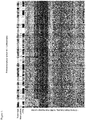
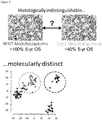
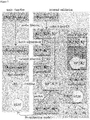
- Medulloblastoma is the most common malignant pediatric brain tumor and comprises four distinct molecular variants. These variants are known as WNT, SHH ,Group 3, and Group 4. These variants are histologically indistinguishable, but clearly separable by DNA methylation patterns (see figure 4 ). WNT tumours show activated Wnt signaling pathway and carry a favourable prognosis. SHH medulloblastoma show Hedgehog signaling pathway activation and are known to have an intermediate to good prognosis. While both WNT and SSH variants are molecularly already well characterised, the genetic programs driving the pathogenesis of Group 3 and Group 4 medulloblastoma remain largely unknown.
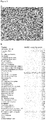
- a 1944 born female brain tumor patient was diagnosed based on histology (see figure 5A ) to suffer from an anaplastic astrocytoma WHO III.
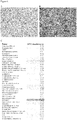
- a classifier score of 0.335 changed the diagnosis to Glioblastoma WHO IV (see figure 5B ).
Landscapes
- Health & Medical Sciences (AREA)
- Life Sciences & Earth Sciences (AREA)
- Chemical & Material Sciences (AREA)
- Engineering & Computer Science (AREA)
- Proteomics, Peptides & Aminoacids (AREA)
- Organic Chemistry (AREA)
- Physics & Mathematics (AREA)
- Genetics & Genomics (AREA)
- Analytical Chemistry (AREA)
- Bioinformatics & Cheminformatics (AREA)
- Immunology (AREA)
- Zoology (AREA)
- Wood Science & Technology (AREA)
- Pathology (AREA)
- Biophysics (AREA)
- Biotechnology (AREA)
- General Health & Medical Sciences (AREA)
- Molecular Biology (AREA)
- Medical Informatics (AREA)
- Hospice & Palliative Care (AREA)
- Biochemistry (AREA)
- Oncology (AREA)
- Microbiology (AREA)
- General Engineering & Computer Science (AREA)
- Data Mining & Analysis (AREA)
- Bioinformatics & Computational Biology (AREA)
- Evolutionary Biology (AREA)
- Spectroscopy & Molecular Physics (AREA)
- Theoretical Computer Science (AREA)
- Computer Vision & Pattern Recognition (AREA)
- Bioethics (AREA)
- Artificial Intelligence (AREA)
- Databases & Information Systems (AREA)
- Epidemiology (AREA)
- Evolutionary Computation (AREA)
- Public Health (AREA)
- Software Systems (AREA)
- Measuring Or Testing Involving Enzymes Or Micro-Organisms (AREA)
Claims (12)
- Ein in-vitro-Verfahren zur Klassifikation, Stratifizierung und/oder Diagnose einer Tumorart, wobei das Verfahren die folgenden Schritte umfasst:(a) Bereitstellen einer zu klassifizierenden Tumorprobe, die aus einem Tumor eines Patienten entnommen wurde, und, optional, Isolieren genomischer DNA daraus,(b) Bestimmen des DNA-Methylierungsstatus mehrerer unabhängiger genomischer CpG-Positionen im Genom der Tumorprobe, und(c) Klassifizieren der Tumorart der Tumorprobe auf der Grundlage der unter (b) bestimmten Methylierungsniveaus mit Hilfe einer Klassifizierungsregel,
wobei die Klassifizierungsregel durch eine Random-Forest-Analyse eines Trainingsdatensatzes erhalten wird, wobei der Trainingsdatensatz vorbestimmte Methylierungsdaten umfasst, die von mehreren vorklassifizierten Tumorarten abgeleitet sind, wobei die vorbestimmten Methylierungsdaten den Methylierungsstatus der CpG-Positionen im Genom jeder der vorklassifizierten Tumorarten umfassen, und für jede Tumorart die Anzahl der Bootstrap-Proben bis zur Minoritätsklasse heruntergerechnet wird, wobei die Minoritätsklasse die niedrigste Probengröße einer Tumorart im Trainingsdatensatz ist. - Das Verfahren nach Anspruch 1, wobei der Tumor ein Hirntumor ist, und wobei die Tumorart eine Hirntumorart ist.
- Das Verfahren nach Anspruch 1 oder 2, wobei die Bestimmung der DNA-Methylierungsniveaus mit einem genomischen Array oder Chip durchgeführt wird, der Sonden umfasst, die für die Methylierung von mindestens 1.000 CpG-Positionen spezifisch sind, wie der des HumanMethylation450k-Chip (Illumina).
- Das Verfahren nach einem der Ansprüche 1 bis 3, wobei die Bestimmung der DNA-Methylierung eine Bisulfit-Behandlung der DNA umfasst.
- Das Verfahren nach einem der Ansprüche 1 bis 4, wobei das Trainieren der Klassifizierungsregel einen vorhergehenden Schritt des Auswählens der CpG-Position, welche von allen verwendeten CpG-Positionen die reinsten Aufteilungsregeln liefert, und des Verwendens der ausgewählten CpG-Positionen als einen Trainingsdaten-Optimierungssatz zum Trainieren der Klassifizierungsregel umfasst.
- Das Verfahren nach einem der Ansprüche 1 bis 5, umfassend den weiteren Schritt (d) des Einbeziehens der Methylierungsdaten der in (c) klassifizierten Tumorprobe in den Trainingsdatensatz, um einen erweiterten Trainingsdatensatz zu erhalten, und des Berechnens einer erweiterten Klassifizierungsregel durch eine Random-Forest-Analyse auf der Grundlage des erweiterten Trainingsdatensatzes.
- Das Verfahren nach einem der Ansprüche 1 bis 6, wobei die vorbestimmten Methylierungsdaten für jede vorklassifizierte Tumorart den Methylierungsstatus an der CpG-Position von mindestens zwei oder mehr unabhängigen Proben bestimmen.
- Ein computerimplementiertes Verfahren zum Erzeugen einer Klassifizierungsregel zur Unterstützung der Klassifikation von Tumorproben bei der Krebsdiagnose, wobei das Verfahren Folgendes umfasst: Bereitstellen von DNA-Methylierungsdaten von mehreren unabhängigen genomischen CpG-Positionen von Genomen mehrerer verschiedener vorklassifizierter Tumorarten desselben Tumortyps; Berechnen eines Random-Forests von binären Entscheidungsbäumen aus den DNA-Methylierungsdaten, wobei in jedem binären Entscheidungsbaum des Random-Forests jeder Knoten eine CpG-Position ist und jedes Ende eine spezifische Tumorart hinterlässt und jede binäre Aufteilungsregel ein Methylierungsstatus an der CpG-Position ist, und umfassend einen Schritt des Herunterrechnens der Anzahl von Bootstrap-Proben für jede Tumorart auf die Minoritätsklasse, wobei die Minoritätsklasse die niedrigste Probengröße einer Tumorart in den Methylierungsdaten ist.
- Das computerimplementierte Verfahren nach Anspruch 8, wobei die verschiedenen Tumorarten ausgewählt werden aus metastasierenden Tumoren, Tumoren, die von bestimmten Geweben stammen, Tumoren in einem bestimmten Stadium, wiederkehrenden Tumoren, Tumoren mit einer bestimmten genetischen Mutation, Tumoren von Patienten mit unterschiedlichem Geschlecht, Alter oder genetischem Hintergrund.
- Das computerimplementierte Verfahren nach Anspruch 8 oder 9, umfassend einen weiteren vorhergehenden Schritt des Auswählens eines Satzes von CpG-Positionen aus allen CpG-Positionen in den Methylierungsdaten, wobei der Satz von CpG-Positionen CpG-Positionen umfasst, die die reinsten Aufspaltungsregeln in der Random-Forest-Analyse liefern, und des Verwendens der Methylierungsdaten, die dem Satz von CpG-Positionen entsprechen, als einen Trainingsdaten-Optimierungssatz, um die Klassifizierungsregel zu trainieren.
- Das computerimplementierte Verfahren nach einem der Ansprüche 8 bis 10, wobei die Methylierungsdaten für jede vorklassifizierte Tumorart den Methylierungsstatus an der CpG-Position von mindestens einer, zwei, drei, vier, fünf, sechs oder mehr unabhängigen Proben enthalten.
- Ein computerlesbares Speichermedium, auf dem computerausführbare Befehle gespeichert sind, die bei ihrer Ausführung einen Computer veranlassen, ein Verfahren nach einem der Ansprüche 8 bis 11 auszuführen.
Applications Claiming Priority (2)
| Application Number | Priority Date | Filing Date | Title |
|---|---|---|---|
| EP15158660.9A EP3067432A1 (de) | 2015-03-11 | 2015-03-11 | Auf DNA-Methylierung basierendes Verfahren zur Klassifizierung von Tumorspezies des Gehirns |
| PCT/EP2016/055337 WO2016142533A1 (en) | 2015-03-11 | 2016-03-11 | Dna-methylation based method for classifying tumor species |
Publications (2)
| Publication Number | Publication Date |
|---|---|
| EP3268492A1 EP3268492A1 (de) | 2018-01-17 |
| EP3268492B1 true EP3268492B1 (de) | 2020-09-23 |
Family
ID=52648903
Family Applications (2)
| Application Number | Title | Priority Date | Filing Date |
|---|---|---|---|
| EP15158660.9A Withdrawn EP3067432A1 (de) | 2015-03-11 | 2015-03-11 | Auf DNA-Methylierung basierendes Verfahren zur Klassifizierung von Tumorspezies des Gehirns |
| EP16710700.2A Active EP3268492B1 (de) | 2015-03-11 | 2016-03-11 | Auf dna-methylierung basierendes verfahren zur klassifizierung von tumorspezies |
Family Applications Before (1)
| Application Number | Title | Priority Date | Filing Date |
|---|---|---|---|
| EP15158660.9A Withdrawn EP3067432A1 (de) | 2015-03-11 | 2015-03-11 | Auf DNA-Methylierung basierendes Verfahren zur Klassifizierung von Tumorspezies des Gehirns |
Country Status (5)
| Country | Link |
|---|---|
| US (1) | US20180066317A1 (de) |
| EP (2) | EP3067432A1 (de) |
| CA (1) | CA2978843A1 (de) |
| ES (1) | ES2830265T3 (de) |
| WO (1) | WO2016142533A1 (de) |
Cited By (1)
| Publication number | Priority date | Publication date | Assignee | Title |
|---|---|---|---|---|
| WO2023016932A1 (en) | 2021-08-07 | 2023-02-16 | Deutsches Krebsforschungszentrum Stiftung des öffentlichen Rechts | Method for characterization of cancer |
Families Citing this family (17)
| Publication number | Priority date | Publication date | Assignee | Title |
|---|---|---|---|---|
| ES2690160B2 (es) * | 2017-05-17 | 2020-09-25 | Sant Joan De Deu Hospital | Método de clasificación en subgrupos moleculares de pacientes con meduloblastoma |
| CN107966678B (zh) * | 2017-11-03 | 2019-04-19 | 平安科技(深圳)有限公司 | 基于信号数据筛选的定位方法、电子装置及存储介质 |
| CA3090672A1 (en) * | 2018-02-06 | 2019-08-15 | The Regents Of The University Of Michigan | Systems and methods for analysis and remote interpretation of optical histologic images |
| EP3573072A1 (de) * | 2018-05-22 | 2019-11-27 | Koninklijke Philips N.V. | Durchführung einer prognostischen auswertung |
| CN109887543B (zh) * | 2019-02-27 | 2022-12-09 | 中南大学 | 一种低甲基化水平的差异甲基化位点识别方法 |
| CN110310700B (zh) * | 2019-07-02 | 2022-09-13 | 河海大学常州校区 | 基于深度学习模型的dna甲基化芯片标志位点筛选方法 |
| US11636280B2 (en) * | 2021-01-27 | 2023-04-25 | International Business Machines Corporation | Updating of statistical sets for decentralized distributed training of a machine learning model |
| CN117858954A (zh) * | 2021-04-21 | 2024-04-09 | 赫利奥健康公司 | 细胞异质性调整的克隆甲基化(chalm):甲基化定量方法 |
| EP4134452A1 (de) * | 2021-08-12 | 2023-02-15 | Deutsches Krebsforschungszentrum - Stiftung des öffentlichen Rechts / Universität Heidelberg | Verfahren zur klassifizierung von krebs |
| CA3230787A1 (en) | 2021-09-06 | 2023-03-09 | Franz-Josef Muller | Method for the diagnosis and/or classification of a disease in a subject |
| CN113774147A (zh) * | 2021-09-07 | 2021-12-10 | 暨南大学 | m6A RNA甲基化基序在制备细胞衰老诊断试剂盒中的应用 |
| CN115064211B (zh) * | 2022-08-15 | 2023-01-24 | 臻和(北京)生物科技有限公司 | 一种基于全基因组甲基化测序的ctDNA预测方法及装置 |
| CN115497561B (zh) * | 2022-09-01 | 2023-08-29 | 北京吉因加医学检验实验室有限公司 | 一种甲基化标志物分层筛选的方法及装置 |
| CN116525101A (zh) * | 2023-05-09 | 2023-08-01 | 陈梦麟 | 一种用于亚裔人脑胶质瘤辅助诊断的系统 |
| CN117316289B (zh) * | 2023-09-06 | 2024-04-26 | 复旦大学附属华山医院 | 一种中枢神经系统肿瘤的甲基化测序分型方法及系统 |
| US20250140338A1 (en) | 2023-11-01 | 2025-05-01 | The Usa, As Represented By The Secretary, Department Of Health And Human Services | Dna methylation-based cancer diagnostics |
| CN117894452B (zh) * | 2024-01-16 | 2024-07-30 | 中山大学肿瘤防治中心(中山大学附属肿瘤医院、中山大学肿瘤研究所) | 一种基于DenseFormer模型的不明原发肿瘤的原发灶预测方法及系统 |
Citations (2)
| Publication number | Priority date | Publication date | Assignee | Title |
|---|---|---|---|---|
| WO2010147601A1 (en) * | 2009-06-19 | 2010-12-23 | John Wayne Cancer Institute | Use of methylation status of mint loci as a marker for rectal cancer |
| WO2011022420A1 (en) * | 2009-08-17 | 2011-02-24 | Yale University | Methylation biomarkers and methods of use |
Family Cites Families (1)
| Publication number | Priority date | Publication date | Assignee | Title |
|---|---|---|---|---|
| WO2011112845A2 (en) * | 2010-03-11 | 2011-09-15 | Board Of Regents, The University Of Texas System | Methods and compositions related to a multi-methylation assay to predict patient outcome |
-
2015
- 2015-03-11 EP EP15158660.9A patent/EP3067432A1/de not_active Withdrawn
-
2016
- 2016-03-11 CA CA2978843A patent/CA2978843A1/en active Pending
- 2016-03-11 WO PCT/EP2016/055337 patent/WO2016142533A1/en not_active Ceased
- 2016-03-11 ES ES16710700T patent/ES2830265T3/es active Active
- 2016-03-11 EP EP16710700.2A patent/EP3268492B1/de active Active
- 2016-09-15 US US15/551,573 patent/US20180066317A1/en not_active Abandoned
Patent Citations (2)
| Publication number | Priority date | Publication date | Assignee | Title |
|---|---|---|---|---|
| WO2010147601A1 (en) * | 2009-06-19 | 2010-12-23 | John Wayne Cancer Institute | Use of methylation status of mint loci as a marker for rectal cancer |
| WO2011022420A1 (en) * | 2009-08-17 | 2011-02-24 | Yale University | Methylation biomarkers and methods of use |
Non-Patent Citations (3)
| Title |
|---|
| CANCER RESEARCH, vol. 74, no. 19, Suppl. S, October 2014 (2014-10-01), 105TH ANNUAL MEETING OF THE AMERICAN-ASSOCIATION-FOR-CANCER-RESEARCH (AACR); SAN DIEGO, CA, USA; APRIL 05 -09, 2014, pages 1889, ISSN: 0008-5472(print), DOI: 10.1158/1538-7445.AM2014-1889 * |
| DATABASE BIOSIS [online] BIOSCIENCES INFORMATION SERVICE, PHILADELPHIA, PA, US; October 2014 (2014-10-01), JONES DAVID T W ET AL: "Next-generation neuropathology - Improving diagnostic accuracy for brain tumors using DNA methylation array-based molecular profiling", XP009510533, Database accession no. PREV201600220867 * |
| KOELSCHE CHRISTIAN ET AL: "Primary intracranial spindle cell sarcoma with rhabdomyosarcoma-like features share a highly distinct methylation profile and DICER1 mutations", ACTA NEUROPATHOLOGICA, vol. 136, no. 2, August 2018 (2018-08-01), pages 327 - 337, ISSN: 0001-6322(print) * |
Cited By (1)
| Publication number | Priority date | Publication date | Assignee | Title |
|---|---|---|---|---|
| WO2023016932A1 (en) | 2021-08-07 | 2023-02-16 | Deutsches Krebsforschungszentrum Stiftung des öffentlichen Rechts | Method for characterization of cancer |
Also Published As
| Publication number | Publication date |
|---|---|
| EP3067432A1 (de) | 2016-09-14 |
| ES2830265T3 (es) | 2021-06-03 |
| US20180066317A1 (en) | 2018-03-08 |
| WO2016142533A1 (en) | 2016-09-15 |
| CA2978843A1 (en) | 2016-09-15 |
| EP3268492A1 (de) | 2018-01-17 |
Similar Documents
| Publication | Publication Date | Title |
|---|---|---|
| US20180066317A1 (en) | Dna-methylation based method for classifying tumor species | |
| US20240376527A1 (en) | Cell-free dna end characteristics | |
| US11384401B2 (en) | Detecting gastrointestinal neoplasms | |
| KR102747156B1 (ko) | 전립선 암의 검출 | |
| JP2004528837A (ja) | 造血細胞の増殖異常の解析のための方法及び核酸 | |
| EP3194624A1 (de) | Verfahren zur diagnose, prognose und überwachung von brustkrebs und reagenzien dafür | |
| JP2014519319A (ja) | エピジェネティックドメインの安定性の全般的な損失を通して癌を検出する方法およびその組成物 | |
| WO2017112738A1 (en) | Methods for measuring microsatellite instability | |
| US20240194295A1 (en) | Cellular heterogeneity-adjusted clonal methylation (chalm): a methylation quantification method | |
| JP2024537596A (ja) | 癌の分類のための方法 | |
| JP2011509688A (ja) | 前立腺癌におけるgstp1高メチル化の発見 | |
| US20220098677A1 (en) | Method for determining rcc subtypes | |
| US11542559B2 (en) | Methylation-based biomarkers in breast cancer screening, diagnosis, or prognosis | |
| US20250215502A1 (en) | Dna methylation biomarkers for detection of high-grade dysplasia and esophageal or junctional adenocarcinoma | |
| US11702692B2 (en) | Method of treatment of disease and method for quantifying the level of minimal residual disease in a subject | |
| WO2025045135A1 (en) | Eccdna remnants as a cancer biomarker | |
| HK40104046B (en) | Cell-free dna end characteristics | |
| HK40104046A (en) | Cell-free dna end characteristics | |
| JP2026509734A (ja) | マルチプレックス試料シーケンシングにおける試料バーコード | |
| Bizet | Bioinformatic inference of a prognostic epigenetic signature of immunity in breast cancers |
Legal Events
| Date | Code | Title | Description |
|---|---|---|---|
| STAA | Information on the status of an ep patent application or granted ep patent |
Free format text: STATUS: THE INTERNATIONAL PUBLICATION HAS BEEN MADE |
|
| PUAI | Public reference made under article 153(3) epc to a published international application that has entered the european phase |
Free format text: ORIGINAL CODE: 0009012 |
|
| STAA | Information on the status of an ep patent application or granted ep patent |
Free format text: STATUS: REQUEST FOR EXAMINATION WAS MADE |
|
| 17P | Request for examination filed |
Effective date: 20171009 |
|
| AK | Designated contracting states |
Kind code of ref document: A1 Designated state(s): AL AT BE BG CH CY CZ DE DK EE ES FI FR GB GR HR HU IE IS IT LI LT LU LV MC MK MT NL NO PL PT RO RS SE SI SK SM TR |
|
| AX | Request for extension of the european patent |
Extension state: BA ME |
|
| RIN1 | Information on inventor provided before grant (corrected) |
Inventor name: VON DEIMLING, ANDREAS Inventor name: PFISTER, STEFAN Inventor name: JONES, DAVID Inventor name: SILL, MARTIN Inventor name: BEWERUNGE-HUDLER, MELANIE Inventor name: CAPPER, DAVID Inventor name: SCHICK, MATTHIAS Inventor name: HOVESTADT, VOLKER |
|
| DAV | Request for validation of the european patent (deleted) | ||
| DAX | Request for extension of the european patent (deleted) | ||
| STAA | Information on the status of an ep patent application or granted ep patent |
Free format text: STATUS: EXAMINATION IS IN PROGRESS |
|
| 17Q | First examination report despatched |
Effective date: 20190124 |
|
| GRAP | Despatch of communication of intention to grant a patent |
Free format text: ORIGINAL CODE: EPIDOSNIGR1 |
|
| STAA | Information on the status of an ep patent application or granted ep patent |
Free format text: STATUS: GRANT OF PATENT IS INTENDED |
|
| INTG | Intention to grant announced |
Effective date: 20200402 |
|
| GRAS | Grant fee paid |
Free format text: ORIGINAL CODE: EPIDOSNIGR3 |
|
| GRAA | (expected) grant |
Free format text: ORIGINAL CODE: 0009210 |
|
| STAA | Information on the status of an ep patent application or granted ep patent |
Free format text: STATUS: THE PATENT HAS BEEN GRANTED |
|
| AK | Designated contracting states |
Kind code of ref document: B1 Designated state(s): AL AT BE BG CH CY CZ DE DK EE ES FI FR GB GR HR HU IE IS IT LI LT LU LV MC MK MT NL NO PL PT RO RS SE SI SK SM TR |
|
| REG | Reference to a national code |
Ref country code: GB Ref legal event code: FG4D |
|
| RIN1 | Information on inventor provided before grant (corrected) |
Inventor name: BEWERUNGE-HUDLER, MELANIE Inventor name: JONES, DAVID Inventor name: SILL, MARTIN Inventor name: VON DEIMLING, ANDREAS Inventor name: HOVESTADT, VOLKER Inventor name: PFISTER, STEFAN Inventor name: SCHICK, MATTHIAS Inventor name: CAPPER, DAVID |
|
| REG | Reference to a national code |
Ref country code: CH Ref legal event code: EP |
|
| REG | Reference to a national code |
Ref country code: DE Ref legal event code: R096 Ref document number: 602016044467 Country of ref document: DE |
|
| REG | Reference to a national code |
Ref country code: IE Ref legal event code: FG4D |
|
| REG | Reference to a national code |
Ref country code: AT Ref legal event code: REF Ref document number: 1316438 Country of ref document: AT Kind code of ref document: T Effective date: 20201015 |
|
| REG | Reference to a national code |
Ref country code: NL Ref legal event code: FP |
|
| REG | Reference to a national code |
Ref country code: NO Ref legal event code: T2 Effective date: 20200923 |
|
| PG25 | Lapsed in a contracting state [announced via postgrant information from national office to epo] |
Ref country code: GR Free format text: LAPSE BECAUSE OF FAILURE TO SUBMIT A TRANSLATION OF THE DESCRIPTION OR TO PAY THE FEE WITHIN THE PRESCRIBED TIME-LIMIT Effective date: 20201224 Ref country code: BG Free format text: LAPSE BECAUSE OF FAILURE TO SUBMIT A TRANSLATION OF THE DESCRIPTION OR TO PAY THE FEE WITHIN THE PRESCRIBED TIME-LIMIT Effective date: 20201223 Ref country code: SE Free format text: LAPSE BECAUSE OF FAILURE TO SUBMIT A TRANSLATION OF THE DESCRIPTION OR TO PAY THE FEE WITHIN THE PRESCRIBED TIME-LIMIT Effective date: 20200923 Ref country code: HR Free format text: LAPSE BECAUSE OF FAILURE TO SUBMIT A TRANSLATION OF THE DESCRIPTION OR TO PAY THE FEE WITHIN THE PRESCRIBED TIME-LIMIT Effective date: 20200923 Ref country code: FI Free format text: LAPSE BECAUSE OF FAILURE TO SUBMIT A TRANSLATION OF THE DESCRIPTION OR TO PAY THE FEE WITHIN THE PRESCRIBED TIME-LIMIT Effective date: 20200923 |
|
| REG | Reference to a national code |
Ref country code: AT Ref legal event code: MK05 Ref document number: 1316438 Country of ref document: AT Kind code of ref document: T Effective date: 20200923 |
|
| PG25 | Lapsed in a contracting state [announced via postgrant information from national office to epo] |
Ref country code: RS Free format text: LAPSE BECAUSE OF FAILURE TO SUBMIT A TRANSLATION OF THE DESCRIPTION OR TO PAY THE FEE WITHIN THE PRESCRIBED TIME-LIMIT Effective date: 20200923 Ref country code: LV Free format text: LAPSE BECAUSE OF FAILURE TO SUBMIT A TRANSLATION OF THE DESCRIPTION OR TO PAY THE FEE WITHIN THE PRESCRIBED TIME-LIMIT Effective date: 20200923 |
|
| REG | Reference to a national code |
Ref country code: LT Ref legal event code: MG4D |
|
| PG25 | Lapsed in a contracting state [announced via postgrant information from national office to epo] |
Ref country code: EE Free format text: LAPSE BECAUSE OF FAILURE TO SUBMIT A TRANSLATION OF THE DESCRIPTION OR TO PAY THE FEE WITHIN THE PRESCRIBED TIME-LIMIT Effective date: 20200923 Ref country code: LT Free format text: LAPSE BECAUSE OF FAILURE TO SUBMIT A TRANSLATION OF THE DESCRIPTION OR TO PAY THE FEE WITHIN THE PRESCRIBED TIME-LIMIT Effective date: 20200923 Ref country code: SM Free format text: LAPSE BECAUSE OF FAILURE TO SUBMIT A TRANSLATION OF THE DESCRIPTION OR TO PAY THE FEE WITHIN THE PRESCRIBED TIME-LIMIT Effective date: 20200923 Ref country code: PT Free format text: LAPSE BECAUSE OF FAILURE TO SUBMIT A TRANSLATION OF THE DESCRIPTION OR TO PAY THE FEE WITHIN THE PRESCRIBED TIME-LIMIT Effective date: 20210125 Ref country code: RO Free format text: LAPSE BECAUSE OF FAILURE TO SUBMIT A TRANSLATION OF THE DESCRIPTION OR TO PAY THE FEE WITHIN THE PRESCRIBED TIME-LIMIT Effective date: 20200923 Ref country code: CZ Free format text: LAPSE BECAUSE OF FAILURE TO SUBMIT A TRANSLATION OF THE DESCRIPTION OR TO PAY THE FEE WITHIN THE PRESCRIBED TIME-LIMIT Effective date: 20200923 |
|
| PG25 | Lapsed in a contracting state [announced via postgrant information from national office to epo] |
Ref country code: IS Free format text: LAPSE BECAUSE OF FAILURE TO SUBMIT A TRANSLATION OF THE DESCRIPTION OR TO PAY THE FEE WITHIN THE PRESCRIBED TIME-LIMIT Effective date: 20210123 Ref country code: PL Free format text: LAPSE BECAUSE OF FAILURE TO SUBMIT A TRANSLATION OF THE DESCRIPTION OR TO PAY THE FEE WITHIN THE PRESCRIBED TIME-LIMIT Effective date: 20200923 Ref country code: AT Free format text: LAPSE BECAUSE OF FAILURE TO SUBMIT A TRANSLATION OF THE DESCRIPTION OR TO PAY THE FEE WITHIN THE PRESCRIBED TIME-LIMIT Effective date: 20200923 Ref country code: AL Free format text: LAPSE BECAUSE OF FAILURE TO SUBMIT A TRANSLATION OF THE DESCRIPTION OR TO PAY THE FEE WITHIN THE PRESCRIBED TIME-LIMIT Effective date: 20200923 |
|
| REG | Reference to a national code |
Ref country code: ES Ref legal event code: FG2A Ref document number: 2830265 Country of ref document: ES Kind code of ref document: T3 Effective date: 20210603 |
|
| REG | Reference to a national code |
Ref country code: DE Ref legal event code: R097 Ref document number: 602016044467 Country of ref document: DE |
|
| PG25 | Lapsed in a contracting state [announced via postgrant information from national office to epo] |
Ref country code: SK Free format text: LAPSE BECAUSE OF FAILURE TO SUBMIT A TRANSLATION OF THE DESCRIPTION OR TO PAY THE FEE WITHIN THE PRESCRIBED TIME-LIMIT Effective date: 20200923 |
|
| PLBE | No opposition filed within time limit |
Free format text: ORIGINAL CODE: 0009261 |
|
| STAA | Information on the status of an ep patent application or granted ep patent |
Free format text: STATUS: NO OPPOSITION FILED WITHIN TIME LIMIT |
|
| PG25 | Lapsed in a contracting state [announced via postgrant information from national office to epo] |
Ref country code: DK Free format text: LAPSE BECAUSE OF FAILURE TO SUBMIT A TRANSLATION OF THE DESCRIPTION OR TO PAY THE FEE WITHIN THE PRESCRIBED TIME-LIMIT Effective date: 20200923 Ref country code: SI Free format text: LAPSE BECAUSE OF FAILURE TO SUBMIT A TRANSLATION OF THE DESCRIPTION OR TO PAY THE FEE WITHIN THE PRESCRIBED TIME-LIMIT Effective date: 20200923 |
|
| 26N | No opposition filed |
Effective date: 20210624 |
|
| PG25 | Lapsed in a contracting state [announced via postgrant information from national office to epo] |
Ref country code: MC Free format text: LAPSE BECAUSE OF FAILURE TO SUBMIT A TRANSLATION OF THE DESCRIPTION OR TO PAY THE FEE WITHIN THE PRESCRIBED TIME-LIMIT Effective date: 20200923 |
|
| REG | Reference to a national code |
Ref country code: CH Ref legal event code: PL |
|
| REG | Reference to a national code |
Ref country code: BE Ref legal event code: MM Effective date: 20210331 |
|
| PG25 | Lapsed in a contracting state [announced via postgrant information from national office to epo] |
Ref country code: IE Free format text: LAPSE BECAUSE OF NON-PAYMENT OF DUE FEES Effective date: 20210311 Ref country code: CH Free format text: LAPSE BECAUSE OF NON-PAYMENT OF DUE FEES Effective date: 20210331 Ref country code: LI Free format text: LAPSE BECAUSE OF NON-PAYMENT OF DUE FEES Effective date: 20210331 Ref country code: LU Free format text: LAPSE BECAUSE OF NON-PAYMENT OF DUE FEES Effective date: 20210311 |
|
| PG25 | Lapsed in a contracting state [announced via postgrant information from national office to epo] |
Ref country code: BE Free format text: LAPSE BECAUSE OF NON-PAYMENT OF DUE FEES Effective date: 20210331 |
|
| PG25 | Lapsed in a contracting state [announced via postgrant information from national office to epo] |
Ref country code: CY Free format text: LAPSE BECAUSE OF FAILURE TO SUBMIT A TRANSLATION OF THE DESCRIPTION OR TO PAY THE FEE WITHIN THE PRESCRIBED TIME-LIMIT Effective date: 20200923 |
|
| PG25 | Lapsed in a contracting state [announced via postgrant information from national office to epo] |
Ref country code: HU Free format text: LAPSE BECAUSE OF FAILURE TO SUBMIT A TRANSLATION OF THE DESCRIPTION OR TO PAY THE FEE WITHIN THE PRESCRIBED TIME-LIMIT; INVALID AB INITIO Effective date: 20160311 |
|
| PG25 | Lapsed in a contracting state [announced via postgrant information from national office to epo] |
Ref country code: MK Free format text: LAPSE BECAUSE OF FAILURE TO SUBMIT A TRANSLATION OF THE DESCRIPTION OR TO PAY THE FEE WITHIN THE PRESCRIBED TIME-LIMIT Effective date: 20200923 |
|
| PG25 | Lapsed in a contracting state [announced via postgrant information from national office to epo] |
Ref country code: MT Free format text: LAPSE BECAUSE OF FAILURE TO SUBMIT A TRANSLATION OF THE DESCRIPTION OR TO PAY THE FEE WITHIN THE PRESCRIBED TIME-LIMIT Effective date: 20200923 |
|
| PGFP | Annual fee paid to national office [announced via postgrant information from national office to epo] |
Ref country code: ES Payment date: 20250417 Year of fee payment: 10 |
|
| PG25 | Lapsed in a contracting state [announced via postgrant information from national office to epo] |
Ref country code: TR Free format text: LAPSE BECAUSE OF FAILURE TO SUBMIT A TRANSLATION OF THE DESCRIPTION OR TO PAY THE FEE WITHIN THE PRESCRIBED TIME-LIMIT Effective date: 20200923 |
|
| REG | Reference to a national code |
Ref country code: DE Ref legal event code: R082 Ref document number: 602016044467 Country of ref document: DE |
|
| PGFP | Annual fee paid to national office [announced via postgrant information from national office to epo] |
Ref country code: GB Payment date: 20260324 Year of fee payment: 11 |
|
| PGFP | Annual fee paid to national office [announced via postgrant information from national office to epo] |
Ref country code: DE Payment date: 20260319 Year of fee payment: 11 Ref country code: NO Payment date: 20260323 Year of fee payment: 11 |
|
| PGFP | Annual fee paid to national office [announced via postgrant information from national office to epo] |
Ref country code: IT Payment date: 20260324 Year of fee payment: 11 |
|
| PGFP | Annual fee paid to national office [announced via postgrant information from national office to epo] |
Ref country code: NL Payment date: 20260319 Year of fee payment: 11 |
|
| PGFP | Annual fee paid to national office [announced via postgrant information from national office to epo] |
Ref country code: FR Payment date: 20260320 Year of fee payment: 11 |