EP3275892A2 - Rsv-f-präfusionsantigene - Google Patents
Rsv-f-präfusionsantigene Download PDFInfo
- Publication number
- EP3275892A2 EP3275892A2 EP17191721.4A EP17191721A EP3275892A2 EP 3275892 A2 EP3275892 A2 EP 3275892A2 EP 17191721 A EP17191721 A EP 17191721A EP 3275892 A2 EP3275892 A2 EP 3275892A2
- Authority
- EP
- European Patent Office
- Prior art keywords
- fusion
- rsv
- protein
- polypeptide
- mab
- Prior art date
- Legal status (The legal status is an assumption and is not a legal conclusion. Google has not performed a legal analysis and makes no representation as to the accuracy of the status listed.)
- Granted
Links
Images
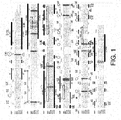


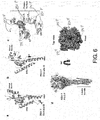

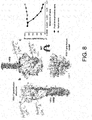


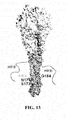




Classifications
-
- C—CHEMISTRY; METALLURGY
- C07—ORGANIC CHEMISTRY
- C07K—PEPTIDES
- C07K14/00—Peptides having more than 20 amino acids; Gastrins; Somatostatins; Melanotropins; Derivatives thereof
- C07K14/005—Peptides having more than 20 amino acids; Gastrins; Somatostatins; Melanotropins; Derivatives thereof from viruses
-
- A—HUMAN NECESSITIES
- A61—MEDICAL OR VETERINARY SCIENCE; HYGIENE
- A61K—PREPARATIONS FOR MEDICAL, DENTAL OR TOILETRY PURPOSES
- A61K39/00—Medicinal preparations containing antigens or antibodies
- A61K39/12—Viral antigens
-
- A—HUMAN NECESSITIES
- A61—MEDICAL OR VETERINARY SCIENCE; HYGIENE
- A61K—PREPARATIONS FOR MEDICAL, DENTAL OR TOILETRY PURPOSES
- A61K39/00—Medicinal preparations containing antigens or antibodies
- A61K39/12—Viral antigens
- A61K39/155—Paramyxoviridae, e.g. parainfluenza virus
-
- A—HUMAN NECESSITIES
- A61—MEDICAL OR VETERINARY SCIENCE; HYGIENE
- A61P—SPECIFIC THERAPEUTIC ACTIVITY OF CHEMICAL COMPOUNDS OR MEDICINAL PREPARATIONS
- A61P31/00—Antiinfectives, i.e. antibiotics, antiseptics, chemotherapeutics
- A61P31/12—Antivirals
- A61P31/14—Antivirals for RNA viruses
-
- A—HUMAN NECESSITIES
- A61—MEDICAL OR VETERINARY SCIENCE; HYGIENE
- A61K—PREPARATIONS FOR MEDICAL, DENTAL OR TOILETRY PURPOSES
- A61K39/00—Medicinal preparations containing antigens or antibodies
- A61K2039/51—Medicinal preparations containing antigens or antibodies comprising whole cells, viruses or DNA/RNA
- A61K2039/53—DNA (RNA) vaccination
-
- C—CHEMISTRY; METALLURGY
- C07—ORGANIC CHEMISTRY
- C07K—PEPTIDES
- C07K2319/00—Fusion polypeptide
- C07K2319/70—Fusion polypeptide containing domain for protein-protein interaction
- C07K2319/735—Fusion polypeptide containing domain for protein-protein interaction containing a domain for self-assembly, e.g. a viral coat protein (includes phage display)
-
- C—CHEMISTRY; METALLURGY
- C12—BIOCHEMISTRY; BEER; SPIRITS; WINE; VINEGAR; MICROBIOLOGY; ENZYMOLOGY; MUTATION OR GENETIC ENGINEERING
- C12N—MICROORGANISMS OR ENZYMES; COMPOSITIONS THEREOF; PROPAGATING, PRESERVING, OR MAINTAINING MICROORGANISMS; MUTATION OR GENETIC ENGINEERING; CULTURE MEDIA
- C12N2760/00—MICROORGANISMS OR ENZYMES; COMPOSITIONS THEREOF; PROPAGATING, PRESERVING, OR MAINTAINING MICROORGANISMS; MUTATION OR GENETIC ENGINEERING; CULTURE MEDIA ssRNA viruses negative-sense
- C12N2760/00011—Details
- C12N2760/18011—Paramyxoviridae
- C12N2760/18511—Pneumovirus, e.g. human respiratory syncytial virus
- C12N2760/18522—New viral proteins or individual genes, new structural or functional aspects of known viral proteins or genes
-
- C—CHEMISTRY; METALLURGY
- C12—BIOCHEMISTRY; BEER; SPIRITS; WINE; VINEGAR; MICROBIOLOGY; ENZYMOLOGY; MUTATION OR GENETIC ENGINEERING
- C12N—MICROORGANISMS OR ENZYMES; COMPOSITIONS THEREOF; PROPAGATING, PRESERVING, OR MAINTAINING MICROORGANISMS; MUTATION OR GENETIC ENGINEERING; CULTURE MEDIA
- C12N2760/00—MICROORGANISMS OR ENZYMES; COMPOSITIONS THEREOF; PROPAGATING, PRESERVING, OR MAINTAINING MICROORGANISMS; MUTATION OR GENETIC ENGINEERING; CULTURE MEDIA ssRNA viruses negative-sense
- C12N2760/00011—Details
- C12N2760/18011—Paramyxoviridae
- C12N2760/18511—Pneumovirus, e.g. human respiratory syncytial virus
- C12N2760/18534—Use of virus or viral component as vaccine, e.g. live-attenuated or inactivated virus, VLP, viral protein
Definitions
- Respiratory syncytial virus is an enveloped non-segmented negative-strand RNA virus in the family Paramyxoviridae , genus Pneumovirus. It is the most common cause of bronchiolitis and pneumonia among children in their first year of life. RSV also causes repeated infections including severe lower respiratory tract disease, which may occur at any age, especially among the elderly or those with compromised cardiac, pulmonary, or immune systems.
- paramyxoviruses such as RSV, like other enveloped viruses such as influenza virus and HIV, require fusion of the viral membrane with a host cell's membrane.
- RSV conserved fusion protein
- the conserved fusion protein fuses the viral and cellular membranes by coupling irreversible protein refolding with juxtaposition of the membranes.
- the RSV F protein initially folds into a "pre-fusion” conformation. During cell entry, the pre-fusion conformation undergoes refolding and conformational changes to its "post-fusion" conformation.
- the RSV F protein is translated from mRNA into an approximately 574 amino acid protein designated F 0 .
- Post-translational processing of F 0 includes removal of an N-terminal signal peptide by a signal peptidase in the endoplasmic reticulum.
- F 0 is also cleaved at two sites (109/110 and 136/137) by cellular proteases (in particular furin) in the trans-Golgi. This cleavage results in the removal of a short intervening sequence and generates two subunits designated F 1 ( ⁇ 50 kDa; C-terminal; approximately residues 137-574) and F 2 ( ⁇ 20 kDa; N- terminal; approximately residues 1-109) that remain associated with each other.
- F 1 contains a hydrophobic fusion peptide at its N-terminus and also two amphipathic heptad-repeat regions (HRA and HRB). HRA is near the fusion peptide and HRB is near the transmembrane domain. Three F 1 -F 2 heterodimers are assembled as homotrimers of F 1 -F 2 on the surface of the virion.
- a vaccine against RSV infection is not currently available, but is desired.
- Vaccine candidates based on the chief RSV neutralization antigen, the F glycoprotein have foundered due to problems with stability, purity, reproducibility, and potency. Crystal structures of related parainfluenza F glycoproteins have revealed a large conformational change between the pre-fusion and post-fusion states. The magnitude of the rearrangement suggested that post-fusion F antigens would not efficiently elicit neutralizing antibodies, which presumably must bind epitopes exposed on the pre-fusion conformation. Accordingly, efforts to produce a vaccine against RSV have focused on developing subunit vaccines that contain pre-fusion forms of RSV F. (See, e.g., WO 2010/149745 , WO 2010/149743 , WO 2009/079796 ) This focus on pre-fusion forms of RSV F has been corroborated by available models of RSV F.
- Pre-fusion F is a "metastable" structure that readily rearranges into the lower energy post-fusion state, which then aggregates due to exposure of a hydrophobic fusion peptide ( Begona Ruiz-Arguello, M. et al. Virology 298, 317-326 (2002 ) (142)). Large structural differences between the lollipop-shaped pre-fusion F trimer and the crutch-shaped post-fusion F trimer are apparent even at the resolution of electron microscopy of negatively stained specimens, suggesting that pre-fusion and post-fusion F may be antigenically distinct ( Calder, L. J. et al. Virology 271, 122-131 (2000 ) (143)).
- the invention relates to pre-fusion respiratory syncytial virus (RSV) F polypeptides and pre-fusion chimeric F polypeptides.
- RSV respiratory syncytial virus
- the pre-fusion respiratory syncytial virus (RSV) F polypeptide comprises at least two introduced cysteine residues that are in close proximity to one another, and form a disulfide bond that stabilizes the pre-fusion RSV F polypeptide.
- the HRB region contains an introduced cysteine residue and the DI and/or DII region contain an introduced cysteine residue, and a disulfide bond is formed between the introduced cysteine residue in the HRB region and the introduced cysteine residue in the D1 or DII region.
- the HRA region contains an introduced cysteine residue and the DIII region contains an introduced cysteine residue, and a disulfide bond is formed between the introduced cysteine residue in the HRA region and the introduced cysteine residue in the III region. In other embodiments, the HRA region contains at least 2 introduced cysteine residues, and a disulfide bond is formed between the introduced cysteine residues in the HRA region.
- the pre-fusion respiratory syncytial virus (RSV) F polypeptide comprises a post-fusion modification selected from the group consisting of deletion of the HRA helix, deletion of the HRB helix, introduction of point mutations, addition of glycosylation sites and combinations thereof, wherein said post-fusion modification destabilizes the post-fusion conformation.
- the destabilizing post-fusion modification is deletion of the HRB helix, in whole or in part. If desired, the destabilizing post-fusion modification can further comprise deletion of the fusion peptide, in whole or in part.
- the destabilizing post-fusion modification includes addition of a glycosylation site, such as glycosylation on a residue selected from the group consisting of position 173, position 175 and position 184.
- the invention is a pre-fusion respiratory syncytial virus (RSV) F protein comprising three RSV F monomers, wherein at least two of the monomers contain an introduced cysteine residue, the introduced cysteine residues are in close proximity to one another and form a disulfide bond that stabilizes the pre-fusion RSV F protein.
- RSV respiratory syncytial virus
- the invention is a chimeric pre-fusion F protein comprising a stabilized F protein from a virus other than RSV, such as parainfluenza virus F polypeptide or a metapneumovirus virus F polypeptide, that contains one or more neutralizing epitope of RSV F.
- a virus other than RSV such as parainfluenza virus F polypeptide or a metapneumovirus virus F polypeptide, that contains one or more neutralizing epitope of RSV F.
- Suitable neutralizing epitopes can be selected from the group consisting of the epitopes that are recognized by motavizumab, palivizumab, mAb 11, mAb 151, mAb 1129, mAb 1153, mAb 1200, mAb 1214, mAb 1237, mAb 47F, mAb 7C2, mAb B4, Fab 19, mAb AK13A2, mAb 7.936, mAb 9.936, mAb 19, mAb 20, mAb 101F and combinations thereof.
- the invention relates to methods for inducing an anti-respiratory syncytial virus (RSV) immune response in a subject, comprising administering to the subject an effective amount of an immunogenic composition comprising a pre-fusion RSV F protein or a pre-fusion chimeric F protein.
- RSV anti-respiratory syncytial virus
- the induced immune response is characterized by neutralizing antibodies to RSV and/or protective immunity against RSV.
- the invention relates to a method for inducing or raising neutralizing anti-respiratory syncytial virus (RSV) F protein antibodies in a subject, comprising administering to the subject an effective amount of an immunogenic composition comprising a pre-fusion RSV F protein or a pre-fusion chimeric F protein.
- RSV anti-respiratory syncytial virus
- the invention relates to a method for inducing or raising protective immunity against respiratory syncytial virus (RSV) in a subject, comprising administering to the subject an effective amount of an immunogenic composition comprising a pre-fusion RSV F protein or a pre-fusion chimeric F protein.
- RSV respiratory syncytial virus
- the invention relates to immunogenic compositions comprising a pre-fusion respiratory syncytial virus (RSV) F protein or a pre-fusion chimeric F protein.
- RSV respiratory syncytial virus
- the pre-fusion RSV F protein that is used in the invention can be full length or truncated, such as a soluble ectodomain that lacks the cytoplasmic and transmembrane domains.
- the pre-fusion RSV F protein e.g., full length or soluble ectodomain, may comprise functional furin cleavage sites at positions 109/110 and 136/137.
- that pre-fusion RSV F protein e.g., full length or soluble ecto-domain
- the pre-fusion RSV F protein can be administered with or without an adjuvant as desired, and the immunogenic composition can comprise an adjuvant if desired.
- pre-fusion RSV F proteins are RSV F proteins that share general structural architecture more similar to the PIV5 pre-fusion structure rather than the RSV F post-fusion structure.
- Pre-fusion RSV F proteins include the following characteristics: the HRA region is packed against domain III in the RSV F head region and/or the HRB region forms a trimer coil-coil stalk in proximity to domains I and II rather than associating with the HRA region in the context of the 6-helix bundle.
- post-fusion conformation of RSV F protein are RSV F proteins that share more general structural architecture with the RSV F post-fusion structure rather than the PIV5 pre-fusion structure.
- Post-fusion RSV F proteins include an HRA-HRB 6-helix bundle.
- HRA region in prefusion RSV F is approximately residues 137-239 of RSV F protein (SEQ ID NOS: 1 and 2) and comprises the fusion peptide, helix ⁇ 1, helix ⁇ 2, helix ⁇ 3, helix ⁇ 4, strand ⁇ 1 and strand ⁇ 2. See, FIG. 9B .
- the HRA helix in post fusion RSV F is formed by approximately residues 155-226 of RSV F protein (SEQ ID NOS: 1 and 2).
- the fusion peptide is defined by residues 137-154 of RSV F protein (SEQ ID NOS: 1 and 2).
- helix ⁇ 1 in the prefusion RSV F HRA region is formed by approximately residues 145-157 of RSV F protein (SEQ ID NOS: 1 and 2).
- helix ⁇ 2 in the prefusion RSV F HRA region is formed by approximately residues 158-167 of RSV F protein (SEQ ID NOS: 1 and 2).
- helix ⁇ 3 in the prefusion RSV F HRA region is formed by approximately residues 168-176 of RSV F protein (SEQ ID NOS: 1 and 2).
- helix ⁇ 4 in the prefusion RSV F HRA region is formed by approximately residues 194-212 of RSV F protein (SEQ ID NOS: 1 and 2).
- strand ⁇ 1 in the prefusion RSV F HRA region is formed by approximately residues 177-184 of RSV F protein (SEQ ID NOS: 1 and 2).
- strand ⁇ 2 in the prefusion RSV F HRA region is formed by approximately residues 185-193 of RSV F protein (SEQ ID NOS: 1 and 2).
- HRB region in RSV F is approximately residues 461-515 of RSV F protein (SEQ ID NOS: 1 and 2) and includes the HRB helix and the HRB linker
- the HRB helix in RSV F is formed by approximately residues 485-515 of RSV F protein (SEQ ID NOS: 1 and 2).
- the HRB linker in RSV F is formed by approximately residues 461 - 484 of RSV F protein (SEQ ID NOS: 1 and 2).
- domain I is formed by approximately residues 26 - 50 and 309 - 401 of RSV F protein (SEQ ID NOS: 1 and 2).
- domain II is formed by approximately residues 400 - 460 of RSV F protein (SEQ ID NOS: 1 and 2).
- domain III is formed by approximately residues 51-98 and 206 - 308, or residues 51 - 308 of RSV F protein (SEQ ID NOS: 1 and 2).
- a purified protein or polypeptide is a protein or polypeptide which is recombinantly or synthetically produced, or produced by its natural host, and has been isolated from other components of the recombinant or synthetic production system or natural host such that the amount of the protein relative to other macromolecular components present in a composition is substantially higher than that present in a crude preparation.
- a purified protein will be at least about 50% homogeneous and more preferably at least about 75%, at least about 80%, at least about 85%, at least about 90%, at least about 95% or substantially homogeneous.
- substantially free of lipids and lipoproteins refers to compositions, proteins and polypeptides that are at least about 95% free of lipids and lipoproteins on a mass basis when protein and/or polypeptide (e.g., RSV F polypeptide) purity is observed on an SDS PAGE gel and total protein content is measured using either UV280 absorption or BCA analysis, and lipid and lipoprotein content is determined using the Phospholipase C assay (Wako, code no. 433-36201).
- polypeptide e.g., RSV F polypeptide
- close proximity refers to a distance of not more than about 10 ⁇ , not more than about 8 ⁇ , not more than about 6 ⁇ , not more than about 4 ⁇ , or not more than about 2 ⁇ .
- the distance between the alpha carbons of the amino acid residues are is more than about 10 ⁇ , not more than about 8 ⁇ , not more than about 6 ⁇ , not more than about 4 ⁇ , or not more than about 2 ⁇ .
- RSV F protein suitable for use in this invention are described herein with reference to particular amino acids that are identified by the position of the amino acid in the sequence of RSV F protein from the A2 strain (SEQ ID NO:1).
- RSV F proteins can have the amino acid sequence of the F protein from the A2 strain or any other desired strain.
- the amino acids of the F protein are to be numbered with reference to the numbering of the F protein from the A2 strain, with the insertion of gaps as needed. This can be achieved by aligning the sequence of any desired RSV F protein with the F protein of the strain A2. Sequence alignments are preferably produced using the algorithm disclosed by Corpet, Nucleic Acids Research, 1998, 16(22):10881-10890 , using default parameters (Blossum 62 symbol comparison table, gap open penalty: 12, gap extension penalty: 2).
- the 3.2 ⁇ x-ray crystal structure of a post-fusion form of RSV F protein has been determined.
- a model of the pre-fusion form of RSV F protein was made by comparing the RSV F post-fusion x-ray crystal structure to the known structures of the pre- and post-fusion parainfluenza virus F proteins.
- This model of the pre-fusion form of RSV F reveals structural features that differ from those of prior models of pre-fusion RSV F and allows for rational structure-based design of stabilized pre-fusion forms of RSV F.
- the invention relates to pre-fusion respiratory syncytial virus F (RSV F) polypeptides and/or proteins, and immunogenic compositions comprising pre-fusion RSV F polypeptides and/or proteins.
- RSV F respiratory syncytial virus F
- the invention also relates to methods and use of pre-fusion RSV F polypeptides and/or proteins for inducing an immune response, and or by protective immunity against RSV.
- the invention also relates to nucleic acids that encode pre-fusion RSV F polypeptides and/or proteins.
- the immunogenic compositions comprise pre-fusion RSV F polypeptides and/or proteins that elicit neutralizing antibodies.
- Pre-fusion and post-fusion PIV F structures reveal en bloc shifts of domains and large rearrangements of HRA and HRB.
- the non-rearranging parts superimpose well.
- Superimposing post-fusion RSV F domains on their pre-fusion PIV5 F counterparts did not result in major clashes and positioned all the pairs of cysteines that form interdomain disulfide bonds in proximity to each other.
- the pre-fusion RSV F model obtained by thus combining information from the post-fusion RSV F x-ray crystal structure and the pre-fusion PIV5 F structure revealed a feature not apparent from prior homology models of pre-fusion RSV F based solely on the PIV5 pre-fusion structure ( McLellan et al NSMB 2010 (141)).
- the helices of the Palivizumab/Motivizumab epitope are exposed on the surface of the pre-fusion RSV F trimer model, as they are on post-fusion RSV F trimer x-ray crystal structure ( Figure 9 ).
- the pre-fusion model disclosed herein which is based on the RSV F post-fusion x-ray crystal structure and the PIV5 prefusion structure (Yin et al, 2006 (145)), shows that the elongated HRA helix of the post-fusion RSV F (residues 137-212) folds into strands and helices similar to the PIV5 pre-fusion crystal structure.
- the fusion peptide of RSV F, residues 137-154, forms a coil and helix that is packed into the RSV F pre-fusion head.
- helix a1 is approximately residues 145-157
- helix a2 is approximately residues 158-167
- helix a3 is approximately residues 168-176
- helix a4 is approximately residues 194-212.
- Two strands are formed; strand b1 is approximately residues 177-184, strand b2 is approximately residues 185-193 ( Figure 9 ).
- the invention includes pre-fusion RSV F polypeptides and proteins and immunogenic compositions that contain pre-fusion RSV F polypeptides and proteins.
- the RSV F protein and polypeptides can contain 1 or more amino acid replacements, deletions and/or additions that stabilize the pre-fusion conformation or destabilize the post-fusion conformation, for example, a pre-fusion RSV F stabilized with disulfide bonds, or a pre-fusion RSV F formed by destabilizing the post-fusion conformation.
- the RSV F pre-fusion model may be used as a guide to select amino acid residues that are in close proximity to each other in the pre-fusion conformation and that are no longer in close proximity in the post-fusion conformation.
- amino acids may be mutated to cysteine residues to allow disulfide formation that stabilizes the prefusion conformation, for example by preventing the HRB helix from associating with the HRA helix, thus preventing refolding to the post-fusion conformation.
- a stabilized pre-fusion RSV F protein of the invention may comprise a disulfide bond between any two structural elements, or between one structural element and the remainder of the RSV F protein, or between a structural element of one subunit of a trimer and a structural element of another subunit of the same trimer.
- a first amino acid in one structural element and a second amino acid that is in a different structural element, or the same structural element on a separate monomer, and that is also in close proximity to the first amino acid in the prefusion model are selected for replacement with cysteine.
- the distance between the residues can be less than about 10 ⁇ , less than about 8 ⁇ , less than about 6 ⁇ , less than about 5 ⁇ , less than about 4 ⁇ , or less than about 3 ⁇ .
- the cysteine replacements of the first amino acid and the second amino acid, and a disulfide bond between them can be modeled.
- the length of the modeled disulfide bond in some embodiments, does not exactly match the ⁇ 2 ⁇ length considered to be optimal for disulfide bonds.
- the modeled disulfide bond length (distance between sulfur nuclei) is about 0.5 ⁇ -3.5 ⁇ , about 1.0 ⁇ -3.0 ⁇ , or about 1.5 ⁇ -2.5 ⁇ , which, due to structural flexibility, are expected to form disulfide bonds in the protein.
- pre-fusion RSV F protein may be stabilized in the pre-fusion conformation through the introduction of at least one cysteine mutation in a first structural element in close proximity to at least one other cysteine (natural or introduced) in a second structural element or the remaining RSV F head region. Disulfide bonds form between the introduced cysteine that prevent the post-fusion HRA-HRB six-helix bundle from forming.
- pre-fusion RSV F protein may be stabilized in the pre-fusion conformation through the introduction of at least one cysteine mutation in the HRA helix region, HRB helix region, the fusion peptide, helix ⁇ 1, helix ⁇ 2, helix ⁇ 3, helix ⁇ 4, strand ⁇ 1, strand ⁇ 2, DI, DII, or DIII in close proximity to at least one other cysteine (natural or introduced) in a different structural region (e.g., selected from the HRA helix region, HRB helix region, the fusion peptide, helix ⁇ 1, helix ⁇ 2, helix ⁇ 3, helix ⁇ 4, strand ⁇ 1, strand ⁇ 2, DI, DII, or DIII), thereby forming one or more disulfide bridges that would prevent the post-fusion HRA-HRB six-helix bundle from forming.
- a different structural region e.g., selected from the HRA helix region, HRB helix region, the
- the cysteines may be introduced to the HRB or the HRB linker to create disulfide bonds between the cysteines.
- one or more cysteines may be introduced to the HRB linker and helix region (approximately residues 452 to 515) to form disulfides with portions of the RSV F head region.
- a disulfide bond between the HRB linker or helix and the remainder of the RSV F protein may be used to stabilize the protein in the pre-fusion conformation.
- a disulfide bridge is formed between the HRB pre-fusion stalk and the DI or DII region at the "top" of the head (e.g., M396C + F483C).
- the pre-fusion RSV F protein comprises two cysteine mutations, M396C and F483C, thereby comprising a disulfide bond between the HRB pre-fusion stalk and the DI region.
- a disulfide bridge is formed between the HRA region and DIII region.
- the RSV F protein can contain amino acid replacements selected from the group consisting of V56C + V164C, I57C + S190C, T58C + V164C, N165C + V296C, K168C + V296C, and combinations thereof.
- the pre-fusion RSV F protein comprises a first cysteine mutation in the HRA region, and a second cysteine (natural or introduced) in the fusion peptide, helix ⁇ 1, helix ⁇ 2, helix ⁇ 3, helix ⁇ 4, strand ⁇ 1, strand ⁇ 2 of the pre-fusion HRA region, or DIII.
- the protein comprises a disulfide bond between the first and second cysteine that prevents the post fusion HRA-HRB six-helix bundle from forming.
- the pre-fusion RSV F protein comprises a first cysteine mutation in the HRB helix region, and a second cysteine (natural or introduced) in DI or DII.
- the protein comprises a disulfide bond between the first and second cysteine that prevents the post-fusion HRA-HRB six-helix bundle from forming.
- the pre-fusion RSV F protein comprises a first cysteine mutation in the fusion peptide, and a second cysteine (natural or introduced) in the HRA region, helix ⁇ 1, helix ⁇ 2, helix ⁇ 3, helix ⁇ 4, strand ⁇ 1, strand ⁇ 2 or DIII.
- the protein comprises a disulfide bond between the first and second cysteine that prevents the post-fusion HRA elongated helix from forming.
- the pre-fusion RSV F protein comprises a first cysteine mutation in the helix ⁇ 1, and a second cysteine (natural or introduced) in the HRA region, the fusion peptide, helix ⁇ 2, helix ⁇ 3, helix ⁇ 4, strand ⁇ 1, strand ⁇ 2, or DIII.
- the protein comprises a disulfide bond between the first and second cysteine that prevents the post-fusion HRA-HRB six-helix bundle from forming.
- the pre-fusion RSV F protein comprises a first cysteine mutation in the helix ⁇ 2, and a second cysteine (natural or introduced) in the HRA region, the fusion peptide, helix ⁇ 1, helix ⁇ 3, helix ⁇ 4, strand ⁇ 1, strand ⁇ 2, or DIII.
- the protein comprises a disulfide bond between the first and second cysteine that prevents the post-fusion HRA-HRB six-helix bundle from forming.
- the pre-fusion RSV F protein comprises a first cysteine mutation in the helix ⁇ 3, and a second cysteine (natural or introduced) in the HRA region, the fusion peptide, helix ⁇ 1, helix ⁇ 2, helix ⁇ 4, strand ⁇ 1, strand ⁇ 2, or DIII.
- the protein comprises a disulfide bond between the first and second cysteine that prevents the post-fusion HRA-HRB six-helix bundle from forming.
- the pre-fusion RSV F protein comprises a first cysteine mutation in the helix ⁇ 4, and a second cysteine (natural or introduced) in the HRA region, the fusion peptide, helix ⁇ 1, helix ⁇ 2, helix ⁇ 3, strand ⁇ 1, strand ⁇ 2, or DIII.
- the protein comprises a disulfide bond between the first and second cysteine that prevents the post-fusion HRA-HRB six-helix bundle from forming.
- the pre-fusion RSV F protein comprises a first cysteine mutation in the strand ⁇ 1, and a second cysteine (natural or introduced) in the HRA region, the fusion peptide, helix ⁇ 1, helix ⁇ 2, helix ⁇ 3, helix ⁇ 4, strand ⁇ 2, or DIII.
- the protein comprises a disulfide bond between the first and second cysteine that prevents the post-fusion HRA-HRB six-helix bundle from forming.
- the pre-fusion RSV F protein comprises a first cysteine mutation in the strand ⁇ 2, and a cysteine (natural or introduced) in the HRA helix region, the fusion peptide, helix ⁇ 1, helix ⁇ 2, helix ⁇ 3, helix ⁇ 4, strand ⁇ 1, DI, DII, or DIII.
- the protein comprises a disulfide bond between the first and second cysteine that prevents the post-fusion HRA-HRB six-helix bundle from forming.
- the pre-fusion RSV F protein comprises a first cysteine mutation in the DI region, and a second cysteine (natural or introduced) in the HRB helix region.
- the protein comprises a disulfide bond between the first and second cysteine that prevents the post-fusion HRA-HRB six-helix bundle from forming.
- the pre-fusion RSV F protein comprises a first cysteine mutation in the DII region, and a second cysteine (natural or introduced) in the HRB helix region.
- the protein comprises a disulfide bond between the first and second cysteine that prevents the post-fusion HRA-HRB six-helix bundle from forming.
- the pre-fusion RSV F protein comprises a first cysteine mutation in the DIII region, and a second cysteine (natural or introduced) in the HRA helix region.
- the protein comprises a disulfide bond between the first and second cysteine that prevents the post-fusion HRA-HRB six-helix bundle from forming.
- the pre-fusion RSV F protein comprises a first introduced cysteine in the HRA helix region, HRB helix region, the fusion peptide, helix ⁇ 1, helix ⁇ 2, helix ⁇ 3, helix ⁇ 4, strand ⁇ 1, strand ⁇ 2, DI, DII, or DIII region and a second cysteine (natural or introduced) in any other region of the RSV F protein that is in close proximity to the introduced cysteine.
- the protein comprises a disulfide bond between the first and second cysteine that prevents the post-fusion HRA-HRB six-helix bundle from forming.
- the pre-fusion RSV F protein comprises two cysteine mutations selected from the group consisting of V56C + V164C, I57C + S190C, T58C+V164C, N165C+V296C, and K168C + V296C, and combinations thereof, thereby comprising a disulfide bridge between the HRA region and the DIII region.
- the pre-fusion RSV F protein comprises two cysteine mutations, V56C and V164C, thereby comprising a disulfide bridge between the HRA region and the DIII region.
- the pre-fusion RSV F protein comprises two cysteine mutations, I57C and S190C, thereby comprising a disulfide bridge between the HRA region and the DIII region.
- the pre-fusion RSV F protein comprises two cysteine mutations, T58C and V164C, thereby comprising a disulfide bridge between the HRA region and the DIII region.
- the pre-fusion RSV F protein comprises two cysteine mutations, N165C and T296C, thereby comprising a disulfide bridge between the HRA region and the DIII region.
- the pre-fusion RSV F protein comprises two cysteine mutations, K168C and T296C, thereby comprising a disulfide bridge between the HRA region and the DIII region.
- the pre-fusion RSV F protein comprises two cysteine mutations, M396C + F483C, thereby comprising a disulfide bridge between the HRB region and the DII region.
- the RSV F pre-fusion protein of the present invention is stabilized in the pre-fusion conformation by mutations that stabilize the pre-fusion subunit, which forms trimers.
- the RSV F pre-fusion protein of the present invention is a trimer of RSV F monomers, and pre-fusion conformation is stabilized by one or more disulfide bonds between cysteine residues that are introduced into different monomers.
- RSV F monomers that contain introduced cysteine residues that stabilize the pre-fusion conformation are presented below (SEQ ID NOS: 4-9).
- the presented sequences contain a signal peptide and a HIS tag (GGSAGSGHHHHHH; SEQ ID NO:3).
- the pre-fusion RSV F protein of the invention can contain any of the amino acid sequences shown below, with or without the signal peptide and/or HIS tag.
- a major feature of the RSV F post-fusion structure is the 6-helix bundle in the stalk region.
- the three HRA helices and the three HRB helices form a very stable 6-helix bundle.
- An alternative strategy for producing a stabilized pre-fusion RSV F protein of the invention is by destabilizing the post-fusion 6-helix bundle, and/or preventing the 6-helix bundle formation (e.g., through deletion of the HRB helix, introduction of point mutations, addition of glycosylation or other modification sites).
- the 6-helix bundle formation may be prevented by deleting the HRA helix or the HRB helix.
- the HRB helical region is deleted or mutated to prevent formation of the post-fusion conformation.
- the HRB region forms the stalk of the RSV F pre-fusion conformation, is in close proximity to the viral membrane and likely does not contain important neutralizing epitopes. Deletion of the HRB helix (residues 484 and C-terminal) may prevent the refolding of the RSV F protein from the pre-fusion state to the post-fusion state.
- a stabilized pre-fusion RSV F protein of the invention may comprise the RSV ectodomain sequence with the HRB region deleted or mutated, and preferably further comprises an additional mutation or deletion to the remaining ectodomain sequence.
- the RSV ectodomain may comprise one or more introduced cysteines to create disulfide bridges that stabilize the prefusion structure as described herein, mutated or deleted furin cleavage sites, mutated or deleted fusion peptide sequence, or other mutations previously described in WO 2011/008974 , incorporated herein in its entirety.
- the RSV ectodomain may be the ectodomain of a naturally occurring RSV F protein, or it may contain mutations in addition to the deletions and/or mutations of the HRA or HRB region.
- the stabilized pre-fusion RSV F protein comprises an ectodomain of a naturally occurring RSV F protein in which the HRB region is deleted and one or more mutations that prevent cleavage at one or both of the furin cleavage sites (i.e, amino acids 109 and 136 of SEQ ID NOS:1 and 2) are present.
- the stabilized pre-fusion RSV F protein comprises an ectodomain of a naturally occurring RSV F protein in which the HRB region is deleted and the fusion peptide is mutated (amino acids 137 and 153 of SEQ ID NOS: 1 or 2).
- this region can be deleted in whole or in part.
- the stabilized pre-fusion RSV F protein comprises a wild-type RSV ectodomain in which the HRB region and the fusion peptide is deleted, in whole or in part.
- the stabilized pre-fusion RSV F protein comprises a wild-type RSV ectodomain in which the HRB region is deleted and an oligomerization sequence has been added.
- an oligomerization sequence is present, it is preferably a trimerization sequence.
- Suitable oligomerization sequences are well known in the art and include, for example, the coiled coil of the yeast GCN4 leucine zipper protein, trimerizing sequence from bacteriophage T4 fibritin ("foldon”), and the trimer domain of influenza HA.
- the stabilized pre-fusion RSV F protein comprises a wild-type RSV ectodomain in which the HRB region is deleted and the p27 region is mutated (amino acids 110-136 of SEQ ID NOS: 1 or 2), including deletion of the p27 region in whole or in part.
- lysine and/or arginine residues in the p27 region can be substituted or deleted.
- the stabilized pre-fusion RSV F protein comprises a wild-type RSV ectodomain in which the HRB region is deleted and an amino acid sequence that provides a protease cleavage site is added.
- the amino acid sequence that provides a protease cleavage site will be located within about 60 amino acids, about 50 amino acids, about 40 amino acids, about 30 amino acids, about 20 amino acids, about 10 amino acids, or substantially adjacent to the amino terminus of the transmembrane domain (amino acid 525 of SEQ ID NO: 1 or 2).
- RSV F monomer in which the fusion peptide and HRB are deleted to stabilize the pre-fusion conformation is presented below (SEQ ID NO: 10).
- the presented sequence contains a signal peptide and a HIS tag (GGSAGSGHHHHHH; SEQ ID NO:3).
- the pre-fusion RSV F protein of the invention can contain the amino acid sequences shown below, with or without the signal peptide and/or HIS tag. >RSV F delHRB fusion peptide deletion HIS (SEQ ID NO: 10)
- the stabilized pre-fusion RSV F protein of the invention may also be formed by hindering 6-helix bundle formation in the HRA or HRB regions (approximately residues 154-212 and 484 to 513, respectively) through engineered point mutations or introduction of glycosylation sites (e.g., AsnXaaSer/Thr; SEQ ID NO: 11) or other modification sites (e.g., lipidation, phosphorylation).
- glycosylation sites e.g., AsnXaaSer/Thr; SEQ ID NO: 11
- Glycosylation sites, or other post-translational modification sites or point mutations which interfere with 6-helix bundle formation through electrostatic or steric hindrance, can be introduced through the HRA or HRB helical regions. Glycosylation can interfere with 6-helix bundle formation and prevent flipping of the RSV F construct to the post-fusion conformation.
- a stabilized pre-fusion RSV F protein of the invention may comprise one or more mutations that form one or more glycosylation sites in the HRA or HRB helical regions.
- the RSV F protein may contain mutations or deletions in addition to those that introduce the glycosylation sites in the HRA or HRB helical regions.
- the RSV F protein comprises S173N and N175T mutations and the pre-fusion RSV F protein has a glycosylation site on current serine residue 173.
- the RSV F protein comprises a mutation A177T, so that the pre-fusion RSV F protein has a glycosylation site on current residue N175.
- the RSV F protein comprises G184N and S186T mutations and the pre-fusion RSV F protein has a glycosylation site on current residue G184.
- the invention also relates to chimeric pre-fusion F proteins that contain neutralizing epitopes from RSV F protein.
- the chimeric pre-fusion F proteins comprise a stabilized F protein from a different virus, such as the Parainfluenza Virus (PIV1, PIV2, PIV3, PIV4, PIV5), Newcastle Disease Virus (NDV), Sendai virus (SeV), Hendra Virus, Nipah Virus (NiV), human metapneumovirus or avian metapneumovirus, in which portions that are exposed on the surface of the protein are replaced with corresponding portions of RSV F.
- the portions contain neutralizing epitopes of RSV F.
- any non-RSV (e.g., parainfluenza virus or metapneumovirus) F protein that is stabilized in the pre-fusion conformation may be used as a template for the protein (i.e., an uncleaved NDV F-GCN fusion protein).
- the SV5 of PIV5 pre-fusion F protein described by Yin et al., 2006 (145) or the NDV pre-fusion F described by Swanson et al, 2010 (146) may be used in the chimeric F protein construct.
- the template may then be mutated to introduce known or suspected neutralizing epitopes of RSV F.
- the protein may have a pre-fusion F structure exhibiting the neutralizing epitopes, but not non-neutralizing epitopes, of RSV F. A clear benefit to this construct is that it would not raise non-neutralizing RSV F antibodies.
- a pre-fusion chimera protein of the invention may comprise a parainfluenza virus F protein, stabilized in the pre-fusion conformation that is mutated to introduce neutralizing epitopes of RSV F.
- the parainfluenza virus F protein may be any parainfluenza virus F protein, preferably the SV5 of PIV5 pre-fusion F protein, described by Yin et al., 2006 (147) or the NDV pre-fusion F described by Swanson et al, 2010 (146).
- Exemplary neutralizing epitopes that may be introduced by mutation include the epitopes disclosed in Table 1.
- the amino acids that form the epitopes recognized by the antibodies listed in Table 1 can be introduced into the corresponding positions (e.g., identified by structural comparison, such as structure based alignment) of a non RSV-F protein (e.g., parainfluenza virus F protein or metapneumovirus F protein) that is stabilized in the pre-fusion conformation.
- a non RSV-F protein e.g., parainfluenza virus F protein or metapneumovirus F protein
- the chimeric F protein can contain the RSV F site A epitope or site C epitope.
- the chimeric F protein contains one or more RSV F residues selected from the amino acid residues at positions 262 - 276 of RSV F.
- the chimeric F protein contains one or more RSV F residues selected from the amino acid residues at positions 429 - 447 of RSV F.
- Table 1 Neutralizing epitopes of RSV F a Site b mAb Residues Method Reference A 11 N268I Escape c (149) A 151 K272N Escape (150) A 1129 S275F Escape (150) A 1153 N262S Escape (150) A 1200 K272N Escape (150) A 1214 N276Y Escape (150) A 1237 N276Y Escape (150) A 47F N262Y, N268I Escape (151) A 7C2 K272E, K272T Escape (149) A B4 K272T Escape (149) A Fab 19 d I266M Escape (149) A AK13A2 N262Y Escape (149) A PVZ e K272M, K272Q, N268I Escape (152) A PVZ e K272M, K272T, S275
- b Sites are based on the competition and cross-neutralization analysis of Beeler et al., 1989 (156).
- An escape mutation is included if it is the sole mutation in an antibody-resistant strain.
- d Fab19 and 19 are unrelated antibodies. The similar names are coincidental.
- e Palivizumab f Engineered mutations in intact recombinant RSV F that allowed intact processing, full fusion activity and reduced monoclonal antibody binding to less than 15% of wild type are included.
- g Motavizumab h Residues from peptides in peptide-Fab complex structures are included if either their side chain or backbone atoms make significant contact with the antibody. The biological significance of the peptide-antibody interactions observed in these structural studies has been confirmed by other techniques.
- the chimeric F protein of the invention comprises the HRA region of RSV F (residues 137-212) in place of the equivalent HRA residues of NDV-GCN pre-fusion F.
- prefusion F protein NDV-GCN
- HRA region of RSV F potential neutralizing epitope sites
- Additional neutralizing epitopes may be added if desired, for example the motavizumab epitope or the 101F epitope.
- a chimeric protein containing prefusion NDV F mutated to include RSV F HRA amino acid sequences is presented below (SEQ ID NO: 13).
- the presented sequences contain a signal peptide, a GCN-trimerization domain and a HIS tag.
- the chimeric pre-fusion F protein of the invention can contain the amino acid sequence shown below, with or without the signal peptide and/or GCN-trimerization domain and/or HIS tag.
- NDV RSV HRA prefusion underlined portion is RSV HRA, italicized portion is C-terminal GCN trimeric domain and HIS6 (SEQ ID NO: 12) affinity purification tag) (SEQ ID NO: 13).
- the F glycoprotein of RSV directs viral penetration by fusion between the virion envelope and the host cell plasma membrane. It is a type I single-pass integral membrane protein having four general domains: N-terminal ER-translocating signal sequence (SS), ectodomain (ED), transmembrane domain (TM), and a cytoplasmic tail (CT). CT contains a single palmitoylated cysteine residue.
- SS N-terminal ER-translocating signal sequence
- ED ectodomain
- TM transmembrane domain
- CT cytoplasmic tail
- CT contains a single palmitoylated cysteine residue.
- the sequence of F protein is highly conserved among RSV isolates, but is constantly evolving (7). Unlike most paramyxoviruses, the F protein in RSV can mediate entry and syncytium formation independent of the other viral proteins (HN is usually necessary in addition to F in other paramyxoviruses).
- the hRSV F mRNA is translated into a 574 amino acid precursor protein designated Fo, which contains a signal peptide sequence at the N-terminus that is removed by a signal peptidase in the endoplasmic reticulum.
- F 0 is cleaved at two sites (a.a. 109/110 and 136/137) by cellular proteases (in particular furin) in the trans-Golgi, removing a short glycosylated intervening sequence and generating two subunits designated F 1 ( ⁇ 50 kDa; C-terminus; residues 137-574) and F 2 ( ⁇ 20 kDa; N- terminus; residues 1-109) (See, e.g., FIG. 4A ).
- F 1 contains a hydrophobic fusion peptide at its N-terminus and also two hydrophobic heptad-repeat regions (HRA and HRB). HRA is near the fusion peptide and HRB is near to the transmembrane domain (See, e.g., FIG. 4A ).
- the F 1 -F 2 heterodimers are assembled as homotrimers in the virion.
- RSV exists as a single serotype but has two antigenic subgroups: A and B.
- the F glycoproteins of the two groups are about 90% identical.
- the A subgroup, the B subgroup, or a combination or hybrid of both can be used in the invention.
- An example sequence for the A subgroup is SEQ ID NO: 1 (A2 strain; GenBank GI: 138251; Swiss Prot P03420), and for the B subgroup is SEQ ID NO: 2 (18537 strain; GI: 138250; Swiss Prot P13843).
- SEQ ID NO:1 and SEQ ID NO:2 are both 574 amino acid sequences.
- the signal peptide in A2 strain is a.a. 1-21, but in 18537 strain it is 1-22.
- the TM domain is from about a.a. 530-550, but has alternatively been reported as 525-548.
- the invention may use any desired RSV F amino acid sequence, such as the amino acid sequence of SEQ ID NO: 1 or 2, or a sequence having identity to SEQ ID NO: 1 or 2. Typically it will have at least 75% identity to SEQ ID NO: 1 or 2 e.g., at least 80%, at least 85%, at least 90%, at least 95%, at least 97%, at least 98%, at least 99%,identity to SEQ ID NO: 1 or 2.
- the sequence may be found naturally in RSV.
- an ectodomain of F protein in whole or in part, it may comprise:
- the ectodomain can be an F 0 form with or without the signal peptide, or can comprise two separate peptide chains ( e.g., an F 1 subunit and a F 2 subunit) that are associated with each other, for example, the subunits may be linked by a disulfide bridge. Accordingly, all or a portion of about amino acid 101 to about 161, such as amino acids 110-136, may be absent from the ectodomain.
- the ectodomain in whole or in part, can comprise:
- an amino acid sequence used with the invention may be found naturally within RSV F protein (e.g., a soluble RSV F protein lacking TM and CT, about amino acids 522-574 of SEQ ID NOS: 1 or 2), and/or it may have one or more (e.g., 1, 2, 3, 4, 5, 6, 7, 8, 9, 10, 11, 12, 13, 14, 15, 16, 17, 18, 19, 20, 21, 22, 23, 24, 25, 26, 27, 28, 29, 30) single amino acid mutations (insertions, deletions or substitutions) relative to a natural RSV sequence. For instance, it is known to mutate F proteins to eliminate their furin cleavage sequences, thereby preventing intracellular processing.
- the RSV F protein lacks TM and CT (about amino acids 522-574 of SEQ ID NOS: 1 or 2) and contains one or more ( e.g., 1, 2, 3, 4, 5, 6, 7, 8, 9, 10, 11, 12, 13, 14, 15, 16, 17, 18, 19, 20, 21, 22, 23, 24, 25, 26, 27, 28, 29, 30) single amino acid mutations (insertions, deletions or substitutions) relative to a natural RSV sequence.
- post-fusion RSV F polypeptides or proteins may contain one or more mutations, for example, mutations that prevent cleavage at one or both of the furin cleavage sites (i.e., amino acids 109 and 136 of SEQ ID NOS: 1 and 2), that prevent cleavage of or introduce trypsin cleavage sites, mutations in the p27 region, and/or mutation in the fusion peptide.
- Such mutations can prevent aggregation of the soluble polypeptides or proteins and thereby facilitate purifications, can prevent cell-cell fusion if the RSV F protein is expressed on the surface of a cell, such as by expression from a viral replicon (e.g., alphavirus replicon particles), or if the RSV F protein is a component of a virus-like particle.
- a viral replicon e.g., alphavirus replicon particles
- furin cleavage mutations include replacement of amino acid residues 106 -109 of SEQ ID NO: 1 or 2 with RARK (SEQ ID NO:14), RARQ (SEQ ID NO:15), QAQN (SEQ ID NO:16), or IEGR (SEQ ID NO:17).
- amino acid residues 133 - 136 of SEQ ID NO: 1 or 2 can be replaced with RKKK (SEQ ID NO:18), ⁇ R, QNQN (SEQ ID NO:19), QQQR (SEQ ID NO:20) or IEGR (SEQ ID NO:17). ( ⁇ indicates that the amino acid residue has been deleted.)
- These furin cleavage mutations can be combined, if desired, with other mutations described herein, such as trypsin cleavage mutations and fusion peptide mutations.
- Suitable trypsin cleavage mutations include deletion of any lysine or arginine residue between about position 101 and position 161 of SEQ ID NO:1 or 2, or replacement of any such lysine or arginine residue with an amino acid other than lysine or arginine.
- lysine and/or arginine residues in the p27 region can be substituted or deleted, including deletion of the p27 region in whole or in part.
- furin mutations can be combined, if desired, in any combination.
- furin mutations can be combined with partial or complete deletion of the fusion peptide region and/or deletion of the HRA or HRB helical region.
- oligomerization sequences may contain one or more oligomerization sequences.
- an oligomerization sequence is present, it is preferably a trimerization sequence.
- Suitable oligomerization sequences include, for example, the coiled coil of the yeast GCN4 leucine zipper protein, trimerizing sequence from bacteriophage T4 fibritin ("foldon"), and the trimer domain of influenza HA. These and other suitable oligomerization sequences are described in greater detail herein.
- sequence of the carboxy terminus of the RSV F polypeptide or protein, starting from position 480 is
- RSV F polypeptides or proteins that contain a transmembrane region may contain an added amino acid sequence that provides a protease cleavage site.
- This type of RSV F polypeptide or protein can be produced by expression on the surface of a cell, and recovered in soluble form after cleavage from the cell surface using an appropriate protease.
- the amino acid sequence that provides a protease cleavage site will be located within about 60 amino acids, about 50 amino acids, about 40 amino acids, about 30 amino acids, about 20 amino acids, about 10 amino acids, or substantially adjacent to the amino terminus of the transmembrane domain (amino acid 525 of SEQ ID NO:1 or 2).
- thrombin cleaves the sequence LVPR (SEQ ID NO:26)
- factor Xa cleaves the sequence IEGR (SEQ ID NO:17)
- enterokinase cleaves the sequence DDDDK (SEQ ID NO:27).
- Immunogenic polypeptides used according to the invention will usually be isolated or purified. Thus, they will not be associated with molecules with which they are normally, if applicable, found in nature.
- an F protein used with the invention will not be in the form of a RSV virion (although it may be in the form of an artificial virion, such as a virosome or VLP).
- Polypeptides will usually be prepared by expression in a recombinant host system. Generally, they (e.g., RSV ecto-domains) are produced by expression of recombinant constructs that encode the ecto-domains in suitable recombinant host cells, although any suitable methods can be used.
- Suitable recombinant host cells include, for example, insect cells (e.g., Aedes aegypti , Autographa californica , Bombyx mori , Drosophila melanogaster , Spodoptera frugiperda , and Trichoplusia ni), mammalian cells (e.g., human, non-human primate, horse, cow, sheep, dog, cat, and rodent ( e.g ., hamster), avian cells (e.g., chicken, duck, and geese), bacteria (e.g., E.
- insect cells e.g., Aedes aegypti , Autographa californica , Bombyx mori , Drosophila melanogaster , Spodoptera frugiperda , and Trichoplusia ni
- mammalian cells e.g., human, non-human primate, horse, cow, sheep, dog, cat
- yeast cells e.g., Saccharomyces cerevisiae , Candida albicans , Candida maltosa , Hansenual polymorpha , Kluyveromyces fragilis, Kluyveromyces lactis , Pichia guillerimondii, Pichia pastoris , Schizosaccharomyces pombe and Yarrowia lipolytica
- Tetrahymena cells e.g., Tetrahymena thermophila
- Many suitable insect cells and mammalian cells are well-known in the art.
- Suitable insect cells include, for example, Sf9 cells, Sf21 cells, Tn5 cells, Schneider S2 cells, and High Five cells (a clonal isolate derived from the parental Trichoplusia ni BTI-TN-5B1-4 cell line (Invitrogen)).
- Suitable mammalian cells include, for example, Chinese hamster ovary (CHO) cells, human embryonic kidney cells (HEK293 cells, typically transformed by sheared adenovirus type 5 DNA), NIH-3T3 cells, 293-T cells, Vero cells, HeLa cells, PERC.6 cells (ECACC deposit number 96022940), Hep G2 cells, MRC-5 (ATCC CCL-171), WI-38 (ATCC CCL-75), fetal rhesus lung cells (ATCC CL-160), Madin-Darby bovine kidney (“MDBK”) cells, Madin-Darby canine kidney (“MDCK”) cells (e.g., MDCK (NBL2), ATCC CCL34; or MDCK 33016, DSM ACC 2219), baby hamster kidney (BHK) cells, such as BHK21-F, HKCC cells, and the like.
- CHO Chinese hamster ovary
- HEK293 cells human embryonic kidney cells
- Suitable avian cells include, for example, chicken embryonic stem cells (e.g., EBx® cells), chicken embryonic fibroblasts, chicken embryonic germ cells, duck cells (e.g., AGE1.CR and AGE1.CR.pIX cell lines (ProBioGen) which are described, for example, in Vaccine 27:4975-4982 (2009 ) and WO2005/042728 ), EB66 cells, and the like.
- chicken embryonic stem cells e.g., EBx® cells
- chicken embryonic fibroblasts e.g., chicken embryonic germ cells
- duck cells e.g., AGE1.CR and AGE1.CR.pIX cell lines (ProBioGen) which are described, for example, in Vaccine 27:4975-4982 (2009 ) and WO2005/042728
- EB66 cells e.g., EB66 cells, and the like.
- Suitable insect cell expression systems such as baculovirus systems, are known to those of skill in the art and described in, e.g., Summers and Smith, Texas Agricultural Experiment Station Bulletin No. 1555 (1987). Materials and methods for baculovirus/insert cell expression systems are commercially available in kit form from, inter alia , Invitrogen, San Diego CA. Avian cell expression systems are also known to those of skill in the art and described in, e.g., U.S. Patent Nos. 5,340,740 ; 5,656,479 ; 5,830,510 ; 6,114,168 ; and 6,500,668 ; European Patent No. EP 0787180B ; European Patent Application No.
- EP03291813.8 ; WO 03/043415 ; and WO 03/076601 are also known in the art and described in, e.g., Yeast Genetic Engineering (Barr et al., eds., 1989) Butterworths, Lond on.
- Recombinant constructs encoding pre-fusion RSV F protein can be prepared in suitable vectors using conventional methods.
- a number of suitable vectors for expression of recombinant proteins in insect or mammalian cells are well-known and conventional in the art.
- Suitable vectors can contain a number of components, including, but not limited to one or more of the following: an origin of replication; a selectable marker gene; one or more expression control elements, such as a transcriptional control element (e.g., a promoter, an enhancer, a terminator), and/or one or more translation signals; and a signal sequence or leader sequence for targeting to the secretory pathway in a selected host cell (e.g., of mammalian origin or from a heterologous mammalian or non-mammalian species).
- a transcriptional control element e.g., a promoter, an enhancer, a terminator
- baculovirus expression vector such as pFastBac (Invitrogen)
- pFastBac Invitrogen
- the baculovirus particles are amplified and used to infect insect cells to express recombinant protein.
- a vector that will drive expression of the construct in the desired mammalian host cell e.g., Chinese hamster ovary cells
- Pre-fusion RSV F protein polypeptides can be purified using any suitable methods.
- methods for purifying pre-fusion RSV F polypeptides by immunoaffinity chromatography are known in the art. Ruiz-Arguello et al., J. Gen. Virol., 85:3677-3687 (2004 ).
- Suitable methods for purifying desired proteins including precipitation and various types of chromatography, such as hydrophobic interaction, ion exchange, affinity, chelating and size exclusion are well-known in the art.
- Suitable purification schemes can be created using two or more of these or other suitable methods.
- the pre-fusion RSV F protein polypeptides can include a "tag" that facilitates purification, such as an epitope tag or a HIS tag. Such tagged polypeptides can conveniently be purified, for example from conditioned media, by chelating chromatography or affinity chromatography.
- the pre-fusion RSV F polypeptides may also be produced in situ by expression of nucleic acids that encode them in the cells of a subject. For example, by expression of a self-replicating RNA described herein.
- Polypeptides may include additional sequences in addition to the pre-fusion RSV sequences.
- a polypeptide may include a sequence to facilitate purification (e.g., a poly-His sequence).
- the natural leader peptide of F protein may be substituted for a different one.
- reference 6 used a honeybee melittin leader peptide in place of the natural one.
- the pre-fusion RSV-F polypeptides described herein can be produced by expression of recombinant nucleic acids that encode the polypeptides in the cells of a subject.
- Preferred nucleic acids that can be administered to a subject to cause the production of pre-fusion RSV-F polypeptides are self-replicating RNA molecules.
- the self-replicating RNA molecules of the invention are based on the genomic RNA of RNA viruses, but lack the genes encoding one or more structural proteins.
- the self-replicating RNA molecules are capable of being translated to produce non-structural proteins of the RNA virus and heterologous proteins encoded by the self-replicating RNA.
- the self-replicating RNA generally contains at least one or more genes selected from the group consisting of viral replicase, viral proteases, viral helicases and other nonstructural viral proteins, and also comprise 5'- and 3'-end cis-active replication sequences, and if desired, a heterologous sequences that encode a desired amino acid sequences (e.g., a protein, an antigen).
- a subgenomic promoter that directs expression of the heterologous sequence can be included in the self-replicating RNA.
- the heterologous sequence may be fused in frame to other coding regions in the self-replicating RNA and/or may be under the control of an internal ribosome entry site (IRES).
- Self-replicating RNA molecules of the invention can be designed so that the self-replicating RNA molecule cannot induce production of infectious viral particles. This can be achieved, for example, by omitting one or more viral genes encoding structural proteins that are necessary for the production of viral particles in the self-replicating RNA.
- an alpha virus such as Sinebis virus (SIN), Semliki forest virus and Venezuelan equine encephalitis virus (VEE)
- one or more genes encoding viral structural proteins, such as capsid and/or envelope glycoproteins can be omitted.
- self-replicating RNA molecules of the invention can be designed to induce production of infectious viral particles that are attenuated or virulent, or to produce viral particles that are capable of a single round of subsequent infection.
- a self-replicating RNA molecule can, when delivered to a vertebrate cell even without any proteins, lead to the production of multiple daughter RNAs by transcription from itself (or from an antisense copy of itself).
- the self-replicating RNA can be directly translated after delivery to a cell, and this translation provides a RNA-dependent RNA polymerase which then produces transcripts from the delivered RNA.
- the delivered RNA leads to the production of multiple daughter RNAs.
- These transcripts are antisense relative to the delivered RNA and may be translated themselves to provide in situ expression of a gene product, or may be transcribed to provide further transcripts with the same sense as the delivered RNA which are translated to provide in situ expression of the encoded RSV-F polypeptide.
- RNA replicon One suitable system for achieving self-replication is to use an alphavirus-based RNA replicon. These + stranded replicons are translated after delivery to a cell to give of a replicase (or replicase-transcriptase). The replicase is translated as a polyprotein which auto cleaves to provide a replication complex which creates genomic - strand copies of the + strand delivered RNA. These - strand transcripts can themselves be transcribed to give further copies of the + stranded parent RNA and also to give a subgenomic transcript which encodes the RSV-F polypeptide. Translation of the subgenomic transcript thus leads to in situ expression of the RSV-F polypeptide by the infected cell. Suitable alphavirus replicons can use a replicase from a Sindbis virus, a semliki forest virus, an eastern equine encephalitis virus, a venezuelan equine encephalitis virus, etc.
- a preferred self-replicating RNA molecule thus encodes (i) a RNA-dependent RNA polymerase which can transcribe RNA from the self-replicating RNA molecule and (ii) an RSV-F polypeptide.
- the polymerase can be an alphavirus replicase e.g. comprising alphavirus protein nsP4.
- an alphavirus based self-replicating RNA molecule of the invention does not encode alphavirus structural proteins.
- the self replicating RNA can lead to the production of genomic RNA copies of itself in a cell, but not to the production of RNA-containing alphavirus virions.
- the inability to produce these virions means that, unlike a wild-type alphavirus, the self-replicating RNA molecule cannot perpetuate itself in infectious form.
- alphavirus structural proteins which are necessary for perpetuation in wild-type viruses are absent from self replicating RNAs of the invention and their place is taken by gene(s) encoding the desired gene product, such that the subgenomic transcript encodes the desired gene product rather than the structural alphavirus virion proteins.
- a self-replicating RNA molecule useful with the invention may have two open reading frames.
- the first (5') open reading frame encodes a replicase; the second (3') open reading frame encodes an RSV-F polypeptide.
- the RNA may have additional (downstream) open reading frames e.g. that encode further desired gene products.
- a self-replicating RNA molecule can have a 5' sequence which is compatible with the encoded replicase.
- the self-replicating RNA molecule is derived from or based on an alphavirus.
- the self-replicating RNA molecule is derived from or based on a virus other than an alphavirus, preferably, a positive-stranded RNA viruses, and more preferably a picornavirus, flavivirus, rubivirus, pestivirus, hepacivirus, calicivirus, or coronavirus.
- Suitable wild-type alphavirus sequences are well-known and are available from sequence depositories, such as the American Type Culture Collection, Rockville, Md.
- alphaviruses include Aura (ATCC VR-368), Bebaru virus (ATCC VR-600, ATCC VR-1240), Cabassou (ATCC VR-922), Chikungunya virus (ATCC VR-64, ATCC VR-1241), Eastern equine encephalomyelitis virus (ATCC VR-65, ATCC VR-1242), Fort Morgan (ATCC VR-924), Getah virus (ATCC VR-369, ATCC VR-1243), Kyzylagach (ATCC VR-927), Mayaro (ATCC VR-66), Mayaro virus (ATCC VR-1277), Middleburg (ATCC VR-370), Mucambo virus (ATCC VR-580, ATCC VR-1244), Ndumu (ATCC VR-371), Pixuna virus (ATCC VR-372, ATCC VR-1245), Ross River virus (ATCC VR-373, ATCC VR-1246), Semliki Forest (ATCC VR-67, ATCC VR-1247), Sindbis virus (ATCC VR-68, ATCC VR-12, ATCC
- the self-replicating RNA may be associated with a delivery system.
- the self-replicating RNA may be administered with or without an adjuvant.
- the self-replicating RNA of the invention are suitable for delivery in a variety of modalities, such as naked RNA delivery or in combination with lipids, polymers or other compounds that facilitate entry into the cells.
- Self-replicating RNA molecules of the present invention can be introduced into target cells or subjects using any suitable technique, e.g ., by direct injection, microinjection, electroporation, lipofection, biolystics, and the like.
- the self-replicating RNA molecule may also be introduced into cells by way of receptor-mediated endocytosis. See e.g., U.S. Pat. No. 6,090,619 ; Wu and Wu, J. Biol.
- U.S. Pat. No. 6,083,741 discloses introducing an exogenous nucleic acid into mammalian cells by associating the nucleic acid to a polycation moiety (e.g., poly-L-lysine having 3-100 lysine residues), which is itself coupled to an integrin receptor-binding moiety (e.g., a cyclic peptide having the sequence Arg-Gly-Asp).
- a polycation moiety e.g., poly-L-lysine having 3-100 lysine residues
- an integrin receptor-binding moiety e.g., a cyclic peptide having the sequence Arg-Gly-Asp.
- the self-replicating RNA molecule of the present invention can be delivered into cells via amphiphiles. See e.g., U.S. Pat. No. 6,071,890 .
- a nucleic acid molecule may form a complex with the cationic amphiphile. Mammalian cells contacted with the complex can readily take it up.
- the self-replicating RNA can be delivered as naked RNA (e.g. merely as an aqueous solution of RNA) but, to enhance entry into cells and also subsequent intercellular effects, the self-replicating RNA is preferably administered in combination with a delivery system, such as a particulate or emulsion delivery system.
- a delivery system such as a particulate or emulsion delivery system.
- delivery systems include, for example liposome-based delivery ( Debs and Zhu (1993) WO 93/24640 ; Mannino and Gould-Fogerite (1988) BioTechniques 6(7): 682-691 ; Rose U.S. Pat. No.
- Three particularly useful delivery systems are (i) liposomes (ii) non-toxic and biodegradable polymer microparticles (iii) cationic submicron oil-in-water emulsions.
- RNA-containing aqueous core can have an anionic, cationic or zwitterionic hydrophilic head group. Formation of liposomes from anionic phospholipids dates back to the 1960s, and cationic liposome-forming lipids have been studied since the 1990s. Some phospholipids are anionic whereas other are zwitterionic.
- Suitable classes of phospholipid include, but are not limited to, phosphatidylethanolamines, phosphatidylcholines, phosphatidylserines, and phosphatidylglycerols, and some useful phospholipids are listed in Table 2.
- Useful cationic lipids include, but are not limited to, dioleoyl trimethylammonium propane (DOTAP), 1,2-distearyloxy-N,N-dimethyl-3-aminopropane (DSDMA), 1,2-dioleyloxy-N,Ndimethyl-3-aminopropane (DODMA), 1,2-dilinoleyloxy-N,N-dimethyl-3-aminopropane (DLinDMA), 1,2-dilinolenyloxy-N,N-dimethyl-3-aminopropane (DLenDMA).
- Zwitterionic lipids include, but are not limited to, acyl zwitterionic lipids and ether zwitterionic lipids. Examples of useful zwitterionic lipids are DPPC, DOPC and dodecylphosphocholine. The lipids can be saturated or unsaturated.
- Liposomes can be formed from a single lipid or from a mixture of lipids.
- a mixture may comprise (i) a mixture of anionic lipids (ii) a mixture of cationic lipids (iii) a mixture of zwitterionic lipids (iv) a mixture of anionic lipids and cationic lipids (v) a mixture of anionic lipids and zwitterionic lipids (vi) a mixture of zwitterionic lipids and cationic lipids or (vii) a mixture of anionic lipids, cationic lipids and zwitterionic lipids.
- a mixture may comprise both saturated and unsaturated lipids.
- a mixture may comprise DSPC (zwitterionic, saturated), DlinDMA (cationic, unsaturated), and/or DMPG (anionic, saturated).
- DSPC zwitterionic, saturated
- DlinDMA cationic, unsaturated
- DMPG anionic, saturated
- the hydrophilic portion of a lipid can be PEGylated ( i.e. modified by covalent attachment of a polyethylene glycol). This modification can increase stability and prevent non-specific adsorption of the liposomes.
- lipids can be conjugated to PEG using techniques such as those disclosed in Heyes et al. (2005) J Controlled Release 107:276-287 .
- a mixture of DSPC, DlinDMA, PEG-DMPG and cholesterol is used in the examples.
- a separate aspect of the invention is a liposome comprising DSPC, DlinDMA, PEG-DMG and cholesterol.
- This liposome preferably encapsulates RNA, such as a self-replicating RNA e.g. encoding an immunogen.
- Liposomes are usually divided into three groups: multilamellar vesicles (MLV); small unilamellar vesicles (SUV); and large unilamellar vesicles (LUV).
- MLVs have multiple bilayers in each vesicle, forming several separate aqueous compartments.
- SUVs and LUVs have a single bilayer encapsulating an aqueous core; SUVs typically have a diameter ⁇ 50nm, and LUVs have a diameter >50nm.
- Liposomes useful with of the invention are ideally LUVs with a diameter in the range of 50-220nm.
- compositions comprising a population of LUVs with different diameters: (i) at least 80% by number should have diameters in the range of 20-220nm, (ii) the average diameter (Zav, by intensity) of the population is ideally in the range of 40-200nm, and/or (iii) the diameters should have a polydispersity index ⁇ 0.2.
- Liposomes Methods and Protocols, Volume 1: Pharmaceutical Nanocarriers: Methods and Protocols. (ed. Weissig). Humana Press, 2009. ISBN 160327359X ; Liposome Technology, volumes I, II & III. (ed. Gregoriadis). Informa Healthcare, 2006 ; and Functional Polymer Colloids and Microparticles volume 4 (Microspheres, microcapsules & liposomes). (eds. Arshady & Guyot). Citus Books, 2002 .
- One useful method involves mixing (i) an ethanolic solution of the lipids (ii) an aqueous solution of the nucleic acid and (iii) buffer, followed by mixing, equilibration, dilution and purification ( Heyes et al. (2005) J Controlled Release 107:276-87 .).
- RNA is preferably encapsulated within the liposomes, and so the liposome forms a outer layer around an aqueous RNA-containing core. This encapsulation has been found to protect RNA from RNase digestion.
- the liposomes can include some external RNA (e.g. on the surface of the liposomes), but at least half of the RNA (and ideally all of it) is encapsulated.
- RNA molecules can form microparticles to encapsulate or adsorb RNA.
- the use of a substantially non-toxic polymer means that a recipient can safely receive the particles, and the use of a biodegradable polymer means that the particles can be metabolised after delivery to avoid long-term persistence.
- Useful polymers are also sterilisable, to assist in preparing pharmaceutical grade formulations.
- Suitable non-toxic and biodegradable polymers include, but are not limited to, poly( ⁇ -hydroxy acids), polyhydroxy butyric acids, polylactones (including polycaprolactones), polydioxanones, polyvalerolactone, polyorthoesters, polyanhydrides, polycyanoacrylates, tyrosine-derived polycarbonates, polyvinyl-pyrrolidinones or polyesteramides, and combinations thereof.
- the microparticles are formed from poly( ⁇ -hydroxy acids), such as a poly(lactides) (“PLA”), copolymers of lactide and glycolide such as a poly(D,L-lactide-co-glycolide) (“PLG”), and copolymers of D,L-lactide and caprolactone.
- PLG polymers include those having a lactide/glycolide molar ratio ranging, for example, from 20:80 to 80:20 e.g . 25:75, 40:60, 45:55, 55:45, 60:40, 75:25.
- Useful PLG polymers include those having a molecular weight between, for example, 5,000-200,000 Da e.g. between 10,000-100,000, 20,000-70,000, 40,000-50,000 Da.
- microparticles ideally have a diameter in the range of 0.02 ⁇ m to 8 ⁇ m.
- a composition comprising a population of microparticles with different diameters at least 80% by number should have diameters in the range of 0.03-7 ⁇ m.
- a microparticle may include a cationic surfactant and/or lipid e.g.
- Microparticles of the invention can have a zeta potential of between 40-100 mV.
- RNA can be adsorbed to the microparticles, and adsorption is facilitated by including cationic materials (e.g. cationic lipids) in the microparticle.
- cationic materials e.g. cationic lipids
- Oil-in-water emulsions are known for adjuvanting influenza vaccines e.g . the MF59TM adjuvant in the FLUADTM product, and the AS03 adjuvant in the PREPANDRIXTM product.
- RNA delivery according to the present invention can utilise an oil-in-water emulsion, provided that the emulsion includes one or more cationic molecules.
- a cationic lipid can be included in the emulsion to provide a positive droplet surface to which negatively-charged RNA can attach.
- the emulsion comprises one or more oils.
- Suitable oil(s) include those from, for example, an animal (such as fish) or a vegetable source.
- the oil is ideally biodegradable (metabolisable) and biocompatible.
- Sources for vegetable oils include nuts, seeds and grains. Peanut oil, soybean oil, coconut oil, and olive oil, the most commonly available, exemplify the nut oils.
- Jojoba oil can be used e.g . obtained from the jojoba bean.
- Seed oils include safflower oil, cottonseed oil, sunflower seed oil, sesame seed oil and the like.
- corn oil is the most readily available, but the oil of other cereal grains such as wheat, oats, rye, rice, teff, triticale and the like may also be used.
- 6-10 carbon fatty acid esters of glycerol and 1,2-propanediol, while not occurring naturally in seed oils, may be prepared by hydrolysis, separation and esterification of the appropriate materials starting from the nut and seed oils. Fats and oils from mammalian milk are metabolizable and so may be used. The procedures for separation, purification, saponification and other means necessary for obtaining pure oils from animal sources are well known in the art.
- cod liver oil cod liver oil
- shark liver oils and whale oil such as spermaceti exemplify several of the fish oils which may be used herein.
- a number of branched chain oils are synthesized biochemically in 5-carbon isoprene units and are generally referred to as terpenoids.
- Squalane the saturated analog to squalene
- Fish oils, including squalene and squalane, are readily available from commercial sources or may be obtained by methods known in the art.
- oils are the tocopherols, particularly in combination with squalene.
- the oil phase of an emulsion includes a tocopherol
- any of the ⁇ , ⁇ , ⁇ , ⁇ , ⁇ or ⁇ tocopherols can be used, but ⁇ -tocopherols are preferred.
- D- ⁇ -tocopherol and DL- ⁇ -tocopherol can both be used.
- a preferred ⁇ -tocopherol is DL- ⁇ -tocopherol.
- An oil combination comprising squalene and a tocopherol (e.g . DL- ⁇ -tocopherol) can be used.
- the oil in the emulsion may comprise a combination of oils e.g. squalene and at least one further oil.
- the aqueous component of the emulsion can be plain water (e.g . w.f.i.) or can include further components e.g . solutes. For instance, it may include salts to form a buffer e.g . citrate or phosphate salts, such as sodium salts.
- Typical buffers include: a phosphate buffer; a Tris buffer; a borate buffer; a succinate buffer; a histidine buffer; or a citrate buffer.
- a buffered aqueous phase is preferred, and buffers will typically be included in the 5-20mM range.
- the emulsion also includes a cationic lipid.
- this lipid is a surfactant so that it can facilitate formation and stabilisation of the emulsion.
- Useful cationic lipids generally contains a nitrogen atom that is positively charged under physiological conditions e.g. as a tertiary or quaternary amine. This nitrogen can be in the hydrophilic head group of an amphiphilic surfactant.
- Useful cationic lipids include, but are not limited to: 1,2-dioleoyloxy-3-(trimethylammonio)propane (DOTAP), 3'-[N-(N',N'-Dimethylaminoethane)-carbamoyl]Cholesterol (DC Cholesterol), dimethyldioctadecyl-ammonium (DDA e.g. the bromide), 1,2-Dimyristoyl-3-Trimethyl-AmmoniumPropane (DMTAP), dipalmitoyl(C16:0)trimethyl ammonium propane (DPTAP), distearoyltrimethylammonium propane (DSTAP).
- DOTAP 1,2-dioleoyloxy-3-(trimethylammonio)propane
- DC Cholesterol 3'-[N-(N',N'-Dimethylaminoethane)-carbamoyl]Cholesterol
- DDA dimethyldio
- benzalkonium chloride BAK
- benzethonium chloride cetramide (which contains tetradecyltrimethylammonium bromide and possibly small amounts of dedecyltrimethylammonium bromide and hexadecyltrimethyl ammonium bromide)
- cetylpyridinium chloride CPC
- cetyl trimethylammonium chloride CAC
- N,N',N'-polyoxyethylene (10)-N-tallow-1,3 -diaminopropane dodecyltrimethylammonium bromide, hexadecyltrimethyl-ammonium bromide, mixed alkyltrimethyl-ammonium bromide, benzyldimethyldodecylammonium chloride, benzyldimethylhexadecyl-ammonium chloride, benzyltrimethylammonium methoxide, cetyldimethyleth
- cetylpyridinium bromide and cetylpyridinium chloride N-alkylpiperidinium salts, dicationic bolaform electrolytes (C12Me6; C12BU6), dialkylglycetylphosphorylcholine, lysolecithin, L- ⁇ dioleoylphosphatidylethanolamine, cholesterol hemisuccinate choline ester, lipopolyamines, including but not limited to dioctadecylamidoglycylspermine (DOGS), dipalmitoyl phosphatidylethanol-amidospermine (DPPES), lipopoly-L (or D)- lysine (LPLL, LPDL), poly (L (or D)-lysine conjugated to N- glutarylphosphatidylethanolamine, didodecyl glutamate ester with pendant amino group (C ⁇ GluPhCnN), ditetradecyl glutamate ester with pendant amino group (Cl4GI
- the cationic lipid is preferably biodegradable (metabolisable) and biocompatible.
- an emulsion can include a non-ionic surfactant and/or a zwitterionic surfactant.
- surfactants include, but are not limited to: the polyoxyethylene sorbitan esters surfactants (commonly referred to as the Tweens), especially polysorbate 20 and polysorbate 80; copolymers of ethylene oxide (EO), propylene oxide (PO), and/or butylene oxide (BO), sold under the DOWFAXTM tradename, such as linear EO/PO block copolymers; octoxynols, which can vary in the number of repeating ethoxy (oxy-1,2-ethanediyl) groups, with octoxynol-9 (Triton X-100, or t-octylphenoxypolyethoxyethanol) being of particular interest; (octylphenoxy)polyethoxyethanol (IGEPAL CA-630/NP-40); phospholipids such
- ком ⁇ онент can be included in the emulsion e.g . Tween 80/Span 85 mixtures, or Tween 80/Triton-X100 mixtures.
- a combination of a polyoxyethylene sorbitan ester such as polyoxyethylene sorbitan monooleate (Tween 80) and an octoxynol such as t-octylphenoxy-polyethoxyethanol (Triton X-100) is also suitable.
- Another useful combination comprises laureth 9 plus a polyoxyethylene sorbitan ester and/or an octoxynol.
- Useful mixtures can comprise a surfactant with a HLB value in the range of 10-20 (e.g . polysorbate 80, with a HLB of 15.0) and a surfactant with a HLB value in the range of 1-10 (e.g. sorbitan trioleate, with a HLB of 1.8).
- Preferred amounts of oil (% by volume) in the final emulsion are between 2- 20% e.g. 5-15%, 6-14%, 7-13%, 8-12%.
- a squalene content of about 4-6% or about 9-11% is particularly useful.
- Preferred amounts of surfactants (% by weight) in the final emulsion are between 0.001% and 8%.
- polyoxyethylene sorbitan esters such as polysorbate 80
- polysorbate 80 0.2 to 4%, in particular between 0.4-0.6%, between 0.45-0.55%, about 0.5% or between 1.5-2%, between 1.8-2.2%, between 1.9-2.1%, about 2%, or 0.85-0.95%, or about 1%
- sorbitan esters such as sorbitan trioleate
- 0.02 to 2% in particular about 0.5% or about 1%
- octyl- or nonylphenoxy polyoxyethanols such as Triton X-100
- polyoxyethylene ethers such as laureth 9) 0.1 to 8%, preferably 0.1 to 10% and in particular 0.1 to 1% or about 0.5%.
- the absolute amounts of oil and surfactant, and their ratio, can be varied within wide limits while still forming an emulsion.
- a skilled person can easily vary the relative proportions of the components to obtain a desired emulsion, but a weight ratio of between 4:1 and 5:1 for oil and surfactant is typical (excess oil).
- the oil droplet size (diameter).
- the most effective emulsions have a droplet size in the submicron range.
- the droplet sizes will be in the range 50-750nm.
- the average droplet size is less than 250nm e.g. less than 200nm, less than 150nm.
- the average droplet size is usefully in the range of 80-180nm.
- at least 80% (by number) of the emulsion's oil droplets are less than 250 nm in diameter, and preferably at least 90%. Apparatuses for determining the average droplet size in an emulsion, and the size distribution, are commercially available.
- the distribution of droplet sizes has only one maximum i.e. there is a single population of droplets distributed around an average (mode), rather than having two maxima.
- Preferred emulsions have a polydispersity of ⁇ 0.4 e.g. 0.3, 0.2, or less.
- Suitable emulsions with submicron droplets and a narrow size distribution can be obtained by the use of microfluidisation.
- This technique reduces average oil droplet size by propelling streams of input components through geometrically fixed channels at high pressure and high velocity. These streams contact channel walls, chamber walls and each other. The results shear, impact and cavitation forces cause a reduction in droplet size. Repeated steps of microfluidisation can be performed until an emulsion with a desired droplet size average and distribution are achieved.
- thermal methods can be used to cause phase inversion. These methods can also provide a submicron emulsion with a tight particle size distribution.
- Preferred emulsions can be filter sterilized i.e. their droplets can pass through a 220nm filter. As well as providing a sterilization, this procedure also removes any large droplets in the emulsion.
- the cationic lipid in the emulsion is DOTAP.
- the cationic oil-in-water emulsion may comprise from about 0.5 mg/ml to about 25 mg/ml DOTAP.
- the cationic oil-in-water emulsion may comprise DOTAP at from about 0.5 mg/ml to about 25 mg/ml, from about 0.6 mg/ml to about 25 mg/ml, from about 0.7 mg/ml to about 25 mg/ml, from about 0.8 mg/ml to about 25 mg/ml, from about 0.9 mg/ml to about 25 mg/ml, from about 1.0 mg/ml to about 25 mg/ml, from about 1.1 mg/ml to about 25 mg/ml, from about 1.2 mg/ml to about 25 mg/ml, from about 1.3 mg/ml to about 25 mg/ml, from about 1.4 mg/ml to about 25 mg/ml, from about 1.5 mg/ml to about 25 mg/ml, from about
- the cationic oil-in-water emulsion comprises from about 0.8 mg/ml to about 1.6 mg/ml DOTAP, such as 0.8 mg/ml, 1.2 mg/ml, 1.4 mg/ml or 1.6 mg/ml.
- the cationic lipid is DC Cholesterol.
- the cationic oil-in-water emulsion may comprise DC Cholesterol at from about 0.1 mg/ml to about 5 mg/ml DC Cholesterol.
- the cationic oil-in-water emulsion may comprise DC Cholesterol from about 0.1 mg/ml to about 5 mg/ml, from about 0.2 mg/ml to about 5 mg/ml, from about 0.3 mg/ml to about 5 mg/ml, from about 0.4 mg/ml to about 5 mg/ml, from about 0.5 mg/ml to about 5 mg/ml, from about 0.62 mg/ml to about 5 mg/ml, from about 1 mg/ml to about 5 mg/ml, from about 1.5 mg/ml to about 5 mg/ml, from about 2 mg/ml to about 5 mg/ml, from about 2.46 mg/ml to about 5 mg/ml, from about 3 mg/ml to about 5 mg/ml,
- the cationic lipid is DDA.
- the cationic oil-in-water emulsion may comprise from about 0.1 mg/ml to about 5 mg/ml DDA.
- the cationic oil-in-water emulsion may comprise DDA at from about 0.1 mg/ml to about 5 mg/ml, from about 0.1 mg/ml to about 4.5 mg/ml, from about 0.1 mg/ml to about 4 mg/ml, from about 0.1 mg/ml to about 3.5 mg/ml, from about 0.1 mg/ml to about 3 mg/ml, from about 0.1 mg/ml to about 2.5 mg/ml, from about 0.1 mg/ml to about 2 mg/ml, from about 0.1 mg/ml to about 1.5 mg/ml, from about 0.1 mg/ml to about 1.45 mg/ml, from about 0.2 mg/ml to about 5 mg/ml, from about 0.3 mg/ml to about 5 mg/ml, from about 0.4 mg/m
- the cationic oil-in-water emulsion may comprise DDA at about 20 mg/ml, about 21 mg/ml, about 21.5 mg/ml, about 21.6 mg/ml, about 25 mg/ml.
- the cationic oil-in-water emulsion comprises from about 0.73 mg/ml to about 1.45 mg/ml DDA, such as 1.45 mg/ml.
- RNA molecules of the invention may be used to deliver the self-replicating RNA molecules of the invention, as naked RNA or in combination with a delivery system, into a target organ or tissue.
- Suitable catheters are disclosed in, e.g., U.S. Pat. Nos. 4,186,745 ; 5,397,307 ; 5,547,472 ; 5,674,192 ; and 6,129,705 , all of which are incorporated herein by reference.
- the present invention includes the use of suitable delivery systems, such as liposomes, polymer microparticles or submicron emulsion microparticles with encapsulated or adsorbed self-replicating RNA, to deliver a self-replicating RNA molecule that encodes an RSV-F polypeptide, for example, to elicit an immune response alone, or in combination with another macromolecule.
- suitable delivery systems such as liposomes, polymer microparticles or submicron emulsion microparticles with encapsulated or adsorbed self-replicating RNA, to deliver a self-replicating RNA molecule that encodes an RSV-F polypeptide, for example, to elicit an immune response alone, or in combination with another macromolecule.
- the invention includes liposomes, microparticles and submicron emulsions with adsorbed and/or encapsulated self-replicating RNA molecules, and combinations thereof.
- the self-replicating RNA molecules associated with liposomes and submicron emulsion microparticles can be effectively delivered to the host cell, and can induce an immune response to the protein encoded by the self-replicating RNA.
- the invention provides immunogenic compositions.
- the immunogenic compositions may include a single active immunogenic agent, or several immunogenic agents.
- the immunogenic composition can comprise pre-fusion RSV F polypeptides or a combination of pre-fusion chimeric RSV F polypeptides.
- the immunogenic composition can comprise a self-replicating RNA encoding a pre-fusion RSV-F polypeptide, and preferably also comprises a suitable delivery system, such as liposomes, polymeric microparticles, an oil-in-water emulsion and combinations thereof.
- Immunogenic compositions of the invention may also comprise one or more immunoregulatory agents.
- one or more of the immunoregulatory agents include one or more adjuvants, for example two, three, four or more adjuvants.
- the adjuvants may include a TH1 adjuvant and/or a TH2 adjuvant, further discussed below.
- an immunogenic composition of the invention comprises a polypeptide that displays an epitope present in a pre-fusion conformation of RSV-F glycoprotein.
- an immunogenic composition of the invention comprises one or more pre-fusion chimera proteins based on two different pre-fusion non-RSV (F proteins (e.g, metapneumovirus, parainfluenza, such asPIV5, NDV), in which both have the same RSV F neutralizing epitopes mutated on the protein surface.
- F proteins e.g, metapneumovirus, parainfluenza, such asPIV5, NDV
- compositions of the invention are preferably suitable for administration to a mammalian subject, such as a human, and include one or more pharmaceutically acceptable carrier(s) and/or excipient(s), including adjuvants.
- a mammalian subject such as a human
- compositions will generally be in aqueous form.
- the composition is an immunogenic composition, it will elicit an immune response when administered to a mammal, such as a human.
- the immunogenic composition can be used to prepare a vaccine formulation for immunizing a mammal.
- the immunogenic compositions may include a single active immunogenic agent, or several immunogenic agents.
- the pre-fusion RSV F protein can be full length or a ecto-domain polypeptide and can be in a single form (e.g., uncleaved monomer, cleaved monomer, uncleaved trimer, cleaved trimer) or in two or more forms (e.g., a mixture of uncleaved monomer and uncleaved trimer or a dynamic equilibrium between uncleaved monomer and uncleaved trimer).
- the compositions can contain a pre-fusion RSV F protein and one or more other RSV proteins (e.g., a G protein and/or an M protein) and/or it may be combined with immunogens from other pathogens.
- the composition may include preservatives such as thiomersal or 2-phenoxyethanol. It is preferred, however, that the vaccine should be substantially free from (i.e., less than 5 ⁇ g/ml) mercurial material, e.g., thiomersal-free. Immunogenic compositions containing no mercury are more preferred. Preservative-free immunogenic compositions are particularly preferred.
- a physiological salt such as a sodium salt.
- Sodium chloride (NaCl) is preferred, which may be present at between 1 and 20 mg/ml.
- Other salts that may be present include potassium chloride, potassium dihydrogen phosphate, disodium phosphate dehydrate, magnesium chloride, calcium chloride, and the like.
- Compositions will generally have an osmolality of between 200 mOsm/kg and 400 mOsm/kg, preferably between 240-360 mOsm/kg, and will more preferably fall within the range of 290-310 mOsm/kg.
- Compositions may include one or more buffers.
- Typical buffers include: a phosphate buffer; a Tris buffer; a borate buffer; a succinate buffer; a histidine buffer (particularly with an aluminum hydroxide adjuvant); or a citrate buffer.
- Buffers will typically be included in the 5-20mM range.
- the pH of a composition will generally be between 5.0 and 8.1, and more typically between 6.0 and 8.0, e.g ., between 6.5 and 7.5, or between 7.0 and 7.8.
- a process of the invention may therefore include a step of adjusting the pH of the bulk vaccine prior to packaging.
- the composition is preferably sterile.
- the composition is preferably non-pyrogenic, e . g ., containing ⁇ 1 EU (endotoxin unit, a standard measure) per dose, and preferably ⁇ 0.1 EU per dose.
- the composition is preferably gluten free.
- Human vaccines are typically administered in a dosage volume of about 0.5ml, although a half dose ( i.e., about 0.25ml) may be administered to children.
- compositions of the invention that contain RSV-F polypeptides, or nucleic acids that encode RSV-F polypeptides, may also include one or more adjuvants, for example two, three, four or more adjuvants, which can function to enhance the immune responses (humoral and/or cellular) elicited in a patient who receives the composition.
- the adjuvants may include a TH1 adjuvant and/or a TH2 adjuvant.
- Adjuvants which may be used in compositions of the invention include, but are not limited to:
- compositions may include two, three, four or more adjuvants.
- compositions of the invention may advantageously include both an oil-in-water emulsion and a cytokine-inducing agent, or both a mineral-containing composition and a cytokine-inducing agent, or two oil-in-water emulsion adjuvants, or two benzonaphthyridine compounds, etc.
- Antigens and adjuvants in a composition will typically be in admixture.
- Oil emulsion compositions suitable for use as adjuvants in the invention include squalene-water emulsions, such as MF59 (5% Squalene, 0.5% Tween 80, and 0.5% Span 85, formulated into submicron particles using a microfluidizer). Complete Freund's adjuvant (CFA) and incomplete Freund's adjuvant (IFA) may also be used.
- squalene-water emulsions such as MF59 (5% Squalene, 0.5% Tween 80, and 0.5% Span 85, formulated into submicron particles using a microfluidizer).
- CFA Complete Freund's adjuvant
- IFA incomplete Freund's adjuvant
- oil-in-water emulsions typically include at least one oil and at least one surfactant, with the oil(s) and surfactant(s) being biodegradable (metabolizable) and biocompatible.
- the oil droplets in the emulsion are generally less than 5 ⁇ m in diameter, and may even have a sub-micron diameter, with these small sizes being achieved with a microfluidizer to provide stable emulsions. Droplets with a size less than 220 nm are preferred as they can be subjected to filter sterilization.
- the invention can be used with oils such as those from an animal (such as fish) or vegetable source.
- Sources for vegetable oils include nuts, seeds and grains. Peanut oil, soybean oil, coconut oil, and olive oil, the most commonly available, exemplify the nut oils.
- Jojoba oil can be used, e.g ., obtained from the jojoba bean.
- Seed oils include safflower oil, cottonseed oil, sunflower seed oil, sesame seed oil and the like. In the grain group, corn oil is the most readily available, but the oil of other cereal grains such as wheat, oats, rye, rice, teff, triticale and the like may also be used.
- 6-10 carbon fatty acid esters of glycerol and 1,2-propanediol may be prepared by hydrolysis, separation and esterification of the appropriate materials starting from the nut and seed oils.
- Fats and oils from mammalian milk are metabolizable and may therefore be used in the practice of this invention.
- the procedures for separation, purification, saponification and other means necessary for obtaining pure oils from animal sources are well known in the art.
- Most fish contain metabolizable oils which may be readily recovered. For example, cod liver oil, shark liver oils, and whale oil such as spermaceti exemplify several of the fish oils which may be used herein.
- a number of branched chain oils are synthesized biochemically in 5-carbon isoprene units and are generally referred to as terpenoids.
- Shark liver oil contains a branched, unsaturated terpenoid known as squalene, 2,6,10,15,19,23-hexamethyl-2,6,10,14,18,22-tetracosahexaene, which is particularly preferred herein.
- Squalane the saturated analog to squalene
- Fish oils, including squalene and squalane are readily available from commercial sources or may be obtained by methods known in the art. Other preferred oils are the tocopherols (see below). Mixtures of oils can be used.
- Surfactants can be classified by their 'HLB' (hydrophile/lipophile balance). Preferred surfactants of the invention have a HLB of at least 10, preferably at least 15, and more preferably at least 16.
- the invention can be used with surfactants including, but not limited to: the polyoxyethylene sorbitan esters surfactants (commonly referred to as the Tweens), especially polysorbate 20 and polysorbate 80; copolymers of ethylene oxide (EO), propylene oxide (PO), and/or butylene oxide (BO), sold under the DOWFAX (TM) tradename, such as linear EO/PO block copolymers; octoxynols, which can vary in the number of repeating ethoxy (oxy-1,2-ethanediyl) groups, with octoxynol-9 (Triton X-100, or t-octylphenoxypolyethoxyethanol) being of particular interest; (octylphenoxy)polye
- Non-ionic surfactants are preferred.
- Preferred surfactants for including in the emulsion are TWEEN 80 (TM) (polyoxyethylene sorbitan monooleate), Span 85 (sorbitan trioleate), lecithin and Triton X-100.
- surfactants can be used e.g. , TWEEN 80 (TM)/Span 85 mixtures.
- a combination of a polyoxyethylene sorbitan ester such as polyoxyethylene sorbitan monooleate (TWEEN 80 (TM)) and an octoxynol such as t-octylphenoxypolyethoxyethanol (Triton X-100) is also suitable.
- Another useful combination comprises laureth 9 plus a polyoxyethylene sorbitan ester and/or an octoxynol.
- Preferred amounts of surfactants are: polyoxyethylene sorbitan esters (such as TWEEN 80 (TM)) 0.01 to 1%, in particular about 0.1 %; octyl- or nonylphenoxy polyoxyethanols (such as Triton X-100, or other detergents in the Triton series) 0.001 to 0.1 %, in particular 0.005 to 0.02%; polyoxyethylene ethers (such as laureth 9) 0.1 to 20 %, preferably 0.1 to 10 % and in particular 0.1 to 1 % or about 0.5%.
- polyoxyethylene sorbitan esters such as TWEEN 80 (TM)
- octyl- or nonylphenoxy polyoxyethanols such as Triton X-100, or other detergents in the Triton series
- polyoxyethylene ethers such as laureth 9
- oil-in-water emulsion adjuvants useful with the invention include, but are not limited to:
- the emulsions may be mixed with antigen extemporaneously, at the time of delivery.
- the adjuvant and antigen may be kept separately in a packaged or distributed vaccine, ready for final formulation at the time of use.
- the antigen will generally be in an aqueous form, such that the vaccine is finally prepared by mixing two liquids.
- the volume ratio of the two liquids for mixing can vary ( e.g., between 5:1 and 1:5) but is generally about 1:1.
- Cytokine-inducing agents for inclusion in compositions of the invention are able, when administered to a patient, to elicit the immune system to release cytokines, including interferons and interleukins.
- Preferred agents can elicit the release of one or more of: interferon- ⁇ ; interleukin-1; interleukin-2; interleukin-12; TNF- ⁇ ; TNF- ⁇ ; and GM-CSF.
- Preferred agents elicit the release of cytokines associated with a Th1-type immune response, e.g ., interferon- ⁇ , TNF- ⁇ , interleukin-2. Stimulation of both interferon- ⁇ and interleukin-2 is preferred.
- a patient will have T cells that, when stimulated with a RSV F protein, will release the desired cytokine(s) in an antigen-specific manner.
- T cells purified from their blood will release ⁇ -interferon when exposed in vitro to F protein.
- Methods for measuring such responses in peripheral blood mononuclear cells (PBMC) are known in the art, and include ELISA, ELISPOT, flow-cytometry and real-time PCR.
- reference 81 reports a study in which antigen-specific T cell-mediated immune responses against tetanus toxoid, specifically ⁇ -interferon responses, were monitored, and found that ELISPOT was the most sensitive method to discriminate antigen-specific TT-induced responses from spontaneous responses, but that intracytoplasmic cytokine detection by flow cytometry was the most efficient method to detect re-stimulating effects.
- Suitable cytokine-inducing agents include, but are not limited to:
- a benzonaphthyridine compound, or a salt thereof can be used on its own, or in combination with one or more further compounds.
- a benzonaphthyridine compound can be used in combination with an oil-in-water emulsion or a mineral-containing composition.
- a benzonaphthyridine compound is used in combination with an oil-in-water emulsion (e.g. a squalene-water emulsion, such as MF59) or a mineral-containing composition (e.g., a mineral sald such as an aluminum salt or a calcium salt).
- the cytokine-inducing agents for use in the present invention may be modulators and/or agonists of Toll-Like Receptors (TLR).
- TLR Toll-Like Receptors
- they may be agonists of one or more of the human TLR1, TLR2, TLR3, TLR4, TLR7, TLR8, and/or TLR9 proteins.
- Preferred agents are agonists of TLR4 (e.g.
- modified natural lipid As derived from enterobacterial lipopolysaccharides, phospholipid compounds, such as the synthetic phospholipid dimer, E6020), TLR7 (e.g ., benzonaphthyridines, imidazoquinolines) and/or TLR9 (e.g., CpG oligonucleotides). These agents are useful for activating innate immunity pathways.
- phospholipid compounds such as the synthetic phospholipid dimer, E6020
- TLR7 e.g ., benzonaphthyridines, imidazoquinolines
- TLR9 e.g., CpG oligonucleotides
- the cytokine-inducing agent can be added to the composition at various stages during its production. For example, it may be within an antigen composition, and this mixture can then be added to an oil-in-water emulsion. As an alternative, it may be within an oil-in-water emulsion, in which case the agent can either be added to the emulsion components before emulsification, or it can be added to the emulsion after emulsification. Similarly, the agent may be coacervated within the emulsion droplets.
- the location and distribution of the cytokine-inducing agent within the final composition will depend on its hydrophilic/lipophilic properties, e.g ., the agent can be located in the aqueous phase, in the oil phase, and/or at the oil-water interface.
- the cytokine-inducing agent can be conjugated to a separate agent, such as an antigen (e.g ., CRM197).
- a separate agent such as an antigen (e.g ., CRM197).
- an antigen e.g ., CRM197.
- the adjuvants may be non-covalently associated with additional agents, such as by way of hydrophobic or ionic interactions.
- cytokine-inducing agents are (a) benzonapthridine compounds; (b) immunostimulatory oligonucleotides and (c) 3dMPL.
- Immunostimulatory oligonucleotides can include nucleotide modifications/analogs such as phosphorothioate modifications and can be double-stranded or (except for RNA) single-stranded.
- References 111, 112, and 113 disclose possible analog substitutions, e.g ., replacement of guanosine with 2'-deoxy-7-deazaguanosine.
- the adjuvant effect of CpG oligonucleotides is further discussed in refs. 114 to 119.
- a CpG sequence may be directed to TLR9, such as the motif GTCGTT or TTCGTT (120).
- the CpG sequence may be specific for inducing a Th1 immune response, such as a CpG-A ODN (oligodeoxynucleotide), or it may be more specific for inducing a B cell response, such a CpG-B ODN.
- CpG-A and CpG-B ODNs are discussed in refs. 121-123.
- the CpG is a CpG-A ODN.
- the CpG oligonucleotide is constructed so that the 5' end is accessible for receptor recognition.
- two CpG oligonucleotide sequences may be attached at their 3' ends to form "immunomers". See, for example, references 120 & 124-126.
- a useful CpG adjuvant is CpG7909, also known as PROMUNE (TM) (Coley Pharmaceutical Group, Inc.).
- TpG sequences can be used (127). These oligonucleotides may be free from unmethylated CpG motifs.
- the immunostimulatory oligonucleotide may be pyrimidine-rich.
- it may comprise more than one consecutive thymidine nucleotide (e.g ., TTTT, as disclosed in ref. 127), and/or it may have a nucleotide composition with >25% thymidine ( e.g., >35%, >40%, >50%, >60%, >80%, etc .).
- it may comprise more than one consecutive cytosine nucleotide (e.g ., CCCC, as disclosed in ref.
- oligonucleotides may be free from unmethylated CpG motifs.
- Immunostimulatory oligonucleotides will typically comprise at least 20 nucleotides. They may comprise fewer than 100 nucleotides.
- 3dMPL (also known as 3 de-O-acylated monophosphoryl lipid A or 3-O-desacyl-4'-monophosphoryl lipid A) is an adjuvant in which position 3 of the reducing end glucosamine in monophosphoryl lipid A has been de-acylated.
- 3dMPL has been prepared from a heptoseless mutant of Salmonella minnesota, and is chemically similar to lipid A but lacks an acid-labile phosphoryl group and a base-labile acyl group. It activates cells of the monocyte/macrophage lineage and stimulates release of several cytokines, including IL-1, IL-12, TNF- ⁇ and GM-CSF (see also ref. 128). Preparation of 3dMPL was originally described in reference 129.
- 3dMPL can take the form of a mixture of related molecules, varying by their acylation (e.g ., having 3, 4, 5 or 6 acyl chains, which may be of different lengths).
- the two glucosamine (also known as 2-deoxy-2-amino-glucose) monosaccharides are N-acylated at their 2-position carbons ( i.e ., at positions 2 and 2'), and there is also O-acylation at the 3' position.
- the group attached to carbon 2 has formula -NH-CO-CH 2 -CR 1 R 1' .
- the group attached to carbon 2' has formula -NH-CO-CH 2 -CR 2 R 2' .
- the group attached to carbon 3' has formula -O-CO-CH 2 -CR 3 R 3' .
- a representative structure is:
- Groups R 1 , R 2 and R 3 are each independently -(CH 2 ) n -CH 3 .
- the value of n is preferably between 8 and 16, more preferably between 9 and 12, and is most preferably 10.
- Groups R 1' , R 2' and R 3' can each independently be: (a) -H; (b) -OH; or (c)-O-CO-R 4 ,where R 4 is either -H or -(CH 2 ) m -CH 3 , wherein the value of m is preferably between 8 and 16, and is more preferably 10, 12 or 14. At the 2 position, m is preferably 14. At the 2' position, m is preferably 10. At the 3' position, m is preferably 12.
- Groups R 1' , R 2' and R 3' are thus preferably -O-acyl groups from dodecanoic acid, tetradecanoic acid or hexadecanoic acid.
- the 3dMPL has only 3 acyl chains (one on each of positions 2, 2' and 3').
- the 3dMPL can have 4 acyl chains.
- the 3dMPL can have 5 acyl chains.
- the 3dMPL can have 6 acyl chains.
- the 3dMPL adjuvant used according to the invention can be a mixture of these forms, with from 3 to 6 acyl chains, but it is preferred to include 3dMPL with 6 acyl chains in the mixture, and in particular to ensure that the hexaacyl chain form makes up at least 10% by weight of the total 3dMPL e.g., >20%, >30%, >40%, >50% or more. 3dMPL with 6 acyl chains has been found to be the most adjuvant-active form.
- references to amounts or concentrations of 3dMPL in compositions of the invention refer to the combined 3dMPL species in the mixture.
- 3dMPL can form micellar aggregates or particles with different sizes e.g ., with a diameter ⁇ 150nm or >500nm. Either or both of these can be used with the invention, and the better particles can be selected by routine assay. Smaller particles (e.g., small enough to give a clear aqueous suspension of 3dMPL) are preferred for use according to the invention because of their superior activity (130). Preferred particles have a mean diameter less than 220nm, more preferably less than 200nm or less than 150nm or less than 120nm, and can even have a mean diameter less than 100nm. In most cases, however, the mean diameter will not be lower than 50nm.
- Particle diameter can be assessed by the routine technique of dynamic light scattering, which reveals a mean particle diameter. Where a particle is said to have a diameter of x nm, there will generally be a distribution of particles about this mean, but at least 50% by number ( e.g ., >60%, >70%, >80%, >90%, or more) of the particles will have a diameter within the range x +25%.
- 3dMPL can advantageously be used in combination with an oil-in-water emulsion. Substantially all of the 3dMPL may be located in the aqueous phase of the emulsion.
- the 3dMPL can be used on its own, or in combination with one or more further compounds.
- 3dMPL in combination with the QS21 saponin (131) (including in an oil-in-water emulsion (132)), with an immunostimulatory oligonucleotide, with both QS21 and an immunostimulatory oligonucleotide, with aluminum phosphate (133), with aluminum hydroxide (134), or with both aluminum phosphate and aluminum hydroxide.
- Fatty adjuvants that can be used with the invention include the oil-in-water emulsions described above, and also include, for example: • A phospholipid compound of formula I, II or III, or a salt thereof: I II III as defined in reference 135, such as 'ER 803058', 'ER 803732', 'ER 804053', ER 804058', 'ER 804059', 'ER 804442', 'ER 804680', 'ER 804764', ER 803022 or 'ER 804057' e.g .:
- TLR2 Bacterial lipopeptides generally recognize TLR2, without requiring TLR6 to participate.
- TLRs operate cooperatively to provide specific recognition of various triggers, and TLR2 plus TLR6 together recognize peptidoglycans, while TLR2 recognizes lipopeptides without TLR6.
- TLR2 recognizes lipopeptides without TLR6.
- Synthetic lipopeptides tend to behave similarly, and are primarily recognized by TLR2.
- Lipopeptides suitable for use as adjuvants include compounds have the formula:
- the lipopeptide has the formula:
- LP40 lipopeptide species
- TLR2 Another example of a lipopeptide species is called LP40, and is an agonist of TLR2.
- murein lipoproteins are related to a known class of lipopeptides from E. coli, referred to as murein lipoproteins.
- murein lipopetides Certain partial degradation products of those proteins called murein lipopetides are described in Hantke, et al., Eur. J. Biochem., 34: 284-296 (1973 ). These comprise a peptide linked to N-acetyl muramic acid and are thus related to Muramyl peptides, which are described in Baschang, et al., Tetrahedron, 45(20): 6331-6360 (1989 ).
- adjuvants known as "aluminum hydroxide” and "aluminum phosphate” may be used. These names are conventional, but are used for convenience only, as neither is a precise description of the actual chemical compound which is present ( e.g., see chapter 9 of reference 74).
- the invention can use any of the "hydroxide” or "phosphate” adjuvants that are in general use as adjuvants.
- the adjuvants known as "aluminum hydroxide” are typically aluminum oxyhydroxide salts, which are usually at least partially crystalline.
- Aluminum oxyhydroxide which can be represented by the formula AlO(OH)
- IR infrared
- the degree of crystallinity of an aluminum hydroxide adjuvant is reflected by the width of the diffraction band at half height (WHH), with poorly-crystalline particles showing greater line broadening due to smaller crystallite sizes.
- the surface area increases as WHH increases, and adjuvants with higher WHH values have been seen to have greater capacity for antigen adsorption.
- a fibrous morphology e.g ., as seen in transmission electron micrographs
- the pI of aluminum hydroxide adjuvants is typically about 11, i.e., the adjuvant itself has a positive surface charge at physiological pH.
- Adsorptive capacities of between 1.8-2.6 mg protein per mg Al +++ at pH 7.4 have been reported for aluminum hydroxide adjuvants.
- the adjuvants known as "aluminum phosphate” are typically aluminum hydroxyphosphates, often also containing a small amount of sulfate (i.e ., aluminum hydroxyphosphate sulfate). They may be obtained by precipitation, and the reaction conditions and concentrations during precipitation influence the degree of substitution of phosphate for hydroxyl in the salt. Hydroxyphosphates generally have a PO 4 /Al molar ratio between 0.3 and 1.2. Hydroxyphosphates can be distinguished from strict AlPO 4 by the presence of hydroxyl groups. For example, an IR spectrum band at 3164cm -1 ( e.g ., when heated to 200°C) indicates the presence of structural hydroxyls (ch.9 of ref. 74)
- the PO 4 /Al 3+ molar ratio of an aluminum phosphate adjuvant will generally be between 0.3 and 1.2, preferably between 0.8 and 1.2, and more preferably 0.95+0.1.
- the aluminum phosphate will generally be amorphous, particularly for hydroxyphosphate salts.
- a typical adjuvant is amorphous aluminum hydroxyphosphate with PO 4 /Al molar ratio between 0.84 and 0.92, included at 0.6mg Al 3+ /ml.
- the aluminum phosphate will generally be particulate ( e.g ., plate-like morphology as seen in transmission electron micrographs). Typical diameters of the particles are in the range 0.5-20 ⁇ m ( e.g ., about 5-10 ⁇ m) after any antigen adsorption.
- Adsorptive capacities of between 0.7-1.5 mg protein per mg Al +++ at pH 7.4 have been reported for aluminum phosphate adjuvants.
- Aluminum phosphates used according to the invention will generally have a PZC of between 4.0 and 7.0, more preferably between 5.0 and 6.5, e.g., about 5.7.
- Suspensions of aluminum salts used to prepare compositions of the invention may contain a buffer (e.g., a phosphate or a histidine or a Tris buffer), but this is not always necessary.
- the suspensions are preferably sterile and pyrogen-free.
- a suspension may include free aqueous phosphate ions e.g ., present at a concentration between 1.0 and 20 mM, preferably between 5 and 15 mM, and more preferably about 10 mM.
- the suspensions may also comprise sodium chloride.
- the invention can use a mixture of both an aluminum hydroxide and an aluminum phosphate.
- there may be more aluminum phosphate than hydroxide e.g., a weight ratio of at least 2:1 e.g., >5:1, >6:1, >7:1, >8:1, >9:1, etc.
- the concentration of Al +++ in a composition for administration to a patient is preferably less than 10mg/ml e.g., ⁇ 5 mg/ml, ⁇ 4 mg/ml, ⁇ 3 mg/ml, ⁇ 2 mg/ml, ⁇ 1 mg/ml, etc.
- a preferred range is between 0.3 and 1mg/ml.
- a maximum of 0.85mg/dose is preferred.
- the adjuvant component may include one or more further adjuvant or immunostimulating agents.
- additional components include, but are not limited to: a benzonaphthyridine compound, a 3-O-deacylated monophosphoryl lipid A adjuvant ('3d-MPL'); and/or an oil-in-water emulsion.
- 3d-MPL has also been referred to as 3 de-O-acylated monophosphoryl lipid A or as 3-O-desacyl-4'-monophosphoryl lipid A. The name indicates that position 3 of the reducing end glucosamine in monophosphoryl lipid A is de-acylated.
- an aluminum hydroxide and/or aluminum phosphate adjuvant is useful, particularly in children, and antigens are generally adsorbed to these salts. Squalene-in-water emulsions are also preferred, particularly in the elderly.
- Useful adjuvant combinations include combinations of Th1 and Th2 adjuvants such as CpG and alum, or resiquimod and alum.
- a combination of aluminum phosphate and 3dMPL may be used.
- alum and a benzonapthridine compound or a SMIP include: alum and a benzonapthridine compound or a SMIP, a squalene-in-water emulsion (such as MF59) and a benzonapthridine compound or a SMIP, and E6020 and a squalene-in-water emulsion, such as MF59) or alum.
- compositions of the invention may elicit both a cell mediated immune response as well as a humoral immune response.
- CD8 T cells Two types of T cells, CD4 and CD8 cells, are generally thought necessary to initiate and/or enhance cell mediated immunity and humoral immunity.
- CD8 T cells can express a CD8 co-receptor and are commonly referred to as Cytotoxic T lymphocytes (CTLs).
- CTLs Cytotoxic T lymphocytes
- CD8 T cells are able to recognized or interact with antigens displayed on MHC Class I molecules.
- CD4 T cells can express a CD4 co-receptor and are commonly referred to as T helper cells.
- CD4 T cells are able to recognize antigenic peptides bound to MHC class II molecules.
- the CD4 cells Upon interaction with a MHC class II molecule, the CD4 cells can secrete factors such as cytokines. These secreted cytokines can activate B cells, cytotoxic T cells, macrophages, and other cells that participate in an immune response.
- Helper T cells or CD4+ cells can be further divided into two functionally distinct subsets: TH1 phenotype and TH2 phenotypes which differ in their cytokine and effector function.
- Activated TH1 cells enhance cellular immunity (including an increase in antigen-specific CTL production) and are therefore of particular value in responding to intracellular infections.
- Activated TH1 cells may secrete one or more of IL-2, IFN- ⁇ , and TNF- ⁇ .
- a TH1 immune response may result in local inflammatory reactions by activating macrophages, NK (natural killer) cells, and CD8 cytotoxic T cells (CTLs).
- a TH1 immune response may also act to expand the immune response by stimulating growth of B and T cells with IL-12.
- TH1 stimulated B cells may secrete IgG2a.
- Activated TH2 cells enhance antibody production and are therefore of value in responding to extracellular infections.
- Activated TH2 cells may secrete one or more of IL-4, IL-5, IL-6, and IL-10.
- a TH2 immune response may result in the production of IgG1, IgE, IgA and memory B cells for future protection.
- An enhanced immune response may include one or more of an enhanced TH1 immune response and a TH2 immune response.
- a TH1 immune response may include one or more of an increase in CTLs, an increase in one or more of the cytokines associated with a TH1 immune response (such as IL-2, IFN- ⁇ , and TNF- ⁇ ), an increase in activated macrophages, an increase in NK activity, or an increase in the production of IgG2a.
- the enhanced TH1 immune response will include an increase in IgG2a production.
- a TH1 immune response may be elicited using a TH1 adjuvant.
- a TH1 adjuvant will generally elicit increased levels of IgG2a production relative to immunization of the antigen without adjuvant.
- TH1 adjuvants suitable for use in the invention may include for example saponin formulations, virosomes and virus like particles, non-toxic derivatives of enterobacterial lipopolysaccharide (LPS), immunostimulatory oligonucleotides.
- LPS enterobacterial lipopolysaccharide
- Immunostimulatory oligonucleotides such as oligonucleotides containing a CpG motif, are preferred TH1 adjuvants for use in the invention.
- a TH2 immune response may include one or more of an increase in one or more of the cytokines associated with a TH2 immune response (such as IL-4, IL-5, IL-6 and IL-10), or an increase in the production of IgG1, IgE, IgA and memory B cells.
- the enhanced TH2 immune response will include an increase in IgG1 production.
- a TH2 immune response may be elicited using a TH2 adjuvant.
- a TH2 adjuvant will generally elicit increased levels of IgG1 production relative to immunization of the antigen without adjuvant.
- TH2 adjuvants suitable for use in the invention include, for example, mineral containing compositions, oil-emulsions, and ADP-ribosylating toxins and detoxified derivatives thereof. Mineral containing compositions, such as aluminium salts are preferred TH2 adjuvants for use in the invention.
- a composition may include a combination of a TH1 adjuvant and a TH2 adjuvant.
- a composition elicits an enhanced TH1 and an enhanced TH2 response, i.e., an increase in the production of both IgG1 and IgG2a production relative to immunization without an adjuvant.
- the composition comprising a combination of a TH1 and a TH2 adjuvant elicits an increased TH1 and/or an increased TH2 immune response relative to immunization with a single adjuvant ( i.e., relative to immunization with a TH1 adjuvant alone or immunization with a TH2 adjuvant alone).
- the immune response may be one or both of a TH1 immune response and a TH2 response.
- immune response provides for one or both of an enhanced TH1 response and an enhanced TH2 response.
- the enhanced immune response may be one or both of a systemic and a mucosal immune response.
- the immune response provides for one or both of an enhanced systemic and an enhanced mucosal immune response.
- the mucosal immune response is a TH2 immune response.
- the mucosal immune response includes an increase in the production of IgA.
- compositions of the invention are suitable for administration to mammals, and the invention provides a method of inducing an immune response in a mammal, comprising the step of administering a composition (e.g., an immunogenic composition) of the invention to the mammal.
- a composition e.g., an immunogenic composition
- the compositions can be used to produce a vaccine formulation for immunizing a mammal.
- the mammal is typically a human, and the RSV F protein is typically a human RSV F protein.
- the mammal can be any other mammal that is susceptible to infection with RSV, such as a cow that can be infected with bovine RSV.
- the immune response may be raised following administration of a purified RSV F protein, an alphavirus particle, or self-replicating RNA.
- the invention also provides the use of two or more pre-fusion chimerid proteins based on two or more different non-RSV (e.g., parainfluenza virus, metapneumovirus) F pre-fusion proteins (i.e., PIV5 and NDV) that each have the same RSV F neutralizing epitopes mutated on the protein surface.
- RSV parainfluenza virus, metapneumovirus
- F pre-fusion proteins i.e., PIV5 and NDV
- inoculation with one chimeric pre-fusion F, and a second inoculation with the second pre-fusion F may prime several antibodies, some to RSV and some to the template protein backbone.
- the second inoculation may bias boosting of only the shared RSV F neutralizing epitopes.
- the invention also provides a composition of the invention for use as a medicament, e.g ., for use in immunizing a patient against RSV infection.
- the invention also provides the use of a polypeptide as described above in the manufacture of a medicament for raising an immune response in a patient.
- the immune response raised by these methods and uses will generally include an antibody response, preferably a protective antibody response.
- Methods for assessing antibody responses after RSV vaccination are well known in the art.
- compositions of the invention can be administered in a number of suitable ways, such as intramuscular injection (e.g ., into the arm or leg), subcutaneous injection, intranasal administration, oral administration, intradermal administration, transcutaneous administration, transdermal administration, and the like.
- intramuscular injection e.g ., into the arm or leg
- subcutaneous injection intranasal administration
- oral administration intradermal administration
- transcutaneous administration transdermal administration
- transdermal administration transdermal administration
- suitable ways such as intramuscular injection (e.g ., into the arm or leg), subcutaneous injection, intranasal administration, oral administration, intradermal administration, transcutaneous administration, transdermal administration, and the like.
- the appropriate route of administration will be dependent upon the age, health and other characteristics of the mammal. A clinician will be able to determine an appropriate route of administration based on these and other factors.
- Immunogenic compositions, and vaccine formulations may be used to treat both children and adults, including pregnant women.
- a subject may be less than 1 year old, 1-5 years old, 5-15 years old, 15-55 years old, or at least 55 years old.
- Preferred subjects for receiving the vaccines are the elderly (e.g., >50 years old, >60 years old, and preferably >65 years), the young (e.g., ⁇ 6 years old, such as 4 - 6 years old, ⁇ 5 years old), and pregnant women.
- the vaccines are not suitable solely for these groups, however, and may be used more generally in a population.
- Treatment can be by a single dose schedule or a multiple dose schedule. Multiple doses may be used in a primary immunization schedule and/or in a booster immunization schedule. In a multiple dose schedule the various doses may be given by the same or different routes, e.g., a parenteral prime and mucosal boost, a mucosal prime and parenteral boost, etc. Administration of more than one dose (typically two doses) is particularly useful in immunologically naive patients. Multiple doses will typically be administered at least 1 week apart ( e.g ., about 2 weeks, about 3 weeks, about 4 weeks, about 6 weeks, about 8 weeks, about 10 weeks, about 12 weeks, about 16 weeks, and the like.).
- Vaccine formulations produced using a composition of the invention may be administered to patients at substantially the same time as (e.g ., during the same medical consultation or visit to a healthcare professional or vaccination centre) other vaccines.
- composition “comprising” encompasses “including” as well as “consisting” and “consisting essentially of” e.g., a composition “comprising” X may consist exclusively of X or may include something additional e.g., X + Y.
- a process comprising a step of mixing two or more components does not require any specific order of mixing.
- components can be mixed in any order. Where there are three components then two components can be combined with each other, and then the combination may be combined with the third component, etc.
- animal (and particularly bovine) materials are used in the culture of cells, they should be obtained from sources that are free from transmissible spongiform encaphalopathies (TSEs), and in particular free from bovine spongiform encephalopathy (BSE). Overall, it is preferred to culture cells in the total absence of animal-derived materials.
- TSEs transmissible spongiform encaphalopathies
- BSE bovine spongiform encephalopathy
- a compound is administered to the body as part of a composition then that compound may alternatively be replaced by a suitable prodrug.
- a cell substrate is used for reassortment or reverse genetics procedures, it is preferably one that has been approved for use in human vaccine production e.g ., as in Ph Eur general chapter 5.2.3.
- FIG. 1 A stable, non-aggregating soluble RSV F subunit antigen was prepared by deletion of the fusion peptide, transmembrane region, and cytoplasmic domain ( FIG. 1 ). This engineered F was expressed efficiently and was readily purified. Electron microscopy of negatively stained specimens showed that it formed non-aggregated, homogeneous crutch-shaped molecules, consistent with post-fusion F trimers ( FIG. 2A ). This engineered F trimer was stable, and circular dichroism spectroscopy revealed no significant melting at temperatures up to 95°C ( FIGS. 2B and 2C ).
- This RSV F protein was crystallized and its structure was determined by molecular replacement and three-fold non-crystallographic symmetry (NCS) averaging (Table 3 and FIG. 3 ).
- the structure does not include the p27 fragment (the peptide between the two furin sites that is lost upon cleavage), the fusion peptide, the transmembrane region, or the cytoplasmic domain ( FIG. 4 ).
- NCS non-crystallographic symmetry
- the overall architecture of post-fusion RSV F is shared with other post-fusion parainfluenza fusion proteins.
- the protein is composed of three tightly intertwined subunits, forming a globular head and an elongated stalk. Each subunit contains three domains, designated I, II, and III ( FIGS. 4A-C ). Domains I and II are at the top of the trimeric head and form a triangular crown. Domain III forms the base of the head. A long helix, HRA, extends from domain III and forms the trimeric coiled-coil in the center of the stalk.
- the HRB helix is tethered to domain II and reaches down to the head-distal end of the stalk, where it forms the outer coils of a six-helix bundle with the HRA interior coiled-coil.
- the hydrophobic fusion peptide (N-terminal to HRA) and the transmembrane region (C-terminal to HRB) would be juxtaposed at the bottom of the stalk and inserted into the target cell membrane.
- Domains I and II of RSV, parainfluenza virus 3 (PIV3), and parainfluenza virus 5 (PIV5) F proteins are structurally conserved ( FIGS. 5A and 5B ). The only significant difference is in the orientation of the sole helix of domain I ( ⁇ 3 of RSV F and ⁇ 6 of PIV3 and PIV5 Fs) relative to their common ⁇ -sheets. In contrast, RSV F domain III has features that were not predicted from parainfluenza-based modeling ( FIG. 6 ). When the four-stranded ⁇ -sheets of RSV F domain III and PIV3 F domain III are superimposed, key differences in the domains' helical regions are apparent.
- Helix HRA kinks at a more N-terminal position in RSV F than in PIV3 F, causing an approximately 60° difference in the rotation of the heads relative to the stalks ( FIGS. 6A, 6B, 6D ).
- Influenza hemagglutinins also vary in the orientations of their heads relative to their stalks, with 30°-50° differences in rotation between subtypes. ( Ha, Y. et al., Embo Journal 21, 865-875 (2002 )).
- the RSV F domain III helical bundle region contains an extra helix ( ⁇ 6), changing the orientation of the bundled helices relative to those in parainfluenza Fs ( FIGS. 6A-C and FIG. 1 ).
- RSV F helices ⁇ 5 and ⁇ 6 are almost parallel and are exposed on the trimer surface; the equivalent to RSV F ⁇ 6 helix in the PIV3 helical bundle ( ⁇ 5, FIG. 6C ) is buried in the inter-subunit interface of the trimer.
- RSV F helices ⁇ 5 and ⁇ 6 form the epitope bound by the related neutralizing antibodies Palivizumab and Motavizumab.
- Pre-fusion and post-fusion parainfluenza F structures reveal en bloc shifts of domains and large rearrangements of HRA and HRB.
- domain III of the pre-fusion PIV5 F structure the only reported pre-fusion parainfluenza F structure
- pre-fusion and post-fusion conformations of individual parainfluenza F protein domains are compared, the non-rearranging parts superimpose well.
- Superimposing post-fusion RSV F domains on their pre-fusion PIV5 F counterparts did not result in major clashes and positions all the pairs of cysteines that form interdomain disulfide bonds in proximity ( FIG. 8B ).
- the resulting pre-fusion RSV F model reveals a feature not apparent from modeling pre-fusion RSV F domains based on the PIV5 pre-fusion domain structures ( McLellan, J. S. et al. Nat Struct Mol Biol 17, 248-250 (2010 )).
- the helices of the Motavizumab epitope are exposed on the surface of the pre-fusion RSV F trimer, as they are on post-fusion RSV F trimer ( FIG. 9 ).
- the loop connecting ⁇ 4 and HRC part of domain III
- the loop may have sufficient flexibility to adopt an alternative conformation that permits antibody binding ( FIG. 9B ).
- the antigenic structure of RSV F has been mapped by a variety of techniques ( FIG. 1 ).
- the best documented epitope clusters are designated A and C ( Beeler, J. A. & van Wyke Coelingh, K. J Virol 63, 2941-2950 (1989 )), and others have been proposed.
- the Motavizumab-peptide structure corroborated the location of site A, although it called into question the site's exposure on the RSF F trimer ( McLellan, J. S. et al. Structural basis of respiratory syncytial virus neutralization by motavizumab.
- the PDB file of the RSV F pre-fusion model based on the RSV F post-fusion structure and sequence/domain alignments to the PIV5 pre-fusion structure.
- the PDB file contains the atomic coordinates for the pre-fusion model, and can be used with suitable software for molecular visualization and analysis (e.g., Roger Sayle and E. James Milner-White. "RasMol: Biomolecular graphics for all", Trends in Biochemical Sciences (TIBS), September 1995, Vol. 20, No. 9, p. 374 .) to display the model.
- suitable software e.g., Roger Sayle and E. James Milner-White. "RasMol: Biomolecular graphics for all", Trends in Biochemical Sciences (TIBS), September 1995, Vol. 20, No. 9, p. 374 .
- HRB regions of the three subunits trimerize into the pre-fusion stalk and are associated with D1 and DII.
- An HRB deletion construct was designed to prevent formation of the post-fusion conformation. Two constructs have been designed to address this strategy. The first is a wild-type ectodomain lacking the HRB region (RSV F residues 1-483) call Del HRB:
- the sequence presented below contain a signal peptide and a HIS tag (GGSAGSGHHHHHH; SEQ ID NO:3).
- the pre-fusion RSV F protein of the invention can contain the amino acid sequences shown below, with or without the signal peptide and/or HIS tag. >RSV F delHRB HIS (SEQ ID NO: 28)
- the above sequence has both furin cleavage sites unaltered, and was expected to be processed by the cell.
- the above sequence has the wild-type fusion peptide sequence.
- the RSV F ectodomain-based proteins were cleaved by the cell and contained fusion peptides, they formed soluble aggregates with cellular debris in the form of RSV F rosettes. If this construct remained in the pre-fusion conformation (due to the lack of the HRB helix thought to be required for post-fusion conformation) than the fusion peptide should be burried in the RSV F head domain and should not form rosette aggreagates.
- This construct was expressed, purified by affinity purification and evaluated by EM analysis ( FIG. 12 ).
- the sequence presented below contain a signal peptide and a HIS tag (GGSAGSGHHHHHH; SEQ ID NO:3).
- the pre-fusion RSV F protein of the invention can contain the amino acid sequences shown below, with or without the signal peptide and/or HIS tag. >RSV F delHRB fusion peptide deletion HIS (SEQ ID NO: 10)
- the RSV F model based on the RSV F post-fusion structure and PIV5 pre-fusion structure, was used to engineer cysteine mutations intended to form disulfide bonds that stabilize RSV F in the pre-fusion conformation ( Figure 11 ).
- the intrachain disulfide bond constructs were expressed, and were secreted from the cell into the media and then cleaved from F0 to F1/F2 to various degrees ( Figure 14 ).
- RSV F T58C/V164C (expressed in mammalian cells) was found to express as a cleaved species which is secreted into the media.
- the material was purified by chelating purification and evaluated by the rosette/trimer HPLC-SEC assay using the Bio-Sil 250 SEC column with 2x PBS as mobile phase ( Figure 15 ). As this is a cleaved F containing a fusion peptide, it was expected that would be in the postfusion form and would form rosettes and migrate in the void volume similar to postfusion RSV F rosettes ( Figure 15A ). If the cleaved F protein harboring a fusion peptide was folded in the prefusion form, one would expect the fusion peptide to be buried in the prefusion head region preventing rosette formation.
- Prefusion trimers should migrate in the included volume with a retention time similar to the RSV F postfusion trimer lacking the fusion peptide ( Figure 15B ).
- RSV F HRA Disulfide T58C V164C was run on HPLC-SEC, and the majority of material migrated in the column void volume, indicating the material was aggregating or forming rosettes of postfusion F.
- the disulfide constructs were subsequently cloned into baculovirus expression vectors and three constructs (HRA disulfides N165C/V296C and K168C/V296C and HRB M396C/F483C) were expressed.
- HRA disulfides N165C/V296C and K168C/V296C and HRB M396C/F483C were expressed.
- K168C/V296C and M396C/F483C which were cleaved when expressed in mammalian cells, were secreted by insect cells predominantly as an uncleaved species (as shown by anti-HIS western blot). Both constructs migrated in the void fraction, which was inconsistent with previous observations that uncleaved species run as monomers.
- the proteins may have aggregated by virtue of incorrect disulfide formation.
- NDV F prefusion construct A strategy for rescuing the RSV HRA prefusion epitopes was developed to generate an NDV F prefusion construct and mutate select residues of the HRA to those of RSV F.
- Initial attempts to replace the HRA of NDV with the HRA of RSV generated a construct which was not expressed/secreted from the cell. This indicated that the protein was misfolded. Further refinement of the residues of NDV F available for mutagenisis (i.e. those located on the protein surface) was required.
- a new construct, NDV F stabilized with a GCN trimerization domain (uncleaved) migrated as a trimer by SEC analysis. This was expected as this construct was shown to be a pre-fusion trimer by electron microscopy (Swanson et al, 2010).
- the HRB-deleted RSV F harboring the fusion-peptide was generated, and the protein was purified.
- the construct migrated in the void volume of the SEC column consistent with RSV F rosettes.
- the construct was evaluated by EM and shown to form rosettes similar to the postfusion RSV F ( Figure 18A ).
- An RSV F protein with both the HRB and fusion peptide deleted (Del-HRB Del-FP) was generated, expressed and purified.
- RSV F with the HRB and fusion peptide deleted ran partially as a trimer on SEC ( Figure 18B ).
- Gel analysis showed that RSV F del-HRB and Del-FP migrated both in the aggregation/rosette peak and trimer peak ( Figure 18C ).
- the uncleaved NDV pre-fusion construct had very little material in the void fraction ( Figure 18C ).
- the RSV F Del-HRB Del-FP was collected from the trimer volume and evaluated by EM.
- Electron micrographs of the NDV pre-fusion construct showed predominately the spherical heads expected for pre-fusion F ( Figure 18D ). A portion of the material seemed to be associated in rosette-like aggregates, which should not be permitted as the construct is uncleaved and pre-fusion. This amount of association may be due to aggregation by the HIS-tag, and may explain why the RSV Del-HRB Del-FP contained some aggregate/rosette even when the fusion peptide was not present. EM analysis of RSV F Del-HRB Del-FP showed that the material was heterogeneous ( Figure 18E ). RSV F Del-HRB Del-FP formed rosette-like structures similar to NDV F, as well as post-fusion like "crutches" and pre-fusion like "spheres".
- a stable RSV prefusion F was generated by replacing the HRB region with either the HRB region of NDV (with or without an additional glycine linker: HRB2) or PIV5.
- Mammalian expression of the non-native HRB constructs showed that each of the constructs were expressed and secreted well ( Figure 19 ). Additionally, the band observed migrated consistent with the cleaved F1 species, suggesting that the proteins were properly processed.
- the constructs existed with or without fusion peptide (as indicated in Figure 19 ).
Landscapes
- Health & Medical Sciences (AREA)
- Life Sciences & Earth Sciences (AREA)
- Chemical & Material Sciences (AREA)
- Virology (AREA)
- General Health & Medical Sciences (AREA)
- Medicinal Chemistry (AREA)
- Organic Chemistry (AREA)
- Veterinary Medicine (AREA)
- Pharmacology & Pharmacy (AREA)
- Animal Behavior & Ethology (AREA)
- Public Health (AREA)
- Mycology (AREA)
- Epidemiology (AREA)
- Microbiology (AREA)
- Immunology (AREA)
- Molecular Biology (AREA)
- Biochemistry (AREA)
- Gastroenterology & Hepatology (AREA)
- Proteomics, Peptides & Aminoacids (AREA)
- Genetics & Genomics (AREA)
- Biophysics (AREA)
- Pulmonology (AREA)
- Nuclear Medicine, Radiotherapy & Molecular Imaging (AREA)
- Communicable Diseases (AREA)
- Oncology (AREA)
- General Chemical & Material Sciences (AREA)
- Chemical Kinetics & Catalysis (AREA)
- Peptides Or Proteins (AREA)
- Medicines Containing Antibodies Or Antigens For Use As Internal Diagnostic Agents (AREA)
- Medicines That Contain Protein Lipid Enzymes And Other Medicines (AREA)
- Preparation Of Compounds By Using Micro-Organisms (AREA)
Priority Applications (3)
| Application Number | Priority Date | Filing Date | Title |
|---|---|---|---|
| SI201231756T SI3275892T1 (sl) | 2011-05-13 | 2012-05-14 | Prefuzijski RSV F antigeni |
| PL17191721T PL3275892T3 (pl) | 2011-05-13 | 2012-05-14 | Przedfuzyjne antygeny RSV F |
| HRP20200451TT HRP20200451T1 (hr) | 2011-05-13 | 2020-03-18 | Predfuzijski antigeni f iz rsv |
Applications Claiming Priority (3)
| Application Number | Priority Date | Filing Date | Title |
|---|---|---|---|
| US201161486005P | 2011-05-13 | 2011-05-13 | |
| PCT/US2012/037773 WO2012158613A1 (en) | 2011-05-13 | 2012-05-14 | Pre-fusion rsv f antigens |
| EP12722057.2A EP2707385B1 (de) | 2011-05-13 | 2012-05-14 | Rsv-f-präfusionsantigene |
Related Parent Applications (1)
| Application Number | Title | Priority Date | Filing Date |
|---|---|---|---|
| EP12722057.2A Division EP2707385B1 (de) | 2011-05-13 | 2012-05-14 | Rsv-f-präfusionsantigene |
Publications (3)
| Publication Number | Publication Date |
|---|---|
| EP3275892A2 true EP3275892A2 (de) | 2018-01-31 |
| EP3275892A3 EP3275892A3 (de) | 2018-03-14 |
| EP3275892B1 EP3275892B1 (de) | 2020-01-08 |
Family
ID=46124783
Family Applications (2)
| Application Number | Title | Priority Date | Filing Date |
|---|---|---|---|
| EP17191721.4A Revoked EP3275892B1 (de) | 2011-05-13 | 2012-05-14 | Rsv-f-präfusionsantigene |
| EP12722057.2A Active EP2707385B1 (de) | 2011-05-13 | 2012-05-14 | Rsv-f-präfusionsantigene |
Family Applications After (1)
| Application Number | Title | Priority Date | Filing Date |
|---|---|---|---|
| EP12722057.2A Active EP2707385B1 (de) | 2011-05-13 | 2012-05-14 | Rsv-f-präfusionsantigene |
Country Status (24)
| Country | Link |
|---|---|
| US (8) | US20140248314A1 (de) |
| EP (2) | EP3275892B1 (de) |
| JP (1) | JP2014519819A (de) |
| CN (1) | CN103842374A (de) |
| AU (1) | AU2012255971A1 (de) |
| BR (1) | BR112013029169B1 (de) |
| CA (1) | CA2835644C (de) |
| CY (2) | CY1119849T1 (de) |
| DK (2) | DK2707385T3 (de) |
| ES (2) | ES2782119T3 (de) |
| FR (1) | FR23C1046I2 (de) |
| HR (2) | HRP20171703T1 (de) |
| HU (2) | HUE034673T2 (de) |
| LT (2) | LT2707385T (de) |
| MX (1) | MX351011B (de) |
| NO (1) | NO2707385T3 (de) |
| PL (2) | PL2707385T3 (de) |
| PT (2) | PT3275892T (de) |
| RS (1) | RS56748B1 (de) |
| RU (1) | RU2013155485A (de) |
| SG (1) | SG194755A1 (de) |
| SI (2) | SI3275892T1 (de) |
| SM (1) | SMT201700569T1 (de) |
| WO (1) | WO2012158613A1 (de) |
Families Citing this family (116)
| Publication number | Priority date | Publication date | Assignee | Title |
|---|---|---|---|---|
| TW201116294A (en) | 2009-07-15 | 2011-05-16 | Novartis Ag | RSV F protein compositions and methods for making same |
| SI2591114T1 (sl) | 2010-07-06 | 2016-10-28 | Glaxosmithkline Biologicals S.A. | Imunizacija velikih sesalcev z majhnimi odmerki RNA |
| ES2646669T3 (es) | 2010-07-06 | 2017-12-14 | Glaxosmithkline Biologicals Sa | Procedimientos de aumento de una respuesta inmunitaria mediante el suministro de ARN |
| AU2011276234B2 (en) | 2010-07-06 | 2016-02-25 | Glaxosmithkline Biologicals S.A. | Liposomes with lipids having an advantageous pKa- value for RNA delivery |
| CA2807552A1 (en) | 2010-08-06 | 2012-02-09 | Moderna Therapeutics, Inc. | Engineered nucleic acids and methods of use thereof |
| WO2012031043A1 (en) | 2010-08-31 | 2012-03-08 | Novartis Ag | Pegylated liposomes for delivery of immunogen-encoding rna |
| ES3005233T3 (en) | 2010-10-01 | 2025-03-14 | Modernatx Inc | Modified nucleosides, nucleotides, and nucleic acids, and uses thereof |
| EP3520813B1 (de) | 2010-10-11 | 2023-04-19 | GlaxoSmithKline Biologicals S.A. | Antigenfreisetzungsplattformen |
| WO2012116715A1 (en) | 2011-03-02 | 2012-09-07 | Curevac Gmbh | Vaccination in newborns and infants |
| JP2014511687A (ja) | 2011-03-31 | 2014-05-19 | モデルナ セラピューティクス インコーポレイテッド | 工学操作された核酸の送達および製剤 |
| CN103842374A (zh) | 2011-05-13 | 2014-06-04 | 诺华股份有限公司 | 融合前的rsv f抗原 |
| EP3854413A1 (de) * | 2011-07-06 | 2021-07-28 | GlaxoSmithKline Biologicals SA | Immunogene kombinationszusammensetzungen und ihre verwendung |
| US9464124B2 (en) | 2011-09-12 | 2016-10-11 | Moderna Therapeutics, Inc. | Engineered nucleic acids and methods of use thereof |
| EP2763701B1 (de) | 2011-10-03 | 2018-12-19 | Moderna Therapeutics, Inc. | Modifizierte nukleoside, nukleotide und nukleinsäuren und verwendungen davon |
| JP2015501844A (ja) | 2011-12-16 | 2015-01-19 | モデルナ セラピューティクス インコーポレイテッドModerna Therapeutics,Inc. | 修飾ヌクレオシド、ヌクレオチドおよび核酸組成物 |
| US9283287B2 (en) | 2012-04-02 | 2016-03-15 | Moderna Therapeutics, Inc. | Modified polynucleotides for the production of nuclear proteins |
| US9254311B2 (en) | 2012-04-02 | 2016-02-09 | Moderna Therapeutics, Inc. | Modified polynucleotides for the production of proteins |
| WO2013151663A1 (en) | 2012-04-02 | 2013-10-10 | modeRNA Therapeutics | Modified polynucleotides for the production of membrane proteins |
| US9572897B2 (en) | 2012-04-02 | 2017-02-21 | Modernatx, Inc. | Modified polynucleotides for the production of cytoplasmic and cytoskeletal proteins |
| WO2014028429A2 (en) | 2012-08-14 | 2014-02-20 | Moderna Therapeutics, Inc. | Enzymes and polymerases for the synthesis of rna |
| ES2921623T3 (es) | 2012-11-26 | 2022-08-30 | Modernatx Inc | ARN modificado terminalmente |
| WO2014108515A1 (en) * | 2013-01-10 | 2014-07-17 | Novartis Ag | Influenza virus immunogenic compositions and uses thereof |
| US20160024181A1 (en) | 2013-03-13 | 2016-01-28 | Moderna Therapeutics, Inc. | Long-lived polynucleotide molecules |
| PT2970398T (pt) * | 2013-03-13 | 2024-06-07 | The Us Secretary Department Ofhealth And Human Servic | Proteínas f de pré-fusão do vsr e sua utilização |
| US9738689B2 (en) | 2013-03-13 | 2017-08-22 | The United States Of America, As Represented By The Secretary, Department Of Health And Human Services | Prefusion RSV F proteins and their use |
| PL403149A1 (pl) * | 2013-03-14 | 2014-09-15 | Celon Pharma Spółka Akcyjna | Nowe związki pochodne pirazolilobenzo[d]imidazolu |
| US10258698B2 (en) | 2013-03-14 | 2019-04-16 | Modernatx, Inc. | Formulation and delivery of modified nucleoside, nucleotide, and nucleic acid compositions |
| CN113322264B (zh) | 2013-03-14 | 2024-05-31 | 爱默蕾大学 | 具有沉默突变的重组rsv、其相关疫苗和方法 |
| US9060975B2 (en) | 2013-03-14 | 2015-06-23 | Mucosis Bv | Heat-stable respiratory syncytial virus F protein oligomers and their use in immunological compositions |
| US8980864B2 (en) | 2013-03-15 | 2015-03-17 | Moderna Therapeutics, Inc. | Compositions and methods of altering cholesterol levels |
| AU2014259474B2 (en) * | 2013-04-25 | 2018-09-13 | Janssen Vaccines & Prevention B.V. | Stabilized soluble prefusion RSV F polypeptides |
| CN105408348B (zh) * | 2013-06-17 | 2021-07-06 | 扬森疫苗与预防公司 | 稳定化的可溶性融合前rsv f多肽 |
| US10125172B2 (en) | 2013-07-25 | 2018-11-13 | Calder Biosciences Inc. | Conformationally stabilized RSV pre-fusion F proteins |
| CA2915728A1 (en) | 2013-08-21 | 2015-02-26 | Thomas Kramps | Respiratory syncytial virus (rsv) vaccine |
| CA2925201A1 (en) * | 2013-09-24 | 2015-04-02 | Massachusetts Institute Of Technology | Self-assembled nanoparticle vaccines |
| WO2015048744A2 (en) | 2013-09-30 | 2015-04-02 | Moderna Therapeutics, Inc. | Polynucleotides encoding immune modulating polypeptides |
| KR20160067219A (ko) | 2013-10-03 | 2016-06-13 | 모더나 세라퓨틱스, 인코포레이티드 | 저밀도 지단백질 수용체를 암호화하는 폴리뉴클레오타이드 |
| EP2974739A1 (de) | 2014-07-15 | 2016-01-20 | Novartis AG | RSVF-Trimerisierungsdomänen |
| US11571472B2 (en) | 2014-06-13 | 2023-02-07 | Glaxosmithkline Biologicals Sa | Immunogenic combinations |
| AP2017009834A0 (en) * | 2014-09-23 | 2017-03-31 | Merial Inc | Fmdv recombinant vaccines and uses thereof |
| US9630994B2 (en) | 2014-11-03 | 2017-04-25 | University Of Washington | Polypeptides for use in self-assembling protein nanostructures |
| US10420834B2 (en) | 2014-12-24 | 2019-09-24 | The United States Of America, As Represented By The Secretary, Department Of Health And Human Services | Recombinant metapneumovirus F proteins and their use |
| ES3058017T3 (en) | 2015-01-20 | 2026-03-06 | Us Health | Recombinant human/bovine parainfluenza virus 3 (b/hpiv3) expressing a chimeric rsv/bpiv3 f protein and uses thereof |
| CA2991002C (en) | 2015-07-07 | 2023-11-28 | Janssen Vaccines & Prevention B.V. | Vaccine against rsv |
| JP6840718B2 (ja) * | 2015-07-07 | 2021-03-10 | ヤンセン ファッシンズ アンド プリベンション ベーフェーJanssen Vaccines & Prevention B.V. | 安定化された可溶性融合前rsv fポリペプチド |
| CN108348593B (zh) * | 2015-08-31 | 2022-08-16 | 泰克诺瓦克斯股份有限公司 | 基于人呼吸道合胞病毒(hrsv)病毒样颗粒(vlps)的疫苗 |
| CA2997181A1 (en) * | 2015-09-02 | 2017-03-09 | Janssen Vaccines & Prevention B.V. | Stabilized viral class i fusion proteins |
| EP3359670B2 (de) | 2015-10-05 | 2024-02-14 | ModernaTX, Inc. | Verfahren zur therapeutischen verabreichung messenger-ribonukleinsäure-arzneimitteln |
| EP3368547A4 (de) * | 2015-10-29 | 2019-06-05 | Emory University | Chimäres rsv, immunogene zusammensetzungen und verfahren zur verwendung davon |
| PE20240817A1 (es) * | 2015-12-23 | 2024-04-18 | Pfizer | Mutantes de proteina f de rsv |
| CN115960263A (zh) | 2016-03-29 | 2023-04-14 | 美国政府(由卫生和人类服务部的部长所代表) | 取代修饰的融合前rsv f蛋白及其用途 |
| PT3439672T (pt) | 2016-04-05 | 2021-02-24 | Janssen Vaccines & Prevention Bv | Proteína f do rsv pré-fusão solúvel e estabilizada para uso na profilaxia de infeção por rsv |
| KR102500970B1 (ko) | 2016-04-05 | 2023-02-17 | 얀센 백신스 앤드 프리벤션 비.브이. | Rsv에 대한 백신 |
| KR102421049B1 (ko) | 2016-05-30 | 2022-07-15 | 얀센 백신스 앤드 프리벤션 비.브이. | 안정화된 융합-전 rsv f 단백질 |
| WO2017207477A1 (en) | 2016-05-30 | 2017-12-07 | Janssen Vaccines & Prevention B.V. | Stabilized pre-fusion rsv f proteins |
| CN110352072A (zh) * | 2016-10-03 | 2019-10-18 | 马萨诸塞大学 | 用于免疫免疫前受试者以抵抗呼吸道合胞病毒(rsv)的方法 |
| CN106749555A (zh) * | 2016-11-28 | 2017-05-31 | 烟台偌帝生物工程有限公司 | 一种牛呼吸道胞合体病毒抗原蛋白 |
| CN106432437A (zh) * | 2016-11-28 | 2017-02-22 | 烟台偌帝生物工程有限公司 | 一种牛呼吸道胞合体病毒抗原蛋白 |
| CN106749556A (zh) * | 2016-11-28 | 2017-05-31 | 烟台偌帝生物工程有限公司 | 一种牛呼吸道胞合体病毒抗原蛋白 |
| CN106432436A (zh) * | 2016-11-28 | 2017-02-22 | 烟台偌帝生物工程有限公司 | 一种牛呼吸道胞合体病毒抗原蛋白 |
| CN106432439A (zh) * | 2016-11-28 | 2017-02-22 | 烟台偌帝生物工程有限公司 | 一种牛呼吸道胞合体病毒抗原蛋白 |
| CN106397547A (zh) * | 2016-11-28 | 2017-02-15 | 烟台偌帝生物工程有限公司 | 一种牛呼吸道胞合体病毒抗原蛋白 |
| CN106432438A (zh) * | 2016-11-28 | 2017-02-22 | 烟台偌帝生物工程有限公司 | 一种牛呼吸道胞合体病毒抗原蛋白 |
| CN106518988A (zh) * | 2016-11-28 | 2017-03-22 | 烟台偌帝生物工程有限公司 | 一种牛呼吸道胞合体病毒抗原蛋白 |
| CN106432435A (zh) * | 2016-11-28 | 2017-02-22 | 烟台偌帝生物工程有限公司 | 一种牛呼吸道胞合体病毒抗原蛋白 |
| GB201621686D0 (en) | 2016-12-20 | 2017-02-01 | Glaxosmithkline Biologicals Sa | Novel methods for inducing an immune response |
| CN108265079A (zh) * | 2017-01-02 | 2018-07-10 | 刘昕 | 一种新型呼吸道合胞体病毒pre-F融合蛋白载体的制备方法 |
| MA47787A (fr) | 2017-03-15 | 2020-01-22 | Modernatx Inc | Vaccin contre le virus respiratoire syncytial |
| WO2018170347A1 (en) * | 2017-03-17 | 2018-09-20 | Modernatx, Inc. | Zoonotic disease rna vaccines |
| BR112019019813A2 (pt) * | 2017-03-30 | 2020-04-22 | The University Of Queensland | moléculas quiméricas e usos das mesmas |
| SG11201908999QA (en) | 2017-04-04 | 2019-10-30 | Univ Washington | Self-assembling protein nanostructures displaying paramyxovirus and/or pneumovirus f proteins and their use |
| TW201907937A (zh) | 2017-05-08 | 2019-03-01 | 美商葛利史東腫瘤科技公司 | 阿爾法病毒新抗原載體 |
| US11052147B2 (en) | 2017-05-15 | 2021-07-06 | Janssen Vaccines & Prevention B.V. | Stable virus-containing composition |
| CA3061678A1 (en) | 2017-05-15 | 2018-11-22 | Janssen Vaccines & Prevention B.V. | Stable virus-containing composition |
| JP2020519663A (ja) | 2017-05-17 | 2020-07-02 | ヤンセン ファッシンズ アンド プリベンション ベーフェーJanssen Vaccines & Prevention B.V. | Rsv感染に対する防御免疫を誘導するための方法及び組成物 |
| GB2600654B (en) | 2017-05-30 | 2022-11-02 | Glaxosmithkline Biologicals Sa | Novel devices |
| CN110891592B (zh) * | 2017-06-14 | 2024-08-13 | 维罗米蒂克斯股份公司 | 用于保护免受呼吸道合胞病毒的环状肽 |
| AU2018313000B2 (en) | 2017-08-07 | 2025-07-03 | Calder Biosciences Inc. | Conformationally stabilized RSV pre-fusion F proteins |
| US11229695B2 (en) | 2017-09-15 | 2022-01-25 | Janssen Vaccines & Prevention B.V. | Method for the safe induction of immunity against RSV |
| WO2019106192A1 (en) | 2017-12-01 | 2019-06-06 | Glaxosmithkline Biologicals Sa | Saponin purification |
| JP7653013B2 (ja) | 2018-01-04 | 2025-03-28 | アイコニック セラピューティクス リミテッド ライアビリティ カンパニー | 抗組織因子抗体、抗体薬物コンジュゲート、及び関連する方法 |
| JP7541482B2 (ja) * | 2018-01-29 | 2024-08-28 | メルク・シャープ・アンド・ドーム・エルエルシー | 安定化rsv fタンパク質およびその使用 |
| WO2019148101A1 (en) | 2018-01-29 | 2019-08-01 | Modernatx, Inc. | Rsv rna vaccines |
| CA3095216A1 (en) | 2018-02-28 | 2019-09-06 | University Of Washington | Self-asssembling nanostructure vaccines |
| US11623004B2 (en) * | 2018-03-16 | 2023-04-11 | University Of Pittsburgh Of The Commonwealth System Of Higher Education | Compositions and methods for vaccination against respiratory syncytial virus infection |
| DE202019006199U1 (de) | 2018-04-17 | 2026-01-12 | CureVac SE | Neue RSV-RNA-Moleküle und Zusammensetzungen für die Impfung |
| EP3833382A1 (de) | 2018-08-07 | 2021-06-16 | GlaxoSmithKline Biologicals S.A. | Verfahren und impfstoffe |
| CN113164583A (zh) | 2018-11-13 | 2021-07-23 | 扬森疫苗与预防公司 | 稳定的融合前rsv f蛋白 |
| CN110016079B (zh) * | 2018-12-18 | 2019-12-24 | 珠海泰诺麦博生物技术有限公司 | 抗呼吸道合胞病毒的中和抗体及其应用 |
| CN109851678A (zh) * | 2019-03-07 | 2019-06-07 | 苏州宇之波生物科技有限公司 | 一种改良的亚稳定态牛呼吸道合胞病毒融合前体f蛋白质及编码的dna分子和其应用 |
| MX2021014525A (es) | 2019-05-30 | 2022-03-17 | Gritstone Bio Inc | Adenovirus modificados. |
| JP7640473B2 (ja) | 2019-06-05 | 2025-03-05 | グラクソスミスクライン バイオロジカルズ ソシエテ アノニム | サポニン精製 |
| CN114502572A (zh) | 2019-09-04 | 2022-05-13 | 华盛顿大学 | 展示副粘病毒和/或肺炎病毒f蛋白的自组装蛋白纳米结构及其用途 |
| EP4142785A2 (de) * | 2020-04-29 | 2023-03-08 | The United States of America, as represented by the Secretary, Department of Health and Human Services | Rekombinante menschliche metapneumovirus f proteine und deren verwendung |
| CN113801206B (zh) * | 2020-06-15 | 2024-07-02 | 上海市公共卫生临床中心 | 利用受体识别域诱导抗新冠病毒中和抗体的方法 |
| WO2021253172A1 (zh) * | 2020-06-15 | 2021-12-23 | 上海市公共卫生临床中心 | 利用受体识别域诱导抗新冠病毒中和抗体的方法 |
| EP4192496A4 (de) | 2020-08-06 | 2025-01-01 | Gritstone bio, Inc. | Multiepitop-impfstoffkassetten |
| CA3189665A1 (en) * | 2020-08-17 | 2022-02-24 | Jessica L. KOSANOVICH | Compositions and methods for vaccination of juveniles against respiratory syncytial virus infection |
| WO2022135563A1 (zh) * | 2020-12-24 | 2022-06-30 | 上海市公共卫生临床中心 | 同时诱导抗多种病毒的免疫应答的方法 |
| EP4294436A1 (de) | 2021-02-19 | 2023-12-27 | Janssen Vaccines & Prevention B.V. | Stabilisierte präfusionierte rsv-fantigene |
| WO2023069887A1 (en) * | 2021-10-18 | 2023-04-27 | Yang, Kejian | Mucosal vaccine, methods of use and administration thereof |
| EP4169513A1 (de) | 2021-10-19 | 2023-04-26 | GlaxoSmithKline Biologicals S.A. | Hilfsstoffzusammensetzung enthaltend sting agonisten |
| WO2024100583A1 (en) * | 2022-11-09 | 2024-05-16 | Seqirus Inc. | Stabilized vaccines |
| EP4648796A2 (de) * | 2023-01-09 | 2025-11-19 | Board of Regents, The University of Texas System | Präfusionsstabilisierte menschliche parainfluenzavirus 3f proteine |
| WO2024175040A1 (en) * | 2023-02-22 | 2024-08-29 | Everest Medicines (China) Co., Ltd. | RSV mRNA VACCINES |
| CN118108812B (zh) * | 2023-05-04 | 2025-04-15 | 国药中生生物技术研究院有限公司 | Rsv f蛋白的突变体 |
| AU2024307171A1 (en) | 2023-06-28 | 2026-01-15 | Shanghai Regenelead Therapies Co., Ltd. | Pharmaceutical composition containing cationic lipid and use thereof |
| CN119462859A (zh) * | 2023-08-09 | 2025-02-18 | 深圳瑞吉生物科技有限公司 | 呼吸道合胞病毒抗原性多肽、疫苗及其应用 |
| WO2025051250A1 (zh) * | 2023-09-07 | 2025-03-13 | 北京科兴中维生物技术有限公司 | 呼吸道合胞病毒f蛋白及其应用 |
| EP4520334A1 (de) | 2023-09-07 | 2025-03-12 | Mnemo Therapeutics | Verfahren und zusammensetzungen zur verbesserung der immunreaktion |
| WO2025052001A1 (en) | 2023-09-07 | 2025-03-13 | Mnemo Therapeutics | Methods and compositions for improving immune response |
| WO2025097030A1 (en) * | 2023-11-02 | 2025-05-08 | Oregon State University | Virus-like particles displaying neisseria gonorrhoeae antigens and use thereof for immunization against gonorrhea |
| CN117736278B (zh) * | 2023-12-25 | 2025-02-07 | 英诺特(唐山)生物技术有限公司 | 一种用于检测呼吸道合胞病毒感染的试剂盒及检测方法 |
| CN117586359A (zh) * | 2024-01-19 | 2024-02-23 | 北京安百胜生物科技有限公司 | 一种具有免疫原性的呼吸道合胞病毒(rsv)多肽 |
| WO2025231157A2 (en) * | 2024-04-30 | 2025-11-06 | Decoy Therapeutics Inc. | New anti-viral therapeutic peptides, conjugates, and methods of use thereof |
| WO2025260633A1 (zh) * | 2024-06-19 | 2025-12-26 | 厦门万泰沧海生物技术有限公司 | Rsv和hmpv融合f蛋白及其用途 |
Citations (111)
| Publication number | Priority date | Publication date | Assignee | Title |
|---|---|---|---|---|
| US4186745A (en) | 1976-07-30 | 1980-02-05 | Kauzlarich James J | Porous catheters |
| EP0109942A2 (de) | 1982-10-18 | 1984-05-30 | Bror Morein | Immunogener Protein- oder Peptidkomplex, Verfahren zur Herstellung dieses Komplexes und seine Verwendung als Immunstimulans und als Impfstoff |
| US4666886A (en) | 1983-01-25 | 1987-05-19 | Ciba-Geigy Corporation | Novel peptide derivatives |
| US4680338A (en) | 1985-10-17 | 1987-07-14 | Immunomedics, Inc. | Bifunctional linker |
| US4689338A (en) | 1983-11-18 | 1987-08-25 | Riker Laboratories, Inc. | 1H-Imidazo[4,5-c]quinolin-4-amines and antiviral use |
| US4797368A (en) | 1985-03-15 | 1989-01-10 | The United States Of America As Represented By The Department Of Health And Human Services | Adeno-associated virus as eukaryotic expression vector |
| GB2220211A (en) | 1988-06-29 | 1990-01-04 | Ribi Immunochem Research Inc | Modified lipopolysaccharides |
| US4929624A (en) | 1989-03-23 | 1990-05-29 | Minnesota Mining And Manufacturing Company | Olefinic 1H-imidazo(4,5-c)quinolin-4-amines |
| WO1990014837A1 (en) | 1989-05-25 | 1990-12-13 | Chiron Corporation | Adjuvant formulation comprising a submicron oil droplet emulsion |
| US4988815A (en) | 1989-10-26 | 1991-01-29 | Riker Laboratories, Inc. | 3-Amino or 3-nitro quinoline compounds which are intermediates in preparing 1H-imidazo[4,5-c]quinolines |
| US5011828A (en) | 1985-11-15 | 1991-04-30 | Michael Goodman | Immunostimulating guanine derivatives, compositions and methods |
| WO1991006309A1 (en) | 1989-11-03 | 1991-05-16 | Vanderbilt University | Method of in vivo delivery of functioning foreign genes |
| US5057540A (en) | 1987-05-29 | 1991-10-15 | Cambridge Biotech Corporation | Saponin adjuvant |
| WO1992015582A1 (en) | 1991-03-01 | 1992-09-17 | Minnesota Mining And Manufacturing Company | 1-SUBSTITUTED, 2-SUBSTITUTED 1H-IMIDAZO[4,5-c]QUINOLIN-4-AMINES |
| US5173414A (en) | 1990-10-30 | 1992-12-22 | Applied Immune Sciences, Inc. | Production of recombinant adeno-associated virus vectors |
| US5238944A (en) | 1988-12-15 | 1993-08-24 | Riker Laboratories, Inc. | Topical formulations and transdermal delivery systems containing 1-isobutyl-1H-imidazo[4,5-c]quinolin-4-amine |
| WO1993019780A1 (en) | 1992-03-27 | 1993-10-14 | Smithkline Beecham Biologicals (S.A.) | Hepatitis vaccines containing 3-o-deacylated monophoshoryl lipid a |
| US5266575A (en) | 1991-11-06 | 1993-11-30 | Minnesota Mining And Manufacturing Company | 2-ethyl 1H-imidazo[4,5-ciquinolin-4-amines |
| US5268376A (en) | 1991-09-04 | 1993-12-07 | Minnesota Mining And Manufacturing Company | 1-substituted 1H-imidazo[4,5-c]quinolin-4-amines |
| WO1993024640A2 (en) | 1992-06-04 | 1993-12-09 | The Regents Of The University Of California | Methods and compositions for in vivo gene therapy |
| WO1993024641A2 (en) | 1992-06-02 | 1993-12-09 | The United States Of America, As Represented By The Secretary, Department Of Health & Human Services | Adeno-associated virus with inverted terminal repeat sequences as promoter |
| WO1994000153A1 (en) | 1992-06-25 | 1994-01-06 | Smithkline Beecham Biologicals (S.A.) | Vaccine composition containing adjuvants |
| US5279833A (en) | 1990-04-04 | 1994-01-18 | Yale University | Liposomal transfection of nucleic acids into animal cells |
| US5340740A (en) | 1992-05-15 | 1994-08-23 | North Carolina State University | Method of producing an avian embryonic stem cell culture and the avian embryonic stem cell culture produced by the process |
| WO1994021292A1 (en) | 1993-03-23 | 1994-09-29 | Smithkline Beecham Biologicals (S.A.) | Vaccine compositions containing 3-o deacylated monophosphoryl lipid a |
| US5352784A (en) | 1993-07-15 | 1994-10-04 | Minnesota Mining And Manufacturing Company | Fused cycloalkylimidazopyridines |
| EP0626169A2 (de) | 1988-08-25 | 1994-11-30 | The Liposome Company, Inc. | Dosierungsform enthaltend ein Antigen und ein Salzform von ein Säurederivat von ein Sterol |
| US5389640A (en) | 1991-03-01 | 1995-02-14 | Minnesota Mining And Manufacturing Company | 1-substituted, 2-substituted 1H-imidazo[4,5-c]quinolin-4-amines |
| US5395937A (en) | 1993-01-29 | 1995-03-07 | Minnesota Mining And Manufacturing Company | Process for preparing quinoline amines |
| US5397307A (en) | 1993-12-07 | 1995-03-14 | Schneider (Usa) Inc. | Drug delivery PTCA catheter and method for drug delivery |
| WO1995011700A1 (en) | 1993-10-29 | 1995-05-04 | Pharmos Corp. | Submicron emulsions as vaccine adjuvants |
| WO1995017211A1 (en) | 1993-12-22 | 1995-06-29 | Biocine S.P.A. | Non-toxic mucosal adjuvant |
| WO1995017210A1 (en) | 1993-12-23 | 1995-06-29 | Smithkline Beecham Biologicals (S.A.) | Vaccines |
| US5482936A (en) | 1995-01-12 | 1996-01-09 | Minnesota Mining And Manufacturing Company | Imidazo[4,5-C]quinoline amines |
| US5494916A (en) | 1993-07-15 | 1996-02-27 | Minnesota Mining And Manufacturing Company | Imidazo[4,5-C]pyridin-4-amines |
| WO1996011711A1 (en) | 1994-10-12 | 1996-04-25 | Iscotec Ab | Saponin preparations and use thereof in iscoms |
| US5547472A (en) | 1994-01-20 | 1996-08-20 | Terumo Kabushiki Kaisha | Catheter with medicament injection pores |
| WO1996026741A1 (en) | 1995-02-25 | 1996-09-06 | Smithkline Beeecham Biologicals S.A. | Hepatitis b vaccine |
| WO1996033739A1 (en) | 1995-04-25 | 1996-10-31 | Smithkline Beecham Biologicals S.A. | Vaccines containing a saponin and a sterol |
| US5658731A (en) | 1990-04-09 | 1997-08-19 | Europaisches Laboratorium Fur Molekularbiologie | 2'-O-alkylnucleotides as well as polymers which contain such nucleotides |
| US5674192A (en) | 1990-12-28 | 1997-10-07 | Boston Scientific Corporation | Drug delivery |
| WO1998040100A1 (en) | 1997-03-10 | 1998-09-17 | Ottawa Civic Loeb Research Institute | USE OF NUCLEIC ACIDS CONTAINING UNMETHYLATED CpG DINUCLEOTIDE AS AN ADJUVANT |
| WO1998042375A1 (en) | 1997-03-21 | 1998-10-01 | Chiron Corporation | Detoxified mutants of bacterial adp-ribosylating toxins as parenteral adjuvants |
| WO1999027960A1 (en) | 1997-11-28 | 1999-06-10 | West Pharmaceutical Services | Vaccine compositions for mucosal administration comprising chitosan |
| US5916588A (en) | 1984-04-12 | 1999-06-29 | The Liposome Company, Inc. | Peptide-containing liposomes, immunogenic liposomes and methods of preparation and use |
| US5936076A (en) | 1991-08-29 | 1999-08-10 | Kirin Beer Kabushiki Kaisha | αgalactosylceramide derivatives |
| WO1999052549A1 (en) | 1998-04-09 | 1999-10-21 | Smithkline Beecham Biologicals S.A. | Adjuvant compositions |
| WO1999062923A2 (en) | 1998-06-05 | 1999-12-09 | Dynavax Technologies Corporation | Immunostimulatory oligonucleotides with modified bases and methods of use thereof |
| WO2000007621A2 (en) | 1998-08-05 | 2000-02-17 | Smithkline Beecham Biologicals S.A. | Vaccine comprising an iscom consisting of sterol and saponin which is free of additional detergent |
| WO2000023105A2 (en) | 1998-10-16 | 2000-04-27 | Smithkline Beecham Biologicals S.A. | Adjuvant systems and vaccines |
| US6060308A (en) | 1997-09-04 | 2000-05-09 | Connaught Laboratories Limited | RNA respiratory syncytial virus vaccines |
| US6071890A (en) | 1994-12-09 | 2000-06-06 | Genzyme Corporation | Organ-specific targeting of cationic amphiphile/DNA complexes for gene therapy |
| US6080725A (en) | 1997-05-20 | 2000-06-27 | Galenica Pharmaceuticals, Inc. | Immunostimulating and vaccine compositions employing saponin analog adjuvants and uses thereof |
| US6083741A (en) | 1994-11-17 | 2000-07-04 | Imperial College Of Science Technology And Medicine | Internalisation of DNA, using conjugates of poly-l-lysine and an integrin receptor ligand |
| US6083505A (en) | 1992-04-16 | 2000-07-04 | 3M Innovative Properties Company | 1H-imidazo[4,5-C]quinolin-4-amines as vaccine adjuvants |
| US6090619A (en) | 1997-09-08 | 2000-07-18 | University Of Florida | Materials and methods for intracellular delivery of biologically active molecules |
| US6090406A (en) | 1984-04-12 | 2000-07-18 | The Liposome Company, Inc. | Potentiation of immune responses with liposomal adjuvants |
| US6114168A (en) | 1994-10-21 | 2000-09-05 | Institute National De La Recherche Agronomique | Active retinoic acid-free culture medium for chicken embryonic stem cells |
| US6129705A (en) | 1997-10-01 | 2000-10-10 | Medtronic Ave, Inc. | Drug delivery and gene therapy delivery system |
| US6207646B1 (en) | 1994-07-15 | 2001-03-27 | University Of Iowa Research Foundation | Immunostimulatory nucleic acid molecules |
| WO2001021207A2 (en) | 1999-09-24 | 2001-03-29 | Smithkline Beecham Biologicals S.A. | Use of combination of polyoxyethylene sorbitan ester and octoxynol as adjuvant and its use in vaccines |
| WO2001021152A1 (en) | 1999-09-24 | 2001-03-29 | Smithkline Beecham Biologicals S.A. | Adjuvant comprising a polyxyethylene alkyl ether or ester and at least one nonionic surfactant |
| WO2001022972A2 (en) | 1999-09-25 | 2001-04-05 | University Of Iowa Research Foundation | Immunostimulatory nucleic acids |
| US6239116B1 (en) | 1994-07-15 | 2001-05-29 | University Of Iowa Research Foundation | Immunostimulatory nucleic acid molecules |
| WO2001095935A1 (en) | 2000-01-20 | 2001-12-20 | Ottawa Health Research Institute | Immunostimulatory nucleic acids for inducing a th2 immune response |
| WO2002018383A2 (en) | 2000-09-01 | 2002-03-07 | Chiron Corporation | Aza heterocyclic derivatives and their therapeutic use |
| US6355271B1 (en) | 1999-02-03 | 2002-03-12 | Biosante Pharmaceuticals, Inc. | Therapeutic calcium phosphate particles and methods of manufacture and use |
| WO2002026757A2 (en) | 2000-09-26 | 2002-04-04 | Hybridon, Inc. | Modulation of immunostimulatory activity of immunostimulatory oligonucleotide analogs by positional chemical changes |
| US6429199B1 (en) | 1994-07-15 | 2002-08-06 | University Of Iowa Research Foundation | Immunostimulatory nucleic acid molecules for activating dendritic cells |
| US6440992B1 (en) | 1998-07-28 | 2002-08-27 | 3M Innovative Properties Company | Oxazolo, thiazolo and selenazolo [4,5-c]-quinolin-4-amines and analogs thereof |
| WO2003011223A2 (en) | 2001-07-31 | 2003-02-13 | Eisai Co., Ltd. | Immunomodulatory compounds and methods of use thereof |
| WO2003035836A2 (en) | 2001-10-24 | 2003-05-01 | Hybridon Inc. | Modulation of immunostimulatory properties of oligonucleotide-based compounds by optimal presentation of 5' ends |
| WO2003043415A1 (fr) | 2001-11-22 | 2003-05-30 | Vivalis | Systeme d'expression de proteines exogenes dans un systeme aviaire |
| US6586409B1 (en) | 1999-03-26 | 2003-07-01 | Vical Incorporated | Adjuvant compositions and methods for enhancing immune responses to polynucleotide-based vaccines |
| US6605617B2 (en) | 2000-09-11 | 2003-08-12 | Chiron Corporation | Quinolinone derivatives |
| WO2003076601A1 (fr) | 2002-03-08 | 2003-09-18 | Vivalis | Lignées de cellules aviaires utiles pour la production de substances d'intérêt |
| WO2003082272A1 (en) | 2002-03-29 | 2003-10-09 | Chiron Corporation | Substituted benzazoles and use thereof as raf kinase inhibitors |
| US6664265B2 (en) | 2000-12-08 | 2003-12-16 | 3M Innovative Properties Company | Amido ether substituted imidazoquinolines |
| US6664264B2 (en) | 2000-12-08 | 2003-12-16 | 3M Innovative Properties Company | Thioether substituted imidazoquinolines |
| US6667312B2 (en) | 2000-12-08 | 2003-12-23 | 3M Innovative Properties Company | Thioether substituted imidazoquinolines |
| WO2003105769A2 (en) | 2002-06-13 | 2003-12-24 | New York University | Synthetic c-glycolipid and its use for treating cancer infectious diseases and autoimmune diseases |
| US6677349B1 (en) | 2001-12-21 | 2004-01-13 | 3M Innovative Properties Company | Sulfonamide and sulfamide substituted imidazoquinolines |
| US6677348B2 (en) | 2000-12-08 | 2004-01-13 | 3M Innovative Properties Company | Aryl ether substituted imidazoquinolines |
| US6677347B2 (en) | 2000-12-08 | 2004-01-13 | 3M Innovative Properties Company | Sulfonamido ether substituted imidazoquinolines |
| US6683088B2 (en) | 2000-12-08 | 2004-01-27 | 3M Innovative Properties Company | Sulfonamido ether substituted imidazoquinolines |
| WO2004018455A1 (en) | 2002-08-23 | 2004-03-04 | Chiron Corporation | Pyrrole based inhibitors of glycogen synthase kinase 3 |
| US6743920B2 (en) | 2002-05-29 | 2004-06-01 | 3M Innovative Properties Company | Process for imidazo[4,5-c]pyridin-4-amines |
| WO2004060308A2 (en) | 2002-12-27 | 2004-07-22 | Chiron Corporation | Thiosemicarbazones as anti-virals and immunopotentiators |
| WO2004064715A2 (en) | 2003-01-23 | 2004-08-05 | M N L Pharma Limited | Polyhydroxylated pyrrolizidine |
| WO2004064759A2 (en) | 2003-01-21 | 2004-08-05 | Chiron Corporation | Use of tryptanthrin compounds for immune potentiation |
| US6800624B2 (en) | 1999-06-10 | 2004-10-05 | 3M Innovative Properties Company | Sulfonamide and sulfamide substituted imidazoquinolines |
| WO2004087153A2 (en) | 2003-03-28 | 2004-10-14 | Chiron Corporation | Use of organic compounds for immunopotentiation |
| FR2859633A1 (fr) | 2003-09-15 | 2005-03-18 | Petrov Alexandr Alexandrovich | Immunogene synthetique pour le traitement et la prevention des abus de produits narcotiques et psychoactifs |
| US20050070556A1 (en) | 2001-11-27 | 2005-03-31 | Anadys Pharmaceuticals, Inc. | 3-B-D-ribofuranosylthiazolo [4,5-d] pyridimine nucleosides and uses thereof |
| WO2005042728A2 (en) | 2003-11-03 | 2005-05-12 | Probiogen Ag | Immortalized avian cell lines for virus production |
| US6924271B2 (en) | 2001-11-27 | 2005-08-02 | Anadys Pharmaceuticals, Inc. | 3-β-D-ribofuranosylthiazolo[4-5-d]pyridimine nucleosides and uses thereof |
| US20050192248A1 (en) | 2003-10-08 | 2005-09-01 | Nyu Medical Center | Use of synthetic glycolipids as universal adjuvants for vaccines against cancer and infectious diseases |
| US20050215517A1 (en) | 1999-01-14 | 2005-09-29 | Rossignol Daniel P | Use of an anti-endotoxin drug in the prevention and treatment of disease |
| WO2005097181A1 (en) | 2004-04-05 | 2005-10-20 | Pfizer Products Inc. | Microfluidized oil-in-water emulsions and vaccine compositions |
| WO2005102049A1 (en) | 2004-03-31 | 2005-11-03 | New York University | Novel synthetic c-glycolipids, their synthesis and use to treat infections, cancer and autoimmune diseases |
| WO2006002422A2 (en) | 2004-06-24 | 2006-01-05 | Novartis Vaccines And Diagnostics Inc. | Compounds for immunopotentiation |
| WO2006011060A2 (en) | 2004-07-23 | 2006-02-02 | Chiron Srl | Polypeptides for oligomeric assembly of antigens |
| US20080057080A1 (en) | 2004-05-18 | 2008-03-06 | Vical Incorporated | Influenza virus vaccine composition and methods of use |
| US20080085870A1 (en) | 2002-12-23 | 2008-04-10 | Vical Incorporated | Codon-optimized polynucleotide-based vaccines against human cytomegalovirus infection |
| WO2009079796A1 (en) | 2007-12-24 | 2009-07-02 | Id Biomedical Corporation Of Quebec | Recombinant rsv antigens |
| WO2009111337A1 (en) | 2008-03-03 | 2009-09-11 | Irm Llc | Compounds and compositions as tlr activity modulators |
| WO2009132206A1 (en) | 2008-04-25 | 2009-10-29 | Liquidia Technologies, Inc. | Compositions and methods for intracellular delivery and release of cargo |
| WO2010149743A2 (en) | 2009-06-24 | 2010-12-29 | Id Biomedical Corporation Of Quebec | Vaccine |
| WO2010149745A1 (en) | 2009-06-24 | 2010-12-29 | Glaxosmithkline Biologicals S.A. | Recombinant rsv antigens |
| WO2011008974A2 (en) | 2009-07-15 | 2011-01-20 | Novartis Ag | Rsv f protein compositions and methods for making same |
| US9405700B2 (en) | 2010-11-04 | 2016-08-02 | Sonics, Inc. | Methods and apparatus for virtualization in an integrated circuit |
Family Cites Families (61)
| Publication number | Priority date | Publication date | Assignee | Title |
|---|---|---|---|---|
| US120A (en) | 1837-02-10 | Mode of constructing steelyard-balances | ||
| US4235877A (en) | 1979-06-27 | 1980-11-25 | Merck & Co., Inc. | Liposome particle containing viral or bacterial antigenic subunit |
| US4372945A (en) | 1979-11-13 | 1983-02-08 | Likhite Vilas V | Antigen compounds |
| IL61904A (en) | 1981-01-13 | 1985-07-31 | Yeda Res & Dev | Synthetic vaccine against influenza virus infections comprising a synthetic peptide and process for producing same |
| US4436727A (en) | 1982-05-26 | 1984-03-13 | Ribi Immunochem Research, Inc. | Refined detoxified endotoxin product |
| US4866034A (en) | 1982-05-26 | 1989-09-12 | Ribi Immunochem Research Inc. | Refined detoxified endotoxin |
| US4707543A (en) | 1985-09-17 | 1987-11-17 | The United States Of America As Represented By The Secretary Of The Army | Process for the preparation of detoxified polysaccharide-outer membrane protein complexes, and their use as antibacterial vaccines |
| US5149650A (en) | 1986-01-14 | 1992-09-22 | University Of North Carolina At Chapel Hill | Vaccines for human respiratory virus |
| US4877611A (en) | 1986-04-15 | 1989-10-31 | Ribi Immunochem Research Inc. | Vaccine containing tumor antigens and adjuvants |
| CA1331443C (en) | 1987-05-29 | 1994-08-16 | Charlotte A. Kensil | Saponin adjuvant |
| US5726292A (en) | 1987-06-23 | 1998-03-10 | Lowell; George H. | Immuno-potentiating systems for preparation of immunogenic materials |
| US5639853A (en) | 1987-09-29 | 1997-06-17 | Praxis Biologics, Inc. | Respiratory syncytial virus vaccines |
| US5194595A (en) | 1987-12-23 | 1993-03-16 | The Upjohn Company | Chimeric glycoproteins containing immunogenic segments of the glycoproteins of human respiratory syncytial virus |
| JPH0731857B2 (ja) | 1988-02-19 | 1995-04-10 | 三洋電機株式会社 | 磁気記録再生装置におけるリール台駆動装置 |
| US5278302A (en) | 1988-05-26 | 1994-01-11 | University Patents, Inc. | Polynucleotide phosphorodithioates |
| WO1994015968A1 (en) | 1993-01-08 | 1994-07-21 | The Upjohn Company | Process for the purification and refolding of human respiratory syncytial virus fg glycoprotein |
| US5961970A (en) | 1993-10-29 | 1999-10-05 | Pharmos Corporation | Submicron emulsions as vaccine adjuvants |
| JP3967769B2 (ja) | 1993-11-17 | 2007-08-29 | オーエム・ファルマ | グルコサミンジサッカライド、それらの製造法、それらを含む医薬組成物およびそれらの使用 |
| WO1995026204A1 (en) | 1994-03-25 | 1995-10-05 | Isis Pharmaceuticals, Inc. | Immune stimulation by phosphorothioate oligonucleotide analogs |
| FR2718452B1 (fr) | 1994-04-06 | 1996-06-28 | Pf Medicament | Elément d'immunogène, agent immunogène, composition pharmaceutique et procédé de préparation. |
| WO1996002555A1 (en) | 1994-07-15 | 1996-02-01 | The University Of Iowa Research Foundation | Immunomodulatory oligonucleotides |
| US5811524A (en) | 1995-06-07 | 1998-09-22 | Idec Pharmaceuticals Corporation | Neutralizing high affinity human monoclonal antibodies specific to RSV F-protein and methods for their manufacture and therapeutic use thereof |
| US5666153A (en) | 1995-10-03 | 1997-09-09 | Virtual Shopping, Inc. | Retractable teleconferencing apparatus |
| US5856462A (en) | 1996-09-10 | 1999-01-05 | Hybridon Incorporated | Oligonucleotides having modified CpG dinucleosides |
| US6113918A (en) | 1997-05-08 | 2000-09-05 | Ribi Immunochem Research, Inc. | Aminoalkyl glucosamine phosphate compounds and their use as adjuvants and immunoeffectors |
| US6764840B2 (en) | 1997-05-08 | 2004-07-20 | Corixa Corporation | Aminoalkyl glucosaminide phosphate compounds and their use as adjuvants and immunoeffectors |
| US6303347B1 (en) | 1997-05-08 | 2001-10-16 | Corixa Corporation | Aminoalkyl glucosaminide phosphate compounds and their use as adjuvants and immunoeffectors |
| BR9812240A (pt) | 1997-09-19 | 2000-07-18 | American Cyanamid Co | Proteìna g alterada ou polipeptìdeo do rsv, uso da mesma, molécula de ácido nucleico codificando uma proteìna g alterada ou um polipeptìdeo do rsv, construção do ácido nucleico, célula hospedeira recombinante, processos de produção de uma proteìna g alterada ou polipeptìdeo do rsv composição imunogênica, de indução de uma resposta imune em um vertebrado, de inibir a indução do aumento da doença após a vacinação e subsequente infecção de um vertebrado com o rsv e de imunização de um vertebrado contra o rsv, composição de vacina, vacina, e, composição imunogênica |
| GB9727262D0 (en) | 1997-12-24 | 1998-02-25 | Smithkline Beecham Biolog | Vaccine |
| AU7924598A (en) | 1998-06-08 | 1999-12-30 | Sca Emballage France | Fast flattening packaging |
| US7157092B1 (en) | 1998-06-30 | 2007-01-02 | Om Pharma | Acyl pseudodipeptides, preparation method and pharmaceutical compositions containing same |
| US20040006242A1 (en) | 1999-02-01 | 2004-01-08 | Hawkins Lynn D. | Immunomodulatory compounds and method of use thereof |
| AU1581400A (en) | 1999-12-22 | 2001-07-03 | Om Pharma | Acyl pseudopeptides bearing a functionalised auxiliary spacer |
| WO2002042326A1 (en) | 2000-11-22 | 2002-05-30 | Biota Scientific Management Pty Ltd | A method of expression and agents identified thereby |
| EP1395669B1 (de) | 2001-01-26 | 2009-07-22 | Selexis S.A. | Matrix-anheftungsregionen und verfahren zu deren verwendung |
| ATE489968T1 (de) | 2001-03-09 | 2010-12-15 | Id Biomedical Corp Quebec | Proteosom-liposaccharid-vakzine-adjuvans |
| JP4331944B2 (ja) | 2001-04-17 | 2009-09-16 | 大日本住友製薬株式会社 | 新規アデニン誘導体 |
| DE60230340D1 (de) | 2001-11-16 | 2009-01-22 | 3M Innovative Properties Co | N-Ä4-(4-Amino-2-ethyl-1H-imidazoÄ4,5-cÜchinolin-1-yl)butylÜmethanesulfonamide, diese enthaltende pharmazeutische Zusammensetzung und deren Verwendung |
| KR101076102B1 (ko) | 2002-02-21 | 2011-10-21 | 비로노바티브 비.브이. | 메타뉴모바이러스에서 유래한 이종성 항원을 포함하는재조합 파라인플루엔자 바이러스 발현 시스템 및 백신 |
| AU2003227049A1 (en) | 2002-04-03 | 2003-10-13 | Akzo Nobel N.V. | Viral mutants, manipulated in the furin cleavage sites of glycoproteins |
| WO2004071459A2 (en) | 2003-02-13 | 2004-08-26 | 3M Innovative Properties Company | Methods and compositions related to irm compounds and toll-like receptor 8 |
| US7368537B2 (en) | 2003-07-15 | 2008-05-06 | Id Biomedical Corporation Of Quebec | Subunit vaccine against respiratory syncytial virus infection |
| PL1959011T3 (pl) | 2003-10-24 | 2012-07-31 | Selexis Sa | Wysokowydajny transfer genu i ekspresja w komórkach ssaczych przez procedurę wielokrotnej transfekcji sekwencji regionu przylegania do macierzy |
| FR2873378A1 (fr) | 2004-07-23 | 2006-01-27 | Pierre Fabre Medicament Sa | Complexes immunogenes, leur procede de preparation et leur utilisation dans des compositions pharmaceutiques |
| EP1797173B1 (de) | 2004-10-08 | 2014-05-14 | THE GOVERNMENT OF THE UNITED STATES OF AMERICA as represented by THE SECRETARY OF THE DEPARTMENT OF HEALTH AND HUMAN SERVICES | Modulierung der replikationsrate durch verwendung von seltener verwendeten synonymen kodons |
| GB0422439D0 (en) | 2004-10-08 | 2004-11-10 | European Molecular Biology Lab Embl | Inhibitors of infection |
| TWI457133B (zh) | 2005-12-13 | 2014-10-21 | Glaxosmithkline Biolog Sa | 新穎組合物 |
| US20080233150A1 (en) | 2006-11-16 | 2008-09-25 | Gale Smith | Respiratory syncytial virus-virus like particle (vlps) |
| CA2684578A1 (en) | 2007-03-21 | 2008-09-25 | Id Biomedical Corporation Of Quebec | Chimeric antigens |
| US20100261155A1 (en) | 2007-06-06 | 2010-10-14 | Nationwide Children's Hospital, Inc. | Methods and compositions relating to viral fusion proteins |
| AU2009236585B2 (en) | 2008-04-18 | 2013-03-07 | Vaxinnate Corporation | Deletion mutants of flagellin and methods of use |
| CA2730737A1 (en) | 2008-07-15 | 2010-01-21 | Novartis Ag | Immunogenic amphipathic peptide compositions |
| US20110177117A1 (en) | 2008-07-18 | 2011-07-21 | Normand Blais | Chimeric respiratory syncytial virus polypeptide antigens |
| KR101691574B1 (ko) | 2008-12-09 | 2017-01-02 | 노바백스, 인코포레이티드 | 변형 rsv f 단백질 및 이들의 사용 방법 |
| WO2010077712A1 (en) | 2008-12-09 | 2010-07-08 | Novavax, Inc. | Bovine respiratory syncytial virus virus-like particle (vlps) |
| ES2535421T3 (es) | 2011-03-22 | 2015-05-11 | Mucosis B.V. | Composiciones inmunogénicas en forma particulada y métodos para producir las mismas |
| CN103842374A (zh) | 2011-05-13 | 2014-06-04 | 诺华股份有限公司 | 融合前的rsv f抗原 |
| ES2395677B1 (es) | 2011-07-29 | 2013-12-26 | Instituto De Salud Carlos Iii | Proteína F del VRSH en conformación pre-fusión estabilizada y anticuerpos neutralizantes específicos frente a la misma. |
| US9738689B2 (en) * | 2013-03-13 | 2017-08-22 | The United States Of America, As Represented By The Secretary, Department Of Health And Human Services | Prefusion RSV F proteins and their use |
| EP3207146B1 (de) | 2014-10-15 | 2021-09-29 | Amgen Inc. | Promotor und regulatorische elemente zur verbesserten expression von heterologen genen in wirtszellen |
| BR112019019813A2 (pt) | 2017-03-30 | 2020-04-22 | The University Of Queensland | moléculas quiméricas e usos das mesmas |
-
2012
- 2012-05-14 CN CN201280034429.1A patent/CN103842374A/zh active Pending
- 2012-05-14 RS RS20171155A patent/RS56748B1/sr unknown
- 2012-05-14 NO NO12722057A patent/NO2707385T3/no unknown
- 2012-05-14 JP JP2014510534A patent/JP2014519819A/ja active Pending
- 2012-05-14 SI SI201231756T patent/SI3275892T1/sl unknown
- 2012-05-14 LT LTEP12722057.2T patent/LT2707385T/lt unknown
- 2012-05-14 PL PL12722057T patent/PL2707385T3/pl unknown
- 2012-05-14 SG SG2013081336A patent/SG194755A1/en unknown
- 2012-05-14 HR HRP20171703TT patent/HRP20171703T1/hr unknown
- 2012-05-14 HU HUE12722057A patent/HUE034673T2/en unknown
- 2012-05-14 RU RU2013155485/10A patent/RU2013155485A/ru not_active Application Discontinuation
- 2012-05-14 EP EP17191721.4A patent/EP3275892B1/de not_active Revoked
- 2012-05-14 WO PCT/US2012/037773 patent/WO2012158613A1/en not_active Ceased
- 2012-05-14 PT PT171917214T patent/PT3275892T/pt unknown
- 2012-05-14 ES ES17191721T patent/ES2782119T3/es active Active
- 2012-05-14 PT PT127220572T patent/PT2707385T/pt unknown
- 2012-05-14 DK DK12722057.2T patent/DK2707385T3/da active
- 2012-05-14 DK DK17191721.4T patent/DK3275892T3/da active
- 2012-05-14 BR BR112013029169-9A patent/BR112013029169B1/pt active IP Right Grant
- 2012-05-14 US US14/117,588 patent/US20140248314A1/en not_active Abandoned
- 2012-05-14 SI SI201231135T patent/SI2707385T1/en unknown
- 2012-05-14 MX MX2013013133A patent/MX351011B/es active IP Right Grant
- 2012-05-14 HU HUE17191721A patent/HUE048777T2/hu unknown
- 2012-05-14 PL PL17191721T patent/PL3275892T3/pl unknown
- 2012-05-14 LT LTEP17191721.4T patent/LT3275892T/lt unknown
- 2012-05-14 CA CA2835644A patent/CA2835644C/en active Active
- 2012-05-14 AU AU2012255971A patent/AU2012255971A1/en not_active Abandoned
- 2012-05-14 SM SM20170569T patent/SMT201700569T1/it unknown
- 2012-05-14 EP EP12722057.2A patent/EP2707385B1/de active Active
- 2012-05-14 ES ES12722057.2T patent/ES2651143T3/es active Active
-
2017
- 2017-10-20 US US15/789,074 patent/US20180237476A1/en not_active Abandoned
- 2017-11-17 CY CY20171101209T patent/CY1119849T1/el unknown
-
2020
- 2020-03-18 HR HRP20200451TT patent/HRP20200451T1/hr unknown
- 2020-03-26 CY CY20201100283T patent/CY1122826T1/el unknown
-
2021
- 2021-05-07 US US17/314,649 patent/US20210269489A1/en not_active Abandoned
-
2022
- 2022-06-23 US US17/848,247 patent/US20220332767A1/en not_active Abandoned
- 2022-06-23 US US17/848,230 patent/US12139512B2/en active Active
-
2023
- 2023-04-27 US US18/308,583 patent/US20230287056A1/en not_active Abandoned
- 2023-11-28 FR FR23C1046C patent/FR23C1046I2/fr active Active
-
2024
- 2024-03-05 US US18/596,426 patent/US20240239845A1/en not_active Abandoned
- 2024-09-24 US US18/895,059 patent/US20250042951A1/en active Pending
Patent Citations (122)
| Publication number | Priority date | Publication date | Assignee | Title |
|---|---|---|---|---|
| US4186745A (en) | 1976-07-30 | 1980-02-05 | Kauzlarich James J | Porous catheters |
| EP0109942A2 (de) | 1982-10-18 | 1984-05-30 | Bror Morein | Immunogener Protein- oder Peptidkomplex, Verfahren zur Herstellung dieses Komplexes und seine Verwendung als Immunstimulans und als Impfstoff |
| US4666886A (en) | 1983-01-25 | 1987-05-19 | Ciba-Geigy Corporation | Novel peptide derivatives |
| US4689338A (en) | 1983-11-18 | 1987-08-25 | Riker Laboratories, Inc. | 1H-Imidazo[4,5-c]quinolin-4-amines and antiviral use |
| US6090406A (en) | 1984-04-12 | 2000-07-18 | The Liposome Company, Inc. | Potentiation of immune responses with liposomal adjuvants |
| US5916588A (en) | 1984-04-12 | 1999-06-29 | The Liposome Company, Inc. | Peptide-containing liposomes, immunogenic liposomes and methods of preparation and use |
| US4797368A (en) | 1985-03-15 | 1989-01-10 | The United States Of America As Represented By The Department Of Health And Human Services | Adeno-associated virus as eukaryotic expression vector |
| US4680338A (en) | 1985-10-17 | 1987-07-14 | Immunomedics, Inc. | Bifunctional linker |
| US5011828A (en) | 1985-11-15 | 1991-04-30 | Michael Goodman | Immunostimulating guanine derivatives, compositions and methods |
| US5057540A (en) | 1987-05-29 | 1991-10-15 | Cambridge Biotech Corporation | Saponin adjuvant |
| GB2220211A (en) | 1988-06-29 | 1990-01-04 | Ribi Immunochem Research Inc | Modified lipopolysaccharides |
| EP0626169A2 (de) | 1988-08-25 | 1994-11-30 | The Liposome Company, Inc. | Dosierungsform enthaltend ein Antigen und ein Salzform von ein Säurederivat von ein Sterol |
| US5238944A (en) | 1988-12-15 | 1993-08-24 | Riker Laboratories, Inc. | Topical formulations and transdermal delivery systems containing 1-isobutyl-1H-imidazo[4,5-c]quinolin-4-amine |
| US4929624A (en) | 1989-03-23 | 1990-05-29 | Minnesota Mining And Manufacturing Company | Olefinic 1H-imidazo(4,5-c)quinolin-4-amines |
| WO1990014837A1 (en) | 1989-05-25 | 1990-12-13 | Chiron Corporation | Adjuvant formulation comprising a submicron oil droplet emulsion |
| US4988815A (en) | 1989-10-26 | 1991-01-29 | Riker Laboratories, Inc. | 3-Amino or 3-nitro quinoline compounds which are intermediates in preparing 1H-imidazo[4,5-c]quinolines |
| WO1991006309A1 (en) | 1989-11-03 | 1991-05-16 | Vanderbilt University | Method of in vivo delivery of functioning foreign genes |
| US5279833A (en) | 1990-04-04 | 1994-01-18 | Yale University | Liposomal transfection of nucleic acids into animal cells |
| US5658731A (en) | 1990-04-09 | 1997-08-19 | Europaisches Laboratorium Fur Molekularbiologie | 2'-O-alkylnucleotides as well as polymers which contain such nucleotides |
| US5173414A (en) | 1990-10-30 | 1992-12-22 | Applied Immune Sciences, Inc. | Production of recombinant adeno-associated virus vectors |
| US5674192A (en) | 1990-12-28 | 1997-10-07 | Boston Scientific Corporation | Drug delivery |
| US5389640A (en) | 1991-03-01 | 1995-02-14 | Minnesota Mining And Manufacturing Company | 1-substituted, 2-substituted 1H-imidazo[4,5-c]quinolin-4-amines |
| WO1992015582A1 (en) | 1991-03-01 | 1992-09-17 | Minnesota Mining And Manufacturing Company | 1-SUBSTITUTED, 2-SUBSTITUTED 1H-IMIDAZO[4,5-c]QUINOLIN-4-AMINES |
| US5936076A (en) | 1991-08-29 | 1999-08-10 | Kirin Beer Kabushiki Kaisha | αgalactosylceramide derivatives |
| US5346905A (en) | 1991-09-04 | 1994-09-13 | Minnesota Mining And Manufacturing Company | 1-substituted 1H-imidazo-[4,5-C]quinolin-4-amines |
| US5525612A (en) | 1991-09-04 | 1996-06-11 | Minnesota Mining And Manufacturing Company | 1-substituted 1H-imidazo-[4,5-c]quinolin-4-amines |
| US5268376A (en) | 1991-09-04 | 1993-12-07 | Minnesota Mining And Manufacturing Company | 1-substituted 1H-imidazo[4,5-c]quinolin-4-amines |
| US5266575A (en) | 1991-11-06 | 1993-11-30 | Minnesota Mining And Manufacturing Company | 2-ethyl 1H-imidazo[4,5-ciquinolin-4-amines |
| WO1993019780A1 (en) | 1992-03-27 | 1993-10-14 | Smithkline Beecham Biologicals (S.A.) | Hepatitis vaccines containing 3-o-deacylated monophoshoryl lipid a |
| US6083505A (en) | 1992-04-16 | 2000-07-04 | 3M Innovative Properties Company | 1H-imidazo[4,5-C]quinolin-4-amines as vaccine adjuvants |
| US5340740A (en) | 1992-05-15 | 1994-08-23 | North Carolina State University | Method of producing an avian embryonic stem cell culture and the avian embryonic stem cell culture produced by the process |
| US5830510A (en) | 1992-05-15 | 1998-11-03 | North Carolina State University | Veterinary pharmaceutical formulation containing avian embryonic stem cells |
| US5656479A (en) | 1992-05-15 | 1997-08-12 | North Carolina State University | Avian embryonic stem cells |
| WO1993024641A2 (en) | 1992-06-02 | 1993-12-09 | The United States Of America, As Represented By The Secretary, Department Of Health & Human Services | Adeno-associated virus with inverted terminal repeat sequences as promoter |
| WO1993024640A2 (en) | 1992-06-04 | 1993-12-09 | The Regents Of The University Of California | Methods and compositions for in vivo gene therapy |
| WO1994000153A1 (en) | 1992-06-25 | 1994-01-06 | Smithkline Beecham Biologicals (S.A.) | Vaccine composition containing adjuvants |
| US5395937A (en) | 1993-01-29 | 1995-03-07 | Minnesota Mining And Manufacturing Company | Process for preparing quinoline amines |
| WO1994021292A1 (en) | 1993-03-23 | 1994-09-29 | Smithkline Beecham Biologicals (S.A.) | Vaccine compositions containing 3-o deacylated monophosphoryl lipid a |
| US5352784A (en) | 1993-07-15 | 1994-10-04 | Minnesota Mining And Manufacturing Company | Fused cycloalkylimidazopyridines |
| US5494916A (en) | 1993-07-15 | 1996-02-27 | Minnesota Mining And Manufacturing Company | Imidazo[4,5-C]pyridin-4-amines |
| WO1995011700A1 (en) | 1993-10-29 | 1995-05-04 | Pharmos Corp. | Submicron emulsions as vaccine adjuvants |
| US5397307A (en) | 1993-12-07 | 1995-03-14 | Schneider (Usa) Inc. | Drug delivery PTCA catheter and method for drug delivery |
| WO1995017211A1 (en) | 1993-12-22 | 1995-06-29 | Biocine S.P.A. | Non-toxic mucosal adjuvant |
| WO1995017210A1 (en) | 1993-12-23 | 1995-06-29 | Smithkline Beecham Biologicals (S.A.) | Vaccines |
| US5547472A (en) | 1994-01-20 | 1996-08-20 | Terumo Kabushiki Kaisha | Catheter with medicament injection pores |
| US6207646B1 (en) | 1994-07-15 | 2001-03-27 | University Of Iowa Research Foundation | Immunostimulatory nucleic acid molecules |
| US6239116B1 (en) | 1994-07-15 | 2001-05-29 | University Of Iowa Research Foundation | Immunostimulatory nucleic acid molecules |
| US6429199B1 (en) | 1994-07-15 | 2002-08-06 | University Of Iowa Research Foundation | Immunostimulatory nucleic acid molecules for activating dendritic cells |
| WO1996011711A1 (en) | 1994-10-12 | 1996-04-25 | Iscotec Ab | Saponin preparations and use thereof in iscoms |
| US6114168A (en) | 1994-10-21 | 2000-09-05 | Institute National De La Recherche Agronomique | Active retinoic acid-free culture medium for chicken embryonic stem cells |
| US6500668B2 (en) | 1994-10-21 | 2002-12-31 | Jacques Samarut | Culture medium for avian embryonic cells |
| EP0787180B1 (de) | 1994-10-21 | 2002-09-04 | Institut National De La Recherche Agronomique (Inra) | Kulturmedium für totipotente embryonalen vogelzellen das von aktiver retinoinsäure frei ist |
| US6083741A (en) | 1994-11-17 | 2000-07-04 | Imperial College Of Science Technology And Medicine | Internalisation of DNA, using conjugates of poly-l-lysine and an integrin receptor ligand |
| US6071890A (en) | 1994-12-09 | 2000-06-06 | Genzyme Corporation | Organ-specific targeting of cationic amphiphile/DNA complexes for gene therapy |
| US5482936A (en) | 1995-01-12 | 1996-01-09 | Minnesota Mining And Manufacturing Company | Imidazo[4,5-C]quinoline amines |
| WO1996026741A1 (en) | 1995-02-25 | 1996-09-06 | Smithkline Beeecham Biologicals S.A. | Hepatitis b vaccine |
| WO1996033739A1 (en) | 1995-04-25 | 1996-10-31 | Smithkline Beecham Biologicals S.A. | Vaccines containing a saponin and a sterol |
| WO1998040100A1 (en) | 1997-03-10 | 1998-09-17 | Ottawa Civic Loeb Research Institute | USE OF NUCLEIC ACIDS CONTAINING UNMETHYLATED CpG DINUCLEOTIDE AS AN ADJUVANT |
| WO1998042375A1 (en) | 1997-03-21 | 1998-10-01 | Chiron Corporation | Detoxified mutants of bacterial adp-ribosylating toxins as parenteral adjuvants |
| US6080725A (en) | 1997-05-20 | 2000-06-27 | Galenica Pharmaceuticals, Inc. | Immunostimulating and vaccine compositions employing saponin analog adjuvants and uses thereof |
| US6060308A (en) | 1997-09-04 | 2000-05-09 | Connaught Laboratories Limited | RNA respiratory syncytial virus vaccines |
| US6090619A (en) | 1997-09-08 | 2000-07-18 | University Of Florida | Materials and methods for intracellular delivery of biologically active molecules |
| US6129705A (en) | 1997-10-01 | 2000-10-10 | Medtronic Ave, Inc. | Drug delivery and gene therapy delivery system |
| WO1999027960A1 (en) | 1997-11-28 | 1999-06-10 | West Pharmaceutical Services | Vaccine compositions for mucosal administration comprising chitosan |
| WO1999052549A1 (en) | 1998-04-09 | 1999-10-21 | Smithkline Beecham Biologicals S.A. | Adjuvant compositions |
| WO1999062923A2 (en) | 1998-06-05 | 1999-12-09 | Dynavax Technologies Corporation | Immunostimulatory oligonucleotides with modified bases and methods of use thereof |
| US6627640B2 (en) | 1998-07-28 | 2003-09-30 | 3M Innovative Properties Company | Oxazolo, thiazolo and selenazolo [4,5-c]-quinolin-4-amines and analogs thereof |
| US6703402B2 (en) | 1998-07-28 | 2004-03-09 | 3M Innovative Properties Company | Oxazolo, thiazolo and selenazolo [4,5-c]-quinolin-4-amines and analogs thereof |
| US6809203B2 (en) | 1998-07-28 | 2004-10-26 | 3M Innovative Properties Company | Oxazolo, thiazolo and selenazolo [4,5-C]-quinolin-4-amines and analogs thereof |
| US6440992B1 (en) | 1998-07-28 | 2002-08-27 | 3M Innovative Properties Company | Oxazolo, thiazolo and selenazolo [4,5-c]-quinolin-4-amines and analogs thereof |
| WO2000007621A2 (en) | 1998-08-05 | 2000-02-17 | Smithkline Beecham Biologicals S.A. | Vaccine comprising an iscom consisting of sterol and saponin which is free of additional detergent |
| WO2000023105A2 (en) | 1998-10-16 | 2000-04-27 | Smithkline Beecham Biologicals S.A. | Adjuvant systems and vaccines |
| US20050215517A1 (en) | 1999-01-14 | 2005-09-29 | Rossignol Daniel P | Use of an anti-endotoxin drug in the prevention and treatment of disease |
| US6355271B1 (en) | 1999-02-03 | 2002-03-12 | Biosante Pharmaceuticals, Inc. | Therapeutic calcium phosphate particles and methods of manufacture and use |
| US6586409B1 (en) | 1999-03-26 | 2003-07-01 | Vical Incorporated | Adjuvant compositions and methods for enhancing immune responses to polynucleotide-based vaccines |
| US6800624B2 (en) | 1999-06-10 | 2004-10-05 | 3M Innovative Properties Company | Sulfonamide and sulfamide substituted imidazoquinolines |
| WO2001021207A2 (en) | 1999-09-24 | 2001-03-29 | Smithkline Beecham Biologicals S.A. | Use of combination of polyoxyethylene sorbitan ester and octoxynol as adjuvant and its use in vaccines |
| WO2001021152A1 (en) | 1999-09-24 | 2001-03-29 | Smithkline Beecham Biologicals S.A. | Adjuvant comprising a polyxyethylene alkyl ether or ester and at least one nonionic surfactant |
| WO2001022972A2 (en) | 1999-09-25 | 2001-04-05 | University Of Iowa Research Foundation | Immunostimulatory nucleic acids |
| WO2001095935A1 (en) | 2000-01-20 | 2001-12-20 | Ottawa Health Research Institute | Immunostimulatory nucleic acids for inducing a th2 immune response |
| WO2002018383A2 (en) | 2000-09-01 | 2002-03-07 | Chiron Corporation | Aza heterocyclic derivatives and their therapeutic use |
| US6605617B2 (en) | 2000-09-11 | 2003-08-12 | Chiron Corporation | Quinolinone derivatives |
| WO2002026757A2 (en) | 2000-09-26 | 2002-04-04 | Hybridon, Inc. | Modulation of immunostimulatory activity of immunostimulatory oligonucleotide analogs by positional chemical changes |
| US6667312B2 (en) | 2000-12-08 | 2003-12-23 | 3M Innovative Properties Company | Thioether substituted imidazoquinolines |
| US6664265B2 (en) | 2000-12-08 | 2003-12-16 | 3M Innovative Properties Company | Amido ether substituted imidazoquinolines |
| US6664264B2 (en) | 2000-12-08 | 2003-12-16 | 3M Innovative Properties Company | Thioether substituted imidazoquinolines |
| US6683088B2 (en) | 2000-12-08 | 2004-01-27 | 3M Innovative Properties Company | Sulfonamido ether substituted imidazoquinolines |
| US6677347B2 (en) | 2000-12-08 | 2004-01-13 | 3M Innovative Properties Company | Sulfonamido ether substituted imidazoquinolines |
| US6677348B2 (en) | 2000-12-08 | 2004-01-13 | 3M Innovative Properties Company | Aryl ether substituted imidazoquinolines |
| WO2003011223A2 (en) | 2001-07-31 | 2003-02-13 | Eisai Co., Ltd. | Immunomodulatory compounds and methods of use thereof |
| WO2003035836A2 (en) | 2001-10-24 | 2003-05-01 | Hybridon Inc. | Modulation of immunostimulatory properties of oligonucleotide-based compounds by optimal presentation of 5' ends |
| WO2003043415A1 (fr) | 2001-11-22 | 2003-05-30 | Vivalis | Systeme d'expression de proteines exogenes dans un systeme aviaire |
| US6924271B2 (en) | 2001-11-27 | 2005-08-02 | Anadys Pharmaceuticals, Inc. | 3-β-D-ribofuranosylthiazolo[4-5-d]pyridimine nucleosides and uses thereof |
| US20050070556A1 (en) | 2001-11-27 | 2005-03-31 | Anadys Pharmaceuticals, Inc. | 3-B-D-ribofuranosylthiazolo [4,5-d] pyridimine nucleosides and uses thereof |
| US6677349B1 (en) | 2001-12-21 | 2004-01-13 | 3M Innovative Properties Company | Sulfonamide and sulfamide substituted imidazoquinolines |
| US6924293B2 (en) | 2001-12-21 | 2005-08-02 | 3M Innovative Properties Company | Sulfonamide and sulfamide substituted imidazoquinolines |
| US6888000B2 (en) | 2001-12-21 | 2005-05-03 | 3M Innovative Properties Company | Sulfonamide and sulfamide substituted imidazoquinolines |
| WO2003076601A1 (fr) | 2002-03-08 | 2003-09-18 | Vivalis | Lignées de cellules aviaires utiles pour la production de substances d'intérêt |
| WO2003082272A1 (en) | 2002-03-29 | 2003-10-09 | Chiron Corporation | Substituted benzazoles and use thereof as raf kinase inhibitors |
| US6743920B2 (en) | 2002-05-29 | 2004-06-01 | 3M Innovative Properties Company | Process for imidazo[4,5-c]pyridin-4-amines |
| WO2003105769A2 (en) | 2002-06-13 | 2003-12-24 | New York University | Synthetic c-glycolipid and its use for treating cancer infectious diseases and autoimmune diseases |
| WO2004018455A1 (en) | 2002-08-23 | 2004-03-04 | Chiron Corporation | Pyrrole based inhibitors of glycogen synthase kinase 3 |
| US20080085870A1 (en) | 2002-12-23 | 2008-04-10 | Vical Incorporated | Codon-optimized polynucleotide-based vaccines against human cytomegalovirus infection |
| WO2004060308A2 (en) | 2002-12-27 | 2004-07-22 | Chiron Corporation | Thiosemicarbazones as anti-virals and immunopotentiators |
| WO2004064759A2 (en) | 2003-01-21 | 2004-08-05 | Chiron Corporation | Use of tryptanthrin compounds for immune potentiation |
| WO2004064715A2 (en) | 2003-01-23 | 2004-08-05 | M N L Pharma Limited | Polyhydroxylated pyrrolizidine |
| WO2004087153A2 (en) | 2003-03-28 | 2004-10-14 | Chiron Corporation | Use of organic compounds for immunopotentiation |
| FR2859633A1 (fr) | 2003-09-15 | 2005-03-18 | Petrov Alexandr Alexandrovich | Immunogene synthetique pour le traitement et la prevention des abus de produits narcotiques et psychoactifs |
| US20050192248A1 (en) | 2003-10-08 | 2005-09-01 | Nyu Medical Center | Use of synthetic glycolipids as universal adjuvants for vaccines against cancer and infectious diseases |
| WO2005042728A2 (en) | 2003-11-03 | 2005-05-12 | Probiogen Ag | Immortalized avian cell lines for virus production |
| WO2005102049A1 (en) | 2004-03-31 | 2005-11-03 | New York University | Novel synthetic c-glycolipids, their synthesis and use to treat infections, cancer and autoimmune diseases |
| WO2005097181A1 (en) | 2004-04-05 | 2005-10-20 | Pfizer Products Inc. | Microfluidized oil-in-water emulsions and vaccine compositions |
| US20080057080A1 (en) | 2004-05-18 | 2008-03-06 | Vical Incorporated | Influenza virus vaccine composition and methods of use |
| WO2006002422A2 (en) | 2004-06-24 | 2006-01-05 | Novartis Vaccines And Diagnostics Inc. | Compounds for immunopotentiation |
| WO2006011060A2 (en) | 2004-07-23 | 2006-02-02 | Chiron Srl | Polypeptides for oligomeric assembly of antigens |
| WO2009079796A1 (en) | 2007-12-24 | 2009-07-02 | Id Biomedical Corporation Of Quebec | Recombinant rsv antigens |
| WO2009111337A1 (en) | 2008-03-03 | 2009-09-11 | Irm Llc | Compounds and compositions as tlr activity modulators |
| WO2009132206A1 (en) | 2008-04-25 | 2009-10-29 | Liquidia Technologies, Inc. | Compositions and methods for intracellular delivery and release of cargo |
| WO2010149743A2 (en) | 2009-06-24 | 2010-12-29 | Id Biomedical Corporation Of Quebec | Vaccine |
| WO2010149745A1 (en) | 2009-06-24 | 2010-12-29 | Glaxosmithkline Biologicals S.A. | Recombinant rsv antigens |
| WO2011008974A2 (en) | 2009-07-15 | 2011-01-20 | Novartis Ag | Rsv f protein compositions and methods for making same |
| US9405700B2 (en) | 2010-11-04 | 2016-08-02 | Sonics, Inc. | Methods and apparatus for virtualization in an integrated circuit |
Non-Patent Citations (140)
| Title |
|---|
| "Fields Virology, 4th ed.", 2001, . |
| ADAMSON ET AL., CURR OPIN BIOTECHNOL, vol. 4, 1993, pages 428 - 347 |
| AKDIS ET AL., EUR. J. IMMUNOLOGY, vol. 33, 2003, pages 2717 - 26 |
| ALI ET AL., GENE THER., vol. 1, 1994, pages 367 - 384 |
| ALLISON; BYARS, RES IMMUNOL, vol. 143, 1992, pages 519 - 25 |
| ANDRIANOV ET AL., BIOMATERIALS, vol. 19, 1998, pages 109 - 115 |
| ARBIZA J ET AL.: "Characterization of two antigenic sites recognized by neutralizing monoclonal antibodies directed against the fusion glycoprotein of human respiratory syncytial virus", J GEN VIROL, vol. 73, 1992, pages 2225 - 2234, XP002548166, DOI: doi:10.1099/0022-1317-73-9-2225 |
| ARNDT ET AL., STRUCTURE, vol. 10, 2002, pages 1235 - 1248 |
| ARSHADY & GUYOT: "Functional Polymer Colloids and Microparticles volume 4 (Microspheres, microcapsules & liposomes)", vol. 4, 2002, CITUS BOOKS |
| BALDRICK ET AL., REGULATORY TOXICOL PHARMACOL, vol. 35, 2002, pages 398 - 413 |
| BARR ET AL., ADVANCED DRUG DELIVERY REVIEWS, vol. 32, 1998, pages 247 - 271 |
| BARR ET AL.: "Yeast Genetic Engineering", 1989, BUTTERWORTHS |
| BASCHANG ET AL., TETRAHEDRON, vol. 45, no. 20, 1989, pages 6331 - 6360 |
| BECK; BRODSKY, J STRUCT BIOL, vol. 122, 1998, pages 17 - 29 |
| BEELER JA; VAN WYKE COELINGH K: "Neutralization epitopes of the F glycoprotein of respiratory syncytial virus: effect of mutation upon fusion function", J VIROL, vol. 63, 1989, pages 2941 - 2950 |
| BEELER, J. A.; VAN WYKE COELINGH, K., J VIROL, vol. 63, 1989, pages 2941 - 2950 |
| BEGONA RUIZ-ARGUELLO, M. ET AL., VIROLOGY, vol. 298, no. 142, 2002, pages 317 - 326 |
| BEMBRIDGE ET AL., J VIROL, vol. 73, 1999, pages 10086 - 10094 |
| BERNS ET AL., ANN. NY ACAD. SCI., vol. 772, 1995, pages 95 - 104 |
| BHAGAT ET AL., BBRC, vol. 300, 2003, pages 853 - 861 |
| BLACKWELL ET AL., J IMMUNOL, vol. 170, 2003, pages 4061 - 4068 |
| BUCHSCHER ET AL., J. VIROL., vol. 66, no. 5, 1992, pages 2731 - 2739 |
| BURKHARD ET AL., TRENDS CELL BIOL, vol. 11, 2001, pages 82 - 88 |
| CALDER LJ ET AL.: "Electron microscopy of the human respiratory syncytial virus fusion protein and complexes that it forms with monoclonal antibodies", VIROLOGY, vol. 271, no. 1, 2000, pages 122 - 131, XP004436029, DOI: doi:10.1006/viro.2000.0279 |
| CALDER, L. J. ET AL., VIROLOGY, vol. 271, no. 143, 2000, pages 122 - 131 |
| CHAO ET AL., J CHROMATOG B BIOMED SCI APPL, vol. 715, 1998, pages 307 - 329 |
| CHEN ET AL., J VIROL, vol. 78, 2004, pages 4508 - 16 |
| CHEN ET AL., VACCINE, vol. 21, 2003, pages 2830 - 6 |
| COHEN & BERNSTEIN: "Microparticulate Systems for the Delivery of Proteins and Vaccines", 1996, CRC PRESS |
| CONNOLLY SA; LESER GP; YIN HS; JARDETZKY TS; LAMB RA: "Refolding of a paramyxovirus F protein from prefusion to postfusion conformations observed by liposome binding and electron microscopy", PROC NATL ACAD SCI USA, vol. 103, no. 47, 2006, pages 17903 - 17908, XP002503488, DOI: doi:10.1073/PNAS.0608678103 |
| COOPER, PHARM BIOTECHNOL, vol. 6, 1995, pages 559 - 80 |
| CORPET, NUCLEIC ACIDS RESEARCH, vol. 16, no. 22, 1998, pages 10881 - 10890 |
| CREIGHTON, PROTEINS, ISBN: 0-7167-2317-4 |
| CROWE JE ET AL.: "Monoclonal antibody-resistant mutants selected with a respiratory syncytial virus-neutralizing human antibody fab fragment (Fab 19) define a unique epitope on the fusion (F) glycoprotein", VIROLOGY, vol. 252, 1998, pages 373 - 375, XP004445508, DOI: doi:10.1006/viro.1998.9462 |
| CURIEL ET AL., PROC. NATL. ACAD. SCI. USA, vol. 88, 1991, pages 8850 |
| DE LIBERO ET AL., NATURE REVIEWS IMMUNOLOGY, vol. 5, 2005, pages 485 - 496 |
| DYAKONOVA ET AL., INT IMMUNOPHARMACOL, vol. 4, no. 13, 2004, pages 1615 - 23 |
| EVANS ET AL., EXPERT REV VACCINES, vol. 2, 2003, pages 219 - 229 |
| FELGNER ET AL., PROC. NATL. ACAD. SCI. USA, vol. 84, 1987, pages 7413 - 7414 |
| GARDNER; DUTCH, J VIROL, vol. 8, no. 1, 2007, pages 8303 - 14 |
| GENNARO: "Remington: The Science and Practice of Pharmacy, 20th ed.", 2000, XP0683306472 |
| GOFFET ET AL., AM CHEM SOC, vol. 126, 2004, pages 13602 - 13603 |
| GREENBAUM ET AL., VACCINE, vol. 22, 2004, pages 2566 - 77 |
| GREGORIADIS: "Liposome Technology", vol. I-III, 2006, INFORMA HEALTHCARE |
| HA, Y. ET AL., EMBO JOURNAL, vol. 21, 2002, pages 865 - 875 |
| HADDADA ET AL., CURR. TOP. MICROBIOL. IMMUNOL., vol. 199, 1995, pages 297 - 306 |
| HALPERIN ET AL., AM J PUBLIC HEALTH, vol. 69, 1979, pages 1247 - 50 |
| HANTKE ET AL., EUR. J. BIOCHEM., vol. 34, 1973, pages 284 - 296 |
| HARBURY ET AL., SCIENCE, vol. 262, 1993, pages 1401 - 1407 |
| HARIHARAN ET AL., CANCER RES, vol. 55, 1995, pages 3486 - 9 |
| HERBERT ET AL., J INFECT DIS, vol. 140, 1979, pages 234 - 8 |
| HERMONAT; MUZYCZKA, PROC. NATL. ACAD. SCI. USA, vol. 81, 1984, pages 6466 - 6470 |
| HEYES ET AL., J CONTROLLED RELEASE, vol. 107, 2005, pages 276 - 287 |
| HEYES ET AL., J CONTROLLED RELEASE, vol. 107, 2005, pages 276 - 87 |
| JOHANN ET AL., J. VIROL., vol. 66, no. 5, 1992, pages 1635 - 1640 |
| JOHNSON ET AL., BIOORG MED CHEM LETT, vol. 9, 1999, pages 2273 - 2278 |
| JOHNSON ET AL., J MED CHEM, vol. 42, 1999, pages 4640 - 9 |
| JONES, CURR OPIN INVESTIG DRUGS, vol. 4, 2003, pages 214 - 218 |
| KAMMERER, MATRIX BIOL, vol. 15, 1997, pages 555 - 568 |
| KANDIMALLA ET AL., BBRC, vol. 306, 2003, pages 948 - 953 |
| KANDIMALLA ET AL., BIOCHEMICAL SOCIETY TRANSACTIONS, vol. 31, 2003, pages 654 - 658 |
| KANDIMALLA ET AL., NUCLEIC ACIDS RESEARCH, vol. 31, 2003, pages 2393 - 2400 |
| KIM ET AL., J MED VIROL, vol. 79, 2007, pages 820 - 828 |
| KOTIN, HUMAN GENE THERAPY, vol. 5, 1994, pages 793 - 801 |
| KRIEG, NATURE MEDICINE, vol. 9, 2003, pages 831 - 835 |
| KRIEG, TRENDS IMMUNOL, vol. 23, 2002, pages 64 - 65 |
| LI ET AL., J EXP MED, vol. 188, 1998, pages 681 - 688 |
| LIU C ET AL.: "Relationship between the loss of neutralizing antibody binding and fusion activity of the F protein of human respiratory syncytial virus", VIROL J, vol. 4, 2007, pages 71, XP021030415, DOI: doi:10.1186/1743-422X-4-71 |
| LIU; LU, JBIOL CHEM, vol. 277, 2002, pages 48708 - 48713 |
| LOPEZ JA ET AL.: "Antigenic structure of human respiratory syncytial virus fusion glycoprotein", J VIROL, vol. 72, 1998, pages 6922 - 6928, XP002548167 |
| LOPEZ JA; PENAS C; GARCIA-BARRENO B; MELERO JA; PORTELA A: "Location of a highly conserved neutralizing epitope in the F glycoprotein of human respiratory syncytial virus", J VIROL, vol. 64, 1990, pages 927 - 930, XP000607591 |
| LUPAS, TRENDS BIOCHEM SCI, vol. 21, 1996, pages 375 - 382 |
| MANN ET AL., VACCINE, vol. 22, 2004, pages 2425 - 9 |
| MANNINO; GOULD-FOGERITE, BIOTECHNIQUES, vol. 6, no. 7, 1988, pages 682 - 691 |
| MCCLUSKIE ET AL., FEMS IMMUNOLOGY AND MEDICAL MICROBIOLOGY, vol. 32, 2002, pages 179 - 185 |
| MCLELLAN ET AL., NSMB, 2010, pages 141 |
| MCLELLAN JS ET AL.: "Structural basis of respiratory syncytial virus neutralization by motavizumab", NAT STRUCT MOL BIOL, vol. 17, no. 2, 2010, pages 248 - 250, XP009133396, DOI: doi:10.1038/nsmb.1723 |
| MCLELLAN JS ET AL.: "Structure of a Major Antigenic Site on the Respiratory Syncytial Virus Fusion Glycoprotein in Complex with Neutralizing Antibody 101F", J VIROL, vol. 84, 2010, pages 12236 - 12244, XP055000827, DOI: doi:10.1128/JVI.01579-10 |
| MCLELLAN, J. S. ET AL., J VIROL, vol. 84, 2010, pages 12236 - 12244 |
| MCLELLAN, J. S. ET AL., NAT STRUCT MOL BIOL, vol. 17, 2010, pages 248 - 250 |
| MCLELLAN, J. S. ET AL.: "Structural basis of respiratory syncytial virus neutralization by motavizumab", NAT STRUCT MOL BIOL, vol. 17, 2010, pages 248 - 250 |
| MERALDI ET AL., VACCINE, vol. 21, 2003, pages 2485 - 249 1 |
| MILLER ET AL., J. VIROL., vol. 65, 1991, pages 2220 - 2224 |
| MULLER ET AL., METHODS ENZYMOL, vol. 328, 2000, pages 261 - 282 |
| MUZYCZKA, J. CLIN. INVST., vol. 94, 1994, pages 1351 |
| MYERS ET AL., CELLULAR AND MOLECULAR ASPECTS OF ENDOTOXIN REACTIONS, 1990, pages 145 - 156 |
| NONY ET AL., VACCINE, vol. 27, 2001, pages 3645 - 51 |
| O'HAGAN ET AL., J VŽROLOGY, vol. 75, 2001, pages 9037 - 9043 |
| O'HAGAN: "Vaccine Adjuvants: Preparation Methods and Research Protocols (Volume 42 of Methods in Molecular Medicine series)", vol. 42, ISBN: 1-59259-083-7 |
| OLD ET AL., J CLIN INVESTIG, vol. 113, pages 1631 - 1640 |
| PAJAK ET AL., VACCINE, vol. 21, 2003, pages 836 - 842 |
| PAYNE ET AL., ADV DRUG DELIVERY REVIEW, vol. 31, 1998, pages 185 - 196 |
| PIASCIK, JAM PHARM ASSOC (WASH DC), vol. 43, 2003, pages 728 - 30 |
| PIZZA ET AL., INT J MED MICROBIOL, vol. 290, 2000, pages 455 - 461 |
| PODDA, VACCINE, vol. 19, 2001, pages 2673 - 2680 |
| PODDA; DEL GIUDICE, EXPERT REV VACCINES, vol. 2, 2003, pages 197 - 203 |
| POWELL & NEWMAN: "Vaccine Design: The Subunit and Adjuvant Approach", 1995, PLENUM PRESS, ISBN: 0-306-44867-X |
| ROGER SAYLE; E. JAMES MILNER-WHITE: "RasMol: Biomolecular graphics for all", TRENDS IN BIOCHEMICAL SCIENCES (TIBS), vol. 20, no. 9, September 1995 (1995-09-01), pages 374 |
| ROSENBURG; FAUCI: "Fundamental Immunology, 3rd ed.", 1993, RAVEN PRESS, LTD. |
| RUIZ-ARGUELLO ET AL., J. GEN. VIROL., vol. 85, 2004, pages 3677 - 3687 |
| RUIZ-ARGUELLO MB ET AL.: "Thermostability of the human respiratory syncytial virus fusion protein before and after activation: implications for the membrane-fusion mechanism", J GEN VIROL, vol. 85, 2004, pages 3677 - 3687, XP007917291, DOI: doi:10.1099/vir.0.80318-0 |
| SAMULSKI ET AL., J. VIROL., vol. 63, 1989, pages 03822 - 3828 |
| SIGNORELLI; HADDEN, INT IMMUNOPHARMACOL, vol. 3, no. 8, 2003, pages 1177 - 86 |
| SINGH ET AL., J CONT RELEASE, vol. 70, 2001, pages 267 - 276 |
| SINGH ET AL., PHARMACEUTICAL RESEARCH, vol. 20, 2003, pages 247 - 251 |
| SJOLANDERET ET AL., ADVANCED DRUG DELIVERY REVIEWS, vol. 32, 1998, pages 321 - 338 |
| SLOVIC ET AL., PROTEIN SCI, vol. 12, 2003, pages 337 - 348 |
| SNELL ET AL., VIRUS GENES, vol. 14, 1997, pages 63 - 72 |
| SOMMERFELT ET AL., VIROL., vol. 176, 1990, pages 58 - 59 |
| STANLEY, CLIN EXP DERMATOL, vol. 27, 2002, pages 57 1 - 577 |
| STEVENS ET AL., SCIENCE, vol. 303, 2004, pages 1866 - 70 |
| SUMMERS; SMITH, TEXAS AGRICULTURAL EXPERIMENT STATION BULLETIN, 1987 |
| SWANSON K ET AL.: "Structure of the Newcastle disease virus F protein in the post-fusion conformation", VIROLOGY, vol. 402, no. 2, 2010, pages 372 - 379, XP027053576 |
| TASSIGNON ET AL., J IMMUNOL METH, vol. 305, 2005, pages 188 - 98 |
| THOMPSON ET AL., METHODS IN MOLECULAR MEDICINE, vol. 94, 2003, pages 255 - 266 |
| THOMPSON ET AL.: "The low-toxicity versions of LPS, MPL® adjuvant and RC529, are efficient adjuvants for CD4+ T cells", J LEUKOC BIOL, vol. 78, 2005, XP009063438, DOI: doi:10.1189/jlb.0305172 |
| TRATSCHIN ET AL., MOL. CELL. BIOL., vol. 4, 1984, pages 2072 - 2081 |
| TRATSCHIN ET AL., MOL. CELL. BIOL., vol. 5, no. 11, 1985, pages 3251 - 3260 |
| UCHEGBU & SCHATZLEIN: "Polymers in Drug Delivery", 2006, CRC PRESS, article "in particular chapter 7" |
| VACCINE, vol. 27, 2009, pages 4975 - 4982 |
| VASILAKOS ET AL., CELL IMMUNOL., vol. 204, no. l, 2000, pages 64 - 74 |
| WEISSIG: "Liposomes: Methods and Protocols, Volume 1: Pharmaceutical Nanocarriers: Methods and Protocols", vol. 1, 2009, HUMANA PRESS, ISBN: 160327359X |
| WEST ET AL., VIROLOGY, vol. 160, 1987, pages 38 - 47 |
| WILSON ET AL., J. VIROL., vol. 63, 1989, pages 2374 - 2378 |
| WONG ET AL., J CLIN PHARMACOL, vol. 43, no. 7, 2003, pages 735 - 42 |
| WU ET AL., ANTIVIRAL RES., vol. 64, no. 2, 2004, pages 79 - 83 |
| WU SJ ET AL.: "Characterization of the epitope for anti-human respiratory syncytial virus F protein monoclonal antibody 10 IF using synthetic peptides and genetic approaches", J GEN VIROL, vol. 88, 2007, pages 2719 - 2723 |
| WU, J. BIOL. CHEM., vol. 263, 1988, pages 14621 |
| YANG ET AL., ANGEW CHEM INT ED, vol. 43, 2004, pages 3818 - 3822 |
| YANG, J VIROL, vol. 76, 2002, pages 4634 - 42 |
| YIN ET AL., NATURE, vol. 439, 2006, pages 38 - 45 |
| YIN ET AL., PROC NATL ACAD SCI USA, vol. 102, no. 26, 2005, pages 9288 - 93 |
| YIN HS; WEN X; PATERSON RG; LAMB RA; JARDETZKY TS: "Structure of the parainfluenza virus 5 F protein in its metastable, prefusion conformation", NATURE, vol. 439, no. 7072, 2006, pages 38 - 44 |
| YIN HS; WEN XL; PATERSON RG; LAMB RA; JARDETZKY TS: "Structure of the parainfluenza virus 5 F protein in its metastable, prefusion conformation", NATURE, vol. 439, no. 7072, 2006, pages 38 - 44 |
| YIN, H. S. ET AL., NATURE, vol. 439, 2006, pages 38 - 44 |
| YU ET AL., GENE THERAPY, 1994 |
| YU, ADV DRUG DELIV REV, vol. 54, 2002, pages 1113 - 1129 |
| ZHANG; CHEN, J BIOL CHEM, vol. 274, 1999, pages 22409 - 22413 |
| ZHAO X; CHEN FP; SULLENDER WM: "Respiratory syncytial virus escape mutant derived in vitro resists palivizumab prophylaxis in cotton rats", VIROLOGY, vol. 318, 2004, pages 608 - 612, XP004490197, DOI: doi:10.1016/j.virol.2003.10.018 |
| ZURBRIGGEN ET AL., EXPERT REV VACCINES, vol. 2, 2003, pages 295 - 304 |
Also Published As
Similar Documents
| Publication | Publication Date | Title |
|---|---|---|
| US12139512B2 (en) | Pre-fusion RSV F antigens | |
| US11827694B2 (en) | RSV F protein compositions and methods for making same | |
| HK40091881A (en) | Rsv f protein compositions and methods for making same | |
| HK40087908A (en) | Rsv f protein compositions and methods for making same | |
| HK40094417A (en) | Rsv f protein compositions and methods for making same |
Legal Events
| Date | Code | Title | Description |
|---|---|---|---|
| PUAI | Public reference made under article 153(3) epc to a published international application that has entered the european phase |
Free format text: ORIGINAL CODE: 0009012 |
|
| STAA | Information on the status of an ep patent application or granted ep patent |
Free format text: STATUS: REQUEST FOR EXAMINATION WAS MADE |
|
| 17P | Request for examination filed |
Effective date: 20170919 |
|
| AC | Divisional application: reference to earlier application |
Ref document number: 2707385 Country of ref document: EP Kind code of ref document: P |
|
| AK | Designated contracting states |
Kind code of ref document: A2 Designated state(s): AL AT BE BG CH CY CZ DE DK EE ES FI FR GB GR HR HU IE IS IT LI LT LU LV MC MK MT NL NO PL PT RO RS SE SI SK SM TR |
|
| PUAL | Search report despatched |
Free format text: ORIGINAL CODE: 0009013 |
|
| AK | Designated contracting states |
Kind code of ref document: A3 Designated state(s): AL AT BE BG CH CY CZ DE DK EE ES FI FR GB GR HR HU IE IS IT LI LT LU LV MC MK MT NL NO PL PT RO RS SE SI SK SM TR |
|
| RIC1 | Information provided on ipc code assigned before grant |
Ipc: C07K 14/135 20060101AFI20180206BHEP |
|
| STAA | Information on the status of an ep patent application or granted ep patent |
Free format text: STATUS: EXAMINATION IS IN PROGRESS |
|
| 17Q | First examination report despatched |
Effective date: 20190124 |
|
| GRAP | Despatch of communication of intention to grant a patent |
Free format text: ORIGINAL CODE: EPIDOSNIGR1 |
|
| STAA | Information on the status of an ep patent application or granted ep patent |
Free format text: STATUS: GRANT OF PATENT IS INTENDED |
|
| INTG | Intention to grant announced |
Effective date: 20190722 |
|
| GRAS | Grant fee paid |
Free format text: ORIGINAL CODE: EPIDOSNIGR3 |
|
| GRAA | (expected) grant |
Free format text: ORIGINAL CODE: 0009210 |
|
| STAA | Information on the status of an ep patent application or granted ep patent |
Free format text: STATUS: THE PATENT HAS BEEN GRANTED |
|
| AC | Divisional application: reference to earlier application |
Ref document number: 2707385 Country of ref document: EP Kind code of ref document: P |
|
| AK | Designated contracting states |
Kind code of ref document: B1 Designated state(s): AL AT BE BG CH CY CZ DE DK EE ES FI FR GB GR HR HU IE IS IT LI LT LU LV MC MK MT NL NO PL PT RO RS SE SI SK SM TR |
|
| REG | Reference to a national code |
Ref country code: GB Ref legal event code: FG4D |
|
| REG | Reference to a national code |
Ref country code: CH Ref legal event code: EP |
|
| REG | Reference to a national code |
Ref country code: DE Ref legal event code: R096 Ref document number: 602012067211 Country of ref document: DE |
|
| REG | Reference to a national code |
Ref country code: IE Ref legal event code: FG4D |
|
| REG | Reference to a national code |
Ref country code: AT Ref legal event code: REF Ref document number: 1222594 Country of ref document: AT Kind code of ref document: T Effective date: 20200215 |
|
| REG | Reference to a national code |
Ref country code: CH Ref legal event code: NV Representative=s name: ISLER AND PEDRAZZINI AG, CH |
|
| REG | Reference to a national code |
Ref country code: HR Ref legal event code: TUEP Ref document number: P20200451T Country of ref document: HR |
|
| REG | Reference to a national code |
Ref country code: FI Ref legal event code: FGE |
|
| REG | Reference to a national code |
Ref country code: SE Ref legal event code: TRGR |
|
| REG | Reference to a national code |
Ref country code: NL Ref legal event code: FP Ref country code: RO Ref legal event code: EPE |
|
| REG | Reference to a national code |
Ref country code: DK Ref legal event code: T3 Effective date: 20200401 |
|
| REG | Reference to a national code |
Ref country code: PT Ref legal event code: SC4A Ref document number: 3275892 Country of ref document: PT Date of ref document: 20200408 Kind code of ref document: T Free format text: AVAILABILITY OF NATIONAL TRANSLATION Effective date: 20200331 |
|
| REG | Reference to a national code |
Ref country code: NO Ref legal event code: T2 Effective date: 20200108 |
|
| REG | Reference to a national code |
Ref country code: GR Ref legal event code: EP Ref document number: 20200400677 Country of ref document: GR Effective date: 20200511 |
|
| PGFP | Annual fee paid to national office [announced via postgrant information from national office to epo] |
Ref country code: LU Payment date: 20200320 Year of fee payment: 9 |
|
| REG | Reference to a national code |
Ref country code: SK Ref legal event code: T3 Ref document number: E 33803 Country of ref document: SK |
|
| REG | Reference to a national code |
Ref country code: HR Ref legal event code: ODRP Ref document number: P20200451T Country of ref document: HR Payment date: 20200506 Year of fee payment: 9 |
|
| REG | Reference to a national code |
Ref country code: HR Ref legal event code: T1PR Ref document number: P20200451 Country of ref document: HR |
|
| PGFP | Annual fee paid to national office [announced via postgrant information from national office to epo] |
Ref country code: MT Payment date: 20200325 Year of fee payment: 9 |
|
| REG | Reference to a national code |
Ref country code: EE Ref legal event code: FG4A Ref document number: E019166 Country of ref document: EE Effective date: 20200401 |
|
| PG25 | Lapsed in a contracting state [announced via postgrant information from national office to epo] |
Ref country code: RS Free format text: LAPSE BECAUSE OF FAILURE TO SUBMIT A TRANSLATION OF THE DESCRIPTION OR TO PAY THE FEE WITHIN THE PRESCRIBED TIME-LIMIT Effective date: 20200108 |
|
| PGFP | Annual fee paid to national office [announced via postgrant information from national office to epo] |
Ref country code: PT Payment date: 20200428 Year of fee payment: 9 Ref country code: CZ Payment date: 20200423 Year of fee payment: 9 Ref country code: NL Payment date: 20200421 Year of fee payment: 9 Ref country code: FI Payment date: 20200428 Year of fee payment: 9 Ref country code: CH Payment date: 20200421 Year of fee payment: 9 Ref country code: ES Payment date: 20200602 Year of fee payment: 9 Ref country code: FR Payment date: 20200421 Year of fee payment: 9 Ref country code: CY Payment date: 20200423 Year of fee payment: 9 Ref country code: LT Payment date: 20200429 Year of fee payment: 9 Ref country code: NO Payment date: 20200428 Year of fee payment: 9 Ref country code: DE Payment date: 20200417 Year of fee payment: 9 Ref country code: GR Payment date: 20200428 Year of fee payment: 9 Ref country code: RO Payment date: 20200423 Year of fee payment: 9 Ref country code: DK Payment date: 20200428 Year of fee payment: 9 Ref country code: IE Payment date: 20200429 Year of fee payment: 9 Ref country code: EE Payment date: 20200421 Year of fee payment: 9 Ref country code: TR Payment date: 20200514 Year of fee payment: 9 |
|
| REG | Reference to a national code |
Ref country code: HU Ref legal event code: AG4A Ref document number: E048777 Country of ref document: HU |
|
| PGFP | Annual fee paid to national office [announced via postgrant information from national office to epo] |
Ref country code: HU Payment date: 20200502 Year of fee payment: 9 Ref country code: SI Payment date: 20200506 Year of fee payment: 9 Ref country code: BE Payment date: 20200421 Year of fee payment: 9 Ref country code: SK Payment date: 20200421 Year of fee payment: 9 Ref country code: GB Payment date: 20200429 Year of fee payment: 9 Ref country code: BG Payment date: 20200323 Year of fee payment: 9 Ref country code: LV Payment date: 20200512 Year of fee payment: 9 Ref country code: IS Payment date: 20200414 Year of fee payment: 9 Ref country code: SE Payment date: 20200508 Year of fee payment: 9 Ref country code: IT Payment date: 20200521 Year of fee payment: 9 Ref country code: HR Payment date: 20200506 Year of fee payment: 9 |
|
| REG | Reference to a national code |
Ref country code: ES Ref legal event code: FG2A Ref document number: 2782119 Country of ref document: ES Kind code of ref document: T3 Effective date: 20200910 |
|
| REG | Reference to a national code |
Ref country code: DE Ref legal event code: R061 Ref document number: 602012067211 Country of ref document: DE |
|
| PLBR | Kind of request for revocation recorded |
Free format text: ORIGINAL CODE: EPIDOSNRVR2 |
|
| PLBT | Request for revocation filed by patent holder |
Free format text: ORIGINAL CODE: EPIDOSNRVR1 |
|
| PLCZ | Information related to kind of request for revocation modified |
Free format text: ORIGINAL CODE: EPIDOSCRVR2 |
|
| PLDH | Decision on request for revocation |
Free format text: ORIGINAL CODE: EPIDOSNRVR3 |
|
| RDAA | Patent revoked on request of proprietor |
Free format text: ORIGINAL CODE: 0009220 |
|
| STAA | Information on the status of an ep patent application or granted ep patent |
Free format text: STATUS: PATENT REVOKED BY PROPRIETOR |
|
| PLBU | Request for revocation filed by patent holder |
Free format text: ORIGINAL CODE: EPIDOSNRVR6 |
|
| PGFP | Annual fee paid to national office [announced via postgrant information from national office to epo] |
Ref country code: AT Payment date: 20200428 Year of fee payment: 9 |
|
| REG | Reference to a national code |
Ref country code: AT Ref legal event code: UEP Ref document number: 1222594 Country of ref document: AT Kind code of ref document: T Effective date: 20200108 |
|
| REG | Reference to a national code |
Ref country code: DE Ref legal event code: R103 Ref document number: 602012067211 Country of ref document: DE Ref country code: DE Ref legal event code: R064 Ref document number: 602012067211 Country of ref document: DE |
|
| RVDA | Request for revocation filed during opposition period found admissible |
Filing date: 20200911 Effective date: 20201021 |
|
| PG25 | Lapsed in a contracting state [announced via postgrant information from national office to epo] |
Ref country code: SM Free format text: LAPSE BECAUSE OF FAILURE TO SUBMIT A TRANSLATION OF THE DESCRIPTION OR TO PAY THE FEE WITHIN THE PRESCRIBED TIME-LIMIT Effective date: 20200108 |
|
| REG | Reference to a national code |
Ref country code: CH Ref legal event code: PL |
|
| REG | Reference to a national code |
Ref country code: SK Ref legal event code: MC4A Ref document number: E 33803 Country of ref document: SK Effective date: 20201021 |
|
| PGFP | Annual fee paid to national office [announced via postgrant information from national office to epo] |
Ref country code: PL Payment date: 20200320 Year of fee payment: 9 |
|
| PG25 | Lapsed in a contracting state [announced via postgrant information from national office to epo] |
Ref country code: MC Free format text: LAPSE BECAUSE OF FAILURE TO SUBMIT A TRANSLATION OF THE DESCRIPTION OR TO PAY THE FEE WITHIN THE PRESCRIBED TIME-LIMIT Effective date: 20200108 |
|
| REG | Reference to a national code |
Ref country code: HR Ref legal event code: PNEV Ref document number: P20200451 Country of ref document: HR |
|
| REG | Reference to a national code |
Ref country code: DE Ref legal event code: R119 Ref document number: 602012067211 Country of ref document: DE |
|
| REG | Reference to a national code |
Ref country code: LT Ref legal event code: MM4D Effective date: 20210514 |
|
| REG | Reference to a national code |
Ref country code: FI Ref legal event code: MAE |
|
| REG | Reference to a national code |
Ref country code: EE Ref legal event code: MM4A Ref document number: E019166 Country of ref document: EE Effective date: 20210531 |
|
| REG | Reference to a national code |
Ref country code: NO Ref legal event code: MMEP |
|
| REG | Reference to a national code |
Ref country code: SE Ref legal event code: EUG |
|
| REG | Reference to a national code |
Ref country code: AT Ref legal event code: MM01 Ref document number: 1222594 Country of ref document: AT Kind code of ref document: T Effective date: 20210514 |
|
| GBPC | Gb: european patent ceased through non-payment of renewal fee |
Effective date: 20210514 |
|
| REG | Reference to a national code |
Ref country code: SK Ref legal event code: MC4A Ref document number: E 33803 Country of ref document: SK Effective date: 20201021 |
|
| REG | Reference to a national code |
Ref country code: ES Ref legal event code: FD2A Effective date: 20220801 |
|
| PG25 | Lapsed in a contracting state [announced via postgrant information from national office to epo] |
Ref country code: IT Free format text: LAPSE BECAUSE OF NON-PAYMENT OF DUE FEES Effective date: 20200514 |
|
| PG25 | Lapsed in a contracting state [announced via postgrant information from national office to epo] |
Ref country code: IT Free format text: LAPSE BECAUSE OF NON-PAYMENT OF DUE FEES Effective date: 20210514 |