EP3282018A1 - Verfahren zur herstellung von milchsäure - Google Patents
Verfahren zur herstellung von milchsäure Download PDFInfo
- Publication number
- EP3282018A1 EP3282018A1 EP16183196.1A EP16183196A EP3282018A1 EP 3282018 A1 EP3282018 A1 EP 3282018A1 EP 16183196 A EP16183196 A EP 16183196A EP 3282018 A1 EP3282018 A1 EP 3282018A1
- Authority
- EP
- European Patent Office
- Prior art keywords
- lactic acid
- whey
- product
- fermentation broth
- process according
- Prior art date
- Legal status (The legal status is an assumption and is not a legal conclusion. Google has not performed a legal analysis and makes no representation as to the accuracy of the status listed.)
- Withdrawn
Links
Images

Classifications
-
- A—HUMAN NECESSITIES
- A23—FOODS OR FOODSTUFFS; TREATMENT THEREOF, NOT COVERED BY OTHER CLASSES
- A23C—DAIRY PRODUCTS, e.g. MILK, BUTTER OR CHEESE; MILK OR CHEESE SUBSTITUTES; PREPARATION THEREOF
- A23C21/00—Whey; Whey preparations
- A23C21/02—Whey; Whey preparations containing, or treated with, microorganisms or enzymes
- A23C21/026—Whey; Whey preparations containing, or treated with, microorganisms or enzymes containing, or treated only with, lactic acid producing bacteria, bifidobacteria or propionic acid bacteria
-
- A—HUMAN NECESSITIES
- A23—FOODS OR FOODSTUFFS; TREATMENT THEREOF, NOT COVERED BY OTHER CLASSES
- A23C—DAIRY PRODUCTS, e.g. MILK, BUTTER OR CHEESE; MILK OR CHEESE SUBSTITUTES; PREPARATION THEREOF
- A23C9/00—Milk preparations; Milk powder or milk powder preparations
- A23C9/14—Milk preparations; Milk powder or milk powder preparations in which the chemical composition of the milk is modified by non-chemical treatment
- A23C9/142—Milk preparations; Milk powder or milk powder preparations in which the chemical composition of the milk is modified by non-chemical treatment by dialysis, reverse osmosis or ultrafiltration
-
- B—PERFORMING OPERATIONS; TRANSPORTING
- B01—PHYSICAL OR CHEMICAL PROCESSES OR APPARATUS IN GENERAL
- B01D—SEPARATION
- B01D61/00—Processes of separation using semi-permeable membranes, e.g. dialysis, osmosis or ultrafiltration; Apparatus, accessories or auxiliary operations specially adapted therefor
- B01D61/14—Ultrafiltration; Microfiltration
-
- B—PERFORMING OPERATIONS; TRANSPORTING
- B01—PHYSICAL OR CHEMICAL PROCESSES OR APPARATUS IN GENERAL
- B01D—SEPARATION
- B01D61/00—Processes of separation using semi-permeable membranes, e.g. dialysis, osmosis or ultrafiltration; Apparatus, accessories or auxiliary operations specially adapted therefor
- B01D61/58—Multistep processes
-
- C—CHEMISTRY; METALLURGY
- C12—BIOCHEMISTRY; BEER; SPIRITS; WINE; VINEGAR; MICROBIOLOGY; ENZYMOLOGY; MUTATION OR GENETIC ENGINEERING
- C12P—FERMENTATION OR ENZYME-USING PROCESSES TO SYNTHESISE A DESIRED CHEMICAL COMPOUND OR COMPOSITION OR TO SEPARATE OPTICAL ISOMERS FROM A RACEMIC MIXTURE
- C12P7/00—Preparation of oxygen-containing organic compounds
- C12P7/40—Preparation of oxygen-containing organic compounds containing a carboxyl group including Peroxycarboxylic acids
- C12P7/56—Lactic acid
-
- A—HUMAN NECESSITIES
- A23—FOODS OR FOODSTUFFS; TREATMENT THEREOF, NOT COVERED BY OTHER CLASSES
- A23C—DAIRY PRODUCTS, e.g. MILK, BUTTER OR CHEESE; MILK OR CHEESE SUBSTITUTES; PREPARATION THEREOF
- A23C2210/00—Physical treatment of dairy products
- A23C2210/20—Treatment using membranes, including sterile filtration
- A23C2210/206—Membrane filtration of a permeate obtained by ultrafiltration, nanofiltration or microfiltration
-
- B—PERFORMING OPERATIONS; TRANSPORTING
- B01—PHYSICAL OR CHEMICAL PROCESSES OR APPARATUS IN GENERAL
- B01D—SEPARATION
- B01D2311/00—Details relating to membrane separation process operations and control
- B01D2311/04—Specific process operations in the feed stream; Feed pretreatment
-
- B—PERFORMING OPERATIONS; TRANSPORTING
- B01—PHYSICAL OR CHEMICAL PROCESSES OR APPARATUS IN GENERAL
- B01D—SEPARATION
- B01D2311/00—Details relating to membrane separation process operations and control
- B01D2311/06—Specific process operations in the permeate stream
-
- B—PERFORMING OPERATIONS; TRANSPORTING
- B01—PHYSICAL OR CHEMICAL PROCESSES OR APPARATUS IN GENERAL
- B01D—SEPARATION
- B01D2311/00—Details relating to membrane separation process operations and control
- B01D2311/26—Further operations combined with membrane separation processes
- B01D2311/2623—Ion-Exchange
-
- B—PERFORMING OPERATIONS; TRANSPORTING
- B01—PHYSICAL OR CHEMICAL PROCESSES OR APPARATUS IN GENERAL
- B01D—SEPARATION
- B01D2311/00—Details relating to membrane separation process operations and control
- B01D2311/26—Further operations combined with membrane separation processes
- B01D2311/2642—Aggregation, sedimentation, flocculation, precipitation or coagulation
-
- B—PERFORMING OPERATIONS; TRANSPORTING
- B01—PHYSICAL OR CHEMICAL PROCESSES OR APPARATUS IN GENERAL
- B01D—SEPARATION
- B01D2311/00—Details relating to membrane separation process operations and control
- B01D2311/26—Further operations combined with membrane separation processes
- B01D2311/2673—Evaporation
-
- B—PERFORMING OPERATIONS; TRANSPORTING
- B01—PHYSICAL OR CHEMICAL PROCESSES OR APPARATUS IN GENERAL
- B01D—SEPARATION
- B01D2311/00—Details relating to membrane separation process operations and control
- B01D2311/26—Further operations combined with membrane separation processes
- B01D2311/2688—Biological processes
-
- B—PERFORMING OPERATIONS; TRANSPORTING
- B01—PHYSICAL OR CHEMICAL PROCESSES OR APPARATUS IN GENERAL
- B01D—SEPARATION
- B01D61/00—Processes of separation using semi-permeable membranes, e.g. dialysis, osmosis or ultrafiltration; Apparatus, accessories or auxiliary operations specially adapted therefor
- B01D61/02—Reverse osmosis; Hyperfiltration ; Nanofiltration
- B01D61/025—Reverse osmosis; Hyperfiltration
-
- B—PERFORMING OPERATIONS; TRANSPORTING
- B01—PHYSICAL OR CHEMICAL PROCESSES OR APPARATUS IN GENERAL
- B01D—SEPARATION
- B01D69/00—Semi-permeable membranes for separation processes or apparatus characterised by their form, structure or properties; Manufacturing processes specially adapted therefor
- B01D69/02—Semi-permeable membranes for separation processes or apparatus characterised by their form, structure or properties; Manufacturing processes specially adapted therefor characterised by their properties
Definitions
- the present invention relates to methods of producing lactic acid. Also contemplated is pure lactic acid produced according to the method of the invention.
- Delactose whey permeate is by-product of whey processing in dairy industry.
- DLP is rich in lactose (200-400 g/lit) which makes it a potential substrate for fermentation for the production of lactic acid.
- DLP also contains proteins, amino acids and a very high content of minerals such as sodium, phosphates, magnesium, calcium, potassium and chlorides along with lactose.
- the lactic acid producing bacteria cannot grow on whey by-products due their combined high mineral and sugar content. Also the presence of minerals makes the recovery of lactic acid more complex and very expensive when these substrates are used for production lactic acid by fermentation.
- the present invention is based on the finding that highly pure lactic acid can be produced by bacterial fermentation of lactose and mineral rich whey permeates from the dairy industry.
- the Applicant has developed a three stage process for producing highly pure lactic acid from whey by-products enriched in lactose and minerals, involving upstream processing of the whey permeate to remove minerals and provide a clarified whey permeate, bacterial fermentation of the clarified whey permeate to provide a fermentation broth, and downstream processing of the fermentation broth to recover pure lactic acid.
- the upstream processing involves neutralisation of the whey by-product with an alkali metal hydroxide, which typically precipitates out over 50% of the calcium and phosphate salts which can be removed from the substrate by a separation process such as centrifugation.
- the removal of salts at the upstream processing stage has been found to significantly enhance bacterial fermentation increasing the amount of lactic acid in the fermentation broth from about 100 g/L to about 130 g/L (Table 4).
- This step also has the advantage of optimising the pH of the substrate for subsequent bacterial fermentation.
- the upstream processing comprises a step of filtering the substrate to remove mono-valent ions, for example by means of nanofiltration/diafiltration.
- whey by-product a process for producing lactic acid of high purity from a whey by-product rich in lactose and minerals (hereafter "whey by-product"), the method comprising the steps of:
- the method of the invention provides a simple process for producing pure lactic acid from complex lactose and mineral rich whey by-products, that is economically advantageous compared with prior art methods.
- the bulk of demineralisation is carried out upstream by means of chemical precipitation, thereby reducing the amount of demineralisation that is required downstream (post fermentation).
- downstream demineralisation has to be performed with membrane separation, reducing the amount of downstream demineralisation avoids the need for extensive membrane separation and thus reduces the cost of the overall process.
- the use of a basic metal hydroxide as a means of chemical precipitation neutralises the pH of the whey by-product and removes minerals that inhibit microbial growth, providing an ideal environment for bacterial fermentation.
- the metal hydroxide is calcium hydroxide.
- the whey by-product is delactosed whey permeate or concentrated whey permeate.
- the process includes a step of filtering the clarified whey by-product to remove monovalent ions.
- the clarified whey by-product is treated with nanofiltration.
- the clarified whey by-product is treated with nanofiltration followed by diafiltration.
- the clarified whey by-product is diluted 1:3 to 1:5 prior to nanofiltration.
- the nanofiltration/diafiltration employs a membrane having a molecular weight cut-off of 100-400 Daltons.
- the nanofiltration/diafiltration employs a membrane having a molecular weight cut-off of about 150-300 Daltons.
- the whey by-product is heated after neutralisation and prior to separation.
- the whey by-product is heated at 50°C to 70°C for 10 to 30 minutes after neutralisation. In one embodiment, the whey by-product is mixed during heating to ensure homogenous heating of the whey by-product.
- the precipitate is removed by centrifugation. In one embodiment, the precipitate is centrifuged for 8000RPM for 7 minutes. Other methods for removing precipitate will be apparent to a person skilled in the art, for example, microfiltration or other suitable membrane filtration processes.
- the precipitate has an average dimension in the micron range.
- the metal hydroxide is added to the whey by-product as a powder.
- the whey by-product is neutralised by calcium hydroxide.
- the calcium hydroxide is dry powder of calcium hydroxide.
- Other metal hydroxides may be employed to neutralise the substrate and precipitate our salts, for example sodium hydroxide, magnesium hydroxide, and potassium hydroxides.
- the upstream processing reduces the calcium levels in the whey by-product by at least 50%, 60% or 70%. In one embodiment, the upstream processing reduces the calcium levels in the whey by-product by at least 50% to 80%. In one embodiment, when the whey by-product is delactosed whey permeate, the upstream processing reduces the calcium levels in the whey by-product by 65 to 85%, ideally 70 to 75%. In one embodiment, when the whey by-product is whey permeate, the upstream processing reduces the calcium levels in the whey by-product by 50 to 70%, ideally 55 to 61%.
- the upstream processing reduces the phosphate levels (mg/Kg) in the whey by-product by at least 60%, 70% or 80%. In one embodiment, the upstream processing reduces the calcium levels in the whey by-product by at least 60% to 95%. In one embodiment, when the whey by-product is delactosed whey permeate, the upstream processing reduces the phosphate levels in the whey by-product by 75 to 95%, ideally 80 to 90%. In one embodiment, when the whey by-product is whey permeate, the upstream processing reduces the calcium levels in the whey by-product by 60 to 80%, ideally 65 to 71%.
- the reduction in calcium and phosphate levels achieved according to the process of the invention have been found to be sufficient to facilitate bacterial growth in the clarified whey by-product, facilitate downstream processing, while leaving a sufficient level of divalent ion nutrients in the clarified by-product for bacterial growth.
- the fermentation broth is treated to remove bacterial cells prior to acidification.
- the bacterial cells are removed by centrifugation.
- the fermentation broth is acidified to about pH 2. In one embodiment the broth is acidified with sulphuric acid.
- a precipitate formed by acidification is separated from the fermentation broth.
- the precipitate is removed by centrifugation.
- the precipitate in which acidification is achieved using sulphuric acid, the precipitate is gypsum.
- the acidified fermentation broth is treated with ultrafiltration to provide a lactic acid containing permeate.
- the UF employs a membrane having a molecular weight cut-off of between 800 and 1200 Daltons. This step removes protein from the fermentation broth.
- the lactic acid containing permeate is treated with ion exchange to remove ions from the permeate.
- the ion exchange is cation exchange.
- the ion exchange is anion exchange.
- the permeate is treated with cation exchange and anion exchange.
- the recovered lactic acid has a purity of at least 70%, 75%, 80%, 85%, 90%, 95%, or 98% (as determined by HPLC). In one embodiment, the recovered lactic acid has an isomeric purity of at least 95% L-lactic acid as determined by HPLC. In one embodiment, the lactic acid has an isomeric purity of at least 99% L-lactic acid as determined by HPLC.
- the acidified fermentation broth is filtered to remove colour from the broth.
- the filter is charcoal.
- the deionised permeate is de-watered. In one embodiment, the deionised fermentation broth is de-watered by evaporation.
- the bacteria capable of converting lactose into lactic acid is selected from a Lactobacillus or a Bacillus strain.
- the Bacillus bacteria is a Bacillus coagulans.
- bacteria capable of bioconversion of lactose in substrates into lactic acid are described in the literature, for example Abdel-Rahman et al (Biotechnology Advances, Vol. 31, No. 6, Nov 2013 ), Michelson et al (Enzyme and Microbial Technology, Vol. 39, No: 4, August 2006 ), and WO2010/103548 which discloses Bacillus coagulans MTCC 5454 deposited at the Microbial Type Culture Collection and Gene Bank (MTCC), Institute of Microbial Technology (IMTECH), Sector 39A, Chandigarh, India.
- MTCC Microbial Type Culture Collection and Gene Bank
- IMTECH Institute of Microbial Technology
- the bacteria is capable of growing on a test culture medium containing at least 10% delactosed whey permeate (v/v) and converting DLP into lactic acid at a yield of at least 50%.
- the fermentation stem comprises batch fermentation of the clarified whey permeate.
- the batch fermentation is fed batch fermentation.
- the clarified whey permeate is the predominant energy source of the bacteria (i.e. at least 80-% of the energy source by weight) during fermentation. In one embodiment, the clarified whey permeate is the sole energy source for the bacteria during fermentation.
- the invention provides a pure lactic acid obtained by the method of the invention.
- the lactic acid has a purity of at least 70%.
- the lactic acid has a purity of at least 80%.
- the lactic acid has an isometric purity of at least 95% L-lactic acid.
- the lactic acid has an isometric purity of at least 98% L-lactic acid.
- the term “comprise,” or variations thereof such as “comprises” or “comprising,” are to be read to indicate the inclusion of any recited integer (e.g. a feature, element, characteristic, property, method/process step or limitation) or group of integers (e.g. features, element, characteristics, properties, method/process steps or limitations) but not the exclusion of any other integer or group of integers.
- the term “comprising” is inclusive or open-ended and does not exclude additional, unrecited integers or method/process steps.
- “Lactic acid” is an organic compound with the formula CH 3 CHCO 2 H. It is a chiral compound existing in two forms, known as optical isomers, namely D-lactic and L-lactic acid. In the current embodiment, the lactic acid produced with the process and adapted bacteria of the invention is predominantly L-lactic acid (for example >98% v/v).
- Whey by-product rich in lactose and minerals or "whey by-product” means a liquid by-product of whey processing that contains at least 30 g/L lactose and having a high mineral content (for example at least 1500 ppm chloride).
- the term includes whey permeate, concentrated whey permeate, and delactosed whey permeate.
- the whey by-product contains at least 40g/L, 50g/L, 60g/L, 70g/L, 80g/L, 90g/L, 100g/L, 120g/L, 140g/L, 160g/L, 180g/L, 200g/L, 210g/L, 220g/L, 230g/L or 240g/L lactose. Lactose, glucose, galactose and lactic acid concentrations were determined on a high performance liquid chromatography (HPLC, Agilent series 1200, Japan) system equipped with a refractive-index detector.
- HPLC high performance liquid chromatography
- HPLC column used was Aminex 87H (Bio-Rad, Hercules, CA) with 5mM sulphuric acid as the mobile phase at a flow rate of 0.6mL/min whiles the column temperature was maintained at 50°C.
- Whey permeate Whey is the liquid remaining after milk has been curdled and strained. It is a by-product of the manufacture of cheese and casein. It can exist as sweet whey or acid whey.
- the whey may be obtained from bovine milk or milk from other mammals such as goats or sheep.
- the milk is bovine milk.
- Whey permeate is produced by removing protein and other solid components from whey. It is generally produced by treating liquid whey to ultrafiltration or diafiltration. Whey permeate typically contains at least 40 g lactose per litre. Typically, whey permeate contains 1900 to 7600 ppm chloride.
- Table 6 An exemplary composition of delactosed whey permeate is provided in Table 6 below.
- CWP Concentrated whey permeate
- concentrated whey permeate contains 200-240 g lactose per litre.
- An exemplary composition of CWP is provided in Table 7 below.
- Delactosed whey permeate is a by-product of processing of whey permeate to remove lactose. However, it has a higher amount of lactose post-filtration compared with whey permeate, and higher amounts of salts and minerals, especially chlorides and phosphates. Typically DLP contains at least 240 g lactose per litre. Typically, DLP contains 15,000 to 62,000 ppm chloride. An exemplary composition of delactosed whey permeate is provided in Table 5 below.
- Neutralising as applied to the whey by-product means adding a metal hydroxide to the whey by-product to bring the pH at or close to neutral, at which pH divalent calcium and phosphate ions in the whey precipitate and can be removed from the substrate.
- exemplary metal hydroxides include sodium hydroxide and calcium hydroxide.Table 1 below shows that alkali metal hydroxide precipitation can reduce the calcium ion concentration of whey permeate from 1957 mg/Kg to 621 mg/Kg, and delactosed whey permeate from 5783 mg/Kg to 1597 mg/Kg, reduction of over 60% (based on dry weight).
- the phosphate concentration of whey permeate can be reduced from 3396 mg/Kg to 1074 mg/Kg, and delactosed whey permeate from 3954 mg/Kg to 515 mg/Kg, reduction of over 60% and 85%, respectively (based on dry weight).
- Metal hydroxide refers to metal hydroxides that are basic such as sodium hydroxide and calcium hydroxide. The term includes alkali metal hydroxides and Alkaline earth metal hydroxides. Typically, the metal hydroxide is employed in a dry powder form or in solution. Typically, a sufficient amount of metal hydroxide is added to the whey by-product to neutralise the whey by-product.
- Nanofiltration/Diafiltration refers to a process of nanofiltration in which the feed is diluted prior to nanofiltration. In one embodiment, the feed is diluted 1:2, 1:3, 1:4, 1:5 or 1:6 times.
- nanofiltration employs a membrane having a molecular weight cut-off of 100-400 Daltons, preferably 150-300 Daltons.
- the nanofiltration.diafiltration step employs a GE Osmonic Membrane with a 150-300 Dalton cut-off.
- Acidification refers to a process in which acid is added to fermentation broth to reduce the pH sufficiently to release lactic acid from calcium lactate, for example a Ph of 1 to 3.
- the acid is sulphuric acid, in which a gypsum precipitate is produced.
- Other acids may be employed for acidification, for example hydrochloric acid, nitric acid, phosphoric acid.
- “Treatment of the acidified fermentation broth to recover pure lactic acid” refers to a step or series of steps to remove components from the fermentation broth as part of the process of recovery and purification of lactic acid.
- the components include one or more of protein, chromophores, and salts.
- the treatment (upstream treatment includes one or more of ultrafiltration, cation exchange, anion exchange, charcoal filtration, and evaporation).
- the process comprises ion exchange and evaporation.
- the process comprises cation exchange and anion exchange and evaporation.
- the process comprises cation exchange, anion exchange, charcoal filtration and evaporation.
- the process comprises ultrafiltration, cation exchange, anion exchange, charcoal filtration and evaporation.
- Ultrafiltration refers to a separation process that is optionally employed in the method of the invention to remove protein from the fermentation broth.
- the process typically employs a membrane having a molecular weight cut-off of about 1 kD (for example 750 Dalton to 1250 Dalton).
- Ion exchange refers to a process of exchange of ions between two electrolyte solutions, one of which is the fermentation broth (or the permeate of the fermentation broth). Ion exchange may be anion exchange or cation exchange, or both. The purpose of ion exchange when it is employed it to reduce the mineral level of the fermentation broth, and thereby purify the lactic acid. Many minerals are often added to the fermentation broth during fermentation (i.e. as part of the culture broth), and these minerals generally need to be removed as part of the treatment of the fermentation broth and recovery of lactic acid. In one embodiment, the ion exchange process comprises cation exchange and anion exchange processes.
- Resin made from macroporous polystyrene crosslinked with divinylbenzene having functional group sulphonic acid or carboxylic acid was used in the process for cations removal, similarly macroporous polyacrylic crosslinked with divinylbenzene having functional group of Tertiary Amine or Quaternary Ammonium ions was selected for demineralisation.
- Cation exchange resins C180S obtained from Purolite LTD, TPS 1013 obtained from Jacobi LTD and Dowex Marathon C-10 (H) from Dow LTD were used for cations removal.
- Anion exchange resin A845s supplied by Purolite LTD, TPS 1019 obtained from Jacobi LTD, Dowex Marathon WBA-2 and Dowex Marathon OH-form from Dow LTD were used for anions removal.
- Purified lactic acid or “lactic acid of high purity” refers to lactic acid having a purity of at least 70% as determined by HPLC. In one embodiment, the process of the invention produces lactic acid having a purity of at least 80%, 85%, 90%, 95% or 98%.
- Bacilleria capable of converting lactose into lactic acid is generally selected from a Lactobacillus or a Bacillus strain, especially a strain of Bacillus coagulans.
- bacteria capable of bioconversion of lactose in substrates into lactic acid are described in the literature, for example Abdel-Rahman et al (Biotechnology Advances, Vol. 31, No. 6, Nov 2013 ), Michelson et al (Enzyme and Microbial Technology, Vol. 39, No: 4, August 2006 ), and WO2010/103548 which discloses Bacillus coagulans MTCC 5454 deposited at the Microbial Type Culture Collection and Gene Bank (MTCC), Institute of Microbial Technology (IMTECH), Sector 39A, Chandigarh, India.
- Other methods of producing bacteria capable of bioconversion of lactose in substrates into lactic acid are described in Examples 3 and 4 below.
- Bacillus coagulans is a lactic acid forming bacterial species within the genus Bacillus. It is a gram positive rod, and generally catalase forming, spore forming, motile and a facultative anaerobe.
- An example of a Bacillus coagulans is a strain of Bacillus coagulans MG-2 isolated from soil and identified by 16S rDNA sequencing (See Example 4).
- Other examples of Bacillus coagulans are described in the literature and available from Depository Institutions such as the NCIMB in Scotland (http://www.ncimb.com/ ) and DSMZ in Germany (https://www.dsmz.de/ ).
- the Bacillus coagulans is an adapted Bacillus strain.
- Adapted Bacillus strain means a strain of Bacillus, typically a strain of Bacillus coagulans, that has been adapted in an adaption process to be more tolerant to whey by-product such as whey permeate or DLP than the non-adapted (starting) strain.
- the adapted Bacillus strain has been adapted according to a method of Example 3. Examples of adapted strains are described in Example 3 (UCD1 and UCD2).
- the starting Bacillus strain can be isolated from nature or obtained from a culture deposit. An example of a starting strain is MG-2 strain described below.
- a general process of the invention for producing pure lactic from a whey by-product using bacterial fermentation In a first step A, the whey by-product is neutralised using a basic alkali metal, bringing the PH of the whey by-product to about 7. In a second step, B, the neutralised whey by-product is optionally heated to facilitate precipitation of calcium and phosphate salts, which are removed from the whey by-product in a separation step C.
- step D the clarified whey by-product is added to a reactor along with an inoculum of a bacteria capable of bioconversion of lactose into lactic acid, and a suitable culture medium, and incubated for a period of time, generally between 20 and 50 hours at 40-50 °C, that is sufficient to allow the bacteria metabolise the lactose in the fermentation broth producing lactic acid which is typically converted into a lactic acid salt (generally calcium lactate).
- step E the fermentation broth is optionally treated (i.e. by centrifugation) to remove the bacteria.
- step F the broth is acidified with a suitable acid to release lactic acid from the calcium lactate, producing a further calcium precipitate.
- the calcium precipitate is gypsum (calcium sulphate).
- a further centrifugation step removes the gypsum precipitate from the broth.
- the fermentation broth is treated to recover and purify the lactic acid, using one or more separation steps (for example ultrafiltration to remove protein, and cation and anion exchange to remove residual minerals in the broth) and optionally dewatering to concentrate the lactic acid.
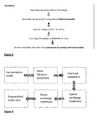
- FIG. 2 there is illustrated an embodiment of the process of the invention for producing lactic acid from a whey by-product and comprising upstream processing steps ( Figure 2 ), a bacterial fermentation step, and downstream processing steps ( Figure 3 ).
- the substrate in this case either delactosed whey permeate (DLP) or whey permeate (WP), is neutralised with calcium hydroxide powder to bring the PH of the substrate to about 7.
- the sample is then heated at 60C for 20 minutes to assist with precipitation of calcium and phosphate, and the substrate is then centrifuged at 8000 RPM for 7 minutes to remove the precipitate.
- the supernatant is retained for analysis and further processing.
- An analysis for the supernatant is provided in Table 1.
- the supernatant is treated to remove monovalent ions.
- This step facilitates subsequent bacterial fermentation and downstream processing of the fermentation broth, and involves treating the clarified whey by-product to nanofiltration/diafiltration using a GE-Osmonic membrane with 150-300 Dalton cut-off and 4 x or 5 x volumes of diafiltration water.
- An analysis of the nanofiltered DLP is provided in Table 2.
- the clarified DLP substrate obtained after nanofiltration/diafiltration was employed for bacterial fermentation in a fermentation reactor.
- DLP sample treated by the chemical precipitation process and NF/Diafiltration was effectively utilized for the lactic acid production and obtained around 100g/L to 130 g/L of Lactic acid concentration in fermented broth sample.
- This broth is very complex in nature due to presence of ash and other ingredients from fermentation process such as residual carbohydrates, proteins, small peptides and minerals, which makes the downstream process more difficult.
- the fermentation broth contains lactic acid in the form of calcium lactate with bacterial cells.
- bacterial cells was removed through simple centrifugation at 55°C followed by acidification using sulphuric acid (pH ⁇ 2) to release the free lactic acid in to the solution.
- the formed by-product gypsum was removed by centrifugation process.
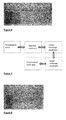
- Figure 3 shows the various steps developed to recover lactic acid from fermentation broth.
- the developed process scheme contains removal of proteins through 1 KDa UF operation, charcoal for colour, followed by demineralization using cation and then anion exchange resins.
- the fermentation broth obtained after acidification and centrifugation was processed (about 3.5L) through UF 1 KDa membrane to separate proteins; the permeate obtained after UF treatment was treated for colour removal using commercial screened charcoal packed in vertical column of dimension 50mm ID X 300mm height and working bed volume of 500mL packed with charcoal.
- the broth solutions of volume 2.4L were passed through against gravity through the charcoal column.
- Example 2 fermentation broth containing 112g/L of lactic acid was processed for downstream processing.
- 3.5L of colour less solution with 5g/L lactic acid was collected after passing through anion exchange resin was concentred to 80% by evaporation.
- HPLC analysis indicated that recovered lactic acid is 98% pure with isomeric purity >99% of L-lactic acid. Samples obtained after each process steps were showed in Figure 6 .
- Soil samples from UCD were incubated in a liquid medium containing 30% (v/v) DLP. The liquid medium was incubated for 3 weeks. Each week samples were withdrawn and plated out on solid growth media with 30% DLP (v/v). Isolates were screened for LA production. MG-2 was identified as a Bacillus coagulans. It produced LA when grown on WP and DLP up to 50% (v/v).
Landscapes
- Chemical & Material Sciences (AREA)
- Engineering & Computer Science (AREA)
- Life Sciences & Earth Sciences (AREA)
- Organic Chemistry (AREA)
- Chemical Kinetics & Catalysis (AREA)
- Water Supply & Treatment (AREA)
- Microbiology (AREA)
- Zoology (AREA)
- Wood Science & Technology (AREA)
- Polymers & Plastics (AREA)
- Food Science & Technology (AREA)
- General Engineering & Computer Science (AREA)
- Biotechnology (AREA)
- Health & Medical Sciences (AREA)
- Biochemistry (AREA)
- Bioinformatics & Cheminformatics (AREA)
- General Chemical & Material Sciences (AREA)
- General Health & Medical Sciences (AREA)
- Genetics & Genomics (AREA)
- Preparation Of Compounds By Using Micro-Organisms (AREA)
- Micro-Organisms Or Cultivation Processes Thereof (AREA)
- Dairy Products (AREA)
- Separation Using Semi-Permeable Membranes (AREA)
Priority Applications (14)
| Application Number | Priority Date | Filing Date | Title |
|---|---|---|---|
| EP16183196.1A EP3282018A1 (de) | 2016-08-08 | 2016-08-08 | Verfahren zur herstellung von milchsäure |
| EP17761447.6A EP3497225B1 (de) | 2016-08-08 | 2017-08-08 | Verfahren zur herstellung von milchsäure |
| MX2019001560A MX2019001560A (es) | 2016-08-08 | 2017-08-08 | Un metodo para producir acido lactico. |
| BR112019002462-0A BR112019002462A2 (pt) | 2016-08-08 | 2017-08-08 | método de produção de ácido lático |
| NZ750378A NZ750378B2 (en) | 2017-08-08 | A method of producing lactic acid | |
| PL17761447T PL3497225T3 (pl) | 2016-08-08 | 2017-08-08 | Sposób wytwarzania kwasu mlekowego |
| PT177614476T PT3497225T (pt) | 2016-08-08 | 2017-08-08 | Método de produção de ácido láctico |
| PCT/EP2017/070120 WO2018029219A1 (en) | 2016-08-08 | 2017-08-08 | A method of producing lactic acid |
| US16/324,117 US11382335B2 (en) | 2016-08-08 | 2017-08-08 | Method of producing lactic acid |
| AU2017309957A AU2017309957B2 (en) | 2016-08-08 | 2017-08-08 | A method of producing lactic acid |
| DK17761447.6T DK3497225T3 (da) | 2016-08-08 | 2017-08-08 | En fremgangsmåde til fremstilling af mælkesyre |
| RU2019102326A RU2763351C2 (ru) | 2016-08-08 | 2017-08-08 | Способ получения молочной кислоты |
| ES17761447T ES2883329T3 (es) | 2016-08-08 | 2017-08-08 | Un método para producir ácido láctico |
| CL2019000312A CL2019000312A1 (es) | 2016-08-08 | 2019-02-06 | Un método de producción de ácido láctico |
Applications Claiming Priority (1)
| Application Number | Priority Date | Filing Date | Title |
|---|---|---|---|
| EP16183196.1A EP3282018A1 (de) | 2016-08-08 | 2016-08-08 | Verfahren zur herstellung von milchsäure |
Publications (1)
| Publication Number | Publication Date |
|---|---|
| EP3282018A1 true EP3282018A1 (de) | 2018-02-14 |
Family
ID=56681979
Family Applications (2)
| Application Number | Title | Priority Date | Filing Date |
|---|---|---|---|
| EP16183196.1A Withdrawn EP3282018A1 (de) | 2016-08-08 | 2016-08-08 | Verfahren zur herstellung von milchsäure |
| EP17761447.6A Active EP3497225B1 (de) | 2016-08-08 | 2017-08-08 | Verfahren zur herstellung von milchsäure |
Family Applications After (1)
| Application Number | Title | Priority Date | Filing Date |
|---|---|---|---|
| EP17761447.6A Active EP3497225B1 (de) | 2016-08-08 | 2017-08-08 | Verfahren zur herstellung von milchsäure |
Country Status (12)
| Country | Link |
|---|---|
| US (1) | US11382335B2 (de) |
| EP (2) | EP3282018A1 (de) |
| AU (1) | AU2017309957B2 (de) |
| BR (1) | BR112019002462A2 (de) |
| CL (1) | CL2019000312A1 (de) |
| DK (1) | DK3497225T3 (de) |
| ES (1) | ES2883329T3 (de) |
| MX (1) | MX2019001560A (de) |
| PL (1) | PL3497225T3 (de) |
| PT (1) | PT3497225T (de) |
| RU (1) | RU2763351C2 (de) |
| WO (1) | WO2018029219A1 (de) |
Families Citing this family (4)
| Publication number | Priority date | Publication date | Assignee | Title |
|---|---|---|---|---|
| EP3368680A1 (de) | 2015-10-30 | 2018-09-05 | Glanbia Ireland Designated Activity Company | Verfahren zur produktion von milchsäure durch bakterielle fermentation |
| EP3282018A1 (de) | 2016-08-08 | 2018-02-14 | Glanbia Ingredients Ireland Designated Activity Company | Verfahren zur herstellung von milchsäure |
| EP3927172A4 (de) * | 2019-02-24 | 2022-11-30 | Capro-X, Inc. | Mikrobielle umwandlung von laktose-enthaltenden ausgangsstoffen in carbonsäuren |
| EP4574984A1 (de) | 2023-12-21 | 2025-06-25 | Tirlán Limited | Verfahren zur herstellung organischer säuren oder salzen davon |
Citations (3)
| Publication number | Priority date | Publication date | Assignee | Title |
|---|---|---|---|---|
| WO1999004903A1 (en) * | 1997-07-24 | 1999-02-04 | University Of Western Sydney, Hawkesbury | Process for the purification of nutrients from food process streams |
| WO2001092555A1 (en) * | 2000-05-30 | 2001-12-06 | Lactascan Aps | Method for producing lactic acid |
| WO2010103548A2 (en) | 2009-03-13 | 2010-09-16 | Godavari Biorefineries Ltd. | Improved method for producing lactic acid and derivative thereof |
Family Cites Families (8)
| Publication number | Priority date | Publication date | Assignee | Title |
|---|---|---|---|---|
| DE3131717A1 (de) * | 1981-08-11 | 1983-03-03 | Hoechst Ag, 6000 Frankfurt | Lactobacillus bulgaricus dsm 2129 und seine verwendung zur herstellung von d-milchsaeure |
| US4698303A (en) * | 1985-02-15 | 1987-10-06 | Engenics, Inc. | Production of lactic acid by continuous fermentation using an inexpensive raw material and a simplified method of lactic acid purification |
| US5322781A (en) * | 1985-11-18 | 1994-06-21 | Cooperatieve Weiproduktenfabriek "Borculo" W.A. | Procedure for the preparation of D-(-)-lactic acid with Lactobacillus bulgaricus |
| US5416020A (en) * | 1992-09-29 | 1995-05-16 | Bio-Technical Resources | Lactobacillus delbrueckii ssp. bulgaricus strain and fermentation process for producing L-(+)-lactic acid |
| BR9605262A (pt) | 1995-10-27 | 1998-07-21 | Shimadzu Corp | Método para a produçao de ácido lático com alta pureza óptica usando cepas de bacillus |
| US8372598B2 (en) | 2010-06-14 | 2013-02-12 | Cobalt Technologies, Inc. | Salt selection of microbial mutants to increase bioproduct tolerance, titer, or osmotic shock tolerance |
| EP3368680A1 (de) | 2015-10-30 | 2018-09-05 | Glanbia Ireland Designated Activity Company | Verfahren zur produktion von milchsäure durch bakterielle fermentation |
| EP3282018A1 (de) | 2016-08-08 | 2018-02-14 | Glanbia Ingredients Ireland Designated Activity Company | Verfahren zur herstellung von milchsäure |
-
2016
- 2016-08-08 EP EP16183196.1A patent/EP3282018A1/de not_active Withdrawn
-
2017
- 2017-08-08 EP EP17761447.6A patent/EP3497225B1/de active Active
- 2017-08-08 PL PL17761447T patent/PL3497225T3/pl unknown
- 2017-08-08 AU AU2017309957A patent/AU2017309957B2/en active Active
- 2017-08-08 MX MX2019001560A patent/MX2019001560A/es unknown
- 2017-08-08 US US16/324,117 patent/US11382335B2/en active Active
- 2017-08-08 DK DK17761447.6T patent/DK3497225T3/da active
- 2017-08-08 PT PT177614476T patent/PT3497225T/pt unknown
- 2017-08-08 WO PCT/EP2017/070120 patent/WO2018029219A1/en not_active Ceased
- 2017-08-08 RU RU2019102326A patent/RU2763351C2/ru active
- 2017-08-08 ES ES17761447T patent/ES2883329T3/es active Active
- 2017-08-08 BR BR112019002462-0A patent/BR112019002462A2/pt not_active Application Discontinuation
-
2019
- 2019-02-06 CL CL2019000312A patent/CL2019000312A1/es unknown
Patent Citations (3)
| Publication number | Priority date | Publication date | Assignee | Title |
|---|---|---|---|---|
| WO1999004903A1 (en) * | 1997-07-24 | 1999-02-04 | University Of Western Sydney, Hawkesbury | Process for the purification of nutrients from food process streams |
| WO2001092555A1 (en) * | 2000-05-30 | 2001-12-06 | Lactascan Aps | Method for producing lactic acid |
| WO2010103548A2 (en) | 2009-03-13 | 2010-09-16 | Godavari Biorefineries Ltd. | Improved method for producing lactic acid and derivative thereof |
Non-Patent Citations (3)
| Title |
|---|
| ABDEL-RAHMAN ET AL., BIOTECHNOLOGY ADVANCES, vol. 31, no. 6, November 2013 (2013-11-01) |
| MICHELSON ET AL., ENZYME AND MICROBIAL TECHNOLOGY, vol. 39, no. 4, August 2006 (2006-08-01) |
| ZAGORODNI ET AL.: "Ion Exchange Materials: Properties and Applications", 2006, ELSEVIER |
Also Published As
| Publication number | Publication date |
|---|---|
| ES2883329T3 (es) | 2021-12-07 |
| US11382335B2 (en) | 2022-07-12 |
| CL2019000312A1 (es) | 2019-06-21 |
| AU2017309957B2 (en) | 2022-01-27 |
| NZ750378A (en) | 2026-01-30 |
| BR112019002462A2 (pt) | 2019-05-14 |
| RU2763351C2 (ru) | 2021-12-28 |
| PT3497225T (pt) | 2021-08-11 |
| AU2017309957A1 (en) | 2019-02-21 |
| MX2019001560A (es) | 2019-09-18 |
| RU2019102326A (ru) | 2020-09-11 |
| PL3497225T3 (pl) | 2022-03-21 |
| EP3497225A1 (de) | 2019-06-19 |
| US20190166865A1 (en) | 2019-06-06 |
| DK3497225T3 (da) | 2021-08-09 |
| EP3497225B1 (de) | 2021-05-05 |
| RU2019102326A3 (de) | 2021-02-08 |
| WO2018029219A1 (en) | 2018-02-15 |
Similar Documents
| Publication | Publication Date | Title |
|---|---|---|
| US20240199673A1 (en) | Process For Purifying Sialylated Oligosaccharides | |
| AU2018373415B2 (en) | Process for the purification of a sialic acid from a fermentation broth | |
| EP3497225B1 (de) | Verfahren zur herstellung von milchsäure | |
| CN101285046B (zh) | 一种诱变菌株白色链霉菌TUST2及利用该诱变菌株生产ε-聚赖氨酸及其盐的方法 | |
| CA2884241C (en) | Production method for capsular polysaccharide having pneumococcal serotype | |
| WO2010136435A1 (en) | Biotechnological production of chondroitin | |
| AU2022200925A1 (en) | A method for producing lactic acid by bacterial fermentation | |
| CN112322556A (zh) | 耐受高盐环境的尼泊尔葡萄球菌及培养方法 | |
| JP6383346B2 (ja) | 新規なハイフォミクロビウム属微生物及びこれを利用したピロロキノリンキノンの製造方法 | |
| JP6008505B2 (ja) | Gaba高含有酵母の製造方法 | |
| CN115927496A (zh) | 一种用酿酒酵母生产γ-氨基丁酸的方法 | |
| CN107201384A (zh) | 一种从d-乳酸钠发酵液中分离提取d-乳酸的方法 | |
| KR20150010955A (ko) | 투라노스를 생산하는 균주 및 이의 용도 | |
| EP3543345A2 (de) | Verfahren zur herstellung von d-psicose unter verwendung von mikroorganismen der gattung kaistia | |
| WO2012172635A1 (ja) | 抗う蝕性組成物の製造方法 | |
| CN109321613B (zh) | 一种生产d-甘露糖的方法 | |
| CN114480177A (zh) | 一株高产Levan果聚糖的产左聚糖微杆菌及Levan果聚糖的应用 | |
| EP4574984A1 (de) | Verfahren zur herstellung organischer säuren oder salzen davon | |
| CN121653198A (zh) | 一种一水肌酸的合成方法及分离提取方法 | |
| CN107574192B (zh) | 一种以732阳离子交换树脂提高谷氨酸脱羧酶活性的方法 | |
| KR20240002283A (ko) | 2’-푸코실락토오스 제조방법 | |
| HK40019083A (en) | Process for purifying sialylated oligosaccharides |
Legal Events
| Date | Code | Title | Description |
|---|---|---|---|
| PUAI | Public reference made under article 153(3) epc to a published international application that has entered the european phase |
Free format text: ORIGINAL CODE: 0009012 |
|
| AK | Designated contracting states |
Kind code of ref document: A1 Designated state(s): AL AT BE BG CH CY CZ DE DK EE ES FI FR GB GR HR HU IE IS IT LI LT LU LV MC MK MT NL NO PL PT RO RS SE SI SK SM TR |
|
| AX | Request for extension of the european patent |
Extension state: BA ME |
|
| STAA | Information on the status of an ep patent application or granted ep patent |
Free format text: STATUS: THE APPLICATION HAS BEEN WITHDRAWN |
|
| 18W | Application withdrawn |
Effective date: 20180314 |