EP3284842A1 - Acier spécial à haute résistance - Google Patents
Acier spécial à haute résistance Download PDFInfo
- Publication number
- EP3284842A1 EP3284842A1 EP16202879.9A EP16202879A EP3284842A1 EP 3284842 A1 EP3284842 A1 EP 3284842A1 EP 16202879 A EP16202879 A EP 16202879A EP 3284842 A1 EP3284842 A1 EP 3284842A1
- Authority
- EP
- European Patent Office
- Prior art keywords
- strength
- amount
- steel
- examples
- less
- Prior art date
- Legal status (The legal status is an assumption and is not a legal conclusion. Google has not performed a legal analysis and makes no representation as to the accuracy of the status listed.)
- Granted
Links
Images



Classifications
-
- C—CHEMISTRY; METALLURGY
- C22—METALLURGY; FERROUS OR NON-FERROUS ALLOYS; TREATMENT OF ALLOYS OR NON-FERROUS METALS
- C22C—ALLOYS
- C22C38/00—Ferrous alloys, e.g. steel alloys
- C22C38/18—Ferrous alloys, e.g. steel alloys containing chromium
- C22C38/40—Ferrous alloys, e.g. steel alloys containing chromium with nickel
- C22C38/50—Ferrous alloys, e.g. steel alloys containing chromium with nickel with titanium or zirconium
-
- C—CHEMISTRY; METALLURGY
- C22—METALLURGY; FERROUS OR NON-FERROUS ALLOYS; TREATMENT OF ALLOYS OR NON-FERROUS METALS
- C22C—ALLOYS
- C22C38/00—Ferrous alloys, e.g. steel alloys
- C22C38/18—Ferrous alloys, e.g. steel alloys containing chromium
- C22C38/40—Ferrous alloys, e.g. steel alloys containing chromium with nickel
-
- C—CHEMISTRY; METALLURGY
- C21—METALLURGY OF IRON
- C21D—MODIFYING THE PHYSICAL STRUCTURE OF FERROUS METALS; GENERAL DEVICES FOR HEAT TREATMENT OF FERROUS OR NON-FERROUS METALS OR ALLOYS; MAKING METAL MALLEABLE, e.g. BY DECARBURISATION OR TEMPERING
- C21D1/00—General methods or devices for heat treatment, e.g. annealing, hardening, quenching or tempering
- C21D1/18—Hardening; Quenching with or without subsequent tempering
-
- C—CHEMISTRY; METALLURGY
- C21—METALLURGY OF IRON
- C21D—MODIFYING THE PHYSICAL STRUCTURE OF FERROUS METALS; GENERAL DEVICES FOR HEAT TREATMENT OF FERROUS OR NON-FERROUS METALS OR ALLOYS; MAKING METAL MALLEABLE, e.g. BY DECARBURISATION OR TEMPERING
- C21D6/00—Heat treatment of ferrous alloys
- C21D6/004—Heat treatment of ferrous alloys containing Cr and Ni
-
- C—CHEMISTRY; METALLURGY
- C22—METALLURGY; FERROUS OR NON-FERROUS ALLOYS; TREATMENT OF ALLOYS OR NON-FERROUS METALS
- C22C—ALLOYS
- C22C38/00—Ferrous alloys, e.g. steel alloys
- C22C38/002—Ferrous alloys, e.g. steel alloys containing In, Mg, or other elements not provided for in one single group C22C38/001 - C22C38/60
-
- C—CHEMISTRY; METALLURGY
- C22—METALLURGY; FERROUS OR NON-FERROUS ALLOYS; TREATMENT OF ALLOYS OR NON-FERROUS METALS
- C22C—ALLOYS
- C22C38/00—Ferrous alloys, e.g. steel alloys
- C22C38/02—Ferrous alloys, e.g. steel alloys containing silicon
-
- C—CHEMISTRY; METALLURGY
- C22—METALLURGY; FERROUS OR NON-FERROUS ALLOYS; TREATMENT OF ALLOYS OR NON-FERROUS METALS
- C22C—ALLOYS
- C22C38/00—Ferrous alloys, e.g. steel alloys
- C22C38/04—Ferrous alloys, e.g. steel alloys containing manganese
-
- C—CHEMISTRY; METALLURGY
- C22—METALLURGY; FERROUS OR NON-FERROUS ALLOYS; TREATMENT OF ALLOYS OR NON-FERROUS METALS
- C22C—ALLOYS
- C22C38/00—Ferrous alloys, e.g. steel alloys
- C22C38/06—Ferrous alloys, e.g. steel alloys containing aluminium
-
- C—CHEMISTRY; METALLURGY
- C22—METALLURGY; FERROUS OR NON-FERROUS ALLOYS; TREATMENT OF ALLOYS OR NON-FERROUS METALS
- C22C—ALLOYS
- C22C38/00—Ferrous alloys, e.g. steel alloys
- C22C38/18—Ferrous alloys, e.g. steel alloys containing chromium
- C22C38/34—Ferrous alloys, e.g. steel alloys containing chromium with more than 1.5% by weight of silicon
-
- C—CHEMISTRY; METALLURGY
- C22—METALLURGY; FERROUS OR NON-FERROUS ALLOYS; TREATMENT OF ALLOYS OR NON-FERROUS METALS
- C22C—ALLOYS
- C22C38/00—Ferrous alloys, e.g. steel alloys
- C22C38/18—Ferrous alloys, e.g. steel alloys containing chromium
- C22C38/40—Ferrous alloys, e.g. steel alloys containing chromium with nickel
- C22C38/42—Ferrous alloys, e.g. steel alloys containing chromium with nickel with copper
-
- C—CHEMISTRY; METALLURGY
- C22—METALLURGY; FERROUS OR NON-FERROUS ALLOYS; TREATMENT OF ALLOYS OR NON-FERROUS METALS
- C22C—ALLOYS
- C22C38/00—Ferrous alloys, e.g. steel alloys
- C22C38/18—Ferrous alloys, e.g. steel alloys containing chromium
- C22C38/40—Ferrous alloys, e.g. steel alloys containing chromium with nickel
- C22C38/44—Ferrous alloys, e.g. steel alloys containing chromium with nickel with molybdenum or tungsten
-
- C—CHEMISTRY; METALLURGY
- C22—METALLURGY; FERROUS OR NON-FERROUS ALLOYS; TREATMENT OF ALLOYS OR NON-FERROUS METALS
- C22C—ALLOYS
- C22C38/00—Ferrous alloys, e.g. steel alloys
- C22C38/18—Ferrous alloys, e.g. steel alloys containing chromium
- C22C38/40—Ferrous alloys, e.g. steel alloys containing chromium with nickel
- C22C38/46—Ferrous alloys, e.g. steel alloys containing chromium with nickel with vanadium
-
- C—CHEMISTRY; METALLURGY
- C21—METALLURGY OF IRON
- C21D—MODIFYING THE PHYSICAL STRUCTURE OF FERROUS METALS; GENERAL DEVICES FOR HEAT TREATMENT OF FERROUS OR NON-FERROUS METALS OR ALLOYS; MAKING METAL MALLEABLE, e.g. BY DECARBURISATION OR TEMPERING
- C21D2211/00—Microstructure comprising significant phases
- C21D2211/004—Dispersions; Precipitations
-
- C—CHEMISTRY; METALLURGY
- C21—METALLURGY OF IRON
- C21D—MODIFYING THE PHYSICAL STRUCTURE OF FERROUS METALS; GENERAL DEVICES FOR HEAT TREATMENT OF FERROUS OR NON-FERROUS METALS OR ALLOYS; MAKING METAL MALLEABLE, e.g. BY DECARBURISATION OR TEMPERING
- C21D6/00—Heat treatment of ferrous alloys
- C21D6/02—Hardening by precipitation
Definitions
- the present invention relates to high-strength special steel, components thereof, and amounts of which can be adjusted so that the form, size and amount of carbide can be controlled.
- the high-strength special steel exhibits increasing strength and desirable fatigue life.
- KR 10-2015-0023566 discloses high-strength steel comprising nickel (Ni), molybdenum (Mo) and titanium (Ti), wherein the amount of nickel (Ni) is merely 0.1 wt% or less and the amount of titanium (Ti) is merely 0.01 wt% or less, thus making it difficult to increase durability while maintaining high strength.
- JP 2015-190026 discloses high-strength steel in which the amount of nickel (Ni) is merely in the range of 0.01 to 0.2 wt% and the amount of titanium (Ti) is merely in the range of 0.005 to 0.02 wt%, thus making it difficult to increase durability while maintaining high strength.
- high-strength special steel which has increased strength and fatigue life through the control of the form, size and amount of carbide by adjusting the components and amounts thereof.
- the present invention provides high-strength special steel, comprising from about 0.1 to 0.5 wt% of carbon (C), from about 0.1 to 2.3 wt% of silicon (Si), from about 0.3 to 1.5 wt% of manganese (Mn), from about 1.1 to 4.0 wt% of chromium (Cr), from about 0.3 to 1.5 wt% of molybdenum (Mo), from about 0.1 to 4.0 wt% of nickel (Ni), from about 0.01 to 0.50 wt% of vanadium (V), from about 0.05 to 0.50 wt% of titanium (Ti), and the remainder of iron (Fe) and other inevitable impurities.
- C carbon
- Si silicon
- Mn manganese
- Cr chromium
- Mo molybdenum
- Ni nickel
- V vanadium
- Ti titanium
- Fe titanium
- (Ti,V)C in complex carbide form may be present in the steel structure.
- (Cr,Fe) 7 C 3 in complex carbide form may be present in the steel structure.
- (Fe,Cr,Mo) 23 C 6 in complex carbide form may be present in the steel structure.
- the precipitate present in the steel structure may have a mole fraction of about 0.009 or more (e.g., about 0.009, 0.010, 0.020, 0.030, 0.040, 0.050 or more).
- the precipitate present in the steel structure may have a size of about 13 nm or less (e.g., about 13 nm, 12, 11, 10, 9, 8, 7, 6, 5, 4, 3, 2, or about 1 nm).
- the high-strength special steel may have a tensile strength of about 1541 MPa or more (e.g., about 1541 MPa, 1550, 1600, 1650, 1700, 1750, 1800, 1850, about 1900 MPa or more) and a fatigue life of about 550 thousand times or more (e.g., about 550 thousand times, 560, 570, 580, 590, 600, 610, 650, 700, 750, 800, 850, 900, or about 950 thousand times or more).
- high-strength special steel can be enhanced in strength and fatigue life in a manner in which the amounts of elements are controlled to thus form carbides in the steel structure.
- the present invention addresses high-strength special steel, comprising from about 0.1 to about 0.5 wt% (e.g., about 0.1 wt%, 0.2, 0.3, 0.4, or about 0.5 wt%) of carbon (C), from about 0.1 to about 2.3 wt% (e.g., about 0.1 wt%, 0.2, 0.3, 0.4, 0.5, 0.6, 0.7, 0.8, 0.9, 1, 1.1, 1.2, 1.3, 1.4, 1.5, 1.6, 1.7, 1.8, 1.9, 2.0, 2.1, 2.2, or about 2.3 wt%) of silicon (Si), from about 0.3 to about 1.5 wt% (e.g., about 0.3 wt%, 0.4, 0.5, 0.6, 0.7, 0.8, 0.9, 1, 1.1, 1.2, 1.3, 1.4, or about 1.5 wt%) of manganese (Mn), from about 1.1 to about 4.0 wt% (e.g., about 1.1
- Carbon (C) from about 0.1% to about 0.5%
- Carbon (C) functions to increase strength and hardness and to stabilize residual austenite, and forms complex carbides such as (Ti,V)C, (Cr,Fe) 7 C 3 , and (Fe,Cr,Mo) 23 C 6 . Also, tempering resistance is increased up to about 300°C.
- the amount of carbon (C) is less than 0.1 wt%, the effect of increasing strength is not significant, and fatigue strength may decrease.
- the amount of carbon (C) exceeds 0.5%, large carbides, which are not dissolved, may be left behind, undesirably deteriorating fatigue characteristics and decreasing durability life. Furthermore, processability before quenching may decrease.
- the amount of carbon (C) is limited to the range of 0.1 to 0.5% (e.g., about 0.1%, 0.2, 0.3, 0.4, or about 0.5%).
- Silicon (Si) functions to increase elongation and also to harden ferrite and martensite structures and increase heat resistance and hardenability. It may increase shape invariance and heat resistance but is susceptible to decarburization.
- the amount of silicon (Si) is less than 0.1%, the effect of increasing elongation becomes insignificant. Furthermore, the effect of increasing heat resistance and hardenability is not significant. On the other hand, if the amount of silicon (Si) exceeds 2.3%, decarburization may occur due to bidirectional infiltration between the steel structure and carbon (C). Furthermore, processability may decrease due to an increase in hardness before quenching.
- the amount of silicon (Si) is limited to the range of from about 0.1% to 2.3% (e.g., about 0.1%, 0.2, 0.3, 0.4, 0.5, 0.6, 0.7, 0.8, 0.9, 1, 1.1, 1.2, 1.3, 1.4, 1.5, 1.6, 1.7, 1.8, 1.9, 2.0, 2.1, 2.2, or about 2.3%).
- Manganese (Mn) from about 0.3% to about 1.5%
- Manganese (Mn) functions to enhance hardenability and strength. It may form a solid solution in a matrix to thus increase bending fatigue strength and quenchability, and may act as a deoxidizer for producing an oxide to thus suppress the formation of inclusions such as Al 2 O 3 . If an excess of Mn is contained, MnS inclusions may be formed, leading to high-temperature brittleness.
- the amount of manganese (Mn) is less than 0.3%, the increase in quenchability becomes insignificant. On the other hand, if the amount of manganese (Mn) exceeds 1.5%, processability before quenching may decrease and fatigue life may be decreased due to the center segregation and the precipitation of MnS inclusions. Hence, the amount of manganese (Mn) is limited to the range of from about 0.3% to about 1.5% (e.g., about 0.3%, 0.4, 0.5, 0.6, 0.7, 0.8, 0.9, 1, 1.1, 1.2, 1.3, 1.4, or about 1.5%).
- Chromium (Cr) from about 1.1% to about 4.0%
- Chromium (Cr) is dissolved in an austenite structure, forms CrC carbide upon tempering, increases hardenability, inhibits softness to thus enhance strength, and contributes to the fineness of grains.
- the amount of chromium (Cr) is less than 1.1%, the effects of increasing strength and hardenability are not significant. On the other hand, if the amount of chromium (Cr) exceeds 4.0%, the production of multiple carbides is inhibited, and the effect resulting from the increased amount thereof is saturated, undesirably increasing costs.
- the amount of chromium (Cr) is limited to the range of from about 1.1% to about 4.0% (e.g., about 1.1 wt%, 1.2, 1.3, 1.4, 1.5, 1.6, 1.7, 1.8, 1.9, 2.0, 2.1, 2.2, 2.3, 2.4, 2.5, 2.6, 2.7, 2.8, 2.9, 3.0, 3.1, 3.2, 3.3, 3.4, 3.5, 3.6, 3.7, 3.8, 3.9, or about 4.0 wt%).
- Molybdenum (Mo) forms fine precipitates to thus enhance strength and increases heat resistance and fracture toughness. Also tempering resistance is increased.
- the amount of molybdenum (Mo) is less than 0.3%, the effects of increasing strength and fracture toughness are not significant. On the other hand, if the amount of molybdenum (Mo) exceeds 1.5%, the effect of increasing strength resulting from the increased amount thereof is saturated, undesirably increasing costs. Hence, the amount of molybdenum (Mo) is limited to the range of from about 0.3% to about 1.5% (e.g., about 0.3%, 0.4, 0.5, 0.6, 0.7, 0.8, 0.9, 1, 1.1, 1.2, 1.3, 1.4, or about 1.5%).
- Nickel (Ni) from about 0.1% to about 4.0%
- Nickel functions to increase corrosion resistance, heat resistance, and hardenability and to prevent low-temperature brittleness. It stabilizes austenite and expands the high temperature range.
- the amount of nickel (Ni) is less than 0.1%, the effects of increasing corrosion resistance and high-temperature stability are not significant. On the other hand, if the amount of nickel (Ni) exceeds 4.0%, red brittleness may occur. Hence, the amount of nickel (Ni) is limited to the range of 0.1 to 4.0% (e.g., about 0.1%, 0.2, 0.3, 0.4, 0.5, 0.6, 0.7, 0.8, 0.9, 1, 1.1, 1.2, 1.3, 1.4, 1.5, 1.6, 1.7, 1.8, 1.9, 2.0, 2.1, 2.2, 2.3, 2.4, 2.5, 2.6, 2.7, 2.8, 2.9, 3.0, 3.1, 3.2, 3.3, 3.4, 3.5, 3.6, 3.7, 3.8, 3.9, or about 4.0%).
- Vanadium (V) from about 0.01% to about 0.50%
- Vanadium (V) functions to increase fracture toughness due to the formation of fine precipitates. Such fine precipitates inhibit the movement of grain boundaries. Vanadium (V) is dissolved and undergoes solid solution upon austenization, and is precipitated upon tempering to thus generate secondary hardening. In the case where excess vanadium is added, hardness after quenching is decreased.
- the amount of vanadium (V) is limited to the range of 0.01 to 0.50% (e.g., about 0.01%, 0.02, 0.03, 0.04, 0.05, 0.06, 0.07, 0.08, 0.09, 0.10, 0.11, 0.12, 0.13, 0.14, 0.15, 0.16, 0.17, 0.18, 0.19, 0.20, 0.21, 0.22, 0.23, 0.24, 0.25, 0.26, 0.27, 0.28, 0.29, 0.30, 0.31, 0.32, 0.33, 0.34, 0.35, 0.36, 0.37, 0.38, 0.39, 0.40, 0.41, 0.42, 0.43, 0.44, 0.45, 0.46, 0.47, 0.48, 0.49, or about 0.50%).
- Titanium functions to increase strength due to the formation of fine precipitates, and also to enhance fracture toughness. Furthermore, titanium may act as a deoxidizer to thus form Ti 2 O 3 , replacing the formation of Al 2 O 3 .
- the amount of titanium (Ti) is less than 0.05%, coarsening may occur, and thus the effect of replacing the formation of Al 2 O 3 , which is the main cause of decreased fatigue, is not significant. If the amount of titanium (Ti) exceeds 0.50%, the effect resulting from the increased amount thereof is saturated, undesirably increasing costs.
- the amount of titanium (Ti) is limited to the range of from about 0.05% to 0.50% (e.g., about 0.05%, 0.06, 0.07, 0.08, 0.09, 0.10, 0.11, 0.12, 0.13, 0.14, 0.15, 0.16, 0.17, 0.18, 0.19, 0.20, 0.21, 0.22, 0.23, 0.24, 0.25, 0.26, 0.27, 0.28, 0.29, 0.30, 0.31, 0.32, 0.33, 0.34, 0.35, 0.36, 0.37, 0.38, 0.39, 0.40, 0.41, 0.42, 0.43, 0.44, 0.45, 0.46, 0.47, 0.48, 0.49, or about 0.50%).
- inevitable impurities for example, aluminum (Al), copper (Cu), and oxygen (O), may be contained.
- Aluminum (Al) functions to increase strength and impact toughness, and also enables expensive elements, such as vanadium for decreasing the size of grains and nickel for ensuring toughness, to be added in decreased amounts. If the amount of aluminum (Al) exceeds 0.003%, a rectangular-shaped large inclusion Al 2 O 3 may be formed and may thus act as a fatigue site, undesirably deteriorating durability. Hence, the amount of aluminum (Al) is limited to 0.003% or less (e.g., about 0.003%, 0.002%, 0.001% or less).
- Copper (Cu) functions to increase strength after tempering and to increase the corrosion resistance of steel, like nickel (Ni). If the amount of copper (Cu) exceeds 0.3%, alloying costs may increase. Hence, the amount of copper (Cu) is limited to 0.3% or less (e.g., about 0.3%, 0.2%, 0.1%, or less).
- Oxygen (O) is coupled with silicon (Si) or aluminum (Al) to thus form a hard oxide-based nonmetal inclusion, undesirably deteriorating fatigue life characteristics.
- the amount of oxygen (O) is preferably maintained as low as possible. If the amount of oxygen (O) exceeds 0.003%, Al 2 O 3 may be formed due to the reaction with aluminum (Al) and may act as a fatigue site, thus deteriorating durability. Hence, the amount of oxygen (O) is limited to 0.003% or less (e.g., about 0.003%, 0.002%, 0.001% or less).
- Table 1 shows the components and amounts of steel compositions of Examples and Comparative Examples. Also, Table 2 shows tensile strength, hardness, fatigue strength and fatigue life of Examples and Comparative Examples.
- Tensile strength and yield strength were measured according to KS B 0802 or ISO 6892, hardness was measured according to KS B 0811 or ISO 1143, and fatigue life was measured according to KS B ISO 1143.
- Comparative Examples 15 and 16 the amount of titanium (Ti) was controlled to be less than or greater than the corresponding range of high-strength special steel of Examples according to the present invention, and the amounts of the other components were controlled in the ranges equivalent to the corresponding ranges of the Examples.
- FIG. 1 is a graph showing changes in mole fraction depending on temperature based on the results of thermodynamic calculation in conventional steel comprising 0.15C-0.15Si-1.0Mn-1.5Cr-0.9Mo-0.25V (the numeral before each element indicates the amount by wt%).
- FIG. 2 is a graph showing changes in mole fraction depending on temperature based on the results of thermodynamic calculation in the high-strength special steel according to the present invention comprising 0.3C-0.2Si-0.7Mn-1.5Cr-2.0Ni-0.5Mo-0.15V-0.25Ti.
- the steel of the invention contains carbon (C) and an austenite-stabilizing element nickel (Ni) in larger amounts than those of conventional steel, whereby A1 and A3 temperatures are lowered and the austenite region is thus expanded.
- the steel of the invention is configured such that (Ti,V)C carbide may be precipitated in the structure thereof and thus provided in complex carbide form. This is because titanium (Ti) for forming carbide is added.
- the steel of the invention is configured such that (Ti,V)C carbide is produced from the austenite region and thus the size of the carbide is small and the distribution thereof is high.
- "precipitation” means that another solid phase is newly produced from one solid phase.
- the steel of the invention is configured such that (Cr,Fe) 7 C 3 carbide is precipitated in the structure thereof at a temperature equal to or lower than 500°C and is thus provided in complex carbide form.
- the temperature range at which the carbide is stably produced is higher than that of conventional steel, and the carbide having a small size is uniformly distributed in the steel structure, whereby the strength and fatigue life of the resulting steel may be increased.
- the steel of the invention is configured such that the amount of molybdenum (Mo) is low and thus the carbide such as (Mo,Fe)6C is not formed in the low temperature range but (Fe,Cr,Mo) 23 C 6 carbide is precipitated and provided in complex carbide form.
- the carbide such as (Mo,Fe)6C formed in the low temperature range is unstable, and thus the strength and fatigue life thereof may be decreased, but a relatively stable complex carbide (Fe,Cr,Mo) 23 C 6 is already formed in a predetermined amount or more at a temperature lower than that at which (Mo,Fe)6C carbide is formed, thereby inhibiting the formation of (Mo,Fe)6C carbide due to the lack of molybdenum (Mo), ultimately increasing strength and fatigue life.
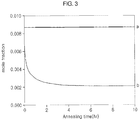
- FIG. 3 is a graph showing changes in mole fraction of precipitates including carbides depending on annealing time.
- a precipitate is formed at a mole fraction of 0.009 or more at the position represented by a, based on an annealing time of 10 hr, and is thus produced in a remarkably large amount, compared to conventional steel having 0.002 at the position represented by b. Thereby, not only strength but also fatigue life may be deemed to be increased.
- the mole fraction of the precipitate relative to the total structure is represented by 0.9%.
- FIG. 4 is a graph showing changes in size of precipitates including carbides depending on annealing time. Unlike conventional steel in which a precipitate having a size of 40 nm or more is formed at the position represented by c, based on an annealing time of 10 hr, the steel of the invention can be seen to form a precipitate having a size of 13 nm or less at the position represented by d. Likewise, not only strength but also fatigue life may be increased.
- the high-strength special steel according to the present invention can exhibit increased strength and fatigue life through the formation of carbide by controlling the amounts of elements thereof.
- tensile strength can be increased by about 57%, and thus, when the steel of the invention is applied to parts of vehicles, the weight of vehicles can be reduced by about 32%, thereby increasing fuel efficiency. Furthermore, fatigue strength can be increased by about 69% and fatigue life can be increased by about 96%.
Landscapes
- Chemical & Material Sciences (AREA)
- Engineering & Computer Science (AREA)
- Materials Engineering (AREA)
- Mechanical Engineering (AREA)
- Metallurgy (AREA)
- Organic Chemistry (AREA)
- Physics & Mathematics (AREA)
- Thermal Sciences (AREA)
- Crystallography & Structural Chemistry (AREA)
- Heat Treatment Of Steel (AREA)
- Heat Treatment Of Articles (AREA)
Applications Claiming Priority (1)
| Application Number | Priority Date | Filing Date | Title |
|---|---|---|---|
| KR1020160104352A KR101822292B1 (ko) | 2016-08-17 | 2016-08-17 | 고강도 특수강 |
Publications (2)
| Publication Number | Publication Date |
|---|---|
| EP3284842A1 true EP3284842A1 (fr) | 2018-02-21 |
| EP3284842B1 EP3284842B1 (fr) | 2019-04-03 |
Family
ID=57530562
Family Applications (1)
| Application Number | Title | Priority Date | Filing Date |
|---|---|---|---|
| EP16202879.9A Not-in-force EP3284842B1 (fr) | 2016-08-17 | 2016-12-08 | Acier spécial à haute résistance |
Country Status (4)
| Country | Link |
|---|---|
| US (1) | US10487380B2 (fr) |
| EP (1) | EP3284842B1 (fr) |
| KR (1) | KR101822292B1 (fr) |
| CN (1) | CN107761009B (fr) |
Cited By (1)
| Publication number | Priority date | Publication date | Assignee | Title |
|---|---|---|---|---|
| EP4650084A1 (fr) * | 2024-05-17 | 2025-11-19 | SSAB Technology AB | Poudre d'acier pour procédés de fabrication additive |
Families Citing this family (1)
| Publication number | Priority date | Publication date | Assignee | Title |
|---|---|---|---|---|
| WO2021230244A1 (fr) * | 2020-05-13 | 2021-11-18 | 日鉄ステンレス株式会社 | Matériau en acier inoxydable à base d'austénite ainsi que procédé de fabrication de celui-ci, et ressort plat |
Citations (11)
| Publication number | Priority date | Publication date | Assignee | Title |
|---|---|---|---|---|
| JPH0250910A (ja) * | 1988-08-15 | 1990-02-20 | Nippon Steel Corp | 熱疲労特性の良い金型鋼板の製造方法 |
| US5073338A (en) * | 1989-05-31 | 1991-12-17 | Kabushiki Kaisha Kobe Seiko Sho | High strength steel bolts |
| JPH07276080A (ja) * | 1994-03-31 | 1995-10-24 | Kobe Steel Ltd | 高張力鋼用溶接ワイヤ |
| US5749228A (en) * | 1994-02-22 | 1998-05-12 | Hitachi, Ltd. | Steam-turbine power plant and steam turbine |
| JP2001081531A (ja) * | 1999-09-14 | 2001-03-27 | Sanyo Special Steel Co Ltd | 耐へたり性と耐衝撃疲労性に優れた強靭窒化用鋼 |
| EP1096031A2 (fr) * | 1999-10-29 | 2001-05-02 | Mitsubishi Steel Muroran Inc. | Acier à haute résistance, pour ressorts |
| EP1698712A1 (fr) * | 2005-03-03 | 2006-09-06 | Kabushiki Kaisha Kobe Seiko Sho | Acier pour ressorts à haute résistance présentant une excellente usinabilité au froid et une qualité stable |
| US20070224041A1 (en) * | 2006-03-23 | 2007-09-27 | Hirotsugu Kawanaka | Turbine casing |
| US20090291013A1 (en) * | 2008-05-20 | 2009-11-26 | Fedchun Vladimir A | Method of designing a low cost, high strength, high toughness, martensitic steel and an article made thereof |
| KR20150023566A (ko) | 2012-06-05 | 2015-03-05 | 티센크루프 스틸 유럽 악티엔게젤샤프트 | 강, 강판 제품 및 강판 제품을 제조하기 위한 방법 |
| JP2015190026A (ja) | 2014-03-28 | 2015-11-02 | Jfeスチール株式会社 | ラインパイプ用厚肉高強度電縫鋼管およびその製造方法 |
Family Cites Families (27)
| Publication number | Priority date | Publication date | Assignee | Title |
|---|---|---|---|---|
| SE393995B (sv) * | 1973-12-28 | 1977-05-31 | Stora Kopparbergs Kbergslags A | Sett vid framstellning av konstruktioner av valsat stalmaterial |
| US4796976A (en) * | 1986-10-03 | 1989-01-10 | Hoechst Celanese Corp. | Side chain liquid crystalline polymeric media exhibiting third order nonlinear optical response |
| US4796946A (en) | 1987-09-04 | 1989-01-10 | Inland Steel Company | Automotive vehicle door and bar reinforcement |
| JPH02250941A (ja) | 1989-03-24 | 1990-10-08 | Sumitomo Metal Ind Ltd | 低炭素クロムモリブデン鋼及びその製造方法 |
| JPH04358040A (ja) | 1991-06-03 | 1992-12-11 | Hitachi Metals Ltd | 熱間工具鋼 |
| JPH07150289A (ja) | 1993-11-29 | 1995-06-13 | Nippon Steel Corp | 高温強度に優れたCr系耐熱鋼 |
| JP3279086B2 (ja) | 1994-08-18 | 2002-04-30 | 住友金属工業株式会社 | 耐遅れ破壊性に優れた機械構造用鋼 |
| JPH08134547A (ja) | 1994-11-04 | 1996-05-28 | Daido Steel Co Ltd | 中空鋼工具の製造方法 |
| JPH08209289A (ja) | 1995-02-06 | 1996-08-13 | Sumitomo Metal Ind Ltd | 耐遅れ破壊性に優れた機械構造用鋼 |
| JP3577411B2 (ja) | 1997-05-12 | 2004-10-13 | 新日本製鐵株式会社 | 高靭性ばね鋼 |
| JP3344308B2 (ja) | 1998-02-09 | 2002-11-11 | 住友金属工業株式会社 | 超高強度ラインパイプ用鋼板およびその製造法 |
| JP2000204434A (ja) | 1999-01-13 | 2000-07-25 | Sumitomo Metal Ind Ltd | 高温強度に優れたフェライト系耐熱鋼およびその製造方法 |
| JP3518515B2 (ja) * | 2000-03-30 | 2004-04-12 | 住友金属工業株式会社 | 低・中Cr系耐熱鋼 |
| GB2364715B (en) | 2000-07-13 | 2004-06-30 | Toshiba Kk | Heat resistant steel casting and method of manufacturing the same |
| SE0100505L (sv) | 2001-02-16 | 2002-07-23 | Btg Eclepens Sa | Självjusterande blad |
| JP4608979B2 (ja) | 2003-09-29 | 2011-01-12 | Jfeスチール株式会社 | 疲労特性に優れた鋼材および高周波焼入れ用鋼素材 |
| KR100723186B1 (ko) | 2005-12-26 | 2007-05-29 | 주식회사 포스코 | 지연파괴저항성이 우수한 고강도 볼트 및 그 제조기술 |
| CN101321885B (zh) * | 2006-03-31 | 2012-05-23 | 新日本制铁株式会社 | 高强度弹簧用热处理钢 |
| JP4466619B2 (ja) | 2006-07-05 | 2010-05-26 | Jfeスチール株式会社 | 自動車構造部材用高張力溶接鋼管およびその製造方法 |
| JP5196934B2 (ja) | 2007-09-27 | 2013-05-15 | 日新製鋼株式会社 | 高疲労寿命焼入れ・焼戻し鋼管およびその製造方法 |
| BRPI0913046A2 (pt) * | 2008-05-26 | 2020-12-15 | Nippon Steel Corporation | Chapa de aço laminada a quente de alta resistência para uso em oleodutos, excelente em tenacidade a baixa temperatura e performance de interrupção de fratura dúctil e método de produção da mesma |
| JP4712882B2 (ja) * | 2008-07-11 | 2011-06-29 | 株式会社神戸製鋼所 | 耐水素脆化特性および加工性に優れた高強度冷延鋼板 |
| KR101600723B1 (ko) | 2011-09-09 | 2016-03-07 | 신닛테츠스미킨 카부시키카이샤 | 중탄소 강판, 켄칭 부재 및 그들의 제조 방법 |
| EP2690184B1 (fr) | 2012-07-27 | 2020-09-02 | ThyssenKrupp Steel Europe AG | Cold rolled steel flat product and method for its production |
| EP2690183B1 (fr) | 2012-07-27 | 2017-06-28 | ThyssenKrupp Steel Europe AG | Produit plat en acier laminé à chaud et son procédé de fabrication |
| JP6207513B2 (ja) | 2013-03-29 | 2017-10-04 | 新日鐵住金ステンレス株式会社 | 冷間鍛造性及び切削性に優れたフェライト系ステンレス鋼線 |
| WO2015088523A1 (fr) | 2013-12-11 | 2015-06-18 | ArcelorMittal Investigación y Desarrollo, S.L. | Tôle en acier laminée à froid et recuite |
-
2016
- 2016-08-17 KR KR1020160104352A patent/KR101822292B1/ko active Active
- 2016-12-08 EP EP16202879.9A patent/EP3284842B1/fr not_active Not-in-force
- 2016-12-09 US US15/374,789 patent/US10487380B2/en active Active
- 2016-12-13 CN CN201611143730.2A patent/CN107761009B/zh not_active Expired - Fee Related
Patent Citations (11)
| Publication number | Priority date | Publication date | Assignee | Title |
|---|---|---|---|---|
| JPH0250910A (ja) * | 1988-08-15 | 1990-02-20 | Nippon Steel Corp | 熱疲労特性の良い金型鋼板の製造方法 |
| US5073338A (en) * | 1989-05-31 | 1991-12-17 | Kabushiki Kaisha Kobe Seiko Sho | High strength steel bolts |
| US5749228A (en) * | 1994-02-22 | 1998-05-12 | Hitachi, Ltd. | Steam-turbine power plant and steam turbine |
| JPH07276080A (ja) * | 1994-03-31 | 1995-10-24 | Kobe Steel Ltd | 高張力鋼用溶接ワイヤ |
| JP2001081531A (ja) * | 1999-09-14 | 2001-03-27 | Sanyo Special Steel Co Ltd | 耐へたり性と耐衝撃疲労性に優れた強靭窒化用鋼 |
| EP1096031A2 (fr) * | 1999-10-29 | 2001-05-02 | Mitsubishi Steel Muroran Inc. | Acier à haute résistance, pour ressorts |
| EP1698712A1 (fr) * | 2005-03-03 | 2006-09-06 | Kabushiki Kaisha Kobe Seiko Sho | Acier pour ressorts à haute résistance présentant une excellente usinabilité au froid et une qualité stable |
| US20070224041A1 (en) * | 2006-03-23 | 2007-09-27 | Hirotsugu Kawanaka | Turbine casing |
| US20090291013A1 (en) * | 2008-05-20 | 2009-11-26 | Fedchun Vladimir A | Method of designing a low cost, high strength, high toughness, martensitic steel and an article made thereof |
| KR20150023566A (ko) | 2012-06-05 | 2015-03-05 | 티센크루프 스틸 유럽 악티엔게젤샤프트 | 강, 강판 제품 및 강판 제품을 제조하기 위한 방법 |
| JP2015190026A (ja) | 2014-03-28 | 2015-11-02 | Jfeスチール株式会社 | ラインパイプ用厚肉高強度電縫鋼管およびその製造方法 |
Cited By (2)
| Publication number | Priority date | Publication date | Assignee | Title |
|---|---|---|---|---|
| EP4650084A1 (fr) * | 2024-05-17 | 2025-11-19 | SSAB Technology AB | Poudre d'acier pour procédés de fabrication additive |
| WO2025238158A1 (fr) * | 2024-05-17 | 2025-11-20 | Ssab Technology Ab | Poudre d'acier pour procédés de fabrication additive |
Also Published As
| Publication number | Publication date |
|---|---|
| US10487380B2 (en) | 2019-11-26 |
| US20180051364A1 (en) | 2018-02-22 |
| EP3284842B1 (fr) | 2019-04-03 |
| KR101822292B1 (ko) | 2018-01-26 |
| CN107761009A (zh) | 2018-03-06 |
| CN107761009B (zh) | 2021-03-19 |
Similar Documents
| Publication | Publication Date | Title |
|---|---|---|
| EP2520684B1 (fr) | Matériau d'acier austénitique à ductilité supérieure | |
| EP3339464B1 (fr) | Procédé de fabrication d'une tôle d'acier à dureté élevée | |
| CN107937834B (zh) | 高锰钢 | |
| KR101828713B1 (ko) | 철근 및 이의 제조 방법 | |
| KR20200035708A (ko) | 우수한 경도와 충격인성을 갖는 내마모강 및 그 제조방법 | |
| CN111479945A (zh) | 具有优秀硬度和冲击韧性的耐磨损钢及其制造方法 | |
| KR101822295B1 (ko) | 고강도 특수강 | |
| JP6754494B2 (ja) | 低温靭性に優れた高強度高マンガン鋼及びその製造方法 | |
| EP3730655B1 (fr) | Plaque d'acier à haute résistance et son procédé de fabrication | |
| EP2215280B1 (fr) | Acier à haute résistance à la traction pour emboutissage profond et procédé de fabrication de celui-ci | |
| KR101140931B1 (ko) | 고강도 및 고연성을 갖는 고망간 질소 함유 강판 및 그 제조방법 | |
| EP3889302A1 (fr) | Tôle d'acier chrome-molybdène présentant une excellente résistance au fluage et son procédé de fabrication | |
| EP3284842B1 (fr) | Acier spécial à haute résistance | |
| EP2799583B1 (fr) | Acier résistant à l'abrasion avec une excellente ténacité et une excellente soudabilité | |
| KR102359299B1 (ko) | 극초고강도 고함량 Co-Ni계 이차경화형 마르텐사이트 합금 및 이의 제조방법 | |
| KR101822293B1 (ko) | 고강도 특수강 | |
| KR102455547B1 (ko) | 고강도 및 고연성을 갖는 크롬-몰리브덴 강 및 이의 제조 방법 | |
| KR101536422B1 (ko) | 굽힘성형성이 우수한 고강도 열연강판 및 이의 제조방법 | |
| KR102207723B1 (ko) | 기계적 물성이 우수한 경량 스테인리스 강재 및 그 제조 방법 | |
| EP4265787A1 (fr) | Acier blindé à dureté élevée présentant une excellente ténacité au choc à basse température, et son procédé de fabrication | |
| EP4265793A1 (fr) | Acier blindé à dureté élevée ayant une excellente ténacité à l'impact à basse température et son procédé de fabrication | |
| EP4265792A1 (fr) | Acier renforcé à dureté élevée ayant une excellente résistance au choc à basse température et son procédé de fabrication | |
| KR20240055380A (ko) | 항복비가 향상된 오스테나이트계 스테인리스강 및 이의 제조방법 | |
| KR20220087847A (ko) | 지연파괴 저항성이 향상된 선재, 부품 및 그 제조방법 | |
| KR20210062890A (ko) | 고강도 열연 강판 및 그 제조방법 |
Legal Events
| Date | Code | Title | Description |
|---|---|---|---|
| PUAI | Public reference made under article 153(3) epc to a published international application that has entered the european phase |
Free format text: ORIGINAL CODE: 0009012 |
|
| STAA | Information on the status of an ep patent application or granted ep patent |
Free format text: STATUS: THE APPLICATION HAS BEEN PUBLISHED |
|
| AK | Designated contracting states |
Kind code of ref document: A1 Designated state(s): AL AT BE BG CH CY CZ DE DK EE ES FI FR GB GR HR HU IE IS IT LI LT LU LV MC MK MT NL NO PL PT RO RS SE SI SK SM TR |
|
| AX | Request for extension of the european patent |
Extension state: BA ME |
|
| STAA | Information on the status of an ep patent application or granted ep patent |
Free format text: STATUS: REQUEST FOR EXAMINATION WAS MADE |
|
| 17P | Request for examination filed |
Effective date: 20180821 |
|
| RBV | Designated contracting states (corrected) |
Designated state(s): AL AT BE BG CH CY CZ DE DK EE ES FI FR GB GR HR HU IE IS IT LI LT LU LV MC MK MT NL NO PL PT RO RS SE SI SK SM TR |
|
| GRAP | Despatch of communication of intention to grant a patent |
Free format text: ORIGINAL CODE: EPIDOSNIGR1 |
|
| STAA | Information on the status of an ep patent application or granted ep patent |
Free format text: STATUS: GRANT OF PATENT IS INTENDED |
|
| INTG | Intention to grant announced |
Effective date: 20181024 |
|
| GRAS | Grant fee paid |
Free format text: ORIGINAL CODE: EPIDOSNIGR3 |
|
| GRAA | (expected) grant |
Free format text: ORIGINAL CODE: 0009210 |
|
| STAA | Information on the status of an ep patent application or granted ep patent |
Free format text: STATUS: THE PATENT HAS BEEN GRANTED |
|
| AK | Designated contracting states |
Kind code of ref document: B1 Designated state(s): AL AT BE BG CH CY CZ DE DK EE ES FI FR GB GR HR HU IE IS IT LI LT LU LV MC MK MT NL NO PL PT RO RS SE SI SK SM TR |
|
| REG | Reference to a national code |
Ref country code: GB Ref legal event code: FG4D |
|
| REG | Reference to a national code |
Ref country code: CH Ref legal event code: EP Ref country code: AT Ref legal event code: REF Ref document number: 1115822 Country of ref document: AT Kind code of ref document: T Effective date: 20190415 |
|
| REG | Reference to a national code |
Ref country code: DE Ref legal event code: R096 Ref document number: 602016011828 Country of ref document: DE |
|
| REG | Reference to a national code |
Ref country code: IE Ref legal event code: FG4D |
|
| REG | Reference to a national code |
Ref country code: NL Ref legal event code: MP Effective date: 20190403 |
|
| REG | Reference to a national code |
Ref country code: LT Ref legal event code: MG4D |
|
| REG | Reference to a national code |
Ref country code: AT Ref legal event code: MK05 Ref document number: 1115822 Country of ref document: AT Kind code of ref document: T Effective date: 20190403 |
|
| PG25 | Lapsed in a contracting state [announced via postgrant information from national office to epo] |
Ref country code: NL Free format text: LAPSE BECAUSE OF FAILURE TO SUBMIT A TRANSLATION OF THE DESCRIPTION OR TO PAY THE FEE WITHIN THE PRESCRIBED TIME-LIMIT Effective date: 20190403 |
|
| PG25 | Lapsed in a contracting state [announced via postgrant information from national office to epo] |
Ref country code: NO Free format text: LAPSE BECAUSE OF FAILURE TO SUBMIT A TRANSLATION OF THE DESCRIPTION OR TO PAY THE FEE WITHIN THE PRESCRIBED TIME-LIMIT Effective date: 20190703 Ref country code: HR Free format text: LAPSE BECAUSE OF FAILURE TO SUBMIT A TRANSLATION OF THE DESCRIPTION OR TO PAY THE FEE WITHIN THE PRESCRIBED TIME-LIMIT Effective date: 20190403 Ref country code: SE Free format text: LAPSE BECAUSE OF FAILURE TO SUBMIT A TRANSLATION OF THE DESCRIPTION OR TO PAY THE FEE WITHIN THE PRESCRIBED TIME-LIMIT Effective date: 20190403 Ref country code: PT Free format text: LAPSE BECAUSE OF FAILURE TO SUBMIT A TRANSLATION OF THE DESCRIPTION OR TO PAY THE FEE WITHIN THE PRESCRIBED TIME-LIMIT Effective date: 20190803 Ref country code: FI Free format text: LAPSE BECAUSE OF FAILURE TO SUBMIT A TRANSLATION OF THE DESCRIPTION OR TO PAY THE FEE WITHIN THE PRESCRIBED TIME-LIMIT Effective date: 20190403 Ref country code: AL Free format text: LAPSE BECAUSE OF FAILURE TO SUBMIT A TRANSLATION OF THE DESCRIPTION OR TO PAY THE FEE WITHIN THE PRESCRIBED TIME-LIMIT Effective date: 20190403 Ref country code: ES Free format text: LAPSE BECAUSE OF FAILURE TO SUBMIT A TRANSLATION OF THE DESCRIPTION OR TO PAY THE FEE WITHIN THE PRESCRIBED TIME-LIMIT Effective date: 20190403 Ref country code: LT Free format text: LAPSE BECAUSE OF FAILURE TO SUBMIT A TRANSLATION OF THE DESCRIPTION OR TO PAY THE FEE WITHIN THE PRESCRIBED TIME-LIMIT Effective date: 20190403 Ref country code: CZ Free format text: LAPSE BECAUSE OF FAILURE TO SUBMIT A TRANSLATION OF THE DESCRIPTION OR TO PAY THE FEE WITHIN THE PRESCRIBED TIME-LIMIT Effective date: 20190403 |
|
| PG25 | Lapsed in a contracting state [announced via postgrant information from national office to epo] |
Ref country code: BG Free format text: LAPSE BECAUSE OF FAILURE TO SUBMIT A TRANSLATION OF THE DESCRIPTION OR TO PAY THE FEE WITHIN THE PRESCRIBED TIME-LIMIT Effective date: 20190703 Ref country code: RS Free format text: LAPSE BECAUSE OF FAILURE TO SUBMIT A TRANSLATION OF THE DESCRIPTION OR TO PAY THE FEE WITHIN THE PRESCRIBED TIME-LIMIT Effective date: 20190403 Ref country code: LV Free format text: LAPSE BECAUSE OF FAILURE TO SUBMIT A TRANSLATION OF THE DESCRIPTION OR TO PAY THE FEE WITHIN THE PRESCRIBED TIME-LIMIT Effective date: 20190403 Ref country code: GR Free format text: LAPSE BECAUSE OF FAILURE TO SUBMIT A TRANSLATION OF THE DESCRIPTION OR TO PAY THE FEE WITHIN THE PRESCRIBED TIME-LIMIT Effective date: 20190704 Ref country code: PL Free format text: LAPSE BECAUSE OF FAILURE TO SUBMIT A TRANSLATION OF THE DESCRIPTION OR TO PAY THE FEE WITHIN THE PRESCRIBED TIME-LIMIT Effective date: 20190403 |
|
| PG25 | Lapsed in a contracting state [announced via postgrant information from national office to epo] |
Ref country code: AT Free format text: LAPSE BECAUSE OF FAILURE TO SUBMIT A TRANSLATION OF THE DESCRIPTION OR TO PAY THE FEE WITHIN THE PRESCRIBED TIME-LIMIT Effective date: 20190403 Ref country code: IS Free format text: LAPSE BECAUSE OF FAILURE TO SUBMIT A TRANSLATION OF THE DESCRIPTION OR TO PAY THE FEE WITHIN THE PRESCRIBED TIME-LIMIT Effective date: 20190803 |
|
| REG | Reference to a national code |
Ref country code: DE Ref legal event code: R097 Ref document number: 602016011828 Country of ref document: DE |
|
| PG25 | Lapsed in a contracting state [announced via postgrant information from national office to epo] |
Ref country code: RO Free format text: LAPSE BECAUSE OF FAILURE TO SUBMIT A TRANSLATION OF THE DESCRIPTION OR TO PAY THE FEE WITHIN THE PRESCRIBED TIME-LIMIT Effective date: 20190403 Ref country code: SK Free format text: LAPSE BECAUSE OF FAILURE TO SUBMIT A TRANSLATION OF THE DESCRIPTION OR TO PAY THE FEE WITHIN THE PRESCRIBED TIME-LIMIT Effective date: 20190403 Ref country code: EE Free format text: LAPSE BECAUSE OF FAILURE TO SUBMIT A TRANSLATION OF THE DESCRIPTION OR TO PAY THE FEE WITHIN THE PRESCRIBED TIME-LIMIT Effective date: 20190403 Ref country code: DK Free format text: LAPSE BECAUSE OF FAILURE TO SUBMIT A TRANSLATION OF THE DESCRIPTION OR TO PAY THE FEE WITHIN THE PRESCRIBED TIME-LIMIT Effective date: 20190403 |
|
| PLBE | No opposition filed within time limit |
Free format text: ORIGINAL CODE: 0009261 |
|
| STAA | Information on the status of an ep patent application or granted ep patent |
Free format text: STATUS: NO OPPOSITION FILED WITHIN TIME LIMIT |
|
| PG25 | Lapsed in a contracting state [announced via postgrant information from national office to epo] |
Ref country code: SM Free format text: LAPSE BECAUSE OF FAILURE TO SUBMIT A TRANSLATION OF THE DESCRIPTION OR TO PAY THE FEE WITHIN THE PRESCRIBED TIME-LIMIT Effective date: 20190403 |
|
| 26N | No opposition filed |
Effective date: 20200106 |
|
| PG25 | Lapsed in a contracting state [announced via postgrant information from national office to epo] |
Ref country code: TR Free format text: LAPSE BECAUSE OF FAILURE TO SUBMIT A TRANSLATION OF THE DESCRIPTION OR TO PAY THE FEE WITHIN THE PRESCRIBED TIME-LIMIT Effective date: 20190403 |
|
| PG25 | Lapsed in a contracting state [announced via postgrant information from national office to epo] |
Ref country code: SI Free format text: LAPSE BECAUSE OF FAILURE TO SUBMIT A TRANSLATION OF THE DESCRIPTION OR TO PAY THE FEE WITHIN THE PRESCRIBED TIME-LIMIT Effective date: 20190403 |
|
| REG | Reference to a national code |
Ref country code: CH Ref legal event code: PL |
|
| REG | Reference to a national code |
Ref country code: BE Ref legal event code: MM Effective date: 20191231 |
|
| PG25 | Lapsed in a contracting state [announced via postgrant information from national office to epo] |
Ref country code: MC Free format text: LAPSE BECAUSE OF FAILURE TO SUBMIT A TRANSLATION OF THE DESCRIPTION OR TO PAY THE FEE WITHIN THE PRESCRIBED TIME-LIMIT Effective date: 20190403 |
|
| PG25 | Lapsed in a contracting state [announced via postgrant information from national office to epo] |
Ref country code: IE Free format text: LAPSE BECAUSE OF NON-PAYMENT OF DUE FEES Effective date: 20191208 Ref country code: LU Free format text: LAPSE BECAUSE OF NON-PAYMENT OF DUE FEES Effective date: 20191208 Ref country code: FR Free format text: LAPSE BECAUSE OF NON-PAYMENT OF DUE FEES Effective date: 20191231 |
|
| PG25 | Lapsed in a contracting state [announced via postgrant information from national office to epo] |
Ref country code: BE Free format text: LAPSE BECAUSE OF NON-PAYMENT OF DUE FEES Effective date: 20191231 Ref country code: CH Free format text: LAPSE BECAUSE OF NON-PAYMENT OF DUE FEES Effective date: 20191231 Ref country code: LI Free format text: LAPSE BECAUSE OF NON-PAYMENT OF DUE FEES Effective date: 20191231 |
|
| PG25 | Lapsed in a contracting state [announced via postgrant information from national office to epo] |
Ref country code: CY Free format text: LAPSE BECAUSE OF FAILURE TO SUBMIT A TRANSLATION OF THE DESCRIPTION OR TO PAY THE FEE WITHIN THE PRESCRIBED TIME-LIMIT Effective date: 20190403 |
|
| PG25 | Lapsed in a contracting state [announced via postgrant information from national office to epo] |
Ref country code: HU Free format text: LAPSE BECAUSE OF FAILURE TO SUBMIT A TRANSLATION OF THE DESCRIPTION OR TO PAY THE FEE WITHIN THE PRESCRIBED TIME-LIMIT; INVALID AB INITIO Effective date: 20161208 Ref country code: MT Free format text: LAPSE BECAUSE OF FAILURE TO SUBMIT A TRANSLATION OF THE DESCRIPTION OR TO PAY THE FEE WITHIN THE PRESCRIBED TIME-LIMIT Effective date: 20190403 |
|
| PG25 | Lapsed in a contracting state [announced via postgrant information from national office to epo] |
Ref country code: MK Free format text: LAPSE BECAUSE OF FAILURE TO SUBMIT A TRANSLATION OF THE DESCRIPTION OR TO PAY THE FEE WITHIN THE PRESCRIBED TIME-LIMIT Effective date: 20190403 |
|
| P01 | Opt-out of the competence of the unified patent court (upc) registered |
Effective date: 20230504 |
|
| PGFP | Annual fee paid to national office [announced via postgrant information from national office to epo] |
Ref country code: GB Payment date: 20231120 Year of fee payment: 8 |
|
| PGFP | Annual fee paid to national office [announced via postgrant information from national office to epo] |
Ref country code: IT Payment date: 20231121 Year of fee payment: 8 Ref country code: DE Payment date: 20231120 Year of fee payment: 8 |
|
| REG | Reference to a national code |
Ref country code: DE Ref legal event code: R119 Ref document number: 602016011828 Country of ref document: DE |
|
| GBPC | Gb: european patent ceased through non-payment of renewal fee |
Effective date: 20241208 |
|
| PG25 | Lapsed in a contracting state [announced via postgrant information from national office to epo] |
Ref country code: DE Free format text: LAPSE BECAUSE OF NON-PAYMENT OF DUE FEES Effective date: 20250701 |
|
| PG25 | Lapsed in a contracting state [announced via postgrant information from national office to epo] |
Ref country code: IT Free format text: LAPSE BECAUSE OF NON-PAYMENT OF DUE FEES Effective date: 20241208 |
|
| PG25 | Lapsed in a contracting state [announced via postgrant information from national office to epo] |
Ref country code: GB Free format text: LAPSE BECAUSE OF NON-PAYMENT OF DUE FEES Effective date: 20241208 |