EP3889302A1 - Tôle d'acier chrome-molybdène présentant une excellente résistance au fluage et son procédé de fabrication - Google Patents
Tôle d'acier chrome-molybdène présentant une excellente résistance au fluage et son procédé de fabrication Download PDFInfo
- Publication number
- EP3889302A1 EP3889302A1 EP19888281.3A EP19888281A EP3889302A1 EP 3889302 A1 EP3889302 A1 EP 3889302A1 EP 19888281 A EP19888281 A EP 19888281A EP 3889302 A1 EP3889302 A1 EP 3889302A1
- Authority
- EP
- European Patent Office
- Prior art keywords
- less
- steel plate
- exclusive
- chromium
- excellent creep
- Prior art date
- Legal status (The legal status is an assumption and is not a legal conclusion. Google has not performed a legal analysis and makes no representation as to the accuracy of the status listed.)
- Pending
Links
Images


Classifications
-
- C—CHEMISTRY; METALLURGY
- C21—METALLURGY OF IRON
- C21D—MODIFYING THE PHYSICAL STRUCTURE OF FERROUS METALS; GENERAL DEVICES FOR HEAT TREATMENT OF FERROUS OR NON-FERROUS METALS OR ALLOYS; MAKING METAL MALLEABLE, e.g. BY DECARBURISATION OR TEMPERING
- C21D1/00—General methods or devices for heat treatment, e.g. annealing, hardening, quenching or tempering
- C21D1/18—Hardening; Quenching with or without subsequent tempering
-
- C—CHEMISTRY; METALLURGY
- C21—METALLURGY OF IRON
- C21D—MODIFYING THE PHYSICAL STRUCTURE OF FERROUS METALS; GENERAL DEVICES FOR HEAT TREATMENT OF FERROUS OR NON-FERROUS METALS OR ALLOYS; MAKING METAL MALLEABLE, e.g. BY DECARBURISATION OR TEMPERING
- C21D9/00—Heat treatment, e.g. annealing, hardening, quenching or tempering, adapted for particular articles; Furnaces therefor
- C21D9/46—Heat treatment, e.g. annealing, hardening, quenching or tempering, adapted for particular articles; Furnaces therefor for sheet metals
-
- C—CHEMISTRY; METALLURGY
- C21—METALLURGY OF IRON
- C21D—MODIFYING THE PHYSICAL STRUCTURE OF FERROUS METALS; GENERAL DEVICES FOR HEAT TREATMENT OF FERROUS OR NON-FERROUS METALS OR ALLOYS; MAKING METAL MALLEABLE, e.g. BY DECARBURISATION OR TEMPERING
- C21D1/00—General methods or devices for heat treatment, e.g. annealing, hardening, quenching or tempering
- C21D1/18—Hardening; Quenching with or without subsequent tempering
- C21D1/19—Hardening; Quenching with or without subsequent tempering by interrupted quenching
- C21D1/22—Martempering
-
- C—CHEMISTRY; METALLURGY
- C21—METALLURGY OF IRON
- C21D—MODIFYING THE PHYSICAL STRUCTURE OF FERROUS METALS; GENERAL DEVICES FOR HEAT TREATMENT OF FERROUS OR NON-FERROUS METALS OR ALLOYS; MAKING METAL MALLEABLE, e.g. BY DECARBURISATION OR TEMPERING
- C21D1/00—General methods or devices for heat treatment, e.g. annealing, hardening, quenching or tempering
- C21D1/18—Hardening; Quenching with or without subsequent tempering
- C21D1/25—Hardening, combined with annealing between 300 degrees Celsius and 600 degrees Celsius, i.e. heat refining ("Vergüten")
-
- C—CHEMISTRY; METALLURGY
- C21—METALLURGY OF IRON
- C21D—MODIFYING THE PHYSICAL STRUCTURE OF FERROUS METALS; GENERAL DEVICES FOR HEAT TREATMENT OF FERROUS OR NON-FERROUS METALS OR ALLOYS; MAKING METAL MALLEABLE, e.g. BY DECARBURISATION OR TEMPERING
- C21D1/00—General methods or devices for heat treatment, e.g. annealing, hardening, quenching or tempering
- C21D1/26—Methods of annealing
- C21D1/28—Normalising
-
- C—CHEMISTRY; METALLURGY
- C21—METALLURGY OF IRON
- C21D—MODIFYING THE PHYSICAL STRUCTURE OF FERROUS METALS; GENERAL DEVICES FOR HEAT TREATMENT OF FERROUS OR NON-FERROUS METALS OR ALLOYS; MAKING METAL MALLEABLE, e.g. BY DECARBURISATION OR TEMPERING
- C21D6/00—Heat treatment of ferrous alloys
- C21D6/004—Heat treatment of ferrous alloys containing Cr and Ni
-
- C—CHEMISTRY; METALLURGY
- C21—METALLURGY OF IRON
- C21D—MODIFYING THE PHYSICAL STRUCTURE OF FERROUS METALS; GENERAL DEVICES FOR HEAT TREATMENT OF FERROUS OR NON-FERROUS METALS OR ALLOYS; MAKING METAL MALLEABLE, e.g. BY DECARBURISATION OR TEMPERING
- C21D6/00—Heat treatment of ferrous alloys
- C21D6/005—Heat treatment of ferrous alloys containing Mn
-
- C—CHEMISTRY; METALLURGY
- C21—METALLURGY OF IRON
- C21D—MODIFYING THE PHYSICAL STRUCTURE OF FERROUS METALS; GENERAL DEVICES FOR HEAT TREATMENT OF FERROUS OR NON-FERROUS METALS OR ALLOYS; MAKING METAL MALLEABLE, e.g. BY DECARBURISATION OR TEMPERING
- C21D6/00—Heat treatment of ferrous alloys
- C21D6/008—Heat treatment of ferrous alloys containing Si
-
- C—CHEMISTRY; METALLURGY
- C21—METALLURGY OF IRON
- C21D—MODIFYING THE PHYSICAL STRUCTURE OF FERROUS METALS; GENERAL DEVICES FOR HEAT TREATMENT OF FERROUS OR NON-FERROUS METALS OR ALLOYS; MAKING METAL MALLEABLE, e.g. BY DECARBURISATION OR TEMPERING
- C21D6/00—Heat treatment of ferrous alloys
- C21D6/02—Hardening by precipitation
-
- C—CHEMISTRY; METALLURGY
- C21—METALLURGY OF IRON
- C21D—MODIFYING THE PHYSICAL STRUCTURE OF FERROUS METALS; GENERAL DEVICES FOR HEAT TREATMENT OF FERROUS OR NON-FERROUS METALS OR ALLOYS; MAKING METAL MALLEABLE, e.g. BY DECARBURISATION OR TEMPERING
- C21D8/00—Modifying the physical properties of ferrous metals or ferrous alloys by deformation combined with, or followed by, heat treatment
- C21D8/02—Modifying the physical properties of ferrous metals or ferrous alloys by deformation combined with, or followed by, heat treatment during manufacturing of plates or strips
-
- C—CHEMISTRY; METALLURGY
- C21—METALLURGY OF IRON
- C21D—MODIFYING THE PHYSICAL STRUCTURE OF FERROUS METALS; GENERAL DEVICES FOR HEAT TREATMENT OF FERROUS OR NON-FERROUS METALS OR ALLOYS; MAKING METAL MALLEABLE, e.g. BY DECARBURISATION OR TEMPERING
- C21D8/00—Modifying the physical properties of ferrous metals or ferrous alloys by deformation combined with, or followed by, heat treatment
- C21D8/02—Modifying the physical properties of ferrous metals or ferrous alloys by deformation combined with, or followed by, heat treatment during manufacturing of plates or strips
- C21D8/0221—Modifying the physical properties of ferrous metals or ferrous alloys by deformation combined with, or followed by, heat treatment during manufacturing of plates or strips characterised by the working steps
- C21D8/0226—Hot rolling
-
- C—CHEMISTRY; METALLURGY
- C21—METALLURGY OF IRON
- C21D—MODIFYING THE PHYSICAL STRUCTURE OF FERROUS METALS; GENERAL DEVICES FOR HEAT TREATMENT OF FERROUS OR NON-FERROUS METALS OR ALLOYS; MAKING METAL MALLEABLE, e.g. BY DECARBURISATION OR TEMPERING
- C21D8/00—Modifying the physical properties of ferrous metals or ferrous alloys by deformation combined with, or followed by, heat treatment
- C21D8/02—Modifying the physical properties of ferrous metals or ferrous alloys by deformation combined with, or followed by, heat treatment during manufacturing of plates or strips
- C21D8/0247—Modifying the physical properties of ferrous metals or ferrous alloys by deformation combined with, or followed by, heat treatment during manufacturing of plates or strips characterised by the heat treatment
-
- C—CHEMISTRY; METALLURGY
- C21—METALLURGY OF IRON
- C21D—MODIFYING THE PHYSICAL STRUCTURE OF FERROUS METALS; GENERAL DEVICES FOR HEAT TREATMENT OF FERROUS OR NON-FERROUS METALS OR ALLOYS; MAKING METAL MALLEABLE, e.g. BY DECARBURISATION OR TEMPERING
- C21D8/00—Modifying the physical properties of ferrous metals or ferrous alloys by deformation combined with, or followed by, heat treatment
- C21D8/02—Modifying the physical properties of ferrous metals or ferrous alloys by deformation combined with, or followed by, heat treatment during manufacturing of plates or strips
- C21D8/0247—Modifying the physical properties of ferrous metals or ferrous alloys by deformation combined with, or followed by, heat treatment during manufacturing of plates or strips characterised by the heat treatment
- C21D8/0257—Modifying the physical properties of ferrous metals or ferrous alloys by deformation combined with, or followed by, heat treatment during manufacturing of plates or strips characterised by the heat treatment with diffusion of elements, e.g. decarburising, nitriding
-
- C—CHEMISTRY; METALLURGY
- C21—METALLURGY OF IRON
- C21D—MODIFYING THE PHYSICAL STRUCTURE OF FERROUS METALS; GENERAL DEVICES FOR HEAT TREATMENT OF FERROUS OR NON-FERROUS METALS OR ALLOYS; MAKING METAL MALLEABLE, e.g. BY DECARBURISATION OR TEMPERING
- C21D8/00—Modifying the physical properties of ferrous metals or ferrous alloys by deformation combined with, or followed by, heat treatment
- C21D8/02—Modifying the physical properties of ferrous metals or ferrous alloys by deformation combined with, or followed by, heat treatment during manufacturing of plates or strips
- C21D8/0247—Modifying the physical properties of ferrous metals or ferrous alloys by deformation combined with, or followed by, heat treatment during manufacturing of plates or strips characterised by the heat treatment
- C21D8/0263—Modifying the physical properties of ferrous metals or ferrous alloys by deformation combined with, or followed by, heat treatment during manufacturing of plates or strips characterised by the heat treatment following hot rolling
-
- C—CHEMISTRY; METALLURGY
- C21—METALLURGY OF IRON
- C21D—MODIFYING THE PHYSICAL STRUCTURE OF FERROUS METALS; GENERAL DEVICES FOR HEAT TREATMENT OF FERROUS OR NON-FERROUS METALS OR ALLOYS; MAKING METAL MALLEABLE, e.g. BY DECARBURISATION OR TEMPERING
- C21D8/00—Modifying the physical properties of ferrous metals or ferrous alloys by deformation combined with, or followed by, heat treatment
- C21D8/02—Modifying the physical properties of ferrous metals or ferrous alloys by deformation combined with, or followed by, heat treatment during manufacturing of plates or strips
- C21D8/0247—Modifying the physical properties of ferrous metals or ferrous alloys by deformation combined with, or followed by, heat treatment during manufacturing of plates or strips characterised by the heat treatment
- C21D8/0273—Final recrystallisation annealing
-
- C—CHEMISTRY; METALLURGY
- C22—METALLURGY; FERROUS OR NON-FERROUS ALLOYS; TREATMENT OF ALLOYS OR NON-FERROUS METALS
- C22C—ALLOYS
- C22C38/00—Ferrous alloys, e.g. steel alloys
- C22C38/001—Ferrous alloys, e.g. steel alloys containing N
-
- C—CHEMISTRY; METALLURGY
- C22—METALLURGY; FERROUS OR NON-FERROUS ALLOYS; TREATMENT OF ALLOYS OR NON-FERROUS METALS
- C22C—ALLOYS
- C22C38/00—Ferrous alloys, e.g. steel alloys
- C22C38/02—Ferrous alloys, e.g. steel alloys containing silicon
-
- C—CHEMISTRY; METALLURGY
- C22—METALLURGY; FERROUS OR NON-FERROUS ALLOYS; TREATMENT OF ALLOYS OR NON-FERROUS METALS
- C22C—ALLOYS
- C22C38/00—Ferrous alloys, e.g. steel alloys
- C22C38/04—Ferrous alloys, e.g. steel alloys containing manganese
-
- C—CHEMISTRY; METALLURGY
- C22—METALLURGY; FERROUS OR NON-FERROUS ALLOYS; TREATMENT OF ALLOYS OR NON-FERROUS METALS
- C22C—ALLOYS
- C22C38/00—Ferrous alloys, e.g. steel alloys
- C22C38/06—Ferrous alloys, e.g. steel alloys containing aluminium
-
- C—CHEMISTRY; METALLURGY
- C22—METALLURGY; FERROUS OR NON-FERROUS ALLOYS; TREATMENT OF ALLOYS OR NON-FERROUS METALS
- C22C—ALLOYS
- C22C38/00—Ferrous alloys, e.g. steel alloys
- C22C38/18—Ferrous alloys, e.g. steel alloys containing chromium
- C22C38/40—Ferrous alloys, e.g. steel alloys containing chromium with nickel
- C22C38/42—Ferrous alloys, e.g. steel alloys containing chromium with nickel with copper
-
- C—CHEMISTRY; METALLURGY
- C22—METALLURGY; FERROUS OR NON-FERROUS ALLOYS; TREATMENT OF ALLOYS OR NON-FERROUS METALS
- C22C—ALLOYS
- C22C38/00—Ferrous alloys, e.g. steel alloys
- C22C38/18—Ferrous alloys, e.g. steel alloys containing chromium
- C22C38/40—Ferrous alloys, e.g. steel alloys containing chromium with nickel
- C22C38/44—Ferrous alloys, e.g. steel alloys containing chromium with nickel with molybdenum or tungsten
-
- C—CHEMISTRY; METALLURGY
- C22—METALLURGY; FERROUS OR NON-FERROUS ALLOYS; TREATMENT OF ALLOYS OR NON-FERROUS METALS
- C22C—ALLOYS
- C22C38/00—Ferrous alloys, e.g. steel alloys
- C22C38/18—Ferrous alloys, e.g. steel alloys containing chromium
- C22C38/40—Ferrous alloys, e.g. steel alloys containing chromium with nickel
- C22C38/46—Ferrous alloys, e.g. steel alloys containing chromium with nickel with vanadium
-
- C—CHEMISTRY; METALLURGY
- C22—METALLURGY; FERROUS OR NON-FERROUS ALLOYS; TREATMENT OF ALLOYS OR NON-FERROUS METALS
- C22C—ALLOYS
- C22C38/00—Ferrous alloys, e.g. steel alloys
- C22C38/18—Ferrous alloys, e.g. steel alloys containing chromium
- C22C38/40—Ferrous alloys, e.g. steel alloys containing chromium with nickel
- C22C38/48—Ferrous alloys, e.g. steel alloys containing chromium with nickel with niobium or tantalum
-
- C—CHEMISTRY; METALLURGY
- C22—METALLURGY; FERROUS OR NON-FERROUS ALLOYS; TREATMENT OF ALLOYS OR NON-FERROUS METALS
- C22C—ALLOYS
- C22C38/00—Ferrous alloys, e.g. steel alloys
- C22C38/18—Ferrous alloys, e.g. steel alloys containing chromium
- C22C38/40—Ferrous alloys, e.g. steel alloys containing chromium with nickel
- C22C38/50—Ferrous alloys, e.g. steel alloys containing chromium with nickel with titanium or zirconium
-
- C—CHEMISTRY; METALLURGY
- C22—METALLURGY; FERROUS OR NON-FERROUS ALLOYS; TREATMENT OF ALLOYS OR NON-FERROUS METALS
- C22C—ALLOYS
- C22C38/00—Ferrous alloys, e.g. steel alloys
- C22C38/18—Ferrous alloys, e.g. steel alloys containing chromium
- C22C38/40—Ferrous alloys, e.g. steel alloys containing chromium with nickel
- C22C38/54—Ferrous alloys, e.g. steel alloys containing chromium with nickel with boron
-
- C—CHEMISTRY; METALLURGY
- C21—METALLURGY OF IRON
- C21D—MODIFYING THE PHYSICAL STRUCTURE OF FERROUS METALS; GENERAL DEVICES FOR HEAT TREATMENT OF FERROUS OR NON-FERROUS METALS OR ALLOYS; MAKING METAL MALLEABLE, e.g. BY DECARBURISATION OR TEMPERING
- C21D2211/00—Microstructure comprising significant phases
- C21D2211/008—Martensite
Definitions
- the present disclosure relates to manufacturing of a chromium-molybdenum steel plate having excellent creep properties, and more particularly, to a chromium-molybdenum steel plate which may have an excellent creep strength by forming only fine carbonitrides in the inside and the grain boundary of a martensite matrix of a composed phase of a steel material to interrupt dislocation movement at a high temperature and secure stability of sub-crystal grains, and a method for manufacturing the same.
- an austenite stainless steel contains a large amount of high-priced alloying elements, it is expensive and its use is limited due to poor physical properties (low thermal conductivity and high coefficient of thermal expansion) and a difficulty in manufacture of large parts.
- a chromium steel is often used due to its excellent creep strength, weldability, corrosion resistance, oxidation resistance, and the like.
- An aspect of the present disclosure is to provide a chromium-molybdenum steel plate having excellent creep properties by completely suppressing formation of coarse precipitates such as (Fe,Cr) 23 C 6 carbides and forming only fine carbonitrides without extremely lowering a carbon content, unlike the conventional technologies described above, using alloy design and heat treatment, and a method for manufacturing the same.
- a chromium-molybdenum steel plate having excellent creep strength includes, by weight: 0.11 to 0.15% of C, 0.10% or less (exclusive of 0%) of Si, 0.3 to 0.6% of Mn, 0.010% or less (exclusive of 0%) of S, 0.015% or less (exclusive of 0%) of P, 2.0 to 2.5% of Cr, 0.9 to 1.1% of Mo, 0.65 to 1.0% of V, 0.25% or less (exclusive of 0%) of Ni, 0.20% or less (exclusive of 0%) of Cu, 0.07% or less (exclusive of 0%) of Nb, 0.03% or less (exclusive of 0%) of Ti, 0.015% or less (exclusive of 0%) of N, 0.025% or less (exclusive of 0%) of Al, and 0.002% or less (exclusive of 0%) of B, with a balance of Fe and unavoidable impurities.
- the steel plate may have a microstructure including tempered martensite.
- the number of precipitates having a diameter of 200 nm or more including (Fe,Cr) 23 C 6 is in a range of one/ ⁇ m 2 or less in the microstructure of the steel plate.
- the number of precipitates having a diameter of 20 nm or less is in a range of 20/ ⁇ m 2 or more in the microstructure of the steel plate.
- the precipitates having a diameter of 20 nm or less may be (V,Mo,Nb,Ti) (C,N).
- a method for manufacturing a steel plate includes:
- the chromium-molybdenum steel plate having excellent creep properties of the present disclosure having the configuration described above may have a longer creep life than an ASTM A387 Grade 91 steel containing chromium in a large amount of 9 wt%, with an excellent creep life at a high temperature, by quenching and tempering.
- the present inventors repeated studies and experiments, and as a result, confirmed that by optimizing an amount of vanadium added to a thermal resistant chromium steel alloy containing 2.0 to 2.5% of Cr and also properly controlling a tempering temperature, a thermal resistant chromium steel having excellent creep properties may be obtained, thereby suggesting the present disclosure.
- the chromium-molybdenum steel plate having excellent creep strength of the present disclosure includes, by weight: 0.11 to 0.15% of C, 0.10% or less (exclusive of 0%) of Si, 0.3 to 0.6% of Mn, 0.010% or less (exclusive of 0%) of S, 0.015% or less (exclusive of 0%) of P, 2.0 to 2.5% of Cr, 0.9 to 1.1% of Mo, 0.65 to 1.0% of V, 0.25% or less (exclusive of 0%) of Ni, 0.20% or less (exclusive of 0%) of Cu, 0.07% or less (exclusive of 0%) of Nb, 0.03% or less (exclusive of 0%) of Ti, 0.015% or less (exclusive of 0%) of N, 0.025% or less (exclusive of 0%) of Al, and 0.002% or less (exclusive of 0%) of B, with a balance of Fe and unavoidable impurities.
- Carbon is an element for austenite stabilization, which may adjust an Ae3 temperature and a martensite formation initiation temperature depending on the content and is very effective for applying asymmetric distortion as an interstitial element to a lattice structure of a martensite phase to secure high strength.
- a carbon content in the steel is more than 0.15%, carbides are excessively formed and weldability is greatly deteriorated.
- the carbon content it is preferable to limit the carbon content to a range of 0.11 to 0.15%, more preferably to a range of 0.11 to 0.14% in the present disclosure.
- Silicon is added as a deoxidizer during casting as well as for strengthening of solid solution.
- silicon serves to suppress carbide formation.
- a silicon content it is preferable to limit a silicon content to 0.10% or less, more preferably to a range of 0.005 to 0.08% in the present disclosure.
- Manganese is an element for austenite stabilization, which greatly increases hardenability of a steel to allow a hard phase such as martensite to be formed.
- manganese reacts with sulfur so that MnS is precipitated, which is advantageous for preventing cracks at a high temperature by sulfur segregation.
- an austenite stability degree is excessively increased.
- the manganese content it is preferable to limit the manganese content to a range of 0.3 to 0.6%, more preferably to a range of 0.35 to 0.55% in the present disclosure.
- Sulfur is an impurity element and when the content is more than 0.010%, ductility and weldability of a steel are deteriorated.
- a sulfur content 0.010% or less.
- Phosphorus (P) 0.015% or less (exclusive of 0%)
- Phosphorus is an element having a solid solution strengthening effect, but an impurity element like sulfur, when the content is more than 0.015%, a steel has brittleness and decreased weldability.
- a phosphorus content 0.015% or less.
- Chromium is a ferrite stabilization element and an element increasing hardenability, and adjusts an Ae3 temperature and a delta ferrite forming temperature range depending on the amount.
- chromium reacts with oxygen to form a dense and stable protective film of Cr 2 O 3 to increase oxidation resistance and corrosion resistance at a high temperature, but increases a delta ferrite forming temperature range.
- delta ferrite may be formed, and remains even after heat treatment to adversely affect steel characteristics.
- the chromium content it is preferable to limit the chromium content to a range of 2.0 to 2.5%, more preferably to a range of 2.1 to 2.4% in the present disclosure.
- Mo Molybdenum
- Molybdenum is known as an element which increases hardenability and stabilizes ferrite. Molybdenum increases a creep life at a high temperature by strong solid solution strengthening, participates as a metal element forming M(C,N) carbonitrides to stabilize carbonitrides, and greatly reduces a coarsening speed. However, when a molybdenum content is increased, a delta ferrite forming temperature range may be widened and delta ferrite may be formed and remain in a process of casting a steel. Remaining delta ferrite adversely affects steel characteristics.
- the molybdenum content it is preferable to limit the molybdenum content to a range of 0.9 to 1.1%, more preferably to a range of 0.95 to 1.05%.
- Vanadium is one of elements forming M(C,N) carbonitrides, and when a vanadium content is increased, (Fe,Cr) 23 C 6 carbide formation driving force is decreased, resulting in complete suppression of (Fe,Cr) 23 C 6 carbide formation.
- (Fe,Cr) 23 C 6 carbide formation driving force is decreased, resulting in complete suppression of (Fe,Cr) 23 C 6 carbide formation.
- 0.65% or more of a vanadium alloy is needed.
- the vanadium content is more than 1.0%, there is a difficulty in a production process of materials.
- the vanadium content it is preferable to limit the vanadium content to a range of 0.65 to 1.0%, more preferably to a range of 0.67 to 0.98%.
- Nickel is an element for improving toughness of a steel and is added for increasing steel strength without deterioration of toughness at a low temperature. When nickel is added at the content of more than 0.25%, a price increase due to nickel addition is caused.
- the nickel content it is preferable to limit the nickel content to a range of 0.25% or less, more preferably to a range of 0.005 to 0.24%.
- Copper is an element for improving hardenability of materials and is added so that a steel plate has a homogeneous structure after heat treatment.
- the amount added is more than 0.20%, a possibility of crack occurrence for steel plate may be increased.
- a copper content it is preferable to limit a copper content to 0.20% or less, more preferably to a range of 0.005 to 0.18%.
- Niobium is one of elements forming M(C,N) carbonitrides. In addition, it is solid-solubilized when reheating a slab and suppresses austenite crystal grain growth during hot rolling, and then is precipitated to improve steel strength. However, when niobium is excessively added at more than 0.07%, weldability may be deteriorated and crystal grains may be fined than necessary.
- a niobium content it is preferable to limit a niobium content to 0.07% or less, more preferably to a range of 0.005 to 0.06%.
- Titanium is also an element effective for suppressing austenite crystal grain growth in a TiN form. However, when titanium is added at more than 0.03%, coarse Ti-based precipitates are formed and there is a difficulty in welding of materials.
- a titanium content it is preferable to limit a titanium content to 0.03% or less, more preferably to a range of 0.005 to 0.025%.
- N 0.015% which is a range allowable in a manufacturing process.
- Nitrogen is known as an austenite stabilization element, and stability at a high temperature is greatly increased when forming M(C,N) carbonitrides as compared with simple MC carbides, thereby effectively increasing creep strength of a steel material.
- nitrogen is bonded to boron to form BN, thereby increasing a risk of defect occurrence.
- a nitrogen content 0.015% or less.
- Aluminum enlarges a ferrite area, and is added as a deoxidizer during casting. Since in a chromium steel, other ferrite stabilization elements are alloyed much, when an aluminum content is increased, an Ae3 temperature may be excessively raised. In addition, when the amount added is more than 0.025%, an oxide-based inclusion is formed in a large amount to deteriorate the physical properties of a material.
- the aluminum content it is preferable to limit the aluminum content to 0.025% or less, more preferably to a range of 0.005 to 0.025%.
- Boron is a ferrite stabilization element and contributes much to a hardenability increase only with a little amount. In addition, it is easily segregated in a crystal grain boundary to give a crystal grain boundary strengthening effect. However, when boron is added at more than 0.002%, BN may be formed, which may adversely affect the mechanical properties of materials.
- a boron content it is preferable to limit a boron content to 0.002% or less.
- the steel plate of the present disclosure includes a tempered martensite structure as the matrix microstructure.
- a tempered bainite structure may be partly included depending on heat treatment conditions.
- the number of precipitates having a diameter of 200 nm or more including (Fe,Cr) 23 C 6 is in a range of one/ ⁇ m 2 or less in the steel plate microstructure of the present disclosure.
- the number of precipitates having a diameter of 200 nm or more is more than one/ ⁇ m 2 , deteriorated creep properties may be caused by coarse carbides.
- the number of precipitates having a diameter of 20 nm or less is in a range of 20/ ⁇ m 2 or more in the steel plate microstructure of the present disclosure.
- the number of precipitates having a diameter of 20 nm or less is less than 20/ ⁇ m 2 , a distance between fine carbonitrides is significantly increased. Therefore, since dislocation movement at a high temperature and movement of sub-crystal grains are not effectively prevented, an effect of improving creep properties may not be large.
- the precipitates having a diameter of 20 nm or less in the present disclosure may include (V,Mo,Nb,Ti)(C,N).
- the method for manufacturing a precipitation hardening type chromium-molybdenum steel plate having excellent creep strength of the present disclosure includes: hot-rolling a steel slab having the composition described above so that a finish rolling temperature is equivalent to or higher than Ar3 to manufacture a hot rolled steel plate, and then cooling the hot rolled steel plate; reheating the cooled hot rolled steel plate in a temperature range of 900 to 1200°C for 1t to 3t minutes [t (mm) is a thickness of the hot rolled steel plate] to austenitize the steel plate; quenching the austenitized hot rolled steel plate to room temperature; and tempering the quenched hot rolled steel plate in a temperature range of 675 to 800°C for 30 minutes to 120 minutes.
- a steel slab having the composition component described above is hot-rolled so that a finish rolling temperature is equivalent to or higher than Ar3 to obtain a hot rolled steel plate.
- the reason for performing hot rolling in an austenite single phase region is to increase uniformity of a structure.
- the hot rolled steel plate manufactured was cooled to room temperature.
- the cooled hot rolled steel plate is reheated to austenitize the steel plate.
- a reheating temperature range is 900 to 1200°C and a reheating time is in a range of 1t minute to 3t minutes depending on a thickness t (mm) of the hot rolled steel plate.
- the reheating temperature is lower than 900°C, it is difficult to properly redissolve undesired carbides formed in a process of cooling after hot rolling.
- the reheating temperature is higher than 1200°C, the characteristics may be deteriorated due to crystal grain coarsening.
- the reheating time is in a range of 1t to 3t, in which the thickness of the hot rolled steel plate is t (mm).
- t the thickness of the hot rolled steel plate
- reheating may be performed for 20 to 60 minutes.
- the reheating time is less than 1t minute, it is difficult to properly redissolve undesired carbides formed in a process of cooling after hot rolling, but when the reheating time is more than 3t minutes, the characteristics may be deteriorated due to crystal grain coarsening.
- the hot rolled steel plate austenitized by the reheating is quenched to be cooled down to room temperature, thereby obtaining a martensite structure.
- care should be taken so that ferrite and pearlite structures are not formed to greatly decrease matrix strength.
- the quenched hot rolled steel plate is tempered.
- a tempering temperature is 675 to 800°C
- a tempering time is 30 minutes to 120 minutes, and then air cooling is performed.
- tempering temperature When the tempering temperature is lower than 675°C, precipitation of fine carbonitrides may not be induced in time due to the low temperature. However, when the tempering temperature is higher than 800°C, tempering causes softening of materials to greatly decrease a creep life.
- the tempering temperature is controlled to a range of 700 to 780°C.
- Hot rolled steel plates having alloy compositions of the following Table 1 and a thickness of 20 mm were prepared. Then, the hot rolled steel plate was reheated at 1000°C for 1 hour and quenched to cool down to room temperature. Subsequently, the cooled steel plate was tempered at 730°C for 1 hour and then air-cooled to room temperature to manufacture a Cr-Mo alloy steel. Meanwhile, in the following Table 1, steel type 1 is a composition of ASTM A542D steel and steel types 2 to 4 are steel types satisfying the steel composition components of the present disclosure.
- the chromium-molybdenum steel plate of the present disclosure had a better creep life than the ASTM A387 Grade 91 steel material including 9 wt% of Cr.
- steel types 2 to 4 satisfying the steel composition components of the present disclosure had better creep properties than steel type 1 which did not satisfy the steel composition components of the present disclosure.
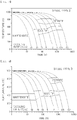
- FIG. 6 shows that when a vanadium content is increased, (Fe,Cr) 23 C 6 carbide formation driving force is decreased, resulting in complete suppression of (Fe,Cr) 23 C 6 carbide formation.
- a vanadium content is increased, (Fe,Cr) 23 C 6 carbide formation driving force is decreased, resulting in complete suppression of (Fe,Cr) 23 C 6 carbide formation.
- 0.65 wt% or more vanadium alloying is needed, when considering the tempering temperature range of 675 to 800°C and the creep temperature mentioned in the present disclosure. That is, it is seen that since steel types 2 to 4 of the present disclosure all included 0.65 wt% or more vanadium unlike steel type 1, (Fe,Cr) 23 C 6 carbide formation was able to be completely suppressed.
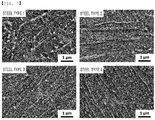
- FIG. 7 is a scanning microscope photograph illustrating the results of observing the microstructure of a steel plate which was reheated at 1000°C for 1 hour, quenched to be cooled down to room temperature, and tempered at 730°C for 1 hour, and steel types 2 to 4 all showed fine carbonitride precipitation along sub-crystal grain boundary. It is seen that the carbonitrides as such effectively interrupt dislocation movement at a high temperature and also effectively prevent movement of sub-crystal grains to secure the stability, thereby greatly improving creep properties as compared with the conventional chromium steel. However, it is seen that steel type 1 formed coarse (Fe,Cr) 23 C 6 carbides and the creep properties were not good as compared with steel types 2 to 4.
Landscapes
- Chemical & Material Sciences (AREA)
- Engineering & Computer Science (AREA)
- Mechanical Engineering (AREA)
- Materials Engineering (AREA)
- Metallurgy (AREA)
- Organic Chemistry (AREA)
- Physics & Mathematics (AREA)
- Thermal Sciences (AREA)
- Crystallography & Structural Chemistry (AREA)
- Heat Treatment Of Steel (AREA)
Applications Claiming Priority (2)
| Application Number | Priority Date | Filing Date | Title |
|---|---|---|---|
| KR1020180150819A KR102142782B1 (ko) | 2018-11-29 | 2018-11-29 | 크리프 강도가 우수한 크롬-몰리브덴 강판 및 그 제조방법 |
| PCT/KR2019/016694 WO2020111857A1 (fr) | 2018-11-29 | 2019-11-29 | Tôle d'acier chrome-molybdène présentant une excellente résistance au fluage et son procédé de fabrication |
Publications (2)
| Publication Number | Publication Date |
|---|---|
| EP3889302A1 true EP3889302A1 (fr) | 2021-10-06 |
| EP3889302A4 EP3889302A4 (fr) | 2022-06-01 |
Family
ID=70852918
Family Applications (1)
| Application Number | Title | Priority Date | Filing Date |
|---|---|---|---|
| EP19888281.3A Pending EP3889302A4 (fr) | 2018-11-29 | 2019-11-29 | Tôle d'acier chrome-molybdène présentant une excellente résistance au fluage et son procédé de fabrication |
Country Status (6)
| Country | Link |
|---|---|
| US (1) | US20220025477A1 (fr) |
| EP (1) | EP3889302A4 (fr) |
| JP (1) | JP7232910B2 (fr) |
| KR (1) | KR102142782B1 (fr) |
| CN (1) | CN113166901B (fr) |
| WO (1) | WO2020111857A1 (fr) |
Families Citing this family (3)
| Publication number | Priority date | Publication date | Assignee | Title |
|---|---|---|---|---|
| KR102402238B1 (ko) | 2020-08-07 | 2022-05-26 | 주식회사 포스코 | 수소 취화 저항성 및 충격 인성이 우수한 강재 및 이의 제조방법 |
| KR102415765B1 (ko) * | 2020-08-27 | 2022-07-01 | 주식회사 포스코 | 크리프 강도와 충격 인성이 우수한 크롬강 및 이의 제조방법 |
| CN117385127A (zh) * | 2023-09-11 | 2024-01-12 | 舞阳钢铁有限责任公司 | 一种提高大厚度Cr-Mo钢高温性能的方法 |
Family Cites Families (18)
| Publication number | Priority date | Publication date | Assignee | Title |
|---|---|---|---|---|
| JPH079027B2 (ja) * | 1988-09-30 | 1995-02-01 | 住友金属工業株式会社 | 高温用低合金鋼の成形加工方法 |
| JPH062927B2 (ja) * | 1989-02-20 | 1994-01-12 | 住友金属工業株式会社 | 耐食、耐酸化性に優れた高強度低合金鋼 |
| JPH0742546B2 (ja) * | 1989-08-16 | 1995-05-10 | 住友金属工業株式会社 | 熱間スラブの幅サイジング用金型 |
| JP3237137B2 (ja) * | 1991-08-12 | 2001-12-10 | 住友金属工業株式会社 | 溶接熱影響部の強度低下の小さい高クロムフェライト耐熱鋼 |
| JPH101739A (ja) * | 1996-06-11 | 1998-01-06 | Nkk Corp | 高温強度と溶接性に優れた低合金耐熱鋼およびその製造方法 |
| JP3283768B2 (ja) * | 1996-10-28 | 2002-05-20 | 株式会社神戸製鋼所 | 高強度Cr−Mo鋼のTIG溶接金属及びTIG溶接方法 |
| JP3565155B2 (ja) * | 2000-01-13 | 2004-09-15 | 住友金属工業株式会社 | 高強度低合金耐熱鋼 |
| JP3525843B2 (ja) * | 2000-02-09 | 2004-05-10 | 住友金属工業株式会社 | 高強度低合金耐熱鋼 |
| US6641780B2 (en) * | 2001-11-30 | 2003-11-04 | Ati Properties Inc. | Ferritic stainless steel having high temperature creep resistance |
| JP4009124B2 (ja) * | 2002-03-28 | 2007-11-14 | 新日本製鐵株式会社 | 長時間クリープ特性に優れた高強度低Crフェライト系ボイラ用鋼管およびその製造方法 |
| JP4074555B2 (ja) * | 2003-06-03 | 2008-04-09 | 新日本製鐵株式会社 | クリープ特性に優れた高強度低合金ボイラ用鋼の製造方法 |
| EP3696292B1 (fr) * | 2007-10-25 | 2024-03-13 | JFE Steel Corporation | Tôle d'acier galvanisée avec une résistance élevée à la traction ayant une excellente aptitude à la déformation et propriétés anti-écrasement et procédé de son production |
| KR101140651B1 (ko) * | 2010-01-07 | 2012-05-03 | 한국수력원자력 주식회사 | 크리프 저항성이 우수한 고크롬 페라이트/마르텐사이트 강 및 이의 제조방법 |
| DE102012011161B4 (de) * | 2012-06-05 | 2014-06-18 | Outokumpu Vdm Gmbh | Nickel-Chrom-Aluminium-Legierung mit guter Verarbeitbarkeit, Kriechfestigkeit und Korrosionsbeständigkeit |
| KR101568523B1 (ko) * | 2013-12-24 | 2015-11-11 | 주식회사 포스코 | 소려 취화 저항성이 우수한 압력용기용 강판 및 그 제조 방법 |
| KR20150104348A (ko) * | 2014-03-05 | 2015-09-15 | 한국원자력연구원 | 크리프 저항성이 향상된 페라이트/마르텐사이트계 산화물분산강화 강 및 이의 제조방법 |
| WO2015174530A1 (fr) * | 2014-05-15 | 2015-11-19 | 新日鐵住金株式会社 | Élément de plaque d'acier laminée à chaud |
| KR102326684B1 (ko) * | 2019-09-17 | 2021-11-17 | 주식회사 포스코 | 크리프 강도와 고온 연성이 우수한 크롬강판 및 그 제조방법 |
-
2018
- 2018-11-29 KR KR1020180150819A patent/KR102142782B1/ko active Active
-
2019
- 2019-11-29 JP JP2021530277A patent/JP7232910B2/ja active Active
- 2019-11-29 CN CN201980078601.5A patent/CN113166901B/zh active Active
- 2019-11-29 US US17/296,875 patent/US20220025477A1/en active Pending
- 2019-11-29 WO PCT/KR2019/016694 patent/WO2020111857A1/fr not_active Ceased
- 2019-11-29 EP EP19888281.3A patent/EP3889302A4/fr active Pending
Also Published As
| Publication number | Publication date |
|---|---|
| EP3889302A4 (fr) | 2022-06-01 |
| JP2022509978A (ja) | 2022-01-25 |
| KR20200065150A (ko) | 2020-06-09 |
| KR102142782B1 (ko) | 2020-08-10 |
| WO2020111857A1 (fr) | 2020-06-04 |
| JP7232910B2 (ja) | 2023-03-03 |
| CN113166901A (zh) | 2021-07-23 |
| US20220025477A1 (en) | 2022-01-27 |
| CN113166901B (zh) | 2023-02-17 |
Similar Documents
| Publication | Publication Date | Title |
|---|---|---|
| CN111479945B (zh) | 具有优秀硬度和冲击韧性的耐磨损钢及其制造方法 | |
| CN114891961A (zh) | 冷轧热处理钢板 | |
| EP3561111B1 (fr) | Tôle d'acier épaisse ayant une excellente résistance à l'impact cryogénique et son procédé de fabrication | |
| JP7032537B2 (ja) | 曲げ性及び低温靭性に優れた高強度熱延鋼板及びその製造方法 | |
| KR20210053526A (ko) | 저온 충격인성이 우수한 고강도 강재 및 그 제조방법 | |
| EP4265797A1 (fr) | Matériau d'acier hautement épais ayant une excellente résistance aux chocs à basse température et son procédé de fabrication | |
| EP3733905B1 (fr) | Matériau d'acier structural à haute résistance ayant d'excellentes caractéristiques d'inhibition de propagation des fissures de fatigue et son procédé de fabrication | |
| CN112771194A (zh) | 具有优异的硬度和冲击韧性的耐磨钢及其制造方法 | |
| EP3392364A1 (fr) | Acier de haute dureté résistant à l'abrasion avec une ténacité et une résistance à la fissuration de coupe excellentes, et son procédé de fabrication | |
| EP3889302A1 (fr) | Tôle d'acier chrome-molybdène présentant une excellente résistance au fluage et son procédé de fabrication | |
| EP4265794A1 (fr) | Matériau d'acier ayant une faible dureté de surface et une excellente ténacité à l'impact à basse température, et son procédé de fabrication | |
| KR102339890B1 (ko) | 강판 및 그 제조 방법 | |
| KR101301617B1 (ko) | 고강도 고인성 소재 및 이를 이용한 타워 플랜지 제조방법 | |
| EP4640903A1 (fr) | Plaque d'acier présentant une résistance élevée et une excellente résistance aux chocs à basse température, procédé de fabrication | |
| US12385117B2 (en) | Chromium steel sheet having excellent creep strength and high temperature ductility and method of manufacturing same | |
| KR102415765B1 (ko) | 크리프 강도와 충격 인성이 우수한 크롬강 및 이의 제조방법 | |
| JP2023553169A (ja) | 高温pwht抵抗性に優れた圧力容器用鋼板及びその製造方法 | |
| KR20220089109A (ko) | 충격인성이 우수한 압력용기용 고강도 강재 및 이의 제조방법 | |
| KR101736602B1 (ko) | 충격인성이 우수한 선재 및 이의 제조방법 | |
| KR102560057B1 (ko) | 굽힘 가공성이 우수한 고항복비 고강도 강판 및 그 제조방법 | |
| KR20200062428A (ko) | 냉연 도금 강판 및 그 제조방법 | |
| KR20250093757A (ko) | 냉연강판, 용융아연도금강판 및 이들의 제조방법 | |
| KR20240098230A (ko) | 심부경도가 우수한 고경도 내마모강판 및 그 제조방법 | |
| KR101736601B1 (ko) | 충격인성이 우수한 선재 및 이의 제조방법 |
Legal Events
| Date | Code | Title | Description |
|---|---|---|---|
| STAA | Information on the status of an ep patent application or granted ep patent |
Free format text: STATUS: THE INTERNATIONAL PUBLICATION HAS BEEN MADE |
|
| PUAI | Public reference made under article 153(3) epc to a published international application that has entered the european phase |
Free format text: ORIGINAL CODE: 0009012 |
|
| STAA | Information on the status of an ep patent application or granted ep patent |
Free format text: STATUS: REQUEST FOR EXAMINATION WAS MADE |
|
| 17P | Request for examination filed |
Effective date: 20210609 |
|
| AK | Designated contracting states |
Kind code of ref document: A1 Designated state(s): AL AT BE BG CH CY CZ DE DK EE ES FI FR GB GR HR HU IE IS IT LI LT LU LV MC MK MT NL NO PL PT RO RS SE SI SK SM TR |
|
| DAV | Request for validation of the european patent (deleted) | ||
| DAX | Request for extension of the european patent (deleted) | ||
| A4 | Supplementary search report drawn up and despatched |
Effective date: 20220429 |
|
| RIC1 | Information provided on ipc code assigned before grant |
Ipc: C21D 1/25 20060101ALI20220422BHEP Ipc: C21D 1/28 20060101ALI20220422BHEP Ipc: C21D 1/22 20060101ALI20220422BHEP Ipc: C21D 1/18 20060101ALI20220422BHEP Ipc: C21D 6/00 20060101ALI20220422BHEP Ipc: C21D 6/02 20060101ALI20220422BHEP Ipc: C21D 8/02 20060101ALI20220422BHEP Ipc: C21D 9/46 20060101ALI20220422BHEP Ipc: C22C 38/00 20060101ALI20220422BHEP Ipc: C22C 38/06 20060101ALI20220422BHEP Ipc: C22C 38/04 20060101ALI20220422BHEP Ipc: C22C 38/02 20060101ALI20220422BHEP Ipc: C22C 38/54 20060101ALI20220422BHEP Ipc: C22C 38/50 20060101ALI20220422BHEP Ipc: C22C 38/48 20060101ALI20220422BHEP Ipc: C22C 38/42 20060101ALI20220422BHEP Ipc: C22C 38/46 20060101ALI20220422BHEP Ipc: C22C 38/44 20060101AFI20220422BHEP |
|
| RAP3 | Party data changed (applicant data changed or rights of an application transferred) |
Owner name: POSCO HOLDINGS INC. |
|
| RAP1 | Party data changed (applicant data changed or rights of an application transferred) |
Owner name: POSCO CO., LTD |