EP3287007A1 - Lutte contre des organismes nuisibles sur la base de prediction de risques de contamination - Google Patents
Lutte contre des organismes nuisibles sur la base de prediction de risques de contamination Download PDFInfo
- Publication number
- EP3287007A1 EP3287007A1 EP16185503.6A EP16185503A EP3287007A1 EP 3287007 A1 EP3287007 A1 EP 3287007A1 EP 16185503 A EP16185503 A EP 16185503A EP 3287007 A1 EP3287007 A1 EP 3287007A1
- Authority
- EP
- European Patent Office
- Prior art keywords
- infestation
- card
- treatment
- harmful organisms
- field
- Prior art date
- Legal status (The legal status is an assumption and is not a legal conclusion. Google has not performed a legal analysis and makes no representation as to the accuracy of the status listed.)
- Withdrawn
Links
Images
Classifications
-
- A—HUMAN NECESSITIES
- A01—AGRICULTURE; FORESTRY; ANIMAL HUSBANDRY; HUNTING; TRAPPING; FISHING
- A01M—CATCHING, TRAPPING OR SCARING OF ANIMALS; APPARATUS FOR THE DESTRUCTION OF NOXIOUS ANIMALS OR NOXIOUS PLANTS
- A01M7/00—Special adaptations or arrangements of liquid-spraying apparatus for purposes covered by this subclass
- A01M7/0089—Regulating or controlling systems
-
- A—HUMAN NECESSITIES
- A01—AGRICULTURE; FORESTRY; ANIMAL HUSBANDRY; HUNTING; TRAPPING; FISHING
- A01M—CATCHING, TRAPPING OR SCARING OF ANIMALS; APPARATUS FOR THE DESTRUCTION OF NOXIOUS ANIMALS OR NOXIOUS PLANTS
- A01M21/00—Apparatus for the destruction of unwanted vegetation, e.g. weeds
- A01M21/04—Apparatus for destruction by steam, chemicals, burning, or electricity
- A01M21/043—Apparatus for destruction by steam, chemicals, burning, or electricity by chemicals
-
- A—HUMAN NECESSITIES
- A01—AGRICULTURE; FORESTRY; ANIMAL HUSBANDRY; HUNTING; TRAPPING; FISHING
- A01N—PRESERVATION OF BODIES OF HUMANS OR ANIMALS OR PLANTS OR PARTS THEREOF; BIOCIDES, e.g. AS DISINFECTANTS, AS PESTICIDES OR AS HERBICIDES; PEST REPELLANTS OR ATTRACTANTS; PLANT GROWTH REGULATORS
- A01N25/00—Biocides, pest repellants or attractants, or plant growth regulators, characterised by their forms, or by their non-active ingredients or by their methods of application, e.g. seed treatment or sequential application; Substances for reducing the noxious effect of the active ingredients to organisms other than pests
-
- G—PHYSICS
- G06—COMPUTING OR CALCULATING; COUNTING
- G06F—ELECTRIC DIGITAL DATA PROCESSING
- G06F30/00—Computer-aided design [CAD]
- G06F30/20—Design optimisation, verification or simulation
-
- G—PHYSICS
- G06—COMPUTING OR CALCULATING; COUNTING
- G06N—COMPUTING ARRANGEMENTS BASED ON SPECIFIC COMPUTATIONAL MODELS
- G06N7/00—Computing arrangements based on specific mathematical models
- G06N7/01—Probabilistic graphical models, e.g. probabilistic networks
Definitions
- the present invention is concerned with the control of harmful organisms that may occur in the cultivation of crops. Control is based on the prediction of site-specific infestation risks.
- the proPlant Expert Decision Support System uses culture data (developmental stage, growing conditions, crop protection measures), weather conditions (temperature, duration of sunshine, wind speed, precipitation), and pests / Diseases (economic limits, pest / disease pressure). With the help of this data, a field-specific risk of infestation is estimated and a recommendation at the time of treatment, pesticides and an assessment of past plant protection measures is drawn up.
- the underlying model may e.g. Consider development cycles or migration of pests (Johnen et al., 2010). In general, this system is rule-based or heuristic in combination with process-based calculations (e.g., leaf moisture estimation). The resulting recommendations for action at the time of treatment and pesticides are field-specific, but not specific to the site.
- pure disease models can estimate a risk of infestation (eg, proPlant Expert), while coupled models of plant disease or plant pest also estimate the impact of disease or pest on crop development, including yield can (eg WHEATPEST, Willocquet 2008).
- the mentioned decision support systems and models are i.d.R. so-called point models.
- the models i.d.R. calibrated so that the output reflects the spatial representation of the input. If the input is collected at a point in space or is interpolated or estimated for a point in space, i.d.R. assume that the model output is valid for the entire adjacent field.
- An application of so-called point models calibrated at the field level to further, i.d.R. coarser scales are known (Hoffmann et al., 2016).
- An application of these so-called point models to several points within a field allows a partial area-specific modeling of the infestation. In this case, however, spatial dependencies or propagation vectors of infestation are neglected.
- systems for spatially explicit modeling of diseases and pests exist. These models explicitly simulate the temporal-spatial spread of diseases or pests. In this case, spatial dependencies or propagation vectors of an infestation are taken into account.
- An example is the combination of the systems APSIM (process-based simulation) and DYMEX (spatial modeling in 2d), (Parry et al., 2011).
- prognosis models are predominantly used to estimate the time of an infestation and to take appropriate eradicative or curative plant protection measures.
- a further subject of the present invention is a preferably digital treatment card, wherein the treatment card indicates which partial surfaces of a field for cultivating a crop are to be treated with a plant protection agent in order to prevent the spread of harmful organisms and / or to combat harmful organisms, the A treatment map based on the area-specific prediction of the risk of infection of the field with one or more pests for the current growing period created, and optionally created on the basis of the foreseen conditions of the planned treatment in terms of weather, and / or development of the crop and / or environmental factors and / or has been adjusted.
- Another object of the present invention is a system comprising the treatment card according to the invention and a mobile application device, wherein the application device comprises means for applying one or more pesticides, a positioning system and a computer, wherein the computer is arranged so that the computer the treatment card in a Read in memory of the computer and the means for applying one or more pesticides can control so that pesticides is applied when the application device is located in a place for the location specified in the treatment card that plant protection products should be applied there.
- a further subject of the present invention is the use of the treatment card according to the invention for the site-specific application of pesticides.
- step (A) of the method according to the invention a first infestation card is generated.
- the first infestation map shows locations in the field where harmful organisms have been observed in the past.
- harmful organism is understood below to mean an organism that appears in the cultivation of crops and can damage the crop, adversely affect the harvest of the crop or compete with the crop for natural resources.
- harmful organisms are weeds, grass weeds, animal pests such as beetles, caterpillars and worms, fungi and pathogens (eg bacteria and viruses).
- viruses do not belong to the organisms from a biological point of view, they should nevertheless fall under the term harmful organism in the present case.
- weeds refers to plants of the spontaneous accompanying vegetation (Segetalflora) in cultivated plants, grassland or gardens, which are not cultivated there in a targeted manner, e.g. come from the seed potential of the soil or via Zuflug to development.
- the term is not limited to herbs in the true sense, but also includes grasses, ferns, mosses or woody plants.
- weed grass (plural: grass weeds) is often used to clarify a distinction to the herbaceous plants.
- weed is used as a generic term, which is intended to cover the term weed grass, unless it is referred to specific weeds or grass weeds.
- Weeds and weeds in the sense of the present invention are accordingly plants which accompany the cultivation of a desired crop. Since they compete for resources with the crop, they are undesirable and should therefore be combated.
- field is understood to mean a spatially delimitable area of the earth's surface that is used for agriculture by planting crops, nourishing them and harvesting them in such a field.
- cultiva plant is understood to mean a plant that is purposefully cultivated by the intervention of humans as a useful or ornamental plant.
- the infestation card is preferably a digital card.
- digital means that the card can be processed by a machine, usually a computer system.
- Processcessing is understood to mean the known methods for electronic data processing (EDP).
- the harmful organisms were observed in the growing season immediately preceding the current growing season.
- the cultivation period is one year, so that the infestation card is usually generated based on the pest infestation observed in the previous year.
- the term "nest” is understood to mean a partial area of a field on which a particular harmful organism is repeatedly observed.
- Another example is infestation by nematodes, which has a spatially stable pattern (Campos-Herrera et al., 2011, Godefroid et al., 2013, Ortiz et al., 2010).
- a "spatially stable pattern” refers to a repeatedly observable or measurable spatial distribution or arrangement of nests in a field. Furthermore, a spatially stable pattern of diseases and pests may relate to i) the cause of a disease or pest infestation, ii) the disease or pest infestation itself, and iii) a manifestation of disease or pest infestation. For example, a pest W may transmit a virus X that results in a disease Y with the symptom Z. It is conceivable that W, X, Y and Z are measurable and each give a stable pattern.
- these patterns may be caused by an interaction of the developmental cycle of the pathogen or pest with other abiotic factors.
- the invention is therefore also applicable to regions in the field, which have a generally higher disease or pest pressure due to their nature. Examples of such texture factors are location, troughs, soil or field edge texture (e.g., hedges).
- Septoria leaf drought arises under favorable conditions for infection by fungal spores of Septoria Tritici. These favorable conditions can now be given by a higher humidity or less air exchange, due to exposure, local hollows and / or soil.
- An example of a pest in which recurrent patterns occur is the cabbage midge ( Dasineura brassicae) in oilseed rape. Due to the low flying readiness, the distance to the winter host is decisive for an infestation. A recurring pattern results here from the position of the field relative to that of the winter host as well as to the field with rapeseed cultivation in the previous year. Another example is pathogens whose infestation pressure is determined by the degradation rate of plant residues in the soil. Stable nests can be caused by local differences in the soil.
- the present invention is thus to be applied preferably to the infestation with harmful organisms in which nests or infestation gradients in the field are observed. If an infestation has been observed at one point in the field in the past, there is a certain likelihood that another infestation will occur at this point.
- the invention is also applicable to infestation with harmful organisms in which no nests are observed.
- the first infestation card is used to determine the factors that have led to an observed infestation in the past. It is determined which conditions prevailed at the infestation sites, both before infestation and during infestation. By gaining general knowledge about the harmful organisms and their spread, correlations can then be deduced which can be used to predict an infestation risk.
- the first infestation card is used to predict the risk of (re) infestation in the current growing season.
- step (C) a prediction is made of the risk of harmful organisms occurring in the field during the growing period (infestation risk).
- infestation risk is understood to mean the probability of the occurrence of a disease, of a pest or of corresponding damage or symptoms on the crop as well as the probability of the occurrence of other procedural disadvantages arising from infestation.
- the risk relates in each case to a form of expression of the disease, of the pest or of corresponding damage or symptoms on the plant as well as of other resulting procedural disadvantages.
- This risk is calculated.
- a second infestation map is created (optional step (B)). In the second infestation map places are recorded in the field in which harmful organisms have been observed in the current growing period.
- the first and second infestation maps may be based on observations of one person (usually the farmer) or on data generated by sensors, or both.
- Remote sensing data is digital information obtained remotely, for example, from satellites from the Earth's surface.
- aircraft unmanned (drones) or manned
- Corresponding remote sensing sensors either monitor the harmful organisms themselves (eg weeds and grass weeds) or their effects on crops ( MS Moran et al .: Opportunities and Limitations for Image-Based Remote Sensing in Precision Crop Management, Remote Sensing of Environment (1997) 61: 319-346 ).
- sensors in the field or sensors attached to machines for processing the agricultural area can be used to observe harmful organisms.
- first infestation card it is also conceivable to first calculate the risk of infestation on the basis of the first infestation card. If partial areas are identified that currently present a high risk of infection, measures can be taken to verify or falsify a current infestation. It is conceivable, for example, that a farmer receives a computer-aided message based on the prediction of a currently high risk of infection, that he should check the partial areas for possible infestation. The test can evidently be done with the help of remote sensing sensors, field sensors or sensors on an agricultural machine. These observations are then the basis for the second infestation card. If an acute infestation is detected or not detected, these observations are incorporated as a second infestation card in the further (updated) prediction of the risk of infestation.
- information on the state of development of the crop plants is preferably used in the prediction of the risk of infection.
- Cultivated plants more or less susceptible to infestation with a harmful organism and / or harmful organisms occur in the presence of a certain level of development at all.
- the information on the development status of the cultivated plants includes e.g. the following information: stage of development (e.g., BBCH code), height of growth, leaf size, leaf shape, leaf color, leaf area, sowing date, variety, biomass present, nutritional status and health status.
- stage of development e.g., BBCH code
- height of growth e.g., leaf size, leaf shape, leaf color, leaf area, sowing date, variety, biomass present, nutritional status and health status.
- the BBCH code (or BBCH scale) provides information about the morphological development stage of a plant.
- the abbreviation stands officially for the "Biologische Bundesweg, Bundessortenamt and CHemische Industrie”.
- the BBCH scale is used in scientific communication for the questions of plant development and the optimal or recommended time of application of fertilizer and crop protection measures in crop cultivation.
- the information on the state of development of the crop plants can also be gathered by means of remote sensing sensors and / or sensors in the field and / or human observation and / or sensors on agricultural machinery.
- information about site-specific environmental factors is preferably included in the prediction of the infestation risk.
- An “environmental factor” is an element of the environment that interacts with other elements (e.g., living things).
- Environmental factors can also be described as ecological factors or eco-factors.
- the environmental factor is understood as a description of an environmental influence on an organism. This can promote or harm the living being.
- the environmental factors can be biotic or abiotic.
- Biotic factors are factors of the living environment, such as food, competitors, enemies, parasites and pathogens.
- Abiotic factors are conditions of the environment that are not caused or influenced by living things.
- the prediction will take into account environmental factors that may affect the spread of observed harmful organisms.
- Preferred environmental factors are: soil type, soil quality, soil composition, soil moisture, crop rotation, nutrient content in the soil, field margins, exposure to solar radiation, wind and / or precipitation, the growth of neighboring fields and the climate.
- weather information is also included in the prediction of the risk of infestation.
- the spread of many harmful organisms depends in particular on the evolution of the weather during the considered growing period of the crop.
- the weather of the last days and weeks, months and years (past), as well as the current weather (present), as well as the expected weather (future) can be decisive for the occurrence and spread of harmful organisms.
- weather information used to predict the risk of infection includes measured weather data of the current growing season, interpolated or extrapolated weather data, and predicted weather data.
- All information that is included in the prediction of the risk of infection has a spatial resolution that is higher than the considered field in order to enable a site-specific prediction.
- the model for predicting the risk of infection can be a purely rule-based expert system which, based on past observations, outputs the risk of infestation for currently observed situations.
- the predictive model can also be mechanistic or process-based.
- the predictive model will be a mix of rule-based and process-based systems. For example, leaf moisture can be process-based, and the resulting risk of infection can be estimated based on rules.
- purely data-driven predictive models are conceivable, eg based on neural networks. In principle, a combination of the model systems described above is conceivable.
- the risk of infestation is preferably simulated on a process-based basis if the simulation of the simulated processes (eg error analysis) is desired, the understanding of the simulated processes in the form of appropriate equations is available, the quality of the model results is superior to a purely data-driven model approach, or the results Data base is low.
- simulation of the simulated processes eg error analysis
- understanding of the simulated processes in the form of appropriate equations is available, the quality of the model results is superior to a purely data-driven model approach, or the results Data base is low.
- a purely data-driven approach eg deep learning
- the simulation of the simulated processes eg error analysis
- the understanding of the simulated processes in the form of appropriate equations missing the quality of the model results superior to a process- or rule-based model approach is, or the data base is high.
- the amount of computing power required can also be decisive for the selection of a modeling approach.
- an extension of a decision support system such as a decision support system, may be provided.
- proPlant serve the risk assessment.
- process-based or coupled models can be used for this purpose.
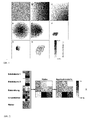
- the prediction is site specific (see eg Fig.1 ), ie, the field is divided into sub-areas, for which the respective risk of infestation is calculated.
- the division of the field into faces can be done so that the field is divided into a defined number of equal or nearly equal parts of the area.
- the division of the field into subareas preferably takes place taking into account the spatial distribution of those factors which have the greatest influence on the propagation of the harmful organisms.
- the soil condition has a decisive influence on the spread.
- the result of step (C) of the method according to the invention is a digital map of the field, in which for individual sub-areas a risk for infestation with one or more harmful organisms is indicated.
- the indication of the risk of infection is preferably in the form of a percentage probability. If infestation with harmful organisms has been observed in some sub-areas during the current cultivation period, eg during the creation of the second infestation card, the risk of infestation is high for these partial areas 100%. However, if no infestation is currently observable, the risk of infestation is less than 100%.
- the risk of infestation on the digital map can also be displayed in color. For example, those subareas for which a comparatively low infection risk has been determined (eg less than 20%) may be colored green, while subareas for which a comparatively high risk of infection has been determined (eg greater than 80%) may be dyed red can.
- the infestation risk is preferably determined and displayed as a function of time. This enables the user (eg farmer) to recognize when an increased risk is to be expected.
- the forecast is updated on an ongoing basis, particularly taking into account the current weather conditions.
- step (D) of the method according to the invention a subsite-specific treatment map is created on the basis of the subsite-specific prediction.
- treatment is meant those measures which result in the prevention of the occurrence or spread of harmful organisms and / or the reduction in the amount of harmful organisms present.
- the treatment measures may relate to the crops, the environment of the crops (e.g., the soil) or the harmful organisms.
- control is used in the present case.
- the term “control” thus refers to a prevention of the spread or reduction of the amount of existing harmful organisms.
- the term “amount” refers to the biomass present in the form of weeds.
- the term “amount” can also be understood, in particular in the case of a disease, as the amount of crop plants which already has disease symptoms.
- the treatment is carried out by the application of one or more crop protection products.
- crop protection agent is understood to mean a product which can effectively combat harmful organisms and / or prevent their spread.
- a plant protection product is usually a formulation containing one or more active substances against one or more harmful organisms.
- the active ingredient for controlling the weeds or grass weeds is a herbicide and the crop protection agent is a herbicidal formulation.
- the fungicidal active ingredient is a fungicide and the crop protection agent is a fungicidal formulation.
- the term "control agent” is also used here.
- growth regulators instead of or in combination with crop protection agents, if this is beneficial for the cultivation process and lowers the risk of infection at the field level or site specific.
- growth regulators should also be covered by the term crop protection agents, and treatment of a subarea should also encompass the application of a growth regulator on the subarea here.
- the control of harmful organisms with appropriate pesticides on a chemical and / or biological basis can be supplemented by physical / mechanical control methods.
- Physical removal or even mechanical removal is understood to mean, for example, that the weed / grass is either completely removed as a pest or parts of it are removed so that the weed / grass is no longer viable and dies.
- no chemical or biological agent is applied in the physical / mechanical control.
- the physical / mechanical control therefore also exerts no selection pressure on the weeds / grass weeds, but is often more expensive and more expensive than the application of herbicides.
- a physical / mechanical control should also be understood, for example, irrigation, for example, weeds are desired to be brought to emerge, then targeted to eliminate them.
- irrigation for example, weeds are desired to be brought to emerge, then targeted to eliminate them.
- Under one physical / mechanical control should also be understood as a flaming of the harmful organisms.
- the treatment card indicates on which sub-measures measures should be taken to prevent infestation with harmful organisms, to prevent the spread of existing harmful organisms or to reduce the level of existing harmful organisms.
- treatment includes the application of one or more plant protection products
- application map is used in addition to or instead of the term “treatment card”.
- the application card indicates on which subareas of the field which quantities of one or more selected plant protection products are to be applied in order to prevent the spread of harmful organisms and / or to control harmful organisms.
- the treatment card and the application card are digital cards.
- “Damage threshold” is a term used in agriculture, forestry and horticulture. He indicates the infestation density with pathogens, diseases or the stocking with weeds, from which a fight makes economic sense. Up to this value, the additional economic effort through control is greater than the feared crop failure. If the infestation or the weeding exceeds this value, the control costs are at least offset by the expected additional yield.
- the damage threshold can be very different. In the case of pests or diseases that can only be combated with great effort and with negative side effects for further production, the damage threshold can be very high. However, if even a small infestation can become a source of spread that threatens to destroy the entire production, the damage threshold can be very low.
- subareas for which a high risk of infestation with a harmful organism has been identified are included in the prescription map as "subareas to be treated with one or more plant protection products", even if no infestation is currently registered. In such a case, it is better from an economic and / or ecological point of view, not to let an infestation arise only, than to wait until the infestation is acute in order to then fight it.
- partial surfaces are specified in the application map as "partial surfaces to be treated with one or more pesticides" for which a risk of infestation has been exceeded.
- the infestation risk threshold is determined in a manner analogous to the damage thresholds.
- the risk of infestation of a partial area is equated with the percentage area of the partial areas that is affected by a 100% infestation. This will be explained with an example.
- the application card indicates which partial surfaces are to be treated. It is also preferably indicated with which pesticides / pesticides the respective partial surfaces are to be treated.
- the application card is a so-called “on / off card", in which only indicated at which points one or more pesticides should be used.
- the respective amount of the plant protection agent to be used is specified. In some cases, more plant protection products are used as the biomass or leaf area of crops grows. The additional effort can be realized by a higher concentration of the active ingredient in the plant protection product, by a larger amount of pesticides or by both measures. In a preferred embodiment is for the partial areas to be treated stated both the amount of the pesticide and the concentration of the active ingredient.
- the treatment of partial areas of the field is intended for a time in the future. Therefore, the values predicted for the application time of those factors that have an influence on the effectiveness of the pesticide (s) used preferably also flow into the application map.
- the temperature and / or the soil moisture and / or the level of development of the crop have an influence on the effectiveness. It is conceivable, for example, that an active ingredient is degraded faster at a higher temperature and a higher soil moisture than at a lower temperature and a lower soil moisture. Therefore, under appropriate conditions, an increased amount of active ingredient may be required to achieve a desired effect. Accordingly, the conditions for the time of application are predicted and the amount of the plant protection agent and / or concentration of the active ingredient in the plant protection product adapted to these conditions.
- the prevailing conditions are predicted in order to then decide which time is the most favorable time for an application. For example, if conditions exist at a first time that require an increased amount of pesticide than the conditions that exist at a second time, it may be more economical to administer the application at the second time.
- the amount of the plant protection agent and / or the concentration of the active ingredient in the plant protection agent is determined as a function of the risk of infection. If the risk of infestation is higher for a first subarea than for a second subarea, then more crop protection agent and / or a crop protection agent with a higher active substance concentration is applied on the first subarea than on the second subarea.
- pesticides are preferably based on all harmful organisms to be controlled. That means not necessarily for everyone individual harmful organism to be controlled, a control agent especially suitable for this harmful organism is selected. Rather, plant protection products are selected which are best suited for the present combination of harmful organisms.
- control agents are used in the control of the grass weevil:
- a sulfonyl mixture consisting of the active ingredients mesosulfuron and iodusulforone (preferably plus safener) is used.
- propoxycarbazones or pyroxsulam and florasulam are then used.
- a treatment with, for example, the active substances mesosulfuron and iodusulforone (plus safener) is also carried out in the spring.
- the ACCase inhibitor with the so-called FOPS.
- the nature of the active substance and the application rate depend on the type of weed or Ungrases, the number of plants per m 2, or biomass of the weeds or Ungrases and the degree of resistance from.
- step (E) of the method according to the invention the treatment of partial surfaces takes place in accordance with the treatment card prepared in step (D).
- one or more selected crop protection agents are accordingly applied to the respective areas registered in the application map and thus the harmful organisms are fought.
- the preferably digital application map contains commands for an application device for plant protection products.
- the digital application card or parts thereof can be loaded into a working memory of an application device, from where the commands are transmitted to a spraying device.
- An application device is understood to be a mechanical device for applying a plant protection product to a field.
- Such an application device usually comprises at least one container for holding at least one crop protection agent, a spraying device with which the plant protection agent is discharged in the field and a control device with which the promotion of the at least one crop protection agent is controlled from its container in the direction of spraying.
- the digital prescription map will be accordingly preferably stored in the working memory of the control unit.
- the control unit is also preferably in communication with a position determining system which determines the position of the application device in the field.
- the control device sets the application process in motion when it is recorded on the digital application map that an application is to take place at one location and when the position determination system reports that the application device is currently located at this location.
- a human loads the digital prescription map into a mobile computer system, eg, a mobile phone (smartphone) that has a GPS receiver.
- a mobile computer system uses a graphic image of the field to indicate where they are and where they should manually spray (apply) one or more control agents. He then sprays manually at the points where the application card contains a corresponding note. If the user applies a control agent at one point, it is conceivable that via a corresponding sensor system the mobile computer system receives feedback about the successful application process and the completed application process is stored. It is also conceivable that the applied application process is displayed on the mobile computer system, so that the user can recognize where he has already applied.
- the data recorded on the mobile computer system is transmitted immediately or at a later time to a stationary computer system (eg a server) and stored there.
- a stationary computer system eg a server
- the application carried out for each subarea is detected in the digital prescription map in such a way that the number N of (still) to be applied applications (treatments) is reduced by one.
- a person drives with a vehicle over the field, the respective position of the vehicle is detected by GPS receiver, and are transmitted based on the digital application map commands to a spray device on the vehicle when the vehicle is in one place the field is located, according to the application map, an application of one or more control agents to take place, whereupon the corresponding application is carried out automatically.
- the application of one or more control agents is fully automatic: an unmanned machine moves GPS-based on the Field and applied at the points on the field at which a corresponding application is provided in the digital application card.
- an application of the invention in combination with other or conventional application methods is conceivable.
- An example is a uniform treatment of the entire field with a first application and a variable application according to this invention in a second application.
- risk or infestation factors are possible (e.g., overlapping gradients of two disease factors, overlapping nests with gradients, multiple punctual risks, etc.)
- Fig. 2 Schematic representation of the sequence of the method according to the invention
- a risk of infestation from current and historical data including long-term risk vectors, is estimated using models.
- a corresponding application map is created.
- a risk limit variable PSM is administered, within a lower risk range, a minimum application dose is applied, below a lower limit is not applied (white tile in prescription map).
- the resolution of the application corresponds to the spatial resolution of the risk factors.
Landscapes
- Life Sciences & Earth Sciences (AREA)
- Engineering & Computer Science (AREA)
- Environmental Sciences (AREA)
- Zoology (AREA)
- Wood Science & Technology (AREA)
- Pest Control & Pesticides (AREA)
- General Health & Medical Sciences (AREA)
- Health & Medical Sciences (AREA)
- Physics & Mathematics (AREA)
- Theoretical Computer Science (AREA)
- Insects & Arthropods (AREA)
- Toxicology (AREA)
- General Physics & Mathematics (AREA)
- Agronomy & Crop Science (AREA)
- Dentistry (AREA)
- General Engineering & Computer Science (AREA)
- Plant Pathology (AREA)
- Evolutionary Computation (AREA)
- Data Mining & Analysis (AREA)
- Computational Mathematics (AREA)
- Mathematical Analysis (AREA)
- Pure & Applied Mathematics (AREA)
- Computing Systems (AREA)
- Software Systems (AREA)
- Mathematical Physics (AREA)
- Mathematical Optimization (AREA)
- Artificial Intelligence (AREA)
- Algebra (AREA)
- Probability & Statistics with Applications (AREA)
- Computer Hardware Design (AREA)
- Geometry (AREA)
- Catching Or Destruction (AREA)
- Management, Administration, Business Operations System, And Electronic Commerce (AREA)
Priority Applications (8)
| Application Number | Priority Date | Filing Date | Title |
|---|---|---|---|
| EP16185503.6A EP3287007A1 (fr) | 2016-08-24 | 2016-08-24 | Lutte contre des organismes nuisibles sur la base de prediction de risques de contamination |
| PL17754351.9T PL3503724T3 (pl) | 2016-08-24 | 2017-08-17 | Zwalczanie organizmów szkodliwych w oparciu o przewidywanie ryzyka porażenia |
| EP17754351.9A EP3503724B1 (fr) | 2016-08-24 | 2017-08-17 | Lutte contre des organismes nuisibles sur la base de prediction de risques de contamination |
| PCT/EP2017/070877 WO2018036909A1 (fr) | 2016-08-24 | 2017-08-17 | Lutte contre des organismes nuisibles basée sur la prévision de risques de contamination |
| US16/327,065 US11696578B2 (en) | 2016-08-24 | 2017-08-17 | Control of harmful organisms on the basis of the prediction of infestation risks |
| CN201780056469.9A CN109843051B (zh) | 2016-08-24 | 2017-08-17 | 基于侵染风险的预测控制有害生物 |
| BR112019003692-0A BR112019003692B1 (pt) | 2016-08-24 | 2017-08-17 | Método e sistema para o controle de organismos nocivos |
| HUE17754351A HUE067646T2 (hu) | 2016-08-24 | 2017-08-17 | Fertõzésveszély elõrejelzésén alapuló kártevõvédelem |
Applications Claiming Priority (1)
| Application Number | Priority Date | Filing Date | Title |
|---|---|---|---|
| EP16185503.6A EP3287007A1 (fr) | 2016-08-24 | 2016-08-24 | Lutte contre des organismes nuisibles sur la base de prediction de risques de contamination |
Publications (1)
| Publication Number | Publication Date |
|---|---|
| EP3287007A1 true EP3287007A1 (fr) | 2018-02-28 |
Family
ID=56800198
Family Applications (2)
| Application Number | Title | Priority Date | Filing Date |
|---|---|---|---|
| EP16185503.6A Withdrawn EP3287007A1 (fr) | 2016-08-24 | 2016-08-24 | Lutte contre des organismes nuisibles sur la base de prediction de risques de contamination |
| EP17754351.9A Active EP3503724B1 (fr) | 2016-08-24 | 2017-08-17 | Lutte contre des organismes nuisibles sur la base de prediction de risques de contamination |
Family Applications After (1)
| Application Number | Title | Priority Date | Filing Date |
|---|---|---|---|
| EP17754351.9A Active EP3503724B1 (fr) | 2016-08-24 | 2017-08-17 | Lutte contre des organismes nuisibles sur la base de prediction de risques de contamination |
Country Status (7)
| Country | Link |
|---|---|
| US (1) | US11696578B2 (fr) |
| EP (2) | EP3287007A1 (fr) |
| CN (1) | CN109843051B (fr) |
| BR (1) | BR112019003692B1 (fr) |
| HU (1) | HUE067646T2 (fr) |
| PL (1) | PL3503724T3 (fr) |
| WO (1) | WO2018036909A1 (fr) |
Cited By (69)
| Publication number | Priority date | Publication date | Assignee | Title |
|---|---|---|---|---|
| WO2020079231A1 (fr) * | 2018-10-19 | 2020-04-23 | Basf Se | Système informatique et procédé mis en œuvre par ordinateur destinés à l'optimisation de la protection des cultures |
| EP3766344A1 (fr) * | 2019-07-15 | 2021-01-20 | BASF Agro Trademarks GmbH | Procédé de génération d'une carte d'application pour le traitement d'un champ à l'aide d'un équipement agricole |
| EP3822976A1 (fr) * | 2019-11-13 | 2021-05-19 | Basf Se | Surveillance et protection de récoltes |
| WO2021094115A1 (fr) * | 2019-11-13 | 2021-05-20 | Basf Se | Surveillance et protection de cultures |
| US11079725B2 (en) | 2019-04-10 | 2021-08-03 | Deere & Company | Machine control using real-time model |
| EP3895531A1 (fr) * | 2020-04-15 | 2021-10-20 | HORSCH LEEB Application Systems GmbH | Système d'épandage agricole, procédé d'ajustement d'une quantité d'application, ainsi que machine d'épandage agricole |
| US11178818B2 (en) | 2018-10-26 | 2021-11-23 | Deere & Company | Harvesting machine control system with fill level processing based on yield data |
| US11234366B2 (en) | 2019-04-10 | 2022-02-01 | Deere & Company | Image selection for machine control |
| US11240961B2 (en) | 2018-10-26 | 2022-02-08 | Deere & Company | Controlling a harvesting machine based on a geo-spatial representation indicating where the harvesting machine is likely to reach capacity |
| US20220110251A1 (en) | 2020-10-09 | 2022-04-14 | Deere & Company | Crop moisture map generation and control system |
| EP3987926A1 (fr) * | 2020-10-22 | 2022-04-27 | BASF Agro Trademarks GmbH | Procédé pour éviter/réduire les résistances lors de l'application sélective de pesticides |
| US11467605B2 (en) | 2019-04-10 | 2022-10-11 | Deere & Company | Zonal machine control |
| US11474523B2 (en) | 2020-10-09 | 2022-10-18 | Deere & Company | Machine control using a predictive speed map |
| EP3903566A4 (fr) * | 2018-12-27 | 2022-10-19 | Bayer CropScience K.K. | Dispositif de traitement d'informations et système de traitement d'informations |
| US11477940B2 (en) | 2020-03-26 | 2022-10-25 | Deere & Company | Mobile work machine control based on zone parameter modification |
| EP4135515A1 (fr) * | 2020-04-16 | 2023-02-22 | Syngenta Crop Protection AG | Procédés et algorithmes pour optimiser l'application de produits phytosanitaires à résidus limités en utilisant une application à taux variable |
| US11592822B2 (en) | 2020-10-09 | 2023-02-28 | Deere & Company | Machine control using a predictive map |
| US11589509B2 (en) | 2018-10-26 | 2023-02-28 | Deere & Company | Predictive machine characteristic map generation and control system |
| US11635765B2 (en) | 2020-10-09 | 2023-04-25 | Deere & Company | Crop state map generation and control system |
| US11641800B2 (en) | 2020-02-06 | 2023-05-09 | Deere & Company | Agricultural harvesting machine with pre-emergence weed detection and mitigation system |
| US11650587B2 (en) | 2020-10-09 | 2023-05-16 | Deere & Company | Predictive power map generation and control system |
| US11653588B2 (en) | 2018-10-26 | 2023-05-23 | Deere & Company | Yield map generation and control system |
| US11675354B2 (en) | 2020-10-09 | 2023-06-13 | Deere & Company | Machine control using a predictive map |
| US11672203B2 (en) | 2018-10-26 | 2023-06-13 | Deere & Company | Predictive map generation and control |
| US11711995B2 (en) | 2020-10-09 | 2023-08-01 | Deere & Company | Machine control using a predictive map |
| US11727680B2 (en) | 2020-10-09 | 2023-08-15 | Deere & Company | Predictive map generation based on seeding characteristics and control |
| US11778945B2 (en) | 2019-04-10 | 2023-10-10 | Deere & Company | Machine control using real-time model |
| WO2023208752A1 (fr) * | 2022-04-25 | 2023-11-02 | Basf Se | Procédé mis en œuvre par ordinateur pour lutter contre des nuisibles |
| US11825768B2 (en) | 2020-10-09 | 2023-11-28 | Deere & Company | Machine control using a predictive map |
| US11844311B2 (en) | 2020-10-09 | 2023-12-19 | Deere & Company | Machine control using a predictive map |
| US11845449B2 (en) | 2020-10-09 | 2023-12-19 | Deere & Company | Map generation and control system |
| US11849671B2 (en) | 2020-10-09 | 2023-12-26 | Deere & Company | Crop state map generation and control system |
| US11849672B2 (en) | 2020-10-09 | 2023-12-26 | Deere & Company | Machine control using a predictive map |
| US11864483B2 (en) | 2020-10-09 | 2024-01-09 | Deere & Company | Predictive map generation and control system |
| US11874669B2 (en) | 2020-10-09 | 2024-01-16 | Deere & Company | Map generation and control system |
| US11889788B2 (en) | 2020-10-09 | 2024-02-06 | Deere & Company | Predictive biomass map generation and control |
| US11889787B2 (en) | 2020-10-09 | 2024-02-06 | Deere & Company | Predictive speed map generation and control system |
| US11895948B2 (en) | 2020-10-09 | 2024-02-13 | Deere & Company | Predictive map generation and control based on soil properties |
| US11927459B2 (en) | 2020-10-09 | 2024-03-12 | Deere & Company | Machine control using a predictive map |
| US11946747B2 (en) | 2020-10-09 | 2024-04-02 | Deere & Company | Crop constituent map generation and control system |
| US11957072B2 (en) | 2020-02-06 | 2024-04-16 | Deere & Company | Pre-emergence weed detection and mitigation system |
| US11983009B2 (en) | 2020-10-09 | 2024-05-14 | Deere & Company | Map generation and control system |
| US12013245B2 (en) | 2020-10-09 | 2024-06-18 | Deere & Company | Predictive map generation and control system |
| US12035648B2 (en) | 2020-02-06 | 2024-07-16 | Deere & Company | Predictive weed map generation and control system |
| US12058951B2 (en) | 2022-04-08 | 2024-08-13 | Deere & Company | Predictive nutrient map and control |
| US12069978B2 (en) | 2018-10-26 | 2024-08-27 | Deere & Company | Predictive environmental characteristic map generation and control system |
| US12069986B2 (en) | 2020-10-09 | 2024-08-27 | Deere & Company | Map generation and control system |
| US12082531B2 (en) | 2022-01-26 | 2024-09-10 | Deere & Company | Systems and methods for predicting material dynamics |
| US12127500B2 (en) | 2021-01-27 | 2024-10-29 | Deere & Company | Machine control using a map with regime zones |
| US12178158B2 (en) | 2020-10-09 | 2024-12-31 | Deere & Company | Predictive map generation and control system for an agricultural work machine |
| US12225846B2 (en) | 2020-02-06 | 2025-02-18 | Deere & Company | Machine control using a predictive map |
| US12245549B2 (en) | 2022-01-11 | 2025-03-11 | Deere & Company | Predictive response map generation and control system |
| US12250905B2 (en) | 2020-10-09 | 2025-03-18 | Deere & Company | Machine control using a predictive map |
| US12284934B2 (en) | 2022-04-08 | 2025-04-29 | Deere & Company | Systems and methods for predictive tractive characteristics and control |
| US12295288B2 (en) | 2022-04-05 | 2025-05-13 | Deere &Company | Predictive machine setting map generation and control system |
| US12298767B2 (en) | 2022-04-08 | 2025-05-13 | Deere & Company | Predictive material consumption map and control |
| US12302791B2 (en) | 2021-12-20 | 2025-05-20 | Deere & Company | Crop constituents, predictive mapping, and agricultural harvester control |
| US12310286B2 (en) | 2021-12-14 | 2025-05-27 | Deere & Company | Crop constituent sensing |
| US12329065B2 (en) | 2020-10-09 | 2025-06-17 | Deere & Company | Map generation and control system |
| US12329148B2 (en) | 2020-02-06 | 2025-06-17 | Deere & Company | Predictive weed map and material application machine control |
| US12329050B2 (en) | 2020-10-09 | 2025-06-17 | Deere & Company | Machine control using a predictive map |
| US12358493B2 (en) | 2022-04-08 | 2025-07-15 | Deere & Company | Systems and methods for predictive power requirements and control |
| US12386354B2 (en) | 2020-10-09 | 2025-08-12 | Deere & Company | Predictive power map generation and control system |
| US12422847B2 (en) | 2020-10-09 | 2025-09-23 | Deere & Company | Predictive agricultural model and map generation |
| US12419220B2 (en) | 2020-10-09 | 2025-09-23 | Deere & Company | Predictive map generation and control system |
| US12520759B2 (en) | 2022-01-26 | 2026-01-13 | Deere & Company | Systems and methods for predicting material dynamics |
| EP4678003A1 (fr) * | 2024-07-08 | 2026-01-14 | Universitat de Girona | Procédés et compositions pour la lutte contre les maladies infectieuses des plantes |
| US12550802B2 (en) | 2020-10-08 | 2026-02-17 | Deere & Company | Predictive machine characteristic map generation and control system |
| US12582035B2 (en) | 2022-04-08 | 2026-03-24 | Deere & Company | Systems and methods for predictive power requirements and control |
Families Citing this family (17)
| Publication number | Priority date | Publication date | Assignee | Title |
|---|---|---|---|---|
| WO2018065308A1 (fr) | 2016-10-07 | 2018-04-12 | Bayer Cropscience Aktiengesellschaft | Identification d'organismes utiles et/ou de substances nocives dans un champ de plantes cultivées |
| PL3528608T5 (pl) | 2016-10-18 | 2024-04-29 | Basf Agro Trademarks Gmbh | Planowanie i realizacja działań rolniczych |
| EP3326461A1 (fr) | 2016-11-23 | 2018-05-30 | Bayer CropScience AG | Application de liquides |
| EP3378306A1 (fr) | 2017-03-24 | 2018-09-26 | Bayer Aktiengesellschaft | Correction de dérive lors de l'épandage de produits phytosanitaires |
| US20220361473A1 (en) * | 2019-06-24 | 2022-11-17 | Basf Agro Trademarks Gmbh | Decision system for crop efficiency product application using remote sensing based soil parameters |
| WO2021034775A1 (fr) | 2019-08-19 | 2021-02-25 | Blue River Technology Inc. | Identification de groupe de plantes |
| EP3798899A1 (fr) | 2019-09-30 | 2021-03-31 | Basf Se | Quantification de la prolifération de plantes par estimation du nombre d'insectes sur des feuilles, par des réseaux neuronaux convolutionnels fournissant des cartes de densité |
| DE102020205079A1 (de) * | 2020-04-22 | 2021-10-28 | Robert Bosch Gesellschaft mit beschränkter Haftung | Verfahren und Vorrichtung zum Ausbringen wenigstens eines flüssigen Mediums mittels einer Spritzdüseneinheit und Computerprogrammprodukt |
| US11631475B2 (en) * | 2020-05-26 | 2023-04-18 | Ecoation Innovative Solutions Inc. | Real-time projections and estimated distributions of agricultural pests, diseases, and biocontrol agents |
| WO2022101427A1 (fr) * | 2020-11-13 | 2022-05-19 | Basf Se | Procédé de détermination de paramètres de traitement basé sur les informations génétiques d'au moins un organisme dans un champ agricole |
| US20230035413A1 (en) * | 2021-07-16 | 2023-02-02 | Climate Llc | Systems and methods for use in application of treatments to crops in fields |
| CA3247131A1 (fr) * | 2022-01-05 | 2023-07-13 | Medinbio | Method for generating a treatment plan suitable for developing a cultivated area without chemical pesticides, method for treating the cultivated area, and associated learning model and system |
| FR3131651B1 (fr) * | 2022-01-05 | 2025-03-21 | Medinbio | Procédé de génération d’un plan de traitement adapté pour le développement d’une surface cultivée sans pesticides d’origine chimique, modele d’apprentissage et systéme associés |
| US20250104230A1 (en) * | 2022-01-28 | 2025-03-27 | Basf Agro Trademarks Gmbh | Plant disease detection at onset stage |
| CN116403125B (zh) * | 2022-12-20 | 2024-05-14 | 祁连山国家公园青海服务保障中心 | 基于无人机航拍的草原毛虫宜生区划分方法、系统及终端 |
| WO2024243348A2 (fr) * | 2023-05-23 | 2024-11-28 | Climate Llc | Systèmes et procédés de rendu de données de maladie pour des champs agricoles par l'intermédiaire d'interfaces améliorées |
| CN119649549B (zh) * | 2024-11-25 | 2026-02-24 | 河南省地质环境规划设计院有限公司 | 一种基于数字孪生技术的地质灾害监测预警方法及系统 |
Citations (5)
| Publication number | Priority date | Publication date | Assignee | Title |
|---|---|---|---|---|
| WO2000023937A1 (fr) | 1998-10-22 | 2000-04-27 | Centrak, Llc | Zones de gestion de territoire, modifiables par l'utilisateur, en vue d'une application diversifiee de substances |
| US6199000B1 (en) | 1998-07-15 | 2001-03-06 | Trimble Navigation Limited | Methods and apparatus for precision agriculture operations utilizing real time kinematic global positioning system systems |
| WO2001097097A1 (fr) * | 2000-06-05 | 2001-12-20 | Ag-Chem Equipment Company, Inc. | Systeme et procede pour produire des cartes d'attributs de champ pour une agriculture propre a une installation |
| GB2447681A (en) | 2007-03-21 | 2008-09-24 | Enviro Ltd Nomix | Handheld sprayer with GPS |
| US20090132132A1 (en) | 2007-11-20 | 2009-05-21 | Pioneer Hi-Bred International, Inc. | Method and system for preventing herbicide application to non-tolerant crops |
Family Cites Families (3)
| Publication number | Priority date | Publication date | Assignee | Title |
|---|---|---|---|---|
| CN101609483A (zh) * | 2008-06-19 | 2009-12-23 | 上海市园林科学研究所 | 城市绿地有害生物风险等级确定方法 |
| EP2374105A4 (fr) * | 2008-12-08 | 2014-03-05 | Infonaut Inc | Système et procédé de cartographie de maladie et de lutte contre les infections |
| CN103155836B (zh) * | 2011-12-16 | 2014-09-24 | 东北林业大学 | 一种预测林业有害生物发生程度的方法 |
-
2016
- 2016-08-24 EP EP16185503.6A patent/EP3287007A1/fr not_active Withdrawn
-
2017
- 2017-08-17 HU HUE17754351A patent/HUE067646T2/hu unknown
- 2017-08-17 CN CN201780056469.9A patent/CN109843051B/zh active Active
- 2017-08-17 EP EP17754351.9A patent/EP3503724B1/fr active Active
- 2017-08-17 PL PL17754351.9T patent/PL3503724T3/pl unknown
- 2017-08-17 US US16/327,065 patent/US11696578B2/en active Active
- 2017-08-17 WO PCT/EP2017/070877 patent/WO2018036909A1/fr not_active Ceased
- 2017-08-17 BR BR112019003692-0A patent/BR112019003692B1/pt active IP Right Grant
Patent Citations (5)
| Publication number | Priority date | Publication date | Assignee | Title |
|---|---|---|---|---|
| US6199000B1 (en) | 1998-07-15 | 2001-03-06 | Trimble Navigation Limited | Methods and apparatus for precision agriculture operations utilizing real time kinematic global positioning system systems |
| WO2000023937A1 (fr) | 1998-10-22 | 2000-04-27 | Centrak, Llc | Zones de gestion de territoire, modifiables par l'utilisateur, en vue d'une application diversifiee de substances |
| WO2001097097A1 (fr) * | 2000-06-05 | 2001-12-20 | Ag-Chem Equipment Company, Inc. | Systeme et procede pour produire des cartes d'attributs de champ pour une agriculture propre a une installation |
| GB2447681A (en) | 2007-03-21 | 2008-09-24 | Enviro Ltd Nomix | Handheld sprayer with GPS |
| US20090132132A1 (en) | 2007-11-20 | 2009-05-21 | Pioneer Hi-Bred International, Inc. | Method and system for preventing herbicide application to non-tolerant crops |
Non-Patent Citations (14)
| Title |
|---|
| CLAUS M. BRODERSEN, INFORMATIONEN IN SCHADSCHWELLENMODELLEN, vol. 7, pages 26 - 36, Retrieved from the Internet <URL:http://www.gil-net.de/Publikationen/7_26.pdf> |
| HENNING NORDMEYER: "Patchy weed distribution and site-specific weed control in winter cereals", PRECISION AGRICULTURE, KLUWER ACADEMIC PUBLISHERS, BO, vol. 7, no. 3, 31 August 2006 (2006-08-31), pages 219 - 231, XP019437304, ISSN: 1573-1618, DOI: 10.1007/S11119-006-9015-8 * |
| HOFFMANN H; ZHAO G; ASSENG S; BINDI M; BIEMATH C; CONSTANTIN J; COUCHENEY E; DECHOW R; DORO L; ECKERSTEN H: "Impact of spatial soil and climate input data aggregation on regional yield simulations", PLOS ONE, vol. 11, no. 4, 2016, pages E0151782 |
| INGRID H. WILLIAMS: "Biocontrol-Based Integrated Management of Oilseed Rape Pests", 2010, ISBN: 978-90-481-39, article JOHNEN A.; WILLIAMS I.H.; NILSSON C.; KLUKOWSKI Z.; LUIK A.; ULBER B.: "The proPlant Decision Support System: Phenological Models for the Major Pests of Oilseed Rape and Their Key Parasitoids in Europe", pages: 381 - 403 |
| J. CEPL ET AL: "Weed Mapping-A Way to Reduce Herbicide Doses", POTATO RESEARCH., vol. 53, no. 4, 16 December 2010 (2010-12-16), NL, pages 359 - 371, XP055299534, ISSN: 0014-3065, DOI: 10.1007/s11540-010-9173-y * |
| KNIGHT J.D.: "The role of decision support systems in integrated crop protection", AGRICULTURE, ECOSYSTEMS AND ENVIRONMENT, vol. 64, 1997, pages 157 - 163 |
| KNIGHT J.D.; MUMFORD J.D.: "Decision Support Systems in Crop Protection", OUTLOOK ON AGRICULTURE, vol. 23, 1994, pages 281 - 285 |
| M. S. MORAN ET AL.: "Opportunities and Limitations for Image-Based Remote Sensing in Precision Crop Management", REMOTE SENSING OF ENVIRONMENT, vol. 61, 1997, pages 319 - 346, XP005876603, DOI: doi:10.1016/S0034-4257(97)00045-X |
| NEWE M.; MEIER H.; JOHNEN A.; VOLK T.: "proPlant expert.com - an online consultation system on crop protection in cereals, rape, potatoes and sugarbeet", EPPO BULLETIN, vol. 33, 2003, pages 443 - 449, XP055315178, DOI: doi:10.1111/j.1365-2338.2003.00678.x |
| P HAMOUZ ET AL: "Impact of site-specific weed management on herbicide savings and winter wheat yield", PLANT SOIL ENVIRON., 1 March 2013 (2013-03-01), pages 101 - 107, XP055299585, Retrieved from the Internet <URL:http://www.agriculturejournals.cz/publicFiles/82944.pdf> [retrieved on 20160902] * |
| PARRY H.R.; AURAMBOUT J.P.; KRITICOS D.J.: "Having your cake and eating it: A modelling framework to combine process-based population dynamics and dispersal simulation", 19TH INTERNATIONAL CONGRESS ON MODELLING AND SIMULATION, PERTH, AUSTRALIA, 12 December 2011 (2011-12-12), pages 2535 - 2541, Retrieved from the Internet <URL:http://mssanz.org.au/modsim2011> |
| PETERSON R.K.D; HIGLEY L.G.: "Biotic Stress and Yield Loss", 2000, CRC PRESS LLC, ISBN: 0-8493-1145-4 |
| SAVARY S.; STETKIEWICZ S.; BRUN F.; WILLOCQUET L.: "Modelling and mapping potential epidemics of wheat diseases-examples on leaf rust and Septoria tritici blotch using EPIWHEAT", EUR J PLANT PATHOL, vol. 142, 2015, pages 771 - 790, XP055315060, DOI: doi:10.1007/s10658-015-0650-7 |
| WILLOCQUET L.; AUBERTOT J.N.; LEBARD S.; ROBERT C.; LANNOU C.; SAVARY S.: "Simulating multiple pest damage in varying winter wheat production situations", FIELD CROPS RESEARCH, vol. 107, 2008, pages 12 - 28, XP022498923, DOI: doi:10.1016/j.fcr.2007.12.013 |
Cited By (90)
| Publication number | Priority date | Publication date | Assignee | Title |
|---|---|---|---|---|
| WO2020079231A1 (fr) * | 2018-10-19 | 2020-04-23 | Basf Se | Système informatique et procédé mis en œuvre par ordinateur destinés à l'optimisation de la protection des cultures |
| US12086858B2 (en) | 2018-10-19 | 2024-09-10 | Basf Se | Computer system and computer-implemented method for optimization of crop protection |
| US11653588B2 (en) | 2018-10-26 | 2023-05-23 | Deere & Company | Yield map generation and control system |
| US12069978B2 (en) | 2018-10-26 | 2024-08-27 | Deere & Company | Predictive environmental characteristic map generation and control system |
| US12178156B2 (en) | 2018-10-26 | 2024-12-31 | Deere & Company | Predictive map generation and control |
| US11589509B2 (en) | 2018-10-26 | 2023-02-28 | Deere & Company | Predictive machine characteristic map generation and control system |
| US12010947B2 (en) | 2018-10-26 | 2024-06-18 | Deere & Company | Predictive machine characteristic map generation and control system |
| US11178818B2 (en) | 2018-10-26 | 2021-11-23 | Deere & Company | Harvesting machine control system with fill level processing based on yield data |
| US12171153B2 (en) | 2018-10-26 | 2024-12-24 | Deere & Company | Yield map generation and control system |
| US11240961B2 (en) | 2018-10-26 | 2022-02-08 | Deere & Company | Controlling a harvesting machine based on a geo-spatial representation indicating where the harvesting machine is likely to reach capacity |
| US11672203B2 (en) | 2018-10-26 | 2023-06-13 | Deere & Company | Predictive map generation and control |
| EP3903566A4 (fr) * | 2018-12-27 | 2022-10-19 | Bayer CropScience K.K. | Dispositif de traitement d'informations et système de traitement d'informations |
| US11234366B2 (en) | 2019-04-10 | 2022-02-01 | Deere & Company | Image selection for machine control |
| US11778945B2 (en) | 2019-04-10 | 2023-10-10 | Deere & Company | Machine control using real-time model |
| US11467605B2 (en) | 2019-04-10 | 2022-10-11 | Deere & Company | Zonal machine control |
| US12495733B2 (en) | 2019-04-10 | 2025-12-16 | Deere & Company | Predictive map and machine control |
| US11650553B2 (en) | 2019-04-10 | 2023-05-16 | Deere & Company | Machine control using real-time model |
| US11079725B2 (en) | 2019-04-10 | 2021-08-03 | Deere & Company | Machine control using real-time model |
| US11829112B2 (en) | 2019-04-10 | 2023-11-28 | Deere & Company | Machine control using real-time model |
| US20220256834A1 (en) * | 2019-07-15 | 2022-08-18 | Basf Agro Trademarks Gmbh | Method for generating an application map for treating a field with an agricultural equipment |
| US12290063B2 (en) * | 2019-07-15 | 2025-05-06 | Basf Agro Trademarks Gmbh | Method for generating an application map for treating a field with an agricultural equipment |
| CN114206110A (zh) * | 2019-07-15 | 2022-03-18 | 巴斯夫农化商标有限公司 | 用于生成用于利用农业设备来处理田地的应用地图的方法 |
| EP3766344A1 (fr) * | 2019-07-15 | 2021-01-20 | BASF Agro Trademarks GmbH | Procédé de génération d'une carte d'application pour le traitement d'un champ à l'aide d'un équipement agricole |
| WO2021009136A1 (fr) * | 2019-07-15 | 2021-01-21 | Basf Agro Trademarks Gmbh | Procédé de génération d'une carte d'application pour le traitement d'un champ avec un équipement agricole |
| JP2023501123A (ja) * | 2019-11-13 | 2023-01-18 | ビーエーエスエフ ソシエタス・ヨーロピア | 作物の監視と保護 |
| EP3822976A1 (fr) * | 2019-11-13 | 2021-05-19 | Basf Se | Surveillance et protection de récoltes |
| WO2021094115A1 (fr) * | 2019-11-13 | 2021-05-20 | Basf Se | Surveillance et protection de cultures |
| US11641800B2 (en) | 2020-02-06 | 2023-05-09 | Deere & Company | Agricultural harvesting machine with pre-emergence weed detection and mitigation system |
| US12225846B2 (en) | 2020-02-06 | 2025-02-18 | Deere & Company | Machine control using a predictive map |
| US12329148B2 (en) | 2020-02-06 | 2025-06-17 | Deere & Company | Predictive weed map and material application machine control |
| US12035648B2 (en) | 2020-02-06 | 2024-07-16 | Deere & Company | Predictive weed map generation and control system |
| US11957072B2 (en) | 2020-02-06 | 2024-04-16 | Deere & Company | Pre-emergence weed detection and mitigation system |
| US11477940B2 (en) | 2020-03-26 | 2022-10-25 | Deere & Company | Mobile work machine control based on zone parameter modification |
| EP3895531A1 (fr) * | 2020-04-15 | 2021-10-20 | HORSCH LEEB Application Systems GmbH | Système d'épandage agricole, procédé d'ajustement d'une quantité d'application, ainsi que machine d'épandage agricole |
| EP4135515A1 (fr) * | 2020-04-16 | 2023-02-22 | Syngenta Crop Protection AG | Procédés et algorithmes pour optimiser l'application de produits phytosanitaires à résidus limités en utilisant une application à taux variable |
| US12550802B2 (en) | 2020-10-08 | 2026-02-17 | Deere & Company | Predictive machine characteristic map generation and control system |
| US11889787B2 (en) | 2020-10-09 | 2024-02-06 | Deere & Company | Predictive speed map generation and control system |
| US11635765B2 (en) | 2020-10-09 | 2023-04-25 | Deere & Company | Crop state map generation and control system |
| US11849671B2 (en) | 2020-10-09 | 2023-12-26 | Deere & Company | Crop state map generation and control system |
| US11849672B2 (en) | 2020-10-09 | 2023-12-26 | Deere & Company | Machine control using a predictive map |
| US11864483B2 (en) | 2020-10-09 | 2024-01-09 | Deere & Company | Predictive map generation and control system |
| US11874669B2 (en) | 2020-10-09 | 2024-01-16 | Deere & Company | Map generation and control system |
| US11871697B2 (en) | 2020-10-09 | 2024-01-16 | Deere & Company | Crop moisture map generation and control system |
| US11889788B2 (en) | 2020-10-09 | 2024-02-06 | Deere & Company | Predictive biomass map generation and control |
| US11844311B2 (en) | 2020-10-09 | 2023-12-19 | Deere & Company | Machine control using a predictive map |
| US11895948B2 (en) | 2020-10-09 | 2024-02-13 | Deere & Company | Predictive map generation and control based on soil properties |
| US11927459B2 (en) | 2020-10-09 | 2024-03-12 | Deere & Company | Machine control using a predictive map |
| US11946747B2 (en) | 2020-10-09 | 2024-04-02 | Deere & Company | Crop constituent map generation and control system |
| US11825768B2 (en) | 2020-10-09 | 2023-11-28 | Deere & Company | Machine control using a predictive map |
| US11983009B2 (en) | 2020-10-09 | 2024-05-14 | Deere & Company | Map generation and control system |
| US12013245B2 (en) | 2020-10-09 | 2024-06-18 | Deere & Company | Predictive map generation and control system |
| US12013698B2 (en) | 2020-10-09 | 2024-06-18 | Deere & Company | Machine control using a predictive map |
| US20220110251A1 (en) | 2020-10-09 | 2022-04-14 | Deere & Company | Crop moisture map generation and control system |
| US11727680B2 (en) | 2020-10-09 | 2023-08-15 | Deere & Company | Predictive map generation based on seeding characteristics and control |
| US12048271B2 (en) | 2020-10-09 | 2024-07-30 | Deere &Company | Crop moisture map generation and control system |
| US12419220B2 (en) | 2020-10-09 | 2025-09-23 | Deere & Company | Predictive map generation and control system |
| US11711995B2 (en) | 2020-10-09 | 2023-08-01 | Deere & Company | Machine control using a predictive map |
| US12069986B2 (en) | 2020-10-09 | 2024-08-27 | Deere & Company | Map generation and control system |
| US12080062B2 (en) | 2020-10-09 | 2024-09-03 | Deere & Company | Predictive map generation based on seeding characteristics and control |
| US11675354B2 (en) | 2020-10-09 | 2023-06-13 | Deere & Company | Machine control using a predictive map |
| US12422847B2 (en) | 2020-10-09 | 2025-09-23 | Deere & Company | Predictive agricultural model and map generation |
| US12386354B2 (en) | 2020-10-09 | 2025-08-12 | Deere & Company | Predictive power map generation and control system |
| US11650587B2 (en) | 2020-10-09 | 2023-05-16 | Deere & Company | Predictive power map generation and control system |
| US11845449B2 (en) | 2020-10-09 | 2023-12-19 | Deere & Company | Map generation and control system |
| US12178158B2 (en) | 2020-10-09 | 2024-12-31 | Deere & Company | Predictive map generation and control system for an agricultural work machine |
| US12193350B2 (en) | 2020-10-09 | 2025-01-14 | Deere & Company | Machine control using a predictive map |
| US12216472B2 (en) | 2020-10-09 | 2025-02-04 | Deere & Company | Map generation and control system |
| US11592822B2 (en) | 2020-10-09 | 2023-02-28 | Deere & Company | Machine control using a predictive map |
| US12329050B2 (en) | 2020-10-09 | 2025-06-17 | Deere & Company | Machine control using a predictive map |
| US12250905B2 (en) | 2020-10-09 | 2025-03-18 | Deere & Company | Machine control using a predictive map |
| US12271196B2 (en) | 2020-10-09 | 2025-04-08 | Deere &Company | Machine control using a predictive map |
| US12329065B2 (en) | 2020-10-09 | 2025-06-17 | Deere & Company | Map generation and control system |
| US11474523B2 (en) | 2020-10-09 | 2022-10-18 | Deere & Company | Machine control using a predictive speed map |
| EP3987926A1 (fr) * | 2020-10-22 | 2022-04-27 | BASF Agro Trademarks GmbH | Procédé pour éviter/réduire les résistances lors de l'application sélective de pesticides |
| WO2022084412A1 (fr) * | 2020-10-22 | 2022-04-28 | Basf Agro Trademarks Gmbh | Procédé pour éviter/réduire des résistances lors de l'application sélective de pesticides |
| US12127500B2 (en) | 2021-01-27 | 2024-10-29 | Deere & Company | Machine control using a map with regime zones |
| US12310286B2 (en) | 2021-12-14 | 2025-05-27 | Deere & Company | Crop constituent sensing |
| US12302791B2 (en) | 2021-12-20 | 2025-05-20 | Deere & Company | Crop constituents, predictive mapping, and agricultural harvester control |
| US12245549B2 (en) | 2022-01-11 | 2025-03-11 | Deere & Company | Predictive response map generation and control system |
| US12520759B2 (en) | 2022-01-26 | 2026-01-13 | Deere & Company | Systems and methods for predicting material dynamics |
| US12082531B2 (en) | 2022-01-26 | 2024-09-10 | Deere & Company | Systems and methods for predicting material dynamics |
| US12295288B2 (en) | 2022-04-05 | 2025-05-13 | Deere &Company | Predictive machine setting map generation and control system |
| US12358493B2 (en) | 2022-04-08 | 2025-07-15 | Deere & Company | Systems and methods for predictive power requirements and control |
| US12284934B2 (en) | 2022-04-08 | 2025-04-29 | Deere & Company | Systems and methods for predictive tractive characteristics and control |
| US12058951B2 (en) | 2022-04-08 | 2024-08-13 | Deere & Company | Predictive nutrient map and control |
| US12298767B2 (en) | 2022-04-08 | 2025-05-13 | Deere & Company | Predictive material consumption map and control |
| US12582035B2 (en) | 2022-04-08 | 2026-03-24 | Deere & Company | Systems and methods for predictive power requirements and control |
| WO2023208752A1 (fr) * | 2022-04-25 | 2023-11-02 | Basf Se | Procédé mis en œuvre par ordinateur pour lutter contre des nuisibles |
| EP4678003A1 (fr) * | 2024-07-08 | 2026-01-14 | Universitat de Girona | Procédés et compositions pour la lutte contre les maladies infectieuses des plantes |
| WO2026012939A1 (fr) | 2024-07-08 | 2026-01-15 | Universitat De Girona | Procédé de lutte dans le domaine des maladies infectieuses chez les plantes |
Also Published As
| Publication number | Publication date |
|---|---|
| BR112019003692A2 (pt) | 2019-06-04 |
| HUE067646T2 (hu) | 2024-11-28 |
| BR112019003692B1 (pt) | 2023-02-07 |
| WO2018036909A1 (fr) | 2018-03-01 |
| EP3503724A1 (fr) | 2019-07-03 |
| EP3503724B1 (fr) | 2024-05-08 |
| US20190174739A1 (en) | 2019-06-13 |
| BR112019003692A8 (pt) | 2022-07-12 |
| CN109843051B (zh) | 2022-12-30 |
| PL3503724T3 (pl) | 2024-09-09 |
| US11696578B2 (en) | 2023-07-11 |
| CN109843051A (zh) | 2019-06-04 |
Similar Documents
| Publication | Publication Date | Title |
|---|---|---|
| EP3503724B1 (fr) | Lutte contre des organismes nuisibles sur la base de prediction de risques de contamination | |
| EP3528608B2 (fr) | Préparer et exécuter des mesures agricoles | |
| EP3474663B1 (fr) | Procédé de lutte contre les organismes nuisibles | |
| EP3700320B1 (fr) | Production de cartes numériques de traitement | |
| WO2019081567A1 (fr) | Estimation du rendement de production de plantes cultivées | |
| EP3599846B1 (fr) | Correction de dérive lors de l'épandage de produits phytosanitaires | |
| WO2018050580A1 (fr) | Détermination du besoin en produit phytosanitaire | |
| WO2019149626A1 (fr) | Lutte contre des organismes nuisibles résistants | |
| EP3516580B1 (fr) | Lutte contre des organismes nuisibles | |
| DE102023132031A1 (de) | Intelligente unkrautbehandlung | |
| WO2019034785A1 (fr) | Utilisation de données provenant d'essais sur le terrain dans la protection de plantes pour l'étalonnage et l'optimisation de modèles de prévision | |
| WO2019038325A1 (fr) | Estimation du rendement de production de plantes cultivées | |
| EP4287831B1 (fr) | Prédiction de résidus d'agents phytosanitaires dans des produits de culture | |
| EP4009784B1 (fr) | Prédiction des résidus du milieu de protection des plantes dans les produits récoltés | |
| DE102020118377A1 (de) | Computergestütztes System und Verfahren zum Ermitteln und/oder Prognostizieren von Rückständen sowie landwirtschaftliche Verteilmaschine |
Legal Events
| Date | Code | Title | Description |
|---|---|---|---|
| PUAI | Public reference made under article 153(3) epc to a published international application that has entered the european phase |
Free format text: ORIGINAL CODE: 0009012 |
|
| STAA | Information on the status of an ep patent application or granted ep patent |
Free format text: STATUS: THE APPLICATION HAS BEEN PUBLISHED |
|
| AK | Designated contracting states |
Kind code of ref document: A1 Designated state(s): AL AT BE BG CH CY CZ DE DK EE ES FI FR GB GR HR HU IE IS IT LI LT LU LV MC MK MT NL NO PL PT RO RS SE SI SK SM TR |
|
| AX | Request for extension of the european patent |
Extension state: BA ME |
|
| STAA | Information on the status of an ep patent application or granted ep patent |
Free format text: STATUS: THE APPLICATION HAS BEEN WITHDRAWN |
|
| 18W | Application withdrawn |
Effective date: 20180213 |