EP3293479B1 - Kampfmittel zur nicht tödlichen beaufschlagung des menschlichen oder tierischen körpers mit reizstoff - Google Patents
Kampfmittel zur nicht tödlichen beaufschlagung des menschlichen oder tierischen körpers mit reizstoff Download PDFInfo
- Publication number
- EP3293479B1 EP3293479B1 EP16020328.7A EP16020328A EP3293479B1 EP 3293479 B1 EP3293479 B1 EP 3293479B1 EP 16020328 A EP16020328 A EP 16020328A EP 3293479 B1 EP3293479 B1 EP 3293479B1
- Authority
- EP
- European Patent Office
- Prior art keywords
- irritant
- propellant
- housing
- weapon
- medical adhesive
- Prior art date
- Legal status (The legal status is an assumption and is not a legal conclusion. Google has not performed a legal analysis and makes no representation as to the accuracy of the status listed.)
- Active
Links
- 239000002085 irritant Substances 0.000 title claims description 45
- 231100000021 irritant Toxicity 0.000 title claims description 44
- 230000002498 deadly effect Effects 0.000 title 1
- 230000001070 adhesive effect Effects 0.000 claims description 25
- 239000000853 adhesive Substances 0.000 claims description 24
- 239000003380 propellant Substances 0.000 claims description 16
- 239000007921 spray Substances 0.000 claims description 15
- YKPUWZUDDOIDPM-SOFGYWHQSA-N capsaicin Chemical compound COC1=CC(CNC(=O)CCCC\C=C\C(C)C)=CC=C1O YKPUWZUDDOIDPM-SOFGYWHQSA-N 0.000 claims description 12
- 238000002360 preparation method Methods 0.000 claims description 10
- 229920001651 Cyanoacrylate Polymers 0.000 claims description 9
- YMWUJEATGCHHMB-UHFFFAOYSA-N Dichloromethane Chemical compound ClCCl YMWUJEATGCHHMB-UHFFFAOYSA-N 0.000 claims description 9
- 239000002904 solvent Substances 0.000 claims description 8
- MWCLLHOVUTZFKS-UHFFFAOYSA-N Methyl cyanoacrylate Chemical compound COC(=O)C(=C)C#N MWCLLHOVUTZFKS-UHFFFAOYSA-N 0.000 claims description 7
- ZWEHNKRNPOVVGH-UHFFFAOYSA-N 2-Butanone Chemical compound CCC(C)=O ZWEHNKRNPOVVGH-UHFFFAOYSA-N 0.000 claims description 6
- CSCPPACGZOOCGX-UHFFFAOYSA-N Acetone Chemical compound CC(C)=O CSCPPACGZOOCGX-UHFFFAOYSA-N 0.000 claims description 6
- 239000000020 Nitrocellulose Substances 0.000 claims description 6
- ATUOYWHBWRKTHZ-UHFFFAOYSA-N Propane Chemical compound CCC ATUOYWHBWRKTHZ-UHFFFAOYSA-N 0.000 claims description 6
- FJWGYAHXMCUOOM-QHOUIDNNSA-N [(2s,3r,4s,5r,6r)-2-[(2r,3r,4s,5r,6s)-4,5-dinitrooxy-2-(nitrooxymethyl)-6-[(2r,3r,4s,5r,6s)-4,5,6-trinitrooxy-2-(nitrooxymethyl)oxan-3-yl]oxyoxan-3-yl]oxy-3,5-dinitrooxy-6-(nitrooxymethyl)oxan-4-yl] nitrate Chemical compound O([C@@H]1O[C@@H]([C@H]([C@H](O[N+]([O-])=O)[C@H]1O[N+]([O-])=O)O[C@H]1[C@@H]([C@@H](O[N+]([O-])=O)[C@H](O[N+]([O-])=O)[C@@H](CO[N+]([O-])=O)O1)O[N+]([O-])=O)CO[N+](=O)[O-])[C@@H]1[C@@H](CO[N+]([O-])=O)O[C@@H](O[N+]([O-])=O)[C@H](O[N+]([O-])=O)[C@H]1O[N+]([O-])=O FJWGYAHXMCUOOM-QHOUIDNNSA-N 0.000 claims description 6
- 229920001220 nitrocellulos Polymers 0.000 claims description 6
- 229960002504 capsaicin Drugs 0.000 claims description 5
- 235000017663 capsaicin Nutrition 0.000 claims description 5
- IMACFCSSMIZSPP-UHFFFAOYSA-N phenacyl chloride Chemical compound ClCC(=O)C1=CC=CC=C1 IMACFCSSMIZSPP-UHFFFAOYSA-N 0.000 claims description 5
- 239000001267 polyvinylpyrrolidone Substances 0.000 claims description 5
- 235000013855 polyvinylpyrrolidone Nutrition 0.000 claims description 5
- 229920000036 polyvinylpyrrolidone Polymers 0.000 claims description 5
- 239000001273 butane Substances 0.000 claims description 3
- -1 for example Substances 0.000 claims description 3
- IJDNQMDRQITEOD-UHFFFAOYSA-N n-butane Chemical compound CCCC IJDNQMDRQITEOD-UHFFFAOYSA-N 0.000 claims description 3
- OFBQJSOFQDEBGM-UHFFFAOYSA-N n-pentane Natural products CCCCC OFBQJSOFQDEBGM-UHFFFAOYSA-N 0.000 claims description 3
- LYGJENNIWJXYER-UHFFFAOYSA-N nitromethane Chemical compound C[N+]([O-])=O LYGJENNIWJXYER-UHFFFAOYSA-N 0.000 claims description 3
- 231100001160 nonlethal Toxicity 0.000 claims description 3
- 239000001294 propane Substances 0.000 claims description 3
- AWICIAINVVRWQR-UHFFFAOYSA-N 2-[(2-chlorophenyl)methylidene]propanedioic acid Chemical group OC(=O)C(C(O)=O)=CC1=CC=CC=C1Cl AWICIAINVVRWQR-UHFFFAOYSA-N 0.000 claims 1
- 125000000484 butyl group Chemical group [H]C([*])([H])C([H])([H])C([H])([H])C([H])([H])[H] 0.000 claims 1
- 125000002347 octyl group Chemical group [H]C([*])([H])C([H])([H])C([H])([H])C([H])([H])C([H])([H])C([H])([H])C([H])([H])C([H])([H])[H] 0.000 claims 1
- 239000007789 gas Substances 0.000 description 14
- 239000007788 liquid Substances 0.000 description 6
- 230000000694 effects Effects 0.000 description 4
- 239000003795 chemical substances by application Substances 0.000 description 3
- 239000004615 ingredient Substances 0.000 description 3
- 125000006850 spacer group Chemical group 0.000 description 3
- 238000005507 spraying Methods 0.000 description 3
- JJNZXLAFIPKXIG-UHFFFAOYSA-N 2-Chlorobenzylidenemalononitrile Chemical group ClC1=CC=CC=C1C=C(C#N)C#N JJNZXLAFIPKXIG-UHFFFAOYSA-N 0.000 description 2
- IJGRMHOSHXDMSA-UHFFFAOYSA-N Atomic nitrogen Chemical compound N#N IJGRMHOSHXDMSA-UHFFFAOYSA-N 0.000 description 2
- 210000001124 body fluid Anatomy 0.000 description 2
- 238000002485 combustion reaction Methods 0.000 description 2
- 238000010304 firing Methods 0.000 description 2
- 239000012530 fluid Substances 0.000 description 2
- 239000000446 fuel Substances 0.000 description 2
- 239000000203 mixture Substances 0.000 description 2
- 238000012986 modification Methods 0.000 description 2
- 230000004048 modification Effects 0.000 description 2
- 229920003023 plastic Polymers 0.000 description 2
- 239000000843 powder Substances 0.000 description 2
- 239000004604 Blowing Agent Substances 0.000 description 1
- 239000004450 Cordite Substances 0.000 description 1
- 239000004830 Super Glue Substances 0.000 description 1
- 239000012190 activator Substances 0.000 description 1
- 239000004480 active ingredient Substances 0.000 description 1
- 239000000443 aerosol Substances 0.000 description 1
- 239000008280 blood Substances 0.000 description 1
- 210000004369 blood Anatomy 0.000 description 1
- 239000010839 body fluid Substances 0.000 description 1
- 150000001875 compounds Chemical class 0.000 description 1
- NLCKLZIHJQEMCU-UHFFFAOYSA-N cyano prop-2-enoate Chemical class C=CC(=O)OC#N NLCKLZIHJQEMCU-UHFFFAOYSA-N 0.000 description 1
- 230000007423 decrease Effects 0.000 description 1
- 238000011161 development Methods 0.000 description 1
- 230000018109 developmental process Effects 0.000 description 1
- 239000003814 drug Substances 0.000 description 1
- 229940079593 drug Drugs 0.000 description 1
- 239000006260 foam Substances 0.000 description 1
- 239000003721 gunpowder Substances 0.000 description 1
- 231100000086 high toxicity Toxicity 0.000 description 1
- 239000012678 infectious agent Substances 0.000 description 1
- 239000002973 irritant agent Substances 0.000 description 1
- QRWOVIRDHQJFDB-UHFFFAOYSA-N isobutyl cyanoacrylate Chemical class CC(C)COC(=O)C(=C)C#N QRWOVIRDHQJFDB-UHFFFAOYSA-N 0.000 description 1
- 239000000178 monomer Substances 0.000 description 1
- 229910052757 nitrogen Inorganic materials 0.000 description 1
- 239000006187 pill Substances 0.000 description 1
- 239000011505 plaster Substances 0.000 description 1
- 239000002574 poison Substances 0.000 description 1
- 231100000614 poison Toxicity 0.000 description 1
- 238000006116 polymerization reaction Methods 0.000 description 1
- 230000002035 prolonged effect Effects 0.000 description 1
- 239000007787 solid Substances 0.000 description 1
- 210000004243 sweat Anatomy 0.000 description 1
- 210000001138 tear Anatomy 0.000 description 1
- 239000003491 tear gas Substances 0.000 description 1
- 229940125725 tranquilizer Drugs 0.000 description 1
- 239000003204 tranquilizing agent Substances 0.000 description 1
- 230000002936 tranquilizing effect Effects 0.000 description 1
Images
Classifications
-
- F—MECHANICAL ENGINEERING; LIGHTING; HEATING; WEAPONS; BLASTING
- F42—AMMUNITION; BLASTING
- F42B—EXPLOSIVE CHARGES, e.g. FOR BLASTING, FIREWORKS, AMMUNITION
- F42B12/00—Projectiles, missiles or mines characterised by the warhead, the intended effect, or the material
- F42B12/02—Projectiles, missiles or mines characterised by the warhead, the intended effect, or the material characterised by the warhead or the intended effect
- F42B12/36—Projectiles, missiles or mines characterised by the warhead, the intended effect, or the material characterised by the warhead or the intended effect for dispensing materials; for producing chemical or physical reaction; for signalling ; for transmitting information
- F42B12/46—Projectiles, missiles or mines characterised by the warhead, the intended effect, or the material characterised by the warhead or the intended effect for dispensing materials; for producing chemical or physical reaction; for signalling ; for transmitting information for dispensing gases, vapours, powders or chemically-reactive substances
- F42B12/50—Projectiles, missiles or mines characterised by the warhead, the intended effect, or the material characterised by the warhead or the intended effect for dispensing materials; for producing chemical or physical reaction; for signalling ; for transmitting information for dispensing gases, vapours, powders or chemically-reactive substances by dispersion
-
- F—MECHANICAL ENGINEERING; LIGHTING; HEATING; WEAPONS; BLASTING
- F41—WEAPONS
- F41H—ARMOUR; ARMOURED TURRETS; ARMOURED OR ARMED VEHICLES; MEANS OF ATTACK OR DEFENCE, e.g. CAMOUFLAGE, IN GENERAL
- F41H9/00—Equipment for attack or defence by spreading flame, gas or smoke or leurres; Chemical warfare equipment
- F41H9/10—Hand-held or body-worn self-defence devices using repellant gases or chemicals
-
- F—MECHANICAL ENGINEERING; LIGHTING; HEATING; WEAPONS; BLASTING
- F42—AMMUNITION; BLASTING
- F42B—EXPLOSIVE CHARGES, e.g. FOR BLASTING, FIREWORKS, AMMUNITION
- F42B5/00—Cartridge ammunition, e.g. separately-loaded propellant charges
- F42B5/02—Cartridges, i.e. cases with charge and missile
- F42B5/145—Cartridges, i.e. cases with charge and missile for dispensing gases, vapours, powders, particles or chemically-reactive substances
Definitions
- the invention relates to a trained as a sprayer Distanzkampfstoffsch for non-lethal exposure of the human or animal body with irritant, which has a housing containing at least one irritant, a propellant, and further at least one medical adhesive, namely a cyanoacylate preparation, polyvinylpyrrolidone or cellulose nitrate.
- Such irritant gas-distance combatants are conventionally either as irritant gas spray cans or the like similar sprayers on the one hand, or as a shock-shooting or.
- a gas pistol designed to fire irritable gas cartridges. Irritant gas cartridges have no projectile, but a provided with a predetermined breaking point plug which is pressed into the cartridge case, which in turn contains a Reizstoffladung.
- the German utility model DE 8909166 U1 a tear gas cartridge with a sleeve containing an irritant filling and a propellant charge and having an igniter.
- the irritant filling consists of an aqueous gel in which an irritant is dissolved, a dye filling being additionally provided in a spatially separate manner in order not only to impinge on the bombarded target with irritant, but also to label it with dye.
- Non-lethal projectiles that release their charge, unlike irritating gas cartridges until the impact on the target.
- Such a projectile is in the US 8,186,275 B1 described, wherein the charge may consist of a sticky foam, which is mixed with irritants or color markers.
- JP 2009 002620 A discloses a cartridge case with a two-piece stopper, in the upper chamber of an adhesive is to be used to mark an opponent or to adhere to him and in the lower chamber an irritant such as capsaicin, etc. should be included.
- the distancing agent according to the invention is characterized in that the irritant is 2-chlorobenzylidene-malononitrile (CS), ⁇ -chloroacetophenone (CN), or capsaicin (CPS), and the propellant is liquefied propellant gas such as propane or butane, the distancing agent being used as a sprayer is formed and the housing as a pressure vessel with spray nozzle, and wherein the housing further contains a solvent such as acetone, butanone, nitromethane and dichloromethane, in which the irritant and the medical adhesive are dissolved.
- CS 2-chlorobenzylidene-malononitrile
- CN ⁇ -chloroacetophenone
- CPS capsaicin
- At least one medical adhesive is contained in the housing of the spacer-fighting agent in addition to the irritant already conventionally contained therein.
- Medical adhesives are in liquid form under normal conditions, ie room temperature and atmospheric pressure, and are actually intended for wound closure. These are cyanoacrylate preparations, which are used in quite similar form as superglue, but preparations with high toxicity are not used as medical adhesives.
- the term medical adhesives for the purposes of the present invention also covers compounds which are used in so-called spray plasters to cover a wound, ie also have a certain adhesion to the body's own tissue, although not as strong as the aforementioned cyanoacrylate. Preparations.
- liquid-patch drugs are, for example, polyvinylpyrrolidone or cellulose nitrate.
- the preferably added as a medical adhesive cyanoacrylate preparations are preferably butyl octyl or isobutyl cyanoacrylate esters. These are monomers that are in contact with various body fluids, eg. As sweat, tears or blood or humidity polymerize and thereby develop strong adhesive properties.
- the exposure period of the irritant can be prolonged. Because the known irritants are extremely volatile in the exposure of the body by spray or irritant gas cartridge, so that the effect quickly decreases after application of the irritant by spraying or shelling. Now, if medical adhesives of the specified kind are added, the incorporated irritants adhere longer to the attacker or animal to be defended, whereby their effect is maximized. If you want to achieve a particularly strong adhesion, so you cyanoacrylate preparations of the specified type, you want to achieve only a weakened form of adhesion, so you take the active ingredients contained in the spray plaster, namely polyvinylpyrrolidone or cellulose nitrate.
- the spacer combat means is designed as a spray device.
- the housing of the Distanzkampfstoffs is thus in the manner of a spray can a pressure vessel with spray nozzle containing a liquefied propellant such as propane or butane as propellant.
- the spray can contains a solvent such as acetone, butanone, nitromethane and dichloromethane, in which, as already conventionally known, the irritant is dissolved.
- the medical adhesive is also dissolved in the solvent.
- cyanoacrylate preparations of the specified type are liquid in the normal state (at room temperature, atmospheric pressure) and, like polyvinylpyrrolidone or cellulose nitrate, soluble in conventional solvents. The dissolved combination of irritants and medical adhesives is then spread as aerosol as in conventional irritant gas sprays.
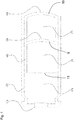
- FIG. 1 shows a designed as an irritant gas cartridge ordnance in cross section, and thus no embodiment of the invention.
- irritant cartridge has a consisting of a cartridge case 2 and a plug 4 housing 2, 4.
- a primer 1 is pressed.
- the primer 1 can be listed as Berdanzündhütchen (Berdanzündung) or Boxerzündhütchen (boxer ignition).
- the entire cartridge could be listed as a rimfire cartridge.
- a fuel or a propellant 3 is housed, for example, black powder.
- the plug 4 is made of plastic and is designed as a pressed-in the cartridge case 2 cylindrical inner sleeve with two transverse walls 9, 11.
- the outside transverse wall 10 forms the cartridge on the side facing away from the bottom side outer wall and is provided with a predetermined breaking point 8.
- the inside transverse wall 9 is also provided with a predetermined breaking point 6.
- the two transverse walls 9, 10 and the intermediate portion of the inner sleeve form a closed adhesive chamber in which a medical adhesive 7, for example, a cyanocrylate preparation is housed in liquid form.
- the cylindrical inner sleeve of the plug 4 further extends to the bottom to form there another chamber in the plug 4, in which an irritant 5, so for example, a CS gas-forming solid 2-chlorobenzylidene-malononitrile is housed.
- This further chamber is covered with a bottom-side cover 11, for example made of cardboard.
- propellant 3 are, for example, gunpowder, flash powder, cellulose nitrate or cordite into consideration.
- the chamber system of the plug 4 bursts at the predetermined breaking points 6 and 8 of the transverse walls 9, 10 and the medical liquid adhesive 7 and the irritant 5 are ejected from the cartridge case 2.
- the liquid medical adhesive 7 and the irritant 5 are then nebulized in the course of the weapon used and exit at high speed from the muzzle together with combustion residues of the blowing agent 3 used.
- cyanocrylates 7 Polymerization of cyanocrylates 7 occurs through bodily fluids at the affected body sites of the attacker or animal to be defended. Thus the irritant 5 sticks longer to the affected body parts. Also, if the eyes are directly affected, the irritant 5 can not easily be washed out by tear fluid since cyanoacrylates are not water-soluble. Thus, the attacker is out of action longer than would be the case with conventional irritant gas sprayers and irritant gas cartridges.
Landscapes
- Engineering & Computer Science (AREA)
- General Engineering & Computer Science (AREA)
- Chemical & Material Sciences (AREA)
- Dispersion Chemistry (AREA)
- Combustion & Propulsion (AREA)
- Containers And Packaging Bodies Having A Special Means To Remove Contents (AREA)
- Medicinal Preparation (AREA)
- Adhesives Or Adhesive Processes (AREA)
Description
- Die Erfindung betrifft ein als Sprühgerät ausgebildetes Distanzkampfmittel zur nichttödlichen Beaufschlagung des menschlichen oder tierischen Körpers mit Reizstoff, welches ein Gehäuse aufweist, das zumindest einen Reizstoff, ein Treibmittel, und ferner zumindest einen medizinischen Klebstoff, nämlich ein Cyanoacylat-Präparat, Polyvinylpyrrolidon oder Cellulosenitrat enthält.
- Derartige Reizgas-Distanzkampfmittel sind herkömmlich entweder als Reizgas-Sprühdosen oder dergleichen ähnliche Sprühgeräte einerseits, oder als mit Schreckschuss-bzw. Gaspistole verschießbare Reizgaspatronen andererseits ausgebildet. Reizgaspatronen weisen kein Projektil auf, sondern einen mit einer Sollbruchstelle versehenen Stopfen, der in die Patronenhülse eingepresst ist, welche wiederum eine Reizstoffladung enthält.
- Dabei wurde schon versucht, Reizgas-Distanzkampfmittel mit einem Zusatznutzen zu schaffen. So zeigt die deutsche Gebrauchsmusterschrift
DE 8909166 U1 eine Tränengaspatrone mit einer Hülse, welche eine Reizstofffüllung und eine Treibladung enthält und einen Zünder besitzt. Die Reizstofffüllung besteht dabei aus einem wässrigen Gel, in dem ein Reizmittel gelöst ist, wobei räumlich getrennt davon zusätzlich eine Farbstofffüllung vorgesehen ist, um das beschossene Ziel nicht nur mit Reizstoff zu beaufschlagen, sondern auch mit Farbstoff zu markieren. - Weitere Entwicklungen gehen dahin, die Haftung des Reizgases bzw. Reizmittels auf dem damit beaufschlagten Körper zu verbessern. So wird in der internationalen Patentanmeldung
WO 2006 055 640 A2 ein Pfeffergel in Zusammensetzung als Bestandteil eines Selbstverteidigungssprays vorgeschlagen, das 0,1 bis 1,5 % Capsaicinoid-Verbindungen und vorzugsweise zumindest 1,4 % Capsaicinoid enthält. Angeblich haftet diese Zusammensetzung besonders gut an Oberflächen, verbessert die Reichweite des Sprays und vermindert das Risiko, zu viel zu versprühen. - Weiterhin bekannt sind Reizstoffpatronen mit mehreren aufeinanderfolgenden Lagen von Treibladungen und Reizstoffen, siehe
FR 2 523 718 A1 - Weiterhin bekannt sind nicht tödliche Projektile, die ihre Ladung im Gegensatz zu Reizgaspatronen erst beim Aufschlag auf dem Ziel freisetzen. Ein solches Projektil ist in der
US 8 186 275 B1 beschrieben, wobei die Ladung aus einem klebrigen Schaum bestehen kann, der mit Reizstoffen oder Farbmarkierungen vermischt ist. - Die japanische Patentanmeldung
JP 2009 002620 A - Schließlich offenbart die US-Patentschrift
US 9 022 255 B1 - Hiervon ausgehend ist es Aufgabe der vorliegenden Erfindung, ein Distanzkampfmittel der gattungsgemäßen Art mit einfachen Mitteln so weiterzubilden, dass die Wirkung mit der die auf den beaufschlagten Körper aufgebrachten Reizstoffe auf den Körper einwirken, verbessert wird.
- Diese Aufgabe wird mit den Merkmalen des Anspruchs 1 gelöst.
- Das erfindungsgemäße Distanzkampfmittel zeichnet dadurch aus, dass der Reizstoff 2-Chlorbenzyliden-malonsäuredinitril (CS), ω-Chloracetophenon (CN), oder Capsaicin (CPS) ist, und das Treibmittel verflüssigtes Treibgas wie beispielsweise Propan oder Butan ist, wobei das Distanzkampfmittel als Sprühgerät ausgebildet ist und das Gehäuse als Druckbehälter mit Sprühdüse, und wobei das Gehäuse ferner ein Lösungsmittel wie beispielsweise Aceton, Butanon, Nitromethan und Dichlormethan enthält, in dem der Reizstoff und der medizinische Klebstoff gelöst sind.
- In dem Gehäuse des Distanzkampfmittels ist dabei neben dem bereits herkömmlich darin enthaltenen Reizstoff zumindest ein medizinischer Klebstoff enthalten. Medizinische Klebstoffe liegen unter Normalbedingungen, also Raumtemperatur und Athmosphärendruck, in flüssiger Form vor und sind eigentlich zum Wundverschluss gedacht. Es handelt sich dabei um Cyanoacrylat-Präparate, die in ganz ähnlicher Form auch als Sekundenkleber eingesetzt werden, wobei jedoch Präparate mit hoher Toxizität nicht als medizinische Klebstoffe eingesetzt werden. Ferner fallen unter den Begriff medizinische Klebstoffe im Sinne der vorliegenden Erfindung auch noch Verbindungen, die in sog. Sprühpflastern zur Abdeckung einer Wunde eingesetzt werden, also auch eine gewisse Haftung am körpereigenen Gewebe aufweisen, wenngleich nicht eine solch starke, wie die zuvor genannten Cyanoacrylat-Präparate. Diese Flüssig-Pflaster-Wirkstoffe sind beispielsweise aus Polyvinylpyrrolidon oder Cellulosenitrat. Die vorzugsweise als medizinischer Klebstoff zugesetzten Cyanoacrylat-Präparate sind bevorzugt Butyl-Octyl- oder Isobutyl-Cyanoacrylat-Ester. Es handelt sich dabei um Monomere, die in Kontakt mit verschiedenen Körperflüssigkeiten, z. B. Schweiß, Tränen oder Blut oder Luftfeuchtigkeit polymerisieren und dadurch stark haftende Eigenschaften entwickeln.
- Durch die Zugabe solcher medizinischer Klebstoffe zusätzlich zum Reizstoff des Distanzkampfmittels kann der Einwirkungszeitraum des Reizstoffes verlängert werden. Denn die bekannten Reizstoffe sind bei der Beaufschlagung des Körpers per Spray oder Reizgaspatrone äußerst flüchtig, so dass die Wirkung nach Aufbringung des Reizstoffes durch Besprühen oder Beschuss schnell nachlässt. Werden nun medizinische Klebstoffe der angegebenen Art beigemischt, so haften die eingebundenen Reizstoffe länger am abzuwehrenden Angreifer oder Tier, wodurch ihre Wirkung maximiert wird. Will man eine besonders starke Haftwirkung erzielen, so setzt man Cyanoacrylat-Präparate der angegebenen Art zu, will man lediglich eine abgeschwächte Form der Haftwirkung erzielen, so nimmt man die im Sprühpflaster enthaltenen Wirkstoffe, nämlich Polyvinylpyrrolidon oder Cellulosenitrat.
- Erfindungsgemäß ist das Distanzkampfmittel als Sprühgerät ausgebildet. Das Gehäuse des Distanzkampfmittels ist also nach Art einer Sprühdose ein Druckbehälter mit Sprühdüse, welche als Treibmittel ein verflüssigtes Treibgas wie beispielsweise Propan oder Butan enthält. Weiterhin enthält die Sprühdose ein Lösungsmittel wie beispielsweise Aceton, Butanon, Nitromethan und Dichlormethan, in dem, wie bereits herkömmlich bekannt, der Reizstoff gelöst ist. Weiterhin ist in dem Lösungsmittel auch der medizinische Klebstoff gelöst. Denn Cyanoacrylat-Präparate der angegebenen Art sind im Normalzustand (bei Raumtemperatur, Athmosphärendruck) flüssig und ebenso wie Polyvinylpyrrolidon oder Cellolosenitrat in herkömmlichen Lösungsmitteln löslich. Die gelöste Kombination an Reizstoffen und medizinischen Klebstoffen wird dann wie bei herkömmlichen Reizgassprays als Aerosol verbreitet.
- Anstatt ein Lösungsmittel zum Lösen des Reizstoffens und des Klebstoffes sowie ein schwach reaktives Treibgas als Treibmittel zum Austreiben der Lösung zu verwenden wäre es außerdem denkbar, in der Sprühdose bzw. in dem Sprühgerät ein leicht verflüssigbares Gas mit entsprechenden Lösungsmitteleigenschaften einzusetzen, welches gleichzeitig als Treibgas und Lösungsmittel fungieren kann.
- Bei dem als Sprühgerät ausgebildeten Distanzkampfmittel müssen somit keine besonderen Maßnahmen getroffen werden, um die erfindungsgemäß vorgesehene Zusetzung des medizinischen Klebstoffs in die auszubringende Ladung zu bewerkstelligen.
Im Folgenden wird anhand der beiliegenden Figur die Wirkung der Klebstoff-Reizstoffkombination erläutert. DieFigur 1 zeigt allerdings ein als Reizgaspatrone ausgebildetes Kampfmittel im Querschnitt, und somit keine Ausführungsform der Erfindung.
Die inFigur 1 gezeigte Reizstoffpatrone weist ein aus einer Patronenhülse 2 und einem Stopfen 4 bestehendes Gehäuse 2, 4 auf. Im Boden der Patronenhülse 2 ist ein Zündhütchen 1 eingepresst. Das Zündhütchen 1 kann als Berdanzündhütchen (Berdanzündung) oder Boxerzündhütchen (Boxerzündung) aufgeführt sein. Alternativ könnte die gesamte Patrone als Randfeuerpatrone aufgeführt sein. Im bodennahen Bereich innerhalb der Patronenhülse 2 ist dabei ein Treibstoff bzw. ein Treibmittel 3 untergebracht, beispielsweise Schwarzpulver.
Der Stopfen 4 besteht aus Kunststoff und ist als in die Patronenhülse 2 eingepresste zylindrische Innenhülse mit zwei Querwänden 9, 11 ausgebildet. Die außenseitige Querwand 10 bildet dabei die die Patrone auf der dem Boden abgewandten Seite abdeckende Außenwand und ist mit einer Sollbruchstelle 8 versehen. Die innenseitige Querwand 9 ist ebenfalls mit einer Sollbruchstelle 6 versehen. Die beiden Querwände 9, 10 und der dazwischen befindliche Abschnitt der Innenhülse bilden eine geschlossene Klebstoffkammer, in der ein medizinischer Klebstoff 7, beispielsweise ein Cyanocrylat-Präparat in flüssiger Form untergebracht ist. Au der zum Boden hin gewandten Seite der innenseitigen Querwand 9 erstreckt sich die zylindrische Innenhülse des Stopfens 4 weiter zum Boden hin, um dort eine weitere Kammer in dem Stopfen 4 auszuformen, in der ein Reizstoff 5, also beispielsweise ein CS-Gas bildender Feststoff aus 2-Chlorbenzyliden-malonsäuredinitril untergebracht ist. Diese weitere Kammer ist mit einem bodenseitigen Deckel 11, beispielsweise aus Karton abgedeckt. - Wenn der Schlagbolzen der verwendeten Schreckschusspistole oder des verwendeten Schreckschussrevolvers auf das Zündhütchen 1 trifft, entzündet dieses das Treibmittel 3. Als Treibmittel 3 kommen beispielsweise auch Schießpulver, Blitzpulver, Cellulosenitrat oder Kordit in Betracht.
- Im zweiteiligen Kammersystem des aus Kunststoff bestehenden Stopfens 4 ist der Reizstoff 5 in der bodennahen Kammer und der medizinische Flüssigklebstoff 7 in der bodenfernen Kammer untergebracht.
- Durch den enormen Druck, der durch den Abbrand des Treibstoffes 3 entsteht, platzt das Kammersystem des Stopfens 4 an den Sollbruchstellen 6 und 8 der Querwände 9, 10 auf und der medizinische Flüssigklebstoff 7 sowie der Reizstoff 5 werden aus der Patronenhülse 2 herausgeschleudert. Der medizinische Flüssigklebstoff 7 und der Reizstoff 5 werden dann im Lauf der verwendeten Waffe vernebelt und treten zusammen mit Verbrennungsrückständen des verwendeten Treibmittels 3 mit hoher Geschwindigkeit aus der Laufmündung aus.
- Durch Körperflüssigkeiten an den betroffenen Körperstellen des abzuwehrenden Angreifers oder Tieres tritt Polymerisation der Cyanocrylate 7 ein. Damit haftet der Reizstoff 5 länger an den betroffenen Körperpartien. Wenn die Augen direkt betroffen sind, kann der Reizstoff 5 auch nicht einfach durch Tränenflüssigkeit ausgewaschen werden, da Cyanacrylate nicht wasserlöslich sind. Somit ist der Angreifer länger außer Gefecht gesetzt als es bei herkömmlichen Reizgassprühgeräten und Reizgaspatronen der Fall wäre.
- Abwandlungen und Modifikationen der gezeigten Ausführungsform sind möglich, ohne den Rahmen der Erfindung zu verlassen.
Claims (2)
- Distanzkampfmittel zur nichttödlichen Beaufschlagung des menschlichen oder tierischen Körpers mit Reizstoff, ausgebildet als Sprühgerät, mit
einem Gehäuse, enthaltend zumindest einen Reizstoff, ein Treibmittel, und ferner zumindest einen medizinischen Klebstoff, nämlich ein Cyanoacylat-Präparat, Polyvinylpyrrolidon oder Cellulosenitrat, wobei das Treibmittel verflüssigtes Treibgas wie beispielsweise Propan oder Butan ist,
dadurch gekennzeichnet, dass
der Reizstoff 2-Chlorbenzyliden-malonsäuredinitril (CS), ω-Chloracetophenon (CN), oder Capsaicin (CPS) ist, und
das Gehäuse als Druckbehälter mit Sprühdüse ausgebildet ist, wobei
das Gehäuse ferner ein Lösungsmittel wie beispielsweise Aceton, Butanon, Nitromethan und Dichlormethan enthält, in dem der Reizstoff und der medizinische Klebstoff gelöst sind. - Distanzkampfmittel nach Anspruch 1, dadurch gekennzeichnet, dass der medizinische Klebstoff ein Cyanoacylat-Präparat ist, nämlich ein Butyl-, Octyl- oder Isobutyl-Cyanoacrylat-Ester.
Priority Applications (4)
| Application Number | Priority Date | Filing Date | Title |
|---|---|---|---|
| EP16020328.7A EP3293479B1 (de) | 2016-09-12 | 2016-09-12 | Kampfmittel zur nicht tödlichen beaufschlagung des menschlichen oder tierischen körpers mit reizstoff |
| EP17723013.3A EP3510344B1 (de) | 2016-09-12 | 2017-05-12 | Distanzkampfmittel zur nicht tödlichen beaufschlagung des menschlichen oder tierischen körpers mit reizstoff |
| US16/332,111 US11236978B2 (en) | 2016-09-12 | 2017-05-12 | Distance combat means for non-lethal exposure of the human or animal body to irritant |
| PCT/EP2017/025125 WO2018046132A1 (de) | 2016-09-12 | 2017-05-12 | Distanzkampfmittel zur nicht tödlichen beaufschlagung des menschlichen oder tierischen körpers mit reizstoff |
Applications Claiming Priority (1)
| Application Number | Priority Date | Filing Date | Title |
|---|---|---|---|
| EP16020328.7A EP3293479B1 (de) | 2016-09-12 | 2016-09-12 | Kampfmittel zur nicht tödlichen beaufschlagung des menschlichen oder tierischen körpers mit reizstoff |
Publications (2)
| Publication Number | Publication Date |
|---|---|
| EP3293479A1 EP3293479A1 (de) | 2018-03-14 |
| EP3293479B1 true EP3293479B1 (de) | 2019-01-09 |
Family
ID=56925951
Family Applications (2)
| Application Number | Title | Priority Date | Filing Date |
|---|---|---|---|
| EP16020328.7A Active EP3293479B1 (de) | 2016-09-12 | 2016-09-12 | Kampfmittel zur nicht tödlichen beaufschlagung des menschlichen oder tierischen körpers mit reizstoff |
| EP17723013.3A Active EP3510344B1 (de) | 2016-09-12 | 2017-05-12 | Distanzkampfmittel zur nicht tödlichen beaufschlagung des menschlichen oder tierischen körpers mit reizstoff |
Family Applications After (1)
| Application Number | Title | Priority Date | Filing Date |
|---|---|---|---|
| EP17723013.3A Active EP3510344B1 (de) | 2016-09-12 | 2017-05-12 | Distanzkampfmittel zur nicht tödlichen beaufschlagung des menschlichen oder tierischen körpers mit reizstoff |
Country Status (3)
| Country | Link |
|---|---|
| US (1) | US11236978B2 (de) |
| EP (2) | EP3293479B1 (de) |
| WO (1) | WO2018046132A1 (de) |
Families Citing this family (1)
| Publication number | Priority date | Publication date | Assignee | Title |
|---|---|---|---|---|
| WO2024227671A1 (en) * | 2023-05-02 | 2024-11-07 | Synkotech Biocompatible Materials, S.L. | Methods for the synthesis of polymers and polymers obtained thereof |
Family Cites Families (19)
| Publication number | Priority date | Publication date | Assignee | Title |
|---|---|---|---|---|
| US1517554A (en) * | 1923-03-17 | 1924-12-02 | Gordon S Fulcher | Ammunition |
| US2136024A (en) * | 1935-05-03 | 1938-11-08 | Metal Forming & Coating Inc | Process and apparatus for producing metallic coatings on various articles |
| FR2523718B3 (fr) | 1982-03-19 | 1987-05-22 | Alsetex | Perfectionnements aux grenades a effets physiologiques |
| DE8909166U1 (de) | 1989-07-28 | 1989-10-05 | Klawiter, Michael, Dr., 3000 Hannover | Tränengaspatrone |
| US5088624A (en) * | 1990-02-12 | 1992-02-18 | Hugh Hackett | Attack-repellent device |
| RU2111444C1 (ru) * | 1995-06-07 | 1998-05-20 | Конструкторское бюро приборостроения | Газовый патрон |
| US20050188886A1 (en) * | 1996-11-18 | 2005-09-01 | Pepperball Technologies, Inc. | Non-lethal projectile systems |
| US20050066849A1 (en) * | 2003-09-29 | 2005-03-31 | Kapeles John A. | Frangible non-lethal projectile |
| US7121434B1 (en) * | 2004-07-30 | 2006-10-17 | The Gpm Group Llc | Actuator for aerosol container |
| WO2006055640A2 (en) | 2004-11-19 | 2006-05-26 | Mace Security International, Inc. | Gel compositions |
| DE202006004268U1 (de) | 2006-03-17 | 2006-05-11 | Hoernecke, Carl | Reizstoff-Sprühgerät |
| US7930977B2 (en) * | 2007-02-26 | 2011-04-26 | Klein John M | Non-lethal projectile ammunition |
| JP2009002620A (ja) * | 2007-06-25 | 2009-01-08 | Marina Hotel System:Kk | 防犯用非殺傷性弾 |
| US7690311B1 (en) * | 2008-10-07 | 2010-04-06 | Cronemberger Pedro De Oliveira | Non-lethal projectile with flowable payload |
| US20100269762A1 (en) * | 2009-04-22 | 2010-10-28 | Pride Johnson | Animal Deterrent Apparatus |
| US8171853B2 (en) * | 2010-03-02 | 2012-05-08 | Sierra Nevada Corporation | Projectile for delivering an incapacitating agent |
| US8186275B1 (en) | 2010-05-17 | 2012-05-29 | The United States Of America As Represented By The Secretary Of The Navy | Non-lethal projectile for dispersing payload upon target impact |
| US20140367407A1 (en) * | 2013-06-14 | 2014-12-18 | Virgil C. Breeden | Personal Defense Device and Method |
| US9022255B1 (en) * | 2014-11-10 | 2015-05-05 | IESW Associates, Trustee for Instant eye-sealing weapon CRT Trust | Instant eye-sealing weapon |
-
2016
- 2016-09-12 EP EP16020328.7A patent/EP3293479B1/de active Active
-
2017
- 2017-05-12 EP EP17723013.3A patent/EP3510344B1/de active Active
- 2017-05-12 US US16/332,111 patent/US11236978B2/en not_active Expired - Fee Related
- 2017-05-12 WO PCT/EP2017/025125 patent/WO2018046132A1/de not_active Ceased
Non-Patent Citations (1)
| Title |
|---|
| None * |
Also Published As
| Publication number | Publication date |
|---|---|
| US20190212113A1 (en) | 2019-07-11 |
| US11236978B2 (en) | 2022-02-01 |
| WO2018046132A1 (de) | 2018-03-15 |
| EP3510344B1 (de) | 2020-04-15 |
| EP3293479A1 (de) | 2018-03-14 |
| EP3510344A1 (de) | 2019-07-17 |
Similar Documents
| Publication | Publication Date | Title |
|---|---|---|
| DE2055805C3 (de) | Abschußvorrichtung für Geschosse | |
| EP1285217A1 (de) | Abwehrvorrichtung, vorzugsweise selbstverteidigungsvorrichtung und eine hierin verwendbare speichereinheit | |
| WO2005098344A1 (de) | Patronierte übungsmunition | |
| DE2001758C3 (de) | Abschußvorrichtung für Geschosse zur Panzerbekämpfung | |
| EP2549221A2 (de) | Munition | |
| EP3293479B1 (de) | Kampfmittel zur nicht tödlichen beaufschlagung des menschlichen oder tierischen körpers mit reizstoff | |
| DE10303106B4 (de) | Barrikadenbrecher | |
| DE19738937C2 (de) | Patronierte Munition | |
| EP0705417B1 (de) | Abwehr-einrichtung | |
| EP2031342B1 (de) | Zielmarkierungsmunition | |
| DE4321041A1 (de) | Patrone für Hand- und Faustfeuerwaffen zur Selbstverteidigung | |
| EP1782017B1 (de) | Berstgeschoss | |
| DE2820530A1 (de) | Geschoss, insbesondere fuer jagdwaffen | |
| EP1639310B1 (de) | Barikadenbrecher | |
| DE2535704A1 (de) | Patrone fuer faust- und schulterwaffen | |
| DE10045150C2 (de) | Narkosepfeilsystem mit Universal-Präzisionshülse mit Hülsenkopf zur tierschutzgerechten Distanzinjektion für mehrfach verwendbare Kunststoffpfeile | |
| DE1946991C3 (de) | Hohlladung | |
| CH693543A5 (de) | Patronierte Munition. | |
| EP2856072B1 (de) | Geschoss | |
| DE102013007784A1 (de) | Wurfkörper, insbesondere Handwurfkörper | |
| DE8909166U1 (de) | Tränengaspatrone | |
| EP3527927B1 (de) | Munition | |
| DE2648014A1 (de) | Wurf- oder gewehrgeschoss | |
| DE883861C (de) | Gewehrgranate | |
| DE2541632A1 (de) | Patrone fuer faust- und schulterwaffen |
Legal Events
| Date | Code | Title | Description |
|---|---|---|---|
| PUAI | Public reference made under article 153(3) epc to a published international application that has entered the european phase |
Free format text: ORIGINAL CODE: 0009012 |
|
| STAA | Information on the status of an ep patent application or granted ep patent |
Free format text: STATUS: REQUEST FOR EXAMINATION WAS MADE |
|
| 17P | Request for examination filed |
Effective date: 20170307 |
|
| AK | Designated contracting states |
Kind code of ref document: A1 Designated state(s): AL AT BE BG CH CY CZ DE DK EE ES FI FR GB GR HR HU IE IS IT LI LT LU LV MC MK MT NL NO PL PT RO RS SE SI SK SM TR |
|
| AX | Request for extension of the european patent |
Extension state: BA ME |
|
| STAA | Information on the status of an ep patent application or granted ep patent |
Free format text: STATUS: EXAMINATION IS IN PROGRESS |
|
| 17Q | First examination report despatched |
Effective date: 20180423 |
|
| GRAP | Despatch of communication of intention to grant a patent |
Free format text: ORIGINAL CODE: EPIDOSNIGR1 |
|
| STAA | Information on the status of an ep patent application or granted ep patent |
Free format text: STATUS: GRANT OF PATENT IS INTENDED |
|
| INTG | Intention to grant announced |
Effective date: 20180808 |
|
| GRAS | Grant fee paid |
Free format text: ORIGINAL CODE: EPIDOSNIGR3 |
|
| GRAA | (expected) grant |
Free format text: ORIGINAL CODE: 0009210 |
|
| STAA | Information on the status of an ep patent application or granted ep patent |
Free format text: STATUS: THE PATENT HAS BEEN GRANTED |
|
| AK | Designated contracting states |
Kind code of ref document: B1 Designated state(s): AL AT BE BG CH CY CZ DE DK EE ES FI FR GB GR HR HU IE IS IT LI LT LU LV MC MK MT NL NO PL PT RO RS SE SI SK SM TR |
|
| REG | Reference to a national code |
Ref country code: GB Ref legal event code: FG4D Free format text: NOT ENGLISH |
|
| REG | Reference to a national code |
Ref country code: CH Ref legal event code: EP Ref country code: AT Ref legal event code: REF Ref document number: 1087854 Country of ref document: AT Kind code of ref document: T Effective date: 20190115 |
|
| REG | Reference to a national code |
Ref country code: DE Ref legal event code: R096 Ref document number: 502016003102 Country of ref document: DE |
|
| REG | Reference to a national code |
Ref country code: IE Ref legal event code: FG4D Free format text: LANGUAGE OF EP DOCUMENT: GERMAN |
|
| REG | Reference to a national code |
Ref country code: NL Ref legal event code: MP Effective date: 20190109 |
|
| REG | Reference to a national code |
Ref country code: LT Ref legal event code: MG4D |
|
| PG25 | Lapsed in a contracting state [announced via postgrant information from national office to epo] |
Ref country code: NL Free format text: LAPSE BECAUSE OF FAILURE TO SUBMIT A TRANSLATION OF THE DESCRIPTION OR TO PAY THE FEE WITHIN THE PRESCRIBED TIME-LIMIT Effective date: 20190109 |
|
| PG25 | Lapsed in a contracting state [announced via postgrant information from national office to epo] |
Ref country code: NO Free format text: LAPSE BECAUSE OF FAILURE TO SUBMIT A TRANSLATION OF THE DESCRIPTION OR TO PAY THE FEE WITHIN THE PRESCRIBED TIME-LIMIT Effective date: 20190409 Ref country code: PL Free format text: LAPSE BECAUSE OF FAILURE TO SUBMIT A TRANSLATION OF THE DESCRIPTION OR TO PAY THE FEE WITHIN THE PRESCRIBED TIME-LIMIT Effective date: 20190109 Ref country code: LT Free format text: LAPSE BECAUSE OF FAILURE TO SUBMIT A TRANSLATION OF THE DESCRIPTION OR TO PAY THE FEE WITHIN THE PRESCRIBED TIME-LIMIT Effective date: 20190109 Ref country code: ES Free format text: LAPSE BECAUSE OF FAILURE TO SUBMIT A TRANSLATION OF THE DESCRIPTION OR TO PAY THE FEE WITHIN THE PRESCRIBED TIME-LIMIT Effective date: 20190109 Ref country code: SE Free format text: LAPSE BECAUSE OF FAILURE TO SUBMIT A TRANSLATION OF THE DESCRIPTION OR TO PAY THE FEE WITHIN THE PRESCRIBED TIME-LIMIT Effective date: 20190109 Ref country code: PT Free format text: LAPSE BECAUSE OF FAILURE TO SUBMIT A TRANSLATION OF THE DESCRIPTION OR TO PAY THE FEE WITHIN THE PRESCRIBED TIME-LIMIT Effective date: 20190509 Ref country code: FI Free format text: LAPSE BECAUSE OF FAILURE TO SUBMIT A TRANSLATION OF THE DESCRIPTION OR TO PAY THE FEE WITHIN THE PRESCRIBED TIME-LIMIT Effective date: 20190109 |
|
| PG25 | Lapsed in a contracting state [announced via postgrant information from national office to epo] |
Ref country code: HR Free format text: LAPSE BECAUSE OF FAILURE TO SUBMIT A TRANSLATION OF THE DESCRIPTION OR TO PAY THE FEE WITHIN THE PRESCRIBED TIME-LIMIT Effective date: 20190109 Ref country code: LV Free format text: LAPSE BECAUSE OF FAILURE TO SUBMIT A TRANSLATION OF THE DESCRIPTION OR TO PAY THE FEE WITHIN THE PRESCRIBED TIME-LIMIT Effective date: 20190109 Ref country code: GR Free format text: LAPSE BECAUSE OF FAILURE TO SUBMIT A TRANSLATION OF THE DESCRIPTION OR TO PAY THE FEE WITHIN THE PRESCRIBED TIME-LIMIT Effective date: 20190410 Ref country code: BG Free format text: LAPSE BECAUSE OF FAILURE TO SUBMIT A TRANSLATION OF THE DESCRIPTION OR TO PAY THE FEE WITHIN THE PRESCRIBED TIME-LIMIT Effective date: 20190409 Ref country code: RS Free format text: LAPSE BECAUSE OF FAILURE TO SUBMIT A TRANSLATION OF THE DESCRIPTION OR TO PAY THE FEE WITHIN THE PRESCRIBED TIME-LIMIT Effective date: 20190109 Ref country code: IS Free format text: LAPSE BECAUSE OF FAILURE TO SUBMIT A TRANSLATION OF THE DESCRIPTION OR TO PAY THE FEE WITHIN THE PRESCRIBED TIME-LIMIT Effective date: 20190509 |
|
| REG | Reference to a national code |
Ref country code: DE Ref legal event code: R097 Ref document number: 502016003102 Country of ref document: DE |
|
| PG25 | Lapsed in a contracting state [announced via postgrant information from national office to epo] |
Ref country code: EE Free format text: LAPSE BECAUSE OF FAILURE TO SUBMIT A TRANSLATION OF THE DESCRIPTION OR TO PAY THE FEE WITHIN THE PRESCRIBED TIME-LIMIT Effective date: 20190109 Ref country code: DK Free format text: LAPSE BECAUSE OF FAILURE TO SUBMIT A TRANSLATION OF THE DESCRIPTION OR TO PAY THE FEE WITHIN THE PRESCRIBED TIME-LIMIT Effective date: 20190109 Ref country code: SK Free format text: LAPSE BECAUSE OF FAILURE TO SUBMIT A TRANSLATION OF THE DESCRIPTION OR TO PAY THE FEE WITHIN THE PRESCRIBED TIME-LIMIT Effective date: 20190109 Ref country code: AL Free format text: LAPSE BECAUSE OF FAILURE TO SUBMIT A TRANSLATION OF THE DESCRIPTION OR TO PAY THE FEE WITHIN THE PRESCRIBED TIME-LIMIT Effective date: 20190109 Ref country code: CZ Free format text: LAPSE BECAUSE OF FAILURE TO SUBMIT A TRANSLATION OF THE DESCRIPTION OR TO PAY THE FEE WITHIN THE PRESCRIBED TIME-LIMIT Effective date: 20190109 Ref country code: RO Free format text: LAPSE BECAUSE OF FAILURE TO SUBMIT A TRANSLATION OF THE DESCRIPTION OR TO PAY THE FEE WITHIN THE PRESCRIBED TIME-LIMIT Effective date: 20190109 |
|
| PLBE | No opposition filed within time limit |
Free format text: ORIGINAL CODE: 0009261 |
|
| STAA | Information on the status of an ep patent application or granted ep patent |
Free format text: STATUS: NO OPPOSITION FILED WITHIN TIME LIMIT |
|
| PG25 | Lapsed in a contracting state [announced via postgrant information from national office to epo] |
Ref country code: SM Free format text: LAPSE BECAUSE OF FAILURE TO SUBMIT A TRANSLATION OF THE DESCRIPTION OR TO PAY THE FEE WITHIN THE PRESCRIBED TIME-LIMIT Effective date: 20190109 |
|
| 26N | No opposition filed |
Effective date: 20191010 |
|
| PG25 | Lapsed in a contracting state [announced via postgrant information from national office to epo] |
Ref country code: SI Free format text: LAPSE BECAUSE OF FAILURE TO SUBMIT A TRANSLATION OF THE DESCRIPTION OR TO PAY THE FEE WITHIN THE PRESCRIBED TIME-LIMIT Effective date: 20190109 |
|
| PG25 | Lapsed in a contracting state [announced via postgrant information from national office to epo] |
Ref country code: MC Free format text: LAPSE BECAUSE OF FAILURE TO SUBMIT A TRANSLATION OF THE DESCRIPTION OR TO PAY THE FEE WITHIN THE PRESCRIBED TIME-LIMIT Effective date: 20190109 |
|
| REG | Reference to a national code |
Ref country code: CH Ref legal event code: PL |
|
| PG25 | Lapsed in a contracting state [announced via postgrant information from national office to epo] |
Ref country code: CH Free format text: LAPSE BECAUSE OF NON-PAYMENT OF DUE FEES Effective date: 20190930 Ref country code: IE Free format text: LAPSE BECAUSE OF NON-PAYMENT OF DUE FEES Effective date: 20190912 Ref country code: LI Free format text: LAPSE BECAUSE OF NON-PAYMENT OF DUE FEES Effective date: 20190930 Ref country code: LU Free format text: LAPSE BECAUSE OF NON-PAYMENT OF DUE FEES Effective date: 20190912 |
|
| REG | Reference to a national code |
Ref country code: BE Ref legal event code: MM Effective date: 20190930 |
|
| PG25 | Lapsed in a contracting state [announced via postgrant information from national office to epo] |
Ref country code: BE Free format text: LAPSE BECAUSE OF NON-PAYMENT OF DUE FEES Effective date: 20190930 |
|
| PGFP | Annual fee paid to national office [announced via postgrant information from national office to epo] |
Ref country code: FR Payment date: 20200922 Year of fee payment: 5 Ref country code: GB Payment date: 20200923 Year of fee payment: 5 Ref country code: TR Payment date: 20200909 Year of fee payment: 5 |
|
| PGFP | Annual fee paid to national office [announced via postgrant information from national office to epo] |
Ref country code: DE Payment date: 20200930 Year of fee payment: 5 Ref country code: IT Payment date: 20200930 Year of fee payment: 5 |
|
| PG25 | Lapsed in a contracting state [announced via postgrant information from national office to epo] |
Ref country code: CY Free format text: LAPSE BECAUSE OF FAILURE TO SUBMIT A TRANSLATION OF THE DESCRIPTION OR TO PAY THE FEE WITHIN THE PRESCRIBED TIME-LIMIT Effective date: 20190109 |
|
| PG25 | Lapsed in a contracting state [announced via postgrant information from national office to epo] |
Ref country code: MT Free format text: LAPSE BECAUSE OF FAILURE TO SUBMIT A TRANSLATION OF THE DESCRIPTION OR TO PAY THE FEE WITHIN THE PRESCRIBED TIME-LIMIT Effective date: 20190109 Ref country code: HU Free format text: LAPSE BECAUSE OF FAILURE TO SUBMIT A TRANSLATION OF THE DESCRIPTION OR TO PAY THE FEE WITHIN THE PRESCRIBED TIME-LIMIT; INVALID AB INITIO Effective date: 20160912 |
|
| REG | Reference to a national code |
Ref country code: DE Ref legal event code: R119 Ref document number: 502016003102 Country of ref document: DE |
|
| GBPC | Gb: european patent ceased through non-payment of renewal fee |
Effective date: 20210912 |
|
| PG25 | Lapsed in a contracting state [announced via postgrant information from national office to epo] |
Ref country code: MK Free format text: LAPSE BECAUSE OF FAILURE TO SUBMIT A TRANSLATION OF THE DESCRIPTION OR TO PAY THE FEE WITHIN THE PRESCRIBED TIME-LIMIT Effective date: 20190109 |
|
| PG25 | Lapsed in a contracting state [announced via postgrant information from national office to epo] |
Ref country code: GB Free format text: LAPSE BECAUSE OF NON-PAYMENT OF DUE FEES Effective date: 20210912 Ref country code: FR Free format text: LAPSE BECAUSE OF NON-PAYMENT OF DUE FEES Effective date: 20210930 Ref country code: DE Free format text: LAPSE BECAUSE OF NON-PAYMENT OF DUE FEES Effective date: 20220401 |
|
| PG25 | Lapsed in a contracting state [announced via postgrant information from national office to epo] |
Ref country code: IT Free format text: LAPSE BECAUSE OF NON-PAYMENT OF DUE FEES Effective date: 20210912 |
|
| REG | Reference to a national code |
Ref country code: AT Ref legal event code: MM01 Ref document number: 1087854 Country of ref document: AT Kind code of ref document: T Effective date: 20210912 |
|
| PG25 | Lapsed in a contracting state [announced via postgrant information from national office to epo] |
Ref country code: AT Free format text: LAPSE BECAUSE OF NON-PAYMENT OF DUE FEES Effective date: 20210912 |