EP3293912B1 - Systeme d'identification de participants - Google Patents
Systeme d'identification de participants Download PDFInfo
- Publication number
- EP3293912B1 EP3293912B1 EP16188340.0A EP16188340A EP3293912B1 EP 3293912 B1 EP3293912 B1 EP 3293912B1 EP 16188340 A EP16188340 A EP 16188340A EP 3293912 B1 EP3293912 B1 EP 3293912B1
- Authority
- EP
- European Patent Office
- Prior art keywords
- circuit module
- identification system
- subscriber
- communication interface
- subscriber identification
- Prior art date
- Legal status (The legal status is an assumption and is not a legal conclusion. Google has not performed a legal analysis and makes no representation as to the accuracy of the status listed.)
- Active
Links
Images




Classifications
-
- H—ELECTRICITY
- H04—ELECTRIC COMMUNICATION TECHNIQUE
- H04L—TRANSMISSION OF DIGITAL INFORMATION, e.g. TELEGRAPHIC COMMUNICATION
- H04L9/00—Cryptographic mechanisms or cryptographic arrangements for secret or secure communications; Network security protocols
- H04L9/32—Cryptographic mechanisms or cryptographic arrangements for secret or secure communications; Network security protocols including means for verifying the identity or authority of a user of the system or for message authentication, e.g. authorization, entity authentication, data integrity or data verification, non-repudiation, key authentication or verification of credentials
- H04L9/321—Cryptographic mechanisms or cryptographic arrangements for secret or secure communications; Network security protocols including means for verifying the identity or authority of a user of the system or for message authentication, e.g. authorization, entity authentication, data integrity or data verification, non-repudiation, key authentication or verification of credentials involving a third party or a trusted authority
-
- H—ELECTRICITY
- H04—ELECTRIC COMMUNICATION TECHNIQUE
- H04L—TRANSMISSION OF DIGITAL INFORMATION, e.g. TELEGRAPHIC COMMUNICATION
- H04L12/00—Data switching networks
- H04L12/02—Details
- H04L12/06—Answer-back mechanisms or circuits
-
- H—ELECTRICITY
- H04—ELECTRIC COMMUNICATION TECHNIQUE
- H04L—TRANSMISSION OF DIGITAL INFORMATION, e.g. TELEGRAPHIC COMMUNICATION
- H04L63/00—Network architectures or network communication protocols for network security
- H04L63/08—Network architectures or network communication protocols for network security for authentication of entities
- H04L63/0853—Network architectures or network communication protocols for network security for authentication of entities using an additional device, e.g. smartcard, SIM or a different communication terminal
-
- H—ELECTRICITY
- H04—ELECTRIC COMMUNICATION TECHNIQUE
- H04L—TRANSMISSION OF DIGITAL INFORMATION, e.g. TELEGRAPHIC COMMUNICATION
- H04L9/00—Cryptographic mechanisms or cryptographic arrangements for secret or secure communications; Network security protocols
- H04L9/32—Cryptographic mechanisms or cryptographic arrangements for secret or secure communications; Network security protocols including means for verifying the identity or authority of a user of the system or for message authentication, e.g. authorization, entity authentication, data integrity or data verification, non-repudiation, key authentication or verification of credentials
- H04L9/3234—Cryptographic mechanisms or cryptographic arrangements for secret or secure communications; Network security protocols including means for verifying the identity or authority of a user of the system or for message authentication, e.g. authorization, entity authentication, data integrity or data verification, non-repudiation, key authentication or verification of credentials involving additional secure or trusted devices, e.g. TPM, smartcard, USB or software token
-
- H—ELECTRICITY
- H04—ELECTRIC COMMUNICATION TECHNIQUE
- H04L—TRANSMISSION OF DIGITAL INFORMATION, e.g. TELEGRAPHIC COMMUNICATION
- H04L2209/00—Additional information or applications relating to cryptographic mechanisms or cryptographic arrangements for secret or secure communication H04L9/00
- H04L2209/12—Details relating to cryptographic hardware or logic circuitry
- H04L2209/127—Trusted platform modules [TPM]
-
- H—ELECTRICITY
- H04—ELECTRIC COMMUNICATION TECHNIQUE
- H04L—TRANSMISSION OF DIGITAL INFORMATION, e.g. TELEGRAPHIC COMMUNICATION
- H04L2209/00—Additional information or applications relating to cryptographic mechanisms or cryptographic arrangements for secret or secure communication H04L9/00
- H04L2209/80—Wireless
Definitions
- the present invention relates to the field of communication technology, in particular the identification of a subscriber in a communication network.
- SIM Subscriber Identity Module
- SIM cards are also relatively expensive in relation to the basic functionality provided due to their demanding production, high security requirements and physical handling in logistics. This applies in particular when the total price of a communication device is very low, as is intended for future communication devices in the context of the mobile Internet of Things.
- Such communication devices include, for example, sensors and actuators with mobile radio interfaces and simple data transmission modules.
- SIM cards typically do not have the space required for the integration of classic SIM cards.
- MFF Machine-to-Machine Form Factor
- SIM cards usually still take up too much space for integration into such communication devices.
- energy consumption of classic SIM cards which can be taken into account in the present applications, which, for example, provide operation with a single AAA battery cell over a period of 5 years.
- the publication DE 10 2013 105 727 A1 discloses a method for deactivating a security system using an electronically readable identification document.
- An electronic identification can be read from the identification document and compared with a pre-stored electronic identification.
- the publication DE 195 27 715 A1 discloses a method for user identification and user authentication in data radio connections, in particular for the Modacom mobile radio system.
- a chip card is authenticated to a terminal using cryptographic keys.
- the publication DE 10 2014 105 866 A1 discloses a method for providing a person's identification card with a cryptographic certificate.
- a pre-stored personal data and a generated cryptographic key are transmitted to an electronic certification server.
- the cryptographic certificate is generated by the electronic certification server and transmitted to the identification card.
- the publication DE 10 2008 024 798 A1 discloses a method for over-the-air personalization of chip cards in telecommunications.
- a subscriber identification module is equipped with a non-individual and provisional set of initial identification and authentication parameters before the first start-up, an individual and final subscriber data record being stored on the subscriber identification module after the first start-up.
- the present invention is based on the knowledge that the above task can be solved by an optimized subscriber identification system for implementing the basic functionality of a SIM card, with an inexpensive integration with the remaining hardware of a communication device, for example in the form of a system-on-chip (SoC ) can take place.
- SoC system-on-chip
- a separation between non-critical functions in a first circuit module and critical functions in a second circuit module in the sense of data security consequently enables an optimized design in which only a very small proportion of critical functions should be implemented in a safe manner.
- the first circuit module can consequently have lower data security requirements than the second circuit module. This enables, for example, simple integration of the first circuit module into a third circuit module of the communication device, the third circuit module being able to provide the basic functionality of the communication device. If all three modules are fully integrated, increased data security requirements can only be important for the part of the second circuit module.
- SoC system-on-chip
- SIS subscriber identification system
- the invention relates to a subscriber identification system for identifying a subscriber in a communication network, the subscriber being assigned a subscriber identity identifier and a cryptographic key.
- the subscriber identification system comprises a first circuit module in which at least the subscriber identity identifier is stored, the first circuit module having a first communication interface which is designed to receive a request signal after the subscriber identity identifier and, in response to the receipt of the request signal, to transmit the subscriber identity identifier.
- the subscriber identification system further comprises a second circuit module, in which at least the cryptographic key is stored, the second circuit module having a second communication interface which is designed to receive an input parameter, the second circuit module being designed to use the input parameter with the cryptographic key an algorithm to obtain an output parameter, and wherein the second communication interface is designed to send out the output parameter.
- the subscriber can be identified using the subscriber identity identifier and authenticated using the input parameter and output parameter.
- the first circuit module comprises a first non-volatile memory, at least the subscriber identity identifier being stored in the first non-volatile memory
- the second circuit module comprises a second non-volatile memory, at least the cryptographic key in the second non-volatile memory. volatile memory is stored.
- the first non-volatile memory and / or the second non-volatile memory can each be formed by an erasable programmable read-only memory (EPROM).
- EPROM erasable programmable read-only memory
- the second circuit module comprises a logic circuit, the logic circuit being designed to link the input parameter with the cryptographic key using the algorithm. This has the advantage that the output parameter can be determined efficiently on the basis of the input parameter and the algorithm.
- the logic circuit can be formed by a programmable logic circuit (PLD).
- PLD programmable logic circuit
- the logic circuit can also be hardwired.
- the second circuit module forms a hardware security module (HSM).
- HSM hardware security module
- the second circuit module can protect the cryptographic key and / or the algorithm both against software-related and physical attacks and against side-channel attacks.
- the second circuit module can be designed to detect attacks or side-channel attacks and, in response thereto, to delete the cryptographic key and / or the algorithm.
- the second circuit module can furthermore have conductive layers for shielding in order to prevent undesired reading out of the cryptographic key and / or the algorithm based on emitted electromagnetic waves.
- the second circuit module can also be designed to detect incident light in a predetermined wavelength range or unspecified operating states of the second circuit module, and in response to deleting the cryptographic key and / or the algorithm.
- the second circuit module can also use established approaches for bus encryption.
- the second circuit module can furthermore comprise a secure cryptoprocessor or form a secure cryptoprocessor.
- the subscriber identification system comprises a Trusted Platform Module (TPM), the Trusted Platform Module (TPM) comprising the second circuit module.
- TPM Trusted Platform Module
- TPM Trusted Platform Module
- the subscriber identity identifier is also stored in the second circuit module. This has the advantage that an assignment of the subscriber identity identifier to the cryptographic key can be efficiently ensured.
- the subscriber identity identifier is an International Mobile Subscriber Identity (IMSI). This has the advantage that a standardized form of a subscriber identity identifier can be used.
- IMSI International Mobile Subscriber Identity
- the algorithm is an A3 / A8 algorithm, a MILENAGE algorithm or a TUAK algorithm. This has the advantage that standardized authentication algorithms can be used.
- the A3 component of the A3 / A8 algorithm can be used for authentication.
- the A8 component of the A3 / A8 algorithm can be used to generate keys to encrypt the communication. Both components can be executed together, with each authentication a new key for encrypting the communication can be provided.
- the output parameter can be used for both purposes.
- the MILENAGE algorithm and the TUAK algorithm can also be used for authentication and key generation.
- the A3 / A8 algorithm, the MILENAGE algorithm and the TUAK algorithm can be implemented in accordance with the corresponding ETSI standards or 3GPP standards.
- the cryptographic key is stored in a non-readable manner in the second circuit module. This has the advantage that the cryptographic key is cryptographically linked to the second circuit module.
- the invention relates to a communication device for communicating with an authentication server via a communication network.
- the communication device comprises a subscriber identification system according to the first aspect of the invention.
- the communication device further comprises a third circuit module with a third communication interface for communicating with the subscriber identification system and a fourth communication interface for communicating with the authentication server via the communication network.
- the third communication interface is designed to send out the request signal to the subscriber identification system and to receive the subscriber identity identifier from the subscriber identification system.
- the fourth communication interface is designed to send the received subscriber identity identifier to the authentication server via the communication network.
- the third circuit module can further comprise a processor and further interfaces of the communication device, for example for interaction with the subscriber.
- the authentication server can be part of an authentication center (AuC) of the communication network.
- AuC authentication center
- the fourth communication interface is further configured to receive the input parameter from the authentication server via the communication network, the third communication interface being further configured to send the input parameter to the subscriber identification system and to receive the output parameter from the subscriber identification system, and wherein the fourth communication interface is further configured to send the output parameter to the authentication server via the communication network.
- the third circuit module comprises the first circuit module of the subscriber identification system and / or the second circuit module of the subscriber identification system. This has the advantage that an efficient implementation can be achieved.
- the first circuit module is arranged in a first integrated circuit. This has the advantage that the first circuit module can be implemented efficiently.
- the second circuit module is arranged in a second integrated circuit. This achieves the advantage that the second circuit module can be implemented efficiently.
- the third circuit module is arranged in a third integrated circuit. This achieves the advantage that the third circuit module can be implemented efficiently.
- the first circuit module is arranged in a first integrated circuit
- the second circuit module is arranged in a second integrated circuit
- the third circuit module is arranged in a third integrated circuit.
- the first circuit module, the second circuit module and the third circuit module are arranged in a common integrated circuit. This achieves the advantage that the circuit modules can be implemented efficiently together.
- the invention relates to a method for identifying a subscriber in a communication network using a subscriber identification system.
- a subscriber identity identifier and a cryptographic key are assigned to the subscriber.
- the subscriber identification system comprises a first circuit module with a first communication interface and a second circuit module with a second communication interface, at least the subscriber identity identifier being stored in the first circuit module, and at least the cryptographic key being stored in the second circuit module.
- the method comprises receiving a request signal for the subscriber identity identifier by the first communication interface, in response to the receipt of the request signal, sending out the subscriber identity identifier by the first communication interface, receiving an input parameter by the second communication interface, linking the input parameter to the cryptographic key using an algorithm by the second circuit module to obtain an output parameter and sending the output parameter by the second communication interface.
- the method can be carried out by the subscriber identification system. Further features of the method result directly from the features or the functionality of the subscriber identification system.
- the invention relates to a method for communicating with an authentication server via a communication network using a communication device.
- the communication device comprises a subscriber identification system according to the first aspect of the invention and a third circuit module with a third communication interface for communicating with the subscriber identification system and a fourth communication interface for communicating with the authentication server via the communication network.
- the method comprises sending the request signal to the subscriber identification system through the third communication interface, receiving the subscriber identity identifier from the subscriber identification system through the third communication interface, and sending out the received Subscriber identity identification to the authentication server via the communication network through the fourth communication interface.
- the method can be carried out by the communication device. Further features of the method result directly from the features or the functionality of the communication device.
- the invention relates to a computer program with a program code for executing the method according to the third aspect of the invention or the method according to the fourth aspect of the invention.
- the subscriber identification system and / or the communication device can be set up in terms of program technology in order to execute the program code.
- the invention can be implemented in hardware and / or in software.
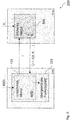
- Fig. 1 shows a schematic diagram of a subscriber identification system 100 for identifying a subscriber in a communication network.
- a subscriber identity identifier and a cryptographic key K are assigned to the subscriber.
- the subscriber identification system 100 comprises a first circuit module 101, in which at least the subscriber identity identifier is stored, the first circuit module 101 having a first communication interface 103, which is designed to receive a request signal after the subscriber identity identifier, and, in response to the receipt of the request signal, the Send out subscriber identity identifier.
- the subscriber identification system 100 further comprises a second circuit module 105, in which at least the cryptographic key K is stored, the second circuit module 105 having a second communication interface 107, which is designed to receive an input parameter I, the second circuit module 105 being designed Link input parameters I with the cryptographic key K using an algorithm A in order to obtain an output parameter O, and the second communication interface 107 is designed to send out the output parameter O.
- Fig. 2 shows a schematic diagram of a communication device 200 for communicating with an authentication server 207 via a communication network 209.
- the communication device comprises a subscriber identification system 100 and a third circuit module 201.
- the subscriber identification system 100 is used to identify a subscriber in the communication network 209.
- the subscriber is assigned a subscriber identity identifier and a cryptographic key K.
- the subscriber identification system 100 comprises a first circuit module 101, in which at least the subscriber identity identifier is stored, the first circuit module 101 having a first communication interface 103, which is designed to receive a request signal after the subscriber identity identifier, and, in response to the receipt of the request signal, the Send out subscriber identity identifier.
- the subscriber identification system 100 further comprises a second circuit module 105, in which at least the cryptographic key K is stored, the second circuit module 105 having a second communication interface 107, which is designed to receive an input parameter I, the second circuit module 105 being designed Link input parameters I to the cryptographic key K using an algorithm A in order to obtain an output parameter O, and the second communication interface 107 is designed to send out the output parameter O.
- the third circuit module 201 comprises a third communication interface 203 for communicating with the subscriber identification system 100 and a fourth communication interface 205 for communicating with the authentication server 207 via the communication network 209.
- the third communication interface 203 is designed to transmit the request signal to the subscriber identification system 100 and the subscriber identity identifier from the subscriber identification system 100.
- the fourth communication interface 205 is designed to send the received subscriber identity identifier to the authentication server 207 via the communication network 209. The subscriber can therefore be identified by the authentication server 207.
- the fourth communication interface 205 is also designed to receive the input parameter I from the authentication server 207 via the communication network 209, the third communication interface 203 also being designed by the Send input parameter I to the subscriber identification system 100 and receive the output parameter O from the subscriber identification system 100, and the fourth communication interface 205 is further configured to send the output parameter O to the authentication server 207 via the communication network 209.
- the subscriber can therefore be authenticated by the authentication server 207, for example on the basis of a challenge-response approach.
- FIG. 12 shows a schematic diagram of a communication device 200 for communicating with an authentication server via a communication network.
- the communication device 200 shown is a possible embodiment of the communication device 200 from Fig. 2 .
- the communication device 200 comprises a subscriber identification system 100 with a first circuit module 101 and a second circuit module 105, and a third circuit module 201.
- the first circuit module 101 can be implemented as an insecure module
- the second circuit module 105 can be implemented as a safe module
- the third circuit module 201 can implement a higher-level functionality of the communication device 200.
- the subscriber identity identifier is an International Mobile Subscriber Identity (IMSI).
- SIS subscriber identification system
- the second circuit module 105 contains only a cryptographic key K as an authentication key and an algorithm A.
- the output parameter O is returned without the cryptographic key K or the algorithm A becoming visible to the outside.
- the second circuit module 105 is therefore used solely to execute the algorithm A. It also contains a further functionality for storing the cryptographic key K.
- the first circuit module 101 optionally includes further relevant data, but in the simplest case only the subscriber identity identifier or IMSI of the subscriber.
- the data of the first circuit module 101 are typically not critical and can be stored and read from the outside.
- the subscriber identification system 100 is assigned or personalized to a subscriber relationship by storing a combination of the subscriber identity identifier and cryptographic key K.
- the cryptographic key K is stored in the second circuit module 105 and the subscriber identity identifier in the first circuit module 101.
- the third circuit module 201 can access the circuit modules 101, 105 as a higher-level functionality and, for example, read the subscriber identity identifier from the first circuit module 101 and carry out an authentication to the communication network 209, for example a mobile radio network, using the second circuit module 105 .
- the communication network 209 for example a mobile radio network
- the communication device 200 can be, for example, a terminal in the context of the Internet of Things.
- the first circuit module 101 is logically integrated in the third circuit module 201 as the higher-level functionality of the communication device 200, for example in a memory of the communication device 200, and the second circuit module 105 in a processor, for example the main processor, of the communication device 200 as a system. implemented on chip (SoC).
- SoC implemented on chip
- FIG. 12 shows a schematic diagram of a communication device 200 for communicating with an authentication server via a communication network.
- the communication device 200 shown is a possible embodiment of the communication device 200 from Fig. 2 .
- the communication device 200 comprises a subscriber identification system with a first circuit module 101 and a second circuit module 105, and a third Circuit module 201.
- the first circuit module 101 can be implemented as an unsafe module
- the second circuit module 105 can be implemented as a safe module
- the third circuit module 201 can implement a higher-level functionality of the communication device 200.
- the subscriber identity identifier is an International Mobile Subscriber Identity (IMSI).
- the first circuit module 101 and the second circuit module 105 are arranged on the same integrated circuit (chip).
- the first circuit module 101 is integrated in the third circuit module 201 as a higher-level functionality.
- the first circuit module 101 is consequently integrated in the third circuit module 201 as a higher-level functionality and is contained in a common integrated circuit with the second circuit module 105 as a system-on-chip.
- This configuration can be particularly advantageous in terms of a cost, space and energy saving solution.
- FIG. 12 shows a schematic diagram of a communication device 200 for communicating with an authentication server via a communication network.
- the communication device 200 shown is a possible embodiment of the communication device 200 from Fig. 2 .
- the communication device 200 comprises a subscriber identification system with a first circuit module 101 and a second circuit module 105, and a third circuit module 201.
- the first circuit module 101 can be implemented as an unsafe module
- the second circuit module 105 can be implemented as a safe module
- the third circuit module 201 can implement a higher-level functionality of the communication device 200.
- the subscriber identity identifier is an International Mobile Subscriber Identity (IMSI).
- the second circuit module 105 is arranged on a separate integrated circuit (chip).
- the first circuit module 101 is integrated in the third circuit module 201 as a higher-level functionality.
- the first circuit module 101 is consequently integrated in the third circuit module 201 as a higher-level functionality and the second circuit module 105 is designed as a separate integrated circuit (chip).
- the cryptographic key K can therefore in are loaded in a safe environment and the second circuit module 105 is then inserted into the communication device 200 in an unsafe environment.
- FIG. 12 shows a schematic diagram of a communication device 200 for communicating with an authentication server via a communication network.
- the communication device 200 shown is a possible embodiment of the communication device 200 from Fig. 2 .
- the communication device 200 comprises a subscriber identification system with a first circuit module 101 and a second circuit module 105, and a third circuit module 201.
- the first circuit module 101 can be implemented as an unsafe module
- the second circuit module 105 can be implemented as a safe module
- the third circuit module 201 can implement a higher-level functionality of the communication device 200.
- the subscriber identity identifier is an International Mobile Subscriber Identity (IMSI).
- the first circuit module 101 and the second circuit module 105 are arranged on separate integrated circuits (chips). There is no integration with the third circuit module 201 as a higher-level functionality.
- first circuit module 101 and the second circuit module 105 are designed as separate integrated circuits (chips) or integrated in separate integrated circuits (chips).
- FIG. 12 shows a schematic diagram of a communication device 200 for communicating with an authentication server via a communication network.
- the communication device 200 shown is a possible embodiment of the communication device 200 from Fig. 2 .
- the communication device 200 comprises a subscriber identification system with a first circuit module 101 and a second circuit module 105, and a third circuit module 201.
- the first circuit module 101 can be implemented as an unsafe module
- the second circuit module 105 can be implemented as a safe module
- the third circuit module 201 can implement a higher-level functionality of the communication device 200.
- the subscriber identity identifier is an International Mobile Subscriber Identity (IMSI).
- the first circuit module 101 and the second circuit module 105 are arranged on a common integrated circuit (chip). There is no integration with the third circuit module 201 as a higher-level functionality.
- the first circuit module 101 and the second circuit module 105 are contained in a common integrated circuit (chip).
- An integrated circuit with a safe and an unsafe area can thus be implemented.
- FIG. 12 shows a schematic diagram of a communication device 200 for communicating with an authentication server via a communication network.
- the communication device 200 shown is a possible embodiment of the communication device 200 from Fig. 2 .
- the communication device 200 comprises a subscriber identification system with a first circuit module 101 and a second circuit module 105, and a third circuit module 201.
- the first circuit module 101 can be implemented as an unsafe module
- the second circuit module 105 can be implemented as a safe module
- the third circuit module 201 can implement a higher-level functionality of the communication device 200.
- the subscriber identity identifier is an International Mobile Subscriber Identity (IMSI).
- the first circuit module 101, the second circuit module 105 and the third circuit module 201 as a higher-level functionality are arranged on a common integrated circuit (chip). There is no integration with the third circuit module 201 as a higher-level functionality.
- the first circuit module 101, the second circuit module 105 and the third circuit module 201 are contained as a higher-level functionality in a common integrated circuit (chip). There is no functional integration here.
- the second circuit module 105 additionally comprises the subscriber identity identifier or the IMSI.
- Corresponding functions allow the execution of the algorithm A, the writing of the cryptographic key K, and the writing and reading of the subscriber identity identifier or IMSI.
- FIG. 10 shows a schematic diagram of a method 900 for identifying a subscriber in a communication network using a Participant identification system.
- a subscriber identity identifier and a cryptographic key are assigned to the subscriber.
- the subscriber identification system comprises a first circuit module with a first communication interface and a second circuit module with a second communication interface, at least the subscriber identity identifier being stored in the first circuit module, and at least the cryptographic key being stored in the second circuit module.
- the method 900 includes receiving 901 a request signal for the subscriber identity identifier by the first communication interface, in response to the receipt of the request signal, sending 903 the subscriber identity identifier by the first communication interface, receiving 905 an input parameter by the second communication interface, linking 907 the input parameter to the cryptographic key using an algorithm by the second circuit module to obtain an output parameter and sending 909 the output parameter by the second communication interface.
- Fig. 10 shows a schematic diagram of a method 1000 for communicating with an authentication server via a communication network using a communication device.
- the communication device comprises a subscriber identification system according to Fig. 1 and a third circuit module with a third communication interface for communicating with the subscriber identification system and a fourth communication interface for communicating with the authentication server via the communication network.
- the method 1000 comprises sending 1001 the request signal to the subscriber identification system through the third communication interface, receiving 1003 the subscriber identity identifier from the subscriber identification system through the third communication interface, and sending 1005 the received subscriber identity identifier to the authentication server via the communication network through the fourth communication interface.
Landscapes
- Engineering & Computer Science (AREA)
- Computer Security & Cryptography (AREA)
- Computer Networks & Wireless Communication (AREA)
- Signal Processing (AREA)
- Computer Hardware Design (AREA)
- Computing Systems (AREA)
- General Engineering & Computer Science (AREA)
- Mobile Radio Communication Systems (AREA)
- Telephone Function (AREA)
Claims (13)
- Système d'identification de participants (100) destiné à identifier un participant dans un réseau de communication (209), un identifiant de participant et une clé cryptographique (K) étant associés au participant, ledit système comportant
un premier module de circuit (101) destiné à stocker au moins l'identifiant de participant, le premier module de circuit (101) présentant une première interface de communication (103) conçue de manière à recevoir un signal demandant l'identifiant de participant et à envoyer l'identifiant de participant en réponse à la réception du signal de demande ; et
un deuxième module de circuit (105) destiné à stocker au moins la clé cryptographique (K), le deuxième module de circuit (105) présentant une deuxième interface de communication (107) conçue de manière à recevoir un paramètre de saisie (I), le deuxième module de circuit (105) étant conçu de manière à combiner le paramètre de saisie (I) avec la clé cryptographique (K) au moyen d'un algorithme (A) afin de recevoir un paramètre de sortie (O), et la deuxième interface de communication (107) étant conçue de manière à émettre le paramètre de sortie (O);
sachant que le premier module de circuit (101) et le deuxième module de circuit (105) sont disposés dans un circuit intégré commun. - Système d'identification de participants (100) selon la revendication 1, le premier module de circuit (101) comprenant une première mémoire non volatile, au moins l'identifiant de participant étant stocké dans la première mémoire non volatile et le deuxième module de circuit (105) comprenant une deuxième mémoire non volatile, au moins la clé cryptographique (K) étant stockée dans la deuxième mémoire non volatile.
- Système d'identification de participants (100) selon l'une des revendications précédentes, le deuxième module de circuit (105) comprenant un circuit logique, ledit circuit logique étant conçu de manière à combiner le paramètre de saisie (I) avec la clé cryptographique (K) au moyen de l'algorithme (A).
- Système d'identification de participants (100) selon l'une des revendications précédentes, le deuxième module de circuit (105) constituant un module matériel de sécurité.
- Système d'identification de participants (100) selon l'une des revendications précédentes, l'identifiant de participant étant un identificateur d'abonné mobile international (International Mobile Subscriber Identity, IMSI).
- Système d'identification de participants (100) selon l'une des revendications précédentes, l'algorithme (A) étant un algorithme A3/A8, un algorithme MILENAGE ou un algorithme TUAK.
- Système d'identification de participants (100) selon l'une des revendications précédentes, la clé cryptographique (K) étant stockée sans être lisible dans le deuxième module de circuit (105).
- Appareil de communication (200) pour communiquer avec un serveur d'authentification (207) via un réseau de communication (209), comportant
un système d'identification de participants (100) selon l'une des revendications 1 à 7 ; et
un troisième module de circuit (201) présentant une troisième interface de communication (203) pour communiquer avec le système d'identification de participants (100) et une quatrième interface de communication (205) pour communiquer avec le serveur d'authentification (207) via le réseau de communication (209) ;
la troisième interface de communication (203) étant conçue de manière à envoyer le signal de demande au système d'identification de participants (100) et à recevoir l'identifiant de participant du système d'identification de participants (100) ; et
la quatrième interface de communication (205) étant conçue de manière à envoyer l'identifiant de participant reçu au serveur d'authentification (207) via le réseau de communication (209) ;
sachant que le premier module de circuit (101), le deuxième module de circuit (105) et le troisième module de circuit (201) sont disposés dans un circuit intégré commun. - Appareil de communication (200) selon la revendication 8, la quatrième interface de communication (205) étant en plus conçue de manière à recevoir le paramètre de saisie (I) du serveur d'authentification (207) sur le réseau de communication (209), la troisième interface de communication (203) étant en plus conçue de manière à envoyer le paramètre de saisie (I) au système d'identification de participants (100) et à recevoir le paramètre de sortie (O) du système d'identification de participants (100), et la quatrième interface de communication (205) étant en plus conçue de manière à envoyer le paramètre de sortie (O) au serveur d'authentification (207) via le réseau de communication (209).
- Appareil de communication (200) selon l'une des revendications 8 ou 9, le troisième module de circuit (201) comprenant le premier module de circuit (101) du système d'identification de participants (100) et/ou le deuxième module de circuit (105) du système d'identification de participants (100).
- Procédé (900) d'identification d'un participant dans un réseau de communication (209) au moyen d'un système d'identification de participants (100), un identifiant de participant et une clé cryptographique (K) étant associés au participant, le système d'identification de participants (100) comprenant un premier module de circuit (101) comportant une première interface de communication (103) et un deuxième module de circuit (105) comportant une deuxième interface de communication (107), au moins l'identifiant de participant étant stocké dans le premier module de circuit (101), au moins la clé cryptographique (K) étant stockée dans le deuxième module de circuit (105), le premier module de circuit (101) et le deuxième module de circuit (105) étant disposés dans un circuit intégré commun, ledit procédé comportant les étapes suivantes :la réception (901) d'un signal demandant l'identifiant de participant par la première interface de communication (103) ;en réponse à la réception du signal de demande, l'envoi (903) de l'identifiant de participant par la première interface de communication (103) ;la réception (905) d'un paramètre de saisie (I) par la deuxième interface de communication (107) ;la combinaison (907) du paramètre de saisie (I) avec la clé cryptographique (K) au moyen d'un algorithme (A) par le deuxième module de circuit (105), afin de recevoir un paramètre de sortie (O) ; etl'envoi (909) du paramètre de sortie (O) par la deuxième interface de communication (107).
- Procédé (1000) de communication avec un serveur d'authentification (207) sur un réseau de communication (209) au moyen d'un appareil de communication (200), l'appareil de communication (200) comprenant un système d'identification de participants (100) selon l'une des revendications 1 à 7 et un troisième module de circuit (201) avec une troisième interface de communication (205) pour communiquer avec le système d'identification de participants (100) et une quatrième interface de communication (205) pour communiquer avec le serveur d'authentification (207) via le réseau de communication (209), le premier module de circuit (101), le deuxième module de circuit (105) et le troisième module de circuit (201) étant disposés dans un circuit intégré commun, ledit procédé comportant les étapes suivantes :l'envoi (1001) du signal de demande au système d'identification de participants (100) par la troisième interface de communication (203) ;la réception (1003) de l'identifiant de participant du système d'identification de participants (100) par la troisième interface de communication (203) ; etl'envoi (1005) de l'identifiant de participant reçu au serveur d'authentification (207) par le réseau de communication (209) par la quatrième interface de communication (205).
- Programme informatique avec un code de programmation pour réaliser le procédé (900) selon la revendication 11 ou le procédé (1000) selon la revendication 12.
Priority Applications (3)
| Application Number | Priority Date | Filing Date | Title |
|---|---|---|---|
| ES16188340T ES2797788T3 (es) | 2016-09-12 | 2016-09-12 | Sistema de identificación de abonado |
| EP16188340.0A EP3293912B1 (fr) | 2016-09-12 | 2016-09-12 | Systeme d'identification de participants |
| US15/697,485 US10637671B2 (en) | 2016-09-12 | 2017-09-07 | Subscriber identification system |
Applications Claiming Priority (1)
| Application Number | Priority Date | Filing Date | Title |
|---|---|---|---|
| EP16188340.0A EP3293912B1 (fr) | 2016-09-12 | 2016-09-12 | Systeme d'identification de participants |
Publications (2)
| Publication Number | Publication Date |
|---|---|
| EP3293912A1 EP3293912A1 (fr) | 2018-03-14 |
| EP3293912B1 true EP3293912B1 (fr) | 2020-03-25 |
Family
ID=56926043
Family Applications (1)
| Application Number | Title | Priority Date | Filing Date |
|---|---|---|---|
| EP16188340.0A Active EP3293912B1 (fr) | 2016-09-12 | 2016-09-12 | Systeme d'identification de participants |
Country Status (3)
| Country | Link |
|---|---|
| US (1) | US10637671B2 (fr) |
| EP (1) | EP3293912B1 (fr) |
| ES (1) | ES2797788T3 (fr) |
Family Cites Families (9)
| Publication number | Priority date | Publication date | Assignee | Title |
|---|---|---|---|---|
| US5742910A (en) * | 1995-05-23 | 1998-04-21 | Mci Corporation | Teleadministration of subscriber ID modules |
| DE19527715C2 (de) * | 1995-07-31 | 1997-08-07 | Deutsche Telekom Mobil | Verfahren zur Nutzeridentifikation und -authentifikation bei Datenfunkverbindungen, zugehörige Chipkarten und Endgeräte |
| US5748734A (en) * | 1996-04-02 | 1998-05-05 | Lucent Technologies Inc. | Circuit and method for generating cryptographic keys |
| WO2004032557A1 (fr) * | 2002-10-07 | 2004-04-15 | Telefonaktiebolaget Lm Ericsson (Publ) | Ameliorations apportee a la securite et a la confidentialite dans des dispositifs de securite |
| DE102008024798A1 (de) * | 2008-05-23 | 2009-12-17 | T-Mobile International Ag | Verfahren zur Over-The-Air Personalisierung von Chipkarten in der Telekommunikation |
| US8675863B2 (en) * | 2009-12-22 | 2014-03-18 | Trueposition, Inc. | Passive system for recovering cryptography keys |
| DE102013105727A1 (de) * | 2013-06-04 | 2014-12-04 | Bundesdruckerei Gmbh | Verfahren zum Deaktivieren einer Sicherheitsanlage |
| DE102014105866A1 (de) * | 2014-04-25 | 2015-10-29 | Bundesdruckerei Gmbh | Verfahren zum Versehen eines Identifikationsausweises einer Person mit einem kryptographischen Zertifikat |
| US9628275B2 (en) * | 2015-09-04 | 2017-04-18 | Blackberry Limited | Communication device, method and system for establishing communications using the subscriber identity data of another communication device |
-
2016
- 2016-09-12 EP EP16188340.0A patent/EP3293912B1/fr active Active
- 2016-09-12 ES ES16188340T patent/ES2797788T3/es active Active
-
2017
- 2017-09-07 US US15/697,485 patent/US10637671B2/en active Active
Non-Patent Citations (1)
| Title |
|---|
| None * |
Also Published As
| Publication number | Publication date |
|---|---|
| US10637671B2 (en) | 2020-04-28 |
| ES2797788T3 (es) | 2020-12-03 |
| US20180076966A1 (en) | 2018-03-15 |
| EP3293912A1 (fr) | 2018-03-14 |
Similar Documents
| Publication | Publication Date | Title |
|---|---|---|
| EP2727277B1 (fr) | Système de transmission sécurisée de données et procédé | |
| EP2417550B1 (fr) | Procéde d'execution d'une application à l'aide d'un support de données portable | |
| DE112017006518T5 (de) | Ein verfahren mit eingebettetem zertifikat für eine starke authentifizierung und eine einfache verwendung für iot-drahtlossysteme | |
| DE112014006112T5 (de) | Applet-Migration in einem sicheren Element | |
| DE102015208088A1 (de) | Verfahren zur Erzeugung einer elektronischen Signatur | |
| EP3245607B1 (fr) | Procédé de lecture d'attributs à partir d'un jeton d'identité | |
| EP3337085B1 (fr) | Rechargement des instructions du programme cryptographique | |
| DE102013013179A1 (de) | Verfahren zum Betreiben eines Sicherheitselements | |
| EP2673731B1 (fr) | Procédé de programmation d'une puce pour terminal mobile | |
| EP3271855B1 (fr) | Procédé de génération d'un certificat pour un jeton de sécurité | |
| EP2909779B1 (fr) | Procédé de création d'un mot de passe à usage unique | |
| EP3125464B1 (fr) | Service de révocation pour un certificat généré par un jeton d'id | |
| WO2006089710A1 (fr) | Module de securite | |
| EP3293912B1 (fr) | Systeme d'identification de participants | |
| EP3289509B1 (fr) | Procédé pour produire une signature électronique | |
| EP3244331B1 (fr) | Procédé de lecture d'attributs à partir d'un jeton d'identification | |
| EP3298526B1 (fr) | Procédé de lecture d'attributs à partir d'un jeton d'identification | |
| EP3244332A1 (fr) | Procédé de lecture d'attributs à partir d'un jeton d'identification | |
| DE102014222622A1 (de) | Verfahren zur Änderung einer in einer Chipkarte gespeicherten Datenstruktur, Signaturvorrichtung und elektronisches System | |
| DE102015214422A1 (de) | Chipkarte mit Hauptapplikation und Persistenzapplikation | |
| DE102014209037B4 (de) | Vorrichtung und Verfahren zum Schutz der Integrität von Betriebssysteminstanzen | |
| EP4354791A1 (fr) | Attestation de synchronisation d'une clé cryptographique | |
| EP3394789B1 (fr) | Unité de microcontrôleur mcu comportant des composants configurables sélectivement | |
| EP3323072B1 (fr) | Procédé pour lire des attributs dans un jeton id, jeton id, système informatique de fournisseur d'attribut et système informatique | |
| EP2439900B1 (fr) | Procédé et dispositif destinés à l'authentification |
Legal Events
| Date | Code | Title | Description |
|---|---|---|---|
| PUAI | Public reference made under article 153(3) epc to a published international application that has entered the european phase |
Free format text: ORIGINAL CODE: 0009012 |
|
| STAA | Information on the status of an ep patent application or granted ep patent |
Free format text: STATUS: REQUEST FOR EXAMINATION WAS MADE |
|
| 17P | Request for examination filed |
Effective date: 20171213 |
|
| AK | Designated contracting states |
Kind code of ref document: A1 Designated state(s): AL AT BE BG CH CY CZ DE DK EE ES FI FR GB GR HR HU IE IS IT LI LT LU LV MC MK MT NL NO PL PT RO RS SE SI SK SM TR |
|
| AX | Request for extension of the european patent |
Extension state: BA ME |
|
| GRAP | Despatch of communication of intention to grant a patent |
Free format text: ORIGINAL CODE: EPIDOSNIGR1 |
|
| STAA | Information on the status of an ep patent application or granted ep patent |
Free format text: STATUS: GRANT OF PATENT IS INTENDED |
|
| INTG | Intention to grant announced |
Effective date: 20191014 |
|
| GRAS | Grant fee paid |
Free format text: ORIGINAL CODE: EPIDOSNIGR3 |
|
| GRAA | (expected) grant |
Free format text: ORIGINAL CODE: 0009210 |
|
| STAA | Information on the status of an ep patent application or granted ep patent |
Free format text: STATUS: THE PATENT HAS BEEN GRANTED |
|
| AK | Designated contracting states |
Kind code of ref document: B1 Designated state(s): AL AT BE BG CH CY CZ DE DK EE ES FI FR GB GR HR HU IE IS IT LI LT LU LV MC MK MT NL NO PL PT RO RS SE SI SK SM TR |
|
| REG | Reference to a national code |
Ref country code: GB Ref legal event code: FG4D Free format text: NOT ENGLISH |
|
| REG | Reference to a national code |
Ref country code: AT Ref legal event code: REF Ref document number: 1249830 Country of ref document: AT Kind code of ref document: T Effective date: 20200415 Ref country code: IE Ref legal event code: FG4D Free format text: LANGUAGE OF EP DOCUMENT: GERMAN |
|
| REG | Reference to a national code |
Ref country code: DE Ref legal event code: R096 Ref document number: 502016009249 Country of ref document: DE |
|
| REG | Reference to a national code |
Ref country code: NL Ref legal event code: FP |
|
| PG25 | Lapsed in a contracting state [announced via postgrant information from national office to epo] |
Ref country code: NO Free format text: LAPSE BECAUSE OF FAILURE TO SUBMIT A TRANSLATION OF THE DESCRIPTION OR TO PAY THE FEE WITHIN THE PRESCRIBED TIME-LIMIT Effective date: 20200625 Ref country code: FI Free format text: LAPSE BECAUSE OF FAILURE TO SUBMIT A TRANSLATION OF THE DESCRIPTION OR TO PAY THE FEE WITHIN THE PRESCRIBED TIME-LIMIT Effective date: 20200325 Ref country code: RS Free format text: LAPSE BECAUSE OF FAILURE TO SUBMIT A TRANSLATION OF THE DESCRIPTION OR TO PAY THE FEE WITHIN THE PRESCRIBED TIME-LIMIT Effective date: 20200325 |
|
| PG25 | Lapsed in a contracting state [announced via postgrant information from national office to epo] |
Ref country code: BG Free format text: LAPSE BECAUSE OF FAILURE TO SUBMIT A TRANSLATION OF THE DESCRIPTION OR TO PAY THE FEE WITHIN THE PRESCRIBED TIME-LIMIT Effective date: 20200625 Ref country code: GR Free format text: LAPSE BECAUSE OF FAILURE TO SUBMIT A TRANSLATION OF THE DESCRIPTION OR TO PAY THE FEE WITHIN THE PRESCRIBED TIME-LIMIT Effective date: 20200626 Ref country code: SE Free format text: LAPSE BECAUSE OF FAILURE TO SUBMIT A TRANSLATION OF THE DESCRIPTION OR TO PAY THE FEE WITHIN THE PRESCRIBED TIME-LIMIT Effective date: 20200325 Ref country code: LV Free format text: LAPSE BECAUSE OF FAILURE TO SUBMIT A TRANSLATION OF THE DESCRIPTION OR TO PAY THE FEE WITHIN THE PRESCRIBED TIME-LIMIT Effective date: 20200325 Ref country code: HR Free format text: LAPSE BECAUSE OF FAILURE TO SUBMIT A TRANSLATION OF THE DESCRIPTION OR TO PAY THE FEE WITHIN THE PRESCRIBED TIME-LIMIT Effective date: 20200325 |
|
| REG | Reference to a national code |
Ref country code: LT Ref legal event code: MG4D |
|
| PG25 | Lapsed in a contracting state [announced via postgrant information from national office to epo] |
Ref country code: PT Free format text: LAPSE BECAUSE OF FAILURE TO SUBMIT A TRANSLATION OF THE DESCRIPTION OR TO PAY THE FEE WITHIN THE PRESCRIBED TIME-LIMIT Effective date: 20200818 Ref country code: LT Free format text: LAPSE BECAUSE OF FAILURE TO SUBMIT A TRANSLATION OF THE DESCRIPTION OR TO PAY THE FEE WITHIN THE PRESCRIBED TIME-LIMIT Effective date: 20200325 Ref country code: IS Free format text: LAPSE BECAUSE OF FAILURE TO SUBMIT A TRANSLATION OF THE DESCRIPTION OR TO PAY THE FEE WITHIN THE PRESCRIBED TIME-LIMIT Effective date: 20200725 Ref country code: SK Free format text: LAPSE BECAUSE OF FAILURE TO SUBMIT A TRANSLATION OF THE DESCRIPTION OR TO PAY THE FEE WITHIN THE PRESCRIBED TIME-LIMIT Effective date: 20200325 Ref country code: RO Free format text: LAPSE BECAUSE OF FAILURE TO SUBMIT A TRANSLATION OF THE DESCRIPTION OR TO PAY THE FEE WITHIN THE PRESCRIBED TIME-LIMIT Effective date: 20200325 Ref country code: CZ Free format text: LAPSE BECAUSE OF FAILURE TO SUBMIT A TRANSLATION OF THE DESCRIPTION OR TO PAY THE FEE WITHIN THE PRESCRIBED TIME-LIMIT Effective date: 20200325 Ref country code: SM Free format text: LAPSE BECAUSE OF FAILURE TO SUBMIT A TRANSLATION OF THE DESCRIPTION OR TO PAY THE FEE WITHIN THE PRESCRIBED TIME-LIMIT Effective date: 20200325 Ref country code: EE Free format text: LAPSE BECAUSE OF FAILURE TO SUBMIT A TRANSLATION OF THE DESCRIPTION OR TO PAY THE FEE WITHIN THE PRESCRIBED TIME-LIMIT Effective date: 20200325 |
|
| REG | Reference to a national code |
Ref country code: ES Ref legal event code: FG2A Ref document number: 2797788 Country of ref document: ES Kind code of ref document: T3 Effective date: 20201203 |
|
| REG | Reference to a national code |
Ref country code: DE Ref legal event code: R097 Ref document number: 502016009249 Country of ref document: DE |
|
| PG25 | Lapsed in a contracting state [announced via postgrant information from national office to epo] |
Ref country code: IT Free format text: LAPSE BECAUSE OF FAILURE TO SUBMIT A TRANSLATION OF THE DESCRIPTION OR TO PAY THE FEE WITHIN THE PRESCRIBED TIME-LIMIT Effective date: 20200325 Ref country code: DK Free format text: LAPSE BECAUSE OF FAILURE TO SUBMIT A TRANSLATION OF THE DESCRIPTION OR TO PAY THE FEE WITHIN THE PRESCRIBED TIME-LIMIT Effective date: 20200325 |
|
| PLBE | No opposition filed within time limit |
Free format text: ORIGINAL CODE: 0009261 |
|
| STAA | Information on the status of an ep patent application or granted ep patent |
Free format text: STATUS: NO OPPOSITION FILED WITHIN TIME LIMIT |
|
| PG25 | Lapsed in a contracting state [announced via postgrant information from national office to epo] |
Ref country code: PL Free format text: LAPSE BECAUSE OF FAILURE TO SUBMIT A TRANSLATION OF THE DESCRIPTION OR TO PAY THE FEE WITHIN THE PRESCRIBED TIME-LIMIT Effective date: 20200325 |
|
| 26N | No opposition filed |
Effective date: 20210112 |
|
| REG | Reference to a national code |
Ref country code: CH Ref legal event code: PL |
|
| PG25 | Lapsed in a contracting state [announced via postgrant information from national office to epo] |
Ref country code: SI Free format text: LAPSE BECAUSE OF FAILURE TO SUBMIT A TRANSLATION OF THE DESCRIPTION OR TO PAY THE FEE WITHIN THE PRESCRIBED TIME-LIMIT Effective date: 20200325 |
|
| REG | Reference to a national code |
Ref country code: BE Ref legal event code: MM Effective date: 20200930 |
|
| PG25 | Lapsed in a contracting state [announced via postgrant information from national office to epo] |
Ref country code: LU Free format text: LAPSE BECAUSE OF NON-PAYMENT OF DUE FEES Effective date: 20200912 |
|
| PG25 | Lapsed in a contracting state [announced via postgrant information from national office to epo] |
Ref country code: LI Free format text: LAPSE BECAUSE OF NON-PAYMENT OF DUE FEES Effective date: 20200930 Ref country code: IE Free format text: LAPSE BECAUSE OF NON-PAYMENT OF DUE FEES Effective date: 20200912 Ref country code: BE Free format text: LAPSE BECAUSE OF NON-PAYMENT OF DUE FEES Effective date: 20200930 Ref country code: CH Free format text: LAPSE BECAUSE OF NON-PAYMENT OF DUE FEES Effective date: 20200930 |
|
| PG25 | Lapsed in a contracting state [announced via postgrant information from national office to epo] |
Ref country code: TR Free format text: LAPSE BECAUSE OF FAILURE TO SUBMIT A TRANSLATION OF THE DESCRIPTION OR TO PAY THE FEE WITHIN THE PRESCRIBED TIME-LIMIT Effective date: 20200325 Ref country code: MT Free format text: LAPSE BECAUSE OF FAILURE TO SUBMIT A TRANSLATION OF THE DESCRIPTION OR TO PAY THE FEE WITHIN THE PRESCRIBED TIME-LIMIT Effective date: 20200325 Ref country code: CY Free format text: LAPSE BECAUSE OF FAILURE TO SUBMIT A TRANSLATION OF THE DESCRIPTION OR TO PAY THE FEE WITHIN THE PRESCRIBED TIME-LIMIT Effective date: 20200325 |
|
| PG25 | Lapsed in a contracting state [announced via postgrant information from national office to epo] |
Ref country code: MK Free format text: LAPSE BECAUSE OF FAILURE TO SUBMIT A TRANSLATION OF THE DESCRIPTION OR TO PAY THE FEE WITHIN THE PRESCRIBED TIME-LIMIT Effective date: 20200325 Ref country code: MC Free format text: LAPSE BECAUSE OF FAILURE TO SUBMIT A TRANSLATION OF THE DESCRIPTION OR TO PAY THE FEE WITHIN THE PRESCRIBED TIME-LIMIT Effective date: 20200325 Ref country code: AL Free format text: LAPSE BECAUSE OF FAILURE TO SUBMIT A TRANSLATION OF THE DESCRIPTION OR TO PAY THE FEE WITHIN THE PRESCRIBED TIME-LIMIT Effective date: 20200325 |
|
| REG | Reference to a national code |
Ref country code: AT Ref legal event code: MM01 Ref document number: 1249830 Country of ref document: AT Kind code of ref document: T Effective date: 20210912 |
|
| PG25 | Lapsed in a contracting state [announced via postgrant information from national office to epo] |
Ref country code: AT Free format text: LAPSE BECAUSE OF NON-PAYMENT OF DUE FEES Effective date: 20210912 |
|
| PGFP | Annual fee paid to national office [announced via postgrant information from national office to epo] |
Ref country code: DE Payment date: 20250919 Year of fee payment: 10 |
|
| PGFP | Annual fee paid to national office [announced via postgrant information from national office to epo] |
Ref country code: NL Payment date: 20250922 Year of fee payment: 10 |
|
| PGFP | Annual fee paid to national office [announced via postgrant information from national office to epo] |
Ref country code: GB Payment date: 20250923 Year of fee payment: 10 |
|
| PGFP | Annual fee paid to national office [announced via postgrant information from national office to epo] |
Ref country code: FR Payment date: 20250925 Year of fee payment: 10 |
|
| PGFP | Annual fee paid to national office [announced via postgrant information from national office to epo] |
Ref country code: ES Payment date: 20251020 Year of fee payment: 10 |