EP3299468A1 - Nouveau système d'administration de médicaments sur la base de jcv-vlp - Google Patents
Nouveau système d'administration de médicaments sur la base de jcv-vlp Download PDFInfo
- Publication number
- EP3299468A1 EP3299468A1 EP17200325.3A EP17200325A EP3299468A1 EP 3299468 A1 EP3299468 A1 EP 3299468A1 EP 17200325 A EP17200325 A EP 17200325A EP 3299468 A1 EP3299468 A1 EP 3299468A1
- Authority
- EP
- European Patent Office
- Prior art keywords
- vlp
- drug
- vlps
- protein
- use according
- Prior art date
- Legal status (The legal status is an assumption and is not a legal conclusion. Google has not performed a legal analysis and makes no representation as to the accuracy of the status listed.)
- Withdrawn
Links
- 238000012377 drug delivery Methods 0.000 title claims abstract description 27
- 239000003814 drug Substances 0.000 claims abstract description 26
- 229940079593 drug Drugs 0.000 claims abstract description 25
- 241001505332 Polyomavirus sp. Species 0.000 claims abstract description 15
- 230000008499 blood brain barrier function Effects 0.000 claims description 41
- 210000001218 blood-brain barrier Anatomy 0.000 claims description 41
- 239000013612 plasmid Substances 0.000 claims description 27
- 125000003275 alpha amino acid group Chemical group 0.000 claims description 21
- 108020004707 nucleic acids Proteins 0.000 claims description 18
- 102000039446 nucleic acids Human genes 0.000 claims description 18
- 150000007523 nucleic acids Chemical class 0.000 claims description 18
- 102000004169 proteins and genes Human genes 0.000 claims description 16
- 108090000623 proteins and genes Proteins 0.000 claims description 16
- 108090000765 processed proteins & peptides Proteins 0.000 claims description 9
- 229940127089 cytotoxic agent Drugs 0.000 claims description 5
- 239000002254 cytotoxic agent Substances 0.000 claims description 5
- 231100000599 cytotoxic agent Toxicity 0.000 claims description 5
- 108020004459 Small interfering RNA Proteins 0.000 claims description 4
- 239000003795 chemical substances by application Substances 0.000 claims description 4
- 230000002401 inhibitory effect Effects 0.000 claims description 4
- 108091070501 miRNA Proteins 0.000 claims description 4
- 239000002679 microRNA Substances 0.000 claims description 4
- 102000053642 Catalytic RNA Human genes 0.000 claims description 3
- 108090000994 Catalytic RNA Proteins 0.000 claims description 3
- 230000003197 catalytic effect Effects 0.000 claims description 3
- 239000002299 complementary DNA Substances 0.000 claims description 3
- 108020004999 messenger RNA Proteins 0.000 claims description 3
- 108091092562 ribozyme Proteins 0.000 claims description 3
- 241000282412 Homo Species 0.000 abstract description 3
- 101710132601 Capsid protein Proteins 0.000 description 48
- 101710197658 Capsid protein VP1 Proteins 0.000 description 48
- 101710118046 RNA-directed RNA polymerase Proteins 0.000 description 48
- 101710108545 Viral protein 1 Proteins 0.000 description 48
- 210000004027 cell Anatomy 0.000 description 34
- 210000003169 central nervous system Anatomy 0.000 description 28
- 108060001084 Luciferase Proteins 0.000 description 23
- 150000001413 amino acids Chemical class 0.000 description 21
- 210000004556 brain Anatomy 0.000 description 21
- 239000005089 Luciferase Substances 0.000 description 20
- 101710081079 Minor spike protein H Proteins 0.000 description 19
- 239000013543 active substance Substances 0.000 description 19
- 241000701460 JC polyomavirus Species 0.000 description 15
- 239000002245 particle Substances 0.000 description 14
- 230000014509 gene expression Effects 0.000 description 12
- 239000000203 mixture Substances 0.000 description 12
- 210000004248 oligodendroglia Anatomy 0.000 description 11
- 239000000126 substance Substances 0.000 description 11
- 230000032258 transport Effects 0.000 description 9
- 230000000694 effects Effects 0.000 description 8
- 150000003839 salts Chemical class 0.000 description 8
- 108700008625 Reporter Genes Proteins 0.000 description 7
- 238000000338 in vitro Methods 0.000 description 7
- 238000001727 in vivo Methods 0.000 description 7
- 241001465754 Metazoa Species 0.000 description 6
- 241000700605 Viruses Species 0.000 description 6
- 238000002474 experimental method Methods 0.000 description 6
- 238000000034 method Methods 0.000 description 6
- 238000001990 intravenous administration Methods 0.000 description 5
- 239000003550 marker Substances 0.000 description 5
- 239000002105 nanoparticle Substances 0.000 description 5
- 238000010186 staining Methods 0.000 description 5
- 230000008685 targeting Effects 0.000 description 5
- 238000010361 transduction Methods 0.000 description 5
- 230000026683 transduction Effects 0.000 description 5
- 108010077850 Nuclear Localization Signals Proteins 0.000 description 4
- 108010067390 Viral Proteins Proteins 0.000 description 4
- 210000000234 capsid Anatomy 0.000 description 4
- 230000008045 co-localization Effects 0.000 description 4
- 210000002889 endothelial cell Anatomy 0.000 description 4
- 238000004519 manufacturing process Methods 0.000 description 4
- 239000000243 solution Substances 0.000 description 4
- 230000001225 therapeutic effect Effects 0.000 description 4
- FWBHETKCLVMNFS-UHFFFAOYSA-N 4',6-Diamino-2-phenylindol Chemical compound C1=CC(C(=N)N)=CC=C1C1=CC2=CC=C(C(N)=N)C=C2N1 FWBHETKCLVMNFS-UHFFFAOYSA-N 0.000 description 3
- 101710169675 Major capsid protein VP1 Proteins 0.000 description 3
- 241000699670 Mus sp. Species 0.000 description 3
- 238000011529 RT qPCR Methods 0.000 description 3
- 230000002411 adverse Effects 0.000 description 3
- 230000015572 biosynthetic process Effects 0.000 description 3
- 210000003855 cell nucleus Anatomy 0.000 description 3
- 238000001514 detection method Methods 0.000 description 3
- 238000010874 in vitro model Methods 0.000 description 3
- 230000001788 irregular Effects 0.000 description 3
- 210000000056 organ Anatomy 0.000 description 3
- 239000000523 sample Substances 0.000 description 3
- 230000009885 systemic effect Effects 0.000 description 3
- 238000011725 BALB/c mouse Methods 0.000 description 2
- IGXWBGJHJZYPQS-SSDOTTSWSA-N D-Luciferin Chemical compound OC(=O)[C@H]1CSC(C=2SC3=CC=C(O)C=C3N=2)=N1 IGXWBGJHJZYPQS-SSDOTTSWSA-N 0.000 description 2
- CYCGRDQQIOGCKX-UHFFFAOYSA-N Dehydro-luciferin Natural products OC(=O)C1=CSC(C=2SC3=CC(O)=CC=C3N=2)=N1 CYCGRDQQIOGCKX-UHFFFAOYSA-N 0.000 description 2
- BJGNCJDXODQBOB-UHFFFAOYSA-N Fivefly Luciferin Natural products OC(=O)C1CSC(C=2SC3=CC(O)=CC=C3N=2)=N1 BJGNCJDXODQBOB-UHFFFAOYSA-N 0.000 description 2
- DDWFXDSYGUXRAY-UHFFFAOYSA-N Luciferin Natural products CCc1c(C)c(CC2NC(=O)C(=C2C=C)C)[nH]c1Cc3[nH]c4C(=C5/NC(CC(=O)O)C(C)C5CC(=O)O)CC(=O)c4c3C DDWFXDSYGUXRAY-UHFFFAOYSA-N 0.000 description 2
- 241000699666 Mus <mouse, genus> Species 0.000 description 2
- 206010028980 Neoplasm Diseases 0.000 description 2
- FAPWRFPIFSIZLT-UHFFFAOYSA-M Sodium chloride Chemical compound [Na+].[Cl-] FAPWRFPIFSIZLT-UHFFFAOYSA-M 0.000 description 2
- 239000004480 active ingredient Substances 0.000 description 2
- 239000008186 active pharmaceutical agent Substances 0.000 description 2
- 239000000654 additive Substances 0.000 description 2
- 238000004458 analytical method Methods 0.000 description 2
- 230000004888 barrier function Effects 0.000 description 2
- 230000008901 benefit Effects 0.000 description 2
- 201000011510 cancer Diseases 0.000 description 2
- 230000001413 cellular effect Effects 0.000 description 2
- 230000030570 cellular localization Effects 0.000 description 2
- 230000009089 cytolysis Effects 0.000 description 2
- 239000002552 dosage form Substances 0.000 description 2
- 229940088679 drug related substance Drugs 0.000 description 2
- 239000000975 dye Substances 0.000 description 2
- 238000001917 fluorescence detection Methods 0.000 description 2
- 239000007850 fluorescent dye Substances 0.000 description 2
- 238000001476 gene delivery Methods 0.000 description 2
- 238000001415 gene therapy Methods 0.000 description 2
- 230000001900 immune effect Effects 0.000 description 2
- 238000002991 immunohistochemical analysis Methods 0.000 description 2
- 238000013115 immunohistochemical detection Methods 0.000 description 2
- 208000015181 infectious disease Diseases 0.000 description 2
- 238000010253 intravenous injection Methods 0.000 description 2
- 210000003292 kidney cell Anatomy 0.000 description 2
- 230000001404 mediated effect Effects 0.000 description 2
- 230000004048 modification Effects 0.000 description 2
- 238000012986 modification Methods 0.000 description 2
- 238000010369 molecular cloning Methods 0.000 description 2
- 201000006417 multiple sclerosis Diseases 0.000 description 2
- 239000013642 negative control Substances 0.000 description 2
- 230000001590 oxidative effect Effects 0.000 description 2
- 239000008194 pharmaceutical composition Substances 0.000 description 2
- 150000003384 small molecules Chemical class 0.000 description 2
- 239000000758 substrate Substances 0.000 description 2
- 238000004381 surface treatment Methods 0.000 description 2
- 230000010415 tropism Effects 0.000 description 2
- 108091032973 (ribonucleotides)n+m Proteins 0.000 description 1
- 102000040650 (ribonucleotides)n+m Human genes 0.000 description 1
- QKNYBSVHEMOAJP-UHFFFAOYSA-N 2-amino-2-(hydroxymethyl)propane-1,3-diol;hydron;chloride Chemical compound Cl.OCC(N)(CO)CO QKNYBSVHEMOAJP-UHFFFAOYSA-N 0.000 description 1
- 208000024827 Alzheimer disease Diseases 0.000 description 1
- 206010002091 Anaesthesia Diseases 0.000 description 1
- 108091003079 Bovine Serum Albumin Proteins 0.000 description 1
- 208000003174 Brain Neoplasms Diseases 0.000 description 1
- 208000014912 Central Nervous System Infections Diseases 0.000 description 1
- 241000282552 Chlorocebus aethiops Species 0.000 description 1
- 241000867607 Chlorocebus sabaeus Species 0.000 description 1
- 238000000116 DAPI staining Methods 0.000 description 1
- 239000006144 Dulbecco’s modified Eagle's medium Substances 0.000 description 1
- 238000012404 In vitro experiment Methods 0.000 description 1
- PIWKPBJCKXDKJR-UHFFFAOYSA-N Isoflurane Chemical compound FC(F)OC(Cl)C(F)(F)F PIWKPBJCKXDKJR-UHFFFAOYSA-N 0.000 description 1
- 101710091439 Major capsid protein 1 Proteins 0.000 description 1
- 241000829388 Mus musculus polyomavirus 1 Species 0.000 description 1
- 208000018737 Parkinson disease Diseases 0.000 description 1
- 230000009471 action Effects 0.000 description 1
- 230000037005 anaesthesia Effects 0.000 description 1
- 238000013459 approach Methods 0.000 description 1
- 239000007864 aqueous solution Substances 0.000 description 1
- 102000005936 beta-Galactosidase Human genes 0.000 description 1
- 108010005774 beta-Galactosidase Proteins 0.000 description 1
- 238000005415 bioluminescence Methods 0.000 description 1
- 230000029918 bioluminescence Effects 0.000 description 1
- 230000000903 blocking effect Effects 0.000 description 1
- 210000004204 blood vessel Anatomy 0.000 description 1
- 210000005098 blood-cerebrospinal fluid barrier Anatomy 0.000 description 1
- 229940098773 bovine serum albumin Drugs 0.000 description 1
- 210000005013 brain tissue Anatomy 0.000 description 1
- 239000012830 cancer therapeutic Substances 0.000 description 1
- 230000024245 cell differentiation Effects 0.000 description 1
- 208000015114 central nervous system disease Diseases 0.000 description 1
- 239000003638 chemical reducing agent Substances 0.000 description 1
- 230000000052 comparative effect Effects 0.000 description 1
- 238000002716 delivery method Methods 0.000 description 1
- 238000011161 development Methods 0.000 description 1
- 230000018109 developmental process Effects 0.000 description 1
- 238000003745 diagnosis Methods 0.000 description 1
- 238000002405 diagnostic procedure Methods 0.000 description 1
- 238000000502 dialysis Methods 0.000 description 1
- 201000010099 disease Diseases 0.000 description 1
- 208000037265 diseases, disorders, signs and symptoms Diseases 0.000 description 1
- 238000010494 dissociation reaction Methods 0.000 description 1
- 230000005593 dissociations Effects 0.000 description 1
- 229940000406 drug candidate Drugs 0.000 description 1
- 229950010048 enbucrilate Drugs 0.000 description 1
- 238000005538 encapsulation Methods 0.000 description 1
- 210000003038 endothelium Anatomy 0.000 description 1
- 108700005856 engrailed 2 Proteins 0.000 description 1
- DNJIEGIFACGWOD-UHFFFAOYSA-N ethyl mercaptane Natural products CCS DNJIEGIFACGWOD-UHFFFAOYSA-N 0.000 description 1
- DEFVIWRASFVYLL-UHFFFAOYSA-N ethylene glycol bis(2-aminoethyl)tetraacetic acid Chemical compound OC(=O)CN(CC(O)=O)CCOCCOCCN(CC(O)=O)CC(O)=O DEFVIWRASFVYLL-UHFFFAOYSA-N 0.000 description 1
- 230000029142 excretion Effects 0.000 description 1
- 230000002349 favourable effect Effects 0.000 description 1
- GNBHRKFJIUUOQI-UHFFFAOYSA-N fluorescein Chemical compound O1C(=O)C2=CC=CC=C2C21C1=CC=C(O)C=C1OC1=CC(O)=CC=C21 GNBHRKFJIUUOQI-UHFFFAOYSA-N 0.000 description 1
- 108091006047 fluorescent proteins Proteins 0.000 description 1
- 102000034287 fluorescent proteins Human genes 0.000 description 1
- 239000012634 fragment Substances 0.000 description 1
- 230000006870 function Effects 0.000 description 1
- 230000002779 inactivation Effects 0.000 description 1
- 230000002458 infectious effect Effects 0.000 description 1
- 230000001524 infective effect Effects 0.000 description 1
- 239000007928 intraperitoneal injection Substances 0.000 description 1
- 229960002725 isoflurane Drugs 0.000 description 1
- 230000004807 localization Effects 0.000 description 1
- 238000003670 luciferase enzyme activity assay Methods 0.000 description 1
- 238000004020 luminiscence type Methods 0.000 description 1
- 239000000463 material Substances 0.000 description 1
- 238000005259 measurement Methods 0.000 description 1
- 230000002503 metabolic effect Effects 0.000 description 1
- 230000004060 metabolic process Effects 0.000 description 1
- 230000001537 neural effect Effects 0.000 description 1
- 208000015122 neurodegenerative disease Diseases 0.000 description 1
- 230000000926 neurological effect Effects 0.000 description 1
- 230000025308 nuclear transport Effects 0.000 description 1
- 210000004940 nucleus Anatomy 0.000 description 1
- 235000015097 nutrients Nutrition 0.000 description 1
- 238000004806 packaging method and process Methods 0.000 description 1
- 239000012188 paraffin wax Substances 0.000 description 1
- 230000035699 permeability Effects 0.000 description 1
- 102000013415 peroxidase activity proteins Human genes 0.000 description 1
- 108040007629 peroxidase activity proteins Proteins 0.000 description 1
- 230000036470 plasma concentration Effects 0.000 description 1
- 229920000642 polymer Polymers 0.000 description 1
- 108700010862 polyomavirus proteins Proteins 0.000 description 1
- 238000010149 post-hoc-test Methods 0.000 description 1
- 238000002360 preparation method Methods 0.000 description 1
- 230000002265 prevention Effects 0.000 description 1
- 230000001681 protective effect Effects 0.000 description 1
- 230000009993 protective function Effects 0.000 description 1
- 210000000449 purkinje cell Anatomy 0.000 description 1
- 108020003175 receptors Proteins 0.000 description 1
- 102000005962 receptors Human genes 0.000 description 1
- 230000002829 reductive effect Effects 0.000 description 1
- 238000011160 research Methods 0.000 description 1
- 239000011780 sodium chloride Substances 0.000 description 1
- 238000001179 sorption measurement Methods 0.000 description 1
- 238000002560 therapeutic procedure Methods 0.000 description 1
- 210000001578 tight junction Anatomy 0.000 description 1
- 210000001519 tissue Anatomy 0.000 description 1
- 231100000331 toxic Toxicity 0.000 description 1
- 230000002588 toxic effect Effects 0.000 description 1
- 238000013519 translation Methods 0.000 description 1
- 238000007492 two-way ANOVA Methods 0.000 description 1
- 210000003462 vein Anatomy 0.000 description 1
- 231100000925 very toxic Toxicity 0.000 description 1
- XLYOFNOQVPJJNP-UHFFFAOYSA-N water Substances O XLYOFNOQVPJJNP-UHFFFAOYSA-N 0.000 description 1
- 238000010153 Šidák test Methods 0.000 description 1
- DGVVWUTYPXICAM-UHFFFAOYSA-N β‐Mercaptoethanol Chemical compound OCCS DGVVWUTYPXICAM-UHFFFAOYSA-N 0.000 description 1
Images



Classifications
-
- A—HUMAN NECESSITIES
- A61—MEDICAL OR VETERINARY SCIENCE; HYGIENE
- A61K—PREPARATIONS FOR MEDICAL, DENTAL OR TOILETRY PURPOSES
- A61K48/00—Medicinal preparations containing genetic material which is inserted into cells of the living body to treat genetic diseases; Gene therapy
- A61K48/0008—Medicinal preparations containing genetic material which is inserted into cells of the living body to treat genetic diseases; Gene therapy characterised by an aspect of the 'non-active' part of the composition delivered, e.g. wherein such 'non-active' part is not delivered simultaneously with the 'active' part of the composition
- A61K48/0025—Medicinal preparations containing genetic material which is inserted into cells of the living body to treat genetic diseases; Gene therapy characterised by an aspect of the 'non-active' part of the composition delivered, e.g. wherein such 'non-active' part is not delivered simultaneously with the 'active' part of the composition wherein the non-active part clearly interacts with the delivered nucleic acid
-
- C—CHEMISTRY; METALLURGY
- C07—ORGANIC CHEMISTRY
- C07K—PEPTIDES
- C07K14/00—Peptides having more than 20 amino acids; Gastrins; Somatostatins; Melanotropins; Derivatives thereof
- C07K14/005—Peptides having more than 20 amino acids; Gastrins; Somatostatins; Melanotropins; Derivatives thereof from viruses
- C07K14/01—DNA viruses
- C07K14/025—Papovaviridae, e.g. papillomavirus, polyomavirus, SV40, BK virus, JC virus
-
- A—HUMAN NECESSITIES
- A61—MEDICAL OR VETERINARY SCIENCE; HYGIENE
- A61K—PREPARATIONS FOR MEDICAL, DENTAL OR TOILETRY PURPOSES
- A61K47/00—Medicinal preparations characterised by the non-active ingredients used, e.g. carriers or inert additives; Targeting or modifying agents chemically bound to the active ingredient
- A61K47/50—Medicinal preparations characterised by the non-active ingredients used, e.g. carriers or inert additives; Targeting or modifying agents chemically bound to the active ingredient the non-active ingredient being chemically bound to the active ingredient, e.g. polymer-drug conjugates
-
- A—HUMAN NECESSITIES
- A61—MEDICAL OR VETERINARY SCIENCE; HYGIENE
- A61P—SPECIFIC THERAPEUTIC ACTIVITY OF CHEMICAL COMPOUNDS OR MEDICINAL PREPARATIONS
- A61P35/00—Antineoplastic agents
-
- C—CHEMISTRY; METALLURGY
- C12—BIOCHEMISTRY; BEER; SPIRITS; WINE; VINEGAR; MICROBIOLOGY; ENZYMOLOGY; MUTATION OR GENETIC ENGINEERING
- C12N—MICROORGANISMS OR ENZYMES; COMPOSITIONS THEREOF; PROPAGATING, PRESERVING, OR MAINTAINING MICROORGANISMS; MUTATION OR GENETIC ENGINEERING; CULTURE MEDIA
- C12N15/00—Mutation or genetic engineering; DNA or RNA concerning genetic engineering, vectors, e.g. plasmids, or their isolation, preparation or purification; Use of hosts therefor
- C12N15/09—Recombinant DNA-technology
- C12N15/63—Introduction of foreign genetic material using vectors; Vectors; Use of hosts therefor; Regulation of expression
- C12N15/79—Vectors or expression systems specially adapted for eukaryotic hosts
- C12N15/85—Vectors or expression systems specially adapted for eukaryotic hosts for animal cells
- C12N15/86—Viral vectors
-
- C—CHEMISTRY; METALLURGY
- C12—BIOCHEMISTRY; BEER; SPIRITS; WINE; VINEGAR; MICROBIOLOGY; ENZYMOLOGY; MUTATION OR GENETIC ENGINEERING
- C12N—MICROORGANISMS OR ENZYMES; COMPOSITIONS THEREOF; PROPAGATING, PRESERVING, OR MAINTAINING MICROORGANISMS; MUTATION OR GENETIC ENGINEERING; CULTURE MEDIA
- C12N7/00—Viruses; Bacteriophages; Compositions thereof; Preparation or purification thereof
-
- A—HUMAN NECESSITIES
- A61—MEDICAL OR VETERINARY SCIENCE; HYGIENE
- A61K—PREPARATIONS FOR MEDICAL, DENTAL OR TOILETRY PURPOSES
- A61K48/00—Medicinal preparations containing genetic material which is inserted into cells of the living body to treat genetic diseases; Gene therapy
-
- C—CHEMISTRY; METALLURGY
- C12—BIOCHEMISTRY; BEER; SPIRITS; WINE; VINEGAR; MICROBIOLOGY; ENZYMOLOGY; MUTATION OR GENETIC ENGINEERING
- C12N—MICROORGANISMS OR ENZYMES; COMPOSITIONS THEREOF; PROPAGATING, PRESERVING, OR MAINTAINING MICROORGANISMS; MUTATION OR GENETIC ENGINEERING; CULTURE MEDIA
- C12N2710/00—MICROORGANISMS OR ENZYMES; COMPOSITIONS THEREOF; PROPAGATING, PRESERVING, OR MAINTAINING MICROORGANISMS; MUTATION OR GENETIC ENGINEERING; CULTURE MEDIA dsDNA viruses
- C12N2710/00011—Details
- C12N2710/22011—Polyomaviridae, e.g. polyoma, SV40, JC
- C12N2710/22022—New viral proteins or individual genes, new structural or functional aspects of known viral proteins or genes
-
- C—CHEMISTRY; METALLURGY
- C12—BIOCHEMISTRY; BEER; SPIRITS; WINE; VINEGAR; MICROBIOLOGY; ENZYMOLOGY; MUTATION OR GENETIC ENGINEERING
- C12N—MICROORGANISMS OR ENZYMES; COMPOSITIONS THEREOF; PROPAGATING, PRESERVING, OR MAINTAINING MICROORGANISMS; MUTATION OR GENETIC ENGINEERING; CULTURE MEDIA
- C12N2710/00—MICROORGANISMS OR ENZYMES; COMPOSITIONS THEREOF; PROPAGATING, PRESERVING, OR MAINTAINING MICROORGANISMS; MUTATION OR GENETIC ENGINEERING; CULTURE MEDIA dsDNA viruses
- C12N2710/00011—Details
- C12N2710/22011—Polyomaviridae, e.g. polyoma, SV40, JC
- C12N2710/22023—Virus like particles [VLP]
-
- C—CHEMISTRY; METALLURGY
- C12—BIOCHEMISTRY; BEER; SPIRITS; WINE; VINEGAR; MICROBIOLOGY; ENZYMOLOGY; MUTATION OR GENETIC ENGINEERING
- C12N—MICROORGANISMS OR ENZYMES; COMPOSITIONS THEREOF; PROPAGATING, PRESERVING, OR MAINTAINING MICROORGANISMS; MUTATION OR GENETIC ENGINEERING; CULTURE MEDIA
- C12N2710/00—MICROORGANISMS OR ENZYMES; COMPOSITIONS THEREOF; PROPAGATING, PRESERVING, OR MAINTAINING MICROORGANISMS; MUTATION OR GENETIC ENGINEERING; CULTURE MEDIA dsDNA viruses
- C12N2710/00011—Details
- C12N2710/22011—Polyomaviridae, e.g. polyoma, SV40, JC
- C12N2710/22041—Use of virus, viral particle or viral elements as a vector
-
- C—CHEMISTRY; METALLURGY
- C12—BIOCHEMISTRY; BEER; SPIRITS; WINE; VINEGAR; MICROBIOLOGY; ENZYMOLOGY; MUTATION OR GENETIC ENGINEERING
- C12N—MICROORGANISMS OR ENZYMES; COMPOSITIONS THEREOF; PROPAGATING, PRESERVING, OR MAINTAINING MICROORGANISMS; MUTATION OR GENETIC ENGINEERING; CULTURE MEDIA
- C12N2710/00—MICROORGANISMS OR ENZYMES; COMPOSITIONS THEREOF; PROPAGATING, PRESERVING, OR MAINTAINING MICROORGANISMS; MUTATION OR GENETIC ENGINEERING; CULTURE MEDIA dsDNA viruses
- C12N2710/00011—Details
- C12N2710/22011—Polyomaviridae, e.g. polyoma, SV40, JC
- C12N2710/22041—Use of virus, viral particle or viral elements as a vector
- C12N2710/22042—Use of virus, viral particle or viral elements as a vector virus or viral particle as vehicle, e.g. encapsulating small organic molecule
-
- C—CHEMISTRY; METALLURGY
- C12—BIOCHEMISTRY; BEER; SPIRITS; WINE; VINEGAR; MICROBIOLOGY; ENZYMOLOGY; MUTATION OR GENETIC ENGINEERING
- C12N—MICROORGANISMS OR ENZYMES; COMPOSITIONS THEREOF; PROPAGATING, PRESERVING, OR MAINTAINING MICROORGANISMS; MUTATION OR GENETIC ENGINEERING; CULTURE MEDIA
- C12N2710/00—MICROORGANISMS OR ENZYMES; COMPOSITIONS THEREOF; PROPAGATING, PRESERVING, OR MAINTAINING MICROORGANISMS; MUTATION OR GENETIC ENGINEERING; CULTURE MEDIA dsDNA viruses
- C12N2710/00011—Details
- C12N2710/22011—Polyomaviridae, e.g. polyoma, SV40, JC
- C12N2710/22041—Use of virus, viral particle or viral elements as a vector
- C12N2710/22043—Use of virus, viral particle or viral elements as a vector viral genome or elements thereof as genetic vector
-
- C—CHEMISTRY; METALLURGY
- C12—BIOCHEMISTRY; BEER; SPIRITS; WINE; VINEGAR; MICROBIOLOGY; ENZYMOLOGY; MUTATION OR GENETIC ENGINEERING
- C12N—MICROORGANISMS OR ENZYMES; COMPOSITIONS THEREOF; PROPAGATING, PRESERVING, OR MAINTAINING MICROORGANISMS; MUTATION OR GENETIC ENGINEERING; CULTURE MEDIA
- C12N2710/00—MICROORGANISMS OR ENZYMES; COMPOSITIONS THEREOF; PROPAGATING, PRESERVING, OR MAINTAINING MICROORGANISMS; MUTATION OR GENETIC ENGINEERING; CULTURE MEDIA dsDNA viruses
- C12N2710/00011—Details
- C12N2710/22011—Polyomaviridae, e.g. polyoma, SV40, JC
- C12N2710/22071—Demonstrated in vivo effect
-
- C—CHEMISTRY; METALLURGY
- C12—BIOCHEMISTRY; BEER; SPIRITS; WINE; VINEGAR; MICROBIOLOGY; ENZYMOLOGY; MUTATION OR GENETIC ENGINEERING
- C12N—MICROORGANISMS OR ENZYMES; COMPOSITIONS THEREOF; PROPAGATING, PRESERVING, OR MAINTAINING MICROORGANISMS; MUTATION OR GENETIC ENGINEERING; CULTURE MEDIA
- C12N2710/00—MICROORGANISMS OR ENZYMES; COMPOSITIONS THEREOF; PROPAGATING, PRESERVING, OR MAINTAINING MICROORGANISMS; MUTATION OR GENETIC ENGINEERING; CULTURE MEDIA dsDNA viruses
- C12N2710/00011—Details
- C12N2710/24011—Poxviridae
- C12N2710/24023—Virus like particles [VLP]
-
- C—CHEMISTRY; METALLURGY
- C12—BIOCHEMISTRY; BEER; SPIRITS; WINE; VINEGAR; MICROBIOLOGY; ENZYMOLOGY; MUTATION OR GENETIC ENGINEERING
- C12N—MICROORGANISMS OR ENZYMES; COMPOSITIONS THEREOF; PROPAGATING, PRESERVING, OR MAINTAINING MICROORGANISMS; MUTATION OR GENETIC ENGINEERING; CULTURE MEDIA
- C12N2710/00—MICROORGANISMS OR ENZYMES; COMPOSITIONS THEREOF; PROPAGATING, PRESERVING, OR MAINTAINING MICROORGANISMS; MUTATION OR GENETIC ENGINEERING; CULTURE MEDIA dsDNA viruses
- C12N2710/00011—Details
- C12N2710/24011—Poxviridae
- C12N2710/24041—Use of virus, viral particle or viral elements as a vector
- C12N2710/24042—Use of virus, viral particle or viral elements as a vector virus or viral particle as vehicle, e.g. encapsulating small organic molecule
-
- C—CHEMISTRY; METALLURGY
- C12—BIOCHEMISTRY; BEER; SPIRITS; WINE; VINEGAR; MICROBIOLOGY; ENZYMOLOGY; MUTATION OR GENETIC ENGINEERING
- C12N—MICROORGANISMS OR ENZYMES; COMPOSITIONS THEREOF; PROPAGATING, PRESERVING, OR MAINTAINING MICROORGANISMS; MUTATION OR GENETIC ENGINEERING; CULTURE MEDIA
- C12N2710/00—MICROORGANISMS OR ENZYMES; COMPOSITIONS THEREOF; PROPAGATING, PRESERVING, OR MAINTAINING MICROORGANISMS; MUTATION OR GENETIC ENGINEERING; CULTURE MEDIA dsDNA viruses
- C12N2710/00011—Details
- C12N2710/24011—Poxviridae
- C12N2710/24041—Use of virus, viral particle or viral elements as a vector
- C12N2710/24043—Use of virus, viral particle or viral elements as a vector viral genome or elements thereof as genetic vector
-
- C—CHEMISTRY; METALLURGY
- C12—BIOCHEMISTRY; BEER; SPIRITS; WINE; VINEGAR; MICROBIOLOGY; ENZYMOLOGY; MUTATION OR GENETIC ENGINEERING
- C12N—MICROORGANISMS OR ENZYMES; COMPOSITIONS THEREOF; PROPAGATING, PRESERVING, OR MAINTAINING MICROORGANISMS; MUTATION OR GENETIC ENGINEERING; CULTURE MEDIA
- C12N2710/00—MICROORGANISMS OR ENZYMES; COMPOSITIONS THEREOF; PROPAGATING, PRESERVING, OR MAINTAINING MICROORGANISMS; MUTATION OR GENETIC ENGINEERING; CULTURE MEDIA dsDNA viruses
- C12N2710/00011—Details
- C12N2710/24011—Poxviridae
- C12N2710/24071—Demonstrated in vivo effect
-
- Y—GENERAL TAGGING OF NEW TECHNOLOGICAL DEVELOPMENTS; GENERAL TAGGING OF CROSS-SECTIONAL TECHNOLOGIES SPANNING OVER SEVERAL SECTIONS OF THE IPC; TECHNICAL SUBJECTS COVERED BY FORMER USPC CROSS-REFERENCE ART COLLECTIONS [XRACs] AND DIGESTS
- Y02—TECHNOLOGIES OR APPLICATIONS FOR MITIGATION OR ADAPTATION AGAINST CLIMATE CHANGE
- Y02A—TECHNOLOGIES FOR ADAPTATION TO CLIMATE CHANGE
- Y02A50/00—TECHNOLOGIES FOR ADAPTATION TO CLIMATE CHANGE in human health protection, e.g. against extreme weather
- Y02A50/30—Against vector-borne diseases, e.g. mosquito-borne, fly-borne, tick-borne or waterborne diseases whose impact is exacerbated by climate change
Definitions
- the invention relates to the use of virus like particles (VLP) of the type of human polyoma virus for the use as drug delivery system.
- VLP virus like particles
- Drug delivery to a selected site of action is called drug targeting.
- drug targeting an increase of drug concentration at this specific site becomes possible even with a systemic application of the drug.
- the rest of the body is not or only to a lower extend exposed to the drug. This leads to a reduced risk of adverse side effects and can allow a higher dosing of the drug.
- very toxic drugs e.g. cytotoxic agents used in cancer therapeutics
- another advantage of drug targeting is the prevention of early inactivation (metabolism), unwanted adsorption, excretion or unwanted modification of the drug, since the drug is protected by the mode of delivery.
- the blood-brain barrier is formed by the endothelium of the capillaries. These endothelial cells are tightly connected by so-called "tight junctions" to each other and therewith prevent the entry of substances above a certain molecular weight size into the CNS.
- the blood-brain barrier thus serves as an effective protective barrier. It guarantees on the one hand the supply of nutrients to the CNS and, on the other hand, enables the removal of metabolic products out of the CNS.
- Nanoparticles are usually composed of polymers and have a size of 10-1000 nm. Usually they are surface modified.
- nanoparticles often face the problem that they are exported from the CNS by efflux pumps which are expressed in the BBB. Furthermore, it has been shown that they affect the integrity of the BBB ( Rempe et al., Biochem Bioph Res Comm 2011, 406 (1): 64-69 ). Thus, the protective function of the BBB is put under risk, including the risk of side effects by the entry of unwanted substances or infective entities into the CNS. This substantial disadvantage is critical for the clinical application of nanoparticles as drug delivery systems.
- VLP of human JCV origin loaded with a nucleic acid coding for a reporter protein can cross the BBB and deliver the nucleic acid to CNS cells, where the nucleic acid is expressed.
- This model is considered representative of the physiologically intact BBB in vivo. Therefore it shows that the VLP, and not just the active substance alone, cross the BBB and enter into the CNS. Accordingly, VLP derived from human Polyoma virus and loaded with a cargo substance is suitable as a drug delivery system into the CNS, in particular into the brain.
- VLP can be used as drug delivery system into the CNS without the substantial risk of adverse side effects due to the entry of unwanted substances or infectious entities into the CNS.
- VLP derived from human polyoma virus and loaded with a cargo are used to cross the BBB together with the cargo.
- the crossing of the BBB by the VLP enables the VLP to exhibit its function of targeting specific cell populations within the brain, i.e. deliver the cargo to targeted cells.
- said delivery comprises a delivery to, in or into the targeted cells.
- a functional VLP crosses the BBB together with the cargo.
- the cargo preferably an active substance
- the cargo is preferably fully encapsulated in the hull of the VLP.
- the VLP additionally can be associated with the active substance, e.g. by way of binding of the active substance to outside structures of the hull.
- Some molecules of the active substance might even be incompletely encapsulated within the hull. However, at least a part of the molecules of the active substance is fully encapsulated in the hull.
- composition of VLP derived from human polyoma virus and an active substance is provided as a drug delivery system, wherein at least 1%, at least 2%, at least 3%, at least 5%, at least 7%, at least 10%, at least 15%, at least 20%, at least 25%, at least 30%, at least 40%, at least 50%, at least 60%, more preferably at least 70%, at least 75%, at least 80%, at least 85%, at least 90%, at least 95%, at least 97%, at least 98%, at least 99% or 100% of the total amount of the active substance (cargo) is encapsulated in the hull of the VLP.
- the VLP of the composition are non-aggregated.
- Non-aggregated means that the VLP are able to form separated particles, when being suspended in water.
- a drug delivery system for the CNS which allows a co-transport of the VLP and the active substance.
- the transport can be either active or passive.
- the inventors furthermore found that the VLP are not or not substantially removed from the CNS by efflux transporters of the BBB.
- the VLP as of the invention do not require a surface treatment or the use of additives in order to efficiently cross the BBB and enter into the CNS.
- a drug delivery system is provided with particulate structures without any further surface treatment or modification and without the use of additives.
- the drug delivery system preferably is cell-free.
- the VLP are used for drug delivery into the CNS, in particular into the brain.
- the delivery into the brain can enable a drug targeting into specific cells, e.g. by taking advantage of the natural tropism of the human Polyoma virus (specifically of JCV).
- a virus-like particle (VLP) derived from human polyoma virus, in particular from JCV, is used for drug delivery according to the present invention preferably comprising at least one VP1.
- the VLP is preferably composed of a hull build up of VP1 assembled into pentameric structures.
- the VLP is composed of several VP1, in particular several VP1 pentamers, especially 72 VP1 pentamers.
- the VLP may optionally comprise further molecules incorporated into the hull.
- the structure molecules assembling the VLP can either be identical to the native Polyoma virus proteins or can be modified in order to optimize the VLP characteristics.
- the VLP according to the present invention further comprises a cargo load.
- the major part of the total amount of the cargo is fully incorporated into the hull.
- the term "loaded” is used.
- a "loaded VLP” is a VLP with a fully encapsulated cargo.
- Said cargo load may be any molecule or composition fitting inside the space surrounded by the hull.
- the cargo load is a cytotoxic agent, a detectable agent such as a radionuclide, a protein, a peptide or a nucleic acid, in particular selected from the group consisting of nucleic acids encoding a desired protein such as mRNA, cDNA, a plasmid or vector, inhibitory nucleic acids such as siRNA or miRNA and nucleic acids having catalytic activity such as a ribozyme.
- the cargo load is sometimes referred hereinafter as the "active substance", “drug substance” or "active ingredient”. As long as not otherwise explicitly mentioned these terms are used as synonyms.
- VLP may be produced by providing the desired components, in particular VP1, optionally VP2, optionally VP3 or a mixture thereof and optionally the cargo load, in solution and allowing the components to assembly into the VLP.
- mixing of the components may be performed under conditions where no or only limited VLP assembly occurs, such as at low Ca 2+ concentrations and/or reducing conditions, and after addition of all desired components the conditions are changed into those favorable for VLP assembly, such as higher Ca 2+ concentrations and/or oxidizing conditions.
- VLP production may also occur in vivo.
- the components of the VLP may be coexpressed in a host cell and the VLP assemble inside the host cell or upon lysis or disruption of the host cell.
- human polyoma virus refers to the family of human polyoma virus, comprising JCV, BK and SV40. In a particularly preferred embodiment the human polyoma virus is JCV.
- VP1 or “virus protein 1” refers to a protein which is identical to or is derived from the natural VP1 of the JC virus having the amino acid sequence according to SEQ ID NO: 1.
- a protein derived from the natural VP1 of the JC virus preferably has an amino acid sequence homology or identity with the amino acid sequence according to SEQ ID NO: 1 of at least 60%, more preferably at least 70%, at least 75%, at least 80%, at least 85%, at least 90%, at least 95%, at least 97%, at least 98% or at least 99% over a sequence of at least 100 contiguous amino acids, preferably at least 150, at least 200, at least 250 or at least 300 contiguous amino acids.
- the amino acid homology or identity is calculated over the entire length of the natural JCV-VP1.
- VP1 also encompasses fractions and derivatives of the natural VP1 which are capable of assembling into VLP.
- said fractions and derivatives of VP1 at least comprise amino acids 32 to 316 of the amino acid sequence according to SEQ ID NO: 1 or a derivative thereof having a homology or identity with the amino acid sequence from amino acid position 32 to 316 of SEQ ID NO: 1 of at least 60%, more preferably at least 70%, at least 75%, at least 80%, at least 85%, at least 90%, at least 95%, at least 97%, at least 98% or at least 99% over a sequence of at least 100 contiguous amino acids, preferably at least 150, at least 200, at least 250 or at least 300 contiguous amino acids, preferably over the entire sequence.
- a VP1 according to the present invention may also include a heterologous nuclear localization signal (NLS).
- NLS heterologous nuclear localization signal
- this NLS is introduced in front of or into the N-terminus of NP1, in particular into the first 30, the first 25, the first 20, the first 15 or the first 10 amino acids of VP1.
- NLS as described in WO 2009/036933 (for example page 10, lines 4 to 13 and Figure 4A ) or in Shishido-Hara et al. ( Shishido-Hara, Y., Hara, Y., Larson, T., Yasui, K., Nagashima, K. & Stoner, G.L.
- the amino acid sequence according to SEQ ID NO: 5 is introduced into the N-terminal part of VP1, in particular between the amino acids corresponding to amino acids 9 and 10 of SEQ ID NO: 1.
- VP2 or “virus protein 2” according to the present invention refers to a protein which is identical to or is derived from the natural VP2 of the JC virus having the amino acid sequence according to SEQ ID NO: 3.
- a protein derived from the natural VP2 of the JC virus preferably has an amino acid sequence homology or identity with the amino acid sequence according to SEQ ID NO: 3 of at least 60%, more preferably at least 70%, at least 75%, at least 80%, at least 85%, at least 90%, at least 95%, at least 97%, at least 98% or at least 99% over a sequence of at least 100 contiguous amino acids, preferably at least 150, at least 200, at least 250 or at least 300 contiguous amino acids.
- the amino acid homology or identity is calculated over the entire length of the natural JCV-VP2.
- VP2 also encompasses fractions and derivatives of the natural VP2 which are capable of assembling into VLP together with VP1.
- said fragments of VP2 at least comprise amino acids 214 to 318 of the amino acid sequence according to SEQ ID NO: 3 or a derivative thereof having a homology or identity with the amino acid sequence from amino acid position 214 to 318 of SEQ ID NO: 3 of at least 60%, more preferably at least 70%, at least 75%, at least 80%, at least 85%, at least 90%, at least 95%, at least 97%, at least 98% or at least 99% over a sequence of at least 100 contiguous amino acids, preferably at least 150, at least 200, at least 250 or at least 300 contiguous amino acids, preferably over the entire sequence.
- a "peptide” according to the present invention may be composed of any number of amino acids of any type, preferably naturally occurring amino acids, which preferably are linked by peptide bonds.
- a peptide comprises at least 3 amino acids, preferably at least 5, at least 7, at least 9, at least 12 or at least 15 amino acids.
- there is no upper limit for the length of a peptide preferably a peptide according to the invention does not exceed a length of 500 amino acids, preferably 300, 250, 200, 150 or 120 amino acids.
- the VLP of the invention can be administered via various routes. Particularly preferred are dosage forms which allow a systemic effect the active substance. Most preferred are dosage forms which are administered orally or parenterally, in particular intravenously.
- the present invention provides a method for producing the virus-like particles according to the present invention. This method in particular comprises the steps of
- the method preferably further comprises the step of providing a cargo load and mixing the VP1 and optionally the VP2 and/or VP3 with the cargo load.
- Preferred is a mixture between VP1 and VP2.
- the cargo load preferably is encapsulated inside the VLP.
- at least one VLP carries a cargo load, more preferably at least 1%, at least 2%, at least 3%, at least 5%, at least 7%, at least 10%, at least 15%, at least 20%, at least 25%, at least 30%, at least 40%, at least 50%, at least 60%, at least 70%, at least 80%, at least 90%, at least 95%, at least 97%, at least 98% or at least 99% or 100% of the assembled VLP carry a cargo load.
- the assembly of the virus-like particles preferably occurs in solution, more preferably in an aqueous solution. Allowing the assembly of the VLP preferably includes adjusting the Ca 2+ ion concentration in the solution to a level where assembly of VLP can occur.
- Said Ca 2+ ion concentration in particular is in the rage of from 0.1 mM to 5 mM, preferably from 0.2 mM to 3 mM, more preferably from 0.5 mM to 2 mM or from 0.8 mM to 1.2 mM, most preferably about 1 mM.
- allowing the assembly of the VLP preferably occurs under oxidizing conditions, in particular in the absence of significant concentrations of reducing agents such as DTT, DTE or mercaptoethanol.
- Provision of the viral proteins and allowing the VLP assembly may be performed simultaneously.
- the viral proteins are provided under conditions where VLP assembly may occur.
- provision of the viral proteins and VLP assembly is performed in vivo.
- the VLP are assembled inside the host cells expressing the viral proteins or upon lysis or disruption of the host cells.
- Assembly of the VLP may for example be performed as described in EP 0 862 633 , the disclosure of which is herein incorporated by reference.
- the present invention further provides a method of delivering a substance or composition into a target cell in the central nervous system using the virus-like particles according to the present invention.
- the method preferably comprises the steps of
- the target cell may be a natural target cell of the JC virus.
- the active substance or composition can be of any kind or nature.
- the active substance is a nucleic acid, in particular a nucleic acid encoding a protein or peptide or an inhibitory nucleic acid such as siRNA or miRNA.
- the active substance is a protein or peptide.
- the active substance is a small molecule, in particular a negatively charged small molecule.
- the active substance can also be a mixture of various active substances.
- the active substance preferably is a cytotoxic agent.
- VLPs in general, which can be used as a drug delivery system for the treatment or diagnosis of neurological, neuronal or neurodegenerative disorders such as in particular multiple sclerosis, Parkinson's disease or Alzheimer's disease.
- the VLP is transported in, to or into oligodendrocytes.
- porcine primary brain endothelial cells were used which are capable to form the blood-brain-barrier in vitro ( Angelow S, Zeni P and Galla HJ "Usefulness and limitation of primary cultured porine horoid plexus epithel cells as an in vitro model to study drug transport at the blood-CSF barrier", Adv Drug Delivery 2004; 56(12): 1859-73 ).
- PBCEC preparation and cultivation was conducted as described by Rempe et al., BBRC, 2011: Transport of Poly-(n-butylcyano-acrylate) nanoparticles across the blood-brain-barrier in vitro and their influence on barrier integrity .
- the plasmid DNA was packed into the VLPs as described in Goldmann et al. 1999 (Journal of Virology: Molecular cloning and expression of major structural protein VP1 of the human polyoma virus: formation of virus like particles useful for immunological and therapeutic studies and measured quantitatively by specific qPCR ).
- the copies of plasmid DNA were quantified on the apical and basolateral sides in the BBB in vitro model.
- the apical side is where the VLPs were added (the blood vessel lumen in vivo ), the basolateral side refers to the brain.
- the quantitative proof of plasmid DNA on the basolateral side represents the VLP-mediated passage of the molecules through the brain endothelial cells, respectively the cargo delivery through the blood-brain-barrier.
- Reporter gene delivery experiment were planned to show the capabilities of JC VP1-VLPs to deliver the substances into the cells and organs in the living organism.
- the reporter gene expression is one of the best methods to demonstrate not only the delivery, but the functionality of the delivered substance too ( Hoffman, R.M., 2005: THE MULTIPLE USES OF FLUORESCENT PROTEINS TO VISUALIZE CANCER IN VIVO. Nat. Rev. Cancer; 5(10):796-806 ).
- the deferent VP1-VLP probes were tested on the ability to pack and deliver the reporter plasmid into Cos7 (green monkey kidney cells) cells in vitro, since this cell line is known to be transducible by JCV VLPs. There were 9 salt precipitated VP1-VLPs probes and 15 chromatographic purified VP1-VLPs probes. The transduction experiments in vitro were 5 times repeated. In this experiments, the ability to deliver maximum luminescence signal with the Luciferin substrates for in vivo experiments were tested.
- Salt precipitated VP1-VLPs were overnight precipitated und dialysed 24 hours against the Standard Buffer (150mM NaCl, 10mM Tris-HCl, pH7,5).
- the packaging of the Reporter gene plasmid was achieved by chemical dissociation and reassociation as described in Goldmann et al., 1999, Journal of Virology: Molecular cloning and expression of major structural protein VP1 of the human polyoma virus: formation of virus like particles useful for immunological and therapeutic studies .
- VLPs Intravenous injection of VLPs into immunocompetent BALB/c mice was conducted in the tail vein under isoflurane anesthesia.
- the animals were grouped as following:
- the bioluminescence was measured on day 2, 4, 7, 14 and 22, 12 min after intraperitoneal injection of the Luciferin substrate. The results were pooled in each group and the average result and the standard deviation were calculated. The averages were analysed with Two-Way-ANOVA with Holm-Sidak-Test as posthoc-test.
- JC VP1-VLPs are capable to deliver substances into cells and organs in the living organism as proved by detection of the plasmid DNA (by qPCR) or the Luciferase activity. These experimental results are further supported by the immunohistochemical detection of the Luciferase protein and VP1 protein in the brain.
- Brain tissues were isolated from mice with an Intravenous injection of VLPs into immunocompetent BALB/c mice (treatment as described above), fixed in PFA and embedded in paraffin as described ( J.Jankowski et al., The Journal of comparative Neurology 472: 87-99, 2004 : "Engrailed-2 negatively regulates the onset if prenatal Purkinje Cell differentiation”). 7 to 10 ⁇ m thin sections were cut and mounted on Histobond plus slides. The sections were re-hydrated, the endogen peroxidase was inactivated and the sections permeabilized. A blocking step was performed in 3% bovine serum albumin solution. Luciferase protein or VP1 protein, respectively were detected with monoclonal antibodies. To increase the signal strength the TSA amplifying fluorescent system (TSATM Plus Fluorescein System, Perkin Elmer) was used.
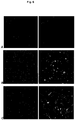
- Results As shown in the right panel of Figure 6B , the immunohistochemical analysis using the anti-VP1 antibody were able to detect VP1 protein in cells of the CNS.
- the brain slice shows scattered spots of irregular size, which is indicative of a cellular localization of VP1 within brain parenchyma.
- Luciferase protein could be detected in cells of the CNS.
- the Luciferase-derived staining of the brain slice shows scattered spots of irregular size, which is indicative of a cellular localization of Luciferase within brain parenchyma.
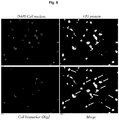
- Colocalization analysis reveals presence of VP1 protein in oligodendrocytes.
- a co-localization experiment was performed in order to identify the respective target cells.
- the detected VP1 protein was co-localized with the marker Olig 2, which is specifically located on oligodendrocytes ( B. Menn et al., "Origin of oligodendrocytes in the subventricular zone of the adult brain", The Journal of Neuroscience, 2006, 26(30): 7907-7918 ).
- results As shown in the lower left panel of Figure 8 , by using the Olig2 marker several irregular spots could be detected in the brain slice, which in every case are also stained by the nucleus stain DAPI (upper left panel of Figure 8 ) and therefore indicative of oligodendrocytes. Each of these oligodendrocytes is also positive for VP1 protein as shown in the lower right panel of Figure 8 . The cells which are positive for Olig2 and VP1 are marked with a white arrow. Hence, the VP1 protein is localized in CNS oligodendrocytes, which is indicative for a infection of these cells by the intravenously applied VLPs.
Landscapes
- Health & Medical Sciences (AREA)
- Life Sciences & Earth Sciences (AREA)
- Chemical & Material Sciences (AREA)
- Genetics & Genomics (AREA)
- Engineering & Computer Science (AREA)
- Organic Chemistry (AREA)
- General Health & Medical Sciences (AREA)
- Bioinformatics & Cheminformatics (AREA)
- Biotechnology (AREA)
- Wood Science & Technology (AREA)
- Zoology (AREA)
- Medicinal Chemistry (AREA)
- General Engineering & Computer Science (AREA)
- Biomedical Technology (AREA)
- Biochemistry (AREA)
- Virology (AREA)
- Molecular Biology (AREA)
- Animal Behavior & Ethology (AREA)
- Public Health (AREA)
- Veterinary Medicine (AREA)
- Pharmacology & Pharmacy (AREA)
- Microbiology (AREA)
- Biophysics (AREA)
- Epidemiology (AREA)
- Plant Pathology (AREA)
- Physics & Mathematics (AREA)
- Immunology (AREA)
- Proteomics, Peptides & Aminoacids (AREA)
- General Chemical & Material Sciences (AREA)
- Gastroenterology & Hepatology (AREA)
- Nuclear Medicine, Radiotherapy & Molecular Imaging (AREA)
- Chemical Kinetics & Catalysis (AREA)
- Medicines That Contain Protein Lipid Enzymes And Other Medicines (AREA)
- Medicines Containing Material From Animals Or Micro-Organisms (AREA)
- Micro-Organisms Or Cultivation Processes Thereof (AREA)
- Medicinal Preparation (AREA)
- Pharmaceuticals Containing Other Organic And Inorganic Compounds (AREA)
- Medicines Containing Antibodies Or Antigens For Use As Internal Diagnostic Agents (AREA)
- Peptides Or Proteins (AREA)
- Measuring Or Testing Involving Enzymes Or Micro-Organisms (AREA)
Applications Claiming Priority (2)
| Application Number | Priority Date | Filing Date | Title |
|---|---|---|---|
| EP12001507.8A EP2636746A1 (fr) | 2012-03-06 | 2012-03-06 | Nouveau système d'administration de médicaments sur la base de JCV-VLP |
| EP13714195.8A EP2823048B1 (fr) | 2012-03-06 | 2013-03-06 | Nouveau système d'administration de médicaments sur la base de jcv-vlp |
Related Parent Applications (1)
| Application Number | Title | Priority Date | Filing Date |
|---|---|---|---|
| EP13714195.8A Division EP2823048B1 (fr) | 2012-03-06 | 2013-03-06 | Nouveau système d'administration de médicaments sur la base de jcv-vlp |
Publications (1)
| Publication Number | Publication Date |
|---|---|
| EP3299468A1 true EP3299468A1 (fr) | 2018-03-28 |
Family
ID=48047958
Family Applications (3)
| Application Number | Title | Priority Date | Filing Date |
|---|---|---|---|
| EP12001507.8A Withdrawn EP2636746A1 (fr) | 2012-03-06 | 2012-03-06 | Nouveau système d'administration de médicaments sur la base de JCV-VLP |
| EP17200325.3A Withdrawn EP3299468A1 (fr) | 2012-03-06 | 2013-03-06 | Nouveau système d'administration de médicaments sur la base de jcv-vlp |
| EP13714195.8A Active EP2823048B1 (fr) | 2012-03-06 | 2013-03-06 | Nouveau système d'administration de médicaments sur la base de jcv-vlp |
Family Applications Before (1)
| Application Number | Title | Priority Date | Filing Date |
|---|---|---|---|
| EP12001507.8A Withdrawn EP2636746A1 (fr) | 2012-03-06 | 2012-03-06 | Nouveau système d'administration de médicaments sur la base de JCV-VLP |
Family Applications After (1)
| Application Number | Title | Priority Date | Filing Date |
|---|---|---|---|
| EP13714195.8A Active EP2823048B1 (fr) | 2012-03-06 | 2013-03-06 | Nouveau système d'administration de médicaments sur la base de jcv-vlp |
Country Status (24)
| Country | Link |
|---|---|
| US (3) | US20150045417A1 (fr) |
| EP (3) | EP2636746A1 (fr) |
| JP (1) | JP6175080B2 (fr) |
| KR (1) | KR102058488B1 (fr) |
| CN (1) | CN104395475B (fr) |
| AU (1) | AU2013230232B2 (fr) |
| BR (1) | BR112014021497A2 (fr) |
| CA (1) | CA2865564C (fr) |
| CY (1) | CY1120150T1 (fr) |
| DK (2) | DK2823048T3 (fr) |
| EA (1) | EA035308B1 (fr) |
| ES (2) | ES2658941T3 (fr) |
| HR (1) | HRP20180221T1 (fr) |
| HU (2) | HUE038284T2 (fr) |
| LT (1) | LT2823048T (fr) |
| MX (1) | MX354004B (fr) |
| NO (1) | NO2823048T3 (fr) |
| NZ (1) | NZ629255A (fr) |
| PL (1) | PL2823048T3 (fr) |
| PT (2) | PT2823048T (fr) |
| SG (3) | SG11201405255SA (fr) |
| SI (1) | SI2823048T1 (fr) |
| TR (1) | TR201802849T4 (fr) |
| WO (1) | WO2013131644A1 (fr) |
Families Citing this family (8)
| Publication number | Priority date | Publication date | Assignee | Title |
|---|---|---|---|---|
| EP3031821A1 (fr) * | 2014-12-08 | 2016-06-15 | Life Science Inkubator | Particules viroïdes (VLP) issues de polyomavirus comportant une protéine de fusion |
| EP3031820A1 (fr) * | 2014-12-08 | 2016-06-15 | Life Science Inkubator | Particules viroides (VLP) comportant un peptide de ciblage |
| EP3368694A1 (fr) * | 2015-10-28 | 2018-09-05 | Life Science Inkubator GmbH | Utilisation de vlp pour la détection des acides nucléiques |
| CN106048093A (zh) * | 2016-08-02 | 2016-10-26 | 北京思尔成生物技术有限公司 | Jc病毒的检测方法、试剂盒及其应用 |
| EP3670652A1 (fr) * | 2018-12-18 | 2020-06-24 | NEUWAY Pharma GmbH | Vlp pour le traitement d'une maladie de stockage lysosomal |
| JP6884432B2 (ja) * | 2018-12-18 | 2021-06-09 | ノイウェイ ファルマ ゲーエムベーハー | 新規薬物送達システムおよびそれを提供する方法 |
| CN114258398A (zh) | 2019-06-13 | 2022-03-29 | 总医院公司 | 工程化的人内源性病毒样颗粒及使用其递送至细胞的方法 |
| CN116670154A (zh) | 2020-07-24 | 2023-08-29 | 总医院公司 | 增强的病毒样颗粒及使用其递送至细胞的方法 |
Citations (3)
| Publication number | Priority date | Publication date | Assignee | Title |
|---|---|---|---|---|
| EP0862633A1 (fr) | 1995-11-22 | 1998-09-09 | Deutsches Primatenzentrum Gesellschaft Mbh | Antigenes vp du virus jc |
| WO1998048841A1 (fr) | 1997-04-26 | 1998-11-05 | Rpms Technology Limited | Utilisation de la proteine capside du papovavirus pour l'apport de materiel genetique |
| WO2009036933A2 (fr) | 2007-09-14 | 2009-03-26 | Jens Gruber | Régulation à la baisse de l'expression génique à l'aide de particules pseudovirales chargées d'acide nucléique |
Family Cites Families (5)
| Publication number | Priority date | Publication date | Assignee | Title |
|---|---|---|---|---|
| DE19916224C1 (de) * | 1999-04-10 | 2000-06-21 | November Ag Molekulare Medizin | Synthetisches biologisch aktives Molekül |
| DE10131145B4 (de) * | 2001-06-28 | 2005-07-14 | Innovent E.V. | Zusammensetzung zum zellspezifischen Transfer von Wirkstoffen |
| WO2003106626A2 (fr) * | 2002-06-12 | 2003-12-24 | Temple University Of The Commonwealth System Of Higher Education | Technique d'inhibition de croissance cellulaire avec une agnoproteine |
| EP2093780B1 (fr) | 2008-02-22 | 2014-11-05 | ABB Technology AG | Unité de commande de ressort, dispositif de commande pour appareil de commutation électrique et procédé de chargement et/ou déchargement d'un ressort dans un dispositif de fonctionnement pour un appareil de commutation électrique |
| WO2010090757A1 (fr) | 2009-02-05 | 2010-08-12 | Biogen Idec Ma Inc. | Procédés pour détecter le polyomavirus jc |
-
2012
- 2012-03-06 EP EP12001507.8A patent/EP2636746A1/fr not_active Withdrawn
-
2013
- 2013-03-06 SG SG11201405255SA patent/SG11201405255SA/en unknown
- 2013-03-06 ES ES13714195.8T patent/ES2658941T3/es active Active
- 2013-03-06 BR BR112014021497A patent/BR112014021497A2/pt not_active IP Right Cessation
- 2013-03-06 SI SI201330942T patent/SI2823048T1/en unknown
- 2013-03-06 PT PT137141958T patent/PT2823048T/pt unknown
- 2013-03-06 EA EA201491636A patent/EA035308B1/ru unknown
- 2013-03-06 US US14/383,267 patent/US20150045417A1/en not_active Abandoned
- 2013-03-06 EP EP17200325.3A patent/EP3299468A1/fr not_active Withdrawn
- 2013-03-06 AU AU2013230232A patent/AU2013230232B2/en not_active Ceased
- 2013-03-06 SG SG10201607358WA patent/SG10201607358WA/en unknown
- 2013-03-06 JP JP2014560272A patent/JP6175080B2/ja not_active Expired - Fee Related
- 2013-03-06 DK DK13714195.8T patent/DK2823048T3/en active
- 2013-03-06 WO PCT/EP2013/000656 patent/WO2013131644A1/fr not_active Ceased
- 2013-03-06 HU HUE13714195A patent/HUE038284T2/hu unknown
- 2013-03-06 SG SG10202102293QA patent/SG10202102293QA/en unknown
- 2013-03-06 CN CN201380013112.4A patent/CN104395475B/zh not_active Expired - Fee Related
- 2013-03-06 KR KR1020147028123A patent/KR102058488B1/ko not_active Expired - Fee Related
- 2013-03-06 NO NO13714195A patent/NO2823048T3/no unknown
- 2013-03-06 EP EP13714195.8A patent/EP2823048B1/fr active Active
- 2013-03-06 HR HRP20180221TT patent/HRP20180221T1/hr unknown
- 2013-03-06 CA CA2865564A patent/CA2865564C/fr active Active
- 2013-03-06 MX MX2014010651A patent/MX354004B/es active IP Right Grant
- 2013-03-06 PL PL13714195T patent/PL2823048T3/pl unknown
- 2013-03-06 LT LTEP13714195.8T patent/LT2823048T/lt unknown
- 2013-03-06 NZ NZ629255A patent/NZ629255A/en not_active IP Right Cessation
- 2013-03-22 PT PT130014913T patent/PT2774991T/pt unknown
- 2013-03-22 HU HUE13001491A patent/HUE038580T2/hu unknown
- 2013-03-22 TR TR2018/02849T patent/TR201802849T4/tr unknown
- 2013-03-22 DK DK13001491.3T patent/DK2774991T3/en active
- 2013-03-22 ES ES13001491.3T patent/ES2661389T3/es active Active
-
2018
- 2018-02-05 CY CY20181100133T patent/CY1120150T1/el unknown
- 2018-06-26 US US16/018,110 patent/US20180296700A1/en not_active Abandoned
-
2019
- 2019-03-15 US US16/354,739 patent/US11291735B2/en active Active
Patent Citations (3)
| Publication number | Priority date | Publication date | Assignee | Title |
|---|---|---|---|---|
| EP0862633A1 (fr) | 1995-11-22 | 1998-09-09 | Deutsches Primatenzentrum Gesellschaft Mbh | Antigenes vp du virus jc |
| WO1998048841A1 (fr) | 1997-04-26 | 1998-11-05 | Rpms Technology Limited | Utilisation de la proteine capside du papovavirus pour l'apport de materiel genetique |
| WO2009036933A2 (fr) | 2007-09-14 | 2009-03-26 | Jens Gruber | Régulation à la baisse de l'expression génique à l'aide de particules pseudovirales chargées d'acide nucléique |
Non-Patent Citations (15)
| Title |
|---|
| ANGELOW S; ZENI P; GALLA HJ: "Usefulness and limitation of primary cultured porine horoid plexus epithel cells as an in vitro model to study drug transport at the blood-CSF barrier", ADV DRUG DELIVERY, vol. 56, no. 12, 2004, pages 1859 - 73 |
| B. MENN ET AL.: "Origin of oligodendrocytes in the subventricular zone of the adult brain", THE JOURNAL OF NEUROSCIENCE, vol. 26, no. 30, 2006, pages 7907 - 7918 |
| CHAPAGAIN MOTI L ET AL: "Human Polyomavirus JC (JCV) Infection of Human B Lymphocytes: A Possible Mechanism for JCV Transmigration across the Blood-Brain Barrier", JOURNAL OF INFECTIOUS DISEASES, vol. 202, no. 2, July 2010 (2010-07-01), pages 184 - 191, XP002676067, ISSN: 0022-1899 * |
| CHOU MENG-ING ET AL: "In vitro and in vivo targeted delivery of IL-10 interfering RNA by JC virus-like particles", JOURNAL OF BIOMEDICAL SCIENCE, vol. 17, June 2010 (2010-06-01), XP002676066, ISSN: 1021-7770 * |
| GOLDMANN ET AL., JOURNAL OF VIROLOGY: MOLECULAR CLONING, 1999 |
| GOLDMANN, JOURNAL OF VIROLOGY: MOLECULAR CLONING, 1999 |
| HOFFMAN, R.M.: "THE MULTIPLE USES OF FLUORESCENT PROTEINS TO VISUALIZE CANCER IN VIVO", NAT. REV. CANCER, vol. 5, no. 10, 2005, pages 796 - 806, XP009113971 |
| J.JANKOWSKI ET AL., THE JOURNAL OF COMPARATIVE NEUROLOGY, vol. 472, 2004, pages 87 - 99 |
| JAEGER LAURA B ET AL: "Migration of JC virus across the human blood-brain barrier occurs via clathrin-mediated endocytosis", JOURNAL OF NEUROVIROLOGY, vol. 15, no. Suppl. 1, 2009, & 9TH INTERNATIONAL SYMPOSIUM ON NEUROVIROLOGY; MIAMI BEACH, FL, USA; JUNE 02 -06, 2009, pages 37, XP008151856, ISSN: 1355-0284 * |
| KRAUZEWICZ ET AL., GENE THERAPY, vol. 7, 2000, pages 1094 - 1102 |
| KRAUZEWICZ N ET AL: "Sustained ex vivo and in vivo transfer of a reporter gene using polyoma virus pseudocapsids", GENE THERAPY, vol. 7, no. 13, July 2000 (2000-07-01), pages 1094 - 1102, XP002676631, ISSN: 0969-7128 * |
| KRAUZEWICZ, GENE THERAPY, vol. 7, 2000, pages 1094 - 1102 |
| REMPE ET AL., BBRC, 2011 |
| REMPE ET AL., BIOCHEM BIOPH RES COMM, vol. 406, no. 1, 2011, pages 64 - 69 |
| SHISHIDO-HARA, Y.; HARA, Y.; LARSON, T.; YASUI, K.; NAGASHIMA, K.; STONER, G.L.: "Analysis of Capsid Formation of Human Polyomavirus JC (Tokyo-1 Strain) by a Eukaryotic Expression System: Splicing of Late RNAs, Translation and Nuclear Transport of Major Capsid Protein VP1, and Capsid Assembly", JOURNAL OF VIROLOGY, vol. 74, 2000, pages 1840 - 1853, XP002997063, DOI: doi:10.1128/JVI.74.4.1840-1853.2000 |
Also Published As
Similar Documents
| Publication | Publication Date | Title |
|---|---|---|
| US11291735B2 (en) | Drug delivery system based on JCV-VLP | |
| JP7014857B2 (ja) | 血液脳関門を通過して輸送するための組成物及び方法 | |
| US20250387498A1 (en) | Cell-penetrating peptides | |
| US20260091120A1 (en) | Cell-penetrating peptides | |
| CN117083381A (zh) | 用于靶向炎性细胞或活化细胞和治疗或改善炎性病症和疼痛的组合物和方法 | |
| US20240016889A1 (en) | Compositions and methods for treating motor neuron diseases | |
| JP2021522791A (ja) | Aav適合性ラミニン−リンカー重合タンパク質 | |
| EP3372249A1 (fr) | Virus aav/upr-plus, protéine de fusion upr-plus, méthode de traitement génétique et son utilisation dans le traitement de maladies neurodégénératives telles que,entre autres | |
| CN112852881B (zh) | 利用细胞穿膜肽增强腺相关病毒在中枢神经系统转导效率的方法 | |
| CA3190597A1 (fr) | Compositions et methodes pour le traitement de la neuro-inflammation oculaire | |
| HK1208046B (zh) | 基於jcv-病毒样颗粒的新型药物递送系统 | |
| US20250368713A1 (en) | Compositions, systems and methods for manipulating area postrema (ap) neurons based on gfral sensing |
Legal Events
| Date | Code | Title | Description |
|---|---|---|---|
| PUAI | Public reference made under article 153(3) epc to a published international application that has entered the european phase |
Free format text: ORIGINAL CODE: 0009012 |
|
| 17P | Request for examination filed |
Effective date: 20171107 |
|
| AC | Divisional application: reference to earlier application |
Ref document number: 2823048 Country of ref document: EP Kind code of ref document: P |
|
| AK | Designated contracting states |
Kind code of ref document: A1 Designated state(s): AL AT BE BG CH CY CZ DE DK EE ES FI FR GB GR HR HU IE IS IT LI LT LU LV MC MK MT NL NO PL PT RO RS SE SI SK SM TR |
|
| AX | Request for extension of the european patent |
Extension state: BA ME |
|
| RIN1 | Information on inventor provided before grant (corrected) |
Inventor name: DEMINA, VICTORIA Inventor name: GLASSMANN, ALEXANDER Inventor name: GOETZKE, ARMIN Inventor name: MANNINGA, HEIKO |
|
| 17Q | First examination report despatched |
Effective date: 20181114 |
|
| STAA | Information on the status of an ep patent application or granted ep patent |
Free format text: STATUS: THE APPLICATION IS DEEMED TO BE WITHDRAWN |
|
| 18D | Application deemed to be withdrawn |
Effective date: 20190326 |