EP3301824A1 - Composant de reseau de communication et procede de demande d'informations de canal - Google Patents
Composant de reseau de communication et procede de demande d'informations de canal Download PDFInfo
- Publication number
- EP3301824A1 EP3301824A1 EP16191100.3A EP16191100A EP3301824A1 EP 3301824 A1 EP3301824 A1 EP 3301824A1 EP 16191100 A EP16191100 A EP 16191100A EP 3301824 A1 EP3301824 A1 EP 3301824A1
- Authority
- EP
- European Patent Office
- Prior art keywords
- network component
- communication network
- mobile communication
- output
- channel information
- Prior art date
- Legal status (The legal status is an assumption and is not a legal conclusion. Google has not performed a legal analysis and makes no representation as to the accuracy of the status listed.)
- Granted
Links
- 238000004891 communication Methods 0.000 title claims abstract description 141
- 238000000034 method Methods 0.000 title claims description 20
- 238000010295 mobile communication Methods 0.000 claims abstract description 126
- 230000011664 signaling Effects 0.000 claims abstract description 13
- 230000037230 mobility Effects 0.000 claims description 24
- 230000001413 cellular effect Effects 0.000 claims description 7
- 238000012797 qualification Methods 0.000 description 15
- 230000005540 biological transmission Effects 0.000 description 14
- 239000011159 matrix material Substances 0.000 description 11
- 238000013459 approach Methods 0.000 description 6
- 230000002123 temporal effect Effects 0.000 description 6
- 241000053227 Themus Species 0.000 description 5
- 238000004422 calculation algorithm Methods 0.000 description 4
- 238000010586 diagram Methods 0.000 description 4
- 230000003044 adaptive effect Effects 0.000 description 3
- 230000007774 longterm Effects 0.000 description 3
- 230000009897 systematic effect Effects 0.000 description 3
- 239000013598 vector Substances 0.000 description 3
- 230000008901 benefit Effects 0.000 description 2
- 230000010267 cellular communication Effects 0.000 description 2
- 230000008859 change Effects 0.000 description 2
- 230000001276 controlling effect Effects 0.000 description 2
- 230000002596 correlated effect Effects 0.000 description 2
- 230000000875 corresponding effect Effects 0.000 description 2
- 238000005516 engineering process Methods 0.000 description 2
- 230000007246 mechanism Effects 0.000 description 2
- 230000008520 organization Effects 0.000 description 2
- 238000012545 processing Methods 0.000 description 2
- 230000009467 reduction Effects 0.000 description 2
- 238000007630 basic procedure Methods 0.000 description 1
- 230000009286 beneficial effect Effects 0.000 description 1
- 238000004590 computer program Methods 0.000 description 1
- 230000003247 decreasing effect Effects 0.000 description 1
- 230000001419 dependent effect Effects 0.000 description 1
- 230000006870 function Effects 0.000 description 1
- 238000011835 investigation Methods 0.000 description 1
- 238000007726 management method Methods 0.000 description 1
- 238000005259 measurement Methods 0.000 description 1
- 238000013468 resource allocation Methods 0.000 description 1
- 239000000523 sample Substances 0.000 description 1
- 230000035945 sensitivity Effects 0.000 description 1
- 238000010206 sensitivity analysis Methods 0.000 description 1
- 238000004088 simulation Methods 0.000 description 1
- 238000001228 spectrum Methods 0.000 description 1
- 230000003068 static effect Effects 0.000 description 1
- 238000012360 testing method Methods 0.000 description 1
Images



Classifications
-
- H—ELECTRICITY
- H04—ELECTRIC COMMUNICATION TECHNIQUE
- H04B—TRANSMISSION
- H04B7/00—Radio transmission systems, i.e. using radiation field
- H04B7/02—Diversity systems; Multi-antenna system, i.e. transmission or reception using multiple antennas
- H04B7/04—Diversity systems; Multi-antenna system, i.e. transmission or reception using multiple antennas using two or more spaced independent antennas
- H04B7/0413—MIMO systems
- H04B7/0456—Selection of precoding matrices or codebooks, e.g. using matrices antenna weighting
-
- H—ELECTRICITY
- H04—ELECTRIC COMMUNICATION TECHNIQUE
- H04B—TRANSMISSION
- H04B7/00—Radio transmission systems, i.e. using radiation field
- H04B7/02—Diversity systems; Multi-antenna system, i.e. transmission or reception using multiple antennas
- H04B7/04—Diversity systems; Multi-antenna system, i.e. transmission or reception using multiple antennas using two or more spaced independent antennas
- H04B7/0413—MIMO systems
- H04B7/0452—Multi-user MIMO systems
-
- H—ELECTRICITY
- H04—ELECTRIC COMMUNICATION TECHNIQUE
- H04B—TRANSMISSION
- H04B7/00—Radio transmission systems, i.e. using radiation field
- H04B7/02—Diversity systems; Multi-antenna system, i.e. transmission or reception using multiple antennas
- H04B7/04—Diversity systems; Multi-antenna system, i.e. transmission or reception using multiple antennas using two or more spaced independent antennas
- H04B7/06—Diversity systems; Multi-antenna system, i.e. transmission or reception using multiple antennas using two or more spaced independent antennas at the transmitting station
- H04B7/0613—Diversity systems; Multi-antenna system, i.e. transmission or reception using multiple antennas using two or more spaced independent antennas at the transmitting station using simultaneous transmission
- H04B7/0615—Diversity systems; Multi-antenna system, i.e. transmission or reception using multiple antennas using two or more spaced independent antennas at the transmitting station using simultaneous transmission of weighted versions of same signal
- H04B7/0619—Diversity systems; Multi-antenna system, i.e. transmission or reception using multiple antennas using two or more spaced independent antennas at the transmitting station using simultaneous transmission of weighted versions of same signal using feedback from receiving side
- H04B7/0636—Feedback format
- H04B7/0645—Variable feedback
Definitions
- Embodiments described herein generally relate to communication network components and methods for requesting channel information.
- Advanced communication techniques such as multiple-input multiple-output and in particular multi-user MIMO (MU-MIMO) for communication between the network side of a cellular communication system and a subscriber terminal require the feedback of channel information with high accuracy from the subscriber terminal to the network side. This introduces a high feedback overhead as well as high computational complexity on the terminal side. Accordingly, approaches to provide channel information feedback efficiently are desirable.
- MU-MIMO multi-user MIMO
- Figure 1 shows a communication system 100, e.g. an LTE (Long Term Evolution) communication system.
- LTE Long Term Evolution
- the communication system 100 includes a radio access network (e.g. an E-UTRAN, Evolved UMTS (Universal Mobile Communications System) Terrestrial Radio Access Network according to LTE) 101 and a core network (e.g. an EPC, Evolved Packet Core, according LTE) 102.
- the radio access network 101 may include base (transceiver) stations (e.g. eNodeBs, eNBs, according to LTE) 103. Each base station 103 provides radio coverage for one or more mobile radio cells 104 of the radio access network 101.
- a mobile terminal (also referred to as UE, user equipment, or MS, mobile station) 105 located in one of the mobile radio cells 104 (in this example the leftmost radio cell 104) may communicate with the core network 102 and with other mobile terminals 105 via the base station providing coverage in (in other words operating) the mobile radio cell.
- UE user equipment
- MS mobile station
- Control and user data are transmitted between a base station 103 and a mobile terminal 105 located in the mobile radio cell 104 operated by the base station 103 over the air interface 106 on the basis of a multiple access method.
- the base stations 103 are interconnected with each other by means of a first interface 107, e.g. an X2 interface.
- the base stations 103 are also connected by means of a second interface 108, e.g. an S1 interface, to the core network, e.g. to an MME (Mobility Management Entity) 109, and a Serving Gateway (S-GW) 110.
- MME Mobility Management Entity
- S-GW Serving Gateway
- the MME 109 is responsible for controlling the mobility of mobile terminals located in the coverage area of E-UTRAN
- the S-GW 110 is responsible for handling the transmission of user data between mobile terminals 105 and core network 102.
- the radio access network 101 and the core network may support communication according to various communication technologies, e.g. mobile communication standards.
- each base station 103 may provide a radio communication connection via the air interface between itself and the mobile terminal 105 according to LTE, UMTS, GSM (Global System for Mobile Communications), GPRS (General Packet Radio Service), EDGE (Enhanced Data Rates for GSM Evolution) radio access.
- the radio access network 102 may operate as an E-UTRAN, a UTRAN, a GSM radio access network, or a GERAN (GSM EDGE Radio Access Network).
- the core network 102 may include the functionality of an EPC, a UMTS core network or a GSM core network.
- the approaches described herein may also be applied to future RAT technologies such as 5G.
- the mobile terminal 105 For uplink radio communication via the air interface 106, the mobile terminal 105 includes a radio transmitter (TX RF) 111.
- TX RF radio transmitter
- the mobile terminal 105 may include an identity module 112 (e.g. implemented by a chip card) that allows the mobile terminal 105 to identify itself as a subscriber of the communication network (e.g. as an LTE subscriber) formed by the radio access network 101 and the core network 102 and thus to use the communication network as a home network.
- an identity module 112 e.g. implemented by a chip card
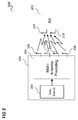
- the mobile terminal 105 as well as its serving base station 103 may each be provided with a plurality of antennas and the base station 103 may serve the mobile terminal 105 using MIMO (multiple-input multiple-output). This is illustrated in figure 2 .
- MIMO multiple-input multiple-output
- Figure 2 shows a communication arrangement 200 according to an embodiment.
- the communication arrangement 200 includes a transmitter (TX) 201, e.g. corresponding to a base station 103, and a receiver (RX) 202, e.g. corresponding to the mobile terminal 105 which is served by the base station 103.
- the transmitter 201 includes a data source 203 which generates data to be transmitted in the form of data symbols (e.g. modulation symbols selected from a set of constellation symbols).
- the data symbols are supplied to a precoding circuit 204 which generates transmission symbols from the data symbols and associates each transmission symbol with one of a plurality of antennas 205, 206, 207, 208 and a transmission resource.
- Each transmission symbol is transmitted to the receiver 202, which may include a plurality of receiving antennas 209, 210 (for example two or more receiving antennas) using the antenna 205, 206, 207, 208 and the transmission resource associated with the transmission symbol.
- the transmitter includes four transmit antennas.
- the transmission resource is for example a time slot (e.g. a time transmission interval) or a (sub-)carrier signal. That means that a transmission symbol is for example associated with a time slot and is sent in this time slot or is associated with a carrier signal and is transmitted using this carrier signal (or both).
- figure 2 can be seen as a SU(single user)-MIMO scenario, where a single multi-antenna transmitter is communicating with a single multi-antenna receiver.
- a multi-antenna transmitter communicates with a plurality of different receivers (e.g. communication terminals) using the same frequency spectrum.
- the high accuracy of the feedback can be achieved by introducing a high granularity (i.e. resolution) codebook which, however, entails high feedback overhead as well as high computational complexity at the MS.
- the current 3GPP LTE standard does not include usage of the high granularity codebook for MU-MIMO systems.
- the high granularity codebook and its efficient deployment schemes e.g., adaptive codebook or differential codebook, should be indispensable for successful utilization of the MU-MIMO mode.
- the network side performs the user grouping, i.e., the decision whether to apply SU-MIMO or MU-MIMO for a certain mobile terminal, and the decision about the tracking mode (to find MSs with low mobility, which are eligible for low overhead/complexity feedback scheme) for a given MU-MIMO group of mobile terminals in a hierarchical manner by introducing timers with different expiration time.
- the user grouping i.e., the decision whether to apply SU-MIMO or MU-MIMO for a certain mobile terminal, and the decision about the tracking mode (to find MSs with low mobility, which are eligible for low overhead/complexity feedback scheme) for a given MU-MIMO group of mobile terminals in a hierarchical manner by introducing timers with different expiration time.
- the BS 103 needs to categorize MSs 105 to several groups, e.g., those which are eligible for SU-MIMO or for MU-MIMO, and those which are eligible for reduced feedback among MU-MIMO qualified MSs.
- This categorization can be costly in terms of computational complexity at the BS(s), hence it should typically be avoided to perform the categorization too frequently.
- the MSs move around, their propagation channels vary accordingly, therefore the categorization should take place frequently enough to reflect this channel variation.
- a scheme is desirable which facilitates achieving a trade-off by tuning the system parameters.
- the categorization can be designed to be performed in a step-by-step manner, starting from the user grouping, then to the tracking mode qualification, and finally to the user group/tracking mode exit qualification with an increasing frequency of operation. It is because the user grouping, which sorts out MSs for its eligibility to SU- or MU-MIMO, can be done less frequently based on the long term channel information only (low resolution feedback should be sufficient) while the tracking mode decision, which finds MSs (belonging to the same MU-MIMO group) which show the temporally correlated channel, may be done more frequently as this decision is based on the user mobility. Once in tracking mode, the MSs should report their channel information by high resolution codebook via a reduced (encoded) feedback scheme for the sake of reduced feedback overhead/complexity at the MS.
- a feedback overhead reduction can be achieved for example by exploiting the channel temporal correlation for low mobility case, in which the whole feedback codebook can be categorized by a certain distance metric (e.g., Chordal distance for measuring distance between subspaces being spanned by a codebook that is designed to represent a channel spatial information) to smaller subgroups.
- a certain distance metric e.g., Chordal distance for measuring distance between subspaces being spanned by a codebook that is designed to represent a channel spatial information
- each subgroup might be composed of feedback codes which are placed closely to each other, in terms of the used distance metric (e.g., Chordal distance), such that MS should not have to search for the whole feedback codebook, but only for a certain subgroup of which the number of codes to search is reduced (therefore leads to a smaller feedback in bits).
- This limited subset of the whole codebook should be sufficient in case of a low mobility MS, as the channel would not vary so dramatically and the expected channel variation should be able to be represented by a confined subgroup of the codebook. Complexity at the mobile terminal can be decreased accordingly, due to the confined search area.
- This organization of codebook into subgroups can be either static or dynamic, and the specific scheme of the codebook organization in use should be reflected to encoding/decoding scheme of feedback accordingly so that the associated mobile terminal(s) and the network have the same understanding on interpretation of the feedbacks. It might be worthwhile to note that "refresh" of the feedback by using the whole codebook needs to be done from time to time (periodically or event-driven), in order not to lose track of the channel variation.
- the detailed/precise mechanism may follow the specific implementation scheme for feedback reduction.
- the overall feedback overhead can be managed efficiently at the system level, and SU- and MU-MIMO grouping together with deployment of high resolution feedback can be performed in a hierarchical and systematic manner, with a reasonable scheduling complexity at the BS.
- the network side performs a user grouping at the expiration of a user grouping timer in order to select MSs which are eligible for the MU-MIMO processing, i.e., of which the channel directions are as far spatially separated to each other as possible that they are least likely to interfere with each other when MU-MIMO is performed.
- MSs report with low resolution feedback.
- the network side selects MSs which would be eligible for tracking mode, in which a high resolution codebook can be used with reduced feedback overhead/complexity scheme, based on their mobility at the expiration of a tracking mode entrance qualification timer (whose timer value is for example shorter than the user grouping timer).
- a tracking mode entrance qualification timer whose timer value is for example shorter than the user grouping timer.
- the network side executes a kind of qualification test to check whether they are still eligible for the tracking mode and MU-MIMO operation, at the expiration of an exit qualification timer (its timer value is shorter than tracking mode entrance qualification timer).
- Figure 3 shows a communication arrangement 300.
- a base station (BS) 301 serves a plurality of mobile stations 302 denoted MS 1 to MS 7 located in a radio cell 303 operated by the base station 301.
- the base station 301 is a base station of multiplicity of base stations of a cellular communication system which supports a SU-MIMO communication scheme as well as a MU-MIMO communication scheme.
- the decision of applying SU-MIMO or MU-MIMO for a mobile station 302 is performed at the BS 301, based on feedback messages provided by the MSs.
- each MS 302 measures the downlink channel (e.g. as characterized by the respective one of channel matrices H 1 to H 7 ) and provides this channel information back to the BS 301.
- the channel may be quantized, e.g., each MS 302 may provide its channel directional (spatial) information as the index of a predefined codebook of the limited size.
- a high granularity/resolution codebook is typically required for MU-MIMO
- a low resolution codebook is typically sufficient.
- Using a high resolution codebook (> 6 bit) is challenging as it requires high UL signaling overhead as well as high computational complexity at the MS 302.
- the codebook itself is composed of vectors or matrices and in the high resolution codebook, a 6 bit (or more) code word represents a channel vector or matrix.
- a feedback encoding scheme may be used, e.g., differential feedback or adaptive feedback, etc. Such a scheme makes use of the temporal correlation of the channel to reduce the feedback overhead and the computational complexity at the MS 302.
- MU-MIMO may for example be used for MSs with low mobility by using a high resolution codebook with a feedback encoding scheme in place to keep the overhead and complexity at a reasonable level.
- a scheduling scheme is described for this case.
- the DL channel characteristics are different for each MS 302 in the cell due to the different channel propagation environment and different MS mobility.
- Some MSs 302 might be suitable for SU-MIMO, whereas it may be beneficial from the system capacity perspective if some other MSs can be grouped together to be served using the same time-/frequency-resources at the same time (MU-MIMO).
- MU-MIMO time-/frequency-resources at the same time
- the channel matrix of each MS 302 is probed with respect to other MSs' channel matrix so as to find the set of suitable MSs of which their channel signatures are as far spatially distant to each other as possible (i.e. which are "best companions" to each other).
- MUS MU-MIMO User Service
- the MSs which belong to the same MUS group are least likely to interfere with each other when a MU-MIMO scheme is to be applied.
- MS 6 and MS 7 do not belong to any MUS group in the example of figure 3 , which means they may for example be served using SU-MIMO, or other less spectrally efficient transmission schemes rather than MU-MIMO, due to their DL propagation channel status. It should further be noted that it is assumed here that the BS 301 generates and transmits a precoded reference signals/pilot symbols in the DL frame so that the BS 301 does not have to choose from a predefined precoding matrix set, but rather freely compute and apply the whatever precoding matrix which deems suitable for the current transmission environment, based on the user channel reports and the associated computation.
- One potential issue in a scenario such as illustrated in figure 3 is typically that the BS 301 needs to probe the DL channel information from every MS in the cell constantly to update the MUS grouping and so on, as the DL channel situation can change quickly due to its innate nature as the mobile channel.
- an approach to organize this scheduling algorithm so that it can be handled in a reasonable manner is desirable.
- this is addressed by performing the scheduling at the BS 301 in a hierarchical manner, i.e., to perform the most channel-temporal-change-sensitive scheduling most frequently.
- the MSs 302 in the cell 303 can be classified into different sets. First, all the MSs 302 in the cell 303 automatically at first belong to a superset, denoted Candidates group. Its sensitivity to channel temporal change is not identified initially, so the BS 301 commands a basic reporting of the channel information to the MSs in the Candidates group, e.g., COI, low resolution channel directional information (CDI), etc., in the least frequent manner.
- COI COI
- CDI low resolution channel directional information
- the superset Candidates group there can be several sets MUS groups whose members (i.e. the MSs contained in one of the MUS groups) are eligible for the MU-MIMO scheme.
- MUS groups whose members (i.e. the MSs contained in one of the MUS groups) are eligible for the MU-MIMO scheme.
- TM Tracking Mode
- Other MSs, which do not belong to TM set can be basically considered to be eligible for SU-MIMO or other less spectrally efficient transmission schemes.
- the network side may update these sets with different periodicity based on different timer value setting.
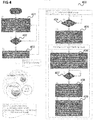
- Figure 4 shows a flow diagram 400 illustrating an example of a scheduling algorithm.
- the BS 301 commands all the MSs 302 in the cell 303 (i.e. the members of the Candidates group) to report the quantized channel information by using a low resolution codebook.
- the BS 301 When the User Grouping Timer has expired, in 403, the BS 301 performs the user grouping based on the collected low resolution channel information H ⁇ i l to find the MSs 302 eligible for the MU-MIMO scheme.
- a semi-orthogonal user grouping method may for example be used.
- the BS 301 generates the (one or more) MUS group(s).
- the procedure pauses until the Tracking Mode Entrance Qualification Timer has expired (which is a system parameter of a for example a few tens of milliseconds).
- the BS 301 checks every MS 302 in this MUS group if it would be eligible for Tracking Mode (e.g. whether there is high channel temporal correlation due to low mobility), based on its mobility.
- the BS 301 can estimate each MS's mobility by itself or make use of the reported Doppler spread estimate f Dos , if available.
- the BS 301 commands MSs 302 qualified for TM to enter into Tracking Mode operation, i.e., to report the high resolution channel information H ⁇ i h (with a differential or adaptive feedback encoding scheme) to make the best use of the MU-MIMO.
- the BS 301 applies the MU-MIMO scheme for MSs in TM.
- this codebook can be downloaded from the BS 301 to the MSs in TM on the needs basis, to save memory space at the MS.
- the procedure pauses until the Exit Qualification Timer is expired (which is a system parameter of for example a few Milliseconds),
- the BS 301 checks every MS in TM if it satisfies a MUS group exit condition, e.g., both MUS grouping conditions not being satisfied and the block error rate being over the predefined threshold value. If found, the BS 301 expels these MS(s) from this MUS group: if (MUS grouping condition used in 403 not satisfied AND BLER > BLER threshold ) expel this MS from this MUS group; end.
- a MUS group exit condition e.g., both MUS grouping conditions not being satisfied and the block error rate being over the predefined threshold value.
- the BS 301 checks for the every remaining MS in TM if it satisfies the Tracking Mode exit condition, e.g., both the normalized Doppler spread estimate being higher than the predefined threshold value and the block error rate being over the predefined threshold value. If found, the BS expels these MS(s) from TM operation: if ⁇ D > ⁇ D , threshold & & BLER > BLER threshold expel this MS from TM; end
- the timer values can be set adaptively to the traffic situation (number of active MSs in the cell), e.g., different values for different times of the day (the higher the traffic, the shorter the timer values).
- the individual timer values and the Exit qualification conditions are system parameters which can be used for tuning of the overall system operation, which can serve the specific needs of the network operators (balancing between SU-/MU-MIMO user numbers, controlling the feedback overhead, etc.).
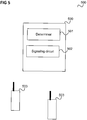
- a communication network component is provided as illustrated in figure 5 .
- Figure 5 shows a communication network component 500.
- the communication network component 500 includes a determiner 501 configured to determine, for each of a plurality of mobile communication terminals 503 that the communication network component 500 serves, whether the communication network component 500 serves the mobile communication terminal 503 using single-user multiple-input multiple-output or multi-user multiple-input multiple-output.
- the communication network component 500 further includes a signaling circuit 502 configured to request the mobile communication terminals of the plurality of mobile communication terminals 503 which the communication network component serves using single-user multiple-input multiple-output to report channel information at a lower accuracy than the mobile communication terminals of the plurality of mobile communication terminals 503 which the communication network component serves using multi-user multiple-input multiple-output.
- a signaling circuit 502 configured to request the mobile communication terminals of the plurality of mobile communication terminals 503 which the communication network component serves using single-user multiple-input multiple-output to report channel information at a lower accuracy than the mobile communication terminals of the plurality of mobile communication terminals 503 which the communication network component serves using multi-user multiple-input multiple-output.
- mobile terminals served by SU-MIMO are to report channel (feedback) information with a lower accuracy than mobile terminals served by MU-MIMO.
- the communication network component 500 may for example request the mobile (communication) terminals to report channel information accordingly by sending one or more messages to the mobile terminals.
- This may also be a general, e.g. broadcast, message (e.g. as part of system information transmission) and may for example generally inform the mobile terminals that they are to send the channel information using the lower accuracy (e.g. at a predefined first accuracy level) when they are served with SU-MIMO and that they are to send the channel information using higher accuracy (e.g. at a predefined second accuracy level).
- a “circuit” may be understood as any kind of a logic implementing entity, which may be special purpose circuitry or a processor executing software stored in a memory, firmware, or any combination thereof.
- a “circuit” may be a hard-wired logic circuit or a programmable logic circuit such as a programmable processor, e.g. a microprocessor.
- a “circuit” may also be a processor executing software, e.g. any kind of computer program. Any other kind of implementation of the respective functions which will be described in more detail below may also be understood as a "circuit".
- the communication network component 500 for example carries out a method as illustrated in figure 6 .
- Figure 6 shows a flow diagram 600 illustrating a method for requesting channel information, for example carried out by a communication network component.
- the communication network component determines, for each of a plurality of mobile communication terminals that a communication network component serves, whether the communication network component serves the mobile communication terminal using single-user multiple-input multiple-output or multi-user multiple-input multiple-output.
- the communication network component requests the mobile communication terminals of the plurality of mobile communication terminals which the communication network component serves using single-user multiple-input multiple-output to report channel information at a lower accuracy than the mobile communication terminals of the plurality of mobile communication terminals which the communication network component serves using multi-user multiple-input multiple-output.
- Example 1 is a communication network component as illustrated in figure 5 .
- Example 2 the subject matter of Example 1 may optionally include the signaling circuit being configured to request the mobile communication terminals of the plurality of mobile communication terminals which the communication network component serves using multi-user multiple-input multiple-output to report channel information at a higher accuracy than the mobile communication terminals of the mobile communication terminals which the communication network component serves using single-user multiple-input multiple-output.
- Example 3 the subject matter of any one of Examples 1-2 may optionally include reporting channel information at the lower accuracy comprising reporting channel information based on a first codebook having a lower resolution than a second codebook based on which the mobile communication terminals which the communication network component serves using multi-user multiple-input multiple-output are to report channel information.
- Example 4 the subject matter of any one of Examples 1-3 may optionally include the signaling circuit being configured to request the mobile communication terminals to download the second codebook if they are to report channel information based on the second codebook.
- Example 5 the subject matter of any one of Examples 1-4 may optionally include the communication network component being a component of a cellular mobile communication network.
- Example 6 the subject matter of any one of Examples 1-5 may optionally include the communication network component being at least partially implemented by a base station.
- Example 7 the subject matter of any one of Examples 1-6 may optionally include the communication network component comprising a receiver configured to receive channel information from the mobile communication terminals.
- Example 8 the subject matter of any one of Examples 1-7 may optionally include the determiner being configured to decide, for each of a plurality of mobile communication terminals that the communication network component serves, whether the communication network component being to serve the mobile communication terminal using single-user multiple-input multiple-output or multi-user multiple-input multiple-output, based on channel information provided by the mobile communication terminals.
- Example 9 the subject matter of any one of Examples 1-8 may optionally include the determiner being configured to group the plurality of mobile communication terminals into a first group which the communication network component serves using single-user multiple-input multiple-output and into a second group which the communication network component serves using multi-user multiple-input multiple-output.
- Example 10 the subject matter of any one of Examples 1-9 may optionally include the signaling circuit being configured to request a first subset of the mobile communication terminals of the mobile communication terminals which the communication network component serves using multi-user multiple-input multiple-output to report channel information with a first high accuracy and a second subset of the mobile communication terminals of the mobile communication terminals which the communication network component serves using multi-user multiple-input multiple-output to report channel information with a second high accuracy, wherein the first high accuracy being higher than the second high accuracy.
- the signaling circuit being configured to request a first subset of the mobile communication terminals of the mobile communication terminals which the communication network component serves using multi-user multiple-input multiple-output to report channel information with a first high accuracy and a second subset of the mobile communication terminals of the mobile communication terminals which the communication network component serves using multi-user multiple-input multiple-output to report channel information with a second high accuracy, wherein the first high accuracy being higher than the second high accuracy.
- Example 11 the subject matter of Example 10 may optionally include both the first high accuracy and the second high accuracy being higher than the lower accuracy.
- Example 12 the subject matter of any one of Examples 10-11 may optionally include the determiner being configured to group the mobile communication terminals which the communication network component serves using multi-user multiple-input multiple-output into the first subset and into the second subset based on information representing their respective mobilities.
- Example 13 the subject matter of any one of Examples 10-12 may optionally include the determiner being configured to repeatedly detect whether a mobile communication terminal should be moved from the second subset to the first subset.
- Example 14 the subject matter of any one of Examples 10-13 may optionally include the determiner being configured to perform the grouping of mobile communication terminals which the communication network component serves using multi-user multiple-input multiple-output into the first subset and the second subset with a higher frequency of occurrence than a grouping of the plurality of mobile communication terminals into a first group which the communication network component serves using single-user multiple-input multiple-output and into a second group which the communication network component serves using multi-user multiple-input multiple-output.
- Example 15 the subject matter of Example 14 may optionally include the determiner being configured to detect whether a mobile communication terminal should be moved from the second subset to the first subset with a higher frequency of occurrence than the grouping of the mobile communication terminals in the first subset and the second subset.
- Example 16 the subject matter of any one of Examples 10-15 may optionally include the determiner being configured to group mobile communication terminals into the second subset having a lower mobility and to group mobile communication terminals into the first subset having a higher mobility.
- Example 17 the subject matter of any one of Examples 10-16 may optionally include reporting channel information with the second high accuracy comprising reporting channel information with a reduced feedback scheme compared to reporting channel information with the first high accuracy.
- Example 18 the subject matter of Example 17 may optionally include the reduced feedback scheme comprising encoding the channel information differently from reporting channel information with the first high accuracy.
- Example 19 the subject matter of any one of Examples 1-18 may optionally include the channel information to be reported by a mobile communication terminal of the plurality of mobile communication terminals at least partially representing a channel matrix representing channel characteristics of a communication channel between the communication network component and the mobile communication terminal.
- Example 20 is a method for requesting channel information as illustrated in figure 6 .
- Example 21 the subject matter of Example 20 may optionally include requesting the mobile communication terminals of the plurality of mobile communication terminals which the communication network component serves using multi-user multiple-input multiple-output to report channel information at a higher accuracy than the mobile communication terminals of the mobile communication terminals which the communication network component serves using single-user multiple-input multiple-output.
- Example 22 the subject matter of any one of Examples 20-21 may optionally include reporting channel information at the lower accuracy comprising reporting channel information based on a first codebook having a lower resolution than a second codebook based on which the mobile communication terminals which the communication network component serves using multi-user multiple-input multiple-output are to report channel information.
- Example 23 the subject matter of any one of Examples 20-22 may optionally include requesting the mobile communication terminals to download the second codebook if they are to report channel information based on the second codebook.
- Example 24 the subject matter of any one of Examples 20-23 may optionally include the communication network component being a component of a cellular mobile communication network.
- Example 25 the subject matter of any one of Examples 20-24 may optionally include the communication network component being at least partially implemented by a base station.
- Example 26 the subject matter of any one of Examples 20-26 may optionally include receiving channel information from the mobile communication terminals.
- Example 27 the subject matter of any one of Examples 20-26 may optionally include deciding, for each of a plurality of mobile communication terminals that the communication network component serves, whether the communication network component being to serve the mobile communication terminal using single-user multiple-input multiple-output or multi-user multiple-input multiple-output, based on channel information provided by the mobile communication terminals.
- Example 28 the subject matter of any one of Examples 20-27 may optionally include grouping the plurality of mobile communication terminals into a first group which the communication network component serves using single-user multiple-input multiple-output and into a second group which the communication network component serves using multi-user multiple-input multiple-output.
- Example 29 the subject matter of any one of Examples 20-28 may optionally include requesting a first subset of the mobile communication terminals of the mobile communication terminals which the communication network component serves using multi-user multiple-input multiple-output to report channel information with a first high accuracy and a second subset of the mobile communication terminals of the mobile communication terminals which the communication network component serves using multi-user multiple-input multiple-output to report channel information with a second high accuracy wherein the first high accuracy is higher than the second high accuracy.
- Example 30 the subject matter of Example 29 may optionally include both the first high accuracy and the second high accuracy being higher than the lower accuracy.
- Example 31 the subject matter of any one of Examples 29-30 may optionally include grouping the mobile communication terminals which the communication network component serves using multi-user multiple-input multiple-output into the first subset and into the second subset based on information representing their respective mobilities.
- Example 32 the subject matter of any one of Examples 29-31 may optionally include repeatedly detecting whether a mobile communication terminal should be moved from the second subset to the first subset.
- Example 33 the subject matter of any one of Examples 29-32 may optionally include performing the grouping of mobile communication terminals which the communication network component serves using multi-user multiple-input multiple-output into the first subset and the second subset with a higher frequency of occurrence than a grouping of the plurality of mobile communication terminals into a first group which the communication network component serves using single-user multiple-input multiple-output and into a second group which the communication network component serves using multi-user multiple-input multiple-output.
- Example 34 the subject matter of Example 33 may optionally include detecting whether a mobile communication terminal should be moved from the second subset to the first subset with a higher frequency of occurrence than the grouping of the mobile communication terminals in the first subset and the second subset.
- Example 35 the subject matter of any one of Examples 29-34 may optionally include grouping mobile communication terminals into the second subset having a lower mobility and to group mobile communication terminals into the first subset having a higher mobility.
- Example 36 the subject matter of any one of Examples 29-35 may optionally include reporting channel information with the second high accuracy comprising reporting channel information with a reduced feedback scheme compared to reporting channel information with the first high accuracy.
- Example 37 the subject matter of Example 36 may optionally include the reduced feedback scheme comprising encoding the channel information differently from reporting channel information with the first high accuracy.
- Example 38 the subject matter of any one of Examples 20-37 may optionally include the channel information to be reported by a mobile communication terminal of the plurality of mobile communication terminals at least partially representing a channel matrix representing channel characteristics of a communication channel between the communication network component and the mobile communication terminal.
- Example 39 is a mobile communication terminal comprising a transmitter configured to transmit channel information to a communication network component which serves the mobile communication terminal with a level of accuracy based on whether the communication network component serves the mobile communication terminal using single-user multiple-input multiple-output or multi-user multiple-input multiple-output.
- Example 40 the subject matter of Example 39 may optionally include the transmitter being configured to transmit the channel information at a higher accuracy if the communication network component serves the mobile communication terminal using multi-user multiple-input multiple-output and at a lower accuracy if the communication network component serves the mobile communication terminal using single-user multiple-input multiple-output.
- Example 41 the subject matter of Example 40 may optionally include reporting channel information at the lower accuracy comprising reporting channel information based on a first codebook having a lower resolution than a second codebook based on which the mobile communication terminals which the communication network component serves using multi-user multiple-input multiple-output are to report channel information.
- Example 42 the subject matter of Example 41 may optionally include a receiver configured to download the second codebook if the transmitter is to report channel information based on the second codebook.
- Example 43 the subject matter of any one of Examples 39-42 may optionally include the communication network component being a component of a cellular mobile communication network.
- Example 44 the subject matter of any one of Examples 39-43 may optionally include the communication network component being at least partially implemented by a base station.
- Example 45 the subject matter of any one of Examples 39-44 may optionally include the channel information at least partially representing a channel matrix representing channel characteristics of a communication channel between the communication network component and the mobile communication terminal.
- Example 46 is a method for providing channel information comprising transmitting channel information to a communication network component which serves a mobile communication terminal with a level of accuracy based on whether the communication network component serves the mobile communication terminal using single-user multiple-input multiple-output or multi-user multiple-input multiple-output.
- Example 47 the subject matter of Example 46 may optionally include transmitting the channel information at a higher accuracy if the communication network component serves the mobile communication terminal using multi-user multiple-input multiple-output and at a lower accuracy if the communication network component serves the mobile communication terminal using single-user multiple-input multiple-output.
- Example 48 the subject matter of Example 47 may optionally include reporting channel information at the lower accuracy comprising reporting channel information based on a first codebook having a lower resolution than a second codebook based on which the mobile communication terminals which the communication network component serves using multi-user multiple-input multiple-output are to report channel information.
- Example 49 the subject matter of any one of Examples 48 may optionally include downloading the second codebook if the channel information is reported based on the second codebook.
- Example 50 the subject matter of any one of Examples 46 may optionally include the communication network component being a component of a cellular mobile communication network.
- Example 51 the subject matter of any one of Examples 46 may optionally include the communication network component being at least partially implemented by a base station.
- Example 52 the subject matter of any one of Examples 46 may optionally include the channel information at least partially representing a channel matrix representing channel characteristics of a communication channel between the communication network component and the mobile communication terminal.
- a mobile communication system including at least one base station (BS) with multiple antennas configured to perform scheduling of at least one mobile station (MS) with multiple antennas regarding resource allocation, MCS (Modulation and Coding Scheme), and application of SU-MIMO or MU-MIMO, based on the channel measurement report provided by the MSs, wherein the MSs use the predefined codebook for channel information (channel directional information and/or channel magnitude information) reporting, in which a low resolution codebook is used for SU-MIMO while a high resolution codebook is used for MU-MIMO, for which the feedback encoding scheme can be used for temporally correlated channels to reduce the uplink control signaling overhead and computational complexity at the MSs.
- BS base station
- MCS Modulation and Coding Scheme
- grouping of the MSs is performed with respect to their respective channel-temporal-change-sensitivities, e.g. into a Candidates superset, MUS (MU-MIMO User Service) groups (each group being a set of MSs of which channels deem to be suitable for MU-MIMO processing) and Tracking Mode sets (MSs with low mobility which belong to the same MUS group).
- MUS MU-MIMO User Service
- the procedure e.g. the grouping or scheduling algorithm
- the procedure is organized in a hierarchical manner by introducing timers with different expiration time values based on the channel reports from the MSs and the reported or estimated mobility of the MSs.
- the entrance to Tracking Mode is determined by making use of the Doppler spread estimate of the MS or any other attribute which can assess MS mobility.
- the exit from a MUS group is determined by making use of block error rate (BLER) as well as the MUS grouping condition.
- BLER block error rate
- the exit from Tracking Mode is determined by making use of block error rate (BLER) as well as the Doppler spread estimate or any other attribute which can assess MS mobility.
- BLER block error rate
- the overall system performance is tuned by setting parameter values of a user grouping timer, a tracking mode entrance qualification timer, and an exit qualification timer and by modifying the exit conditions.
Landscapes
- Engineering & Computer Science (AREA)
- Computer Networks & Wireless Communication (AREA)
- Signal Processing (AREA)
- Mobile Radio Communication Systems (AREA)
Priority Applications (2)
| Application Number | Priority Date | Filing Date | Title |
|---|---|---|---|
| EP16191100.3A EP3301824B1 (fr) | 2016-09-28 | 2016-09-28 | Composant de réseau de communication et procédé de demande d'informations de canal |
| PCT/US2017/046191 WO2018063519A1 (fr) | 2016-09-28 | 2017-08-10 | Composant de réseau de communication et procédé de demande d'informations de canal |
Applications Claiming Priority (1)
| Application Number | Priority Date | Filing Date | Title |
|---|---|---|---|
| EP16191100.3A EP3301824B1 (fr) | 2016-09-28 | 2016-09-28 | Composant de réseau de communication et procédé de demande d'informations de canal |
Publications (2)
| Publication Number | Publication Date |
|---|---|
| EP3301824A1 true EP3301824A1 (fr) | 2018-04-04 |
| EP3301824B1 EP3301824B1 (fr) | 2020-06-17 |
Family
ID=57047029
Family Applications (1)
| Application Number | Title | Priority Date | Filing Date |
|---|---|---|---|
| EP16191100.3A Active EP3301824B1 (fr) | 2016-09-28 | 2016-09-28 | Composant de réseau de communication et procédé de demande d'informations de canal |
Country Status (2)
| Country | Link |
|---|---|
| EP (1) | EP3301824B1 (fr) |
| WO (1) | WO2018063519A1 (fr) |
Citations (3)
| Publication number | Priority date | Publication date | Assignee | Title |
|---|---|---|---|---|
| EP1919096A1 (fr) * | 2006-10-30 | 2008-05-07 | NTT DoCoMo Inc. | Récepteur, émetteur et procédés de réception et de transmission pour contrôler un précodage dans un émetteur dans une transmission du type MIMO |
| US20080165876A1 (en) * | 2007-01-08 | 2008-07-10 | Samsung Electronics Co, Ltd. | Apparatus for generating precoding codebook for mimo system and method using the apparatus |
| US20090086842A1 (en) * | 2007-09-28 | 2009-04-02 | Jun Shi | Unified closed loop SU/MU-MIMO signaling and codebook design |
Family Cites Families (4)
| Publication number | Priority date | Publication date | Assignee | Title |
|---|---|---|---|---|
| US8914015B2 (en) * | 2006-03-20 | 2014-12-16 | Qualcomm Incorporated | Grouping of users for MIMO transmission in a wireless communication system |
| KR101537591B1 (ko) * | 2008-04-07 | 2015-07-20 | 엘지전자 주식회사 | Mimo 시스템에서 모드 적응 방법 |
| US20090323849A1 (en) * | 2008-06-30 | 2009-12-31 | Interdigital Patent Holdings, Inc. | Method and apparatus for performing multiple-input multiple-output wireless communications |
| US20120328031A1 (en) * | 2011-06-24 | 2012-12-27 | Nokia Siemens Networks Oy | Codebooks for Mobile Communications |
-
2016
- 2016-09-28 EP EP16191100.3A patent/EP3301824B1/fr active Active
-
2017
- 2017-08-10 WO PCT/US2017/046191 patent/WO2018063519A1/fr not_active Ceased
Patent Citations (3)
| Publication number | Priority date | Publication date | Assignee | Title |
|---|---|---|---|---|
| EP1919096A1 (fr) * | 2006-10-30 | 2008-05-07 | NTT DoCoMo Inc. | Récepteur, émetteur et procédés de réception et de transmission pour contrôler un précodage dans un émetteur dans une transmission du type MIMO |
| US20080165876A1 (en) * | 2007-01-08 | 2008-07-10 | Samsung Electronics Co, Ltd. | Apparatus for generating precoding codebook for mimo system and method using the apparatus |
| US20090086842A1 (en) * | 2007-09-28 | 2009-04-02 | Jun Shi | Unified closed loop SU/MU-MIMO signaling and codebook design |
Also Published As
| Publication number | Publication date |
|---|---|
| EP3301824B1 (fr) | 2020-06-17 |
| WO2018063519A1 (fr) | 2018-04-05 |
Similar Documents
| Publication | Publication Date | Title |
|---|---|---|
| CN108260217B (zh) | 一种信息传输的方法、装置和通信节点 | |
| KR102122814B1 (ko) | 이동 통신 시스템에서 다중 사용자 간섭 측정 방법 및 장치 | |
| US12238750B2 (en) | Efficient beam management for wireless networks | |
| US11968005B2 (en) | Provision of precoder selection policy for a multi-antenna transmitter | |
| EP3213423B1 (fr) | Restriction de livre de codes | |
| US11044744B2 (en) | Method for transmitting and receiving downlink control signalling, apparatus, base station and terminal | |
| US10362505B2 (en) | Method and terminal for handling channel state information | |
| US12407452B2 (en) | Flexible semi-static HARQ-ACK codebook overhead | |
| US20250183962A1 (en) | Information transmission method and device, and storage medium | |
| EP4049432A1 (fr) | Données d'exploration pour une optimisation de réseau | |
| US20220400495A1 (en) | Virtual multi-transmission reception point/panel transmission for urllc | |
| EP4564699A1 (fr) | Procédé d'envoi d'informations, procédé de réception d'informations, dispositif de communication et support de stockage | |
| EP3301824B1 (fr) | Composant de réseau de communication et procédé de demande d'informations de canal | |
| CN117956515A (zh) | 性能指示的发送、接收方法、通信装置及存储介质 | |
| CN118784111A (zh) | 数据集发送、接收方法、通信系统、通信装置及存储介质 | |
| EP4632618A1 (fr) | Procédé d'envoi et procédé de réception d'ensemble de données, dispositif de communication et support de stockage | |
| US20250193868A1 (en) | Radiated power thresholds for blockage conditions at a user equipment | |
| WO2025148300A1 (fr) | Rapport côté dispositif utilisateur dans communications sans fil | |
| US20230269022A1 (en) | Link adaptation improvement with pci reporting enhancements | |
| US20230224135A1 (en) | Improved tbs indication and cqi reporting for lower bler targets | |
| WO2025019100A1 (fr) | Balayage de faisceau pour améliorer la plage de transfert d'énergie sans fil | |
| CN118433692A (zh) | 修改的类型ii控制状态信息报告 |
Legal Events
| Date | Code | Title | Description |
|---|---|---|---|
| PUAI | Public reference made under article 153(3) epc to a published international application that has entered the european phase |
Free format text: ORIGINAL CODE: 0009012 |
|
| STAA | Information on the status of an ep patent application or granted ep patent |
Free format text: STATUS: REQUEST FOR EXAMINATION WAS MADE |
|
| 17P | Request for examination filed |
Effective date: 20160928 |
|
| AK | Designated contracting states |
Kind code of ref document: A1 Designated state(s): AL AT BE BG CH CY CZ DE DK EE ES FI FR GB GR HR HU IE IS IT LI LT LU LV MC MK MT NL NO PL PT RO RS SE SI SK SM TR |
|
| AX | Request for extension of the european patent |
Extension state: BA ME |
|
| STAA | Information on the status of an ep patent application or granted ep patent |
Free format text: STATUS: EXAMINATION IS IN PROGRESS |
|
| 17Q | First examination report despatched |
Effective date: 20190401 |
|
| GRAP | Despatch of communication of intention to grant a patent |
Free format text: ORIGINAL CODE: EPIDOSNIGR1 |
|
| STAA | Information on the status of an ep patent application or granted ep patent |
Free format text: STATUS: GRANT OF PATENT IS INTENDED |
|
| INTG | Intention to grant announced |
Effective date: 20200113 |
|
| GRAS | Grant fee paid |
Free format text: ORIGINAL CODE: EPIDOSNIGR3 |
|
| GRAA | (expected) grant |
Free format text: ORIGINAL CODE: 0009210 |
|
| STAA | Information on the status of an ep patent application or granted ep patent |
Free format text: STATUS: THE PATENT HAS BEEN GRANTED |
|
| AK | Designated contracting states |
Kind code of ref document: B1 Designated state(s): AL AT BE BG CH CY CZ DE DK EE ES FI FR GB GR HR HU IE IS IT LI LT LU LV MC MK MT NL NO PL PT RO RS SE SI SK SM TR |
|
| REG | Reference to a national code |
Ref country code: GB Ref legal event code: FG4D |
|
| REG | Reference to a national code |
Ref country code: CH Ref legal event code: EP |
|
| REG | Reference to a national code |
Ref country code: IE Ref legal event code: FG4D |
|
| REG | Reference to a national code |
Ref country code: DE Ref legal event code: R096 Ref document number: 602016038128 Country of ref document: DE |
|
| REG | Reference to a national code |
Ref country code: AT Ref legal event code: REF Ref document number: 1282607 Country of ref document: AT Kind code of ref document: T Effective date: 20200715 |
|
| PG25 | Lapsed in a contracting state [announced via postgrant information from national office to epo] |
Ref country code: SE Free format text: LAPSE BECAUSE OF FAILURE TO SUBMIT A TRANSLATION OF THE DESCRIPTION OR TO PAY THE FEE WITHIN THE PRESCRIBED TIME-LIMIT Effective date: 20200617 Ref country code: LT Free format text: LAPSE BECAUSE OF FAILURE TO SUBMIT A TRANSLATION OF THE DESCRIPTION OR TO PAY THE FEE WITHIN THE PRESCRIBED TIME-LIMIT Effective date: 20200617 Ref country code: NO Free format text: LAPSE BECAUSE OF FAILURE TO SUBMIT A TRANSLATION OF THE DESCRIPTION OR TO PAY THE FEE WITHIN THE PRESCRIBED TIME-LIMIT Effective date: 20200917 Ref country code: GR Free format text: LAPSE BECAUSE OF FAILURE TO SUBMIT A TRANSLATION OF THE DESCRIPTION OR TO PAY THE FEE WITHIN THE PRESCRIBED TIME-LIMIT Effective date: 20200918 Ref country code: FI Free format text: LAPSE BECAUSE OF FAILURE TO SUBMIT A TRANSLATION OF THE DESCRIPTION OR TO PAY THE FEE WITHIN THE PRESCRIBED TIME-LIMIT Effective date: 20200617 |
|
| REG | Reference to a national code |
Ref country code: LT Ref legal event code: MG4D |
|
| REG | Reference to a national code |
Ref country code: NL Ref legal event code: MP Effective date: 20200617 |
|
| PG25 | Lapsed in a contracting state [announced via postgrant information from national office to epo] |
Ref country code: LV Free format text: LAPSE BECAUSE OF FAILURE TO SUBMIT A TRANSLATION OF THE DESCRIPTION OR TO PAY THE FEE WITHIN THE PRESCRIBED TIME-LIMIT Effective date: 20200617 Ref country code: RS Free format text: LAPSE BECAUSE OF FAILURE TO SUBMIT A TRANSLATION OF THE DESCRIPTION OR TO PAY THE FEE WITHIN THE PRESCRIBED TIME-LIMIT Effective date: 20200617 Ref country code: HR Free format text: LAPSE BECAUSE OF FAILURE TO SUBMIT A TRANSLATION OF THE DESCRIPTION OR TO PAY THE FEE WITHIN THE PRESCRIBED TIME-LIMIT Effective date: 20200617 Ref country code: BG Free format text: LAPSE BECAUSE OF FAILURE TO SUBMIT A TRANSLATION OF THE DESCRIPTION OR TO PAY THE FEE WITHIN THE PRESCRIBED TIME-LIMIT Effective date: 20200917 |
|
| REG | Reference to a national code |
Ref country code: AT Ref legal event code: MK05 Ref document number: 1282607 Country of ref document: AT Kind code of ref document: T Effective date: 20200617 |
|
| RAP2 | Party data changed (patent owner data changed or rights of a patent transferred) |
Owner name: APPLE INC. |
|
| PG25 | Lapsed in a contracting state [announced via postgrant information from national office to epo] |
Ref country code: NL Free format text: LAPSE BECAUSE OF FAILURE TO SUBMIT A TRANSLATION OF THE DESCRIPTION OR TO PAY THE FEE WITHIN THE PRESCRIBED TIME-LIMIT Effective date: 20200617 Ref country code: AL Free format text: LAPSE BECAUSE OF FAILURE TO SUBMIT A TRANSLATION OF THE DESCRIPTION OR TO PAY THE FEE WITHIN THE PRESCRIBED TIME-LIMIT Effective date: 20200617 |
|
| PG25 | Lapsed in a contracting state [announced via postgrant information from national office to epo] |
Ref country code: CZ Free format text: LAPSE BECAUSE OF FAILURE TO SUBMIT A TRANSLATION OF THE DESCRIPTION OR TO PAY THE FEE WITHIN THE PRESCRIBED TIME-LIMIT Effective date: 20200617 Ref country code: IT Free format text: LAPSE BECAUSE OF FAILURE TO SUBMIT A TRANSLATION OF THE DESCRIPTION OR TO PAY THE FEE WITHIN THE PRESCRIBED TIME-LIMIT Effective date: 20200617 Ref country code: RO Free format text: LAPSE BECAUSE OF FAILURE TO SUBMIT A TRANSLATION OF THE DESCRIPTION OR TO PAY THE FEE WITHIN THE PRESCRIBED TIME-LIMIT Effective date: 20200617 Ref country code: PT Free format text: LAPSE BECAUSE OF FAILURE TO SUBMIT A TRANSLATION OF THE DESCRIPTION OR TO PAY THE FEE WITHIN THE PRESCRIBED TIME-LIMIT Effective date: 20201019 Ref country code: AT Free format text: LAPSE BECAUSE OF FAILURE TO SUBMIT A TRANSLATION OF THE DESCRIPTION OR TO PAY THE FEE WITHIN THE PRESCRIBED TIME-LIMIT Effective date: 20200617 Ref country code: ES Free format text: LAPSE BECAUSE OF FAILURE TO SUBMIT A TRANSLATION OF THE DESCRIPTION OR TO PAY THE FEE WITHIN THE PRESCRIBED TIME-LIMIT Effective date: 20200617 Ref country code: SM Free format text: LAPSE BECAUSE OF FAILURE TO SUBMIT A TRANSLATION OF THE DESCRIPTION OR TO PAY THE FEE WITHIN THE PRESCRIBED TIME-LIMIT Effective date: 20200617 Ref country code: EE Free format text: LAPSE BECAUSE OF FAILURE TO SUBMIT A TRANSLATION OF THE DESCRIPTION OR TO PAY THE FEE WITHIN THE PRESCRIBED TIME-LIMIT Effective date: 20200617 |
|
| PG25 | Lapsed in a contracting state [announced via postgrant information from national office to epo] |
Ref country code: PL Free format text: LAPSE BECAUSE OF FAILURE TO SUBMIT A TRANSLATION OF THE DESCRIPTION OR TO PAY THE FEE WITHIN THE PRESCRIBED TIME-LIMIT Effective date: 20200617 Ref country code: SK Free format text: LAPSE BECAUSE OF FAILURE TO SUBMIT A TRANSLATION OF THE DESCRIPTION OR TO PAY THE FEE WITHIN THE PRESCRIBED TIME-LIMIT Effective date: 20200617 Ref country code: IS Free format text: LAPSE BECAUSE OF FAILURE TO SUBMIT A TRANSLATION OF THE DESCRIPTION OR TO PAY THE FEE WITHIN THE PRESCRIBED TIME-LIMIT Effective date: 20201017 |
|
| REG | Reference to a national code |
Ref country code: DE Ref legal event code: R097 Ref document number: 602016038128 Country of ref document: DE |
|
| REG | Reference to a national code |
Ref country code: DE Ref legal event code: R119 Ref document number: 602016038128 Country of ref document: DE |
|
| PLBE | No opposition filed within time limit |
Free format text: ORIGINAL CODE: 0009261 |
|
| STAA | Information on the status of an ep patent application or granted ep patent |
Free format text: STATUS: NO OPPOSITION FILED WITHIN TIME LIMIT |
|
| PG25 | Lapsed in a contracting state [announced via postgrant information from national office to epo] |
Ref country code: DK Free format text: LAPSE BECAUSE OF FAILURE TO SUBMIT A TRANSLATION OF THE DESCRIPTION OR TO PAY THE FEE WITHIN THE PRESCRIBED TIME-LIMIT Effective date: 20200617 |
|
| REG | Reference to a national code |
Ref country code: CH Ref legal event code: PL |
|
| 26N | No opposition filed |
Effective date: 20210318 |
|
| GBPC | Gb: european patent ceased through non-payment of renewal fee |
Effective date: 20200928 |
|
| PG25 | Lapsed in a contracting state [announced via postgrant information from national office to epo] |
Ref country code: SI Free format text: LAPSE BECAUSE OF FAILURE TO SUBMIT A TRANSLATION OF THE DESCRIPTION OR TO PAY THE FEE WITHIN THE PRESCRIBED TIME-LIMIT Effective date: 20200617 |
|
| REG | Reference to a national code |
Ref country code: BE Ref legal event code: MM Effective date: 20200930 |
|
| PG25 | Lapsed in a contracting state [announced via postgrant information from national office to epo] |
Ref country code: LU Free format text: LAPSE BECAUSE OF NON-PAYMENT OF DUE FEES Effective date: 20200928 |
|
| PG25 | Lapsed in a contracting state [announced via postgrant information from national office to epo] |
Ref country code: FR Free format text: LAPSE BECAUSE OF NON-PAYMENT OF DUE FEES Effective date: 20200930 Ref country code: DE Free format text: LAPSE BECAUSE OF NON-PAYMENT OF DUE FEES Effective date: 20210401 |
|
| PG25 | Lapsed in a contracting state [announced via postgrant information from national office to epo] |
Ref country code: BE Free format text: LAPSE BECAUSE OF NON-PAYMENT OF DUE FEES Effective date: 20200930 Ref country code: CH Free format text: LAPSE BECAUSE OF NON-PAYMENT OF DUE FEES Effective date: 20200930 Ref country code: LI Free format text: LAPSE BECAUSE OF NON-PAYMENT OF DUE FEES Effective date: 20200930 Ref country code: IE Free format text: LAPSE BECAUSE OF NON-PAYMENT OF DUE FEES Effective date: 20200928 Ref country code: GB Free format text: LAPSE BECAUSE OF NON-PAYMENT OF DUE FEES Effective date: 20200928 |
|
| PG25 | Lapsed in a contracting state [announced via postgrant information from national office to epo] |
Ref country code: TR Free format text: LAPSE BECAUSE OF FAILURE TO SUBMIT A TRANSLATION OF THE DESCRIPTION OR TO PAY THE FEE WITHIN THE PRESCRIBED TIME-LIMIT Effective date: 20200617 Ref country code: MT Free format text: LAPSE BECAUSE OF FAILURE TO SUBMIT A TRANSLATION OF THE DESCRIPTION OR TO PAY THE FEE WITHIN THE PRESCRIBED TIME-LIMIT Effective date: 20200617 Ref country code: CY Free format text: LAPSE BECAUSE OF FAILURE TO SUBMIT A TRANSLATION OF THE DESCRIPTION OR TO PAY THE FEE WITHIN THE PRESCRIBED TIME-LIMIT Effective date: 20200617 |
|
| PG25 | Lapsed in a contracting state [announced via postgrant information from national office to epo] |
Ref country code: MK Free format text: LAPSE BECAUSE OF FAILURE TO SUBMIT A TRANSLATION OF THE DESCRIPTION OR TO PAY THE FEE WITHIN THE PRESCRIBED TIME-LIMIT Effective date: 20200617 Ref country code: MC Free format text: LAPSE BECAUSE OF FAILURE TO SUBMIT A TRANSLATION OF THE DESCRIPTION OR TO PAY THE FEE WITHIN THE PRESCRIBED TIME-LIMIT Effective date: 20200617 |