EP3304914B1 - Codage d'un pixel d'une séquence vidéo d'entrée - Google Patents
Codage d'un pixel d'une séquence vidéo d'entrée Download PDFInfo
- Publication number
- EP3304914B1 EP3304914B1 EP16803854.5A EP16803854A EP3304914B1 EP 3304914 B1 EP3304914 B1 EP 3304914B1 EP 16803854 A EP16803854 A EP 16803854A EP 3304914 B1 EP3304914 B1 EP 3304914B1
- Authority
- EP
- European Patent Office
- Prior art keywords
- component value
- color component
- color
- pixel
- color space
- Prior art date
- Legal status (The legal status is an assumption and is not a legal conclusion. Google has not performed a legal analysis and makes no representation as to the accuracy of the status listed.)
- Active
Links
Images





Classifications
-
- H—ELECTRICITY
- H04—ELECTRIC COMMUNICATION TECHNIQUE
- H04N—PICTORIAL COMMUNICATION, e.g. TELEVISION
- H04N19/00—Methods or arrangements for coding, decoding, compressing or decompressing digital video signals
- H04N19/10—Methods or arrangements for coding, decoding, compressing or decompressing digital video signals using adaptive coding
- H04N19/169—Methods or arrangements for coding, decoding, compressing or decompressing digital video signals using adaptive coding characterised by the coding unit, i.e. the structural portion or semantic portion of the video signal being the object or the subject of the adaptive coding
- H04N19/182—Methods or arrangements for coding, decoding, compressing or decompressing digital video signals using adaptive coding characterised by the coding unit, i.e. the structural portion or semantic portion of the video signal being the object or the subject of the adaptive coding the unit being a pixel
-
- H—ELECTRICITY
- H04—ELECTRIC COMMUNICATION TECHNIQUE
- H04N—PICTORIAL COMMUNICATION, e.g. TELEVISION
- H04N1/00—Scanning, transmission or reproduction of documents or the like, e.g. facsimile transmission; Details thereof
- H04N1/46—Colour picture communication systems
- H04N1/56—Processing of colour picture signals
- H04N1/60—Colour correction or control
-
- H—ELECTRICITY
- H04—ELECTRIC COMMUNICATION TECHNIQUE
- H04N—PICTORIAL COMMUNICATION, e.g. TELEVISION
- H04N19/00—Methods or arrangements for coding, decoding, compressing or decompressing digital video signals
- H04N19/10—Methods or arrangements for coding, decoding, compressing or decompressing digital video signals using adaptive coding
- H04N19/102—Methods or arrangements for coding, decoding, compressing or decompressing digital video signals using adaptive coding characterised by the element, parameter or selection affected or controlled by the adaptive coding
- H04N19/117—Filters, e.g. for pre-processing or post-processing
-
- H—ELECTRICITY
- H04—ELECTRIC COMMUNICATION TECHNIQUE
- H04N—PICTORIAL COMMUNICATION, e.g. TELEVISION
- H04N19/00—Methods or arrangements for coding, decoding, compressing or decompressing digital video signals
- H04N19/10—Methods or arrangements for coding, decoding, compressing or decompressing digital video signals using adaptive coding
- H04N19/102—Methods or arrangements for coding, decoding, compressing or decompressing digital video signals using adaptive coding characterised by the element, parameter or selection affected or controlled by the adaptive coding
- H04N19/124—Quantisation
-
- H—ELECTRICITY
- H04—ELECTRIC COMMUNICATION TECHNIQUE
- H04N—PICTORIAL COMMUNICATION, e.g. TELEVISION
- H04N19/00—Methods or arrangements for coding, decoding, compressing or decompressing digital video signals
- H04N19/10—Methods or arrangements for coding, decoding, compressing or decompressing digital video signals using adaptive coding
- H04N19/102—Methods or arrangements for coding, decoding, compressing or decompressing digital video signals using adaptive coding characterised by the element, parameter or selection affected or controlled by the adaptive coding
- H04N19/132—Sampling, masking or truncation of coding units, e.g. adaptive resampling, frame skipping, frame interpolation or high-frequency transform coefficient masking
-
- H—ELECTRICITY
- H04—ELECTRIC COMMUNICATION TECHNIQUE
- H04N—PICTORIAL COMMUNICATION, e.g. TELEVISION
- H04N19/00—Methods or arrangements for coding, decoding, compressing or decompressing digital video signals
- H04N19/10—Methods or arrangements for coding, decoding, compressing or decompressing digital video signals using adaptive coding
- H04N19/134—Methods or arrangements for coding, decoding, compressing or decompressing digital video signals using adaptive coding characterised by the element, parameter or criterion affecting or controlling the adaptive coding
- H04N19/146—Data rate or code amount at the encoder output
- H04N19/147—Data rate or code amount at the encoder output according to rate distortion criteria
-
- H—ELECTRICITY
- H04—ELECTRIC COMMUNICATION TECHNIQUE
- H04N—PICTORIAL COMMUNICATION, e.g. TELEVISION
- H04N19/00—Methods or arrangements for coding, decoding, compressing or decompressing digital video signals
- H04N19/10—Methods or arrangements for coding, decoding, compressing or decompressing digital video signals using adaptive coding
- H04N19/134—Methods or arrangements for coding, decoding, compressing or decompressing digital video signals using adaptive coding characterised by the element, parameter or criterion affecting or controlling the adaptive coding
- H04N19/154—Measured or subjectively estimated visual quality after decoding, e.g. measurement of distortion
-
- H—ELECTRICITY
- H04—ELECTRIC COMMUNICATION TECHNIQUE
- H04N—PICTORIAL COMMUNICATION, e.g. TELEVISION
- H04N19/00—Methods or arrangements for coding, decoding, compressing or decompressing digital video signals
- H04N19/10—Methods or arrangements for coding, decoding, compressing or decompressing digital video signals using adaptive coding
- H04N19/134—Methods or arrangements for coding, decoding, compressing or decompressing digital video signals using adaptive coding characterised by the element, parameter or criterion affecting or controlling the adaptive coding
- H04N19/157—Assigned coding mode, i.e. the coding mode being predefined or preselected to be further used for selection of another element or parameter
- H04N19/159—Prediction type, e.g. intra-frame, inter-frame or bidirectional frame prediction
-
- H—ELECTRICITY
- H04—ELECTRIC COMMUNICATION TECHNIQUE
- H04N—PICTORIAL COMMUNICATION, e.g. TELEVISION
- H04N19/00—Methods or arrangements for coding, decoding, compressing or decompressing digital video signals
- H04N19/10—Methods or arrangements for coding, decoding, compressing or decompressing digital video signals using adaptive coding
- H04N19/169—Methods or arrangements for coding, decoding, compressing or decompressing digital video signals using adaptive coding characterised by the coding unit, i.e. the structural portion or semantic portion of the video signal being the object or the subject of the adaptive coding
- H04N19/177—Methods or arrangements for coding, decoding, compressing or decompressing digital video signals using adaptive coding characterised by the coding unit, i.e. the structural portion or semantic portion of the video signal being the object or the subject of the adaptive coding the unit being a group of pictures [GOP]
-
- H—ELECTRICITY
- H04—ELECTRIC COMMUNICATION TECHNIQUE
- H04N—PICTORIAL COMMUNICATION, e.g. TELEVISION
- H04N19/00—Methods or arrangements for coding, decoding, compressing or decompressing digital video signals
- H04N19/10—Methods or arrangements for coding, decoding, compressing or decompressing digital video signals using adaptive coding
- H04N19/169—Methods or arrangements for coding, decoding, compressing or decompressing digital video signals using adaptive coding characterised by the coding unit, i.e. the structural portion or semantic portion of the video signal being the object or the subject of the adaptive coding
- H04N19/186—Methods or arrangements for coding, decoding, compressing or decompressing digital video signals using adaptive coding characterised by the coding unit, i.e. the structural portion or semantic portion of the video signal being the object or the subject of the adaptive coding the unit being a colour or a chrominance component
-
- H—ELECTRICITY
- H04—ELECTRIC COMMUNICATION TECHNIQUE
- H04N—PICTORIAL COMMUNICATION, e.g. TELEVISION
- H04N19/00—Methods or arrangements for coding, decoding, compressing or decompressing digital video signals
- H04N19/44—Decoders specially adapted therefor, e.g. video decoders which are asymmetric with respect to the encoder
-
- H—ELECTRICITY
- H04—ELECTRIC COMMUNICATION TECHNIQUE
- H04N—PICTORIAL COMMUNICATION, e.g. TELEVISION
- H04N19/00—Methods or arrangements for coding, decoding, compressing or decompressing digital video signals
- H04N19/65—Methods or arrangements for coding, decoding, compressing or decompressing digital video signals using error resilience
-
- H—ELECTRICITY
- H04—ELECTRIC COMMUNICATION TECHNIQUE
- H04N—PICTORIAL COMMUNICATION, e.g. TELEVISION
- H04N19/00—Methods or arrangements for coding, decoding, compressing or decompressing digital video signals
- H04N19/85—Methods or arrangements for coding, decoding, compressing or decompressing digital video signals using pre-processing or post-processing specially adapted for video compression
- H04N19/86—Methods or arrangements for coding, decoding, compressing or decompressing digital video signals using pre-processing or post-processing specially adapted for video compression involving reduction of coding artifacts, e.g. of blockiness
Definitions
- the present embodiments generally relate to a method, devices and a computer program for encoding a pixel of an input video sequence.
- HDR imaging is a set of techniques within photography that allows for a greater dynamic range of luminosity compared to standard digital imaging. Dynamic range in digital cameras is typically measured in f-stops, where 1 f-stop is a doubling of the amount of light.
- a standard Liquid Crystal Display (LCD) High Definition Television (HDTV) using Standard Dynamic Range (SDR) can display less than or equal to 10 stops.
- HDR is defined by MPEG to have a dynamic range of over 16 f-stops.
- An aspect of the embodiments relates to a method of encoding a pixel of an input video sequence.
- the method comprises encoding a second color component value and a third color component value of the pixel in a first color space.
- the method also comprises obtaining a first color component value in a second color space for the pixel, wherein the second color space is different from the first color space.
- the method further comprises determining a first color component value of the pixel in the first color space based on minimizing an error computed based on a difference between the first color component value in the second color space and a test color component value in the second color space, wherein the test color component value is derived based on the encoded second color component value and the encoded third component value.
- the method additionally comprises encoding the first color component value of the pixel in the first color space.
- the device is configured to encode a second color component value and a third color component value of the pixel in a first color space.
- the device is also configured to obtain a first color component value in a second color space for the pixel, wherein the second color space is different from the first color space.
- the device is further configured to determine a first color component value of the pixel in the first color space based on minimizing an error computed based on a difference between the first color component value in the second color space and a test color component value in the second color space, wherein the test color component value is derived based on the encoded second color component value and the encoded third component value.
- the device is additionally configured to encode the first color component value of the pixel in the first color space.
- a further aspect of the embodiments relates to a device for encoding a pixel of an input video sequence.
- the device comprises encoding means for encoding a second color component value and a third color component value of the pixel in a first color space.
- the device also comprises obtaining means for obtaining a first color component value in a second color space for the pixel, wherein the second color space is different from the first color space.
- Yet another aspect of the embodiments relates to a computer program comprising instructions, which when executed by a processor, cause the processor to encode a second color component value and a third color component value, of a pixel of an input video sequence, in a first color space.
- the processor is also caused to obtain a first color component value in a second color space for the pixel, wherein the second color space is different from the first color space.
- the processor is further caused to determine a first color component value of the pixel in the first color space based on minimizing an error computed based on a difference between the first color component value in the second color space and a test color component value in the second color space, wherein the test color component value is derived based on the encoded second color component value and the encoded third component value.
- the processor is additionally caused to encode the first color component value of the pixel in the first color space.
- a related aspect of the embodiments defines a carrier comprising a computer program according to above.
- the carrier is one of an electronic signal, an optical signal, an electromagnetic signal, a magnetic signal, an electric signal, a radio signal, a microwave signal, or a computer-readable storage medium.
- Another aspect of the embodiments relates to a signal representing an encoded version of a pixel of an input video sequence picture.
- the encoded version comprises a first color component value, a second color component value and a third color component value in a first color space encoded according to method above or by the device according to above.
- the embodiments provide an improved encoding of pixels in an input video sequence by taking into account any errors already introduced by the encoder in the encoding of the second and third color component values for the pixel when encoding the first color component value of the pixel.
- the visual quality such as seen in luminance of the pixel, may be improved.
- the present embodiments generally relate to a method, devices and a computer program for encoding a pixel of an input video sequence.
- RGB Linear RGB values, where each value is proportional to the cd/m 2 ("number of photons").
- XYZ Linear XYZ values in the CIE 1931 color space, where each value is a linear combination of RGB. Y is called “luminance" and reflects well what the eye perceives as brightness. The XYZ space is important because it maps well to the color perception of the human visual system. In an embodiment, it is in this color space that we want to minimize the error introduced by the compression or encoding.
- pq(Y)u'v' Representation of color where pq(Y) contains all the luminance and u'v' all the chrominance. From pq(Y) it is possible to extract Y, and from Y, u' and v' it is possible to extract XYZ, which can be transformed into RGB.
- R'G'B' Non-linear RGB values.
- Y'Cb'Cr' A non-linear representation, where each value is a linear combination of R', G' and B'. Y' is called “luma”, and Cb' and Cr' are collectively called “chroma”. This is to distinguish Y' from luminance, since Y' also contains some chrominance, and Cb' and Cr' also contains some luminance.
- Y'Cb'Cr' values are what is typically encoded and compressed by video encoders. After decoding, they will be converted to R'G'B' and then to RGB that can be displayed.
- ICtCp A representation of color designed for HDR and Wide Color Gamut (WCG) imagery and is intended as an alternative to Y'Cb'Cr'. I represents intensity and is a representation of luma information, whereas CtCp carries chroma information.
- the embodiments are based on adapting a target value for coding of one color component given compression or encoding of at least one other color component and the processing that takes place on decompressed or decoded video before display.
- An approach to do this is to modify a perceptually quantized original first color component value, such as Y' value, given reconstructed, i.e. subsampled, coded, decoded and upsampled, second and third color component values, such as Cb'Cr' values, and the processing that takes place on the decompressed or decoded video before display so that it better corresponds to the original linear luminance, such as Y, or original perceptually quantized linear luminance, such as pq(Y).
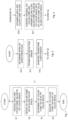
- Fig. 1 is a flow chart illustrating a method of encoding a pixel of an input video sequence.
- the method comprises encoding, in step S1, a second color component value and a third color component value of the pixel in a first color space.
- the method also comprises obtaining, in step S2, a first color component value in a second color space for the pixel.
- the second color space is different from the first color space.
- step S3 comprises determining a first color component of the pixel in the first color space.
- This first color component value is determined in step S3 based on minimizing an error computed based on a difference between the first color component value in the second color space and a test color component value in the second color space.
- the test color component value is derived based on the encoded second color component value and the encoded third color component value.
- the first color component value of the pixel in the first color space is encoded.
- the method steps S1 to S4 shown in Fig. 1 are performed for at least one pixel of an input video sequence comprising multiple, i.e. at least two, pictures and where each picture comprises a plurality of pixels.
- the method is applied to multiple pixels in a picture of the input video sequence, such as to all pixels in the picture, which is schematically illustrated by the line L1 in Fig. 1 .
- the method may also be applied to pixels of a still image or picture.
- the method of encoding a pixel in Fig. 1 thereby adapts, in step S3, the first color component value for encoding based on the encoding of the second and third color component values in step S1 and preferably the processing that takes place on decoded video prior to display.
- the optimal first color component value for the pixel in the first color space is determined based on a comparison of the values of the first color component and a test color component in a second color space, which is preferably a color space that the human visual system perceives.
- the adaptation of the optimal first color component value based on the encoding and decoding process is achieved, at least partly, by deriving the test color component value based on the encoded second and third color component values from step S1.
- intra prediction involves finding an intra (I) prediction or spatial prediction of the color component value based on values of neighboring pixels within the same picture as the current pixel.
- intra prediction uses data from neighboring prediction blocks of pixels that have been previously decoded from within the same picture.
- inter prediction involves motion compensation in which the prediction of the pixels in a block of pixels in a current picture is derived based on the pixel values in a block of pixels in a previously decoded picture of the video sequence or based on the pixel values in blocks of pixels in two previously decoded pictures of the video sequence.
- Inter prediction is also referred to as temporal prediction and is thereby achieved using inter (P) or bi-directional inter (B) prediction from previously decoded reference pictures.
- the difference between the original pixel data and the predicted pixel data referred to as the prediction error or residual, is transformed into the frequency domain and quantized using a quantization parameter (QP).
- QP quantization parameter
- Section 8.6 in the document [4] contains more information with regard to transforming prediction errors and quantizing transform coefficients.
- the second and third color components are chroma components Cb'Cr' 4:2:0 or 4:2:2 in the Y'Cb'Cr' color space.
- the upsampling in step S20 thereby generates Cb'Cr' component values in the 4:4:4 format.
- the original first color component value is an original Y' value in the Y'Cb'Cr' format.
- the pixels of the input video sequence to be encoded have an original Y'Cb'Cr' color in 4:2:0 or 4:2:2.
- the original Y' value is the input luma component value of the pixel, with the second and third color component values being the input subsampled chroma component values for the pixel.
- the Y' 4:4:4 value and the Cb'Cr' 4:4:4 values are then converted into the first color component value in the second color space.
- This first color component value in the second color space could be a linear luminance value Y in the XYZ color space or a non-linear luminance value pq(Y) in the pq(Y)xy color space.
- Another example is pq(Y) in the pq(Y)u'v' color space.
- a second color transform is then applied to the linear color in the third color space to obtain the first color component in the second color space, preferably an RGB-to-XYZ color transform, see equation 2 or 3:
- X 0.636958 R + 0.144617 G + 0.168881
- B Y 0.262700 R + 0.677998 G + 0.059302
- Z 0.000000 R + 0.028073 G + 1.060985
- X 0.412391 R + 0.357584 G + 0.180481
- Y 0.212639 R + 0.715169 G + 0.072192
- B Z 0.019331 R + 0.119195 G + 0.950532 B
- the first color component value in the second color space is obtained based on a linear color of the pixel in the third color space, such as an RGB 4:4:4 color.
- This linear color in the third color space is in an embodiment, an original color of the pixel prior to any pre-encoding processing.
- the pre-encoding processing then involves converting the linear color in the third color space (RGB 4:4:4) into the first, second and third color component values in the first color space, i.e. Y'Cb'Cr' 4:2:0. If the linear color in the third color space is available at the encoder, then the first color component value in the second color space can be directly calculated therefrom by application of a color transform, such as shown in equation 2 or 3.
- the above presented embodiments of obtaining the first color component value in the second color space can be performed as a pre-step and not necessarily per block of pixels. For instance, it is possible to determine the first color component value in the second color space for the whole picture, or at least a portion thereof, prior to starting the encoding.
- Fig. 4 is a flow chart illustrating additional, optional steps of the method shown in Fig. 1 .
- the method continues from step S1 in Fig. 1 or step S21 in Fig. 3 .
- a next step S30 comprises decoding the encoded second color component value and the encoded third color component value to obtain a reconstructed second color component value and a reconstructed third color component value in the first color space.
- the reconstructed second and third color component values are then upsampled in step S31 to obtain an upsampled reconstructed second color component value and an upsampled reconstructed third color component value in the first color space.
- test color component value in the second color space is derived in step S32 based on a test color component value in the first color space, the upsampled reconstructed second color component value and the upsampled reconstructed third color component value in the first color space.
- the method then continues to step S3 in Fig. 1 .
- the test color component value (Y test or pq(Y) test ) in the second color space is then derived in step S32 based on the test color component value (Y' test ) and the upsampled reconstructed second and third color component values (Cb'Cr') in the first color space, preferably Y'Cb'Cr' color space.
- the test color component value (Y test or pq(Y) test ) in the second color space is, as described above, derived, in an embodiment, based on upsampled reconstructed second and third color component values (Cb'Cr') in the first color space.
- These upsampled reconstructed second and third color component values thereby reflect and contain any errors introduced during subsampling of the second and third color component values and/or other pre-encoding processing of the second and third color component values, and/or the encoding of the second and third color component values (step S1 in Fig. 1 ), and/or during the processing performed following the decoding (step S31 in Fig. 4 ).
- the first color component value (Y') of the pixel in the first color space can then be determined in step S3 of Fig. 1 to compensate for any errors introduced during the encoding, decoding and post-decoding processing.
- the visual quality such as assessed by the linear or non-linear luminance value, Y or pq(Y), of the pixel, can thereby be improved.
- multiple test color component values in the first color space are available and tested.
- a respective test color component value in the second color space is derived for each of the multiple test color component values in the first color space, preferably as described above in connection with step S32 in Fig. 4 .
- a respective error is then calculated for each of the multiple test color component values in the first color space based on the difference the first color component value in the second color space, such as derived as described above in connection with step S21 in Fig. 3 , and the respective first color component value in the second color space.
- the first color component value in the first color space among the multiple test color component values in the first color space that results in the smallest error is then selected and used as optimal first color component value in the first color space for the pixel in step S3.
- This optimal first color component value is then encoded in step S4 in Fig. 1 .
- the selection of optimal first color component value in the first color space can be performed according to various embodiments in similarity to what is described in Annex A.
- the first color component value in the first color space is a luma or Y' value in the Y'Cb'Cr' color space and the first color component value in the second color space is a linear luminance or Y value in the XYZ color space or a non-linear luminance or pq(Y) value in the pq(Y)xy color space.
- a binary search could be used to find the optimal or best Y' value in the Y'Cb'Cr' color space. For instance, first a test Y' value in the middle of the available range of Y' values is tried, for instance 512 if the minimum Y' value is 0 and the maximum Y' value is 1023. If the test Y or pq(Y) value derived in step S32 based on this test Y' value and the upsampled reconstructed Cb'Cr' values is larger than the original Y or pq(Y) value from step S21, we should continue the search in the interval [0, 512].
- test Y or pq(Y) value instead is larger than the original Y or pq(Y) value, we should continue the search for optimal test Y' value in the interval [512, 1023].
- the procedure is continued by calculating a new test Y' value in the middle of the selected interval and proceeds until the test Y or pq(Y) value is equal to the original Y or pq(Y) value, or does not differ from the original Y or pq(Y) value with more than a defined value, or the interval contains a single value or two values, such as [363, 363] or [363, 364].
- This is guaranteed to only take log 2 (N) steps, where N is the number of possible test Y' values, which in this example is 1024.
- the above mentioned gradient descent and second-order optimization algorithms are all equivalent to determining the first color component value of the pixel in the first color space based on minimzing an error computed based on the difference between the first color component value in the second color space and the test color component value in the second color space.
- a similar approach can also be used by replacing pq(Y test ) and pq(Y o ) with Y test and Y o , respectively.
- optimal or best Y' value LUT(Cb', Cr', Y o ) or LUT(Cb', Cr', pq(Y o )).
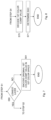
- Steps S40-S42 in Fig. 5 are basically performed as previously described herein with reference to Fig. 2 , with the difference that Fig. 2 involved encoding the second and third color component values in the first color space and Fig. 5 involves encoding the first color component value in the first color space.
- Non-limiting examples of such key pictures could be so-called random access point (RAP) pictures, also referred to as intra random access pictures (IRAP), or pictures at the lowest layer in a hierarchical group of pictures (GOP) structure or pictures that have low QP values in low delay coding. It is also possible for an encoder to select the pictures or regions of pictures that should be encoded according to the embodiments based on its processing capabilities and the delay requirements for the current video application.
- RAP random access point
- IRAP intra random access pictures
- GOP hierarchical group of pictures
- the original and input first color component value is used for the pixel and thereby encoded in step S51.
- the encoded first color component value from step S51 is then used together with the encoded second and third color component values from step S1 as encoded representation of the pixel.
- the quality of RAP or IRAP pictures is in particular important in a video sequence.
- the reason being that other non-RAP/IRAP pictures in the video sequence are directly or indirectly encoded and decoded using the RAP/IRAP pictures as reference pictures.
- an error introduced in a RAP/IRAP picture during encoding may be propagated into following pictures that are encoded using the RAP/IRAP picture as direct reference picture or indirect reference picture, i.e. second or further generation reference picture. Accordingly, it is generally important to encode RAP/IRAP pictures with a high quality.
- step S60 comprises investigating whether the current picture belong to the lowest layer in the input video sequence organizing the pictures in a hierarchical GOP structure.
- pictures (number 2 and 6) two and six pictures ahead of display time are predicted and coded followed by predicting and coding pictures (number 1, 3, 5, 7) one, three, five and seven pictures ahead of display time.
- the pictures (number 1, 3, 5, 7) in layer 3 belong the highest hierarchical level
- pictures (number 2, 6) in level 2 belong to the next highest hierarchical level
- the picture (number 4) in layer 1 belongs to the next lowest hierarchical layer
- the pictures (number 0, 8) in layer 0 belong to the lowest hierarchical layer.
- pictures in the highest hierarchical layer are not used for prediction of any other pictures, i.e. so called non-reference pictures. Non-reference pictures can be removed without destroying the decoding capability of a video bitstream.
- the GOP structure of Fig. 11 is then repeated until the next IRAP picture.
- arrows in Fig. 11 illustrate the prediction directions for reference pictures.
- picture number 4 is encoded using picture numbers 0, 8 as reference pictures.
- step S60 comprises encoding the first color component value of the pixel in the first color space.
- This first color component value is the original value of the first color component as input to the encoding process.
- SAO One technology for loop filtering used in HEVC is SAO.
- SAO When it is specified that SAO is used for a block of pixels, in HEVC vocabulary Coding Tree Unit (CTU), it either modifies pixel values in adjacent bands of pixel values or modify pixel values that have a certain edge characteristic.
- band offsets are defined in four bands or categories where the position of the band with smallest pixel values is specified and the other bands with increasing pixel values follows.
- edge offsets are defined in four categories: maxima, minima, increasing step or decreasing step, in a specified direction, i.e. edge offset class.
- the SAOs are specific for each block of pixels but can also be copied from a neighboring block of pixels. SAO can be used independently for respective color component, e.g. luma, and chroma components.
- the decoding of the encoded first color component value in step S70 is basically the inverse of the encoding performed in step S4.
- the decoding optionally comprises decoding encoded, quantized transform coefficients, such as using an entropy decoder.
- decoding encoded, quantized transform coefficients such as using an entropy decoder.
- entropy decoding is not needed since it is a loss less process and since the encoder already has the quantized transform coefficients, etc.
- the resulting decoding quantized transform coefficients are then inverse quantized and then inverse transformed to obtain the reconstructed residual or prediction error.
- the reconstructed first color component value is then obtained by adding the reconstructed residual to the intra or inter prediction for the pixel. More information of the decoding process can be found in the document [4], and in particular sections 8.4-8.6 and 9.4.3.
- the SAO is determined by minimizing the squared error or the absolute error between the first color component value in the first color space as determined in step S3 in Fig. 1 and a sum of the SAO and the reconstructed first color component value obtained in step S70.
- in-loop filters such as deblocking filters and adaptive loop filters (ALF), which are further discussed herein, could be determined substantially as described in the foregoing with reference to SAO offsets.
- ALF adaptive loop filters
- step S71 preferably comprises determining a coding tool parameter, such as SAO, in-loop filter, deblocking filter, ALF filter, etc., for at least one color component value in the first color space, that minimizes 1) a squared error or absolute error between the first color component value in the second color space and a sum of the reconstructed first color component value in the second color space and the coding tool parameter converted into the second color space, or 2) a rate-distortion cost calculated as a function of a distortion representing a difference between the first color component value in the second color space and the sum of the reconstructed first color component value in the second color space and the coding tool parameter converted into the second color space and an amount of bits spent for encoding the coding tool parameter.
- a coding tool parameter such as SAO, in-loop filter, deblocking filter, ALF filter, etc.
- the method of encoding a pixel in an input video sequence of Fig. 1 comprises encoding, in step S1, chroma component values Cb'Cr' in a Y'Cb'Cr' color space.
- step S2 comprises obtaining a non-linear luminance value pq(Y) for the pixel in a pq(Y)xy color space.
- step S3 comprises determining a luma component value Y' of the pixel in the Y'Cb'Cr' color space based on minimizing an error computed based on a difference between the non-linear luminance value pq(Y) in the pq(Y)xy color space and a test luminance value in the pq(Y)xy color space, wherein the test luminance value is derived based on the encoded chroma component values Cb'Cr'.
- Step S4 comprises, in this embodiment, encoding the luma component value Y' in the Y'Cb'Cr' color space.
- An encoder is looking to compress a block of pixels that are in Y'Cb'Cr' 4:2:0 or 4:2:2 format.
- the first step is to apply intra sample or inter sample prediction of the chroma components Cbpred', Crpred', then the prediction errors Cb'-Cbpred', Cr'-Crpred' are transformed.
- the transformations would typically be done independently, and the resulting transform coefficients quantized, introducing an error in the final pixel values.
- the encoder may attempt to find new Y' values (Yopt') for the block of pixels that minimize the error after converting them together with the decoded Cb' and Cr' values into pq(Y)xy or XYZ space, compared to the original pq(Y)xy or XYZ values.
- Yopt' new Y' values
- an encoder is configured to apply intra sample or inter sample prediction to a block of pixels that are in Y'Cb'Cr' 4:2:0 or 4:2:2 format.
- the first step is to apply intra sample or inter sample prediction of the chroma components Cbpred', Crpred'.
- the predictions would typically be done independently.
- the encoder would attempt to find new Y' values (Yopt') for the block that minimize the error after converting them together with the predicted Cb' and Cr' values into pq(Y)xy or XYZ space, compared to the original pq(Y)xy or XYZ values.
- other upsampling filters F1 may be used for conversion of at least one sample of a color component during encoding and reconstruction, for example Cbrec'Crrec' from 4:2:0 or 4:2:2 to 4:4:4 for the derivation of the optimal Y', than the upsampling filters F2 used for upsampling Cbrec' Crrec' to full resolution in the processing after decompression but before display.
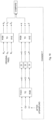
- the encoder consist of all parts before the last video decoding step, i.e. to the left of the vertical hatched line.
- the decoding on the encoder side only need to reconstruct pixel values.
- the other embodiments are used to modify the "original" samples to be coded for one color component for at least one sample, one block or one picture of the video.
- the coding based on any coding tool can aim for the modified original rather than the unmodified original.
- Examples of coding tools in video coding are motion compensated sample prediction, intra sample prediction, loop filtering, deblocking filtering, sample adaptive offsets, adaptive loop filtering, adaptive motion compensated sample prediction, etc.
- HEVC includes an in-loop deblocking filter intended to reduce the blocking artifacts due to block-based coding.
- the deblocking filter is applied both for luma and chroma components but only on the pixels or samples located at block boundaries.
- the filter strength is determined based on the relation of the block types on each side of the boundary, whether any of the blocks have transform coefficients and/or the difference in motion vectors and reference indices. From the filter strength and the average QP, two values tC and beta are determined. Offsets to tC and beta may be signaled at picture level.
- chroma (Cbrec'Crrec') coding is performed first while luma coding is optimized against Yopt' instead of original Y' for applicable video coding tools and/or modes of the video codec.
- the following steps may be performed depending on the video coding tools:
- ALF Adaptive Loop Filtering
- the device is configured to decode the encoded first color component value to obtain a reconstructed first color component value in the first color space.
- the device is also configured to determine a sample adaptive offset that minimizes 1) a squared error or absolute error between the first color component value in the first color space and a sum of the reconstructed first color component value in the first color space and the sample adaptive offset or 2) a rate-distortion cost calculated as a function of a distortion representing a difference between the first color component value in the first color space and the sum of the reconstructed first color component value in the first color space and the sample adaptive offset and an amount of bits spent for encoding the sample adaptive offset.
- the encoder could also comprise obtaining means configured to obtain at least one sample of the input video sequence in a second color space, wherein the second color space is different than the first color space.
- the encoder could further comprise encoding means configured to encoding at least one sample of one or two first color components of the input video sequence in the first color space.
- the encoder may also comprise modifying means configured to modify at least one sample of a second color component of the input video sequence based on minimizing the error computed as the difference between at least one sample of the input video sequence in the second color space and a derived test sample in the second color space where the derivation of the test sample includes at least one encoded sample for one or two first color components in the first color space.
- the encoding means is further configured to encode at least one modified sample of the second color component of the input video sequence.
- the encoder may be implemented in hardware, in software or a combination of hardware and software.
- the encoder may be implemented in, e.g. comprised in, user equipment, such as a mobile telephone, such as smart phone, tablet, desktop, netbook, multimedia player, video streaming server, set-top box or computer.
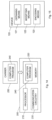
- Fig. 12 illustrates a particular hardware implementation of a device 100 according to the embodiments.
- the device 100 comprises an input unit 104 configured to obtain at least one sample of the input video sequence in a second color space, wherein the second color space is different than the first color space.
- the device 100 also comprises an encoding unit 101 configured to encode at least one sample of one or two first color components of the input video sequence in the first color space.
- the device 100 also comprises a deriver 102 configured to modify at least one sample of a second color component of the input video sequence based on minimizing the error computed as the difference between at least one sample of the input video sequence in the second color space and a derived test sample in the second color space where the derivation of the test sample includes at least one encoded sample for one or two first color components in the first color space.
- the encoding unit 101 is further configured to encode at least one modified sample of the second color component of the input video sequence.
- the device 100 may also comprise an output unit 105 configured to output an encoded bitstream.
- processing circuitry includes, but is not limited to, one or more microprocessors, one or more Digital Signal Processors (DSPs), one or more Central Processing Units (CPUs), video acceleration hardware, and/or any suitable programmable logic circuitry such as one or more Field Programmable Gate Arrays (FPGAs), or one or more Programmable Logic Controllers (PLCs).
- DSPs Digital Signal Processors
- CPUs Central Processing Units
- FPGAs Field Programmable Gate Arrays
- PLCs Programmable Logic Controllers
- the processor 111 is further operative to modify at least one sample of a second color component of the input video sequence based on minimizing the error computed as the difference between at least one sample of the input video sequence in the second color space and a derived test sample in the second color space where the derivation of the test sample includes at least one encoded sample for one or two first color components in the first color space.
- the processor 111 is additionally operative to encode at least one modified sample of the second color component of the input video sequence.
- the device 110 shown in Fig. 13 comprises a processor 111 and a memory 112 comprising instructions executable by the processor 111.
- the processor 111 is then operative to encode the second color component value and the first color component value in the first color space.
- the processor 111 is also operative to obtain the first color component value in the second color space.
- the processor 111 is further operative to determine the first color component value in the first color space.
- the processor 111 is additionally operative to encode the first color component value of the pixel in the first color space.
- the device 110 also comprises an input unit 113 configured to receive the video to be encoded.
- the processor 111 is operative to receive the video to be encoded from the input unit 113.
- the processor 111 is operative, when executing the instructions stored in the memory 112 to perform the above described operations.
- the processor 111 is thereby interconnected to the memory 112 to enable normal software execution.
- the device 110 may comprise multiple different physical components that make up a single illustrated component, e.g. the input unit 113 may comprise terminals for coupling wires for a wired connection and a radio transceiver for a wireless connection.
- the device 110 may be composed of multiple physically separate components which may each have their own respective processor, memory, and interface components.
- one or more of the separate components may be shared among several devices. For example, a single memory unit may be shared by multiple devices 110.
- Fig. 14 is a schematic block diagram illustrating an example of a user equipment (UE) 200 comprising a processor 210, an associated memory 220 and a communication circuitry 230.
- UE user equipment
- processor' should be interpreted in a general sense as any system or device capable of executing program code or computer program instructions to perform a particular processing, determining or computing task.
- the processing circuitry including one or more processors is thus configured to perform, when executing the computer program, well-defined processing tasks such as those described herein.
- the processing circuitry does not have to be dedicated to only execute the above-described steps, functions, procedure and/or blocks, but may also execute other tasks.
- the computer program 240 comprises instructions, which when executed by the processor 210, cause the processor 210 to obtain at least one sample of the input video sequence in a second color space, wherein the second color space is different than the first color space.
- the processor 210 is also caused to encode at least one sample of one or two first color components of the input video sequence in the first color space.
- the processor 210 is further caused to modify at least one sample of a second color component of the input video sequence based on minimizing the error computed as the difference between at least one sample of the input video sequence in the second color space and a derived test sample in the second color space where the derivation of the test sample includes at least one encoded sample for one or two first color components in the first color space.
- the processor 210 is additionally caused to encode at least one modified sample of the second color component of the input video sequence.
- a computer program 240 for an encoder comprises a computer program code which, when executed, causes the encoder to obtain at least one sample of the input video sequence in a second color space, wherein the second color space is different than the first color space.
- the encoder is also caused to encode at least one sample of one or two first color components of the input video sequence in the first color space.
- the encoder is further caused to modify at least one sample of a second color component of the input video sequence based on minimizing the error computed as the difference between at least one sample of the input video sequence in the second color space and a derived test sample in the second color space where the derivation of the test sample includes at least one encoded sample for one or two first color components in the first color space.
- the encoder is additionally caused to encode at least one modified sample of the second color component of the input video sequence.
- the software or computer program 240 may be realized as a computer program product, which is normally carried or stored on a computer-readable medium 240, preferably non-volatile computer-readable storage medium 250.
- the computer-readable medium 250 may include one or more removable or non-removable memory devices including, but not limited to a Read-Only Memory (ROM), a Random Access Memory (RAM), a Compact Disc (CD), a Digital Versatile Disc (DVD), a Blue-ray disc, a Universal Serial Bus (USB) memory, a Hard Disk Drive (HDD) storage device, a flash memory, a magnetic tape, or any other conventional memory device.
- the computer program 240 may thus be loaded into the operating memory of a computer or equivalent processing device, represented by the user equipment 200 in Fig. 14 , for execution by the processor 210 thereof.
- a further aspect of certain embodiments defines a computer program product for an encoder comprising a computer program 240 for an encoder and a computer readable means 250 on which the computer program 240 for an encoder is stored.
- a corresponding device may be defined as a group of function modules, where each step performed by the processor corresponds to a function module.
- the function modules are implemented as a computer program running on the processor.
- the device may alternatively be defined as a group of function modules, where the function modules are implemented as a computer program running on at least one processor.
- the computer program residing in memory may thus be organized as appropriate function modules configured to perform, when executed by the processor, at least part of the steps and/or tasks described herein.
- An example of such function modules is illustrated in Fig. 15 .
- the device 120 for encoding a pixel of an input video sequence in Fig. 15 comprises encoding means 123 for encoding a second color component value and a third color component value of the pixel in a first color space.
- the device 120 also comprises obtaining means 121 for obtaining a first color component value in a second color space for the pixel, wherein the second color space is different from the first color space.
- the device 120 further comprises modifying means 122 for determining a first color component value of the pixel in the first color space based on minimizing an error computed based on a difference between the first color component value in the second color space and a test color component value in the second color space.
- the test color component value is derived based on the encoded second color component value and the encoded third component value.
- the encoding means 123 is also for encoding the first color component value of the pixel in the first color space.
- a further aspect of the embodiments relates to a user equipment comprising a device according to the embodiments, such as illustrated in any of Figs. 12, 13 or 15 .
- the user equipment is selected from a group consisting of a computer, a laptop, a desktop, a multimedia player, a video streaming server, a mobile telephone, a smart phone, a tablet and a set-top box.
- Yet another aspect of the embodiments relates to a signal representing an encoded version of a pixel of an input video sequence picture.
- the encoded version comprises a first color component value, a second color component value and a third color component value in a first color space encoded according to any of the embodiments.
- the signal is one of an electronic signal, an optical signal, an electromagnetic signal, a magnetic signal, an electric signal, a radio signal and a microwave signal.
- computing services such as hardware and/or software
- network devices such as network nodes and/or servers
- functionality can be distributed or re-located to one or more separate physical nodes or servers.
- the functionality may be re-located or distributed to one or more jointly acting physical and/or virtual machines that can be positioned in separate physical node(s), i.e. in the so-called cloud.
- cloud computing is a model for enabling ubiquitous on-demand network access to a pool of configurable computing resources such as networks, servers, storage, applications and general or customized services.
- Fig. 17 is a schematic diagram illustrating an example of a wireless communication system, including an access network 1 and/or a core network 2 and/or an Operations and Support System (OSS) 3 in cooperation with one or more cloud-based network devices 300.
- the figure also illustrates a network node 4 of the access network 1 and a user equipment 5 according to the embodiments.
- OSS Operations and Support System
- the present Annex A comprises a description of the Ajusty method that can be used according to the embodiments in order to derive a non-linear luma component value in the second color space.
- Chroma subsampling is typically done before compression as an initial step to reduce the amount of data.
- the chroma signal is reduced to half the resolution in the vertical direction.
- the chroma signal is reduced to half the resolution in both the vertical direction and the horizontal direction. This is typically done with some filtering operation to get a good quality signal but can also be done using nearest neighbor.
- a decoder In order to display a 4:2:0 or 4:2:2 video, a decoder performs upsampling of the chroma signal, which can be done using bilinear filters or longer filters.
- a unit such as a pre-processor or an encoder.
- the unit is configured to determine that the Cb' and/or Cr' components include errors, and when it has determined that the Cb' and/or Cr' components include errors, it is configured to derive a corrected Y' component to compensate for the errors in the Cb' and the Cr' components.
- the corrected Y' component can derived according to different embodiments as described below. Hence the corrected Y' component, Cb' and Cr' are then compressed resulting in that the image or video is perceived with a higher quality.
- the non-linear luminance Y' is adjusted prior to compression so that the linear luminance Y of the pixel is closer to its correct value. This is further described below.
- This Y component is the luminance that the eye is most sensitive to. It should not be confused with the Y' component mentioned above, which depends nonlinearly on R, G and B.
- the error is now instead in the chrominance, but given the fact that the human visual system is less sensitive to errors in chrominance than in luminance, this is not much of a problem.
- the change in chrominance may not even be noticeable - the only difference is that the green component is 0.7008 cd/m 2 instead of 3.9750 cd/m 2 but that is most likely dwarfed by the red component anyway, since it is 2145, almost a thousand times larger.
- Another variant is to use two or more neighboring values of Cb' and Cr' and use them directly to calculate the range of possible Cb' and Cr' values.
- an embodiment is to do a binary search to find the best Y' value.
- the maximum Y' value is tried, for instance 1023.
- the minimum Y' value is tried, for instance 0.
- We then proceed by calculating a new value in the middle of the selected interval, and proceeds until the interval only contains a single number, such as [363, 363], or [363, 364]. This is guaranteed to only take log 2 (N) steps, where N is the number of possible values, which in this case is 1024. Hence only log 2 (1024) 10 steps are sufficient.
- Gradient descent can be slow, so a quicker way may be to use a second-order optimization algorithm that calculates or approximates the second order derivatives d 2 E/dY' 2 .
- Gauss-Newton is an example of such an algorithm.
- the Y' values of all pixels in an image or picture are corrected.
- only pixels that are at risk of having visible luminance errors are corrected. This may include pixels that are close to the color gamut edge, but exclude pixels closer to the middle of the color gamut triangle.
- Some linearizations may also be done in advance. As noticed above, the worst problems occur on the gamut edge. Hence one could have one linearization for the line connecting the red primary to the green primary, one linearization for the line connecting the red primary to the blue primary and one linearization for the line connecting the green primary to the blue primary. Another way may be to have linearizations that will be used close to the red primary, another close to the green primary, and a third that is used close to the blue primary. Furthermore it is possible to have several linearizations along the line of the gamut, as shown in Fig. 19 .
- a look-up table is used for deriving the value of Y'.
- the look-up table contains every possible value of Y o , Cb' and Cr'. For 10 bit video that will result in 1024 ⁇ 1024 ⁇ 1024 entries and in some applications this size is acceptable.
- the look-up table (LUT) is pruned, for example through rounding one or more of Y O , Cb' and Cr', e.g. to 8 bits. If a pruned look-up table is used the algorithm can be extended with a refinement step that finds the best Y' starting from the Y' that was retrieved from the LUT.
- a function of Y o , Cb' and Cr' e.g. a linear combination, polynomial function, exponential function, logarithmic function, trigonometric function, etc., is used for deriving Y'.
- the function can be defined such that for any value of Y o , Cb' and Cr' the difference between Y and Y o is below a certain threshold or the difference between the derived Y' and the optimal Y' is below a certain threshold.
- Y o , Cb' and Cr' are defined for deriving Y'.
- the selection of which function to use is based on the value of Y o , Cb' and Cr'.
- This Annex B investigates color artifacts due to 4:2:0 subsampling.
- Table B1 The data presented in Table B1 was for BT.2020 primaries. If the input data is with Rec709 primaries, but the container is BT.2020, it will not be possible to reach the color gamut boundary. This is due to the fact that the Rec709 gamut triangle is inside the BT.2020 triangle, not touching the gamut boundary, as can be seen in Fig. 21 . It is therefore reasonable to assume that the relative error will be smaller.
- Table B7 data for the "worst" color for 4:2:0 subsampling if input is P3 and container format is BT.2020 pixel 97 RGB value Y value Y diff relative error Barten steps original P3 color 3.29 0 6.71 original BT.2020 color 2.7993 1.2853 0.2342 6.5960 RGB 4:4:4 2.8099 1.2788 0.0065 0.5062 % 0.5951 0.2304 6.4838 RGB 4:2:0 1.4911 0.8438 0.4416 34.3530 % 40.38 0.3834 3.2402
Landscapes
- Engineering & Computer Science (AREA)
- Multimedia (AREA)
- Signal Processing (AREA)
- Compression Or Coding Systems Of Tv Signals (AREA)
- Color Television Systems (AREA)
Claims (21)
- Procédé de codage d'un pixel d'une séquence vidéo d'entrée (1), comprenant :le codage (S1) d'une deuxième valeur de composante de couleur et d'une troisième valeur de composante de couleur comprenant des valeurs de chrominance dans une représentation du pixel dans un premier espace de couleur ;l'obtention (S2) d'une première valeur de composante de couleur comprenant une représentation de la luminance du pixel dans un deuxième espace de couleur, le deuxième espace de couleur étant différent du premier espace de couleur ;la détermination (S3) d'une première valeur de composante de couleur comprenant une valeur de luminance dans une représentation du pixel dans le premier espace de couleur sur la base de la réduction d'une erreur calculée sur la base d'une différence entre la première valeur de composante de couleur dans le deuxième espace de couleur et une valeur de composante de couleur de test dans le deuxième espace de couleur, la valeur de composante de couleur de test représentant une valeur de luminance de test du pixel dans le deuxième espace de couleur dérivée sur la base d'une valeur de composante de couleur de test obtenue pour le pixel dans le premier espace de couleur et des valeurs de composante de couleur obtenues pour le pixel en décodant la deuxième valeur de composante de couleur codée et la troisième valeur de composante de couleur codée pour le pixel ; etle codage (S4) de la première valeur de composante de couleur du pixel dans le premier espace de couleur.
- Procédé selon la revendication 1, dans lequel le codage (S1) de la deuxième valeur de composante de couleur et de la troisième valeur de composante de couleur comprend, pour chaque valeur de composante de couleur de la deuxième valeur de composante de couleur et de la troisième valeur de composante de couleur :la détermination (S10) d'une prédiction intra ou inter de la valeur de composante de couleur ;la transformation (S11) d'une erreur de prédiction calculée comme une différence entre la valeur de la composante de couleur et la prédiction intra ou inter pour former des coefficients de transformation ; etla quantification (S12) des coefficients de transformation.
- Procédé selon la revendication 1 ou 2, dans lequel l'obtention (S2) de la première valeur de composante de couleur dans le deuxième espace de couleur comprend :le suréchantillonnage (S20) de la deuxième valeur de composante de couleur et de la troisième valeur de composante de couleur dans le premier espace de couleur pour obtenir une deuxième valeur de composante de couleur suréchantillonnée et une troisième valeur de composante de couleur suréchantillonnée dans le premier espace de couleur ; etla conversion (S21) d'une première valeur de composante de couleur d'origine du pixel dans le premier espace de couleur, et de la deuxième valeur de composante de couleur suréchantillonnée et de la troisième valeur de composante de couleur suréchantillonnée dans le premier espace de couleur en première valeur de composante de couleur dans le deuxième espace de couleur.
- Procédé selon l'une quelconque des revendications 1 à 3, comprenant en outre :le décodage (S30) de la valeur codée de la deuxième composante de couleur et de la valeur codée de la troisième composante de couleur pour obtenir une valeur reconstruite de la deuxième composante de couleur et une valeur reconstruite de la troisième composante de couleur du pixel dans le premier espace de couleur ;le suréchantillonnage (S31) de la valeur reconstruite de la deuxième composante de couleur et de la valeur reconstruite de la troisième composante de couleur pour obtenir une valeur reconstruite suréchantillonnée de la deuxième composante de couleur et une valeur reconstruite suréchantillonnée de la troisième composante de couleur pour le pixel dans le premier espace de couleur ; etla dérivation (S32) de la valeur de la composante de couleur de test dans le deuxième espace de couleur sur la base d'une valeur de composante de couleur de test comprenant une valeur de luminance de test dans une représentation du pixel dans le premier espace de couleur, de la valeur reconstruite suréchantillonnée de la deuxième composante de couleur et de la valeur reconstruite suréchantillonnée de la troisième composante de couleur dans le premier espace de couleur.
- Procédé selon l'une quelconque des revendications 1 à 4, dans lequel la détermination (S3) de la première valeur de composante de couleur dans le premier espace de couleur comprend la sélection (S3) de la valeur de composante de couleur de test dans le premier espace de couleur comprenant une valeur de luminance de test dans une représentation du pixel dans le premier espace de couleur qui réduit l'erreur calculée sur la base de la différence entre la première valeur de composante de couleur dans le deuxième espace de couleur et la valeur de composante de couleur de test dans le deuxième espace de couleur dérivée sur la base de la valeur de composante de couleur de test dans le premier espace de couleur et des valeurs de composante de couleur obtenues pour le pixel en décodant la valeur codée de la deuxième composante de couleur et la valeur codée de la troisième composante de couleur.
- Procédé selon l'une quelconque des revendications 1 à 5, dans lequel le codage (S4) de la valeur de la première composante de couleur comprend :la détermination (S40) d'une prédiction intra ou inter de la valeur de la première composante de couleur dans le premier espace de couleur ;la transformation (S41) d'une erreur de prédiction calculée comme une différence entre la valeur de la première composante de couleur dans le premier espace de couleur et la prédiction intra ou inter pour former des coefficients de transformation ; etla quantification (S42) des coefficients de transformation.
- Procédé selon l'une quelconque des revendications 1 à 6, comprenant en outre, si (S50) le pixel est un pixel d'une image de point d'accès aléatoire, RAP, (2) de la séquence vidéo d'entrée (1), l'exécution de ladite obtention (S2) de la valeur de la première composante de couleur du pixel dans le deuxième espace de couleur et ladite détermination (S3) de la valeur de la première composante de couleur du pixel dans le premier espace de couleur.
- Procédé selon l'une quelconque des revendications 1 à 7, comprenant en outre, si le pixel est un pixel d'une image (2) dans une couche la plus basse de la séquence vidéo d'entrée (1) ayant des images (2) organisées dans une structure hiérarchique d'un groupe d'images, GOP, la réalisation (S60) de ladite obtention (S2) de la première valeur de composante de couleur du pixel dans le deuxième espace de couleur et ladite détermination (S3) de la première valeur de composante de couleur du pixel dans le premier espace de couleur.
- Procédé selon l'une quelconque des revendications 1 à 8, comprenant en outre :le décodage (S70) de la première valeur de composante de couleur codée du pixel dans le premier espace de couleur pour obtenir une première valeur de composante de couleur reconstruite du pixel dans le premier espace de couleur ; etla détermination (S71) d'un exemple de décalage adaptatif qui réduit 1) une erreur quadratique ou une erreur absolue entre la valeur de la première composante de couleur du pixel dans le premier espace de couleur et une somme de la valeur de la première composante de couleur reconstruite du pixel dans le premier espace de couleur et le décalage adaptatif d'échantillon ou 2) un coût de distorsion de taux calculé en fonction d'une distorsion représentant une différence entre la valeur de la première composante de couleur du pixel dans le premier espace de couleur et la somme de la valeur de la première composante de couleur reconstruite du pixel dans le premier espace de couleur et du décalage adaptatif d'échantillon et d'une quantité de bits dépensés pour coder le décalage adaptatif d'échantillon.
- Procédé selon l'une quelconque des revendications 1 à 9, dans lequelle codage (S1) de la deuxième valeur de composante de couleur et de la troisième valeur de composante de couleur comprend le codage (S1) des valeurs de composante de chrominance Cb'Cr' dans un espace de couleur Y'Cb'Cr' ;l'obtention (S2) de la première valeur de composante de couleur du pixel dans le deuxième espace de couleur comprend l'obtention (S2) d'une valeur de luminance Y pour le pixel dans un espace de couleur XYZ ;la détermination (S3) de la première valeur de composante de couleur du pixel dans le premier espace de couleur comprend la détermination (S3) d'une valeur de composante de luminance Y' du pixel dans l'espace de couleur Y'Cb'Cr' sur la base de la réduction d'une erreur calculée sur la base d'une différence entre la valeur de luminance Y du pixel dans l'espace de couleur XYZ et une valeur de luminance de test du pixel dans l'espace de couleur XYZ dérivée sur la base de la valeur de composante de couleur de test obtenue pour le pixel dans le premier espace de couleur et des valeurs de composante de chrominance codées Cb'Cr' ; etle codage (S4) de la première valeur de composante de couleur du pixel dans le premier espace de couleur comprend le codage (S4) de la valeur de composante de luminance Y' dans l'espace de couleur Y'Cb'Cr'.
- Procédé selon l'une quelconque des revendications 1 à 9, dans lequel ;le codage (S1) de la deuxième valeur de composante de couleur et de la troisième valeur de composante de couleur comprend le codage (S2) des valeurs de composante de chrominance Cb'Cr' dans un espace de couleur Y'Cb'Cr' ;l'obtention (S2) de la première valeur de composante de couleur du pixel dans le deuxième espace de couleur comprend l'obtention (S2) d'une valeur de luminance non linéaire pq(Y) pour le pixel dans un espace de couleur pq(Y)xy ;la détermination (S3) de la première valeur de composante de couleur du pixel dans le premier espace de couleur comprend la détermination (S3) d'une valeur de composante de luminance Y' du pixel dans l'espace de couleur Y'Cb'Cr' sur la base de la réduction d'une erreur calculée sur la base d'une différence entre la valeur de luminance non linéaire pq(Y) dans l'espace de couleur pq(Y)xy et une valeur de luminance de test dans l'espace de couleur pq(Y)xy dérivée sur la base de la valeur de composante de couleur de test obtenue pour le pixel dans le premier espace de couleur et des valeurs de composante de chrominance obtenues pour le pixel en décodant les valeurs de composante de chrominance codées Cb'Cr' ; etle codage (S4) de la première valeur de composante de couleur du pixel dans le premier espace de couleur comprend le codage (S4) de la valeur de composante de luminance Y' dans l'espace de couleur Y'Cb'Cr'.
- Dispositif (100, 110) de codage d'un pixel d'une séquence vidéo d'entrée (1), dans lequelle dispositif (100, 110) est configuré pour coder une deuxième valeur de composante de couleur et une troisième valeur de composante de couleur comprenant des valeurs de chrominance dans une représentation du pixel dans un premier espace de couleur ;le dispositif (100, 110) est configuré pour obtenir une première valeur de composante de couleur comprenant une représentation de la luminance du pixel dans un deuxième espace de couleur, le deuxième espace de couleur étant différent du premier espace de couleur ;le dispositif (100, 110) est configuré pour déterminer une première valeur de composante de couleur comprenant une valeur de luminance dans une représentation du pixel dans le premier espace de couleur sur la base de la réduction d'une erreur calculée sur la base d'une différence entre la première valeur de composante de couleur dans le deuxième espace de couleur et une valeur de composante de couleur de test dans le deuxième espace de couleur, la valeur de composante de couleur de test représentant une valeur de luminance de test du pixel dans le deuxième espace de couleur dérivée sur la base d'une valeur de composante de couleur de test obtenue pour le pixel dans le premier espace de couleur et des valeurs de composante de couleur obtenues pour le pixel en décodant la deuxième valeur de composante de couleur codée et la troisième valeur de composante codée ; etle dispositif (100, 110) est configuré pour coder la première valeur de composante de couleur du pixel dans le premier espace de couleur.
- Dispositif selon la revendication 12, dans lequelle dispositif (100, 110) est configuré pour déterminer, pour chaque valeur de composante de couleur de la deuxième valeur de composante de couleur et de la troisième valeur de composante de couleur, une prédiction intra ou inter de la valeur de composante de couleur ;le dispositif (100, 110) est configuré pour quantifier, pour chaque valeur de composante de couleur de la deuxième valeur de composante de couleur et de la troisième valeur de composante de couleur, une erreur de prédiction calculée comme une différence entre la valeur de composante de couleur et la prédiction intra ou inter pour former des coefficients de transformation ; etle dispositif (100, 110) est configuré pour quantifier, pour chaque valeur de composante de couleur de la deuxième valeur de composante de couleur et de la troisième valeur de composante de couleur, les coefficients de transformation.
- Dispositif selon la revendication 12 ou 13, dans lequelle dispositif (100, 110) est configuré pour suréchantillonner la valeur de deuxième composante de couleur et la valeur de troisième composante de couleur dans le premier espace de couleur afin d'obtenir une valeur de deuxième composante de couleur suréchantillonnée et une valeur de troisième composante de couleur suréchantillonnée dans le premier espace de couleur ; etle dispositif (100, 110) est configuré pour convertir une valeur de première composante de couleur d'origine du pixel dans le premier espace de couleur, et la valeur de deuxième composante de couleur suréchantillonnée et la valeur de troisième composante de couleur suréchantillonnée dans le premier espace de couleur en valeur de première composante de couleur dans le deuxième espace de couleur.
- Dispositif selon l'une quelconque des revendications 12 à 14, dans lequelle dispositif (100, 110) est configuré pour décoder la valeur codée de la deuxième composante de couleur et la valeur codée de la troisième composante de couleur afin d'obtenir une valeur reconstruite de la deuxième composante de couleur et une valeur reconstruite de la troisième composante de couleur dans le premier espace de couleur ;le dispositif (100, 110) est configuré pour suréchantillonner la valeur reconstruite de la deuxième composante de couleur et la valeur reconstruite de la troisième composante de couleur afin d'obtenir une valeur reconstruite suréchantillonnée de la deuxième composante de couleur et une valeur reconstruite suréchantillonnée de la troisième composante de couleur dans le premier espace de couleur ; etle dispositif (100, 110) est configuré pour dériver la valeur de composante de couleur de test dans le deuxième espace de couleur sur la base de la valeur de composante de couleur de test dans le premier espace de couleur comprenant une valeur de luminance de test dans une représentation du pixel dans le premier espace de couleur, la valeur de composante de deuxième couleur reconstruite suréchantillonnée et la valeur de composante de troisième couleur reconstruite suréchantillonnée dans le premier espace de couleur.
- Dispositif selon l'une quelconque des revendications 12 à 15, dans lequel le dispositif (100, 110) est configuré pour sélectionner la valeur de composante de couleur de test dans le premier espace de couleur qui réduit l'erreur calculée sur la base de la différence entre la valeur de composante de première couleur dans le deuxième espace de couleur et la valeur de composante de couleur de test dans le deuxième espace de couleur dérivée sur la base de la valeur de composante de couleur de test dans le premier espace de couleur, et des valeurs de composante de couleur obtenues pour le pixel en décodant la valeur de composante de deuxième couleur codée et la valeur de composante de troisième couleur codée.
- Dispositif selon l'une quelconque des revendications 12 à 16, dans lequelle dispositif (100, 110) est configuré pour déterminer une prédiction intra ou inter de la première valeur de composante de couleur dans le premier espace de couleur ;le dispositif (100, 110) est configuré pour transformer une erreur de prédiction calculée comme une différence entre la première valeur de composante de couleur dans le premier espace de couleur et la prédiction intra ou inter pour former des coefficients de transformation ; etle dispositif (100, 110) est configuré pour quantifier les coefficients de transformation.
- Dispositif selon l'une quelconque des revendications 12 à 17, dans lequel le dispositif (100, 110) est configuré pour effectuer, si le pixel est un pixel d'une image RAP (2) de la séquence vidéo d'entrée (1), ladite obtention de la première valeur de composante de couleur du pixel dans le deuxième espace de couleur et ladite détermination de la première valeur de composante de couleur du pixel dans le premier espace de couleur.
- Dispositif selon l'une quelconque des revendications 12 à 18, dans lequel le dispositif (100, 110) est configuré pour exécuter, si le pixel est un pixel d'une image (2) dans une couche la plus basse dans la séquence vidéo d'entrée (1) ayant des images (2) organisées dans une structure hiérarchique de groupe d'images, GOP, ladite obtention de la première valeur de composante de couleur du pixel dans le deuxième espace de couleur et ladite détermination de la première valeur de composante de couleur du pixel dans le premier espace de couleur.
- Dispositif selon l'une quelconque des revendications 12 à 19, dans lequelle dispositif (100, 110) est configuré pour décoder la première valeur de composante de couleur codée du pixel dans le premier espace de couleur pour obtenir une première valeur de composante de couleur reconstruite du pixel dans le premier espace de couleur ; etle dispositif (100, 110) est configuré pour déterminer un décalage adaptatif d'échantillon qui réduit 1) une erreur quadratique ou une erreur absolue entre la valeur de la première composante de couleur du pixel dans le premier espace de couleur et une somme de la valeur de la première composante de couleur reconstruite du pixel dans le premier espace de couleur et le décalage adaptatif d'échantillon ou 2) un coût de distorsion de taux calculé en fonction d'une distorsion représentant une différence entre la valeur de la première composante de couleur du pixel dans le premier espace de couleur et la somme de la valeur de la première composante de couleur reconstruite du pixel dans le premier espace de couleur et du décalage adaptatif d'échantillon et d'une quantité de bits dépensés pour coder le décalage adaptatif d'échantillon.
- Dispositif selon l'une quelconque des revendications 12 à 20, comprenant en outre :un processeur (111) ; etune mémoire (112) comprenant des instructions exécutables par le processeur (111), dans lequelle processeur (111) est ainsi opérationnel pour coder la deuxième valeur de composante de couleur et la troisième valeur de composante de couleur du pixel dans le premier espace de couleur ;le processeur (111) est opérationnel pour obtenir la première valeur de composante de couleur du pixel dans le deuxième espace de couleur ;le processeur (111) est opérationnel pour déterminer la première valeur de composante de couleur du pixel dans le premier espace de couleur ; etle processeur (111) est opérationnel pour coder la première valeur de composante de couleur du pixel dans le premier espace de couleur.
Applications Claiming Priority (2)
| Application Number | Priority Date | Filing Date | Title |
|---|---|---|---|
| US201562171594P | 2015-06-05 | 2015-06-05 | |
| PCT/SE2016/050498 WO2016195576A1 (fr) | 2015-06-05 | 2016-05-30 | Codage d'un pixel d'une séquence vidéo d'entrée |
Publications (4)
| Publication Number | Publication Date |
|---|---|
| EP3304914A1 EP3304914A1 (fr) | 2018-04-11 |
| EP3304914A4 EP3304914A4 (fr) | 2019-03-13 |
| EP3304914C0 EP3304914C0 (fr) | 2025-04-09 |
| EP3304914B1 true EP3304914B1 (fr) | 2025-04-09 |
Family
ID=57440764
Family Applications (1)
| Application Number | Title | Priority Date | Filing Date |
|---|---|---|---|
| EP16803854.5A Active EP3304914B1 (fr) | 2015-06-05 | 2016-05-30 | Codage d'un pixel d'une séquence vidéo d'entrée |
Country Status (5)
| Country | Link |
|---|---|
| US (1) | US10841597B2 (fr) |
| EP (1) | EP3304914B1 (fr) |
| CN (1) | CN107852513B (fr) |
| RU (1) | RU2680197C1 (fr) |
| WO (1) | WO2016195576A1 (fr) |
Families Citing this family (31)
| Publication number | Priority date | Publication date | Assignee | Title |
|---|---|---|---|---|
| JP6320440B2 (ja) | 2015-08-04 | 2018-05-09 | ドルビー ラボラトリーズ ライセンシング コーポレイション | ハイダイナミックレンジ信号のための信号再構成 |
| US10600213B2 (en) * | 2016-02-27 | 2020-03-24 | Focal Sharp, Inc. | Method and apparatus for color-preserving spectrum reshape |
| EP3242482A1 (fr) * | 2016-05-04 | 2017-11-08 | Thomson Licensing | Procédé et appareil de codage/décodage d'une image à plage dynamique élevée dans un flux binaire codé |
| US10200687B2 (en) * | 2017-06-02 | 2019-02-05 | Apple Inc. | Sample adaptive offset for high dynamic range (HDR) video compression |
| US10555004B1 (en) * | 2017-09-22 | 2020-02-04 | Pixelworks, Inc. | Low frequency compensated encoding |
| CN110855912B (zh) * | 2018-08-21 | 2024-08-27 | 辉达公司 | 抑制hdr视频系统中的像素着色误差 |
| US10607527B1 (en) | 2018-10-25 | 2020-03-31 | Baylor University | System and method for a six-primary wide gamut color system |
| US11289000B2 (en) | 2018-10-25 | 2022-03-29 | Baylor University | System and method for a multi-primary wide gamut color system |
| US11037481B1 (en) | 2018-10-25 | 2021-06-15 | Baylor University | System and method for a multi-primary wide gamut color system |
| US10950162B2 (en) | 2018-10-25 | 2021-03-16 | Baylor University | System and method for a six-primary wide gamut color system |
| US11488510B2 (en) | 2018-10-25 | 2022-11-01 | Baylor University | System and method for a multi-primary wide gamut color system |
| US10997896B2 (en) | 2018-10-25 | 2021-05-04 | Baylor University | System and method for a six-primary wide gamut color system |
| US11189210B2 (en) | 2018-10-25 | 2021-11-30 | Baylor University | System and method for a multi-primary wide gamut color system |
| US11410593B2 (en) | 2018-10-25 | 2022-08-09 | Baylor University | System and method for a multi-primary wide gamut color system |
| US11403987B2 (en) | 2018-10-25 | 2022-08-02 | Baylor University | System and method for a multi-primary wide gamut color system |
| US11532261B1 (en) * | 2018-10-25 | 2022-12-20 | Baylor University | System and method for a multi-primary wide gamut color system |
| US11030934B2 (en) | 2018-10-25 | 2021-06-08 | Baylor University | System and method for a multi-primary wide gamut color system |
| US12555507B2 (en) | 2018-10-25 | 2026-02-17 | Baylor University | System and method for a multi-primary wide gamut color system |
| US11587491B1 (en) | 2018-10-25 | 2023-02-21 | Baylor University | System and method for a multi-primary wide gamut color system |
| US12475826B2 (en) | 2018-10-25 | 2025-11-18 | Baylor University | System and method for a multi-primary wide gamut color system |
| US12444334B2 (en) | 2018-10-25 | 2025-10-14 | Baylor University | System and method for a multi-primary wide gamut color system |
| US11289003B2 (en) | 2018-10-25 | 2022-03-29 | Baylor University | System and method for a multi-primary wide gamut color system |
| US11475819B2 (en) | 2018-10-25 | 2022-10-18 | Baylor University | System and method for a multi-primary wide gamut color system |
| US12444337B2 (en) | 2018-10-25 | 2025-10-14 | Baylor University | System and method for a multi-primary wide gamut color system |
| US11043157B2 (en) | 2018-10-25 | 2021-06-22 | Baylor University | System and method for a six-primary wide gamut color system |
| US11069280B2 (en) | 2018-10-25 | 2021-07-20 | Baylor University | System and method for a multi-primary wide gamut color system |
| CN114041287B (zh) | 2019-06-21 | 2024-10-22 | 北京字节跳动网络技术有限公司 | 自适应环内颜色空间转换和其他视频编解码工具的选择性使用 |
| CN117336478A (zh) * | 2019-11-07 | 2024-01-02 | 抖音视界有限公司 | 视频编解码的自适应环内颜色空间变换的量化特性 |
| CN112149757B (zh) * | 2020-10-23 | 2022-08-19 | 新华三大数据技术有限公司 | 一种异常检测方法、装置、电子设备及存储介质 |
| US12333767B2 (en) * | 2022-01-06 | 2025-06-17 | Gopro, Inc. | Systems, apparatus, and methods for color space representation |
| US12462772B1 (en) | 2024-06-20 | 2025-11-04 | 6P Color, Inc. | System and method for conversion from XYZ to multiple primaries using pseudo white points |
Family Cites Families (25)
| Publication number | Priority date | Publication date | Assignee | Title |
|---|---|---|---|---|
| DE69719365T2 (de) * | 1996-12-18 | 2003-10-16 | Thomson Consumer Electronics, Inc. | Effiziente kompression und dekompression von blocks fester länge |
| US6697521B2 (en) * | 2001-06-15 | 2004-02-24 | Nokia Mobile Phones Ltd. | Method and system for achieving coding gains in wavelet-based image codecs |
| US7149348B1 (en) * | 2002-05-01 | 2006-12-12 | Adobe Systems Incorporated | Testing image conversion precision |
| US7636473B2 (en) * | 2004-03-12 | 2009-12-22 | Seiko Epson Corporation | Image color adjustment |
| US7502032B2 (en) * | 2004-10-06 | 2009-03-10 | Microsoft Corporation | Integrating color discrimination assessment into operating system color selection |
| CA2622759A1 (fr) * | 2005-09-14 | 2007-03-22 | Rgbright, Inc. | Amelioration et compression d'image |
| WO2007078563A2 (fr) * | 2005-12-21 | 2007-07-12 | Thomson Licensing | Palette de couleurs contrainte dans un espace couleur |
| JP4608509B2 (ja) * | 2007-03-14 | 2011-01-12 | セイコーエプソン株式会社 | 合成ルックアップテーブル作成装置、合成ルックアップテーブル作成方法および印刷装置 |
| JP2010147756A (ja) * | 2008-12-18 | 2010-07-01 | Panasonic Corp | 映像表示装置 |
| EP2200268B1 (fr) * | 2008-12-22 | 2012-02-08 | Thomson Licensing | Procédé d'étalonnage d'un dispositif cible de reproduction couleur |
| US20110075043A1 (en) * | 2009-09-28 | 2011-03-31 | Au Optronics | Color shift solution for dynamic contrast ratio in a liquid crystal display |
| US8705623B2 (en) | 2009-10-02 | 2014-04-22 | Texas Instruments Incorporated | Line-based compression for digital image data |
| KR101073938B1 (ko) * | 2009-12-31 | 2011-10-17 | 전자부품연구원 | 색차공간 예측을 이용한 영상부호화방법 |
| US20130222411A1 (en) * | 2012-02-28 | 2013-08-29 | Brijesh Tripathi | Extended range color space |
| JP5596075B2 (ja) * | 2012-03-30 | 2014-09-24 | Eizo株式会社 | 階調補正装置またはその方法 |
| CN103856780B (zh) * | 2012-12-06 | 2017-03-08 | 北京大学 | 视频编码方法、解码方法、编码器及解码器 |
| US9299166B2 (en) * | 2012-12-13 | 2016-03-29 | Qualcomm Incorporated | Image compression method and apparatus for bandwidth saving |
| RU2533852C2 (ru) | 2012-12-26 | 2014-11-20 | Корпорация "САМСУНГ ЭЛЕКТРОНИКС Ко., Лтд." | Способ кодирования/декодирования многоракурсной видеопоследовательности на основе адаптивной компенсации локальных различий яркости при межкадровом предсказании (варианты) |
| GB2516225B (en) | 2013-07-12 | 2015-12-09 | Canon Kk | Method, device, and computer program for block filtering in a video encoder and decoder |
| CN103581634B (zh) * | 2013-08-12 | 2015-07-22 | 泰邦泰平科技(北京)有限公司 | 图像的宽动态范围处理方法 |
| US9179042B2 (en) * | 2013-10-09 | 2015-11-03 | Dolby Laboratories Licensing Corporation | Systems and methods to optimize conversions for wide gamut opponent color spaces |
| JP6147368B2 (ja) * | 2014-02-03 | 2017-06-14 | 三菱電機株式会社 | 画像符号化装置、画像復号装置、符号化ストリーム変換装置、画像符号化方法、及び画像復号方法 |
| JP6367359B2 (ja) * | 2014-03-27 | 2018-08-01 | マイクロソフト テクノロジー ライセンシング,エルエルシー | 色空間を切り替えるときの量子化/スケーリング及び逆量子化/スケーリングの調整 |
| WO2016054765A1 (fr) * | 2014-10-08 | 2016-04-14 | Microsoft Technology Licensing, Llc | Ajustements apportés au codage et au décodage lors de la commutation entre espaces colorimétriques |
| US10123005B2 (en) * | 2015-03-06 | 2018-11-06 | Apple Inc. | Displays with unit-specific display identification data |
-
2016
- 2016-05-30 US US15/579,325 patent/US10841597B2/en active Active
- 2016-05-30 RU RU2017145585A patent/RU2680197C1/ru active
- 2016-05-30 EP EP16803854.5A patent/EP3304914B1/fr active Active
- 2016-05-30 WO PCT/SE2016/050498 patent/WO2016195576A1/fr not_active Ceased
- 2016-05-30 CN CN201680045854.9A patent/CN107852513B/zh active Active
Also Published As
| Publication number | Publication date |
|---|---|
| EP3304914C0 (fr) | 2025-04-09 |
| CN107852513B (zh) | 2021-01-08 |
| US10841597B2 (en) | 2020-11-17 |
| WO2016195576A1 (fr) | 2016-12-08 |
| CN107852513A (zh) | 2018-03-27 |
| EP3304914A1 (fr) | 2018-04-11 |
| RU2680197C1 (ru) | 2019-02-18 |
| US20180160126A1 (en) | 2018-06-07 |
| EP3304914A4 (fr) | 2019-03-13 |
Similar Documents
| Publication | Publication Date | Title |
|---|---|---|
| EP3304914B1 (fr) | Codage d'un pixel d'une séquence vidéo d'entrée | |
| US11025927B2 (en) | Pixel pre-processing and encoding | |
| US10397536B2 (en) | Pixel pre-processing and encoding | |
| US11190779B2 (en) | Quantization parameter control for video coding with joined pixel/transform based quantization | |
| EP3354019B1 (fr) | Détermination de valeurs de qp | |
| EP3298780B1 (fr) | Traitement et codage de pixels | |
| EP3459256B1 (fr) | Traitement de pixels à composante de couleurs | |
| US10674182B2 (en) | Pixel pre-processing and encoding | |
| EP3320675B1 (fr) | Pré-traitement de pixel et codage |
Legal Events
| Date | Code | Title | Description |
|---|---|---|---|
| STAA | Information on the status of an ep patent application or granted ep patent |
Free format text: STATUS: THE INTERNATIONAL PUBLICATION HAS BEEN MADE |
|
| PUAI | Public reference made under article 153(3) epc to a published international application that has entered the european phase |
Free format text: ORIGINAL CODE: 0009012 |
|
| STAA | Information on the status of an ep patent application or granted ep patent |
Free format text: STATUS: REQUEST FOR EXAMINATION WAS MADE |
|
| 17P | Request for examination filed |
Effective date: 20171201 |
|
| AK | Designated contracting states |
Kind code of ref document: A1 Designated state(s): AL AT BE BG CH CY CZ DE DK EE ES FI FR GB GR HR HU IE IS IT LI LT LU LV MC MK MT NL NO PL PT RO RS SE SI SK SM TR |
|
| AX | Request for extension of the european patent |
Extension state: BA ME |
|
| DAV | Request for validation of the european patent (deleted) | ||
| DAX | Request for extension of the european patent (deleted) | ||
| A4 | Supplementary search report drawn up and despatched |
Effective date: 20190211 |
|
| RIC1 | Information provided on ipc code assigned before grant |
Ipc: H04N 19/186 20140101ALI20190205BHEP Ipc: H04N 1/60 20060101ALI20190205BHEP Ipc: H04N 1/64 20060101ALI20190205BHEP Ipc: H04N 19/86 20140101AFI20190205BHEP Ipc: G09G 5/02 20060101ALI20190205BHEP |
|
| STAA | Information on the status of an ep patent application or granted ep patent |
Free format text: STATUS: EXAMINATION IS IN PROGRESS |
|
| 17Q | First examination report despatched |
Effective date: 20191203 |
|
| REG | Reference to a national code |
Ref country code: DE Ref legal event code: R079 Free format text: PREVIOUS MAIN CLASS: H04N0019860000 Ipc: H04N0019117000 Ref country code: DE Ref legal event code: R079 Ref document number: 602016091853 Country of ref document: DE Free format text: PREVIOUS MAIN CLASS: H04N0019860000 Ipc: H04N0019117000 |
|
| GRAP | Despatch of communication of intention to grant a patent |
Free format text: ORIGINAL CODE: EPIDOSNIGR1 |
|
| STAA | Information on the status of an ep patent application or granted ep patent |
Free format text: STATUS: GRANT OF PATENT IS INTENDED |
|
| RIC1 | Information provided on ipc code assigned before grant |
Ipc: H04N 19/86 20140101ALI20240930BHEP Ipc: H04N 19/154 20140101ALI20240930BHEP Ipc: H04N 19/186 20140101ALI20240930BHEP Ipc: H04N 19/117 20140101AFI20240930BHEP |
|
| INTG | Intention to grant announced |
Effective date: 20241015 |
|
| GRAJ | Information related to disapproval of communication of intention to grant by the applicant or resumption of examination proceedings by the epo deleted |
Free format text: ORIGINAL CODE: EPIDOSDIGR1 |
|
| STAA | Information on the status of an ep patent application or granted ep patent |
Free format text: STATUS: EXAMINATION IS IN PROGRESS |
|
| GRAP | Despatch of communication of intention to grant a patent |
Free format text: ORIGINAL CODE: EPIDOSNIGR1 |
|
| STAA | Information on the status of an ep patent application or granted ep patent |
Free format text: STATUS: GRANT OF PATENT IS INTENDED |
|
| GRAS | Grant fee paid |
Free format text: ORIGINAL CODE: EPIDOSNIGR3 |
|
| GRAA | (expected) grant |
Free format text: ORIGINAL CODE: 0009210 |
|
| STAA | Information on the status of an ep patent application or granted ep patent |
Free format text: STATUS: THE PATENT HAS BEEN GRANTED |
|
| INTC | Intention to grant announced (deleted) | ||
| INTG | Intention to grant announced |
Effective date: 20250226 |
|
| AK | Designated contracting states |
Kind code of ref document: B1 Designated state(s): AL AT BE BG CH CY CZ DE DK EE ES FI FR GB GR HR HU IE IS IT LI LT LU LV MC MK MT NL NO PL PT RO RS SE SI SK SM TR |
|
| REG | Reference to a national code |
Ref country code: GB Ref legal event code: FG4D |
|
| REG | Reference to a national code |
Ref country code: CH Ref legal event code: EP |
|
| REG | Reference to a national code |
Ref country code: DE Ref legal event code: R096 Ref document number: 602016091853 Country of ref document: DE |
|
| REG | Reference to a national code |
Ref country code: IE Ref legal event code: FG4D |
|
| U01 | Request for unitary effect filed |
Effective date: 20250409 |
|
| U07 | Unitary effect registered |
Designated state(s): AT BE BG DE DK EE FI FR IT LT LU LV MT NL PT RO SE SI Effective date: 20250417 |
|
| U20 | Renewal fee for the european patent with unitary effect paid |
Year of fee payment: 10 Effective date: 20250527 |
|
| PGFP | Annual fee paid to national office [announced via postgrant information from national office to epo] |
Ref country code: GB Payment date: 20250527 Year of fee payment: 10 |
|
| PG25 | Lapsed in a contracting state [announced via postgrant information from national office to epo] |
Ref country code: ES Free format text: LAPSE BECAUSE OF FAILURE TO SUBMIT A TRANSLATION OF THE DESCRIPTION OR TO PAY THE FEE WITHIN THE PRESCRIBED TIME-LIMIT Effective date: 20250409 |
|
| PG25 | Lapsed in a contracting state [announced via postgrant information from national office to epo] |
Ref country code: NO Free format text: LAPSE BECAUSE OF FAILURE TO SUBMIT A TRANSLATION OF THE DESCRIPTION OR TO PAY THE FEE WITHIN THE PRESCRIBED TIME-LIMIT Effective date: 20250709 Ref country code: GR Free format text: LAPSE BECAUSE OF FAILURE TO SUBMIT A TRANSLATION OF THE DESCRIPTION OR TO PAY THE FEE WITHIN THE PRESCRIBED TIME-LIMIT Effective date: 20250710 |
|
| PG25 | Lapsed in a contracting state [announced via postgrant information from national office to epo] |
Ref country code: PL Free format text: LAPSE BECAUSE OF FAILURE TO SUBMIT A TRANSLATION OF THE DESCRIPTION OR TO PAY THE FEE WITHIN THE PRESCRIBED TIME-LIMIT Effective date: 20250409 |
|
| PG25 | Lapsed in a contracting state [announced via postgrant information from national office to epo] |
Ref country code: HR Free format text: LAPSE BECAUSE OF FAILURE TO SUBMIT A TRANSLATION OF THE DESCRIPTION OR TO PAY THE FEE WITHIN THE PRESCRIBED TIME-LIMIT Effective date: 20250409 |
|
| PG25 | Lapsed in a contracting state [announced via postgrant information from national office to epo] |
Ref country code: RS Free format text: LAPSE BECAUSE OF FAILURE TO SUBMIT A TRANSLATION OF THE DESCRIPTION OR TO PAY THE FEE WITHIN THE PRESCRIBED TIME-LIMIT Effective date: 20250709 |
|
| PG25 | Lapsed in a contracting state [announced via postgrant information from national office to epo] |
Ref country code: IS Free format text: LAPSE BECAUSE OF FAILURE TO SUBMIT A TRANSLATION OF THE DESCRIPTION OR TO PAY THE FEE WITHIN THE PRESCRIBED TIME-LIMIT Effective date: 20250809 |
|
| REG | Reference to a national code |
Ref country code: CH Ref legal event code: H13 Free format text: ST27 STATUS EVENT CODE: U-0-0-H10-H13 (AS PROVIDED BY THE NATIONAL OFFICE) Effective date: 20251223 |
|
| PG25 | Lapsed in a contracting state [announced via postgrant information from national office to epo] |
Ref country code: SM Free format text: LAPSE BECAUSE OF FAILURE TO SUBMIT A TRANSLATION OF THE DESCRIPTION OR TO PAY THE FEE WITHIN THE PRESCRIBED TIME-LIMIT Effective date: 20250409 |
|
| PG25 | Lapsed in a contracting state [announced via postgrant information from national office to epo] |
Ref country code: CH Free format text: LAPSE BECAUSE OF NON-PAYMENT OF DUE FEES Effective date: 20250531 |
|
| PG25 | Lapsed in a contracting state [announced via postgrant information from national office to epo] |
Ref country code: CZ Free format text: LAPSE BECAUSE OF FAILURE TO SUBMIT A TRANSLATION OF THE DESCRIPTION OR TO PAY THE FEE WITHIN THE PRESCRIBED TIME-LIMIT Effective date: 20250409 |
|
| PG25 | Lapsed in a contracting state [announced via postgrant information from national office to epo] |
Ref country code: SK Free format text: LAPSE BECAUSE OF FAILURE TO SUBMIT A TRANSLATION OF THE DESCRIPTION OR TO PAY THE FEE WITHIN THE PRESCRIBED TIME-LIMIT Effective date: 20250409 |
|
| PG25 | Lapsed in a contracting state [announced via postgrant information from national office to epo] |
Ref country code: MC Free format text: LAPSE BECAUSE OF FAILURE TO SUBMIT A TRANSLATION OF THE DESCRIPTION OR TO PAY THE FEE WITHIN THE PRESCRIBED TIME-LIMIT Effective date: 20250409 |
|
| PLBE | No opposition filed within time limit |
Free format text: ORIGINAL CODE: 0009261 |
|
| STAA | Information on the status of an ep patent application or granted ep patent |
Free format text: STATUS: NO OPPOSITION FILED WITHIN TIME LIMIT |
|
| REG | Reference to a national code |
Ref country code: CH Ref legal event code: L10 Free format text: ST27 STATUS EVENT CODE: U-0-0-L10-L00 (AS PROVIDED BY THE NATIONAL OFFICE) Effective date: 20260218 |
|
| 26N | No opposition filed |
Effective date: 20260112 |
|
| PG25 | Lapsed in a contracting state [announced via postgrant information from national office to epo] |
Ref country code: IE Free format text: LAPSE BECAUSE OF NON-PAYMENT OF DUE FEES Effective date: 20250530 |