EP3305775B1 - Verbindung und organisches elektronisches element damit - Google Patents
Verbindung und organisches elektronisches element damit Download PDFInfo
- Publication number
- EP3305775B1 EP3305775B1 EP16803814.9A EP16803814A EP3305775B1 EP 3305775 B1 EP3305775 B1 EP 3305775B1 EP 16803814 A EP16803814 A EP 16803814A EP 3305775 B1 EP3305775 B1 EP 3305775B1
- Authority
- EP
- European Patent Office
- Prior art keywords
- group
- substituted
- compound
- unsubstituted
- light emitting
- Prior art date
- Legal status (The legal status is an assumption and is not a legal conclusion. Google has not performed a legal analysis and makes no representation as to the accuracy of the status listed.)
- Active
Links
- 0 C[*+2]C(c1ccccc1)O Chemical compound C[*+2]C(c1ccccc1)O 0.000 description 39
- MOBARYIPJYHYDX-UHFFFAOYSA-N Brc(cc1c2c3cccc2)ccc1[n]3-c1nc2ccccc2c2nc(cccc3)c3[n]12 Chemical compound Brc(cc1c2c3cccc2)ccc1[n]3-c1nc2ccccc2c2nc(cccc3)c3[n]12 MOBARYIPJYHYDX-UHFFFAOYSA-N 0.000 description 2
- HNZUKQQNZRMNGS-UHFFFAOYSA-N Brc1cccc(-c2nc(-c3ccccc3)nc(-c3ccccc3)n2)c1 Chemical compound Brc1cccc(-c2nc(-c3ccccc3)nc(-c3ccccc3)n2)c1 HNZUKQQNZRMNGS-UHFFFAOYSA-N 0.000 description 1
- ZGPXPRQNLFVACC-UHFFFAOYSA-N C(C1)C=Cc2c1[n]1c(-[n]3c4cc(-c(cc5)cc6c5c5ccccc5[s]6)ccc4c4ccccc34)nc(cccc3)c3c1n2 Chemical compound C(C1)C=Cc2c1[n]1c(-[n]3c4cc(-c(cc5)cc6c5c5ccccc5[s]6)ccc4c4ccccc34)nc(cccc3)c3c1n2 ZGPXPRQNLFVACC-UHFFFAOYSA-N 0.000 description 1
- XISHOTLPNJSZTM-VGVOKFOZSA-N C(C12)[C@@]11C([n](c(cc3)c4cc3-c3ccc(C(c5c-6cccc5)c5ccccc5)c-6c3)c3c4c(cccc4)c4cc3)=Nc(cccc3)c3C1=Nc1c2cccc1 Chemical compound C(C12)[C@@]11C([n](c(cc3)c4cc3-c3ccc(C(c5c-6cccc5)c5ccccc5)c-6c3)c3c4c(cccc4)c4cc3)=Nc(cccc3)c3C1=Nc1c2cccc1 XISHOTLPNJSZTM-VGVOKFOZSA-N 0.000 description 1
- MOMDTNHMDZBJAS-UHFFFAOYSA-N C(C=C(N1c(cccc2)c2NC11)[n]2c(C=CC3C=CC=CC33)c3c3c2ccc(-c2ccc(C4(c(cccc5)c5-c5c4cccc5)c4ccccc4C45c6ccccc6-c6ccccc46)c5c2)c3)c2c1cccc2 Chemical compound C(C=C(N1c(cccc2)c2NC11)[n]2c(C=CC3C=CC=CC33)c3c3c2ccc(-c2ccc(C4(c(cccc5)c5-c5c4cccc5)c4ccccc4C45c6ccccc6-c6ccccc46)c5c2)c3)c2c1cccc2 MOMDTNHMDZBJAS-UHFFFAOYSA-N 0.000 description 1
- LBUZPDGYEYEZBA-UHFFFAOYSA-N C(CC(c1ccccc1)=C1)C2P1c1cc(-c3ccccc3)ccc1N2C1=NC2C=CC=CC2c2nc3ccccc3[n]12 Chemical compound C(CC(c1ccccc1)=C1)C2P1c1cc(-c3ccccc3)ccc1N2C1=NC2C=CC=CC2c2nc3ccccc3[n]12 LBUZPDGYEYEZBA-UHFFFAOYSA-N 0.000 description 1
- NATXUASFGDHNNM-UHFFFAOYSA-N C1C([n](c2ccccc2c2c3)c2ccc3-c(cc2)ccc2-c2ccc(c3ccccc3[n]3-c4nc(cccc5)c5c5nc(C=CCC#C6)c6[n]45)c3c2)=CC=C2C=CC=CC12 Chemical compound C1C([n](c2ccccc2c2c3)c2ccc3-c(cc2)ccc2-c2ccc(c3ccccc3[n]3-c4nc(cccc5)c5c5nc(C=CCC#C6)c6[n]45)c3c2)=CC=C2C=CC=CC12 NATXUASFGDHNNM-UHFFFAOYSA-N 0.000 description 1
- ZKYMTBNDCAQPOU-UHFFFAOYSA-N C1NC=CC(c(cc2)cc(C(CCc3c4)c5nc(cccc6)c6c6nc(cccc7)c7[n]56)c2-c3ccc4-c2ccncc2)=C1 Chemical compound C1NC=CC(c(cc2)cc(C(CCc3c4)c5nc(cccc6)c6c6nc(cccc7)c7[n]56)c2-c3ccc4-c2ccncc2)=C1 ZKYMTBNDCAQPOU-UHFFFAOYSA-N 0.000 description 1
- LFVNURHEMHILCD-UHFFFAOYSA-N C1c(cccc2)c2-c2nc(cccc3)c3[n]2C1[n]1c(cc(cc2)-c(cc3)ccc3-c3cc4ccccc4c4c3cccc4)c2c2ccccc12 Chemical compound C1c(cccc2)c2-c2nc(cccc3)c3[n]2C1[n]1c(cc(cc2)-c(cc3)ccc3-c3cc4ccccc4c4c3cccc4)c2c2ccccc12 LFVNURHEMHILCD-UHFFFAOYSA-N 0.000 description 1
- OHNDMSGEFYOPGK-UHFFFAOYSA-N CC(C(C=CC=C1)c2nc(cccc3)c3[n]22)C1N=C2[n]1c2cc(-c(cc3)ccc3-c3cc4ccccc4cc3)ccc2c2ccccc12 Chemical compound CC(C(C=CC=C1)c2nc(cccc3)c3[n]22)C1N=C2[n]1c2cc(-c(cc3)ccc3-c3cc4ccccc4cc3)ccc2c2ccccc12 OHNDMSGEFYOPGK-UHFFFAOYSA-N 0.000 description 1
- SHEHPXFHYBHRLG-UHFFFAOYSA-N CC(C1)C=Cc(c(c2c3)ccc3C3=NC(c4ccccc4)NC(c4c(cccc5)c5ccc4)=N3)c1[n]2-c1nc(cccc2)c2c2nc(cccc3)c3[n]12 Chemical compound CC(C1)C=Cc(c(c2c3)ccc3C3=NC(c4ccccc4)NC(c4c(cccc5)c5ccc4)=N3)c1[n]2-c1nc(cccc2)c2c2nc(cccc3)c3[n]12 SHEHPXFHYBHRLG-UHFFFAOYSA-N 0.000 description 1
- YUBYKNHWYDDMDY-UHFFFAOYSA-N CC1(C)OB(c(cc2)cc(c3ccccc33)c2[n]3-c2nc3ccccc3c3nc(cccc4)c4[n]23)OC1(C)C Chemical compound CC1(C)OB(c(cc2)cc(c3ccccc33)c2[n]3-c2nc3ccccc3c3nc(cccc4)c4[n]23)OC1(C)C YUBYKNHWYDDMDY-UHFFFAOYSA-N 0.000 description 1
- BKPARENVBOBEJY-UHFFFAOYSA-N CC1(C)c(cc(cc2)-c3ccc(C(CCc4ccccc4-4)c5nc(cccc6)c6c6nc(cccc7)c7[n]56)c-4c3)c2-c2c1cccc2 Chemical compound CC1(C)c(cc(cc2)-c3ccc(C(CCc4ccccc4-4)c5nc(cccc6)c6c6nc(cccc7)c7[n]56)c-4c3)c2-c2c1cccc2 BKPARENVBOBEJY-UHFFFAOYSA-N 0.000 description 1
- DMDPAJOXRYGXCB-UHFFFAOYSA-N CC1(C)c2cc(B(O)O)ccc2-c2ccccc12 Chemical compound CC1(C)c2cc(B(O)O)ccc2-c2ccccc12 DMDPAJOXRYGXCB-UHFFFAOYSA-N 0.000 description 1
- WWXWEBKRIRYHIG-UHFFFAOYSA-N CC1(C)c2cc(N(c(cc3)ccc3-c3ccccc3)c(cc3)cc(c4ccccc44)c3[n]4-c3nc(cccc4)c4c4nc(cccc5)c5[n]34)ccc2-c2ccccc12 Chemical compound CC1(C)c2cc(N(c(cc3)ccc3-c3ccccc3)c(cc3)cc(c4ccccc44)c3[n]4-c3nc(cccc4)c4c4nc(cccc5)c5[n]34)ccc2-c2ccccc12 WWXWEBKRIRYHIG-UHFFFAOYSA-N 0.000 description 1
- DRLSQEVECQTMMX-UHFFFAOYSA-N CC1(C[NH+]2[N-]C(c(cc3)cc4c3c(C=CCC3)c3[n]4-c3nc(cccc4)c4c4nc(cccc5)c5[n]34)=NC2c2ccccc2)C=CC=CC1 Chemical compound CC1(C[NH+]2[N-]C(c(cc3)cc4c3c(C=CCC3)c3[n]4-c3nc(cccc4)c4c4nc(cccc5)c5[n]34)=NC2c2ccccc2)C=CC=CC1 DRLSQEVECQTMMX-UHFFFAOYSA-N 0.000 description 1
- FNIRFNFXDWUGPZ-UHFFFAOYSA-N CC1(Nc2c3cccc2)N3C([n]2c(cc(cc3)C4=NC(c5ccccc5)NC(c(cc5)ccc5-c5ccccc5)=N4)c3c3ccccc23)=Nc2c1cccc2 Chemical compound CC1(Nc2c3cccc2)N3C([n]2c(cc(cc3)C4=NC(c5ccccc5)NC(c(cc5)ccc5-c5ccccc5)=N4)c3c3ccccc23)=Nc2c1cccc2 FNIRFNFXDWUGPZ-UHFFFAOYSA-N 0.000 description 1
- MMUMXZWMDVRMBJ-UHFFFAOYSA-N CC1(c(cccc2)c2N(C)C2[n]3c(cc(C(N(C)C(c4ccccc4)=C4)N=C4c4ccccc4)cc4)c4c4ccccc34)N2c(cccc2)c2N1 Chemical compound CC1(c(cccc2)c2N(C)C2[n]3c(cc(C(N(C)C(c4ccccc4)=C4)N=C4c4ccccc4)cc4)c4c4ccccc34)N2c(cccc2)c2N1 MMUMXZWMDVRMBJ-UHFFFAOYSA-N 0.000 description 1
- JXHLZQZUPAQGOG-UHFFFAOYSA-N CC12c3nc(cccc4)c4[n]3C([n]3c4cc(-c5c6[s]c7ccccc7c6ccc5)ccc4c4ccccc34)=NC1C=CC=C2 Chemical compound CC12c3nc(cccc4)c4[n]3C([n]3c4cc(-c5c6[s]c7ccccc7c6ccc5)ccc4c4ccccc34)=NC1C=CC=C2 JXHLZQZUPAQGOG-UHFFFAOYSA-N 0.000 description 1
- HJOFUBXROQJFMV-UHFFFAOYSA-N CC1C(N(C2C3)c4ccccc4C2=CC=C3c2cc(-c3ccc(c4ccccc4[n]4C5N(C)c(cccc6)c6-c6nc(cccc7)c7[n]56)c4c3)ccc2)=CC=CC1 Chemical compound CC1C(N(C2C3)c4ccccc4C2=CC=C3c2cc(-c3ccc(c4ccccc4[n]4C5N(C)c(cccc6)c6-c6nc(cccc7)c7[n]56)c4c3)ccc2)=CC=CC1 HJOFUBXROQJFMV-UHFFFAOYSA-N 0.000 description 1
- BHMZPPHMQJHCHQ-UHFFFAOYSA-N CCC(C)CN(C)C Chemical compound CCC(C)CN(C)C BHMZPPHMQJHCHQ-UHFFFAOYSA-N 0.000 description 1
- MCQNLYJQPPSQBR-UHFFFAOYSA-N CN1C(c(cc2)ccc2-c2ccccc2)=NC(c2c(cccc3)c3ccc2)=NC1c(cc1)cc2c1c1ccccc1[n]2-c1nc2ccccc2c2nc(cccc3)c3[n]12 Chemical compound CN1C(c(cc2)ccc2-c2ccccc2)=NC(c2c(cccc3)c3ccc2)=NC1c(cc1)cc2c1c1ccccc1[n]2-c1nc2ccccc2c2nc(cccc3)c3[n]12 MCQNLYJQPPSQBR-UHFFFAOYSA-N 0.000 description 1
- JBDSSBMEKXHSJF-UHFFFAOYSA-O [OH2+]C(C1CCCC1)=O Chemical compound [OH2+]C(C1CCCC1)=O JBDSSBMEKXHSJF-UHFFFAOYSA-O 0.000 description 1
- XGBPKXZNAUNKGG-UHFFFAOYSA-N c(cc1)ccc1-c1nc(-c2cc(-c(cc3)cc(c4ccccc44)c3[n]4-c3nc4ccccc4c4nc(cccc5)c5[n]34)ccc2)nc(-c2ccccc2)n1 Chemical compound c(cc1)ccc1-c1nc(-c2cc(-c(cc3)cc(c4ccccc44)c3[n]4-c3nc4ccccc4c4nc(cccc5)c5[n]34)ccc2)nc(-c2ccccc2)n1 XGBPKXZNAUNKGG-UHFFFAOYSA-N 0.000 description 1
- NLBOFVHEXDKLPF-UHFFFAOYSA-N c(cc1c(c2c3)ccc3-c(cc3)cc4c3nc3[n]4c4ccccc4c4c3c3ccccc3cc4)ccc1[n]2-c1nc2ccccc2c2nc3ccccc3[n]12 Chemical compound c(cc1c(c2c3)ccc3-c(cc3)cc4c3nc3[n]4c4ccccc4c4c3c3ccccc3cc4)ccc1[n]2-c1nc2ccccc2c2nc3ccccc3[n]12 NLBOFVHEXDKLPF-UHFFFAOYSA-N 0.000 description 1
- VBYXGMMYGKAWDJ-UHFFFAOYSA-N c1ccc2[o]c3cc(-c(cc4)ccc4-c(cc4c5c6cccc5)c(cccc5)c5c4[n]6-c4nc(cccc5)c5c5nc(cccc6)c6[n]45)ccc3c2c1 Chemical compound c1ccc2[o]c3cc(-c(cc4)ccc4-c(cc4c5c6cccc5)c(cccc5)c5c4[n]6-c4nc(cccc5)c5c5nc(cccc6)c6[n]45)ccc3c2c1 VBYXGMMYGKAWDJ-UHFFFAOYSA-N 0.000 description 1
Images
Classifications
-
- C—CHEMISTRY; METALLURGY
- C07—ORGANIC CHEMISTRY
- C07D—HETEROCYCLIC COMPOUNDS
- C07D401/00—Heterocyclic compounds containing two or more hetero rings, having nitrogen atoms as the only ring hetero atoms, at least one ring being a six-membered ring with only one nitrogen atom
- C07D401/02—Heterocyclic compounds containing two or more hetero rings, having nitrogen atoms as the only ring hetero atoms, at least one ring being a six-membered ring with only one nitrogen atom containing two hetero rings
- C07D401/04—Heterocyclic compounds containing two or more hetero rings, having nitrogen atoms as the only ring hetero atoms, at least one ring being a six-membered ring with only one nitrogen atom containing two hetero rings directly linked by a ring-member-to-ring-member bond
-
- C—CHEMISTRY; METALLURGY
- C07—ORGANIC CHEMISTRY
- C07D—HETEROCYCLIC COMPOUNDS
- C07D209/00—Heterocyclic compounds containing five-membered rings, condensed with other rings, with one nitrogen atom as the only ring hetero atom
- C07D209/56—Ring systems containing three or more rings
- C07D209/80—[b, c]- or [b, d]-condensed
- C07D209/82—Carbazoles; Hydrogenated carbazoles
-
- C—CHEMISTRY; METALLURGY
- C07—ORGANIC CHEMISTRY
- C07D—HETEROCYCLIC COMPOUNDS
- C07D471/00—Heterocyclic compounds containing nitrogen atoms as the only ring hetero atoms in the condensed system, at least one ring being a six-membered ring with one nitrogen atom, not provided for by groups C07D451/00 - C07D463/00
- C07D471/02—Heterocyclic compounds containing nitrogen atoms as the only ring hetero atoms in the condensed system, at least one ring being a six-membered ring with one nitrogen atom, not provided for by groups C07D451/00 - C07D463/00 in which the condensed system contains two hetero rings
- C07D471/04—Ortho-condensed systems
-
- C—CHEMISTRY; METALLURGY
- C07—ORGANIC CHEMISTRY
- C07D—HETEROCYCLIC COMPOUNDS
- C07D487/00—Heterocyclic compounds containing nitrogen atoms as the only ring hetero atoms in the condensed system, not provided for by groups C07D451/00 - C07D477/00
- C07D487/02—Heterocyclic compounds containing nitrogen atoms as the only ring hetero atoms in the condensed system, not provided for by groups C07D451/00 - C07D477/00 in which the condensed system contains two hetero rings
- C07D487/04—Ortho-condensed systems
-
- C—CHEMISTRY; METALLURGY
- C07—ORGANIC CHEMISTRY
- C07F—ACYCLIC, CARBOCYCLIC OR HETEROCYCLIC COMPOUNDS CONTAINING ELEMENTS OTHER THAN CARBON, HYDROGEN, HALOGEN, OXYGEN, NITROGEN, SULFUR, SELENIUM OR TELLURIUM
- C07F9/00—Compounds containing elements of Groups 5 or 15 of the Periodic Table
- C07F9/02—Phosphorus compounds
- C07F9/547—Heterocyclic compounds, e.g. containing phosphorus as a ring hetero atom
- C07F9/6561—Heterocyclic compounds, e.g. containing phosphorus as a ring hetero atom containing systems of two or more relevant hetero rings condensed among themselves or condensed with a common carbocyclic ring or ring system, with or without other non-condensed hetero rings
-
- C—CHEMISTRY; METALLURGY
- C09—DYES; PAINTS; POLISHES; NATURAL RESINS; ADHESIVES; COMPOSITIONS NOT OTHERWISE PROVIDED FOR; APPLICATIONS OF MATERIALS NOT OTHERWISE PROVIDED FOR
- C09K—MATERIALS FOR MISCELLANEOUS APPLICATIONS, NOT PROVIDED FOR ELSEWHERE
- C09K11/00—Luminescent materials, e.g. electroluminescent or chemiluminescent
- C09K11/06—Luminescent materials, e.g. electroluminescent or chemiluminescent containing organic luminescent materials
-
- H—ELECTRICITY
- H10—SEMICONDUCTOR DEVICES; ELECTRIC SOLID-STATE DEVICES NOT OTHERWISE PROVIDED FOR
- H10K—ORGANIC ELECTRIC SOLID-STATE DEVICES
- H10K50/00—Organic light-emitting devices
-
- H—ELECTRICITY
- H10—SEMICONDUCTOR DEVICES; ELECTRIC SOLID-STATE DEVICES NOT OTHERWISE PROVIDED FOR
- H10K—ORGANIC ELECTRIC SOLID-STATE DEVICES
- H10K85/00—Organic materials used in the body or electrodes of devices covered by this subclass
- H10K85/30—Coordination compounds
- H10K85/341—Transition metal complexes, e.g. Ru(II)polypyridine complexes
- H10K85/342—Transition metal complexes, e.g. Ru(II)polypyridine complexes comprising iridium
-
- H—ELECTRICITY
- H10—SEMICONDUCTOR DEVICES; ELECTRIC SOLID-STATE DEVICES NOT OTHERWISE PROVIDED FOR
- H10K—ORGANIC ELECTRIC SOLID-STATE DEVICES
- H10K85/00—Organic materials used in the body or electrodes of devices covered by this subclass
- H10K85/60—Organic compounds having low molecular weight
- H10K85/615—Polycyclic condensed aromatic hydrocarbons, e.g. anthracene
-
- H—ELECTRICITY
- H10—SEMICONDUCTOR DEVICES; ELECTRIC SOLID-STATE DEVICES NOT OTHERWISE PROVIDED FOR
- H10K—ORGANIC ELECTRIC SOLID-STATE DEVICES
- H10K85/00—Organic materials used in the body or electrodes of devices covered by this subclass
- H10K85/60—Organic compounds having low molecular weight
- H10K85/615—Polycyclic condensed aromatic hydrocarbons, e.g. anthracene
- H10K85/624—Polycyclic condensed aromatic hydrocarbons, e.g. anthracene containing six or more rings
-
- H—ELECTRICITY
- H10—SEMICONDUCTOR DEVICES; ELECTRIC SOLID-STATE DEVICES NOT OTHERWISE PROVIDED FOR
- H10K—ORGANIC ELECTRIC SOLID-STATE DEVICES
- H10K85/00—Organic materials used in the body or electrodes of devices covered by this subclass
- H10K85/60—Organic compounds having low molecular weight
- H10K85/615—Polycyclic condensed aromatic hydrocarbons, e.g. anthracene
- H10K85/626—Polycyclic condensed aromatic hydrocarbons, e.g. anthracene containing more than one polycyclic condensed aromatic rings, e.g. bis-anthracene
-
- H—ELECTRICITY
- H10—SEMICONDUCTOR DEVICES; ELECTRIC SOLID-STATE DEVICES NOT OTHERWISE PROVIDED FOR
- H10K—ORGANIC ELECTRIC SOLID-STATE DEVICES
- H10K85/00—Organic materials used in the body or electrodes of devices covered by this subclass
- H10K85/60—Organic compounds having low molecular weight
- H10K85/631—Amine compounds having at least two aryl rest on at least one amine-nitrogen atom, e.g. triphenylamine
- H10K85/633—Amine compounds having at least two aryl rest on at least one amine-nitrogen atom, e.g. triphenylamine comprising polycyclic condensed aromatic hydrocarbons as substituents on the nitrogen atom
-
- H—ELECTRICITY
- H10—SEMICONDUCTOR DEVICES; ELECTRIC SOLID-STATE DEVICES NOT OTHERWISE PROVIDED FOR
- H10K—ORGANIC ELECTRIC SOLID-STATE DEVICES
- H10K85/00—Organic materials used in the body or electrodes of devices covered by this subclass
- H10K85/60—Organic compounds having low molecular weight
- H10K85/631—Amine compounds having at least two aryl rest on at least one amine-nitrogen atom, e.g. triphenylamine
- H10K85/636—Amine compounds having at least two aryl rest on at least one amine-nitrogen atom, e.g. triphenylamine comprising heteroaromatic hydrocarbons as substituents on the nitrogen atom
-
- H—ELECTRICITY
- H10—SEMICONDUCTOR DEVICES; ELECTRIC SOLID-STATE DEVICES NOT OTHERWISE PROVIDED FOR
- H10K—ORGANIC ELECTRIC SOLID-STATE DEVICES
- H10K85/00—Organic materials used in the body or electrodes of devices covered by this subclass
- H10K85/60—Organic compounds having low molecular weight
- H10K85/649—Aromatic compounds comprising a hetero atom
- H10K85/657—Polycyclic condensed heteroaromatic hydrocarbons
-
- H—ELECTRICITY
- H10—SEMICONDUCTOR DEVICES; ELECTRIC SOLID-STATE DEVICES NOT OTHERWISE PROVIDED FOR
- H10K—ORGANIC ELECTRIC SOLID-STATE DEVICES
- H10K85/00—Organic materials used in the body or electrodes of devices covered by this subclass
- H10K85/60—Organic compounds having low molecular weight
- H10K85/649—Aromatic compounds comprising a hetero atom
- H10K85/657—Polycyclic condensed heteroaromatic hydrocarbons
- H10K85/6572—Polycyclic condensed heteroaromatic hydrocarbons comprising only nitrogen in the heteroaromatic polycondensed ring system, e.g. phenanthroline or carbazole
-
- C—CHEMISTRY; METALLURGY
- C09—DYES; PAINTS; POLISHES; NATURAL RESINS; ADHESIVES; COMPOSITIONS NOT OTHERWISE PROVIDED FOR; APPLICATIONS OF MATERIALS NOT OTHERWISE PROVIDED FOR
- C09K—MATERIALS FOR MISCELLANEOUS APPLICATIONS, NOT PROVIDED FOR ELSEWHERE
- C09K2211/00—Chemical nature of organic luminescent or tenebrescent compounds
- C09K2211/10—Non-macromolecular compounds
- C09K2211/1003—Carbocyclic compounds
- C09K2211/1011—Condensed systems
-
- C—CHEMISTRY; METALLURGY
- C09—DYES; PAINTS; POLISHES; NATURAL RESINS; ADHESIVES; COMPOSITIONS NOT OTHERWISE PROVIDED FOR; APPLICATIONS OF MATERIALS NOT OTHERWISE PROVIDED FOR
- C09K—MATERIALS FOR MISCELLANEOUS APPLICATIONS, NOT PROVIDED FOR ELSEWHERE
- C09K2211/00—Chemical nature of organic luminescent or tenebrescent compounds
- C09K2211/10—Non-macromolecular compounds
- C09K2211/1018—Heterocyclic compounds
- C09K2211/1022—Heterocyclic compounds bridged by heteroatoms, e.g. N, P, Si or B
-
- C—CHEMISTRY; METALLURGY
- C09—DYES; PAINTS; POLISHES; NATURAL RESINS; ADHESIVES; COMPOSITIONS NOT OTHERWISE PROVIDED FOR; APPLICATIONS OF MATERIALS NOT OTHERWISE PROVIDED FOR
- C09K—MATERIALS FOR MISCELLANEOUS APPLICATIONS, NOT PROVIDED FOR ELSEWHERE
- C09K2211/00—Chemical nature of organic luminescent or tenebrescent compounds
- C09K2211/10—Non-macromolecular compounds
- C09K2211/1018—Heterocyclic compounds
- C09K2211/1025—Heterocyclic compounds characterised by ligands
- C09K2211/1029—Heterocyclic compounds characterised by ligands containing one nitrogen atom as the heteroatom
-
- C—CHEMISTRY; METALLURGY
- C09—DYES; PAINTS; POLISHES; NATURAL RESINS; ADHESIVES; COMPOSITIONS NOT OTHERWISE PROVIDED FOR; APPLICATIONS OF MATERIALS NOT OTHERWISE PROVIDED FOR
- C09K—MATERIALS FOR MISCELLANEOUS APPLICATIONS, NOT PROVIDED FOR ELSEWHERE
- C09K2211/00—Chemical nature of organic luminescent or tenebrescent compounds
- C09K2211/10—Non-macromolecular compounds
- C09K2211/1018—Heterocyclic compounds
- C09K2211/1025—Heterocyclic compounds characterised by ligands
- C09K2211/1059—Heterocyclic compounds characterised by ligands containing three nitrogen atoms as heteroatoms
-
- C—CHEMISTRY; METALLURGY
- C09—DYES; PAINTS; POLISHES; NATURAL RESINS; ADHESIVES; COMPOSITIONS NOT OTHERWISE PROVIDED FOR; APPLICATIONS OF MATERIALS NOT OTHERWISE PROVIDED FOR
- C09K—MATERIALS FOR MISCELLANEOUS APPLICATIONS, NOT PROVIDED FOR ELSEWHERE
- C09K2211/00—Chemical nature of organic luminescent or tenebrescent compounds
- C09K2211/18—Metal complexes
- C09K2211/185—Metal complexes of the platinum group, i.e. Os, Ir, Pt, Ru, Rh or Pd
-
- H—ELECTRICITY
- H10—SEMICONDUCTOR DEVICES; ELECTRIC SOLID-STATE DEVICES NOT OTHERWISE PROVIDED FOR
- H10K—ORGANIC ELECTRIC SOLID-STATE DEVICES
- H10K10/00—Organic devices specially adapted for rectifying, amplifying, oscillating or switching; Organic capacitors or resistors having potential barriers
- H10K10/40—Organic transistors
- H10K10/46—Field-effect transistors, e.g. organic thin-film transistors [OTFT]
- H10K10/462—Insulated gate field-effect transistors [IGFETs]
- H10K10/484—Insulated gate field-effect transistors [IGFETs] characterised by the channel regions
-
- H—ELECTRICITY
- H10—SEMICONDUCTOR DEVICES; ELECTRIC SOLID-STATE DEVICES NOT OTHERWISE PROVIDED FOR
- H10K—ORGANIC ELECTRIC SOLID-STATE DEVICES
- H10K2101/00—Properties of the organic materials covered by group H10K85/00
- H10K2101/10—Triplet emission
-
- H—ELECTRICITY
- H10—SEMICONDUCTOR DEVICES; ELECTRIC SOLID-STATE DEVICES NOT OTHERWISE PROVIDED FOR
- H10K—ORGANIC ELECTRIC SOLID-STATE DEVICES
- H10K30/00—Organic devices sensitive to infrared radiation, light, electromagnetic radiation of shorter wavelength or corpuscular radiation
- H10K30/50—Photovoltaic [PV] devices
-
- H—ELECTRICITY
- H10—SEMICONDUCTOR DEVICES; ELECTRIC SOLID-STATE DEVICES NOT OTHERWISE PROVIDED FOR
- H10K—ORGANIC ELECTRIC SOLID-STATE DEVICES
- H10K50/00—Organic light-emitting devices
- H10K50/10—OLEDs or polymer light-emitting diodes [PLED]
- H10K50/11—OLEDs or polymer light-emitting diodes [PLED] characterised by the electroluminescent [EL] layers
-
- H—ELECTRICITY
- H10—SEMICONDUCTOR DEVICES; ELECTRIC SOLID-STATE DEVICES NOT OTHERWISE PROVIDED FOR
- H10K—ORGANIC ELECTRIC SOLID-STATE DEVICES
- H10K50/00—Organic light-emitting devices
- H10K50/10—OLEDs or polymer light-emitting diodes [PLED]
- H10K50/14—Carrier transporting layers
- H10K50/15—Hole transporting layers
-
- H—ELECTRICITY
- H10—SEMICONDUCTOR DEVICES; ELECTRIC SOLID-STATE DEVICES NOT OTHERWISE PROVIDED FOR
- H10K—ORGANIC ELECTRIC SOLID-STATE DEVICES
- H10K50/00—Organic light-emitting devices
- H10K50/10—OLEDs or polymer light-emitting diodes [PLED]
- H10K50/14—Carrier transporting layers
- H10K50/16—Electron transporting layers
-
- H—ELECTRICITY
- H10—SEMICONDUCTOR DEVICES; ELECTRIC SOLID-STATE DEVICES NOT OTHERWISE PROVIDED FOR
- H10K—ORGANIC ELECTRIC SOLID-STATE DEVICES
- H10K50/00—Organic light-emitting devices
- H10K50/10—OLEDs or polymer light-emitting diodes [PLED]
- H10K50/17—Carrier injection layers
-
- H—ELECTRICITY
- H10—SEMICONDUCTOR DEVICES; ELECTRIC SOLID-STATE DEVICES NOT OTHERWISE PROVIDED FOR
- H10K—ORGANIC ELECTRIC SOLID-STATE DEVICES
- H10K50/00—Organic light-emitting devices
- H10K50/10—OLEDs or polymer light-emitting diodes [PLED]
- H10K50/17—Carrier injection layers
- H10K50/171—Electron injection layers
-
- H—ELECTRICITY
- H10—SEMICONDUCTOR DEVICES; ELECTRIC SOLID-STATE DEVICES NOT OTHERWISE PROVIDED FOR
- H10K—ORGANIC ELECTRIC SOLID-STATE DEVICES
- H10K50/00—Organic light-emitting devices
- H10K50/10—OLEDs or polymer light-emitting diodes [PLED]
- H10K50/18—Carrier blocking layers
-
- H—ELECTRICITY
- H10—SEMICONDUCTOR DEVICES; ELECTRIC SOLID-STATE DEVICES NOT OTHERWISE PROVIDED FOR
- H10K—ORGANIC ELECTRIC SOLID-STATE DEVICES
- H10K50/00—Organic light-emitting devices
- H10K50/10—OLEDs or polymer light-emitting diodes [PLED]
- H10K50/18—Carrier blocking layers
- H10K50/181—Electron blocking layers
-
- H—ELECTRICITY
- H10—SEMICONDUCTOR DEVICES; ELECTRIC SOLID-STATE DEVICES NOT OTHERWISE PROVIDED FOR
- H10K—ORGANIC ELECTRIC SOLID-STATE DEVICES
- H10K85/00—Organic materials used in the body or electrodes of devices covered by this subclass
- H10K85/60—Organic compounds having low molecular weight
- H10K85/649—Aromatic compounds comprising a hetero atom
- H10K85/654—Aromatic compounds comprising a hetero atom comprising only nitrogen as heteroatom
-
- H—ELECTRICITY
- H10—SEMICONDUCTOR DEVICES; ELECTRIC SOLID-STATE DEVICES NOT OTHERWISE PROVIDED FOR
- H10K—ORGANIC ELECTRIC SOLID-STATE DEVICES
- H10K85/00—Organic materials used in the body or electrodes of devices covered by this subclass
- H10K85/60—Organic compounds having low molecular weight
- H10K85/649—Aromatic compounds comprising a hetero atom
- H10K85/657—Polycyclic condensed heteroaromatic hydrocarbons
- H10K85/6574—Polycyclic condensed heteroaromatic hydrocarbons comprising only oxygen in the heteroaromatic polycondensed ring system, e.g. cumarine dyes
-
- H—ELECTRICITY
- H10—SEMICONDUCTOR DEVICES; ELECTRIC SOLID-STATE DEVICES NOT OTHERWISE PROVIDED FOR
- H10K—ORGANIC ELECTRIC SOLID-STATE DEVICES
- H10K85/00—Organic materials used in the body or electrodes of devices covered by this subclass
- H10K85/60—Organic compounds having low molecular weight
- H10K85/649—Aromatic compounds comprising a hetero atom
- H10K85/657—Polycyclic condensed heteroaromatic hydrocarbons
- H10K85/6576—Polycyclic condensed heteroaromatic hydrocarbons comprising only sulfur in the heteroaromatic polycondensed ring system, e.g. benzothiophene
-
- Y—GENERAL TAGGING OF NEW TECHNOLOGICAL DEVELOPMENTS; GENERAL TAGGING OF CROSS-SECTIONAL TECHNOLOGIES SPANNING OVER SEVERAL SECTIONS OF THE IPC; TECHNICAL SUBJECTS COVERED BY FORMER USPC CROSS-REFERENCE ART COLLECTIONS [XRACs] AND DIGESTS
- Y02—TECHNOLOGIES OR APPLICATIONS FOR MITIGATION OR ADAPTATION AGAINST CLIMATE CHANGE
- Y02E—REDUCTION OF GREENHOUSE GAS [GHG] EMISSIONS, RELATED TO ENERGY GENERATION, TRANSMISSION OR DISTRIBUTION
- Y02E10/00—Energy generation through renewable energy sources
- Y02E10/50—Photovoltaic [PV] energy
- Y02E10/549—Organic PV cells
Definitions
- the present application relates to a compound and an organic electronic device Comprising the same.
- a typical example of an organic electronic device includes an organic light emitting device.
- An organic light emission phenomenon generally refers to a phenomenon converting electrical energy to light energy using an organic material.
- An organic light emitting device using an organic light emission phenomenon normally has a structure including an anode, a cathode, and an organic material layer therebetween.
- the organic material layer is often formed in a multilayer structure formed with different materials in order to increase efficiency and stability of the organic light emitting device, and for example, may be formed with a hole injection layer, a hole transfer layer, a light emitting layer, an electron transfer layer, an electron injection layer and the like.
- Materials used in an organic light emitting device are mostly pure organic materials or complex compounds in which organic materials and metals form complexes.
- the materials used in an organic light emitting device may be divided into hole injection materials, hole transfer materials, light emitting materials, electron transfer materials, electron injection materials and the like depending on the application.
- organic materials having a p-type property that is, organic materials readily oxidized and having an electrochemically stable state when oxidized
- organic materials having an n-type property that is, organic materials readily reduced and having an electrochemically stable state when reduced, are generally used.
- materials having both a p-type property and an n-type property that is, materials having a stable form in both oxidized and reduced states, are preferred, and materials having high light emission efficiency converting, when excitons are formed, the excitons to light are preferred.
- materials used in an organic light emitting device additionally have properties as follows.
- materials used in an organic light emitting device preferably have excellent thermal stability. This is due to joule heating produced by charge transfer in the organic light emitting device.
- NPB normally used as a hole transfer layer material of an organic light emitting device currently has a glass transition temperature of 100°C or lower, and has a problem in that it is difficult to be used in organic light emitting devices requiring a high current.
- PEDOT:PSS currently used as a hole transfer material in an organic light emitting device manufactured using a solution coating method has a lower LUMO energy level compared to a LUMO energy level of organic materials used as a light emitting layer material, and therefore, has a problem in manufacturing an organic light emitting device with high efficiency and long lifespan.
- materials used in an organic light emitting device need to have excellent chemical stability, degree of charge transfer, and interface properties with electrodes or adjacent layers.
- materials used in an organic light emitting device need to undergo less material deformation caused by moisture or oxygen.
- the materials need to maximize exciton formation through balancing hole and electron density in a light emitting layer of the organic light emitting device.
- the materials need to improve an interface with electrodes including metals or metal oxides.
- WO 2011/010842 A2 discloses organic electroluminescent compounds and organic electroluminescent devices using these compounds.
- the present application is directed to providing a compound and an organic electronic device comprising the same.
- One embodiment of the present application provides a compound represented by the following Chemical Formula 1.
- R 1 to R 8 is -(L) m -(Ar) n , and the rest are the same as or different from each other and each independently hydrogen; deuterium; a halogen group; a nitro group; a cyano group; an ester group; a carbonyl group; a substituted or unsubstituted alkyl group; a substituted or unsubstituted cycloalkyl group; a substituted or unsubstituted alkoxy group; a substituted or unsubstituted alkenyl group; a substituted or unsubstituted aryl group; or a substituted or unsubstituted heterocyclic group, or bond to adjacent groups to form a ring, L is a direct bond; a substituted or unsubstituted arylene group; or a substituted or unsubstituted divalent heterocyclic group, m is an integer of 1 to 3, when m is an integer of
- Another embodiment of the present application provides an organic electronic device comprising a first electrode; a second electrode provided opposite to the first electrode; and one or more organic material layers provided between the first electrode and the second electrode, wherein one or more layers of the organic material layers comprise the above-described compound.
- a compound according to one embodiment of the present application is used in an organic electronic device including an organic light emitting device, and is capable of lowering a driving voltage of the organic electronic device, enhancing light efficiency, and enhancing a device lifespan property by thermal stability of the compound.
- One embodiment of the present specification provides a compound represented by Chemical Formula 1.
- the compound of Chemical Formula 1 performs a role of limiting conjugation by having a core structure in which an imidazoquinazoline group and a carbazole group are directly linked.
- a conjugation length of a compound and an energy band gap thereof are closely related. Specifically, as a conjugation length of a compound increases, an energy band gap thereof decreases.
- the core of the compound of Chemical Formula 1 includes limited conjugation, and therefore, the energy bad gap is large.
- an energy band gap is readily controlled by introducing substituents to a core structure having a large energy band gap, however, when a core structure has a small energy band gap, controlling the energy band gap to be large by introducing substituents is difficult.
- the compound of Chemical Formula 1 has a structure with a large band gap, and therefore, the band gap is readily controlled, and for example, compounds having various energy band gaps may be synthesized by introducing various substituents to R 1 to R 8 positions of Chemical Formula 1. Accordingly, HOMO and LUMO energy levels of the compound may be controlled as well by introducing various substituents to R 1 to R 8 of Chemical Formula 1.
- substituents normally used as a hole injection layer material, a hole transfer layer material, a light emitting layer material and an electron transfer layer material used for manufacturing an organic light emitting device may be synthesized.
- Chemical Formula 1 when Chemical Formula 1 includes an arylamine structure in the core structure, it may have a proper energy level as a hole injection and/or hole transfer material in an organic light emitting device. Accordingly, in the present application, a device having low driving voltage and high light efficiency may be obtained by selecting a compound having a proper energy level among the compounds of Chemical Formula 1 depending on substituents, and using the compound in an organic light emitting device.
- the energy band gap may be finely controlled, and meanwhile, properties at interfaces between organic materials are enhanced, and material applications may become diverse.
- the compound of Chemical Formula 1 exhibits stable redox characteristics. Stability for oxidation-reduction may be identified using a cyclovoltammetry (CV) method. As a specific example, when an oxidation voltage is repeatedly applied many times, the compound of Chemical Formula 1 is oxidized at the same voltage and shows the same current amount, and this indicates that the compound has excellent stability for oxidation.
- CV cyclovoltammetry
- the compound of Chemical Formula 1 has excellent thermal stability with a high glass transition temperature (Tg).
- Tg glass transition temperature
- the compound of Chemical Formula 1 has a glass transition temperature of 131°C, which is significantly higher than NPB (Tg: 96°C) that has been generally used in the art.
- NPB NPB
- the compound of Chemical Formula 1 has very excellent solubility for solvents used in a manufacturing process of a device, for example, polar solvents such as xylene, dichloroethane or NMP, and is readily formed into a thin film through methods using a solution. Accordingly, a solution coating method may be used as well as a vacuum deposition method in the manufacturing process.
- the solution coating method means spin coating, dip coating, ink jet printing, screen printing, a spray method, roll coating and the like, but is not limited thereto.
- a light emission wavelength in a thin film formed using a solution coating method or in a solid state is often shifted to a longer wavelength compared to a light emission wavelength in a solution state due to the interaction between molecules, and compounds having a structure such as the compound of Chemical Formula 1 have an advantage in that such a wavelength shift hardly occurs.
- substitution means a hydrogen atom bonding to a carbon atom of a compound is changed to another substituent, and the position of substitution is not limited as long as it is a position at which the hydrogen atom is substituted, that is, a position at which a substituent can substitute, and when two or more substituents substitute, the two or more substituents may be the same as or different from each other.
- substituted or unsubstituted in the present specification means being substituted with one, two or more substituents selected from the group consisting of deuterium; a halogen group; a cyano group; a nitro group; a hydroxyl group; a germanium group; an alkyl group; a cycloalkyl group; an alkenyl group; an amine group; a silyl group; a phosphoryl group; an aryl group; and a heterocyclic group, or being substituted with a substituent linking two or more substituents among the substituents illustrated above, or having no substituents.
- a substituent linking two or more substituents may include a biphenyl group.
- a biphenyl group may be an aryl group, or interpreted as a substituent linking two phenyl groups.
- examples of the halogen group may include fluorine, chlorine, bromine or iodine.
- the number of carbon atoms of the ester group is not particularly limited, but is preferably from 1 to 50. Specifically, compounds having the following structural formulae may be included, but the ester group is not limited thereto.
- the number of carbon atoms of the carbonyl group is not particularly limited, but is preferably from 1 to 50. Specifically, compounds having structures as below may be included, but the carbonyl group is not limited thereto.
- the alkyl group may be linear or branched, and although not particularly limited thereto, the number of carbon atoms is preferably from 1 to 50. Specific examples thereof may include a methyl group, an ethyl group, a propyl group, an n-propyl group, an isopropyl group, a butyl group, an n-butyl group, an isobutyl group, a tert-butyl group, a sec-butyl group, a 1-methyl-butyl group, a 1-ethylbutyl group, a pentyl group, an n-pentyl group, an isopentyl group, a neopentyl group, a tert-pentyl group, a hexyl group, an n-hexyl group, a 1-methylpentyl group, a 2-methylpentyl group, a 4-methyl-2-pentyl group, a 3,3-
- the cycloalkyl group is not particularly limited, but preferably has 3 to 60 carbon atoms, and specific examples thereof may include a cyclopropyl group, a cyclobutyl group, a cyclopentyl group, a 3-methylcyclopentyl group, a 2,3-dimethylcyclopentyl group, a cyclohexyl group, a 3-methylcyclohexyl group, a 4-methylcyclohexyl group, a 2,3-dimethylcyclohexyl group, a 3,4,5-trimethylcyclohexyl group, a 4-tert-butylcyclohexyl group, a cycloheptyl group, a cyclooctyl group and the like, but are not limited thereto.
- the alkoxy group may be linear, branched or cyclic.
- the number of carbon atoms of the alkoxy group is not particularly limited, but is preferably from 1 to 20. Specific examples thereof may include a methoxy group, an ethoxy group, an n-propoxy group, an isopropoxy group, an i-propyloxy group, an n-butoxy group, an isobutoxy group, a tert-butoxy group, a sec-butoxy group, an n-pentyloxy group, a neopentyloxy group, an isopentyloxy group, an n-hexyloxy group, a 3,3-dimethylbutyloxy group, a 2-ethylbutyloxy group, an n-octyloxy group, an n-nonyloxy group, an n-decyloxy group, a benzyloxy group, a p-methylbenzyloxy group and the like, but
- the alkenyl group may be linear or branched, and although not particularly limited thereto, the number of carbon atoms is preferably from 2 to 40. Specific examples thereof may include a vinyl group, a 1-propenyl group, an isopropenyl group, a 1-butenyl group, a 2-butenyl group, a 3-butenyl group, a 1-pentenyl group, a 2-pentenyl group, a 3-pentenyl group, a 3-methyl-1-butenyl group, a 1,3-butadienyl group, an allyl group, a 1-phenylvinyl-1-yl group, a 2-phenylvinyl-1-yl group, a 2,2-diphenylvinyl-1-yl group, a 2-phenyl-2-(naphthyl-1-yl)vinyl-1-yl group, a 2,2-bis(diphenyl-1-yl)vinyl-1-yl group
- the aryl group is a monocyclic aryl group in the present specification
- the number of carbon atoms is not particularly limited, but is preferably from 6 to 25.
- Specific examples of the monocyclic aryl group may include a phenyl group, a biphenyl group, a terphenyl group and the like, but are not limited thereto.
- the number of carbon atoms is not particularly limited, but is preferably from 10 to 24.
- Specific examples of the multicyclic aryl group may include a naphthyl group, an anthracenyl group, a phenanthryl group, a pyrenyl group, a perylenyl group, a chrysenyl group, a fluorenyl group and the like, but are not limited thereto.
- the fluorenyl group may be substituted, and adjacent substituents may bond to each other to form a ring.
- the heterocyclic group includes one or more atoms that are not carbon, that is, heteroatoms, and the heteroatom may include one or more atoms selected from the group consisting of O, N, Se, S and the like.
- the number of carbon atoms of the heterocyclic group is not particularly limited, but is preferably from 2 to 60.
- heterocyclic group may include a thiophenyl group, a furanyl group, a pyrrole group, an imidazolyl group, a thiazolyl group, an oxazolyl group, an oxadiazolyl group, a triazolyl group, a pyridyl group, a bipyridyl group, a pyrimidyl group, a triazinyl group, an acridyl group, a pyridazinyl group, a pyrazinyl group, a quinolinyl group, a quinazolinyl group, a quinoxalinyl group, a phthalazinyl group, a pyridopyrimidinyl group, a pyridopyrazinyl group, a pyrazinopyrazinyl group, an isoquinolinyl group, an indole group, a carbazolyl group,
- the fused ring may be a structure in which an aromatic hydrocarbon ring is fused to the corresponding substituent.
- examples of the fused ring of benzimidazole may include and the like, but are not limited thereto.
- an "adjacent" group may mean a substituent substituting an atom directly linked to an atom substituted by the corresponding substituent, a substituent sterically most closely positioned to the corresponding substituent, or another substituent substituting an atom substituted by the corresponding substituent.
- two substituents substituting ortho positions in a benzene ring, and two substituents substituting the same carbon in an aliphatic ring may be interpreted as groups "adjacent" to each other.
- adjacent groups bonding to each other to form a ring is, as described above, adjacent groups bonding to each other to form a 5-membered to 8-membered hydrocarbon ring or a 5-membered to 8-membered heteroring.
- the ring may be monocyclic or multicyclic, may be aliphatic, aromatic or a fused form thereof, but is not limited thereto.
- the hydrocarbon ring or the heteroring may be selected from among examples of the cycloalkyl group, the aryl group or the heterocyclic group described above except for being monovalent, and may be monocyclic or multicyclic, may be aliphatic, aromatic or a fused form thereof, but is not limited thereto.
- the amine group means monovalent amine in which at least one hydrogen atom of the amino group (-NH 2 ) is substituted with other substituents.
- the amine group is represented by -NR 100 R 101 , and R 100 and R 101 are the same as or different from each other, and may be each independently a substituent formed with at least one of hydrogen; deuterium; a halogen group; an alkyl group; an alkenyl group; an alkoxy group; a cycloalkyl group; an aryl group; and a heterocyclic group (however, at least one of R 100 and R 101 is not hydrogen).
- amine group having an alkyl group and an aryl group as a substituent may include a diphenylamine group, a biphenylbiphenylamine group, a phenylbiphenylamine group, a phenylterphenylamine group, a phenylfluorenylamine group, a phenyl(dimethylfluorenyl)amine group, a biphenyl(dimethylfluorenyl)amine group and the like, but are not limited thereto.
- R 102 and R 103 are the same as or different from each other, and may be each independently a substituent formed with at least one of hydrogen; deuterium; a halogen group; an alkyl group; an alkenyl group; an alkoxy group; a cycloalkyl group; an aryl group; and a heterocyclic group.
- phosphoryl group having an aryl group as a substituent may include a diphenylphosphoryl group, a phenylbiphenylphosphoryl group, a biphenylbiphenylphosphoryl group, a phenylterphenylphosphoryl group, a biphenylterphenylphosphoryl group and the like, but are not limited thereto.
- the silyl group is a substituent including Si and having the Si atom directly linked as a radical, and is represented by -SiR 104 R 105 R 106 .
- R 104 to R 106 are the same as or different from each other, and may be each independently a substituent formed with at least one of hydrogen; deuterium; a halogen group; an alkyl group; an alkenyl group; an alkoxy group; a cycloalkyl group; an aryl group; and a heterocyclic group.
- specific examples of the silyl group having an alkyl group as a substituent may include a trimethylsilyl group, but are not limited thereto.
- specific examples of the silyl group having an aryl group as a substituent may include a triphenylsilyl group, but are not limited thereto.
- the germanium group may be represented by the chemical formula of -GeR a R b R c , and R a , R b and R c may each be hydrogen; a substituted or unsubstituted alkyl group; or a substituted or unsubstituted aryl group.
- Specific examples of the germanium group may include a trimethylgermanium group, a triethylgermanium group, a t-butyldimethylgermanium group and the like, but are not limited thereto.
- heterocyclic group provided above may be applied to the heteroaryl group except for being aromatic.
- adjacent one pair among R 1 to R 4 bond to each other to form a ring.
- adjacent one pair among R 1 to R 4 bond to each other to form an aromatic hydrocarbon ring.
- adjacent one pair among R 1 to R 4 bond to each other to form an aromatic 6-membered ring.
- adjacent one pair among R 5 to R 8 bond to each other to form a ring.
- adjacent one pair among R 5 to R 8 bond to each other to form an aromatic hydrocarbon ring.
- adjacent one pair among R 5 to R 8 bond to each other to form an aromatic 6-membered ring.
- Chemical Formula 1 is represented by the following Chemical Formula 2 or 3.
- R 1 to R 10 have the same definitions as in Chemical Formula 1, R 11 and R 12 are the same as or different from each other, and each independently hydrogen; deuterium; a halogen group; a nitro group; a cyano group; an ester group; a carbonyl group; a substituted or unsubstituted alkyl group; a substituted or unsubstituted cycloalkyl group; a substituted or unsubstituted alkoxy group; a substituted or unsubstituted alkenyl group; a substituted or unsubstituted aryl group; or a substituted or unsubstituted heterocyclic group, and p and q are each an integer of 0 to 4.
- R 3 is -(L) m -(Ar) n .
- R 2 is -(L) m -(Ar) n .
- R 3 and R 6 are -(L) m -(Ar) n , and R 3 and R 6 are the same as or different from each other.
- R 2 and R 7 are -(L) m -(Ar) n , and R 2 and R 7 are the same as or different from each other.
- Chemical Formula 1 is represented by any one of the following Chemical Formulae 4 to 7.
- L, L 1 and L 2 have the same definitions as L of Chemical Formula 1
- Ar, Ar 1 and Ar 2 have the same definitions as Ar of Chemical Formula 1
- m and n have the same definitions as m of Chemical Formula 1
- R 1 to R 10 have the same definitions as in Chemical Formula 1.
- L is a direct bond or a substituted or unsubstituted arylene group.
- L is selected from the group consisting of a direct bond; a substituted or unsubstituted phenylene group; a substituted or unsubstituted biphenylene group; a substituted or unsubstituted naphthylene group; a substituted or unsubstituted anthracenylene group; a substituted or unsubstituted fluorenylene group; a substituted or unsubstituted phenanthrenylene group; a substituted or unsubstituted pyrenylene group; and a substituted or unsubstituted chrysenylene group.
- L is selected from the group consisting of a direct bond; a phenylene group; a biphenylene group; a naphthylene group; an anthracenylene group; a fluorenylene group; a phenanthrenylene group; a pyrenylene group; and a chrysenylene group.
- L is a direct bond; or a substituted or unsubstituted phenylene group.
- L is a direct bond; or a phenylene group.
- m is 1.
- m is 2, and two Ls are the same as or different from each other.
- m is 3, and three Ls are the same as or different from each other.
- L 1 and L 2 have the same definitions as L described above.
- Ar is a substituted monocyclic aryl group; a substituted or unsubstituted multicyclic aryl group; a substituted or unsubstituted heterocyclic group; a substituted or unsubstituted amine group; a substituted or unsubstituted silyl group; or a substituted or unsubstituted phosphoryl group.
- Ar is a substituted monocyclic aryl group; a substituted or unsubstituted multicyclic aryl group; a substituted or unsubstituted heterocyclic group; a substituted or unsubstituted amine group; a substituted or unsubstituted silyl group; or a substituted or unsubstituted phosphoryl group, and the substituted or unsubstituted means being substituted with at least one selected from the group consisting of deuterium; a halogen group; a cyano group; a C 1 to C 60 alkyl group; a C 6 to C 60 cycloalkyl group; a C 6 to C 60 aryl group; and a C 2 to C 60 heterocyclic group, or unsubstituted.
- Ar is a substituted monocyclic aryl group; a substituted or unsubstituted multicyclic aryl group; a substituted or unsubstituted heterocyclic group; a substituted or unsubstituted amine group; a substituted or unsubstituted silyl group; or a substituted or unsubstituted phosphoryl group, and the substituted or unsubstituted means being substituted with at least one selected from the group consisting of deuterium; a halogen group; a C 1 to C 20 alkyl group; a cyano group; a C 6 to C 20 aryl group; and a C 2 to C 20 heterocyclic group, or unsubstituted.
- the substituted monocyclic aryl group is a phenyl group substituted with at least one selected from the group consisting of deuterium; a halogen group; a C 1 to C 20 alkyl group; a cyano group; a C 6 to C 20 aryl group; and a C 2 to C 20 heterocyclic group.
- the substituted monocyclic aryl group is a phenyl group substituted with at least one selected from the group consisting of deuterium; a halogen group; a methyl group; a t-butyl group; a cyano group; a phenyl group; a biphenyl group; a naphthyl group; an anthracenyl group; a phenanthrenyl group; a pyridyl group; a pyrimidyl group; and a triazinyl group.
- the multicyclic aryl group is a substituted or unsubstituted naphthyl group; a substituted or unsubstituted anthracenyl group; a substituted or unsubstituted phenanthrenyl group; a substituted or unsubstituted chrysenyl group; a substituted or unsubstituted pyrenyl group; a substituted or unsubstituted triphenylenyl group; or a substituted or unsubstituted fluorenyl group.
- the multicyclic aryl group is a substituted or unsubstituted naphthyl group; a substituted or unsubstituted anthracenyl group; a substituted or unsubstituted phenanthrenyl group; a substituted or unsubstituted chrysenyl group; a substituted or unsubstituted pyrenyl group; a substituted or unsubstituted triphenylenyl group; or a substituted or unsubstituted fluorenyl group, and the substituted or unsubstituted means being substituted with at least one selected from the group consisting of deuterium; a halogen group; a C 1 to C 20 alkyl group; a cyano group; a C 6 to C 20 aryl group; and a C 2 to C 20 heterocyclic group, or unsubstituted.
- the multicyclic aryl group is a substituted or unsubstituted naphthyl group; a substituted or unsubstituted anthracenyl group; a substituted or unsubstituted phenanthrenyl group; a substituted or unsubstituted chrysenyl group; a substituted or unsubstituted pyrenyl group; a substituted or unsubstituted triphenylenyl group; or a substituted or unsubstituted fluorenyl group, and the substituted or unsubstituted means being substituted with at least one selected from the group consisting of deuterium; a halogen group; a methyl group; a t-butyl group; a cyano group; a phenyl group; a biphenyl group; a naphthyl group; an anthracenyl group; a phenanthrenyl group;
- the heterocyclic group is a substituted or unsubstituted pyridyl group; a substituted or unsubstituted pyrimidyl group; a substituted or unsubstituted triazinyl group; a substituted or unsubstituted thiophenyl group; a substituted or unsubstituted furanyl group; a substituted or unsubstituted benzofuranyl group; a substituted or unsubstituted benzothiophenyl group; a substituted or unsubstituted dibenzofuranyl group; a substituted or unsubstituted dibenzothiophenyl group; a substituted or unsubstituted carbazolyl group; a substituted or unsubstituted benzocarbazolyl group; a substituted or unsubstituted dibenzocarbazolyl group; a substituted or unsubstituted imid
- the heterocyclic group is a substituted or unsubstituted pyridyl group; a substituted or unsubstituted pyrimidyl group; a substituted or unsubstituted triazinyl group; a substituted or unsubstituted thiophenyl group; a substituted or unsubstituted furanyl group; a substituted or unsubstituted benzofuranyl group; a substituted or unsubstituted benzothiophenyl group; a substituted or unsubstituted dibenzofuranyl group; a substituted or unsubstituted dibenzothiophenyl group; a substituted or unsubstituted carbazolyl group; a substituted or unsubstituted benzocarbazolyl group; a substituted or unsubstituted dibenzocarbazolyl group; a substituted or unsubstituted imid
- Ar 1 and Ar 2 have the same definitions as Ar described above.
- the amine group is represented by -NR 100 R 101 , and R 100 and R 101 are the same as or different from each other, and may be each independently a substituted or unsubstituted C 1 to C 60 alkyl group; a substituted or unsubstituted C 6 to C 60 cycloalkyl group; a substituted or unsubstituted C 6 to C 60 aryl group; or a substituted or unsubstituted C 2 to C 60 heterocyclic group.
- R 100 and R 101 are a substituted or unsubstituted C 6 to C 60 aryl group, and R 100 and R 101 may be the same as or different from each other.
- R 100 and R 101 are a C 6 to C 60 aryl group unsubstituted or substituted with a C 1 to C 60 alkyl group, and R 100 and R 101 may be the same as or different from each other.
- R 100 and R 101 are the same as or different from each other, and may be each independently a phenyl group, a biphenyl group, a naphthyl group, a terphenyl group, a fluorene group or a dimethylfluorene group.
- R 102 and R 103 is a substituted or unsubstituted C 6 to C 60 aryl group, and R 102 and R 103 may be the same as or different from each other.
- R 102 and R 103 are the same as or different from each other, and may be each independently a phenyl group, a biphenyl group, a naphthyl group, a terphenyl group, a fluorene group or a dimethylfluorene group.
- the silyl group is represented by -SiR 104 R 105 R 106 , and R 104 to R 106 are the same as or different from each other, and may be each independently a substituted or unsubstituted C 1 to C 60 alkyl group; a substituted or unsubstituted C 6 to C 60 cycloalkyl group; a substituted or unsubstituted C 6 to C 60 aryl group; or a substituted or unsubstituted C 2 to C 60 heterocyclic group.
- R 104 to R 106 are the same as or different from each other, and each independently a substituted or unsubstituted C 1 to C 60 alkyl group; or a substituted or unsubstituted C 6 to C 60 aryl group.
- R 104 to R 106 are the same as or different from each other, and may be each independently a methyl group, an ethyl group, a phenyl group, a biphenyl group, a naphthyl group, a terphenyl group, a fluorene group or a dimethylfluorene group.
- - (L) m -(Ar) n may be any one selected from among structural formulae of the following Groups 1 to 4.
- n 1
- n is 2, and two Ars are the same as or different from each other.
- the compound represented by Chemical Formula 1 may be any one selected from among the following structural formulae.
- the compound according to one embodiment of the present application may be prepared using preparation methods described below.
- the core structure of the compound of Chemical Formula 1 may be prepared as in the following General Formulae 1 to 6.
- Substituents may bond thereto using methods known in the art, and the types, the positions or the number of the substituents may change depending on technologies known in the art.
- the position of Br in the core prepared in General Formulae 1 to 6 may be a position substituted with the -(L) m -Ar.
- substituents may bond to the core using methods known in the art, and the types, the positions or the number of the substituents may change depending on technologies known in the art.
- substituents such as an amine group, an aryl group and a heterocyclic group may be linked by the following General Formulae 7 to 9.
- General Formula 7 represents a reaction formula linking a substituent such as amine and arylamine using a Buchwald amination.
- Ar means hydrogen or an additional substituent.
- General Formulae 8 and 9 represents a reaction formula linking a substituent such as an aryl group and a heterocyclic group using a Borylation method and a Suzuki coupling. Particularly, General Formula 9 represents a reaction formula linking a substituent of a monocyclic aryl group or a monocyclic N-containing heterocyclic group.
- X1 to X3 are carbon or nitrogen, and Ar means hydrogen or an additional substituent.
- General Formulae 1 to 9 are just examples of preparing the core structure of the compound according to one embodiment of the present application, and methods of linking substituents thereto, and the reaction is not limited thereto.
- Another embodiment of the present specification provides an organic electronic device including the above-described compound.
- an organic electronic device including a first electrode; a second electrode provided opposite to the first electrode; and one or more organic material layers provided between the first electrode and the second electrode, wherein one or more layers of the organic material layers include the above-mentioned compound is provided.
- One embodiment of the present specification relates to an organic electronic device comprising the compound represented by Chemical Formula 1 in one or more layers of the organic material layers, and comprises a compound of the following Chemical Formula 4 in a light emitting layer.
- Ar 3 is a benzofluorene skeleton, a fluoranthene skeleton, a pyrene skeleton or a chrysene skeleton
- L 3 is a single bond
- X 1 and X 2 are the same as or different from each other and each independently selected from the group consisting of a substituted or unsubstituted C 6 to C 30 aryl group, a substituted or unsubstituted C 5 to C 30 heterocyclic group, a substituted or unsubstituted C 1 to C 30 alkyl group and a substituted or unsubstituted C 7 to C 30 aralkyl group
- X 1 and X 2 may bond to each other to form a saturated or unsaturated ring
- r is an integer of 1 or greater
- X 1 s are the same as or different from each
- L 3 is a single bond or a C 6 to C 30 arylene group.
- L 3 is a single bond.
- Ar 3 is a benzofluorene skeleton, a fluoranthene skeleton or a pyrene skeleton.
- Ar 3 is a pyrene skeleton.
- X 1 and X 2 are the same as or different from each other, and each independently a substituted or unsubstituted C 6 to C 30 aryl group, a substituted or unsubstituted C 5 and C 30 heterocyclic group, or a substituted or unsubstituted C 1 to C 30 alkyl group.
- X 1 and X 2 are the same as or different from each other, and each independently a substituted or unsubstituted C 6 to C 30 aryl group.
- X 1 and X 2 are the same as or different from each other, and each independently a phenyl group unsubstituted or substituted with a germanium group.
- X 1 and X 2 are the same as or different from each other, and each independently a phenyl group unsubstituted or substituted with a trimethylgermanium group.
- Ar 3 is a pyrene skeleton
- L 3 is a single bond
- X 1 and X 2 are the same as or different from each other, and each independently an aryl group unsubstituted or substituted with a germanium group
- r is 2 in the organic electronic device.
- Ar 3 is a pyrene skeleton
- L 3 is a single bond
- X 1 is a phenyl group
- X 2 is a phenyl group substituted with a trimethylgermanium group
- r is 2 in the organic electronic device.
- the compound of Chemical Formula 4 may be included as a dopant of the light emitting layer.
- One embodiment of the present specification relates to an organic electronic device including the compound represented by Chemical Formula 1 in one or more layers of the organic material layers, and includes a compound of the following Chemical Formula 5 in a light emitting layer of the organic material layers.
- X 5 is a substituted or unsubstituted 1-naphthyl group, a substituted or unsubstituted 2-naphthyl group, a substituted or unsubstituted 1-anthryl group, a substituted or unsubstituted 2-anthryl group, a substituted or unsubstituted 1-phenanthryl group, a substituted or unsubstituted 2-phenanthryl group, a substituted or unsubstituted 3-phenanthryl group, a substituted or unsubstituted 4-phenanthryl group, a substituted or unsubstituted 9-phenanthryl group, a substituted or unsubstituted 1-naphthacenyl group, a substituted or unsubstituted 2-naphthacenyl group, a substituted or unsubstituted 9-naphthacenyl group, a substituted or unsubstituted 1-n
- X 5 is a substituted or unsubstituted 1-naphthyl group or a substituted or unsubstituted 2-naphthyl group.
- X 5 is a substituted or unsubstituted 1-naphthyl group.
- X 5 is a 1-naphthyl group.
- X 6 is a phenyl group, a 1-naphthyl group or a 2-naphthyl group.
- X 6 is a 2-naphthyl group.
- X 3 and X 4 are the same as or different from each other, and each independently a substituted or unsubstituted C 6 to C 50 aryl group or a substituted or unsubstituted C 5 to C 50 heteroaryl group.
- s1 and s2 are each an integer of 0 to 2.
- s1 and s2 are 0.
- X 5 and X 6 are the same as or different from each other, and each independently a 1-naphthyl group or a 2-naphthyl group, and s1 and s2 are 0 in the organic electronic device.
- the compound of Chemical Formula 5 may be included as a host of the light emitting layer.
- One embodiment of the present specification relates to an organic electronic device including the compound represented by Chemical Formula 1 in one or more layers of the organic material layers, and includes the compound of Chemical Formula 4 and the compound of Chemical Formula 5 in a light emitting layer of the organic material layers.
- the compound represented by Chemical Formula 1 is included in one or more layers of the organic material layers, and, in Chemical Formula 4, Ar 3 is a pyrene skeleton, L 3 is a single bond, X 1 and X 2 are an aryl group unsubstituted or substituted with a germanium group, and r is 2, and, in Chemical Formula 5, X 5 and X 6 are the same as or different from each other and each independently a 1-naphthyl group or a 2-naphthyl group, and s1 and s2 are 0 in the organic electronic device.
- a description of a certain member being placed "on" another member includes not only a case of the certain member adjoining the another member but a case of still another member being present between the two members.
- the organic material layer of the organic electronic device of the present application may be formed in a single layer structure, but may be formed in a multilayer structure in which two or more organic material layers are laminated.
- an organic light emitting device as a typical example of the organic electronic device of the present application may have a structure including a hole injection layer, a hole transfer layer, a light emitting layer, an electron transfer layer, an electron injection layer and the like as the organic material layer.
- the structure of the organic electronic device is not limited thereto, and may include less numbers of organic material layers.
- the organic electronic device may be selected from the group consisting of an organic light emitting device, an organic phosphorescent device, an organic solar cell, an organic photo conductor (OPC) and an organic transistor.
- the organic material layer includes a hole injection layer or a hole transfer layer, and the hole injection layer or the hole transfer layer includes the compound.
- the organic material layer includes a light emitting layer, and the light emitting layer includes the compound.
- the organic material layer includes a light emitting layer, and the light emitting layer includes the compound.
- the organic material layer includes an electron transfer layer or an electron injection layer, and the electron transfer layer or the electron injection layer includes the compound.
- the organic light emitting device includes two or more layers selected from the group consisting of a hole injection layer, a hole transfer layer, a light emitting layer, an electron transfer layer, an electron injection layer, an electron blocking layer and a hole blocking layer.
- the organic light emitting device includes a first electrode; a second electrode provided opposite to the first electrode; a light emitting layer provided between the first electrode and the second electrode; and two or more organic material layers provided between the light emitting layer and the first electrode, or between the light emitting layer and the second electrode, wherein at least one of the two or more organic material layers includes the compound.
- two or more may be selected from the group consisting of an electron transfer layer, an electron injection layer, a layer carrying out electron transfer and electron injection at the same time, and a hole blocking layer as the two or more organic material layers.
- the organic material layer includes two or more electron transfer layers, and at least one of the two or more electron transfer layers includes the compound.
- the compound may be included in one of the two or more electron transfer layers, or may be included in each of the two or more electron transfer layers.
- materials other than the compound may be the same as or different from each other.
- the organic material layer further includes, in addition to the organic material layer including the compound, a hole injection layer or a hole transfer layer including a compound including an arylamino group, a carbazole group or a benzocarbazole group.
- the organic light emitting device may be an organic light emitting device having a structure in which an anode, one or more organic material layers and a cathode are consecutively laminated on a substrate (normal type).
- the organic light emitting device may be an organic light emitting device having a reverse direction structure in which a cathode, one or more organic material layers and an anode are consecutively laminated on a substrate (inverted type).
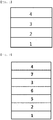
- FIGs. 1 and 2 structures of the organic light emitting device according to one embodiment of the present application are illustrated in FIGs. 1 and 2 .
- FIG. 1 illustrates a structure of an organic electronic device in which a substrate (1), an anode (2), a light emitting layer (3) and a cathode (4) are consecutively laminated.
- the compound may be included in the light emitting layer (3).
- FIG. 2 illustrates a structure of an organic electronic device in which a substrate (1), an anode (2), a hole injection layer (5), a hole transfer layer (6), a light emitting layer (3), an electron transfer layer (7) and a cathode (4) are consecutively laminated.
- the compound may be included in one or more layers of the hole injection layer (5), the hole transfer layer (6), the light emitting layer (3) and the electron transfer layer (7).
- the compound may be included in one or more layers of the hole injection layer, the hole transfer layer, the light emitting layer and the electron transfer layer.
- the organic light emitting device of the present application may be prepared using materials and methods known in the art except that one or more layers of the organic material layers include the compound of the present application, that is, the compound.
- the organic material layers may be formed with materials the same as or different from each other.
- the organic light emitting device of the present application may be prepared using materials and methods known in the art except that one or more layers of the organic material layers include the compound, that is, the compound represented by Chemical Formula 1.
- the organic light emitting device of the present application may be manufactured by consecutively laminating a first electrode, an organic material layer and a second electrode on a substrate.
- the organic light emitting device may be manufactured by forming an anode on a substrate by depositing a metal, a metal oxide having conductivity, or an alloy thereof using a physical vapor deposition (PVD) method such as sputtering or e-beam evaporation, forming an organic material layer including a hole injection layer, a hole transfer layer, a light emitting layer and an electron transfer layer thereon, and then depositing a material capable of being used as a cathode thereon.
- PVD physical vapor deposition
- the organic light emitting device may also be manufactured by consecutively depositing a cathode material, an organic material layer and an anode material on a substrate.
- the compound of Chemical Formula 1 may be formed into an organic material layer through a solution coating method as well as a vacuum deposition method when manufacturing the organic light emitting device.
- the solution coating method means spin coating, dip coating, doctor blading, inkjet printing, screen printing, a spray method, roll coating and the like, but is not limited thereto.
- the organic light emitting device may be also manufactured by consecutively depositing a cathode material, an organic material layer and an anode material on a substrate (International Patent Application Laid-Open Publication No. 2003/012890 ).
- the manufacturing method is not limited thereto.
- the first electrode is an anode and the second electrode is a cathode.
- the first electrode is a cathode and the second electrode is an anode.
- anode material materials having large work function are normally preferred so that hole injection to an organic material layer is smooth.
- the anode material capable of being used in the present application include metals such as vanadium, chromium, copper, zinc and gold, or alloys thereof; metal oxides such as zinc oxide, indium oxide, indium tin oxide (ITO) and indium zinc oxide (IZO); combinations of metals and oxides such as ZnO:Al or SnO 2 :Sb; conductive polymers such as poly(3-methylthiophene), poly[3,4-(ethylene-1,2-dioxy)thiophene] (PEDOT), polypyrrole and polyaniline, but are not limited thereto.
- the cathode material materials having small work function are normally preferred so that electron injection to an organic material layer is smooth.
- the cathode material include metals such as magnesium, calcium, sodium, potassium, titanium, indium, yttrium, lithium, gadolinium, aluminum, silver, tin and lead, or alloys thereof; multilayer structure materials such as LiF/Al or LiO 2 /Al, and the like, but are not limited thereto.
- the hole injection material is preferably a compound that has an ability to transfer holes, therefore, has a hole injection effect from an anode, has an excellent hole injection effect for a light emitting layer or a light emitting material, prevents excitons generated in the light emitting layer from moving to an electron injection layer or an electron injection material, and in addition thereto, has an excellent thin film forming ability.
- the highest occupied molecular orbital (HOMO) of the hole injection material is preferably in between the work function of an anode material and the HOMO of surrounding organic material layers.
- the hole injection material examples include metal porphyrins, oligothiophene, arylamine-based organic materials, hexanitrile hexaazatriphenylene-based organic materials, quinacridone-based organic materials, perylene-based organic materials, anthraquinone, and polyaniline- and polythiophene-based conductive polymers, and the like, but are not limited thereto.
- the hole transfer layer is a layer that receives holes from a hole injection layer and transfers the holes to a light emitting layer
- the hole transfer material materials capable of receiving holes from an anode or a hole injection layer, moving the holes to a light emitting layer, and having high mobility for the holes are suitable.
- Specific examples thereof include arylamine-based organic materials, conductive polymers, block copolymers having conjugated parts and nonconjugated parts together, and the like, but are not limited thereto.
- the light emitting material is a material capable of emitting light in a visible light region by receiving holes and electrons from a hole transfer layer and an electron transfer layer, respectively, and binding the holes and the electrons, and is preferably a material having favorable quantum efficiency for fluorescence or phosphorescence.
- Specific examples thereof include 8-hydroxyquinoline aluminum complexes (Alq 3 ); carbazole series compounds; dimerized styryl compounds; BAlq; 10-hydroxybenzo quinoline-metal compounds; benzoxazole, benzthiazole and benzimidazole series compounds; poly(p-phenylenevinylene) (PPV) series polymers; spiro compounds; polyfluorene, rubrene, and the like, but are not limited thereto.
- the light emitting layer may include a host material and a dopant material.
- the host material includes fused aromatic ring derivatives, heteroring-containing compounds or the like.
- the fused aromatic ring derivative includes anthracene derivatives, pyrene derivatives, naphthalene derivatives, pentacene derivatives, phenanthrene compounds, fluoranthene compounds and the like
- the heteroring-containing compound includes compounds, dibenzofuran derivatives, ladder-type furan compounds, pyrimidine derivatives and the like, but the material is not limited thereto.
- the electron transfer layer is a layer that receives electrons from an electron injection layer and transfers the electrons to a light emitting layer
- materials capable of favorably receiving electrons from a cathode, moving the electrons to a light emitting layer, and having high mobility for the electrons are suitable.
- Specific examples thereof include Al complexes of 8-hydroxyquinoline; complexes including Alq 3 ; organic radical compounds; hydroxyflavon-metal complexes, and the like, but are not limited thereto.
- the electron transfer layer may be used together with any desired cathode material as used in the art.
- the suitable cathode material include common materials that have small work function, and in which an aluminum layer or a silver layer follows.
- the cathode material includes cesium, barium, calcium, ytterbium and samarium, and in each case, an aluminum layer or a silver layer follows.
- the electron injection layer is a layer that injects electrons from an electrode
- the electron injection material is preferably a compound that has an ability to transfer electrons, has an electron injection effect from a cathode, has an excellent electron injection effect for a light emitting layer or a light emitting material, prevents excitons generated in the light emitting layer from moving to a hole injection layer, and in addition thereto, has an excellent thin film forming ability.
- fluorenone anthraquinodimethane, diphenoquinone, thiopyran dioxide, oxazole, oxadiazole, triazole, imidazole, perylene tetracarboxylic acid, fluorenylidene methane, anthrone or the like, and derivatives thereof, metal complex compounds, nitrogen-containing 5-membered ring derivatives, and the like, but are not limited thereto.
- the metal complex compound includes 8-hydroxyquinolinato lithium, bis(8-hydroxyquinolinato)zinc, bis(8-hydroxyquinolinato)copper, bis(8-hydroxyquinolinato)manganese, tris(8-hydroxyquinolinato)aluminum, tris(2-methyl-8-hydroxyquinolinato)aluminum, tris(8-hydroxyquinolinato)gallium, bis(10-hydroxybenzo[h]quinolinato)berylium, bis(10-hydroxybenzo[h]quinolinato)zinc, bis(2-methyl-8-quinolinato)chlorogallium, bis(2-methyl-8-quinolinato)(o-cresolato)gallium, bis(2-methyl-8-quinolinato)(1-naphtholato)aluminum, bis(2-methyl-8-quinolinato)(2-naphtholato)gallium and the like, but is not limited thereto.
- the hole blocking layer is a layer blocking holes from reaching a cathode, and generally, may be formed under the same condition as the hole injection layer. Specifically, oxadiazole derivatives or triazole derivatives, phenanthroline derivatives, BCP, aluminum complexes and the like are included, however, the material is not limited thereto.
- the organic light emitting device may be a top-emission type, a bottom-emission type or a dual-emission type depending on the materials used.
- the heterocyclic compound may be included in an organic solar cell or an organic transistor in addition to the organic light emitting device.
- the compound according to the present disclosure may also be used in an organic electronic device including an organic solar cell, an organic photo conductor, an organic transistor and the like under a similar principle used in the organic light emitting device.
- a glass substrate on which indium tin oxide (ITO) was coated as a thin film to a thickness of 1, 000 ⁇ was placed in detergent-dissolved distilled water and ultrasonic cleaned.
- ITO indium tin oxide
- a product of Fischer Co. was used as the detergent, and as the distilled water, distilled water filtered twice with a filter manufactured by Millipore Co. was used.
- the substrate was ultrasonic cleaned with solvents of isopropyl alcohol, acetone and methanol, then dried, and then transferred to a plasma cleaner.
- the substrate was cleaned for 5 minutes using oxygen plasma, and then transferred to a vacuum depositor.
- a hole injection layer was formed by thermal vacuum depositing hexanitrile hexaazatriphenylene (HAT) of the following chemical formula to a thickness of 500 ⁇ .
- HAT hexanitrile hexaazatriphenylene
- a hole transfer layer was formed on the hole injection layer by vacuum depositing the following compound 4-4'-bis[N-(1-naphthyl)-N-phenylamino]biphenyl (NPB) (300 ⁇ ), a material transferring holes.
- an electron blocking layer was formed on the hole transfer layer by vacuum depositing the following Compound 1 to a film thickness of 100 ⁇ .
- a light emitting layer was formed on the electron blocking layer to a film thickness of 300 ⁇ by vacuum depositing BH and BD as follows in a weight ratio of 25:1.
- an electron injection and transfer layer was formed to a thickness of 300 ⁇ by vacuum depositing Compound ET1 and the lithium quinolate (LiQ) compound in a weight ratio of 1:1.
- a cathode was formed on the electron injection and transfer layer by depositing lithium fluoride (LiF) to a thickness of 12 ⁇ and aluminum to a thickness of 2,000 ⁇ in consecutive order.
- An organic light emitting device was manufactured by maintaining, in the above-mentioned processes, the deposition rates of the organic materials at 0.4 ⁇ /sec to 0.7 ⁇ /sec, the deposition rates of the lithium fluoride and the aluminum of the cathode at 0.3 ⁇ /sec and 2 ⁇ /sec, respectively, and the degree of vacuum during the deposition at 2 ⁇ 10 -7 torr to 5 ⁇ 10 -6 torr.
- An organic light emitting device was manufactured in the same manner as in Example 1-1 except that Compound 2 was used instead of Compound 1.
- An organic light emitting device was manufactured in the same manner as in Example 1-1 except that Compound 3 was used instead of Compound 1.
- An organic light emitting device was manufactured in the same manner as in Example 1-1 except that Compound 4 was used instead of Compound 1.
- An organic light emitting device was manufactured in the same manner as in Example 1-1 except that Compound 5 was used instead of Compound 1.
- An organic light emitting device was manufactured in the same manner as in Example 1-1 except that Compound 6 was used instead of Compound 1.
- An organic light emitting device was manufactured in the same manner as in Example 1-1 except that Compound 7 was used instead of Compound 1.
- An organic light emitting device was manufactured in the same manner as in Example 1-1 except that Compound 24 was used instead of Compound 1.
- An organic light emitting device was manufactured in the same manner as in Example 1-1 except that Compound 25 was used instead of Compound 1.
- An organic light emitting device was manufactured in the same manner as in Example 1-1 except that Compound 26 was used instead of Compound 1.
- An organic light emitting device was manufactured in the same manner as in Example 1-1 except that Compound 27 was used instead of Compound 1.
- An organic light emitting device was manufactured in the same manner as in Example 1-1 except that Compound 28 was used instead of Compound 1.
- An organic light emitting device was manufactured in the same manner as in Example 1-1 except that Compound 29 was used instead of Compound 1.
- An organic light emitting device was manufactured in the same manner as in Example 1-1 except that Compound 30 was used instead of Compound 1.
- An organic light emitting device was manufactured in the same manner as in Example 1-1 except that Compound 47 was used instead of Compound 1.
- An organic light emitting device was manufactured in the same manner as in Example 1-1 except that Compound 48 was used instead of Compound 1.
- An organic light emitting device was manufactured in the same manner as in Example 1-1 except that Compound 49 was used instead of Compound 1.
- An organic light emitting device was manufactured in the same manner as in Example 1-1 except that Compound 50 was used instead of Compound 1.
- An organic light emitting device was manufactured in the same manner as in Example 1-1 except that Compound 51 was used instead of Compound 1.
- An organic light emitting device was manufactured in the same manner as in Example 1-1 except that Compound 52 was used instead of Compound 1.
- An organic light emitting device was manufactured in the same manner as in Example 1-1 except that Compound 53 was used instead of Compound 1.
- An organic light emitting device was manufactured in the same manner as in Example 1-1 except that Compound 70 was used instead of Compound 1.
- An organic light emitting device was manufactured in the same manner as in Example 1-1 except that Compound 71 was used instead of Compound 1.
- An organic light emitting device was manufactured in the same manner as in Example 1-1 except that Compound 72 was used instead of Compound 1.
- An organic light emitting device was manufactured in the same manner as in Example 1-1 except that Compound 73 was used instead of Compound 1.
- An organic light emitting device was manufactured in the same manner as in Example 1-1 except that Compound 74 was used instead of Compound 1.
- An organic light emitting device was manufactured in the same manner as in Example 1-1 except that Compound 75 was used instead of Compound 1.
- An organic light emitting device was manufactured in the same manner as in Example 1-1 except that Compound 76 was used instead of Compound 1.
- An organic light emitting device was manufactured in the same manner as in Example 1-1 except that Compound 93 was used instead of Compound 1.
- An organic light emitting device was manufactured in the same manner as in Example 1-1 except that Compound 94 was used instead of Compound 1.
- An organic light emitting device was manufactured in the same manner as in Example 1-1 except that Compound 95 was used instead of Compound 1.
- An organic light emitting device was manufactured in the same manner as in Example 1-1 except that Compound 99 was used instead of Compound 1.
- An organic light emitting device was manufactured in the same manner as in Example 1-1 except that Compound 100 was used instead of Compound 1.
- An organic light emitting device was manufactured in the same manner as in Example 1-1 except that Compound 101 was used instead of Compound 1.
- An organic light emitting device was manufactured in the same manner as in Example 1-1 except that the following Compound EB 1 (TCTA) was used instead of Compound 1.
- TCTA Compound EB 1
- An organic light emitting device was manufactured in the same manner as in Example 1-1 except that the following Compound EB 2 was used instead of Compound 1.
- An organic light emitting device was manufactured in the same manner as in Example 1-1 except that the following Compound EB 3 was used instead of Compound 1.
- An organic light emitting device was manufactured in the same manner as in Example 1-1 except that the following Compound EB 4 was used instead of Compound 1.
- Example 1-10 Compound (Electron Blocking Layer) Voltage (V@10 mA/cm 2 ) Efficiency (cd/A@10 mA/cm 2 ) Color Coordinate (x,y)
- Example 1-1 Compound 1 3.75 5.85 (0.139, 0.122)
- Example 1-2 Compound 2 3.72 5.88 (0.138, 0.126)
- Example 1-3 Compound 3 3.77 5.81 (0.138, 0.127)
- Example 1-4 Compound 4 3.78 5.82 (0.137, 0.125)
- Example 1-5 Compound 5 3.79 5.83 (0.136, 0.125)
- Example 1-6 Compound 6 3.74 5.87 (0.136, 0.127)
- Example 1-7 Compound 7 3.73 5.88 (0.136, 0.125)
- Example 1-8 Compound 24 3.74 5.71 (0.137, 0.125)
- Example 1-9 Compound 25 3.73 5.78 (0.138, 0.125)
- Example 1-10 Compound 26
- Example 2 An experiment was carried out in the same manner as in Example 1 except that TCTA was used as the electron blocking layer, and HT 2 was used as the hole transfer layer.
- compound derivatives of the chemical formulae according to the present application had an excellent hole transfer ability as well as an excellent electron blocking ability exhibiting low voltage and high efficiency properties, and was capable of being used in an organic light emitting device.
- the compounds synthesized in the synthesis examples were high-purity sublimation purified using commonly known methods, and then a green organic light emitting device was manufactured using a method as follows.
- a glass substrate on which indium tin oxide (ITO) was coated as a thin film to a thickness of 1,000 ⁇ was placed in detergent-dissolved distilled water and ultrasonic cleaned.
- ITO indium tin oxide
- a product of Fischer Co. was used as the detergent, and as the distilled water, distilled water filtered twice with a filter manufactured by Millipore Co. was used.
- the substrate was ultrasonic cleaned with solvents of isopropyl alcohol, acetone and methanol, then dried, and then transferred to a plasma cleaner.
- the substrate was cleaned for 5 minutes using oxygen plasma, and then transferred to a vacuum depositor.
- An organic EL device was manufactured by forming a light emitting device in the order of m-MTDATA (60 nm)/TCTA (80 nm)/Compound 5+10% Ir(ppy) 3 (300 nm)/BCP (10 nm)/Alq 3 (30 nm)/LiF (1 nm)/Al (200 nm) on the transparent ITO electrode prepared as above using Compound 5 as a host.
- An organic light emitting device was manufactured in the same manner as in Example 3-1 except that Compound 6 was used instead of Compound 5.
- An organic light emitting device was manufactured in the same manner as in Example 3-1 except that Compound 7 was used instead of Compound 5.
- An organic light emitting device was manufactured in the same manner as in Example 3-1 except that Compound 8 was used instead of Compound 5.
- An organic light emitting device was manufactured in the same manner as in Example 3-1 except that Compound 9 was used instead of Compound 5.
- An organic light emitting device was manufactured in the same manner as in Example 3-1 except that Compound 10 was used instead of Compound 5.
- An organic light emitting device was manufactured in the same manner as in Example 3-1 except that Compound 11 was used instead of Compound 5.
- An organic light emitting device was manufactured in the same manner as in Example 3-1 except that Compound 12 was used instead of Compound 5.
- An organic light emitting device was manufactured in the same manner as in Example 3-1 except that Compound 13 was used instead of Compound 5.
- An organic light emitting device was manufactured in the same manner as in Example 3-1 except that Compound 14 was used instead of Compound 5.
- An organic light emitting device was manufactured in the same manner as in Example 3-1 except that Compound 15 was used instead of Compound 5.
- An organic light emitting device was manufactured in the same manner as in Example 3-1 except that Compound 28 was used instead of Compound 5.
- An organic light emitting device was manufactured in the same manner as in Example 3-1 except that Compound 29 was used instead of Compound 5.
- An organic light emitting device was manufactured in the same manner as in Example 3-1 except that Compound 30 was used instead of Compound 5.
- An organic light emitting device was manufactured in the same manner as in Example 3-1 except that Compound 31 was used instead of Compound 5.
- An organic light emitting device was manufactured in the same manner as in Example 3-1 except that Compound 32 was used instead of Compound 5.
- An organic light emitting device was manufactured in the same manner as in Example 3-1 except that Compound 33 was used instead of Compound 5.
- An organic light emitting device was manufactured in the same manner as in Example 3-1 except that Compound 34 was used instead of Compound 5.
- An organic light emitting device was manufactured in the same manner as in Example 3-1 except that Compound 35 was used instead of Compound 5.
- An organic light emitting device was manufactured in the same manner as in Example 3-1 except that Compound 36 was used instead of Compound 5.
- An organic light emitting device was manufactured in the same manner as in Example 3-1 except that Compound 37 was used instead of Compound 5.
- An organic light emitting device was manufactured in the same manner as in Example 3-1 except that Compound 38 was used instead of Compound 5.
- An organic light emitting device was manufactured in the same manner as in Example 3-1 except that Compound 51 was used instead of Compound 5.
- An organic light emitting device was manufactured in the same manner as in Example 3-1 except that Compound 52 was used instead of Compound 5.
- An organic light emitting device was manufactured in the same manner as in Example 3-1 except that Compound 53 was used instead of Compound 5.
- An organic light emitting device was manufactured in the same manner as in Example 3-1 except that Compound 54 was used instead of Compound 5.
- An organic light emitting device was manufactured in the same manner as in Example 3-1 except that Compound 55 was used instead of Compound 5.
- An organic light emitting device was manufactured in the same manner as in Example 3-1 except that Compound 56 was used instead of Compound 5.
- An organic light emitting device was manufactured in the same manner as in Example 3-1 except that Compound 57 was used instead of Compound 5.
- An organic light emitting device was manufactured in the same manner as in Example 3-1 except that Compound 58 was used instead of Compound 5.
- An organic light emitting device was manufactured in the same manner as in Example 3-1 except that Compound 59 was used instead of Compound 5.
- An organic light emitting device was manufactured in the same manner as in Example 3-1 except that Compound 60 was used instead of Compound 5.
- An organic light emitting device was manufactured in the same manner as in Example 3-1 except that Compound 61 was used instead of Compound 5.
- An organic light emitting device was manufactured in the same manner as in Example 3-1 except that Compound 74 was used instead of Compound 5.
- An organic light emitting device was manufactured in the same manner as in Example 3-1 except that Compound 75 was used instead of Compound 5.
- An organic light emitting device was manufactured in the same manner as in Example 3-1 except that Compound 76 was used instead of Compound 5.
- An organic light emitting device was manufactured in the same manner as in Example 3-1 except that Compound 77 was used instead of Compound 5.
- An organic light emitting device was manufactured in the same manner as in Example 3-1 except that Compound 78 was used instead of Compound 5.
- An organic light emitting device was manufactured in the same manner as in Example 3-1 except that Compound 79 was used instead of Compound 5.
- An organic light emitting device was manufactured in the same manner as in Example 3-1 except that Compound 80 was used instead of Compound 5.
- An organic light emitting device was manufactured in the same manner as in Example 3-1 except that Compound 81 was used instead of Compound 5.
- An organic light emitting device was manufactured in the same manner as in Example 3-1 except that Compound 82 was used instead of Compound 5.
- An organic light emitting device was manufactured in the same manner as in Example 3-1 except that Compound 83 was used instead of Compound 5.
- An organic light emitting device was manufactured in the same manner as in Example 3-1 except that Compound 84 was used instead of Compound 5.
- An organic light emitting device was manufactured in the same manner as in Example 3-1 except that GH 1 (CBP) was used instead of Compound 5.
- a glass substrate on which indium tin oxide (ITO) was coated as a thin film to a thickness of 1,000 ⁇ was placed in detergent-dissolved distilled water and ultrasonic cleaned.
- ITO indium tin oxide
- a product of Fischer Co. was used as the detergent, and as the distilled water, distilled water filtered twice with a filter manufactured by Millipore Co. was used.
- the substrate was ultrasonic cleaned with solvents of isopropyl alcohol, acetone and methanol, then dried, and then transferred to a plasma cleaner.
- the substrate was cleaned for 5 minutes using oxygen plasma, and then transferred to a vacuum depositor.
- a hole injection layer was formed by thermal vacuum depositing hexanitrile hexaazatriphenylene (HAT) of the following chemical formula to a thickness of 500 ⁇ .
- HAT hexanitrile hexaazatriphenylene
- a hole transfer layer was formed on the hole injection layer by vacuum depositing the following compound 4-4'-bis[N-(1-naphthyl)-N-phenylamino]biphenyl (NPB) (400 ⁇ ), a material transferring holes.
- a light emitting layer was formed on the hole transfer layer to a film thickness of 300 ⁇ by vacuum depositing BH and BD as follows in a weight ratio of 25:1.
- an electron injection and transfer layer was formed to a thickness of 300 ⁇ by vacuum depositing Compound 8 prepared in Preparation Example 8 and the lithium quinolate (LiQ) compound in a weight ratio of 1:1.
- a cathode was formed on the electron injection and transfer layer by depositing lithium fluoride (LiF) to a thickness of 12 ⁇ and aluminum to a thickness of 2,000 ⁇ in consecutive order.
- An organic light emitting device was manufactured by maintaining, in the above-mentioned processes, the deposition rates of the organic materials at 0.4 ⁇ /sec to 0.7 ⁇ /sec, the deposition rates of the lithium fluoride and the aluminum of the cathode at 0.3 ⁇ /sec and 2 ⁇ /sec, respectively, and the degree of vacuum during the deposition at 2 ⁇ 10 -7 torr to 5 ⁇ 10 -6 torr.
Landscapes
- Chemical & Material Sciences (AREA)
- Organic Chemistry (AREA)
- Engineering & Computer Science (AREA)
- Materials Engineering (AREA)
- Physics & Mathematics (AREA)
- Spectroscopy & Molecular Physics (AREA)
- Molecular Biology (AREA)
- General Health & Medical Sciences (AREA)
- Biochemistry (AREA)
- Life Sciences & Earth Sciences (AREA)
- Health & Medical Sciences (AREA)
- Optics & Photonics (AREA)
- Crystallography & Structural Chemistry (AREA)
- Inorganic Chemistry (AREA)
- Electroluminescent Light Sources (AREA)
- Nitrogen Condensed Heterocyclic Rings (AREA)
- Heterocyclic Carbon Compounds Containing A Hetero Ring Having Oxygen Or Sulfur (AREA)
Claims (15)
- Verbindung, die durch die folgende chemische Formel 1 dargestellt ist:
 mindestens eines aus R1 bis R8 -(L)m-(Ar)n ist und der Rest gleich oder voneinander verschieden sind und jeweils unabhängig voneinander Wasserstoff; Deuterium; eine Halogengruppe; eine Nitrogruppe; eine Cyanogruppe; eine Estergruppe; eine Carbonylgruppe; eine substituierte oder unsubstituierte Alkylgruppe; eine substituierte oder unsubstituierte Cycloalkylgruppe; eine substituierte oder unsubstituierte Alkoxygruppe; eine substituierte oder unsubstituierte Alkenylgruppe; eine substituierte oder unsubstituierte Arylgruppe; oder eine substituierte oder unsubstituierte heterocyclische Gruppe sind, oder an benachbarte Gruppen gebunden sind, um einen Ring zu bilden;L eine direkte Bindung; eine substituierte oder unsubstituierte Arylengruppe; oder eine substituierte oder unsubstituierte, zweiwertige heterocyclische Gruppe ist;m eine Zahl von 1 bis 3 ist;wenn m eine Zahl von 2 oder größer ist, eine Vielzahl von Ls gleich oder voneinander verschieden sind;Ar Deuterium; eine Halogengruppe; eine Nitrogruppe; eine Cyanogruppe; eine Estergruppe; eine Carbonylgruppe; eine substituierte oder unsubstituierte Alkylgruppe; eine substituierte oder unsubstituierte Cycloalkylgruppe; eine substituierte oder unsubstituierte Alkoxygruppe; eine substituierte oder unsubstituierte Alkenylgruppe; eine substituierte oder unsubstituierte, monocyclische Arylgruppe; eine substituierte oder unsubstituierte, multicyclische Arylgruppe; eine substituierte oder unsubstituierte heterocyclische Gruppe; eine substituierte oder unsubstituierte Amingruppe; eine substituierte oder unsubstituierte Silylgruppe; oder eine substituierte oder unsubstituierte Phosphorylgruppe ist;n 1 oder 2 ist, und wenn n 2 ist, eine Vielzahl von Ars gleich oder voneinander verschieden sind; undRg und R10 gleich oder voneinander verschieden sind und jeweils unabhängig voneinander Wasserstoff; Deuterium; eine Halogengruppe; eine Nitrogruppe; eine Cyanogruppe; eine Estergruppe; eine Carbonylgruppe; eine substituierte oder unsubstituierte Alkylgruppe; eine substituierte oder unsubstituierte Cycloalkylgruppe; eine substituierte oder unsubstituierte Alkoxygruppe; eine substituierte oder unsubstituierte Alkenylgruppe; eine substituierte oder unsubstituierte Arylgruppe; oder eine substituierte oder unsubstituierte heterocyclische Gruppe sind.
 - Verbindung gemäß Anspruch 1, worin die chemische Formel 1 durch die folgende chemische Formel 2 oder 3 dargestellt ist:


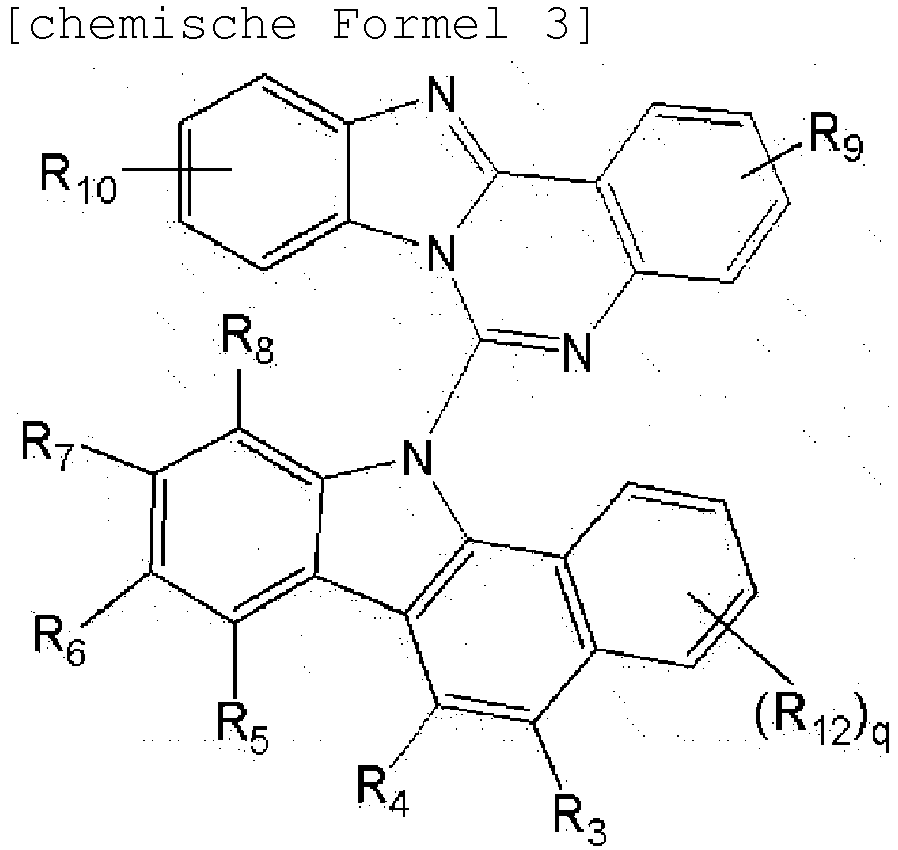 R1 bis R10 die gleichen Definitionen wie in der chemischen Formel 1 haben;R11 und R12 gleich oder voneinander verschieden sind und jeweils unabhängig voneinander Wasserstoff; Deuterium; eine Halogengruppe; eine Nitrogruppe; eine Cyanogruppe; eine Estergruppe; eine Carbonylgruppe; eine substituierte oder unsubstituierte Alkylgruppe; eine substituierte oder unsubstituierte Cycloalkylgruppe; eine substituierte oder unsubstituierte Alkoxygruppe; eine substituierte oder unsubstituierte Alkenylgruppe; eine substituierte oder unsubstituierte Arylgruppe; oder eine substituierte oder unsubstituierte heterocyclische Gruppe sind; undp und q jeweils eine Zahl von 0 bis 4 sind.
 - Verbindung gemäß Anspruch 1, worin R3 -(L)m-(Ar)n ist.
- Verbindung gemäß Anspruch 1, worin R2 -(L)m-(Ar)n ist.
- Verbindung gemäß Anspruch 1, worin R3 und R6 -(L)m-(Ar)n sind und R3 und R6 gleich oder voneinander verschieden sind.
- Verbindung gemäß Anspruch 1, worin R2 und R7 -(L)m-(Ar)n sind und R2 und R7 gleich oder voneinander verschieden sind.
- Verbindung gemäß Anspruch 1, worin L eine direkte Bindung oder eine substituierte oder unsubstituierte Arylengruppe ist.
- Verbindung gemäß Anspruch 1, worin L irgendeines ist, ausgewählt aus der Gruppe bestehend aus einer direkten Bindung, einer Phenylengruppe; einer Biphenylengruppe; einer Naphthylengruppe; einer Anthracenylengruppe; einer Fluorenylengruppe; einer Phenanthrenylengruppe; einer Pyrenylengruppe; und einer Chrysenylengruppe.
- Verbindung gemäß Anspruch 1, worin Ar eine substituierte, monocyclische Arylgruppe; eine substituierte oder unsubstituierte, multicyclische Arylgruppe; eine substituierte oder unsubstituierte heterocyclische Gruppe; eine substituierte oder unsubstituierte Amingruppe; eine substituierte oder unsubstituierte Silylgruppe; oder eine substituierte oder unsubstituierte Phosphorylgruppe ist.
- Verbindung gemäß Anspruch 1, worin die durch die chemische Formel 1 dargestellte Verbindung irgendeine ist, ausgewählt aus den folgenden Strukturformeln:


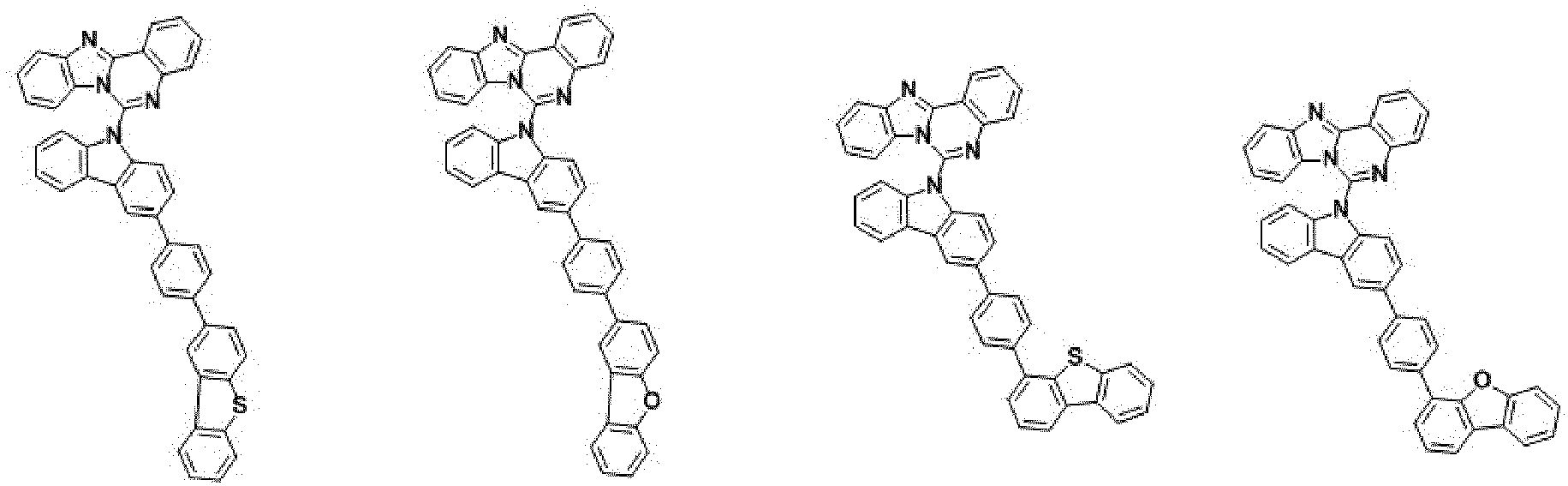

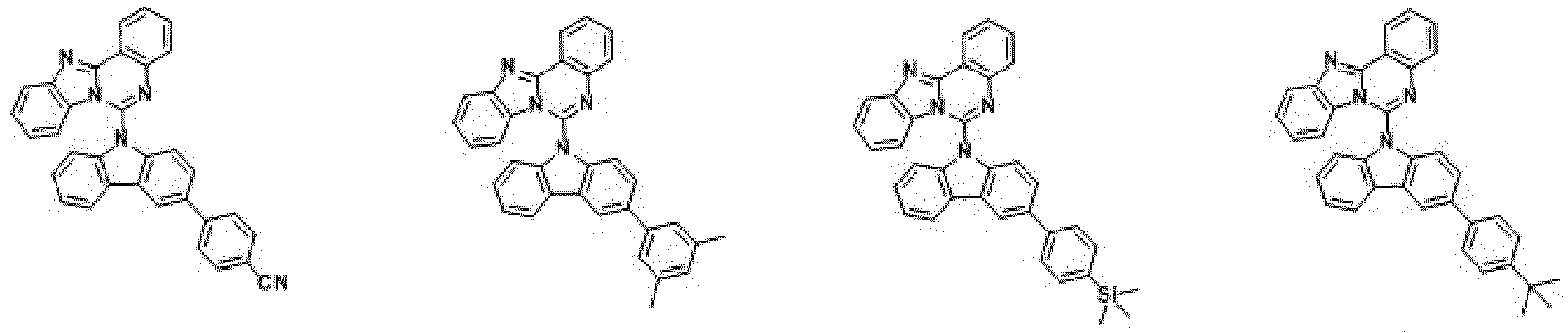


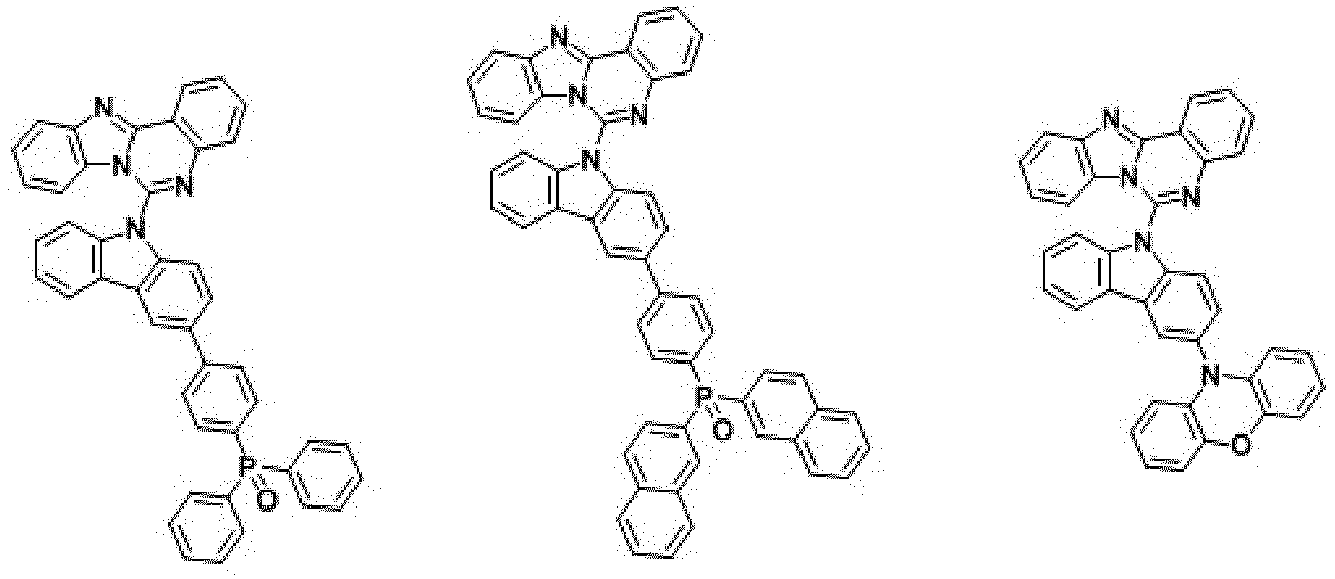
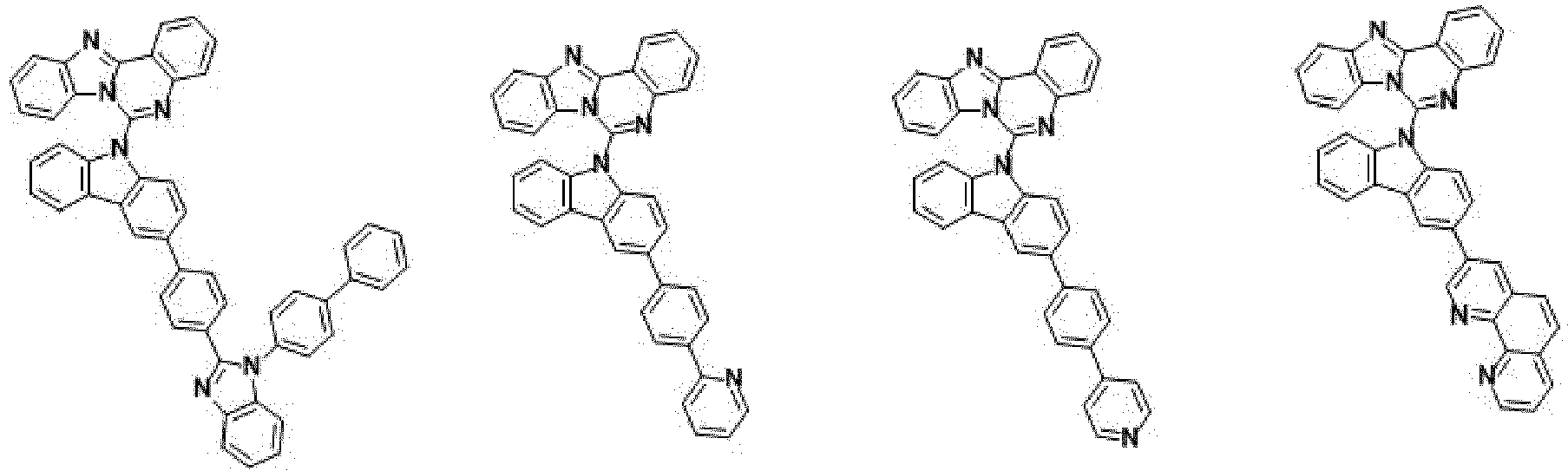

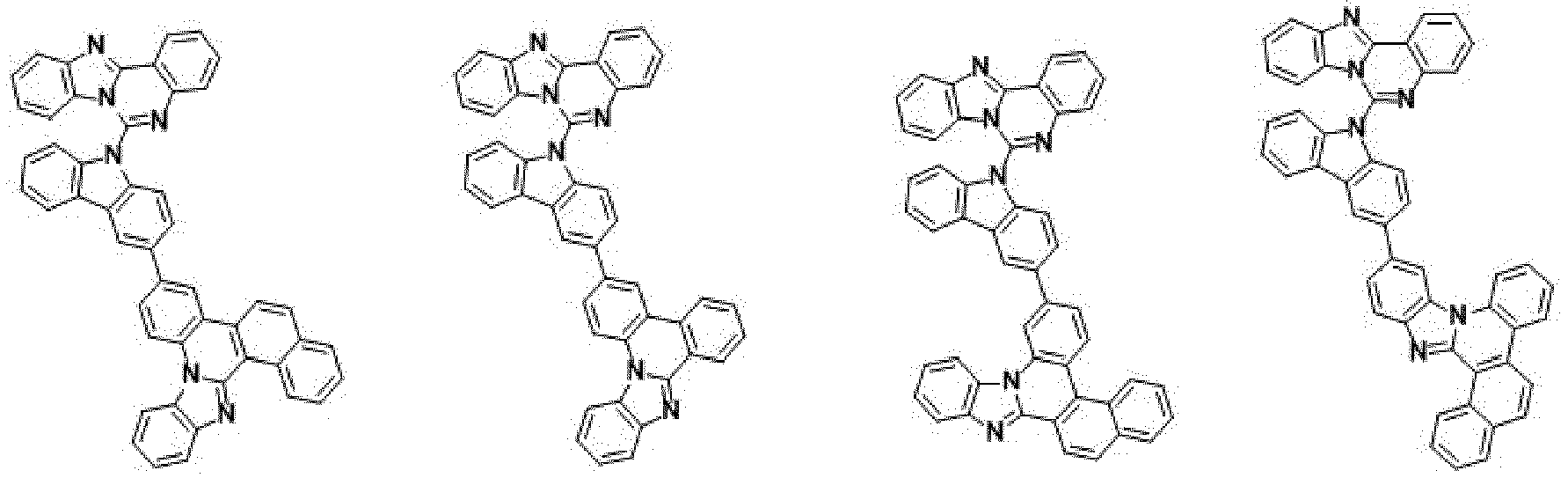


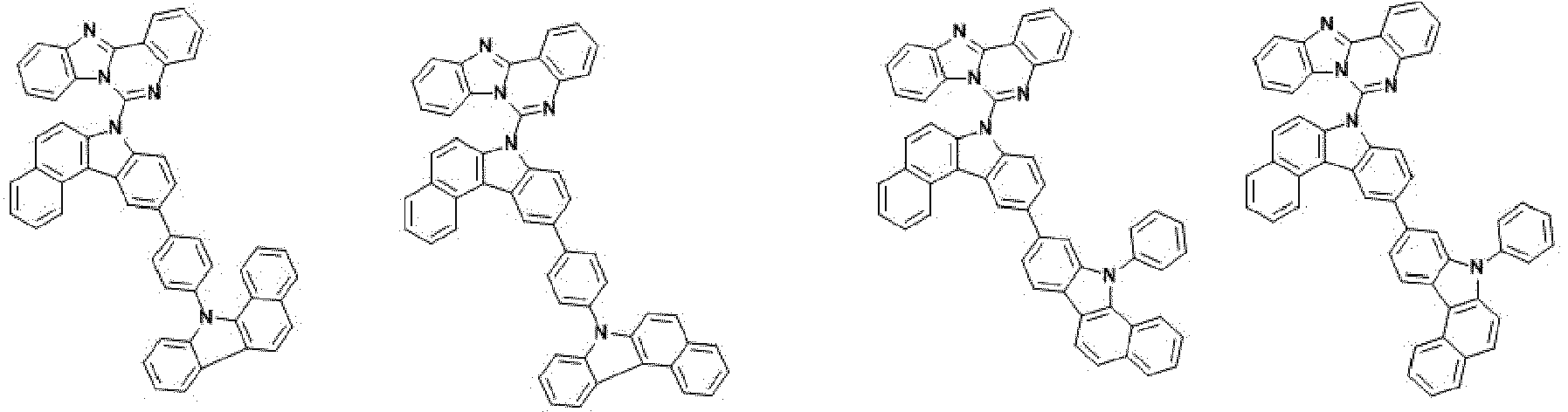


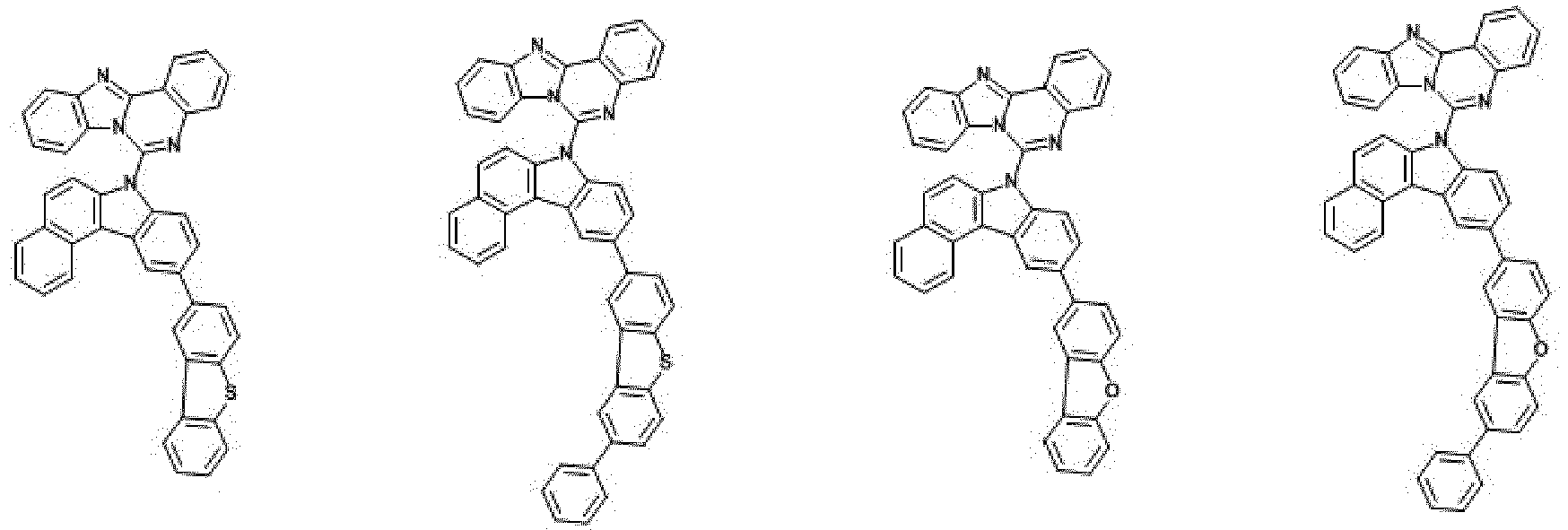


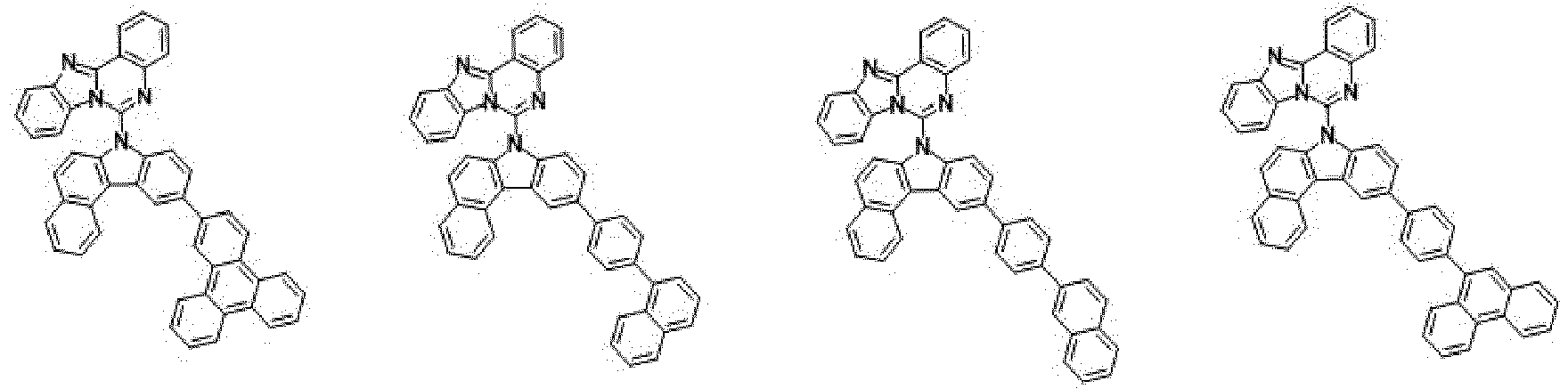
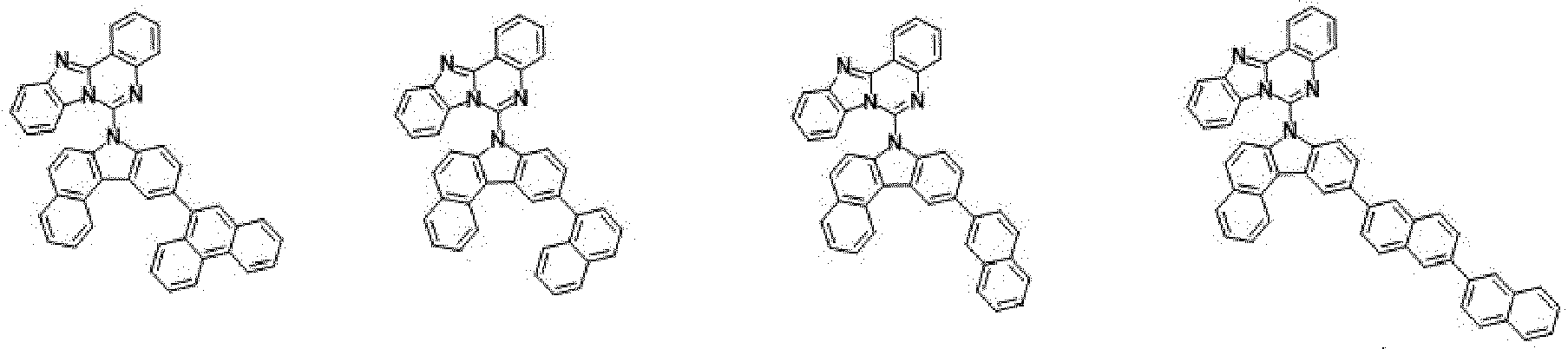


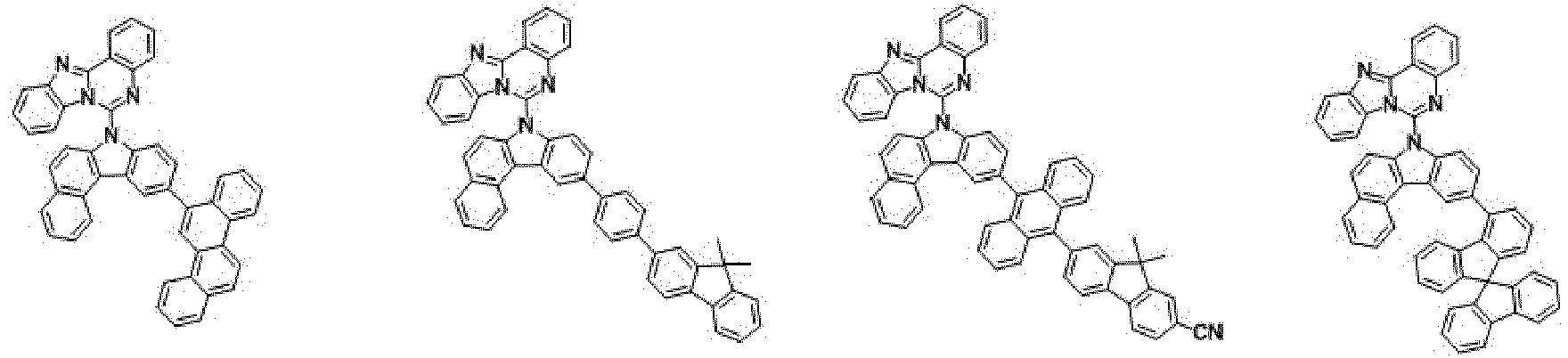
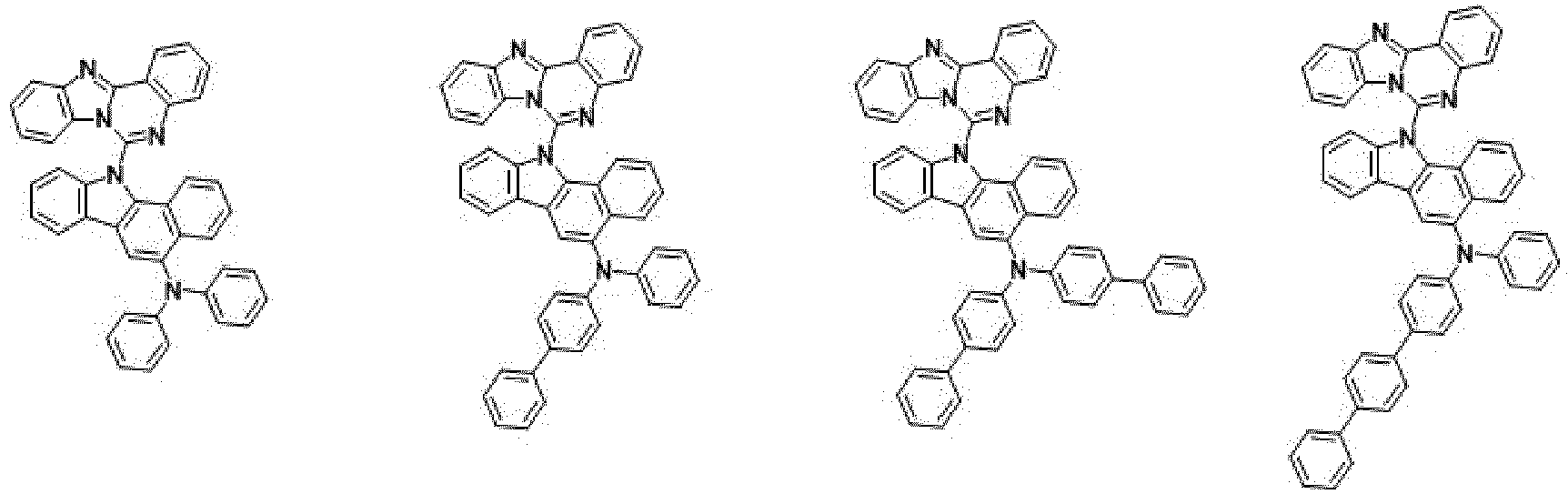


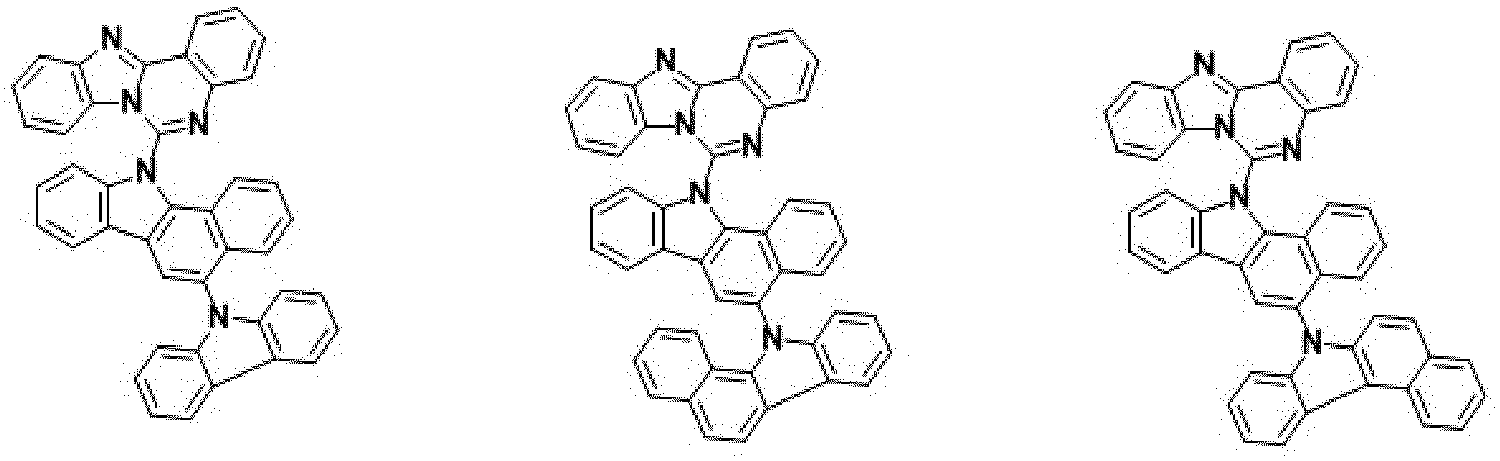


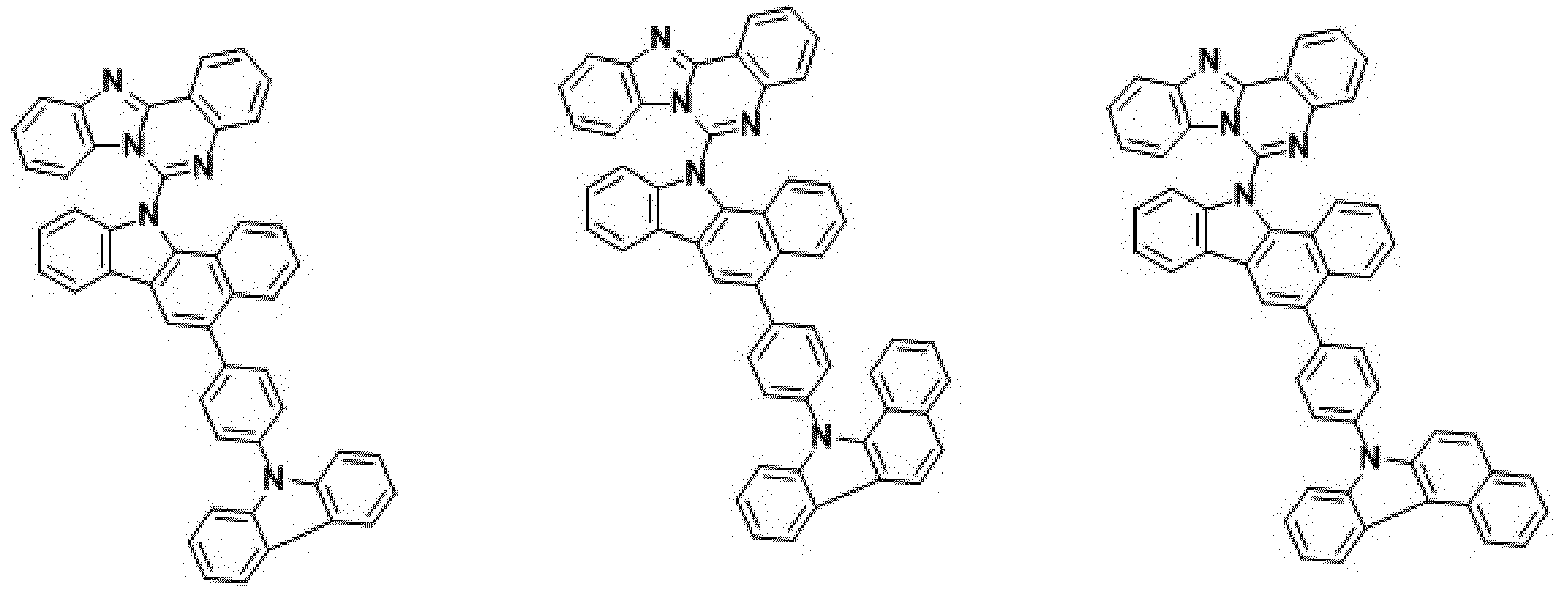


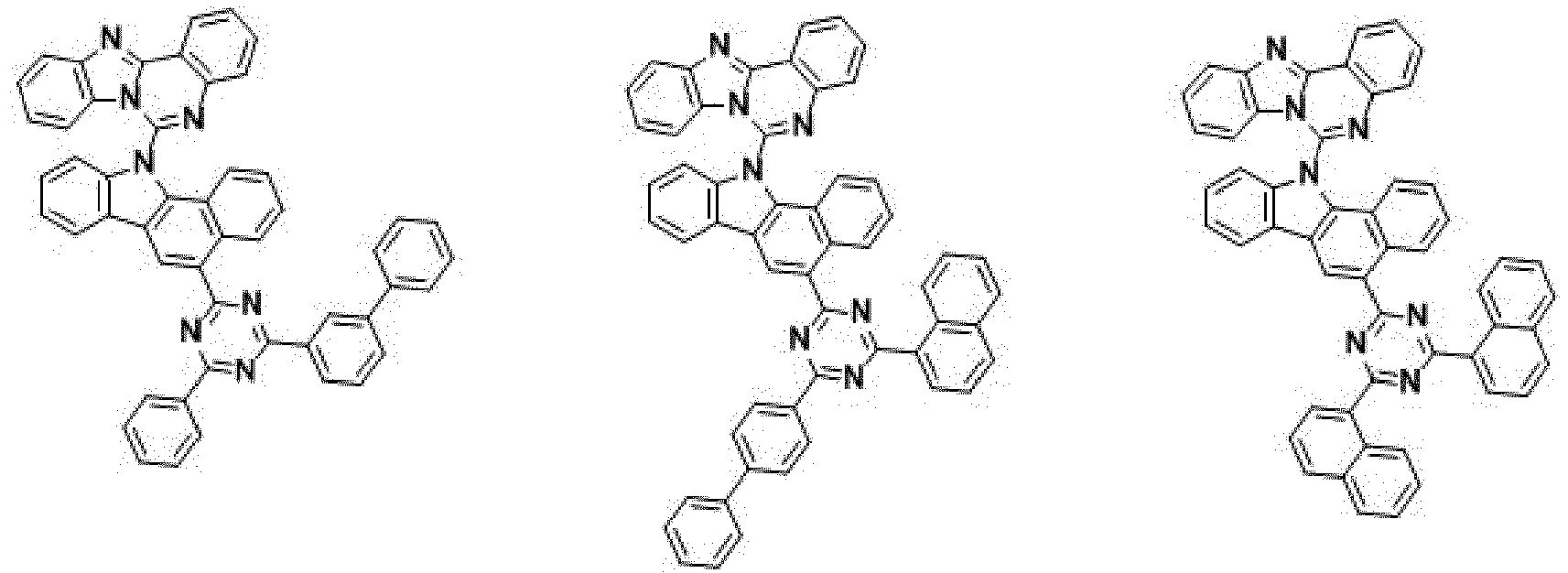


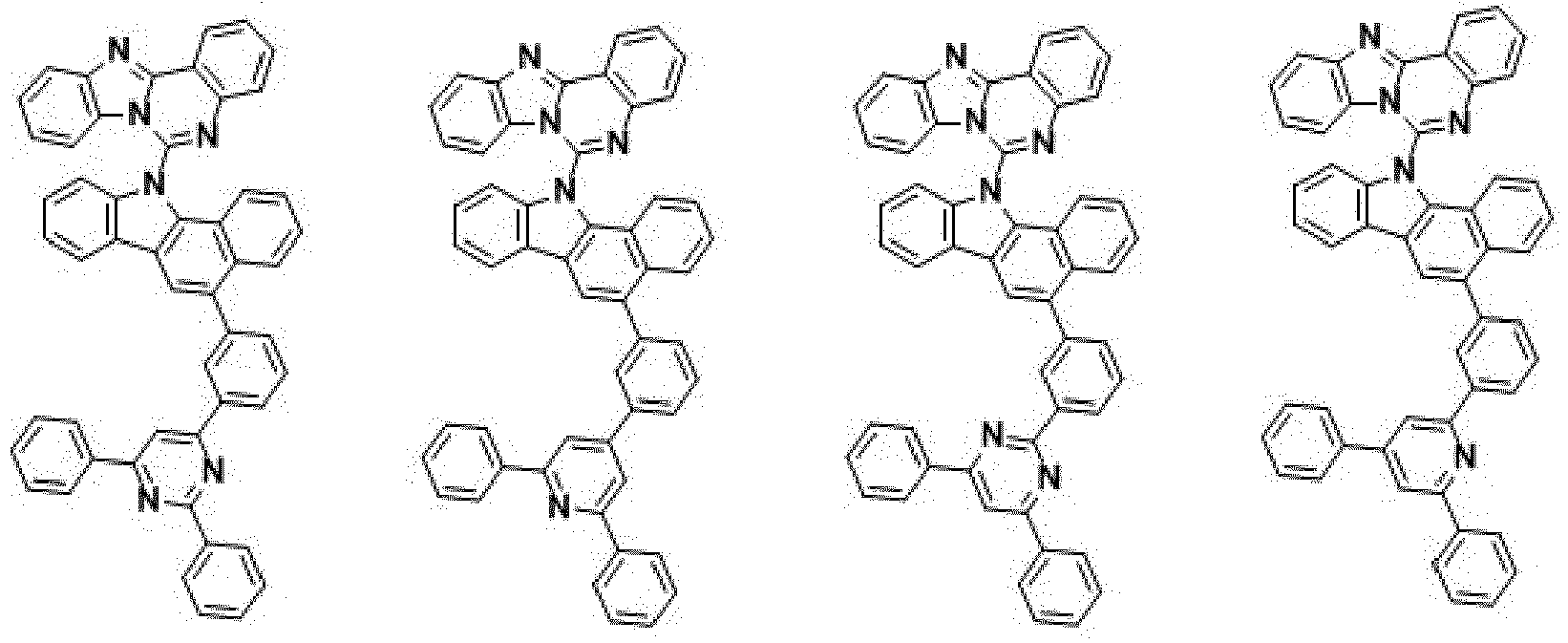


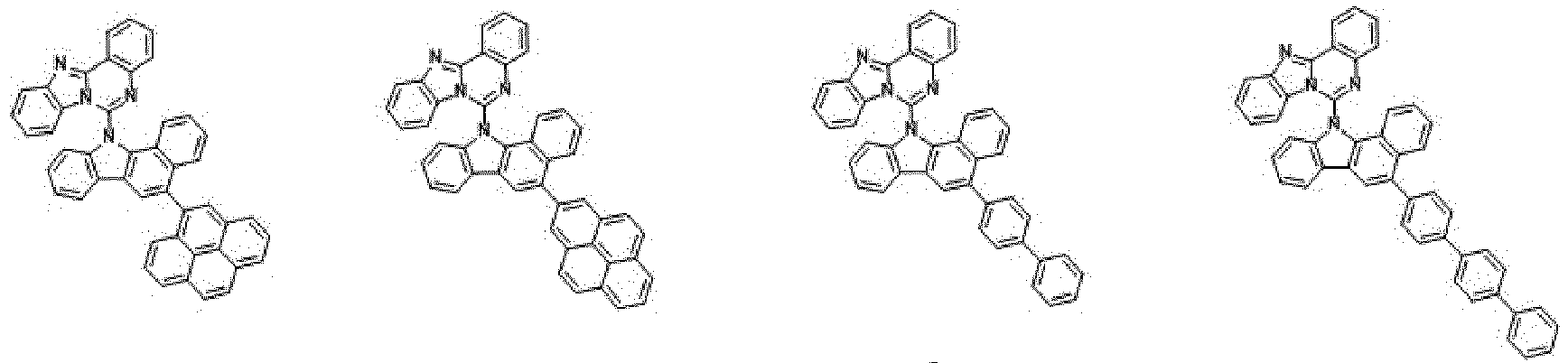

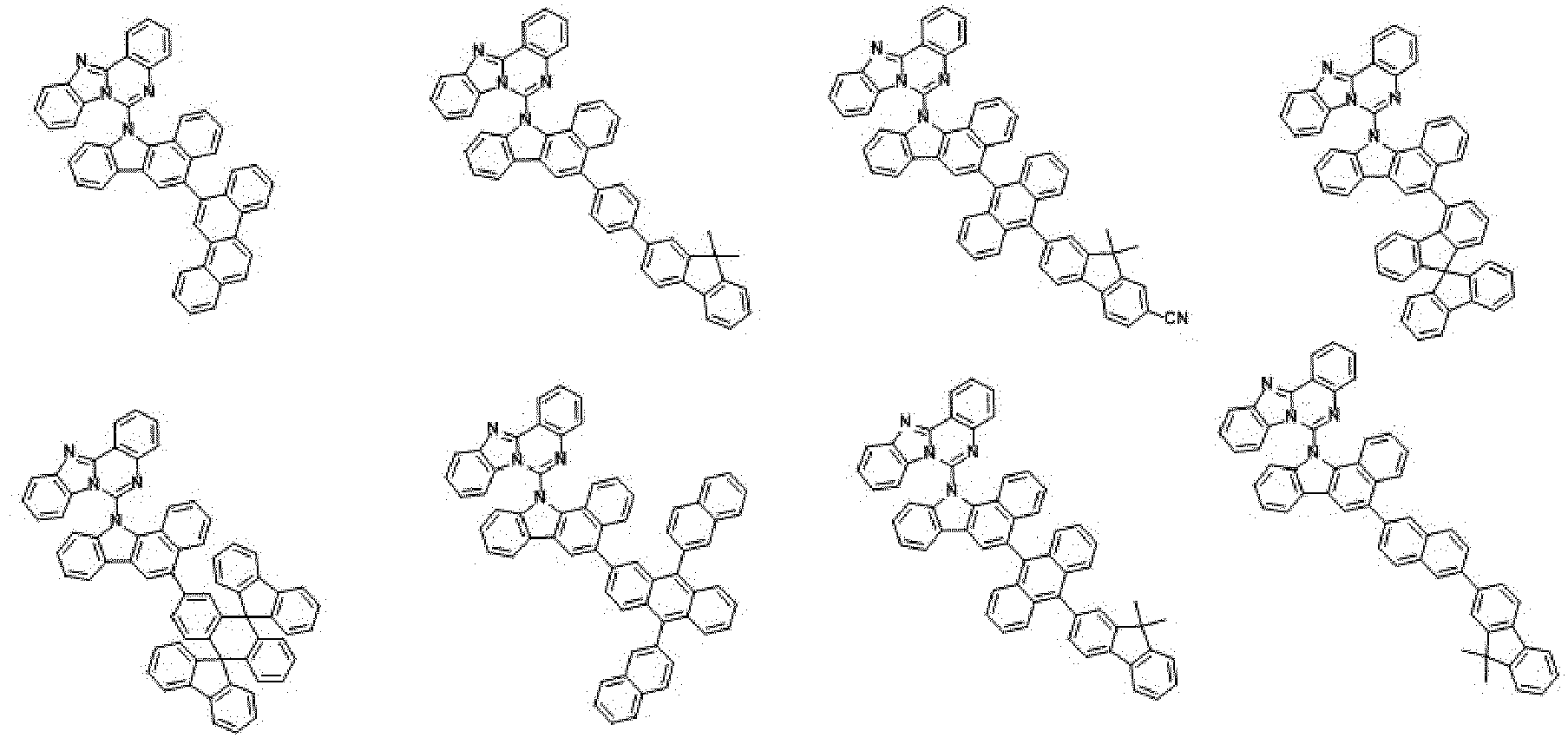


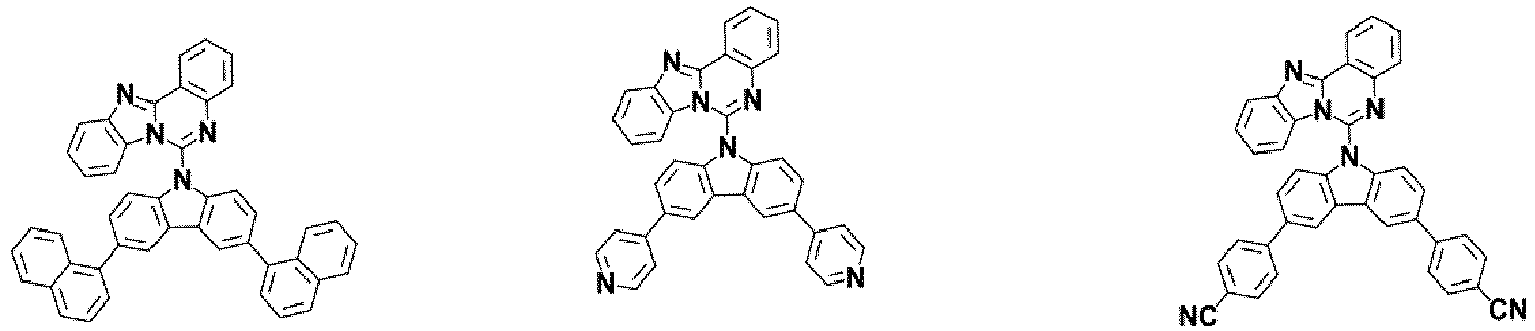


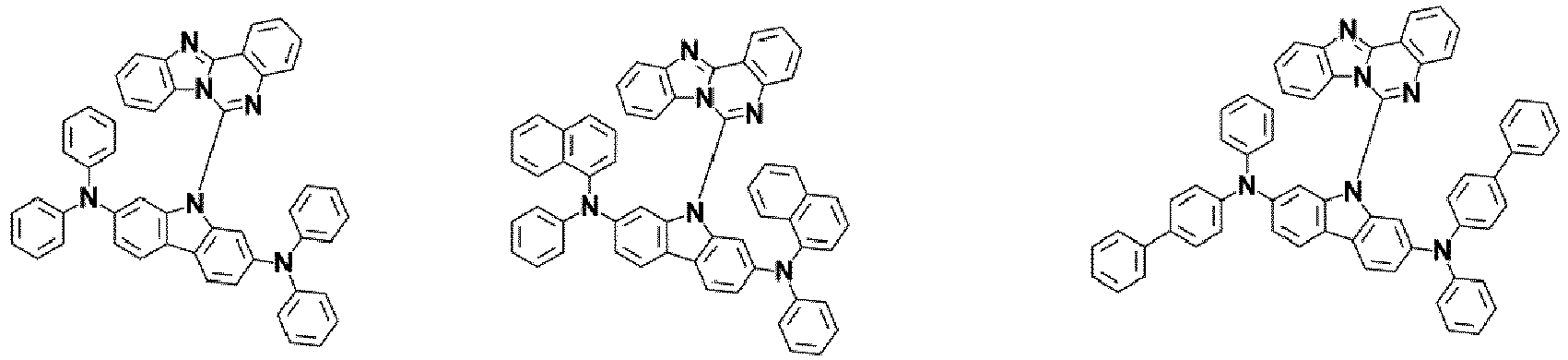




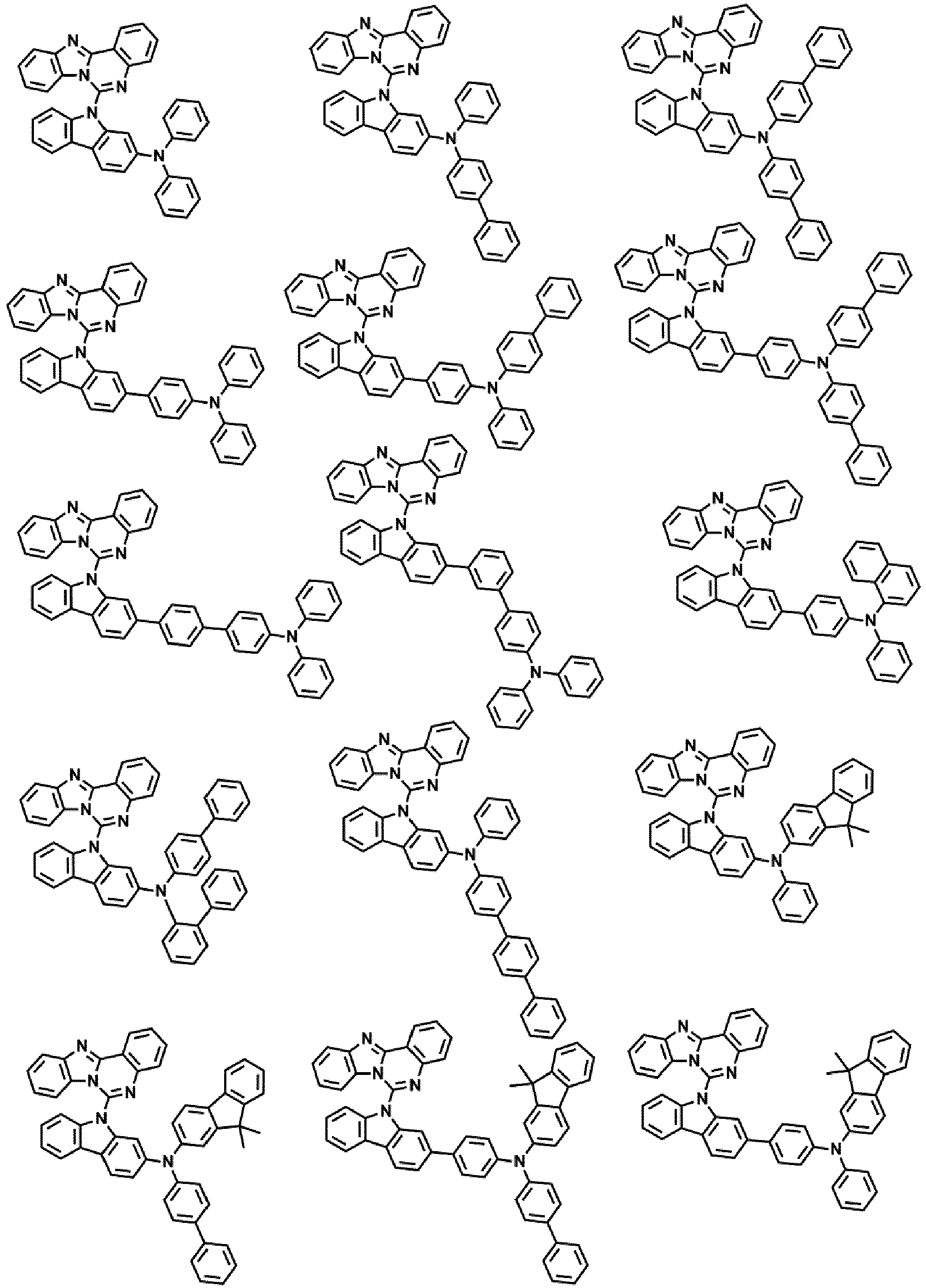


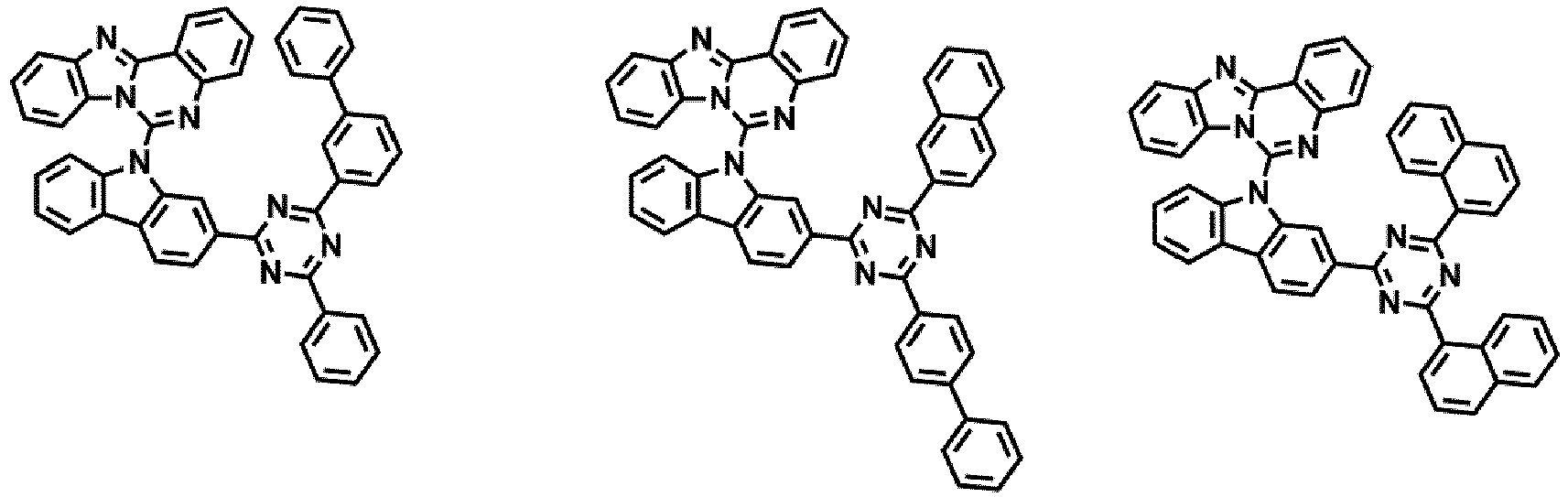


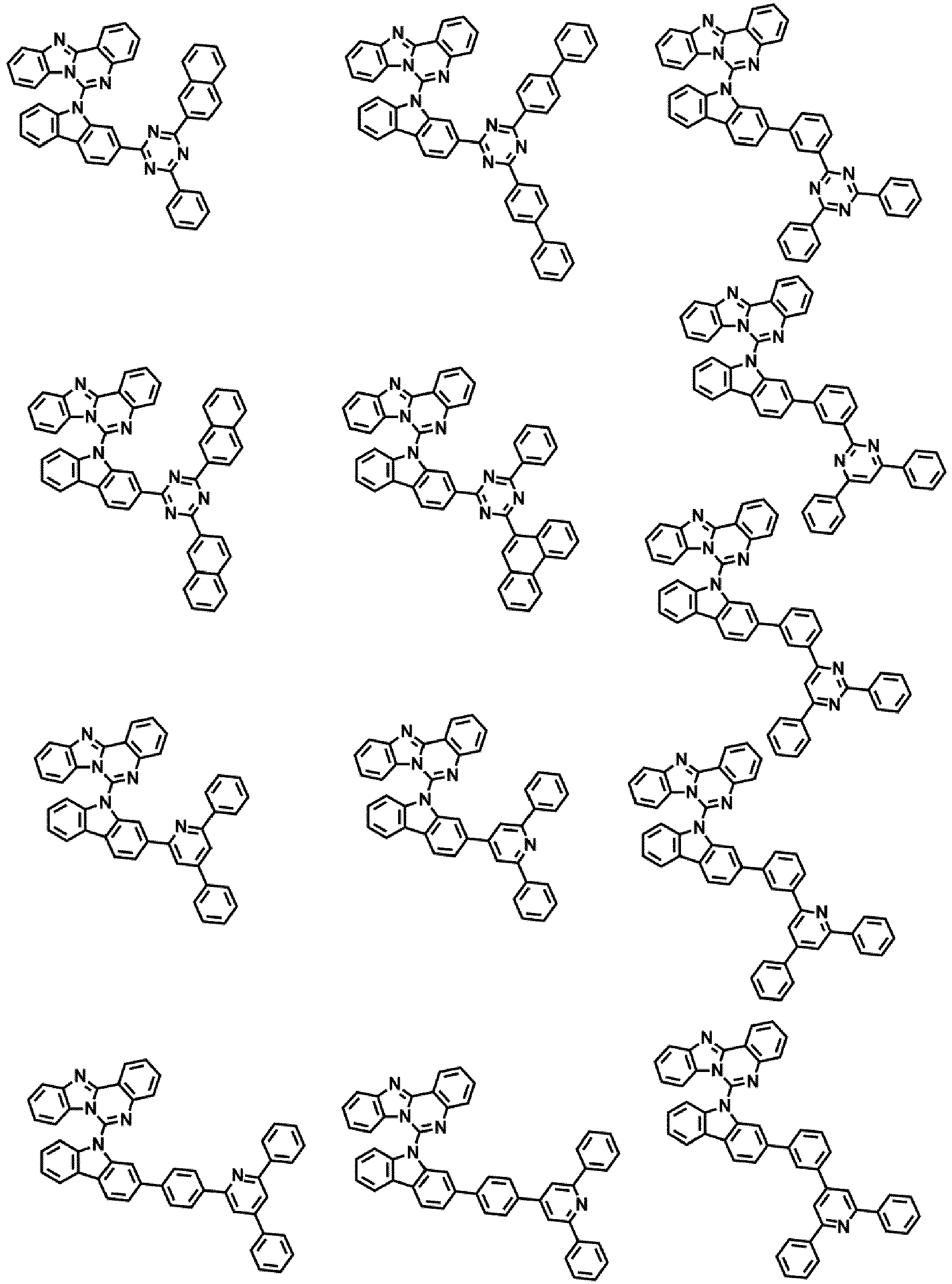


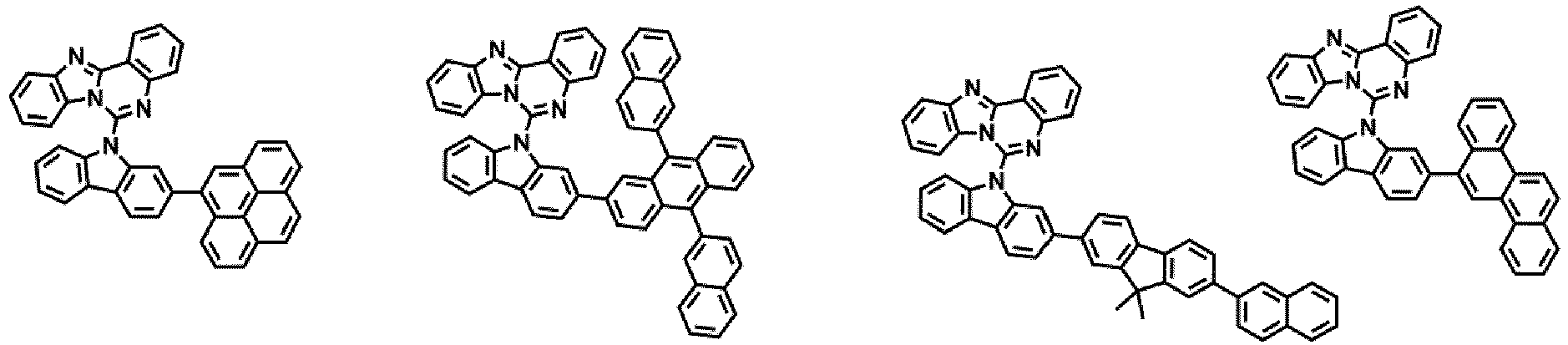


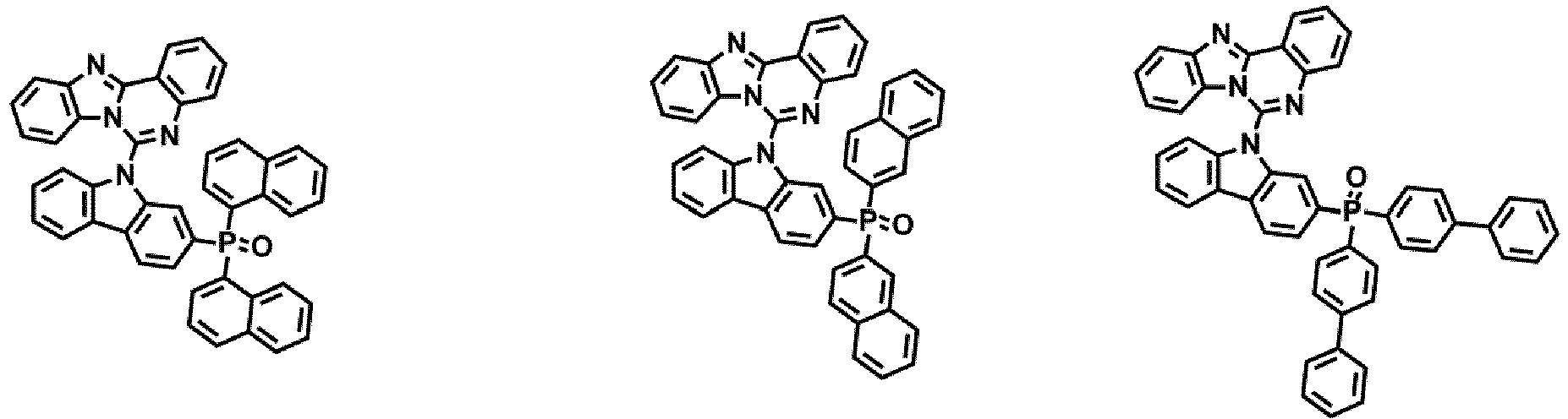




- Organische, elektronische Vorrichtung als organische, lichtemittierende Vorrichtung, umfassend:eine erste Elektrode;eine zweite Elektrode, die gegenüber der ersten Elektrode bereitgestellt ist; undeine oder mehrere Schichten aus organischem Material, die zwischen der ersten und der zweiten Elektrode bereitgestellt sind,worin eine oder mehrere Schichten der Schichten aus organischem Material die Verbindung gemäß mindestens einem der Ansprüche 1 bis 10 umfassen.
- Organische, elektronische Vorrichtung gemäß Anspruch 11, worin die Schicht aus organischem Material eine Lochinjektionsschicht oder eine Lochübertragungsschicht umfasst und die Lochinjektionsschicht oder die Lochübertragungsschicht die Verbindung umfasst.
- Organische, elektronische Vorrichtung gemäß Anspruch 11, worin die Schicht aus organischem Material eine lichtemittierende Schicht umfasst und die lichtemittierende Schicht die Verbindung umfasst.
- Organische, elektronische Vorrichtung gemäß Anspruch 11, worin die Schicht aus organischem Material eine Elektronenübertragungsschicht oder eine Elektroneninjektionsschicht umfasst und die Elektronenübertragungsschicht oder die Elektroneninjektionsschicht die Verbindung umfasst.
- Organische, elektronische Vorrichtung gemäß Anspruch 11, worin die Schicht aus organischem Material eine lichtemittierende Schicht umfasst, welche eine Verbindung der folgenden chemischen Formel 4 oder Formel 5 umfasst:
 Ar3 ein Benzofluorengerüst, ein Fluoranthengerüst, ein Pyrengerüst oder ein Chrysengerüst ist;L3 eine Einfachbindung, eine C6- bis C30-Arylengruppe oder eine zweiwertige C5- bis C30-heterocyclische Gruppe ist;X1 und X2 gleich oder voneinander verschieden sind und jeweils unabhängig voneinander aus der Gruppe ausgewählt sind, bestehend aus einer substituierten oder unsubstituierten C6- bis C30-Arylgrupppe, einer substituierten oder unsubstituierten C5- bis C30-heterocyclischen Gruppe, einer substituierten oder unsubstituierten C1- bis C30-Alkylgruppe und einer substituierten oder unsubstituierten C7- bis C30-Aralkygruppe, und X1 und X2 miteinander binden, um einen gesättigten oder ungesättigten Ring zu bilden;r eine Zahl von 1 oder größer ist; undwenn r 2 oder größer ist, X1s gleich oder voneinander verschieden und X2s gleich oder voneinander verschieden sind,
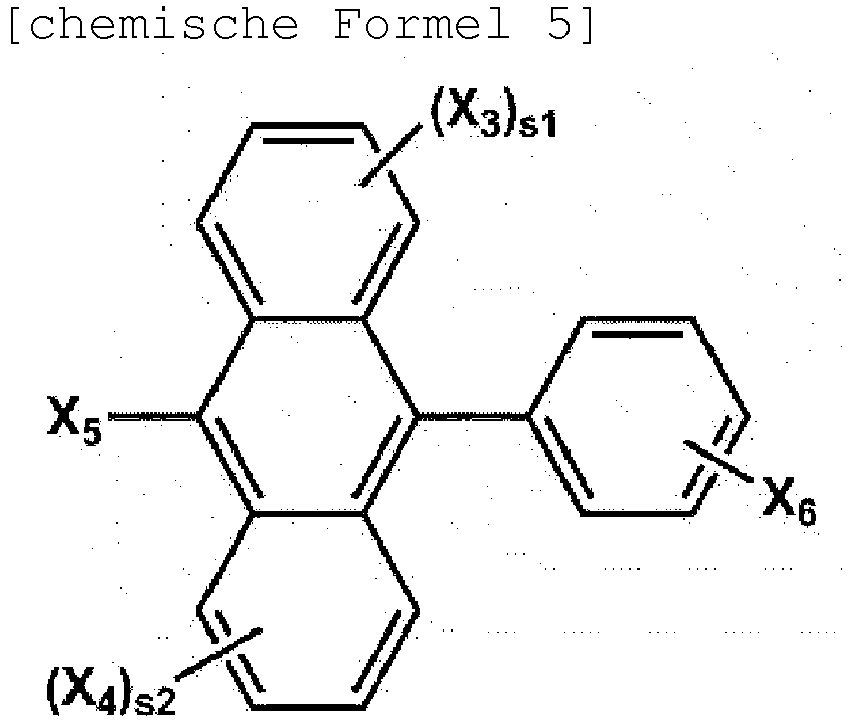 X5 eine substituierte oder unsubstituierte 1-Naphthylgruppe, eine substituierte oder unsubstituierte 2-Naphthylgruppe, eine substituierte oder unsubstituierte 1-Anthrylgruppe, eine substituierte oder unsubstituierte 2-Anthrylgruppe, eine substituierte oder unsubstituierte 1-Phenanthrylgruppe, eine substituierte oder unsubstituierte 2-Phenanthrylgruppe, eine substituierte oder unsubstituierte 3-Phenanthrylgruppe, eine substituierte oder unsubstituierte 4-Phenanthrylgruppe, eine substituierte oder unsubstituierte 9-Phenanthrylgruppe, eine substituierte oder unsubstituierte 1-Naphthacenylgruppe, eine substituierte oder unsubstituierte 2-Naphthacenylgruppe, eine substituierte oder unsubstituierte 9-Naphthacenylgruppe, eine substituierte oder unsubstituierte 1-Pyrenylgruppe, eine substituierte oder unsubstituierte 2-Pyrenylgruppe, eine substituierte oder unsubstituierte 4-Pyrenylguppe, eine substituierte oder unsubstituierte 3-Methyl-2-naphthylgruppe, eine substituierte oder unsubstituierte 4-Methyl-1-naphthylgruppe oder die folgende Strukturformel ist
 X6 eine Gruppe ist, ausgewählt aus der Gruppe bestehend aus einer Phenylgruppe, einer 1-Naphthylgruppe, einer 2-Naphthylgruppe, einer 1-Anthrylgruppe, einer 2-Anthrylgruppe, einer 9-Anthrylgruppe, einer 1-Phenanthrylgruppe, einer 2-Phenanthrylgruppe, einer 3-Phenanthrylgruppe, einer 4-Phenanthrylgruppe, einer 9-Phenanthrylgruppe, einer 1-Naphthacenylgruppe, einer 2-Naphthacenylgruppe, einer 9-Naphthacenylgruppe, einer 1-Pyrenylgruppe, einer 2-Pyrenylgruppe, einer 4-Pyrenylgruppe, einer 2-Biphenylylgruppe, einer 3-Biphenylylgruppe, einer 4-Biphenylylgruppe, einer p-Terphenyl-4-ylgruppe, einer p-Terphenyl-3-ylgruppe, einer p-Terphenyl-2-ylgruppe, einer m-Terphenyl-4-ylgruppe, einer m-Terphenyl-3-ylgruppe, einer m-Terphenyl-2-ylgruppe, einer o-Tolylgruppe, einer m-Tolylgruppe, einer p-Tolylgruppe, einer p-t-Butylphenylgruppe, einer p-(2-Phenylpropyl)phenylgruppe, einer 3-Methyl-2-naphthylgruppe, einer 4-Methyl-1-naphthylgruppe, einer 4-Methyl-1-anthrylgruppe, einer 4'-Methylbiphenylylgruppe, einer 4"-t-Butyl-p-terphenyl-4-ylgruppe und einer 3-Fluoranthenylgruppe;X3 und X4 gleich oder voneinander verschieden sind und jeweils unabhängig voneinander eine substituierte oder unsubstituierte Arylgruppe mit 6 bis 50 Kohlenstoffatomen, eine substituierte oder unsubstituierte Heteroarylgruppe mit 5 bis 50 Kernatomen, eine substituierte oder unsubstituierte Alkylgruppe mit 1 bis 50 Kohlenstoffatomen, eine substituierte oder unsubstituierte Alkoxygruppe mit 1 bis 50 Kohlenstoffatomen, eine substituierte oder unsubstituierte Aralkylgruppe mit 6 bis 50 Kohlenstoffatomen, eine substituierte oder unsubstituierte Aryloxygruppe mit 5 bis 50 Kernatomen, eine substituierte oder unsubstituierte Arylthiogruppe mit 5 bis 50 Kernatomen, eine substituierte oder unsubstituierte Alkoxycarbonylgruppe mit 1 bis 50 Kohlenstoffatomen, eine Carboxylgruppe, ein Halogenatom, eine Cyanogruppe, eine Nitrogruppe oder eine Hydroxylgruppe sind; unds1 und s2 jeweils eine Zahl von 0 bis 4 sind.
Applications Claiming Priority (2)
| Application Number | Priority Date | Filing Date | Title |
|---|---|---|---|
| KR20150080126 | 2015-06-05 | ||
| PCT/KR2016/006014 WO2016195461A2 (ko) | 2015-06-05 | 2016-06-07 | 화합물 및 이를 포함하는 유기 전자 소자 |
Publications (3)
| Publication Number | Publication Date |
|---|---|
| EP3305775A2 EP3305775A2 (de) | 2018-04-11 |
| EP3305775A4 EP3305775A4 (de) | 2018-11-14 |
| EP3305775B1 true EP3305775B1 (de) | 2019-08-28 |
Family
ID=57441215
Family Applications (1)
| Application Number | Title | Priority Date | Filing Date |
|---|---|---|---|
| EP16803814.9A Active EP3305775B1 (de) | 2015-06-05 | 2016-06-07 | Verbindung und organisches elektronisches element damit |
Country Status (6)
| Country | Link |
|---|---|
| US (1) | US11031560B2 (de) |
| EP (1) | EP3305775B1 (de) |
| JP (1) | JP6687233B2 (de) |
| KR (1) | KR101778446B1 (de) |
| CN (1) | CN107635985B (de) |
| WO (1) | WO2016195461A2 (de) |
Families Citing this family (6)
| Publication number | Priority date | Publication date | Assignee | Title |
|---|---|---|---|---|
| US12501828B2 (en) * | 2018-12-28 | 2025-12-16 | Samsung Electronics Co., Ltd. | Organic light-emitting device and apparatus including the same |
| CN111377848A (zh) * | 2018-12-29 | 2020-07-07 | 江苏三月光电科技有限公司 | 一种以芴为核心的有机化合物及其制备方法和其应用 |
| KR102903020B1 (ko) | 2021-05-14 | 2025-12-22 | 삼성디스플레이 주식회사 | 헤테로시클릭 화합물을 포함한 발광 소자 및 상기 발광 소자를 포함한 전자 장치 |
| CN115340547A (zh) * | 2021-05-15 | 2022-11-15 | 石家庄诚志永华显示材料有限公司 | 氨基环状化合物、有机电致发光器件、有机电致发光装置 |
| CN113801057B (zh) * | 2021-08-13 | 2023-04-18 | 浙江大学 | 䓛基氮杂[7]螺烯类化合物、制备方法及应用 |
| CN113788832B (zh) * | 2021-08-13 | 2022-08-05 | 浙江大学 | 䓛基氮杂双[6]螺烯类化合物及其在空穴传输材料和太阳能电池中的应用 |
Family Cites Families (14)
| Publication number | Priority date | Publication date | Assignee | Title |
|---|---|---|---|---|
| JP2003012890A (ja) | 2001-07-03 | 2003-01-15 | Kyocera Chemical Corp | 封止用樹脂組成物および電子部品封止装置 |
| DE10135513B4 (de) | 2001-07-20 | 2005-02-24 | Novaled Gmbh | Lichtemittierendes Bauelement mit organischen Schichten |
| ATE529494T1 (de) * | 2002-07-19 | 2011-11-15 | Idemitsu Kosan Co | Organische elektrolumineszente vorrichtungen und organisches lichtemittierendes medium |
| JP2004200141A (ja) * | 2002-10-24 | 2004-07-15 | Toyota Industries Corp | 有機el素子 |
| KR100864364B1 (ko) * | 2005-12-13 | 2008-10-17 | 주식회사 엘지화학 | 신규한 이미다조퀴나졸린 유도체, 이의 제조방법 및 이를이용한 유기전기소자 |
| JP5801193B2 (ja) * | 2008-11-03 | 2015-10-28 | エルジー・ケム・リミテッド | 新しい含窒素複素環化合物およびそれを用いた有機電子素子 |
| KR20110008784A (ko) | 2009-07-21 | 2011-01-27 | 다우어드밴스드디스플레이머티리얼 유한회사 | 신규한 유기 발광 화합물 및 이를 포함하는 유기 전계 발광 소자 |
| JP6054290B2 (ja) * | 2010-06-15 | 2016-12-27 | メルク パテント ゲーエムベーハー | 金属錯体 |
| DE102010048074A1 (de) * | 2010-10-09 | 2012-04-12 | Merck Patent Gmbh | Materialien für elektronische Vorrichtungen |
| KR101934135B1 (ko) * | 2011-06-03 | 2019-04-05 | 메르크 파텐트 게엠베하 | 유기 전계발광 디바이스 |
| EP2719742B1 (de) * | 2011-06-13 | 2016-04-27 | LG Chem, Ltd. | Neue verbindungen und diese verwendende organische elektronische vorrichtung |
| KR20140064686A (ko) * | 2012-11-20 | 2014-05-28 | 에스에프씨 주식회사 | 안트라센 유도체 화합물 및 이를 포함하는 유기전계발광소자 |
| KR20150010016A (ko) | 2013-07-17 | 2015-01-28 | 롬엔드하스전자재료코리아유한회사 | 유기 전계 발광 소자 |
| KR20150080126A (ko) | 2013-12-30 | 2015-07-09 | 경희대학교 산학협력단 | 전기자동차의 배터리 충전 방법 |
-
2016
- 2016-06-03 KR KR1020160069331A patent/KR101778446B1/ko active Active
- 2016-06-07 US US15/578,973 patent/US11031560B2/en active Active
- 2016-06-07 WO PCT/KR2016/006014 patent/WO2016195461A2/ko not_active Ceased
- 2016-06-07 JP JP2017560164A patent/JP6687233B2/ja active Active
- 2016-06-07 CN CN201680032852.6A patent/CN107635985B/zh active Active
- 2016-06-07 EP EP16803814.9A patent/EP3305775B1/de active Active
Non-Patent Citations (1)
| Title |
|---|
| None * |
Also Published As
| Publication number | Publication date |
|---|---|
| WO2016195461A3 (ko) | 2017-05-26 |
| JP6687233B2 (ja) | 2020-04-22 |
| CN107635985A (zh) | 2018-01-26 |
| EP3305775A4 (de) | 2018-11-14 |
| WO2016195461A2 (ko) | 2016-12-08 |
| JP2018521002A (ja) | 2018-08-02 |
| US11031560B2 (en) | 2021-06-08 |
| US20180138422A1 (en) | 2018-05-17 |
| CN107635985B (zh) | 2021-09-28 |
| KR20160143558A (ko) | 2016-12-14 |
| KR101778446B1 (ko) | 2017-09-14 |
| EP3305775A2 (de) | 2018-04-11 |
Similar Documents
| Publication | Publication Date | Title |
|---|---|---|
| CN115557879B (zh) | 化合物和包含其的有机电子器件 | |
| EP3312256B1 (de) | Organische lichtemittierende vorrichtung | |
| EP3357912B1 (de) | Verwendung von spiroverbindung und diese enthaltendes organisches lichtemittierendes element | |
| EP3378864B1 (de) | Spiroverbindung und organisches lichtemittierendes element damit | |
| EP3342774B1 (de) | Heterocyclische verbindung und organisches lichtemittierendes element damit | |
| EP3351523B1 (de) | Verbindung und organische lichtemittierende vorrichtung damit | |
| EP3339293B1 (de) | Verbindung und organische elektronische vorrichtung damit | |
| EP3336077B1 (de) | Aminbasierte verbindung und organisches lichtemittierendes element damit | |
| EP3305775B1 (de) | Verbindung und organisches elektronisches element damit | |
| EP3388438B1 (de) | Spiro-strukturierte verbindung und organische elektronische vorrichtung damit | |
| EP3260438B1 (de) | Verbindung mit doppelter spiro-konfiguration und organische lichtemittierende vorrichtung damit | |
| EP3378865B1 (de) | Spiroverbindung und organisches lichtemittierendes element damit | |
| EP3305764B1 (de) | Organische doppelspiroverbindung und organisches elektronisches element damit | |
| EP3330249B1 (de) | Aminbasierte verbindung und diese verbindung enthaltendes, organisches, lichtemittierendes element | |
| CN107667091B (zh) | 多环化合物和包含其的有机发光元件 | |
| EP3321246B1 (de) | Doppelspiroverbindung und organisches lichtemittierendes element damit | |
| EP3351531A1 (de) | Heterocyclische verbindung und organische lichtemittierende vorrichtung damit |
Legal Events
| Date | Code | Title | Description |
|---|---|---|---|
| STAA | Information on the status of an ep patent application or granted ep patent |
Free format text: STATUS: THE INTERNATIONAL PUBLICATION HAS BEEN MADE |
|
| PUAI | Public reference made under article 153(3) epc to a published international application that has entered the european phase |
Free format text: ORIGINAL CODE: 0009012 |
|
| STAA | Information on the status of an ep patent application or granted ep patent |
Free format text: STATUS: REQUEST FOR EXAMINATION WAS MADE |
|
| 17P | Request for examination filed |
Effective date: 20171211 |
|
| AK | Designated contracting states |
Kind code of ref document: A2 Designated state(s): AL AT BE BG CH CY CZ DE DK EE ES FI FR GB GR HR HU IE IS IT LI LT LU LV MC MK MT NL NO PL PT RO RS SE SI SK SM TR |
|
| AX | Request for extension of the european patent |
Extension state: BA ME |
|
| DAV | Request for validation of the european patent (deleted) | ||
| DAX | Request for extension of the european patent (deleted) | ||
| A4 | Supplementary search report drawn up and despatched |
Effective date: 20181011 |
|
| RIC1 | Information provided on ipc code assigned before grant |
Ipc: H01L 51/50 20060101ALI20181005BHEP Ipc: C07D 487/04 20060101AFI20181005BHEP Ipc: C09K 11/06 20060101ALI20181005BHEP |
|
| REG | Reference to a national code |
Ref country code: DE Ref legal event code: R079 Ref document number: 602016019622 Country of ref document: DE Free format text: PREVIOUS MAIN CLASS: C07D0401040000 Ipc: C07D0487040000 |
|
| GRAP | Despatch of communication of intention to grant a patent |
Free format text: ORIGINAL CODE: EPIDOSNIGR1 |
|
| STAA | Information on the status of an ep patent application or granted ep patent |
Free format text: STATUS: GRANT OF PATENT IS INTENDED |
|
| RIC1 | Information provided on ipc code assigned before grant |
Ipc: H01L 51/50 20060101ALI20190503BHEP Ipc: C09K 11/06 20060101ALI20190503BHEP Ipc: C07D 487/04 20060101AFI20190503BHEP |
|
| INTG | Intention to grant announced |
Effective date: 20190531 |
|
| GRAS | Grant fee paid |
Free format text: ORIGINAL CODE: EPIDOSNIGR3 |
|
| GRAA | (expected) grant |
Free format text: ORIGINAL CODE: 0009210 |
|
| STAA | Information on the status of an ep patent application or granted ep patent |
Free format text: STATUS: THE PATENT HAS BEEN GRANTED |
|
| AK | Designated contracting states |
Kind code of ref document: B1 Designated state(s): AL AT BE BG CH CY CZ DE DK EE ES FI FR GB GR HR HU IE IS IT LI LT LU LV MC MK MT NL NO PL PT RO RS SE SI SK SM TR |
|
| REG | Reference to a national code |
Ref country code: GB Ref legal event code: FG4D |
|
| REG | Reference to a national code |
Ref country code: CH Ref legal event code: EP |
|
| REG | Reference to a national code |
Ref country code: AT Ref legal event code: REF Ref document number: 1172256 Country of ref document: AT Kind code of ref document: T Effective date: 20190915 |
|
| REG | Reference to a national code |
Ref country code: IE Ref legal event code: FG4D |
|
| REG | Reference to a national code |
Ref country code: DE Ref legal event code: R096 Ref document number: 602016019622 Country of ref document: DE |
|
| REG | Reference to a national code |
Ref country code: NL Ref legal event code: MP Effective date: 20190828 |
|
| REG | Reference to a national code |
Ref country code: LT Ref legal event code: MG4D |
|
| PG25 | Lapsed in a contracting state [announced via postgrant information from national office to epo] |
Ref country code: NO Free format text: LAPSE BECAUSE OF FAILURE TO SUBMIT A TRANSLATION OF THE DESCRIPTION OR TO PAY THE FEE WITHIN THE PRESCRIBED TIME-LIMIT Effective date: 20191128 Ref country code: HR Free format text: LAPSE BECAUSE OF FAILURE TO SUBMIT A TRANSLATION OF THE DESCRIPTION OR TO PAY THE FEE WITHIN THE PRESCRIBED TIME-LIMIT Effective date: 20190828 Ref country code: SE Free format text: LAPSE BECAUSE OF FAILURE TO SUBMIT A TRANSLATION OF THE DESCRIPTION OR TO PAY THE FEE WITHIN THE PRESCRIBED TIME-LIMIT Effective date: 20190828 Ref country code: FI Free format text: LAPSE BECAUSE OF FAILURE TO SUBMIT A TRANSLATION OF THE DESCRIPTION OR TO PAY THE FEE WITHIN THE PRESCRIBED TIME-LIMIT Effective date: 20190828 Ref country code: PT Free format text: LAPSE BECAUSE OF FAILURE TO SUBMIT A TRANSLATION OF THE DESCRIPTION OR TO PAY THE FEE WITHIN THE PRESCRIBED TIME-LIMIT Effective date: 20191230 Ref country code: LT Free format text: LAPSE BECAUSE OF FAILURE TO SUBMIT A TRANSLATION OF THE DESCRIPTION OR TO PAY THE FEE WITHIN THE PRESCRIBED TIME-LIMIT Effective date: 20190828 Ref country code: NL Free format text: LAPSE BECAUSE OF FAILURE TO SUBMIT A TRANSLATION OF THE DESCRIPTION OR TO PAY THE FEE WITHIN THE PRESCRIBED TIME-LIMIT Effective date: 20190828 Ref country code: BG Free format text: LAPSE BECAUSE OF FAILURE TO SUBMIT A TRANSLATION OF THE DESCRIPTION OR TO PAY THE FEE WITHIN THE PRESCRIBED TIME-LIMIT Effective date: 20191128 |
|
| PG25 | Lapsed in a contracting state [announced via postgrant information from national office to epo] |
Ref country code: ES Free format text: LAPSE BECAUSE OF FAILURE TO SUBMIT A TRANSLATION OF THE DESCRIPTION OR TO PAY THE FEE WITHIN THE PRESCRIBED TIME-LIMIT Effective date: 20190828 Ref country code: GR Free format text: LAPSE BECAUSE OF FAILURE TO SUBMIT A TRANSLATION OF THE DESCRIPTION OR TO PAY THE FEE WITHIN THE PRESCRIBED TIME-LIMIT Effective date: 20191129 Ref country code: AL Free format text: LAPSE BECAUSE OF FAILURE TO SUBMIT A TRANSLATION OF THE DESCRIPTION OR TO PAY THE FEE WITHIN THE PRESCRIBED TIME-LIMIT Effective date: 20190828 Ref country code: LV Free format text: LAPSE BECAUSE OF FAILURE TO SUBMIT A TRANSLATION OF THE DESCRIPTION OR TO PAY THE FEE WITHIN THE PRESCRIBED TIME-LIMIT Effective date: 20190828 Ref country code: IS Free format text: LAPSE BECAUSE OF FAILURE TO SUBMIT A TRANSLATION OF THE DESCRIPTION OR TO PAY THE FEE WITHIN THE PRESCRIBED TIME-LIMIT Effective date: 20191228 Ref country code: RS Free format text: LAPSE BECAUSE OF FAILURE TO SUBMIT A TRANSLATION OF THE DESCRIPTION OR TO PAY THE FEE WITHIN THE PRESCRIBED TIME-LIMIT Effective date: 20190828 |
|
| REG | Reference to a national code |
Ref country code: AT Ref legal event code: MK05 Ref document number: 1172256 Country of ref document: AT Kind code of ref document: T Effective date: 20190828 |
|
| PG25 | Lapsed in a contracting state [announced via postgrant information from national office to epo] |
Ref country code: TR Free format text: LAPSE BECAUSE OF FAILURE TO SUBMIT A TRANSLATION OF THE DESCRIPTION OR TO PAY THE FEE WITHIN THE PRESCRIBED TIME-LIMIT Effective date: 20190828 |
|
| PG25 | Lapsed in a contracting state [announced via postgrant information from national office to epo] |
Ref country code: RO Free format text: LAPSE BECAUSE OF FAILURE TO SUBMIT A TRANSLATION OF THE DESCRIPTION OR TO PAY THE FEE WITHIN THE PRESCRIBED TIME-LIMIT Effective date: 20190828 Ref country code: PL Free format text: LAPSE BECAUSE OF FAILURE TO SUBMIT A TRANSLATION OF THE DESCRIPTION OR TO PAY THE FEE WITHIN THE PRESCRIBED TIME-LIMIT Effective date: 20190828 Ref country code: EE Free format text: LAPSE BECAUSE OF FAILURE TO SUBMIT A TRANSLATION OF THE DESCRIPTION OR TO PAY THE FEE WITHIN THE PRESCRIBED TIME-LIMIT Effective date: 20190828 Ref country code: IT Free format text: LAPSE BECAUSE OF FAILURE TO SUBMIT A TRANSLATION OF THE DESCRIPTION OR TO PAY THE FEE WITHIN THE PRESCRIBED TIME-LIMIT Effective date: 20190828 Ref country code: AT Free format text: LAPSE BECAUSE OF FAILURE TO SUBMIT A TRANSLATION OF THE DESCRIPTION OR TO PAY THE FEE WITHIN THE PRESCRIBED TIME-LIMIT Effective date: 20190828 Ref country code: DK Free format text: LAPSE BECAUSE OF FAILURE TO SUBMIT A TRANSLATION OF THE DESCRIPTION OR TO PAY THE FEE WITHIN THE PRESCRIBED TIME-LIMIT Effective date: 20190828 |
|
| PG25 | Lapsed in a contracting state [announced via postgrant information from national office to epo] |
Ref country code: IS Free format text: LAPSE BECAUSE OF FAILURE TO SUBMIT A TRANSLATION OF THE DESCRIPTION OR TO PAY THE FEE WITHIN THE PRESCRIBED TIME-LIMIT Effective date: 20200224 Ref country code: SM Free format text: LAPSE BECAUSE OF FAILURE TO SUBMIT A TRANSLATION OF THE DESCRIPTION OR TO PAY THE FEE WITHIN THE PRESCRIBED TIME-LIMIT Effective date: 20190828 Ref country code: SK Free format text: LAPSE BECAUSE OF FAILURE TO SUBMIT A TRANSLATION OF THE DESCRIPTION OR TO PAY THE FEE WITHIN THE PRESCRIBED TIME-LIMIT Effective date: 20190828 Ref country code: CZ Free format text: LAPSE BECAUSE OF FAILURE TO SUBMIT A TRANSLATION OF THE DESCRIPTION OR TO PAY THE FEE WITHIN THE PRESCRIBED TIME-LIMIT Effective date: 20190828 |
|
| REG | Reference to a national code |
Ref country code: DE Ref legal event code: R097 Ref document number: 602016019622 Country of ref document: DE |
|
| PLBE | No opposition filed within time limit |
Free format text: ORIGINAL CODE: 0009261 |
|
| STAA | Information on the status of an ep patent application or granted ep patent |
Free format text: STATUS: NO OPPOSITION FILED WITHIN TIME LIMIT |
|
| PG2D | Information on lapse in contracting state deleted |
Ref country code: IS |
|
| 26N | No opposition filed |
Effective date: 20200603 |
|
| PG25 | Lapsed in a contracting state [announced via postgrant information from national office to epo] |
Ref country code: SI Free format text: LAPSE BECAUSE OF FAILURE TO SUBMIT A TRANSLATION OF THE DESCRIPTION OR TO PAY THE FEE WITHIN THE PRESCRIBED TIME-LIMIT Effective date: 20190828 |
|
| PG25 | Lapsed in a contracting state [announced via postgrant information from national office to epo] |
Ref country code: MC Free format text: LAPSE BECAUSE OF FAILURE TO SUBMIT A TRANSLATION OF THE DESCRIPTION OR TO PAY THE FEE WITHIN THE PRESCRIBED TIME-LIMIT Effective date: 20190828 |
|
| REG | Reference to a national code |
Ref country code: CH Ref legal event code: PL |
|
| PG25 | Lapsed in a contracting state [announced via postgrant information from national office to epo] |
Ref country code: LU Free format text: LAPSE BECAUSE OF NON-PAYMENT OF DUE FEES Effective date: 20200607 |
|
| REG | Reference to a national code |
Ref country code: BE Ref legal event code: MM Effective date: 20200630 |
|
| PG25 | Lapsed in a contracting state [announced via postgrant information from national office to epo] |
Ref country code: IE Free format text: LAPSE BECAUSE OF NON-PAYMENT OF DUE FEES Effective date: 20200607 Ref country code: CH Free format text: LAPSE BECAUSE OF NON-PAYMENT OF DUE FEES Effective date: 20200630 Ref country code: LI Free format text: LAPSE BECAUSE OF NON-PAYMENT OF DUE FEES Effective date: 20200630 |
|
| PG25 | Lapsed in a contracting state [announced via postgrant information from national office to epo] |
Ref country code: BE Free format text: LAPSE BECAUSE OF NON-PAYMENT OF DUE FEES Effective date: 20200630 |
|
| PG25 | Lapsed in a contracting state [announced via postgrant information from national office to epo] |
Ref country code: MT Free format text: LAPSE BECAUSE OF FAILURE TO SUBMIT A TRANSLATION OF THE DESCRIPTION OR TO PAY THE FEE WITHIN THE PRESCRIBED TIME-LIMIT Effective date: 20190828 Ref country code: CY Free format text: LAPSE BECAUSE OF FAILURE TO SUBMIT A TRANSLATION OF THE DESCRIPTION OR TO PAY THE FEE WITHIN THE PRESCRIBED TIME-LIMIT Effective date: 20190828 |
|
| PG25 | Lapsed in a contracting state [announced via postgrant information from national office to epo] |
Ref country code: MK Free format text: LAPSE BECAUSE OF FAILURE TO SUBMIT A TRANSLATION OF THE DESCRIPTION OR TO PAY THE FEE WITHIN THE PRESCRIBED TIME-LIMIT Effective date: 20190828 |
|
| PGFP | Annual fee paid to national office [announced via postgrant information from national office to epo] |
Ref country code: DE Payment date: 20250520 Year of fee payment: 10 |
|
| PGFP | Annual fee paid to national office [announced via postgrant information from national office to epo] |
Ref country code: GB Payment date: 20250520 Year of fee payment: 10 |
|
| PGFP | Annual fee paid to national office [announced via postgrant information from national office to epo] |
Ref country code: FR Payment date: 20250521 Year of fee payment: 10 |