EP3305812A1 - Combinaison d'agoniste dr5 et d'antagoniste anti-pd-1 et procédés d'utilisation - Google Patents
Combinaison d'agoniste dr5 et d'antagoniste anti-pd-1 et procédés d'utilisation Download PDFInfo
- Publication number
- EP3305812A1 EP3305812A1 EP17186093.5A EP17186093A EP3305812A1 EP 3305812 A1 EP3305812 A1 EP 3305812A1 EP 17186093 A EP17186093 A EP 17186093A EP 3305812 A1 EP3305812 A1 EP 3305812A1
- Authority
- EP
- European Patent Office
- Prior art keywords
- agonist
- cancer
- antagonist
- antibody
- seq
- Prior art date
- Legal status (The legal status is an assumption and is not a legal conclusion. Google has not performed a legal analysis and makes no representation as to the accuracy of the status listed.)
- Granted
Links
Images

Classifications
-
- A—HUMAN NECESSITIES
- A61—MEDICAL OR VETERINARY SCIENCE; HYGIENE
- A61K—PREPARATIONS FOR MEDICAL, DENTAL OR TOILETRY PURPOSES
- A61K39/00—Medicinal preparations containing antigens or antibodies
- A61K39/395—Antibodies; Immunoglobulins; Immune serum, e.g. antilymphocytic serum
- A61K39/39533—Antibodies; Immunoglobulins; Immune serum, e.g. antilymphocytic serum against materials from animals
- A61K39/39558—Antibodies; Immunoglobulins; Immune serum, e.g. antilymphocytic serum against materials from animals against tumor tissues, cells, antigens
-
- A—HUMAN NECESSITIES
- A61—MEDICAL OR VETERINARY SCIENCE; HYGIENE
- A61K—PREPARATIONS FOR MEDICAL, DENTAL OR TOILETRY PURPOSES
- A61K39/00—Medicinal preparations containing antigens or antibodies
- A61K39/395—Antibodies; Immunoglobulins; Immune serum, e.g. antilymphocytic serum
- A61K39/39533—Antibodies; Immunoglobulins; Immune serum, e.g. antilymphocytic serum against materials from animals
- A61K39/3955—Antibodies; Immunoglobulins; Immune serum, e.g. antilymphocytic serum against materials from animals against proteinaceous materials, e.g. enzymes, hormones, lymphokines
-
- A—HUMAN NECESSITIES
- A61—MEDICAL OR VETERINARY SCIENCE; HYGIENE
- A61P—SPECIFIC THERAPEUTIC ACTIVITY OF CHEMICAL COMPOUNDS OR MEDICINAL PREPARATIONS
- A61P35/00—Antineoplastic agents
-
- C—CHEMISTRY; METALLURGY
- C07—ORGANIC CHEMISTRY
- C07K—PEPTIDES
- C07K16/00—Immunoglobulins [IG], e.g. monoclonal or polyclonal antibodies
- C07K16/18—Immunoglobulins [IG], e.g. monoclonal or polyclonal antibodies against material from animals or humans
- C07K16/28—Immunoglobulins [IG], e.g. monoclonal or polyclonal antibodies against material from animals or humans against receptors, cell surface antigens or cell surface determinants
- C07K16/2803—Immunoglobulins [IG], e.g. monoclonal or polyclonal antibodies against material from animals or humans against receptors, cell surface antigens or cell surface determinants against the immunoglobulin superfamily
- C07K16/2818—Immunoglobulins [IG], e.g. monoclonal or polyclonal antibodies against material from animals or humans against receptors, cell surface antigens or cell surface determinants against the immunoglobulin superfamily against CD28 or CD152
-
- C—CHEMISTRY; METALLURGY
- C07—ORGANIC CHEMISTRY
- C07K—PEPTIDES
- C07K16/00—Immunoglobulins [IG], e.g. monoclonal or polyclonal antibodies
- C07K16/18—Immunoglobulins [IG], e.g. monoclonal or polyclonal antibodies against material from animals or humans
- C07K16/28—Immunoglobulins [IG], e.g. monoclonal or polyclonal antibodies against material from animals or humans against receptors, cell surface antigens or cell surface determinants
- C07K16/2803—Immunoglobulins [IG], e.g. monoclonal or polyclonal antibodies against material from animals or humans against receptors, cell surface antigens or cell surface determinants against the immunoglobulin superfamily
- C07K16/2827—Immunoglobulins [IG], e.g. monoclonal or polyclonal antibodies against material from animals or humans against receptors, cell surface antigens or cell surface determinants against the immunoglobulin superfamily against B7 molecules, e.g. CD80, CD86
-
- C—CHEMISTRY; METALLURGY
- C07—ORGANIC CHEMISTRY
- C07K—PEPTIDES
- C07K16/00—Immunoglobulins [IG], e.g. monoclonal or polyclonal antibodies
- C07K16/18—Immunoglobulins [IG], e.g. monoclonal or polyclonal antibodies against material from animals or humans
- C07K16/28—Immunoglobulins [IG], e.g. monoclonal or polyclonal antibodies against material from animals or humans against receptors, cell surface antigens or cell surface determinants
- C07K16/2878—Immunoglobulins [IG], e.g. monoclonal or polyclonal antibodies against material from animals or humans against receptors, cell surface antigens or cell surface determinants against the NGF-receptor/TNF-receptor superfamily, e.g. CD27, CD30, CD40, CD95
-
- A—HUMAN NECESSITIES
- A61—MEDICAL OR VETERINARY SCIENCE; HYGIENE
- A61K—PREPARATIONS FOR MEDICAL, DENTAL OR TOILETRY PURPOSES
- A61K39/00—Medicinal preparations containing antigens or antibodies
- A61K2039/505—Medicinal preparations containing antigens or antibodies comprising antibodies
- A61K2039/507—Comprising a combination of two or more separate antibodies
-
- A—HUMAN NECESSITIES
- A61—MEDICAL OR VETERINARY SCIENCE; HYGIENE
- A61K—PREPARATIONS FOR MEDICAL, DENTAL OR TOILETRY PURPOSES
- A61K39/00—Medicinal preparations containing antigens or antibodies
- A61K2039/545—Medicinal preparations containing antigens or antibodies characterised by the dose, timing or administration schedule
-
- C—CHEMISTRY; METALLURGY
- C07—ORGANIC CHEMISTRY
- C07K—PEPTIDES
- C07K2317/00—Immunoglobulins specific features
- C07K2317/20—Immunoglobulins specific features characterized by taxonomic origin
- C07K2317/21—Immunoglobulins specific features characterized by taxonomic origin from primates, e.g. man
-
- C—CHEMISTRY; METALLURGY
- C07—ORGANIC CHEMISTRY
- C07K—PEPTIDES
- C07K2317/00—Immunoglobulins specific features
- C07K2317/20—Immunoglobulins specific features characterized by taxonomic origin
- C07K2317/24—Immunoglobulins specific features characterized by taxonomic origin containing regions, domains or residues from different species, e.g. chimeric, humanized or veneered
-
- C—CHEMISTRY; METALLURGY
- C07—ORGANIC CHEMISTRY
- C07K—PEPTIDES
- C07K2317/00—Immunoglobulins specific features
- C07K2317/30—Immunoglobulins specific features characterized by aspects of specificity or valency
- C07K2317/31—Immunoglobulins specific features characterized by aspects of specificity or valency multispecific
-
- C—CHEMISTRY; METALLURGY
- C07—ORGANIC CHEMISTRY
- C07K—PEPTIDES
- C07K2317/00—Immunoglobulins specific features
- C07K2317/50—Immunoglobulins specific features characterized by immunoglobulin fragments
- C07K2317/56—Immunoglobulins specific features characterized by immunoglobulin fragments variable (Fv) region, i.e. VH and/or VL
- C07K2317/565—Complementarity determining region [CDR]
-
- C—CHEMISTRY; METALLURGY
- C07—ORGANIC CHEMISTRY
- C07K—PEPTIDES
- C07K2317/00—Immunoglobulins specific features
- C07K2317/50—Immunoglobulins specific features characterized by immunoglobulin fragments
- C07K2317/56—Immunoglobulins specific features characterized by immunoglobulin fragments variable (Fv) region, i.e. VH and/or VL
- C07K2317/569—Single domain, e.g. dAb, sdAb, VHH, VNAR or nanobody®
Definitions
- PD-1 Programmed Cell Death 1
- PD-1 is a cell surface signaling receptor that plays a critical role in the regulation of T cell activation and tolerance ( Keir ME, et al., Annu Rev Immunol 2008; 26:677-704 ). It is a type I transmembrane protein and together with BTLA, CTLA-4, ICOS and CD28, comprise the CD28 family of T cell co-stimulatory receptors.
- PD-1 is primarily expressed on activated T cells, B cells, and myeloid cells ( Dong H, et al., Nat Med 1999; 5:1365-1369 ). It is also expressed on natural killer (NK) cells ( Terme M, et al., Cancer Res 2011; 71:5393-5399 ).
- PD-1 is highly expressed on tumor infiltrating lymphocytes, and its ligands are up-regulated on the cell surface of many different tumors ( Dong H, et al., Nat Med 2002; 8:793-800 ).
- Multiple murine cancer models have demonstrated that binding of ligand to PD-1 results in immune evasion.
- blockade of this interaction results in anti-tumor activity.
- PD-L1 and PD-L2 Two cell surface glycoprotein ligands for PD-1 have been identified, PD-L1 and PD-L2, and have been shown to downregulate T cell activation and cytokine secretion upon binding to PD-1 ( Freeman et al. (2000) J Exp Med 192:1027-34 ; Latchman et al. (2001) Nat Immunol 2:261-8 ; Carter et al. (2002) Eur J Immunol 32:634-43 ; Ohigashi et al. (2005) Clin Cancer Res 11:2947-53 ).
- Both PD-L1 (B7-H1) and PD-L2 (B7-DC) are B7 homologs that bind to PD-1, but do not bind to other CD28 family members (Blank et al. (2004). Expression of PD-L1 on the cell surface has also been shown to be upregulated through IFN-gamma stimulation.
- PD-L1 expression has been found in several murine and human cancers, including human lung, ovarian and colon carcinoma and various myelomas ( Iwai et al. (2002) PNAS 99:12293-7 ; Ohigashi et al. (2005) Clin Cancer Res 11:2947-53 ).
- PD-L1 has been suggested to play a role in tumor immunity by increasing apoptosis of antigen-specific T-cell clones ( Dong et al. (2002) Nat Med 8:793-800 ). It has also been suggested that PD-L1 might be involved in intestinal mucosal inflammation and inhibition of PD-L1 suppresses wasting disease associated with colitis ( Kanai et al. (2003) J Immunol 171:4156-63 ).
- TRAIL tumor necrosis factor
- TNF tumor necrosis factor
- DR4 TRAIL-R1
- DR5 TRAIL-R2
- TRAIL-R1 apoptosis-inducing receptors, which each contain an intracellular death domain (see e.g., Pan G, et al., Science. 1997;276:111-113 , Pan G, et al., Science. 1997;277:815-818 , Sheridan JP, et al., Science.
- DR4 and DR5 recruit FAS associated protein with death domain (FADD) and caspase-8 to form the death-inducing signaling complex (DISC), which activates caspase-8, subsequently leading to the activation of executioner caspases such as caspase-3 that induce apoptosis (see, e.g., Kischkel FC, et al., Immunity. 2000;12:611-620 , Thomas LR, et al., J Biol Chem.
- FADD FAS associated protein with death domain
- DISC death-inducing signaling complex
- TRAIL and agonistic antibodies that recognize TRAIL receptors preferentially kill tumor cells and induce potent anti-tumor activity in a variety of experimental models (see, Griffith TS, et al., Curr Opin Immunol. 1998;10:559-563 , Ashkenazi A, et al., J Clin Invest. 1999;104:155-162 , Walczak H, et al, Nat Med. 1999;5:157-163 , Chuntharapai A, et al., J Immunol. 2001;166:4891-4898 , and Ichikawa K, et al., Nat Med. 2001;7:954-960 ).
- a DR5 agonist e.g., an antibody
- an anti-PD-1 antagonist e.g., an antibody
- the present invention provides a method for the treatment of cancer in a subject by co-administering an effective amount of a PD-1 antagonist and an agent that induces apoptosis in cancer cells, e.g., an agent that engages the DR4 or DR5 receptor, such as a DR4 or DR5 agonist.
- Suitable anti-DR5 agonists for use in the methods of the invention include, without limitation, ligands, antibodies (e.g., monoclonal antibodies and bispecific antibodies) and multivalent agents.
- the DR5 agonist is an antibody selected from the group consisting of Lexatumumab (also known as ETR2-ST01), Tigatuzumab (also known as CS-1008), Conatumumab (also known as AMG 655), Drozitumab, HGSTR2J/KMTRS, and LBY-135.
- the DR5 agonist is a multivalent agent (e.g., TAS266).
- the DR5 agonist is a ligand (e.g., a TNF-related apoptosis-inducing ligand (TRAIL), such as a recombinant human TRAIL, e.g., Dulanermin (also known as AMG951)).
- a ligand e.g., a TNF-related apoptosis-inducing ligand (TRAIL), such as a recombinant human TRAIL, e.g., Dulanermin (also known as AMG951)).
- TRAIL TNF-related apoptosis-inducing ligand
- Dulanermin also known as AMG951
- Suitable PD-1 antagonists for use in the methods of the invention include, without limitation, ligands, antibodies (e.g., monoclonal antibodies and bispecific antibodies), and multivalent agents.
- the PD-1 antagonist is a fusion protein, e.g., an Fc fusion protein, such as AMP-244.
- the PD-1 antagonist is an anti-PD-1 or anti-PD-L1 antibody.
- the PD-1 antagonist is an antibody, such as MK-3475 or CT-011.
- an exemplary anti-PD-1 antibody is 5C4 (referred to as 5C4 in WO 2006/121168 ; also known as MDX-1106, ONO-4538, and Nivolumab) comprising heavy and light chains having the sequences shown in SEQ ID NOs: 11 and 12, respectively, or antigen binding fragments and variants thereof.
- the antibody comprises the heavy and light chain CDRs or VRs of 5C4. Accordingly, in one embodiment, the antibody comprises the CDR1, CDR2, and CDR3 domains of the VH region of 5C4 having the sequence shown in SEQ ID NO: 13, and the CDR1, CDR2 and CDR3 domains of the VL region of 5C4 having the sequence shown in SEQ ID NO:15.
- the antibody comprises the heavy chain CDR1, CDR2 and CDR3 domains having the sequences set forth in SEQ ID NOs: 17, 18, and 19, respectively, and the light chain CDR1, CDR2 and CDR3 domains having the sequences set forth in SEQ ID NOs: 20, 21, and 22, respectively.
- the antibody comprises VH and/or VL regions having the amino acid sequences set forth in SEQ ID NO: 13 and/or SEQ ID NO: 15, respectively.
- the antibody comprises the heavy chain variable (VH) and/or light chain variable (VL) regions encoded by the nucleic acid sequences set forth in SEQ ID NO: 14 and/or SEQ ID NO: 16, respectively.
- the antibody competes for binding with, and/or binds to the same epitope on PD-1 as, the above-mentioned antibodies.
- the antibody has at least about 90% variable region amino acid sequence identity with the above-mentioned antibodies (e.g., at least about 90% , 95% or 99% variable region identity with SEQ ID NO: 13 or SEQ ID NO: 15).
- the PD-1 antagonist is an anti-PD-L1 antibody, such as MEDI4736 (also known as Anti-B7-H1) or MPDL3280A (also known as RG7446).
- An exemplary anti-PD-L1 antibody is 12A4 (referred to as 12A4 in WO 2007/005874 and US Patent No. 7,943,743 ).
- the antibody comprises the heavy and light chain CDRs or VRs of 12A4. Accordingly, in one embodiment, the antibody comprises the CDR1, CDR2, and CDR3 domains of the VH region of 12A4 having the sequence shown in SEQ ID NO: 1, and the CDR1, CDR2 and CDR3 domains of the VL region of 5C4 having the sequence shown in SEQ ID NO: 3.
- the antibody comprises the heavy chain CDR1, CDR2 and CDR3 domains having the sequences set forth in SEQ ID NOs: 5, 6, and 7, respectively, and the light chain CDR1, CDR2 and CDR3 domains having the sequences set forth in SEQ ID NOs: 8, 9, and 10, respectively.
- the antibody comprises VH and/or VL regions having the amino acid sequences set forth in SEQ ID NO: 1and/or SEQ ID NO: 3, respectively.
- the antibody comprises the heavy chain variable (VH) and/or light chain variable (VL) regions encoded by the nucleic acid sequences set forth in SEQ ID NO: 2 and/or SEQ ID NO: 4, respectively.
- the antibody competes for binding with, and/or binds to the same epitope on PD-L1 as, the above-mentioned antibodies.
- the antibody has at least about 90% variable region amino acid sequence identity with the above-mentioned antibodies (e.g., at least about 90% , 95% or 99% variable region identity with SEQ ID NO: 1 or SEQ ID NO: 3).
- the invention provides a method of treating cancer in a subject, the method comprising administering to the subject an effective amount of a PD-1 antagonist and a DR5 agonist, wherein
- the invention provides a method cancer in a subject, the method comprising administering to the subject an effective amount of a PD-1 antagonist and a DR5 agonist, wherein
- the efficacy of the treatment methods provided herein can be assessed using any suitable means.
- the treatment produces at least one therapeutic effect selected from the group consisting of reduction in size of a tumor, reduction in number of metastasic lesions over time, complete response, partial response, and stable disease.
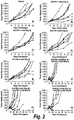
- administration of a PD-1 antagonist and a DR5 agonist results in at least a 1, 1.25, 1.50, 1.75, 2, 2.25, 2.50, 2.75, 3, 3.25, 3.5, 3.75, or 4-fold reduction in tumor volume, e.g., relative to treatment with the PD-1 antagonist or DR5 agonist alone, or relative to tumor volume before initiation of treatment.
- administration of the PD-1 antagonist and DR5 agonist results in at least a 1-fold, 2-fold, or more preferably a 3-fold reduction in tumor volume, e.g., relative to treatment with the PD-1 antagonist or DR5 agonist alone, or relative to tumor volume before initiation of treatment.
- administration of a PD-1 antagonist and a DR5 agonist results in tumor growth inhibition of at least 50%, 60%, 70% or 80%, e.g., relative to treatment with the PD-1 antagonist or DR5 agonist alone, or relative to tumor volume before initiation of treatment.
- tumor volume is reduced by 50%, 60%, 70%, 80%, 90% or more, e.g., relative to tumor size before initiation of the treatment.
- the PD-1 antagonist and DR5 agonist can be administered accordingly to a suitable dosage, route (e.g., intravenous, intraperitoneal, intramuscular, intrathecal or subcutaneous).
- the antagonist and agonist can also be administered according to any suitable schedule.
- the antagonist and agonist can be simultaneously administered in a single formulation.
- the antagonist and agonist can be formulated for separate administration, wherein they are administered concurrently or sequentially.
- the PD-1 antagonist is administered prior to administration of the DR5 agonist.
- the DR5 agonist is administered prior to administration of the PD-1 antagonist.
- the DR5 agonist and the PD-1 antagonist are administered simultaneously.
- the cancer is a cancer selected from the group consisting of leukemia, lymphoma, blastoma, carcinoma and sarcoma.
- the cancer is selected from the group consisting of chronic myeloid leukemia, acute lymphoblastic leukemia, Philadelphia chromosome positive acute lymphoblastic leukemia (Ph+ ALL), squamous cell carcinoma, small-cell lung cancer, non-small cell lung cancer, glioma, gastrointestinal cancer, renal cancer, ovarian cancer, liver cancer, colorectal cancer, endometrial cancer, kidney cancer, prostate cancer, thyroid cancer, neuroblastoma, pancreatic cancer, glioblastoma multiforme, cervical cancer, stomach cancer, bladder cancer, hepatoma, breast cancer, colon carcinoma, and head and neck cancer, gastric cancer, germ cell tumor, pediatric sarcoma, sinonasal natural killer, multiple myeloma, acute myelogenous leukemia (AML), and chronic lymphocytic leuk
- AML acute
- Additional agents and therapies can be administered in combination with the agonists and antagonists described herein.
- the methods comprise administration of an additional therapeutic agent (e.g., a cyotoxin or chemotherapeutic agent.
- compositions comprising a PD-1 antagonist and a DR5 agonist.
- the antagonist and/or agonist is a ligand, antibody (e.g., monoclonal antibody or bispecific antibody) or multivalent agent.
- the PD-1 antagonist is an anti-PD-1 antibody comprising the heavy and light chain CDRs or VRs of 5C4.
- the PD-1 antagonist is an anti-PD-L1 antibody comprising the heavy and light chain CDRs or VRs of 12A4.
- kits for treating a cancer in a subject comprising:
- the invention is based on the discovery that co-administration of a DR5 agonist (e.g., an antibody) and a PD-1 antagonist (e.g., an antibody) effectively inhibits tumor growth in vivo, even synergistically. Accordingly, the present invention provides a method for the treatment of cancer in a subject which comprises administering to a subject (e.g., human) an effective amount of a PD-1 antagonist and a DR5 agonist.
- a subject e.g., human
- the term "subject” or “patient” is a human patient (e.g ., a patient having cancer).
- a "solid tumor” includes, for example, sarcoma, melanoma, carcinoma, prostate carcinoma, lung carcinoma, colon carcinoma, or other solid tumor cancer.
- cancer refers to or describe the physiological condition in mammals that is typically characterized by unregulated cell growth.
- examples of cancer include, for example, leukemia, lymphoma, blastoma, carcinoma and sarcoma.
- cancers include chronic myeloid leukemia, acute lymphoblastic leukemia, Philadelphia chromosome positive acute lymphoblastic leukemia (Ph+ ALL), squamous cell carcinoma, small-cell lung cancer, non-small cell lung cancer, glioma, gastrointestinal cancer, renal cancer, ovarian cancer, liver cancer, colorectal cancer, endometrial cancer, kidney cancer, prostate cancer, thyroid cancer, neuroblastoma, pancreatic cancer, glioblastoma multiforme, cervical cancer, stomach cancer, bladder cancer, hepatoma, breast cancer, colon carcinoma, and head and neck cancer, gastric cancer, germ cell tumor, pediatric sarcoma, sinonasal natural killer, multiple myeloma, acute myelogenous leukemia (AML), and chronic lymphocytic leukemia (CML).
- CML chronic lymphocytic leukemia
- effective treatment refers to treatment producing a beneficial effect, e.g., amelioration of at least one symptom of a disease or disorder.
- a beneficial effect can take the form of an improvement over baseline, i.e., an improvement over a measurement or observation made prior to initiation of therapy according to the method.
- a beneficial effect can also take the form of arresting, slowing, retarding, or stabilizing of a deleterious progression of a marker of cancer.
- Effective treatment may refer to alleviation of at least one symptom of cancer. Such effective treatment may, e.g., reduce patient pain, reduce the size and/or number of lesions, may reduce or prevent metastasis of a tumor, and/or may slow tumor growth.
- an effective amount refers to an amount of an agent that provides the desired biological, therapeutic, and/or prophylactic result. That result can be reduction, amelioration, palliation, lessening, delaying, and/or alleviation of one or more of the signs, symptoms, or causes of a disease, or any other desired alteration of a biological system.
- an effective amount comprises an amount sufficient to cause a tumor to shrink and/or to decrease the growth rate of the tumor (such as to suppress tumor growth) or to prevent or delay other unwanted cell proliferation.
- an effective amount is an amount sufficient to delay tumor development.
- an effective amount is an amount sufficient to prevent or delay tumor recurrence.
- An effective amount can be administered in one or more administrations.
- the effective amount of the drug or composition may: (i) reduce the number of cancer cells; (ii) reduce tumor size; (iii) inhibit, retard, slow to some extent and may stop cancer cell infiltration into peripheral organs; (iv) inhibit (i.e., slow to some extent and may stop tumor metastasis; (v) inhibit tumor growth; (vi) prevent or delay occurrence and/or recurrence of tumor; and/or (vii) relieve to some extent one or more of the symptoms associated with the cancer.
- an "effective amount” is the amount of a PD-1 antagonist (e.g., an antibody) and DR5 agonist antibody (e.g., an antibody), in combination, to effect a significant decrease in cancer or slowing of progression of cancer, such as an advanced solid tumor.
- a PD-1 antagonist e.g., an antibody
- DR5 agonist antibody e.g., an antibody
- the term "antagonist” refers to a molecule which blocks (e.g., reduces or prevents) a biological activity.
- agonist refers to a molecule that triggers (e.g., initiates or promotes), partially or fully enhances, stimulates or activates one or more biological activities. Agonists often mimic the action of a naturally occurring substance. Whereas an agonist causes an action, an antagonist blocks the action of the agonist.
- ligand refers to a molecule that forms a complex with a biomolecule (e.g., a receptor) to serve a biological purpose.
- a biomolecule e.g., a receptor
- a signal triggering molecule binding to a site on a target protein.
- the binding occurs by intermolecular forces, such as ionic bonds, hydrogen bonds and van der Waals forces.
- the docking (association) is usually reversible (dissociation).
- Ligand binding to a receptor alters its chemical conformation (three dimensional shape). The conformational state of a receptor protein determines its functional state.
- the terms “synergy”, “therapeutic synergy”, and “synergistic effect” refer to a phenomenon where treatment of patients with a combination of therapeutic agents (e.g., PD-1 antagonist in combination with DR5 agonist) manifests a therapeutically superior outcome to the outcome achieved by each individual constituent of the combination used at its optimum dose (see, e.g., T. H. Corbett et al., 1982, Cancer Treatment Reports, 66, 1187 ).
- a combination of therapeutic agents e.g., PD-1 antagonist in combination with DR5 agonist
- a therapeutically superior outcome is one in which the patients either a) exhibit fewer incidences of adverse events while receiving a therapeutic benefit that is equal to or greater than that where individual constituents of the combination are each administered as monotherapy at the same dose as in the combination, or b) do not exhibit dose-limiting toxicities while receiving a therapeutic benefit that is greater than that of treatment with each individual constituent of the combination when each constituent is administered in at the same doses in the combination(s) as is administered as individual components.
- a combination, used at its maximum tolerated dose, in which each of the constituents will be present at a dose generally not exceeding its individual maximum tolerated dose manifests therapeutic synergy when decrease in tumor growth achieved by administration of the combination is greater than the value of the decrease in tumor growth of the best constituent when the constituent is administered alone.
- antibody includes whole antibodies and any antigen binding fragment (i.e ., "antigen-binding fragments” (also known as “antigen-binding portions”)) or single chains thereof.
- Whole antibodies are glycoproteins comprising at least two heavy (H) chains and two light (L) chains inter-connected by disulfide bonds.
- Each heavy chain is comprised of a heavy chain variable region (abbreviated herein as V H ) and a heavy chain constant region.
- the heavy chain constant region is comprised of three domains, C H 1, C H 2 and C H 3.
- Each light chain is comprised of a light chain variable region (abbreviated herein as V L ) and a light chain constant region.
- the light chain constant region is comprised of one domain, C L .
- the V H and V L regions can be further subdivided into regions of hypervariability, termed complementarity determining regions (CDR), interspersed with regions that are more conserved, termed framework regions (FR).
- CDR complementarity determining regions
- FR framework regions
- Each V H and V L is composed of three CDRs and four FRs, arranged from amino-terminus to carboxy-terminus in the following order: FR1, CDR1, FR2, CDR2, FR3, CDR3, FR4.
- the variable regions of the heavy and light chains contain a binding domain that interacts with an antigen.
- the constant regions of the antibodies can mediate the binding of the immunoglobulin to host tissues or factors, including various cells of the immune system (e.g ., effector cells) and the first component (Clq) of the classical complement system.
- the term "antibody” also encompasses chimeric antibodies, humanized antibodies, fully human antibodies, as well as multimeric forms of antibodies, such as minibodies, bis-scFv, diabodies, triabodies, tetrabodies and chemically conjugated Fab' multimers.
- antibody fragment also referred to as “azatigen-binding fragment” or “antigen-binding portion” refers to one or more fragments of an antibody that retain the ability to specifically bind to an antigen. It has been shown that the antigen-binding function of an antibody can be performed by fragments of a full-length antibody.
- binding fragments encompassed within the term "antigen-binding fragment" of an antibody include (i) a Fab fragment, a monovalent fragment consisting of the V L , V H , C L and C H 1 domains; (ii) a F(ab') 2 fragment, a bivalent fragment is essentially a Fab with part of the hinge region ( see, FUNDAMENTAL IMMUNOLOGY (Paul ed., 3.sup.rd ed.
- Single domain antibodies include V H H fragments (single-domain antibodies engineered from heavy-chain antibodies found in camelids, as well as VNAR fragments (single-domain antibodies obtained from heavy-chain antibodies (IgNAR, 'immunoglobulin new antigen receptor') of cartilaginous fishes).
- Antigen binding scaffolds are proteins that bind specifically to a target (or antigen) or epitope, such as proteins comprising an Ig fold or an Ig-like fold, e.g., the DR5 binding proteins described in WO2009/058379 and WO2011/130328 , Antibodies or antigen binding fragments thereof are also antigen binding scaffolds.
- Antigen binding scaffolds can be monovalent, multivalent, e.g., bivalent, trivalent, tetravalent, or bind 5, 6 or more epitopes.
- Multivalent antigen binding scaffolds can be monospecific or multispecific, i.e., binding to multiple (at least 2, 3, 4 or 5) epitopes that are different from one another.
- a multivalent monospecific antigen binding scaffold is a protein that binds to at least 2, 3, 4 or 5 identical epitopes, and may be a protein comprising at least 2, 3, 4 or 5 identical antigen binding portions.
- DR5 binding scaffolds may comprise 2-10, e.g., 2-6, 2-5, 2-4 or 2-3 DR5 binding portions, which may be the same or different from one another.
- a multivalent antibody includes antibodies comprising at least 2, 3, 4, 5, 6, 7, 8, 9, 10 or more antigen binding portions of antibodies, which antigen binding portions may comprise a portion of a heavy chain and a portion of a light chain.
- An antigen binding portion may be on a single polypeptide or comprise more than one polypeptide.
- a multivalent antibody may comprise from 2-10 antigen binding portions, which may be the same or different from each other.
- a multivalent antibody may be monospecific or multispecific.
- a multispecific antibody may be bispecific, trispecific, tetraspecific or bind to 5 or more different epitopes.
- the two domains of the Fv fragment, V L and V H are coded for by separate genes, they can be joined, using recombinant methods, by a synthetic linker that enables them to be made as a single protein chain in which the V L and V H regions pair to form monovalent molecules (known as single chain Fv (scFv); see e.g., Bird et al. (1988) Science 242:423-426 ; and Huston et al. (1988) Proc. Natl. Acad. Sci. USA 85:5879-5883 ).
- single chain Fv single chain Fv
- Such single chain antibodies are also intended to be encompassed within the term "antigen-binding fragment" of an antibody.
- an antigen binding scaffold that "specifically binds" to an antigen or epitope thereof is an antigen binding scaffold that binds to the antigen or epitope thereof with a K D of 10 -7 M, 5 x 10 -8 M, 10 -8 M, 5 x 10 -9 M, 10 -9 M, 5 x 10 -10 M, 10 -10 M, 5 x 10 -11 M, 10 -11 M, 5 x 10 -12 M, 10 -12 M or less.
- an antigen binding scaffold that specifically binds to DR5 is an antigen binding scaffold that binds to DR5 with a K D of 10 -7 M, 5 x 10 -8 M, 10 -8 M, 5 x 10 -9 M, 10 -9 M, 5 x 10 -10 M, 10 -10 M, 5 x 10 -11 M, 10 -11 M, 5 x 10 -12 M, 10 -12 M or less.
- an antibody that "specifically binds to human PD-1" or “specifically binds to human PD-L1” is intended to refer to an antibody that binds to human PD-1 or PD-L1, respectively, with a K D of 10 -7 M, 5 x 10 -8 M, 10 -8 M, 5 x 10 -9 M, 10 -9 M, 5 x 10 -10 M, 10 -10 M, 5 x 10 -11 M, 10 -11 M, 5 x 10 -12 M, 10- 12 M or less.
- An antigen binding scaffold that comprises 2 or more regions binding to an antigen or epitope may bind specifically to the antigen or epitope even it has a lower affinity of binding to the antigen or epitope than the ranges provided above, as it will bind to the antigen or epitope with increased avidity.
- bispecific or “bifunctional antibody” is an artificial hybrid antibody having two different heavy/light chain pairs and two different binding sites.
- Bispecific antibodies can be produced by a variety of methods including fusion of hybridomas or linking of Fab' fragments. See, e.g., Songsivilai & Lachmann, Clin. Exp. Immunol. 79:315-321 (1990 ); Kostelny et al., J. Immunol. 148, 1547-1553 (1992 ).
- monoclonal antibody or “monoclonal antibody composition,” as used herein, refers to an antibody or a composition of antibodies that displays a single binding specificity and affinity for a particular epitope. Accordingly, the term “human monoclonal antibody” or “monoclonal antibody composition” refers to an antibody or a composition of antibodies which displays a single binding specificity and which has variable and optional constant regions derived from human germline immunoglobulin sequences.
- human monoclonal antibodies are produced by a hybridoma which includes a B cell obtained from a transgenic non-human animal, e.g., a transgenic mouse, having a genome comprising a human heavy chain transgene and a light chain transgene fused to an immortalized cell.
- epitopes refers to a site on an antigen to which an immunoglobulin or antibody specifically binds.
- Epitopes can be formed both from contiguous amino acids or noncontiguous amino acids juxtaposed by tertiary folding of a protein. Epitopes formed from contiguous amino acids are typically retained on exposure to denaturing solvents, whereas epitopes formed by tertiary folding are typically lost on treatment with denaturing solvents.
- An epitope typically includes at least 3, 4, 5, 6, 7, 8, 9, 10, 11, 12, 13, 14 or 15 amino acids in a unique spatial conformation.
- Methods of determining spatial conformation of epitopes include techniques in the art and those described herein, for example, x-ray crystallography and 2-dimensional nuclear magnetic resonance (see, e.g., Epitope Mapping Protocols in Methods in Molecular Biology, Vol. 66, G. E. Morris, Ed. (1996 )).
- epitopope mapping refers to the process of identification of the molecular determinants for antibody-antigen recognition.
- the term "binds to the same epitope,” with reference to two or more antibodies, means that the antibodies compete for binding to an antigen and bind to the same, overlapping, or encompassing continuous or discontinuous segments of amino acids.
- Those of skill in the art understand that the phrase "binds to the same epitope” does not necessarily mean that the antibodies bind to exactly the same amino acids.
- the precise amino acids to which the antibodies bind can differ.
- a first antibody can bind to a segment of amino acids that is completely encompassed by the segment of amino acids bound by a second antibody.
- a first antibody binds one or more segments of amino acids that significantly overlap the one or more segments bound by the second antibody.
- such antibodies are considered to "bind to the same epitope.”
- antibodies that bind to an epitope which comprises all or a portion of an epitope recognized by the particular antibodies described herein (e.g., the same or an overlapping region or a region between or spanning the region).
- antibodies that bind the same epitope and/or antibodies that compete for binding with the antibodies described herein are also encompassed by the present invention.
- Antibodies that recognize the same epitope or compete for binding can be identified using routine techniques. Such techniques include, for example, an immunoassay, which shows the ability of one antibody to block the binding of another antibody to a target antigen, i . e ., a competitive binding assay.
- Competitive binding is determined in an assay in which the immunoglobulin under test inhibits specific binding of a reference antibody to a common antigen.
- RIA solid phase direct or indirect radioimmunoassay
- EIA solid phase direct or indirect enzyme immunoassay
- sandwich competition assay see Stahli et al., Methods in Enzymology 9:242 (1983 )
- solid phase direct biotin-avidin EIA see Kirkland et al., J. Immunol. 137:3614 (1986 )
- solid phase direct labeled assay solid phase direct labeled sandwich assay
- solid phase direct label RIA using I-125 label see Morel et al., Mol. Immunol.
- epitope mapping methods such as, x-ray analyses of crystals of antigen: antibody complexes which provides atomic resolution of the epitope.
- Other methods monitor the binding of the antibody to antigen fragments or mutated variations of the antigen where loss of binding due to a modification of an amino acid residue within the antigen sequence is often considered an indication of an epitope component.
- computational combinatorial methods for epitope mapping can also be used. These methods rely on the ability of the antibody of interest to affinity isolate specific short peptides from combinatorial phage display peptide libraries. The peptides are then regarded as leads for the definition of the epitope corresponding to the antibody used to screen the peptide library.
- computational algorithms have also been developed which have been shown to map conformational discontinuous epitopes.
- Chimeric molecules comprising an antigen binding domain, or equivalent, fused to another polypeptide or molecule are also encompassed by the present invention.
- the polypeptides may be fused or conjugated to an antibody Fc region, or portion thereof (e.g., an Fc fusion protein).
- the antibody portion fused to a polypeptide may comprise the constant region, hinge region, CH1 domain, CH2 domain, and CH3 domain or any combination of whole domains or portions thereof.
- the polypeptides may also be fused or conjugated to the above antibody portions to form multimers.
- Fc portions fused to the polypeptides of the present invention can form dimers through disulfide bonding between the Fc portions.
- Higher multimeric forms can be made by fusing the polypeptides to portions of IgA and IgM.
- Methods for fusing or conjugating the polypeptides of the present invention to antibody portions are known in the art. See, e.g., U.S. Pat. Nos. 5,336,603 , 5,622,929 , 5,359,046 , 5,349,053 , 5,447,851 , and 5,112,946 ; EP 307,434 ; EP 367,166 ; PCT Publication Nos. WO 96/04388 and WO 91/06570 ; Ashkenazi et al., Proc. Natl. Acad. Sci.
- immunoconjugate refers to an antibody linked to a therapeutic moiety, such as a cytotoxin, a drug or a radioisotope.
- a therapeutic moiety such as a cytotoxin, a drug or a radioisotope.
- cytotoxins When conjugated to a cytotoxin, these antibody conjugates are referred to as “immunotoxins.”
- a cytotoxin or cytotoxic agent includes any agent that is detrimental to ( e.g., kills) cells.
- Examples include taxol, cytochalasin B, gramicidin D, ethidium bromide, emetine, mitomycin, etoposide, tenoposide, vincristine, vinblastine, colchicin, doxorubicin, daunorubicin, dihydroxy anthracin dione, mitoxantrone, mithramycin, actinomycin D, 1-dehydrotestosterone, glucocorticoids, procaine, tetracaine, lidocaine, propranolol, and puromycin and analogs or homologs thereof.
- Therapeutic agents include, but are not limited to, antimetabolites ( e .
- alkylating agents e.g ., mechlorethamine, thioepa chlorambucil, melphalan, carmustine (BSNU) and lornustine (CCNU), cyclothosphamide, busulfan, dibromomannitol, streptozotocin, mitomycin C, and cis-dichlorodiamine platinum (II) (DDP) cisplatin
- anthracyclines e.g ., daunorubicin (formerly daunomycin) and doxorubicin
- antibiotics e.g., dactinomycin (formerly actinomycin), bleomycin, mithramycin, and anthramycin (AMC)
- anti-mitotic agents e.g ., vincristine and
- Immunoconjugates can be used to modify a given biological response, and the drug moiety is not to be construed as limited to classical chemical therapeutic agents.
- the drug moiety may be a protein or polypeptide possessing a desired biological activity.
- proteins may include, for example, an enzymatically active toxin, or active fragment thereof, such as abrin, ricin A, pseudomonas exotoxin, or diphtheria toxin; a protein such as tumor necrosis factor or interferon- ⁇ , or, biological response modifiers such as, for example, lymphokines, interleukin-1 ("IL-1"), interleukin-2 (“IL-2”), interleukin-6 (“IL-6”), granulocyte macrophage colony stimulating factor (“GM-CSF”), granulocyte colony stimulating factor (“G-CSF”), or other growth factors.
- IL-1 interleukin-1
- IL-2 interleukin-2
- IL-6 interleukin-6
- GM-CSF
- multivalent refers to a recombinant molecule that incorporates more than two biologically active segments.
- the protein fragments forming the multivalent molecule optionally may be linked through a polypeptide linker which attaches the constituent parts and permits each to function independently.
- “About” as used herein when referring to a measurable value such as an amount, a temporal duration, and the like, is meant to encompass variations of .+-.20% or .+-.10%, more preferably .+-.5%a, even more preferably .+-.1%, and still more preferably .+-.0.1% from the specified value, as such variations are appropriate to perform the disclosed methods.
- Percent (%) amino acid sequence identity herein is defined as the percentage of amino acid residues in a candidate sequence that are identical with the amino acid residues in a selected sequence, after aligning the sequences and introducing gaps, if necessary, to achieve the maximum percent sequence identity, and not considering any conservative substitutions as part of the sequence identity. Alignment for purposes of determining percent amino acid sequence identity can be achieved in various ways that are within the skill in the art, for instance, using publicly available computer software such as BLAST, BLAST-2, ALIGN, ALIGN-2 or Megalign (DNASTAR) software. Those skilled in the art can determine appropriate parameters for measuring alignment, including any algorithms needed to achieve maximal alignment over the full-length of the sequences being compared.
- the % amino acid sequence identity of a given amino acid sequence A to, with, or against a given amino acid sequence B is calculated as follows: 100 times the fraction X/Y where X is the number of amino acid residues scored as identical matches by a sequence alignment program, such as BLAST, BLAST-2, ALIGN, ALIGN-2 or Megalign (DNASTAR), in that program's alignment of A and B, and where Y is the total number of amino acid residues in B. It will be appreciated that where the length of amino acid sequence A is not equal to the length of amino acid sequence B, the % amino acid sequence identity of A to B will not equal the % amino acid sequence identity of B to A.
- the terms “Programmed Death 1,” “Programmed Cell Death 1,” “Protein PD-1,” “PD-1,” PD1,” “PDCD1,” “hPD-1” and “hPD-I” are used interchangeably, and include variants, isoforms, species homo logs of human PD-1, and analogs having at least one common epitope with human PD-1.
- the complete human PD-1 sequence can be found under GenBank Accession No. U64863 (SEQ ID NO:23).
- the terms "Programmed Cell Death 1 Ligand 1", "PD-L1", “ PDL1”, “PDCD1L1”, “PDCD1LG1”, “CD274", "B7 homolog 1", “B7-H1", “B7-H”, and “B7H1” are used interchangeably, and include variants, isoforms, species homologs of human PDL-1, and analogs having at least one common epitope with human PDL-1.
- the complete human PD-L1 amino acid sequence - isoform a precursor - can be found under GenBank Accession No. NP_054862.1 (SEQ ID NO:24).
- the complete human PD-L1 amino acid sequence -isoform b precursor - can be found under GenBank Accession No. NP_001254635.1 (SEQ ID NO:25).
- the protein Programmed Death 1 is an inhibitory member of the CD28 family of receptors, that also includes CD28, CTLA-4, ICOS and BTLA.
- PD-1 is expressed on activated B cells, T cells, and myeloid cells (Agata et al., supra; Okazaki et al. (2002) Curr. Opin. Immunol. 14: 391779-82 ; Bennett et al. (2003) J Immunol 170:711-8 ).
- the initial members of the family, CD28 and ICOS, were discovered by functional effects on augmenting T cell proliferation following the addition of monoclonal antibodies ( Hutloff et al. (1999) Nature 397:263-266 ; Hansen et al.
- PD-1 was discovered through screening for differential expression in apototic cells ( Ishida et al. (1992) EMBO J 11:3887-95 ).
- the other members of the family, CTLA-4 and BTLA were discovered through screening for differential expression in cytotoxic T lymphocytes and TH1 cells, respectively.
- CD28, ICOS and CTLA-4 all have an unpaired cysteine residue allowing for homodimerization.
- PD-1 is suggested to exist as a monomer, lacking the unpaired cysteine residue characteristic in other CD28 family members.
- the PD-1 gene is a 55 kDa type I transmembrane protein that is part of the Ig gene superfamily ( Agata et al. (1996) Int Immunol. 8:765-72 ).
- PD-1 contains a membrane proximal immunoreceptor tyrosine inhibitory motif (ITIM) and a membrane distal tyrosine-based switch motif (ITSM) ( Thomas, M.L. (1995) J Exp Med 181:1953-6 ; Vivier, E and Daeron, M (1997) Immunol Today 18:286-91 ).
- ITIM immunoreceptor tyrosine inhibitory motif
- ITSM membrane distal tyrosine-based switch motif
- PD-1 lacks the MYPPPY motif (SEQ ID NO: 27) that is critical for B7-1 and B7-2 binding.
- PD-1 deficient animals develop various autoimmune phenotypes, including autoimmune cardiomyopathy and a lupus-like syndrome with arthritis and nephritis ( Nishimura et al. (1999) Immunity 11:141-51 ; Nishimura et al. (2001) Science 291:319-22 ). Additionally, PD-1 has been found to play a role in autoimmune encephalomyelitis, systemic lupus erythematosus, graft-versus-host disease (GVHD), type I diabetes, and rheumatoid arthritis ( Salama et al.
- GVHD graft-versus-host disease
- PD-L1 and PD-L2 Two ligands for PD-1 have been identified, PD-L1 and PD-L2, that have been shown to downregulate T cell activation upon binding to PD-1 ( Freeman et al. (2000) J Exp Med 192:1027-34 ; Latchman et al. (2001) Nat Immunol 2:261-8 ; Carter et al. (2002) Eur J Immunol 32:634-43 ). Both PD-L1 and PD-L2 are B7 homologs that bind to PD-1, but do not bind to other CD28 family members. PD-L1 is abundant in a variety of human cancers ( Dong et al. (2002) Nat. Med. 8:787-9 ).
- the methods of the present invention involve the use of a PD-1 antagonist (e.g ., an antibody in combination with a DR5 agonist (e.g., an antibody), for treating cancer.
- a PD-1 antagonist e.g ., an antibody in combination with a DR5 agonist (e.g., an antibody)
- PD-1 antagonists of the invention bind to ligands of PD-1 and interfere with, reduce, or inhibit the binding of one or more ligands to the PD-1 receptor, or bind directly to the PD-1 receptor, without engaging in signal transduction through the PD-1 receptor.
- the PD-1 antagonist binds directly to PD-1 and blocks PD-1 inhibitory signal transduction.
- the PD-1 antagonist binds to one or more ligands of PD-1 (e.g., PD-L1 and PD-L2) and reduces or inhibits the ligand(s) from triggering inhibitory signal transduction through the PD-1.
- the PD-1 antagonist binds directly to PD-L1, inhibiting or preventing PD-L1 from binding to PD-1, thereby blocking PD-1 inhibitory signal transduction.
- PD-1 antagonists used in the methods and compositions of the present invention include PD-1 binding scaffold proteins and include, but are not limited to, PD-1ligands, antibodies and multivalent agents.
- the antagonist is a fusion protein, such as AMP-224.
- the antagonist is an anti-PD-1 antibody ("PD-1 antibody").
- Anti-human-PD-1 antibodies (or VH and/or VL domains derived therefrom) suitable for use in the invention can be generated using methods well known in the art. Alternatively, art recognized anti-PD-1 antibodies can be used. For example, antibodies MK-3475 or CT-011 can be used.
- monoclonal antibodies 5C4, 17D8, 2D3, 4H1, 4A11, 7D3, and 5F4, described in WO 2006/121168 , the teachings of which are hereby incorporated by reference, can be used.
- Antibodies that compete with any of these art-recognized antibodies for binding to PD-1 also can be used.
- an exemplary anti-PD-1 antibody is 5C4 comprising heavy and light chains having the sequences shown in SEQ ID NOs: 11 and 12, respectively, or antigen binding fragments and variants thereof.
- the antibody comprises the heavy and light chain CDRs or variable regions of 5C4. Accordingly, in one embodiment, the antibody comprises the CDR1, CDR2, and CDR3 domains of the VH of 5C4 having the sequence set forth in SEQ ID NO: 13, and the CDR1, CDR2 and CDR3 domains of the VL of 5C4 having the sequences set forth in SEQ ID NO: 15.
- the antibody comprises CDR1, CDR2 and CDR3 domains having the sequences set forth in SEQ ID NOs: 17, 18, and 19, respectively, and CDR1, CDR2 and CDR3 domains having the sequences set forth in SEQ ID NOs: 20, 21, and 22, respectively.
- the antibody comprises VH and/or VL regions having the amino acid sequences set forth in SEQ ID NO: 13 and/or SEQ ID NO: 15, respectively.
- the antibody comprises the heavy chain variable (VH) and/or light chain variable (VL) regions encoded by the nucleic acid sequences set forth in SEQ ID NO: 14 and/or SEQ ID NO: 16, respectively.
- the antibody competes for binding with and/or binds to the same epitope on PD-1 as the above-mentioned antibodies.
- the antibody has at least about 90% variable region amino acid sequence identity with the above-mentioned antibodies (e.g., at least about 90%, 95% or 99% variable region identity with SEQ ID NO: 13 or SEQ ID NO: 15).
- the PD1 antibodies exhibit one or more desirable functional properties, such as high affinity binding to PD-1, e.g., binding to human PD-1 with a K D of 10 -7 M or less; lack of significant cross-reactivity to other CD28 family members, e.g., CD28, CTLA-4 and ICOS; the ability to stimulate T cell proliferation in a mixed lymphocyte reaction (MLR), assay; the ability to increase IFN- ⁇ and/or IL-2 secretion in an MLR; the ability to inhibit binding of one or more PD-1 ligands (e.g., PD-L1 and/or PD-L2) to PD-1; the ability to stimulate antigen-specific memory responses; the ability to stimulate antibody responses and/or the ability to inhibit growth of tumor cells in vivo.
- MLR mixed lymphocyte reaction
- the PD-1 antagonist is an anti-PD-L1 antibody.
- Anti-human-PD-L1 antibodies (or VH and/or VL domains derived therefrom) suitable for use in the invention can be generated using methods well known in the art.
- art recognized anti-PD-L1 antibodies can be used.
- MEDI4736 also known as Anti-B7-H1
- MPDL3280A also known as RG7446
- Antibodies that compete with any of these art-recognized antibodies for binding to PD-L1 also can be used.
- an exemplary anti-PD-L1 antibody is 12A4 ( WO 2007/005874 and US Patent No. 7,943,743 ).
- the antibody comprises the heavy and light chain CDRs or VRs of 12A4. Accordingly, in one embodiment, the antibody comprises the CDR1, CDR2, and CDR3 domains of the VH region of 12A4 having the sequence shown in SEQ ID NO: 1 and the CDR1, CDR2 and CDR3 domains of the VL region of 12A4 having the sequence shown in SEQ ID NO: 3.
- the antibody comprises the heavy chain CDR1, CDR2 and CDR3 domains having the sequences set forth in SEQ ID NOs: 5, 6, and 7, respectively, and the light chain CDR1, CDR2 and CDR3 domains having the sequences set forth in SEQ ID NOs: 8, 9, and 10, respectively.
- the antibody comprises VH and/or VL regions having the amino acid sequences set forth in SEQ ID NO: 1 and/or SEQ ID NO: 3, respectively.
- the antibody comprises the heavy chain variable (VH) and/or light chain variable (VL) regions encoded by the nucleic acid sequences set forth in SEQ ID NO: 2 and/or SEQ ID NO: 4, respectively.
- the antibody competes for binding with, and/or binds to the same epitope on PD-L1 as, the above-mentioned antibodies.
- the antibody has at least about 90% variable region amino acid sequence identity with the above-mentioned antibodies (e.g., at least about 90% , 95% or 99% variable region identity with SEQ ID NO: 1 or SEQ ID NO: 3).
- Anti-PD-1 or anti-PD-L1 antibodies may bind to PD-1 or PD-L1, respectively, with a K D of 10 -7 M, 5 x 10 -8 M, 10 -8 M, 5 x 10 -9 M, 10 -9 M, 5 x 10 -10 M, 10 -10 M or less.
- apoptosis inducing agents include DR proteins, such as DR4 and DR5.
- DR5 and "death receptor 5" also known as “tumor necrosis factor receptor superfamily member 10b", “TNFRSF10B”, “CD262”, “KILLER”, “TRICK2”, “TRICKB”, “ZTNFR9”, “TRAILR”, “TRAILR2”, “Apo-2” “TRICK2A”, “TRICK2B”, “TRAIL-R2”, “KILLER”, “KILLER/DR5", “TR6", “Tango-63", "hAPO8” and TRICK2 (see, e .
- TNF DR5 is a member of the tumor necrosis factor (TNF) receptor superfamily.
- TNF ligands are known to be among the most pleiotropic cytokines, inducing a large number of cellular responses, including cytotoxicity, anti-viral activity, immunoregulatory activities, and the transcriptional regulation of several genes.
- Cellular responses to TNF-family ligands include not only normal physiological responses, but also diseases associated with increased apoptosis or the inhibition of apoptosis.
- Apoptosis i.e., programmed cell death
- Diseases associated with increased cell survival, or the inhibition of apoptosis include cancers, autoimmune disorders, viral infections, inflammation, graft versus host disease, acute graft rejection, and chronic graft rejection.
- Diseases associated with increased apoptosis include AIDS, neurodegenerative disorders, myelodysplastic syndromes, ischemic injury, toxin-induced liver disease, septic shock, cachexia and anorexia.
- the death receptors are characterized by their cysteine rich domains in the extracellular region and death domains (DD) in the intracellular region. Death domain endows death receptor with function of inducing cell death by apoptosis, but sometime it also mediates other signals.
- Tumor necrosis factor-related apoptosis-inducing ligand, TRAIL Wiley S R, Schooley K, Smolak P, et al., Immunity, 1995, 3:673-682 ) in combination with its death domains triggers two cell death signaling pathways, i.e., death receptor pathway and mitochondrion pathway, to kill various tumor cells, but is nontoxic to most normal human cells.
- TRAIL receptors i.e., DR4 (death receptor 4 or named as TRAIL-R1), DR5, DcR1 (decoy receptor 1 or named as TRID/TRAIL-R3/LIT), DcR2 (TRAIL-R4 or named as TRUNDD), and osteoprotegerin (OPG), have been identified.
- DR4 death receptor 4 or named as TRAIL-R1
- DR5 contains three cysteine-rich domains in its extracellular portion and a single cytoplasmic death domain and be capable of signaling apoptosis upon ligand binding (or upon binding a molecule, such as an agonist (e.g., antibody), which mimics the activity of the ligand).
- agonist refers to any molecule that partially or fully enhances, stimulates or activates one or more biological activities of DR5, in vitro, in situ, or in vivo. Examples of such biological activities binding of Apo2L/TRAIL to DR5, include apoptosis as well as those further reported in the literature.
- DR5 agonists may function in a direct or indirect manner. For example, the DR5 agonist may function to partially or fully enhance, stimulate or activate one or more biological activities of DR5, in vitro, in situ, or in vivo as a result of its direct binding to DR5, which causes receptor activation or signal transduction.
- the DR5 agonist may also function indirectly to partially or fully enhance, stimulate or activate one or more biological activities of DR5, in vitro, in situ, or in vivo as a result of, e.g., stimulating another effector molecule which then causes DR5 activation or signal transduction. It is contemplated that an agonist may act as an enhancer molecule which functions indirectly to enhance or increase DR5 activation or activity.
- a DR5 agonist may be any molecule that directly or indirectly enhances the activity of DR5 and reduces tumor growth, whether on its own or in combination with another treatment, such as a PD-1 antagonist.
- exemplary DR5 agonists include DR5 binding scaffolds, such as anti-DR5 antibodies ("DR5 antibodies”), e.g., chimeric, humanized or fully human antibodies, an antigen binding portion thereof, or molecules that are based on or derived from any of these.
- DR5 agonists may also be non-antibody proteins.
- DR5 agonist also include DR5 ligands, e.g., TRAIL and molecules that are derived from or based on TRAIL.
- a DR5 agonist may be monovalent or multivalent.
- a DR5 agonist is bivalent, trivalent, tetravalent, or binds to 5, 6, 7, 8, 9, 10 or more DR5 epitopes, which may be the same or different DR5 epitopes.
- a DR5 agonist is a multivalent monospecific DR5 binding scaffold, e.g., a protein comprising a DR5 binding scaffold that comprises at least 2, 3, 4, 5, 6, 7, 8, 9, 10 or more regions that specifically bind to the same DR5 epitope, which binding regions may be composed of the same or a different amino acid sequence.
- a DR5 agonist may be a DR5 binding scaffold comprising 2, 3, 4, 5, 6, 7, 8, 9, 10 or more repeats of the same DR5 binding region.
- Multimeric DR5 binding scaffolds are described, e.g., in WO2009/058379 , WO2011/130328 , WO2010/042890 and WO2011/098520 .
- a DR5 agonist binds specifically to DR5, but does not bind significantly or specifically to other members of the TNF receptor superfamily, such as DR4. In other embodiments, a DR5 agonist binds specifically to DR5 and DR4.
- the DR5 agonist is a recombinant human TRAIL (TNF-related apoptosis-inducing ligand), e.g., Dulanermin (also known as AMG-951; available from Amgen/Genentech).
- TRAIL TNF-related apoptosis-inducing ligand
- Dulanermin also known as AMG-951; available from Amgen/Genentech.
- the DR5 agonist is an antibody, e.g., an antibody that binds to human DR5 with a K D of 10 7 M, 5 x 10 -8 M, 10 -8 M, 5 x 10 -9 M, 10 -9 M, 5 x 10- 10 M, 10 -10 M or less, wherein the antibody inhibits tumor growth and/or induces apoptosis of tumor cells.
- a K D 10 7 M, 5 x 10 -8 M, 10 -8 M, 5 x 10 -9 M, 10 -9 M, 5 x 10- 10 M, 10 -10 M or less
- the antibody inhibits tumor growth and/or induces apoptosis of tumor cells.
- Numerous antibodies binding to human DR5 are known in the art and some of them have been used in clinical trials. Any of these antibodies may be used in combination with a PD-1 antagonist, provided that their combination results in inhibition of tumor growth or reduction in tumor size, e.g., in a subject having cancer.
- Exemplary antibodies that bind specifically to human DR5 include Conatumumab (a hTRAILR2-specific antibody also known as AMG655; available from Amgen), Drozitumab (a hTRAILR2-specific antibody also known as Apomab, DAB4, and PRO95780; available from Genentech), Lexatumumab (a hTRAILR2-specific antibody also known as HGS-ETR2; available from HGS/Kirin), Tigatuzumab (a humanized TRAILR2-specific antibody also known as CS-1008 and TRA-8; available fromDaiichi Sankyo), HGSTR2J (a hTRAILR2-specific antibody also known as KMTRS), or LBY-135 (a TRAILR2-specific Ab; available from Novartis) (see, e.g., Ashkenazi et al., Journal of Clinical Investigation 2008;118:1979-90 ).
- the DR5 agonist is a bispecific death receptor agonist antibody, see, e.g. , WO2011/039126 ; available from Roche Glycart).
- the DR5 agonist is an antibody conjugated to targeting peptides or a cytotoxin, Fc-human TRAIL ligand fusion (see, e.g., WO2011/039126 ; available from Roche Glycart).
- the DR5 agonist is a high affinity Fc-polypeptides (see, e.g. , WO2011/143614 ; available from Amgen).
- the DR5 agonist is a multivalent agent, such as TAS266 (a tetrameric nanobody agonist targeting DR5, see, e.g., WO2011/098520 and Cancer Research 2012;72:Supplement 1 ; Abstract 3852; available from Novartis and Ablynx), multimeric Tn3 protein (see, e.g., WO2009/058379 , WO2011/130328 , and Cancer Research 2012;72:Supplement 1 ; Abstract 239; available from Medimmune), a multimer (e.g., a polypeptide construct with trimerizing domain and a polypeptide that binds DR5; see WO2010/042890 ; available from Anaphore).
- TAS266 a tetrameric nanobody agonist targeting DR5
- TAS266 a tetrameric nanobody agonist targeting DR5
- Agents which compete for binding to DR5 with any of the exemplary agents listed herein, and which inhibit tumor growth or reduces tumor size may also be used.
- a DR5 agonist is replaced with a DR4 agonist.
- a subject having cancer is treated with a combination of a DR4 agonist and a PD-1 antagonist.
- any agent that induces apoptosis in tumor cells can be combined with a PD-1 antagonist for treating cancer.
- an apoptosis inducing agent is an agent that binds specifically to DR5 and DR4, such as TRAIL or an agent that mimics TRAIL.
- An exemplary DR4 agonist is Mapatumumab (HGS-ETR1), which has been used in phase 2 clinical trials.
- the present invention provides composition comprising a PD-1 antagonist and a DR5 agonist (e.g., formulated together in a single composition or separately formulated).
- the composition comprises a PD-1 antagonist and a DR5 agonist, wherein (a) the PD-1 antagonist is an anti-PD-1 antibody comprising the CDR1, CDR2 and CDR3 domains in a heavy chain variable region having the sequence set forth in SEQ ID NO: 13, and the CDR1, CDR2 and CDR3 domains in a light chain variable region having the sequence set forth in SEQ ID NO: 15; and (b) the DR5 agonist is an antibody.
- the composition comprises a PD-1 antagonist and a DR5 agonist, wherein (a) the PD-1 antagonist is an anti-PD-L1 antibody comprising the CDR1, CDR2 and CDR3 domains in a heavy chain variable region having the sequence set forth in SEQ ID NO: 1, and the CDR1, CDR2 and CDR3 domains in a light chain variable region having the sequence set forth in SEQ ID NO: 3 and (b) the DR5 agonist is an antibody.
- compositions suitable for administration to human patients are typically formulated for parenteral administration, e.g., in a liquid carrier, or suitable for reconstitution into liquid solution or suspension for intravenous administration.
- compositions typically comprise a pharmaceutically acceptable carrier.
- pharmaceutically acceptable means approved by a government regulatory agency or listed in the U.S. Pharmacopeia or another generally recognized pharmacopeia for use in animals, particularly in humans.
- carrier refers to a diluent, adjuvant, excipient, or vehicle with which the compound is administered.
- Such pharmaceutical carriers can be sterile liquids, such as water and oils, including those of petroleum, animal, vegetable or synthetic origin, such as peanut oil, soybean oil, mineral oil, sesame oil, glycerol polyethylene glycol ricinoleate, and the like.
- Liquid compositions for parenteral administration can be formulated for administration by injection or continuous infusion. Routes of administration by injection or infusion include intravenous, intraperitoneal, intramuscular, intrathecal and subcutaneous.
- the pharmaceutical compositions of the present invention may be administered, for example, in the form of tablets or capsules, powders, dispersible granules, or cachets, or as aqueous solutions or suspensions.
- carriers which are commonly used include lactose, corn starch, magnesium carbonate, talc, and sugar, and lubricating agents such as magnesium stearate are commonly added.
- useful carriers include lactose, corn starch, magnesium carbonate, talc, and sugar.
- emulsifying and/or suspending agents are commonly added.
- sweetening and/or flavoring agents may be added to the oral compositions.
- sterile solutions of the active ingredient(s) are usually employed, and the pH of the solutions should be suitably adjusted and buffered.
- the total concentration of the solute(s) should be controlled in order to render the preparation isotonic.
- a low melting wax such as a mixture of fatty acid glycerides or cocoa butter is first melted, and the active ingredient is dispersed homogeneously in the wax, for example by stirring. The molten homogeneous mixture is then poured into conveniently sized molds and allowed to cool and thereby solidify.
- Liquid preparations include solutions, suspensions and emulsions. Such preparations are exemplified by water or water/propylene glycol solutions for parenteral injection. Liquid preparations may also include solutions for intranasal administration.
- Aerosol preparations suitable for inhalation may include solutions and solids in powder form, which may be in combination with a pharmaceutically acceptable carrier, such as an inert compressed gas.
- a pharmaceutically acceptable carrier such as an inert compressed gas.
- solid preparations which are intended for conversion, shortly before use, to liquid preparations for either oral or parenteral administration.
- liquid forms include solutions, suspensions and emulsions.
- a patient e.g., using a combination of a DR5 agonist and PD-1 antagonist.
- the patient suffers from a cancer selected from the group consisting of leukemia, lymphoma, blastoma, carcinoma and sarcoma.
- the patient suffers from a cancer selected from the group consisting of chronic myeloid leukemia, acute lymphoblastic leukemia, Philadelphia chromosome positive acute lymphoblastic leukemia (Ph+ ALL), squamous cell carcinoma, small-cell lung cancer, non-small cell lung cancer, glioma, gastrointestinal cancer, renal cancer, ovarian cancer, liver cancer, colorectal cancer, endometrial cancer, kidney cancer, prostate cancer, thyroid cancer, neuroblastoma, pancreatic cancer, glioblastoma multiforme, cervical cancer, stomach cancer, bladder cancer, hepatoma, breast cancer, colon carcinoma, and head and neck cancer, gastric cancer, germ cell tumor, pediatric sarcoma, sinonasal natural killer, multiple myeloma, acute myelogenous leukemia (AML), and chronic lymphocytic leukemia (CML).
- a cancer selected from the group consisting of chronic myeloid leukemia, acute lymphoblastic leukemia, Philadelphia chro
- combinations of the present invention may also be used in conjunction with other well known therapies that are selected for their particular usefulness against the cancer that is being treated.
- Combinations of the instant invention may alternatively be used sequentially with known pharmaceutically acceptable agent(s) when inappropriate.
- the PD-1 antagonists and DR5 agonists described herein can further be used in combination (e.g., simultaneously or separately) with an additional treatment, such as irradiation, chemotherapy (e.g., using camptothecin (CPT-11), 5-fluorouracil (5-FU), cisplatin, doxorubicin, irinotecan, paclitaxel, gemcitabine, cisplatin, paclitaxel, doxorubicin, 5-fu, or camptothecin + apo21/TRAIL (a 6X combo)), one or more proteasome inhibitors (e.g., bortezomib or MG132), one or more Bcl-2 inhibitors (e.g., BH3I-2' (bcl-xl inhibitor), AT-101 (R-(-)-gossypol derivative), ABT-263 (small molecule), GX-15-070 (obatoclax), or MCL-1 (myeloid leukemia
- the PD-1 antagonists and DR5 agonists described herein can further be used in combination with one or more anti-proliferative cytotoxic agents.
- Classes of compounds that may be used as anti-proliferative cytotoxic agents include, but are not limited to, the following:
- Alkylating agents including, without limitation, nitrogen mustards, ethylenimine derivatives, alkyl sulfonates, nitrosoureas and triazenes: Uracil mustard, Chlormethine, Cyclophosphamide (CYTOXANTM) fosfamide, Melphalan, Chlorambucil, Pipobroman, Triethylenemelamine, Triethylenethiophosphoramine, Busulfan, Carmustine, Lomustine, Streptozocin, dacarbazine, and Temozolomide.
- Uracil mustard Chlormethine
- Melphalan Chlorambucil
- Pipobroman Triethylenemelamine
- Triethylenethiophosphoramine Triethylenethiophosphoramine
- Busulfan Carmustine, Lomustine, Streptozocin, dacarbazine, and Temozolomide.
- Antimetabolites including, without limitation, folic acid antagonists, pyrimidine analogs, purine analogs and adenosine deaminase inhibitors: Methotrexate, 5-Fluorouracil, Floxuridine, Cytarabine, 6-Mercaptopurine, 6-Thioguanine, Fludarabine phosphate, Pentostatine, and Gemcitabine.
- Suitable anti-proliferative agents for use in the methods of the invention include, without limitation, taxanes, paclitaxel (paclitaxel is commercially available as TAXOL.RTM.), docetaxel, discodermolide (DDM), dictyostatin (DCT), Peloruside A, epothilones, epothilone A, epothilone B, epothilone C, epothilone D, epothilone E, epothilone F, furanoepothilone D, desoxyepothilone B1, [17]-dehydrodesoxyepothilone B, [18]dehydrodesoxyepothilones B, C12,13-cyclopropyl-epothilone A, C6-C8 bridged epothilone A, trans-9,10-dehydroepothilone D, cis-9,10-dehydroepothilone D, 16-des
- hormones and steroids can also be administered to the patient.
- steroids including synthetic analogs
- other agents used in the modulation of tumor growth or metastasis in a clinical setting such as antimimetics
- chemotherapeutic agents are known to those skilled in the art. In addition, their administration is described in the standard literature. For example, the administration of many of the chemotherapeutic agents is described in the Physicians' Desk Reference (PDR), e.g., 1996 edition (Medical Economics Company, Montvale, N.J. 07645-1742, USA ); the disclosure of which is incorporated herein by reference thereto.
- PDR Physicians' Desk Reference
- the chemotherapeutic agent(s) and/or radiation therapy can be administered according to therapeutic protocols well known in the art. It will be apparent to those skilled in the art that the administration of the chemotherapeutic agent(s) and/or radiation therapy can be varied depending on the disease being treated and the known effects of the chemotherapeutic agent(s) and/or radiation therapy on that disease. Also, in accordance with the knowledge of the skilled clinician, the therapeutic protocols (e.g., dosage amounts and times of administration) can be varied in view of the observed effects of the administered therapeutic agents on the patient, and in view of the observed responses of the disease to the administered therapeutic agents.
- the therapeutic protocols e.g., dosage amounts and times of administration
- Suitable treatment protocols for treating cancer in a patient include, for example, administering to the patient an effective amount of a PD-1 antagonist (e.g., antibody) and a DR5 agonist (e.g., antibody).
- a PD-1 antagonist e.g., antibody
- a DR5 agonist e.g., antibody
- adjunctive or combined administration includes simultaneous administration of the antagonist and agonist in the same or different dosage form, or separate administration of the antagonist and agonist (e.g., sequential administration).
- the PD-1 antagonist e.g., antibody
- DR5 agonist e.g., antibody
- the PD-1 antagonist and DR5 agonist can be simultaneously administered in a single formulation.
- the PD-1 antagonist and DR5 agonist can be formulated for separate administration and are administered concurrently or sequentially.
- the PD-1 antagonist can be administered first followed by (e.g., immediately followed by) the administration of the DR5 agonist, or vice versa.
- the PD-1 antagonist is administered prior to administration of the DR5 agonist.
- the DR5 agonist is administered prior to administration of the PD-1 antagonist.
- concurrent or sequential administration preferably results in both the agonist and antagonist being simultaneously present in treated patients.
- the DR5 agonist and the PD-lantagonist are administered simultaneously.
- a subject is dosed with a single dose of a DR5 agonist and at least 2 doses of a PD-1 antagonist, e.g., an anti-PD-1 or anti-PD-L1 antibody.
- a subject receives a single dose of a DR5 agonist and at least 2, 3, 4, 5, or more doses of a PD-1 antagonist.
- the multiple doses of PD-1 antagonist may be provided as one dose per day, one dose every 2 days, one dose every 3 days, one dose every 4 days, one dose every 5 days or less frequently.
- the single dose of DR5 agonist may be provided on a day on which the PD-1 antagonist is provided or on a day on which it is not provided.
- the total number of doses of PD-1 antagonist may be 2, 3, 4, 5, 6, 7, 8, 9, 10 or more.
- multiple (e.g., 2, 3, 4, 5, 6, 7, 8, 9, 10 or more) doses of a DR5 agonist and multiple (e.g., 2, 3, 4, 5, 6, 7, 8, 9, 10 or more) doses of a PD-1 antagonist are administered to a subject in need of treatment.
- Administration of the DR5 agonist and the PD-1 antagonist may be on the same day, or alternatively, the DR5 antagonist may be administered 1 or more days before or after the PD-1 antagonist.
- Administrations of a DR5 agonist and a PD-1 antagonist may also be done weekly or monthly, in which regimen, they may be administered on the same day (e.g., simultaneously), or one after the other (e.g., one or more days before or after one another)
- the dose of the PD-1 antagonist and/or DR5 agonist is varied over time.
- the PD-1 antagonist and/or DR5 agonist may be initially administered at a high dose and may be lowered over time.
- the the PD-1 antagonist and/or DR5 agonist is initially administered at a low dose and increased over time.
- the amount of the PD-1 antagonist and/or DR5 agonist administered is constant for each dose. In another embodiment, the amount of the PD-1 antagonist and/or DR5 agonist varies with each dose. For example, the maintenance (or follow-on) dose of the antagonist and/or agonist can be higher or the same as the loading dose which is first administered. In another embodiment, the maintenance dose of the antagonist and/or agonist can be lower or the same as the loading dose.
- a clinician may utilize preferred dosages as warranted by the condition of the patient being treated. The dose of may depend upon a number of factors, including stage of disease, etc. The specific dose that should be administered based upon the presence of one or more of such factors is within the skill of the artisan.
- treatment is initiated with smaller dosages which are less than the optimum dose of the compound. Thereafter, the dosage is increased by small amounts until the optimum effect under the circumstances is reached.
- the total daily dosage may be divided and administered in portions during the day if desired. Intermittent therapy (e.g., one week out of three weeks or three out of four weeks) may also be used.
- the DR5 agonist e.g., antibody
- the PD-1 antagonist e.g., antibody
- the PD-1 antagonist is administered at a dose of 0.5, 1, 2, 3, 4, 5, 6, 7, 8, 9, or 10 mg/kg body weight.
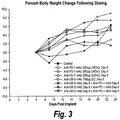
- 200 ⁇ g/mouse is approximately 10 mg/kg and 100 ⁇ g/mouse is approximately 5 mg/kg.
- one or more doses of 1-20 mg/kg body weight, 1-10 mg/kg body weight, 5-20 mg/kg body weight or 5-10 mg/kg body weight of a DR5 agonist and PD-1 antagonist may be administered to a subject.
- a dose of 0.3 mg/kg to 10 mg/kg body weight of a DR5 agonist is used and a dose of at least 1 mg/kg, e.g., 1-100 mg/kg body weight of a PD-1 antagonist is used.
- Patients, e.g., humans, treated according to the methods disclosed herein preferably experience improvement in at least one sign of cancer.
- improvement is measured by a reduction in the quantity and/or size of measurable tumor lesions.
- lesions can be measured on chest x-rays or CT or MRI films.
- cytology or histology can be used to evaluate responsiveness to a therapy.
- the patient treated exhibits a reduction in size of a tumor, reduction in number of metastasic lesions over time, complete response, partial response, and stable disease.
- the patient treated experiences tumor shrinkage and/or decrease in growth rate, i.e., suppression of tumor growth.
- unwanted cell proliferation is reduced or inhibited.
- one or more of the following can occur: the number of cancer cells can be reduced; tumor size can be reduced; cancer cell infiltration into peripheral organs can be inhibited, retarded, slowed, or stopped; tumor metastasis can be slowed or inhibited; tumor growth can be inhibited; recurrence of tumor can be prevented or delayed; one or more of the symptoms associated with cancer can be relieved to some extent.
- CBR CR (complete response), PR (partial response) or SD (stable disease) ⁇ 6 months
- the improvement of clinical benefit rate is about 10%, 20%, 30%, 40%, 50%, 60%, 70%, 80% or more, e.g., compared to treatment with a PD-1 antagonist or DR5 agonist alone or relative to tumor growth on the first day of treatment or immediately before initiation of treatment.
- administration of a PD-1 antagonist and a DR5 agonist results in at least a three-fold reduction (e.g., a 3.5-fold reduction) in tumor volume, e.g., relative to treatment with the PD-1 antagonist or the DR5 agonist alone or relative to tumor growth on the first day of treatment or immediately before initiation of treatment.
- a three-fold reduction e.g., a 3.5-fold reduction
- administration of a PD-1 antagonist and a DR5 agonist results in tumor growth inhibition of at least 80%, e.g., relative to treatment with the PD-1 antagonist or DR5 agonist alone or relative to tumor growth on the first day of treatment or immediately before initiation of treatment.
- administration of a PD-1 antagonist and a DR5 agonist reduces tumor mass by at least 10%, 20%, 30%, 40%, 50%, 60%, 70%, 80%, 90%, 95%, 99% relative to the tumor mass prior to initiation of the treatment or on the first day of treatment.
- the tumor mass is no longer detectable following treatment as described herein.
- a subject is in partial or full remission.
- kits which include a pharmaceutical composition containing (a) a PD-1 antagonist and (b) a DR5 agonist and a pharmaceutically-acceptable carrier, in a therapeutically effective amount adapted for use in the preceding methods.
- the PD-1 antagonist antagonist is an antibody (e.g., 5C4 or 12A4, respectively).
- the DR5 agonist is an antibody.
- the kits optionally also can include instructions, e.g., comprising administration schedules, to allow a practitioner (e.g., a physician, nurse, or patient) to administer the composition contained therein to a patient having cancer.
- the kit also can include a syringe.
- kits include multiple packages of the single-dose pharmaceutical compositions each containing an effective amount of the PD-1 antagonist and the DR5 agonist for a single administration in accordance with the methods provided above.
- Instruments or devices necessary for administering the pharmaceutical composition(s) also may be included in the kits.
- a kit may provide one or more pre-filled syringes containing an amount of the PD-1 antagonist and the DR5 agonist.
- the present invention provides a kit for treating cancer in a patient, the kit comprising:
- mice Ten to eleven-week-old female C57/BL6 mice (Harlan) were used in the studies. Mice received food and water ad libitum and were maintained in a controlled environment according to Association for Assessment and Accreditation of Laboratory Animal Care (AAALAC) International regulations. All animal studies have been approved by the appropriate ethics committee and have therefore been performed in accordance with the ethical standards laid down in the 1964 Declaration of Helsinki and its later amendments.
- AALAC Laboratory Animal Care
- Anti-mouse PD-1 mAb (anti-mPD-1 mAb) clone 4H2, mouse IgG1 isotype was produced and purified by Bristol-Myers Squibb (Biologics Discovery, CA).
- Stock solutions of anti-mPD-1 mAb and anti-mDR5 antibody were kept at 4°C prior to use. Dosing solutions of anti-mPD-1 mAb and anti-mDR5 mAb were prepared in sterile phosphate buffered saline (pH 7.0) and maintained at 4°C.
- Anti-mPD-1 mAb was administered intraperitoneally at its optimal dose of 10 mg/kg; anti-DR5 mAb at 5mg/kg.
- the MC38 colon carcinoma tumor line used in this study was maintained in vitro.
- Cell suspensions were implanted in the subcutaneous space of the flank of mice of female C57/BL6 mice (2.0 ⁇ 10 6 MC-38 cells in 0.2mL Hanks Balanced Salt Solution).
- the tumor response endpoint was expressed as tumor growth delay (T-C value), calculated as the difference in time (days) between the treated (T) and control (C) groups for the tumor to reach a predetermined target size.
- T-C value tumor growth delay
- a delay in reaching target size by the treated groups of >1 times tumor volume doubling time was considered an active result.
- Therapeutic synergy was defined as an antitumor effect in which the combination of agents demonstrated significant superiority ( p ⁇ 0.05) relative to the activity shown by each agent alone.
- mice Six days post tumor implant, mice were sorted into eight groups of 7 mice with a mean tumor volume of ⁇ 200mm 3 . Antibodies were administered according to the dosing schedules descried in Table 1.
- mice 1 Control 7 2: Control + anti-PD-1 mAb; 200 ug/mouse; Q4D ⁇ 3 dosing initiated day 6 7 3: Control + anti-PD-1 mAb; 200 ug/mouse; Q4D ⁇ 3 dosing initiated day 8 7 4: Control + anti-PD-1 mAb; 200 ug/mouse; Q4D ⁇ 3 dosing initiated day 9 7 5: Anti-DR5 mAb; 100 ug/mouse; QD + Control dosing initiated day 8 7 6: Anti-DR5 mAb; 100 ug/mouse dosed day 8; QD + anti-PD-1 mAb; 200 ug/mouse; Q4D ⁇ 3 dosed day 6 7 7: Anti-DR5 mAb; 100 ug/mouse dosed day 8; QD + anti-PD-1 mAb; 200 ug/mouse; Q4D ⁇ 3 dosed day 6 7 7: Anti-DR5 mAb; 100 ug/
- DR5 mAb and PD-1 mAb were tested according to the three schedules set forth in Table 2.
- Table 2 Administration Schedules Group No.: Administration Schedule Group 6 DR5 mAb was administered 2 days after PD-1 mAb therapy. Group 7 DR5 mAb and PD-1 mAb were administered on the same day. Group 8 DR5 mAb was administered 1 day before PD-1 mAb therapy.
- mice treated with a combination of both the DR5 mAb and PD1 mAb were treated with a combination of both the DR5 mAb and PD1 mAb.
- Table 3 Tumor Response Treatment Dose (mg/kg) Schedule (days post implant) % TGI % Complete Regressions (#/total mice) Anti-PD-1 mAb 10 Day 6, 10, 14 31 0 (0/7) Anti-PD-1 mAb 10 Day 8, 12, 16 14 0 (0/7) Anti-PD-1 mAb 10 Day 9,13,17 -8 0 (0/7) Anti-DR5 mAb 5 Day 8 -4 0 (0/7) Anti-PD-1 mAb + Anti-DR5 mAb 10 Day 6, 10, 14 96 43 (3/7) 5 Day 8 Anti-PD-1 mAb + Anti-DR5 mAb 10 Day 8, 12, 16 82 14 (1/7) 5 Day 8 Anti-PD-1 mAb + Anti-DR5 mAb 10 Day 9, 13, 17 87 43 (3/7) 5 Day 8 Moreover, as shown in Figure 1
- the combination of the DR5 mAb and the PD-1 mAb resulted in enhanced activity compared to the activity elicited by single agents alone, independent of the schedule utilized. This synergy was statistically significant (p ⁇ 0.05, Wilcoxon). Out of the 3 administration schedules tested, a trend for better activity was observed in the groups which were treated with anti-mDR5 first or with anti-mPD-1 first. As shown in Figure 3 , the combination therapy was well-tolerated (no significant body weight loss). In previous studies, significant body weight loss (>20%) was observed with multiple doses of the DR5 mAb alone or in combination.
- NP_054862.1 25 Human PD-L1 amino acid sequence - isoform b precursor (GenBank Accession No. NP_001254635.1) 26 Human DR5 amino acid sequence (GenSank Accession No. AAC01565.1)
- the invention further relates to the following embodiments E1-E30.
- a method of treating cancer in a subject comprising administering to the subject an effective amount of a PD-1 antagonist and a DR4 or DR5 agonist.
- E2 The method of E1, wherein the DR4 or DR5 agonist is selected from the group consisting of a ligand, antibody, and multivalent agent.
- E3 The method of E2, wherein the DR5 agonist is an antibody selected from the group consisting of Lexatumumab, Tigatuzumab, Conatumumab, Drozitumab, HGSTR2J/KMTRS, and LBY-135.
- E4 The method of E2, wherein the DR5 agonist is a multivalent agent comprising TAS266.
- E5. The method of any one ofEl-E4, wherein the PD-1 antagonist is selected from the group consisting of a ligand, antibody and multivalent agent.
- E6 The method of any one of E1-E5, wherein the PD-1 antagonist is an anti-PD-1 antibody comprising the CDR1, CDR2 and CDR3 domains in a heavy chain variable region having the sequence set forth in SEQ ID NO: 13, and the CDR1, CDR2 and CDR3 domains in a light chain variable region having the sequence set forth in SEQ ID NO: 15.
- E7 The method of any one of E1-E6, wherein the PD-1 antagonist is an anti-PD-1 antibody comprising:
- E8 The method of any one of E1-E6, wherein the PD-1 antagonist is an anti-PD-1 antibody comprising heavy and light chain variable regions having the sequences set forth in SEQ ID NOs: 13 and 15, respectively.
- E9 The method of any one of E1-E6, wherein the PD-1 antagonist is an anfi-PD-1 antibody comprising heavy and light chains having the sequences as set forth in SEQ ID NOs: 11 and 12, respectively.
- E10 The method of any one of E1-E6, wherein the PD-1 antagonist is an anti-PD-L1 antibody comprising the CDR1, CDR2 and CDR3 domains in a heavy chain variable region having the sequence set forth in SEQ ID NO: 1, and the CDR1, CDR2 and CDR3 domains in a light chain variable region having the sequence set forth in SEQ ID NO: 3.
- E11 The method of any one of E1-E6, wherein the PD-1 antagonist is an anti-PD-L1 antibody comprising:
- E12 The method of any one of E1-E6, wherein the PD-1 antagonist is an anti-PD-L1 antibody comprising heavy and light chain variable regions having the sequences set forth in SEQ ID NOs: 1 and 3, respectively.
- E13 The method of any one of E1-E12, wherein administration of the PD-1 antagonist and DR5 agonist reduces tumor size by at least 50%.
- E14 The method of any one of E1-E12, wherein administration of the PD-1 antagonist and DR5 agonist, reduces tumor size by at least 80%.
- E15 The method of any one of E1-E12, wherein administration of the PD-1 antagonist and DR5 agonist results in tumor growth inhibition of at least 80%.
- E16 The method of any one of E1-E12, wherein the treatment produces at least one therapeutic effect chosen from a reduction in size of a tumor, reduction in number of metastasic lesions over time, complete response, partial response, and stable disease.
- a method of treating cancer in a subject comprising administering to the subject an effective amount of a PD-1 antagonist and a DR5 agonist, wherein
- a method of treating cancer in a subject comprising administering to the subject an effective amount of a PD-1 antagonist and a DR5 agonist, wherein
- E19 The method of any one of E1-E18, wherein the antagonist and agonist are formulated for intravenous administration.
- E20 The method of any one of E1-E18, wherein the PD-1 antagonist is administered prior to administration of the DR5 agonist.
- E21 The method of any one of E1-E18, wherein the DR5 agonist is administered prior to administration of the PD-1 antagonist.
- E22 The method of any one of E1-E18, wherein the DR5 agonist and the PD-1 antagonist are administered simultaneously.
- E23 The method of any one of E1-E22, wherein the cancer is a cancer selected from the group consisting of leukemia, lymphoma, blastoma, carcinoma and sarcoma.
- E24 The method of any one of E1-E22, wherein the cancer is selected from the group consisting of chronic myeloid leukemia, acute lymphoblastic leukemia, Philadelphia chromosome positive acute lymphoblastic leukemia (Ph+ ALL), squamous cell carcinoma, small-cell lung cancer, non-small cell lung cancer, glioma, gastrointestinal cancer, renal cancer, ovarian cancer, liver cancer, colorectal cancer, endometrial cancer, kidney cancer, prostate cancer, thyroid cancer, neuroblastoma, pancreatic cancer, glioblastoma multiforme, cervical cancer, stomach cancer, bladder cancer, hepatoma, breast cancer, colon carcinoma, and head and neck cancer, gastric cancer, germ cell tumor, pediatric sarcoma, sinonasal natural killer, multiple myeloma, acute myelogenous leukemia (AML), and chronic lymphocytic leukemia (CML).
- the cancer is selected from the group consisting of chronic myeloid leukemia, acute
- E25 The method of any one of E1-E24, which comprises administration of an additional therapeutic agent.
- E26 The method of E25, wherein the additional therapeutic agent is a cyotoxin or chemotherapeutic agent.
- E27 The method of any one of E1-E26, wherein the subject is a human.
- a composition comprising a PD-1 antagonist and a DR5 agonist.
- E29 A method of treating cancer in a subject, comprising administering the subject the composition of E28.
- kits for treating a cancer in a subject comprising:
Landscapes
- Health & Medical Sciences (AREA)
- Chemical & Material Sciences (AREA)
- Immunology (AREA)
- Organic Chemistry (AREA)
- Medicinal Chemistry (AREA)
- Life Sciences & Earth Sciences (AREA)
- General Health & Medical Sciences (AREA)
- Proteomics, Peptides & Aminoacids (AREA)
- Molecular Biology (AREA)
- Genetics & Genomics (AREA)
- Biophysics (AREA)
- Biochemistry (AREA)
- Pharmacology & Pharmacy (AREA)
- Public Health (AREA)
- Animal Behavior & Ethology (AREA)
- Veterinary Medicine (AREA)
- Engineering & Computer Science (AREA)
- Bioinformatics & Cheminformatics (AREA)
- Epidemiology (AREA)
- Mycology (AREA)
- Microbiology (AREA)
- General Chemical & Material Sciences (AREA)
- Chemical Kinetics & Catalysis (AREA)
- Nuclear Medicine, Radiotherapy & Molecular Imaging (AREA)
- Oncology (AREA)
- Biomedical Technology (AREA)
- Endocrinology (AREA)
- Medicines Containing Antibodies Or Antigens For Use As Internal Diagnostic Agents (AREA)
- Peptides Or Proteins (AREA)
- Medicines That Contain Protein Lipid Enzymes And Other Medicines (AREA)
- Acyclic And Carbocyclic Compounds In Medicinal Compositions (AREA)
Applications Claiming Priority (3)
| Application Number | Priority Date | Filing Date | Title |
|---|---|---|---|
| US201361783184P | 2013-03-14 | 2013-03-14 | |
| EP14717294.4A EP2970473B1 (fr) | 2013-03-14 | 2014-03-12 | Combinaison d'agoniste de dr5 et d'antagoniste anti-pd-1 et méthodes d'utilisation associées |
| PCT/US2014/024208 WO2014159562A1 (fr) | 2013-03-14 | 2014-03-12 | Combinaison d'agoniste de dr5 et d'antagoniste anti-pd-1 et méthodes d'utilisation associées |
Related Parent Applications (1)
| Application Number | Title | Priority Date | Filing Date |
|---|---|---|---|
| EP14717294.4A Division EP2970473B1 (fr) | 2013-03-14 | 2014-03-12 | Combinaison d'agoniste de dr5 et d'antagoniste anti-pd-1 et méthodes d'utilisation associées |
Publications (2)
| Publication Number | Publication Date |
|---|---|
| EP3305812A1 true EP3305812A1 (fr) | 2018-04-11 |
| EP3305812B1 EP3305812B1 (fr) | 2020-06-17 |
Family
ID=50483524
Family Applications (2)
| Application Number | Title | Priority Date | Filing Date |
|---|---|---|---|
| EP14717294.4A Active EP2970473B1 (fr) | 2013-03-14 | 2014-03-12 | Combinaison d'agoniste de dr5 et d'antagoniste anti-pd-1 et méthodes d'utilisation associées |
| EP17186093.5A Active EP3305812B1 (fr) | 2013-03-14 | 2014-03-12 | Combinaison d'agoniste dr5 et d'antagoniste anti-pd-1 et procédés d'utilisation |
Family Applications Before (1)
| Application Number | Title | Priority Date | Filing Date |
|---|---|---|---|
| EP14717294.4A Active EP2970473B1 (fr) | 2013-03-14 | 2014-03-12 | Combinaison d'agoniste de dr5 et d'antagoniste anti-pd-1 et méthodes d'utilisation associées |
Country Status (16)
| Country | Link |
|---|---|
| US (3) | US20160067337A1 (fr) |
| EP (2) | EP2970473B1 (fr) |
| CY (1) | CY1119510T1 (fr) |
| DK (1) | DK2970473T3 (fr) |
| ES (2) | ES2644022T3 (fr) |
| HR (1) | HRP20171758T1 (fr) |
| HU (1) | HUE035865T2 (fr) |
| LT (1) | LT2970473T (fr) |
| ME (1) | ME02917B (fr) |
| NO (1) | NO3080374T3 (fr) |
| PL (1) | PL2970473T3 (fr) |
| PT (1) | PT2970473T (fr) |
| RS (1) | RS56531B1 (fr) |
| SI (1) | SI2970473T1 (fr) |
| SM (1) | SMT201700530T1 (fr) |
| WO (1) | WO2014159562A1 (fr) |
Families Citing this family (66)
| Publication number | Priority date | Publication date | Assignee | Title |
|---|---|---|---|---|
| HRP20161157T1 (hr) | 2009-03-30 | 2016-11-18 | Eisai R&D Management Co., Ltd. | Liposomski pripravak |
| AU2013263076B2 (en) | 2012-05-15 | 2017-08-31 | Bristol-Myers Squibb Company | Cancer immunotherapy by disrupting PD-1/PD-L1 signaling |
| PT2970473T (pt) | 2013-03-14 | 2017-10-26 | Bristol Myers Squibb Co | Combinação de agonista de dr5 e antagonista anti-pd-1 e métodos de utilização |
| HUE046249T2 (hu) | 2013-12-12 | 2020-02-28 | Shanghai hengrui pharmaceutical co ltd | PD-1 antitest, antigén-kötõ fragmense, és gyógyászati alkalmazása |
| TWI681969B (zh) | 2014-01-23 | 2020-01-11 | 美商再生元醫藥公司 | 針對pd-1的人類抗體 |
| TWI680138B (zh) | 2014-01-23 | 2019-12-21 | 美商再生元醫藥公司 | 抗pd-l1之人類抗體 |
| US10441654B2 (en) | 2014-01-24 | 2019-10-15 | Children's Hospital Of Eastern Ontario Research Institute Inc. | SMC combination therapy for the treatment of cancer |
| GB201403775D0 (en) | 2014-03-04 | 2014-04-16 | Kymab Ltd | Antibodies, uses & methods |
| GB201419084D0 (en) | 2014-10-27 | 2014-12-10 | Agency Science Tech & Res | Anti-PD-1 antibodies |
| TWI595006B (zh) | 2014-12-09 | 2017-08-11 | 禮納特神經系統科學公司 | 抗pd-1抗體類和使用彼等之方法 |
| HK1247215A1 (zh) | 2015-01-26 | 2018-09-21 | Macrogenics, Inc. | 包含dr5-结合结构域的多价分子 |
| US9139653B1 (en) | 2015-04-30 | 2015-09-22 | Kymab Limited | Anti-human OX40L antibodies and methods of treatment |
| KR20170122810A (ko) * | 2015-03-04 | 2017-11-06 | 머크 샤프 앤드 돔 코포레이션 | 암을 치료하기 위한 pd-1 길항제 및 에리불린의 조합 |
| EP3744340A3 (fr) | 2015-07-16 | 2021-03-03 | Biokine Therapeutics Ltd. | Compositions et procédés pour le traitement du cancer |
| KR20250099459A (ko) | 2015-11-03 | 2025-07-01 | 얀센 바이오테크 인코포레이티드 | Pd-1과 특이적으로 결합하는 항체 및 그의 용도 |
| JP6955507B2 (ja) | 2015-12-14 | 2021-10-27 | マクロジェニクス,インコーポレーテッド | Pd‐1及びctla‐4との免疫応答性を有する二重特異性並びにその使用方法 |
| HUE063377T2 (hu) | 2015-12-22 | 2024-01-28 | Regeneron Pharma | Anti-PD-1 antitestek és bispecifikus anti-CD20/anti-CD3 antitestek kombinációja a rák kezelésére |
| WO2017173360A2 (fr) * | 2016-03-31 | 2017-10-05 | Stcube, Inc. | Traitements combinés dirigés vers des cancers positifs à ligands de mort programmée-1 (pd-l1) |
| WO2017188350A1 (fr) | 2016-04-28 | 2017-11-02 | エーザイ・アール・アンド・ディー・マネジメント株式会社 | Procédé d'inhibition de croissance tumorale |
| TWI794171B (zh) | 2016-05-11 | 2023-03-01 | 美商滬亞生物國際有限公司 | Hdac抑制劑與pd-l1抑制劑之組合治療 |
| TWI808055B (zh) | 2016-05-11 | 2023-07-11 | 美商滬亞生物國際有限公司 | Hdac 抑制劑與 pd-1 抑制劑之組合治療 |
| TWI786044B (zh) | 2016-05-13 | 2022-12-11 | 美商再生元醫藥公司 | 藉由投予pd-1抑制劑治療皮膚癌之方法 |
| US9567399B1 (en) | 2016-06-20 | 2017-02-14 | Kymab Limited | Antibodies and immunocytokines |
| JP7461741B2 (ja) | 2016-06-20 | 2024-04-04 | カイマブ・リミテッド | 抗pd-l1およびil-2サイトカイン |
| WO2018029474A2 (fr) | 2016-08-09 | 2018-02-15 | Kymab Limited | Anticorps anti-icos |
| CA3032897A1 (fr) | 2016-08-09 | 2018-02-15 | Kymab Limited | Anticorps anti-icos |
| US11779604B2 (en) | 2016-11-03 | 2023-10-10 | Kymab Limited | Antibodies, combinations comprising antibodies, biomarkers, uses and methods |
| WO2018167780A1 (fr) | 2017-03-12 | 2018-09-20 | Yeda Research And Development Co. Ltd. | Méthodes de diagnostic et de traitement du cancer |
| WO2018167778A1 (fr) | 2017-03-12 | 2018-09-20 | Yeda Research And Development Co. Ltd. | Procédés de diagnostic et de pronostic du cancer |
| US11603407B2 (en) | 2017-04-06 | 2023-03-14 | Regeneron Pharmaceuticals, Inc. | Stable antibody formulation |
| GB201709808D0 (en) | 2017-06-20 | 2017-08-02 | Kymab Ltd | Antibodies |
| EP3728314A1 (fr) | 2017-12-19 | 2020-10-28 | Kymab Limited | Anticorps bispécifique pour icos et pd-l1 |
| GB201721338D0 (en) | 2017-12-19 | 2018-01-31 | Kymab Ltd | Anti-icos Antibodies |
| US12398209B2 (en) | 2018-01-22 | 2025-08-26 | Janssen Biotech, Inc. | Methods of treating cancers with antagonistic anti-PD-1 antibodies |
| SG11202007579TA (en) * | 2018-02-08 | 2020-09-29 | Dragonfly Therapeutics Inc | Combination therapy of cancer involving multi-specific binding proteins that activate natural killer cells |
| KR20200123782A (ko) * | 2018-02-26 | 2020-10-30 | 아이쥐엠 바이오사이언스 인코포레이티드 | 암치료를 위해 화학치료제와 병용된 다중결합 항-dr5 결합분자의 용도 |
| CN108840932B (zh) * | 2018-04-28 | 2022-03-29 | 中国科学院微生物研究所 | 一种pd-1特异性抗体及其抗肿瘤应用 |
| US12291570B2 (en) | 2018-10-17 | 2025-05-06 | Biolinerx Ltd. | Treatment of metastatic pancreatic adenocarcinoma |
| US20220096539A1 (en) * | 2019-01-18 | 2022-03-31 | University Of Georgia Research Foundation, Inc. | Salt nanoparticles and compositions and methods of use thereof |
| US12036204B2 (en) | 2019-07-26 | 2024-07-16 | Eisai R&D Management Co., Ltd. | Pharmaceutical composition for treating tumor |
| US11083705B2 (en) | 2019-07-26 | 2021-08-10 | Eisai R&D Management Co., Ltd. | Pharmaceutical composition for treating tumor |
| WO2021024020A1 (fr) | 2019-08-06 | 2021-02-11 | Astellas Pharma Inc. | Polythérapie impliquant des anticorps dirigés contre la claudine 18.2 et inhibiteurs de point de contrôle immunitaire pour le traitement du cancer |
| CN110982824B (zh) * | 2019-10-09 | 2022-04-15 | 天津大学 | 拮抗pd-1的抗体类似物bp基因及蛋白和应用 |
| WO2021260675A1 (fr) | 2020-06-24 | 2021-12-30 | Yeda Research And Development Co. Ltd. | Agents pour sensibiliser des tumeurs solides à un traitement |
| CA3182579A1 (fr) | 2020-07-07 | 2022-01-13 | Ugur Sahin | Arn therapeutique contre le cancer positif au vph |
| EP4214239A4 (fr) * | 2020-10-14 | 2025-07-09 | Univ Virginia Patent Foundation | Compositions et procédés pour surmonter une évasion immunitaire induite par dr5 par des tumeurs solides |
| JP2023546679A (ja) * | 2020-10-22 | 2023-11-07 | アクティニウム ファーマシューティカルズ インコーポレイテッド | がん治療における放射免疫療法とcd47遮断の併用 |
| WO2022135667A1 (fr) | 2020-12-21 | 2022-06-30 | BioNTech SE | Arn thérapeutique pour le traitement du cancer |
| WO2022135666A1 (fr) | 2020-12-21 | 2022-06-30 | BioNTech SE | Programme de traitement faisant intervenir des protéines cytokines |
| TW202245808A (zh) | 2020-12-21 | 2022-12-01 | 德商拜恩迪克公司 | 用於治療癌症之治療性rna |
| TW202304506A (zh) | 2021-03-25 | 2023-02-01 | 日商安斯泰來製藥公司 | 涉及抗claudin 18.2抗體的組合治療以治療癌症 |
| TW202313682A (zh) | 2021-05-18 | 2023-04-01 | 英商凱麥博有限公司 | 抗icos抗體之用途 |
| GB202107994D0 (en) | 2021-06-04 | 2021-07-21 | Kymab Ltd | Treatment of cancer |
| CA3225254A1 (fr) | 2021-07-13 | 2023-01-19 | BioNTech SE | Agents de liaison multispecifiques contre cd40 et cd137 en polytherapie du cancer |
| WO2023051926A1 (fr) | 2021-09-30 | 2023-04-06 | BioNTech SE | Traitement impliquant un arn non immunogène pour vaccination antigénique et antagonistes liant l'axe pd-1 |
| TW202333802A (zh) | 2021-10-11 | 2023-09-01 | 德商拜恩迪克公司 | 用於肺癌之治療性rna(二) |
| WO2023083439A1 (fr) | 2021-11-09 | 2023-05-19 | BioNTech SE | Agoniste de tlr7 et combinaisons pour le traitement du cancer |
| US20250340641A1 (en) | 2022-05-18 | 2025-11-06 | Kymab Limited | Uses of anti-icos antibodies |
| CN120302979A (zh) | 2022-12-01 | 2025-07-11 | 生物技术公司 | 针对CD40和CD137的多特异性抗体与抗PD1 Ab和化学治疗的组合治疗 |
| EP4634224A1 (fr) | 2022-12-14 | 2025-10-22 | Astellas Pharma Europe Bv | Polythérapie impliquant des agents de liaison bispécifiques se liant à cldn18.2 et cd3 et des inhibiteurs de point de contrôle immunitaire |
| CN120813375A (zh) | 2023-01-30 | 2025-10-17 | 凯玛布有限公司 | 抗体 |
| WO2025056180A1 (fr) | 2023-09-15 | 2025-03-20 | BioNTech SE | Procédés de traitement faisant appel à des agents se liant à epcam et cd137 en combinaison avec des antagonistes de liaison à l'axe pd-1 |
| AR134560A1 (es) | 2023-12-08 | 2026-01-28 | Astellas Pharma Inc | Terapia de combinación que implica agentes de unión biespecíficos que se unen a cldn18.2 y cd3 y agentes que estabilizan o aumentan la expresión de cldn18.2 |
| WO2025120867A1 (fr) | 2023-12-08 | 2025-06-12 | Astellas Pharma Inc. | Polythérapie impliquant des agents de liaison bispécifiques se liant à cldn18.2 et cd3 et anticorps anti-vegfr2 |
| WO2026033885A1 (fr) | 2024-08-08 | 2026-02-12 | Astellas Pharma Inc. | Polythérapie faisant intervenir des agents de liaison bispécifiques se liant à cldn18.2 et cd3 et agents stabilisant ou augmentant l'expression de cldn18.2 |
| WO2025120866A1 (fr) | 2023-12-08 | 2025-06-12 | Astellas Pharma Inc. | Polythérapie impliquant des agents de liaison bispécifiques se liant à cldn18.2 et cd3 et agents stabilisant ou augmentant l'expression de cldn18.2 |
Citations (30)
| Publication number | Priority date | Publication date | Assignee | Title |
|---|---|---|---|---|
| EP0307434A1 (fr) | 1987-03-18 | 1989-03-22 | Medical Res Council | Anticorps alteres. |
| EP0367166A1 (fr) | 1988-10-31 | 1990-05-09 | Takeda Chemical Industries, Ltd. | IL-2 modifiée et sa production |
| WO1991006570A1 (fr) | 1989-10-25 | 1991-05-16 | The University Of Melbourne | MOLECULES RECEPTRICES Fc HYBRIDES |
| US5112946A (en) | 1989-07-06 | 1992-05-12 | Repligen Corporation | Modified pf4 compositions and methods of use |
| US5336603A (en) | 1987-10-02 | 1994-08-09 | Genentech, Inc. | CD4 adheson variants |
| US5349053A (en) | 1990-06-01 | 1994-09-20 | Protein Design Labs, Inc. | Chimeric ligand/immunoglobulin molecules and their uses |
| US5359046A (en) | 1990-12-14 | 1994-10-25 | Cell Genesys, Inc. | Chimeric chains for receptor-associated signal transduction pathways |
| US5447851A (en) | 1992-04-02 | 1995-09-05 | Board Of Regents, The University Of Texas System | DNA encoding a chimeric polypeptide comprising the extracellular domain of TNF receptor fused to IgG, vectors, and host cells |
| WO1996004388A1 (fr) | 1994-07-29 | 1996-02-15 | Smithkline Beecham Plc | Nouveaux composes |
| US5622929A (en) | 1992-01-23 | 1997-04-22 | Bristol-Myers Squibb Company | Thioether conjugates |
| WO1998035986A1 (fr) | 1997-02-13 | 1998-08-20 | Immunex Corporation | Recepteur fixant trail |
| WO1998041629A2 (fr) | 1997-03-17 | 1998-09-24 | Human Genome Sciences, Inc. | Recepteur 5 contenant un domaine de mort |
| EP0870827A2 (fr) | 1997-03-14 | 1998-10-14 | Smithkline Beecham Corporation | Récepteur apparenté au facteur de necrose tumorale, TR6 |
| WO1998046643A1 (fr) | 1997-04-16 | 1998-10-22 | Millennium Biotherapeutics, Inc. | PROTEINES TANGO-63d ET TANGO-63e APPARENTEES AU RECEPTEUR DU FACTEUR DE NECROSE DES TUMEURS |
| WO1998051793A1 (fr) | 1997-05-15 | 1998-11-19 | Genentech, Inc. | RECEPTEUR D'Apo-2 |
| WO1999002653A1 (fr) | 1997-07-11 | 1999-01-21 | Trustees Of The University Of Pennsylvania | Acide nucleique codant une nouvelle proteine induite par chimiotherapie, et ses procedes d'utilisation |
| WO1999009165A1 (fr) | 1997-08-15 | 1999-02-25 | Idun Pharmaceuticals, Inc. | Recepteurs de trail, acides nucleiques codant ces recepteurs et procedes d'utilisation |
| WO1999011791A2 (fr) | 1997-09-05 | 1999-03-11 | University Of Washington | Recepteurs et ligands de la famille du facteur de necrose tumorale, acides nucleiques codants et agents de liaison associes |
| US6313269B1 (en) | 1997-03-14 | 2001-11-06 | Smithkline Beecham Corporation | Tumor necrosis factor related receptor, TR6 |
| US6342369B1 (en) | 1997-05-15 | 2002-01-29 | Genentech, Inc. | Apo-2-receptor |
| US20020072091A1 (en) | 1997-03-17 | 2002-06-13 | Human Genome Sciences, Inc. | Death domain containing receptor 5 |
| US20020160446A1 (en) | 2000-11-14 | 2002-10-31 | Holtzman Douglas A. | Novel genes encoding proteins having prognostic diagnostic preventive therapeutic and other uses |
| WO2006121168A1 (fr) | 2005-05-09 | 2006-11-16 | Ono Pharmaceutical Co., Ltd. | Anticorps monoclonaux humains pour mort programmee 1 (mp-1) et procedes pour traiter le cancer en utilisant des anticorps anti-mp-1 seuls ou associes a d’autres immunotherapies |
| WO2007005874A2 (fr) | 2005-07-01 | 2007-01-11 | Medarex, Inc. | Anticorps monoclonaux humains diriges contre un ligand de mort programmee de type 1(pd-l1) |
| WO2009058379A2 (fr) | 2007-10-31 | 2009-05-07 | Medimmune, Llc | Structures protéiques |
| WO2010042890A2 (fr) | 2008-10-10 | 2010-04-15 | Anaphore, Inc. | Polypeptides qui se lient à trail-ri et trail-r2 |
| WO2011039126A1 (fr) | 2009-09-29 | 2011-04-07 | Roche Glycart Ag | Anticorps agonistes bispécifiques du récepteur de mort |
| WO2011098520A1 (fr) | 2010-02-10 | 2011-08-18 | Novartis Ag | Polypeptides agonistes de liaison à dr5 |
| WO2011130328A1 (fr) | 2010-04-13 | 2011-10-20 | Medimmune, Llc | Échafaudages multimères spécifiques de trail r2 |
| WO2011143614A1 (fr) | 2010-05-14 | 2011-11-17 | Amgen Inc. | Agonistes des récepteurs de mort améliorés |
Family Cites Families (29)
| Publication number | Priority date | Publication date | Assignee | Title |
|---|---|---|---|---|
| US1763223A (en) | 1927-04-02 | 1930-06-10 | Owens Illinois Glass Co | Glassware-annealing leer |
| KR100510234B1 (ko) | 1995-06-29 | 2005-11-25 | 임뮤넥스 코포레이션 | 세포소멸을 유도하는 시토킨 |
| US6284236B1 (en) | 1995-06-29 | 2001-09-04 | Immunex Corporation | Cytokine that induces apoptosis |
| US6046048A (en) | 1996-01-09 | 2000-04-04 | Genetech, Inc. | Apo-2 ligand |
| US6713061B1 (en) | 1996-03-12 | 2004-03-30 | Human Genome Sciences, Inc. | Death domain containing receptors |
| WO1997033904A1 (fr) | 1996-03-12 | 1997-09-18 | Human Genome Sciences, Inc. | Recepteurs contenant un domaine de mort cellulaire |
| US7357927B2 (en) | 1996-03-12 | 2008-04-15 | Human Genome Sciences, Inc. | Death domain containing receptors |
| IL126383A0 (en) | 1996-04-01 | 1999-05-09 | Genentech Inc | Apo-2li and apo-3 apoptosis polypeptides |
| EP1012274B2 (fr) | 1997-01-28 | 2011-06-15 | Human Genome Sciences, Inc. | Recepteur 4 (dr4:recepteur 4 de mort cellulaire) contenant des domaines de mort cellulaire, membre de la superfamille du recepteur du facteur de necrose tumorale (tnf) et se liant a la trail ( apo-2l) |
| US6433147B1 (en) | 1997-01-28 | 2002-08-13 | Human Genome Sciences, Inc. | Death domain containing receptor-4 |
| US7528239B1 (en) | 1997-02-13 | 2009-05-05 | Immunex Corporation | Receptor that binds trail |
| AU7705198A (en) | 1997-05-30 | 1998-12-30 | Human Genome Sciences, Inc. | Human tumor necrosis factor receptor tr10 |
| US6506569B1 (en) | 1997-05-30 | 2003-01-14 | Human Genome Sciences, Inc. | Antibodies to human tumor necrosis factor receptor TR10 |
| JP2002508663A (ja) | 1997-06-18 | 2002-03-19 | ジェネンテク,インコーポレイテッド | Apo−2DcR |
| EP1045906B1 (fr) | 1998-01-15 | 2008-10-15 | Genentech, Inc. | Apo-2 ligand |
| AU4817200A (en) | 1999-05-04 | 2000-11-17 | Human Genome Sciences, Inc. | Death domain containing receptor 5 |
| WO2000067793A1 (fr) | 1999-05-06 | 2000-11-16 | Human Genome Sciences, Inc. | Recepteur 4 contenant le domaine de la mort cellulaire programmee |
| DE60027563D1 (de) | 1999-05-28 | 2006-06-01 | Human Genome Sciences Inc | Fc-Fusionsproteine des MENSCHLICHEN TUMOR-NEKROSE-FAKTOR-Rezeptors TR10 |
| WO2004016753A2 (fr) | 2002-08-15 | 2004-02-26 | Human Genome Sciences, Inc. | Anticorps se fixant de facon immunospecifique a des recepteurs trail |
| CN100594935C (zh) | 2001-05-25 | 2010-03-24 | 人体基因组科学有限公司 | 免疫特异性结合trail受体的抗体 |
| WO2003025138A2 (fr) | 2001-09-17 | 2003-03-27 | Protein Design Labs, Inc. | Procedes de diagnostic du cancer, compositions et procedes de criblage de modulateurs du cancer |
| EP1465925A4 (fr) | 2001-12-20 | 2006-02-08 | Human Genome Sciences Inc | Anticorps se liant de maniere immunospecifique a des recepteurs trail |
| WO2005016326A2 (fr) | 2003-07-11 | 2005-02-24 | The Government Of The United States Of America As Represented By The Secretary Of The Department Of Health And Human Services | Analogues de la thalidomide utilises comme inhibiteurs potentiels de l'angiogenese |
| US9376437B2 (en) | 2013-03-13 | 2016-06-28 | Oncoceutics, Inc | 7-benzyl-4-(2-methylbenzyl)-2,4,6,7,8,9-hexahydroimidazo[1,2-a]pyrido[3,4-e]pyrimidin-5(1H)-one, salts thereof and methods of using the same in combination therapy |
| KR20220123335A (ko) | 2013-03-13 | 2022-09-06 | 온코슈틱스 인코포레이티드 | 7-벤질-10-(2-메틸벤질)-2,6,7,8,9,10-헥사하이드로이미다조[1,2-a]피리도[4,3-d]피리미딘-5(3h)-온과의 조합 치료요법 |
| PT2970473T (pt) | 2013-03-14 | 2017-10-26 | Bristol Myers Squibb Co | Combinação de agonista de dr5 e antagonista anti-pd-1 e métodos de utilização |
| US11229713B2 (en) * | 2014-11-25 | 2022-01-25 | Bristol-Myers Squibb Company | Methods and compositions for 18F-radiolabeling of biologics |
| EP3595720A4 (fr) * | 2017-03-14 | 2021-05-26 | Five Prime Therapeutics, Inc. | Anticorps se liant à vista à un ph acide |
| TWI819024B (zh) * | 2018-07-09 | 2023-10-21 | 美商戊瑞治療有限公司 | 結合至ilt4的抗體 |
-
2014
- 2014-03-12 PT PT147172944T patent/PT2970473T/pt unknown
- 2014-03-12 HR HRP20171758TT patent/HRP20171758T1/hr unknown
- 2014-03-12 EP EP14717294.4A patent/EP2970473B1/fr active Active
- 2014-03-12 LT LTEP14717294.4T patent/LT2970473T/lt unknown
- 2014-03-12 SM SM20170530T patent/SMT201700530T1/it unknown
- 2014-03-12 US US14/774,382 patent/US20160067337A1/en not_active Abandoned
- 2014-03-12 DK DK14717294.4T patent/DK2970473T3/da active
- 2014-03-12 WO PCT/US2014/024208 patent/WO2014159562A1/fr not_active Ceased
- 2014-03-12 EP EP17186093.5A patent/EP3305812B1/fr active Active
- 2014-03-12 ME MEP-2017-263A patent/ME02917B/fr unknown
- 2014-03-12 PL PL14717294T patent/PL2970473T3/pl unknown
- 2014-03-12 ES ES14717294.4T patent/ES2644022T3/es active Active
- 2014-03-12 SI SI201430375T patent/SI2970473T1/sl unknown
- 2014-03-12 ES ES17186093T patent/ES2812208T3/es active Active
- 2014-03-12 HU HUE14717294A patent/HUE035865T2/en unknown
- 2014-03-12 RS RS20171159A patent/RS56531B1/sr unknown
- 2014-11-20 NO NO14806207A patent/NO3080374T3/no unknown
-
2017
- 2017-10-30 CY CY20171101131T patent/CY1119510T1/el unknown
-
2018
- 2018-05-31 US US15/993,687 patent/US11103579B2/en active Active
-
2021
- 2021-07-28 US US17/387,399 patent/US20220098302A1/en not_active Abandoned
Patent Citations (40)
| Publication number | Priority date | Publication date | Assignee | Title |
|---|---|---|---|---|
| EP0307434A1 (fr) | 1987-03-18 | 1989-03-22 | Medical Res Council | Anticorps alteres. |
| US5336603A (en) | 1987-10-02 | 1994-08-09 | Genentech, Inc. | CD4 adheson variants |
| EP0367166A1 (fr) | 1988-10-31 | 1990-05-09 | Takeda Chemical Industries, Ltd. | IL-2 modifiée et sa production |
| US5112946A (en) | 1989-07-06 | 1992-05-12 | Repligen Corporation | Modified pf4 compositions and methods of use |
| WO1991006570A1 (fr) | 1989-10-25 | 1991-05-16 | The University Of Melbourne | MOLECULES RECEPTRICES Fc HYBRIDES |
| US5349053A (en) | 1990-06-01 | 1994-09-20 | Protein Design Labs, Inc. | Chimeric ligand/immunoglobulin molecules and their uses |
| US5359046A (en) | 1990-12-14 | 1994-10-25 | Cell Genesys, Inc. | Chimeric chains for receptor-associated signal transduction pathways |
| US5622929A (en) | 1992-01-23 | 1997-04-22 | Bristol-Myers Squibb Company | Thioether conjugates |
| US5447851A (en) | 1992-04-02 | 1995-09-05 | Board Of Regents, The University Of Texas System | DNA encoding a chimeric polypeptide comprising the extracellular domain of TNF receptor fused to IgG, vectors, and host cells |
| US5447851B1 (en) | 1992-04-02 | 1999-07-06 | Univ Texas System Board Of | Dna encoding a chimeric polypeptide comprising the extracellular domain of tnf receptor fused to igg vectors and host cells |
| WO1996004388A1 (fr) | 1994-07-29 | 1996-02-15 | Smithkline Beecham Plc | Nouveaux composes |
| WO1998035986A1 (fr) | 1997-02-13 | 1998-08-20 | Immunex Corporation | Recepteur fixant trail |
| US6642358B1 (en) | 1997-02-13 | 2003-11-04 | Immunex Corporation | Receptor that binds trail |
| US6569642B1 (en) | 1997-02-13 | 2003-05-27 | Immunex Corporation | Receptor that binds trail |
| US6072047A (en) | 1997-02-13 | 2000-06-06 | Immunex Corporation | Receptor that binds trail |
| US20010010924A1 (en) | 1997-03-14 | 2001-08-02 | Keith Charles Deen | Tumor necrosis factor related receptor, tr6 polynecleotides |
| US6313269B1 (en) | 1997-03-14 | 2001-11-06 | Smithkline Beecham Corporation | Tumor necrosis factor related receptor, TR6 |
| EP0870827A2 (fr) | 1997-03-14 | 1998-10-14 | Smithkline Beecham Corporation | Récepteur apparenté au facteur de necrose tumorale, TR6 |
| US20020098550A1 (en) | 1997-03-17 | 2002-07-25 | Human Genome Sciences, Inc. | Death domain containing receptor 5 |
| US6743625B2 (en) | 1997-03-17 | 2004-06-01 | Human Genome Sciences, Inc. | Death domain containing receptor 5 |
| WO1998041629A2 (fr) | 1997-03-17 | 1998-09-24 | Human Genome Sciences, Inc. | Recepteur 5 contenant un domaine de mort |
| US20020072091A1 (en) | 1997-03-17 | 2002-06-13 | Human Genome Sciences, Inc. | Death domain containing receptor 5 |
| US20030125540A1 (en) | 1997-04-16 | 2003-07-03 | Millennium Pharmaceuticals, Inc. | Novel genes encoding proteins having prognostic, diagnostic, preventive, therapeutic and other uses |
| WO1998046643A1 (fr) | 1997-04-16 | 1998-10-22 | Millennium Biotherapeutics, Inc. | PROTEINES TANGO-63d ET TANGO-63e APPARENTEES AU RECEPTEUR DU FACTEUR DE NECROSE DES TUMEURS |
| US20020048785A1 (en) | 1997-04-16 | 2002-04-25 | Millennium Pharmaceuticals, Inc. A Delaware Corporation | Novel polypeptides within the tumor necrosis factor receptor superfamily and uses therefor |
| US6342369B1 (en) | 1997-05-15 | 2002-01-29 | Genentech, Inc. | Apo-2-receptor |
| WO1998051793A1 (fr) | 1997-05-15 | 1998-11-19 | Genentech, Inc. | RECEPTEUR D'Apo-2 |
| WO1999002653A1 (fr) | 1997-07-11 | 1999-01-21 | Trustees Of The University Of Pennsylvania | Acide nucleique codant une nouvelle proteine induite par chimiotherapie, et ses procedes d'utilisation |
| WO1999009165A1 (fr) | 1997-08-15 | 1999-02-25 | Idun Pharmaceuticals, Inc. | Recepteurs de trail, acides nucleiques codant ces recepteurs et procedes d'utilisation |
| WO1999011791A2 (fr) | 1997-09-05 | 1999-03-11 | University Of Washington | Recepteurs et ligands de la famille du facteur de necrose tumorale, acides nucleiques codants et agents de liaison associes |
| US20020160446A1 (en) | 2000-11-14 | 2002-10-31 | Holtzman Douglas A. | Novel genes encoding proteins having prognostic diagnostic preventive therapeutic and other uses |
| WO2006121168A1 (fr) | 2005-05-09 | 2006-11-16 | Ono Pharmaceutical Co., Ltd. | Anticorps monoclonaux humains pour mort programmee 1 (mp-1) et procedes pour traiter le cancer en utilisant des anticorps anti-mp-1 seuls ou associes a d’autres immunotherapies |
| WO2007005874A2 (fr) | 2005-07-01 | 2007-01-11 | Medarex, Inc. | Anticorps monoclonaux humains diriges contre un ligand de mort programmee de type 1(pd-l1) |
| US7943743B2 (en) | 2005-07-01 | 2011-05-17 | Medarex, Inc. | Human monoclonal antibodies to programmed death ligand 1 (PD-L1) |
| WO2009058379A2 (fr) | 2007-10-31 | 2009-05-07 | Medimmune, Llc | Structures protéiques |
| WO2010042890A2 (fr) | 2008-10-10 | 2010-04-15 | Anaphore, Inc. | Polypeptides qui se lient à trail-ri et trail-r2 |
| WO2011039126A1 (fr) | 2009-09-29 | 2011-04-07 | Roche Glycart Ag | Anticorps agonistes bispécifiques du récepteur de mort |
| WO2011098520A1 (fr) | 2010-02-10 | 2011-08-18 | Novartis Ag | Polypeptides agonistes de liaison à dr5 |
| WO2011130328A1 (fr) | 2010-04-13 | 2011-10-20 | Medimmune, Llc | Échafaudages multimères spécifiques de trail r2 |
| WO2011143614A1 (fr) | 2010-05-14 | 2011-11-17 | Amgen Inc. | Agonistes des récepteurs de mort améliorés |
Non-Patent Citations (84)
| Title |
|---|
| "Physicians' Desk Reference (PDR", 1996, MEDICAL ECONOMICS COMPANY |
| AGATA ET AL., INT IMMUNOL, vol. 8, 1996, pages 765 - 72 |
| ASHKENAZI A ET AL., J CLIN INVEST., vol. 104, 1999, pages 155 - 162 |
| ASHKENAZI A., NAT REV CANCER., vol. 2, 2002, pages 420 - 430 |
| ASHKENAZI ET AL., JOURNAL OF CLINICAL INVESTIGATION, vol. 1, no. 18, 2008, pages 1979 - 90 |
| ASHKENAZI ET AL., PROC. NATL. ACAD. SCI. USA, vol. 88, 1991, pages 10535 - 10539 |
| BALDWIN ET AL.: "Monoclonal Antibodies For Cancer Detection And Therapy", 1985, ACADEMIC PRESS, article "Analysis, Results, And Future Prospective Of The Therapeutic Use Of Radiolabeled Antibody In Cancer Therapy", pages: 303 - 16 |
| BENNETT ET AL., J IMMUNOL, vol. 170, 2003, pages 711 - 8 |
| BIRD ET AL., SCIENCE, vol. 242, 1988, pages 423 - 426 |
| BLANK ET AL., CANCER IMMUNOL. IMMUNOTHER., vol. 54, 2005, pages 307 - 314 |
| BLANK ET AL., EXPRESSION OF PD-L1 ON THE CELL SURFACE HAS ALSO BEEN SHOWN TO BE UPREGULATED THROUGH IFN-GAMMA STIMULATION, 2004 |
| BROWN ET AL., J. IMMUNOL., vol. 170, 2003, pages 1257 - 66 |
| CANCER RESEARCH, vol. 72, no. 1, 2012, pages 239 |
| CANCER RESEARCH, vol. 72, no. 1, 2012, pages 3852 |
| CARTER ET AL., EUR J IMMUNOL, vol. 32, 2002, pages 634 - 43 |
| CHEUNG ET AL., VIROLOGY, vol. 176, 1990, pages 546 |
| CHUNTHARAPAI A ET AL., J IMMUNOL., vol. 166, 2001, pages 4891 - 4898 |
| DONG ET AL., J. MOL. MED., vol. 81, 2003, pages 281 - 7 |
| DONG ET AL., NAT MED, vol. 8, 2002, pages 793 - 800 |
| DONG ET AL., NAT. MED., vol. 8, 2002, pages 787 - 9 |
| DONG H ET AL., NAT MED, vol. 5, 1999, pages 1365 - 1369 |
| DONG H ET AL., NAT MED, vol. 8, 2002, pages 793 - 800 |
| FREEMAN ET AL., J EXP MED, vol. 192, 2000, pages 1027 - 34 |
| FULDA ET AL., NAT MED, vol. 8, 2002, pages 808 - 15 |
| G. E. MORRIS: "Epitope Mapping Protocols in Methods in Molecular Biology", vol. 66, 1996 |
| GRIFFITH TS ET AL., CURR OPIN IMMUNOL., vol. 10, 1998, pages 559 - 563 |
| HANSEN ET AL., IMMUNOGENICS, vol. 10, 1980, pages 247 - 260 |
| HARLOW; LANE: "Antibodies: A Laboratory Manual", 1988, COLD SPRING HARBOR PRESS |
| HUSTON ET AL., PROC. NATL. ACAD. SCI. USA, vol. 85, 1988, pages 5879 - 5883 |
| HUTLOFF ET AL., NATURE, vol. 397, 1999, pages 263 - 266 |
| HYER ET AL., CANCER RESEARCH, vol. 65, 2005, pages 4799 - 808 |
| ICHIKAWA K ET AL., NAT MED., vol. 7, 2001, pages 954 - 960 |
| ISHIDA ET AL., EMBO J, vol. 11, 1992, pages 3887 - 95 |
| IWAI ET AL., PNAS, vol. 99, 2002, pages 12293 - 7 |
| IWAI ET AL., PROC. NAT'L. ACAD. SCI. USA, vol. 99, 2002, pages 12293 - 7 |
| K. TAKEDA ET AL: "Combination Therapy of Established Tumors by Antibodies Targeting Immune Activating and Suppressing Molecules", THE JOURNAL OF IMMUNOLOGY, vol. 184, no. 10, 16 April 2010 (2010-04-16), pages 5493 - 5501, XP055123617, ISSN: 0022-1767, DOI: 10.4049/jimmunol.0903033 * |
| KANAI ET AL., J IMMUNOL, vol. 171, 2003, pages 4156 - 63 |
| KEIR ME ET AL., ANNU REV IMMUNOL, vol. 26, 2008, pages 677 - 704 |
| KIRKLAND ET AL., J. IMMUNOL., vol. 137, 1986, pages 3614 |
| KISCHKEL FC ET AL., IMMUNITY, vol. 12, 2000, pages 611 - 620 |
| KONISHI ET AL., CLIN. CANCER RES., vol. 10, 2004, pages 5094 - 100 |
| KOSTELNY ET AL., J. IMMUNOL., vol. 148, 1992, pages 1547 - 1553 |
| LATCHMAN ET AL., NAT IMMUNOL, vol. 2, 2001, pages 261 - 8 |
| MATTHEW VANNEMAN ET AL: "Combining immunotherapy and targeted therapies in cancer treatment", NATURE REVIEWS CANCER, vol. 12, no. 4, 1 January 2012 (2012-01-01), pages 237 - 251, XP055045378, ISSN: 1474-175X, DOI: 10.1038/nrc3237 * |
| MOLDENHAUER ET AL., SCAND. J. IMMUNOL., vol. 32, 1990, pages 77 |
| MOREL ET AL., MO . IMMUNOL., vol. 25, no. 1, 1988, pages 7 |
| NIELSEN ET AL., LUPUS, vol. 13, 2004, pages 510 |
| NISHIMURA ET AL., IMMUNITY, vol. 11, 1999, pages 141 - 51 |
| NISHIMURA ET AL., SCIENCE, vol. 291, 2001, pages 319 - 22 |
| OHIGASHI ET AL., CLIN CANCER RES, vol. 11, 2005, pages 2947 - 53 |
| OKAZAKI ET AL., CURR. OPIN, IMMUNOL., vol. 14, 2002, pages 391779 - 82 |
| OKAZAKI ET AL., PNAS, vol. 98, 2001, pages 13866 - 71 |
| PAN ET AL., SCIENCE, vol. 277, 1997, pages 815 - 818 |
| PAN G ET AL., SCIENCE, vol. 276, 1997, pages 111 - 113 |
| PAN G ET AL., SCIENCE, vol. 277, 1997, pages 815 - 818 |
| PINCHERA ET AL.: "Monoclonal Antibodies '84: Biological And Clinical Applications", 1985, article THORPE ET AL.: "Antibody Carriers Of Cytotoxic Agents In Cancer Therapy: A Review", pages: 475 - 506 |
| PROKUNINA; ALARCON-RIQUELME, HUM MOL GENET, vol. 13, 2004, pages R143 |
| REISFELD ET AL.: "Monoclonal Antibodies And Cancer Therapy", 1985, ALAN R. LISS, INC., article AMON ET AL.: "Monoclonal Antibodies For Immunotargeting Of Drugs In Cancer Therapy", pages: 243 - 56 |
| ROBINSON ET AL.: "Controlled Drug Delivery, 2nd ed.", 1987, MARCEL DEKKER, INC., article HELLSTROM ET AL.: "Antibodies For Drug Delivery", pages: 623 - 53 |
| SALAMA ET AL., J EXP MED, vol. 198, 2003, pages 71 - 78 |
| SCREATON ET AL., CURR. BIOL., vol. 7, 1997, pages 693 - 696 |
| SHERIDAN ET AL., SCIENCE, vol. 277, 1997, pages 818 - 821 |
| SHERIDAN JP ET AL., SCIENCE, vol. 277, 1997, pages 818 - 821 |
| SONGSIVILAI; LACHMANN, CLIN. EXP. IMMUNOL., vol. 79, 1990, pages 315 - 321 |
| STAHLI ET AL., METHODS IN ENZYMOLOGY, vol. 9, 1983, pages 242 |
| STEPHEN J DEMAREST ET AL: "Emerging antibody combinations in oncology", MABS, LANDES BIOSCIENCE, US, vol. 3, no. 4, 1 July 2011 (2011-07-01), pages 338 - 351, XP002690158, ISSN: 1942-0870, DOI: 10.4161/MABS.3.4.16615 * |
| T. H. CORBETT ET AL., CANCER TREATMENT REPORTS, vol. 66, 1982, pages 1187 |
| TERME M ET AL., CANCER RES, vol. 71, 2011, pages 5393 - 5399 |
| THOMAS LR ET AL., J BIOL CHEM., vol. 279, 2004, pages 32780 - 32785 |
| THOMAS LR ET AL., J BIOL CHEM., vol. 279, 2004, pages 52479 - 52486 |
| THOMAS, M.L., J EXP MED, vol. 181, 1995, pages 1953 - 6 |
| THORBURN A., CELL SIGNAL., vol. 16, 2004, pages 139 - 144 |
| THORPE ET AL.: "The Preparation And Cytotoxic Properties Of Antibody-Toxin Conjugates", IMMUNOL. REV., vol. 62, 1982, pages 119 - 58, XP001179872, DOI: doi:10.1111/j.1600-065X.1982.tb00392.x |
| TOMOYASU UNO ET AL: "Eradication of established tumors in mice by a combination antibody-based therapy", NATURE MEDICINE, vol. 12, no. 6, 7 May 2006 (2006-05-07), pages 693 - 698, XP055123624, ISSN: 1078-8956, DOI: 10.1038/nm1405 * |
| VARFOLOMEEV E ET AL., J BIOL CHEM., vol. 280, 2005, pages 40599 - 40608 |
| VIL ET AL., PROC. NATL. ACAD. SCI. USA, vol. 89, 1992, pages 11337 - 11341 |
| VIVIER, E; DAERON, M, IMMUNOL TODAY, vol. 18, 1997, pages 286 - 91 |
| WALCZAK ET AL., EMBO J., vol. 16, 1997, pages 5386 - 5387 |
| WALCZAK H ET AL., EMBO J., vol. 16, 1997, pages 5386 - 5397 |
| WALCZAK H ET AL., NAT MED., vol. 5, 1999, pages 157 - 163 |
| WARD ET AL., NATURE, vol. 341, 1989, pages 544 - 546 |
| WILEY S R; SCHOOLEY K; SMOLAK P ET AL., IMMUNITY, vol. 3, 1995, pages 673 - 682 |
| WU ET AL., NATURE GENETICS, vol. 17, 1997, pages 141 - 143 |
| ZHENG ET AL., J. IMMUNOL., vol. 154, 1995, pages 5590 - 5600 |
Also Published As
| Publication number | Publication date |
|---|---|
| US11103579B2 (en) | 2021-08-31 |
| ME02917B (fr) | 2018-10-20 |
| US20180360962A1 (en) | 2018-12-20 |
| US20160067337A1 (en) | 2016-03-10 |
| DK2970473T3 (da) | 2017-11-27 |
| PL2970473T3 (pl) | 2018-01-31 |
| RS56531B1 (sr) | 2018-02-28 |
| CY1119510T1 (el) | 2018-03-07 |
| NO3080374T3 (fr) | 2018-03-24 |
| LT2970473T (lt) | 2017-10-25 |
| US20220098302A1 (en) | 2022-03-31 |
| WO2014159562A1 (fr) | 2014-10-02 |
| PT2970473T (pt) | 2017-10-26 |
| EP2970473B1 (fr) | 2017-08-16 |
| ES2644022T3 (es) | 2017-11-27 |
| SMT201700530T1 (it) | 2018-01-11 |
| SI2970473T1 (sl) | 2017-10-30 |
| EP3305812B1 (fr) | 2020-06-17 |
| HRP20171758T1 (hr) | 2017-12-29 |
| ES2812208T3 (es) | 2021-03-16 |
| EP2970473A1 (fr) | 2016-01-20 |
| HUE035865T2 (en) | 2018-05-28 |
Similar Documents
| Publication | Publication Date | Title |
|---|---|---|
| US11103579B2 (en) | Combination of DR5 agonist and anti-PD-1 antagonist and methods of use | |
| US12227575B2 (en) | Combination of TIM-4 antagonist and PD-1 antagonist and methods of use | |
| JP7126941B2 (ja) | がんを治療するための抗pd-1抗体と二重特異性抗cd20/抗cd3抗体の組合せ | |
| JP7274426B2 (ja) | 抗gitrアゴニスト抗体での癌の処置 | |
| CA3123873A1 (fr) | Radioimmunotherapie combinee et therapie de point de controle immunitaire dans le traitement du cancer | |
| AU2015358462A1 (en) | Combination of anti-CS1 and anti-PD1 antibodies to treat cancer (myeloma) | |
| US12491274B2 (en) | Radioconjugates targeting CD33 in the treatment of sarcomas | |
| US11306149B2 (en) | Anti-CD40 antibodies and uses thereof | |
| US20230302167A1 (en) | Radioconjugates targeting cd33 in the treatment of cancers | |
| CA3228080A1 (fr) | Radioconjugues ciblant cd33 dans le traitement de cancers | |
| US20230140384A1 (en) | Antibodies to cd40 with enhanced agonist activity | |
| JP2024528081A (ja) | 癌の治療における放射免疫療法及びcd47遮断薬の組み合わせ | |
| CA3204392A1 (fr) | Polytherapie utilisant un anticorps anti-fucosyl-gm1 | |
| JP2022553649A (ja) | がんの治療用のオキシアザホスホリンの誘導体を含む新規の治療の組合せ |
Legal Events
| Date | Code | Title | Description |
|---|---|---|---|
| PUAI | Public reference made under article 153(3) epc to a published international application that has entered the european phase |
Free format text: ORIGINAL CODE: 0009012 |
|
| STAA | Information on the status of an ep patent application or granted ep patent |
Free format text: STATUS: THE APPLICATION HAS BEEN PUBLISHED |
|
| AC | Divisional application: reference to earlier application |
Ref document number: 2970473 Country of ref document: EP Kind code of ref document: P |
|
| AK | Designated contracting states |
Kind code of ref document: A1 Designated state(s): AL AT BE BG CH CY CZ DE DK EE ES FI FR GB GR HR HU IE IS IT LI LT LU LV MC MK MT NL NO PL PT RO RS SE SI SK SM TR |
|
| AX | Request for extension of the european patent |
Extension state: BA ME |
|
| STAA | Information on the status of an ep patent application or granted ep patent |
Free format text: STATUS: REQUEST FOR EXAMINATION WAS MADE |
|
| 17P | Request for examination filed |
Effective date: 20181004 |
|
| RBV | Designated contracting states (corrected) |
Designated state(s): AL AT BE BG CH CY CZ DE DK EE ES FI FR GB GR HR HU IE IS IT LI LT LU LV MC MK MT NL NO PL PT RO RS SE SI SK SM TR |
|
| STAA | Information on the status of an ep patent application or granted ep patent |
Free format text: STATUS: EXAMINATION IS IN PROGRESS |
|
| 17Q | First examination report despatched |
Effective date: 20190304 |
|
| GRAP | Despatch of communication of intention to grant a patent |
Free format text: ORIGINAL CODE: EPIDOSNIGR1 |
|
| STAA | Information on the status of an ep patent application or granted ep patent |
Free format text: STATUS: GRANT OF PATENT IS INTENDED |
|
| INTG | Intention to grant announced |
Effective date: 20200122 |
|
| GRAS | Grant fee paid |
Free format text: ORIGINAL CODE: EPIDOSNIGR3 |
|
| GRAA | (expected) grant |
Free format text: ORIGINAL CODE: 0009210 |
|
| STAA | Information on the status of an ep patent application or granted ep patent |
Free format text: STATUS: THE PATENT HAS BEEN GRANTED |
|
| AC | Divisional application: reference to earlier application |
Ref document number: 2970473 Country of ref document: EP Kind code of ref document: P |
|
| AK | Designated contracting states |
Kind code of ref document: B1 Designated state(s): AL AT BE BG CH CY CZ DE DK EE ES FI FR GB GR HR HU IE IS IT LI LT LU LV MC MK MT NL NO PL PT RO RS SE SI SK SM TR |
|
| REG | Reference to a national code |
Ref country code: GB Ref legal event code: FG4D |
|
| REG | Reference to a national code |
Ref country code: CH Ref legal event code: EP |
|
| REG | Reference to a national code |
Ref country code: DE Ref legal event code: R096 Ref document number: 602014066884 Country of ref document: DE |
|
| REG | Reference to a national code |
Ref country code: IE Ref legal event code: FG4D |
|
| REG | Reference to a national code |
Ref country code: AT Ref legal event code: REF Ref document number: 1281192 Country of ref document: AT Kind code of ref document: T Effective date: 20200715 |
|
| PG25 | Lapsed in a contracting state [announced via postgrant information from national office to epo] |
Ref country code: SE Free format text: LAPSE BECAUSE OF FAILURE TO SUBMIT A TRANSLATION OF THE DESCRIPTION OR TO PAY THE FEE WITHIN THE PRESCRIBED TIME-LIMIT Effective date: 20200617 Ref country code: NO Free format text: LAPSE BECAUSE OF FAILURE TO SUBMIT A TRANSLATION OF THE DESCRIPTION OR TO PAY THE FEE WITHIN THE PRESCRIBED TIME-LIMIT Effective date: 20200917 Ref country code: GR Free format text: LAPSE BECAUSE OF FAILURE TO SUBMIT A TRANSLATION OF THE DESCRIPTION OR TO PAY THE FEE WITHIN THE PRESCRIBED TIME-LIMIT Effective date: 20200918 Ref country code: FI Free format text: LAPSE BECAUSE OF FAILURE TO SUBMIT A TRANSLATION OF THE DESCRIPTION OR TO PAY THE FEE WITHIN THE PRESCRIBED TIME-LIMIT Effective date: 20200617 Ref country code: LT Free format text: LAPSE BECAUSE OF FAILURE TO SUBMIT A TRANSLATION OF THE DESCRIPTION OR TO PAY THE FEE WITHIN THE PRESCRIBED TIME-LIMIT Effective date: 20200617 |
|
| REG | Reference to a national code |
Ref country code: LT Ref legal event code: MG4D |
|
| REG | Reference to a national code |
Ref country code: NL Ref legal event code: MP Effective date: 20200617 |
|
| PG25 | Lapsed in a contracting state [announced via postgrant information from national office to epo] |
Ref country code: LV Free format text: LAPSE BECAUSE OF FAILURE TO SUBMIT A TRANSLATION OF THE DESCRIPTION OR TO PAY THE FEE WITHIN THE PRESCRIBED TIME-LIMIT Effective date: 20200617 Ref country code: HR Free format text: LAPSE BECAUSE OF FAILURE TO SUBMIT A TRANSLATION OF THE DESCRIPTION OR TO PAY THE FEE WITHIN THE PRESCRIBED TIME-LIMIT Effective date: 20200617 Ref country code: RS Free format text: LAPSE BECAUSE OF FAILURE TO SUBMIT A TRANSLATION OF THE DESCRIPTION OR TO PAY THE FEE WITHIN THE PRESCRIBED TIME-LIMIT Effective date: 20200617 Ref country code: BG Free format text: LAPSE BECAUSE OF FAILURE TO SUBMIT A TRANSLATION OF THE DESCRIPTION OR TO PAY THE FEE WITHIN THE PRESCRIBED TIME-LIMIT Effective date: 20200917 |
|
| REG | Reference to a national code |
Ref country code: AT Ref legal event code: MK05 Ref document number: 1281192 Country of ref document: AT Kind code of ref document: T Effective date: 20200617 |
|
| PG25 | Lapsed in a contracting state [announced via postgrant information from national office to epo] |
Ref country code: AL Free format text: LAPSE BECAUSE OF FAILURE TO SUBMIT A TRANSLATION OF THE DESCRIPTION OR TO PAY THE FEE WITHIN THE PRESCRIBED TIME-LIMIT Effective date: 20200617 Ref country code: NL Free format text: LAPSE BECAUSE OF FAILURE TO SUBMIT A TRANSLATION OF THE DESCRIPTION OR TO PAY THE FEE WITHIN THE PRESCRIBED TIME-LIMIT Effective date: 20200617 |
|
| PG25 | Lapsed in a contracting state [announced via postgrant information from national office to epo] |
Ref country code: SM Free format text: LAPSE BECAUSE OF FAILURE TO SUBMIT A TRANSLATION OF THE DESCRIPTION OR TO PAY THE FEE WITHIN THE PRESCRIBED TIME-LIMIT Effective date: 20200617 Ref country code: EE Free format text: LAPSE BECAUSE OF FAILURE TO SUBMIT A TRANSLATION OF THE DESCRIPTION OR TO PAY THE FEE WITHIN THE PRESCRIBED TIME-LIMIT Effective date: 20200617 Ref country code: PT Free format text: LAPSE BECAUSE OF FAILURE TO SUBMIT A TRANSLATION OF THE DESCRIPTION OR TO PAY THE FEE WITHIN THE PRESCRIBED TIME-LIMIT Effective date: 20201019 Ref country code: RO Free format text: LAPSE BECAUSE OF FAILURE TO SUBMIT A TRANSLATION OF THE DESCRIPTION OR TO PAY THE FEE WITHIN THE PRESCRIBED TIME-LIMIT Effective date: 20200617 Ref country code: CZ Free format text: LAPSE BECAUSE OF FAILURE TO SUBMIT A TRANSLATION OF THE DESCRIPTION OR TO PAY THE FEE WITHIN THE PRESCRIBED TIME-LIMIT Effective date: 20200617 Ref country code: AT Free format text: LAPSE BECAUSE OF FAILURE TO SUBMIT A TRANSLATION OF THE DESCRIPTION OR TO PAY THE FEE WITHIN THE PRESCRIBED TIME-LIMIT Effective date: 20200617 |
|
| PG25 | Lapsed in a contracting state [announced via postgrant information from national office to epo] |
Ref country code: PL Free format text: LAPSE BECAUSE OF FAILURE TO SUBMIT A TRANSLATION OF THE DESCRIPTION OR TO PAY THE FEE WITHIN THE PRESCRIBED TIME-LIMIT Effective date: 20200617 Ref country code: SK Free format text: LAPSE BECAUSE OF FAILURE TO SUBMIT A TRANSLATION OF THE DESCRIPTION OR TO PAY THE FEE WITHIN THE PRESCRIBED TIME-LIMIT Effective date: 20200617 Ref country code: IS Free format text: LAPSE BECAUSE OF FAILURE TO SUBMIT A TRANSLATION OF THE DESCRIPTION OR TO PAY THE FEE WITHIN THE PRESCRIBED TIME-LIMIT Effective date: 20201017 |
|
| REG | Reference to a national code |
Ref country code: ES Ref legal event code: FG2A Ref document number: 2812208 Country of ref document: ES Kind code of ref document: T3 Effective date: 20210316 |
|
| REG | Reference to a national code |
Ref country code: DE Ref legal event code: R097 Ref document number: 602014066884 Country of ref document: DE |
|
| PLBE | No opposition filed within time limit |
Free format text: ORIGINAL CODE: 0009261 |
|
| STAA | Information on the status of an ep patent application or granted ep patent |
Free format text: STATUS: NO OPPOSITION FILED WITHIN TIME LIMIT |
|
| PG25 | Lapsed in a contracting state [announced via postgrant information from national office to epo] |
Ref country code: DK Free format text: LAPSE BECAUSE OF FAILURE TO SUBMIT A TRANSLATION OF THE DESCRIPTION OR TO PAY THE FEE WITHIN THE PRESCRIBED TIME-LIMIT Effective date: 20200617 |
|
| 26N | No opposition filed |
Effective date: 20210318 |
|
| PG25 | Lapsed in a contracting state [announced via postgrant information from national office to epo] |
Ref country code: SI Free format text: LAPSE BECAUSE OF FAILURE TO SUBMIT A TRANSLATION OF THE DESCRIPTION OR TO PAY THE FEE WITHIN THE PRESCRIBED TIME-LIMIT Effective date: 20200617 |
|
| PG25 | Lapsed in a contracting state [announced via postgrant information from national office to epo] |
Ref country code: MC Free format text: LAPSE BECAUSE OF FAILURE TO SUBMIT A TRANSLATION OF THE DESCRIPTION OR TO PAY THE FEE WITHIN THE PRESCRIBED TIME-LIMIT Effective date: 20200617 |
|
| REG | Reference to a national code |
Ref country code: CH Ref legal event code: PL |
|
| REG | Reference to a national code |
Ref country code: BE Ref legal event code: MM Effective date: 20210331 |
|
| PG25 | Lapsed in a contracting state [announced via postgrant information from national office to epo] |
Ref country code: IE Free format text: LAPSE BECAUSE OF NON-PAYMENT OF DUE FEES Effective date: 20210312 Ref country code: LU Free format text: LAPSE BECAUSE OF NON-PAYMENT OF DUE FEES Effective date: 20210312 Ref country code: LI Free format text: LAPSE BECAUSE OF NON-PAYMENT OF DUE FEES Effective date: 20210331 Ref country code: CH Free format text: LAPSE BECAUSE OF NON-PAYMENT OF DUE FEES Effective date: 20210331 |
|
| PG25 | Lapsed in a contracting state [announced via postgrant information from national office to epo] |
Ref country code: BE Free format text: LAPSE BECAUSE OF NON-PAYMENT OF DUE FEES Effective date: 20210331 |
|
| P01 | Opt-out of the competence of the unified patent court (upc) registered |
Effective date: 20230417 |
|
| PG25 | Lapsed in a contracting state [announced via postgrant information from national office to epo] |
Ref country code: CY Free format text: LAPSE BECAUSE OF FAILURE TO SUBMIT A TRANSLATION OF THE DESCRIPTION OR TO PAY THE FEE WITHIN THE PRESCRIBED TIME-LIMIT Effective date: 20200617 |
|
| PG25 | Lapsed in a contracting state [announced via postgrant information from national office to epo] |
Ref country code: HU Free format text: LAPSE BECAUSE OF FAILURE TO SUBMIT A TRANSLATION OF THE DESCRIPTION OR TO PAY THE FEE WITHIN THE PRESCRIBED TIME-LIMIT; INVALID AB INITIO Effective date: 20140312 |
|
| PG25 | Lapsed in a contracting state [announced via postgrant information from national office to epo] |
Ref country code: MK Free format text: LAPSE BECAUSE OF FAILURE TO SUBMIT A TRANSLATION OF THE DESCRIPTION OR TO PAY THE FEE WITHIN THE PRESCRIBED TIME-LIMIT Effective date: 20200617 |
|
| PG25 | Lapsed in a contracting state [announced via postgrant information from national office to epo] |
Ref country code: MT Free format text: LAPSE BECAUSE OF FAILURE TO SUBMIT A TRANSLATION OF THE DESCRIPTION OR TO PAY THE FEE WITHIN THE PRESCRIBED TIME-LIMIT Effective date: 20200617 |
|
| PGFP | Annual fee paid to national office [announced via postgrant information from national office to epo] |
Ref country code: ES Payment date: 20250410 Year of fee payment: 12 |
|
| PG25 | Lapsed in a contracting state [announced via postgrant information from national office to epo] |
Ref country code: TR Free format text: LAPSE BECAUSE OF FAILURE TO SUBMIT A TRANSLATION OF THE DESCRIPTION OR TO PAY THE FEE WITHIN THE PRESCRIBED TIME-LIMIT Effective date: 20200617 |
|
| PGFP | Annual fee paid to national office [announced via postgrant information from national office to epo] |
Ref country code: GB Payment date: 20260202 Year of fee payment: 13 |
|
| PGFP | Annual fee paid to national office [announced via postgrant information from national office to epo] |
Ref country code: DE Payment date: 20260204 Year of fee payment: 13 |
|
| PGFP | Annual fee paid to national office [announced via postgrant information from national office to epo] |
Ref country code: IT Payment date: 20260220 Year of fee payment: 13 |
|
| PGFP | Annual fee paid to national office [announced via postgrant information from national office to epo] |
Ref country code: FR Payment date: 20260209 Year of fee payment: 13 |