EP3311385B1 - Mémoire pseudo double port haut débit avec commandes de précharge séparées - Google Patents
Mémoire pseudo double port haut débit avec commandes de précharge séparées Download PDFInfo
- Publication number
- EP3311385B1 EP3311385B1 EP16738907.1A EP16738907A EP3311385B1 EP 3311385 B1 EP3311385 B1 EP 3311385B1 EP 16738907 A EP16738907 A EP 16738907A EP 3311385 B1 EP3311385 B1 EP 3311385B1
- Authority
- EP
- European Patent Office
- Prior art keywords
- sense amplifier
- memory
- pair
- bit line
- clock
- Prior art date
- Legal status (The legal status is an assumption and is not a legal conclusion. Google has not performed a legal analysis and makes no representation as to the accuracy of the status listed.)
- Active
Links
Images
Classifications
-
- G—PHYSICS
- G11—INFORMATION STORAGE
- G11C—STATIC STORES
- G11C11/00—Digital stores characterised by the use of particular electric or magnetic storage elements; Storage elements therefor
- G11C11/21—Digital stores characterised by the use of particular electric or magnetic storage elements; Storage elements therefor using electric elements
- G11C11/34—Digital stores characterised by the use of particular electric or magnetic storage elements; Storage elements therefor using electric elements using semiconductor devices
- G11C11/40—Digital stores characterised by the use of particular electric or magnetic storage elements; Storage elements therefor using electric elements using semiconductor devices using transistors
- G11C11/41—Digital stores characterised by the use of particular electric or magnetic storage elements; Storage elements therefor using electric elements using semiconductor devices using transistors forming static cells with positive feedback, i.e. cells not needing refreshing or charge regeneration, e.g. bistable multivibrator or Schmitt trigger
- G11C11/413—Auxiliary circuits, e.g. for addressing, decoding, driving, writing, sensing, timing or power reduction
- G11C11/417—Auxiliary circuits, e.g. for addressing, decoding, driving, writing, sensing, timing or power reduction for memory cells of the field-effect type
- G11C11/419—Read-write [R-W] circuits
-
- G—PHYSICS
- G11—INFORMATION STORAGE
- G11C—STATIC STORES
- G11C7/00—Arrangements for writing information into, or reading information out from, a digital store
- G11C7/06—Sense amplifiers; Associated circuits, e.g. timing or triggering circuits
- G11C7/08—Control thereof
-
- G—PHYSICS
- G11—INFORMATION STORAGE
- G11C—STATIC STORES
- G11C7/00—Arrangements for writing information into, or reading information out from, a digital store
- G11C7/12—Bit line control circuits, e.g. drivers, boosters, pull-up circuits, pull-down circuits, precharging circuits, equalising circuits, for bit lines
-
- G—PHYSICS
- G11—INFORMATION STORAGE
- G11C—STATIC STORES
- G11C2207/00—Indexing scheme relating to arrangements for writing information into, or reading information out from, a digital store
- G11C2207/002—Isolation gates, i.e. gates coupling bit lines to the sense amplifier
Definitions
- This application relates to pseudo-dual-port (PDP) memories having independent bit line and sense amplifier precharging.
- a dual-port static random access memory (SRAM) cell requires at least eight transistors.
- a traditional single-port SRAM cell requires only six transistors.
- a dual-port SRAM cell requires two extra access transistors to accommodate the additional port. Because single-port SRAM is thus substantially denser than dual-port SRAM, "pseudo-dual-port" (PDP) SRAMs have been developed in which the single port of traditional SRAM is time-multiplexed to represent two separate ports.
- pseudo-dual-port SRAM has higher density, this improved density comes at the cost of slower operation in that a single clock cycle must accommodate two access cycles to simulate the two ports of actual dual-port SRAM.
- the resulting multiplexing of the access port places timing demands on the sense amplifier. It is desirable to increase the operating speed of PDP SRAMs so that they can be used as an alternative to traditional dual-port SRAMs to increase density.
- a circuit for controlling a voltage level applied to a bit line isolation circuit preferably includes a memory cell connected between a cell bit line pair and a word line; a bit line pre-charge circuit; a sense amplifier bit line pre-charge circuit; a charge transfer circuit connected between the cell bit line pair and the sense amplifier bit line pair; a first sense amplifier circuit for amplifying a voltage of the sense amplifier bit line pair to a first voltage in response to a first control signal; and a second sense amplifier circuit for amplifying the voltage of the sense amplifier bit line pair to a second voltage in response to a second control signal.
- a PDP SRAM is provided in which a pair of bit lines couple through a read multiplexer to a corresponding pair of input nodes for a voltage-mode sense amplifier. Depending upon whether a read multiplexer signal is asserted, the read multiplexer either couples the sense amplifier input nodes to the pair of bit lines or isolates the pair of input nodes from the pair of bit lines.
- the read multiplexer couples to the bit lines between a bit line precharge circuit and a sense amplifier precharge circuit.
- the bit line precharge circuit is configured to precharge the bit lines responsive to an assertion of a bit line precharge control signal.
- the sense amplifier precharge circuit is configured to precharge the pair of input nodes responsive to an assertion of a sense amplifier precharge signal.
- a control signal generator triggers a bit line precharging for a write operation by asserting the bit line precharge control signal while the sense amplifier is still responding to the assertion of a sense enable signal for a read operation.
- the bit line precharging occurs while the sense amplifier is isolated from the bit lines by the read multiplexer. After completion of the sense enable signal assertion, the control signal generator asserts the sense amplifier precharge signal.
- the resulting PDP SRAM advantageously may begin the write operation precharging of the bit lines while the sense amplifier is still finishing a read operation.
- the precharging of the bit lines occurs while the sense amplifier is still responding to the assertion of the sense enable signal.
- This increased speed does not come at the cost of increased power consumption because the sense amplifier precharging is bifurcated from the bit line precharging.
- the sense amplifier input nodes are not precharged until the sense enable signal is no longer asserted. In this fashion, the discharge of crowbar current during the sense amplifier precharging for the subsequent write operation is greatly reduced or eliminated.
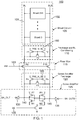
- bit line (BL) 101 and a complement bit line (BLB) 102 form a pair of bit lines for a column of bit cells ranging from a bitcell 0 to a bitcell 255. There would thus be 256 word lines (not illustrated) corresponding to the bitcells so that a given bitcell may be coupled to the pair of bit lines through an assertion of the corresponding word line. It will be appreciated that the number of bit cells within a column and thus the number of corresponding word lines may be greater or less than shown in PDP SRAM 100 in alternative embodiments.
- PDP SRAM 100 completes a read operation and also a write operation in one clock cycle such as in one cycle of a system clock discussed further herein.
- bit lines Prior to a read cycle, the bit lines are precharged to a memory power supply voltage VDD by a bit line precharge circuit 110. This precharge may also be denoted as a conditioning of the bit lines.
- Bit line precharge circuit 110 may include a PMOS transistor P1 having its source tied to a memory power supply node and its drain tied to true bit line 101.
- bit line precharge circuit 110 may include a PMOS transistor P2 having its source tied to the memory power supply node and its drain tied to complement bit line 102.
- An active low bit line precharge signal (PRE_N_BL) 160 drives the gates of transistors P1 and P2 so as to turn on these transistors for a read precharge period prior to a read cycle.
- bit line precharge signal 160 is also pulled low to precharge the bit lines prior to a write cycle.
- bit line precharge signal 160 drives a gate of a PMOS transistor P3 having one drain/source terminal tied to true bit line 101 and a remaining drain/source terminal tied to complement bit line 102.
- the appropriate word line is asserted for a read word line assertion period so that the corresponding bitcell may develop a voltage difference across the bit lines responsive to its stored binary content.
- This read word line assertion period may have a duration that is different from a subsequent duration in which the word line is asserted for a write operation. Alternatively, these durations may be the same.
- the read word line assertion period has a duration such that the remaining bit line is only partially discharged to ground upon completion of the read word line assertion period.
- a read multiplexer 115 isolates the bit lines from a pair of input nodes 140 and 145 to a sense amplifier 125.
- Read multiplexer 115 responds to an active-low read multiplexer control signal (RM) 150 that is de-asserted high to the memory power supply voltage VDD to isolate the bit lines from sense amplifier input nodes 140 and 145.
- RM read multiplexer control signal
- Read multiplexer 115 includes a PMOS transistor P9 having a source coupled to true bit line 101 and a drain coupled to sense amplifier input node 140.
- read multiplexer 115 includes a PMOS transistor P10 having a source coupled to complement bit line 102 and a drain coupled to sense amplifier input node 145.
- Read multiplexer control signal 150 drives the gates of transistors P9 and P10 such that when read multiplexer control signal 150 is de-asserted (as an active low signal) to the memory power supply voltage VDD, transistors P9 and P10 are fully off to isolate sense amplifier input nodes 140 and 145 from their respective bit lines. This isolation occurs during the precharging of the bit lines and the precharging of the sense amplifier input nodes. Conversely, this isolation is broken during the read word line assertion period by asserting read multiplexer control signal 150 to ground so that transistors P9 and P10 are fully on.
- a sense amplifier precharge circuit 120 precharges sense amplifier input nodes 140 and 145 prior to the assertion of the word line voltage for a read operation.
- Sense amplifier precharge circuit 120 is analogous to bit line precharge circuit 110 in that sense amplifier precharge circuit 120 may also include three PMOS transistors.
- a PMOS transistor P4 in sense amplifier precharge circuit 120 has a source coupled to the memory power supply node and a drain coupled to sense amplifier input node 140.
- a PMOS transistor P5 has its source tied to the memory power supply node and a drain coupled to sense amplifier input node 145.
- a PMOS transistor P6 in sense amplifier precharge circuit 120 has one drain/source terminal coupled to sense amplifier input node 140 and a remaining drain/source terminal coupled to sense amplifier input node 145 to ensure that these nodes are equally precharged.
- An active-low sense amplifier precharge signal (PRE_N_SE) 165 drives the gates of transistors P4, P5, and P6 so that these transistors are turned off when sense amplifier precharge control signal 165 is de-asserted to the memory power supply voltage VDD. Conversely, transistors P4, P5, and P6 are switched fully on when sense amplifier precharge signal 165 is asserted to ground.
- Sense amplifier 125 comprises a voltage-mode sense amplifier that includes two-cross-coupled inverters driven by input nodes 140 and 145.
- a first inverter comprises a serial stack of a PMOS transistor P7 and an NMOS transistor M1 whose gates are tied to sense amplifier input node 145.
- the source of transistor P7 is coupled to the memory power supply node whereas its drain is tied to the drain of transistor M1.
- the source of transistor M1 couples to a drain for a current source transistor M3 that in turn has its source tied to ground.
- the drains for transistors P7 and M1 are tied to sense amplifier input node 140.
- a second inverter comprises a serial stack of a PMOS transistor P8 and an NMOS transistor M2 whose gates are tied to sense amplifier node 140 and whose drains are tied to sense amplifier input node 145.
- the source of transistor P8 couples to the memory power supply node and its drain couples to the drain of transistor M2. Similar to the coupling for transistor M1, the source of transistor M2 couples to the drain of current source NMOS transistor M3.
- a sense enable signal (SE) 155 drives the gate of current source transistor M3 so that it conducts a bias current when an active-high sense enable signal 155 is asserted to the power supply voltage VDD.
- an inverter 130 inverts the voltage of input node 140 to form a sense amplifier output signal (SA_OUT).
- an inverter 135 inverts the voltage of input node 145 to form a complement sense amplifier output signal (SA_OUTB).
- Sense enable signal 155 is asserted to the memory power supply voltage VDD near the end of the read word line assertion period. At the assertion of sense enable signal 155, a differential voltage will have developed across the bit lines responsive to the binary content of the accessed bitcell. During the assertion of sense enable signal 155, read multiplexer control signal 150 will be de-asserted high to the memory power supply voltage VDD to isolate the sense amplifier input nodes from their respective bit lines. At this time, one of the sense amplifier input nodes will thus be discharged slightly from the memory power supply voltage VDD depending upon the binary content of the accessed bitcell. For example, suppose sense amplifier input node 140 is the discharged node. Transistor M2 will then tend to turn off in comparison to transistor M1.
- the feedback through the cross-coupled inverters in turn causes all the tail current generated by current source transistor M3 to steer entirely through transistor M1 such that sense amplifier node 140 discharges to ground while sense amplifier node 145 remains charged to the memory power supply voltage VDD.
- the sense amplifier output signal SA_OUT will then swing high to VDD whereas complement sense amplifier output signal SA_OUTB remains discharged at ground.
- the complement of these sense amplifier outputs occurs for a complementary binary state in the accessed bitcell such that the differential bit line voltage cause a slight discharge of sense amplifier input node 145 compared to node 140. Regardless of binary content for the accessed bitcell, the sense enable signal 155 is then released after the development of the sense amplifier output signals to finish a read operation.
- bit line precharging and sense amplifier precharging presented some challenge.
- the bit line precharging for a write operation should begin as soon as the word line assertion is released for the preceding read operation. But the assertion of sense enable signal 155 continues for some time after the word line is released. If sense amplifier precharge signal 165 is asserted low while one of transistors M1 or M2 is conducting during the sense enable signal assertion, a crossbar current is then discharged to ground through the conducting one of transistors M1 and M2 and also through current source transistor M3.
- sense amplifier precharge signal 165 is asserted responsive to a falling edge of sense enable signal 155.
- bit line precharge signal 160 is asserted responsive to falling edge of a memory clock. Bit line precharge signal 160 may thus be asserted while sense enable signal 155 is still asserted to boost the memory operating speed. Since sense amplifier precharge signal 165 is not asserted until sense enable signal 155 is released to ground, the discharge of crossbar current in sense amplifier 125 is eliminated or sharply reduced with regard to conventional architectures.
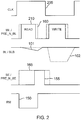
- a system clock 205 triggers all the memory read and write operations.
- a memory clock such as a bank clock (shown in Figure 3 discussed below) has a rising edge triggered by the rising edge of system clock 205.
- a bank clock is asserted to the particular bank that is active for a given read and write cycle. Since SRAM 100 ( Figure 1 ) is a PDP memory, there is a read and a write cycle in one period of system clock 205. Given that the memory clock has a rising edge that is triggered by the rising edge of system clock 205, the memory clock will be low prior to the rising edge of system clock 205.
- This rising edge of the memory clock triggers a read operation during which a word line voltage 210 is asserted for the read word line assertion period. Precharging of bit lines 101 and 102 while word line voltage 210 is asserted could disturb the memory cell contents. To prevent a bit line precharging while the memory cell is accessed by the asserted word line voltage 210 in the read operation, the rising edge for word line voltage 210 is delayed with respect to the rising edge for bit line precharge signal 160. Both word line voltage 210 and bit line precharge signal 160 have a rising edge that is triggered by the rising edge of the memory clock, which in turn is triggered by the rising edge of system clock 205. Conversely, the falling edge of bit line precharge signal 160 follows the falling edge of word line voltage 210.
- bit line precharge signal 160 is triggered by the falling edge of the memory clock.
- the memory clock falling edge occurs at a self-timed delay with regard to the rising edge of system clock 205.
- the falling edge of the memory clock is thus not triggered by the falling edge of the system clock 205 but instead occurs at the self-timed delay after the rising edge of system clock 205.
- bit line precharge signal 160 is an active-low signal, it is asserted by being discharged to ground.
- word line voltage 210 is an active-high signal so it is asserted by being charged to the memory power supply voltage VDD.
- active-low read multiplexer control signal 150 is asserted (grounded) to couple the sense amplifier input nodes to their respective bit lines.
- Read multiplexer control signal 150 is de-asserted to the memory power supply voltage VDD responsive to the falling edge of the memory clock.
- Read multiplexer 115 thus isolates the sense amplifier input nodes from their respective bit lines when bit line precharge signal 160 is asserted low to begin the precharging of the bit lines for the subsequent write operation.
- a differential voltage difference develops between bit line 101 and complement bit line voltage 102. This differential voltage depends upon the binary contents of the memory cell being accessed in the read operation.
- sense enable (SE) signal 155 is asserted to trigger the sensing of the memory cell contents.
- SE sense enable
- the falling edge of sense amplifier precharge signal 165 is responsive to the falling edge of sense enable signal 155 such that sense amplifier precharge signal 165 is not asserted until after sense enable signal 155 has discharged to ground.
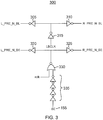
- a control signal generator 300 illustrated in Figure 3 controls the assertion and de-assertion of bit line precharge signal 160 and sense amplifier precharge signal 165. These signals are both de-asserted to the memory power supply voltage VDD responsive to the rising edge of the memory clock that triggers a read operation. But they are independently asserted with respect to the subsequent write operation as discussed above.
- control signal generator 300 controls a left and a right memory bank.
- the bit line precharge control signal thus consists of a right bank bit line precharge control signal (R_PRE_N_BL) and a left bank bit line precharge control signal (L_PRE_N_BL).
- control signal generator 300 generates a left bank sense amplifier precharge signal (L_PRE_N_SE) as well as a right bank sense amplifier precharge signal (R_PRE_N_SE).
- control signal generator 300 delays a memory clock such as a bank clock (LBCLK). Since there are two banks in this embodiment, the bank clock is delayed through an inverter 315 and an inverter 305 to produce the left bank bit line precharge signal. Similarly, the bank clock is delayed through inverter 315 and an inverter 310 to produce the right bank bit line precharge signal.
- the bank clock is a memory clock that during the read operation has a rising edge triggered by the rising edge of the system clock followed by self-timed delay with regard to its falling edge. This falling edge triggers the release of the word line voltage 210.
- the bank clock has another rising edge that is triggered by the falling edge of the system clock with regard to initiating a write operation.
- bit line precharging for the write operation thus occurs in the period between the falling edge of the bank clock after the read operation and ends with the assertion of the bank clock for the write operation.
- the falling edge of the bank clock is delayed by a two-inverter-delay as performed in control signal generator 300 with regard to inverters 315 and 305 or inverters 315 and 310.
- bit line precharge signal 160 will again be de-asserted to the memory power supply voltage VDD.
- word line voltage 210 is asserted for a write operation period during the write operation.
- word line voltage 210 is delayed with respect to the assertion of the bank clock so that the bitcell is not accessed while the bit lines are being precharged for the write operation.
- the bank clock falls after the falling edge of the word line voltage 210 for the write operation analogously to its delayed falling edge with regard to the read operation falling edge of word line voltage 210.
- bit line voltage 210 is asserted during a write operation, one of the bit lines such as bit line 102 is discharged to ground. This selective discharge in general depends upon the binary value being written into the accessed bitcell.
- the pair of inverters 315 and 305 or the pair of inverters 315 and 310 may be deemed to comprise a means for asserting the bit line precharge signal responsive to a delayed version of a falling edge of a memory clock and for de-asserting the bit line precharge signal responsive to a delayed version of a rising edge of the memory clock.
- control signal generator 300 is thus responsive to a read clock (rclk) that is processed through a logic gate such as a NOR gate 330.
- a read clock rclk
- the read clock is asserted only in response to the rising edge of system clock 205.
- the rising edge of the read clock is thus substantially simultaneous with the rising edge of the bank clock for the read operation.
- the read clock has a self-timed falling edge that occurs slightly before the read operation falling edge for the bank clock.
- NOR gate 330 also receives a delayed version of sense enable signal 155 as delayed through, for example, a serial chain of four inverters 335. NOR gate 330 will thus drive its output high only when both the delayed version of sense enable signal 155 and the read clock are both low (discharged to ground).
- the sense amplifier precharge signals L_PRE_N_SE and R_PRE_N_SE will thus be charged to the memory power supply voltage VDD responsive to the rising edge of the read clock.
- the read clock has a falling edge prior to the falling edge of sense enable signal 155.
- the sense amplifier precharge signals will then be asserted low responsive to the falling edge of sense enable signal 155 and will stay low until the read clock is again asserted in a subsequent read operation.
- inverters 335, NOR gate 330 and either inverter 320 or 325 may be deemed to comprise a means for asserting the sense amplifier precharge signal responsive to a delayed version of a falling edge for the sense enable signal.
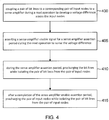
- An initial act 400 comprises coupling a pair of bit lines to a corresponding pair of input nodes to a sense amplifier during a read operation to develop a voltage difference across the input nodes.
- the coupling of bit lines 101 and 102 during the read operation of Figure 3 is an example for the development of the voltage difference of act 400.
- the method further comprises an act 405 of asserting a sense amplifier enable signal for a sense amplifier assertion period during the read operation to sense the voltage difference.
- the assertion of sense enable signal 155 during the read operation of Figure 3 is an example of act 405.
- the method also comprises an act 410 that occurs during the sense amplifier assertion period and input nodes.
- bit line precharge signal 160 during the read operation of Figure 3 is an example of act 410.
- the method includes an act 415 that occurs after a completion of the sense amplifier enable assertion period and comprises precharging the pair of input nodes while isolating the pair of bit lines from the pair of input nodes.
- the assertion of sense amplifier precharge signal during the read operation of Figure 3 to charge the sense amplifier nodes 140 and 145 in PDP memory 100 is an example of act 415.
Landscapes
- Engineering & Computer Science (AREA)
- Microelectronics & Electronic Packaging (AREA)
- Computer Hardware Design (AREA)
- Static Random-Access Memory (AREA)
Claims (15)
- Mémoire pseudo double port, PDP, (100), comprenant :une paire de lignes de bit (101, 102) ;un circuit de précharge de ligne de bit (110) configuré pour précharger la paire de lignes de bit en réponse à une application d'un signal de précharge de ligne de bit (160) ;un multiplexeur de lecture (115) configuré pour coupler sélectivement la paire de lignes de bit à une paire de noeuds d'entrée d'un amplificateur de lecture (125) en réponse à une application d'un signal de multiplexeur de lecture (150) ;un circuit de précharge de l'amplificateur de lecture (120) pour précharger la paire de noeuds d'entrée de l'amplificateur de lecture en réponse à une application d'un signal de précharge de l'amplificateur de lecture (165) ; etun générateur de signal de commande (300) configuré pour appliquer le signal de précharge de ligne de bit en réponse à un front descendant d'une première horloge de mémoire qui se produit pendant qu'un signal de validation de lecture est appliqué pendant une opération de lecture dans une première partie d'un cycle de synchronisation du système et pour appliquer le signal de précharge de l'amplificateur de lecture (165) en réponse à un front descendant du signal de validation de lecture pour précharger la paire de noeuds d'entrée de l'amplificateur de lecture (125) avant une opération d'écriture dans une deuxième partie du cycle de synchronisation du système.
- Mémoire PDP (100) selon la revendication 1, dans laquelle le générateur de signal de commande (300) est en outre configuré pour désactiver le signal de précharge de ligne de bit en réponse à un front montant de la première horloge de mémoire.
- Mémoire PDP (100) selon la revendication 2, dans laquelle la première horloge de mémoire comprend une horloge de banque mémoire ayant un front montant en réponse à un front montant d'une horloge système et un front descendant auto-déclenché.
- Mémoire PDP (100) selon la revendication 2, dans laquelle le générateur de signal de commande (300) comprend une chaîne d'inverseurs en série configurée pour retarder la première horloge de mémoire pour produire le signal de précharge de ligne de bit.
- Mémoire PDP (100) selon la revendication 4, dans laquelle la chaîne d'inverseurs en série comprend une paire d'inverseurs en série (305, 315).
- Mémoire PDP selon la revendication 1, dans laquelle le générateur de signal de commande (300) est en outre configuré pour désactiver le signal de précharge de l'amplificateur de lecture (165) en réponse à un front montant d'une deuxième horloge de mémoire.
- Mémoire PDP (100) selon la revendication 6, dans laquelle la deuxième horloge de mémoire comprend une horloge de lecture.
- Mémoire PDP (100) selon la revendication 7, dans laquelle le générateur de signal de commande (300) comprend :une chaîne d'inverseurs en série (335) configurée pour retarder le signal d'activation de lecture (155) pour produire un signal d'activation de détection retardé, etune porte logique (330) configurée pour traiter le signal d'activation de lecture retardée et l'horloge de lecture pour produire le signal de précharge de l'amplificateur de lecture.
- Mémoire PDP (100) selon la revendication 8, dans laquelle la porte logique comprend une porte NON-OU, et dans laquelle le générateur de signal de commande comprend en outre un inverseur (320, 325) pour inverser un signal de sortie provenant de la porte NON-OU pour produire le signal de précharge de l'amplificateur de lecture (165).
- Mémoire PDP (100) selon la revendication 1, dans laquelle le circuit de précharge de ligne de bit (110) comprend un premier transistor PMOS ayant sa source reliée à un noeud d'alimentation et son drain relié à une vraie parmi les lignes de bit, et dans laquelle le circuit de précharge de ligne de bit (110) comprend en outre un deuxième transistor PMOS ayant sa source reliée au noeud d'alimentation et son drain relié à une ligne complémentaire restante des lignes de bit, le premier transistor PMOS et le deuxième transistor PMOS étant chacun configuré pour avoir leurs grilles pilotées par le signal de précharge de ligne de bit (160).
- Mémoire PDP (100) selon la revendication 1, dans laquelle le circuit de précharge de l'amplificateur de lecture (120) comprend un premier transistor PMOS ayant sa source reliée à un noeud d'alimentation et son drain relié à un premier des noeuds d'entrée, et dans laquelle le circuit de précharge de ligne de bit (110) comprend en outre un deuxième transistor PMOS ayant sa source reliée au noeud d'alimentation et son drain relié au deuxième noeud restant des noeuds d'entrée, le premier transistor PMOS et le deuxième transistor PMOS étant chacun configuré pour avoir leurs grilles pilotées par le signal de précharge de l'amplificateur de lecture (165).
- Mémoire PDP (100) selon la revendication 1, dans laquelle l'amplificateur de lecture (125) comprend une paire d'inverseurs croisés (130, 135), dans laquelle l'amplificateur de lecture comprend en outre un transistor source de courant couplé entre la masse et un noeud de masse de la paire d'inverseurs croisés, et dans laquelle le transistor source de courant est configuré pour avoir sa grille pilotée par le signal d'activation de lecture (155), le transistor source de courant comprenant un transistor NMOS.
- Procédé, comprenant les étapes suivantes :le couplage (400) d'une paire de lignes de bit (101, 102) à une paire correspondante de noeuds d'entrée pour un amplificateur de lecture (125) pendant une opération de lecture dans une première partie d'un cycle de synchronisation d'une mémoire pseudo double port (100) pour développer une différence de tension entre les noeuds d'entrée ;appliquer (405) un signal d'activation de lecture (155) pendant une période d'activation de l'amplificateur de lecture pendant l'opération de lecture pour forcer l'amplificateur de lecture (125) à détecter la différence de tension ;pendant la période d'activation de l'amplificateur de lecture pendant l'opération de lecture, la précharge (410) des lignes de bit tout en isolant la paire de lignes de bit de la paire de noeuds d'entrée ; et,après achèvement de la période d'activation de l'amplificateur de lecture, la précharge (415) de la paire de noeuds d'entrée tout en isolant la paire de lignes de bit de la paire de noeuds d'entrée pendant une opération d'écriture dans une deuxième partie du cycle de syncghronisation du système pour la mémoire à pseudo double port (100).
- Procédé selon la revendication 13, dans lequel la précharge des lignes de bit (101, 102) comprend la précharge des lignes de bit en réponse à un front descendant d'une horloge de mémoire, l'horloge de mémoire comprenant une horloge de banque.
- Procédé selon la revendication 13, dans lequel la précharge de la paire de noeuds d'entrée s'effectue en réponse à un front descendant du signal de validation de lecture (155).
Applications Claiming Priority (2)
| Application Number | Priority Date | Filing Date | Title |
|---|---|---|---|
| US14/745,216 US9520165B1 (en) | 2015-06-19 | 2015-06-19 | High-speed pseudo-dual-port memory with separate precharge controls |
| PCT/US2016/033123 WO2016204922A1 (fr) | 2015-06-19 | 2016-05-18 | Mémoire pseudo double port haut débit avec commandes de précharge séparées |
Publications (2)
| Publication Number | Publication Date |
|---|---|
| EP3311385A1 EP3311385A1 (fr) | 2018-04-25 |
| EP3311385B1 true EP3311385B1 (fr) | 2019-07-17 |
Family
ID=56411878
Family Applications (1)
| Application Number | Title | Priority Date | Filing Date |
|---|---|---|---|
| EP16738907.1A Active EP3311385B1 (fr) | 2015-06-19 | 2016-05-18 | Mémoire pseudo double port haut débit avec commandes de précharge séparées |
Country Status (6)
| Country | Link |
|---|---|
| US (1) | US9520165B1 (fr) |
| EP (1) | EP3311385B1 (fr) |
| JP (1) | JP2018522362A (fr) |
| KR (1) | KR20180019571A (fr) |
| CN (1) | CN107750380B (fr) |
| WO (1) | WO2016204922A1 (fr) |
Cited By (1)
| Publication number | Priority date | Publication date | Assignee | Title |
|---|---|---|---|---|
| TWI758145B (zh) * | 2020-04-16 | 2022-03-11 | 聯發科技股份有限公司 | 偽雙端口記憶體及其控制方法 |
Families Citing this family (12)
| Publication number | Priority date | Publication date | Assignee | Title |
|---|---|---|---|---|
| US10559352B2 (en) * | 2018-01-05 | 2020-02-11 | Qualcomm Incorporated | Bitline-driven sense amplifier clocking scheme |
| US10706927B1 (en) * | 2018-05-08 | 2020-07-07 | SK Hynix Inc. | Electronic device and operating method thereof |
| US12159664B2 (en) * | 2019-10-14 | 2024-12-03 | Arm Limited | Concurrent memory access operations |
| US11437091B2 (en) * | 2020-08-31 | 2022-09-06 | Qualcomm Incorporated | SRAM with robust charge-transfer sense amplification |
| CN114496005B (zh) * | 2020-10-26 | 2025-08-01 | 中芯国际集成电路制造(上海)有限公司 | 伪双端口存储器及其位线控制方法、装置 |
| CN115148243B (zh) * | 2021-03-31 | 2024-05-14 | 长鑫存储技术有限公司 | 存储器电路、存储器预充电的控制方法及设备 |
| US11923035B2 (en) | 2021-05-12 | 2024-03-05 | Samsung Electronics Co., Ltd. | Pseudo dual port memory devices |
| KR102907464B1 (ko) * | 2021-08-25 | 2026-01-02 | 삼성전자주식회사 | 메모리 장치 및 메모리 장치의 리드 방법 |
| US12334167B2 (en) * | 2022-01-10 | 2025-06-17 | Changxin Memory Technologies, Inc. | Method and device for testing memory |
| CN117690463A (zh) * | 2022-09-02 | 2024-03-12 | 长鑫存储技术有限公司 | 一种控制电路以及半导体存储器 |
| US20250218506A1 (en) * | 2024-01-02 | 2025-07-03 | Qualcomm Incorporated | Time multiplexing of cleanup and write for serial read write memory |
| US20250378875A1 (en) * | 2024-06-11 | 2025-12-11 | Taiwan Semiconductor Manufacturing Company, Ltd. | Device and Method for Reading a Memory Cell |
Family Cites Families (15)
| Publication number | Priority date | Publication date | Assignee | Title |
|---|---|---|---|---|
| CN100568689C (zh) * | 2000-11-21 | 2009-12-09 | 睦塞德技术公司 | 电荷泵电源 |
| KR100410988B1 (ko) | 2001-11-15 | 2003-12-18 | 삼성전자주식회사 | 반도체 메모리 장치 및 이 장치의 비트 라인 센싱 방법 |
| JP2003249097A (ja) * | 2002-02-21 | 2003-09-05 | Mitsubishi Electric Corp | 半導体記憶装置 |
| JP4762520B2 (ja) * | 2004-09-28 | 2011-08-31 | 富士通セミコンダクター株式会社 | 半導体集積回路 |
| US7319632B2 (en) * | 2005-11-17 | 2008-01-15 | Qualcomm Incorporated | Pseudo-dual port memory having a clock for each port |
| US7518947B2 (en) * | 2006-09-28 | 2009-04-14 | Freescale Semiconductor, Inc. | Self-timed memory having common timing control circuit and method therefor |
| US20080183984A1 (en) | 2007-01-31 | 2008-07-31 | Dale Beucler | Memory system with read-modify-write |
| US20080285367A1 (en) * | 2007-05-18 | 2008-11-20 | Chang Ho Jung | Method and apparatus for reducing leakage current in memory arrays |
| US7733724B2 (en) | 2007-11-30 | 2010-06-08 | Taiwan Semiconductor Manufacturing Company, Ltd. | Controlling global bit line pre-charge time for high speed eDRAM |
| US7760562B2 (en) * | 2008-03-13 | 2010-07-20 | Qualcomm Incorporated | Address multiplexing in pseudo-dual port memory |
| JP4987896B2 (ja) | 2009-03-18 | 2012-07-25 | 株式会社東芝 | 半導体記憶装置 |
| US20110149667A1 (en) * | 2009-12-23 | 2011-06-23 | Fatih Hamzaoglu | Reduced area memory array by using sense amplifier as write driver |
| JP2014102870A (ja) | 2012-11-21 | 2014-06-05 | Toshiba Corp | センスアンプ回路 |
| US8976611B2 (en) | 2013-03-15 | 2015-03-10 | Taiwan Semiconductor Manufacturing Company, Ltd. | Asymmetric sensing amplifier, memory device and designing method |
| US9064556B2 (en) | 2013-10-23 | 2015-06-23 | Qualcomm Incorporated | High frequency pseudo dual port memory |
-
2015
- 2015-06-19 US US14/745,216 patent/US9520165B1/en active Active
-
2016
- 2016-05-18 KR KR1020177036217A patent/KR20180019571A/ko not_active Withdrawn
- 2016-05-18 EP EP16738907.1A patent/EP3311385B1/fr active Active
- 2016-05-18 WO PCT/US2016/033123 patent/WO2016204922A1/fr not_active Ceased
- 2016-05-18 JP JP2017565077A patent/JP2018522362A/ja active Pending
- 2016-05-18 CN CN201680035805.7A patent/CN107750380B/zh active Active
Non-Patent Citations (1)
| Title |
|---|
| None * |
Cited By (1)
| Publication number | Priority date | Publication date | Assignee | Title |
|---|---|---|---|---|
| TWI758145B (zh) * | 2020-04-16 | 2022-03-11 | 聯發科技股份有限公司 | 偽雙端口記憶體及其控制方法 |
Also Published As
| Publication number | Publication date |
|---|---|
| CN107750380A (zh) | 2018-03-02 |
| CN107750380B (zh) | 2020-12-04 |
| KR20180019571A (ko) | 2018-02-26 |
| US20160372167A1 (en) | 2016-12-22 |
| JP2018522362A (ja) | 2018-08-09 |
| US9520165B1 (en) | 2016-12-13 |
| EP3311385A1 (fr) | 2018-04-25 |
| WO2016204922A1 (fr) | 2016-12-22 |
Similar Documents
| Publication | Publication Date | Title |
|---|---|---|
| EP3311385B1 (fr) | Mémoire pseudo double port haut débit avec commandes de précharge séparées | |
| US7881147B2 (en) | Clock and control signal generation for high performance memory devices | |
| US8325549B2 (en) | Global bit select circuit interface with simplified write bit line precharging | |
| US9928889B1 (en) | Bitline precharge control and tracking scheme providing increased memory cycle speed for pseudo-dual-port memories | |
| EP3482395B1 (fr) | Précharge et écriture de données se chevauchant | |
| US10770132B1 (en) | SRAM with burst mode address comparator | |
| JP2000516008A (ja) | 低電力セルフタイミングメモリ装置およびその制御方法ならびに装置 | |
| US10923185B2 (en) | SRAM with burst mode operation | |
| CN100514489C (zh) | 具有位线预充电电路的存储器件和相关的位线预充电方法 | |
| EP3437097B1 (fr) | Précharge de ligne de bits intelligente pour une consommation en énergie dynamique réduite | |
| US20220310156A1 (en) | High-speed multi-port memory supporting collision | |
| TWI792584B (zh) | 預先充電電路及預先充電方法 | |
| US8599642B2 (en) | Port enable signal generation for gating a memory array device output | |
| US8325543B2 (en) | Global bit select circuit interface with false write through blocking | |
| TWI906355B (zh) | 具有進階突發模式位址比較器的靜態隨機存取記憶體及突發模式方法 | |
| US11894050B2 (en) | Memory with a sense amplifier isolation scheme for enhancing memory read bandwidth | |
| US11462263B2 (en) | Burst-mode memory with column multiplexer | |
| EP4205111A1 (fr) | Sram avec amplification de détection de transfert de charge robuste | |
| US20150235681A1 (en) | Pseudo-differential read scheme for dual port ram |
Legal Events
| Date | Code | Title | Description |
|---|---|---|---|
| STAA | Information on the status of an ep patent application or granted ep patent |
Free format text: STATUS: THE INTERNATIONAL PUBLICATION HAS BEEN MADE |
|
| PUAI | Public reference made under article 153(3) epc to a published international application that has entered the european phase |
Free format text: ORIGINAL CODE: 0009012 |
|
| STAA | Information on the status of an ep patent application or granted ep patent |
Free format text: STATUS: REQUEST FOR EXAMINATION WAS MADE |
|
| 17P | Request for examination filed |
Effective date: 20180103 |
|
| AK | Designated contracting states |
Kind code of ref document: A1 Designated state(s): AL AT BE BG CH CY CZ DE DK EE ES FI FR GB GR HR HU IE IS IT LI LT LU LV MC MK MT NL NO PL PT RO RS SE SI SK SM TR |
|
| AX | Request for extension of the european patent |
Extension state: BA ME |
|
| STAA | Information on the status of an ep patent application or granted ep patent |
Free format text: STATUS: EXAMINATION IS IN PROGRESS |
|
| 17Q | First examination report despatched |
Effective date: 20180618 |
|
| DAV | Request for validation of the european patent (deleted) | ||
| DAX | Request for extension of the european patent (deleted) | ||
| GRAP | Despatch of communication of intention to grant a patent |
Free format text: ORIGINAL CODE: EPIDOSNIGR1 |
|
| STAA | Information on the status of an ep patent application or granted ep patent |
Free format text: STATUS: GRANT OF PATENT IS INTENDED |
|
| INTG | Intention to grant announced |
Effective date: 20190227 |
|
| GRAS | Grant fee paid |
Free format text: ORIGINAL CODE: EPIDOSNIGR3 |
|
| GRAA | (expected) grant |
Free format text: ORIGINAL CODE: 0009210 |
|
| STAA | Information on the status of an ep patent application or granted ep patent |
Free format text: STATUS: THE PATENT HAS BEEN GRANTED |
|
| AK | Designated contracting states |
Kind code of ref document: B1 Designated state(s): AL AT BE BG CH CY CZ DE DK EE ES FI FR GB GR HR HU IE IS IT LI LT LU LV MC MK MT NL NO PL PT RO RS SE SI SK SM TR |
|
| REG | Reference to a national code |
Ref country code: GB Ref legal event code: FG4D |
|
| REG | Reference to a national code |
Ref country code: CH Ref legal event code: EP |
|
| REG | Reference to a national code |
Ref country code: DE Ref legal event code: R096 Ref document number: 602016017034 Country of ref document: DE |
|
| REG | Reference to a national code |
Ref country code: IE Ref legal event code: FG4D |
|
| REG | Reference to a national code |
Ref country code: AT Ref legal event code: REF Ref document number: 1156582 Country of ref document: AT Kind code of ref document: T Effective date: 20190815 |
|
| REG | Reference to a national code |
Ref country code: NL Ref legal event code: MP Effective date: 20190717 |
|
| REG | Reference to a national code |
Ref country code: LT Ref legal event code: MG4D |
|
| REG | Reference to a national code |
Ref country code: AT Ref legal event code: MK05 Ref document number: 1156582 Country of ref document: AT Kind code of ref document: T Effective date: 20190717 |
|
| PG25 | Lapsed in a contracting state [announced via postgrant information from national office to epo] |
Ref country code: LT Free format text: LAPSE BECAUSE OF FAILURE TO SUBMIT A TRANSLATION OF THE DESCRIPTION OR TO PAY THE FEE WITHIN THE PRESCRIBED TIME-LIMIT Effective date: 20190717 Ref country code: FI Free format text: LAPSE BECAUSE OF FAILURE TO SUBMIT A TRANSLATION OF THE DESCRIPTION OR TO PAY THE FEE WITHIN THE PRESCRIBED TIME-LIMIT Effective date: 20190717 Ref country code: NL Free format text: LAPSE BECAUSE OF FAILURE TO SUBMIT A TRANSLATION OF THE DESCRIPTION OR TO PAY THE FEE WITHIN THE PRESCRIBED TIME-LIMIT Effective date: 20190717 Ref country code: AT Free format text: LAPSE BECAUSE OF FAILURE TO SUBMIT A TRANSLATION OF THE DESCRIPTION OR TO PAY THE FEE WITHIN THE PRESCRIBED TIME-LIMIT Effective date: 20190717 Ref country code: BG Free format text: LAPSE BECAUSE OF FAILURE TO SUBMIT A TRANSLATION OF THE DESCRIPTION OR TO PAY THE FEE WITHIN THE PRESCRIBED TIME-LIMIT Effective date: 20191017 Ref country code: PT Free format text: LAPSE BECAUSE OF FAILURE TO SUBMIT A TRANSLATION OF THE DESCRIPTION OR TO PAY THE FEE WITHIN THE PRESCRIBED TIME-LIMIT Effective date: 20191118 Ref country code: NO Free format text: LAPSE BECAUSE OF FAILURE TO SUBMIT A TRANSLATION OF THE DESCRIPTION OR TO PAY THE FEE WITHIN THE PRESCRIBED TIME-LIMIT Effective date: 20191017 Ref country code: SE Free format text: LAPSE BECAUSE OF FAILURE TO SUBMIT A TRANSLATION OF THE DESCRIPTION OR TO PAY THE FEE WITHIN THE PRESCRIBED TIME-LIMIT Effective date: 20190717 Ref country code: HR Free format text: LAPSE BECAUSE OF FAILURE TO SUBMIT A TRANSLATION OF THE DESCRIPTION OR TO PAY THE FEE WITHIN THE PRESCRIBED TIME-LIMIT Effective date: 20190717 |
|
| PG25 | Lapsed in a contracting state [announced via postgrant information from national office to epo] |
Ref country code: RS Free format text: LAPSE BECAUSE OF FAILURE TO SUBMIT A TRANSLATION OF THE DESCRIPTION OR TO PAY THE FEE WITHIN THE PRESCRIBED TIME-LIMIT Effective date: 20190717 Ref country code: GR Free format text: LAPSE BECAUSE OF FAILURE TO SUBMIT A TRANSLATION OF THE DESCRIPTION OR TO PAY THE FEE WITHIN THE PRESCRIBED TIME-LIMIT Effective date: 20191018 Ref country code: IS Free format text: LAPSE BECAUSE OF FAILURE TO SUBMIT A TRANSLATION OF THE DESCRIPTION OR TO PAY THE FEE WITHIN THE PRESCRIBED TIME-LIMIT Effective date: 20191117 Ref country code: AL Free format text: LAPSE BECAUSE OF FAILURE TO SUBMIT A TRANSLATION OF THE DESCRIPTION OR TO PAY THE FEE WITHIN THE PRESCRIBED TIME-LIMIT Effective date: 20190717 Ref country code: ES Free format text: LAPSE BECAUSE OF FAILURE TO SUBMIT A TRANSLATION OF THE DESCRIPTION OR TO PAY THE FEE WITHIN THE PRESCRIBED TIME-LIMIT Effective date: 20190717 Ref country code: LV Free format text: LAPSE BECAUSE OF FAILURE TO SUBMIT A TRANSLATION OF THE DESCRIPTION OR TO PAY THE FEE WITHIN THE PRESCRIBED TIME-LIMIT Effective date: 20190717 |
|
| PG25 | Lapsed in a contracting state [announced via postgrant information from national office to epo] |
Ref country code: TR Free format text: LAPSE BECAUSE OF FAILURE TO SUBMIT A TRANSLATION OF THE DESCRIPTION OR TO PAY THE FEE WITHIN THE PRESCRIBED TIME-LIMIT Effective date: 20190717 |
|
| PG25 | Lapsed in a contracting state [announced via postgrant information from national office to epo] |
Ref country code: PL Free format text: LAPSE BECAUSE OF FAILURE TO SUBMIT A TRANSLATION OF THE DESCRIPTION OR TO PAY THE FEE WITHIN THE PRESCRIBED TIME-LIMIT Effective date: 20190717 Ref country code: DK Free format text: LAPSE BECAUSE OF FAILURE TO SUBMIT A TRANSLATION OF THE DESCRIPTION OR TO PAY THE FEE WITHIN THE PRESCRIBED TIME-LIMIT Effective date: 20190717 Ref country code: EE Free format text: LAPSE BECAUSE OF FAILURE TO SUBMIT A TRANSLATION OF THE DESCRIPTION OR TO PAY THE FEE WITHIN THE PRESCRIBED TIME-LIMIT Effective date: 20190717 Ref country code: IT Free format text: LAPSE BECAUSE OF FAILURE TO SUBMIT A TRANSLATION OF THE DESCRIPTION OR TO PAY THE FEE WITHIN THE PRESCRIBED TIME-LIMIT Effective date: 20190717 Ref country code: RO Free format text: LAPSE BECAUSE OF FAILURE TO SUBMIT A TRANSLATION OF THE DESCRIPTION OR TO PAY THE FEE WITHIN THE PRESCRIBED TIME-LIMIT Effective date: 20190717 |
|
| PG25 | Lapsed in a contracting state [announced via postgrant information from national office to epo] |
Ref country code: IS Free format text: LAPSE BECAUSE OF FAILURE TO SUBMIT A TRANSLATION OF THE DESCRIPTION OR TO PAY THE FEE WITHIN THE PRESCRIBED TIME-LIMIT Effective date: 20200224 Ref country code: SK Free format text: LAPSE BECAUSE OF FAILURE TO SUBMIT A TRANSLATION OF THE DESCRIPTION OR TO PAY THE FEE WITHIN THE PRESCRIBED TIME-LIMIT Effective date: 20190717 Ref country code: CZ Free format text: LAPSE BECAUSE OF FAILURE TO SUBMIT A TRANSLATION OF THE DESCRIPTION OR TO PAY THE FEE WITHIN THE PRESCRIBED TIME-LIMIT Effective date: 20190717 Ref country code: SM Free format text: LAPSE BECAUSE OF FAILURE TO SUBMIT A TRANSLATION OF THE DESCRIPTION OR TO PAY THE FEE WITHIN THE PRESCRIBED TIME-LIMIT Effective date: 20190717 |
|
| REG | Reference to a national code |
Ref country code: DE Ref legal event code: R097 Ref document number: 602016017034 Country of ref document: DE |
|
| PLBE | No opposition filed within time limit |
Free format text: ORIGINAL CODE: 0009261 |
|
| STAA | Information on the status of an ep patent application or granted ep patent |
Free format text: STATUS: NO OPPOSITION FILED WITHIN TIME LIMIT |
|
| PG2D | Information on lapse in contracting state deleted |
Ref country code: IS |
|
| PGFP | Annual fee paid to national office [announced via postgrant information from national office to epo] |
Ref country code: FR Payment date: 20200421 Year of fee payment: 5 |
|
| 26N | No opposition filed |
Effective date: 20200603 |
|
| PG25 | Lapsed in a contracting state [announced via postgrant information from national office to epo] |
Ref country code: SI Free format text: LAPSE BECAUSE OF FAILURE TO SUBMIT A TRANSLATION OF THE DESCRIPTION OR TO PAY THE FEE WITHIN THE PRESCRIBED TIME-LIMIT Effective date: 20190717 |
|
| PG25 | Lapsed in a contracting state [announced via postgrant information from national office to epo] |
Ref country code: CH Free format text: LAPSE BECAUSE OF NON-PAYMENT OF DUE FEES Effective date: 20200531 Ref country code: LI Free format text: LAPSE BECAUSE OF NON-PAYMENT OF DUE FEES Effective date: 20200531 Ref country code: MC Free format text: LAPSE BECAUSE OF FAILURE TO SUBMIT A TRANSLATION OF THE DESCRIPTION OR TO PAY THE FEE WITHIN THE PRESCRIBED TIME-LIMIT Effective date: 20190717 |
|
| REG | Reference to a national code |
Ref country code: BE Ref legal event code: MM Effective date: 20200531 |
|
| PG25 | Lapsed in a contracting state [announced via postgrant information from national office to epo] |
Ref country code: LU Free format text: LAPSE BECAUSE OF NON-PAYMENT OF DUE FEES Effective date: 20200518 |
|
| PG25 | Lapsed in a contracting state [announced via postgrant information from national office to epo] |
Ref country code: IE Free format text: LAPSE BECAUSE OF NON-PAYMENT OF DUE FEES Effective date: 20200518 |
|
| PG25 | Lapsed in a contracting state [announced via postgrant information from national office to epo] |
Ref country code: BE Free format text: LAPSE BECAUSE OF NON-PAYMENT OF DUE FEES Effective date: 20200531 |
|
| PG25 | Lapsed in a contracting state [announced via postgrant information from national office to epo] |
Ref country code: MT Free format text: LAPSE BECAUSE OF FAILURE TO SUBMIT A TRANSLATION OF THE DESCRIPTION OR TO PAY THE FEE WITHIN THE PRESCRIBED TIME-LIMIT Effective date: 20190717 Ref country code: FR Free format text: LAPSE BECAUSE OF NON-PAYMENT OF DUE FEES Effective date: 20210531 Ref country code: CY Free format text: LAPSE BECAUSE OF FAILURE TO SUBMIT A TRANSLATION OF THE DESCRIPTION OR TO PAY THE FEE WITHIN THE PRESCRIBED TIME-LIMIT Effective date: 20190717 |
|
| PG25 | Lapsed in a contracting state [announced via postgrant information from national office to epo] |
Ref country code: MK Free format text: LAPSE BECAUSE OF FAILURE TO SUBMIT A TRANSLATION OF THE DESCRIPTION OR TO PAY THE FEE WITHIN THE PRESCRIBED TIME-LIMIT Effective date: 20190717 |
|
| PGFP | Annual fee paid to national office [announced via postgrant information from national office to epo] |
Ref country code: DE Payment date: 20250409 Year of fee payment: 10 |
|
| PGFP | Annual fee paid to national office [announced via postgrant information from national office to epo] |
Ref country code: GB Payment date: 20260320 Year of fee payment: 11 |