EP3320342B1 - Neue hydrogele mit silylierte struktur und verfahren zur herstellung davon - Google Patents
Neue hydrogele mit silylierte struktur und verfahren zur herstellung davon Download PDFInfo
- Publication number
- EP3320342B1 EP3320342B1 EP16736458.7A EP16736458A EP3320342B1 EP 3320342 B1 EP3320342 B1 EP 3320342B1 EP 16736458 A EP16736458 A EP 16736458A EP 3320342 B1 EP3320342 B1 EP 3320342B1
- Authority
- EP
- European Patent Office
- Prior art keywords
- hydrogel
- group
- carbon atoms
- fluorescein
- hydrogels
- Prior art date
- Legal status (The legal status is an assumption and is not a legal conclusion. Google has not performed a legal analysis and makes no representation as to the accuracy of the status listed.)
- Active
Links
Images


Classifications
-
- A—HUMAN NECESSITIES
- A61—MEDICAL OR VETERINARY SCIENCE; HYGIENE
- A61L—METHODS OR APPARATUS FOR STERILISING MATERIALS OR OBJECTS IN GENERAL; DISINFECTION, STERILISATION OR DEODORISATION OF AIR; CHEMICAL ASPECTS OF BANDAGES, DRESSINGS, ABSORBENT PADS OR SURGICAL ARTICLES; MATERIALS FOR BANDAGES, DRESSINGS, ABSORBENT PADS OR SURGICAL ARTICLES
- A61L27/00—Materials for grafts or prostheses or for coating grafts or prostheses
- A61L27/50—Materials characterised by their function or physical properties, e.g. injectable or lubricating compositions, shape-memory materials, surface modified materials
- A61L27/52—Hydrogels or hydrocolloids
-
- A—HUMAN NECESSITIES
- A61—MEDICAL OR VETERINARY SCIENCE; HYGIENE
- A61L—METHODS OR APPARATUS FOR STERILISING MATERIALS OR OBJECTS IN GENERAL; DISINFECTION, STERILISATION OR DEODORISATION OF AIR; CHEMICAL ASPECTS OF BANDAGES, DRESSINGS, ABSORBENT PADS OR SURGICAL ARTICLES; MATERIALS FOR BANDAGES, DRESSINGS, ABSORBENT PADS OR SURGICAL ARTICLES
- A61L26/00—Chemical aspects of, or use of materials for, wound dressings or bandages in liquid, gel or powder form
- A61L26/0061—Use of materials characterised by their function or physical properties
- A61L26/0066—Medicaments; Biocides
-
- A—HUMAN NECESSITIES
- A61—MEDICAL OR VETERINARY SCIENCE; HYGIENE
- A61L—METHODS OR APPARATUS FOR STERILISING MATERIALS OR OBJECTS IN GENERAL; DISINFECTION, STERILISATION OR DEODORISATION OF AIR; CHEMICAL ASPECTS OF BANDAGES, DRESSINGS, ABSORBENT PADS OR SURGICAL ARTICLES; MATERIALS FOR BANDAGES, DRESSINGS, ABSORBENT PADS OR SURGICAL ARTICLES
- A61L26/00—Chemical aspects of, or use of materials for, wound dressings or bandages in liquid, gel or powder form
- A61L26/0061—Use of materials characterised by their function or physical properties
- A61L26/008—Hydrogels or hydrocolloids
-
- A—HUMAN NECESSITIES
- A61—MEDICAL OR VETERINARY SCIENCE; HYGIENE
- A61L—METHODS OR APPARATUS FOR STERILISING MATERIALS OR OBJECTS IN GENERAL; DISINFECTION, STERILISATION OR DEODORISATION OF AIR; CHEMICAL ASPECTS OF BANDAGES, DRESSINGS, ABSORBENT PADS OR SURGICAL ARTICLES; MATERIALS FOR BANDAGES, DRESSINGS, ABSORBENT PADS OR SURGICAL ARTICLES
- A61L27/00—Materials for grafts or prostheses or for coating grafts or prostheses
- A61L27/14—Macromolecular materials
- A61L27/18—Macromolecular materials obtained otherwise than by reactions only involving carbon-to-carbon unsaturated bonds
-
- A—HUMAN NECESSITIES
- A61—MEDICAL OR VETERINARY SCIENCE; HYGIENE
- A61L—METHODS OR APPARATUS FOR STERILISING MATERIALS OR OBJECTS IN GENERAL; DISINFECTION, STERILISATION OR DEODORISATION OF AIR; CHEMICAL ASPECTS OF BANDAGES, DRESSINGS, ABSORBENT PADS OR SURGICAL ARTICLES; MATERIALS FOR BANDAGES, DRESSINGS, ABSORBENT PADS OR SURGICAL ARTICLES
- A61L27/00—Materials for grafts or prostheses or for coating grafts or prostheses
- A61L27/14—Macromolecular materials
- A61L27/22—Polypeptides or derivatives thereof, e.g. degradation products
-
- A—HUMAN NECESSITIES
- A61—MEDICAL OR VETERINARY SCIENCE; HYGIENE
- A61L—METHODS OR APPARATUS FOR STERILISING MATERIALS OR OBJECTS IN GENERAL; DISINFECTION, STERILISATION OR DEODORISATION OF AIR; CHEMICAL ASPECTS OF BANDAGES, DRESSINGS, ABSORBENT PADS OR SURGICAL ARTICLES; MATERIALS FOR BANDAGES, DRESSINGS, ABSORBENT PADS OR SURGICAL ARTICLES
- A61L27/00—Materials for grafts or prostheses or for coating grafts or prostheses
- A61L27/50—Materials characterised by their function or physical properties, e.g. injectable or lubricating compositions, shape-memory materials, surface modified materials
- A61L27/54—Biologically active materials, e.g. therapeutic substances
-
- A—HUMAN NECESSITIES
- A61—MEDICAL OR VETERINARY SCIENCE; HYGIENE
- A61P—SPECIFIC THERAPEUTIC ACTIVITY OF CHEMICAL COMPOUNDS OR MEDICINAL PREPARATIONS
- A61P43/00—Drugs for specific purposes, not provided for in groups A61P1/00-A61P41/00
-
- C—CHEMISTRY; METALLURGY
- C07—ORGANIC CHEMISTRY
- C07F—ACYCLIC, CARBOCYCLIC OR HETEROCYCLIC COMPOUNDS CONTAINING ELEMENTS OTHER THAN CARBON, HYDROGEN, HALOGEN, OXYGEN, NITROGEN, SULFUR, SELENIUM OR TELLURIUM
- C07F7/00—Compounds containing elements of Groups 4 or 14 of the Periodic Table
- C07F7/02—Silicon compounds
- C07F7/08—Compounds having one or more C—Si linkages
- C07F7/0834—Compounds having one or more O-Si linkage
- C07F7/0838—Compounds with one or more Si-O-Si sequences
- C07F7/087—Compounds of unknown structure containing a Si-O-Si sequence
-
- C—CHEMISTRY; METALLURGY
- C07—ORGANIC CHEMISTRY
- C07F—ACYCLIC, CARBOCYCLIC OR HETEROCYCLIC COMPOUNDS CONTAINING ELEMENTS OTHER THAN CARBON, HYDROGEN, HALOGEN, OXYGEN, NITROGEN, SULFUR, SELENIUM OR TELLURIUM
- C07F7/00—Compounds containing elements of Groups 4 or 14 of the Periodic Table
- C07F7/02—Silicon compounds
- C07F7/08—Compounds having one or more C—Si linkages
- C07F7/18—Compounds having one or more C—Si linkages as well as one or more C—O—Si linkages
- C07F7/1804—Compounds having Si-O-C linkages
-
- C—CHEMISTRY; METALLURGY
- C07—ORGANIC CHEMISTRY
- C07K—PEPTIDES
- C07K1/00—General methods for the preparation of peptides, i.e. processes for the organic chemical preparation of peptides or proteins of any length
- C07K1/107—General methods for the preparation of peptides, i.e. processes for the organic chemical preparation of peptides or proteins of any length by chemical modification of precursor peptides
- C07K1/1072—General methods for the preparation of peptides, i.e. processes for the organic chemical preparation of peptides or proteins of any length by chemical modification of precursor peptides by covalent attachment of residues or functional groups
- C07K1/1077—General methods for the preparation of peptides, i.e. processes for the organic chemical preparation of peptides or proteins of any length by chemical modification of precursor peptides by covalent attachment of residues or functional groups by covalent attachment of residues other than amino acids or peptide residues, e.g. sugars, polyols, fatty acids
-
- C—CHEMISTRY; METALLURGY
- C07—ORGANIC CHEMISTRY
- C07K—PEPTIDES
- C07K5/00—Peptides containing up to four amino acids in a fully defined sequence; Derivatives thereof
- C07K5/04—Peptides containing up to four amino acids in a fully defined sequence; Derivatives thereof containing only normal peptide links
- C07K5/06—Dipeptides
- C07K5/06086—Dipeptides with the first amino acid being basic
- C07K5/06095—Arg-amino acid
-
- C—CHEMISTRY; METALLURGY
- C07—ORGANIC CHEMISTRY
- C07K—PEPTIDES
- C07K5/00—Peptides containing up to four amino acids in a fully defined sequence; Derivatives thereof
- C07K5/04—Peptides containing up to four amino acids in a fully defined sequence; Derivatives thereof containing only normal peptide links
- C07K5/08—Tripeptides
- C07K5/0821—Tripeptides with the first amino acid being heterocyclic, e.g. His, Pro, Trp
- C07K5/0823—Tripeptides with the first amino acid being heterocyclic, e.g. His, Pro, Trp and Pro-amino acid; Derivatives thereof
-
- C—CHEMISTRY; METALLURGY
- C07—ORGANIC CHEMISTRY
- C07K—PEPTIDES
- C07K7/00—Peptides having 5 to 20 amino acids in a fully defined sequence; Derivatives thereof
- C07K7/04—Linear peptides containing only normal peptide links
- C07K7/06—Linear peptides containing only normal peptide links having 5 to 11 amino acids
-
- C—CHEMISTRY; METALLURGY
- C08—ORGANIC MACROMOLECULAR COMPOUNDS; THEIR PREPARATION OR CHEMICAL WORKING-UP; COMPOSITIONS BASED THEREON
- C08G—MACROMOLECULAR COMPOUNDS OBTAINED OTHERWISE THAN BY REACTIONS ONLY INVOLVING UNSATURATED CARBON-TO-CARBON BONDS
- C08G65/00—Macromolecular compounds obtained by reactions forming an ether link in the main chain of the macromolecule
- C08G65/02—Macromolecular compounds obtained by reactions forming an ether link in the main chain of the macromolecule from cyclic ethers by opening of the heterocyclic ring
- C08G65/32—Polymers modified by chemical after-treatment
- C08G65/329—Polymers modified by chemical after-treatment with organic compounds
- C08G65/336—Polymers modified by chemical after-treatment with organic compounds containing silicon
-
- C—CHEMISTRY; METALLURGY
- C12—BIOCHEMISTRY; BEER; SPIRITS; WINE; VINEGAR; MICROBIOLOGY; ENZYMOLOGY; MUTATION OR GENETIC ENGINEERING
- C12N—MICROORGANISMS OR ENZYMES; COMPOSITIONS THEREOF; PROPAGATING, PRESERVING, OR MAINTAINING MICROORGANISMS; MUTATION OR GENETIC ENGINEERING; CULTURE MEDIA
- C12N5/00—Undifferentiated human, animal or plant cells, e.g. cell lines; Tissues; Cultivation or maintenance thereof; Culture media therefor
- C12N5/06—Animal cells or tissues; Human cells or tissues
- C12N5/0602—Vertebrate cells
- C12N5/0652—Cells of skeletal and connective tissues; Mesenchyme
- C12N5/0662—Stem cells
- C12N5/0668—Mesenchymal stem cells from other natural sources
-
- G—PHYSICS
- G01—MEASURING; TESTING
- G01N—INVESTIGATING OR ANALYSING MATERIALS BY DETERMINING THEIR CHEMICAL OR PHYSICAL PROPERTIES
- G01N33/00—Investigating or analysing materials by specific methods not covered by groups G01N1/00 - G01N31/00
- G01N33/48—Biological material, e.g. blood, urine; Haemocytometers
- G01N33/50—Chemical analysis of biological material, e.g. blood, urine; Testing involving biospecific ligand binding methods; Immunological testing
- G01N33/53—Immunoassay; Biospecific binding assay; Materials therefor
- G01N33/543—Immunoassay; Biospecific binding assay; Materials therefor with an insoluble carrier for immobilising immunochemicals
- G01N33/5436—Immunoassay; Biospecific binding assay; Materials therefor with an insoluble carrier for immobilising immunochemicals with ligand physically entrapped within the solid phase
-
- A—HUMAN NECESSITIES
- A61—MEDICAL OR VETERINARY SCIENCE; HYGIENE
- A61L—METHODS OR APPARATUS FOR STERILISING MATERIALS OR OBJECTS IN GENERAL; DISINFECTION, STERILISATION OR DEODORISATION OF AIR; CHEMICAL ASPECTS OF BANDAGES, DRESSINGS, ABSORBENT PADS OR SURGICAL ARTICLES; MATERIALS FOR BANDAGES, DRESSINGS, ABSORBENT PADS OR SURGICAL ARTICLES
- A61L2300/00—Biologically active materials used in bandages, wound dressings, absorbent pads or medical devices
- A61L2300/40—Biologically active materials used in bandages, wound dressings, absorbent pads or medical devices characterised by a specific therapeutic activity or mode of action
- A61L2300/404—Biocides, antimicrobial agents, antiseptic agents
-
- A—HUMAN NECESSITIES
- A61—MEDICAL OR VETERINARY SCIENCE; HYGIENE
- A61L—METHODS OR APPARATUS FOR STERILISING MATERIALS OR OBJECTS IN GENERAL; DISINFECTION, STERILISATION OR DEODORISATION OF AIR; CHEMICAL ASPECTS OF BANDAGES, DRESSINGS, ABSORBENT PADS OR SURGICAL ARTICLES; MATERIALS FOR BANDAGES, DRESSINGS, ABSORBENT PADS OR SURGICAL ARTICLES
- A61L2400/00—Materials characterised by their function or physical properties
- A61L2400/06—Flowable or injectable implant compositions
-
- C—CHEMISTRY; METALLURGY
- C12—BIOCHEMISTRY; BEER; SPIRITS; WINE; VINEGAR; MICROBIOLOGY; ENZYMOLOGY; MUTATION OR GENETIC ENGINEERING
- C12N—MICROORGANISMS OR ENZYMES; COMPOSITIONS THEREOF; PROPAGATING, PRESERVING, OR MAINTAINING MICROORGANISMS; MUTATION OR GENETIC ENGINEERING; CULTURE MEDIA
- C12N2533/00—Supports or coatings for cell culture, characterised by material
- C12N2533/30—Synthetic polymers
-
- C—CHEMISTRY; METALLURGY
- C12—BIOCHEMISTRY; BEER; SPIRITS; WINE; VINEGAR; MICROBIOLOGY; ENZYMOLOGY; MUTATION OR GENETIC ENGINEERING
- C12N—MICROORGANISMS OR ENZYMES; COMPOSITIONS THEREOF; PROPAGATING, PRESERVING, OR MAINTAINING MICROORGANISMS; MUTATION OR GENETIC ENGINEERING; CULTURE MEDIA
- C12N2533/00—Supports or coatings for cell culture, characterised by material
- C12N2533/50—Proteins
Definitions
- the object of the present invention relates to hydrogels prepared by means of silylated organic molecules (such as silylated biomolecules), their process for obtaining and their uses.
- biomolecules are generally molecules whose (synthetic) chemistry is often particular (eg molecules often possessing numerous reactive chemical functions), it is difficult not to involve side reactions during the formation of the functionalized hydrogel.
- biomolecules are generally molecules whose (synthetic) chemistry is often particular (eg molecules often possessing numerous reactive chemical functions), it is difficult not to involve side reactions during the formation of the functionalized hydrogel.
- the patent document WO2011089267 discusses, among other topics, the manufacture of hydrogels to which active biomolecules are covalently linked. To do this, it is the chemistry of silicon which was chosen in addition to the biomolecules chosen. Thus, two types of silylated biomolecules are synthesized, one having the role of the structural matrix of the hydrogel (in particular HPMC silylated in WO2011089267 ), and the other having the role of active biological functionalization of the hydrogel.
- the invention described in WO2011089267 therefore appears attractive. However, the disclosed invention does not solve all the technical problems mentioned above.
- WO2011089267 discloses hydrogels formed from a “biomolecule” having a single silyl group, the properties of which will essentially depend on the nature of the “biomolecule” fragment. This is a handicap because it is important to be able to finely control the chemical nature of the hydrogel matrix independently of its rheological properties. It is also fundamental that the hydrogel ensure, for example, biocompatibility according to the model studied and / or exhibit particular biological and / or physicochemical functions desired according to the field concerned. One of the aspects according to the present invention has therefore been to facilitate the control of the rheology of the hydrogels.
- hydrogels have considerable potential for use, especially in the medical field.
- this potential is currently limited by poor control of the manufacture of these hydrogels, a lack of knowledge of the means of controlling the rheological properties of these hydrogels or simply the impossibility of producing active biocompatible hydrogels whose activity persists over time.
- the object of the present patent application is to propose at least one technical solution to overcome the incomplete methods of the prior art in order to lead to obtaining hydrogels which can be easily modulated, which can in particular be used in the medical field and neighboring fields.
- Another aspect of the present invention relates to the techniques for purifying optionally functionalized hydrogel precursors.
- the first of these techniques involves a series of precipitations, particularly in an inert solvent such as diethyl ether.
- This technique indeed has the advantage that the majority of the functionalized synthetic precursors of hydrogels are insoluble in ether and are not reactive in this solvent.
- By a succession of washes with ether and optionally of dissolutions in a suitable solvent it is possible to provide functionalized synthetic precursors of hydrogels of sufficient purity for simple (inexpensive) molecules.
- the present invention further provides a method of purification by reverse phase HPLC involving a particular choice of substituents for the Si atom.
- a single reactive group such as a halogen or a hydroxyl group or a hydroxyl precursor
- HPLC in reverse phase is that it makes it possible to obtain active molecules, such as biomolecules, with an optimum degree of purity, necessary in the context of medical use.
- the choice of the groups carried on the Si atom makes it possible in the majority of cases to be able to avoid unwanted side reactions.
- the potential of the present invention therefore also resides in the fact that it would appear that any biomolecule of biological interest (in particular a peptide sequence) can be introduced in a controlled manner into the hydrogels according to the present invention in order to confer them biological properties.
- bi-silylated polyethylene glycol hydrogel is biocompatible, biodegradable, completely synthetic, and easily modulated in terms of the degree of hydration (more or less easily impregnated with liquids, for example aqueous).
- the PEG (bi-silylated) hydrogel matrix can be formed with or without the presence of water, which allows significant flexibility in the use of this polymer (dehydrated hydrogels can be hydrated thereafter).
- hydrogel which is homogeneous in structural terms (homogeneity of structure and of hydration)
- the possibility of modifying the reactivity of the silyl group by reducing or increasing the number of reactive substituents thereon (1, 2 or 3 reactive substituents) makes it possible to finely control the degree of crosslinking of the hydrogel and thus to be able to finely control its rheology.
- Another aspect according to the present invention relates to the insertion of liquid hydrogels into the organism with polymerization of these hydrogels in situ.
- a recurring problem with liquid hydrogels prepared beforehand is that they are difficult to inject because of their viscosity, causing more or less acute pain during their (local) administration to the patient.
- the technique of WO2011089267 even if this is mentioned in this document, cannot be used as such because the purity of the silylated biomolecules is not sufficient for a medical application with an injection in liquid form and taken in situ.
- the purification methods mentioned above make it possible to overcome this technical problem.
- the hydrogels can be prepared by simply dissolving the hybrid blocks in a phosphate buffer and then incubating the solution at 37 ° C., which makes it possible to envisage their injection in vivo with taking in situ.
- the object of the present invention therefore relates to a hydrogel capable of being obtained by the process as defined presently.
- the object of the present invention further relates to a hydrogel according to the present invention for its use for therapeutic and / or surgical purposes, preferably characterized in that said hydrogel allows the delivery and / or transport of active molecules, or for its use. in vivo use in tissue engineering
- the present invention relates to a hydrogel capable of being obtained by the process according to the present invention for its use as defined above, characterized in that the polymerization of said hydrogel is carried out in situ in a living organism, i.e. to say an animal such as a mammal like Man, following the casting or the injection, preferably painless or not very painful, of the molecules of formula (I) and optionally (II) as defined above.
- Another object of the present invention relates to the in vitro use of a hydrogel according to the present invention in tissue engineering.
- the present description also relates to a product of formula (I) or (II) as defined presently, capable of being obtained by the purification process of the invention, characterized in that said product has a purity of at least 98% by mass relative to the total weight of product, preferably greater than 99% by mass.
- a “hydrogel” is a type of material having an aqueous liquid component and a solid component. Structurally, it is composed of a matrix of polymer chains, swollen by a fluid comprising water, this fluid, preferably consisting essentially of water, preferably being in a proportion equal to or greater than 40% by weight of said hydrogel, more preferably between 40 and 99% by weight, between 50 and 98%, between 60 and 97%, between 70 and 96% or alternatively between 80% and 95%. Preferably, this fluid comprises at least 95% water by weight, or even 100% water.
- This fluid can also be a liquid of biological origin.
- the water content of a hydrogel also largely determines its physicochemical characteristics. It is possible to find these hydrogels also for various biomedical applications in particular in the release of medicaments and in the treatment of cutaneous burns.
- the hydrogels according to the invention consist of chains of polymers linked together by covalent bonds.
- a crosslinked polymer comprises nodes with at least 3 chemical bonds, preferably covalent.
- This crosslinking allows the hydrogels according to the present invention to provide a so-called "permanent" character to the crosslinking nodes because the tetravalent silicon atom generates 4 covalent bonds.
- the hydrogels according to the present invention organic and inorganic
- the organic nature allows high biocompatibility and non-toxicity of the hydrogels produced.
- the hydrogels according to the present invention have a degree of flexibility very similar to that of natural tissues (induced by their high water content).
- crosslinkable therefore preferably refers here to the capacity of the silicon atoms to generate at most 3 covalent bonds with at most 3 groups comprising an Si atom (such as Si — OH).
- the sol-gel process makes it possible to manufacture an inorganic polymer by simple chemical reactions at a temperature close to room temperature (in reality applicable to temperature ranges ranging from 0 ° C to 150 ° C, preferably between 20 ° C and 70 ° C, more preferably between 35 ° C and 40 ° C).
- the synthesis is carried out from alkoxysilanes or silanols of formula Si (OR) n where R is an organic alkyl group C n H 2n + 1 or a hydrogen.
- structural organic polymer it is understood according to the present invention a polymer of organic nature, therefore hydrocarbon, making it possible to structure the hydrogel in the form of a polymeric matrix. This is easily achieved from the moment when the monomers composing said structural organic polymer are controlled in terms of chemical structure and purity; ie by the usual techniques of synthetic chemistry or purification. In fact, by controlling the nature of the monomers involved in the polymerization of the hydrogel, it is possible to vary the physicochemical and rheological characteristics of the polymer obtained in fine.
- synthetic origin implies that the product in question has been modified at least once by a chemical process developed by humans.
- a “chemical bond” is any attractive interaction that keeps two or more atoms close to each other. This interaction can be directional like the bond between two atoms within a molecule, or non-directional like the electrostatic interaction that keeps the ions of an ionic crystal in contact. It can be strong like the two previous examples, or weak like the van der Waals interactions which are dipolar in nature.
- spacer group refers to a fragment comprising at least one atom.
- the spacer group contains at least one carbon atom.
- the spacer group makes it possible to separate within the same molecule, two chemical groups, to reduce the steric discomfort between the group A (or B) and the Si atom.
- the spacer group allows the silyl group to react with a limited gene of the fragment A (or B) or to the group A (or B) to interact and retain its biological properties, with a limited gene of the fragment containing the Si.
- the spacer group allows a stable bond between fragment A (or B) and Si, while allowing the silicate moiety to react. It is therefore clear that the spacer group cannot be considered as a constituent element of fragment A (or B), such as for example an amino acid residue if A (or B) is a peptide fragment).
- the spacer group comprises, or consists of, a saturated or unsaturated aliphatic hydrocarbon chain, preferably between 1 and 10 carbon atoms, more preferably between 2 and 5 carbon atoms.
- the spacer group is a saturated aliphatic hydrocarbon chain.
- the spacer group (in particular when it is a saturated or unsaturated aliphatic hydrocarbon chain as described above) can also include heteroatoms, in particular chosen from N, O, S, or even P, and may in addition be substituted, in particular by halogen atoms, or by hydroxyl, aryl, C 1 -C 4 alkyl, sulphates, amines or alternatively phosphates groups.
- heteroatoms in particular chosen from N, O, S, or even P, and may in addition be substituted, in particular by halogen atoms, or by hydroxyl, aryl, C 1 -C 4 alkyl, sulphates, amines or alternatively phosphates groups.
- heteroatoms are present in the spacer group, preferably these heteroatoms are not directly linked to Si.
- the spacer group is a linear or branched C 1 -C 4 alkyl moiety. More preferably, the spacer group comprises a - (CH 2 ) 2 -, - (CH 2 ) 3 -, - (CH 2 ) 4 - moiety. More preferably still, the spacer group comprises the fragment - (CH 2 ) 3 -.
- the expression “derived divalent radical” relates to an element having a valence of two.
- the valence is the number of chemical bonds formed, which can be covalent, polar, or ionic bonds.
- derivative simply refers to the chemical bonds formed to incorporate said radical into the structure.
- saturated or unsaturated aliphatic hydrocarbon chain is understood to mean fragments of C 1 -C 10 alkyl, C 2 -C 10 alkene or C 02 -C 10 alkyne, preferably these chains are linear or branched.
- C 1 -C 10 alkyl or “alkyl of 1 to 10 carbon atoms” is understood to mean a saturated, linear, branched, or even cyclic aliphatic group comprising from 1 to 10 atoms. of carbon, such as for example a methyl, ethyl, isopropyl, tert-butyl, n-pentyl, cyclopropyl, cyclohexyl group, etc.
- C 2 -C 10 alkene group or “alkene of 2 to 10 carbon atoms” is understood to mean a mono- or polyunsaturated, linear, branched or cyclic aliphatic group comprising from 2 to 10 carbon atoms.
- An alkene group according to the invention preferably comprises one or more ethylenic unsaturations.
- C 2 -C 10 alkyne group, or “alkyne of 2 to 10 carbon atoms” is understood to mean an aliphatic, linear, branched or cyclic group comprising from 2 to 10 carbon atoms. carbon and at least one double unsaturation, that is to say a triple bond between two carbon atoms.
- An alkyne group according to the invention preferably comprises one or more double unsaturations.
- aryl group is understood to mean an aromatic group, preferably comprising from 5 to 10 carbon atoms, comprising one or more rings and optionally comprising one or more heteroatom (s), in particular an oxygen, a nitrogen or a sulfur, such as for example a phenyl, furan, indole, pyridine, naphthalene group, etc.
- arylene group represents a substituent of an organic compound derived from an aryl moiety in which at least one hydrogen atom has been removed from two carbons included in the aryl. Preferably, it is a phenethyl group.
- phenethyl represents the moiety:
- Halogen designates the chemical elements of the 17th column of the periodic table, formerly called Group VII or VIIa. These chemical elements are preferably: fluorine, chlorine, bromine and iodine.
- hydroxyl according to the present invention relates to the —OH moiety, and optionally its salts, for example sodium or potassium. "Xa connected to different attachment points on A ";
- the Xa linked to different attachment points on A it is understood according to the present invention that the Xa groups are not linked to the same atom belonging to the polymer A.
- the attachment points ie the attachment atoms
- the attachment atoms are positioned as far as possible on the polymer A.
- One way to evaluate this distance can be simply to count the number of atoms between the two attachment points on the polymer A.
- the physicochemical and rheological properties are more easily controlled when the entropy of the polymers A is reduced, which is done in principle by fixing the ends of the polymer chains.
- recovery it is understood according to the present invention that the products obtained are extracted according to common techniques in the art, ie by means of a two-phase washing comprising, for example, an organic solvent and water; alternatively, it is possible to recover the products by suspension in the liquid which contains them, then to filter them. Another way to recover the products can be quite simply to evaporate or lyophilize the solvent which contains them. This recovery phase can also contain purification by washing or passing through a chromatographic column, where appropriate.
- the water is of ultra-pure quality commonly used in the medical environment, optionally with adjuvants making it possible to find the physiological conditions of the human organism, such as salts like NaCl, KCl, CaCl 2 , MgCl 2 , etc. ; pH buffers such as pH 7.4 phosphate buffers, etc. ; or also sugars such as glucose or mannitol.
- adjuvants such as salts like NaCl, KCl, CaCl 2 , MgCl 2 , etc.
- pH buffers such as pH 7.4 phosphate buffers, etc.
- sugars such as glucose or mannitol.
- the active principle is the molecule which in a drug has a therapeutic effect.
- the active principle is the molecule exhibiting physicochemical or biological characteristics which are distinctive of the polymer which carries it.
- the active principle can be a known drug, a biological molecule such as a peptide sequence allowing the attachment of biological cells, or a dye or any other molecule exhibiting one or more biological or physicochemical activities.
- the active principle can be of natural or synthetic origin.
- the hydrogel according to the present invention comprises an active principle with antimicrobial, antibiotic and / or antifungal activity.
- the active principle is a biomolecule, for example chosen from a peptide, a protein, a glycopeptide, a glycoprotein, a deoxyribonucleic acid, a ribonucleic acid, a pectin, a chitosan, a hyaluronic acid, a saccharide, an oligosaccharide, a lipid, a glycolipid, or their derivatives.
- the active principle is chosen from molecules promoting cell adhesion, such as peptides containing or consisting of the sequence ArgGlyAsp, in particular, the peptide H-GlyArgGlyAspSerPro-OH (Seq ID 1), molecules promoting healing , such as peptides containing or consisting of the sequence H-GluGlyLeuGluProGly-OH (Seq ID 2), molecules promoting the production of extracellular matrix such as peptides containing or consisting of H-ValGlyValAlaProGly-OH (Seq ID 3) or antibacterial molecules, such as peptides containing or consisting of H-AhxArgArg-NH 2 , pain-relieving molecules (eg peptides), molecules
- anticoagulant molecules e.g. peptides
- antiproliferative molecules e.g. peptides
- bio- a mixture of several of these (bio-) molecules.
- the active principle can be a dye, a fluorophore or a marker chosen from the following compounds: fluorescein, sodium salt of fluorescein, 4 ', 5'-Bis [ N , N- bis (carboxymethyl) -aminomethyl] fluorescein, 6- [fluorescein-5 (6) -carboxamido] hexanoic acid, 6- [fluorescein-5 (6) -carboxamido] hexanoic acid, fluorescein-5 (6) -isothiocyanate N-hydroxysuccinimide ester, fluorescein- ⁇ -DN- acetylneuraminide-polyacryl-amide, fluorescein amidite, fluorescein-di ( ⁇ -D-galactopyranoside), fluorescein-di- (BD-glucopyranoside), fluorescein diacetate, fluorescein-5 diacetate (6) -isothiocyanate, fluorescein-5 di di
- biomolecule relates to a molecule capable of being found in the biological medium, i.e. synthesized by a living organism.
- This definition also includes the functional analogues of these molecules (which therefore become synthetic molecules). Indeed, it is for example common in the art to modify the structure of biomolecules in order only to keep the active region or the active site, or to add protective groups of the reactive functions, thus preventing side reactions, for example. example.
- an “antimicrobial activity” is the generic definition as understood by those skilled in the art, that is to say an effect relating to an antimicrobial agent.
- An antimicrobial (agent) is a substance that kills, slows the growth, or blocks the growth of one or more microbes.
- growth is understood within the framework of the present invention any cellular operation allowing a volumetric increase of the cell, a cell division or a cell reproduction.
- a microbe in the context of the present invention relates to any unicellular or multicellular organism pathogenic or parasitic of other living organisms such as humans.
- the antimicrobials can generally be chosen from the following different families: beta-lactams, cephalosphorines, fosfomycin, glycopeptides, polymyxins, gramicidins, tyrocidin, aminoglycosides, macrolides, lincosamides, synergistins, phenicols , tetracyclines, fusidic acid, oxazolidinones, rifamycins, quinolones, fluoroquinolones, nitro products, sulfonamides, trimethoprim, and mixtures thereof.
- the antimicrobials can be chosen from nystatin, miconazole nitrate, lauryl-oxypropyl- ⁇ -aminobutyric acid, amphotericin B, undecylenic acid, chloroquinaldol, econazole nitrate, natamycin , cloprothiazole, clotrimazole, tolnaftate, lucensomycin, tetracycline, erythromycin, penicillins, oxacillin, cloxaciline, ampicillin, amoxicillin, bacampicillin, metampicillin, pivampicillin, azlocillin, mezlocillin, piperacillin, ticarcillin, pivmecillinam, sulbactam, tazobactam, imipenem, cefalexin, cefadroxil, cefalzotatriin, cefalzaclorin, cefapyrin, cefazolin
- the grafted antimicrobials have a contact mode of action.
- an “antibiotic activity” is the generic definition as understood by those skilled in the art, that is to say an effect relating to an antibiotic agent.
- An antibiotic (agent) is a substance that kills, slows the growth, or blocks the growth of one or more bacteria.
- growth is understood within the framework of the present invention any cellular operation allowing a volumetric increase of the cell (bacterium), a cell division (of the bacterium) or a cell reproduction (of the bacterium).
- the antibiotics can generally be chosen from the following different families: beta-lactams, monobactams, penicillins, beta-lactamase inhibitors, aminoglycosides, glycylcycline, tetracyclines, quinolones, glycopeptides, lipopeptides, macrolides, ketolides, lincosamides, streptogramins, oxazolidinones, polymyxins.
- the antibiotics can be chosen from amikacin, gentamycin, tobramycin, imipenem, meropenem, ertapenem, the compound known under the name PZ-601, cefazolin, cefepime, cefotaxime , cefoxitin, ceftaroline, ceftazidime, ceftibiprole, ceftriaxone, cefuroxime, cephalexin, aztreonam, amoxicillin, clavulanate, ampicillin, sulbactam, oxacillin, piperacillam, tazobam, ticarcillin, penicillin, doxycycline, minocycline, tetracycline, tigecycline, ciprofloxacin, gatifloxacin, grepafloxacin, levofloxacin, moxifloxacin, ofloxacin, laythromycin, laythromycin, laythromycin, laythromycin colistin
- antibiotic agents of alcohols, C2-C8 polyols, aluminum acetate, benzoate and diacetate, preservatives such as benzalkonium chloride, cetrimonium chloride, chlorhexidine, climbazole, citrates, silver oxide and sulfate, acids such as boric acid, usnic acid, pyroglutamic acid and derivatives, zinc acetate, borate, salicylate and sulfate, antimicrobial peptides such as beta-defensins, and mixtures thereof.
- preservatives such as benzalkonium chloride, cetrimonium chloride, chlorhexidine, climbazole, citrates, silver oxide and sulfate, acids such as boric acid, usnic acid, pyroglutamic acid and derivatives, zinc acetate, borate, salicylate and sulfate, antimicrobial peptides such as beta-defensins, and mixtures thereof.
- the grafted antibiotics have a contact mode of action.
- an “antifungal activity” is the generic definition as understood by a person skilled in the art, that is to say an effect relating to an antifungal agent.
- An antifungal (agent) is a substance that kills, slows the growth, or blocks the growth of one or more fungi.
- growth it is included in the framework of the present invention any cellular operation allowing a volumetric increase of the cell (fungus), a cell division (of the fungus) or a cell reproduction (of the fungus).
- antifungals can also be chosen from the following different families: polyenes, imidazoles, triazoles, nucleoside analogues, allylamines, echinocandins, sordarines, morpholines, griseofulvin, ciclopiroxolamine, sodium sulphide. selenium, and mixtures thereof.
- the antifungal agent is selected from nystatin, amphotericin B, ketoconazole, econazole, miconazole, clotrimazole, fluconazole, itraconazole, voriconazole, posaconazole, 5-fluorocytosine, naftafine, terbinafine, caspofungin, amorlfine, and their derivatives and mixtures.
- the grafted antifungals have a contact mode of action.
- a natural active ingredient such as a natural biomolecule, is an active ingredient found in the environment without direct human intervention (apart from its extraction / isolation)
- a synthetic active ingredient is an active ingredient that is not found in the environment without direct human intervention (apart from its extraction / isolation).
- an active principle such as a synthetic peptide can be a sequence of a natural peptide in which at least one natural amino acid has been replaced by another, natural or synthetic.
- peptide (equivalent to the term “oligopeptide”) and “protein” should be understood as polymers of amino acids, said amino acids being linked together by a peptide and / or pseudopeptide bond.
- a peptide generally contains between 2 and 80 to 100 amino acids, the upper limit is not clearly defined. Beyond of this upper limit, we will rather speak of proteins.
- the peptide active principle according to the present invention contains between 2 and 80 amino acids, more preferably between 3 and 40, and even more preferably between 4 and 20.
- Peptides or proteins can be extracted from a biological medium or manufactured synthetically.
- Peptide synthesis techniques are described in Paul Lloyd-Williams, Fernando Albericio, Ernest Giralt, “Chemical Approaches to the Synthesis of Peptides and Proteins", CRC Press, 1997 or Houben-Weyl, "Methods of Organic Chemistry, Synthesis of Peptides and Peptidomimetics", Vol E 22a, Vol E 22b, Vol E 22c, Vol E 22d., M. Goodmann Ed., Georg Thieme Verlag, 2002 .
- amino acid should be understood as any molecule having at least one carboxylic acid, at least one amine and at least one carbon connecting this amine and this carboxylic acid.
- amino acids which can be used in the context of the present invention are the so-called “natural” amino acids and / or the synthetic amino acids as defined below.
- amino acids of the present invention are of L configuration.
- natural amino acid represents among others the following amino acids: glycine (Gly), alanine (Ala), valine (Val), leucine (Leu), isoleucine (Ile), serine (Ser), threonine (Thr), phenylalanine (Phe), tyrosine (Tyr), tryptophan (Trp), cysteine (Cys), methionine (Met), proline (Pro), aspartic acid (Asp), asparagine (Asn), glutamine (Gln), glutamic acid (Glu), histidine (His), arginine (Arg) and lysine (Lys).
- the preferred natural amino acids according to the present invention are the amino acids of the L series.
- carbohydrate includes monosaccharides and polysaccharides.
- a monosaccharide, or ose is a hydrated polymer of carbons, which carbons are linked together by a CC bond.
- the monosaccharides are also "cyclisable" via a function hemiacetal.
- the preferred monosaccharides according to the present invention are the monosaccharides of the D series.
- the monosaccharides are classified by number of carbons.
- the 6-carbon monosaccharides are the hexoses of formula C 6 H 12 O 6 and can be allose, altrose, glucose, mannose, gulose, idose, galactose or talose.
- the 5-carbon monosaccharides are the pentoses of the formula C 5 H 10 O 5 and can be ribose, arabinose, xylose, or lyxose.
- a polysaccharide relates to a polymer made of monosaccharides (preferably of the D series) joined by glycosidic bonds.
- polysaccharides are cellulose and its derivatives, pectin, chitosan, or even hyaluronic acid.
- Cellulose derivatives include hydroxypropylmethylcellulose (HPMC), hydroxyethylcellulose (HEC), hydroxypropylcellulose (HPC), carboxymethylcellulose (CMC).
- Natural or synthetic carbohydrates are included in this definition.
- a glycopeptide is a peptide linked to a carbohydrate through at least one chemical bond.
- a glycoprotein is a protein linked to a carbohydrate through at least one chemical bond.
- DNA is a biological macromolecule found in all cells as well as in many viruses. DNA contains all the genetic information, called genotype, allowing the development and functioning of living beings.
- RNA Ribonucleic acid
- Ribonucleic acid is a biological molecule found in almost all living things, and also in some viruses. RNA is a molecule that is chemically very close to DNA and it is also generally synthesized in cells from a DNA matrix of which it is a copy. Living cells use RNA in particular as an intermediate carrier for genes to synthesize the proteins they need.
- Pectins are polysaccharides characterized by an ⁇ -D-galacturonic acid backbone and small amounts of more or less branched ⁇ -L-rhamnose.
- Chitosan or chitosan is a polysaccharide composed of the random distribution of D-glucosamine linked in ⁇ - (1-4) (deacetylated unit) and N-acetyl-D-glucosamine (acetylated unit).
- Hyaluronic acids are polymers of disaccharides which are themselves made up of D-glucuronic acid and DN-acetylglucosamine, linked together by alternating glycosidic bonds ⁇ ⁇ 1,4 and ⁇ ⁇ 1.3.
- the polymers of this repeating unit can have an average size between 400 and 10 7 Da in vivo.
- the polymers of this repeating unit may have an average size between 1000 and 7.10 6 Da, preferably between 1500 and 5.10 6 Da, for example between 2000 and 9000 Da or between 10 4 and 4.10 6 , such as between 150,000 and 500,000 or between 2.10 6 and 3.10 6 .
- the polymers of this repeating unit can have an average size of approximately 6400 Da, 2.10 5 Da or even 2.6.10 6 Da.
- Lipids include several classes of molecules including fatty acids, glycerides, phosphoglycerides, sphingolipids, sterols, prenols.
- Fatty acids are carboxylic acids with an aliphatic chain.
- Glycerides consist of a glycerol residue esterified by one, two or three fatty acids, which are called monoglycerides, diglycerides and triglycerides, respectively.
- Phosphoglycerides are phospholipids made up of two fatty acid residues esterifying a glycerol residue which is itself esterified by a phosphate residue.
- Sphingolipids consist of an amino aliphatic alcohol, produced de novo from serine and a long-chain acyl-coenzyme A, and converted among others into ceramides, phosphosphingolipids, glycosphingolipids.
- a glycolipid is a saccharide linked, preferably by a phosphate group, to a lipid.
- in situ polymerization it is understood according to the present invention that the polymerization takes place after injection into a living organism, such as a human being.
- the polymerization conditions are those of the physiological medium of the living organism in question (pH, temperature, water, buffer, etc.).
- the introduction of the uncured precursor into the living organism can be carried out simply by pouring this precursor onto or into the living organism, if the latter has been opened beforehand using surgical instruments.
- the hydrogel precursor can be introduced into the living organism by injecting it using a suitable syringe and hollow needle. The hydrogel precursor then polymerizes once in contact with said living organism.
- the injection is not very painful, because the precursor can be chosen to be very fluid and therefore, the injection means (syringe and especially the diameter of the needle) can be of reduced size favoring its introduction into the living organism with little pain.
- the liquid to be injected being less viscous than if the hydrogel has already been formed beforehand, the liquid once injected takes its place much more easily, without distorting the surrounding tissues, resulting in a less painful injection.
- hydrogels according to the present invention allow pharmaceutical and biomedical applications, in particular in the administration of drugs (in nanospheres or nanocapsules, orally or transdermally, etc.).
- the hydrogels according to the present invention can also be used in the fight against skin burns. They can also be used for a wide range of applications in experimental medicine clinical trials including: tissue engineering and regenerative medicine, diagnostics, cell immobilization, separation of biomolecules or cells, l use of "barrier" materials to regulate biological adhesions.
- the object of the present invention relates to a process for manufacturing hydrogels as defined presently, characterized in that the group A of formula (I) of the hydrogel as defined is chosen from proteins, peptides such as peptide sequences derived from collagens, for example sequences comprising repeats of tripeptides Pro-Hyp-Gly or Pro-Pro-Gly or Asp-Pro-Gly or Pro-Lys-Gly, self-assembly peptide sequences such as Arg-Ala- Asp-Ala (Seq ID 4), oligoprolines, oligoalanines, polysaccharides, such as hyaluronic acid * and its derivatives, oligonucleotides, polymers of C 1 -C 6 -alkylene glycols, or of polyvinylpyrrolidone.
- proteins proteins
- peptides such as peptide sequences derived from collagens, for example sequences comprising repeats of tripeptides Pro-Hyp
- Hyaluronic acid can be used for its structuring properties and / or for its biological activities.
- the object of the present invention further relates to a process for manufacturing a hydrogel as defined above, characterized in that the group B of formula (II) of the hydrogel as defined presently is a selected biomolecule among a peptide, an oligopeptide, a protein, such as collagen, a deoxyribonucleic acid, a ribonucleic acid, a polysaccharide, such as a pectin, a chitosan, a hyaluronic acid, a polyarabinose and polygalactose polysaccharide and a glycolipid.
- the group B of formula (II) of the hydrogel as defined presently is a selected biomolecule among a peptide, an oligopeptide, a protein, such as collagen, a deoxyribonucleic acid, a ribonucleic acid, a polysaccharide, such as a pectin, a chitosan, a hyaluronic acid
- fragment B of formula (II) is an antimicrobial, antibiotic and / or antifungal agent listed above. More preferably, fragment B of formula (II) is more particularly an antimicrobial peptide chosen from amphipathics, cationics, daptomycin, polymyxin, tachyplesin, magainin, defensins, cathelicidins, histatins, cecropins, mellitin, temporins, bombinins.
- the object of the present invention further relates to a process for manufacturing a hydrogel as defined above, characterized in that the sol-gel polymerization process is carried out at physiological pH, that is to say at a pH between pH 6 and 9, preferably between pH 7 and 8, and even more preferably at pH 7.4 ⁇ 0.1, or in that the hydrogel is formed in the presence of a sufficient quantity of water for the water content of the hydrogel is at least 50% by weight relative to the total weight of the hydrogel formed.
- the object of the present invention also relates to a process for manufacturing a hydrogel as defined above, characterized in that the hydrogel is formed in the presence of a sufficient quantity of water so that the content of water in the hydrogel is at least 50% by weight relative to the total weight of the hydrogel formed.
- the hydrogel according to the present invention can contain between 60 and 99% by weight of water with respect to the total weight of the hydrogel formed according to the present invention, more advantageously the hydrogel according to present invention may contain between 70 and 98% by weight of water and even more advantageously the hydrogel according to the present invention may contain between 75 and 97%, or even between 80 and 95% by weight of water with respect to screw of the total weight of the hydrogel formed.
- the object of the present invention also relates to a process for manufacturing a hydrogel as defined above, characterized in that said hydrogel is polymerized on or in at least a first hydrogel as a support, thus resulting in a hydrogel multi-layered.
- Any technique known to those skilled in the art in order to obtain a multilayer is applicable in this case.
- a first hydrogel can be poured into a mold base, then a second hydrogel poured onto this first hydrogel and so on.
- the hydrogels according to the present invention can be cut and shaped at will, this cutting can take place before the casting of an additional hydrogel on a first hydrogel or cut / shaped multilayer.
- the object of the present invention further relates to a hydrogel for its use for therapeutic and / or surgical purposes, as described above, characterized in that it allows the delivery and / or transport of active molecules, or for its in vivo use in tissue engineering.
- ACN acetonitrile
- Ahx ⁇ -aminohexanoic acid
- Boc t-Butyloxycarbonyl
- DCM dichloromethane
- DIEA diisopropylethylamine
- DMF N-N'-dimethylformamide
- DPBS Dulbelcco's phosphate buffered saline
- ESI-MS mass spectrometry with electrospray ionization
- Fmoc fluorenylmethoxycarbonyl
- HBTU N , N , N ' , N' -tetramethyl- O - (1 H- benzotriazol-1-yl) uronium hexafluorophosphate
- HPLC high performance liquid chromatography
- HRMS high resolution mass spectrometry
- LC / MS mass spectrometry coupled with liquid chromatography
- Pbf 2,2,4,6,7-pentamethyldihydrobenzofuran-5-s
- Analytical HPLCs were performed on an Agilent Infinity 1260 instrument equipped with a diode array and Kinetex C18 reverse phase, 2.6 ⁇ m, 50 x 4.6 mm column with a gradient of 0% to 90% (% in volume) of B in 5 min with eluent A: water / 0.1% TFA and eluent B: ACN / 0.1% TFA at a flow rate of 2.5 mL / min.
- the preparative HPLC purifications were carried out on a Waters HPLC 4000 apparatus, equipped with a UV 486 detector and a C 18 Waters Delta-Pack reverse phase column 40 ⁇ 100 mm, 100 ⁇ , 15 ⁇ m, at a flow rate of 50 mL / min.
- the solvents used are H 2 O / 0.1% TFA and ACN / 0.1% TFA.
- LC / MS analyzes were prepared in a water / ACN mixture (50:50, v / v) containing 0.1% TFA.
- the LC / MS apparatus consists of a Waters Alliance 2695 HPLC, coupled to a Water Micromass ZQ spectrometer (electrospray ionization, positive mode). The analyzes were carried out with a Phenomenex Onyx reverse phase column, 25 x 4.6 mm at a flow rate of 3 mL / min with a gradient of 0 to 100% (% by volume) of B in 2.5 min with eluent A: water 0.1% HCO 2 H; eluent B: ACN / 0.1% HCO 2 H.
- the UV detection was carried out at 214 nm.
- the mass spectra were acquired with a solvent flow rate of 200 ⁇ L / min. Nitrogen is used as a nebulizing and drying gas. Data is obtained by scanning m / z from 100 to 1000 in 0.75 seconds or from 200 to 1600 in 0.9 seconds.
- the high resolution mass spectrometry analyzes were carried out in positive mode on a time of flight (TOF) spectrometer equipped with an electrospray ionization source.
- TOF time of flight
- the 2-chlorochlorotrityl resin (1.44 mmol Cl / g, 1 eq) is placed in a solid phase peptide synthesis reactor equipped with a frit.
- the protected amino acid Fmoc-AA-OH (3 eq) is coupled to the resin in the presence of DIEA (5 eq) in DMF overnight.
- DIEA 5 eq
- the Fmoc-AA-Cltrityl resin is dried under vacuum for 12 h.
- the charge of the resin is determined by detection at 299 nm of the piperidine-dibenzofulven adduct which forms in the pip / DMF deprotection solution (20/80 v / v).
- the Fmoc-Rink Amide AM PS or Fmoc-peptidyl-resin resin is placed in a solid phase reactor fitted with a frit.
- the Fmoc group is removed by two successive treatments with a DMF-piperidine solution (80:20; v / v, 2 ⁇ 20 min). Between the two treatments, the solution is filtered and replaced with a fresh solution.
- the conventional washing steps are carried out at the end of deprotection (3 ⁇ DMF, 1 ⁇ MeOH and 1 ⁇ DCM).
- the amino acid protected at N-ter by an Fmoc group (3 eq) is dissolved in DMF (10 ml per g of resin) in the presence of HBTU (3 eq) and DIEA (3 eq) for 10 min. This solution is added to the peptidyl-resin, the N-ter of which is free. The resin is stirred at RT for 1 hour 30 minutes then washed (3 ⁇ DMF, 1 ⁇ MeOH and 1 ⁇ DCM).
- Polyethylene glycol with an average molecular mass of 2000 g / mol (2.00 g, 1.00 mmol) is dried under vacuum at 80 ° C. overnight and then it is dissolved in anhydrous THF (12 mL) under argon.
- Triethylamine (1.66 mL, 12 mmol, 12 eq) and isocyanatopropyltriethoxysilane (744 ⁇ L, 3 mmol, 3 eq) are added.
- the mixture is heated at reflux for 48 h then concentrated under reduced pressure.
- the bi-silylated PEG is then precipitated in hexane. After centrifugation, it is washed 3 times with hexane and dried under vacuum.
- the product is then dissolved in 150 ml of TFA for 40 min until the evolution of gas has completely disappeared.
- the TFA is then evaporated off under reduced pressure and the dipeptide is precipitated from diethyl ether and then lyophilized.
- Fmoc-Pro-OH is coupled to H-Hyp-Gly-OBzl according to the same protocol as the coupling of Boc-Hyp-OH described above.
- the reaction lasts 2 hours.
- the tripeptide is purified on silica gel (Biotage apparatus, SNAP column 340 g, gradient of 0% MeOH in DCM at 10% MeOH in DCM, product outlet at 50% of the gradient, yield 71%).
- Fmoc-Pro-Hyp-Gly-OBzl (20.4 g, 40.2 mmol) dissolved in EtOH and 200 mg of Pd / C are introduced into a single-necked flask of 250 mL. The whole is placed under hydrogen bubbling for 6 hours at 60 ° C. The reaction is monitored by analytical HPLC. Once the reaction is complete, the solution is filtered through Celite and then concentrated under reduced pressure. The solid is taken up in H 2 O / AcN 50/50 V / V and lyophilized (yield: 86%).
- the synthesis is carried out in a syringe fitted with a frit on a Rink Amide PS resin, the load of which is 0.94 mmol / g with a synthesis scale of 1 mmol.
- the resin is swollen in DCM and then washed with DMF. It is deprotected using two treatments with the pip / DMF deprotection solution (15 mL for 5 min, 3 washes with DMF, 15 mL for 20 min then washes (3 ⁇ DMF, 3 ⁇ DCM, 1 ⁇ DMF)).
- the usual coupling conditions are slightly modified.
- the couplings are extended to 2 h and are made with 1.5 eq of Fmoc-Lys (Boc) -OH or Fmoc- (Pro-Hyp-Gly) 3 -OH, 5 eq of DIEA and 1.5 eq of HATU which replaces the HBTU.
- the resin is washed with the following solvents: (3xDMF, 3xDCM, 1 ⁇ DMF). The last coupling is also followed by deprotection of the Fmoc group.
- the peptidyl-resin is acetylated with acetic acid (2 eq) in DCM (10 ml) in the presence of BOP (2 eq) and DIEA (4 eq) for 1 h 30 min.
- the resin is washed and then cleaved in a TFA / TIS / H 2 O mixture (95 / 2.5 / 2.5 v / v / v, 50 ml).
- the "cleavage" solution is concentrated under reduced pressure and the peptide is precipitated with ether. After centrifugation and removal of the supernatant, the crude peptide is taken up in a water / ACN mixture and lyophilized.
- a molecule of formula (I) for example the bisilylated PEG prepared in Example 1 or the bisilylated peptide derived from the collagen synthesized in Example 2, is dissolved in phosphate buffer at pH 7.4 (DPBS Dulbecco's phosphate buffered saline), preferably at a concentration of 10% by mass, in the presence of sodium fluoride (3 mg of NaF per mL of DPBS).
- DPBS Dulbecco's phosphate buffered saline preferably at a concentration of 10% by mass
- the non-viscous solution is incubated at 37 ° C, a gel then forms.
- the gelation time depends on the nature of the molecule of formula (I) and on its concentration.
- H- ( ⁇ Ala) 4 -Gly-Arg-Gly-Asp-Ser-Pro-OH (Seq ID 6) is synthesized on a 2-chlorochlorotrityl resin (load: 1.44 mmol / g, synthesis scale: 0.5 mmol) in Fmoc / tBu strategy.
- the amino acids used are successively Fmoc-Pro-OH, Fmoc-Ser (tBu) -OH, Fmoc-Asp- (tBu) -OH, Fmoc-Gly-OH, Fmoc-Arg (Pbf) -OH, Fmoc-Gly- OH and Fmoc- ⁇ Ala-OH four times.
- Each amino acid coupling is followed by deprotection of the Fmoc group in N-ter.
- the “cleavage” of the peptide and the deprotection of the side chains are carried out in a TFA / TIS / H 2 O 95 / 2.5 / 2.5 V / V / V mixture for 4 h.
- the peptide is purified by preparative HPLC on a C 18 column. It is obtained after lyophilization with a yield of 63%. It is then silylated by reaction with 3-isocyanatopropyltriethoxysilane (1.1 eq) in DMF at a concentration of 30 mM in the presence of DIEA (3 eq).
- the reaction is followed by analytical HPLC.
- the antibacterial peptide H-Ahx-Arg-Arg-NH 2 is synthesized on a Rink Amide resin (load 0.94 mmol / g, synthesis scale: 3 mmol) in Fmoc / tBu strategy.
- the amino acids used are successively Fmoc-Arg (Pbf) -OH twice and Fmoc- ⁇ -aminohexanoic acid. Each coupling is followed by deprotection of the Fmoc group in N-ter.
- the tripeptide is then silylated on a support in DMF (10 mL / g of resin) using 3-isocyanatopropyldimethylchlorosilane (3 eq) in the presence of DIEA (3 eq).
- N-Boc-1,3-propanediamine (56.4 mg, 0.324 mmol, 1.05 eq) is added to a solution of fluorescein isothiocyanate (FITC, 120 mg, 0.308 mmol) in anhydrous DMF (3 mL) in presence of DIEA (100 ⁇ L).
- FITC fluorescein isothiocyanate
- the reaction mixture is stirred for 1 h at RT under argon.
- the DMF is then evaporated off under reduced pressure.
- the Boc-amino fluorescein is precipitated and washed in diethyl ether and then dried. It is then dissolved in TFA (4 mL) and this solution is stirred for 1 h.
- the reaction mixture is concentrated and precipitated from diethyl ether.
- 3-isocyanatopropylchlorodimethylsilane (16.2 ⁇ L, 0.0910 mmol, 1.05 eq) is added to a solution of fluorescein amine purified previously (50.0 mg, 0.0867 mmol) in anhydrous DMF (2 mL) in presence of DIEA (45.2 ⁇ L, 0.260 mmol, 3 eq).
- the reaction mixture is stirred under argon for 1 h.
- the solvent is evaporated off under reduced pressure and the crude product is obtained by precipitation in diethyl ether.
- a molecule of formula (I), for example the bisilylated PEG prepared in Example 1 or the bisilylated peptide derived from the collagen synthesized in Example 2, is dissolved in phosphate buffer at pH 7.4 (DPBS Dulbecco's phosphate buffered saline), preferably at a concentration of 10% by mass, in the presence of sodium fluoride (3 mg of NaF per mL of DPBS).
- phosphate buffer at pH 7.4 DPBS Dulbecco's phosphate buffered saline
- the non-viscous solution is incubated at 37 ° C, a gel then forms. The gelation time depends on the nature of the molecules chosen and their concentration.
- Example 8 examples of applications of a hydrogel according to the invention
- DPBS phosphate buffer
- the effect of the PEG / water ratio and the NaF concentration on the mechanical properties of hydrogels was also studied.
- the evolution of the conservation (G ′) and loss (G ′′) moduli was followed as a function of the oscillation frequency in the visco-elastic linear domain (0.1% deformation, from 0.01 Hz to 10 Hz) for gels of different compositions.
- the values of the moduli for a frequency of 10 Hz are presented in Table 1. All the samples show the properties of a solid with G ′ greater than G ′′.
- Cytotoxicity tests were carried out on two of the hydrogels presented above each containing 10% by mass of bi-silylated hybrid PEG relative to the mass of solvent and 0.3% or 2.5% by mass of NaF respectively.
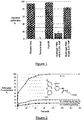
- Murine fibroblasts of the L929 line were seeded in polystyrene wells treated for tissue culture. After 24 h of proliferation, these cells were incubated with the hydrogels for an additional 24 h. The cytotoxicity was then measured using a test demonstrating the release of lactate dehydrogenase by the cells. As expected, the hydrogels containing the highest concentration of NaF were found to be toxic. However, more than 80% of cell viability was observed for an NaF concentration of 3 mg / ml, which means that the latter hydrogel is not toxic to cells ( Figure 1 ).
- fluorescein derivatives were chosen to be chemically linked to the hydrogels in accordance with the present invention ( cf. figure 2 for the exact formulas). Thus, if there should be a release of the grafted molecules, the use of fluorescein would make it possible to easily detect it.
- Fluorescein isothiocyanate (FITC) was used to prepare two types of fluorescein derivatives giving covalent bonds (triethoxysilane and dimethylhydroxysilane), as well as a non-silylated molecule serving as a control / control.
- Each fluorescein derivative was dissolved at a concentration of 5.2 mM in a solution of hybrid bi-silylated PEG itself at a concentration of 10% by mass relative to the mass of DPBS serving as solvent. Sodium fluoride was added and the solutions were homogenized. Fluorescent hybrid hydrogels were obtained at 37 ° C in 30 minutes. The different hydrogels were placed in phosphate buffer (10 ml) and the release of fluorescein was monitored by HPLC. In the case of non-covalent imprisonment, a complete release of fluorescein was observed within 72 hours. As expected, the release of fluorescein is limited (with regard to the control) in the case of covalent derivatives and reaches a plateau after 72 hours. This indicates the stability of the hybrid covalent bonds.
- a peptide containing the RGD sequence was chosen to promote cell adhesion. This is the GRGDSP sequence (SEQ ID 7).
- the deprotected peptide H-GRGDSP-OH (Seq ID 7) was first of all prepared by peptide synthesis on a solid support in Fmoc / tBu strategy and functionalized with a triethoxysilyl group using ICPTES (3-isocyanatopropyltriethoxysilane).
- a solution of bisilylated hybrid PEG at 10% by mass relative to the mass of DPBS) containing 0.3% by mass of NaF was prepared and the silylated GRGDSP hybrid peptide was added to this solution.
- the relative concentration of silylated GRGDSP in the mixture before reaction was set at 7.5% (1st solution) and 15% (2nd solution) in moles with respect to the moles of PEG hybrid bi-silylated. These two solutions were placed at 37 ° C overnight, to provide two “PEG / RGD-silyl” hydrogels.
- L929 fibroblasts were seeded on the surface of the PEG / RGD-silyl hydrogels and on an unfunctionalized PEG hybrid hydrogel ("naked hydrogel").
- the adherent cells after 30 min, 1 h and 2 h of incubation were detected and assayed using a viability reagent “PrestoBlue Cell Viability Reagent ®” ( figure 3 ).
- No cell adhesion was observed on the bare hydrogel.
- cell adhesion was very effective in the case of the hydrogel containing 15 mol% of silylated RGD (solution 2). Indeed, the adhesion on the latter after 30 min of incubation is better than on the polystyrene treated for tissue culture (TC-PS), and this for adhesion surfaces of identical size.
- hydrogels with antibacterial properties have been prepared using the peptide sequence H-Ahx-Arg-Arg-NH 2 suitably silylated on the N-terminal side.
- H-Ahx-Arg (Pbf) -Arg (Pbf) -NH- peptide on rinkamide resin was functionalized at the N-terminal end with a dimethylhydroxysilyl group before cleavage of the resin and deprotection of the side chains.
- the resulting hybrid peptide was added to solutions of bisilylated hybrid PEG according to the protocol described above for the “silylated PEG-RGD” hydrogel.
- the antibacterial activity of the hydrogels was evaluated against Escherichia coli, Staphylococcus aureus and Pseudomonas aeruginosa.
- the hydrogels were surface inoculated with bacteria and coated with trypticase soy agar. After 24 h of incubation at 37 ° C, bacterial colonies were counted ( Figure 4 ). The "naked" PEG hydrogels appear to inhibit the growth of P. aeruginosa even in the absence of peptide.
- the antibacterial effect was provided by the grafted peptide. Indeed, 15 mol% of antibacterial peptide induced a complete inhibition of the growth of S. aureus and reduced the growth of E. 80% coli.
- hydrogel obtained allows the adhesion of mMSC cells (murine mesenchymal stem cells) more efficiently than polystyrene treated for tissue culture and after 4 hours as effectively as commercial collagen foam.
- TC-PS Cell culture treated polystyrene
- commercial foam of purified and cross-linked bovine type I collagen were used as controls.
- This Figure 6 illustrates the adhesion of mMSC cells to the hydrogel according to the invention, to collagen foams and TC-PS.
- the hydrogel is as good a support as collagen foams for cell proliferation.
- TC-PS Polystyrene treated for cell culture
- foam Commercial purified and crosslinked type I bovine collagen were used as controls.
- the Figure 7 indeed illustrates the proliferation of mMSC (murine mesenchymal stem cells) on the hydrogel according to the invention, on collagen foam and TC-PS.
- the hydrogel allows good survival of cells trapped inside for at least 25 hours
- a major advantage of the process described in the present patent is the possibility of adding cells to the still liquid mixture of the silylated precursors.
- the gel is formed without the addition of additional chemical reagent, trapping the cells.
- Murine mesenchymal stem cells were thus encapsulated for 25 hours with excellent viability, comparable to the positive control of cells cultured in 2D on a TC-PS surface.
- the encapsulation protocol is as follows.
- a hybrid hydrogel solution is prepared by dissolving 30 mg of the hybrid peptide of Example 3, the structure of which is recalled above, in 250 ⁇ L of DMEM culture medium containing 4.5 g / L of glucose and 0, 12 mg / mL of NaF. The solution is incubated at 37 ° C for 5:15 p.m. At this time, the solution is still liquid but its viscosity has increased. 50 ⁇ L of a suspension of mMSC cells containing 500,000 cells per ml in DMEM medium is added. The concentration of bisilylated hybrid peptide is then 10% by mass.
- the hybrid solution is homogenized and 30 ⁇ L of this solution are placed in the wells of a 96-well cell culture plate.
- the gel gradually forms at 37 ° C. 25 hours later, a solution of Calcein-AM and Ethidium homodimer III in DPBS is added to the gels and the latter are analyzed by confocal microscopy.
- hydrogels have been validly used with molecules of various chemical structures proving the flexibility of the process according to the present invention. It has thus been possible to prepare hydrogels exhibiting satisfactory rheological, biological and / or physicochemical properties with very little variation (or even no variation) in the operating conditions, apart from the nature of the grafted molecules.
Landscapes
- Health & Medical Sciences (AREA)
- Chemical & Material Sciences (AREA)
- Life Sciences & Earth Sciences (AREA)
- Organic Chemistry (AREA)
- General Health & Medical Sciences (AREA)
- Engineering & Computer Science (AREA)
- Medicinal Chemistry (AREA)
- Animal Behavior & Ethology (AREA)
- Public Health (AREA)
- Veterinary Medicine (AREA)
- Molecular Biology (AREA)
- Epidemiology (AREA)
- Immunology (AREA)
- Biomedical Technology (AREA)
- Biochemistry (AREA)
- Genetics & Genomics (AREA)
- Dermatology (AREA)
- Oral & Maxillofacial Surgery (AREA)
- Transplantation (AREA)
- Biophysics (AREA)
- Proteomics, Peptides & Aminoacids (AREA)
- Chemical Kinetics & Catalysis (AREA)
- Biotechnology (AREA)
- Dispersion Chemistry (AREA)
- Urology & Nephrology (AREA)
- Hematology (AREA)
- Materials Engineering (AREA)
- General Chemical & Material Sciences (AREA)
- Bioinformatics & Cheminformatics (AREA)
- Microbiology (AREA)
- Analytical Chemistry (AREA)
- Cell Biology (AREA)
- Zoology (AREA)
- Developmental Biology & Embryology (AREA)
- Wood Science & Technology (AREA)
- Physics & Mathematics (AREA)
- Food Science & Technology (AREA)
- General Physics & Mathematics (AREA)
- Pathology (AREA)
- General Engineering & Computer Science (AREA)
Claims (6)
- Verfahren zur Herstellung eines Hydrogels, umfassend die folgenden Schritte:- a) Sol-Gel-Polymerisation von mindestens einem Molekül der Formel (I):
 • n eine ganze Zahl größer oder gleich 2 ist;• A ein organisches Polymer ist, ausgewählt aus Proteinen, Peptiden, wie beispielsweise Kollagenderivaten, insbesondere Sequenzen umfassend Wiederholungen von Tripeptiden Pro-Hyp-Gly oder Pro-Pro-Gly oder Asp-Pro-Gly oder Pro-Lys-Gly, selbstassemblierenden Peptidsequenzen wie Arg-Ala-Asp-Ala (SEQ ID 4), Oligoprolinen, Oligoalaninen, Polysacchariden, wie Hyaluronsäure und ihre Derivate, Oligonukleotiden, Polymeren von C1-C6-Alkylenglykolen oder Polyvinylpyrrolidonen;• Xa eine chemische Bindung oder eine Spacergruppe ist, die durch einen zweiwertigen Rest repräsentiert wird, der von einer gesättigten oder ungesättigten aliphatischen Kohlenwasserstoffkette mit 1 bis 10 Kohlenstoffatomen abgeleitet ist, in die gegebenenfalls ein oder mehrere Strukturelemente, ausgewählt aus der Arylengruppe oder den Fragmenten -O-, -S-, -C(=O)-, SO2 oder -N(R1)-, eingefügt sind, wobei die Kette unsubstituiert oder durch einen oder mehrere Reste, ausgewählt aus Halogenatomen, Hydroxy-, C1-C4-Alkyl-, Benzyl- und/oder Phenethylgruppen, substituiert ist;• R1 ein Wasserstoffatom oder eine aliphatische Kohlenwasserstoffgruppe mit 1 bis 6 Kohlenstoffatomen, einem Benzyl oder einem Phenethyl repräsentiert;• Y1, Y2, Y3, die gleich oder verschieden sind, jeweils unabhängig voneinander ein Wasserstoffatom, ein Halogenatom, eine -OR2-Gruppe, ein Aryl oder eine gesättigte oder ungesättigte aliphatische Kohlenwasserstoffkette mit 1 bis 6 Kohlenstoffatomen repräsentieren, die gegebenenfalls durch ein Halogenatom, eine Aryl- oder Hydroxygruppe substituiert ist;• R2 ein Wasserstoffatom, eine Arylgruppe oder eine gesättigte oder ungesättigte aliphatische Kohlenwasserstoffkette mit 1 bis 6 Kohlenstoffatomen repräsentiert;• mindestens zwei Gruppen Xa wie oben definiert, die an verschiedenen Befestigungspunkten mit A verbunden sind;- b) Inkontaktbringen mit Wasser, gegebenenfalls in Verbindung mit Schritt a); und- c) Rückgewinnung des Hydrogels,dadurch gekennzeichnet, dass das Verfahren der Sol-Gel-Polymerisation bei physiologischem pH-Wert durchgeführt wird.
- Verfahren zur Herstellung eines Hydrogels nach Anspruch 1, dadurch gekennzeichnet, dass das Verfahren die gleichzeitige oder aufeinanderfolgende Zugabe in Schritt a) mindestens einer Art von Molekülen der Formel (II) umfasst:

 • m eine ganze Zahl größer oder gleich 1, vorzugsweise gleich 1, ist;• B ein Wirkstoff ist, ausgewählt aus einem Peptid, einem Oligopeptid, einem Protein wie Kollagen, einer Desoxyribonukleinsäure, einer Ribonukleinsäure, einem Polysaccharid wie Pektin, Chitosan, Hyaluronsäure, einem Polyarabinose- und Polygalactose-Polysaccharid und einem Glykolipid;• Xb eine chemische Bindung oder eine Spacergruppe ist, die durch einen zweiwertigen Rest repräsentiert wird, der aus einer gesättigten oder ungesättigten aliphatischen Kohlenwasserstoffkette mit 1 bis 10 Kohlenstoffatomen abgeleitet wird, in die gegebenenfalls ein oder mehrere Strukturelemente, ausgewählt aus der Arylengruppe oder den Fragmenten -O-, -S-, -C(=O)-, SO2 oder -N(R3)-, eingefügt sind, wobei die Kette unsubstituiert oder durch einen oder mehrere Reste, ausgewählt aus Halogenatomen, Hydroxy-, C1-C4-Alkyl-, Benzyl- und/oder Phenethylgruppen substituiert ist;• R3 ein Wasserstoffatom oder eine aliphatische Kohlenwasserstoffgruppe mit 1 bis 6 Kohlenstoffatomen, einem Benzyl oder einem Phenethyl repräsentiert;• Z1, Z2, Z3, die gleich oder verschieden sind, jeweils unabhängig voneinander ein Wasserstoffatom, ein Halogenatom, eine -OR4-Gruppe, ein Aryl oder eine gesättigte oder ungesättigte aliphatische Kohlenwasserstoffkette mit 1 bis 6 Kohlenstoffatomen repräsentieren, die gegebenenfalls durch ein Halogenatom, eine Aryl- oder Hydroxygruppe substituiert ist;• R4 ein Wasserstoffatom, eine Arylgruppe oder eine gesättigte oder ungesättigte aliphatische Kohlenwasserstoffkette mit 1 bis 6 Kohlenstoffatomen repräsentiert; und• mit vorzugsweise einer einzigen der Gruppen Z1, Z2, oder Z3 wie Halogenatom oder OR4-Gruppe.
- Verfahren zur Herstellung eines Hydrogels nach einem der Ansprüche 1 oder 2, dadurch gekennzeichnet, dass das Hydrogel auf oder in mindestens einem ersten Hydrogel als Träger polymerisiert wird, so dass sich ein mehrschichtiges Hydrogel ergibt.
- Hydrogel, das mit dem Verfahren nach einem der Ansprüche 1 bis 3 erhalten wird.
- Hydrogel nach Anspruch 4 zur Verwendung für therapeutische und/oder chirurgische Zwecken, vorzugsweise dadurch gekennzeichnet, dass das Hydrogel die Abgabe und/oder den Transport von aktiven Molekülen oder zur In-vivo-Verwendung beim Tissue Engineering ermöglicht.
- In-vitro-Verwendung eines Hydrogels nach Anspruch 4 beim Tissue Engineering.
Applications Claiming Priority (2)
| Application Number | Priority Date | Filing Date | Title |
|---|---|---|---|
| FR1556628A FR3038609B1 (fr) | 2015-07-10 | 2015-07-10 | Nouveaux hydrogels de structure silylee et procede d'obtention |
| PCT/EP2016/066215 WO2017009200A1 (fr) | 2015-07-10 | 2016-07-07 | Nouveaux hydrogels de structure silylée et procédé d'obtention |
Publications (2)
| Publication Number | Publication Date |
|---|---|
| EP3320342A1 EP3320342A1 (de) | 2018-05-16 |
| EP3320342B1 true EP3320342B1 (de) | 2021-03-03 |
Family
ID=54356492
Family Applications (1)
| Application Number | Title | Priority Date | Filing Date |
|---|---|---|---|
| EP16736458.7A Active EP3320342B1 (de) | 2015-07-10 | 2016-07-07 | Neue hydrogele mit silylierte struktur und verfahren zur herstellung davon |
Country Status (5)
| Country | Link |
|---|---|
| US (2) | US20180200408A1 (de) |
| EP (1) | EP3320342B1 (de) |
| ES (1) | ES2874075T3 (de) |
| FR (1) | FR3038609B1 (de) |
| WO (1) | WO2017009200A1 (de) |
Families Citing this family (3)
| Publication number | Priority date | Publication date | Assignee | Title |
|---|---|---|---|---|
| US20230330305A1 (en) | 2020-09-09 | 2023-10-19 | Teoxane SA | Hydrogel comprising a cross-linked and silylated polysaccharide and process for obtaining same |
| FR3134577A1 (fr) | 2022-04-15 | 2023-10-20 | Teoxane SA | Procede de preparation d’un hydrogel comprenant un polysaccharide silyle reticule |
| CN116199909B (zh) * | 2023-03-14 | 2024-02-27 | 四川大学 | 一种在酸性条件下通过网络收缩快速形成水凝胶的方法 |
Family Cites Families (3)
| Publication number | Priority date | Publication date | Assignee | Title |
|---|---|---|---|---|
| US6858229B1 (en) * | 1999-04-26 | 2005-02-22 | California Institute Of Technology | In situ forming hydrogels |
| US9285360B2 (en) * | 2010-01-25 | 2016-03-15 | Institut National De La Sante Et De La Recherche Medicale (Inserm) | Silylated biomolecules |
| FR2992318B1 (fr) * | 2012-06-22 | 2018-11-16 | Centre Nat Rech Scient | Materiaux hybrides peptide-silice |
-
2015
- 2015-07-10 FR FR1556628A patent/FR3038609B1/fr active Active
-
2016
- 2016-07-07 WO PCT/EP2016/066215 patent/WO2017009200A1/fr not_active Ceased
- 2016-07-07 US US15/743,319 patent/US20180200408A1/en not_active Abandoned
- 2016-07-07 ES ES16736458T patent/ES2874075T3/es active Active
- 2016-07-07 EP EP16736458.7A patent/EP3320342B1/de active Active
-
2021
- 2021-06-25 US US17/358,554 patent/US20210393855A1/en not_active Abandoned
Non-Patent Citations (1)
| Title |
|---|
| None * |
Also Published As
| Publication number | Publication date |
|---|---|
| US20210393855A1 (en) | 2021-12-23 |
| WO2017009200A1 (fr) | 2017-01-19 |
| FR3038609B1 (fr) | 2020-03-06 |
| ES2874075T3 (es) | 2021-11-04 |
| US20180200408A1 (en) | 2018-07-19 |
| FR3038609A1 (fr) | 2017-01-13 |
| EP3320342A1 (de) | 2018-05-16 |
Similar Documents
| Publication | Publication Date | Title |
|---|---|---|
| Desai et al. | Chitosan: a potential biopolymer in drug delivery and biomedical applications | |
| EP3463295B1 (de) | Zusammensetzungen in form einer injizierbaren wässrigen lösung mit menschlichem glucagon und einer endgepfropften copolyaminosäure | |
| US6811996B1 (en) | DDS compounds and method for assaying the same | |
| CA2739546C (fr) | Polysaccharides comportant des groupes fonctionnels carboxyles substitues par un derive d'alcool hydrophobe | |
| CN100488512C (zh) | 用于治疗细胞增殖性紊乱的组合物及其用途 | |
| EP2516473B1 (de) | Anionische polysaccharide funktionalisiert mit dem derivat einer hydrophoben säure | |
| FR2919188A1 (fr) | Complexes entre un polymere amphiphile et une proteine osteogenique appartenant a la famille des bmps | |
| EP2833919A1 (de) | Mikropartikel und nanopartikel aus hydrophobierten polysacchariden und einem alpha-cyclodextrin | |
| JPH0742324B2 (ja) | N―アセチルカルボキシメチルキトサン誘導体及びその製法 | |
| US20210393855A1 (en) | New hydrogels having a silylated structure, and method for obtaining same | |
| FR3052071A1 (fr) | Compositions sous forme d'une solution aqueuse injectable comprenant du glucagon et un co-polyaminoacide | |
| FR2958647A1 (fr) | Polysaccharides comportant des groupes fonctionnels carboxyles substitues par un derive hydrophobe porte par un spacer au moins trivalent. | |
| FR3020952A1 (fr) | Formulation a action rapide d'insuline comprenant un compose anionique substitue et un compose polyanionique | |
| JP2020513041A (ja) | 病原体の阻害および/または粘液の改変のための化合物、組成物、および方法 | |
| EP0165123B1 (de) | Lipophile Muramylpeptid-Derivate mit einer makrophagen aktivierenden Wirkung, die sie enthaltenden Zusammensetzungen und Verfahren zu ihrer Herstellung | |
| EP2501389A1 (de) | Bei physiologischem ph-wert lösliche polysaccharid-/bmp-komplexe | |
| FR2841250A1 (fr) | Composes se liant a l'interferon-gamma, leur procede de preparation, et medicaments les contenant | |
| FR2830016A1 (fr) | Compositions pour la vectorisation de derives taxoides a travers la barriere hematoencephalique et leur utilisation pour le traitement des cancers, plus particulierement des cancers du cerveau | |
| WO2017009230A1 (fr) | Nouveaux materiaux optiques fonctionnalises | |
| EP4540275A1 (de) | Zusammensetzungen und verfahren mit penetrierenden peptiden | |
| WO2011135401A1 (fr) | Polysaccharides comportant des groupes fonctionnels carboxyles substitues par esterification par un alcool hydrophobe | |
| WO2012175642A1 (fr) | Prodrogues peptidiques | |
| FR2664813A1 (fr) | Compositions a base de substances hydrophobes, solubilisables dans un solvant aqueux, leur procede d'obtention, et leurs utilisations notamment dans le domaine pharmaceutique. | |
| JPWO2000025825A1 (ja) | Dds化合物及びその測定方法 |
Legal Events
| Date | Code | Title | Description |
|---|---|---|---|
| STAA | Information on the status of an ep patent application or granted ep patent |
Free format text: STATUS: THE INTERNATIONAL PUBLICATION HAS BEEN MADE |
|
| PUAI | Public reference made under article 153(3) epc to a published international application that has entered the european phase |
Free format text: ORIGINAL CODE: 0009012 |
|
| STAA | Information on the status of an ep patent application or granted ep patent |
Free format text: STATUS: REQUEST FOR EXAMINATION WAS MADE |
|
| 17P | Request for examination filed |
Effective date: 20180110 |
|
| AK | Designated contracting states |
Kind code of ref document: A1 Designated state(s): AL AT BE BG CH CY CZ DE DK EE ES FI FR GB GR HR HU IE IS IT LI LT LU LV MC MK MT NL NO PL PT RO RS SE SI SK SM TR |
|
| AX | Request for extension of the european patent |
Extension state: BA ME |
|
| DAV | Request for validation of the european patent (deleted) | ||
| DAX | Request for extension of the european patent (deleted) | ||
| STAA | Information on the status of an ep patent application or granted ep patent |
Free format text: STATUS: EXAMINATION IS IN PROGRESS |
|
| 17Q | First examination report despatched |
Effective date: 20181122 |
|
| GRAP | Despatch of communication of intention to grant a patent |
Free format text: ORIGINAL CODE: EPIDOSNIGR1 |
|
| STAA | Information on the status of an ep patent application or granted ep patent |
Free format text: STATUS: GRANT OF PATENT IS INTENDED |
|
| INTG | Intention to grant announced |
Effective date: 20200921 |
|
| GRAS | Grant fee paid |
Free format text: ORIGINAL CODE: EPIDOSNIGR3 |
|
| GRAA | (expected) grant |
Free format text: ORIGINAL CODE: 0009210 |
|
| STAA | Information on the status of an ep patent application or granted ep patent |
Free format text: STATUS: THE PATENT HAS BEEN GRANTED |
|
| AK | Designated contracting states |
Kind code of ref document: B1 Designated state(s): AL AT BE BG CH CY CZ DE DK EE ES FI FR GB GR HR HU IE IS IT LI LT LU LV MC MK MT NL NO PL PT RO RS SE SI SK SM TR |
|
| REG | Reference to a national code |
Ref country code: GB Ref legal event code: FG4D Free format text: NOT ENGLISH |
|
| REG | Reference to a national code |
Ref country code: AT Ref legal event code: REF Ref document number: 1367765 Country of ref document: AT Kind code of ref document: T Effective date: 20210315 Ref country code: CH Ref legal event code: EP |
|
| REG | Reference to a national code |
Ref country code: DE Ref legal event code: R096 Ref document number: 602016053558 Country of ref document: DE |
|
| REG | Reference to a national code |
Ref country code: IE Ref legal event code: FG4D Free format text: LANGUAGE OF EP DOCUMENT: FRENCH |
|
| REG | Reference to a national code |
Ref country code: LT Ref legal event code: MG9D |
|
| PG25 | Lapsed in a contracting state [announced via postgrant information from national office to epo] |
Ref country code: BG Free format text: LAPSE BECAUSE OF FAILURE TO SUBMIT A TRANSLATION OF THE DESCRIPTION OR TO PAY THE FEE WITHIN THE PRESCRIBED TIME-LIMIT Effective date: 20210603 Ref country code: LT Free format text: LAPSE BECAUSE OF FAILURE TO SUBMIT A TRANSLATION OF THE DESCRIPTION OR TO PAY THE FEE WITHIN THE PRESCRIBED TIME-LIMIT Effective date: 20210303 Ref country code: NO Free format text: LAPSE BECAUSE OF FAILURE TO SUBMIT A TRANSLATION OF THE DESCRIPTION OR TO PAY THE FEE WITHIN THE PRESCRIBED TIME-LIMIT Effective date: 20210603 Ref country code: GR Free format text: LAPSE BECAUSE OF FAILURE TO SUBMIT A TRANSLATION OF THE DESCRIPTION OR TO PAY THE FEE WITHIN THE PRESCRIBED TIME-LIMIT Effective date: 20210604 Ref country code: HR Free format text: LAPSE BECAUSE OF FAILURE TO SUBMIT A TRANSLATION OF THE DESCRIPTION OR TO PAY THE FEE WITHIN THE PRESCRIBED TIME-LIMIT Effective date: 20210303 Ref country code: FI Free format text: LAPSE BECAUSE OF FAILURE TO SUBMIT A TRANSLATION OF THE DESCRIPTION OR TO PAY THE FEE WITHIN THE PRESCRIBED TIME-LIMIT Effective date: 20210303 |
|
| REG | Reference to a national code |
Ref country code: NL Ref legal event code: MP Effective date: 20210303 |
|
| REG | Reference to a national code |
Ref country code: AT Ref legal event code: MK05 Ref document number: 1367765 Country of ref document: AT Kind code of ref document: T Effective date: 20210303 |
|
| PG25 | Lapsed in a contracting state [announced via postgrant information from national office to epo] |
Ref country code: SE Free format text: LAPSE BECAUSE OF FAILURE TO SUBMIT A TRANSLATION OF THE DESCRIPTION OR TO PAY THE FEE WITHIN THE PRESCRIBED TIME-LIMIT Effective date: 20210303 Ref country code: LV Free format text: LAPSE BECAUSE OF FAILURE TO SUBMIT A TRANSLATION OF THE DESCRIPTION OR TO PAY THE FEE WITHIN THE PRESCRIBED TIME-LIMIT Effective date: 20210303 Ref country code: PL Free format text: LAPSE BECAUSE OF FAILURE TO SUBMIT A TRANSLATION OF THE DESCRIPTION OR TO PAY THE FEE WITHIN THE PRESCRIBED TIME-LIMIT Effective date: 20210303 Ref country code: RS Free format text: LAPSE BECAUSE OF FAILURE TO SUBMIT A TRANSLATION OF THE DESCRIPTION OR TO PAY THE FEE WITHIN THE PRESCRIBED TIME-LIMIT Effective date: 20210303 |
|
| PG25 | Lapsed in a contracting state [announced via postgrant information from national office to epo] |
Ref country code: NL Free format text: LAPSE BECAUSE OF FAILURE TO SUBMIT A TRANSLATION OF THE DESCRIPTION OR TO PAY THE FEE WITHIN THE PRESCRIBED TIME-LIMIT Effective date: 20210303 |
|
| PG25 | Lapsed in a contracting state [announced via postgrant information from national office to epo] |
Ref country code: EE Free format text: LAPSE BECAUSE OF FAILURE TO SUBMIT A TRANSLATION OF THE DESCRIPTION OR TO PAY THE FEE WITHIN THE PRESCRIBED TIME-LIMIT Effective date: 20210303 Ref country code: CZ Free format text: LAPSE BECAUSE OF FAILURE TO SUBMIT A TRANSLATION OF THE DESCRIPTION OR TO PAY THE FEE WITHIN THE PRESCRIBED TIME-LIMIT Effective date: 20210303 Ref country code: AT Free format text: LAPSE BECAUSE OF FAILURE TO SUBMIT A TRANSLATION OF THE DESCRIPTION OR TO PAY THE FEE WITHIN THE PRESCRIBED TIME-LIMIT Effective date: 20210303 Ref country code: SM Free format text: LAPSE BECAUSE OF FAILURE TO SUBMIT A TRANSLATION OF THE DESCRIPTION OR TO PAY THE FEE WITHIN THE PRESCRIBED TIME-LIMIT Effective date: 20210303 |
|
| PG25 | Lapsed in a contracting state [announced via postgrant information from national office to epo] |
Ref country code: PT Free format text: LAPSE BECAUSE OF FAILURE TO SUBMIT A TRANSLATION OF THE DESCRIPTION OR TO PAY THE FEE WITHIN THE PRESCRIBED TIME-LIMIT Effective date: 20210705 Ref country code: RO Free format text: LAPSE BECAUSE OF FAILURE TO SUBMIT A TRANSLATION OF THE DESCRIPTION OR TO PAY THE FEE WITHIN THE PRESCRIBED TIME-LIMIT Effective date: 20210303 Ref country code: SK Free format text: LAPSE BECAUSE OF FAILURE TO SUBMIT A TRANSLATION OF THE DESCRIPTION OR TO PAY THE FEE WITHIN THE PRESCRIBED TIME-LIMIT Effective date: 20210303 Ref country code: IS Free format text: LAPSE BECAUSE OF FAILURE TO SUBMIT A TRANSLATION OF THE DESCRIPTION OR TO PAY THE FEE WITHIN THE PRESCRIBED TIME-LIMIT Effective date: 20210703 |
|
| REG | Reference to a national code |
Ref country code: DE Ref legal event code: R097 Ref document number: 602016053558 Country of ref document: DE |
|
| PLBE | No opposition filed within time limit |
Free format text: ORIGINAL CODE: 0009261 |
|
| STAA | Information on the status of an ep patent application or granted ep patent |
Free format text: STATUS: NO OPPOSITION FILED WITHIN TIME LIMIT |
|
| PG25 | Lapsed in a contracting state [announced via postgrant information from national office to epo] |
Ref country code: DK Free format text: LAPSE BECAUSE OF FAILURE TO SUBMIT A TRANSLATION OF THE DESCRIPTION OR TO PAY THE FEE WITHIN THE PRESCRIBED TIME-LIMIT Effective date: 20210303 Ref country code: AL Free format text: LAPSE BECAUSE OF FAILURE TO SUBMIT A TRANSLATION OF THE DESCRIPTION OR TO PAY THE FEE WITHIN THE PRESCRIBED TIME-LIMIT Effective date: 20210303 |
|
| 26N | No opposition filed |
Effective date: 20211206 |
|
| PG25 | Lapsed in a contracting state [announced via postgrant information from national office to epo] |
Ref country code: SI Free format text: LAPSE BECAUSE OF FAILURE TO SUBMIT A TRANSLATION OF THE DESCRIPTION OR TO PAY THE FEE WITHIN THE PRESCRIBED TIME-LIMIT Effective date: 20210303 |
|
| REG | Reference to a national code |
Ref country code: CH Ref legal event code: PL |
|
| PG25 | Lapsed in a contracting state [announced via postgrant information from national office to epo] |
Ref country code: MC Free format text: LAPSE BECAUSE OF FAILURE TO SUBMIT A TRANSLATION OF THE DESCRIPTION OR TO PAY THE FEE WITHIN THE PRESCRIBED TIME-LIMIT Effective date: 20210303 |
|
| REG | Reference to a national code |
Ref country code: BE Ref legal event code: MM Effective date: 20210731 |
|
| PG25 | Lapsed in a contracting state [announced via postgrant information from national office to epo] |
Ref country code: LI Free format text: LAPSE BECAUSE OF NON-PAYMENT OF DUE FEES Effective date: 20210731 Ref country code: CH Free format text: LAPSE BECAUSE OF NON-PAYMENT OF DUE FEES Effective date: 20210731 |
|
| PG25 | Lapsed in a contracting state [announced via postgrant information from national office to epo] |
Ref country code: IS Free format text: LAPSE BECAUSE OF FAILURE TO SUBMIT A TRANSLATION OF THE DESCRIPTION OR TO PAY THE FEE WITHIN THE PRESCRIBED TIME-LIMIT Effective date: 20210703 Ref country code: LU Free format text: LAPSE BECAUSE OF NON-PAYMENT OF DUE FEES Effective date: 20210707 |
|
| PG25 | Lapsed in a contracting state [announced via postgrant information from national office to epo] |
Ref country code: IE Free format text: LAPSE BECAUSE OF NON-PAYMENT OF DUE FEES Effective date: 20210707 Ref country code: BE Free format text: LAPSE BECAUSE OF NON-PAYMENT OF DUE FEES Effective date: 20210731 |
|
| PG25 | Lapsed in a contracting state [announced via postgrant information from national office to epo] |
Ref country code: HU Free format text: LAPSE BECAUSE OF FAILURE TO SUBMIT A TRANSLATION OF THE DESCRIPTION OR TO PAY THE FEE WITHIN THE PRESCRIBED TIME-LIMIT; INVALID AB INITIO Effective date: 20160707 |
|
| PG25 | Lapsed in a contracting state [announced via postgrant information from national office to epo] |
Ref country code: CY Free format text: LAPSE BECAUSE OF FAILURE TO SUBMIT A TRANSLATION OF THE DESCRIPTION OR TO PAY THE FEE WITHIN THE PRESCRIBED TIME-LIMIT Effective date: 20210303 |
|
| PG25 | Lapsed in a contracting state [announced via postgrant information from national office to epo] |
Ref country code: MK Free format text: LAPSE BECAUSE OF FAILURE TO SUBMIT A TRANSLATION OF THE DESCRIPTION OR TO PAY THE FEE WITHIN THE PRESCRIBED TIME-LIMIT Effective date: 20210303 |
|
| PG25 | Lapsed in a contracting state [announced via postgrant information from national office to epo] |
Ref country code: MT Free format text: LAPSE BECAUSE OF FAILURE TO SUBMIT A TRANSLATION OF THE DESCRIPTION OR TO PAY THE FEE WITHIN THE PRESCRIBED TIME-LIMIT Effective date: 20210303 |
|
| PGFP | Annual fee paid to national office [announced via postgrant information from national office to epo] |
Ref country code: ES Payment date: 20250811 Year of fee payment: 10 |
|
| PGFP | Annual fee paid to national office [announced via postgrant information from national office to epo] |
Ref country code: DE Payment date: 20250711 Year of fee payment: 10 |
|
| PGFP | Annual fee paid to national office [announced via postgrant information from national office to epo] |
Ref country code: IT Payment date: 20250708 Year of fee payment: 10 |
|
| PGFP | Annual fee paid to national office [announced via postgrant information from national office to epo] |
Ref country code: GB Payment date: 20250723 Year of fee payment: 10 |
|
| PG25 | Lapsed in a contracting state [announced via postgrant information from national office to epo] |
Ref country code: TR Free format text: LAPSE BECAUSE OF FAILURE TO SUBMIT A TRANSLATION OF THE DESCRIPTION OR TO PAY THE FEE WITHIN THE PRESCRIBED TIME-LIMIT Effective date: 20210303 |
|
| PGFP | Annual fee paid to national office [announced via postgrant information from national office to epo] |
Ref country code: FR Payment date: 20260616 Year of fee payment: 11 |